Category: Medical Equipment

  • Global Ophthalmic Eye Dropper Industry Insights: Key Trends and Growth Estimates

    Global Ophthalmic Eye Dropper Industry Insights: Key Trends and Growth Estimates

    Uncover key drivers, emerging technologies, and competitive movements shaping the workstation graphics processing unit (gpu) market from 2026–2035 with trusted insights from The Business Research Company

    Across 2026–2030, what is the expected market valuation path of the Ophthalmic Eye Dropper Market?

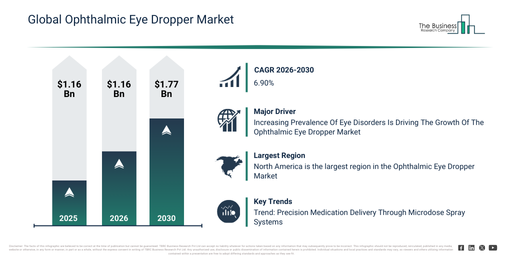
    The ophthalmic eye dropper market has experienced robust expansion in recent years. It is anticipated to increase from $14.28 billion in 2025 to $15.39 billion in 2026, exhibiting a compound annual growth rate (CAGR) of 7.7%. This historic growth can be attributed to several factors, including the rising occurrence of ophthalmic conditions, the increasing application of topical eye medications, the growth of outpatient ophthalmic care options, the expanding availability of over-the-counter (OTC) eye care products, and the wider acceptance of at-home eye treatments.

    The ophthalmic eye dropper market is projected to experience robust expansion over the coming years. Its size is anticipated to reach $20.07 billion by 2030, demonstrating a compound annual growth rate (CAGR) of 6.9%. This anticipated growth throughout the forecast period stems from several factors, including a heightened demand for sophisticated ophthalmic drug delivery systems, an expanding elderly demographic experiencing eye conditions, advancements in managing chronic eye diseases, a developing preference for formulations without preservatives, and continued innovation in sterile packaging methods. Key trends during this period encompass the wider acceptance of preservative-free eye droppers, an escalating need for single-dose packaging options, an intensifying emphasis on precise drug administration, the development of more convenient dropper designs, and a heightened commitment to ensuring sterility.

    Access Your Free Sample Report for In-Depth Market Insights:

    https://www.thebusinessresearchcompany.com/sample.aspx?id=15878&type=smp

    Which Drivers Are Supporting The Rise Of The Ophthalmic Eye Dropper Market?

    The escalating occurrence of eye disorders is poised to drive the expansion of the ophthalmic eye dropper market. Eye disorders refer to a broad range of medical conditions affecting the eyes, which can impair vision or cause discomfort. The growing prevalence of these conditions stems from various factors such as environmental influences, increased use of contact lenses, evolving lifestyle choices, gender differences, and nutritional deficiencies. Ophthalmic eye droppers are utilized for the precise delivery of medication directly into the eyes to manage a variety of eye ailments. For example, in January 2024, according to the Centers for Disease Control and Prevention, a US-based science and data-driven service organization focused on public health, over 3.4 million Americans aged 40 years and older were blind or visually impaired, a number expected to double by 2030. Thus, the increasing prevalence of eye disorders is a key driver for the growth of the ophthalmic eye dropper market.

    What Leading Segments Are Studied In The Ophthalmic Eye Dropper Market?

    The ophthalmic eye dropper market covered in this report is segmented –

    1) By Eye Dropper: Unidose Eye Dropper, Preserved Multi-Dose Eye Dropper, Preservative-Free Multi-Dose Eye Dropper

    2) By Drug Type: Prescription Drugs, Over-The-Counter (OTC) Drugs

    3) By Treatment Type: Dry Eye, Glaucoma, Allergies, Conjunctivitis, Other Treatment Type

    4) By End-Use: Hospitals, Ophthalmic Centers, Homecare Settings, Other End-Users

    Subsegments:

    1) By Unidose Eye Dropper: Single Use Containers, Disposable Dropper Systems

    2) By Preserved Multi-Dose Eye Dropper: Eye Droppers With Preservative Solutions, Multi-Dose Containers With Built-In Preservation

    3) By Preservative-Free Multi-Dose Eye Dropper: Multi-Dose Containers Without Preservatives, Non-Preserved, Sterile Eye Drop Systems

    What Trends Are Projected To Support The Growth Of The Ophthalmic Eye Dropper Market?

    Major companies in the ophthalmic eye dropper market are prioritizing the development of advanced solutions, such as microdose spray delivery systems, to supersede conventional eye dropper bottles. A microdose spray delivery system represents a technology that applies exact, regulated quantities of medication directly onto the ocular surface, thereby cutting down on waste, systemic absorption, and errors in dosage. As an illustration, in May 2023, Hyperion DeFi Inc., a US-based pharmaceutical technology company, introduced MydCombi, utilizing its Optejet platform. This breakthrough replaces traditional eyedropper bottles by delivering medication in microdroplets (~6–8 µL) directly to the eye, ensuring comfort and preventing spillage. Integrated with Eyenovia’s drug-device platform, it provides precise dosing, improves patient adherence, and diminishes the risk of unfavorable effects. The microdose delivery system elevates treatment efficacy, enhances the patient experience, and simplifies the administration of ocular drugs.

    Which Major Industry Participants Are Leading The Ophthalmic Eye Dropper Market Growth?

    Major companies operating in the ophthalmic eye dropper market are Pfizer Inc., AbbVie Inc., Novartis AG, Alcon Inc., Bausch & Lomb Incorporated, Intas Pharmaceuticals Ltd., AptarGroup Inc, Cipla Ltd, Gerresheimer AG, Lupin Ltd., Santen Pharmaceutical Co Ltd., Rohto Pharmaceutical Co Ltd., Silgan Dispensing Systems, Akorn Operating Company LLC, Nemera Development S.A., Ajanta Pharma Ltd., Perrigo Company plc, Bora Pharmaceuticals Co Ltd., Sun Pharmaceutical Industries Limited, PanOptica Inc.

    Access The Complete Report For Deeper Market Insights:

    https://www.thebusinessresearchcompany.com/report/ophthalmic-eye-dropper-global-market-report

    Which Geographic Areas Are Emerging As Strong Markets For The Ophthalmic Eye Dropper Market?

    North America was the largest region in the ophthalmic eye dropper market in 2025. Asia-Pacific is expected to be the fastest-growing region in the forecast period. The regions covered in the ophthalmic eye dropper market report are Asia-Pacific, South East Asia, Western Europe, Eastern Europe, North America, South America, Middle East, Africa.

    Request Your Customized Ophthalmic Eye Dropper Market Research Report for Competitive Advantage:

    https://www.thebusinessresearchcompany.com/customise?id=15878&type=smp

    Browse Through More Reports Similar to the Global Ophthalmic Eye Dropper Market 2026, By The Business Research Company

    Ophthalmic Drugs Global Market Report 2026

    https://www.thebusinessresearchcompany.com/report/ophthalmic-drugs-global-market-report

    Ophthalmic Devices Global Market Report 2026

    https://www.thebusinessresearchcompany.com/report/ophthalmic-devices-global-market-report

    Ophthalmology Drugs Market 2026

    https://www.thebusinessresearchcompany.com/report/ophthalmology-drugs-market

    Get in touch with us:

    The Business Research Company: https://www.thebusinessresearchcompany.com/

    Americas +1 310-496-7795

    Asia +44 7882 955267 & +91 8897263534

    Europe +44 7882 955267

    Email us at info@tbrc.info

    Follow us on:

    LinkedIn: https://in.linkedin.com/company/the-business-research-company
  • Ophthalmic Equipment Market Forecast: How Big Will It Be by 2030?

    Ophthalmic Equipment Market Forecast: How Big Will It Be by 2030?

    Uncover key drivers, emerging technologies, and competitive movements shaping the worker heat stress monitoring wearable market from 2026–2035 with trusted insights from The Business Research Company

    What size range is anticipated for the Ophthalmic Equipment Market from 2026 to 2030?

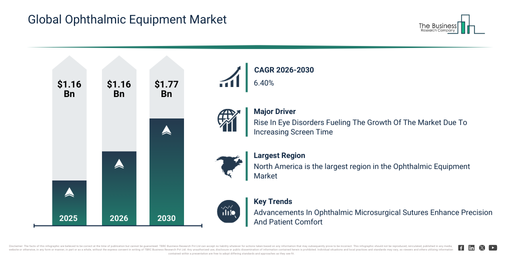
    The ophthalmic equipment market size has demonstrated robust growth in recent years. It is projected to increase from $69.54 billion in 2025 to $74.2 billion in 2026, achieving a compound annual growth rate (CAGR) of 6.7%. The historical expansion of this market can be attributed to several factors, including limited access to advanced ophthalmic equipment, reliance on conventional diagnostic tools, the growing prevalence of cataract and glaucoma, an increasing number of ophthalmology clinics, and enhanced awareness regarding vision care improvements.

    The ophthalmic equipment market is projected to experience substantial expansion in the coming years. It is forecast to reach $95.09 billion by 2030, growing at a compound annual growth rate (CAGR) of 6.4%. This anticipated growth throughout the forecast period stems from factors such as technological advancements in laser and OCT devices, an increasing demand for refractive and retinal surgeries, the expansion of optical retail centers, a rising adoption of phacoemulsification and microsurgical instruments, and the integration of AI and digital solutions into ophthalmic care. Prominent trends for the forecast duration include the increasing use of advanced ophthalmic imaging devices, a growing preference for minimally invasive eye surgeries, the proliferation of customized intraocular lenses (IOLs), the expansion of ambulatory surgical centers (ASCs) for eye care, and an enhanced focus on the early detection and screening of eye diseases.

    Access Your Free Sample Report for In-Depth Market Insights:

    https://www.thebusinessresearchcompany.com/sample.aspx?id=24636&type=smp

    What Drivers Are Affecting Demand In The Ophthalmic Equipment Market?

    The increasing incidence of eye conditions is anticipated to drive the expansion of the ophthalmic equipment market. An eye disorder refers to any condition impacting the eye’s structure or function, potentially causing vision impairment or discomfort. Such disorders are becoming more prevalent, largely attributed to increased screen time leading to prolonged eye strain and contributing to visual problems like digital eye strain and nearsightedness. Ophthalmic equipment is indispensable for addressing these eye disorders, as it allows for accurate diagnosis and precise treatment, thereby assisting in early issue detection and improving patient outcomes. For instance, in May 2024, a report from the Centers for Disease Control and Prevention, a US-based government agency, revealed that without effective interventions, cases of diabetic retinopathy are projected to rise by 72% and cataracts by 87% by 2050. Moreover, the population experiencing vision impairment and blindness could increase by as much as 150%. Therefore, the escalating rates of eye disorders will undoubtedly stimulate the growth of the ophthalmic equipment market.

    Which Segment Groups Are Influencing The Ophthalmic Equipment Market?

    The ophthalmic equipment market covered in this report is segmented –

    1) By Product Type: Ophthalmic Surgical Devices, Ophthalmic Diagnostic Devices, Ophthalmic Vision Care Devices

    2) By Technology: Laser Technology, Optical Coherence Tomography, Ultrasound Technology, Phacoemulsification

    3) By Application: Cataract Surgery, Retinal Surgery, Glaucoma Surgery, Refractive Surgery

    4) By End-Users: Hospitals, Ophthalmology Clinics, Ambulatory Surgical Centers (ASCs), Optical Retail Centers, Other End-Users

    Subsegments:

    1) By Ophthalmic Surgical Devices: Phacoemulsification Devices, Laser Surgical Devices, Vitrectomy Devices, Ophthalmic Microsurgical Instruments, Intraocular Lenses (IOLs), Ophthalmic Cryotherapy Devices

    2) By Ophthalmic Diagnostic Devices: Slit Lamp Microscopes, Optical Coherence Tomography (OCT) Devices, Visual Field Analyzers, Fundus Cameras, Keratometers, Pachymeters, Retinal Imaging Devices, Tonometers

    3) By Ophthalmic Vision Care Devices: Contact Lens Fitters, Autorefractors, Lens Meters, Trial Lens Sets, Phoropters, Lens Edgers, Vision Screening Devices

    Which Trends Are Influencing The Performance And Direction Of The Ophthalmic Equipment Market?

    Leading companies in the ophthalmic equipment market are concentrating on developing technologically advanced products, such as ophthalmic microsurgical sutures, to mitigate the risk of infection and inflammation. Ophthalmic microsurgical sutures are extremely fine threads designed for use by eye surgeons to accurately stitch and close delicate tissues in eye procedures. For instance, in October 2024, Corza Medical, a US-based medical technology company, introduced its Onatec ophthalmic microsurgical sutures. Corza Medical produces Onatec needles from highly tempered stainless steel, which offers superior bending resistance and durability. Their advanced automated manufacturing process ensures precise needle shapes and accurate grinds, facilitating the stitching of delicate tissues in very small areas. The needles also feature an excellent surface finish that guarantees smooth penetration, thereby minimizing tissue trauma. This combination of precision and quality enhances patient comfort during ophthalmic microsurgeries.

    Who Are The Prominent Global Companies Shaping The Ophthalmic Equipment Market Landscape?

    Major companies operating in the ophthalmic equipment market are Alcon Inc, Bausch Lomb Corp, Carl Zeiss Meditec AG, Rodenstock GmbH, Leica Microsystems, Corza Medical, EXTREME d o o, BVI Medical Inc, Heine Optotechnik, Essilor International S A, Rumex International Co, Designs For Vision, FCI S A S, Stille AB, Visionix Ltd, Optotek Medical, Coburn Technologies Inc, Haag Streit AG, MDT Medical Devices Manufacturer, Carleton Limited, Topcon Corporation, Nidek Co Ltd

    Access The Complete Report For Deeper Market Insights:

    https://www.thebusinessresearchcompany.com/report/ophthalmic-equipment-global-market-report

    Which Region Is Projected To Lead The Ophthalmic Equipment Market During The Forecast Period?

    North America was the largest region in the ophthalmic wquipment market in 2025. Asia-Pacific is expected to be the fastest-growing region in the forecast period. The regions covered in the ophthalmic equipment market report are Asia-Pacific, South East Asia, Western Europe, Eastern Europe, North America, South America, Middle East, Africa.

    Request Your Customized Ophthalmic Equipment Market Research Report for Competitive Advantage:

    https://www.thebusinessresearchcompany.com/customise?id=24636&type=smp

    Browse Through More Reports Similar to the Global Ophthalmic Equipment Market 2026, By The Business Research Company

    Diagnostic And Monitoring Ophthalmic Devices And Equipment Global Market Report 2026

    https://www.thebusinessresearchcompany.com/report/diagnostic-and-monitoring-ophthalmic-devices-and-equipment-global-market-report

    Ophthalmic Packaging Global Market Report 2026

    https://www.thebusinessresearchcompany.com/report/ophthalmic-packaging-global-market-report

    Ophthalmic Handheld Surgical Instruments Global Market Report 2026

    https://www.thebusinessresearchcompany.com/report/ophthalmic-handheld-surgical-instruments-global-market-report

    Get in touch with us:

    The Business Research Company: https://www.thebusinessresearchcompany.com/

    Americas +1 310-496-7795

    Asia +44 7882 955267 & +91 8897263534

    Europe +44 7882 955267

    Email us at info@tbrc.info

    Follow us on:

    LinkedIn: https://in.linkedin.com/company/the-business-research-company
  • Ophthalmic Devices Market Report 2026: Strategic Insights and Revenue Outlook

    Ophthalmic Devices Market Report 2026: Strategic Insights and Revenue Outlook

    Uncover key drivers, emerging technologies, and competitive movements shaping the workstation graphics processing unit (gpu) market from 2026–2035 with trusted insights from The Business Research Company

    How is the Ophthalmic Devices Market size predicted to change over the forecast window of 2026–2035?

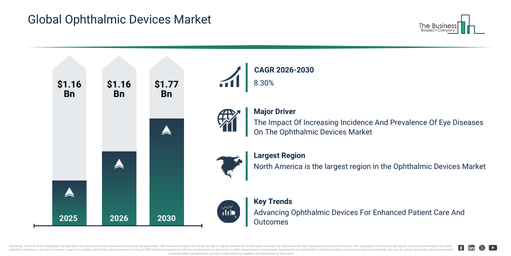
    The ophthalmic devices market has experienced robust expansion in recent years. It is projected to expand from $47.31 billion in 2025 to $51.1 billion in 2026, demonstrating a compound annual growth rate (CAGR) of 8.0%. Historically, this growth can be attributed to several factors including the rising prevalence of vision impairment, the expansion of ophthalmic clinics and hospitals, increasing cataract surgery volumes, the growing adoption of corrective vision devices, and the availability of advanced ophthalmic diagnostics.

    The ophthalmic devices market is projected to experience robust expansion over the coming years. This market is anticipated to reach $70.19 billion by 2030, demonstrating a compound annual growth rate (CAGR) of 8.3%. Factors contributing to this growth during the projection period include the increasing demand for treatments addressing age-related eye conditions, the rising integration of AI-based ophthalmic diagnostic tools, the expansion of outpatient facilities for eye surgery, a heightened emphasis on preventive eye health, and growing investments in ophthalmic technological advancements. Key trends emerging in this period encompass the increasing embrace of advanced diagnostic ophthalmic imaging techniques, the growing utilization of minimally invasive devices for eye surgery, the expanding integration of digital tools for eye examinations, the proliferation of laser-based vision correction systems, and an intensified focus on the early detection of eye diseases.

    Access Your Free Sample Report for In-Depth Market Insights:

    https://www.thebusinessresearchcompany.com/sample.aspx?id=1970&type=smp

    Which Drivers Are Contributing To The Expansion Of The Ophthalmic Devices Market?

    The rising occurrence and widespread nature of eye conditions are projected to fuel the expansion of the ophthalmic device market. Eye disorders such as age-related macular degeneration (AMD), glaucoma, and cataracts are increasingly becoming primary contributors to visual impairment and blindness worldwide. Ophthalmic devices are vital for the proper diagnosis, treatment, and management of various ocular disorders and conditions. For instance, in August 2024, as reported by the National Health Service, a public sector organization, NHS-funded sight tests reached a record high of over 841,000 in 2024, marking a 6.6% increase compared to 2023. This growing frequency and prevalence of eye-related disorders are expected to drive the utilization of ophthalmic devices in their diagnosis and treatment.

    What Segment Classifications Make Up The Ophthalmic Devices Market?

    The ophthalmic devices market covered in this report is segmented –

    1) By Device: Vision Care Devices And Equipment, Cataract Surgery Devices And Equipment, Refractive Surgery Devices And Equipment, Diagnostic And Monitoring Ophthalmic Devices And Equipment

    2) By Product: Instruments Or Equipment, Disposables

    3) By End User: Hospitals And Clinics, Diagnostic Laboratories, Other End Users

    4) By Type of Expenditure: Public, Private

    Subsegments:

    1) By Vision Care Devices And Equipment: Eyeglasses, Contact Lenses, Low Vision Aids

    2) By Cataract Surgery Devices And Equipment: Cataract Surgery Instruments, Cataract Surgery Implants (Intraocular Lenses), Cataract Surgery Devices (Phacoemulsification Systems)

    3) By Refractive Surgery Devices And Equipment: LASIK Devices, SMILE Surgery Devices, PRK Surgery Devices

    4) By Diagnostic And Monitoring Ophthalmic Devices And Equipment: Fundus Cameras, Optical Coherence Tomography (OCT) Scanners, Perimeters, Retinal Imaging Systems, Slit Lamps

    What Long-Term Trends Are Expected To Shape The Future Of The Ophthalmic Devices Market?

    Leading firms within the ophthalmic devices market are prioritizing the creation of novel products to maintain their competitive standing. Significant investments are being made in research and development efforts to bring forth new offerings and enlarge their presence in the market. An example of this strategy is Sight Sciences Inc, a US-based eyecare technology firm dedicated to delivering innovative solutions for patient care improvement, which disclosed in May 2023 the advancement of two new ophthalmic systems: the proprietary OMNI Surgical System for glaucoma and the TearCare System for dry eye. The OMNI Surgical System is designed to enable surgeons to conduct minimally invasive, implant-free procedures for adults diagnosed with primary open-angle glaucoma. Meanwhile, the TearCare System for dry eye offers an interventional eyelid procedure targeting diseased meibomian glands and is specified for localized heat therapy in adult patients experiencing evaporative dry eye disease resulting from meibomian gland dysfunction.

    Which Key Players Are Driving Competition In The Ophthalmic Devices Market?

    Major companies operating in the ophthalmic devices market are Luxottica Group S.p.A., Johnson & Johnson, Hoya Corporation, CooperVision AG, Bausch Health Companies Inc., Carl Zeiss AG, Flex Ltd., Nidek Co. Ltd., Topcon Corporation, Alcon Inc., EssilorLuxottica, Novartis AG, Regeneron Pharmaceuticals Inc., Roche Holding AG, Santen Pharmaceutical Co. Ltd., Rohto Pharmaceutical Co. Ltd., Menicon Co. Ltd., Chengdu Kanghong Pharmaceutical, Glaukos Corporation, STAAR Surgical Company, Omeros Corporation, Aerie Pharmaceuticals Inc., Alimera Sciences Inc., Iridex

    Access The Complete Report For Deeper Market Insights:

    https://www.thebusinessresearchcompany.com/report/ophthalmic-devices-global-market-report

    Which Region Currently Holds The Largest Share Of The Ophthalmic Devices Market?

    North America was the largest region in the global ophthalmic devices market in 2025. Asia-Pacific was the second largest region in the global ophthalmic devices market. Africa. was the smallest region in the global ophthalmic devices market. The regions covered in the ophthalmic devices market report are Asia-Pacific, South East Asia, Western Europe, Eastern Europe, North America, South America, Middle East, Africa.

    Request Your Customized Ophthalmic Devices Market Research Report for Competitive Advantage:

    https://www.thebusinessresearchcompany.com/customise?id=1970&type=smp

    Browse Through More Reports Similar to the Global Ophthalmic Devices Market 2026, By The Business Research Company

    Diagnostic And Monitoring Ophthalmic Devices And Equipment Market 2026

    https://www.thebusinessresearchcompany.com/report/diagnostic-and-monitoring-ophthalmic-devices-and-equipment-market

    Ophthalmic Drugs Global Market Report 2026

    https://www.thebusinessresearchcompany.com/report/ophthalmic-drugs-global-market-report

    Ophthalmic Packaging Global Market Report 2026

    https://www.thebusinessresearchcompany.com/report/ophthalmic-packaging-global-market-report

    Get in touch with us:

    The Business Research Company: https://www.thebusinessresearchcompany.com/

    Americas +1 310-496-7795

    Asia +44 7882 955267 & +91 8897263534

    Europe +44 7882 955267

    Email us at info@tbrc.info

    Follow us on:

    LinkedIn: https://in.linkedin.com/company/the-business-research-company

  • Global Ophthalmic Cryo Unit Industry Trends and Market Forecast 2026–2030

    Global Ophthalmic Cryo Unit Industry Trends and Market Forecast 2026–2030

    Uncover key drivers, emerging technologies, and competitive movements shaping the worker heat stress monitoring wearable market from 2026–2035 with trusted insights from The Business Research Company

    What market expansion outlook does the Ophthalmic Cryo Unit Market show for the 2026–2030 period?

    The ophthalmic cryo unit market size has experienced significant expansion in recent years. It is anticipated to grow from $0.48 billion in 2025 to $0.52 billion in 2026, achieving a compound annual growth rate (CAGR) of 8.5%. This historical growth can be linked to an increase in ophthalmic surgeries, ongoing advancements in cryosurgery techniques, a rising incidence of eye disorders, the adoption of portable cryo units, and the overall proliferation of ophthalmic clinics.

    The ophthalmic cryo unit market is projected to experience substantial expansion in the coming years. This market is forecast to reach $0.72 billion by 2030, exhibiting a compound annual growth rate (CAGR) of 8.2%. Key factors driving this growth during the forecast period include integration with digital surgery systems, the development of high-tech cryo devices, expansion in emerging ophthalmic markets, increasing adoption of minimally invasive cryotherapy, and improved device portability. Significant trends anticipated in the forecast period encompass portable cryo devices, high-precision cryotherapy, battery operated ophthalmic units, integration with surgical suites, and multi-application ophthalmic cryo.

    Access Your Free Sample Report for In-Depth Market Insights:

    https://www.thebusinessresearchcompany.com/sample.aspx?id=29141&type=smp

    What Drivers Are Shaping The Development Of The Ophthalmic Cryo Unit Market?

    The increasing occurrence of eye conditions is anticipated to boost the expansion of the ophthalmic cryo unit market in the future. Eye disorders are medical issues impacting any segment of the eye, encompassing ailments affecting surrounding structures. This increase in eye disorders stems from greater screen exposure, where extended use of digital devices causes eye fatigue and contributes to issues such as dry eye and nearsightedness. An ophthalmic cryo unit addresses various eye problems through regulated freezing, which removes or repairs damaged cells and effectively manages conditions like retinal tears, glaucoma, and cataracts using exact and minimally invasive cryotherapy. To illustrate, in July 2025, as reported by GOV.UK, a government body based in the UK, 3.7 million individuals were responsible for 9.8 million hospital outpatient vision appointments in England during the financial year ending 2024. The Northwest region notably showed the highest attendance rate at 6,432 per 100,000 people, marking a 4% increase from the prior year. Consequently, the growing incidence of eye disorders is a key factor driving the expansion of the ophthalmic cryo unit market.

    What Segment Types Are Examined In The Ophthalmic Cryo Unit Market?

    The ophthalmic cryo unit market covered in this report is segmented –

    1) By Product Type: Portable Ophthalmic Cryo Units, Stationary Ophthalmic Cryo Units

    2) By Technology: Traditional Cryosurgery, Hightech Cryo Units

    3) By Reimbursement Channel: Private Insurances, Public Insurances, Out Of Pocket Payments

    4) By End User: Hospitals, Ophthalmic Clinics, Ambulatory Surgical Centers, Other End Users

    Subsegments:

    1) By Portable Ophthalmic Cryo Units: Handheld Cryo Units, Compact Tabletop Cryo Units, Battery Operated Cryo Units

    2) By Stationary Ophthalmic Cryo Units: Floor Mounted Cryo Units, Tabletop Cryo Units, Integrated Surgical Suite Cryo Units

    Who Are The Top-Performing Companies In The Ophthalmic Cryo Unit Market In Recent Years?

    Major companies operating in the ophthalmic cryo unit market are Metrum Cryoflex, Cryo Concepts LP, Cryo IQ Inc., Appasamy Associates, Phakos Co., Beijing Brightway Medical Instrument Co. Ltd., RS Surgicles, Advin Health Care, Basco India, Keeler Ltd., Erbe Elektromedizin GmbH, Inomed, BVI Medical Inc., Topcon Corporation, Bausch + Lomb Corp., Halma Plc, MIRA Inc., Oertli Instrumente AG, Alcon, Ziemer Ophthalmic Systems AG

    Access The Complete Report For Deeper Market Insights:

    https://www.thebusinessresearchcompany.com/report/ophthalmic-cryo-unit-global-market-report

    How Does The Ophthalmic Cryo Unit Market Perform Across Major Global Regions?

    North America was the largest region in the ophthalmic cryo unit market in 2025. Asia-Pacific is expected to be the fastest-growing region in the forecast period. The regions covered in the ophthalmic cryo unit market report are Asia-Pacific, South East Asia, Western Europe, Eastern Europe, North America, South America, Middle East, Africa.

    Request Your Customized Ophthalmic Cryo Unit Market Research Report for Competitive Advantage:

    https://www.thebusinessresearchcompany.com/customise?id=29141&type=smp

    Browse Through More Reports Similar to the Global Ophthalmic Cryo Unit Market 2026, By The Business Research Company

    Cryocooler Global Market Report 2026

    https://www.thebusinessresearchcompany.com/report/cryocooler-global-market-report

    Cryogenic Equipment Market 2026

    https://www.thebusinessresearchcompany.com/report/cryogenic-equipment-market

    Cryoablation Devices Global Market Report 2026

    https://www.thebusinessresearchcompany.com/report/cryoablation-devices-global-market-report

    Get in touch with us:

    The Business Research Company: https://www.thebusinessresearchcompany.com/

    Americas +1 310-496-7795

    Asia +44 7882 955267 & +91 8897263534

    Europe +44 7882 955267

    Email us at info@tbrc.info

    Follow us on:

    LinkedIn: https://in.linkedin.com/company/the-business-research-company
  • Ophthalmic Artificial Intelligence-Assisted Diagnosis Market Size and Demand Forecast 2026–2030

    Ophthalmic Artificial Intelligence-Assisted Diagnosis Market Size and Demand Forecast 2026–2030

    Uncover key drivers, emerging technologies, and competitive movements shaping the workstation graphics processing unit (gpu) market from 2026–2035 with trusted insights from The Business Research Company

    What level of growth is expected in the Ophthalmic Artificial Intelligence-Assisted Diagnosis Market between 2026 and 2030?

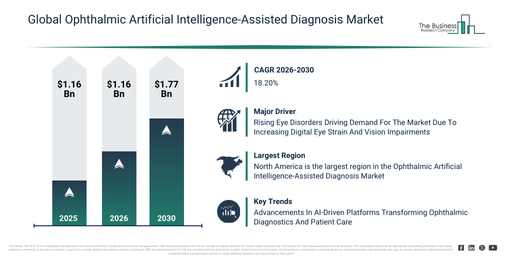
    The market size for ophthalmic artificial intelligence-assisted diagnosis has demonstrated swift growth in recent years. Its anticipated expansion is from $2.17 billion in 2025 to $2.57 billion in 2026, at an 18.5% compound annual growth rate (CAGR). This historical growth can be ascribed to several factors, including the increasing adoption of digital imaging devices, a rising prevalence of eye diseases, growing awareness regarding early diagnosis, the integration of AI in clinical trials, and advancements in retinal imaging technology.

    The ophthalmic artificial intelligence-assisted diagnosis market is projected to experience substantial expansion in the coming years. This market is anticipated to reach a valuation of $5.03 billion by 2030, exhibiting a compound annual growth rate (CAGR) of 18.2%. Factors contributing to this growth over the forecast period include the rise of cloud-based AI diagnostic platforms, the expansion of tele-ophthalmology services, advancements in AI algorithms for detecting rare eye disorders, collaborations between AI developers and healthcare institutions, and the growing uptake of predictive ophthalmology. Key trends foreseen during this period encompass AI-based retinal imaging analysis, disease detection powered by deep learning, the development of predictive ophthalmology models, automated analysis of patient records, and the seamless integration of AI into clinical workflows.

    Access Your Free Sample Report for In-Depth Market Insights:

    https://www.thebusinessresearchcompany.com/sample.aspx?id=28285&type=smp

    Which Drivers Are Expected To Impact The Ophthalmic Artificial Intelligence-Assisted Diagnosis Market During The Forecast Period?

    The increasing occurrence of eye disorders is anticipated to propel the growth of the ophthalmic artificial intelligence-assisted diagnosis market going forward. Eye disorders refer to medical conditions or abnormalities that affect the structure or function of the eye, potentially impairing vision or eye health. These conditions are on the rise due to increasing screen time from digital device usage, which leads to digital eye strain, dryness, and long-term vision issues resulting from prolonged blue light exposure and reduced blinking rates. Ophthalmic artificial intelligence-assisted diagnosis provides assistance by analyzing medical images and patient data to detect, classify, and predict eye disorders early and accurately, thereby enabling timely treatment and reducing the risk of vision loss. For instance, in August 2023, according to the World Health Organization (WHO), a Switzerland-based United Nations agency, estimates from 2023 reveal that more than 2.2 billion people live with near or distance vision impairment—over 1 billion of which are preventable or untreated. Refractive errors and cataracts remain the leading causes, and access to effective interventions reaches only 36% of those affected by refractive error–related impairment and just 17% of those with cataract-related impairment. Consequently, the rising prevalence of eye disorders is driving the growth of the ophthalmic artificial intelligence-assisted diagnosis market.

    Which Segments Are Driving Activity In The Ophthalmic Artificial Intelligence-Assisted Diagnosis Market?

    The ophthalmic artificial intelligence-assisted diagnosis market covered in this report is segmented –

    1) By Type: Cloud-Based, On-Premises

    2) By Technology: Deep Learning, Machine Learning, Computer Vision, Other Technologies

    3) By Application: Hospital, Clinic, Imaging Centre

    Subsegments:

    1) By Cloud-Based: Public Cloud, Private Cloud, Hybrid Cloud

    2) By On-Premises: Local Server Deployment, Enterprise Data Center Deployment, Private Network Deployment

    How Are Emerging Trends Affecting The Progression Of The Ophthalmic Artificial Intelligence-Assisted Diagnosis Market?

    Leading companies in the ophthalmic artificial intelligence-assisted diagnosis market are concentrating on developing innovative solutions, such as an ocular data-as-a-service platform, to boost diagnostic accuracy, optimize patient care, and provide predictive insights for eye disorders. An ocular data-as-a-service platform is a digital solution that delivers eye health data on demand, allowing ophthalmologists, clinics, and AI diagnostic tools to remotely access, share, and analyze retinal images and other ocular information for improved diagnosis, monitoring, and research. For instance, in May 2025, Topcon Healthcare Solutions Inc., a US-based digital healthcare solutions company, launched IDHea, designed to streamline ophthalmic diagnostics and enhance patient outcomes. This cloud-based platform accelerates AI and digital health innovation by providing fast, secure access to real-world and clinical ocular datasets. It empowers researchers to drive breakthroughs in both eye and systemic disease care by transforming clinical data into actionable, AI-powered insights. Built on the FAST principle (Fast, Accessible, Safe, and Transparent), IDHea facilitates predictive, personalized, and proactive patient care while upholding rigorous privacy and governance standards.

    Which Leading Companies Dominate The Ophthalmic Artificial Intelligence-Assisted Diagnosis Market Share?

    Major companies operating in the ophthalmic artificial intelligence-assisted diagnosis market are IDx Technologies Inc., Digital Diagnostics Inc., AEYE Health Inc., Eyenuk Inc., OphtAI, Oivi Tech Private Limited, Altris Inc., JuneBrain Inc., Mediwhale Inc., MONA.health BV, Remidio Innovative Solutions Pvt. Ltd., Retinalyze System A/S, Retmarker, RetinaRisk, Ikerian AG, VoxelCloud Inc., Visulytix Ltd., Aiforia Technologies Plc, DeepTek Inc., EyRIS Pte Ltd., Neurodynamics Solutions Inc.

    Access The Complete Report For Deeper Market Insights:

    https://www.thebusinessresearchcompany.com/report/ophthalmic-artificial-intelligence-assisted-diagnosis-global-market-report

    Which Region Is Anticipated To See The Fastest Growth In The Ophthalmic Artificial Intelligence-Assisted Diagnosis Market?

    North America was the largest region in the ophthalmic artificial intelligence-assisted diagnosis market in 2025. Asia-Pacific is expected to be the fastest-growing region in the forecast period. The regions covered in the ophthalmic artificial intelligence-assisted diagnosis market report are Asia-Pacific, South East Asia, Western Europe, Eastern Europe, North America, South America, Middle East, Africa.

    Request Your Customized Ophthalmic Artificial Intelligence-Assisted Diagnosis Market Research Report for Competitive Advantage:

    https://www.thebusinessresearchcompany.com/customise?id=28285&type=smp

    Browse Through More Reports Similar to the Global Ophthalmic Artificial Intelligence-Assisted Diagnosis Market 2026, By The Business Research Company

    Ophthalmic Devices Global Market Report 2026

    https://www.thebusinessresearchcompany.com/report/ophthalmic-devices-global-market-report

    Ophthalmic Workstations Global Market Report 2026

    https://www.thebusinessresearchcompany.com/report/ophthalmic-workstations-global-market-report

    Artificial Intelligence In The Diagnostic Global Market Report 2026

    https://www.thebusinessresearchcompany.com/report/artificial-intelligence-in-the-diagnostic-global-market-report

    Get in touch with us:

    The Business Research Company: https://www.thebusinessresearchcompany.com/

    Americas +1 310-496-7795

    Asia +44 7882 955267 & +91 8897263534

    Europe +44 7882 955267

    Email us at info@tbrc.info

    Follow us on:

    LinkedIn: https://in.linkedin.com/company/the-business-research-company
  • Operating-Room Instrument Sterile Robot Market Outlook: Growth and Forecast Highlights 2030

    Operating-Room Instrument Sterile Robot Market Outlook: Growth and Forecast Highlights 2030

    Uncover key drivers, emerging technologies, and competitive movements shaping the worker heat stress monitoring wearable market from 2026–2035 with trusted insights from The Business Research Company

    How much is the Operating-Room Instrument Sterile Robot Market valued at in 2026, and what valuation is forecast for 2030?

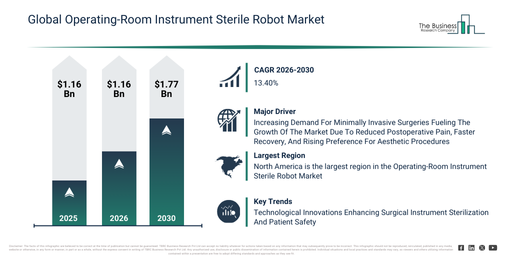
    The operating-room instrument sterile robot market has witnessed rapid expansion in recent years. This market is set to increase from $1.92 billion in 2025 to $2.18 billion in 2026, registering a compound annual growth rate (CAGR) of 13.7%. Historically, this market’s growth has been propelled by factors including escalating hospital-acquired infection rates, the integration of robotic surgery, continuous technological progress in sterilization, a heightened demand for procedural efficiency, and the general rise of healthcare robotics.

    The operating-room instrument sterile robot market size is projected to experience substantial growth over the coming years. This market is anticipated to reach $3.61 billion by 2030, exhibiting a compound annual growth rate (CAGR) of 13.4%. Key factors contributing to this expansion during the forecast period include integration with smart hospital ecosystems, AI-driven instrument tracking, the expansion of ambulatory surgical centers, the adoption of advanced chemical sterilization methods, and the availability of cost-optimized robotic systems. Noteworthy trends expected during this period encompass automated sterilization workflows, UV-C and hydrogen peroxide sterilization techniques, mobile sterile instrument robots, enhanced integration with hospital IT systems, and the rise of hybrid semi-automated sterilization.

    Access Your Free Sample Report for In-Depth Market Insights:

    https://www.thebusinessresearchcompany.com/sample.aspx?id=29140&type=smp

    What Drivers Are Influencing The Growth Of The Operating-Room Instrument Sterile Robot Market?

    The increasing requirement for minimally invasive surgeries is projected to drive the expansion of the operating-room instrument sterile robot market moving forward. Minimally invasive surgeries are defined as surgical interventions carried out through small incisions using specialized tools and techniques, aiming to reduce tissue damage and promote quicker patient recovery. The heightened demand for these surgeries is attributed to decreased postoperative pain, as smaller incisions minimize tissue harm and improve patient comfort. Operating-room instrument sterile robots aid in meeting the demand for minimally invasive surgeries by ensuring consistently sterile instruments, mitigating infection risks, and facilitating the high precision essential for such delicate procedures. For instance, in June 2024, the American Society of Plastic Surgeons, a US-based professional organization, reported a 7% growth in minimally invasive procedures in 2023, exceeding traditional surgical procedures by 2%. Therefore, the rising demand for minimally invasive surgeries is a key factor propelling the growth of the operating-room instrument sterile robot market.

    How Is The Operating-Room Instrument Sterile Robot Market Organized Into Various Segments?

    The operating-room instrument sterile robot market covered in this report is segmented –

    1) By Product Type: Fully Automated Instrument Handling Robots, Semi-Automated Instrument Handling Robots, Hybrid Instrument Management Robots

    2) By Sterility Maintenance Technology: UV-C Assisted Instrument Sterility Robots, Chemical-Based Local Instrument Sterility Robots, Enclosed Sterile Compartment Robots, Touchless Handling and Containment Robots

    3) By Mobility Type: Mobile Operating-Room Instrument Robots, Fixed or Ceiling-Mounted Instrument Robots

    4) By Application: General Surgery Operating Rooms, Orthopedic Surgery Operating Rooms, Cardiovascular Surgery Operating Rooms, Neurosurgery Operating Rooms, Minimally Invasive Surgery Operating Rooms

    5) By End-User: Public Hospitals, Private Hospitals, Specialty Surgical Centers, Ambulatory Surgical Centers

    Subsegments:

    1) By Fully Automated Instrument Handling Robots: Autonomous Instrument Delivery Robots, Autonomous Instrument Retrieval Robots, Robotic Instrument Sorting and Organization Systems, Enclosed Sterile Instrument Transport Robots, AI-Guided Instrument Selection and Handover Robots

    2) By Semi-Automated Instrument Handling Robots: Staff-Assisted Robotic Instrument Handling Systems, Robotic Instrument Positioning and Holding Devices, Partially Autonomous Instrument Transfer Robots, Touchless Instrument Pass-Through Robots, Human-in-the-Loop Instrument Management Robots

    3) By Hybrid Instrument Management Robots: Instrument Handling Robots with Integrated Local Sterility Modules, Mobile-Fixed Hybrid Instrument Management Robots, Multi-Function Instrument Handling and Tracking Robots, Instrument Handling Robots Integrated with OR Workflow Systems, Sterile Instrument Logistics and Inventory Hybrid Robots

    Which Innovation Trends Are Advancing Developments Within The Operating-Room Instrument Sterile Robot Market?

    Major companies within the operating-room instrument sterile robot market are focusing on developing innovative strategies, such as whole-room pulsed UV germicidal sterilization, to provide hospitals with advanced solutions. These solutions aim to enhance surgical instrument sterilization, minimize infection risks, and improve overall patient safety and operational efficiency. Whole-room pulsed UV germicidal sterilization is a disinfection approach that employs high-intensity, broad-spectrum ultraviolet light pulses to eliminate microorganisms on surfaces throughout an unoccupied area. For example, in February 2023, Xenex Disinfection Services Inc., a US-based company specializing in advanced ultraviolet (UV) light technology, launched its LightStrike+ whole-room pulsed UV germicidal sterilization system. This innovative device is engineered to achieve rapid and effective microbial reduction on non-porous, non-critical medical device surfaces within unoccupied operating rooms and clinical settings, integrating advanced safety features, biocompatibility testing, and software controls to ensure consistent sterilization, reduce the risk of hospital-acquired infections, and complement existing manual cleaning and disinfection protocols.

    Who Are The Major Companies Operating In The Operating-Room Instrument Sterile Robot Market?

    Major companies operating in the operating-room instrument sterile robot market are Intuitive Surgical Inc., Stryker Corporation, Johnson and Johnson, Medtronic plc, Zimmer Biomet Holdings Inc., Smith and Nephew plc, Asensus Surgical Inc., CMR Surgical Ltd., Medrobotics Corporation, Titan Medical Inc., Avateramedical GmbH, Medicaroid Corporation, Rob Surgical Systems S L, Moon Surgical SAS, SS Innovations International Inc., Virtuoso Surgical Inc., Vicarious Surgical Inc., Noah Medical Corporation, EndoQuest Robotics Inc., Medical Microinstruments SpA

    Access The Complete Report For Deeper Market Insights:

    https://www.thebusinessresearchcompany.com/report/operating-room-instrument-sterile-robot-global-market-report

    Which Region Is Anticipated To See The Fastest Growth In The Operating-Room Instrument Sterile Robot Market?

    North America was the largest region in the operating-room instrument sterile robot market in 2025. Asia-Pacific is expected to be the fastest-growing region in the forecast period. The regions covered in the operating-room instrument sterile robot market report are Asia-Pacific, South East Asia, Western Europe, Eastern Europe, North America, South America, Middle East, Africa.

    Request Your Customized Operating-Room Instrument Sterile Robot Market Research Report for Competitive Advantage:

    https://www.thebusinessresearchcompany.com/customise?id=29140&type=smp

    Browse Through More Reports Similar to the Global Operating-Room Instrument Sterile Robot Market 2026, By The Business Research Company

    Sterilization Equipment Global Market Report 2026

    https://www.thebusinessresearchcompany.com/report/sterilization-equipment-global-market-report

    Handheld Surgical Devices And Equipment Global Market Report 2026

    https://www.thebusinessresearchcompany.com/report/handheld-surgical-devices-and-equipment-global-market-report

    Surgical Robot Accessories Global Market Report 2026

    https://www.thebusinessresearchcompany.com/report/surgical-robot-accessories-global-market-report

    Get in touch with us:

    The Business Research Company: https://www.thebusinessresearchcompany.com/

    Americas +1 310-496-7795

    Asia +44 7882 955267 & +91 8897263534

    Europe +44 7882 955267

    Email us at info@tbrc.info

    Follow us on:

    LinkedIn: https://in.linkedin.com/company/the-business-research-company
  • Operating Tables And Lights Market Insights Report: Opportunities and Drivers 2030

    Operating Tables And Lights Market Insights Report: Opportunities and Drivers 2030

    Uncover key drivers, emerging technologies, and competitive movements shaping the workstation graphics processing unit (gpu) market from 2026–2035 with trusted insights from The Business Research Company

    By how much is the Operating Tables And Lights Market expected to grow between 2026 and 2030?

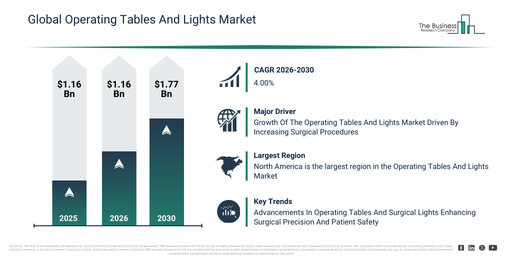
    The operating tables and lights market size has shown consistent expansion in recent years. It is projected to increase from $1.47 billion in 2025 to $1.53 billion in 2026, achieving a compound annual growth rate (CAGR) of 4.5%. The past growth is attributable to an increasing global volume of surgical procedures, the enlargement of hospital operating rooms, greater investments in modern surgical infrastructure, the wider embrace of minimally invasive surgeries, and better access to advanced OR equipment.

    The market for operating tables and lights is projected to experience consistent expansion over the upcoming years. By 2030, this market is anticipated to reach $1.79 billion, showing a compound annual growth rate (CAGR) of 4.0%. This anticipated growth is driven by several factors, including the rising need for intelligent operating rooms, a greater emphasis on surgical workflow efficiency, the expansion of outpatient surgical centers, increased capital expenditure on energy-efficient medical devices, and the growing substitution of older operating tables and lights. Key trends expected during the forecast timeframe encompass the wider acceptance of electrically powered operating tables, a surge in demand for LED surgical lighting systems, the increasing incorporation of adjustable and modular table configurations, the broadening of hybrid operating room equipment, and a heightened focus on surgical ergonomics.

    Access Your Free Sample Report for In-Depth Market Insights:

    https://www.thebusinessresearchcompany.com/sample.aspx?id=17215&type=smp

    Which Drivers Are Influencing Market Acceleration In The Operating Tables And Lights Market?

    An increase in surgical procedures is forecast to stimulate the expansion of the operating tables and lights market in the future. These procedures involve medical operations where surgeons utilize manual and instrumental methods to diagnose, treat, or correct various conditions, injuries, or diseases. This rise in surgical interventions can be attributed to factors such as an aging demographic, progress in medical technology, enhanced healthcare accessibility, and superior diagnostic capabilities. Essential for contemporary surgery, operating tables and lights significantly boost surgical precision, ensure safety, and improve efficiency, leading to better patient results. As an illustration, data from November 2023 reported by the Australian Institute of Health and Welfare (AIHW), an Australia-based government agency, showed approximately 735,500 individuals underwent surgery from public hospital elective surgery waiting lists during 2022–2023, representing an 18% increase compared to 2021-2022. Consequently, the growing volume of surgical procedures is anticipated to drive the expansion of the operating tables and lights market.

    What Segments Are Identified Within The Structure Of The Operating Tables And Lights Market?

    The operating tables and lights market covered in this report is segmented –

    1) By Product Type: Operating Tables, Operating Room Lights

    2) By Operation: Manual Operating Table, Power Operating Table

    3) By End-User: Hospitals, Ambulatory Surgical Centers, Emergency Centers, Other End-Users

    Subsegments:

    1) By Operating Tables: Manual Operating Tables, Electric Operating Tables, Hydraulic Operating Tables, Surgical Stretcher Tables

    2) By Operating Room Lights: Ceiling-Mounted Surgical Lights, Wall-Mounted Surgical Lights, Mobile Surgical Lights, Examination Lights

    Which Competitive Trends Are Impacting The Structure Of The Operating Tables And Lights Market?

    Key companies operating in the operating tables and lights sector are primarily focused on creating innovative products, particularly user-friendly designs, to enhance surgical accuracy and improve patient outcomes. User-friendly products are specifically engineered for simplicity and ease of use, ensuring operators can utilize them without confusion or excessive instruction. These offerings commonly feature intuitive controls, clear interfaces, and accessible designs that significantly improve the overall user experience. As an example, in August 2024, Getinge AB, a Swedish medical technology firm, introduced the Maquet Corin operating room (OR) table and the Maquet Ezea surgical light to elevate surgical efficiency, safety, and user experience within operating environments. The Maquet Corin operating room (OR) table incorporates an intuitive interface that optimizes workflows and strengthens collaboration among surgical teams, integrating smart safety features like collision detection and overload alerts. Meanwhile, the Maquet Ezea surgical light emphasizes ease of use and durability, providing strong illumination along with advanced capabilities such as eye-sensitive dimming and a high color rendering index for accurate color representation during surgical procedures.

    Which Major Firms Are Strengthening Their Position In The Operating Tables And Lights Market?

    Major companies operating in the operating tables and lights market are Siemens AG, Stryker Corporation, GE Healthcare, STERIS Corporation, Shenzhen Mindray Bio-Medical Electronics Co. Ltd., Drägerwerk AG & Co. KGaA, Getinge AB, Heal Force Bio-Meditech Holdings Limited, AGA Sanitaetsartikel GmbH, Famed Zywiec Sp. z o.o., Alvo Medical Sp. z o.o., Mizuho OSI, Merivaara Corp, Mediland Enterprise Corporation, BenQ Medical Technology, UFSK-International OSYS GmbH, Fazzini SRL, Lojer Oy, Medifa-hesse GmbH & Co. KG, Ningbo Techart Medical Equipment Co. Ltd., OPT Surgisystems S.R.L.

    Access The Complete Report For Deeper Market Insights:

    https://www.thebusinessresearchcompany.com/report/operating-tables-and-lights-global-market-report

    Which Global Regions Are Shaping The Competitive Landscape Of The Operating Tables And Lights Market?

    North America was the largest region in the operating tables and lights market in 2025. The regions covered in the operating tables and lights market report are Asia-Pacific, South East Asia, Western Europe, Eastern Europe, North America, South America, Middle East, Africa.

    Request Your Customized Operating Tables And Lights Market Research Report for Competitive Advantage:

    https://www.thebusinessresearchcompany.com/customise?id=17215&type=smp

    Browse Through More Reports Similar to the Global Operating Tables And Lights Market 2026, By The Business Research Company

    Operating Tables Global Market Report 2026

    https://www.thebusinessresearchcompany.com/report/operating-tables-global-market-report

    Specialty Lighting Global Market Report 2026

    https://www.thebusinessresearchcompany.com/report/specialty-lighting-global-market-report

    Operational Technologies Global Market Report 2026

    https://www.thebusinessresearchcompany.com/report/operational-technologies-global-market-report

    Get in touch with us:

    The Business Research Company: https://www.thebusinessresearchcompany.com/

    Americas +1 310-496-7795

    Asia +44 7882 955267 & +91 8897263534

    Europe +44 7882 955267

    Email us at info@tbrc.info

    Follow us on:

    LinkedIn: https://in.linkedin.com/company/the-business-research-company
  • Operating Room Equipment Global Forecast: Market to Scale Up to $22.35 Billion by 2030 at 5.6% CAGR

    Operating Room Equipment Global Forecast: Market to Scale Up to $22.35 Billion by 2030 at 5.6% CAGR

    Uncover key drivers, emerging technologies, and competitive movements shaping the worker heat stress monitoring wearable market from 2026–2035 with trusted insights from The Business Research Company

    What is the estimated market size of the Operating Room Equipment Market by the end of 2030?

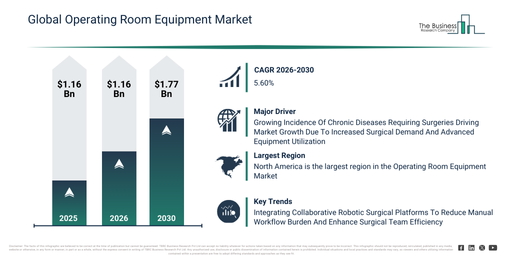
    The operating room equipment market size has seen substantial growth over the past few years. It is forecast to increase from $17.05 billion in 2025 to $17.95 billion in 2026, advancing at a compound annual growth rate (CAGR) of 5.2%. This historical expansion can be attributed to increasing surgical procedure volumes, expansion of hospital infrastructure, rising prevalence of chronic diseases requiring surgery, improved access to advanced surgical technologies, and growing adoption of minimally invasive procedures.

    The operating room equipment market is projected to experience robust expansion over the coming years. This market is anticipated to reach $22.36 billion by 2030, demonstrating a compound annual growth rate (CAGR) of 5.6%. Key drivers for this expansion during the forecast period include greater investments in smart hospitals, an escalating need for real-time surgical data integration, the proliferation of outpatient and ambulatory surgery centers, an intensified focus on technologies enhancing patient safety, and ongoing advancements in surgical equipment design. Significant trends projected for this period encompass the wider adoption of integrated operating room systems, an increasing need for sophisticated patient monitoring solutions, the expanded application of minimally invasive surgical equipment, the development of smart anesthesia delivery systems, and a heightened emphasis on streamlining surgical workflows.

    Access Your Free Sample Report for In-Depth Market Insights:

    https://www.thebusinessresearchcompany.com/sample.aspx?id=3804&type=smp

    What Drivers Are Shaping Future Opportunities In The Operating Room Equipment Market?

    The anticipated expansion of the operating room equipment market is linked to the rising occurrence of chronic conditions necessitating surgical interventions. These are defined as enduring medical ailments that persist for prolonged periods, typically exceeding three months. The increasing prevalence of these chronic illnesses is attributable to an aging global demographic and the widespread adoption of inactive lifestyles combined with inadequate dietary habits. This escalating incidence of chronic diseases demanding surgery boosts the operating room equipment by fueling the need for sophisticated surgical instruments, patient monitoring equipment, operating tables, and imaging apparatus crucial for secure and effective surgical operations. As an illustration, in June 2024, data from the National Health Service, a UK-based government department, revealed that 3,615,330 individuals registered with a general practitioner (GP) received a diagnosis of non-diabetic hyperglycemia or pre-diabetes (a condition characterized by elevated blood sugar levels, insufficient for a diabetes classification) in 2023. This represented an 18% surge compared to 3,065,825 cases recorded in 2022. Consequently, the escalating occurrence of chronic conditions necessitating surgical interventions is a primary driver for the expansion of the operating room equipment market.

    Which Segments Are Gaining Traction In The Operating Room Equipment Market?

    The operating room equipment market covered in this report is segmented –

    1) By Type: Anesthesia Devices, Endoscopes, Operating Room Lights, Operating Tables, Electrosurgical Devices, Surgical Imaging Devices, Patient Monitors

    2) By Application: Cardiovascular Surgery, Thoracic Surgery, Neurosurgery, Other Applications

    3) By End User: Hospitals, Outpatient Facilities And Ambulatory Surgery Centers

    Subsegments:

    1) By Anesthesia Devices: Anesthesia Machines, Vaporizers, Anesthesia Monitors

    2) By Endoscopes: Rigid Endoscopes, Flexible Endoscopes, Accessories For Endoscopy

    3) By Operating Room Lights: Surgical LED Lights, Surgical Halogen Lights, Examination Lights

    4) By Operating Tables: General Surgical Tables, Specialty Surgical Tables, Adjustable Operating Tables

    5) By Electrosurgical Devices: Electrosurgical Generators, Electrosurgical Instruments, Smoke Evacuators

    6) By Surgical Imaging Devices: C-Arms, Surgical Ultrasound Systems, Intraoperative CT Scanners

    7) By Patient Monitors: Multi-Parameter Monitors, Bedside Monitors, Portable Monitors

    What Industry Trends Are Transforming The Operating Room Equipment Market?

    Leading companies within the operating room equipment market are increasingly integrating collaborative robotic assistance systems. Their objective is to minimize manual workflow redundancies, enhance surgical precision, and improve staff productivity during procedures. These collaborative platforms aid surgeons and surgical technologists by providing automated instrumentation control, stabilized assistance, and workflow optimization capabilities, which reduce physical workload and streamline operating room processes. For instance, in November 2024, Moon Surgical, a US-based surgical robotics company, unveiled its Maestro Platform at Lee Health. This platform is engineered to augment surgical teams and bolster procedural consistency. The company reports that Maestro helps operating rooms save the equivalent of 8.3 full working days of surgical technologist time through the automation of repetitive tasks and optimization of intraoperative support. This indicates a broader market movement towards augmentative robotics, aiming to reduce staff strain, mitigate procedural delays, and improve overall operating room efficiency.

    Who Are The Primary Competitors In The Global Operating Room Equipment Market?

    Major companies operating in the operating room equipment market are Medtronic, Olympus, GE, Stryker, Philips, Getinge, Drägerwerk, Hill-Rom, Nihon Kohden, Steris, STAAN Bio-Med Engineering, GE Healthcare, Covidien, Philips Healthcare, Smiths Medical, Metran, Siemens Healthcare, Opto Circuits, Fukuda Denshi, Canon Medical Systems, Mindray, Boston Scientific, DePuy Synthes, Simeon Medical, Teleflex, Johnson & Johnson, Alvo Medical, Mizuho OSI, Karl Storz, KLS Martin Group

    Access The Complete Report For Deeper Market Insights:

    https://www.thebusinessresearchcompany.com/report/operating-room-equipment-global-market-report

    Which Regions Are Poised For Strategic Growth In The Operating Room Equipment Market?

    North America was the largest region in the global operating room equipment market in 2025. Asia-Pacific is expected to be the fastest-growing region in the forecast period. The regions covered in the operating room equipment market report are Asia-Pacific, South East Asia, Western Europe, Eastern Europe, North America, South America, Middle East, Africa.

    Request Your Customized Operating Room Equipment Market Research Report for Competitive Advantage:

    https://www.thebusinessresearchcompany.com/customise?id=3804&type=smp

    Browse Through More Reports Similar to the Global Operating Room Equipment Market 2026, By The Business Research Company

    Operating Room Integration Global Market Report 2026

    https://www.thebusinessresearchcompany.com/report/operating-room-integration-global-market-report

    Farm Equipment Rental Global Market Report 2026

    https://www.thebusinessresearchcompany.com/report/farm-equipment-rental-global-market-report

    Operating Room Management Software Global Market Report 2026

    https://www.thebusinessresearchcompany.com/report/operating-room-management-software-global-market-report

    Get in touch with us:

    The Business Research Company: https://www.thebusinessresearchcompany.com/

    Americas +1 310-496-7795

    Asia +44 7882 955267 & +91 8897263534

    Europe +44 7882 955267

    Email us at info@tbrc.info

    Follow us on:

    LinkedIn: https://in.linkedin.com/company/the-business-research-company
  • Open Surgery Instruments Market Future Outlook: Strong Growth Expected Toward $90.57 Billion by 2030

    Open Surgery Instruments Market Future Outlook: Strong Growth Expected Toward $90.57 Billion by 2030

    Uncover key drivers, emerging technologies, and competitive movements shaping the workstation graphics processing unit (gpu) market from 2026–2035 with trusted insights from The Business Research Company

    What was the valuation of the Open Surgery Instruments Market in 2026, and what figure is it projected to hit by 2030?

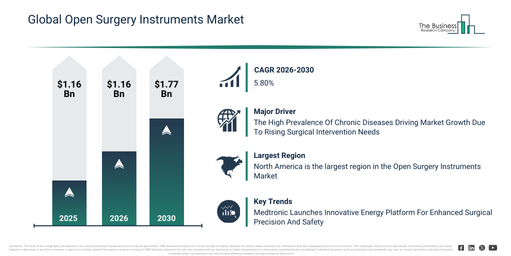
    The open surgery instruments market size has experienced significant expansion recently. This market is projected to expand from $68.04 billion in 2025 to $72.38 billion in 2026, exhibiting a compound annual growth rate (CAGR) of 6.4%. Historically, this growth can be linked to a greater number of open surgical procedures, the expansion of hospital surgical facilities, an increase in the availability of skilled surgeons, the wider adoption of standardized surgical kits, and ongoing advancements in instrument metallurgy.

    The open surgery instruments market size is set to experience significant growth in the coming years. It is forecast to grow to $90.57 billion in 2030, achieving a compound annual growth rate (CAGR) of 5.8%. This expansion during the projection period can be attributed to the rising embrace of advanced surgical technologies, increased demand for multi-specialty surgical instruments, the proliferation of complex surgical procedures, a heightened focus on reducing surgical complications, and increased investments in upgrades for hospital operating rooms. Major trends expected in the forecast period include a growing need for high-precision surgical instruments, the increasing utilization of reusable and sterilizable tools, wider adoption of ergonomic instrument designs, the expansion of advanced energy-based surgical devices, and an enhanced emphasis on surgical accuracy.

    Access Your Free Sample Report for In-Depth Market Insights:

    https://www.thebusinessresearchcompany.com/sample.aspx?id=17214&type=smp

    Which Drivers Are Affecting Market Participation In The Open Surgery Instruments Market?

    The widespread occurrence of long-term illnesses is projected to boost the expansion of the open surgery instrument market in the future. These persistent health issues endure for extended periods, necessitate ongoing medical care or management, and significantly affect an individual’s quality of life. Various elements contribute to the rising incidence of chronic diseases, including shifts in lifestyle, an increasingly older population, better accessibility to healthcare, and genetic factors. Open surgery instruments improve and streamline the surgical management of chronic conditions, simultaneously enabling medical professionals to enhance operational accuracy, shorten recuperation periods, and safeguard patient well-being during procedures. A notable example is the data from May 2023, where the World Health Organization, a Switzerland-based United Nations health agency, reported that non-communicable diseases (NCDs) currently account for almost three-quarters of all global deaths, with forecasts indicating a potential rise to 86% by 2048. Consequently, the substantial presence of chronic diseases is propelling the development of the open surgery instruments market.

    What Segment Categories Are Covered In The Open Surgery Instruments Market?

    The open surgery instruments market covered in this report is segmented –

    1) By Product: Scalpel, Scissors, Forceps, Clamps, Needles And Suture, Retractors, Suction, Staplers And Clips, Energy Systems

    2) By Application: Cardiothoracic Surgery, Urologic Surgery, Orthopedic Surgery

    3) By End-User: Hospitals, Ambulatory Surgery Centers, Clinics

    Subsegments:

    1) By Scalpel: Disposable Scalpels, Reusable Scalpels

    2) By Scissors: Straight Scissors, Curved Scissors, Metzenbaum Scissors, Mayo Scissors

    3) By Forceps: Tissue Forceps, Surgical Forceps, Hemostatic Forceps

    4) By Clamps: Hemostatic Clamps, Tissue Clamps, Surgical Clamps

    5) By Needles And Suture: Surgical Needles, Absorbable Sutures, Non-Absorbable Sutures

    6) By Retractors: Handheld Retractors, Self-Retaining Retractors

    7) By Suction: Manual Suction Devices, Electric Suction Devices

    8) By Staplers And Clips: Surgical Staplers, Hemostatic Clips, Skin Staplers

    9) By Energy Systems: Electrosurgical Units, Laser Energy Systems, Ultrasonic Energy Systems

    What Trends Are Reshaping The Dynamics Of The Open Surgery Instruments Market?

    Leading companies in the open surgery instruments market are prioritizing the development of sophisticated solutions, particularly next-generation surgical energy platforms, to supersede conventional electrosurgical devices. A next-generation surgical energy platform describes a tool that enhances surgical precision and patient safety by dynamically regulating energy output, improving vessel sealing, and enabling more effective tissue separation during operations. For instance, in September 2025, Medtronic Plc., a US-based medical technology company, introduced its Valleylab FT10 Energy Platform in India. This novel product serves as a replacement for older electrosurgical instruments by offering adaptable energy modes, including monopolar, bipolar, and advanced vessel sealing, to support open surgical procedures. It provides real-time tissue feedback and optimized energy delivery, allowing surgeons to achieve improved procedural results with a lower risk of collateral damage. Its integration with Medtronic’s surgical support initiatives, such as training and workflow incorporation, ensures a fluid clinical experience. The Valleylab FT10 Energy Platform ultimately boosts patient safety, simplifies the surgical process, and encourages the greater adoption of advanced energy solutions in operating theaters.

    Which Key Market Players Are Investing In Expansion And Innovation Within The Open Surgery Instruments Market?

    Major companies operating in the open surgery instruments market are Johnson & Johnson Services Inc., Medtronic, Olympus, Terumo Corporation, B. Braun Medical Ltd., Cook Medical, Teleflex Incorporated, Mölnlycke Health Care AB, Integra LifeSciences Corporation, ConMed Corporation, C.R. Bard Inc., KLS Martin Group, Aspen Surgical Products Inc., Scanlan International Inc., Sklar Surgical Instruments, Grena Ltd., ELMED Incorporated, Aesculap Inc., Medline Industries Inc., HuFriedyGroup

    Access The Complete Report For Deeper Market Insights:

    https://www.thebusinessresearchcompany.com/report/open-surgery-instruments-global-market-report

    Which Regions Are Projected To Dominate The Open Surgery Instruments Market In The Coming Years?

    North America was the largest region in the open surgery instruments market in 2025. Asia-Pacific is expected to be the fastest-growing region in the forecast period. The regions covered in the open surgery instruments market report are Asia-Pacific, South East Asia, Western Europe, Eastern Europe, North America, South America, Middle East, Africa.

    Request Your Customized Open Surgery Instruments Market Research Report for Competitive Advantage:

    https://www.thebusinessresearchcompany.com/customise?id=17214&type=smp

    Browse Through More Reports Similar to the Global Open Surgery Instruments Market 2026, By The Business Research Company

    Surgical Equipment Global Market Report 2026

    https://www.thebusinessresearchcompany.com/report/surgical-equipment-global-market-report

    Digital Surgery Technologies Global Market Report 2026

    https://www.thebusinessresearchcompany.com/report/digital-surgery-technologies-global-market-report

    Surgical Energy Instruments Global Market Report 2026

    https://www.thebusinessresearchcompany.com/report/surgical-energy-instruments-global-market-report

    Get in touch with us:

    The Business Research Company: https://www.thebusinessresearchcompany.com/

    Americas +1 310-496-7795

    Asia +44 7882 955267 & +91 8897263534

    Europe +44 7882 955267

    Email us at info@tbrc.info

    Follow us on:

    LinkedIn: https://in.linkedin.com/company/the-business-research-company
  • Revenue of the Oncology Molecular Diagnostics Market Predicted to Achieve $10.13 Billion by 2030, Driven by 12.4% CAGR

    Revenue of the Oncology Molecular Diagnostics Market Predicted to Achieve $10.13 Billion by 2030, Driven by 12.4% CAGR

    Uncover key drivers, emerging technologies, and competitive movements shaping the worker heat stress monitoring wearable market from 2026–2035 with trusted insights from The Business Research Company

    What are the forecasted starting (2026) and ending (2030) market sizes for the Oncology Molecular Diagnostics Market?

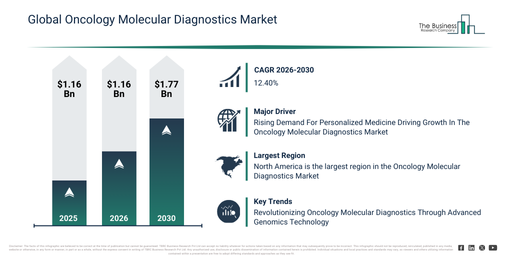
    The oncology molecular diagnostics market has witnessed rapid expansion in recent years. Projections indicate a future increase from $5.65 billion in 2025 to $6.34 billion in 2026, at a compound annual growth rate (CAGR) of 12.2%. This historical growth can be ascribed to several factors, including the rising prevalence of cancer, the adoption of PCR and sequencing technologies, increased oncology research funding, the expansion of hospital diagnostic services, and regulatory approvals for molecular tests.

    The oncology molecular diagnostics market is projected to experience substantial expansion in the coming years, reaching $10.13 billion by 2030, propelled by a compound annual growth rate (CAGR) of 12.4%. This anticipated growth during the forecast period is primarily fueled by factors such as the increasing adoption of precision oncology, progress in liquid biopsy techniques, the rising need for personalized treatments, AI-powered data interpretation, and the expansion into emerging markets. Key trends anticipated for this period encompass the development of companion diagnostics, the increasing application of liquid biopsy, the broader implementation of biomarker-based testing, a rise in cancer screening initiatives, and a strong demand for prompt and precise cancer detection.

    Access Your Free Sample Report for In-Depth Market Insights:

    https://www.thebusinessresearchcompany.com/sample.aspx?id=3457&type=smp

    What Drivers Are Supporting Technological Adoption In The Oncology Molecular Diagnostics Market?

    The increasing demand for personalized medicine is projected to stimulate the growth of the oncology molecular diagnostics market moving forward. Personalized medicine signifies an innovative method in medical treatment and healthcare, customizing medical decisions, practices, interventions, and drug therapies for each individual patient. Oncology molecular diagnostics play a vital role within personalized medicine for cancer patients by enabling customized treatment regimens, optimized drug selection, and more precise, effective, and individualized treatment strategies, ultimately leading to improved patient outcomes and quality of life. For instance, in February 2024, the Personalized Medicine Coalition, a US-based nonprofit organization, documented that the FDA approved 16 new personalized treatments for rare disease patients in 2023, a significant rise from six in 2022. Therefore, the escalating demand for personalized medicine is actively driving the expansion of the oncology molecular diagnostics market.

    Which Segments Are Contributing To The Growth Of The Oncology Molecular Diagnostics Market?

    The oncology molecular diagnostics market covered in this report is segmented –

    1) By Product: Instruments, Reagents, Other Products

    2) By Technology: Polymerase Chain Reaction (PCR), In-Situ Hybridization (ISH), Isothermic Nucleic Acid Amplification Technology (INNAT), Chips And Microarrays, Sequencing, Mass Spectroscopy, Transcription Mediated Amplification (TMA), Other Technologies

    3) By End User: Hospitals, Diagnostic Centers, Academic And Research Institutes, Other End Users

    Subsegments:

    1) By Instruments: Polymerase Chain Reaction (PCR) Machines, Sequencers, Microarray Platforms, Fluorescence In Situ Hybridization (FISH) Instruments

    2) By Reagents: DNA And RNA Extraction Kits, PCR Reagents And Kits, NGS Library Preparation Kits, Diagnostic Assay Reagents

    3) By Other Products: Software For Data Analysis And Interpretation, Quality Control And Calibration Products, Consumables, For Molecular Testing, Biomarkers For Oncology Testing

    How Are New Market Trends Shaping The Landscape Of The Oncology Molecular Diagnostics Market?

    Leading firms within the oncology molecular diagnostics sector are prioritizing the advancement of genomics technologies, including next-generation cancer genome sequencing, computational analytics, and novel tumor modeling, with the aim of enhancing early cancer detection, identifying mutations, and developing personalized treatment approaches. Such developments boost diagnostic accuracy, cut down on processing times, and cater to the increasing need for precise, localized molecular testing. An example of this is OncoHelix-CoLab, a Canada-based precision oncology provider specializing in genomic and immunologic profiling, advanced molecular diagnostics, and immune-profile testing, which inaugurated a cutting-edge laboratory at Burjeel Medical City in the UAE in May 2024. This facility, established through a partnership between Burjeel Holdings and OncoHelix, reinforces regional diagnostic capacities by allowing intricate molecular and immunology tests to be performed within the region, eliminating the need to send samples internationally. Its specialized services encompass sophisticated assays for various cancers, including prostate cancer, backed by collaborations such as its partnership with Nanostics for the ClarityDX Prostate test.

    Who Are The Core Companies Influencing Trends In The Oncology Molecular Diagnostics Market?

    Major companies operating in the oncology molecular diagnostics market are F. Hoffmann-La Roche AG, Bayer AG, Thermo Fisher Scientific Inc., Abbott Laboratories, Danaher Corporation, Siemens Healthcare AG, Becton Dickinson and Company, Agilent Technologies Inc., HTG Molecular Diagnostics Inc., Hologic Inc., Illumina Inc., bioMérieux SA, Beckman Coulter Inc., Sysmex Corporation, Bio-Rad Laboratories Inc., Qiagen N.V., Exact Sciences Corp., Bio-Techne Corporation, OPKO Health Inc., Myriad Genetics Inc., Guardant Health AMEA, Veracyte Inc., Adaptive Biotechnologies Corp., Foundation Medicine Inc., Pacific Biosciences of California Inc., NanoString Technologies Inc., Genomic Health Inc.

    Access The Complete Report For Deeper Market Insights:

    https://www.thebusinessresearchcompany.com/report/oncology-molecular-diagnostics-global-market-report

    Which Region Is Expected To Experience The Fastest Growth In The Oncology Molecular Diagnostics Market?

    North America was the largest region in the oncology molecular diagnostics market in 2025. Western Europe was the second largest region in the global oncology molecular diagnostics market report. The regions covered in the oncology molecular diagnostics market report are Asia-Pacific, South East Asia, Western Europe, Eastern Europe, North America, South America, Middle East, Africa.

    Request Your Customized Oncology Molecular Diagnostics Market Research Report for Competitive Advantage:

    https://www.thebusinessresearchcompany.com/customise?id=3457&type=smp

    Browse Through More Reports Similar to the Global Oncology Molecular Diagnostics Market 2026, By The Business Research Company

    Diagnostic Imaging Equipment Global Market Report 2026

    https://www.thebusinessresearchcompany.com/report/diagnostic-imaging-equipment-global-market-report

    Diagnostic And Monitoring Ophthalmic Devices And Equipment Global Market Report 2026

    https://www.thebusinessresearchcompany.com/report/diagnostic-and-monitoring-ophthalmic-devices-and-equipment-global-market-report

    Microbiology Diagnostic Devices And Equipment Global Market Report 2026

    https://www.thebusinessresearchcompany.com/report/microbiology-diagnostic-devices-and-equipment-global-market-report

    Get in touch with us:

    The Business Research Company: https://www.thebusinessresearchcompany.com/

    Americas +1 310-496-7795

    Asia +44 7882 955267 & +91 8897263534

    Europe +44 7882 955267

    Email us at info@tbrc.info

    Follow us on:

    LinkedIn: https://in.linkedin.com/company/the-business-research-company