Category: Medical Equipment

  • Global Medical Bionic Implant/Artificial Organs Market Forecast 2026–2035: Long-Term Growth Insights

    Global Medical Bionic Implant/Artificial Organs Market Forecast 2026–2035: Long-Term Growth Insights

    Uncover key drivers, emerging technologies, and competitive movements shaping the worker heat stress monitoring wearable market from 2026–2035 with trusted insights from The Business Research Company

    What size range is anticipated for the Medical Bionic Implant/Artificial Organs Market from 2026 to 2030?

    The medical bionic implant/artificial organs market has shown substantial growth in recent years. Its value is anticipated to rise from $25.22 billion in 2025 to $27.31 billion in 2026, registering a compound annual growth rate (CAGR) of 8.3%. The historical expansion of this market can be attributed to several factors, including the increasing prevalence of organ failure conditions, a rising incidence of physical disabilities, significant advancements in biomedical engineering, the broadening of transplant alternatives, and the increasing clinical acceptance of bionic implants.

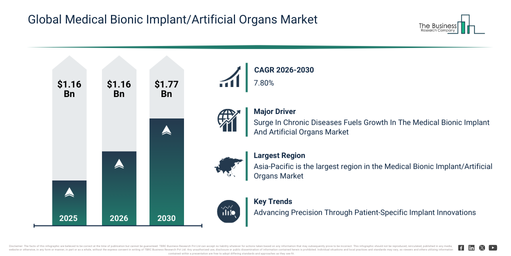
    The medical bionic implant/artificial organs market size is anticipated to undergo significant growth over the next few years. It is projected to expand to $36.91 billion by 2030, achieving a compound annual growth rate (CAGR) of 7.8%. The increase during the forecast period is attributable to heightened investments in regenerative medicine, the rising integration of AI-enabled implant monitoring, the expanding healthcare needs of an aging population, a growing emphasis on minimally invasive implantation, and an increasing demand for smart therapeutic implants. Prominent trends expected in this period include the rising adoption of advanced prosthetic technologies, an increased demand for implantable artificial organs, the growing integration of smart and connected implants, the broadening of personalized bionic solutions, and an enhanced focus on the long-term performance of implants.

    Access Your Free Sample Report for In-Depth Market Insights:

    https://www.thebusinessresearchcompany.com/sample.aspx?id=7870&type=smp

    What Drivers Are Affecting Demand In The Medical Bionic Implant/Artificial Organs Market?

    The rising incidence of chronic ailments is projected to boost the expansion of the medical bionic implant/artificial organs market in the coming years. These long-term health issues encompass conditions like cardiovascular disorders, diabetes, cancer, and respiratory illnesses, which typically worsen over time. The increase in chronic diseases is linked to growing obesity rates, which heighten the long-term susceptibility to numerous severe health problems. Consequently, the medical bionic implant/artificial organs sector is experiencing heightened demand as the rapid spread of chronic conditions compels businesses to implement sophisticated implantable devices designed to reinstate organ functionality and enhance long-term patient well-being. A relevant example from April 2025 highlights that, as per the Centers for Disease Control and Prevention (CDC), a US government public health agency, 76.4% of adults in the United States, which is approximately 194 million individuals, reported suffering from one or more chronic conditions in 2023. This figure indicates a notable increase from 2022, showing a particularly high occurrence among adults in their middle and later years. Thus, the growing occurrence of chronic diseases is a primary catalyst for the demand within the medical bionic implant/artificial organs market.

    Which Segments Are Gaining Traction In The Medical Bionic Implant/Artificial Organs Market?

    The medical bionic implant/artificial organs market covered in this report is segmented –

    1) By Type: Bionic Implants, Artificial Organs

    2) By Technology: Electronic, Mechanical

    3) By Application: Hospitals, Clinics

    Subsegments:

    1) By Bionic Implants: Bionic Limbs, Bionic Eyes, Cochlear Implants

    2) By Artificial Organs: Artificial Hearts, Artificial Kidneys, Artificial Livers, Artificial Pancreas

    How Are Emerging Trends Affecting The Progression Of The Medical Bionic Implant/Artificial Organs Market?

    Leading enterprises in the medical bionic implant and artificial organs market are prioritizing the creation of novel products like sophisticated 3D-printed patient-specific implants to elevate surgical results and accelerate patient recuperation. These advanced 3D-printed patient-specific implants are custom-designed medical devices crafted from an individual’s unique anatomical data, which helps improve fit, shorten operational durations, and enhance overall healing and functional outcomes. For instance, in April 2024, 3D Systems, a US-based medical-device and 3D-printing company, secured FDA 510(k) clearance for its VSP PEEK Cranial Implant. This implant is a patient-specific cranial reconstruction solution manufactured from medical-grade polyether ether ketone (PEEK) using additive manufacturing. Engineered to assist reconstructive surgeons with improved precision and clinical results, the implant leverages CAD-driven planning and 3D printing workflows to provide highly tailored cranial repairs that precisely conform to the patient’s anatomy.

    Who Are The Major Companies Operating In The Medical Bionic Implant/Artificial Organs Market?

    Major companies operating in the medical bionic implant/artificial organs market are Medtronic PLC, Abbott Laboratories Inc., Ekso Bionics Holdings Inc., Cochlear Limited, Cyberonics Inc., LivaNova PLC, NeuroPace Inc., Ossur India Private Limited, Vivani Medical Inc., St Jude Medical India Private Limited, Ottobock SE & Co. KGaA, Edwards Lifesciences India Pvt. Ltd., SynCardia Systems LLC, Demant A/S, Berlin Heart GmbH, Abiomed Inc., Asahi Kasei Medical Co. Ltd., Getinge AB, Bornlife Prosthetic and Orthotic Inc., Sonova Holding AG, Biocontrol Medical Ltd., Aleva Neurotherapeutics SA, Second Sight Medical Products Inc., Touch Bionics Inc., Thoratec Corporation, CardiacAssist Inc., HeartWare International Inc., Synapse Biomedical Inc., Neurotech NA Inc., Retina Implant AG, Advanced Bionics AG, Med-El Elektromedizinische Geräte GmbH

    Access The Complete Report For Deeper Market Insights:

    https://www.thebusinessresearchcompany.com/report/medical-bionic-implant-or-artificial-organs-global-market-report

    Which Region Is Anticipated To See The Fastest Growth In The Medical Bionic Implant/Artificial Organs Market?

    Asia-Pacific was the largest region in the medical bionic implant/artificial organs market share in 2025. The regions covered in the medical bionic implant/artificial organs market report are Asia-Pacific, South East Asia, Western Europe, Eastern Europe, North America, South America, Middle East, Africa.

    Request Your Customized Medical Bionic Implant/Artificial Organs Market Research Report for Competitive Advantage:

    https://www.thebusinessresearchcompany.com/customise?id=7870&type=smp

    Browse Through More Reports Similar to the Global Medical Bionic Implant/Artificial Organs Market 2026, By The Business Research Company

    Artificial Organ And Bionics Global Market Report 2026

    https://www.thebusinessresearchcompany.com/report/artificial-organ-and-bionics-global-market-report

    Microelectronic Medical Implants Global Market Report 2026

    https://www.thebusinessresearchcompany.com/report/microelectronic-medical-implants-global-market-report

    Artificial Organ Global Market Report 2026

    https://www.thebusinessresearchcompany.com/report/artificial-organ-global-market-report

    Get in touch with us:

    The Business Research Company: https://www.thebusinessresearchcompany.com/

    Americas +1 310-496-7795

    Asia +44 7882 955267 & +91 8897263534

    Europe +44 7882 955267

    Email us at info@tbrc.info

    Follow us on:

    LinkedIn: https://in.linkedin.com/company/the-business-research-company
  • Medical Bed Market 2026–2030: Forecasting Business Opportunities Ahead

    Medical Bed Market 2026–2030: Forecasting Business Opportunities Ahead

    Uncover key drivers, emerging technologies, and competitive movements shaping the workstation graphics processing unit (gpu) market from 2026–2035 with trusted insights from The Business Research Company

    How is the Medical Bed Market size predicted to change over the forecast window of 2026–2035?

    The medical bed market size has experienced robust growth in recent years. It is projected to expand from $4.38 billion in 2025 to $4.68 billion in 2026, at a compound annual growth rate (CAGR) of 6.9%. Historically, this market expansion can be attributed to factors such as the expansion of hospital infrastructure, the rising geriatric population, increasing demand for long-term care solutions, the growing use of intensive care units, and the adoption of adjustable patient support furniture.

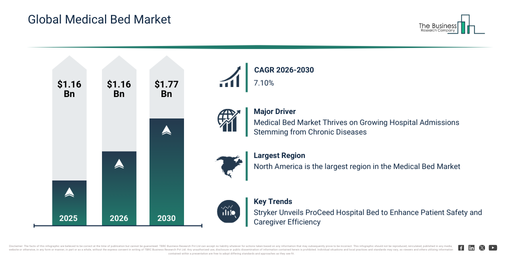
    The medical bed market size is projected to experience robust expansion over the coming years. It is set to reach $6.16 billion by 2030, demonstrating a compound annual growth rate (CAGR) of 7.1%. This anticipated growth during the forecast timeframe is primarily driven by an escalating need for home healthcare equipment, augmented investments in smart healthcare infrastructure, a heightened emphasis on patient-centric care environments, the broader implementation of telehealth-supported recovery, and the expanding use of connected medical furniture. Key trends anticipated within this period encompass the increased adoption of smart hospital beds, a surge in the demand for electrically adjustable beds, the wider incorporation of features for remote patient monitoring, the proliferation of bed designs suitable for homecare, and an enhanced focus on ensuring patient safety and comfort.

    Access Your Free Sample Report for In-Depth Market Insights:

    https://www.thebusinessresearchcompany.com/sample.aspx?id=13700&type=smp

    Which Drivers Are Contributing To The Expansion Of The Medical Bed Market?

    An anticipated increase in hospital admissions resulting from chronic diseases is poised to drive the expansion of the medical bed market moving ahead. Chronic illnesses are defined as health conditions that endure for an extended period, generally exceeding a year, necessitating continuous medical care or restricting daily functions. Numerous elements impact hospital admissions, such as personal health status, socio-economic conditions, the state of healthcare infrastructure, and public health initiatives. Medical beds play a vital role in offering care and assistance to patients throughout their hospital stays. Such beds improve the comfort, safety, and overall medical oversight for patients. To illustrate, data from April 2024 provided by NHS Digital, a UK-based public healthcare body, shows that the count of Finished Admission Episodes in England climbed to 17.6 million in 2024, an increase from 16.4 million in 2023. Consequently, the growing number of hospital admissions linked to chronic diseases is fueling the expansion of the medical bed market.

    What Segment Categories Are Covered In The Medical Bed Market?

    The medical bed market covered in this report is segmented –

    1) By Type: Electric Medical Beds, Semi Electric Medical Beds, Manual Medical Beds

    2) By Usage: Intensive Care, Non-intensive Care

    3) By End-User: Hospitals, Home Care Settings, Rehabilitation Centers, Other End-Users

    Subsegments:

    1) By Electric Medical Beds: Full Electric Beds, Adjustable Electric Beds

    2) By Semi Electric Medical Beds: Adjustable Head And Foot Sections, Manual Adjustment Options

    3) By Manual Medical Beds: Fixed Manual Beds, Basic Adjustable Manual Beds

    Which Innovation Trends Are Advancing Developments Within The Medical Bed Market?

    Leading companies in the medical bed market are concentrating on technological innovations, such as ergonomically designed, multi-functional hospital beds, which enhance the efficiency of caregivers, improve patient safety, and ease usability in demanding healthcare environments. These ergonomically optimized, multi-functional hospital beds feature elements like a low bed height, assistive steering mechanisms, durable construction, and flexible headboard designs to minimize caregiver fatigue, prevent patient falls, and support effective care delivery in high-demand hospital settings. For instance, in February 2025, Stryker Corporation, a US-based medical technologies company, introduced the ProCeed hospital bed to markets outside the U.S. The ProCeed bed incorporates a low-height frame for safer patient mobility, a fifth wheel for simplified maneuvering and reduced caregiver strain, and two headboard options—stationary and mobile—engineered to accommodate diverse patient positioning needs, thus delivering a robust, user-friendly solution that benefits both caregivers and patients.

    Which Major Firms Are Strengthening Their Position In The Medical Bed Market?

    Major companies operating in the medical bed market are Mediline Industries Inc., Stryker Corporation, Getinge AB, Arjo, Paramount Bed Holdings Co., Invacare Corporation, Linet spol. s r.o., Favero Health Projects SpA, Joerns Healthcare LLC, Stiegelmeyer GmbH & Co. KG, Amico Group of Companies, GF Health Products Inc, Umano Medical Inc, Merivaara, Malvestio SpA, Zhangjiagang Medi Medical Equipment, Gendron Inc., American Medical Equipment, Antano Group srl, Besco Medical, Medical Depot Inc., ProBed Medical Technologies, Anyang Top Medical Devices Co. Ltd.

    Access The Complete Report For Deeper Market Insights:

    https://www.thebusinessresearchcompany.com/report/medical-bed-global-market-report

    Which Global Regions Are Shaping The Competitive Landscape Of The Medical Bed Market?

    North America was the largest region in the medical bed market in 2025. Asia-Pacific is expected to be the fastest-growing region in the forecast period. The regions covered in the medical bed market report are Asia-Pacific, South East Asia, Western Europe, Eastern Europe, North America, South America, Middle East, Africa.

    Request Your Customized Medical Bed Market Research Report for Competitive Advantage:

    https://www.thebusinessresearchcompany.com/customise?id=13700&type=smp

    Browse Through More Reports Similar to the Global Medical Bed Market 2026, By The Business Research Company

    Hospital Bed Management Systems Global Market Report 2026

    https://www.thebusinessresearchcompany.com/report/hospital-bed-management-systems-global-market-report

    Hospital Beds Global Market Report 2026

    https://www.thebusinessresearchcompany.com/report/hospital-beds-global-market-report

    Medical Supply Delivery Service Global Market Report 2026

    https://www.thebusinessresearchcompany.com/report/medical-supply-delivery-service-global-market-report

    Get in touch with us:

    The Business Research Company: https://www.thebusinessresearchcompany.com/

    Americas +1 310-496-7795

    Asia +44 7882 955267 & +91 8897263534

    Europe +44 7882 955267

    Email us at info@tbrc.info

    Follow us on:

    LinkedIn: https://in.linkedin.com/company/the-business-research-company
  • Global Medical Batteries Market Report 2026–2035: Key Forecasts and Growth Areas

    Global Medical Batteries Market Report 2026–2035: Key Forecasts and Growth Areas

    Uncover key drivers, emerging technologies, and competitive movements shaping the worker heat stress monitoring wearable market from 2026–2035 with trusted insights from The Business Research Company

    What market expansion outlook does the Medical Batteries Market show for the 2026–2030 period?

    The medical batteries market has experienced robust expansion over the past few years. It is projected to grow from $1.87 billion in 2025 to $1.99 billion in 2026, at a compound annual growth rate (CAGR) of 6.8%. This historical growth can be attributed to factors such as reliance on standard alkaline and zinc-air batteries, the limited battery life in implantable devices, the increasing adoption of home healthcare, the expansion of hospitals and clinics, and the growing demand for portable medical monitoring.

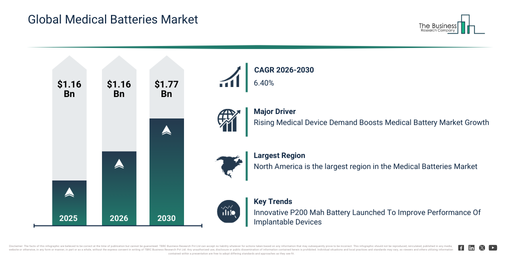
    The medical batteries market is projected to experience substantial expansion in the coming years. This market is anticipated to reach a value of $2.56 billion by 2030, exhibiting a compound annual growth rate (CAGR) of 6.4%. This growth over the forecast period is fueled by several factors, including the progress in lithium-ion and lithium polymer advanced battery technologies, the growing adoption of wearable medical devices, the increasing prevalence of implantable cardiac and neurological devices, a heightened emphasis on battery safety and biocompatibility, and the seamless integration with IoT-enabled medical equipment. Key trends anticipated during this period encompass a growing need for high-energy-density batteries within medical devices, the proliferation of portable and wearable medical devices, a surge in the embrace of rechargeable and extended-life batteries, the broadening scope of implantable device applications, and a continued focus on ensuring safety, biocompatibility, and adherence to regulatory standards.

    Access Your Free Sample Report for In-Depth Market Insights:

    https://www.thebusinessresearchcompany.com/sample.aspx?id=19568&type=smp

    What Drivers Are Shaping The Development Of The Medical Batteries Market?

    The expanding need for medical devices is anticipated to boost the growth of the medical batteries market. Medical devices are instruments, apparatus, or machines employed in healthcare for diagnosing, treating, or tracking medical conditions. This increased demand for medical devices stems from an aging global demographic, a rise in chronic diseases, and advancements in healthcare technology, all contributing to elevated healthcare requirements worldwide. Medical batteries play a vital role in powering various medical devices, ensuring dependable operation for patient monitoring, diagnostic tools, and life-saving equipment. For instance, in March 2025, according to the Large Battery, a China-based battery manufacturing company, over 90% of FDA-approved devices utilize medical-grade batteries to adhere to rigorous safety standards, with certifications like UL2054 and IEC 60086 contributing to a reduction in safety incidents and battery malfunctions by about 25%. Therefore, the escalating demand for medical devices is a primary catalyst for the expansion of the medical batteries market.

    Which Segments Are Contributing To The Growth Of The Medical Batteries Market?

    The medical batteries market covered in this report is segmented –

    1) By Battery Type: Lithium-Ion Batteries, Lithium Primary Batteries, Nickel-Metal Hydride (NiMH) Batteries, Nickel-Cadmium (NiCd) Batteries, Zinc-Based Batteries, Other Battery Types

    2) By Application: Implantable Medical Devices, Non-Implantable Medical Devices, Portable And Wearable Medical Devices

    3) By End-User: Hospitals And Clinics, Home Healthcare Settings, Ambulatory Surgical Centers, Diagnostic Centers, Medical Device Manufacturers

    Subsegments:

    1) By Lithium-Ion Batteries: Lithium Cobalt Oxide (LCO), Lithium Iron Phosphate (LFP), Lithium Manganese Oxide (LMO), Lithium Nickel Manganese Cobalt Oxide (NMC), Lithium Nickel Cobalt Aluminum Oxide (NCA), Lithium Polymer (LiPo)

    2) By Lithium Primary Batteries: Lithium Iodine Batteries, Lithium Silver Vanadium Oxide (Li/SVO) Batteries, Lithium Carbon Monofluoride (Li/CFx) Batteries

    3) By Nickel-Metal Hydride (NiMH) Batteries: Standard NiMH Batteries, Low Self-Discharge NiMH Batteries

    4) By Nickel-Cadmium (NiCd) Batteries: Vented NiCd Batteries, Sealed NiCd Batteries

    5) By Zinc-Based Batteries: Zinc-Air Batteries, Zinc-Carbon Batteries

    6) By Other Battery Types: Silver-Oxide Batteries, Alkaline Batteries, Lead-Acid Batteries

    Which Competitive Trends Are Impacting The Structure Of The Medical Batteries Market?

    Leading firms within the medical batteries market are progressively focusing on creating sophisticated lithium-ion medical batteries, aiming to enhance the performance, safety, and dependability of medical devices. These specialized lithium-ion medical batteries are designed expressly for medical equipment, including portable oxygen concentrators, insulin pumps, and various diagnostic or therapeutic devices demanding reliable and steady power. An example is the launch by Resonetics, a US-based medtech manufacturer, in September 2023, of the Contego P200 mAh primary battery, which is a single-use, implantable lithium/carbon monofluoride (Li-CFx) battery tailored for medical uses. This compact, lightweight, D-shaped cell features high energy density and minimal self-discharge, making it highly suitable for implantable devices that require low to medium pulse power. Its construction includes a fully welded, hermetically sealed titanium casing and a thermal shutdown separator for improved safety; it weighs only 1.75 grams and has dimensions of 21.3 mm × 9.5 mm × 4.4 mm. Providing a nominal voltage of 2.8V, this battery can be acquired off-the-shelf or with customized pin configurations and is produced in an ISO 13485–certified facility. The Contego P200 effectively fills the capacity gap between Resonetics’ existing 140 mAh and 325 mAh cells, thus offering medical device manufacturers increased flexibility in design for applications like neuromodulation, monitoring, and sleep apnea. Resonetics’ medical power division contributes more than 25 years of specialized knowledge in implantable medical-grade power systems.

    Who Are The Primary Competitors In The Global Medical Batteries Market?

    Major companies operating in the medical batteries market are TotalEnergies SE, Panasonic Corporation, 3M Company, Merck KGaA, Texas Instruments Incorporated, STMicroelectronics NV, Murata Manufacturing Co. Ltd, EnerSys Inc., Energizer Holdings Inc., Renata AG SA, VARTA Microbattery GmbH, Vitec Group PLC, EaglePicher Technologies LLC, Ultralife Corporation, Probo Medical LLC, Camelion Battery Co. Ltd., Maxim Integrated Products Inc., Tadiran Batteries Ltd., Blue Spark Technologies Inc., KAYO Battery Company Limited

    Access The Complete Report For Deeper Market Insights:

    https://www.thebusinessresearchcompany.com/report/medical-batteries-global-market-report

    Which Regions Are Poised For Strategic Growth In The Medical Batteries Market?

    North America was the largest region in the medical batteries market in 2025. Asia-Pacific is expected to be the fastest-growing region in the forecast period. The regions covered in the medical batteries market report are Asia-Pacific, South East Asia, Western Europe, Eastern Europe, North America, South America, Middle East, Africa.

    Request Your Customized Medical Batteries Market Research Report for Competitive Advantage:

    https://www.thebusinessresearchcompany.com/customise?id=19568&type=smp

    Browse Through More Reports Similar to the Global Medical Batteries Market 2026, By The Business Research Company

    Medical Kiosk Global Market Report 2026

    https://www.thebusinessresearchcompany.com/report/medical-kiosk-global-market-report

    Refurbished Medical Equipment Global Market Report 2026

    https://www.thebusinessresearchcompany.com/report/refurbished-medical-equipment-global-market-report

    Antimicrobial Medical Device Coatings Global Market Report 2026

    https://www.thebusinessresearchcompany.com/report/antimicrobial-medical-device-coatings-global-market-report

    Get in touch with us:

    The Business Research Company: https://www.thebusinessresearchcompany.com/

    Americas +1 310-496-7795

    Asia +44 7882 955267 & +91 8897263534

    Europe +44 7882 955267

    Email us at info@tbrc.info

    Follow us on:

    LinkedIn: https://in.linkedin.com/company/the-business-research-company
  • Medical And Surgical Drainage System Market 2026–2030: Forecast, Innovation, and Competitive Trends

    Medical And Surgical Drainage System Market 2026–2030: Forecast, Innovation, and Competitive Trends

    Uncover key drivers, emerging technologies, and competitive movements shaping the workstation graphics processing unit (gpu) market from 2026–2035 with trusted insights from The Business Research Company

    What level of growth is expected in the Medical And Surgical Drainage System Market between 2026 and 2030?

    The medical and surgical drainage system market has experienced consistent expansion in recent years. This market is expected to grow from $2.55 billion in 2025 to $2.65 billion in 2026, achieving a compound annual growth rate (CAGR) of 3.9%. The increase observed in the historic period can be attributed to an uptick in surgical procedure volumes, the increasing prevalence of trauma and chronic diseases, the widespread adoption of drainage systems in hospital settings, heightened awareness regarding post-surgical infection prevention, and the expansion of healthcare infrastructure.

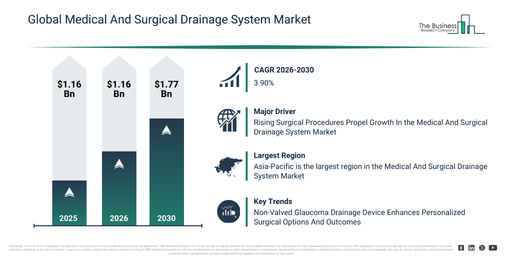
    The medical and surgical drainage system market is projected to experience consistent expansion over the upcoming years. Its value is predicted to reach $3.08 billion by 2030, with a compound annual growth rate (CAGR) of 3.9%. This expansion during the forecast period is driven by factors such as the heightened demand for sophisticated surgical care, a greater emphasis on mitigating post-operative complications, the increasing embrace of minimally invasive surgical techniques, broader application of drainage systems in outpatient settings, and a reinforced focus on patient safety and successful recovery outcomes. Key trends for the upcoming period encompass the increasing integration of closed and active surgical drainage systems, the growing utilization of these systems in post-operative recovery, a heightened preference for drainage solutions that control infection, the broadening application of drainage systems across various surgical fields, and an escalating demand for disposable and single-use drainage accessories.

    Access Your Free Sample Report for In-Depth Market Insights:

    https://www.thebusinessresearchcompany.com/sample.aspx?id=18668&type=smp

    Which Drivers Are Expected To Impact The Medical And Surgical Drainage System Market During The Forecast Period?

    The growing number of surgical interventions is anticipated to fuel the expansion of the medical and surgical drainage system market moving forward. This escalation in surgical volume stems from an aging global population, the rising prevalence of chronic health conditions, and continuous innovations in medical technology. Medical and surgical drainage systems are employed to efficiently remove excess fluids, blood, and pus from operative sites, thereby preventing infections, mitigating swelling, and fostering recovery. For instance, in June 2024, data from the International Society of Aesthetic Plastic Surgery (ISAPS), a US-based nonprofit professional organization, revealed that the combined total of surgical and non-surgical procedures increased by 3.4% in 2023, reaching 34.9 million. This upward trend was largely driven by a 5.5% increase in surgical procedures. Plastic surgeons performed over 15.8 million surgical procedures and 19.1 million non-surgical procedures, indicating a 40% overall rise in procedures over the past four years. Consequently, the expanding volume of surgical operations is a significant impetus for growth within the medical and surgical drainage system market.

    How Is The Medical And Surgical Drainage System Market Divided Into Segments?

    The medical and surgical drainage system market covered in this report is segmented –

    1) By Product Type: Drainage Systems, Accessories

    2) By Material Type: Silastic, Rubber, Other Materials

    3) By Flow Type: Active, Passive

    4) By Application: Cardiac And Thoracic Surgery, Abdominal, Orthopedic, Other Surgeries

    Subsegments:

    1) By Drainage Systems: Wound Drainage Systems, Surgical Drainage Systems, Chest Drainage Systems, Peritoneal Drainage Systems

    2) By Accessories: Drainage Tubes, Drainage Bags, Drainage Clamps, Collection Chambers

    What Industry Trends Are Transforming The Medical And Surgical Drainage System Market?

    Leading entities within the medical and surgical drainage system market are increasingly focusing on the creation of cutting-edge technological advancements. These innovations are designed to expand the array of surgical possibilities and facilitate tailored care specifically for individuals suffering from glaucoma. An illustrative example of this trend is observed in September 2025, when New World Medical, a US-based firm specializing in medical technology, unveiled a non-valved glaucoma drainage device named the Ahmed ClearPath ST. This particular device incorporates a more compact tube lumen, which contributes to superior pressure regulation, heightened safety measures, and streamlined management after surgery. The device is offered in two distinct plate dimensions: 250 mm² for placement in a single quadrant, and 350 mm², which incorporates a winged configuration to circumvent the attachment points of the rectus muscles. Additionally, the implant comes equipped with a pre-threaded 6-0 Prolene ripcord suture and a 25-gauge needle, simplifying the process of scleral tunneling. Its adaptable, globe-conforming plate ensures a natural anatomical fit and encourages the development of a low-profile, diffuse bleb. In essence, the Ahmed ClearPath ST offers surgeons increased adaptability for customized glaucoma treatment, effectively overcoming the inherent constraints of traditional tube implants and striving to enhance patient outcomes for those with refractory glaucoma.

    Which Key Market Players Are Investing In Expansion And Innovation Within The Medical And Surgical Drainage System Market?

    Major companies operating in the medical and surgical drainage system market are McKesson Medical-Surgical Inc., Cardinal Health Inc., Johnson & Johnson, Medtronic plc, Becton Dickinson and Company, Stryker Corporation, Medline Industries LP, Olympus Corporation, Smith & Nephew plc, Braun SE, Cook Medical, Teleflex Incorporated, ConvaTec Group, Medela AG, Vygon SA, Poly Medicure Limited, Redax S.p.A., Hangzhou Fushan Medical Appliances Co. Ltd., Ningbo Luke Medical Co. Ltd., Centese Inc.4) By Consumables: Gloves And Lab Coats, Filters And Membranes, Test Strips, Disposable Pipettes, Culture Media

    Access The Complete Report For Deeper Market Insights:

    https://www.thebusinessresearchcompany.com/report/medical-and-surgical-drainage-system-global-market-report

    Which Regions Are Projected To Dominate The Medical And Surgical Drainage System Market In The Coming Years?

    Asia-Pacific was the largest region in the medical and surgical drainage systems market in 2025. The regions covered in the medical and surgical drainage system market report are Asia-Pacific, South East Asia, Western Europe, Eastern Europe, North America, South America, Middle East, Africa.

    Request Your Customized Medical And Surgical Drainage System Market Research Report for Competitive Advantage:

    https://www.thebusinessresearchcompany.com/customise?id=18668&type=smp

    Browse Through More Reports Similar to the Global Medical And Surgical Drainage System Market 2026, By The Business Research Company

    Ostomy Drainage Bags Global Market Report 2026

    https://www.thebusinessresearchcompany.com/report/ostomy-drainage-bags-global-market-report

    Urinary Drainage Bags Global Market Report 2026

    https://www.thebusinessresearchcompany.com/report/urinary-drainage-bags-global-market-report

    Cladding Systems Global Market Report 2026

    https://www.thebusinessresearchcompany.com/report/cladding-systems-global-market-report

    Get in touch with us:

    The Business Research Company: https://www.thebusinessresearchcompany.com/

    Americas +1 310-496-7795

    Asia +44 7882 955267 & +91 8897263534

    Europe +44 7882 955267

    Email us at info@tbrc.info

    Follow us on:

    LinkedIn: https://in.linkedin.com/company/the-business-research-company
  • Medical Alert Systems Market Forecast 2026–2035: Data Trends and Industry Insights

    Medical Alert Systems Market Forecast 2026–2035: Data Trends and Industry Insights

    Uncover key drivers, emerging technologies, and competitive movements shaping the worker heat stress monitoring wearable market from 2026–2035 with trusted insights from The Business Research Company

    How much is the Medical Alert Systems Market valued at in 2026, and what valuation is forecast for 2030?

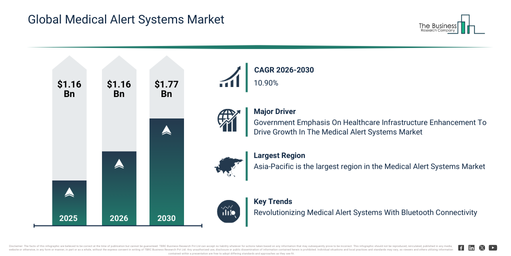
    The medical alert systems market has experienced swift expansion in recent years. This market is projected to expand from $12.29 billion in 2025 to $13.69 billion by 2026, demonstrating a compound annual growth rate (CAGR) of 11.4%. Historically, this growth has been fueled by factors including global aging population trends, an increased prevalence of chronic conditions, the rising demand for independent senior living solutions, the expansion of home healthcare services, and the availability of basic personal emergency response systems.

    The medical alert systems market size is expected to undergo rapid expansion in the next few years, projecting to reach $20.73 billion by 2030, at a compound annual growth rate (CAGR) of 10.9%. This growth during the forecast period is attributable to factors such as the increasing adoption of smart home healthcare technologies, a rising demand for remote patient monitoring, the expansion of IP-based alert systems, a growing focus on proactive elderly care, and the increasing integration of AI-based fall detection. Significant trends anticipated for this period include the increasing adoption of connected medical alert devices, a rising demand for wearable emergency response systems, the growing integration of fall detection technologies, the expansion of home-based monitoring solutions, and an enhanced focus on user-friendly device design.

    Access Your Free Sample Report for In-Depth Market Insights:

    https://www.thebusinessresearchcompany.com/sample.aspx?id=7166&type=smp

    What Drivers Are Influencing The Growth Of The Medical Alert Systems Market?

    The government’s increasing focus on enhancing healthcare infrastructure is anticipated to drive the expansion of the medical alert systems market moving forward. Medical emergency response systems are valuable when individuals need to enter a nursing home or an assisted living facility. Management must grasp how healthcare facilities can utilize medical alerts, as accidents and crises can arise even in institutions offering round-the-clock care. For instance, in June 2023, according to the Centers for Medicare & Medicaid Services, a US-based federal agency, healthcare expenditures in the United States climbed by 2.7%, reaching an overall sum of $4.3 trillion, which is equivalent to $12,914 per capita. These healthcare costs represented 18.3% of the nation’s gross domestic product. Consequently, the intensified government focus on improving healthcare infrastructure is expected to stimulate the growth of the medical alert systems market throughout the forecast period.

    What Segments Are Included Within The Medical Alert Systems Market?

    The medical alert systems market covered in this report is segmented –

    1) By Offering Type: Hardware, Services

    2) By Technology Type: Two-way Voice Systems, Medical Alert Alarm (Button) System, IP-based Systems

    3) By Application Type: Home-Based users, Senior Living Facilities/Senior Care Centers, Assisted Living Facilities

    Subsegments:

    1) By Hardware: Personal Emergency Response Systems (PERS), Wearable Devices, Base Stations And Control Units

    2) By Services: Monitoring Services, Installation And Setup Services, Maintenance And Support Services, Mobile Alert Services

    What Trends Are Reshaping The Dynamics Of The Medical Alert Systems Market?

    Key companies within the medical alert systems market are increasingly concentrating on introducing Bluetooth-enabled medical alert systems to secure a competitive edge. Bluetooth-connected medical alert systems are either wearable or portable devices equipped with Bluetooth technology, allowing users to request help or assistance during emergencies or medical incidents. For example, in January 2023, FallCall Solutions, a US-based technology company, collaborated with HSC Technology Group, an Australia-based technology company, to unveil an iPhone and Android-compatible medical alert system in Australia. This partnership will combine the HSC Talius Smart Care System, advanced Bluetooth medical alert devices, and the FallCall application, integrating them smoothly with users’ iPhones or Android devices for improved functionality and convenience. The medical alert system will connect a user’s Bluetooth medical alert buttons through an uncomplicated, low-cost subscription setup process and will leverage Talius to deliver 24/7 monitoring services.

    Who Are The Core Companies Influencing Trends In The Medical Alert Systems Market?

    Major companies operating in the medical alert systems market are Connect America Holdings LLC, Bay Alarm Medical Company, Medical Guardian LLC, MobileHelp LLC, LifeFone Medical Alert Services, Tunstall Group Holdings Ltd., AlertOne Services LLC, LogicMark LLC, LifeStation Inc., Life Alert Emergency Response Inc., Medical Care Alert LLC, ResponseLINK LLC, Vital Link Inc., LifeCall Inc., MedScope America Corp., Senior Safety Medical Alert Systems LLC, Koninklijke Philips N.V., Ascom Wireless Solutions Holding AG, Hill-Rom Holdings Inc., Legrand Assisted Living & Healthcare Inc., Smart Caregiver Corporation, Mytrex Inc.

    Access The Complete Report For Deeper Market Insights:

    https://www.thebusinessresearchcompany.com/report/medical-alert-systems-global-market-report

    Which Region Is Expected To Experience The Fastest Growth In The Medical Alert Systems Market?

    Asia-Pacific was the largest region in the medical alert systems market in 2025. Asia-Pacific is expected to be the fastest-growing region in the forecast period. The regions covered in the medical alert systems market report are Asia-Pacific, South East Asia, Western Europe, Eastern Europe, North America, South America, Middle East, Africa.

    Request Your Customized Medical Alert Systems Market Research Report for Competitive Advantage:

    https://www.thebusinessresearchcompany.com/customise?id=7166&type=smp

    Browse Through More Reports Similar to the Global Medical Alert Systems Market 2026, By The Business Research Company

    Clinical Alarm Management Global Market Report 2026

    https://www.thebusinessresearchcompany.com/report/clinical-alarm-management-global-market-report

    Emergency Medical Services Products Global Market Report 2026

    https://www.thebusinessresearchcompany.com/report/emergency-medical-services-products-global-market-report

    Healthcare Predictive Analytics Global Market Report 2026

    https://www.thebusinessresearchcompany.com/report/healthcare-predictive-analytics-global-market-report

    Get in touch with us:

    The Business Research Company: https://www.thebusinessresearchcompany.com/

    Americas +1 310-496-7795

    Asia +44 7882 955267 & +91 8897263534

    Europe +44 7882 955267

    Email us at info@tbrc.info

    Follow us on:

    LinkedIn: https://in.linkedin.com/company/the-business-research-company
  • Medical Alert System Personal Emergency Response System Market Outlook 2026–2030: Key Business Drivers and Trends

    Medical Alert System Personal Emergency Response System Market Outlook 2026–2030: Key Business Drivers and Trends

    Uncover key drivers, emerging technologies, and competitive movements shaping the workstation graphics processing unit (gpu) market from 2026–2035 with trusted insights from The Business Research Company

    By how much is the Medical Alert System Personal Emergency Response System Market expected to grow between 2026 and 2030?

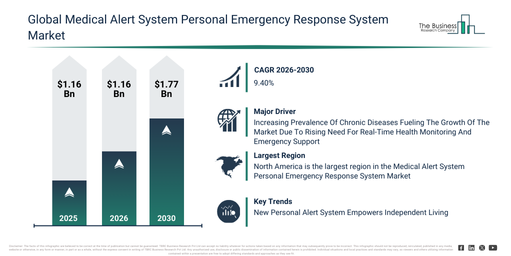
    The medical alert system personal emergency response system market size has demonstrated significant expansion over recent years. It is anticipated to expand from $11.46 billion in 2025 to $12.57 billion in 2026, achieving a compound annual growth rate (CAGR) of 9.7%. Historical market growth can be ascribed to an increasing aging population, the limited availability of home-based emergency systems, heightened awareness of personal safety among the elderly, a dependence on fixed landline emergency devices, and the progressive adoption of wearable technology.

    The medical alert system personal emergency response system market is projected to experience robust expansion in the coming years. Its value is anticipated to reach $18.03 billion by 2030, exhibiting a compound annual growth rate (CAGR) of 9.4%. This forecasted growth is linked to several factors, including innovations in wearable health monitoring technology, the incorporation of smart home and IoT systems, escalating healthcare spending for elder care, a growing need for remote patient monitoring services, and the creation of GPS-enabled and app-based emergency response solutions. Key trends during this period are expected to encompass an increase in the uptake of wearable emergency response devices, the merging of smartphone applications with PERS systems, an broadening of monitoring and emergency response services, wider utilization in senior living and assisted living facilities, and an emphasis on real-time health tracking and remote care.

    Access Your Free Sample Report for In-Depth Market Insights:

    https://www.thebusinessresearchcompany.com/sample.aspx?id=27336&type=smp

    Which Drivers Are Influencing Market Acceleration In The Medical Alert System Personal Emergency Response System Market?

    The rising incidence of chronic illnesses is projected to fuel expansion within the medical alert system personal emergency response system market in the foreseeable future. These are enduring health conditions that manifest gradually and persist over long durations, frequently necessitating ongoing medical attention. A sedentary lifestyle, characterized by extended periods of sitting and insufficient physical activity, contributes to the growing occurrence of chronic diseases like heart ailments and diabetes. Medical alert systems and personal emergency response systems are instrumental in managing these conditions by facilitating continuous health monitoring and providing urgent assistance. They bolster patient security and autonomy through prompt notifications and by linking individuals to care providers or medical help during critical health events. For instance, in June 2024, according to the National Health Service, a UK-based government department, 3,615,330 individuals registered with a general practitioner (GP) were diagnosed with non-diabetic hyperglycemia or pre-diabetes (a condition with elevated blood sugar levels, not high enough to be classified as diabetes) in 2023, marking an 18% increase from 3,065,825 cases in 2022. Consequently, the escalating presence of chronic diseases is a key factor driving the expansion of the medical alert system personal emergency response system market.

    What Leading Segments Are Studied In The Medical Alert System Personal Emergency Response System Market?

    The medical alert system personal emergency response system market covered in this report is segmented –

    1) By Device Type: Wearable Devices, Fixed Devices, Smartphone Applications

    2) By Service Type: Monitoring Services, Emergency Response Services, Installation Services

    3) By Application: Home Care, Senior Living Facilities, Assisted Living

    4) By End User: Elderly Individuals, Individuals With Disabilities, Caregivers

    Subsegments:

    1) By Wearable Devices: Pendants, Smartwatches, Wristbands

    2) By Fixed Devices: Landline-Based Systems, Wall-Mounted Emergency Buttons, Cellular-Based Systems

    3) By Smartphone Applications: Android-Based Apps, Health Monitoring Apps, Global Positioning System-Enabled Apps

    How Are New Market Trends Shaping The Landscape Of The Medical Alert System Personal Emergency Response System Market?

    Leading companies in the medical alert system personal emergency response system market are concentrating on developing advanced products, such as next-generation personal emergency response devices, to improve safety, accelerate response, and foster independent living. These next-generation personal emergency response devices are intelligent, interconnected systems equipped with features like fall detection, global positioning system (GPS), and health monitoring to provide faster and more reliable emergency support. For example, in February 2025, LogicMark Inc., a US-based medical company, introduced the Guardian Alert 911 Plus. This system is a next-generation personal emergency response solution that offers dependable, on-the-go 24/7 safety with 4G long-term evolution (LTE) connectivity, fall detection, and no monthly fees, allowing individuals to contact 911 directly by pressing a button. It enables aging adults and those with medical conditions to live autonomously, providing peace of mind for both users and their caregivers.

    Which Major Industry Participants Are Leading The Medical Alert System Personal Emergency Response System Market Growth?

    Major companies operating in the medical alert system personal emergency response system market are Koninklijke Philips N.V, ADT Inc., Acadian On Call, Connect America LLC, Valued Relationships Inc., Tunstall Healthcare Group Ltd, Life Alert Emergency Response Inc., Medical Guardian LLC, GetSafe LLC, LifeStation Inc., LifeFone Inc., Bay Alarm Medical, MobileHelp, LogicMark Inc., AlertOne Services LLC, Lively Inc., Aloe Care Health Inc., Galaxy Medical Alert Systems, UnaliWear Inc., Rescue Alert

    Access The Complete Report For Deeper Market Insights:

    https://www.thebusinessresearchcompany.com/report/medical-alert-system-personal-emergency-response-system-global-market-report

    Which Geographic Areas Are Emerging As Strong Markets For The Medical Alert System Personal Emergency Response System Market?

    North America was the largest region in the medical alert system personal emergency response system market in 2025. The regions covered in the medical alert system personal emergency response system market report are Asia-Pacific, South East Asia, Western Europe, Eastern Europe, North America, South America, Middle East, Africa.

    Request Your Customized Medical Alert System Personal Emergency Response System Market Research Report for Competitive Advantage:

    https://www.thebusinessresearchcompany.com/customise?id=27336&type=smp

    Browse Through More Reports Similar to the Global Medical Alert System Personal Emergency Response System Market 2026, By The Business Research Company

    Plastic Pipes And Pipe Fittings Global Market Report 2026

    https://www.thebusinessresearchcompany.com/report/plastic-pipes-and-pipe-fittings-global-market-report

    Plastic Pipes And Pipe Fittings Global Market Report 2026

    https://www.thebusinessresearchcompany.com/report/plastic-pipes-and-pipe-fittings-global-market-report

    Polyolefin Pipes Global Market Report 2026

    https://www.thebusinessresearchcompany.com/report/polyolefin-pipes-global-market-report

    Get in touch with us:

    The Business Research Company: https://www.thebusinessresearchcompany.com/

    Americas +1 310-496-7795

    Asia +44 7882 955267 & +91 8897263534

    Europe +44 7882 955267

    Email us at info@tbrc.info

    Follow us on:

    LinkedIn: https://in.linkedin.com/company/the-business-research-company
  • Global Mechanical Ventilator Market Report 2026: Emerging Trends and Growth Scenarios

    Global Mechanical Ventilator Market Report 2026: Emerging Trends and Growth Scenarios

    Uncover key drivers, emerging technologies, and competitive movements shaping the worker heat stress monitoring wearable market from 2026–2035 with trusted insights from The Business Research Company

    What is the estimated market size of the Mechanical Ventilator Market by the end of 2030?

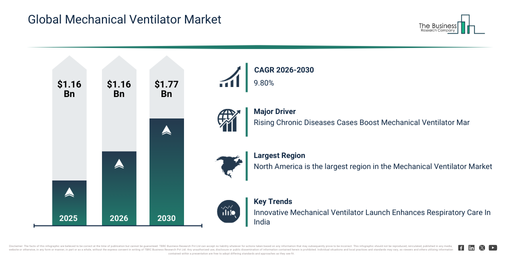
    The mechanical ventilator market has experienced substantial expansion in recent years. Its valuation is projected to climb from $8.74 billion in 2025 to $9.54 billion in 2026, achieving a compound annual growth rate (CAGR) of 9.0%. This historical growth can be attributed to the increasing prevalence of respiratory disorders, an expansion in intensive care unit capacity, a heightened demand for critical care equipment, advancements in ventilator design technology, and investments in emergency healthcare infrastructure.

    The mechanical ventilator market is anticipated to experience substantial growth over the coming years. This market is projected to reach $13.84 billion by 2030, demonstrating a compound annual growth rate (CAGR) of 9.8%. Factors contributing to this expansion during the forecast period include the increasing adoption of home-based respiratory care, a rising demand for AI-assisted ventilation systems, the expansion of tele-ICU models, an enhanced focus on compact and energy-efficient ventilators, and increased investments in critical care preparedness. Key trends identified for the forecast period encompass the increasing adoption of intelligent ventilation modes, a rising demand for portable and transport ventilators, the growing integration of remote patient monitoring, the expansion of non-invasive ventilation solutions, and an enhanced focus on patient-specific ventilation settings.

    Access Your Free Sample Report for In-Depth Market Insights:

    https://www.thebusinessresearchcompany.com/sample.aspx?id=6400&type=smp

    What Drivers Are Shaping Future Opportunities In The Mechanical Ventilator Market?

    The increasing incidence of chronic diseases is projected to drive the expansion of the mechanical ventilator market going forward. Chronic diseases are generally understood as health problems that persist for a year or longer, necessitate continuous medical treatment, and interfere with daily activities. Mechanical ventilators assist patients with chronic diseases by tracking their health-related conditions, such as physiological states in post-acute, rehabilitation, and long-term scenarios, and provide essential acute respiratory support. For instance, in February 2024, the World Health Organization, a Switzerland-based intergovernmental organization, projected over 35 million new cancer cases by 2050, representing a 77% increase compared to the estimated 20 million cases in 2022. Therefore, the growing prevalence of chronic diseases is a significant driver for the mechanical ventilator market.

    Which Segment Groups Are Influencing The Mechanical Ventilator Market?

    The mechanical ventilator market covered in this report is segmented –

    1) By Type: Adult Ventilators, Pediatric Ventilators, Neonatal/ Infant Ventilators

    2) By Mobility: Intensive Care Ventilators, High-End ICU Ventilators, Mid-End ICU Ventilators, Basic ICU Ventilators, Portable Ventilators

    3) By Mode Of Ventilation: Invasive Ventilation, Non-Invasive Ventilation

    4) By End-User: Hospitals and Clinics, Home Care, Ambulatory Care Centers, Emergency Medical Service, Other End-Users

    Subsegments:

    1) By Adult Ventilators: Invasive Adult Ventilators, Non-Invasive Adult Ventilators

    2) By Pediatric Ventilators: Invasive Pediatric Ventilators, Non-Invasive Pediatric Ventilators

    3) By Neonatal/Infant Ventilators: High-Frequency Ventilators, Conventional Ventilators for Neonates

    Which Trends Are Expected To Influence The Mechanical Ventilator Market In The Upcoming Years?

    Major companies operating in the mechanical ventilator market are concentrating on developing innovations, such as advanced monitoring systems designed to offer real-time insights into lung mechanics and gas exchange. Advanced monitoring entails the utilization of sophisticated technologies and methodologies to track, analyze, and manage various processes or systems instantaneously. For instance, in February 2024, Getinge, a Sweden-based healthcare company, introduced the Servo-C mechanical ventilator into the Indian market, with the goal of improving respiratory care for both pediatric and adult patients. A new mechanical ventilator is now available in the Indian market, delivering essential functionalities for secure and efficient use in personalized respiratory treatments. Its modular design facilitates smart fleet management, ensuring operational uptime and cost efficiency without requiring proprietary disposables. Key features include CO2 monitoring and advanced visualization tools for deeper insights into lung mechanics. This development seeks to make advanced healthcare solutions more accessible and affordable for hospitals across India.

    Who Are The Prominent Global Companies Shaping The Mechanical Ventilator Market Landscape?

    Major companies operating in the mechanical ventilator market are Medtronic plc, Koninklijke Philips N.V., GE Healthcare, Smiths Medical, Bio-Med Devices Inc., ResMed, Hill-Rom Holdings Inc., Getinge, Dräger, Chart Biomedical, Fisher & Paykel Healthcare Limited, ZOLL Medical Corporation, Vyaire Medical Inc., SCHILLER, Hamilton Medical, Ventec Life Systems, Bunnell Inc., aXcent Medical GmbH, Allied Healthcare Products Inc., Löwenstein Medical GmbH & Co KG

    Access The Complete Report For Deeper Market Insights:

    https://www.thebusinessresearchcompany.com/report/mechanical-ventilator-global-market-report

    Which Region Is Projected To Lead The Mechanical Ventilator Market During The Forecast Period?

    North America was the largest region in the mechanical ventilator market in 2025. The regions covered in the mechanical ventilator market report are Asia-Pacific, South East Asia, Western Europe, Eastern Europe, North America, South America, Middle East, Africa.

    Request Your Customized Mechanical Ventilator Market Research Report for Competitive Advantage:

    https://www.thebusinessresearchcompany.com/customise?id=6400&type=smp

    Browse Through More Reports Similar to the Global Mechanical Ventilator Market 2026, By The Business Research Company

    Ventilators Global Market Report 2026

    https://www.thebusinessresearchcompany.com/report/ventilators-global-market-report

    High Flow Ventilators Global Market Report 2026

    https://www.thebusinessresearchcompany.com/report/high-flow-ventilators-global-market-report

    Non Invasive Ventilators Global Market Report 2026

    https://www.thebusinessresearchcompany.com/report/non-invasive-ventilators-global-market-report

    Get in touch with us:

    The Business Research Company: https://www.thebusinessresearchcompany.com/

    Americas +1 310-496-7795

    Asia +44 7882 955267 & +91 8897263534

    Europe +44 7882 955267

    Email us at info@tbrc.info

    Follow us on:

    LinkedIn: https://in.linkedin.com/company/the-business-research-company
  • Mechanical Thrombectomy Devices Market Forecast 2026: Where the Industry Is Headed

    Mechanical Thrombectomy Devices Market Forecast 2026: Where the Industry Is Headed

    Uncover key drivers, emerging technologies, and competitive movements shaping the workstation graphics processing unit (gpu) market from 2026–2035 with trusted insights from The Business Research Company

    What was the valuation of the Mechanical Thrombectomy Devices Market in 2026, and what figure is it projected to hit by 2030?

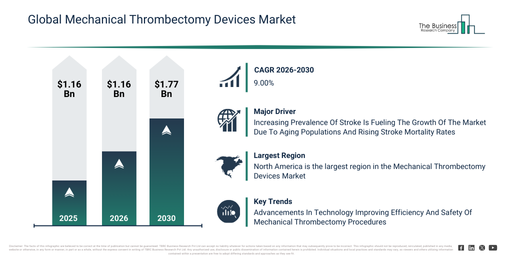
    The mechanical thrombectomy devices market has demonstrated robust expansion over recent years. Its value is projected to climb from $1.52 billion in 2025 to $1.67 billion in 2026, achieving a compound annual growth rate (CAGR) of 9.9%. The market’s past growth can be ascribed to several factors, including the limited availability of mechanical thrombectomy devices, a reliance on manual procedures for stroke treatment, rising awareness of stroke and cardiovascular risks, an increase in hospital infrastructure for interventional procedures, and the adoption of catheter-based interventions.

    The mechanical thrombectomy devices market is anticipated to show significant expansion in the coming years, with its size projected to reach $2.36 billion by 2030, exhibiting a compound annual growth rate (CAGR) of 9.0%. This growth during the forecast period is primarily attributed to the development of automated and electromechanical thrombectomy devices, the increasing occurrence of ischemic stroke and coronary thrombosis, the integration of AI-assisted device navigation, the expansion of ambulatory surgical centers and specialized invasive care centers, and rising research and development investments in thrombectomy technologies. Prominent trends expected in this period include the increasing adoption of minimally invasive procedures, a rise in the use of combined thrombectomy devices, growth within the electromechanical and hybrid device segments, the expansion of ischemic stroke treatment procedures, and an enhanced focus on device safety and regulatory compliance.

    Access Your Free Sample Report for In-Depth Market Insights:

    https://www.thebusinessresearchcompany.com/sample.aspx?id=27335&type=smp

    Which Drivers Are Affecting Market Participation In The Mechanical Thrombectomy Devices Market?

    The mechanical thrombectomy devices market is anticipated to grow, driven by the escalating occurrence of stroke. Stroke is a medical condition characterized by an interruption or reduction of blood flow to a part of the brain, resulting in brain cells dying due to insufficient oxygen and nutrients. The rising incidence of stroke is attributed to aging populations, as advanced age significantly heightens the risk of stroke because of natural alterations in blood vessels and general health. Mechanical thrombectomy devices are vital for stroke treatment by facilitating the rapid removal of blood clots from obstructed brain arteries, thereby re-establishing blood flow, minimizing brain damage, and markedly enhancing patient recovery outcomes. For instance, in October 2023, the World Economic Forum, a Switzerland-based non-profit organization, stated that by 2050, the number of stroke deaths could rise by 50%. Therefore, the increasing prevalence of stroke acts as a significant catalyst for growth in the mechanical thrombectomy devices market.

    What Segment Classifications Make Up The Mechanical Thrombectomy Devices Market?

    The mechanical thrombectomy devices market covered in this report is segmented –

    1) By Product Type: Stent Retrievers, Catheter-Based Thrombectomy Devices, Mechanical Aspiration Devices, Combined Devices

    2) By Technology: Manual Mechanical Thrombectomy Devices, Automated Mechanical Thrombectomy Devices, Electromechanical Thrombectomy Devices, Hybrid Devices

    3) By Application: Ischemic Stroke, Peripheral Artery Disease (PAD), Coronary Thrombosis, Post-Surgical Thrombosis

    4) By Distribution Channel: Direct Sales, Distributors And Wholesalers, Online Sales, Retail Pharmacies

    5) By End User: Hospitals, Ambulatory Surgical Centers, Specialized Invasive Care Centers, Research And Academic Institutions

    Subsegments:

    1) By Stent Retrievers: Closed-Cell Stent Retrievers, Open-Cell Stent Retrievers, Hybrid Stent Retrievers

    2) By Catheter-Based Thrombectomy Devices: Aspiration Catheters, Guide Catheters, Micro Catheters

    3) By Mechanical Aspiration Devices: Manual Aspiration Devices, Powered Aspiration Devices

    4) By Combined Devices: Aspiration Plus Stent Retrievers, Aspiration Plus Mechanical Devices

    What Trends Are Driving The Growth Trajectory Of The Mechanical Thrombectomy Devices Market?

    Leading companies within the mechanical thrombectomy devices market are concentrating on developing creative strategies, such as dual clot detection algorithms, to build advanced systems that improve clot removal efficiency and enhance patient safety. Dual clot detection algorithms are sophisticated computer-assisted techniques that employ both pressure and flow data to accurately pinpoint and distinguish blood clots from typical blood flow during thrombectomy procedures. For instance, in January 2023, Penumbra Inc., a US-based healthcare company, introduced the Lightning Flash, an advanced mechanical thrombectomy system engineered to transform the method of blood clot removal from the body. This pioneering device merges powerful aspiration technology with a precisely engineered catheter design to effectively and safely extract large blood clots, including venous thrombi and pulmonary emboli, thereby assisting physicians in performing quicker procedures while minimizing potential complications and improving overall patient outcomes.

    Which Key Players Are Driving Competition In The Mechanical Thrombectomy Devices Market?

    Major companies operating in the mechanical thrombectomy devices market are Stryker Corporation, Medtronic plc, Penumbra Inc., Terumo Corporation, Boston Scientific Corporation, Johnson & Johnson, Edwards Lifesciences Corporation, AngioDynamics Inc., Acandis GmbH & Co. KG, Rapid Medical, Vesalio, Control Medical Technology LLC, Perflow Medical, Sino Medical Sciences Technology Inc., Natec Medical Ltd., Straub Medical AG, Vascular Medcure Inc., Imperative Care Inc., NeuroVasc Technologies Inc., Inquis Medical Inc., Balt Extrusion S.A.S., Anaconda Biomed SL, SILK Road Medical Inc., Argon Medical Devices Inc., Minnetronix Inc.

    Access The Complete Report For Deeper Market Insights:

    https://www.thebusinessresearchcompany.com/report/mechanical-thrombectomy-devices-global-market-report

    Which Region Currently Holds The Largest Share Of The Mechanical Thrombectomy Devices Market?

    North America was the largest region in the mechanical thrombectomy devices market in 2025. Asia-Pacific is expected to be the fastest-growing region in the forecast period. The regions covered in the mechanical thrombectomy devices market report are Asia-Pacific, South East Asia, Western Europe, Eastern Europe, North America, South America, Middle East, Africa.

    Request Your Customized Mechanical Thrombectomy Devices Market Research Report for Competitive Advantage:

    https://www.thebusinessresearchcompany.com/customise?id=27335&type=smp

    Browse Through More Reports Similar to the Global Mechanical Thrombectomy Devices Market 2026, By The Business Research Company

    Architectural Acoustic Panels Global Market Report 2026

    https://www.thebusinessresearchcompany.com/report/architectural-acoustic-panels-global-market-report

    Acoustic Insulation Global Market Report 2026

    https://www.thebusinessresearchcompany.com/report/acoustic-insulation-global-market-report

    Loudspeakers Global Market Report 2026

    https://www.thebusinessresearchcompany.com/report/loudspeakers-global-market-report

    Get in touch with us:

    The Business Research Company: https://www.thebusinessresearchcompany.com/

    Americas +1 310-496-7795

    Asia +44 7882 955267 & +91 8897263534

    Europe +44 7882 955267

    Email us at info@tbrc.info

    Follow us on:

    LinkedIn: https://in.linkedin.com/company/the-business-research-company
  • Mechanical Circulatory Support Devices Industry Growth Insights: Revenue Forecast to 2030

    Mechanical Circulatory Support Devices Industry Growth Insights: Revenue Forecast to 2030

    Uncover key drivers, emerging technologies, and competitive movements shaping the worker heat stress monitoring wearable market from 2026–2035 with trusted insights from The Business Research Company

    What are the forecasted starting (2026) and ending (2030) market sizes for the Mechanical Circulatory Support Devices Market?

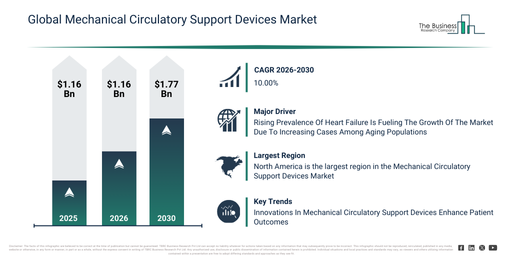
    The mechanical circulatory support devices market size has experienced substantial expansion in recent years. This market is projected to expand from $3.47 billion in 2025 to $3.82 billion in 2026, demonstrating a compound annual growth rate (CAGR) of 10.1%. Historically, this growth has been driven by factors such as the restricted access to advanced circulatory support devices, a dependence on traditional intra-aortic balloon pumps, the increasing occurrence of heart failure, a rise in cardiac surgical operations, and an absence of consistent training for device implantation.

    The mechanical circulatory support devices market is projected to experience substantial expansion in the coming years. Its value is anticipated to reach $5.59 billion by 2030, demonstrating a compound annual growth rate (CAGR) of 10.0%. This growth during the forecast period stems from various factors, including technological innovations in pulsatile and non-pulsatile flow devices, an increase in minimally invasive cardiac procedures, the rising acceptance of left and biventricular assist devices, the proliferation of hospitals and specialized cardiac facilities, and elevated investment in cardiac care research and development. Key trends projected for this period encompass the growing integration of ventricular assist devices and total artificial hearts, an uptick in cardiac surgery and heart failure management protocols, broader utilization of extracorporeal membrane oxygenation (ECMO) systems, an emphasis on minimally invasive and percutaneous device insertion, and more robust regulatory adherence coupled with improved safety standards for cardiac devices.

    Access Your Free Sample Report for In-Depth Market Insights:

    https://www.thebusinessresearchcompany.com/sample.aspx?id=27334&type=smp

    What Drivers Are Supporting Technological Adoption In The Mechanical Circulatory Support Devices Market?

    The expansion of the mechanical circulatory support devices market is anticipated to be fueled by the increasing occurrence of heart failure. Heart failure is a persistent condition characterized by the heart’s inability to adequately supply blood to the body. This surge in heart failure cases is attributed to an aging populace, as older individuals are more susceptible to cardiovascular diseases and their associated complications. Mechanical circulatory support devices aid patients with heart failure by supplementing the heart’s pumping function, thereby enhancing blood flow and alleviating strain on the compromised organ. For example, data from September 2024, provided by the Heart Failure Society of America (HFSA), a US-based non-profit organization, indicates that heart failure currently affects 6.7 million Americans over 20; this figure is projected to climb to 8.7 million by 2030, 10.3 million by 2040, and a significant 11.4 million by 2050. Consequently, the escalating incidence of heart failure is a primary factor propelling the growth of the mechanical circulatory support devices market.

    What Segment Types Are Examined In The Mechanical Circulatory Support Devices Market?

    The mechanical circulatory support devices market covered in this report is segmented –

    1) By Type: Intra-Aortic Balloon Pump, Ventricular Assist Device, Total Artificial Heart, Extracorporeal Membrane Oxygenation

    2) By Technology: Pulsatile Flow Devices, Non-Pulsatile Flow Devices

    3) By Application: Cardiac Surgery, Heart Failure Management, Myocardial Infraction, Cardiogenic Shock

    4) By End User: Hospitals, Ambulatory Surgical Centers, Specialty Clinics, Other End Users

    Subsegments:

    1) By Intra-Aortic Balloon Pump: Percutaneous Intra-Aortic Balloon Pump, Surgical Intra-Aortic Balloon Pump

    2) By Ventricular Assist Device: Left Ventricular Assist Device, Right Ventricular Assist Device, Biventricular Assist Device

    3) By Total Artificial Heart: Pneumatic Total Artificial Heart, Electric Total Artificial Heart

    4) By Extracorporeal Membrane Oxygenation: Venoarterial Extracorporeal Membrane Oxygenation, Venovenous Extracorporeal Membrane Oxygenation

    What Upcoming Trends Are Likely To Define The Future Path Of The Mechanical Circulatory Support Devices Market?

    Leading companies in the mechanical circulatory support devices market are prioritizing the development of advanced technologies, such as magnetically levitated rotor (MAGLEV) technology, to provide patients with more dependable and efficient devices that improve heart function and increase survival rates. Magnetically levitated rotor (MAGLEV) technology utilizes magnetic fields to suspend and spin a rotor without physical contact, thereby reducing friction and wear for smoother, longer-lasting device performance. For instance, in July 2024, BiVACOR Inc., a US-based clinical-stage medical device company, commenced the first-in-human implantation of its Total Artificial Heart (TAH). This innovative device is engineered to completely replace both ventricles of a failing heart in patients experiencing severe biventricular or univentricular heart failure who are not candidates for conventional left ventricular assist devices, offering a vital bridge-to-transplant solution with the potential to enhance survival and quality of life for thousands of patients facing limited treatment options due to the scarcity of donor hearts.

    Who Are The Top-Performing Companies In The Mechanical Circulatory Support Devices Market In Recent Years?

    Major companies operating in the mechanical circulatory support devices market are Abbott Laboratories, Medtronic Plc, Getinge AB, LivaNova PLC, Magenta Medical Ltd., CorWave SA, Jarvik Heart Inc., Carmat SAS, Procyrion Inc., BiVACOR Inc., Evaheart Inc., ReliantHeart Inc., SynCardia Systems LLC, Berlin Heart GmbH, NovaPump GmbH, CardiacAssist Inc., Circulite Medical Inc., Windmill Cardiovascular Systems Inc., NuPulseCV Inc., FineHeart SAS

    Access The Complete Report For Deeper Market Insights:

    https://www.thebusinessresearchcompany.com/report/mechanical-circulatory-support-devices-global-market-report

    How Does The Mechanical Circulatory Support Devices Market Perform Across Major Global Regions?

    North America was the largest region in the mechanical circulatory support devices market in 2025. Asia-Pacific is expected to be the fastest-growing region in the forecast period. The regions covered in the mechanical circulatory support devices market report are Asia-Pacific, South East Asia, Western Europe, Eastern Europe, North America, South America, Middle East, Africa.

    Request Your Customized Mechanical Circulatory Support Devices Market Research Report for Competitive Advantage:

    https://www.thebusinessresearchcompany.com/customise?id=27334&type=smp

    Browse Through More Reports Similar to the Global Mechanical Circulatory Support Devices Market 2026, By The Business Research Company

    Virtual Payment Pos Terminals Global Market Report 2026

    https://www.thebusinessresearchcompany.com/report/virtual-payment-pos-terminals-global-market-report

    Point Of Sale Terminals Global Market Report 2026

    https://www.thebusinessresearchcompany.com/report/point-of-sale-terminals-global-market-report

    Proximity Payment Global Market Report 2026

    https://www.thebusinessresearchcompany.com/report/proximity-payment-global-market-report

    Get in touch with us:

    The Business Research Company: https://www.thebusinessresearchcompany.com/

    Americas +1 310-496-7795

    Asia +44 7882 955267 & +91 8897263534

    Europe +44 7882 955267

    Email us at info@tbrc.info

    Follow us on:

    LinkedIn: https://in.linkedin.com/company/the-business-research-company
  • Global Maternal Infant Care Equipment Market Performance Report: Global Trends 2026–2030

    Global Maternal Infant Care Equipment Market Performance Report: Global Trends 2026–2030

    Uncover key drivers, emerging technologies, and competitive movements shaping the workstation graphics processing unit (gpu) market from 2026–2035 with trusted insights from The Business Research Company

    What upper market value could the Maternal Infant Care Equipment Market reach by 2030 starting from 2026 levels?

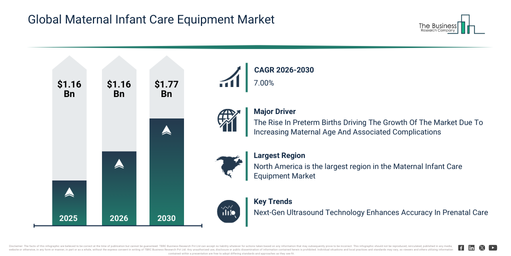
    The maternal infant care equipment market has seen substantial growth over recent years. Its value is forecast to increase from $6.28 billion in 2025 to $6.73 billion in 2026, exhibiting a compound annual growth rate (CAGR) of 7.3%. The expansion observed in prior periods can be attributed to factors such as the limited availability of advanced maternal-infant care equipment, continued reliance on conventional infant incubators and warmers, a growing neonatal patient population, expanding hospital and clinic infrastructure, and increasing awareness concerning maternal and neonatal care.

    The maternal infant care equipment market is projected to experience robust expansion in the coming years, with its size anticipated to reach $8.82 billion by 2030, exhibiting a compound annual growth rate (CAGR) of 7.0%. This significant increase can be attributed to various factors such as technological advancements in phototherapy and suction devices, the increasing adoption of electric and hospital-grade breast pumps, the expansion of home care services, rising healthcare expenditure in emerging economies, and the integration of smart monitoring and IoT-enabled maternal-infant care systems. Concurrently, major developments during this period include the growing uptake of advanced neonatal monitoring systems, an increasing demand for portable and home care maternal-infant devices, a heightened focus on energy-efficient and eco-friendly equipment, the expansion of maternal and neonatal care services in emerging regions, and enhanced training and awareness programs for healthcare providers.

    Access Your Free Sample Report for In-Depth Market Insights:

    https://www.thebusinessresearchcompany.com/sample.aspx?id=27333&type=smp

    Which Drivers Are Influencing Long-Term Growth In The Maternal Infant Care Equipment Market?

    The increasing incidence of preterm births is projected to stimulate the expansion of the maternal infant care equipment market in the future. These births are defined as the arrival of an infant prior to 37 full weeks of gestation, indicating a pregnancy duration that is shorter than usual. An increase in maternal age contributes to the growing occurrence of preterm births, since older mothers are more susceptible to pregnancy complications that can result in premature delivery. Maternal infant care equipment aids preterm births through advanced monitoring, respiratory assistance, and temperature control mechanisms, thereby enhancing the survival rates and health prospects of premature babies. As an illustration, the Centers for Disease Control and Prevention (CDC), a US-based government body, reported in March 2025 that singleton preterm births constituted 8.71% in 2023, a minor increase from 8.67% in 2022. Consequently, the growing frequency of preterm births acts as a key impetus for the expansion of the maternal infant care equipment market.

    Which Segments Are Driving Activity In The Maternal Infant Care Equipment Market?

    The maternal infant care equipment market covered in this report is segmented –

    1) By Product Type: Infant Incubators, Infant Warmers, Phototherapy Equipment, Suction Devices, Breast Pumps

    2) By Material Type: Plastic, Wood, Fabric, Metal, Organic Materials

    3) By Application: Neonatal Care, Maternal Care, Pediatric Care

    4) By Distribution Channel: Online Stores, Offline Stores

    5) By End-User: Hospitals, Clinics, Home Care, Ambulatory Surgical Centers

    Subsegments:

    1) By Infant Incubators: Closed Incubators, Open Incubators, Transport Incubators

    2) By Infant Warmers: Radiant Warmers, Conductive Warmers, Combination Warmers

    3) By Phototherapy Equipment: Conventional Phototherapy Units, Fiber-Optic Phototherapy Units, Compact Phototherapy Devices

    4) By Suction Devices: Portable Suction Devices, Wall-Mounted Suction Devices, Battery Operated Suction Devices

    5) By Breast Pumps: Manual Breast Pumps, Electric Breast Pumps, Hospital Grade Breast Pumps

    Which Trends Are Shaping Activity Within The Maternal Infant Care Equipment Market?

    Leading companies within the maternal infant care equipment market are prioritizing technological advancements, such as artificial intelligence-enabled ultrasound systems. This focus aims to improve diagnostic accuracy, enhance workflow efficiency, and support quicker, more confident clinical decision-making in women’s and neonatal healthcare. Artificial intelligence-enabled ultrasound systems are medical imaging devices that utilize AI algorithms to automate image analysis, boost diagnostic precision, and streamline clinical workflows. For instance, in April 2024, GE Healthcare Technologies Inc., a US-based medical technology company, introduced its Voluson Signature 20 and 18 ultrasound systems to advance women’s health imaging. These systems incorporate artificial intelligence to refine image clarity, automate routine tasks, and assist clinical decision-making through specialized tools like sonolyst and sonobiometry. Featuring an ergonomic design and customizable settings, they also offer advanced reporting capabilities and improved connectivity for effortless integration into clinical workflows. These innovations enable healthcare professionals to efficiently assess and monitor maternal and fetal health, particularly in high-risk pregnancies.

    Which Leading Companies Dominate The Maternal Infant Care Equipment Market Share?

    Major companies operating in the maternal infant care equipment market are Cardinal Health Inc., Koninklijke Philips N.V, GE Healthcare Technologies Inc., Drägerwerk AG And Co KGaA, Masimo Corporation, Natus Medical Incorporated, Atom Medical Corporation, Edan Instruments Inc., OxygenCare Private Limited, Janitri Innovations Private Limited, Maternova Inc., Spectra Baby USA LLC, Fisher & Paykel Healthcare Corporation Limited, Shenzhen Mindray Bio‑Medical Electronics Co Ltd., Nihon Kohden Corporation, OSI Systems Inc., Contec Medical Systems Co Ltd., Bistos Co Ltd., Fanem Ltd., Phoenix Medical Systems, nice Neotech Medical Systems Pvt Ltd., IndoSurgicals Private Limited, Hosmed‑Inc.

    Access The Complete Report For Deeper Market Insights:

    https://www.thebusinessresearchcompany.com/report/maternal-infant-care-equipment-global-market-report

    Which Region Is Anticipated To See The Fastest Growth In The Maternal Infant Care Equipment Market?

    North America was the largest region in the maternal infant care equipment market in 2025. Asia-Pacific is expected to be the fastest-growing region in the forecast period. The regions covered in the maternal infant care equipment market report are Asia-Pacific, South East Asia, Western Europe, Eastern Europe, North America, South America, Middle East, Africa.

    Request Your Customized Maternal Infant Care Equipment Market Research Report for Competitive Advantage:

    https://www.thebusinessresearchcompany.com/customise?id=27333&type=smp

    Browse Through More Reports Similar to the Global Maternal Infant Care Equipment Market 2026, By The Business Research Company

    Organic Meat Products Global Market Report 2026

    https://www.thebusinessresearchcompany.com/report/organic-meat-products-global-market-report

    Organic Food Global Market Report 2026

    https://www.thebusinessresearchcompany.com/report/organic-food-global-market-report

    Organic Olive Oil Global Market Report 2026

    https://www.thebusinessresearchcompany.com/report/organic-olive-oil-global-market-report

    Get in touch with us:

    The Business Research Company: https://www.thebusinessresearchcompany.com/

    Americas +1 310-496-7795

    Asia +44 7882 955267 & +91 8897263534

    Europe +44 7882 955267

    Email us at info@tbrc.info

    Follow us on:

    LinkedIn: https://in.linkedin.com/company/the-business-research-company