Category: Medical Equipment

  • Atomic Absorption Spectrometer Market Insights Report: Opportunities and Drivers 2030

    Atomic Absorption Spectrometer Market Insights Report: Opportunities and Drivers 2030

    Uncover key drivers, emerging technologies, and competitive movements shaping the hotel internet of things (iot) market from 2026–2035 with trusted insights from The Business Research Company

    What is the estimated market size of the Atomic Absorption Spectrometer Market by the end of 2030?

    The atomic absorption spectrometer market size has experienced robust expansion in recent years. This market is projected to grow from $8.07 billion in 2025 to $8.72 billion in 2026, achieving a compound annual growth rate (CAGR) of 8.1%. The historical growth can be attributed to reliance on manual and single-element aas systems, limited access to automated instruments, growing industrial and environmental regulations, increasing demand from mining and petrochemical sectors, and the adoption of flame atomic absorption spectrometers.

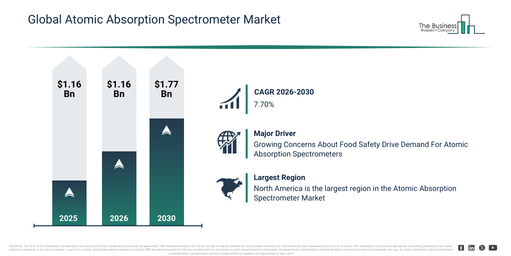
    The market for atomic absorption spectrometers is projected to experience substantial expansion over the upcoming years. This market is anticipated to reach a valuation of $11.75 billion by 2030, demonstrating a compound annual growth rate (CAGR) of 7.7%. This projected growth is driven by several factors, including the advancement of integrated and modular AAS systems, expanding applications within the biotechnology and pharmaceutical sectors, the need for portable and software-integrated spectrometers, an increase in multi-element and high-throughput analytical demands, and the growing stringency of environmental and food safety testing regulations. Key trends expected during this period encompass an increasing need for high-precision elemental analysis, continued expansion in environmental and food safety testing, wider implementation of portable and automated AAS systems, integration with chromatography and other analytical methodologies, and an emphasis on high-throughput and multi-element spectroscopy.

    Access Your Free Sample Report for In-Depth Market Insights:

    https://www.thebusinessresearchcompany.com/sample.aspx?id=20493&type=smp

    What Drivers Are Shaping Future Opportunities In The Atomic Absorption Spectrometer Market?

    The increasing worries regarding food safety are projected to boost the expansion of the atomic absorption spectrometer market in the coming years. These heightened concerns stem from a rise in foodborne diseases, contamination issues, and the expanding intricacy of international food supply networks. In food safety applications, the atomic absorption spectrometer plays a crucial role in identifying and measuring minute quantities of heavy metals and other impurities, thereby guaranteeing that food items comply with established safety benchmarks and regulatory thresholds. For example, the United States Department of Agriculture, a US-based government department, stated in August 2025 that 18 million U.S. households (13.5%) faced food insecurity at some point in 2023, an increase from 17 million households (12.8%) in 2022. Consequently, the growing apprehensions surrounding food safety are propelling the expansion of the atomic absorption spectrometer market.

    Which Segments Are Gaining Traction In The Atomic Absorption Spectrometer Market?

    The atomic absorption spectrometer market covered in this report is segmented –

    1) By Type: Flame Atomic Absorption Spectrometer, Graphite Furnace Atomic Absorption Spectrometer, Integrated Atomic Absorption Spectrometer

    2) By Application: Environmental Analysis, Food And Beverages Testing, Biotechnology, Other Applications

    3) By End User: Pharmaceutical Industry, Mining Industry, Petrochemical Industry, Agriculture Industry, Other End Users

    Subsegments:

    1) By Flame Atomic Absorption Spectrometer: Single Element Flame Atomic Absorption Spectrometers, Multi-Element Flame Atomic Absorption Spectrometers, Portable Flame Atomic Absorption Spectrometers, High-Throughput Flame Atomic Absorption Spectrometers

    2) By Graphite Furnace Atomic Absorption Spectrometer: Single Element Graphite Furnace Atomic Absorption Spectrometers, Multi-Element Graphite Furnace Atomic Absorption Spectrometers, Automated Graphite Furnace Atomic Absorption Spectrometers, High-Resolution Graphite Furnace Atomic Absorption Spectrometers

    3) By Integrated Atomic Absorption Spectrometer: Combination Flame And Graphite Furnace Atomic Absorption Spectrometers, Integrated Systems With Spectroscopy And Chromatography, Modular Integrated Atomic Absorption Spectrometers, Software-Integrated Atomic Absorption Spectrometers

    Who Are The Prominent Global Companies Shaping The Atomic Absorption Spectrometer Market Landscape?

    Major companies operating in the atomic absorption spectrometer market are Hitachi Ltd., Thermo Fisher Scientific Inc., Agilent Technologies, Shimadzu Corporation, PerkinElmer Inc., Horiba Scientific, Techcomp, Analytik Jena, Spectro Analytical Instruments, GBC Scientific Equipment, Buck Scientific Instruments LLC, JEOL Ltd., Rigaku Corporation, PG Instruments Limited, Skyray Instrument, Rayleigh Instruments, Aurora Scientific Instruments, Beijing Beifen Ruili Analytical Instrument Group, Aurora Biomed, LABINDIA Analytical Instruments, KLAB Instrument, Sanco Scientific, Toshniwal Instruments, Chemito Technologies, Galaxy Scientific, ECIL Analytical Instruments

    Access The Complete Report For Deeper Market Insights:

    https://www.thebusinessresearchcompany.com/report/atomic-absorption-spectrometer-global-market-report

    Which Geographic Areas Are Emerging As Strong Markets For The Atomic Absorption Spectrometer Market?

    North America was the largest region in the atomic absorption spectrometer market in 2025. The regions covered in the atomic absorption spectrometer market report are Asia-Pacific, South East Asia, Western Europe, Eastern Europe, North America, South America, Middle East, Africa.

    Request Your Customized Atomic Absorption Spectrometer Market Research Report for Competitive Advantage:

    https://www.thebusinessresearchcompany.com/customise?id=20493&type=smp

    Browse Through More Reports Similar to the Global Atomic Absorption Spectrometer Market 2026, By The Business Research Company

    Atomic Layer Deposition Global Market Report 2026

    https://www.thebusinessresearchcompany.com/report/atomic-layer-deposition-global-market-report

    Atomic Spectroscopy Global Market Report 2026

    https://www.thebusinessresearchcompany.com/report/atomic-spectroscopy-global-market-report

    Smart Gas Meter Global Market Report 2026

    https://www.thebusinessresearchcompany.com/report/smart-gas-meter-global-market-report

    Get in touch with us:

    The Business Research Company: https://www.thebusinessresearchcompany.com/

    Americas +1 310-496-7795

    Asia +44 7882 955267 & +91 8897263534

    Europe +44 7882 955267

    Email us at info@tbrc.info

    Follow us on:

    LinkedIn: https://in.linkedin.com/company/the-business-research-company
  • At-Home Orthodontic Aligner Global Forecast: Market to Scale Up to $10.07 Billion by 2030 at 16.1% CAGR

    At-Home Orthodontic Aligner Global Forecast: Market to Scale Up to $10.07 Billion by 2030 at 16.1% CAGR

    Uncover key drivers, emerging technologies, and competitive movements shaping the hospital throughput command center artificial intelligence (ai) market from 2026–2035 with trusted insights from The Business Research Company

    What was the valuation of the At-Home Orthodontic Aligner Market in 2026, and what figure is it projected to hit by 2030?

    The at-home orthodontic aligner market size has seen substantial growth in recent times. It is projected to increase from $4.76 billion in 2025 to $5.54 billion in 2026, achieving a compound annual growth rate (CAGR) of 16.4%. The expansion observed in the past can be attributed to several factors, including heightened awareness of dental aesthetics, the significant expense associated with traditional braces, the early adoption of clear aligner technology, the proliferation of online dental platforms, and the rising demand for adult orthodontic solutions.

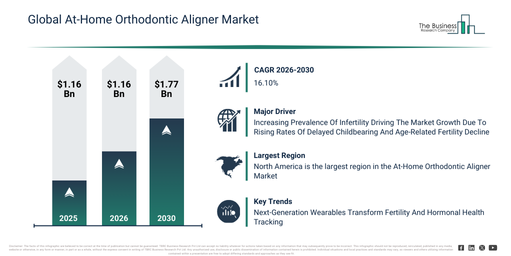
    The at-home orthodontic aligner market is projected to experience swift expansion in the coming years. This market is anticipated to reach $10.07 billion by 2030, demonstrating a compound annual growth rate (CAGR) of 16.1%. Several factors contribute to this growth during the forecast period, including AI-powered treatment planning, rising acceptance of remote dental monitoring, a surge in demand for cost-effective orthodontic options, advancements in aligner material technology, and the broadening of teledentistry services. Key trends identified for the forecast period encompass an increasing inclination towards remote orthodontic treatments, greater uptake of direct-to-consumer dental offerings, a heightened preference for discreet and visually appealing aligners, the broadening of adult orthodontic care, and a movement towards more concise and personalized treatment regimens.

    Access Your Free Sample Report for In-Depth Market Insights:

    https://www.thebusinessresearchcompany.com/sample.aspx?id=28939&type=smp

    Which Drivers Are Affecting Market Participation In The At-Home Orthodontic Aligner Market?

    The expanding occurrence of infertility is projected to boost the growth of the at-home fertility hormone patch market in the future. Infertility is defined as a medical condition where pregnancy cannot be achieved after 12 months of regular unprotected intercourse, or when there are physical challenges in conceiving or carrying a pregnancy to a live birth. The rise in infertility rates is attributed to trends of delayed childbearing, as more individuals choose to postpone starting a family until later reproductive ages. This delay often results in age-related decreases in egg quality, ovarian reserve, and sperm parameters, which significantly lower the chances of conception. This growing challenge of infertility creates a greater need for at-home fertility hormone testing solutions. These patches offer a convenient and non-invasive way to monitor reproductive hormones, helping individuals track ovulation patterns, identify fertile windows, and make well-informed decisions about their reproductive health without frequent clinic visits. For example, in April 2023, data from the World Health Organization (WHO), a Switzerland-based intergovernmental organization, indicated that around 17.5% of the adult population, roughly 1 in 6 people worldwide, experience infertility, emphasizing the urgent requirement for enhanced access to affordable and high-quality fertility care for those affected. Consequently, the increasing prevalence of infertility is a key factor driving the expansion of the at-home fertility hormone patch market.

    What Segment Categories Are Covered In The At-Home Orthodontic Aligner Market?

    The at-home orthodontic aligner market covered in this report is segmented –

    1) By Product Type: Clear Aligners, Hybrid Orthodontic Aligners, Nighttime Wear Aligners, Short-Term Treatment Aligners, Other Product Types

    2) By Treatment Scope: Mild Malocclusion Correction, Moderate Malocclusion Correction, Cosmetic Alignment, Relapse Correction

    3) By Age Group: Teenagers, Adults

    4) By Material: Polyurethane Plastic, Polyethylene Terephthalate Glycol, Multilayer Thermoplastic Polymers, Other Biocompatible Materials

    5) By Distribution Channel: Direct-to-Consumer Online Platforms, Company-Owned Websites, Tele-Orthodontic Platforms, Hybrid Dental Network Partnerships, Other Online Distribution Channels

    6) By End User: Home Care Users, Hybrid Home-Clinic Users

    Subsegments:

    1) By Clear Aligners: Single-Arch Clear Aligners, Dual-Arch Clear Aligners, Three-Dimensional (3D) Printed Clear Aligners, Artificial Intelligence (AI)-Designed Clear Aligners, Remote-Monitoring-Enabled Clear Aligners

    2) By Hybrid Orthodontic Aligners: Dentist-Prescribed Hybrid Aligners, Remote-Supervised Hybrid Aligners, Periodic In-Clinic Adjustment Aligners, Tele-Orthodontics-Integrated Aligners

    3) By Nighttime Wear Aligners: Part-Time Wear Clear Aligners, Accelerated Night-Only Treatment Aligners, Cosmetic Night-Use Aligners, Compliance-Tracking Night Aligners

    4) By Short-Term Treatment Aligners: Mild Misalignment Correction Aligners, Relapse Correction Aligners, Cosmetic Alignment Aligners, Event-Based Short-Duration Aligners

    5) By Other Product Types: Removable Orthodontic Systems, Retainer-Style Aligner Systems, Subscription-Based Aligner Programs, Custom-Fit At-Home Orthodontic Systems

    What Industry Trends Are Transforming The At-Home Orthodontic Aligner Market?

    Leading companies within the at-home fertility hormone patch market are prioritizing the creation of advanced solutions, specifically deoxyribonucleic acid (DNA)-based wearable patches, to facilitate real-time, non-invasive hormone monitoring. These deoxyribonucleic acid (DNA)-based wearable patches are innovative devices employing DNA-derived sensors to identify hormone concentrations in interstitial fluid, empowering users to track their hormonal changes continuously without needing invasive blood tests, thereby aiding fertility monitoring and general hormonal well-being. As an illustration, in February 2025, the UK biotechnology firm Level Zero Health Inc. secured $6.9 million during an oversubscribed pre-seed funding round, intended for the development of the pioneering continuous hormone monitoring patch globally. This particular DNA-based wearable patch from the company is designed to measure crucial hormones like cortisol, progesterone, estrogen, and testosterone within interstitial fluid, offering immediate data to assist with fertility tracking, managing hormonal health, and remote clinical oversight. The non-invasive nature of this device permits individuals to observe their hormonal shifts either continuously or periodically via a user-friendly patch worn on the arm, thereby lessening the necessity for clinic appointments and invasive methods. Initially, the startup aims to address B2B clinical needs, encompassing fertility clinics and endocrine treatment centers, while also preparing for potential expansion into consumer-centric wellness sectors.

    Which Key Players Are Driving Competition In The At-Home Orthodontic Aligner Market?

    Major companies operating in the at-home orthodontic aligner market are Align Technology Inc., Candid Care Co., SmileLove LLC, WonderSmile Pty Ltd., ALIGNERCO, NewSmile, Straight Teeth Direct, EZ Smile Pty Ltd., Smileie, Alinger32, OrthoFX Inc., Angel Aligner, Snazzy Clear Aligners, FlexAligners, Smileie Europe, Dezy, Zenyum, PlusDental, SmileWhite, Illusion Aligners, Smartee Aligners

    Access The Complete Report For Deeper Market Insights:

    https://www.thebusinessresearchcompany.com/report/at-home-orthodontic-aligner-global-market-report

    Which Region Is Projected To Lead The At-Home Orthodontic Aligner Market During The Forecast Period?

    North America was the largest region in the at-home fertility hormone patch market in 2025. The regions covered in the at-home orthodontic aligner market report are Asia-Pacific, South East Asia, Western Europe, Eastern Europe, North America, South America, Middle East, Africa.

    Request Your Customized At-Home Orthodontic Aligner Market Research Report for Competitive Advantage:

    https://www.thebusinessresearchcompany.com/customise?id=28939&type=smp

    Browse Through More Reports Similar to the Global At-Home Orthodontic Aligner Market 2026, By The Business Research Company

    Laser Atherectomy Devices Global Market Report 2026

    https://www.thebusinessresearchcompany.com/report/laser-atherectomy-devices-global-market-report

    Coronary Atherectomy Devices Global Market Report 2026

    https://www.thebusinessresearchcompany.com/report/coronary-atherectomy-devices-global-market-report

    Biopsy Devices Global Market Report 2026

    https://www.thebusinessresearchcompany.com/report/biopsy-devices-global-market-report

    Get in touch with us:

    The Business Research Company: https://www.thebusinessresearchcompany.com/

    Americas +1 310-496-7795

    Asia +44 7882 955267 & +91 8897263534

    Europe +44 7882 955267

    Email us at info@tbrc.info

    Follow us on:

    LinkedIn: https://in.linkedin.com/company/the-business-research-company
  • At-Home IPL Device Market Future Outlook: Strong Growth Expected Toward $3.97 Billion by 2030

    At-Home IPL Device Market Future Outlook: Strong Growth Expected Toward $3.97 Billion by 2030

    Uncover key drivers, emerging technologies, and competitive movements shaping the hospital command centers market from 2026–2035 with trusted insights from The Business Research Company

    What are the forecasted starting (2026) and ending (2030) market sizes for the At-Home IPL Device Market?

    The market size for at-home IPL devices has experienced rapid expansion in recent years. It is anticipated to grow from $1.79 billion in 2025 to $2.11 billion in 2026, exhibiting a compound annual growth rate (CAGR) of 17.5%. The historical increase in this market can be attributed to factors such as escalating salon treatment costs, the rise of consumer beauty electronics, a growing awareness of aesthetic care, the early adoption of home-use light therapy devices, and the expansion of e-commerce beauty platforms.

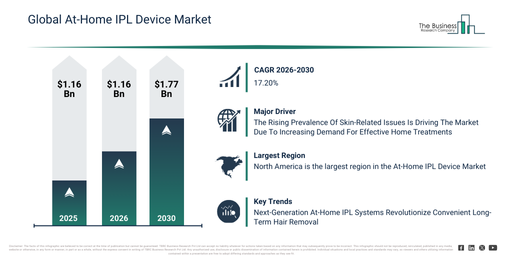
    The at-home ipl device market size is projected to experience swift expansion over the coming years. This market is predicted to reach $3.97 billion by 2030, demonstrating a compound annual growth rate (CAGR) of 17.2%. The anticipated growth during this period stems from factors such as innovations in light-based device technology, a greater consumer emphasis on self-care, an escalating need for mobile beauty solutions, the proliferation of direct-to-consumer beauty brands, and the broader adoption of unisex grooming items. Significant trends for the forecast period encompass a rising inclination towards aesthetic treatments performed at home, a growing uptake of economical beauty devices, an increasing requirement for multi-functional ipl systems, the broadening scope of personal grooming for both genders, and a transition towards solutions for long-term hair reduction.

    Access Your Free Sample Report for In-Depth Market Insights:

    https://www.thebusinessresearchcompany.com/sample.aspx?id=28938&type=smp

    What Drivers Are Supporting Technological Adoption In The At-Home IPL Device Market?

    An increasing incidence of dermatological conditions is anticipated to fuel the expansion of the at-home IPL device market in the future. These dermatological concerns encompass any ailment impacting the skin’s well-being, aesthetic, or operation, potentially stemming from elements such as sensitivities, contagions, endocrine shifts, or environmental contact. The growing occurrence of these skin problems is largely due to heightened exposure to environmental pollutants, which compromise the skin’s defensive layer and provoke irritation and inflammation. At-home IPL devices address skin issues through the application of intense pulsed light, targeting deeper skin layers to diminish pigmentation and unwanted hair, refine skin texture, and stimulate collagen synthesis for skin that is both healthier and smoother. For example, as reported in March 2025 by the British Dermatological Nursing Group (BDNG), a professional body based in the UK, approximately 60% of individuals in the United Kingdom are presently afflicted with a skin condition, with more than 100,000 new instances of skin cancer documented annually. Consequently, the increasing frequency of dermatological problems is a key factor propelling the expansion of the at-home IPL device market.

    Which Segments Are Contributing To The Growth Of The At-Home IPL Device Market?

    The at-home ipl device market covered in this report is segmented –

    1) By Product Type: Corded, Cordless

    2) By Distribution Channel: Online Retail, Offline Retail, Specialty Stores, Pharmacies, Other Distribution Channels

    3) By Application: Hair Removal, Skin Rejuvenation, Acne Treatment, Other Applications

    4) By End-User: Men, Women, Unisex

    Subsegments:

    1) By Corded: Handheld Device, Tabletop Device

    2) By Cordless: Rechargeable Handheld Device, Battery Operated Device

    What Trends Are Reshaping The Dynamics Of The At-Home IPL Device Market?

    Prominent companies within the at-home IPL device market are dedicated to introducing innovative advancements, such as IPL hair removal systems, to offer a convenient and dependable approach for long-term hair reduction in domestic settings. An IPL Hair Removal System is a device that utilizes pulsed light technology to target hair follicles, thereby safely and effectively minimizing hair growth for use at home. For instance, in October 2025, Procter & Gamble, a US-based consumer goods company, introduced the Braun Skin i·expert IPL. This product offers automatic adaptation to different skin tones across various body areas, incorporates a high-frequency pulsed light mechanism, and integrates with a mobile application that provides guidance to users throughout their treatment. These improvements facilitate more precise, efficient, and user-friendly hair reduction, signifying a considerable progression in at-home intense pulsed light hair removal technology.

    Who Are The Top-Performing Companies In The At-Home IPL Device Market In Recent Years?

    Major companies operating in the at-home ipl device market are Panasonic Holdings Corporation, Koninklijke Philips N.V., Cyden Ltd.(Smooth Skin), SilkÂ’n, Shenzhen Mismon Technology Co. Ltd., VISS BEAUTY UK LIMITED, Shenzhen Ulike Smart Electronics Co. Ltd., Remington Arms Company LLC, Nood, Amiro Ltd., Braun GmbH, HAPPY SKIN CO PTY. LTD., Iluminage Beauty Inc., Kenzzi Limited, Shenzhen Bosidin Technology Co. Ltd., Shenzhen DEESS Science & Technology Co. Ltd., Aopvui, JOVS LTD., Shenzhen Lescolton Electric Appliance Co. Ltd., Zhongshan Aimanfun Intelligent Technology Co. Ltd.

    Access The Complete Report For Deeper Market Insights:

    https://www.thebusinessresearchcompany.com/report/at-home-ipl-device-global-market-report

    Which Region Currently Holds The Largest Share Of The At-Home IPL Device Market?

    North America was the largest region in the at-home IPL device market in 2025. Asia-Pacific is expected to be the fastest-growing region in the forecast period. The regions covered in the at-home ipl device market report are Asia-Pacific, South East Asia, Western Europe, Eastern Europe, North America, South America, Middle East, Africa.

    Request Your Customized At-Home IPL Device Market Research Report for Competitive Advantage:

    https://www.thebusinessresearchcompany.com/customise?id=28938&type=smp

    Browse Through More Reports Similar to the Global At-Home IPL Device Market 2026, By The Business Research Company

    Prosthetics And Orthotics Global Market Report 2026

    https://www.thebusinessresearchcompany.com/report/prosthetics-and-orthotics-global-market-report

    Invisible Orthodontics Global Market Report 2026

    https://www.thebusinessresearchcompany.com/report/invisible-orthodontics-global-market-report

    Orthopedic Braces And Support Devices And Equipment Global Market Report 2026

    https://www.thebusinessresearchcompany.com/report/orthopedic-braces-and-support-devices-and-equipment-global-market-report

    Get in touch with us:

    The Business Research Company: https://www.thebusinessresearchcompany.com/

    Americas +1 310-496-7795

    Asia +44 7882 955267 & +91 8897263534

    Europe +44 7882 955267

    Email us at info@tbrc.info

    Follow us on:

    LinkedIn: https://in.linkedin.com/company/the-business-research-company
  • Ambulatory IV infusion Pumps Market 2026–2030: Emerging Trends and Forecast Opportunities

    Ambulatory IV infusion Pumps Market 2026–2030: Emerging Trends and Forecast Opportunities

    Uncover key drivers, emerging technologies, and competitive movements shaping the automatic cardiopulmonary resuscitation (cpr) devices market from 2026–2035 with trusted insights from The Business Research Company

    Across 2026–2030, what is the expected market valuation path of the Ambulatory IV infusion Pumps Market?

    The market for ambulatory iv infusion pumps has demonstrated consistent growth in recent years. This market is set to expand from $0.91 billion in 2025 to $0.95 billion in 2026, achieving a compound annual growth rate (CAGR) of 4.5%. The historical increase can be ascribed to elements such as an uptick in outpatient treatment models, the rising occurrence of chronic diseases, the early adoption of ambulatory infusion technologies, the expansion of home healthcare provisions, and enhancements in pump safety protocols.

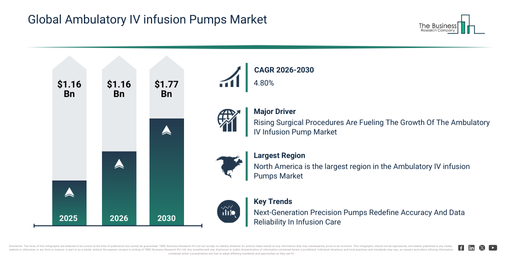
    The market for ambulatory iv infusion pumps is projected to experience consistent expansion over the upcoming years. This market is anticipated to reach a value of $1.15 billion by 2030, demonstrating a compound annual growth rate (CAGR) of 4.8%. Factors contributing to this growth during the forecast timeframe include a heightened demand for remote therapy management, the increasing incorporation of connected healthcare devices, the development of personalized drug delivery methods, a greater emphasis on shortening hospital visits, and improvements in battery efficiency and pump miniaturization. Key trends anticipated within the forecast period encompass a wider uptake of portable and wearable infusion pumps, an escalating need for home-based infusion treatments, the increasing incorporation of smart dose monitoring capabilities, the broadening of multi-therapy pump uses, and a stronger emphasis on patient mobility and comfort.

    Access Your Free Sample Report for In-Depth Market Insights:

    https://www.thebusinessresearchcompany.com/sample.aspx?id=3343&type=smp

    Which Drivers Are Supporting The Rise Of The Ambulatory IV infusion Pumps Market?

    The increasing volume of surgical procedures is projected to stimulate the growth of the ambulatory IV infusion pumps market in the future. Surgical procedures encompass medical interventions or treatments that involve making incisions or employing invasive techniques to reach and treat internal or external areas of the body. Ambulatory IV infusion pumps enable the regulated administration of fluids, medications, and anesthetics during these procedures, guaranteeing a precise and continuous flow, thereby enhancing both patient safety and surgical efficiency. For example, in July 2025, according to the American Med Spa Association, a US-based provider of legal, compliance, and business resources for medical spas and medical aesthetic practices, cosmetic procedure volumes have climbed by 42.5% over the past four years, reaching 20.5 million non-surgical treatments and 17.4 million surgical procedures in 2024. Consequently, the rising number of surgical procedures acts as a driver for the growth of the ambulatory IV infusion pumps market.

    What Segments Are Identified Within The Structure Of The Ambulatory IV infusion Pumps Market?

    The ambulatory iv infusion pumps market covered in this report is segmented –

    1) By Therapy: Chemotherapy Infusion Pumps, Anti-Infective Infusion Pumps, Other Therapies

    2) By Application: Chemotherapy Or Oncology, Diabetes, Gastroenterology, Analgesia Or Pain Management, Pediatrics Or Neonatology, Hematology, Anti-Infective, Other Applications

    3) By Patient Care Setting: Hospitals, Home Healthcare, Other End Users

    Subsegments:

    1) By Chemotherapy Infusion Pumps: Continuous Chemotherapy Infusion Pumps, Cyclic Chemotherapy Infusion Pumps, Patient-Controlled Analgesia (PCA) Pumps for Chemotherapy

    2) By Anti-Infective Infusion Pumps: Antibiotic Infusion Pumps, Antiviral Infusion Pumps, Antifungal Infusion Pumps

    3) By Other Therapies: Pain Management Infusion Pumps, Nutritional Infusion Pumps (Total Parenteral Nutrition), Hormonal Therapy Infusion Pumps, Hydration Infusion Pumps

    How Are Emerging Trends Affecting The Progression Of The Ambulatory IV infusion Pumps Market?

    Leading companies operating in the ambulatory IV infusion pumps market are prioritizing the development of innovative advancements like precision infusion pumps to elevate the accuracy, consistency, and data reliability of infusion therapy. A precision infusion pump is an advanced device designed to dispense medications and fluids with highly controlled accuracy while minimizing variability across diverse clinical settings. For instance, in April 2025, ICU Medical, a US-based developer and manufacturer of medical infusion technologies, launched the Plum Solo and Plum Duo precision IV pumps. These devices introduce a high-accuracy delivery mechanism, supported by integrated digital functions, that improves infusion consistency regardless of environmental or setup factors. They also expand a unified infusion platform that strengthens medication management, supports full electronic health record interoperability, and provides clinicians with more reliable real-time infusion data.

    Which Leading Companies Dominate The Ambulatory IV infusion Pumps Market Share?

    Major companies operating in the ambulatory iv infusion pumps market are Baxter International Inc, Becton Dickinson and Company, B. Braun Melsungen AG, Fresenius Kabi AG, ICU Medical Inc, Medtronic plc, Mindray Medical International Limited, Nipro Corporation, Moog Inc, Zyno Medical LLC, Micrel Medical Devices SA, JMS Co Ltd, Eitan Medical, SOOIL Development Co Ltd, Ypsomed Holding AG, Arcomed AG, Comen Medical, Flowonix Medical, Akas Infusion, CME Medical

    Access The Complete Report For Deeper Market Insights:

    https://www.thebusinessresearchcompany.com/report/ambulatory-iv-infusion-pumps-global-market-report

    How Does The Ambulatory IV infusion Pumps Market Perform Across Major Global Regions?

    North America was the largest region in the ambulatory IV infusion pumps market in 2025. Western Europe was the second largest region in the global ambulatory IV infusion pump market. The regions covered in the ambulatory iv infusion pumps market report are Asia-Pacific, South East Asia, Western Europe, Eastern Europe, North America, South America, Middle East, Africa.

    Request Your Customized Ambulatory IV infusion Pumps Market Research Report for Competitive Advantage:

    https://www.thebusinessresearchcompany.com/customise?id=3343&type=smp

    Browse Through More Reports Similar to the Global Ambulatory IV infusion Pumps Market 2026, By The Business Research Company

    Intravenous Infusion Pumps Global Market Report 2026

    https://www.thebusinessresearchcompany.com/report/intravenous-infusion-pumps-global-market-report

    Infusion Pump Global Market Report 2026

    https://www.thebusinessresearchcompany.com/report/infusion-pump-global-market-report

    Implantable Infusion Pumps Global Market Report 2026

    https://www.thebusinessresearchcompany.com/report/implantable-infusion-pumps-global-market-report

    Get in touch with us:

    The Business Research Company: https://www.thebusinessresearchcompany.com/

    Americas +1 310-496-7795

    Asia +44 7882 955267 & +91 8897263534

    Europe +44 7882 955267

    Email us at info@tbrc.info

    Follow us on:

    LinkedIn: https://in.linkedin.com/company/the-business-research-company
  • Global Ambulatory Blood Pressure Monitoring Devices Market Forecast 2026–2035: Long-Term Growth Insights

    Global Ambulatory Blood Pressure Monitoring Devices Market Forecast 2026–2035: Long-Term Growth Insights

    Uncover key drivers, emerging technologies, and competitive movements shaping the automated tray management for operating room (or) implants market from 2026–2035 with trusted insights from The Business Research Company

    What size range is anticipated for the Ambulatory Blood Pressure Monitoring Devices Market from 2026 to 2030?

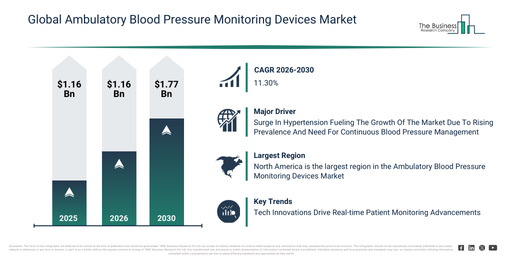
    The ambulatory blood pressure monitoring devices market has experienced substantial growth in recent years. It is anticipated to expand from $1.15 billion in 2025 to $1.29 billion in 2026, at a compound annual growth rate (CAGR) of 11.7%. The market’s development in the past can be linked to aspects like limited access to ambulatory monitoring devices, a reliance on manual blood pressure measurements, the rising prevalence of hypertension, the growth of hospital-based cardiovascular monitoring, and an increased awareness of nocturnal and white-coat hypertension.

    The ambulatory blood pressure monitoring devices market size is projected to experience rapid growth in the next few years, reaching $1.98 billion by 2030 at a compound annual growth rate (CAGR) of 11.3%. This expansion during the forecast period can be attributed to advancements in technology for wearable and smartphone-integrated devices, an increase in homecare adoption, rising demand for automated ABPM devices, the broadening of remote patient monitoring solutions, and integration with digital health platforms and telemedicine. Significant trends expected during this period include the growing adoption of home-based blood pressure monitoring, the integration of wearable and smartphone-enabled ABPM devices, increased awareness of white-coat and nocturnal hypertension, the expansion of preoperative and postoperative cardiovascular monitoring, and an enhanced focus on continuous and remote patient monitoring.

    Access Your Free Sample Report for In-Depth Market Insights:

    https://www.thebusinessresearchcompany.com/sample.aspx?id=24458&type=smp

    What Drivers Are Affecting Demand In The Ambulatory Blood Pressure Monitoring Devices Market?

    The increasing prevalence of hypertension is projected to propel the growth of the ambulatory blood pressure monitoring devices market going forward. Hypertension is a condition characterized by consistently elevated blood pressure levels in the arteries. This rise in prevalence is attributed to factors such as unhealthy diets, sedentary lifestyles, and increasing obesity rates. Ambulatory blood pressure monitoring devices assist in managing hypertension by providing continuous, accurate blood pressure readings throughout daily activities and sleep, which enables better diagnosis and personalized treatment management. For instance, in September 2023, the World Health Organization (WHO), a Switzerland-based intergovernmental organization, reported that hypertension affects 1 in 3 adults worldwide (around 1.3 billion), and that increasing effective treatment coverage to 50% by 2025 could prevent 76 million deaths by 2050. Therefore, the growing prevalence of hypertension is expected to drive the expansion of the ambulatory blood pressure monitoring devices market.

    Which Segments Are Gaining Traction In The Ambulatory Blood Pressure Monitoring Devices Market?

    The ambulatory blood pressure monitoring devices market covered in this report is segmented –

    1) By Product Type: Automatic ABPM Devices, Manual ABPM Devices, Specialised ABPM Devices

    2) By Device Type: Ambulatory Blood Pressure Monitor, Home Blood Pressure Monitor, Hospital Blood Pressure Monitor, Wearable Blood Pressure Monitor

    3) By Applications: Hypertension Management, Cardiovascular Disease Monitoring, Preoperative Assessment, Postoperative Monitoring

    4) By Distribution Channel: Direct Sales, Online Retail, Third-Party Distributors, Pharmacies

    5) By End Use: Hospitals, Homecare, Prescription, OTC

    Subsegments:

    1) By Automatic ABPM Devices: Upper Arm Automatic ABPM Devices, Wrist-Worn Automatic ABPM Devices, Bluetooth-Enabled Automatic ABPM Devices, Smartphone-Integrated ABPM Devices

    2) By Manual ABPM Devices: Aneroid Manual ABPM Devices, Mercury-Based Manual ABPM Devices, Digital Readout Manual Devices (Semi-Automatic)

    3) By Specialised ABPM Devices: Pediatric ABPM Devices, Geriatric ABPM Devices, Nocturnal ABPM Devices, Wearable Patch-Based ABPM Devices

    Which Innovation Trends Are Advancing Developments Within The Ambulatory Blood Pressure Monitoring Devices Market?

    Leading companies in the ambulatory surgical pressure monitoring devices market are primarily focused on advancing technology, particularly developing point-of-care devices. The objective of these innovations is to improve the accuracy of real-time monitoring, enhance patient comfort, and accelerate clinical decision-making. A point-of-care device is defined as a medical instrument deployed at or near a patient’s location to provide swift diagnostic or monitoring results without requiring a centralized laboratory. Illustrating this trend, in October 2024, Withings, a digital health technology company from France, unveiled the BPM Pro 2. This advanced remote blood pressure monitoring device is designed to better assess cardiovascular health in real-world settings. The BPM Pro 2 delivers accurate blood pressure measurements and supports built-in cellular, Wi-Fi, and Bluetooth connectivity, enabling real-time data sharing between patients and healthcare providers without the need for a smartphone. It includes an integrated “Patient Insights” tool that collects symptom and lifestyle information after each reading, assisting clinicians in making faster and more informed decisions. Additionally, the BPM Pro 2 provides on-device guidance and prompts for re-takes to ensure reliable measurements. Its user-friendly design contributes to increased comfort and encourages consistent monitoring, ultimately aiding in the improved detection and management of hypertension outside clinical environments.

    Who Are The Major Companies Operating In The Ambulatory Blood Pressure Monitoring Devices Market?

    Major companies operating in the ambulatory blood pressure monitoring devices market are Koninklijke Philips NV, GE Healthcare Technologies Inc, Omron Healthcare Co Ltd, Hill Rom Holdings Inc, Halma plc, Spacelabs Healthcare Inc, Schiller Holding AG, Withings SA, Contec Medical Systems Co Ltd, BPL Medical Technologies Private Limited, Microlife AG, SunTech Medical Inc, Rossmax International Ltd, Rudolf Riester GmbH, iHealth Labs Inc, American Diagnostic Corporation, Bosch and Sohn GmbH and Co KG, A and D Medical, Welch Allyn Hill Rom, CardieX Limited

    Access The Complete Report For Deeper Market Insights:

    https://www.thebusinessresearchcompany.com/report/ambulatory-blood-pressure-monitoring-devices-global-market-report

    Which Region Is Anticipated To See The Fastest Growth In The Ambulatory Blood Pressure Monitoring Devices Market?

    North America was the largest region in the ambulatory blood pressure monitoring devices market in 2025. Asia-Pacific is expected to be the fastest-growing region in the forecast period. The regions covered in the ambulatory blood pressure monitoring devices market report are Asia-Pacific, South East Asia, Western Europe, Eastern Europe, North America, South America, Middle East, Africa.

    Request Your Customized Ambulatory Blood Pressure Monitoring Devices Market Research Report for Competitive Advantage:

    https://www.thebusinessresearchcompany.com/customise?id=24458&type=smp

    Browse Through More Reports Similar to the Global Ambulatory Blood Pressure Monitoring Devices Market 2026, By The Business Research Company

    Wearable Blood Pressure Monitors Global Market Report 2026

    https://www.thebusinessresearchcompany.com/report/wearable-blood-pressure-monitors-global-market-report

    Digital Health Monitoring Devices Global Market Report 2026

    https://www.thebusinessresearchcompany.com/report/digital-health-monitoring-devices-global-market-report

    Cardiovascular Monitoring And Diagnostic Devices And Equipment Global Market Report 2026

    https://www.thebusinessresearchcompany.com/report/cardiovascular-monitoring-and-diagnostic-devices-and-equipment-global-market-report

    Get in touch with us:

    The Business Research Company: https://www.thebusinessresearchcompany.com/

    Americas +1 310-496-7795

    Asia +44 7882 955267 & +91 8897263534

    Europe +44 7882 955267

    Email us at info@tbrc.info

    Follow us on:

    LinkedIn: https://in.linkedin.com/company/the-business-research-company
  • Ambulance Stretchers Market 2026–2030: Forecasting Business Opportunities Ahead

    Ambulance Stretchers Market 2026–2030: Forecasting Business Opportunities Ahead

    Uncover key drivers, emerging technologies, and competitive movements shaping the automated peritoneal dialysis market from 2026–2035 with trusted insights from The Business Research Company

    How is the Ambulance Stretchers Market size predicted to change over the forecast window of 2026–2035?

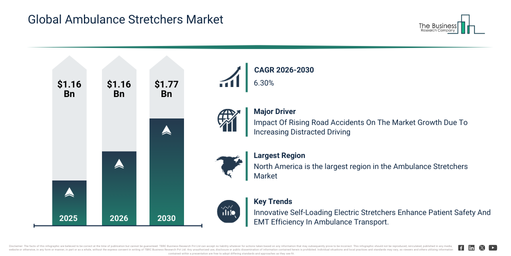
    The ambulance stretchers market has demonstrated substantial growth in recent years. Its value is anticipated to rise from $2.73 billion in 2025 to $2.91 billion in 2026, at a compound annual growth rate (CAGR) of 6.6%. This past expansion is primarily due to an increase in road accidents and trauma incidents, the proliferation of hospital emergency departments, a reliance on manual patient handling solutions, the enlargement of ambulance fleets, and the demand for basic patient conveyance options.

    The ambulance stretchers market size is projected to experience robust expansion over the coming years, with expectations to reach $3.72 billion by 2030, demonstrating a compound annual growth rate (CAGR) of 6.3%. This expansion during the forecast period is propelled by factors such as the integration of motorized and self-loading stretchers, increased funding for emergency medical services, a greater emphasis on reducing injuries among caregivers, innovations in stretcher materials, and the increasing need for quick and effective patient transport. Significant developments anticipated in the forecast timeframe encompass the increasing utilization of electric and motorized stretchers, a surging need for lightweight and ergonomic designs, an elevated focus on patient safety and comfort attributes, the broadening of emergency medical services infrastructure, and a heightened requirement for foldable and space-saving stretcher options.

    Access Your Free Sample Report for In-Depth Market Insights:

    https://www.thebusinessresearchcompany.com/sample.aspx?id=25691&type=smp

    Which Drivers Are Contributing To The Expansion Of The Ambulance Stretchers Market?

    The increasing frequency of road accidents is projected to propel the expansion of the ambulance stretchers market going forward. Road accidents are defined as unforeseen incidents or collisions occurring on roads or highways involving one or more vehicles, frequently leading to injuries, loss of life, or property damage. The rise in these accidents is attributed to the growing problem of distracted driving due to mobile phone use, which diverts drivers’ attention and heightens the risk of collisions. Ambulance stretchers are instrumental in road accident situations by ensuring the safe and efficient conveyance of injured individuals from the scene to healthcare facilities, thereby preventing further harm and enabling prompt medical intervention. For instance, in June 2024, data from the Transport Accident Commission, an Australia-based government agency, revealed that 289 lives were lost on Victorian roads, representing an 8.6% increase with 23 more fatalities compared to the same timeframe in the preceding year. Thus, the escalating incidence of road accidents is driving the growth of the ambulance stretchers market.

    What Segment Categories Are Covered In The Ambulance Stretchers Market?

    The ambulance stretchers market covered in this report is segmented –

    1) By Type: Manual Stretchers, Electric Stretchers, Foldable Stretchers, Stretcher Chairs

    2) By Technology: Non-Motorized, Motorized

    3) By Material: Aluminum, Steel, Plastic, Composite Materials

    4) By End Users: Emergency Medical Service Providers, Hospitals, Ambulatory Service Centers, Other End-Users

    Subsegments:

    1) By Manual Stretchers: Wheeled Stretchers, Non-wheeled Stretchers, Scoop Stretchers, Basket Stretchers

    2) By Electric Stretchers: Hydraulic Electric Stretchers, Battery-powered Electric Stretchers, Adjustable Height Electric Stretchers, Self-loading Electric Stretchers

    3) By Foldable Stretchers: Canvas Foldable Stretchers, Aluminum Foldable Stretchers, Pole-Type Foldable Stretchers, Spinal Board Foldable Stretchers

    4) By Stretcher Chairs: Convertible Stretcher Chairs, Stair Climbing Stretcher Chairs, Foldable Stretcher Chairs, Transport Wheelchair Stretchers

    Which Competitive Trends Are Impacting The Structure Of The Ambulance Stretchers Market?

    Companies operating in the ambulance stretcher market are prioritizing the development of advanced innovations like self-loading electric stretchers to improve patient safety, minimize manual handling by emergency personnel, and enhance efficiency during patient transport. A self-loading electric stretcher is defined as a motorized patient transport apparatus equipped with an automated loading and unloading mechanism, allowing it to lift and load itself into an ambulance without requiring medical staff to perform manual lifting. For example, in December 2023, KARTSANA, S.L., a Spain-based manufacturing company, introduced the superbrava electric stretcher with the goal of increasing patient transport efficiency and safety. This product offers exceptional strength, safety, and maneuverability, featuring a hydraulic lifting system that supports up to 320 kg and multi-position adjustable handrails for patient comfort and security. It is engineered to enable effortless, safe patient transport while simultaneously easing the workload of emergency medical technicians in critical situations.

    Which Major Firms Are Strengthening Their Position In The Ambulance Stretchers Market?

    Major companies operating in the ambulance stretchers market are Medline Industries LP, Stryker Corporation, Hill Rom Holdings Inc, Hebei Pukang Medical Instruments Co Ltd, Ferno Washington Inc, Spencer Italia S r l, Narang Medical Limited, Advin Health Care, Kartsana Medical GmbH, IndoSurgicals Private Limited, Frima Concept SARL, Dragon Industry Co Ltd, PVS S p A, Desco Medical India, Fu Shun Hsing Technology Co Ltd, Besco Medical Limited, Red Leaf Medical Inc, Sarvottam Appliances Private Limited, EMS Mobil Sistemler A S, Jiangsu Saikang Medical Equipment Co Ltd, Zhangjiagang Rongchang Machinery Manufacture Co Ltd, Xiehe Medical Apparatus And Instruments Co Ltd

    Access The Complete Report For Deeper Market Insights:

    https://www.thebusinessresearchcompany.com/report/ambulance-stretchers-global-market-report

    Which Region Is Anticipated To See The Fastest Growth In The Ambulance Stretchers Market?

    North America was the largest region in the ambulance stretchers market in 2025. Asia-Pacific is expected to be the fastest-growing region in the forecast period. The regions covered in the ambulance stretchers market report are Asia-Pacific, South East Asia, Western Europe, Eastern Europe, North America, South America, Middle East, Africa.

    Request Your Customized Ambulance Stretchers Market Research Report for Competitive Advantage:

    https://www.thebusinessresearchcompany.com/customise?id=25691&type=smp

    Browse Through More Reports Similar to the Global Ambulance Stretchers Market 2026, By The Business Research Company

    Air Ambulance Services Global Market Report 2026

    https://www.thebusinessresearchcompany.com/report/air-ambulance-services-global-market-report

    Air Ambulance Services Global Market Report 2026

    https://www.thebusinessresearchcompany.com/report/air-ambulance-services-global-market-report

    Air Ambulance Services Global Market Report 2026

    https://www.thebusinessresearchcompany.com/report/air-ambulance-services-global-market-report

    Get in touch with us:

    The Business Research Company: https://www.thebusinessresearchcompany.com/

    Americas +1 310-496-7795

    Asia +44 7882 955267 & +91 8897263534

    Europe +44 7882 955267

    Email us at info@tbrc.info

    Follow us on:

    LinkedIn: https://in.linkedin.com/company/the-business-research-company
  • Global Alpha Emitter Market Report 2026–2035: Key Forecasts and Growth Areas

    Global Alpha Emitter Market Report 2026–2035: Key Forecasts and Growth Areas

    Uncover key drivers, emerging technologies, and competitive movements shaping the automated drug compounding systems market from 2026–2035 with trusted insights from The Business Research Company

    What market expansion outlook does the Alpha Emitter Market show for the 2026–2030 period?

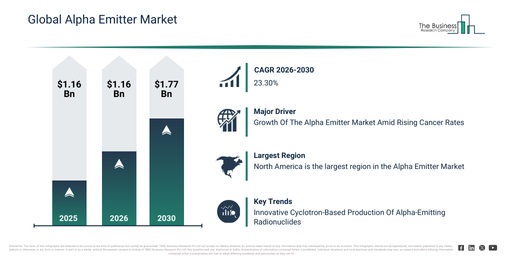
    The alpha emitter market size has experienced substantial expansion over recent years. It is projected to increase from $1.61 billion in 2025 to $1.99 billion in 2026, demonstrating a compound annual growth rate (CAGR) of 23.6%. Historically, this growth was influenced by factors such as the restricted availability of alpha-emitting radionuclides, a reliance on natural sources like uranium and radium, increasing understanding of targeted cancer therapies, the initiation of early clinical trials, and constrained production infrastructure.

    The alpha emitter market is anticipated to experience rapid growth in the coming years, with its value projected to reach $4.6 billion by 2030 at a compound annual growth rate (CAGR) of 23.3%. This expansion is primarily driven by the development of artificial radionuclide production facilities, augmented investment in oncology treatments, the growing adoption in bone metastasis and prostate cancer therapies, advancements in targeted alpha therapy technologies, and the broadening scope of medical research applications. Key trends expected during this forecast period include the increasing embrace of alpha-emitter-based cancer treatments, heightened research efforts in radionuclide production and isolation, the proliferation of artificially produced alpha emitters, the extension of therapeutic uses beyond oncology, and an amplified focus on ensuring safety and regulatory compliance for managing radioactive materials.

    Access Your Free Sample Report for In-Depth Market Insights:

    https://www.thebusinessresearchcompany.com/sample.aspx?id=19284&type=smp

    What Drivers Are Shaping The Development Of The Alpha Emitter Market?

    The rising occurrence of cancer is anticipated to boost the expansion of the alpha emitter market in the future. Cancer refers to a condition marked by the unchecked proliferation and dissemination of atypical cells within the body, potentially leading to tumor formation and invasion of adjacent tissues. The widespread presence of cancer stems from elements like an aging demographic, exposure to environmental hazards, shifts in lifestyle, and enhanced diagnostic techniques. In cancer therapy, alpha emitters are employed to precisely target and eliminate tumor cells, simultaneously ensuring minimal harm to the healthy tissues nearby. To illustrate, in February 2024, the World Health Organization, a Switzerland-based intergovernmental organization, projected that by 2050, more than 35 million new cancer cases would emerge, signifying a 77% surge from the estimated 20 million cases reported in 2022. Consequently, the growing incidence of cancer is propelling the development of the alpha emitter market.

    Which Segments Are Contributing To The Growth Of The Alpha Emitter Market?

    The alpha emitter market covered in this report is segmented –

    1) By Type Of Radionuclide: Radium, Actinium, Lead, Bismuth, Other Types Of Radionuclides

    2) By Source: Natural Sources, Artificially Produced Sources, Other Sources

    3) By Application: Pancreatic Cancer, Ovarian Cancer, Prostate Cancer, Lymphoma, Melanoma, Bone Metastasis, Other Applications

    4) By End-User: Hospitals, Medical Research Institutions, Other End-Users

    Subsegments:

    1) By Radium: Radium-223, Radium-226, Radium-228

    2) By Actinium: Actinium-227, Actinium-225

    3) By Lead: Lead-210, Lead-212

    4) By Bismuth: Bismuth-213, Bismuth-212

    5) By Other Types of Radionuclides: Thorium, Polonium, Francium

    What Industry Trends Are Transforming The Alpha Emitter Market?

    Leading firms within the alpha-emitter market are prioritizing investments in cutting-edge solutions, including alpha-emitting radionuclides generated with cyclotrons, to enhance their competitive standing. These alpha-emitting radionuclides, which are synthesized using cyclotrons, represent radioactive isotopes that emit alpha particles during their disintegration, created through the acceleration of charged particles to significant energy levels within a cyclotron. As an illustration, in April 2023, Ionetix, a US-based company specializing in cyclotron and technology, successfully manufactured its initial alpha-emitting radionuclide, Astatine-211 (At-211), at its recently opened Alpha Isotope Manufacturing facility situated in Lansing, Michigan. This particular facility stands out as the first in the U.S. exclusively dedicated to the production of alpha-emitting radionuclides employing cyclotron technology. The commencement of production was facilitated by the activation of a 30 MeV cyclotron, which was engineered specifically to accelerate alpha particles, thereby enabling the high-yield creation of At-211 and Actinium-225 (Ac-225).

    Who Are The Primary Competitors In The Global Alpha Emitter Market?

    Major companies operating in the alpha emitter market are Bayer AG, Lantheus Holdings Inc., Curium Pharma, Eckert & Ziegler BEBIG GmbH, Telix Pharmaceuticals Limited, NorthStar Medical Radioisotopes LLC, ITM Isotope Technologies Munich SE, International Isotopes Inc., IBA Radiopharma Solutions, Orano Med LLC, Actinium Pharmaceuticals Inc., Clarity Pharmaceuticals Ltd., RadioMedix Inc., Nordic Nanovector ASA, TAE Life Sciences, Fusion Pharmaceuticals Inc., Alpha Tau Medical Ltd., Alpha-9 Oncology, Aktis Oncology, Abdera Therapeutics, Oncoinvent ASA, Theragnostics Ltd., ARICEUM Therapeutics, Sirius Medical Systems B.V.

    Access The Complete Report For Deeper Market Insights:

    https://www.thebusinessresearchcompany.com/report/alpha-emitter-global-market-report

    Which Global Regions Are Shaping The Competitive Landscape Of The Alpha Emitter Market?

    North America was the largest region in the alpha emitter market in 2025. Europe is expected to be the fastest-growing region in the forecast period. The regions covered in the alpha emitter market report are Asia-Pacific, South East Asia, Western Europe, Eastern Europe, North America, South America, Middle East, Africa.

    Request Your Customized Alpha Emitter Market Research Report for Competitive Advantage:

    https://www.thebusinessresearchcompany.com/customise?id=19284&type=smp

    Browse Through More Reports Similar to the Global Alpha Emitter Market 2026, By The Business Research Company

    Alphas Mannosidosis Global Market Report 2026

    https://www.thebusinessresearchcompany.com/report/alphas-mannosidosis-global-market-report

    5 Alpha Reductase Deficiency Global Market Report 2026

    https://www.thebusinessresearchcompany.com/report/5-alpha-reductase-deficiency-global-market-report

    Alpha Glucosidase Inhibitors Global Market Report 2026

    https://www.thebusinessresearchcompany.com/report/alpha-glucosidase-inhibitors-global-market-report

    Get in touch with us:

    The Business Research Company: https://www.thebusinessresearchcompany.com/

    Americas +1 310-496-7795

    Asia +44 7882 955267 & +91 8897263534

    Europe +44 7882 955267

    Email us at info@tbrc.info

    Follow us on:

    LinkedIn: https://in.linkedin.com/company/the-business-research-company
  • Alimentary Tract Implant Market 2026–2030: Forecast, Innovation, and Competitive Trends

    Alimentary Tract Implant Market 2026–2030: Forecast, Innovation, and Competitive Trends

    Uncover key drivers, emerging technologies, and competitive movements shaping the augmented reality market from 2026–2035 with trusted insights from The Business Research Company

    What level of growth is expected in the Alimentary Tract Implant Market between 2026 and 2030?

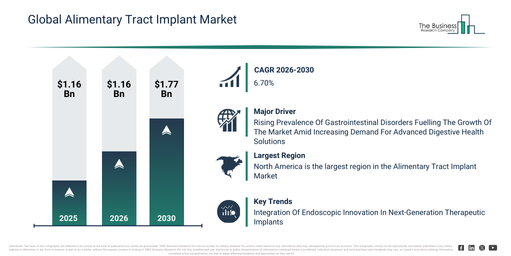
    The alimentary tract implant market has demonstrated significant expansion in recent years. This market is expected to increase from $5.13 billion in 2025 to $5.49 billion in 2026, registering a compound annual growth rate (CAGR) of 7.0%. Over the preceding period, this growth can be ascribed to several factors, including rising obesity rates, an increase in metabolic disorders, progress in endoscopic surgery, the need for non-pharmaceutical treatments, and the expansion of healthcare infrastructure.

    The alimentary tract implant market is projected to experience substantial expansion over the upcoming years. Its valuation is anticipated to reach $7.12 billion by 2030, exhibiting a compound annual growth rate (CAGR) of 6.7%. This projected growth during the forecast period stems from factors such as a rise in diabetes management implants, the increasing demand for minimally invasive procedures, advancements in implant materials, the adoption of precision treatment methodologies, and the expansion of the aging population. Key developments expected within this period encompass minimally invasive digestive implants, bariatric and metabolic implants, endoscopic implant procedures, neuromodulation techniques for gastrointestinal disorders, and enhanced long-term implant biocompatibility.

    Access Your Free Sample Report for In-Depth Market Insights:

    https://www.thebusinessresearchcompany.com/sample.aspx?id=30189&type=smp

    Which Drivers Are Expected To Impact The Alimentary Tract Implant Market During The Forecast Period?

    The escalating prevalence of gastrointestinal disorders is anticipated to propel the expansion of the alimentary tract implant market in the future. Gastrointestinal disorders encompass a broad range of conditions impacting the digestive tract, including the stomach, intestines, and related organs, which can manifest as pain, inflammation, obstruction, or compromised motility. The increasing incidence of these disorders stems largely from poor dietary habits, specifically the elevated consumption of processed and high-fat foods, which disrupt the gut microbiota balance and lead to digestive dysfunction. Consequently, the demand for alimentary tract implants is rising as the rapid increase in gastrointestinal disorders motivates healthcare providers to embrace advanced implantable solutions for managing conditions such as obesity, fecal incontinence, gastrointestinal obstruction, and other chronic digestive issues. As an illustration, in September 2025, the UK Health Security Agency (UKHSA), a UK-based government public health body, noted that England registered a 27% rise in laboratory-confirmed Campylobacter infections, with rates climbing from 96.1 per 100,000 people in 2022 to 122.0 per 100,000 in 2024. Therefore, the growing prevalence of gastrointestinal disorders is significantly contributing to the growth of the alimentary tract implant market.

    How Is The Alimentary Tract Implant Market Divided Into Segments?

    The alimentary tract implant market covered in this report is segmented –

    1) By Implant Type: Bariatric Restriction And Balloons, Gastric Electrical Stimulation Or Neuromodulation, Gastrointestinal (GI) Stents Or Endoluminal Scaffolds, Continence Or Anal Sphincter Implants

    2) By Procedure Approach: Endoscopic Or Transoral, Laparoscopic Bariatric, Open Or Revision Surgery, Colorectal Or Perineal Implantation

    3) By Indication: Obesity Or Metabolic Control, Motility Disorders, Gastrointestinal (GI) Stricture Or Obstruction Or Leak Management, Fecal Incontinence Or Continence Restoration

    Subsegments:

    1) By Bariatric Restriction And Balloons: Gastric Bands, Gastric Balloons, Adjustable Gastric Balloons, Non-Adjustable Gastric Balloons, Intragastric Balloons

    2) By Gastric Electrical Stimulation Or Neuromodulation: Implantable Gastric Stimulators, Vagal Nerve Stimulators, Enteric Nerve Stimulators, Gastric Pacemakers

    3) By Gastrointestinal Stents Or Endoluminal Scaffolds: Esophageal Stents, Gastric Stents, Duodenal Stents, Colonic Stents, Biliary Stents

    4) By Continence Or Anal Sphincter Implants: Artificial Anal Sphincters, Sacral Nerve Stimulators, Magnetic Anal Sphincters

    What Trends Are Reshaping The Dynamics Of The Alimentary Tract Implant Market?

    Leading enterprises within the alimentary tract implant market are prioritizing the incorporation of sophisticated surgical processing and therapeutic implant technologies, specifically minimally invasive endoscopic technology, to elevate treatment accuracy, patient well-being, and recuperation results. This advanced technique employs a flexible endoscope outfitted with imaging and surgical instruments, facilitating access to and treatment of internal organs through the body’s natural orifices, thereby allowing for real-time visualization and intervention without requiring external incisions. As an illustration, in December 2024, Boston Scientific, a medical device producer from the US renowned for its minimally invasive therapies, introduced the Apollo ESG System and the Orbera365 Intragastric Balloon System, both of which utilize endoscopic technology for addressing weight-loss and gastrointestinal conditions. These products incorporate advancements like incision-free endoscopic access, capabilities for real-time visualization, and robust biocompatible materials, aiming to deliver effective bariatric treatment with reduced recovery periods and fewer complications. Both the Apollo ESG System and Orbera365 contribute to enhancing clinical efficiency, improving patient comfort, and boosting the long-term success rates of interventions involving the alimentary tract.

    Which Key Market Players Are Investing In Expansion And Innovation Within The Alimentary Tract Implant Market?

    Major companies operating in the alimentary tract implant market are Medtronic Public Limited Company, Boston Scientific Corporation, Cook Group Incorporated, B. Braun Melsungen AG, Allurion Technologies Incorporated, ReShape Lifesciences Incorporated, Spatz Medical Limited, Hobbs Medical Incorporated, MICRO-TECH (Nanjing) Company Limited, M.I.Tech Company Limited, ELLA-CS s.r.o., BVM Medical Limited, EndoGastric Solutions Inc., EnteroMedics Inc., Inspire Medical Systems Inc., Coloplast A/S, Axonics Inc., Medica S.p.A., Taewoong Medical Co. Ltd., S&G Biotech Incorporated

    Access The Complete Report For Deeper Market Insights:

    https://www.thebusinessresearchcompany.com/report/global-alimentary-tract-implant-market-report

    Which Regions Are Poised For Strategic Growth In The Alimentary Tract Implant Market?

    North America was the largest region in the alimentary tract implant market in 2025. Asia-Pacific is expected to be the fastest-growing region in the forecast period. The regions covered in the alimentary tract implant market report are Asia-Pacific, South East Asia, Western Europe, Eastern Europe, North America, South America, Middle East, Africa.

    Request Your Customized Alimentary Tract Implant Market Research Report for Competitive Advantage:

    https://www.thebusinessresearchcompany.com/customise?id=30189&type=smp

    Browse Through More Reports Similar to the Global Alimentary Tract Implant Market 2026, By The Business Research Company

    Aesthetic Implants Global Market Report 2026

    https://www.thebusinessresearchcompany.com/report/aesthetic-implants-global-market-report

    Dental Implants Global Market Report 2026

    https://www.thebusinessresearchcompany.com/report/dental-implants-global-market-report

    Smart Implants Global Market Report 2026

    https://www.thebusinessresearchcompany.com/report/smart-implants-global-market-report

    Get in touch with us:

    The Business Research Company: https://www.thebusinessresearchcompany.com/

    Americas +1 310-496-7795

    Asia +44 7882 955267 & +91 8897263534

    Europe +44 7882 955267

    Email us at info@tbrc.info

    Follow us on:

    LinkedIn: https://in.linkedin.com/company/the-business-research-company
  • Alcohol Tests Market Forecast 2026–2035: Data Trends and Industry Insights

    Alcohol Tests Market Forecast 2026–2035: Data Trends and Industry Insights

    Uncover key drivers, emerging technologies, and competitive movements shaping the artificial intelligence (ai)-powered surgical workflow analytics devices market from 2026–2035 with trusted insights from The Business Research Company

    How much is the Alcohol Tests Market valued at in 2026, and what valuation is forecast for 2030?

    The alcohol tests market has experienced robust expansion over recent years. This market is projected to expand from $7.71 billion in 2025 to $8.16 billion by 2026, demonstrating a compound annual growth rate (CAGR) of 5.8%. Historically, this expansion has been driven by factors such as the predominant use of conventional urine and blood testing techniques, insufficient understanding of alcohol monitoring, widespread implementation of alcohol testing policies in workplaces, reliance on stationary equipment in healthcare facilities and laboratories, and a segmented market structure featuring regional participants.

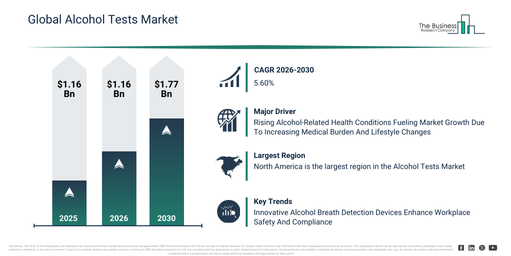
    The alcohol tests market size is anticipated to experience robust expansion over the coming years. This market is projected to reach $10.15 billion by 2030, demonstrating a compound annual growth rate (CAGR) of 5.6%. The expansion during the forecast period can be attributed to several factors, including technological advancements in wearable and portable analyzers, a growing demand for non-invasive and rapid testing solutions, increased adoption in workplaces and criminal justice systems, the expansion of point-of-care and home-testing options, and integration with digital health and monitoring platforms. Major trends expected in the forecast period encompass the increasing adoption of portable and wearable breath analyzers, the integration of alcohol testing into workplace safety programs, a rising demand for non-invasive testing methods, the expansion of criminal justice and law enforcement testing programs, and growth in rehabilitation and healthcare-based monitoring.

    Access Your Free Sample Report for In-Depth Market Insights:

    https://www.thebusinessresearchcompany.com/sample.aspx?id=27198&type=smp

    What Drivers Are Influencing The Growth Of The Alcohol Tests Market?

    The anticipated expansion of the alcohol tests market is driven by the growing occurrence of health problems linked to alcohol consumption. These issues encompass medical conditions and complications, including liver disease, cardiac problems, and mental health conditions, which stem from excessive or prolonged alcohol intake. The rise in alcohol-related health issues is attributed to heightened stress levels and evolving lifestyle trends, prompting more individuals to use alcohol to cope. Alcohol tests are instrumental in tackling these health concerns by allowing for prompt detection and tracking of alcohol intake, thereby facilitating early intervention and treatment. For example, as reported in February 2025 by the Office for Health Improvement and Disparities, a UK-based government department, England registered 22,644 alcohol-related deaths in 2023, which signifies a 3.3% increase compared to 2022 and corresponds to a mortality rate of 40.7 per 100,000 people. Consequently, the escalating frequency of alcohol-related health issues is a key factor propelling the expansion of the alcohol tests market.

    What Segments Are Included Within The Alcohol Tests Market?

    The alcohol tests market covered in this report is segmented –

    1) By Product: Infrared (IR)-Based Equipment, Alcohol Breath Analyzers, Semi-Conductor Equipment, Urine Testing Devices, Fuel Cell-Based Equipment, Chromatography Instruments, Immunoassay Analyzers, Hair-Testing Devices

    2) By Sample: Urine, Blood, Hair, Breath, Sweat

    3) By End User: Hospitals, Laboratories, Rehabilitation Centers, Federal Agencies, Criminal Justice, Workplaces

    Subsegments:

    1) By Infrared (IR)-Based Equipment: Fixed Infrared Breath Analyzers, Portable Infrared Breath Analyzers

    2) By Alcohol Breath Analyzers: Handheld Breath Analyzers, Desktop Breath Analyzers, Wearable Breath Analyzers

    3) By Semi-Conductor Equipment: Reusable Sensor Devices

    4) By Urine Testing Devices: Dipstick Test Kits, Urine Analyzers

    5) By Fuel Cell-Based Equipment: Personal Use Devices, Professional Use Devices

    6) By Chromatography Instruments: Gas Chromatography Systems, Liquid Chromatography Systems

    7) By Immunoassay Analyzers: Laboratory-Based Immunoassay Systems, Point-Of-Care Immunoassay Devices

    8) By Hair-Testing Devices: Single Panel Hair Test Kits, Multi-Panel Hair Test Kits

    How Are New Market Trends Shaping The Landscape Of The Alcohol Tests Market?

    Leading companies within the alcohol tests market are concentrating on developing innovative product solutions, particularly alcohol breath detection devices, to enhance testing accuracy, ensure rapid detection, and bolster law enforcement and workplace safety initiatives. These devices function as electronic instruments that estimate an individual’s blood alcohol content (BAC) through breath analysis, providing a swift and non-invasive method for alcohol screening. For instance, in May 2024, Cannabix Technologies, a Canada-based developer of marijuana breathalyzer devices, launched the Compact Breath Logix Workplace Series. This new wall-mounted and autonomous alcohol breath detection device is specifically engineered for workplace safety. This advanced system is smaller, lighter, and simpler to install than previous models, enabling quick, contactless, and automated alcohol screening for employees in office and indoor facility environments. The device integrates advanced sensor technology, automated identity and incident tracking, user-friendly maintenance with modular cartridges, and real-time alerts for positive test results. Its purpose is to save organizations time and money by automating the alcohol screening process while supporting safety and compliance in the workplace.

    Who Are The Core Companies Influencing Trends In The Alcohol Tests Market?

    Major companies operating in the alcohol tests market are Abbott Laboratories, 3M Company, Siemens Healthineers, Labcorp Holdings Inc., Drägerwerk AG & Co. KGaA, Alcohol Countermeasure Systems Corporation, MP Biomedicals LLC, LifeSafer Inc., Intoximeters Inc., Randox Laboratories, Psychemedics Corporation, Premier Biotech Inc., Omega Laboratories Inc., Lifeloc Technologies Inc., Securetec Detektions-Systeme AG, AK GlobalTech Corporation, AlcoPro Inc., Andatech Private Limited, BACtrack LLC, Lion Laboratories Limited, PAS Systems International Inc., Quest Products Inc., Sentech Korea Corp., CMI Inc.

    Access The Complete Report For Deeper Market Insights:

    https://www.thebusinessresearchcompany.com/report/alcohol-tests-global-market-report

    Which Regions Are Projected To Dominate The Alcohol Tests Market In The Coming Years?

    North America was the largest region in the alcohol tests market in 2025. Asia-Pacific is expected to be the fastest-growing region in the forecast period. The regions covered in the alcohol tests market report are Asia-Pacific, South East Asia, Western Europe, Eastern Europe, North America, South America, Middle East, Africa.

    Request Your Customized Alcohol Tests Market Research Report for Competitive Advantage:

    https://www.thebusinessresearchcompany.com/customise?id=27198&type=smp

    Browse Through More Reports Similar to the Global Alcohol Tests Market 2026, By The Business Research Company

    Hematology Drug Global Market Report 2026

    https://www.thebusinessresearchcompany.com/report/hematology-drug-global-market-report

    Hemp Fiber Global Market Report 2026

    https://www.thebusinessresearchcompany.com/report/hemp-fiber-global-market-report

    Hemostasis Products Global Market Report 2026

    https://www.thebusinessresearchcompany.com/report/hemostasis-products-global-market-report

    Get in touch with us:

    The Business Research Company: https://www.thebusinessresearchcompany.com/

    Americas +1 310-496-7795

    Asia +44 7882 955267 & +91 8897263534

    Europe +44 7882 955267

    Email us at info@tbrc.info

    Follow us on:

    LinkedIn: https://in.linkedin.com/company/the-business-research-company
  • Airway Stent Market Outlook 2026–2030: Key Business Drivers and Trends

    Airway Stent Market Outlook 2026–2030: Key Business Drivers and Trends

    Uncover key drivers, emerging technologies, and competitive movements shaping the artificial intelligence (ai)-driven web scraping market from 2026–2035 with trusted insights from The Business Research Company

    By how much is the Airway Stent Market expected to grow between 2026 and 2030?

    The airway stent market has demonstrated robust growth in recent times. Its value is projected to rise from $10.66 billion in 2025 to $11.46 billion in 2026, achieving a compound annual growth rate (CAGR) of 7.5%. This historical expansion can be attributed to the escalating occurrence of tracheal and bronchial strictures, a greater incidence of lung cancer and airway tumors, an increase in hospital-based interventional pulmonology procedures, wider availability of metal and silicone stent materials, and the broader acceptance of palliative management for respiratory obstructions.

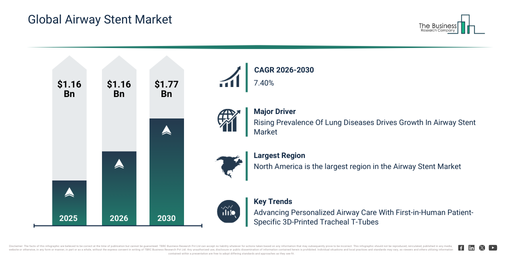
    The airway stent market is poised for significant expansion in the coming years. It is projected to reach $15.27 billion by 2030, exhibiting a compound annual growth rate (CAGR) of 7.4%. This anticipated growth stems from several factors, including a greater need for minimally invasive respiratory procedures, the growing acceptance of hybrid and biodegradable airway stents, an increase in outpatient and ambulatory airway stenting, enhanced clinical understanding of airway stent therapy results, and the wider use of precision-fit and customized airway stents. Key trends expected during this period involve the wider implementation of minimally invasive airway stent placement for managing respiratory obstructions, a surge in demand for patient-specific and anatomically designed stents, the increasing application of biocompatible and hybrid stent materials to enhance longevity and patient acceptance, the rising clinical deployment of airway stents in cases of oncology-related airway obstruction, and broader deployment of airway stents across hospitals, ambulatory centers, and specialized respiratory care facilities.

    Access Your Free Sample Report for In-Depth Market Insights:

    https://www.thebusinessresearchcompany.com/sample.aspx?id=18778&type=smp

    Which Drivers Are Influencing Market Acceleration In The Airway Stent Market?

    The airway stent market is poised for growth, driven by the increasing incidence of lung diseases and respiratory disorders. These conditions represent a wide array of ailments affecting the lungs and respiratory system, impeding normal breathing and overall lung function. Factors such as escalating pollution levels, prevalent smoking habits, exposure to environmental toxins, and an aging population contribute significantly to this rising prevalence. Furthermore, changes in lifestyle and genetic predispositions also play a role in the increasing occurrence of these health issues. Airway stents serve to provide crucial structural support to airways, mitigate obstructions, and improve airflow for patients suffering from conditions such as tracheal stenosis or bronchial tumors. Illustratively, data from May 2024, provided by the National Center for Health Statistics, a U.S.-based health statistics agency, indicates that the prevalence of current asthma among adults aged 18 and over escalated to 8.7% in 2022. Additionally, asthma episodes experienced within the preceding 12 months also saw an increase, reaching 3.7% in 2022. Hence, the escalating prevalence of lung diseases and respiratory disorders is expected to stimulate the expansion of the airway stent market.

    What Leading Segments Are Studied In The Airway Stent Market?

    The airway stent market covered in this report is segmented –

    1) By Anatomical Site: Tracheal Stents, Laryngeal Stents, Bronchial stents

    2) By Product Type: Expandable Stents, Non-Expandable Stents

    3) By Material Type: Metal, Silicone, Hybrid

    4) By End-User: Hospitals, Clinics

    Subsegments:

    1) By Tracheal Stents: Silicone Tracheal Stents, Metallic Tracheal Stents, Hybrid Tracheal Stents

    2) By Laryngeal Stents: Silicone Laryngeal Stents, Self-Expanding Laryngeal Stents, Biodegradable Laryngeal Stents

    3) By Bronchial Stents: Metallic Bronchial Stents, Silicone Bronchial Stents, Covered Bronchial Stents, Self-Expanding Bronchial Stents

    Which Trends Are Expected To Influence The Airway Stent Market In The Upcoming Years?

    Leading companies within the airway stent market are concentrating on technological breakthroughs, such as patient-specific 3D-printed silicone airway devices, designed to enhance fit, lessen complications, and address anatomies that cannot be managed by standard stents. A patient-specific 3D-printed T-tube is custom-engineered using a patient’s CT data and produced from medical-grade silicone to precisely match the individual’s airway geometry, thereby reducing issues like mucus plugging, granulation, and vocal-cord interference often linked with poorly fitting commercial tubes. For example, in July 2024, University Hospitals, a US-based health system, implanted the first-in-human patient-specific 3D-printed tracheal T-tube under FDA compassionate-use approval. This was a collaborative effort with VisionAir Solutions, a US-based medical device company specializing in patient-specific silicone airway stents. This custom T-tube, developed from the patient’s CT scan and tailored to exact airway dimensions, resulted in fewer complications, improved vocal function, and longer replacement intervals compared to the previous commercial T-tube.

    Which Major Industry Participants Are Leading The Airway Stent Market Growth?

    Major companies operating in the airway stent market are Medtronic Plc, Boston Scientific Corporation, Olympus Corporation, Teleflex Incorporated, Cook Medical, KARL STORZ SE & Co. KG, Merit Medical Systems, MICRO-TECH (Nanjing) Co. Ltd., Taewoong Medical Co. Ltd., Alvimedica Medical Technologies Inc, M.I. Tech Co. Ltd., Pnn Medical A/S, Endo-Flex GmbH, InSitu Technologies, QualiMed Innovative Medizinprodukte GmbH, Novatech SA, Boston Medical Products Inc., Meditek Systems Pvt. Ltd., AndraTec GmbH, Allium Medical Solutions Ltd., Medi-Globe GmbH, Bess medizintechnik GmbH

    Access The Complete Report For Deeper Market Insights:

    https://www.thebusinessresearchcompany.com/report/airway-stent-global-market-report

    Which Region Is Expected To Experience The Fastest Growth In The Airway Stent Market?

    North America was the largest region in the airway stent market in 2025. Asia-Pacific is expected to be the fastest-growing region in the forecast period. The regions covered in the airway stent market report are Asia-Pacific, South East Asia, Western Europe, Eastern Europe, North America, South America, Middle East, Africa.

    Request Your Customized Airway Stent Market Research Report for Competitive Advantage:

    https://www.thebusinessresearchcompany.com/customise?id=18778&type=smp

    Browse Through More Reports Similar to the Global Airway Stent Market 2026, By The Business Research Company

    Drug Eluting Stent Global Market Report 2026

    https://www.thebusinessresearchcompany.com/report/drug-eluting-stent-global-market-report

    Vascular Stent Global Market Report 2026

    https://www.thebusinessresearchcompany.com/report/vascular-stent-global-market-report

    Self Expanding Stents Global Market Report 2026

    https://www.thebusinessresearchcompany.com/report/self-expanding-stents-global-market-report

    Get in touch with us:

    The Business Research Company: https://www.thebusinessresearchcompany.com/

    Americas +1 310-496-7795

    Asia +44 7882 955267 & +91 8897263534

    Europe +44 7882 955267

    Email us at info@tbrc.info

    Follow us on:

    LinkedIn: https://in.linkedin.com/company/the-business-research-company