Category: Medical Equipment

  • Automated Suturing Devices Market 2026–2030: Forecasting Business Opportunities Ahead

    Automated Suturing Devices Market 2026–2030: Forecasting Business Opportunities Ahead

    Uncover key drivers, emerging technologies, and competitive movements shaping the lecanemab injection market from 2026–2035 with trusted insights from The Business Research Company

    How much is the Automated Suturing Devices Market valued at in 2026, and what valuation is forecast for 2030?

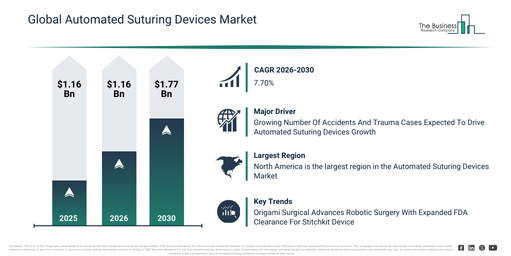
    The automated suturing devices market has experienced significant expansion in recent years. This market is expected to increase from $3.46 billion in 2025 to $3.73 billion in 2026, at a compound annual growth rate (CAGR) of 7.8%. The historical growth of this market is attributable to a surge in the volume of open and cardiovascular surgeries, an early transition towards surgical automation, the integration of automated stapling and suturing tools, a strong emphasis on decreasing surgical complications and human errors, and the development of hospital surgical infrastructure.

    The automated suturing devices market size is anticipated to undergo significant growth over the next few years, projected to expand to $5.02 billion by 2030, at a compound annual growth rate (CAGR) of 7.7%. This expansion during the forecast period is fueled by an increase in minimally invasive and laparoscopic procedures, a rise in trauma and emergency care interventions, the surging demand for quicker and standardized suturing workflows, a higher adoption rate of disposable suturing devices, and an increasing emphasis on improving postoperative outcomes and overall efficiency. Key trends for the forecast period include the growing integration of automated suturing into minimally invasive procedures, an escalating preference for disposable and single-use suturing devices, their increased application in complex and high-risk surgical specialties, the broader deployment of automated suturing in trauma and emergency care, and a concerted effort to minimize operation time while boosting surgical precision.

    Access Your Free Sample Report for In-Depth Market Insights:

    https://www.thebusinessresearchcompany.com/sample.aspx?id=18781&type=smp

    What Drivers Are Influencing The Growth Of The Automated Suturing Devices Market?

    The automated suturing devices market is anticipated to expand due to an escalating number of accidents and trauma cases. These cases refer to unexpected incidents or events that inflict physical injury or harm upon an individual. The surge in accidents and trauma cases can be linked to factors such as increasing urbanization, higher vehicle usage, hazardous working environments, and engagement in high-risk behaviors. Automated suturing devices are crucial for streamlining surgical procedures related to accidents and trauma, thereby enhancing efficiency, improving patient outcomes, shortening surgery duration, and minimizing complication risks. For example, according to the Government of Canada, serious injuries rose to 9,261 in 2023, indicating a 0.9% year-on-year increase from 9,179 in 2022 and marking their highest level in the past five years. Consequently, a growing number of accidents and trauma cases is a significant driver for the automated suturing devices market.

    What Segments Are Included Within The Automated Suturing Devices Market?

    The automated suturing devices market covered in this report is segmented –

    1) By Type: Reusable, Disposable

    2) By Application: Open Heart Surgery, Minimally Invasive Surgery, Trauma, Other Applications

    3) By End Use: Hospitals, Ambulatory Surgical Centers, Other End Uses

    Subsegments:

    1) By Reusable: Handheld Reusable Suturing Devices, Automated Stapling Devices (Reusable)

    2) By Disposable: Handheld Disposable Suturing Devices, Disposable Stapling Devices, Disposable Surgical Suturing Kits

    Which Market Trends Are Opening Growth Opportunities In The Automated Suturing Devices Market?

    Prominent companies operating in the automated suturing devices market are prioritizing the development of technologically advanced products, such as suture delivery canisters, to improve surgical efficiency and safety. A suture delivery canister works by reducing the potential for needle loss, minimizing manual handling, and enhancing overall safety through the secure containment of discarded needles. For instance, in February 2023, Origami Surgical Inc., a US-based manufacturer of medical devices, received expanded FDA clearance for its StitchKit device, which is now approved for use through any existing 8mm trocar incision during robotic-assisted surgeries. This updated FDA clearance allows StitchKit to be utilized with smaller 8mm trocars, which are becoming more common as surgical procedures transition to smaller port sizes. The device includes all required sutures and a SHARPS container for needle disposal, thereby improving safety by lessening the risk of needle loss and reducing exposed needle transfers. At the conclusion of the procedure, StitchKit can be removed using a retrieval string alongside the trocar, streamlining the process and contributing to better surgical outcomes.

    Who Are The Prominent Global Companies Shaping The Automated Suturing Devices Market Landscape?

    Major companies operating in the automated suturing devices market are Medtronic plc, Intuitive Surgical Inc, Boston Scientific Corporation, Smith & Nephew plc, B Braun Melsungen AG, LSI Solutions Inc, EndoEvolution LLC, Apollo Endosurgery Inc, Sutrue Ltd, DemeTECH Corporation, Surgical Specialties Corporation, Peters Surgical Inc, Teleflex Incorporated, Becton Dickinson and Company, Centennial Surgical Suture Ltd, Coloplast AS, KARL STORZ SE & Co KG, Applied Medical Resources Corporation, Medical Devices Business Services Inc, SuturTek Inc

    Access The Complete Report For Deeper Market Insights:

    https://www.thebusinessresearchcompany.com/report/automated-suturing-devices-global-market-report

    Which Geographic Areas Are Emerging As Strong Markets For The Automated Suturing Devices Market?

    North America was the largest region in the automated suturing devices market in 2025. Asia-Pacific is expected to be the fastest-growing region in the forecast period. The regions covered in the automated suturing devices market report are Asia-Pacific, South East Asia, Western Europe, Eastern Europe, North America, South America, Middle East, Africa.

    Request Your Customized Automated Suturing Devices Market Research Report for Competitive Advantage:

    https://www.thebusinessresearchcompany.com/customise?id=18781&type=smp

    Browse Through More Reports Similar to the Global Automated Suturing Devices Market 2026, By The Business Research Company

    Specialty Devices Global Market Report 2026

    https://www.thebusinessresearchcompany.com/report/specialty-devices-global-market-report

    Bionic Devices Global Market Report 2026

    https://www.thebusinessresearchcompany.com/report/bionic-devices-global-market-report

    Medical Device Engineering Services Global Market Report 2026

    https://www.thebusinessresearchcompany.com/report/medical-device-engineering-services-global-market-report

    Get in touch with us:

    The Business Research Company: https://www.thebusinessresearchcompany.com/

    Americas +1 310-496-7795

    Asia +44 7882 955267 & +91 8897263534

    Europe +44 7882 955267

    Email us at info@tbrc.info

    Follow us on:

    LinkedIn: https://in.linkedin.com/company/the-business-research-company
  • Global Automated Sample Storage Systems Market Report 2026–2035: Key Forecasts and Growth Areas

    Global Automated Sample Storage Systems Market Report 2026–2035: Key Forecasts and Growth Areas

    Uncover key drivers, emerging technologies, and competitive movements shaping the large-surface-area microcarrier bioreactor market from 2026–2035 with trusted insights from The Business Research Company

    By how much is the Automated Sample Storage Systems Market expected to grow between 2026 and 2030?

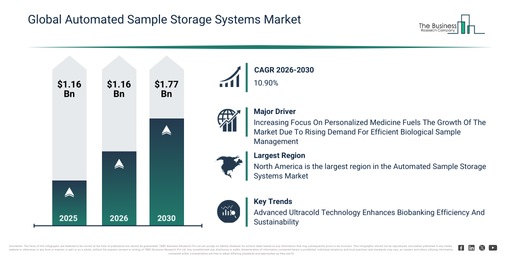
    The automated sample storage systems market has witnessed rapid expansion in recent years. This market is expected to increase from $1.76 billion in 2025 to $1.95 billion in 2026, exhibiting a compound annual growth rate (CAGR) of 10.8%. The historical growth in this sector is attributable to the reliance on manual sample storage systems, limited automation in sample management, the growth of hospital and clinical research labs, increasing biological sample volumes, and conventional temperature monitoring practices.

    The automated sample storage systems market is projected to experience significant expansion in the coming years. This market is anticipated to reach $2.95 billion by 2030, demonstrating a compound annual growth rate (CAGR) of 10.9%. Factors contributing to this growth during the forecast period include progress in robotic sample retrieval, increasing investments in cloud-based storage solutions, expanding genomics and pharmaceutical research, the uptake of integrated cryo-inventory management systems, and the creation of energy-efficient and scalable storage units. Key trends expected over the forecast period encompass a greater embrace of automated cryogenic storage solutions, a surge in demand for ultra-low temperature freezers, the incorporation of RFID and barcode sample tracking systems, the broadening of biobanking and clinical research applications, and an emphasis on energy-efficient and high-capacity storage systems.

    Access Your Free Sample Report for In-Depth Market Insights:

    https://www.thebusinessresearchcompany.com/sample.aspx?id=27217&type=smp

    Which Drivers Are Influencing Market Acceleration In The Automated Sample Storage Systems Market?

    A growing focus on personalized medicine is anticipated to boost the automated sample storage systems market moving ahead. This medical strategy involves customizing treatment and care based on a patient’s unique attributes, like genetics, lifestyle, and surroundings, to enhance health results. The rise of personalized medicine is driven by progress in genetic testing, allowing for more accurate, customized treatments aligned with a person’s distinct genetic profile. Within personalized medicine, automated sample storage systems play a role in safely preserving and handling biological samples, facilitating quick access and analysis for creating patient-specific treatment plans. As an illustration, in February 2024, the Personalized Medicine Coalition, a US non-profit, reported that the Food and Drug Administration (FDA) sanctioned 16 new personalized therapies for rare disease patients in 2023, an increase from six in 2022. Consequently, the heightened focus on personalized medicine is fueling expansion in the automated sample storage systems services market.

    What Leading Segments Are Studied In The Automated Sample Storage Systems Market?

    The automated sample storage systems market covered in this report is segmented –

    1) By Type: Liquid Nitrogen Storage Systems, Mechanical Freezers, Automated Cryogenic Storage

    2) By Technology: Robotics, Liquid Handling Systems, Temperature Monitoring Systems, Cloud-Based Storage Solutions

    3) By Sample: Blood Samples, Tissue Samples, Cellular Samples, DNA Or RNA Samples

    4) By Application: Biobanking, Pharmaceuticals, Clinical Research, Genomics

    5) By End User: Hospitals, Neurological Clinics, Rehabilitation Centers, Sports Medicine Clinics, Other End Users

    Subsegments:

    1) By Liquid Nitrogen Storage Systems: Vapor Phase Storage Systems, Liquid Phase Storage Systems, Manual Fill LN2 Systems, Auto-fill LN2 Systems, Dewar Vessels And Canisters

    2) By Mechanical Freezers: Ultra-Low Temperature Freezers (ULT, -80°C), Low Temperature Freezers (-20°C to -40°C), High-Capacity Mechanical Freezers, Single-Door And Double-Door Units, Energy-Efficient Mechanical Freezers

    3) By Automated Cryogenic Storage: Robotic Sample Retrieval Systems, Modular Cryogenic Storage Units, High-Throughput Cryo Storage Systems, RFID Or Barcode-Enabled Cryo Units, Integrated Cryo-Inventory Management Systems

    How Are Emerging Trends Affecting The Progression Of The Automated Sample Storage Systems Market?

    Leading companies in the automated sample storage systems market are prioritizing the creation of sophisticated solutions, particularly ultracold automated technology, to improve the extended safekeeping of delicate biological samples by precisely sustaining extremely low temperatures with minimal hands-on involvement. This ultracold automated technology employs sophisticated systems for the storage and management of biological samples at exceptionally low temperatures, thereby guaranteeing their integrity and minimizing human labor within laboratory settings. For instance, in July 2023, Azenta Life Sciences, a US-based biotechnology research firm, introduced the BioArc Ultra, a sophisticated, environmentally conscious ultracold automated sample storage system. Intended for use in high-capacity biorepositories, this system facilitates automated storage and recovery at temperatures as low as -80°C, providing safe and streamlined handling for up to 10 million 2D barcoded tubes. The BioArc Ultra incorporates a scalable modular design, reliable redundant cooling and power mechanisms, and an intuitive interface to optimize operational flow. Its energy-efficient design reduces its ecological footprint while ensuring maximum operational availability and preserved sample quality, positioning it as a state-of-the-art answer for contemporary biobanking requirements.

    Which Key Players Are Driving Competition In The Automated Sample Storage Systems Market?

    Major companies operating in the automated sample storage systems market are Thermo Fisher Scientific Inc., Micronic Holding B.V., Revvity Inc., Beckman Coulter Inc., Getinge, Eppendorf SE, Brooks Automation Inc., Hamilton Company, Azenta Inc., Oxford Instruments plc, SPT Labtech Ltd., B Medical Systems S.à r.l., Hier Biomedical Corporation, Simport Scientific Inc., LiCONiC AG, Starlab International GmbH, Biotron Healthcare (India) Pvt. Ltd., ASKION GmbH, Biofortuna Limited, Angelantoni Life Science S.r.l.

    Access The Complete Report For Deeper Market Insights:

    https://www.thebusinessresearchcompany.com/report/automated-sample-storage-systems-global-market-report

    Which Region Is Projected To Lead The Automated Sample Storage Systems Market During The Forecast Period?

    North America was the largest region in the automated sample storage systems market in 2025. Asia-Pacific is expected to be the fastest-growing region in the forecast period. The regions covered in the automated sample storage systems market report are Asia-Pacific, South East Asia, Western Europe, Eastern Europe, North America, South America, Middle East, Africa.

    Request Your Customized Automated Sample Storage Systems Market Research Report for Competitive Advantage:

    https://www.thebusinessresearchcompany.com/customise?id=27217&type=smp

    Browse Through More Reports Similar to the Global Automated Sample Storage Systems Market 2026, By The Business Research Company

    Water Heaters Global Market Report 2026

    https://www.thebusinessresearchcompany.com/report/water-heaters-global-market-report

    Hot Melt Based Adhesives Global Market Report 2026

    https://www.thebusinessresearchcompany.com/report/hot-melt-based-adhesives-global-market-report

    Fireproofing Materials Global Market Report 2026

    https://www.thebusinessresearchcompany.com/report/fireproofing-materials-global-market-report

    Get in touch with us:

    The Business Research Company: https://www.thebusinessresearchcompany.com/

    Americas +1 310-496-7795

    Asia +44 7882 955267 & +91 8897263534

    Europe +44 7882 955267

    Email us at info@tbrc.info

    Follow us on:

    LinkedIn: https://in.linkedin.com/company/the-business-research-company
  • Automated Optometry Equipment Market 2026–2030: Forecast, Innovation, and Competitive Trends

    Automated Optometry Equipment Market 2026–2030: Forecast, Innovation, and Competitive Trends

    Uncover key drivers, emerging technologies, and competitive movements shaping the kidulting toys market from 2026–2035 with trusted insights from The Business Research Company

    What is the estimated market size of the Automated Optometry Equipment Market by the end of 2030?

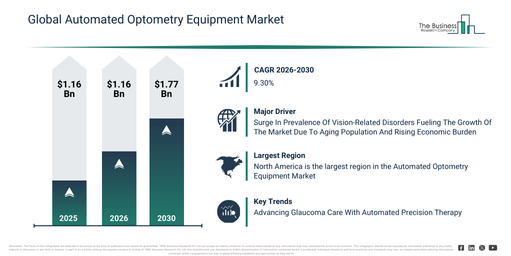
    The automated optometry equipment market size has experienced substantial growth over recent years. It is anticipated to expand from $3.24 billion in 2025 to $3.55 billion in 2026, reflecting a compound annual growth rate (CAGR) of 9.6%. This historical expansion is attributable to several factors, including the increasing prevalence of vision impairment, a deficit of trained optometrists, the prompt adoption of automated refractors, the proliferation of optical retail chains, and the escalating need for routine eye examinations.

    The automated optometry equipment market is projected for significant expansion in the coming years. This market is anticipated to reach $5.07 billion by 2030, demonstrating a compound annual growth rate (CAGR) of 9.3%. This projected growth is driven by factors such as the incorporation of artificial intelligence into diagnostics, an uptick in the need for tele-optometry services, greater public understanding of eye health, innovations in imaging technologies, and the expansion of screening initiatives in developing economies. Key developments expected during this timeframe involve the wider acceptance of automated systems for eye examinations, a heightened desire for rapid and precise vision tests, increased deployment of AI-powered refraction and screening instruments, the broadening of optometry services across retail outlets and clinical settings, and a move towards more portable and compact diagnostic equipment.

    Access Your Free Sample Report for In-Depth Market Insights:

    https://www.thebusinessresearchcompany.com/sample.aspx?id=28943&type=smp

    What Drivers Are Shaping Future Opportunities In The Automated Optometry Equipment Market?

    The expansion of the automated optometry equipment market is anticipated to be fueled by the increasing occurrence of vision-related disorders. These disorders encompass medical issues that hinder clear sight, affecting the eyes, optic nerve, or the brain’s visual processing. The escalating incidence of such conditions is primarily attributed to an aging global populace, as seniors are more susceptible to ailments like cataracts, glaucoma, and age-related macular degeneration. Automated optometry devices play a crucial role in tackling these widespread vision problems by facilitating prompt detection, precise diagnoses, and effective patient tracking, thereby enhancing patient results and mitigating the danger of significant vision impairment. For example, a report from the Royal National Institute of Blind People, a UK organization, in June 2024, indicated a total of 322,638 registered blind and partially sighted persons, with 268,500 specifically registered in England as of March 2023. Consequently, the increased frequency of vision-related disorders is propelling the expansion of the automated optometry equipment market.

    Which Segment Groups Are Influencing The Automated Optometry Equipment Market?

    The automated optometry equipment market covered in this report is segmented –

    1) By Product Type: Autorefractors, Lensmeters, Phoropters, Tonometers, Retinal Cameras, Other Product Types

    2) By Technology: Automated Technology, Semi-Automated Technology, Digital Technology

    3) By Application: Vision Testing, Diagnosis Of Eye Diseases, Research And Clinical Studies

    4) By End Users: Hospitals, Eye Clinics, Optometry Practices, Research Institutions, Other End Users

    Subsegments:

    1) By Autorefractors: Desktop Automated Autorefractors, Handheld Automated Autorefractors, Wavefront-Based Autorefractors, Portable Digital Autorefractors

    2) By Lensmeters: Digital Automated Lensmeters, Imaging-Based Lensmeters, Computer-Integrated Lensmeters

    3) By Phoropters: Digital Phoropters, Fully Automated Phoropters, Computer-Controlled Phoropters

    4) By Tonometers: Non-Contact Automated Tonometers, Digital Applanation Tonometers, Handheld Electronic Tonometers, Continuous Monitoring Tonometers

    5) By Retinal Cameras: Digital Fundus Cameras, Scanning Laser Retinal Cameras, Ultra-Widefield Retinal Cameras, Handheld Digital Retinal Cameras

    6) By Other Product Types: Automated Vision Screeners, Digital Slit Lamp Imaging Systems, Electronic Keratometers, Digital Pachymeters, Corneal Topography Systems

    Which Innovation Trends Are Advancing Developments Within The Automated Optometry Equipment Market?

    Leading firms within the automated optometry equipment market are concentrating on creating novel glaucoma therapies, like direct selective laser trabeculoplasty, aiming to boost treatment accessibility, refine procedural effectiveness, and provide patients with safer, more accurate results. This particular laser treatment for glaucoma employs a device to accurately direct laser beams to a specific ocular region, eliminating the requirement for specialized lenses or manual aim. An example of this is the complete commercial rollout of Alcon’s Voyager Direct selective laser trabeculoplasty device in the United States, as announced by the Switzerland-based pharmaceutical and medical device company in February 2025. This launch signifies the introduction of the singular and pioneering direct selective laser trabeculoplasty device accessible commercially. Its design incorporates an automated process, enabling the delivery of 120 precise laser pulses without requiring a gonio lens or manual alignment. The therapy has exhibited significant clinical advantages by effectively managing intraocular pressure. Furthermore, the device presents a beneficial safety record, involving minimal risks of adverse reactions, thereby representing a notable progression in glaucoma therapy.

    Who Are The Top-Performing Companies In The Automated Optometry Equipment Market In Recent Years?

    Major companies operating in the automated optometry equipment market are Canon Inc., Carl Zeiss Meditec Aktiengesellschaft, Topcon Corporation, NIDEK Co. Ltd., Alcon Inc., EssilorLuxottica, Hoya Corporation, OCULUS Optikgeräte GmbH, Huvitz Co. Ltd., Marco Ophthalmic Inc., Tomey Corporation, Medmont International Pty Ltd., Kowa Company Ltd., Plen Optika Ltd., Visionix Ltd., Keeler Ltd., HEINE Optotechnik GmbH & Co. KG, Forus Health Pvt. Ltd., Gulden Ophthalmic, Reichert Technologies, Optopol Technology, Costruzione Strumenti Oftalmici

    Access The Complete Report For Deeper Market Insights:

    https://www.thebusinessresearchcompany.com/report/automated-optometry-equipment-global-market-report

    Which Region Currently Holds The Largest Share Of The Automated Optometry Equipment Market?

    North America was the largest region in the automated optometry equipment market in 2025. Asia-Pacific is expected to be the fastest-growing region in the forecast period. The regions covered in the automated optometry equipment market report are Asia-Pacific, South East Asia, Western Europe, Eastern Europe, North America, South America, Middle East, Africa.

    Request Your Customized Automated Optometry Equipment Market Research Report for Competitive Advantage:

    https://www.thebusinessresearchcompany.com/customise?id=28943&type=smp

    Browse Through More Reports Similar to the Global Automated Optometry Equipment Market 2026, By The Business Research Company

    Optoelectronics Global Market Report 2026

    https://www.thebusinessresearchcompany.com/report/optoelectronics-global-market-report

    Eye Testing Equipment Global Market Report 2026

    https://www.thebusinessresearchcompany.com/report/eye-testing-equipment-global-market-report

    Ophthalmic Microscope Global Market Report 2026

    https://www.thebusinessresearchcompany.com/report/ophthalmic-microscope-global-market-report

    Get in touch with us:

    The Business Research Company: https://www.thebusinessresearchcompany.com/

    Americas +1 310-496-7795

    Asia +44 7882 955267 & +91 8897263534

    Europe +44 7882 955267

    Email us at info@tbrc.info

    Follow us on:

    LinkedIn: https://in.linkedin.com/company/the-business-research-company
  • Automated Nucleic Acid Extraction Devices Market Forecast 2026–2035: Data Trends and Industry Insights

    Automated Nucleic Acid Extraction Devices Market Forecast 2026–2035: Data Trends and Industry Insights

    Uncover key drivers, emerging technologies, and competitive movements shaping the intravenous (iv) compounding robots market from 2026–2035 with trusted insights from The Business Research Company

    What was the valuation of the Automated Nucleic Acid Extraction Devices Market in 2026, and what figure is it projected to hit by 2030?

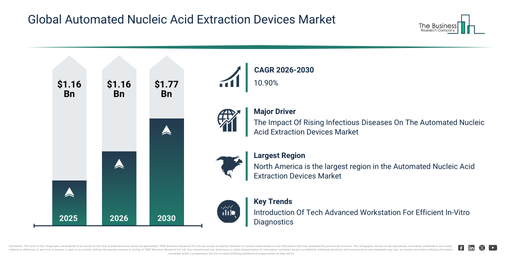
    The market size for automated nucleic acid extraction devices has seen rapid growth in recent years. This market is projected to expand from $6.6 billion in 2025 to $7.32 billion in 2026, achieving a compound annual growth rate (CAGR) of 10.9%. Several factors are responsible for the historical growth, including the expansion of molecular diagnostic testing, an increase in the prevalence of infectious diseases, greater adoption of laboratory automation, a rise in clinical testing volumes, and advancements in nucleic acid chemistry.

    The automated nucleic acid extraction devices market is projected for significant expansion in the coming years. This market is predicted to reach $11.05 billion by 2030, exhibiting a compound annual growth rate (CAGR) of 10.9%. Factors driving this growth during the forecast period include the increasing need for quick diagnostic methods, greater financial commitments to genomic research, the broadening scope of personalized medicine testing, the expanding use of point-of-care molecular diagnostics, and advancements in extraction efficiency technologies. Key trends anticipated in this period encompass a greater embrace of fully automated extraction platforms, an escalating requirement for high-throughput molecular diagnostics, the increasing deployment of integrated sample-to-result systems, the wider implementation of automated lab workflows, and a heightened emphasis on contamination-free procedures.

    Access Your Free Sample Report for In-Depth Market Insights:

    https://www.thebusinessresearchcompany.com/sample.aspx?id=9421&type=smp

    Which Drivers Are Affecting Market Participation In The Automated Nucleic Acid Extraction Devices Market?

    A rise in infectious disease cases is anticipated to drive the expansion of the automated nucleic acid extraction devices market in the future. Infectious diseases are conditions stemming from harmful microorganisms like bacteria, viruses, fungi, or parasites, which can spread, either directly or indirectly, among individuals or from animals to people. The escalation of infectious diseases, especially during worldwide health emergencies like pandemics, intensifies the demand for diagnostic testing. Automated nucleic acid extraction devices are crucial in preparing samples for molecular diagnostics, thereby assisting in the identification of viruses and bacteria. For example, data from GOV.UK, a UK public sector information platform, showed in September 2023 that during the first six months of 2023, tuberculosis (TB) cases in England saw a 7% increase relative to the corresponding period in 2022, as notifications climbed from 2,251 to 2,408. Consequently, the expanding occurrence of infectious diseases is propelling the growth of the automated nucleic acid extraction devices market.

    What Segment Classifications Make Up The Automated Nucleic Acid Extraction Devices Market?

    The automated nucleic acid extraction devices market covered in this report is segmented –

    1) By Type: Instruments, Kits, Consumables

    2) By Automation Level: Fully Automated, Semi-Automated

    3) By End User: Hospitals, Diagnostic Centers, Forensic Laboratories, Pharmaceutical And Biotechnology Companies, Academic Research Institutes

    Subsegments:

    1) By Instruments: Automated Extractors, Liquid Handling Systems

    2) By Kits: DNA Extraction Kits, RNA Extraction Kits, Viral Nucleic Acid Extraction Kits

    3) By Consumables: Reagents, Columns, Tips And Tubes

    Which Competitive Trends Are Impacting The Structure Of The Automated Nucleic Acid Extraction Devices Market?

    Leading companies in the automated nucleic acid extraction devices market are developing innovative offerings, such as automated nucleic acid extraction workstations, to expand their customer base, boost sales, and increase revenue. An automated nucleic acid extraction workstation refers to a specialized and automated system designed for the extraction of nucleic acids, including DNA and RNA, from biological samples. For instance, in April 2023, Jiangsu Bioperfectus Technologies Co. Ltd., a China-based provider of in-vitro diagnostic products, launched the SAW-48 and Cell Nucleic Acid Extraction Kit (Magnetic Bead Method). The SAW-48 distinguishes itself as a unique in-vitro diagnostic medical device by seamlessly integrating sample loading, nucleic acid purification, and PCR setup functions into a single instrument. This innovative device can concurrently process up to 48 samples, significantly reducing the time required to obtain test results. The SAW-48 streamlines the entire process of sample loading, nucleic acid purification, and PCR setup, thereby enhancing the efficiency of STD and HPV detection. The SAW-48 and the Cell Nucleic Acid Extraction Kit collectively offer a comprehensive solution, ensuring a more efficient and streamlined approach to detecting sexually transmitted diseases and human papillomavirus.

    Which Leading Companies Dominate The Automated Nucleic Acid Extraction Devices Market Share?

    Major companies operating in the automated nucleic acid extraction devices market are QIAGEN N.V., PerkinElmer Inc., F. Hoffmann-La Roche AG, Analytik Jena GmbH, Thermo Fisher Scientific Inc., Accubiomed Co. Ltd., AutoGen Inc., Bioneer Corporation, Tecan Group Ltd., Merck KGaA, Becton Dickinson and Company, DiaSorin Molecular LLC, BioTeke Corporation (Wuxi) Co. Ltd., Xi’an TianLong Science and Technology Co. Ltd., Jiangsu Bioperfectus Technologies Co. Ltd., Hangzhou Bloer Technology Co. Ltd., MGI Tech Co. Ltd., Aurora Biomed Inc., Promega Corporation, Hamilton Company, Beckman Coulter Inc., Bio-Rad Laboratories Inc., Zymo Research Corporation, Agilent Technologies Inc., Danaher Corporation, Eppendorf AG, GE Healthcare Life Sciences, GenScript Biotech Corporation, Greiner Bio-One International GmbH, IntegenX Inc., MicroGEM International Company, Norgen Biotek Corp.

    Access The Complete Report For Deeper Market Insights:

    https://www.thebusinessresearchcompany.com/report/automated-nucleic-acid-extraction-devices-global-market-report

    How Does The Automated Nucleic Acid Extraction Devices Market Perform Across Major Global Regions?

    North America was the largest region in the automated nucleic acid extraction devices market in 2025. The regions covered in the automated nucleic acid extraction devices market report are Asia-Pacific, South East Asia, Western Europe, Eastern Europe, North America, South America, Middle East, Africa.

    Request Your Customized Automated Nucleic Acid Extraction Devices Market Research Report for Competitive Advantage:

    https://www.thebusinessresearchcompany.com/customise?id=9421&type=smp

    Browse Through More Reports Similar to the Global Automated Nucleic Acid Extraction Devices Market 2026, By The Business Research Company

    Nucleic Acid Extraction Instruments And Reagents Global Market Report 2026

    https://www.thebusinessresearchcompany.com/report/nucleic-acid-extraction-instruments-and-reagents-global-market-report

    Nucleic Acid Labeling Global Market Report 2026

    https://www.thebusinessresearchcompany.com/report/nucleic-acid-labeling-global-market-report

    Dna Or Rna Sample Extraction And Isolation Global Market Report 2026

    https://www.thebusinessresearchcompany.com/report/dna-or-rna-sample-extraction-and-isolation-global-market-report

    Get in touch with us:

    The Business Research Company: https://www.thebusinessresearchcompany.com/

    Americas +1 310-496-7795

    Asia +44 7882 955267 & +91 8897263534

    Europe +44 7882 955267

    Email us at info@tbrc.info

    Follow us on:

    LinkedIn: https://in.linkedin.com/company/the-business-research-company
  • Automated Immunoassay Analyzers Market Outlook 2026–2030: Key Business Drivers and Trends

    Automated Immunoassay Analyzers Market Outlook 2026–2030: Key Business Drivers and Trends

    Uncover key drivers, emerging technologies, and competitive movements shaping the intravenous (iv) compounding automation market from 2026–2035 with trusted insights from The Business Research Company

    What are the forecasted starting (2026) and ending (2030) market sizes for the Automated Immunoassay Analyzers Market?

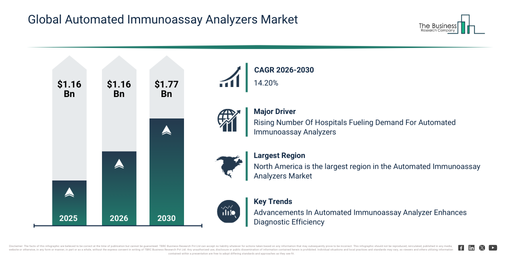
    The automated immunoassay analyzers market has experienced swift expansion in recent years. This market is projected to expand from $23.09 billion in 2025 to $26.39 billion in 2026, demonstrating a compound annual growth rate (CAGR) of 14.3%. The historical growth can be attributed to the enlargement of centralized clinical laboratories, an increase in routine immunoassay testing volumes, the proliferation of disease screening programs, the early automation of laboratory workflows, and the adoption of immunoassay systems for monitoring infectious diseases.

    The market for automated immunoassay analyzers is projected to experience substantial expansion in the coming years. This market is anticipated to reach $44.93 billion by 2030, exhibiting a compound annual growth rate (CAGR) of 14.2%. This growth over the forecast period is attributable to several factors, including the increasing demand for chronic and endocrine disorder testing, the expansion of oncology and biomarker testing, the need for quicker diagnostic outcomes, the greater adoption of automated systems in research laboratories, and the broadening of pharmaceutical and biotech research and development testing applications. Key trends expected during this period involve a rising need for high-throughput diagnostic tests, greater implementation in infectious disease and endocrinology diagnostics, wider deployment of automated testing within research and academic settings, increased use in therapeutic drug monitoring and oncology diagnostics, and the standardization of lab processes to enhance testing effectiveness.

    Access Your Free Sample Report for In-Depth Market Insights:

    https://www.thebusinessresearchcompany.com/sample.aspx?id=18232&type=smp

    What Drivers Are Supporting Technological Adoption In The Automated Immunoassay Analyzers Market?

    The expansion in the count of hospitals is anticipated to fuel the future expansion of the automated immunoassay analyzers market. Hospitals are defined as healthcare facilities offering medical, surgical, and diagnostic services for individuals needing treatment or emergency attention. These establishments operate as structured sites with healthcare professionals providing both inpatient and outpatient care across diverse specializations. The count of hospitals is escalating because of heightened healthcare demands stemming from an expanding and aging demographic. Automated immunoassay analyzers boost efficiency and precision within hospitals by quickly processing extensive quantities of diagnostic tests for numerous illnesses and conditions. As an illustration, the American Health Care Association, a US-based nonprofit entity, reported in May 2023 that the number of hospitals in the US grew to 6,129 in 2023 from 6,093 in 2022, marking a rise of 0.59%. Consequently, the growing count of hospitals is stimulating the development of the automated immunoassay analyzers market.

    What Segment Types Are Examined In The Automated Immunoassay Analyzers Market?

    The automated immunoassay analyzers market covered in this report is segmented –

    1) By Product: Immunofluorescence, Chemiluminescence, Enzyme Linked Fluorescent System (ELISA), Multiplexed Assay System, Radioimmunoassay

    2) By Application: Infectious Diseases, Endocrinology, Drug Monitoring, Cardiology, Oncology, Allergy Testing, Other Applications

    3) By End-User: Hospitals, Diagnostic Laboratories, Research And Academic Laboratories, Pharmaceutical And Biotechnology Companies, Other End-Users

    Subsegments:

    1) By Immunofluorescence: Fluorescent Labeling Kits, Fluorescent Detectors And Readers, Immunofluorescence Reagents

    2) By Chemiluminescence: Chemiluminescent Labels And Reagents, Chemiluminescence Detectors And Readers, Chemiluminescent Assay Kits

    3) By Enzyme Linked Fluorescent System (ELISA): ELISA Kits (Capture And Detection Kits), ELISA Microplates And Plates Coating Systems, Enzyme Substrates And Detection Reagents

    4) By Multiplexed Assay System: Multiplexed Assay Kits, Multi-Analyte Detection Systems, Multiplexing Software And Data Analysis Tools

    5) By Radioimmunoassay (RIA): Radioactive Isotope Kits, Gamma Counters, Radiolabeled Reagents

    What Industry Trends Are Transforming The Automated Immunoassay Analyzers Market?

    Leading companies in the automated immunoassay analyzers market are concentrating on developing innovative products, such as compact immunoassay analyzers, to gain a competitive edge. These compact immunoassay analyzers are smaller, portable devices engineered for conducting immunoassay tests that detect specific biomarkers in biological samples. They provide convenience and enhanced efficiency in various healthcare settings, especially where space and mobility are restricted. For instance, in July 2023, Siemens Healthineers, a Germany-based healthcare company, introduced the Atellica CI Analyzer, a compact laboratory testing system designed to boost efficiency in both immunoassay and clinical chemistry testing. By integrating these two testing methods into a single platform, the Atellica CI Analyzer addresses the increasing demand for versatile systems capable of performing diverse tests efficiently. The features of this product are well-aligned with current market trends, effectively tackling the challenges laboratories encounter in delivering timely and accurate diagnostic results. Capabilities like random access sampling, micro-volume aspiration, and automated maintenance and quality control scheduling assist laboratories in achieving more consistent and predictable sample processing times.

    Who Are The Major Companies Operating In The Automated Immunoassay Analyzers Market?

    Major companies operating in the automated immunoassay analyzers market are Roche Diagnostics AG, Abbott Laboratories, Danaher Corporation, Siemens Healthineers, Becton Dickinson and Company, Tosoh Corporation, bioMérieux SA, QuidelOrtho Corporation, Sysmex Corporation, Bio-Rad Laboratories Inc, Qiagen NV, Werfen Group SA, DiaSorin SpA, Bio-Techne Corporation, Meril Life Sciences Private Limited, Randox Laboratories Ltd, Getein Biotech Inc, Aesku Diagnostics GmbH & Co KG, Carolina Liquid Chemistries Corporation, Chengdu Seamaty Technology Co Ltd, Hipro Biotechnology Co Ltd

    Access The Complete Report For Deeper Market Insights:

    https://www.thebusinessresearchcompany.com/report/automated-immunoassay-analyzers-global-market-report

    Which Region Is Anticipated To See The Fastest Growth In The Automated Immunoassay Analyzers Market?

    North America was the largest region in the automated immunoassay analyzer market in 2025. Asia-Pacific is expected to be the fastest-growing region in the forecast period. The regions covered in the automated immunoassay analyzers market report are Asia-Pacific, South East Asia, Western Europe, Eastern Europe, North America, South America, Middle East, Africa.

    Request Your Customized Automated Immunoassay Analyzers Market Research Report for Competitive Advantage:

    https://www.thebusinessresearchcompany.com/customise?id=18232&type=smp

    Browse Through More Reports Similar to the Global Automated Immunoassay Analyzers Market 2026, By The Business Research Company

    Immunohematology Global Market Report 2026

    https://www.thebusinessresearchcompany.com/report/immunohematology-global-market-report

    Immunodiagnostics Global Market Report 2026

    https://www.thebusinessresearchcompany.com/report/immunodiagnostics-global-market-report

    Immunoassay Global Market Report 2026

    https://www.thebusinessresearchcompany.com/report/immunoassay-global-market-report

    Get in touch with us:

    The Business Research Company: https://www.thebusinessresearchcompany.com/

    Americas +1 310-496-7795

    Asia +44 7882 955267 & +91 8897263534

    Europe +44 7882 955267

    Email us at info@tbrc.info

    Follow us on:

    LinkedIn: https://in.linkedin.com/company/the-business-research-company
  • Global Automated Hospital Beds Market Report 2026: Emerging Trends and Growth Scenarios

    Global Automated Hospital Beds Market Report 2026: Emerging Trends and Growth Scenarios

    Uncover key drivers, emerging technologies, and competitive movements shaping the intraoperative neuromonitoring (ionm) market from 2026–2035 with trusted insights from The Business Research Company

    What upper market value could the Automated Hospital Beds Market reach by 2030 starting from 2026 levels?

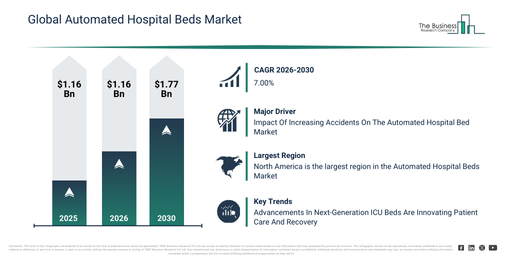
    The automated hospital beds market has demonstrated significant expansion in recent years. This market is set to increase from $33.24 billion in 2025 to $35.84 billion in 2026, achieving a compound annual growth rate (CAGR) of 7.8%. This past growth can be attributed to several factors, including hospital modernization efforts, an increase in critical care admissions, the purchase of automated beds to enhance caregiver productivity, an early focus on improving patient safety and reducing falls, and the expansion of both public and private hospital capacity.

    The automated hospital beds market is anticipated to experience substantial expansion over the upcoming years, projected to reach $46.99 billion by 2030, exhibiting a compound annual growth rate (CAGR) of 7.0%. This projected growth during the forecast period is primarily driven by factors such as the expanding elderly population, an increase in long-term care facility admissions, the greater uptake of sophisticated automated and specialized beds, an intensified emphasis on ensuring patient comfort and preventing pressure injuries, and escalating demand from home care and post-acute environments. Key trends anticipated during this period encompass the wider implementation of patient safety and fall-prevention functionalities, the increased deployment of automated beds in critical and acute care settings, a surge in demand fueled by an aging demographic and the burden of chronic illnesses, greater use within long-term care and rehabilitation facilities, and a shift towards enhanced comfort, ergonomic designs, and advanced adjustability features.

    Access Your Free Sample Report for In-Depth Market Insights:

    https://www.thebusinessresearchcompany.com/sample.aspx?id=16594&type=smp

    Which Drivers Are Influencing Long-Term Growth In The Automated Hospital Beds Market?

    A rising incidence of road accidents is anticipated to boost the expansion of the automated hospital bed market in the future. This surge in road accidents stems from various factors, including heightened traffic congestion, drivers being distracted by mobile devices, deficiencies in infrastructure maintenance, and a general disregard for traffic regulations. Automated hospital beds play a crucial role in managing accident-related injuries by improving patient care and safety. They offer features like adjustable height, which facilitates easier patient transfer and treatment, automated positioning to help prevent bedsores, and remote control for rapid adjustments, thereby ensuring prompt medical attention and comfort for patients. As an illustration, in January 2024, data from the Bureau of Infrastructure and Transport Research Economic (BITRE), an Australia-based department specializing in infrastructure, transport, and Regional Development, revealed that in 2023, a devastating 1,266 individuals perished on Australian roads. This figure represented a significant 7.3% rise when compared to the preceding 12-month period ending in December 2022. Consequently, the escalating frequency of road accidents acts as a significant impetus for the automated hospital bed market.

    Which Segments Are Driving Activity In The Automated Hospital Beds Market?

    The automated hospital beds market covered in this report is segmented –

    1) By Type: Semi-Automatic Hospital Beds, Fully Automatic Hospital Beds

    2) By Technology: Basic Automated Hospital Beds, Smart Automated Hospital Beds

    3) By Application: Critical Care, Acute Care, Long Term Care

    4) By End User: Hospitals And Clinics, Reproductive Care Centers, Home Care, Other End-Users

    Subsegments:

    1) By Semi-Automatic Hospital Beds: Electric-Spring Hybrid Beds, Manual Adjustment With Electric Controls, Beds With Adjustable Backrests And Leg Supports, Semi-automatic Icu Beds

    2) By Fully Automatic Hospital Beds: Fully Electric Icu Beds, Fully Electric Critical Care Beds, Advanced Pressure Relief Beds, High-End Electric Beds With Zero Gravity Function, Fully Adjustable Pediatric And Geriatric Beds

    What Trends Are Reshaping The Dynamics Of The Automated Hospital Beds Market?

    Leading companies in the automated hospital beds market are developing advanced intensive care unit (ICU) beds. This development aims to improve patient care and meet the increasing demand for sophisticated medical technology. These next-generation ICU beds are sophisticated medical devices engineered to enhance patient outcomes and streamline care processes in intensive care units. For example, in May 2023, Baxter International Inc., a US-based healthcare firm, launched its advanced Hillrom Progressa+ bed for the ICU. The Progressa+ is a cutting-edge hospital bed designed to elevate patient care and support recovery. It provides advanced pulmonary support, featuring in-bed percussion, vibration, and continuous lateral rotation therapies, which help to reduce complications arising from immobility. The bed also offers enhanced access for intubation and various medical procedures. Additionally, it promotes early patient mobility through an integrated lift system and a one-button FullChair feature, enabling safe and effortless patient movement and thereby reducing the potential for clinician injury.

    Which Major Firms Are Strengthening Their Position In The Automated Hospital Beds Market?

    Major companies operating in the automated hospital beds market are Stryker Corporation, Malvestio SpA, Medline Industries Inc., Hill-Rom Holdings Inc., Arjo Huntleigh, Invacare Corporation, Paramount Bed Co Ltd, Midmark India Pvt Ltd, Linet spol s r o, Joerns Healthcare LLC, Amico Corporation, Stiegelmeyer GmbH & Co KG, Span-America Medical Systems Inc., Merivaara Corp, Howard Wright Limited, Haelvoet NV, Volker GmbH, Mespa, Gendron Inc., Besco Medical Ltd, Savion Industries

    Access The Complete Report For Deeper Market Insights:

    https://www.thebusinessresearchcompany.com/report/automated-hospital-beds-global-market-report

    Which Region Is Anticipated To See The Fastest Growth In The Automated Hospital Beds Market?

    North America was the largest region in the automated hospital beds market in 2025. The regions covered in the automated hospital beds market report are Asia-Pacific, South East Asia, Western Europe, Eastern Europe, North America, South America, Middle East, Africa.

    Request Your Customized Automated Hospital Beds Market Research Report for Competitive Advantage:

    https://www.thebusinessresearchcompany.com/customise?id=16594&type=smp

    Browse Through More Reports Similar to the Global Automated Hospital Beds Market 2026, By The Business Research Company

    Hospital Bed Management Systems Global Market Report 2026

    https://www.thebusinessresearchcompany.com/report/hospital-bed-management-systems-global-market-report

    Hospital Beds Global Market Report 2026

    https://www.thebusinessresearchcompany.com/report/hospital-beds-global-market-report

    Medical Bed Global Market Report 2026

    https://www.thebusinessresearchcompany.com/report/medical-bed-global-market-report

    Get in touch with us:

    The Business Research Company: https://www.thebusinessresearchcompany.com/

    Americas +1 310-496-7795

    Asia +44 7882 955267 & +91 8897263534

    Europe +44 7882 955267

    Email us at info@tbrc.info

    Follow us on:

    LinkedIn: https://in.linkedin.com/company/the-business-research-company
  • Automated Dispensing Machines Market Forecast 2026: Where the Industry Is Headed

    Automated Dispensing Machines Market Forecast 2026: Where the Industry Is Headed

    Uncover key drivers, emerging technologies, and competitive movements shaping the internet of things (iot)-based dialysis machine market from 2026–2035 with trusted insights from The Business Research Company

    What level of CAGR-driven expansion is anticipated in the Automated Dispensing Machines Market between 2026 and 2030?

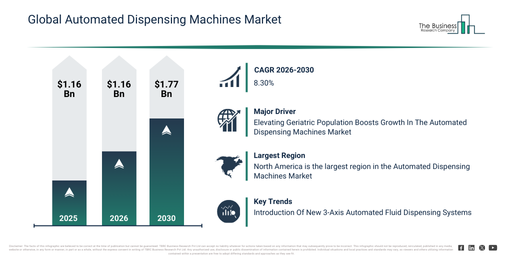
    The automated dispensing machines market size has shown strong expansion in recent years. It is forecast to increase from $4.4 billion in 2025 to $4.78 billion in 2026, achieving a compound annual growth rate (CAGR) of 8.7%. The growth observed in prior periods can be attributed to factors such as increasing hospital patient volumes, rising medication safety concerns, the adoption of hospital automation solutions, the growing complexity of drug inventories, and the expansion of inpatient pharmacy services.

    The automated dispensing machines market is anticipated to show substantial expansion in the upcoming years. It is forecast to reach $6.57 billion by 2030, growing at a compound annual growth rate of 8.3%. This expansion during the forecast period is fueled by several factors, including the increasing adoption of smart hospital infrastructure, rising investments in digital pharmacy automation, a growing need for workflow optimization, the expansion of outpatient care automation, and advances in secure medication management technologies. Significant trends for this period encompass the increasing deployment of automated medication dispensing systems, greater integration of pharmacy information systems, a heightened focus on reducing medication errors, the broadening of decentralized dispensing solutions, and improved utilization of real-time inventory monitoring.

    Access Your Free Sample Report for In-Depth Market Insights:

    https://www.thebusinessresearchcompany.com/sample.aspx?id=7971&type=smp

    What Drivers Are Affecting Demand-Supply Dynamics In The Automated Dispensing Machines Market?

    The expansion of the automated dispensing machines market is anticipated to be driven by the growing geriatric population. This demographic comprises individuals typically aged 60 years and above, who often face age-related physical, mental, and social shifts, necessitating specialized healthcare and support to ensure their well-being and quality of life. The increase in the geriatric population largely stems from enhanced life expectancy, driven by advancements in healthcare and nutrition, which enable people to live longer and contribute to a greater proportion of older adults globally. Automated dispensing machines offer significant assistance to this population segment by guaranteeing precise and punctual medication delivery, thereby lowering the chances of missed or incorrect dosages and facilitating autonomous management of intricate prescription regimens. For instance, a report by WHO (World Health Organization), a Switzerland-based intergovernmental organization, in October 2025, projected that by 2030, one in six individuals globally will be aged 60 or older, with this group expanding from 1 billion in 2020 to 1.4 billion. By 2050, the global population aged 60 and above is anticipated to double to 2.1 billion, and those aged 80 and older are expected to triple, reaching 426 million. Consequently, the expanding geriatric population serves as a key driver for the automated dispensing machines market.

    How Is The Automated Dispensing Machines Market Organized Into Various Segments?

    The automated dispensing machines market covered in this report is segmented –

    1) By Product: Automated Medication Dispensing And Storage System., Automated Packaging And Labelling Systems, Automated Tabletop Counters, Automated Medication Compounding Systems

    2) By Application: In-Patient, Out-Patient

    3) By End-user: Hospitals, Pharmacies

    Subsegments:

    1) By Automated Medication Dispensing And Storage System: Centralized Dispensing Systems, Decentralized Dispensing Systems

    2) By Automated Packaging And Labelling Systems: Blister Packaging Machines, Bottle Filling And Labelling Machines

    3) By Automated Tabletop Counters: Manual Input Counters, Automated Counting And Dispensing Units

    4) By Automated Medication Compounding Systems: IV Compounding Systems, Oral Compounding Systems

    How Are New Market Trends Shaping The Landscape Of The Automated Dispensing Machines Market?

    Prominent companies operating within the automated dispensing machines market are implementing new 3-axis automated fluid dispensing systems. This capability ensures exact fluid placement on intricate geometries or irregular surfaces, which are frequently encountered in advanced manufacturing processes. For example, in March 2024, Nordson EFD, a US-based provider of automated dispensing machines, announced the introduction of its new 3-axis automated fluid dispensing systems. These systems, which include the PROX and GVPlus families, are fitted with advanced linear motors that enhance actuation speed and minimize maintenance requirements. They deliver best-in-class repeatability, with the PROX system achieving an impressive accuracy of ±0.003 mm, making them ideal for complex applications across various industries, including electronics and life sciences. The integrated vision technology ensures precise fluid placement on challenging surfaces, thereby improving product quality and production efficiency.

    Who Are The Primary Competitors In The Global Automated Dispensing Machines Market?

    Major companies operating in the automated dispensing machines market are Omnicell Inc., Becton Dickinson and Company, Baxter International Inc., B Braun Melsungen AG, Swisslog Holding Limited, ScriptPro LLC, Takazono Corporation, Tosho Inc., Willach Pharmacy Solutions, NewIcon Oy, ARxIUM Inc., RxSafe LLC, MedDispense Ltd., Pearson Medical Technologies LLC, IML Medical Automation, Pharmadule Morpho, Yuyama Co Ltd, ROBOTIK TECHNOLOGY GmbH, APD SA, Linet Group SE

    Access The Complete Report For Deeper Market Insights:

    https://www.thebusinessresearchcompany.com/report/automated-dispensing-machines-global-market-report

    Which Global Regions Are Shaping The Competitive Landscape Of The Automated Dispensing Machines Market?

    North America was the largest region in the automated dispensing machines market in 2025. Asia-Pacific is expected to be the fastest-growing region in the automated dispensing machines market report during the forecast period. The regions covered in the automated dispensing machines market report are Asia-Pacific, South East Asia, Western Europe, Eastern Europe, North America, South America, Middle East, Africa.

    Request Your Customized Automated Dispensing Machines Market Research Report for Competitive Advantage:

    https://www.thebusinessresearchcompany.com/customise?id=7971&type=smp

    Browse Through More Reports Similar to the Global Automated Dispensing Machines Market 2026, By The Business Research Company

    Industrial Dispensing System And Equipment Global Market Report 2026

    https://www.thebusinessresearchcompany.com/report/industrial-dispensing-system-and-equipment-global-market-report

    Distribution Automation Global Market Report 2026

    https://www.thebusinessresearchcompany.com/report/distribution-automation-global-market-report

    Dispensing Pharmacy Packaging Machine Global Market Report 2026

    https://www.thebusinessresearchcompany.com/report/dispensing-pharmacy-packaging-machine-global-market-report

    Get in touch with us:

    The Business Research Company: https://www.thebusinessresearchcompany.com/

    Americas +1 310-496-7795

    Asia +44 7882 955267 & +91 8897263534

    Europe +44 7882 955267

    Email us at info@tbrc.info

    Follow us on:

    LinkedIn: https://in.linkedin.com/company/the-business-research-company
  • Automated Compounding Devices Industry Growth Insights: Revenue Forecast to 2030

    Automated Compounding Devices Industry Growth Insights: Revenue Forecast to 2030

    Uncover key drivers, emerging technologies, and competitive movements shaping the international normalized ratio (inr) test meter market from 2026–2035 with trusted insights from The Business Research Company

    What long-term size projections exist for the Automated Compounding Devices Market covering 2026–2035?

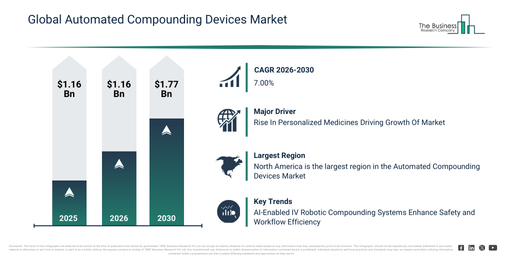
    The automated compounding devices market has experienced significant growth over recent years. Projections indicate its expansion from $2.51 billion in 2025 to $2.69 billion in 2026, demonstrating a compound annual growth rate (CAGR) of 7.1%. Historically, this growth has stemmed from factors such as increasing hospital pharmacy workload, rising demand for sterile iv preparation, early adoption of tpn compounding automation, hospital initiatives to reduce compounding errors, and the expansion of inpatient medication therapy volumes.

    The automated compounding devices market size is anticipated to experience robust expansion in the coming years. It is projected to reach $3.53 billion by 2030, demonstrating a compound annual growth rate (CAGR) of 7.0%. This growth during the forecast period can be attributed to a heightened focus on medication safety compliance, increased investments in automated pharmacy technology, a rise in the outsourcing of sterile compounding services, the expansion of oncology and critical care drug compounding, and the growing integration of digital workflow and reporting systems. Significant trends expected during this period include the increasing adoption of automated compounding devices to reduce manual medication preparation errors in hospital and pharmacy environments, a rising demand for high-precision compounding of IV formulations, oncology drugs, and TPN solutions, a growing transition towards centralized and large-volume sterile compounding facilities within healthcare systems, an expanding application of automated workflow validation and barcode-based verification in compounding processes, and an increasing preference for compact, modular, and upgradeable automated compounding platforms for pharmacy operations.

    Access Your Free Sample Report for In-Depth Market Insights:

    https://www.thebusinessresearchcompany.com/sample.aspx?id=18231&type=smp

    Which Drivers Are Impacting The Competitive Landscape Of The Automated Compounding Devices Market?

    An expanding volume of personalized medicines is projected to propel the automated compounding devices market forward. This medical strategy involves customizing healthcare choices, methods, interventions, and therapies to suit each patient’s unique attributes. The rise in personalized medicines can be attributed to enhanced genetic comprehension, distinct patient data, and supportive regulations. Automated compounding devices (ACDs) are vital in personalized medicine, facilitating the exact and precise creation of bespoke medication formulations designed for individual patient requirements. They automate the mixing of diverse pharmaceutical components in precise ratios, a fundamental step for developing customized treatments. As an illustration, in February 2024, the Personalized Medicine Coalition, a US-based non-profit organization, reported that the FDA cleared 16 novel personalized therapies for patients with rare diseases in 2023, an increase from six in 2022. Consequently, the growing availability of personalized medicines is boosting the expansion of the automated compounding devices market.

    What Segments Are Identified Within The Structure Of The Automated Compounding Devices Market?

    The automated compounding devices market covered in this report is segmented –

    1) By Component: Automated Compounding Systems Equipment, Automated Compounding Systems Software

    2) By Product Type: Intravenous Compounding Systems, Oral Compounding Systems, Total Parenteral Nutrition (TPN) Compounding Systems

    3) By Mode Of Operation: Fully Automated Compounding Systems, Semi-Automated Compounding Systems

    4) By End-User: Hospitals, Ambulatory Surgical Centers, Other End Users

    Subsegments:

    1) By Automated Compounding Systems Equipment: Compounding Workstations, Compounding Pumps, Mixing Chambers, Scales And Balances, Dispensing Units, Vial And Syringe Filling Systems, Other Related Equipment (Filtration Devices)

    2) By Automated Compounding Systems Software: Prescription Management Software, Workflow Management Software, Monitoring And Control Software, Data Analytics And Reporting Software, Safety And Compliance Software, Integration Software For Hospital Or Pharmacy Management Systems

    Which Trends Are Expected To Influence The Automated Compounding Devices Market In The Upcoming Years?

    Major companies operating in the automated compounding devices market are focusing on AI-powered robotic compounding, specifically AI-enabled IV compounding platform systems that utilize artificial intelligence, gravimetric verification, and cloud-based monitoring to automate sterile admixture preparation with exceptional precision, real-time quality checks, and continuous oversight. For instance, in August 2025, Omnicell, a US-based health-technology company, launched an AI-enhanced upgrade to its IV compounding system, which is designed to improve both safety and accuracy in medication preparation. This updated system integrates advanced AI-based quality-assurance tools that constantly monitor compounding activities, automatically detecting and flagging any deviations from expected procedures. By introducing this level of automated oversight, Omnicell aims to reduce human error, enhance workflow efficiency, and support higher standards of medication quality in pharmacy operations.

    Which Key Market Players Are Investing In Expansion And Innovation Within The Automated Compounding Devices Market?

    Major companies operating in the automated compounding devices market are Becton Dickinson and Company, Baxter International Inc, B Braun Melsungen AG, Fresenius Kabi AG, Terumo Corporation, ICU Medical Inc., Omnicell Inc., Tecan Group Ltd., Fagron NV, Swisslog Healthcare, ScriptPro LLC, PharMEDium Services LLC, Loccioni Group SPA, ARxIUM Inc., Codonics Inc., Equashield LLC, Yuyama Mfg Co Ltd, Shanghai Weibond Technology Co Ltd, Medimpex LLC, Medica Inc

    Access The Complete Report For Deeper Market Insights:

    https://www.thebusinessresearchcompany.com/report/automated-compounding-devices-global-market-report

    Which Regions Are Poised For Strategic Growth In The Automated Compounding Devices Market?

    North America was the largest region in the automated compounding devices market in 2025. Asia-Pacific is expected to be the fastest-growing region in the forecast period. The regions covered in the automated compounding devices market report are Asia-Pacific, South East Asia, Western Europe, Eastern Europe, North America, South America, Middle East, Africa.

    Request Your Customized Automated Compounding Devices Market Research Report for Competitive Advantage:

    https://www.thebusinessresearchcompany.com/customise?id=18231&type=smp

    Browse Through More Reports Similar to the Global Automated Compounding Devices Market 2026, By The Business Research Company

    Plastic Compounding Global Market Report 2026

    https://www.thebusinessresearchcompany.com/report/plastic-compounding-global-market-report

    Compound Management Global Market Report 2026

    https://www.thebusinessresearchcompany.com/report/compound-management-global-market-report

    Electronic Products Market 2026

    https://www.thebusinessresearchcompany.com/report/electronic-products-market

    Get in touch with us:

    The Business Research Company: https://www.thebusinessresearchcompany.com/

    Americas +1 310-496-7795

    Asia +44 7882 955267 & +91 8897263534

    Europe +44 7882 955267

    Email us at info@tbrc.info

    Follow us on:

    LinkedIn: https://in.linkedin.com/company/the-business-research-company
  • Global Automated Cell Shakers Market Performance Report: Global Trends 2026–2030

    Global Automated Cell Shakers Market Performance Report: Global Trends 2026–2030

    Uncover key drivers, emerging technologies, and competitive movements shaping the interactive patient care systems market from 2026–2035 with trusted insights from The Business Research Company

    What total market size is anticipated for the Automated Cell Shakers Market in 2030?

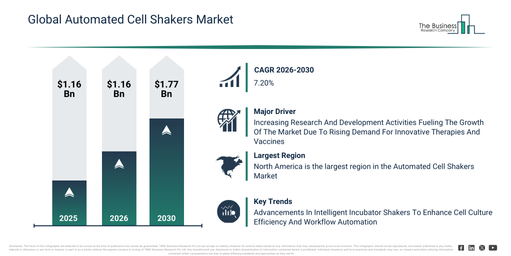
    The automated cell shakers market has shown robust expansion in recent years. Its valuation is anticipated to climb from $0.72 billion in 2025 to $0.78 billion in 2026, progressing at a compound annual growth rate (CAGR) of 8.3%. The historical increase can be ascribed to factors like manual shaking methods, limited laboratory automation, dependence on basic orbital and platform shakers, increasing pharmaceutical R&D activities, and expanding stem cell research initiatives.

    The automated cell shakers market is anticipated to experience substantial expansion over the coming years. This market is projected to reach $1.03 billion by 2030, exhibiting a compound annual growth rate (CAGR) of 7.2%. The expansion during this period stems from advancements in electromechanical, magnetic, and pneumatic shaker technologies, the broadening scope of regenerative medicine and cell therapy research, increased capital expenditure in automated laboratory solutions, the integration of digital monitoring and intelligent lab infrastructure, and augmented demand from CDMOs and biopharmaceutical firms. Key developments foreseen in the coming years encompass a greater embrace of automated cell culture procedures, a surging need for highly precise and uniform shaking mechanisms, incorporation into incubator and CO2-compatible setups, an expansion in stem cell research and regenerative medicine uses, and a sharpened emphasis on preventing contamination and maintaining sterility.

    Access Your Free Sample Report for In-Depth Market Insights:

    https://www.thebusinessresearchcompany.com/sample.aspx?id=27215&type=smp

    What Drivers Are Influencing Production Trends In The Automated Cell Shakers Market?

    Growing research and development endeavors are anticipated to drive the expansion of the automated cell shakers market in the future. Research and development (R&D) efforts involve systematic investigation and innovation to create, improve, or perfect products, processes, and technologies. The surge in R&D activities stems from the rising need for novel therapies and vaccines to tackle intricate and evolving health issues. Automated cell shakers facilitate R&D by providing uniform mixing, aeration, and temperature regulation, crucial for ideal cell growth and dependable outcomes. Concurrently, they simplify processes, reduce manual labor, and enhance efficiency in the creation and evaluation of new developments. For example, in January 2025, the National Bureau of Statistics of China (NBS), a government body based in China, reported that China’s total spending on research and experimental development (R&D) amounted to $0.50 trillion (3.6130 trillion yuan) in 2024, representing an 8.3% rise compared to the preceding year. Consequently, the expanding scope of research and development activities is fueling the demand for the automated cell shaker market.

    Which Segments Are Gaining Traction In The Automated Cell Shakers Market?

    The automated cell shakers market covered in this report is segmented –

    1) By Product Type: Orbital Shakers, Reciprocating Shakers, Platform Shakers, Vortex Shakers, Incubator Shakers

    2) By Cell Culture: Finite Cell Line Cultures, Infinite Cell Line Cultures

    3) By Technology: Electromechanical, Magnetic, Pneumatic

    4) By Application: Drug Development, Regenerative Medicine, Cell Therapy, Stem Cell Research

    5) By End-Use: Pharmaceutical Companies, Biopharmaceutical Companies, Contract Development and Manufacturing Organizations (CDMOs) And Contract Manufacturing Organizations (CMOs), Hospitals, Other End-Uses

    Subsegments:

    1) By Orbital Shakers: Benchtop Orbital Shakers, Floor-Model Orbital Shakers, Incubator-Compatible Orbital Shakers, CO2-Compatible Orbital Shakers

    2) By Reciprocating Shakers: Linear Reciprocating Shakers, Rocking Reciprocating Shakers, Compact Reciprocating Shakers

    3) By Platform Shakers: Large-Capacity Platform Shakers, Multi-Tier Platform Shakers, Adjustable-Speed Platform Shakers

    4) By Vortex Shakers: Fixed-Speed Vortex Shakers, Variable-Speed Vortex Shakers, Multi-Tube Vortex Shakers

    5) By Incubator Shakers: Refrigerated Incubator Shakers, Non-Refrigerated Incubator Shakers, Stackable Incubator Shakers

    What Trends Are Driving The Growth Trajectory Of The Automated Cell Shakers Market?

    Leading companies in the automated cell shaker market are concentrating on creating sophisticated products, such as intelligent incubator shakers, to enhance cell culture efficiency and optimize biopharmaceutical workflows. Intelligent incubator shakers are advanced laboratory instruments that combine precise temperature control with automated shaking to facilitate optimal cell growth and culture conditions, thereby ensuring uniform mixing, improved nutrient distribution, and reliable experimental outcomes. For instance, in June 2024, Thermo Fisher Scientific Inc., a US-based life sciences company, launched the IntelliStack incubator and CO2 incubator shaker. This device is designed to improve cell culture workflows by integrating precise temperature and gas control with automated shaking. This introduction offers advantages such as enhanced cell growth uniformity, a reduced risk of contamination, and greater reproducibility in experiments. It is especially beneficial in biopharmaceutical research, drug development, and biotechnology applications where consistent cell culture conditions are critical. The embedded automation also improves lab efficiency by minimizing manual intervention.

    Who Are The Core Companies Influencing Trends In The Automated Cell Shakers Market?

    Major companies operating in the automated cell shakers market are Thermo Fisher Scientific Inc., Corning Incorporated, Avantor Inc., Sartorius AG, Eppendorf SE, Bio-Techne Corporation, Biobase Biodustry (Shandong) Co. Ltd., IKA-Werke GmbH & Co. KG, OHAUS Corporation, Esco Micro Pte Ltd., Yamato Scientific Co. Ltd., Bionics Scientific Technologies Pvt. Ltd., Boekel Scientific, INFORS HT, Grant Instruments (Cambridge) Ltd., BIOSAN SIA, Jeio Tech Co. Ltd., 2mag AG, Kuhner Shaker, Benchmark Scientific

    Access The Complete Report For Deeper Market Insights:

    https://www.thebusinessresearchcompany.com/report/automated-cell-shakers-global-market-report

    Which Regions Are Projected To Dominate The Automated Cell Shakers Market In The Coming Years?

    North America was the largest region in the automated cell shakers market in 2025. Asia-Pacific is expected to be the fastest-growing region in the forecast period. The regions covered in the automated cell shakers market report are Asia-Pacific, South East Asia, Western Europe, Eastern Europe, North America, South America, Middle East, Africa.

    Request Your Customized Automated Cell Shakers Market Research Report for Competitive Advantage:

    https://www.thebusinessresearchcompany.com/customise?id=27215&type=smp

    Browse Through More Reports Similar to the Global Automated Cell Shakers Market 2026, By The Business Research Company

    Retirement Home Services Global Market Report 2026

    https://www.thebusinessresearchcompany.com/report/retirement-home-services-global-market-report

    Home Improvement Services Global Market Report 2026

    https://www.thebusinessresearchcompany.com/report/home-improvement-services-global-market-report

    Services Global Market Report 2026

    https://www.thebusinessresearchcompany.com/report/services-global-market-report

    Get in touch with us:

    The Business Research Company: https://www.thebusinessresearchcompany.com/

    Americas +1 310-496-7795

    Asia +44 7882 955267 & +91 8897263534

    Europe +44 7882 955267

    Email us at info@tbrc.info

    Follow us on:

    LinkedIn: https://in.linkedin.com/company/the-business-research-company
  • Automated Blood Collection Market Future Outlook 2026: Key Drivers and Growth Potential

    Automated Blood Collection Market Future Outlook 2026: Key Drivers and Growth Potential

    Uncover key drivers, emerging technologies, and competitive movements shaping the intelligent medical guidance and navigation system market from 2026–2035 with trusted insights from The Business Research Company

    What is the expected shift in the Automated Blood Collection Market’s size between 2026 and 2030?

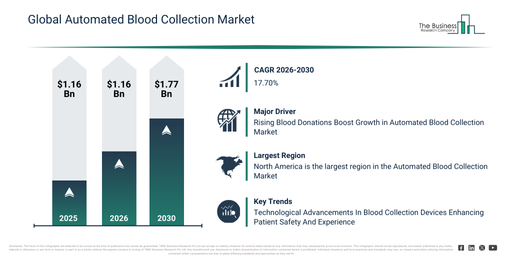
    The automated blood collection market size has experienced rapid expansion in recent years. It is projected to grow from $1.52 billion in 2025 to $1.8 billion in 2026, exhibiting a compound annual growth rate (CAGR) of 18.1%. The historical increase in this market can be linked to factors such as manual blood collection methods, a dependence on conventional venipuncture, the restricted availability of automated systems, a rise in hospital and diagnostic center procedures, and a growing need for accurate diagnostics.

    The automated blood collection market is poised for substantial expansion in the coming years. It is projected to reach $3.46 billion by 2030, growing at a compound annual growth rate (CAGR) of 17.7%. This growth over the forecast period is fueled by technological progress in robotic venipuncture, the increasing prevalence of point-of-care testing, greater investment in hospital automation, the proliferation of diagnostic centers and pathology laboratories, and supportive regulations for automated sample collection. Prominent trends anticipated in this period include the wider uptake of automated blood collection devices in hospitals, the integration of robotic venipuncture with fingerstick systems, an expanding application of point-of-care blood collection solutions, a heightened emphasis on patient safety and comfort during sampling, and the broader implementation of high-precision diagnostics and therapeutic monitoring.

    Access Your Free Sample Report for In-Depth Market Insights:

    https://www.thebusinessresearchcompany.com/sample.aspx?id=20498&type=smp

    Which Drivers Are Shaping Strategic Decisions In The Automated Blood Collection Market?

    The anticipated rise in blood donations is expected to fuel the growth of the automated blood collection market moving forward. This increase in blood donation is attributable to several elements, including greater public awareness regarding the vital need for blood in urgent medical situations, widespread donation campaigns organized by health organizations and community groups, and advancements in medical technology that improve the safety and efficiency of the donation process. Automated blood collection aids blood donation by streamlining and improving the process’s effectiveness. It lessens the necessity for manual involvement, thereby minimizing human error and discomfort for donors. For instance, in 2024, the NHS Blood and Transplant (NHSBT), a UK-based special health authority serving England and Wales, reported 119,371 new blood donations for the 2023-2024 period, which was a modest increase from 119,016 donations in 2022-2023. Consequently, a significant increase in blood donation is propelling the automated blood collection market.

    What Segment Categories Are Covered In The Automated Blood Collection Market?

    The automated blood collection market covered in this report is segmented –

    1) By Type: Arterial Sampling, Venipuncture Sampling, Fingerstick Sampling

    2) By Application: Diagnostics, Treatment, Therapeutics

    3) By End-Use: Hospitals, Diagnostic Centers, Pathology Laboratories, Other End-Uses

    Subsegments:

    1) By Arterial Sampling: Automated Arterial Blood Gas Collection Systems, Closed-Loop Arterial Sampling Systems, Point-of-Care Arterial Sampling Devices, Continuous Arterial Sampling Systems

    2) By Venipuncture Sampling: Automated Venipuncture Collection Devices, Robotic Venipuncture Systems, High-Precision Venipuncture Blood Collection Systems, Automated Venipuncture Systems for Plasma Or Serum

    3) By Fingerstick Sampling: Automated Fingerstick Blood Collection Devices, Portable Fingerstick Collection Devices, Fingerstick Collection Systems for Point-of-Care Testing, Miniaturized Automated Fingerstick Collection Systems

    What Upcoming Trends Are Likely To Define The Future Path Of The Automated Blood Collection Market?

    Leading firms within the automated blood collection market are creating cutting-edge products that integrate sophisticated technologies, including PentaPoint technology, to boost the accuracy and effectiveness of blood collection procedures. This PentaPoint technology facilitates a more precise and managed collection methodology by employing several entry points, thereby reducing patient discomfort and elevating the caliber of the collected sample. As an illustration, during April 2024, Becton, Dickinson, and Company, a medical enterprise headquartered in the US, introduced the BD vacutainer ultratouch push-button blood collection set in both India and the US; this novel apparatus is designed to lessen patient pain and unease throughout blood collection. The innovative device incorporates BD RightGauge technology, employing a finer needle, alongside BD PentaPoint technology, which together considerably diminish the pain associated with insertion. Furthermore, the apparatus includes BD Push Button Technology, which substantially lowers the chance of needle-related injuries by 88%. The introduction of this sophisticated blood collection set seeks to elevate the patient experience through improved comfort, allowing healthcare professionals easier vein access, and shortening the total duration of procedures.

    Which Major Industry Participants Are Leading The Automated Blood Collection Market Growth?

    Major companies operating in the automated blood collection market are Abbott Laboratories, Siemens Healthineers, Becton Dickinson and Company, CSL Plasma, Quest Diagnostics Incorporated, B. Braun Melsungen AG, Fresenius KABI AG, Grifols S.A., Terumo Corporation, Nipro Medical Corporation, Greiner AG, Bio-Rad Laboratories Inc., ICU Medical Inc., Haemonetics Corporation, SARSTEDT AG & Co. KG, Owen Mumford Ltd., Retractable Technologies Inc., Macopharma, Chengdu Rich Science Industry Co. Ltd., Babson Diagnostics, Venibot

    Access The Complete Report For Deeper Market Insights:

    https://www.thebusinessresearchcompany.com/report/automated-blood-collection-global-market-report

    Which Region Is Expected To Experience The Fastest Growth In The Automated Blood Collection Market?

    North America was the largest region in the automated blood collection market in 2025. The regions covered in the automated blood collection market report are Asia-Pacific, South East Asia, Western Europe, Eastern Europe, North America, South America, Middle East, Africa.

    Request Your Customized Automated Blood Collection Market Research Report for Competitive Advantage:

    https://www.thebusinessresearchcompany.com/customise?id=20498&type=smp

    Browse Through More Reports Similar to the Global Automated Blood Collection Market 2026, By The Business Research Company

    Stem Cell Cord Blood Banking Global Market Report 2026

    https://www.thebusinessresearchcompany.com/report/stem-cell-cord-blood-banking-global-market-report

    Blood Glucose Meters Global Market Report 2026

    https://www.thebusinessresearchcompany.com/report/blood-glucose-meters-global-market-report

    Blood And Blood Components Global Market Report 2026

    https://www.thebusinessresearchcompany.com/report/blood-and-blood-components-global-market-report

    Get in touch with us:

    The Business Research Company: https://www.thebusinessresearchcompany.com/

    Americas +1 310-496-7795

    Asia +44 7882 955267 & +91 8897263534

    Europe +44 7882 955267

    Email us at info@tbrc.info

    Follow us on:

    LinkedIn: https://in.linkedin.com/company/the-business-research-company