Category: Medical Equipment

  • Sensor Patch Market Forecast Highlights A $39 Billion Opportunity For Industry Participants

    Sensor Patch Market Forecast Highlights A $39 Billion Opportunity For Industry Participants

    Built to provide research that’s more actionable and strategically valuable, The Business Research Company’s 2026 market reports include market attractiveness analysis, total addressable market sizing, company benchmarking matrices, interactive Excel dashboards, broader supply chain intelligence, emerging startup tracking, and in-depth product insights.

    Sensor Patch Market Revenue Growth On Track For A 45.3% CAGR Through 2030

    The sensor patch market has experienced significant expansion in recent years. Its size is expected to grow from $6.01 billion in 2025 to $8.75 billion in 2026, at a compound annual growth rate (CAGR) of 45.6%. The market’s historical growth can be attributed to several factors, including restricted choices for wearable sensor technology, the elevated cost of early sensor patches, insufficient consumer knowledge, reliance on conventional monitoring equipment, and limited integration with digital health platforms.

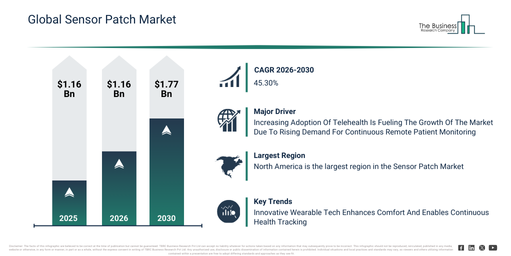
    The sensor patch market is poised for substantial growth over the next few years, with its size anticipated to reach $39 billion by 2030, demonstrating a compound annual growth rate (CAGR) of 45.3%. This expansion during the forecast period is driven by advancements in flexible electronics and biosensors, an increasing demand for remote patient monitoring, the expansion of telehealth and digital therapeutics, the rising geriatric and chronic disease population, and the adoption of AI-based predictive analytics in healthcare. Prominent trends expected in this period include the growing adoption of continuous health monitoring devices, a rising demand for non-invasive wearable technologies, integration with mobile health and telemedicine platforms, an increasing emphasis on personalized healthcare solutions, and the development of multi-parameter sensor patches.

    Get A Free Sample Report With In-Depth Market Insights:

    https://thebusinessresearchcompany.com/sample_request?id=95491057&type=smp&name=Sensor%20Patch%20Market%20Report%202026&utm_source=Blogs&utm_medium=Paid&utm_campaign=Oct_PR

    Sensor Patch Market Growth Momentum: What Factors Are Shaping Demand?

    The sensor patch market is poised for growth due to the rising adoption of telehealth. Telehealth encompasses the utilization of digital communication technologies to provide healthcare services and information remotely. The increasing embrace of telehealth is driven by the escalating demand for continuous remote patient monitoring, which enables early detection of health issues and reduces the need for in-person visits. Sensor patches enhance telehealth by delivering real-time, non-invasive health monitoring, making them ideal for remote care and chronic disease management. They decrease the necessity for frequent clinic visits by consistently transmitting vital data, thereby improving healthcare accessibility and patient outcomes. For instance, in April 2023, according to FAIR Health Inc., a US-based non-profit organization, national telehealth use in 2023 saw an increase of 7.3%, climbing from 5.5% of medical claim lines in December 2022 to 5.9% in January 2023. Therefore, the expanding adoption of telehealth is a significant driver for the growth of the sensor patch market.

    Sensor Patch Market Segment Landscape And Growth Outlook

    The sensor patch market covered in this report is segmented –

    1) By Product Type: Temperature Sensor Patch, Blood Glucose Sensor Patch, Blood Pressure Or Flow Sensor Patch, Heart Rate Sensor Patch, Electrocardiogram(ECG) Sensor Patch, Blood Oxygen Sensor Patch, Other Product Types

    2) By Wearable Type: Wristwear, Bodywear

    3) By Application: Monitoring, Diagnostics, Medical Therapeutics

    4) By End-Use: Fitness, Healthcare, Sports, Other End-Uses

    Subsegments:

    1) By Temperature Sensor Patch: Continuous Temperature Monitoring Patch, Spot-Check Temperature Patch

    2) By Blood Glucose Sensor Patch: Continuous Glucose Monitoring (CGM) Patch, Intermittent Glucose Monitoring Patch

    3) By Blood Pressure Or Flow Sensor Patch: Continuous Blood Pressure Monitoring Patch, Intermittent Blood Pressure Monitoring Patch, Blood Flow Monitoring Patch

    4) By Heart Rate Sensor Patch: Continuous Heart Rate Monitoring Patch, Spot-Check Heart Rate Patch

    5) By Electrocardiogram (ECG) Sensor Patch: Single-Lead Electrocardiogram Patch, Multi-Lead Electrocardiogram Patch, Wearable Or Extended Monitoring Electrocardiogram Patch

    6) By Blood Oxygen Sensor Patch: Continuous Blood Oxygen Monitoring Patch, Spot-Check Blood Oxygen Patch

    7) By Other Product Types: Motion Sensor Patch, Hydration Sensor Patch, Sweat Analysis Sensor Patch, Respiratory Rate Sensor Patch

    Sensor Patch Market Trends Redefining Industry Growth

    Leading companies in the sensor patch market are focused on developing innovative devices, such as those that are lightweight and adhesive, to enhance comfort and provide continuous health monitoring. These lightweight and adhesive devices are compact, easy-to-wear sensors that securely attach to the skin for ongoing and comfortable health tracking. For example, in 2023, VivaLNK Inc., a US-based software developer company, launched a 14-day live stream wearable electrocardiogram (ECG) patch. This medical device continuously monitors a patient’s heart activity for up to 14 days, streaming cardiac data in real-time. It tracks multiple parameters, including heart rate, respiratory rate, and skin temperature, and includes robust onboard memory to ensure uninterrupted data recording even during network outages. The patch is compact, reusable, water-resistant, and integrates smoothly with mobile and clinical applications to support remote patient monitoring and advanced arrhythmia detection.

    Sensor Patch Market Leading Companies And Competitive Benchmarking

    Major companies operating in the sensor patch market are Abbott Laboratories, Medtronic plc, Dexcom Inc, iRhythm Technologies Inc, AliveCor Inc, Onera Health B V, Nemaura Medical Inc, VitalConnect Inc, Rhaeos Inc, Theranica Bio Electronics Ltd, GENTAG Inc, G Tech Medical Inc, Isansys Lifecare Limited, Kenzen Inc, SmartCardia SA, VivaLNK Inc, BioIntelliSense Inc, Preventice Solutions Inc, Bardy Diagnostics Inc, Current Health Ltd, Biofourmis Inc, Zephyr Technology Corporation

    View The Full Sensor Patch Market Report:

    https://thebusinessresearchcompany.com/report/sensor-patch-global-market-report?utm_source=Blogs&utm_medium=Paid&utm_campaign=Oct_PR

    Sensor Patch Market Top Region By Revenue And Market Share

    North America was the largest region in the sensor patch market in 2025. Asia-Pacific is expected to be the fastest-growing region in the forecast period. The regions covered in the sensor patch market report are Asia-Pacific, South East Asia, Western Europe, Eastern Europe, North America, South America, Middle East, Africa.

    Reach Out To Our Team:

    The Business Research Company: https://www.thebusinessresearchcompany.com/

    Americas: +1 310-496-7795

    Asia: +44 7882 955267 & +91 8897263534

    Europe: +44 7882 955267

    Email us at: marketing@tbrc.info

    Follow us on:

    LinkedIn: https://in.linkedin.com/company/the-business-research-company

    YouTube: https://www.youtube.com/channel/UC24_fI0rV8cR5DxlCpgmyFQ

    Global Market Model: https://www.thebusinessresearchcompany.com/global-market-model
  • Sensitive Skin Adhesive Tape Market Analysis: How The Industry Is Evolving Toward A $1.81 Billion Future

    Sensitive Skin Adhesive Tape Market Analysis: How The Industry Is Evolving Toward A $1.81 Billion Future

    Backed by market attractiveness analysis, total addressable market sizing, company benchmarking matrices, interactive Excel dashboards, wider supply chain intelligence, emerging startup coverage, and detailed product-level insights, The Business Research Company’s 2026 market reports are designed to offer research that is more actionable and strategically valuable than ever.

    Sensitive Skin Adhesive Tape Market Value Growth And Long-Term Outlook

    The sensitive skin adhesive tape market has demonstrated robust growth in recent years. Its valuation is anticipated to climb from $1.2 billion in 2025 to $1.31 billion in 2026, at a compound annual growth rate (CAGR) of 8.7%. This historical expansion can be attributed to several factors including an increased use of medical devices, a rise in sensitive skin conditions, the adoption of hospital safety protocols, a growth in wound care products, and the expansion of surgical procedures.

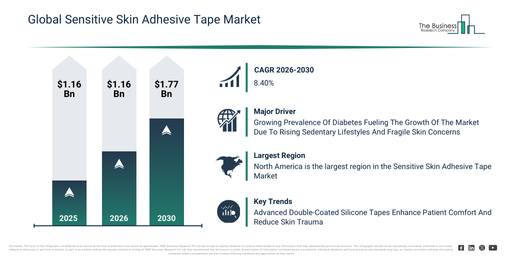
    The sensitive skin adhesive tape market is projected to experience substantial expansion over the coming years. This market is predicted to reach a valuation of $1.81 billion by the year 2030, showing a compound annual growth rate (CAGR) of 8.4%. Factors driving this growth during the projected timeframe include the rise in the aging population, the wider embrace of homecare medical solutions, continuous advancements in gentle adhesive technologies, the broadening scope of dermatology treatments, and an uptick in outpatient procedures. Key trends anticipated during the forecast period encompass hypoallergenic medical adhesives, specialized skin care products for pediatric and geriatric patients, the increasing use of silicone-based tapes, the development of medical tapes for frequent application, and adhesive solutions formulated to be safe for dermatological use.

    Get A Free Sample Report With In-Depth Market Insights:

    https://thebusinessresearchcompany.com/sample_request?id=40867154&type=smp&name=Sensitive%20Skin%20Adhesive%20Tape%20Market%20Report%202026&utm_source=Blogs&utm_medium=Paid&utm_campaign=Oct_PR

    Sensitive Skin Adhesive Tape Market Expansion Drivers: What’s Shaping Future Growth?

    The expanding incidence of diabetes is anticipated to boost the sensitive skin adhesive tape market’s expansion moving ahead. This condition is a chronic ailment characterized by the body’s difficulty in controlling blood sugar levels, stemming from problems with insulin generation or its effectiveness. Its occurrence is escalating, largely attributed to increasingly inactive lifestyles that contribute to elevated rates of obesity and diminished insulin sensitivity among individuals. Sensitive skin adhesive tapes play a crucial role in improving diabetes management by offering soft, firm attachment for glucose monitoring devices and insulin delivery systems, thereby minimizing the likelihood of dermal irritation. These tapes enhance user comfort and the dependable functioning of medical devices, simplifying and streamlining routine diabetes care. As an illustration, in May 2024, data from the British Diabetic Association (Diabetes UK), a UK-based charitable organization, indicated that approximately 4.4 million individuals in the UK live with diabetes, where type 1 diabetes constitutes about 8% of instances, and type 2 diabetes makes up nearly 90%. Consequently, the increasing prevalence of diabetes acts as a significant impetus for the growth of the sensitive skin adhesive tape market.

    Sensitive Skin Adhesive Tape Market Breakdown By Product Type And Application

    The sensitive skin adhesive tape market covered in this report is segmented –

    1) By Product Type: Silicone-Based Adhesive Tapes, Gentle Acrylic-Based Adhesive Tapes, Hydrogel-Based Adhesive Tapes, Paper-Based Hypoallergenic Adhesive Tapes, Fabric-Based Hypoallergenic Adhesive Tapes

    2) By Distribution Channel: Hospital And Medical Supply Stores, Retail Pharmacies, Online Medical And Healthcare Platforms

    3) By Application: Wound Dressing Fixation, Post-Surgical Dressing Fixation, Medical Device And Sensor Securement, Pediatric And Neonatal Skin Protection, Dermatology And Cosmetic Procedures

    4) By End-User: Hospitals, Clinics And Specialty Care Centers, Homecare Settings, Pediatric And Neonatal Care Centers

    Subsegments:

    1) By Silicone-Based Adhesive Tapes: Silicone Gel Fixation Tapes, Silicone Foam Fixation Tapes, Soft Silicone Adhesive Tapes

    2) By Gentle Acrylic-Based Adhesive Tapes: Low-Tack Transparent Acrylic Tapes, Hypoallergenic Foam Acrylic Tapes

    3) By Hydrogel-Based Adhesive Tapes: Hydrogel Fixation Sheet Tapes

    4) By Paper-Based Hypoallergenic Adhesive Tapes: Microporous Paper Tapes, Breathable Surgical Paper Tapes (Sensitive Skin)

    5) By Fabric-Based Hypoallergenic Adhesive Tapes: Soft Cloth Adhesive Tapes, Elastic Fabric Fixation Tapes

    Sensitive Skin Adhesive Tape Market Strategic Trends: What Defines The Next Growth Phase?

    Leading companies within the sensitive skin adhesive tape market are prioritizing the creation of innovative solutions, such as double-coated silicone medical tapes, aiming to improve patient comfort, broaden device compatibility, and lessen skin trauma during application. These double-coated silicone medical tapes are adhesive products featuring soft silicone on the side touching the skin, complemented by acrylate or alternative adhesives on the device-facing side, thereby offering strong fixation while remaining safe for delicate or vulnerable skin. As an illustration, in October 2024, the US-based medical technology firm Solventum Operations Pty Ltd. introduced the 2487 Hi-Tack Silicone Tape, intended for patients across all age groups, including children and individuals with chronic conditions impacting skin integrity. This tape incorporates double-coated silicone and boasts a non-fluorinated release liner, resistance to fluids, compatibility with sterilization, and leaves minimal residue after removal, allowing producers of medical wearables to make their products available to a wider patient demographic while guaranteeing excellent skin protection and comfort. Furthermore, its flexible backing enables close conformity to the body’s contours, ensuring adherence even on curved or moving regions.

    Sensitive Skin Adhesive Tape Market Industry Leaders And Competitive Landscape

    Major companies operating in the sensitive skin adhesive tape market are 3M, Johnson & Johnson Services Inc., Smith & Nephew Plc, Mölnlycke Health Care AB, Paul Hartmann AG, ConvaTec Group Plc, Coloplast A/S, B. Braun SE, Cardinal Health Inc., Medline Industries LP, NICHIBAN Co. Ltd., Lohmann GmbH & Co. KG, Scapa Group Ltd., Adhesives Research Inc., Winner Medical Co. Ltd., DermaRite Industries LLC, Dynarex Corporation, Hy-Tape International Inc., Nitto Denko Corporation, Avery Dennison Corporation, Berry Global Group Inc., Hollister Incorporated

    View The Full Sensitive Skin Adhesive Tape Market Report:

    https://thebusinessresearchcompany.com/report/sensitive-skin-adhesive-tape-global-market-report?utm_source=Blogs&utm_medium=Paid&utm_campaign=Oct_PR

    Sensitive Skin Adhesive Tape Market Regional Analysis And Top Geography

    North America was the largest region in the sensitive skin adhesive tape market in 2025. Asia-Pacific is expected to be the fastest-growing region in the forecast period. The regions covered in the sensitive skin adhesive tape market report are Asia-Pacific, South East Asia, Western Europe, Eastern Europe, North America, South America, Middle East, Africa.

    Reach Out To Our Team:

    The Business Research Company: https://www.thebusinessresearchcompany.com/

    Americas: +1 310-496-7795

    Asia: +44 7882 955267 & +91 8897263534

    Europe: +44 7882 955267

    Email us at: marketing@tbrc.info

    Follow us on:

    LinkedIn: https://in.linkedin.com/company/the-business-research-company

    YouTube: https://www.youtube.com/channel/UC24_fI0rV8cR5DxlCpgmyFQ

    Global Market Model: https://www.thebusinessresearchcompany.com/global-market-model
  • Senior Mobility Aid Devices Market Outlook Through 2030: Understanding The Growth Opportunity

    Senior Mobility Aid Devices Market Outlook Through 2030: Understanding The Growth Opportunity

    Featuring market attractiveness scoring, total addressable market sizing, company benchmarking matrices, interactive Excel dashboards, deeper supply chain intelligence, emerging startup tracking, and granular product-level insights, The Business Research Company’s 2026 market reports are built to deliver research that is both more actionable and more strategically valuable.

    Senior Mobility Aid Devices Market Poised To Hit $17.12 Billion By 2030 With A 7.3% CAGR

    The senior mobility aid devices market has demonstrated robust expansion in recent years. Its value is expected to escalate from $11.98 billion in 2025 to $12.9 billion in 2026, reflecting a compound annual growth rate (CAGR) of 7.7%. This historical growth can be ascribed to elements such as the rising elderly population, an increased prevalence of mobility challenges, greater consciousness of fall hazards, constrained entry to rehabilitation services, and the expanding need for home healthcare solutions.

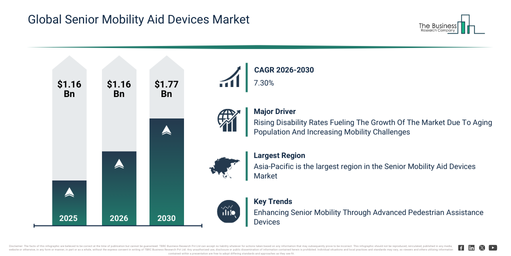
    The senior mobility aid devices market is projected to experience substantial expansion over the upcoming years. This market is set to reach a valuation of $17.12 billion by 2030, demonstrating a compound annual growth rate (CAGR) of 7.3%. Key factors driving this expansion during the forecast period include the increasing adoption of AI-enabled mobility devices, the integration of IoT in mobility aids, a wider expansion of electric wheelchairs and scooters, the emergence of personalized rehabilitation programs, and the development of smart assisted living infrastructure. Prominent trends anticipated within this forecast period encompass smart mobility integration, advancements in fall detection & prevention technology, the availability of personalized mobility solutions, an emphasis on ergonomic & lightweight design, and the provision of home-based mobility assistance.

    Get A Free Sample Report With In-Depth Market Insights:

    https://thebusinessresearchcompany.com/sample_request?id=60582310&type=smp&name=Senior%20Mobility%20Aid%20Devices%20Market%20Report%202026&utm_source=Blogs&utm_medium=Paid&utm_campaign=Oct_PR

    Senior Mobility Aid Devices Market Development Factors: What’s Supporting Demand?

    The expanding occurrence of disabilities is anticipated to drive forward the senior mobility aid devices market. Disabilities are defined as enduring physical, mental, intellectual, or sensory conditions that might prevent an individual from fully and effectively participating in society on par with others. The rise in disabilities stems from the world’s aging populace, leading to more prevalent age-associated health issues like arthritis, dementia, and vision or hearing loss, which contribute to lasting impairments. Senior mobility aid devices are crucial for improving the independence and daily activities of individuals with disabilities by providing vital support, stability, and simpler movement. For instance, in October 2024, according to the House of Commons Library, a UK-based library and information resource of the lower house of the British Parliament, 16.1 million people in the UK were reported to have a disability during the 2022-23 financial year, making up 24% of the country’s population. Consequently, the growing incidence of disabilities will stimulate the expansion of the senior mobility aid devices market.

    Senior Mobility Aid Devices Market Segment Analysis And Revenue Potential

    The senior mobility aid devices market covered in this report is segmented –

    1) By Product Type: Wheelchairs, Scooters, Walking Aids, Mobility Lift, Other Product Types

    2) By Price: Low, Medium, High

    3) By Distribution Channel: Online Channels, Offline Channels

    4) By End-User: Individual, Hospitals And Nursing Homes, Assisted Living, Other End-Users

    Subsegments:

    1) By Wheelchairs: Manual Wheelchairs, Electric Wheelchairs, Transport Wheelchairs, Positioning Wheelchairs, Bariatric Wheelchairs

    2) By Scooters: 3-Wheel Scooters, 4-Wheel Scooters, Foldable Mobility Scooters, Heavy-Duty Mobility Scooters

    3) By Walking Aids: Canes, Crutches, Walkers, Rollators, Gait Trainers

    4) By Mobility Lifts: Stair Lifts, Vehicle Lifts, Ceiling Lifts, Portable Lifts, Pool Lifts

    5) By Other Product Types: Transfer Boards, Patient Lifting Slings, Knee Walkers, Mobility Accessories, Standing Aids

    Senior Mobility Aid Devices Market Transformation Trends: What Innovations Are Driving Change?

    Leading companies within the senior mobility aid devices market are concentrating on developing sophisticated solutions, such as pedestrian-mobility-assistance models, to provide an affordable and non-intrusive method for improving mobility. These pedestrian-mobility-assistance models are tools or devices that assist individuals with mobility challenges in navigating walking environments safely and autonomously. For example, in March 2023, Toyota Motor Corporation, a Japan-based automotive manufacturer, introduced C+walk S, a pedestrian-mobility-assistance model. This three-wheeled mobility device is specifically designed for seniors and individuals who find walking long distances difficult, offering a safe and straightforward way to move. It is engineered to operate at average walking speeds and features a compact design that integrates seamlessly into urban settings, facilitating easy side-by-side travel and interaction with others. The device can also assess upcoming path conditions, making it well-suited for sidewalk use. Additionally, it is equipped with safety sensors that detect obstacles and help users prevent potential collisions.

    Senior Mobility Aid Devices Market Key Participants And Competitive Landscape

    Major companies operating in the senior mobility aid devices market are Medline Industries LP, Ottobock, Invacare Corporation, Permobil, Sunrise Medical LLC, Drive DeVilbiss Healthcare, Handicare AB, Pride Mobility Products Ltd., Vissco Rehabilitation Aids Pvt. Ltd., Graham Field Health Products Inc., Merits Health Products Co. Ltd., Nova Medical Products, Meyra Group GmbH, Karma Medical Products Co. Ltd., Narula Udyog India Pvt. Ltd., Heartway Medical Products Co. Ltd., Arcatron Mobility Pvt. Ltd., Antano Group, PEAAR Healthtech LLP, Golden Technologies Inc., GF Health Products Inc., Kymco Healthcare

    View The Full Senior Mobility Aid Devices Market Report:

    https://thebusinessresearchcompany.com/report/senior-mobility-aid-devices-global-market-report?utm_source=Blogs&utm_medium=Paid&utm_campaign=Oct_PR

    Senior Mobility Aid Devices Market Geographic Analysis: Where Is Demand Rising Fastest?

    Asia-Pacific was the largest region in the senior mobility aid devices market in 2025. The regions covered in the senior mobility aid devices market report are Asia-Pacific, South East Asia, Western Europe, Eastern Europe, North America, South America, Middle East, Africa.

    Reach Out To Our Team:

    The Business Research Company: https://www.thebusinessresearchcompany.com/

    Americas: +1 310-496-7795

    Asia: +44 7882 955267 & +91 8897263534

    Europe: +44 7882 955267

    Email us at: marketing@tbrc.info

    Follow us on:

    LinkedIn: https://in.linkedin.com/company/the-business-research-company

    YouTube: https://www.youtube.com/channel/UC24_fI0rV8cR5DxlCpgmyFQ

    Global Market Model: https://www.thebusinessresearchcompany.com/global-market-model
  • Self-Sampling Blood Collection And Storage Device Market Growth Potential: What The Latest Forecast Reveals

    Self-Sampling Blood Collection And Storage Device Market Growth Potential: What The Latest Forecast Reveals

    Built to provide research that’s more actionable and strategically valuable, The Business Research Company’s 2026 market reports include market attractiveness analysis, total addressable market sizing, company benchmarking matrices, interactive Excel dashboards, broader supply chain intelligence, emerging startup tracking, and in-depth product insights.

    Self-Sampling Blood Collection And Storage Device Market Size And Revenue Outlook Through 2030

    The market size for self-sampling blood collection and storage devices has seen rapid expansion in recent years. This market is set to increase from $0.95 billion in 2025 to $1.08 billion in 2026, achieving a compound annual growth rate (CAGR) of 13.8%. The historical growth can be attributed to several factors, including the initial limited availability of self-sampling devices, the conventional dependence on clinical visits for blood collection, an increasing awareness of home diagnostics, the rising prevalence of chronic diseases, and the development of basic blood collection kits.

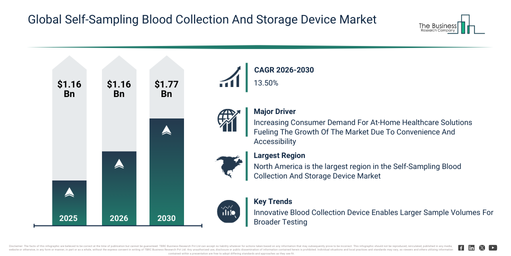
    The self-sampling blood collection and storage device market is anticipated to experience swift expansion over the coming years. This market is projected to reach $1.79 billion by 2030, exhibiting a compound annual growth rate (CAGR) of 13.5%. This expansion during the forecast period stems from advancements in micro-needle and fingerstick technologies, the growing acceptance of personalized healthcare, the proliferation of telemedicine and remote monitoring, a heightened need for genetic and drug testing, and the creation of integrated digital health platforms. Key developments expected during this timeframe involve the increased use of at-home blood collection devices, a surge in demand for remote diagnostic testing, advancements in stabilization and preservation reagents, broader application of genetic and infectious disease testing, and improved user-friendliness and safety characteristics in these devices.

    Get A Free Sample Report With In-Depth Market Insights:

    https://thebusinessresearchcompany.com/sample_request?id=45700903&type=smp&name=Self-Sampling%20Blood%20Collection%20And%20Storage%20Device%20Market%20Report%202026&utm_source=Blogs&utm_medium=Paid&utm_campaign=Oct_PR

    Self-Sampling Blood Collection And Storage Device Market Industry Drivers: What’s Behind The Revenue Growth?

    The anticipated expansion of the self-sampling blood collection and storage devices market is fueled by the rising consumer demand for at-home healthcare solutions. These solutions encompass medical services, devices, and technologies that allow individuals to access care, monitor their health, and manage conditions remotely, thereby avoiding trips to clinics or hospitals. The heightened demand for at-home healthcare stems from the desire for enhanced convenience, as it removes the necessity of traveling to clinics and shortens wait times. Self-sampling blood collection and storage devices facilitate at-home healthcare by offering a convenient and precise method for sample collection, eliminating the need for clinic visits. These devices streamline the process, boost patient comfort, and enable prompt diagnostics, thus enhancing overall access to healthcare. An illustrative example from July 2024, as reported by the US-based federal agency, the Bureau of Labor Statistics, showed that home- and community-based care reached 4.3 million jobs. This was primarily driven by 2.5 million workers in services for the elderly and people with disabilities, and an additional 1.8 million in home health care. Consequently, the growing consumer preference for at-home healthcare solutions is propelling the expansion of the self-sampling blood collection and storage devices market.

    Self-Sampling Blood Collection And Storage Device Market Segmentation And Category Overview

    The self-sampling blood collection and storage device market covered in this report is segmented –

    1) By Product Type: Kits, Tubes, Lancets, Others Product Type

    2) By Material Type: Plastic, Glass, Silicone, Metal, Composite Materials

    3) By Sample Type: Blood, Urine, Saliva

    4) By Application: Genetic Testing, Infectious Disease Testing, Drug Testing, Blood Chemistry Testing

    5) By End-User: Hospitals, Diagnostic Laboratories, Research Institutes, Home Care Settings, Other End-Users

    Subsegments:

    1) By Kits: Dried Blood Spot (DBS) Collection Kits, Microtube Collection Kits, Plasma Separation Kits, DNA/RNA Collection Kits, At-home Diagnostic Test Kits

    2) By Tubes: EDTA Tubes, Heparin Tubes, Serum Separator Tubes, Plasma Separator Tubes, Micro Collection Tubes

    3) By Lancets: Push-Button Lancets, Pressure-Activated Lancets, Safety Lancets, Retractable Lancets, Adjustable Depth Lancets

    4) By Others Product Type: Capillary Blood Collection Devices, Blood Collection Cards, Transfer Devices, Filter Paper Devices, Preservation And Stabilization Reagents

    #Self-Sampling Blood Collection And Storage Device Market Growth Trends: What’s Shaping The Future Outlook?

    Major companies operating within the self-sampling blood collection and storage device market are focusing on developing innovative solutions, such as novel self-sampling blood collection devices, to improve sample integrity, user convenience, and diagnostic accuracy. A new self-sampling blood collection device refers to the latest generation of technologies that enable individuals to collect their blood samples with minimal or no assistance from healthcare professionals. For instance, in February 2023, Capitainer AB, a medical technology company based in Sweden, introduced Capitainer B 50, a self-sampling blood collection card engineered to allow patients to collect and store significantly larger volumes of blood. It provides features that enable patients to obtain two precise 50 µL blood samples from a finger stick, supporting a wider range of lab analyses due to the increased sample volume. This device incorporates a precise filling mechanism that automatically meters the blood, thereby minimizing the risk of over- or under-filling, and includes a sampling indicator for user confirmation.

    Self-Sampling Blood Collection And Storage Device Market Top Companies Driving Competitive Growth

    Major companies operating in the self-sampling blood collection and storage device market are Becton Dickinson And Company, DBS System SA, Terumo Corporation, Sysmex Corporation, Qiagen N V, PerkinElmer Inc, Sarstedt AG And Co KG, Greiner Bio One International GmbH, Trajan Group Holdings Limited, Tasso Inc, PanoHealth, Boston Microfluidics Inc, LAMEDITECH Co Ltd, YourBio Health Inc, Capitainer, Drawbridge Health Inc, Spot On Sciences, Neoteryx LLC, Hemaxis SA, Microsampling Systems Ltd

    View The Full Self-Sampling Blood Collection And Storage Device Market Report:

    https://thebusinessresearchcompany.com/report/self-sampling-blood-collection-and-storage-device-global-market-report?utm_source=Blogs&utm_medium=Paid&utm_campaign=Oct_PR

    Self-Sampling Blood Collection And Storage Device Market Global Footprint: Which Region Leads The Market?

    North America was the largest region in the self-sampling blood collection and storage device market in2025. Asia-Pacific is expected to be the fastest-growing region in the forecast period. The regions covered in the self-sampling blood collection and storage device market report are Asia-Pacific, South East Asia, Western Europe, Eastern Europe, North America, South America, Middle East, Africa.

    Reach Out To Our Team:

    The Business Research Company: https://www.thebusinessresearchcompany.com/

    Americas: +1 310-496-7795

    Asia: +44 7882 955267 & +91 8897263534

    Europe: +44 7882 955267

    Email us at: marketing@tbrc.info

    Follow us on:

    LinkedIn: https://in.linkedin.com/company/the-business-research-company

    YouTube: https://www.youtube.com/channel/UC24_fI0rV8cR5DxlCpgmyFQ

    Global Market Model: https://www.thebusinessresearchcompany.com/global-market-model
  • Self-Monitoring Blood Glucose (SMBG) Devices Market Growth Outlook: Why Analysts Expect Continued Expansion

    Self-Monitoring Blood Glucose (SMBG) Devices Market Growth Outlook: Why Analysts Expect Continued Expansion

    Backed by market attractiveness analysis, total addressable market sizing, company benchmarking matrices, interactive Excel dashboards, wider supply chain intelligence, emerging startup coverage, and detailed product-level insights, The Business Research Company’s 2026 market reports are designed to offer research that is more actionable and strategically valuable than ever.

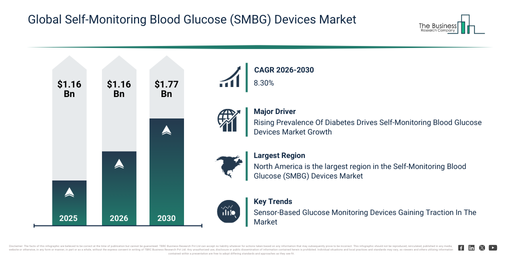
    Self-Monitoring Blood Glucose (SMBG) Devices Market Growth From $17.56 Billion In 2026 To $24.17 Billion By 2030 At A CAGR Of 8.3%

    The self-monitoring blood glucose (smbg) devices market has experienced significant growth in recent years. It is anticipated to expand from $16.19 billion in 2025 to $17.56 billion in 2026, demonstrating a compound annual growth rate (CAGR) of 8.5%. The historical rise of this market can be linked to the increasing prevalence of diabetes, a growing understanding of self-monitoring practices, the broader adoption of home healthcare, the accessibility of affordable glucose meters, and improved diabetes management guidelines.

    The self-monitoring blood glucose (SMBG) devices market size is anticipated to undergo substantial expansion in the coming years. This market is forecast to grow to $24.17 billion in 2030 at a compound annual growth rate (CAGR) of 8.3%. The drivers for this growth during the forecast period include an escalating demand for connected health solutions, increased adoption of continuous glucose monitoring, the broadening of telehealth-based diabetes care, a heightened emphasis on preventive healthcare, and growing investments in digital diabetes management. Key trends expected in this period encompass the rising uptake of smart glucose monitoring devices, the expanding utilization of continuous glucose monitoring systems, the increasing integration of mobile health applications, the extension of remote patient monitoring solutions, and an enhanced focus on designing patient-friendly devices.

    Get A Free Sample Report With In-Depth Market Insights:

    https://thebusinessresearchcompany.com/sample_request?id=92278566&type=smp&name=Self-Monitoring%20Blood%20Glucose%20%28SMBG%29%20Devices%20Market%20Report%202026&utm_source=Blogs&utm_medium=Paid&utm_campaign=Oct_PR

    Self-Monitoring Blood Glucose (SMBG) Devices Market Growth Factors: What’s Supporting Expansion?

    The growing incidence of diabetes is anticipated to fuel the expansion of the self-monitoring blood glucose device market in the coming years. Diabetes is defined as a chronic metabolic condition where the body either fails to produce sufficient insulin or cannot effectively utilize it, leading to elevated blood glucose levels that can harm various organs and systems over time. This increase in diabetes prevalence mainly stems from unhealthy eating habits, which incrementally raise long-term blood sugar levels and gradually impair metabolic health. Self-Monitoring Blood Glucose (SMBG) Devices assist in managing diabetes by allowing individuals to monitor their real-time blood sugar levels, facilitating prompt adjustments in diet, medication, or physical activity to achieve superior glycemic control. For instance, in June 2024, the National Health Service, a UK-based government body, reported that in 2023, the NHS identified an additional over half a million (549,000) people in England susceptible to developing type 2 diabetes. This pushed the total count of individuals with non-diabetic hyperglycemia, or pre-diabetes, registered with a GP, to 3,615,330. This figure signifies a substantial rise compared to 3,065,825 in 2022, indicating an increase of nearly 20%. Consequently, the escalating prevalence of diabetes is propelling the growth of the self-monitoring blood glucose devices market.

    Self-Monitoring Blood Glucose (SMBG) Devices Market Segment Outlook: Which Categories Are Growing Fastest?

    The self-monitoring blood glucose (smbg) devices market covered in this report is segmented –

    1) By Product: Self-Monitoring Blood Glucose Meters, Testing Strips, Lancets

    2) By Distribution Channel: Hospital Pharmacies, Retail Pharmacies, Online Sales, Diabetes Clinics & Centers

    3) By Application: Type 1 Diabetes, Type 2 Diabetes, Gestational Diabetes

    Subsegments:

    1) By Self-Monitoring Blood Glucose Meters: Traditional Glucose Meters, Smart Glucose Meters

    2) By Testing Strips: Standard Testing Strips, Test Strips for Specific Meters

    3) By Lancets: Standard Lancets, Safety Lancets

    Self-Monitoring Blood Glucose (SMBG) Devices Market Industry Trends: What’s Reshaping Demand?

    Leading companies in the self-monitoring blood glucose (SMBG) devices market are prioritizing the development of innovative solutions, such as continuous glucose monitoring (CGM) systems, to address the increasing need for less burdensome glucose tracking, improved glycemic management, remote patient monitoring, and better compatibility with insulin delivery and digital health platforms. CGM systems are wearable sensors that continuously measure interstitial glucose, providing trend data, alerts, and cloud-connected reporting; their key functionalities include real-time glucose readings, trend arrows, customizable alarms, and data sharing capabilities. Unlike traditional fingerstick SMBG (glucometers) which require discrete capillary blood samples and offer only point-in-time values, CGMs enable proactive therapy adjustments and richer longitudinal insights, thereby reducing the risk of hypoglycemia and improving time-in-range. For example, in August 2024, Medtronic plc, an Ireland-based medical technology company, introduced Simplera CGM, a compact, disposable, all-in-one continuous glucose monitor designed for easier self-application, real-time glucose sensing, and seamless operation with both the InPen smart insulin pen and the MiniMed 780G system, offering users a smaller form factor, simplified wear, and enhanced interoperability that supports continuous visibility for Smart MDI users, redundant sensing for pump users, and overall improved comfort, adherence, and clinical decision-making through the integration of continuous glucose trend data.

    Self-Monitoring Blood Glucose (SMBG) Devices Market Leading Players And Competitive Positioning

    Major companies operating in the self-monitoring blood glucose (smbg) devices market are Abbott Laboratories, Bionime Corporation, B Braun Melsungen AG, F Hoffmann La Roche Ltd, LifeScan Inc, PHC Holdings Corporation, Home Diagnostics Inc, ARKRAY Inc, Ypsomed Holding AG, Dexcom Inc, Medtronic plc, Senseonics Holdings Inc, AgaMatrix Inc, All Medicus Co Ltd, Ascensia Diabetes Care Holdings AG, Bayer AG, Becton Dickinson and Company, Cnoga Medical Ltd, ForaCare Inc, Infopia Co Ltd, Menarini Diagnostics, Nipro Corporation, Nova Biomedical Corporation, Omron Healthcare Inc, OrSense Ltd, Prodigy Diabetes Care LLC, PTS Diagnostics, TaiDoc Technology Corporation, Trividia Health Inc

    View The Full Self-Monitoring Blood Glucose (SMBG) Devices Market Report:

    https://thebusinessresearchcompany.com/report/self-monitoring-blood-glucose-SMBG-devices-global-market-report?utm_source=Blogs&utm_medium=Paid&utm_campaign=Oct_PR

    Self-Monitoring Blood Glucose (SMBG) Devices Market Regional Split: Which Areas Are Fueling Growth?

    North America was the largest region in the self-monitoring blood glucose (SMBG) devices market in 2025. Europe is expected to be the fastest-growing region in the forecast period. The regions covered in the self-monitoring blood glucose (smbg) devices market report are Asia-Pacific, South East Asia, Western Europe, Eastern Europe, North America, South America, Middle East, Africa.

    Reach Out To Our Team:

    The Business Research Company: https://www.thebusinessresearchcompany.com/

    Americas: +1 310-496-7795

    Asia: +44 7882 955267 & +91 8897263534

    Europe: +44 7882 955267

    Email us at: marketing@tbrc.info

    Follow us on:

    LinkedIn: https://in.linkedin.com/company/the-business-research-company

    YouTube: https://www.youtube.com/channel/UC24_fI0rV8cR5DxlCpgmyFQ

    Global Market Model: https://www.thebusinessresearchcompany.com/global-market-model
  • Self-Injections Market Forecast Insights: The Road To $15.05 Billion By 2030

    Self-Injections Market Forecast Insights: The Road To $15.05 Billion By 2030

    Featuring market attractiveness scoring, total addressable market sizing, company benchmarking matrices, interactive Excel dashboards, deeper supply chain intelligence, emerging startup tracking, and granular product-level insights, The Business Research Company’s 2026 market reports are built to deliver research that is both more actionable and more strategically valuable.

    Self-Injections Market Expansion Outlook: What Revenue Opportunities Are Ahead?

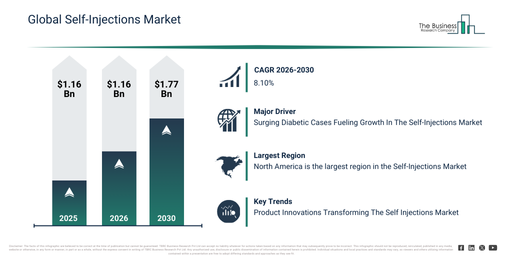
    The self-injections market has experienced substantial growth in recent years. Its valuation is set to expand from $10.22 billion in 2025 to $11.04 billion in 2026, achieving a compound annual growth rate (CAGR) of 8.1%. This historic market expansion is attributed to factors such as the increasing prevalence of chronic diseases, greater availability of injectable biologics, a rising preference for treatment at home, the expansion of specialty pharmaceuticals, and enhancements in the ergonomic design of injection devices.

    The self-injections market size is anticipated to undergo significant expansion over the next few years. It is forecast to grow to $15.05 billion in 2030, achieving a compound annual growth rate (CAGR) of 8.1%. This growth during the forecast period can be attributed to several factors, including an escalating demand for self-care therapies, the increasing adoption of digital health-enabled injectors, the expansion of biologics pipelines, a heightened focus on adherence-enhancing drug delivery, and the growing use of connected medical devices. Prominent trends anticipated in this period encompass the increasing integration of auto-injector devices, a rising demand for wearable injection systems, the growing utilization of biologic self-administered therapies, the development of patient-centric drug delivery designs, and an enhanced emphasis on safety and dose accuracy.

    Get A Free Sample Report With In-Depth Market Insights:

    https://thebusinessresearchcompany.com/sample_request?id=51197499&type=smp&name=Self-Injections%20Market%20Report%202026&utm_source=Blogs&utm_medium=Paid&utm_campaign=Oct_PR

    Self-Injections Market Demand Drivers: What’s Powering Industry Growth?

    The increasing count of diabetic patients is anticipated to propel the expansion of the self-injections market in the future. Diabetes describes a condition where the pancreas, the human organ producing insulin, generates an inadequate amount of insulin, which results in the breakdown of blood sugars and contributes to serious health issues like heart disease, vision loss, and kidney problems. Self-injections empower diabetic patients to administer insulin and other medicines, thereby helping to sustain optimal blood sugar levels and prevent any surplus blood sugars at any time without needing a medical professional. For instance, in November 2025, according to Diabetes Care, a US-based international peer-reviewed medical journal, an estimated 634.8 million adults, representing 12.0 percent of the global adult population, were living with impaired glucose tolerance in 2024, with this figure projected to climb to 846.5 million adults or 12.9 percent of the world’s adult population by 2050. Therefore, the rising number of diabetic patients is stimulating the growth of the self-injections market.

    Self-Injections Market Segment Landscape: Which Areas Lead Development?

    The self-injections market covered in this report is segmented –

    1) By Type: Devices, Formulations

    2) By Dosage: Single Dose, Multi Dose

    3) By Application: Autoimmune Diseases, Hormonal Disorders, Orphan Diseases, Pain Management, Other Applications

    4) By Distribution Channel: Chemist, Online Pharmacies

    Subsegments:

    1) By Devices: Pre-Filled Syringes, Auto-Injectors, Microneedle Devices, Wearable Injectors

    2) By Formulations: Biologics, Small Molecules, Combination Products

    Self-Injections Market Innovation Trends: What Developments Are Reshaping The Industry?

    Leading companies in the self-injections market are concentrating on innovations in drug delivery, such as hands-free, hidden-needle subcutaneous delivery, to simplify patients’ self-administration of large-volume biologics. This hands-free, hidden-needle subcutaneous delivery refers to a wearable injector that discretely delivers medication without manual operation, while keeping the needle concealed for enhanced comfort and safety. For instance, in November 2023, Enable Injections Inc., a US-based drug-delivery technology firm, obtained its first US Food and Drug Administration (FDA) approval for the enFuse large-volume wearable injector, to be used with EMPAVELI (pegcetacoplan). This compact, mechanical, body-worn device delivers up to 25 mL subcutaneously, allowing for self-administration or in-clinic administration with features like hands-free operation and reduced disruption to patients’ daily activities. The enFuse platform improves convenience, supports home-based care, and enhances the overall patient experience for large-volume therapy delivery.

    Self-Injections Market Competitive Overview And Top Companies

    Major companies operating in the self-injections market are AbbVie Inc., Antares Pharma Inc., Baxter International Inc., Bayer AG, Becton Dickinson and Company, Bristol-Myers Squibb Company, Credence MedSystems Inc., Dali Medical Devices Ltd., Eli Lilly and Company, Enable Injections Inc., Gerresheimer AG, Insulet Corporation, Merck & Co. Inc., Owen Mumford Limited, Pfizer Inc., PharmaJet Inc., Recipharm AB, Schott AG, SHL Group Limited, Terumo Corporation, West Pharmaceutical Services Inc., Wilhelm Haselmeier GmbH & Co. KG, Ypsomed Holding AG, APTAR PHARMA INDIA PVT LTD, Bespak Europe Ltd., Bioject Medical Technologies Inc., Catalent Inc., Crossject SA, Injex Pharma AG, Medeca Pharma AB, Medimop Medical Projects Ltd., Mylan N.V., Nemera Development S.A., Noble Medical Inc.

    View The Full Self-Injections Market Report:

    https://thebusinessresearchcompany.com/report/self-injections-global-market-report?utm_source=Blogs&utm_medium=Paid&utm_campaign=Oct_PR

    Self-Injections Market Top Region: Where Does Most Revenue Come From?

    North America was the largest region in the self-injections market in 2025. Asia-Pacific is expected to be the fastest-growing region in the forecast period. The regions covered in the self-injections market report are Asia-Pacific, South East Asia, Western Europe, Eastern Europe, North America, South America, Middle East, Africa.

    Reach Out To Our Team:

    The Business Research Company: https://www.thebusinessresearchcompany.com/

    Americas: +1 310-496-7795

    Asia: +44 7882 955267 & +91 8897263534

    Europe: +44 7882 955267

    Email us at: marketing@tbrc.info

    Follow us on:

    LinkedIn: https://in.linkedin.com/company/the-business-research-company

    YouTube: https://www.youtube.com/channel/UC24_fI0rV8cR5DxlCpgmyFQ

    Global Market Model: https://www.thebusinessresearchcompany.com/global-market-model
  • Self-Expanding Stents Market Explained: What Is Fueling Growth To $4.47 Billion By 2030?

    Self-Expanding Stents Market Explained: What Is Fueling Growth To $4.47 Billion By 2030?

    Built to provide research that’s more actionable and strategically valuable, The Business Research Company’s 2026 market reports include market attractiveness analysis, total addressable market sizing, company benchmarking matrices, interactive Excel dashboards, broader supply chain intelligence, emerging startup tracking, and in-depth product insights.

    Self-Expanding Stents Market Growth Potential: How Will Market Size Shift Through 2030?

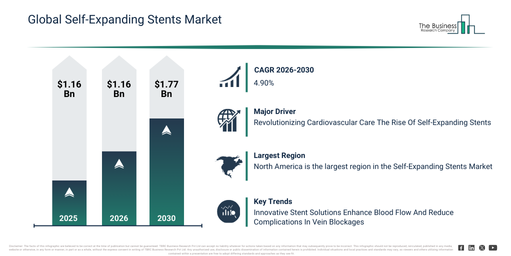
    The self-expanding stents market size has witnessed robust growth in recent years. It is anticipated to increase from $3.49 billion in 2025 to $3.69 billion in 2026, achieving a compound annual growth rate (CAGR) of 5.8%. The historical expansion of this market can be attributed to factors such as a rising incidence of cardiovascular diseases, the expansion of interventional cardiology procedures, advancements in stent materials, the growing adoption of endovascular therapies, and increasing volumes in hospital catheterization labs.

    The market for self-expanding stents is anticipated to experience consistent expansion in the upcoming years. This sector is projected to reach a valuation of $4.47 billion by 2030, exhibiting a compound annual growth rate (CAGR) of 4.9%. This expansion throughout the forecast period stems from factors such as a heightened demand for minimally invasive treatment options, enhanced management of peripheral artery disease, a stronger emphasis on long-lasting vascular implants, the growing integration of advanced stent technologies, and increased healthcare funding directed towards interventional devices. Key trends anticipated during this period involve a greater uptake of nitinol-based stent designs, an escalating need for minimally invasive vascular procedures, the expanded application of self-expanding stents in peripheral interventions, the broadening of drug-compatible stent platforms, and a more concentrated effort on ensuring long-term vessel patency.

    Get A Free Sample Report With In-Depth Market Insights:

    https://thebusinessresearchcompany.com/sample_request?id=25145249&type=smp&name=Self-Expanding%20Stents%20Market%20Report%202026&utm_source=Blogs&utm_medium=Paid&utm_campaign=Oct_PR

    Self-Expanding Stents Market Growth Drivers: What’s Behind The Acceleration?

    The increasing prevalence of cardiovascular diseases is projected to drive the expansion of the self-expanding stents market in the future. These conditions are characterized by abnormalities of the heart and blood vessels, with their rising occurrence linked to obesity, an aging population, and genetic predispositions. Self-expanding stents prove beneficial in treating cardiovascular disorders, offering effective and minimally invasive therapeutic alternatives for both urgent and long-term patient needs. For instance, in January 2024, the American Heart Association, a US-based non-profit organization, reported that the age-adjusted death rate from cardiovascular disease increased to 233.3 per 100,000 in 2024, marking a 4.0% increase from 224.4 per 100,000 in 2023. Hence, the rising incidence of cardiovascular diseases is a primary catalyst for the growth of the self-expanding stents market.

    Self-Expanding Stents Market Segments: Where Is Growth Concentrated?

    The self-expanding stents market covered in this report is segmented –

    1) By Product Type: Gastrointestinal Self-Expanding Stents, Carotid Self-Expanding Stents, Endovascular Self-Expandable Stents, Other Product Types

    2) By Applications: Fem-Pop Artery Stents, Iliac Artery Stents, Carotid Artery Stents, Biliary Stents, Other Applications

    3) By End-Users: Hospitals, Ambulatory Surgical Centers, Other End-Users

    Subsegments:

    1) By Gastrointestinal Self-Expanding Stents: Esophageal Stents, Duodenal Stents, Colonic Stents

    2) By Carotid Self-Expanding Stents: Proximal Protection Carotid Stents, Self-Expanding Carotid Stents

    3) By Endovascular Self-Expandable Stents: Aortic Stents, Renal Artery Stents, Peripheral Artery Stents

    4) By Other Product Types: Biliary Self-Expanding Stents, Urological Self-Expanding Stents

    Self-Expanding Stents Market Trends: What’s Defining The Industry’s Next Phase?

    Major companies within the self-expanding stent market are focusing on developing innovative solutions, including drug-eluting and bioresorbable stents, to improve the openness of blood vessels, reduce the recurrence of narrowing, and enhance patient outcomes. Drug-eluting stents work by slowly releasing medication to prevent arteries from re-narrowing, while bioresorbable stents are designed to dissolve naturally over time after maintaining vessel patency. For instance, in June 2024, Koninklijke Philips N.V., a Netherlands-based health technology company, launched the Duo Venous Stent System in the U.S. This system is designed to treat patients with blockages in their veins, specifically addressing symptomatic venous outflow obstruction in individuals with chronic venous insufficiency (CVI). These systems incorporate two types of self-expanding stents—Duo Hybrid and Duo Extend—which are engineered to restore blood flow in blocked veins by offering flexibility, strength, and resistance to compression and vessel curvature. The aim is to improve venous outflow in patients with chronic venous insufficiency, concurrently minimizing the risks of stent fracture and corrosion.

    Self-Expanding Stents Market Competitive Landscape: Which Companies Lead The Industry?

    Major companies operating in the self-expanding stents market are Abbott Laboratories, Medtronic PLC, Boston Scientific Corporation, Becton Dickinson And Company (BD Interventional), Terumo Corporation, Phenox GmbH, Balton Sp. z o.o., Biotronik SE And Co. KG, Merit Medical Systems Inc., Aesculap AG, MicroVention Inc., Lifetech Scientific Corporation, Cordis Corporation, Rontis Corporation, Veryan Medical Ltd., Andramed GmbH, Medinol Ltd., iVascular SLU, HEXACATH SAS, Eucatech AG, Endospan Ltd., Endo-Flex GmbH, Endocor GmbH

    View The Full Self-Expanding Stents Market Report:

    https://thebusinessresearchcompany.com/report/self-expanding-stents-global-market-report?utm_source=Blogs&utm_medium=Paid&utm_campaign=Oct_PR

    Self-Expanding Stents Market Regional Breakdown: Where Is Demand Concentrated?

    North America was the largest region in the self-expanding stents market in 2025. Asia-Pacific is expected to be the fastest-growing region in the forecast period. The regions covered in the self-expanding stents market report are Asia-Pacific, South East Asia, Western Europe, Eastern Europe, North America, South America, Middle East, Africa.

    Reach Out To Our Team:

    The Business Research Company: https://www.thebusinessresearchcompany.com/

    Americas: +1 310-496-7795

    Asia: +44 7882 955267 & +91 8897263534

    Europe: +44 7882 955267

    Email us at: marketing@tbrc.info

    Follow us on:

    LinkedIn: https://in.linkedin.com/company/the-business-research-company

    YouTube: https://www.youtube.com/channel/UC24_fI0rV8cR5DxlCpgmyFQ

    Global Market Model: https://www.thebusinessresearchcompany.com/global-market-model
  • Sedimentation Centrifuge Market Forecast To Reach $8.47 Billion By 2030: Key Trends Explained

    Sedimentation Centrifuge Market Forecast To Reach $8.47 Billion By 2030: Key Trends Explained

    Backed by market attractiveness analysis, total addressable market sizing, company benchmarking matrices, interactive Excel dashboards, wider supply chain intelligence, emerging startup coverage, and detailed product-level insights, The Business Research Company’s 2026 market reports are designed to offer research that is more actionable and strategically valuable than ever.

    Sedimentation Centrifuge Market Value Analysis: What Growth Lies Ahead Over The Forecast Period?

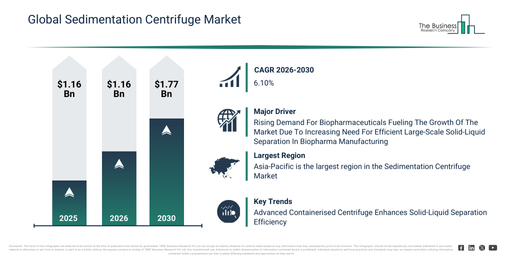
    The sedimentation centrifuge market has experienced robust expansion in recent years. It is projected to grow from $6.28 billion in 2025 to $6.69 billion in 2026, achieving a compound annual growth rate (CAGR) of 6.4%. This historical growth can be attributed to the industrialization of chemical processing, increasing mining activities, the expansion of pharmaceutical manufacturing, a heightened demand for solid-liquid separation, and advancements in high-speed centrifuges.

    The sedimentation centrifuge market size is projected to experience substantial expansion in the coming years. This market is anticipated to reach $8.47 billion by 2030, exhibiting a compound annual growth rate (CAGR) of 6.1%. Key factors contributing to this anticipated growth include increased wastewater reuse initiatives, more stringent environmental regulations, a surge in biopharmaceutical production, the need for high-throughput processing, and the modernization of industrial facilities. Prominent developments expected during this forecast period encompass a rising demand for continuous operation centrifuges, their expanded application in wastewater treatment, a preference for energy-efficient separation systems, an increase in customized industrial centrifuges, and broader adoption in process optimization applications.

    Get A Free Sample Report With In-Depth Market Insights:

    https://thebusinessresearchcompany.com/sample_request?id=81034296&type=smp&name=Sedimentation%20Centrifuge%20Market%20Report%202026&utm_source=Blogs&utm_medium=Paid&utm_campaign=Oct_PR

    Sedimentation Centrifuge Market Growth Factors Behind Sustained Expansion

    The increasing need for biopharmaceuticals is projected to boost the expansion of the sedimentation centrifuge market in the coming years. Biopharmaceuticals are therapeutic items created through biological means or biotechnological processes, as opposed to conventional chemical synthesis. This heightened demand for biopharmaceuticals stems from the growing occurrence of long-term and intricate illnesses, which necessitates sophisticated, targeted treatments that conventional medications cannot adequately address. The expanding requirement for biopharmaceuticals increases the application of sedimentation centrifuges, as they are essential for effective solid-liquid separation in large-scale manufacturing. These centrifuges enhance operational speed, guarantee uniform product excellence, and facilitate sterile production, thereby enabling dependable and scalable biopharma activities. For example, in June 2025, data from the Centers for Medicare & Medicaid Services (CMS), a US-based federal agency, showed that spending on prescription drugs climbed 11.4% in 2023, reaching $449.7 billion, an acceleration from the 7.8% increase observed in 2022. Consequently, the surging demand for biopharmaceuticals is fueling the expansion of the sedimentation centrifuge market.

    Sedimentation Centrifuge Market Segment Analysis: What Are The Core Market Categories?

    The sedimentation centrifuge market covered in this report is segmented –

    1) By Type: Decanter Centrifuges, Disc Stack Centrifuges, Other Types

    2) By Design: Horizontal Centrifuges, Vertical Centrifuges

    3) By Operation Mode: Batch, Continuous

    4) By End Use: Pharmaceutical, Chemical And Petrochemical, Food And Beverage, Water And Wastewater Treatment, Metal And Mining, Other End Users

    Subsegments:

    1) By Decanter Centrifuges: Horizontal Decanter Centrifuges, Vertical Decanter Centrifuges, High-Performance Decanter Centrifuges

    2) By Disc Stack Centrifuges: Continuous Disc Stack Centrifuges, Batch Disc Stack Centrifuges, High-Speed Disc Stack Centrifuges

    3) By Other Types: Tubular Centrifuges, Batch Centrifuges, Separators

    Sedimentation Centrifuge Market Industry Trends Fueling Future Revenue Growth

    Leading companies in the sedimentation centrifuge market are prioritizing the creation of advanced products, including containerised decanter centrifuges, to boost separation effectiveness, decrease expenditures, and permit adaptable implementation. A containerised decanter centrifuge represents an entire centrifuge system pre-assembled inside a standard shipping container, which allows for swift deployment and mobility. For instance, in March 2025, Multotec Group Limited, a South Africa-based mineral processing and industrial equipment company, unveiled the TS 530L Tailings Decanter Centrifuge. This advanced system is designed to continuously separate fine solids from a liquid phase utilizing centrifugal forces, thereby enabling high-throughput processing while curtailing operational downtime and installation needs.

    Sedimentation Centrifuge Market Competitive Landscape: Who Leads The Industry?

    Major companies operating in the sedimentation centrifuge market are Thermo Fisher Scientific Inc., Danaher Corporation, Siemens Healthineers AG, KUBOTA Corporation, Andritz AG, GEA Group AG, Alfa Laval AB, VWR International LLC, Beckman Coulter Inc., Biobase Group, Multotec Group, Flottweg SE, Mitsubishi Kakoki Kaisha Ltd., Mclanahan Corporation, Helmer Scientific Inc., Centrifuges Unlimited Inc, Hitachi Koki Co. Ltd., Labnet International Inc., Sigma Laboratory Centrifuges, Andreas Hettich GmbH And Co.KG, Witeg Labortechnik GmbH, Schuett Biotec GmbH, LW Scientific Inc., Centurion Scientific Ltd., Scilogex LLC, Thomas Broadbent And Sons Ltd.

    View The Full Sedimentation Centrifuge Market Report:

    https://thebusinessresearchcompany.com/report/sedimentation-centrifuge-global-market-report?utm_source=Blogs&utm_medium=Paid&utm_campaign=Oct_PR

    Sedimentation Centrifuge Market Geographic Landscape: Which Region Dominates Industry Growth?

    Asia-Pacific was the largest region in the sedimentation centrifuge market in 2025. The regions covered in the sedimentation centrifuge market report are Asia-Pacific, South East Asia, Western Europe, Eastern Europe, North America, South America, Middle East, Africa.

    Reach Out To Our Team:

    The Business Research Company: https://www.thebusinessresearchcompany.com/

    Americas: +1 310-496-7795

    Asia: +44 7882 955267 & +91 8897263534

    Europe: +44 7882 955267

    Email us at: marketing@tbrc.info

    Follow us on:

    LinkedIn: https://in.linkedin.com/company/the-business-research-company

    YouTube: https://www.youtube.com/channel/UC24_fI0rV8cR5DxlCpgmyFQ

    Global Market Model: https://www.thebusinessresearchcompany.com/global-market-model
  • Second Skin Dressing Market Analysis: Understanding The Drivers Behind 8.3% CAGR Through 2030 Growth

    Second Skin Dressing Market Analysis: Understanding The Drivers Behind 8.3% CAGR Through 2030 Growth

    Featuring market attractiveness scoring, total addressable market sizing, company benchmarking matrices, interactive Excel dashboards, deeper supply chain intelligence, emerging startup tracking, and granular product-level insights, The Business Research Company’s 2026 market reports are built to deliver research that is both more actionable and more strategically valuable.

    Second Skin Dressing Market Size Forecast: How Big Could The Market Get By 2030?

    The second skin dressing market has experienced significant expansion recently. The market is projected to expand from $2.56 billion in 2025 to reach $2.77 billion in 2026, exhibiting a compound annual growth rate (CAGR) of 8.6%. Historically, this growth has been driven by factors such as an increase in surgical procedures, a rise in burn incidents, established hospital wound care protocols, the integration of moisture healing methods, and the broadening of emergency care services.

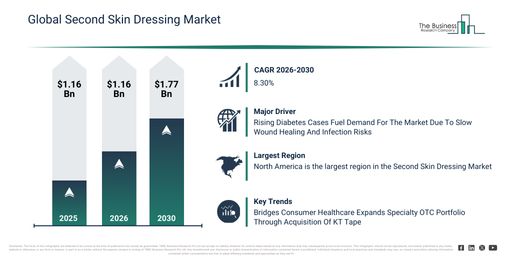
    The second skin dressing market is anticipated to show considerable growth over the next few years. It is projected to expand to $3.82 billion by 2030, achieving a compound annual growth rate (CAGR) of 8.3%. This expected growth during the forecast period can be attributed to an increase in chronic wound incidents, the rising adoption of homecare wound management, advancements in biocompatible materials, an aging global population, and the widening reach of online pharmacies. Noteworthy trends for the forecast period encompass advanced wound protection solutions, the development of transparent and breathable dressings, dressings focused on infection prevention, long-wear flexible dressings, and technologies designed for scar minimization.

    Get A Free Sample Report With In-Depth Market Insights:

    https://thebusinessresearchcompany.com/sample_request?id=25496216&type=smp&name=Second%20Skin%20Dressing%20Market%20Report%202026&utm_source=Blogs&utm_medium=Paid&utm_campaign=Oct_PR

    Second Skin Dressing Market Demand Drivers Opening New Revenue Streams

    The increasing occurrence of diabetes is projected to boost the expansion of the second skin dressing market in the future. Diabetes is a chronic ailment marked by elevated blood sugar levels, stemming from the body’s inability to either produce or effectively utilize insulin. The rise in diabetes cases is predominantly linked to inactive lifestyles and unhealthy eating habits, leading to obesity and resistance to insulin. Second skin dressings benefit individuals with diabetes by offering wound protection, fostering a conducive moist environment for healing, and diminishing infection risks, which is crucial given that diabetic patients often experience delayed wound recovery. For instance, in March 2024, data from the Office for Health Improvement & Disparities, a UK-based government department, indicated that between March 2022 and March 2023, the proportion of people with type 1 diabetes receiving all eight recommended care processes rose by 22%, and for type 2 diabetes, it saw a 21% increase, concurrently, the percentage reaching target HbA1c levels climbed to 37.9%, representing the highest figure ever recorded by the National Diabetes Audit (NDA). Consequently, the growing incidence of diabetes is propelling the second skin dressing market’s development.

    Second Skin Dressing Market Driver: Rising Healthcare Spending Driving The Market Growth Due To Increasing Affordability And Adoption Of Advanced Wound Care Solutions

    Second Skin Dressing Market Segment Breakdown: Which Categories Lead On Revenue?

    The second skin dressing market covered in this report is segmented –

    1) By Product Type: Hydrocolloid Dressings, Hydrogel Dressings, Film Dressings

    2) By Distribution Channel: Hospital Pharmacies, Retail Pharmacies, Online Pharmacies, Other Distribution Channels

    3) By Application: Chronic Wounds, Acute Wounds, Surgical Wounds, Burns, Other Applications

    4) By End-User: Hospitals, Clinics, Homecare Settings, Other End-Users

    Subsegments:

    1) By Hydrocolloid Dressings: Thin Hydrocolloid, Extra-Thin Hydrocolloid

    2) By Hydrogel Dressings: Sheet Hydrogel, Amorphous Hydrogel, Impregnated Hydrogel

    3) By Film Dressings: Transparent Film, Semi-Permeable Film, Adhesive Film

    Second Skin Dressing Market Trends Powering Strategic Industry Growth

    Leading companies in the second skin dressing market are concentrating on developing innovative solutions, such as advanced plasters, to enhance wound recovery, improve patient comfort, and reduce the likelihood of infections and scarring. These next-generation plasters are modern wound dressings designed to closely mimic natural skin, offering features like flexibility, transparency, breathability, and controlled drug delivery to promote quicker and more effective healing. For instance, in January 2025, Beiersdorf AG, a Germany-based manufacturing company, introduced a Second Skin Protection plaster aimed at providing superior wound coverage and accelerated healing. This product incorporates advanced hydrocolloid technology to absorb wound fluid and create a moist healing environment, thereby encouraging faster and better-quality healing while minimizing infection risk and scarring. It is notably ultra-thin, flexible, and 100% waterproof, ensuring a strong hold and comfort even on challenging areas like knees and elbows. Its objective is to offer a professional-grade treatment for everyday minor wounds, educating users about the advantages of modern wound care and dispelling outdated myths about the healing process.

    Second Skin Dressing Market Company Landscape And Competitive Strategy

    Major companies operating in the second skin dressing market are Cardinal Health Inc., Avery Dennison Corporation, Nitto Denko Corporation, Smith & Nephew plc, Coloplast A/S, Hartmann Group, ConvaTec Group PLC, Integra LifeSciences, DeRoyal Industries Inc., Winner Medical Co. Ltd., Scapa Healthcare, DermaRite Industries LLC, Anhui Jinye Industrial Co. Ltd., ACTO GmbH, Beiersdorf AG, Advancis Medical, Amparo Medical Technologies Inc., Gujarat Healthcare, Jiangsu WLD Medical Co. Ltd., Wuhan Huawei Technology Co. Ltd., Yangzhou Goldenwell Import & Export Co. Ltd., Zhejiang Bangli Medical Products Co. Ltd.

    View The Full Second Skin Dressing Market Report:

    https://thebusinessresearchcompany.com/report/second-skin-dressing-global-market-report?utm_source=Blogs&utm_medium=Paid&utm_campaign=Oct_PR

    Second Skin Dressing Market Largest Region: Which Geography Holds The Highest Market Share?

    North America was the largest region in the second skin dressing market in 2025. Asia-Pacific is expected to be the fastest-growing region in the forecast period. The regions covered in the second skin dressing market report are Asia-Pacific, South East Asia, Western Europe, Eastern Europe, North America, South America, Middle East, Africa.

    Reach Out To Our Team:

    The Business Research Company: https://www.thebusinessresearchcompany.com/

    Americas: +1 310-496-7795

    Asia: +44 7882 955267 & +91 8897263534

    Europe: +44 7882 955267

    Email us at: marketing@tbrc.info

    Follow us on:

    LinkedIn: https://in.linkedin.com/company/the-business-research-company

    YouTube: https://www.youtube.com/channel/UC24_fI0rV8cR5DxlCpgmyFQ

    Global Market Model: https://www.thebusinessresearchcompany.com/global-market-model
  • Scientific Instruments Market Growth To $62.24 Billion By 2030: What’s Driving The Expansion?

    Scientific Instruments Market Growth To $62.24 Billion By 2030: What’s Driving The Expansion?

    Built to provide research that’s more actionable and strategically valuable, The Business Research Company’s 2026 market reports include market attractiveness analysis, total addressable market sizing, company benchmarking matrices, interactive Excel dashboards, broader supply chain intelligence, emerging startup tracking, and in-depth product insights.

    Scientific Instruments Market Revenue Outlook: What CAGR Lies Ahead Through 2030?

    The scientific instruments market has experienced substantial growth over recent years. It is projected to expand from $44.64 billion in 2025 to $47.62 billion in 2026, achieving a compound annual growth rate (CAGR) of 6.7%. Historically, this market expansion can be attributed to the broadening of scientific research activities, increased pharmaceutical R&D spending, a growing need for advanced diagnostic solutions, the implementation of modern laboratory infrastructure, and rising financial commitments to academic research facilities.

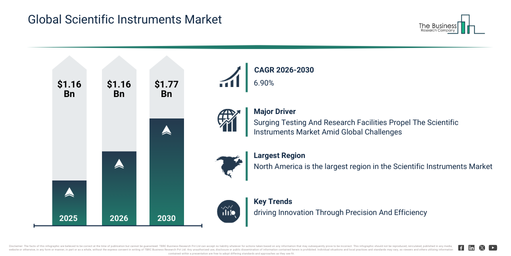
    The scientific instruments market is anticipated to show robust expansion in the coming years, with its size expected to reach $62.24 billion in 2030, exhibiting a compound annual growth rate (CAGR) of 6.9%. This projected growth throughout the forecast period can be attributed to an increased focus on precision medicine research, the rising adoption of smart laboratories, expanded funding for life science research, a growing demand for high-throughput analytical tools, and the increasing integration of digital laboratory ecosystems. Significant trends for this period include the rising adoption of AI-enabled analytical instruments, increased integration of automated laboratory systems, a growing demand for high-precision measurement tools, the expansion of advanced imaging technologies, and an enhanced focus on data-driven research platforms.

    Get A Free Sample Report With In-Depth Market Insights:

    https://thebusinessresearchcompany.com/sample_request?id=51347206&type=smp&name=Scientific%20Instruments%20Market%20Report%202026&utm_source=Blogs&utm_medium=Paid&utm_campaign=Oct_PR

    Scientific Instruments Market Growth Backed By Core Demand Fundamentals

    The expansion of testing and research facilities is a primary factor propelling the scientific instruments market. There has been a swift rise in these testing and research facilities, largely due to the pervasive virus and the intensified efforts to mitigate its subsequent effects. These facilities inherently require scientific instruments to perform accurate testing and formulate viable solutions. For instance, in April 2025, the Office for National Statistics, a UK-based government agency, reported that the UK government’s net expenditure on research and development (R&D) escalated from USD 20.4 billion (£16.1 billion) in 2022 to USD 22 billion (£17.4 billion) in 2023, marking an 8.2% increase. Consequently, the growth in testing and research facilities is a key driver for the scientific instruments market.

    Scientific Instruments Market Segmentation: How Does The Market Break Down By Category?

    The scientific instruments market covered in this report is segmented –

    1) By Type: Clinical Analyzers, Analytical Instruments

    2) By Application: Research, Clinical And Diagnostics, Other Applications

    3) By End User: Hospitals And Diagnostic Laboratories, Pharmaceutical And Biotechnology Companies, Other End-Users

    Subsegments:

    1) By Clinical Analyzers: Hematology Analyzers, Biochemistry Analyzers, Immunoassay Analyzers

    2) By Analytical Instruments: Chromatography Instruments, Spectroscopy Instruments, Mass Spectrometry Instruments

    Scientific Instruments Market Growth Trends Reshaping The Competitive Landscape

    Leading companies within the scientific instruments market are prioritizing the integration of artificial intelligence (AI)-driven monitoring and low dispersion nebulizer nozzle technology to elevate sensitivity, robustness, and operational efficiency. Low dispersion nebulizer nozzles are specialized components of electrospray ionization sources that produce finer, more consistent droplets while reducing nebulizer gas consumption, thereby enhancing ion intake efficiency. For instance, in August 2025, Shimadzu Scientific Instruments, a US based analytical instrumentation company, unveiled the LCMS 8065XE triple quadrupole mass spectrometer. This next generation analytical instrument is engineered to provide world class sensitivity, long term stability, and energy efficient performance, featuring streamfocus ionization technology, automated tuning and system monitoring intelligence through Performance Concierge, and an Ecology Mode designed to reduce power consumption. The LCMS 8065XE thereby improves analytical performance, uptime, and operational cost efficiency.

    Scientific Instruments Market Key Players Shaping Industry Direction

    Major companies operating in the scientific instruments market are Thermo Fisher Scientific Inc., Agilent Technologies Inc., Bruker Corporation, Danaher Corporation, Waters Corporation, Horiba Limited, PerkinElmer Inc., Carl Zeiss AG, Shimadzu Corporation, Mettler-Toledo International Inc., Oxford Instruments PLC, Eppendorf AG, JEOL Ltd., Hitachi High-Technologies Corporation, Malvern Panalytical GmbH, Bio-Rad Laboratories Inc., Sartorius AG, Hamilton Company, The Merck Group, Becton Dickinson and Company, Illumina Inc., Bio-Techne Corporation

    View The Full Scientific Instruments Market Report:

    https://thebusinessresearchcompany.com/report/scientific-instruments-global-market-report?utm_source=Blogs&utm_medium=Paid&utm_campaign=Oct_PR

    Scientific Instruments Market Regional Analysis: Which Region Leads By Revenue?

    North America was the largest region in the scientific instruments market in 2025. Asia-Pacific is expected to be the fastest-growing region in the forecast period. The regions covered in the scientific instruments market report are Asia-Pacific, South East Asia, Western Europe, Eastern Europe, North America, South America, Middle East, Africa.

    Reach Out To Our Team:

    The Business Research Company: https://www.thebusinessresearchcompany.com/

    Americas: +1 310-496-7795

    Asia: +44 7882 955267 & +91 8897263534

    Europe: +44 7882 955267

    Email us at: marketing@tbrc.info

    Follow us on:

    LinkedIn: https://in.linkedin.com/company/the-business-research-company

    YouTube: https://www.youtube.com/channel/UC24_fI0rV8cR5DxlCpgmyFQ

    Global Market Model: https://www.thebusinessresearchcompany.com/global-market-model