Category: Medical Equipment

  • Global Cryo-Electron Microscopy Market Overview: Trends Shaping Growth to 2029

    Global Cryo-Electron Microscopy Market Overview: Trends Shaping Growth to 2029

    Unlock Global Insights – Save 20% on Market Reports with Code ONLINE20

    What Is The Expected Total Market Size Of The Cryo-Electron Microscopy Industry By The Forecast Year 2029?

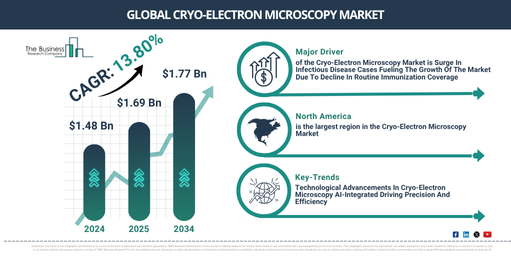
    The cryo-electron microscopy market has seen significant expansion in recent years. It is anticipated to increase from $1.48 billion in 2024 to $1.69 billion in 2025, exhibiting a compound annual growth rate (CAGR) of 14.0%. This past growth can be attributed to a rising need for high-resolution imaging in structural biology, continuous improvements in electron microscopy hardware, an increase in studies related to infectious diseases and virology, greater integration into academic and research bodies, and the limitations inherent in traditional microscopy methods.

    The cryo-electron microscopy market is projected to experience substantial expansion over the next few years, set to reach $2.84 billion by 2029, exhibiting a compound annual growth rate (CAGR) of 13.8%. This anticipated growth can be linked to the increasing use of cryo-EM technology in drug discovery, greater investment in life sciences and biotechnology research, progress in automation and image processing, the provision of advanced structural insights, and its widening application in clinical diagnostics. Significant trends for the upcoming period are expected to feature the integration of artificial intelligence with cryo-EM technology, the development of miniaturized and portable cryo-EM systems, a transition towards cloud-based platforms for cryo-EM data analysis, advancements in high-resolution imaging technologies, and the creation of hybrid imaging systems.

    Unlock Your Free Sample Report for Exclusive Market Data:

    https://www.thebusinessresearchcompany.com/sample.aspx?id=25731&type=smp

    Which Drivers Are Supporting Growth Of The Cryo-Electron Microscopy Market?

    The rising occurrence of infectious diseases is anticipated to boost the cryo-electron microscopy market’s expansion in the future. These disorders are characterized by their causation from pathogenic microorganisms like bacteria, viruses, fungi, or parasites, with examples such as malaria capable of spreading through direct or indirect means. The heightened prevalence is a result of swift urbanization, contributing to greater population density and close human interaction, which aids the transmission of infections. Cryo-electron microscopy significantly assists infectious disease research through its capacity for high-resolution visualization of viruses, bacteria, and host-pathogen interactions in conditions close to their natural state. This capability helps in quickly identifying viral structures, comprehending infection mechanisms, and accelerating the creation of antivirals and vaccines. For example, data from November 2023, published by the Switzerland-based intergovernmental World Health Organization, indicated approximately 249 million malaria cases worldwide in 2022, representing an increment of 5 million cases (2%) from 2021 figures. Consequently, the expanding occurrence of infectious diseases is a key factor propelling the growth of the cryo-electron microscopy market.

    Which Key Segments Fueling The Cryo-Electron Microscopy Market?

    The cryo-electron microscopy market covered in this report is segmented –

    1) By Product: Instruments, Fully Automated Instruments, Semi-Automated Instruments, Software, Services

    2) By Nano Formulations: Lipid Nanoparticle Formulations (LNFS), Metal Oxide Formulations, Metal Formulations, Other NanoForms

    3) By Technology: Electron Crystallography, Single Particle Analysis, Cryo-Electron Tomography, Other Technologies

    4) By Application: Life Science Research And Academia, Cancer Research, Omics Research, Pharma And Biotech Manufacturing, Cell And Gene Therapy, Vaccines, Preclinical And Clinical Research, Healthcare Or Medical Applications, Disease Diagnosis And Pathology

    5) By End-User: Research Laboratories And Institutes, Forensic And Diagnostic Laboratories, Pharmaceutical And Biotechnology Companies, Contract Research Organization, Other End-Users

    Subsegments:

    1) By Instruments, Electron Microscopes: Sample Preparation Equipment, Detectors And Cameras, Cryo-Transfer Holders

    2) By Fully Automated Instruments: Automated Sample Loading Systems, Automated Data Acquisition Systems, Automated Imaging Systems

    3) By Semi-Automated Instruments: Semi-Automated Sample Preparation Systems, Semi-Automated Imaging Systems, Semi-Automated Data Processing Units

    4) By Software: Image Analysis Software, 3D Reconstruction Software, Data Processing Software, Workflow Management Software

    4) By Services: Sample Preparation Services, Data Analysis Services, Training And Support Services, Maintenance And Repair Services

    What Are The Latest Industry Trends Transforming The Cryo-Electron Microscopy Market?

    Leading companies active in the cryo-electron microscopy market are prioritizing technological advancements, such as artificial intelligence (AI)-integrated cryo-transmission electron microscope (cryo-TEM) systems. Their aim is to enhance image processing, automate data acquisition, improve resolution, and accelerate the 3D reconstruction of biomolecular structures. AI-integrated cryo-TEM systems are sophisticated transmission electron microscopes that merge artificial intelligence with high-resolution optics to refine sample targeting, minimize user variability, and expedite data acquisition. For instance, in April 2025, Thermo Fisher Scientific, a US-based provider of scientific instruments and laboratory equipment, unveiled the Thermo Scientific Krios 5 Cryo-TEM. This next-generation atomic-resolution platform leverages enhanced optics and AI-enabled automation. The Thermo Scientific Krios 5 Cryo-TEM offers distinct features including advanced automated data collection, improved sample throughput, and high-resolution imaging capabilities, enabling researchers to visualize molecular and cellular structures with remarkable clarity. Furthermore, it incorporates enhanced stability and automation, thereby reducing manual intervention and increasing productivity for high-volume cryo-EM workflows.

    Which Leading Companies Dominate The Cryo-Electron Microscopy Market Share?

    Major companies operating in the cryo-electron microscopy market are Hitachi High-Tech Corporation , Thermo Fisher Scientific Inc., Danaher Corporation, Charles River Laboratories International Inc., Intertek Group plc, Bruker Corporation, Carl Zeiss AG, Japan Electron Optics Laboratory Ltd., Leica Microsystems GmbH, Gatan Inc., Oxford Instruments plc, Rigaku Corporation, TESCAN ORSAY HOLDING a.s., Nanoscience Instruments Inc., Protochips Inc., E.A. Fischione Instruments Inc., NanoImaging Services Inc., DENSsolutions B.V., Direct Electron LP, Hummingbird Scientific LLC

    Download The Full Report For Exclusive Market Findings:

    https://www.thebusinessresearchcompany.com/report/cryo-electron-microscopy-global-market-report

    Which Region Currently Holds The Largest Share Of The Cryo-Electron Microscopy Market?

    North America was the largest region in the cryo-electron microscopy market in 2024. Asia-Pacific is expected to be the fastest-growing region in the forecast period. The regions covered in the cryo-electron microscopy market report are Asia-Pacific, Western Europe, Eastern Europe, North America, South America, Middle East, Africa.

    Request A Customized Version Of The Cryo-Electron Microscopy Market Report:

    https://www.thebusinessresearchcompany.com/customise?id=25731&type=smp

    Browse Through More Reports Similar to the Global Cryo-Electron Microscopy Market 2025, By The Business Research Company

    Electron Microscope Global Market Report 2025

    https://www.thebusinessresearchcompany.com/report/electron-microscope-global-market-report

    Electron Microscopy And Sample Preparation Global Market Report 2025

    https://www.thebusinessresearchcompany.com/report/electron-microscopy-and-sample-preparation-global-market-report

    Cryoablation Devices Global Market Report 2025

    https://www.thebusinessresearchcompany.com/report/cryoablation-devices-global-market-report

    Get in touch with us:

    The Business Research Company: https://www.thebusinessresearchcompany.com/

    Americas +1 310-496-7795

    Asia +44 7882 955267 & +91 8897263534

    Europe +44 7882 955267

    Email us at info@tbrc.info

    Follow us on:

    LinkedIn: https://in.linkedin.com/company/the-business-research-company

    YouTube: https://www.youtube.com/channel/UC24_fI0rV8cR5DxlCpgmyFQ

    Global Market Model: https://www.thebusinessresearchcompany.com/global-market-model
  • Continuous Bladder Irrigation Devices Market Expansion Outlook: $1.77 Billion by 2029 Forecast

    Continuous Bladder Irrigation Devices Market Expansion Outlook: $1.77 Billion by 2029 Forecast

    Unlock Global Insights – Save 20% on Market Reports with Code ONLINE20

    What Is The Predicted Market Size Trajectory For The Continuous Bladder Irrigation Devices Market From 2025 To 2034?

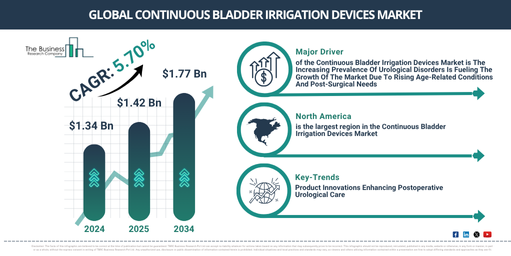
    The continuous bladder irrigation devices market has demonstrated robust growth in recent years. It is projected to expand from $1.34 billion in 2024 to $1.42 billion in 2025, registering a compound annual growth rate (CAGR) of 6.0%. This historical growth can be attributed to factors such as the increasing prevalence of urological disorders, a rising geriatric patient population, an increase in prostate cancer cases, growing demand for postoperative care, and increasing adoption within hospitals.

    The continuous bladder irrigation devices market is anticipated to experience robust expansion in the coming years, with its size projected to reach $1.77 billion by 2029, demonstrating a compound annual growth rate (CAGR) of 5.7%. This expected growth throughout the forecast period is primarily driven by an increase in urinary retention treatments, greater awareness of urology health, a rising incidence of hematuria, an amplified focus on patient comfort, and the growing adoption of minimally invasive procedures. Significant trends influencing the market during this period include advancements in automated irrigation systems, the integration of real-time monitoring sensors, technology aimed at enhancing infection control, ongoing developments in catheter material coatings, and improvements in closed-system irrigation.

    Unlock Your Free Sample Report for Exclusive Market Data:

    https://www.thebusinessresearchcompany.com/sample.aspx?id=25729&type=smp

    What Are The Drivers Pushing New Developments In The Continuous Bladder Irrigation Devices Market?

    The expanding occurrence of urological disorders is projected to boost the growth of the continuous bladder irrigation devices market moving forward. Urological disorders are medical conditions that impact the urinary system or male reproductive organs. Their rise is primarily linked to an aging population, as age-related changes elevate the likelihood of developing urinary and prostate issues. Continuous bladder irrigation (CBI) devices assist in managing these conditions by constantly flushing the bladder to eliminate clots, debris, or infections. This action helps prevent catheter blockages and promotes recovery, particularly after surgical interventions. For example, in March 2023, the Government of Canada, a government department based in Canada, indicated that an estimated 12,500 new cases of bladder cancer were reported in Canada in 2022, alongside approximately 2,600 related deaths, demonstrating the significant impact of this disease that year. Consequently, the rising prevalence of urological disorders is a key factor propelling the continuous bladder irrigation devices market.

    What Are The Major Segments Identified In The Continuous Bladder Irrigation Devices Market?

    The continuous bladder irrigation devices market covered in this report is segmented –

    1) By Product: Foley 3 Way Catheters, Accessories, Irrigation Bags

    2) By Application: Post-Surgical Irrigation, Bladder Cancer Management, Hemorrhagic Cystitis, Urinary Tract Infections, Trauma And Urinary Retention, Home-Based Irrigation

    3) By End-Use: Hospitals, Long Term Care Facilities, Other End-Uses

    Subsegments:

    1) By Foley 3 Way Catheters: Silicone 3-Way Foley Catheters, Latex 3-Way Foley Catheters, Antimicrobial-Coated Foley Catheters, Pediatric 3-Way Foley Catheters, Temperature Sensing Foley Catheters

    2) By Accessories: Catheter Connectors, Catheter Stabilization Devices, Leg Drainage Bags, Extension Tubing, Clamps And Valves

    3) By Irrigation Bags: Sterile Irrigation Bags, Non-Sterile Irrigation Bags, Pressure Irrigation Bags, Manual Irrigation Bags, Refillable Irrigation Bags

    How Are Emerging Market Trends Shaping The Continuous Bladder Irrigation Devices Industry Landscape?

    Leading companies in the continuous bladder irrigation (CBI) devices market are prioritizing the development of sophisticated products, including those for postoperative care, to enhance urological procedures. Postoperative care items are medical supplies and equipment utilized to aid healing, prevent infections, and alleviate pain after surgery, ensuring a successful recovery. For instance, in January 2025, UNOQUIP GmbH, a medical device company based in Switzerland, announced the integration of new postoperative catheter solutions into its existing product line. These additions comprise two distinct catheters, namely the Hematuria Management Catheter and the 3-Way Silicone Foley Catheter, both engineered to facilitate effective continuous bladder irrigation subsequent to urological operations. These new products demonstrate Uno Medical’s commitment to elevating patient safety and comfort by addressing clinical challenges like clot retention and ensuring optimal bladder drainage. This expansion of their product range bolsters their position within the CBI devices segment, enabling the company to better equip global healthcare providers with advanced urological care options.

    Which Global Market Leaders Are Shaping The Future Of The Continuous Bladder Irrigation Devices Sector?

    Major companies operating in the continuous bladder irrigation devices market are Cardinal Health Inc., Medline Industries LP, Coloplast A/S, Teleflex Incorporated, Cook Medical LLC, Hollister Incorporated, B. Braun Melsungen AG, Poly Medicure Limited, Angiplast Pvt. Ltd., Sterimed Group, Narang Medical Limited, Pocket Nurse Enterprises Inc., Advin Health Care, AdvaCare Pharma, Ribbel International Ltd., UROMED Kurt Drews KG, Multiphze LLC, Romsons Group of Industries, GCMEDICA, Medilivescare Manufacturing Pvt. Ltd., CODAN Companies.

    Download The Full Report For Exclusive Market Findings:

    https://www.thebusinessresearchcompany.com/report/continuous-bladder-irrigation-devices-global-market-report

    Which Regional Markets Are Contributing Most To The Continuous Bladder Irrigation Devices Industry Expansion?

    North America was the largest region in the continuous bladder irrigation devices market in 2024. The regions covered in the continuous bladder irrigation devices market report are Asia-Pacific, Western Europe, Eastern Europe, North America, South America, Middle East, Africa.

    Request A Customized Version Of The Continuous Bladder Irrigation Devices Market Report:

    https://www.thebusinessresearchcompany.com/customise?id=25729&type=smp

    Browse Through More Reports Similar to the Global Continuous Bladder Irrigation Devices Market 2025, By The Business Research Company

    Irrigation Equipment Global Market Report 2025

    https://www.thebusinessresearchcompany.com/report/irrigation-equipment-global-market-report

    Drip Irrigation Global Market Report 2025

    https://www.thebusinessresearchcompany.com/report/drip-irrigation-global-market-report

    Precision Irrigation Global Market Report 2025

    https://www.thebusinessresearchcompany.com/report/precision-irrigation-global-market-report

    Get in touch with us:

    The Business Research Company: https://www.thebusinessresearchcompany.com/

    Americas +1 310-496-7795

    Asia +44 7882 955267 & +91 8897263534

    Europe +44 7882 955267

    Email us at info@tbrc.info

    Follow us on:

    LinkedIn: https://in.linkedin.com/company/the-business-research-company

    YouTube: https://www.youtube.com/channel/UC24_fI0rV8cR5DxlCpgmyFQ

    Global Market Model: https://www.thebusinessresearchcompany.com/global-market-model
  • Global Connected Wearable Patches Market Size Projected to Reach $10.78 Billion During the Forecast Period

    Global Connected Wearable Patches Market Size Projected to Reach $10.78 Billion During the Forecast Period

    Unlock Global Insights – Save 20% on Market Reports with Code ONLINE20

    What Is The Anticipated Size Of The Connected Wearable Patches Market Over The Five-Year Period 2025–2029?

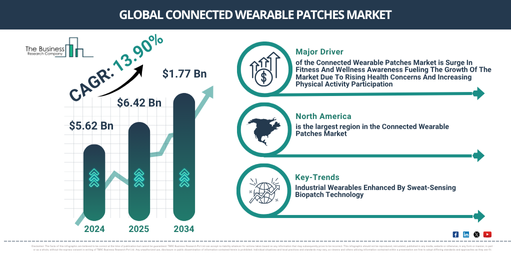
    The connected wearable patches market has seen rapid expansion in recent years. Its value is expected to climb from $5.62 billion in 2024 to $6.42 billion in 2025, exhibiting a compound annual growth rate (CAGR) of 14.1%. This past growth can be attributed to factors such as the increasing adoption of remote patient monitoring, a rising prevalence of chronic diseases, an increased demand for real-time health data, the growing use of smartphones and Bluetooth-enabled devices, enhanced healthcare digitization, and the integration of telehealth.

    The connected wearable patches market size is anticipated to undergo significant expansion over the next few years. It is projected to reach $10.78 billion by 2029, demonstrating a compound annual growth rate (CAGR) of 13.9%. This projected growth can be attributed to several factors such as the increasing integration of AI and IoT in healthcare, a rising focus on personalized medicine, growing investments in wearable health tech startups, an expanding elderly population requiring continuous monitoring, and the increasing acceptance of preventive healthcare solutions. Prominent trends expected during this forecast period include advancements in sensor miniaturization, the use of advanced data analytics for health insights, innovations in battery and energy harvesting technologies, integration with telehealth platforms, and the incorporation of cloud-based health data storage.

    Unlock Your Free Sample Report for Exclusive Market Data:

    https://www.thebusinessresearchcompany.com/sample.aspx?id=25725&type=smp

    What Are The Top Growth Drivers Impacting The Connected Wearable Patches Market Outlook?

    The heightened emphasis on fitness and wellness is anticipated to propel the expansion of the connected wearable patches market going forward. This awareness encompasses the understanding of the significance of regular physical activity and healthy lifestyle habits for overall well-being. The rise in fitness and wellness consciousness is attributed to increasing concerns about chronic diseases, motivating individuals to embrace healthier lifestyles for improved long-term health. Connected wearable patches contribute to boosting this awareness by consistently monitoring vital health metrics, offering real-time feedback, and encouraging users to stay active and maintain healthier habits. For instance, in May 2022, a survey study involving 1,005 American adults aged 18–80 and adult Gen Z consumers ages 18–24, conducted by the International Food Information Council, a US-based non-profit organization, indicated that around 52% of participants reported following a specific diet or eating pattern, an increase from 39% in 2021. The most frequently adopted strategies were clean eating (16%), mindful eating (14%), and calorie counting (13%). Therefore, the increasing fitness and wellness awareness is driving the growth of the connected wearable patches market.

    How Is The Connected Wearable Patches Market Segmented?

    The connected wearable patches market covered in this report is segmented –

    1) By Type: Glucose Monitoring Patches, Cardiac Monitoring Patches, Electromyography (EMG) Patches, Transdermal Drug Delivery Patches, Electroencephalography (EEG) Patches, Other Types

    2) By Sensor Technology: Electrocardiography (ECG), Photoplethysmography (PPG), Accelerometry, Gyroscope, Temperature Sensing

    3) By Distribution Channel: Online Stores, Pharmacies, Specialty Stores, Other Distribution Channels

    4) By Application: Remote Patient Monitoring, Fitness And Wellness Monitoring, Drug Delivery, Sports And Performance Monitoring, Other Applications

    5) By End User: Hospitals, Home Care, Fitness Centers, Research Institutions, Other End-Users

    Subsegments:

    1) By Glucose Monitoring Patches: Continuous Glucose Monitoring (CGM) Patches, Flash Glucose Monitoring (FGM) Patches, Non-Invasive Glucose Monitoring Patches, Adhesive Enzyme-Based Glucose Patches

    2) By Cardiac Monitoring Patches: Electrocardiography Monitoring Patches, Arrhythmia Detection Patches, Remote Cardiac Telemetry Patches, Holter Monitoring Patches

    3) By Electromyography (EMG) Patches: Surface Electromyography Patches, Wireless Electromyography Sensor Patches, Multi-channel Electromyography Patches, Rehabilitation Monitoring Electromyography Patches

    4) By Transdermal Drug Delivery Patches: Nicotine Delivery Patches, Hormone Replacement Therapy (HRT) Patches, Pain Management Patches (e.g., Fentanyl), Neurological Drug Delivery Patches, Anti-hypertensive Patches

    5) By Electroencephalography (EEG) Patches: Sleep Monitoring Electroencephalography Patches, Seizure Detection Electroencephalography Patches, Brain-Computer Interface (BCI) Patches, Cognitive Performance Monitoring Patches

    6) By Other Types: Hydration Monitoring Patches, Temperature Monitoring Patches, Sweat Analysis Patches, Oxygen Saturation (SpO2) Monitoring Patches, Respiratory Rate Monitoring Patches

    Which Trends Are Impacting The Connected Wearable Patches Market?

    Major companies engaged in the connected wearable patches market are prioritizing advanced technologies like sweat-sensing biopatch platforms to offer real-time, personalized hydration insights for industrial personnel. A sweat-sensing biopatch system integrates various biosensors to detect fluid and electrolyte loss, body temperature, and movement patterns instantaneously, enabling effective hydration and heat stress prevention. For instance, in April 2024, Epicore Biosystems, a US-based digital health firm, unveiled Connected Hydration along with a mobile application. This innovative wearable patch system is engineered to assist industrial workers in preventing dehydration and heat-related injuries through continuous data feedback. The sophisticated solution features a flexible, non-rechargeable biopatch offering a 1,000-hour battery life, provides immediate dehydration alerts via haptic feedback, and includes a mobile application for tracking fluid intake and biometric patterns. Its durable construction is certified for hazardous environments and incorporates machine learning developed from over 420,000 field data points.

    Which Major Firms Are Strengthening Their Position In The Connected Wearable Patches Industry?

    Major companies operating in the connected wearable patches market are Abbott Laboratories, Medtronic plc, Koninklijke Philips N.V., GE HealthCare Technologies Inc., Boston Scientific Corporation, STMicroelectronics N.V., ZOLL Medical Corporation, Dexcom Inc., Insulet Corporation, MicroPort Scientific Corporation, iRhythm Technologies Inc., Linxens Holding SAS, Biotricity Inc., Blue Spark Technologies Inc., Epicore Biosystems Inc., Cardiac Insight Inc., Delsys Incorporated, G-Tech Medical Inc., Leaf Healthcare Inc., VivaLNK Inc.

    Download The Full Report For Exclusive Market Findings:

    https://www.thebusinessresearchcompany.com/report/connected-wearable-patches-global-market-report

    What Are The Regional Market Dynamics Impacting The Connected Wearable Patches Industry?

    North America was the largest region in the connected wearable patches market in 2024. Asia-Pacific is expected to be the fastest-growing region in the forecast period. The regions covered in the connected wearable patches market report are Asia-Pacific, Western Europe, Eastern Europe, North America, South America, Middle East, Africa.

    Request A Customized Version Of The Connected Wearable Patches Market Report:

    https://www.thebusinessresearchcompany.com/customise?id=25725&type=smp

    Browse Through More Reports Similar to the Global Connected Wearable Patches Market 2025, By The Business Research Company

    Electronic Skin Patch Global Market Report 2025

    https://www.thebusinessresearchcompany.com/report/electronic-skin-patch-global-market-report

    Wearable Computing Global Market Report 2025

    https://www.thebusinessresearchcompany.com/report/wearable-computing-global-market-report

    Smart Wearables Global Market Report 2025

    https://www.thebusinessresearchcompany.com/report/smart-wearables-global-market-report

    Get in touch with us:

    The Business Research Company: https://www.thebusinessresearchcompany.com/

    Americas +1 310-496-7795

    Asia +44 7882 955267 & +91 8897263534

    Europe +44 7882 955267

    Email us at info@tbrc.info

    Follow us on:

    LinkedIn: https://in.linkedin.com/company/the-business-research-company

    YouTube: https://www.youtube.com/channel/UC24_fI0rV8cR5DxlCpgmyFQ

    Global Market Model: https://www.thebusinessresearchcompany.com/global-market-model
  • Global Low Vision Electronic Visual Aids Market Trends and Growth Analysis 2025–2029

    Global Low Vision Electronic Visual Aids Market Trends and Growth Analysis 2025–2029

    Unlock Global Insights – Save 20% on Market Reports with Code ONLINE20

    What Is The Anticipated Size Of The Low Vision Electronic Visual Aids Market Over The Five-Year Period 2025–2029?

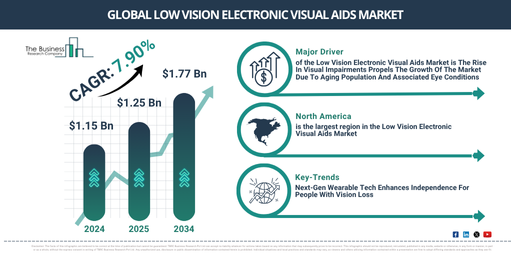
    The low vision electronic visual aids market has experienced robust expansion in recent years. It is projected to increase from $1.15 billion in 2024 to $1.25 billion by 2025, achieving a compound annual growth rate (CAGR) of 8.2%. This historical growth can be attributed to several factors, including increasing awareness regarding vision impairment, a growing elderly population, a rising prevalence of chronic eye disorders, improved access to eye care in urban areas, the growing adoption of electronic magnifiers, and increased funding for low vision research.

    The low vision electronic visual aids market is projected for significant expansion over the coming years. It is anticipated to reach $1.69 billion by 2029, exhibiting a compound annual growth rate (CAGR) of 7.9%. This growth during the forecast period is propelled by factors such as the expanding application of smart technology in assistive devices, a rising need for wearable vision enhancement solutions, the increasing prevalence of diabetes and hypertension, a greater inclination towards home-based healthcare services, and the uptick in online sales of assistive devices. Key trends anticipated for this period encompass the development of customizable user interfaces, the integration of smart device ecosystems, advancements in augmented reality applications, innovations in multi-sensory feedback systems, and the creation of personalized training algorithms.

    Unlock Your Free Sample Report for Exclusive Market Data:

    https://www.thebusinessresearchcompany.com/sample.aspx?id=25815&type=smp

    Which Drivers Are Impacting The Low Vision Electronic Visual Aids Market?

    An increasing number of individuals experiencing visual impairments is anticipated to fuel the expansion of the low vision electronic visual aids market in the future. Visual impairments are defined as various forms of vision loss not entirely correctable with conventional eyeglasses, contact lenses, medical treatments, or surgical procedures, thus impacting an individual’s clear vision. This rise in visual impairment cases is largely attributed to the demographic shift towards an older population, given that age-associated eye conditions like macular degeneration, cataracts, and glaucoma occur more frequently as people age. Low-vision electronic visual aids assist those with visual impairments by improving their residual sight via magnification, contrast modification, and digital image processing, thereby fostering increased autonomy in everyday tasks. As an illustration, the World Health Organization, a specialized agency of the United Nations based in Switzerland, reported in August 2023 that at least 2.2 billion individuals worldwide suffer from near or distance vision impairment. Nevertheless, estimates show that only 36% of individuals with distance vision impairment stemming from refractive errors and merely 17% of those with vision impairment caused by cataracts have accessed suitable treatment. Consequently, the increasing incidence of visual impairments is a key factor propelling the expansion of the low vision electronic visual aids market.

    Which Key Segments Fueling The Low Vision Electronic Visual Aids Market?

    The low vision electronic visual aids market covered in this report is segmented –

    1) By Type: Portable Electronic Magnifiers, Closed Circuit Television, Voice Readers, Other Types

    2) By Technology: Optical Devices, Electronic Magnifiers, Text-to-Speech Devices, Speech Recognition Systems

    3) By Application: Reading Assistance, Navigation Assistance, Social Interaction And Communication, Entertainment

    4) By Distribution Channel: Online Retail, Specialty Stores, Optical Stores, Other Distribution Channels

    5) By End-User: Individuals, Hospitals And Clinics, Rehabilitation Centers, Educational Institutions

    Subsegments:

    1) By Portable Electronic Magnifiers: Handheld Magnifiers, Stand Magnifiers, Wearable Magnifiers, Digital Magnifier Tablets

    2) By Closed Circuit Television: Desktop Closed Circuit Television Systems, Transportable Closed Circuit Television Systems, Wearable Closed Circuit Television Devices, Closed Circuit Television With Text-To-Speech Integration

    3) By Voice Readers: Screen Readers, Book Readers, Optical Character Recognition-Based Readers, Smart Audio Assistants For Reading

    4) By Other Types: Braille Notetakers, Smart Glasses, Screen Magnification Software, Navigation Aids

    What Long-Term Trends Will Shape The Future Growth Of The Low Vision Electronic Visual Aids Industry?

    Key companies in the low vision electronic visual aids market are prioritizing the development of innovative solutions, such as artificial intelligence-powered wearable smart glasses, to improve real-time visual interpretation and user independence. Artificial intelligence-powered wearable smart glasses are advanced electronic visual aids that utilize AI-driven image processing, object recognition, and voice output to enable individuals with low vision to perceive and interact with their environment more effectively. For instance, in August 2024, Eyedaptic Inc., a US-based medical technology company, introduced EYE6 with Ivy, a next-generation wearable visual assistant specifically designed for individuals with age-related macular degeneration and other retinal disorders. These lightweight smart glasses integrate advanced vision enhancement with an AI-powered assistant named Ivy. It offers capabilities such as reading text, identifying objects, describing surroundings, and supporting users in 99 languages to foster greater independence. Boasting full HD 1080p displays, hands-free voice control, and remote upgrade features, the EYE6 delivers a fluid, customizable user experience for people with low vision conditions.

    Which Leading Companies Dominate The Low Vision Electronic Visual Aids Market Share?

    Major companies operating in the low vision electronic visual aids market are Rehan Electronics Co. Ltd., Eschenbach Optik GmbH, Vispero, HumanWare Group, Freedom Scientific Inc., IrisVision Global Inc., VisionAid International Ltd., Zoomax Technology Co. Ltd., HIMS Inc., LS And S Products Inc., SHG Technologies LLC, Clarity Vision Limited, CTECH Low Vision And Blindness Solutions, Low Vision International AB, NuEyes Technologies Inc., Optelec U.S. Inc., Reinecker Vision GmbH, Quantum Reading Learning Vision, Optima Low Vision Services LTD, OrCam Technologies Ltd.

    Download The Full Report For Exclusive Market Findings:

    https://www.thebusinessresearchcompany.com/report/low-vision-electronic-visual-aids-global-market-report

    Which Region Shows The Highest Potential For Future Expansion In The Low Vision Electronic Visual Aids Market?

    North America was the largest region in the low vision electronic visual aids market in 2024. Asia-Pacific is expected to be the fastest-growing region in the forecast period. The regions covered in the low vision electronic visual aids market report are Asia-Pacific, Western Europe, Eastern Europe, North America, South America, Middle East, Africa.

    Request A Customized Version Of The Low Vision Electronic Visual Aids Market Report:

    https://www.thebusinessresearchcompany.com/customise?id=25815&type=smp

    Browse Through More Reports Similar to the Global Low Vision Electronic Visual Aids Market 2025, By The Business Research Company

    Vision Care Devices And Equipment Global Market Report 2025

    https://www.thebusinessresearchcompany.com/report/vision-care-devices-and-equipment-global-market-report

    Night Vision Devices Global Market Report 2025

    https://www.thebusinessresearchcompany.com/report/night-vision-devices-global-market-report

    Assistive Technologies For Visually Impaired Global Market Report 2025

    https://www.thebusinessresearchcompany.com/report/assistive-technologies-for-visually-impaired-global-market-report

    Get in touch with us:

    The Business Research Company: https://www.thebusinessresearchcompany.com/

    Americas +1 310-496-7795

    Asia +44 7882 955267 & +91 8897263534

    Europe +44 7882 955267

    Email us at info@tbrc.info

    Follow us on:

    LinkedIn: https://in.linkedin.com/company/the-business-research-company

    YouTube: https://www.youtube.com/channel/UC24_fI0rV8cR5DxlCpgmyFQ

    Global Market Model: https://www.thebusinessresearchcompany.com/global-market-model

  • Low Vision Electronic Glasses Market Forecast: What to Expect by 2029

    Low Vision Electronic Glasses Market Forecast: What to Expect by 2029

    Unlock Global Insights – Save 20% on Market Reports with Code ONLINE20

    What Are The Forecasted Market Size Estimates For The Low Vision Electronic Glasses Market Between 2025 And 2029?

    The low vision electronic glasses market size has experienced swift expansion in recent years. It is anticipated to expand from $0.87 billion in 2024 to $0.97 billion in 2025, registering a compound annual growth rate (CAGR) of 11.6%. The market’s growth during the preceding period can be linked to the increasing prevalence of age-related macular degeneration, the growing incidence of diabetic retinopathy, a rise in awareness regarding assistive vision technologies, increased government backing for disability aids, and an expanding array of vision rehabilitation programs.

    The low vision electronic glasses market size is projected to undergo rapid expansion in the coming years, reaching $1.50 billion by 2029, demonstrating a compound annual growth rate (CAGR) of 11.4%. This growth during the forecast period is attributed to the increasing adoption of smart wearables in healthcare, greater availability of low-cost electronic glasses, a heightened focus on inclusive and assistive technology policies, rising demand for hands-free assistive solutions, and the growing accessibility of assistive devices through e-commerce and online channels. Prominent trends for this period include technological shifts towards lightweight, wearable designs, the evolution of customized vision enhancement algorithms, the development of multi-sensory feedback systems, the integration of voice-control interfaces, and innovations in real-time text-to-speech conversion.

    Unlock Your Free Sample Report for Exclusive Market Data:

    https://www.thebusinessresearchcompany.com/sample.aspx?id=25814&type=smp

    Which Industry Drivers Are Expected To Accelerate The Low Vision Electronic Glasses Market From 2025 To 2029?

    The low vision electronic glasses market is expected to grow due to the increasing prevalence of visual impairments. Visual impairments refer to a significant loss of vision that cannot be fully corrected with glasses, contact lenses, medication, or surgery, impacting a person’s ability to perform everyday tasks. The rising occurrence of visual impairments is primarily attributed to aging populations, as the risk of eye conditions such as cataracts, glaucoma, and macular degeneration increases significantly with age. Low-vision electronic glasses aid individuals with visual impairments by enhancing remaining vision through magnification, contrast adjustment, and real-time image processing, thereby enabling greater independence in daily activities. For instance, in August 2023, according to the World Health Organization, a Switzerland-based specialized agency of the United Nations for health, globally, at least 2.2 billion people have a near or distance vision impairment. However, it is estimated that only 36% of people with distance vision impairment caused by refractive errors and just 17% of those with vision impairment due to cataracts have received appropriate treatment. Therefore, the increasing prevalence of visual impairments is driving the growth of the low vision electronic glasses market.

    How Is The Low Vision Electronic Glasses Market Classified Into Different Segments?

    The low vision electronic glasses market covered in this report is segmented –

    1) By Product Type: Wearable Glasses, Smart Glasses, Augmented Reality Glasses, Night Vision Glasses

    2) By Technology: Optical Technology, Digital Technology, Adaptive Technology, Artificial Intelligence Integrated Technology

    3) By Application: Personal Use, Professional Use

    4) By Distribution Channel: Online Retail, Offline Retail, Direct Sales, Healthcare Providers

    5) By End-User: Individuals With Visual Impairments, Healthcare Institutions, Educational Institutions, Occupational Rehabilitation Centers

    Subsegments:

    1) By Wearable Glasses: Head-Mounted Low Vision Glasses, Clip-on Assistive Glasses, Full-Frame Digital Glasses

    2) By Smart Glasses: Voice-Controlled Smart Glasses, Bluetooth-Enabled Visual Aid Glasses, Integrated Camera Smart Glasses

    3) By Augmented Reality Glasses: Augmented Reality Glasses For Object Recognition, Augmented Reality Navigation Assistance Glasses, Augmented Reality Text-to-Speech Glasses

    4) By Night Vision Glasses: Infrared-Based Vision Glasses, Thermal Imaging Glasses for Low Vision, Low-Light Enhancement Glasses

    Which Market Trends Are Creating New Opportunities In The Low Vision Electronic Glasses Industry?

    Leading companies within the low vision electronic glasses market are concentrating on creating inventive solutions, including artificial intelligence-powered smart glasses, aimed at improving visual clarity and fostering independence for those with visual impairments. These artificial intelligence-powered smart glasses function as wearable technology, leveraging AI to boost vision through object identification, audible text reading, and instantaneous image adjustments, thereby aiding individuals with visual impairments. An example of this innovation is Eyedaptic Inc., a US-based vision technology company, which introduced its EYE6 smart glasses in August 2024, an advanced wearable designed to assist people experiencing central vision loss. The EYE6 smart glasses integrate augmented reality with AI-powered vision enhancement, providing instant image optimization that improves both visual clarity and contrast for the wearer. Key attributes of these glasses encompass a lightweight and inconspicuous design, hands-free operation, a visual assistant capable of supporting 99 languages, alongside functionalities like text interpretation, environmental descriptions, and support for routine daily tasks.

    Who Are The Major Companies Operating In The Low Vision Electronic Glasses Market?

    Major companies operating in the low vision electronic glasses market are Eschenbach Optik GmbH, OrCam Technologies Ltd., Soliddd Corp., Enhanced Vision Systems Inc., Vuzix Corporation, Zoomax Technology Co. Ltd., IrisVision Global Inc., Acesight, Ceciaa SAS, Envision Technologies BV, Everysight Ltd, Eyedaptic Inc., GiveVision Ltd., NuEyes Technologies Inc., OXSIGHT Ltd., Second Sight Medical Products Inc., SHG Technologies LLC, Vision Buddy Inc., VisionAid Technologies Ltd., LS And S LLC.

    Download The Full Report For Exclusive Market Findings:

    https://www.thebusinessresearchcompany.com/report/low-vision-electronic-glasses-global-market-report

    How Is Low Vision Electronic Glasses Market Demand Varying Across Different Regions?

    North America was the largest region in the low vision electronic glasses market in 2024. Asia-Pacific is expected to be the fastest-growing region in the forecast period. The regions covered in the low vision electronic glasses market report are Asia-Pacific, Western Europe, Eastern Europe, North America, South America, Middle East, Africa.

    Request A Customized Version Of The Low Vision Electronic Glasses Market Report:

    https://www.thebusinessresearchcompany.com/customise?id=25814&type=smp

    Browse Through More Reports Similar to the Global Low Vision Electronic Glasses Market 2025, By The Business Research Company

    Ar And Vr Smart Glasses Global Market Report 2025

    https://www.thebusinessresearchcompany.com/report/ar-and-vr-smart-glasses-global-market-report

    Advanced Glass Global Market Report 2025

    https://www.thebusinessresearchcompany.com/report/advanced-glass-global-market-report

    Smart Glass Global Market Report 2025

    https://www.thebusinessresearchcompany.com/report/smart-glass-global-market-report

    Get in touch with us:

    The Business Research Company: https://www.thebusinessresearchcompany.com/

    Americas +1 310-496-7795

    Asia +44 7882 955267 & +91 8897263534

    Europe +44 7882 955267

    Email us at info@tbrc.info

    Follow us on:

    LinkedIn: https://in.linkedin.com/company/the-business-research-company

    YouTube: https://www.youtube.com/channel/UC24_fI0rV8cR5DxlCpgmyFQ

    Global Market Model: https://www.thebusinessresearchcompany.com/global-market-model
  • Low Vision Assistive Devices Industry Insights: Market Forecast to 2029

    Low Vision Assistive Devices Industry Insights: Market Forecast to 2029

    Unlock Global Insights – Save 20% on Market Reports with Code ONLINE20

    How Is The Low Vision Assistive Devices Market Size Likely To Evolve From 2025 Through 2034?

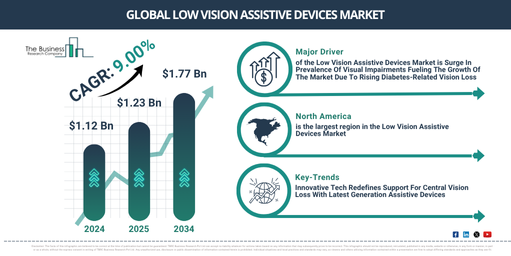
    The low vision assistive devices market has experienced substantial growth in recent years. It is projected to expand from $1.12 billion in 2024 to $1.23 billion by 2025, achieving a compound annual growth rate (CAGR) of 9.3%. This historic development can be attributed to the increasing prevalence of vision impairment, a burgeoning aging population, the heightened demand for independent living aids, rising awareness about assistive technologies, and an increase in government initiatives supporting disability.

    The low vision assistive devices market size is poised for robust expansion over the coming years. It is projected to reach $1.73 billion by 2029, growing at a compound annual growth rate (CAGR) of 9.0%. This anticipated growth during the forecast period stems from the increasing adoption of smart and AI-enabled assistive devices, rising healthcare expenditure dedicated to vision care, the expanding accessibility of assistive technology in developing markets, a growing prevalence of chronic eye disorders, and an increased emphasis on personalized and home-based vision solutions. Significant trends for the forecast period include innovations in wearable low-vision technology, advancements in portable electronic magnifiers, the incorporation of artificial intelligence into vision aids, improvements in smartphone-based assistive applications, and the integration of IoT with low-vision devices.

    Unlock Your Free Sample Report for Exclusive Market Data:

    https://www.thebusinessresearchcompany.com/sample.aspx?id=25813&type=smp

    What Are The Top Growth Drivers Impacting The Low Vision Assistive Devices Market Outlook?

    The low vision assistive devices market is anticipated to expand in the future, driven by the escalating occurrence of visual impairments. These impairments encompass various forms of vision loss, ranging from partial sight to total blindness, which are not fully correctable by conventional eyewear. A key factor contributing to the increasing incidence of visual impairments is the rising number of diabetes diagnoses, given that diabetes frequently results in retinal damage and progressive vision loss. Low-vision assistive devices are crucial in managing visual impairments by amplifying residual vision, facilitating everyday tasks, and boosting autonomy and life quality for those with low vision. For example, in February 2025, Developing Australia Communities, an Australia-based organization dedicated to supporting the disability sector, cited Vision Australia’s report that 453,000 Australians live with blindness or low vision, a number expected to climb to 564,000 by 2030. Consequently, the expanding prevalence of visual impairments serves as a significant impetus for the growth of the low vision assistive devices market.

    What Are The Major Segments Identified In The Low Vision Assistive Devices Market?

    The low vision assistive devices market covered in this report is segmented –

    1) By Product Type: Magnifiers, Reading Devices, Wearable Devices, Screen Readers, Other Product Types

    2) By Application: Education, Healthcare, Personal Use

    3) By Distribution Channel: Online Stores, Specialty Stores, Optical Stores, Other Distribution Channels

    4) By End-User: Children, Adults, Elderly

    Subsegments:

    1) By Magnifiers: Handheld Magnifiers, Stand Magnifiers, Electronic Magnifiers, Pocket Magnifiers

    2) By Reading Devices: Optical Character Recognition (OCR) Devices, Text-To-Speech Devices, Desktop Video Magnifiers, Portable Reading Machines

    3) By Wearable Devices: Smart Glasses, Head-Mounted Displays (HMDs), Augmented Reality (AR)-Based Devices, Camera-Based Wearable Systems

    4) By Screen Readers: Software-Based Screen Readers, Web-Based Screen Readers, Mobile Screen Readers, Braille Display Integrated Readers

    5) By Other Product Types: Braille Embossers, Tactile Graphics Devices, Speech-To-Text Converters, Audio Books And E-Readers

    How Are Trends Influencing The Low Vision Assistive Devices Market?

    Leading companies within the **low vision assistive devices market** are concentrating on cutting-edge technologies, including next-generation blind assistive devices, to enhance visual clarity, autonomy, and movement for those experiencing central vision impairment. These advanced blind assistive devices integrate high-resolution imaging, real-time image processing, and wearable organic light-emitting diode (OLED) display systems. They project enhanced visuals that integrate smoothly with the user’s existing vision, all while maintaining peripheral awareness. For example, in **July 2025**, **eSight**, an assistive technology firm headquartered in **Canada**, introduced its **eSight Go** wearable device. This device incorporates a **12-megapixel** camera with **4K** resolution, dual full high definition (**HD**) organic light emitting diode (**OLED**) screens, and an expansive **45-degree** field of view, collectively offering a natural and immersive visual experience. Further enhancements include advanced image stabilization, a more straightforward user interface, and a battery pack distributed around the neck for improved comfort during everyday use. Such next-generation assistive technologies are engineered to allow users to maintain full mobility and engage more comprehensively in daily activities, whether at school, work, home, or in social settings, thereby assisting individuals with over **20 different vision impairments** globally.

    Which Global Market Leaders Are Shaping The Future Of The Low Vision Assistive Devices Sector?

    Major companies operating in the low vision assistive devices market are HIMS Inc., OrCam Technologies Ltd., AudioEye Inc., HumanWare Group, Freedom Scientific Inc., eSight Corporation, IrisVision Global Inc., Zoomax Technology Co. Limited, Optelec U.S. Inc., Cobolt Systems Ltd., NuEyes Technologies Inc., Vision Buddy Inc., Acesight, Eyedaptic Inc., LVI Low Vision International AB, Reinecker Vision GmbH, Ash Technologies Ltd., RevoSight Inc., Joint Optical Reflective Display, Clarity.

    Download The Full Report For Exclusive Market Findings:

    https://www.thebusinessresearchcompany.com/report/low-vision-assistive-devices-global-market-report

    Which Geographies Are Emerging As Strong Markets For The Low Vision Assistive Devices Industry?

    North America was the largest region in the low vision assistive devices market in 2024. The regions covered in the low vision assistive devices market report are Asia-Pacific, Western Europe, Eastern Europe, North America, South America, Middle East, Africa.

    Request A Customized Version Of The Low Vision Assistive Devices Market Report:

    https://www.thebusinessresearchcompany.com/customise?id=25813&type=smp

    Browse Through More Reports Similar to the Global Low Vision Assistive Devices Market 2025, By The Business Research Company

    Vision Care Devices And Equipment Global Market Report 2025

    https://www.thebusinessresearchcompany.com/report/vision-care-devices-and-equipment-global-market-report

    Assistive Technologies For Visually Impaired Global Market Report 2025

    https://www.thebusinessresearchcompany.com/report/assistive-technologies-for-visually-impaired-global-market-report

    Night Vision Devices Global Market Report 2025

    https://www.thebusinessresearchcompany.com/report/night-vision-devices-global-market-report

    Get in touch with us:

    The Business Research Company: https://www.thebusinessresearchcompany.com/

    Americas +1 310-496-7795

    Asia +44 7882 955267 & +91 8897263534

    Europe +44 7882 955267

    Email us at info@tbrc.info

    Follow us on:

    LinkedIn: https://in.linkedin.com/company/the-business-research-company

    YouTube: https://www.youtube.com/channel/UC24_fI0rV8cR5DxlCpgmyFQ

    Global Market Model: https://www.thebusinessresearchcompany.com/global-market-model

  • Low Vision And Blind Aids Products Market Size and Growth Forecast for Businesses 2025–2029

    Low Vision And Blind Aids Products Market Size and Growth Forecast for Businesses 2025–2029

    Unlock Global Insights – Save 20% on Market Reports with Code ONLINE20

    What Are The Growth Projections For The Low Vision And Blind Aids Products Market Size During 2025–2029?

    The low vision and blind aids product market has seen rapid expansion in recent years. Its value is projected to increase from $3.00 billion in 2024 to $3.32 billion in 2025, exhibiting a compound annual growth rate (CAGR) of 10.7%. This historical growth can be attributed to several factors, including the increasing worldwide prevalence of age-related vision disorders, a rise in diabetes-induced visual impairment, the growing population of older adults, enhanced awareness concerning visual disabilities, and augmented support from government and non-profit organizations for disability services.

    The low vision and blind aids products market is projected to experience swift expansion over the coming years. By 2029, its value is anticipated to reach $4.95 billion, demonstrating a compound annual growth rate (CAGR) of 10.4%. This projected increase during the forecast timeframe stems from factors such as greater educational and professional integration for people with visual impairments, expanding healthcare spending in developing nations, established global disability rights structures, the proliferation of specialized training and support services, and an escalating need for digital accessibility adherence. Key developments anticipated within this period involve progress in artificial intelligence for recognizing objects and text, the adoption of wearable sensory navigation devices, the reduction in size of electronic assistive parts, the creation of user interfaces responsive to voice and touch, and the integration of cloud-based data syncing for accessibility aids.

    Unlock Your Free Sample Report for Exclusive Market Data:

    https://www.thebusinessresearchcompany.com/sample.aspx?id=25812&type=smp

    Which Major Market Drivers Are Shaping The Future Of The Low Vision And Blind Aids Products Market?

    The low vision and blind aids products market is anticipated to grow, primarily driven by the increasing occurrence of eye diseases. These disorders impact the eyes’ structure or function, potentially resulting in compromised vision or blindness. This increase in eye diseases is attributed to extensive screen time, which contributes to eye strain and the earlier development of visual problems. Such products help individuals with eye conditions by either enhancing their remaining vision or providing non-visual ways to access information. These aids are crucial for improving daily functions, mobility, and independence for those living with permanent vision impairment. As an illustration, in May 2024, the Centers for Disease Control and Prevention (CDC), a US-based federal agency, reported that over 90 million Americans over 40 are currently affected by vision problems. Furthermore, by 2050, vision impairment and blindness in the U.S. are forecasted to surge by 150%, with diabetic retinopathy cases increasing by 72%, cataracts by 87%, and both glaucoma and macular degeneration predicted to double. Consequently, the rising prevalence of eye diseases is a significant driver for the growth of the low vision and blind aid products market.

    What Are The Emerging Segments Gaining Attention In The Low Vision And Blind Aids Products Market?

    The low vision and blind aids products market covered in this report is segmented –

    1) By Product Type: Optical Aids, Non-Optical Aids, Electronic Aids, Assistive Software, Wearable Technology

    2) By Age Group: Children, Adults, Seniors, Teenagers, Middle-Aged

    3) By Distribution Channel: Online Stores, Retail Pharmacies, Supermarkets Or Hypermarkets, Specialty Stores, Direct Sales

    4) By Application: Blind School, Disabled Persons Federation And Hospital, Enterprises And Social Organizations

    5) By End-User: Individuals, Healthcare Professionals, Educational Institutions, Community Organizations, Government Agencies

    Subsegments:

    1) By Optical Aids: Magnifying Glasses, Telescopic Glasses, Spectacle-Mounted Magnifiers, Handheld Magnifiers, Stand Magnifiers

    2) By Non-Optical Aids: Braille Books, Large Print Materials, Tactile Graphics, Signature Guides, Writing Templates

    3) By Electronic Aids: Video Magnifiers, Digital Readers, Screen Enlargers, Electronic Braille Displays, Talking Devices

    4) By Assistive Software: Screen Readers, Screen Magnification Software, Text-To-Speech Software, Optical Character Recognition (OCR) Tools, Navigation And Mapping Software

    5) By Wearable Technology: Smart Glasses, Artificial Intelligence (AI)-Powered Vision Aids, Wearable Cameras, Voice-Enabled Smart Devices, Haptic Feedback Wearables

    What Key Innovation Trends Are Fueling Advancements In The Low Vision And Blind Aids Products Market?

    Leading firms within the low vision and blind aids products market are concentrating on creating sophisticated offerings, including AI-driven wearable vision aids, with the aim of enhancing the functional independence and overall quality of life for those impacted by retinal disorders and significant vision impairment. These AI-powered wearable vision aids are intelligent, head-worn devices that combine artificial intelligence with vision-enhancing technologies, enabling visually impaired people to better understand visual data, carry out daily activities, and move through their surroundings with increased autonomy. As an example, in August 2024, Eyedaptic, a vision-enhancement solutions provider based in the US, introduced EYE6 with Ivy, a novel AI-enabled visual assistant specifically designed for people experiencing age-related macular degeneration and other retinal conditions. The EYE6 incorporates cutting-edge multimodal generative artificial intelligence and large language model features to support users in tasks such as reading text, recognizing objects, and comprehending their environment in various situations across 99 languages. These lightweight smart glasses, specifically engineered for those with age-related macular degeneration and other retinal disorders, merge high-definition visual augmentation with an interactive AI assistant, thereby fostering enhanced independence and facilitating daily task management.

    Which Industry Leaders Are Driving Innovation Across The Low Vision And Blind Aids Products Market?

    Major companies operating in the low vision and blind aids products market are Eschenbach Optik GmbH, Tobii Dynavox, OrCam Inc., Perkins School for the Blind, Vispero, HumanWare, Freedom Scientific, MaxiAids, Enhanced Vision, Dolphin Computer Access, Zoomax, IRIS Vision, SELVAS Healthcare Inc., LS&S LLC, LVI Low Vision International, VisionAid, Eurobraille, HHW Care Products (India) Private Limited, Nippon Telesoft Co. Ltd., Help Tech GmbH & Co. KG

    Download The Full Report For Exclusive Market Findings:

    https://www.thebusinessresearchcompany.com/report/low-vision-and-blind-aids-products-global-market-report

    Which Region Is Projected To Lead The Low Vision And Blind Aids Products Market During The Forecast Period?

    North America was the largest region in the low vision and blind aids products market in 2024. Asia-Pacific is expected to be the fastest-growing region in the forecast period. The regions covered in the low vision and blind aids products market report are Asia-Pacific, Western Europe, Eastern Europe, North America, South America, Middle East, Africa.

    Request A Customized Version Of The Low Vision And Blind Aids Products Market Report:

    https://www.thebusinessresearchcompany.com/customise?id=25812&type=smp

    Browse Through More Reports Similar to the Global Low Vision And Blind Aids Products Market 2025, By The Business Research Company

    Vision Care Devices And Equipment Global Market Report 2025

    https://www.thebusinessresearchcompany.com/report/vision-care-devices-and-equipment-global-market-report

    Blind Spot Monitor Global Market Report 2025

    https://www.thebusinessresearchcompany.com/report/blind-spot-monitor-global-market-report

    Assistive Technologies For Visually Impaired Global Market Report 2025

    https://www.thebusinessresearchcompany.com/report/assistive-technologies-for-visually-impaired-global-market-report

    Get in touch with us:

    The Business Research Company: https://www.thebusinessresearchcompany.com/

    Americas +1 310-496-7795

    Asia +44 7882 955267 & +91 8897263534

    Europe +44 7882 955267

    Email us at info@tbrc.info

    Follow us on:

    LinkedIn: https://in.linkedin.com/company/the-business-research-company

    YouTube: https://www.youtube.com/channel/UC24_fI0rV8cR5DxlCpgmyFQ

    Global Market Model: https://www.thebusinessresearchcompany.com/global-market-model
  • Global Low Endotoxin Gelatin Market Overview: Trends Shaping Growth to 2029

    Global Low Endotoxin Gelatin Market Overview: Trends Shaping Growth to 2029

    Unlock Global Insights – Save 20% on Market Reports with Code ONLINE20

    What Is The Global Market Value Of The Low Endotoxin Gelatin Industry In 2025?

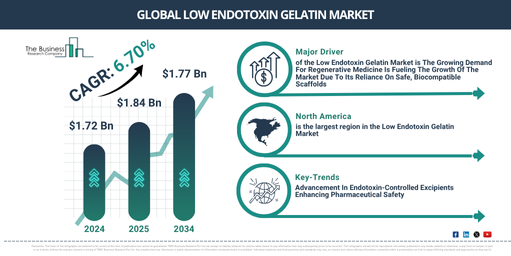
    The low endotoxin gelatin market has experienced significant expansion in recent years. Its value is expected to rise from $1.72 billion in 2024 to $1.84 billion in 2025, achieving a compound annual growth rate (CAGR) of 7.0%. The growth observed in the past can be attributed to the escalating demand for biocompatible materials in pharmaceuticals, the increasing utilization in vaccine and biologics manufacturing, growing concerns over endotoxin contamination, the expansion of gelatin purification processes, and a heightened regulatory focus on injectable-grade excipients.

    The low endotoxin gelatin market is projected to experience substantial expansion in the coming years. This market is anticipated to reach a valuation of $2.38 billion by 2029, exhibiting a compound annual growth rate (CAGR) of 6.7%. Key drivers for this growth during the forecast period include increased investment in biopharmaceutical research and development, wider acceptance of regenerative medicine and tissue engineering, a surge in demand for cell culture and 3D bioprinting uses, more stringent quality regulations for parenteral products, and an expanding preference for gelatin that is free from animal origins. Significant trends expected during this period involve the creation of recombinant and plant-derived low-endotoxin gelatin, its incorporation into sophisticated drug delivery systems, the embrace of personalized medicine formulations, heightened research and development endeavors, and the automation of endotoxin testing and quality control processes.

    Unlock Your Free Sample Report for Exclusive Market Data:

    https://www.thebusinessresearchcompany.com/sample.aspx?id=25811&type=smp

    What Are The Main Drivers Boosting The Low Endotoxin Gelatin Industry’s Expansion?

    The anticipated expansion of the low endotoxin gelatin market is linked to the increasing need for regenerative medicine. Specifically, regenerative medicine encompasses treatments designed to mend, substitute, or restore human cells, tissues, or organs, thereby re-establishing their proper functions. The escalating prevalence of chronic diseases is fueling this demand, as a greater number of individuals seek advanced therapies capable of regenerating compromised tissues and enhancing long-term health prospects. Low-endotoxin gelatin supports regenerative medicine by providing a secure, biocompatible framework that encourages cell proliferation and tissue regeneration while minimizing immune responses. Its inherent high purity renders it perfectly suited for delicate cell therapies and applications in tissue engineering. Illustratively, data from July 2023, sourced from the American Society of Gene & Cell Therapy (ASGCT), a US-based professional membership organization, and Citeline, a US-based provider of drugs and devices, indicated that 247 gene therapies were in Phase II at the close of quarter 1, 2023. This count subsequently rose by 5%, reaching 260 by the conclusion of quarter 2. Consequently, the expanding need for regenerative medicine is a key impetus behind the growth of the low endotoxin gelatin market.

    What Are The Major Segment Types Covered In The Low Endotoxin Gelatin Market?

    The low endotoxin gelatin market covered in this report is segmented –

    1) By Type: Type A (Acid Process Gelatin), Type B (Alkaline Process Gelatin)

    2) By Product Type: Porcine Gelatin, Bovine Gelatin, Fish Gelatin, Other Product Types

    3) By Formulation: Powder, Granules, Liquid, Sheet, Other Formulations

    4) By Application: Drug Delivery Systems, Tissue Engineering, Cell Culture, Stabilizing Agents, Thickening Agents

    5) By End-User: Pharmaceuticals, Biotechnology, Food And Beverage, Cosmetics, Research Laboratories

    Subsegments:

    1) By Type A (Acid Process Gelatin): Porcine Skin Gelatin, Fast Setting Gelatin, Low Bloom Gelatin, Pharmaceutical Grade Type A, Biotech Application Grade

    2) By Type B (Alkaline Process Gelatin): Bovine Hide Gelatin, High Bloom Gelatin, Slow Dissolving Gelatin, Injectable Grade Type B, Regenerative Medicine Grade

    Which Ongoing Trends Are Expected To Shape The Low Endotoxin Gelatin Market Outlook?

    Leading companies in the low endotoxin gelatin market are concentrating on developing advanced offerings like endotoxin-controlled excipients to boost the safety and effectiveness of pharmaceutical formulations. These highly refined ingredients are engineered to limit the presence of endotoxins in pharmaceutical preparations. They contribute to the safety and reliability of sensitive products, including injectables, biologics, and cell-based therapies. For instance, in January 2025, GELITA, a Germany-based manufacturer of gelatin and collagen peptides, launched VACCIPRO and MEDELLAPRO. These are extensively purified, medical-grade gelatins and collagen peptides intended for sophisticated bioscience applications such as vaccine stabilization, medical devices, and 3D bioprinting, all while complying with strict endotoxin control regulations to ensure product safety and patient well-being across pharmaceutical and healthcare sectors.

    Who Are The Key Multinational Companies Dominating The Low Endotoxin Gelatin Market?

    Major companies operating in the low endotoxin gelatin market are Nagase & Co. Ltd., Darling Ingredients, GELITA AG, PB Leiner, Nippi Inc., Nitta Gelatin Inc., Weishardt Group, Sterling Biotech Limited, Narmada Gelatines Ltd., Great Lakes Gelatin Company, Kenney & Ross Limited, Junca Gelatines SL, Trobas Gelatine BV, Lapi Gelatine S.p.a., Ewald-Gelatine GmbH, Niksan Pharmaceutical, Geltech, India Gelatine & Chemicals Ltd., Reinert Gruppe Ingredients GmbH, Jilin Tianzheng Biotechnology Co. Ltd., Yasin gelatin.

    Download The Full Report For Exclusive Market Findings:

    https://www.thebusinessresearchcompany.com/report/low-endotoxin-gelatin-global-market-report

    What Are The Key Regional Factors Influencing The Low Endotoxin Gelatin Market Growth?

    North America was the largest region in the low endotoxin gelatin market in 2024. Asia-Pacific is expected to be the fastest-growing region in the forecast period. The regions covered in the low endotoxin gelatin market report are Asia-Pacific, Western Europe, Eastern Europe, North America, South America, Middle East, Africa.

    Request A Customized Version Of The Low Endotoxin Gelatin Market Report:

    https://www.thebusinessresearchcompany.com/customise?id=25811&type=smp

    Browse Through More Reports Similar to the Global Low Endotoxin Gelatin Market 2025, By The Business Research Company

    Pharmaceutical Gelatin Global Market Report 2025

    https://www.thebusinessresearchcompany.com/report/pharmaceutical-gelatin-global-market-report

    Gelatin Global Market Report 2025

    https://www.thebusinessresearchcompany.com/report/gelatin-global-market-report

    Immunotoxin Global Market Report 2025

    https://www.thebusinessresearchcompany.com/report/immunotoxin-global-market-report

    Get in touch with us:

    The Business Research Company: https://www.thebusinessresearchcompany.com/

    Americas +1 310-496-7795

    Asia +44 7882 955267 & +91 8897263534

    Europe +44 7882 955267

    Email us at info@tbrc.info

    Follow us on:

    LinkedIn: https://in.linkedin.com/company/the-business-research-company

    YouTube: https://www.youtube.com/channel/UC24_fI0rV8cR5DxlCpgmyFQ

    Global Market Model: https://www.thebusinessresearchcompany.com/global-market-model
  • Leukapheresis Device Industry Forecast to Hit $0.94 Billion by 2029 With a Strong 7.5% CAGR

    Leukapheresis Device Industry Forecast to Hit $0.94 Billion by 2029 With a Strong 7.5% CAGR

    Unlock Global Insights – Save 20% on Market Reports with Code ONLINE20

    What Is The Future Market Size Estimation For The Leukapheresis Device Market Covering 2025–2034?

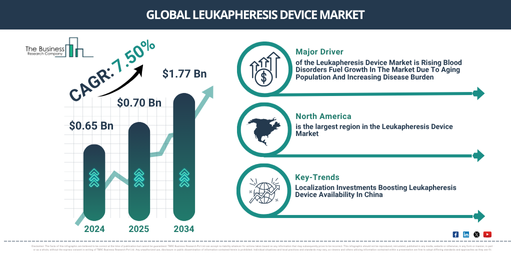
    The leukapheresis device market has experienced significant expansion recently. It is projected to increase from $0.65 billion in 2024 to $0.70 billion in 2025, exhibiting a compound annual growth rate (CAGR) of 7.7%. The market’s past growth can be ascribed to factors such as the burgeoning demand for personalized medicine, a stronger focus on research and development, a rising volume of clinical trials, the expanding geriatric population, and the growing adoption of minimally invasive procedures.

    The leukapheresis device market is set for significant expansion in the coming years. It is forecast to climb to $0.94 billion by 2029, exhibiting a compound annual growth rate (CAGR) of 7.5%. This growth projection for the forecast period is fueled by several factors, including the rising incidence of blood-related disorders, an increasing number of cancer cases, a growing necessity for peripheral blood stem cell collection, the expanding application of leukapheresis in cellular therapies, and elevated investments in regenerative medicine and immunotherapy. Noteworthy trends during this period are expected to include technological progress in apheresis devices, the incorporation of automation and digital interfaces, advancements in point-of-care leukapheresis technology, improvements in closed-loop leukapheresis systems, and efficiency enhancements in cell separation driven by technology.

    Unlock Your Free Sample Report for Exclusive Market Data:

    https://www.thebusinessresearchcompany.com/sample.aspx?id=25807&type=smp

    Which Drivers Are Shaping The Leukapheresis Device Industry’s Market Share?

    The increasing occurrence of blood-related conditions is anticipated to fuel the expansion of the leukapheresis device market moving forward. These disorders involve issues affecting the structure or function of blood cells, leading to difficulties with oxygen transport, immune responses, or blood coagulation. The growing number of blood-related illnesses is mainly linked to an aging population, as older individuals face a higher risk of developing conditions like anemia, leukemia, and various hematological problems. Leukapheresis devices aid in managing these ailments by specifically removing excess or abnormal white blood cells from the bloodstream, thus helping to ease symptoms and lessen complications in diseases such as leukemia and autoimmune conditions. For example, in May 2024, data from the Leukaemia Foundation, an Australia-based non-profit organization, indicated that in 2022, approximately 19,403 Australians received diagnoses for blood cancers, including leukemia, lymphoma, or myeloma, averaging 53 cases daily, or one every 27 minutes. Currently, close to 135,000 Australians are living with a blood cancer or blood disorder, a figure expected to exceed 275,000 by 2035. Consequently, the increasing occurrence of blood-related disorders is propelling the expansion of the leukapheresis device market.

    What Are The Leading Segments Analyzed In The Leukapheresis Device Market?

    The leukapheresis device market covered in this report is segmented –

    1) By Device Type: Therapeutic Leukapheresis, Cytapheresis, Stem Cell Collection, Research Applications, Leukapheresis Columns and Cell Separators, Leukapheresis Disposables, Apheresis Devices

    2) By Component: Leukapheresis Machine, Blood Collection Set , Medical Consumables , Filters

    3) By End User: Hospitals, Academic Research Institutes, Pharmaceutical And Biotechnology Companies, Blood Component Providers, Blood Centers

    Subsegments:

    1) By Therapeutic Leukapheresis: Leukemia Treatment Systems, Sepsis Treatment Leukapheresis Units, Autoimmune Disease Management Devices

    2) By Cytapheresis: Plateletpheresis Devices, Lymphapheresis Units, Erythrocytapheresis Systems

    3) By Stem Cell Collection: Peripheral Blood Stem Cell (PBSC) Collection Devices, Umbilical Cord Blood Collection Systems, Bone Marrow Stem Cell Apheresis Systems

    4) By Research Applications: Cell Separation Systems for Research and Development, Clinical Trial Apheresis Platforms, Academic Laboratory Leukapheresis Devices

    5) By Leukapheresis Columns And Cell Separators: Adsorption Columns, Membrane-Based Cell Separation Systems, Centrifugal Cell Separators

    6) By Leukapheresis Disposables: Tubing Sets, Needles And Catheters, Collection Bags

    7) By Apheresis Devices: Continuous Flow Apheresis Machines, Portable Or Mobile Apheresis Units, Intermittent Flow Apheresis Systems

    How Are Emerging Market Trends Shaping The Leukapheresis Device Industry Landscape?

    Major companies engaged in the leukapheresis device market are concentrating on developing regional manufacturing infrastructure to improve local access to advanced therapeutic devices and support country-specific healthcare goals. These regional manufacturing investments aid in establishing robust and flexible supply chains, which ensures timely product availability, reduces reliance on foreign imports, and makes sophisticated blood and cell collection systems more accessible financially. As an illustration, in November 2024, Terumo Blood and Cell Technologies, a US-based medical technology firm, joined forces with its Chinese medical technology subsidiary, Terumo Medical Products (Hangzhou) Co., Ltd., to inaugurate localized manufacturing operations in Hangzhou, China. This key strategic action involves the domestic production of essential leukapheresis products such as the Trima Accel Automated Blood Collection System and the Spectra Optia Apheresis System, both of which are widely employed across China for therapeutic apheresis, stem cell collection, and the separation of blood components.

    Which Key Market Players Are Investing In Expansion And Innovation Of Leukapheresis Device Market?

    Major companies operating in the leukapheresis device market are Fresenius SE and Co. KGaA, Asahi Kasei Medical Co. Ltd, Baxter International Inc., Grifols S.A., TERUMO BCT INC., Kaneka Corporation, Charles River Laboratories International Inc., Mallinckrodt Pharmaceuticals, Nikkiso Co. Ltd., Haemonetics Corporation, Miltenyi Biotec GmbH, Macopharma, Precision for Medicine Inc., B. Braun Melsungen AG, BioIVT LLC, AllCells LLC, Kawasumi Laboratories Inc., Beijing Zksk Technology Co. Ltd., Puriblood Medical Co. Ltd, Medica S.p.A.

    Download The Full Report For Exclusive Market Findings:

    https://www.thebusinessresearchcompany.com/report/leukapheresis-device-global-market-report

    Which Regional Markets Are Contributing Most To The Leukapheresis Device Industry Expansion?

    North America was the largest region in the leukapheresis device market in 2024. The regions covered in the leukapheresis device market report are Asia-Pacific, Western Europe, Eastern Europe, North America, South America, Middle East, Africa.

    Request A Customized Version Of The Leukapheresis Device Market Report:

    https://www.thebusinessresearchcompany.com/customise?id=25807&type=smp

    Browse Through More Reports Similar to the Global Leukapheresis Device Market 2025, By The Business Research Company

    Oncology Devices Global Market Report 2025

    https://www.thebusinessresearchcompany.com/report/oncology-devices-global-market-report

    Interventional Oncology Devices Global Market Report 2025

    https://www.thebusinessresearchcompany.com/report/interventional-oncology-devices-global-market-report

    Nephrostomy Devices Global Market Report 2025

    https://www.thebusinessresearchcompany.com/report/nephrostomy-devices-global-market-report

    Get in touch with us:

    The Business Research Company: https://www.thebusinessresearchcompany.com/

    Americas +1 310-496-7795

    Asia +44 7882 955267 & +91 8897263534

    Europe +44 7882 955267

    Email us at info@tbrc.info

    Follow us on:

    LinkedIn: https://in.linkedin.com/company/the-business-research-company

    YouTube: https://www.youtube.com/channel/UC24_fI0rV8cR5DxlCpgmyFQ

    Global Market Model: https://www.thebusinessresearchcompany.com/global-market-model
  • LASIK Eye Surgery Devices Market to Reach $3.12 Billion by 2029, Growing at a CAGR of 6.7%

    LASIK Eye Surgery Devices Market to Reach $3.12 Billion by 2029, Growing at a CAGR of 6.7%

    Unlock Global Insights – Save 20% on Market Reports with Code ONLINE20

    What Is The Expected Total Market Size Of The LASIK Eye Surgery Devices Industry By The Forecast Year 2029?

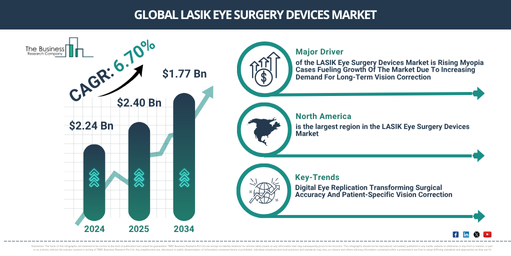
    The LASIK eye surgery devices market has experienced robust expansion over the past few years. Projections indicate its growth from $2.24 billion in 2024 to reach $2.40 billion by 2025, demonstrating a compound annual growth rate (CAGR) of 7.0%. Historically, this growth can be ascribed to factors such as the increasing occurrence of refractive errors, a rising preference for minimally invasive procedures, greater public understanding of vision correction options, elevated disposable incomes, the broadening scope of medical tourism, and a surge in the establishment of eye care clinics.

    The LASIK eye surgery devices market is projected to experience substantial growth in the forthcoming years. It is forecast to expand to $3.12 billion by 2029, with a compound annual growth rate (CAGR) of 6.7%. This expansion during the forecast period can be attributed to an increasing aging population, greater screen time among young individuals, the rising adoption of femtosecond lasers, broader insurance coverage, an uptick in demand from emerging economies, and a growing preference for outpatient surgeries. Prominent trends for the forecast period include the application of wavefront-guided technology, the integration of artificial intelligence, the formulation of customized treatment plans, the uptake of bladeless procedures, the escalating popularity of SMILE surgery, and a move toward ambulatory surgical centers.

    Unlock Your Free Sample Report for Exclusive Market Data:

    https://www.thebusinessresearchcompany.com/sample.aspx?id=25806&type=smp

    What Are The Drivers Pushing New Developments In The LASIK Eye Surgery Devices Market?

    The rising occurrence of myopia is anticipated to fuel the expansion of the LASIK eye surgery devices market. Myopia, commonly known as nearsightedness, is a prevalent vision impairment where nearby items are distinct, yet far-off objects appear indistinct. This increase in myopia cases stems from extended periods of screen use, leading to eye strain and hastened eye elongation. LASIK eye surgery devices offer a precise and lasting solution for myopia by reshaping the cornea, thereby enhancing distance vision and considerably lessening the need for corrective eyewear. For example, in September 2024, data from the Canadian Association of Optometrists, a professional body based in Canada for optometrists, indicated that myopia is a widespread visual condition, presently impacting approximately 30% of the global population. Furthermore, forecasts suggest that by 2050, the global prevalence of myopia is projected to rise to 50% of the population. Consequently, the growing incidence of myopia is a primary catalyst for the growth of the LASIK eye surgery devices market.

    What Are The Segment Types Shaping The LASIK Eye Surgery Devices Market?

    The lasik eye surgery devices market covered in this report is segmented –

    1) By Product Type: Excimer Lasers, Femtosecond Lasers, Microkeratomes, Other Product Types

    2) By Procedure Type: Laser-Assisted In Situ Keratomileusis (LASIK), Photorefractive Keratectomy (PRK), Laser-Assisted Sub-Epithelial Keratectomy (LASEK), Small Incision Lenticule Extraction (SMILE), Other Procedures

    3) By Application: Myopia, Hyperopia, Astigmatism, Other Applications

    4) By End User: Hospitals, Ambulatory Surgical Centers, Ophthalmology Clinics, Eye Research Institutes, Other End Users

    Subsegments:

    1) By Excimer Lasers: Wavefront-Guided Excimer Lasers, Topography-Guided Excimer Lasers, Conventional Excimer Lasers, Flying Spot Lasers, Scanning Slit Lasers

    2) By Femtosecond Lasers: Low-Pulse Energy Femtosecond Lasers, High-Pulse Energy Femtosecond Lasers, Femtosecond Lasers For Flap Creation, Femtosecond Lasers For SMILE Procedures

    3) By Microkeratomes: Manual Microkeratomes, Automated Microkeratomes, Disposable Blade Systems, Adjustable Depth Microkeratomes

    4) By Other Product Types: Surgical Blades, Eye Trackers, Wavefront Aberrometers, Pupil Tracking Systems, Diagnostic Imaging Devices

    Which Key Trends Are Expected To Influence The LASIK Eye Surgery Devices Market In The Coming Years?

    Major companies operating in the LASIK eye surgery devices market are concentrating on developing innovative solutions, such as personalized LASIK treatment, to gain a competitive advantage. Personalized LASIK treatment provides enhanced precision by customizing the procedure to an individual’s unique eye characteristics, leading to improved visual outcomes and a reduced risk of side effects. For instance, in April 2025, Alcon, a Switzerland-based eye care company, unveiled the WaveLight Plus, an advanced laser-assisted in situ keratomileusis (LASIK) platform that utilizes ray tracing technology to improve surgical accuracy and safety, delivering fully personalized vision correction with superior visual outcomes. This innovative LASIK eye surgery device incorporates advanced wavefront-guided ablation, real-time eye tracking, and customizable treatment parameters, enabling it to achieve highly precise corneal reshaping, enhance visual outcomes, and support safer, more personalized vision correction procedures.

    Who Are The Core Companies Influencing The LASIK Eye Surgery Devices Market Landscape?

    Major companies operating in the lasik eye surgery devices market are Alcon Inc., Bausch & Lomb Incorporated, Johnson & Johnson Vision Care Inc., Carl Zeiss Meditec AG, Trivitron Healthcare Private Limited, Ziemer Ophthalmic Systems AG, MORIA S.A., LightMed Corporation, Network Medical Products Ltd., SCHWIND eye-tech-solutions GmbH & Co. KG, Crescent Surgical & Medical Equipment, Optikon 2000 S.p.A., Fluence Technology Inc., NIDEK CO. LTD., LaserSight Technologies Inc., iVis Technologies S.r.l., Med-Logics Inc., Appasamy Associates Private Limited, Eye Medicare Incorporated, Shaanxi Xingmao Industry Co. Ltd.

    Download The Full Report For Exclusive Market Findings:

    https://www.thebusinessresearchcompany.com/report/lasik-eye-surgery-devices-global-market-report

    How Does The LASIK Eye Surgery Devices Market Perform Across Key Geographic Regions?

    North America was the largest region in the LASIK eye surgery devices market in 2024. Asia-Pacific is expected to be the fastest-growing region in the forecast period. The regions covered in the lasik eye surgery devices market report are Asia-Pacific, Western Europe, Eastern Europe, North America, South America, Middle East, Africa.

    Request A Customized Version Of The LASIK Eye Surgery Devices Market Report:

    https://www.thebusinessresearchcompany.com/customise?id=25806&type=smp

    Browse Through More Reports Similar to the Global LASIK Eye Surgery Devices Market 2025, By The Business Research Company

    Glaucoma Surgery Devices Global Market Report 2025

    https://www.thebusinessresearchcompany.com/report/glaucoma-surgery-devices-global-market-report

    Cataract Surgery Devices And Equipment Global Market Report 2025

    https://www.thebusinessresearchcompany.com/report/cataract-surgery-devices-and-equipment-global-market-report

    Vitreoretinal Surgery Devices Global Market Report 2025

    https://www.thebusinessresearchcompany.com/report/vitreoretinal-surgery-devices-global-market-report

    Get in touch with us:

    The Business Research Company: https://www.thebusinessresearchcompany.com/

    Americas +1 310-496-7795

    Asia +44 7882 955267 & +91 8897263534

    Europe +44 7882 955267

    Email us at info@tbrc.info

    Follow us on:

    LinkedIn: https://in.linkedin.com/company/the-business-research-company

    YouTube: https://www.youtube.com/channel/UC24_fI0rV8cR5DxlCpgmyFQ

    Global Market Model: https://www.thebusinessresearchcompany.com/global-market-model