Category: Medical Equipment

  • Microsurgery Robot Market Forecast 2026: Market Size, Competitive Landscape And Growth Drivers

    Microsurgery Robot Market Forecast 2026: Market Size, Competitive Landscape And Growth Drivers

    Featuring market attractiveness scoring, total addressable market sizing, company benchmarking matrices, interactive Excel dashboards, deeper supply chain intelligence, emerging startup tracking, and granular product-level insights, The Business Research Company’s 2026 market reports are built to deliver research that is both more actionable and more strategically valuable.

    Microsurgery Robot Market Value Growth And Long-Term Outlook

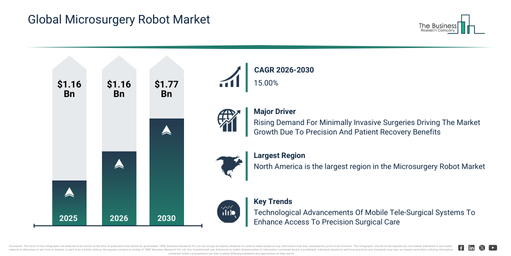
    The microsurgery robot market has seen rapid expansion in recent years. This market is set to increase from $2.39 billion in 2025 to $2.76 billion in 2026, exhibiting a compound annual growth rate (CAGR) of 15.5%. Historically, this growth can be linked to the initial scarcity of advanced robotic systems, the high expense of early robotic platforms, an increasing demand for minimally invasive surgical techniques, broader integration into specialized surgical fields, and foundational developments in medical imaging technology.

    The microsurgery robot market size is poised for rapid expansion in the coming years. It is projected to grow to $4.83 billion in 2030, achieving a compound annual growth rate (CAGR) of 15.0%. This anticipated growth during the forecast period stems from factors such as increasing investment in AI-driven surgical robots, a rising demand for teleoperated surgeries, the development of compact and handheld robotic devices, integration with augmented reality and imaging systems, and the expansion of microsurgery applications in emerging regions. Key trends expected over this period involve the miniaturization of surgical instruments, the integration of real-time imaging in robotics, enhanced precision and stability in microsurgery, the adoption of remote and teleoperated surgery, and the emergence of customizable modular robotic systems.

    Get A Free Sample Report With In-Depth Market Insights:

    https://thebusinessresearchcompany.com/sample_request?id=60789899&type=smp&name=Microsurgery%20Robot%20Market%20Report%202026&utm_source=Blogs&utm_medium=Paid&utm_campaign=Sep_PR

    Microsurgery Robot Market Industry Drivers: What’s Behind The Revenue Growth?

    The escalating need for minimally invasive surgical procedures is anticipated to fuel the expansion of the microsurgery robot market moving forward. These procedures involve conducting operations through small incisions utilizing specialized instruments and techniques, which contribute to reduced tissue damage, quicker recovery times, and diminished surgical risks. The demand for minimally invasive surgical procedures is on the rise, primarily due to an increasing geriatric population that requires delicate surgical interventions with lower complication risks, a trend becoming more widespread with global aging. Consequently, minimally invasive surgical procedures are spurring the adoption of microsurgery robots, as these systems provide the necessary precision, stability, and control for intricate operations performed through small incisions, leading to faster patient recovery and reduced trauma. For instance, in March 2025, according to the American Hospital Association, a U.S.-based healthcare industry trade group, 2.63 million surgical procedures were performed in the U.S. in 2023 using da Vinci robotic systems, marking a 17% increase from 2022. Therefore, the heightened demand for minimally invasive surgical procedures is a significant driver for the microsurgery robot market.

    Microsurgery Robot Market Segment Analysis Spotlighting Growth Areas

    The microsurgery robot market covered in this report is segmented –

    1) By Product Type: Dedicated Microsurgery Robots, Modular Microsurgery Systems, Robotic Surgical Instruments, Accessories And Consumables

    2) By Component: Robotic Arms, Surgical Tools, Visualization Systems, Control Systems

    3) By Technology: Teleoperated Robots, Autonomous Robots, Hybrid Systems

    4) By Application: Oncology Surgery, Urology Surgery, Obstetrics And Gynecology Surgery, Micro Anastomosis, Reconstructive Surgery, ENT (Ear, Nose, And Throat) Surgery, Gastrointestinal Surgery, Cardiovascular Surgery, Ureterorenoscopy, Neurovascular Surgery

    5) By End-User: Hospitals, Ambulatory Surgical Centers, Specialty Clinics, Other End-Users

    Subsegments:

    1) By Dedicated Microsurgery Robots: Application-Specific Systems, Fully Integrated Robotic Units, Compact Handheld Robotic Devices

    2) By Modular Microsurgery Systems: Interchangeable Robotic Modules, Hybrid Microsurgical Platforms, Customizable Component-Based Systems

    3) By Robotic Surgical Instruments: Micro-Scissors, Micro-Forceps, Micro-Needle Holders, Micro-Suturing Tools

    4) By Accessories And Consumables: Camera Systems, Light Guides, Sutures And Clips And Maintenance Kits

    #Microsurgery Robot Market Growth Trends: What’s Shaping The Future Outlook?

    Major companies in the microsurgery robot market are concentrating on creating advanced solutions such as mobile telesurgical systems to expand access to sophisticated surgical care in remote and underserved areas. These mobile telesurgical systems are portable units equipped with robotic-assisted surgical technology, telecommunication tools, and a power supply, which enables real-time remote surgical support or operation. For example, in March 2025, SS Innovations International, Inc., a US-based medical robotics company, introduced India’s inaugural Mobile Tele-Surgical Unit. It features the SSI Mantra Surgical Robot integrated into a fully equipped mobile van, complete with satellite communication, independent power systems, and 4K display monitors to facilitate live telementoring or telesurgery. This unit is designed to bring robotic surgery capabilities to distant, rural, or disaster-stricken locations where conventional surgical infrastructure is unavailable. This innovation aims to bridge the disparity between specialized surgical expertise and patients requiring it, regardless of geographic barriers.

    Microsurgery Robot Market Industry Leaders And Competitive Landscape

    Major companies operating in the microsurgery robot market are Johnson & Johnson Services Inc., Medtronic plc, Stryker Corporation, Intuitive Surgical Inc., MicroPort Scientific Corporation, Renishaw plc, Titan Medical Inc., Vicarious Surgical Inc., CMR Surgical Ltd., Medical Microinstruments S.p.A., Virtual Incision Corporation, Asensus Surgical Inc., MicroSure BV, Medrobotics Corporation, Galen Robotics Inc., Moon Surgical SAS, Robocath SA, EndoQuest Robotics Inc., Distalmotion SA, Memic Innovative Surgery Ltd., Meerecompany Inc., SS Innovations International Inc.

    View The Full Microsurgery Robot Market Report:

    https://thebusinessresearchcompany.com/report/microsurgery-robot-global-market-report?utm_source=Blogs&utm_medium=Paid&utm_campaign=Sep_PR

    Microsurgery Robot Market Regional Analysis And Top Geography

    North America was the largest region in the microsurgery robot market in 2025. Asia-Pacific is expected to be the fastest-growing region in the forecast period. The regions covered in the microsurgery robot market report are Asia-Pacific, South East Asia, Western Europe, Eastern Europe, North America, South America, Middle East, Africa.

    Reach Out To Our Team:

    The Business Research Company: https://www.thebusinessresearchcompany.com/

    Americas: +1 310-496-7795

    Asia: +44 7882 955267 & +91 8897263534

    Europe: +44 7882 955267

    Email us at: marketing@tbrc.info

    Follow us on:

    LinkedIn: https://in.linkedin.com/company/the-business-research-company

    YouTube: https://www.youtube.com/channel/UC24_fI0rV8cR5DxlCpgmyFQ

    Global Market Model: https://www.thebusinessresearchcompany.com/global-market-model
  • Microscope Market Size In 2026: Regional Growth, Key Segments And Future Outlook

    Microscope Market Size In 2026: Regional Growth, Key Segments And Future Outlook

    Built to provide research that’s more actionable and strategically valuable, The Business Research Company’s 2026 market reports include market attractiveness analysis, total addressable market sizing, company benchmarking matrices, interactive Excel dashboards, broader supply chain intelligence, emerging startup tracking, and in-depth product insights.

    Microscope Market Poised To Hit $22.93 Billion By 2030 With A 9.9% CAGR

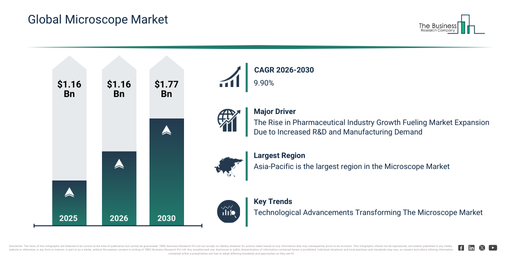
    The microscope market has experienced significant growth in recent years. Its size is anticipated to increase from $14.37 billion in 2025 to $15.72 billion in 2026, showing a compound annual growth rate (CAGR) of 9.4%. This historical expansion can be attributed to several factors, including the rising volume of life science research activities, the expansion of academic and industrial laboratories, the growing application of microscopy in diagnostics, developments in optical and electron microscopy, and the increasing need for materials analysis.

    The microscope market is projected to experience robust expansion over the coming years. Its size is anticipated to reach $22.93 billion in 2030, exhibiting a compound annual growth rate (CAGR) of 9.9%. This expansion during the projection period stems from factors such as the increasing embrace of automated laboratory processes, growing investments in nanotechnology studies, the broadening of semiconductor inspection uses, a rising need for precise advanced imaging, and the greater incorporation of smart microscopy systems. Key trends identified for this period involve the increasing adoption of digital and automated microscopes, an elevated demand for high-resolution imaging setups, the expanding integration of AI-driven image analysis, the development of advanced imaging techniques, and a sharpened focus on applications spanning multiple disciplines.

    Get A Free Sample Report With In-Depth Market Insights:

    https://thebusinessresearchcompany.com/sample_request?id=63430477&type=smp&name=Microscope%20Market%20Report%202026&utm_source=Blogs&utm_medium=Paid&utm_campaign=Sep_PR

    Microscope Market Growth Factors: What’s Supporting Expansion?

    The expanding pharmaceutical industry is anticipated to fuel the microscope market’s growth moving forward. The pharmaceutical sector, encompassing the research, development, manufacturing, and distribution of medicines, increasingly depends on advanced microscopy techniques to support drug discovery efforts, biologics creation, and quality assurance processes. The surge in pharmaceutical production and research and development activities has consequently driven demand for high-performance microscopes, including confocal, fluorescence, and electron microscopy systems. For instance, in February 2024, Statistics Canada, a government agency based in Canada, reported that in December 2023, wholesale sales within the pharmaceuticals and pharmacy supplies industry rose by 6.1%, reaching $7.0 billion, which represents the highest level ever recorded. Therefore, the burgeoning pharmaceutical industry is propelling the expansion of the microscope market.

    Microscope Market Segment Performance And Emerging Opportunities

    The microscope market covered in this report is segmented –

    1) By Product: Optical, Electron, Scanning Probe, Other Products

    2) By Component: Microscopes, Accessories, Software

    3) By Application: Material Science, Nanotechnology, Life Science, Semiconductors, Other Applications

    4) By End-User: Industries, Academic And Research Institutes, Other End Users Microscopes

    Subsegments:

    1) By Optical: Compound Microscopes, Stereo Microscopes, Digital Microscopes

    2) By Electron: Scanning Electron Microscopes (SEM), Transmission Electron Microscopes (TEM)

    3) By Scanning Probe: Atomic Force Microscopes (AFM), Scanning Tunneling Microscopes (STM), Magnetic Force Microscopes (MFM)

    4) By Other Products: Confocal Microscopes, Fluorescence Microscopes, Advanced Imaging Systems

    Microscope Market Industry Trends: What’s Reshaping Demand?

    Leading companies in the microscope market are concentrating on developing innovative products, such as automated navigation and multi-modal imaging systems. These advancements aim to enhance research productivity, improve user experience, and facilitate comprehensive sample analysis. Automated navigation and multi-modal imaging refer to integrated microscope systems that utilize software and hardware to automatically locate specific areas of interest and seamlessly combine different imaging techniques to produce a more complete data set. For example, in May 2023, Nikon Corporation, a Japan-based manufacturer of optical instruments, introduced the ECLIPSE Ni-L Upright Microscope, which is designed for both research and clinical applications. This microscope provides high optical performance coupled with increased versatility and user-friendliness. It incorporates Nikon’s sophisticated optical system, allowing for superior imaging and observation across a diverse array of specimens. The ECLIPSE Ni-L features motorized components to improve workflow efficiency and offers customization for various observation techniques, including fluorescence and brightfield microscopy.

    Microscope Market Key Participants And Competitive Landscape

    Major companies operating in the microscope market are Thermo Fisher Scientific Inc., Carl Zeiss AG, Olympus Corporation, Keyence Corporation, Hitachi High-Tech Corporation, Nikon Corporation, Bruker Corporation, Horiba Ltd., JEOL Ltd., Brunel Microscopes Ltd., Leica Microsystems Inc., Motic Inc., Oxford Instruments Plc., FEI Company, Omax Corporation, Seiwa Optical America Inc., Celestron LLC., CAMECA, Tescan Orsay Holding AS., Bresser GmbH, Optika Microscopes Inc., Sutter Instrument Company, NT-MDT SI LLC, ACCU-SCOPE Inc., Angstrom Advanced Inc., Euromex Microscopen BV, Swift Optical Instruments Inc., Meiji Techno, National Optical and Scientific Instruments Inc., Labomed Inc.

    View The Full Microscope Market Report:

    https://thebusinessresearchcompany.com/report/microscope-global-market-report?utm_source=Blogs&utm_medium=Paid&utm_campaign=Sep_PR

    Microscope Market Geographic Analysis: Where Is Demand Rising Fastest?

    Asia-Pacific was the largest region in the microscope market in 2025. The regions covered in the microscope market report are Asia-Pacific, South East Asia, Western Europe, Eastern Europe, North America, South America, Middle East, Africa.

    Reach Out To Our Team:

    The Business Research Company: https://www.thebusinessresearchcompany.com/

    Americas: +1 310-496-7795

    Asia: +44 7882 955267 & +91 8897263534

    Europe: +44 7882 955267

    Email us at: marketing@tbrc.info

    Follow us on:

    LinkedIn: https://in.linkedin.com/company/the-business-research-company

    YouTube: https://www.youtube.com/channel/UC24_fI0rV8cR5DxlCpgmyFQ

    Global Market Model: https://www.thebusinessresearchcompany.com/global-market-model
  • Micropump Market Growth Forecast Through 2030: Market Size And Trends In 2026

    Micropump Market Growth Forecast Through 2030: Market Size And Trends In 2026

    Backed by market attractiveness analysis, total addressable market sizing, company benchmarking matrices, interactive Excel dashboards, wider supply chain intelligence, emerging startup coverage, and detailed product-level insights, The Business Research Company’s 2026 market reports are designed to offer research that is more actionable and strategically valuable than ever.

    Micropump Market Size And Revenue Outlook Through 2030

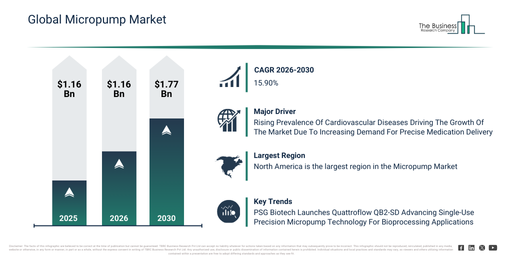
    The micropump market has experienced rapid growth in its size over recent years. Its value is projected to increase from $2.32 billion in 2025 to $2.69 billion in 2026, at a compound annual growth rate (CAGR) of 15.9%. This historical expansion can be attributed to the rising demand for minimally invasive medical devices, advancements in microfluidics technology, the growth of pharmaceutical research and clinical trials, the increasing adoption of point-of-care diagnostics, and the development of early-stage drug delivery systems.

    The micropump market is anticipated to experience significant expansion in the coming years, with its size projected to reach $4.85 billion by 2030, demonstrating a compound annual growth rate (CAGR) of 15.9%. This projected growth during the forecast period is fueled by factors such as the incorporation of AI and IoT into micropump systems, increasing demand for precision medicine, the proliferation of wearable drug delivery devices, the rise of automated laboratory instrumentation, and the uptake of intelligent microfluidic platforms. Key trends expected over this period encompass the miniaturization of fluid control mechanisms, advanced high-precision drug delivery methods, the integration of lab-on-a-chip technology, the development of low-power and energy-efficient micropumps, and the availability of customizable and modular pump designs.

    Get A Free Sample Report With In-Depth Market Insights:

    https://thebusinessresearchcompany.com/sample_request?id=94295017&type=smp&name=Micropump%20Market%20Report%202026&utm_source=Blogs&utm_medium=Paid&utm_campaign=Sep_PR

    Micropump Market Demand Drivers: What’s Powering Industry Growth?

    The increasing occurrence of cardiovascular diseases is projected to drive the expansion of the micropump market moving forward. These diseases involve a range of disorders affecting the heart and blood vessels, including conditions like coronary artery disease, heart failure, stroke, and hypertension. The incidence of cardiovascular diseases is growing due to inactive lifestyles, which contribute to obesity, high blood pressure, and other risk factors that heighten the probability of heart problems. Micropumps are valuable in managing cardiovascular diseases by allowing precise and continuous administration of medications, such as anticoagulants or antihypertensives, helping to maintain stable blood pressure and lower the risk of heart attacks or strokes. For example, in January 2024, the American Heart Association, a US-based non-profit organization, stated that the age-adjusted death rate from cardiovascular disease escalated to 233.3 per 100,000 in 2023, signifying a 4.0% rise from the previous year’s rate of 224.4 per 100,000. Hence, the rising prevalence of cardiovascular diseases is propelling the growth of the micropump market.

    Micropump Market Segment Landscape And Growth Outlook

    The micropump market covered in this report is segmented –

    1) By Product Type: Mechanical Micropump, Piezoelectric Micropump, Syringe Pump, Peristaltic Pump, Non-Mechanical Micropump

    2) By Material: Polymers, Ceramics, Metals

    3) By Application: Medical Device, Drug Delivery, In-Vitro Diagnosis, Other Applications

    4) By End User: Hospitals And Diagnostic Centers, Biotechnology And Pharmaceutical Companies, Academic And Research Institutes

    Subsegments:

    1) By Mechanical Micropump: Thermopneumatic Micropump, Shape Memory Alloy (SMA)-Based Micropump, Electromagnetic Micropump

    2) By Piezoelectric Micropump: Single-Chamber Piezoelectric Micropump, Multi-Chamber Piezoelectric Micropump

    3) By Syringe Pump: Infusion Syringe Micropump, Withdrawal Syringe Micropump, Dual-Mode Syringe Micropump

    4) By Peristaltic Pump: Rotary Peristaltic Micropump, Linear Peristaltic Micropump

    5) By Non-Mechanical Micropump: Electroosmotic Flow Micropump, Electrohydrodynamic Micropump, Magnetohydrodynamic Micropump, Osmotic Micropump

    Micropump Market Innovation Trends: What Developments Are Reshaping The Industry?

    Leading companies operating in the micropump market are increasingly focusing on developing innovative solutions, such as single-use precision micropumps, to improve accuracy, reliability, and efficiency in fluid handling across various applications. These single-use precision micropumps are defined as compact, disposable devices crafted to precisely control and deliver exact volumes of fluids for a single application or procedure. For instance, in November 2023, PSG Biotech, a US-based provider of specialty flow-control solutions, launched the Quattroflow QB2-Standard (QB2-SD) Single-Use Precision Micropump, recognized as the smallest in its QB Series. This compact, lightweight rotary microdosing pump delivers exceptionally precise dosing, with a minimum resolution of 25 μL and flow rates up to 2.7 liters per hour. Engineered for delicate biologics transfer, it is highly suitable for applications in cell and gene therapy, laboratory work, and small-scale bioprocessing. The pump is equipped with a positive displacement rotary mechanism, enabling accurate, sensor-free flow control, and it also supports bi-directional flow, self-priming, and high vacuum operation.

    Micropump Market Top Companies Driving Competitive Growth

    Major companies operating in the micropump market are Parker Hannifin Corporation, IDEX Corporation, Takasago International Corporation, Christian Bürkert GmbH & Co. KG, Alldoo Micropump Co. Ltd., Shinano Kenshi Co. Ltd., The Lee Company, KNF Neuberger Inc., Nitto Kohki Co. Ltd., Enomoto Micro Pump Mfg. Co. Ltd., TOPS Industry And Technology Co. Ltd., Gotec SA, Bartels Mikrotechnik GmbH, Fluigent Inc., HeYi Precision Pump Co. Ltd., Sandur Fluid Controls Pvt. Ltd., TCS Micropump Ltd., Xavitech AB, BODENFLO Co. Ltd., Changzhou Yuanwang Fluid Technology Co. Ltd., Xiamen AJK Technology Co. Ltd., Takasago Fluidic Systems Inc.

    View The Full Micropump Market Report:

    https://thebusinessresearchcompany.com/report/micropump-global-market-report?utm_source=Blogs&utm_medium=Paid&utm_campaign=Sep_PR

    Micropump Market Global Footprint: Which Region Leads The Market?

    North America was the largest region in the micropump market in 2025. Europe is expected to be the fastest-growing region in the forecast period. The regions covered in the micropump market report are Asia-Pacific, South East Asia, Western Europe, Eastern Europe, North America, South America, Middle East, Africa.

    Reach Out To Our Team:

    The Business Research Company: https://www.thebusinessresearchcompany.com/

    Americas: +1 310-496-7795

    Asia: +44 7882 955267 & +91 8897263534

    Europe: +44 7882 955267

    Email us at: marketing@tbrc.info

    Follow us on:

    LinkedIn: https://in.linkedin.com/company/the-business-research-company

    YouTube: https://www.youtube.com/channel/UC24_fI0rV8cR5DxlCpgmyFQ

    Global Market Model: https://www.thebusinessresearchcompany.com/global-market-model

  • Microplate Systems Market Analysis: $1.57 Billion Market Size In 2026 And Future Growth Prospects

    Microplate Systems Market Analysis: $1.57 Billion Market Size In 2026 And Future Growth Prospects

    Featuring market attractiveness scoring, total addressable market sizing, company benchmarking matrices, interactive Excel dashboards, deeper supply chain intelligence, emerging startup tracking, and granular product-level insights, The Business Research Company’s 2026 market reports are built to deliver research that is both more actionable and more strategically valuable.

    Microplate Systems Market Growth From $1.57 Billion In 2026 To $2.36 Billion By 2030 At A CAGR Of 10.6%

    The microplate systems market size has experienced substantial expansion in recent years. It is projected to grow from $1.42 billion in 2025 to $1.57 billion in 2026, exhibiting a compound annual growth rate (CAGR) of 10.9%. The market’s historic growth was driven by factors such as increased pharmaceutical R&D spending, the expansion of biotechnology research activities, a greater use of microplates in drug screening, the rising prevalence of chronic diseases, and the growth of academic life science research.

    The microplate systems market is projected to experience substantial expansion in the coming years. By 2030, this market is anticipated to reach $2.36 billion, demonstrating a compound annual growth rate (CAGR) of 10.6%. Several factors contribute to this growth during the forecast period, including progress in assay technologies, a surge in personalized medicine demand, the expansion of contract research organizations, increasing implementation of laboratory automation, and broader genomics and proteomics research efforts. Key developments anticipated within this timeframe encompass the greater utilization of high-throughput screening in drug discovery, increased uptake of multi-mode microplate readers, a rising need for automation in laboratory processes, more frequent application of microplate systems in clinical diagnostics, and the development of smaller, higher-density microplate formats.

    Get A Free Sample Report With In-Depth Market Insights:

    https://thebusinessresearchcompany.com/sample_request?id=70393216&type=smp&name=Microplate%20Systems%20Market%20Report%202026&utm_source=Blogs&utm_medium=Paid&utm_campaign=Sep_PR

    Microplate Systems Market Growth Drivers: What’s Behind The Acceleration?

    Growing research and development efforts are anticipated to drive the expansion of the microplate systems market in the future. These activities encompass systematic endeavors by corporations, organizations, or governments aimed at pioneering and developing novel products, services, or methodologies, thereby broadening scientific and technical understanding. This increase in research and development stems from factors such as consumer needs, compliance mandates, and governmental assistance and financing. Microplate systems facilitate high-throughput screening, which cuts down on time and expenses in drug discovery by simultaneously evaluating numerous compounds and improving consistency through automated liquid handling and data analysis, thereby speeding up research and development. For example, in January 2024, IQVIA, a US-based healthcare intelligence and life sciences company, announced that worldwide medicine consumption has risen by 14% in the last five years and is forecast to climb an additional 12% by 2028, attaining 3.8 trillion defined daily doses annually. Consequently, the expansion of research and development initiatives is fueling the growth of the microplate systems market.

    Microplate Systems Market Breakdown By Product Type And Application

    The microplate systems market covered in this report is segmented –

    1) By Product Type: Multi-Mode Microplate Readers, Single-Mode Microplate Readers, Microplate Washers, Microplate Handlers, Other Product Types

    2) By Application: Drug Discovery, Clinical Diagnostics, Genomics And Proteomics Research, Other Applications

    3) By End-User: Pharmaceutical And Biotechnology Companies, Hospitals And Diagnostic Laboratories, Academic And Research Institutes, Contract Research Organizations (CROs), Other End-Users

    Subsegments:

    1) By Multi-Mode Microplate Readers: Absorbance Readers, Fluorescence Readers, Luminescence Readers, Time-Resolved Fluorescence (TRF) Readers, AlphaScreen And FRET Readers

    2) By Single-Mode Microplate Readers: Absorbance-Only Readers, Fluorescence-Only Readers, Luminescence-Only Readers, Polarization-Based Readers, Chemiluminescence Readers

    3) By Microplate Washers: Automated Microplate Washers, Manual Microplate Washers, Multi-Channel Washers, High-Throughput Washers

    4) By Microplate Handlers: Robotic Plate Handlers, Automated Plate Transport Systems, Microplate Stackers, Microplate Lifting Devices

    5) By Other Product Types: Microplate Sealing Systems, Microplate Shakers, Microplate Incubators, Microplate Staining Systems

    Microplate Systems Market Trends: What’s Defining The Industry’s Next Phase?

    Leading companies within the microplate systems market are concentrating on developing solutions for research and pharmaceutical applications, aiming to enhance cell cultivation. For instance, in June 2025, Mitsui Chemicals, a Japan-based chemical company, introduced InnoCell, a novel series of highly oxygen-permeable cell culture microplates designed to improve cell viability, particularly in 3D cultures such as spheroids and organoids. These microplates utilize Mitsui Chemicals’ proprietary materials, including TPX, which deliver oxygen at levels approximately 200 times higher than conventional plasticware, thereby supporting healthier, longer-lasting cell cultures with reduced cell death. The product line offers two types: N-type plates for non-adherent cells, organoids, and spheroids, and collagen-coated C-type plates for hepatocytes and other cells employed in drug screening. By addressing critical challenges in oxygenation, these microplates enable more accurate and reliable in vitro assays essential for drug discovery, personalized medicine, and regenerative therapies. Additionally, their low drug adsorption and excellent imaging properties make them ideal for high-content screening and phenotypic assays. Their ability to enhance organoid growth from pancreatic cancer cells demonstrates their potential to accelerate personalized treatments and advance complex cell culture research.

    Microplate Systems Market Leading Players And Competitive Positioning

    Major companies operating in the microplate systems market are Thermo Fisher Scientific Inc., Danaher Corporation, Corning Incorporated, Agilent Technologies Inc., PerkinElmer, Bio‑Rad Laboratories Inc., Eppendorf SE, Tecan Group Ltd., Hamilton Company, Greiner Bio‑One International GmbH, Berthold Technologies GmbH & Co. KG, BMG Labtech, Biochrom Ltd., Accuris Instruments, Hudson Robotics Inc., Kbiosystems Ltd., Hidex Oy, Dynex Technologies Inc., Awareness Technology, Rayto Life and Analytical Sciences, Autobio Diagnostics, Kaiao Technology Development Ltd.

    View The Full Microplate Systems Market Report:

    https://thebusinessresearchcompany.com/report/microplate-systems-global-market-report?utm_source=Blogs&utm_medium=Paid&utm_campaign=Sep_PR

    Microplate Systems Market Regional Split: Which Areas Are Fueling Growth?

    North America was the largest region in the microplate systems market in 2025. Asia-Pacific is expected to be the fastest-growing region in the forecast period. The regions covered in the microplate systems market report are Asia-Pacific, South East Asia, Western Europe, Eastern Europe, North America, South America, Middle East, Africa.

    Reach Out To Our Team:

    The Business Research Company: https://www.thebusinessresearchcompany.com/

    Americas: +1 310-496-7795

    Asia: +44 7882 955267 & +91 8897263534

    Europe: +44 7882 955267

    Email us at: marketing@tbrc.info

    Follow us on:

    LinkedIn: https://in.linkedin.com/company/the-business-research-company

    YouTube: https://www.youtube.com/channel/UC24_fI0rV8cR5DxlCpgmyFQ

    Global Market Model: https://www.thebusinessresearchcompany.com/global-market-model

  • Microplate Instrumentation And Supplies Market 2026 Market Size And Growth Forecast: Key Trends To Watch

    Microplate Instrumentation And Supplies Market 2026 Market Size And Growth Forecast: Key Trends To Watch

    Built to provide research that’s more actionable and strategically valuable, The Business Research Company’s 2026 market reports include market attractiveness analysis, total addressable market sizing, company benchmarking matrices, interactive Excel dashboards, broader supply chain intelligence, emerging startup tracking, and in-depth product insights.

    Microplate Instrumentation And Supplies Market Expansion Outlook: What Revenue Opportunities Are Ahead?

    The microplate instrumentation and supplies market size has seen substantial growth recently. It is anticipated to expand from $7.43 billion in 2025 to $7.95 billion in 2026, reflecting a compound annual growth rate (CAGR) of 7.1%. Historically, this expansion can be ascribed to factors such as the increase in pharmaceutical research activities, the growing acceptance of microplate-based assays, the proliferation of diagnostic laboratories, the escalating need for efficient sample analysis, and the development in academic and life science research.

    The microplate instrumentation and supplies market size is projected to experience robust expansion in the coming years. Its valuation is expected to reach $10.43 billion in 2030, demonstrating a compound annual growth rate (CAGR) of 7.0%. The anticipated growth within this forecast period is primarily attributed to the increasing scope of drug discovery pipelines, a heightened emphasis on high-throughput diagnostics, rising investments directed towards laboratory automation, the proliferation of biotechnology startups, and the growing demand for reproducible and scalable testing solutions. Prominent trends throughout the forecast duration include the increasing adoption of high-throughput screening platforms, a surging requirement for multimode microplate readers, enhanced automation across laboratory workflows, the enlargement of diagnostic and research laboratories, and a greater consumption of disposable microplates and their associated accessories.

    Get A Free Sample Report With In-Depth Market Insights:

    https://thebusinessresearchcompany.com/sample_request?id=25840741&type=smp&name=Microplate%20Instrumentation%20And%20Supplies%20Market%20Report%202026&utm_source=Blogs&utm_medium=Paid&utm_campaign=Sep_PR

    Microplate Instrumentation And Supplies Market Growth Factors Behind Sustained Expansion

    The increasing need for individualized medicine is anticipated to fuel expansion within the microplate instrumentation and supplies market moving ahead. Personalized medicine, also known as precision medicine, represents a healthcare strategy that customizes treatments and care plans for patients by considering their specific genetic makeup, environmental influences, and lifestyle choices. This increasing demand stems from a higher prevalence of chronic illnesses, greater consumer understanding and expectations, and its economic viability. Microplate instrumentation and supplies are vital in personalized medicine as they facilitate accurate, high-volume testing and examination of biological specimens. This functionality is critical for customizing medical interventions for individual patients, considering their distinct genetic, biomolecular, and cellular characteristics. For instance, in February 2024, Personalized Medicine Coalition, a US-based non-profit organization, reported that in 2023, FDA approved 16 new personalized treatments for rare disease patients, an increase from 6 in 2022. The newly approved personalized treatments for 2023 also include seven cancer drugs and three for other diseases and conditions. Consequently, the growing requirement for personalized medicine is boosting the expansion of the microplate instrumentation and supplies market.

    Microplate Instrumentation And Supplies Market Segment Analysis And Revenue Potential

    The microplate instrumentation and supplies market covered in this report is segmented –

    1) By Product Type: Microplate Readers, Microplate Washers, Microplate Dispensers, Microplate Accessories, Other Accessories

    2) By Sales Channel: Direct Sales, Indirect Sales

    3) By End-User Industries: Pharmaceuticals, Food And Beverages, Chemicals And Polymer, Other End-User Industries

    Subsegments:

    1) By Microplate Readers: Absorbance Readers, Fluorescence Readers, Luminescence Readers, Multimode Readers

    2) By Microplate Washers: Manual Microplate Washers, Automated Microplate Washers

    3) By Microplate Dispensers: Manual Microplate Dispensers, Automated Microplate Dispensers

    4) By Microplate Accessories: Sealing Films, Plate Holders, Plate Stands

    5) By Other Accessories: Microplates (Well Plates), Microplate Racks, Microplate Readers’ Calibration Kits

    Microplate Instrumentation And Supplies Market Industry Trends Fueling Future Revenue Growth

    Key players within the microplate instrumentation and supplies market are prioritizing the development of cutting-edge products, including EDR technology-based microplate readers, with the goal of enhancing assay precision, accelerating throughput, and optimizing laboratory operations. EDR (Extended Dynamic Range) technology-based microplate readers represent sophisticated instruments engineered to expand the detection range and boost sensitivity in diverse assays, proving particularly valuable for personalized medicine and other research purposes. For example, in February 2023, Byonoy GmbH, a Germany-based biotech instrument firm, introduced the Absorbance 96 Automate, a plate reader featuring an exceptionally small footprint (15.5 × 9.5 cm) designed for seamless integration into automated liquid-handling decks, which incorporates six LEDs and 96 detection units, achieving a rapid 5-second read time.

    Microplate Instrumentation And Supplies Market Competitive Overview And Top Companies

    Major companies operating in the microplate instrumentation and supplies market are Thermo Fisher Scientific Inc., Danaher Corporation, The Merck Group, Corning Incorporated, Agilent Technologies Inc., Lonza Group AG, Beckman Coulter Inc., PerkinElmer Inc., Bio-Rad Laboratories Inc., Eppendorf AG, Promega Corporation, Hamilton Company, Molecular Devices LLC, Analytik Jena AG, Biochrom Ltd., Berthold Technologies GmbH & Co. KG, BMG LABTECH GmbH, BrandTech Scientific Inc., Hudson Robotics Inc., Labnet International Inc.

    View The Full Microplate Instrumentation And Supplies Market Report:

    https://thebusinessresearchcompany.com/report/microplate-instrumentation-and-supplies-global-market-report?utm_source=Blogs&utm_medium=Paid&utm_campaign=Sep_PR

    Microplate Instrumentation And Supplies Market Top Region: Where Does Most Revenue Come From?

    North America was the largest region in the microplate instrumentation and supplies market in 2025. The regions covered in the microplate instrumentation and supplies market report are Asia-Pacific, South East Asia, Western Europe, Eastern Europe, North America, South America, Middle East, Africa.

    Reach Out To Our Team:

    The Business Research Company: https://www.thebusinessresearchcompany.com/

    Americas: +1 310-496-7795

    Asia: +44 7882 955267 & +91 8897263534

    Europe: +44 7882 955267

    Email us at: marketing@tbrc.info

    Follow us on:

    LinkedIn: https://in.linkedin.com/company/the-business-research-company

    YouTube: https://www.youtube.com/channel/UC24_fI0rV8cR5DxlCpgmyFQ

    Global Market Model: https://www.thebusinessresearchcompany.com/global-market-model

  • Micro-Perforated Films Market Size Forecast: How The Industry Is Expected To Grow From 2026 To 2030

    Micro-Perforated Films Market Size Forecast: How The Industry Is Expected To Grow From 2026 To 2030

    Backed by market attractiveness analysis, total addressable market sizing, company benchmarking matrices, interactive Excel dashboards, wider supply chain intelligence, emerging startup coverage, and detailed product-level insights, The Business Research Company’s 2026 market reports are designed to offer research that is more actionable and strategically valuable than ever.

    Micro-Perforated Films Market Growth Potential: How Will Market Size Shift Through 2030?

    The micro-perforated films market has experienced substantial growth recently. This market is projected to expand from $1.78 billion in 2025 to $1.93 billion in 2026, at a compound annual growth rate (CAGR) of 8.5%. The growth observed in the past can be attributed to increased packaged food consumption, the demand for fresh produce packaging, the expansion of cold chain logistics, the rise in agricultural exports, and the availability of cost-effective plastic films.

    The micro-perforated films market is anticipated to experience robust expansion over the next few years. It is projected to achieve a size of $2.65 billion in 2030, with a compound annual growth rate (CAGR) of 8.3%. This growth during the forecast period is driven by a shift towards sustainable packaging, increasing demand for recyclable films, the widespread adoption of precision perforation technology, initiatives aimed at reducing food waste, and the expansion of pharmaceutical packaging. Key trends identified for this period include controlled atmosphere packaging, solutions for extending shelf-life, films designed for moisture regulation, the engineering of customized hole sizes, and the development of lightweight flexible packaging.

    Get A Free Sample Report With In-Depth Market Insights:

    https://thebusinessresearchcompany.com/sample_request?id=50096358&type=smp&name=Micro-Perforated%20Films%20Market%20Report%202026&utm_source=Blogs&utm_medium=Paid&utm_campaign=Sep_PR

    Micro-Perforated Films Market Demand Drivers Opening New Revenue Streams

    The escalating requirement for sustainable packaging solutions is anticipated to boost the growth of the micro-perforated films market moving forward. Sustainable packaging involves the utilization of eco-friendly materials and processes that minimize environmental harm across their entire product lifespan, with a strong focus on recyclability, biodegradability, and the preservation of natural resources. The escalating demand for these solutions is driven by heightened consumer consciousness regarding environmental issues, stricter regulatory frameworks, corporate social responsibility initiatives, and the aim to reduce plastic waste and carbon footprints. In the context of sustainable packaging, micro-perforated films enhance product breathability and extend shelf life, while simultaneously minimizing waste and supporting the adoption of environmentally sound materials. As an illustration, in April 2023, according to the 2023 Buying Green Report published by Trivium Packaging, a Netherlands-based packaging company, a significant 82% of respondents expressed willingness to pay a premium for sustainable packaging, marking a 4-point increase from 2022. Younger consumers (18-24 years old) demonstrated even greater willingness at 90%, thereby emphasizing the persistent importance of environmental considerations despite prevailing economic challenges. Thus, the increasing demand for sustainable packaging solutions is acting as a key driver for the expansion of the micro-perforated films market.

    Micro-Perforated Films Market Segmentation And Category Overview

    The micro-perforated films market covered in this report is segmented –

    1) By Material: Polypropylene (PP), Polyethylene (PE), Polyvinyl Chloride (PVC), Polyethylene Terephthalate (PET)

    2) By Hole Size: Less Than 0.1 mm, 0.1-0.5 mm, 0.5-1.0 mm, More Than 1.0 mm

    3) By Application: Packaging, Agriculture, Automotive, Electronics, Construction

    Subsegments:

    1) By Polypropylene (PP): BOPP (Biaxially Oriented Polypropylene), CPP (Cast Polypropylene)

    2) By Polyethylene (PE): LDPE (Low-Density Polyethylene), HDPE (High-Density Polyethylene), LLDPE (Linear Low-Density Polyethylene)

    3) By Polyvinyl Chloride (PVC): Rigid PVC, Flexible PVC

    4) By Polyethylene Terephthalate (PET): APET (Amorphous PET), RPET (Recycled PET), PETG (Glycol-Modified PET)

    Micro-Perforated Films Market Trends Powering Strategic Industry Growth

    Major companies operating in the micro-perforated films market are concentrating on innovative technologies, such as linerless label technology, to transform the pressure-sensitive label sector. Linerless label technology eliminates the backing paper typically used in traditional labels, allowing for direct printing and application without a liner, thereby reducing waste and improving efficiency. For instance, in September 2023, Avery Dennison, a US-based labeling and packaging materials and solutions company, introduced its AD LinrSave technology. This new decorative linerless labeling system seeks to revolutionize the pressure-sensitive prime label market. Key features of this innovation include micro-perforations that facilitate efficient label application without generating liner waste, coupled with a versatile adhesive and release system compatible with existing converting equipment. This development is crucial for the packaging industry as it supports sustainability efforts by eliminating liner waste and reducing carbon footprints. Additionally, it offers brands an innovative solution to enhance operational efficiency and decrease costs in their labeling processes.

    Micro-Perforated Films Market Competitive Landscape: Which Companies Lead The Industry?

    Major companies operating in the micro-perforated films market are The 3M Company, Mitsubishi Chemical Corporation, Bolloré SE, Amcor Plc, Avery Dennison Corporation, ProAmpac, Coveris, Jindal Films, RKW Group, Printpack, TCL Packaging, Hexis graphics, Amerplast, Speciality polyfilms, Now Plastics Inc., FlexPak Services, Jiangyin Bairuijia Plastics Science & Technology Co. Ltd., Penguin Plastics, Folene Packaging, A-Roo Company, Golden Eagle Extrusions Inc., Aristo Flexi Pack, Aera Sa, Hipex Group

    View The Full Micro-Perforated Films Market Report:

    https://thebusinessresearchcompany.com/report/micro-perforated-films-global-market-report?utm_source=Blogs&utm_medium=Paid&utm_campaign=Sep_PR

    Micro-Perforated Films Market Regional Breakdown: Where Is Demand Concentrated?

    Asia-Pacific was the largest region in the micro-perforated films market in 2025. North America is expected to be the fastest-growing region in the forecast period. The regions covered in the micro-perforated films market report are Asia-Pacific, South East Asia, Western Europe, Eastern Europe, North America, South America, Middle East, Africa.

    Reach Out To Our Team:

    The Business Research Company: https://www.thebusinessresearchcompany.com/

    Americas: +1 310-496-7795

    Asia: +44 7882 955267 & +91 8897263534

    Europe: +44 7882 955267

    Email us at: marketing@tbrc.info

    Follow us on:

    LinkedIn: https://in.linkedin.com/company/the-business-research-company

    YouTube: https://www.youtube.com/channel/UC24_fI0rV8cR5DxlCpgmyFQ

    Global Market Model: https://www.thebusinessresearchcompany.com/global-market-model

  • Microneedle Flu Vaccine Market Reaches $2.67 Billion In 2026: Forecast And Growth Opportunities

    Microneedle Flu Vaccine Market Reaches $2.67 Billion In 2026: Forecast And Growth Opportunities

    Featuring market attractiveness scoring, total addressable market sizing, company benchmarking matrices, interactive Excel dashboards, deeper supply chain intelligence, emerging startup tracking, and granular product-level insights, The Business Research Company’s 2026 market reports are built to deliver research that is both more actionable and more strategically valuable.

    Microneedle Flu Vaccine Market Value Analysis: What Growth Lies Ahead Over The Forecast Period?

    The microneedle flu vaccine market size has experienced rapid expansion in recent years. It is anticipated to grow from $1.66 billion in 2025 to $1.82 billion in 2026, at a compound annual growth rate (CAGR) of 10.0%. The historical growth of this market is linked to several factors, including the proliferation of global influenza vaccination initiatives, advancements in transdermal drug delivery research, the expansion of public immunization drives, initial clinical trials involving microneedle platforms, and an increasing desire for minimally invasive vaccine solutions.

    The microneedle flu vaccine market size is anticipated to experience substantial expansion in the coming years. This market is projected to reach $2.67 billion in 2030, driven by a compound annual growth rate (CAGR) of 10.0%. Several factors are contributing to this growth during the forecast period, including increased investments in next-generation vaccine technologies, a heightened focus on pandemic preparedness, the spread of decentralized vaccination models, greater acceptance among pediatric and elderly demographics, and more regulatory approvals for microneedle platforms. Key trends observed over the forecast period encompass the escalating development of painless vaccine delivery systems, a rising embrace of self-administered vaccination techniques, an intensifying emphasis on cold-chain-free vaccine formats, the broadening of large-scale immunization initiatives, and a stronger focus on patient compliance.

    Get A Free Sample Report With In-Depth Market Insights:

    https://thebusinessresearchcompany.com/sample_request?id=42697633&type=smp&name=Microneedle%20Flu%20Vaccine%20Market%20Report%202026&utm_source=Blogs&utm_medium=Paid&utm_campaign=Sep_PR

    Microneedle Flu Vaccine Market Growth Backed By Core Demand Fundamentals

    The increasing incidence of needle phobia is anticipated to boost the expansion of the microneedle flu vaccine market moving ahead. This condition, characterized by an intense fear or anxiety provoked by the sight, feeling, or expectation of procedures involving needles, frequently leads to people avoiding essential medical care. Its rising occurrence stems from psychological sensitivity and unfavorable prior encounters, fostering enduring fear and avoidance patterns. Microneedle flu vaccines present a minimally invasive, nearly pain-free option that diminishes psychological obstacles to vaccination, thereby enhancing patient adherence. As an illustration, the American Society for Clinical Pathology (ASCP), a professional membership organization based in the US, reported in February 2025 that roughly 50% to 60% of children suffer from needle phobia, also termed trypanophobia, with this fear being most common among those aged 4 to 6. Consequently, the increasing prevalence of needle phobia is a key factor propelling the microneedle flu vaccine market.

    Microneedle Flu Vaccine Market Segment Outlook: Which Categories Are Growing Fastest?

    The microneedle flu vaccine market covered in this report is segmented –

    1) By Product Type: Hollow Microneedle, Solid Microneedle, Coated Microneedle, Dissolving Microneedle

    2) By Route Of Administration: Transdermal, Intradermal

    3) By Distribution Channel: Hospital Pharmacies, Retail Pharmacies, Online Pharmacies

    4) By Application: Flu Vaccination, Seasonal Flu Prevention, Pediatric Vaccines, Elderly Vaccines

    Subsegments:

    1) By Hollow Microneedle: Single-Use Hollow Microneedles, Pre-Filled Disposable Microneedles, Polymer-Based Hollow Microneedles, Silicon-Based Hollow Microneedles

    2) By Solid Microneedle: Metal Solid Microneedles, Silicon Solid Microneedles, Polymer Solid Microneedles

    3) By Coated Microneedle: Antigen-Coated Microneedles, Vaccine-Coated Microneedles, Biodegradable Coated Microneedles, Nano-Coated Microneedles

    4) By Dissolving Microneedle: Fast-Dissolving Microneedles, Slow-Release Microneedles, Hydrogel-Based Dissolving Microneedles, Sugar-Based Dissolving Microneedles

    Microneedle Flu Vaccine Market Growth Trends Reshaping The Competitive Landscape

    Major companies in the microneedle flu vaccine market are prioritizing investments to accelerate the development of patch-based RNA vaccines. These efforts support initial research and partnerships aimed at advancing next-generation vaccine delivery systems. For instance, in March 2024, the Biomedical Advanced Research and Development Authority (BARDA), a U.S.-based government agency, announced a $50 million investment through the Patch Forward Prize to speed up the creation of microneedle patch-based RNA vaccines targeting influenza and COVID-19. This program seeks to stimulate early-stage innovation by funding concept development and moving combination products into Phase I clinical trials. It also fosters cooperation between vaccine and patch developers. The initiative aims to overcome technical and regulatory obstacles, enhance vaccine accessibility, and strengthen national preparedness against infectious disease threats.

    Microneedle Flu Vaccine Market Competitive Landscape: Who Leads The Industry?

    Major companies operating in the microneedle flu vaccine market are Merck & Co. Inc., Sanofi SA, GlaxoSmithKline plc, Seqirus, Vaxxas, Micron Biomedical Inc., Vaxess Technologies, Debiotech S.A., NanoPass Technologies Limited, Microdermics Inc., Micropoint Technologies Pte Ltd., CosMED Pharmaceutical Co. Ltd., TSRL Inc., Corium International, Becton Dickinson and Company (BD), AptarGroup, FluGen Inc., 3M Drug Delivery Systems, Nitto Denko Corporation, Zosano Pharma Corporation, Camurus AB, Raphas Co. Ltd.

    View The Full Microneedle Flu Vaccine Market Report:

    https://thebusinessresearchcompany.com/report/microneedle-flu-vaccine-global-market-report?utm_source=Blogs&utm_medium=Paid&utm_campaign=Sep_PR

    Microneedle Flu Vaccine Market Geographic Landscape: Which Region Dominates Industry Growth?

    North America was the largest region in the microneedle flu vaccine market in 2025. Asia-Pacific is expected to be the fastest-growing region in the forecast period. The regions covered in the microneedle flu vaccine market report are Asia-Pacific, South East Asia, Western Europe, Eastern Europe, North America, South America, Middle East, Africa.

    Reach Out To Our Team:

    The Business Research Company: https://www.thebusinessresearchcompany.com/

    Americas: +1 310-496-7795

    Asia: +44 7882 955267 & +91 8897263534

    Europe: +44 7882 955267

    Email us at: marketing@tbrc.info

    Follow us on:

    LinkedIn: https://in.linkedin.com/company/the-business-research-company

    YouTube: https://www.youtube.com/channel/UC24_fI0rV8cR5DxlCpgmyFQ

    Global Market Model: https://www.thebusinessresearchcompany.com/global-market-model

  • Microneedle Drug Delivery Systems Market Growth In 2026: Market Size, Key Drivers And Future Outlook

    Microneedle Drug Delivery Systems Market Growth In 2026: Market Size, Key Drivers And Future Outlook

    Built to provide research that’s more actionable and strategically valuable, The Business Research Company’s 2026 market reports include market attractiveness analysis, total addressable market sizing, company benchmarking matrices, interactive Excel dashboards, broader supply chain intelligence, emerging startup tracking, and in-depth product insights.

    Microneedle Drug Delivery Systems Market Size Forecast: How Big Could The Market Get By 2030?

    The microneedle drug delivery systems market size has observed substantial growth over recent years. It is forecast to rise from $5.86 billion in 2025 to $6.92 billion in 2026, achieving a compound annual growth rate (CAGR) of 18.1%. This historical expansion can be linked to several contributing factors: an increase in transdermal drug delivery research, a growing patient preference for minimally invasive therapies, the expansion of vaccination programs, a rise in clinical trials involving microneedles, and continuous advancements in microfabrication techniques.

    The microneedle drug delivery systems market is anticipated to undergo significant expansion in the coming years, with its size expected to reach $13.16 billion in 2030, exhibiting a compound annual growth rate (CAGR) of 17.4%. This projected growth is largely fueled by the increasing embrace of self-care medical devices, a rise in investments targeting biologics delivery systems, the expansion of wearable drug delivery platforms, a greater focus on patient compliance, and the growing commercialization of microneedle products. Over the forecast period, prominent trends include the wider adoption of dissolving microneedle technologies, an escalating demand for pain-free drug delivery methods, an increased emphasis on vaccine delivery applications, the proliferation of self-administered drug systems, and a reinforced focus on biodegradable microneedles.

    Get A Free Sample Report With In-Depth Market Insights:

    https://thebusinessresearchcompany.com/sample_request?id=36200111&type=smp&name=Microneedle%20Drug%20Delivery%20Systems%20Market%20Report%202026&utm_source=Blogs&utm_medium=Paid&utm_campaign=Sep_PR

    Microneedle Drug Delivery Systems Market Growth Catalysts And Demand Drivers

    The rising occurrence of obesity is anticipated to boost the expansion of the microneedle drug delivery systems market in the future. Obesity, a medical ailment, is defined by an excessive accumulation of body fat that can detrimentally impact an individual’s well-being. For treating obesity, microneedle drug delivery systems offer a convenient and pain-free method for administering medications to patients. As an illustration, data from May 2024 by the Office for Health Improvement and Disparities, a UK-based government body, indicated that an estimated 64.0% of adults aged 18 and older in England were classified as either overweight or living with obesity between 2022 and 2023. Consequently, the growing prevalence of obesity is fueling the expansion of the microneedle drug delivery systems markets.

    Microneedle Drug Delivery Systems Market Segment Landscape: Which Areas Lead Development?

    The microneedle drug delivery systems market covered in this report is segmented –

    1) By Technology: Hollow, Porous, Solid, Other Technologies

    2) By Application: Drug Delivery, Vaccine Delivery, Other Applications

    3) By End-User: Life Sciences, Research Laboratories, Hospitals, Ambulatory Surgical Centers, Other End-Users

    Subsegments:

    1) By Hollow: Solid Hollow Microneedles, Coated Hollow Microneedles

    2) By Porous: Porous Silicon Microneedles, Hydrogel-Based Porous Microneedles

    3) By Solid: Solid Microneedles For Vaccination, Solid Microneedles For Drug Delivery

    4) By Other Technologies: Dissolving Microneedles, Biodegradable Microneedles

    Microneedle Drug Delivery Systems Market Trends Shaping Long-Term Demand

    Leading companies involved in microneedle drug delivery systems are concentrating on product innovation, such as radiofrequency microneedle systems, to provide dependable services to their clientele. A radiofrequency microneedle system is a minimally invasive technology that combines microneedles with radiofrequency energy to enhance drug delivery and stimulate collagen production in the skin for both therapeutic and cosmetic applications. For instance, in February 2023, Candela, a US-based medical aesthetic device company, unveiled the Profound Matrix system. This multi-application system includes the Sublime, Sublative RF, and the innovative Matrix Pro applicators. Both the Sublime and Sublative RF employ bipolar radiofrequency (RF) technology to improve the look of fine lines and wrinkles, whereas the Matrix Pro applicator is dedicated to regenerating and stimulating collagen production. It features a series of slender microneedles that deliver short-pulse RF energy to the skin, leading to improved patient comfort, reduced downtime, and enhanced overall results.

    Microneedle Drug Delivery Systems Market Company Landscape And Competitive Strategy

    Major companies operating in the microneedle drug delivery systems market are Zosano Pharma Corporation, Nanopass Technologies, Raphas Co. Ltd., Micron Biomedical Inc., Vaxess Technologies, Debiotech, TheraJect Inc., Corium Inc., Valeritas Inc., LTS Lohmann Therapie-Systeme AG, Cutanos, Moonlight Therapeutics Inc., QuadMedicine, SNVIA Co. Ltd., NanoPass Technologies Ltd., BioSerenTach, Innoture Medical Technology Limited, AdminMed nanoBioSciences LLC, MyLife Technologies, Micropoint Technologies

    View The Full Microneedle Drug Delivery Systems Market Report:

    https://thebusinessresearchcompany.com/report/microneedle-drug-delivery-systems-global-market-report?utm_source=Blogs&utm_medium=Paid&utm_campaign=Sep_PR

    Microneedle Drug Delivery Systems Market Largest Region: Which Geography Holds The Highest Market Share?

    North America was the largest region in the microneedle drug delivery systems market in 2025. Europe was the second-largest region in the microneedle drug delivery systems market analysis. The regions covered in the microneedle drug delivery systems market report are Asia-Pacific, South East Asia, Western Europe, Eastern Europe, North America, South America, Middle East, Africa.

    Reach Out To Our Team:

    The Business Research Company: https://www.thebusinessresearchcompany.com/

    Americas: +1 310-496-7795

    Asia: +44 7882 955267 & +91 8897263534

    Europe: +44 7882 955267

    Email us at: marketing@tbrc.info

    Follow us on:

    LinkedIn: https://in.linkedin.com/company/the-business-research-company

    YouTube: https://www.youtube.com/channel/UC24_fI0rV8cR5DxlCpgmyFQ

    Global Market Model: https://www.thebusinessresearchcompany.com/global-market-model
  • Microfluidic Devices Market Size And Forecast 2026–2030: Trends Driving Industry Expansion

    Microfluidic Devices Market Size And Forecast 2026–2030: Trends Driving Industry Expansion

    Backed by market attractiveness analysis, total addressable market sizing, company benchmarking matrices, interactive Excel dashboards, wider supply chain intelligence, emerging startup coverage, and detailed product-level insights, The Business Research Company’s 2026 market reports are designed to offer research that is more actionable and strategically valuable than ever.

    Microfluidic Devices Market Revenue Outlook: What CAGR Lies Ahead Through 2030?

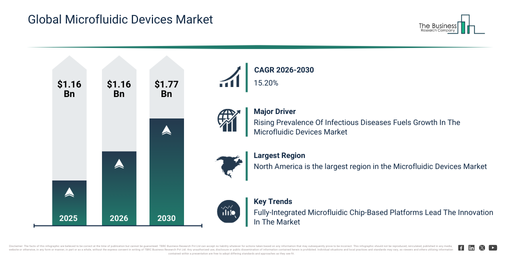
    The microfluidic devices market size has experienced rapid expansion in recent years. This market is projected to expand from $10.14 billion in 2025 to $11.72 billion in 2026, demonstrating a compound annual growth rate (CAGR) of 15.5%. The historical growth of this market can be attributed to several factors including limited microfabrication techniques, the high cost of early microfluidic devices, a reliance on traditional fluid handling methods, the escalating volume of pharmaceutical and biotech research, and the increasing adoption of basic lab-on-a-chip applications.

    The microfluidic devices market is projected to experience substantial growth in the coming years. It is anticipated to expand to $20.65 billion in 2030, demonstrating a compound annual growth rate (CAGR) of 15.2%. This growth over the forecast period is attributable to advancements in microfabrication and 3D printing, an increasing demand for point-of-care diagnostics, the integration of sensors and actuators with microfluidic platforms, rising investment in precision medicine research, and the expansion of high-throughput screening applications. Significant trends expected during this period include a greater adoption of lab-on-a-chip and digital microfluidic devices, the incorporation of advanced microfluidic sensors for diagnostics, enhanced utilization of microfluidic platforms in pharmaceutical research, an increase in polymer and silicon-based microfluidic materials, and a heightened focus on miniaturization and high-throughput fluid handling.

    Get A Free Sample Report With In-Depth Market Insights:

    https://thebusinessresearchcompany.com/sample_request?id=34033463&type=smp&name=Microfluidic%20Devices%20Market%20Report%202026&utm_source=Blogs&utm_medium=Paid&utm_campaign=Sep_PR

    Microfluidic Devices Market Opportunity Drivers: What’s Unlocking New Revenue Potential?

    The growing incidence of infectious diseases is anticipated to fuel the expansion of the microfluidic devices market. These disorders are brought on by pathogenic microorganisms like bacteria, viruses, fungi, or parasites. The widespread occurrence of infectious diseases is influenced by pathogen characteristics, environmental factors, human behavior, and the availability of medical services. Microfluidic devices serve as a potent instrument in combating infectious diseases, owing to their capacity to handle and analyze minute quantities of biological samples with considerable precision and efficiency. This technology improves the ability to detect, diagnose, and manage infectious diseases effectively and accurately, leading to superior health outcomes and disease control. For illustration, in November 2025, the European Centre for Disease Prevention and Control (ECDC), a Sweden-based government agency, reported 266,165 CHIKVD cases and 118 deaths in 2025, indicating a 35.2% decline from 2024, with Brazil in South America being the most affected region. Thus, the increasing prevalence of infectious diseases stimulates the growth of the microfluidic devices market.

    Microfluidic Devices Market Segments: Where Is Growth Concentrated?

    The microfluidic devices market covered in this report is segmented –

    1) By Device Type: Chips, Sensors, Other Device Types

    2) By Material: Glass, Silicon, Polymer, Other Materials

    3) By End-User: Pharmaceutical And Biotechnology Companies, Research Institutes, Diagnostic Centers, Healthcare Facilities, Other End-Users

    Subsegments:

    1) By Chips: Lab-On-A-Chip (LoC) Devices, Digital Microfluidic Chips, Microfluidic Flow Control Chips, Integrated Microfluidic Platforms, Diagnostic Microfluidic Chips

    2) By Sensors: Pressure Sensors, Flow Sensors, Temperature Sensors, Chemical Sensors, Optical Sensors

    3) By Other Device Types: Microfluidic Pumps, Valves And Actuators, Microarray Devices, Microfluidic Analytical Devices, Microfluidic Bioreactors

    Microfluidic Devices Market Innovation Trends Shaping Future Development

    Leading companies in the microfluidic devices market are concentrating on developing advanced platforms, such as microfluidic chip-based systems, to streamline and automate complex laboratory procedures, improve experimental precision and efficiency, and facilitate a broad array of applications. A microfluidic chip-based platform is a miniaturized device that consolidates multiple laboratory functions onto a single chip for accurate control and analysis of small fluid volumes. For instance, in January 2023, SCIEX, a US-based manufacturer of mass spectrometry instrumentation, released the Intabio ZT system, which is the first fully integrated microfluidic chip-based platform. This system is the initial fully integrated microfluidic chip-based platform to combine imaged capillary isoelectric focusing (icIEF) separation with UV detection. Additionally, the system employs the Biologics Explorer software, which enhances data processing capabilities, offering a more profound understanding of the biopharmaceuticals being analyzed.

    Microfluidic Devices Market Key Players Shaping Industry Direction

    Major companies operating in the microfluidic devices market are Thermo Fisher Scientific Inc., Danaher Corporation, Agilent Technologies Inc., Teledyne Technologies Incorporated, Illumina Inc., PerkinElmer Inc., Bio-Rad Laboratories Inc., Zeon Corporation, Standard BioTools Inc., Biosurfit SA, Blacktrace Holdings Ltd., LioniX International B.V., CMC Microsystems Inc., Micronit Microfluidics B.V., Sphere Fluidics Limited, Microfluidic ChipShop GmbH, BlackHole Lab Inc., Bartels-Mikrotechnik GmbH, Hesperos Inc., Fluigent SA

    View The Full Microfluidic Devices Market Report:

    https://thebusinessresearchcompany.com/report/microfluidic-devices-global-market-report?utm_source=Blogs&utm_medium=Paid&utm_campaign=Sep_PR

    Microfluidic Devices Market Regional Analysis: Which Region Leads By Revenue?

    North America was the largest region in the microfluidic devicess market in 2025. Asia-Pacific is expected to be the fastest-growing region in the market going forward. The regions covered in the microfluidic devices market report are Asia-Pacific, South East Asia, Western Europe, Eastern Europe, North America, South America, Middle East, Africa.

    Reach Out To Our Team:

    The Business Research Company: https://www.thebusinessresearchcompany.com/

    Americas: +1 310-496-7795

    Asia: +44 7882 955267 & +91 8897263534

    Europe: +44 7882 955267

    Email us at: marketing@tbrc.info

    Follow us on:

    LinkedIn: https://in.linkedin.com/company/the-business-research-company

    YouTube: https://www.youtube.com/channel/UC24_fI0rV8cR5DxlCpgmyFQ

    Global Market Model: https://www.thebusinessresearchcompany.com/global-market-model

  • Microelectronic Medical Implants Market 2026 Outlook: Market Size, CAGR And Key Growth Opportunities

    Featuring market attractiveness scoring, total addressable market sizing, company benchmarking matrices, interactive Excel dashboards, deeper supply chain intelligence, emerging startup tracking, and granular product-level insights, The Business Research Company’s 2026 market reports are built to deliver research that is both more actionable and more strategically valuable.

    Microelectronic Medical Implants Market Growth Analysis: How Will Revenue Trend Over The Forecast Period?

    The microelectronic medical implants market has experienced rapid growth in recent years. It is projected to expand from $48.23 billion in 2025 to $53.42 billion in 2026, at a compound annual growth rate (CAGR) of 10.8%. The growth observed in the historic period can be attributed to advancements in microelectronics manufacturing, the increasing prevalence of chronic diseases, the adoption of implantable cardiac devices, improvements in biocompatible materials, and the expansion of minimally invasive therapies.

    The microelectronic medical implants market size is anticipated to undergo significant expansion in the coming years. Its value is expected to escalate to $79.08 billion by 2030, demonstrating a compound annual growth rate (CAGR) of 10.3%. This growth over the forecast period is fueled by factors such as increasing capital directed towards bioelectronic medicine, a rise in the adoption of personalized implant therapies, the spread of wireless and remote monitoring implants, a growing need for long-term therapeutic implants, and an enhanced focus on integrating digital health solutions. Noteworthy trends during this period include the wider acceptance of smart implantable devices, a surging demand for miniaturized electronic implants, greater integration of wireless monitoring capabilities, the expansion of neurostimulation and cardiac implants, and an increased emphasis on the long-term reliability of implants.

    Get A Free Sample Report With In-Depth Market Insights:

    https://thebusinessresearchcompany.com/sample_request?id=53889869&type=smp&name=Microelectronic%20Medical%20Implants%20Market%20Report%202026&utm_source=Blogs&utm_medium=Paid&utm_campaign=Sep_PR

    Microelectronic Medical Implants Market Growth Momentum: What Factors Are Shaping Demand?

    The increasing prevalence of hearing impairments is anticipated to boost the microelectronic medical implants market. Hearing impairment is defined as a diminished capacity to hear as well as someone with normal hearing, characterized by hearing thresholds of 20 dB or better in both ears. Microelectronic medical implants can enhance hearing for individuals with severe hearing loss who no longer find assistance from hearing aids, consequently stimulating the microelectronic medical implants market. For instance, data from February 2024, published by the World Health Organization (WHO), a Switzerland-based intergovernmental organization responsible for providing global health leadership, indicates that over 5% of the world’s population, totaling 430 million people, including 34 million children, are in need of rehabilitation for disabling hearing loss. This figure is projected to surpass 700 million by 2050. Therefore, the growing occurrence of hearing impairments is a primary driver for the expansion of the microelectronic medical implants market.

    Microelectronic Medical Implants Market Segment Analysis: What Are The Core Market Categories?

    The microelectronic medical implants market covered in this report is segmented –

    1) By Product: Neurostimulators, Drug Infusion Pumps, Pacemakers, Spinal Fusion Stimulators, Implantable Drug Pumps, Hearing Implants, Eye Implants, Ocular Implants, Other Products

    2) By Technology: Radiofrequency, Sensors, Other Technologies

    3) By Material: Metals, Titanium, Stainless Steel, Platinum, Gold Brazed Alloys, Polymers, Ceramics, Other Materials

    4) By Application: Cardiology, Neurology, Ophthalmology, Oncology, Other Applications

    5) By End-Users: Hospitals And Clinics, Ambulatory Surgical Centers

    Subsegments:

    1) By Neurostimulators: Deep Brain Stimulators, Peripheral Nerve Stimulators

    2) By Drug Infusion Pumps: Insulin Pumps, Pain Management Pumps

    3) By Pacemakers: Single-Chamber Pacemakers, Dual-Chamber Pacemakers, Biventricular Pacemakers

    4) By Spinal Fusion Stimulators: Bone Growth Stimulators, Electrical Stimulation Devices

    5) By Implantable Drug Pumps: Intrathecal Drug Delivery Systems, Programmable Pumps

    6) By Hearing Implants: Cochlear Implants, Bone-Anchored Hearing Aids

    7) By Eye Implants: Retinal Implants, Glaucoma Implants

    8) By Ocular Implant: Intraocular Lenses, Sustained-Release Drug Delivery Implants

    9) By Other Products: Bioelectronic Implants: Wireless Monitoring Devices

    Microelectronic Medical Implants Market Trends Redefining Industry Growth

    Major companies in the microelectronic medical implants market are concentrating on integrating adaptive neuromodulation technologies, including adaptive deep brain stimulation (aDBS), to enhance treatment precision, real-time monitoring, and personalized therapy optimization. aDBS systems are designed as closed-loop neurostimulation technologies that detect neural activity and automatically adjust electrical stimulation based on real-time brain biomarkers, enabling capabilities such as dynamic therapy modulation, reduced overstimulation, and improved symptom management. For instance, in February 2025, Medtronic plc, an Ireland-based medical technology company, secured U.S. FDA approval for its BrainSense Adaptive Deep Brain Stimulation (aDBS) System, an advanced aDBS technology crafted to optimize Parkinson’s disease therapy by continuously sensing neural signals and adapting stimulation accordingly, featuring real-time brain-signal monitoring, automated stimulation adjustments, and an Electrode Identifier tool that accelerates and improves programming accuracy. BrainSense aDBS enhances therapy consistency, clinician workflow efficiency, and overall patient outcomes.

    Microelectronic Medical Implants Market Competitive Analysis Of Leading Industry Participants

    Major companies operating in the microelectronic medical implants market are Medtronic PLC, Abbott Laboratories, Boston Scientific Corporation, BIOTRONIK SE & Co. KG, Cochlear Limited, LivaNova PLC, MicroPort Scientific Corporation, Zimmer Biomet Holdings Inc., Edwards Lifesciences Corporation, Inspire Medical Systems Inc., NeuroPace Inc., Envoy Medical Corporation, ImThera Medical Inc., EndoStim Inc., Integra LifeSciences Corporation, MED-EL Elektromedizinische Geräte GmbH, Abiomed Inc., Lepu Medical Technology Co. Ltd., Beijing PINS Medical Co. Ltd., Nurotron Biotechnology Co. Ltd.

    View The Full Microelectronic Medical Implants Market Report:

    https://thebusinessresearchcompany.com/report/microelectronic-medical-implants-global-market-report?utm_source=Blogs&utm_medium=Paid&utm_campaign=Sep_PR

    Microelectronic Medical Implants Market Geographic Distribution And Regional Opportunities

    North America was the largest region in the microelectronic medical implants market share in 2025. Asia-Pacific is expected to be the fastest-growing region in the microelectronic medical implants market during the forecast period. The regions covered in the microelectronic medical implants market report are Asia-Pacific, South East Asia, Western Europe, Eastern Europe, North America, South America, Middle East, Africa.

    Reach Out To Our Team:

    The Business Research Company: https://www.thebusinessresearchcompany.com/

    Americas: +1 310-496-7795

    Asia: +44 7882 955267 & +91 8897263534

    Europe: +44 7882 955267

    Email us at: marketing@tbrc.info

    Follow us on:

    LinkedIn: https://in.linkedin.com/company/the-business-research-company

    YouTube: https://www.youtube.com/channel/UC24_fI0rV8cR5DxlCpgmyFQ

    Global Market Model: https://www.thebusinessresearchcompany.com/global-market-model