Category: Medical Equipment

  • Microcatheter Market Size Growth: From $1.71 Billion In 2026 To $2.18 Billion By 2030

    Microcatheter Market Size Growth: From $1.71 Billion In 2026 To $2.18 Billion By 2030

    Built to provide research that’s more actionable and strategically valuable, The Business Research Company’s 2026 market reports include market attractiveness analysis, total addressable market sizing, company benchmarking matrices, interactive Excel dashboards, broader supply chain intelligence, emerging startup tracking, and in-depth product insights.

    Microcatheter Market Forecast: What Value Will The Market Reach By 2030?

    The microcatheter market size has grown strongly in recent years. It will grow from $1.6 billion in 2025 to $1.71 billion in 2026 at a compound annual growth rate (CAGR) of 6.6%. The growth in the historic period can be attributed to increase in cardiovascular procedures, advancement in interventional radiology, demand for minimally invasive surgery, early catheter innovation, aging population.

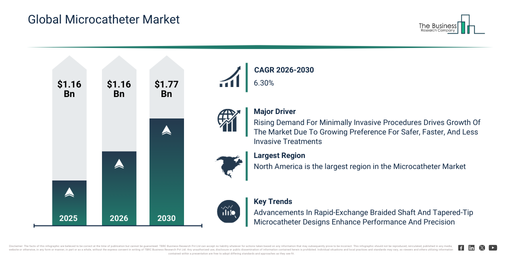
    The microcatheter market is anticipated to experience robust expansion over the coming years. Its valuation is projected to reach $2.18 billion by 2030, demonstrating a compound annual growth rate (CAGR) of 6.3%. This projected increase throughout the forecast period stems from factors such as an increase in neurovascular incidents, advancements in catheter miniaturization technology, a rise in oncology-related interventions, the adoption of robotic-assisted procedures, and the proliferation of surgical centers. Key developments expected during this period involve an uptick in minimally invasive techniques, the creation of highly flexible catheter designs, specific drug delivery applications, a broadening scope of neurovascular interventions, and the development of catheters compatible with advanced imaging.

    Get A Free Sample Report With In-Depth Market Insights:

    https://thebusinessresearchcompany.com/sample_request?id=61481909&type=smp&name=Microcatheter%20Market%20Report%202026&utm_source=Blogs&utm_medium=Paid&utm_campaign=Sep_PR

    Microcatheter Market Expansion Drivers: What’s Shaping Future Growth?

    The microcatheter market is projected to grow in the coming years, driven by the increasing demand for minimally invasive procedures. Minimally invasive procedures refer to medical interventions conducted through small incisions or natural body openings, utilizing specialized instruments to reduce tissue damage, shorten recovery periods, and minimize complications compared to traditional surgery. The rising demand for these procedures is fueled by a growing preference for treatments that offer quicker recovery times, less pain, and a lower risk of complications. Microcatheters aid minimally invasive procedures by allowing physicians to access small or tortuous vessels with high precision, enabling the targeted delivery of therapeutic agents or devices while reducing tissue damage, procedural risks, and recovery time. For instance, in June 2024, the International Society of Aesthetic Plastic Surgery (ISAPS), a US-based international organization, reported that aesthetic procedures globally reached nearly 35 million, an increase of 3.4% from 2023, largely due to the rising demand for minimally invasive cosmetic treatments and preferences for enhanced appearance. Therefore, the growing demand for minimally invasive procedures is propelling the growth of the microcatheter market.

    Microcatheter Market Segment Breakdown: Which Categories Lead On Revenue?

    The microcatheter market covered in this report is segmented –

    1) By Product: Delivery Microcatheters, Diagnostic Microcatheters, Aspiration Microcatheters, Steerable Microcatheters, Micro-Guide Catheters

    2) By Design: Single-Lumen, Dual-Lumen

    3) By Application: Cardiovascular, Neurovascular, Peripheral Vascular, Oncological

    Subsegments:

    1) By Delivery Microcatheters: Single‑Lumen, Dual‑Lumen, Drug or Therapeutic Agent, Device‑Deployment

    2) By Diagnostic Microcatheters: Imaging‑Guided, Sampling or Biopsy, Angiographic, Hybrid Diagnostic‑Therapeutic

    3) Aspiration Microcatheters: Large‑Bore, Small‑Bore, Combined Aspiration + Embolization, Disposable

    4) Steerable Microcatheters: Manual, Robotic Or Actuated, Shape‑Memory Alloy Tip, Multi‑Directional Or Omni‑Directional

    5) Micro‑Guide Catheters: Over‑The‑Wire, Flow‑Directed, Single‑Lumen, Dual‑Lumen

    Microcatheter Market Strategic Trends: What Defines The Next Growth Phase?

    Leading companies in the microcatheter market are focusing on advancements in rapid-exchange braided shaft and tapered-tip designs to bolster their competitive advantage. These innovations feature microcatheters crafted with multi-layer reinforced braided shafts, which improve pushability and torque control, along with extremely fine tapered tips that allow for greater penetration while reducing vessel trauma. For instance, in February 2024, BIOTRONIK, a Switzerland-based company, introduced the Micro Rx catheter, which includes a reinforced distal shaft where a core wire is placed between two braided layers for excellent push transmission, a tapered tip with one of the smallest leading edges for enhanced penetration, and a proximal-end stop engineered to integrate with guide extension catheters for increased stability. These collective enhancements improve physician command in traversing complex vascular anatomies, decrease procedural duration, and contribute to improved patient results.

    Microcatheter Market Leading Companies And Competitive Benchmarking

    Major companies operating in the microcatheter market are Cardinal Health Inc., Medtronic PLC, Stryker Corporation, Koninklijke Philips N.V., Becton Dickinson and Company, Boston Scientific Corporation, B. Braun Melsungen AG, Terumo Corporation, Teleflex Incorporated, Cook Group Incorporated, Integer Holdings, Merit Medical Systems Inc., Penumbra Inc., MicroPort Scientific Corp., Asahi Intecc Co. Ltd., Phenox GmbH, Rapid Medical, Acandis GmbH & Co. KG, Evasc Neurovascular, Vantis Vascular Inc.

    View The Full Microcatheter Market Report:

    https://thebusinessresearchcompany.com/report/global-microcatheter-market-report?utm_source=Blogs&utm_medium=Paid&utm_campaign=Sep_PR

    Microcatheter Market Largest Region By Revenue And Market Share

    North America was the largest region in the microcatheter market in 2025. Asia-Pacific is expected to be the fastest-growing region in the forecast period. The regions covered in the microcatheter market report are Asia-Pacific, South East Asia, Western Europe, Eastern Europe, North America, South America, Middle East, Africa.

    Reach Out To Our Team:

    The Business Research Company: https://www.thebusinessresearchcompany.com/

    Americas: +1 310-496-7795

    Asia: +44 7882 955267 & +91 8897263534

    Europe: +44 7882 955267

    Email us at: marketing@tbrc.info

    Follow us on:

    LinkedIn: https://in.linkedin.com/company/the-business-research-company

    YouTube: https://www.youtube.com/channel/UC24_fI0rV8cR5DxlCpgmyFQ

    Global Market Model: https://www.thebusinessresearchcompany.com/global-market-model
  • Microbiome Testing Kit Market Analysis 2026: Market Size, Growth Trends And Industry Outlook

    Microbiome Testing Kit Market Analysis 2026: Market Size, Growth Trends And Industry Outlook

    Backed by market attractiveness analysis, total addressable market sizing, company benchmarking matrices, interactive Excel dashboards, wider supply chain intelligence, emerging startup coverage, and detailed product-level insights, The Business Research Company’s 2026 market reports are designed to offer research that is more actionable and strategically valuable than ever.

    Microbiome Testing Kit Market Size Outlook: How Quickly Will Revenue Expand Through 2030?

    The microbiome testing kit market has experienced significant expansion recently. It is forecast to grow from $1.63 billion in 2025 to $2.03 billion in 2026, at a compound annual growth rate (CAGR) of 24.3%. The growth observed in the past can be attributed to developments in microbiome research, evolving consumer wellness trends, greater accessibility of DNA sequencing, increased awareness regarding digestive health, and a rise in research funding.

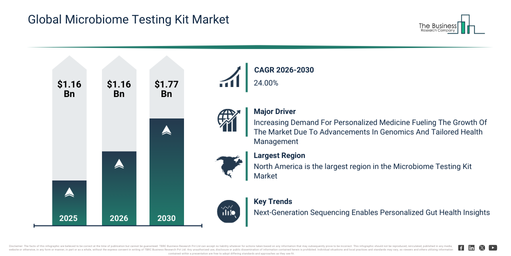
    The microbiome testing kit market is predicted to undergo significant expansion over the next few years, with its size projected to reach $4.8 billion in 2030, demonstrating a compound annual growth rate (CAGR) of 24.0%. This anticipated growth during the forecast period is fueled by elements such as the increasing demand for precision nutrition, the emergence of AI-driven microbiome analytics, an intensified focus on chronic disease prevention, the proliferation of e-commerce health platforms, and the evolution of personalized healthcare models. Major trends expected in this period encompass the rise of at-home diagnostic testing, the provision of personalized nutrition and wellness insights, an expansion in gut health applications, the wider adoption of preventive health screening, and a general increase in consumer health awareness.

    Get A Free Sample Report With In-Depth Market Insights:

    https://thebusinessresearchcompany.com/sample_request?id=63507733&type=smp&name=Microbiome%20Testing%20Kit%20Market%20Report%202026&utm_source=Blogs&utm_medium=Paid&utm_campaign=Sep_PR

    Microbiome Testing Kit Market Development Factors: What’s Supporting Demand?

    The rising need for individualized healthcare approaches is anticipated to fuel the expansion of the microbiome testing kit market in the future. Personalized medicine defines a healthcare method where treatments and preventive measures are customized based on an individual’s distinct genetic profile, way of life, and surroundings. This growing embrace of personalized medicine largely stems from progress in genomics, allowing for accurate detection of genetic differences and the development of specific treatments for individuals. Microbiome testing kits bolster personalized medicine by providing specific data about an individual’s microbial makeup, thus serving as excellent tools for customized health management. These kits minimize speculation in diet and lifestyle adjustments by delivering accurate, evidence-based advice, thereby enhancing general well-being and preventing illnesses. For example, data from February 2024, shared by the US-based nonprofit Personalized Medicine Coalition (PMC), indicated that the U.S. Food and Drug Administration (FDA) authorized 26 novel personalized medicines in 2023, which represents a notable rise from the 12 approved in 2022. Consequently, the expanding need for personalized medicine is a key force behind the development of the microbiome testing kit market.

    Microbiome Testing Kit Market Segmentation: How Does The Market Break Down By Category?

    The microbiome testing kit market covered in this report is segmented –

    1) By Product Type: At-Home Testing, Laboratory-Based Testing

    2) By Sample Type: Stool, Saliva, Skin, Other Sample Types

    3) By Application: Gut Health, Skin Health, Nutrition And Diet, Disease Risk Assessment, Other Applications

    4) By Distribution Channel: Online, Pharmacies, Retail Stores, Other Distribution Channel

    5) By End-User: Individuals, Hospitals And Clinics, Research And Academic Institutes, Other End-Users

    Subsegments:

    1) By At-Home Testing: Gut Health Analysis, Digestive Function Assessment, Personalized Nutrition Guidance, Probiotic Response Evaluation

    2) By Laboratory-Based Testing Kits: Microbial Diversity Profiling, Pathogen Detection, Metabolic Activity Analysis, Antibiotic Resistance Screening

    Microbiome Testing Kit Market Transformation Trends: What Innovations Are Driving Change?

    Leading companies operating within the microbiome testing kit market are actively concentrating on developing innovative solutions, such as next-generation sequencing-based gut microbiome analysis, to provide personalized understanding of gut health and dietary advice. This next-generation sequencing-based gut microbiome analysis is a method that swiftly decodes the deoxyribonucleic acid of all microbes present in the gut to determine their specific types, quantities, and potential health effects. For example, in January 2025, CJ Bioscience Inc., a biotechnology company from South Korea, launched SMILE GUT, a direct-to-consumer gut microbiome testing kit designed to offer individualized insights into gut health. The kit utilizes next-generation sequencing and artificial intelligence to analyze stool samples, producing a gut microbiome index score that indicates microbial diversity, the balance between beneficial and harmful bacteria, and alignment with healthy gut profiles. It then provides tailored health recommendations, including probiotic guidance and dietary suggestions, with results delivered within 14 business days, empowering users to proactively manage their gut health.

    Microbiome Testing Kit Market Industry Leaders And Competitive Landscape

    Major companies operating in the microbiome testing kit market are OraSure Technologies Inc., Genova Diagnostics Inc., Ombre Health Inc., Viome Inc., Zymo Research Corporation, EasyDNA Pty Ltd., Psomagen Inc., DayTwo Ltd., Atlas Biomed Group Limited., BIOHM Health Inc., Mapmygenome India Limited, Biomes NGS GmbH, Carbiotix AB, CosmosID Inc., Juno Bio Ltd., Microba Life Sciences Limited., Sun Genomics Inc., Unseen Bio ApS, InnerBuddies, MyMicroZoo B.V.

    View The Full Microbiome Testing Kit Market Report:

    https://thebusinessresearchcompany.com/report/microbiome-testing-kit-global-market-report?utm_source=Blogs&utm_medium=Paid&utm_campaign=Sep_PR

    Microbiome Testing Kit Market Regional Analysis And Leading Geography

    North America was the largest region in the personalized genomics market in 2025. Asia-Pacific is expected to be the fastest-growing region in the forecast period. The regions covered in the microbiome testing kit market report are Asia-Pacific, South East Asia, Western Europe, Eastern Europe, North America, South America, Middle East, Africa.

    Reach Out To Our Team:

    The Business Research Company: https://www.thebusinessresearchcompany.com/

    Americas: +1 310-496-7795

    Asia: +44 7882 955267 & +91 8897263534

    Europe: +44 7882 955267

    Email us at: marketing@tbrc.info

    Follow us on:

    LinkedIn: https://in.linkedin.com/company/the-business-research-company

    YouTube: https://www.youtube.com/channel/UC24_fI0rV8cR5DxlCpgmyFQ

    Global Market Model: https://www.thebusinessresearchcompany.com/global-market-model

  • Microbiology Diagnostic Devices And Equipment Market Forecast To 2030: Starting From $11.53 Billion In 2026

    Microbiology Diagnostic Devices And Equipment Market Forecast To 2030: Starting From $11.53 Billion In 2026

    Featuring market attractiveness scoring, total addressable market sizing, company benchmarking matrices, interactive Excel dashboards, deeper supply chain intelligence, emerging startup tracking, and granular product-level insights, The Business Research Company’s 2026 market reports are built to deliver research that is both more actionable and more strategically valuable.

    Microbiology Diagnostic Devices And Equipment Market Size, Value And Growth Trajectory Through 2030

    The microbiology diagnostic devices and equipment market size has experienced rapid growth in recent years. It will grow from $6.43 billion in 2025 to $7.5 billion in 2026 at a compound annual growth rate (CAGR) of 16.6%. The historical market expansion can be ascribed to elements such as the development of diagnostic laboratory infrastructure, a rise in infectious disease incidents, increased volumes of hospital-based testing, enhancements in laboratory automation technologies, and greater accessibility to microbiology consumables.

    The microbiology diagnostic devices and equipment market is projected to experience substantial growth in the coming years, reaching $11.53 billion in 2030, demonstrating a compound annual growth rate (CAGR) of 11.4%. This expansion during the forecast period is primarily driven by a heightened need for quick diagnostic tests, greater investments in automating laboratory processes, the broader merging of molecular techniques with microbiology, an increasing emphasis on identifying antimicrobial resistance, and the wider uptake of point-of-care microbiology tools. Key developments observed during this period encompass the expanding use of automated microbiology analyzers, a surging requirement for solutions that quickly detect pathogens, the increasing deployment of high-throughput laboratory equipment, the broadened application of sophisticated culture and identification methods, and a sharpened focus on streamlining laboratory workflows through automation.

    Get A Free Sample Report With In-Depth Market Insights:

    https://thebusinessresearchcompany.com/sample_request?id=81118459&type=smp&name=Microbiology%20Diagnostic%20Devices%20And%20Equipment%20Market%20Report%202026&utm_source=Blogs&utm_medium=Paid&utm_campaign=Sep_PR

    Microbiology Diagnostic Devices And Equipment Market Industry Drivers: What’s Behind The Revenue Growth?

    The expanding occurrence of noncommunicable diseases (NCDs) is anticipated to drive future expansion within the microbiology diagnostic devices and equipment market. These are health conditions not directly passed between individuals, encompassing ailments like cardiovascular disease, cancer, chronic respiratory conditions, and diabetes. The growing impact of NCDs frequently leads to complications necessitating laboratory-conducted microbiological tests for infection detection and patient health monitoring. As an illustration, the World Health Organization, an intergovernmental body located in Switzerland, reported in February 2024 a projection of over 35 million new cancer cases by 2050, marking a 77% rise from the approximately 20 million cases estimated in 2022. Consequently, the growing incidence of noncommunicable diseases is a key factor propelling the expansion of the microbiology diagnostic devices and equipment market.

    Microbiology Diagnostic Devices And Equipment Market Segment Trends And Revenue Contributors

    The microbiology diagnostic devices and equipment market covered in this report is segmented –

    1) By Type: Laboratory Instruments, Microbiology Analyzers, Reagents And Consumables

    2) By Reagents: Pathogen-Specific Kits, General Reagents

    3) By End-User: Diagnostic Laboratories, Hospitals, Other End-Users

    Subsegments:

    1) By Laboratory Instruments: Incubators, Autoclaves And Sterilizers, Refrigerators And Freezers, Centrifuges, Microscopes

    2) By Microbiology Analyzers: Automated Microbiology Analyzers, Polymerase Chain Reaction (PCR) Analyzers, Mass Spectrometers, Immunoassay Analyzers, Flow Cytometers

    3) By Reagents And Consumables: Culture Media, Stains And Dyes, Reagent Kits, Sample Collection Devices, Test Strips And Kits For Specific Pathogens

    #Microbiology Diagnostic Devices And Equipment Market Growth Trends: What’s Shaping The Future Outlook?

    Major companies within the microbiology diagnostic devices and equipment market are innovating by developing advanced systems, such as third-generation total lab automation (TLA) systems. These developments aim to boost the efficiency and accuracy of laboratory testing while simultaneously reducing associated costs. Third-generation total lab automation (TLA) systems currently represent the most sophisticated TLA technology available. They are engineered to automate a broad spectrum of laboratory tasks, covering everything from specimen processing and plating to incubation, imaging, and culture reading. For instance, in January 2023, Becton, Dickinson, and Company (BD), a US-based medical device company, launched its third-generation total lab automation (TLA) systems. This particular system is modular, enabling customization to automate various functions within a microbiology laboratory. It boasts a modular design, incorporates a robotic track system, provides advanced informatics solutions, and integrates artificial intelligence (AI). Furthermore, it serves as a valuable asset for laboratories seeking to enhance their efficiency, cut down expenses, and deliver improved patient care.

    Microbiology Diagnostic Devices And Equipment Market Key Participants And Competitive Landscape

    Major companies operating in the microbiology diagnostic devices and equipment market are Danaher, Abbott Laboratories, Thermo Fisher Scientific, Becton Dickinson and Company, Biomerieux, Bio-Rad Laboratories Inc., Roche, Bruker Corporation, Merck KGaA, Siemens Healthcare, Beckman Coulter Inc., Ortho Clinical Diagnostics, Sysmex Corporation, Siemens Healthineers, TestLine Clinical Diagnostics s.r.o., Cepheid, Hologic, Meridian Bioscience, Qiagen N.V., Immunodiagnostic Systems Holdings PLC, Mesa Biotech Inc., PerkinElmer Inc., Neogen Corporation

    View The Full Microbiology Diagnostic Devices And Equipment Market Report:

    https://thebusinessresearchcompany.com/report/microbiology-diagnostic-devices-and-equipment-global-market-report?utm_source=Blogs&utm_medium=Paid&utm_campaign=Sep_PR

    Microbiology Diagnostic Devices And Equipment Market Geographic Analysis: Where Is Demand Accelerating Fastest?

    North America was the largest region in the microbiology diagnostics devices and equipment market in 2025. Asia-Pacific was the second largest region in the global microbiology diagnostic devices and equipment market. The regions covered in the microbiology diagnostic devices and equipment market report are Asia-Pacific, South East Asia, Western Europe, Eastern Europe, North America, South America, Middle East, Africa.

    Reach Out To Our Team:

    The Business Research Company: https://www.thebusinessresearchcompany.com/

    Americas: +1 310-496-7795

    Asia: +44 7882 955267 & +91 8897263534

    Europe: +44 7882 955267

    Email us at: marketing@tbrc.info

    Follow us on:

    LinkedIn: https://in.linkedin.com/company/the-business-research-company

    YouTube: https://www.youtube.com/channel/UC24_fI0rV8cR5DxlCpgmyFQ

    Global Market Model: https://www.thebusinessresearchcompany.com/global-market-model
  • Microarray Scanners Market Size In 2026 And Beyond: Understanding Future Growth Potential

    Built to provide research that’s more actionable and strategically valuable, The Business Research Company’s 2026 market reports include market attractiveness analysis, total addressable market sizing, company benchmarking matrices, interactive Excel dashboards, broader supply chain intelligence, emerging startup tracking, and in-depth product insights.

    Microarray Scanners Market CAGR Outlook And Future Development

    The market for microarray scanners has experienced robust expansion over recent years. Its valuation is projected to increase from $1 billion in 2025 to $1.08 billion in 2026 at a compound annual growth rate (CAGR) of 8.1%. This historical growth has been driven by factors such as the broadening of genomics research, increased financial support for academic and research institutions, wider adoption of microarray technologies, a growing need for gene expression analysis, and improvements in fluorescence detection techniques.

    The microarray scanners market is anticipated to experience significant expansion over the next few years. It is projected to achieve a value of $1.5 billion by 2030, demonstrating a compound annual growth rate (CAGR) of 8.6%. This growth trajectory is fueled by factors such as the increasing adoption of precision medicine research, rising investments in biotechnology and pharmaceutical research and development, the broadening scope of large-scale genomic studies, growing integration of AI-driven data analysis, and the escalating demand for high-throughput research instruments. Key trends for the forecast period include the wider implementation of high-resolution fluorescence scanners, an increase in their utilization within genomic and proteomic research, enhanced integration with data analysis software, the expansion of automated sample processing, and a heightened focus on multiplex detection capabilities.

    Get A Free Sample Report With In-Depth Market Insights:

    https://thebusinessresearchcompany.com/sample_request?id=41858246&type=smp&name=Microarray%20Scanners%20Market%20Report%202026&utm_source=Blogs&utm_medium=Paid&utm_campaign=Sep_PR

    Microarray Scanners Market Growth Factors: What’s Supporting Expansion?

    The increasing occurrence of chronic diseases is anticipated to propel the expansion of the microarray scanner market in the coming years. A chronic disease is defined as an illness that endures for three months or longer and may worsen over time. Microarray scanners are instrumental in analyzing gene expression patterns, which enables researchers to explore the molecular underpinnings of chronic diseases and identify potential biomarkers essential for their diagnosis, prognosis, and treatment. For example, in January 2023, the National Center for Biotechnology Information (NCBI), a US-based National Library of Medicine, indicated that the worldwide count of individuals suffering from chronic diseases is expected to reach 142.66 million by the year 2050. Hence, the rising prevalence of chronic diseases is a significant factor driving the growth of the microarray scanner market.

    Microarray Scanners Market Segment Analysis Spotlighting Growth Areas

    The microarray scanners market covered in this report is segmented –

    1) By Product Type: Fluorescence Microarray Scanners, Charge-Coupled Devices Microarray Scanners, Colorimetric Microarray Scanners, Other Product Types

    2) By Application: Gene Expression, Drug Discovery, Other Applications

    3) By End User: Hospitals, Diagnostic Laboratories, Pharmaceutical And Biotechnology Companies, Academic And Research Institutes

    Subsegments:

    1) By Fluorescence Microarray Scanners: Laser Scanners, Multispectral Scanners

    2) By Charge-Coupled Devices (CCD) Microarray Scanners: Standard CCD Scanners, High-Resolution CCD Scanners

    3) By Colorimetric Microarray Scanners: Slide Scanners, Digital Colorimetric Scanners

    4) By Other Product Types: Hybrid Scanners, Custom Or Specialized Microarray Scanners

    Microarray Scanners Market Industry Trends: What’s Reshaping Demand?

    Leading companies in the microarray scanners sector are developing innovative products, such as sophisticated microarray platforms, to maintain their market position. A sophisticated microarray platform is a high-throughput technology that permits the simultaneous analysis of thousands of genes, proteins, or biomarkers on a single chip, offering improved sensitivity, specificity, and data precision. For example, in June 2023, MARGenomics private ltd., a Spain-based company, unveiled the Applied Biosystems GeneChip 3000 Dx v2. This advanced microarray platform represents a significant stride in the microarray technology domain. Notably, this platform was the first in Europe and the United States to secure regulatory approval for diagnostic use, highlighting its potential impact on clinical diagnostics and research. Given its capacity to deliver high-resolution genomic data, it is anticipated to bolster personalized medicine approaches across various therapeutic fields.

    Microarray Scanners Market Top Companies Driving Competitive Growth

    Major companies operating in the microarray scanners market are F. Hoffmann-La Roche AG, Thermo Fisher Scientific Inc., GE Healthcare Life Sciences, Hitachi High-Tech Corporation, Innopsys Inc., PerkinElmer Inc., VWR International LLC, Illumina Inc., Bio-Rad Laboratories Inc., Agilent Technologies Inc., Tecan Group AG, Huron Technologies International Inc., Miltenyi Biotec B.V. & Co. KG, Luminex Corporation, Molecular Devices LLC, CapitalBio Technology Inc., Berthold Technologies GmbH & Co. KG, RayBiotech Inc., Scienion AG, Oxford Gene Technology IP Limited, Applied Microarrays Inc., Arrayit Corporation

    View The Full Microarray Scanners Market Report:

    https://thebusinessresearchcompany.com/report/microarray-scanners-global-market-report?utm_source=Blogs&utm_medium=Paid&utm_campaign=Sep_PR

    Microarray Scanners Market Global Footprint: Which Region Leads The Industry?

    North America was the largest region in the microarray scanners market in 2025. The regions covered in the microarray scanners market report are Asia-Pacific, South East Asia, Western Europe, Eastern Europe, North America, South America, Middle East, Africa.

    Reach Out To Our Team:

    The Business Research Company: https://www.thebusinessresearchcompany.com/

    Americas: +1 310-496-7795

    Asia: +44 7882 955267 & +91 8897263534

    Europe: +44 7882 955267

    Email us at: marketing@tbrc.info

    Follow us on:

    LinkedIn: https://in.linkedin.com/company/the-business-research-company

    YouTube: https://www.youtube.com/channel/UC24_fI0rV8cR5DxlCpgmyFQ

    Global Market Model: https://www.thebusinessresearchcompany.com/global-market-model

  • Metzenbaum Scissors Market Reaches $2.06 Billion In 2026: Key Developments Shaping Expansion

    Metzenbaum Scissors Market Reaches $2.06 Billion In 2026: Key Developments Shaping Expansion

    Backed by market attractiveness analysis, total addressable market sizing, company benchmarking matrices, interactive Excel dashboards, wider supply chain intelligence, emerging startup coverage, and detailed product-level insights, The Business Research Company’s 2026 market reports are designed to offer research that is more actionable and strategically valuable than ever.

    Metzenbaum Scissors Market Set To Climb From $1.77 Billion In 2026 To $2.06 Billion By 2030

    The metzenbaum scissors market size has experienced consistent growth in recent years. It is projected to expand from $1.7 billion in 2025 to $1.77 billion in 2026, demonstrating a compound annual growth rate (CAGR) of 4.2%. The growth observed in the historic period can be attributed to the widespread use of stainless steel instruments, the limited availability of precision surgical tools, an increase in general surgery procedures, expanding hospital and clinic infrastructure, and a continued reliance on conventional surgical scissors.

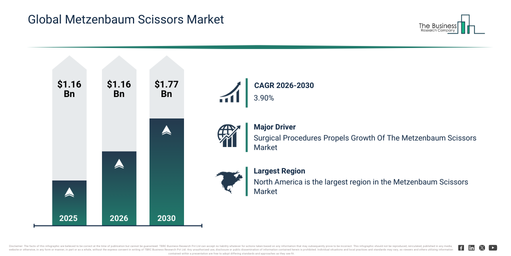
    The metzenbaum scissors market size is anticipated to show steady growth in the coming years. It is projected to increase to $2.06 billion in 2030, with a compound annual growth rate (CAGR) of 3.9%. This growth throughout the forecast period can be linked to the wider adoption of titanium and advanced materials, an increase in minimally invasive and robotic-assisted surgeries, the expansion of veterinary and dental surgical procedures, growing investment in surgical instrument innovation, and a regulatory emphasis on surgical instrument safety and sterilization. Significant trends expected during this period include a rising demand for precision surgical instruments, greater use of titanium and high-quality stainless steel scissors, an increase in minimally invasive and delicate tissue surgeries, the broadening of veterinary and dental surgical applications, and a focus on ergonomic designs for enhanced surgeon comfort.

    Get A Free Sample Report With In-Depth Market Insights:

    https://thebusinessresearchcompany.com/sample_request?id=16227505&type=smp&name=Metzenbaum%20Scissors%20Market%20Report%202026&utm_source=Blogs&utm_medium=Paid&utm_campaign=Sep_PR

    Metzenbaum Scissors Market Demand Drivers: What’s Powering Industry Growth?

    The increasing volume of surgical procedures is projected to boost the expansion of the metzenbaum scissors market in the future. Surgical procedures involve medical interventions carried out by skilled surgeons to address illnesses, injuries, or other bodily ailments. These interventions necessitate making cuts or employing specific instruments to manipulate tissues, organs, or bones internally. The rise in surgical procedures can be attributed to an aging global populace, advancements in medical science, a surge in chronic diseases, and better access to medical services. Metzenbaum scissors are predominantly utilized in surgical operations for cutting and separating delicate tissues. Their construction, characterized by long, thin blades with rounded tips, renders them perfect for accurate tissue manipulation without inflicting undue harm. For example, in June 2024, data from the International Society of Aesthetic Plastic Surgery (ISAPS), a US-based nonprofit professional organization, indicated that overall surgical and non-surgical procedures saw a 3.4% increase in 2023, reaching 34.9 million. This rise was fueled by a 5.5% growth in surgical procedures. Plastic surgeons conducted more than 15.8 million surgical procedures and 19.1 million non-surgical procedures, representing a 40% overall surge in procedures over the last four years. Consequently, the growing number of surgical procedures is driving the growth of the metzenbaum scissors market.

    Metzenbaum Scissors Market Segment Performance And Emerging Opportunities

    The metzenbaum scissors market covered in this report is segmented –

    1) By Type: Bending, Straight

    2) By Material: Stainless Steel, Titanium, Plastic

    3) By Jaw Design: Straight, Angled, Curved

    4) By Application: Surgical, Dental, Veterinary

    5) By End-User: Hospitals, Clinics, Private Practices, Veterinary Clinics

    Subsegments:

    1) By Bending: Curved Bending Metzenbaum Scissors, Heavy-Duty Bending Metzenbaum Scissors, Micro Bending Metzenbaum Scissors, Bending Metzenbaum Scissors For Precision Surgery

    2) By Straight: Standard Straight Metzenbaum Scissors, Long Straight Metzenbaum Scissors, Straight Metzenbaum Scissors For General Surgery, Straight Metzenbaum Scissors For Delicate Procedures

    Metzenbaum Scissors Market Leading Players And Competitive Positioning

    Major companies operating in the metzenbaum scissors market are Olympus Corporation, CooperSurgical Inc., Karl Storz SE & Co. KG, Integra LifeSciences Corporation, ConMed Corporation, Aspen Surgical Products Inc., Nopa Instruments Medizintechnik GmbH, Electro Surgical Instrument Co., HARFINS GmbH, Wexler Surgical Inc., Xelpov Surgical Ltd., Sontec Instruments Inc., DTR Medical Ltd., Johnson & Johnson (Ethicon), B Braun Melsungen AG, Medtronic plc, KLS Martin Group, Scanlan International Inc., Stille AB, Zimmer Biomet Holdings Inc., Arthrex Inc., Swann‑Morton Ltd., World Precision Instruments LLC, Sklar Surgical Instruments.

    View The Full Metzenbaum Scissors Market Report:

    https://thebusinessresearchcompany.com/report/metzenbaum-scissors-global-market-report?utm_source=Blogs&utm_medium=Paid&utm_campaign=Sep_PR

    Metzenbaum Scissors Market Regional Distribution: Which Areas Power Market Growth?

    North America was the largest region in the metzenbaum scissors market in 2025. The regions covered in the metzenbaum scissors market report are Asia-Pacific, South East Asia, Western Europe, Eastern Europe, North America, South America, Middle East, Africa.

    Reach Out To Our Team:

    The Business Research Company: https://www.thebusinessresearchcompany.com/

    Americas: +1 310-496-7795

    Asia: +44 7882 955267 & +91 8897263534

    Europe: +44 7882 955267

    Email us at: marketing@tbrc.info

    Follow us on:

    LinkedIn: https://in.linkedin.com/company/the-business-research-company

    YouTube: https://www.youtube.com/channel/UC24_fI0rV8cR5DxlCpgmyFQ

    Global Market Model: https://www.thebusinessresearchcompany.com/global-market-model

  • Metered Dose Inhaler Devices Market Growth Outlook For 2026: Drivers, Trends And Future Opportunities

    Metered Dose Inhaler Devices Market Growth Outlook For 2026: Drivers, Trends And Future Opportunities

    Featuring market attractiveness scoring, total addressable market sizing, company benchmarking matrices, interactive Excel dashboards, deeper supply chain intelligence, emerging startup tracking, and granular product-level insights, The Business Research Company’s 2026 market reports are built to deliver research that is both more actionable and more strategically valuable.

    Metered Dose Inhaler Devices Market Forecast: Value Set To Climb From $17.12 Billion To $21.06 Billion

    The metered dose inhaler devices market has experienced robust expansion in recent years. Its valuation is predicted to climb from $16.23 billion in 2025 to $17.12 billion in 2026, exhibiting a compound annual growth rate (CAGR) of 5.5%. This past growth can be ascribed to factors such as the increasing prevalence of asthma, a rise in COPD incidence, the widespread application of inhalation therapy, physician preference for MDIs, and the availability of generic inhalers.

    The metered dose inhaler devices market size is projected to experience substantial expansion over the coming years. This market is anticipated to reach a valuation of $21.06 billion by 2030, exhibiting a compound annual growth rate (CAGR) of 5.3%. Factors contributing to this anticipated growth include the rise of smart inhalers, stringent environmental regulations concerning propellants, the expansion of homecare treatments, increasing demand for digital adherence monitoring, and the advent of new respiratory therapies. Key trends identified for this period encompass smart dose tracking inhalers, the development of breath-actuated inhalation technology, more compact and portable device designs, improvements in dose accuracy, and the wider adoption of eco-friendly propellants.

    Get A Free Sample Report With In-Depth Market Insights:

    https://thebusinessresearchcompany.com/sample_request?id=91055853&type=smp&name=Metered%20Dose%20Inhaler%20Devices%20Market%20Report%202026&utm_source=Blogs&utm_medium=Paid&utm_campaign=Sep_PR

    Metered Dose Inhaler Devices Market Growth Drivers: What’s Behind The Acceleration?

    The metered dose inhaler devices market is anticipated to grow due to the increasing prevalence of chronic obstructive pulmonary diseases. Chronic obstructive pulmonary disease (COPD) is a progressive lung condition characterized by obstructed airflow, typically caused by long-term exposure to irritants like cigarette smoke, leading to symptoms such as shortness of breath, coughing, and wheezing. The rising incidence of COPD is influenced by factors including tobacco use, air pollution, an aging population, and delayed diagnosis or treatment. Metered dose inhaler (MDI) devices assist in managing COPD by delivering medication directly to the lungs, offering rapid relief and improving airflow. For example, in December 2023, the National Institutes of Health, a US-based government agency, projected that COPD cases would increase from 532 million in 2030 to a total of 592 million by 2050. Consequently, the increasing prevalence of chronic obstructive pulmonary diseases is propelling the growth of the metered dose inhaler devices market. The rising air pollution is expected to boost the growth of the metered dose inhaler (MDI) devices market going forward. Air pollution refers to the presence of harmful substances, including particulate matter, gases, and biological molecules, in the atmosphere that can cause adverse health effects. Exposure to air pollution is a significant risk factor for respiratory diseases such as asthma and chronic obstructive pulmonary disease (COPD). The increase in air pollution is largely attributed to industrialization, urbanization, higher vehicular emissions, and the burning of fossil fuels. MDIs support public health by providing targeted medication to manage respiratory conditions that are triggered or worsened by polluted air. For instance, in October 2025, the Clean Air Fund, a UK-based nonprofit philanthropic organization, reported that in 2023, funding for fossil fuel–related projects surged 80%, increasing from $5.3B to $9.5B due to rising air pollution. Additionally, fossil fuel combustion contributes to over 5 million of the 8.1 million annual premature air pollution deaths. Therefore, the rising air pollution is driving the growth of the metered dose inhaler devices market.

    Metered Dose Inhaler Devices Market Segment Landscape And Growth Outlook

    The metered dose inhaler devices market covered in this report is segmented –

    1) By Type: Desktop Metered Dose Inhaler Devices, Portable Metered Dose Inhaler Devices, Other Types

    2) By Distribution Channel: Online, Offline

    3) By Application: Asthma, Chronic Obstructive Pulmonary Disease, Other Applications

    4) By End-User: Hospitals, Clinics, Homecare Settings, Other End Users

    Subsegments:

    1) By Desktop Metered Dose Inhaler Devices: Standard desktop MDI devices, High-performance desktop MDI devices, Smart desktop MDI devices

    2) By Portable Metered Dose Inhaler Devices: Conventional portable MDI devices, Advanced portable MDI devices, Smart portable MDI devices

    3) By Other Types: Nebulizer-Based MDI devices, Dry powder inhaler (DPI) combined devices, Soft mist inhaler (SMI) devices, Other specialized MDI devices

    Metered Dose Inhaler Devices Market Trends: What’s Defining The Industry’s Next Phase?

    Major companies in the metered dose inhaler devices market are concentrating on developing technologically advanced solutions, such as pressurized metered dose inhalers, to improve drug delivery efficiency and patient compliance. Pressurized metered-dose inhalers (pMDIs) are devices for inhalation that deliver an exact dose of medication in aerosol form using a pressurized propellant. For instance, in July 2023, Lupin Limited, an India-based pharmaceutical company, introduced Luforbec 100/6, a pressurized metered dose inhaler (pMDI) designed for treating adult asthma and chronic obstructive pulmonary disease (COPD) in Germany. This product combines beclometasone (100 µg) and formoterol (6 µg), offering an effective treatment option for patients who require combination therapy. Importantly, Luforbec is priced approximately 47% lower than the fixed reference price, thereby increasing its accessibility. Given that asthma impacts about 5% of adults in Germany, this launch emphasizes Lupin’s commitment to addressing critical healthcare requirements and enhancing patient outcomes in the field of respiratory care.

    Metered Dose Inhaler Devices Market Competitive Overview And Top Companies

    Major companies operating in the metered dose inhaler devices market are Pfizer Inc., Merck & Co. Inc., AstraZeneca PLC, GlaxoSmithKline plc, 3M Company, Boehringer Ingelheim GmbH, Teva Pharmaceutical Industries Ltd., Berry Global Inc., AptarGroup Inc., Philips Healthcare, Chiesi Farmaceutici S.p.A., Cipla Limited, Gerresheimer AG, Zydus Lifesciences Limited, Mylan N.V., Nemera, Beximco Pharmaceuticals Limited, Cohero Health Inc., Bespak Europe Ltd., Trudell Medical International, Iconovo AB

    View The Full Metered Dose Inhaler Devices Market Report:

    https://thebusinessresearchcompany.com/report/metered-dose-inhaler-devices-global-market-report?utm_source=Blogs&utm_medium=Paid&utm_campaign=Sep_PR

    Metered Dose Inhaler Devices Market Leading Geography: Which Region Contributes The Most Revenue?

    North America was the largest region in the metered dose inhaler devices market in 2025. Asia-Pacific is expected to be the fastest-growing region in the forecast period. The regions covered in the metered dose inhaler devices market report are Asia-Pacific, South East Asia, Western Europe, Eastern Europe, North America, South America, Middle East, Africa.

    Reach Out To Our Team:

    The Business Research Company: https://www.thebusinessresearchcompany.com/

    Americas: +1 310-496-7795

    Asia: +44 7882 955267 & +91 8897263534

    Europe: +44 7882 955267

    Email us at: marketing@tbrc.info

    Follow us on:

    LinkedIn: https://in.linkedin.com/company/the-business-research-company

    YouTube: https://www.youtube.com/channel/UC24_fI0rV8cR5DxlCpgmyFQ

    Global Market Model: https://www.thebusinessresearchcompany.com/global-market-model

  • Menopause Cooling Wearable Market Size Forecast From 2026 To 2030: Key Industry Trends

    Menopause Cooling Wearable Market Size Forecast From 2026 To 2030: Key Industry Trends

    Built to provide research that’s more actionable and strategically valuable, The Business Research Company’s 2026 market reports include market attractiveness analysis, total addressable market sizing, company benchmarking matrices, interactive Excel dashboards, broader supply chain intelligence, emerging startup tracking, and in-depth product insights.

    Menopause Cooling Wearable Market Revenue Growth On Track For A 13.7% CAGR Through 2030

    The menopause cooling wearable market has experienced significant growth in recent years. Its size is projected to increase from $1.47 billion in 2025 to $1.67 billion in 2026, at a compound annual growth rate (CAGR) of 14.0%. The expansion observed in prior periods can be attributed to factors such as rising awareness about menopause symptoms, the increasing adoption of wearable health devices, growth in female healthcare spending, technological improvements in cooling materials, and the demand for homecare comfort devices.

    The menopause cooling wearable market is projected to experience swift expansion over the coming years. This market is anticipated to reach $2.79 billion by 2030, exhibiting a compound annual growth rate (CAGR) of 13.7%. This expansion during the projection period stems from several factors, including the integration with smart health ecosystems, AI-powered temperature control, increased presence in emerging markets, the creation of multi-functional wearables, and the use of sustainable and eco-friendly materials. Key trends expected over the forecast period encompass wearable devices for temperature regulation, cooling wearables equipped with sensors, integration with smart home health systems, portable and discreet cooling accessories, and advancements in phase-change materials.

    Get A Free Sample Report With In-Depth Market Insights:

    https://thebusinessresearchcompany.com/sample_request?id=67172628&type=smp&name=Menopause%20Cooling%20Wearable%20Market%20Report%202026&utm_source=Blogs&utm_medium=Paid&utm_campaign=Sep_PR

    Menopause Cooling Wearable Market Growth Factors Behind Sustained Expansion

    The increasing occurrence of menopause is anticipated to propel the expansion of the menopause cooling wearable market going forward. Menopause represents a natural biological phase marking the conclusion of a woman’s menstrual cycles, occurring when the ovaries cease producing hormones and menstruation has been absent for 12 consecutive months. This rising incidence of menopause is attributed to extended life expectancy, as more women now live well beyond their reproductive years, leading to a greater proportion of the population experiencing the menopausal transition and its associated health implications. Menopause cooling wearables support women by delivering on-demand temperature relief, which helps manage hot flashes and night sweats, enhancing comfort and overall quality of life during the menopausal transition. For instance, in December 2023, according to the National Library of Medicine, a US-based journal, approximately 1.3 million women enter menopause each year in the United States, typically between the ages of 45 and 56. Therefore, the growing incidence of menopause drives the menopause cooling wearable market.

    Menopause Cooling Wearable Market Breakdown By Product Type And Application

    The menopause cooling wearable market covered in this report is segmented –

    1) By Product Type: Necklaces, Bracelets, Patches, Vests

    2) By Technology: Active Cooling, Passive Cooling, Phase Change Materials, Other Technologies

    3) By Distribution Channel: Online Stores, Pharmacies, Specialty Stores, Other Distribution Channels

    4) By Application: Hot Flash Relief, Night Sweats, Daily Wear, Other Applications

    5) By End-User: Homecare, Hospitals And Clinics, Others End-User

    Subsegments:

    1) By Necklaces: Smart Cooling Necklaces, Temperature-Regulating Necklaces, Phase-Change Material Necklaces, Gel-Based Cooling Necklaces

    2) By Bracelets: Smart Cooling Bracelets, Thermal Regulation Bracelets, Sensor-Integrated Bracelets, Rechargeable Cooling Bracelets

    3) By Patches: Hydrogel Cooling Patches, Phase-Change Cooling Patches, Herbal Infused Cooling Patches, Adhesive Thermal Relief Patches

    4) By Vests: Battery-Operated Cooling Vests, Phase-Change Material Vests, Smart Temperature-Controlled Vests, Moisture-Wicking Cooling Vests

    Menopause Cooling Wearable Market Industry Trends Fueling Future Revenue Growth

    Major companies in the menopause cooling wearable market are prioritizing technological advancements, such as AI-powered wearables designed for hot flash management. Their aim is to elevate user comfort, customize cooling therapy, and enhance real-time symptom tracking for superior overall menopause care. AI-powered wearables for hot flash management are smart devices that leverage artificial intelligence to monitor physiological signals, enabling them to predict or detect hot flashes instantly. They then deliver targeted cooling or relief using adaptive technologies, thereby improving the comfort and quality of life for menopausal women. For example, in January 2024, Amira Health Inc., a US-based healthcare technology startup, introduced an AI-powered hot flash care product. This product employs advanced technology to monitor and manage symptoms in real time, providing personalized relief for women experiencing menopause, and integrates smart sensing with adaptive cooling to boost comfort and quality of life, signifying a notable progression in menopause care. This new product aims to enhance menopause care by utilizing AI to offer immediate, tailored relief, thereby making daily life more comfortable for women.

    Menopause Cooling Wearable Market Competitive Landscape: Which Companies Lead The Industry?

    Major companies operating in the menopause cooling wearable market are Embr Labs, Amira Health, Grace Cooling, Menopod, MyCelsius, Coolzen, Thermaband, KÜLKUF, Fria LLC, Koldtec, Polar Products Inc., frogg toggs, Arctic Heating AS, CoolSense, CoolCura, Hot Girls Pearls, BodiMetrics, VivaLNK, Qardio, Chill Pal

    View The Full Menopause Cooling Wearable Market Report:

    https://thebusinessresearchcompany.com/report/menopause-cooling-wearable-global-market-report?utm_source=Blogs&utm_medium=Paid&utm_campaign=Sep_PR

    Menopause Cooling Wearable Market Regional Outlook: Where Is Opportunity Concentrated?

    North America was the largest region in the menopause cooling wearable market in 2025. Asia-Pacific is expected to be the fastest-growing region in the forecast period. The regions covered in the menopause cooling wearable market report are Asia-Pacific, South East Asia, Western Europe, Eastern Europe, North America, South America, Middle East, Africa.

    Reach Out To Our Team:

    The Business Research Company: https://www.thebusinessresearchcompany.com/

    Americas: +1 310-496-7795

    Asia: +44 7882 955267 & +91 8897263534

    Europe: +44 7882 955267

    Email us at: marketing@tbrc.info

    Follow us on:

    LinkedIn: https://in.linkedin.com/company/the-business-research-company

    YouTube: https://www.youtube.com/channel/UC24_fI0rV8cR5DxlCpgmyFQ

    Global Market Model: https://www.thebusinessresearchcompany.com/global-market-model
  • Membrane Spatula Market 2026: Market Size, Growth Drivers And Emerging Opportunities

    Backed by market attractiveness analysis, total addressable market sizing, company benchmarking matrices, interactive Excel dashboards, wider supply chain intelligence, emerging startup coverage, and detailed product-level insights, The Business Research Company’s 2026 market reports are designed to offer research that is more actionable and strategically valuable than ever.

    Membrane Spatula Market Value Growth And Long-Term Outlook

    The membrane spatula market has shown robust expansion in recent years. Its size is expected to increase from $0.83 billion in 2025 to $0.88 billion in 2026, advancing at a compound annual growth rate of 6.1%. The historic growth in this market can be attributed to several factors, including the surge in ophthalmic surgeries, the expansion of hospital surgical departments, the growing availability of trained surgeons, the rising prevalence of eye disorders, and the adoption of minimally invasive surgical techniques.

    The membrane spatula market is anticipated to experience substantial expansion in the coming years. Its valuation is projected to reach $1.1 billion by 2030, demonstrating a compound annual growth rate (CAGR) of 5.5%. This growth over the forecast period is primarily driven by factors such as the increasing need for sophisticated microsurgical instruments, the proliferation of specialty clinics, a heightened emphasis on surgical precision and successful outcomes, the expansion of healthcare infrastructure in emerging markets, and increased capital allocation towards surgical instrumentation. Noteworthy trends during this period encompass a growing need for precise surgical tools, the expanding application of membrane spatulas in ophthalmic procedures, the wider acceptance of microsurgical techniques, the establishment of more specialty surgical centers, and a rising preference for surgical instruments that are both reusable and durable.

    Get A Free Sample Report With In-Depth Market Insights:

    https://thebusinessresearchcompany.com/sample_request?id=92329521&type=smp&name=Membrane%20Spatula%20Market%20Report%202026&utm_source=Blogs&utm_medium=Paid&utm_campaign=Sep_PR

    Membrane Spatula Market Demand Drivers Opening New Revenue Streams

    The Membrane Spatula Market is projected to expand due to a rising volume of surgical procedures. These medical interventions are designed to treat or diagnose conditions by physically altering body tissues or organs. The increase in surgical procedures stems from advancements in medical technology, an aging population requiring more interventions, the expanding occurrence of chronic illnesses, and patients’ greater demands for enhanced post-treatment quality of life. Crucial for complex operations, Membrane Spatulas enable surgeons to precisely handle tissues, thereby improving surgical results. As an illustration, a global survey on aesthetic and cosmetic procedures by the International Society of Aesthetic Plastic Surgery (ISAPS), a Germany-based professional medical association, indicated that plastic surgeons carried out 15,813,353 aesthetic surgical procedures globally in 2023, marking a 5.5% rise from 14,986,982 procedures in 2022. This data was reported in June 2024. Consequently, the growing frequency of surgical procedures is stimulating the expansion of the membrane spatula market.

    Membrane Spatula Market Segment Analysis And Revenue Potential

    The membrane spatula market covered in this report is segmented –

    1) By Type: Single-Ended, Double-Ended

    2) By Material: Stainless Steel, Titanium

    3) By End-User: Hospitals, Clinics

    Subsegments:

    1) By Single-Ended: Flat Single-Ended Spatula, Curved Single-Ended Spatula

    2) By Double-Ended: Flat Double-Ended Spatula, Curved Double-Ended Spatula

    Membrane Spatula Market Competitive Landscape: Who Leads The Industry?

    Major companies operating in the membrane spatula market are Corza Ophthalmology, KLS Martin Group, RUMEX International, Moria, Crestpoint Ophthalmics, OPTICO, Titan Medical Instruments, Reda Instrumente, MSI Precision Specialty Instruments, BOSS Instruments, Bharati Surgical, Ambler Surgical Corporation, Walcott Rx Instruments, Medelec Instruments, ScissorOn Instrumentation, Damla Medical, Duckworth and Kent, Storz am Mark, Asico, Katena Products

    View The Full Membrane Spatula Market Report:

    https://thebusinessresearchcompany.com/report/membrane-spatula-global-market-report?utm_source=Blogs&utm_medium=Paid&utm_campaign=Sep_PR

    Membrane Spatula Market Geographic Landscape: Which Region Leads Industry Growth?

    North America was the largest region in the membrane spatula market in 2025. Asia-Pacific is expected to be the fastest-growing region in the forecast period. The regions covered in the membrane spatula market report are Asia-Pacific, South East Asia, Western Europe, Eastern Europe, North America, South America, Middle East, Africa.

    Reach Out To Our Team:

    The Business Research Company: https://www.thebusinessresearchcompany.com/

    Americas: +1 310-496-7795

    Asia: +44 7882 955267 & +91 8897263534

    Europe: +44 7882 955267

    Email us at: marketing@tbrc.info

    Follow us on:

    LinkedIn: https://in.linkedin.com/company/the-business-research-company

    YouTube: https://www.youtube.com/channel/UC24_fI0rV8cR5DxlCpgmyFQ

    Global Market Model: https://www.thebusinessresearchcompany.com/global-market-model

  • Medication Voice Reminder Device Market Set To Expand From $2.91 Billion In 2026: Growth Outlook Through 2030

    Medication Voice Reminder Device Market Set To Expand From $2.91 Billion In 2026: Growth Outlook Through 2030

    Featuring market attractiveness scoring, total addressable market sizing, company benchmarking matrices, interactive Excel dashboards, deeper supply chain intelligence, emerging startup tracking, and granular product-level insights, The Business Research Company’s 2026 market reports are built to deliver research that is both more actionable and more strategically valuable.

    Medication Voice Reminder Device Market Poised To Hit $2.91 Billion By 2030 With A 14.2% CAGR

    The market for medication voice reminder devices has experienced substantial growth in recent years. It is forecast to increase from $1.49 billion in 2025 to $1.71 billion in 2026, achieving a compound annual growth rate (CAGR) of 14.5%. The expansion witnessed in the past can be attributed to factors such as a growing elderly population, the increasing prevalence of chronic diseases, technological advancements in reminder systems, greater awareness regarding medication adherence, and the adoption of digital health solutions.

    The medication voice reminder device market size is anticipated to experience substantial growth over the next few years. It is forecast to achieve a value of $2.91 billion in 2030, at a compound annual growth rate (CAGR) of 14.2%. This expansion during the forecast period is primarily driven by factors such as integration with smart home systems, AI-based adherence tracking, connectivity with healthcare providers, personalized voice reminders, and the expansion into emerging markets. Key trends expected in the forecast period encompass voice-activated medication reminders, smart pill dispensers, remote care monitoring, multi-medication management, and support for elderly patients.

    Get A Free Sample Report With In-Depth Market Insights:

    https://thebusinessresearchcompany.com/sample_request?id=17942372&type=smp&name=Medication%20Voice%20Reminder%20Device%20Market%20Report%202026&utm_source=Blogs&utm_medium=Paid&utm_campaign=Sep_PR

    Medication Voice Reminder Device Market Growth Backed By Core Demand Fundamentals

    The medication voice reminder device market is expected to experience growth driven by the expanding geriatric population. This demographic, consisting of older adults, often faces age-related physiological changes, multiple chronic conditions, reduced mobility, and cognitive decline, which can heighten health risks and diminish their overall quality of life. The increase in the geriatric population is attributed to improved life expectancy, resulting from advancements in healthcare, disease prevention, and general living conditions. Medication voice reminder devices are beneficial to geriatric populations by providing clear, audible reminders for medication schedules, thereby improving adherence, minimizing the risk of missed or incorrect doses, and supporting independent and safe daily living. For instance, in October 2025, according to the World Health Organization (WHO), a Switzerland-based United Nations (UN) organization, the global population aged 60 years and above is projected to grow from 1 billion to 1.4 billion by 2030, and further double to 2.1 billion by 2050, representing one in six people worldwide. Therefore, the expanding geriatric population is a primary driver for the medication voice reminder devices market.

    Medication Voice Reminder Device Market Segmentation And Category Overview

    The medication voice reminder device market covered in this report is segmented –

    1) By Product Type: Wearable Devices, Tabletop Devices, Portable Devices

    2) By Technology: Bluetooth-Enabled, Wi-Fi-Enabled, GSM-Enabled, Other Technologies

    3) By Distribution Channel: Online Retail, Pharmacies, Specialty Stores, Other Distribution Channels

    4) By Application: Homecare, Hospitals, Clinics, Other Applications

    5) By End-User: Elderly, Patients With Chronic Diseases, Visually Impaired, Other End-User

    Subsegments:

    1) By Wearable Devices: Wearable Voice Reminder Watches, Wearable Voice Reminder Bands, Clip-On Voice Reminder Devices, Pendant-Style Voice Reminder Devices

    2) By Tabletop Devices: Digital Pill Dispensers, Automated Medication Reminders, Voice Activated Reminder Units

    3) By Portable Devices: Handheld Medication Reminders, Pocket Voice Reminder Devices

    Medication Voice Reminder Device Market Growth Trends Reshaping The Competitive Landscape

    Leading companies in the medication voice reminder device market are prioritizing the development of innovative solutions, such as digital medication reminders, to enhance medication adherence and support comprehensive health management. A digital medication reminder serves as a system that assists users in tracking their medication schedules, provides timely alerts, and offers relevant information to promote adherence through digital devices. For example, in October 2024, Samsung Electronics Co., Ltd., a South Korea-based consumer electronics company, introduced the Samsung Health Medications feature. This feature allows users to keep tabs on both prescribed and over-the-counter medications, receive notifications for timely consumption and refills, and access details on potential side effects and drug interactions. This functionality is integrated with wearable devices like the Galaxy Watch, ensuring that reminders are delivered directly to the user’s wrist, thereby improving convenience and supporting consistent adherence for chronic conditions.

    Medication Voice Reminder Device Market Company Landscape And Competitive Strategy

    Major companies operating in the medication voice reminder device market are MedMinder, e-pill LLC, MedReady Inc., MedaCube, Reminder Rosie (SMPL), Pivotell Limited, TabSafe, Orka Products, MAXI-AIDS INC., Hero Health, AdhereTech, LiviSense, MedQ, Dose Health, Careousel, Medipense, EllieGrid, PillDrill, Take-n-Slide, GMS Med-e-Lert

    View The Full Medication Voice Reminder Device Market Report:

    https://thebusinessresearchcompany.com/report/medication-voice-reminder-device-global-market-report?utm_source=Blogs&utm_medium=Paid&utm_campaign=Sep_PR

    Medication Voice Reminder Device Market Largest Region: Which Geography Holds The Biggest Share?

    North America was the largest region in the medication voice reminder device market in 2025. Asia-Pacific is expected to be the fastest-growing region in the forecast period. The regions covered in the medication voice reminder device market report are Asia-Pacific, South East Asia, Western Europe, Eastern Europe, North America, South America, Middle East, Africa.

    Reach Out To Our Team:

    The Business Research Company: https://www.thebusinessresearchcompany.com/

    Americas: +1 310-496-7795

    Asia: +44 7882 955267 & +91 8897263534

    Europe: +44 7882 955267

    Email us at: marketing@tbrc.info

    Follow us on:

    LinkedIn: https://in.linkedin.com/company/the-business-research-company

    YouTube: https://www.youtube.com/channel/UC24_fI0rV8cR5DxlCpgmyFQ

    Global Market Model: https://www.thebusinessresearchcompany.com/global-market-model

  • Medication Adherence Devices Market Size And Growth In 2026: Key Factors Shaping Future Demand

    Medication Adherence Devices Market Size And Growth In 2026: Key Factors Shaping Future Demand

    Built to provide research that’s more actionable and strategically valuable, The Business Research Company’s 2026 market reports include market attractiveness analysis, total addressable market sizing, company benchmarking matrices, interactive Excel dashboards, broader supply chain intelligence, emerging startup tracking, and in-depth product insights.

    Medication Adherence Devices Market Size And Revenue Outlook Through 2030

    The medication adherence devices market size has experienced robust expansion in recent years. It is forecast to grow from $3.4 billion in 2025 to $3.62 billion in 2026, exhibiting a compound annual growth rate (CAGR) of 6.4%. This historical growth can be attributed to several factors including limited awareness of medication adherence solutions, reliance on manual pill management, a rising prevalence of chronic diseases, increasing involvement from hospitals and pharmacies, and the emergence of mobile health technologies.

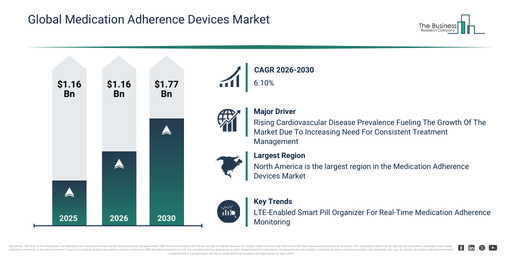
    The medication adherence devices market is anticipated to experience substantial expansion in the coming years. This market is projected to reach $4.58 billion in 2030, exhibiting a compound annual growth rate (CAGR) of 6.1%. Several factors will drive this growth during the forecast period, including progress in smart pill dispensers and ingestible sensors, the widening reach of cloud-based medication management platforms, increasing investment in digital health infrastructure, the incorporation of AI-powered adherence analytics, and the expanding homecare and long-term care sectors. Key trends anticipated for the forecast period encompass the increasing uptake of smart medication adherence devices, their integration with mobile health applications and EHR systems, a heightened emphasis on managing chronic diseases, the expansion of homecare and remote patient monitoring, and improved patient engagement and compliance tracking.

    Get A Free Sample Report With In-Depth Market Insights:

    https://thebusinessresearchcompany.com/sample_request?id=51239499&type=smp&name=Medication%20Adherence%20Devices%20Market%20Report%202026&utm_source=Blogs&utm_medium=Paid&utm_campaign=Sep_PR

    Medication Adherence Devices Market Growth Catalysts And Demand Drivers

    The increasing occurrence of cardiovascular diseases is projected to drive the expansion of the medication adherence devices market in the future. These diseases refer to a variety of conditions affecting the heart and blood vessels, frequently resulting in severe health complications such as heart attacks, strokes, and heart failure. The rise in their prevalence is attributable to increasingly sedentary lifestyles, as more individuals engage in desk jobs and spend extended periods in front of screens with minimal physical activity. Medication adherence devices assist in managing cardiovascular diseases by ensuring patients take their medications consistently and on schedule, thereby lowering the risk of complications like heart attacks and strokes. For instance, in January 2024, as reported by the American Heart Association, a US-based nonprofit organization, the age-adjusted death rate from cardiovascular disease climbed to 233.3 per 100,000, representing a 4.0% increase from the prior year’s rate of 224.4 per 100,000, in contrast to a 4.6% rise in 2023. Thus, the escalating prevalence of cardiovascular diseases is a key driver for the growth of the medication adherence devices market.

    Medication Adherence Devices Market Segment Outlook: Which Categories Are Growing Fastest?

    The medication adherence devices market covered in this report is segmented –

    1) By Type: Hardware Centric, Software Centric

    2) By Medication: Cardiovascular, Central Nervous System, Diabetes, Oncology, Gastrointestinal, Musculoskeletal, Other Medications

    3) By End User: Hospitals, Homecare Settings, Pharmacies, Long-Term Care Facilities, Clinics

    Subsegments:

    1) By Hardware Centric: Smart Pill Bottles, Smart Pill Dispensers, Wearable Medication Reminders, Smart Packaging, Ingestible Sensors

    2) By Software Centric: Mobile Health Apps, SMS Or IVR Reminders, Web-Based Platforms, Electronic Health Record (EHR)-Integrated Adherence Systems, Cloud-Based Medication Management Platforms

    Medication Adherence Devices Market Trends Shaping Long-Term Demand

    Leading companies in the medication adherence devices market are prioritizing the creation of advanced solutions, such as smart pill organizers, to facilitate continuous remote oversight of medication adherence. A smart pill organizer is an electronic gadget designed to assist users in managing their medication by delivering automated reminders, dispensing pills at predetermined times, and connecting with mobile applications for tracking and alerts. For example, in April 2025, Centor Inc., a US-based producer of prescription containers for medication dispensing, launched a new smart weekly pill organizer that harnesses LTE and cloud technology to bolster medication adherence. This device monitors medication consumption in real time and sends information directly to pharmacies and clinical associates, removing the requirement for patients to download or pair a smartphone app, making it particularly fitting for elderly or less tech-savvy individuals. Co-developed with RxCap, the organizer is straightforward to use and integrates effortlessly with Centor’s remote monitoring services, empowering pharmacies to provide reimbursable adherence initiatives and offer timely support when necessary.

    Medication Adherence Devices Market Key Players Shaping Industry Direction

    Major companies operating in the medication adherence devices market are Becton Dickinson and Company, Koninklijke Philips N V, AptarGroup Inc, Insulet Corporation, Omnicell Inc, Ypsomed Holding AG, MedMinder Systems Inc, Propeller Health Inc, Bigfoot Biomedical Inc, Information Mediary Corp, AARDEX Group SA, Hero Health Inc, CareRight Technologies, Adherium Limited, Popit Oy, SMRxT Inc, Wisepill Technologies Inc, MedAdvisor Solutions Ltd, Pillsy Inc, Livi Technologies Inc, AdhereTech Inc, RxSafe LLC

    View The Full Medication Adherence Devices Market Report:

    https://thebusinessresearchcompany.com/report/medication-adherence-devices-global-market-report?utm_source=Blogs&utm_medium=Paid&utm_campaign=Sep_PR

    Medication Adherence Devices Market Regional Analysis: Which Geography Leads On Revenue?

    North America was the largest region in the medication adherence devices market in 2025. The regions covered in the medication adherence devices market report are Asia-Pacific, South East Asia, Western Europe, Eastern Europe, North America, South America, Middle East, Africa.

    Reach Out To Our Team:

    The Business Research Company: https://www.thebusinessresearchcompany.com/

    Americas: +1 310-496-7795

    Asia: +44 7882 955267 & +91 8897263534

    Europe: +44 7882 955267

    Email us at: marketing@tbrc.info

    Follow us on:

    LinkedIn: https://in.linkedin.com/company/the-business-research-company

    YouTube: https://www.youtube.com/channel/UC24_fI0rV8cR5DxlCpgmyFQ

    Global Market Model: https://www.thebusinessresearchcompany.com/global-market-model