Category: Medical Equipment

  • Medical Equipment Outsourcing Market Forecast 2026–2030: Market Size, Trends And Growth Opportunities

    Medical Equipment Outsourcing Market Forecast 2026–2030: Market Size, Trends And Growth Opportunities

    Backed by market attractiveness analysis, total addressable market sizing, company benchmarking matrices, interactive Excel dashboards, wider supply chain intelligence, emerging startup coverage, and detailed product-level insights, The Business Research Company’s 2026 market reports are designed to offer research that is more actionable and strategically valuable than ever.

    Medical Equipment Outsourcing Market Size And Revenue Outlook Through 2030

    The medical equipment outsourcing market size has experienced robust expansion in recent years. It is projected to increase from $81.11 billion in 2025 to $87.6 billion in 2026, demonstrating a compound annual growth rate (CAGR) of 8.0%. This historical growth can be attributed to the escalating complexity of medical device regulations, mounting cost pressures on device manufacturers, the broadening of global medical device production, a greater reliance on specialized engineering expertise, and a heightened demand for faster product commercialization.

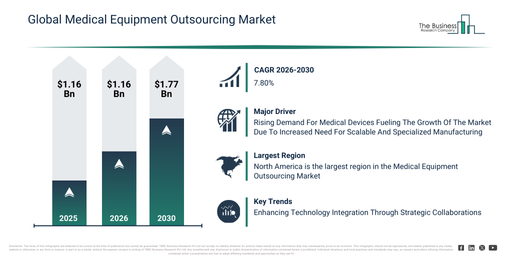
    The medical equipment outsourcing market is projected to experience robust expansion over the coming years. Its valuation is set to reach $118.2 billion in 2030, exhibiting a compound annual growth rate (CAGR) of 7.8%. This anticipated growth during the forecast timeframe stems from several factors, including the wider uptake of digital health devices, an increase in the outsourcing of software-driven medical equipment, the broader implementation of nearshore manufacturing strategies, a rising need for scalable production models, and an intensified emphasis on cost-effective innovation. Key trends characterizing this period involve a greater inclination towards outsourcing complete device development, a heightened requirement for services supporting regulatory compliance, the increasing formation of design-to-manufacture collaborations, the broadening of outsourcing models for lifecycle management, and a strengthened commitment to quality and risk oversight.

    Get A Free Sample Report With In-Depth Market Insights:

    https://thebusinessresearchcompany.com/sample_request?id=74846970&type=smp&name=Medical%20Equipment%20Outsourcing%20Market%20Report%202026&utm_source=Blogs&utm_medium=Paid&utm_campaign=Sep_PR

    Medical Equipment Outsourcing Market Expansion Drivers: What’s Shaping Future Growth?

    The escalating need for medical devices is projected to fuel the expansion of the medical equipment outsourcing market moving ahead. These devices encompass instruments, machinery, implants, or software employed for diagnosing, preventing, monitoring, or treating health conditions, with their primary function not being achieved through chemical processes. This surge in demand for medical devices primarily stems from the expanding global elderly population, leading to a rise in chronic illness prevalence and a subsequent greater requirement for diagnostic, monitoring, and therapeutic equipment. Medical equipment outsourcing facilitates meeting this increasing demand by enabling more rapid, economical production and providing access to expert knowledge, thus assisting manufacturers in scaling their operations and effectively addressing market requirements. As an illustration, in January 2025, data from the National Medical Products Administration (NMPA), the Chinese regulatory body overseeing pharmaceuticals, medical devices, and cosmetics, revealed that 126,139 medical device products were officially registered, alongside the issuance of 163,489 filing certificates across the country. Consequently, the escalating demand for medical devices is set to be a significant catalyst for the growth of the medical equipment outsourcing market.

    Medical Equipment Outsourcing Market Segmentation And Category Overview

    The medical equipment outsourcing market covered in this report is segmented –

    1) By Service Type: Regulatory Affairs Services, Product Design And Development Services, Product Testing And Certification Services, Product Implementation Services, Product Upgrade Services

    2) By Mode Of Outsourcing: Offshore Outsourcing, Nearshore Outsourcing, Onshore Outsourcing

    3) By Application: Diagnostic Imaging, Cardiology, Orthopedic, Dental, Endoscopy

    4) By End User: Hospitals, Clinics, Diagnostic Laboratories, Research And Development Centers

    Subsegments:

    1) By Regulatory Affairs Services: Regulatory Strategy development, Regulatory Submissions (e.g., FDA, EMA, PMDA), Labeling Compliance, Post-market Surveillance Support, Clinical Evaluation Reports (CER)

    2) By Product Design and Development Services: Concept And Feasibility Analysis, Industrial And Human Factors Design, Electrical And Mechanical Engineering, Software Development (Embedded Systems, Apps), Prototyping And Pilot Production

    3) By Product Testing And Certification Services: Electrical Safety Testing, Biocompatibility Testing, Performance Testing, EMC Or EMI Compliance Testing, Certification Support

    4) By Product Implementation Services: Manufacturing Process Validation, Assembly And Integration, Packaging Design And Validation, Sterilization Process Management, Supply Chain Setup

    5) By Product Upgrade Services: Product Lifecycle Management, Software And Firmware Updates, Hardware Redesign For Newer Standards, Compliance With Updated Regulations, Cost-reduction Engineering

    Medical Equipment Outsourcing Market Strategic Trends: What Defines The Next Growth Phase?

    Leading firms within the medical equipment outsourcing sector are embracing strategic alliances to improve technological integration and broaden their market presence. Medical outsourcing services are fortified by such collaborations, which pool together niche expertise, cutting-edge technologies, and worldwide infrastructure. This collective effort serves to expedite development schedules, decrease expenditures, and elevate the standard and adherence of healthcare offerings. For example, NAMSA, a US-based medical device Contract Research Organization (CRO), revealed a strategic outsourcing collaboration with Terumo Aortic in June 2023. The objective of this alliance is to quicken the advancement and market launch of Terumo Aortic’s groundbreaking products for aortic diseases. NAMSA is set to offer immediate access to clinical specialists and teams dedicated to cardiovascular health, thereby aiding in study initiation and capacity, which will enable new devices to enter the market more swiftly. Additionally, in January 2025, US Med-Equip, a US-based supplier of medical equipment rentals, formed a partnership with Zopec Medical to provide hospitals with auxiliary battery power solutions. This joint venture aims to guarantee that healthcare facilities have dependable power sources for essential medical equipment, thereby improving patient care during electricity interruptions or in regions with inconsistent power grids.

    Medical Equipment Outsourcing Market Competitive Overview And Top Companies

    Major companies operating in the medical equipment outsourcing market are Jabil Inc., Flex Ltd., IQVIA Holdings Inc., Labcorp, Sanmina Corporation, ICON plc, Celestica Inc., Eurofins Scientific, WuXi AppTec Co. Ltd., Nipro Corporation, Charles River Laboratories International Inc., lntertek Group, Plexus Corp., Parexel International Corporation, West Pharmaceutical Services Inc., Benchmark Electronics Inc., Gerresheimer AG, Phillips-Medisize Corporation, Medpace Holdings Inc., Integer Holdings Corporation

    View The Full Medical Equipment Outsourcing Market Report:

    https://thebusinessresearchcompany.com/report/medical-equipment-outsourcing-global-market-report?utm_source=Blogs&utm_medium=Paid&utm_campaign=Sep_PR

    Medical Equipment Outsourcing Market Top Region: Where Does Most Revenue Come From?

    North America was the largest region in the medical equipment outsourcing market in 2025. Asia-Pacific is expected to be the fastest-growing region in the forecast period. The regions covered in the medical equipment outsourcing market report are Asia-Pacific, South East Asia, Western Europe, Eastern Europe, North America, South America, Middle East, Africa.

    Reach Out To Our Team:

    The Business Research Company: https://www.thebusinessresearchcompany.com/

    Americas: +1 310-496-7795

    Asia: +44 7882 955267 & +91 8897263534

    Europe: +44 7882 955267

    Email us at: marketing@tbrc.info

    Follow us on:

    LinkedIn: https://in.linkedin.com/company/the-business-research-company

    YouTube: https://www.youtube.com/channel/UC24_fI0rV8cR5DxlCpgmyFQ

    Global Market Model: https://www.thebusinessresearchcompany.com/global-market-model

  • Medical Equipment Financing Market Size Reaches $191.14 Billion In 2026: What Is Driving Growth?

    Medical Equipment Financing Market Size Reaches $191.14 Billion In 2026: What Is Driving Growth?

    Featuring market attractiveness scoring, total addressable market sizing, company benchmarking matrices, interactive Excel dashboards, deeper supply chain intelligence, emerging startup tracking, and granular product-level insights, The Business Research Company’s 2026 market reports are built to deliver research that is both more actionable and more strategically valuable.

    Medical Equipment Financing Market Growth From $191.14 Billion In 2026 To $265.19 Billion By 2030 At A CAGR Of 8.5%

    The medical equipment financing market size has experienced strong growth in recent years. It is anticipated to increase from $175.65 billion in 2025 to $191.14 billion in 2026, achieving a compound annual growth rate (CAGR) of 8.8%. Factors contributing to this historic growth include restricted access to capital for healthcare providers, the substantial upfront cost of medical equipment, a reliance on traditional bank loans, the slow adoption of digital financing platforms, and fragmented financing options.

    The medical equipment financing market size is projected to experience significant growth over the coming years, reaching $265.19 billion by 2030, exhibiting a compound annual growth rate (CAGR) of 8.5%. This projected expansion during the forecast period is driven by factors such as the increasing demand for digital health solutions, greater investment in hospitals and clinics, the emergence of fintech-enabled lending platforms, the broadening of government-backed financing schemes, and the rising adoption of subscription-based and pay-per-use models. Furthermore, prominent trends anticipated in this period include the growing acceptance of flexible financing options for medical equipment, an increased demand for leasing and loan-based models, the proliferation of OEM and government-supported financing programs, an expansion of financing specifically for software and digital health solutions, and a more concentrated focus on financial risk management and credit assessment.

    Get A Free Sample Report With In-Depth Market Insights:

    https://thebusinessresearchcompany.com/sample_request?id=68894615&type=smp&name=Medical%20Equipment%20Financing%20Market%20Report%202026&utm_source=Blogs&utm_medium=Paid&utm_campaign=Sep_PR

    Medical Equipment Financing Market Development Factors: What’s Supporting Demand?

    The anticipated rise in the count of private hospitals and diagnostic centers is projected to drive expansion within the medical equipment financing market. These entities are characterized as non-governmental healthcare providers that deliver medical treatments, surgical interventions, and diagnostic offerings, including laboratory tests and various imaging services. The surge in private healthcare facilities is primarily fueled by an escalating demand for superior and specialized healthcare solutions, influenced by expanding populations and increased income levels. Medical equipment financing provides crucial assistance to private hospitals and diagnostic centers, allowing them to procure cutting-edge medical technologies and diagnostic instruments without requiring significant initial capital outlay, which consequently elevates service quality and broadens their capacity. A relevant example occurred in May 2023, when the UK government allocated over $26 billion (£20 billion) in funds for enhancing new hospital infrastructure, with plans to reconstruct five major hospitals by the year 2030 under the new hospital program. Thus, the increasing prevalence of private hospitals and diagnostic centers is a significant catalyst for the growth of the medical equipment financing market.

    Medical Equipment Financing Market Segment Outlook: Which Categories Are Growing Fastest?

    The medical equipment financing market covered in this report is segmented –

    1) By Type: Equipment Financing, Software Financing, Service Financing

    2) By Financing Type: Lease, Loan, Line Of Credit, Other Financing Types

    3) By Providers: Banks, Non-Banking Financial Institutions, Original Equipment Manufacturer Financing, Government Programs, Banks

    4) By End-User: Hospitals, Clinics, Ambulatory Surgical, Diagnostic Centers

    Subsegments:

    1) By Equipment Financing: Hospital Bed Financing, Diagnostic Imaging Equipment Financing, Surgical Instrument Financing

    2) By Software Financing: Electronic Health Record Software Financing, Medical Billing Software Financing, Practice Management Software Financing

    3) By Service Financing: Installation And Setup Service Financing, Maintenance And Repair Service Financing, Training And Education Service Financing

    Medical Equipment Financing Market Transformation Trends: What Innovations Are Driving Change?

    Leading firms within the medical equipment financing market are adopting novel strategies, including the establishment of transformative healthcare companies, to broaden access to cutting-edge medical technologies and enhance the effectiveness of healthcare provision. These transformative healthcare enterprises are defined as businesses that drive substantial positive change in the healthcare system through the introduction of advanced medical innovations, expanding care accessibility, and boosting efficiency alongside patient results. An illustrative example is from May 2023, when the Nigeria Sovereign Investment Authority, a capital market entity based in Nigeria, inaugurated NSIA Advanced Medical Service Ltd. (MedServe) and Equilease Systems Limited (Equilease). This initiative aimed to bolster healthcare infrastructure and offer medical equipment leasing services throughout Nigeria. MedServe specifically aims to deliver high-quality, affordable healthcare with equitable access by establishing and running healthcare facilities nationwide. Concurrently, Equilease Systems Limited (Equilease) aids in the procurement of medical equipment using innovative leasing and financing schemes, initially supporting MedServe to elevate healthcare standards across Nigeria.

    Medical Equipment Financing Market Competitive Landscape: Which Companies Lead The Industry?

    Major companies operating in the medical equipment financing market are Wells Fargo Co., Toronto Dominion Bank, Siemens Healthineers AG, HDFC Bank Ltd., GE Healthcare Technologies Inc., Henry Schein Inc., Macquarie Group Limited, Synovus Financial Corp., Bajaj Finserv Ltd., Balboa Capital Corporation, Ascentium Capital LLC, SMC Group, National Funding Inc., PEAC Solutions, Med One Group Inc., Blue Bridge Financial LLC, Crest Capital, First American Equipment Finance, CMS Funding, First Capital Business Finance, Hitachi Capital America Corp., U.S. Bank Equipment LLC

    View The Full Medical Equipment Financing Market Report:

    https://thebusinessresearchcompany.com/report/medical-equipment-financing-global-market-report?utm_source=Blogs&utm_medium=Paid&utm_campaign=Sep_PR

    Medical Equipment Financing Market Regional Breakdown: Where Is Demand Concentrated?

    North America was the largest region in the medical equipment financing market in 2025. Asia-Pacific is expected to be the fastest-growing region in the forecast period. The regions covered in the medical equipment financing market report are Asia-Pacific, South East Asia, Western Europe, Eastern Europe, North America, South America, Middle East, Africa.

    Reach Out To Our Team:

    The Business Research Company: https://www.thebusinessresearchcompany.com/

    Americas: +1 310-496-7795

    Asia: +44 7882 955267 & +91 8897263534

    Europe: +44 7882 955267

    Email us at: marketing@tbrc.info

    Follow us on:

    LinkedIn: https://in.linkedin.com/company/the-business-research-company

    YouTube: https://www.youtube.com/channel/UC24_fI0rV8cR5DxlCpgmyFQ

    Global Market Model: https://www.thebusinessresearchcompany.com/global-market-model
  • Medical Equipment Market Valued At $1217.9 Billion In 2026: Key Trends And Growth Drivers

    Medical Equipment Market Valued At $1217.9 Billion In 2026: Key Trends And Growth Drivers

    Built to provide research that’s more actionable and strategically valuable, The Business Research Company’s 2026 market reports include market attractiveness analysis, total addressable market sizing, company benchmarking matrices, interactive Excel dashboards, broader supply chain intelligence, emerging startup tracking, and in-depth product insights.

    Medical Equipment Market Expansion Outlook: What Revenue Opportunities Are Ahead?

    The medical equipment market has shown significant expansion in recent years. Its projected trajectory indicates an increase from $791.33 billion in 2025 to $857.08 billion in 2026, achieving a compound annual growth rate (CAGR) of 8.3%. Historically, this growth has been driven by the expanding global healthcare infrastructure, the rising incidence of chronic diseases, increased healthcare expenditure, advancements in medical diagnostics technology, and initiatives focused on modernizing hospitals.

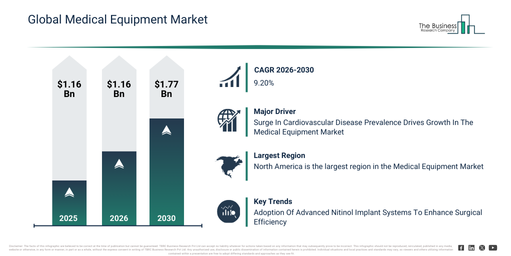
    The medical equipment market size is poised for substantial growth over the coming years. This sector is projected to attain a valuation of $1217.9 billion by 2030, exhibiting a compound annual growth rate (CAGR) of 9.2%. This anticipated expansion during the forecast period is propelled by factors such as the increasing integration of digital health solutions, a rising need for medical equipment used at home, the proliferation of AI-powered diagnostic tools, a greater emphasis on preventive healthcare, and increased funding for smart hospital technologies. Noteworthy trends identified for this period encompass the growing acceptance of smart and interconnected medical devices, heightened demand for diagnostic imaging equipment, expanded utilization of minimally invasive surgical systems, wider deployment of remote patient monitoring devices, and a sharper focus on the precision and dependability of equipment.

    Get A Free Sample Report With In-Depth Market Insights:

    https://thebusinessresearchcompany.com/sample_request?id=3157&type=smp&name=Medical%20Equipment%20Market%20Report%202026&utm_source=Blogs&utm_medium=Paid&utm_campaign=Sep_PR

    Medical Equipment Market Industry Drivers: What’s Behind The Revenue Growth?

    The increasing occurrence of cardiovascular diseases is anticipated to propel the expansion of the medical equipment market. Cardiovascular disease (CVD) encompasses a wide range of conditions impacting the heart or blood vessels, frequently associated with the build-up of fatty deposits in the arteries (atherosclerosis) and a heightened likelihood of blood clots. Diverse medical equipment is essential for the prevention, diagnosis, and treatment of cardiovascular diseases. For example, data from September 2025, provided by the British Heart Foundation, a UK-based charity, reveals that over 7.6 million people in the UK, comprising more than 4 million men and over 3.6 million women, currently live with cardiovascular disease. Furthermore, forecasts suggest that this number could increase by approximately 1 million by 2030 and by roughly 2 million by 2040, primarily due to an aging population and enhanced survival rates. Consequently, the growing incidence of cardiovascular diseases is set to stimulate the growth of the medical equipment market.

    Medical Equipment Market Segment Landscape: Which Areas Lead Development?

    The medical equipment market covered in this report is segmented –

    1) By Type: In-Vitro Diagnostics, Dental Equipment And Supplies, Ophthalmic Devices, Diagnostic Imaging Equipment, Cardiovascular Devices, Hospital Supplies, Surgical Equipment, Orthopedic Devices, Patient Monitoring Devices, Other Types

    2) By Type Of Expenditure: Public, Private

    3) By Category: Instruments And Equipment, Disposables And Consumables

    4) By End User: Hospitals And Clinics, Homecare And Diagnostic Centers, Other End Users

    Subsegments:

    1) By In-Vitro Diagnostics: Clinical Chemistry, Immunoassay, Molecular Diagnostics, Hematology, Microbiology

    2) By Dental Equipment And Supplies: Dental Instruments, Dental Implants, Dental Chairs And Equipment, Orthodontic Supplies, Dental Consumables

    3) By Ophthalmic Devices: Contact Lenses, Intraocular Lenses, Ophthalmic Lasers, Diagnostic Devices, Surgical Devices

    4) By Diagnostic Imaging Equipment: X-Ray Systems, Ultrasound Systems, MRI Systems, CT Scanners, Nuclear Imaging Systems

    5) By Cardiovascular Devices: Cardiac Rhythm Management Devices, Catheters, Heart Valves, Stents, Cardiac Assist Devices

    6) By Hospital Supplies: Disposables, Sterilization Equipment, Surgical Masks And Gowns, IV Solutions And Administration Sets, Diagnostic Strips

    7) By Surgical Equipment: Surgical Instruments, Electrosurgical Devices, Robotic Surgery Systems, Surgical Sutures And Staplers, Minimally Invasive Surgery Devices

    8) By Orthopedic Devices: Joint Replacement Devices, Trauma Fixation Devices, Spinal Implants, Orthopedic Braces And Supports, Arthroscopy Devices

    9) By Patient Monitoring Devices: Vital Signs Monitors, Remote Patient Monitoring Devices, Fetal And Neonatal Monitors, Cardiac Monitoring Devices, Multi-Parameter Monitors

    10) By Other Types: Blood Glucose Meters, Insulin Delivery Devices, Continuous Glucose Monitoring Systems (CGMs), Lancets And Strips, Dialysis Equipment (Hemodialysis, Peritoneal Dialysis), Urinary Catheters, Stone Management Devices

    #Medical Equipment Market Growth Trends: What’s Shaping The Future Outlook?

    Leading firms in the medical equipment market are concentrating on creating sophisticated solutions, including nitinol implant systems, with the aim of boosting surgical accuracy, optimizing procedural effectiveness, and delivering strong fixation choices for reconstructive surgeries. These nitinol implant systems leverage a nickel-titanium alloy, providing dynamic compression, considerable strength, and flexibility, which facilitates precise bone fixation and superior procedural results. As an example, in September 2023, Medline UNITE, a US-based healthcare company, introduced the REFLEX TETRA Nitinol Staples, which are characterized by a four-leg design engineered to conform to the distinct bone anatomies of the MTP, first and lesser TMT, and TN joints. This system incorporates targeting guides that allow for the efficient insertion of a cannulated screw or a two-legged staple through the staples’ inner legs. The REFLEX Foot Recon Nitinol Implant System has received FDA clearances for various joint-specific indications and provides a complete set of staples, discs, joint preparation instruments, targeting guides, and associated instrumentation within one all-inclusive tray. This introduction significantly enhances intraoperative versatility and efficiency, facilitates fully dynamic fixation constructs, resolves shortcomings of earlier nitinol products, and contributes to increased surgeon confidence and better patient outcomes.

    Medical Equipment Market Competitive Landscape: Who Leads The Industry?

    Major companies operating in the medical equipment market are Medtronic Inc, Abbott Laboratories, Johnson & Johnson, Siemens AG, Becton Dickinson and Company(BD), STRYKER CORPORATION, Cardinal Health, Danaher Corporation, Boston Scientific Corporation, Koninklijke Philips N.V., SCHILLER Healthcare India Pvt. Ltd, GE Healthcare, Covidien Healthcare India Private Limited, Philips Healthcare India, Fisher & Paykel Healthcare India Private Limited, Smiths Medical India Pvt Ltd, Agappe Diagnostics Ltd, ARKRAY Healthcare Pvt. Ltd, Accord Medical Products Private Limited, Shinva Medical Instrument Company Limited, Shandong WeiGao Group Medical Polymer Company Limited, Lepu Medical Technology Company (Beijing) Co. Ltd, Yuwell – Jiangsu Yuyue Medical Equipment & Supply Co. Ltd, Shanghai Runda Medical Technology Co. Ltd, Terumo Corporation, Olympus Medical Systems Corporation, Canon Medical Systems Corporation, Hitachi Group, Nihon Koden Corporation, Sanko Manufacturing Co. Ltd, Fukuda Denshi, Metran Co. Ltd, Clarity Medical, Welcare Industries S.P.A, F.L. Medical S.r.l, Empire MEDICAL UK LTD, Europlaz Technologies Ltd, Alfa-Med LLC, Medplant LLC, Medical-Łomża Sp. z o.o., P.H.U. Medical, ProVeterináře, Panop CZ, Baxter, SunMed, Beckman Coulter, Draegerwerk AG, Getinge Group, Masimo, Teleflex Inc, Nipro Medical Ltda, LINET Brazil, Fotoptica Ltda, Leistung Engineering Pvt. Ltd, Saudi Mais Co. for Medical Products (SMMP), Life Pulse Medical Co, Watan, AlKawashef, 3BY Ltd, Qatari German Medical Devices Co, Israeli Hospitals Ltd, CAPS Medical, Amana Healthcare (Pty) Ltd, CapeRay, TiTaMED (Pty) Ltd, Sinapi Biomedical, Egyptian Medical And Environment Group, ResMed Inc.

    View The Full Medical Equipment Market Report:

    https://thebusinessresearchcompany.com/report/medical-equipment-global-market-report?utm_source=Blogs&utm_medium=Paid&utm_campaign=Sep_PR

    Medical Equipment Market Geographic Landscape: Which Region Dominates Industry Growth?

    North America was the largest region in the medical equipment market in 2025. Asia-Pacific is expected to be the fastest-growing region in the forecast period. The regions covered in the medical equipment market report are Asia-Pacific, South East Asia, Western Europe, Eastern Europe, North America, South America, Middle East, Africa.

    Reach Out To Our Team:

    The Business Research Company: https://www.thebusinessresearchcompany.com/

    Americas: +1 310-496-7795

    Asia: +44 7882 955267 & +91 8897263534

    Europe: +44 7882 955267

    Email us at: marketing@tbrc.info

    Follow us on:

    LinkedIn: https://in.linkedin.com/company/the-business-research-company

    YouTube: https://www.youtube.com/channel/UC24_fI0rV8cR5DxlCpgmyFQ

    Global Market Model: https://www.thebusinessresearchcompany.com/global-market-model

  • Medical Engineered Materials Market Size In 2026: Growth Outlook And Forecast Through 2030

    Medical Engineered Materials Market Size In 2026: Growth Outlook And Forecast Through 2030

    Backed by market attractiveness analysis, total addressable market sizing, company benchmarking matrices, interactive Excel dashboards, wider supply chain intelligence, emerging startup coverage, and detailed product-level insights, The Business Research Company’s 2026 market reports are designed to offer research that is more actionable and strategically valuable than ever.

    Medical Engineered Materials Market Growth Potential: How Will Market Size Shift Through 2030?

    The medical engineered materials market has experienced rapid expansion in recent years. Its valuation is set to grow from $25.24 billion in 2025 to $28.97 billion in 2026, demonstrating a compound annual growth rate (CAGR) of 14.8%. The increase observed in previous periods is attributable to the growing acceptance of implantable medical devices, an increase in surgical operations, higher demand for sophisticated wound care products, the accessibility of specialized medical polymers, and the incorporation of material science into healthcare design.

    The medical engineered materials market size is projected to experience substantial expansion over the coming years. This market is anticipated to reach $48.85 billion in 2030, exhibiting a compound annual growth rate (CAGR) of 13.9%. This projected growth during the forecast period can be attributed to several factors, including an escalating demand for next-generation implants, a heightened emphasis on regenerative medicine, the proliferation of personalized medical devices, increased adoption of sustainable medical materials, and innovations in material engineering technologies. Key trends shaping the forecast period encompass the accelerated development of advanced biomaterials, a surge in the application of customized medical polymers, an escalating requirement for biocompatible and bioresorbable materials, the broadening application of engineered materials in implants, and a stronger emphasis on material performance and safety.

    Get A Free Sample Report With In-Depth Market Insights:

    https://thebusinessresearchcompany.com/sample_request?id=35403868&type=smp&name=Medical%20Engineered%20Materials%20Market%20Report%202026&utm_source=Blogs&utm_medium=Paid&utm_campaign=Sep_PR

    Medical Engineered Materials Market Growth Factors: What’s Supporting Expansion?

    The escalating volume of surgical interventions is anticipated to fuel the expansion of the medical engineered materials market in the foreseeable future. Surgical procedures encompass medical actions or therapies involving cuts or intrusive methods to reach and treat internal or external bodily regions. An increase in these procedures consequently boosts the need for substances utilized in surgical tools, implantable devices, and less invasive techniques. Materials that are biocompatible and resistant to infection are crucial for safeguarding patient well-being. Personalization and compliance with regulations stimulate innovation and development, while economic efficiency and technological progress foster advancements in materials. As an illustration, data from June 2024 by the American Society of Plastic Surgeons, a US-based non-profit body, showed that minimally invasive procedures grew by 7% in 2023, surpassing the growth rate of surgical procedures by 2%. Operations on hands, including treatments for carpal tunnel, arthritis, and trigger finger, reached a total of 207,887 procedures, indicating a 2% increase from 2022. Thus, the growing frequency of surgical operations is propelling the rise of the medical engineered materials market.

    Medical Engineered Materials Market Segments: Where Is Growth Concentrated?

    The medical engineered materials market covered in this report is segmented –

    1) By Type: Medical Plastics, Medical Foams, Medical Films, Medical Adhesives, Medical Elastomer

    2) By Application: Medical Devices, Medical Disposables, Medical Wearables, Advanced Woundcare

    3) By End-User Or Industry: Hospitals And Clinics, Diagnostic Laboratories, Pharmaceutical And Biotech Companies, Research And Academic Institutions, Home Healthcare And Personal Care

    Subsegments:

    1) By Medical Plastics: Polyethylene (PE), Polyvinyl Chloride (PVC), Polycarbonate (PC), Polypropylene (PP)

    2) By Medical Foams: Polyurethane Foams, Polyethylene Foams, Silicone Foams

    3) By Medical Films: Thermoplastic Films, Biodegradable Films, Adhesive Films

    4) By Medical Adhesives: Epoxy Adhesives, Cyanoacrylate Adhesives, Silicone Adhesives

    5) By Medical Elastomers: Silicone Elastomers, Thermoplastic Elastomers (TPE), Polyurethane Elastomers

    Medical Engineered Materials Market Industry Trends: What’s Reshaping Demand?

    Major companies operating in the medical engineered materials market are concentrating on developing advanced material solutions, such as high-durability materials, to boost safety, performance, and sterilization compatibility in healthcare applications. High-durability materials are specifically engineered to endure extreme conditions, mechanical stress, and chemical exposure without deteriorating, which helps ensure sustained performance, safety, and repeated sterilization within medical contexts. For instance, in February 2023, Covestro AG, a Germany-based polymer materials company, introduced Makrolon 3638 polycarbonate, an advanced material solution crafted for healthcare and life sciences applications. This product offers robust durability across a broad temperature range, from cryogenic to steam sterilization conditions, coupled with superior impact strength and ductility. The material also features strong chemical resistance, satisfies medical-grade and biocompatibility requirements, and is suitable for skin contact applications. Additionally, it holds food contact quality certification and can be sterilized using standard methods prevalent in the healthcare sector.

    Medical Engineered Materials Market Company Landscape And Competitive Strategy

    Major companies operating in the medical engineered materials market are Evonik Industries AG, Covestro AG, BASF SE, Solvay SA, Saudi Basic Industries Corporation, Trelleborg AB, Koninklijke DSM N.V., Celanese Corporation, DuPont de Nemours Inc., Henkel AG & Co. KGaA, Huntsman Corporation, Momentive Performance Materials Inc., Nitto Denko Corporation, Recticel Ltd., Victrex plc, Ensinger GmbH, RTP Company, Foster Corporation, Zeus Industrial Products Inc., Saint-Gobain SA, Arkema SA, Eastman Chemical Company, Lubrizol Corporation, PolyOne Corporation, Quadrant AG, Röchling Group, DSM Biomedical, Invibio Ltd., Carpenter Technology Corporation, Heraeus Medical Components GmbH, CeramTec GmbH, Morgan Advanced Materials plc, Freudenberg Medical LLC

    View The Full Medical Engineered Materials Market Report:

    https://thebusinessresearchcompany.com/report/medical-engineered-materials-global-market-report?utm_source=Blogs&utm_medium=Paid&utm_campaign=Sep_PR

    Medical Engineered Materials Market Largest Region: Which Geography Holds The Highest Market Share?

    Asia-Pacific was the largest region in the medical engineered materials market in 2025. Asia-Pacific is expected to be the fastest-growing region in the forecast period. The regions covered in the medical engineered materials market report are Asia-Pacific, South East Asia, Western Europe, Eastern Europe, North America, South America, Middle East, Africa.

    Reach Out To Our Team:

    The Business Research Company: https://www.thebusinessresearchcompany.com/

    Americas: +1 310-496-7795

    Asia: +44 7882 955267 & +91 8897263534

    Europe: +44 7882 955267

    Email us at: marketing@tbrc.info

    Follow us on:

    LinkedIn: https://in.linkedin.com/company/the-business-research-company

    YouTube: https://www.youtube.com/channel/UC24_fI0rV8cR5DxlCpgmyFQ

    Global Market Model: https://www.thebusinessresearchcompany.com/global-market-model
  • Medical Electrodes Market Trends Supporting 8.5% CAGR Growth Through 2030

    Medical Electrodes Market Trends Supporting 8.5% CAGR Growth Through 2030

    Featuring market attractiveness scoring, total addressable market sizing, company benchmarking matrices, interactive Excel dashboards, deeper supply chain intelligence, emerging startup tracking, and granular product-level insights, The Business Research Company’s 2026 market reports are built to deliver research that is both more actionable and more strategically valuable.

    Medical Electrodes Market Value Analysis: What Growth Lies Ahead Over The Forecast Period?

    The medical electrodes market size has demonstrated significant expansion in recent years. It is anticipated to expand from $2.21 billion in 2025 to $2.41 billion in 2026, registering a compound annual growth rate (CAGR) of 8.9%. Historically, this growth can be attributed to the increasing occurrence of cardiac and neurological conditions, the broadening of diagnostic testing practices, the rising acceptance of non-invasive monitoring approaches, the heightened application of electrophysiology within hospitals, and the accessibility of inexpensive disposable electrodes.

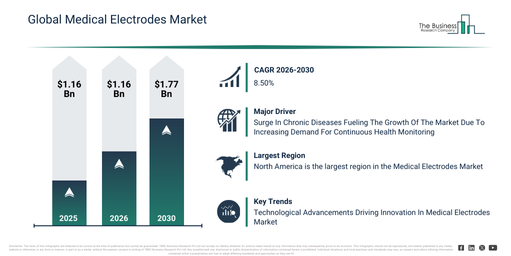
    The medical electrodes market size is anticipated to experience robust growth over the next few years. It is projected to expand to $3.34 billion in 2030, registering a compound annual growth rate (CAGR) of 8.5%. This expansion during the forecast period can be attributed to factors such as the increasing adoption of remote patient monitoring, rising demand for wearable health devices, the expansion of home-based diagnostics, a growing focus on continuous monitoring solutions, and advancements in electrode material science. Significant trends expected during this period include an increasing demand for disposable medical electrodes, the rising adoption of multi-modal diagnostic electrodes, a growing emphasis on skin-friendly and biocompatible materials, the expansion of wearable-compatible electrode designs, and an enhanced focus on signal accuracy and stability.

    Get A Free Sample Report With In-Depth Market Insights:

    https://thebusinessresearchcompany.com/sample_request?id=68929369&type=smp&name=Medical%20Electrodes%20Market%20Report%202026&utm_source=Blogs&utm_medium=Paid&utm_campaign=Sep_PR

    Medical Electrodes Market Demand Drivers: What’s Powering Industry Growth?

    The increasing incidence of chronic illnesses is anticipated to fuel the expansion of the medical electrodes market. Chronic diseases encompass long-term non-communicable conditions such as cardiovascular disease, diabetes, hypertension, cancer, and chronic respiratory issues, all of which demand continuous monitoring and management. The rise in these conditions is attributed to growing rates of unhealthy lifestyle factors, including poor diet, physical inactivity, and an aging population, especially in high and middle-income countries. Medical Electrodes play a vital role in healthcare management by enabling accurate and continuous monitoring, exemplified by ECGs for cardiac patients, thereby empowering clinicians to effectively diagnose and manage chronic conditions. For instance, in June 2024, data from the National Health Service, a UK-based government department, indicated that 3,615,330 individuals registered with a general practitioner were diagnosed with non-diabetic hyperglycemia or pre-diabetes (a condition with elevated blood sugar levels, not yet severe enough to be classified as diabetes) in 2023. This marked an 18% increase from 3,065,825 cases in 2022. Thus, the escalating prevalence of chronic diseases is a key driver for the growth of the medical electrodes market.

    Medical Electrodes Market Segment Analysis: What Are The Core Market Categories?

    The medical electrodes market covered in this report is segmented –

    1) By Usability: Disposable Medical Electrodes, Reusable Medical Electrodes

    2) By Technology: Wet Electrodes, Dry Electrodes, Needle Electrodes

    3) By Procedure: Electrocardiography, Electroencephalography, Electromyography, Other Procedures

    4) By Application: Cardiology, Neurophysiology, Sleep Disorders, Intraoperative Monitoring, Other Applications

    Subsegments:

    1) By Disposable Medical Electrodes: ECG Electrodes, EEG Electrodes, EMG Electrodes

    2) By Reusable Medical Electrodes: Reusable ECG Electrodes, Reusable EEG Electrodes, Reusable EMG Electrodes

    Medical Electrodes Market Innovation Trends: What Developments Are Reshaping The Industry?

    Leading firms within the medical electrodes market are concentrating their efforts on creating novel solutions like wire-free electrodes, aiming to elevate patient comfort and facilitate adaptable, portable monitoring. These wire-free electrodes function as medical devices that relay signals without the need for physical wires, thereby boosting patient mobility, streamlining the installation process, and allowing for more relaxed, unconstrained movement during periods of monitoring or stimulation. An illustrative example occurred in April 2024 when Soterix Medical, a US-based entity specializing in medical devices, unveiled its MxN-GO EEG device. This innovation integrates electroencephalography (EEG) functionalities with high-definition transcranial electrical stimulation (HD-tES). The system is engineered to cater to research needs that involve both electrical brain stimulation and the recording of brain activity within dynamic, natural settings. The HD-tES component from Soterix Medical employs sophisticated electrode designs, guaranteeing the secure and pleasant transmission of electrical currents via its High-Definition electrodes. Furthermore, this technology incorporates personalized brain current-flow modeling along with proprietary targeting algorithms, which serve to direct the exact positioning and activation of HD electrodes on the patient’s head.

    Medical Electrodes Market Key Players Shaping Industry Direction

    Major companies operating in the medical electrodes market are 3M Company, ConMed Corporation, Koninklijke Philips N.V., Medtronic plc, Ambu A/S, General Electric Company, Nihon Kohden Corporation, Cardinal Health Inc., Dymedix Diagnostics Inc., Natus Medical Incorporated, CooperSurgical Inc., B. Braun Melsungen AG, ZOLL Medical Corporation, Rhythmlink International LLC, Cognionics Inc., Compumedics Limited, Nissha Medical Technologies Group, C.R. Bard Inc., Curbell Medical Products Inc., Leonhard Lang GmbH, Graphic Controls Ltd., Bio Protech Inc., Medico Electrodes International Ltd., Ad-Tech Medical Instrument Corporation, Tenko Medical Systems Crop., Ambulatory Monitoring Inc., R&D Medical Electrodes, NeuroWave Systems Inc., NCC Medical Co. Ltd., Nihon Kohden America Inc., Zynex Medical Inc.

    View The Full Medical Electrodes Market Report:

    https://thebusinessresearchcompany.com/report/medical-electrodes-global-market-report?utm_source=Blogs&utm_medium=Paid&utm_campaign=Sep_PR

    Medical Electrodes Market Regional Analysis: Which Region Leads By Revenue?

    North America was the largest region in the medical electrodes market in 2025. Asia-Pacific is expected to be the fastest-growing region in the forecast period. The regions covered in the medical electrodes market report are Asia-Pacific, South East Asia, Western Europe, Eastern Europe, North America, South America, Middle East, Africa.

    Reach Out To Our Team:

    The Business Research Company: https://www.thebusinessresearchcompany.com/

    Americas: +1 310-496-7795

    Asia: +44 7882 955267 & +91 8897263534

    Europe: +44 7882 955267

    Email us at: marketing@tbrc.info

    Follow us on:

    LinkedIn: https://in.linkedin.com/company/the-business-research-company

    YouTube: https://www.youtube.com/channel/UC24_fI0rV8cR5DxlCpgmyFQ

    Global Market Model: https://www.thebusinessresearchcompany.com/global-market-model

  • Medical Electrocardiogram (ECG) Telemetry Equipment Market Forecast Highlights A $2.09 Billion Opportunity For Industry Participants

    Medical Electrocardiogram (ECG) Telemetry Equipment Market Forecast Highlights A $2.09 Billion Opportunity For Industry Participants

    Built to provide research that’s more actionable and strategically valuable, The Business Research Company’s 2026 market reports include market attractiveness analysis, total addressable market sizing, company benchmarking matrices, interactive Excel dashboards, broader supply chain intelligence, emerging startup tracking, and in-depth product insights.

    Medical Electrocardiogram (ECG) Telemetry Equipment Market Size Forecast: How Big Could The Market Get By 2030?

    The medical electrocardiogram (ecg) telemetry equipment market has seen substantial growth in recent years. Its value is expected to rise from $1.25 billion in 2025 to $1.38 billion in 2026, achieving a compound annual growth rate (CAGR) of 10.4%. The factors contributing to its past expansion include the initial limited availability of wireless ecg technology, a reliance on traditional resting and stress ecg devices, an expanding cardiac patient population, an increase in hospital cardiac care facilities, and the adoption of wired ecg monitoring systems.

    The medical electrocardiogram (ecg) telemetry equipment market is poised for significant expansion in the coming years. It is projected to grow to $2.09 billion in 2030, achieving a compound annual growth rate (CAGR) of 10.9%. This growth throughout the forecast period can be attributed to advancements in cloud-based ecg solutions, the integration of mobile and wearable ecg devices, the expansion of telemedicine services, increasing demand for real-time cardiac monitoring, and regulatory support for digital health adoption. Noteworthy trends during this period include a rising embrace of remote patient monitoring solutions, the integration of wireless and mobile ecg devices, the growth of telemedicine and home-based cardiac care, an increased use of wearable and patch-based ecg monitors, and an enhanced focus on early detection and predictive cardiac analytics.

    Get A Free Sample Report With In-Depth Market Insights:

    https://thebusinessresearchcompany.com/sample_request?id=25331246&type=smp&name=Medical%20Electrocardiogram%20%28ECG%29%20Telemetry%20Equipment%20Market%20Report%202026&utm_source=Blogs&utm_medium=Paid&utm_campaign=Sep_PR

    Medical Electrocardiogram (ECG) Telemetry Equipment Market Growth Drivers: What’s Behind The Acceleration?

    The increasing occurrence of cardiovascular conditions is projected to boost the expansion of the medical electrocardiogram (ECG) telemetry equipment market in the future. These diseases encompass various disorders impacting the heart and blood vessels, such as coronary heart disease, heart failure, stroke, and hypertension. A key factor behind the rising prevalence of cardiovascular diseases is an unhealthy diet, as consuming too many saturated fats, trans fats, added sugars, and sodium leads to issues like high blood pressure, obesity, and increased cholesterol, which are significant risk factors for heart conditions. Medical electrocardiogram telemetry equipment aids in diagnosing cardiovascular diseases by allowing for constant, real-time heart monitoring, which is vital for the early identification of arrhythmias and other heart conditions. This equipment also minimizes diagnostic delays through the remote transmission of ECG data to healthcare professionals, thereby facilitating prompt intervention and better patient outcomes. For example, in December 2024, GOV.UK, a UK government agency, indicated that by March 2024, approximately 2.24 million adults in England, representing about 4.4% of individuals aged 18 and over, had a GP-recorded diagnosis of CKD. This marked an increase from 2.09 million cases in the preceding year. Consequently, the growing occurrence of cardiovascular diseases is a key driver for the expansion of the medical electrocardiogram (ECG) telemetry equipment market.

    Medical Electrocardiogram (ECG) Telemetry Equipment Market Segment Breakdown: Which Categories Lead On Revenue?

    The medical electrocardiogram (ecg) telemetry equipment market covered in this report is segmented –

    1) By Type: Resting Electrocardiogram Devices, Stress Electrocardiogram Devices, Other Types

    2) By Technology: Analog Electrocardiogram (ECG) Devices, Digital Electrocardiogram (ECG) Devices, Cloud-Based Electrocardiogram (ECG) Solutions, Mobile Electrocardiogram (ECG) Monitoring Technologies, Wireless Transmission Technologies

    3) By Connectivity: Wired Electrocardiogram Systems, Wireless Electrocardiogram Systems, Bluetooth-Enabled Electrocardiogram Devices, Wireless Fidelity Connected Electrocardiogram Monitors, Satellite Communication-Based Electrocardiogram Systems

    4) By Application: Cardiology, Critical Care, Emergency Care, Telemedicine, Remote Patient Monitoring

    5) By End User: Hospitals, Diagnostic Laboratories, Home Care Settings, Ambulatory Surgical Centers, Nursing Homes

    Subsegments:

    1) By Resting Electrocardiogram (ECG) Devices: Single-Channel Electrocardiogram (ECG) Devices, Multi-Channel Electrocardiogram (ECG) Devices, Handheld Electrocardiogram (ECG) Devices, Portable Electrocardiogram (ECG) Monitors, Wearable Electrocardiogram (ECG) Patches

    2) By Stress Electrocardiogram (ECG) Devices: Treadmill Electrocardiogram (ECG) Systems, Bicycle Electrocardiogram (ECG) Systems, Wireless Stress Electrocardiogram (ECG) Devices, Personal Computer-Based Stress Electrocardiogram (ECG) Systems, Integrated Stress Test Electrocardiogram (ECG) Workstations

    3) By Other Types: Telemetry Electrocardiogram (ECG) Transmitters, Electrocardiogram (ECG) Signal Processing Software, Patch-Based Electrocardiogram (ECG) Monitoring Kits, Electrocardiogram (ECG) Data Management Platforms, Electrocardiogram (ECG) Accessories And Leads

    Medical Electrocardiogram (ECG) Telemetry Equipment Market Trends: What’s Defining The Industry’s Next Phase?

    Leading companies in the medical electrocardiogram (ECG) telemetry equipment market are increasingly concentrating on technological innovations, specifically AI-enabled remote cardiac telemetry platforms. This emphasis is driven by the growing requirement for continuous, real-time patient monitoring, efforts to reduce alarm fatigue, and the need to support uninterrupted hospital-to-home care. These AI-powered telemetry systems integrate wearable or ambulatory sensors with cloud-based analytics and intelligent decision support functionalities. Unlike traditional bedside telemetry, which relies on wired monitors in hospital settings, these platforms facilitate patient mobility, early detection of arrhythmias, and the integration of multiple biometric signals for a more holistic view of patient health. As an illustration, in September 2025, Philips, a health-technology company based in the Netherlands, introduced its Telemetry Monitor 5500 as part of a new smart telemetry platform. This system features a lightweight, touchscreen wearable monitor, networked analytics via Philips’ central monitoring unit (CMU), and data-driven insights designed to optimize alarm management, filter non-actionable alerts, and extend telemetry coverage across high-acuity beds. The Telemetry Monitor 5500 provides continuous enterprise-wide connectivity, supports act-anywhere workflows through a mobile application, and contributes to reducing alarm fatigue by enabling retrospective analysis of alarms, patient deterioration, and telemetry utilization.

    Medical Electrocardiogram (ECG) Telemetry Equipment Market Competitive Analysis Of Leading Industry Participants

    Major companies operating in the medical electrocardiogram (ecg) telemetry equipment market are Abbott Laboratories, Medtronic plc, Koninklijke Philips N.V., GE HealthCare Technologies Inc., Philips Healthcare, Boston Scientific Corporation, Shenzhen Mindray Bio-Medical Electronics Co. Ltd., Nihon Kohden Corporation, CONTEC Medical Systems Co. Ltd., Natus Medical Incorporated, iRhythm Technologies Inc., Schiller AG, Edan Instruments Inc., BPL Medical Technologies Pvt. Ltd., AliveCor Inc., Innomed Medical Inc., Bionet Co. Ltd., Cardioline S.p.A., Aerotel Medical Systems Ltd., CompuMed Inc.

    View The Full Medical Electrocardiogram (ECG) Telemetry Equipment Market Report:

    https://thebusinessresearchcompany.com/report/medical-electrocardiogram-telemetry-equipment-global-market-report?utm_source=Blogs&utm_medium=Paid&utm_campaign=Sep_PR

    Medical Electrocardiogram (ECG) Telemetry Equipment Market Geographic Distribution And Regional Opportunities

    North America was the largest region in the medical electrocardiogram (ECG) telemetry equipment market in 2025. Asia-Pacific is expected to be the fastest-growing region in the forecast period. The regions covered in the medical electrocardiogram (ecg) telemetry equipment market report are Asia-Pacific, South East Asia, Western Europe, Eastern Europe, North America, South America, Middle East, Africa.

    Reach Out To Our Team:

    The Business Research Company: https://www.thebusinessresearchcompany.com/

    Americas: +1 310-496-7795

    Asia: +44 7882 955267 & +91 8897263534

    Europe: +44 7882 955267

    Email us at: marketing@tbrc.info

    Follow us on:

    LinkedIn: https://in.linkedin.com/company/the-business-research-company

    YouTube: https://www.youtube.com/channel/UC24_fI0rV8cR5DxlCpgmyFQ

    Global Market Model: https://www.thebusinessresearchcompany.com/global-market-model

  • Medical Digital Imaging Systems Market Analysis: How The Industry Is Evolving Toward A $40.08 Billion Future

    Medical Digital Imaging Systems Market Analysis: How The Industry Is Evolving Toward A $40.08 Billion Future

    Backed by market attractiveness analysis, total addressable market sizing, company benchmarking matrices, interactive Excel dashboards, wider supply chain intelligence, emerging startup coverage, and detailed product-level insights, The Business Research Company’s 2026 market reports are designed to offer research that is more actionable and strategically valuable than ever.

    Medical Digital Imaging Systems Market Revenue Outlook: What CAGR Lies Ahead Through 2030?

    The medical digital imaging systems market has experienced swift expansion in recent years. It is projected to grow from $23.13 billion in 2025 to $25.87 billion in 2026, achieving a compound annual growth rate (CAGR) of 11.9%. The market’s past growth can be attributed to factors such as the high cost of conventional film-based imaging, limited access to advanced imaging in developing regions, the gradual adoption of digital radiography, a lack of integration with hospital information systems, and the increasing incidence of chronic diseases.

    The medical digital imaging systems market is projected to experience significant expansion in the coming years. By 2030, this market is anticipated to reach $40.08 billion, exhibiting a compound annual growth rate (CAGR) of 11.6%. This projected growth is driven by several factors, including innovations in AI-powered diagnostics, the expansion of digital imaging infrastructure within healthcare facilities, a rise in government-led healthcare programs, increased demand for less invasive medical procedures, and the greater uptake of hybrid imaging systems such as PET/CT and PET/MRI. Key trends expected during this period involve the wider adoption of 3D and 4D imaging technologies, a surge in demand for mobile and compact imaging devices, the incorporation of imaging systems with electronic health records (EHR), a heightened emphasis on patient well-being and minimizing radiation exposure, and the expanded application of imaging in early disease identification and preventative screening.

    Get A Free Sample Report With In-Depth Market Insights:

    https://thebusinessresearchcompany.com/sample_request?id=53485153&type=smp&name=Medical%20Digital%20Imaging%20Systems%20Market%20Report%202026&utm_source=Blogs&utm_medium=Paid&utm_campaign=Sep_PR

    Medical Digital Imaging Systems Market Growth Factors Behind Sustained Expansion

    The growth of the medical digital imaging systems market is anticipated to be driven by the rising incidence of chronic conditions. These are enduring health problems, including diabetes, cardiovascular diseases, and respiratory disorders, that necessitate continuous medical oversight. Factors like urbanization, genetic predispositions, and sedentary lifestyles contribute to the complex and widespread nature of chronic diseases. Medical digital imaging systems facilitate the detection of subtle tissue and organ alterations, leading to more precise diagnoses, and allow doctors to compare current and previous scans, revealing trends and patterns. For example, the World Health Organization reported in February 2024 a projection of over 35 million new cancer cases by 2050, representing a 77% increase from the approximately 20 million cases in 2022. Consequently, the growing number of chronic conditions is a key driver for the medical digital imaging systems market.

    Medical Digital Imaging Systems Market Segmentation: How Does The Market Break Down By Category?

    The medical digital imaging systems market covered in this report is segmented –

    1) By Type: Magnetic Resonance Imaging (MRI), X-Ray, Ultrasound, Computed Tomography (CT), Nuclear Imaging, Mammography

    2) By Technology: 2D, 3D And 4D

    3) By End-User: Hospitals, Diagnostic Centers, Specialty Centers, Other End-Users

    Subsegments:

    1) By Magnetic Resonance Imaging (MRI): Closed MRI Systems, Open MRI Systems, Functional MRI (fMRI), MRI-Guided Interventions

    2) By X-Ray: Digital X-Ray Systems, Computed Radiography (CR), Fluoroscopy, Portable X-Ray Systems

    3) By Ultrasound: 2D Ultrasound, 3D Or 4D Ultrasound, Doppler Ultrasound, Portable Or Handheld Ultrasound Devices

    4) By Computed Tomography (CT): Helical Or Spiral CT, Multi-Slice CT Scanners, CT Angiography, Cone Beam CT

    5) By Nuclear Imaging: Positron Emission Tomography (PET), Single Photon Emission Computed Tomography (SPECT), Hybrid Imaging Systems (PET/CT), Radiopharmaceuticals

    6) By Mammography: Digital Mammography, 3D Digital Mammography (Tomosynthesis), Screening Mammography, Diagnostic Mammography

    Medical Digital Imaging Systems Market Industry Trends Fueling Future Revenue Growth

    Leading companies within the medical digital imaging systems market are actively developing AI-enhanced imaging technologies to elevate diagnostic precision, expedite image analysis, and support early disease detection. AI-enhanced imaging incorporates artificial intelligence into digital imaging systems, thereby enhancing diagnostic accuracy and overall efficiency. For example, in April 2024, GE Healthcare, a U.S.-based medical technology company, unveiled the AI-enhanced voluson signature 20 and 18 ultrasound systems, specifically engineered to advance women’s health imaging. These systems employ AI to refine image quality, automatically identify fetal structures, and provide swifter, more precise measurements, consequently decreasing scan times and boosting diagnostic confidence. This development underscores the expanding influence of AI in specialized medical imaging, propelling more accurate and efficient healthcare solutions for women.

    Medical Digital Imaging Systems Market Leading Companies And Competitive Benchmarking

    Major companies operating in the medical digital imaging systems market are Samsung Electronics Co. Ltd., Hitachi Ltd., Siemens AG, Koninklijke Philips N.V., GE HealthCare Technologies Inc., Shimadzu Corporation, Hologic Inc., Mindray Medical International Limited, Bruker Corporation, Carestream Health Inc., Barco NV, Analogic Corporation, Esaote SpA, Canon Medical Systems Corporation, Ampronix LLC, Pie Medical Imaging B.V., Agfa-Gevaert Group, Fujifilm Corporation, United Imaging Healthcare, Neusoft Medical Systems, Ziehm Imaging AG, Planmed Oy, Allengers Medical Systems, CurveBeam AI, United States Medical Imaging Systems

    View The Full Medical Digital Imaging Systems Market Report:

    https://thebusinessresearchcompany.com/report/medical-digital-imaging-systems-global-market-report?utm_source=Blogs&utm_medium=Paid&utm_campaign=Sep_PR

    Medical Digital Imaging Systems Market Largest Region By Revenue And Market Share

    North America was the largest region in the medical digital imaging systems market in 2025. Asia-Pacific is expected to be the fastest-growing region in the forecast period. The regions covered in the medical digital imaging systems market report are Asia-Pacific, South East Asia, Western Europe, Eastern Europe, North America, South America, Middle East, Africa.

    Reach Out To Our Team:

    The Business Research Company: https://www.thebusinessresearchcompany.com/

    Americas: +1 310-496-7795

    Asia: +44 7882 955267 & +91 8897263534

    Europe: +44 7882 955267

    Email us at: marketing@tbrc.info

    Follow us on:

    LinkedIn: https://in.linkedin.com/company/the-business-research-company

    YouTube: https://www.youtube.com/channel/UC24_fI0rV8cR5DxlCpgmyFQ

    Global Market Model: https://www.thebusinessresearchcompany.com/global-market-model

  • Medical Digital Imaging System Market Outlook Through 2030: Understanding The Growth Opportunity

    Medical Digital Imaging System Market Outlook Through 2030: Understanding The Growth Opportunity

    Featuring market attractiveness scoring, total addressable market sizing, company benchmarking matrices, interactive Excel dashboards, deeper supply chain intelligence, emerging startup tracking, and granular product-level insights, The Business Research Company’s 2026 market reports are built to deliver research that is both more actionable and more strategically valuable.

    Medical Digital Imaging System Market Growth Analysis: How Will Revenue Trend Over The Forecast Period?

    The medical digital imaging system market has demonstrated significant growth in recent years. It will grow from $25.33 billion in 2025 to $27.15 billion in 2026 at a compound annual growth rate (CAGR) of 7.2%. This historical expansion can be attributed to the increasing shift from analog to digital imaging systems, the rising occurrence of chronic diseases requiring imaging, advancements in imaging sensor technology, greater healthcare expenditure in developed nations, and an expanding network of diagnostic imaging centers.

    The medical digital imaging system market is projected to experience substantial expansion in the coming years, reaching $35.38 billion by 2030, demonstrating a compound annual growth rate (CAGR) of 6.8%. This anticipated growth is driven by several factors, including an increased need for portable and point-of-care imaging technologies, the incorporation of AI for better diagnostic support, the spread of telemedicine and teleradiology offerings, a growing elderly population requiring more diagnostics, and the uptake of cloud-based solutions for imaging and data storage. Key developments expected during this timeframe involve cloud-based imaging, improved diagnostic precision through AI, the merging of imaging systems with EHR/EMR platforms, the rise of remote monitoring and teleradiology, and the development of smaller, more portable imaging equipment.

    Get A Free Sample Report With In-Depth Market Insights:

    https://thebusinessresearchcompany.com/sample_request?id=24893144&type=smp&name=Medical%20Digital%20Imaging%20System%20Market%20Report%202026&utm_source=Blogs&utm_medium=Paid&utm_campaign=Sep_PR

    Medical Digital Imaging System Market Demand Drivers Opening New Revenue Streams

    The expanding occurrence of lifestyle-related diseases is projected to drive the growth of the medical digital imaging system market in the coming years. These medical conditions primarily arise from unhealthy lifestyle choices, including poor nutrition, insufficient physical activity, smoking, and excessive alcohol consumption. A significant contributor to the rising incidence of lifestyle-related diseases is physical inactivity, often involving prolonged sitting, less strenuous physical work, and reduced daily movement. Medical digital imaging systems assist in managing lifestyle-related diseases by enabling prompt and precise identification of conditions like heart disease, complications linked to diabetes, and issues related to obesity, thereby facilitating timely interventions and better disease management. For example, according to the National Health Service, a UK-based government department, it was reported in June 2024 that in 2023, 3,615,330 individuals registered with a GP were diagnosed with non-diabetic hyperglycemia, or pre-diabetes. This represented an 18% increase from 3,065,825 cases in 2022. Consequently, the increasing prevalence of lifestyle-related diseases is a key factor propelling the expansion of the medical digital imaging system market.

    Medical Digital Imaging System Market Segment Trends And Revenue Contributors

    The medical digital imaging system market covered in this report is segmented –

    1) By Component: Hardware, Software, Service

    2) By Deployment Mode: On-Premises, Cloud-Based, Hybrid

    3) By Modality: X-ray, Computed Tomography (CT), Magnetic Resonance Imaging (MRI), Ultrasound, Nuclear Imaging (PET Or SPECT), Mammography

    4) By Application: Diagnostic Imaging, Therapeutic Imaging, Research And Training

    5) By End User: Hospitals, Diagnostic Imaging Centers, Other End Users

    Subsegments:

    1) By Hardware: Detectors And Sensors, Workstations, Display Monitors, PACS Servers

    2) By Software: Image Processing Software, PACS Software, RIS Software, Visualization And 3D Reconstruction Software, AI-Based Diagnostic Software

    3) By Service: Installation And Integration Services, Maintenance And Support Services, Software Upgradation Services, Training And Education Services, Remote Monitoring Services

    Medical Digital Imaging System Market Trends Powering Strategic Industry Growth

    Leading companies in the medical digital imaging system market are concentrating on technological innovations, including hospital-wide integrated platforms, to boost diagnostic precision, decrease patient waiting periods, and optimize operational efficiency throughout healthcare institutions. These hospital-wide integrated platforms signify systems that unify and manage all hospital departments and services on a single digital platform, facilitating smooth data exchange and processes across the entire hospital. As an illustration, in May 2023, Niagara Health, a Canada-based healthcare network, introduced a new digital imaging system intended to significantly better patient care and results across its facilities. This advanced digital imaging system brings together all imaging operations onto a cohesive digital platform, allowing for quicker image acquisition and transmission, secure storage, and high-resolution imaging for X-rays, CT scans, and MRIs. It shortens patient wait times and provides physicians across various departments simultaneous image access, thereby improving diagnostic accuracy through real-time digital workflows. The system additionally supports secure information sharing with primary care providers and specialists, which enhances collaboration and treatment planning.

    Medical Digital Imaging System Market Industry Leaders And Competitive Landscape

    Major companies operating in the medical digital imaging system market are Hitachi Limited, Canon Medical Systems Corporation, Siemens Healthineers AG, FUJIFILM Holdings Corporation, Koninklijke Philips N.V., General Electric Healthcare, Konica Minolta Incorporated, Hologic Incorporated, Shenzhen Mindray Bio-Medical Electronics Co Ltd, Shimadzu Corporation, Carestream Health Inc., Agfa-Gevaert NV, Planmeca Oy, Varex Imaging Corporation, Samsung Medison Co Ltd, Esaote S.p.A., Ziehm Imaging GmbH, Shenzhen Anke High-tech Co Ltd, Shanghai United Imaging Healthcare Co Ltd, Toshiba Medical Systems Corporation, Varian Medical Systems Inc., Analogic Corporation, Bruker Corporation, Neusoft Medical Systems Co Ltd

    View The Full Medical Digital Imaging System Market Report:

    https://thebusinessresearchcompany.com/report/medical-digital-imaging-system-global-market-report?utm_source=Blogs&utm_medium=Paid&utm_campaign=Sep_PR

    Medical Digital Imaging System Market Regional Analysis And Leading Geography

    North America was the largest region in the medical digital imaging system market in 2025. Asia-Pacific is expected to be the fastest-growing region in the forecast period. The regions covered in the medical digital imaging system market report are Asia-Pacific, South East Asia, Western Europe, Eastern Europe, North America, South America, Middle East, Africa.

    Reach Out To Our Team:

    The Business Research Company: https://www.thebusinessresearchcompany.com/

    Americas: +1 310-496-7795

    Asia: +44 7882 955267 & +91 8897263534

    Europe: +44 7882 955267

    Email us at: marketing@tbrc.info

    Follow us on:

    LinkedIn: https://in.linkedin.com/company/the-business-research-company

    YouTube: https://www.youtube.com/channel/UC24_fI0rV8cR5DxlCpgmyFQ

    Global Market Model: https://www.thebusinessresearchcompany.com/global-market-model
  • Medical Device Tray Market Growth Potential: What The Latest Forecast Reveals

    Medical Device Tray Market Growth Potential: What The Latest Forecast Reveals

    Built to provide research that’s more actionable and strategically valuable, The Business Research Company’s 2026 market reports include market attractiveness analysis, total addressable market sizing, company benchmarking matrices, interactive Excel dashboards, broader supply chain intelligence, emerging startup tracking, and in-depth product insights.

    Medical Device Tray Market Forecast: What Value Will The Market Reach By 2030?

    The medical device tray market has demonstrated significant expansion in recent years. This market is set to increase from $2.5 billion in 2025 to $2.64 billion in 2026, with a compound annual growth rate (CAGR) of 5.3%. Historically, the market’s growth has been fueled by several factors, including an uptick in surgical and diagnostic procedures, a heightened focus on sterile medical environments, the ongoing expansion of hospital and clinic infrastructure, the broad adoption of reusable sterilization trays, and a growing understanding of operating room efficiency.

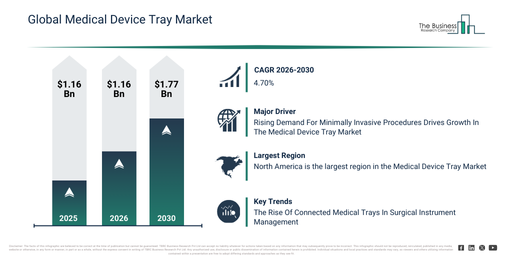
    The medical device tray market size is projected to experience consistent growth over the next few years. By 2030, it is anticipated to reach $3.17 billion, demonstrating a compound annual growth rate (CAGR) of 4.7%. This expansion during the forecast period is primarily attributable to the increasing demand for minimally invasive procedures, a growing emphasis on reducing procedure preparation time, the rising adoption of disposable medical products, the expansion of ambulatory and day-care surgery centers, and an increasing regulatory focus on infection prevention. Key trends expected in this period include the growing adoption of customized and procedure-specific medical device trays, an increasing preference for disposable and single-use procedure trays, a rising demand for efficient sterilization and instrument organization, the expansion of medical device tray usage in outpatient and ambulatory settings, and a heightened focus on workflow efficiency and infection control.

    Get A Free Sample Report With In-Depth Market Insights:

    https://thebusinessresearchcompany.com/sample_request?id=80583225&type=smp&name=Medical%20Device%20Tray%20Market%20Report%202026&utm_source=Blogs&utm_medium=Paid&utm_campaign=Sep_PR

    Medical Device Tray Market Growth Backed By Core Demand Fundamentals

    The increasing adoption of minimally invasive procedures is anticipated to stimulate the expansion of the medical device tray market moving forward. These procedures are medical or surgical interventions that require only small incisions or no incisions at all. The rising preference for minimally invasive techniques stems from their benefits such as shorter recovery periods, reduced risks of complications, and less post-operative pain compared to traditional surgeries. Medical device trays are vital in minimally invasive procedures, serving to organize and sterilize the specialized instruments necessary. They ensure prompt and efficient access to tools, thereby enhancing the precision and safety of surgical operations. As an illustration, in January 2024, Intuitive Surgical Inc., a US-based manufacturer of robotic products, announced the installation of 415 da Vinci surgical systems (robotic surgical systems that use a minimally invasive surgical approach) in the fourth quarter of 2023, which signifies a 12% increase from 2022. Thus, the proliferation of minimally invasive procedures is a key driver for the growth of the medical device tray market.

    Medical Device Tray Market Segment Analysis Spotlighting Growth Areas

    The medical device tray market covered in this report is segmented –

    1) By Product Type: Sterilization Trays, Procedure Trays

    2) By Application: Surgical Trays, Diagnostic Trays, Dental Trays

    3) By End User: Hospital And Clinics, Ambulatory, Dental Clinics, Surgical Center

    Subsegments:

    1) By Sterilization Trays: Stainless Steel Sterilization Trays, Plastic Sterilization Trays, Disposable Sterilization Trays, Custom Sterilization Trays, Sterilization Trays With Dividers, Sterilization Trays For Surgical Instruments, Sterilization Trays For Diagnostic Instruments, Heavy-Duty Sterilization Trays, Sterilization Trays With Lids Or Covers, Sterilization Trays For Endoscopes And Delicate Instruments

    2) By Procedure Trays: Disposable Procedure Trays, Reusable Procedure Trays, Customizable Procedure Trays, Sterile Procedure Trays, Non-Sterile Procedure Trays, Procedure Trays For Surgical Operations, Procedure Trays For Diagnostic Procedures, Procedure Trays For Emergency Or Trauma Care, Procedure Trays With Pre-Packaged Instruments, Procedure Trays For Wound Care And Dressing

    Medical Device Tray Market Growth Trends Reshaping The Competitive Landscape

    Prominent companies within the medical tray market are intensifying their efforts to create cutting-edge solutions, including connected medical trays, to secure a competitive advantage. A connected medical tray is a technologically advanced tray furnished with sensors, communication apparatus, and software designed to monitor, manage, and track surgical instruments and supplies in real time. For example, in February 2024, Intech Medical, a France-based producer of orthopedic medical devices, unveiled Trackinbox, a sophisticated tray featuring smart tracking solutions. This adaptable tray empowers medical device manufacturers to observe the location, utilization, and sterilization status of their products across the supply chain. Intech’s connected tray solution is crucial in the MedTech industry, as it responds to the requirement for better visibility and streamlined efficiency in surgical instrument administration.

    Medical Device Tray Market Key Participants And Competitive Landscape

    Major companies operating in the medical device tray market are Getinge, B. Braun Melsungen, Stryker, Zimmer Biomet, Integra LifeSciences, STERIS, Aesculap, KARL STORZ, Olympus, ConMed, Smith & Nephew, DePuy Synthes, Medtronic, Cook Medical, Teleflex, Hologic, Nipro, Arthrex, KLS Martin, Aygun Surgical Instruments

    View The Full Medical Device Tray Market Report:

    https://thebusinessresearchcompany.com/report/medical-device-tray-global-market-report?utm_source=Blogs&utm_medium=Paid&utm_campaign=Sep_PR

    Medical Device Tray Market Geographic Analysis: Where Is Demand Accelerating Fastest?

    North America was the largest region in the medical device tray market in 2025. Asia-Pacific is expected to be the fastest-growing region in the forecast period. The regions covered in the medical device tray market report are Asia-Pacific, South East Asia, Western Europe, Eastern Europe, North America, South America, Middle East, Africa.

    Reach Out To Our Team:

    The Business Research Company: https://www.thebusinessresearchcompany.com/

    Americas: +1 310-496-7795

    Asia: +44 7882 955267 & +91 8897263534

    Europe: +44 7882 955267

    Email us at: marketing@tbrc.info

    Follow us on:

    LinkedIn: https://in.linkedin.com/company/the-business-research-company

    YouTube: https://www.youtube.com/channel/UC24_fI0rV8cR5DxlCpgmyFQ

    Global Market Model: https://www.thebusinessresearchcompany.com/global-market-model

  • Medical Device Subscription Market Forecast Insights: The Road To $24.89 Billion By 2030

    Medical Device Subscription Market Forecast Insights: The Road To $24.89 Billion By 2030

    Featuring market attractiveness scoring, total addressable market sizing, company benchmarking matrices, interactive Excel dashboards, deeper supply chain intelligence, emerging startup tracking, and granular product-level insights, The Business Research Company’s 2026 market reports are built to deliver research that is both more actionable and more strategically valuable.

    Medical Device Subscription Market Size, Value And Growth Trajectory Through 2030

    The medical device subscription market size has seen remarkable growth in recent years. It is anticipated to increase from $9.01 billion in 2025 to $11.06 billion in 2026, achieving a compound annual growth rate (CAGR) of 22.8%. This historical expansion can be linked to several factors, including elevated upfront device expenses, growing hospital acceptance, the increasing sophistication of devices, a demand for managed services, and the advancements in healthcare IT integration.

    The medical device subscription market size is projected to experience rapid expansion in the coming years. It is anticipated to reach $24.89 billion in 2030 at a compound annual growth rate (CAGR) of 22.5%. This expansion during the forecast period is fueled by the broadening of remote monitoring services, AI-powered device management, increased uptake in new markets, a need for tailored subscription models, and seamless integration with telehealth solutions. Key developments expected in the forecast period encompass recurring healthcare device services, predictive maintenance, remote patient monitoring, adaptable subscription models, and the incorporation of homecare devices.

    Get A Free Sample Report With In-Depth Market Insights:

    https://thebusinessresearchcompany.com/sample_request?id=49447674&type=smp&name=Medical%20Device%20Subscription%20Market%20Report%202026&utm_source=Blogs&utm_medium=Paid&utm_campaign=Sep_PR

    Medical Device Subscription Market Opportunity Drivers: What’s Unlocking New Revenue Potential?

    The increasing focus on remote patient monitoring is anticipated to propel the growth of the medical device subscription market going forward. Remote patient monitoring involves leveraging digital technologies to gather and transmit patients’ health data from outside traditional healthcare settings to healthcare providers for assessment and guidance. The emphasis on remote patient monitoring is growing due to a rising demand for continuous healthcare management to track patients’ health in real time, enhance outcomes, and minimize hospital visits. Medical device subscription facilitates remote patient monitoring by providing patients and healthcare providers with ongoing access to advanced medical devices and digital tools through flexible, subscription-based models, thereby enabling real-time data collection, seamless health tracking, and proactive care management without the burden of high upfront costs. For instance, in August 2023, according to Vivalink, a US-based healthcare technology company, a recent survey indicated that 84% of respondents currently using RPM plan to increase their usage in 2024. Furthermore, 45% of providers utilize RPM for acute monitoring such as hospital-at-home programs, and 77% predict that RPM-based care will surpass traditional in-patient hospital care within the next five years. Consequently, the expanding emphasis on remote patient monitoring is driving the growth of the medical device subscription market.

    Medical Device Subscription Market Segment Landscape And Growth Outlook

    The medical device subscription market covered in this report is segmented –

    1) By Device Type: Diagnostic Devices, Therapeutic Devices, Monitoring Devices

    2) By Subscription Model: Monthly, Quarterly, Annual, Customized

    3) By Application: Cardiology, Orthopedics, Neurology, Respiratory, Other Applications

    4) By End-User: Hospitals, Clinics, Homecare Settings, Ambulatory Surgical Centers, Other End Users

    Subsegments:

    1) By Diagnostic Devices: Imaging Diagnostic Devices, Point-of-Care Diagnostic Devices, Laboratory Diagnostic Devices, Wearable Diagnostic Devices

    2) By Therapeutic Devices: Drug Delivery Therapeutic Devices, Rehabilitation Therapeutic Devices, Pain Management Therapeutic Devices, Respiratory Therapeutic Devices

    3) By Monitoring Devices: Vital Signs Monitoring Devices, Continuous Glucose Monitoring Devices, Cardiac Monitoring Devices, Remote Patient Monitoring Devices

    Medical Device Subscription Market Innovation Trends Shaping Future Development

    Leading companies in the medical device subscription market are concentrating on developing innovative products, such as advanced health wearables, to improve remote health monitoring and enhance personalized wellness management. These sophisticated health wearables are smart devices equipped with sensors that continuously track and analyze body functions, assisting users in real-time health monitoring, early detection of potential issues, and informed wellness decisions. For instance, in May 2025, WHOOP Inc., a US-based medical technology company, unveiled the Whoop 5.0 and Whoop MG, two next-generation health wearables designed to deliver continuous, medical-grade monitoring. These devices incorporate features like on-demand ECGs, blood pressure tracking, hormonal insights, and advanced recovery analytics, all integrated into a tiered subscription model with options such as Whoop One, Peak, and Life. Such wearables not only aid users in monitoring their strain, sleep, and recovery metrics but also harness AI-driven insights to offer personalized recommendations for optimizing performance and long-term wellness. This launch signifies the company’s entry into the medical-grade wearable category, effectively bridging the divide between fitness tracking and clinical health assessment. Through ongoing physiological monitoring and real-time data sharing, the platform supports the early identification of potential health problems, empowering both users and healthcare professionals to make more informed choices.

    Medical Device Subscription Market Leading Players And Competitive Positioning

    Major companies operating in the medical device subscription market are Thermo Fisher Scientific Inc., Medtronic plc, Siemens Healthineers AG, Fresenius Medical Care AG & Co. KGaA, Stryker Corporation, Koninklijke Philips N.V., GE HealthCare Technologies Inc., Zimmer Biomet Holdings Inc., Intuitive Surgical Inc., Olympus Corporation, Terumo Corporation, Illumina Inc., ResMed Inc., Hologic Inc., Varian Medical Systems Inc., Hill-Rom Holdings Inc., Canon Medical Systems Corporation, Masimo Corporation, Nihon Kohden Corporation, WONACE Medical Supply Co. Ltd.

    View The Full Medical Device Subscription Market Report:

    https://thebusinessresearchcompany.com/report/medical-device-subscription-global-market-report?utm_source=Blogs&utm_medium=Paid&utm_campaign=Sep_PR

    Medical Device Subscription Market Regional Distribution: Which Areas Power Market Growth?

    North America was the largest region in the medical device subscription market in 2025. Asia-Pacific is expected to be the fastest-growing region in the forecast period. The regions covered in the medical device subscription market report are Asia-Pacific, South East Asia, Western Europe, Eastern Europe, North America, South America, Middle East, Africa.

    Reach Out To Our Team:

    The Business Research Company: https://www.thebusinessresearchcompany.com/

    Americas: +1 310-496-7795

    Asia: +44 7882 955267 & +91 8897263534

    Europe: +44 7882 955267

    Email us at: marketing@tbrc.info

    Follow us on:

    LinkedIn: https://in.linkedin.com/company/the-business-research-company

    YouTube: https://www.youtube.com/channel/UC24_fI0rV8cR5DxlCpgmyFQ

    Global Market Model: https://www.thebusinessresearchcompany.com/global-market-model