Category: Medical Equipment

  • Medical Device Outsourcing Market Explained: What Is Fueling Growth To $330.23 Billion By 2030?

    Medical Device Outsourcing Market Explained: What Is Fueling Growth To $330.23 Billion By 2030?

    Built to provide research that’s more actionable and strategically valuable, The Business Research Company’s 2026 market reports include market attractiveness analysis, total addressable market sizing, company benchmarking matrices, interactive Excel dashboards, broader supply chain intelligence, emerging startup tracking, and in-depth product insights.

    Medical Device Outsourcing Market CAGR Outlook And Future Development

    The medical device outsourcing market has shown substantial growth in recent years. This market is expected to expand from $161.91 billion in 2025 to $186.82 billion in 2026, achieving a compound annual growth rate (CAGR) of 15.4%. The factors contributing to its past development include the increasing complexity of medical device regulations, the rising costs associated with in-house manufacturing, the expansion of global medical device markets, the demand for expedited product commercialization, and the availability of specialized outsourcing partners.

    The medical device outsourcing market is projected to experience swift expansion in the coming years. This market is forecast to reach $330.23 billion by 2030, exhibiting a compound annual growth rate (CAGR) of 15.3%. This anticipated growth is driven by several factors, including the wider uptake of digital manufacturing technologies, a heightened emphasis on sustainable device manufacturing, the proliferation of wearable and connected medical devices, the escalating need for scalable production capabilities, and a greater focus on strengthening supply chain resilience. Key trends during this period encompass a rise in the outsourcing of contract manufacturing services, an increasing requirement for assistance with regulatory affairs and quality assurance, a stronger move towards comprehensive device development collaborations, an expansion in the outsourcing of electronics and embedded systems, and a heightened priority on minimizing costs and accelerating market entry.

    Get A Free Sample Report With In-Depth Market Insights:

    https://thebusinessresearchcompany.com/sample_request?id=69727322&type=smp&name=Medical%20Device%20Outsourcing%20Market%20Report%202026&utm_source=Blogs&utm_medium=Paid&utm_campaign=Sep_PR

    Medical Device Outsourcing Market Growth Momentum: What Factors Are Shaping Demand?

    The rising demand for remote patient monitoring (RPM) devices is projected to stimulate growth in the medical device outsourcing market in the coming years. RPM devices are technological tools that collect and transmit health data from patients’ homes or other distant locations to healthcare professionals. Remote patient monitoring leverages medical device outsourcing for the creation and manufacturing of connected gadgets, sensors, and data analytics, thereby empowering healthcare providers to remotely track patients’ health conditions and improve care delivery. For instance, in August 2023, Vivalink, a US-based healthcare technology company, conducted a survey revealing that 84% of current remote patient monitoring (RPM) users plan to increase their usage in 2024, with 45% of healthcare providers using RPM for acute monitoring in hospital-at-home programs, and 77% believing that RPM-based care will supersede traditional inpatient hospital care within the next five years. Hence, the escalating demand for remote patient monitoring devices is a significant driver for the medical device outsourcing market.

    Medical Device Outsourcing Market Breakdown By Product Type And Application

    The medical device outsourcing market covered in this report is segmented –

    1) By Product: Finished Goods, Electronics, Raw Materials

    2) By Device Type: Class I Devices, Class II Devices, Class III Devices

    3) By Services: Quality Assurance, Regulatory Affair Services, Product Design Development, Product Testing And Sterilization, Product Implementation, Product Upgrade, Product Maintenance, Contract Manufacturing

    4) By Application: Drug Delivery, Dental, Diabetes Care, Cardiology, Other Applications

    Subsegments:

    1) By Finished Goods: Surgical Instruments, Diagnostic Devices, Therapeutic Devices

    2) By Electronics: Medical Imaging Components, Wearable Health Technology, Embedded Systems

    3) By Raw Materials: Plastics and Polymers, Metals and Alloys, Biomaterials

    Medical Device Outsourcing Market Trends Redefining Industry Growth

    Leading companies in the medical device outsourcing market are concentrating on developing innovative products, such as platforms for the creation of new medical devices, to better address the requirements of their existing customers. This platform is designed to offer a swift progression from initial concept to a finished device, enabling businesses to carry out iterations in a matter of weeks rather than months, and with minimal upfront financial outlay. For instance, in March 2023, Science Corporation, a US-based biotechnology entity, unveiled Science Foundry. Science Foundry is a platform that grants companies the ability to utilize and expand upon Science’s own infrastructure by providing access to more than 80 of the company’s various products and services, including its thin-film electrode technology. The Science Foundry aims to provide assistance to startups that are working on equally ambitious concepts. Hodak anticipates demand from other neurotechnology businesses, but also sees other medical technology companies and even quantum computing startups as offering significant growth prospects.

    Medical Device Outsourcing Market Competitive Overview And Top Companies

    Major companies operating in the medical device outsourcing market are Integer Holdings Corporation, Flex Ltd., Sanmina Corporation, Celestica Inc., Jabil Inc., TE Connectivity Ltd., Nortech Systems Incorporated, WuXi AppTec Inc., Pro‑Tech Design and Manufacturing Inc., Sterling Industries, Benchmark Electronics Inc., West Pharmaceutical Services Inc., Plexus Corp, Viant Medical, Tecomet Inc., Intertek Group plc, Eurofins Scientific, Charles River Laboratories, Cannon Quality Group LLC, Qserve Group

    View The Full Medical Device Outsourcing Market Report:

    https://thebusinessresearchcompany.com/report/medical-device-outsourcing-global-market-report?utm_source=Blogs&utm_medium=Paid&utm_campaign=Sep_PR

    Medical Device Outsourcing Market Leading Geography: Which Region Contributes The Most Revenue?

    North America was the largest region in the medical device outsourcing market in 2025. Asia-Pacific is expected to be the fastest-growing region in the forecast period. The regions covered in the medical device outsourcing market report are Asia-Pacific, South East Asia, Western Europe, Eastern Europe, North America, South America, Middle East, Africa.

    Reach Out To Our Team:

    The Business Research Company: https://www.thebusinessresearchcompany.com/

    Americas: +1 310-496-7795

    Asia: +44 7882 955267 & +91 8897263534

    Europe: +44 7882 955267

    Email us at: marketing@tbrc.info

    Follow us on:

    LinkedIn: https://in.linkedin.com/company/the-business-research-company

    YouTube: https://www.youtube.com/channel/UC24_fI0rV8cR5DxlCpgmyFQ

    Global Market Model: https://www.thebusinessresearchcompany.com/global-market-model

  • Medical Device Labeling Market Forecast To Reach $1.72 Billion By 2030: Key Trends Explained

    Medical Device Labeling Market Forecast To Reach $1.72 Billion By 2030: Key Trends Explained

    Backed by market attractiveness analysis, total addressable market sizing, company benchmarking matrices, interactive Excel dashboards, wider supply chain intelligence, emerging startup coverage, and detailed product-level insights, The Business Research Company’s 2026 market reports are designed to offer research that is more actionable and strategically valuable than ever.

    Medical Device Labeling Market Set To Climb From $1.32 Billion In 2026 To $1.72 Billion By 2030

    The medical device labeling market size has experienced robust expansion in recent years. This market is projected to expand from $1.23 billion in 2025 to $1.32 billion in 2026, achieving a compound annual growth rate (CAGR) of 7.3%. Factors contributing to its historical growth include reliance on traditional labeling methods, manual labeling processes, limited adoption of smart labels, growing regulatory requirements, and increasing medical device production volumes.

    The medical device labeling market is projected to experience substantial expansion in the upcoming years. Its valuation is anticipated to reach $1.72 billion by 2030, exhibiting a compound annual growth rate (CAGR) of 7.0%. This anticipated growth during the forecast timeframe is attributable to several factors, including the integration of digital printing and smart labeling technologies, the widespread adoption of interactive and QR code-enabled labels, a growing need for patient safety and anti-counterfeiting measures, the expansion of home healthcare and diagnostic devices, and increased investment in automated and connected labeling systems. Key trends expected during this period encompass the increasing uptake of smart and interactive labels, a rise in the application of QR codes and barcoding technologies, advancements in digital printing for medical devices, a strong emphasis on tamper-evident and high-security labeling, and the adherence to regulatory compliance and standardization within labeling practices.

    Get A Free Sample Report With In-Depth Market Insights:

    https://thebusinessresearchcompany.com/sample_request?id=99865018&type=smp&name=Medical%20Device%20Labeling%20Market%20Report%202026&utm_source=Blogs&utm_medium=Paid&utm_campaign=Sep_PR

    Medical Device Labeling Market Expansion Drivers: What’s Shaping Future Growth?

    A projected surge in product recalls is anticipated to fuel the expansion of the medical device labeling market in the foreseeable future. Product recalls involve the retrieval of faulty or hazardous goods from consumers, producers, or distributors to avert injury and uphold safety regulations. The rise in product recalls is attributed to growing consumer apprehension regarding safety, prompting a demand for enhanced product quality and safeguarding against health or safety hazards. Medical device labeling aids product recalls by offering precise identification, instructions for use, and traceability information, enabling the effective location and removal of compromised devices from commercial circulation. For example, data from Sedgwick LP, a US-based software firm, indicated in February 2024 that U.S. product recalls reached a seven-year high in 2023, showing an 11% increase over 2022, with 975 medical-device recall events recorded. Consequently, the growing frequency of product recalls is a key impetus behind the expansion of the medical device labeling market.

    Medical Device Labeling Market Segment Analysis And Revenue Potential

    The medical device labeling market covered in this report is segmented –

    1) By Type: Pressure Sensitive Labels, Glue Applied Labels, Sleeve Labels, In Mold Labels, Other Types

    2) By Device Type: Diagnostic Devices, Therapeutic Devices, Surgical Devices, Monitoring Devices, Assistive Devices

    3) By Material: Paper, Plastic, Other Materials

    4) By Technology: Traditional Labeling, Smart Labeling Systems, Interactive Labels, Quick Response Code And Barcoding Technologies, Digital Printing Technologies

    5) By End User: Hospitals, Clinics, Home Healthcare, Diagnostic Laboratories, Research Institutions

    Subsegments:

    1) By Pressure Sensitive Labels: Removable Labels, Permanent Labels, High-Temperature Labels, Freezer-Grade Labels, Tamper-Evident Labels

    2) By Glue Applied Labels: Cut-And-Stack Labels, Wrap-Around Labels, Wet Glue Labels, Cold Glue Labels, Gummed Labels

    3) By Sleeve Labels: Shrink Sleeve Labels, Stretch Sleeve Labels, Full-Body Sleeve Labels, Partial Sleeve Labels, Tamper-Evident Sleeve Labels

    4) By In Mold Labels: Blow Molding Labels, Injection Molding Labels, Thermoforming Labels, Polypropylene Labels, High-Density Polyethylene Labels

    5) By Other Types: Laser Labels, Thermal Transfer Labels, Direct Thermal Labels, Smart Labels, Radio Frequency Identification Labels

    Medical Device Labeling Market Strategic Trends: What Defines The Next Growth Phase?

    Companies operating in the medical device labeling market are prioritizing the development of advanced adhesive solutions, such as permanent solvent-based biocompatible adhesive, to bolster label durability, ensure patient safety, and adhere to strict regulatory standards for long-term medical device identification. A permanent solvent-based biocompatible adhesive is a medical-grade adhesive formulation that leverages solvent chemistry to establish a lasting bond, safely interacting with human tissue or medical devices. For example, in December 2023, Flexcon Company Inc., a US-based manufacturing firm, launched its Flexcon MedFlex product line, featuring polyester printable films and overlaminates. This line is specifically designed for the lifelong labeling and tracking of Food and Drug Administration (FDA) Class I, II, and III medical devices intended for external body use. MedFlex products comply with all FDA UDI performance criteria and integrate UL-recognized, biocompatible adhesive solutions with sustainability features. This initiative aims to simplify product selection and enhance durability, safety, and compliance within medical device labelling.

    Medical Device Labeling Market Competitive Landscape: Which Companies Lead The Industry?

    Major companies operating in the medical device labeling market are Avery Dennison Corporation, Trumpf SE + Co. KG, Zebra Technologies Corporation, CCL Industries Inc., Brady Corporation, SATO Holdings Corporation, Herma Holding GmbH + Co. KG, Weber Packaging Solutions Inc., Tapecon Inc., Denny Bros Ltd., JH Bertrand Inc., Royal Label Co. Inc., Schreiner Group GmbH & Co. KG, Sidco Labeling Systems, Amcor Limited, Mondi Group Plc, Lintec Corporation, Huhtamaki Oyj, UPM Raflatac, WS Packaging Group Inc., Resource Label Group LLC, Faubel & Co Nachf GmbH, Label Source

    View The Full Medical Device Labeling Market Report:

    https://thebusinessresearchcompany.com/report/medical-device-labeling-global-market-report?utm_source=Blogs&utm_medium=Paid&utm_campaign=Sep_PR

    Medical Device Labeling Market Regional Outlook: Where Is Opportunity Concentrated?

    North America was the largest region in the medical device labeling market in 2025. Asia-Pacific is expected to be the fastest-growing region in the forecast period. The regions covered in the medical device labeling market report are Asia-Pacific, South East Asia, Western Europe, Eastern Europe, North America, South America, Middle East, Africa.

    Reach Out To Our Team:

    The Business Research Company: https://www.thebusinessresearchcompany.com/

    Americas: +1 310-496-7795

    Asia: +44 7882 955267 & +91 8897263534

    Europe: +44 7882 955267

    Email us at: marketing@tbrc.info

    Follow us on:

    LinkedIn: https://in.linkedin.com/company/the-business-research-company

    YouTube: https://www.youtube.com/channel/UC24_fI0rV8cR5DxlCpgmyFQ

    Global Market Model: https://www.thebusinessresearchcompany.com/global-market-model

  • Medical Device Design And Development Services Market Analysis: Understanding The Drivers Behind 13.8% CAGR Through 2030 Growth

    Medical Device Design And Development Services Market Analysis: Understanding The Drivers Behind 13.8% CAGR Through 2030 Growth

    Featuring market attractiveness scoring, total addressable market sizing, company benchmarking matrices, interactive Excel dashboards, deeper supply chain intelligence, emerging startup tracking, and granular product-level insights, The Business Research Company’s 2026 market reports are built to deliver research that is both more actionable and more strategically valuable.

    Medical Device Design And Development Services Market Forecast: Value Set To Climb From $15.53 Billion To $26.01 Billion

    The medical device design and development services market has experienced rapid expansion in its size over recent years. This market is projected to expand from $13.62 billion in 2025 to $15.53 billion in 2026, demonstrating a compound annual growth rate (CAGR) of 14.0%. Historically, this growth can be attributed to factors such as the increasing intricacy of medical devices, heightened regulatory oversight, accelerated innovation cycles in medical devices, the proliferation of contract development collaborations, and a rising imperative for quicker commercialization.

    The market for medical device design and development services is projected to experience swift expansion over the coming years. This market is set to reach $26.01 billion in 2030, exhibiting a compound annual growth rate (CAGR) of 13.8%. Factors contributing to this growth during the forecast period include greater financial commitments to digital health device creation, a surging need for interconnected medical products, the proliferation of personalized medical devices, a heightened emphasis on environmentally friendly device designs, and a growing dependence on expert development service providers. Key trends anticipated during this period encompass a heightened need for comprehensive medical device development solutions, an increase in the use of digital prototyping and simulation techniques, a greater emphasis on design processes that adhere to regulations, an expansion of outsourced device engineering support, and improved integration of intelligent and connected device architecture.

    Get A Free Sample Report With In-Depth Market Insights:

    https://thebusinessresearchcompany.com/sample_request?id=48618387&type=smp&name=Medical%20Device%20Design%20And%20Development%20Services%20Market%20Report%202026&utm_source=Blogs&utm_medium=Paid&utm_campaign=Sep_PR

    Medical Device Design And Development Services Market Development Factors: What’s Supporting Demand?

    The escalating incidence of chronic diseases is anticipated to drive the future expansion of the medical device design and development services market. Chronic diseases are enduring medical conditions that typically last a year or longer, necessitating ongoing medical attention and potentially restricting daily activities or overall quality of life. This increase in chronic disease prevalence is linked to factors such as an aging demographic, unhealthy lifestyle decisions, suboptimal diets, sedentary behavior, and elevated stress levels. Medical device design and development services are instrumental in confronting chronic diseases by crafting innovative, patient-centered solutions that enhance disease management, improve patient outcomes, and streamline long-term care. For example, in 2023, the American Cancer Society Inc., a US-based non-profit health group, projects 1,958,310 new cancer cases to be diagnosed in the US, marking an increase from the over 1,918,030 new cancer cases in 2022. Thus, the rising prevalence of chronic diseases acts as a key driver for the growth of the medical device design and development services market.

    Medical Device Design And Development Services Market Segmentation And Category Overview

    The medical device design and development services market covered in this report is segmented –

    1) By Services: Designing And Engineering, Machining, Molding, Packaging

    2) By Medical Devices: Cardiovascular Devices, Point Of Care (POC) Diagnostic Equipment, Hb1ac Testing, Drug Delivery Devices, Orthopedic Devices, Dental Devices, Imaging Devices, Surgical Devices, Sleep And Respiratory Devices, Other Medical Devices

    3) By Application: Treatment, Diagnostics

    4) By End Use: Medical Device Companies, Biotechnology Companies

    Subsegments:

    1) By Designing And Engineering: Product Concept Design, Prototyping And Testing, CAD Modeling And Simulation, Material Selection And Engineering

    2) By Machining: Precision Machining, CNC Machining, Laser Cutting And Etching, Surface Finishing

    3) By Molding: Injection Molding, Blow Molding, Compression Molding, Overmolding

    4) By Packaging: Sterile Packaging, Custom Packaging Solutions, Regulatory-Compliant Packaging, Packaging For Distribution And Storage

    Medical Device Design And Development Services Market Transformation Trends: What Innovations Are Driving Change?

    Leading entities within the medical device design and development services market are increasingly adopting innovative strategies, such as human-centric design principles, to improve user experience, enhance product functionality, and safeguard patient well-being. Human-centric design principles involve creating products, systems, or environments with a primary emphasis on the demands, preferences, and constraints of their eventual users, ensuring that aspects like usability, comfort, and accessibility are given precedence. For instance, in January 2023, ClariMed Inc., a US-based medical equipment manufacturing company, unveiled its first MedTech services partner, dedicated to delivering integrated, human-centered solutions for medical product development. This endeavor aims to provide extensive, complete services that seamlessly combine product strategy, design, development, and regulatory compliance. By prioritizing patient requirements and ease of use, the platform guarantees that medical devices are not only technologically advanced but also practical and efficient for users.

    Medical Device Design And Development Services Market Competitive Landscape: Who Leads The Industry?

    Major companies operating in the medical device design and development services market are Johnson & Johnson Inc, Siemens Healthineers AG, Jabil Inc., Medtronic plc, Flex Ltd., Stryker Corporation, Quest Global Engineering Services Private Limited, Boston Scientific Corporation, Sanmina Corporation, Plexus Corp., Integer Holdings Corporation, Nordson MEDICAL Inc., Veranex Solutions, Cirtec Medical Corporation, Cambridge Design Partnership, Planet Innovation Technologies Pvt. Ltd., Ximedica LLC, Starfish Medical, Avail Medsystems, DeviceLab Inc.

    View The Full Medical Device Design And Development Services Market Report:

    https://thebusinessresearchcompany.com/report/medical-device-design-and-development-services-global-market-report?utm_source=Blogs&utm_medium=Paid&utm_campaign=Sep_PR

    Medical Device Design And Development Services Market Geographic Landscape: Which Region Leads Industry Growth?

    North America was the largest region in the medical device design and development services market in 2025. Asia-Pacific is expected to be the fastest-growing region in the forecast period. The regions covered in the medical device design and development services market report are Asia-Pacific, South East Asia, Western Europe, Eastern Europe, North America, South America, Middle East, Africa.

    Reach Out To Our Team:

    The Business Research Company: https://www.thebusinessresearchcompany.com/

    Americas: +1 310-496-7795

    Asia: +44 7882 955267 & +91 8897263534

    Europe: +44 7882 955267

    Email us at: marketing@tbrc.info

    Follow us on:

    LinkedIn: https://in.linkedin.com/company/the-business-research-company

    YouTube: https://www.youtube.com/channel/UC24_fI0rV8cR5DxlCpgmyFQ

    Global Market Model: https://www.thebusinessresearchcompany.com/global-market-model

  • Medical Device Contract Research Organization (CRO) Market Growth To $14.75 Billion By 2030: What’s Driving The Expansion?

    Medical Device Contract Research Organization (CRO) Market Growth To $14.75 Billion By 2030: What’s Driving The Expansion?

    Built to provide research that’s more actionable and strategically valuable, The Business Research Company’s 2026 market reports include market attractiveness analysis, total addressable market sizing, company benchmarking matrices, interactive Excel dashboards, broader supply chain intelligence, emerging startup tracking, and in-depth product insights.

    Medical Device Contract Research Organization (CRO) Market Revenue Growth On Track For A 6.7% CAGR Through 2030

    The medical device contract research organization (CRO) market size has shown significant expansion in recent years. This market is anticipated to increase from $10.64 billion in 2025 to $11.39 billion in 2026, exhibiting a compound annual growth rate (CAGR) of 7.0%. The historical growth of the market is primarily due to the increasing complexity of medical device regulations, the expansion in medical device innovation pipelines, rising costs associated with clinical trials, a lack of in-house regulatory expertise, and the broadening of global clinical studies.

    The medical device contract research organization (CRO) market is projected to experience substantial expansion over the upcoming years. It is anticipated to reach a size of $14.75 billion by 2030, demonstrating a compound annual growth rate (CAGR) of 6.7%. This projected growth during the forecast period is primarily driven by factors such as the heightened demand for faster device approvals, the increasing embrace of decentralized clinical trials, the expanding utilization of real-world evidence, the broadening scope of post-market surveillance mandates, and the escalating integration of digital health solutions. Significant trends anticipated within this period encompass a rise in the outsourcing of clinical trial management, a growing need for expertise in regulatory compliance, the wider adoption of data-driven approaches in clinical research, the proliferation of remote and hybrid clinical monitoring frameworks, and a heightened emphasis on risk-based quality management.

    Get A Free Sample Report With In-Depth Market Insights:

    https://thebusinessresearchcompany.com/sample_request?id=23678823&type=smp&name=Medical%20Device%20Contract%20Research%20Organization%20%28CRO%29%20Market%20Report%202026&utm_source=Blogs&utm_medium=Paid&utm_campaign=Sep_PR

    Medical Device Contract Research Organization (CRO) Market Industry Drivers: What’s Behind The Revenue Growth?

    The medical device contract research organization (CRO) market is projected to expand due to the rising volume of clinical trials. These trials involve research studies with human participants to assess the safety and efficacy of novel medical treatments, interventions, or diagnostic methods. This surge in clinical trials stems from the escalating demand for innovative medical devices, alongside strict regulatory mandates for thorough testing. Medical device contract research organizations (CROs) offer specialized knowledge and assets for managing, performing, and supervising medical device clinical trials, thus guaranteeing adherence and effective implementation. As an illustration, the National Library of Medicine, a US-based national medical library, reported in August 2024 that registered clinical trials climbed from 477,227 in 2023 to 506,371 across all 50 states and 221 countries. Consequently, the expanding number of clinical trials will fuel the advancement of the medical device contract research organization (CRO) market.

    Medical Device Contract Research Organization (CRO) Market Segment Outlook: Which Categories Are Growing Fastest?

    The medical device contract research organization (cro) market covered in this report is segmented –

    1) By Service: Project Management Or Clinical Supply Management, Regulatory Or Medical Affairs, Medical Writing, Clinical Monitoring, Quality Management Or Assurance, Bio Statistics, Investigator Payments, Laboratory, Patient And Site Recruitment, Other Services

    2) By Device Type: MedTech Devices, Diagnostic Devices, Handheld Devices, Other Device Types

    3) By Phase: Preclinical, Clinical

    4) By Application: Cardiology, Diagnostic Imaging, Orthopedic, In Vitro Diagnostics (IVD), Ophthalmic, General And Plastic Surgery, Cardiovascular And Implantable Devices

    Subsegments:

    1) By Project Management Or Clinical Supply Management: Study Planning and Coordination, Clinical Supply Chain Management, Vendor Management

    2) By Regulatory or Medical Affairs: Regulatory Strategy Development, Medical Affairs Support, Regulatory Submission Preparation

    3) By Medical Writing: Clinical Study Protocols, Clinical Study Reports (CSRs), Regulatory Submission Documents, Patient Information Leaflets

    4) By Clinical Monitoring: Site Selection and Initiation, On-site Monitoring Visits, Remote Monitoring, Data Verification

    5) By Quality Management or Assurance: Quality Assurance Audits, Standard Operating Procedure (SOP) Development, Compliance Management

    6) By Biostatistics: Statistical Analysis Plan Development, Data Management And Analysis, Clinical Trial Design

    7) By Investigator Payments: Payment Processing Services, Financial Disclosure Management

    8) By Laboratory Services: Clinical Laboratory Testing, Bioanalytical Testing, Pathology Services

    9) By Patient And Site Recruitment: Site Feasibility Assessment, Patient Recruitment Strategies, Retention And Engagement Strategies

    10) By Other Services: Training And Education, Risk Management, Post-Market Surveillance, Data Management Services

    #Medical Device Contract Research Organization (CRO) Market Growth Trends: What’s Shaping The Future Outlook?

    Leading companies in the medical device contract research organization (CRO) market are increasingly focusing on integrating conventional services with sophisticated technology and participant acquisition methods, such as hybrid and virtual trial frameworks. This approach aims to boost trial effectiveness, speed up participant enrollment, and simplify regulatory adherence. Virtual and hybrid site capabilities are crucial for accommodating diverse study designs and participant requirements, particularly given the rising demand for decentralized trials. As an illustration, in June 2024, Lindus Health, a clinical trials company based in the UK, introduced All-in-One Medical Device CRO. This comprehensive contract research organization (CRO) solution is specifically designed for medical device trials. This innovative offering combines traditional CRO services with advanced features like their proprietary Citrus eClinical technology. It unifies all essential trial instruments into one platform, encompassing clinical trial management systems (CTMS), electronic data capture (EDC), and eConsent. Recruitment is strengthened through its extensive database, which includes over 30 million electronic health records (EHRs), and strategic digital marketing, ensuring efficient and timely enrollment. Moreover, Lindus Health offers robust site services, managing trials across single-site, multi-site, and virtual/hybrid models by cultivating strong relationships with principal investigators and research staff.

    Medical Device Contract Research Organization (CRO) Market Company Landscape And Competitive Strategy

    Major companies operating in the medical device contract research organization (cro) market are Thermo Fisher Scientific Inc., IQVIA Inc., Laboratory Corporation of America Holdings, ICON plc, Eurofins Scientific SE, WuXi AppTec, Syneos Health, Charles River Laboratories, PAREXEL International, Medpace Holdings Inc., Hangzhou Tigermed Consulting Co. Ltd., Caidya, QPS Holdings LLC, Avania B.V., Veristat, Cromsource S.R.L., Osmunda Medical Technology Service Group, MedTrials Inc., Boston Biomedical Associates, Hangzhou CIRS Technology Group Co. Ltd., Clinlogix, Shanghai Haofeng Medical Technology Co. Ltd., Promedica International, Medidee Services

    View The Full Medical Device Contract Research Organization (CRO) Market Report:

    https://thebusinessresearchcompany.com/report/medical-device-contract-research-organization-cro-global-market-report?utm_source=Blogs&utm_medium=Paid&utm_campaign=Sep_PR

    Medical Device Contract Research Organization (CRO) Market Largest Region: Which Geography Holds The Biggest Share?

    Asia-Pacific was the largest region in the medical device contract research organization (CRO) market in 2025. Asia-Pacific is expected to be the fastest-growing region in the forecast period. The regions covered in the medical device contract research organization (cro) market report are Asia-Pacific, South East Asia, Western Europe, Eastern Europe, North America, South America, Middle East, Africa.

    Reach Out To Our Team:

    The Business Research Company: https://www.thebusinessresearchcompany.com/

    Americas: +1 310-496-7795

    Asia: +44 7882 955267 & +91 8897263534

    Europe: +44 7882 955267

    Email us at: marketing@tbrc.info

    Follow us on:

    LinkedIn: https://in.linkedin.com/company/the-business-research-company

    YouTube: https://www.youtube.com/channel/UC24_fI0rV8cR5DxlCpgmyFQ

    Global Market Model: https://www.thebusinessresearchcompany.com/global-market-model

  • Medical Device Contract Manufacturing Market Trends Reshaping Industry Growth Through 2030

    Medical Device Contract Manufacturing Market Trends Reshaping Industry Growth Through 2030

    Backed by market attractiveness analysis, total addressable market sizing, company benchmarking matrices, interactive Excel dashboards, wider supply chain intelligence, emerging startup coverage, and detailed product-level insights, The Business Research Company’s 2026 market reports are designed to offer research that is more actionable and strategically valuable than ever.

    Medical Device Contract Manufacturing Market Value Growth And Long-Term Outlook

    The medical device contract manufacturing market size has experienced swift expansion in recent years. It is forecast to rise from $114.66 billion in 2025 to $131.36 billion in 2026, achieving a compound annual growth rate (CAGR) of 14.6%. This past growth can be ascribed to several factors, including accelerating medical device innovation cycles, the increasing complexity of regulations in medtech manufacturing, heightened cost pressures on OEMs, the expansion of global medtech startups, and a greater demand for specialized manufacturing expertise.

    The medical device contract manufacturing market is projected to experience substantial expansion over the coming years. This market is set to reach $228.23 billion by 2030, exhibiting a compound annual growth rate (CAGR) of 14.8%. This anticipated growth during the forecast period stems from factors such as the greater integration of cutting-edge manufacturing technologies, an escalating need for swift device market entry, the proliferation of tailored and minimally invasive medical solutions, a heightened emphasis on robust supply chains, and an increase in collaborations between Original Equipment Manufacturers (OEMs) and Contract Manufacturing Organizations (CMOs). Key developments expected within this period involve the rising trend of entrusting intricate device production to third parties, a growing call for comprehensive, end-to-end contract manufacturing offerings, a sharper focus on production capabilities that meet regulatory standards, the scaling up of manufacturing infrastructure, and a stronger commitment to quality and effective risk management.

    Get A Free Sample Report With In-Depth Market Insights:

    https://thebusinessresearchcompany.com/sample_request?id=7488&type=smp&name=Medical%20Device%20Contract%20Manufacturing%20Market%20Report%202026&utm_source=Blogs&utm_medium=Paid&utm_campaign=Sep_PR

    Medical Device Contract Manufacturing Market Growth Factors: What’s Supporting Expansion?

    The increasing occurrence of chronic illnesses is anticipated to boost the expansion of the medical device contract manufacturing market in the coming years. Chronic illnesses are defined as enduring health conditions, including cardiovascular diseases, diabetes, and respiratory ailments, which persist for prolonged durations and frequently necessitate ongoing medical care and observation. The increase in chronic disorder prevalence stems from an aging global population and various lifestyle elements; longer life expectancies, coupled with inactive routines, inadequate dietary habits, and insufficient physical activity, lead to greater rates of these long-term health issues. This growing prevalence of chronic conditions fuels a higher need for specialized medical equipment, such as monitoring devices, implantable technologies, and diagnostic instruments, essential for healthcare providers to manage these persistent conditions effectively. As an illustration, in April 2025, the US-Based Centers for Disease Control and Prevention (CDC) reported that 76.4 percent of U.S. adults (approximately 194 million) had at least one chronic condition, while 51.4 percent (around 130 million) suffered from two or more. Consequently, the growing frequency of chronic disorders is a key factor propelling the growth of the medical device contract manufacturing market.

    Medical Device Contract Manufacturing Market Segment Landscape: Which Areas Lead Development?

    The medical device contract manufacturing market covered in this report is segmented –

    1) By Device: IVD Devices, Diagnostic Imaging Devices, Cardiovascular Devices, Drug Delivery Devices, Endoscopy Devices, Ophthalmology Devices, Orthopedic Devices, Dental Devices, Other Devices

    2) By Service: Device Development and Manufacturing Service, Quality Management Service, Assembly Service

    3) By Application: Design And Prototyping, Component Manufacturing, Device Assembly And Integration, Packaging And Sterilization, Quality Assurance And Testing, Regulatory And Compliance Support, Lifecycle Management And Scale-Up Manufacturing

    Subsegments:

    1) By In Vitro Diagnostics (IVD) Devices: Reagents, Test Kits, Assays

    2) By Diagnostic Imaging Devices: X-ray Machines, MRI Machines, Ultrasound Equipment

    3) By Cardiovascular Devices: Stents, Catheters, Pacemakers

    4) By Drug Delivery Devices: Infusion Pumps, Nebulizers, Auto-Injectors

    5) By Endoscopy Devices: Flexible Endoscopes, Rigid Endoscopes, Accessories

    6) By Ophthalmology Devices: Intraocular Lenses (IOLs), Diagnostic Equipment, Surgical Instruments

    7) By Orthopedic Devices: Implants, Surgical Tools, Prosthetics

    8) By Dental Devices: Dental Implants, Orthodontic Devices, Dental Chairs

    9) By Other Devices: Surgical Instruments, Monitoring Devices, Wearable Health Tech

    Medical Device Contract Manufacturing Market Industry Trends: What’s Reshaping Demand?

    Leading companies in the medical device contract manufacturing market are concentrating on developing innovative initiatives, such as integrated new product introduction (NPI) platforms, to speed up device development and ensure a smooth transition to large-scale manufacturing. These integrated new product introduction (NPI) platforms are comprehensive systems that consolidate design, prototyping, testing, and manufacturing readiness into a single streamlined process. This assists medical device companies in reducing development time, enhancing quality control, minimizing production risks, and accelerating the progression from initial concept to full-scale manufacturing. For example, in March 2025, Flex Ltd., a US-based manufacturing company, launched its new NPI Center situated near Boston, a key global hub for medtech innovation. Designed to enhance overall product realization, the center features an 8,000 ft² development lab equipped for concurrent prototype and preclinical builds, alongside a 2,000 ft² space for validation and quality testing, and is anticipated to receive ISO 13485 certification by Q2 2025. Supporting diverse applications including surgical robotics, medical devices, imaging systems, and laboratory diagnostics, the facility allows OEMs to mitigate development risk, decrease time-to-market, and utilize an integrated manufacturing ecosystem.

    Medical Device Contract Manufacturing Market Key Players Shaping Industry Direction

    Major companies operating in the medical device contract manufacturing market are Phillips-Medisize Corporation, Integer Holdings Corporation, Flex Ltd, Sanmina Corporation, Plexus Corporation, Benchmark Electronics Inc, Celestica International LP, Jabil Inc, Kimball Electronics Inc, Nortech Systems Inc, Gerresheimer AG, Catalent Inc, Nemera Development S.A., Consort Medical plc, Invetech, SteriPack Group Ltd, Forefront Medical Technologies Pte Ltd, Nipro Corporation, TE Connectivity Ltd, West Pharmaceutical Services Inc

    View The Full Medical Device Contract Manufacturing Market Report:

    https://thebusinessresearchcompany.com/report/medical-device-contract-manufacturing-global-market-report?utm_source=Blogs&utm_medium=Paid&utm_campaign=Sep_PR

    Medical Device Contract Manufacturing Market Regional Analysis: Which Geography Leads On Revenue?

    North America will be the largest region in the medical device contract manufacturing market in 2025. Asia-Pacific is expected to be the fastest-growing region in the forecast period. The regions covered in the medical device contract manufacturing market report are Asia-Pacific, South East Asia, Western Europe, Eastern Europe, North America, South America, Middle East, Africa.

    Reach Out To Our Team:

    The Business Research Company: https://www.thebusinessresearchcompany.com/

    Americas: +1 310-496-7795

    Asia: +44 7882 955267 & +91 8897263534

    Europe: +44 7882 955267

    Email us at: marketing@tbrc.info

    Follow us on:

    LinkedIn: https://in.linkedin.com/company/the-business-research-company

    YouTube: https://www.youtube.com/channel/UC24_fI0rV8cR5DxlCpgmyFQ

    Global Market Model: https://www.thebusinessresearchcompany.com/global-market-model

  • Medical Device Connectivity Market Growth To $12.76 Billion Creates New Opportunities Across The Industry

    Medical Device Connectivity Market Growth To $12.76 Billion Creates New Opportunities Across The Industry

    Featuring market attractiveness scoring, total addressable market sizing, company benchmarking matrices, interactive Excel dashboards, deeper supply chain intelligence, emerging startup tracking, and granular product-level insights, The Business Research Company’s 2026 market reports are built to deliver research that is both more actionable and more strategically valuable.

    Medical Device Connectivity Market Poised To Hit $12.76 Billion By 2030 With A 22.3% CAGR

    The medical device connectivity market has experienced significant expansion in recent years. This market is projected to expand from $4.51 billion in 2025 to $5.71 billion in 2026, demonstrating a compound annual growth rate (CAGR) of 26.5%. Historically, this growth has been fueled by factors such as the increasing digitization of healthcare systems, the widespread adoption of electronic medical records, the growing use of networked medical devices, the expansion of hospital IT infrastructure, and a rising demand for workflow automation.

    The medical device connectivity market size is anticipated to undergo substantial growth over the next few years. It is expected to expand to $12.76 billion in 2030, demonstrating a compound annual growth rate (CAGR) of 22.3%. This projected expansion during the forecast period is driven by increasing investments in connected healthcare ecosystems, a rising demand for real-time clinical data access, the expansion of home-based monitoring solutions, a growing focus on cybersecurity in healthcare, and the increasing adoption of AI-driven clinical decision support. Significant trends for the forecast period also include the increasing adoption of interoperable medical devices, rising deployment of remote patient monitoring platforms, growing integration with electronic health records, the expansion of cloud-based connectivity solutions, and an enhanced focus on data security and compliance.

    Get A Free Sample Report With In-Depth Market Insights:

    https://thebusinessresearchcompany.com/sample_request?id=82607336&type=smp&name=Medical%20Device%20Connectivity%20Market%20Report%202026&utm_source=Blogs&utm_medium=Paid&utm_campaign=Sep_PR

    Medical Device Connectivity Market Demand Drivers: What’s Powering Industry Growth?

    The increasing adoption of electronic health records is projected to drive the expansion of the medical device connectivity market in the future. An electronic health record (EHR) represents a digital rendition of a patient’s traditional paper chart, offering real-time, patient-focused data securely accessible to authorized personnel. Medical device connectivity solutions facilitate effortless data transfer between medical equipment and EHR platforms, enabling the real-time incorporation of patient monitoring data, diagnostic findings, and treatment details. This integration empowers healthcare professionals to obtain extensive patient data directly at the point of care, thereby improving clinical decisions and streamlining care coordination. For example, the UK Parliament, a UK-based government body, reported in June 2023 that as of December 2023, 90% of NHS trusts had implemented electronic health records, with full adoption anticipated by March 2025. Consequently, the expanding widespread use of electronic health records (EHR) acts as a primary catalyst for the medical device connectivity market.

    Medical Device Connectivity Market Segments: Where Is Growth Concentrated?

    The medical device connectivity market covered in this report is segmented –

    1) By Component: Hardware, Services, Software

    2) By Technology: Wired Technologies, Wireless Technologies, Hybrid Technologies

    3) By Application: Vital Sign Monitoring Systems, Cardiology Devices, ICU Systems, Oncology Systems, Home Healthcare Devices, Other Applications

    4) By End-Use Vertical: Hospitals And Clinics, Diagnostic Centers, Healthcare Research Centers, Other End Users

    Subsegments:

    1) By Hardware: Medical Device Gateways, Connectivity Modules, Sensors And Actuators, Network Infrastructure (Routers, Switches)

    2) By Services: Consulting Services, Integration Services, Maintenance And Support Services, Managed Services

    3) By Software: Device Connectivity Software, Cloud-Based Platforms, Data Analytics And Management Software, Security And Authentication Software

    Medical Device Connectivity Market Innovation Trends: What Developments Are Reshaping The Industry?

    Major companies in the medical device connectivity market are prioritizing technological advancements, such as AI-enabled, cloud-based device connectivity platforms. These platforms aim to unify medical device data across various care settings to deliver actionable insights, boost operational efficiency, and improve clinical decision-making. AI-enabled, cloud-based device connectivity platforms integrate data from numerous devices, including infusion pumps, patient monitors, and pharmacy robotics, enabling real-time analytics, enterprise-wide visibility, and natural language-driven insights that support smarter, faster clinical and operational decisions. For instance, in October 2025, BD (Becton, Dickinson and Company), a US-based medical technology company, launched the BD Incada Connected Care Platform alongside the next-generation BD Pyxis Pro Automated Medication Dispensing Solution. This platform consolidates data from nearly 3 million connected BD devices onto a secure, AI-powered cloud ecosystem, providing clinicians with customizable dashboards, natural language analytics, and enterprise-wide visibility into medication inventory. This helps reduce waste, optimize workflow, and transform device data into actionable insights for care teams.

    Medical Device Connectivity Market Competitive Analysis Of Leading Industry Participants

    Major companies operating in the medical device connectivity market are Amazon Web Services Inc, Google LLC, Microsoft Corporation, Siemens AG, Cisco Systems Inc, Qualcomm Technologies Inc, Abbott Laboratories, Oracle Corporation, Medtronic PLC, Thales Group, Koninklijke Philips N.V, GE HealthCare Technologies Inc, Infosys Limited, TE Connectivity Ltd, Wipro Limited, Drägerwerk AG & Co. KGaA, Masimo Corporation, OSI Systems Inc, Digi International Inc, Ascom Holding AG, Lantronix Inc, NantHealth Inc, Spectrum Medical Ltd, Silex Technology Inc, iHealth Labs Inc, Iatric Systems Inc, LifeOmic Holdings LLC

    View The Full Medical Device Connectivity Market Report:

    https://thebusinessresearchcompany.com/report/medical-device-connectivity-global-market-report?utm_source=Blogs&utm_medium=Paid&utm_campaign=Sep_PR

    Medical Device Connectivity Market Geographic Spread And Regional Opportunities

    North America was the largest region in the medical device connectivity market in 2025. Europe is expected to be the fastest-growing region in the forecast period. The regions covered in the medical device connectivity market report are Asia-Pacific, South East Asia, Western Europe, Eastern Europe, North America, South America, Middle East, Africa.

    Reach Out To Our Team:

    The Business Research Company: https://www.thebusinessresearchcompany.com/

    Americas: +1 310-496-7795

    Asia: +44 7882 955267 & +91 8897263534

    Europe: +44 7882 955267

    Email us at: marketing@tbrc.info

    Follow us on:

    LinkedIn: https://in.linkedin.com/company/the-business-research-company

    YouTube: https://www.youtube.com/channel/UC24_fI0rV8cR5DxlCpgmyFQ

    Global Market Model: https://www.thebusinessresearchcompany.com/global-market-model

  • Medical device coatings Market Forecast: Breaking Down The Numbers Behind Future Expansion

    Medical device coatings Market Forecast: Breaking Down The Numbers Behind Future Expansion

    Built to provide research that’s more actionable and strategically valuable, The Business Research Company’s 2026 market reports include market attractiveness analysis, total addressable market sizing, company benchmarking matrices, interactive Excel dashboards, broader supply chain intelligence, emerging startup tracking, and in-depth product insights.

    Medical device coatings Market Size And Revenue Outlook Through 2030

    The medical device coatings market has experienced significant growth in recent years. It is projected to expand from $13.03 billion in 2025 to $14.05 billion in 2026, at a compound annual growth rate (CAGR) of 7.9%. Historically, this expansion has been driven by factors such as increased implant usage, concerns regarding hospital infections, a rise in surgical device demand, the imperative for regulatory compliance, and the widespread occurrence of chronic diseases.

    The medical device coatings market size is projected to experience substantial expansion over the upcoming years. It is anticipated to reach $18.96 billion by 2030, exhibiting a compound annual growth rate (CAGR) of 7.8%. This growth during the forecast period can be primarily attributed to developments such as advanced implant technologies, efforts in antimicrobial resistance control, the increasing demand for long-term implant safety, the expansion of minimally invasive devices, and innovations in coating materials. Key trends anticipated in this period encompass antimicrobial surface protection, improved biocompatibility coatings, drug-eluting surface technologies, low-friction surfaces for devices, and corrosion-resistant medical coatings.

    Get A Free Sample Report With In-Depth Market Insights:

    https://thebusinessresearchcompany.com/sample_request?id=48560533&type=smp&name=Medical%20device%20coatings%20Market%20Report%202026&utm_source=Blogs&utm_medium=Paid&utm_campaign=Sep_PR

    Medical device coatings Market Growth Drivers: What’s Behind The Acceleration?

    The medical device coatings market is projected to expand due to the rising need for minimally invasive surgical procedures. These procedures owe their development to advances in medical technology, such as better imaging, precise instruments, and new medical device coatings, which collectively improve surgical precision, shorten recovery periods, and lessen patient complications. Specifically, medical device coatings enhance these surgeries by offering lubricity, biocompatibility, and antimicrobial features that reduce friction, limit tissue harm, and decrease infection risks, thereby boosting procedural safety and effectiveness. For example, in May 2025, data from the Australian Institute of Health and Welfare (AIHW), an Australia-based agency for information and statistics on Australia’s health and welfare, indicated that in 2023–24, public hospitals admitted 778,500 elective surgery patients, a 5.8% year-on-year increase from 2022–23 admissions. Consequently, the growing demand for minimally invasive surgical procedures is fueling the expansion of the medical device coatings market.

    Medical device coatings Market Segment Analysis: What Are The Core Market Categories?

    The medical device coatings market covered in this report is segmented –

    1) By Product: Hydrophilic Coatings, Antimicrobial Coatings, Drug-Eluting Coatings, Anti-Thrombogenic Coatings

    2) By Material Type: Fluoropolymer, Silicone, Parylene, Metals

    3) By Application: Medical Devices, Medical Implants, Medical Equipment And Tools, Protective Clothing

    4) By End-User: General Surgery, Neurology, Cardiovascular, General Surgery, Gynecology, Dentistry, Other End Users

    Subsegments:

    1) By Hydrophilic Coatings: Polymer-Based Hydrophilic Coatings, Silicone-Based Hydrophilic Coatings, Hydrogel Coatings

    2) By Antimicrobial Coatings: Silver-Based Coatings, Copper-Based Coatings, Polymer-Based Antimicrobial Coatings

    3) By Drug-Eluting Coatings: Antiproliferative Drug Coatings, Anti-Inflammatory Drug Coatings, Antibiotic Drug Coatings

    4) By Anti-Thrombogenic Coatings: Heparin-Based Coatings, Non-Heparin-Based Coatings, Polymer-Based Anti-Thrombogenic Coatings

    Medical device coatings Market Trends: What’s Defining The Industry’s Next Phase?

    Leading companies in the medical device coatings market are concentrating on developing innovative technologies, such as hydrophilic medical device coatings, to elevate device performance by enhancing lubricity, minimizing friction during procedures, and ensuring biocompatibility. Hydrophilic medical device coatings represent specialized surface treatments applied to medical devices, primarily to boost their performance concerning friction reduction and patient comfort. For instance, in October 2023, Surmodics Inc., a US-based medical device coating technologies company, introduced Preside hydrophilic coatings. These coatings are engineered to improve the performance of neurovascular, coronary, and peripheral vascular devices by delivering a unique combination of low friction and low particulate generation, consequently enhancing distal access and navigating challenging vascular pathways. The Preside coatings augment the existing Serene hydrophilic coatings and are designed to achieve an optimal equilibrium between superior lubricity and coating durability, thereby addressing escalating regulatory demands for particulate reduction.

    Medical device coatings Market Leading Companies And Competitive Benchmarking

    Major companies operating in the medical device coatings market are Abbott Laboratories, PPG Industries Inc., Royal DSM N.V., Materion Corp., Merit Medical Systems Inc., Freudenberg Medical Europe GmbH, Specialty Coating Systems Inc., Surmodics Inc., Precision Coating Co. Inc., Sono-Tek Corporation, Biocoat Inc., Covalon Technologies Ltd., Harland Medical Systems Inc., Kisco Ltd., Coatings2Go LLC, Hemotek Medical Inc., AST Products Inc., Medical Surface Inc., Hydromer Inc., Allvivo Vascular Inc.

    View The Full Medical device coatings Market Report:

    https://thebusinessresearchcompany.com/report/medical-device-coatings-global-market-report?utm_source=Blogs&utm_medium=Paid&utm_campaign=Sep_PR

    Medical device coatings Market Top Region By Revenue And Market Share

    North America was the largest region in the medical device coatings market in 2025. Asia-Pacific is expected to be the fastest-growing region in the forecast period. The regions covered in the medical device coatings market report are Asia-Pacific, South East Asia, Western Europe, Eastern Europe, North America, South America, Middle East, Africa.

    Reach Out To Our Team:

    The Business Research Company: https://www.thebusinessresearchcompany.com/

    Americas: +1 310-496-7795

    Asia: +44 7882 955267 & +91 8897263534

    Europe: +44 7882 955267

    Email us at: marketing@tbrc.info

    Follow us on:

    LinkedIn: https://in.linkedin.com/company/the-business-research-company

    YouTube: https://www.youtube.com/channel/UC24_fI0rV8cR5DxlCpgmyFQ

    Global Market Model: https://www.thebusinessresearchcompany.com/global-market-model

  • Medical Device Brazing Service Market Expected To Grow At 10.3% CAGR Through 2030: What Businesses Need To Know

    Medical Device Brazing Service Market Expected To Grow At 10.3% CAGR Through 2030: What Businesses Need To Know

    Backed by market attractiveness analysis, total addressable market sizing, company benchmarking matrices, interactive Excel dashboards, wider supply chain intelligence, emerging startup coverage, and detailed product-level insights, The Business Research Company’s 2026 market reports are designed to offer research that is more actionable and strategically valuable than ever.

    Medical Device Brazing Service Market Growth From $2.79 Billion In 2026 To $4.12 Billion By 2030 At A CAGR Of 10.3%

    The medical device brazing service market size has experienced rapid expansion in recent years. It is projected to grow from $2.52 billion in 2025 to $2.79 billion in 2026, exhibiting a compound annual growth rate (CAGR) of 10.6%. The market’s historical growth can be attributed to factors such as the increase in medical device production, the necessity for leak-proof joints, the widespread adoption of minimally invasive tools, adherence to regulatory compliance requirements, and the early embrace of vacuum brazing technology.

    The medical device brazing service market is expected to experience substantial growth over the next few years. It is projected to reach $4.12 billion by 2030, showing a compound annual growth rate (CAGR) of 10.3%. This expansion during the forecast period is driven by factors such as an increase in implant demand, advancements in brazing automation, the growing scope of contract manufacturing, innovations in alloy materials, and the rising outsourcing of brazing services. Significant trends for this period include a heightened demand for high-precision medical joining, growth in implant production, the expanded use of biocompatible alloys, stringent medical quality standards, and the availability of custom brazing solutions for devices.

    Get A Free Sample Report With In-Depth Market Insights:

    https://thebusinessresearchcompany.com/sample_request?id=97782858&type=smp&name=Medical%20Device%20Brazing%20Service%20Market%20Report%202026&utm_source=Blogs&utm_medium=Paid&utm_campaign=Sep_PR

    Medical Device Brazing Service Market Growth Factors Behind Sustained Expansion

    The rising demand for medical devices is projected to fuel the expansion of the medical device brazing service market in the future. Medical devices are defined as instruments, equipment, or technologies utilized for diagnosing, preventing, monitoring, or treating health conditions and enhancing patient care. This growing demand for medical devices is propelled by the increasing incidence of chronic illnesses and a population that is aging, as more individuals need diagnostic, therapeutic, and monitoring equipment. This situation encourages healthcare providers to opt for modern diagnostic, therapeutic, and monitoring technologies over conventional treatments. Medical device brazing service supports the adoption of medical devices by offering precise and durable metal-joining solutions, making the devices reliable and high-performing. It ensures biocompatible and leak-proof assemblies, thereby enhancing device safety, functionality, and longevity. For instance, in April 2024, according to the Department of Health & Social Care, a UK-based government agency, the number of medical products registered with the Medicines and Healthcare products Regulatory Agency (MHRA) reached approximately 3.25 million in 2024, which is an increase from 2.25 million in 2022. Therefore, the expanding demand for medical devices is driving the growth of the medical device brazing service market. The increasing prevalence of chronic diseases is anticipated to drive the future growth of the medical device brazing service market. Chronic diseases are long-term health conditions, such as diabetes, heart disease, and arthritis, that typically progress slowly and often necessitate continuous medical attention and lifestyle management to control symptoms and prevent complications. The rise in chronic diseases is largely due to unhealthy lifestyles, including poor diet, physical inactivity, and smoking, which heighten the risk of conditions like diabetes, heart disease, and obesity. Medical device brazing service contributes to chronic disease management by supplying precise and durable metal-joining solutions for medical devices, ensuring reliable performance in diagnostic, therapeutic, and monitoring equipment. It improves device safety and longevity, thus supporting consistent and effective patient care. For instance, in June 2024, according to the National Health Service, a UK-based government department, 3,615,330 individuals registered with a general practitioner (GP) were diagnosed with non-diabetic hyperglycemia or pre-diabetes (a condition with elevated blood sugar levels, not high enough to be classified as diabetes) in 2023, marking an 18% increase from 3,065,825 cases in 2022. Consequently, the increasing prevalence of chronic diseases is fueling the growth of the medical device brazing service market.

    Medical Device Brazing Service Market Segment Breakdown: Which Categories Lead On Revenue?

    The medical device brazing service market covered in this report is segmented –

    1) By Type: Vacuum Brazing, Hydrogen Furnace Brazing, Induction Brazing, Infrared (Quartz Lamp) Brazing, Other Types

    2) By Material Type: Gold Alloys, Silver Alloys, Nickel Alloys

    3) By Application: Orthopedic Devices, Dental Devices, Cardiovascular Devices, Other Applications

    Subsegments:

    1) By Vacuum Brazing: High-Vacuum Brazing, Partial-Pressure Brazing, Vacuum Aluminum Brazing (VAB), Vacuum Induction Brazing, Vacuum Furnace Brazing for Dissimilar Metals

    2) By Hydrogen Furnace Brazing: Continuous Hydrogen Furnace Brazing, Batch Hydrogen Furnace Brazing, Pure Hydrogen Atmosphere Brazing, Dissociated Ammonia Atmosphere Brazing, High-Temperature Hydrogen Brazing

    3) By Induction Brazing: High-Frequency Induction Brazing, Medium-Frequency Induction Brazing, Low-Frequency Induction Brazing, Automated Induction Brazing Systems, Handheld or Portable Induction Brazing

    4) By Infrared (Quartz Lamp) Brazing: Near-Infrared (NIR) Brazing, Mid-Infrared Brazing, Far-Infrared Brazing, Quartz Tube Radiant Brazing, Selective or Localized Infrared Brazing

    5) By Other Brazing Types: Torch Brazing, Resistance Brazing, Dip Brazing, Laser Brazing, Ultrasonic Brazing

    Medical Device Brazing Service Market Industry Leaders And Competitive Landscape

    Major companies operating in the medical device brazing service market are NEXAMS India Private Limited, Ipsen International, Morgan Advanced Materials plc, Brazing Service Inc., INTA Technologies Inc., Byron Products Inc., Prince & Izant Company, California Brazing Services, E.J. Basler Company, Applied Thermal Technologies, Elcon Precision Inc., T & E Industries Inc., Hi-Temp Brazing Inc., Vacu Braze Inc., Rogers Metal Services Inc., North American Alloy Co., Omley Industries Inc., Shital Vacuum Treat Pvt Ltd, Advanced Brazing Technologies Inc., Accuflex Precision Brazing Inc.

    View The Full Medical Device Brazing Service Market Report:

    https://thebusinessresearchcompany.com/report/global-medical-device-brazing-service-market-report?utm_source=Blogs&utm_medium=Paid&utm_campaign=Sep_PR

    Medical Device Brazing Service Market Regional Analysis And Top Geography

    North America was the largest region in the medical device brazing service market in 2025. Asia-Pacific is expected to be the fastest-growing region in the forecast period. The regions covered in the medical device brazing service market report are Asia-Pacific, South East Asia, Western Europe, Eastern Europe, North America, South America, Middle East, Africa.

    Reach Out To Our Team:

    The Business Research Company: https://www.thebusinessresearchcompany.com/

    Americas: +1 310-496-7795

    Asia: +44 7882 955267 & +91 8897263534

    Europe: +44 7882 955267

    Email us at: marketing@tbrc.info

    Follow us on:

    LinkedIn: https://in.linkedin.com/company/the-business-research-company

    YouTube: https://www.youtube.com/channel/UC24_fI0rV8cR5DxlCpgmyFQ

    Global Market Model: https://www.thebusinessresearchcompany.com/global-market-model

  • Medical Device Affairs Outsourcing Market Forecast To Reach $7.65 Billion By 2030: Key Trends Explained

    Medical Device Affairs Outsourcing Market Forecast To Reach $7.65 Billion By 2030: Key Trends Explained

    Featuring market attractiveness scoring, total addressable market sizing, company benchmarking matrices, interactive Excel dashboards, deeper supply chain intelligence, emerging startup tracking, and granular product-level insights, The Business Research Company’s 2026 market reports are built to deliver research that is both more actionable and more strategically valuable.

    Medical Device Affairs Outsourcing Market Expansion Outlook: What Revenue Opportunities Are Ahead?

    The medical device affairs outsourcing market has shown significant growth in recent years. Its valuation is expected to rise from $5.45 billion in 2025 to $5.85 billion in 2026, achieving a compound annual growth rate (CAGR) of 7.3%. Historically, this expansion has been driven by increasing regulatory complexities, a reliance on in-house regulatory teams, a growing number of medical device approvals, the expansion of global medical device markets, and a heightened awareness of compliance risks.

    The medical device affairs outsourcing market is projected to experience substantial expansion over the coming years. By 2030, its valuation is set to reach $7.65 billion, demonstrating a compound annual growth rate (CAGR) of 6.9%. This anticipated growth is primarily fueled by factors such as the increasing uptake of sophisticated regulatory software solutions, a rise in collaborative outsourcing agreements, a heightened emphasis on strategic regulatory foresight, the broadening of post-market surveillance initiatives, and the integration of AI and analytics to boost regulatory effectiveness. Noteworthy trends emerging in this period include a growing reliance by medical device firms on regulatory affairs outsourcing, an escalating need for cloud-powered compliance and management tools, an effort to simplify clinical trial applications and regulatory filings, an increase in support services for Quality Management Systems (QMS), and improved post-market monitoring and risk evaluation functionalities.

    Get A Free Sample Report With In-Depth Market Insights:

    https://thebusinessresearchcompany.com/sample_request?id=58674798&type=smp&name=Medical%20Device%20Affairs%20Outsourcing%20Market%20Report%202026&utm_source=Blogs&utm_medium=Paid&utm_campaign=Sep_PR

    Medical Device Affairs Outsourcing Market Demand Drivers Opening New Revenue Streams

    The growing need for medical devices is projected to stimulate the expansion of the medical device affairs outsourcing market in the coming years. Medical devices include instruments, apparatuses, machines, or implants employed for the diagnosis, treatment, or prevention of various health conditions. The heightened demand for these devices is mainly attributed to improved treatment effectiveness, superior patient outcomes, and the proliferation of healthcare facilities. Medical device affairs outsourcing assists in streamlining operations, reinforcing compliance, and improving market results, thereby allowing companies to prioritize innovation and growth by leveraging external expertise for vital functions. For example, in April 2024, The Medicines and Healthcare products Regulatory Agency (MHRA), a UK-based government agency, recorded an increase in registered medical products from approximately 2.25 million in 2022 to around 3.25 million in 2024. Therefore, the rising demand for medical devices is a significant impetus for the medical device affairs outsourcing market.

    Medical Device Affairs Outsourcing Market Segmentation: How Does The Market Break Down By Category?

    The medical device affairs outsourcing market covered in this report is segmented –

    1) By Service: Regulatory Writing And Submissions, Regulatory Registration Services, Regulatory Consulting, Other Services

    2) By Software: Cloud Based Software, On Premise Software

    3) By End User: Pharmaceutical Companies, Medical Technology Companies, Other End Users

    Subsegments:

    1) By Regulatory Writing And Submissions: Clinical Trial Applications (CTAs), Investigational New Drug Applications (INDs), New Drug Applications (NDAs), Summary And Reports For Regulatory Agencies

    2) By Regulatory Registration Services: Device Registration, Market Authorization Applications (MAAs), Product Listing And Establishment Registration

    3) By Regulatory Consulting: Strategic Regulatory Planning, Regulatory Compliance Audits, Labeling And Advertising Compliance

    4) By Other Services: Post-Market Surveillance, Training And Education, Quality Management System (QMS) Support, Risk Management And Assessment

    Medical Device Affairs Outsourcing Market Trends Powering Strategic Industry Growth

    Key players within the medical device affairs outsourcing market are striving to enhance decentralized clinical trials, aiming to improve the efficiency and flexibility of clinical research, boost patient recruitment and retention, and streamline data collection and analysis processes. A decentralized clinical trial (DCT) describes a clinical trial framework that supports the medical device industry by delivering specialized services that elevate the efficiency, compliance, and overall effectiveness of clinical trials, which are indispensable for bringing novel medical devices to market. Illustratively, in March 2023, Syneos Health, a US-based entity offering contract research and commercial services to pharmaceutical and biotechnology companies, launched a Decentralized Clinical Trial (DCT) Site Network. This endeavor was designed to foster the adoption and quality of decentralized clinical trials, reflecting a dedication to advancing decentralized solutions in clinical trials, ultimately enhancing patient involvement and trial outcomes. This integrated approach aids in collecting robust evidence and real-world insights, which are crucial for successful commercialization strategies.

    Medical Device Affairs Outsourcing Market Key Participants And Competitive Landscape

    Major companies operating in the medical device affairs outsourcing market are IQVIA Holdings Inc, ICON PLC, PAREXEL International Corporation, Intertek Group PLC, Eurofins Scientific SE, SGS SA, TUV SUD AG, TUV Rheinland AG, UL Solutions Inc, BSI Group, RQM Plus LLC, NAMSA, Medpace Holdings Inc, WuXi AppTec Inc, Charles River Laboratories International Inc, Laboratory Corporation of America Holdings, Sterigenics International LLC, Pace Analytical Services LLC, Avania LLC, Qserve Group BV, IMed Consultancy Ltd, Global Regulatory Partners Inc, MedTech Review LLC, Clario Inc, ProPharma Group Inc, NSF Health Sciences LLC

    View The Full Medical Device Affairs Outsourcing Market Report:

    https://thebusinessresearchcompany.com/report/medical-device-affairs-outsourcing-global-market-report?utm_source=Blogs&utm_medium=Paid&utm_campaign=Sep_PR

    Medical Device Affairs Outsourcing Market Geographic Analysis: Where Is Demand Rising Fastest?

    Europe was the largest region in the medical device affairs outsourcing market in 2025. Asia-Pacific is expected to be the fastest-growing region in the forecast period. The regions covered in the medical device affairs outsourcing market report are Asia-Pacific, South East Asia, Western Europe, Eastern Europe, North America, South America, Middle East, Africa.

    Reach Out To Our Team:

    The Business Research Company: https://www.thebusinessresearchcompany.com/

    Americas: +1 310-496-7795

    Asia: +44 7882 955267 & +91 8897263534

    Europe: +44 7882 955267

    Email us at: marketing@tbrc.info

    Follow us on:

    LinkedIn: https://in.linkedin.com/company/the-business-research-company

    YouTube: https://www.youtube.com/channel/UC24_fI0rV8cR5DxlCpgmyFQ

    Global Market Model: https://www.thebusinessresearchcompany.com/global-market-model
  • Osseointegration Implants Market Analysis Through 2030: Market Size, Growth Trends And Industry Outlook

    Osseointegration Implants Market Analysis Through 2030: Market Size, Growth Trends And Industry Outlook

    Backed by market attractiveness analysis, total addressable market sizing, company benchmarking matrices, interactive Excel dashboards, wider supply chain intelligence, emerging startup coverage, and detailed product-level insights, The Business Research Company’s 2026 market reports are designed to offer research that is more actionable and strategically valuable than ever.

    Osseointegration Implants Market Forecast: What Value Will The Market Reach By 2030?

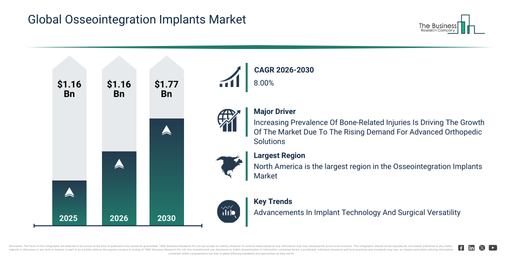
    The osseointegration implants market has demonstrated robust expansion recently. This market is set to expand from $7.72 billion in 2025 to $8.35 billion in 2026, progressing at a compound annual growth rate (CAGR) of 8.3%. Historically, the market’s growth can be ascribed to a restricted array of implant material options, the increasing incidence of bone-related conditions, an expanding elderly population, the dependence on traditional surgical approaches, and the rising number of dental and orthopedic procedures.

    The osseointegration implants market is anticipated to experience substantial growth in the upcoming years. Its size is projected to reach $11.36 billion by 2030, demonstrating a compound annual growth rate (CAGR) of 8.0%. This expansion during the forecast period can be attributed to the development of advanced implant materials and coatings, technological integration in surgical planning, increasing adoption of robotic-assisted surgeries, the expansion of global implant markets, and a rising awareness of post-operative rehabilitation and patient outcomes. Major trends expected in the forecast period include the rising adoption of titanium and ceramic implants, increasing demand for minimally invasive surgical procedures, growth in dental and orthopedic implant surgeries, advancements in surface coatings and osseointegration technology, and the expansion of ambulatory surgical centers and specialized clinics.

    Get A Free Sample Report With In-Depth Market Insights:

    https://thebusinessresearchcompany.com/sample_request?id=22519580&type=smp&name=Osseointegration%20Implants%20Market%20Report%202026&utm_source=Blogs&utm_medium=Paid&utm_campaign=Sep_PR

    Osseointegration Implants Market Opportunity Drivers: What’s Unlocking New Revenue Potential?

    The rising occurrence of bone-related injuries is expected to drive the growth of the osseointegration implants market in the coming years. Bone-related injuries are defined as physical damages to bones, including fractures, breaks, or joint dislocations. The increase in these injuries primarily stems from the growing elderly population, whose bones are generally more fragile and susceptible to fractures. Osseointegration implants assist in the treatment of bone injuries by securely attaching prosthetics directly to the bone, thereby enhancing support and aiding the healing process. For instance, in August 2024, a report published by Healthy Bones Australia, an Australia-based non-governmental organization, revealed that a fracture occurred every 2.7 minutes in Australia in 2023. This rate is projected to intensify to one fracture every 30 seconds by 2033. Consequently, the increasing prevalence of bone-related injuries is a key factor propelling the expansion of the osseointegration implants market.

    Osseointegration Implants Market Segment Analysis: What Are The Core Market Categories?

    The osseointegration implants market covered in this report is segmented –

    1) By Product: Dental Implants, Hip Implants, Knee Implants, Spinal Implants, Other Products

    2) By Material: Ceramic Implants, Zirconia Implants, Stainless Steel Implants, Titanium Implants, Metallic Implants, Other Materials

    3) By End User: Hospitals, Ambulatory Surgical Centers, Dental Clinics, Other End-Users

    Subsegments:

    1) By Dental Implants: Endosteal Implants, Subperiosteal Implants, Zygomatic Implants, Mini Dental Implants, Basal Implants

    2) By Hip Implants: Total Hip Replacement, Partial Hip Replacement, Hip Resurfacing, Revision Hip Implants

    3) By Knee Implants: Total Knee Replacement, Partial Knee Replacement, Revision Knee Implants

    4) By Spinal Implants: Interbody Fusion Devices, Pedicle Screws, Rods And Plates, Artificial Discs, Spinal Cages

    5) By Other Products: Shoulder Implants, Elbow Implants, Ankle Implants, Wrist Implants, Other Joint Implants

    Osseointegration Implants Market Innovation Trends Shaping Future Development

    Leading companies active in the osseointegration implants market are prioritizing the incorporation of digital dentistry, including elements like surgical and restorative adaptability, to provide dental professionals with advanced implant solutions that boost treatment predictability and patient outcomes. Surgical and restorative versatility refers to the implant’s design to function effectively with various surgical techniques and prosthetic options, making it suitable for diverse clinical situations. For example, in February 2024, ZimVie Inc., a US-based life sciences company, introduced the TSX Implant. This cutting-edge implant is engineered for immediate placement and loading, supported by over two decades of clinical data that confirm long-term bone health and prosthetic stability. The TSX Implant effortlessly integrates with ZimVie’s digital dentistry solutions and flexible surgical protocols, thereby simplifying procedures and improving predictability for dental professionals. This introduction highlights the company’s commitment to innovation and its leadership in the market.

    Osseointegration Implants Market Competitive Landscape: Which Companies Lead The Industry?

    Major companies operating in the osseointegration implants market are Johnson And Johnson, Medtronic plc, Stryker Corporation, Zimmer Biomet Holdings Inc, Smith And Nephew plc, Dentsply Sirona Inc, Institut Straumann AG, Straumann Holding AG, DePuy Synthes, Cochlear Limited, OSSTEM Implant Co Ltd, B Braun Melsungen AG, Bicon LLC, Megagen Implant Co Ltd, CAMLOG Biotechnologies GmbH, Integrum, Nobel Biocare Services AG, BioHorizons Inc, Neodent, Southern Implants

    View The Full Osseointegration Implants Market Report:

    https://thebusinessresearchcompany.com/report/osseointegration-implants-global-market-report?utm_source=Blogs&utm_medium=Paid&utm_campaign=Sep_PR

    Osseointegration Implants Market Regional Outlook: Where Is Opportunity Concentrated?

    North America was the largest region in the osseointegration implants market in 2025. Asia-Pacific is expected to be the fastest-growing region in the forecast period. The regions covered in the osseointegration implants market report are Asia-Pacific, South East Asia, Western Europe, Eastern Europe, North America, South America, Middle East, Africa.

    Reach Out To Our Team:

    The Business Research Company: https://www.thebusinessresearchcompany.com/

    Americas: +1 310-496-7795

    Asia: +44 7882 955267 & +91 8897263534

    Europe: +44 7882 955267

    Email us at: marketing@tbrc.info

    Follow us on:

    LinkedIn: https://in.linkedin.com/company/the-business-research-company

    YouTube: https://www.youtube.com/channel/UC24_fI0rV8cR5DxlCpgmyFQ

    Global Market Model: https://www.thebusinessresearchcompany.com/global-market-model