Category: Medical Equipment

  • In-Depth Implantable Medical Devices Market Report: Business Trends, Growth Factors, and Forecast to 2029

    In-Depth Implantable Medical Devices Market Report: Business Trends, Growth Factors, and Forecast to 2029

    Claim your 30% discount on Global Market Reports with code ONLINE30. Limited time only.

    What Does the Forecast Indicate for the Implantable Medical Devices Market From 2025 to 2029?

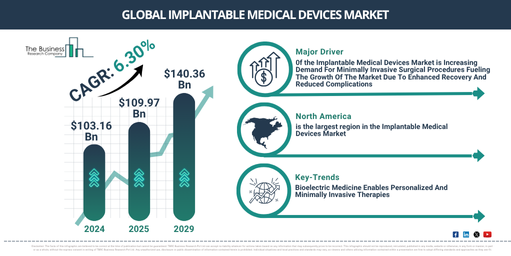
    In recent years, significant growth has been experienced in the market size for implantable medical devices. Projections indicate a rise from $103.16 billion in 2024 to $109.97 billion in 2025, equivalent to a compound annual growth rate (CAGR) of 6.6%. This growth during the historical period could be ascribed to several factors including an increase in chronic diseases, a burgeoning aging population, a surge in demand for minimally invasive surgical procedures, development of healthcare infrastructure in developing areas, and rising healthcare expenditure.

    The market for implantable medical devices is set to achieve robust expansion in the coming years, with an anticipated worth of $140.36 billion in 2029, reflecting a compound annual growth rate (CAGR) of 6.3%. This upcoming growth period’s inflow can be chalked up to factors such as the escalating prevalence of disorders related to lifestyle, growing need for specialized treatment, the burgeoning expansion of outpatient surgical procedures, and an increased acceptance of bio-compatible materials. The upcoming period will also witness surges in implantable device technology advancements, pursuits in bioengineered implant research and development, advancements in intelligent and connected implants, innovations in miniaturized electronics specifically for implants, and a growing emphasis on 3D-printing and custom-designed implants.

    Download The Free Sample Report Here:

    https://www.thebusinessresearchcompany.com/sample.aspx?id=24569&type=smp

    What Elements Are Contributing To Growth In The Implantable Medical Devices Market?

    The growing preference for surgical operations that are minimally intrusive is projected to drive the growth of the marketplace for implantable medical devices. These minimally invasive procedures are medical interventions carried out through small cuts or openings, which decreases the trauma experienced by the patient and reduces recovery time. These procedures are in high demand due to the unique benefits they offer including shorter healing times, decreased chances of complications, diminished pain, and minor scarring, thus, becoming more attractive to patients searching for quicker and safer therapy alternatives. Implantable medical devices amplify these minimally invasive surgical interventions by not only enabling direct treatment delivery but also facilitating real-time supervision. They pave the way for quicker healing, minimize the chances of complications, and enhance the final outcomes for patients via specific, personalized interventions. For example, in November 2024, based on data from the American Society of Plastic Surgeons, a non-profit organization based in the United States, the total number of cosmetic procedures performed minimally invasively touched 25,442,640 in 2023. This marks a 7% rise from a previous 23,672,269 in 2022. Thus, due to the growing preference for these minimally intrusive surgical interventions, the marketplace for implantable medical devices is experiencing positive growth.

    Which Segments Are Detailed In The Global Implantable Medical Devices Market Report?

    The implantable medical devices market covered in this report is segmented –

    1) By Product Type: Cardiovascular Implants, Orthopedic Implants, Ophthalmology Implants, Dental Implants, Cochlear Implants, Microchip Implants, Other Product Types

    2) By Biomaterial: Ceramic, Metallic, Polymers, Natural

    3) By End Use: Hospitals, Ambulatory Surgical Centers, Multi-Specialty Centers, Clinics, Other End Uses

    Subsegments:

    1) By Cardiovascular Implants: Pacemakers, Implantable Cardioverter Defibrillators, Stents, Heart Valves, Cardiac Resynchronization Therapy Devices

    2) By Orthopedic Implants: Hip Implants, Knee Implants, Spinal Implants, Shoulder Implants, Trauma Implants

    3) By Ophthalmology Implants: Intraocular Lenses, Glaucoma Drainage Implants, Corneal Implants, Retinal Implants

    4) By Dental Implants: Endosteal Implants, Subperiosteal Implants, Zygomatic Implants, Mini Dental Implants

    5) By Cochlear Implants: Unilateral Cochlear Implants, Bilateral Cochlear Implants

    6) By Microchip Implants: Radiofrequency Identification Implants, Biosensor Microchips, Neural Interface Microchips

    7) By Other Product Types: Neurostimulators, Contraceptive Implants, Drug Delivery Implants, Breast Implants, Penile Implants

    Which Emerging Trends And Strategic Shifts Are Shaping The Implantable Medical Devices Market?

    Leading corporations in the market for implantable medical devices are honing their focus on the creation of technologically superior products and securing necessary approvals. This is being done with a view to amplify treatment efficiency, lower side effects, and introduce customized, minimally invasive therapeutic interventions. The sphere of bioelectric medicine, which leverages electric signals to diagnose, treat, or stimulate bodily nervous systems for improved wellbeing and disease control, is one such area of emphasis. A notable example includes the Boston Scientific Corporation – a biotech firm based in the United States. In July 2023, the company received approval from the U.S. Food and Drug Administration (FDA) for their Vercise Neural Navigator 5 Software. This software, in combination with the Vercise Genus deep brain stimulation (DBS) systems, equips medical practitioners with user-friendly and useful information for effective programming when treating individuals with Parkinson’s disease or essential tremor. The technology offers enhanced programming flexibility, allowing for the development of bespoke treatment plans capable of catering to the unique symptoms and requirements of each patient.

    Who Are The Key Contributors To Growth In The Implantable Medical Devices Market?

    Major companies operating in the implantable medical devices market are Cardinal Health Inc., Johnson & Johnson, Abbott Laboratories, Medtronic plc, Koninklijke Philips N.V., Stryker Corporation, Boston Scientific Corporation, Henry Schein Inc., Alcon Inc., Zimmer Biomet Holdings Inc., Terumo Corporation, Terumo Medical Corporation, Smith & Nephew plc, W. L. Gore & Associates Inc., Edwards Lifesciences Corporation, Dentsply Sirona Inc., Demant A/S, Institut Straumann AG, Biotronik SE & Co. KG, Integra LifeSciences Holdings Corporation, Conmed Corporation, Globus Medical Inc., LivaNova Public Limited Company, MicroPort Scientific Corporation, B. Braun Melsungen Aktiengesellschaft

    Get The Full Report Here:

    https://www.thebusinessresearchcompany.com/report/implantable-medical-devices-global-market-report

    Which Region Is Projected To Lead The Implantable Medical Devices Market By 2025?

    North America was the largest region in the implantable medical devices market in 2024. Asia-Pacific is expected to be the fastest-growing region in the forecast period. The regions covered in the implantable medical devices market report are Asia-Pacific, Western Europe, Eastern Europe, North America, South America, Middle East, Africa.

    Request For A Customized Report:

    https://www.thebusinessresearchcompany.com/customise?id=24569&type=smp

    About The Business Research Company:

    With over 15000+ reports from 27 industries covering 60+ geographies, The Business Research Company has built a reputation for offering comprehensive, data-rich research and insights. Armed with 1,500,000 datasets, the optimistic contribution of in-depth secondary research, and unique insights from industry leaders, you can get the information you need to stay ahead in the game.

    Get in touch with us:

    The Business Research Company: https://www.thebusinessresearchcompany.com/

    Americas +1 310-496-7795

    Asia +44 7882 955267 & +91 8897263534

    Europe +44 7882 955267

    Email us at info@tbrc.info

    Follow us on:

    LinkedIn: https://in.linkedin.com/company/the-business-research-company

    YouTube: https://www.youtube.com/channel/UC24_fI0rV8cR5DxlCpgmyFQ

    Global Market Model: https://www.thebusinessresearchcompany.com/global-market-model
  • Industry Forecast: Home Medical Alert Systems Market to Generate $6.85 Billion Revenue by 2029

    Industry Forecast: Home Medical Alert Systems Market to Generate $6.85 Billion Revenue by 2029

    Claim your 30% discount on Global Market Reports with code ONLINE30. Limited time only.

    What Is the Outlook for the Home Medical Alert Systems Market Heading Into 2029?

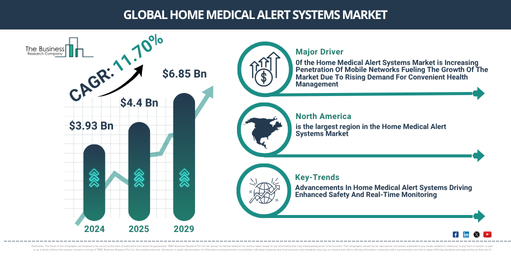
    The market for home medical alert systems has rapidly expanded in the past few years. Its size is forecasted to escalate from $3.93 billion in 2024 to $4.4 billion in 2025, with a compound annual growth rate (CAGR) of 12.0%. Factors contributing to growth during the historical period include increasing numbers of elderly individuals, the prevalence of chronic diseases, heightened awareness about the safety of seniors, the growing acceptance of telehealth technologies, and a surging demand for monitoring patients remotely.

    Over the coming years, the home medical alert systems market is poised for accelerated expansion, with an anticipated value of $6.85 billion by 2029, reflecting an 11.7% compound annual growth rate (CAGR). A surge in the elderly population, the fusion of AI and IoT, enhanced demand for wearable healthcare gadgets, the proliferation of telehealth offerings, and increased government backing for aged care, are all contributing to this growth. Profound trends for the future include improvements in AI-infused alert systems, inventive wearable and non-wearable devices, seamless integration with smart home tech, more prevalent usage of mobile applications for tracking, and the emergence of subscription-based service architectures.

    Download The Free Sample Report Here:

    https://www.thebusinessresearchcompany.com/sample.aspx?id=24562&type=smp

    Which Factors Are Pushing The Home Medical Alert Systems Market Forward?

    As mobile network penetration continues to escalate, it is anticipated to fuel the expansion of the home medical alert systems market. Mobile networks, wireless communication mechanisms that connect mobile devices to both the internet and telephone services using radio waves, are witnessing a surge in penetration due to the escalating demand for Internet access across urban and rural locales. Home medical alert systems often hinge on mobile connectivity for their operation, which has led to increased network installations in residential zones. For example, the GSM Association, a global consortium of mobile operators and businesses based in the U.K, reported in February 2025 that the number of unique mobile subscribers around the world stood at 5.8 billion, translating to a penetration rate of 71%. This number is projected to surge to 6.5 billion by 2030. Consequently, the rising penetration of mobile networks is fuelling the home medical alert systems market’s growth.

    Which Segment Held The Largest Share In The Home Medical Alert Systems Market In 2025?

    The home medical alert systems market covered in this report is segmented –

    1) By Type: Personal Emergency Response Systems (PERS), Wearable Alert Systems, Smartphone Based Alert Systems, In Home Alert Systems

    2) By Service Model: Subscription Based Services, One Time Purchase Models, Bundled Services, Pay-As-You-Go Services

    3) By Applications: Home Based Use, Nursing Home, Assisted Living Facilities, Hospices, Other Applications

    4) By Distribution Channel: Online Retailers, Medical Equipment Stores, Direct Sales, Healthcare Facilities

    5) By End User: Seniors, Disabled Individuals, Patients With Chronic Conditions, Other End Users

    Subsegments:

    1) By Personal Emergency Response Systems (PERS): Landline-Based PERS, Cellular-Based PERS, GPS-Enabled PERS, Two-Way Voice Communication PERS, Fall Detection-Integrated PERS

    2) By Wearable Alert Systems: Medical Alert Smartwatches, Emergency Pendant Alarms, Wristband Alert Devices, Necklace Alert Devices, Clip-On Wearable Sensors

    3) By Smartphone-Based Alert Systems: Dedicated Medical Alert Apps, Hybrid Smartphone + Wearable Systems, AI-Powered Emergency Response Apps, Family-Connected Alert Apps, GPS Location Tracking Apps

    4) By In-Home Alert Systems: Wall-Mounted Emergency Buttons, Bedside Alert Systems, Voice-Activated Home Assistants, Motion-Sensor Based Alarms, Smart Home-Integrated Medical Alerts

    How Are Key Trends Driving Expansion In The Home Medical Alert Systems Industry?

    Leading firms in the home medical alert systems market, are utilizing progressive technologies like artificial intelligence (AI)-driven fall detection to ensure prompt emergency reaction, increased user protection, and enhanced individual health monitoring. AI-driven fall detection alludes to the application of artificial intelligence protocols in gadgets that instantly detect and alert caregivers to falls, bolstering emergency responses and curbing false alarms. For instance, LogicMark, an American firm that excels in medical alert systems, introduced the Freedom Alert Max, a sophisticated home medical alert tool in November 2024. This state-of-the-art system amalgamates AI-driven fall detection, GPS tracking, and emergency video calling within a single apparatus. It provides smooth integration with mobile apps and round-the-clock professional monitoring based in the United States. The Freedom Alert Max bolsters safety and self-sufficiency for the elderly and those at risk.

    Which Organizations Are Driving Progress In The Home Medical Alert Systems Industry?

    Major companies operating in the home medical alert systems market are ADT Inc., Connect America LLC, Lifeline Systems Pvt. Ltd., LifeStation Inc., Medical Guardian LLC, LifeFone Inc., AlertOne Services LLC, Life Alert Emergency Response Inc., Rescue Alert of California, MyNotifi by MedHab Inc., Bay Alarm Medical, SafeGuardian LLC, LifeCall Medical Alert Systems, Senior Safety Medical Alert, AlertCare Medical Alert Systems, LifeSignals Group Inc., LogicMark Inc., ResponseNow Medical Alert Systems, Rescue Touch LLC, Vital Alert Communication Inc.

    Get The Full Report Here:

    https://www.thebusinessresearchcompany.com/report/home-medical-alert-systems-global-market-report

    Which Region Is Expected To Experience The Highest Growth In The Home Medical Alert Systems Industry?

    North America was the largest region in the home medical alert systems market in 2024. Asia-Pacific is expected to be the fastest-growing region in the forecast period. The regions covered in the home medical alert systems market report are Asia-Pacific, Western Europe, Eastern Europe, North America, South America, Middle East, Africa.

    Request For A Customized Report:

    https://www.thebusinessresearchcompany.com/customise?id=24562&type=smp

    About The Business Research Company:

    With over 15000+ reports from 27 industries covering 60+ geographies, The Business Research Company has built a reputation for offering comprehensive, data-rich research and insights. Armed with 1,500,000 datasets, the optimistic contribution of in-depth secondary research, and unique insights from industry leaders, you can get the information you need to stay ahead in the game.

    Get in touch with us:

    The Business Research Company: https://www.thebusinessresearchcompany.com/

    Americas +1 310-496-7795

    Asia +44 7882 955267 & +91 8897263534

    Europe +44 7882 955267

    Email us at info@tbrc.info

    Follow us on:

    LinkedIn: https://in.linkedin.com/company/the-business-research-company

    YouTube: https://www.youtube.com/channel/UC24_fI0rV8cR5DxlCpgmyFQ

    Global Market Model: https://www.thebusinessresearchcompany.com/global-market-model
  • Home Health Monitoring Devices Market Revenue Outlook: Strategic Insights and Forecast to 2029

    Home Health Monitoring Devices Market Revenue Outlook: Strategic Insights and Forecast to 2029

    Claim your 30% discount on Global Market Reports with code ONLINE30. Limited time only.

    What Does the Forecast Indicate for the Home Health Monitoring Devices Market From 2025 to 2029?

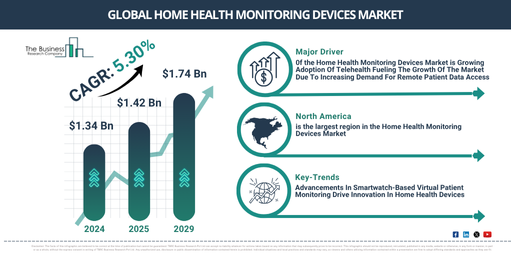
    The market size for home health monitoring devices has seen robust growth in the past few years. The market is set to expand from $1.34 billion in 2024 to $1.42 billion in 2025, with a compound annual growth rate (CAGR) of 5.5%. Factors contributing to this growth historically include an increase in chronic diseases, a rising geriatric population globally, heightened awareness of preventative healthcare, escalating healthcare expenses advocating for home care solutions, and the progressive adoption of IoT in the healthcare sector.

    The market for home health monitoring devices is poised for robust growth in the coming years, with estimations revealing it will reach $1.74 billion by 2029, propelled by a compound annual growth rate (CAGR) of 5.3%. The predicted growth during the forecast period can be credited to the rising demand for remote patient supervision, government-led initiatives supporting telehealth and remote surveillance, better Internet connectivity and mobile network coverage, increased smartphone usage, and a growing interest in instant health monitoring and alerts. Key trends for the forecast time frame comprise advancements in wearable technology, the emergence of AI-powered health surveillance devices, introduction of chronic illness management schemes, hi-tech growth in biosensors and medical-grade sensors, and the improved precision and dependability of home health devices.

    Download The Free Sample Report Here:

    https://www.thebusinessresearchcompany.com/sample.aspx?id=24561&type=smp

    What Elements Are Contributing To Growth In The Home Health Monitoring Devices Market?

    The increasing use of telehealth is projected to drive expansion in the home health monitoring devices market. Telehealth utilizes digital platforms for medical consultation and care, eliminating the need for physical patient-doctor interaction. Its rising popularity can be attributed to its accessible healthcare service, enabling patients to communicate promptly with physicians from the comfort of their own home. This not only saves time but also curtails the necessity of commuting. The escalating adoption of telehealth bolsters the demand for home health monitoring tools, allowing healthcare providers to monitor patient data in real-time remotely. This is crucial for precise diagnosis, swift treatment, and efficient continual care without necessitating physical meetings. For instance, a Rock Health survey conducted in February 2023 recorded 80% of its 8,014 respondents had used telemedicine at least once in 2022. This was a significant 8% rise from 72% in 2021, demonstrating the increased adoption of telehealth. Hence, this surge will enhance the progression of the home health monitoring devices market.

    Which Segments Are Detailed In The Global Home Health Monitoring Devices Market Report?

    The home health monitoring devices market covered in this report is segmented –

    1) By Type: Heart Monitors, Breath Monitors, Hematology Monitors, Multi-Parameter Monitors, Other Types

    2) By Application: Care Centre, Household, Other Applications

    3) By End User: Elderly Population, Chronic Disease Patients, General Health-Conscious Consumers, Post-Operative And Rehabilitation Patients, Healthcare Providers And Caregivers

    Subsegments:

    1) By Heart Monitors: ECG Monitors, Heart Rate Monitors, Blood Pressure Monitors, Holter Monitors, Implantable Loop Recorders

    2) By Breath Monitors: Pulse Oximeters, Spirometers, Capnographs, Breath Analyzers

    3) By Hematology Monitors: Blood Glucose Monitors, INR Monitors, Hemoglobin Monitors, Blood Clotting Time Monitors

    4) By Multi-Parameter Monitors: Vital Signs Monitors, Portable ICU Monitors, Wearable Multi-Parameter Devices

    5) By Other Types: Body Temperature Monitors, Sleep Apnea Monitors, Urine Analyzers, Electrolyte Monitors, Activity And Fitness Trackers

    Which Emerging Trends And Strategic Shifts Are Shaping The Home Health Monitoring Devices Market?

    Leading firms in the home health monitoring devices market are concentrating on creating innovative solutions like smartwatches for remote patient monitoring. These smartwatches are designed to integrate smoothly with health apps and telehealth platforms, facilitating effortless data exchange with healthcare providers. They are digital wearable devices that consistently record and transmit health-related data, which allows healthcare providers to monitor a patient’s physiological condition and take proactive action remotely. For example, in July 2024, a United States-based Internet of Things (IoT) company named KORE introduced the mCareWatch 241, a smartwatch engineered for virtual patient monitoring. This watch comes with an emergency SOS function for users to get immediate assistance when required. Additional features include calling capabilities, GPS location tracking, and quick-dial options, ensuring dependable communication and safety. The device is equipped with essential health monitoring tools such as a heart-rate sensor, step counter, fall detection, and inactivity alerts. Users also have the option to set up geo-fencing notifications and reminders, which can be accessed via a dedicated mobile application and web interface.

    Who Are The Key Contributors To Growth In The Home Health Monitoring Devices Market?

    Major companies operating in the home health monitoring devices market are Abbott Laboratories Inc., Omron Healthcare Co. Ltd., Garmin Ltd., ResMed Inc., Masimo Corporation, ChoiceMMed America Corp., Beurer GmbH, iRhythm Technologies Inc., A&D Company Limited, Microlife Corporation, Telli Health LLC, AliveCor Inc., CareSimple Inc., BioBeat Technologies Ltd., BioIntelliSense Inc., Tenovi Inc., 100Plus Inc., BodiMetrics LLC, Oxitone Medical Ltd., Guangdong Transtek Medical Electronics Co. Ltd.

    Get The Full Report Here:

    https://www.thebusinessresearchcompany.com/report/home-health-monitoring-devices-global-market-report

    Which Region Is Projected To Lead The Home Health Monitoring Devices Market By 2025?

    North America was the largest region in the home health monitoring devices market in 2024. Asia-Pacific is expected to be the fastest-growing region in the forecast period. The regions covered in the home health monitoring devices market report are Asia-Pacific, Western Europe, Eastern Europe, North America, South America, Middle East, Africa.

    Request For A Customized Report:

    https://www.thebusinessresearchcompany.com/customise?id=24561&type=smp

    About The Business Research Company:

    With over 15000+ reports from 27 industries covering 60+ geographies, The Business Research Company has built a reputation for offering comprehensive, data-rich research and insights. Armed with 1,500,000 datasets, the optimistic contribution of in-depth secondary research, and unique insights from industry leaders, you can get the information you need to stay ahead in the game.

    Get in touch with us:

    The Business Research Company: https://www.thebusinessresearchcompany.com/

    Americas +1 310-496-7795

    Asia +44 7882 955267 & +91 8897263534

    Europe +44 7882 955267

    Email us at info@tbrc.info

    Follow us on:

    LinkedIn: https://in.linkedin.com/company/the-business-research-company

    YouTube: https://www.youtube.com/channel/UC24_fI0rV8cR5DxlCpgmyFQ

    Global Market Model: https://www.thebusinessresearchcompany.com/global-market-model

  • In-Depth Heart Rate Monitoring Devices Market Report: Business Trends, Growth Factors, and Forecast to 2029

    In-Depth Heart Rate Monitoring Devices Market Report: Business Trends, Growth Factors, and Forecast to 2029

    Claim your 30% discount on Global Market Reports with code ONLINE30. Limited time only.

    What Are the Latest Market Insights for the Heart Rate Monitoring Devices Industry?

    The market for heart rate monitoring devices has seen a significant increase in size in the recent past. The market, currently worth $12.34 billion in 2024, is projected to reach $13.37 billion over the next year, yielding a compound annual growth rate (CAGR) of 8.3%. Factors leading to growth during the historic period include increased health consciousness, the emergence of fitness fads, a greater occurrence of chronic conditions, the integration of these devices with smartphones, and their amplified usage in clinical environments.

    The market size of heart rate monitoring devices is predicted to experience robust expansion in the upcoming years, reaching $18.24 billion by 2029, with a compound annual growth rate (CAGR) of 8.1%. The anticipated growth for this period could be due to various factors such as an increase in the elderly population, the proliferation of telemedicine offerings, the rising use of AI and data analysis, a surge in the popularity of wearable technology and an escalation in government-led healthcare initiatives. In the forecast period, key trends will likely incorporate the synergy with multi-parameter health platforms, the process of miniaturization and enhanced wearability, a transition towards preventative health care, the broadening scope of remote patient monitoring (RPM), and the customization enabled by AI and machine learning.

    Download The Free Sample Report Here:

    https://www.thebusinessresearchcompany.com/sample.aspx?id=24556&type=smp

    What Forces Are Driving The Growth Of The Heart Rate Monitoring Devices Industry?

    The increasing interest in gymnasiums and athletic pursuits is predicted to drive the expansion of the market for heart rate monitoring devices. These refer to ventures and services aimed at boosting physical agility, health, and sports abilities via exercise, training, and competitive sports. As individuals concentrate on fitness to ward off illnesses related to sedentary lifestyles, the escalating awareness about health is leading to an upsurge in gymnasium and sports activities. In these environments, devices monitoring heart rate offer instantaneous feedback about the intensity of the workout, enabling participants to stay within the prescribed heart rate parameters. This helps enhance performance, avert overexertion, and accelerates recovery. For instance, as per the U.S. Bureau of Labor Statistics in July 2023, nearly all individuals aged 15 and over regularly participated in leisure and sports activities in 2022. Men dedicated an average of 5.8 hours per day to these pursuits, while women devoted an average of 5.1 hours. This denoted a growth of roughly 3.6% for men and 4.1% for women in comparison to the preceding year. Consequently, the growing consumer preference for gyms and athletic activities is propelling the expansion of the heart rate monitoring devices market.

    What Is The Overview Of Market Segmentation In The Heart Rate Monitoring Devices Industry?

    The heart rate monitoring devices market covered in this report is segmented –

    1) By Type: Wrist Watch Heart Rate Monitor, Chest Strap Heart Rate Monitor, Strapless Heart Rate Monitors, Other Types

    2) By Application: Medical, Sports And Fitness, Exercise, Other Applications

    3) By End-User: Hospitals And Clinics, Homecare, Sport Care Centers

    Subsegments:

    1) By Wrist Watch Heart Rate Monitor: Fitness Smartwatches, Sports Watches, Medical-Grade Smartwatches, Hybrid Smartwatches

    2) By Chest Strap Heart Rate Monitor: Bluetooth-Enabled Chest Straps, Ant+ Compatible Chest Straps, Electrocardiogram (ECG)-Based Chest Straps, Waterproof Chest Straps For Swimming

    3) By Strapless Heart Rate Monitors: Finger-Based Pulse Monitors, Arm Or Forearm Band Monitors, Wearable Clothing With Embedded Sensors, Handheld Heart Rate Monitors

    4) By Other Types: Earbud Heart Rate Monitors, Smart Clothing, Implantable Heart Rate Monitors, Clip-On Devices

    What Future Market Trends Are Projected For The Heart Rate Monitoring Devices Industry?

    Leading enterprises within the heart rate monitoring devices market are honing their focus on generating cutting-edge products like medical-grade wearable monitors. The goal is to facilitate constant health monitoring and promote the early identification of cardiovascular irregularities. Medical-grade wearable monitors are certified tools that provide real-time tracking of essential health metrics. They are frequently deployed in clinical environments and for remote patient care to trigger early detection of medical conditions and support ongoing patient surveillance. To exemplify, Teltonika, an electronics manufacturing firm based in Lithuania, introduced TeltoHeart in June 2023. This all-in-one smart medical wristlet provides continuous heart rate surveillance and automatically identifies arrhythmias using state-of-the-art photoplethysmography (PPG) technology. It is unique in its ability to log a comprehensive 6-lead ECG and offer medically important data effortlessly transferrable to health professionals via its built-in telemedicine capabilities. TeltoHeart ensures the highest levels of accuracy, safety, and dependability, significantly promoting early detection and disease management, whilst improving access to cardiac care for patients in remote or otherwise underserved regions.

    Who Are The Primary Players Operating Across The Global Heart Rate Monitoring Devices Market?

    Major companies operating in the heart rate monitoring devices market are Apple Inc., Samsung Electronics Co. Ltd., Huawei Technologies Co. Ltd., Medtronic plc, Koninklijke Philips N.V., Garmin Ltd., Polar Electro, Whoop, Beurer GmbH, Suunto, VitalConnect, Wahoo Fitness, Empatica Inc., Bellabeat Inc., Fitbit LLC, Qardio Inc., Ouraring Inc., Zewa Medical Technology, Veepoo Technology, Aurora (Shenzhen) Manufacture Co.Ltd, Skrip Electronics.

    Get The Full Report Here:

    https://www.thebusinessresearchcompany.com/report/heart-rate-monitoring-devices-global-market-report

    Which Region Offers The Most Growth Potential For The Heart Rate Monitoring Devices Market Through 2029?

    North America was the largest region in the heart rate monitoring devices market in 2024. The regions covered in the heart rate monitoring devices market report are Asia-Pacific, Western Europe, Eastern Europe, North America, South America, Middle East, Africa.

    Request For A Customized Report:

    https://www.thebusinessresearchcompany.com/customise?id=24556&type=smp

    About The Business Research Company:

    With over 15000+ reports from 27 industries covering 60+ geographies, The Business Research Company has built a reputation for offering comprehensive, data-rich research and insights. Armed with 1,500,000 datasets, the optimistic contribution of in-depth secondary research, and unique insights from industry leaders, you can get the information you need to stay ahead in the game.

    Get in touch with us:

    The Business Research Company: https://www.thebusinessresearchcompany.com/

    Americas +1 310-496-7795

    Asia +44 7882 955267 & +91 8897263534

    Europe +44 7882 955267

    Email us at info@tbrc.info

    Follow us on:

    LinkedIn: https://in.linkedin.com/company/the-business-research-company

    YouTube: https://www.youtube.com/channel/UC24_fI0rV8cR5DxlCpgmyFQ

    Global Market Model: https://www.thebusinessresearchcompany.com/global-market-model

  • Key Market Drivers, Trends, and Forecast for the Global Handheld Raman Spectroscopy Industry

    Key Market Drivers, Trends, and Forecast for the Global Handheld Raman Spectroscopy Industry

    Claim your 30% discount on Global Market Reports with code ONLINE30. Limited time only.

    What Is the Outlook for the Handheld Raman Spectroscopy Market Heading Into 2029?

    The market size of handheld raman spectroscopy has experienced swift expansion in the recent past. The market is projected to surge from $1.2 billion in 2024 to $1.34 billion in 2025, with a compound annual growth rate (CAGR) of 12.4%. The remarkable growth in the historic period is due to factors such as heightened needs for on-site material identification, escalating regulatory compliance requirements, a growing need in forensic and narcotics detection, the upsurge in the availability of miniaturized components, and significant investment in homeland security.

    The handheld raman spectroscopy market is projected to undergo significant expansion in the approaching years, reaching a market value of $2.13 billion by 2029 at a 12.1% compound annual growth rate (CAGR). This projected growth within the predicted timeframe can be credited to factors such as its increased use in food safety and agriculture, its advanced integration with AI and cloud-based analytics, the expansion of personalized medicine and point-of-care diagnostics, the escalating requirement for sustainable and eco-friendly chemistry practices, and mounting contract manufacture and quality assurance needs. Predicted trends in this time frame incorporate investment in research and development, blending of machine learning and artificial intelligence, progress in the development of cloud-connected raman systems, enhancements in user-friendly interfaces and ergonomic design, and advancements in miniaturization and performance augmentation.

    Download The Free Sample Report Here:

    https://www.thebusinessresearchcompany.com/sample.aspx?id=24552&type=smp

    Which Factors Are Pushing The Handheld Raman Spectroscopy Market Forward?

    The growth of the handheld Raman spectroscopy market is anticipated to be fueled by the surge in personalized medical treatments. These treatments are designed according to the individual’s genetic composition, lifestyle, and environmental influences, thereby enhancing the effectiveness and specificity of the therapy. The use of genetic and molecular profiling to devise treatment plans specific to an individual’s biological fingerprint is becoming increasingly prevalent. Handheld Raman spectroscopy contributes to this personalization, providing quick and non-invasive molecular assessments at the bedside. This enables customized therapy decisions based on accurate chemical and biochemical data. For example, in February 2024, the Personalized Medicine Coalition reported that in 2023, the Food and Drug Administration (FDA), a federal agency in the US, had granted approval for 16 new personalized treatments intended for rare disease patients. This figure was a significant increase from just six in the prior year, 2022. Thus, the advent of personalized medical treatments is leading to substantial growth in the handheld Raman spectroscopy market.

    Which Segment Held The Largest Share In The Handheld Raman Spectroscopy Market In 2025?

    The handheld raman spectroscopy market covered in this report is segmented –

    1) By Product Type: Benchtop Raman Spectroscopy, Portable Raman Spectroscopy, Handheld Raman Spectroscopy

    2) By Component: Raman Spectrometers, Accessories, Software Solutions

    3) By Technology: Surface-Enhanced Raman Scattering (SERS), Tip-Enhanced Raman Scattering (TERS), Raman Imaging, Standard Raman Spectroscopy

    4) By End-User: Academic And Research Institutes, Pharmaceutical And Biotechnology Companies, Other End Users

    Subsegments:

    1) By Benchtop Raman Spectroscopy: Dispersive Raman Spectroscopy, Fourier Transform (FT) Raman Spectroscopy, Confocal Raman Microscopy, Fiber-Optic Raman Spectroscopy

    2) By Portable Raman Spectroscopy: Handheld Portable Raman, Laptop-Based Portable Raman, Mobile Integrated Raman, Battery-Powered Portable Raman

    3) By Handheld Raman Spectroscopy: Standard Handheld Raman, Hybrid Handheld Raman, Industrial Grade Handheld Raman, Consumer Or Field Use Handheld Raman

    How Are Key Trends Driving Expansion In The Handheld Raman Spectroscopy Industry?

    Leading businesses active in the handheld raman spectroscopy market are striving to create cutting-edge technologies such as QuickDetect technology, aiming to elevate the pace, sensitivity, and precision of onsite chemical identification. This allows users to identify even tiny quantities of substances in packaging and complicated mixtures. QuickDetect Technology is a swift detection system or procedure constructed to promptly pinpoint specific substances, conditions, or irregularities. For example, in September 2023, Rigaku Analytical Devices Inc., an American company that produces and provides scientific and analytical instruments, introduced the CQL Narc-ID. This handheld 1064 nm Raman analyzer is specifically engineered for the swift identification of narcotics, cutting agents, and precursor chemicals, even in minor amounts. It embodies advanced features such as QuickDetect, integrated libraries, a robust design, and real-time reporting to aid law enforcement and public safety operations.

    Which Organizations Are Driving Progress In The Handheld Raman Spectroscopy Industry?

    Major companies operating in the handheld raman spectroscopy market are Thermo Fisher Scientific Inc., Agilent Technologies Inc., Bruker Corporation, Horiba Scientific, Anton Paar GmbH, Renishaw plc, Metrohm AG, TSI Incorporated, Zolix Instruments Co. Ltd., Smiths Detection Inc., SciAps Inc., SOL Instruments Ltd., Jasco Inc., Wasatch Photonics Inc., BaySpec Inc., Enhanced Spectrometry Inc., TechnoS Instruments, RamanLife Inc., Analyticon Instruments GmbH, TechnoSpex Pte Ltd.

    Get The Full Report Here:

    https://www.thebusinessresearchcompany.com/report/handheld-raman-spectroscopy-global-market-report

    Which Region Is Expected To Experience The Highest Growth In The Handheld Raman Spectroscopy Industry?

    North America was the largest region in the handheld raman spectroscopy market in 2024. Asia-Pacific is expected to be the fastest-growing region in the forecast period. The regions covered in the handheld raman spectroscopy market report are Asia-Pacific, Western Europe, Eastern Europe, North America, South America, Middle East, Africa.

    Request For A Customized Report:

    https://www.thebusinessresearchcompany.com/customise?id=24552&type=smp

    About The Business Research Company:

    With over 15000+ reports from 27 industries covering 60+ geographies, The Business Research Company has built a reputation for offering comprehensive, data-rich research and insights. Armed with 1,500,000 datasets, the optimistic contribution of in-depth secondary research, and unique insights from industry leaders, you can get the information you need to stay ahead in the game.

    Get in touch with us:

    The Business Research Company: https://www.thebusinessresearchcompany.com/

    Americas +1 310-496-7795

    Asia +44 7882 955267 & +91 8897263534

    Europe +44 7882 955267

    Email us at info@tbrc.info

    Follow us on:

    LinkedIn: https://in.linkedin.com/company/the-business-research-company

    YouTube: https://www.youtube.com/channel/UC24_fI0rV8cR5DxlCpgmyFQ

    Global Market Model: https://www.thebusinessresearchcompany.com/global-market-model

  • Strategic Report on Handheld Multi-Parameter Monitoring Device Market: Growth Opportunities and Emerging Challenges

    Strategic Report on Handheld Multi-Parameter Monitoring Device Market: Growth Opportunities and Emerging Challenges

    Claim your 30% discount on Global Market Reports with code ONLINE30. Limited time only.

    What Does the Forecast Indicate for the Handheld Multi-Parameter Monitoring Device Market From 2025 to 2029?

    In the past few years, the market size of the handheld multi-parameter monitoring device has shown robust growth. It is anticipated to expand from 2024’s $3.41 billion to $3.69 billion in 2025, marking an impressive 8.2% compound annual growth rate (CAGR). The historic surge can be credited to factors such as the growing occurrence of chronic diseases, heightened demand for remote patient monitoring, a higher acceptance of wireless technology in healthcare, an increasingly aging population that needs constant monitoring, and an enhanced awareness about the importance of early disease detection and prevention.

    The market scale for handheld multi-parameter monitoring devices is predicted to witness robust expansion in the forthcoming years, reaching $5 billion by 2029 and boasting a compound annual growth rate (CAGR) of 7.9%. The anticipated growth within the prognosis duration is linked to increased healthcare infrastructure investment, a growing penchant for user-friendly, portable medical appliances, enhanced incorporation of sophisticated analytics in monitoring apparatus, escalating demand for up-to-the-minute data in urgent and intensive care situations, along with an amplified emphasis on individualized and at-home healthcare provision. Foreseen trends over this period involve progress in wireless communication technology, blending of artificial intelligence and machine learning, advancements in the precision and miniaturization of sensor technology, strides in real-time data analysis and cloud interaction, as well as the incorporation of telemedicine platforms into monitoring devices.

    Download The Free Sample Report Here:

    https://www.thebusinessresearchcompany.com/sample.aspx?id=24551&type=smp

    What Elements Are Contributing To Growth In The Handheld Multi-Parameter Monitoring Device Market?

    The burgeoning need for remote patient tracking is anticipated to fuel the expansion of the handheld multi-parameter monitoring device market. Remote patient tracking entails the utilization of digital tools to gather health-related data from patients in one area and electronically sending it to medical practitioners in another area for evaluation and advice. The heightened necessity for remote patient monitoring mainly stems from the growing occurrence of chronic illnesses, which necessitate regular health surveillance to manage symptoms, prevent complications, and lessen hospital visits. A handheld multi-parameter monitoring device aids in remote patient monitoring by recording crucial vital signs such as heart rate, blood pressure, and oxygen levels. It facilitates early detection of health problems, persistent care for chronic ailments, and instantaneous sharing of data with medical practitioners, thereby enhancing convenience and diminishing hospital visits. For example, in August 2023, as reported by the Alliance for Connected Care, a nonprofit advocacy organization based in the US, the adoption of remote patient monitoring (RPM) increased by 305% since 2021, with 81% of clinicians adopting it and 84% intending to broaden its use in 2024. 45% of providers utilize RPM for acute care, incorporating hospital-at-home schemes. Thus, the escalating demand for remote patient monitoring is propelling the advancement of the handheld multi-parameter monitoring device market.

    Which Segments Are Detailed In The Global Handheld Multi-Parameter Monitoring Device Market Report?

    The handheld multi-parameter monitoring device market covered in this report is segmented –

    1) By Device Type: Basic Vital Sign Monitors, Advanced Multi-Parameter Monitors, Fetal Monitors, Remote Patient Monitoring Devices (RPM) Devices

    2) By Connectivity: Wired Devices, Wireless Devices

    3) By Application: Intensive Care, Clinical Care, Ambulatory Care, Pediatric Care, Other Applications

    4) By End User: Hospitals, Ambulatory Surgical Centers, Homecare Settings, Other End Users

    Subsegments:

    1) By Basic Vital Sign Monitors: Pulse Oximeters, Blood Pressure Monitors, Thermometers, Glucose Monitors, Heart Rate Monitors

    2) By Advanced Multi-Parameter Monitors: Electrocardiogram Monitors (ECG) Monitors, Capnography Monitors, Respiratory Rate Monitors, Blood Gas Analyzers, Hemoglobin Monitors

    3) By Fetal Monitors: Doppler Fetal Monitors, Cardiotocography (CTG) Monitors, Fetal Heart Rate Monitors, Uterine Contraction Monitors

    4) By Remote Patient Monitoring Devices (RPM) Devices: Wearable Health Trackers, Telehealth Monitoring Devices, Mobile Health (mHealth) Devices, Wireless Vital Sign Monitors

    Which Emerging Trends And Strategic Shifts Are Shaping The Handheld Multi-Parameter Monitoring Device Market?

    Leading companies in the handheld multi-parameter monitoring device market are concentrating on innovation in medical technology, including sensor technology. This aims to improve the precision, dependability, and real-time tracking of vital signs, facilitating the early identification of health problems. Sensor technology involves the application of tools that can sense and record changes in physical or environmental factors, such as movement, heat, or pressure. For instance, Singapore-based healthcare solutions provider BUZUD released its Multi-Parameter Monitor and PulseBit EX electrocardiogram tracker in July 2022. These cutting-edge medical devices, intended for both hospital and home usage, enable real-time tracking of vital signs including ECG, blood oxygen levels, heart rate, respiration rate, and body temperature. The devices, crafted with meticulous precision, offer mobility, simplicity of use, and high precision readings, fulfilling the growing need for accessible, uninterrupted health monitoring in various healthcare environments.

    Who Are The Key Contributors To Growth In The Handheld Multi-Parameter Monitoring Device Market?

    Major companies operating in the handheld multi-parameter monitoring device market are Abbott Laboratories, Medtronic Public Limited Company, Becton Dickinson and Company, Koninklijke Philips N.V., GE HealthCare Technologies Inc., Baxter International Inc., Omron Healthcare Co. Ltd., Shenzhen Mindray Bio-Medical Electronics Co. Ltd., Masimo Corporation, Nihon Kohden Corporation, Lepu Medical Technology (Beijing) Co. Ltd., Qingdao Meditech Equipment Co. Ltd., Wuhan Zoncare Bio-Medical Electronics Co. Ltd., BPL Medical Technologies Pvt. Ltd., Schiller Healthcare India Pvt. Ltd., Allengers Medical Systems Limited, Contec Medical Systems Co. Ltd., aXcent medical GmbH, Jiangsu Yuyue Medical Instruments Co. Ltd., Genuine Medica Pvt. Ltd., Drx Laboratories

    Get The Full Report Here:

    https://www.thebusinessresearchcompany.com/report/handheld-multi-parameter-monitoring-device-global-market-report

    Which Region Is Projected To Lead The Handheld Multi-Parameter Monitoring Device Market By 2025?

    North America was the largest region in the handheld multi-parameter monitoring device market in 2024. The regions covered in the handheld multi-parameter monitoring device market report are Asia-Pacific, Western Europe, Eastern Europe, North America, South America, Middle East, Africa.

    Request For A Customized Report:

    https://www.thebusinessresearchcompany.com/customise?id=24551&type=smp

    About The Business Research Company:

    With over 15000+ reports from 27 industries covering 60+ geographies, The Business Research Company has built a reputation for offering comprehensive, data-rich research and insights. Armed with 1,500,000 datasets, the optimistic contribution of in-depth secondary research, and unique insights from industry leaders, you can get the information you need to stay ahead in the game.

    Get in touch with us:

    The Business Research Company: https://www.thebusinessresearchcompany.com/

    Americas +1 310-496-7795

    Asia +44 7882 955267 & +91 8897263534

    Europe +44 7882 955267

    Email us at info@tbrc.info

    Follow us on:

    LinkedIn: https://in.linkedin.com/company/the-business-research-company

    YouTube: https://www.youtube.com/channel/UC24_fI0rV8cR5DxlCpgmyFQ

    Global Market Model: https://www.thebusinessresearchcompany.com/global-market-model
  • Future Projections: Flow Diverters Market to Reach $0.86 Billion by 2029 at 11.5% CAGR

    Future Projections: Flow Diverters Market to Reach $0.86 Billion by 2029 at 11.5% CAGR

    Claim your 30% discount on Global Market Reports with code ONLINE30. Limited time only.

    What Is the Current and Projected Market Size of the Flow Diverters Industry?

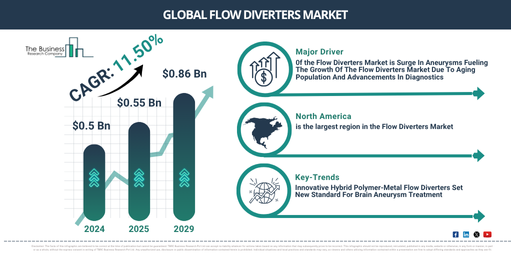
    In recent times, there has been a significant growth in the size of the flow diverters market. Forecasts predict that the market, which had a value of $0.5 billion in 2024, will increase to approximately $0.55 billion in the year 2025 showcasing an impressive compound annual growth rate (CAGR) of 11.7%. The historical growth can be traced back to a number of factors such as the heightened global prevalence of intracranial aneurysms, an increase in the execution of endovascular procedures, amplified awareness among physicians and patients, a surge in healthcare spending around the globe, and an increased preference for minimally invasive and outpatient procedures.

    Anticipated to experience swift expansion in the forthcoming years, the market size of flow diverters is predicted to reach $0.86 billion by 2029, representing a compound annual growth rate (CAGR) of 11.5%. Factors contributing to this projected growth span from an upsurge in positive clinical results and real-world evidence, to increased R&D investments and an aging population. Additionally, expanded insurance coverage and a greater prevalence of hypertension and atherosclerosis also contribute. In the forecast period, the market is propelled by key trends such as evolution in flow diverter device structure, incorporation of superior imaging techniques, enhancements in bioabsorbable and biocompatible materials technology, progress in delivery systems, and strides in personalized medicine.

    Download The Free Sample Report Here:

    https://www.thebusinessresearchcompany.com/sample.aspx?id=24539&type=smp

    #Which Factors Are Currently Driving The Growth Of The Flow Diverters Market?

    The growing occurrence of aneurysms is projected to fuel the expansion of the flow diverters market. Aneurysms are unusual enlargements or expansions in a blood vessel’s wall, often resulting from a weakened vessel wall. The escalating occurrence of aneurysms can be attributed to an increasing older population and better diagnostics methods, which enhance detection rates and awareness, leading to a rise in diagnosed instances. Flow diverters play a key role in managing the burgeoning occurrence of aneurysms by diverting the blood flow from the fragile area of the vessel, encouraging healing, mitigating the chance of a break, and offering a less invasive alternative to customary surgical procedures. For instance, as per the Brain Aneurysm Foundation, a U.S. advocacy organization, it was estimated in February 2022 that around 6.5 million Americans, approximately 1 in 50, have an unruptured brain aneurysm, with approximately 30,000 suffering a rupture annually. Hence, the escalating occurrence of aneurysms is catalyzing the expansion of the flow diverters market.

    How Is The Global Flow Diverters Market Structured In Terms Of Segments?

    The flow diverters market covered in this report is segmented –

    1) By Type: Pipeline Embolization Device, Silk Flow Diverter, Surpass Flow Diverter, Flow Redirection Endoluminal Device, Other Types

    2) By Material: Nitinol, Cobalt-Chromium Alloy, Stainless Steel, Other Materials

    3) By Application: Intracranial Aneurysms, Arteriovenous Malformations, Carotid Artery Disease, Other Applications

    4) By End-User: Hospital And Clinics, Ambulatory Surgical Centre

    Subsegments:

    1) By Pipeline Embolization Device: Classic Pipeline Embolization Device, Pipeline Flex Embolization Device, Pipeline Shield Technology

    2) By Silk Flow Diverter: Silk+ Flow Diverter, Silk Vista Baby

    3) By Surpass Flow Diverter: Surpass Streamline, Surpass Evolve

    4) By Flow Redirection Endoluminal Device: FRED Jr., FRED X

    5) By Other Types: DERIVO Embolization Device, p64 Flow Modulation Device, Tubridge Flow Diverter

    What Trends Are Currently Influencing Growth In The Flow Diverters Market?

    Top-tier businesses operating in the flow diverters industry are prioritizing enhancements in material science, such as neurovascular stents made from polymers, with the intent to boost device functionality, augment biocompatibility, encourage natural blood vessel healing, and diminish the requirement for prolonged anticoagulation therapy. Neurovascular stents made from polymers are medical implants created to support and maintain blood vessel openness in the brain (neurovasculature), especially when treating conditions like aneurysms, stenosis, or vascular malformations. For example, in June 2023, Fluid Biomed, a medical device start-up based in Canada, disclosed the first instance of a polymer-based neurovascular stent being implanted in human patients globally. This ground-breaking device, named the ReSolv stent, is particularly developed for the treatment of brain aneurysms. The ReSolv stent, different from conventional hybrid polymer-metal stents, is entirely made of polymer and is designed to slowly dissolve as the blood vessel repairs itself. This distinctive design could help decrease the demand for extended blood-thinning medication, while assisting the natural recovery process of the vessel.

    Who Are The Main Participants Shaping The Flow Diverters Market Landscape?

    Major companies operating in the flow diverters market are Johnson & Johnson, Medtronic plc, Stryker Corporation, Terumo Corporation, MicroPort Scientific Corporation, Penumbra Inc., Phenox GmbH, Sino Medical Sciences Technology Inc., Balt Extrusion S.A.S., Sequent Medical Inc., Wallaby Medical Ltd., Zylox-Tonbridge Medical Technology Co. Ltd., Acandis GmbH & Co. KG, Fluid Biomed Inc., InspireMD Inc., INVAMED Medical Innovation, Oxford Endovascular Ltd., Qvanteq AG, EndoStream Medical Ltd., Endomimetics LLC.

    Get The Full Report Here:

    https://www.thebusinessresearchcompany.com/report/flow-diverters-global-market-report

    Which Region Currently Holds The Largest Share In The Flow Diverters Market?

    North America was the largest region in the flow diverters market in 2024. Asia-Pacific is expected to be the fastest-growing region in the forecast period. The regions covered in the flow diverters market report are Asia-Pacific, Western Europe, Eastern Europe, North America, South America, Middle East, Africa.

    Request For A Customized Report:

    https://www.thebusinessresearchcompany.com/customise?id=24539&type=smp

    About The Business Research Company:

    With over 15000+ reports from 27 industries covering 60+ geographies, The Business Research Company has built a reputation for offering comprehensive, data-rich research and insights. Armed with 1,500,000 datasets, the optimistic contribution of in-depth secondary research, and unique insights from industry leaders, you can get the information you need to stay ahead in the game.

    Get in touch with us:

    The Business Research Company: https://www.thebusinessresearchcompany.com/

    Americas +1 310-496-7795

    Asia +44 7882 955267 & +91 8897263534

    Europe +44 7882 955267

    Email us at info@tbrc.info

    Follow us on:

    LinkedIn: https://in.linkedin.com/company/the-business-research-company

    YouTube: https://www.youtube.com/channel/UC24_fI0rV8cR5DxlCpgmyFQ

    Global Market Model: https://www.thebusinessresearchcompany.com/global-market-model
  • Competitive and Market Trend Analysis of Endoscopy Visualization Systems Industry Through 2029

    Competitive and Market Trend Analysis of Endoscopy Visualization Systems Industry Through 2029

    Claim your 30% discount on Global Market Reports with code ONLINE30. Limited time only.

    How Will the Endoscopy Visualization Systems Market Evolve in Terms of Growth and Size by 2029?

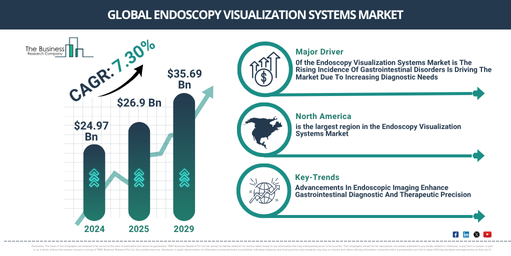
    The market size for endoscopy visualization systems has seen significant growth in the past few years, expanding from $24.97 billion in 2024 to an anticipated $26.9 billion in 2025, indicating a compound annual growth rate (CAGR) of 7.7%. This boost during the historical period can be linked to the increased popularity of minimally invasive procedures, a rise in the occurrence of gastrointestinal disorders, growth in the elderly population, a broadened use of endoscopy in the fields of diagnostics and surgery, and improved awareness regarding early detection of diseases.

    Growth in the endoscopy visualization systems market is anticipated to be robust over the forthcoming years, with a rise to $35.69 billion by 2029, boasting a compound annual growth rate (CAGR) of 7.3%. The increases during the prediction period are owing to factors such as escalating demands for ambulatory surgical centers, enhanced healthcare investment in blossoming markets, efforts to advance diagnostic precision, the escalating impact of chronic diseases, and government aid for the innovation of medical devices. Key trends to watch in the predicted period encompass broader acceptance of AI-assisted real-time image examination, shift towards 3D and 4K visualization systems, extension of tele-endoscopy capabilities, the union of visualization systems with robotic surgical platforms, and amplified usage of cloud-based storage and sharing.

    Download The Free Sample Report Here:

    https://www.thebusinessresearchcompany.com/sample.aspx?id=24528&type=smp

    What factors are expected to fuel Endoscopy Visualization Systems market growth in the coming years?

    The anticipated growth in the endoscopy visualization systems market is linked to the increasing prevalence of gastrointestinal disorders. These disorders, impacting the digestive system, produce symptoms such as stomach pain, bloating, and digestive imbalances. The rise in these disorders is attributed largely to the increased consumption of ultra-processed foods, which upset the gut’s microbiota, leading to inflammation. Endoscopy visualization systems aid diagnosing and treating these ailments, offering clear, real-time images of the digestive system. It facilitates the accurate identification of problematic areas, targeted biopsies, and minimally invasive procedures. In September 2023, the Inflammatory Bowel Disease (IBD) Clinical and Research Centre, a Canada-based organization, declared that the prevalence of IBD stood at 825 per 100,000, implying that over 320,000 Canadians have the disease. With an expected annual surge of 2.44%, by 2035, it’s projected that 1.1% of the population, or 470,000 Canadians, will be living with IBD. As such, the surge in gastrointestinal disorders is propelling the advancement of the endoscopy visualization systems market.

    What Are The Key Findings From The Segmentation Analysis Of The Endoscopy Visualization Systems Market?

    The endoscopy visualization systems market covered in this report is segmented –

    1) By Type: Standard Endoscopy Systems, High Definition (HD) Endoscopy Systems, Ultra High Definition (UHD) Endoscopy Systems, Endoscopic Ultrasound (EUS) Systems, Wireless Endoscopy Systems

    2) By Component: Endoscopes, Visualization Systems, Light Sources, Processing Systems, Accessories

    3) By Application: Gastrointestinal (GI) Endoscopy, Laparoscopy, Arthroscopy, Obstetrics Or Gynecology Endoscopy, Urology Endoscopy, Bronchoscopy, ENT Endoscopy, Neurology Endoscopy, Other Applications

    4) By End User: Hospitals, Ambulatory Surgical Centers (ASCs), Specialty Clinics, Diagnostic Imaging Centers, Academic And Research Institutes

    Subsegments:

    1) By Standard Endoscopy Systems: Analog Camera Units, Basic Video Processors

    2) By High Definition (HD) Endoscopy Systems: High Definition (HD) Cameras, High Definition (HD) Cameras

    3) By Ultra High Definition (UHD) Endoscopy Systems: 4K Cameras, 4K Processors

    4) By Endoscopic Ultrasound (EUS) Systems: Radial Echoendoscopes, Linear Echoendoscopes

    5) By Wireless Endoscopy Systems: Capsule Endoscopes, Wireless Data Receivers

    Which Trends Are Expected To Shape The Future Of The Endoscopy Visualization Systems Market?

    Prominent enterprises within the endoscopy visualization systems market are concentrating on the creation of advanced items like visualization gastroscopes to boost endoscopic viewing and procedural capabilities in the realm of gastrointestinal diagnostics and treatment. These gastroscopes are flexible endoscopic instruments featuring high-definition imaging and improved optical technologies, aimed at offering crystal-clear, detailed images of the upper gastrointestinal tract for accurate diagnosis and treatment procedures. For example, Fujifilm Healthcare Americas Corporation, an American medical imaging and informatics solutions provider, unveiled the EG-840T and EG-840TP, part of the next generation of gastroscopes, in April 2025. Utilizing the ELUXEO Endoscopic Imaging System, these gastroscopes boast advanced LED multi-light technology for superior visualization and better maneuverability, thus allowing healthcare professionals to execute complex upper gastrointestinal procedures with heightened accuracy and efficiency. This introduction highlights Fujifilm’s dedication toward enhancing endoscopic care via high-quality imaging and broadened therapeutic abilities.

    What Are The Most Active Companies In The Endoscopy Visualization Systems Market Today?

    Major companies operating in the endoscopy visualization systems market are Johnson & Johnson, Medtronic Plc, FUJIFILM Holdings Corporation, Stryker Corporation, Boston Scientific Corporation, Baxter International Inc., Braun Melsungen AG, Olympus Corporation, Smith & Nephew plc, Shenzhen Mindray Bio-Medical Electronics Co. Ltd., Karl Storz GmbH & Co. KG, Cook Medical, CONMED Corporation, Ambu A/S, Richard Wolf GmbH, Pentax Medical, Inline Systems, Biovision Veterinary Endoscopy, Machida Endoscope Co. Ltd., Medical Tek Co. Ltd., Ecleris Technologies, Vision Sciences Inc.

    Get The Full Report Here:

    https://www.thebusinessresearchcompany.com/report/endoscopy-visualization-systems-global-market-report

    Which Regional Markets Are Attracting The Most Investment In Endoscopy Visualization Systems?

    North America was the largest region in the endoscopy visualization systems market in 2024. Asia-Pacific is expected to be the fastest-growing region in the forecast period. The regions covered in the endoscopy visualization systems market report are Asia-Pacific, Western Europe, Eastern Europe, North America, South America, Middle East, Africa.

    Request For A Customized Report:

    https://www.thebusinessresearchcompany.com/customise?id=24528&type=smp

    About The Business Research Company:

    With over 15000+ reports from 27 industries covering 60+ geographies, The Business Research Company has built a reputation for offering comprehensive, data-rich research and insights. Armed with 1,500,000 datasets, the optimistic contribution of in-depth secondary research, and unique insights from industry leaders, you can get the information you need to stay ahead in the game.

    Get in touch with us:

    The Business Research Company: https://www.thebusinessresearchcompany.com/

    Americas +1 310-496-7795

    Asia +44 7882 955267 & +91 8897263534

    Europe +44 7882 955267

    Email us at info@tbrc.info

    Follow us on:

    LinkedIn: https://in.linkedin.com/company/the-business-research-company

    YouTube: https://www.youtube.com/channel/UC24_fI0rV8cR5DxlCpgmyFQ

    Global Market Model: https://www.thebusinessresearchcompany.com/global-market-model
  • Global Elderly Walkers Market Landscape: Trends and Market Share to 2029

    Global Elderly Walkers Market Landscape: Trends and Market Share to 2029

    Claim your 30% discount on Global Market Reports with code ONLINE30. Limited time only.

    What CAGR Is Anticipated for the Elderly Walkers Market Through 2029?

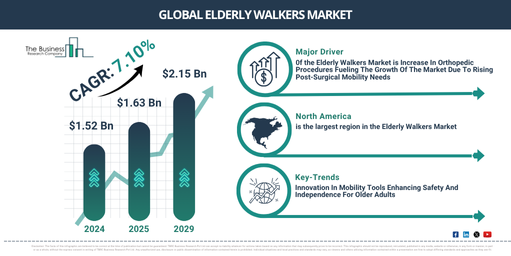
    In the past few years, there has been significant growth in the market size for elderly walkers. It’s projected to expand from $1.52 billion in 2024 to $1.63 billion in 2025, a compound annual growth rate (CAGR) of 7.5%. The increase in the earlier period is the result of several factors including improved healthcare infrastructure, accelerated urbanization and alterations in lifestyle, more disposable income among the elderly, a rise in life expectancy, and the proliferation of home healthcare services.

    The market size for elderly walkers is predicted to experience profound expansion in the coming years. The growth is projected to reach $2.15 billion by 2029, with a compound annual growth rate (CAGR) of 7.1%. This surge within the forecast period can be credited to the global increase in the elderly population, the escalating occurrences of mobility-related health conditions, heightened awareness about preventing falls, increasing attention towards elderly autonomy, as well as a higher incidence of arthritic and joint pain problems. The significant trends predicted for the forecast period consist of improvements in walker design and technology, the offering of customizable and lightweight walker options, the utilization of smart and cohesive walker gadgets, the incorporation of ergonomics to enhance comfort, and the inception of multi-featured walkers.

    Download The Free Sample Report Here:

    https://www.thebusinessresearchcompany.com/sample.aspx?id=24527&type=smp

    What Market Forces Are Driving The Elderly Walkers Sector In 2025 And Beyond?

    Growth in the market for elderly walkers is expected to be driven by an increase in orthopedic procedures. These medical interventions, including both surgical and non-surgical practices, are specifically aimed at diagnosing and rectifying problems associated with bones, joints, muscles, tendons, and ligaments. The surge in these procedures is predominantly attributed to an aging population, who are more susceptible to musculoskeletal conditions like osteoarthritis. Elderly walkers play a vital role in patient recovery from such procedures, offering essential support that enhances stability, reduces the risk of falling, and fosters safe, self-reliant mobility during their rehabilitation phase. In September 2023, data from Curvo Labs Inc., a US-based firm managing healthcare supply chains, showed that the number of knee replacement surgeries occurred in the U.S. had increased from 1,235,835 in 2021 to 1,299,084 in 2022. This shows a consistent uplift in the need for orthopedic procedures. Consequently, the escalation in orthopedic procedures will stimulate the growth of the elderly walkers market.

    How Is The Global Elderly Walkers Market Categorized By Segments?

    The elderly walkers market covered in this report is segmented –

    1) By Type: Standard Walkers, Knee Walkers, Rollators

    2) By Distribution Channel: Online, Offline

    3) By Application: Orthopedic Care, Emergency Care, Geriatric Care, Other Applications

    4) By End-Use: Hospitals, Home Care, Other End-Use

    Subsegments:

    1) By Standard Walkers: With Wheels, Without Wheels, Foldable Standard Walkers, Height Adjustable Walkers, Bariatric Standard Walkers

    2) By Knee Walkers: Steerable Knee Walkers, Non-steerable Knee Walkers, Foldable Knee Walkers, All-Terrain Knee Walkers, Pediatric Knee Walkers

    3) By Rollators: 3-Wheel Rollators, 4-Wheel Rollators, Heavy-Duty Rollators, Rollators with Seat, Foldable Rollators, Indoor Rollators, Outdoor Rollators

    What Long-Term Trends Are Likely To Affect The Elderly Walkers Market?

    Key players in the elderly walkers market are prioritizing the creation of cutting-edge solutions such as mobility tools intended to boost safety, comfortability, and self-reliance amongst older adults. These mobility instruments are supportive gadgets meant to aid personal movement through providing stability, support, or amplified movement abilities. For example, Audelacare, an eldercare company based in Singapore, unveiled the One-Push Walking Stick in February 2024. This ground-breaking walking device is expertly designed to improve the comfort and safety of older adults during walking. Its unique features include a straightforward push-button system for effortless and swift height adjustments to match individual needs. The device is constructed from lightweight, robust anodized aluminum that can support users up to 113 kg and is resistant to rust. The handle utilizes thermoplastic rubber, securing a steady and non-slip grip. More than just a facilitative device, it encourages self-sufficiency, endorses vigorous lifestyles, and helps the elderly to be more self-assured in their daily movements.

    Which Firms Are Considered Leaders In The Elderly Walkers Market Space?

    Major companies operating in the elderly walkers market are Medline Industries Inc., Invacare Holdings Corporation, Drive Medical, Sunrise Medical LLC, GrahamField Health Products Inc., Compass Health Brands Corp., Briggs Corporation, Roma Medical Aids Ltd., Topro Industri AS, Nova Medical Products, Trust Care, Just Walkers, Kaye Products Inc., Cofoe Medical Technology Co. Ltd., Rollz International BV, Aidapt, Days Mobility, Shenzhen Ruihan Meditech Co. Ltd., Uplivin, Z-Tec Mobility

    Get The Full Report Here:

    https://www.thebusinessresearchcompany.com/report/elderly-walkers-global-market-report

    What Role Do Regional Policies And Investments Play In Elderly Walkers Market Expansion?

    North America was the largest region in the elderly walkers market in 2024. Asia-Pacific is expected to be the fastest-growing region in the forecast period. The regions covered in the elderly walkers market report are Asia-Pacific, Western Europe, Eastern Europe, North America, South America, Middle East, Africa.

    Request For A Customized Report:

    https://www.thebusinessresearchcompany.com/customise?id=24527&type=smp

    About The Business Research Company:

    With over 15000+ reports from 27 industries covering 60+ geographies, The Business Research Company has built a reputation for offering comprehensive, data-rich research and insights. Armed with 1,500,000 datasets, the optimistic contribution of in-depth secondary research, and unique insights from industry leaders, you can get the information you need to stay ahead in the game.

    Get in touch with us:

    The Business Research Company: https://www.thebusinessresearchcompany.com/

    Americas +1 310-496-7795

    Asia +44 7882 955267 & +91 8897263534

    Europe +44 7882 955267

    Email us at info@tbrc.info

    Follow us on:

    LinkedIn: https://in.linkedin.com/company/the-business-research-company

    YouTube: https://www.youtube.com/channel/UC24_fI0rV8cR5DxlCpgmyFQ

    Global Market Model: https://www.thebusinessresearchcompany.com/global-market-model
  • Future Demand and Leading Companies Shaping the Dynamic Blood Pressure Monitor Market to 2029

    Future Demand and Leading Companies Shaping the Dynamic Blood Pressure Monitor Market to 2029

    Claim your 30% discount on Global Market Reports with code ONLINE30. Limited time only.

    What Are the Forecasted Growth Rate and Market Size of the Dynamic Blood Pressure Monitor Market?

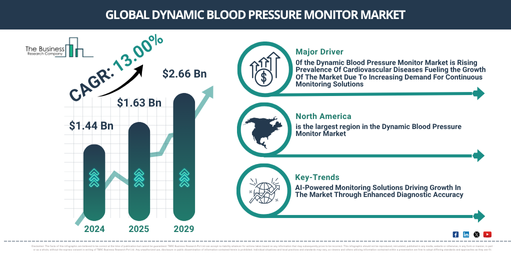
    In recent times, the blood pressure monitor market has seen a significant increase in growth. It’s projected that the market will expand from its current value of $1.44 billion in 2024 to reach $1.63 billion in 2025, experiencing an annual growth rate (CAGR) of 13.3%. The rise noted in the historic period has its roots in a growing prevalence of hypertension, increased awareness of cardiovascular health, expansion of home health care services, the growth of the elderly population, the digitalization of healthcare, and shift towards preventive measures.

    In the coming years, the dynamic blood pressure monitor market is predicted to experience robust development and is forecasted to reach a valuation of $2.66 billion in 2029, expanding at a compound annual growth rate (CAGR) of 13.0%. Several factors contributing to this expected growth in the forecast period are the increase in remote patient monitoring, a greater emphasis on personalized healthcare, enhanced funding in digital health infrastructure, rising usage of smartphones, and beneficial government schemes. Noteworthy trends during the forecast period encompass the amalgamation with artificial intelligence (AI) enabled analytics, adoption of cloud-based data storage, real-time health monitoring, the emergence of cuffless monitoring devices, and progress in wearable technology.

    Download The Free Sample Report Here:

    https://www.thebusinessresearchcompany.com/sample.aspx?id=24525&type=smp

    Which Factor Is Shaping The Future Of The Dynamic Blood Pressure Monitor Market?

    Anticipated growth in the dynamic blood pressure monitors market is likely due to the escalating prevalence of cardiovascular ailments. These diseases, affecting the heart and blood vessels, are largely shaped by high blood pressure, which contributes significantly to the high risk of strokes, heart attacks, and other life-threatening conditions. The surge in cardiovascular diseases is primarily attributed to inactive lifestyles, resulting in weakened heart health and heightened blood pressure. Dynamic blood pressure monitors assist in managing these diseases by granting continuous and accurate blood pressure measurements in real-world settings, helping detect high-risk scenarios such as nocturnal hypertension. For instance, the American Heart Association, a nonprofit organization based in the US, reported in January 2024 that the age-adjusted death toll from cardiovascular diseases has shot up to 233.3 per 100,000, marking a 4% increase from the previous year’s rate of 224.4 per 100,000 — a comparative rise of 4.6% from the year before that. Consequently, the growing incidents of cardiovascular diseases are fueling the growth of the dynamic blood pressure monitors market.

    What Is The Segment-Wise Breakdown Of The Dynamic Blood Pressure Monitor Market?

    The dynamic blood pressure monitor market covered in this report is segmented –

    1) By Product Type: Wrist Blood Pressure Monitors, Arm Blood Pressure Monitors, Finger Blood Pressure Monitors

    2) By Measurement Method: Automatic Measurement, Manual Measurement

    3) By Distribution Channel: Online Stores, Pharmacies, Specialty Stores, Other Distribution Channels

    4) By Application: Home Health Monitoring, Clinical Settings, Preventive Healthcare, Telemedicine

    5) By End-User: Hospitals, Clinics, Home Care Settings, Other End-Users

    Subsegments:

    1) By Wrist Blood Pressure Monitors: Bluetooth-Enabled Monitors, Manual Inflation Monitors, Automatic Inflation Monitors

    2) By Arm Blood Pressure Monitors: Upper Arm Monitors With Cuff, Bluetooth Or Wi-Fi Integrated Monitors, Manual Arm Monitors

    3) By Finger Blood Pressure Monitors: Compact Digital Monitors, Rechargeable Finger Monitors, USB-Connected Monitors

    Which Trends Are Redefining The Future Landscape Of The Dynamic Blood Pressure Monitor Industry?

    Top players in the vibrant blood pressure monitor market are prioritizing the creation of innovative monitoring devices, such as advanced hemodynamic monitoring systems, to enhance the precision and real-time monitoring of blood pressure and cardiovascular metrics. The advanced hemodynamic monitoring systems pertain to sophisticated medical devices engineered for constant and accurate tracking of cardiovascular parameters like blood pressure, heart output, and the dynamics of blood flow in real time. For instance, in April 2025, Becton, Dickinson and Company, a medical technology firm based in the US, unveiled the HemoSphere Alta platform, an advanced hemodynamic monitoring solution intended for use in operating rooms and intensive care units. This cutting-edge system harnesses the power of AI-based predictive algorithms to assist medical professionals to anticipate and deal with blood pressure instability and optimize blood flow, identifying potentially fatal changes in a timely manner. Notable features include a cerebral autoregulation index (CAI) for tailor-made blood pressure objectives, the acumen hypotension prediction index (HPI) software for predicting occurrences of low blood pressure, and a high-definition touchscreen with voice and motion commands for sterile, hands-free interaction.

    Which Companies Hold The Largest Market Share In The Dynamic Blood Pressure Monitor Sector?

    Major companies operating in the dynamic blood pressure monitor market are Koninklijke Philips N.V., Becton Dickinson and Company, GE HealthCare Technologies Inc., OMRON HEALTHCARE Co. Ltd., Hill-Rom Holdings Inc., Nihon Kohden Corporation, Spacelabs Healthcare Inc., Fluke Biomedical, Contec Medical Systems Co. Ltd., Schiller AG, Microlife Corporation, Qingdao Meditech Equipment Co .Ltd, A&D Company Limited, SunTech Medical Inc., Rudolf Riester GmbH, Bionet America Inc., Shenzhen Hingmed Instrument Co. Ltd, Kardinero Medical Systems Inc., CNSystems Medizintechnik GmbH., WHALETEQ Co. LTD, Bosch + Sohn GmbH & Co. KG, DynaPulse Inc.

    Get The Full Report Here:

    https://www.thebusinessresearchcompany.com/report/dynamic-blood-pressure-monitor-global-market-report

    How Does Regional Performance Compare Across The Dynamic Blood Pressure Monitor Industry?

    North America was the largest region in the dynamic blood pressure monitor market in 2024. Asia-Pacific is expected to be the fastest-growing region in the forecast period. The regions covered in the dynamic blood pressure monitor market report are Asia-Pacific, Western Europe, Eastern Europe, North America, South America, Middle East, Africa.

    Request For A Customized Report:

    https://www.thebusinessresearchcompany.com/customise?id=24525&type=smp

    About The Business Research Company:

    With over 15000+ reports from 27 industries covering 60+ geographies, The Business Research Company has built a reputation for offering comprehensive, data-rich research and insights. Armed with 1,500,000 datasets, the optimistic contribution of in-depth secondary research, and unique insights from industry leaders, you can get the information you need to stay ahead in the game.

    Get in touch with us:

    The Business Research Company: https://www.thebusinessresearchcompany.com/

    Americas +1 310-496-7795

    Asia +44 7882 955267 & +91 8897263534

    Europe +44 7882 955267

    Email us at info@tbrc.info

    Follow us on:

    LinkedIn: https://in.linkedin.com/company/the-business-research-company

    YouTube: https://www.youtube.com/channel/UC24_fI0rV8cR5DxlCpgmyFQ

    Global Market Model: https://www.thebusinessresearchcompany.com/global-market-model