Category: Medical Equipment

  • 2025–2029 Dual Chamber Pacemaker Market Outlook: Regional Trends and Growth Forecast

    2025–2029 Dual Chamber Pacemaker Market Outlook: Regional Trends and Growth Forecast

    Claim your 30% discount on Global Market Reports with code ONLINE30. Limited time only.

    What Is the Estimated Industry Valuation for the Dual Chamber Pacemaker Sector?

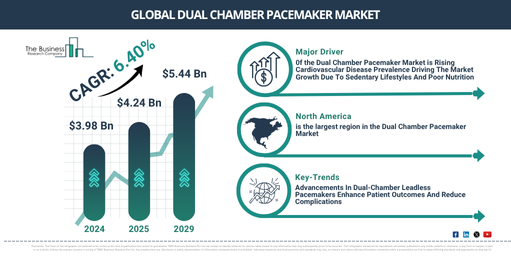
    In recent times, the market size for the dual chamber pacemaker has seen significant growth. It’s projected to expand from $3.98 billion in 2024 to $4.24 billion in 2025, with a compound annual growth rate (CAGR) of 6.7%. The historical surge is a result of an increasing choice for cardiac monitoring at home, higher amounts of heart surgeries and implantations, a burgeoning demand for individualized cardiac care, growing occurrences of lifestyle-related diseases, and an uptick in specialized cardiac care centers.

    Strong growth is anticipated in the dual chamber pacemaker market over the next several years. It’s predicted to rise to $5.44 billion by 2029, with a compound annual growth rate (CAGR) of 6.4%. This projected growth within the forecasted period can be associated with an increase in cardiovascular disease prevalence, an aging population, the escalating adoption of minimally invasive heart procedures, heightened consciousness of heart health, and rising healthcare costs. The forecast period’s significant trends include advancements in leadless pacemakers, the incorporation of remote monitoring technologies, development in battery technology, Bluetooth and wireless telemetry integration, and innovative miniaturization technology.

    Download The Free Sample Report Here:

    https://www.thebusinessresearchcompany.com/sample.aspx?id=24524&type=smp

    What Forces Are Driving The Growth Of The Dual Chamber Pacemaker Market?

    The escalating occurrence of cardiovascular disorders is foreseen to push the dual-chamber pacemaker market’s expansion forward. Cardiovascular disorders, conditions affecting the heart and blood vessels, trigger issues such as heart attacks and strokes. The rising incidence of these diseases is predominantly due to inactive lifestyles and poor diet, resulting in obesity and associated heart complications. A dual-chamber pacemaker works to combat cardiovascular diseases by modulating the heart’s rhythm through electrical impulses directed towards the atrium and ventricle, enhancing coordination and effective blood circulation. For instance, as per the Centers for Disease Control and Prevention, a government agency in the US, in 2022 heart disease led to the death of 702,880 individuals, representing 1 in every 5 deaths. Additionally, each year in the US, nearly 805,000 individuals suffer a heart attack. Thus, the rising occurrence of cardiovascular diseases is propelling the growth of the dual-chamber pacemaker market.

    How Is The Dual Chamber Pacemaker Industry Segmented Across Key Parameters?

    The dual chamber pacemaker market covered in this report is segmented –

    1) By Product Type: Single-Chamber Pacemakers, Dual-Chamber Pacemakers, Biventricular Pacemakers

    2) By Technology: Micra Pacemaker, Conventional Pacemakers, Leadless Pacemakers, Remote Monitoring Systems

    3) By Distribution Channel: Direct Sales, Distributors, Online Sales

    4) By Application: Atrial Fibrillation, Bradycardia, Heart Block, Cardiac Resynchronization Therapy

    5) By End-User: Hospitals, Cardiac Care Centers, Ambulatory Surgical Centers, Home Healthcare

    Subsegments:

    1) By Single-Chamber Pacemakers: Single-Chamber Leadless Pacemakers, Single-Chamber Conventional Pacemakers

    2) By Dual-Chamber Pacemakers: Dual-Chamber Leadless Pacemakers, Dual-Chamber Conventional Pacemakers

    3) By Biventricular Pacemakers: Cardiac Resynchronization Therapy Pacemakers (CRT-P), Cardiac Resynchronization Therapy Defibrillators (CRT-D)

    What Notable Trends Are Shaping The Direction Of The Dual Chamber Pacemaker Market?

    Leading corporations in the dual-chamber pacemaker market are aiming to create innovative products like the dual-chamber leadless pacemaker. With its improvement towards patients’ comfort, minimization of infection threats, and extension of device lifespan, it has garnered much attention. This tiny, implantable gadget helps control the heart’s atrium and ventricle functions without using the traditional leads, thus lessening disorders and bettering heart rhythm management. For example, Abbott Laboratories, an American medical device establishment, introduced AVEIR, a dual-chamber leadless pacemaker, approved by the U.S. Food and Drug Administration, in July 2023. This game-changing system consists of two tiny machines, one each for the right atrium and the right ventricle, that connect wirelessly to provide coordinated pacing for patients suffering from abnormal or sluggish heartbeats, addressing all the standard pacemaker patient cases. With its leadless design, it eradicates the requirement for wires and surgical pockets, leading to fewer complications and boosting patient comfort. Clinical studies confirmed its high safety and efficacy, showing a 98% successful implant rate and over 97% atrioventricular synchrony.

    Which Companies Currently Dominate The Competitive Landscape In The Dual Chamber Pacemaker Industry?

    Major companies operating in the dual chamber pacemaker market are Abbott Laboratories, Medtronic plc, Boston Scientific Corporation, UC Health, Biotronik SE & Co. KG, Integer Holdings Corporation, LivaNova PLC, Lepu Medical Technology(Beijing)Co.,Ltd., MicroPort Scientific Corporation, Oscor Inc., Sorin Group, BPL Medical Technologies, EBR Systems Inc., Narang Medical Limited, Vitatron, Medico S.p.A., Osypka Medical GmbH, Shree Pacetronix Ltd., Medinnova Systems Pvt. Ltd, Skrip Electronics

    Get The Full Report Here:

    https://www.thebusinessresearchcompany.com/report/dual-chamber-pacemaker-global-market-report

    Which Geographic Regions Are Driving Demand In The Dual Chamber Pacemaker Market?

    North America was the largest region in the dual chamber pacemaker market in 2024. Asia-Pacific is expected to be the fastest-growing region in the forecast period. The regions covered in the dual chamber pacemaker market report are Asia-Pacific, Western Europe, Eastern Europe, North America, South America, Middle East, Africa.

    Request For A Customized Report:

    https://www.thebusinessresearchcompany.com/customise?id=24524&type=smp

    About The Business Research Company:

    With over 15000+ reports from 27 industries covering 60+ geographies, The Business Research Company has built a reputation for offering comprehensive, data-rich research and insights. Armed with 1,500,000 datasets, the optimistic contribution of in-depth secondary research, and unique insights from industry leaders, you can get the information you need to stay ahead in the game.

    Get in touch with us:

    The Business Research Company: https://www.thebusinessresearchcompany.com/

    Americas +1 310-496-7795

    Asia +44 7882 955267 & +91 8897263534

    Europe +44 7882 955267

    Email us at info@tbrc.info

    Follow us on:

    LinkedIn: https://in.linkedin.com/company/the-business-research-company

    YouTube: https://www.youtube.com/channel/UC24_fI0rV8cR5DxlCpgmyFQ

    Global Market Model: https://www.thebusinessresearchcompany.com/global-market-model
  • Latest Market Developments in Drug Delivery Systems Industry: Forecast 2025–2029

    Latest Market Developments in Drug Delivery Systems Industry: Forecast 2025–2029

    Claim your 30% discount on Global Market Reports with code ONLINE30. Limited time only.

    How Large Is the Drug Delivery Systems Market Expected to Be in 2029?

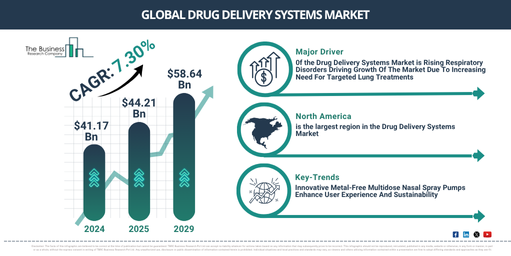
    The scale of the drug delivery systems market has seen a solid expansion in past years. Its growth is forecasted to rise from $41.17 billion in 2024 to $44.21 billion in 2025, indicating a compound annual growth rate (CAGR) of 7.4%. Factors contributing to this growth during the historical timeline include surging investments in research and development, an increase in chronic illnesses, the emergence of biologics and monoclonal antibodies, a high requirement for non-invasive delivery methods, and an imperative for better patient adherence and compliance.

    The market size of drug delivery systems is predicted to experience substantial growth in the coming years, expanding to $58.64 billion in 2029 with a Compound Annual Growth Rate (CAGR) of 7.3%. This growth during the forecast period can be ascribed to the heightened focus on personalized medicine, enlargement of complex and sensitive drug pipelines, an increasing incidence of rare and orphan diseases, supportive regulatory paths for innovative delivery systems, and a rising elderly population. Key trends anticipated in the forecast duration include the creation of nanotechnology-based drug delivery systems, breakthroughs in controlled-release and sustained-release technologies, advancements in biologics and biosimilars needing specialized delivery, the synthesis of smart drug delivery devices, and the development of targeted delivery systems for oncology.

    Download The Free Sample Report Here:

    https://www.thebusinessresearchcompany.com/sample.aspx?id=24523&type=smp

    What Are The Contributors To Demand In The Drug Delivery Systems Market?

    The escalating instances of respiratory issues are predicted to propel the expansion of the drug delivery systems market. With a rising trend in conditions that hinder the smooth operation of the lungs and airways, leading to breathing difficulties and insufficient oxygen intake, respiratory disorders are increasingly common. The continuous exposure of the populace to harmful airborne particles and gases due to growing air pollution is a major cause of these disorders. It harms lung functionality and aids the progression of respiratory ailments. Drug delivery systems are vital for effective treatment of respiratory diseases like asthma, COPD, pulmonary fibrosis, and cystic fibrosis. They assure that the medicine reaches the lungs directly, maximizing the therapeutic effect and minimizing side effects. As per the UK Health Security Agency, a government agency in the UK, there was a 13% surge in tuberculosis cases in England in 2024, numbering 5,480 from the 4,850 cases of 2023. Hence, the rising incidence of respiratory conditions is anticipated to push the growth of the drug delivery systems market.

    What Segmentation Categories Are Included In The Drug Delivery Systems Market Analysis?

    The drug delivery systems market covered in this report is segmented –

    1) By Type: Injection-Based Drug Delivery System, Oral Drug Delivery System, Inhalation Or Pulmonary Drug Delivery System, Transmucosal Drug Delivery System

    2) By Material: Polymer-Based Drug Delivery Systems, Lipid-Based Drug Delivery Systems, Inorganic Drug Delivery Systems, Biologics-Based Drug Delivery Systems, Hybrid Drug Delivery Systems

    3) By Application: Infectious Disease, Oncology, Ophthalmology, Urology, Diabetes, Central Nervous System, Other Applications

    4) By End-User: Hospitals, Pharmaceutical Companies, Research Institutions, Homecare Settings, Diagnostic Laboratories

    Subsegments:

    1) By Injection-Based Drug Delivery System: Intravenous (IV), Intramuscular (IM), Subcutaneous (SC), Intradermal, Intrathecal, Depot Injections, Needle-Free Injectors

    2) By Oral Drug Delivery System: Tablets, Capsules, Solutions And Syrups, Suspensions, Powders And Granules, Modified Release Formulations

    3) By Inhalation Or Pulmonary Drug Delivery System: Metered Dose Inhalers (MDIs), Dry Powder Inhalers (DPIs), Nebulizers, Soft Mist Inhalers, Nasal Sprays

    4) By Transmucosal Drug Delivery System: Buccal Delivery, Sublingual Delivery, Rectal Delivery, Vaginal Delivery, Nasal Mucosal Delivery

    What Upcoming Trends Are Expected To Impact The Drug Delivery Systems Market Globally?

    Numerous key players in the drug delivery systems sector are emphasizing novel and innovative creations, such as completely metallic-free, multiple dose nasal spray pumps to enhance user comfort and manageability. These metallic-free multi-dose nasal spray pumps are contraptions designed to dispense several doses of medicine via the nose without incorporating metallic elements, which guarantees safety and compatibility with an array of formulations. For example, Aptar Pharma, a pharmaceutical business headquartered in the United States, introduced the APF Futurity, which is a metal-free, multidose nasal spray pump in January 2023. It is a nasal spray pump specifically designed for the delivery of nasal saline and other comparable over-the-counter products. The product is highly sustainable and it’s the first nasal spray pump from Aptar Pharma to garner Class AA qualification from cyclos-HTP for European recycling schemes. Constructed purely from polyolefin materials and devoid of metal elements or recycling contaminants, it simplifies recycling and enhances recyclate quality. The metal-free pump uses Aptar Pharma’s Advanced Preservative Free technology, for assured accurate and consistent dosage with a mild operation, yet maintaining ease of usage and efficacy.

    Who Are The Top-Ranked Companies In The Drug Delivery Systems Market Today?

    Major companies operating in the drug delivery systems market are Pfizer Inc., Johnson & Johnson, F. Hoffmann-La Roche AG, Merck & Co. Inc., AbbVie Inc., Bayer AG, Sanofi S.A., Bristol-Myers Squibb Company, AstraZeneca PLC, Abbott Laboratories Inc., Novartis AG, GlaxoSmithKline PLC, Eli Lilly and Company, Amgen Inc., Becton, Dickinson and Company, Teva Pharmaceutical Industries Ltd., Boston Scientific Corporation, Tandem Diabetes, Pacira Biosciences, Poseida Therapeutics, Universal Stabilization Technologies Inc., Spectrum Pharmaceuticals Inc., VasoRx Inc.

    Get The Full Report Here:

    https://www.thebusinessresearchcompany.com/report/drug-delivery-systems-global-market-report

    How Is Drug Delivery Systems Market Adoption Varying Across Different Regions And Sectors?

    North America was the largest region in the drug delivery system market in 2024. Asia-Pacific is expected to be the fastest-growing region in the forecast period. The regions covered in the drug delivery systems market report are Asia-Pacific, Western Europe, Eastern Europe, North America, South America, Middle East, Africa.

    Request For A Customized Report:

    https://www.thebusinessresearchcompany.com/customise?id=24523&type=smp

    About The Business Research Company:

    With over 15000+ reports from 27 industries covering 60+ geographies, The Business Research Company has built a reputation for offering comprehensive, data-rich research and insights. Armed with 1,500,000 datasets, the optimistic contribution of in-depth secondary research, and unique insights from industry leaders, you can get the information you need to stay ahead in the game.

    Get in touch with us:

    The Business Research Company: https://www.thebusinessresearchcompany.com/

    Americas +1 310-496-7795

    Asia +44 7882 955267 & +91 8897263534

    Europe +44 7882 955267

    Email us at info@tbrc.info

    Follow us on:

    LinkedIn: https://in.linkedin.com/company/the-business-research-company

    YouTube: https://www.youtube.com/channel/UC24_fI0rV8cR5DxlCpgmyFQ

    Global Market Model: https://www.thebusinessresearchcompany.com/global-market-model
  • CAGR of 6.4% Projected for Disposable Laparoscopic Instrument Market From 2025 to 2029

    CAGR of 6.4% Projected for Disposable Laparoscopic Instrument Market From 2025 to 2029

    Claim your 30% discount on Global Market Reports with code ONLINE30. Limited time only.

    What Does the Forecast Indicate for the Disposable Laparoscopic Instrument Market From 2025 to 2029?

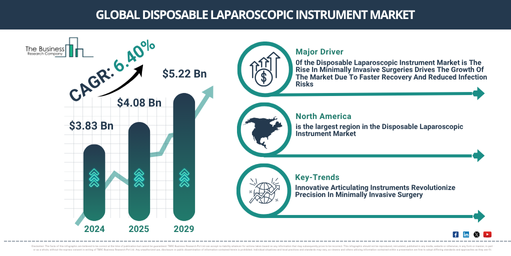
    There has been robust growth in the market size of disposable laparoscopic instruments recently. The market, which was worth $3.83 billion in 2024, is predicted to grow to $4.08 billion in 2025, at a compound annual growth rate (CAGR) of 6.6%. The growth experienced during the historic period was influenced by multiple factors including; the rise in the adoption of minimally invasive procedures, an increase in healthcare spending in growing economies, a surge in the number of ambulatory surgical centers, the escalating risk of cross-contamination from reusable devices, and a growing preference amongst surgeons for single-use devices.

    Anticipated to achieve robust expansion in the near future, the market size for disposable laparoscopic instruments is predicted to surge to $5.22 billion in 2029, recording a compound annual growth rate (CAGR) of 6.4%. This growth during the projected period is credited to the intensifying focus on preventing infections in hospitals, escalating demand for laparoscopic procedures in outpatient departments, increasing occurrences of weight-related surgeries due to obesity, growing requirements for outpatient and day-care surgeries, and a rise in the preference towards easy-care surgical instruments. Notable trends of the forecasted period consist of technological enhancements in downscaling, growing inclination towards single-use rather than reusable, incorporation of electrosurgical abilities, integration with digital imaging systems, and advancements in modular disposable systems.

    Download The Free Sample Report Here:

    https://www.thebusinessresearchcompany.com/sample.aspx?id=24521&type=smp

    What Elements Are Contributing To Growth In The Disposable Laparoscopic Instrument Market?

    The growth of the disposable laparoscopic instrument market is anticipated to accelerate due to the increasing prevalence of minimally invasive surgeries. These surgeries are carried out through tiny incisions using specialized equipment and cameras, reducing tissue damage and promoting speedy recovery. Factors promoting the widespread use of minimally invasive surgeries include significantly shorter recovery periods for patients, resulting in faster healing and lesser time spent in the hospital. Single-use sterile disposable laparoscopic instruments contribute to the success of these surgeries, as they lower the chances of infection and enhance surgical precision, enabling patients to recover quicker. For example, the American Society of Plastic Surgeons, a not-for-profit organization based in the US, reported in June 2024 that minimally invasive procedures saw a 7% growth rate in 2023, outpacing surgical procedures by 2%. Consequently, the higher use of minimally invasive surgeries propels the disposable laparoscopic instrument market.

    Which Segments Are Detailed In The Global Disposable Laparoscopic Instrument Market Report?

    The disposable laparoscopic instrument market covered in this report is segmented –

    1) By Product: Trocars, Graspers, Scissors, Forceps, Staplers, Electrosurgical Devices, Suction Or Irrigation Devices, Clip Appliers, Other Instruments

    2) By Application: General Surgery, Gynecological Surgery, Urological Surgery, Bariatric Surgery, Other Applications

    3) By End-User: Hospitals, Ambulatory Surgical Centers, Specialty Clinics

    Subsegments

    1) By Trocars: Optical Trocars, Bladed Trocars, Bladeless Trocars, Radially Expanding Trocars

    2) By Graspers: Atraumatic Graspers, Traumatic Graspers, Fenestrated Graspers

    3) By Scissors: Metzenbaum Scissors, Hook Scissors, Curved Scissors

    4) By Forceps: Maryland Forceps, Babcock Forceps, Allis Forceps, Dissectors

    5) By Staplers: Linear Staplers, Circular Staplers, Endoscopic Staplers, Powered Staplers

    6) By Electrosurgical Devices: Monopolar Devices, Bipolar Devices, Advanced Energy Devices

    7) By Suction Or Irrigation Devices: Manual Suction-Irrigation Devices, Automated Suction-Irrigation Devices

    8) By Clip Appliers: Disposable Clip Appliers, Reposable Clip Appliers

    9) By Other Instruments: Specimen Retrieval Bags, Dilators, Veress Needles

    Which Emerging Trends And Strategic Shifts Are Shaping The Disposable Laparoscopic Instrument Market?

    Leading firms in the disposable laparoscopic instrument market are focused on the creation of technologically superior goods such as articulating laparoscopic devices to boost accuracy and accessibility during minimally invasive operations. Articulating laparoscopic tools are bendable and rotatable surgical tools with flexible, jointed tips that allow surgeons to manoeuvre them inside the body for enhanced accuracy and access during minimally invasive procedures. For instance, in October 2024, LivsMed Inc., a company specialising in minimally invasive surgical technologies from South Korea, introduced its ArtiSential 5, the first-ever 5mm articulating laparoscopic device line. This new range includes a 5mm shaft, 40% smaller than its earlier 8mm model, allowing for tinier incisions and better sight of the surgical area. The instruments have double-jointed end effectors delivering articulated wrist movement which enhances precision and provides better tactile feedback during minimally invasive operations. These tools are lightweight, well-balanced and can be used with any laparoscopic or robotic port, offering increased flexibility and potential cost efficiencies.

    Who Are The Key Contributors To Growth In The Disposable Laparoscopic Instrument Market?

    Major companies operating in the disposable laparoscopic instrument market are Johnson And Johnson, Medtronic plc, Stryker Corporation, Olympus Corporation, Teleflex Incorporated, Cook Group Incorporated, Smith And Nephew plc, CONMED Corporation, Aesculap Inc., CooperSurgical Inc., Richard Wolf GmbH, B. Braun Melsungen AG, Hangzhou Kangji Medical Instruments Co. Ltd., Microline Surgical, Zhejiang Geyi Medical Instrument Co. Ltd., Purple Surgical UK Limited, BOWA-electronic GmbH And Co. KG, Millennium Surgical Corp, LaproSurge, GENICON Inc.

    Get The Full Report Here:

    https://www.thebusinessresearchcompany.com/report/disposable-laparoscopic-instrument-global-market-report

    Which Region Is Projected To Lead The Disposable Laparoscopic Instrument Market By 2025?

    North America was the largest region in the disposable laparoscopic instrument market in 2024. Asia-Pacific is expected to be the fastest-growing region in the forecast period. The regions covered in the disposable laparoscopic instrument market report are Asia-Pacific, Western Europe, Eastern Europe, North America, South America, Middle East, Africa.

    Request For A Customized Report:

    https://www.thebusinessresearchcompany.com/customise?id=24521&type=smp

    About The Business Research Company:

    With over 15000+ reports from 27 industries covering 60+ geographies, The Business Research Company has built a reputation for offering comprehensive, data-rich research and insights. Armed with 1,500,000 datasets, the optimistic contribution of in-depth secondary research, and unique insights from industry leaders, you can get the information you need to stay ahead in the game.

    Get in touch with us:

    The Business Research Company: https://www.thebusinessresearchcompany.com/

    Americas +1 310-496-7795

    Asia +44 7882 955267 & +91 8897263534

    Europe +44 7882 955267

    Email us at info@tbrc.info

    Follow us on:

    LinkedIn: https://in.linkedin.com/company/the-business-research-company

    YouTube: https://www.youtube.com/channel/UC24_fI0rV8cR5DxlCpgmyFQ

    Global Market Model: https://www.thebusinessresearchcompany.com/global-market-model

  • Global Insights: Demineralized Bone Matrix Market Expected to Surpass $1.44 Billion by 2029

    Global Insights: Demineralized Bone Matrix Market Expected to Surpass $1.44 Billion by 2029

    Claim your 30% discount on Global Market Reports with code ONLINE30. Limited time only.

    What Are the Latest Market Insights for the Demineralized Bone Matrix Industry?

    The market size of the demineralized bone matrix has experienced robust growth in recent years, with projections suggesting it will increase from $1.05 billion in 2024 to $1.12 billion in 2025, maintaining a compound annual growth rate (CAGR) of 6.6%. The growth witnessed in the historical period is due to the escalating number of orthopedic injuries, the proliferation of spinal fusion procedures, the increasing aging population, the growing inclination towards allografts, and a surge in sports-related injuries.

    In the upcoming years, the demineralized bone matrix market is predicted to experience strong expansion. It will escalate to $1.44 billion by the year 2029, with a compound annual growth rate (CAGR) of 6.4%. There are several factors driving growth in this period including augmented demand for minimally invasive procedures, an upswing in healthcare spending, enhanced surgeon and patient awareness, a growing emphasis on biologics within orthopedics, and an increasing number of outpatient surgical centers. Key trends during this projected period involve progression in regenerative medicine, the amalgamation of demineralized bone matrix with stem cell therapies, the creation of injectable demineralized bone matrix formats, a shift towards synthetic and hybrid grafts, and the personalization of demineralized bone matrix for particular applications.

    Download The Free Sample Report Here:

    https://www.thebusinessresearchcompany.com/sample.aspx?id=24516&type=smp

    What Forces Are Driving The Growth Of The Demineralized Bone Matrix Industry?

    The escalating occurrence of orthopedic disorders is anticipated to boost the demineralized bone matrix (DBM) market’s expansion. Orthopedic conditions involve problems with the musculoskeletal system, which includes bones, joints, muscles, ligaments, tendons, and nerves. The demand for orthopedic therapies is on the rise due to the aging worldwide population, with older people being more susceptible to musculoskeletal disorders such as osteoarthritis, osteoporosis, and fractures. The demineralized bone matrix is vital for treating orthopedic conditions as it aids in bone regeneration and healing, making it crucial for spinal fusion, joint reconstruction, and fracture repair. It expedite recovery by offering an osteoinductive scaffold that encourages natural bone growth and enhances surgical results. For example, a survey study by the Institute for Health Metrics and Evaluation, a US-based public health research institution, reported in August 2023 that 15% of individuals aged 30 and over were diagnosed with osteoarthritis in 2023, with the projected figure of those affected expected to hit approximately 1 billion by 2050. Hence, the escalating incidence of orthopedic disorders is fueling the expansion of the demineralized bone matrix market.

    What Is The Overview Of Market Segmentation In The Demineralized Bone Matrix Industry?

    The demineralized bone matrix market covered in this report is segmented –

    1) By Product Type: Gel, Putty, Sponge, Fiber, Paste, Other Product Types

    2) By Tissue Source: Allograft, Xenograft

    3) By Application: Dental, Craniomaxillofacial, Spinal Fusion, Long Bone Procedures, Joint Reconstruction, Other Applications

    4) By End-Use: Hospitals, Ambulatory Surgical Centers, Specialty Clinics, Other End-Uses

    Subsegments:

    1) By Gel: Injectable Gel, Bioactive Gel, Thermosensitive Gel

    2) By Putty: Moldable Putty, Radiopaque Putty, Self-Setting Putty

    3) By Sponge: Resorbable Sponge, Collagen-Based Sponge, Porous Sponge

    4) By Fiber: Mineralized Fiber, Non-Mineralized Fiber, Collagen Fiber Matrix

    5) By Paste: Flowable Paste, Adhesive Paste, Viscous Paste

    6) By Other Product Types: Sheet Matrix, Strip Matrix, Granules

    What Future Market Trends Are Projected For The Demineralized Bone Matrix Industry?

    Leading companies in the demineralized bone matrix industry are prioritizing the development of high-tech products, such as 3D-printed bone matrices, to facilitate more accurate, biocompatible, and efficient regenerate bone grafts, tailored to individual patients. A three-dimensional (3D) printed bone matrix is a faux-bone scaffold or implant that is produced using 3D printing technology to imitate the structural and functional attributes of natural bone tissue. For example, in December 2022, US-based biotech firm Essent Biologics introduced a micronized bone matrix specifically crafted for 3D bioprinting and tissue engineering applications. This novel product offers a standardized, finely granulated demineralized bone matrix, which can be effortlessly embedded into bioinks and scaffolds. It encourages cellular adhesion and growth, facilitating the production of biologically active, personalized structures that enhance the accuracy and effectiveness of bone repair strategies and regenerative treatments.

    Who Are The Primary Players Operating Across The Global Demineralized Bone Matrix Market?

    Major companies operating in the demineralized bone matrix market are Johnson & Johnson, Medtronic plc, Medline Industries LP, Stryker Corporation, Zimmer Biomet Holdings Inc., Arthrex Inc., Straumann AG, Globus Medical Inc., Integra LifeSciences Corporation, Halma plc, MTF Biologics, Exactech Inc., RTI Surgical, AlloSource, Cerapedics Inc., Keystone Dental Inc., Omnia Medical, Xtant Medical Holdings Inc., Hans Biomed Co. Ltd., Bone Biologics Corp.

    Get The Full Report Here:

    https://www.thebusinessresearchcompany.com/report/demineralized-bone-matrix-global-market-report

    Which Region Offers The Most Growth Potential For The Demineralized Bone Matrix Market Through 2029?

    North America was the largest region in the demineralized bone matrix market in 2024. Asia-Pacific is expected to be the fastest-growing region in the forecast period. The regions covered in the demineralized bone matrix market report are Asia-Pacific, Western Europe, Eastern Europe, North America, South America, Middle East, Africa.

    Request For A Customized Report:

    https://www.thebusinessresearchcompany.com/customise?id=24516&type=smp

    About The Business Research Company:

    With over 15000+ reports from 27 industries covering 60+ geographies, The Business Research Company has built a reputation for offering comprehensive, data-rich research and insights. Armed with 1,500,000 datasets, the optimistic contribution of in-depth secondary research, and unique insights from industry leaders, you can get the information you need to stay ahead in the game.

    Get in touch with us:

    The Business Research Company: https://www.thebusinessresearchcompany.com/

    Americas +1 310-496-7795

    Asia +44 7882 955267 & +91 8897263534

    Europe +44 7882 955267

    Email us at info@tbrc.info

    Follow us on:

    LinkedIn: https://in.linkedin.com/company/the-business-research-company

    YouTube: https://www.youtube.com/channel/UC24_fI0rV8cR5DxlCpgmyFQ

    Global Market Model: https://www.thebusinessresearchcompany.com/global-market-model
  • Global Continuous Glucose Monitoring Market Forecast to Reach $16.45 Billion by 2029, Driven by 14.9% CAGR

    Global Continuous Glucose Monitoring Market Forecast to Reach $16.45 Billion by 2029, Driven by 14.9% CAGR

    Claim your 30% discount on Global Market Reports with code ONLINE30. Limited time only.

    What Is the Outlook for the Continuous Glucose Monitoring Market Heading Into 2029?

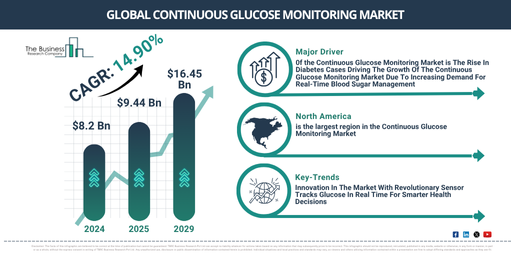
    The market size of continuous glucose monitoring has witnessed significant expansion in the past few years. It is projected to burgeon from $8.2 billion in 2024 to $9.44 billion in 2025, marking a compound annual growth rate (CAGR) of 15.2%. Factors such as heightened prevalence of diabetes, growing consciousness about diabetes control, surge in demand for real-time glucose monitoring systems, the burgeoning acceptance of minimally invasive technologies, and escalating healthcare spending in developed nations contribute to the growth witnessed during the historic period.

    The market for continuous glucose monitoring is projected to experience significant expansion in the coming years, with estimates predicting it to swell to $16.45 billion by 2029, reflecting a compound annual growth rate (CAGR) of 14.9%. This growth during the forecast period can be credited to an increased emphasis on personalized and precision medicine, a surge in the acceptance of telehealth and remote patient monitoring, a heightened focus on preventive healthcare and early diagnosis, a rising trend for at-home glucose monitoring, and deeper market penetration in emerging economies. Key trends expected during this period encompass the miniaturization of technology for implantable devices, the evolution of closed-loop insulin delivery systems, incorporation into electronic health records, compatibility with fitness trackers and smartwatches, and advancements in skin-adhesive materials.

    Download The Free Sample Report Here:

    https://www.thebusinessresearchcompany.com/sample.aspx?id=24512&type=smp

    Which Factors Are Pushing The Continuous Glucose Monitoring Market Forward?

    The continuous glucose monitoring market is anticipated to expand due to the increasing incidences of diabetes. Diabetes, a chronic health condition characterized by the body’s inability to produce sufficient insulin or to effectively utilize the insulin it produces, leads to high levels of sugar (glucose) in the bloodstream. The escalated cases of diabetes are largely attributed to unhealthy diets rich in sugars, fats, and processed foods, which play a significant role in obesity and insulin malfunction. Continuous glucose monitoring aids in managing diabetes by providing real-time blood sugar patterns, facilitating prompt decisions on diet, medication, and activity for enhanced glucose control. For example, as reported by the American Diabetes Association, a US-based non-profit organization, in November 2023, the number of people diagnosed with diabetes in the U.S. in 2022 was estimated at 25.5 million, accounting for 7.6% of the total population. This shows a 3% increase in comparison to previous years. As such, the escalating incidences of diabetes are fuelling the expansion of the continuous glucose monitoring market.

    Which Segment Held The Largest Share In The Continuous Glucose Monitoring Market In 2025?

    The continuous glucose monitoring market covered in this report is segmented –

    1) By Component: Transmitters, Sensors, Receivers

    2) By Age Group: Adults, Children

    3) By End Use: Hospitals, Home Care Settings, Diagnostic Centers And Clinics, Other End Uses

    Subsegments:

    1) By Transmitters: Reusable Transmitters, Disposable Transmitters, Rechargeable Transmitters

    2) By Sensors: Implantable Sensors, Transcutaneous Sensors, Disposable Sensors, Real-Time Sensors

    3) By Receivers: Standalone Receivers, Integrated Receivers, Wearable Display Devices

    How Are Key Trends Driving Expansion In The Continuous Glucose Monitoring Industry?

    Key players in the continuous glucose monitoring market are channeling their resources towards the creation of innovative products like sensor-based glucose monitors, to improve accuracy, real-time monitoring, and customer convenience. A sensor-based glucose monitor is a device that persistently measures glucose levels in the blood using a tiny sensor inserted just beneath the skin. For example, DexCom, Inc., an American healthcare firm, introduced Stelo in August 2024. This product is the first over-the-counter (OTC) continuous glucose monitor (CGM) specifically designed for adults who don’t use insulin. Stelo provides round-the-clock glucose readings via a small sensor positioned on the upper arm’s backside, transmitting data straight to a smartphone without the need for a prescription or fingersticks. The device offers custom insights and trend analysis, assisting consumers in understanding the influence of factors such as diet, physical activity, and sleep on their glucose levels, thus supporting intelligent lifestyle decisions. The sensor can last up to 15 days, syncs with health applications, and is an excellent choice for people with Type 2 diabetes who are not on insulin, individuals with prediabetes, or anybody keeping tabs on their blood sugar health.

    Which Organizations Are Driving Progress In The Continuous Glucose Monitoring Industry?

    Major companies operating in the continuous glucose monitoring market are Roche Diabetes Care, Abbott Laboratories, Medtronic plc, Texas Instruments Inc., Microchip Technology Inc., Dexcom Inc., Insulet Corporation, Tandem Diabetes Care Inc., Ypsomed AG, Nova Biomedical, Ascensia Diabetes Care, Zillion Technologies Inc., Bionime Corporation, Biolinq Inc., Beta Bionics Inc., AgaMatrix Inc., A. Menarini Diagnostics S.r.l, Senseonics Holdings Inc., Medtrum Technologies Inc., Nemaura Medical Inc.

    Get The Full Report Here:

    https://www.thebusinessresearchcompany.com/report/continuous-glucose-monitoring-global-market-report

    Which Region Is Expected To Experience The Highest Growth In The Continuous Glucose Monitoring Industry?

    North America was the largest region in the continuous glucose monitoring market in 2024. Asia-Pacific is expected to be the fastest-growing region in the forecast period. The regions covered in the continuous glucose monitoring market report are Asia-Pacific, Western Europe, Eastern Europe, North America, South America, Middle East, Africa.

    Request For A Customized Report:

    https://www.thebusinessresearchcompany.com/customise?id=24512&type=smp

    About The Business Research Company:

    With over 15000+ reports from 27 industries covering 60+ geographies, The Business Research Company has built a reputation for offering comprehensive, data-rich research and insights. Armed with 1,500,000 datasets, the optimistic contribution of in-depth secondary research, and unique insights from industry leaders, you can get the information you need to stay ahead in the game.

    Get in touch with us:

    The Business Research Company: https://www.thebusinessresearchcompany.com/

    Americas +1 310-496-7795

    Asia +44 7882 955267 & +91 8897263534

    Europe +44 7882 955267

    Email us at info@tbrc.info

    Follow us on:

    LinkedIn: https://in.linkedin.com/company/the-business-research-company

    YouTube: https://www.youtube.com/channel/UC24_fI0rV8cR5DxlCpgmyFQ

    Global Market Model: https://www.thebusinessresearchcompany.com/global-market-model
  • Key Market Drivers, Trends, and Forecast for the Global Connected Medical Device Industry

    Key Market Drivers, Trends, and Forecast for the Global Connected Medical Device Industry

    Claim your 30% discount on Global Market Reports with code ONLINE30. Limited time only.

    How Much Is the Global Connected Medical Device Market Valued at Present and by 2029?

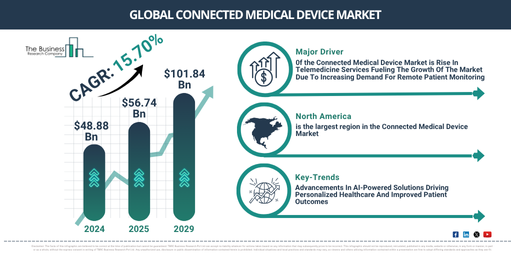
    In recent years, the size of the connected medical device market has seen significant growth. The market is projected to expand from $48.88 billion in 2024 to $56.74 billion in 2025, reflecting a compound annual growth rate (CAGR) of 16.1%. The notable growth witnessed in the past is due to a number of contributing factors. These include a rise in chronic disease prevalence, an increase in the global aging population, a surge in the demand for remote patient monitoring, a growing preference for wearable health devices, and a hike in healthcare expenditure.

    In the coming years, a significant increase is anticipated in the size of the connected medical device market, with projections pegging it to reach $101.84 billion in 2029, fueled by a compound annual growth rate (CAGR) of 15.7%. Factors expected to contribute to the surge during the estimated period include heightened awareness about health and fitness, growing incidence of cardiac diseases, escalated demand for on-the-spot health data analytics, government schemes endorsing digital health, and rising penetration of smartphones. Meanwhile, the major developments predicted during the forecast period include progress in wireless communication technologies, incorporation of artificial intelligence and machine learning into medical devices, increasing demand for cost-effective healthcare solutions, advancements in sensor technology, and heightened measures for data security and privacy.

    Download The Free Sample Report Here:

    https://www.thebusinessresearchcompany.com/sample.aspx?id=24510&type=smp

    #What Drivers Are Influencing Growth In The Connected Medical Device Market?

    The growth of the connected medical device market is expected to be propelled by the ascent of telemedicine services in the forthcoming years. Telemedicine, a system that employs technology to render medical assistance and advice from afar, bypassing the requirement for physical consultations, is increasing in demand. Its appeal lies in its ability to provide easy access to medical services, permitting patients to quickly engage with doctors from their residences, saving both time and travel expenses. The growth in telemedicine services bolsters the necessity for connected medical tools by facilitating remote patient tracking, necessitating the real-time transmission of data from patients to health service providers to guarantee precise diagnosis and prompt response in the absence of physical consultations. For instance, as per the survey executed with 8,014 participants from July to August 2022 by Rock Health, a US-centric firm committed to digital health and healthcare innovation, 80% of the participants confessed to having used telemedicine at least once in the survey of 2022, experiencing a rise of 8% from 72% in 2021. Thus, the surge in telemedicine services will stimulate the growth of the connected medical device market.

    What Are The Main Segments Identified In The Connected Medical Device Market Research?

    The connected medical device market covered in this report is segmented –

    1) By Product Type: Wearable Devices, Implantable Devices, Stationary Devices

    2) By Connectivity Technology: Bluetooth, Wi-Fi, Cellular, Other Connectivity Technologies

    3) By Application: Remote Patient Monitoring, Telemedicine, Clinical Decision Support, Chronic Disease Management, Fitness And Wellness, Other Applications

    4) By End-User: Hospitals And Clinics, Home Care Settings, Long-Term Care Facilities, Ambulatory Surgical Centers, Other End-Users

    Subsegments:

    1) By Wearable Devices: Fitness Trackers, Smartwatches, Continuous Glucose Monitors (CGM), Wearable ECG Monitors, Blood Pressure Monitors, Pulse Oximeters, Sleep Trackers

    2) By Implantable Devices: Cardiac Pacemakers, Implantable Cardioverter Defibrillators (ICDs), Neurostimulators, Cochlear Implants, Implantable Glucose Sensors, Drug Delivery Implants

    3) By Stationary Devices: Remote Patient Monitoring Stations, Telehealth Kiosks, Connected Imaging Devices, Connected Ventilators, Connected Dialysis Machines, Connected Infusion Pumps

    What Are The Leading Trends And Opportunities In The Connected Medical Device Sector?

    Leading corporations within the connected medical device sector are focusing on the creation of innovative solutions such as AI-powered platforms. These systems use artificial intelligence to analyse data, make decisions and automate tasks with minimal need for human interaction, gearing towards individual behaviors and preferences in real-time for personalized user interact. For example, ZS, a technology company based in the US, introduced the ZAIDYN Connected Health solution in October 2023. This unique solution delivers reliable, AI-driven insights to assist pharmaceutical firms, healthcare providers and payers in addressing unfulfilled medical requirements and improving patient outcomes. The health insights suite of ZAIDYN unravels care deficiencies and offers individualized recommendations for doctors, patients, and manufacturers to improve accessibility and coordination of treatment. The patient engagement suite targets individual patients’ needs, offering personalized assistance and boosting the success of patient programs. Connected research applies advanced digital engagement mechanisms to collect trustworthy evidence that helps healthcare institutions verify innovations and support strategic planning.

    Which Companies Play A Key Role In The Development Of The Connected Medical Device Market?

    Major companies operating in the connected medical device market are Cardinal Health Inc., Johnson And Johnson, Abbott Laboratories Inc., Medtronic plc, F. Hoffmann-La Roche Ltd., Siemens Healthineers AG, Fresenius Medical Care AG And Co. KGaA, Becton, Dickinson and Company, Koninklijke Philips N.V., Stryker Corporation, GE Healthcare Technologies Inc., Boston Scientific Corporation, Baxter International Inc., 3M Health Care, Zimmer Biomet Holdings Inc., Olympus Corporation, Terumo Corporation, Smith And Nephew plc, Garmin Ltd., Resmed Inc., Omron Healthcare Inc., Epitel Inc.

    Get The Full Report Here:

    https://www.thebusinessresearchcompany.com/report/connected-medical-device-global-market-report

    What Are The Key Regional Developments Shaping The Connected Medical Device Market?

    North America was the largest region in the connected medical device market in 2024. Asia-Pacific is expected to be the fastest-growing region in the forecast period. The regions covered in the connected medical device market report are Asia-Pacific, Western Europe, Eastern Europe, North America, South America, Middle East, Africa.

    Request For A Customized Report:

    https://www.thebusinessresearchcompany.com/customise?id=24510&type=smp

    About The Business Research Company:

    With over 15000+ reports from 27 industries covering 60+ geographies, The Business Research Company has built a reputation for offering comprehensive, data-rich research and insights. Armed with 1,500,000 datasets, the optimistic contribution of in-depth secondary research, and unique insights from industry leaders, you can get the information you need to stay ahead in the game.

    Get in touch with us:

    The Business Research Company: https://www.thebusinessresearchcompany.com/

    Americas +1 310-496-7795

    Asia +44 7882 955267 & +91 8897263534

    Europe +44 7882 955267

    Email us at info@tbrc.info

    Follow us on:

    LinkedIn: https://in.linkedin.com/company/the-business-research-company

    YouTube: https://www.youtube.com/channel/UC24_fI0rV8cR5DxlCpgmyFQ

    Global Market Model: https://www.thebusinessresearchcompany.com/global-market-model
  • Strategic Report on Connected Health Personal Medical Devices Market: Growth Opportunities and Emerging Challenges

    Strategic Report on Connected Health Personal Medical Devices Market: Growth Opportunities and Emerging Challenges

    Claim your 30% discount on Global Market Reports with code ONLINE30. Limited time only.

    What Is the Current and Projected Market Size of the Connected Health Personal Medical Devices Industry?

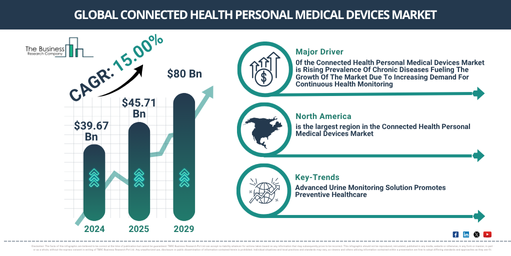
    The market size for connected health personal medical devices has seen fast-paced expansion in the last few years. It is projected to escalate from $39.67 billion in 2024 to $45.71 billion in 2025, indicating a compound annual growth rate (CAGR) of 15.2%. The surge in growth during the historic period is due to the increase in occurrences of chronic diseases, a swelling elderly population, enhanced smartphone usage, a rise in health app acceptance, and the need for remote patient surveillance.

    The market size for personal medical devices within the connected health sector is projected to experience significant growth in the coming years. It is estimated to reach an impressive $80 billion by 2029, with a compound annual growth rate (CAGR) of 15.0%. The growth during the forecasted timeline can be credited to the proliferation of telehealth services, increasing healthcare expenses promoting home-based care, the necessity for real-time health information, the deployment of the 5G network, regulatory backing for digital healthcare, and the heightened focus of consumers on tracking their wellness. Key trends during this forecast period encompass the miniaturization of health gadgets, bespoke health monitoring, subscription health platforms, artificial intelligence-enabled health analytics, and the storage of data on the cloud.

    Download The Free Sample Report Here:

    https://www.thebusinessresearchcompany.com/sample.aspx?id=24509&type=smp

    #Which Factors Are Currently Driving The Growth Of The Connected Health Personal Medical Devices Market?

    The escalation in chronic disease instances is anticipated to bolster the expansion of the connected health personal medical devices market. Chronic diseases, which evolve gradually and endure for a long duration, often need consistent medical care. Such diseases are increasing due to passive lifestyles where lack of physical movement and extended sitting periods heighten the likelihood of conditions like heart diseases and diabetes. Connected health personal medical devices facilitate tracking of these chronic diseases in real-time, making them preferable for managing conditions like hypertension and diabetes at home. The devices obviate the need for repetitive clinical visits by supplying constant data and instant alerts, enhancing patient results and comfort. For instance, The National Health Service, a UK-based governmental agency stated in June 2024, that diagnoses of non-diabetic hyperglycemia or pre-diabetes (a condition with raised blood sugar levels, but not to the extent constituting diabetes) registered with a general practitioner (GP), surged by 18% from 3,065,825 cases in 2022 to 3,615,330 individuals in 2023. Consequently, the escalating occurrence of chronic diseases propels the growth of the market for connected health personal medical devices.

    How Is The Global Connected Health Personal Medical Devices Market Structured In Terms Of Segments?

    The connected health personal medical devices market covered in this report is segmented –

    1) By Type: Healthcare IT, Health Information Exchange, Healthcare Analytics

    2) By Product: Insulin Pumps, Blood Pressure (BP) Monitors, Portable Global Positioning System (GPS) Personal Emergency Response System (PERS), Glucose Monitor, Personal Pulse Oximeter, Smart Pill Dispenser, Personal Electrocardiogram (ECG)

    3) By Connectivity: Bluetooth, Wi-Fi, Cellular, Other Connectivities

    4) By Application: Chronic Disease Management, Fitness And Wellness, Home Healthcare, Other Applications

    5) By End User: Hospitals, Clinics, Homecare Settings, Other End Users

    Subsegments:

    1) By Healthcare IT: Electronic Health Records (EHR), Telemedicine Solutions, Mobile Health (mHealth) Applications, E-Prescribing Systems

    2) By Health Information Exchange: Directed Exchange, Query-Based Exchange, Consumer-Mediated Exchange, Cloud-Based Health Information Platforms

    3) By Healthcare Analytics: Descriptive Analytics, Predictive Analytics, Prescriptive Analytics, Real-Time Analytics

    What Trends Are Currently Influencing Growth In The Connected Health Personal Medical Devices Market?

    Prominent firms in the connected health personal medical devices market are concentrating on developing innovative products like advanced in-home diagnostic systems, to enhance preventive healthcare and offer more comfort to the user. In-home diagnostic systems are applied as medical tools and devices that allow people to track, test, and control their health conditions from their homes without making a trip to a healthcare center. For example, in January 2023, Withings, a health tech firm founded in France, introduced U-Scan. This system, designed to be hands-free and fits inside a toilet bowl, offers in-home urine analysis. It involves the use of a changeable cartridge capable of executing daily tests for a period up to three months, examining crucial hydration and nutritional biomarkers. The gadget syncs with a mobile app, supplying users with instant data and tailored health suggestions. The U-Scan initiative strives to make regular health monitoring simple and non-invasive, thereby encouraging proactive wellness management.

    Who Are The Main Participants Shaping The Connected Health Personal Medical Devices Market Landscape?

    Major companies operating in the connected health personal medical devices market are Johnson & Johnson, F. Hoffmann-La Roche AG, Abbott Laboratories, Medtronic plc, Siemens Healthineers, Stryker Corporation, Becton, Dickinson and Company (BD), GE HealthCare, Philips Healthcare, Omron Healthcare India Private Limited, Zebra Technologies India Private Limited, Masimo Corporation, Oura Health Oy, Whoop Inc., Withings, Eko Health Inc., TytoCare Ltd., AliveCor Inc., DarioHealth Corp., iHealth Labs Inc., Levels Health Inc., Samsung Electronics Co. Ltd., Biostrap, Muse, Aktiia, Ava Science Inc., Bloomlife Inc., Lief Therapeutics, Movano Health, Oxitone Medical Ltd., Qardio Inc.

    Get The Full Report Here:

    https://www.thebusinessresearchcompany.com/report/connected-health-personal-medical-devices-global-market-report

    Which Region Currently Holds The Largest Share In The Connected Health Personal Medical Devices Market?

    North America was the largest region in the connected health personal medical devices market in 2024. Asia-Pacific is expected to be the fastest-growing region in the forecast period. The regions covered in the connected health personal medical devices market report are Asia-Pacific, Western Europe, Eastern Europe, North America, South America, Middle East, Africa.

    Request For A Customized Report:

    https://www.thebusinessresearchcompany.com/customise?id=24509&type=smp

    About The Business Research Company:

    With over 15000+ reports from 27 industries covering 60+ geographies, The Business Research Company has built a reputation for offering comprehensive, data-rich research and insights. Armed with 1,500,000 datasets, the optimistic contribution of in-depth secondary research, and unique insights from industry leaders, you can get the information you need to stay ahead in the game.

    Get in touch with us:

    The Business Research Company: https://www.thebusinessresearchcompany.com/

    Americas +1 310-496-7795

    Asia +44 7882 955267 & +91 8897263534

    Europe +44 7882 955267

    Email us at info@tbrc.info

    Follow us on:

    LinkedIn: https://in.linkedin.com/company/the-business-research-company

    YouTube: https://www.youtube.com/channel/UC24_fI0rV8cR5DxlCpgmyFQ

    Global Market Model: https://www.thebusinessresearchcompany.com/global-market-model
  • 2025–2029 Chromatography Instruments Market Outlook: Regional Trends and Growth Forecast

    2025–2029 Chromatography Instruments Market Outlook: Regional Trends and Growth Forecast

    Claim your 30% discount on Global Market Reports with code ONLINE30. Limited time only.

    How Large Is the Chromatography Instruments Market Expected to Be in 2029?

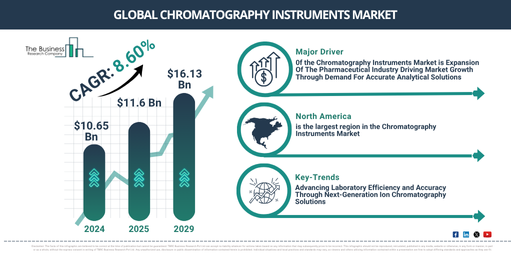
    The market size for chromatography instruments has witnessed substantial growth over the last few years. It is projected to expand from $10.65 billion in 2024 to $11.6 billion in 2025, reflecting a compound annual growth rate (CAGR) of 8.9%. The historical growth of this market owes itself to increasing investments in both academic and industrial research, a heightened emphasis on precision medicine and individualized treatments, broader application of chromatography in clinical diagnosis, a growing inclination towards automation and high-throughput systems, and improved availability of cutting-edge detectors and data systems.

    In the coming years, the chromatography instruments market is predicted to experience robust growth. It’s projected to expand to $16.13 billion by 2029 with a CAGR of 8.6%. This growth throughout the forecast period can be credited to the increasing adoption of chromatography in drug development, the escalating application of chromatography techniques in food safety testing, heightened regulatory focus on product purity and quality, expanding use in bioengineering and biopharmaceutical industries, and a rising chronic disease incidence that stimulates biomarker discovery. Prominent trends in this forecast period involve advancements in column technologies that uplift separation efficacy, the combining of chromatography and mass spectrometry, the inclusion of AI and machine learning for automated data evaluation, progress in efficient high-throughput chromatography for speedier workflows, and the ongoing development of multi-dimensional chromatography methodologies.

    Download The Free Sample Report Here:

    https://www.thebusinessresearchcompany.com/sample.aspx?id=24503&type=smp

    What Are The Contributors To Demand In The Chromatography Instruments Market?

    The rise anticipated in the pharmaceutical industry is likely to drive growth in the chromatography instruments market. Encompassing the investigation, creation, and distribution of both prescription and over-the-counter drugs, the pharmaceutical industry’s growth is credited to the escalating demand for novel medications and treatments, advancements in biotech, and increasing health requirements. Chromatography instruments play a vital role in this sector, providing precise separation and analysis of complex mixtures. This ensures the drug products meet the necessary standards of purity, quality, and safety, which are crucial for both regulatory adherence and overall development. For example, in 2023, the European Federation of Pharmaceutical Industries and Associations, a trade organization based in Belgium, stated that Europe’s total pharmaceutical production reached a value of $368.83 billion (€340 billion) in 2022. This signified a 4.95% increment from the previous year’s value of $351.42 billion (€323.95 billion). Consequently, the expansion of the pharmaceutical industry is seen as a significant driver for the growth of the chromatography instruments market.

    What Segmentation Categories Are Included In The Chromatography Instruments Market Analysis?

    The chromatography instruments market covered in this report is segmented –

    1) By Type: Liquid Chromatography Systems, Gas Chromatography Systems, Supercritical Fluid Chromatography Systems, Thin-Layer Chromatography Systems

    2) By Consumables And Instruments: Tubes, Detectors, Columns, Vials, Autosamplers, Pumps, Fraction Collectors, Other Consumables And Instruments

    3) By Application: Agriculture, Pharmaceutical Firms, Clinical Research Organizations, Environmental Testing

    4) By End-User Industry: Life Science Industry, Academic And Research Institutes, Oil And Gas Industry, Environmental Agencies, Food And Beverage Industry, Other End-User Industries

    Subsegments:

    1) By Liquid Chromatography Systems: High-Performance Liquid Chromatography (Hplc), Preparative Liquid Chromatography, Ultra-Performance Liquid Chromatography (Uplc)

    2) By Gas Chromatography Systems: Capillary Gas Chromatography, Headspace Gas Chromatography, Packed Gas Chromatography, Gas Chromatography-Mass Spectrometry (Gc-Ms)

    3) By Supercritical Fluid Chromatography Systems: Analytical Supercritical Fluid Chromatography Systems, Supercritical Fluid Chromatography-Ms Systems, Preparative Supercritical Fluid Chromatography Systems

    4) By Thin-Layer Chromatography Systems: Manual Thin-Layer Chromatography, Preparative Thin-Layer Chromatography, Automated Thin-Layer Chromatography

    What Upcoming Trends Are Expected To Impact The Chromatography Instruments Market Globally?

    Significant businesses in the chromatography instruments market are prioritizing the development of innovative products like ion chromatography instruments. This strategy aims to increase analytical accuracy, boost detection sensitivity, and satisfy the escalating demands in pharmaceutical, environmental, and food safety applications. Ion chromatography instrument is an analytical tool used for separating and quantifying ions and polar molecules in a solution, extensively used in environmental, pharmaceutical, and food safety tests. For example, Thermo Fisher Scientific Inc., an American biotechnology firm, introduced a Thermo Scientific Dionex Inuvion Ion Chromatography (IC) system in February 2024. The system promises enhanced dependability, intuitive usage, and adaptable, easy-to-upgrade workflows for efficient and superior ion analysis in various laboratory settings. Its compact, user-friendly structure and cutting-edge pump technology allow labs to swiftly respond to changing requirements, ensuring steady, repeatable outcomes.

    Who Are The Top-Ranked Companies In The Chromatography Instruments Market Today?

    Major companies operating in the chromatography instruments market are Hitachi Ltd., Thermo Fisher Scientific Inc., Danaher Corporation, Merck KGaA, GE Healthcare Life Sciences, Agilent Technologies Inc., Teledyne Technologies Incorporated, Sartorius AG, PerkinElmer Inc., Shimadzu Corporation, Waters Corporation, Bio-Rad Laboratories Inc., Pall Corporation, GL Sciences Inc., Biotage AB, Gilson Inc., YMC Co. Ltd, SCION Instruments, Knauer Wissenschaftliche Geräte GmbH, JASCO Corporation, ChromaNik Technologies Inc.

    Get The Full Report Here:

    https://www.thebusinessresearchcompany.com/report/chromatography-instruments-global-market-report

    How Is Chromatography Instruments Market Adoption Varying Across Different Regions And Sectors?

    North America was the largest region in the chromatography instruments market in 2024. Asia-Pacific is expected to be the fastest-growing region in the forecast period. The regions covered in the chromatography instruments market report are Asia-Pacific, Western Europe, Eastern Europe, North America, South America, Middle East, Africa.

    Request For A Customized Report:

    https://www.thebusinessresearchcompany.com/customise?id=24503&type=smp

    About The Business Research Company:

    With over 15000+ reports from 27 industries covering 60+ geographies, The Business Research Company has built a reputation for offering comprehensive, data-rich research and insights. Armed with 1,500,000 datasets, the optimistic contribution of in-depth secondary research, and unique insights from industry leaders, you can get the information you need to stay ahead in the game.

    Get in touch with us:

    The Business Research Company: https://www.thebusinessresearchcompany.com/

    Americas +1 310-496-7795

    Asia +44 7882 955267 & +91 8897263534

    Europe +44 7882 955267

    Email us at info@tbrc.info

    Follow us on:

    LinkedIn: https://in.linkedin.com/company/the-business-research-company

    YouTube: https://www.youtube.com/channel/UC24_fI0rV8cR5DxlCpgmyFQ

    Global Market Model: https://www.thebusinessresearchcompany.com/global-market-model
  • Industry Forecast: Centesis Catheters Market to Generate $0.67 Billion Revenue by 2029

    Industry Forecast: Centesis Catheters Market to Generate $0.67 Billion Revenue by 2029

    Claim your 30% discount on Global Market Reports with code ONLINE30. Limited time only.

    What Is the Current and Projected Market Size of the Centesis Catheters Industry?

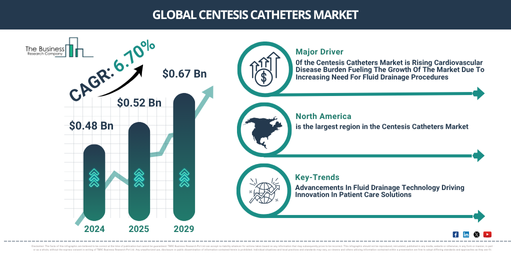
    In recent times, robust growth has been seen in the market size of centesis catheters. The market, valued at $0.48 billion in 2024, is predicted to reach $0.52 billion in 2025, growing at a compound annual growth rate (CAGR) of 7.0%. The historic growth of the market can be traced back to factors such as a growing elderly population, an increased occurrence of sepsis and conditions requiring fluid drainage, a rising incidence of pancreatitis and intra-abdominal infections, a growing number of tuberculosis-related pleural effusion cases, and an escalation in surgical procedures needing fluid drainage.

    The market size for centesis catheters is set to undergo significant expansion in the coming years, hitting a projected size of $0.67 billion by 2029, with a compound annual growth rate (CAGR) of 6.7%. This growth during the predicted period can be credited to several factors, including the increasing number of cancer diagnoses; the growing occurrence of cardiovascular conditions; a rise in patients suffering from cirrhosis of the liver; the high rate of renal failure and its complications, and a higher prevalence of respiratory issues. Key advancements to watch in this period would be the production of superior catheter materials, the rise of image-guided centesis methods, improvements in minimally invasive techniques leading to better procedural results, the incorporation of intelligent catheters for instant monitoring, and enhancements in tip design for increased precision and patient comfort.

    Download The Free Sample Report Here:

    https://www.thebusinessresearchcompany.com/sample.aspx?id=24499&type=smp

    #Which Factors Are Currently Driving The Growth Of The Centesis Catheters Market?

    The projected surge in cardiovascular diseases is set to drive growth in the centesis catheters market in the future. Cardiovascular diseases, which encompass heart and blood vessel disorders, disrupt normal functioning and circulation. The rise in these diseases links with increasingly sedentary lifestyles, leading to weight gain, diminished cardiovascular fitness, and increased heart-related complication risks. Centesis catheters play a critical role in cardiovascular care, draining excessive fluid from areas like the pericardium, pleural space, or abdomen, which alleviates heart or lung pressure. These devices are crucial for conditions such as cardiac tamponade and heart failure, offering symptomatic relief and diagnostic data. For example, in October 2024, the Centers for Disease Control and Prevention, a government agency in the US, reported that heart disease caused 702,880 deaths in 2022, with coronary heart disease contributing to 371,506 of those deaths, representing the most common type. Consequently, the growing prevalence of cardiovascular diseases will stimulate the centesis catheters market’s expansion. The burgeoning cancer incidence that sparks an increased need for fluid management in oncology will steer the centesis catheters market’s growth. The rise in cancer cases, defined as an abnormal, uncontrolled cell growth and division that could form tumors and potentially spread to other body parts, is attributed to the aging population. As individuals age, they are more prone to genetic mutations and weakened immune function, both contributing to a higher cancer risk. In oncology, centesis catheters help drain excess fluid resulting from the disease or its treatment, alleviating symptoms and enhancing comfort. They are prevalently used for thoracentesis (removing lung fluid), paracentesis (draining abdominal fluid), and pericardiocentesis (draining heart fluid). For example, in February 2024, the World Health Organization, an intergovernmental organization based in Switzerland, forecasted that new cancer cases would surpass 35 million in 2050, demonstrating a 77% increase from the approximate 20 million cases in 2022. As such, the rising cancer incidence will propel the growth of the centesis catheters market.

    How Is The Global Centesis Catheters Market Structured In Terms Of Segments?

    The centesis catheters market covered in this report is segmented –

    1) By Type: Small Bore, Large Bore

    2) By Procedure: Paracentesis, Thoracentesis, Arthrocentesis, Amniocentesis, Other Procedures

    3) By Application: Diagnosis, Therapeutics, Palliative Care

    4) By End User: Hospitals, Ambulatory Surgical Centers, Other End Users

    Subsegments:

    1) By Small Bore: Pigtail Catheters, Straight Catheters, Curved Catheters

    2) By Large Bore: Thoracentesis Catheters, Paracentesis Catheters, Abscess Drainage Catheters

    What Trends Are Currently Influencing Growth In The Centesis Catheters Market?

    Key companies in the centesis catheters market are prioritizing the creation of advanced solutions such as fluid drainage devices, to provide constant monitoring and fluid output management. These devices are tools involved in medical procedures to remove gathered fluids from bodily tissues or cavities for the purpose of aiding treatment and recovery. For instance, in January 2024, an American medical technology firm known as Laborie Medical Technologies Inc., released the RenovaRP Centesis System, a type of fluid drainage device. The RenovaRP Centesis System enhances the functionality of the original RenovaRP paracentesis pump by including thoracentesis procedure support. The improved design features of the handle and nest increase ease of use and setup for healthcare providers. The system offers a minimally invasive, safe, and effective way that results in heightened patient comfort and speedier recovery.

    Who Are The Main Participants Shaping The Centesis Catheters Market Landscape?

    Major companies operating in the centesis catheters market are Cardinal Health Inc., Medtronic Plc, Becton, Dickinson and Company, Boston Scientific Corporation, Cook Medical LLC, Merit Medical Systems Inc., Avanos Medical Inc., Argon Medical Devices Inc., AngioDynamics Inc., B. Braun Melsungen AG, Polymedicure Ltd., Medical Components, Inc., Galt Medical Corp., Mermaid Medical A/S, PFM Medical Inc., REDAX Spa, Neuromedex GmbH, Rocket Medical Inc., Axiom Medical Inc., Blue Neem Medical Devices Pvt. Ltd., KM Medical Inc., Ningbo Honde Medical Instruments Co. Ltd., Bassil Scientific Pvt. Ltd.

    Get The Full Report Here:

    https://www.thebusinessresearchcompany.com/report/centesis-catheters-global-market-report

    Which Region Currently Holds The Largest Share In The Centesis Catheters Market?

    North America was the largest region in the centesis catheters market in 2024. Asia-Pacific is expected to be the fastest-growing region in the forecast period. The regions covered in the centesis catheters market report are Asia-Pacific, Western Europe, Eastern Europe, North America, South America, Middle East, Africa.

    Request For A Customized Report:

    https://www.thebusinessresearchcompany.com/customise?id=24499&type=smp

    About The Business Research Company:

    With over 15000+ reports from 27 industries covering 60+ geographies, The Business Research Company has built a reputation for offering comprehensive, data-rich research and insights. Armed with 1,500,000 datasets, the optimistic contribution of in-depth secondary research, and unique insights from industry leaders, you can get the information you need to stay ahead in the game.

    Get in touch with us:

    The Business Research Company: https://www.thebusinessresearchcompany.com/

    Americas +1 310-496-7795

    Asia +44 7882 955267 & +91 8897263534

    Europe +44 7882 955267

    Email us at info@tbrc.info

    Follow us on:

    LinkedIn: https://in.linkedin.com/company/the-business-research-company

    YouTube: https://www.youtube.com/channel/UC24_fI0rV8cR5DxlCpgmyFQ

    Global Market Model: https://www.thebusinessresearchcompany.com/global-market-model
  • Key Market Drivers, Trends, and Forecast for the Global Bunion Correction Systems Industry

    Key Market Drivers, Trends, and Forecast for the Global Bunion Correction Systems Industry

    Claim your 30% discount on Global Market Reports with code ONLINE30. Limited time only.

    What Is the Current and Projected Market Size of the Bunion Correction Systems Industry?

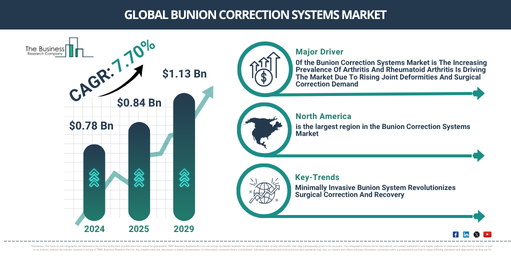
    Over the past few years, the bunion correction systems market has seen significant growth. The market is projected to expand from $0.78 billion in 2024 to $0.84 billion in 2025, with a compound annual growth rate (CAGR) of 8.0%. Factors contributing to this growth during the historic period include the increased incidence of hallux valgus, the enlarging elderly population, a greater understanding of foot deformities, better access to orthopedic treatment, and an increase in the demand for elective corrective procedures.

    In the forthcoming years, the market for bunion correction systems is anticipated to witness robust growth, reaching a size of $1.13 billion in 2029, with a compound annual growth rate (CAGR) of 7.7%. This growth trend during the forecast period can be credited to various factors such as the growing emphasis on outpatient surgical environments, a rise in healthcare expenditure in developing economies, the expanding presence of ambulatory surgery centers, an increase in patient inclination towards early corrective treatment, and the development of orthopedic training programs for managing bunions. The forecast period is likely to see dominant trends including a transition towards patient-specific surgical planning, the integration of AI and imaging in preoperative analysis, a preference for biodegradable implants, an upsurge in protocols for same-day discharge, and a rising demand for aesthetic foot surgeries.

    Download The Free Sample Report Here:

    https://www.thebusinessresearchcompany.com/sample.aspx?id=24489&type=smp

    #Which Factors Are Currently Driving The Growth Of The Bunion Correction Systems Market?

    The growth of the bunion correction systems market is expected to be bolstered by the rising incidence of arthritis and rheumatoid arthritis. Arthritis, a term encompassing inflammation and degeneration of one or several joints, and rheumatoid arthritis, a chronic autoimmune disorder causing sustained joint inflammation and continuous tissue damage, are becoming increasingly common. Contributors to this are aging populations which are associated with increased occurrence of joint wear and autoimmune reactions over time. Bunion correction systems offer effective surgical methods to rectify deformities and reduce joint stress, enhancing mobility and life quality for those suffering from foot conditions related to arthritis. For instance, the Office for Health Improvement and Disparities, a UK government office, reported that in March 2023, the percentage of people aged 16 and over who reported long-standing musculoskeletal conditions such as arthritis or continuous back or joint problems rose from 17.0% in 2021 to 17.6% in 2022. Hence, the rising incidence of arthritis and rheumatoid arthritis is fueling the bunion correction systems market.

    How Is The Global Bunion Correction Systems Market Structured In Terms Of Segments?

    The bunion correction systems market covered in this report is segmented –

    1) By Type: Osteotomy, Arthrodesis, Lapidus, Exostectomy

    2) By Product Type: Correction Systems, Implants And Accessories, Wearables

    3) By Surgery Type: Minimally Invasive, Traditional

    4) By End-Use: Hospitals, Ambulatory Centers, Specialty Centers

    Subsegments:

    1) By Osteotomy: Chevron Osteotomy, Scarf Osteotomy, Akin Osteotomy

    2) By Arthrodesis: First Metatarsophalangeal (MTP) Joint Arthrodesis, Midfoot Arthrodesis, Tarsometatarsal Arthrodesis

    3) By Lapidus: Lapidus Procedure With Plate Fixation, Lapidus Procedure With Screw Fixation, Modified Lapidus Procedure

    4) By Exostectomy: Simple Exostectomy, Exostectomy With Soft Tissue Release, Exostectomy With Bunionectomy

    What Trends Are Currently Influencing Growth In The Bunion Correction Systems Market?

    Major corporations that are active in the bunion correction system market are prioritizing creating cutting-edge advancements such as the minimally invasive bunion correction system to offer enhanced surgical solutions to surgeons that boost the results of bunion correction procedures by employing minimal incision techniques. This technology offers specialised tools and surgical procedures to align the big toe joint and treat bunion irregularities through small cuts, minimizing tissue injury, healing time, and complications after surgery. As an example, in February 2024, Paragon 28 Inc, a US-based firm with a specialty in foot and ankle orthopedics, introduced the PRECISION MIS Bunion System, a revolutionary solution for minimally invasive surgical treatment of bunions. This solution promotes distal metatarsal osteotomy through a method that preserves joints and enhances surgical precision while keeping tissue disruption to a minimum. It is engineered for tri-planar correction with an outrigger-based mechanism and special cannulated screws that enhance bone alignment and stability, expediting the healing process and reducing post-surgery discomfort.

    Who Are The Main Participants Shaping The Bunion Correction Systems Market Landscape?

    Major companies operating in the bunion correction systems market are Johnson & Johnson MedTech, Medtronic Plc, Stryker Corporation, Zimmer Biomet Holdings Inc., Arthrex Inc., Enovis Corporation, Ossur hf., Wright Medical Technology Inc., Orthofix Holdings Inc., Paragon 28, Acumed LLC, Treace Medical Concepts Inc., Redpoint Global Inc., Bauerfeind AG, Algeo Ltd., Medartis AG, Nextremity Solutions Inc., BioPro Inc., Extremity Medical LLC, Samson Orthotics

    Get The Full Report Here:

    https://www.thebusinessresearchcompany.com/report/bunion-correction-systems-global-market-report

    Which Region Currently Holds The Largest Share In The Bunion Correction Systems Market?

    North America was the largest region in the bunion correction systems market in 2024. Asia-Pacific is expected to be the fastest-growing region in the forecast period. The regions covered in the bunion correction systems market report are Asia-Pacific, Western Europe, Eastern Europe, North America, South America, Middle East, Africa.

    Request For A Customized Report:

    https://www.thebusinessresearchcompany.com/customise?id=24489&type=smp

    About The Business Research Company:

    With over 15000+ reports from 27 industries covering 60+ geographies, The Business Research Company has built a reputation for offering comprehensive, data-rich research and insights. Armed with 1,500,000 datasets, the optimistic contribution of in-depth secondary research, and unique insights from industry leaders, you can get the information you need to stay ahead in the game.

    Get in touch with us:

    The Business Research Company: https://www.thebusinessresearchcompany.com/

    Americas +1 310-496-7795

    Asia +44 7882 955267 & +91 8897263534

    Europe +44 7882 955267

    Email us at info@tbrc.info

    Follow us on:

    LinkedIn: https://in.linkedin.com/company/the-business-research-company

    YouTube: https://www.youtube.com/channel/UC24_fI0rV8cR5DxlCpgmyFQ

    Global Market Model: https://www.thebusinessresearchcompany.com/global-market-model