Category: Medical Equipment

  • Nuclear Medicine Equipment Market Size Growth: From $2.97 Billion In 2026 To $3.67 Billion By 2030

    Nuclear Medicine Equipment Market Size Growth: From $2.97 Billion In 2026 To $3.67 Billion By 2030

    Built to provide research that’s more actionable and strategically valuable, The Business Research Company’s 2026 market reports include market attractiveness analysis, total addressable market sizing, company benchmarking matrices, interactive Excel dashboards, broader supply chain intelligence, emerging startup tracking, and in-depth product insights.

    Nuclear Medicine Equipment Market Size, Value And Growth Trajectory Through 2030

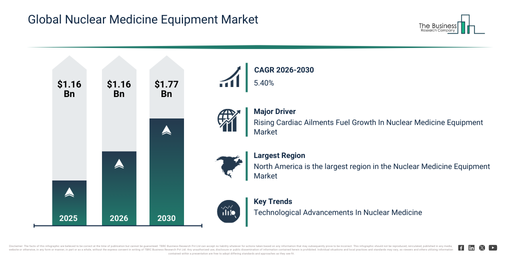
    The nuclear medicine equipment market has demonstrated robust growth in its size over recent years. It is projected to expand from $2.81 billion in 2025 to $2.97 billion in 2026, achieving a compound annual growth rate (CAGR) of 5.7%. Historically, this expansion can be ascribed to factors like the increasing aging population, a rise in cancer prevalence, the greater embrace of diagnostic imaging, improvements in hospital infrastructure, and governmental financial support for nuclear medicine.

    The nuclear medicine equipment market is projected to experience robust expansion over the next few years. It is anticipated to reach $3.67 billion in 2030, exhibiting a compound annual growth rate (CAGR) of 5.4%. This growth during the forecast period is attributable to factors such as increased theranostics adoption, escalating demand for precision medicine, technological advancements in hybrid imaging, the rising burden of cardiovascular diseases, and the expansion of imaging centers within emerging markets. Major trends for the forecast period encompass advanced hybrid imaging systems, broadened theranostics applications, a greater embrace of personalized nuclear diagnostics, an enhanced focus on radiation dose optimization, and an increasing demand for outpatient nuclear imaging services.

    Get A Free Sample Report With In-Depth Market Insights:

    https://thebusinessresearchcompany.com/sample_request?id=42569884&type=smp&name=Nuclear%20Medicine%20Equipment%20Market%20Report%202026&utm_source=Blogs&utm_medium=Paid&utm_campaign=Sep_PR

    Nuclear Medicine Equipment Market Growth Backed By Core Demand Fundamentals

    The future expansion of the nuclear medicine equipment market is anticipated to be driven by the rising incidence of cardiac ailments. These conditions, also referred to as heart or cardiovascular diseases, encompass a wide array of disorders that impact the heart and blood vessels, potentially affecting heart function, structure, or the flow of blood. The widespread occurrence of cardiac ailments stems from factors such as an aging demographic, lifestyle choices including poor diet and insufficient exercise, exposure to environmental factors, and enhancements in diagnostic tools leading to improved detection rates. Nuclear medicine equipment plays a crucial role in managing cardiac ailments by delivering precise imaging and diagnostic insights, which are essential for early discovery, accurate disease staging, and efficient monitoring. For instance, in January 2024, data from the British Heart Foundation, a UK-based cardiovascular research charity, indicated that approximately 7.6 million people in the UK suffer from heart and circulatory diseases, comprising around 4 million males and 3.6 million females. These conditions account for about 27% of all deaths in the UK, totaling over 170,000 deaths annually, which averages roughly 480 deaths per day, equivalent to one death every three minutes. Consequently, the increasing prevalence of cardiac ailments is a key factor propelling the growth of the nuclear medicine equipment market.

    Nuclear Medicine Equipment Market Segment Performance And Emerging Opportunities

    The nuclear medicine equipment market covered in this report is segmented –

    1) By Product: Single Photon Emission Computed Tomography, Hybrid Positron Emission Tomography, Planar Scintigraphy

    2) By Application: Oncology, Cardiology, Neurology, Other Applications

    3) By End User: Hospitals, Imaging Centers, Academic And Research Institutes, Other End Users

    Subsegments:

    1) By Single Photon Emission Computed Tomography: Standalone SPECT Systems, Hybrid SPECT Or CT Systems

    2) By Hybrid Positron Emission Tomography: PET Or CT Systems, PET Or MRI Systems

    3) By Planar Scintigraphy: Cardiac Imaging Systems, Bone Scintigraphy Systems, Thyroid Imaging Systems

    Nuclear Medicine Equipment Market Growth Trends Reshaping The Competitive Landscape

    Leading companies in the nuclear medicine equipment market are concentrating on developing sophisticated products, such as PET/CT scanners, to deliver exceptionally detailed, functional imagery of the body’s metabolic activities. A PET/CT scanner is an advanced diagnostic imaging tool utilized in nuclear medicine, which integrates two distinct technologies: positron emission tomography (PET) and computed tomography (CT). This combined-modality scanner offers both functional and anatomical imaging within one session, thereby enabling physicians to identify and diagnose a range of conditions with greater precision. For instance, an example of this trend is the launch of the Biograph Trinion PET/CT scanner by Siemens Healthineers, a Germany-based healthcare firm, in June 2024. This PET scanner features an innovative, scalable axial field-of-view design, facilitating technological enhancements on-site without requiring expensive room modifications or interrupting operational flow. It incorporates a lutetium oxyorthosilicate (LSO) crystal detector, delivering high spatial resolution and an exceptionally fast time-of-flight performance of 239 picoseconds, which improves the detection of small lesions and provides sufficient sensitivity up to 128 cps/kBq. Consequently, this allows for quicker scans while simultaneously lowering patient radiation exposure. Furthermore, the Biograph Trinion is equipped with a novel air-cooled digital detector, streamlining installation in contrast to conventional water-cooled setups.

    Nuclear Medicine Equipment Market Competitive Analysis Of Leading Industry Participants

    Major companies operating in the nuclear medicine equipment market are Fujifilm Holdings Corporation, Koninklijke Philips N.V., General Electric Company, Shimadzu Corporation, Mallinckrodt Pharmaceuticals, Curium Pharma, Cardinal Health Inc., Canon Medical Systems Corporation, Digirad Corporation, TTG Imaging Solutions, Biodex Medical Systems Inc., Spectrum Dynamics Medical, Mediso Ltd., Cyclopharm Limited, Siemens Healthineers AG, Capintec Inc., Toshiba Medical Systems Corporation, Elysia-Raytest, DDD-Diagnostic A/S, MILabs B.V.

    View The Full Nuclear Medicine Equipment Market Report:

    https://thebusinessresearchcompany.com/report/nuclear-medicine-equipment-global-market-report?utm_source=Blogs&utm_medium=Paid&utm_campaign=Sep_PR

    Nuclear Medicine Equipment Market Geographic Spread And Regional Opportunities

    North America was the largest region in the nuclear medicine equipment market in 2025. Asia-Pacific is expected to be the fastest-growing region in the forecast period. The regions covered in the nuclear medicine equipment market report are Asia-Pacific, South East Asia, Western Europe, Eastern Europe, North America, South America, Middle East, Africa.

    Reach Out To Our Team:

    The Business Research Company: https://www.thebusinessresearchcompany.com/

    Americas: +1 310-496-7795

    Asia: +44 7882 955267 & +91 8897263534

    Europe: +44 7882 955267

    Email us at: marketing@tbrc.info

    Follow us on:

    LinkedIn: https://in.linkedin.com/company/the-business-research-company

    YouTube: https://www.youtube.com/channel/UC24_fI0rV8cR5DxlCpgmyFQ

    Global Market Model: https://www.thebusinessresearchcompany.com/global-market-model
  • Nuclear Medicine Diagnostics Market Analysis 2026: Market Size, Growth Trends And Industry Outlook

    Nuclear Medicine Diagnostics Market Analysis 2026: Market Size, Growth Trends And Industry Outlook

    Backed by market attractiveness analysis, total addressable market sizing, company benchmarking matrices, interactive Excel dashboards, wider supply chain intelligence, emerging startup coverage, and detailed product-level insights, The Business Research Company’s 2026 market reports are designed to offer research that is more actionable and strategically valuable than ever.

    Nuclear Medicine Diagnostics Market CAGR Outlook And Future Development

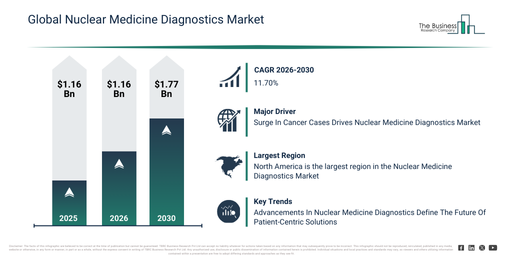
    The nuclear medicine diagnostics market has seen substantial expansion recently. This market is projected to expand from $7.88 billion in 2025 to $8.84 billion in 2026, demonstrating a compound annual growth rate (CAGR) of 12.2%. Historically, this growth has been driven by factors such as the greater adoption of radioactive tracers in diagnostics, the proliferation of hospital-based nuclear medicine facilities, a heightened need for functional imaging, the widespread presence of technetium-based radiopharmaceuticals, and an increase in clinical research within nuclear medicine.

    The nuclear medicine diagnostics market size is anticipated to expand rapidly in the coming years. It is projected to grow to $13.77 billion in 2030 at a compound annual growth rate (CAGR) of 11.7%. The expansion during the forecast period can be attributed to several factors, including increasing investments in theranostics, the rising adoption of precision oncology diagnostics, the expansion of PET imaging infrastructure, a growing focus on targeted radiopharmaceutical development, and increasing regulatory support for nuclear diagnostics. Significant trends for the forecast period encompass the increasing adoption of PET-based diagnostic radiopharmaceuticals, a rising demand for personalized nuclear diagnostics, the growing integration of imaging and therapeutic applications, the expansion of oncology-focused nuclear medicine procedures, and an enhanced focus on short-half-life radiotracers.

    Get A Free Sample Report With In-Depth Market Insights:

    https://thebusinessresearchcompany.com/sample_request?id=86114242&type=smp&name=Nuclear%20Medicine%20Diagnostics%20Market%20Report%202026&utm_source=Blogs&utm_medium=Paid&utm_campaign=Sep_PR

    Nuclear Medicine Diagnostics Market Growth Catalysts And Demand Drivers

    The rising occurrence of cancer is anticipated to fuel the expansion of the nuclear medicine diagnostics market moving forward. Cancer is defined as a collection of diseases characterized by the uncontrolled multiplication and spread of abnormal cells within the body, which can aggregate into a mass or lump known as a tumor. The growth in cancer prevalence stems from the global aging population, as cancer incidence significantly increases with age, coupled with improved healthcare extending life expectancy. Nuclear medicine diagnostics are employed in the detection, staging, and monitoring of various cancer types, containing radioactive substances that specialized cameras can detect to create detailed images of the internal structures and functions of organs and tissues. For instance, in May 2025, data from the National Cancer Institute, a US-based intergovernmental organization, indicated that in 2022, nearly 20 million people were diagnosed with cancer and 9.7 million died from it, with projections for 2050 showing these figures climbing to 33 million new cases and 18.2 million deaths annually. Therefore, the increasing number of cancer cases is driving the growth of the nuclear medicine diagnostics market.

    Nuclear Medicine Diagnostics Market Segment Landscape And Growth Outlook

    The nuclear medicine diagnostics market covered in this report is segmented –

    1) By Type: SPECT Radiopharmaceuticals, PET Radiopharmaceuticals

    2) By Application: Cardiology, Thyroid, Neurology, Oncology, Other Applications

    3) By End-User: Hospitals And Diagnostic Centers, Research Institutes

    Subsegments:

    1) By SPECT Radiopharmaceuticals: Technetium-99m-Based Radiopharmaceuticals, Iodine-123-Based Radiopharmaceuticals, Thallium-201-Based Radiopharmaceuticals, Other SPECT Radiopharmaceuticals

    2) By PET Radiopharmaceuticals: Fluorine-18-Based Radiopharmaceuticals, Carbon-11-Based Radiopharmaceuticals, Gallium-68-Based Radiopharmaceuticals, Other PET Radiopharmaceuticals

    Nuclear Medicine Diagnostics Market Trends Shaping Long-Term Demand

    Leading companies in the nuclear medicine diagnostics market are concentrating on introducing sophisticated solutions, such as advanced medical technologies, to achieve a competitive advantage. Advanced medical technologies represent cutting-edge innovations in the medical field, designed to enhance patient outcomes, improve the standard of care, and promote better health. For example, in August 2023, Gleneagles Hospital, a Malaysia-based entity offering medical and healthcare services, unveiled its Nuclear Medicine Unit. This nuclear medicine unit is a specialized department within a hospital or medical center, furnished with the most current technology and staffed by highly trained experts. This facility’s objective is to enable the early detection, accurate diagnosis, and effective treatment of conditions using nuclear medicine imaging techniques.

    Nuclear Medicine Diagnostics Market Leading Companies And Competitive Benchmarking

    Major companies operating in the nuclear medicine diagnostics market are Siemens AG, Bayer Aktiengesellschaft, Novartis AG, GE Healthcare Technologies Inc., Perkin Elmer Inc., Mallinckrodt Pharmaceuticals, Bracco Diagnostics Inc., Lantheus Holdings Inc., IBA Radiopharma Solutions, Curium SAS, Eckert & Ziegler Strahlen- und Medizintechnik AG, Advanced Accelerator Applications, Telix Pharmaceuticals Limited, Nordion (Canada) Inc., NorthStar Medical Technologies LLC, SHINE Medical Technologies LLC, Navidea Biopharmaceuticals Inc., Cyclopharm Limited, Isologic Innovative Radiopharmaceuticals, Clarity Pharmaceuticals Limited, Actinium Pharmaceuticals Inc., Jubilant DraxImage Inc., PharmaLogic Holdings Corp, Institute of Isotopes Co Ltd., Theragnostics Ltd., Eczacibasi-Monrol Nuclear Products Co.

    View The Full Nuclear Medicine Diagnostics Market Report:

    https://thebusinessresearchcompany.com/report/nuclear-medicine-diagnostics-global-market-report?utm_source=Blogs&utm_medium=Paid&utm_campaign=Sep_PR

    Nuclear Medicine Diagnostics Market Top Region By Revenue And Market Share

    North America was the largest region in the nuclear medicine diagnostics market in 2025. The regions covered in the nuclear medicine diagnostics market report are Asia-Pacific, South East Asia, Western Europe, Eastern Europe, North America, South America, Middle East, Africa.

    Reach Out To Our Team:

    The Business Research Company: https://www.thebusinessresearchcompany.com/

    Americas: +1 310-496-7795

    Asia: +44 7882 955267 & +91 8897263534

    Europe: +44 7882 955267

    Email us at: marketing@tbrc.info

    Follow us on:

    LinkedIn: https://in.linkedin.com/company/the-business-research-company

    YouTube: https://www.youtube.com/channel/UC24_fI0rV8cR5DxlCpgmyFQ

    Global Market Model: https://www.thebusinessresearchcompany.com/global-market-model
  • Nuclear Imaging Devices And Equipment Market Forecast To 2030: Starting From $4.71 Billion In 2026

    Nuclear Imaging Devices And Equipment Market Forecast To 2030: Starting From $4.71 Billion In 2026

    Featuring market attractiveness scoring, total addressable market sizing, company benchmarking matrices, interactive Excel dashboards, deeper supply chain intelligence, emerging startup tracking, and granular product-level insights, The Business Research Company’s 2026 market reports are built to deliver research that is both more actionable and more strategically valuable.

    Nuclear Imaging Devices And Equipment Market Set To Climb From $4.13 Billion In 2026 To $4.71 Billion By 2030

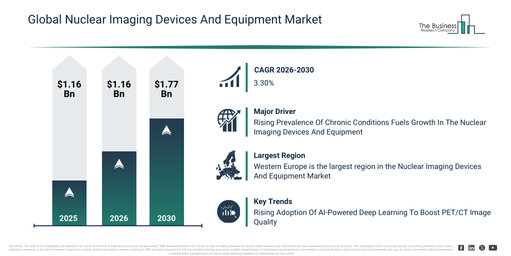
    The nuclear imaging devices and equipment market has experienced consistent expansion in recent years. It is anticipated to grow from $4 billion in 2025 to $4.13 billion in 2026, demonstrating a compound annual growth rate (CAGR) of 3.3%. This historical market growth can be attributed to several factors, including the increasing occurrence of chronic diseases, the expansion of nuclear medicine departments in hospitals, improved availability of radiotracers, the implementation of advanced diagnostic imaging protocols, and a heightened demand for early disease detection.

    The market for nuclear imaging devices and equipment is projected to experience consistent growth over the coming years. It is forecast to grow to $4.71 billion in 2030 at a compound annual growth rate (CAGR) of 3.3%. This expansion during the forecast period is expected due to heightened investments in precise diagnostics, the increasing acceptance of hybrid imaging technologies, the broadening of nuclear cardiology and oncology imaging, a rising emphasis on low-dose imaging solutions, and the growing incorporation of AI-driven diagnostics. Prominent trends for this period encompass the increased uptake of hybrid PET/CT and SPECT/CT systems, a surging demand for advanced oncology imaging, the deeper integration of AI in image reconstruction, the widening scope of molecular imaging applications, and a stronger focus on diagnostic accuracy and workflow efficiency.

    Get A Free Sample Report With In-Depth Market Insights:

    https://thebusinessresearchcompany.com/sample_request?id=63334532&type=smp&name=Nuclear%20Imaging%20Devices%20And%20Equipment%20Market%20Report%202026&utm_source=Blogs&utm_medium=Paid&utm_campaign=Sep_PR

    Nuclear Imaging Devices And Equipment Market Opportunity Drivers: What’s Unlocking New Revenue Potential?

    The nuclear imaging devices and equipment market is expected to expand going forward, driven by the increasing occurrence of chronic conditions. Chronic conditions, also referred to as chronic diseases, are long-lasting medical ailments that persist for an extended duration, typically three months or more. Nuclear imaging devices and equipment play a vital role in the diagnosis and monitoring of these diseases by providing crucial insights into their progression, the effectiveness of treatments, and overall patient management. For instance, in February 2024, the World Health Organization, a Switzerland-based intergovernmental organization, projected over 35 million new cancer cases by 2050, indicating a 77% increase compared to the estimated 20 million cases in 2022. Therefore, the growing prevalence of chronic conditions is propelling the growth of the nuclear imaging devices and equipment market.

    Nuclear Imaging Devices And Equipment Market Breakdown By Product Type And Application

    The nuclear imaging devices and equipment market covered in this report is segmented –

    1) By Product Type: SPECT Systems, PET Systems, Planar Scintigraphy Systems

    2) By Application: Oncology, Cardiology, Neurology, Other Applications

    3) By End-User: Hospitals, Imaging Centers, Academic & Research Institutes, Other End-Users

    Subsegments:

    1) By SPECT Systems: Single-Photon Emission Computed Tomography (SPECT) Cameras, Hybrid SPECT/CT Systems, SPECT Probes

    2) By PET Systems: Positron Emission Tomography (PET) Scanners, Hybrid PET/CT Systems, PET Probes

    3) By Planar Scintigraphy Systems: Gamma Cameras, Dual-Head Gamma Cameras, Single-Head Gamma Cameras

    Nuclear Imaging Devices And Equipment Market Innovation Trends Shaping Future Development

    Major companies operating in the nuclear imaging devices and equipment market are progressively concentrating on deep learning-based image processing solutions to boost diagnostic precision, lesion identification, and operational efficiency. Deep learning, a subset of artificial intelligence, leverages neural networks trained with extensive datasets to improve image reconstruction, minimize noise, and facilitate accurate quantitative measurements. For instance, in May 2023, GE HealthCare, a U.S.-based medical technology corporation, obtained U.S. FDA 510(k) clearance for its Precision DL software, specifically optimized for its Omni Legend PET/CT system. This AI-driven solution provides, on average, an 11 % enhancement in contrast recovery, a 23 % greater contrast-to-noise ratio, a 42 % rise in the detectability of small low-contrast lesions, and a 14 % increase in quantitative accuracy, thereby aiding in earlier diagnosis and more assured clinical judgments.

    Nuclear Imaging Devices And Equipment Market Industry Leaders And Competitive Landscape

    Major companies operating in the nuclear imaging devices and equipment market are Siemens Healthineers AG, GE Healthcare, Koninklijke Philips N.V., Canon Medical Systems Corporation, Neusoft Medical Systems Co Ltd, Mediso Medical Imaging Systems Ltd, Digirad Corporation, CMR Naviscan Corporation, Shimadzu Corporation, Toshiba Medical Systems Corporation, DDD Diagnostics A/S, MILabs B.V., MR Solutions Ltd, SurgicEye GmbH, United Imaging Healthcare, Positron Corporation, Spectrum Dynamics Medical, Berthold Technologies GmbH & Co KG, Gamma Medica Inc, Cubresa Inc, PerkinElmer Inc

    View The Full Nuclear Imaging Devices And Equipment Market Report:

    https://thebusinessresearchcompany.com/report/nuclear-imaging-devices-and-equipment-global-market-report?utm_source=Blogs&utm_medium=Paid&utm_campaign=Sep_PR

    Nuclear Imaging Devices And Equipment Market Regional Analysis And Top Geography

    Western Europe was the largest region in nuclear imaging devices and equipment market in 2025. North America was the second-largest region in nuclear imaging devices and equipment market. The regions covered in the nuclear imaging devices and equipment market report are Asia-Pacific, South East Asia, Western Europe, Eastern Europe, North America, South America, Middle East, Africa.

    Reach Out To Our Team:

    The Business Research Company: https://www.thebusinessresearchcompany.com/

    Americas: +1 310-496-7795

    Asia: +44 7882 955267 & +91 8897263534

    Europe: +44 7882 955267

    Email us at: marketing@tbrc.info

    Follow us on:

    LinkedIn: https://in.linkedin.com/company/the-business-research-company

    YouTube: https://www.youtube.com/channel/UC24_fI0rV8cR5DxlCpgmyFQ

    Global Market Model: https://www.thebusinessresearchcompany.com/global-market-model
  • Novel spectrometry Market Size In 2026 And Beyond: Understanding Future Growth Potential

    Novel spectrometry Market Size In 2026 And Beyond: Understanding Future Growth Potential

    Built to provide research that’s more actionable and strategically valuable, The Business Research Company’s 2026 market reports include market attractiveness analysis, total addressable market sizing, company benchmarking matrices, interactive Excel dashboards, broader supply chain intelligence, emerging startup tracking, and in-depth product insights.

    Novel spectrometry Market Forecast: Value Set To Climb From $5.15 Billion To $6.97 Billion

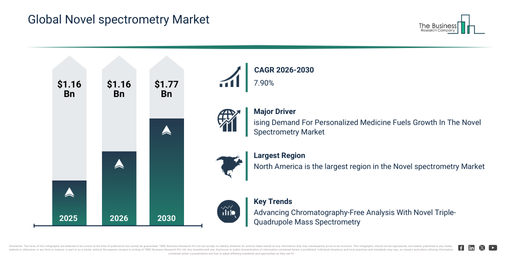
    The novel spectrometry market has seen robust growth in its size over recent years. This market is projected to expand from $4.76 billion in 2025 to $5.15 billion in 2026, exhibiting a compound annual growth rate (CAGR) of 8.2%. The growth observed in prior periods can be attributed to the expansion of pharmaceutical quality control, an increase in environmental monitoring regulations, the utilization of mass spectrometry in forensic science, greater demands for food safety testing, and investments made in academic and research laboratories.

    The novel spectrometry market is anticipated to experience substantial growth in the next few years. The market size is projected to reach $6.97 billion by 2030, demonstrating a compound annual growth rate (CAGR) of 7.9%. This expansion during the forecast period is driven by factors such as the increasing automation of analytical laboratories, the growing demand for portable spectrometry devices, advancements in personalized medicine research, the broadening of industrial process analytics, and increased funding for advanced material science. Key developments during this period are expected to include AI-enhanced spectral data interpretation, the integration of spectrometry systems into smart factories, the emergence of connected and remote spectrometry platforms, cloud-based spectral data management, and analytical spectrometry influenced by precision medicine.

    Get A Free Sample Report With In-Depth Market Insights:

    https://thebusinessresearchcompany.com/sample_request?id=46480253&type=smp&name=Novel%20spectrometry%20Market%20Report%202026&utm_source=Blogs&utm_medium=Paid&utm_campaign=Sep_PR

    Novel spectrometry Market Growth Momentum: What Factors Are Shaping Demand?

    The rising demand for personalized medicine is projected to fuel the expansion of the novel spectrometry market in the foreseeable future. Personalized medicine defines a healthcare method where treatments and strategies are specifically tailored to individual patients, taking into account their unique genetic makeup, environmental factors, and lifestyle choices. The escalating need for personalized medicine stems from breakthroughs in genomics, which facilitate more precise therapeutic interventions and enhance patient outcomes, as these customized treatments result in more effective and targeted care. Novel spectrometry plays a crucial role in boosting personalized medicine by enabling accurate biomarker analysis and the development of bespoke treatment plans, thereby improving the precision and success of individualized therapies. For instance, in February 2024, according to the Personalized Medicine Coalition, a US-based non-profit organization, the U.S. Food and Drug Administration (FDA) approved 16 new personalized treatments for rare diseases in 2023, marking a considerable rise from the 6 approvals granted in 2022. Therefore, the growing demand for personalized medicine is actively driving the growth of the novel spectrometry market.

    Novel spectrometry Market Segment Analysis And Revenue Potential

    The novel spectrometry market covered in this report is segmented –

    1) By Type Of Spectrometers: Atomic Absorption Spectrometer, Mass Spectrometer, Near Infrared Spectrometer, Nuclear Magnetic Resonance Spectrometer, Raman Spectrometer, X-Ray Fluorescence Spectrometer

    2) By Company Size: Small, Mid-Sized, Large

    3) By End-User: Agriculture Or Pesticide Testing, Environmental Analysis, Food Biotechnology, Forensic Analysis, Pharmaceutical Analysis, Other End Users

    Subsegments:

    1) By Atomic Absorption Spectrometer: Flame Atomic Absorption Spectrometers (FAAS), Graphite Furnace Atomic Absorption Spectrometers (GFAAS), Hydride Generation Atomic Absorption Spectrometers

    2) By Mass Spectrometer: Quadrupole Mass Spectrometers, Time-Of-Flight Mass Spectrometers (TOF-MS), Ion Trap Mass Spectrometers, Orbitrap Mass Spectrometers

    3) By Near Infrared Spectrometer: Dispersive Near Infrared Spectrometers, Fourier Transform Near Infrared Spectrometers (FT-NIR), NIR Spectrometers for Industrial Applications

    4) By Nuclear Magnetic Resonance Spectrometer: High-Field NMR Spectrometers, Low-Field NMR Spectrometers, Portable NMR Spectrometers

    5) By Raman Spectrometer: Dispersive Raman Spectrometers, FT-Raman Spectrometers, Portable Raman Spectrometers

    6) By X-Ray Fluorescence Spectrometer: Energy Dispersive X-Ray Fluorescence (EDXRF) Spectrometers, Wavelength Dispersive X-Ray Fluorescence (WDXRF) Spectrometers, Portable X-Ray Fluorescence Spectrometers

    Novel spectrometry Market Trends Redefining Industry Growth

    Major companies within the novel spectrometry market are focusing on developing advanced spectroscopy solutions, such as innovative triple-quadrupole mass spectrometers, to improve analytical capabilities and enhance sensitivity and accuracy in analyzing complex samples. Novel triple-quadrupole mass spectrometers refer to upgraded versions of triple-quadrupole mass spectrometers, engineered to offer improved performance for quantitative and qualitative analysis. For instance, in June 2023, Bruker Corporation, a US-based manufacturer of scientific instruments, launched the EVOQ DART-TQ+, a novel triple-quadrupole mass spectrometer designed for chromatography-free mass spectrometry, aimed at applied market segments like food and beverage, forensic toxicology, industrial, and environmental analysis. This system features a fully integrated direct analysis in real time (DART) ionization technique source, enabling simplified and efficient routine analysis without the need for complex gas or liquid chromatography, while also meeting the demand for cost-effective and environmentally sustainable workflows.

    Novel spectrometry Market Key Participants And Competitive Landscape

    Major companies operating in the novel spectrometry market are Thermo Fisher Scientific Inc., Danaher Corporation, Agilent Technologies Inc., Teledyne Photon Instruments, PerkinElmer Inc., LECO Corporation, Endress+Hauser Group, Shimadzu Corporation, Waters Corporation, Bruker Corporation, Horiba Ltd., FLIR Systems Inc., Sciex, JEOL Ltd., Oxford Instruments plc, Rigaku Corporation, Peak Scientific Instruments Ltd., Nanalysis Corp., Scion Instruments, Hiden Analytical Ltd., Labman Automation Ltd., Advion Inc., Exciton Inc., SRI Instruments

    View The Full Novel spectrometry Market Report:

    https://thebusinessresearchcompany.com/report/novel-spectrometry-global-market-report?utm_source=Blogs&utm_medium=Paid&utm_campaign=Sep_PR

    Novel spectrometry Market Geographic Analysis: Where Is Demand Rising Fastest?

    North America was the largest region in the novel spectrometry market in 2025. The regions covered in the novel spectrometry market report are Asia-Pacific, South East Asia, Western Europe, Eastern Europe, North America, South America, Middle East, Africa.

    Reach Out To Our Team:

    The Business Research Company: https://www.thebusinessresearchcompany.com/

    Americas: +1 310-496-7795

    Asia: +44 7882 955267 & +91 8897263534

    Europe: +44 7882 955267

    Email us at: marketing@tbrc.info

    Follow us on:

    LinkedIn: https://in.linkedin.com/company/the-business-research-company

    YouTube: https://www.youtube.com/channel/UC24_fI0rV8cR5DxlCpgmyFQ

    Global Market Model: https://www.thebusinessresearchcompany.com/global-market-model
  • Novel Drug Delivery Systems Market Reaches $187.53 Billion In 2026: Key Developments Shaping Expansion

    Novel Drug Delivery Systems Market Reaches $187.53 Billion In 2026: Key Developments Shaping Expansion

    Backed by market attractiveness analysis, total addressable market sizing, company benchmarking matrices, interactive Excel dashboards, wider supply chain intelligence, emerging startup coverage, and detailed product-level insights, The Business Research Company’s 2026 market reports are designed to offer research that is more actionable and strategically valuable than ever.

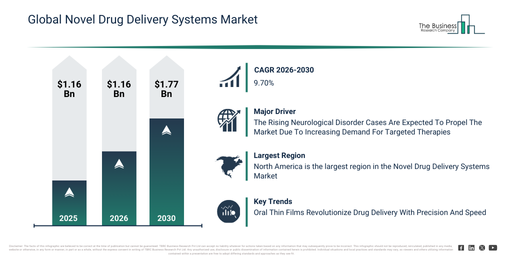
    Novel Drug Delivery Systems Market Revenue Growth On Track For A 9.7% CAGR Through 2030

    The market size for novel drug delivery systems has experienced significant growth recently. It is set to increase from $117.66 billion in 2025 to $129.45 billion in 2026, achieving a compound annual growth rate (CAGR) of 10.0%. This historical growth can be linked to the rising prevalence of chronic illnesses, the shortcomings of conventional drug delivery methods, the expanding scope of oncology and biologics pipelines, increased healthcare spending, and advancements in polymer and nanotechnology.

    The novel drug delivery systems market size is anticipated to undergo significant expansion in the coming years. It is projected to reach $187.53 billion in 2030, exhibiting a compound annual growth rate (CAGR) of 9.7%. This growth over the forecast period can be attributed to a rise in personalized and precision medicine, an increasing need for targeted cancer treatments, heightened investment in pharmaceutical research and development, the expanding scope of biologics and biosimilars, and supportive regulations for advanced drug delivery technologies. Prominent trends expected during this period include the wider application of targeted and personalized drug delivery, growing acceptance of lipid and polymeric nanoparticles, an increase in long-acting and controlled release formulations, a stronger focus on non-invasive and patient-centric delivery methods, and accelerated research and development in combination and hybrid novel drug delivery systems platforms.

    Get A Free Sample Report With In-Depth Market Insights:

    https://thebusinessresearchcompany.com/sample_request?id=79029085&type=smp&name=Novel%20Drug%20Delivery%20Systems%20Market%20Report%202026&utm_source=Blogs&utm_medium=Paid&utm_campaign=Sep_PR

    Novel Drug Delivery Systems Market Expansion Drivers: What’s Shaping Future Growth?

    The increasing prevalence of neurological disorders is projected to boost the growth of the novel drug delivery systems market moving forward. A neurological disorder such as stroke is defined as a medical condition characterized by the sudden loss of neurological function, occurring when the brain’s blood supply is disrupted, either by a blockage (ischemic stroke) or a ruptured blood vessel (hemorrhagic stroke), resulting in brain tissue damage and potentially enduring cognitive, sensory, or motor impairments. The rising occurrence of neurological disorders is primarily influenced by factors such as an aging populace, a greater prevalence of lifestyle-related conditions like hypertension, diabetes, and obesity, and heightened exposure to chronic stress and environmental risk factors. Novel drug delivery systems assist in managing these disorders by enabling targeted and controlled delivery of therapeutic agents across the blood-brain barrier. For example, in November 2024, figures from the National Health Service (NHS) England, a UK-based healthcare system, revealed that stroke admissions in England increased to 111,137 in 2023/24, with the 50–59 age group showing the sharpest rise at 12,533 cases. Therefore, the growing number of neurological disorder cases is propelling the expansion of the novel drug delivery systems market.

    Novel Drug Delivery Systems Market Segmentation And Category Overview

    The novel drug delivery systems market covered in this report is segmented –

    1) By Formulation Type: Liposomes, Nanoparticles, Microspheres, Hydrogels, Dendrimers

    2) By Mode Of Novel Drug Delivery System (NDDS): Targeted Drug Delivery Systems, Controlled Drug Delivery Systems, Modulated Drug Delivery Systems

    3) By Route: Oral Drug Delivery Systems, Injectable Drug Delivery Systems, Pulmonary Drug Delivery Systems, Transdermal Drug Delivery Systems, Other Routes

    4) By Therapeutic Area: Cancer, Cardiovascular Diseases, Neurological Disorders, Infectious Diseases, Autoimmune Diseases

    5) By End-User: Hospital, Specialty Clinics, Research Centers, Other End-Users

    Subsegments:

    1) By Liposomes: PEGylated Liposomes, Cationic Liposomes, Stealth Liposomes, Immunoliposomes

    2) By Nanoparticles: Polymeric Nanoparticles, Lipid Nanoparticles, Metallic Nanoparticles, Nanocrystals

    3) By Microspheres: Biodegradable Microspheres, Magnetic Microspheres, Radioactive Microspheres, Mucoadhesive Microspheres

    4) By Hydrogels: Thermosensitive Hydrogels, Ph-Responsive Hydrogels, Injectable Hydrogels, Smart Hydrogels

    5) By Dendrimers: PAMAM Dendrimers, PPI Dendrimers, Pegylated Dendrimers, Hybrid Dendrimers

    Novel Drug Delivery Systems Market Strategic Trends: What Defines The Next Growth Phase?

    Leading companies in the novel drug delivery systems market are concentrating on developing inventive solutions, such as oral thin films, to improve patient adherence and therapeutic efficacy. An oral thin film is a drug delivery mechanism composed of a rapidly dissolving film strip applied in the oral cavity, engineered to release medication directly into the bloodstream via the mucosal membrane. For instance, in February 2024, CD Formulation, a US-based pharmaceutical formulation company, launched Oral Thin Film Technology. This product allows for quick drug absorption by bypassing gastrointestinal and liver metabolism, making it particularly suitable for patients with swallowing difficulties. It also supports accurate dosing and a faster onset of action, thereby enhancing treatment precision and convenience across diverse therapeutic applications.

    Novel Drug Delivery Systems Market Top Companies Driving Competitive Growth

    Major companies operating in the novel drug delivery systems market are Pfizer Inc, Johnson And Johnson, F Hoffmann La Roche AG, Merck And Co Inc, AbbVie Inc, Bayer AG, Sanofi SA, Bristol Myers Squibb Company, AstraZeneca PLC, Novartis AG, GlaxoSmithKline PLC, Takeda Pharmaceutical Company Limited, Eli Lilly And Company, Gilead Sciences, Amgen Inc, Teva Pharmaceutical Industries Ltd, Otsuka Pharmaceutical Co Ltd, Regeneron Pharmaceuticals, Samyang Holdings Corporation, Galen Limited, Catalent Inc, Evonik Industries AG

    View The Full Novel Drug Delivery Systems Market Report:

    https://thebusinessresearchcompany.com/report/novel-drug-delivery-systems-global-market-report?utm_source=Blogs&utm_medium=Paid&utm_campaign=Sep_PR

    Novel Drug Delivery Systems Market Global Footprint: Which Region Leads The Market?

    North America was the largest region in the novel drug delivery systems market in 2025. Asia-Pacific is expected to be the fastest-growing region in the forecast period. The regions covered in the novel drug delivery systems market report are Asia-Pacific, South East Asia, Western Europe, Eastern Europe, North America, South America, Middle East, Africa.

    Reach Out To Our Team:

    The Business Research Company: https://www.thebusinessresearchcompany.com/

    Americas: +1 310-496-7795

    Asia: +44 7882 955267 & +91 8897263534

    Europe: +44 7882 955267

    Email us at: marketing@tbrc.info

    Follow us on:

    LinkedIn: https://in.linkedin.com/company/the-business-research-company

    YouTube: https://www.youtube.com/channel/UC24_fI0rV8cR5DxlCpgmyFQ

    Global Market Model: https://www.thebusinessresearchcompany.com/global-market-model

  • Normothermic Machine Perfusion Market Growth Outlook For 2026: Drivers, Trends And Future Opportunities

    Normothermic Machine Perfusion Market Growth Outlook For 2026: Drivers, Trends And Future Opportunities

    Featuring market attractiveness scoring, total addressable market sizing, company benchmarking matrices, interactive Excel dashboards, deeper supply chain intelligence, emerging startup tracking, and granular product-level insights, The Business Research Company’s 2026 market reports are built to deliver research that is both more actionable and more strategically valuable.

    Normothermic Machine Perfusion Market Value Growth And Long-Term Outlook

    The normothermic machine perfusion market has expanded swiftly in recent years. Its value is anticipated to rise from $1.48 billion in 2025 to $1.72 billion in 2026, exhibiting a compound annual growth rate (CAGR) of 16.2%. Historically, the market’s expansion can be linked to factors such as restricted organ preservation technologies, a reliance on cold storage techniques, a scarcity of transplantable organs, a rise in organ transplant procedures, and the initial adoption of stationary perfusion machines.

    The normothermic machine perfusion market is anticipated to experience substantial expansion over the next few years. It is forecast to achieve a size of $3.12 billion by 2030, demonstrating a compound annual growth rate (CAGR) of 16.0%. This growth during the forecast period is attributable to the emergence of portable and battery-operated machines, innovations in mechanical circulation and oxygenation technologies, the increasing global demand for organ transplantation, the integration of smart monitoring systems, and the expanding research and development efforts in organ preservation. Notable trends in the forecast period include the increasing adoption of portable normothermic machines, a heightened focus on organ viability and prolonged preservation, the integration of advanced monitoring and oxygenation technologies, the expansion of organ transplantation programs, and a growing application in research and development.

    Get A Free Sample Report With In-Depth Market Insights:

    https://thebusinessresearchcompany.com/sample_request?id=20504740&type=smp&name=Normothermic%20Machine%20Perfusion%20Market%20Report%202026&utm_source=Blogs&utm_medium=Paid&utm_campaign=Sep_PR

    Normothermic Machine Perfusion Market Development Factors: What’s Supporting Demand?

    The anticipated expansion of the normothermic machine perfusion market is linked to the rising need for organ transplantation in the future. Organ transplantation is defined as the surgical replacement of a diseased or failing organ with a healthy counterpart from a donor. The surge in organ transplantation procedures stems from the growing incidence of end-stage organ failure, a consequence of chronic illnesses, alongside advancements in surgical methods and immunosuppressive therapies. Within organ transplantation, normothermic machine perfusion plays a crucial role in safeguarding and revitalizing donor organs by keeping them at physiological temperature with oxygenated blood or a suitable perfusate until the surgical transplant. For example, data released by the U.S. Department of Health & Human Services, a US-based government department, in January 2024 indicated that 46,632 organ transplants were carried out in 2023, utilizing both living and deceased donors, representing an 8.7% increase over the figures from 2022. Consequently, the escalating demand for organ transplantation is a primary factor fueling the expansion of the normothermic machine perfusion market.

    Normothermic Machine Perfusion Market Segment Outlook: Which Categories Are Growing Fastest?

    The normothermic machine perfusion market covered in this report is segmented –

    1) By Product Type: Portable Normothermic Machine, Stationary Normothermic Machine

    2) By Technology: Mechanical Circulation Technology, Oxygenation Technology, Monitoring Technology

    3) By Application: Organ Preservation, Organ Transplantation, Research And Development

    4) By End-User: Hospitals And Ambulatory Surgery Centers (ASCs), Specialty Clinics, Other End-Users

    Subsegments:

    1) By Portable Normothermic Machine: Compact Portable, Battery-Operated Portable Machines, Transport-Friendly Portable Units

    2) By Stationary Normothermic Machine: In-Hospital Stationary Machines, Modular Stationary Systems, Advanced Fixed-Location Units

    Normothermic Machine Perfusion Market Transformation Trends: What Innovations Are Driving Change?

    Leading companies in the normothermic machine perfusion market are concentrating on establishing advanced research facilities to accelerate innovation, enhance technologies for organ preservation, and improve results for transplant recipients. Expanding facilities in this domain boosts capacity for organ preservation, research endeavors, and clinical applications, which in turn improves transplant outcomes and the availability of organs. For example, in May 2024, OrganOx Ltd., a medical equipment manufacturing firm from the UK, opened an 18,000 sq. ft. global research and development and production facility in Oxford. This expansion aims to foster innovation and partnerships, following the worldwide success of its metra device in enhancing liver transplant outcomes. The establishment of this facility conveys confidence in advancing scientific and clinical innovation through technological means to provide superior treatment for organ failure.

    Normothermic Machine Perfusion Market Leading Players And Competitive Positioning

    Major companies operating in the normothermic machine perfusion market are TransMedics Inc., OrganOx Limited, XVIVO Perfusion AB, Organ Recovery Systems Inc., Bridge to Life Ltd., Paragonix Technologies Inc., Lifeline Scientific Inc., LifePort Inc., XENIOS AG, Lung Bioengineering Inc., Waters Medical Systems LLC, Organ Assist B.V., Preservation Solutions Inc., Perfusix AB, Fluent Medical Inc., HemoTherapeutics Inc., Revivicor Inc., Transplant Solutions Inc., BioMedica Diagnostics (Organ Perfusion Division), Advanced Perfusion Systems Inc., Organ Preservation Alliance Technologies, NormaTech Medical Systems

    View The Full Normothermic Machine Perfusion Market Report:

    https://thebusinessresearchcompany.com/report/normothermic-machine-perfusion-global-market-report?utm_source=Blogs&utm_medium=Paid&utm_campaign=Sep_PR

    Normothermic Machine Perfusion Market Regional Split: Which Areas Are Fueling Growth?

    North America was the largest region in the normothermic machine perfusion market in 2025. The regions covered in the normothermic machine perfusion market report are Asia-Pacific, South East Asia, Western Europe, Eastern Europe, North America, South America, Middle East, Africa.

    Reach Out To Our Team:

    The Business Research Company: https://www.thebusinessresearchcompany.com/

    Americas: +1 310-496-7795

    Asia: +44 7882 955267 & +91 8897263534

    Europe: +44 7882 955267

    Email us at: marketing@tbrc.info

    Follow us on:

    LinkedIn: https://in.linkedin.com/company/the-business-research-company

    YouTube: https://www.youtube.com/channel/UC24_fI0rV8cR5DxlCpgmyFQ

    Global Market Model: https://www.thebusinessresearchcompany.com/global-market-model

  • Non-PVC IV Bags Market Size Forecast From 2026 To 2030: Key Industry Trends

    Non-PVC IV Bags Market Size Forecast From 2026 To 2030: Key Industry Trends

    Built to provide research that’s more actionable and strategically valuable, The Business Research Company’s 2026 market reports include market attractiveness analysis, total addressable market sizing, company benchmarking matrices, interactive Excel dashboards, broader supply chain intelligence, emerging startup tracking, and in-depth product insights.

    Non-PVC IV Bags Market Poised To Hit $3.8 Billion By 2030 With A 10.8% CAGR

    The non-pvc iv bags market size has experienced rapid expansion in recent years. It is anticipated to expand from $2.28 billion in 2025 to $2.52 billion in 2026, reflecting a compound annual growth rate (CAGR) of 10.5%. Historically, this expansion can be linked to factors like an increase in hospital admissions needing IV therapy, a greater adoption of infusion-based drug delivery, the broadening of chemotherapy treatments, heightened awareness of health risks associated with PVC, and a wider deployment of sterile fluid delivery systems.

    The non-pvc iv bags market is projected to experience substantial expansion in the coming years. It will grow to $3.8 billion in 2030 at a compound annual growth rate (CAGR) of 10.8%. This anticipated growth during the forecast period is driven by increasing demand for sustainable medical consumables, rising adoption of preservative-free IV solutions, the expansion of targeted drug delivery therapies, growing investments in advanced infusion packaging, and an increasing regulatory focus on material safety. Key trends identified for the forecast period include the increasing adoption of pvc-free medical packaging, rising demand for multi-chamber iv bags, the growing use of chemically stable polymer materials, the expansion of ready-to-use iv solutions, and an enhanced focus on drug compatibility.

    Get A Free Sample Report With In-Depth Market Insights:

    https://thebusinessresearchcompany.com/sample_request?id=15621&type=smp&name=Non-PVC%20IV%20Bags%20Market%20Report%202026&utm_source=Blogs&utm_medium=Paid&utm_campaign=Sep_PR

    Non-PVC IV Bags Market Industry Drivers: What’s Behind The Revenue Growth?

    The expanding volume of patients within healthcare environments is expected to stimulate the growth of the non-PVC IV bags market in the future. Patient traffic denotes the flow or quantity of individuals accessing medical care or services at healthcare sites like hospitals, clinics, or doctor’s offices, often driven by a higher demand for healthcare services and shifts in healthcare policies or insurance coverage. Non-PVC IV bags are necessary for patients due to concerns over the potential migration of harmful chemicals from PVC materials into intravenous fluids, thereby reducing the risk of patient exposure to toxins. As an illustration, in January 2024, a report from the National Health Service, a UK-based publicly funded healthcare system, indicated that 1.63 million patients commenced treatment. Furthermore, over 2.3 million diagnostic tests were carried out in November 2023, placing considerable strain on emergency departments nationwide, where more than 2.1 million A (accident) and E (emergency) visits and over 547,000 emergency admissions were recorded in December 2023. Therefore, the increasing patient traffic within healthcare settings is a key driver for the expansion of the non-PVC IV bags market.

    Non-PVC IV Bags Market Segment Landscape: Which Areas Lead Development?

    The non-pvc iv bags market covered in this report is segmented –

    1) By Product: Single Chamber, Multi Chamber

    2) By Material: Ethylene Vinyl Acetate, Polypropylene, Copolyester Ether, Other Materials

    3) By Content: Ready-To-Use Sterile Fluids, Liquid Mixture

    4) By Application: Chemotherapy, Targeted Drug Delivery, Glucose Injection, Sodium Chloride Solution, Electrolyte Injection, Nutrient Injection, Other Applications

    5) By End User: Hospitals, Clinics, Emergency Service Centers, Ambulatory Surgical Centers, Other End Users

    Subsegments:

    1) By Single Chamber: Standard Single Chamber Iv Bags, Flexible Single Chamber Iv Bags

    2) By Multi Chamber: Dual Chamber Iv Bags, Triple Chamber Iv Bags, Multi-Camber Iv Bags (More Than Three Chambers)

    #Non-PVC IV Bags Market Growth Trends: What’s Shaping The Future Outlook?

    Leading companies in the non-PVC IV bags market are developing innovative products, such as polyolefin shrink films, to enhance safety, sustainability, and compatibility with various IV solutions. These polyolefin shrink films are durable, flexible, and clear packaging materials widely utilized for secure, tamper-resistant wrapping across food, consumer goods, electronics, and pharmaceuticals. Their non-toxic properties and high puncture resistance make them suitable for diverse temperature conditions. For instance, in February 2024, Innovia Films, a UK-based manufacturer and supplier of biaxially-oriented polypropylene film, introduced RayoFloat white APO. This floatable, white, low-density polyolefin shrink film is designed for light-sensitive products. Its unique attributes include easy label detachment during PET recycling, facilitating high-quality PET flake production for food-grade applications. The film’s opaque nature provides light-blocking benefits, making it ideal for dairy, nutritional, and cosmetic products. Additionally, it supports sustainability with up to 20% post-industrial recycled content and complies with the EU’s Packaging and Packaging Waste Regulation (PPWR).

    Non-PVC IV Bags Market Competitive Overview And Top Companies

    Major companies operating in the non-pvc iv bags market are Cardinal Health Inc., Pfizer Inc., Abbott Laboratories, Medline Industries LP, Becton Dickinson and Company, Otsuka Pharmaceutical Co. Ltd., Baxter International Inc., B. Braun Melsungen AG, Fresenius Kabi AG, Grifols S.A., Terumo Corporation, Nipro Corporation, ICU Medical Inc., JW Life Science, Jiangxi Sanxin Medtec Co. Ltd., Angiplast Pvt. Ltd., Technoflex SA, Medi Pharma Plan Co. Ltd., Bausch Advanced Technologies Inc., PolyCine GmbH, Sealed Air Corporation, Kraton Corporation

    View The Full Non-PVC IV Bags Market Report:

    https://thebusinessresearchcompany.com/report/non-pvc-iv-bags-global-market-report?utm_source=Blogs&utm_medium=Paid&utm_campaign=Sep_PR

    Non-PVC IV Bags Market Top Region: Where Does Most Revenue Come From?

    North America was the largest region in the non-PVC IV bags market in 2025. Asia-Pacific is expected to be the fastest-growing region in the forecast period. The regions covered in the non-pvc iv bags market report are Asia-Pacific, South East Asia, Western Europe, Eastern Europe, North America, South America, Middle East, Africa.

    Reach Out To Our Team:

    The Business Research Company: https://www.thebusinessresearchcompany.com/

    Americas: +1 310-496-7795

    Asia: +44 7882 955267 & +91 8897263534

    Europe: +44 7882 955267

    Email us at: marketing@tbrc.info

    Follow us on:

    LinkedIn: https://in.linkedin.com/company/the-business-research-company

    YouTube: https://www.youtube.com/channel/UC24_fI0rV8cR5DxlCpgmyFQ

    Global Market Model: https://www.thebusinessresearchcompany.com/global-market-model

  • Non-Invasive Ventilators Market 2026: Market Size, Growth Drivers And Emerging Opportunities

    Non-Invasive Ventilators Market 2026: Market Size, Growth Drivers And Emerging Opportunities

    Backed by market attractiveness analysis, total addressable market sizing, company benchmarking matrices, interactive Excel dashboards, wider supply chain intelligence, emerging startup coverage, and detailed product-level insights, The Business Research Company’s 2026 market reports are designed to offer research that is more actionable and strategically valuable than ever.

    Non-Invasive Ventilators Market Size And Revenue Outlook Through 2030

    The non-invasive ventilators market size has seen significant development in recent years. It is projected to increase from $3.05 billion in 2025 to $3.27 billion in 2026, exhibiting a compound annual growth rate (CAGR) of 7.4%. This historical expansion was driven by an escalating prevalence of COPD and sleep apnea, the broadening of home healthcare services, an uptick in hospital admissions for respiratory conditions, greater awareness regarding the advantages of non-invasive ventilation, and the availability of compact ventilator designs.

    The non-invasive ventilators market is projected for significant expansion over the coming years. This market is set to reach $4.42 billion by 2030, exhibiting a compound annual growth rate (CAGR) of 7.8%. The anticipated growth during this period stems from factors such as a growing elderly demographic experiencing respiratory ailments, an escalating need for remote patient observation, the broadening of chronic care services at home, the increasing integration of AI-powered ventilation solutions, and a heightened emphasis on timely respiratory interventions. Key trends expected over the forecast horizon involve the wider use of portable non-invasive ventilators, a heightened call for at-home respiratory care equipment, the increasing incorporation of intelligent monitoring functionalities, the development of auto-titrating ventilation systems, and a greater emphasis on ensuring patient ease and adherence.

    Get A Free Sample Report With In-Depth Market Insights:

    https://thebusinessresearchcompany.com/sample_request?id=74658480&type=smp&name=Non-Invasive%20Ventilators%20Market%20Report%202026&utm_source=Blogs&utm_medium=Paid&utm_campaign=Sep_PR

    Non-Invasive Ventilators Market Growth Factors: What’s Supporting Expansion?

    The escalating concern of increasing air pollution is projected to propel the growth of the non-invasive ventilator market going forward. This phenomenon refers to the presence of harmful substances, often in the form of gases or particles, in the Earth’s atmosphere that can have adverse effects on human health. Non-invasive ventilators provide crucial assistance to individuals affected by respiratory issues due to air pollution by offering respiratory support without intubation and helping alleviate breathing difficulties caused by polluted air. For instance, in June 2023, according to the World Health Organization, a Switzerland-based intergovernmental organization, air pollution and household air pollution were associated with 7 million premature deaths annually. Additionally, around 2.4 billion people are exposed to dangerous levels of household air pollution while using polluting open fires for cooking, fueled by kerosene, biomass, and coal. Therefore, increasing air pollution is expected to propel the growth of the non-invasive ventilator market.

    Non-Invasive Ventilators Market Segments: Where Is Growth Concentrated?

    The non-invasive ventilators market covered in this report is segmented –

    1) By Type: Continuous Positive Airway Pressure (CPAP), Autotitrating (Adjustable) Positive Airway Pressure (APAP), Bilevel Positive Pressure (BiPAP)

    2) By Power Source: Electric, Pneumatic, Electro-Pneumatic

    3) By Application: Chronic Obstructive Pulmonary Disease, Asthma, Respiratory Distress Syndrome, Pneumonia, Other Applications

    4) By End-User: Hospitals, Specialty Clinics, Home Care Settings, Ambulatory Surgical Centers

    Subsegments:

    1) By Continuous Positive Airway Pressure (CPAP): Fixed Pressure CPAP, Auto CPAP (Auto-Adjusting)

    2) By Autotitrating (Adjustable) Positive Airway Pressure (APAP): Auto-Adjusting APAP for Sleep Apnea, Adaptive Servo-Ventilation (ASV) APAP

    3) By Bilevel Positive Pressure (BiPAP): BiPAP S (Spontaneous Mode), BiPAP ST (Spontaneous/Timed Mode), BiPAP AVAPS (Average Volume-Assured Pressure Support)

    Non-Invasive Ventilators Market Industry Trends: What’s Reshaping Demand?

    Major companies operating in the non-invasive ventilator market are adopting innovative technologies, including recent introductions to the neonatal ventilator range, to maintain their competitive position. The phrase “latest addition to the neonatal ventilator” describes a newly launched system or device specifically crafted to deliver advanced non-invasive respiratory support for premature or fragile newborns, incorporating updated features and various ventilation modes to boost safety and effectiveness. As an illustration, in November 2023, Inspiration Healthcare Group PLC, a UK-based medical technology provider, introduced the SLE1500. This device represents the newest offering in their neonatal ventilator series, engineered to provide non-invasive ventilation modes for the tiniest and most vulnerable infants, ensuring respiratory assistance while safeguarding their delicate lungs. The SLE1500 system combines six non-invasive delivery options into one machine. These include nasal Continuous Positive Airway Pressure (nCPAP) in both flow and pressure control modes, high-flow oxygen therapy, and manual flow for use with therapies like bubble CPAP. All these options can be further enhanced with Pulse Oximetry (SpO2) and/or automatic oxygen control (auto FiO2) utilizing the OxyGenie.

    Non-Invasive Ventilators Market Competitive Landscape: Which Companies Lead The Industry?

    Major companies operating in the non-invasive ventilators market are ResMed Inc., Teleflex Incorporated, Hamilton Bonaduz AG, HEYER Medical AG, Airon Corporation, Fisher & Paykel Healthcare Limited, Smiths Medical International Ltd., O-Two Medical Technologies Inc., Phoenix Medical Systems Pvt. Ltd., Koninklijke Philips N.V., Dragerwerk AG & Co. KGaA, General Electric Healthcare Co., Magnamed Tecnologia Medica S/A, WILAmed GmbH, Mindray Medical International Limited, Vyaire Medical Inc., GETINGE AB, Medtronic plc, Respironics Inc., medin Medical Innovations GmbH, Comen Medical Instruments Co. Ltd., Löwenstein Medical Technology GmbH + Co. KG, aXcent medical GmbH, Tenko Medical Systems Corp., Beijing Aeonmed Co. Ltd., MEKICS Co. Ltd., Sefam Medical, Allied Healthcare Products Inc., Air Liquide Medical Systems, Pulmodyne Inc., Bunnell Incorporated

    View The Full Non-Invasive Ventilators Market Report:

    https://thebusinessresearchcompany.com/report/non-invasive-ventilators-global-market-report?utm_source=Blogs&utm_medium=Paid&utm_campaign=Sep_PR

    Non-Invasive Ventilators Market Regional Breakdown: Where Is Demand Concentrated?

    North America was the largest region in the non-invasive ventilators market in 2025. Asia-Pacific is expected to be the fastest-growing region in the forecast period. The regions covered in the non-invasive ventilators market report are Asia-Pacific, South East Asia, Western Europe, Eastern Europe, North America, South America, Middle East, Africa.

    Reach Out To Our Team:

    The Business Research Company: https://www.thebusinessresearchcompany.com/

    Americas: +1 310-496-7795

    Asia: +44 7882 955267 & +91 8897263534

    Europe: +44 7882 955267

    Email us at: marketing@tbrc.info

    Follow us on:

    LinkedIn: https://in.linkedin.com/company/the-business-research-company

    YouTube: https://www.youtube.com/channel/UC24_fI0rV8cR5DxlCpgmyFQ

    Global Market Model: https://www.thebusinessresearchcompany.com/global-market-model

  • Non-Invasive Cholesterol Reader Market Set To Expand From $2.63 Billion In 2026: Growth Outlook Through 2030

    Non-Invasive Cholesterol Reader Market Set To Expand From $2.63 Billion In 2026: Growth Outlook Through 2030

    Featuring market attractiveness scoring, total addressable market sizing, company benchmarking matrices, interactive Excel dashboards, deeper supply chain intelligence, emerging startup tracking, and granular product-level insights, The Business Research Company’s 2026 market reports are built to deliver research that is both more actionable and more strategically valuable.

    Non-Invasive Cholesterol Reader Market Growth From $1.5 Billion In 2026 To $2.63 Billion By 2030 At A CAGR Of 15.1%

    The non-invasive cholesterol reader market has seen rapid growth in its size over recent years. It is anticipated to expand from $1.3 billion in 2025 to $1.5 billion in 2026, demonstrating a compound annual growth rate (CAGR) of 15.4%. This historical growth is attributable to factors such as increasing cardiovascular disease prevalence, greater awareness of cholesterol monitoring, a growing demand for non-invasive diagnostics, their adoption in homecare settings, and technological advancements in optical sensors.

    The non-invasive cholesterol reader market is projected to undergo significant expansion in the coming years. It is forecast to achieve a size of $2.63 billion by 2030, demonstrating a compound annual growth rate (CAGR) of 15.1%. This anticipated growth during the forecast period stems from factors such as AI-enabled diagnostics, the integration with telemedicine, device miniaturization, market expansion in developing regions, and the availability of continuous real-time monitoring. Prominent trends for this period encompass optical sensor-based devices, wearable cholesterol monitoring systems, portable diagnostic devices, their seamless integration with mobile health apps, and the rise of home-based cholesterol testing solutions.

    Get A Free Sample Report With In-Depth Market Insights:

    https://thebusinessresearchcompany.com/sample_request?id=44198707&type=smp&name=Non-Invasive%20Cholesterol%20Reader%20Market%20Report%202026&utm_source=Blogs&utm_medium=Paid&utm_campaign=Sep_PR

    Non-Invasive Cholesterol Reader Market Demand Drivers: What’s Powering Industry Growth?

    The increasing occurrence of cardiovascular diseases is projected to stimulate the growth of the non-invasive cholesterol reader market in the future. Cardiovascular diseases are conditions that impact the heart and blood vessels, exemplified by coronary artery disease, stroke, and heart failure. The rise in these diseases is attributed to aging populations, as the risk of damage to the heart and blood vessels escalates with age. Non-invasive cholesterol readers contribute to addressing cardiovascular diseases by offering rapid measurements of cholesterol levels without requiring blood samples, thus enabling the early detection of high cholesterol and timely interventions to prevent heart attacks and strokes. For instance, in October 2024, the Centers for Disease Control and Prevention (CDC), a US-based government public health agency, reported that cardiovascular disease caused 919,032 deaths in 2023, accounting for approximately one-third of all fatalities. Consequently, the expanding prevalence of cardiovascular diseases is a key factor driving the growth of the non-invasive cholesterol reader market.

    Non-Invasive Cholesterol Reader Market Segment Analysis: What Are The Core Market Categories?

    The non-invasive cholesterol reader market covered in this report is segmented –

    1) By Product Type: Wearable Non-Invasive Cholesterol Readers, Handheld Non-Invasive Cholesterol Readers, Tabletop And Benchtop Non-Invasive Cholesterol Readers

    2) By Technology: Optical Spectroscopy–Based, Near-Infrared (NIR) And Raman Spectroscopy–Based, Electromagnetic And Bio-Impedance–Based, Multi-Sensor Hybrid Technologies, Other Technologies

    3) By Distribution Channel: Online, Offline

    4) By Application: Home Care And Personal Health Monitoring, Hospitals And Clinics, Diagnostic And Preventive Screening Centers, Research And Clinical Studies, Other Applications

    Subsegments:

    1) By Wearable Non-Invasive Cholesterol Readers: Wrist-Worn Optical Cholesterol Monitoring Devices, Skin-Patch-Based Non-Invasive Cholesterol Readers, Smart Wearables with Integrated Optical / Spectroscopic Cholesterol Sensors

    2) By Handheld Non-Invasive Cholesterol Readers: Portable Optical Cholesterol Scanners, Spectroscopy-Based Handheld Cholesterol Readers, Contact-Based Skin Cholesterol Measurement Devices

    3) By Tabletop And Benchtop Non-Invasive Cholesterol Readers: Optical Spectroscopy Cholesterol Analysis Systems, Non-Invasive Clinical Cholesterol Screening Units, Research-Grade Benchtop Non-Invasive Cholesterol Measurement Systems

    Non-Invasive Cholesterol Reader Market Competitive Landscape: Who Leads The Industry?

    Major companies operating in the non-invasive cholesterol reader market are SiPhox Health Inc., Binah.ai Ltd., Occuity Ltd., PreVu Inc., CardioDiagnostics Inc., Scanadu Inc., Aidar Health Inc., Biovotion AG, Valencell Inc., Rockley Photonics Inc., LifeQ B.V., ChroniSense Medical Ltd., EchoLabs AI Inc., Grove Instruments LLC, MediBioSense Health Care, VitalConnect Inc., Sensible Medical Innovations Ltd., Current Health Ltd., Empatica Inc., BioIntelliSense Inc.

    View The Full Non-Invasive Cholesterol Reader Market Report:

    https://thebusinessresearchcompany.com/report/non-invasive-cholesterol-reader-global-market-report?utm_source=Blogs&utm_medium=Paid&utm_campaign=Sep_PR

    Non-Invasive Cholesterol Reader Market Geographic Landscape: Which Region Dominates Industry Growth?

    North America was the largest region in the non-invasive cholesterol reader market in 2025. Asia-Pacific is expected to be the fastest-growing region in the forecast period. The regions covered in the non-invasive cholesterol reader market report are Asia-Pacific, South East Asia, Western Europe, Eastern Europe, North America, South America, Middle East, Africa.

    Reach Out To Our Team:

    The Business Research Company: https://www.thebusinessresearchcompany.com/

    Americas: +1 310-496-7795

    Asia: +44 7882 955267 & +91 8897263534

    Europe: +44 7882 955267

    Email us at: marketing@tbrc.info

    Follow us on:

    LinkedIn: https://in.linkedin.com/company/the-business-research-company

    YouTube: https://www.youtube.com/channel/UC24_fI0rV8cR5DxlCpgmyFQ

    Global Market Model: https://www.thebusinessresearchcompany.com/global-market-model

  • Non-Invasive Brain Trauma Monitoring Devices Market Size And Growth In 2026: Key Factors Shaping Future Demand

    Non-Invasive Brain Trauma Monitoring Devices Market Size And Growth In 2026: Key Factors Shaping Future Demand

    Built to provide research that’s more actionable and strategically valuable, The Business Research Company’s 2026 market reports include market attractiveness analysis, total addressable market sizing, company benchmarking matrices, interactive Excel dashboards, broader supply chain intelligence, emerging startup tracking, and in-depth product insights.

    Non-Invasive Brain Trauma Monitoring Devices Market Expansion Outlook: What Revenue Opportunities Are Ahead?

    The non-invasive brain trauma monitoring devices market size has seen rapid growth in recent years. It is expected to increase from $9.56 billion in 2025 to $10.73 billion in 2026, with a compound annual growth rate (CAGR) of 12.2%. The expansion observed in the past can be ascribed to a surge in traumatic brain injuries, the greater adoption of non-invasive diagnostic technologies, the proliferation of neurological care facilities, heightened clinical recognition of intracranial pressure monitoring, and enhancements in neuro-monitoring precision.

    The non-invasive brain trauma monitoring devices market is projected to expand significantly, reaching $16.71 billion by 2030, driven by a compound annual growth rate (CAGR) of 11.7%. This expansion during the forecast period is fueled by factors such as an escalating need for remote neurological observation, the increasing integration of AI-assisted neurodiagnostics, the development of emergency and critical care facilities, a heightened emphasis on prompt intervention for brain injuries, and advancements in wearable brain monitoring technologies. Key trends anticipated in the upcoming period encompass the wider deployment of continuous brain monitoring solutions, an increase in the utilization of multimodal neurological monitoring systems, greater integration of portable non-invasive monitors, the spread of real-time data analytics within neurocare, and an intensified concentration on identifying brain injuries at an early stage.

    Get A Free Sample Report With In-Depth Market Insights:

    https://thebusinessresearchcompany.com/sample_request?id=89469081&type=smp&name=Non-Invasive%20Brain%20Trauma%20Monitoring%20Devices%20Market%20Report%202026&utm_source=Blogs&utm_medium=Paid&utm_campaign=Sep_PR

    Non-Invasive Brain Trauma Monitoring Devices Market Growth Drivers: What’s Behind The Acceleration?

    The growing occurrence of neurological conditions and illnesses is anticipated to boost the need for non-invasive brain trauma monitoring devices. These disorders represent significant non-communicable diseases (NCDs) affecting individuals’ cognitive processes, feelings, conduct, and causing injuries such as those to the brain, spinal cord, or nerves. Non-invasive brain trauma monitoring devices facilitate ongoing surveillance, enabling doctors to ascertain patients’ critical states and the necessary interventions to mitigate severe traumatic conditions. For example, in March 2023, data from the Alzheimer’s Association, a US-based nonprofit voluntary health organization, indicated that in 2023, around 6.7 million Americans aged 65 and older were experiencing Alzheimer’s dementia, with projections showing this figure reaching 13.8 million by 2060. Consequently, the escalation in neurological disorders and diseases will fuel the market for non-invasive brain trauma monitoring devices.

    Non-Invasive Brain Trauma Monitoring Devices Market Segment Breakdown: Which Categories Lead On Revenue?

    The non-invasive brain trauma monitoring devices market covered in this report is segmented –

    1) By Type: Non-invasive Intracranial Pressure Monitor, Non-invasive Cerebral Edema Dynamic Monitor, Other Types

    2) By Application: Traumatic Brain Injury (TBI) Monitoring, Neurocritical Care Monitoring, Stroke and Cerebrovascular Monitoring, Epilepsy and Seizure Monitoring, Brain Death and Coma Assessment, Post-Surgical and Post-Intervention Neurological Monitoring, Other Neurological Disorders

    3) By End-User: Hospitals, Neurological Centers, Other End Users

    Subsegments:

    1) By Non-invasive Intracranial Pressure Monitor: Transcranial Doppler (TCD) Devices, Near-Infrared Spectroscopy (NIRS) Devices

    2) By Non-invasive Cerebral Edema Dynamic Monitor: Electrical Impedance Tomography (EIT), Magnetic Resonance Imaging (MRI)-Based Monitors

    3) By Other Types: Ultrasound-Based Monitors, Bioelectrical Signal Monitors

    Non-Invasive Brain Trauma Monitoring Devices Market Trends: What’s Defining The Industry’s Next Phase?

    Leading companies within the non-invasive brain trauma monitoring devices market are concentrating on advancing imaging and artificial intelligence (AI)-driven technologies to elevate diagnostic accuracy and enhance patient care. AI-powered workflow automation systems, like INSTINX, optimize imaging processes, improving both efficiency and precision in clinical environments and fostering better patient outcomes. For example, in May 2024, Canon Medical Systems, a Japan-based medical imaging and healthcare technology company, debuted the first installation of its Aquilion Serve SP CT scanner in the U.S. along with INSTINX, an AI-powered workflow automation system. This scanner aims to bolster imaging capabilities while simultaneously enhancing patient care. Moreover, the INSTINX system itself is an AI-driven workflow automation tool designed to streamline imaging processes, thereby maximizing efficiency and accuracy in clinical settings.

    Non-Invasive Brain Trauma Monitoring Devices Market Company Landscape And Competitive Strategy

    Major companies operating in the non-invasive brain trauma monitoring devices market are Natus Medical Incorporated, Nihon Kohden Corporation, Compumedics Limited, Cadwell Industries Inc., Advanced Brain Monitoring Inc., BrainScope Company Inc., Neural Analytics Inc., Ornim Medical Ltd., Cerebrotech Medical Systems Inc., Oculogica Inc., NeuroWave Systems Inc., Sense Neuro Diagnostics, Magstim Company Limited, Electrical Geodesics Inc., Micromed S.p.A., ANT Neuro B.V., g.tec medical engineering GmbH, Neurosoft Ltd., EB Neuro S.p.A., Rimed Ltd., Brain Vision Solutions GmbH

    View The Full Non-Invasive Brain Trauma Monitoring Devices Market Report:

    https://thebusinessresearchcompany.com/report/non-invasive-brain-trauma-monitoring-devices-global-market-report?utm_source=Blogs&utm_medium=Paid&utm_campaign=Sep_PR

    Non-Invasive Brain Trauma Monitoring Devices Market Largest Region: Which Geography Holds The Highest Market Share?

    North America was the largest region in the non-invasive brain trauma monitoring devices market share in 2025. The regions covered in the non-invasive brain trauma monitoring devices market report are Asia-Pacific, South East Asia, Western Europe, Eastern Europe, North America, South America, Middle East, Africa.

    Reach Out To Our Team:

    The Business Research Company: https://www.thebusinessresearchcompany.com/

    Americas: +1 310-496-7795

    Asia: +44 7882 955267 & +91 8897263534

    Europe: +44 7882 955267

    Email us at: marketing@tbrc.info

    Follow us on:

    LinkedIn: https://in.linkedin.com/company/the-business-research-company

    YouTube: https://www.youtube.com/channel/UC24_fI0rV8cR5DxlCpgmyFQ

    Global Market Model: https://www.thebusinessresearchcompany.com/global-market-model