Category: Medical Equipment

  • Orthopedic Prosthetics Market Size In 2026: Regional Growth, Key Segments And Future Outlook

    Orthopedic Prosthetics Market Size In 2026: Regional Growth, Key Segments And Future Outlook

    Built to provide research that’s more actionable and strategically valuable, The Business Research Company’s 2026 market reports include market attractiveness analysis, total addressable market sizing, company benchmarking matrices, interactive Excel dashboards, broader supply chain intelligence, emerging startup tracking, and in-depth product insights.

    Orthopedic Prosthetics Market Expansion Outlook: What Revenue Opportunities Are Ahead?

    The orthopedic prosthetics market has witnessed robust expansion in recent years. It is anticipated to increase from $2.06 billion in 2025 to $2.17 billion in 2026, exhibiting a compound annual growth rate (CAGR) of 5.6%. Historically, this market’s growth can be attributed to a rising incidence of limb loss due to trauma and various diseases, the widening scope of rehabilitation services, enhancements in prosthetic manufacturing technologies, the proliferation of prosthetic clinics, and a greater understanding of available mobility solutions.

    The orthopedic prosthetics market is projected to experience substantial growth over the coming years, reaching $2.72 billion by 2030, demonstrating a compound annual growth rate (CAGR) of 5.8%. This anticipated expansion throughout the forecast period can be attributed to several factors, including the rising demand for smart and connected prosthetics, increased investments in bionic limb technologies, the broadening of personalized prosthetic fitting services, a heightened focus on enhancing the quality of life, and the growing integration of AI-enabled prosthetic control systems. Key trends anticipated during this period involve the increasing adoption of advanced prosthetic materials, a growing prevalence of electric-powered prosthetics, the expansion of customized prosthetic solutions, the rising incorporation of sensor-based prosthetic systems, and an elevated emphasis on functional mobility.

    Get A Free Sample Report With In-Depth Market Insights:

    https://thebusinessresearchcompany.com/sample_request?id=2542&type=smp&name=Orthopedic%20Prosthetics%20Market%20Report%202026&utm_source=Blogs&utm_medium=Paid&utm_campaign=Sep_PR

    Orthopedic Prosthetics Market Growth Catalysts And Demand Drivers

    The increasing incidence of orthopedic conditions is set to fuel the expansion of the robotic prosthetics market moving forward. Orthopedic diseases are defined as ailments and disorders affecting the musculoskeletal system, encompassing muscles, bones, nerves, and joints. Prosthetics play a crucial role in orthopedics, specifically in the treatment and correction of musculoskeletal disorders and injuries through limb replacement, gait rehabilitation, and greater accuracy in orthopedic surgical procedures. For example, in May 2023, an article from the National Center For Biotechnology Information, a US-based government agency, stated that low back pain (LBP) is anticipated to increase to 843 million by 2050. Hence, the rising occurrence of orthopedic diseases is propelling the growth of the robotic prosthetics market.

    Orthopedic Prosthetics Market Segment Landscape: Which Areas Lead Development?

    The orthopedic prosthetics market covered in this report is segmented –

    1) By Product Type: Upper Extremity Prosthetics, Lower Extremity Prosthetics, Sockets, Other Products

    2) By Technology: Conventional orthopedic prosthetics, Electric-powered orthopedic prosthetics, Hybrid orthopedic prosthetics

    3) By End Users: Hospitals, Prosthetic Clinics, Rehabilitation Center, Other End Users

    Subsegments:

    1) By Upper Extremity Prosthetics: Prosthetic Arms, Prosthetic Hands, Prosthetic Shoulders

    2) By Lower Extremity Prosthetics: Prosthetic Legs, Prosthetic Knees, Prosthetic Feet

    3) By Sockets: Transfemoral Sockets, Transtibial Sockets, Below Knee Sockets, Above Knee Sockets

    4) By Other Products: Prosthetic Accessories, Prosthetic Linings

    Orthopedic Prosthetics Market Trends Shaping Long-Term Demand

    Companies operating in the orthopedic prosthetics market are concentrating on launching advanced products, like sports prosthetics, to offer athletes prosthetic feet specifically engineered for their athletic applications. A sports prosthetic represents a specialized prosthetic foot designed to meet the unique demands of sports and high-impact activities, delivering enhanced energy return, durability, and stability. For example, in February 2025, Össur, an Iceland-based orthopedic technology company, introduced the Pro Flex Terra, a next-generation, multi-blade carbon-fiber foot that combines the softness and flexibility of low-active prosthetics with the powerful energy return of high-active feet. It incorporates a patented pre-compressed top blade and a three-step foam design utilizing BASF’s Cellasto, allowing it to adapt to various walking and running conditions.

    Orthopedic Prosthetics Market Competitive Landscape: Which Companies Lead The Industry?

    Major companies operating in the orthopedic prosthetics market are Otto Bock HealthCare GmbH, Blatchford Ltd., Zimmer Biomet Inc., DePuy Synthes, Stryker Corporation, WillowWood, Smith and Nephew plc, Biomet Inc., Touch Bionics Inc., Fillauer Companies Inc., Advanced Arm Dynamics, Bock Healthcare Gmbh, Medtronic Spine LLC, DJO Global, Integra Lifesciences, NuVasive Inc., Globus Medical, Wright Medical Group Inc., Arthrex Inc., Johnson & Johnson, OrthoPediatrics Corp., WishBone Medical Inc., Hanger Inc., Howard Orthopaedics Inc., Exactech Inc., Ossur hf., B. Braun Melsungen AG, Mobius Bionics LLC, Esper Bionics, ToughWare Prosthetics, Enovis, Argomedical AG, Astrek Innovations Pvt Ltd., Boston Orthotics & Prosthetics, LeTourneau Lifelike Orthotics and Prosthetics Inc., TASKA Prosthetics, Naked Prosthetics, Steeper Inc., medi GmbH & Co. KG, Orthotic & Prosthetic Lab Inc., Trulife Group Limited

    View The Full Orthopedic Prosthetics Market Report:

    https://thebusinessresearchcompany.com/report/orthopedic-prosthetics-global-market-report?utm_source=Blogs&utm_medium=Paid&utm_campaign=Sep_PR

    Orthopedic Prosthetics Market Regional Breakdown: Where Is Demand Concentrated?

    North America was the largest region in the global orthopedic prosthetics market in 2025. Western Europe was the second-largest region in the orthopedic prosthetics market. The regions covered in the orthopedic prosthetics market report are Asia-Pacific, South East Asia, Western Europe, Eastern Europe, North America, South America, Middle East, Africa.

    Reach Out To Our Team:

    The Business Research Company: https://www.thebusinessresearchcompany.com/

    Americas: +1 310-496-7795

    Asia: +44 7882 955267 & +91 8897263534

    Europe: +44 7882 955267

    Email us at: marketing@tbrc.info

    Follow us on:

    LinkedIn: https://in.linkedin.com/company/the-business-research-company

    YouTube: https://www.youtube.com/channel/UC24_fI0rV8cR5DxlCpgmyFQ

    Global Market Model: https://www.thebusinessresearchcompany.com/global-market-model
  • Occlusion Devices Market Size In 2026: Regional Growth, Key Segments And Future Outlook

    Occlusion Devices Market Size In 2026: Regional Growth, Key Segments And Future Outlook

    Built to provide research that’s more actionable and strategically valuable, The Business Research Company’s 2026 market reports include market attractiveness analysis, total addressable market sizing, company benchmarking matrices, interactive Excel dashboards, broader supply chain intelligence, emerging startup tracking, and in-depth product insights.

    Occlusion Devices Market Growth From $4.6 Billion In 2026 To $6.54 Billion By 2030 At A CAGR Of 9.2%

    The occlusion devices market size has demonstrated substantial growth in recent years. It is projected to expand from $4.2 billion in 2025 to $4.6 billion in 2026, registering a compound annual growth rate (CAGR) of 9.6%. This historical expansion can be ascribed to factors such as a rise in cardiovascular diseases, advancements in interventional radiology, an increasing aging population, the expansion of hospital infrastructure, and the broader clinical adoption of embolization procedures.

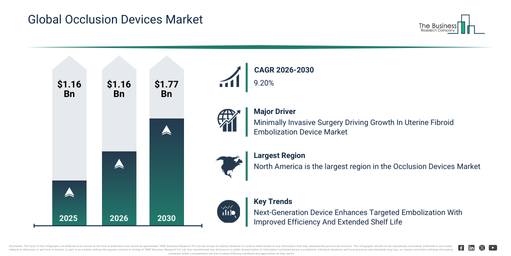
    The occlusion devices market size is expected to experience robust growth over the next few years. It is forecast to grow to $6.54 billion in 2030, achieving a compound annual growth rate (CAGR) of 9.2%. This growth throughout the forecast period is driven by an increase in neurological disorders, the rising number of minimally invasive surgeries, advancements in device technology, the expansion of ambulatory care centers, and favorable reimbursement policies. Prominent trends for the forecast period include a shift towards minimally invasive procedures, a greater adoption of catheter-based therapies, an increasing preference for embolization procedures, growth in neurovascular interventions, and a demand for high-precision occlusion devices.

    Get A Free Sample Report With In-Depth Market Insights:

    https://thebusinessresearchcompany.com/sample_request?id=22768675&type=smp&name=Occlusion%20Devices%20Market%20Report%202026&utm_source=Blogs&utm_medium=Paid&utm_campaign=Sep_PR

    Occlusion Devices Market Growth Momentum: What Factors Are Shaping Demand?

    The increasing requirement for minimally invasive techniques is projected to drive the expansion of the occlusion devices market moving forward. Minimally invasive surgeries are defined as surgical methods that employ small cuts or existing body orifices to access and treat internal structures, organs, or tissues, minimizing damage to the patient’s body. These techniques offer medical, financial, and aesthetic advantages that are highly attractive to both patients and healthcare providers, thus fueling their growing adoption across various medical specialties. Occlusion devices are medical instruments utilized in minimally invasive procedures to block or close off blood vessels, ducts, or other pathways within the body. Such devices are frequently used in areas like interventional cardiology and radiology to address conditions including aneurysms, abnormal blood flow, or congenital heart defects. For instance, in June 2024, the International Society of Aesthetic Plastic Surgery (ISAPS) reported that in 2023, the total volume of aesthetic procedures approached 35 million, with combined surgical and non-surgical procedures seeing a 3.4% increase to reach 34.9 million. Therefore, the heightened demand for minimally invasive techniques is a significant impetus for the growth of the occlusion devices market.

    Occlusion Devices Market Segmentation And Category Overview

    The occlusion devices market covered in this report is segmented –

    1) By Product: Occlusion Removal Devices, Embolization Devices, Tubal Occlusion Devices, Support Devices

    2) By Application: Neurology, Cardiology, Peripheral Vascular Diseases, Urology, Oncology, Gynecology

    3) By End User: Hospitals Diagnostic Centers And Surgical Centers, Ambulatory Care Centers, Research Laboratories And Academic Institutes

    Subsegments:

    1) By Occlusion Removal Devices: Thrombectomy Devices, Catheter-Based Occlusion Removal Devices, Aspiration Systems, Mechanical Clot Retrieval Systems

    2) By Embolization Devices: Coil Embolization Devices, Particle Embolization Devices, Balloon Embolization Devices, Gel Embolic Agents, Liquid Embolic Agents, Stent-Assisted Embolization Devices

    3) By Tubal Occlusion Devices: Essure Devices, Hysteroscopic Sterilization Systems, Fallopian Tube Clips, Tubal Ligation Devices

    4) By Support Devices: Occlusion Catheters, Guidewires For Occlusion, Supportive Sheaths, Stent-Grafts For Occlusion Support

    Occlusion Devices Market Trends Redefining Industry Growth

    Leading companies within the occlusion devices market are prioritizing the creation of innovative solutions, including advanced next-generation devices, to refine targeted embolization procedures. A next-generation device represents an updated version of existing technology, offering superior performance, enhanced features, and novel capabilities. For instance, in July 2025, Embolx, a US-based medical equipment manufacturer, launched the Sniper G3 Balloon Occlusion Microcatheter, which substantially improves targeted embolization through greater efficiency, ease of use, and an extended shelf life. This third-generation device doubles its shelf life to 24 months, providing improved inventory flexibility. Developed with direct input from interventional radiologists, it features enhanced trackability and a simplified preparation process that cuts setup time to under a minute. These improvements underscore Embolx’s dedication to physician-centered design, aimed at streamlining clinical workflows and optimizing procedural outcomes. The Sniper G3 is available in all standard lengths and is prepared for global distribution, strengthening its position as a key tool in embolization therapy.

    Occlusion Devices Market Industry Leaders And Competitive Landscape

    Major companies operating in the occlusion devices market are Johnson & Johnson, Abbott Laboratories, Medtronic PLC, Boston Scientific Corporation, B. Braun Melsungen AG, Terumo Corporation, Cook Group Incorporated, Merit Medical Systems Inc., Lepu Medical Technology Beijing Co. Ltd., MicroPort Scientific Corporation, Penumbra Inc., Asahi Intecc Co. Ltd., Angiodynamics Inc., LeMaitre Vascular Inc., Elixir Medical Corporation, Vascular Concepts Ltd., Occlutech, W L Gore & Associates Inc., LifeTech Scientific Corporation, Cardiovascular Systems Inc., Venus Medtech, CeloNova Biosciences, Cordis Corporation, Pfizer Inc., Sirtex Medical Limited, Nordion Canada Inc., AtriCure Inc., Phenox GmbH, Balt Extrusion SAS

    View The Full Occlusion Devices Market Report:

    https://thebusinessresearchcompany.com/report/occlusion-devices-global-market-report?utm_source=Blogs&utm_medium=Paid&utm_campaign=Sep_PR

    Occlusion Devices Market Regional Analysis And Leading Geography

    North America was the largest region in the occlusion devices market in 2025. Asia-Pacific is expected to be the fastest-growing region in the forecast period. The regions covered in the occlusion devices market report are Asia-Pacific, South East Asia, Western Europe, Eastern Europe, North America, South America, Middle East, Africa.

    Reach Out To Our Team:

    The Business Research Company: https://www.thebusinessresearchcompany.com/

    Americas: +1 310-496-7795

    Asia: +44 7882 955267 & +91 8897263534

    Europe: +44 7882 955267

    Email us at: marketing@tbrc.info

    Follow us on:

    LinkedIn: https://in.linkedin.com/company/the-business-research-company

    YouTube: https://www.youtube.com/channel/UC24_fI0rV8cR5DxlCpgmyFQ

    Global Market Model: https://www.thebusinessresearchcompany.com/global-market-model
  • Obstetrics Device Market Growth Forecast Through 2030: Market Size And Trends In 2026

    Obstetrics Device Market Growth Forecast Through 2030: Market Size And Trends In 2026

    Backed by market attractiveness analysis, total addressable market sizing, company benchmarking matrices, interactive Excel dashboards, wider supply chain intelligence, emerging startup coverage, and detailed product-level insights, The Business Research Company’s 2026 market reports are designed to offer research that is more actionable and strategically valuable than ever.

    Obstetrics Device Market Expansion Outlook: What Revenue Opportunities Are Ahead?

    The obstetrics device market has experienced significant growth recently. This market is predicted to expand from $4.48 billion in 2025 to $4.74 billion in 2026, exhibiting a compound annual growth rate (CAGR) of 5.8%. Historically, this growth can be attributed to the limited availability of advanced fetal monitoring devices, a reliance on conventional surgical instruments, the expansion of hospital maternity wards, increasing awareness of maternal health, and the adoption of basic ultrasound technologies.

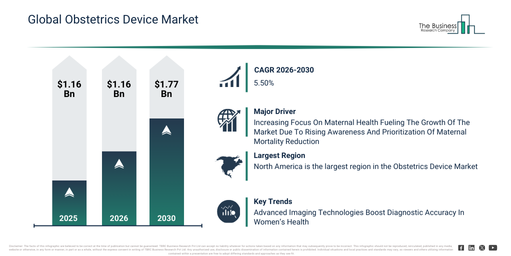
    The obstetrics device market is projected to experience robust expansion over the coming years. Its size is anticipated to reach $5.87 billion by 2030, demonstrating a compound annual growth rate (CAGR) of 5.5%. This anticipated growth during the forecast period is attributable to factors such as the development of wireless and digital monitoring devices, the increasing scope of cesarean and labor care procedures, growing investment in obstetric diagnostic equipment, the integration of AI and cloud-based healthcare solutions, and the wider adoption of smart catheters and minimally invasive instruments. Key trends expected during the forecast timeframe encompass the rising uptake of wireless and remote monitoring devices, an increase in minimally invasive obstetric surgeries, a surge in demand for advanced ultrasound and imaging systems, a heightened emphasis on maternal and neonatal safety standards, and the incorporation of smart catheters and diagnostic devices.

    Get A Free Sample Report With In-Depth Market Insights:

    https://thebusinessresearchcompany.com/sample_request?id=38631480&type=smp&name=Obstetrics%20Device%20Market%20Report%202026&utm_source=Blogs&utm_medium=Paid&utm_campaign=Sep_PR

    Obstetrics Device Market Expansion Drivers: What’s Shaping Future Growth?

    A heightened emphasis on maternal well-being is projected to drive the expansion of the obstetrics device market moving forward. Maternal health encompasses the welfare of women throughout gestation, parturition, and the postpartum period. This growing focus on maternal health is a result of increasing awareness, as governments and various organizations globally prioritize reducing maternal mortality and enhancing pregnancy outcomes. Obstetrics devices contribute to maternal health by offering accurate monitoring and diagnostic capabilities, facilitating the early detection of complications, and ensuring safer pregnancies. These tools improve clinical decision-making and support superior outcomes for both mothers and their infants. For instance, in April 2025, the Centers for Disease Control and Prevention, a US-based government agency, reported that the number of births in 2024 reached 3,622,673, indicating a 1% increase from 3,591,328 in 2023. Thus, the intensified attention on maternal health is propelling the growth of the obstetrics device market.

    Obstetrics Device Market Segment Outlook: Which Categories Are Growing Fastest?

    The obstetrics device market covered in this report is segmented –

    1) By Type: Monitoring Devices, Surgical Instruments, Diagnostic Devices, Catheters

    2) By Technology: Digital Monitoring, Ultrasound Imaging, Wireless Technologies

    3) By Application: Pregnancy Monitoring, Labor And Delivery, Cesarean Sections, Neonatal Care, Reproductive Health

    4) By End User: Hospitals, Clinics, Birthing Centers, Ambulatory Surgical Centers

    Subsegments:

    1) By Monitoring Devices: Fetal Monitors, Contraction Monitors, Maternal Vital Sign Monitors, Ultrasound Monitoring Devices

    2) By Surgical Instruments: Forceps, Scissors, Retractors, Curettes, Needle Holders

    3) By Diagnostic Devices: Ultrasound Machines, Dopplers, Amniotic Fluid Analyzers, Biochemical Analyzers

    4) By Catheters: Intrauterine Catheters, Foley Catheters, Balloon Catheters, Cervical Ripening Catheters

    Obstetrics Device Market Strategic Trends: What Defines The Next Growth Phase?

    Key companies operating within the obstetrics device market are prioritizing the development of technologically sophisticated products, including innovative premium ultrasound systems, to enhance diagnostic accuracy and simplify operational workflows in both obstetric and cardiovascular care. A premium ultrasound system is defined as a high-end diagnostic imaging instrument that provides advanced imaging capabilities, superior image quality, and state-of-the-art technologies for precise medical evaluations. For instance, in September 2024, Samsung Medison Co. Ltd., a medical device company situated in South Korea, introduced HERA Z20, a novel premium ultrasound system designed for obstetrics and gynecology. The HERA Z20 incorporates advanced imaging technologies that deliver exceptional clarity and precision, alongside enhanced diagnostic functionalities specifically adapted for women’s health, and an intuitive user interface that improves workflow efficiency. It also integrates artificial intelligence (AI)-driven tools to support clinicians in making quicker and more accurate decisions, thereby establishing a new benchmark for ultrasound systems in obstetrics and gynecology.

    Obstetrics Device Market Key Participants And Competitive Landscape

    Major companies operating in the obstetrics device market are Medtronic plc, Siemens Healthineers AG, Fujifilm Holdings Corporation, Becton Dickinson and Company, Royal Philips N V, Stryker Corporation, GE Healthcare, Olympus Corporation, Shenzhen Mindray Bio Medical Electronics Co Ltd, Hologic Inc, Mindray Medical International Limited, CooperSurgical Inc, Canon Medical Systems Corporation, Karl Storz GmbH And Co KG, Cook Medical Incorporated, Natus Medical Incorporated, Esaote SpA, Atom Medical Corporation, CHISON Medical Technologies Co Ltd, Samsung Medison Co Ltd, Edan Instruments Inc, Hitachi Healthcare

    View The Full Obstetrics Device Market Report:

    https://thebusinessresearchcompany.com/report/obstetrics-device-global-market-report?utm_source=Blogs&utm_medium=Paid&utm_campaign=Sep_PR

    Obstetrics Device Market Geographic Analysis: Where Is Demand Accelerating Fastest?

    North America was the largest region in the obstetrics device market in 2025. Asia-Pacific is expected to be the fastest-growing region in the forecast period. The regions covered in the obstetrics device market report are Asia-Pacific, South East Asia, Western Europe, Eastern Europe, North America, South America, Middle East, Africa.

    Reach Out To Our Team:

    The Business Research Company: https://www.thebusinessresearchcompany.com/

    Americas: +1 310-496-7795

    Asia: +44 7882 955267 & +91 8897263534

    Europe: +44 7882 955267

    Email us at: marketing@tbrc.info

    Follow us on:

    LinkedIn: https://in.linkedin.com/company/the-business-research-company

    YouTube: https://www.youtube.com/channel/UC24_fI0rV8cR5DxlCpgmyFQ

    Global Market Model: https://www.thebusinessresearchcompany.com/global-market-model
  • Nursing Robots Market Analysis: $1.76 Billion Market Size In 2026 And Future Growth Prospects

    Nursing Robots Market Analysis: $1.76 Billion Market Size In 2026 And Future Growth Prospects

    Featuring market attractiveness scoring, total addressable market sizing, company benchmarking matrices, interactive Excel dashboards, deeper supply chain intelligence, emerging startup tracking, and granular product-level insights, The Business Research Company’s 2026 market reports are built to deliver research that is both more actionable and more strategically valuable.

    Nursing Robots Market Growth Potential: How Will Market Size Shift Through 2030?

    The nursing robots market has seen substantial expansion in recent years. Its valuation is set to rise from $1.46 billion in 2025 to $1.76 billion in 2026, achieving a compound annual growth rate (CAGR) of 20.3%. This historic growth can be linked to a heavy reliance on human care, scarcity of robotic alternatives, an expanding elderly demographic, increasing deficits in the healthcare labor force, and heightened patient admissions in medical facilities.

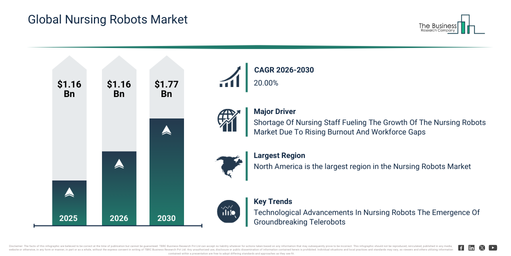
    The nursing robots market is projected to experience swift expansion in the coming years. It is set to reach $3.64 billion in 2030, exhibiting a compound annual growth rate (CAGR) of 20.0%. This anticipated growth during the forecast period stems from various factors, including progress in AI-powered caregiving robots, seamless integration with IoT and cloud platforms, increasing consumer need for home care robotic devices, the broadening scope of rehabilitation robotics, and heightened investment in autonomous delivery and patient monitoring robots. Key developments expected in this period encompass the incorporation of robotics into elderly care services, a surge in the embrace of autonomous medication administration systems, the enlargement of robotics solutions for post-surgical recovery, the wider application of robots for patient monitoring and aid, and the increased deployment of robots for rehabilitation and physical therapy.

    Get A Free Sample Report With In-Depth Market Insights:

    https://thebusinessresearchcompany.com/sample_request?id=57778122&type=smp&name=Nursing%20Robots%20Market%20Report%202026&utm_source=Blogs&utm_medium=Paid&utm_campaign=Sep_PR

    Nursing Robots Market Development Factors: What’s Supporting Demand?

    The growing scarcity of nursing staff is anticipated to drive the expansion of the nursing robots market in the future. Nursing staff are healthcare professionals who deliver care and support to patients, primarily in hospitals, clinics, nursing homes, and other healthcare settings. This shortage is intensifying due to high burnout rates, resulting in early departures, decreased working hours, and fewer individuals staying in the profession. Nursing robots assist staff by undertaking repetitive or physically demanding duties such as patient lifting, supply delivery, or vital sign monitoring, which lessens their workload and allows nurses to concentrate on essential patient care. As an example, a May 2024 report from the World Health Organization, a Switzerland-based intergovernmental organization, indicated that the global nursing workforce comprises approximately 29 million nurses and 2.2 million midwives, with the WHO forecasting a shortfall of 4.5 million nurses and 310,000 midwives by 2030. Consequently, the rising shortage of nursing staff is fueling the growth of the nursing robots market.

    Nursing Robots Market Segment Landscape: Which Areas Lead Development?

    The nursing robots market covered in this report is segmented –

    1) By Robot Form: Humanoid Robots, Assistive Robots, Autonomous Robots

    2) By Product Type: Independent Support Robots, Daily Care And Transportation Robots, Medication Dispensing Robots, Other Product Types

    3) By Application: Elderly Care, Post-Surgical Care, Mental Health Support, Patient Monitoring And Assistance, Rehabilitation And Physical Therapy

    4) By End User: Hospitals And Clinics, Home Care Settings, Nursing Home, Other End Users

    Subsegments:

    1) By Humanoid Robots: Social Assistance Robots, Caregiving Robots, Communication Robots, Monitoring And Surveillance Robots

    2) By Assistive Robots: Physical Assistance Robots, Mobility Aid Robots, Rehabilitation Robots

    3) By Autonomous Robots: Autonomous Delivery Robots, Autonomous Medication Management Robots, Autonomous Monitoring Robots, Autonomous Disinfection Robots

    Nursing Robots Market Transformation Trends: What Innovations Are Driving Change?

    Leading companies in the nursing robot market are concentrating on technological breakthroughs like telerobots to improve patient care and ease the burden on healthcare professionals. A telerobot is an advanced remotely controlled robotic system that introduces novel features or capabilities, significantly progressing the field of robotics. For example, in June 2023, Touchlab, a Scotland-based deep-tech company, launched Välkky, an innovative nurse-assisting telerobot, at Laakso Hospital in Helsinki, Finland. This introduction was part of a three-month pilot program designed to investigate how advanced robotics can reduce the workload of healthcare professionals and enhance patient care. Välkky boasts unique characteristics including ultra-thin electronic skin for tactile sensing, real-time remote control via haptic systems, the capability to perform routine healthcare tasks, and integrated safety mechanisms for secure patient interaction.

    Nursing Robots Market Top Companies Driving Competitive Growth

    Major companies operating in the nursing robots market are Toyota Motor Corporation, Panasonic Holdings Corporation, KUKA Robotics Corporation, RIKEN, SoftBank Robotics Group Corp., Shine Technology Co Ltd, Shenzhen Zuowei Technology Co Ltd, Diligent Robotics Inc, SARA Robotics And Automation Services, Hansen Medical Inc, Chang Robotics Co Ltd, CT Asia Robotics Co Ltd, Club First Roboptics Co Ltd, Hstar Technologies, ABB Robotics, Yaskawa Electric Corporation, FANUC Corporation, Kawasaki Robotics, PAL Robotics, Ubtech Robotics Corp, Ecovacs Robotics, Pudu Robotics

    View The Full Nursing Robots Market Report:

    https://thebusinessresearchcompany.com/report/nursing-robots-global-market-report?utm_source=Blogs&utm_medium=Paid&utm_campaign=Sep_PR

    Nursing Robots Market Global Footprint: Which Region Leads The Industry?

    North America was the largest region in the nursing robots market in 2025. Asia-Pacific is expected to be the fastest-growing region in the forecast period. The regions covered in the nursing robots market report are Asia-Pacific, South East Asia, Western Europe, Eastern Europe, North America, South America, Middle East, Africa.

    Reach Out To Our Team:

    The Business Research Company: https://www.thebusinessresearchcompany.com/

    Americas: +1 310-496-7795

    Asia: +44 7882 955267 & +91 8897263534

    Europe: +44 7882 955267

    Email us at: marketing@tbrc.info

    Follow us on:

    LinkedIn: https://in.linkedin.com/company/the-business-research-company

    YouTube: https://www.youtube.com/channel/UC24_fI0rV8cR5DxlCpgmyFQ

    Global Market Model: https://www.thebusinessresearchcompany.com/global-market-model

  • Nursing Products Market 2026 Market Size And Growth Forecast: Key Trends To Watch

    Nursing Products Market 2026 Market Size And Growth Forecast: Key Trends To Watch

    Built to provide research that’s more actionable and strategically valuable, The Business Research Company’s 2026 market reports include market attractiveness analysis, total addressable market sizing, company benchmarking matrices, interactive Excel dashboards, broader supply chain intelligence, emerging startup tracking, and in-depth product insights.

    Nursing Products Market Value Analysis: What Growth Lies Ahead Over The Forecast Period?

    The nursing products market size has demonstrated strong expansion in recent years. This market is set to increase from $5.68 billion in 2025 to $6.12 billion in 2026, achieving a compound annual growth rate (CAGR) of 7.7%. During the past period, this growth was primarily due to factors such as rising breastfeeding awareness initiatives, an increase in hospital births and the uptake of postpartum care, greater female participation in the workforce, the expansion of maternity healthcare facilities, and higher disposable incomes among households in urban areas.

    The nursing products market is anticipated to experience substantial growth over the next few years. It is projected to expand to $8.11 billion in 2030, exhibiting a compound annual growth rate (CAGR) of 7.3%. This expected growth throughout the forecast period can be attributed to several factors, including an increase in dual-income households, a greater emphasis on infant nutrition and immunity, the growing reach of online retail platforms, continuous product innovation for enhanced comfort and portability, and the expanding adoption of home healthcare solutions. Key trends during this period are expected to encompass the rising uptake of wearable and hands-free breast pumps, an increasing consumer demand for organic and natural nursing care products, a growing preference for reusable and eco-friendly nursing supplies, the expansion of e-commerce and direct-to-consumer sales channels, and the integration of comfort-focused and ergonomic product designs.

    Get A Free Sample Report With In-Depth Market Insights:

    https://thebusinessresearchcompany.com/sample_request?id=60009417&type=smp&name=Nursing%20Products%20Market%20Report%202026&utm_source=Blogs&utm_medium=Paid&utm_campaign=Sep_PR

    Nursing Products Market Industry Drivers: What’s Behind The Revenue Growth?

    The increasing count of women engaged in the workforce is anticipated to fuel the expansion of the nursing products market moving ahead. These working women are individuals actively contributing to the workforce, earning an income through their employment or vocations. Their numbers are growing, primarily attributed to enhanced educational achievements, which in turn open doors to superior career prospects. Nursing products offer convenience and aid for breastfeeding and infant care, thereby assisting working women in managing their professional duties alongside their child’s dietary requirements. A relevant example from March 2023, based on a report from the US Department of Labor, a US-based government agency, indicates that the overall increase in women within the labor force by 2031 is predicted to be predominantly led by those aged 25 to 54, expected to contribute approximately 2.9 million additional workers. Consequently, the growing population of working women is a key factor propelling the development of the nursing products market.

    Nursing Products Market Segments: Where Is Growth Concentrated?

    The nursing products market covered in this report is segmented –

    1) By Type: Breast Pump, Nursing Bra, Nipple Cream, Pumping Accessories, Nursing Pillow, Nursing Cover, Nursing Pad, Nursing Station, Other Types

    2) By Usability: Reusable, Disposable

    3) By Distribution Channel: Online Retail, Pharmacies And Drug Stores, Supermarkets And Hypermarkets, Specialty Stores

    4) By Application: Postpartum Care, Infant Feeding, Lactation Support

    5) By End-User: Hospitals And Clinics, Home Healthcare, Maternity Centers And Birthing Clinics

    Subsegments:

    1) By Breast Pump: Manual Breast Pumps, Electric Breast Pumps, Wearable Breast Pumps, Hospital-grade Breast Pumps, Battery-powered Breast Pumps

    2) By Nursing Bra: Maternity Bras, Pumping Bras, Sleep Nursing Bras, Sports Nursing Bras, Seamless Nursing Bras

    3) By Nipple Cream: Lanolin-based Creams, Organic Or Natural Creams, Medicated Creams, Vegan Formulas, Oil-based Balms

    4) By Pumping Accessories: Storage Bags Or Containers, Pumping Bottles, Flanges And Shields, Tubing And Valves, Pump Cleaning Supplies

    5) By Nursing Pillow: Wrap-around Pillows, Inflatable Nursing Pillows, Travel-size Nursing Pillows, Adjustable Nursing Pillows, Multipurpose Pillows

    6) By Nursing Cover: Poncho-style Covers, Apron-style Covers, Infinity Scarf Covers, Convertible Covers, Blanket-style Covers

    7) By Nursing Pad: Disposable Nursing Pads, Reusable Nursing Pads, Silicone Nursing Pads, Organic Cotton Pads, Hydrogel Pads

    8) By Nursing Station: Rocking Chairs Or Gliders, Changing Tables, Storage Units, Nursing Carts, Lighting And Comfort Accessories

    9) By Other Types: Breast Shells, Milk Collection Cups, Nursing Sleepwear, Lactation Massagers, Nipple Shields

    #Nursing Products Market Growth Trends: What’s Shaping The Future Outlook?

    Leading companies in the nursing products market are concentrating on developing innovative solutions, such as hands-free breast pumps, to improve convenience, mobility, and comfort for nursing mothers. A hands-free breast pump refers to a wearable, portable device designed to fit inside a bra, enabling mothers to express milk discreetly and comfortably without using their hands. For instance, in June 2025, Ameda Inc., a US-based medical equipment manufacturing company, launched a GLO Wearable Breast Pump aimed at enhancing convenience and mobility for nursing mothers. It delivers genuine hands-free, hospital-strength pumping, featuring 15 customizable suction levels, a discreet design, and up to 100 minutes of battery life, making milk expression comfortable, convenient, and efficient for busy moms. Its objective is to empower mothers to pump confidently anytime, anywhere, without compromising comfort or efficiency.

    Nursing Products Market Leading Players And Competitive Positioning

    Major companies operating in the nursing products market are Johnson And Johnson, Medline Industries LP, Koninklijke Philips NV, Pigeon Corporation, Artsana SpA, Medela AG, Evenflo Feeding Inc, Mapa GmbH, Mayborn Group Limited, Dr Browns, Lansinoh Laboratories Inc, Cliniva Healthcare, Uzinmedicare Co Ltd, Ameda Inc, Tommee Tippee, Spectra Baby USA, Elvie Limited, Willow Innovations Inc, NUK USA LLC, Philips Avent, Chicco USA Inc, Mothercare Plc

    View The Full Nursing Products Market Report:

    https://thebusinessresearchcompany.com/report/nursing-products-global-market-report?utm_source=Blogs&utm_medium=Paid&utm_campaign=Sep_PR

    Nursing Products Market Regional Distribution: Which Areas Power Market Growth?

    North America was the largest region in the nursing products market in 2025. Asia-Pacific is expected to be the fastest-growing region in the forecast period. The regions covered in the nursing products market report are Asia-Pacific, South East Asia, Western Europe, Eastern Europe, North America, South America, Middle East, Africa.

    Reach Out To Our Team:

    The Business Research Company: https://www.thebusinessresearchcompany.com/

    Americas: +1 310-496-7795

    Asia: +44 7882 955267 & +91 8897263534

    Europe: +44 7882 955267

    Email us at: marketing@tbrc.info

    Follow us on:

    LinkedIn: https://in.linkedin.com/company/the-business-research-company

    YouTube: https://www.youtube.com/channel/UC24_fI0rV8cR5DxlCpgmyFQ

    Global Market Model: https://www.thebusinessresearchcompany.com/global-market-model
  • Nucleic Acid Extraction Instruments And Reagents Market Size Forecast: How The Industry Is Expected To Grow From 2026 To 2030

    Nucleic Acid Extraction Instruments And Reagents Market Size Forecast: How The Industry Is Expected To Grow From 2026 To 2030

    Backed by market attractiveness analysis, total addressable market sizing, company benchmarking matrices, interactive Excel dashboards, wider supply chain intelligence, emerging startup coverage, and detailed product-level insights, The Business Research Company’s 2026 market reports are designed to offer research that is more actionable and strategically valuable than ever.

    Nucleic Acid Extraction Instruments And Reagents Market Size Forecast: How Big Could The Market Get By 2030?

    The nucleic acid extraction instruments and reagents market size has experienced rapid growth in recent years. This market is projected to expand from $4.97 billion in 2025 to $5.54 billion in 2026, demonstrating a compound annual growth rate (CAGR) of 11.5%. Historically, this expansion can be linked to factors such as the rise in molecular diagnostics testing, broader application of PCR-based techniques, increased research in genomics and proteomics, a growing embrace of automated laboratory workflows, and the widespread availability of standardized extraction kits.

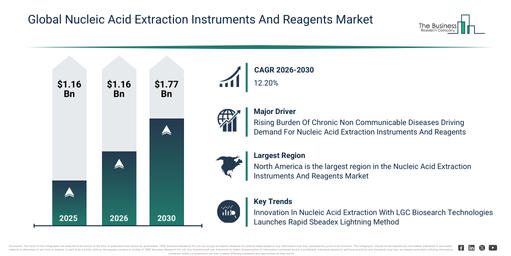
    The nucleic acid extraction instruments and reagents market size is anticipated to experience substantial expansion in the coming years. By 2030, this market is forecasted to reach $8.78 billion, achieving a compound annual growth rate (CAGR) of 12.2%. This projected growth during the forecast period stems from several factors, including the rising need for personalized medicine, broader infectious disease testing, increased financial commitments to genomics research, the growing uptake of fully automated laboratory systems, and a greater emphasis on quick diagnostic results. Key developments anticipated in this period encompass the greater embrace of automated extraction systems, an escalating requirement for high-throughput nucleic acid processing, the expanded application of magnetic bead-based extraction techniques, the proliferation of integrated sample-to-result platforms, and a heightened emphasis on the precision and consistency of extraction processes.

    Get A Free Sample Report With In-Depth Market Insights:

    https://thebusinessresearchcompany.com/sample_request?id=66857741&type=smp&name=Nucleic%20Acid%20Extraction%20Instruments%20And%20Reagents%20Market%20Report%202026&utm_source=Blogs&utm_medium=Paid&utm_campaign=Sep_PR

    Nucleic Acid Extraction Instruments And Reagents Market Growth Factors: What’s Supporting Expansion?

    The expanding occurrence of chronic non-communicable diseases (NCDs) is anticipated to drive the demand within the nucleic acid extraction instruments and reagents market. These NCDs encompass enduring health conditions such as cardiovascular ailments, various cancers, chronic respiratory illnesses, and diabetes, which progress gradually and contribute significantly to global disease burden and mortality. Nucleic acid extraction instruments and reagents play a vital role by enabling molecular diagnostics, genetic testing, biomarker analysis, pharmacogenomic profiling, and disease monitoring, all crucial for better comprehension and treatment of these chronic conditions. For example, data from the American Heart Association, a US-based non-profit organization, indicated in January 2024 that the age-adjusted mortality rate from cardiovascular disease rose to 233.3 per 100,000 in 2024, marking a 4.0% increase from 224.4 per 100,000 recorded in 2023. Consequently, the growing prevalence of chronic non-communicable diseases is a key factor boosting the nucleic acid extraction instruments and reagents market.

    Nucleic Acid Extraction Instruments And Reagents Market Segment Analysis: What Are The Core Market Categories?

    The nucleic acid extraction instruments and reagents market covered in this report is segmented –

    1) By Type: Instruments, Spin Columns, Beads Or Magnetic Beads, Automated Nucleic Acid Extraction Systems, Extraction Kits And Reagents And Consumables, Other Types

    2) By Extraction Type: DNA Extraction, DNA Or RNA Extraction, RNA Extraction

    3) By Method: Solution-Based Methods, Solid-Phase-Based Methods

    4) By End User: Academic Research Institutes, Hospitals And Diagnostic Centers, Pharmaceutical And Biotechnology Industry, Contract Research Organizations (CROs), Other End Users

    Subsegments:

    1) By Instruments: Manual Extraction Instruments, Automated Extraction Instruments, Specialized Nucleic Acid Extractors

    2) By Spin Columns: Standard, High-Throughput, Specialized

    3) By Beads Or Magnetic Beads: Silica-Based Beads, Magnetic Beads For DNA Or RNA Extraction, Functionalized Beads For Nucleic Acid Binding

    4) By Automated Nucleic Acid Extraction Systems: Fully Automated Systems, Semi-Automated Systems

    5) By Extraction Kits And Reagents And Consumables: DNA Extraction Kits, RNA Extraction Kits, Reagents For Nucleic Acid Purification, Consumables

    6) By Other Types: Specialized Extraction Methods, Hybrid Methods

    Nucleic Acid Extraction Instruments And Reagents Market Industry Trends: What’s Reshaping Demand?

    Leading companies in the nucleic acid extraction instruments and reagents market are concentrating on developing novel solutions, such as nucleic acid extraction systems, to highlight their commitment to innovation and meeting particular market demands. These systems encompass a suite of laboratory tools and technologies engineered to isolate and purify nucleic acids (DNA and RNA) from various biological specimens, including blood, tissues, cells, and other bodily fluids. As an illustration, in January 2024, LGC Biosearch Technologies, a UK-based biotechnology firm, introduced the sbeadex Lightning nucleic acid extraction method, which transforms DNA purification by enabling high-purity extraction from plant and animal samples in just 5 minutes. This groundbreaking technique streamlines the conventional five-step process into three steps: bind, wash, and elute, leading to a time saving of up to 40 minutes per sample and boosting throughput by as much as tenfold. The resulting extracted DNA generally achieves high purity, with 260/280 ratios between 1.7 and 2, making it suitable for applications such as PCR and next-generation sequencing (NGS).

    Nucleic Acid Extraction Instruments And Reagents Market Competitive Overview And Top Companies

    Major companies operating in the nucleic acid extraction instruments and reagents market are Thermo Fisher Scientific Inc., F Hoffmann-La Roche Ltd., Merck Group, Corning Incorporated, Agilent Technologies Inc., PerkinElmer, Beckman Coulter, Bio-Rad Laboratories Inc., Qiagen NV, Eppendorf AG, LGC Biosearch Technologies, Promega Corporation, RBC Bioscience Corp., Takara Bio Inc., Meridian Bioscience, Bioneer Corporation, Macherey-Nagel, New England Biolabs, Miltenyi Biotec, Omega Bio-tek, BioVision Inc., Norgen Biotek Corp., Biosan Laboratories Inc., G-Biosciences, ADS Biotec Inc., BioChain Institute Inc., Lucigen Corporation

    View The Full Nucleic Acid Extraction Instruments And Reagents Market Report:

    https://thebusinessresearchcompany.com/report/nucleic-acid-extraction-instruments-and-reagents-global-market-report?utm_source=Blogs&utm_medium=Paid&utm_campaign=Sep_PR

    Nucleic Acid Extraction Instruments And Reagents Market Leading Geography: Which Region Contributes The Most Revenue?

    North America was the largest region in the nucleic acid extraction instruments and reagents market in 2025. The regions covered in the nucleic acid extraction instruments and reagents market report are Asia-Pacific, South East Asia, Western Europe, Eastern Europe, North America, South America, Middle East, Africa.

    Reach Out To Our Team:

    The Business Research Company: https://www.thebusinessresearchcompany.com/

    Americas: +1 310-496-7795

    Asia: +44 7882 955267 & +91 8897263534

    Europe: +44 7882 955267

    Email us at: marketing@tbrc.info

    Follow us on:

    LinkedIn: https://in.linkedin.com/company/the-business-research-company

    YouTube: https://www.youtube.com/channel/UC24_fI0rV8cR5DxlCpgmyFQ

    Global Market Model: https://www.thebusinessresearchcompany.com/global-market-model

  • Nucleic Acid Based Gene Therapy Market Reaches $1.44 Billion In 2026: Forecast And Growth Opportunities

    Nucleic Acid Based Gene Therapy Market Reaches $1.44 Billion In 2026: Forecast And Growth Opportunities

    Featuring market attractiveness scoring, total addressable market sizing, company benchmarking matrices, interactive Excel dashboards, deeper supply chain intelligence, emerging startup tracking, and granular product-level insights, The Business Research Company’s 2026 market reports are built to deliver research that is both more actionable and more strategically valuable.

    Nucleic Acid Based Gene Therapy Market Revenue Outlook: What CAGR Lies Ahead Through 2030?

    The nucleic acid based gene therapy market has demonstrated significant growth in recent years. This market is projected to expand from $0.88 billion in 2025 to $0.97 billion in 2026, achieving a compound annual growth rate (CAGR) of 10.2%. Historically, this expansion has been driven by several factors, including advancements in molecular biology research, a deeper understanding of genetic disease mechanisms, the expansion of clinical trials for gene therapies, rising investment in biotechnology research, and early regulatory approvals for nucleic acid therapies.

    The nucleic acid based gene therapy market is anticipated to undergo substantial expansion in the forthcoming years. It will grow to $1.44 billion in 2030 at a compound annual growth rate (CAGR) of 10.4%. This growth over the projected period can be attributed to several factors, including the increasing integration of CRISPR-based treatments, a growing demand for therapies addressing rare diseases, the expansion of facilities for gene therapy manufacturing, an intensifying focus on personalized oncology treatments, and an uptick in public and private funding directed towards genetic medicine. Noteworthy trends for the forecast period encompass a rising adoption of RNA-based therapeutics, increased utilization of both viral and non-viral gene delivery systems, a stronger emphasis on targeted gene editing technologies, the broadening availability of personalized genetic therapies, and an enhanced focus on precision medicine applications.

    Get A Free Sample Report With In-Depth Market Insights:

    https://thebusinessresearchcompany.com/sample_request?id=82028704&type=smp&name=Nucleic%20Acid%20Based%20Gene%20Therapy%20Market%20Report%202026&utm_source=Blogs&utm_medium=Paid&utm_campaign=Sep_PR

    Nucleic Acid Based Gene Therapy Market Demand Drivers: What’s Powering Industry Growth?

    The future expansion of the nucleic acid based gene therapy market is anticipated to be driven by increasing financial backing from governments and private enterprises. This financial backing encompasses monetary investments, grants, or subsidies originating from public or private entities, aimed at advancing the research, development, and market availability of these treatments. The surge in financial aid stems from a heightened global focus on finding remedies for rare and genetic ailments that currently have no effective cures. Government funding specifically accelerates advancements in nucleic-acid–based gene therapy by providing critical resources for research, clinical trials, and infrastructure, which directly fosters innovation and the development of practical treatments. For example, in July 2023, the U.S. National Institutes of Health, a U.S.-based federal health research agency, allocated over $140 million to expedite genome editing methods, including CRISPR and other nucleic acid technologies, for rare neurological and blood disorders. This represents a substantial rise from the $92 million in annual funding provided in 2022. Consequently, the growing financial support from governments and companies is propelling the growth of the nucleic acid based gene therapy market.

    Nucleic Acid Based Gene Therapy Market Segment Breakdown: Which Categories Lead On Revenue?

    The nucleic acid based gene therapy market covered in this report is segmented –

    1) By Technology: Anti-Sence and Anti-Gene, Short Inhibitory Sequences, Gene Transfer Therapy, Nucleoside Analogs, Ribozymes, Aptamers, Other Technologies

    2) By Application: Oncology, Muscular Dystrophy/ Muscular Disorders, Rare Diseases

    3) By End User: Hospitals And Clinics, Academic And Research Institutes

    Subsegments:

    1) By Anti-Sense And Anti-Gene: Oligonucleotide Therapeutics, Peptide Nucleic Acids (PNA), Morpholino Oligomers (MO)

    2) By Short Inhibitory Sequences (siRNA): Synthetic siRNA, Encapsulation/Delivery Systems for siRNA, Target-specific siRNA Therapies

    3) By Gene Transfer Therapy: Viral Vectors (Adenovirus, Lentivirus, Retrovirus, AAV), Non-Viral Vectors (Liposomes, Electroporation, Gene Gun)

    4) By Nucleoside Analogs: Purine Analogs, Pyrimidine Analogs

    5) By Ribozymes: Trans-Splicing Ribozymes, Hammerhead Ribozymes

    6) By Aptamers: RNA Aptamers, DNA Aptamers, Small Molecule Binding Aptamers

    7) By Other Technologies: CRISPR-based Gene Editing, Zinc Finger Nucleases (ZFN), Transcription Activator-Like Effector Nucleases (TALENs)

    Nucleic Acid Based Gene Therapy Market Innovation Trends: What Developments Are Reshaping The Industry?

    Major companies operating in the nucleic acid-based gene therapy market are focusing on personalized, autologous stem-cell therapies, such as genetically modified hematopoietic stem-cell infusions, to treat rare inherited diseases. Autologous therapies refer to treatments in which a patient’s own stem cells are removed, genetically corrected and re-infused to restore the missing biochemical function. For instance, in March 2024, Orchard Therapeutics, a US-based company that offers pharmaceuticals announced Lenmeldy (atidarsagene autotemcel) approved by the U.S. Food and Drug Administration for children with metachromatic leukodystrophy (MLD). Lenmeldy uses the patient’s own hematopoietic stem cells that have been genetically modified to express a functional ARSA gene, enabling enzyme restoration in the nervous system. This regulatory success underscores how companies can commercialize complex, autologous gene therapies despite high manufacturing costs.

    Nucleic Acid Based Gene Therapy Market Competitive Landscape: Which Companies Lead The Industry?

    Major companies operating in the nucleic acid based gene therapy market are Celsion Corporation, Wave Life Sciences, Imugene Ltd., Caperna LLC, Phylogica Limited, Protagonist Therapeutics Inc., Benitec Biopharma Ltd., EGEN, BioMedica, Transgene SA, Copernicus Therapeutics Inc., 4D Molecular Therapeutics Inc., Abeona Therapeutics Inc., Alnylam Pharmaceuticals Inc., Amgen Inc., Beam Therapeutics Inc., BioNTech SE, Bluebird Bio Inc., CRISPR Therapeutics AG, Editas Medicine Inc., Genevant Sciences Inc., Homology Medicines Inc., Intellia Therapeutics Inc., Ionis Pharmaceuticals Inc., MaxCyte Inc., Moderna Inc., Novartis International AG, Orchard Therapeutics plc, Precision BioSciences Inc., REGENXBIO Inc.

    View The Full Nucleic Acid Based Gene Therapy Market Report:

    https://thebusinessresearchcompany.com/report/nucleic-acid-based-gene-therapy-global-market-report?utm_source=Blogs&utm_medium=Paid&utm_campaign=Sep_PR

    Nucleic Acid Based Gene Therapy Market Regional Outlook: Where Is Opportunity Concentrated?

    North America was the largest region in the nucleic acid-based gene therapy market in 2025. Western Europe was the second-largest region in the nucleic acid-based gene therapy market report. The regions covered in the nucleic acid based gene therapy market report are Asia-Pacific, South East Asia, Western Europe, Eastern Europe, North America, South America, Middle East, Africa.

    Reach Out To Our Team:

    The Business Research Company: https://www.thebusinessresearchcompany.com/

    Americas: +1 310-496-7795

    Asia: +44 7882 955267 & +91 8897263534

    Europe: +44 7882 955267

    Email us at: marketing@tbrc.info

    Follow us on:

    LinkedIn: https://in.linkedin.com/company/the-business-research-company

    YouTube: https://www.youtube.com/channel/UC24_fI0rV8cR5DxlCpgmyFQ

    Global Market Model: https://www.thebusinessresearchcompany.com/global-market-model

  • Nucleic Acid Amplification Testing Market Growth In 2026: Market Size, Key Drivers And Future Outlook

    Nucleic Acid Amplification Testing Market Growth In 2026: Market Size, Key Drivers And Future Outlook

    Built to provide research that’s more actionable and strategically valuable, The Business Research Company’s 2026 market reports include market attractiveness analysis, total addressable market sizing, company benchmarking matrices, interactive Excel dashboards, broader supply chain intelligence, emerging startup tracking, and in-depth product insights.

    Nucleic Acid Amplification Testing Market Growth Analysis: How Will Revenue Trend Over The Forecast Period?

    The nucleic acid amplification testing market has seen significant expansion in recent times. Its value is expected to rise from $11.03 billion in 2025 to $12.7 billion in 2026, registering a compound annual growth rate (CAGR) of 15.2%. The historical increase in this market can be attributed to several factors including infectious disease outbreaks, the proliferation of clinical laboratories, the widespread adoption of PCR technology, various public health screening initiatives, and a decrease in assay expenses.

    The nucleic acid amplification testing market is projected to experience swift expansion in the coming years. It will grow to $22.1 billion in 2030 at a compound annual growth rate (CAGR) of 14.8%. This anticipated growth can be attributed to several factors such as the advancements in personalized medicine, the escalating demand for rapid diagnostic solutions, the expansion into emerging markets, ongoing technological miniaturization, and the regulatory approvals granted for novel assays. Furthermore, major developments expected during this period include the proliferation of rapid point-of-care molecular testing, the broadened application of multiplex and syndromic panels, an increase in the adoption of isothermal amplification techniques, the rise of home-based and decentralized testing options, and a heightened focus on early disease detection.

    Get A Free Sample Report With In-Depth Market Insights:

    https://thebusinessresearchcompany.com/sample_request?id=39655874&type=smp&name=Nucleic%20Acid%20Amplification%20Testing%20Market%20Report%202026&utm_source=Blogs&utm_medium=Paid&utm_campaign=Sep_PR

    Nucleic Acid Amplification Testing Market Growth Drivers: What’s Behind The Acceleration?

    The escalating occurrence of infectious diseases is anticipated to propel the expansion of the nucleic acid amplification testing market moving forward. These diseases are conditions originating from organisms that can transmit between individuals, either directly or indirectly, through various avenues such as physical contact, airborne particles, tainted food or water, or vector-borne spread by insects. The surge in infectious diseases is attributed to factors like antibiotic resistance, climate change, alterations in human behavior, and agricultural practices. Nucleic acid amplification testing (NAAT) plays a crucial role by swiftly and precisely identifying infectious pathogens, thus enabling prompt diagnosis and treatment, which effectively assists in curbing disease dissemination. For instance, in October 2023, the Public Health Agency of Canada, a Canada-based government agency, disclosed that during the 2022–2023 season, 4,216 hospitalizations related to influenza were reported by participating provinces and territories. Hence, the increasing incidence of infectious diseases significantly drives the growth of the nucleic acid amplification testing market.

    Nucleic Acid Amplification Testing Market Segmentation: How Does The Market Break Down By Category?

    The nucleic acid amplification testing market covered in this report is segmented –

    1) By Type: Target Amplification Systems, Probe Amplification Systems, Signal Amplification Systems

    2) By Amplification Method: Consumables, Instruments Or Systems

    3) By Technology: Polymerase Chain Reaction (PCR) Tests, Isothermal Nucleic Acid Amplification Technology (INAAT) Tests, Ligase Chain Reaction (LCR) Tests

    4) By Application: Infectious Disease Testing, Oncology Testing, Genetic And Mitochondrial Disease Testing, Other Applications

    5) By End-Use: Hospitals, Diagnostic Laboratories, Biotechnology Companies, Other End-Users

    Subsegments:

    1) By Target Amplification Systems: Polymerase Chain Reaction (PCR), Real-Time PCR (qPCR), Reverse Transcription PCR (RT-PCR), Nested PCR, Multiplex PCR, LAMP (Loop-Mediated Isothermal Amplification),

    2) By Probe Amplification Systems: Nucleic Acid Sequence-Based Amplification (NASBA), Hybridization-Based Amplification, Branch Chain Amplification (BCA), Strand Displacement Amplification (SDA),

    3) By Signal Amplification Systems: Enzyme-Linked Signal Amplification, Fluorescent Signal Amplification, Chemiluminescent Signal Amplification, Electrochemical Signal Amplification, Magnetic Particle-Based Signal Amplification

    Nucleic Acid Amplification Testing Market Trends: What’s Defining The Industry’s Next Phase?

    Companies operating in the nucleic acid amplification testing market are prioritizing the development of innovative solutions, such as in vitro diagnostics (IVD) assays, to screen donated blood for CMV using nucleic acid amplification technology (NAT) in accordance with the IVDR. An IVD (in vitro diagnostic) assay refers to a test conducted on biological samples to detect diseases, conditions, or infections outside the body within a laboratory setting. For instance, in June 2024, GFE, a Germany-based company, launched the PoET CMV. This PoET CMV, an IVD assay, is specifically designed for the swift and accurate detection of cytomegalovirus (CMV) infections. Its notable features include high sensitivity and specificity, enabling early diagnosis and effective management of CMV in transplant recipients and individuals with weakened immune systems. The assay leverages advanced molecular techniques to deliver reliable results quickly, thereby supporting timely clinical decision-making.

    Nucleic Acid Amplification Testing Market Competitive Landscape: Who Leads The Industry?

    Major companies operating in the nucleic acid amplification testing market are F. Hoffmann-La Roche Ltd., Thermo Fisher Scientific Inc., Abbott Laboratories, Merck KGaA, Siemens Healthineers, Becton Dickinson and Company, Laboratory Corporation of America Holdings, Quest Diagnostics, Agilent Technologies Inc., Grifols S.A., Hologic Inc., bioMerieux SA, QuidelOrtho Corporation, Bio-Rad Laboratories Inc., Cepheid Inc., GenScript Biotech Corporation, ARUP Laboratories, BGI Group, Promega Corporation, Meridian Bioscience Inc., Takara Bio Inc., Eiken Chemical Co. Ltd., New England Biolabs Inc., TwistDx Limited, Bioneer Corporation

    View The Full Nucleic Acid Amplification Testing Market Report:

    https://thebusinessresearchcompany.com/report/nucleic-acid-amplification-testing-global-market-report?utm_source=Blogs&utm_medium=Paid&utm_campaign=Sep_PR

    Nucleic Acid Amplification Testing Market Geographic Landscape: Which Region Leads Industry Growth?

    North America was the largest region in the nucleic acid amplification testing (NAAT) market in 2025. Asia-Pacific is expected to be the fastest-growing region in the forecast period. The regions covered in the nucleic acid amplification testing market report are Asia-Pacific, South East Asia, Western Europe, Eastern Europe, North America, South America, Middle East, Africa.

    Reach Out To Our Team:

    The Business Research Company: https://www.thebusinessresearchcompany.com/

    Americas: +1 310-496-7795

    Asia: +44 7882 955267 & +91 8897263534

    Europe: +44 7882 955267

    Email us at: marketing@tbrc.info

    Follow us on:

    LinkedIn: https://in.linkedin.com/company/the-business-research-company

    YouTube: https://www.youtube.com/channel/UC24_fI0rV8cR5DxlCpgmyFQ

    Global Market Model: https://www.thebusinessresearchcompany.com/global-market-model

  • Nuclear Reactor Market Size And Forecast 2026–2030: Trends Driving Industry Expansion

    Nuclear Reactor Market Size And Forecast 2026–2030: Trends Driving Industry Expansion

    Backed by market attractiveness analysis, total addressable market sizing, company benchmarking matrices, interactive Excel dashboards, wider supply chain intelligence, emerging startup coverage, and detailed product-level insights, The Business Research Company’s 2026 market reports are designed to offer research that is more actionable and strategically valuable than ever.

    Nuclear Reactor Market Forecast: What Value Will The Market Reach By 2030?

    The nuclear reactor market has experienced robust expansion over recent years. It is projected to expand from $29.42 billion in 2025 to $31.08 billion in 2026, demonstrating a compound annual growth rate (CAGR) of 5.6%. This historical growth can be attributed to factors such as limited nuclear infrastructure in emerging economies, a continued reliance on conventional pressurized water reactors (pwr), growing electricity demand in developed countries, substantial capital investment requirements, and early-stage research into advanced reactors.

    The nuclear reactor market is anticipated to experience robust expansion over the coming years. Its valuation is projected to reach $38.54 billion by 2030, demonstrating a compound annual growth rate (CAGR) of 5.5%. This growth during the forecast period is propelled by factors such as the development of advanced gas-cooled reactors (AGR) and fast neutron reactors (FBR), an increase in nuclear desalination initiatives, the embrace of micro modular reactors (MMR), governmental support for clean energy, and a growing need for medical isotopes and research applications. Key developments expected during this period include a greater uptake of small modular reactors (SMRs), heightened attention to nuclear safety and regulatory adherence, an expansion in medical isotope production uses, the growth of nuclear-powered desalination projects, and increased capital directed towards next-generation nuclear reactor innovations.

    Get A Free Sample Report With In-Depth Market Insights:

    https://thebusinessresearchcompany.com/sample_request?id=78666343&type=smp&name=Nuclear%20Reactor%20Market%20Report%202026&utm_source=Blogs&utm_medium=Paid&utm_campaign=Sep_PR

    Nuclear Reactor Market Growth Factors Behind Sustained Expansion

    The increasing significance of energy transition initiatives is anticipated to propel the growth of the nuclear reactor market going forward. These initiatives encompass strategies and technologies aimed at shifting away from fossil fuel-based energy systems toward sustainable, low-carbon alternatives, with nuclear energy holding a key position. Energy transition efforts are gaining importance as they contribute to reducing reliance on fossil fuels, thereby mitigating climate change impacts and promoting sustainability. Consequently, nuclear reactors are boosting the energy transition by providing reliable, low-carbon electricity that supports cleaner energy systems and enhances energy security through reduced dependence on fossil fuels. For instance, in August 2024, according to the World Nuclear Association, a UK-based nuclear power organization, global nuclear electricity generation rose to 2,602 terawatt-hours (TWh) in 2023, up from 2,544 TWh in 2022, marking a growth of approximately 2.3%. Therefore, the increasing importance of energy transition initiatives is driving growth in the nuclear reactor market.

    Nuclear Reactor Market Segment Trends And Revenue Contributors

    The nuclear reactor market covered in this report is segmented –

    1) By Product Type: Pressurized Water Reactor (PWR), Advanced Gas-Cooled Reactor, Boiling Water Reactor (BWR), Pressurized Heavy Water Reactor (PHWR), Fast Neutron Reactor (FBR), Micro Modular Reactor, Other Product Types

    2) By Equipment: Island Equipment, Auxiliary Equipment

    3) By Application: Electricity Generation, Desalination, Medical Isotope Production, Research And Development

    4) By End User: Utility Companies, Government And Defense Organizations, Research Institutes And Universities, Industrial Companies

    Subsegments:

    1) By Pressurized Water Reactor (PWR): Small Modular Pressurized Water Reactor (PWR), Large Commercial Pressurized Water Reactor (PWR), Naval Nuclear Reactor, Generation III+ Pressurized Water Reactor (PWR)

    2) By Advanced Gas-Cooled Reactor: Advanced Gas-Cooled Reactor (AGR) With Graphite Moderator, Advanced Gas-Cooled Reactor (AGR) With High-Temperature Operation, Advanced Gas-Cooled Reactor (AGR) With On-Line Refueling, Next-Generation Advanced Gas-Cooled Reactor (AGR) Designs

    3) By Boiling Water Reactor (BWR): Standard Boiling Water Reactor (BWR), Advanced Boiling Water Reactor (ABWR), Economic Simplified Boiling Water Reactor (ESBWR), Natural Circulation Boiling Water Reactor (BWR)

    4) By Pressurized Heavy Water Reactor (PHWR): Canada Deuterium Uranium (CANDU) Reactor, Advanced Canada Deuterium Uranium (CANDU) Reactor (ACR), Indian Pressurized Heavy Water Reactor (PHWR), Pressurized Heavy Water Reactor (PHWR) With Thorium Fuel Cycle

    5) By Fast Neutron Reactor (FBR): Sodium-Cooled Fast Reactor (SFR), Lead-Cooled Fast Reactor (LFR), Gas-Cooled Fast Reactor (GFR), Molten Salt Fast Reactor (MSFR)

    6) By Micro Modular Reactor: Gas-Cooled Micro Reactor, Liquid Metal-Cooled Micro Reactor, Solid Core Micro Reactor, Mobile Micro Reactor

    7) By Other Product Types: Molten Salt Reactor (MSR), High-Temperature Gas Reactor (HTGR), Traveling Wave Reactor (TWR), Integral Fast Reactor (IFR)

    Nuclear Reactor Market Industry Trends Fueling Future Revenue Growth

    Leading companies within the nuclear reactor sector are concentrating on developing small modular reactors (SMRs) to improve scalability, adaptability, and cost-efficiency. Small modular reactors (SMRs) constitute a modern generation of compact nuclear reactors engineered to offer enhanced safety attributes, reduced initial capital costs, and simpler deployment compared to traditional large-scale reactors. For instance, in October 2024, Deep Atomic AG, a nuclear technology firm based in Switzerland, revealed the introduction of MK60, a small modular reactor (SMR), which falls under the category of compact nuclear reactors. It employs pressurized light water reactor technology and is specifically designed to deliver both electrical power and cooling solutions for data centers. This reactor is capable of generating up to 60 megawatts of electricity alongside an additional 60 megawatts of cooling capacity, thereby integrating established nuclear technology with the particular demands of modern data centers.

    Nuclear Reactor Market Company Landscape And Competitive Strategy

    Major companies operating in the nuclear reactor market are GE Vernova Group, Rosatom Renewable Energy JSC, Toshiba Corporation, Larsen & Toubro Limited, Rolls-Royce Holdings Plc, Shanghai Electric, Dongfang Electric Corp. Ltd., KHNP CO. LTD., Framatome, Mitsubishi Heavy Industries (MHI), BWX Technologies Inc., Babcock & Wilcox Enterprises Inc., TerraPower LLC., Holtec International, X Energy LLC., Terrestrial Energy, Doosan Heavy Industries & Construction, NuScale Power LLC., Oklo Inc., AREVA NP.

    View The Full Nuclear Reactor Market Report:

    https://thebusinessresearchcompany.com/report/nuclear-reactor-global-market-report?utm_source=Blogs&utm_medium=Paid&utm_campaign=Sep_PR

    Nuclear Reactor Market Largest Region: Which Geography Holds The Biggest Share?

    Asia-Pacific was the largest region in the nuclear reactor market in 2025. Europe is expected to be the fastest-growing region in the forecast period. The regions covered in the nuclear reactor market report are Asia-Pacific, South East Asia, Western Europe, Eastern Europe, North America, South America, Middle East, Africa.

    Reach Out To Our Team:

    The Business Research Company: https://www.thebusinessresearchcompany.com/

    Americas: +1 310-496-7795

    Asia: +44 7882 955267 & +91 8897263534

    Europe: +44 7882 955267

    Email us at: marketing@tbrc.info

    Follow us on:

    LinkedIn: https://in.linkedin.com/company/the-business-research-company

    YouTube: https://www.youtube.com/channel/UC24_fI0rV8cR5DxlCpgmyFQ

    Global Market Model: https://www.thebusinessresearchcompany.com/global-market-model

  • Nuclear Radiation Scanner Market 2026 Outlook: Market Size, CAGR And Key Growth Opportunities

    Nuclear Radiation Scanner Market 2026 Outlook: Market Size, CAGR And Key Growth Opportunities

    Featuring market attractiveness scoring, total addressable market sizing, company benchmarking matrices, interactive Excel dashboards, deeper supply chain intelligence, emerging startup tracking, and granular product-level insights, The Business Research Company’s 2026 market reports are built to deliver research that is both more actionable and more strategically valuable.

    Nuclear Radiation Scanner Market Size Outlook: How Quickly Will Revenue Expand Through 2030?

    The nuclear radiation scanner market size has shown robust expansion in recent years. It is anticipated to grow from $1.34 billion in 2025 to $1.45 billion in 2026, demonstrating a compound annual growth rate (CAGR) of 8.0%. The increase observed during the historical period is attributable to factors such as limited radiation detection technologies, a reliance on fixed monitoring systems, a rise in nuclear power installations, increasing safety concerns within hospitals and research institutes, and the growth of defense and security monitoring programs.

    The nuclear radiation scanner market is anticipated to experience robust expansion over the coming years. Projections indicate its value will reach $1.95 billion by 2030, exhibiting a compound annual growth rate (CAGR) of 7.7%. This anticipated growth is largely fueled by the advancement of portable and handheld scanner innovations, the incorporation of IoT and cloud-based monitoring solutions, the increasing use of AI-driven radiation analysis, the broader deployment of nuclear energy and medical imaging technologies, and stricter government regulations alongside enhanced safety protocols. Key trends during this projection period encompass a surging demand for portable and handheld radiation scanners, the embrace of sophisticated scintillation and semiconductor detector technologies, their integration into nuclear safety and environmental monitoring frameworks, a heightened emphasis on defense, security, and homeland safety uses, and an expanding application in research institutions and for healthcare radiation surveillance.

    Get A Free Sample Report With In-Depth Market Insights:

    https://thebusinessresearchcompany.com/sample_request?id=70261988&type=smp&name=Nuclear%20Radiation%20Scanner%20Market%20Report%202026&utm_source=Blogs&utm_medium=Paid&utm_campaign=Sep_PR

    Nuclear Radiation Scanner Market Demand Drivers Opening New Revenue Streams

    An anticipated increase in nuclear power generation is projected to stimulate the growth of the nuclear radiation scanner market in the upcoming years. Nuclear power is energy generated from controlled nuclear reactions, primarily through fission, to produce electricity. The rise in nuclear power generation is due to the increasing demand for low-carbon energy sources, as it offers a reliable and large-scale alternative to fossil fuels and helps minimize greenhouse gas emissions. Nuclear radiation scanners are vital in nuclear power generation for ensuring the safety of personnel and the environment by detecting and monitoring radiation levels, preventing harmful exposure, and maintaining regulatory compliance. For instance, in February 2025, a report published by the European Commission, a Belgium-based executive body, stated that the 13 European Union nuclear electricity generating nations produced a total of 619,601 gigawatt hours (GWh) in 2023, marking a 1.7% rise compared to the output in 2022. Therefore, the growing volume of nuclear power generation will propel the expansion of the nuclear radiation scanner market.

    Nuclear Radiation Scanner Market Segment Analysis Spotlighting Growth Areas

    The nuclear radiation scanner market covered in this report is segmented –

    1) By Product Type: Portable Scanners, Fixed Scanners, Handheld Scanners

    2) By Technology: Geiger-Muller Counters, Scintillation Detectors, Semiconductor Detectors, Others Technologies

    3) By Distribution Channel: Direct Sales, Online Sales, Distributors And Resellers, Aftermarket Services

    4) By End-User: Hospitals, Research Institutes, Nuclear Power Plants, Defense And Security Agencies, Other End Users

    Subsegments:

    1) By Portable Scanners: Backpack Radiation Detectors, Vehicle-Mounted Radiation Detectors, Portable Radiation Portal Monitors

    2) By Fixed Scanners: Fixed Radiation Portal Monitors, Area Radiation Monitors, Continuous Emission Monitoring Systems

    3) By Handheld Scanners: Handheld Gamma Spectrometers, Handheld Geiger Counters, Personal Radiation Detectors

    Nuclear Radiation Scanner Market Trends Powering Strategic Industry Growth

    Leading companies in the nuclear radiation scanner market are concentrating on developing advanced solutions, such as software tools, to achieve greater task accuracy and consistency. Software tools are digital programs or applications crafted to perform specific functions, enhance productivity, or assist in the creation and management of other software or systems. For instance, in June 2023, the International Atomic Energy Agency, an Austria-based center for nuclear cooperation, developed the Mobile-Integrated Nuclear Security Network, a software tool designed to provide real-time radiation data. This ensures effective nuclear security by supplying live radiation data for high-traffic locations like border crossings, seaports, and airports. The tool empowers decision-makers to visualize radiation data and make informed choices to safeguard the public in the event of a potential nuclear or radioactive material occurrence. A crucial characteristic of M-INSN is its vendor-neutral design. This allows it to be integrated with any detection equipment and provides administrators immediate access to radiation data and the precise positions of users, including radiation experts and security officers. Furthermore, an interactive map illustrating the equipment’s status is regularly updated, furnishing vital information for monitoring nuclear security activities.

    Nuclear Radiation Scanner Market Key Players Shaping Industry Direction

    Major companies operating in the nuclear radiation scanner market are Bruker Corporation, HORIBA Ltd, LANDAUER INC, Canon Electron Tubes And Devices Co Ltd, Atomtex Co, Berkeley Nucleonics Corporation, Rotem Industries Ltd, LND Inc, AMPTEK Inc, Radiation Monitoring Devices Inc, Mediso Ltd, Advacam s r o, Arktis Radiation Detectors Ltd, CapeSym Inc, M C TEC B V, Radiation Detection Technologies Inc, US Nuclear Corp, John Caunt Scientific Ltd, ELSE NUCLEAR S r l, Mirion Technologies Inc, Canberra Industries Inc, Thermo Fisher Scientific Radiation Detection

    View The Full Nuclear Radiation Scanner Market Report:

    https://thebusinessresearchcompany.com/report/nuclear-radiation-scanner-global-market-report?utm_source=Blogs&utm_medium=Paid&utm_campaign=Sep_PR

    Nuclear Radiation Scanner Market Regional Analysis: Which Geography Leads On Revenue?

    North America was the largest region in the nuclear radiation scanner market in 2025. Asia-Pacific is expected to be the fastest-growing region in the forecast period. The regions covered in the nuclear radiation scanner market report are Asia-Pacific, South East Asia, Western Europe, Eastern Europe, North America, South America, Middle East, Africa.

    Reach Out To Our Team:

    The Business Research Company: https://www.thebusinessresearchcompany.com/

    Americas: +1 310-496-7795

    Asia: +44 7882 955267 & +91 8897263534

    Europe: +44 7882 955267

    Email us at: marketing@tbrc.info

    Follow us on:

    LinkedIn: https://in.linkedin.com/company/the-business-research-company

    YouTube: https://www.youtube.com/channel/UC24_fI0rV8cR5DxlCpgmyFQ

    Global Market Model: https://www.thebusinessresearchcompany.com/global-market-model