Category: Medical Equipment

  • Latest Market Developments in Vascular Allografts Industry: Forecast 2025–2029

    Latest Market Developments in Vascular Allografts Industry: Forecast 2025–2029

    Claim your 30% discount on Global Market Reports with code ONLINE30. Limited time only.

    Claim your 30% discount on Global Market Reports with code ONLINE30. Limited time only.

    How Much Is the Global Vascular Allografts Market Valued at Present and by 2029?

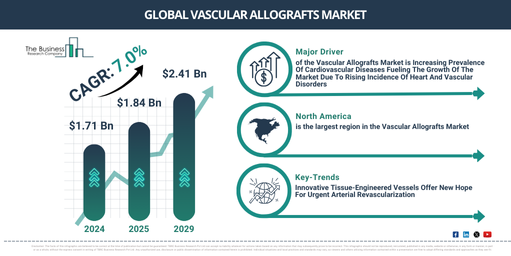
    The market size of vascular allografts has seen robust growth in the past few years. Projected to increase from $1.71 billion in 2024 to $1.84 billion in 2025, the market is predicted to expand at a compound annual growth rate (CAGR) of 7.4%. The surge in growth during the historical period can be linked to rising cases of cardiovascular ailments, an escalating demand for vascular grafts in bypass operations, an increase in vascular trauma cases needing grafts, greater consciousness about the advantages of organ transplants, and the increasing use of vascular allografts in reconstructive surgeries.

    Over the following years, the vascular allografts market is projected to witness significant growth, expanding to a value of $2.41 billion by 2029 with a Compound Annual Growth Rate (CAGR) of 7.0%. This growth during the forecast period can be credited to factors such as increased healthcare spending in emerging regions, growing regulatory approvals for vascular allograft goods, heightened awareness of minimally invasive vascular repair methods, amplified use of vascular allografts for diabetic limb salvage, and increasing demand for tailor-made, patient-specific vascular grafts. The forecast period also sees marketplace trends like enhanced tissue preservation technology, high-tech biomaterials for vascular grafts, innovatively revolutionized cryopreservation processes, adoption of regenerative medicine methodologies, progress in 3D bioprinting for vascular grafts, and sophisticated imaging for graft compatibility.

    Download The Free Sample Report Here:

    https://www.thebusinessresearchcompany.com/sample.aspx?id=27443&type=smp

    #What Drivers Are Influencing Growth In The Vascular Allografts Market?

    The rise in cardiovascular disease rates is anticipated to stimulate the vascular allografts market’s expansion. Cardiovascular diseases encompass a variety of ailments that affect the heart and blood vessels, such as coronary heart disease, heart failure, strokes, and hypertension. This increase in heart-related diseases is largely due to unhealthy eating habits, with the overconsumption of saturated and trans fats, added sugars, and sodium leading to high blood pressure, obesity, and raised cholesterol levels. Vascular allografts, which are donor blood vessels readily available for use, can augment the treatment choices for such ailments. These are incredibly beneficial to patients with impaired or ailing vessels, as they enhance the results of surgery by reinstating correct blood circulation, reducing complications, and bolstering long-term cardiovascular wellbeing. For instance, the American Heart Association, a nonprofit organization based in the US, reported in January 2024 that the age-adjusted death rate due to cardiovascular disease had gone up to 233.3 per 100,000 in 2022, a 4.0% increase from 224.4 per 100,000 in 2021. Consequently, the increasing incidence of cardiovascular diseases is fueling the growth of the vascular allograft market.

    What Are The Main Segments Identified In The Vascular Allografts Market Research?

    The vascular allografts market covered in this report is segmented

    1) By Type: Cortical Allograft, Cancellous Allograft, Corticocancellous Allograft

    2) By Material Type: Biologic Materials, Synthetic Materials, Composite Materials, Polymer-Based Materials

    3) By Application: Cardiovascular Surgery, Peripheral Vascular Surgery, Transplant Surgery, Repair Of Congenital Defects

    4) By Distribution Channel: Direct Sales, Online Sales, Distributors, Medical Supply Stores

    5) By End-User: Hospitals, Ambulatory Surgical Centers (ASCs), Specialty Clinics, Research And Academic Institutions

    Subsegments:

    1) By Cortical Allograft: Fresh Frozen Cortical Allograft, Freeze Dried Cortical Allograft, Demineralized Cortical Allograft

    2) By Cancellous Allograft: Fresh Frozen Cancellous Allograft, Freeze Dried Cancellous Allograft, Demineralized Cancellous Allograft

    3) By Corticocancellous Allograft: Fresh Frozen Corticocancellous Allograft, Freeze Dried Corticocancellous Allograft, Demineralized Corticocancellous Allograft

    What Are The Leading Trends And Opportunities In The Vascular Allografts Sector?

    Key players in the vascular allografts sector are prioritizing the development of innovative products like bioengineered graft materials. This focus on emerging technologies enhances graft longevity, compatibility, and integration with the patient’s tissue. The concept of bioengineered graft materials refers to uniquely fabricated vascular grafts that utilize cutting-edge biological and engineering methodologies. Illustratively, Humacyte Inc., a biotech firm based in the US, introduced Symvess in February 2025. This bioengineered vascular graft is tailored for adult patients requiring immediate revascularization due to extremity arterial damages and where autologous vein grafts fall short as an option. Symvess is crafted to gradually morph into the patient’s personal tissue, thereby lowering rejection risk and enhancing long-term results. Furthermore, this graft lessens the demand for immunosuppressive drugs, an essential benefit in trauma and emergency surgical situations.

    Which Companies Play A Key Role In The Development Of The Vascular Allografts Market?

    Major companies operating in the vascular allografts market are Medtronic plc, Boston Scientific Corporation, Terumo Corporation, W. L. Gore & Associates Inc., Dentsply Sirona Inc., Integra LifeSciences Holdings Corporation, MicroPort Scientific Corporation, Bioventus Inc., KLS Martin Group, MTF Biologics, MTF Biologics, ZimVie Inc., B. Braun Melsungen AG, Artivion Inc., MiMedx Group Inc., RTI Surgical Inc, LeMaitre Vascular Inc., LifeNet Health Inc., Xtant Medical Holdings Inc., Biotech Dental.

    Get The Full Report Here:

    https://www.thebusinessresearchcompany.com/report/vascular-allografts-global-market-report

    What Are The Key Regional Developments Shaping The Vascular Allografts Market?

    North America was the largest region in the vascular allografts market in 2024. Asia-Pacific is expected to be the fastest-growing region in the forecast period. The regions covered in the vascular allografts market report are Asia-Pacific, Western Europe, Eastern Europe, North America, South America, Middle East, Africa.

    Request For A Customized Report:

    https://www.thebusinessresearchcompany.com/customise?id=27443&type=smp

    About The Business Research Company:

    With over 15000+ reports from 27 industries covering 60+ geographies, The Business Research Company has built a reputation for offering comprehensive, data-rich research and insights. Armed with 1,500,000 datasets, the optimistic contribution of in-depth secondary research, and unique insights from industry leaders, you can get the information you need to stay ahead in the game.

    Get in touch with us:

    The Business Research Company: https://www.thebusinessresearchcompany.com/

    Americas +1 310-496-7795

    Asia +44 7882 955267 & +91 8897263534

    Europe +44 7882 955267

    Email us at info@tbrc.info

    Follow us on:

    LinkedIn: https://in.linkedin.com/company/the-business-research-company

    YouTube: https://www.youtube.com/channel/UC24_fI0rV8cR5DxlCpgmyFQ

    Global Market Model: https://www.thebusinessresearchcompany.com/global-market-model
  • Industry Forecast: Tubeless Insulin Pump Market to Generate $4.44 Billion Revenue by 2029

    Industry Forecast: Tubeless Insulin Pump Market to Generate $4.44 Billion Revenue by 2029

    Claim your 30% discount on Global Market Reports with code ONLINE30. Limited time only.

    Claim your 30% discount on Global Market Reports with code ONLINE30. Limited time only.

    What CAGR Is Anticipated for the Tubeless Insulin Pump Market Through 2029?

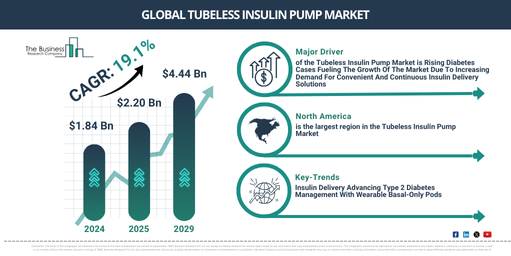
    The market size of tubeless insulin pumps has seen significant proliferation in the past few years. The market is projected to increase from $1.84 billion in 2024 to $2.20 billion in 2025, exhibiting a compound annual growth rate (CAGR) of 19.5%. The historical growth period’s significant contributors include an increase in diabetes cases, a surge in demand for unobtrusive and convenient insulin delivery, enhanced understanding of diabetes management, improved compensation policies, patients’ inclination towards insulin administration without discomfort, and the development of home healthcare services.

    The market for tubeless insulin pumps is predicted to experience a significant expansion over the upcoming years. The market is projected to reach $4.44 billion by 2029, with a compound annual growth rate (CAGR) of 19.1%. Factors contributing to this predicted growth within the forecast period include rising demand for discreet and easy-to-use insulin delivery systems, increased emphasis on tailored diabetes management methods, broadening of reimbursement policies for sophisticated insulin devices, and heightened awareness born from digital health campaigns. Key trends to note during this forecast period are the integration of AI-assisted glucose monitoring, improved connectivity with smartphone apps, reduction in size of patch devices, increased usage of closed-loop systems, and the embrace of wearable health technologies.

    Download The Free Sample Report Here:

    https://www.thebusinessresearchcompany.com/sample.aspx?id=27440&type=smp

    What Market Forces Are Driving The Tubeless Insulin Pump Sector In 2025 And Beyond?

    The rise in diabetes cases is anticipated to fuel the expansion of the tubeless insulin pump market. Diabetes, a long-term health problem that elevates blood sugar levels due to the body’s failure to produce or utilize insulin correctly, is primarily increasing due to growing obesity rates relating to poor diet and physical inactivity. Tubeless insulin pumps aid diabetes management by delivering consistent, controlled insulin doses, eliminating the need for multiple injections daily, thereby effectively regulating blood sugar levels. In June 2023, for example, the US-based public health research institute, the Institute for Health Metrics and Evaluation, revealed that over half a billion individuals worldwide were diagnosed with diabetes. This figure is projected to more than double, hitting 1.3 billion people by 2050. Thus, the escalating diabetes instances are accelerating the tubeless insulin pump market’s growth.

    How Is The Global Tubeless Insulin Pump Market Categorized By Segments?

    The tubeless insulin pump market covered in this report is segmented

    1) By Product: Wearable Insulin Pump, Implantable Insulin Pump

    2) By Technology: Continuous Glucose Monitoring (CGM) Integrated Pumps, Standard Tubeless Pumps

    3) By End User: Hospitals, Pharmacies, E-Commerce, Other End Users

    Subsegments:

    1) By Wearable Insulin Pump: Patch Pumps, Remote-Controlled Pumps, Bluetooth-Enabled Pumps, Disposable Pumps, Reusable Pumps

    2) By Implantable Insulin Pump: Programmable Implantable Pumps, Refillable Implantable Pumps, Microelectromechanical System (MEMS)-Based Pumps, Long-Acting Implantable Pumps, Biocompatible Coated Pumps

    What Long-Term Trends Are Likely To Affect The Tubeless Insulin Pump Market?

    Key players in the tubeless insulin pump industry are concentrating on the enhancement of their offerings with innovative solutions such as basal-only insulin pods. These serve as a convenient and affordable method for insulin delivery, specifically targeting individuals with type 2 diabetes who predominantly need background insulin support. A basal-only insulin pod is a wearable device that constantly supplies background insulin to regulate blood sugar, specifically designed for those living with type 2 diabetes. For instance, in April 2023, Insulet Corporation, a medical device firm based in the United States, introduced Omnipod GO. This insulin delivery mechanism is certified for usage by type 2 diabetes patients aged 18 and above who routinely require injections of long-acting insulin. The Omnipod GO is a self-contained, wearable insulin delivery system that provides a steady stream of rapid-acting insulin for a duration of 72 hours. It also incorporates a tubeless, water-resistant pod available in seven varied pre-set daily rates, with quantities ranging from 10 to 40 units each day, and operates autonomously without reliance on a mobile device for regulation.

    Which Firms Are Considered Leaders In The Tubeless Insulin Pump Market Space?

    Major companies operating in the tubeless insulin pump market are F. Hoffmann-La Roche AG, Sanofi SA, Abbott Laboratories, Medtronic plc, Eli Lilly and Company, Becton Dickinson & Company, Fresenius Kabi AG, Terumo Corporation, Insulet Corporation, Tandem Diabetes Care Inc., Ypsomed AG, Ascensia Diabetes Care, MicroTech Medical, Menarini Diagnostics, Bigfoot Biomedical, Debiotech SA, Medtrum Technologies Inc., Diabeloop, SOOIL Development, and Beta Bionics.

    Get The Full Report Here:

    https://www.thebusinessresearchcompany.com/report/tubeless-insulin-pump-global-market-report

    What Role Do Regional Policies And Investments Play In Tubeless Insulin Pump Market Expansion?

    North America was the largest region in the tubeless insulin pump market in 2024. Asia-Pacific is expected to be the fastest-growing region in the forecast period. The regions covered in the tubeless insulin pump market report are Asia-Pacific, Western Europe, Eastern Europe, North America, South America, Middle East, Africa.

    Request For A Customized Report:

    https://www.thebusinessresearchcompany.com/customise?id=27440&type=smp

    About The Business Research Company:

    With over 15000+ reports from 27 industries covering 60+ geographies, The Business Research Company has built a reputation for offering comprehensive, data-rich research and insights. Armed with 1,500,000 datasets, the optimistic contribution of in-depth secondary research, and unique insights from industry leaders, you can get the information you need to stay ahead in the game.

    Get in touch with us:

    The Business Research Company: https://www.thebusinessresearchcompany.com/

    Americas +1 310-496-7795

    Asia +44 7882 955267 & +91 8897263534

    Europe +44 7882 955267

    Email us at info@tbrc.info

    Follow us on:

    LinkedIn: https://in.linkedin.com/company/the-business-research-company

    YouTube: https://www.youtube.com/channel/UC24_fI0rV8cR5DxlCpgmyFQ

    Global Market Model: https://www.thebusinessresearchcompany.com/global-market-model
  • 2025 Transcatheter Mitral Valve Market Outlook: Opportunities, Growth Trends, and Strategic Analysis

    Claim your 30% discount on Global Market Reports with code ONLINE30. Limited time only.

    Claim your 30% discount on Global Market Reports with code ONLINE30. Limited time only.

    What Is the Estimated Industry Valuation for the Transcatheter Mitral Valve Sector?

    In recent times, the market size for the transcatheter mitral valve has seen substantial growth. Its value, expected to climb from $1.47 billion in 2024, is projected to reach $1.61 billion in 2025, witnessing a compound annual growth rate (CAGR) of 9.5%. Factors contributing to growth during the historical period include an increased preference for minimally invasive cardiac procedures, higher success rates in clinical trials for early-stage TMVR devices, expansion of hospital facilities in developed regions, a growing incidence of rheumatic heart disease in poorer nations, and the broadening of training programs for interventional cardiologists.

    Anticipated robust expansion is on the horizon for the transcatheter mitral valve industry. The market is projected to climb to $2.28 billion by 2029, with a compound annual growth rate (CAGR) of 9.1%. Elements contributing to this growth in the forthcoming period are an increased preference for catheter-based treatments among younger demographics, an escalating pipeline of next-generation products for transcatheter mitral valve replacement, enhanced emphasis on precocious detection employing artificial intelligence-based imaging, a swelling number of approvals from regulatory authorities for TMV gadgets, and the amalgamation of real-time navigation and imaging technologies into transcatheter mitral valve protocols. Dominant trends to be watched in the forecast timeframe encompass advancements in imaging powered by artificial intelligence for valve evaluation, innovative material coatings for improved biocompatibility, development of bespoke transcatheter mitral valve solutions via 3D printing, innovation in the flexibility and precision of delivery catheters, and the incorporation of digital twin technology for procedural mapping.

    Download The Free Sample Report Here:

    https://www.thebusinessresearchcompany.com/sample.aspx?id=27437&type=smp

    What Forces Are Driving The Growth Of The Transcatheter Mitral Valve Market?

    The growth of the transcatheter mitral valve market is projected to surge in response to the rising prevalence of heart diseases. These health disorders, which disrupt the structure or functionality of the heart, impede its capacity to pump blood adequately. Ageing populations are a primary factor contributing to the increasing incidence of heart diseases as age-related heart and blood vessel deterioration escalates susceptibility to conditions like mitral valve regurgitation, heart failure, and arrhythmias. Utilizing a transcatheter mitral valve to mend or replace a malfunctioning mitral valve can rectify the healthy flow of blood between the heart’s chambers, enhance heart function, and alleviate symptoms. For example, the Centers for Disease Control and Prevention, a government agency in the US, reported in October 2024 that in 2022, coronary heart disease was the predominant type of heart disease, resulting in 371,506 deaths. Annually in the United States, nearly 805,000 individuals experience a heart attack, with initial incidents (605,000) being roughly three times higher than recurring ones (200,000). As such, the escalating prevalence of heart diseases is fuelling the expansion of the transcatheter mitral valve market.

    How Is The Transcatheter Mitral Valve Industry Segmented Across Key Parameters?

    The transcatheter mitral valve market covered in this report is segmented

    1) By Product: Transcatheter Mitral Valve Replacement, Transcatheter Mitral Valve Repair

    2) By Indication: Mitral Stenosis, Mitral Regurgitation

    3) By End-User: Hospitals, Ambulatory Surgical Centers, Cardiac Catheterization Laboratories

    Subsegments:

    1) By Transcatheter Mitral Valve Replacement: Self-Expanding Valves, Balloon-Expandable Valves

    2) By Transcatheter Mitral Valve Repair: Annuloplasty Devices, Chordal Repair Devices, Edge-To-Edge Repair Devices

    What Notable Trends Are Shaping The Direction Of The Transcatheter Mitral Valve Market?

    Key players in the transcatheter mitral valve industry are concentrating their efforts on the development of state-of-the-art products, such as transcatheter mitral valve replacement (TMVR) systems. Their aim is to provide a wider range of treatment choices for patients considered high-risk or inoperable. TMVR systems replace a faulty or diseased mitral valve in the heart with a synthetic version without the need for open-heart surgery through a less invasive catheter-based technique. To serve as an example, Abbott Laboratories, a medical device firm headquartered in the US, announced the launch of Tendyne in May 2025, after receiving FDA approval. Tendyne is a self-inflating valve, framed with nitinol, that comes in various sizes to suit different anatomical needs, and it can be completely repositioned or taken out during the implantation process. The device is inserted through a minor chest incision, making the procedure minimally invasive and usually wrapping up in about 1.5 hours. Engineered for swift recovery, it usually allows patients to be released within three days, making it a groundbreaking answer for mitral valve patients at high risk who do not have suitable surgical options.

    Which Companies Currently Dominate The Competitive Landscape In The Transcatheter Mitral Valve Industry?

    Major companies operating in the transcatheter mitral valve market are Abbott Laboratories, Medtronic Inc, Boston Scientific Corporation, Edwards Lifesciences Corporation, Meril Life Sciences Private Limited, MicroPort Scientific Corporation, Venus Medtech Inc., Cardiac Dimensions Inc., JenaValve Technology Inc., Ancora Heart Inc, Peijia Medical Limited, Micro Interventional Devices Inc., 4C Medical Technologies Inc., NeoChord Inc., Xeltis AG, Valcare Medical Inc., Colibri Heart Valve LLC, MitrAssist Ltd., HighLife SAS, Navigate Cardiac Structures Inc., Cardiovalve Ltd.

    Get The Full Report Here:

    https://www.thebusinessresearchcompany.com/report/transcatheter-mitral-valve-global-market-report

    Which Geographic Regions Are Driving Demand In The Transcatheter Mitral Valve Market?

    North America was the largest region in the transcatheter mitral valve market in 2024. Asia-Pacific is expected to be the fastest-growing region in the forecast period. The regions covered in the transcatheter mitral valve market report are Asia-Pacific, Western Europe, Eastern Europe, North America, South America, Middle East, Africa.

    Request For A Customized Report:

    https://www.thebusinessresearchcompany.com/customise?id=27437&type=smp

    About The Business Research Company:

    With over 15000+ reports from 27 industries covering 60+ geographies, The Business Research Company has built a reputation for offering comprehensive, data-rich research and insights. Armed with 1,500,000 datasets, the optimistic contribution of in-depth secondary research, and unique insights from industry leaders, you can get the information you need to stay ahead in the game.

    Get in touch with us:

    The Business Research Company: https://www.thebusinessresearchcompany.com/

    Americas +1 310-496-7795

    Asia +44 7882 955267 & +91 8897263534

    Europe +44 7882 955267

    Email us at info@tbrc.info

    Follow us on:

    LinkedIn: https://in.linkedin.com/company/the-business-research-company

    YouTube: https://www.youtube.com/channel/UC24_fI0rV8cR5DxlCpgmyFQ

    Global Market Model: https://www.thebusinessresearchcompany.com/global-market-model
  • 2025 Analysis: Opportunities and Risks in the Evolving Tendon Allograft Market

    2025 Analysis: Opportunities and Risks in the Evolving Tendon Allograft Market

    Claim your 30% discount on Global Market Reports with code ONLINE30. Limited time only.

    Claim your 30% discount on Global Market Reports with code ONLINE30. Limited time only.

    What Is the Outlook for the Tendon Allograft Market Heading Into 2029?

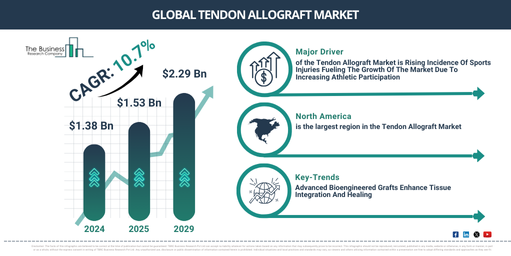
    The dimension of the tendon allograft market has seen a swift expansion in recent times, and it’s predicted to expand from $1.38 billion in 2024 to $1.53 billion in 2025, demonstrating an 11.0% CAGR. The historic period growth could be linked to the heightened consciousness regarding tendon repair treatments, an increase in injuries related to sports, a surge in orthopedic surgeries, mounting demand for less invasive surgical procedures, as well as the escalating availability of allograft tissues.

    In the coming years, the tendon allograft market is predicted to experience significant growth, reaching a value of $2.29 billion in 2029 with a compound annual growth rate (CAGR) of 10.7%. The surge during the forecast window can be ascribed to a heightened emphasis on surgeries preserving joint health, a growing acceptance of tissue engineering, an increasing incidence of musculoskeletal conditions, more government backing for regenerative medicine, and a rising demand for personalized tendon allografts. Key trends projected for this period encompass improvements in tissue processing technologies, sophisticated techniques for graft customization, advances in scaffold materials, the use of 3D printing techniques in conjunction with tendon grafts, and innovative ways to boost graft acceptance with biologics.

    Download The Free Sample Report Here:

    https://www.thebusinessresearchcompany.com/sample.aspx?id=27435&type=smp

    Which Factors Are Pushing The Tendon Allograft Market Forward?

    The growing number of sports-related injuries is predicted to fuel the expansion of the tendon allograft market. Sports-induced injuries are physical harm sustained during athletic activities or exercise, impacting muscles, ligaments, tendons, bones or joints. The rise in these injuries can be attributed to increased participation in sports and physical activities, exposing more people to potential harm. Tendon allografts contribute to sports injury recovery by offering readily available tendon tissue for surgical repair, making it ideal for athletes and those with an active lifestyle. They help in restoring tendon functionality by facilitating tissue integration and healing, enhancing mobility, and speeding up the return to sports participation. For example, data from the U.S. National Safety Council, a public health and safety institution in the U.S. showed that in 2024, sports and recreational injuries numbered at 564,845, up from 482,886 injuries in 2023. As such, the growth of the tendon allograft market is largely influenced by the increasing incidence of sports injuries.

    Which Segment Held The Largest Share In The Tendon Allograft Market In 2025?

    The tendon allograft market covered in this report is segmented

    1) By Type Of Allograft: Flexor Tendons, Extensor Tendons, Patellar Tendons, Achilles Tendons, Other Types

    2) By Product Type: Soft Tissue Allografts, Cartilage Allografts, Bone Allografts

    3) By Application: Orthopedic, Dental, Cardiovascular, Wound Care, Other Applications

    4) By Distribution Channel: Direct Sales, Distributors, Online Sales, Surgical Centers, Hospitals

    5) By End-User: Hospitals, Ambulatory Surgical Centers, Specialty Clinics, Rehabilitation Centers, Research Institutions

    Subsegments:

    1) By Flexor Tendons: Finger Flexor Tendon, Wrist Flexor Tendon, Elbow Flexor Tendon, Other Flexor Tendons

    2) By Extensor Tendons: Finger Extensor Tendon, Wrist Extensor Tendon, Elbow Extensor Tendon, Other Extensor Tendons

    3) By Patellar Tendons: Patellar Tendon Mid-Substance, Patellar Tendon Tibial Attachment, Patellar Tendon Quadriceps Attachment

    4) By Achilles Tendons: Achilles Tendon Mid-Substance, Achilles Tendon Calcaneal Attachment

    5) By Other Types: Rotator Cuff Tendons, Hamstring Tendons, Plantaris Tendons, Other Miscellaneous Tendons

    How Are Key Trends Driving Expansion In The Tendon Allograft Industry?

    Leading companies in the tendon allograft market are concentrating on product advancements such as bioengineered grafts to improve tissue integration and recovery. Bioengineered grafts, made or modified in labs, are crafted to repair or replace damaged bodily tissues, aiding in healing and function restoration. For example, AlloSource Inc., an American nonprofit organization, unveiled a new quadriceps tendon allograft in July 2022, under the AlloConnex banner, consisting of tendons, ligaments and fascia. The product line boasts a comprehensive assortment of bioengineered tissues, featuring Achilles, Anterior tibialis, Gracilis, Peroneus longus, Posterior tibialis, Semitendinosus, Quadriceps, and Patellar ligaments. The range is offered in diverse configurations such as single strand, double strand, double bundle, and pre-shaped options, catering to a variety of surgical requirements. AlloSource utilizes its unique AlloTrue cleansing technique to process all tissues, effectively removing blood and lipids, diminishing viable microorganisms, while preserving the vital biomechanical properties required for a successful transplant. Their quadriceps tendon offering is a strong choice for cruciate ligament surgeries and comes with or without the bone block to suit different surgical methods.

    Which Organizations Are Driving Progress In The Tendon Allograft Industry?

    Major companies operating in the tendon allograft market are Medtronic plc, Stryker Corporation, Stryker Corporation, Regeneration Technologies Inc., Zimmer Biomet Holdings Inc., Smith & Nephew plc, Arthrex Inc., Conmed Corporation, MTF Biologics, Orthofix Medical Inc., B. Braun Melsungen AG, MiMedx Group Inc., LifeNet Health Inc., AlloSource Inc., Xtant Medical Holdings Inc., Vivex Biomedical Inc., JRF Ortho Inc., Bone Bank Allografts, Curasan AG, EvoLogics GmbH.

    Get The Full Report Here:

    https://www.thebusinessresearchcompany.com/report/tendon-allograft-global-market-report

    Which Region Is Expected To Experience The Highest Growth In The Tendon Allograft Industry?

    North America was the largest region in the tendon allograft market in 2024. Asia-Pacific is expected to be the fastest-growing region in the forecast period. The regions covered in the tendon allograft market report are Asia-Pacific, Western Europe, Eastern Europe, North America, South America, Middle East, Africa.

    Request For A Customized Report:

    https://www.thebusinessresearchcompany.com/customise?id=27435&type=smp

    About The Business Research Company:

    With over 15000+ reports from 27 industries covering 60+ geographies, The Business Research Company has built a reputation for offering comprehensive, data-rich research and insights. Armed with 1,500,000 datasets, the optimistic contribution of in-depth secondary research, and unique insights from industry leaders, you can get the information you need to stay ahead in the game.

    Get in touch with us:

    The Business Research Company: https://www.thebusinessresearchcompany.com/

    Americas +1 310-496-7795

    Asia +44 7882 955267 & +91 8897263534

    Europe +44 7882 955267

    Email us at info@tbrc.info

    Follow us on:

    LinkedIn: https://in.linkedin.com/company/the-business-research-company

    YouTube: https://www.youtube.com/channel/UC24_fI0rV8cR5DxlCpgmyFQ

    Global Market Model: https://www.thebusinessresearchcompany.com/global-market-model

  • In-Depth Temporary Mechanical Circulatory Support Device Market Report: Business Trends, Growth Factors, and Forecast to 2029

    In-Depth Temporary Mechanical Circulatory Support Device Market Report: Business Trends, Growth Factors, and Forecast to 2029

    Claim your 30% discount on Global Market Reports with code ONLINE30. Limited time only.

    Claim your 30% discount on Global Market Reports with code ONLINE30. Limited time only.

    What Does the Forecast Indicate for the Temporary Mechanical Circulatory Support Device Market From 2025 to 2029?

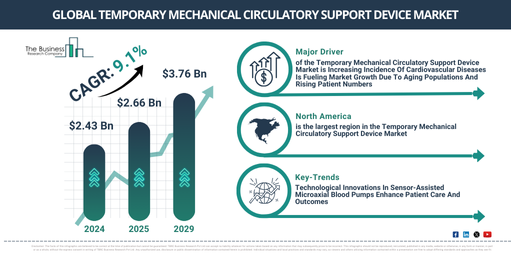
    In recent times, the market size for temporary mechanical circulatory support devices has experienced a robust growth. The market is projected to expand from $2.43 billion in 2024 to $2.66 billion in 2025, demonstrating a compound annual growth rate (CAGR) of 9.5%. Several factors can account for this growth during the historic period, including a heightened incidence of acute myocardial infarction, an increase in heart failure cases, a wider use of intra-aortic balloon pumps, an aging population, and an increased awareness of temporary support alternatives.

    In the coming years, the market size for temporary mechanical circulatory support devices is anticipated to witness robust growth, achieving a value of $3.76 billion by 2029, growing at a compound annual growth rate of 9.1%. This projected expansion during the forecast period can be linked to multiple factors such as a growing need for minimally invasive cardiac support, an increased waiting list for heart transplants, a rising number of high-risk percutaneous coronary intervention (PCI) procedures, wider adoption in pediatric cardiac treatment, and increased healthcare expenditure. Key trends during this time frame include the incorporation of artificial intelligence for patient monitoring, the developing use of magnetically levitated pumps, advancements in anti-thrombotic and biocompatible materials, customizing with 3D-printed component integration, and innovative improvements in cloud-connected hemodynamic analytics.

    Download The Free Sample Report Here:

    https://www.thebusinessresearchcompany.com/sample.aspx?id=27434&type=smp

    What Elements Are Contributing To Growth In The Temporary Mechanical Circulatory Support Device Market?

    The escalating rate of heart-related disorders anticipates pushing forward the expansion of the temporary mechanical circulatory support device market. Cardiovascular diseases (CVD), a set of conditions affecting the heart and circulatory system, can lead to situations like heart attacks, strokes, and high blood pressure. The prevalence of these diseases is increasing due to an aging populace, as it elevates the danger of cardiac and circulatory problems. Temporary mechanical circulatory support devices are beneficial for heart-related disease patients by providing temporary heart function assistance and optimizing blood flow in critical situations such as heart failure or cardiogenic shock. For instance, the American Heart Association, a non-profit organization based in the US, reported in January 2025 that approximately 942,000 individuals died from cardiovascular disease in the US in 2022, contrasting the global death toll of 19.41 million in 2021. Hence, the escalating rate of cardiovascular diseases is promoting growth in the temporary mechanical circulatory support device market.

    Which Segments Are Detailed In The Global Temporary Mechanical Circulatory Support Device Market Report?

    The temporary mechanical circulatory support device market covered in this report is segmented

    1) By Type: Left Ventricular Support Devices, Right Support Devices, Biventricular Support Devices

    2) By Technology: Pneumatic Devices, Mechanical Pumps, Biomimetic Devices, Hybrid Systems, Novel Wearable Devices

    3) By Application: Cardiogenic Shock, Bridge To Transplantation, Bridge To Recovery, High-Risk Cardiac Procedures, Other Medical Conditions

    4) By End User: Hospitals, Cardiac Surgery Centers, Outpatient Surgical Facilities, Research And Academic Institutions, Other Healthcare Institutions

    Subsegment:

    1) By Left Ventricular Support Devices: Intra-Aortic Balloon Pump, Percutaneous Ventricular Assist Device, Extracorporeal Membrane Oxygenation

    2) By Right Support Devices: Right Ventricular Assist Device, Extracorporeal Membrane Oxygenation, Percutaneous Right Ventricular Assist Device

    3) By Biventricular Support Devices: Biventricular Assist Device, Temporary Total Artificial Heart, Extracorporeal Membrane Oxygenation

    Which Emerging Trends And Strategic Shifts Are Shaping The Temporary Mechanical Circulatory Support Device Market?

    Leading firms in the interim mechanical circulatory support device market are concentrating on creating cutting-edge solutions, such as sensor-assisted microaxial blood pumps, with the aim to offer sophisticated heart support solutions capable of enhancing patient results and providing accurate management of heart conditions in critical care situations. Sensor-assisted microaxial blood pumps are compact, implantable devices that use integrated sensors to regulate and modify blood circulation in real-time, offering precise heart mechanical support. For example, in October 2022, Abiomed Inc., a medical device firm based in the US, launched the Impella RP Flex with SmartAssist. This temporary support pump for the right ventricle has features such as internal jugular venous admittance, dual sensor technology for real-time hemodynamic observation, and an anti-coagulant free cleanse system. These innovative features elevate patient mobility, simplify pump management, and minimize the risk of bleeding. This technological development facilitates early recognition and modification of pump functionality, thereby ensuring accurate patient care.

    Who Are The Key Contributors To Growth In The Temporary Mechanical Circulatory Support Device Market?

    Major companies operating in the temporary mechanical circulatory support device market are Johnson & Johnson, Abbott Laboratories, Medtronic Plc, Fresenius Medical Care AG & Co. KGaA, Boston Scientific Corporation, Terumo Corporation, Getinge AB, Meril Life Sciences Pvt. Ltd., Teleflex Incorporated, LivaNova PLC, MicroPort Scientific Corporation, Supira Medical Inc., Magenta Medical Ltd., CorWave SA, Jarvik Heart Inc., Carmat SAS, Procyrion Inc., BiVACOR Inc., CardioBridge GmbH, and BrioHealth Solutions Inc.

    Get The Full Report Here:

    https://www.thebusinessresearchcompany.com/report/temporary-mechanical-circulatory-support-device-global-market-report

    Which Region Is Projected To Lead The Temporary Mechanical Circulatory Support Device Market By 2025?

    North America was the largest region in the temporary mechanical circulatory support device market in 2024. Asia-Pacific is expected to be the fastest-growing region in the forecast period. The regions covered in the temporary mechanical circulatory support device market report are Asia-Pacific, Western Europe, Eastern Europe, North America, South America, Middle East, Africa.

    Request For A Customized Report:

    https://www.thebusinessresearchcompany.com/customise?id=27434&type=smp

    About The Business Research Company:

    With over 15000+ reports from 27 industries covering 60+ geographies, The Business Research Company has built a reputation for offering comprehensive, data-rich research and insights. Armed with 1,500,000 datasets, the optimistic contribution of in-depth secondary research, and unique insights from industry leaders, you can get the information you need to stay ahead in the game.

    Get in touch with us:

    The Business Research Company: https://www.thebusinessresearchcompany.com/

    Americas +1 310-496-7795

    Asia +44 7882 955267 & +91 8897263534

    Europe +44 7882 955267

    Email us at info@tbrc.info

    Follow us on:

    LinkedIn: https://in.linkedin.com/company/the-business-research-company

    YouTube: https://www.youtube.com/channel/UC24_fI0rV8cR5DxlCpgmyFQ

    Global Market Model: https://www.thebusinessresearchcompany.com/global-market-model

  • Industry Forecast: Syndromic Multiplex Diagnostics Market to Generate $4.96 Billion Revenue by 2029

    Industry Forecast: Syndromic Multiplex Diagnostics Market to Generate $4.96 Billion Revenue by 2029

    Claim your 30% discount on Global Market Reports with code ONLINE30. Limited time only.

    Claim your 30% discount on Global Market Reports with code ONLINE30. Limited time only.

    What Is the Outlook for the Syndromic Multiplex Diagnostics Market Heading Into 2029?

    In recent years, there has been a substantial growth in the size of the syndromic multiplex diagnostics market. It is projected to escalate from a value of $3.11 billion in 2024, reaching $3.43 billion in 2025, demonstrating a compound annual growth rate (CAGR) of 10.0%. Factors such as the surge in demand for quick and precise diagnostic procedures, the increased knowledge concerning early detection of diseases, an upswing in hospital-acquired infections, the expanded use of molecular diagnostics, escalating healthcare expenditure, and an increased necessity for point-of-care testing have been instrumental in contributing to the historical growth period.

    The market size of syndromic multiplex diagnostics is anticipated to experience considerable growth in the coming years. It is estimated to expand to $4.96 billion by 2029, with a compound annual growth rate (CAGR) of 9.7%. Factors contributing to this surge during the forecast period include escalating investments in research and development, increased utilization in settings with limited resources, growth of healthcare infrastructure in underdeveloped nations, escalating governmental initiatives for the control of infectious diseases, and an upsurge in demand for decentralized testing. The forecast period is also expected to see key trends such as the progression in multiplex polymerase chain reaction (PCR) technologies, introductions in microfluidics and lab-on-chip systems, advanced automation in processing samples, development in point-of-care molecular platforms, incorporation of cloud-based diagnostic data systems, and progress in portable diagnostic devices.

    Download The Free Sample Report Here:

    https://www.thebusinessresearchcompany.com/sample.aspx?id=27427&type=smp

    Which Factors Are Pushing The Syndromic Multiplex Diagnostics Market Forward?

    The rise in infectious diseases is anticipated to boost the syndromic multiplex diagnostics market’s growth. These diseases are brought on by harmful microorganisms such as bacteria, viruses, fungi, or parasites that infest the body and proliferate, leading to symptoms and health issues. The growth in infectious diseases is propelled by increased worldwide travel, which speeds up the distribution of pathogens across territories and populations. Syndromic multiplex diagnostics augment the management of infectious diseases by providing quick and concurrent detection of numerous pathogens from a single sample. This enhances diagnostic precision and speed, enabling prompt treatment decisions and enhanced patient results. For example, in March 2023, the Centers for Disease Control and Prevention, a US-based national public health organization, reported 8,331 tuberculosis (TB) cases in 2022, a 5.9% rise from 7,874 cases in 2021. Consequently, the escalating prevalence of infectious diseases is contributing to the growth of the syndromic multiplex diagnostics market.

    Which Segment Held The Largest Share In The Syndromic Multiplex Diagnostics Market In 2025?

    The syndromic multiplex diagnostics market covered in this report is segmented

    1) By Product Type: Instruments, Reagents, Software And Services

    2) By Sample Type: Blood Samples, Urine Samples, Saliva Samples, Tissue Samples

    3) By Technology: Polymerase Chain Reaction, Mass Spectrometry, Nucleic Acid Amplification Tests, Next-Generation Sequencing

    4) By Application: Infectious Diseases, Respiratory Diseases, Gastrointestinal Diseases, Sexually Transmitted Infections, Central Nervous System Diseases

    5) By End User: Clinical Laboratories, Hospitals, Pharmaceutical And Biotechnology Companies, Research Institutes, Other End Users

    Subsegments:

    1) By Instruments: Real-Time Polymerase Chain Reaction (PCR) Systems, Microfluidic-Based Systems, Automated Sample-To-Answer Systems, Cartridge-Based Systems, Multiplex Polymerase Chain Reaction (PCR) Platforms

    2) By Reagents: Assay Panels, Primers And Probes, Enzymes, Buffers And Solutions, Sample Preparation Reagents

    3) By Software And Services: Data Analysis Software, Cloud-Based Diagnostic Platforms, Integration And Connectivity Solutions, Technical Support Services, Maintenance And Calibration Services, Training And Installation Services

    How Are Key Trends Driving Expansion In The Syndromic Multiplex Diagnostics Industry?

    Prominent firms in the syndromic multiplex diagnostics sector are concentrating on creating high-tech solutions, such as AI-boosted diagnostic systems, to increase the pace, precision, and comprehensiveness of disease-causing agent detection. Advanced computational tools that apply artificial intelligence, specifically machine learning and deep learning approaches, to interpret intricate clinical and lab data for quicker and more precise disease detection are referred to as AI-boosted diagnostic systems. For example, Qiagen N.V., a company specialising in molecular diagnostics located in the Netherlands, introduced two syndromic testing panels for its QIAstat Dx platform in January 2024: the Gastrointestinal Panel 2 and the Meningitis and Encephalitis Panel. These panels facilitate prompt and precise diagnosis of infectious diseases by identifying multiple pathogens in one test, thereby enhancing clinical judgment and patient results. The QIAstat-Dx system includes progressive data analytics, assisting healthcare professionals in effectively recognising and handling infectious disease outbreaks.

    Which Organizations Are Driving Progress In The Syndromic Multiplex Diagnostics Industry?

    Major companies operating in the syndromic multiplex diagnostics market are Roche Molecular Systems Inc., Abbott Laboratories, Becton Dickinson and Company, Hologic Inc., Bio-Rad Laboratories Inc., Qiagen N.V., Cepheid, Bosch Healthcare Solutions GmbH, Biocartis NV, Luminex Corporation, Curetis GmbH, Accelerate Diagnostics Inc., Applied BioCode Inc., Ador Diagnostics Ltd., Akonni Biosystems Inc., Alveo Technologies Inc., Atlas Genetics Ltd., BioFire Diagnostics LLC, Nanomix Inc., Primerdesign Ltd.

    Get The Full Report Here:

    https://www.thebusinessresearchcompany.com/report/syndromic-multiplex-diagnostics-global-market-report

    Which Region Is Expected To Experience The Highest Growth In The Syndromic Multiplex Diagnostics Industry?

    North America was the largest region in the syndromic multiplex diagnostics market in 2024. Asia-Pacific is expected to be the fastest-growing region in the forecast period. The regions covered in the syndromic multiplex diagnostics market report are Asia-Pacific, Western Europe, Eastern Europe, North America, South America, Middle East, Africa.

    Request For A Customized Report:

    https://www.thebusinessresearchcompany.com/customise?id=27427&type=smp

    About The Business Research Company:

    With over 15000+ reports from 27 industries covering 60+ geographies, The Business Research Company has built a reputation for offering comprehensive, data-rich research and insights. Armed with 1,500,000 datasets, the optimistic contribution of in-depth secondary research, and unique insights from industry leaders, you can get the information you need to stay ahead in the game.

    Get in touch with us:

    The Business Research Company: https://www.thebusinessresearchcompany.com/

    Americas +1 310-496-7795

    Asia +44 7882 955267 & +91 8897263534

    Europe +44 7882 955267

    Email us at info@tbrc.info

    Follow us on:

    LinkedIn: https://in.linkedin.com/company/the-business-research-company

    YouTube: https://www.youtube.com/channel/UC24_fI0rV8cR5DxlCpgmyFQ

    Global Market Model: https://www.thebusinessresearchcompany.com/global-market-model

  • Future Projections: Superconducting Magnet For Medical Magnetic Resonance Imaging (MRI) System Market to Reach $2.87 Billion by 2029 at 7.8% CAGR

    Future Projections: Superconducting Magnet For Medical Magnetic Resonance Imaging (MRI) System Market to Reach $2.87 Billion by 2029 at 7.8% CAGR

    Claim your 30% discount on Global Market Reports with code ONLINE30. Limited time only.

    Claim your 30% discount on Global Market Reports with code ONLINE30. Limited time only.

    How Much Is the Global Superconducting Magnet For Medical Magnetic Resonance Imaging (MRI) System Market Valued at Present and by 2029?

    In recent years, the superconducting magnet for the medical magnetic resonance imaging (MRI) system market has experienced robust growth. The market size is predicted to increase from $1.97 billion in 2024 to $2.13 billion in 2025, reflecting a compound annual growth rate (CAGR) of 8.1%. The significant growth during the historic period is owing to the increased demand for high-definition imaging, the proliferation of diagnostic imaging procedures, surging incidences of chronic diseases, substantial government investment in medical imaging, the growing number of the elderly, and heightened awareness about the benefits of early disease detection.

    The market size for the superconducting magnet in medical magnetic resonance imaging (MRI) systems is predicted to experience robust growth in the upcoming years, projecting it to expand to $2.87 billion by 2029 at a compound annual growth rate (CAGR) of 7.8%. Factors contributing to this growth forecast include the advent of compact superconducting magnets, broadening into burgeoning healthcare markets, escalating demand for outpatient imaging services, the evolution of personalized medicine, and increased necessity for non-invasive diagnostic tools. Furthermore, anticipated trends for this timeline include the transition towards superior magnetic field strength, the growth of helium-free and zero boil-off magnet technologies, advancements in superconducting materials, the emergence of compact superconducting magnet systems, and a focus on sustainability and operational efficacy.

    Download The Free Sample Report Here:

    https://www.thebusinessresearchcompany.com/sample.aspx?id=27425&type=smp

    #What Drivers Are Influencing Growth In The Superconducting Magnet For Medical Magnetic Resonance Imaging (MRI) System Market?

    As the need for diagnostic imaging swells, it’s anticipated to fuel the expansion of the superconducting magnet for medical magnetic resonance imaging (MRI) system market. Diagnostic imaging constitutes techniques and procedures utilized to generate visual depictions of the human body’s interior for clinical scrutiny and medical treatments. The escalating prevalence of chronic diseases necessitating precise and early diagnosis is contributing to the uptick in demand for diagnostic imaging. Superconducting magnets for medical magnetic resonance imaging (MRI) systems are instrumental to this surge, offering high-field strength that results in clearer, more exact scans. These magnets enhance diagnostic accuracy, trim down scanning times, boost patient throughput, and heighten clinical efficiency. For example, a survey study conducted in February 2025 involving 348,214,053 insured Medicare fee-for-service, Medicare Advantage, Medicaid, and commercially insured individuals from 2018 to 2022 by the National Library of Medicine, a US federal government entity, anticipates imaging utilization to soar 16.9% to 26.9% by 2055 relative to 2023. Therefore, the burgeoning demand for diagnostic imaging is propelling the superconducting magnet for medical MRI system market’s advancement.

    What Are The Main Segments Identified In The Superconducting Magnet For Medical Magnetic Resonance Imaging (MRI) System Market Research?

    The superconducting magnet for medical magnetic resonance imaging (MRI) system market covered in this report is segmented

    1) By Type: Low-Temperature Superconductors (LTS), High-Temperature Superconductors (HTS)

    2) By System Type: Open Magnetic Resonance Imaging (MRI) Systems, Closed Magnetic Resonance Imaging (MRI) Systems, Dedicated Magnetic Resonance Imaging (MRI) Systems For Specific Applications

    3) By Magnetic Field Strength: 1.5 Tesla, 3 Tesla, 7 Tesla, Ultra-High Field Magnetic Resonance Imaging (MRI)

    4) By Application: Neurological Imaging, Musculoskeletal Imaging, Cardiac Imaging, Pediatric Imaging, Oncology Imaging

    5) By End-User: Hospitals, Diagnostic Imaging Centers, Research Institutions, Academic Medical Centers

    Subsegments:

    1) By Low-Temperature Superconductors (LTS): Niobium-Titanium (NbTi), Niobium-Tin (Nb3Sn), Other Low-Temperature Superconductors (LTS) Materials

    2) By High-Temperature Superconductors (HTS): Yttrium Barium Copper Oxide (YBCO), Bismuth Strontium Calcium Copper Oxide (BSCCO), Other High-Temperature Superconductors (HTS) Materials

    What Are The Leading Trends And Opportunities In The Superconducting Magnet For Medical Magnetic Resonance Imaging (MRI) System Sector?

    Leading companies in the medical magnetic resonance imaging (MRI) system superconducting magnet market, are focusing their energies on creating advanced tech products like sealed magnet systems. These can conserve helium, improve operational effectiveness, and bolster system reliability. Sealed magnet systems are superconducting magnet technologies that function with barely any or no helium boil-off, as the cryogen is contained within a fully sealed, maintenance-free cryostat. An example of this is the introduction of Freelium, a latest sealed magnet platform, by US-based health technology firm, GE HealthCare Technologies Inc., in February 2025. Freelium provides top-notch MRI imaging, using less than 1% of the helium typically required by traditional systems. It doesn’t require additional cooling or power infrastructure and uses smart sensor technology for remote monitoring and automated recovery, thus reducing independence on field engineers. Its sealed design simplifies transportation and installation, making MRI services more accessible.

    Which Companies Play A Key Role In The Development Of The Superconducting Magnet For Medical Magnetic Resonance Imaging (MRI) System Market?

    Major companies operating in the superconducting magnet for medical magnetic resonance imaging (mri) system market are Hitachi Medical Corporation, Siemens Healthineers AG, Fujifilm Healthcare Corporation, Philips Medical Systems Nederland B.V., GE Healthcare Technologies Inc., Bruker Corporation, Shanghai United Imaging Healthcare Co. Ltd., Oxford Instruments plc, Canon Medical Systems Corporation, Japan Superconductor Technology Inc., Tesla Engineering Ltd., Cryogenic Ltd., Alltech Medical Systems America Inc., Aurora Imaging Technology Inc., American Magnetics Inc., Cryomagnetics Inc., Scientific Magnetics Ltd., Western Superconducting Technologies Co. Ltd., Yangzhou Kindsway Biotech Co. Ltd., Ningbo Jansen Superconducting Technologies Co. Ltd.

    Get The Full Report Here:

    https://www.thebusinessresearchcompany.com/report/superconducting-magnet-for-medical-magnetic-resonance-imaging-mri-system-global-market-report

    What Are The Key Regional Developments Shaping The Superconducting Magnet For Medical Magnetic Resonance Imaging (MRI) System Market?

    North America was the largest region in the superconducting magnet for medical magnetic resonance imaging (MRI) system market in 2024. Asia-Pacific is expected to be the fastest-growing region in the forecast period. The regions covered in the superconducting magnet for medical magnetic resonance imaging (MRI) system market report are Asia-Pacific, Western Europe, Eastern Europe, North America, South America, Middle East, Africa.

    Request For A Customized Report:

    https://www.thebusinessresearchcompany.com/customise?id=27425&type=smp

    About The Business Research Company:

    With over 15000+ reports from 27 industries covering 60+ geographies, The Business Research Company has built a reputation for offering comprehensive, data-rich research and insights. Armed with 1,500,000 datasets, the optimistic contribution of in-depth secondary research, and unique insights from industry leaders, you can get the information you need to stay ahead in the game.

    Get in touch with us:

    The Business Research Company: https://www.thebusinessresearchcompany.com/

    Americas +1 310-496-7795

    Asia +44 7882 955267 & +91 8897263534

    Europe +44 7882 955267

    Email us at info@tbrc.info

    Follow us on:

    LinkedIn: https://in.linkedin.com/company/the-business-research-company

    YouTube: https://www.youtube.com/channel/UC24_fI0rV8cR5DxlCpgmyFQ

    Global Market Model: https://www.thebusinessresearchcompany.com/global-market-model

  • 2025 Suction And Aspiration Devices Market Outlook: Opportunities, Growth Trends, and Strategic Analysis

    2025 Suction And Aspiration Devices Market Outlook: Opportunities, Growth Trends, and Strategic Analysis

    Claim your 30% discount on Global Market Reports with code ONLINE30. Limited time only.

    Claim your 30% discount on Global Market Reports with code ONLINE30. Limited time only.

    What Is the Current and Projected Market Size of the Suction And Aspiration Devices Industry?

    The market size for suction and aspiration devices has expanded significantly in the past years. The market value is projected to increase from $1.08 billion in 2024 to $1.18 billion in 2025, with a compound annual growth rate (CAGR) of 9.5%. The historic growth is attributable to factors such as the global escalation in surgical operations, an increasing prevalence of respiratory ailments, a higher number of emergency care hospitalizations, an increased uptake in dental professions, and the growing market demand for portable suction devices.

    The market for suction and aspiration devices is set to experience substantial growth in the forthcoming years, expanding to a size of $1.68 billion by 2029, with a compound annual growth rate (CAGR) of 9.1%. The anticipated growth within the forecast period owes to factors such as the rising requirements for minimally invasive surgeries, an enhanced need for sophisticated critical care infrastructure, the escalating prevalence of chronic conditions, greater use in home healthcare setups, and increasing consideration towards patient safety and recuperation. Prominent progressions in the forecast period encompass technological enhancements in battery-operated suction devices, advancements in the creation of quiet and small-sized suction devices, novel developments in disposable suction fittings, capital infusion in portable medical device design, and advancements in dual-powered aspiration systems.

    Download The Free Sample Report Here:

    https://www.thebusinessresearchcompany.com/sample.aspx?id=27424&type=smp

    #Which Factors Are Currently Driving The Growth Of The Suction And Aspiration Devices Market?

    The growth of the suction and aspiration devices market is expected to be fuelled by the mounting occurrence of respiratory conditions. Respiratory ailments pertain to an array of health issues impacting the lungs and various other components of the respiratory system, which facilitate breathing. The rise in such diseases can be attributed to air pollution, which, upon prolonged exposure, impairs the lungs and airways due to harmful pollutants like particulate matter and nitrogen dioxide, thus leading to diseases like asthma, COPD and other enduring respiratory diseases. In terms of respiratory care, suction and aspiration devices are crucial as they efficiently unclog airways, ensure constant airway management and minimise the likelihood of complications. These devices are indispensable in critical and emergency situations to enhance the health outcomes of patients with respiratory issues. For example, in June 2025, data from the Office for Health Improvement and Disparities, a UK-based government body, showed that the region of North East and Yorkshire NHS England had the highest rate of admissions for respiratory diseases in 2024, with 1,765 admissions recorded for every 100,000 population (with a range between 1,753 and 1,777). This illustrates a 7% uptick compared to the prior year. Hence, the growing incidence of respiratory conditions is fuelling the expansion of the suction and aspiration devices market.

    How Is The Global Suction And Aspiration Devices Market Structured In Terms Of Segments?

    The suction and aspiration devices market covered in this report is segmented

    1) By Type: Alternating Current (AC) Powered Devices, Battery Powered Devices, Dual Powered Devices, Manually Operated Devices

    2) By Portability: Hand Held Suction Device, Wall Mounted Suction Device

    3) By Vacuum System: Electrically Powered, Manual, Venturi

    4) By Application: Airway Clearing, Surgical Applications, Research And Diagnostics

    5) By End User: Gastric, Respiratory, Wound Section, Delivery Rooms, Other End Users

    Subsegments:

    1) By Alternating Current (AC) Powered Devices: Wall-Mounted Suction Units, Portable AC-Powered Aspirators, High-Vacuum Suction Devices, Continuous Suction Systems

    2) By Battery Powered Devices: Rechargeable Handheld Suction Devices, Battery-Powered Portable Suction Pumps, Emergency Medical Suction Units, Pediatric Battery Suction Devices

    3) By Dual Powered Devices: AC Or DC Convertible Suction Systems, Hybrid Emergency Aspirators, Field-Deployable Suction Units, Multi-Mode Hospital Suction Devices

    4) By Manually Operated Devices: Handheld Manual Suction Pumps, Foot-Operated Suction Devices, Manual Mucus Extractors, Manual Resuscitator With Suction Integration

    What Trends Are Currently Influencing Growth In The Suction And Aspiration Devices Market?

    Key players in the suction and aspiration devices market are striving to innovate superior solutions such as first-line mechanical thrombectomy procedures with the goal of improving procedure speed, safety, and outcomes in the treatment of acute ischemic stroke. The term first-line mechanical thrombectomy procedures pertains to the primary process used to eliminate a thrombus from an obstructed cerebral artery during an ischemic stroke event. For instance, Imperative Care Inc., a medical tech firm based in the US, launched a two-catheter stroke aspiration system for eradicating blood clots that hinder oxygen flow in May 2025. This bi-catheter system provides unique advantages like simultaneous aspiration from proximal and distal points, enabling consecutive clot handling and elimination. Additional features include a bi-lumen model which reduces the necessity for multiple device replacements, improved tractability and flexibility for navigating intricate cerebral vessels, sturdy and stable suction power for efficient clot removal, and a physician-friendly ergonomic design enhancing procedural efficiency and control during acute ischemic stroke procedures.

    Who Are The Main Participants Shaping The Suction And Aspiration Devices Market Landscape?

    Major companies operating in the suction and aspiration devices market are Cardinal Health Inc., Medtronic Plc, Stryker Corporation, Boston Scientific Corporation, Draegerwerk AG & Co. KGaA, Cook Medical Inc., Schuco International KG, Penumbra Inc., Laerdal Medical AS, Drive DeVilbiss Healthcare, B. Braun Melsungen AG, Karl Storz SE & Co. KG, Integra Biosciences AG, Amsino International Inc., Labcoco Corporation, Precision Medical Inc., SunMed LLC, Allied Healthcare Products Inc., Pacific Hospital Supply Co. Ltd., and Medicop Inc.

    Get The Full Report Here:

    https://www.thebusinessresearchcompany.com/report/suction-and-aspiration-devices-global-market-report

    Which Region Currently Holds The Largest Share In The Suction And Aspiration Devices Market?

    North America was the largest region in the suction and aspiration devices market in 2024. Asia-Pacific is expected to be the fastest-growing region in the forecast period. The regions covered in the suction and aspiration devices market report are Asia-Pacific, Western Europe, Eastern Europe, North America, South America, Middle East, Africa.

    Request For A Customized Report:

    https://www.thebusinessresearchcompany.com/customise?id=27424&type=smp

    About The Business Research Company:

    With over 15000+ reports from 27 industries covering 60+ geographies, The Business Research Company has built a reputation for offering comprehensive, data-rich research and insights. Armed with 1,500,000 datasets, the optimistic contribution of in-depth secondary research, and unique insights from industry leaders, you can get the information you need to stay ahead in the game.

    Get in touch with us:

    The Business Research Company: https://www.thebusinessresearchcompany.com/

    Americas +1 310-496-7795

    Asia +44 7882 955267 & +91 8897263534

    Europe +44 7882 955267

    Email us at info@tbrc.info

    Follow us on:

    LinkedIn: https://in.linkedin.com/company/the-business-research-company

    YouTube: https://www.youtube.com/channel/UC24_fI0rV8cR5DxlCpgmyFQ

    Global Market Model: https://www.thebusinessresearchcompany.com/global-market-model

  • Smart Wearable Snore Detector Industry Poised for Rapid Expansion, Projected to Hit $1.47 Billion by 2029

    Claim your 30% discount on Global Market Reports with code ONLINE30. Limited time only.

    Claim your 30% discount on Global Market Reports with code ONLINE30. Limited time only.

    What Are the Forecasted Growth Rate and Market Size of the Smart Wearable Snore Detector Market?

    Recently, the smart wearable snore detector market has seen significant growth and is projected to increase from a $0.82 billion value in 2024 to $0.93 billion in 2025, with a compound annual growth rate (CAGR) of 12.6%. This development in the historic era can be credited to factors such as elevated diagnosis rates, expansion in telemedicine services, a growing incidence of comorbidities, a rise in clinical trials, and multiplying regulatory approvals.

    In the coming years, the smart wearable snore detector market is anticipated to witness robust growth. It is projected to expand to $1.47 billion by 2029, at a compound annual growth rate (CAGR) of 12.2%. The surge in the speculated period can be linked to increasing consciousness about sleep health problems, a growing incidence of obstructive sleep apnea, escalating health care outlay, and an expanding middle-class populace. Key trends projected for the forecast period encompass technological innovation, incorporation with smartwatches, integration with mobile health interfaces, assimilation of wearable snore data, and advancement of AI models.

    Download The Free Sample Report Here:

    https://www.thebusinessresearchcompany.com/sample.aspx?id=27420&type=smp

    Which Factor Is Shaping The Future Of The Smart Wearable Snore Detector Market?

    The increasing understanding and acknowledgement of sleep-related health problems is anticipated to spur the expansion of the smart wearable snore detector market in the future. The term sleep health awareness is used to describe the growing societal understanding of the critical role that good, quality sleep plays in overall health, productivity, and disease prevention. This heightened understanding stems from the growing acknowledgment of the correlation between inadequate sleep and chronic ailments such as obesity, diabetes, and heart disease. Smart wearable anti-snoring devices aid in this growing awareness by providing immediate insights and data aiding in the early identification and treatment of potential sleep disorders. For example, the Sleep Foundation, a US-based entity committed to enhancing sleep health through research and evidence-based information, reported in December 2023 that approximately 37% of U.S. adults stated a decline in sleep quality in contrast to 28% from prior years. Hence, the escalating awareness of sleep health issues is driving the growth of the smart wearable snore detector market.

    What Is The Segment-Wise Breakdown Of The Smart Wearable Snore Detector Market?

    The smart wearable snore detector market covered in this report is segmented

    1) By Product Type: Wristband Snore Detectors, Patch Snore Detectors, Headband Snore Detectors, Other Products

    2) By Technology: Sound-Based, Vibration-Based, Motion Sensor-Based, Other Technologies

    3) By Distribution Channel: Online Stores, Pharmacies, Specialty Stores, Other Distribution Channels

    4) By Application: Home Care, Sleep Clinics, Hospitals, Other Applications

    Subsegments:

    1) By Wristband Snore Detectors: Vibration-Based Snore Alerts, Bluetooth-Enabled Wristbands, Sleep Tracking Integrated Wristbands, Adjustable Sensitivity Bands.

    2) By Patch Snore Detectors: Adhesive Chest Patches, Throat Vibration Patches, Multi-Sensor Sleep Patches, Disposable Snore Detection Patches

    3) By Headband Snore Detectors: Electroencephalogram-Based Headbands, Bone Conduction Feedback Headbands, Sleep Position Monitoring Headbands, Wireless Smart Headbands

    4) By Other Products: Smart Neckbands, In-Ear Snore Monitors, Jaw-Support Wearables, Smart Sleep Masks With Snore Detection

    Which Trends Are Redefining The Future Landscape Of The Smart Wearable Snore Detector Industry?

    Major players in the intelligent wearable snore detection market are concentrating their efforts on creating advanced technological products like AI-powered biofeedback wristbands. These products are aimed at monitoring snoring patterns, enhancing sleep quality and decreasing sleep-disorder related breathing incidents. AI-enhanced Biofeedback wristbands are intelligent wearables that utilize artificial intelligence to monitor bodily signals and provide subtle feedback, like vibrations, assisting users in modifying behaviours and mitigating issues such as snoring. A case in point, digital health firm based in Israel, AppYea Inc., in September 2024, introduced the AppySleep device, a superior AI-enabled wearable wristband created to mitigate snoring and observe sleep patterns. The device flawlessly integrates with a mobile app, registering snoring and abnormal breathing while the user sleeps. Upon detecting snoring, the wristband emits a gentle vibration, causing the user to change positions, typically encouraging side-sleeping to facilitate better airflow. The vibration settings can be adjusted according to individual requirements. Besides, the app supplies users with extensive sleep data, including snoring records, breathing routines, and progress charts. Furthermore, users gain access to a personal cloud account to track long-term advancements in sleep quality.

    Which Companies Hold The Largest Market Share In The Smart Wearable Snore Detector Sector?

    Major companies operating in the smart wearable snore detector market are Samsung Electronics Co. Ltd., Koninklijke Philips N.V., Fitbit Inc., Zeus Sleep Inc., Ozlo Inc., Hupnos Inc., Imagimob AB, VVFLY Electronics Co. Ltd., Meditas Ltd., AppYea Inc., Beddr Inc., Shenzhen Xinhui Technology Co. Ltd., Snore Circle, Wellue Health, Go2Silence, Sleepmi, Walkervo, Snooor Ltd., ELBME, AMAZHEAL.

    Get The Full Report Here:

    https://www.thebusinessresearchcompany.com/report/smart-wearable-snore-detector-global-market-report

    How Does Regional Performance Compare Across The Smart Wearable Snore Detector Industry?

    North America was the largest region in the smart wearable snore detector market in 2024. Asia-Pacific is expected to be the fastest-growing region in the forecast period. The regions covered in the smart wearable snore detector market report are Asia-Pacific, Western Europe, Eastern Europe, North America, South America, Middle East, Africa.

    Request For A Customized Report:

    https://www.thebusinessresearchcompany.com/customise?id=27420&type=smp

    About The Business Research Company:

    With over 15000+ reports from 27 industries covering 60+ geographies, The Business Research Company has built a reputation for offering comprehensive, data-rich research and insights. Armed with 1,500,000 datasets, the optimistic contribution of in-depth secondary research, and unique insights from industry leaders, you can get the information you need to stay ahead in the game.

    Get in touch with us:

    The Business Research Company: https://www.thebusinessresearchcompany.com/

    Americas +1 310-496-7795

    Asia +44 7882 955267 & +91 8897263534

    Europe +44 7882 955267

    Email us at info@tbrc.info

    Follow us on:

    LinkedIn: https://in.linkedin.com/company/the-business-research-company

    YouTube: https://www.youtube.com/channel/UC24_fI0rV8cR5DxlCpgmyFQ

    Global Market Model: https://www.thebusinessresearchcompany.com/global-market-model

  • Global Smart Wearable Kidney Monitor Market Forecast to Reach $2.10 Billion by 2029, Driven by 18.2% CAGR

    Global Smart Wearable Kidney Monitor Market Forecast to Reach $2.10 Billion by 2029, Driven by 18.2% CAGR

    Claim your 30% discount on Global Market Reports with code ONLINE30. Limited time only.

    Claim your 30% discount on Global Market Reports with code ONLINE30. Limited time only.

    What Is the Estimated Industry Valuation for the Smart Wearable Kidney Monitor Sector?

    The market for smart wearable kidney monitors has seen substantial growth in recent years. The market size is projected to expand from $0.91 billion in 2024 to $1.07 billion in 2025, reflecting a compound annual growth rate (CAGR) of 18.6%. Various factors are driving this robust growth during the said period. These include a rise in investments in digital health startups with a focus on nephrology, an increase in government initiatives, an uptick in clinical trials, expansion in home healthcare services, and proliferation in digital health startups.

    Over the coming years, the market size for smart wearable kidney monitors is predicted to experience a swift expansion, reaching $2.10 billion by 2029 with a compound annual growth rate (CAGR) of 18.2%. This impending growth during the forecast period can be credited to a surge in healthcare spending, an increasing incidence of chronic renal diseases, the expanded reach of e-commerce platforms, a rise in cases of diabetes and hypertension, and a boost in the frequency of kidney transplant operations. Upcoming trends for the forecast period involve collaborations with telemedicine, the incorporation of artificial intelligence, sensor miniaturization, and innovations in biosensor technology.

    Download The Free Sample Report Here:

    https://www.thebusinessresearchcompany.com/sample.aspx?id=27419&type=smp

    What Forces Are Driving The Growth Of The Smart Wearable Kidney Monitor Market?

    The rise in kidney transplant procedures is anticipated to boost the growth of the smart wearable kidney monitor market. Surgical procedures involving the transplantation of a healthy kidney from a donor into a patient suffering from kidney failure, known as kidney transplant procedures, have seen an increase with rising cases of chronic kidney disease (CKD) as more patients progress to end-stage renal failure, necessitating a transplant for survival. Wearable smart kidney monitors are valuable as they offer continuous, non-invasive monitoring of kidney function, helping in early detection of complications. They help tailor the treatment to individual needs and decrease the need for hospital visits, thus enhancing post-transplant results and patient ease. As per the U.S. Department of Health & Human Services, a government agency in the US, the number of kidney transplants rose to 27,759 in 2024, marking an increase of 1.6% compared to 2023. Hence, the mounting number of kidney transplant procedures is driving the growth of the smart wearable kidney monitor market.

    How Is The Smart Wearable Kidney Monitor Industry Segmented Across Key Parameters?

    The smart wearable kidney monitor market covered in this report is segmented

    1) By Product Type: Patch-Based Monitors, Wristband Monitors, Belt Monitors, Other Types

    2) By Distribution Channel: Online, Offline

    3) By Application: Chronic Kidney Disease Monitoring, Dialysis Monitoring, Post-Transplant Monitoring, Other Applications

    4) By End-User: Hospitals And Clinics, Home Care Settings, Ambulatory Surgical Centers, Other End-Users

    Subsegments:

    1) By Patch-Based Monitors: Electrolyte Monitoring Patches, Hydration Monitoring Patches, Uremic Toxin Monitoring Patches, Hemodynamic Monitoring Patches, Multi-Parameter Biomarker Monitoring Patches

    2) By Wristband Monitors: Potassium Monitoring Wristbands, Fluid Balance Tracking Wristbands, Blood Pressure Monitoring Wristbands, Heart Rate And Vital Sign Monitoring Wristbands, Smart Alert-Enabled Wristbands

    3) By Belt Monitors: Dialysate Flow Tracking Belts, Portable Hemodialysis Support Belts, Renal Function Monitoring Belts, Wireless Data-Transmission Belts

    4) By Other Types: Smart Clothing With Embedded Renal Sensors, Implantable Kidney Monitoring Devices, Clip-On Monitoring Modules, Wearable Artificial Kidney Devices, Sensor-Integrated Headbands Or Chest Straps

    What Notable Trends Are Shaping The Direction Of The Smart Wearable Kidney Monitor Market?

    Leading firms in the smart wearable kidney monitor market are putting emphasis on the creation of cutting-edge products like biowearable sensors. The main objective is to boost precision, enhance patient results, and facilitate real-time tracking of chronic kidney disease (CKD). Compact, non-intrusive devices, biowearable sensors consistently monitor vital biomarkers related to kidney function such as creatinine and urea levels, by analyzing sweat or interstitial fluid. Take the example of Metyos, a biowearable technology firm based in France, which introduced a biowearable sensor device in April 2024. This lightweight biosensor, worn on the wrist, monitors essential kidney biomarkers in real-time, providing continuous information to patients and healthcare providers for superior disease management. With the use of sophisticated nanotechnology and AI-derived analysis, the biowearable device can identify early indications of kidney dysfunction, minimizing frequent hospital visits and blood tests. Moreover, syncing with a mobile app enables the device to provide bespoke health insights and abnormal biomarker level warnings, leading to preemptive care and timely medical intervention.

    Which Companies Currently Dominate The Competitive Landscape In The Smart Wearable Kidney Monitor Industry?

    Major companies operating in the smart wearable kidney monitor market are Cardinal Peak Inc., KidneyX, Alio Inc., Nephria Bio Inc., Vivance Technologies Inc., GFR90 Inc., Kite Medical Ltd., Metyos SAS, Proton Intelligence Inc., Kalium Health Ltd., WearTech Applied Research Center.

    Get The Full Report Here:

    https://www.thebusinessresearchcompany.com/report/smart-wearable-kidney-monitor-global-market-report

    Which Geographic Regions Are Driving Demand In The Smart Wearable Kidney Monitor Market?

    North America was the largest region in the smart wearable kidney monitor market in 2024. Asia-Pacific is expected to be the fastest-growing region in the forecast period. The regions covered in the smart wearable kidney monitor market report are Asia-Pacific, Western Europe, Eastern Europe, North America, South America, Middle East, Africa.

    Request For A Customized Report:

    https://www.thebusinessresearchcompany.com/customise?id=27419&type=smp

    About The Business Research Company:

    With over 15000+ reports from 27 industries covering 60+ geographies, The Business Research Company has built a reputation for offering comprehensive, data-rich research and insights. Armed with 1,500,000 datasets, the optimistic contribution of in-depth secondary research, and unique insights from industry leaders, you can get the information you need to stay ahead in the game.

    Get in touch with us:

    The Business Research Company: https://www.thebusinessresearchcompany.com/

    Americas +1 310-496-7795

    Asia +44 7882 955267 & +91 8897263534

    Europe +44 7882 955267

    Email us at info@tbrc.info

    Follow us on:

    LinkedIn: https://in.linkedin.com/company/the-business-research-company

    YouTube: https://www.youtube.com/channel/UC24_fI0rV8cR5DxlCpgmyFQ

    Global Market Model: https://www.thebusinessresearchcompany.com/global-market-model