Category: Medical Equipment

  • Global Insights: Radiation Protection Market Expected to Surpass $2.50 Billion by 2029

    Global Insights: Radiation Protection Market Expected to Surpass $2.50 Billion by 2029

    Claim your 30% discount on Global Market Reports with code ONLINE30. Limited time only.

    Claim your 30% discount on Global Market Reports with code ONLINE30. Limited time only.

    What CAGR Is Anticipated for the Radiation Protection Market Through 2029?

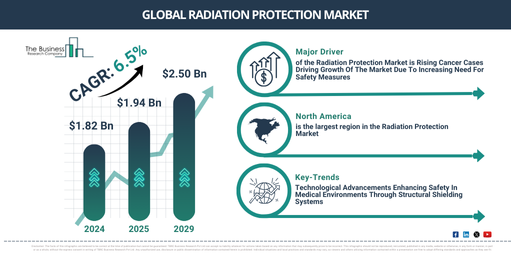
    In recent years, the market for radiation protection has experienced a significant expansion. It is predicted to increase from $1.82 billion in 2024 up to $1.94 billion in 2025, with a compound annual growth rate (CAGR) of 6.9%. The growth witnessed in the historic phase can be credited to factors such as the increasing application of diagnostic imaging technologies, growth of nuclear power generation, amplified radiation exposure during medical procedures, heightened awareness around occupational safety, regulatory requirements for radiation shielding, and the expansion of cancer radiotherapy treatments.

    In the coming years, the radiation protection market is projected to experience a considerable expansion, growing to an estimated $2.50 billion by 2029, with a compound annual growth rate (CAGR) of 6.5%. Numerous factors contribute to this forecasted growth, such as the heightened utilization of nuclear medicine and radiotherapy, increased investments in nuclear power production, growing requirement for protection solutions in the aerospace and defence fields, an elevated consciousness of professional radiation safety, broadening of interventional radiology methods, and more rigorous international control measures concerning radiation exposure limitations. Development of lightweight and lead-free protection materials, amplified employment of AI and robotics in radiation surveillance, advancement in nuclear medicine and radiology procedures, increased use of personal dosimeters, introduction of wearable radiation protection equipment, broadening of radiation safety regulations, and groundbreaking developments in shielding technologies for nuclear power and space exploration are significant trends projected for the upcoming period.

    Download The Free Sample Report Here:

    https://www.thebusinessresearchcompany.com/sample.aspx?id=27402&type=smp

    What Market Forces Are Driving The Radiation Protection Sector In 2025 And Beyond?

    The escalating incidence of cancer is predicted to boost the expansion of the radiation protection market. Cancer encompasses a variety of diseases defined by the unchecked expansion and proliferation of abnormal cells that can encroach on adjacent tissues and metastasize to other parts of the body. The growing occurrence of cancer is mainly due to extended life expectancy since the risk of contracting cancer increases with age. Radiation protection plays a crucial role in diminishing exposure to detrimental radiation, thus reducing the risk of radiation-related cancers. For example, a report from Macmillan Cancer Support, a charity based in the UK, stated in August 2024 that over 3 million people are currently living with cancer in the UK. These numbers are expected to rise to 3.5 million by 2025, 4 million by 2030, and 5.3 million by 2040. Hence, the escalating incidence of cancer is fuelling the expansion of the radiation protection market.

    How Is The Global Radiation Protection Market Categorized By Segments?

    The radiation protection market covered in this report is segmented

    1) By Product Type: Protective Barriers And Booths, Shields, Radiation Detection And Monitoring Equipment, Lead Liner Doors, Other Product Types

    2) By Technology: Ionizing Radiation Protection, Non-Ionizing Radiation Protection, Radiation Dosimetry, Remote Monitoring Technology, Radiation Measurement Software

    3) By Solution: Radiation Therapy Shielding, Diagnostic Shielding

    4) By End-User: Hospitals, Ambulatory Surgical Centers, Other End Users

    Subsegments:

    1) By Protective Barriers And Booths: Mobile Radiation Barriers, Fixed Radiation Barriers, Leaded Glass Panels, X-ray Protection Booths

    2) By Shields: Gonad Shields, Thyroid Shields, Breast Shields, Eye Shields, Full-body Shields

    3) By Radiation Detection And Monitoring Equipment: Dosimeters, Geiger Counters, Scintillation Detectors, Ionization Chambers, Personal Radiation Detectors

    4) By Lead Liner Doors: Sliding Lead Lined Doors, Swinging Lead Lined Doors, Manual Lead Lined Doors, Automatic Lead Lined Doors

    5) By Other Product Types: Lead Aprons, Lead Gloves, Lead Glasses, Lead Curtains, Radiation Protection Drapes

    What Long-Term Trends Are Likely To Affect The Radiation Protection Market?

    Major companies in the radiation protection industry are moving towards the development of innovative products like structural shielding systems to improve the safety from radiation in medical settings. These systems are defined as fixed, engineered barriers such as lead-infused doors and walls that aim to prevent damaging ionizing radiation, safeguarding healthcare workers and patients during imaging and radiological procedures. For illustration, in February 2023, Specialist Door Solutions Ltd. (SDS), a UK-based health service company, introduced a lead-lined X-ray door, known as Shieldoor, specifically tailored for healthcare establishments. Shieldoor provides excellent radiation attenuation, aligns with strict NHS safety regulations, and enhances safety in radiology and diagnostic imaging departments with its durable, hygienic, and adaptable design attributes.

    Which Firms Are Considered Leaders In The Radiation Protection Market Space?

    Major companies operating in the radiation protection market are Infab Corporation, Barrier Technologies LLC, Techno-Aide Inc., AliMed Inc., Trivitron Healthcare Pvt. Ltd., Bio-X Diagnostics Pvt. Ltd., Electronic & Engineering Co. (I) Pvt. Ltd., AADCO Medical Inc., Protech Medical Inc., Ultraray Radiation Protection Inc., Lancs Industries Inc., IndoSurgicals Private Limited, AmRay Medical, Akshay Enterprises, Uniray Medical LLP, Enviro Tech Industrial Products, Radiation Shield Technologies Inc., Ray-Bar Engineering Corp., StemRad Ltd., and BLOXR Solutions LLC.

    Get The Full Report Here:

    https://www.thebusinessresearchcompany.com/report/radiation-protection-global-market-report

    What Role Do Regional Policies And Investments Play In Radiation Protection Market Expansion?

    North America was the largest region in the radiation protection market in 2024. Asia-Pacific is expected to be the fastest-growing region in the forecast period. The regions covered in the radiation protection market report are Asia-Pacific, Western Europe, Eastern Europe, North America, South America, Middle East, Africa.

    Request For A Customized Report:

    https://www.thebusinessresearchcompany.com/customise?id=27402&type=smp

    About The Business Research Company:

    With over 15000+ reports from 27 industries covering 60+ geographies, The Business Research Company has built a reputation for offering comprehensive, data-rich research and insights. Armed with 1,500,000 datasets, the optimistic contribution of in-depth secondary research, and unique insights from industry leaders, you can get the information you need to stay ahead in the game.

    Get in touch with us:

    The Business Research Company: https://www.thebusinessresearchcompany.com/

    Americas +1 310-496-7795

    Asia +44 7882 955267 & +91 8897263534

    Europe +44 7882 955267

    Email us at info@tbrc.info

    Follow us on:

    LinkedIn: https://in.linkedin.com/company/the-business-research-company

    YouTube: https://www.youtube.com/channel/UC24_fI0rV8cR5DxlCpgmyFQ

    Global Market Model: https://www.thebusinessresearchcompany.com/global-market-model

  • Comprehensive Forecast: Point-Of-Care-Testing (POCT) Market Share, Growth, and Opportunities Through 2029

    Comprehensive Forecast: Point-Of-Care-Testing (POCT) Market Share, Growth, and Opportunities Through 2029

    Claim your 30% discount on Global Market Reports with code ONLINE30. Limited time only.

    Claim your 30% discount on Global Market Reports with code ONLINE30. Limited time only.

    What Are the Latest Market Insights for the Point-Of-Care-Testing (POCT) Industry?

    In recent times, there has been a significant expansion in the point-of-care-testing (POCT) market. The market is projected to swell from $45.45 billion in 2024 to about $50.79 billion in 2025, with a compound annual growth rate (CAGR) of 11.8%. The expansion of the market during the historical period is due to the growing emphasis on personalized medicine, escalating investments in healthcare infrastructure, an increase in emergency care instances, a surging application of point-of-care molecular testing, and the escalating integration of AI in diagnostics.

    Anticipated speedy expansion in the upcoming years is predicted for the point-of-care-testing (POCT) market, with projections placing its value at $78.19 billion by 2029, yielding a compound annual growth rate (CAGR) of 11.4%. This projected growth could be fueled by various factors such as a mounting demand for individualized healthcare, increasingly prevalent telehealth and remote monitoring, improved healthcare availability in developing markets, wider application in non-standard environments, and ascending popularity of wearable diagnostic tools. Notable trends forecasted for this period include advancements in multiplex testing platforms, the creation of portable molecular diagnostic devices, innovation in smartphone-dependent diagnostic instruments, progress in data connectivity and integration, and the emergence of AI-driven POCT solutions.

    Download The Free Sample Report Here:

    https://www.thebusinessresearchcompany.com/sample.aspx?id=27391&type=smp

    What Forces Are Driving The Growth Of The Point-Of-Care-Testing (POCT) Industry?

    The escalated uptake of telemedicine is anticipated to spur the expansion of the point-of-care-testing (POCT) market. Telemedicine pertains to the act of providing healthcare services remotely, utilizing digital communication technologies like video calls, phone calls, or secure messages. Telemedicine’s popularity is on the rise due to the growing need for accessible, quick, and contactless medical services, significantly sped up by the COVID-19 outbreak. Point-of-care testing (POCT) aids telemedicine by offering swift, trustworthy diagnostic outcomes that can be instantly communicated with remote health service providers. For example, a Rock Health survey in February 2023, involving 8,014 participants from July 12 to August 22, 2022, revealed that 76% of individuals above 55 years have utilized telemedicine, and 80% of all surveyed individuals admitted to accessing care through telemedicine at least once in their lives, an increase of 8% from 72% in 2021. Therefore, the skyrocketing uptake of telemedicine is propelling the point-of-care-testing (POCT) market’s growth.

    What Is The Overview Of Market Segmentation In The Point-Of-Care-Testing (POCT) Industry?

    The point-of-care-testing (POCT) market covered in this report is segmented

    1) By Type: Blood Glucose Testing, Infectious Diseases Testing, Cardiac Markers Testing, Coagulation Testing, Pregnancy And Fertility Testing, Blood Gas Or Electrolytes Testing, Urinalysis Testing, Other Types

    2) By Mode Of Purchase: Over-The-Counter Products, Prescribed Based Products

    3) By Technology: Immunoassays, Molecular Diagnostics, Microbial Detection, Polymerase Chain Reaction (PCR) Testing, Biochemical Testing

    4) By End-User: Clinical Laboratories, Ambulatory Care Facilities And Physician Offices, Pharmacies, Retail Clinics And E-Comm Platforms, Hospitals, Critical Care Centres, Urgent Care Centres, Home Care And Self-Testing, Other End-Users

    Subsegments:

    1) By Blood Glucose Testing: Self-Monitoring Blood Glucose Devices, Continuous Glucose Monitoring Devices, Flash Glucose Monitoring Devices

    2) By Infectious Diseases Testing: Human Immunodeficiency Virus (HIV) Testing, Hepatitis Testing, Influenza Testing, COVID-19 Testing, Other Infectious Diseases Testing

    3) By Cardiac Markers Testing: Troponin Testing, Creatine Kinase-MB (CK-MB) Testing, Myoglobin Testing, B-type Natriuretic Peptide (BNP) Testing

    4) By Coagulation Testing: Prothrombin Time (PT) Testing, Activated Partial Thromboplastin Time (aPTT) Testing, International Normalized Ratio (INR) Testing

    5) By Pregnancy And Fertility Testing: Pregnancy Test Kits, Ovulation Test Kits, Fertility Hormone Testing

    6) By Blood Gas Or Electrolytes Testing: Arterial Blood Gas Testing, Venous Blood Gas Testing, Electrolyte Testing

    7) By Urinalysis Testing: Urine Chemistry Analysis, Microscopic Urine Analysis, Urine Culture Testing

    8) By Other Types: Drug Abuse Testing, Allergy Testing, Cholesterol Testing, Thyroid Function Testing

    What Future Market Trends Are Projected For The Point-Of-Care-Testing (POCT) Industry?

    Leading businesses in the point-of-care-testing (POCT) industry are concentrating on introducing unique products like blood glucose control solutions to enhance diagnostic precision, swiftness, and patient outcomes in near-patient contexts. Blood glucose control solutions encompass systems, devices, and tools that monitor, manage, and adjust blood sugar levels to treat conditions such as diabetes. For example, F. Hoffmann-La Roche AG, a pharmaceutical organization based in Switzerland, introduced the Cobas pulse system in January 2022. This system is a revolutionary combined platform that merges cutting-edge point-of-care blood glucose tests with smart device capabilities. It seamlessly links with hospital IT systems for automatic result transmission and immediate clinical data access. This device incorporates healthcare apps to improve decision-making support and streamline workflow right at the patient’s bedside.

    Who Are The Primary Players Operating Across The Global Point-Of-Care-Testing (POCT) Market?

    Major companies operating in the point-of-care-testing (POCT) market are Johnson & Johnson, F. Hoffmann-La Roche Ltd., Thermo Fisher Scientific Inc., Abbott Laboratories, Danaher Corporation, Siemens Healthineers AG, Becton Dickinson and Company, Zoetis Inc., BioMérieux SA, QuidelOrtho Corporation, Sysmex Corporation, Bio-Rad Laboratories Inc., QIAGEN NV, Nova Biomedical Corporation, LifeScan Inc., Ascensia Diabetes Care Holdings AG, Trividia Health Inc., Trinity Biotech Plc, SiPhox Inc., and Sinocare Inc.

    Get The Full Report Here:

    https://www.thebusinessresearchcompany.com/report/point-of-care-testing-poct-global-market-report

    Which Region Offers The Most Growth Potential For The Point-Of-Care-Testing (POCT) Market Through 2029?

    North America was the largest region in the point-of-care testing (POCT) market in 2024. Asia-Pacific is expected to be the fastest-growing region in the forecast period. The regions covered in the point-of-care-testing (POCT) market report are Asia-Pacific, Western Europe, Eastern Europe, North America, South America, Middle East, Africa.

    Request For A Customized Report:

    https://www.thebusinessresearchcompany.com/customise?id=27391&type=smp

    About The Business Research Company:

    With over 15000+ reports from 27 industries covering 60+ geographies, The Business Research Company has built a reputation for offering comprehensive, data-rich research and insights. Armed with 1,500,000 datasets, the optimistic contribution of in-depth secondary research, and unique insights from industry leaders, you can get the information you need to stay ahead in the game.

    Get in touch with us:

    The Business Research Company: https://www.thebusinessresearchcompany.com/

    Americas +1 310-496-7795

    Asia +44 7882 955267 & +91 8897263534

    Europe +44 7882 955267

    Email us at info@tbrc.info

    Follow us on:

    LinkedIn: https://in.linkedin.com/company/the-business-research-company

    YouTube: https://www.youtube.com/channel/UC24_fI0rV8cR5DxlCpgmyFQ

    Global Market Model: https://www.thebusinessresearchcompany.com/global-market-model
  • Future Demand and Leading Companies Shaping the Point-of-Care Technology Market to 2029

    Future Demand and Leading Companies Shaping the Point-of-Care Technology Market to 2029

    Claim your 30% discount on Global Market Reports with code ONLINE30. Limited time only.

    Claim your 30% discount on Global Market Reports with code ONLINE30. Limited time only.

    What Are the Forecasted Growth Rate and Market Size of the Point-of-Care Technology Market?

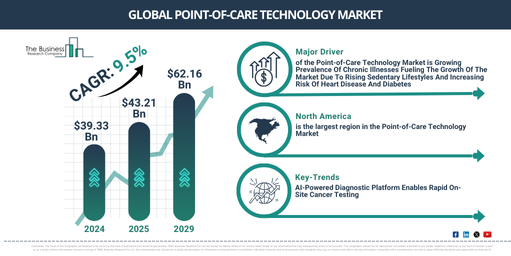
    There has been a notable expansion in the size of the point-of-care technology market in the past few years. It is estimated to jump from $39.33 billion in 2024 to $43.21 billion in 2025, marking a compound annual growth rate (CAGR) of 9.9%. Several factors have contributed to the growth in the historic period, including the steady decentralization of health service delivery, the escalating need for immediate diagnoses in emergency situations, the growing demand for quick infection tests, the increased deployment of mobile testing facilities, and the heightened attention given to cost-effective diagnostic procedures.

    Expectations are high for robust expansion of the point-of-care technology market in the forthcoming years, with projections looking at a significant increase to $62.16 billion in 2029. This growth, reflecting a compound annual growth rate (CAGR) of 9.5%, can be credited to several factors. These include the surge in telemedicine platforms, shift towards personalized and predictive healthcare, the expanding usage in home-based health monitoring, and growing government support for decentralized testing. The period of forecast also anticipates several significant trends, including the progression of artificial intelligence-augmented diagnostic algorithms, the introduction of portable multiplex testing tools, innovations in wearable health monitoring devices, advancements in integrating cloud-based data, and the creation of home-based telehealth ecosystems.

    Download The Free Sample Report Here:

    https://www.thebusinessresearchcompany.com/sample.aspx?id=27390&type=smp

    Which Factor Is Shaping The Future Of The Point-of-Care Technology Market?

    The increased incidence of chronic diseases is anticipated to fuel the expansion of the point-of-care technology market. Chronic diseases are long-lasting health issues that typically necessitate sustained care and lifestyle modifications. Sedentary living is escalating these diseases, as lengthy periods of sitting and lack of physical activity intensify the chances of heart ailments and diabetes. Point-of-care technology, with its quick, onsite diagnostic testing, is highly suitable for settings like clinics, homes, and remote care facilities in managing chronic diseases. Real-time results not only eliminate treatment delays but also enhance patient monitoring and general healthcare convenience. For example, the National Health Service, a UK governmente department, reported that in June 2024, 3,615,330 patients registered with a general practitioner (GP) were identified with non-diabetic hyperglycemia or pre-diabetes in 2023, witnessing an 18% jump from the 3,065,825 cases in 2022. Thus, the increasing prevalence of chronic diseases is driving the point-of-care technology market’s growth.

    What Is The Segment-Wise Breakdown Of The Point-of-Care Technology Market?

    The point-of-care technology market covered in this report is segmented

    1) By Product Type: Diagnostics Devices, Monitoring Devices, Therapeutic Devices, Data Management Systems

    2) By Ownership Model: Standalone Solutions, Integrated Solutions, Cloud-Based Solutions

    3) By Technology: Microfluidics, Polymerase Chain Reaction (PCR), Immunoassays

    4) By Application: Infectious Disease Testing, Glucose Monitoring, Cardiometabolic Monitoring, Pregnancy And Fertility Testing, Other Applications

    5) By End-User: Hospitals, Clinics, Homecare Settings, Ambulatory Surgical Centers

    Subsegments:

    1) By Diagnostics Devices: Blood Glucose Monitoring Devices, Infectious Disease Testing Devices, Cardiac Marker Testing Devices, Coagulation Testing Devices, Pregnancy And Fertility Testing Devices, Urinalysis Testing Devices, Hematology Testing Devices, Cholesterol Testing Devices

    2) By Monitoring Devices: Vital Signs Monitoring Devices, Continuous Glucose Monitoring Devices, Cardiac Monitoring Devices, Respiratory Monitoring Devices

    3) By Therapeutic Devices: Insulin Delivery Devices, Nebulizers, Dialysis Machines, Infusion Pumps

    4) By Data Management Systems: Point Of Care (POC) Data Integration Systems, Point Of Care (POC) Middleware Solutions, Point Of Care (POC) Data Analytics Platforms

    Which Trends Are Redefining The Future Landscape Of The Point-of-Care Technology Industry?

    Leading corporations within the point-of-care technology sector are orchestration strategies for the innovation and development of advanced technology solutions, specifically AI-powered diagnostic systems. These are designed to elevate the speed, precision and ease of access in detecting illnesses. The AI-powered diagnostics utilize artificial intelligence to swiftly evaluate medical data, thus facilitating instantaneous, on-site examination for critical conditions such as cancer. To illustrate, Avitia Inc., a point-of-care diagnostic firm based in Canada, introduced an AI-driven platform in February 2025 for rapid point-of-care testing for cancer. This platform merges machine learning algorithms with compact diagnostic equipment, empowering healthcare professionals to provide quick and accurate cancer screening beyond the conventional lab environment. As a result of this breakthrough, turnaround times have been slashed, early identification has improved, and the requirement for complex infrastructure has decreased, thereby facilitating easier access to advanced diagnostic facilities in rural or underserved locations.

    Which Companies Hold The Largest Market Share In The Point-of-Care Technology Sector?

    Major companies operating in the point-of-care technology market are F. Hoffmann-La Roche AG, Thermo Fisher Scientific Inc., Abbott Laboratories, Danaher Corporation, Siemens Healthineers AG, Hologic Inc., bioMérieux SA, Quidel Corporation, Sysmex Corporation, Cepheid Inc., Radiometer Medical ApS, Nova Biomedical, Sekisui Diagnostics LLC, Abaxis Inc., BHR Biosynex, EKF Diagnostics Holdings plc, Acon Laboratories Inc., Trinity Biotech plc, Chembio Diagnostics Inc., Arkray Inc., Orchard Software Corporation, Point of Care Biomedical Private Limited.

    Get The Full Report Here:

    https://www.thebusinessresearchcompany.com/report/point-of-care-technology-global-market-report

    How Does Regional Performance Compare Across The Point-of-Care Technology Industry?

    North America was the largest region in the point-of-care technology market in 2024. Asia-Pacific is expected to be the fastest-growing region in the forecast period. The regions covered in the point-of-care technology market report are Asia-Pacific, Western Europe, Eastern Europe, North America, South America, Middle East, Africa.

    Request For A Customized Report:

    https://www.thebusinessresearchcompany.com/customise?id=27390&type=smp

    About The Business Research Company:

    With over 15000+ reports from 27 industries covering 60+ geographies, The Business Research Company has built a reputation for offering comprehensive, data-rich research and insights. Armed with 1,500,000 datasets, the optimistic contribution of in-depth secondary research, and unique insights from industry leaders, you can get the information you need to stay ahead in the game.

    Get in touch with us:

    The Business Research Company: https://www.thebusinessresearchcompany.com/

    Americas +1 310-496-7795

    Asia +44 7882 955267 & +91 8897263534

    Europe +44 7882 955267

    Email us at info@tbrc.info

    Follow us on:

    LinkedIn: https://in.linkedin.com/company/the-business-research-company

    YouTube: https://www.youtube.com/channel/UC24_fI0rV8cR5DxlCpgmyFQ

    Global Market Model: https://www.thebusinessresearchcompany.com/global-market-model
  • Latest Market Developments in Point Of Care Hematology Diagnostics Industry: Forecast 2025–2029

    Latest Market Developments in Point Of Care Hematology Diagnostics Industry: Forecast 2025–2029

    Claim your 30% discount on Global Market Reports with code ONLINE30. Limited time only.

    Claim your 30% discount on Global Market Reports with code ONLINE30. Limited time only.

    How Large Is the Point Of Care Hematology Diagnostics Market Expected to Be in 2029?

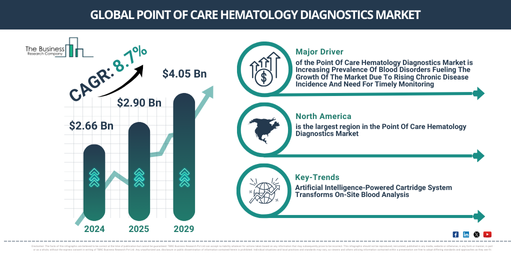
    There has been substantial growth in the size of the point of care hematology diagnostics market in recent times, with projections showing an increase from $2.66 billion in 2024 to $2.90 billion in 2025, suggesting a compound annual growth rate (CAGR) of 9.1%. The historical growth can be linked to factors like the increasing incidence of hematological disorders, the emergence of decentralized healthcare facilities, an amplified emphasis on early detection of diseases, increased healthcare spending in developing markets, and the rising utilization of portable diagnostic devices.

    The market size of point of care hematology diagnostics is projected to experience significant expansion in the coming years, estimated to reach $4.05 billion by 2029 with a compound annual growth rate (CAGR) of 8.7%. This anticipated growth in the forecast period is due to factors such as the increased uptake of personalized medicine, the rising demand for immediate clinical decisions and home healthcare diagnostics, an escalated prevalence of blood-related disorders, and heightened awareness surrounding preventive healthcare. Key trends expected during the forecast span incorporate advancements in hematology analyzer connectivity features, improvements in sample preparation approaches, the incorporation of artificial intelligence into diagnostic instruments, developments in single-cell analysis techniques, the integration of cloud-based data platforms, and progressions in lab-on-a-chip solutions.

    Download The Free Sample Report Here:

    https://www.thebusinessresearchcompany.com/sample.aspx?id=27388&type=smp

    What Are The Contributors To Demand In The Point Of Care Hematology Diagnostics Market?

    The escalation in the occurrence of blood disorders is set to fuel the expansion of the point-of-care hematology diagnostics market in the future. Blood disorders encompass those ailments that disturb the constituents of blood such as red blood cells, white blood cells, platelets, or plasma. The primary cause of this rise in blood disorders is the mounting prevalence of chronic maladies that gravely affect the health of the blood and necessitate continuous tracking. The point-of-care hematology diagnostics offer prompt and precise results at or near the patient care site, thereby facilitating speedy clinical judgments and better disease administration. For example, the Perth Blood Institute, a non-profit entity based in Australia reported that in April 2024, people diagnosed with hemophilia, a hereditary blood disorder characterized by the blood’s inability to clot properly leading to extended bleeding, edged up to 257,146 in 2022 from 233,577 in 2021. Consequently, the escalating occurrence of blood disorders is driving the point-of-care hematology diagnostics market’s expansion.

    What Segmentation Categories Are Included In The Point Of Care Hematology Diagnostics Market Analysis?

    The point of care hematology diagnostics market covered in this report is segmented

    1) By Type: Complete Blood Count, Coagulation Testing, Hemoglobin Testing, Anemia Diagnosis, Other Types

    2) By Product: Consumables, Systems

    3) By Mode Of Prescription: Prescription Based Product, Over-The-Counter Based Product

    4) By End User: Diagnostic Centers, Hospitals, Blood Banks, Transfusion Centers, Other End Users

    Subsegments:

    1) By Complete Blood Count: White Blood Cell Count, Red Blood Cell Count, Platelet Count, Hematocrit, Hemoglobin Concentration, Mean Corpuscular Volume (MCV)

    2) By Coagulation Testing: Prothrombin Time (PT), Activated Partial Thromboplastin Time (aPTT), International Normalized Ratio (INR), D-Dimer Test, Fibrinogen Level

    3) By Hemoglobin Testing: Total Hemoglobin, Glycated Hemoglobin (HbA1c), Oxyhemoglobin, Carboxyhemoglobin, Methemoglobin

    4) By Anemia Diagnosis: Iron Studies, Vitamin B12 Levels, Folate Levels, Reticulocyte Count, Ferritin Test, Transferrin Saturation

    5) By Other Types: Blood Typing And Crossmatching, Erythrocyte Sedimentation Rate, Malaria Parasite Detection, Sickle Cell Screening, C-Reactive Protein Testing

    What Upcoming Trends Are Expected To Impact The Point Of Care Hematology Diagnostics Market Globally?

    Leading entities in the point-of-care hematology diagnostics market are working towards creating products that are technologically superior, such as AI-powered hematology analyzers that use cartridges, with the aim to provide quick, precise, and local blood analysis for enhanced patient care. These cartridge-based AI-powered hematology analyzers are compact diagnostic tools that employ single-use reagent cartridges and artificial intelligence algorithms to effectively and correctly analyze blood samples at the care location. For instance, Zoetis Inc., a veterinary health firm based in the US, introduced Vetscan OptiCell, an AI-powered hematology analyzer that utilizes cartridges, specifically for veterinary usage in September 2024. This revolutionary system provides swift, reference laboratory-grade complete blood count (CBC) results within minutes at the point of care, while also reducing maintenance and time spent on it. It comes with state-of-the-art AI-controlled image analysis and viscoelastic focusing technology that accurately aligns cells for clear imaging, thus enabling precise blood cell categorization and automated anomaly detection, ensuring efficient and trustworthy veterinary diagnostics.

    Who Are The Top-Ranked Companies In The Point Of Care Hematology Diagnostics Market Today?

    Major companies operating in the point of care hematology diagnostics market are F. Hoffmann-La Roche Ltd., Thermo Fisher Scientific Inc., Abbott Laboratories, Danaher Corporation, Siemens Healthineers AG, Shenzhen Mindray Bio-Medical Electronics Co. Ltd., Sysmex Corporation, HORIBA Ltd., Nova Biomedical Corp., S.D. Sight Diagnostics Ltd., EKF Diagnostics Holdings plc., Medsource Ozone Biomedicals Pvt. Ltd., BioSystems S.A., Chengdu Seamaty Technology Co. Ltd., Drucker Diagnostics LLC, Diamond Diagnostics Inc., DIAGON Kft., BioMedomics Inc., Norma Instruments Zrt., PixCell Medical Technologies Ltd.

    Get The Full Report Here:

    https://www.thebusinessresearchcompany.com/report/point-of-care-hematology-diagnostics-global-market-report

    How Is Point Of Care Hematology Diagnostics Market Adoption Varying Across Different Regions And Sectors?

    North America was the largest region in the point of care hematology market in 2024. Asia-Pacific is expected to be the fastest-growing region in the forecast period. The regions covered in the point of care hematology diagnostics market report are Asia-Pacific, Western Europe, Eastern Europe, North America, South America, Middle East, Africa.

    Request For A Customized Report:

    https://www.thebusinessresearchcompany.com/customise?id=27388&type=smp

    About The Business Research Company:

    With over 15000+ reports from 27 industries covering 60+ geographies, The Business Research Company has built a reputation for offering comprehensive, data-rich research and insights. Armed with 1,500,000 datasets, the optimistic contribution of in-depth secondary research, and unique insights from industry leaders, you can get the information you need to stay ahead in the game.

    Get in touch with us:

    The Business Research Company: https://www.thebusinessresearchcompany.com/

    Americas +1 310-496-7795

    Asia +44 7882 955267 & +91 8897263534

    Europe +44 7882 955267

    Email us at info@tbrc.info

    Follow us on:

    LinkedIn: https://in.linkedin.com/company/the-business-research-company

    YouTube: https://www.youtube.com/channel/UC24_fI0rV8cR5DxlCpgmyFQ

    Global Market Model: https://www.thebusinessresearchcompany.com/global-market-model
  • Emerging Trends and Growth Drivers in the Point Of Care Devices Market Through 2029

    Emerging Trends and Growth Drivers in the Point Of Care Devices Market Through 2029

    Claim your 30% discount on Global Market Reports with code ONLINE30. Limited time only.

    Claim your 30% discount on Global Market Reports with code ONLINE30. Limited time only.

    What Is the Outlook for the Point Of Care Devices Market Heading Into 2029?

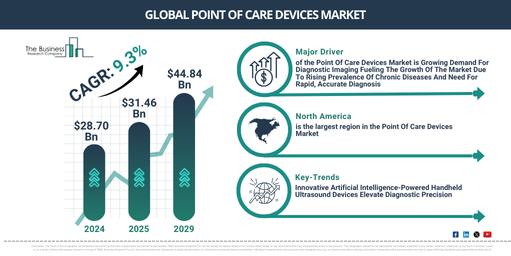
    The market size for point of care devices has seen substantial growth in the past few years. The current size of $28.70 billion in 2024 is set to increase to $31.46 billion in 2025, with a compound annual growth rate (CAGR) of 9.6%. The growth throughout the historical period can be linked to an increase in early disease detection awareness, a rise in the use of portable healthcare devices, a growing necessity for decentralized testing, increased government schemes for healthcare accessibility, and an overall increase in global health expenditure.

    The market size for point of care devices is predicted to experience substantial growth in the forthcoming years, reaching a value of $44.84 billion in 2029 with a compound annual growth rate (CAGR) of 9.3%. This projected growth within the forecast period is a result of various factors such as the rising uptake of wireless and connected devices, increased focus on point-of-care testing in isolated regions, a heightened emphasis on affordable diagnostics, significant investments in healthcare infrastructure, an increased incidence of infectious diseases, and a growing demand for multi-parameter testing devices. Key trends noted within the forecast period include the progress in lab-on-a-chip technology, the emergence of diagnostic platforms powered by artificial intelligence, advances in smartphone-integrated testing devices, the enhancement of multiplex testing capabilities, and the creation of cloud-connected point-of-care systems.

    Download The Free Sample Report Here:

    https://www.thebusinessresearchcompany.com/sample.aspx?id=27387&type=smp

    Which Factors Are Pushing The Point Of Care Devices Market Forward?

    An increased need for diagnostic imaging is anticipated to boost the expansion of the point-of-care devices market. Diagnostic imaging involves methods and procedures that produce visual depictions of the internal structure of the body, facilitating clinical assessment and medical intervention. The demand for such imaging is on the rise, primarily due to the increasing presence of chronic diseases that require accurate and early diagnosis. Point-of-care devices augment diagnostic imaging with their compact and portable features, making them perfect for use in remote healthcare situations, clinics, and bedside care. They expedite processing times, producing quick and precise imaging outcomes, which, in turn, enhance clinical decision-making and efficiency in patient care. As an example, a National Library of Medicine survey study conducted in February 2025 showed that among 348,214,053 insured individuals, including those with Medicare fee-for-service, Medicare Advantage, Medicaid, and commercial insurance, from 2018 to 2022, it’s projected that imaging utilization would rise from 16.9% to 26.9% in 2055 relative to 2023. As a result, the accelerating demand for diagnostic imaging is driving the growth of the point-of-care devices market.

    Which Segment Held The Largest Share In The Point Of Care Devices Market In 2025?

    The point of care devices market covered in this report is segmented

    1) By Type Of Device: Diagnostic Devices, Therapeutic Devices, Monitoring Devices, Treatment Devices, Support Devices

    2) By Technology: Biochemical Technology, Microfluidics, Immunoassay Technology, Nucleic Acid Testing, Wearable Technology

    3) By Application: Cardiology, Diabetes Management, Infectious Diseases, Oncology, Pediatrics

    4) By Distribution Channel: Direct Sales, Distributors, Online Sales, Retail Pharmacies, Healthcare Institutions

    5) By End User: Hospitals, Clinics, Home Care Settings, Diagnostic Laboratories, Emergency Medical Services (EMS)

    Subsegments:

    1) By Diagnostic Devices: Blood Glucose Monitors, Hematology Analyzers, Coagulation Analyzers, Urinalysis Devices, Molecular Diagnostics

    2) By Therapeutic Devices: Infusion Pumps, Respiratory Therapy Devices, Pain Management Devices, Wound Care Devices, Dialysis Devices

    3) By Monitoring Devices: Vital Signs Monitors, Cardiac Monitors, Pulse Oximeters, Temperature Monitors, Respiratory Monitors

    4) By Treatment Devices: Defibrillators, Surgical Devices, Laser Therapy Devices, Physical Therapy Devices

    5) By Support Devices: Sample Collection Devices, Specimen Transport Devices, Data Management Devices, Calibration And Maintenance Devices

    How Are Key Trends Driving Expansion In The Point Of Care Devices Industry?

    Leading businesses in the point-of-care devices market are investing in the creation of technologically superior solutions like AI-assisted handheld ultrasound systems, aimed at enhancing diagnostic precision and mobility. The AI-boosted handheld ultrasound systems are movable imaging instruments, employing AI algorithms to aid in generating and interpreting ultrasound imagery, thereby expediting and refining diagnosis accuracy. For example, Koninklijke Philips N.V., a healthcare technology firm from the Netherlands, unveiled the Compact 5000 Series, an AI-backed point-of-care ultrasound apparatus, in October 2023. This transportable tool provides exceptional imaging quality and incorporates state-of-the-art AI-guided automation for measurements and efficient workflows, thereby ensuring prompt and precise diagnosis in a variety of healthcare environments. It flaunts user-friendly controls, is compatible with several transducers, and seamlessly integrates with telemedicine platforms, thereby supporting collaborative remote clinical treatment.

    Which Organizations Are Driving Progress In The Point Of Care Devices Industry?

    Major companies operating in the point of care devices market are Johnson & Johnson, F. Hoffmann-La Roche AG, Thermo Fisher Scientific Inc., Abbott Laboratories, Danaher Corporation, Siemens Healthineers AG, Becton, Dickinson and Company, Hologic Inc., BioMérieux SA, Quidel Corporation, OraSure Technologies Inc., Nova Biomedical Corporation, Sekisui Diagnostics LLC, Abaxis Inc., EKF Diagnostics Holdings plc, Trinity Biotech plc, Chembio Diagnostics Inc., PTS Diagnostics LLC, MeMed, Alere Inc., Diagnostics For All Inc.

    Get The Full Report Here:

    https://www.thebusinessresearchcompany.com/report/point-of-care-devices-global-market-report

    Which Region Is Expected To Experience The Highest Growth In The Point Of Care Devices Industry?

    North America was the largest region in the point of care devices market in 2024. Asia-Pacific is expected to be the fastest-growing region in the forecast period. The regions covered in the point of care devices market report are Asia-Pacific, Western Europe, Eastern Europe, North America, South America, Middle East, Africa.

    Request For A Customized Report:

    https://www.thebusinessresearchcompany.com/customise?id=27387&type=smp

    About The Business Research Company:

    With over 15000+ reports from 27 industries covering 60+ geographies, The Business Research Company has built a reputation for offering comprehensive, data-rich research and insights. Armed with 1,500,000 datasets, the optimistic contribution of in-depth secondary research, and unique insights from industry leaders, you can get the information you need to stay ahead in the game.

    Get in touch with us:

    The Business Research Company: https://www.thebusinessresearchcompany.com/

    Americas +1 310-496-7795

    Asia +44 7882 955267 & +91 8897263534

    Europe +44 7882 955267

    Email us at info@tbrc.info

    Follow us on:

    LinkedIn: https://in.linkedin.com/company/the-business-research-company

    YouTube: https://www.youtube.com/channel/UC24_fI0rV8cR5DxlCpgmyFQ

    Global Market Model: https://www.thebusinessresearchcompany.com/global-market-model

  • CAGR of 10.2% Projected for Plasmonic Laser Ablation Device Market From 2025 to 2029

    CAGR of 10.2% Projected for Plasmonic Laser Ablation Device Market From 2025 to 2029

    Claim your 30% discount on Global Market Reports with code ONLINE30. Limited time only.

    Claim your 30% discount on Global Market Reports with code ONLINE30. Limited time only.

    What Does the Forecast Indicate for the Plasmonic Laser Ablation Device Market From 2025 to 2029?

    The market for plasmonic laser ablation devices has experienced swift growth in recent years. The market, which is estimated at $1.35 billion in 2024, is predicted to rise to $1.50 billion in 2025, indicating a compound annual growth rate (CAGR) of 10.6%. The expansion seen during the historical period can be credited to factors such as the increasing instances of cancer and chronic illnesses, growth in investments in medical research and clinical trials, the rising incorporation of plasmonic in biomedical uses, increased application in material science and nanotechnology, and a growing emphasis on patient safety and recovery.

    Anticipated growth in the plasmonic laser ablation device market is projected to be substantial over the next few years, with estimates reaching a value of $2.21 billion by 2029, reflecting a compound annual growth rate (CAGR) of 10.2%. This growth trajectory during the forecast period is primarily driven by increased utilization of femtosecond and nanosecond laser pulses, higher demands for day-care and outpatient surgeries, an escalating inclination towards precision medicine, enhanced adoption for cosmetic and dermatological procedures, and growing need for image-guided surgical technologies. The forecast period is also expected to witness significant developments such as advancements in nanosecond and femtosecond laser technologies, incorporation of real-time imaging systems, innovative developments in biocompatible nanoparticle formulations, progress in surface plasmon resonance (SPR) monitoring, and advancements in photothermal and photomechanical effects.

    Download The Free Sample Report Here:

    https://www.thebusinessresearchcompany.com/sample.aspx?id=27386&type=smp

    What Elements Are Contributing To Growth In The Plasmonic Laser Ablation Device Market?

    An increased preference for minimally invasive procedures is predicted to spur the growth of the plasmonic laser ablation device market. These medical techniques use small incisions or natural openings and specialized tools, resulting in less pain, scarring, and shortened recovery time. The quick recovery associated with these procedures allows patients to promptly resume their normal activities, reducing the risk of complications. These innovative devices are used in minimally invasive procedures to precisely and locally remove tissue, minimizing thermal damage to adjacent areas. Consequently, the size of the incision shrinks and healing is expedited. As an illustration, data from the American Society of Plastic Surgeons show that roughly 25.4 million minimally invasive procedures were conducted in 2023, a 7% increase from the preceding year, indicating that this growing demand is propelling the plasmonic laser ablation device market growth. Furthermore, the upward trajectory of healthcare expenditure is anticipated to fuel the expansion of the plasmonic laser ablation device market. This expenditure encompasses the cumulative investment in medical services, treatments, and health-related resources by individuals, governments, and institutions. The rise attributed to an aging population needing more frequent and costly care for chronic and age-related ailments. The increased funding unlocks the potential for the development and uptake of transformative technologies like plasmonic laser ablation devices. For example, projections from the Centers for Medicare and Medicaid Services (CMS) suggest that annual healthcare spend will grow by 5.1% annually from 2021 to 2030, amassing about $6.8 trillion by 2030. This trend is driving the growth of the plasmonic laser ablation device market.

    Which Segments Are Detailed In The Global Plasmonic Laser Ablation Device Market Report?

    The plasmonic laser ablation device market covered in this report is segmented

    1) By Type: Yttrium Aluminum Garnet Laser, Carbon Dioxide Laser, Other Types

    2) By Device Type: Pulsed Plasmonic Laser Ablation Devices, Continuous Wave Plasmonic Laser Ablation Devices, Femtosecond Plasmonic Laser Ablation Devices, Nanosecond Plasmonic Laser Ablation Devices

    3) By Technology: Surface Plasmon Resonance (SPR) Technology, Nanoparticle Mediated Laser Ablation, Optical Coherence Tomography (OCT)

    4) By Application: Medical Applications, Material Processing, Research And Development

    5) By End-User: Hospitals, Research Institutes, Manufacturing Industries, Other Users

    Subsegments:

    1) By Yttrium Aluminum Garnet: Nanosecond Yttrium Aluminum Garnet Laser, Picosecond Yttrium Aluminum Garnet Laser, Q-switched Yttrium Aluminum Garnet Laser

    2) By Carbon Dioxide (CO2) Laser: Continuous Wave Carbon Dioxide Laser, Pulsed Carbon Dioxide Laser, rational Carbon Dioxide Laser

    3) By Other Types: Femtosecond Laser, Excimer Laser, Ultrafast Laser

    Who Are The Key Contributors To Growth In The Plasmonic Laser Ablation Device Market?

    Major companies operating in the plasmonic laser ablation device market are Mitsubishi Electric Corporation, Boston Scientific Corporation, Trumpf Group, Coherent Corp., Han’s Laser Technology Industry Group Co. Ltd., Lumentum Holdings Inc., Thorlabs Inc., Edmund Optics Inc, Jenoptik AG, Universal Laser Systems Inc., Cincinnati Incorporated, Epilog Laser, RPMC Lasers, Dongguan Mactron Technology Co. Ltd., Aesthetic World, Astanza Laser LLC, Boss Laser LLc, Quantum Composers, Laser Photonics Corporation, Medioxra LLP.

    Get The Full Report Here:

    https://www.thebusinessresearchcompany.com/report/plasmonic-laser-ablation-device-global-market-report

    Which Region Is Projected To Lead The Plasmonic Laser Ablation Device Market By 2025?

    North America was the largest region in the plasmonic laser ablation device market in 2024. Asia-Pacific is expected to be the fastest-growing region in the forecast period. The regions covered in the plasmonic laser ablation device market report are Asia-Pacific, Western Europe, Eastern Europe, North America, South America, Middle East, Africa.

    Request For A Customized Report:

    https://www.thebusinessresearchcompany.com/customise?id=27386&type=smp

    About The Business Research Company:

    With over 15000+ reports from 27 industries covering 60+ geographies, The Business Research Company has built a reputation for offering comprehensive, data-rich research and insights. Armed with 1,500,000 datasets, the optimistic contribution of in-depth secondary research, and unique insights from industry leaders, you can get the information you need to stay ahead in the game.

    Get in touch with us:

    The Business Research Company: https://www.thebusinessresearchcompany.com/

    Americas +1 310-496-7795

    Asia +44 7882 955267 & +91 8897263534

    Europe +44 7882 955267

    Email us at info@tbrc.info

    Follow us on:

    LinkedIn: https://in.linkedin.com/company/the-business-research-company

    YouTube: https://www.youtube.com/channel/UC24_fI0rV8cR5DxlCpgmyFQ

    Global Market Model: https://www.thebusinessresearchcompany.com/global-market-model
  • Biopsy Needle Market Revenue Outlook: Strategic Insights and Forecast to 2029

    Biopsy Needle Market Revenue Outlook: Strategic Insights and Forecast to 2029

    Claim your 30% discount on Global Market Reports with code ONLINE30. Limited time only.

    Claim your 30% discount on Global Market Reports with code ONLINE30. Limited time only._x000D_

    _x000D_

    #What CAGR Is Anticipated for the Biopsy Needle Market Through 2029?#_x000D_

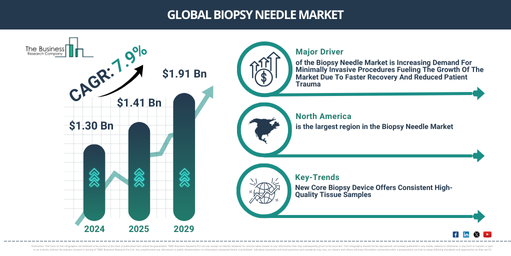
    In the past few years, the biopsy needle market has experienced robust growth. It’s projected to escalate from a 2024 valuation of $1.30 billion to $1.41 billion in 2025, boasting a compound annual growth rate (CAGR) of 8.3%. The past growth is largely credited to the surge in demand for minimally invasive methods, heightened awareness regarding timely diagnosis, population aging, greater use of image-guided biopsy procedures, and a rising necessity for early, precise diagnosis._x000D_

    _x000D_

    In the forthcoming years, the biopsy needle market is anticipated to experience robust growth, escalating to $1.91 billion in 2029 with a 7.9% compound annual growth rate (CAGR). This surge during the forecast period can be associated with the increasing demand for sophisticated diagnostic tools, a rise in screening programmes, growth of the private healthcare sector in emerging economies, augmented accessibility to biopsy procedures, and heightened focus on patient safety. Progress in needle design and precision, technological advancements in imaging for biopsy guidance, implementation of robot-assisted biopsy systems, real-time data monitoring enhancements during procedures, and innovating disposable biopsy needles for infection control are the key trends expected to define the forecast period._x000D_

    _x000D_

    #Download The Free Sample Report Here:#_x000D_

    https://www.thebusinessresearchcompany.com/sample.aspx?id=27224&type=smp_x000D_

    _x000D_

    #What Market Forces Are Driving The Biopsy Needle Sector In 2025 And Beyond?#_x000D_

    The biopsy needle market’s growth trajectory is predicted to be powered by the escalating interest in minimally invasive procedures. These medical interventions, which involve minor incisions or openings, aim to decrease trauma for patients and shorten recovery periods. This type of surgery is becoming more popular because it results in fewer complications, reduced pain, and smaller scars, thereby offering a faster and safer alternative for patients. Crucially, biopsy needles play a fundamental role in these procedures as they facilitate accurate tissue sampling, thus minimizing the necessity for surgical intervention. Consequently, patient comfort is enhanced, diagnoses and recovery are expedited, and the overall efficacy of the procedures is improved. For example, per the American Society of Plastic Surgeons, a non-profit organization based in the US, the total count of cosmetic minimally invasive procedures increased by 7% from 23,672,269 in 2022 to 25,442,640 in 2023. Given these factors, it can be concluded that the growth of the biopsy needle market is being fueled by the rising demand for minimally invasive procedures._x000D_

    _x000D_

    #How Is The Global Biopsy Needle Market Categorized By Segments?#_x000D_

    The biopsy needle market covered in this report is segmented_x000D_

    _x000D_

    1) By Type: Disposable, Non-Disposable_x000D_

    2) By Product: Needle Based Biopsy Guns, Vacuum-Assisted Biopsy Devices, Fine Needle Aspiration Biopsy Devices, Core Needle Biopsy Devices_x000D_

    3) By Procedure: Image-Guided Procedures, Non-Image-Guided Procedures_x000D_

    4) By Application: Cancer Or Tumor, Breast, Lung, Prostate, Colon, Stomach, Liver, Rectum, Cervix Uteri, Other Applications_x000D_

    5) By End-User: Hospitals And Surgical Centers, Diagnostic Clinics And Pathology Laboratories, Ambulatory Care Centers, Research And Academic Institutes_x000D_

    _x000D_

    Subsegments:_x000D_

    1) By Disposable: Coaxial Biopsy Needles, Chiba Needles, Jamshidi Needles_x000D_

    2) By Non-Disposable: Reusable Tru-Cut Biopsy Needles, Reusable Menghini Needles, Reusable Francine Needles_x000D_

    _x000D_

    #What Long-Term Trends Are Likely To Affect The Biopsy Needle Market?#_x000D_

    Leading enterprises in the biopsy needle market are prioritizing the creation of high-tech products, like semi-automatic core biopsy tools, to increase accuracy and simplify tissue sampling in less invasive practices. Semi-automatic core biopsy devices are medical tools that employ a spring-loaded mechanism for rapid and precise tissue sample collection with little manual input during biopsy procedures. For instance, Argon Medical Devices Inc., a medical device producer based in the United States, introduced the SuperCore Advantage semi-automatic biopsy instrument in May 2023. This is a semi-automatic, single-use core biopsy needle that consistently provides high-quality tissue samples for correct diagnosis. It boasts a user-friendly design, a sharp edge for neat specimen collection, and a modifiable throw length to suit varying lesion depths. The instrument also boosts biopsy accuracy while minimizing patient discomfort, thereby providing better diagnostic alternatives for patients._x000D_

    _x000D_

    #Which Firms Are Considered Leaders In The Biopsy Needle Market Space?#_x000D_

    Major companies operating in the biopsy needle market are Cardinal Health Inc., Medtronic plc, Becton, Dickinson and Company, Stryker Corporation, Boston Scientific Corporation, Olympus Corporation, Hologic Inc., Cook Medical, Halma plc, Merit Medical Systems Inc., ConMed Corporation, Devicor Medical Products Inc., Shandong Weigao Group Medical Polymer Company Limited, Remington Medical Inc., Advin Health Care, Nikotech Healthcare Pvt. Ltd., Argon Medical Devices Inc., Geotek Medical Products Co. Ltd., Biomedical Srl, Hakko Co. Ltd., INRAD Inc. _x000D_

    _x000D_

    #Get The Full Report Here:#_x000D_

    https://www.thebusinessresearchcompany.com/report/biopsy-needle-global-market-report_x000D_

    _x000D_

    #What Role Do Regional Policies And Investments Play In Biopsy Needle Market Expansion?#_x000D_

    North America was the largest region in the biopsy needle market in 2024. Asia-Pacific is expected to be the fastest-growing region in the forecast period. The regions covered in the biopsy needle market report are Asia-Pacific, Western Europe, Eastern Europe, North America, South America, Middle East, Africa._x000D_

    _x000D_

    #Request For A Customized Report:#_x000D_

    https://www.thebusinessresearchcompany.com/customise?id=27224&type=smp_x000D_

    _x000D_

    #About The Business Research Company:#_x000D_

    _x000D_

    With over 15000+ reports from 27 industries covering 60+ geographies, The Business Research Company has built a reputation for offering comprehensive, data-rich research and insights. Armed with 1,500,000 datasets, the optimistic contribution of in-depth secondary research, and unique insights from industry leaders, you can get the information you need to stay ahead in the game._x000D_

    _x000D_

    #Get in touch with us:#_x000D_

    _x000D_

    The Business Research Company: https://www.thebusinessresearchcompany.com/_x000D_

    Americas +1 310-496-7795_x000D_

    Asia +44 7882 955267 & +91 8897263534_x000D_

    Europe +44 7882 955267_x000D_

    Email us at info@tbrc.info_x000D_

    _x000D_

    #Follow us on:#_x000D_

    _x000D_

    LinkedIn: https://in.linkedin.com/company/the-business-research-company_x000D_

    YouTube: https://www.youtube.com/channel/UC24_fI0rV8cR5DxlCpgmyFQ_x000D_

    Global Market Model: https://www.thebusinessresearchcompany.com/global-market-model

  • Key Market Drivers, Trends, and Forecast for the Global Orthopedic Spine Navigation System Industry

    Key Market Drivers, Trends, and Forecast for the Global Orthopedic Spine Navigation System Industry

    Claim your 30% discount on Global Market Reports with code ONLINE30. Limited time only.

    Claim your 30% discount on Global Market Reports with code ONLINE30. Limited time only.

    How Much Is the Global Orthopedic Spine Navigation System Market Valued at Present and by 2029?

    The market for orthopedic spine navigation systems has exhibited robust growth lately. The market is projected to expand from the $16.72 billion valuation in 2024 to $18.26 billion in 2025, indicating a Compound Annual Growth Rate (CAGR) of 9.2%. Factors contributing to this rise in the past period include increased usage of conventional image-guided surgery systems, enhanced dependence on intraoperative computed tomography and fluoroscopy, heightened hospital investments towards surgical navigation infrastructure, growing cognizance concerning postoperative issues resulting from mispositioned implants, and the escalating approval of preliminary computer-aided spine surgeries.

    The market for orthopedic spine navigation systems is predicted to experience robust expansion in the coming years, with an expected increase to $25.63 billion by 2029, and a compound annual growth rate (CAGR) of 8.8%. This growth during the projection period can be linked to the escalating number of surgeries around the globe, an increased inclination towards computer-aided surgeries, heightened instances of spinal injuries stemming from sports, amplified investment in the advancement of medical technology, and growing consciousness regarding spine health. A few prominent trends for the forecast period are developments in the incorporation of real-time imaging, innovations in AI-led surgical navigation, the inclusion of augmented reality in spine surgeries, advancements in compact and portable navigation systems, as well as innovations in robotic-aided procedures for the spine.

    Download The Free Sample Report Here:

    https://www.thebusinessresearchcompany.com/sample.aspx?id=27375&type=smp

    #What Drivers Are Influencing Growth In The Orthopedic Spine Navigation System Market?

    The rise in demand for less invasive surgical procedures is projected to fuel the expansion of the orthopedic spine navigation system market. The term minimally invasive surgeries refers to operations accomplished through minute incisions rather than bigger ones, resulting in decreased tissue damage, mitigated discomfort, abbreviated hospital stays, and expedited recovery times. The shift towards these types of procedures is due to diminished physical trauma, thus facilitating faster recovery and shortened hospital stays. Orthopedic spine navigation systems complement minimally invasive surgeries by enhancing surgical accuracy, offering real-time imaging and navigation, and mitigating complications, ultimately enhancing the overall efficiency of the surgery and patient results. For example, in June 2025, the National Health Service, a department run by the UK government, revealed that by 2035, robotic-assisted surgery will support half a million operations annually, up from 70,000 in the year 2023/24, with its usage anticipated to rise from one in five procedures at present to become the standard approach for various minimally invasive operations. Therefore, the increasing demand for minimally invasive surgeries is propelling the growth of the orthopedic spine navigation system market.

    What Are The Main Segments Identified In The Orthopedic Spine Navigation System Market Research?

    The orthopedic spine navigation system market covered in this report is segmented

    1) By Type: Electromagnetic, Optical, Other Types

    2) By Modality: Intraoperative, Preoperative

    3) By Application: Deformity Correction, Cervical Spine Surgery, Thoracolumbar Spine Surgery, Sacroiliac Joint Surgery

    4) By End-User: Hospitals, Ambulatory Surgery Centers, Orthopedic Clinics

    Subsegment:

    1) By Electromagnetic: Electromagnetic Tracking Systems, Hybrid Electromagnetic Navigation, Portable Electromagnetic Navigation Units

    2) By Optical: Passive Optical Tracking Systems, Active Optical Tracking Systems, Hybrid Optical Navigation

    3) By Other Types: Ultrasound-Based Navigation Systems, Fluoroscopic Navigation Systems, Computed Tomography-Based Navigation Systems

    What Are The Leading Trends And Opportunities In The Orthopedic Spine Navigation System Sector?

    Significant entities in the orthopedic spine navigation system market are concentrating on advancing cutting-edge technologies, including proprietary camera technologies, to augment real-time 3D imaging, increase surgical precision, minimize radiation exposure, and make minimally invasive procedures more efficient for improved patient results. Specific camera technology signifies a distinctive imaging system conceived and owned by a firm, typically safeguarded by patents or trade secrets. For example, Orthofix Medical Inc., an American medical technology organization, unveiled its 7D FLASH Navigation Percutaneous Module 2.0 in September 2023, carrying out the first US instances with improved planning capabilities to better assist minimally invasive spine operations. The 7D FLASH Navigation System facilitates navigated spinal fusion operations for both open and minimally invasive surgical methods, placing importance on safety, swiftness, and productivity. By utilizing visible light for rapid creation of 3D images, the system’s exclusive camera and machine-vision technology address typical navigational difficulties while lowering radiation exposure for personnel and patients in open procedures.

    Which Companies Play A Key Role In The Development Of The Orthopedic Spine Navigation System Market?

    Major companies operating in the orthopedic spine navigation system market are Johnson & Johnson, Medtronic Plc, Siemens Healthineers AG, Stryker Corporation, GE Healthcare Technologies Inc., Zimmer Biomet Holdings Inc., Globus Medical Inc., MicroPort Scientific Corporation, Orthofix Medical Inc., Hefei Meyer Optoelectronic Technology INC., B. Braun Melsungen AG, Spineart, Alphatec Holdings Inc., Augmedics Inc., Fiagon GmbH, Medivis Inc., Nanjing Perlove Medical Equipment Co. Ltd., Captiva Spine Inc., Surglasses Inc., and HRS NAVIGATION.

    Get The Full Report Here:

    https://www.thebusinessresearchcompany.com/report/orthopedic-spine-navigation-system-global-market-report

    What Are The Key Regional Developments Shaping The Orthopedic Spine Navigation System Market?

    North America was the largest region in the orthopedic spine navigation system market in 2024. Asia-Pacific is expected to be the fastest-growing region in the forecast period. The regions covered in the orthopedic spine navigation system market report are Asia-Pacific, Western Europe, Eastern Europe, North America, South America, Middle East, Africa.

    Request For A Customized Report:

    https://www.thebusinessresearchcompany.com/customise?id=27375&type=smp

    About The Business Research Company:

    With over 15000+ reports from 27 industries covering 60+ geographies, The Business Research Company has built a reputation for offering comprehensive, data-rich research and insights. Armed with 1,500,000 datasets, the optimistic contribution of in-depth secondary research, and unique insights from industry leaders, you can get the information you need to stay ahead in the game.

    Get in touch with us:

    The Business Research Company: https://www.thebusinessresearchcompany.com/

    Americas +1 310-496-7795

    Asia +44 7882 955267 & +91 8897263534

    Europe +44 7882 955267

    Email us at info@tbrc.info

    Follow us on:

    LinkedIn: https://in.linkedin.com/company/the-business-research-company

    YouTube: https://www.youtube.com/channel/UC24_fI0rV8cR5DxlCpgmyFQ

    Global Market Model: https://www.thebusinessresearchcompany.com/global-market-model

  • 2025 Bioactive Wound Care Market Outlook: Opportunities, Growth Trends, and Strategic Analysis

    2025 Bioactive Wound Care Market Outlook: Opportunities, Growth Trends, and Strategic Analysis

    Claim your 30% discount on Global Market Reports with code ONLINE30. Limited time only.

    Claim your 30% discount on Global Market Reports with code ONLINE30. Limited time only._x000D_

    _x000D_

    #What Are the Forecasted Growth Rate and Market Size of the Bioactive Wound Care Market?#_x000D_

    In recent times, the bioactive wound care market has seen significant expansion. The market size is predicted to increase from $7.60 billion in 2024 to $8.28 billion in 2025, with a compound annual growth rate (CAGR) of 9.0%. The historical growth of this market can be associated with the rising incidence of chronic wounds, escalating diabetic population, expanding elderly demographic, growing instances of surgical wounds, and heightened awareness amongst healthcare practitioners._x000D_

    _x000D_

    Over the coming years, we can expect to see significant expansion in the bioactive wound care market. It’s predicted to grow to $11.51 billion by 2029, registering a compound annual growth rate (CAGR) of 8.6%. The anticipated growth within the projected period can be linked to factors such as rising prevalence of chronic diseases, a higher demand for advanced wound care, an increase in bioactive dressing use, an aging population, and rising healthcare spending. Key trends in the forecast period include progress in antimicrobial dressings, the application of smart dressings, technological advancements in wound monitoring, growth factor application developments, and improvements in hydrogel dressings._x000D_

    _x000D_

    #Download The Free Sample Report Here:#_x000D_

    https://www.thebusinessresearchcompany.com/sample.aspx?id=27222&type=smp_x000D_

    _x000D_

    #Which Factor Is Shaping The Future Of The Bioactive Wound Care Market?#_x000D_

    The growth of the bioactive wound care market looks set to be fueled by the escalating number of trauma cases. When we refer to trauma cases, we talk about situations where external forces such as violence, accidents, or falls result in physical injuries that necessitate immediate medical attention. The surge in trauma situations can be attributed mainly to the rise in road traffic accidents, amplified by the increasing use of vehicles and insufficient road safety precautions. Bioactive wound care proves crucial in addressing trauma cases, as it aids in faster wound healing, avoids infections, and underpins tissue regeneration in intricate or grave wounds. For instance, the Transport Accident Commission, a government entity based in Australia, disclosed that between June 2023 and June 2024, there were 267 lethal accidents on Victorina roads, showing an uptick of 20 from the 247 fatal accidents documented in the preceding year. Therefore, it can be inferred that the burgeoning number of trauma cases is propelling the expansion of the bioactive wound care market._x000D_

    _x000D_

    #What Is The Segment-Wise Breakdown Of The Bioactive Wound Care Market?#_x000D_

    The bioactive wound care market covered in this report is segmented_x000D_

    _x000D_

    1) By Product Type: Antimicrobial Dressings, Hydrogels, Alginates, Foams, Collagen Dressings, Silver-Based Dressings, Hydrofiber Dressings_x000D_

    2) By Mode Of Action: Antibacterial Action, Anti-Inflammatory Action, Wound Healing Promotion, Moisture Control_x000D_

    3) By Application: Chronic Wounds, Acute Wounds, Burns, Surgical Wounds, Diabetic Foot Ulcers, Pressure Ulcers_x000D_

    4) By End User: Hospitals, Clinics, Home Care Settings, Ambulatory Surgical Centers, Nursing Homes_x000D_

    _x000D_

    Subsegments:_x000D_

    1) By Antimicrobial Dressings: Silver-Impregnated Dressings, Iodine-Based Dressings, Honey-Based Dressings_x000D_

    2) By Hydrogels: Amorphous Hydrogel, Hydrogel Sheets, Hydrogel Impregnated Gauze_x000D_

    3) By Alginates: Calcium Alginate Dressings, Calcium Sodium Alginate Dressings_x000D_

    4) By Foams: Silicone Foam Dressings, Polyurethane Foam Dressings, Adhesive And Non-Adhesive Foams_x000D_

    5) By Collagen Dressings: Bovine Collagen, Porcine Collagen, Synthetic Collagen_x000D_

    6) By Silver-Based Dressings: Nanocrystalline Silver Dressings, Silver Sulfadiazine Dressings_x000D_

    7) By Hydrofiber Dressings: Adhesive Hydrofiber, Non-Adhesive Hydrofiber_x000D_

    _x000D_

    #Which Trends Are Redefining The Future Landscape Of The Bioactive Wound Care Industry?#_x000D_

    Key players in the bioactive wound care market are concentrating their efforts on the creation of novel solutions like antimicrobial wound dressings, with the aim of improving control of infection, speeding up healing and mitigating the risk of complications in both chronic and acute wounds. Antimicrobial wound dressings, which are wound care products imbued with antimicrobial substances like silver, iodine or honey, are designed to curtail or prevent microbial contamination, oversee infection, and expedite the wound healing process. For example, in October 2024, Imbed Biosciences Inc., a medical device company located in the US, was awarded FDA 510(k) approval for Microlyte Ag, alternatively lidocaine, marking the introduction of the first antimicrobial wound dressing to incorporate lidocaine for the management of skin wounds that cause pain. This wound dressing amalgamates antimicrobial silver and lidocaine to provide dual benefits: infection prevention and local pain alleviation in a variety of partial and full-thickness wounds. It nurtures healing by preserving a moist environment and alleviating pain, potentially diminishing the dependency on systemic antibiotics and opioids._x000D_

    _x000D_

    #Which Companies Hold The Largest Market Share In The Bioactive Wound Care Sector?#_x000D_

    Major companies operating in the bioactive wound care market are 3M Company, Smith & Nephew PLC, Coloplast A/S, PAUL HARTMANN AG, Mölnlycke Health Care AB, CONVATEC GROUP PLC., Hollister Incorporated, Organogenesis Holdings Inc., DeRoyal Industries Inc., MiMedx Group Inc., B. Braun SE, Kerecis Inc., Sanara MedTech Inc., Aroa Biosurgery Limited, BioMonde GmbH, DermaRite Industries LLC., BSN MEDICAL PRIVATE LIMITED, Covalon Technologies Ltd., Sonoma Pharmaceuticals Inc., and Integra LifeSciences Holdings Corporation. _x000D_

    _x000D_

    #Get The Full Report Here:#_x000D_

    https://www.thebusinessresearchcompany.com/report/bioactive-wound-care-global-market-report_x000D_

    _x000D_

    #How Does Regional Performance Compare Across The Bioactive Wound Care Industry?#_x000D_

    North America was the largest region in the bioactive wound care market in 2024. Asia-Pacific is expected to be the fastest-growing region in the forecast period. The regions covered in the bioactive wound care market report are Asia-Pacific, Western Europe, Eastern Europe, North America, South America, Middle East, Africa._x000D_

    _x000D_

    #Request For A Customized Report:#_x000D_

    https://www.thebusinessresearchcompany.com/customise?id=27222&type=smp_x000D_

    _x000D_

    #About The Business Research Company:#_x000D_

    _x000D_

    With over 15000+ reports from 27 industries covering 60+ geographies, The Business Research Company has built a reputation for offering comprehensive, data-rich research and insights. Armed with 1,500,000 datasets, the optimistic contribution of in-depth secondary research, and unique insights from industry leaders, you can get the information you need to stay ahead in the game._x000D_

    _x000D_

    #Get in touch with us:#_x000D_

    _x000D_

    The Business Research Company: https://www.thebusinessresearchcompany.com/_x000D_

    Americas +1 310-496-7795_x000D_

    Asia +44 7882 955267 & +91 8897263534_x000D_

    Europe +44 7882 955267_x000D_

    Email us at info@tbrc.info_x000D_

    _x000D_

    #Follow us on:#_x000D_

    _x000D_

    LinkedIn: https://in.linkedin.com/company/the-business-research-company_x000D_

    YouTube: https://www.youtube.com/channel/UC24_fI0rV8cR5DxlCpgmyFQ_x000D_

    Global Market Model: https://www.thebusinessresearchcompany.com/global-market-model

  • Global Insights: Biliary Stents Market Expected to Surpass $0.63 Billion by 2029

    Global Insights: Biliary Stents Market Expected to Surpass $0.63 Billion by 2029

    Claim your 30% discount on Global Market Reports with code ONLINE30. Limited time only.

    Claim your 30% discount on Global Market Reports with code ONLINE30. Limited time only._x000D_

    _x000D_

    #What Is the Estimated Industry Valuation for the Biliary Stents Sector?#_x000D_

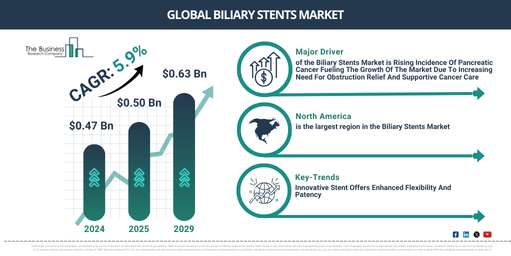
    The market for biliary stents has seen notable expansion in the recent past. The market, which stood at $0.47 billion in 2024, is projected to increase to $0.50 billion in 2025, generating a compound annual growth rate (CAGR) of 6.3%. The significant growth during the historic period is tied to various factors like a surge in instances of biliary diseases, an increase in the occurrence of pancreatic and liver cancers, a growing elderly population, an uptick in the use of minimally invasive operations, and heightened awareness among both patients and medical practitioners._x000D_

    _x000D_

    The market for biliary stents is predicted to experience robust growth in the coming years, and is set to rise to $0.63 billion by 2029, registering a compound annual growth rate (CAGR) of 5.9%. This projected growth over the forecasting period could be due to increased consumer demand for precision and personalized medicine, a rising trend of adopting biodegradable stents, a focus towards outpatient and ambulatory care settings, burgeoning medical tourism in developing nations, a growing occurrence of liver disorders related to lifestyle, and an increase in healthcare investments in emerging markets. The forecast period will also see major trends such as the inclusion of drug-eluting technologies, advancements in materials used for self-expanding stents, the application of 3D printing for customizing stents, the miniaturization of stent delivery systems, the integration of radiopaque markers for enhanced imaging, and the application of nanotechnology in coating materials._x000D_

    _x000D_

    #Download The Free Sample Report Here:#_x000D_

    https://www.thebusinessresearchcompany.com/sample.aspx?id=27221&type=smp_x000D_

    _x000D_

    #What Forces Are Driving The Growth Of The Biliary Stents Market?#_x000D_

    The growth of the biliary stents market is anticipated to be fueled by the increasing occurrence of pancreatic cancer. Pancreatic cancer, a type that originates in the pancreas tissues, is significant for digestion and blood sugar control. The escalation in pancreatic cancer cases is largely a result of the aging populace in conjunction with an increasing number of risk factors such as obesity, diabetes, and smoking. Biliary stents aid in the treatment of pancreatic cancer by alleviating blockages in the bile duct, boosting hepatic function, and alleviating jaundice. They improve patients’ comfort by promoting healthier bile circulation, facilitating ongoing cancer treatments, and enhancing the quality of life. For instance, Cancer Australia, a government-based agency in Australia, reported in February 2025 that in 2024 there were 4,641 new cases of pancreatic cancer with 2,414 in men and 2,227 in women. Hence, the escalating occurrence of pancreatic cancer is propelling the growth of the biliary stents market._x000D_

    _x000D_

    #How Is The Biliary Stents Industry Segmented Across Key Parameters?#_x000D_

    The biliary stents market covered in this report is segmented_x000D_

    _x000D_

    1) By Type: Metal, Polymer, Plastic_x000D_

    2) By Design: Single Stent, Double Stent, Triple Stent_x000D_

    3) By Procedure: Endoscopic Retrograde Cholangiopancreatography, Percutaneous Transhepatic Cholangiography_x000D_

    4) By Application: Biliopancreatic Leakages, Pancreatic Cancer, Benign Biliary Structures, Gallstones, Other Applications_x000D_

    5) By End User: Hospitals, Ambulatory Surgical Centers, Specialty clinics, Other End-Users_x000D_

    _x000D_

    Subsegments:_x000D_

    1) By Metal: Self-Expandable Metal Stents (SEMS), Covered Metal Stents, Uncovered Metal Stents, Partially Covered Metal Stents_x000D_

    2) By Polymer: Biodegradable Polymer Stents, Non-Biodegradable Polymer Stents_x000D_

    3) By Plastic: Straight Plastic Stents, Double Pigtail Plastic Stents, Multiple Side Hole Stents, Teflon Stents, Polyurethane Stents_x000D_

    _x000D_

    #What Notable Trends Are Shaping The Direction Of The Biliary Stents Market?#_x000D_

    Large firms involved in the biliary stents sector are prioritizing the development of innovative products like drug-eluting stents, to better patient results, increase product lifespan, and minimize issues including restenosis. Drug-eluting stents are specialized biliary stents that have a medication coating, which gradually releases to stop tissue overgrowth and clogging of bile ducts. CGBIO, a medical device company based in South Korea, for example, was given approval by the Pharmaceuticals and Medical Devices Agency (PMDA) in Japan for the biliary ARISTENT in July 2024. This product, developed to address bile duct blockages, boasts a unique ‘HOOK & CROSS’ framework for superior flexibility and enduring patency. By fitting into the bile duct’s shape, the stent minimizes the risk of moving out of place, thus enhancing patient comfort. Plus, its advanced drug-eluting coating helps decrease inflammation and extend stent patency, proving a more efficient approach to treating biliary blockages._x000D_

    _x000D_

    #Which Companies Currently Dominate The Competitive Landscape In The Biliary Stents Industry?#_x000D_

    Major companies operating in the biliary stents market are Cardinal Health Inc., Abbott Laboratories, Medtronic plc, Becton, Dickinson & Company, Stryker Corporation, Boston Scientific Corporation, Olympus Corporation, Smith & Nephew Plc., W. L. Gore & Associates Inc., Nipro Corporation, Teleflex Incorporated, Cook Group, NuVasive Inc., Merit Medical Systems Inc., CONMED Corporation, Brainlab, Bard Peripheral Vascular Inc., Argon Medical Devices Inc., B Braun Melsungen AG, M.I Tech. _x000D_

    _x000D_

    #Get The Full Report Here:#_x000D_

    https://www.thebusinessresearchcompany.com/report/biliary-stents-global-market-report_x000D_

    _x000D_

    #Which Geographic Regions Are Driving Demand In The Biliary Stents Market?#_x000D_

    North America was the largest region in the biliary stents market in 2024. Asia-Pacific is expected to be the fastest-growing region in the forecast period. The regions covered in the biliary stents market report are Asia-Pacific, Western Europe, Eastern Europe, North America, South America, Middle East, Africa._x000D_

    _x000D_

    #Request For A Customized Report:#_x000D_

    https://www.thebusinessresearchcompany.com/customise?id=27221&type=smp_x000D_

    _x000D_

    #About The Business Research Company:#_x000D_

    _x000D_

    With over 15000+ reports from 27 industries covering 60+ geographies, The Business Research Company has built a reputation for offering comprehensive, data-rich research and insights. Armed with 1,500,000 datasets, the optimistic contribution of in-depth secondary research, and unique insights from industry leaders, you can get the information you need to stay ahead in the game._x000D_

    _x000D_

    #Get in touch with us:#_x000D_

    _x000D_

    The Business Research Company: https://www.thebusinessresearchcompany.com/_x000D_

    Americas +1 310-496-7795_x000D_

    Asia +44 7882 955267 & +91 8897263534_x000D_

    Europe +44 7882 955267_x000D_

    Email us at info@tbrc.info_x000D_

    _x000D_

    #Follow us on:#_x000D_

    _x000D_

    LinkedIn: https://in.linkedin.com/company/the-business-research-company_x000D_

    YouTube: https://www.youtube.com/channel/UC24_fI0rV8cR5DxlCpgmyFQ_x000D_

    Global Market Model: https://www.thebusinessresearchcompany.com/global-market-model