Category: Medical Equipment

  • Autonomous Surgical Robotics Industry Poised for Rapid Expansion, Projected to Hit $4.84 Billion by 2029

    Autonomous Surgical Robotics Industry Poised for Rapid Expansion, Projected to Hit $4.84 Billion by 2029

    Claim your 30% discount on Global Market Reports with code ONLINE30. Limited time only.

    Claim your 30% discount on Global Market Reports with code ONLINE30. Limited time only._x000D_

    _x000D_

    #What Does the Forecast Indicate for the Autonomous Surgical Robotics Market From 2025 to 2029?#_x000D_

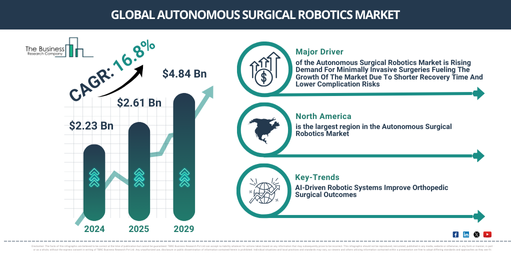
    There has been a swift expansion in the size of the autonomous surgical robotics market in recent years. It is expected to escalate from $2.23 billion in 2024 to $2.61 billion in 2025, witnessing a compound annual growth rate (CAGR) of 17.1%. The growth during the historical period can be justified by the increasing demand for minimally invasive operations, upsurge in surgical complications, scarcity of proficient surgeons, increment in healthcare spending, and the rising population of the elderly._x000D_

    _x000D_

    The market size of autonomous surgical robotics is projected to expand rapidly in the coming years with an estimated worth of $4.84 billion by 2029, indicative of a compound annual growth rate (CAGR) of 16.8%. The growth during the estimated period can be associated with the broadening of applications in surgical robotics, an increasing emphasis on personalized medicine, the growing demand for precision and accuracy in surgical procedures, the surge in the number of training programs for robotic surgery, and an amplified awareness around surgical precision and results. Noteworthy trends anticipated during this period involve the development of autonomous suturing systems, the incorporation of robotics with imaging systems, interoperability with hospital information systems, advancements in soft-tissue robotics, improvements in miniaturized robotic instruments, and the evolution of surgical robots for niche specialties._x000D_

    _x000D_

    #Download The Free Sample Report Here:#_x000D_

    https://www.thebusinessresearchcompany.com/sample.aspx?id=27218&type=smp_x000D_

    _x000D_

    #What Elements Are Contributing To Growth In The Autonomous Surgical Robotics Market?#_x000D_

    The autonomous surgical robotics market is likely to surge due to an increasing preference for minimally invasive surgeries. These surgeries, which involve small incisions or openings, offer significantly lesser trauma and recovery time for patients. The popularity of these procedures is on the rise owing to their benefits including quicker recovery periods, lesser complications, reduced pain and smaller scars. This attracts patients looking for safer and quicker treatment options. Autonomous surgical robotics plays a crucial role in enhancing minimally invasive surgeries by offering precise and regular robotic support, hence eliminating the necessity for large incisions. They not only improve surgical accuracy and patient outcomes but also reduce recovery time and surgeon fatigue. For instance, the American Society of Plastic Surgeons, a non-profit organization based in the US, reported in June 2024 that minimally invasive procedures had grown by 7% in 2023 when compared to 2022. Therefore, the escalating demand for minimally invasive surgeries is pushing the growth of the autonomous surgical robotics market._x000D_

    _x000D_

    #Which Segments Are Detailed In The Global Autonomous Surgical Robotics Market Report?#_x000D_

    The autonomous surgical robotics market covered in this report is segmented_x000D_

    _x000D_

    1) By Type: Interventional Surgical Robots, Assisted Surgical Robots, Minimally Invasive Surgical Robots, Other Types_x000D_

    2) By Application: Urology Surgery, Orthopedic Surgery, Cardiology Surgery, Neurology Surgery, Other Applications_x000D_

    3) By End-Users: Hospitals, Ambulatory Surgery Centers, Other End-Users_x000D_

    _x000D_

    Subsegments:_x000D_

    1) By Interventional Surgical Robots: Catheter-Based Interventional Robots, Endovascular Robots, Interventional Radiology Robots, Percutaneous Robots_x000D_

    2) By Assisted Surgical Robots: Robotic Arm Systems, Robotic Navigation Systems, Robotic Visualization Platforms, Robotic Positioning Systems_x000D_

    3) By Minimally Invasive Surgical Robots: Laparoscopic Robots, Thoracoscopic Robots, Robotic Endoscopes, Single-Port Surgical Robots_x000D_

    4) By Other Types: Orthopedic Surgical Robots, Neurosurgical Robots, Dental Surgical Robots, Microsurgical Robots, Autonomous Surgical Robots_x000D_

    _x000D_

    #Which Emerging Trends And Strategic Shifts Are Shaping The Autonomous Surgical Robotics Market?#_x000D_

    Leading players in the sector of autonomous surgical robotics are focusing their efforts on evolving their products, such as creating entirely autonomous guidance systems. The aim of this is to bolster precision, improve surgical results and lessen the strain on surgeons. Fully autonomous systems are smart robotic platforms offering surgical support through the autonomous execution of preprogrammed surgical procedures with extreme accuracy. For example, in July 2023, medical technology firm Stryker Corporation, which is based in the US, introduced the Ortho Q Guidance system. This pioneering robotic surgical system has been engineered for orthopedic operations and boasts AI-powered automation capable of conducting bone resections and implant procedures without the need for human intervention. Its cutting-edge features include a top-quality camera offering improved optical tracking, dual-PC architecture to facilitate real-time processing of data and implant-neutral software which can work with express knee, precision knee, and versatile hip procedures. It further includes real-time intraoperative modifications and predictive analytics, guaranteeing ideal alignment and mitigating the risk of human error._x000D_

    _x000D_

    #Who Are The Key Contributors To Growth In The Autonomous Surgical Robotics Market?#_x000D_

    Major companies operating in the autonomous surgical robotics market are Johnson & Johnson, Medtronic plc, Stryker Corporation, Intuitive Surgical Inc., Zimmer Biomet Holdings Inc., Smith & Nephew plc, Globus Medical Inc., Renishaw plc, Memic Innovative Surgery Ltd., CMR Surgical Ltd., Noah Medical Inc., THINK Surgical Inc., Medical Microinstruments S.p.A., Distalmotion SA, Moon Surgical SAS, Activ Surgical Inc., Curexo Inc., Virtual Incision Corporation, Andromeda Surgical Inc, Beijing Tuodao Medical Technology Co. Ltd. _x000D_

    _x000D_

    #Get The Full Report Here:#_x000D_

    https://www.thebusinessresearchcompany.com/report/autonomous-surgical-robotics-global-market-report_x000D_

    _x000D_

    #Which Region Is Projected To Lead The Autonomous Surgical Robotics Market By 2025?#_x000D_

    North America was the largest region in the autonomous surgical robotics market in 2024. Asia-Pacific is expected to be the fastest-growing region in the forecast period. The regions covered in the autonomous surgical robotics market report are Asia-Pacific, Western Europe, Eastern Europe, North America, South America, Middle East, Africa._x000D_

    _x000D_

    #Request For A Customized Report:#_x000D_

    https://www.thebusinessresearchcompany.com/customise?id=27218&type=smp_x000D_

    _x000D_

    #About The Business Research Company:#_x000D_

    _x000D_

    With over 15000+ reports from 27 industries covering 60+ geographies, The Business Research Company has built a reputation for offering comprehensive, data-rich research and insights. Armed with 1,500,000 datasets, the optimistic contribution of in-depth secondary research, and unique insights from industry leaders, you can get the information you need to stay ahead in the game._x000D_

    _x000D_

    #Get in touch with us:#_x000D_

    _x000D_

    The Business Research Company: https://www.thebusinessresearchcompany.com/_x000D_

    Americas +1 310-496-7795_x000D_

    Asia +44 7882 955267 & +91 8897263534_x000D_

    Europe +44 7882 955267_x000D_

    Email us at info@tbrc.info_x000D_

    _x000D_

    #Follow us on:#_x000D_

    _x000D_

    LinkedIn: https://in.linkedin.com/company/the-business-research-company_x000D_

    YouTube: https://www.youtube.com/channel/UC24_fI0rV8cR5DxlCpgmyFQ_x000D_

    Global Market Model: https://www.thebusinessresearchcompany.com/global-market-model
  • Global Automated Sample Storage Systems Market Forecast to Reach $2.67 Billion by 2029, Driven by 11% CAGR

    Global Automated Sample Storage Systems Market Forecast to Reach $2.67 Billion by 2029, Driven by 11% CAGR

    Claim your 30% discount on Global Market Reports with code ONLINE30. Limited time only.

    Claim your 30% discount on Global Market Reports with code ONLINE30. Limited time only._x000D_

    _x000D_

    #How Much Is the Global Automated Sample Storage Systems Market Valued at Present and by 2029?#_x000D_

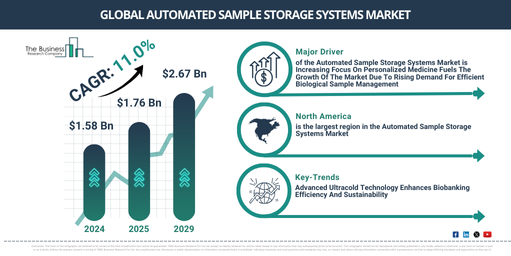
    In recent years, there has been a swift expansion in the market size of automated sample storage systems. The market is projected to grow from $1.58 billion in 2024, to $1.76 billion in 2025, implying a compound annual growth rate (CAGR) of 11.4%. The historical period’s growth can be linked to increasing demand for high-throughput screening, an escalation in the usage of robotics in laboratory procedures, a heightened dependency on centralized laboratory functions, growing emphasis on sample traceability and audit checks, and a widening acceptance of barcode and Radio Frequency Identification (RFID)-based inventory systems._x000D_

    _x000D_

    The size of the automated sample storage systems market is expected to exponentially increase in the upcoming years, with anticipations of reaching $2.67 billion by the year 2029, expanding at a compound annual growth rate (CAGR) of 11.0%. The increase over the prediction period is connected to a surge in biobanking needs, the acceptance of personalized medicine, a rising requirement for secure and traceable samples, an increase in laboratory digitization, and a surge in diagnostic tests and clinical trials. Key trends across the period of prediction incorporate improvements in the integration of hybrid cloud-LIMS, enhanced cybersecurity measures for labs dealing with sensitive data, compact benchtop automated storage units’ development, advancements in remote monitoring and control interfaces, and progress in eco-friendly refrigeration technologies._x000D_

    _x000D_

    #Download The Free Sample Report Here:#_x000D_

    https://www.thebusinessresearchcompany.com/sample.aspx?id=27217&type=smp_x000D_

    _x000D_

    #What Drivers Are Influencing Growth In The Automated Sample Storage Systems Market?_x000D_

    The growing focus on personalized medicine is projected to spur the expansion of the automated sample storage systems market. Personalized medicine is a medical strategy that customizes care and treatment based on individual patient traits, including genetic profile, lifestyle, and surroundings, to enhance health outcomes. The rise of personalized medicine is being facilitated by advances in genetic testing, allowing for more accurate treatments tailored to a person’s distinctive genetic makeup. Automated sample storage systems play a critical role in personalized medicine by securely preserving and managing biological samples, facilitating seamless access and analysis for tailoring patient-specific treatment plans. As an illustration, in February 2024, the Personalized Medicine Coalition, a non-profit organization based in the US, reported that the Food and Drug Administration (FDA) sanctioned 16 groundbreaking personalized therapies designed for patients with uncommon diseases in 2023, which was a marked increase from six in 2022. Consequently, the growing emphasis on personalized medicine is stimulating the expansion of the automated sample storage systems services market._x000D_

    _x000D_

    #What Are The Main Segments Identified In The Automated Sample Storage Systems Market Research?#_x000D_

    The automated sample storage systems market covered in this report is segmented_x000D_

    _x000D_

    1) By Type: Liquid Nitrogen Storage Systems, Mechanical Freezers, Automated Cryogenic Storage_x000D_

    2) By Technology: Robotics, Liquid Handling Systems, Temperature Monitoring Systems, Cloud-Based Storage Solutions_x000D_

    3) By Sample: Blood Samples, Tissue Samples, Cellular Samples, DNA Or RNA Samples _x000D_

    4) By Application: Biobanking, Pharmaceuticals, Clinical Research, Genomics _x000D_

    5) By End User: Hospitals, Neurological Clinics, Rehabilitation Centers, Sports Medicine Clinics, Other End Users_x000D_

    _x000D_

    Subsegments:_x000D_

    1) By Liquid Nitrogen Storage Systems: Vapor Phase Storage Systems, Liquid Phase Storage Systems, Manual Fill LN2 Systems, Auto-fill LN2 Systems, Dewar Vessels And Canisters_x000D_

    2) By Mechanical Freezers: Ultra-Low Temperature Freezers (ULT, -80°C), Low Temperature Freezers (-20°C to -40°C), High-Capacity Mechanical Freezers, Single-Door And Double-Door Units, Energy-Efficient Mechanical Freezers_x000D_

    3) By Automated Cryogenic Storage: Robotic Sample Retrieval Systems, Modular Cryogenic Storage Units, High-Throughput Cryo Storage Systems, RFID Or Barcode-Enabled Cryo Units, Integrated Cryo-Inventory Management Systems_x000D_

    _x000D_

    #What Are The Leading Trends And Opportunities In The Automated Sample Storage Systems Sector?#_x000D_

    A significant trend in the automated sample storage systems market is the focus of major players on introducing innovative solutions such as ultracold automated technology. This technology aims to improve the preservation of sensitive biological samples by maintaining ultra-low temperatures with high precision and minimal human intervention. The advanced systems of ultracold automated technology handle the storage and management of biological samples at very low temperatures, which increases their stability and decreases manual labour in laboratories. For example, in July 2023, Azenta Life Sciences, an American biotechnology research firm, unveiled the BioArc Ultra, a sophisticated and environmentally friendly ultracold automated sample storage system. The system, designed for large-scale biorepositories, facilitates automated storage and retrieval at temperatures as low as -80°C, and manages up to 10 million 2D barcoded tubes securely and efficiently. Scalability is assured via the BioArc Ultra’s modular design, while reliability is enhanced through redundant cooling and power systems. Additionally, the system’s user-friendly interface simplifies operations. The BioArc Ultra’s energy-efficient setup minimizes environmental harm while enhancing uptime and sample integrity, thus catering to contemporary biobanking requirements in a revolutionary manner._x000D_

    _x000D_

    #Which Companies Play A Key Role In The Development Of The Automated Sample Storage Systems Market?#_x000D_

    Major companies operating in the automated sample storage systems market are Thermo Fisher Scientific Inc., Micronic Holding B.V., Revvity Inc., Beckman Coulter Inc., Getinge, Eppendorf SE, Brooks Automation Inc., Hamilton Company, Azenta Inc., Oxford Instruments plc, SPT Labtech Ltd., B Medical Systems S.à r.l., Hier Biomedical Corporation, Simport Scientific Inc., LiCONiC AG, Starlab International GmbH, Biotron Healthcare (India) Pvt. Ltd., ASKION GmbH, Biofortuna Limited, and Angelantoni Life Science S.r.l. _x000D_

    _x000D_

    #Get The Full Report Here:#_x000D_

    https://www.thebusinessresearchcompany.com/report/automated-sample-storage-systems-global-market-report_x000D_

    _x000D_

    #What Are The Key Regional Developments Shaping The Automated Sample Storage Systems Market?#_x000D_

    North America was the largest region in the automated sample storage systems market in 2024. Asia-Pacific is expected to be the fastest-growing region in the forecast period. The regions covered in the automated sample storage systems market report are Asia-Pacific, Western Europe, Eastern Europe, North America, South America, Middle East, Africa._x000D_

    _x000D_

    #Request For A Customized Report:#_x000D_

    https://www.thebusinessresearchcompany.com/customise?id=27217&type=smp_x000D_

    _x000D_

    #About The Business Research Company:#_x000D_

    _x000D_

    With over 15000+ reports from 27 industries covering 60+ geographies, The Business Research Company has built a reputation for offering comprehensive, data-rich research and insights. Armed with 1,500,000 datasets, the optimistic contribution of in-depth secondary research, and unique insights from industry leaders, you can get the information you need to stay ahead in the game._x000D_

    _x000D_

    #Get in touch with us:#_x000D_

    _x000D_

    The Business Research Company: https://www.thebusinessresearchcompany.com/_x000D_

    Americas +1 310-496-7795_x000D_

    Asia +44 7882 955267 & +91 8897263534_x000D_

    Europe +44 7882 955267_x000D_

    Email us at info@tbrc.info_x000D_

    _x000D_

    #Follow us on:#_x000D_

    _x000D_

    LinkedIn: https://in.linkedin.com/company/the-business-research-company_x000D_

    YouTube: https://www.youtube.com/channel/UC24_fI0rV8cR5DxlCpgmyFQ_x000D_

    Global Market Model: https://www.thebusinessresearchcompany.com/global-market-model

  • CAGR of 14.3% Projected for Next-Generation Sequencing Library Preparation Market From 2025 to 2029

    CAGR of 14.3% Projected for Next-Generation Sequencing Library Preparation Market From 2025 to 2029

    Claim your 30% discount on Global Market Reports with code ONLINE30. Limited time only.

    Claim your 30% discount on Global Market Reports with code ONLINE30. Limited time only.

    How Much Is the Global Next-Generation Sequencing Library Preparation Market Valued at Present and by 2029?

    Over the recent years, the market size of next-generation sequencing library preparation has witnessed a sharp uptick. The market value is predicted to soar from $1.42 billion in 2024 to $1.63 billion in 2025, marking a compound annual growth rate (CAGR) of 14.7%. The ballooning market during the historic period is a result of escalating use in monitoring infectious diseases, swelling funds for genomic research, amped-up implementation amidst the pandemic, enlarging accessibility for research laboratories, and proliferating application in precision medicine.

    In the coming years, the market size for next-generation sequencing library preparation is predicted to experience a fast-paced expansion. By 2029, it is projected to reach a valuation of $2.78 billion, growing at a compound annual growth rate (CAGR) of 14.3%. Factors contributing to expected growth during the forecast period include increased utilization in clinical diagnostic processes, rising demand for individualized medical treatments, expended use in the field of oncology research, a growing necessity for high-throughput sequencing, and enhanced emphasis on minimizing turnaround time. Key future market trends comprise of improvements in workflow efficiency, incorporation of artificial intelligence for data analysis, standardization of protocols enabled by technology, progress in user-friendly system designs, and advancements in cloud-based data solution technologies.

    Download The Free Sample Report Here:

    https://www.thebusinessresearchcompany.com/sample.aspx?id=27365&type=smp

    #What Drivers Are Influencing Growth In The Next-Generation Sequencing Library Preparation Market?

    The growth of the next-generation sequencing library preparation market is anticipated to be driven by the surge in gene therapy. This form of treatment, which involves modifying a person’s genes to either cure or prevent diseases is becoming increasingly popular with the rise in genetic disorders that demand durable and targeted treatment approaches. Next-generation sequencing (NGS) library preparations, which prepare top-notch DNA or RNA samples for sequencing, are employed in gene therapy to precisely validate and analyze genetic modifications. For instance, the American Society of Gene and Cell Therapy, a US-based non-profit scientific and medical organization, reported in April 2024 that the phase III gene therapy clinical trials had increased by 10%, marking the first time there had been a quarterly rise since the third quarter of 2022. Thus, the expansion of gene therapy is propelling the growth of the next-generation sequencing library preparation market.

    What Are The Main Segments Identified In The Next-Generation Sequencing Library Preparation Market Research?

    The next-generation sequencing library preparation market covered in this report is segmented

    1) By Sequencing Type: Targeted Genome Sequencing, Whole Genome Sequencing, Whole Exome Sequencing, Other Sequencing Types

    2) By Product: Reagents And Consumables, DNA Library Preparation Kits, Library Preparation Kits, RNA Library Preparation Kits, Other Products

    3) By Technology: Ion Semiconductor Sequencing, Sequencing By Synthesis (SBS), Nanopore Sequencing, Single-Molecule Real-Time Sequencing (SMRT), Other Technologies

    4) By Application: Drug And Biomarker Discovery, Disease Diagnostics, Cancer Diagnostics, Reproductive Health Diagnostics, Infectious Disease Diagnostics, Other Applications

    5) By End-User: Hospitals And Clinics, Academic And Research Institutions, Pharmaceutical And Biotechnology Companies, Other End Users

    Subsegments:

    1) By Targeted Genome Sequencing: Amplicon Sequencing, Hybridization Capture-Based Sequencing, CRISPR-Based Target Enrichment, Multiplex PCR

    2) By Whole Genome Sequencing: Human Whole Genome Sequencing, Animal Whole Genome Sequencing, Plant Whole Genome Sequencing, Microbial Whole Genome Sequencing

    3) By Whole Exome Sequencing: Clinical Whole Exome Sequencing, Research Whole Exome Sequencing, Custom Exome Sequencing, Population-Scale Exome Sequencing

    4) By Other Sequencing Types: RNA Sequencing, ChIP Sequencing (ChIP-Seq), Methylation Sequencing, Single-Cell Sequencing

    What Are The Leading Trends And Opportunities In The Next-Generation Sequencing Library Preparation Sector?

    Leading corporations in the next-generation sequencing library preparation market are concentrating on the advancement of superior technologies like Xpandomer technology, to augment sequencing pace, boost data precision, and expand scalability. This serves to optimize workflows and facilitates more effective and dependable genomic evaluation. The Xpandomer technology is a sophisticated DNA or RNA sequencing technique that transforms the target nucleic acid molecule into an artificial, increased polymer known as an Xpandomer, which is 50 times bigger than the initial DNA or RNA sequence. For example, in February 2025, Roche AG, a Biotech firm based in Switzerland, introduced Sequencing by Expansion, an advanced sequencing platform aimed at elevating genomic resolution for advanced diagnostics, disease investigation, and precision medicine applications. This inventive, automated next-generation sequencing (NGS) library preparation system simplifies intricate workflows, improves data quality, and hastens genomic analysis to assist advanced study and personalized medicine. The Sequencing by Expansion platform is extremely flexible and allows for detailed analysis of various genomic alterations in numerous diseases, such as cancer and rare genetic disorders, by enhancing resolution and accuracy for deeper biological comprehension.

    Which Companies Play A Key Role In The Development Of The Next-Generation Sequencing Library Preparation Market?

    Major companies operating in the next-generation sequencing library preparation market are F. Hoffmann-La Roche Ltd., Thermo Fisher Scientific Inc., Agilent Technologies India Private Limited, Illumina Inc., Beckman Coulter Inc., Bio-Rad Laboratories Inc., IDT Corporation, Tecan Group AG, Hamilton Company, Takara Bio Inc., 10x Genomics Inc., Oxford Nanopore Technologies Plc, Twist Bioscience Corporation, New England Biolabs Inc., SPT Labtech Limited, Watchmaker Genomics Inc., Pillar Biosciences Inc., Aurora Biomed Inc., BGI Group, and SEQWELL INC.

    Get The Full Report Here:

    https://www.thebusinessresearchcompany.com/report/next-generation-sequencing-library-preparation-global-market-report

    What Are The Key Regional Developments Shaping The Next-Generation Sequencing Library Preparation Market?

    North America was the largest region in the next-generation sequencing library preparation market in 2024. Asia-Pacific is expected to be the fastest-growing region in the forecast period. The regions covered in the next-generation sequencing library preparation market report are Asia-Pacific, Western Europe, Eastern Europe, North America, South America, Middle East, Africa.

    Request For A Customized Report:

    https://www.thebusinessresearchcompany.com/customise?id=27365&type=smp

    About The Business Research Company:

    With over 15000+ reports from 27 industries covering 60+ geographies, The Business Research Company has built a reputation for offering comprehensive, data-rich research and insights. Armed with 1,500,000 datasets, the optimistic contribution of in-depth secondary research, and unique insights from industry leaders, you can get the information you need to stay ahead in the game.

    Get in touch with us:

    The Business Research Company: https://www.thebusinessresearchcompany.com/

    Americas +1 310-496-7795

    Asia +44 7882 955267 & +91 8897263534

    Europe +44 7882 955267

    Email us at info@tbrc.info

    Follow us on:

    LinkedIn: https://in.linkedin.com/company/the-business-research-company

    YouTube: https://www.youtube.com/channel/UC24_fI0rV8cR5DxlCpgmyFQ

    Global Market Model: https://www.thebusinessresearchcompany.com/global-market-model

  • Industry Forecast: Next-Generation Mass Spectrometer Market to Generate $5.24 Billion Revenue by 2029

    Industry Forecast: Next-Generation Mass Spectrometer Market to Generate $5.24 Billion Revenue by 2029

    Claim your 30% discount on Global Market Reports with code ONLINE30. Limited time only.

    Claim your 30% discount on Global Market Reports with code ONLINE30. Limited time only.

    What Is the Current and Projected Market Size of the Next-Generation Mass Spectrometer Industry?

    The market for advanced mass spectrometers has experienced significant expansion in the past few years. Projected growth is from $3.26 billion in 2024, to a more substantial $3.60 billion in 2025, with a compound annual growth rate (CAGR) of 10.2%. This substantial increase in the historic period is due to escalating usage in pharmaceutical research, a heightened requirement for food safety examinations, the rise in environmental monitoring applications, the growth of academic proteomics studies, and an increase in government funding directed towards clinical diagnostics.

    The market size for next-generation mass spectrometers is set to experience a notable surge in the coming years, expanding to a worth of $5.24 billion in 2029, representing a compound annual growth rate (CAGR) of 9.9%. The growth projected during the forecasted period is tied to factors like the escalating requirement for customized medicine, increasing usage in biotech and life sciences, higher instances of chronic illnesses necessitating molecular diagnostics, the extension of forensic and toxicology examinations, and rising regulatory mandates for contamination tests. Key trends anticipated throughout this period consist of miniaturized and mobile devices, progressive developments in software and AI for data analysis, R&D in proteomics and metabolomics, as well as the automation and amalgamation in high-volume analytical procedures.

    Download The Free Sample Report Here:

    https://www.thebusinessresearchcompany.com/sample.aspx?id=27364&type=smp

    #Which Factors Are Currently Driving The Growth Of The Next-Generation Mass Spectrometer Market?

    The escalating focus on personalized medicine is forecasted to stimulate the expansion of the next-generation mass spectrometer market in the future. Personalized medicine refers to a healthcare strategy that adapts treatments and healthcare decisions to the unique genetic, environmental, and lifestyle attributes of an individual for more effective results. Because of the desire to administer more individualized treatments that enhance patient outcomes, minimize side effects, and maximize healthcare efficiency based on unique genetic and lifestyle attributes, there’s an escalating emphasis on personalized medicine. The next-generation mass spectrometer aids in the uptake of personalized medicine by delivering highly accurate and comprehensive molecular analysis, assisting in the identification of individual biomarkers, monitoring of therapeutic responses, and guidance of tailored treatment schemes for improved patient outcomes. For example, a report by the Personalized Medicine Coalition, a non-profit entity based in the US, revealed in February 2024 that the US-based federal agency, the Food and Drug Administration (FDA), approved 16 new personalized medicines for patients with rare diseases in 2023, an increase from six in 2022. Hence, the escalating focus on personalized medicine is expected to fuel the expansion of the next-generation mass spectrometer market.

    How Is The Global Next-Generation Mass Spectrometer Market Structured In Terms Of Segments?

    The next-generation mass spectrometer market covered in this report is segmented

    1) By Type: Fourier Transform, Linear Ion Trap Mass Spectrometry, Other Types

    2) By Application: Pharmaceuticals, Biotechnology, Clinical Diagnostics, Environmental Analysis, Food And Beverage Testing, Forensic Science, Other Applications

    3) By End User: Research Laboratories, Academic Institutions, Pharmaceutical Companies, Biotechnology Firms, Clinical Laboratories, Government Agencies

    Subsegments:

    1) By Fourier Transform Mass Spectrometry: Fourier Transform Ion Cyclotron Resonance (FT-ICR), Fourier Transform Orbitrap Mass Spectrometry, Hybrid FT-MS Systems, High-Resolution Accurate Mass (HRAM) FT-MS

    2) By Linear Ion Trap Mass Spectrometry: Quadrupole Ion Trap, Three-Dimensional Linear Ion Trap, Dual-Pressure Linear Ion Trap, Linear Ion Trap-Time Of Flight (LIT-TOF) Hybrid

    3) By Other Types: Time-Of-Flight Mass Spectrometry (TOF-MS), Quadrupole Mass Spectrometry, Orbitrap Mass Spectrometry (Non-FT Applications), Magnetic Sector Mass Spectrometry, Ion Mobility Mass Spectrometry, Hybrid Mass Spectrometers

    What Trends Are Currently Influencing Growth In The Next-Generation Mass Spectrometer Market?

    Significant corporations in the next-generation mass spectrometer market are making strides towards creating highly effective tools, enabling scientists to examine complex biological samples with unmatched speed and accuracy. These advancements aim to bolster biomarker detection, promote early illness identification and hasten the creation of customized treatments. For example, US-based clinical research firm Thermo Fisher Scientific Inc. introduced the Orbitrap Astral mass spectrometer in June 2023. It’s considered one of the most substantial leaps forward in mass spectrometry in the past 15 years, offering rapid throughput, high sensitivity, and comprehensive proteome coverage. This cutting-edge tool allows scientists to uncover previously undetectable proteins of low abundance by combining ultra-quick scan speeds, extraordinary sensitivity, and extensive proteome coverage, greatly elevating large-scale proteomic studies. Furthermore, it features superior ion transmission efficiency, amplified dynamic range, and throughput up to four times faster, paving the way for quicker biomarker detection, accurate quantification, and the creation of disease-specific therapies.

    Who Are The Main Participants Shaping The Next-Generation Mass Spectrometer Market Landscape?

    Major companies operating in the next-generation mass spectrometer market are Hitachi Ltd., F. Hoffmann-La Roche Ltd, Thermo Fisher Scientific Inc., Danaher Corporation, Agilent Technologies Inc., PerkinElmer Inc., Shimadzu Corporation, Waters Corporation, Bruker Corporation, HORIBA Ltd., JEOL Ltd., Rigaku Corporation, LECO Corporation, Hiden Analytical Ltd., Scion Instruments Ltd., MOBILion Systems Inc., Jiangsu Skyray Instrument Co. Ltd., Spacetek Technology Inc., and Hexsor Scientific Ltd.

    Get The Full Report Here:

    https://www.thebusinessresearchcompany.com/report/next-generation-mass-spectrometer-global-market-report

    Which Region Currently Holds The Largest Share In The Next-Generation Mass Spectrometer Market?

    North America was the largest region in the next-generation mass spectrometer market in 2024. Asia-Pacific is expected to be the fastest-growing region in the forecast period. The regions covered in the next-generation mass spectrometer market report are Asia-Pacific, Western Europe, Eastern Europe, North America, South America, Middle East, Africa.

    Request For A Customized Report:

    https://www.thebusinessresearchcompany.com/customise?id=27364&type=smp

    About The Business Research Company:

    With over 15000+ reports from 27 industries covering 60+ geographies, The Business Research Company has built a reputation for offering comprehensive, data-rich research and insights. Armed with 1,500,000 datasets, the optimistic contribution of in-depth secondary research, and unique insights from industry leaders, you can get the information you need to stay ahead in the game.

    Get in touch with us:

    The Business Research Company: https://www.thebusinessresearchcompany.com/

    Americas +1 310-496-7795

    Asia +44 7882 955267 & +91 8897263534

    Europe +44 7882 955267

    Email us at info@tbrc.info

    Follow us on:

    LinkedIn: https://in.linkedin.com/company/the-business-research-company

    YouTube: https://www.youtube.com/channel/UC24_fI0rV8cR5DxlCpgmyFQ

    Global Market Model: https://www.thebusinessresearchcompany.com/global-market-model

  • Future Projections: Next Generation Surgical Robotics Market to Reach $15.12 Billion by 2029 at 24.5% CAGR

    Future Projections: Next Generation Surgical Robotics Market to Reach $15.12 Billion by 2029 at 24.5% CAGR

    Claim your 30% discount on Global Market Reports with code ONLINE30. Limited time only.

    Claim your 30% discount on Global Market Reports with code ONLINE30. Limited time only.

    What CAGR Is Anticipated for the Next Generation Surgical Robotics Market Through 2029?

    The size of the market for next-generation surgical robotics has seen significant expansion in the past few years. From a market worth $5.03 billion in 2024, it is projected to increase to $6.29 billion in 2025, boasting a compound annual growth rate (CAGR) of 24.9%. The increase during the historic period is due to factors such as the heightened acceptance of minimally invasive surgeries, a rising need for precise surgical procedures, a growing elderly population, the broadening of hospital infrastructure, and an increased consciousness about robotic-assisted surgery.

    In the upcoming years, the next-generation surgical robotics market is predicted to witness a drastic increase in its size. It is projected to reach up to $15.12 billion by 2029, with a CAGR of 24.5%. The projected growth in the given period can be attributed to multiple factors like increased funding in healthcare automation, heightened demand for outpatient surgical procedures, introduction of more surgical robotics training programs, amiable reimbursement policies, and a rising emphasis on precision surgery. Prominent trends in the forecast period encompass the miniaturization of robotic systems, emergence of autonomous robotic systems, investment in R&D, enhancements in haptic feedback and imaging, and progress in cloud-based surgical platforms.

    Download The Free Sample Report Here:

    https://www.thebusinessresearchcompany.com/sample.aspx?id=27362&type=smp

    What Market Forces Are Driving The Next Generation Surgical Robotics Sector In 2025 And Beyond?

    The expected expansion of the next-generation surgical robotics market is largely attributed to the growing demand for minimally invasive surgeries. These surgeries, which require small incisions and specialized tools, are preferred for their ability to minimize pain, accelerate recovery, and decrease surgical risks. The interest in minimally invasive surgeries lies in their potential to reduce incisions that in turn decreases patient discomfort, infection risks, shortens hospital stays, and quickens recovery times. Next-generation surgical robotics bolsters minimally invasive surgeries by providing surgeons with better precision, enhanced visualization, and exceptional instrument control; all the while, reducing errors, limiting tissue damage, aiding faster patient recovery. To illustrate, the British Association of Aesthetic Plastic Surgeons, a UK-based surgical entity, reported that in March 2023 around 31,057 minimally invasive cosmetic surgeries occurred in the UK in 2022, a significant 102% surge from the previous year. Consequently, the mounting demand for minimally invasive surgeries is fueling the growth of the next-generation surgical robotics market.

    How Is The Global Next Generation Surgical Robotics Market Categorized By Segments?

    The next generation surgical robotics market covered in this report is segmented

    1) By Components: Systems, Accessories, Services

    2) By Technology: Master-Slave Robotic Technology, Minimally Invasive Robotic Technology, Robotic-Assisted Laparoscopy, Artificial Intelligence and Machine Learning Integration

    3) By Application: Gynecological Surgery, Urological Surgery, Neurosurgery, Orthopedic Surgery, General Surgery, Other Applications

    4) By End-User: Hospitals, Ambulatory Surgical Centers, Other End-Users

    Subsegments:

    1) By Systems: Autonomous Surgical Robots, Semi-Autonomous Surgical Robots, Telesurgical Robots, Haptic Feedback Robots

    2) By Accessories: Surgical Instrument Sets, Endoscopic Tools, Robotic Arms And Graspers, Visualization And Imaging Modules

    3) By Services: Maintenance And Support Services, Training And Education Services, Software Updates And Integration Services, Consulting And Implementation Services

    What Long-Term Trends Are Likely To Affect The Next Generation Surgical Robotics Market?

    Key organizations within the upcoming surgical robotics industry are concentrating on the development of ground-breaking tech such as orthopedic robotic systems, aimed at delivering superior patient outcomes via minimal invasive methods. The introduction of progressive orthopedic robotic platforms enables surgeons to perform intricate bone and joint operations with heightened precision, while improving the placement of implants and backing less invasive techniques. For example, Stryker Corporation, a medical technology firm based in the US, introduced its Mako 4, the latest installment of its Mako SmartRobotics system, in March 2025. This system incorporates top-tier 3D CT-based planning and the company’s fourth-generation Q Guidance System to broaden its applications within hip, knee, spine, and shoulder operations. Mako 4 aims to aid surgeons in initial and correctional procedures by facilitating customized surgical preparation, live intraoperative guidance, and amplified workflow productivity. It also supports challenging cases, such as robotic hip revision, by offering features like augment and screw planning, real-time screw trajectory guidance, and compatibility with revision implant portfolios.

    Which Firms Are Considered Leaders In The Next Generation Surgical Robotics Market Space?

    Major companies operating in the next generation surgical robotics market are Johnson & Johnson Services Inc., Medtronic plc, Stryker Corporation, Zimmer Biomet Holdings Inc., Smith & Nephew plc, Intuitive Surgical Inc., Accuray Incorporated, Medical Microinstruments Inc., PROCEPT BioRobotics Corporation, CMR Surgical Ltd., Noah Medical Inc., Distalmotion SA, Stereotaxis Inc., Neocis Inc., Moon Surgical SAS, Quantum Surgical SAS, Activ Surgical Inc., THINK Surgical Inc., Mendaera Inc., Galen Robotics Inc.

    Get The Full Report Here:

    https://www.thebusinessresearchcompany.com/report/next-generation-surgical-robotics-global-market-report

    What Role Do Regional Policies And Investments Play In Next Generation Surgical Robotics Market Expansion?

    North America was the largest region in the next-generation surgical robotics market in 2024. Asia-Pacific is expected to be the fastest-growing region in the forecast period. The regions covered in the next generation surgical robotics market report are Asia-Pacific, Western Europe, Eastern Europe, North America, South America, Middle East, Africa.

    Request For A Customized Report:

    https://www.thebusinessresearchcompany.com/customise?id=27362&type=smp

    About The Business Research Company:

    With over 15000+ reports from 27 industries covering 60+ geographies, The Business Research Company has built a reputation for offering comprehensive, data-rich research and insights. Armed with 1,500,000 datasets, the optimistic contribution of in-depth secondary research, and unique insights from industry leaders, you can get the information you need to stay ahead in the game.

    Get in touch with us:

    The Business Research Company: https://www.thebusinessresearchcompany.com/

    Americas +1 310-496-7795

    Asia +44 7882 955267 & +91 8897263534

    Europe +44 7882 955267

    Email us at info@tbrc.info

    Follow us on:

    LinkedIn: https://in.linkedin.com/company/the-business-research-company

    YouTube: https://www.youtube.com/channel/UC24_fI0rV8cR5DxlCpgmyFQ

    Global Market Model: https://www.thebusinessresearchcompany.com/global-market-model
  • 2025 Analysis: Opportunities and Risks in the Evolving Neurosurgical Robotics Market

    2025 Analysis: Opportunities and Risks in the Evolving Neurosurgical Robotics Market

    Claim your 30% discount on Global Market Reports with code ONLINE30. Limited time only.

    Claim your 30% discount on Global Market Reports with code ONLINE30. Limited time only.

    What Is the Estimated Industry Valuation for the Neurosurgical Robotics Sector?

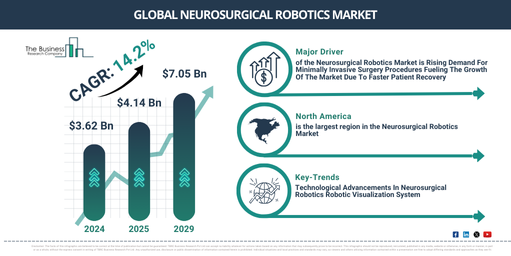
    The market size for neurosurgical robotics has seen impressive growth in the last few years. Its expansion is projected to continue from $3.62 billion in 2024 to $4.14 billion in 2025, reflecting a compound annual growth rate (CAGR) of 14.6%. The historical growth of this market is linked to several factors: the increased need for less intrusive surgeries, a rise in cases of neurological disorders, an aging global population, the expansion in the number of neurosurgeons and their training programs, and enhanced healthcare expenditure in prosperous countries.

    The neurosurgical robotics sector is anticipated to witness significant expansion in the coming years, with the market size predicted to reach $7.05 billion in 2029, boasting a compound annual growth rate (CAGR) of 14.2%. The upswing during the forecast period can be ascribed to the escalating demand for accuracy in intricate neurosurgical procedures, the rising prevalence of reimbursement policies, the development of health care infrastructure in developing economies, an increased understanding of the advantages of robotic surgery, and the growing collaborations between med-tech firms and hospitals. Key emerging trends within this prediction period include advancements in neurosurgical navigation technology, constant innovation in robotic arms and tools, increasing investment in research and development, progress in real-time imaging, and the growing inclusion of cloud-based data solutions in surgical systems.

    Download The Free Sample Report Here:

    https://www.thebusinessresearchcompany.com/sample.aspx?id=27359&type=smp

    What Forces Are Driving The Growth Of The Neurosurgical Robotics Market?

    The growth of the neurosurgical robotics market is anticipated to be fueled by the increasing preference for minimally invasive surgical procedures. This surgical method, which involves limiting the size and quantity of incisions, minimizes physical trauma during surgery, thus promoting a faster recovery for patients. This increase in demand is due to the fact that minimally invasive surgeries cause less trauma, leading to less pain, shorter hospitalization periods, and faster resumption of everyday tasks. Neurosurgical robotics is instrumental in such surgery by improving surgical accuracy, consistency, and control, allowing surgeons to operate with more precision via smaller incisions, consequently decreasing the likelihood of complications. For example, the American Society of Plastic Surgeons reported in June 2024, that there was a 7% increase in minimally invasive procedures in the United States in 2023, exceeding a total of 25 million. As a result, the neurosurgical robotics market is being propelled by this surge in preference for minimally invasive surgical procedures.

    How Is The Neurosurgical Robotics Industry Segmented Across Key Parameters?

    The neurosurgical robotics market covered in this report is segmented

    1) By Type Of Robot: Precision Robotic Systems, Navigation Systems, Surgical Assist Systems

    2) By Surgery Type: Minimally Invasive, Open Surgery

    3) By Application: Brain Tumor Resection, Deep Brain Stimulation (DBS), Spine Surgery

    4) By End User: Hospitals, Ambulatory Surgical Centers

    Subsegments:

    1) By Precision Robotic Systems: Robotic Tumor Resection Systems, Robotic Biopsy Devices, Robotic Laser Ablation Systems

    2) By Navigation Systems: Image-Guided Navigation Platforms, Electromagnetic Tracking Systems, Optical Tracking Navigation Systems

    3) By Surgical Assist Systems: Robotic Arm Positioning Devices, Endoscopic Assistance Robots, Instrument Guidance And Stabilization Systems

    What Notable Trends Are Shaping The Direction Of The Neurosurgical Robotics Market?

    Leading enterprises in the neurosurgical robotics market are prioritizing the creation of cutting-edge solutions like robotic exoscope systems, aimed at amplifying surgical accuracy, visualization, and less invasive methods for intricate cranial and spinal procedures. A robotic exoscope system is a sophisticated surgical visualization tool, merging a high-definition external scope (exoscope) with robot-aided controls for augmented, hands-off imaging during surgery. For example, Zeiss Medical Technology, a medical tech solution provider based in Germany, introduced the Kinevo 900 S robotic visualization system for neurosurgery procedures in September 2024. The ZEISS KINEVO 900 S robotic visualization system features unique attributes that markedly improve precision and workflow in neurosurgery. It incorporates high-definition 4K 3D hybrid visualization, giving surgeons the ability to effortlessly toggle between optical and digital perspectives for improved comfort and precision. The system has top-tier cobotic capabilities such as PointLock, PositionMemory, and AutoCenter, facilitating hands-off, AI-enabled positioning of the surgical view. Its DepthPro mode augments depth of field with a single click, ensuring a larger portion of the surgical field remains in focus.

    Which Companies Currently Dominate The Competitive Landscape In The Neurosurgical Robotics Industry?

    Major companies operating in the neurosurgical robotics market are Medtronic Plc, Stryker Corporation, Zimmer Biomet Holdings Inc., Renishaw Plc, Brainlab AG, Panda Surgical Limited, Monteris Medical Inc., Synaptive Medical Inc., Novarad Corporation, Myomo Inc., ClearPoint Neuro Inc., ZAP Surgical Systems Inc., Robeauté SAS, Galen Robotics Limited, Axilum Robotics SA, AiM Medical Robotics Inc., NaoTrac, Zeta Surgical Inc., Brain Navi Biotechnology Co. Ltd., and Artedrone SAS.

    Get The Full Report Here:

    https://www.thebusinessresearchcompany.com/report/neurosurgical-robotics-global-market-report

    Which Geographic Regions Are Driving Demand In The Neurosurgical Robotics Market?

    North America was the largest region in the neurosurgical robotics market in 2024. Asia-Pacific is expected to be the fastest-growing region in the forecast period. The regions covered in the neurosurgical robotics market report are Asia-Pacific, Western Europe, Eastern Europe, North America, South America, Middle East, Africa.

    Request For A Customized Report:

    https://www.thebusinessresearchcompany.com/customise?id=27359&type=smp

    About The Business Research Company:

    With over 15000+ reports from 27 industries covering 60+ geographies, The Business Research Company has built a reputation for offering comprehensive, data-rich research and insights. Armed with 1,500,000 datasets, the optimistic contribution of in-depth secondary research, and unique insights from industry leaders, you can get the information you need to stay ahead in the game.

    Get in touch with us:

    The Business Research Company: https://www.thebusinessresearchcompany.com/

    Americas +1 310-496-7795

    Asia +44 7882 955267 & +91 8897263534

    Europe +44 7882 955267

    Email us at info@tbrc.info

    Follow us on:

    LinkedIn: https://in.linkedin.com/company/the-business-research-company

    YouTube: https://www.youtube.com/channel/UC24_fI0rV8cR5DxlCpgmyFQ

    Global Market Model: https://www.thebusinessresearchcompany.com/global-market-model
  • Key Market Drivers, Trends, and Forecast for the Global Multi-Channel Remote Electrocardiogram (ECG) Monitors Industry

    Key Market Drivers, Trends, and Forecast for the Global Multi-Channel Remote Electrocardiogram (ECG) Monitors Industry

    Claim your 30% discount on Global Market Reports with code ONLINE30. Limited time only.

    Claim your 30% discount on Global Market Reports with code ONLINE30. Limited time only.

    What Is the Current and Projected Market Size of the Multi-Channel Remote Electrocardiogram (ECG) Monitors Industry?

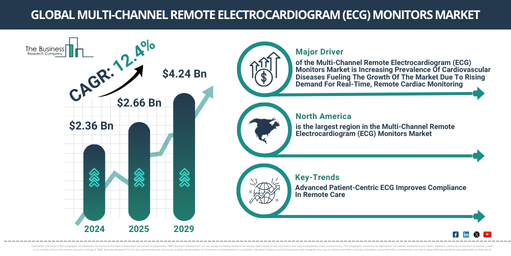
    In the last few years, the market size of the multi-channel remote electrocardiogram (ECG) monitor has expanded swiftly. It is set to escalate from $2.36 billion in 2024 to $2.66 billion in 2025, achieving a compound annual growth rate (CAGR) of 12.7%. Factors contributing to this growth in the historical period include an aging population, a surge in the occurrence of cardiovascular diseases, increased consciousness about preventive healthcare, swift adoption of telemedicine, and a tilt towards personalized cardiac care.

    The market size for multi-channel remote electrocardiogram (ECG) monitors is predicted to experience significant growth in the upcoming years, ballooning to $4.24 billion in 2029 with a 12.4% compound annual growth rate (CAGR). The projected growth during this period can be linked to increasing demands for cardiac monitoring at home, a rise in compatibility with smartphones and wearable devices, expansion services for remote patient monitoring, a surge in health insurance policies covering digital health tools, and its escalating use in fitness and sports diagnostics. Notable trends to look out for in this forecast period include integration with Artificial Intelligence (AI) and data analytics, advances in wireless monitoring technology, adoption of ECG data platforms based in the cloud, device miniaturization, and collaborations between technological businesses and healthcare providers.

    Download The Free Sample Report Here:

    https://www.thebusinessresearchcompany.com/sample.aspx?id=27354&type=smp

    #Which Factors Are Currently Driving The Growth Of The Multi-Channel Remote Electrocardiogram (ECG) Monitors Market?

    The escalation in the occurrence of heart diseases is anticipated to drive the expansion of the market for multi-channel remote electrocardiogram (ECG) monitors. Cardiovascular diseases are a set of disorders affecting the heart and blood vessels, and include conditions like coronary heart disease, heart failure, stroke, and hypertension. Physical inactivity majorly contributes to the escalation of these diseases, as lack of movement leads to risk factors like obesity, elevated blood pressure, and unhealthy cholesterol levels, which considerably up the probability of heart-related ailments. Multi-channel remote electrocardiogram (ECG) monitors act as a support system for managing cardiovascular diseases by providing uninterrupted, real-time heart monitoring from any place. These monitors augment diagnostic precision through multi-lead data and enhance the quality of patient care by diminishing the frequency of hospital visits. For example, in January 2024, the American Heart Association, a NGO based in the US, reported that the age-adjusted mortality rate due to cardiovascular diseases jumped to 233.3 per 100,000 in 2022, showing a 4.0% surge from 224.4 per 100,000 in 2021. Hence, the escalating occurrence of heart diseases is fueling the expansion of the market for multi-channel remote electrocardiogram (ECG) monitors.

    How Is The Global Multi-Channel Remote Electrocardiogram (ECG) Monitors Market Structured In Terms Of Segments?

    The multi-channel remote electrocardiogram (ECG) monitors market covered in this report is segmented

    1) By Type: Wired Multi Channel Remote Electrocardiogram (ECG) Monitor, Wireless Multi Channel Remote Electrocardiogram (ECG) Monitor

    2) By Technology: Wireless Electrocardiogram (ECG) Monitors, Bluetooth-Enabled Electrocardiogram (ECG) Monitors, Wi-Fi-Based Electrocardiogram (ECG) Monitors

    3) By Application: Home Care, Ambulatory Monitoring, Hospitals And Clinics

    4) By Distribution Channel: Direct Sales, Online Sales, Third-Party Distributors

    5) By End-User: Patients, Healthcare Providers, Diagnostic Centers

    Subsegments:

    1) By Wired Multi-Channel Remote Electrocardiogram (ECG) Monitor: Hospital-Based Wired Electrocardiogram Monitors, Ambulatory Care Wired Electrocardiogram Devices, Diagnostic Wired Electrocardiogram Systems, Resting Electrocardiogram Monitors, Stress Test Electrocardiogram Monitors

    2) By Wireless Multi-Channel Remote Electrocardiogram (ECG) Monitor: Bluetooth-Enabled Electrocardiogram Devices, Wi-Fi-Enabled Electrocardiogram Monitors, Wearable Electrocardiogram Monitors, Mobile-Connected Electrocardiogram Devices, Home-Based Wireless Electrocardiogram Systems

    What Trends Are Currently Influencing Growth In The Multi-Channel Remote Electrocardiogram (ECG) Monitors Market?

    Primary entities in the multi-channel remote electrocardiogram (ECG) monitor market are directing their efforts towards the creation of unique solutions, such as progressive patient-centric electrocardiograms (ECGs), aiming to enhance the precision of remote cardiac monitoring and adherence of patients. This sophisticated patient-centric electrocardiogram represents wearable, instantaneous monitoring devices constructed for continuous, customised, and effortless heart health evaluation. For instance, Koninklijke Philips N.V., a Dutch health technology firm, introduced a comprehensive, at-home, 12-lead electrocardiogram (ECG) solution in January 2022. The goal was to facilitate decentralized clinical investigations and promote patient compliance via real-time, remote cardiac surveillance. This state-of-the-art, patient-centric electrocardiogram, comes with a body-worn patch, ensuring accurate ECG lead placement for compliant use, and thus enabling the attainment of clinical-grade data that rivals that of traditionally site-based systems. It also provides secure, near real-time data transmission without the requirement for repeated site visits, onsite technicians, or home healthcare staff.

    Who Are The Main Participants Shaping The Multi-Channel Remote Electrocardiogram (ECG) Monitors Market Landscape?

    Major companies operating in the multi-channel remote electrocardiogram (ecg) monitor market are Medtronic plc, Koninklijke Philips N.V., GE HealthCare Technologies Inc., Boston Scientific Corporation, Shenzhen Mindray Bio-Medical Electronics Co. Ltd., Nihon Kohden Corporation, iRhythm Technologies Inc., Schiller AG, Edan Instruments Inc., BPL Medical Technologies Pvt. Ltd., Bionet Co. Ltd., AliveCor Inc., Turtle Shell Technologies Pvt. Ltd., LifeSignals Inc., VivaLNK Inc., Biotricity Inc., Cardiac Insight Inc., CardioComm Solutions Inc., Movesense Oy, Norav Medical Ltd.

    Get The Full Report Here:

    https://www.thebusinessresearchcompany.com/report/multi-channel-remote-electrocardiogram-ecg-monitors-global-market-report

    Which Region Currently Holds The Largest Share In The Multi-Channel Remote Electrocardiogram (ECG) Monitors Market?

    North America was the largest region in the multi-channel remote electrocardiogram (ECG) monitor market in 2024. Asia-Pacific is expected to be the fastest-growing region in the forecast period. The regions covered in the multi-channel remote electrocardiogram (ECG) monitors market report are Asia-Pacific, Western Europe, Eastern Europe, North America, South America, Middle East, Africa.

    Request For A Customized Report:

    https://www.thebusinessresearchcompany.com/customise?id=27354&type=smp

    About The Business Research Company:

    With over 15000+ reports from 27 industries covering 60+ geographies, The Business Research Company has built a reputation for offering comprehensive, data-rich research and insights. Armed with 1,500,000 datasets, the optimistic contribution of in-depth secondary research, and unique insights from industry leaders, you can get the information you need to stay ahead in the game.

    Get in touch with us:

    The Business Research Company: https://www.thebusinessresearchcompany.com/

    Americas +1 310-496-7795

    Asia +44 7882 955267 & +91 8897263534

    Europe +44 7882 955267

    Email us at info@tbrc.info

    Follow us on:

    LinkedIn: https://in.linkedin.com/company/the-business-research-company

    YouTube: https://www.youtube.com/channel/UC24_fI0rV8cR5DxlCpgmyFQ

    Global Market Model: https://www.thebusinessresearchcompany.com/global-market-model

  • Industry Trends Show Mortuary Bags Market Set to Expand at 11.8% CAGR Until 2029

    Industry Trends Show Mortuary Bags Market Set to Expand at 11.8% CAGR Until 2029

    Claim your 30% discount on Global Market Reports with code ONLINE30. Limited time only.

    Claim your 30% discount on Global Market Reports with code ONLINE30. Limited time only.

    What CAGR Is Anticipated for the Mortuary Bags Market Through 2029?

    The scale of the mortuary bags market has seen a quick expansion in the past few years. The market is projected to increase from $1.59 billion in 2024 to $1.79 billion in 2025, with a compound annual growth rate (CAGR) of 12.1%. The historical growth is associated with a rise in deaths due to traffic incidents, a higher frequency of infectious diseases, a robust public health framework, a well-established funeral services sector, and a growing focus by the government on disaster readiness.

    The market size for mortuary bags is anticipated to experience fast expansion in the upcoming years. By 2029, it is projected to reach $2.79 billion, with a compound annual growth rate (CAGR) of 11.8%. The predicted growth in this era can be linked to an increase in death rates from chronic diseases, escalating demand for cleanliness and safety, the growth of the medical infrastructure, heightened investments in disaster response mechanisms, and greater awareness of infection prevention. Noteworthy trends anticipated over the forecast period include the creation of body bags that are biodegradable, antimicrobial and leak-proof materials, digitization of procurement and inventory management, advanced production processes for lighter and more durable bags, and the use of RFID tags for improved tracking and traceability.

    Download The Free Sample Report Here:

    https://www.thebusinessresearchcompany.com/sample.aspx?id=27352&type=smp

    What Market Forces Are Driving The Mortuary Bags Sector In 2025 And Beyond?

    A surge in deadly road mishaps is predicted to accelerate the mortuary bags market’s growth. These accidents are unforeseen vehicular conflicts that lead to harm, injuries or death. The escalating number of such incidents can be attributed to distracted driving that diminishes the driver’s focus and reaction time, resulting in more common and critical collisions. Mortuary bags aid in road accidents by offering a secure, sanitary, and dignified method of transferring deceased victims from the accident site to medical establishments or morgues. For example, in May 2025, the Department for Transport in the UK reported 1,633 fatalities, a 1% rise over 2023, and 29,537 severe or fatal casualties, a figure nearly unchanged from 2023. Hence, the growing number of fatal road incidents is a key driver for the expansion of the mortuary bags market. The escalation in terrorism and international strife is also anticipated to fuel the mortuary bags market’s growth. These violent conflicts and actions disrupt global tranquility and security, often resulting in wide-scale unrest and damage. The increase in these incidents is motivated by geopolitical conflicts, escalating disputes, and perpetration of violence across geographical regions. Mortuary bags play a vital role in these situations by securely containing and ferrying deceased victims, aiding effective disaster handling, and preserving public health safety. For instance, the US-based humanitarian portal reported in March 2025 that the number of terrorist acts rose from 58 to 66, with the most lethal groups causing an 11% increase in fatalities in 2024. Consequently, the rise in terrorism and global conflict is boosting the mortuary bags market’s growth.

    How Is The Global Mortuary Bags Market Categorized By Segments?

    The mortuary bags market covered in this report is segmented

    1) By Type: Double Layer, Gusseted Bag, Single Layer, Zipper Bag

    2) By Raw Material: Polyvinyl Chloride, Polyethylene, Nylon, Polyester, Other Raw Materials

    3) By Bags Size: Adult Bags, Child And Infant Bags, Heavy Duty And Bariatric Bags

    4) By End Use: Hospitals, Mortuaries And Funeral Homes, Forensic Departments, Other End Users

    Which Firms Are Considered Leaders In The Mortuary Bags Market Space?

    Major companies operating in the mortuary bags market are Medline Industries LP, Busse Hospital Disposables, Peerless Plastics, Ferno-Washington Inc., Vezzani Group, EMSRUN, Extra Packaging LLC, Roftek Ltd., Span Surgical Co., Classic Plastics Corporation, SmartChoice Funeral Supplies, Baymro, Action Health, Barber Medical, Uniflex Healthcare, 3D Barrier Bags, Slik Pak, Deluxe Scientific Surgico Pvt. Ltd., Bi Quadro, and VISION MEDICAL.

    Get The Full Report Here:

    https://www.thebusinessresearchcompany.com/report/mortuary-bags-global-market-report

    What Role Do Regional Policies And Investments Play In Mortuary Bags Market Expansion?

    North America was the largest region in the mortuary bags market in 2024. Asia-Pacific is expected to be the fastest-growing region in the forecast period. The regions covered in the mortuary bags market report are Asia-Pacific, Western Europe, Eastern Europe, North America, South America, Middle East, Africa.

    Request For A Customized Report:

    https://www.thebusinessresearchcompany.com/customise?id=27352&type=smp

    About The Business Research Company:

    With over 15000+ reports from 27 industries covering 60+ geographies, The Business Research Company has built a reputation for offering comprehensive, data-rich research and insights. Armed with 1,500,000 datasets, the optimistic contribution of in-depth secondary research, and unique insights from industry leaders, you can get the information you need to stay ahead in the game.

    Get in touch with us:

    The Business Research Company: https://www.thebusinessresearchcompany.com/

    Americas +1 310-496-7795

    Asia +44 7882 955267 & +91 8897263534

    Europe +44 7882 955267

    Email us at info@tbrc.info

    Follow us on:

    LinkedIn: https://in.linkedin.com/company/the-business-research-company

    YouTube: https://www.youtube.com/channel/UC24_fI0rV8cR5DxlCpgmyFQ

    Global Market Model: https://www.thebusinessresearchcompany.com/global-market-model

  • Competitive and Market Trend Analysis of Molecular Diagnostics For Sexually Transmitted Diseases Industry Through 2029

    Competitive and Market Trend Analysis of Molecular Diagnostics For Sexually Transmitted Diseases Industry Through 2029

    Claim your 30% discount on Global Market Reports with code ONLINE30. Limited time only.

    Claim your 30% discount on Global Market Reports with code ONLINE30. Limited time only.

    What Are the Latest Market Insights for the Molecular Diagnostics For Sexually Transmitted Diseases Industry?

    The market size for molecular diagnostics used for sexually transmitted diseases has experienced a speedy growth recently. It is predicted to rise from $3.31 billion in 2024 to $3.67 billion by 2025, suggesting a compound annual growth rate (CAGR) of 10.9%. Factors like increased instances of sexually transmitted infections, the rising application of nucleic acid amplification tests, growing cognizance through government instituted screening programs, assistance from worldwide health organizations, and swift adoption in diagnostic laboratories have contributed to the expansion observed in the historic period.

    The demand for molecular diagnostics in the marketplace for sexually transmitted diseases is predicted to experience significant expansion in the coming years. The market size is projected to reach $5.48 billion by 2029, propelled by a compound annual growth rate (CAGR) of 10.5%. The projected surge during the forecast period can be linked to an emphasis on early detection of diseases, surging demand for individualized diagnostics, the growth of sexually transmitted infection monitoring programs, the proliferation of public-private partnerships, and an escalating preference for non-invasive testing methods. The forecast period will also witness technological advancements in the field of molecular assay platforms, point-of-care diagnostic device innovation, the evolution of multiplex polymerase chain reaction (PCR)-based testing panels, in-depth research and improvement of portable and automated systems, as well as the adoption of artificial intelligence in result interpretation.

    Download The Free Sample Report Here:

    https://www.thebusinessresearchcompany.com/sample.aspx?id=27351&type=smp

    What Forces Are Driving The Growth Of The Molecular Diagnostics For Sexually Transmitted Diseases Industry?

    An upward trend in sexually transmitted infections (STIs) is anticipated to fuel the expansion of the molecular diagnostics market for sexually transmitted diseases. STIs, infections transmitted primarily through sexual activity, can be caused by bacteria, viruses, or parasites and can affect the urinary and reproductive systems. The rising incidence of STIs is largely attributed to inconsistent use of protective methods, elevating the risk of transmitting infections among sexually active people. The crucial role of molecular diagnostics in the management of STIs cannot be understated. It allows for earlier and more precise pathogen detection – even in asymptomatic individuals. This leads to punctual treatment, minimized transmission of the disease, and improved patient outcomes overall. For example, The National Association of County and City Health Officials (NACCHO), a US nonprofit organization, reported a total of 3,755 congenital syphilis cases in January 2024, marking a 31% increase between 2021 and 2022. Hence, the expanding prevalence of STIs is contributing to the growth of the molecular diagnostics market for sexually transmitted diseases.

    What Is The Overview Of Market Segmentation In The Molecular Diagnostics For Sexually Transmitted Diseases Industry?

    The molecular diagnostics for sexually transmitted diseases market covered in this report is segmented

    1) By Product: Instruments And Services, Consumables, Software

    2) By Technology: Laboratory Testing, Point-Of-Care Testing

    3) By Application: Chlamydia Trachomatis (CT) Or Neisseria Gonorrhoeae (NG) Testing, Syphilis Testing, Gonorrhea Testing, Herpes Simplex Virus (HSV) Testing, Human Papillomavirus (HPV) Testing, Human Immunodeficiency Virus (HIV) Testing, Trichomonas, Ureaplasma And Mycoplasma, Other Applications

    Subsegment:

    1) By Instruments And Services: Molecular Diagnostic Analyzers, Automated Polymerase Chain Reaction Systems, Nucleic Acid Extraction Instruments, Diagnostic Service Providers, Maintenance And Calibration Services, Installation And Training Services

    2) By Consumables: Deoxyribonucleic Acid Extraction Kits, Ribonucleic Acid Extraction Kits, Polymerase Chain Reaction Reagents, Nucleic Acid Probes, Control And Reference Standards, Detection Enzymes And Buffers

    3) By Software: Data Interpretation And Reporting Software, Polymerase Chain Reaction Workflow Management Software, Laboratory Information Management Systems, Diagnostic Decision Support Software, Quality Control Monitoring Software

    What Future Market Trends Are Projected For The Molecular Diagnostics For Sexually Transmitted Diseases Industry?

    Leading firms in the sexually transmitted diseases molecular diagnostics market are primarily concentrating on the creation of innovative solutions, including quick point-of-care polymerase chain reaction (PCR) devices, to augment diagnostic speed, precision, and approachability. Quick point-of-care polymerase chain reaction (PCR) devices are mobile molecular diagnostic instruments that integrates the preparation, amplification, and detection of a sample into a single, convenient unit, thereby enabling swift and highly sensitive pathogen identification beyond traditional laboratory environments. For instance, in March 2025, Visby Medical, a diagnostic technology firm based in the US, introduced the Visby Medical Women’s Sexual Health Test. This product is a single-use, portable PCR device built to detect chlamydia, gonorrhea, and trichomoniasis from vaginal samples in under 30 minutes. It functions without external instruments or cold-chain logistics, has a built-in amplification system, and provides lab-grade results right at the point of care to aid instant clinical decisions. The test has been authorized for prescription home use, making it the first molecular diagnostic test for multiple sexually transmitted infections (STIs) approved by the U.S. Food and Drug Administration (FDA) for use outside of clinical settings. This release signifies a transition towards decentralized diagnostic solutions that expand accessibility, majorly among underserved or distant populations.

    Who Are The Primary Players Operating Across The Global Molecular Diagnostics For Sexually Transmitted Diseases Market?

    Major companies operating in the molecular diagnostics for sexually transmitted diseases market are F. Hoffmann-La Roche Ltd, Thermo Fisher Scientific Inc., Abbott Laboratories, Siemens Healthineers AG, Illumina Inc., Hologic Inc., bioMérieux S.A., QuidelOrtho Corporation, QIAGEN N.V., Cepheid, Sansure Biotech Inc., OraSure Technologies Inc., Meridian Bioscience, Seegene Inc., Visby Medical Inc., Zeesan Biotech, Binx Health Inc., GCC Biotech, GeneProof, and Solone Life Sciences India (P) Ltd.

    Get The Full Report Here:

    https://www.thebusinessresearchcompany.com/report/molecular-diagnostics-for-sexually-transmitted-diseases-global-market-report

    Which Region Offers The Most Growth Potential For The Molecular Diagnostics For Sexually Transmitted Diseases Market Through 2029?

    North America was the largest region in the molecular diagnostics for sexually transmitted diseases market in 2024. Asia-Pacific is expected to be the fastest-growing region in the forecast period. The regions covered in the molecular diagnostics for sexually transmitted diseases market report are Asia-Pacific, Western Europe, Eastern Europe, North America, South America, Middle East, Africa.

    Request For A Customized Report:

    https://www.thebusinessresearchcompany.com/customise?id=27351&type=smp

    About The Business Research Company:

    With over 15000+ reports from 27 industries covering 60+ geographies, The Business Research Company has built a reputation for offering comprehensive, data-rich research and insights. Armed with 1,500,000 datasets, the optimistic contribution of in-depth secondary research, and unique insights from industry leaders, you can get the information you need to stay ahead in the game.

    Get in touch with us:

    The Business Research Company: https://www.thebusinessresearchcompany.com/

    Americas +1 310-496-7795

    Asia +44 7882 955267 & +91 8897263534

    Europe +44 7882 955267

    Email us at info@tbrc.info

    Follow us on:

    LinkedIn: https://in.linkedin.com/company/the-business-research-company

    YouTube: https://www.youtube.com/channel/UC24_fI0rV8cR5DxlCpgmyFQ

    Global Market Model: https://www.thebusinessresearchcompany.com/global-market-model

  • Global Minimally Invasive Urinary Incontinence Device Market Landscape: Trends and Market Share to 2029

    Global Minimally Invasive Urinary Incontinence Device Market Landscape: Trends and Market Share to 2029

    Claim your 30% discount on Global Market Reports with code ONLINE30. Limited time only.

    Claim your 30% discount on Global Market Reports with code ONLINE30. Limited time only.

    What Are the Forecasted Growth Rate and Market Size of the Minimally Invasive Urinary Incontinence Device Market?

    The market size of minimally invasive devices for urinary incontinence has seen a robust growth in the past few years. The market is projected to rise from $1.15 billion in 2024 to $1.25 billion in 2025, marking a compound annual growth rate (CAGR) of 9.2%. This growth during the historical period stems from factors such as increased awareness of treatments for urinary incontinence, more access to minimally invasive procedures, an increasing population of older individuals needing bladder control solutions, the introduction of innovative sling and bulking agent systems, and enhanced surgical training for managing incontinence.

    In the coming years, the market size for minimally invasive urinary incontinence devices is anticipated to witness considerable growth, ballooning to $1.76 billion by 2029 with a CAGR of 8.9%. Factors contributing to the growth during the forecasted timeframe include the widening scope of reimbursement support for minor urinary treatments, a rising demand for outpatient as well as same-day procedures, enhanced focus on patient comfort and faster recovery, growing acceptance in developing economies, and the increasing prevalence of incontinence owing to lifestyle and medical ailments. Key market trends for the forecasted period include ongoing innovation in device miniaturization and material safety, the incorporation of wireless monitoring and control features, R&D in nerve stimulation technologies, progress in adjustable and reusable sling systems, and the use of 3D printing for tailored urinary devices.

    Download The Free Sample Report Here:

    https://www.thebusinessresearchcompany.com/sample.aspx?id=27350&type=smp

    Which Factor Is Shaping The Future Of The Minimally Invasive Urinary Incontinence Device Market?

    The rise in cases of prostate cancer is predicted to stimulate the expansion of the minimally invasive urinary incontinence device market. Prostate cancer, characterized by the unchecked proliferation of cells in the prostate gland, can influence both urinary and reproductive health. The increasing prevalence of this disease is primarily due to an aging male demographic, given that older age is a major risk factor. Minimally invasive urinary incontinence devices are instrumental in managing urinary complications linked to prostate cancer as they provide specialized support to manage bladder leakage, reinstate normal urinary function, and significantly enhance the overall quality of life for patients in treatment or recovery. For example, the Centers for Disease Control and Prevention, a government agency in the United States, reported in June 2025 that there had been an estimated 255,395 new cases of prostate cancer diagnosed in 2022 in the United States. In 2023, the disease had resulted in about 33,881 men’s deaths. Therefore, the increasing cases of prostate cancer are fueling the expansion of the minimally invasive urinary incontinessce device market.

    What Is The Segment-Wise Breakdown Of The Minimally Invasive Urinary Incontinence Device Market?

    The minimally invasive urinary incontinence device market covered in this report is segmented

    1) By Type: Tension Free Vaginal Tape (TVT), Tension Free Vaginal Tape (TVT) Obturator System, Other Types

    2) By Age Group: Adults (18-65 years), Senior Population (65 Years And Above), Pediatric Population

    3) By End-User: Hospitals, Clinics, Home Healthcare Settings, Research Institutions

    Subsegments:

    1) By Tension Free Vaginal Tape (TVT): Mid Urethral Sling, Retropubic Sling, Single Incision Sling

    2) By Tension Free Vaginal Tape Obturator System (TVTO): Inside Out Approach, Outside In Approach

    3) By Other Types: Bulking Agents, Artificial Urinary Sphincter, Sling Systems

    Which Trends Are Redefining The Future Landscape Of The Minimally Invasive Urinary Incontinence Device Industry?

    Prominent entities in the domain of minimally invasive urinary incontinence devices are directing their efforts towards the creation of advanced products. These include neuromodulation therapy devices, which present effective, long-term solutions requiring minimal surgical procedures. Neuromodulation therapy devices are implants designed to stimulate bladder control nerves, enhancing bladder function and alleviating incontinence by reducing unintended leakage. For instance, in December of 2023, BlueWind Medical Ltd., a neurostimulation device producer based in the US, unveiled its Revi implantable tibial neuromodulation (iTNM) device. This battery-free, minimally invasive implant aims to alleviate urge urinary incontinence (UUI) through stimulation of the posterior tibial nerve. The device, which is planted near the ankle during a single-opportunity outpatient procedure, is activated by a lightweight wearable. This allows patients to manage their symptoms conveniently in a home setting. This product introduction attests to the continuing trend of novel, patient-centric neuromodulation solutions in the urinary incontinence device market.

    Which Companies Hold The Largest Market Share In The Minimally Invasive Urinary Incontinence Device Sector?

    Major companies operating in the minimally invasive urinary incontinence device market are Johnson & Johnson Services Inc., Medtronic plc, Becton Dickinson and Company, Stryker Corporation, Boston Scientific Corporation, Olympus Corporation, Coloplast A/S, Teleflex Incorporated, Hollister Incorporated, CooperSurgical Inc., B. Braun Melsungen Aktiengesellschaft, LiNA Medical ApS, BlueWind Medical Ltd., Caldera Medical Inc., Neuspera Medical Inc., InControl Medical LLC, UroMems Inc., Rigicon Inc., Valencia Technologies Corporation, Zephyr Surgical Implants SA.

    Get The Full Report Here:

    https://www.thebusinessresearchcompany.com/report/minimally-invasive-urinary-incontinence-device-global-market-report

    How Does Regional Performance Compare Across The Minimally Invasive Urinary Incontinence Device Industry?

    North America was the largest region in the minimally invasive urinary incontinence device market in 2024. Asia-Pacific is expected to be the fastest-growing region in the forecast period. The regions covered in the minimally invasive urinary incontinence device market report are Asia-Pacific, Western Europe, Eastern Europe, North America, South America, Middle East, Africa.

    Request For A Customized Report:

    https://www.thebusinessresearchcompany.com/customise?id=27350&type=smp

    About The Business Research Company:

    With over 15000+ reports from 27 industries covering 60+ geographies, The Business Research Company has built a reputation for offering comprehensive, data-rich research and insights. Armed with 1,500,000 datasets, the optimistic contribution of in-depth secondary research, and unique insights from industry leaders, you can get the information you need to stay ahead in the game.

    Get in touch with us:

    The Business Research Company: https://www.thebusinessresearchcompany.com/

    Americas +1 310-496-7795

    Asia +44 7882 955267 & +91 8897263534

    Europe +44 7882 955267

    Email us at info@tbrc.info

    Follow us on:

    LinkedIn: https://in.linkedin.com/company/the-business-research-company

    YouTube: https://www.youtube.com/channel/UC24_fI0rV8cR5DxlCpgmyFQ

    Global Market Model: https://www.thebusinessresearchcompany.com/global-market-model