Category: Medical Equipment

  • Insufflation Devices Market Forecast To Reach $4.16 Billion By 2030: Key Trends Explained

    Insufflation Devices Market Forecast To Reach $4.16 Billion By 2030: Key Trends Explained

    Featuring market attractiveness scoring, total addressable market sizing, company benchmarking matrices, interactive Excel dashboards, deeper supply chain intelligence, emerging startup tracking, and granular product-level insights, The Business Research Company’s 2026 market reports are built to deliver research that is both more actionable and more strategically valuable.

    #Insufflation Devices Market Poised To Hit $4.16 Billion By 2030 With A 7.3% CAGR#_x000D_

    The insufflation devices market has experienced substantial growth in recent years. Forecasts indicate its size will increase from $2.93 billion in 2025 to $3.14 billion by 2026, achieving a compound annual growth rate (CAGR) of 7.4%. This historical expansion can be primarily ascribed to factors like the escalating volume of laparoscopic surgeries, the rise in bariatric and cardiac procedures, the growing acceptance of minimally invasive techniques, the expansion of surgical infrastructure, and the wider availability of advanced surgical devices._x000D_

    _x000D_

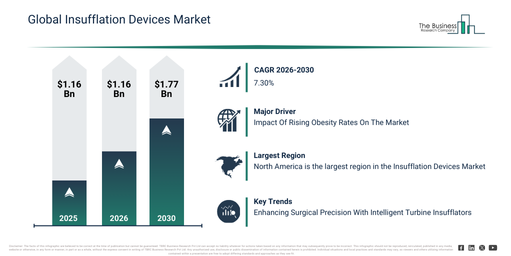
    The insufflation devices market is projected to experience substantial expansion in the coming years. This market is predicted to reach $4.16 billion in 2030, exhibiting a compound annual growth rate (CAGR) of 7.3%. This anticipated growth during the projection period stems from several factors, including a heightened demand for precise surgical tools, a greater emphasis on improving patient recovery, the proliferation of outpatient surgical facilities, a growing inclination towards disposable devices, and the increasing incorporation of digital surgical platforms. Key trends anticipated over this forecast period encompass the increased utilization of electronic insufflation systems, the rising uptake of disposable insufflation devices, the expanding integration of pressure and flow monitoring capabilities, the wider application of minimally invasive surgical techniques, and an elevated focus on the accuracy and safety of these devices._x000D_

    _x000D_

    #Get A Free Sample Report With In-Depth Market Insights:#_x000D_

    https://thebusinessresearchcompany.com/sample_request?id=60557996&type=smp&name=Insufflation%20Devices%20Market%20Report%202026&utm_source=Blogs&utm_medium=Paid&utm_campaign=Oct_PR_x000D_

    _x000D_

    #Insufflation Devices Market Development Factors: What’s Supporting Demand?#_x000D_

    The insufflation devices market is anticipated to expand due to the increasing prevalence of obesity. Obesity rates denote the proportion of individuals within a population considered obese, generally identified by a body mass index (BMI) of 30 or higher. This surge in obesity is primarily attributed to factors such as unhealthy eating habits, insufficient physical activity, greater intake of processed foods, and inactive lifestyles. In obesity treatments, insufflation devices play a crucial role by inflating the abdominal cavity during procedures like bariatric surgery, thereby improving visibility and surgical access. For example, the World Heart Foundation, a global cardiovascular community based in Switzerland, reported in March 2023 that around 2.3 billion adults and children globally are either obese or overweight, a figure expected to climb to 2.7 billion by 2025 if current trends persist. Consequently, the increasing rates of obesity are a significant driver for the growth of the insufflation devices market. The expansion of healthcare facilities and systems is anticipated to drive the growth of the insufflation devices market. Healthcare infrastructure encompasses the physical, technological, and organizational assets essential for the efficient provision of medical services, such as hospitals, clinics, diagnostic centers, medical equipment, and health IT systems. This expansion is fueled by an increasing global population, a rising incidence of chronic diseases, and governmental efforts to enhance healthcare accessibility, all of which mandate the creation of new facilities and the upgrading of existing ones. For instance, the Office for National Statistics, a UK government department, reported in May 2023 that UK healthcare spending saw a 5.6% rise between 2022 and 2023, a significant increase compared to the 0.9% growth observed in 2022. The total UK healthcare expenditure reached approximately $317.63 billion (£292 billion) in 2023. Consequently, the ongoing development of healthcare infrastructure is a key factor propelling the insufflation devices market forward._x000D_

    _x000D_

    #Insufflation Devices Market Segmentation And Category Overview#_x000D_

    The insufflation devices market covered in this report is segmented – _x000D_

    _x000D_

    1) By Type: Disposable, Reusable_x000D_

    2) By Application: Laparoscopic Surgery, Bariatric Surgery, Cardiac Surgery_x000D_

    3) By End-Use: Hospitals, Clinics, Ambulatory Surgical Centers_x000D_

    _x000D_

    Subsegments:_x000D_

    1) By Disposable: Single-Use Insufflation Devices, Disposable Insufflation Tubes _x000D_

    2) By Reusable: Reusable Insufflation Devices (Manual Or Electronic), Reusable Insufflation Tubes _x000D_

    _x000D_

    #Insufflation Devices Market Transformation Trends: What Innovations Are Driving Change?#_x000D_

    Companies operating in the insufflation devices market are prioritizing the creation of innovative products, such as intelligent turbine insufflators, aiming to enhance precision, minimize complications during surgery, and improve patient recovery in minimally invasive procedures. An intelligent turbine insufflator is a medical instrument designed to deliver controlled, high-pressure airflow for insufflation during minimally invasive operations, equipped with advanced capabilities for accuracy and safety. For example, in October 2024, Politecnico di Milano, an Italy-based university, joined forces with Erasmus Medical Center, a Netherlands-based medical center, to engineer insufflators that elevate surgical procedures by generating a temporary cavity inside the body using pressurized gas. This development overcomes existing insufflator limitations by continuously modifying pressure based on the patient’s tissue and breathing patterns. The patented intelligent turbine insufflation not only improves surgical conditions but also patient outcomes, by reducing the requirement for large incisions and enabling more precise control throughout the surgery._x000D_

    _x000D_

    #Insufflation Devices Market Key Players Shaping Industry Direction#_x000D_

    Major companies operating in the insufflation devices market are Cardinal Health Inc., Johnson & Johnson, Medtronic plc, Fujifilm Holdings Corporation, Becton Dickinson and Company, Stryker Corporation, Olympus Corporation, Hoya Corporation, Smith & Nephew PLC, Mindray Medical International Limited, STERIS Corporation, CooperSurgical Inc., Teleflex Incorporated, Karl Storz SE & Co. KG, ConMed Corporation, Applied Medical Resources Corporation, Richard Wolf GmbH, B. Braun Melsungen AG, Pennine Healthcare Limited, Micro-Tech Endoscopy Co. Ltd. _x000D_

    _x000D_

    #View The Full Insufflation Devices Market Report:#_x000D_

    https://thebusinessresearchcompany.com/report/insufflation-devices-global-market-report?utm_source=Blogs&utm_medium=Paid&utm_campaign=Oct_PR_x000D_

    _x000D_

    #Insufflation Devices Market Regional Analysis: Which Geography Leads On Revenue?#_x000D_

    North America is the largest region in the insufflation devices market in 2025. Asia-Pacific is expected to be the fastest-growing region in the forecast period. The regions covered in the insufflation devices market report are Asia-Pacific, South East Asia, Western Europe, Eastern Europe, North America, South America, Middle East, Africa._x000D_

    _x000D_

    #Reach Out To Our Team:#_x000D_

    _x000D_

    The Business Research Company: https://www.thebusinessresearchcompany.com/_x000D_

    Americas: +1 310-496-7795_x000D_

    Asia: +44 7882 955267 & +91 8897263534_x000D_

    Europe: +44 7882 955267_x000D_

    Email us at: marketing@tbrc.info_x000D_

    _x000D_

    #Follow us on:#_x000D_

    _x000D_

    LinkedIn: https://in.linkedin.com/company/the-business-research-company_x000D_

    YouTube: https://www.youtube.com/channel/UC24_fI0rV8cR5DxlCpgmyFQ_x000D_

    Global Market Model: https://www.thebusinessresearchcompany.com/global-market-model
  • In-Line UV-Vis Spectroscopy Market Analysis Through 2030: Market Size, Growth Trends And Industry Outlook

    In-Line UV-Vis Spectroscopy Market Analysis Through 2030: Market Size, Growth Trends And Industry Outlook

    Backed by market attractiveness analysis, total addressable market sizing, company benchmarking matrices, interactive Excel dashboards, wider supply chain intelligence, emerging startup coverage, and detailed product-level insights, The Business Research Company’s 2026 market reports are designed to offer research that is more actionable and strategically valuable than ever.

    In-Line UV-Vis Spectroscopy Market Size And Revenue Outlook Through 2030

    The in-line uv-vis spectroscopy market has demonstrated significant expansion in recent years. Its valuation is forecast to climb from $1.25 billion in 2025 to $1.35 billion in 2026, achieving a compound annual growth rate (CAGR) of 8.0%. This historical growth has been driven by factors such as the increasing demand for real-time chemical analysis, its adoption in pharmaceutical quality control, the expansion within the chemical and plastics industry, a rise in research and development activities in laboratories, and the necessity for accurate process monitoring.

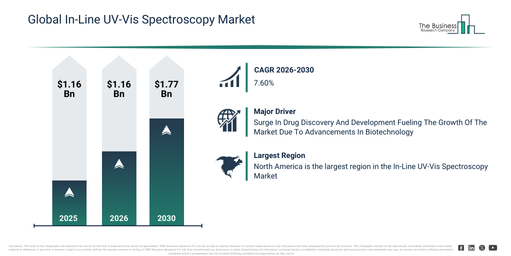
    The market size for in-line UV-Vis spectroscopy is anticipated to experience robust expansion over the coming years. It is predicted to reach $1.81 billion by 2030, demonstrating a compound annual growth rate (CAGR) of 7.6%. This projected growth throughout the forecast period can be attributed to several factors, including advancements in fiber optic UV-Vis technology, integration with IoT-enabled process systems, increased adoption of process analytical technology, expansion into emerging markets, and a growing focus on automated and digitalized manufacturing processes. Furthermore, significant trends expected during this period include real-time process monitoring, automated quality control, the widespread adoption of non-destructive testing, the miniaturization of instruments, and integration with process analytical technology.

    Get A Free Sample Report With In-Depth Market Insights:

    https://thebusinessresearchcompany.com/sample_request?id=32617121&type=smp&name=In-Line%20UV-Vis%20Spectroscopy%20Market%20Report%202026&utm_source=Blogs&utm_medium=Paid&utm_campaign=Oct_PR

    In-Line UV-Vis Spectroscopy Market Industry Drivers: What’s Behind The Revenue Growth?

    An increase in drug discovery and development efforts is anticipated to boost the expansion of the in-line UV-vis spectroscopy market in the future. These activities encompass the methodical procedures involved in finding novel therapeutic compounds and advancing them through investigation, trials, and regulatory clearance for medical application. The rise in drug discovery and development activities stems from progress in biotechnology, with these breakthroughs speeding up target identification and optimizing the creation of improved and tailored treatments. In-line UV-vis spectroscopy aids these endeavors by allowing for continuous monitoring of chemical reactions and the levels of compound concentrations, which in turn improves operational efficiency, precision, and strategic choices. For Instance, in December 2024, according to the Association of the British Pharmaceutical Industry, a UK-based trade association, the industry’s clinical trials initiated increased to 426 in 2023, up from 411 in 2022. Consequently, the heightened volume of drug discovery and drug development activities is stimulating the expansion of the in-line UV-vis spectroscopy market.

    In-Line UV-Vis Spectroscopy Market Segment Outlook: Which Categories Are Growing Fastest?

    The in-line uv-vis spectroscopy market covered in this report is segmented –

    1) By Product Type: Single Beam Ultraviolet-Visible Spectrophotometers, Double Beam Ultraviolet-Visible Spectrophotometers, Multi-Mode Ultraviolet-Visible Spectrophotometers, Portable Ultraviolet-Visible Spectrophotometers, Scanning Ultraviolet-Visible Spectrophotometers

    2) By Technology: Traditional Ultraviolet-Visible Spectroscopy, Fiber Optic Ultraviolet-Visible Spectroscopy, Flow-Cell-Based UV-Vis Spectroscopy, Array-Based Ultraviolet-Visible Spectroscopy, Near Infrared Spectroscopy Integration

    3) By Sales Channel: Direct Sales, Online Retailers, Distributors And Resellers, Aftermarket Parts And Services, Consultancy And Technical Support Services

    4) By Application: Quality Control, Research And Development, Industrial Analytical Testing, Process Monitoring, Raw Material Analysis

    5) By End-User : Plastics Industry, Chemical Industry, Food And Beverages, Pharmaceutical Industry, Painting And Coating Industry, Other End Users

    Subsegments:

    1) By Single Beam Ultraviolet-Visible Spectrophotometers: Inline Process Monitoring Units, Industrial Grade Single-Beam Analyzers, Entry-Level Pharmaceutical Testing Devices

    2) By Double Beam Ultraviolet-Visible Spectrophotometers: Research-Grade Analytical Instruments, Quality Control and Assurance Systems, High-Precision Industrial Process Analyzers

    3) By Multi-Mode Ultraviolet-Visible Spectrophotometers: Ultraviolet-Visible with Fluorescence Detection, Ultraviolet-Visible with Infrared Capability, Multi-Parameter Inline Spectroscopy Systems

    4) By Portable Ultraviolet-Visible Spectrophotometers: Handheld Field Analyzers, Battery-Operated Devices, Environmental Monitoring Tools

    5) By Scanning Ultraviolet-Visible Spectrophotometers: High-Throughput Scanning Systems, Material Testing Spectrometers, Automated Validation and Calibration Units

    In-Line UV-Vis Spectroscopy Market Competitive Analysis Of Leading Industry Participants

    Major companies operating in the in-line uv-vis spectroscopy market are Thermo Fisher Scientific Inc., ABB Ltd., Agilent Technologies Inc., PerkinElmer Inc., Mettler-Toledo International Inc., Shimadzu Corporation, Bruker Corporation, HORIBA Scientific, Hach Company, Hamamatsu Photonics K.K., Metrohm AG, X-Rite Incorporated, Analytik Jena GmbH, Malvern Panalytical Ltd., SPECTRO Analytical Instruments GmbH, Ocean Insight, Avantes Inc., JASCO Inc., Biochrom Ltd., StellarNet Inc.

    View The Full In-Line UV-Vis Spectroscopy Market Report:

    https://thebusinessresearchcompany.com/report/in-line-uv-vis-spectroscopy-global-market-report?utm_source=Blogs&utm_medium=Paid&utm_campaign=Oct_PR

    In-Line UV-Vis Spectroscopy Market Geographic Spread And Regional Opportunities

    North America was the largest region in the In-line uv-vis spectroscopy market in 2025. Asia-Pacific is expected to be the fastest-growing region in the forecast period. The regions covered in the in-line uv-vis spectroscopy market report are Asia-Pacific, South East Asia, Western Europe, Eastern Europe, North America, South America, Middle East, Africa.

    Reach Out To Our Team:

    The Business Research Company: https://www.thebusinessresearchcompany.com/

    Americas: +1 310-496-7795

    Asia: +44 7882 955267 & +91 8897263534

    Europe: +44 7882 955267

    Email us at: marketing@tbrc.info

    Follow us on:

    LinkedIn: https://in.linkedin.com/company/the-business-research-company

    YouTube: https://www.youtube.com/channel/UC24_fI0rV8cR5DxlCpgmyFQ

    Global Market Model: https://www.thebusinessresearchcompany.com/global-market-model
  • Injury Prediction Wearable Sensor Market Outlook From 2026 To 2030: Key Growth Factors And Future Opportunities

    Injury Prediction Wearable Sensor Market Outlook From 2026 To 2030: Key Growth Factors And Future Opportunities

    Featuring market attractiveness scoring, total addressable market sizing, company benchmarking matrices, interactive Excel dashboards, deeper supply chain intelligence, emerging startup tracking, and granular product-level insights, The Business Research Company’s 2026 market reports are built to deliver research that is both more actionable and more strategically valuable.

    Injury Prediction Wearable Sensor Market Growth From $2.66 Billion In 2026 To $4.82 Billion By 2030 At A CAGR Of 16%

    The injury prediction wearable sensor market has seen substantial expansion in recent years. Its valuation is set to increase from $2.28 billion in 2025 to $2.66 billion in 2026, achieving a compound annual growth rate (CAGR) of 16.3%. Historically, this growth can be attributed to several factors including widespread adoption in professional sports, continuous advancements in wearable sensor technology, the evolution of accelerometers and gyroscopes, seamless integration with fitness applications, and an increasing focus on athlete safety.

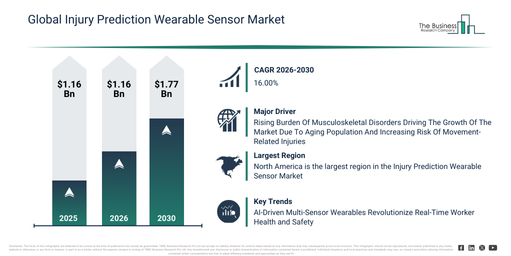
    The market size for injury prediction wearable sensors is poised for substantial growth over the upcoming years. It is projected to expand to $4.82 billion by 2030, demonstrating a compound annual growth rate (CAGR) of 16.0%. This expansion during the forecast period can be attributed to advancements like AI-driven predictive algorithms, increased application in workplace safety and military contexts, greater adoption in rehabilitation programs, the evolution of multi-sensor platforms, and integration with cloud-based health monitoring systems. Significant trends expected during this period involve real-time biomechanical monitoring, AI-powered injury prediction, wearable motion analytics, assessments of muscle load and fatigue, and remote health alerts.

    Get A Free Sample Report With In-Depth Market Insights:

    https://thebusinessresearchcompany.com/sample_request?id=57572668&type=smp&name=Injury%20Prediction%20Wearable%20Sensor%20Market%20Report%202026&utm_source=Blogs&utm_medium=Paid&utm_campaign=Oct_PR

    Injury Prediction Wearable Sensor Market Growth Factors: What’s Supporting Expansion?

    The escalating prevalence of musculoskeletal disorders is projected to fuel the expansion of the injury prediction wearable sensor market. Musculoskeletal disorders encompass conditions or injuries affecting muscles, bones, joints, tendons, ligaments, or nerves, frequently leading to pain, discomfort, and restricted mobility. The rising incidence of these disorders is attributed to the aging population, as older adults are more susceptible to joint degeneration, osteoporosis, and associated mobility challenges. Injury prediction wearable sensors play a crucial role in tackling musculoskeletal disorders by facilitating early identification of movement risks, supporting preventive strategies, and diminishing the probability of severe injuries. For instance, in January 2024, according to GOV.UK, a UK-based government agency, the proportion of people aged 16 and over self-reporting a long-term MSK condition stood at 18.4% in 2023. Thus, the intensifying challenge of musculoskeletal disorders is a key driver for the growth of the injury prediction wearable sensor market.

    Injury Prediction Wearable Sensor Market Segment Landscape: Which Areas Lead Development?

    The injury prediction wearable sensor market covered in this report is segmented –

    1) By Sensor Type: Accelerometers, Gyroscopes, Heart Rate Sensors, Electromyography (EMG) Sensors, Global Positioning System (GPS)

    2) By Application: Sports And Fitness, Military, Workplace Safety

    3) By Distribution Channel: Online, Offline

    4) By End Users: Athletes, Industrial Workers, Military Personnel, Others End Users

    Subsegments:

    1) By Accelerometers: Triaxial Accelerometers, Wearable-Grade MEMS Accelerometers

    2) By Gyroscopes: Microelectromechanical (MEMS) Gyroscopes, Vibrating Structure Gyroscopes

    3) By Heart Rate Sensors: Photoplethysmography (PPG) Sensors, Electrocardiography (ECG) Sensors, Optical Heart Rate Sensors

    4) By Electromyography (EMG) Sensors: Surface Electromyography Sensors, Wireless Electromyography Sensors

    5) By Global Positioning System (GPS): Standard GPS Sensors, High-Precision GPS Sensors, Multi-Constellation GPS Sensors

    Injury Prediction Wearable Sensor Market Industry Trends: What’s Reshaping Demand?

    Major companies operating in the injury prediction wearable sensor market are focusing on developing innovative products, such as wearable biopatches, to facilitate real-time tracking of physiological and biomechanical data for injury prevention. Wearable biopatches are compact, sensor-equipped devices applied to the body for continuous monitoring of vital signs and biomechanical data, supporting health and preventing injuries. For instance, in September 2025, Emory University, a US-based private research organization, in collaboration with the Georgia Institute of Technology, a US-based research organization, developed the SENSE Biopatch, a wearable device engineered to monitor and protect the health of outdoor workers. This patch monitors multiple physiological signals, including skin temperature, heart rate, hydration, physical activity, and blood oxygen levels. Its AI algorithms analyze these signals in real time to detect early indications of heat stress and deliver predictive alerts. The design prioritizes comfort and unobtrusiveness, ensuring that workers can wear it continuously without hindrance.

    Injury Prediction Wearable Sensor Market Leading Companies And Competitive Benchmarking

    Major companies operating in the injury prediction wearable sensor market are Catapult Sports, STATSports, PlayerTek, GPSports, Dyamotech, ActiGraph, Biostrap, WHOOP, Oura Health, Garmin, Polar Electro, Zephyr Technology, Kinetisense, Physimax Technologies, Orreco, Sensoria Health, Athlete Intelligence, Hykso, VERT Wearable, Stryd

    View The Full Injury Prediction Wearable Sensor Market Report:

    https://thebusinessresearchcompany.com/report/injury-prediction-wearable-sensor-global-market-report?utm_source=Blogs&utm_medium=Paid&utm_campaign=Oct_PR

    Injury Prediction Wearable Sensor Market Top Region By Revenue And Market Share

    North America was the largest region in the injury prediction wearable sensor market in 2025. Asia-Pacific is expected to be the fastest-growing region in the forecast period. The regions covered in the injury prediction wearable sensor market report are Asia-Pacific, South East Asia, Western Europe, Eastern Europe, North America, South America, Middle East, Africa.

    Reach Out To Our Team:

    The Business Research Company: https://www.thebusinessresearchcompany.com/

    Americas: +1 310-496-7795

    Asia: +44 7882 955267 & +91 8897263534

    Europe: +44 7882 955267

    Email us at: marketing@tbrc.info

    Follow us on:

    LinkedIn: https://in.linkedin.com/company/the-business-research-company

    YouTube: https://www.youtube.com/channel/UC24_fI0rV8cR5DxlCpgmyFQ

    Global Market Model: https://www.thebusinessresearchcompany.com/global-market-model
  • Injection Pen Market Growth Forecast: Market Size, Key Trends And Emerging Opportunities Through 2030

    Injection Pen Market Growth Forecast: Market Size, Key Trends And Emerging Opportunities Through 2030

    Built to provide research that’s more actionable and strategically valuable, The Business Research Company’s 2026 market reports include market attractiveness analysis, total addressable market sizing, company benchmarking matrices, interactive Excel dashboards, broader supply chain intelligence, emerging startup tracking, and in-depth product insights.

    Injection Pen Market Expansion Outlook: What Revenue Opportunities Are Ahead?

    The injection pen market has experienced rapid expansion in recent years. It will grow from $61.17 billion in 2025 to $67.94 billion in 2026 at a compound annual growth rate (CAGR) of 11.1%. The growth observed in the past can be attributed to several factors including an increased prevalence of diabetes and chronic ailments, the rise of self-administration therapies, wider application of biologic drugs, enhancements in injection device construction, and a growing patient preference for pen-based delivery systems.

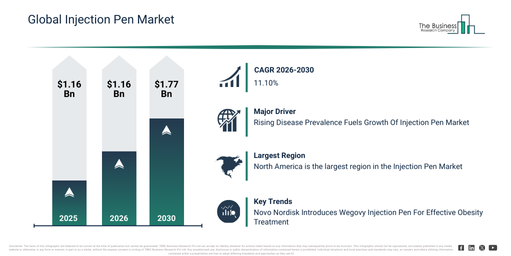
    The injection pen market size is anticipated to undergo rapid expansion in the coming years, with its value projected to reach $103.59 billion in 2030 at a compound annual growth rate (CAGR) of 11.1%. This growth during the forecast period can be attributed to several factors including an increasing demand for home-based drug delivery, the rising adoption of smart injection pens, the expansion of chronic disease management programs, a growing focus on sustainability within medical devices, and advancements in connected drug delivery systems. Additionally, major trends expected in the forecast period encompass the increasing adoption of user-friendly injection devices, a rising demand for disposable and prefilled pens, the growing integration of dose accuracy and safety features, the expansion of reusable and rechargeable injection pens, and an enhanced focus on patient adherence solutions.

    Get A Free Sample Report With In-Depth Market Insights:

    https://thebusinessresearchcompany.com/sample_request?id=41779542&type=smp&name=Injection%20Pen%20Market%20Report%202026&utm_source=Blogs&utm_medium=Paid&utm_campaign=Oct_PR

    Injection Pen Market Demand Drivers: What’s Powering Industry Growth?

    The increasing occurrence of conditions like diabetes and arthritis is fueling the expansion of the injection pen market. Several elements, including a larger obese population, lack of physical activity, poor dietary choices, and advancing age, have contributed to a global rise in diabetes cases. Specifically, the International Diabetes Federation (IDF), a Belgium-based non-governmental, global advocacy organization focused on diabetes care, prevention, and research, reported in April 2025 that 589 million adults (20-79 years) worldwide are currently diagnosed with diabetes. This figure surpasses the combined populations of the U.S., Canada, Mexico, and the Caribbean. Projections indicate that the count of adults suffering from diabetes will climb to 853 million by 2050. Consequently, the growing incidence of diseases like diabetes and arthritis is set to propel the injection pen market forward.

    Injection Pen Market Segments: Where Is Growth Concentrated?

    The injection pen market covered in this report is segmented –

    1) By Product Type: Disposable Injection Pens, Reusable Injection Pens

    2) By Therapy: Diabetes, Fertility, Osteoporosis, Growth Hormone Therapy, Other Therapies

    3) By End Users: Home Care, Hospital And Clinics

    Subsegments:

    1) By Disposable Injection Pens: Pre-filled Disposable Injection Pens, Single-Use Disposable Injection Pens

    2) By Reusable Injection Pens: Refillable Injection Pens, Multi-Use Injection Pens, Rechargeable Injection Pens

    Injection Pen Market Innovation Trends: What Developments Are Reshaping The Industry?

    Leading companies operating within the injection pen market are concentrating on developing innovative products, such as Wegovy, to deliver reliable services to customers. Wegovy functions as an injection pen specifically for treating individuals with obesity and assisting with weight loss. For example, in September 2023, Novo Nordisk A/S, a pharmaceutical company from Denmark, introduced Wegovy. This injection pen contains the drug semaglutide. Wegovy supports patients in decreasing their body weight by approximately 15% when utilized alongside exercise and modifications to their lifestyle.

    Injection Pen Market Industry Leaders And Competitive Landscape

    Major companies operating in the injection pen market are Novo Nordisk A/S, Ypsomed Holding AG, Eli Lilly and Company, Merck KGaA, AstraZeneca plc, F. Hoffmann-La Roche Ltd., Owen Mumford Ltd., Sun Pharmaceutical Industries Ltd., Pfizer Inc., Lupin Ltd., Wockhardt Ltd., AptarGroup Inc., Novartis AG, Gerresheimer AG, SHL Medical AG, Boehringer Ingelheim International GmbH, Nemera France SA, Companion Medical Inc., Jiangsu Delfu Medical Devices Co. Ltd., Haselmeier GmbH, Biocon Limited, Becton Dickinson and Company, Mylan N.V., Terumo Corporation, West Pharmaceutical Services Inc., Bespak Europe Ltd., Nipro Corporation, Consort Medical plc, Sandoz Inc., Sulzer Ltd., DuPont de Nemours Inc., Mitsubishi Gas Chemical Company Inc.

    View The Full Injection Pen Market Report:

    https://thebusinessresearchcompany.com/report/injection-pen-global-market-report?utm_source=Blogs&utm_medium=Paid&utm_campaign=Oct_PR

    Injection Pen Market Regional Analysis And Top Geography

    North America was the largest region in the injection pen market in 2025. The regions covered in the injection pen market report are Asia-Pacific, South East Asia, Western Europe, Eastern Europe, North America, South America, Middle East, Africa.

    Reach Out To Our Team:

    The Business Research Company: https://www.thebusinessresearchcompany.com/

    Americas: +1 310-496-7795

    Asia: +44 7882 955267 & +91 8897263534

    Europe: +44 7882 955267

    Email us at: marketing@tbrc.info

    Follow us on:

    LinkedIn: https://in.linkedin.com/company/the-business-research-company

    YouTube: https://www.youtube.com/channel/UC24_fI0rV8cR5DxlCpgmyFQ

    Global Market Model: https://www.thebusinessresearchcompany.com/global-market-model
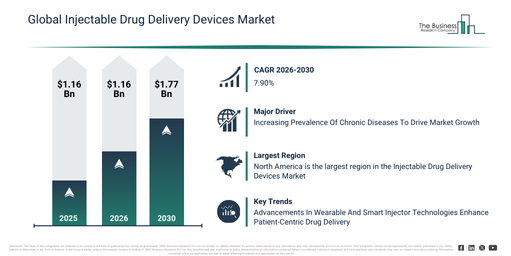
  • Injectable Cement Market CAGR Forecast Through 2030: Key Trends Shaping Industry Expansion

    Injectable Cement Market CAGR Forecast Through 2030: Key Trends Shaping Industry Expansion

    Backed by market attractiveness analysis, total addressable market sizing, company benchmarking matrices, interactive Excel dashboards, wider supply chain intelligence, emerging startup coverage, and detailed product-level insights, The Business Research Company’s 2026 market reports are designed to offer research that is more actionable and strategically valuable than ever.

    Injectable Drug Delivery Devices Market Growth Potential: How Will Market Size Shift Through 2030?

    The market size for injectable drug delivery devices has seen substantial expansion in recent years. It is projected to increase from $54.3 billion in 2025 to $58.69 billion in 2026, achieving a compound annual growth rate (CAGR) of 8.1%. The growth observed in the past can be attributed to the rising prevalence of chronic diseases, the expanding market for biologics and biosimilars, an increase in hospital-based injectable treatments, improvements in sterile manufacturing practices, and the wider availability of various injection devices.

    The injectable drug delivery devices market is poised for significant expansion over the coming years. This market is projected to reach $79.51 billion by 2030, exhibiting a compound annual growth rate (CAGR) of 7.9%. The anticipated growth during this forecast period can be attributed to an increasing shift toward self-administration devices, rising demand for personalized drug delivery, the expansion of biologic drug pipelines, growing investments in smart injection technologies, and the increasing adoption of home healthcare solutions. Major trends expected in this period include the increased adoption of prefilled and safety syringes, a rising demand for autoinjectors and pen injectors, the growing use of home-based injectable therapies, the expansion of wearable and implantable infusion pumps, and an enhanced focus on dose accuracy and patient safety.

    Get A Free Sample Report With In-Depth Market Insights:

    https://thebusinessresearchcompany.com/sample_request?id=17838391&type=smp&name=Injectable%20Drug%20Delivery%20Devices%20Market%20Report%202026&utm_source=Blogs&utm_medium=Paid&utm_campaign=Oct_PR

    Injectable Drug Delivery Devices Market Growth Drivers: What’s Behind The Acceleration?

    The increasing incidence of long-term health conditions is projected to significantly drive the expansion of the injectable drug delivery devices market. A chronic disease is generally defined as an illness lasting for at least three months, with the potential to worsen over time. Injectable drug delivery devices offer a reliable and user-friendly approach for administering medications across prolonged periods. These devices can enhance patient adherence to their prescribed treatment regimens, thereby ensuring effective management of chronic conditions and ultimately leading to improved health outcomes. For instance, in June 2024, according to the National Health Service, a UK-based government department, 3,615,330 individuals registered with a general practitioner (GP) were diagnosed with non-diabetic hyperglycemia or pre-diabetes (a condition with elevated blood sugar levels, not high enough to be classified as diabetes) in 2023, representing an 18% increase from 3,065,825 cases in 2022. Consequently, the rising prevalence of chronic diseases is propelling the growth of the injectable drug delivery devices market going forward.

    Injectable Drug Delivery Devices Market Segment Analysis: What Are The Core Market Categories?

    The injectable drug delivery devices market covered in this report is segmented –

    1) By Type: Syringes, Injectors, Pump

    2) By Application: Autoimmune Diseases, Hormonal Disorders, Oncology, Orphan Diseases, Pain Management, Respiratory Therapy, Other Applications

    3) By End-user: Hospitals And Clinics, Home Healthcare Settings, Pharmaceutical And Biotechnological Companies, Research Laboratories, Other End Users

    Subsegments:

    1) By Syringes: Conventional Syringes, Prefilled Syringes, Safety Syringes

    2) By Injectors: Autoinjectors, Pen Injectors, Needle-Free Injectors

    3) By Pumps: Insulin Pumps, Ambulatory Infusion Pumps, Implantable Pumps

    Injectable Drug Delivery Devices Market Trends: What’s Defining The Industry’s Next Phase?

    Leading companies in the injectable drug delivery devices market are concentrating on developing advanced solutions, such as wearable and smart injectors, to enhance patient convenience, boost adherence, and facilitate the self-administration of complex therapies. These innovative wearable and smart injector systems are engineered to deliver accurate doses of medications, including biologics and large-volume formulations, while simultaneously reducing discomfort, minimizing user error, and improving the overall treatment experience. For instance, in January 2025, Becton, Dickinson and Company, a US-based medical technology company, introduced several next-generation devices such as the BD Accuspray Nasal Spray System, BD Hylok Glass Prefillable Syringe, BD Effivax Glass Prefillable Syringe, BD Libertas Wearable Injector, BD Evolve On-body Injector, BD Physioject Disposable Autoinjector, and BD Vystra Disposable Pen. These solutions provide user-friendly designs for self-administration, precise and consistent dosing for biologics and vaccines, compatibility with diverse drug formulations, and wearable formats that support large-volume delivery, all while ensuring sterility and safety via disposable components. This product launch underscores the industry’s progression toward advanced, patient-centric injectable drug delivery systems designed to improve adherence, comfort, and therapeutic outcomes.

    Injectable Drug Delivery Devices Market Key Participants And Competitive Landscape

    Major companies operating in the injectable drug delivery devices market are Becton Dickinson and Company, Baxter International, Gerresheimer AG, Catalent Inc., Antares Pharma, Owen Mumford, West Pharmaceutical Services Inc., B. Braun Melsungen AG, Ypsomed AG, AptarGroup Inc., Nemera, Teleflex Medical, Medtronic, Caplin Steriles Limited, Hovione Technology, Jiangsu Delfu Medical Device Co. Ltd., Terumo Corporation, Roche, Sorrel Medical, Novo Nordisk

    View The Full Injectable Drug Delivery Devices Market Report:

    https://thebusinessresearchcompany.com/report/injectable-drug-delivery-devices-global-market-report?utm_source=Blogs&utm_medium=Paid&utm_campaign=Oct_PR

    Injectable Drug Delivery Devices Market Geographic Analysis: Where Is Demand Rising Fastest?

    North America was the largest region in the injectable drug delivery devices market in 2025. Asia-Pacific is expected to be the fastest-growing region in the forecast period. The regions covered in the injectable drug delivery devices market report are Asia-Pacific, South East Asia, Western Europe, Eastern Europe, North America, South America, Middle East, Africa.

    Reach Out To Our Team:

    The Business Research Company: https://www.thebusinessresearchcompany.com/

    Americas: +1 310-496-7795

    Asia: +44 7882 955267 & +91 8897263534

    Europe: +44 7882 955267

    Email us at: marketing@tbrc.info

    Follow us on:

    LinkedIn: https://in.linkedin.com/company/the-business-research-company

    YouTube: https://www.youtube.com/channel/UC24_fI0rV8cR5DxlCpgmyFQ

    Global Market Model: https://www.thebusinessresearchcompany.com/global-market-model
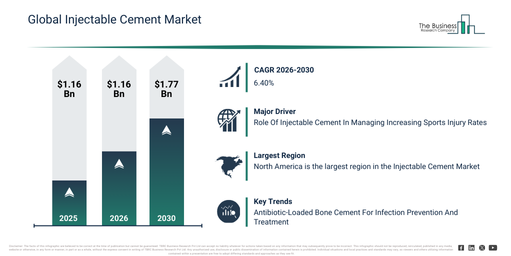
  • Injectable Cement Market To Witness 6.4% CAGR Growth Through 2030: Key Industry Drivers

    Injectable Cement Market To Witness 6.4% CAGR Growth Through 2030: Key Industry Drivers

    Featuring market attractiveness scoring, total addressable market sizing, company benchmarking matrices, interactive Excel dashboards, deeper supply chain intelligence, emerging startup tracking, and granular product-level insights, The Business Research Company’s 2026 market reports are built to deliver research that is both more actionable and more strategically valuable.

    Injectable Cement Market Value Analysis: What Growth Lies Ahead Over The Forecast Period?

    The injectable cement market has shown strong growth over recent years. It is projected to increase in value from $1.55 billion in 2025 to $1.66 billion in 2026, achieving a compound annual growth rate (CAGR) of 6.7%. Historically, this expansion has been driven by factors including the increasing prevalence of bone fractures, the ongoing reliance on traditional orthopedic fixation methods, the expanding elderly population, the growth of hospital-based orthopedic care, and the adoption of PMMA-based bone cements.

    The injectable cement market size is projected to experience robust growth in the coming years. It is anticipated to expand to $2.13 billion in 2030, driven by a compound annual growth rate (CAGR) of 6.4%. This growth over the forecast period is attributable to technological advancements in injectable cement formulations, increasing demand for minimally invasive surgeries, a rise in orthopedic trauma cases, the expansion of outpatient and clinic-based procedures, and a greater emphasis on biocompatible and bioactive materials. Significant trends during this period include the growing adoption of minimally invasive orthopedic procedures, the wider use of injectable cement in fracture stabilization, an increasing preference for image-guided cement injection, innovations in bioactive and composite injectable cements, and an improved focus on faster recovery and overall patient outcomes.

    Get A Free Sample Report With In-Depth Market Insights:

    https://thebusinessresearchcompany.com/sample_request?id=28030551&type=smp&name=Injectable%20Cement%20Market%20Report%202026&utm_source=Blogs&utm_medium=Paid&utm_campaign=Oct_PR

    Injectable Cement Market Growth Factors Behind Sustained Expansion

    The increasing prevalence of sports-related injuries is projected to drive the expansion of the injectable cement market in the foreseeable future. Sports-related injuries are physical damages sustained during athletic pursuits, encompassing strains, sprains, fractures, and concussions, frequently necessitating medical intervention and rehabilitation for recovery. The rise in these injuries is likely attributed to heightened participation in athletic activities, more rigorous training regimens, and advancements in sports equipment that push physical boundaries, leading to elevated injury rates among athletes worldwide. Injectable cement is utilized in the treatment of sports-related injuries to stabilize fractures, support bone healing, and enhance surgical outcomes by offering a reliable and minimally invasive solution for bone reinforcement. For instance, in July 2025, according to the Australian Institute of Health and Welfare, a government agency based in Australia, cycling registered the largest share of sports-related hospitalizations in 2023–24, accounting for 12% (around 7,500 cases). This was followed by Australian rules football at 8.7% (about 5,400 cases) and soccer at 8.6% (roughly 5,300 cases). Therefore, the increasing number of sports-related injuries will stimulate the growth of the injectable cement market.

    Injectable Cement Market Segment Breakdown: Which Categories Lead On Revenue?

    The injectable cement market covered in this report is segmented –

    1) By Type: High Viscosity Cement, Low Viscosity Cement, Medium Viscosity Cement

    2) By Application: Periprosthetic Fractures, Pelvic Fractures, Other Applications

    3) By End User: Hospital, Clinics, Other End Users

    Subsegments:

    1) By High Viscosity Cement: Calcium Phosphate Cements, Polymethyl Methacrylate (PMMA) Cements

    2) By Low Viscosity Cement: Acrylic-Based Injectable Cements, Bioactive Glass Cements

    3) By Medium Viscosity Cement: Hybrid Injectable Cements, Composite Injectable Cements

    Injectable Cement Market Industry Trends Fueling Future Revenue Growth

    Key players in the injectable cement market are prioritizing technological advancements, notably antibiotic-loaded bone cement, to enhance infection prevention, improve patient recovery, and support more precise and effective interventions during orthopedic surgeries. Antibiotic-loaded bone cement is a specialized type of bone cement that incorporates antibiotics directly into its material, aimed at preventing or treating infections at the operative site, particularly in orthopedic procedures. As an illustration, in April 2024, Heraeus Medical GmbH, a medical technology manufacturer based in Germany, launched COPAL G+C, its latest antibiotic-loaded bone cement. This product is the company’s inaugural offering to achieve certification under the MDR. COPAL G+C contains both gentamicin and clindamycin, enabling focused infection management in arthroplasty by addressing up to 90% of pathogens commonly associated with prosthetic joint infections.

    Injectable Cement Market Top Companies Driving Competitive Growth

    Major companies operating in the injectable cement market are Johnson & Johnson, Stryker Corporation, Zimmer Biomet Holdings Inc, Smith & Nephew, Arthrex Inc, Enovis Corporation, Globus Medical Inc, Wright Medical Group N.V, Medacta International, Orthofix Medical Inc, Alphatec Spine Inc, Exactech Inc, Spine Wave Inc, Tecres SpA, Heraeus Medical GmbH, TEKNIMED, Graftys SA, Solco Biomedical, Terumo Corporation, Bonesupport AB, Peregrine Biologics, aap Implantate AG, Biometrix Ltd, OSARTIS GmbH, IZI Medical

    View The Full Injectable Cement Market Report:

    https://thebusinessresearchcompany.com/report/injectable-cement-global-market-report?utm_source=Blogs&utm_medium=Paid&utm_campaign=Oct_PR

    Injectable Cement Market Global Footprint: Which Region Leads The Market?

    North America was the largest region in the injectable cement market in 2025. Asia-Pacific is expected to be the fastest-growing region in the forecast period. The regions covered in the injectable cement market report are Asia-Pacific, South East Asia, Western Europe, Eastern Europe, North America, South America, Middle East, Africa.

    Reach Out To Our Team:

    The Business Research Company: https://www.thebusinessresearchcompany.com/

    Americas: +1 310-496-7795

    Asia: +44 7882 955267 & +91 8897263534

    Europe: +44 7882 955267

    Email us at: marketing@tbrc.info

    Follow us on:

    LinkedIn: https://in.linkedin.com/company/the-business-research-company

    YouTube: https://www.youtube.com/channel/UC24_fI0rV8cR5DxlCpgmyFQ

    Global Market Model: https://www.thebusinessresearchcompany.com/global-market-model

  • Inhaler Corticosteroid Device Market Projected For Strong Expansion Through 2030: Key Trends And Future Outlook

    Inhaler Corticosteroid Device Market Projected For Strong Expansion Through 2030: Key Trends And Future Outlook

    Built to provide research that’s more actionable and strategically valuable, The Business Research Company’s 2026 market reports include market attractiveness analysis, total addressable market sizing, company benchmarking matrices, interactive Excel dashboards, broader supply chain intelligence, emerging startup tracking, and in-depth product insights.

    Inhaler Corticosteroid Device Market Size Forecast: How Big Could The Market Get By 2030?

    The inhaler corticosteroid device market size has experienced significant expansion in recent years. This market is forecasted to increase from $16.83 billion in 2025 to $17.98 billion in 2026, at a compound annual growth rate (CAGR) of 6.8%. Historically, this growth can be ascribed to a rising prevalence of asthma and COPD, increased awareness concerning inhaler therapies, government programs for respiratory health, developments in metered-dose inhalers, and the expansion of hospital and homecare facilities.

    The inhaler corticosteroid device market is anticipated to show significant expansion in the coming years. It is projected to achieve a size of $23.18 billion in 2030, growing at a compound annual growth rate (CAGR) of 6.6%. This expected growth during the forecast period can be attributed to the integration of AI and IoT within inhaler devices, the development of eco-friendly inhalers, the expansion of telehealth services, personalized medication delivery approaches, and increasing demand in emerging markets. Noteworthy trends during this period include the incorporation of smart inhalers, personalized dosage management, monitoring facilitated by telehealth, sustainable and eco-friendly device designs, and advanced aerosol delivery technologies.

    Get A Free Sample Report With In-Depth Market Insights:

    https://thebusinessresearchcompany.com/sample_request?id=35513009&type=smp&name=Inhaler%20Corticosteroid%20Device%20Market%20Report%202026&utm_source=Blogs&utm_medium=Paid&utm_campaign=Oct_PR

    Inhaler Corticosteroid Device Market Demand Drivers Opening New Revenue Streams

    The expansion of the inhaler corticosteroid device market is anticipated to be fueled by the rising occurrence of respiratory conditions. These conditions encompass various ailments impacting the lungs and airways, making it difficult for individuals to breathe properly and efficiently. The increase in respiratory disease prevalence stems from heightened air pollution, leading to exposure to detrimental particles that harm lung tissue and precipitate chronic ailments like asthma and bronchitis. Inhaler corticosteroid devices are utilized to treat respiratory diseases by administering anti-inflammatory medication directly into the lungs, thereby reducing inflammation and enhancing respiration. As an illustration, the Office for Health Improvement and Disparities, a UK-based government department, reported in June 2025 that for the financial year ending 2024, England recorded 854,922 emergency hospital admissions for respiratory diseases. This corresponded to a rate of 1,428 (ranging from 1,424 to 1,432) per 100,000 population, marking a 7% increase compared to the previous year. Consequently, the expanding occurrence of respiratory illnesses is propelling the growth of the inhaler corticosteroid device market.

    Inhaler Corticosteroid Device Market Segmentation: How Does The Market Break Down By Category?

    The inhaler corticosteroid device market covered in this report is segmented –

    1) By Product Type: Metered-Dose Inhalers, Dry Powder Inhalers, Soft Mist Inhalers

    2) By Formulation Type: Fluticasone Propionate, Budesonide, Beclomethasone, Mometasone Furoate

    3) By Distribution Channel: Online Pharmacies, Retail Pharmacies, Direct Sales, Hospital Pharmacies

    4) By Application: Asthma, Chronic Obstructive Pulmonary Disease (COPD), Other Applications

    5) By End-User: Hospitals, Homecare, Specialty Clinics, Other End-Users

    Subsegments:

    1) By Metered-Dose Inhalers: Conventional Metered-Dose Inhalers, Breath-Actuated Metered-Dose Inhalers, Spacer-Integrated Metered-Dose Inhalers

    2) By Dry Powder Inhalers: Single-Dose Dry Powder Inhalers, Multi-Dose Dry Powder Inhalers, Reservoir Dry Powder Inhalers

    3) By Soft Mist Inhalers: Manual Soft Mist Inhalers, Battery-Operated Soft Mist Inhalers

    Inhaler Corticosteroid Device Market Trends Powering Strategic Industry Growth

    Leading companies in the inhaler corticosteroid device market are concentrating on introducing advanced solutions, such as rescue inhalers that combine albuterol and budesonide, to enhance treatment effectiveness and provide patients with a more convenient, dual-action therapy from a single device. An inhaler blending albuterol and budesonide functions as a dual-action rescue inhaler, delivering both a bronchodilator (albuterol) to rapidly open airways and a corticosteroid (budesonide) to reduce inflammation, thereby offering quick symptom relief and long-term asthma control in one device. For instance, in January 2024, AstraZeneca PLC, a UK-based pharmaceutical industry company, launched AIRSUPRA, the first and only FDA-approved rescue inhaler integrating albuterol and budesonide for adults suffering from asthma. This inhaler is designed for as-needed application to both alleviate acute bronchoconstriction symptoms and decrease airway inflammation, consequently lowering the risk of severe asthma exacerbations. It represents a novel strategy by combining a short-acting beta2-agonist (albuterol) with an inhaled corticosteroid (budesonide) in a single inhaler, with its approval based on clinical trials demonstrating its superior efficacy over albuterol alone in preventing asthma attacks.

    Inhaler Corticosteroid Device Market Leading Players And Competitive Positioning

    Major companies operating in the inhaler corticosteroid device market are AstraZeneca PLC, Novartis AG, GlaxoSmithKline plc, Boehringer Ingelheim International GmbH, Teva Pharmaceutical Industries Ltd., Teijin Pharma Limited, Sun Pharmaceutical Industries Limited, Aurobindo Pharma Limited, Chiesi Farmaceutici S.p.A., Cipla Limited, Hikma Pharmaceuticals PLC, Amneal Pharmaceuticals Inc., Mundipharma International Limited, Lupin Limited, Zydus Lifesciences Limited, Recipharm AB, Glenmark Pharmaceuticals Limited, Orion Corporation, Beximco Pharmaceuticals Limited, PARI Medical Holding GmbH

    View The Full Inhaler Corticosteroid Device Market Report:

    https://thebusinessresearchcompany.com/report/inhaler-corticosteroid-device-global-market-report?utm_source=Blogs&utm_medium=Paid&utm_campaign=Oct_PR

    Inhaler Corticosteroid Device Market Regional Split: Which Areas Are Fueling Growth?

    North America was the largest region in the inhaler corticosteroid device market in 2025. Asia-Pacific is expected to be the fastest-growing region in the forecast period. The regions covered in the inhaler corticosteroid device market report are Asia-Pacific, South East Asia, Western Europe, Eastern Europe, North America, South America, Middle East, Africa.

    Reach Out To Our Team:

    The Business Research Company: https://www.thebusinessresearchcompany.com/

    Americas: +1 310-496-7795

    Asia: +44 7882 955267 & +91 8897263534

    Europe: +44 7882 955267

    Email us at: marketing@tbrc.info

    Follow us on:

    LinkedIn: https://in.linkedin.com/company/the-business-research-company

    YouTube: https://www.youtube.com/channel/UC24_fI0rV8cR5DxlCpgmyFQ

    Global Market Model: https://www.thebusinessresearchcompany.com/global-market-model
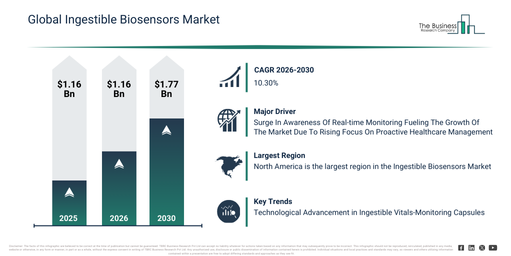
  • Ingestible Biosensors Market Outlook 2026–2030: Growth Trends, Market Dynamics And Emerging Opportunities

    Ingestible Biosensors Market Outlook 2026–2030: Growth Trends, Market Dynamics And Emerging Opportunities

    Backed by market attractiveness analysis, total addressable market sizing, company benchmarking matrices, interactive Excel dashboards, wider supply chain intelligence, emerging startup coverage, and detailed product-level insights, The Business Research Company’s 2026 market reports are designed to offer research that is more actionable and strategically valuable than ever.

    Ingestible Biosensors Market Revenue Outlook: What CAGR Lies Ahead Through 2030?

    The market for ingestible biosensors has experienced rapid growth over recent years. It is anticipated to expand from $1.97 billion in 2025 to $2.18 billion in 2026, reflecting a compound annual growth rate (CAGR) of 10.6%. The historical surge in this market can be attributed to various factors, including the limitations of traditional endoscopy, a growing demand for non-invasive diagnostics, advancements in miniaturized sensors, an increase in gastrointestinal disorders, and the early adoption of capsule endoscopy.

    The ingestible biosensors market size is projected to undergo significant expansion in the coming years. It is expected to achieve a value of $3.23 billion by 2030, demonstrating a compound annual growth rate (CAGR) of 10.3%. This growth throughout the forecast period stems from the rise of personalized medicine, integration with mobile health platforms, an expanding elderly population, technological enhancements in data transmission, and greater clinical adoption. Prominent trends for the forecast period encompass non-invasive gastrointestinal monitoring, diagnostics based on smart capsules, real-time internal health tracking, personalized analysis of digestive health, and alternative minimally invasive diagnostic methods.

    Get A Free Sample Report With In-Depth Market Insights:

    https://thebusinessresearchcompany.com/sample_request?id=21235534&type=smp&name=Ingestible%20Biosensors%20Market%20Report%202026&utm_source=Blogs&utm_medium=Paid&utm_campaign=Oct_PR

    Ingestible Biosensors Market Growth Backed By Core Demand Fundamentals

    The ingestible biosensors market is anticipated to grow as awareness of real-time monitoring increases. Real-time monitoring entails the continuous collection, analysis, and transmission of data as it is generated, allowing for immediate health assessment and timely medical intervention. The rising awareness of real-time monitoring stems from a growing emphasis on proactive healthcare management, with patients and providers recognizing its capacity to enable early detection of health issues and prompt medical interventions. Ingestible biosensors facilitate real-time monitoring by transmitting physiological data from within the body, enabling continuous tracking of parameters like medication adherence, gastrointestinal activity, and biomarker levels for timely diagnosis and personalized treatment. For instance, in October 2024, a report from HealthArc, a U.S.-based healthcare solutions provider, stated that around 30 million patients in the U.S. were utilizing remote patient monitoring (RPM), with this number projected to climb to 70.6 million by the end of 2025. Additionally, 42 states have included RPM under Medicaid coverage, and more than 26% of Americans are expected to adopt it. Thus, the increasing awareness of real-time monitoring is propelling the growth of the ingestible biosensors market.

    Ingestible Biosensors Market Segment Trends And Revenue Contributors

    The ingestible biosensors market covered in this report is segmented –

    1) By Product Type: Capsule Biosensors, Pill Biosensors, Other Product Types

    2) By Sensor Type: Temperature Sensors, pH Sensors, Image Sensors, Other Sensor Types

    3) By Application: Medical Diagnostics, Drug Delivery, Patient Monitoring, Other Applications

    4) By End-User: Hospitals And Clinics, Research Institutes, Other End Users

    Subsegments:

    1) By Capsule Biosensors: Single Sensor Capsule, Multi Sensor Capsule, Smart Capsule

    2) By Pill Biosensors: Diagnostic Pill, Therapeutic Pill, Monitoring Pill

    3) By Other Product Types: Patch Integrated Capsule, Biodegradable Sensor, Wearable Assisted Sensor

    Ingestible Biosensors Market Growth Trends Reshaping The Competitive Landscape

    Major companies within the ingestible biosensors market are increasingly concentrating on developing advanced solutions, such as vitals-monitoring pills, to enhance real-time health tracking and improve early disease detection. Vitals-monitoring pills are defined as ingestible electronic capsules that monitor key physiological parameters, like heart rate, and wirelessly transmit real-time health data to external devices for monitoring and analysis. For instance, in November 2023, Celero Solutions Inc., a Canada-based information technology company, developed an ingestible electronic capsule, approximately the size of a multivitamin, capable of measuring heart and breathing rates directly from within the gastrointestinal tract. A first-in-human trial involving ten participants revealed that the device reliably detected breathing depressions, similar to those found in obstructive sleep apnea and potentially in opioid overdose scenarios. The sensor functions using an internal accelerometer and wireless transmission to capture vital-sign data and passes safely through the digestive tract without adverse effects. Researchers envision this technology being utilized for non-intrusive monitoring of respiratory status and potentially triggering interventions in high-risk patients.

    Ingestible Biosensors Market Competitive Overview And Top Companies

    Major companies operating in the ingestible biosensors market are Otsuka Holdings Co. Ltd., Proteus Digital Health Inc., etectRx Inc., CapsoVision Inc., IntroMedic Co. Ltd., BodyCap S.A.S., AnX Robotica Corporation, Atmo Biosciences Pty Ltd., Check-Cap Ltd., Chongqing Jinshan Science & Technology Group Co. Ltd., RF Co. Ltd., Biora Therapeutics Inc., EnteraSense Ltd., Lucid Medical Diagnostics Pvt. Ltd., Medisafe Capsule Technologies Ltd., Medtronic plc, Verily Life Sciences LLC, Olympus Corporation, JIFU Medical Technology Co. Ltd., Smart Medical Systems Ltd.

    View The Full Ingestible Biosensors Market Report:

    https://thebusinessresearchcompany.com/report/global-ingestible-biosensors-market-report?utm_source=Blogs&utm_medium=Paid&utm_campaign=Oct_PR

    Ingestible Biosensors Market Top Region: Where Does Most Revenue Come From?

    North America was the largest region in the ingestible biosensors market in 2025. Asia-Pacific is expected to be the fastest-growing region in the forecast period. The regions covered in the ingestible biosensors market report are Asia-Pacific, South East Asia, Western Europe, Eastern Europe, North America, South America, Middle East, Africa.

    Reach Out To Our Team:

    The Business Research Company: https://www.thebusinessresearchcompany.com/

    Americas: +1 310-496-7795

    Asia: +44 7882 955267 & +91 8897263534

    Europe: +44 7882 955267

    Email us at: marketing@tbrc.info

    Follow us on:

    LinkedIn: https://in.linkedin.com/company/the-business-research-company

    YouTube: https://www.youtube.com/channel/UC24_fI0rV8cR5DxlCpgmyFQ

    Global Market Model: https://www.thebusinessresearchcompany.com/global-market-model

  • Infusion Therapy Devices Market Growth Outlook From $14.74 Billion In 2026 To $21.82 Billion By 2030

    Infusion Therapy Devices Market Growth Outlook From $14.74 Billion In 2026 To $21.82 Billion By 2030

    Featuring market attractiveness scoring, total addressable market sizing, company benchmarking matrices, interactive Excel dashboards, deeper supply chain intelligence, emerging startup tracking, and granular product-level insights, The Business Research Company’s 2026 market reports are built to deliver research that is both more actionable and more strategically valuable.

    Infusion Therapy Devices Market Growth Analysis: How Will Revenue Trend Over The Forecast Period?

    The market for infusion therapy devices has experienced rapid expansion in recent years. This sector is forecast to grow from $13.33 billion in 2025 to $14.74 billion in 2026, achieving a compound annual growth rate (CAGR) of 10.5%. The historical increase in this market can be attributed to several factors, including the rising incidence of chronic diseases, an increase in hospital admissions that require infusion therapy, the wider availability of oncology and diabetes treatments, the growing adoption of intravenous drug delivery, and improved accessibility to infusion devices.

    The infusion therapy devices market size is poised for substantial expansion in the coming years. By 2030, this market is projected to reach $21.82 billion, demonstrating a compound annual growth rate (CAGR) of 10.3%. This anticipated growth during the forecast period is driven by several factors, including the escalating demand for home healthcare services, the increasing adoption of connected medical devices, the broader application of personalized medicine delivery, an intensified effort to minimize medication errors, and greater capital expenditure in smart hospital infrastructure. Key developments expected in the forecast period encompass a surge in the embrace of smart infusion pumps, a heightened need for portable and ambulatory infusion devices, the expanding integration of dose error reduction systems, a proliferation of home-based infusion therapy, and a reinforced emphasis on patient safety and monitoring.

    Get A Free Sample Report With In-Depth Market Insights:

    https://thebusinessresearchcompany.com/sample_request?id=14456247&type=smp&name=Infusion%20Therapy%20Devices%20Market%20Report%202026&utm_source=Blogs&utm_medium=Paid&utm_campaign=Oct_PR

    Infusion Therapy Devices Market Growth Catalysts And Demand Drivers

    The escalating incidence of chronic diseases is anticipated to drive the expansion of the infusion therapy devices market in the foreseeable future. Chronic diseases are defined as long-term health conditions that persist for a year or more, necessitating continuous medical attention or limiting daily activities. The growing prevalence of these conditions can be attributed to poor lifestyle choices, sedentary habits, unhealthy diets, and environmental factors, alongside an increase in risk factors such as obesity, smoking, and stress. Infusion therapy devices facilitate the management of chronic diseases by enabling the precise and controlled delivery of medications and fluids directly into the bloodstream, thereby ensuring consistent and effective treatment for conditions like diabetes, autoimmune disorders, and cancer. This process improves patient outcomes, enhances convenience, and lessens the need for frequent hospital visits. For example, in January 2023, the National Center for Biotechnology Information (NCBI), a US-based National Library of Medicine, projected that by the year 2050, the number of individuals aged 50 years and above with at least one chronic illness will increase by 99.5%, rising from 71.522 million in 2020 to 142.66 million. Consequently, the increasing prevalence of chronic diseases is fueling the growth of the infusion therapy devices market.

    Infusion Therapy Devices Market Segment Analysis Spotlighting Growth Areas

    The infusion therapy devices market covered in this report is segmented –

    1) By Product: Infusion Pumps, Intravenous (Iv) Sets, Cannulas, Needleless Connectors

    2) By Mobility: Portable Infusion Pumps, Stationary Pumps

    3) By Application: Oncology, Diabetes, Pain Management, Other Applications

    4) By End-User: Hospitals And Clinics, Ambulatory Surgical Centers, Homecare, Other End-Users

    Subsegments:

    1) By Infusion Pumps: Volumetric Infusion Pumps, Syringe Infusion Pumps, Ambulatory Infusion Pumps, Insulin Infusion Pumps

    2) By Intravenous (IV) Sets: Standard IV Sets, Extension IV Sets, IV Administration Sets with Filters

    3) By Cannulas: Peripheral Intravenous (PIV) Cannulas, Central Venous Cannulas, Butterfly Cannulas

    4) By Needleless Connectors: Positive Pressure Needleless Connectors, Neutral Pressure Needleless Connectors, Negative Pressure Needleless Connectors

    Infusion Therapy Devices Market Trends Shaping Long-Term Demand

    Leading companies in the infusion therapy devices market are concentrating on developing innovative solutions, such as pressure-enabled drug delivery (PEDD) technology, to improve the treatment of liver and pancreatic tumors. Pressure-enabled drug delivery (PEDD) describes a drug delivery technique that employs pressure to enhance the infusion of therapeutic agents into tissues or organs, particularly in areas where conventional methods present challenges. For instance, in November 2024, TriSalus Life Sciences, a US-based medical technology company, launched the TriNav LV Infusion System and TriGuide Guiding Catheters. This expanded its pressure-enabled drug delivery (PEDD) portfolio, aiming to optimize therapeutic delivery, thus broadening treatment options and potentially improving outcomes for patients. The TriNav LV Infusion System incorporates unique features such as its suitability for larger blood vessels (3.5 to 5.0 mm), thereby extending the application of TriSalus’ Pressure-Enabled Drug Delivery (PEDD) technology to a broader patient population. This launch expands PEDD device compatibility from 1.5 mm to 5.0 mm vessels, offering interventional radiologists more treatment alternatives. TriGuide Guiding Catheters are characterized by a larger inner diameter, a lubricious lining, and a reverse curve design, which facilitates easier femoral access and enhances procedural efficiency. Early users have reported a 97% satisfaction rate, highlighting the system’s effectiveness and ease of use in oncology treatments.

    Infusion Therapy Devices Market Competitive Landscape: Which Companies Lead The Industry?

    Major companies operating in the infusion therapy devices market are Roche Holding AG, Fresenius Kabi AG, Medtronic plc, Medline Industries Inc., Baxter International Inc., Terumo Corporation, Mindray Medical International Limited, Nipro Corporation, ICU Medical Inc., Cook Medical, LivaNova PLC, Vygon S.A., AngioDynamics Inc., B. Braun Melsungen AG, Moog Medical Devices Group, Kangaroo, Vantage Medical Technologies, Alaris Medical Systems Inc., Smiths Medical, Teleflex Incorporated

    View The Full Infusion Therapy Devices Market Report:

    https://thebusinessresearchcompany.com/report/infusion-therapy-devices-global-market-report?utm_source=Blogs&utm_medium=Paid&utm_campaign=Oct_PR

    Infusion Therapy Devices Market Regional Breakdown: Where Is Demand Concentrated?

    North America was the largest region in the infusion therapy devices market in 2025. Asia-Pacific is expected to be the fastest-growing region in the forecast period. The regions covered in the infusion therapy devices market report are Asia-Pacific, South East Asia, Western Europe, Eastern Europe, North America, South America, Middle East, Africa.

    Reach Out To Our Team:

    The Business Research Company: https://www.thebusinessresearchcompany.com/

    Americas: +1 310-496-7795

    Asia: +44 7882 955267 & +91 8897263534

    Europe: +44 7882 955267

    Email us at: marketing@tbrc.info

    Follow us on:

    LinkedIn: https://in.linkedin.com/company/the-business-research-company

    YouTube: https://www.youtube.com/channel/UC24_fI0rV8cR5DxlCpgmyFQ

    Global Market Model: https://www.thebusinessresearchcompany.com/global-market-model
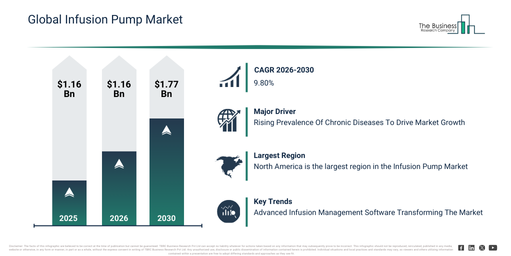
  • Infusion Pump Market Forecast To Reach $25.01 Billion By 2030: Key Growth Drivers And Industry Trends

    Infusion Pump Market Forecast To Reach $25.01 Billion By 2030: Key Growth Drivers And Industry Trends

    Built to provide research that’s more actionable and strategically valuable, The Business Research Company’s 2026 market reports include market attractiveness analysis, total addressable market sizing, company benchmarking matrices, interactive Excel dashboards, broader supply chain intelligence, emerging startup tracking, and in-depth product insights.

    Infusion Pump Market Forecast: What Value Will The Market Reach By 2030?

    The infusion pump market has experienced robust expansion in recent years. It is projected to increase from $15.73 billion in 2025 to $17.2 billion in 2026, growing at a compound annual growth rate (CAGR) of 9.3%. This historic growth is linked to factors such as a rise in hospital admissions necessitating infusion therapy, the extensive use of IV medication delivery, the broadening of oncology and critical care treatments, the increasing availability of programmable infusion devices, and a heightened emphasis on medication safety.

    The infusion pump market is projected to experience robust expansion over the coming years. Its valuation is anticipated to reach $25.01 billion in 2030, exhibiting a compound annual growth rate (CAGR) of 9.8%. This projected growth during the forecast period is fueled by several factors, including the escalating demand for home infusion therapy, the growing acceptance of connected healthcare devices, the expansion of chronic disease management programs, an increasing emphasis on interoperability with hospital systems, and rising investments in smart hospital infrastructure. Key developments expected within this period involve the greater uptake of smart infusion pumps, increased deployment of ambulatory and home-based infusion devices, broader incorporation of dose error reduction systems, wider implementation of wireless connectivity in infusion systems, and a heightened commitment to ensuring patient safety and accuracy.

    Get A Free Sample Report With In-Depth Market Insights:

    https://thebusinessresearchcompany.com/sample_request?id=63382923&type=smp&name=Infusion%20Pump%20Market%20Report%202026&utm_source=Blogs&utm_medium=Paid&utm_campaign=Oct_PR

    Infusion Pump Market Opportunity Drivers: What’s Unlocking New Revenue Potential?

    The increasing incidence of chronic illnesses is anticipated to drive expansion in the infusion pump market. These conditions are defined as noncommunicable diseases (NCDs), characterized by their long-term nature and gradual progression over time. The growing occurrence of chronic ailments like cancer and diabetes is largely attributed to factors such as evolving lifestyles, insufficient physical activity, a decline in quality of life, and unhealthy dietary practices. Infusion pumps play a crucial role in managing some of these chronic conditions by delivering precise fluid amounts, accurate dosages, and personalized therapeutic interventions. For example, data from January 2023, sourced from the National Center for Biotechnology Information (NCBI), a US-based National Library of Medicine, projected that the global population affected by chronic diseases would reach 142.66 million by 2050, a significant increase from 71.522 million in 2020. Furthermore, the International Diabetes Federation, which represents over 230 national diabetes associations across more than 160 countries and territories, forecast that the number of individuals with diabetes globally would be 643 million by 2030, rising further to 783 million by 2045. Consequently, the increasing prevalence of chronic diseases is expected to stimulate the growth of the infusion pump market.

    Infusion Pump Market Segment Performance And Emerging Opportunities

    The infusion pump market covered in this report is segmented –

    1) By Product: Accessories And Consumables, Devices

    2) By Technology: Traditional Infusion Pumps, Specialty Infusion Pumps

    3) By Application: Chemotherapy Or Oncology, Diabetes Management, Gastroenterology, Pain Management Or Analgesia, Pediatrics Or Neonatology, Hematology, Other Applications

    4) By End User: Hospitals, Ambulatory Care Settings, Specialty Clinics, Home Care Settings

    Subsegments:

    1) By Accessories And Consumables: Infusion Sets, IV Catheters, Syringes, Safety Needles, Tubing

    2) By Devices: Volumetric Infusion Pumps, Syringe Pumps, Ambulatory Infusion Pumps, PCA (Patient-Controlled Analgesia) Pumps, Insulin Pumps, Enteral Infusion Pumps

    Infusion Pump Market Innovation Trends Shaping Future Development

    Leading companies in the infusion pump market are developing infusion management software to gain a competitive advantage. This software comprises specialized computer programs designed to supervise and optimize the administration of fluids, medications, and other therapeutic agents via infusion pumps in healthcare settings. For example, in June 2023, B. Braun Medical Inc., a US-based medical device manufacturing company, launched its DoseTrac Enterprise Infusion Management Software. This advanced software provides healthcare organizations with real-time views and retrospective reporting features, allowing them to effectively manage their infusion pump fleets and associated data. The platform offers the ability to seamlessly connect up to 40,000 pumps across multiple facilities through a single application, facilitating centralized management regardless of fleet size or the number of locations. DoseTrac Enterprise aims to enhance data management, potentially reducing the clinical IT infrastructure needed for infusion pumps.

    Infusion Pump Market Competitive Landscape: Who Leads The Industry?

    Major companies operating in the infusion pump market are Becton Dickinson and Company, Baxter International Inc., B. Braun Melsungen AG, ICU Medical Inc., Fresenius Kabi AG, Smiths Medical Inc., Medtronic plc, Moog Inc., Terumo Corporation, Insulet Corporation, Boston Scientific Corporation, Tandem Diabetes Care Inc., InfuTronix Solutions LLC, Micrel Medical Devices SA, Shenzhen Mindray Bio-Medical Electronics Co. Ltd., Mindray Medical International Limited, Caesarea Medical Electronics Ltd., Hospitech Respiration Ltd., IRadimed Corporation, Ivenix Inc., Sooil Development Co. Ltd., ZOLL Medical Corporation, Zyno Medical LLC

    View The Full Infusion Pump Market Report:

    https://thebusinessresearchcompany.com/report/infusion-pump-global-market-report?utm_source=Blogs&utm_medium=Paid&utm_campaign=Oct_PR

    Infusion Pump Market Geographic Landscape: Which Region Dominates Industry Growth?

    North America was the largest region in the infusion pump market in 2025. The regions covered in the infusion pump market report are Asia-Pacific, South East Asia, Western Europe, Eastern Europe, North America, South America, Middle East, Africa.

    Reach Out To Our Team:

    The Business Research Company: https://www.thebusinessresearchcompany.com/

    Americas: +1 310-496-7795

    Asia: +44 7882 955267 & +91 8897263534

    Europe: +44 7882 955267

    Email us at: marketing@tbrc.info

    Follow us on:

    LinkedIn: https://in.linkedin.com/company/the-business-research-company

    YouTube: https://www.youtube.com/channel/UC24_fI0rV8cR5DxlCpgmyFQ

    Global Market Model: https://www.thebusinessresearchcompany.com/global-market-model