Category: Medical Equipment

  • Hybrid Operating Room Market Research 2026: Market Size, Trends, Segments And Growth Forecast

    Hybrid Operating Room Market Research 2026: Market Size, Trends, Segments And Growth Forecast

    Backed by market attractiveness analysis, total addressable market sizing, company benchmarking matrices, interactive Excel dashboards, wider supply chain intelligence, emerging startup coverage, and detailed product-level insights, The Business Research Company’s 2026 market reports are designed to offer research that is more actionable and strategically valuable than ever.

    Hybrid Operating Room Market Forecast: What Value Will The Market Reach By 2030?

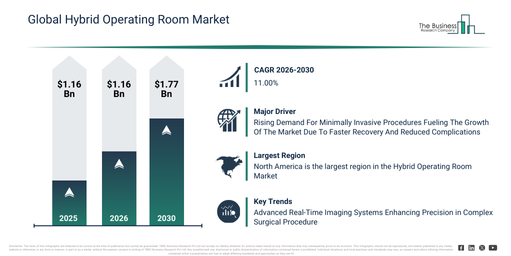
    The hybrid operating room market has experienced rapid expansion in recent years. Its value is projected to increase from $1.25 billion in 2025 to $1.39 billion in 2026, at a compound annual growth rate (CAGR) of 11.2%. This historical growth can be linked to factors such as the rise in complex surgeries, the expansion of hospital infrastructure, the demand for real-time imaging, an increase in cardiovascular procedures, and surgeons’ preference for integrated operating rooms.

    The hybrid operating room market is projected to expand significantly over the coming years. This market is anticipated to reach $2.1 billion by 2030, exhibiting a compound annual growth rate (CAGR) of 11.0%. This expansion during the projection period stems from factors such as a rise in hybrid surgical interventions, investments in smart hospitals, the embrace of robotic surgery, surgical needs driven by an aging demographic, and the ongoing digitization of healthcare. Key developments foreseen for this period encompass the integration of sophisticated imaging systems, an increase in minimally invasive surgical techniques, collaborative multidisciplinary surgical efforts, a rising need for streamlined surgical workflow, and the wider adoption of robotic-assisted procedures.

    Get A Free Sample Report With In-Depth Market Insights:

    https://thebusinessresearchcompany.com/sample_request?id=56133420&type=smp&name=Hybrid%20Operating%20Room%20Market%20Report%202026&utm_source=Blogs&utm_medium=Paid&utm_campaign=Oct_PR

    Hybrid Operating Room Market Development Factors: What’s Supporting Demand?

    The escalating demand for minimally invasive procedures is anticipated to propel the expansion of the hybrid operating room market in the future. Minimally Invasive Procedures (MIPs) are medical or surgical interventions carried out through small or no incisions, utilizing specialized instruments, cameras, and imaging technology. This heightened demand for minimally invasive procedures is attributed to quicker recovery times and a reduced risk of complications. These interventions necessitate smaller incisions, leading to less tissue damage, minimal blood loss, and a lower likelihood of infection, thereby allowing patients to heal more rapidly and return to their daily activities sooner. Hybrid operating rooms (Hybrid ORs) are particularly advantageous for minimally invasive procedures because they integrate advanced imaging technologies with surgical capabilities, enabling real-time image guidance and precise interventions. For instance, in January 2024, Intuitive Surgical Inc., a US-based manufacturer of robotic products, reported 415 da Vinci surgical systems, which are robotic surgical systems employing a minimally invasive approach, in the fourth quarter of 2023. This figure represented a 12% increase compared to 2022. Consequently, the increasing demand for minimally invasive procedures is expected to fuel the growth of the hybrid operating room market.

    Hybrid Operating Room Market Segment Analysis Spotlighting Growth Areas

    The hybrid operating room market covered in this report is segmented –

    1) By Product: Intraoperative Diagnostic Imaging Systems, Operating Room Fixtures, Surgical Equipment, Other Products

    2) By Technique: Fluoroscopy And Data Acquisition, Rotational Angiography, Digital Subtraction Angiography, Other Techniques

    3) By Application: Cardiovascular Surgery, Neurosurgery, Thoracic Surgery, Orthopedic Surgery, Other Applications

    4) By End User: Hospitals, Ambulatory Surgical Centers

    Subsegments:

    1) By Intraoperative Diagnostic Imaging Systems: Intraoperative MRI (iMRI), Intraoperative CT (iCT), Intraoperative Ultrasound, Fluoroscopy Systems, Mobile C-Arms, Robotic Imaging Systems

    2) By Operating Room Fixtures: Surgical Lights, Operating Tables, Booms And Mounting Systems, Integration And Control Systems, Surgical Displays And Monitors

    3) By Surgical Equipment: Robotic-Assisted Surgical Systems, Endoscopy And Laparoscopy Systems, Electrosurgical Units, Surgical Navigation Systems, Anesthesia Machines

    4) By Other Products: Patient Monitoring Systems, Surgical Instruments And Tools, Sterilization And Disinfection Systems, Medical Gas Management Systems, Communication And Connectivity Solutions

    Hybrid Operating Room Market Transformation Trends: What Innovations Are Driving Change?

    Major companies in the hybrid operating room market are prioritizing technological advancements, such as real-time imaging integration, to enhance surgical precision, improve workflow efficiency, and support complex minimally invasive procedures. Real-time imaging integration combines advanced imaging modalities like live 2D/3D fluoroscopy, CT/CBCT, and AI-assisted image analysis with the surgical environment, offering clinicians immediate, high-resolution visualization and guidance during interventions. For instance, in September 2024, the Guam Memorial Hospital Authority (GMHA), a US-based public hospital authority, unveiled the GE HealthCare Allia IGS 7 Angiosuite, a hybrid angiosuite equipped with AI-enhancement software, real-time 3D CT mapping, and a laser-guided mobile robotic gantry designed to speed diagnosis and enable precise, image-guided treatment of strokes, heart attacks, internal bleeds, and select oncology cases.

    Hybrid Operating Room Market Top Companies Driving Competitive Growth

    Major companies operating in the hybrid operating room market are Johnson & Johnson Services Inc., Medtronic plc, Medline Industries LP, Siemens Healthineers AG, FUJIFILM Holdings Corporation, Koninklijke Philips N.V., Stryker Corporation, GE Healthcare Technologies Inc., Zimmer Biomet Holdings Inc., Olympus Corporation, Smith & Nephew plc, STERIS Corporation, Drägerwerk AG & Co. KGaA, Getinge AB, Karl Storz SE & Co. KG, Brainlab AG, Esaote S.p.A., Canon Medical Systems Corporation, Mizuho OSI, ALVO Medical Sp. z o.o., SKYTRON LLC, NDS Surgical Imaging LLC

    View The Full Hybrid Operating Room Market Report:

    https://thebusinessresearchcompany.com/report/hybrid-operating-room-global-market-report?utm_source=Blogs&utm_medium=Paid&utm_campaign=Oct_PR

    Hybrid Operating Room Market Global Footprint: Which Region Leads The Industry?

    North America was the largest region in the hybrid operating room market in 2025. Asia-Pacific is expected to be the fastest-growing region in the forecast period. The regions covered in the hybrid operating room market report are Asia-Pacific, South East Asia, Western Europe, Eastern Europe, North America, South America, Middle East, Africa.

    Reach Out To Our Team:

    The Business Research Company: https://www.thebusinessresearchcompany.com/

    Americas: +1 310-496-7795

    Asia: +44 7882 955267 & +91 8897263534

    Europe: +44 7882 955267

    Email us at: marketing@tbrc.info

    Follow us on:

    LinkedIn: https://in.linkedin.com/company/the-business-research-company

    YouTube: https://www.youtube.com/channel/UC24_fI0rV8cR5DxlCpgmyFQ

    Global Market Model: https://www.thebusinessresearchcompany.com/global-market-model
  • HPV Testing And Pap Test Market Forecast 2026: Market Size, Competitive Landscape And Growth Drivers

    HPV Testing And Pap Test Market Forecast 2026: Market Size, Competitive Landscape And Growth Drivers

    Featuring market attractiveness scoring, total addressable market sizing, company benchmarking matrices, interactive Excel dashboards, deeper supply chain intelligence, emerging startup tracking, and granular product-level insights, The Business Research Company’s 2026 market reports are built to deliver research that is both more actionable and more strategically valuable.

    HPV Testing And Pap Test Market Size Outlook: How Quickly Will Revenue Expand Through 2030?

    The hpv testing and pap test market size has experienced rapid growth in recent years. It is anticipated to expand from $4.83 billion in 2025 to $5.41 billion in 2026, reflecting a compound annual growth rate (CAGR) of 12.0%. This historical growth can be attributed to the broadening of cervical cancer screening programs, increased awareness of women’s health issues, greater adoption of pap testing, the expansion of diagnostic laboratory networks, and the presence of standardized screening protocols.

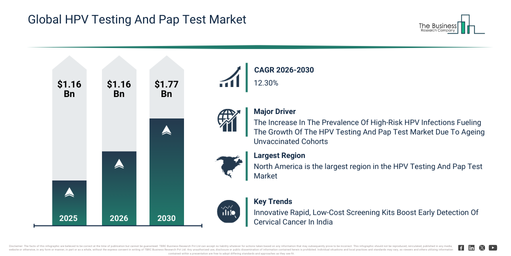
    The hpv testing and pap test market is projected for significant expansion over the coming years, reaching $8.6 billion in 2030 with a compound annual growth rate (CAGR) of 12.3%. This anticipated growth is driven by factors such as the greater acceptance of molecular diagnostic technologies, a heightened need for detecting cancer early, the expansion of screening programs for the general population, the increased deployment of automated laboratory systems, and a rise in healthcare spending on preventive diagnostic solutions. Key trends expected during this period involve the rising uptake of HPV DNA-based screening, more frequent utilization of liquid-based cytology techniques, the expanding integration of automated diagnostic platforms, the broadening of co-testing strategies for cervical screening, and an intensified focus on improving the accuracy of early cancer detection.

    Get A Free Sample Report With In-Depth Market Insights:

    https://thebusinessresearchcompany.com/sample_request?id=48756889&type=smp&name=HPV%20Testing%20And%20Pap%20Test%20Market%20Report%202026&utm_source=Blogs&utm_medium=Paid&utm_campaign=Oct_PR

    HPV Testing And Pap Test Market Industry Drivers: What’s Behind The Revenue Growth?

    The escalating prevalence of cervical cancer is a key factor driving the HPV testing and Pap test markets. Cervical cancer is defined as a condition marked by the uncontrollable growth of cells within the cervix. The rise in cervical cancer prevalence is primarily attributed to a deficiency in regular screening, which impedes the early detection and timely management of precancerous changes. Managing increasing cervical cancer can be achieved through early detection, which is made possible by HPV testing and Pap tests. For instance, in May 2025, according to the Cancer Council Australia, an Australia-based national nonprofit organization, in 2023, 231 females in Victoria were diagnosed with invasive cervical cancer, which corresponds to a current diagnosis rate of 6.4 cases per 100,000 females. Hence, the growing prevalence of this condition is boosting the HPV testing and Pap test market.

    HPV Testing And Pap Test Market Segment Performance And Emerging Opportunities

    The hpv testing and pap test market covered in this report is segmented –

    1) By Test Type: HPV Testing, Pap Test

    2) By Product: Instruments, Consumables, Services

    3) By End User: Hospitals And Clinics, Laboratories, Other End Users

    Subsegments:

    1) By HPV Testing: High-Risk HPV Testing, HPV Genotyping

    2) By Pap Test: Conventional Pap Test, Liquid-Based Pap Test, Pap Plus HPV Testing

    #HPV Testing And Pap Test Market Growth Trends: What’s Shaping The Future Outlook?

    Leading entities in the HPV and Pap test market are prioritizing the creation of novel offerings, including rapid, economical, and point-of-care screening kits, with the goal of enhancing the early identification and availability of cervical cancer screening. These rapid, low-cost, point-of-care screening kits are diagnostic tools designed to provide swift outcomes affordably, enabling their deployment directly in clinical or community environments without reliance on elaborate laboratory facilities. An example of this trend occurred in April 2025, when the Department of Biotechnology, an India-based government agency, introduced HPV test kits intended for cervical cancer screening. Such kits facilitate quick, immediate detection of high-risk HPV genotypes, which contribute to over 96% of cervical cancer occurrences, thereby allowing for more expedited and precise screening processes. Furthermore, these solutions are cost-effective and purpose-built for application in contexts with limited resources, thus boosting broad access within both rural and urban healthcare provisions. These initiatives bolster India’s efforts in cervical cancer prevention by offering an economical alternative to conventional screening techniques, aligning with the WHO’s target of achieving 70% screening coverage by 2030.

    HPV Testing And Pap Test Market Leading Players And Competitive Positioning

    Major companies operating in the hpv testing and pap test market are Abbott Laboratories, QIAGEN N V, Becton Dickinson and Company, Hologic Inc, F Hoffmann La Roche AG, Seegene Inc, DiaSorin S p A, Genomica S A U, TruScreen Group Limited, Danaher Corporation, Siemens Healthineers AG, bioMérieux SA, Takara Bio Inc, Fujirebio Diagnostics Inc, Randox Laboratories Ltd, Quidel Corporation, Vela Diagnostics, Greiner Bio One International GmbH, Cepheid, Roche Diagnostics International AG, Genedrive plc

    View The Full HPV Testing And Pap Test Market Report:

    https://thebusinessresearchcompany.com/report/HPV-testing-and-Pap-test-global-market-report?utm_source=Blogs&utm_medium=Paid&utm_campaign=Oct_PR

    HPV Testing And Pap Test Market Regional Distribution: Which Areas Power Market Growth?

    North America was the largest region in the HPV testing and Pap test market in 2025. Asia-Pacific is expected to be the fastest-growing region in the global HPV testing and Pap tests market report during the forecast period. The regions covered in the hpv testing and pap test market report are Asia-Pacific, South East Asia, Western Europe, Eastern Europe, North America, South America, Middle East, Africa.

    Reach Out To Our Team:

    The Business Research Company: https://www.thebusinessresearchcompany.com/

    Americas: +1 310-496-7795

    Asia: +44 7882 955267 & +91 8897263534

    Europe: +44 7882 955267

    Email us at: marketing@tbrc.info

    Follow us on:

    LinkedIn: https://in.linkedin.com/company/the-business-research-company

    YouTube: https://www.youtube.com/channel/UC24_fI0rV8cR5DxlCpgmyFQ

    Global Market Model: https://www.thebusinessresearchcompany.com/global-market-model
  • House Dust Mite Allergy Market Size In 2026: Regional Growth, Key Segments And Future Outlook

    House Dust Mite Allergy Market Size In 2026: Regional Growth, Key Segments And Future Outlook

    Built to provide research that’s more actionable and strategically valuable, The Business Research Company’s 2026 market reports include market attractiveness analysis, total addressable market sizing, company benchmarking matrices, interactive Excel dashboards, broader supply chain intelligence, emerging startup tracking, and in-depth product insights.

    House Dust Mite Allergy Market Size, Value And Growth Trajectory Through 2030

    The house dust mite allergy market has experienced significant growth in recent years. It is projected to increase from $2.37 billion in 2025 to $2.7 billion in 2026, showing a compound annual growth rate (CAGR) of 14.3%. This historical expansion can be attributed to the rising incidence of allergic conditions, heightened awareness regarding respiratory allergies, an increase in the accessibility of diagnostic testing, the growing use of antihistamine medications, and refinements in allergy treatment protocols.

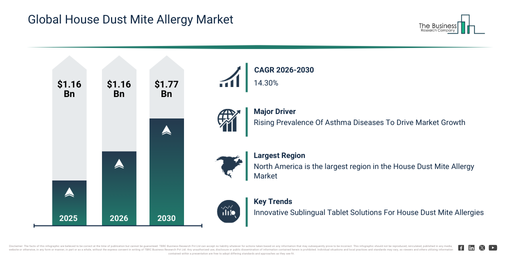
    The house dust mite allergy market is projected to experience substantial expansion in the coming years. This market is set to reach a valuation of $4.62 billion by 2030, exhibiting a compound annual growth rate (CAGR) of 14.3%. The anticipated growth during this period stems from several factors, including the increasing embrace of personalized immunotherapy, a heightened emphasis on preventive allergy care, the broadening availability of home-based allergy management, an escalating need for sustained symptom control, and progress in biologic allergy treatments. Key developments anticipated in the forecast horizon encompass a rise in the adoption of immunotherapy-based solutions, a growing prevalence of sublingual allergy tablets, an increased requirement for enduring allergy management strategies, the wider acceptance of early diagnostic testing, and a reinforced commitment to individualized allergy treatment approaches.

    Get A Free Sample Report With In-Depth Market Insights:

    https://thebusinessresearchcompany.com/sample_request?id=9304&type=smp&name=House%20Dust%20Mite%20Allergy%20Market%20Report%202026&utm_source=Blogs&utm_medium=Paid&utm_campaign=Oct_PR

    House Dust Mite Allergy Market Growth Factors: What’s Supporting Expansion?

    The increasing incidence of asthma conditions is anticipated to fuel the expansion of the house dust mite allergy market in the foreseeable future. Asthma is defined as a persistent inflammatory disorder of the airways, marked by repeated occurrences of difficulty breathing, whistling sounds during breathing, tightness in the chest, and coughing. The rise in asthma cases is attributed to increasing environmental contamination, which leads to greater inflammation in the airways and heightened susceptibility to allergens. Consequently, the house dust mite allergy market is experiencing heightened demand, as the swift growth of asthma conditions prompts businesses to implement strategies for minimizing allergen exposure and improving respiratory well-being. For example, data from June 2025 by the American Lung Association, a US-based nonprofit health entity, indicated significant variability in adult asthma prevalence across US jurisdictions, varying from 7.1% in Mississippi to 14.1% in Puerto Rico as of 2023. Hence, the widespread occurrence of asthma diseases is a key factor boosting the demand within the house dust mite allergy market.

    House Dust Mite Allergy Market Segment Landscape And Growth Outlook

    The house dust mite allergy market covered in this report is segmented –

    1) By Product Type: Tablets, Nasal Drops, Injectable

    2) By Diagnosis: Skin Prick Test (SPT), Specific Immunoglobulin E (IgE) Blood Test, Other Diagnosis

    3) By Dosage Forms: Solid, Liquid

    4) By End Users: Hospitals, Homecare, Specialty Clinics, Other End Users

    Subsegments:

    1) By Tablets: Sublingual Tablets, Oral Tablets

    2) By Nasal Drops: Antihistamine Nasal Drops, Corticosteroid Nasal Drops

    3) By Injectable: Allergen Immunotherapy Injections, Corticosteroid Injections

    House Dust Mite Allergy Market Industry Trends: What’s Reshaping Demand?

    Leading companies within the house dust mite allergy market are concentrating on creating novel therapies, specifically sublingual tablets for house dust mite allergies, to combat the rising incidence of these allergic conditions. A sublingual tablet for house dust mite allergies functions as a form of immunotherapy, requiring the tablet to be positioned under the tongue where it dissolves, releasing controlled quantities of the allergen that causes the allergic response. As an example, in January 2023, the Danish pharmaceutical firm ALK-Abelló A/S secured FDA approval for ODACTRA, a sublingual tablet aimed at treating house dust mite allergies in adolescents between 12 to 17 years old, extending its prior approval for adult use. This particular approval addresses a considerable unmet need, given that close to 50% of individuals experiencing allergies exhibit sensitivity to house dust mites. Clinical studies showed ODACTRA’s effectiveness in lessening allergy symptoms, presenting a safety profile comparable to that seen in adult patients. Although this treatment is typically well-received, patients are cautioned to keep auto-injectable epinephrine readily available because of the possibility of severe allergic responses.

    House Dust Mite Allergy Market Competitive Overview And Top Companies

    Major companies operating in the house dust mite allergy market are Allergy Therapeutics Plc, Bayer AG, Catalent Inc., GSK Plc, Merz Pharma GmbH & Co KGaA, Sanofi S A, Shionogi & Co. Ltd., Stallergenes Greer International AG, Merck & Co. Inc., Torii Pharmaceutical Co. Ltd., Ergomed PLC, DMS Group, HAL Allergy Group, Trio Lifescience Private Limited, Teva Pharmaceutical Industries Ltd., Eli Lilly and Company, Johnson and Johnson Inc., Circassia Pharmaceuticals Plc, Biomay Ag, GlaxoSmithKline

    View The Full House Dust Mite Allergy Market Report:

    https://thebusinessresearchcompany.com/report/house-dust-mite-allergy-global-market-report?utm_source=Blogs&utm_medium=Paid&utm_campaign=Oct_PR

    House Dust Mite Allergy Market Leading Geography: Which Region Contributes The Most Revenue?

    North America was the largest region in the house dust mite allergy market in 2025. Asia-pacific is expected to be the fastest-growing region in the house dust mite allergy market report during the forecast period. The regions covered in the house dust mite allergy market report are Asia-Pacific, South East Asia, Western Europe, Eastern Europe, North America, South America, Middle East, Africa.

    Reach Out To Our Team:

    The Business Research Company: https://www.thebusinessresearchcompany.com/

    Americas: +1 310-496-7795

    Asia: +44 7882 955267 & +91 8897263534

    Europe: +44 7882 955267

    Email us at: marketing@tbrc.info

    Follow us on:

    LinkedIn: https://in.linkedin.com/company/the-business-research-company

    YouTube: https://www.youtube.com/channel/UC24_fI0rV8cR5DxlCpgmyFQ

    Global Market Model: https://www.thebusinessresearchcompany.com/global-market-model

  • Hospital Supplies Market Growth Forecast Through 2030: Market Size And Trends In 2026

    Hospital Supplies Market Growth Forecast Through 2030: Market Size And Trends In 2026

    Backed by market attractiveness analysis, total addressable market sizing, company benchmarking matrices, interactive Excel dashboards, wider supply chain intelligence, emerging startup coverage, and detailed product-level insights, The Business Research Company’s 2026 market reports are designed to offer research that is more actionable and strategically valuable than ever.

    Hospital Supplies Market CAGR Outlook And Future Development

    The hospital supplies market size has experienced significant growth in recent years. It is projected to grow from $54.19 billion in 2025 to $57.29 billion in 2026, at a compound annual growth rate (CAGR) of 5.7%. Historically, this expansion can be attributed to the expansion of healthcare infrastructure, rising hospital admission rates, increased use of single-use medical products, growth in surgical procedures, and improvements in hospital supply management systems.

    The hospital supplies market is poised for substantial growth in the near future. This market is projected to reach $73.14 billion by 2030, exhibiting a compound annual growth rate (CAGR) of 6.3%. This anticipated growth during the forecast period stems from factors such as heightened investments in modernizing healthcare infrastructure, an escalating need for environmentally friendly hospital products, the expansion of outpatient and in-home healthcare services, a stronger focus on managing inventory digitally, and an increased priority placed on ensuring patient safety and cleanliness. Key developments expected in the forecast timeframe encompass a surge in the need for single-use medical items, a greater uptake of sophisticated sterilization methods, intensified efforts on products designed to prevent infections, the wider deployment of modular operating room setups, and a reinforced commitment to dependable supply chains.

    Get A Free Sample Report With In-Depth Market Insights:

    https://thebusinessresearchcompany.com/sample_request?id=34259511&type=smp&name=Hospital%20Supplies%20Market%20Report%202026&utm_source=Blogs&utm_medium=Paid&utm_campaign=Oct_PR

    Hospital Supplies Market Demand Drivers: What’s Powering Industry Growth?

    The expansion in hospital numbers is projected to drive the growth of the hospital supplies market in the future. A hospital serves as an establishment committed to offering medical or surgical care to individuals who are ill or have sustained injuries. This increase in hospital count stems from growing healthcare service demand, influenced by an aging populace and extended patient durations, necessitating greater capacity and updated amenities. To provide superior patient care, hospitals depend on a wide range of medical provisions and apparatus. For example, data from May 2023, reported by the American Hospital Association (AHA), a US-based healthcare trade organization representing hospitals and health care networks, showed an increase in the total number of hospitals to 6,129, up from 6,093 in 2022. Furthermore, overall admissions across all U.S. hospitals totaled 34,011,386, compared to 33,356,853 in the previous year. Consequently, the growing number of hospitals is anticipated to fuel the expansion of the hospital supplies market.

    Hospital Supplies Market Breakdown By Product Type And Application

    The hospital supplies market covered in this report is segmented –

    1) By Supply: Disposable Hospital Supplies, Sterilization Equipment And Disinfectants, Mobility Aids And Transportation Equipment, Operating Room Equipment

    2) By Product: Instruments Or Equipment, Disposables

    3) By End User: Hospitals And Clinics, Diagnostic Laboratories, Other End Users

    4) By Type of Expenditure: Public, Private

    Subsegments:

    1) By Disposable Hospital Supplies: Surgical Masks, Gloves, Drapes And Gowns, IV Consumables, Wound Care Products

    2) By Sterilization Equipment And Disinfectants: Sterilizers (Autoclaves), Disinfectants And sanitizers, Sterilization Indicators, UV Sterilizers

    3) By Mobility Aids And Transportation Equipment: Wheelchairs, Walkers, Crutches, Patient Lifts, Stretchers

    4) By Operating Room Equipment: Surgical Tables, Operating Room Lights, Surgical Instruments, Anesthesia Machines, Patient Monitors

    Hospital Supplies Market Innovation Trends: What Developments Are Reshaping The Industry?

    Leading companies in the hospital supplies market are increasingly prioritizing advanced injectable delivery systems designed to address the challenges posed by next-generation biologics, especially high-viscosity formulations, aiming to reduce injection force and enhance patient comfort. These innovations facilitate pharmaceutical developers in using more concentrated therapies while ensuring safe and efficient subcutaneous administration. For instance, in September 2024, BD (Becton, Dickinson & Co.), a US-based medical technology company, launched the BD Neopak XtraFlow syringe. This new design incorporates an 8 mm needle length and a thinner-wall cannula, specifically optimized to decrease injection force and time for higher-viscosity drug profiles. To support growing demand, BD also expanded its manufacturing capacity at its Le Pont-de-Claix, France facility through a high-volume production line, which boosts output sevenfold. By lowering the mechanical barrier associated with viscous biologic injections, BD helps enable more concentrated, high-dose therapies, such as antibodies and GLP-1 formulations, to be delivered to patients more comfortably and reliably.

    Hospital Supplies Market Competitive Landscape: Which Companies Lead The Industry?

    Major companies operating in the hospital supplies market are Becton Dickinson and Company, B. Braun Melsungen AG, Steris plc, Baxter International Inc., Stryker Corporation, Cardinal Health Inc., Hill-Rom Holdings Inc., Terumo Corporation, 3M Company, McKesson Corporation, Cencora Inc., GE HealthCare Technologies Inc., Koninklijke Philips NV, Dentsply Sirona Inc., Masimo Corporation, Olympus Corporation, ResMed Inc., Smith & Nephew plc, The Cooper Companies Inc., Teleflex Incorporated, West Pharmaceutical Services Inc., Straumann Group, Fresenius Medical Care AG & Co KGaA

    View The Full Hospital Supplies Market Report:

    https://thebusinessresearchcompany.com/report/hospital-supplies-global-market-report?utm_source=Blogs&utm_medium=Paid&utm_campaign=Oct_PR

    Hospital Supplies Market Regional Outlook: Where Is Opportunity Concentrated?

    Asia-Pacific was the largest region in the global hospital supplies market in 2025. North America was the second largest region in the global hospital supplies market. The regions covered in the hospital supplies market report are Asia-Pacific, South East Asia, Western Europe, Eastern Europe, North America, South America, Middle East, Africa.

    Reach Out To Our Team:

    The Business Research Company: https://www.thebusinessresearchcompany.com/

    Americas: +1 310-496-7795

    Asia: +44 7882 955267 & +91 8897263534

    Europe: +44 7882 955267

    Email us at: marketing@tbrc.info

    Follow us on:

    LinkedIn: https://in.linkedin.com/company/the-business-research-company

    YouTube: https://www.youtube.com/channel/UC24_fI0rV8cR5DxlCpgmyFQ

    Global Market Model: https://www.thebusinessresearchcompany.com/global-market-model
  • Hospital Stretchers Market Analysis: $3.19 Billion Market Size In 2026 And Future Growth Prospects

    Hospital Stretchers Market Analysis: $3.19 Billion Market Size In 2026 And Future Growth Prospects

    Featuring market attractiveness scoring, total addressable market sizing, company benchmarking matrices, interactive Excel dashboards, deeper supply chain intelligence, emerging startup tracking, and granular product-level insights, The Business Research Company’s 2026 market reports are built to deliver research that is both more actionable and more strategically valuable.

    Hospital Stretchers Market Set To Climb From $3.19 Billion In 2026 To $4.29 Billion By 2030

    The hospital stretchers market has experienced significant expansion in recent years. Its value is expected to rise from $2.98 billion in 2025 to $3.19 billion in 2026, registering a compound annual growth rate (CAGR) of 7.1%. The market’s past growth can be attributed to several factors, including an increase in emergency room admissions, the expansion of hospital infrastructure, a higher incidence of trauma and accidents, a growing requirement for patient mobility solutions, and the modernization of medical transport equipment.

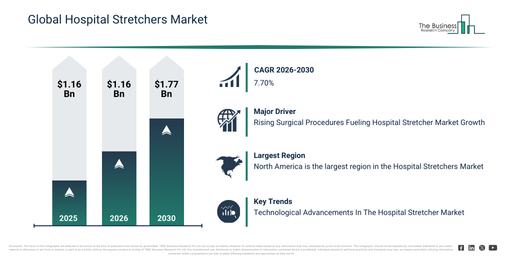
    The hospital stretchers market is projected to experience substantial expansion in the coming years. This market is set to reach $4.29 billion by 2030, exhibiting a compound annual growth rate (CAGR) of 7.7%. This anticipated growth is primarily driven by heightened investments in emergency medical services, a greater emphasis on reducing staff injuries, the enlargement of ambulance fleets, the wider adoption of powered mobility devices, and an increasing need for sophisticated patient handling solutions. Key developments during this period are expected to encompass the growing use of motorized and powered stretchers, an increased requirement for bariatric patient transport solutions, a strong inclination towards ergonomic and lightweight designs, the proliferation of stretchers for emergency and trauma care, and improved integration of safety locking mechanisms.

    Get A Free Sample Report With In-Depth Market Insights:

    https://thebusinessresearchcompany.com/sample_request?id=12776329&type=smp&name=Hospital%20Stretchers%20Market%20Report%202026&utm_source=Blogs&utm_medium=Paid&utm_campaign=Oct_PR

    Hospital Stretchers Market Growth Drivers: What’s Behind The Acceleration?

    The increasing number of surgical operations is anticipated to stimulate the expansion of the hospital stretcher market in the future. A surgical procedure is defined as a medical intervention or operation carried out by a skilled surgeon or healthcare expert to address, mend, extract, or identify a health issue. Hospital stretchers are vital for ensuring a smooth and effective workflow, as they transport patients across different phases of surgical interventions, including pre-operative readiness, the operation itself, and post-operative healing. As an illustration, in December 2023, UK Health Security, a public health government agency based in the UK, indicated a notable 10.2% increase in compulsory orthopedic procedure submissions, totaling 102,025 for the financial year 2022 to 2023, while comprehensive surveillance data spanning all surgical categories demonstrated an 8.4% growth compared to the prior year. Consequently, the growing volume of surgical procedures is propelling the expansion of the hospital stretcher market.

    Hospital Stretchers Market Segment Analysis And Revenue Potential

    The hospital stretchers market covered in this report is segmented –

    1) By Product Type: Fixed Height Stretchers, Adjustable Stretchers, Bariatric Stretchers, Other Product Types

    2) By Technology: Motorized Stretchers, Non-Motorized Stretchers

    3) By Application: Intra-Hospital, Pediatric Care, Emergency Department, Radiology Department, Other Applications

    Subsegments:

    1) By Fixed Height Stretchers: Standard Fixed Height Stretchers, Foldable Fixed Height Stretchers

    2) By Adjustable Stretchers: Manual Adjustable Stretchers, Electric Adjustable Stretchers

    3) By Bariatric Stretchers: Heavy-Duty Bariatric Stretchers, Wider Bariatric Stretchers

    4) By Other Product Types: Neonatal Stretchers, Emergency Transport Stretchers

    Hospital Stretchers Market Trends: What’s Defining The Industry’s Next Phase?

    Leading companies in the hospital stretcher market are actively developing advanced technologies like smart stretchers to reach broader customer bases, increase sales, and generate higher revenue. A smart stretcher is defined as a technologically advanced and innovative medical device crafted to improve patient care, enhance monitoring, and boost overall operational efficiency within healthcare settings. For instance, in October 2023, Stryker Corporation, a US-based medical technology company, unveiled Prime Connect, its smart, connected hospital stretcher. The distinctiveness of Prime Connect lies in its deliberate design to reinforce fall prevention protocols across healthcare facilities. Featuring both visual and audible bed exit alarms, this stretcher ensures seamless communication with diverse hospital systems, including direct integration with the nurse call dome light. Prime Connect extends innovation by allowing the wireless transmission of vital patient information, nearly in real-time, to either the Vocera Badge or the nurses’ station via Vision, which is a protocol management dashboard. This unique functionality aids in streamlining workflows and enabling on-the-go monitoring, thereby elevating overall patient care and safety.

    Hospital Stretchers Market Competitive Landscape: Who Leads The Industry?

    Major companies operating in the hospital stretchers market are Stryker Corporation, TransMotion Medical Inc., Mac Medical Inc., Narang Medical Limited, ROYAX s.r.o., Anetic Aid Ltd., LINET Group SE, Fu Shun Hsing Technology Co. Ltd., Venture Medical Technologies Inc., Zhangjiagang Xiehe Medical Instrument Co. Ltd., Advin Healthcare Pty. Ltd., Joson Care Enterprise Co. Ltd., Desco Medical Limited, Invacare Corporation, Paramount Bed Holdings Co. Ltd., Stiegelmeyer GmbH & Co. KG, Joerns Healthcare LLC, Spencer S.p.A., Midmark Corporation, Howard Wright Limited, Getinge AB

    View The Full Hospital Stretchers Market Report:

    https://thebusinessresearchcompany.com/report/hospital-stretchers-global-market-report?utm_source=Blogs&utm_medium=Paid&utm_campaign=Oct_PR

    Hospital Stretchers Market Geographic Landscape: Which Region Leads Industry Growth?

    North America was the largest region in the hospital stretchers market in 2025. Asia-Pacific is expected to be the fastest-growing region in the global hospital stretchers market report during the forecast period. The regions covered in the hospital stretchers market report are Asia-Pacific, South East Asia, Western Europe, Eastern Europe, North America, South America, Middle East, Africa.

    Reach Out To Our Team:

    The Business Research Company: https://www.thebusinessresearchcompany.com/

    Americas: +1 310-496-7795

    Asia: +44 7882 955267 & +91 8897263534

    Europe: +44 7882 955267

    Email us at: marketing@tbrc.info

    Follow us on:

    LinkedIn: https://in.linkedin.com/company/the-business-research-company

    YouTube: https://www.youtube.com/channel/UC24_fI0rV8cR5DxlCpgmyFQ

    Global Market Model: https://www.thebusinessresearchcompany.com/global-market-model
  • Hospital Lights Market 2026 Market Size And Growth Forecast: Key Trends To Watch

    Hospital Lights Market 2026 Market Size And Growth Forecast: Key Trends To Watch

    Built to provide research that’s more actionable and strategically valuable, The Business Research Company’s 2026 market reports include market attractiveness analysis, total addressable market sizing, company benchmarking matrices, interactive Excel dashboards, broader supply chain intelligence, emerging startup tracking, and in-depth product insights.

    Hospital Lights Market Forecast: Value Set To Climb From $11.24 Billion To $16.04 Billion

    The market for hospital lights has witnessed substantial growth over recent years. It will grow from $10.28 billion in 2025 to $11.24 billion in 2026 at a compound annual growth rate (CAGR) of 9.4%. This historical expansion is attributable to several factors, including the increasing development of hospital infrastructure, the shift from traditional lighting systems, a heightened emphasis on energy efficiency within healthcare facilities, a rise in the number of surgical procedures, and advancements in the durability and performance of lighting solutions.

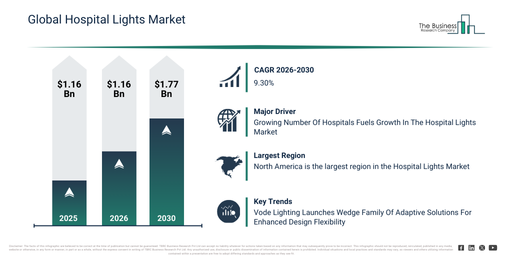
    The hospital lights market size is anticipated to experience substantial expansion in the upcoming years. It is projected to grow to $16.04 billion in 2030, achieving a compound annual growth rate (CAGR) of 9.3%. This expansion during the forecast period can be attributed to heightened investments in smart hospitals, an increasing embrace of intelligent lighting systems, the ongoing development of energy-saving healthcare infrastructure, a rising emphasis on infection control lighting, and advancements in surgical illumination technologies. Notable trends expected in this period include the increased adoption of LED-based hospital lighting systems, a growing need for energy-efficient medical lighting solutions, the wider integration of smart lighting controls, the development of more precise surgical lighting solutions, and an enhanced focus on patient comfort through lighting.

    Get A Free Sample Report With In-Depth Market Insights:

    https://thebusinessresearchcompany.com/sample_request?id=95790183&type=smp&name=Hospital%20Lights%20Market%20Report%202026&utm_source=Blogs&utm_medium=Paid&utm_campaign=Oct_PR

    Hospital Lights Market Growth Factors Behind Sustained Expansion

    An increasing count of hospitals is anticipated to drive expansion in the hospital lights market. These facilities are established, staffed, and equipped to diagnose illnesses, provide medical and surgical care for patients, and offer accommodation during these processes. Illumination systems in hospitals ensure adequate brightness for healthcare personnel, function as signaling tools during various occurrences, and help avoid disturbing patients’ rest. For example, data from the American Hospital Association, a US-based non-profit body, indicated that in 2024, the United States contained 6,120 hospitals, which marks an increase from the 6,093 hospitals reported in 2022. Consequently, the rising number of hospital establishments is fueling the expansion of the hospital lights market.

    Hospital Lights Market Segmentation And Category Overview

    The hospital lights market covered in this report is segmented –

    1) By Product: Troffers, Surface-Mounted Lights, Surgical Lamps, Other Products

    2) By Technology: Fluorescent, LED, Other Technologies

    3) By Application: Patient Wards And ICUs, Surgical Suites, Examination Rooms, Other Applications

    Subsegments:

    1) By Troffers: LED Troffers, Fluorescent Troffers, Smart Troffers

    2) By Surface-Mounted Lights: LED Surface-Mounted Lights, Traditional Surface-Mounted Lights, Adjustable Surface-Mounted Lights

    3) By Surgical Lamps: LED Surgical Lamps, Halogen Surgical Lamps, Shadowless Surgical Lamps

    4) By Other Products: Exam Room Lights, Emergency And Exit Lights, Portable Lighting Solutions

    Hospital Lights Market Industry Trends Fueling Future Revenue Growth

    Leading companies in the hospital lighting industry are concentrating on developing advanced lighting solutions, such as adaptive and energy-efficient fixtures, to enhance patient comfort and optimize clinical environments. These adaptive and energy-efficient fixtures are lighting systems engineered to adjust brightness, color, or direction based on the time of day, specific activities, or occupancy while consuming minimal energy, thereby improving patient comfort, supporting staff productivity, and reducing operational costs. For example, in July 2024, Vode Lighting, a US-based manufacturer of adaptive lighting systems, unveiled Wedge, an innovative family of adaptive lighting solutions that provides architects and designers with significant creative freedom. Featuring the Peak and Slope products, the Wedge family offers boundless design possibilities through its distinct triangular form and advanced optics. It also retains the user-friendly installation and adaptable mounting options characteristic of Vode’s innovative lighting systems, enhancing any space with both style and functionality.

    Hospital Lights Market Company Landscape And Competitive Strategy

    Major companies operating in the hospital lights market are Koninklijke Philips N.V., The Zumtobel Group, Wolfspeed Inc., Signify N.V., Acuity Brands Inc., Skytron LLC, S.I.M.E.O.N. Medical GmbH & Co. KG, General Electric Company, Hubbell Incorporated, KLS Martin Group, Brandon Medical Co. Ltd., Best Lighting Products Inc., Kenall Manufacturing, Shenzhen Comen Medical Instruments Co. Ltd., Medifa, Hill-Rom Holdings Inc., Eaton Corporation, Osram Licht AG, Cooper Lighting Solutions, Dialight PLC, LEDVANCE GmbH, Stryker Corporation

    View The Full Hospital Lights Market Report:

    https://thebusinessresearchcompany.com/report/hospital-lights-global-market-report?utm_source=Blogs&utm_medium=Paid&utm_campaign=Oct_PR

    Hospital Lights Market Largest Region: Which Geography Holds The Biggest Share?

    North America was the largest region in the hospital lights market in 2025. Asia-Pacific is expected to be the fastest-growing region in the forecast period. The regions covered in the hospital lights market report are Asia-Pacific, South East Asia, Western Europe, Eastern Europe, North America, South America, Middle East, Africa.

    Reach Out To Our Team:

    The Business Research Company: https://www.thebusinessresearchcompany.com/

    Americas: +1 310-496-7795

    Asia: +44 7882 955267 & +91 8897263534

    Europe: +44 7882 955267

    Email us at: marketing@tbrc.info

    Follow us on:

    LinkedIn: https://in.linkedin.com/company/the-business-research-company

    YouTube: https://www.youtube.com/channel/UC24_fI0rV8cR5DxlCpgmyFQ

    Global Market Model: https://www.thebusinessresearchcompany.com/global-market-model
  • Hospital Gowns Market Size Forecast: How The Industry Is Expected To Grow From 2026 To 2030

    Hospital Gowns Market Size Forecast: How The Industry Is Expected To Grow From 2026 To 2030

    Backed by market attractiveness analysis, total addressable market sizing, company benchmarking matrices, interactive Excel dashboards, wider supply chain intelligence, emerging startup coverage, and detailed product-level insights, The Business Research Company’s 2026 market reports are designed to offer research that is more actionable and strategically valuable than ever.

    Hospital Gowns Market Revenue Growth On Track For A 11.4% CAGR Through 2030

    The market for hospital gowns has experienced swift expansion recently. It is projected to increase from $6.25 billion in 2025 to $7.06 billion in 2026, demonstrating a compound annual growth rate (CAGR) of 12.8%. Historically, this expansion has been driven by factors such as an increase in hospital admissions, a rise in surgical procedure volumes, heightened awareness regarding hospital-acquired infections, the ongoing development of healthcare infrastructure, and consistent demand for fundamental protective medical attire.

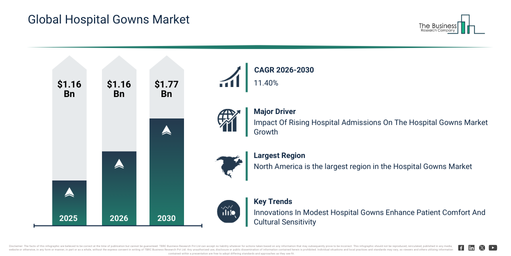
    The hospital gowns market is projected for substantial growth in the coming years, with its size expanding to $10.88 billion in 2030, driven by a compound annual growth rate (CAGR) of 11.4%. This anticipated growth during the forecast period is fueled by several factors, including strengthening infection prevention standards, rising outpatient and day-care procedures, growing emphasis on patient-centric care, increasing healthcare expenditure, and expansion of specialty clinics and diagnostic centers. Key trends emerging during the forecast period comprise rising demand for disposable and single-use hospital gowns, growing preference for reusable and cost-efficient gown solutions, increasing focus on patient comfort and ergonomic gown design, expansion of infection control protocols in healthcare facilities, and a shift toward bulk procurement and long-term supply contracts.

    Get A Free Sample Report With In-Depth Market Insights:

    https://thebusinessresearchcompany.com/sample_request?id=48766812&type=smp&name=Hospital%20Gowns%20Market%20Report%202026&utm_source=Blogs&utm_medium=Paid&utm_campaign=Oct_PR

    Hospital Gowns Market Demand Drivers Opening New Revenue Streams

    The increasing volume of hospital admissions is anticipated to fuel the expansion of the hospital gown market in the future. Hospital admissions signify the procedure where a patient enters a hospital for medical attention or therapy. The rise in hospital admissions stems from factors such as increasing population, an aging demographic, progress in medical technology enabling more intricate treatments, and a greater prevalence of chronic conditions necessitating hospitalization. Hospital gowns support the admission process by offering infection prevention, facilitating medical examinations, ensuring patient comfort, and enhancing operational effectiveness, thereby maintaining rigorous safety and hygiene protocols. For example, in May 2025, the Australian Institute of Health and Welfare, an Australia-based government agency, reported that during 2023–24, England’s public hospitals recorded 12.6M admissions (with 91% being acute), 33.9M patient days, and an average stay of 2.7 days; furthermore, 23% of same-day cases involved dialysis, and individuals aged 65+ made up 44% of total admissions. Consequently, the increasing number of hospital admissions is propelling the growth of the hospital gowns market.

    Hospital Gowns Market Segment Outlook: Which Categories Are Growing Fastest?

    The hospital gowns market covered in this report is segmented –

    1) By Type: Surgical Gowns, Non-Surgical Gowns, Patient Gowns

    2) By Usability: Disposable, Reusable

    3) By Distribution Channel: Online Sales, Retail Pharmacies, Direct Sales

    4) By End User: Hospital, Specialty Clinic, Other End Users

    Subsegments:

    1) By Surgical Gowns: Disposable Surgical Gowns, Reusable Surgical Gowns

    2) By Non-Surgical Gowns: Disposable Non-Surgical Gowns, Reusable Non-Surgical Gowns

    3) By Patient Gowns: Disposable Patient Gowns, Reusable Patient Gowns

    Hospital Gowns Market Trends Powering Strategic Industry Growth

    Major companies operating in the hospital gowns market are currently developing modest hospital gowns to improve patient comfort and ensure dignity during their hospital stays. These modest hospital gowns are medical garments crafted with enhanced coverage to protect patients’ dignity and privacy, especially in various cultural and social settings where modesty is valued. For example, in March 2024, Children’s Minnesota, a US-based health care provider, unveiled an innovative modest hospital gown specifically designed to offer more inclusive and culturally sensitive care for pediatric patients. These gowns feature a detachable hijab for head coverage, three-quarter-length sleeves, closures that can be utilized in the front or back to allow medical access while preserving modesty, buttons along the collar for securing a head covering, and the ability to be closed along the back with buttons. The gowns’ design was informed by input from nurses, doctors, clinical staff, and patients to guarantee they fulfill medical requirements while providing comfort and maintaining dignity.

    Hospital Gowns Market Key Players Shaping Industry Direction

    Major companies operating in the hospital gowns market are Cardinal Health Inc., Medline Industries Inc., Kimberly-Clark Corporation, Owens & Minor Inc., Paul Hartmann AG, Mölnlycke Health Care AB, Halyard Health Inc., Hogy Medical Co Ltd., Lohmann & Rauscher GmbH & Co. KG, Dynarex Corporation, priMED Medical Products Inc., Standard Textile Co Inc., Angelica Corporation, AmeriPride Services Inc., Vygon S.A., Vestagen Technical Textiles LLC, Priontex Ltd., Sara Healthcare Pvt. Ltd., Surgiene Healthcare (India) Private Limited, Bellcross Industries Pvt Ltd., Atlas Infiniti

    View The Full Hospital Gowns Market Report:

    https://thebusinessresearchcompany.com/report/hospital-gowns-global-market-report?utm_source=Blogs&utm_medium=Paid&utm_campaign=Oct_PR

    Hospital Gowns Market Regional Analysis: Which Geography Leads On Revenue?

    North America was the largest region in the hospital gowns market in 2025. Asia-Pacificis expected to be the fastest-growing region in the forecast period. The regions covered in the hospital gowns market report are Asia-Pacific, South East Asia, Western Europe, Eastern Europe, North America, South America, Middle East, Africa.

    Reach Out To Our Team:

    The Business Research Company: https://www.thebusinessresearchcompany.com/

    Americas: +1 310-496-7795

    Asia: +44 7882 955267 & +91 8897263534

    Europe: +44 7882 955267

    Email us at: marketing@tbrc.info

    Follow us on:

    LinkedIn: https://in.linkedin.com/company/the-business-research-company

    YouTube: https://www.youtube.com/channel/UC24_fI0rV8cR5DxlCpgmyFQ

    Global Market Model: https://www.thebusinessresearchcompany.com/global-market-model
  • Hospital Beds Market Reaches $7.11 Billion In 2026: Forecast And Growth Opportunities

    Hospital Beds Market Reaches $7.11 Billion In 2026: Forecast And Growth Opportunities

    Featuring market attractiveness scoring, total addressable market sizing, company benchmarking matrices, interactive Excel dashboards, deeper supply chain intelligence, emerging startup tracking, and granular product-level insights, The Business Research Company’s 2026 market reports are built to deliver research that is both more actionable and more strategically valuable.

    Hospital Beds Market Value Growth And Long-Term Outlook

    The hospital beds market has witnessed robust growth in recent years. This market is set to expand from $4.6 billion in 2025 to $4.99 billion in 2026, achieving a compound annual growth rate (CAGR) of 8.5%. Historically, this growth has been fueled by the expansion of hospital infrastructure, the rising prevalence of chronic diseases, increasing hospitalization rates, a growing demand for intensive care capacity, and the modernization of healthcare facilities.

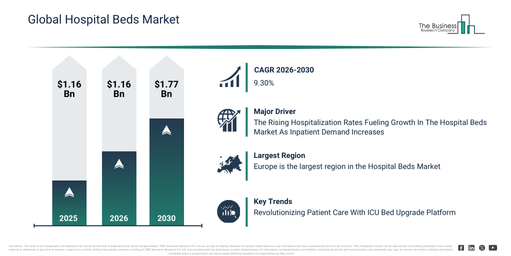
    The hospital beds market is projected to experience substantial expansion over the upcoming years. Its valuation is anticipated to reach $7.11 billion by 2030, demonstrating a compound annual growth rate (CAGR) of 9.3%. This anticipated growth during the forecast period can be primarily attributed to several factors, including escalating investments in smart hospitals, an increasing need for interconnected patient care equipment, the broadening of elderly care provisions, a heightened emphasis on infection control measures, and the growing uptake of beds for home healthcare. Key trends expected within this period encompass the greater embrace of intelligent and networked hospital beds, a surge in demand for electrically adjustable bed systems, an intensifying focus on patient safety and comfort attributes, the wider availability of ICU-specific bed designs, and improved incorporation of remote monitoring functionalities.

    Get A Free Sample Report With In-Depth Market Insights:

    https://thebusinessresearchcompany.com/sample_request?id=46749642&type=smp&name=Hospital%20Beds%20Market%20Report%202026&utm_source=Blogs&utm_medium=Paid&utm_campaign=Oct_PR

    Hospital Beds Market Growth Backed By Core Demand Fundamentals

    The escalating rate of hospital admissions is projected to stimulate the expansion of the hospital bed market. Hospitalization involves admitting an individual to a hospital or other healthcare facility for medical attention, monitoring, or care. When hospitalized, patients occupy hospital beds for the duration of their treatment, recovery, and rest. For example, in November 2024, data from the Australian Institute of Health and Welfare, an Australia-based government agency, showed that during 2022–23, one or more hospital-acquired complications (HACs) were recorded in 115,000 hospitalizations in public hospitals (2.0% of hospitalizations) and 34,200 hospitalizations in private hospitals (0.8% of hospitalizations). Therefore, the increasing hospitalization rates are propelling the growth of the hospital beds market.

    Hospital Beds Market Segment Landscape: Which Areas Lead Development?

    The hospital beds market covered in this report is segmented –

    1) By Type: Semi-Electric Beds, Electric Beds, Manual Beds

    2) By Usage: Acute Care Beds, Long-Term Care Beds, Psychiatric Care Beds, Other Usages

    3) By Application: Non-Intensive Care Beds, Intensive Care Beds

    4) By End User: Hospitals, Clinics, Other End Users

    Subsegments:

    1) By Semi-Electric Beds:Backrest and Knee-Rest Electrically Adjustable Beds, Adjustable Height Semi-Electric Beds

    2) By Electric Beds: ICU Electric Beds, Standard Electric Beds, Specialty Electric Beds

    3) By Manual Beds: Adjustable Manual Beds, Fixed Height Manual Beds

    Hospital Beds Market Growth Trends Reshaping The Competitive Landscape

    Major companies in the hospital bed market are introducing advanced technological products, such as ICU bed upgrade platforms, to maintain their market position. An ICU bed upgrade platform signifies a system or technology that facilitates improvements or enhancements to intensive care unit (ICU) beds, potentially upgrading their features, functionality, or capabilities. For example, in March 2023, Stryker, a US-based medical device company, unveiled SmartMedic, India’s first ICU bed upgrade platform, designed to improve patient care and caregiver safety. SmartMedic is a patient care platform that enhances the existing capabilities of ICU beds in hospitals. This solution is intended to manage patient weight changes, monitor patient turns from nurse stations, and enable medical staff to perform X-rays on patients within the ICU without moving them. SmartMedic aims to reduce patient discomfort and provide enhanced care.

    Hospital Beds Market Competitive Analysis Of Leading Industry Participants

    Major companies operating in the hospital beds market are Paramount Bed Co. Ltd., Linet spol s.r.o., Joh. Stiegelmeyer & Co. GmbH, Invacare Corporation, Joerns Healthcare LLC, Stryker Corporation, Getinge AB, Arjo AB, Merivaara Corporation, Malvestio SpA, Haelvoet NV, Savion Industries, Kanghui Medical Technology Co. Ltd., Besco Medical Co. Ltd., Gendron Inc., Midmark Corporation, Span-America Medical Systems, Amico Corporation, Nitrocare, Proma Reha Inc., Hopefull Medical Equipment Co. Ltd., Novak M d.o.o., Royax s.r.o.

    View The Full Hospital Beds Market Report:

    https://thebusinessresearchcompany.com/report/hospital-beds-global-market-report?utm_source=Blogs&utm_medium=Paid&utm_campaign=Oct_PR

    Hospital Beds Market Geographic Spread And Regional Opportunities

    Europe was the largest region in the hospital beds market in 2025. Asia-Pacific is expected to be the fastest-growing region in the forecast period. The regions covered in the hospital beds market report are Asia-Pacific, South East Asia, Western Europe, Eastern Europe, North America, South America, Middle East, Africa.

    Reach Out To Our Team:

    The Business Research Company: https://www.thebusinessresearchcompany.com/

    Americas: +1 310-496-7795

    Asia: +44 7882 955267 & +91 8897263534

    Europe: +44 7882 955267

    Email us at: marketing@tbrc.info

    Follow us on:

    LinkedIn: https://in.linkedin.com/company/the-business-research-company

    YouTube: https://www.youtube.com/channel/UC24_fI0rV8cR5DxlCpgmyFQ

    Global Market Model: https://www.thebusinessresearchcompany.com/global-market-model
  • Hospital Acquired Infections Testing Kits Market Growth In 2026: Market Size, Key Drivers And Future Outlook

    Hospital Acquired Infections Testing Kits Market Growth In 2026: Market Size, Key Drivers And Future Outlook

    Built to provide research that’s more actionable and strategically valuable, The Business Research Company’s 2026 market reports include market attractiveness analysis, total addressable market sizing, company benchmarking matrices, interactive Excel dashboards, broader supply chain intelligence, emerging startup tracking, and in-depth product insights.

    Hospital Acquired Infections Testing Kits Market Poised To Hit $7.2 Billion By 2030 With A 8.5% CAGR

    The market size for hospital acquired infections testing kits has shown strong expansion in recent years. It is projected to increase from $4.79 billion in 2025 to $5.19 billion in 2026, progressing at a compound annual growth rate (CAGR) of 8.5%. The expansion witnessed in the past can be credited to factors like the rise in hospital infection surveillance, the growing occurrence of antibiotic-resistant pathogens, the expansion of clinical microbiology laboratories, the execution of infection control protocols, and the accessibility of molecular diagnostic tools.

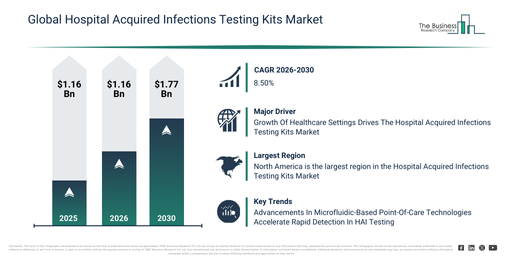
    The market for hospital acquired infections testing kits is expected to demonstrate significant expansion in the coming years. This sector is projected to reach $7.2 billion in 2030, achieving a compound annual growth rate (CAGR) of 8.5%. The projected growth during this period can be attributed to a heightened focus on early infection detection, increased investments in hospital safety infrastructure, the expanding adoption of rapid testing, a growing demand for automated diagnostic workflows, and advancements in molecular diagnostics technology. Prominent trends expected in the forecast period include the increasing uptake of rapid diagnostic test kits, a rise in the use of molecular testing for HAIs, the growing integration of automated diagnostic instruments, the expansion of point-of-care infection testing, and an enhanced emphasis on multi-pathogen detection.

    Get A Free Sample Report With In-Depth Market Insights:

    https://thebusinessresearchcompany.com/sample_request?id=30376512&type=smp&name=Hospital%20Acquired%20Infections%20Testing%20Kits%20Market%20Report%202026&utm_source=Blogs&utm_medium=Paid&utm_campaign=Oct_PR

    Hospital Acquired Infections Testing Kits Market Growth Catalysts And Demand Drivers

    The expansion in healthcare settings is projected to boost the hospital-acquired infections testing kits market going forward. Within these settings, a broad spectrum of facilities exists, such as acute care hospitals, urgent care centers, rehabilitation centers, nursing homes, and long-term care facilities, providing diverse healthcare services. Crucially, hospital-acquired infections testing kits serve as essential instruments for identifying and averting nosocomial infections, thereby improving patient safety within medical establishments. As an illustration, data from the American Hospital Association, a US-based healthcare industry trade group, indicated a substantial rise in the total number of hospitals across the U.S. region from 6,093 in 2022 to 60,129 in 2023, as of May 2023. Furthermore, community hospital admissions grew from 31,393,318 in 2022 to 31,967,073 in 2023. Consequently, the increasing prevalence of healthcare settings fuels the hospital-acquired infections testing kits market.

    Hospital Acquired Infections Testing Kits Market Segments: Where Is Growth Concentrated?

    The hospital acquired infections testing kits market covered in this report is segmented –

    1) By Product: Consumables And Reagents, Instruments

    2) By Test Type: Pneumoia Infection, Urinary Track Infection, Blood Stream Associated Infection, Surgical Site Infection, MRSA infection, Others

    3) By Pathogen Type: Viral, Bacterial, Fungal

    4) By Application: Drug Resistance Testing, Disease Testing

    Subsegments:

    1) By Consumables and Reagents: Culture Media (Used for isolating and identifying pathogens), Reagents For Molecular Testing (Includes PCR reagents and kits for detecting specific pathogens), Test Kits (Rapid tests and other kits designed for various infections), Other Consumables (Includes swabs, sample collection devices, and preservation solutions)

    2) By Instruments: Automated Analyzers (Equipment used for blood culture analysis and identification of pathogens), Molecular Diagnostic Instruments (Machines used for PCR and other molecular testing methods), Microscopes (Used for the identification of pathogens in samples), Incubators And Growth Chambers (For culturing samples under controlled conditions)

    Hospital Acquired Infections Testing Kits Market Trends Shaping Long-Term Demand

    Leading companies active in the hospital-acquired infections (HAI) testing kits market are prioritizing the development of advanced point-of-care antimicrobial susceptibility testing (AST) solutions. This focus aims to enable rapid diagnosis, guide specific therapies, and combat antimicrobial resistance (AMR). Point-of-care AST employs proprietary microfluidic technology to swiftly identify bacterial presence and evaluate antibiotic effectiveness directly from patient urine samples, thereby reducing diagnostic delays and improving treatment decisions. For instance, in June 2023, Sysmex Corporation, a Japan-based diagnostics company, introduced the world’s first point-of-care testing system in Europe designed to perform antimicrobial susceptibility testing in just 30 minutes. By utilizing a microfluidic-based AST approach for patients with suspected urinary tract infections, the system significantly cuts down turnaround time and supports antimicrobial stewardship in primary care settings through enabling timely and informed antibiotic use, consequently contributing to global efforts to curb AMR.

    Hospital Acquired Infections Testing Kits Market Leading Companies And Competitive Benchmarking

    Major companies operating in the hospital acquired infections testing kits market are Becton Dickinson and Company, Abbott Laboratories, Cepheid, F. Hoffmann-La Roche Ltd, STERIS plc, QIAGEN, Meridian Bioscience Inc., BioMérieux SA, GE Healthcare, Seegene, SD Biosensor, Fujirebio, Sysmex Corporation, Getein Biotech, Hangzhou Biotest Biotech, AmonMed Biotechnology, Beijing Tigsun Diagnostics, Hunan Lituo Biotechnology, ImmunoScience, Vivacheck Lab

    View The Full Hospital Acquired Infections Testing Kits Market Report:

    https://thebusinessresearchcompany.com/report/hospital-acquired-infections-testing-kits-global-market-report?utm_source=Blogs&utm_medium=Paid&utm_campaign=Oct_PR

    Hospital Acquired Infections Testing Kits Market Top Region By Revenue And Market Share

    North America was the largest region in the hospital-acquired infections testing kits market in 2025. Asia-Pacific is expected to be the fastest-growing region in the forecast period. The regions covered in the hospital acquired infections testing kits market report are Asia-Pacific, South East Asia, Western Europe, Eastern Europe, North America, South America, Middle East, Africa.

    Reach Out To Our Team:

    The Business Research Company: https://www.thebusinessresearchcompany.com/

    Americas: +1 310-496-7795

    Asia: +44 7882 955267 & +91 8897263534

    Europe: +44 7882 955267

    Email us at: marketing@tbrc.info

    Follow us on:

    LinkedIn: https://in.linkedin.com/company/the-business-research-company

    YouTube: https://www.youtube.com/channel/UC24_fI0rV8cR5DxlCpgmyFQ

    Global Market Model: https://www.thebusinessresearchcompany.com/global-market-model
  • Hormonal Intrauterine Devices (IUDs) Market Size And Forecast 2026–2030: Trends Driving Industry Expansion

    Hormonal Intrauterine Devices (IUDs) Market Size And Forecast 2026–2030: Trends Driving Industry Expansion

    Backed by market attractiveness analysis, total addressable market sizing, company benchmarking matrices, interactive Excel dashboards, wider supply chain intelligence, emerging startup coverage, and detailed product-level insights, The Business Research Company’s 2026 market reports are designed to offer research that is more actionable and strategically valuable than ever.

    Hormonal Intrauterine Devices (IUDs) Market Size And Revenue Outlook Through 2030

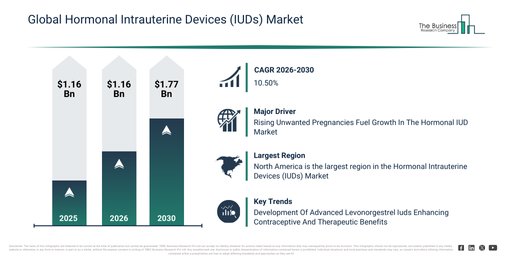
    The market size for hormonal intrauterine devices (IUDs) has experienced substantial growth in recent years. This market is projected to expand from $2.87 billion in 2025 to $3.18 billion in 2026, demonstrating a compound annual growth rate (CAGR) of 10.6%. In the past, this expansion has been fueled by factors including greater public awareness of family planning alternatives, the broadening of women’s reproductive healthcare initiatives, a growing preference for enduring contraception, the accessibility of hormone-based devices, and backing from public health programs.

    The market for hormonal intrauterine devices (IUDs) is projected to experience swift expansion over the coming years. This market is anticipated to reach $4.74 billion in 2030, exhibiting a compound annual growth rate (CAGR) of 10.5%. Several factors are driving this growth during the forecast period, including a heightened demand for non-surgical contraceptive options, a greater emphasis on menstrual health management, broader access in developing markets, increased investments in women’s health technologies, and continuous innovation in hormone delivery systems. Key trends for the forecast period encompass the rising adoption of low-dose hormonal IUDs, increasing preference for long-acting reversible contraceptives, a growing inclination towards frameless device designs, the broadening of therapeutic IUD applications, and a stronger emphasis on patient comfort and safety.

    Get A Free Sample Report With In-Depth Market Insights:

    https://thebusinessresearchcompany.com/sample_request?id=79252501&type=smp&name=Hormonal%20Intrauterine%20Devices%20%28IUDs%29%20Market%20Report%202026&utm_source=Blogs&utm_medium=Paid&utm_campaign=Oct_PR

    Hormonal Intrauterine Devices (IUDs) Market Opportunity Drivers: What’s Unlocking New Revenue Potential?

    The increasing prevalence of unwanted pregnancies is anticipated to drive the expansion of the hormonal intrauterine devices market. Unwanted pregnancies are those not deliberately planned or wished for at the moment of conception. These can arise from multiple factors, including the ineffectiveness of contraceptive methods, insufficient access to birth control, improper use of contraception, or experiences of sexual violence. Limited availability of reliable contraception heightens the risk of unwanted pregnancies by lessening individuals’ autonomy over their reproductive choices. Hormonal IUDs are exceptionally effective at preventing pregnancy, with a failure rate under 1%. They deliver long-term protection, typically ranging from 3 to 7 years depending on the device, positioning them as a trustworthy choice for individuals aiming to prevent unwanted pregnancies. For instance, in July 2025, the Society for Family Planning, a US-based professional organization, stated that abortions increased to 1.14 million in 2024, compared with 1.05 million recorded in 2023. Therefore, the surge in unwanted pregnancies is a primary factor fueling the growth of the hormonal intrauterine devices market.

    Hormonal Intrauterine Devices (IUDs) Market Segment Analysis: What Are The Core Market Categories?

    The hormonal intrauterine devices (iuds) market covered in this report is segmented –

    1) By Type: 13 Milligram Hormonal Intrauterine Devices, 19 Milligram Hormonal Intrauterine Devices, 52 Milligram Hormonal Intrauterine Devices

    2) By Device Design: Framed Intrauterine Devices, Frameless Intrauterine Devices

    3) By Hormone Type: Levonorgestrel Releasing Intrauterine Devices, Progesterone Releasing Intrauterine Devices

    4) By Application: Age 20-24, Age 25-34, Age 35-44, Other Applications

    Subsegments:

    1) By 13 Milligram Hormonal Intrauterine Devices: Low-Dose 13 Mg IUDs, Specialty 13 Mg IUDs For Specific Conditions

    2) By 19 Milligram Hormonal Intrauterine Devices: Low-Dose 19 Mg IUDs, Specialty 19 Mg IUDs For Specific Conditions

    3) By 52 Milligram Hormonal Intrauterine Devices: Standard 52 Mg IUDs, Extended-Release 52 Mg IUDs, Specialty 52 Mg IUDs For Heavy Menstrual Bleeding Or Endometriosis

    Hormonal Intrauterine Devices (IUDs) Market Innovation Trends Shaping Future Development

    Major companies in the hormonal intrauterine devices market are focusing on developing advanced solutions, such as levonorgestrel intrauterine devices (IUDs), to mitigate menstrual bleeding and cramps. Levonorgestrel intrauterine devices (IUDs) are long-term birth control options inserted into the uterus that gradually release the hormone levonorgestrel to prevent pregnancy. For instance, in October 2024, Medicines360, a US-based nonprofit organization, launched Avibela, a 52 mg levonorgestrel intrauterine device (IUD) in Zambia. This device serves two primary functions, providing up to eight years of pregnancy prevention and up to five years of relief from heavy menstrual bleeding. Its contraceptive effect stems from its capability to increase the density of cervical mucus, thus preventing sperm from reaching the uterus. For heavy bleeding, it functions by thinning the uterine lining, which helps reduce menstrual flow.

    Hormonal Intrauterine Devices (IUDs) Market Industry Leaders And Competitive Landscape

    Major companies operating in the hormonal intrauterine devices (iuds) market are Bayer AG, Organon & Companies, Gedeon Richter Plc, Meril Life Science Pvt Ltd., Teva UK Limited, Medicines360, HLL Lifecare Limited, Pregna International Ltd., DKT WomanCare Global, SMB Corporation of India, Oy Leiras, OCON Healthcare, Bayer Healthcare Pharmaceuticals, CooperSurgical Inc., Mithra Pharmaceuticals, Shanghai Dahua Medical Apparatus Co. Ltd., Beijing Zizhu Pharmaceutical Co. Ltd., Shanghai Jiansheng Medical Devices Co. Ltd., Zhejiang Xianju Pharmaceutical Co. Ltd., Shanghai Chuangling Medical Devices Co. Ltd.

    View The Full Hormonal Intrauterine Devices (IUDs) Market Report:

    https://thebusinessresearchcompany.com/report/hormonal-intrauterine-devices-iuds-global-market-report?utm_source=Blogs&utm_medium=Paid&utm_campaign=Oct_PR

    Hormonal Intrauterine Devices (IUDs) Market Regional Analysis And Top Geography

    North America was the largest region in the hormonal intrauterine devices (IUDs) market in 2025. Asia-Pacific is expected to be the fastest-growing region in the forecast period. The regions covered in the hormonal intrauterine devices (iuds) market report are Asia-Pacific, South East Asia, Western Europe, Eastern Europe, North America, South America, Middle East, Africa.

    Reach Out To Our Team:

    The Business Research Company: https://www.thebusinessresearchcompany.com/

    Americas: +1 310-496-7795

    Asia: +44 7882 955267 & +91 8897263534

    Europe: +44 7882 955267

    Email us at: marketing@tbrc.info

    Follow us on:

    LinkedIn: https://in.linkedin.com/company/the-business-research-company

    YouTube: https://www.youtube.com/channel/UC24_fI0rV8cR5DxlCpgmyFQ

    Global Market Model: https://www.thebusinessresearchcompany.com/global-market-model