
Category: Medical Equipment

  • Hollow-Fiber Bioreactors Market Size And Growth In 2026: Key Factors Shaping Future Demand

    Hollow-Fiber Bioreactors Market Size And Growth In 2026: Key Factors Shaping Future Demand

    Built to provide research that’s more actionable and strategically valuable, The Business Research Company’s 2026 market reports include market attractiveness analysis, total addressable market sizing, company benchmarking matrices, interactive Excel dashboards, broader supply chain intelligence, emerging startup tracking, and in-depth product insights.

    Hollow-Fiber Bioreactors Market CAGR Outlook And Future Development

    The hollow-fiber bioreactors market size has seen substantial growth in recent years. It is anticipated to expand from $1.5 billion in 2025 to $1.64 billion in 2026, demonstrating a compound annual growth rate (CAGR) of 9.3%. The market’s past growth can be attributed to factors such as reliance on traditional cell culture systems, limitations in bioreactor scalability, increasing biopharmaceutical research and development activities, a rise in academic research focused on tissue engineering, and the adoption of reusable bioreactors for early-stage production.

    The hollow-fiber bioreactors market size is anticipated to expand considerably in the coming years. This market is projected to reach $2.33 billion by the year 2030, exhibiting a compound annual growth rate (CAGR) of 9.2%. During the forecast period, this increase can be linked to improvements in single-use bioreactor technologies, the growth of modular and automated systems, a growing need for high-throughput protein production, more outsourcing to contract research organizations (CROs), and the integration of continuous perfusion and monitoring systems. Significant trends expected in the forecast period include the growing acceptance of single-use hollow-fiber bioreactors, an expansion in high-density cell culture applications, an escalating requirement for biopharmaceutical protein production, the growth of tissue engineering and regenerative medicine, and a focus on automated and high-throughput bioreactor systems.

    Get A Free Sample Report With In-Depth Market Insights:

    https://thebusinessresearchcompany.com/sample_request?id=34364634&type=smp&name=Hollow-Fiber%20Bioreactors%20Market%20Report%202026&utm_source=Blogs&utm_medium=Paid&utm_campaign=Oct_PR

    Hollow-Fiber Bioreactors Market Growth Catalysts And Demand Drivers

    The hollow-fiber bioreactors market is projected to expand due to the increasing need for cell-based therapy production. This type of production involves creating therapeutic items from living cells to address conditions like cancers, autoimmune issues, and genetic disorders. The rising demand for these therapies stems from the necessity for consistent, scalable manufacturing systems capable of handling high cell concentrations without compromising quality. Hollow-fiber bioreactors facilitate this by providing a high-surface-area, enclosed system that allows for the effective expansion and collection of therapeutic cells under regulated environments. For example, as reported in December 2024 by the International Federation of Pharmaceutical Manufacturers and Associations, a non-profit organization based in Switzerland, there were six first-in-class cell and gene treatments launched in 2023, marking a 50% increase from the three introduced in 2022. Consequently, the escalating demand for cell-based therapy production is boosting the hollow-fiber bioreactors market. The expanding adoption of personalized medicine is anticipated to drive growth within the hollow-fiber bioreactors market. Personalized medicine is a medical strategy that customizes treatments and healthcare choices to suit each patient’s unique attributes, requirements, and genetic makeup. This surge in personalized medicine is attributed to the growing use of sophisticated diagnostic tools that accurately pinpoint disease mechanisms specific to individual patients, allowing healthcare professionals to enhance treatment efficacy and minimize guesswork in therapy selection. Hollow-fiber bioreactors are crucial for personalized medicine, as they enable the scalable, high-quality production of cell cultures, which is essential for developing patient-specific therapies. For instance, in February 2024, the Personalized Medicine Coalition, a US-based hospital and health care entity, reported that the Food and Drug Administration (FDA), a US-based federal agency, cleared 16 new personalized therapies for patients with rare diseases in 2023, an increase from six in 2022. Thus, the rising prevalence of personalized medicine is stimulating the expansion of the hollow-fiber bioreactors market.

    Hollow-Fiber Bioreactors Market Segment Landscape: Which Areas Lead Development?

    The hollow-fiber bioreactors market covered in this report is segmented –

    1) By Product Type: Single-Use Hollow-Fiber Bioreactors, Reusable Hollow-Fiber Bioreactors

    2) By Application: Cell Culture, Tissue Engineering, Biopharmaceutical Production, Wastewater Treatment, Other Applications

    3) By End-User: Pharmaceutical And Biotechnology Companies, Research Institutes, Contract Research Organizations, Other End-Users

    Subsegments:

    1) By Single-Use Hollow-Fiber Bioreactors: Pre-Assembled Single-Use Hollow-Fiber Bioreactors, Modular Single-Use Hollow-Fiber Bioreactors, Customizable Single-Use Hollow-Fiber Bioreactors, High-Throughput Single-Use Hollow-Fiber Bioreactors, Automated Single-Use Hollow-Fiber Bioreactors

    2) By Reusable Hollow-Fiber Bioreactors: Fixed-Bed Reusable Hollow-Fiber Bioreactors, Modular Reusable Hollow-Fiber Bioreactors, High-Capacity Reusable Hollow-Fiber Bioreactors, Multipurpose Reusable Hollow-Fiber Bioreactors, Clean-In-Place Reusable Hollow-Fiber Bioreactors

    Hollow-Fiber Bioreactors Market Trends Shaping Long-Term Demand

    Major companies in the hollow-fiber bioreactors market are focusing on developing innovative solutions, such as single-use hollow-fiber membrane networks, to enable high-density, scalable, and low-shear cell culture suitable for advanced therapies. These single-use hollow-fiber membrane networks are disposable bioreactor systems, made of semi-permeable fibers, that facilitate continuous nutrient delivery and waste removal. This mechanism helps maintain uniform nutrient distribution, low-shear conditions, and scalable high-density cell growth, while simultaneously reducing contamination risk and simplifying biomanufacturing. For instance, in March 2025, ABEC Inc., a US-based process‑engineering company, launched its ATB (Advanced Therapy Bioreactor), a single-use, closed, hollow-fiber bioreactor platform specifically designed for advanced therapy medicinal product (ATMP) manufacturing. The ATB system incorporates proprietary hollow-fiber membrane networks that mimic the human circulatory system for localized nutrient and gas exchange, combined with oscillation-based mixing instead of mechanical agitation, to maintain optimal growth environments. Its design supports consistent scale‑up from 0.2 L to 10 L, preserving the same hollow-fiber surface-area-to-volume ratio across scales, and has demonstrated high densities and viabilities for a range of difficult-to-culture cells, including primary T-cells, CD34+ stem cells, HEK293, and CHO lines.

    Hollow-Fiber Bioreactors Market Industry Leaders And Competitive Landscape

    Major companies operating in the hollow-fiber bioreactors market are General Electric Company, Veolia Environnement S.A., Thermo Fisher Scientific Inc., Mitsubishi Chemical Corporation, Kubota Corporation, DuPont de Nemours Inc., MANN+HUMMEL GmbH, Alfa Laval AB, Sartorius AG, Repligen Corporation, Shenzhen Dreamemway Environmental Products Co. Ltd., FiberCell Systems Inc., Reynolds Culligan Water, Shanghai MegaVision Membrane Engineering & Technology Co. Ltd., Memfill Tech Private Limited, FibraCast Inc., iMemFlo Membrane Technology Co. Ltd., Guangdong Skyview Environmental Science and Technology Co. Ltd., PHILOS Co. Ltd., Blufox Engineering Pvt. Ltd.

    View The Full Hollow-Fiber Bioreactors Market Report:

    https://thebusinessresearchcompany.com/report/hollow-fiber-bioreactors-global-market-report?utm_source=Blogs&utm_medium=Paid&utm_campaign=Oct_PR

    Hollow-Fiber Bioreactors Market Regional Analysis And Leading Geography

    North America was the largest region in the hollow-fiber bioreactors market in 2025. Asia-Pacific is expected to be the fastest-growing region in the forecast period. The regions covered in the hollow-fiber bioreactors market report are Asia-Pacific, South East Asia, Western Europe, Eastern Europe, North America, South America, Middle East, Africa.

    Reach Out To Our Team:

    The Business Research Company: https://www.thebusinessresearchcompany.com/

    Americas: +1 310-496-7795

    Asia: +44 7882 955267 & +91 8897263534

    Europe: +44 7882 955267

    Email us at: marketing@tbrc.info

    Follow us on:

    LinkedIn: https://in.linkedin.com/company/the-business-research-company

    YouTube: https://www.youtube.com/channel/UC24_fI0rV8cR5DxlCpgmyFQ

    Global Market Model: https://www.thebusinessresearchcompany.com/global-market-model
  • Hollow Fiber Dialyzer Market Forecast 2026–2030: Market Size, Trends And Growth Opportunities

    Hollow Fiber Dialyzer Market Forecast 2026–2030: Market Size, Trends And Growth Opportunities

    Backed by market attractiveness analysis, total addressable market sizing, company benchmarking matrices, interactive Excel dashboards, wider supply chain intelligence, emerging startup coverage, and detailed product-level insights, The Business Research Company’s 2026 market reports are designed to offer research that is more actionable and strategically valuable than ever.

    Hollow Fiber Dialyzer Market Set To Climb From $6.78 Billion In 2026 To $8.4 Billion By 2030

    The hollow fiber dialyzer market size has experienced robust expansion in recent years. The market is projected to expand from $6.41 billion in 2025 to $6.78 billion in 2026, demonstrating a compound annual growth rate (CAGR) of 5.8%. This historical growth can be linked to several factors, including the rising incidence of chronic kidney disease, the increase in hospital-based dialysis services, the continued dependence on low flux membrane technologies, an expanding aging population, and heightened awareness of renal replacement therapies.

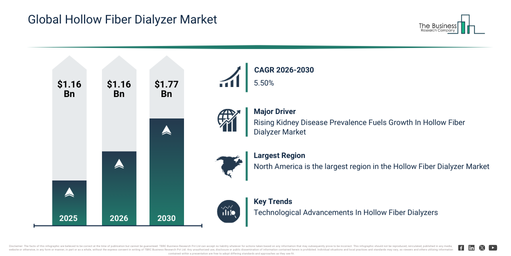
    The hollow fiber dialyzer market is projected to experience substantial growth in the upcoming years, with its size expected to reach $8.4 billion by 2030, expanding at a compound annual growth rate (CAGR) of 5.5%. This anticipated expansion is driven by factors such as the increasing adoption of high-flux and high-efficiency dialyzers, advancements in hollow fiber membrane design, the establishment of more dialysis centers in emerging markets, rising healthcare expenditure on renal care, and a focus on improving dialysis outcomes and treatment quality. Concurrently, major trends for the forecast period include a surging demand for high-flux dialyzers, the wider embrace of biocompatible membrane materials, an increasing use of dialyzers for both pediatric and geriatric patients, a noticeable shift toward synthetic polymer hollow fiber dialyzers, and a strong emphasis on enhancing filtration efficiency and ensuring patient safety.

    Get A Free Sample Report With In-Depth Market Insights:

    https://thebusinessresearchcompany.com/sample_request?id=87173853&type=smp&name=Hollow%20Fiber%20Dialyzer%20Market%20Report%202026&utm_source=Blogs&utm_medium=Paid&utm_campaign=Oct_PR

    Hollow Fiber Dialyzer Market Opportunity Drivers: What’s Unlocking New Revenue Potential?

    The growing occurrence of renal ailments is projected to boost the expansion of the hollow fiber dialysis market in the future. Renal conditions encompass disorders that impair kidney function, such as chronic kidney disease and acute kidney injury, affecting waste filtration and fluid balance. This rise in kidney disease prevalence is linked to higher incidences of chronic illnesses like diabetes and hypertension, coupled with an aging demographic. In managing kidney diseases, a hollow fiber dialyzer is employed to eliminate waste products and surplus fluids from the bloodstream, thereby carrying out the crucial filtration role of a non-functional kidney. For example, data from June 2023, sourced from Kidney Research UK, a UK-based charity supporting kidney disease research, indicates that by 2033, the number of individuals impacted by CKD stages 3–5 is anticipated to reach approximately 3.9 million. Consequently, the expanding occurrence of kidney diseases fuels the growth of the hollow fiber dialysis market.

    Hollow Fiber Dialyzer Market Segments: Where Is Growth Concentrated?

    The hollow fiber dialyzer market covered in this report is segmented –

    1) By Type: Low Flux Membrane, High Flux Membrane

    2) By Material Type: Synthetic Polymer Hollow Fiber Dialyzers, Cellulose-Based Hollow Fiber Dialyzers

    3) By Application: Hospitals, Dialysis Centers, Other Applications

    Subsegments:

    1) By Low Flux Membrane: Standard Low Flux Dialyzers, Biocompatible Low Flux Dialyzers, Low Flux Dialyzers For Pediatric Use

    2) By High Flux Membrane: Standard High Flux Dialyzers, Modified High Flux Dialyzers, High Flux Dialyzers For Pediatric Use, High Efficiency Dialyzers

    Hollow Fiber Dialyzer Market Innovation Trends Shaping Future Development

    Major companies within the hollow fiber dialyzer market are concentrating on developing advanced treatments, such as dialysis therapy, for efficient and effective blood purification. Dialysis therapy refers to the medical procedure utilized to extract waste products, excess fluid, and toxins from the blood of individuals whose kidneys are not functioning correctly. These dialyzers operate as artificial kidneys, filtering out the waste products, excess fluids, and toxins from the blood that the natural kidneys typically remove. For instance, in August 2024, Fresenius Medical Care, a Germany-based medical device company, obtained U.S. Food and Drug Administration approval for its 5008X Hemodialysis System. This medical device is specifically designed for treating patients with kidney disease. The system offers high-volume hemodiafiltration (Hv-HDF), a dialysis therapy method that employs both diffusion and convection to effectively eliminate toxins and excess fluid from the bloodstream. Distinct from traditional high-flux hemodialysis, which primarily uses diffusion for filtering small molecules, the 5008X system considerably improves the removal of larger molecules, thereby yielding better patient outcomes. The device incorporates advanced membrane engineering and user-friendly features, making it appropriate for both in-center and home dialysis applications.

    Hollow Fiber Dialyzer Market Key Participants And Competitive Landscape

    Major companies operating in the hollow fiber dialyzer market are Fresenius Medical Care AG & Co. KGaA, Asahi Kasei Medical Co. Ltd., Toray Industries Inc., Baxter International Inc., B. Braun Melsungen AG, Nipro Corporation, Shandong Weigao Group Medical Polymer Company Limited, Nikkiso Co. Ltd., Jiangxi Sanxin Medtec Co. Ltd., BLT Biolight, SB‑Kawasumi Laboratories Inc., Shanghai Peony Medical Devices Co. Ltd., Medica S.p.A., Gambro, Medtronic plc, JMS Co. Ltd., Dialife SA, Farmasol Medical Products Ind and Trd Co., SWS Hemodialysis Care Co. Ltd., Chengdu OCI Medical Devices Co. Ltd., Shenzhen Landwind Industry Co. Ltd., Sundial Medical Co. Ltd.

    View The Full Hollow Fiber Dialyzer Market Report:

    https://thebusinessresearchcompany.com/report/hollow-fiber-dialyzer-global-market-report?utm_source=Blogs&utm_medium=Paid&utm_campaign=Oct_PR

    Hollow Fiber Dialyzer Market Geographic Analysis: Where Is Demand Accelerating Fastest?

    North America was the largest region in the hollow fiber dialyzer market in 2025. Asia-Pacific is expected to be the fastest-growing region in the forecast period. The regions covered in the hollow fiber dialyzer market report are Asia-Pacific, South East Asia, Western Europe, Eastern Europe, North America, South America, Middle East, Africa.

    Reach Out To Our Team:

    The Business Research Company: https://www.thebusinessresearchcompany.com/

    Americas: +1 310-496-7795

    Asia: +44 7882 955267 & +91 8897263534

    Europe: +44 7882 955267

    Email us at: marketing@tbrc.info

    Follow us on:

    LinkedIn: https://in.linkedin.com/company/the-business-research-company

    YouTube: https://www.youtube.com/channel/UC24_fI0rV8cR5DxlCpgmyFQ

    Global Market Model: https://www.thebusinessresearchcompany.com/global-market-model
  • Histology Equipment Market Size Reaches $0.71 Billion In 2026: What Is Driving Growth?

    Histology Equipment Market Size Reaches $0.71 Billion In 2026: What Is Driving Growth?

    Featuring market attractiveness scoring, total addressable market sizing, company benchmarking matrices, interactive Excel dashboards, deeper supply chain intelligence, emerging startup tracking, and granular product-level insights, The Business Research Company’s 2026 market reports are built to deliver research that is both more actionable and more strategically valuable.

    Histology Equipment Market Forecast: Value Set To Climb From $0.71 Billion To $0.83 Billion

    The histology equipment market has experienced consistent expansion in recent years. It is anticipated to grow from $0.68 billion in 2025 to $0.71 billion in 2026, demonstrating a compound annual growth rate (CAGR) of 4.4%. This historical growth can be attributed to several factors, including the increasing use of histopathology in disease diagnosis, the expansion of hospital and diagnostic laboratory infrastructure, the rising incidence of cancer necessitating tissue analysis, heightened academic and research activity within life sciences, and the broader adoption of laboratory automation.

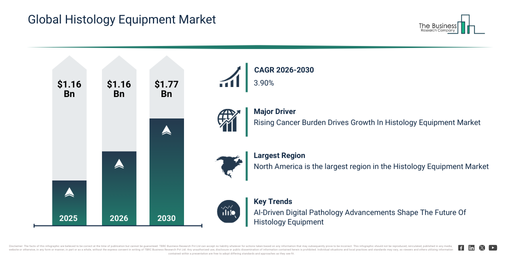
    The histology equipment market is projected to experience consistent expansion over the upcoming years, reaching a valuation of $0.83 billion by 2030, demonstrating a compound annual growth rate (CAGR) of 3.9%. This anticipated growth during the forecast period is primarily driven by several factors, including the escalating demand for precision medicine diagnostics, increased investment in digital pathology platforms, the expansion of pharmaceutical and biotech research pipelines, growing clinical trial activities, and the imperative for more rapid and precise tissue analysis. Key trends anticipated within this period encompass the growing adoption of automated histology workflow systems, the increasing utilization of digital pathology and slide scanning, a heightened demand for high-throughput tissue processing, the broader application of histology equipment in clinical diagnostics, and an intensified emphasis on standardization and workflow efficiency within laboratory environments.

    Get A Free Sample Report With In-Depth Market Insights:

    https://thebusinessresearchcompany.com/sample_request?id=79687151&type=smp&name=Histology%20Equipment%20Market%20Report%202026&utm_source=Blogs&utm_medium=Paid&utm_campaign=Oct_PR

    Histology Equipment Market Growth Momentum: What Factors Are Shaping Demand?

    The growing burden of cancer is projected to fuel the expansion of the histology equipment market moving forward. Cancer describes a condition where aberrant cells multiply and spread uncontrollably, potentially resulting in death if left untreated. The increase in cancer occurrences is multifaceted, involving both adaptable lifestyle elements and inherent biological and demographic aspects. Histology equipment assists in diagnosing and studying cancer by enabling comprehensive tissue examination, helping to pinpoint cancer types and stages, and guiding treatment plans. For instance, in July 2024, according to the Australian Institute of Health and Welfare, an Australia-based government agency, in Australia the number of cancer cases diagnosed increased from 160,570 in 2022 to 164,694 in 2023, reflecting a notable rise over the year. This upward trajectory highlights the expanding prevalence of cancer within the country. Therefore, the escalating burden of cancer is driving the histology equipment market.

    Histology Equipment Market Segment Analysis: What Are The Core Market Categories?

    The histology equipment market covered in this report is segmented –

    1) By Equipment: Slide Staining Systems, Scanners, Tissue Processing Systems, Microtomes, Coverslippers, Other Equipments

    2) By Product: Instruments And Analysis Software System, Consumable And Reagents

    3) By Application: Hospitals, Pharmaceutical Companies, Diagnostic Centers, Academic Institutes, Research Laboratories, Other Applications

    Subsegments:

    1) By Slide Staining Systems: Manual Staining Systems, Automated Staining Systems, Hybrid Staining Systems

    2) By Scanners: Digital Slide Scanners, Whole Slide Imaging Scanners, Confocal Scanners

    3) By Tissue Processing Systems: Manual Tissue Processors, Automated Tissue Processors, Vacuum Infiltration Tissue Processors

    4) By Microtomes: Rotary Microtomes, Cryostat Microtomes, Sliding Microtomes, Manual Microtomes, Semi-automated Microtomes

    5) By Coverslippers: Automatic Coverslippers, Manual Coverslippers, Semi-Automatic Coverslippers

    6) By Other Equipments: Embedding Stations, Tissue Embedding Centers, Cryostats, Histology Staining Racks, Histology Printers

    Histology Equipment Market Trends Redefining Industry Growth

    Leading companies in the global histology equipment market are increasingly adopting AI-enabled digital pathology solutions, including whole slide imaging systems integrated with artificial intelligence, to strengthen their competitive standing. For instance, in May 2024, 3DHISTECH, a Europe-based medical equipment manufacturer, introduced its P480 2nd Generation slide scanner, equipped with polarization imaging, a touchscreen interface, and an upgraded stepper-motor focusing system for faster and more robust performance. Similarly, in June 2024, Roche received FDA 510(k) clearance for its VENTANA DP 200 whole-slide scanner, part of its Digital Pathology Dx platform, which offers high-resolution imaging and remote diagnostic capabilities. This trend underscores how vendors are increasingly embedding intelligence into histology technologies to improve diagnostic precision, workflow efficiency, and accessibility—though high upfront investment and digital infrastructure needs continue to present adoption challenges.

    Histology Equipment Market Top Companies Driving Competitive Growth

    Major companies operating in the histology equipment market are Thermo Fisher Scientific Inc., Roche Diagnostics International Ltd, Agilent Technologies Inc., Hologic Inc., Leica Microsystems Nussloch GmbH, Cole-Parmer Instrument Company LLC, Sakura Finetechnical Company Ltd., Biogenex Laboratories Inc, StatLab Medical Products Inc., Biocare Medical LLC, Andwin Scientific, Covaris Inc., A. Menarini Diagnostics S.r.l, Diapath S.p.A., PolyScience Inc., CellPath USA, Medite Medical GmbH, Hacker Instruments & Industries Inc., Amos Scientific Pty. Ltd., TissueGnostics GmbH, Konfoong Bioinformation Tech Co. Ltd (KFBIO), Labstac USA, Intelsint Srl, Milestone Medical Inc., Histo-Line Laboratories s.r.l.

    View The Full Histology Equipment Market Report:

    https://thebusinessresearchcompany.com/report/histology-equipment-global-market-report?utm_source=Blogs&utm_medium=Paid&utm_campaign=Oct_PR

    Histology Equipment Market Global Footprint: Which Region Leads The Industry?

    North America was the largest region in the histology equipment market in 2025. Asia-Pacific is expected to be the fastest-growing region in the forecast period. The regions covered in the histology equipment market report are Asia-Pacific, South East Asia, Western Europe, Eastern Europe, North America, South America, Middle East, Africa.

    Reach Out To Our Team:

    The Business Research Company: https://www.thebusinessresearchcompany.com/

    Americas: +1 310-496-7795

    Asia: +44 7882 955267 & +91 8897263534

    Europe: +44 7882 955267

    Email us at: marketing@tbrc.info

    Follow us on:

    LinkedIn: https://in.linkedin.com/company/the-business-research-company

    YouTube: https://www.youtube.com/channel/UC24_fI0rV8cR5DxlCpgmyFQ

    Global Market Model: https://www.thebusinessresearchcompany.com/global-market-model
  • Hip Replacement Implants Market Valued At $12.73 Billion In 2026: Key Trends And Growth Drivers

    Hip Replacement Implants Market Valued At $12.73 Billion In 2026: Key Trends And Growth Drivers

    Built to provide research that’s more actionable and strategically valuable, The Business Research Company’s 2026 market reports include market attractiveness analysis, total addressable market sizing, company benchmarking matrices, interactive Excel dashboards, broader supply chain intelligence, emerging startup tracking, and in-depth product insights.

    Hip Replacement Implants Market Revenue Growth On Track For A 8.6% CAGR Through 2030

    The hip replacement implants market size has seen robust expansion in recent years. It is anticipated to increase from $8.43 billion in 2025 to $9.17 billion in 2026, achieving a compound annual growth rate (CAGR) of 8.8%. The historical growth in this market can be linked to factors such as the rising incidence of osteoarthritis, the growth of the aging population, the increased availability of orthopedic surgical facilities, advancements in implant material durability, and the growing expertise of orthopedic surgeons.

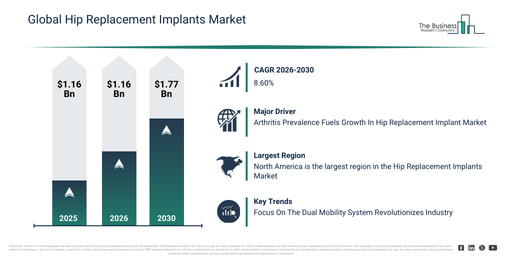
    The hip replacement implants market size is anticipated to undergo significant expansion in the upcoming years. It is predicted to reach $12.73 billion in 2030, achieving a compound annual growth rate (CAGR) of 8.6%. This growth during the forecast period is influenced by the rising demand for mobility restoration procedures, increased adoption of minimally invasive orthopedic surgeries, the development of personalized and 3D-printed implants, an intensified focus on implant longevity, and advancements in bearing surface technologies. Noteworthy trends for this period encompass the growing use of ceramic and hybrid hip implants, increased application of minimally invasive hip replacement techniques, a greater need for long-lasting implant materials, the broadening of personalized hip implant designs, and an elevated emphasis on revision hip procedures.

    Get A Free Sample Report With In-Depth Market Insights:

    https://thebusinessresearchcompany.com/sample_request?id=42404824&type=smp&name=Hip%20Replacement%20Implants%20Market%20Report%202026&utm_source=Blogs&utm_medium=Paid&utm_campaign=Oct_PR

    Hip Replacement Implants Market Expansion Drivers: What’s Shaping Future Growth?

    The projected expansion of the hip replacement implant market is fueled by the rising incidence of arthritis. Arthritis is characterized by the inflammation and soreness of one or multiple joints, resulting in significant pain in bones and joints. Common forms of arthritis include osteoarthritis and rheumatoid arthritis. In procedures like hip replacement surgeries, also known as hip arthroplasty, hip replacement implants are frequently utilized to manage arthritis, alleviate hip pain, and reinstate joint function. During these surgeries, artificial implants replace compromised or non-functional segments of the hip joint. As an illustration, data from January 2024, provided by the Office for Health Improvement and Disparities, a UK-based government body, indicated that in 2023, 18.4% of individuals aged 16 and above reported experiencing a long-term musculoskeletal condition. This represented a slight increase from 17.6% in 2022. It was also noted that males reported these conditions less often (15.8%) than females (20.9%). Consequently, the growing prevalence of arthritis is a key factor propelling the expansion of the hip replacement implant market.

    Hip Replacement Implants Market Segment Breakdown: Which Categories Lead On Revenue?

    The hip replacement implants market covered in this report is segmented –

    1) By Product Type: Femoral Reconstruction, Acetabular Reconstruction, Revision Hip Implants

    2) By Component: Ace Tabular Cup Systems, Hip Stem Systems, Revision Accessories And Components

    3) By Material: Metal-On-Polyethylene, Ceramic-On-Polyethylene, Ceramic-On-Ceramic

    4) By End-User: Orthopedic Clinics, Hospitals, Surgical Centers

    Subsegments:

    1) By Femoral Reconstruction: Femoral Heads, Femoral Stems

    2) By Acetabular Reconstruction: Acetabular Cups, Acetabular Liners

    3) By Revision Hip Implants: Revision Femoral Components, Revision Acetabular Components

    Hip Replacement Implants Market Strategic Trends: What Defines The Next Growth Phase?

    Leading companies in the hip replacement implant market are focused on developing innovative products, such as the Dual Mobility System, to secure a competitive advantage and increase their revenue streams. The Dual Mobility System itself is a hip arthroplasty implant that incorporates the advanced OXINIUM DH bearing surface, aiming to boost stability, lower the risk of dislocation, and enhance the range of motion, while simultaneously addressing wear and corrosion issues prevalent with conventional hip implants. As an example, in August 2023, Smith & Nephew PLC, a UK-based medical equipment manufacturing company, introduced its OR3O Dual Mobility System for primary and revision hip arthroplasty in India. This particular system, also featuring the sophisticated OXINIUM DH bearing surface, provides improved stability, a reduced dislocation risk, and a better range of motion when compared to standard solutions. In contrast to typical hip implants, OR3O eliminates the requirement for a modular CoCr liner and/or CoCr head ball, thereby lessening the wear and corrosion risks linked to that alloy by employing proprietary OXINIUM on XLPE for its femoral head and polyethylene inserts. OXINIUM DH further incorporates a patented diffusion hardening process to deepen the hardening, which contributes to its superior durability.

    Hip Replacement Implants Market Leading Players And Competitive Positioning

    Major companies operating in the hip replacement implants market are Zimmer Biomet Holdings Inc., DePuy Synthes, Stryker Corporation, Smith & Nephew PLC, Corin Group PLC, Waldemar Link GmbH & Co KG, Wright Medical Group NV, Corentec Co Ltd., MicroPort Scientific Corporation, Exactech Inc., OMNI life science Inc., Medacta International SA, PETER BREHM GmbH, Gruppo Bioimpianti srl., LimaCorporate SPA, Mathys AG Bettlach, Merete GmbH, Ortho Development Corporation, Shanghai MicroPort Orthopedics Inc., FH Orthopedics Inc., ConforMIS Inc., AK Medical Holdings Limited, Beijing Chunlizhengda Medical Instruments Co. Ltd.

    View The Full Hip Replacement Implants Market Report:

    https://thebusinessresearchcompany.com/report/hip-replacement-implants-global-market-report?utm_source=Blogs&utm_medium=Paid&utm_campaign=Oct_PR

    Hip Replacement Implants Market Regional Distribution: Which Areas Power Market Growth?

    North America was the largest region in the hip replacement implants market in 2025. Asia-Pacific is expected to be the fastest-growing region in the hip replacement implants market during the forecast period. The regions covered in the hip replacement implants market report are Asia-Pacific, South East Asia, Western Europe, Eastern Europe, North America, South America, Middle East, Africa.

    Reach Out To Our Team:

    The Business Research Company: https://www.thebusinessresearchcompany.com/

    Americas: +1 310-496-7795

    Asia: +44 7882 955267 & +91 8897263534

    Europe: +44 7882 955267

    Email us at: marketing@tbrc.info

    Follow us on:

    LinkedIn: https://in.linkedin.com/company/the-business-research-company

    YouTube: https://www.youtube.com/channel/UC24_fI0rV8cR5DxlCpgmyFQ

    Global Market Model: https://www.thebusinessresearchcompany.com/global-market-model
  • High-Resolution Anoscopy Market Size In 2026: Growth Outlook And Forecast Through 2030

    High-Resolution Anoscopy Market Size In 2026: Growth Outlook And Forecast Through 2030

    Backed by market attractiveness analysis, total addressable market sizing, company benchmarking matrices, interactive Excel dashboards, wider supply chain intelligence, emerging startup coverage, and detailed product-level insights, The Business Research Company’s 2026 market reports are designed to offer research that is more actionable and strategically valuable than ever.

    High-Resolution Anoscopy Market Value Growth And Long-Term Outlook

    The high-resolution anoscopy market has demonstrated robust expansion in recent years. It is forecast to grow from $16 billion in 2025 to $17 billion in 2026, at a compound annual growth rate (CAGR) of 6.2%. This historical growth can be attributed to several factors, including increased awareness of anal cancer and aIN, the expansion of specialty diagnostic clinics, the adoption of colposcopy-based diagnostic methods, enhancements in anoscopy visualization technologies, and a rise in preventive screening initiatives.

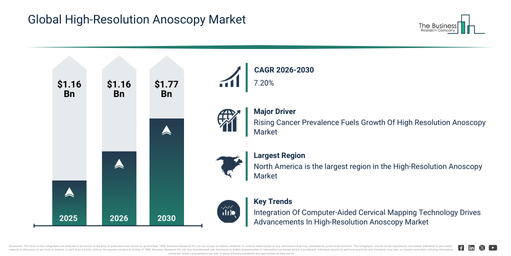
    The high-resolution anoscopy market is set for significant expansion in the upcoming years. Its value is projected to reach $22.43 billion by 2030, progressing at a compound annual growth rate (CAGR) of 7.2%. This growth during the forecast period can be attributed to several factors, including increased funding for early cancer detection initiatives, a growing demand for portable diagnostic instruments, the expansion of diagnostic services supported by telemedicine, the rising application of AI in image analysis, and a heightened focus on less invasive diagnostic methods. Prominent trends anticipated in this period involve the increasing adoption of digital and portable anoscopy devices, the growing use of high-resolution imaging for early disease identification, a reinforced emphasis on anal cancer screening programs, the extension of outpatient diagnostic offerings, and enhanced integration of image documentation systems.

    Get A Free Sample Report With In-Depth Market Insights:

    https://thebusinessresearchcompany.com/sample_request?id=38075625&type=smp&name=High-Resolution%20Anoscopy%20Market%20Report%202026&utm_source=Blogs&utm_medium=Paid&utm_campaign=Oct_PR

    High-Resolution Anoscopy Market Development Factors: What’s Supporting Demand?

    The increasing incidence of cancer is projected to fuel the growth of the high resolution anoscopy market. Cancer refers to a complex array of diseases distinguished by the unchecked growth and multiplication of abnormal cells. High-resolution anoscopy provides advanced imaging capabilities via a colposcope or operating microscope, allowing for more precise scrutiny and evaluation of the anal canal. High-Resolution Anoscopy medical equipment is instrumental in detecting malignant lesions or irregularities within the anal tract. For illustration, in January 2024, figures from the American Cancer Society, a US-based nonprofit cancer advocacy organization, indicated that cancer cases had risen to 2,001,140 from 1,958,310 in 2023, marking a 2.19% increase. Therefore, the expanding prevalence of cancer is stimulating the growth of the disposable endoscopes market.

    High-Resolution Anoscopy Market Segmentation: How Does The Market Break Down By Category?

    The high-resolution anoscopy market covered in this report is segmented –

    1) By Product Type: Colposcopes, Portable Colposcope, Hand-Held Colposcope, Anoscopes, Disposable Anoscope, Reusable Anoscope

    2) By Patient Population: Adults, Pediatrics

    3) By End Use: Hospitals, Specialty Clinics

    Subsegments:

    1) By Colposcopes: Standard Colposcopes, Digital Colposcopes

    2) By Portable Colposcope: Battery-Powered Portable Colposcopes, Rechargeable Portable Colposcopes

    3) By Hand-Held Colposcope: Standard Hand-Held Colposcopes, Advanced Hand-Held Colposcopes

    4) By Anoscopes: Standard Anoscopes, Lighted Anoscopes

    5) By Disposable Anoscope: Single-Use Disposable Anoscopes, Specialty Disposable Anoscopes

    6) By Reusable Anoscope: Standard Reusable Anoscopes, Advanced Reusable Anoscopes

    High-Resolution Anoscopy Market Transformation Trends: What Innovations Are Driving Change?

    Key companies operating in the high-resolution anoscopy market are adopting advanced technologies, such as computer-aided cervical mapping technology, to offer treatment-related services to their clientele and sustain their market position. This innovative device, combining computer-aided colposcopy with cervical mapping, generates data that assists healthcare professionals in the prompt detection of cervical abnormalities. For instance, in 2023, Rudolf Riester GmbH, a German manufacturer of medical devices for hospital and specialist care globally, revealed the launch of its LT-300 SD Digital Colposcope. Healthcare providers are able to identify anomalies by utilizing this Digital Colposcope for clinical examinations of the cervix, vulva, vagina, and the lower section of the womb. The LT-300 SD Digital Colposcopes are employed worldwide in hospitals, clinics, medical schools, telemedicine, assault advocacy programs, and prosecutor’s offices.

    High-Resolution Anoscopy Market Competitive Overview And Top Companies

    Major companies operating in the high-resolution anoscopy market are Philips Medical Systems Technologies Ltd., Olympus Corporation, Hoya Corporation, Karl Storz SE & Co. KG, CooperSurgical, Ecleris S.R.L, Pentax Medical, Fujifilm Medical Systems, Carl Zeiss Meditec AG, Optomic, Narang Medical Limited, Medorah Meditek Pvt Ltd., Welch Allyn, Leisegang Feinmechanik Optik GmbH, Medimar S.A., DYSIS Medical, Gynius Plus AB, Lutech Medical, Ottomed Endoscopy, Seiler Garepa Pvt. Ltd

    View The Full High-Resolution Anoscopy Market Report:

    https://thebusinessresearchcompany.com/report/high-resolution-anoscopy-global-market-report?utm_source=Blogs&utm_medium=Paid&utm_campaign=Oct_PR

    High-Resolution Anoscopy Market Leading Geography: Which Region Contributes The Most Revenue?

    North America was the largest region in the high-resolution anoscopy market in 2025. The regions covered in the high-resolution anoscopy market report are Asia-Pacific, South East Asia, Western Europe, Eastern Europe, North America, South America, Middle East, Africa.

    Reach Out To Our Team:

    The Business Research Company: https://www.thebusinessresearchcompany.com/

    Americas: +1 310-496-7795

    Asia: +44 7882 955267 & +91 8897263534

    Europe: +44 7882 955267

    Email us at: marketing@tbrc.info

    Follow us on:

    LinkedIn: https://in.linkedin.com/company/the-business-research-company

    YouTube: https://www.youtube.com/channel/UC24_fI0rV8cR5DxlCpgmyFQ

    Global Market Model: https://www.thebusinessresearchcompany.com/global-market-model
  • High-Frequency Chest-Wall Oscillation Devices Market Trends Supporting 7.2% CAGR Growth Through 2030

    High-Frequency Chest-Wall Oscillation Devices Market Trends Supporting 7.2% CAGR Growth Through 2030

    Featuring market attractiveness scoring, total addressable market sizing, company benchmarking matrices, interactive Excel dashboards, deeper supply chain intelligence, emerging startup tracking, and granular product-level insights, The Business Research Company’s 2026 market reports are built to deliver research that is both more actionable and more strategically valuable.

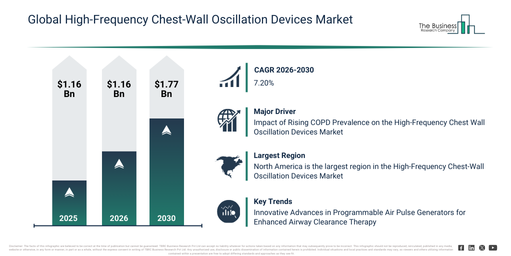
    High-Frequency Chest-Wall Oscillation Devices Market Poised To Hit $3.77 Billion By 2030 With A 7.2% CAGR

    The market size for high-frequency chest-wall oscillation devices has experienced significant growth in recent years. This market is anticipated to expand from $2.65 billion in 2025 to $2.86 billion in 2026, progressing at a compound annual growth rate (CAGR) of 8.0%. Historically, this growth can be attributed to factors such as the increasing prevalence of chronic respiratory diseases, the growing adoption of airway clearance therapies in hospitals, rising awareness regarding the importance of mucus clearance, the expansion of respiratory care infrastructure, and the increasing use of mechanical chest physiotherapy.

    The high-frequency chest-wall oscillation devices market is projected to experience substantial growth over the coming years, reaching $3.77 billion by 2030, driven by a compound annual growth rate (CAGR) of 7.2%. This anticipated expansion is primarily due to factors such as an increasing elderly demographic suffering from respiratory conditions, a growing inclination towards at-home respiratory care equipment, the rising prevalence of cystic fibrosis and bronchiectasis, the expansion of respiratory services offered in outpatient settings, and an intensified healthcare emphasis on managing chronic respiratory diseases over the long term. Key developments anticipated during this period include a greater uptake of home-based airway clearance treatments, an escalating demand for easily transportable and wearable high-frequency chest-wall oscillation devices, their increased application in managing chronic respiratory ailments, the broadening of airway clearance uses for both pediatric and geriatric populations, and a heightened focus on non-invasive respiratory treatment alternatives.

    Get A Free Sample Report With In-Depth Market Insights:

    https://thebusinessresearchcompany.com/sample_request?id=73370374&type=smp&name=High-Frequency%20Chest-Wall%20Oscillation%20Devices%20Market%20Report%202026&utm_source=Blogs&utm_medium=Paid&utm_campaign=Oct_PR

    High-Frequency Chest-Wall Oscillation Devices Market Industry Drivers: What’s Behind The Revenue Growth?

    The expanding occurrence of chronic obstructive pulmonary diseases is projected to boost the high-frequency chest wall oscillation (HFCWO) devices market in the future. Chronic obstructive pulmonary disease (COPD) is a progressive form of lung illness marked by persistent respiratory symptoms and restricted airflow. Factors such as smoking, environmental contaminants, genetic predispositions, and an aging population contribute to COPD cases. High-frequency chest wall oscillation (HFCWO) devices assist in managing chronic obstructive pulmonary disease (COPD) through mobilizing and eliminating airway mucus, thereby lowering infection risks, improving lung function, and increasing patient comfort. For example, data from June 2024 by the Australian Institute of Health and Welfare, an Australian government body, indicated that COPD constituted 3.6% of the overall disease burden in 2023, contrasting with its role in 4% of all deaths in 2022 (7,691 deaths). Consequently, the increasing incidence of chronic obstructive pulmonary diseases fuels the expansion of the high-frequency chest wall oscillation (HFCWO) devices market.

    High-Frequency Chest-Wall Oscillation Devices Market Segment Trends And Revenue Contributors

    The high-frequency chest-wall oscillation devices market covered in this report is segmented –

    1) By Product Type: Vest-Based HFCWO Devices, Wrap-Around Or Jacket-Based HFCWO Devices, Modular HFCWO Systems

    2) By Technology: Pneumatic Oscillation Technology, Mechanical Vibration Technology, Compression–Oscillation Combination Technology

    3) By Mobility Or Power Source: Stationary (AC-Powered) HFCWO Devices, Portable (Battery-Powered) HFCWO Devices

    4) By Patient Population: Pediatric Patients, Adult Patients, Geriatric Patients

    5) By End-Use Setting: Hospitals, Clinics, Home Healthcare Settings, Other Healthcare Facilities

    Subsegments:

    1) By Vest-Based HFCWO Devices: Standard-Fit Vest HFCWO Devices, Adjustable Or Multi-Size Vest HFCWO Devices, Pediatric Vest HFCWO Devices, Adult Vest HFCWO Devices, Geriatric-Optimized Vest HFCWO Devices

    2) By Wrap-Around or Jacket-Based HFCWO Devices: Full-Torso Wrap-Around HFCWO Devices, Partial-Coverage Jacket HFCWO Devices, Lightweight / Low-Profile Jacket HFCWO Devices, Easy-Wear HFCWO Devices for Limited-Mobility Patients

    3) By Modular HFCWO Systems: Console-Based Modular HFCWO Systems, Portable Modular HFCWO Systems, Interchangeable Vest Or Garment Modular Systems, Upgradable Modular HFCWO Platforms

    #High-Frequency Chest-Wall Oscillation Devices Market Growth Trends: What’s Shaping The Future Outlook?

    Major companies engaged in the high-frequency chest wall oscillation (HFCWO) devices market are currently advancing the creation of programmable air pulse generators to bolster treatment customization and patient comfort. These generators are engineered to emit controlled air pulses with modifiable frequencies and intensities, with the objective of mobilizing mucus and enhancing airway clearance for patients afflicted with conditions like cystic fibrosis or bronchiectasis. For instance, in November 2023, Electromed Inc., an American company focused on airway clearance devices, unveiled its fifth-generation SmartVest Clearway airway clearance system. This system is designed for managing respiratory conditions such as cystic fibrosis, chronic obstructive pulmonary disease (COPD), and other ailments that necessitate airway clearance therapy. The SmartVest Clearway system employs HFCWO therapy, which functions by delivering alternating air pulses into a vest garment, causing the chest wall to rapidly compress and release. This process generates oscillating airflow within the airways, and the SmartVest Clearway is specifically developed to offer therapeutic relief to patients encountering ineffective secretion clearance due to factors like muscle weakness, an inadequate cough, or impaired ventilation.

    High-Frequency Chest-Wall Oscillation Devices Market Competitive Landscape: Which Companies Lead The Industry?

    Major companies operating in the high-frequency chest-wall oscillation devices market are Electromed Inc., Tactile Medical, Trudell Medical International, Monaghan Medical Corporation, Respinova Ltd., PARI Medical Holding GmbH, Dymedso Medical, ABM Respiratory Care, Airway Clearance Inc., Sentec AG, Inogen Inc., Smiths Medical, Nihon Kohden Corporation, Getinge AB, Fisher & Paykel Healthcare, Vyaire Medical, Hamilton Medical, Lowenstein Medical, Breath Technologies, Medical Depot Inc.

    View The Full High-Frequency Chest-Wall Oscillation Devices Market Report:

    https://thebusinessresearchcompany.com/report/high-frequency-chest-wall-oscillation-devices-global-market-report?utm_source=Blogs&utm_medium=Paid&utm_campaign=Oct_PR

    High-Frequency Chest-Wall Oscillation Devices Market Regional Outlook: Where Is Opportunity Concentrated?

    North America was the largest region in the high-frequency chest-wall oscillation devices market in 2025. Asia-Pacific is expected to be the fastest-growing region in the forecast period. The regions covered in the high-frequency chest-wall oscillation devices market report are Asia-Pacific, South East Asia, Western Europe, Eastern Europe, North America, South America, Middle East, Africa.

    Reach Out To Our Team:

    The Business Research Company: https://www.thebusinessresearchcompany.com/

    Americas: +1 310-496-7795

    Asia: +44 7882 955267 & +91 8897263534

    Europe: +44 7882 955267

    Email us at: marketing@tbrc.info

    Follow us on:

    LinkedIn: https://in.linkedin.com/company/the-business-research-company

    YouTube: https://www.youtube.com/channel/UC24_fI0rV8cR5DxlCpgmyFQ

    Global Market Model: https://www.thebusinessresearchcompany.com/global-market-model
  • High Speed Laser Ablation System Market Forecast Highlights A $2.86 Billion Opportunity For Industry Participants

    High Speed Laser Ablation System Market Forecast Highlights A $2.86 Billion Opportunity For Industry Participants

    Built to provide research that’s more actionable and strategically valuable, The Business Research Company’s 2026 market reports include market attractiveness analysis, total addressable market sizing, company benchmarking matrices, interactive Excel dashboards, broader supply chain intelligence, emerging startup tracking, and in-depth product insights.

    High Speed Laser Ablation System Market Size And Revenue Outlook Through 2030

    The high speed laser ablation system market has demonstrated robust expansion recently. It is projected to increase from $1.88 billion in 2025 to $2.05 billion by 2026, exhibiting a compound annual growth rate (CAGR) of 8.9%. Historically, this market’s growth was influenced by factors such as the limited availability of high-speed laser systems, a reliance on traditional machining methods, increasing demand from industrial manufacturing, early adoption in medical procedures, and the high cost constraints associated with the equipment.

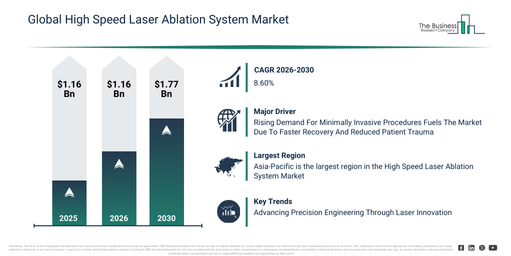
    The market size for high speed laser ablation systems is poised for robust growth in the coming years. It is projected to expand to $2.86 billion by 2030, achieving a compound annual growth rate (CAGR) of 8.6%. This anticipated growth can be ascribed to several factors, including developments in femtosecond and picosecond lasers, the widening scope of laser applications in the automotive and aerospace industries, a growing need for precision tissue ablation in healthcare, the integration with automated manufacturing systems, and rising investments in laser technology research. Significant trends expected during this forecast period involve the increasing adoption of ultrafast and precision lasers, an uptick in medical and surgical laser applications, a rise in their use within semiconductor and electronics manufacturing, the expansion of research and scientific laser applications, and a concentrated focus on safety standards and minimally invasive procedures.

    Get A Free Sample Report With In-Depth Market Insights:

    https://thebusinessresearchcompany.com/sample_request?id=73888899&type=smp&name=High%20Speed%20Laser%20Ablation%20System%20Market%20Report%202026&utm_source=Blogs&utm_medium=Paid&utm_campaign=Oct_PR

    High Speed Laser Ablation System Market Growth Factors: What’s Supporting Expansion?

    A rising need for minimally invasive procedures is anticipated to fuel expansion in the high-speed laser ablation system market in the future. These medical techniques employ tiny cuts and specific instruments to lessen harm to tissue, discomfort, and the time needed for recovery. The increase in minimally invasive procedures is attributed to quicker patient healing with less pain and briefer hospitalizations. High-speed laser ablation systems assist minimally invasive procedures by accurately eliminating or vaporizing specific tissue while causing minimal harm to adjacent regions, thereby facilitating precise treatment with smaller incision sizes and quicker recovery. An example of this is the report from June 2024 by the American Society of Plastic Surgeons, a US-based professional society, indicating that approximately 25.4 million minimally invasive procedures were carried out in 2023, representing a 7% increase compared to 2022. Consequently, the escalating need for minimally invasive procedures is propelling the expansion of the high-speed laser ablation system market.

    High Speed Laser Ablation System Market Segment Analysis Spotlighting Growth Areas

    The high speed laser ablation system market covered in this report is segmented –

    1) By Laser Type: Ultrafast, Nanosecond, Picosecond, Femtosecond

    2) By Application: Industrial Manufacturing, Medical And Healthcare, Scientific Research, Semiconductor And Electronics

    3) By End-Use Industry: Automotive, Aerospace And Defense, Electronics And Semiconductor, Medical Devices, Research Institutions, Energy And Power, Other Industries

    Subsegments:

    1) By Ultrafast Lasers: Mode-Locked Lasers, Fiber Lasers, Solid-State Lasers

    2) By Nanosecond Lasers: Q-Switched Nd:Yag Lasers, Excimer Lasers, Diode-Pumped Solid-State Lasers

    3) By Picosecond Lasers: Picosecond Fiber Lasers, Solid-State Picosecond Lasers, Mode-Locked Semiconductor Lasers

    4) By Femtosecond Lasers: Ti:Sapphire Lasers, Femtosecond Fiber Lasers, Diode-Pumped Femtosecond Lasers

    High Speed Laser Ablation System Market Industry Trends: What’s Reshaping Demand?

    Leading companies in the high-speed laser ablation system market are concentrating on developing technological advancements, such as micromachining and 3D surface processing solutions. These innovations aim to deliver higher accuracy, reduce material waste, and support the production of next-generation microscale devices. Micromachining and 3D surface processing solutions refer to laser-based techniques employed to precisely modify or remove material at micro-scale levels for creating intricate, high-precision components. For instance, in June 2024, GF Machining Solutions GmbH, a machine industry company based in Switzerland, launched a revolutionary LASER S 500 (U), designed for ultra-precise texturing and engraving on complex 3D surfaces. This cutting-edge laser micromachining system is engineered for high-precision 3D surface processing across the electronics, medical technology, and watchmaking sectors. It offers unrivaled accuracy (±5 μm), ultra-fine surface finishes (Ra 0.1 μm), and high-speed productivity, enabled by its thermoregulated components, high-dynamics motors, and a high-speed 3D scanner. Highly configurable with three- or five-axis options and nanosecond or femtosecond laser sources, the system excels at micro-shaping, engraving, texturing, and structuring on hard and brittle materials like silicon carbide, alumina, and tungsten carbide, as well as softer metals.

    High Speed Laser Ablation System Market Competitive Landscape: Who Leads The Industry?

    Major companies operating in the high speed laser ablation system market are Hitachi Ltd., Thermo Fisher Scientific Inc., KEYENCE Corporation, Teledyne Technologies Incorporated, Lumentum Holdings Inc., IPG Photonics Corporation, Resonetics Inc., Ekspla, Laserax Inc., Preco LLC., LasX Industries Ltd., SCHWIND eye-tech-solutions GmbH, Pantec Biosolutions AG., Applied Spectra Inc., Intelligent Imaging Innovations Inc., Jenoptik AG., JPT Laser, Clark-MXR Inc., PolarOnyx Inc., Quantum Composers Inc., Suresh Indu Lasers Pvt. Ltd., Laser Photonics LLC.

    View The Full High Speed Laser Ablation System Market Report:

    https://thebusinessresearchcompany.com/report/high-speed-laser-ablation-system-global-market-report?utm_source=Blogs&utm_medium=Paid&utm_campaign=Oct_PR

    High Speed Laser Ablation System Market Geographic Landscape: Which Region Leads Industry Growth?

    Asia-Pacific was the largest region in the high speed laser ablation system market in 2025. The regions covered in the high speed laser ablation system market report are Asia-Pacific, South East Asia, Western Europe, Eastern Europe, North America, South America, Middle East, Africa.

    Reach Out To Our Team:

    The Business Research Company: https://www.thebusinessresearchcompany.com/

    Americas: +1 310-496-7795

    Asia: +44 7882 955267 & +91 8897263534

    Europe: +44 7882 955267

    Email us at: marketing@tbrc.info

    Follow us on:

    LinkedIn: https://in.linkedin.com/company/the-business-research-company

    YouTube: https://www.youtube.com/channel/UC24_fI0rV8cR5DxlCpgmyFQ

    Global Market Model: https://www.thebusinessresearchcompany.com/global-market-model
  • High Intensity Focused Ultrasound (HIFU) Market Analysis: How The Industry Is Evolving Toward A $2.76 Billion Future

    High Intensity Focused Ultrasound (HIFU) Market Analysis: How The Industry Is Evolving Toward A $2.76 Billion Future

    Backed by market attractiveness analysis, total addressable market sizing, company benchmarking matrices, interactive Excel dashboards, wider supply chain intelligence, emerging startup coverage, and detailed product-level insights, The Business Research Company’s 2026 market reports are designed to offer research that is more actionable and strategically valuable than ever.

    High Intensity Focused Ultrasound (HIFU) Market Growth From $1.84 Billion In 2026 To $2.76 Billion By 2030 At A CAGR Of 10.7%

    The high intensity focused ultrasound (hifu) market size has experienced rapid growth in recent years. This market is expected to expand from $1.66 billion in 2025 to $1.84 billion in 2026, achieving a compound annual growth rate (CAGR) of 10.8%. The growth observed in the past can be attributed to the increasing prevalence of uterine fibroids, a rising incidence of prostate cancer, advancements in ultrasound technology, growing awareness about non-invasive therapies, and the availability of skilled healthcare professionals.

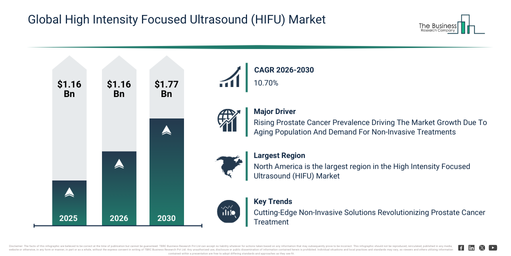
    The high intensity focused ultrasound (hifu) market size is forecasted to undergo significant expansion in the upcoming years. Its valuation is expected to reach $2.76 billion by 2030, demonstrating a compound annual growth rate (CAGR) of 10.7%. This growth over the forecast period can be primarily attributed to technological progress in robotic hifu systems, the integration of artificial intelligence and imaging for enhanced precision therapy, rising adoption in new markets, increased investments in healthcare infrastructure, and the proliferation of home care and portable hifu devices. Notable trends foreseen include the application of focused ultrasound in oncology, the broadening scope of non-invasive therapeutic options, integration with imaging modalities, the development of portable and home-based hifu solutions, and its role in minimally invasive pain management.

    Get A Free Sample Report With In-Depth Market Insights:

    https://thebusinessresearchcompany.com/sample_request?id=26262144&type=smp&name=High%20Intensity%20Focused%20Ultrasound%20%28HIFU%29%20Market%20Report%202026&utm_source=Blogs&utm_medium=Paid&utm_campaign=Oct_PR

    High Intensity Focused Ultrasound (HIFU) Market Demand Drivers: What’s Powering Industry Growth?

    The increasing occurrence of prostate cancer is anticipated to drive the expansion of the high intensity focused ultrasound (HIFU) market in the future. Prostate cancer is a cancerous growth developing within the male prostate gland, generally progressing slowly, yet capable of becoming aggressive and metastasizing if left untreated. The increase in prostate cancer diagnoses is primarily due to an older demographic, given that the probability of contracting the illness significantly rises with advancing age. High intensity focused ultrasound (HIFU) offers a treatment for prostate cancer by employing concentrated ultrasound waves to produce intense heat, precisely eliminating cancerous cells in the prostate while preserving adjacent healthy tissue. For example, as reported in January 2025 by Prostate Cancer UK, a non-profit organization from the UK dedicated to advancing prostate cancer research, awareness, and patient assistance, 50,751 men in England received a prostate cancer diagnosis in 2022, a figure that climbed to 55,033 cases in 2023. Consequently, the growing incidence of prostate cancer is fueling the expansion of the high intensity focused ultrasound (HIFU) market.

    High Intensity Focused Ultrasound (HIFU) Market Segment Performance And Emerging Opportunities

    The high intensity focused ultrasound (hifu) market covered in this report is segmented –

    1) By Device Type: Standalone High Intensity Focused Ultrasound Devices, Portable High Intensity Focused Ultrasound Devices, Combination High Intensity Focused Ultrasound Devices, Robotic High Intensity Focused Ultrasound Systems, Ultrasound-Guided High Intensity Focused Ultrasound Devices

    2) By Method: Non-Invasive, Minimal-Invasive Method

    3) By Application: Uterine Fibroids, Prostate Cancer, Essential Tremor, Dermatology, Breast Cancer, Glaucoma, Backpain, Facetogenic, Other Applications

    4) By End-User: Hospitals, Ambulatory Surgical Centers, Clinics, Research Institutions, Home Care Settings

    Subsegments:

    1) By Standalone High Intensity Focused Ultrasound Devices: Fixed-Site Systems, Hospital-Based Systems

    2) By Portable High Intensity Focused Ultrasound Devices: Handheld Units, Mobile Cart-Based Systems

    3) By Combination High Intensity Focused Ultrasound Devices: High Intensity Focused Ultrasound + Magnetic Resonance Imaging Systems, High Intensity Focused Ultrasound + Ultrasound Imaging Systems

    4) By Robotic High Intensity Focused Ultrasound Systems: Robotic-Assisted Laparoscopic High Intensity Focused Ultrasound, Robotic Arm-Integrated High Intensity Focused Ultrasound Platforms

    5) By Ultrasound-Guided High Intensity Focused Ultrasound Devices: Real-Time Ultrasound Navigation Systems, Doppler-Based Targeting Systems

    High Intensity Focused Ultrasound (HIFU) Market Innovation Trends: What Developments Are Reshaping The Industry?

    Major companies operating in the high-intensity focused ultrasound (HIFU) market are concentrating on developing innovative solutions, such as noninvasive surgical equipment, to enhance treatment precision, shorten patient recovery time, and reduce complications linked to conventional surgical methods. Non-invasive surgical equipment refers to medical technologies that address internal conditions without requiring incisions, employing methods like focused ultrasound or lasers to accurately target tissues. For instance, in April 2025, EDAP TMS S.A., a France-based company specializing in minimally invasive medical devices, introduced the advanced focal one i system to boost the precision and effectiveness of non-invasive prostate cancer treatment. This system integrates advanced imaging technologies (PSMA PET, micro-ultrasound) and AI-driven algorithms to provide precise, personalized robotic high-intensity focused ultrasound therapy for prostate cancer, with improved workflow integration and remote collaboration features. Its goal is to refine treatment accuracy, lower the risk of side effects, and increase access to specialized care through remote proctoring and real-time streaming.

    High Intensity Focused Ultrasound (HIFU) Market Company Landscape And Competitive Strategy

    Major companies operating in the high intensity focused ultrasound (hifu) market are Siemens Healthineers AG, Koninklijke Philips NV, GE HealthCare Technologies Inc, Merz Pharma GmbH Co KGaA, Insightec Ltd, EDAP TMS SA, Chongqing Haifu Medical Technology Co Ltd, SuperSonic Imagine SA, Alpinion Medical Systems Co Ltd, ILJIN Holdings Co Ltd, Sonablate Corp, SonaCare Medical LLC, Profound Medical Corp, Mianyang Sonic Electronic LTD, Verasonics Inc, FUS Instruments Inc, Sonic Concepts Inc, Theraclion SA, CARThera SA, HIFU Tech Ltd, Chongqing Institute of Ultrasound Equipment

    View The Full High Intensity Focused Ultrasound (HIFU) Market Report:

    https://thebusinessresearchcompany.com/report/high-intensity-focused-ultrasound-hifu-global-market-report?utm_source=Blogs&utm_medium=Paid&utm_campaign=Oct_PR

    High Intensity Focused Ultrasound (HIFU) Market Largest Region: Which Geography Holds The Biggest Share?

    North America was the largest region in the high intensity focused ultrasound market in 2025. Asia-Pacific is expected to be the fastest-growing region in the forecast period. The regions covered in the high intensity focused ultrasound (hifu) market report are Asia-Pacific, South East Asia, Western Europe, Eastern Europe, North America, South America, Middle East, Africa.

    Reach Out To Our Team:

    The Business Research Company: https://www.thebusinessresearchcompany.com/

    Americas: +1 310-496-7795

    Asia: +44 7882 955267 & +91 8897263534

    Europe: +44 7882 955267

    Email us at: marketing@tbrc.info

    Follow us on:

    LinkedIn: https://in.linkedin.com/company/the-business-research-company

    YouTube: https://www.youtube.com/channel/UC24_fI0rV8cR5DxlCpgmyFQ

    Global Market Model: https://www.thebusinessresearchcompany.com/global-market-model
  • High Flux Dialyzer Market Outlook Through 2030: Understanding The Growth Opportunity

    High Flux Dialyzer Market Outlook Through 2030: Understanding The Growth Opportunity

    Featuring market attractiveness scoring, total addressable market sizing, company benchmarking matrices, interactive Excel dashboards, deeper supply chain intelligence, emerging startup tracking, and granular product-level insights, The Business Research Company’s 2026 market reports are built to deliver research that is both more actionable and more strategically valuable.

    High Flux Dialyzer Market Expansion Outlook: What Revenue Opportunities Are Ahead?

    The high flux dialyzer market size has experienced rapid growth in recent years. It is anticipated to expand from $2.25 billion in 2025 to $2.52 billion in 2026, exhibiting a compound annual growth rate (CAGR) of 11.7%. This historical growth can be attributed to several factors including the increasing prevalence of chronic kidney disease, a growing dependence on conventional low flux dialyzers, the expansion of hospital-based dialysis centers, rising awareness of dialysis treatment options, and improvements in basic hemodialysis infrastructure.

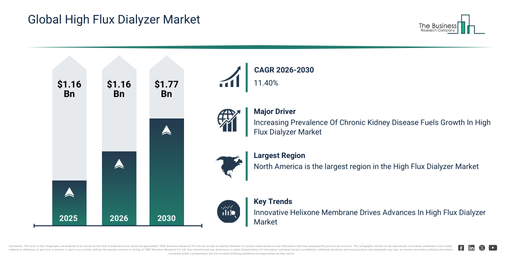
    The high flux dialyzer market is projected to undergo significant expansion in the coming years. It is forecast to grow to $3.87 billion in 2030, achieving a compound annual growth rate (CAGR) of 11.4%. This growth during the forecast period is primarily driven by the increasing global dialysis patient population, advancements in high permeability membranes, a noticeable shift towards high-efficiency dialysis therapies, the expansion of clinic-based dialysis centers, and a rise in healthcare expenditure for renal care. Prominent trends expected in this period encompass a greater adoption of high flux dialyzers for enhanced toxin clearance, a growing preference for disposable dialyzers to lessen infection risks, an escalating demand for intensive and long-term dialysis treatments, ongoing advancements in membrane materials and permeability control, and an emphasis on improving patient outcomes and the efficiency of dialysis.

    Get A Free Sample Report With In-Depth Market Insights:

    https://thebusinessresearchcompany.com/sample_request?id=63773991&type=smp&name=High%20Flux%20Dialyzer%20Market%20Report%202026&utm_source=Blogs&utm_medium=Paid&utm_campaign=Oct_PR

    High Flux Dialyzer Market Growth Drivers: What’s Behind The Acceleration?

    The expanding high flux dialyzer market is anticipated to be fueled by the rising incidence of chronic kidney disease in the future. Chronic kidney disease is a persistent medical condition where the kidneys progressively lose their capacity to filter out waste products and excess fluids from the bloodstream. The growing occurrence of chronic kidney disease can be attributed to several escalating risk factors, including diabetes, high blood pressure, an aging demographic, and lifestyle choices such as inadequate nutrition and insufficient physical exertion. In the context of chronic kidney disease (CKD), high flux dialyzers are utilized to enhance the removal of larger molecules and boost the overall efficiency of dialysis, thus providing improved clinical outcomes for patients. As an illustration, figures released by Kidney Research UK, a registered charity operating in the UK, in June 2023 indicate that the count of individuals affected by chronic kidney disease (CKD) within the UK is forecast to increase from 7.19 million in 2023 to 7.61 million by the year 2033. Consequently, the escalating incidence of chronic kidney disease serves as a primary impetus for the high flux dialyzer market.

    High Flux Dialyzer Market Segment Landscape And Growth Outlook

    The high flux dialyzer market covered in this report is segmented –

    1) By Type: 20-30ml/h.mmHg, Over 30ml/h.mmHg

    2) By Usage Type: Disposable, Reusable

    3) By Application: Hospitals, Clinic Centers, Other Applications

    Subsegments:

    1) By 20-30 ml/h.mmHg: Low-Range High Flux Dialyzers, Standard High Flux Dialyzers, Moderate Permeability Dialyzers

    2) By Over 30 ml/h.mmHg: High-Range High Flux Dialyzers, Ultra-High Permeability Dialyzers, Dialyzers For Intensive Dialysis Treatments

    High Flux Dialyzer Market Trends: What’s Defining The Industry’s Next Phase?

    Major companies within the high flux dialyzer market are strategically focusing on developing innovative products featuring the helixone membrane to gain a competitive advantage. The helixone membrane is a high-performance synthetic membrane specifically employed in dialysis, particularly in hemodialysis filters. For example, in November 2023, Fresenius Medical Care, a Germany-based healthcare company, unveiled the FX CorAL high-flux dialyzer. This product integrates the advanced helixone membrane, which provides exceptional clearance of middle-molecular-weight toxins while maintaining high hemocompatibility, significantly reducing the risk of blood clotting during treatment. Moreover, the membrane’s sophisticated structure ensures stable performance even at high flux rates, addressing the necessity for more effective and safer dialysis procedures. These advancements highlight the continuous efforts to refine dialyzer technologies, fulfilling the rising demand for enhanced patient care.

    High Flux Dialyzer Market Key Players Shaping Industry Direction

    Major companies operating in the high flux dialyzer market are Medtronic plc, Fresenius Medical Care AG, Asahi Kasei Corporation, Toray Industries Inc., Baxter International Inc., DaVita Inc., Nipro Corporation, B. Braun Medical, Nikkiso Co. Ltd., JMS Co. Ltd., Bain Medical Equipment-Guangzhou Co. Ltd., Shandong Weigao, Quanta Dialysis Technologies Limited, Farmasol srl., Mozarc Medical Holdings LLC., Kawasumi Laboratories America Inc., Medica S.p.A., Shanghai Peony Medical Technologies Ltd., Allmed Medical Care Holdings Limited., Dialife S.A.

    View The Full High Flux Dialyzer Market Report:

    https://thebusinessresearchcompany.com/report/high-flux-dialyzer-global-market-report?utm_source=Blogs&utm_medium=Paid&utm_campaign=Oct_PR

    High Flux Dialyzer Market Regional Analysis: Which Geography Leads On Revenue?

    North America was the largest region in the high flux dialyzer market in 2025. The regions covered in the high flux dialyzer market report are Asia-Pacific, South East Asia, Western Europe, Eastern Europe, North America, South America, Middle East, Africa.

    Reach Out To Our Team:

    The Business Research Company: https://www.thebusinessresearchcompany.com/

    Americas: +1 310-496-7795

    Asia: +44 7882 955267 & +91 8897263534

    Europe: +44 7882 955267

    Email us at: marketing@tbrc.info

    Follow us on:

    LinkedIn: https://in.linkedin.com/company/the-business-research-company

    YouTube: https://www.youtube.com/channel/UC24_fI0rV8cR5DxlCpgmyFQ

    Global Market Model: https://www.thebusinessresearchcompany.com/global-market-model
  • High Flow Ventilators Market Growth Potential: What The Latest Forecast Reveals

    High Flow Ventilators Market Growth Potential: What The Latest Forecast Reveals

    Built to provide research that’s more actionable and strategically valuable, The Business Research Company’s 2026 market reports include market attractiveness analysis, total addressable market sizing, company benchmarking matrices, interactive Excel dashboards, broader supply chain intelligence, emerging startup tracking, and in-depth product insights.

    High Flow Ventilators Market Growth Potential: How Will Market Size Shift Through 2030?

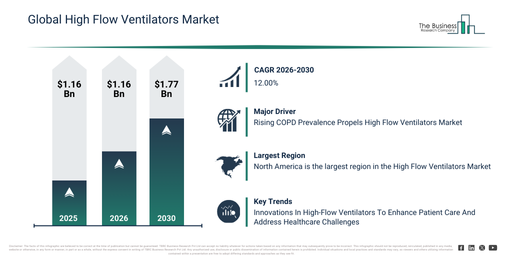
    The market for high flow ventilators has experienced significant expansion in recent years. Forecasts indicate it will grow from $36.77 billion in 2025 to $40.97 billion in 2026, at a compound annual growth rate (CAGR) of 11.4%. This historic growth is largely attributable to the increasing prevalence of respiratory disorders, the expansion of intensive care infrastructure, a rise in hospital admissions for COPD, advancements in ventilator technology, and the availability of advanced respiratory consumables.

    The high flow ventilators market is anticipated to experience substantial growth over the next few years, with its size projected to reach $64.47 billion in 2030, growing at a compound annual growth rate (CAGR) of 12.0%. This expansion during the forecast period is attributable to the increasing embrace of home respiratory care, rising investments in portable ventilation devices, the expansion of tele-respiratory monitoring, a growing emphasis on early respiratory intervention, and continuous innovation in oxygen delivery systems. Prominent trends for this period include the increasing adoption of high flow oxygen therapy, a rising demand for non-invasive ventilation support, the growing utilization of portable ventilator systems, the expansion of remote respiratory monitoring, and an enhanced focus on patient comfort and humidification.

    Get A Free Sample Report With In-Depth Market Insights:

    https://thebusinessresearchcompany.com/sample_request?id=27833801&type=smp&name=High%20Flow%20Ventilators%20Market%20Report%202026&utm_source=Blogs&utm_medium=Paid&utm_campaign=Oct_PR

    High Flow Ventilators Market Growth Factors Behind Sustained Expansion

    The escalating occurrence of chronic obstructive pulmonary disease (COPD) is projected to boost the expansion of the high flow ventilators market moving forward. COPD is characterized as a persistent inflammatory lung condition that impedes breathing and involves airflow limitation that is not entirely reversible, typically progressing over time. The heightened prevalence of chronic obstructive pulmonary disease primarily stems from tobacco smoking, as prolonged exposure to cigarette smoke damages the airways and lung tissue, leading to progressively difficult breathing. High-flow ventilators offer advantages in COPD management by enhancing oxygenation, diminishing the effort required for breathing, and providing positive end-expiratory pressure, particularly during acute exacerbations or situations demanding advanced respiratory support. For instance, according to data from June 2024 provided by the Australian Institute of Health and Welfare, an Australia-based government agency, COPD accounted for 3.6% of the total disease burden in 2023 and comprised 50% of the overall burden of respiratory diseases. Additionally, in 2022, COPD was the leading cause of 7,691 deaths, with a mortality rate of 29.6 per 100,000 people, representing 4.0% of all deaths. Thus, the rising incidence of COPD will drive the growth of the high flow ventilators market.

    High Flow Ventilators Market Breakdown By Product Type And Application

    The high flow ventilators market covered in this report is segmented –

    1) By Modality Type: Portable High Flow Ventilators, Trolley Mounted High Flow Ventilators

    2) By Interface: High-Flow Nasal Cannula (HFNC), Tracheostomy Interface

    3) By End-User: Hospitals, Specialty Clinics, Long Term Care Centers, Other End Users

    Subsegments:

    1) By Portable High Flow Ventilators: Battery-Powered, Compact Designs

    2) By Trolley Mounted High Flow Ventilators: Standard Trolley Mounted, Advanced Trolley Mounted

    High Flow Ventilators Market Industry Trends Fueling Future Revenue Growth

    Leading companies within the high-flow ventilator market are actively developing sophisticated high-flow oxygen therapy ventilators. These efforts aim to elevate patient care, enhance the efficiency of respiratory support, and satisfy the growing need for adaptable and user-friendly devices across healthcare environments. Such advanced high-flow oxygen therapy ventilators are specialized pieces of equipment engineered to deliver a greater oxygen flow to patients, thereby improving oxygenation and providing better respiratory support, particularly crucial for acute respiratory failure or conditions demanding amplified ventilation. For example, in October 2024, Nihon Kohden America, a US-based medical technology firm, unveiled the NKV-440. This launch was intended to confront healthcare challenges, including staff shortages and budgetary restrictions, simultaneously ensuring that more healthcare providers could access trustworthy respiratory solutions. This innovative system is specifically designed to address the increasing requirement for versatile ventilators within the current healthcare setting.

    High Flow Ventilators Market Competitive Analysis Of Leading Industry Participants

    Major companies operating in the high flow ventilators market are ResMed Inc., Hamilton Medical AG, Vyaire Medical Inc., Koninklijke Philips N.V., Medtronic plc, Fisher & Paykel Healthcare Corporation Limited, Drägerwerk AG & Co. KGaA, Getinge AB, Mindray Medical International Limited, Nihon Kohden Corporation, Ventec Life Systems Inc., Magnamed Tecnologia Médica S.A., Acutronic Medical Systems AG, Hamilton Medical USA Inc., Metan Co. Ltd., Sechrist Industries Inc., Pulmodyne Systems Inc., ZOLL Medical Corporation, Laerdal Medical AS, Smiths Group plc, Percussionaire Corporation

    View The Full High Flow Ventilators Market Report:

    https://thebusinessresearchcompany.com/report/high-flow-ventilators-global-market-report?utm_source=Blogs&utm_medium=Paid&utm_campaign=Oct_PR

    High Flow Ventilators Market Geographic Spread And Regional Opportunities

    North America was the largest region in the high flow ventilators market in 2025.Asia-Pacific is expected to be the fastest-growing region in the global high flow ventilators market report during the forecast period. The regions covered in the high flow ventilators market report are Asia-Pacific, South East Asia, Western Europe, Eastern Europe, North America, South America, Middle East, Africa.

    Reach Out To Our Team:

    The Business Research Company: https://www.thebusinessresearchcompany.com/

    Americas: +1 310-496-7795

    Asia: +44 7882 955267 & +91 8897263534

    Europe: +44 7882 955267

    Email us at: marketing@tbrc.info

    Follow us on:

    LinkedIn: https://in.linkedin.com/company/the-business-research-company

    YouTube: https://www.youtube.com/channel/UC24_fI0rV8cR5DxlCpgmyFQ

    Global Market Model: https://www.thebusinessresearchcompany.com/global-market-model