Category: Medical Equipment

  • Latest Market Developments in High Intensity Focused Ultrasound (HIFU) Industry: Forecast 2025–2029

    Latest Market Developments in High Intensity Focused Ultrasound (HIFU) Industry: Forecast 2025–2029

    Claim your 30% discount on Global Market Reports with code ONLINE30. Limited time only.

    Claim your 30% discount on Global Market Reports with code ONLINE30. Limited time only.

    What Is the Estimated Industry Valuation for the High Intensity Focused Ultrasound (HIFU) Sector?

    The market for high-intensity focused ultrasound has seen significant expansion recently. It is projected that this market will escalate from a worth of $1.49 billion in 2024 to $1.66 billion by 2025, indicating a compound annual growth rate (CAGR) of 11.1%. The unprecedented growth experienced in the previous years can be traced back to factors such as increased spending on healthcare, a surge in the demand for outpatient procedures, an uptick in clinical research and experimental trials, higher prevalence of chronic liver diseases and pancreatic cancers, and augmented investments by manufacturers of medical devices.

    Expectations are for the market for high-intensity focused ultrasound to experience significant growth in the coming years, reaching a size of $2.50 billion by the year 2029 at a compound annual growth rate (CAGR) of 10.8%. This projected market expansion can be linked to factors such as the rising prevalence of cancer, increased preference for minimally invasive medical procedures, growing awareness of non-invasive treatment options, a rise in uterine fibroids and adenomyosis incidences, as well as an ageing population. Key trends to watch in this forecast period include the maturation of technologies used in real-time imaging guidance, progress in transducer technology, advances in systems for thermal monitoring, enhancements in user interface and software platform driven by technology, and progress in the development of high-powered, multi-frequency ultrasound transducers.

    Download The Free Sample Report Here:

    https://www.thebusinessresearchcompany.com/sample.aspx?id=25783&type=smp

    What Forces Are Driving The Growth Of The High Intensity Focused Ultrasound (HIFU) Market?

    The escalating occurrence of prostate cancer is predicted to be a significant driver of the high intensity focused ultrasound (HIFU) market’s expansion. This form of cancer, which develops as a malignant tumor in the prostate gland in men, often grows slowly but can become rapidly aggressive and metastasize if left untreated. The primary factor contributing to the increase in prostate cancer cases is an aging population, due to the significantly higher risk of contracting the disease as one ages. HIFU aids in the treatment of prostate cancer by deploying concentrated ultrasound waves that produce extreme heat, accurately targeting and eradicating cancerous tissue in the prostate without damaging adjacent healthy tissue. For example, in October 2024, the UK’s National Health Service issued a report stating that in 2022 prostate cancer was the most frequently diagnosed cancer, with 54,732 new diagnoses – a spike of 11,354 compared to 2021. Consequently, the upsurge in prostate cancer cases is fueling the expansion of the high intensity focused ultrasound (HIFU) market.

    How Is The High Intensity Focused Ultrasound (HIFU) Industry Segmented Across Key Parameters?

    The high intensity focused ultrasound (hifu) market covered in this report is segmented –

    1) By Device Type: Standalone High Intensity Focused Ultrasound Devices, Portable High Intensity Focused Ultrasound Devices, Combination High Intensity Focused Ultrasound Devices, Robotic High Intensity Focused Ultrasound Systems, Ultrasound-Guided High Intensity Focused Ultrasound Devices

    2) By Method: Non-Invasive, Minimal-Invasive Method

    3) By Application: Uterine Fibroids, Prostate Cancer, Essential Tremor, Dermatology, Breast Cancer, Glaucoma, Backpain, Facetogenic, Other Applications

    4) By End-User: Hospitals, Ambulatory Surgical Centers, Clinics, Research Institutions, Home Care Settings

    Subsegments:

    1) By Standalone High Intensity Focused Ultrasound Devices: Fixed-Site Systems, Hospital-Based Systems

    2) By Portable High Intensity Focused Ultrasound Devices: Handheld Units, Mobile Cart-Based Systems

    3) By Combination High Intensity Focused Ultrasound Devices: High Intensity Focused Ultrasound + Magnetic Resonance Imaging Systems, High Intensity Focused Ultrasound + Ultrasound Imaging Systems

    4) By Robotic High Intensity Focused Ultrasound Systems: Robotic-Assisted Laparoscopic High Intensity Focused Ultrasound, Robotic Arm-Integrated High Intensity Focused Ultrasound Platforms

    5) By Ultrasound-Guided High Intensity Focused Ultrasound Devices: Real-Time Ultrasound Navigation Systems, Doppler-Based Targeting Systems

    What Notable Trends Are Shaping The Direction Of The High Intensity Focused Ultrasound (HIFU) Market?

    Leading firms in the high-intensity focused ultrasound (HIFU) market are working towards creating advanced solutions like noninvasive surgical tools. These tools aim to enhance the accuracy of treatments, cut down on the patient’s recovery period, and minimize the risks associated with traditional surgical procedures. Non-invasive surgical tools refer to medical innovations used for treating internal conditions without needing incisions, by using methods such as focused ultrasound or lasers to target tissues precisely. For example, EDAP TMS S.A., a company based in France that is known for creating minimally invasive medical devices, launched its advanced focal one i system in April 2025. This was done to improve the precision and efficacy of non-invasive treatment of prostate cancer. This system amalgamates innovative imaging technologies (like PSMA PET and micro-ultrasound) and AI-based algorithms to provide accurate and personalized robotic high-intensity focused ultrasound therapy for prostate cancer. It also incorporates improved workflow integration and capabilities for remote collaboration. The ultimate aim is to boost treatment precision, reduce the occurrence of side effects, and expand the reach of specialized care via remote proctoring and real-time streaming.

    Which Companies Currently Dominate The Competitive Landscape In The High Intensity Focused Ultrasound (HIFU) Industry?

    Major companies operating in the high intensity focused ultrasound (hifu) market are Siemens Healthineers AG., Koninklijke Philips N.V., GE HealthCare Technologies Inc., Merz Pharma GmbH & Co. KGaA, Insightec Ltd., EDAP TMS S.A., Chongqing Haifu Medical Technology Co. Ltd., SuperSonic Imagine S.A., Blatek Industries Incorporated, Alpinion Medical Systems Co. Ltd., ILJIN Holdings Co. Ltd., Sonablate Corp., SonaCare Medical LLC., Lynton Lasers Ltd., Profound Medical Corp., Mianyang Sonic Electronic LTD., Verasonics Inc., FUS Instruments Inc., Sonic Concepts Inc., Theraclion S.A.

    Get The Full Report Here:

    https://www.thebusinessresearchcompany.com/report/high-intensity-focused-ultrasound-hifu-global-market-report

    Which Geographic Regions Are Driving Demand In The High Intensity Focused Ultrasound (HIFU) Market?

    North America was the largest region in the high intensity focused ultrasound market in 2024. Asia-Pacific is expected to be the fastest-growing region in the forecast period. The regions covered in the high intensity focused ultrasound (hifu) market report are Asia-Pacific, Western Europe, Eastern Europe, North America, South America, Middle East, Africa.

    Request For A Customized Report:

    https://www.thebusinessresearchcompany.com/customise?id=25783&type=smp

    About The Business Research Company:

    With over 15000+ reports from 27 industries covering 60+ geographies, The Business Research Company has built a reputation for offering comprehensive, data-rich research and insights. Armed with 1,500,000 datasets, the optimistic contribution of in-depth secondary research, and unique insights from industry leaders, you can get the information you need to stay ahead in the game.

    Get in touch with us:

    The Business Research Company: https://www.thebusinessresearchcompany.com/

    Americas +1 310-496-7795

    Asia +44 7882 955267 & +91 8897263534

    Europe +44 7882 955267

    Email us at info@tbrc.info

    Follow us on:

    LinkedIn: https://in.linkedin.com/company/the-business-research-company

    YouTube: https://www.youtube.com/channel/UC24_fI0rV8cR5DxlCpgmyFQ

    Global Market Model: https://www.thebusinessresearchcompany.com/global-market-model

  • In-Depth Digital Health For Obesity Market Report: Business Trends, Growth Factors, and Forecast to 2029

    In-Depth Digital Health For Obesity Market Report: Business Trends, Growth Factors, and Forecast to 2029

    Claim your 30% discount on Global Market Reports with code ONLINE30. Limited time only.

    Claim your 30% discount on Global Market Reports with code ONLINE30. Limited time only.

    What Is the Estimated Industry Valuation for the Digital Health For Obesity Sector?

    The market size for digital health in the arena of obesity has seen exponential growth in recent durations. There will be a surge from $62.58 billion in 2024 to $78.91 billion in 2025, with a compound annual growth rate (CAGR) of 26.1%. Factors contributing to the growth in the preceding period include the globally escalating prevalence of obesity, growing governmental and payer support for digital therapeutics, the emphasis on customized nutrition and behavioral coaching, increased investments and emerging startups in health tech, as well as a rising trend in the use of wearables and fitness trackers.

    Over the coming years, the market for digital health solutions for obesity is projected to grow exponentially, reaching a value of $197.12 billion in 2029 with a compound annual growth rate of 25.7%. The predicted expansion in the forecast period is associated with rising consumer preference for immediate health services, the popularity of engaging and gamified health applications, an increase in the use of behavioral psychology in app-based treatments, the availability of inexpensive and freemium solutions, and an elevation in employer-backed wellness programs. Significant trends for the forecasted period include the incorporation of digital therapeutics (Dtx) into conventional care models, personalized nutrition solutions facilitated by technology, progress in wearable health tech, advancements in remote monitoring and tele-coaching instruments, and merging of behavioral science and gamification into mobile apps.

    Download The Free Sample Report Here:

    https://www.thebusinessresearchcompany.com/sample.aspx?id=25753&type=smp

    What Forces Are Driving The Growth Of The Digital Health For Obesity Market?

    The digital health for obesity market is set to expand due to the escalating use of mHealth. mHealth pertains to the utilization of mobile devices such as smartphones and tablets, complemented by health-related applications and wireless technologies, for the provision of medical and public health services. These services include remote monitoring, patient education, and real-time health management. The growing popularity of smartphones has played a crucial role in enabling easy access to health apps and digital tools, which help monitor, manage, and improve health in real time. mHealth enhances the application of digital health solutions for obesity through mobile-based interventions like diet tracking, physical activity surveillance, virtual coaching, and personalized feedback, all critical for effective weight management and lifestyle change. For example, in December 2023, data from the National Health Service (NHS), a UK-based publicly funded health system offering healthcare services, showed that the number of appointments viewed or managed through the NHS app increased to 4.1 million in November 2023, up from 1.95 million in November 2022. Hence, the surging adoption of mHealth contributes significantly to the growth of the digital health for obesity market.

    How Is The Digital Health For Obesity Industry Segmented Across Key Parameters?

    The digital health for obesity market covered in this report is segmented –

    1) By Component: Software, Hardware, Services

    2) By Functionality: Weight Monitoring, Diet And Nutrition Management, Physical Activity Tracking, Behavioral Therapy Or Computer Based Test, Remote Patient Monitoring

    3) By End-Use: Patients, Providers, Payers, Other Users

    Subsegments:

    1) By Software: Mobile Applications, Web-Based Platforms, Artificial Intelligence-Powered Coaching Tools, Diet And Nutrition Tracking Software, Fitness And Activity Monitoring Software, Behavioral Modification Programs, Telehealth Software, Electronic Health Record (EHR) Integration Tools

    2) By Hardware: Wearable Fitness Trackers, Smart Scales, Smartwatches, Body Composition Analyzers, Connected Glucometers, Blood Pressure Monitors, Sleep Trackers, Internet of Things-Enabled Health Devices

    3) By Services: Remote Patient Monitoring, Teleconsultation Services, Weight Management Counseling, Subscription-Based Wellness Programs, Personalized Coaching Services, Behavioral Therapy Sessions, Data Analytics And Reporting Services, Clinical Support And Follow-Up

    What Notable Trends Are Shaping The Direction Of The Digital Health For Obesity Market?

    Leading firms in the digital health domain for obesity are prioritizing advancements in AI-enhanced nutritional assistance to amplify personalized treatment, elevate patient involvement, and stimulate enduring behavioral modification related to weight management and associated chronic diseases. AI-enhanced nutritional assistance uses artificial intelligence algorithms and virtual agents to offer customized dietary advice, immediate feedback, and behavioral coaching, supporting individuals to make healthier food decisions and maintain prolonged lifestyle shifts. For example, US-based digital health firm Omada Health Inc., which specializes in preventing and managing chronic diseases, launched OmadaSpark Inc., in May 2025 . This AI-enhanced virtual agent is part of the company’s nutritional intelligence initiative aimed at boosting personalized nutrition assistance, offering real-time educational coaching, inspiration, and tools for habit formation. The innovation’s goal is to reform individuals’ food relationships, merging cutting-edge technology with clinical treatment. This move is a crucial step in growing Omada’s digital platform for handling chronic conditions and obesity.

    Which Companies Currently Dominate The Competitive Landscape In The Digital Health For Obesity Industry?

    Major companies operating in the digital health for obesity market are Teladoc Health Inc., WW International Inc., Hims & Hers Inc., Noom Inc., Vida Health Inc., Twin Health Inc., Allurion Technologies Inc., Virta Health Corp., Omada Health Inc., DarioHealth Corp., WellDoc Inc., Sidekick Health, Qardio Inc., Fitterfly Pvt. Ltd., Form Health, Lark Health Inc., Knownwell Inc., Ilant Health Inc., MyNetDiary Inc., Rimidi Inc

    Get The Full Report Here:

    https://www.thebusinessresearchcompany.com/report/digital-health-for-obesity-global-market-report

    Which Geographic Regions Are Driving Demand In The Digital Health For Obesity Market?

    North America was the largest region in the digital health for obesity market in 2024. Asia-Pacific is expected to be the fastest-growing region in the forecast period. The regions covered in the digital health for obesity market report are Asia-Pacific, Western Europe, Eastern Europe, North America, South America, Middle East, Africa.

    Request For A Customized Report:

    https://www.thebusinessresearchcompany.com/customise?id=25753&type=smp

    About The Business Research Company:

    With over 15000+ reports from 27 industries covering 60+ geographies, The Business Research Company has built a reputation for offering comprehensive, data-rich research and insights. Armed with 1,500,000 datasets, the optimistic contribution of in-depth secondary research, and unique insights from industry leaders, you can get the information you need to stay ahead in the game.

    Get in touch with us:

    The Business Research Company: https://www.thebusinessresearchcompany.com/

    Americas +1 310-496-7795

    Asia +44 7882 955267 & +91 8897263534

    Europe +44 7882 955267

    Email us at info@tbrc.info

    Follow us on:

    LinkedIn: https://in.linkedin.com/company/the-business-research-company

    YouTube: https://www.youtube.com/channel/UC24_fI0rV8cR5DxlCpgmyFQ

    Global Market Model: https://www.thebusinessresearchcompany.com/global-market-model

  • Diagnostic Ultrasound Industry Poised for Rapid Expansion, Projected to Hit $9.81  Billion by 2029

    Diagnostic Ultrasound Industry Poised for Rapid Expansion, Projected to Hit $9.81 Billion by 2029

    Claim your 30% discount on Global Market Reports with code ONLINE30. Limited time only.

    Claim your 30% discount on Global Market Reports with code ONLINE30. Limited time only.

    How Large Is the Diagnostic Ultrasound Market Expected to Be in 2029?

    In recent times, there has been a substantial expansion in the size of the diagnostic ultrasound market. The market size is projected to increase from $7.52 billion in 2024 to $7.95 billion in 2025, with a compound annual growth rate (CAGR) of 5.7%. The growth observed in the historic period is due to factors such as the heightened application of ultrasound in emergency healthcare environments, the growing number of trained ultrasound technicians, a surge in the adoption of 3D and 4D imaging technologies, an increase in the integration of PACS with ultrasound systems, and an upward trend in the use of ultrasound for veterinary diagnostic purposes.

    The diagnostic ultrasound market is projected to exhibit robust growth in the coming years, reaching an estimated value of $9.81 billion by 2029, growing at a compound annual growth rate (CAGR) of 5.4%. Factors contributing to this growth during the projection period include the rising adoption of tele-ultrasound solutions, the amplified demand for fusion imaging that pairs ultrasound with CT or MRI, increasing government investments in imaging framework, a trending switch to value-centric healthcare, and the widening application of ultrasound in home healthcare scenarios. Key trends during this period encompass advancements in ultrasound contrast agents for heightened imaging, refined elastography techniques for tissue characterization, the creation of wireless ultrasound probes for heightened mobility, innovations in ultrasound-triggered drug delivery systems, and progress in ultrasound-guided robotic procedures.

    Download The Free Sample Report Here:

    https://www.thebusinessresearchcompany.com/sample.aspx?id=25752&type=smp

    What Are The Contributors To Demand In The Diagnostic Ultrasound Market?

    The increasing preference for less invasive surgical procedures is anticipated to drive the expansion of the diagnostic ultrasound market. Minimally invasive surgeries, which involve the use of small incisions, specialized tools, and imaging technology, inflict less harm on the body compared to conventional surgeries. The popularity of these procedures is growing due to their ability to offer quicker patient recovery, reduced pain, and fewer complications than their traditional counterparts. Diagnostic ultrasound technology enhances these surgeries by providing instantaneous imaging guidance, allowing precise targeting, refining surgical accuracy, and reducing the necessity for more intrusive diagnostic techniques. As reported by The Aesthetic Society, a US-based plastic surgery and cosmetic medicine organization, in August 2023, Americans expended over $11.8 billion on minimally invasive surgical procedures, reflecting a 2% rise from the preceding year. Consequently, the burgeoning demand for minimally invasive surgeries is facilitating the growth of the diagnostic ultrasound market.

    What Segmentation Categories Are Included In The Diagnostic Ultrasound Market Analysis?

    The diagnostic ultrasound market covered in this report is segmented –

    1) By Technology: Two-Dimensional (2D) Ultrasound Imaging, Three-Dimensional (3D) And Four-dimensional (4D) Ultrasound Imaging, Doppler Imaging

    2) By Portability: Trolley-Based Devices, Hand-Held Devices

    3) By Application: Anesthesiology, Cardiology, Gynecology Or Obstetrics, Musculoskeletal Radiology, Critical Care, Radiology, Other Applications

    4) By End-user: Hospitals, Maternity Centers, Diagnostic Centers, Ambulatory Surgical Services, Other End-Users

    Subsegments:

    1) By Two-Dimensional (2D) Ultrasound Imaging: Static 2D Imaging, Real-Time 2D Imaging, High-Resolution 2D Imaging, Portable Or Handheld 2D Ultrasound

    2) By Three-Dimensional (3D) And Four-Dimensional (4D) Ultrasound Imaging: Static 3D Imaging, Real-time 3D Imaging, 4D Live Motion Imaging, 3D Or 4D Transvaginal Imaging, 3D Or 4D Cardiac Imaging

    3) By Doppler Imaging: Color Doppler, Power Doppler, Continuous Wave Doppler, Pulsed Wave Doppler, Spectral Doppler

    What Upcoming Trends Are Expected To Impact The Diagnostic Ultrasound Market Globally?

    Leading firms in the diagnostic ultrasound market are emphasizing on technological advancements like compact and easily movable ultrasound systems to escalate diagnostic precision, accessibility, and productivity in various clinical scenarios. Compact ultrasound apparatuses are light, mobile imaging tools that provide high-resolution image capturing functionalities and are constructed to provide instantaneous diagnostic knowledge at care points, including emergency, outpatient, and distant healthcare settings. For instance, Koninklijke Philips N.V., a Dutch health technology firm, unveiled Philips Compact 5000 Series, their new compact ultrasound device, at the Radiological Society of North America (RSNA) conference in November 2022. This cutting-edge system is engineered to facilitate accurate diagnosis for the first time, by delivering premium imaging in a portable design, thereby making precision diagnostic tools more accessible for an extended assortment of patients and clinical environments. It also comes with a user-friendly interface, flawless data amalgamation, and automation powered by artificial intelligence to reinforce clinical decision-making and boost patient outcomes over a manifold of medical applications.

    Who Are The Top-Ranked Companies In The Diagnostic Ultrasound Market Today?

    Major companies operating in the diagnostic ultrasound market are Siemens Healthcare Private Limited, Fujifilm Holdings Corporation, GE Healthcare, Koninklijke Philips N.V., Konica Minolta Inc., Mindray Medical International Limited, Hologi Inc., KronosMD Inc., United Imaging Healthcare Co. Ltd., Samsung Medison Co. Ltd., Analogic Corporation, Esaote SpA, SonoScape Medical Corporation, Canon Medical Systems Corporation, Chison Medical Imaging Co. Ltd., Clarius Mobile Health, MedGyn Products Inc., Terason, Konica Minolta Inc., TELEMED Medical Systems.

    Get The Full Report Here:

    https://www.thebusinessresearchcompany.com/report/diagnostic-ultrasound-global-market-report

    How Is Diagnostic Ultrasound Market Adoption Varying Across Different Regions And Sectors?

    North America was the largest region in the diagnostic ultrasound market in 2024. Asia-Pacific is expected to be the fastest-growing region in the forecast period. The regions covered in the diagnostic ultrasound market report are Asia-Pacific, Western Europe, Eastern Europe, North America, South America, Middle East, Africa.

    Request For A Customized Report:

    https://www.thebusinessresearchcompany.com/customise?id=25752&type=smp

    About The Business Research Company:

    With over 15000+ reports from 27 industries covering 60+ geographies, The Business Research Company has built a reputation for offering comprehensive, data-rich research and insights. Armed with 1,500,000 datasets, the optimistic contribution of in-depth secondary research, and unique insights from industry leaders, you can get the information you need to stay ahead in the game.

    Get in touch with us:

    The Business Research Company: https://www.thebusinessresearchcompany.com/

    Americas +1 310-496-7795

    Asia +44 7882 955267 & +91 8897263534

    Europe +44 7882 955267

    Email us at info@tbrc.info

    Follow us on:

    LinkedIn: https://in.linkedin.com/company/the-business-research-company

    YouTube: https://www.youtube.com/channel/UC24_fI0rV8cR5DxlCpgmyFQ

    Global Market Model: https://www.thebusinessresearchcompany.com/global-market-model

  • CAGR of 6.6% Projected for Hemostats And Tissue Sealants Market From 2025 to 2029

    CAGR of 6.6% Projected for Hemostats And Tissue Sealants Market From 2025 to 2029

    Claim your 30% discount on Global Market Reports with code ONLINE30. Limited time only.

    Claim your 30% discount on Global Market Reports with code ONLINE30. Limited time only.

    What Is the Outlook for the Hemostats And Tissue Sealants Market Heading Into 2029?

    In the past few years, there has been a substantial growth in the market size of hemostats and tissue sealants. The market is projected to increase from $4.07 billion in 2024 to $4.35 billion in 2025, following a compound annual growth rate (CAGR) of 6.9%. The previous growth can be linked to factors such as the increasing older population, higher occurrences of accidents and trauma, a rising number of cardiovascular conditions, growing investments in the medical sector, and the escalating preference for minimally invasive surgeries.

    The market for hemostats and tissue sealants is on course to experience robust expansion in the coming few years, with the valuation climbing to $5.61 billion in 2029, having a compound annual growth rate (CAGR) of 6.6%. Factors propelling this growth during the forecast period include the increasing utilization of hemostats in outpatient surgery facilities, surging demand for biocompatible and synthetic sealants, elevated investment in surgical innovations and R&D, heightened awareness regarding blood management in surgeries, and rising healthcare spendings. Key trends set to dominate the forecast period are the improvements in synthetic polymer technology, technological advancements in drug-delivery sealants, the incorporation of hemostatic agents in minimally invasive surgeries, progress in dual-action sealants and hemostats, and advancements in bioengineered and biocompatible materials.

    Download The Free Sample Report Here:

    https://www.thebusinessresearchcompany.com/sample.aspx?id=25781&type=smp

    Which Factors Are Pushing The Hemostats And Tissue Sealants Market Forward?

    The growth of the hemostats and tissue sealants market is projected to be spurred by the increased number of surgical procedures. Surgical procedures are defined as medical operations that involve manual and instrumental techniques used by surgeons to diagnose, treat or remove diseased tissues or organs, or correct bodily functions. This increase in surgeries is primarily caused by the prevalence of chronic diseases that require surgical measures for successful management, treatment, or the prevention of complications. Hemostats and tissue sealants play a critical role in surgeries by effectively controlling bleeding and sealing tissues, which results in decreased complications and enhanced surgical results. For example, according to the International Society of Aesthetic Plastic Surgery (ISAPS), a US-based professional organization for board-certified aesthetic plastic surgeons, there was a 5.5% increase in surgical procedures in 2023, with over 15.8 million surgeries and 19.1 million non-surgical procedures conducted worldwide. Hence, the increased number of surgeries is propelling the growth of the hemostats and tissue sealants market.

    Which Segment Held The Largest Share In The Hemostats And Tissue Sealants Market In 2025?

    The hemostats and tissue sealants market covered in this report is segmented –

    1) By Product Type: Topical Hemostats, Adhesives And Tissue Sealants, Fibrin Sealants, Other Product Types

    2) By Composition: Biological Based, Synthetic Based, Combination

    3) By Distribution Channel: Direct Sales, Distributors, Online Sales

    4) By Application: Surgical Procedures, Trauma Cases, Cardiovascular Surgery, General Surgery, Other Applications

    5) By End-Users: Hospitals, Ambulatory Surgical Centers (ASCs), Specialized Clinics, Research And Academic Institutes

    Subsegments:

    1) By Topical Hemostats: Mechanical Hemostats, Active Hemostats, Flowable Hemostats, Combination Hemostats

    2) By Adhesives And Tissue Sealants: Synthetic Tissue Adhesives, Biological Tissue Adhesives, Cyanoacrylate-Based Adhesives

    3) By Fibrin Sealants: Liquid Fibrin Sealants, Patch-Based Fibrin Sealants

    4) By Other Product Types: Gelatin-Based Hemostats, Collagen-Based Hemostats, Oxidized Regenerated Cellulose-Based Hemostats

    How Are Key Trends Driving Expansion In The Hemostats And Tissue Sealants Industry?

    Leading firms in the hemostat and tissue sealants market are now prioritizing the invention of enhanced products such as ready-to-use absorbable collagen pad hemostat to optimize efficiency and subsequent results in surgical procedures. This type of hemostat, made from biologically active, resorbable components, can be applied immediately without any prior preparation, providing an efficient mechanism for tissue and dura sealing alongside hemostasis. Specifically, Baxter International Inc., a healthcare company based in the United States, launched Hemopatch Sealing Hemostat with ambient temperature storage at a symposium held in Austria in April 2025. This novel room-temperature Hemopatch sealing hemostat eliminates the requirement for pre-warming, facilitating speedy application amid surgeries. This innovative absorbable pad could be employed directly in both open and minimally invasive procedures, obviating the requirement for product preparation or refrigeration. The robust adhesive attributes, extended lifespan, and prompt hemostatic impact of the product assist surgeons in managing leakage or bleeding more effectively. This contributes to improved surgical accuracy and patient recovery across a variety of specializations.

    Which Organizations Are Driving Progress In The Hemostats And Tissue Sealants Industry?

    Major companies operating in the hemostats and tissue sealants market are Johnson & Johnson, Medtronic plc, Becton, Dickinson and Company (BD), Stryker Corporation, Baxter International Inc., Meril Life Sciences Pvt. Ltd., Teleflex Incorporated, Integra LifeSciences Holdings Corporation, Corza Medical Inc., Artivion Inc., Ethicon Inc., Advanced Medical Solutions Group plc, Marine Polymer Technologies Inc., Samyang Holdings Corporation, 3-D Matrix Medical Technology Co Ltd., GELITA AG, BioCer Entwicklungs-GmbH, AEGIS Lifesciences Pvt. Ltd., Betatech Medical Ltd., Cohera Medical Inc.

    Get The Full Report Here:

    https://www.thebusinessresearchcompany.com/report/hemostats-and-tissue-sealants-global-market-report

    Which Region Is Expected To Experience The Highest Growth In The Hemostats And Tissue Sealants Industry?

    North America was the largest region in the hemostats and tissue sealants market in 2024. The regions covered in the hemostats and tissue sealants market report are Asia-Pacific, Western Europe, Eastern Europe, North America, South America, Middle East, Africa.

    Request For A Customized Report:

    https://www.thebusinessresearchcompany.com/customise?id=25781&type=smp

    About The Business Research Company:

    With over 15000+ reports from 27 industries covering 60+ geographies, The Business Research Company has built a reputation for offering comprehensive, data-rich research and insights. Armed with 1,500,000 datasets, the optimistic contribution of in-depth secondary research, and unique insights from industry leaders, you can get the information you need to stay ahead in the game.

    Get in touch with us:

    The Business Research Company: https://www.thebusinessresearchcompany.com/

    Americas +1 310-496-7795

    Asia +44 7882 955267 & +91 8897263534

    Europe +44 7882 955267

    Email us at info@tbrc.info

    Follow us on:

    LinkedIn: https://in.linkedin.com/company/the-business-research-company

    YouTube: https://www.youtube.com/channel/UC24_fI0rV8cR5DxlCpgmyFQ

    Global Market Model: https://www.thebusinessresearchcompany.com/global-market-model

  • Outlook for Diabetes Treatment Devices Market: Key Developments and Future Strategies to 2029

    Outlook for Diabetes Treatment Devices Market: Key Developments and Future Strategies to 2029

    Claim your 30% discount on Global Market Reports with code ONLINE30. Limited time only.

    Claim your 30% discount on Global Market Reports with code ONLINE30. Limited time only.

    What Does the Forecast Indicate for the Diabetes Treatment Devices Market From 2025 to 2029?

    In recent times, there has been a significant expansion in the market for diabetes treatment devices. Its size is projected to increase from $11.61 billion in 2024 to $12.34 billion in 2025, displaying a compound annual growth rate (CAGR) of 6.3%. The growth observed in the historical period is credited to the heightened prevalence of diabetes, enhanced understanding of diabetes management, increased use of insulin delivery devices, higher healthcare spending in developing nations, and an upsurge in the availability of sophisticated glucose monitoring systems.

    In the forthcoming years, the diabetes treatment devices market is likely to witness significant expansion. The market is projected to reach a value of $15.61 billion in 2029, progressing at a compound annual growth rate (CAGR) of 6.1%. This growth during the predicted timeline could be driven by factors such as an increased demand for wearable and non-invasive monitoring gadgets, a rising emphasis on individualized diabetes care, broader adoption of digital health platforms and applications, augmented demand for remote diabetes management services, and growing government initiatives supporting diabetes control programs. The trending factors anticipated during this timeframe include advancements in continuous glucose monitoring technology, refined insulin delivery systems with artificial intelligence incorporation, the creation of smart wearable diabetes gadgets, innovation in non-invasive blood sugar monitoring, and the implementation of voice assistants in device functionality.

    Download The Free Sample Report Here:

    https://www.thebusinessresearchcompany.com/sample.aspx?id=25750&type=smp

    What Elements Are Contributing To Growth In The Diabetes Treatment Devices Market?

    The rise in obesity rates is anticipated to fuel the expansion of the market for diabetes treatment devices moving ahead. The obesity rate is a measure of the proportion of people deemed obese according to their body mass index (BMI). Unhealthy diets rich in calories, sugars, and fats, which can result in significant weight gain if not counteracted by physical exercise, are largely contributing to the rise in obesity rates. Devices used for diabetes treatment aid in lowering obesity rates by fostering improved blood sugar regulation, thus promoting healthier lifestyle choices and weight management. For instance, as per the Centers for Disease Control and Prevention, a government agency based in the US, in 2022, 22 American states noted an adult obesity rate of 35% or more, an increase from 19 states in 2021. Therefore, this surge in obesity rates is stimulating the expansion of the market for diabetes treatment devices.

    Which Segments Are Detailed In The Global Diabetes Treatment Devices Market Report?

    The diabetes treatment devices market covered in this report is segmented –

    1) By Device Type: Blood Glucose Monitoring Devices, Self-Monitoring Devices, Blood Glucose Meters, Testing Strips, Lancets, Continuous Glucose Monitoring Devices, Sensors, Transmitters, Receiver, Other Device Types

    2) By Distribution Channel: Hospital Pharmacies, Retail Pharmacies, Diabetes Clinics Or Centers, Institutional Sales, Online Pharmacies, Other Distribution Channels

    3) By End-User: Hospitals, Homecare, Diagnostic Centers, Ambulatory Surgery Centers, Other End-Users

    Subsegments:

    1) By Blood Glucose Monitoring Devices: Invasive Blood Glucose Monitoring Devices, Non-Invasive Blood Glucose Monitoring Devices

    2) By Self-Monitoring Devices: Handheld Glucometers, Wearable Self-Monitoring Devices

    3) By Blood Glucose Meters: Standard Glucose Meters, Smart Or Connected Glucose Meters

    4) By Testing Strips: Glucose Oxidase Strips, Glucose Dehydrogenase Strips

    5) By Lancets: Standard Lancets, Safety Lancets

    6) By Continuous Glucose Monitoring Devices: Real-Time Continuous Glucose Monitoring Devices, Intermittently Scanned Continuous Glucose Monitoring Devices

    7) By Sensors: Short-Term Sensors, Long-Term Implantable Sensors

    8) By Transmitters: Reusable Transmitters, Disposable Transmitters

    9) By Receiver: Dedicated Continuous Glucose Monitoring Devices Monitors, Smartphone Or Smartwatch-Connected Receivers

    10) By Other Device Types: Insulin Pens, Insulin Pumps, Smart Insulin Patches

    Which Emerging Trends And Strategic Shifts Are Shaping The Diabetes Treatment Devices Market?

    Leading companies in the diabetes treatment devices market are prioritizing the creation of innovative solutions like hybrid closed-loop insulin pump systems. These systems enhance glycemic control and simplify diabetes management for patients. Hybrid closed-loop insulin pump systems are sophisticated diabetes devices that self-regulate insulin delivery based on continuous glucose monitoring (CGM) data. However, they still need users to manually enter their insulin doses during mealtime. For example, in March 2022, Medtronic PLC, a medical device corporation based in Ireland, introduced the MiniMed 780G system. This system, equipped with SmartGuard technology, is dedicated to managing type 1 diabetes in individuals from 7 to 80 years of age. The advanced system self-adjusts basal insulin and administers correction boluses every five minutes. This helps to sustain glucose levels within a personal target range and corrects for missed meal boluses or discrepancies in carbohydrate computation. The system also comes with Meal Detection technology, a fingerstick-free continuous glucose monitor, and an infusion set meant for up to a week’s use. These features can be accessed and controlled using a dedicated mobile application.

    Who Are The Key Contributors To Growth In The Diabetes Treatment Devices Market?

    Major companies operating in the diabetes treatment devices market are Johnson And Johnson, Abbott Laboratories, Medtronic plc, Eli Lilly And Company, Novo Nordisk A/S, Becton, Dickinson And Company, Hoffmann-La Roche Ltd., Insulet Corporation, DexCom Inc., Tandem Diabetes Care Inc, Lifescan Inc., Ypsomed Holding AG, Ascensia Diabetes Care Holdings AG, B. Braun Melsungen AG, Beta Bionics Inc, Senseonics Holdings Inc., Bigfoot Biomedical Inc., Medtrum Technologies Inc., Diabeloop SA, Roche Diabetes Care GmbH

    Get The Full Report Here:

    https://www.thebusinessresearchcompany.com/report/diabetes-treatment-devices-global-market-report

    Which Region Is Projected To Lead The Diabetes Treatment Devices Market By 2025?

    North America was the largest region in the diabetes treatment devices market in 2024. Asia-Pacific is expected to be the fastest-growing region in the forecast period. The regions covered in the diabetes treatment devices market report are Asia-Pacific, Western Europe, Eastern Europe, North America, South America, Middle East, Africa.

    Request For A Customized Report:

    https://www.thebusinessresearchcompany.com/customise?id=25750&type=smp

    About The Business Research Company:

    With over 15000+ reports from 27 industries covering 60+ geographies, The Business Research Company has built a reputation for offering comprehensive, data-rich research and insights. Armed with 1,500,000 datasets, the optimistic contribution of in-depth secondary research, and unique insights from industry leaders, you can get the information you need to stay ahead in the game.

    Get in touch with us:

    The Business Research Company: https://www.thebusinessresearchcompany.com/

    Americas +1 310-496-7795

    Asia +44 7882 955267 & +91 8897263534

    Europe +44 7882 955267

    Email us at info@tbrc.info

    Follow us on:

    LinkedIn: https://in.linkedin.com/company/the-business-research-company

    YouTube: https://www.youtube.com/channel/UC24_fI0rV8cR5DxlCpgmyFQ

    Global Market Model: https://www.thebusinessresearchcompany.com/global-market-model

  • Industry Forecast: Hemostatic Agents Market to Generate $5.43  Billion Revenue by 2029

    Industry Forecast: Hemostatic Agents Market to Generate $5.43 Billion Revenue by 2029

    Claim your 30% discount on Global Market Reports with code ONLINE30. Limited time only.

    Claim your 30% discount on Global Market Reports with code ONLINE30. Limited time only.

    What Does the Forecast Indicate for the Hemostatic Agents Market From 2025 to 2029?

    The market for hemostatic agents has seen robust growth in the past few years. The market size which stands at approximately $4.19 billion in 2024 will escalate to $4.42 billion in 2025, yielding a compound annual growth rate (CAGR) of 5.5%. The past growth in this market can primarily be traced back to the increasing global population age, an upsurge in trauma and accident incidents, a higher frequency of cardiovascular diseases, an escalating number of bleeding conditions like hemophilia, and an increasing patient count suffering from liver diseases and coagulation abnormalities.

    In the coming years, robust growth is anticipated for the hemostatic agents market size, predicted to expand to $5.43 billion by 2029 with a CAGR of 5.3%. The surge in market size during the forecast period is linked to the rising number of surgical procedures, the increase in demand for minimally invasive surgeries, growing popularity for orthopedic and aesthetic surgeries, as well as a heightened demand for hemostasis in dental surgery. Key trends for the forecast period encompass progress in hemostatic agent formulas, the appearance of bioengineered and recombinant agents, improved product shelf-life and stability, the creation of combination items, and the invention of synthetic and absorbable hemostats.

    Download The Free Sample Report Here:

    https://www.thebusinessresearchcompany.com/sample.aspx?id=25780&type=smp

    What Elements Are Contributing To Growth In The Hemostatic Agents Market?

    The hemostatic agents market is set to witness increased growth due to the growing number of surgical procedures. These procedures are medical operations conducted by healthcare providers using specialized tools to diagnose, repair or excise body parts for health reasons. The uptick in surgeries is predominantly due to the higher prevalence of chronic diseases, which often necessitate surgical intervention to manage and enhance patient health outcomes. Hemostatic agents play a crucial role during surgical procedures as they expedite the blood clotting process, minimize blood loss and enhance field of view for better precision. For example, reports from the British Association of Aesthetic Plastic Surgeons (BAAPS), a UK-based professional body, indicate that there was a 102% increase to 31,057 in cosmetic procedures in 2022, compared to the previous year. Furthermore, women accounted for 93% of all these procedures, marking a 101% increase from 2021. As such, the surge in surgical procedures is fuelling the expansion of the hemostatic agents market.

    Which Segments Are Detailed In The Global Hemostatic Agents Market Report?

    The hemostatic agents market covered in this report is segmented –

    1) By Type: Thrombin-Based Hemostats, Gelatin-Based Hemostats, Collagen-Based Hemostats, Oxidized Regenerated Cellulose-Based Hemostats, Combination Hemostats, Fibrin Sealants, Other Types

    2) By Application: Trauma, Cardiovascular Surgery, General Surgery, Plastic Surgery, Orthopedic Surgery, Neurosurgery, Other Applications

    3) By End-User: Hospitals, Surgery Centers, Nursing Homes, Other End Users

    Subsegments:

    1) By Thrombin-Based Hemostats: Bovine Thrombin, Human Thrombin, Poxidized Regenerated Cellulose (Orc)Ine Thrombin, Combined Thrombin Products

    2) By Gelatin-Based Hemostats: Absorbable Gelatin Sponges, Gelatin Powder, Gelatin Paste, Gelatin With Thrombin

    3) By Collagen-Based Hemostats: Collagen Sponges, Collagen Powder, Collagen With Thrombin, Collagen Sheets Or Patches

    4) By Oxidized Regenerated Cellulose-Based Hemostats: Oxidized Regenerated Cellulose (ORC) Pads, Oxidized Regenerated Cellulose (ORC) Mesh, Oxidized Regenerated Cellulose (ORC) Powder, Oxidized Regenerated Cellulose (ORC) With Other Active Agents

    5) By Combination Hemostats: Gelatin And Thrombin Combinations, Collagen And Thrombin Combinations, Oxidized Regenerated Cellulose (ORC) And Thrombin Combinations, Multi-Agent Combinations

    6) By Fibrin Sealants: Human Plasma-Derived Fibrin Sealants, Recombinant Fibrin Sealants, Sprayable Fibrin Sealants, Liquid Fibrin Sealants, Fibrin Sealants With Antimicrobials

    7) By Other Types: Polysaccharide-Based Hemostats, Synthetic Polymer-Based Hemostats, Microfibrillar Collagen Hemostats, Chitosan-Based Hemostats, Calcium-Based Hemostats

    Which Emerging Trends And Strategic Shifts Are Shaping The Hemostatic Agents Market?

    Leading organizations in the hemostatic agents market are investing in the creation of cutting-edge solutions like collagen-based hemostats aimed at providing swift, efficient hemostasis and tissue sealing for both minimally invasive and traditional surgeries. Collagen-based hemostats, composed from purified collagen, are used to facilitate blood clotting at injury or surgical incision locations by amplifying the body’s inherent clotting mechanism. For example, in March 2025, Baxter, a healthcare firm based in the US, introduced its product, HEMOPATCH Sealing Hemostat, a pad that can be absorbed and is made from collagen. This advanced pad features a dual-action approach that merges a collagen matrix with a NHS-PEG layer that transforms into a hydrogel when it contacts moisture, causing bleeding sites to seal immediately. The pad firmly adheres to moist tissues, making it apt for both minimally invasive and traditional surgeries where other hemostats may not work as effectively. The patch achieves hemostasis in less than two minutes and it does not require temperature-dependent storage or special setup, simplifying the surgical process. It also disintegrates naturally in the body between six and eight weeks and can be kept at room temperature for as long as three years, fulfilling key clinical and storage prerequisites.

    Who Are The Key Contributors To Growth In The Hemostatic Agents Market?

    Major companies operating in the hemostatic agents market are Pfizer Inc., Johnson & Johnson Services Inc., Becton, Dickinson & Co., CSL Ltd., Baxter International Inc., Teleflex Inc., Integra LifeSciences Holdings Corp., Gelita Medical, Artivion Inc., B. Braun Melsungen AG, Advanced Medical Solutions Group Plc, Z-Medica, Marine Polymer Technologies Inc., MedTrade Products Ltd., Samyang Holdings Corp., Vascular Solutions Pc, BioCer Entwicklungs GmbH, Starch Medical Inc., Arch Therapeutics Inc., Medcura Inc., Biom’Up SAS.

    Get The Full Report Here:

    https://www.thebusinessresearchcompany.com/report/hemostatic-agents-global-market-report

    Which Region Is Projected To Lead The Hemostatic Agents Market By 2025?

    North America was the largest region in the hemostatic agents market in 2024. The regions covered in the hemostatic agents market report are Asia-Pacific, Western Europe, Eastern Europe, North America, South America, Middle East, Africa.

    Request For A Customized Report:

    https://www.thebusinessresearchcompany.com/customise?id=25780&type=smp

    About The Business Research Company:

    With over 15000+ reports from 27 industries covering 60+ geographies, The Business Research Company has built a reputation for offering comprehensive, data-rich research and insights. Armed with 1,500,000 datasets, the optimistic contribution of in-depth secondary research, and unique insights from industry leaders, you can get the information you need to stay ahead in the game.

    Get in touch with us:

    The Business Research Company: https://www.thebusinessresearchcompany.com/

    Americas +1 310-496-7795

    Asia +44 7882 955267 & +91 8897263534

    Europe +44 7882 955267

    Email us at info@tbrc.info

    Follow us on:

    LinkedIn: https://in.linkedin.com/company/the-business-research-company

    YouTube: https://www.youtube.com/channel/UC24_fI0rV8cR5DxlCpgmyFQ

    Global Market Model: https://www.thebusinessresearchcompany.com/global-market-model

  • Future Projections: Healthcare Smart Card Reader Market to Reach $3.12  Billion by 2029 at 17.8% CAGR

    Future Projections: Healthcare Smart Card Reader Market to Reach $3.12 Billion by 2029 at 17.8% CAGR

    Claim your 30% discount on Global Market Reports with code ONLINE30. Limited time only.

    Claim your 30% discount on Global Market Reports with code ONLINE30. Limited time only.

    What Is the Current and Projected Market Size of the Healthcare Smart Card Reader Industry?

    In recent years, the healthcare smart card reader market has expanded rapidly. The sector, which was valued at $1.37 billion in 2024, is projected to increase to $1.62 billion in 2025, representing a compound annual growth rate (CAGR) of 18.0%. Factors contributing to this growth during the historical period include heightened utilization of electronic health records, augmented government emphasis on protecting patient data, expanding healthcare infrastructure in developing regions, increased usage of smart cards in insurance procedures, and a rising demand for secure access to patient information.

    In the ensuing years, the healthcare smart card reader market is anticipated to experience swift expansion, with an expected growth to $3.12 billion in 2029 at a compound annual growth rate (CAGR) of 17.8%. This growth through the forecast period is credited to the escalating demand for contactless verification in the healthcare sector, the rising adoption rate of electronic health records (EHRs), a heightened focus on multi-factor authentication in hospital settings, the increase in regulatory adherence for health data safety, and a growing preference for smart card solutions that are compatible with mobile devices. Future trends include technological progress in contactless card readers, advancements in biometric-enabled smart card readers, increased funding in healthcare IT infrastructure, the creation of cloud-connected authentication systems, and continuous research and development in the field of portable smart card readers.

    Download The Free Sample Report Here:

    https://www.thebusinessresearchcompany.com/sample.aspx?id=25778&type=smp

    #Which Factors Are Currently Driving The Growth Of The Healthcare Smart Card Reader Market?

    The growth of the healthcare smart card reader market is predicted to be fueled by an increase in the uptake of electronic health records. Electronic health records, which are secure digital versions of patients’ medical histories, allow authorized healthcare providers to support better diagnosis and treatment. This surge in the adoption of electronic health records can be attributed to the demand for efficient healthcare that saves time, minimizes paperwork, and ensures rapid, accurate access to patient data. By offering secure, fast access to patient data, a healthcare smart card reader boosts the usage of electronic health records. This device aids in precise identification, smooth data integration, and effective information exchange among healthcare providers. For instance, per the Department of Health and Social Care, a government department in the UK, digital health and social care plans published in June 2022 indicate that by December 2023, 90% of NHS trusts are expected to have introduced electronic health records, with full adoption across all trusts aimed for March 2025. Thus, the increasing adoption of electronic health records underpins the expansion of the healthcare smart card reader market.

    How Is The Global Healthcare Smart Card Reader Market Structured In Terms Of Segments?

    The healthcare smart card reader market covered in this report is segmented –

    1) By Product Type: Contact-Based Card Readers, Contactless Card Readers, Dual Interface Card Readers, Other Product Types

    2) By Card Type: Memory-Based Smart Cards, Micro-Controller-Based Smart Cards

    3) By Application: Patient Identification, Medical Records Management, Medication Dispensing, Access Control

    4) By End User: Hospitals And Clinics, Pharmacies, Medical Labs, Insurance Companies

    Subsegments:

    1) By Contact-Based Card Readers: Universal Serial Bus (USB) Smart Card Readers, Serial Port Readers, Keyboard Integrated Readers, PIN Pad Readers, Mobile Device Readers

    2) By Contactless Card Readers: Radio Frequency Identification Readers, Near Field Communication-Enabled Readers, Bluetooth Contactless Readers, Wi-Fi Contactless Readers, Embedded Contactless Modules

    3) By Dual Interface Card Readers: Hybrid Smart Card Readers, Biometric Dual Interface Readers, Multi-Application Smart Card Readers, Secure Access Module (SAM) Compatible Readers, Desktop and Handheld Dual Interface Readers

    4) By Other Product Types: Wearable Smart Card Readers, All-In-One Authentication Terminals, Tablet Or Phone Slot Readers, Integrated Point-Of-Care Terminals, Smart Card Reader Software Solutions

    What Trends Are Currently Influencing Growth In The Healthcare Smart Card Reader Market?

    Top firms involved in the healthcare smart card reader industry are concentrating their efforts on inventing advanced technologies such as multi-user access to provide reliable and effective solutions. This technology lets two individual users use separate smart cards simultaneously on a single gadget, enabling more speedy and efficient data management. For example, Advanced Card Systems Ltd., a Hong Kong-based enterprise specializing in smart card reader technologies, rolled out the SmartDuo Smart Card Reader-ACR39U-W1 in July 2022. This product is a two-slot reader designed for simultaneous usage by two distinct users. It has a unique two-slot design that accommodates ISO 7816 smart cards, allowing separate operations for each slot. This device also supports secure login mechanisms and multi-factor authentication protocols. Moreover, with USB 2.0 connectivity, compatibility with major operating systems, a sleek and user-friendly design, rapid communication with smart cards, and stringent security measures, it is ideal for clinical and administrative healthcare contexts that require safe, efficient, and simultaneous data access.

    Who Are The Main Participants Shaping The Healthcare Smart Card Reader Market Landscape?

    Major companies operating in the healthcare smart card reader market are Thales S.A., Infineon Technologies AG, NXP Semiconductors N.V., ASSA ABLOY AB, Giesecke+Devrient GmbH, Advantech Co. Ltd., Identiv Inc., FEITIAN Technologies Co. Ltd., rf IDEAS Inc., WISeKey International Holding Ltd., Advanced Card Systems Ltd., On Track Innovations Ltd. (OTI), ID Tech Solutions Pvt. Ltd., IDEMIA Group, IDENTOS Inc., SecuGen Corporation, Rayton Solutions Pte Ltd., CardLogix Corporation, Shenzhen HCC Technology Co. Ltd., Creator Tech Co. Ltd.

    Get The Full Report Here:

    https://www.thebusinessresearchcompany.com/report/healthcare-smart-card-reader-global-market-report

    Which Region Currently Holds The Largest Share In The Healthcare Smart Card Reader Market?

    Europe was the largest region in the healthcare smart card reader market in 2024. Asia-Pacific is expected to be the fastest-growing region in the forecast period. The regions covered in the healthcare smart card reader market report are Asia-Pacific, Western Europe, Eastern Europe, North America, South America, Middle East, Africa.

    Request For A Customized Report:

    https://www.thebusinessresearchcompany.com/customise?id=25778&type=smp

    About The Business Research Company:

    With over 15000+ reports from 27 industries covering 60+ geographies, The Business Research Company has built a reputation for offering comprehensive, data-rich research and insights. Armed with 1,500,000 datasets, the optimistic contribution of in-depth secondary research, and unique insights from industry leaders, you can get the information you need to stay ahead in the game.

    Get in touch with us:

    The Business Research Company: https://www.thebusinessresearchcompany.com/

    Americas +1 310-496-7795

    Asia +44 7882 955267 & +91 8897263534

    Europe +44 7882 955267

    Email us at info@tbrc.info

    Follow us on:

    LinkedIn: https://in.linkedin.com/company/the-business-research-company

    YouTube: https://www.youtube.com/channel/UC24_fI0rV8cR5DxlCpgmyFQ

    Global Market Model: https://www.thebusinessresearchcompany.com/global-market-model
  • Industry Trends Show Dermatology Excimer Laser Market Set to Expand at 9.2% CAGR Until 2029

    Industry Trends Show Dermatology Excimer Laser Market Set to Expand at 9.2% CAGR Until 2029

    Claim your 30% discount on Global Market Reports with code ONLINE30. Limited time only.

    Claim your 30% discount on Global Market Reports with code ONLINE30. Limited time only.

    How Will the Dermatology Excimer Laser Market Evolve in Terms of Growth and Size by 2029?

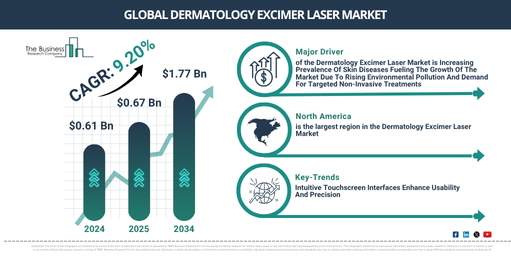
    In the past few years, the dermatology excimer laser market has seen robust growth. The market size will escalate from $0.61 billion in 2024 to $0.67 billion in 2025, demonstrating a compound annual growth rate (CAGR) of 9.5%. The historic growth of this market is linked to factors such as the increasing incidence of chronic skin conditions, augmented demand for targeted phototherapy, higher awareness of non-surgical treatments, increased spending on healthcare, and an expanding older population.

    The market for dermatology excimer lasers is anticipated to expand significantly in the forthcoming years, with an estimated compounded annual growth rate (CAGR) of 9.2%, reaching a value of $0.95 billion by 2029. This expected growth during the forecast period can be attributed to factors such as an increase in the need for tailored dermatological treatments, the growing popularity of outpatient laser techniques, a higher frequency of autoimmune skin diseases, a raised emphasis on aesthetic skin procedures, and increased funding in dermatological studies. Key trends forecasted for this period include the emergence of handheld and portable laser gadgets, real-time monitoring of skin reactions, combined treatments with other methods, cordless and battery-operated excimer lasers, patient data management via the cloud, and advancements in the modulation of wavelengths.

    Download The Free Sample Report Here:

    https://www.thebusinessresearchcompany.com/sample.aspx?id=25747&type=smp

    What factors are expected to fuel Dermatology Excimer Laser market growth in the coming years?

    The dermatology excimer laser market is expected to expand owing to the escalating occurrence of skin diseases. These medical issues disrupt the skin’s function or structure, leading to rashes, inflammation, or lesions and includes conditions such as psoriasis, eczema, acne, vitiligo, dermatitis, fungal infections, warts, melanoma, and alopecia. Skin diseases are on the rise due to the concerning growth in environmental pollution, as pollutants can harm the protective skin layer, inducing inflammatory or allergic reactions. Dermatology excimer lasers aid in managing these conditions by implementing pinpointed ultraviolet B (UVB) therapy, making them the preferred method for treating localized issues like psoriasis and vitiligo. These lasers decrease the requirement for broad-spectrum treatments by providing accurate, non-invasive care that enhances patient comfort and treatment results. For example, in 2023, Cancer Australia, a government agency, reported approximately 8,257 new melanoma diagnoses, contributing to 2.6% of cancer fatalities. Therefore, the surging incidence of skin ailments is catalyzing the growth of the dermatology excimer laser market. The dermatology excimer laser market’s growth will also be driven by the burgeoning demand for minimally invasive medical procedures, which is due to their capacity to speed up recovery and better patient outcomes. Minimally invasive procedures are performed through small cuts or openings, which reduces patient trauma and recovery duration. Patient demand for these procedures is growing as individuals prefer shorter recovery times and hospital stays compared to classic surgical procedures. Dermatology excimer lasers amplify the benefits of minimally invasive procedures, rendering pinpointed ultraviolet light to treat skin conditions without harming the surrounding tissue. They boost patient outcomes by shortening recovery periods, reducing side effects, and facilitating effective treatment of localized lesions. To illustrate, in November 2024, the American Society of Plastic Surgeons reported that the total number of cosmetic minimally invasive procedures hit 25,442,640 in 2023, a 7% rise from 23,672,269 in 2022. Hence, the increasing demand for minimally invasive methods is propelling the growth of the dermatology excimer laser market.

    What Are The Key Findings From The Segmentation Analysis Of The Dermatology Excimer Laser Market?

    The dermatology excimer laser market covered in this report is segmented –

    1) By Type: Table Top Excimer Laser, Hand Held Excimer Laser, Trolley Mounted Excimer Laser

    2) By Application: Psoriasis, Vitiligo, Atopic Dermatitis, Allergic Rhinitis, Alopecia Areata, Other Applications

    3) By End-Use: Hospitals, Dermatology Clinics, Plastic Surgery Centers

    Subsegments:

    1) By Table Top Excimer Laser: Compact Dermatology Units, Clinic-Based Stationary Systems, Multi-Patient Treatment Consoles

    2) By Hand Held Excimer Laser: Portable Spot Treatment Devices, Battery-Operated Excimer Units, Home-Use Excimer Laser Devices

    3) By Trolley Mounted Excimer Laser: Hospital-Based Mobile Units, High-Energy Output Systems, Integrated Cooling And Navigation Systems

    Which Trends Are Expected To Shape The Future Of The Dermatology Excimer Laser Market?

    Leading corporations in the dermatology excimer laser industry are concentrating their efforts on creating tech-savvy products and securing approvals. This includes modern user interfaces that enhance usability, precision, and therapeutic effectiveness. In simpler terms, a revamped user interface means a user-friendly, touchscreen control system that streamlines operations and boosts treatment accuracy. To exemplify, in July 2024, Strata Skin Sciences, a medical device firm based in the US, was granted certification by Japan’s Ministry of Health, Labor, and Welfare for the XTRAC Momentum 1.0 device. This cutting-edge excimer laser device, which provides targeted UVB light therapy for treating various skin conditions such as psoriasis, eczema, and vitiligo in both adults and children. The latest version of this device boasts a greater power output and faster repetition rate compared to its predecessors, leading to more effective treatments. It also flaunts a redesigned user interface and a sleek, ergonomic design, enhancing convenience for operators and patient comfort.

    What Are The Most Active Companies In The Dermatology Excimer Laser Market Today?

    Major companies operating in the dermatology excimer laser market are Koninklijke Philips N.V., Coherent Corp., Carl Zeiss AG, Lumenis Ltd., Cynosure LLC, Cutera Inc., Sciton Inc., Lutronic Corporation, DEKA Research & Development Corporation, Solta Medical Inc., Quanta System S.p.A., Strata Skin Sciences Inc., The Daavlin Company, Asclepion Laser Technologies GmbH, Aerolase Corporation, Kernel Medical Equipment Co. Ltd., Zimmer MedizinSysteme GmbH, Candela Corporation, Ra Medical Systems Inc., KOMACHINE Co. Ltd., PhotoMedex Inc., iVis Technologies S.r.l., Fotona d.o.o., Wuhan Dimed Laser Technology Co. Ltd.

    Get The Full Report Here:

    https://www.thebusinessresearchcompany.com/report/dermatology-excimer-laser-global-market-report

    Which Regional Markets Are Attracting The Most Investment In Dermatology Excimer Laser?

    North America was the largest region in the dermatology excimer laser market in 2024. Asia-Pacific is expected to be the fastest-growing region in the forecast period. The regions covered in the dermatology excimer laser market report are Asia-Pacific, Western Europe, Eastern Europe, North America, South America, Middle East, Africa.

    Request For A Customized Report:

    https://www.thebusinessresearchcompany.com/customise?id=25747&type=smp

    About The Business Research Company:

    With over 15000+ reports from 27 industries covering 60+ geographies, The Business Research Company has built a reputation for offering comprehensive, data-rich research and insights. Armed with 1,500,000 datasets, the optimistic contribution of in-depth secondary research, and unique insights from industry leaders, you can get the information you need to stay ahead in the game.

    Get in touch with us:

    The Business Research Company: https://www.thebusinessresearchcompany.com/

    Americas +1 310-496-7795

    Asia +44 7882 955267 & +91 8897263534

    Europe +44 7882 955267

    Email us at info@tbrc.info

    Follow us on:

    LinkedIn: https://in.linkedin.com/company/the-business-research-company

    YouTube: https://www.youtube.com/channel/UC24_fI0rV8cR5DxlCpgmyFQ

    Global Market Model: https://www.thebusinessresearchcompany.com/global-market-model
  • Comprehensive Forecast: Dental Syringes Market Share, Growth, and Opportunities Through 2029

    Comprehensive Forecast: Dental Syringes Market Share, Growth, and Opportunities Through 2029

    Claim your 30% discount on Global Market Reports with code ONLINE30. Limited time only.

    Claim your 30% discount on Global Market Reports with code ONLINE30. Limited time only.

    What Are the Forecasted Growth Rate and Market Size of the Dental Syringes Market?

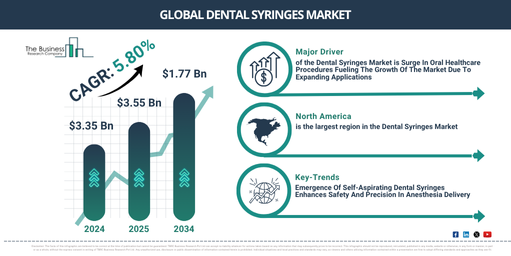
    The market size for dental syringes has seen considerable growth in the past few years. There is an expected increase from $3.35 billion in 2024 to $3.55 billion in 2025, reflecting a compound annual growth rate (CAGR) of 6.1%. Factors contributing to this historic growth include a higher demand for cosmetic dentistry, an increase in disposable income, the expansion of dental tourism, a rise in dental insurance coverage, and a growing number of periodontal disease cases.

    Expectations indicate a robust expansion in the dental syringes market size in the upcoming years, escalating to $4.46 billion in 2029 with a Compound Annual Growth Rate (CAGR) of 5.8%. Factors contributing to this predicted growth span the increased utilization of safety syringes, amplified demand for procedures with minimal invasion, heightened emphasis on painless dentistry, escalating expenditure on dental care, and a growing count of dental clinics and practitioners. Key market trends for the forecasted period comprise computer-managed local anesthetic delivery, lightweight and ergonomic designs, cutting-edge needle technologies, cordless foot-operated syringes, and smart dental syringes.

    Download The Free Sample Report Here:

    https://www.thebusinessresearchcompany.com/sample.aspx?id=25744&type=smp

    Which Factor Is Shaping The Future Of The Dental Syringes Market?

    The growing incidence of dental diseases is projected to boost the expansion of the dental syringes market in the future. Dental diseases encompass a range of disorders affecting the teeth, gums, jaw, and other oral structures. The escalation in dental diseases is attributed to unhealthy dietary practices, with the overconsumption of sugary and acidic foods leading to tooth decay and gum issues. Dental syringes aid in treating dental diseases by administering accurate anaesthesia, assuring painless procedures, and boosting patient comfort during treatments like fillings, extractions, and root canals. For example, a report published by the Office for Health Improvement and Disparities, a UK government department, in February 2024 showed a 17% rise in hospital episodes for decay-related dental caries tooth extractions among children and adolescents aged 0 to 19 as compared to the 2021–2022 fiscal year. As a result, the escalating incidence of dental diseases is contributing to the expansion of the dental syringes market.

    What Is The Segment-Wise Breakdown Of The Dental Syringes Market?

    The dental syringes market covered in this report is segmented –

    1) By Product: Aspirating Syringes, Non-Aspirating Syringes, Disposable Syringes, Reusable Syringes, Safety Syringes

    2) By Material: Plastic Dental Syringes, Metallic Dental Syringes

    3) By Application: Local Anesthesia, Irrigation, Hemostatic Control, Composite Application, Medicament Delivery

    4) By End-User: Hospitals, Outpatient Facilities, Research And Manufacturing

    Subsegments:

    1) By Aspirating Syringes: Self-Aspirating Syringes, Manual Aspirating Syringes

    2) By Non-Aspirating Syringes: Standard Non-Aspirating Syringes, Locking Type Non-Aspirating Syringes

    3) By Disposable Syringes: Plastic Disposable Syringes, Pre-Sterilized Disposable Syringes

    4) By Reusable Syringes: Stainless Steel Reusable Syringes, Autoclavable Reusable Syringes

    5) By Safety Syringes: Retractable Safety Syringes, Sheathed Safety Syringes

    Which Trends Are Redefining The Future Landscape Of The Dental Syringes Industry?

    Major companies in the dental syringes market are concentrating on technological improvements like self-aspirating mechanisms. This term refers to a feature in some dental syringes that enables the syringe to autonomously verify if the needle tip is inside a blood vessel, eliminating the need for the dentist to manually retract the plunger. For example, in May 2024, Laboratorios Inibsa, a dental solutions firm based in Spain, introduced the Prestoject range of dental syringes to set a new benchmark in convenient and effective dental anesthesia. The range boasts unique features such as an ergonomic design for improved grip comfort and precise injection control, coupled with a sturdy yet light stainless steel build to ensure durability and resist corrosion. These syringes work with 1.8 mL dental cartridges and metric-thread needles, and they can endure thermal disinfection and sterilization at 134 °C, facilitating safe and frequent usage. The syringes are offered with varying tip designs, like a crow tip, a three-hook tip, and a flat tip, delivering choices for manual and self-aspiration methods, and a specific intraligamental syringe version for certain injection requirements.

    Which Companies Hold The Largest Market Share In The Dental Syringes Sector?

    Major companies operating in the dental syringes market are 3M Company, Medline Industries LP, Becton, Dickinson and Company, Solventum Corporation, Dentsply Sirona Inc., Integra LifeSciences Holdings Corporation, J. Morita Corporation, Ultradent Products Inc., Kulzer GmbH, Kerr Corporation, Septodont Holding , Hindustan Syringes & Medical Devices Ltd., Henke-Sass Wolf GmbH, DentalEZ Inc., Inibsa Dental S.L.U., Behrman Capital, A. Titan Instruments Inc., Power Dental USA Inc., ProDentUSA Inc., Harvard Dental International GmbH.

    Get The Full Report Here:

    https://www.thebusinessresearchcompany.com/report/dental-syringes-global-market-report

    How Does Regional Performance Compare Across The Dental Syringes Industry?

    North America was the largest region in the dental syringes market in 2024. Asia-Pacific is expected to be the fastest-growing region in the forecast period. The regions covered in the dental syringes market report are Asia-Pacific, Western Europe, Eastern Europe, North America, South America, Middle East, Africa.

    Request For A Customized Report:

    https://www.thebusinessresearchcompany.com/customise?id=25744&type=smp

    About The Business Research Company:

    With over 15000+ reports from 27 industries covering 60+ geographies, The Business Research Company has built a reputation for offering comprehensive, data-rich research and insights. Armed with 1,500,000 datasets, the optimistic contribution of in-depth secondary research, and unique insights from industry leaders, you can get the information you need to stay ahead in the game.

    Get in touch with us:

    The Business Research Company: https://www.thebusinessresearchcompany.com/

    Americas +1 310-496-7795

    Asia +44 7882 955267 & +91 8897263534

    Europe +44 7882 955267

    Email us at info@tbrc.info

    Follow us on:

    LinkedIn: https://in.linkedin.com/company/the-business-research-company

    YouTube: https://www.youtube.com/channel/UC24_fI0rV8cR5DxlCpgmyFQ

    Global Market Model: https://www.thebusinessresearchcompany.com/global-market-model

  • 2025 Analysis: Opportunities and Risks in the Evolving Healthcare Chromatography Analyzers Market

    2025 Analysis: Opportunities and Risks in the Evolving Healthcare Chromatography Analyzers Market

    Claim your 30% discount on Global Market Reports with code ONLINE30. Limited time only.

    Claim your 30% discount on Global Market Reports with code ONLINE30. Limited time only.

    What Are the Latest Market Insights for the Healthcare Chromatography Analyzers Industry?

    The dimension of the healthcare chromatography analyzers market has experienced robust expansion in the last few years. The market is projected to escalate from $1.48 billion in 2024 to approximately $1.56 billion in 2025, marking a compound annual growth rate (CAGR) of about 5.4%. The growth witnessed in the historic period is a result of the escalating prevalence of chronic diseases, increased attention on analytical testing in healthcare institutions, a heightened demand for biologics quality control, an surge in usage for clinical trials, and a rise in government funding aimed at life sciences research.

    In the coming years, we anticipate robust growth in the healthcare chromatography analyzers market, with projections suggesting it will inflate to $1.90 billion in 2029, boasting a compound annual growth rate (CAGR) of 5.1%. This anticipated growth can be attributable to several factors, including an increased interest in personalized medicine, heightened demand for high-throughput analyzers, the burgeoning use in therapeutic drug monitoring, an expanding focus on metabolomics and lipidomics, and a growing demand for diagnostic tools designed for home use. Forecasted trends to watch for in this market include improvements in detector sensitivity, the creation of custom chromatography solutions tailored for specific therapies, the combination of chromatography and mass spectrometry, the integration of lab automation systems, and advances in column technology aiming for expedited analysis.

    Download The Free Sample Report Here:

    https://www.thebusinessresearchcompany.com/sample.aspx?id=25775&type=smp

    What Forces Are Driving The Growth Of The Healthcare Chromatography Analyzers Industry?

    An upward trend in chronic diseases is anticipated to spur the development of the healthcare chromatography analyzers market. Chronic illnesses are enduring health problems that evolve gradually and persist over a long duration, frequently demanding ongoing medical attention. The rise in these diseases can be partially attributed to sedentary lifestyles, which increase the likelihood of conditions like cardiac diseases and diabetes due to extensive periods of sitting and limited physical exercise. Healthcare chromatography analyzers play a pivotal role in enhancing diagnostic abilities by providing accurate biomolecular separation, making them a crucial tool in the monitoring of chronic diseases. They facilitate early detection and tracing of biomarkers, thus improving disease supervision and patient results in clinic environments. For example, as per statistics from The National Health Service, a Government Department in the UK, the count of individuals registered with a general practitioner (GP) diagnosed with non-diabetic hyperglycemia, or pre-diabetes (a state characterized by slightly elevated blood sugar levels, not enough to categorize as diabetes), rose by 18% from 3,065,825 in 2022 to 3,615,330 in June 2024. Consequently, the escalating prevalence of chronic diseases is contributing to the expansion of the healthcare chromatography analyzers market.

    What Is The Overview Of Market Segmentation In The Healthcare Chromatography Analyzers Industry?

    The healthcare chromatography analyzers market covered in this report is segmented –

    1) By Type: Supercritical Fluid Chromatography Systems, Thin-Layer Chromatography Systems, Gas Chromatography Systems, Liquid Chromatography Systems

    2) By Consumable And Accessory: Flow Management Accessories And Consumables, Detectors, Fraction Collectors, Chromatography Fittings And Tubing, Pressure Regulators, Column Accessories And Consumables, Autosamplers, Mobile Phase Accessories And Consumables, Columns, Other Accessories And Consumables

    3) By End-User: Pharmaceutical And Biotechnology Industries, Academics And Research Institutes, Life Science Industry, Food And Beverage Industries, Hospitals Or Clinics, Environmental Agencies, Other End-Users

    Subsegments:

    1) By Supercritical Fluid Chromatography Systems: Analytical Supercritical Fluid Chromatography (SFC) Systems, Preparative Supercritical Fluid Chromatography (Prep-SFC) Systems

    2) By Thin-Layer Chromatography Systems: Automated Thin-Layer Chromatography (TLC) Systems, Manual Thin-Layer Chromatography (TLC) Systems

    3) By Gas Chromatography Systems: Benchtop Gas Chromatography Systems, Portable Gas Chromatography Systems, Gas Chromatography-Mass Spectrometry (GC-MS) Systems

    4) By Liquid Chromatography Systems: High-Performance Liquid Chromatography (HPLC) Systems, Ultra-High Performance Liquid Chromatography (UHPLC) Systems, Low-Pressure Liquid Chromatography (LPLC) Systems, Liquid Chromatography-Mass Spectrometry (LC-MS) Systems

    What Future Market Trends Are Projected For The Healthcare Chromatography Analyzers Industry?

    Primarily corporations in the field of healthcare chromatography analyzer are emphasizing on the creation of technologically superior products such as high-performance liquid chromatography (HPLC) systems. Their aim is to elevate precision and efficacy in areas like clinical diagnostics and pharmaceutical research. HPLC systems represent an advanced analysis tool employed within healthcare to accurately segregate, identify, and measure components present in complex biological and pharmaceutical specimens. For example, Waters Corporation from the US, a firm producing analytical gadgets, unveiled the Alliance iS Bio HPLC System in April 2024, which was a new-age high-performance liquid chromatography (HPLC) module specifically designed for biopharmaceutical quality control (QC) laboratories. This system utilizes the cutting-edge bio-inert MaxPeak HPS (high-performance surfaces) technology to minimize unwanted analyte interactions. Additionally, it comprises built-in instrument intelligence, such as a user-friendly touchscreen interface and guided workflows that helps to lower human mistakes by about 40%. All of these progressive features permit speedier and more uniform outcomes with improved data integrity, therefore making it an optimal solution for QC labs operating in the biopharmaceutical industry.

    Who Are The Primary Players Operating Across The Global Healthcare Chromatography Analyzers Market?

    Major companies operating in the healthcare chromatography analyzers market are Hitachi Ltd., Merck and Co. Inc., Thermo Fisher Scientific Inc., Danaher Corporation, GE Healthcare Life Sciences, Agilent Technologies Inc., Cytiva, PerkinElmer Inc., Shimadzu Corp, Waters Corp, Bio-Rad Laboratories Inc., Bruker Corp, Phenomenex Inc., Gilson Inc., Restek Corporation, Scion Instruments UK Ltd, Knauer GmbH, JASCO Corporation, E-Chrom Tech Co. Ltd., SRI Instruments Inc.

    Get The Full Report Here:

    https://www.thebusinessresearchcompany.com/report/healthcare-chromatography-analyzers-global-market-report

    Which Region Offers The Most Growth Potential For The Healthcare Chromatography Analyzers Market Through 2029?

    North America was the largest region in the healthcare chromatography analyzers market in 2024. The regions covered in the healthcare chromatography analyzers market report are Asia-Pacific, Western Europe, Eastern Europe, North America, South America, Middle East, Africa.

    Request For A Customized Report:

    https://www.thebusinessresearchcompany.com/customise?id=25775&type=smp

    About The Business Research Company:

    With over 15000+ reports from 27 industries covering 60+ geographies, The Business Research Company has built a reputation for offering comprehensive, data-rich research and insights. Armed with 1,500,000 datasets, the optimistic contribution of in-depth secondary research, and unique insights from industry leaders, you can get the information you need to stay ahead in the game.

    Get in touch with us:

    The Business Research Company: https://www.thebusinessresearchcompany.com/

    Americas +1 310-496-7795

    Asia +44 7882 955267 & +91 8897263534

    Europe +44 7882 955267

    Email us at info@tbrc.info

    Follow us on:

    LinkedIn: https://in.linkedin.com/company/the-business-research-company

    YouTube: https://www.youtube.com/channel/UC24_fI0rV8cR5DxlCpgmyFQ

    Global Market Model: https://www.thebusinessresearchcompany.com/global-market-model