Category: Medical Equipment

  • Latest Market Developments in Water For Injection Industry: Forecast 2025–2029

    Claim your 30% discount on Global Market Reports with code ONLINE30. Limited time only.

    Claim your 30% discount on Global Market Reports with code ONLINE30. Limited time only.

    What Is the Estimated Industry Valuation for the Water For Injection Sector?

    The market size for injectable water has seen significant expansion in the past few years. The market is projected to increase from $27.79 billion in 2024 to $30.45 billion in 2025, witnessing a compound annual growth rate (CAGR) of 9.6%. Factors contributing to this growth during the historic period include an augmented demand for parenteral drugs, heightened enforcement of GMP standards worldwide, surge in biologics production, growth of contract manufacturing, broadening of hospital-based manufacture, and an increase in aseptic packaging.

    The market for injectable water is anticipated to witness robust expansion in the coming years, with its valuation surging to $43.60 billion in 2029, complemented by a compound annual growth rate (CAGR) of 9.4%. The factors influencing this boom during the projected timeline can be linked to escalating regulatory authorizations for non-distillation approaches, the surging production of biopharmaceuticals in developing markets, the increased need for easily installable plug-and-play water, growing demand from sophisticated therapy medicinal products, and the emergence of personalized medicine. The expected trends throughout the forecast duration encompass advancements in decentralized generation systems, application of IoT in injectable water systems, integration of AI and machine learning in the production of injectable water, concurrent use of vapor compression distillation, and the embracement of ground-breaking technologies.

    Download The Free Sample Report Here:

    https://www.thebusinessresearchcompany.com/sample.aspx?id=25933&type=smp

    What Forces Are Driving The Growth Of The Water For Injection Market?

    The escalating occurrences of diabetes are set to boost the water for injection market advancement in the future. Diabetes is a chronic health disorder characterized by the body’s inability to control blood sugar levels satisfactorily, either because of inadequate insulin production or ineffectual insulin usage. This upsurge in diabetes occurrences largely results from the rising global obesity rates, as surplus body fat hampers the body’s capacity to use insulin efficiently, thus leading to improper blood sugar regulation and increased susceptibility to the ailment. Water for injection plays a pivotal role in diabetes control, as it’s typically used to mix or dilute injectable medicines like insulin, assuring that these medications are dispensed in a sterile and secure way to maintain their efficacy and avoid infections. For instance, the Health Professional Academy, a customized health professional study platform based in the UK, stated in February 2025 that the count of those diagnosed with diabetes in the UK had escalated to a record 4.6 million, an increase from 4.4 million in the previous year. Consequently, the rising occurrences of diabetes are fuelling the expansion of the water for injection market.

    How Is The Water For Injection Industry Segmented Across Key Parameters?

    The water for injection market covered in this report is segmented –

    1) By Type: Single-Distilled Water For Injection, Double-Distilled Water For Injection, Sterile Water For Injection, Purified Water For Injection

    2) By Packaging: Vial And Ampule, Bottle, Drums And Bulk Container, Other Packaging

    3) By Production Technology: Distillation, Membrane Based Reverse Osmosis

    4) By Applications: Solvents And Diluents, Culture Media, Equipment Cleaning, Other Applications

    5) By End User: Pharmaceutical And Biotechnology Companies , Hospitals And Other Healthcare Facilities, Contract Research And Manufacturing Organizations, Other End Users

    Subsegments:

    1) By Single-Distilled Water For Injection: Glass Ampoules, Plastic Vials, Bulk Packaging For Manufacturing Use, Laboratory Use Packaging

    2) By Double-Distilled Water For Injection: Pharmaceutical Manufacturing, Biotechnology Applications, Injectable Formulation Processing, Analytical Testing Laboratories

    3) By Sterile Water For Injection: Prefilled Syringes, IV Infusion Bags, Vials For Reconstitution, Inhalation And Irrigation Uses

    4) By Purified Water For Injection: Bulk Supply For Pharmaceutical Manufacturing, Custom Formulations, Equipment Cleaning And Preparation, Research And Laboratory Use

    What Future Market Trends Are Projected For The Water For Injection Industry?

    Major firms operating in the water for injection market are placing their focus on creating technologically-forward solutions. They aim to decrease energy usage and operational expenses while staying aligned with regulatory standards. One such innovation is cold water for injection technology, a method of producing water for injection at room temperature using membrane-based purification. This technique removes the necessity for distillation while sticking to pharmacopeial norms. For example, CN Water Systems Pvt. Ltd., a pharmaceutical firm based in India, unveiled its advanced OSMOTRON Cold/Ambient Water for Injection (WFI) technology in December 2024. This technology significantly lowers energy use and operational expenses as compared to traditional distillation methods. Also, it allows WFI to be produced directly from drinkable water, negating the need for water softening or dechlorination. It utilizes a triple-membrane barrier to provide increased safety and effectiveness.

    Which Companies Currently Dominate The Competitive Landscape In The Water For Injection Industry?

    Major companies operating in the water for injection market are Pfizer Inc., Veolia Water Technologies Inc., Thermo Fisher Scientific Inc., GlaxoSmithKline plc, Eli Lilly and Co., Boehringer Ingelheim, Amgen Inc., Merck KGaA, Fresenius SE and Co. KGaA, Asahi Kasei Medical Co. Ltd., Sandoz International GmbH, Baxter International Inc., B. Braun Melsungen AG, Lonza Group AG, Apotex Inc., BWT AG, Sartorius AG, Wuxi Biologics Cayman Inc., ICU Medical Inc., Evoqua Water Technologies, Cambrex Corporation.

    Get The Full Report Here:

    https://www.thebusinessresearchcompany.com/report/water-for-injection-global-market-report

    Which Geographic Regions Are Driving Demand In The Water For Injection Market?

    North America was the largest region in the water for injection market in 2024. Asia-Pacific is expected to be the fastest-growing region in the forecast period. The regions covered in the water for injection market report are Asia-Pacific, Western Europe, Eastern Europe, North America, South America, Middle East, Africa.

    Request For A Customized Report:

    https://www.thebusinessresearchcompany.com/customise?id=25933&type=smp

    About The Business Research Company:

    With over 15000+ reports from 27 industries covering 60+ geographies, The Business Research Company has built a reputation for offering comprehensive, data-rich research and insights. Armed with 1,500,000 datasets, the optimistic contribution of in-depth secondary research, and unique insights from industry leaders, you can get the information you need to stay ahead in the game.

    Get in touch with us:

    The Business Research Company: https://www.thebusinessresearchcompany.com/

    Americas +1 310-496-7795

    Asia +44 7882 955267 & +91 8897263534

    Europe +44 7882 955267

    Email us at info@tbrc.info

    Follow us on:

    LinkedIn: https://in.linkedin.com/company/the-business-research-company

    YouTube: https://www.youtube.com/channel/UC24_fI0rV8cR5DxlCpgmyFQ

    Global Market Model: https://www.thebusinessresearchcompany.com/global-market-model
  • CAGR of 8.9% Projected for Vision Impairment Devices Market From 2025 to 2029

    CAGR of 8.9% Projected for Vision Impairment Devices Market From 2025 to 2029

    Claim your 30% discount on Global Market Reports with code ONLINE30. Limited time only.

    Claim your 30% discount on Global Market Reports with code ONLINE30. Limited time only.

    What Is the Outlook for the Vision Impairment Devices Market Heading Into 2029?

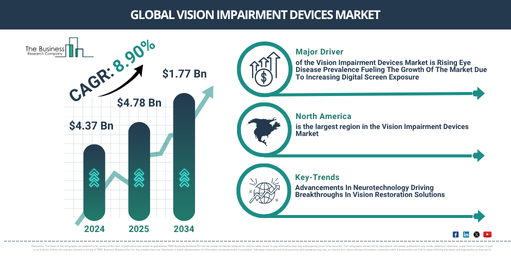
    There has been a significant increase in the size of the market for vision impairment devices in recent years. The market, projected to expand from $4.37 billion in 2024 to $4.78 billion in 2025, is expected to see an annual compound growth rate (CAGR) of 9.2%. Factors contributing to this growth in the historical period include government funding for the development of assistive technology, insurance and reimbursement benefits for low-vision aids, advancements in healthcare infrastructure and expenditure, the incorporation of vision aids into public health initiatives and disability programs, plus the endorsement of international disability rights agreements that inspire innovation.

    The market size for vision impairment devices is predicted to experience substantial growth in the forthcoming years, expanding to a worth of $6.71 billion in 2029, with a compound annual growth rate (CAGR) of 8.9%. Numerous factors are expected to drive growth during the forecast period, such as the growing demand for self-reliance among individuals with visual impairments, an increase in consumer preference for non-invasive support solutions, the popularity of assistive wearables amongst younger individuals, customization and personalization of devices for user ease, and the proliferation of e-commerce platforms for assistive technology. Key trends during this period encompass the evolution of AI-enabled visual aids, the development in wearable vision augmentation technologies, the incorporation of AR/VR into vision devices, advancements in portable optical character recognition (OCR) tools, and enhancements in mobile app-driven assistive technologies.

    Download The Free Sample Report Here:

    https://www.thebusinessresearchcompany.com/sample.aspx?id=25931&type=smp

    Which Factors Are Pushing The Vision Impairment Devices Market Forward?

    The increasing occurrence of eye diseases is expected to propel the expansion of the vision impairment devices market in the future. Eye conditions, which interfere with the eyes’ normal structure or function, could lead to partial or total vision loss if not effectively treated. These conditions are growing due to the extended use of digital devices, resulting in continuous eye strain and speeding up the onset of conditions such as digital eye fatigue and myopia, particularly in the younger generation. Vision impairment devices empower those with eye diseases by increasing accessibility, enhancing daily functionality, and promoting autonomy through cutting-edge assistive technologies. For example, a report by the World Health Organization in August 2024, revealed that the population with presbyopia is projected to reach 2.1 billion by 2030, while myopia cases are expected to rise to approximately 3.36 billion globally. Thus, the increasing occurrence of eye diseases will drive the expansion of the vision impairment devices market.

    Which Segment Held The Largest Share In The Vision Impairment Devices Market In 2025?

    The vision impairment devices market covered in this report is segmented –

    1) By Product Type: Educational Devices And Software, Mobility Devices, Low Vision Devices, Other Product Types

    2) By Distribution Channel: Online Retail, Offline Retail, Direct Sales, Pharmacies And Optical Stores

    3) By End-User: Blind Schools Or Educational Institutions, Enterprises And Social Organizations, Personal Use Or Individuals, Hospitals And Federations, Other End-Users

    Subsegments:

    1) By Educational Devices And Software: Screen Readers, Magnifying Software, Braille Translators, Educational Apps For Visually Impaired

    2) By Mobility Devices: Smart Canes, GPS-Based Navigation Aids, Electronic Travel Aids, Wearable Mobility Trackers

    3) By Low Vision Devices: Video Magnifiers, Telescopic Glasses, Magnifying Lenses, Text-To-Speech Devices

    4) By Other Product Types: Smart Glasses, Braille Watches, Accessible Home Devices, Tactile Displays

    What Notable Trends Are Shaping The Direction Of The Vision Impairment Devices Market?

    In the vision impairment devices market, some of the leading corporations have been focusing on the innovation of advanced tools such as microelectrode arrays, that aim to provide minimum invasiveness. These arrays take the form of tiny devices that are fitted with numerous microelectrodes, devised to deliver or detect electrical signals within neural or cellular networks with acute spatial resolution. For instance, in September 2024, Neuralink, a neurotechnology company based in the U.S., announced that they received approval from the U.S. Food and Drug Administration for Blindsight, a device constructed to restore visual perception in individuals who have lost their ability to see and that is surgically inserted into the body. The integration of a microelectrode array into the brain’s visual cortex is part of the procedure to stimulate neurons that are accountable for visual processing. This process enables the creation of visual sensations without the need for functional eyes or optic nerves. The unique feature of this device is its ability to aid individuals who are completely blind or those with non-functional optic nerves, as long as their visual cortex remains healthy. The device could also potentially provide visual perception to those people who have been blind from birth.

    Which Organizations Are Driving Progress In The Vision Impairment Devices Industry?

    Major companies operating in the vision impairment devices market are Carl Zeiss Meditec AG, Amedia, HumanWare Ltd., Freedom Scientific Inc., NeoLight, Dolphin Computer Access Ltd., Access Ingenuity, Adaptica SRL, Ambutech Inc., American Thermoform Corp., Analab Scientific Inst Pvt. Ltd., Biotech Healthcare Ltd., Carroll Store, En-Vision America Inc., LVI Low Vision International, NIDEK CO. LTD., Ocutech Inc., Beyond Sight, Blaxall Optics Ltd., Telesensory Corporation

    Get The Full Report Here:

    https://www.thebusinessresearchcompany.com/report/vision-impairment-devices-global-market-report

    Which Region Is Expected To Experience The Highest Growth In The Vision Impairment Devices Industry?

    North America was the largest region in the vision impairment devices market in 2024. Asia-Pacific is expected to be the fastest-growing region in the forecast period. The regions covered in the vision impairment devices market report are Asia-Pacific, Western Europe, Eastern Europe, North America, South America, Middle East, Africa.

    Request For A Customized Report:

    https://www.thebusinessresearchcompany.com/customise?id=25931&type=smp

    About The Business Research Company:

    With over 15000+ reports from 27 industries covering 60+ geographies, The Business Research Company has built a reputation for offering comprehensive, data-rich research and insights. Armed with 1,500,000 datasets, the optimistic contribution of in-depth secondary research, and unique insights from industry leaders, you can get the information you need to stay ahead in the game.

    Get in touch with us:

    The Business Research Company: https://www.thebusinessresearchcompany.com/

    Americas +1 310-496-7795

    Asia +44 7882 955267 & +91 8897263534

    Europe +44 7882 955267

    Email us at info@tbrc.info

    Follow us on:

    LinkedIn: https://in.linkedin.com/company/the-business-research-company

    YouTube: https://www.youtube.com/channel/UC24_fI0rV8cR5DxlCpgmyFQ

    Global Market Model: https://www.thebusinessresearchcompany.com/global-market-model
  • 2025 Treatment Planning Systems And Advanced Image Processing Market Outlook: Opportunities, Growth Trends, and Strategic Analysis

    2025 Treatment Planning Systems And Advanced Image Processing Market Outlook: Opportunities, Growth Trends, and Strategic Analysis

    Claim your 30% discount on Global Market Reports with code ONLINE30. Limited time only.

    Claim your 30% discount on Global Market Reports with code ONLINE30. Limited time only.

    How Will the Treatment Planning Systems And Advanced Image Processing Market Evolve in Terms of Growth and Size by 2029?

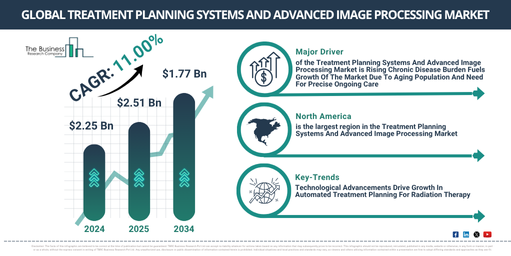
    In recent times, the market size for treatment planning systems and advanced image processing has seen rapid expansion. The projected growth is from $2.25 billion in 2024 to $2.51 billion in 2025, indicating a compound annual growth rate (CAGR) of 11.3%. Factors contributing to this progression during the historical period include a growing inclination towards non-invasive treatment methods, increased healthcare funding in cancer-related infrastructure, a higher demand for automated treatment planning systems, accelerated adoption of adaptive radiotherapy, and an increasing uptake of cloud-based treatment planning solutions.

    Anticipated to experience exponential expansion in the coming years, the market size of advanced image processing and treatment planning systems is projected to reach $3.81 billion by 2029, boasting a compound annual growth rate (CAGR) of 11.0%. Factors propelling this growth during the predicted period include the surging prevalence of cancer, enhanced utilization of radiation therapy methods, increasing demand for personalized medicine, evolving incorporation of artificial intelligence in imaging and planning, and heightened awareness regarding early detection and cure. Key trends marking this period encompass progress in cloud-based treatment planning systems, increased application of digital doubles in customized radiotherapy, creation of hybrid ecosystems for imaging and planning, advents in neuro-oncology-specific planning modules, and sophisticated incorporation of radiomics into planning processes.

    Download The Free Sample Report Here:

    https://www.thebusinessresearchcompany.com/sample.aspx?id=25927&type=smp

    What factors are expected to fuel Treatment Planning Systems And Advanced Image Processing market growth in the coming years?

    The growth of the treatment planning systems and advanced image processing market is expected to be propelled by the rising prevalence of chronic diseases. These are long-lasting, non-transmissible diseases that necessitate continuous medical care and can potentially hinder day-to-day activities. As the elderly population increases, the prevalence of such health conditions is becoming more common because older people are more susceptible to chronic diseases. Advanced image processing and treatment planning systems can assist in managing these diseases by providing accurate diagnosis, personalized treatment planning, and live monitoring. This enhances treatment precision and leads to better results for patients. For example, data from the Centers for Disease Control and Prevention reveal that in 2025, 76.4% of US residents reported having at least one chronic condition in 2023, an increase from 59.5% in younger adults to 93.0% in older individuals. Hence, the burgeoning presence of chronic diseases is boosting the expansion of the treatment planning systems and advanced image processing market.

    What Are The Key Findings From The Segmentation Analysis Of The Treatment Planning Systems And Advanced Image Processing Market?

    The treatment planning systems and advanced image processing market covered in this report is segmented –

    1) By Component: Advanced Image Processing Software, Treatment Planning Software

    2) By Technique: 3D Image Reconstruction, In-Room Imaging, Image Registration Using Graphics Processor Unit

    3) By Technology: Magnetic Resonance Imaging-Based Planning, Computed Tomography-Based Planning, Radiation Therapy

    4) By Application: Online Monitoring, Dose Accumulation, Tracking, Adaptive Radiotherapy, Validation Of Image Registration, Other Applications

    5) By End-User: Hospitals, Cancer Research Institute, Diagnostic And Treatment Centers, Other End-Users

    Subsegments:

    1) By Advanced Image Processing Software: 3d Image Reconstruction, Image Registration Using Graphics Processor Unit (Gpu), In-Room Imaging

    2) By Treatment Planning Software: Magnetic Resonance Imaging-Based Planning, Radiation Therapy, Computed Tomography-Based Planning

    What Long-Term Trends Are Likely To Affect The Treatment Planning Systems And Advanced Image Processing Market?

    In the market for treatment planning systems and advanced image processing, leading businesses are striving to create technological improvements such as automated treatment planning. This aims to increase accuracy, decrease the time required for planning, and enhance the results for patients undergoing radiation therapy. Automated treatment planning encompasses the use of advanced software algorithms and AI to create optimized radiation therapy plans with little manual intervention. This increases efficiency, consistency, and precision in cancer treatments. For instance, in May 2025, RaySearch Laboratories, a medical technology firm based in Sweden, introduced RayStation v2025. This platform was designed to better support adaptive therapy, providing swift, automated radiation therapy planning through advanced machine learning and support for upright treatments. This enhances the consistency, efficiency, and personalization of cancer treatment.

    What Are The Most Active Companies In The Treatment Planning Systems And Advanced Image Processing Market Today?

    Major companies operating in the treatment planning systems and advanced image processing market are Hitachi Ltd., Siemens Healthineers AG, Koninklijke Philips N.V., GE HealthCare Technologies Inc., Zimmer Biomet, Dentsply Sirona, Institut Straumann AG, Varian Medical Systems, Elekta AB, Agfa-Gevaert Group, Nobel Biocare, Accuray Incorporated, Brainlab AG, Canon Medical Systems Corporation, ViewRay Inc., MIM Software, C-RAD AB, IBA Radiopharma Solutions, IntraOp Medical Corporation, DOSIsoft SA, Mercurius Health, Mirada Medical Limited.

    Get The Full Report Here:

    https://www.thebusinessresearchcompany.com/report/treatment-planning-systems-and-advanced-image-processing-global-market-report

    Which Regional Markets Are Attracting The Most Investment In Treatment Planning Systems And Advanced Image Processing?

    North America was the largest region in the treatment planning systems and advanced image processing market in 2024. Asia-Pacific is expected to be the fastest-growing region in the forecast period. The regions covered in the treatment planning systems and advanced image processing market report are Asia-Pacific, Western Europe, Eastern Europe, North America, South America, Middle East, Africa.

    Request For A Customized Report:

    https://www.thebusinessresearchcompany.com/customise?id=25927&type=smp

    About The Business Research Company:

    With over 15000+ reports from 27 industries covering 60+ geographies, The Business Research Company has built a reputation for offering comprehensive, data-rich research and insights. Armed with 1,500,000 datasets, the optimistic contribution of in-depth secondary research, and unique insights from industry leaders, you can get the information you need to stay ahead in the game.

    Get in touch with us:

    The Business Research Company: https://www.thebusinessresearchcompany.com/

    Americas +1 310-496-7795

    Asia +44 7882 955267 & +91 8897263534

    Europe +44 7882 955267

    Email us at info@tbrc.info

    Follow us on:

    LinkedIn: https://in.linkedin.com/company/the-business-research-company

    YouTube: https://www.youtube.com/channel/UC24_fI0rV8cR5DxlCpgmyFQ

    Global Market Model: https://www.thebusinessresearchcompany.com/global-market-model
  • Global Insights: Topical Hemostat Market Expected to Surpass $7.81  Billion by 2029

    Global Insights: Topical Hemostat Market Expected to Surpass $7.81 Billion by 2029

    Claim your 30% discount on Global Market Reports with code ONLINE30. Limited time only.

    Claim your 30% discount on Global Market Reports with code ONLINE30. Limited time only.

    What CAGR Is Anticipated for the Topical Hemostat Market Through 2029?

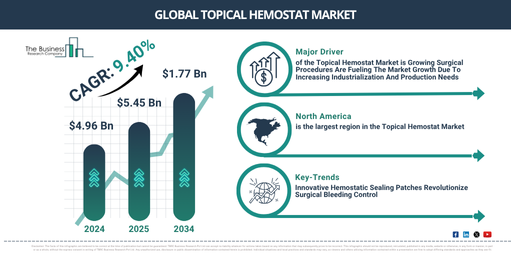
    In the past few years, the topical hemostat market has exhibited significant growth. The market, which is projected to escalate from $4.96 billion in 2024 to $5.45 billion in 2025, will do so at a compound annual growth rate (CAGR) of 9.8%. The expansion seen in the previous period can be associated with factors such as accelerated healthcare investment, an upswing in minimally invasive medical procedures, a rise in chronic disease cases, an increased demand for surgical volume, and a surge in demand for biodegradable products.

    In the coming years, the market for topical hemostats is anticipated to experience significant expansion. It’s projected to reach a valuation of $7.81 billion in 2029, with a CAGR of 9.4%. Factors such as the growing global elderly populace, the proliferation of ambulatory surgical centers, an increased emphasis on patient outcomes, a rise in adhesive-hemostat combinations, and escalated usage of bio-based materials are propelling this growth during the estimated timeframe. The period will also witness key trends including progress in hemostatic technologies, the incorporation of digital health technologies, improved delivery systems, the introduction of combination products, and the implementation of robotics in the management of hemostasis.

    Download The Free Sample Report Here:

    https://www.thebusinessresearchcompany.com/sample.aspx?id=25926&type=smp

    What Market Forces Are Driving The Topical Hemostat Sector In 2025 And Beyond?

    The topical hemostat market’s expansion is likely to be driven by the rising number of surgical procedures. Surgical procedures are interventions involving specialized techniques and tools used by surgeons to diagnose and treat injuries, diseases, or body abnormalities. The rapidly aging global population and the consequent increase in age-related health conditions that necessitate surgical procedures are leading to a significant rise in the number of such operations. Topical hemostats are crucial in surgery, helping control bleeding at the surgical site, ensuring better visibility, reducing blood loss, and mitigating the risk of postoperative complications. As an example, in 2022, according to the International Society of Aesthetic Plastic Surgery (ISAPS), an American NGO, there was an 11.2% rise in the number of procedures executed by plastic surgeons compared to 2021, totaling over 14.9 million surgical and 18.8 million non-surgical procedures worldwide. Consequently, the rising number of surgical procedures is fueling the topical hemostat market’s growth. The forthcoming growth of the topical hemostat market is also expected to be driven by the increasing healthcare expenditure, which could lead to greater investments in advanced surgical solutions. Healthcare expenditure involves the overall amount spent on healthcare services, treatments, and related resources over a specific period. The increasing healthcare expenditure, particularly due to the rising aging population, results in a greater need for medical services, long-term care, and age-related treatments, collectively imposing more financial pressure on healthcare systems. The escalating healthcare expenditure spurs the demand for topical hemostats, promotes the adoption of innovative medical technologies, and enhances healthcare accessibility worldwide. Rising funds permit hospitals to invest in effective bleeding control solutions, primarily for minimally invasive and outpatient surgeries. According to the American Medical Association, a U.S-based professional association, in 2023, U.S. health spending increased by 7.5%, reaching $4.9 trillion or $14,570 per person – a remarkable rise compared to the 4.6% growth observed in 2022. Hence, the growing healthcare expenditure stimulates the expansion of the topical hemostat market.

    How Is The Global Topical Hemostat Market Categorized By Segments?

    The topical hemostat market covered in this report is segmented –

    1) By Type: Fibrin, Thrombin, Cellulose, Collagen, Gelatin, Adhesives, Other Types

    2) By Distribution Channel: Direct Sales, Distributors, Hospital Pharmacies, Online

    3) By Application: General Surgery, Neurosurgery, Vascular Surgery, Cardiovascular Surgery, Other Applications

    4) By End-Use: Hospitals, Ambulatory Surgical Centers, Other End-Uses

    Subsegments:

    1) By Fibrin: Fibrin Sealants, Fibrin Patches

    2) By Thrombin: Human Thrombin, Bovine Thrombin, Recombinant Thrombin

    3) By Cellulose: Oxidized Regenerated Cellulose, Oxidized Non-Regenerated Cellulose, Microfibrillar Cellulose

    4) By Collagen: Microfibrillar Collagen, Collagen Sponges, Collagen Fleece

    5) By Gelatin: Gelatin Sponges, Gelatin Foams, Gelatin Powder

    6) By Adhesives: Cyanoacrylate-Based Adhesives, Polyethylene Glycol Based Sealants, Albumin And Glutaraldehyde-Based Adhesives

    7) By Other Types: Combination Hemostats, Polysaccharide-Based Hemostats, Chitosan-Based Hemostats

    What Future Market Trends Are Projected For The Topical Hemostat Industry?

    Leading businesses in the topical hemostat market are committing their efforts to create unique products, such as hemostatic sealing patches, which improve the efficiency of bleeding control during surgeries by providing quicker, more potent, and targeted hemostasis at the site of the wound. A hemostatic sealing patch, a medical tool made from materials like collagen or fibrin, swiftly brings bleeding to a halt by adhering to the tissue and promoting clot formation during surgical procedures. For example, in November 2023, Ethicon, Inc., a company in the US specializing in surgical technologies and solutions, launched the ETHIZIA Hemostatic Sealing Patch. This ground-breaking synthetic polymer-based supplementary hemostat has been clinically validated to quickly halt serious internal organ bleeding. According to clinical studies, ETHIZIA managed to stop bleeding within 30 seconds in 80% of patients, a speed that’s six times faster than leading fibrin sealant patches. The patch is specially designed to be equally effective on both sides and extremely flexible, allowing it to be customised, rolled, separated, or adapted for both open and minimally invasive surgeries. It expedites coagulation and removes moisture from the blood through a gelatin carrier imbued with polyoxazoline polymer, forming a strong adhesive hydrogel that bonds securely with tissue.

    Which Firms Are Considered Leaders In The Topical Hemostat Market Space?

    Major companies operating in the topical hemostat market are Pfizer Inc., Johnson & Johnson, Medtronic Plc, Medline Industries, Becton Dickinson and Company, Stryker Corporation, Baxter International, Meril Life Sciences Pvt. Ltd., Teleflex Incorporated, Samyang Holdings, Integra LifeSciences, Medicom Group, B. Braun SE, Advanced Medical Solutions Group Plc, Axio Biosolutions, Marine Polymer Technologies Inc, Hangzhou Singclean Medical Products, Neo Modulus Medical Sci-Tech, Tricol Biomedical, HemCon Medical Technologies Inc., Hemostasis LLC, KATSAN Medical Devices, Zhejiang Perfectseal New Materials

    Get The Full Report Here:

    https://www.thebusinessresearchcompany.com/report/topical-hemostat-global-market-report

    What Role Do Regional Policies And Investments Play In Topical Hemostat Market Expansion?

    North America was the largest region in the topical hemostat market in 2024. Asia-Pacific is expected to be the fastest-growing region in the forecast period. The regions covered in the topical hemostat market report are Asia-Pacific, Western Europe, Eastern Europe, North America, South America, Middle East, Africa.

    Request For A Customized Report:

    https://www.thebusinessresearchcompany.com/customise?id=25926&type=smp

    About The Business Research Company:

    With over 15000+ reports from 27 industries covering 60+ geographies, The Business Research Company has built a reputation for offering comprehensive, data-rich research and insights. Armed with 1,500,000 datasets, the optimistic contribution of in-depth secondary research, and unique insights from industry leaders, you can get the information you need to stay ahead in the game.

    Get in touch with us:

    The Business Research Company: https://www.thebusinessresearchcompany.com/

    Americas +1 310-496-7795

    Asia +44 7882 955267 & +91 8897263534

    Europe +44 7882 955267

    Email us at info@tbrc.info

    Follow us on:

    LinkedIn: https://in.linkedin.com/company/the-business-research-company

    YouTube: https://www.youtube.com/channel/UC24_fI0rV8cR5DxlCpgmyFQ

    Global Market Model: https://www.thebusinessresearchcompany.com/global-market-model
  • In-Depth Topical Absorbable Hemostats Market Report: Business Trends, Growth Factors, and Forecast to 2029

    In-Depth Topical Absorbable Hemostats Market Report: Business Trends, Growth Factors, and Forecast to 2029

    Claim your 30% discount on Global Market Reports with code ONLINE30. Limited time only.

    Claim your 30% discount on Global Market Reports with code ONLINE30. Limited time only.

    What Are the Forecasted Growth Rate and Market Size of the Topical Absorbable Hemostats Market?

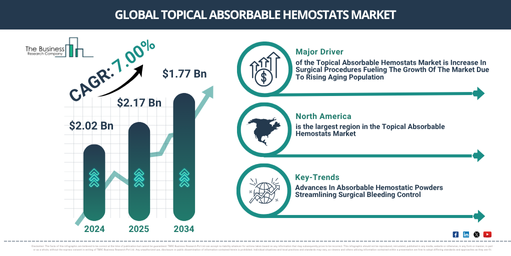
    In recent times, there has been a significant expansion in the market size of topical absorbable hemostats. The market, which was worth $2.02 billion in 2024, is predicted to rise to $2.17 billion in 2025, with a compound annual growth rate (CAGR) of 7.2%. The increase during the historic period is due to various factors such as the heightened demand for prompt wound healing, expansion of ambulatory surgical centers, growing focus on surgical safety and outcomes, rising use in dental and orthopedic surgeries, as well as an uptick in elective surgeries.

    Expectations are high for substantial expansion of the topical absorbable hemostats market in the coming years. By 2029, it’s projected to stretch to a size of $2.84 billion, yielding a compound annual growth rate (CAGR) of 7.0%. This predicted elevation during the outlook period can be ascribed to factors such as the upsurge in surgical operations, growth in trauma and accident incidents, an aging demographic, the proliferation of minimally invasive surgical procedures, and an increase in bleeding disorder cases. Key trends for the forecast period encompass progress in hemostatic solutions, a broad assortment of product choices, the evolution of biodegradable and compatible products, technological incorporation in surgical equipment, and the inclusion of hemostats in surgical packs.

    Download The Free Sample Report Here:

    https://www.thebusinessresearchcompany.com/sample.aspx?id=25924&type=smp

    Which Factor Is Shaping The Future Of The Topical Absorbable Hemostats Market?

    The growth of the topical absorbable hemostats market is predicted to be driven by the rising frequency of surgical procedures. Surgical procedures, which involve the manipulation or incision of body tissues for the purposes of diagnosis or treatment, have seen an increase largely due to the growing aged population. The elderly are more prone to chronic and degenerative conditions, which often require surgical intervention. Topical absorbable hemostats bring numerous benefits in surgical scenarios, enabling quick management of bleeding and eliminating the need for removal, consequently reducing the duration of surgery and the risk of complications. An example is seen in June 2024, when the US-based International Society of Aesthetic Plastic Surgery reported that aesthetic procedures climbed to almost 35 million in 2023, marking an increase of 3.4% in total surgical and non-surgical procedures to 34.9 million. As such, the escalation in surgical procedures is a significant factor fuelling the growth of the topical absorbable hemostats market.

    What Is The Segment-Wise Breakdown Of The Topical Absorbable Hemostats Market?

    The topical absorbable hemostats market covered in this report is segmented –

    1) By Type: Gelatin-Based Hemostats, Collagen-Based Hemostats, Fibrin-Based Hemostats, Cellulose-Based Hemostats, Other Types

    2) By Delivery Method: Surgical Sprays, Pads And Gauzes, Foams And Films, Injectable Solutions

    3) By Application: Orthopedic Surgery, Cardiothoracic Surgery, General Surgery, Neurosurgery, Urology, Gynecological Surgery

    4) By End-User: Hospitals, Ambulatory Surgical Centers (ASCs), Specialty Clinics, Research Institutions

    Subsegments:

    1) By Gelatin-Based Hemostats: Gelatin Sponges, Gelatin Powders, Gelatin Films Or Sheets, Flowable Gelatin Matrices

    2) By Collagen-Based Hemostats: Collagen Sponges, Collagen Powders, Collagen Pads, Collagen Films Or Sheets

    3) By Fibrin-Based Hemostats: Fibrin Sealant Sprays, Fibrin Glue, Fibrin Patch Or Film, Combination Fibrin-Based Products

    4) By Cellulose-Based Hemostats: Oxidized Regenerated Cellulose (ORC) Pads, Cellulose Meshes, Cellulose Powders, Cellulose Films

    5) By Other Types: Chitosan-Based Hemostats, Synthetic Polymer-Based Hemostats, Combination Hemostats, Herbal Or Plant-Derived Hemostats

    What Notable Trends Are Shaping The Direction Of The Topical Absorbable Hemostats Market?

    Key players active in the topical absorbable hemostats marketplace are concentrating on creating innovative items, like absorbable hemostatic powders, to aid in the management of bleeding in intricate or irregular injuries. These powders are favored for their fast ability to control bleeding, not necessitating removal, hence decreasing the possibility of infections and making post-operative care simpler. As an example, Baxter International, an American healthcare company, launched an absorbable hemostatic powder named PERCLOT in July 2023. PERCLOT provides a comprehensive lineup of active and passive hemostatic solutions, offering trustworthy management of bleeding. These engineered granules absorb moisture instantly, changing into an adhesive gel that sticks to the tissue surface. This gel works by concentrating platelets, red blood cells, and coagulation factors such as thrombin and fibrinogen, helping to speed up the body’s natural coagulation process. Regular usage of PERCLOT can reduce the need for transfusions during surgery, limiting major complications and ultimately reducing the overall cost of treatment.

    Which Companies Hold The Largest Market Share In The Topical Absorbable Hemostats Sector?

    Major companies operating in the topical absorbable hemostats market are Pfizer Inc., Johnson & Johnson Services Inc., Becton, Dickinson & Co., Baxter International Inc., Teleflex Inc., Integra LifeSciences Holdings Corp., Gelita Medical, Advanced Medical Solutions Group Plc, 3D Matrix Ltd., Advanced Biotech Products Pvt. Ltd., Curasan AG, Hemostasis LLC, Advamedica Inc., Medcura Inc., Endomedix Incorporated, BioCer Entwicklungs GmbH, Starch Medical Inc., Arch Therapeutics Inc., Cura Medical BV, ETX Pharma Inc.

    Get The Full Report Here:

    https://www.thebusinessresearchcompany.com/report/topical-absorbable-hemostats-global-market-report

    How Does Regional Performance Compare Across The Topical Absorbable Hemostats Industry?

    North America was the largest region in the topical absorbable hemostats market in 2024. Asia-Pacific is expected to be the fastest-growing region in the forecast period. The regions covered in the topical absorbable hemostats market report are Asia-Pacific, Western Europe, Eastern Europe, North America, South America, Middle East, Africa.

    Request For A Customized Report:

    https://www.thebusinessresearchcompany.com/customise?id=25924&type=smp

    About The Business Research Company:

    With over 15000+ reports from 27 industries covering 60+ geographies, The Business Research Company has built a reputation for offering comprehensive, data-rich research and insights. Armed with 1,500,000 datasets, the optimistic contribution of in-depth secondary research, and unique insights from industry leaders, you can get the information you need to stay ahead in the game.

    Get in touch with us:

    The Business Research Company: https://www.thebusinessresearchcompany.com/

    Americas +1 310-496-7795

    Asia +44 7882 955267 & +91 8897263534

    Europe +44 7882 955267

    Email us at info@tbrc.info

    Follow us on:

    LinkedIn: https://in.linkedin.com/company/the-business-research-company

    YouTube: https://www.youtube.com/channel/UC24_fI0rV8cR5DxlCpgmyFQ

    Global Market Model: https://www.thebusinessresearchcompany.com/global-market-model
  • Tendon Repair Industry Poised for Rapid Expansion, Projected to Hit $3.38  Billion by 2029

    Tendon Repair Industry Poised for Rapid Expansion, Projected to Hit $3.38 Billion by 2029

    Claim your 30% discount on Global Market Reports with code ONLINE30. Limited time only.

    Claim your 30% discount on Global Market Reports with code ONLINE30. Limited time only.

    What Is the Estimated Industry Valuation for the Tendon Repair Sector?

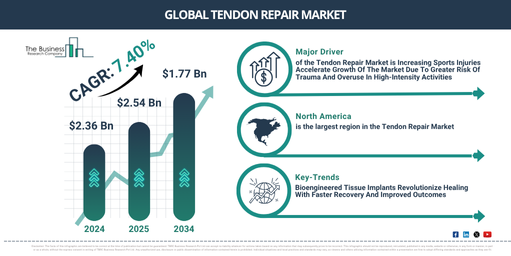
    In recent times, the tendon repair market has experienced robust growth. It is projected to escalate from $2.36 billion in 2024 to $2.54 billion in 2025, with a compound annual growth rate (CAGR) of 7.6%. The growth observed in the historical period is mainly due to the widespread acceptance of minimally invasive methods, a burgeoning demand for sports medicine and rehabilitation services, increased healthcare expenditures, a surge in trauma incidents and accidents, as well as an amplified adoption of regenerative medicine.

    Expectations are high for a robust expansion in the tendon repair market in the coming years. Projections anticipate a growth to $3.38 billion by 2029, with a compound annual growth rate (CAGR) of 7.4%. The ascension during the projection period can be tied to several factors such as an upsurge in sports-related injuries, an aging global population, an increased occurrence of musculoskeletal ailments, a surge in orthopedic surgical procedures, and heightened awareness of early intervention methods. Emerging trends in the forecast period encompass progress in bioengineered tissue inserts, technological innovations in minimally invasive surgeries, advancements in regenerative medicine, the application of robotics in orthopedic surgery, and enhanced suture anchor systems.

    Download The Free Sample Report Here:

    https://www.thebusinessresearchcompany.com/sample.aspx?id=25923&type=smp

    What Forces Are Driving The Growth Of The Tendon Repair Market?

    The growth of the tendon repair market is expected to be propelled by the escalating occurrence of sports-related injuries. Any physical harm during sports or exercise activities, often affecting bones, joints, or connective tissues, is categorized as sports-related injuries. The risk of overuse and trauma is heightened due to growing participation in strenuous and competitive activities. Tendon repair is instrumental in treating these injuries by enabling effective healing, pain relief, and improving strength and mobility. In July 2024, a study by the Australian Institute of Health and Welfare suggested that outdoor team sports accounted for the highest injury incidence with 26% of participants injured in 2022, followed by combat sports at 16%, and indoor team, motor, and horse sports all reporting around 15% injury rates. Thus, the escalating incidence of sport-related injuries is triggering the growth of the tendon repair market. The growth of the tendon repair market is expected to be driven by increasing healthcare expenditure due to the rising demand for cost-effective and result-oriented treatments. Healthcare expenditure, which entails spending on medical services, goods, and public health programs by individuals, governments, and organizations, is on the rise due to growing health consciousness and improved medical facility access. Tendon repair is viable in cutting overall healthcare expenditure by averting complications and chronic disabilities that could lead to the need for extended rehabilitation, repeated surgeries, or prolonged medication use. Provisional estimates from the Office for National Statistics indicated in May 2023, that the UK’s healthcare expenditure stood at around $386 billion (£283 billion) in 2022, a 0.7% rise compared to 2021. Consequently, the increasing healthcare expenditure is propelling the tendon repair market’s growth.

    How Is The Tendon Repair Industry Segmented Across Key Parameters?

    The tendon repair market covered in this report is segmented –

    1) By Product Type: Implants, Suture anchor devices, Grafts, Scaffolds, Screws, Tendons repair matrix, Excision, Other Product Types

    2) By Application: Rotator Cuff Repair, Achilles Tendinosis Repair, Cruciate Ligament Repair, Biceps Tenodesis, Other Applications

    3) By End-User: Hospitals, Ambulatory Surgical Centers (ASCs), Specialty Orthopedic Clinics, Sports Medicine Centers

    Subsegments:

    1) By Implants: Bioinductive Implants, Synthetic Implants, Biodegradable Implants

    2) By Suture Anchor Devices: Metallic Suture Anchors, Bioabsorbable Suture Anchors, All-Suture Anchors

    3) By Grafts: Autografts, Allografts, Xenografts

    4) By Scaffolds: Collagen Based Scaffolds, Synthetic Polymer Scaffolds, Hybrid Scaffolds

    5) By Screws: Interference Screws, Cannulated Screws, Bioabsorbable Screws

    6) By Tendon Repair Matrix: Extracellular Matrix Ecm Patches, Acellular Dermal Matrices, Synthetic Matrices

    7) By Excision: Arthroscopic Excision Tools, Open Surgical Excision Tools

    8) By Other Product Types: Surgical Instruments, Tendon Tensioning Devices, Biologic Adhesives

    What Upcoming Trends Are Expected To Impact The Tendon Repair Market Globally?

    Leading enterprises in the tendon repair market are channeling their efforts towards the innovation of sophisticated technologies like bioengineered tissue implants, aiming to enhance the healing process, shorten the time of recovery, and increase the strength and integration of healed tendons. Bioengineered tissue implants are biological constructs, produced in a laboratory setting from either natural or synthetic substances, designed to mimic the structure and functionality of original tissue. Their purpose is to assist, mend, or rejuvenate damaged or diseased tissues such as tendons. For example, Smith+Nephew Plc, a healthcare company from the UK, introduced the regeneten bioinductive implant in India in July 2023, with the objective of supporting the natural repair of tendons and assisting with rotator cuff repair. This minimally invasive, collagen-based appliance aims at rectifying rotator cuff tendon rips by stimulating the growth of new tendon tissue. This typically leads to faster recovery, significant reduction in pain, and a lower likelihood of further deterioration or re-tearing. Its positives features encompass decreased rehabilitation duration, quicker resumption of activities, and a high safety measure with minimal risk of side effects.

    Which Companies Currently Dominate The Competitive Landscape In The Tendon Repair Industry?

    Major companies operating in the tendon repair market are Johnson & Johnson Services Inc., Stryker Corporation, Zimmer Biomet Holdings Inc., Smith & Nephew plc, Arthrex Inc., Enovis Corporation, Integra LifeSciences Holdings Corporation, CONMED Corporation, MiMedx Group Inc., Anika Therapeutics Inc., Intrauma S.p.A., Narang Medical Limited, Sharma Orthopedic (India) Pvt. Ltd., Siora Surgicals Private Limited, Auxein Medical Private Limited, Inion Oy, BioPro Inc., Aevumed Inc., Alafair Biosciences Inc., CoNextions Inc., Orthomed S.A.S., TendoMend Ltd.

    Get The Full Report Here:

    https://www.thebusinessresearchcompany.com/report/tendon-repair-global-market-report

    Which Geographic Regions Are Driving Demand In The Tendon Repair Market?

    North America was the largest region in the tendon repair market in 2024. Asia-Pacific is expected to be the fastest-growing region in the forecast period. The regions covered in the tendon repair market report are Asia-Pacific, Western Europe, Eastern Europe, North America, South America, Middle East, Africa.

    Request For A Customized Report:

    https://www.thebusinessresearchcompany.com/customise?id=25923&type=smp

    About The Business Research Company:

    With over 15000+ reports from 27 industries covering 60+ geographies, The Business Research Company has built a reputation for offering comprehensive, data-rich research and insights. Armed with 1,500,000 datasets, the optimistic contribution of in-depth secondary research, and unique insights from industry leaders, you can get the information you need to stay ahead in the game.

    Get in touch with us:

    The Business Research Company: https://www.thebusinessresearchcompany.com/

    Americas +1 310-496-7795

    Asia +44 7882 955267 & +91 8897263534

    Europe +44 7882 955267

    Email us at info@tbrc.info

    Follow us on:

    LinkedIn: https://in.linkedin.com/company/the-business-research-company

    YouTube: https://www.youtube.com/channel/UC24_fI0rV8cR5DxlCpgmyFQ

    Global Market Model: https://www.thebusinessresearchcompany.com/global-market-model
  • Global Telemedicine Cart Market Forecast to Reach $4.03  Billion by 2029, Driven by 18.5% CAGR

    Global Telemedicine Cart Market Forecast to Reach $4.03 Billion by 2029, Driven by 18.5% CAGR

    Claim your 30% discount on Global Market Reports with code ONLINE30. Limited time only.

    Claim your 30% discount on Global Market Reports with code ONLINE30. Limited time only.

    How Large Is the Telemedicine Cart Market Expected to Be in 2029?

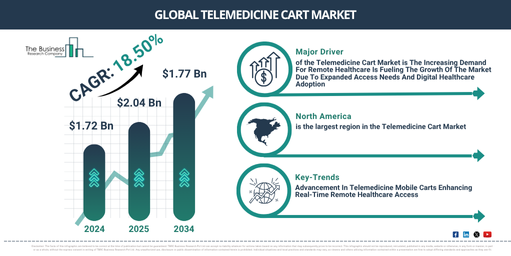
    The market for telemedicine carts has expanded significantly in the past few years. The forecast predicts an increase from $1.72 billion in 2024 to $2.04 billion in 2025, representing a Compound Annual Growth Rate (CAGR) of 18.8%. This historical period growth is a result of several factors including the surge in usage during the COVID-19 outbreak, lack of healthcare workers in rural regions, growing demand for distant patient surveillance, rise in chronic disease rates, and growing comprehension of wireless communication and video meetings.

    Expectations indicate a substantial expansion of the telemedicine cart market in the coming years, with an estimated valuation of $4.03 billion by the year 2029 at a compound annual growth rate (CAGR) of 18.5%. This predicted growth in the ensuing years can be ascribed to factors such as the increased implementation of AI and machine learning in the field of telehealth, the roll-out of 5G and improvement of internet infrastructure, a growing emphasis on personalizing digital healthcare, augmented government investments in telehealth infrastructure, and a surge in the employment of telemedicine in emergency and critical care scenarios. Noteworthy trends during the forecast period include the utilization of AI in diagnostics, coupling with remote patient monitoring apparatus, bolstering of cybersecurity measures, introduction of telemedicine carts equipped with 5G technology, and the establishment of functions for real-time multilingual translation.

    Download The Free Sample Report Here:

    https://www.thebusinessresearchcompany.com/sample.aspx?id=25922&type=smp

    What Are The Contributors To Demand In The Telemedicine Cart Market?

    The telemedicine cart market is set to expand, driven by the growing necessity for remote healthcare. This refers to the provision of medical services and advice via digital platforms, which allows patients to obtain care without having to physically go to healthcare facilities. The need for such constant healthcare access in remote and underserved areas, where the lack of infrastructure hinders traditional medical access, is on the rise. A telemedicine cart aids remote care by integrating medical equipment, cameras, and communication tools into a mobile unit for immediate virtual consultations. This improves access to healthcare services and makes clinical workflows more efficient across far-flung locations. For example, Vivalink, a US-based healthcare technology firm, reported in August 2023 that 81% of clinicians are now using remote patient monitoring (RPM), a substantial surge from just 20% in 2021, equating to a 305% increase. Furthermore, 84% of current RPM users are planning to extend their usage in 2024. Thus, the escalating demand for remote healthcare is fuelling the expansion of the telemedicine cart market.

    What Segmentation Categories Are Included In The Telemedicine Cart Market Analysis?

    The telemedicine cart market covered in this report is segmented –

    1) By Component: Hardware, Software, Services

    2) By Product Type: Integrated Telemedicine Carts, Modular Telemedicine Carts, Customized Telemedicine Carts

    3) By Connectivity: Wired Connectivity, Wireless Connectivity, Cloud-Based Solutions

    4) By Application: Remote Patient Monitoring, Clinical Consultation, Emergency Care, Education And Training, Other Applications

    5) By End-User: Hospitals And Clinics, Ambulatory Surgical Centers, Specialty Centers, Home Care Settings, Other End-Users

    Subsegments:

    1) By Hardware: Display Screens, Medical Devices Integration, Cameras, Microphones And Speakers, Power Supply Units, Mobility Equipment, Control Panels And Touch Interfaces

    2) By Software: Teleconsultation Platforms, Electronic Health Records (EHR) Integration Software, Real-time Communication Software, Remote Patient Monitoring (RPM) Software, Diagnostic Software, Data Security And Encryption Solutions, Workflow Management Systems

    3) By Services: Installation And Setup Services, Technical Support And Maintenance, Training And Education Services, Software Upgrades And Updates, Integration And Customization Services, Remote Information Technology (IT) Support, Consulting Services

    How Are Key Trends Driving Expansion In The Telemedicine Cart Industry?

    Leading firms in the telemedicine cart industry are concentrating on creating sophisticated items, such as the telemedicine mobile cart, to enhance real-time availability of healthcare services in a variety of clinical environments. A telemedicine mobile cart is a portable system blending medical devices, cameras, and communication tech for face-to-face virtual consultations. It allows for remote diagnoses and broadens health services to patients in different places. For example, First Products Inc., an American medical equipment firm, in August 2024 unveiled the Mov-it TeleView Cart, Mov-it Telediagnostic Cart, and the Senior Virtual Health Telemedicine Mobile Cart. These new-age carts are designed to elevate the delivery of healthcare, optimize patient results, and simplify clinical procedures. They come with features like 2-way HD video conferencing and remote diagnostic tools, making possible real-time discussions, remote check-ups, and focused care for the elderly. These carts ultimately increase healthcare accessibility, particularly in isolated and underprivileged regions, while lowering expenses and boosting efficiency for both service providers and patients.

    Who Are The Top-Ranked Companies In The Telemedicine Cart Market Today?

    Major companies operating in the telemedicine cart market are Advantech Co. Ltd., Rubbermaid Healthcare, Ergotron Inc., American Well Corporation, Capsa Healthcare, AFC Industries Inc., Vecna Technologies, Rudolf Riester GmbH, TeleSpecialists, AVTEQ Inc., Cybernet Manufacturing Inc., PARSYS TELEMEDICINE, BriteMED Technology Inc., AMD Global Telemedicine Inc., Rife Technologies, La Pastilla S.L., First Products Inc., InTouch Technologies, Ditec Medical, Niramaya Wellness Services Private Limited, Cloudspital Private Limited.

    Get The Full Report Here:

    https://www.thebusinessresearchcompany.com/report/telemedicine-cart-global-market-report

    How Is Telemedicine Cart Market Adoption Varying Across Different Regions And Sectors?

    North America was the largest region in the telemedicine cart market in 2024. Asia-Pacific is expected to be the fastest-growing region in the forecast period. The regions covered in the telemedicine cart market report are Asia-Pacific, Western Europe, Eastern Europe, North America, South America, Middle East, Africa.

    Request For A Customized Report:

    https://www.thebusinessresearchcompany.com/customise?id=25922&type=smp

    About The Business Research Company:

    With over 15000+ reports from 27 industries covering 60+ geographies, The Business Research Company has built a reputation for offering comprehensive, data-rich research and insights. Armed with 1,500,000 datasets, the optimistic contribution of in-depth secondary research, and unique insights from industry leaders, you can get the information you need to stay ahead in the game.

    Get in touch with us:

    The Business Research Company: https://www.thebusinessresearchcompany.com/

    Americas +1 310-496-7795

    Asia +44 7882 955267 & +91 8897263534

    Europe +44 7882 955267

    Email us at info@tbrc.info

    Follow us on:

    LinkedIn: https://in.linkedin.com/company/the-business-research-company

    YouTube: https://www.youtube.com/channel/UC24_fI0rV8cR5DxlCpgmyFQ

    Global Market Model: https://www.thebusinessresearchcompany.com/global-market-model
  • Key Market Drivers, Trends, and Forecast for the Global Technetium-99m Industry

    Key Market Drivers, Trends, and Forecast for the Global Technetium-99m Industry

    Claim your 30% discount on Global Market Reports with code ONLINE30. Limited time only.

    Claim your 30% discount on Global Market Reports with code ONLINE30. Limited time only.

    What Does the Forecast Indicate for the Technetium-99m Market From 2025 to 2029?

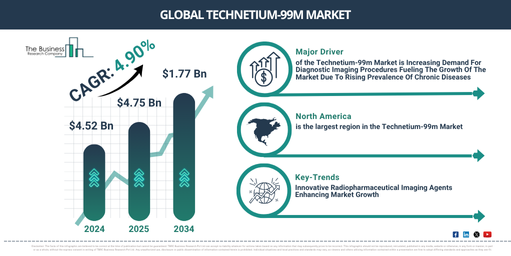
    In recent years, the market size for technetium-99m has experienced significant expansion, with projections indicating an increase from $4.52 billion in 2024 to $4.75 billion in 2025. This represents a compound annual growth rate (CAGR) of 5.1%. This growth throughout the historical period can be ascribed to various factors such as the broadening applications within nuclear medicine, enhanced demand for cancer and cardiac diagnostic procedures, an escalating dependence on molybdenum-99 supply, an increased demand for radiopharmaceuticals, and a growth in the utilization of imaging within clinical trials.

    The market size for technetium-99m is set to witness consistent expansion over the next few years, reaching an estimated worth of $5.74 billion in 2029, reflecting a compound annual growth rate (CAGR) of 4.9%. This anticipated growth during the forecast period is resultant from enriched nuclear imaging potential, an escalating geriatric populace, an amplification in diagnostic volumes, an incrementing prevalence of cancer, and a rising adoption of hybrid imaging systems. Major future trends include the use of sustainable isotope technologies, the emergence of non-reactor-based production, progress in radiopharmaceutical technology, synergy with artificial intelligence, and innovation in the manufacturing of radiopharmaceuticals.

    Download The Free Sample Report Here:

    https://www.thebusinessresearchcompany.com/sample.aspx?id=25920&type=smp

    What Elements Are Contributing To Growth In The Technetium-99m Market?

    The escalating need for diagnostic imaging methods is anticipated to fuel the technetium-99m market’s expansion in the future. Diagnostic imaging methods are medical procedures that generate visual imagery of the body’s interior, aiding physicians in diagnosing and occasionally directing treatments for a variety of medical conditions. The surge in demand for such procedures stems from the growing rates of chronic diseases that necessitate prompt and precise diagnostics. Technetium-99m facilitates diagnostic imaging techniques by enabling doctors to scrutinize the functioning of organs and tissues with exceptional accuracy, leveraging its radioactive properties to generate comprehensive images in nuclear medicine scans. For example, the National Health Service (NHS) England, a governmental department based in the UK, reported that 45.0 million imaging tests were carried out in England from November 2023 to March 2023, a 2.2% rise from the 44.0 million tests conducted the prior year. Hence, the surging demand for diagnostic imaging methods is stimulating the growth of the technetium-99m market.

    Which Segments Are Detailed In The Global Technetium-99m Market Report?

    The technetium-99m market covered in this report is segmented –

    1) By Product Type: Radiopharmaceuticals, Diagnostic Kits, Generators

    2) By Formulation Type: Liquid, Solid, Freeze-Dried

    3) By Application: Single Photon Emission Computed Tomography (SPECT) Imaging, Positron Emission Tomography (PET) Imaging, Oncology, Cardiology, Neurology, Other Applications

    4) By End-User: Hospitals, Diagnostic Imaging Centers, Research Laboratories, Specialized Clinics, Other End-Users

    Subsegments:

    1) By Radiopharmaceuticals: Sestamibi, Tetrofosmin, Sulfur Colloid, MAA (Macroaggregated Albumin), DTPA (Diethylenetriaminepentaacetic Acid), Others

    2) By Diagnostic Kits: Cardiac Imaging Kits, Bone Imaging Kits, Renal Imaging Kits, Hepatobiliary Imaging Kits, Pulmonary Imaging Kits, Others

    3) By Generators: Hospital-Based Generators, Centralized Radiopharmacy Generators

    What Long-Term Trends Are Likely To Affect The Technetium-99m Market?

    Leading businesses involved in the technetium-99m industry are prioritizing the creation of inventive solutions such as advanced radiopharmaceutical imaging agents. These solutions aim to augment precision and availability of diagnostic imaging procedures for intricate health conditions. These advanced radiopharmaceutical imaging agents are particular compounds marked with radioactive elements that give visibility to doctors into the human body through imaging modalities. For example, Serac Healthcare Limited, a clinical radiopharmaceutical organization domiciled in the UK, was granted Fast Track Designation by the US Food and Drug Administration (FDA) in June 2024 for 99mTc-maraciclatide. This is a unique single-photon emission computed tomography (SPECT)-computed tomography (CT) imaging compound for visualizing and diagnosing superficial peritoneal endometriosis. It’s applicable for females who are 16 years or older. The 99mTc-maraciclatide, being a technetium-99m-labeled targeted peptide imaging compound, connects with integrins found in abundance in endometriosis lesions, making it possible to see disease sites during SPECT-CT scans clearly. This constitutes a non-invasive diagnostic alternative to laparoscopic procedures, offering females suspected of endometriosis a more secure and easily accesible diagnostic route. The compound utilizes the superior imaging attributes of technetium-99m, namely its optimal half-life and gamma emission energy, in order to yield high-definition diagnostic images while lowering patient radiation exposure. This development is set to boost diagnostic precision and simplify treatment choices in endometriosis management, whilst broadening the clinical usages of technetium-99m-based imaging in the realm of women’s health.

    Who Are The Key Contributors To Growth In The Technetium-99m Market?

    Major companies operating in the technetium-99m market are Cardinal Health Inc., Siemens Healthineers AG, Philips Healthcare, GE Healthcare Technologies Inc., BWX Technologies Inc., Bracco Imaging S.p.A., Lantheus Holdings Inc., China Isotope & Radiation Corporation (CIRC), Jubilant Pharma Limited, Curium Pharma LLC, Eckert & Ziegler Strahlen, Telix Pharmaceuticals Limited, NorthStar Medical Radioisotopes LLC, NTP Radioisotopes SOC Ltd, Isotopia Molecular Imaging Ltd., Advanced Cyclotron Systems Inc., Cyclopharm Limited, SHINE Technologies LLC, Medi-Radiopharma Kft., SDS Lifesciences Pvt Ltd.

    Get The Full Report Here:

    https://www.thebusinessresearchcompany.com/report/technetium-99m-global-market-report

    Which Region Is Projected To Lead The Technetium-99m Market By 2025?

    North America was the largest region in the technetium-99m market in 2024. Asia-Pacific is expected to be the fastest-growing region in the forecast period. The regions covered in the technetium-99m market report are Asia-Pacific, Western Europe, Eastern Europe, North America, South America, Middle East, Africa.

    Request For A Customized Report:

    https://www.thebusinessresearchcompany.com/customise?id=25920&type=smp

    About The Business Research Company:

    With over 15000+ reports from 27 industries covering 60+ geographies, The Business Research Company has built a reputation for offering comprehensive, data-rich research and insights. Armed with 1,500,000 datasets, the optimistic contribution of in-depth secondary research, and unique insights from industry leaders, you can get the information you need to stay ahead in the game.

    Get in touch with us:

    The Business Research Company: https://www.thebusinessresearchcompany.com/

    Americas +1 310-496-7795

    Asia +44 7882 955267 & +91 8897263534

    Europe +44 7882 955267

    Email us at info@tbrc.info

    Follow us on:

    LinkedIn: https://in.linkedin.com/company/the-business-research-company

    YouTube: https://www.youtube.com/channel/UC24_fI0rV8cR5DxlCpgmyFQ

    Global Market Model: https://www.thebusinessresearchcompany.com/global-market-model
  • Industry Trends Show Surgical Polypropylene Mesh Market Set to Expand at 6.2% CAGR Until 2029

    Industry Trends Show Surgical Polypropylene Mesh Market Set to Expand at 6.2% CAGR Until 2029

    Claim your 30% discount on Global Market Reports with code ONLINE30. Limited time only.

    Claim your 30% discount on Global Market Reports with code ONLINE30. Limited time only.

    What Is the Current and Projected Market Size of the Surgical Polypropylene Mesh Industry?

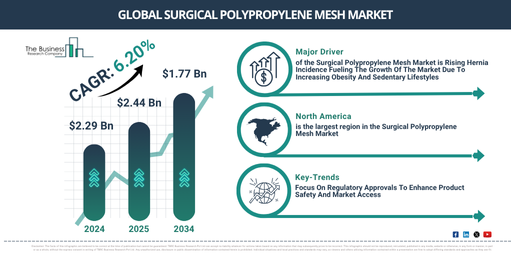
    Recent years have seen a significant expansion in the surgical polypropylene mesh market. Its size is projected to increase from $2.29 billion in 2024 to $2.44 billion in 2025, experiencing a compound annual growth rate (CAGR) of 6.5%. The growth observed throughout historical periods can be connected to different factors such as increased instances of hernia, an expanding elderly population, a rise in surgical procedures, widespread utilization of synthetic mesh in common surgeries, and escalating rates of postoperative complications.

    In the upcoming years, the surgical polypropylene mesh market is predicted to experience robust growth, potentially reaching $3.11 billion by 2029 with a compound annual growth rate (CAGR) of 6.2%. The projected growth during this period can be accredited to factors such as a heightened preference for minimally invasive hernia repair procedures, increasing demand for sturdy and lightweight mesh, enhanced reimbursement arrangements for hernia repair, a growing emphasis on patient-specific solutions, and a rise in abdominal wall reconstruction cases. Market trends for this forecast period consist of advancements in mesh design technology, the creation of bio-compatible and hybrid meshes, heightened R&D in surgical materials, innovations in coating and absorption methods, and a growing trend of utilizing 3D printing for customized mesh.

    Download The Free Sample Report Here:

    https://www.thebusinessresearchcompany.com/sample.aspx?id=25918&type=smp

    #Which Factors Are Currently Driving The Growth Of The Surgical Polypropylene Mesh Market?

    The surgical polypropylene mesh market is anticipated to expand due to rising hernia cases. Hernias are health issues where an internal body part or tissue protrudes because of a weak point in the adjacent muscle or connective tissue, resulting in noticeable lumps and discomfort. The escalation in hernia instances is attributed to the global increase in obesity, which exerts additional stress on the stomach walls, resulting in increased vulnerability to hernias as inactive lifestyles and processed food intake continue to rise. The surgical polypropylene mesh assists in treating hernias, offering reliable and biocompatible mesh implants to strengthen weakened tissue and provide efficient long-term fixes. As reported by the US-based government agency, the National Institutes of Health (NIH), in April 2025, the total hernia cases are projected to increase from 2,764,122 in 2022 to 3,309,718 by 2050, reflecting a 19.7% surge and an average annual growth rate of 0.64%. Consequently, the growing incidence of hernias is fostering the growth of the surgical polypropylene mesh market.

    How Is The Global Surgical Polypropylene Mesh Market Structured In Terms Of Segments?

    The surgical polypropylene mesh market covered in this report is segmented –

    1) By Type Of Mesh: Monofilament Mesh, Multifilament Mesh, Composite Mesh

    2) By Material Type: Non Absorbable Mesh, Absorbable Mesh

    3) By Coating Type: Non Coated Mesh, Coated Mesh

    4) By Application: Hernia Repair, Pelvic Floor Repair, Abdominal Surgery, Cardiac Surgery

    5) By End Use: Hospitals, Ambulatory Surgical Centers, Specialty Clinics

    Subsegments:

    1) By Monofilament Mesh: Lightweight Monofilament Mesh, Heavyweight Monofilament Mesh, Macroporous Monofilament Mesh, Microporous Monofilament Mesh

    2) By Multifilament Mesh: Knitted Multifilament Mesh, Braided Multifilament Mesh, Partially Absorbable Multifilament Mesh, Non-Absorbable Multifilament Mesh

    3) By Composite Mesh: Polypropylene With Absorbable Barrier, Polypropylene With Non-Absorbable Barrier, Polypropylene With Collagen-Coated Layer, Dual-Layer Composite Mesh

    Which Trends Are Redefining The Future Landscape Of The Surgical Polypropylene Mesh Industry?

    Key players in the surgical polypropylene mesh market are prioritizing acquiring regulatory approvals as it ensures their products are in line with strict safety and quality guidelines. Regulatory approvals are official permissions provided by government entities or regulatory organizations that establish that a product is fit to be marketed, sold or used in medical operations due to its safety, quality, and performance standards. For example, in April 2022, U.S. based drug-eluting surgical implants developer, Ariste Medical, LLC, was granted FDA 510(k) clearance for its innovative synthetic hernia mesh, which was drug-embedded and designed to minimize the potential of microbial colonization during hernia repair operations. This mesh, made of polypropylene and incorporated with the antibiotics minocycline and rifampin, focused on bacterial pathogens such as MRSA and E. coli, frequent causes of infections after surgery. Ventral hernia repair is among the most common surgical procedures in the U.S. and often encounters infection rates ranging from 8% to 40%. This results in expensive repeat surgeries and complications for patients.

    Who Are The Main Participants Shaping The Surgical Polypropylene Mesh Market Landscape?

    Major companies operating in the surgical polypropylene mesh market are Johnson & Johnson, Medtronic Plc, Boston Scientific Corporation, W. L. Gore & Associates Inc., Coloplast A/S, B. Braun Melsungen Aktiengesellschaft, Sutumed Corporation, Sutures.be SMI, ATEX Technologies Inc., Boz Tibbi Anonim Sirketi, Universal Sutures Inc., Lotus Surgicals Private Limited, Betatech Medikal, C. R. Bard Inc., FAS United Medical Company, Luxsutures LLC, Mesh Suture Inc., Orion Sutures Private Limited, Vital Sutures LLC, VUP Medical a.s., Asia Jarah Pishro Company

    Get The Full Report Here:

    https://www.thebusinessresearchcompany.com/report/surgical-polypropylene-mesh-global-market-report

    Which Region Currently Holds The Largest Share In The Surgical Polypropylene Mesh Market?

    North America was the largest region in the surgical polypropylene mesh market in 2024. Asia-Pacific is expected to be the fastest-growing region in the forecast period. The regions covered in the surgical polypropylene mesh market report are Asia-Pacific, Western Europe, Eastern Europe, North America, South America, Middle East, Africa.

    Request For A Customized Report:

    https://www.thebusinessresearchcompany.com/customise?id=25918&type=smp

    About The Business Research Company:

    With over 15000+ reports from 27 industries covering 60+ geographies, The Business Research Company has built a reputation for offering comprehensive, data-rich research and insights. Armed with 1,500,000 datasets, the optimistic contribution of in-depth secondary research, and unique insights from industry leaders, you can get the information you need to stay ahead in the game.

    Get in touch with us:

    The Business Research Company: https://www.thebusinessresearchcompany.com/

    Americas +1 310-496-7795

    Asia +44 7882 955267 & +91 8897263534

    Europe +44 7882 955267

    Email us at info@tbrc.info

    Follow us on:

    LinkedIn: https://in.linkedin.com/company/the-business-research-company

    YouTube: https://www.youtube.com/channel/UC24_fI0rV8cR5DxlCpgmyFQ

    Global Market Model: https://www.thebusinessresearchcompany.com/global-market-model
  • Competitive and Market Trend Analysis of Surgical Mesh Implants Industry Through 2029

    Competitive and Market Trend Analysis of Surgical Mesh Implants Industry Through 2029

    Claim your 30% discount on Global Market Reports with code ONLINE30. Limited time only.

    Claim your 30% discount on Global Market Reports with code ONLINE30. Limited time only.

    How Will the Surgical Mesh Implants Market Evolve in Terms of Growth and Size by 2029?

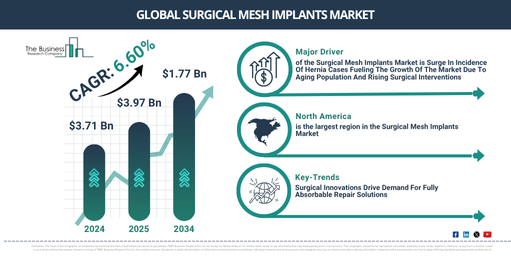
    The market for surgical mesh implants has seen a robust growth in recent times. The market is set to escalate from $3.71 billion in 2024 to $3.97 billion in 2025, yielding a compound annual growth rate (CAGR) of 7.0%. This growing trend in the past has been spurred by factors such as the rising incidence of hernia and pelvic organ prolapse, heightened demand for less invasive surgical procedures, increased knowledge concerning the advantages of surgical mesh, a growing elderly population who are susceptible to soft tissue damage, and continued technological progress in the development of mesh materials.

    In the coming years, the market size of surgical mesh implants is projected to experience significant increase. It is anticipated to reach $5.13 billion by 2029 with a 6.6% compound annual growth rate (CAGR). The expected growth during the forecast period can be associated with an elevated usage of bioabsorbable and composite meshes, amplified investments in research and development, a heightened inclination toward outpatient and ambulatory surgeries, swelling demand in budding markets, and increasing regulatory green lights for innovative mesh products. Key trends in the forecast timeline incorporate advancements in bioabsorbable mesh technologies, sophisticated composite and hybrid mesh styles, breakthroughs in minimally invasive surgical methods, progress in antibacterial and anti-adhesive coatings, and creative developments in smart and sensor-integrated surgical meshes.

    Download The Free Sample Report Here:

    https://www.thebusinessresearchcompany.com/sample.aspx?id=25917&type=smp

    What factors are expected to fuel Surgical Mesh Implants market growth in the coming years?

    The surgical mesh implants market is on the rise due to increasing hernia cases. A hernia refers to a medical situation where an internal organ or tissue protrudes through a feeble area in the surrounding muscle or connective tissue. The frequent occurrence of hernias is primarily attributed to the aging population, as they are more prone to this condition due to frail abdominal muscles and additional health complications. Surgical mesh implants are advantageous for hernia cases as they offer extra support to impaired or weakened tissue. This diminishes the risk of future occurrence and fosters quicker, more resilient recovery. For instance, as per Eurostat, a government body based in Luxembourg, between 142 and 231 inguinal hernia repairs were typically conducted per 100,000 residents in 2022. However, Austria showed a notably elevated rate of 273.2 per 100,000 residents in this same period. Therefore, the escalating incidence of hernia cases is fueling the expansion of the surgical mesh implants market.

    What Are The Key Findings From The Segmentation Analysis Of The Surgical Mesh Implants Market?

    The surgical mesh implants market covered in this report is segmented –

    1) By Type: Non-Absorbable Surgical Mesh, Absorbable Surgical Mesh, Other Types

    2) By Surgical Procedure Type: Laparoscopic Surgery, Open Surgery, Robotic-assisted Surgery, Endoscopic Surgery

    3) By Material: Polypropylene, Polyester, Polytetrafluoroethylene, Other Materials

    4) By Application: Hernia Repair, Pelvic Organ Prolapse Repair, Gastroesophageal Reflux Disease (GERD) Repair, Other Surgical Applications

    5) By End-User: Hospitals, Ambulatory Surgical Centers (ASCs), Specialized Clinics, Research Institutions

    Subsegments:

    1) By Non-Absorbable Surgical Mesh: Polypropylene Mesh, Expanded Polytetrafluoroethylene (ePTFE) Mesh, Polyester Mesh, Composite Mesh

    2) By Absorbable Surgical Mesh: Polyglycolic Acid (PGA) Mesh, Polylactic Acid (PLA) Mesh, Polyglycolide-co-lactide (PGLA) Mesh, Poly-4-hydroxybutyrate (P4HB) Mesh

    3) By Other Types: Biologic Mesh, Hybrid Mesh, Coated/Barrier Mesh, 3D-printed Mesh

    What Notable Trends Are Shaping The Direction Of The Surgical Mesh Implants Market?

    In the surgical mesh implants market, leading companies are concentrating on developing cutting-edge solutions like fully bioabsorbable designs. These designs cater to improving patient results, reducing prolonged complications, and fulfilling the increasing demand for non-permanent implant alternatives. Fully bioabsorbable designs are implantable meshes made with materials that naturally degrade and are consumed by the human body over time, thus excluding the need for permanent implants. For instance, in April 2025, Becton, Dickinson and Company, an American medication firm, declared its receipt of 510(k) clearance from the US Food and Drug Administration (FDA) for its Phasix ST Umbilical Hernia Patch. It has been now commercially launched in the U.S. market. This patch is exceptional for being the first and only fully absorbable hernia mesh, specifically developed for repairing umbilical hernias. Made with a bioabsorbable polymer, the patch gradually dissolves in the body, nullifying the need for permanent implants. This launch signifies a substantial innovation in soft tissue repair, catering to both clinical demands and patient choices for non-permanent mesh solutions.

    What Are The Most Active Companies In The Surgical Mesh Implants Market Today?

    Major companies operating in the surgical mesh implants market are Johnson & Johnson, Medtronic plc, Becton Dickinson and Company, Stryker Corporation, Boston Scientific Corporation, W. L. Gore & Associates Inc., Cook Medical, Integra LifeSciences Corporation, Ethicon Inc., B. Braun Melsungen AG, Feg Textiltechnik mbH, Cousin Biotech, Proxy Biomedical Ltd., Betatech Medical, Dipromed Srl, Novus Scientific Pte. Ltd., Atrium Medical Corporation, LifeCell Corporation, Hernia Mesh S.R.L., THT Bio-Science Inc.

    Get The Full Report Here:

    https://www.thebusinessresearchcompany.com/report/surgical-mesh-implants-global-market-report

    Which Regional Markets Are Attracting The Most Investment In Surgical Mesh Implants?

    North America was the largest region in the surgical mesh implants market in 2024. Asia-Pacific is expected to be the fastest-growing region in the forecast period. The regions covered in the surgical mesh implants market report are Asia-Pacific, Western Europe, Eastern Europe, North America, South America, Middle East, Africa.

    Request For A Customized Report:

    https://www.thebusinessresearchcompany.com/customise?id=25917&type=smp

    About The Business Research Company:

    With over 15000+ reports from 27 industries covering 60+ geographies, The Business Research Company has built a reputation for offering comprehensive, data-rich research and insights. Armed with 1,500,000 datasets, the optimistic contribution of in-depth secondary research, and unique insights from industry leaders, you can get the information you need to stay ahead in the game.

    Get in touch with us:

    The Business Research Company: https://www.thebusinessresearchcompany.com/

    Americas +1 310-496-7795

    Asia +44 7882 955267 & +91 8897263534

    Europe +44 7882 955267

    Email us at info@tbrc.info

    Follow us on:

    LinkedIn: https://in.linkedin.com/company/the-business-research-company

    YouTube: https://www.youtube.com/channel/UC24_fI0rV8cR5DxlCpgmyFQ

    Global Market Model: https://www.thebusinessresearchcompany.com/global-market-model