Category: Medical Equipment

  • Hemostasis Products Market Forecast To Reach $2.52 Billion By 2030: Key Trends Explained

    Hemostasis Products Market Forecast To Reach $2.52 Billion By 2030: Key Trends Explained

    Featuring market attractiveness scoring, total addressable market sizing, company benchmarking matrices, interactive Excel dashboards, deeper supply chain intelligence, emerging startup tracking, and granular product-level insights, The Business Research Company’s 2026 market reports are built to deliver research that is both more actionable and more strategically valuable.

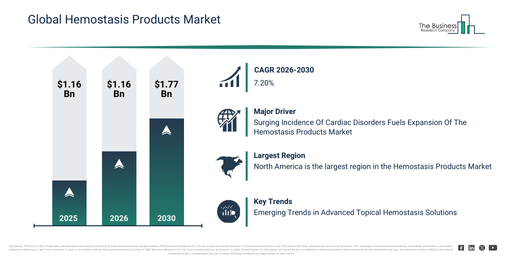
    Hemostasis Products Market Revenue Growth On Track For A 7.2% CAGR Through 2030

    The hemostasis products market size has experienced robust expansion in recent years. It is projected to increase from $1.8 billion in 2025 to $1.91 billion in 2026, demonstrating a compound annual growth rate (CAGR) of 6.1%. The market’s growth during the historic period can be attributed to an increasing volume of surgical procedures, a rising incidence of trauma cases, the growing prevalence of bleeding disorders, the expansion of hospital surgical capacities, and the availability of diverse hemostatic formulations.

    The hemostasis products market is projected to experience robust expansion over the coming years. Its size is set to reach $2.52 billion in 2030, demonstrating a compound annual growth rate (CAGR) of 7.2%. This anticipated increase during the forecast period is due to factors such as the greater acceptance of sophisticated biological and synthetic agents, the rising need for minimally invasive surgical options, the development of trauma care infrastructure, a heightened emphasis on achieving quicker wound healing results, and ongoing advancements in clotting technologies. Key developments expected within this period involve the broader adoption of advanced hemostatic products, increased utilization of topical and sealant-based treatments, a growing requirement for immediate bleeding management solutions, the wider application of hemostasis in surgical and trauma settings, and a reinforced focus on materials that are biocompatible.

    Get A Free Sample Report With In-Depth Market Insights:

    https://thebusinessresearchcompany.com/sample_request?id=46055857&type=smp&name=Hemostasis%20Products%20Market%20Report%202026&utm_source=Blogs&utm_medium=Paid&utm_campaign=Oct_PR

    Hemostasis Products Market Growth Drivers: What’s Behind The Acceleration?

    The increasing occurrence of cardiac conditions is projected to drive expansion in the hemostasis products market moving ahead. These disorders encompass a wide range of medical ailments and illnesses impacting the heart and vascular system. Hemostasis products play a crucial role in addressing bleeding linked to cardiac disorders, as well as in their prevention and treatment. These products are capable of minimizing blood loss, thereby lessening the requirement for blood transfusions and mitigating possible complications in cardiac conditions. As an illustration, data from January 2024 from the American Heart Association, a US-based non-profit entity, showed that the age-adjusted mortality rate for cardiovascular disease rose to 233.3 per 100,000 in 2024, marking a 4.0% increase from 224.4 per 100,000 in 2023. This rising prevalence of cardiac disorders is, therefore, propelling the growth of the hemostasis products market going forward.

    Hemostasis Products Market Segment Performance And Emerging Opportunities

    The hemostasis products market covered in this report is segmented –

    1) By Product: Topical Hemostasis Product, Infusible Hemostasis Product, Advanced Hemostasis Product

    2) By Application: Trauma, Surgery, Hemophilia, Myocardial Infarction, Other Applications

    3) By End User: Hospitals, Clinics, Other End Users

    Subsegments:

    1) By Topical Hemostasis Product: Hemostatic Agents, Tissue Sealants, Fibrin Sealants

    2) By Infusible Hemostasis Product: Platelet-Rich Plasma (PRP), Coagulation Factors, Prothrombin Complex Concentrates

    3) By Advanced Hemostasis Product: Biological Adhesives, Synthetic Hemostatic Agents, Hemostatic Dressings

    Hemostasis Products Market Trends: What’s Defining The Industry’s Next Phase?

    Leading companies in the hemostasis products market are concentrating on developing next-generation topical hemostatic powders, such as sophisticated polysaccharide-based powder systems, designed for swift bleeding control in surgical and emergency situations. These topical hemostatic powders are defined as passive, absorbable agents that promote clot formation by concentrating blood solids and accelerating the natural coagulation cascade at the bleeding site. For instance, in July 2023, Baxter International Inc., a US-based medical products company, introduced its PERCLOT Absorbable Hemostatic Powder in the United States, a ready-to-use, plant-derived hemostatic agent intended for mild bleeding during a wide array of surgical procedures. This product features rapid wettability, easy compatibility with laparoscopic applicators, and broad procedural versatility, enabling surgeons to achieve effective intraoperative bleeding management with improved convenience and efficiency.

    Hemostasis Products Market Competitive Analysis Of Leading Industry Participants

    Major companies operating in the hemostasis products market are Pfizer Inc., Medtronic plc, Johnson And Johnson Pvt. Ltd., Stryker Corporation, Baxter International Inc., F. Hoffmann-La Roche Ltd., BBraun Melsungen AG, Fresenius Kabi AG, Grifols S.A., Terumo BCT Inc., Smith And Nephew plc, Ethicon Suture Laboratories, Cook Medical, Teleflex Incorporated, Integra LifeSciences Corporation, Haemonetics Corporation, Z-Medica LLC, Tricol Biomedical, Hem Con Medical Technologies Inc., Hemostasis LLC, CuraMedical BV, Ethicon Suture Laboratories

    View The Full Hemostasis Products Market Report:

    https://thebusinessresearchcompany.com/report/hemostasis-products-global-market-report?utm_source=Blogs&utm_medium=Paid&utm_campaign=Oct_PR

    Hemostasis Products Market Geographic Distribution And Regional Opportunities

    North America was the largest region in the hemostasis products market in 2025. Asia-Pacific is expected to be the fastest-growing region in the forecast period. The regions covered in the hemostasis products market report are Asia-Pacific, South East Asia, Western Europe, Eastern Europe, North America, South America, Middle East, Africa.

    Reach Out To Our Team:

    The Business Research Company: https://www.thebusinessresearchcompany.com/

    Americas: +1 310-496-7795

    Asia: +44 7882 955267 & +91 8897263534

    Europe: +44 7882 955267

    Email us at: marketing@tbrc.info

    Follow us on:

    LinkedIn: https://in.linkedin.com/company/the-business-research-company

    YouTube: https://www.youtube.com/channel/UC24_fI0rV8cR5DxlCpgmyFQ

    Global Market Model: https://www.thebusinessresearchcompany.com/global-market-model
  • External Ventricular Drain Market Analysis Through 2030: Market Size, Growth Trends And Industry Outlook

    External Ventricular Drain Market Analysis Through 2030: Market Size, Growth Trends And Industry Outlook

    Backed by market attractiveness analysis, total addressable market sizing, company benchmarking matrices, interactive Excel dashboards, wider supply chain intelligence, emerging startup coverage, and detailed product-level insights, The Business Research Company’s 2026 market reports are designed to offer research that is more actionable and strategically valuable than ever.

    External Ventricular Drain Market Forecast: Value Set To Climb From $5.33 Billion To $6.74 Billion

    The external ventricular drain market has experienced robust growth in recent years. It is projected to expand from $4.99 billion in 2025 to $5.33 billion in 2026, driven by a compound annual growth rate (CAGR) of 6.7%. The growth observed in the historic period can be attributed to factors such as the increasing incidence of traumatic brain injury, a rise in cases of intracranial hemorrhage, the growing prevalence of hydrocephalus, the expansion of neurosurgical care facilities, and the greater adoption of critical care monitoring practices.

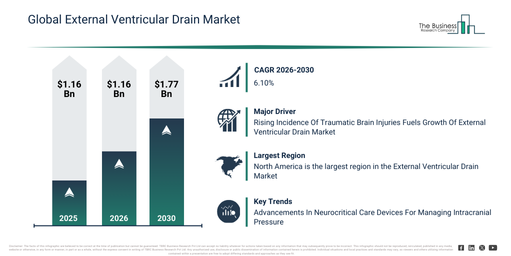
    The external ventricular drain market is anticipated to show significant expansion over the next few years. It is predicted to reach $6.74 billion in 2030 at a compound annual growth rate (CAGR) of 6.1%. This projected growth during the forecast period stems from factors such as the increasing incidence of neurological disorders, a growing need for advanced neurocritical care, rising investments in neurosurgery infrastructure, enhanced awareness regarding intracranial pressure management, and broader access to specialized neurological hospitals. Prominent trends for this period include the increased deployment of external ventricular drains in neurocritical care, the growing adoption of adjustable and continuous EVD systems, a heightened demand for precise intracranial pressure management, an intensifying focus on infection control in cerebrospinal fluid drainage, and the rising use of EVDs in traumatic brain injury management.

    Get A Free Sample Report With In-Depth Market Insights:

    https://thebusinessresearchcompany.com/sample_request?id=52808379&type=smp&name=External%20Ventricular%20Drain%20Market%20Report%202026&utm_source=Blogs&utm_medium=Paid&utm_campaign=Oct_PR

    External Ventricular Drain Market Opportunity Drivers: What’s Unlocking New Revenue Potential?

    The increasing occurrence of traumatic brain injuries (TBI) is anticipated to propel the growth of the external ventricular drain market moving forward. Traumatic brain injury (TBI) describes an injury to the brain resulting from an external impact, which can cause temporary or lasting impairment of cognitive, physical, and psychosocial functions. The rising incidence of traumatic brain injuries can be attributed to factors such as greater participation in contact sports, an uptick in motor vehicle accidents, and an aging populace more prone to falls. TBIs often lead to elevated intracranial pressure (ICP) due to swelling, hemorrhage, or the buildup of cerebrospinal fluid (CSF), all of which can result in further brain damage. The external ventricular drain (EVD) helps to mitigate these consequences by draining surplus CSF and regularly monitoring ICP. For instance, in October 2023, according to the World Federation of Neurology, a UK-based organization committed to advancing neurological practice and research worldwide, more than 40% of the global population is affected by a neurological condition, a figure projected to nearly double by 2050. Therefore, the growing incidence of traumatic brain injuries is driving the expansion of the external ventricular drain market.

    External Ventricular Drain Market Segmentation: How Does The Market Break Down By Category?

    The external ventricular drain market covered in this report is segmented –

    1) By Product: External Ventricular Drainage Set, Accessories

    2) By Application: Traumatic Brain Injury, Intracranial Hemorrhage, Hydrocephalus, Other Applications

    3) By End-User: Hospitals, Specialty Hospitals, Specialty Clinics, Other End-Users

    Subsegments:

    1) By External Ventricular Drainage Set: Standard External Ventricular Drainage Set, Adjustable External Ventricular Drainage Set, Continuous External Ventricular Drainage Set

    2) By Accessories: Catheters, Pressure Monitoring Devices, Drainage Bags, Connecting Tubes

    External Ventricular Drain Market Innovation Trends Shaping Future Development

    Leading companies in the external ventricular drain market are concentrating on creating innovative solutions, including neurocritical care devices, to enhance patient outcomes, improve procedural efficiency, and address intricate neurological conditions. A neurocritical care device is a medical instrument used for monitoring and managing critically ill patients with severe neurological conditions, facilitating functions such as intracranial pressure monitoring and cerebrospinal fluid drainage. As an illustration, in March 2025, Anuncia Medical Inc., a US-based neurotherapeutic device company, was awarded FDA Breakthrough Device Designation for its ReFlow External Ventricular Drains (EVD), a novel device designed to control brain swelling and elevated intracranial pressure. The ReFlow EVD is unique as the first device of its kind to provide a noninvasive, manual flushing mechanism to restore and maintain cerebrospinal fluid (CSF) flow. It can be operated by nurses during routine patient checks, potentially shortening ICU stays, reducing the need for additional surgeries, and lowering the costs associated with EVD replacements. This designation broadens Anuncia’s product range beyond hydrocephalus management to include acute neurocritical care, thereby improving patient recovery and optimizing clinical processes.

    External Ventricular Drain Market Industry Leaders And Competitive Landscape

    Major companies operating in the external ventricular drain market are Medtronic Plc, B. Braun SE, Integra LifeSciences, Teleflex Incorporated, Spiegelberg GmbH & Co. KG, IRRAS AB, Sophysa, Raumedic AG, Luciole Medical AG, Fuji Systems Corporation, Ad-Tech Medical Instrument Corporation, Mizuho Medical Co. Ltd., Nipro Corporation, Kaneka Corporation, Samyang Biopharmaceuticals Corporation, Neuromedex GmbH, SILMAG S.A., Tokibo Co. Ltd., Well Lead Medical Co. Ltd., Beijing Xinlingwei Technology Co. Ltd.

    View The Full External Ventricular Drain Market Report:

    https://thebusinessresearchcompany.com/report/external-ventricular-drain-global-market-report?utm_source=Blogs&utm_medium=Paid&utm_campaign=Oct_PR

    External Ventricular Drain Market Regional Analysis And Top Geography

    North America was the largest region in the external ventricular drain market in 2025. Asia-Pacific is expected to be the fastest-growing region in the forecast period. The regions covered in the external ventricular drain market report are Asia-Pacific, South East Asia, Western Europe, Eastern Europe, North America, South America, Middle East, Africa.

    Reach Out To Our Team:

    The Business Research Company: https://www.thebusinessresearchcompany.com/

    Americas: +1 310-496-7795

    Asia: +44 7882 955267 & +91 8897263534

    Europe: +44 7882 955267

    Email us at: marketing@tbrc.info

    Follow us on:

    LinkedIn: https://in.linkedin.com/company/the-business-research-company

    YouTube: https://www.youtube.com/channel/UC24_fI0rV8cR5DxlCpgmyFQ

    Global Market Model: https://www.thebusinessresearchcompany.com/global-market-model
  • External Pacemakers Market Outlook From 2026 To 2030: Key Growth Factors And Future Opportunities

    External Pacemakers Market Outlook From 2026 To 2030: Key Growth Factors And Future Opportunities

    Featuring market attractiveness scoring, total addressable market sizing, company benchmarking matrices, interactive Excel dashboards, deeper supply chain intelligence, emerging startup tracking, and granular product-level insights, The Business Research Company’s 2026 market reports are built to deliver research that is both more actionable and more strategically valuable.

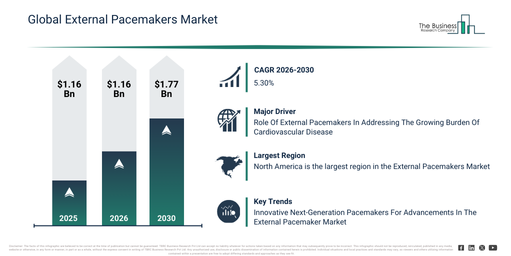
    External Pacemakers Market Revenue Growth On Track For A 5.3% CAGR Through 2030

    The external pacemakers market has exhibited robust growth in recent years. It is projected to expand from $1.6 billion in 2025 to $1.7 billion in 2026, at a compound annual growth rate (CAGR) of 5.9%. The market’s historical growth can be ascribed to a rising incidence of bradycardia, an increasing prevalence of acute myocardial infarction, an uptick in cardiac surgical procedures, the expansion of emergency medical services infrastructure, and enhanced availability of cardiac critical care units.

    The external pacemakers market is anticipated to show significant expansion over the next few years. It is set to grow to $2.09 billion in 2030, demonstrating a compound annual growth rate (CAGR) of 5.3%. This expected increase during the forecast period can be attributed to the rising incidence of cardiovascular diseases, an expanding aging population, an increasing demand for temporary cardiac pacing solutions, the development of advanced cardiac care facilities, and improved access to emergency and critical care services. Key developments during this timeframe include the increasing application of external pacemakers in emergency cardiac care, a growing adoption of temporary cardiac pacing in surgical environments, a rising demand for portable and user-friendly external pacemakers, an increasing preference for dual chamber external pacemakers, and a heightened focus on rapid cardiac stabilization in acute care.

    Get A Free Sample Report With In-Depth Market Insights:

    https://thebusinessresearchcompany.com/sample_request?id=30859948&type=smp&name=External%20Pacemakers%20Market%20Report%202026&utm_source=Blogs&utm_medium=Paid&utm_campaign=Oct_PR

    External Pacemakers Market Growth Momentum: What Factors Are Shaping Demand?

    The increasing prevalence of cardiovascular conditions is projected to fuel the expansion of the external pacemaker market in the future. Cardiovascular disease (CVD) encompasses a range of ailments affecting the heart or its associated blood vessels. The rising occurrence of these heart-related conditions is linked to multiple factors including inactive lifestyles, diets rich in processed foods and sugars, escalating obesity rates, tobacco use, elevated blood pressure, and psychological stress. External pacemakers play a crucial role in managing cardiovascular diseases by normalizing irregular heart rhythms and enhancing overall heart performance. As an illustration, data from October 2024, provided by the Centers for Disease Control and Prevention, a US-based, government agency, indicated that in 2023, cardiovascular disease was responsible for 919,032 lives, representing roughly one in every three deaths. Consequently, the increasing frequency of cardiovascular diseases is anticipated to drive the advancement of the external pacemaker market.

    External Pacemakers Market Segment Trends And Revenue Contributors

    The external pacemakers market covered in this report is segmented –

    1) By Product: Single Chamber, Dual Chamber

    2) By Application: Bradycardia, Acute Myocardial Infarction

    3) By End-user: Hospitals, Ambulatory Surgical Centers, Other End-Users

    Subsegments:

    1) By Single Chamber Pacemakers: Unipolar External Pacemakers, Bipolar External Pacemakers

    2) By Dual Chamber Pacemakers: Unipolar Dual Chamber Pacemakers, Bipolar Dual Chamber Pacemakers

    External Pacemakers Market Trends Redefining Industry Growth

    Leading companies active in the external pacemaker market are developing innovative products, including miniaturized pacemakers, to enhance battery longevity and achieve a competitive edge in the sector. Miniaturized or leadless pacemakers are small electronic devices implanted within the heart to regulate its rhythm. For example, in May 2023, Medtronic Plc, an Ireland-based medical device company, received Food and Drug Administration approval for Micra AV2 and Micra VR2, which are the next generation of its industry-leading miniaturized, leadless pacemakers. These devices provide up to 40% more battery life than prior models, with a projected median battery life spanning from nearly 16 to 17 years. They feature advanced algorithms for automatic AV synchrony programming and a superior tracking capability for active patients. Micra pacemakers minimize complications and improve the patient experience thanks to their small size and the absence of leads or surgical pockets.

    External Pacemakers Market Key Participants And Competitive Landscape

    Major companies operating in the external pacemakers market are ZOLL Medical Corporation, Shree Pacetronix Ltd, Osypka Medical Inc, Medtronic plc, Abbott Laboratories, Boston Scientific Corporation, Lepu Medical Technology Co Ltd, Biotronik SE & Co KG, LivaNova PLC, MicroPort CRM, Nihon Kohden Corporation, BPL Medical Technologies, Schiller AG, Progetti Medical Equipment Solutions, Instramed Indústria Médico Hospitalar, Corpuls GmbH, Skanray Technologies Ltd, Bexen Cardio, CU Medical Systems Inc, Advanced Instrumentations

    View The Full External Pacemakers Market Report:

    https://thebusinessresearchcompany.com/report/external-pacemakers-global-market-report?utm_source=Blogs&utm_medium=Paid&utm_campaign=Oct_PR

    External Pacemakers Market Geographic Analysis: Where Is Demand Rising Fastest?

    North America was the largest region in the external peacemakers market in 2025. Asia-Pacific is expected to be the fastest-growing region in the forecast period. The regions covered in the external pacemakers market report are Asia-Pacific, South East Asia, Western Europe, Eastern Europe, North America, South America, Middle East, Africa.

    Reach Out To Our Team:

    The Business Research Company: https://www.thebusinessresearchcompany.com/

    Americas: +1 310-496-7795

    Asia: +44 7882 955267 & +91 8897263534

    Europe: +44 7882 955267

    Email us at: marketing@tbrc.info

    Follow us on:

    LinkedIn: https://in.linkedin.com/company/the-business-research-company

    YouTube: https://www.youtube.com/channel/UC24_fI0rV8cR5DxlCpgmyFQ

    Global Market Model: https://www.thebusinessresearchcompany.com/global-market-model
  • Exosome Diagnostic And Therapeutic Market Growth Forecast: Market Size, Key Trends And Emerging Opportunities Through 2030

    Exosome Diagnostic And Therapeutic Market Growth Forecast: Market Size, Key Trends And Emerging Opportunities Through 2030

    Built to provide research that’s more actionable and strategically valuable, The Business Research Company’s 2026 market reports include market attractiveness analysis, total addressable market sizing, company benchmarking matrices, interactive Excel dashboards, broader supply chain intelligence, emerging startup tracking, and in-depth product insights.

    Exosome Diagnostic And Therapeutic Market Value Growth And Long-Term Outlook

    The exosome diagnostic and therapeutic market has seen significant expansion in recent years. It is projected to increase in value from $0.6 billion in 2025 to $0.77 billion in 2026, demonstrating a compound annual growth rate (CAGR) of 28.0%. The growth observed in previous periods can be linked to breakthroughs in molecular biology research, a rise in investments directed towards regenerative medicine, growing academic inquiry into extracellular vesicles, the enlargement of biotech research infrastructure, and the increasing accessibility of tools for exosome analysis.

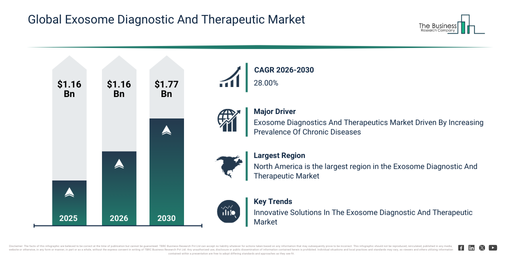
    The exosome diagnostic and therapeutic market is anticipated to experience substantial growth in the upcoming years. Its size is projected to escalate to $2.07 billion by 2030, demonstrating a compound annual growth rate (CAGR) of 28.0%. This expansion during the forecast period can be attributed to factors such as the increasing clinical implementation of exosome therapies, a rising demand for personalized medicine solutions, the wider adoption of AI for exosome data analysis, growing pharmaceutical engagement in biologic delivery systems, and improved regulatory clarity for advanced therapies. Furthermore, major trends anticipated in this period include the expanded application of exosomes for targeted drug delivery, the increasing adoption of liquid biopsy diagnostics, a heightened demand for regenerative medicine applications, the development of advanced exosome isolation technologies, and a stronger focus on precision therapeutic development.

    Get A Free Sample Report With In-Depth Market Insights:

    https://thebusinessresearchcompany.com/sample_request?id=77592229&type=smp&name=Exosome%20Diagnostic%20And%20Therapeutic%20Market%20Report%202026&utm_source=Blogs&utm_medium=Paid&utm_campaign=Oct_PR

    Exosome Diagnostic And Therapeutic Market Expansion Drivers: What’s Shaping Future Growth?

    The increasing incidence of chronic diseases is projected to stimulate the growth of the exosome diagnostic and therapeutic market moving forward. A chronic disease is an illness lasting for three months or more, which can deteriorate over time. Exosomes, in their diagnostic and therapeutic capacities, function as potential biomarkers in cancer, facilitating more sensitive disease monitoring and making personalized medicine more accessible. For instance, in January 2023, the National Center for Biotechnology Information (NCBI), a US-based National Library of Medicine, reported an anticipation of 142.66 million people worldwide living with chronic diseases by the year 2050. Thus, the escalating prevalence of chronic diseases is propelling the exosome diagnostics and therapeutics market.

    Exosome Diagnostic And Therapeutic Market Segment Analysis Spotlighting Growth Areas

    The exosome diagnostic and therapeutic market covered in this report is segmented –

    1) By Product: Instruments, Software, Reagents And Kits

    2) By Application: Diagnostics, Therapeutic

    3) By End User: Academic And Research Institutes, Pharmaceutical And Biotechnology Companies, Hospitals And Clinics, Other End Users

    Subsegments:

    1) By Instruments: Exosome Isolation Systems, Characterization Instruments, Analysis Devices

    2) By Software: Data Analysis Software, Exosome Profiling Software

    3) By Reagents And KITS: Isolation KITS, Characterization Reagents, Assay KITS

    Exosome Diagnostic And Therapeutic Market Strategic Trends: What Defines The Next Growth Phase?

    Leading firms within the exosome diagnostic and therapeutic market are creating advanced offerings, including sample purification systems, aiming to serve broader customer segments, boost sales, and enhance financial returns. Such systems encompass various procedures and technologies specifically engineered to eliminate unwanted substances and pollutants from a sample, which could include DNA, RNA, proteins, or other biological molecules. As an illustration, in February 2023, Biological Dynamics Inc., an American biotechnology enterprise, unveiled ExoVerita, an exosome-isolation platform designed for early disease monitoring and a range of additional uses. The ExoVita Pancreas assay identifies specific exosomal protein markers and has demonstrated efficacy in detecting Stage 1 and Stage 2 pancreatic ductal adenoma carcinoma (PDAC) through blood-based exosome samples processed using the proprietary ExoVerita device. This validation will enable the company to analyze samples from the ExoLuminate registry trial (NCT05625529), which is now actively enrolling patients at elevated risk for PDAC to assess the clinical utility of the test. Eligibility also extends to patients exhibiting clinical manifestations like pancreatitis or identified pancreatic lesions, those with a genetic or family predisposition, and individuals recently diagnosed with diabetes who are over 50 years old.

    Exosome Diagnostic And Therapeutic Market Top Companies Driving Competitive Growth

    Major companies operating in the exosome diagnostic and therapeutic market are Thermo Fisher Scientific Inc., Miltenyi Biotec GmbH, Malvern Instruments Inc., System Biosciences LLC, NanoSomix Inc., Exosome Diagnostics Inc., Evox Therapeutics Ltd., ExCoBio Inc., Codiak BioSciences Inc., Capricor Therapeutics Inc., Aethlon Medical Inc., NX Pharmagen Inc., Aegle Therapeutic Corporation, Ciloa, Sistemic Inc., Theoria Science, Mantra Bio Inc., Lonza Group AG, Bio-Techne Corp.

    View The Full Exosome Diagnostic And Therapeutic Market Report:

    https://thebusinessresearchcompany.com/report/exosome-diagnostic-and-therapeutic-global-market-report?utm_source=Blogs&utm_medium=Paid&utm_campaign=Oct_PR

    Exosome Diagnostic And Therapeutic Market Global Footprint: Which Region Leads The Market?

    North America was the largest region in the exosome diagnostic and therapeutic market in 2025. Asia-Pacific is expected to be the fastest-growing region in the forecast period. The regions covered in the exosome diagnostic and therapeutic market report are Asia-Pacific, South East Asia, Western Europe, Eastern Europe, North America, South America, Middle East, Africa.

    Reach Out To Our Team:

    The Business Research Company: https://www.thebusinessresearchcompany.com/

    Americas: +1 310-496-7795

    Asia: +44 7882 955267 & +91 8897263534

    Europe: +44 7882 955267

    Email us at: marketing@tbrc.info

    Follow us on:

    LinkedIn: https://in.linkedin.com/company/the-business-research-company

    YouTube: https://www.youtube.com/channel/UC24_fI0rV8cR5DxlCpgmyFQ

    Global Market Model: https://www.thebusinessresearchcompany.com/global-market-model
  • E-Textile Health Monitoring Market CAGR Forecast Through 2030: Key Trends Shaping Industry Expansion

    E-Textile Health Monitoring Market CAGR Forecast Through 2030: Key Trends Shaping Industry Expansion

    Backed by market attractiveness analysis, total addressable market sizing, company benchmarking matrices, interactive Excel dashboards, wider supply chain intelligence, emerging startup coverage, and detailed product-level insights, The Business Research Company’s 2026 market reports are designed to offer research that is more actionable and strategically valuable than ever.

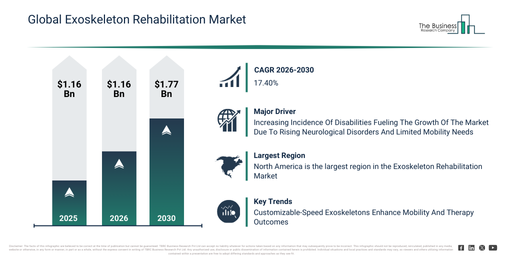
    Exoskeleton Rehabilitation Market Poised To Hit $2.91 Billion By 2030 With A 17.4% CAGR

    The exoskeleton rehabilitation market size has experienced rapid growth in recent years. This market is set to expand from $1.3 billion in 2025 to $1.53 billion in 2026, exhibiting a compound annual growth rate (CAGR) of 17.7%. The growth observed during the historic period can be ascribed to a rise in stroke cases, spinal cord injuries, the adoption of rehabilitation technology, a shortage of therapists, and the demand for intensive therapy.

    The exoskeleton rehabilitation market is poised for significant expansion in the coming years. It is projected to reach $2.91 billion by 2030, demonstrating a compound annual growth rate (CAGR) of 17.4%. This growth during the forecast period is fueled by the increase in home-based rehabilitation, the development of AI-guided therapy systems, the rising aging population, the broadening scope of neurorehabilitation, and advancements in remote therapy monitoring. Prominent trends expected in the forecast period include robotic assisted rehabilitation, personalized therapy motion control, wearable mobility support systems, high precision movement training, and data driven recovery monitoring.

    Get A Free Sample Report With In-Depth Market Insights:

    https://thebusinessresearchcompany.com/sample_request?id=58294247&type=smp&name=Exoskeleton%20Rehabilitation%20Market%20Report%202026&utm_source=Blogs&utm_medium=Paid&utm_campaign=Oct_PR

    Exoskeleton Rehabilitation Market Development Factors: What’s Supporting Demand?

    The rising occurrence of disabilities is anticipated to fuel the expansion of the exoskeleton rehabilitation market moving forward. Disabilities are defined as enduring physical, sensory, or cognitive limitations that hinder an individual’s capacity to perform daily tasks. The surge in disability cases is primarily attributable to neurological disorders, given that enhanced survival rates from strokes and injuries frequently lead to persistent impairments. Exoskeleton rehabilitation offers aid to those with disabilities through wearable robotic assistance, making it particularly suitable for individuals experiencing restricted mobility. This technology alleviates physical exertion by facilitating guided movements and repetitive therapeutic exercises, thereby fostering functional recuperation and greater independence. For instance, in July 2025, as reported by Eurostat, a Luxembourg-based statistical office of the European Union (EU), 23.9% of people aged 16 or older in the EU indicated experiencing a disability or an activity limitation in 2024. Consequently, the increasing prevalence of disabilities is a significant factor propelling the growth of the exoskeleton rehabilitation market.

    Exoskeleton Rehabilitation Market Segment Performance And Emerging Opportunities

    The exoskeleton rehabilitation market covered in this report is segmented –

    1) By Product Type: Lower Limb Exoskeletons, Upper Limb Exoskeletons, Full Body Exoskeletons

    2) By Mobility: Mobile, Stationary

    3) By Application: Neurological Disorders, Orthopedic Disorders, Spinal Cord Injury, Stroke, Other Applications

    4) By End-User: Hospitals And Clinics, Rehabilitation Centers, Other End-Users

    Subsegments:

    1) By Lower Limb Exoskeletons: Neurorehabilitation Systems, Gait Training Systems, Mobility Assistance Systems, Balance Support Systems

    2) By Upper Limb Exoskeletons: Arm Rehabilitation Systems, Hand Rehabilitation Systems, Shoulder Support Systems, Elbow Assistance Systems, Wrist Assistance Systems

    3) By Full Body Exoskeletons: Integrated Rehabilitation Systems, Whole Body Support Systems, Multi Joint Assistance Systems, Full Mobility Assistance Systems, Postural Support Systems

    Exoskeleton Rehabilitation Market Transformation Trends: What Innovations Are Driving Change?

    Leading companies in the exoskeleton rehabilitation market are prioritizing the development of advanced products, such as customizable speed exoskeleton systems, to enhance both mobility and therapeutic outcomes. Customizable speed exoskeleton systems are rehabilitation exoskeletons designed to allow therapists or users to modify walking or movement speeds, aligning with individual therapy requirements and patient abilities. For example, in April 2025, Lifeward Ltd., an Israel-based medical device company, introduced the ReWalk 7 Personal Exoskeleton, a customizable-speed exoskeleton system. This wearable robotic exoskeleton provides powered hip and knee motion, empowering individuals with paraplegia to stand, walk, and climb stairs. It incorporates improved stability features and a new, more intuitive user interface for initiating motion, facilitating smooth transitions between daily activities with increased user confidence and diminished physical strain.

    Exoskeleton Rehabilitation Market Leading Players And Competitive Positioning

    Major companies operating in the exoskeleton rehabilitation market are Ottobock SE and Co KGaA, Fourier Intelligence, DIH Holding US Inc., Cyberdyne Inc., Wandercraft SAS, Myomo Inc., Ekso Bionics Holdings Inc., Tyromotion GmbH, Lifeward Inc., Able Human Motion SL, Bioservo Technologies AB, ExoAtlet Global SA, Bama Teknoloji, Focal Meditech BV, B Temia Inc., Bionik Laboratories Corp, Gogoa Mobility Robots SL, Rex Bionics Ltd., Wearable Robotics Srl, Bionic Yantra Private Limited

    View The Full Exoskeleton Rehabilitation Market Report:

    https://thebusinessresearchcompany.com/report/global-exoskeleton-rehabilitation-market-report?utm_source=Blogs&utm_medium=Paid&utm_campaign=Oct_PR

    Exoskeleton Rehabilitation Market Regional Split: Which Areas Are Fueling Growth?

    North America was the largest region in the exoskeleton rehabilitation market in 2025. Asia-Pacific is expected to be the fastest-growing region in the forecast period. The regions covered in the exoskeleton rehabilitation market report are Asia-Pacific, South East Asia, Western Europe, Eastern Europe, North America, South America, Middle East, Africa.

    Reach Out To Our Team:

    The Business Research Company: https://www.thebusinessresearchcompany.com/

    Americas: +1 310-496-7795

    Asia: +44 7882 955267 & +91 8897263534

    Europe: +44 7882 955267

    Email us at: marketing@tbrc.info

    Follow us on:

    LinkedIn: https://in.linkedin.com/company/the-business-research-company

    YouTube: https://www.youtube.com/channel/UC24_fI0rV8cR5DxlCpgmyFQ

    Global Market Model: https://www.thebusinessresearchcompany.com/global-market-model
  • E-Textile Health Monitoring Market To Witness 27.4% CAGR Growth Through 2030: Key Industry Drivers

    E-Textile Health Monitoring Market To Witness 27.4% CAGR Growth Through 2030: Key Industry Drivers

    Featuring market attractiveness scoring, total addressable market sizing, company benchmarking matrices, interactive Excel dashboards, deeper supply chain intelligence, emerging startup tracking, and granular product-level insights, The Business Research Company’s 2026 market reports are built to deliver research that is both more actionable and more strategically valuable.

    E-Textile Health Monitoring Market Size And Revenue Outlook Through 2030

    Recent years have witnessed substantial growth in the e-textile health monitoring market size. It is projected to increase from $3.59 billion in 2025 to $4.59 billion in 2026, exhibiting a compound annual growth rate (CAGR) of 27.7%. This historical growth is attributable to the rising adoption of wearable health devices, advancements in flexible electronics, an increasing prevalence of chronic diseases, growing demand for remote patient monitoring, and the development of conductive textile materials.

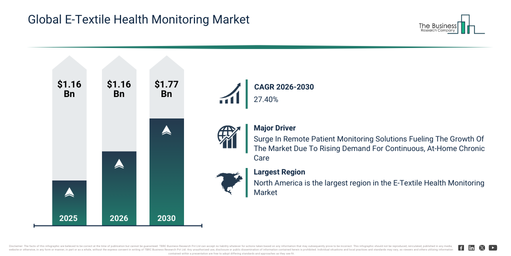
    The e-textile health monitoring market is projected to experience substantial expansion over the upcoming years. This market is forecast to reach $12.09 billion by 2030, exhibiting a compound annual growth rate (CAGR) of 27.4%. Key drivers for this growth during the projection period include the integration with AI-powered health platforms, the broadening of wireless communication protocols, rising uptake in sports and fitness industries, obtaining regulatory clearances for clinical uses, and the increasing need for individualized healthcare solutions. Significant trends anticipated in the forecast period encompass real-time health data analysis, the incorporation of wearable sensors, remote patient oversight, proactive health evaluation, and diagnostics facilitated by smart textiles.

    Get A Free Sample Report With In-Depth Market Insights:

    https://thebusinessresearchcompany.com/sample_request?id=73669577&type=smp&name=E-Textile%20Health%20Monitoring%20Market%20Report%202026&utm_source=Blogs&utm_medium=Paid&utm_campaign=Oct_PR

    E-Textile Health Monitoring Market Industry Drivers: What’s Behind The Revenue Growth?

    A growing need for remote patient monitoring solutions is projected to fuel the expansion of the e-textile health monitoring market. These solutions, known as RPM, involve technologies that empower healthcare providers to remotely monitor and manage patient health data via connected devices and digital platforms. The rising adoption of remote patient monitoring is attributed to the increasing incidence of chronic diseases, as such technologies facilitate ongoing tracking of vital signs and early detection of health problems, leading to timely interventions and fewer hospital readmissions. E-textile health monitoring supports remote patient monitoring by embedding sensors into fabrics to continuously gauge physiological metrics like heart rate, respiration, and body temperature, enabling real-time health data transmission for uninterrupted and comfortable remote patient tracking. For instance, in August 2025, data from the Department of Health and Human Services, a US-based government administration, revealed that in 2024, close to 1 million enrollees utilized remote patient monitoring, marking a 27% increase from 2023. Consequently, the heightened demand for remote patient monitoring solutions is boosting the growth of the e-textile health monitoring market. The increasing prevalence of respiratory disorders is projected to drive the e-textile health monitoring market forward. These conditions impair normal lung and airway function, hindering breathing and oxygen exchange. The surge in respiratory disorders is linked to rising air pollution, which damages lung tissues and contributes to ailments such as asthma, chronic bronchitis, and other breathing difficulties. E-textile health monitoring supports the management of respiratory disorders by continuously tracking breathing patterns, facilitating the early detection of irregularities and enabling quick medical intervention to avert complications. For example, in October 2024, the Center for Infectious Disease Research and Policy (CIDRAP), a US-based public health organization, reported that 8.2 million individuals received a new diagnosis of tuberculosis (TB) in 2023, an increase from 7.5 million new cases documented in 2022. Consequently, the growing number of respiratory disorders is propelling the expansion of the e-textile health monitoring market.

    E-Textile Health Monitoring Market Segment Landscape And Growth Outlook

    The e-textile health monitoring market covered in this report is segmented –

    1) By Product Type: Wearable Health-Monitoring E-Textiles, Medical-Grade Monitoring E-Textiles, Consumer Fitness & Wellness E-Textiles, Rehabilitation & Assistive E-Textiles, Other Product Types

    2) By Technology: Sensor Integration, Wireless Communication, Conductive Materials, Other Technologies

    3) By Material: Conductive Yarns, Conductive Fabrics, Other Materials

    4) By Application: Cardiac Monitoring, Respiratory Monitoring, Activity Monitoring, Temperature Monitoring, Other Applications

    5) By End-User: Hospitals And Clinics, Homecare Settings, Sports And Fitness, Military And Defense, Other End-Users

    Subsegments:

    1) By Wearable Health-Monitoring E-Textiles: Smart Shirts and Tops, Smart Pants and Leggings, Smart Socks and Footwear, Smart Undergarments

    2) By Medical-Grade Monitoring E-Textiles: Cardiac Monitoring Garments, Respiratory Monitoring Garments, Continuous Vital-Sign Monitoring Textiles, Clinical Remote Patient Monitoring Textiles

    3) By Consumer Fitness & Wellness E-Textiles: Fitness Tracking Apparel, Sports Performance Monitoring Clothing, Posture and Movement Monitoring Apparel

    4) By Rehabilitation & Assistive E-Textiles: Physiotherapy Monitoring Garments, Gait and Mobility Monitoring Textiles, Recovery and Rehabilitation Smart Textiles

    5) By Other E-Textile Health-Monitoring Products: Sensor-Embedded Textile Patches, Smart Bandages for Health Monitoring, Textile-Based Monitoring Accessories

    E-Textile Health Monitoring Market Competitive Overview And Top Companies

    Major companies operating in the e-textile health monitoring market are Myant Health Inc., Smartex Srl, Siren Care Inc., Carre Technologies Inc., BioSerenity, Chronolife SAS, Sensoria Health Inc., Xenoma Inc., AiQ Smart Clothing Inc., Embro GmbH, Interactive Wear AG, Loomia Technologies Inc., Ohmatex ApS, Nextiles Inc., Wearable X Inc., Sensing Tex S.L., TexRay Industrial Co. Ltd., Clothing Plus Oy, HealthWatch Ltd., Athos Works Inc.

    View The Full E-Textile Health Monitoring Market Report:

    https://thebusinessresearchcompany.com/report/e-textile-health-monitoring-global-market-report?utm_source=Blogs&utm_medium=Paid&utm_campaign=Oct_PR

    E-Textile Health Monitoring Market Top Region: Where Does Most Revenue Come From?

    North America was the largest region in the e-textile health monitoring market in 2025. Asia-Pacific is expected to be the fastest-growing region in the forecast period. The regions covered in the e-textile health monitoring market report are Asia-Pacific, South East Asia, Western Europe, Eastern Europe, North America, South America, Middle East, Africa.

    Reach Out To Our Team:

    The Business Research Company: https://www.thebusinessresearchcompany.com/

    Americas: +1 310-496-7795

    Asia: +44 7882 955267 & +91 8897263534

    Europe: +44 7882 955267

    Email us at: marketing@tbrc.info

    Follow us on:

    LinkedIn: https://in.linkedin.com/company/the-business-research-company

    YouTube: https://www.youtube.com/channel/UC24_fI0rV8cR5DxlCpgmyFQ

    Global Market Model: https://www.thebusinessresearchcompany.com/global-market-model
  • Esophagoscopes And Gastroscopes Market Projected For Strong Expansion Through 2030: Key Trends And Future Outlook

    Esophagoscopes And Gastroscopes Market Projected For Strong Expansion Through 2030: Key Trends And Future Outlook

    Built to provide research that’s more actionable and strategically valuable, The Business Research Company’s 2026 market reports include market attractiveness analysis, total addressable market sizing, company benchmarking matrices, interactive Excel dashboards, broader supply chain intelligence, emerging startup tracking, and in-depth product insights.

    Esophagoscopes And Gastroscopes Market Growth From $1.88 Billion In 2026 To $2.48 Billion By 2030 At A CAGR Of 7.2%

    The esophagoscopes and gastroscopes market size has shown significant expansion in recent years. It is projected to grow from $1.77 billion in 2025 to $1.88 billion in 2026, achieving a compound annual growth rate (CAGR) of 6.2%. This historical growth can be attributed to the rising prevalence of gastrointestinal disorders, the increasing adoption of endoscopic diagnostic techniques, the expansion of hospital-based gastroenterology units, growing awareness of early disease diagnosis, and the availability of trained endoscopy specialists.

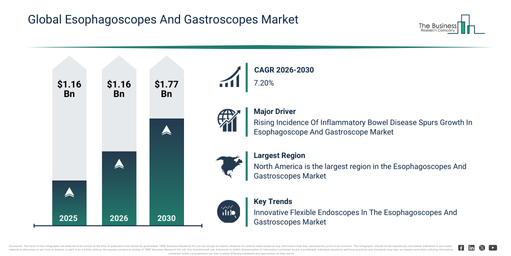
    The esophagoscopes and gastroscopes market is projected to experience substantial expansion in the coming years. This market is anticipated to reach a valuation of $2.48 billion by 2030, exhibiting a compound annual growth rate (CAGR) of 7.2%. This growth during the forecast period can be primarily attributed to factors such as the escalating demand for minimally invasive therapeutic procedures, increased investments in advanced endoscopic imaging systems, the expanding use of disposable endoscopes, the proliferation of outpatient diagnostic services, and a heightened emphasis on patient safety and preventing infections. Key trends predicted for this period encompass the wider embrace of high-definition imaging endoscopes, a surge in minimally invasive diagnostic techniques, an increasing need for single-use endoscopic equipment, the broadening scope of therapeutic endoscopy applications, and a reinforced commitment to infection control protocols.

    Get A Free Sample Report With In-Depth Market Insights:

    https://thebusinessresearchcompany.com/sample_request?id=90626747&type=smp&name=Esophagoscopes%20And%20Gastroscopes%20Market%20Report%202026&utm_source=Blogs&utm_medium=Paid&utm_campaign=Oct_PR

    Esophagoscopes And Gastroscopes Market Growth Factors: What’s Supporting Expansion?

    The rising prevalence of inflammatory bowel disease is propelling the esophagoscope and gastroscope market. Inflammatory bowel disease is a long-term condition that causes inflammation within the digestive system. Esophagoscopes and gastroscopes are valuable instruments for the diagnosis and management of inflammatory bowel disease (IBD), as they facilitate the visualization and observation of the internal structures of the gastrointestinal tract. For instance, in March 2023, according to a research article from the Journal of the Canadian Association of Gastroenterology, a Canada-based open-access peer-reviewed journal, the incidence rate of inflammatory bowel disease in Canada is projected to increase from 825 per 100,000 in 2023 to 1075 per 100,000 in 2035. Consequently, the growing number of inflammatory bowel disease cases drives the esophagoscope and gastroscope markets.

    Esophagoscopes And Gastroscopes Market Breakdown By Product Type And Application

    The esophagoscopes and gastroscopes market covered in this report is segmented –

    1) By Type: Rigid, Flexible, Transnasal, Other Types

    2) By Application: Gastroesophageal Reflux Disease, Ulcers, Barrett’s Esophagus, Celiac Disease, Other Applications

    3) By End User: Hospitals, Ambulatory Surgical Centers, Specialty Clinics, Diagnostic Centers, Other End Users

    Subsegments:

    1) By Rigid: Rigid Esophagoscopes, Rigid Gastroscopes

    2) By Flexible: Flexible Esophagoscopes, Flexible Gastroscopes

    3) By Transnasal: Transnasal Esophagoscopes, Transnasal Gastroscopes

    4) By Other Types: Single-Use Endoscopes, Dual-Use Endoscopes

    Esophagoscopes And Gastroscopes Market Industry Trends: What’s Reshaping Demand?

    Leading companies in the esophagoscopes and gastroscopes market are concentrating on developing innovative solutions, such as flexible endoscopes, to secure a competitive advantage. A flexible endoscope is a medical instrument used for examining internal organs, like the gastrointestinal tract, employing a pliable tube with an integrated camera that sends real-time images, thereby enabling minimally invasive procedures. For instance, in October 2024, Lumicell, a US-based biotechnology company, secured a $400,000 Phase I Small Business Innovation Research (SBIR) grant from the National Cancer Institute (NCI) to create a novel flexible endoscope for diagnosing Barrett’s esophagus. This endoscopic imaging platform will merge far infrared fluorescence and reflected light imaging to identify potentially cancerous lesions in real-time, with the aim of improving the early detection of esophageal adenocarcinoma (EAC). Current methods for diagnosing precancerous lesions involve endoscopy and random biopsies, a process that is not consistently efficient or timely. Lumicell’s technology intends to heighten diagnostic sensitivity, lessen resource dependency, and facilitate immediate treatment of identified lesions.

    Esophagoscopes And Gastroscopes Market Competitive Landscape: Which Companies Lead The Industry?

    Major companies operating in the esophagoscopes and gastroscopes market are Medtronic plc, FUJIFILM Corporation, Boston Scientific Corporation, B Braun Melsungen AG, Olympus Corporation, HOYA Corporation, Karl Storz SE & Co. KG, CONMED Corporation, Ambu A/S, Richard Wolf GmbH, SonoScape Medical Corporation, Vimex Endoscopy Sp. z o.o., Smart Medical Systems Ltd., Jedmed Instrument Co, Endomed Systems GmbH, Maxer Endoscopy GmbH, Surtex Instruments Limited, FENTEX medical GmbH, Machida Endoscope Co. Ltd., Aohua Endoscopy Co. Ltd., Zhejiang Shendasiao Medical Instrument Co. Ltd., Hangzhou Orient Medical Co. Ltd., Optec Endoscopy Systems GmbH

    View The Full Esophagoscopes And Gastroscopes Market Report:

    https://thebusinessresearchcompany.com/report/esophagoscopes-and-gastroscopes-global-market-report?utm_source=Blogs&utm_medium=Paid&utm_campaign=Oct_PR

    Esophagoscopes And Gastroscopes Market Regional Breakdown: Where Is Demand Concentrated?

    North America was the largest region in the esophagoscopes and gastroscopes market in 2025. Asia-Pacific is expected to be the fastest-growing region in the forecast period. The regions covered in the esophagoscopes and gastroscopes market report are Asia-Pacific, South East Asia, Western Europe, Eastern Europe, North America, South America, Middle East, Africa.

    Reach Out To Our Team:

    The Business Research Company: https://www.thebusinessresearchcompany.com/

    Americas: +1 310-496-7795

    Asia: +44 7882 955267 & +91 8897263534

    Europe: +44 7882 955267

    Email us at: marketing@tbrc.info

    Follow us on:

    LinkedIn: https://in.linkedin.com/company/the-business-research-company

    YouTube: https://www.youtube.com/channel/UC24_fI0rV8cR5DxlCpgmyFQ

    Global Market Model: https://www.thebusinessresearchcompany.com/global-market-model
  • Esophageal Dilator Market Outlook 2026–2030: Growth Trends, Market Dynamics And Emerging Opportunities

    Backed by market attractiveness analysis, total addressable market sizing, company benchmarking matrices, interactive Excel dashboards, wider supply chain intelligence, emerging startup coverage, and detailed product-level insights, The Business Research Company’s 2026 market reports are designed to offer research that is more actionable and strategically valuable than ever.

    Esophageal Dilator Market Expansion Outlook: What Revenue Opportunities Are Ahead?

    The esophageal dilator market has experienced significant expansion in recent years. It is anticipated to increase from $1.57 billion in 2025 to $1.65 billion in 2026, driven by a compound annual growth rate (CAGR) of 5.2%. The historical development of this market can be linked to factors such as the constrained availability of advanced esophageal dilators, the continued reliance on conventional mechanical dilators, a rise in awareness regarding esophageal conditions, the expansion of hospital and clinic infrastructure, and the widespread adoption of standard surgical interventions.

    The esophageal dilator market size is anticipated to experience consistent expansion over the upcoming years, projected to reach $1.99 billion in 2030, exhibiting a compound annual growth rate (CAGR) of 4.8%. This foreseen growth is primarily due to the emergence of controlled-release and pre-loaded balloon dilators, increasing utilization of flexible and hydrostatic dilators, the expansion of ambulatory surgical centers, a rising elderly demographic suffering from esophageal conditions, and improvements in materials and guided procedure technologies. Significant trends for the forecast period include a growing demand for minimally invasive esophageal procedures, higher adoption rates of balloon and hydrostatic dilator types, the increasing occurrence of esophageal disorders, a strong emphasis on patient safety and procedural accuracy, and the integration of advanced materials to improve durability and flexibility.

    Get A Free Sample Report With In-Depth Market Insights:

    https://thebusinessresearchcompany.com/sample_request?id=24764046&type=smp&name=Esophageal%20Dilator%20Market%20Report%202026&utm_source=Blogs&utm_medium=Paid&utm_campaign=Oct_PR

    Esophageal Dilator Market Demand Drivers: What’s Powering Industry Growth?

    The anticipated expansion of the esophageal dilator market is linked to the growing occurrence of esophageal conditions. These conditions refer to various ailments impacting the esophagus, the conduit moving sustenance from the mouth to the stomach. The escalating frequency of esophageal disorders stems from factors like increased instances of gastroesophageal reflux disease (GERD), obesity, and shifts in lifestyle. Esophageal dilators function by expanding narrowed parts of the esophagus, thereby enhancing swallowing and diminishing discomfort. As an illustration, in January 2024, the American Cancer Society, a US-based organization, reported 16,120 new deaths from esophageal cancer in 2023, with projections indicating an increase to 16,130 by 2024. Consequently, the rising rate of esophageal disorders is fueling the expansion of the esophageal dilator market. The increased integration of minimally invasive procedures is projected to spur the growth of the esophageal dilator market. These procedures are medical interventions conducted via small cuts, employing specific instruments to lessen discomfort, shorten recuperation periods, and minimize tissue harm. The surge in minimally invasive procedures is attributable to a rising patient preference for quicker recovery and reduced pain following operations. Esophageal dilators are employed in these less invasive methods to carefully expand constricted areas of the esophagus, thereby re-establishing unobstructed swallowing. For example, in June 2024, the American Society of Plastic Surgeons, a US-based organization, indicated a 7% increase in minimally invasive procedures in 2023, surpassing the 2% growth rate of surgical procedures. Consequently, the expanding embrace of minimally invasive procedures is propelling the esophageal dilator market’s growth.

    Esophageal Dilator Market Segment Analysis And Revenue Potential

    The esophageal dilator market covered in this report is segmented –

    1) By Dilator Type: Balloon Dilators, Mechanical Dilators, Hydrostatic Dilators

    2) By Material: Plastic, Metal, Other Materials

    3) By Esophageal Disease: Achalasia, Esophageal Strictures, Zenker’s Diverticulum, Esophageal Cancer

    4) By End User: Hospitals, Ambulatory Surgical Centers, Clinics, Doctors’ Offices

    Subsegments:

    1) By Balloon Dilators: Inflatable Balloon Dilators, Non-Inflatable Balloon Dilators, Pre-loaded Balloon Dilators, Controlled-Release Balloon Dilators

    2) By Mechanical Dilators: Bougie Dilators, Metal Dilators, Flexible Mechanical Dilators, Rigid Mechanical Dilators

    3) By Hydrostatic Dilators: Fluid-Filled Hydrostatic Dilators, High-Pressure Hydrostatic Dilators, Low-Pressure Hydrostatic Dilators, Hydrostatic Dilators With Guide Wire

    Esophageal Dilator Market Competitive Landscape: Who Leads The Industry?

    Major companies operating in the esophageal dilator market are Medtronic plc, Boston Scientific Corporation, Olympus Corporation, Cook Medical, Karl Storz SE & Co. KG, Micro-Tech Endoscopy, Endo-med Technologies Private Limited, Shaili Endoscopy, Bard Medical, GE Healthcare, Telemed Systems, Fiagon AG, Crospon Ltd., MFI Medical Equipments, Merit Medical Systems Inc., Becton Dickinson and Company, PENTAX Medical, M I Tech Co. Ltd., ELLA-CS, Taewoong Medical Co. Ltd., Albyn Medical, Ankon Medical, Alton Shanghai Medical Instruments, Anrei Medical

    View The Full Esophageal Dilator Market Report:

    https://thebusinessresearchcompany.com/report/esophageal-dilator-global-market-report?utm_source=Blogs&utm_medium=Paid&utm_campaign=Oct_PR

    Esophageal Dilator Market Geographic Landscape: Which Region Dominates Industry Growth?

    North America was the largest region in the esophageal dilator market in 2025. The regions covered in the esophageal dilator market report are Asia-Pacific, South East Asia, Western Europe, Eastern Europe, North America, South America, Middle East, Africa.

    Reach Out To Our Team:

    The Business Research Company: https://www.thebusinessresearchcompany.com/

    Americas: +1 310-496-7795

    Asia: +44 7882 955267 & +91 8897263534

    Europe: +44 7882 955267

    Email us at: marketing@tbrc.info

    Follow us on:

    LinkedIn: https://in.linkedin.com/company/the-business-research-company

    YouTube: https://www.youtube.com/channel/UC24_fI0rV8cR5DxlCpgmyFQ

    Global Market Model: https://www.thebusinessresearchcompany.com/global-market-model
  • Esophageal Catheters Market Growth Outlook From $2.82 Billion In 2026 To $3.91 Billion By 2030

    Esophageal Catheters Market Growth Outlook From $2.82 Billion In 2026 To $3.91 Billion By 2030

    Featuring market attractiveness scoring, total addressable market sizing, company benchmarking matrices, interactive Excel dashboards, deeper supply chain intelligence, emerging startup tracking, and granular product-level insights, The Business Research Company’s 2026 market reports are built to deliver research that is both more actionable and more strategically valuable.

    Esophageal Catheters Market Growth Potential: How Will Market Size Shift Through 2030?

    The esophageal catheters market has experienced strong expansion in recent years. This market is projected to increase from $2.62 billion in 2025 to $2.82 billion in 2026, exhibiting a compound annual growth rate (CAGR) of 7.6%. The historical growth is attributable to several factors, including the rising prevalence of gastrointestinal disorders, an uptick in the diagnosis of GERD and dysphagia, the enlargement of gastroenterology departments, the introduction of advanced catheter designs, and the growing application of diagnostic esophageal procedures.

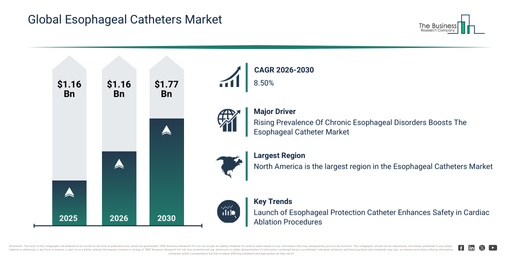
    The esophageal catheters market is projected to undergo substantial growth in the upcoming years. By 2030, its valuation is anticipated to reach $3.91 billion, exhibiting a compound annual growth rate (CAGR) of 8.5%. This expansion during the forecast period is primarily driven by factors such as the escalating demand for outpatient diagnostic solutions, the increasing embrace of minimally invasive therapies, advancements in precision diagnostics, greater investments in gastrointestinal healthcare, and an intensified focus on patient-centric treatment approaches. Prominent trends expected in this period include a wider adoption of single-use esophageal catheters, a heightened requirement for high-precision pressure monitoring, the expanding use of minimally invasive diagnostic techniques, an increase in radiofrequency ablation procedures, and a stronger emphasis on ensuring patient safety and comfort.

    Get A Free Sample Report With In-Depth Market Insights:

    https://thebusinessresearchcompany.com/sample_request?id=26969929&type=smp&name=Esophageal%20Catheters%20Market%20Report%202026&utm_source=Blogs&utm_medium=Paid&utm_campaign=Oct_PR

    Esophageal Catheters Market Growth Drivers: What’s Behind The Acceleration?

    The increasing incidence of chronic esophageal disorders is expected to propel the growth of the esophageal catheter market. Chronic esophageal disorders are defined as medical conditions or diseases that affect the esophagus, the muscular tube connecting the mouth to the stomach, over a prolonged period. Esophageal catheters, such as manometry catheters, are instrumental in diagnosing these disorders by measuring pressure changes and motility patterns throughout the esophagus. For instance, in January 2023, a report from the National Library of Medicine, a US-based medical library, estimated 7,39,666 new cases and 7,23,466 fatalities from esophageal cancer in 2030. Globally, 9,87,723 cases and 9,14,304 deaths are projected for 2040. Therefore, the growing prevalence of chronic esophageal disorders is driving the growth of the esophageal catheter market.

    Esophageal Catheters Market Segmentation And Category Overview

    The esophageal catheters market covered in this report is segmented –

    1) By Product Type: Balloon Dilation Catheter, Irrigation Catheter, Pressure Monitoring Catheter, Radiofrequency Ablation Catheter, Suction Catheter

    2) By Application: Gastroesophageal Reflux Disease (GERD), Dysphagia, Chest Pain, Other Applications

    3) By End-User: Hospitals, Clinics, Ambulatory Surgical Centers

    Subsegments:

    1) By Balloon Dilation Catheter: Single-Use Balloon Catheters, Multi-Use Balloon Catheters

    2) By Irrigation Catheter: Standard Irrigation Catheters, Specialty Irrigation Catheters

    3) By Pressure Monitoring Catheter: Continuous Pressure Monitoring Catheters, Intermittent Pressure Monitoring Catheters

    4) By Radiofrequency Ablation Catheter: Circular Ablation Catheters, Linear Ablation Catheters

    5) By Suction Catheter: Standard Suction Catheters, Pediatric Suction Catheters

    Esophageal Catheters Market Trends: What’s Defining The Industry’s Next Phase?

    Leading companies in the esophageal catheters market are prioritizing the development of innovative technologies, such as esophageal protection devices, to enhance procedural safety and strengthen their standing in the market. An esophageal protection catheter is a medical instrument specifically designed to reduce the risk of thermal damage to the esophagus during cardiac ablation procedures. This catheter functions by mechanically moving the esophagus away from the ablation sites. As an illustration, in February 2025, S4 Medical Corp., a US-based medical device company, introduced the esolution Atrial Fibrillation Esophageal Protection Device in the United States after obtaining FDA clearance. This device is catheter-based and features a dual-lumen architecture, comprising an outer sheath and an inner mechanical deflection component. The catheter is engineered to adapt to a patient’s anatomy during procedures, positioning it as a safe and effective choice for minimizing esophageal injury.

    Esophageal Catheters Market Company Landscape And Competitive Strategy

    Major companies operating in the esophageal catheters market are Medtronic plc, Boston Scientific Corporation, B Braun Melsungen AG, Olympus Corporation, Teleflex Incorporated, Cook Medical Inc., Merit Medical Systems Inc., Avanos Medical Inc., Laborie Medical Technologies Inc., FUJIFILM Medical Systems, Taewoong Medical Co, Alicn Medical Co Ltd, Medcaptain Medical Technology Co Ltd, PENTAX Medical Co, EndoControl Medical, MicroTech Medical, Rotech Healthcare, Steris Medical Devices, SMI Endoscopy, Halyard Health

    View The Full Esophageal Catheters Market Report:

    https://thebusinessresearchcompany.com/report/esophageal-catheters-global-market-report?utm_source=Blogs&utm_medium=Paid&utm_campaign=Oct_PR

    Esophageal Catheters Market Largest Region: Which Geography Holds The Highest Market Share?

    North America was the largest region in the esophageal catheters market in 2025. Asia-Pacific is expected to be the fastest-growing region in the forecast period. The regions covered in the esophageal catheters market report are Asia-Pacific, South East Asia, Western Europe, Eastern Europe, North America, South America, Middle East, Africa.

    Reach Out To Our Team:

    The Business Research Company: https://www.thebusinessresearchcompany.com/

    Americas: +1 310-496-7795

    Asia: +44 7882 955267 & +91 8897263534

    Europe: +44 7882 955267

    Email us at: marketing@tbrc.info

    Follow us on:

    LinkedIn: https://in.linkedin.com/company/the-business-research-company

    YouTube: https://www.youtube.com/channel/UC24_fI0rV8cR5DxlCpgmyFQ

    Global Market Model: https://www.thebusinessresearchcompany.com/global-market-model

  • Erectile Dysfunction Devices Market Forecast To Reach $3.73 Billion By 2030: Key Growth Drivers And Industry Trends

    Erectile Dysfunction Devices Market Forecast To Reach $3.73 Billion By 2030: Key Growth Drivers And Industry Trends

    Built to provide research that’s more actionable and strategically valuable, The Business Research Company’s 2026 market reports include market attractiveness analysis, total addressable market sizing, company benchmarking matrices, interactive Excel dashboards, broader supply chain intelligence, emerging startup tracking, and in-depth product insights.

    Erectile Dysfunction Devices Market Value Analysis: What Growth Lies Ahead Over The Forecast Period?

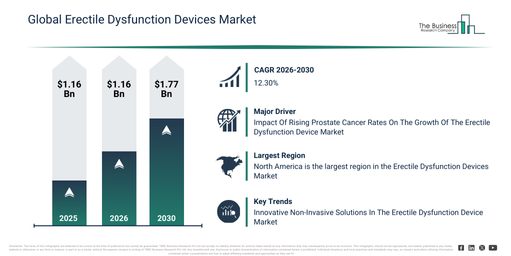
    The erectile dysfunction devices market size has experienced swift expansion in recent years. It is projected to increase from $2.09 billion in 2025 to $2.35 billion in 2026, demonstrating a compound annual growth rate (CAGR) of 12.3%. This historical growth can be linked to factors such as the increasing prevalence of diabetes, a higher incidence of cardiovascular diseases, an expanding aging male population, improved awareness of erectile dysfunction treatments, and wider availability of urology care services.

    The erectile dysfunction devices market is projected to experience swift expansion over the coming years. This market is anticipated to reach a valuation of $3.73 billion by 2030, demonstrating a compound annual growth rate (CAGR) of 12.3%. This anticipated growth during the forecast period stems from factors such as the increasing occurrence of lifestyle-associated conditions, enhanced awareness regarding male health, greater adoption of medical devices for sexual well-being, wider availability of minimally invasive therapies, and advancements in healthcare infrastructure within developing economies. Key trends anticipated for this period encompass the increasing use of non-invasive solutions for erectile dysfunction, a rising inclination towards managing erectile dysfunction at home, a heightened demand for vacuum erection and penile pump devices, greater acceptance of surgical penile implants for severe ED cases, and an increased emphasis on tailored erectile dysfunction treatment approaches.

    Get A Free Sample Report With In-Depth Market Insights:

    https://thebusinessresearchcompany.com/sample_request?id=60804400&type=smp&name=Erectile%20Dysfunction%20Devices%20Market%20Report%202026&utm_source=Blogs&utm_medium=Paid&utm_campaign=Oct_PR

    Erectile Dysfunction Devices Market Growth Factors Behind Sustained Expansion

    The increasing incidence of prostate cancer is anticipated to stimulate the expansion of the erectile dysfunction devices market. Prostate cancer is a malignancy that develops in the prostate gland, a small male organ situated beneath the bladder responsible for contributing to semen production. The rise in prostate cancer cases is linked to an aging demographic, improved diagnostic methods, and lifestyle factors that may contribute to its spread. Erectile dysfunction devices aid prostate cancer patients by improving sexual function and enhancing their quality of life after treatments, which often affect erectile capabilities. For instance, in September 2025, the American Cancer Society, a US-based professional organization, projected that the United States would see an estimated 313,780 new cases of prostate cancer in 2025. The probability of developing prostate cancer rises sharply with age, increasing from 0.2% in men under 50 to 6.5% in individuals aged 70–79. Therefore, the growing prevalence of prostate cancer is driving the growth of the erectile dysfunction devices market.

    Erectile Dysfunction Devices Market Segment Outlook: Which Categories Are Growing Fastest?

    The erectile dysfunction devices market covered in this report is segmented –

    1) By Device Type: Non-Surgical Devices, Surgical Devices

    2) By Cause: Diabetes, Neurological Disorders, Hypertension, Other Causes

    3) By Approach: Invasive, Non-Invasive

    4) By Age Group: Less Than 40 Years, 40-60 Years, More Than 60 Years

    5) By End-User: Hospitals, Clinics, Ambulatory Surgical Centers, Other End-Users

    Subsegments:

    1) By Non-Surgical Devices: Penile Pumps (Vacuum Erection Devices), External Penile Prostheses, Erectile Dysfunction Medications (Oral, Topical), Penile Traction Devices, Intraurethral Suppositories

    2) By Surgical Devices: Penile Implants (Inflatable, Semi-Rigid), Penile Prostheses (Inflatable, Non-Inflatable), Vascular Surgery Devices (Penile Artery Surgery)

    Erectile Dysfunction Devices Market Industry Trends Fueling Future Revenue Growth

    Key players in the erectile dysfunction devices market are developing advanced products, such as non-invasive devices, to gain a competitive advantage. Such a device is a medical instrument engineered to improve or regain erectile function without surgical intervention, commonly employing techniques like vacuum therapy, electrical stimulation, or non-penetrative penile implants. As an example, Ohh-Med Medical, an Israel-based medical equipment manufacturer, launched its VerticaPlus device for erectile dysfunction in June 2024. This novel device incorporates a unique cloud-based mobile application designed to improve the therapy experience by providing real-time feedback and tracking progress. The updated version integrates this app as a personal coach during treatment, offering continuous feedback, guided tutorials, and personalized settings to facilitate more precise and effective therapy.

    Erectile Dysfunction Devices Market Key Players Shaping Industry Direction

    Major companies operating in the erectile dysfunction devices market are Boston Scientific Corporation, Coloplast Corporation, MTS Medical AG, Alma Lasers Ltd., Shenzhen Huikang Medical Apparatus Co Ltd, Storz Medical AG, UroMatrix Medical Systems, Medispec Ltd., Zephyr Surgical Implants, Timm Medical Technologies Inc., Promedon GmbH, Zimmer MedizinSysteme GmbH, Rigicon Inc., NOVAmedtek, Vacurect, The Elator, Silimed Indústria de Implantes, Restore Medical Inc, Medtronic plc, Titan Medical Inc, Encore Medical Ltd

    View The Full Erectile Dysfunction Devices Market Report:

    https://thebusinessresearchcompany.com/report/erectile-dysfunction-devices-global-market-report?utm_source=Blogs&utm_medium=Paid&utm_campaign=Oct_PR

    Erectile Dysfunction Devices Market Regional Analysis: Which Region Leads By Revenue?

    North America was the largest region in the erectile dysfunction devices market in 2025. Asia-Pacific is expected to be the fastest-growing region in the forecast period. The regions covered in the erectile dysfunction devices market report are Asia-Pacific, South East Asia, Western Europe, Eastern Europe, North America, South America, Middle East, Africa.

    Reach Out To Our Team:

    The Business Research Company: https://www.thebusinessresearchcompany.com/

    Americas: +1 310-496-7795

    Asia: +44 7882 955267 & +91 8897263534

    Europe: +44 7882 955267

    Email us at: marketing@tbrc.info

    Follow us on:

    LinkedIn: https://in.linkedin.com/company/the-business-research-company

    YouTube: https://www.youtube.com/channel/UC24_fI0rV8cR5DxlCpgmyFQ

    Global Market Model: https://www.thebusinessresearchcompany.com/global-market-model