Category: Medical Equipment

  • In Vitro Diagnostics Market Outlook 2025 – Insights for Executive and Strategic Planning

    In Vitro Diagnostics Market Outlook 2025 – Insights for Executive and Strategic Planning

    Claim your 30% discount on Global Market Reports with code ONLINE30. Limited time only.

    How Fast Is The In Vitro Diagnostics Market Expected to Grow Between 2025 And 2029?

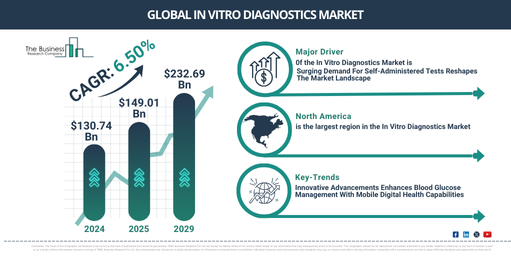
    Over the past few years, the in-vitro diagnostics market has seen substantial growth. The market is set to rise from a value of $130.74 billion in 2024 to $149.01 billion in 2025, with a compound annual growth rate (CAGR) of 14.0%. Factors that contributed to the growth during the historic period include the introduction of automated analyzers and molecular diagnostics, an ageing population, outbreaks of disease, healthcare regulations and the emergence of personalized medicine.

    What Growth Rate Is Anticipated for the In Vitro Diagnostics Market in the Coming Years?

    Expectations are high for swift expansion in the in-vitro diagnostics market over the coming years. The predicted increase indicates a rise to $232.69 billion by 2029 with a compound annual growth rate (CAGR) of 11.8%. This growth during the forecast period is attributed to various factors including precision medicine, point-of-care testing, digital health, and data analytics as well as pandemic preparedness. Anticipated trends over the forecast period include technological advances, integration of digital health, personalized diagnostics, home testing kits, and molecular diagnostics.

    Download The Free Sample Report Here:

    https://www.thebusinessresearchcompany.com/sample.aspx?id=13065&type=smp

    Who Are the Leading Companies in the In Vitro Diagnostics Market?

    Major companies operating in the in vitro diagnostics market include Siemens Healthineers, F. Hoffmann-La Roche AG, Danaher Corporation, Abbott Laboratories Inc., Thermo Fisher Scientific Inc., Agilent Technologies Inc., Alere Inc., Arkray Inc., Becton, Dickinson and Company (BD), Bio-Rad Laboratories Inc., bioMérieux SA, Grifols SA, Hologic Inc., Werfen SA, Laboratory Corporation, Luminex Corporation, Ortho Clinical Diagnostics, PerkinElmer Inc., Qiagen NV, Quest Diagnostics Inc., QuidelOrtho Corporation, Sysmex Corporation, Illumina Inc., Menarini Silicon Biosystems SPA, SpeeDx Pty. Ltd., GENSPEED Biotech GmbH, Accelerate Diagnostics Inc., Merck KGaA, Caris Life Sciences Inc., Bio-Techne Corporation, Myriad Genetics Inc., Genomic Health Inc., Exact Sciences Crop., Natera Inc., Invitae Crop., Veracyte Inc.

    What Are the Key Drivers of the In Vitro Diagnostics Market?

    The surge in the usage of self-administered test kits is predicted to stimulate the growth trend of the in vitro diagnostics market. These kits, which are intended for personal use without the assistance of medical specialists or trained staff, allow individuals to conduct their own diagnostic tests at home. This increases accessibility by facilitating diagnostic tests at home, providing convenience and potentially boosting the need for testing, especially for hitherto undiagnosed diseases. For instance, the Centers for Disease Control and Prevention, a national public health agency in the US, reported a notable rise in the usage of at-home COVID-19 tests among U.S. adults aged 18 and over, from the Delta-dominant phase (August to December 2021) to the Omicron-dominant phase (December to March 2022), in April 2022. The use of home tests among individuals who reported COVID-19-like symptoms increased from 5.7% to 20.1%. Therefore, the growing popularity of self-administered test kits will fuel the expansion of the in vitro diagnostics market.

    Request For A Customized Report:

    https://www.thebusinessresearchcompany.com/customise?id=13065&type=smp

    What Are the Key Market Segments in the In Vitro Diagnostics Industry?

    The in vitro diagnostics market covered in this report is segmented –

    1) By Type: Point-of-Care Diagnostics Devices And Equipment, Immunochemistry Diagnostic Devices And Equipment, Clinical Chemistry Diagnostics Devices And Equipment, Molecular Diagnostics Devices And Equipment, Microbiology Diagnostic Devices And Equipment, Hemostasis Diagnostic Devices And Equipment, Hematology Diagnostic Devices And Equipment, Immunohematology Diagnostic Devices And Equipment

    2) By End User: Hospitals And Clinics, Diagnostic Laboratories, Other End Users

    3) By Type of Expenditure: Public, Private

    4) By Product: Instruments/Equipment, Disposables

    Subsegments:

    1) By Point-Of-Care Diagnostics Devices And Equipment: Blood Glucose Monitoring, Pregnancy And Fertility Testing, Infectious Disease Testing, Cardiac Markers Testing, Coagulation Testing

    2) By Immunochemistry Diagnostic Devices And Equipment: Enzyme-Linked Immunosorbent Assay (ELISA), Radioimmunoassay (RIA), Western Blot, Immunofluorescence Assay, Chemiluminescence Immunoassay (CLIA)

    3) By Clinical Chemistry Diagnostic Devices And Equipment: Blood Glucose Testing, Cholesterol Testing, Liver Function Testing, Kidney Function Testing, Electrolyte Testing

    4) By Molecular Diagnostics Devices And Equipment: PCR (Polymerase Chain Reaction) Instruments, Next-Generation Sequencing (NGS) Instruments, Microarray Instruments, FISH (Fluorescence In Situ Hybridization) Devices

    5) By Microbiology Diagnostic Devices And Equipment: Microbial Culture Systems, Automated Identification Systems, Antimicrobial Susceptibility Testing Systems, Blood Culture Systems

    6) By Hemostasis Diagnostic Devices and Equipment: Coagulation Analyzers, Thromboelastography Systems, Platelet Function Analyzers, Clotting Factor Analyzers

    7) By Hematology Diagnostic Devices and Equipment: Hematology Analyzers, Hemoglobin Testing Systems, Complete Blood Count (CBC) Devices, Blood Cell Counters

    8) By Immunohematology Diagnostic Devices and Equipment: Blood Typing Systems, Crossmatching Systems, Antibody Screening Systems, Blood Bank Analyzers

    What Are the Latest Trends in the In Vitro Diagnostics Market?

    Key players in the in vitro diagnostics market are concentrating their efforts on creating innovative products such as the Cobas pulse system, with the goal of boosting their market profitability. The Cobas pulse system offers a professional solution for managing blood glucose levels, utilizing mobile digital health capabilities to elevate patient care. As a case in point, in January 2022, Roche Diagnostics, an American company known for their progressive products and services pertaining to disease prevention, diagnosis, monitoring, screening, and treatment, introduced the Cobas pulse system. Equipped with an automated glucose test strip reader, a camera, and a touchscreen, this portable device allows for the capture of additional diagnostic data. With its easy-to-use interface, it is designed for seamless usage, offering features that simplify procedures, optimize time, and boost workflow efficiency.

    Access The Full Report Here:

    https://www.thebusinessresearchcompany.com/report/in-vitro-diagnostics-global-market-report

    What Are the Key Regional Markets in the In Vitro Diagnostics Industry?

    North America was the largest region in the global in-vitro diagnostics market in 2023. Asia-Pacific was the second largest region in the global in-vitro diagnostics market. The regions covered in the in-vitro diagnostics devices and equipment market report are Asia-Pacific, Western Europe, Eastern Europe, North America, South America, Middle East, and Africa.

    Purchase The Full Report Today:

    https://www.thebusinessresearchcompany.com/purchaseoptions.aspx?id=13065

    This Report Delivers Insight On:

    1. How big is the in vitro diagnostics market, and how is it changing globally?

    2. Who are the major companies in the in vitro diagnostics market, and how are they performing?

    3. What are the key opportunities and risks in the in vitro diagnostics market right now?

    4. Which products or customer segments are growing the most in the in vitro diagnostics market?

    5. What factors are helping or slowing down the growth of the in vitro diagnostics market?

    About The Business Research Company:

    With over 15000+ reports from 27 industries covering 60+ geographies, The Business Research Company has built a reputation for offering comprehensive, data-rich research and insights. Armed with 1,500,000 datasets, the optimistic contribution of in-depth secondary research, and unique insights from industry leaders, you can get the information you need to stay ahead in the game.

    Get in touch with us:

    The Business Research Company: https://www.thebusinessresearchcompany.com/

    Americas +1 310-496-7795

    Asia +44 2071930708

    Europe +44 7882 955267

    Email us at info@tbrc.info

    Follow us on:

    LinkedIn: https://in.linkedin.com/company/the-business-research-company

    YouTube: https://www.youtube.com/channel/UC24_fI0rV8cR5DxlCpgmyFQ

    Global Market Model: https://www.thebusinessresearchcompany.com/global-market-model
  • Implantable Infusion Pumps Market Projected at $26.89 Billion by 2029 | Strategic Insights and Forecast Data

    Implantable Infusion Pumps Market Projected at $26.89 Billion by 2029 | Strategic Insights and Forecast Data

    Claim your 30% discount on Global Market Reports with code ONLINE30. Limited time only.

    #How Has The Implantable Infusion Pumps Market Size Shifted, And What Is the Outlook Through 2034?

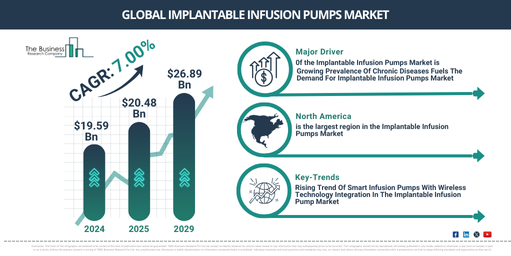
    There has been a consistent expansion in the market size for implantable infusion pumps over the recent years. The market is projected to escalate from $19.59 billion in 2024 to $20.48 billion in 2025, with a compound annual growth rate (CAGR) of 4.6%. The substantial growth during the historic period can be linked to the management of chronic diseases, an aging demographic, pain management strategies, and regulatory authorisations.

    How Much Will the Implantable Infusion Pumps Market Be Worth in 2029?

    The market for implantable infusion pumps is anticipated to experience robust expansion in the upcoming years, projected to reach a size of $26.89 billion by 2029, scaling at a compound annual growth rate (CAGR) of 7.0%. This anticipated growth within the forecast period can be credited to factors such as personalized medicine, remote patient supervision, advancements in drug development, and management of chronic diseases. Key prediction trends for the period include less invasive implantation methods, remote observation and programming, intrathecal pain management, and interdisciplinary cooperation.

    Download The Free Sample Report Here:

    https://www.thebusinessresearchcompany.com/sample.aspx?id=3347&type=smp

    Which is the Largest Company in the Implantable Infusion Pumps Market?

    Major companies operating in the implantable infusion pumps market include Medtronic plc, Boston Scientific Corporation, Nevro Corp, LivaNova PLC, Baxter International Inc., B. Braun Melsungen AG, Fresenius Kabi AG, Smiths Medical a Smiths Group company, Terumo Corporation, Johnson & Johnson, Greatbatch Medical, NeuroPace Inc., Primetech Corporation, Flowonix Medical Inc., F. Hoffmann-La Roche Ltd, Shenzhen Mindray Bio-Medical Electronics Co. Ltd., Micrel Medical, Insulet Corporation, ICU Medical Inc., Becton Dickinson and Company (BD), Roche Diagnostics International AG, Abbott Laboratories, Hospira, Stryker Corporation, Zimmer Biomet Holdings Inc., Teleflex Incorporated, C. R. Bard Inc., AngioDynamics Inc., Merit Medical Systems Inc., NIPRO Medical Corporation, IRadimed Corporation, Zyno Medical, Tricumed Medizintechnik GmbH, Q Core Medical Ltd., Ivenix Inc., Tandem Diabetes Care Inc.

    What Are the Main Market Drivers in the Implantable Infusion Pumps Industry?

    The escalating occurrence of individuals suffering from chronic pain, cancer, and diabetes is predicted to boost the demand for implantable infusion pumps. These devices are routinely employed to administer medicinal drugs during the management of these ailments. The emergence of chronic illnesses and disorders is escalating worldwide, spurred by an aging demographic and changes in societal behavior, bringing about a slow incline in such diseases. In cases like chronic arachnoiditis, a condition marked by swelling of a membrane that encloses the spinal cord, the provision of lower drug doses via implantable infusion pumps tends to offer enhanced pain mitigation. For example, a January 2022 report by the American Cancer Society, a health organization based in the US, indicates that 609,360 cancer-related deaths and nearly 1.9 million fresh instances of cancer are projected for 2022 in the US. About 10,470 pediatric cancer cases and 5,480 cancer diagnoses among teenagers are also forecasted for the same year. Thus, the escalating occurrence of chronic diseases is projected to spur the implantable infusion pumps market’s expansion.

    Request For A Customized Report:

    https://www.thebusinessresearchcompany.com/customise?id=3347&type=smp

    How Is the Implantable Infusion Pumps Market Segments Structured?

    The implantable infusion pumps market covered in this report is segmented –

    1) By Type: Patient-Controlled Analgesia (PCA) Pumps, Enteral Pumps, Insulin Pumps, Elastomeric Pumps, Syringe Pumps, Other Types

    2) By Applications: Oncology, Pediatrics Or Neonatology, Gastroenterology, Hematology, Diabetes, Other Applications

    3) By End User: Hospitals, Ambulatory Surgical Centers, Specialty Clinics

    Subsegments:

    1) By Patient-Controlled Analgesia (PCA) Pumps: Morphine PCA Pumps, Fentanyl PCA Pumps, Other Opioid PCA Pumps

    2) By Enteral Pumps: Tube Feeding Pumps, Syringe-based Enteral Pumps, Continuous Or Intermittent Feeding Pumps

    3) By Insulin Pumps: Insulin Delivery Pumps, Insulin Patch Pumps, Smart Insulin Pumps

    4) By Elastomeric Pumps: Disposable Elastomeric Pumps, Reusable Elastomeric Pumps

    5) By Syringe Pumps: Small Volume Syringe Pumps, Large Volume Syringe Pumps

    6) By Other Types: Chemotherapy Infusion Pumps, Antibiotic Infusion Pumps, Pain Management Pumps

    What Strategic Trends Are Transforming the Implantable Infusion Pumps Market?

    Firms operating in the implantable infusion pump market are progressively prioritizing the creation of intelligent infusion pumps. The incorporation of wireless technology in healthcare monitoring devices is on the rise, thereby improving user-friendliness, connectivity, and data analytics capacities. The inclusion of this wireless technology facilitates data transfer from the gadget to a mobile phone or other wireless hardware using Bluetooth or cellular linkage, which aids in data computation and result display. This can then be employed for additional scrutiny and to assess the person’s health status. Software platforms designed for patient monitoring and minimizing human mistakes are also being innovatively developed.

    Access The Full Report Here:

    https://www.thebusinessresearchcompany.com/report/implantable-infusion-pumps-global-market-report

    Which Global Regions Offer the Highest Growth in the Implantable Infusion Pumps Market?

    North America was the largest region in the implantable infusion pumps market in 2023. Asia-Pacific was the second-largest region in the implantable infusion pumps market. The regions covered in the implantable infusion pumps market report are Asia-Pacific, Western Europe, Eastern Europe, North America, South America, Middle East, Africa

    Purchase The Full Report Today:

    https://www.thebusinessresearchcompany.com/purchaseoptions.aspx?id=3347

    This Report Delivers Insight On:

    1. How big is the implantable infusion pumps market, and how is it changing globally?

    2. Who are the major companies in the implantable infusion pumps market, and how are they performing?

    3. What are the key opportunities and risks in the implantable infusion pumps market right now?

    4. Which products or customer segments are growing the most in the implantable infusion pumps market?

    5. What factors are helping or slowing down the growth of the implantable infusion pumps market?

    About The Business Research Company:

    With over 15000+ reports from 27 industries covering 60+ geographies, The Business Research Company has built a reputation for offering comprehensive, data-rich research and insights. Armed with 1,500,000 datasets, the optimistic contribution of in-depth secondary research, and unique insights from industry leaders, you can get the information you need to stay ahead in the game.

    Get in touch with us:

    The Business Research Company: https://www.thebusinessresearchcompany.com/

    Americas +1 310-496-7795

    Asia +44 2071930708

    Europe +44 7882 955267

    Email us at info@tbrc.info

    Follow us on:

    LinkedIn: https://in.linkedin.com/company/the-business-research-company

    YouTube: https://www.youtube.com/channel/UC24_fI0rV8cR5DxlCpgmyFQ

    Global Market Model: https://www.thebusinessresearchcompany.com/global-market-model
  • Implantable Drug Delivery Devices Industry Growth Expected to Reach $31.25 Billion by 2029 at a CAGR of 9% | Segmentation and Growth Opportunities

    Implantable Drug Delivery Devices Industry Growth Expected to Reach $31.25 Billion by 2029 at a CAGR of 9% | Segmentation and Growth Opportunities

    Claim your 30% discount on Global Market Reports with code ONLINE30. Limited time only.

    #How Has the Implantable Drug Delivery Devices Market Growth Performance Trended Historically, And What Lies Ahead?

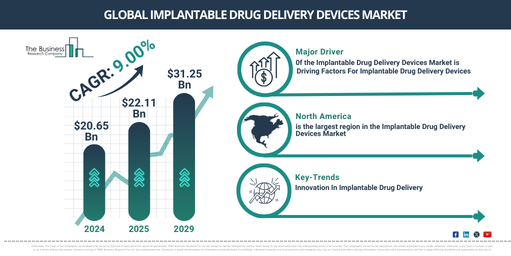
    In recent times, the market size for implantable drug delivery devices has witnessed robust expansion. The expansion is projected to advance from $20.65 billion in 2024 to $22.11 billion in 2025, with a compound annual growth rate (CAGR) of 7.1%. Several factors appear to hold the credit for the historical period growth, including an aging population, prevalence of chronic illnesses, rising consumer awareness, an increased emphasis on preventive healthcare, along with an increasing demand for personalized medicine.

    What Is the Forecast for the Implantable Drug Delivery Devices Market Size Through 2029?

    The market for implantable drug delivery devices is predicted to experience impressive growth in the upcoming years, escalating to $31.25 billion in 2029 with a compound annual growth rate (CAGR) of 9.0%. Factors contributing to this projected growth within the forecast period involve personalized drug delivery, the increasing preference for minimally invasive procedures, elevated healthcare spending, worldwide healthcare advancements, regenerative and genomic medicine. Key trends anticipated during the forecast period encompass ground-breaking technological developments, progress in biotechnology, micro-implants, dosage adjustments powered by artificial intelligence, integration with telemedicine, superior biocompatible materials, and innovative enhancements in drug delivery technology.

    Download The Free Sample Report Here:

    https://www.thebusinessresearchcompany.com/sample.aspx?id=3303&type=smp

    What are the Key Market Players in Implantable Drug Delivery Devices Market and How They’re Evolving?

    Major companies operating in the implantable drug delivery devices market include AbbVie Inc., Bayer HealthCare, Medtronic Inc., Nucletron, Boston Scientific Corporation, Abbott Laboratories, Bausch and Lomb Inc., Merck & Co. Inc., Genentech Inc, EyePoint Pharmaceuticals Inc., DSM Biomedical, Delpor Inc., Teleflex Incorporated, 3M Company, Biotronik Inc., Alcon Inc., Terumo Corporation, Endologix Inc., TransEnterix Inc., China Grand Pharmaceutical and Healthcare Holdings, Innocoll Biotherapeutics, Atossa Therapeutics Inc., Intersect ENT, Microchips Biotech, Theradaptive Inc., CollPlant, Intarcia Therapeutics, Glaukos Corporation

    What Are the Primary Growth Drivers in the Implantable Drug Delivery Devices Market?

    The implantable drug delivery devices market is anticipated to get a significant boost from the escalating prevalence of target illnesses like cancer, diabetic retinopathy, cardiovascular diseases, and several other chronic conditions. For example, the Centers for Disease Control and Prevention, a governmental agency based in the US, reported that TB cases surged from 8,320 in 2022 to 9,615 in 2023, signifying a hike of 1,295 cases or 16%. The implantable drug devices’ ability to administer site-specific medication, thus aiding in the treatment of these target diseases, contributes to the market’s expansion.

    Request For A Customized Report:

    https://www.thebusinessresearchcompany.com/customise?id=3303&type=smp

    What Are the Leading Segments in the Global Implantable Drug Delivery Devices Industry?

    The implantable drug delivery devices market covered in this report is segmented –

    1) By Product: Contraceptive Implants, Spinal Implants, Brachytherapy Seeds, Drug-Eluting Stents, Bio-absorbable Stents, Intraocular Stents, Infusion Pumps, Other Applications

    2) By Technology: Diffusion, Osmotic, Magnetic, Other Technologies

    3) By Application: Contraception, Ophthalmology, Cardiovascular, Diabetes, Oncology, Autoimmune Diseases, Other Applications

    Subsegments:

    1) By Contraceptive Implants: Hormonal Contraceptive Implants, Non-hormonal Contraceptive Implants

    2) By Spinal Implants: Biodegradable Spinal Implants, Non-biodegradable Spinal Implants

    3) By Brachytherapy Seeds: Iodine-125 Seeds, Palladium-103 Seeds, Cesium-131 Seeds, Other Brachytherapy Seeds

    4) By Drug-Eluting Stents: Coronary Drug-Eluting Stents, Peripheral Drug-Eluting Stents

    5) By Bio-absorbable Stents: Polymer-based Bio-absorbable Stents, Metal-based Bio-absorbable Stents

    6) By Intraocular Stents: Glaucoma Intraocular Stents, Cataract Surgery Intraocular Stents

    7) By Infusion Pumps: Insulin Pumps, Chemotherapy Infusion Pumps, Pain Management Infusion Pumps, Other Infusion Pumps

    8) By Other Applications: Implantable Reservoirs, Implantable Micro-pumps, Implantable Drug Elution Devices

    What Are the Key Market Trends in the Implantable Drug Delivery Devices Industry?

    Corporations and scientific investigators are concentrating on creating 3D printing material to assist implantable drug delivery apparatus. The term refers to the specific materials used in 3D printing, or additive manufacturing procedures, to construct finely-tuned drug delivery systems. For example, a research published in the National Center for Biotechnology Information (NCBI) in 2022 suggested utilizing 3D-printed implants coupled with biodegradable rate-controlling membranes to generate devices that can deliver hydrophobic drugs over a prolonged period.

    Access The Full Report Here:

    https://www.thebusinessresearchcompany.com/report/implantable-drug-delivery-devices-global-market-report

    What Is the Regional Outlook for the Implantable Drug Delivery Devices Market?

    North America was the largest region in the implantable drug delivery devices market in 2023. Asia-Pacific was the second-largest region in the implantable drug delivery devices market report. The regions covered in the implantable drug delivery devices market report are Asia-Pacific, Western Europe, Eastern Europe, North America, South America, Middle East, and Africa.

    Purchase The Full Report Today:

    https://www.thebusinessresearchcompany.com/purchaseoptions.aspx?id=3303

    This Report Delivers Insight On:

    1. How big is the implantable drug delivery devices market, and how is it changing globally?

    2. Who are the major companies in the implantable drug delivery devices market, and how are they performing?

    3. What are the key opportunities and risks in the implantable drug delivery devices market right now?

    4. Which products or customer segments are growing the most in the implantable drug delivery devices market?

    5. What factors are helping or slowing down the growth of the implantable drug delivery devices market?

    About The Business Research Company:

    With over 15000+ reports from 27 industries covering 60+ geographies, The Business Research Company has built a reputation for offering comprehensive, data-rich research and insights. Armed with 1,500,000 datasets, the optimistic contribution of in-depth secondary research, and unique insights from industry leaders, you can get the information you need to stay ahead in the game.

    Get in touch with us:

    The Business Research Company: https://www.thebusinessresearchcompany.com/

    Americas +1 310-496-7795

    Asia +44 2071930708

    Europe +44 7882 955267

    Email us at info@tbrc.info

    Follow us on:

    LinkedIn: https://in.linkedin.com/company/the-business-research-company

    YouTube: https://www.youtube.com/channel/UC24_fI0rV8cR5DxlCpgmyFQ

    Global Market Model: https://www.thebusinessresearchcompany.com/global-market-model

  • Immunochemistry Diagnostic Devices And Equipment Industry Valued at $6.45 Billion by 2029 With CAGR of 12.7% | Size and Share Insights

    Immunochemistry Diagnostic Devices And Equipment Industry Valued at $6.45 Billion by 2029 With CAGR of 12.7% | Size and Share Insights

    Claim your 30% discount on Global Market Reports with code ONLINE30. Limited time only.

    What Are the Projected Market Size and Growth Rates for the Immunochemistry Diagnostic Devices And Equipment Market From 2025 To 2029?

    The market for immunochemistry diagnostic devices and equipment has seen a swift expansion in its size in the past few years. It is forecasted to progress from a value of $3.51 billion in 2024 to $4.01 billion in 2025, representing a compound annual growth rate (CAGR) of 14.2%. The historic growth can be linked to factors such as disease detection, advancements in healthcare, point-of-care testing, and therapeutic monitoring.

    What Is the Projected Market Size of the Immunochemistry Diagnostic Devices And Equipment Market?

    The market size for immunochemistry diagnostic devices and equipment is anticipated to experience swift expansion in the following years. It is projected to increase to $6.45 billion by 2029, with a compound annual growth rate (CAGR) of 12.7%. The upward trend during the forecast period can be credited to factors such as the aging population, companion diagnostics, the advent of telemedicine and remote monitoring, and biomarker discovery. Notable trends to watch for during the forecast period encompass miniaturization and portability, multiplex testing, automated systems, and biosensor integration.

    Download The Free Sample Report Here:

    https://www.thebusinessresearchcompany.com/sample.aspx?id=2547&type=smp

    Who are the Major Competitors in the Immunochemistry Diagnostic Devices And Equipment Market Outlook?

    Major companies operating in the immunochemistry diagnostic devices and equipment market include Abbott Diagnostics, Roche Diagnostics, Siemens Healthcare Diagnostics, Diamond Diagnostics Inc., Dynex Technologies Inc., Grifols S.A., Hycor Biomedical LLC, Immunodiagnostic Systems, Inova Diagnostics, LabCorp, Mindray Medical International Limited, Ortho Clinical Diagnostics, Quest Diagnostics, Randox Laboratories, Sysmex Corporation, ThermoFisher Scientific Inc., Tosoh Bioscience, Danaher Corporation, Johnson & Johnson, Boditech Med Inc., Beckman Coulter Inc., Bio-Rad Laboratories, bioMérieux Clinical Diagnostics, Carolina Liquid Chemistries Corporate, DiaSorin Inc., Agilent Technologies Inc., Merck KGAA, Eagle Biosciences Inc., Biocare Medical LLC, Elabscience Biotechnology Inc., Bio-Genex Laboratories Inc., Diagnostic Biosystem, Histo-Line Laboratories, Rockland Immunochemicals Inc., Abcam plc, Becton Dickinson & Company, Cell Signaling Technology Inc., ImmunoChemistry Technologies LLC, Genemed Biotechnologies Inc., Miltenyi Biotec GmbH, PerkinElmer Inc., Takara Bio. Inc, Immucor Inc., Quidel Corporation

    What Is Fueling Growth in the Immunochemistry Diagnostic Devices And Equipment Market?

    The escalation in the occurrence of specific diseases significantly propels the market for immunochemistry diagnostic devices and equipment. Diseases such as viral infections, cardiovascular issues, cancer, or hormonal imbalances are seeing a rising incidence rate globally, largely owing to unhealthy lifestyle practices. Take, for instance, the data from the American Heart Association which notes that over 17.6 million deaths annually are due to cardiovascular disease, the primary cause of death around the world. By 2030, this figure is projected to shoot up to over 23.6 million.

    Request For A Customized Report:

    https://www.thebusinessresearchcompany.com/customise?id=2547&type=smp

    Which Immunochemistry Diagnostic Devices And Equipment Market Segments Are Growing the Fastest?

    The immunochemistry diagnostic devices and equipment market covered in this report is segmented –

    1) By Product Type: Immunochemistry Analyzers, Immunochemistry Stainers, Incubators, Microscopes, Centrifuges, Autoclaves, Consumables

    2) By Consumables: Antibodies, Antigens, Enzymes, Reagents, Stains, Buffers, Disposables, Other Consumables

    3) By Application: Endocrinology, Oncology, Cardiology, Therapeutic Drug Development And Monitoring, Infectious Disease Testing, Drugs Of Abuse Testing, Other Applications

    4) By End Users: Hospitals And Clinics, Diagnostic Laboratories, Research Labs And Institutes, Biopharmaceutical And Biotechnology Companies, Other End Users

    Subsegments:

    1) By Immunochemistry Analyzers: Chemiluminescence Immunoassay (CLIA) Analyzers, Enzyme-Linked Immunosorbent Assay (ELISA) Analyzers, Radioimmunoassay (RIA) Analyzers, Fluorescence Immunoassay (FIA) Analyzers

    2) By Immunochemistry Stainers: Automated Stainers, Manual Stainers

    3) By Incubators: CO2 Incubators, Shaking Incubators, Heated Incubators

    4) By Microscopes: Light Microscopes, Fluorescence Microscopes, Electron Microscopes

    5) By Centrifuges: Microcentrifuges, Refrigerated Centrifuges, Ultracentrifuges

    6) By Autoclaves: Tabletop Autoclaves, Vertical Autoclaves, Horizontal Autoclaves

    7) By Consumables: Reagents and Kits, Test Plates, Filters and Membranes, Microplates and Accessories

    Which Industry Trends Are Shaping the Future of the Immunochemistry Diagnostic Devices And Equipment Market?

    Firms within the immunochemistry diagnostic devices and equipment market are steadily funneling investments into automated immunoassay systems. This is largely attributable to the enhanced capabilities of diagnostic devices brought about by automation, allowing them to test larger volumes of patient specimens. Furthermore, the advent of numerous integrated clinical chemistry systems has significantly boosted the analytical phase’s efficacy in clinical chemistry laboratory testing, paving the way for more automation. For instance, the automatic immunoassay analyzer, ichroma-50, by Boditech Med Inc., accurately measures the concentration of a designated analyte in body fluids such as blood, urine, and other samples within minutes, reducing both labor costs and potential human error in the procedure.

    Access The Full Report Here:

    https://www.thebusinessresearchcompany.com/report/immunochemistry-diagnostic-devices-and-equipment-global-market-report

    Which Countries Are Leading the Immunochemistry Diagnostic Devices And Equipment Market?

    North America was the largest region in the global immunochemistry diagnostic devices and equipment market in 2023. Asia-Pacific was the second-largest region in the immunochemistry diagnostic devices and equipment market. The regions covered in the immunochemistry diagnostic devices and equipment market report are Asia-Pacific, Western Europe, Eastern Europe, North America, South America, Middle East, and Africa.

    Purchase The Full Report Today:

    https://www.thebusinessresearchcompany.com/purchaseoptions.aspx?id=2547

    This Report Delivers Insight On:

    1. How big is the immunochemistry diagnostic devices and equipment market, and how is it changing globally?

    2. Who are the major companies in the immunochemistry diagnostic devices and equipment market, and how are they performing?

    3. What are the key opportunities and risks in the immunochemistry diagnostic devices and equipment market right now?

    4. Which products or customer segments are growing the most in the immunochemistry diagnostic devices and equipment market?

    5. What factors are helping or slowing down the growth of the immunochemistry diagnostic devices and equipment market?

    About The Business Research Company:

    With over 15000+ reports from 27 industries covering 60+ geographies, The Business Research Company has built a reputation for offering comprehensive, data-rich research and insights. Armed with 1,500,000 datasets, the optimistic contribution of in-depth secondary research, and unique insights from industry leaders, you can get the information you need to stay ahead in the game.

    Get in touch with us:

    The Business Research Company: https://www.thebusinessresearchcompany.com/

    Americas +1 310-496-7795

    Asia +44 2071930708

    Europe +44 7882 955267

    Email us at info@tbrc.info

    Follow us on:

    LinkedIn: https://in.linkedin.com/company/the-business-research-company

    YouTube: https://www.youtube.com/channel/UC24_fI0rV8cR5DxlCpgmyFQ

    Global Market Model: https://www.thebusinessresearchcompany.com/global-market-model
  • Hospital Supplies Market Trends Report 2025 – For Business Development and Strategy Teams

    Hospital Supplies Market Trends Report 2025 – For Business Development and Strategy Teams

    Claim your 30% discount on Global Market Reports with code ONLINE30. Limited time only.

    #How Has the Hospital Supplies Market Growth Performance Trended Historically, And What Lies Ahead?

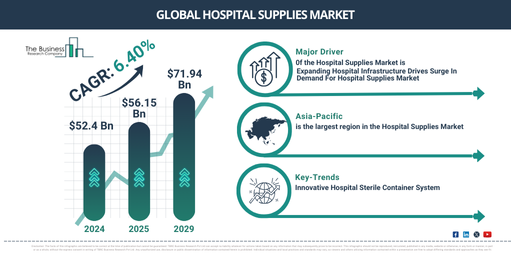
    In recent times, the hospital supplies market has seen robust growth. Its expansion is projected to continue from $52.4 billion in 2024 to a higher value of $56.15 billion in 2025, with a consistent compound annual growth rate (CAGR) of 7.1%. Factors such as the development of healthcare infrastructure, the increase in the aging population, regulatory compliance, economic expansion, and advancements in medical device and supply technology have contributed to this growth during the historical period.

    What Is the Forecast for the Hospital Supplies Market Size Through 2029?

    The market size of hospital supplies is predicted to witness robust expansion in the coming years, reaching a value of $71.94 billion by 2029 with a compound annual growth rate (CAGR) of 6.4%. Factors driving this growth in the projected timeline can be traced back to preparedness for pandemics, the rise of telemedicine and remote health monitoring, sustainability measures, focus on value-based healthcare, and expansion in emerging markets. Noteworthy trends during the forecast period involve the use of disposable medical devices, remote management of the supply chain, 3D printed medical products, intelligent hospital supplies, and tailor-made supplies.

    Download The Free Sample Report Here:

    https://www.thebusinessresearchcompany.com/sample.aspx?id=1973&type=smp

    What are the Key Market Players in Hospital Supplies Market and How They’re Evolving?

    Major companies operating in the hospital supplies market include Becton, Dickinson and Company, B. Braun Melsungen AG, Steris plc, Baxter International Inc., Stryker Corporation, Cardinal Health Inc., Hill-Rom Holdings Inc., Terumo Corporation, Medtronic plc, 3M Company, CVS Health Corporation, McKesson Corporation, Cencora Inc., GE HealthCare Technologies Inc., Koninklijke Philips NV, Boston Scientific Corporation, Danaher Corporation, Varian Medical Systems Inc., Dentsply Sirona Inc., Masimo Corporation, Olympus Corporation, ResMed Inc., Smith & Nephew plc, Align Technology Inc., The Cooper Companies Inc., Teleflex Incorporated, Waters Corporation, West Pharmaceutical Services Inc., Straumann Group, Fresenius Medical Care AG & Co KGaA.

    What Are the Primary Growth Drivers in the Hospital Supplies Market?

    The expansion of the hospital supplies market is predicted to be driven by the growing number of hospitals. Hospitals are institutions established with a primary focus on offering medical and surgical services to individuals who are sick or injured. They depend heavily on a comprehensive range of medical supplies and equipment to ensure their patients receive top-notch care. For example, a report from the American Hospital Association (AHA), a healthcare trade organization in the US that advocates for hospitals and healthcare networks, stated in May 2023 that there has been an increase in the total number of hospitals from 6,093 in 2022 to 6,129. Furthermore, all hospitals across the U.S. had total admissions of 34,011,386, a rise from 33,356,853 in 2022. As such, the growing number of hospitals is predicted to further stimulate the expansion of the hospital supplies market.

    Request For A Customized Report:

    https://www.thebusinessresearchcompany.com/customise?id=1973&type=smp

    What Are the Leading Segments in the Global Hospital Supplies Industry?

    The hospital supplies market covered in this report is segmented –

    1) By Type: Disposable Hospital Supplies, Sterilization Equipment And Disinfectants, Mobility Aids And Transportation Equipment, Operating Room Equipment

    2) By End User: Hospitals And Clinics, Diagnostic Laboratories, Other End Users

    3) By Type of Expenditure: Public, Private

    4) By Product: Instruments Or Equipment, Disposables

    Subsegments:

    1) By Disposable Hospital Supplies: Surgical Masks, Gloves, Drapes And Gowns, IV Consumables, Wound Care Products

    2) By Sterilization Equipment And Disinfectants: Sterilizers (Autoclaves), Disinfectants Andsanitizers, Sterilization Indicators, UV Sterilizers

    3) By Mobility Aids And Transportation Equipment: Wheelchairs, Walkers, Crutches, Patient Lifts, Stretchers

    4) By Operating Room Equipment: Surgical Tables, Operating Room Lights, Surgical Instruments, Anesthesia Machines, Patient Monitors

    What Are the Key Market Trends in the Hospital Supplies Industry?

    Leaders in the Hospital Supplies market, such as Aesculap Inc., are concentrating on the creation of innovative products like the AESCULAP Aicon Sterile Container System to boost their profit margins. The objective of this system is to enhance efficiency and diminish the chances of moisture exposure. Aesculap Inc., a leading U.S. based surgical equipment maker, introduced this sterile container system in March 2022. Designed to make procedures more straightforward and decrease the potential of equipment getting damp, the AESCULAP Aicon Sterile Container System guarantees total sterilization. Furthermore, it prevents potential surgical postponements in the operating room due to unprepared sets.

    Access The Full Report Here:

    https://www.thebusinessresearchcompany.com/report/hospital-supplies-global-market-report

    What Is the Regional Outlook for the Hospital Supplies Market?

    Asia-Pacific was the largest region in the global hospital supplies market in 2023. North America was the second largest region in the global hospital supplies market. The regions covered in the hospital supplies market report are Asia-Pacific, Western Europe, Eastern Europe, North America, South America, Middle East, and Africa.

    Purchase The Full Report Today:

    https://www.thebusinessresearchcompany.com/purchaseoptions.aspx?id=1973

    This Report Delivers Insight On:

    1. How big is the hospital supplies market, and how is it changing globally?

    2. Who are the major companies in the hospital supplies market, and how are they performing?

    3. What are the key opportunities and risks in the hospital supplies market right now?

    4. Which products or customer segments are growing the most in the hospital supplies market?

    5. What factors are helping or slowing down the growth of the hospital supplies market?

    About The Business Research Company:

    With over 15000+ reports from 27 industries covering 60+ geographies, The Business Research Company has built a reputation for offering comprehensive, data-rich research and insights. Armed with 1,500,000 datasets, the optimistic contribution of in-depth secondary research, and unique insights from industry leaders, you can get the information you need to stay ahead in the game.

    Get in touch with us:

    The Business Research Company: https://www.thebusinessresearchcompany.com/

    Americas +1 310-496-7795

    Asia +44 2071930708

    Europe +44 7882 955267

    Email us at info@tbrc.info

    Follow us on:

    LinkedIn: https://in.linkedin.com/company/the-business-research-company

    YouTube: https://www.youtube.com/channel/UC24_fI0rV8cR5DxlCpgmyFQ

    Global Market Model: https://www.thebusinessresearchcompany.com/global-market-model

  • Market Analysis on Hemostasis Diagnostic Devices And Equipment Industry – Insights for Corporate Strategy and R&D

    Market Analysis on Hemostasis Diagnostic Devices And Equipment Industry – Insights for Corporate Strategy and R&D

    Claim your 30% discount on Global Market Reports with code ONLINE30. Limited time only.

    What Are the Projected Market Size and Growth Rates for the Hemostasis Diagnostic Devices And Equipment Market From 2025 To 2029?

    The market size of hemostasis diagnostic devices and equipment has experienced rapid expansion in the recent past. The market is projected to increase from $5.29 billion in 2024 to $6.18 billion in 2025, corresponding to a compound annual growth rate (CAGR) of 16.8%. The substantial growth in the historic period can be credited to various factors such as clinical diagnostics, surgical procedures, monitoring of anticoagulant therapy, hemophilia, and bleeding disorders.

    What Is the Projected Market Size of the Hemostasis Diagnostic Devices And Equipment Market?

    The market size of hemostasis diagnostic devices and equipment is forecasted to witness a significant surge in the ensuing years, with its value anticipated to reach $10.36 billion by 2029, boasting a compound annual growth rate (CAGR) of 13.8%. The projected growth during this period can be associated with the aging demographic, prevalence of cardiovascular and chronic ailments, the rise of personalized medicine, and an increase in surgical procedures. Key upcoming trends in the forecast timeframe encompass point-of-care testing, the utilization of automation and robotics, the discovery of biomarkers, and the adoption of telemedicine and remote monitoring.

    Download The Free Sample Report Here:

    https://www.thebusinessresearchcompany.com/sample.aspx?id=2598&type=smp

    Who are the Major Competitors in the Hemostasis Diagnostic Devices And Equipment Market Outlook?

    Major companies operating in the hemostasis diagnostic devices and equipment market include C. R. Bard Inc., Baxter International Inc., Pfizer Inc., Johnson & Johnson, Abbott Laboratories, Beckman Coulter Inc., Becton Dickinson and Company, Chrono-Log Corporation, CSL Behring LLC, F. Hoffmann-La Roche Ltd., Grifols S.A., HemCon Medical Technologies Inc., Integra Life Sciences Corporation, Medtronic plc, Siemens AG, Thermo Fisher Scientific Inc., Trinity Biotech plc., Ethicon Inc., Boston Scientific Corporation, Olympus Corporation, Cook Group Inc., Halyard Health, Medline Industries Inc., ConMed Corporation, Moog Inc., Argon Medical Devices Inc., B. Braun Interventional Systems Inc., Bio-Rad Laboratories Inc., CareFusion Corporation, Danaher Corporation, DemeTECH Corporation, Diagnostica Stago SAS, Dolphin Sutures, EndoEvolution LLC, Haemonetics Corporation, Internacional Farmacéutica S.A. de C.V., Merit Medical Systems Inc., Quidelortho Corp, STAGO, Stryker Corporation

    What Is Fueling Growth in the Hemostasis Diagnostic Devices And Equipment Market?

    The rising prevalence of diseases among the elderly, which often leads to a diagnosis, is contributing to the increasing number of cardiovascular disease (CVD) surgeries conducted using hemostasis devices. As people grow older, the likelihood of illness tends to increase, leading to a spike in surgeries involving senior patients. Hemostasis devices are highly effective in accelerating the body’s natural clotting process and can monitor anticoagulation and provide guidance for transfusion therapy during surgeries. The American Heart Association states that Americans over 80 years of age are at a considerably high risk of developing CVD: approximately 83% of men and 87.1% of women are likely to suffer from some form of CVD. Hence, to enhance patient comfort and surgical success rates, the employment of hemostasis devices has become widespread.

    Request For A Customized Report:

    https://www.thebusinessresearchcompany.com/customise?id=2598&type=smp

    Which Hemostasis Diagnostic Devices And Equipment Market Segments Are Growing the Fastest?

    The hemostasis diagnostic devices and equipment market covered in this report is segmented –

    1) By Product: Analyzers, Coagulation Instrument, Other Hemostasis Instruments, Reagents and Kits

    2) By Device Technology: Automated, Semi-Automated, Manual

    3) By End User: Hospitals, Clinics, Independent Diagnostic, Laboratories, Other End Users

    Subsegments:

    1) By Analyzers: Hematology Analyzers, Platelet Function Analyzers, Thromboelastography (TEG) Analyzers

    2) By Coagulation Instruments: Prothrombin Time (PT) Instruments, Activated Partial Thromboplastin Time (aPTT) Instruments, Fibrinogen Testing Instruments, Thrombin Time (TT) Instruments

    3) By Other Hemostasis Instruments: Blood Clotting Time (BCT) Instruments, Bleeding Time (BT) Test Devices, Hemostatic Forceps and Clips

    4) By Reagents and Kits: Coagulation Reagents, Blood Collection Kits, Point-of-care Testing Kits, Thrombosis Kits

    Which Industry Trends Are Shaping the Future of the Hemostasis Diagnostic Devices And Equipment Market?

    The hemostasis diagnostic device and equipment market is experiencing a surge due to the introduction of more advanced technologies. To enhance the operations’ effectiveness and quality, technological advancements like collagen vascular hemostasis devices are being put to use. Collagen, the primary structural protein in skin and other connective tissues, is widely used in its purified form for cosmetic surgeries and has now made its way into the hemostasis diagnostic devices market. Post a femoral surgery, patients often experience immobility which leads to elevated discomfort. To combat this, collagen-based closure devices are employed. As per a research undertaken by the American Journal of Neuroradiology, which examined 698 Angio-Seal closures, utilising the Angio-Seal shortened the average mobilization period by nearly 15 minutes without any significant complications. Angio seal, a form of collagen hemostasis device, reduces the average hemostasis time and enhances patient mobility.

    Access The Full Report Here:

    https://www.thebusinessresearchcompany.com/report/hemostasis-diagnostic-devices-and-equipment-global-market-report

    Which Countries Are Leading the Hemostasis Diagnostic Devices And Equipment Market?

    North America was the largest region in the global hemostasis diagnostic devices and equipment market in 2023. Asia-Pacific was the second-largest region in the hemostasis diagnostic devices and equipment market. The regions covered in the hemostasis diagnostic devices and equipment market report are Asia-Pacific, Western Europe, Eastern Europe, North America, South America, Middle East, and Africa.

    Purchase The Full Report Today:

    https://www.thebusinessresearchcompany.com/purchaseoptions.aspx?id=2598

    This Report Delivers Insight On:

    1. How big is the hemostasis diagnostic devices and equipment market, and how is it changing globally?

    2. Who are the major companies in the hemostasis diagnostic devices and equipment market, and how are they performing?

    3. What are the key opportunities and risks in the hemostasis diagnostic devices and equipment market right now?

    4. Which products or customer segments are growing the most in the hemostasis diagnostic devices and equipment market?

    5. What factors are helping or slowing down the growth of the hemostasis diagnostic devices and equipment market?

    About The Business Research Company:

    With over 15000+ reports from 27 industries covering 60+ geographies, The Business Research Company has built a reputation for offering comprehensive, data-rich research and insights. Armed with 1,500,000 datasets, the optimistic contribution of in-depth secondary research, and unique insights from industry leaders, you can get the information you need to stay ahead in the game.

    Get in touch with us:

    The Business Research Company: https://www.thebusinessresearchcompany.com/

    Americas +1 310-496-7795

    Asia +44 2071930708

    Europe +44 7882 955267

    Email us at info@tbrc.info

    Follow us on:

    LinkedIn: https://in.linkedin.com/company/the-business-research-company

    YouTube: https://www.youtube.com/channel/UC24_fI0rV8cR5DxlCpgmyFQ

    Global Market Model: https://www.thebusinessresearchcompany.com/global-market-model

  • Hematology Diagnostic Devices And Equipment Forecast Report – Designed for Decision Makers and Product Teams

    Hematology Diagnostic Devices And Equipment Forecast Report – Designed for Decision Makers and Product Teams

    Claim your 30% discount on Global Market Reports with code ONLINE30. Limited time only.

    What Is the Estimated Market Size of the Hematology Diagnostic Devices And Equipment Market In 2029?

    In recent times, there has been a substantial expansion in the market size of hematology diagnostic devices and equipment. The market, which was valued at $7.95 billion in 2024, is projected to escalate to $9.04 billion in 2025 at a compound annual growth rate of 13.7%. Factors such as clinical diagnostics, blood banking, oncology and hematology disorders, and monitoring of disease progression have played a significant role in the historical growth of this market.

    What Growth Rate Is Forecasted for the Hematology Diagnostic Devices And Equipment Market by 2029?

    The market size for hematology diagnostic devices and equipment is anticipated to experience consistent growth in the upcoming years, with projections to reach $10.96 billion by 2029, displaying a compound annual growth rate (CAGR) of 4.9%. The forecasted expansion can be credited to factors such as an increasing aging population, advancements in personalized medicine, a rise in blood-related illnesses, and the use of hematological biomarkers. Key trends over the forecast period encompass technological improvements, point-of-care hematology testing, automated processes and system integration, and the rise of telemedicine plus remote monitoring.

    Download The Free Sample Report Here:

    https://www.thebusinessresearchcompany.com/sample.aspx?id=2536&type=smp

    Which Key Companies Are Shaping the Future of the Hematology Diagnostic Devices And Equipment Market?

    Major companies operating in the hematology diagnostic devices and equipment market include Abbott Diagnostics, Beckman Coulter Inc., Bio-Rad Laboratories Inc., Drucker Diagnostics Inc., Horiba Ltd., Instrumentation Laboratory Inc., Siemens Healthcare, Shenzhen Mindray Bio-Medical Electronics Co. Ltd., F.Hoffmann-La Roche AG, Thermo Fisher Scientific Inc., HemoCue AB, Mindray Medical International Limited, NORMA Group, Danaher Corporation, Edan Instruments Inc., Novo Nordisk, Sysmex Corporation, Fluidigm Corporation, CellaVision, Maccura Biotechnology Co., DY mind Biotech, Balio Diagnostics, BioSystems Diagnostics Pvt. Ltd., Wiener Lab, Accurex Biomedical Pvt. Ltd., ARKRAY USA, Boule Diagnostics AB, DermaFlow, Diagnostics Holdings, Diatron Group, EKF Diagnostics Holdings, Grifols, S.A., ICU Medical Inc., Nihon Kohden Corporation, Ortho Clinical Diagnostics, PixCell Medical, STRATEC Biomedical AG, Terumo BCT, Z-Medica Corporation

    Which Factors Are Driving Demand in the Hematology Diagnostic Devices And Equipment Industry?

    The surge in blood disorders is driving the demand for hematology diagnostic devices. These devices are extensively employed to determine the specific type of blood condition, which affects the number of blood cells, such as red blood cells, white blood cells, platelets, and so on. Blood disorders, indifferent to factors like age, race, or gender, impact millions worldwide each year. As an example, the World Health Organization states that 75% of total global births are affected by Hemoglobin disorder, and Anemia prevalence stands at 12.7% in men.

    Request For A Customized Report:

    https://www.thebusinessresearchcompany.com/customise?id=2536&type=smp

    How Is the Hematology Diagnostic Devices And Equipment Market Segmented by Several Divisions?

    The hematology diagnostic devices and equipment market covered in this report is segmented –

    1) By Product: Instruments, Consumables

    2) By Instruments: Analyzers, Flow cytometers, Other Instruments

    3) By Consumables: Reagents, Stains, Other Consumables

    4) By Application: Drug Testing, Auto-Immune Disease, Cancer, Diabetes Mellitus, Infectious Disease, Other Applications

    5) By End User: Hospitals, Specialized Diagnostic Centers, Specialized Research Institutes

    Subsegments:

    1) By Instruments: Hematology Analyzers, Flow Cytometers, Coagulation Analyzers, Hemoglobin Analyzers, Blood Gas Analyzers

    2) By Consumables: Reagents, Test Strips, Blood Collection Tubes, Slides and Cover Slips, Others (calibration and quality control materials)

    What are the Emerging Market Trends Driving the Growth of the Hematology Diagnostic Devices And Equipment Industry?

    Firms specialized in hematology diagnostic devices are continually pouring their funds into automation technology. This technology’s sophistications provoke a demand for hematology analyzers, while significantly minimizing the inaccuracies stemming from manual operations within diagnostic centres. Case in point, leading companies like Sysmex introduced a CLIA waiver for an innovative automated hematology analyzer, providing clinical centres the capability to conduct hematology tests without the risk of manual mistakes. CLIA regulations set the bar for quality in laboratory testing involving human samples, such as blood, body fluid and tissue, which are used for disease diagnosis, prevention or treatment, and health assessment.

    Access The Full Report Here:

    https://www.thebusinessresearchcompany.com/report/hematology-diagnostic-devices-and-equipment-global-market-report

    Which Regions Are Driving Growth in the Hematology Diagnostic Devices And Equipment Market?

    North America was the largest region in the global hematology diagnostics devices and equipment market in 2023. Asia-Pacific was the second-largest region in the hematology diagnostics devices and equipment market. The regions covered in the hematology diagnostic devices and equipment market report are Asia-Pacific, Western Europe, Eastern Europe, North America, South America, Middle East, and Africa.

    Purchase The Full Report Today:

    https://www.thebusinessresearchcompany.com/purchaseoptions.aspx?id=2536

    This Report Delivers Insight On:

    1. How big is the hematology diagnostic devices and equipment market, and how is it changing globally?

    2. Who are the major companies in the hematology diagnostic devices and equipment market, and how are they performing?

    3. What are the key opportunities and risks in the hematology diagnostic devices and equipment market right now?

    4. Which products or customer segments are growing the most in the hematology diagnostic devices and equipment market?

    5. What factors are helping or slowing down the growth of the hematology diagnostic devices and equipment market?

    About The Business Research Company:

    With over 15000+ reports from 27 industries covering 60+ geographies, The Business Research Company has built a reputation for offering comprehensive, data-rich research and insights. Armed with 1,500,000 datasets, the optimistic contribution of in-depth secondary research, and unique insights from industry leaders, you can get the information you need to stay ahead in the game.

    Get in touch with us:

    The Business Research Company: https://www.thebusinessresearchcompany.com/

    Americas +1 310-496-7795

    Asia +44 2071930708

    Europe +44 7882 955267

    Email us at info@tbrc.info

    Follow us on:

    LinkedIn: https://in.linkedin.com/company/the-business-research-company

    YouTube: https://www.youtube.com/channel/UC24_fI0rV8cR5DxlCpgmyFQ

    Global Market Model: https://www.thebusinessresearchcompany.com/global-market-model
  • Hearing Implants Market Outlook 2025 – Insights for Executive and Strategic Planning

    Hearing Implants Market Outlook 2025 – Insights for Executive and Strategic Planning

    Claim your 30% discount on Global Market Reports with code ONLINE30. Limited time only.

    How Fast Is The Hearing Implants Market Expected to Grow Between 2025 And 2029?

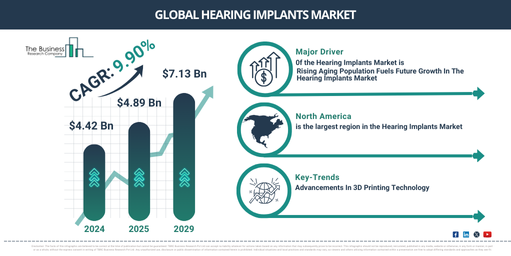
    In recent times, there has been a swift expansion in the hearing implants market size. The market, which was valued at $4.42 billion in 2024, is projected to increase to $4.89 billion in 2025, with a compound annual growth rate (CAGR) of 10.8%. This significant growth during the historic period is linked to the prevalence of hearing loss, heightened awareness and diagnosis, and the pediatric population.

    What Growth Rate Is Anticipated for the Hearing Implants Market in the Coming Years?

    In the following years, the market size for hearing implants is predicted to experience significant expansion. The market is set to expand to $7.13 billion by 2029, with an annual growth rate of 9.9%. Factors contributing to the expected growth during the forecast period include life quality, less invasive implantation methods, regulatory support and reimbursement, telehealth, and remote monitoring, as well as value-based healthcare. The forecast period will also see trends such as improved sound processing, the use of biocompatible materials, hybrid implants, and the incorporation of wearable technology.

    Download The Free Sample Report Here:

    https://www.thebusinessresearchcompany.com/sample.aspx?id=2445&type=smp

    Who Are the Leading Companies in the Hearing Implants Market?

    Major companies operating in the hearing implants market include Sonova Holdings AG, Advanced Bionics AG, Siemens AG, William Demant Holding Group, Microson S.A., RION Co.Ltd., SeboTek Hearing Systems, Arphi Electronics, Widex A/S, Audina Hearing Instruments, MED-EL, Cochlear Ltd., Oticon, Phonak, Unitron, Sonic Innovations Inc., Nurotron Biotechnology Co. Ltd., Ototronix LLC, Envoy Medical Corporation, Medtronic plc, GN Hearing A/S, Starkey Hearing Technologies, Sivantos Group, Neurelec SA, Otologics LLC, Sonitus Medical Inc., Advanced Bionics

    What Are the Key Drivers of the Hearing Implants Market?

    The growth of the elderly population on a global scale is on the rise, and hearing impairment has been identified as a prevalent ailment in individuals over 60 years of age. As an illustration, in October 2022 the World Health Organization – a Switzerland-based global entity, projected that by 2050, the population tally of those aged 60 years and more is anticipated to duplicate, hitting the 2.1 billion mark. Concurrently, the population count of those aged 80 or more is predicted to increase threefold from 2020 to 2050, touching 426 million. Consequently, this rising elderly demographic is likely to boost the market for hearing implants in the times to come.

    Request For A Customized Report:

    https://www.thebusinessresearchcompany.com/customise?id=2445&type=smp

    What Are the Key Market Segments in the Hearing Implants Industry?

    The hearing implants market covered in this report is segmented –

    1) By Type: Cochlear Implants, Middle Ear Implants, Bone Conduction Implants, Auditory Brainstem Implant

    2) By Age: Adult, Pediatric

    3) By End-User: Hospitals, ENT clinics, Ambulatory Surgical Centres

    Subsegments:

    1) By Cochlear Implants: Conventional Cochlear Implants, Hybrid Cochlear Implants

    2) By Middle Ear Implants: Active Middle Ear Implants, Passive Middle Ear Implants

    3) By Bone Conduction Implants: Softband Bone Conduction Implants, Surgically Implanted Bone Conduction Devices

    4) By Auditory Brainstem Implants: Implantable Auditory Brainstem Implants (ABI), Non-Implantable Auditory Brainstem Devices

    What Are the Latest Trends in the Hearing Implants Market?

    In the hearing implants market, firms are producing implants via 3D printing for binaural cochlear surgeries. This technology is centered on crafting tailored 3D-printed implants from biocompatible materials to address anatomical flaws through the use of stem cells. Sonova is a company that produces binaural cochlear implants that employ both electrical and acoustic stimulation to improve hearing and make speech distinction better. Additionally, a 3D-micro scaffold cochlear implant, featuring a 3D-printed steroid reservoir, has been created by scientists with an aim to diminish the harm of residual hearing from electrode insertion trauma. For approval, cochlear implant makers are required to provide details to the FDA about the materials used, efficacy according to clinical test results, and any negative impacts. After receiving FDA approval, the manufacturer is then allowed to commence selling the implants in the USA.

    Access The Full Report Here:

    https://www.thebusinessresearchcompany.com/report/hearing-implants-global-market-report

    What Are the Key Regional Markets in the Hearing Implants Industry?

    North America was the largest region in the global hearing implants devices and equipment market in 2023. Asia-Pacific was the second-largest region in the hearing implants devices and equipment market. The regions covered in the hearing implants market report are Asia-Pacific, Western Europe, Eastern Europe, North America, South America, Middle East, and Africa.

    Purchase The Full Report Today:

    https://www.thebusinessresearchcompany.com/purchaseoptions.aspx?id=2445

    This Report Delivers Insight On:

    1. How big is the hearing implants market, and how is it changing globally?

    2. Who are the major companies in the hearing implants market, and how are they performing?

    3. What are the key opportunities and risks in the hearing implants market right now?

    4. Which products or customer segments are growing the most in the hearing implants market?

    5. What factors are helping or slowing down the growth of the hearing implants market?

    About The Business Research Company:

    With over 15000+ reports from 27 industries covering 60+ geographies, The Business Research Company has built a reputation for offering comprehensive, data-rich research and insights. Armed with 1,500,000 datasets, the optimistic contribution of in-depth secondary research, and unique insights from industry leaders, you can get the information you need to stay ahead in the game.

    Get in touch with us:

    The Business Research Company: https://www.thebusinessresearchcompany.com/

    Americas +1 310-496-7795

    Asia +44 2071930708

    Europe +44 7882 955267

    Email us at info@tbrc.info

    Follow us on:

    LinkedIn: https://in.linkedin.com/company/the-business-research-company

    YouTube: https://www.youtube.com/channel/UC24_fI0rV8cR5DxlCpgmyFQ

    Global Market Model: https://www.thebusinessresearchcompany.com/global-market-model

  • Handheld Surgical Devices And Equipment Industry Valued at $13.79 Billion by 2029 With CAGR of 9% | Size and Share Insights

    Handheld Surgical Devices And Equipment Industry Valued at $13.79 Billion by 2029 With CAGR of 9% | Size and Share Insights

    Claim your 30% discount on Global Market Reports with code ONLINE30. Limited time only.

    What Are the Projected Market Size and Growth Rates for the Handheld Surgical Devices And Equipment Market From 2025 To 2029?

    In recent times, the market for handheld surgical devices and equipment has experienced substantial growth. The industry, which was worth $8.76 billion in 2024, is predicted to soar to $9.76 billion in 2025, exhibiting a compound annual growth rate (CAGR) of 11.4%. Key factors driving this expansion during the historic period include an aging population, the rise of minimally invasive surgery (mis), advancements in healthcare infrastructure, and stringent regulatory compliance.

    What Is the Projected Market Size of the Handheld Surgical Devices And Equipment Market?

    The industry of handheld surgical devices and equipment is forecasted to witness robust expansion in the coming years. The market is predicted to surge to $13.79 billion in 2029, generating a compound annual growth rate (CAGR) of 9.0%. Factors such as advancements in telemedicine and remote surgical procedures, burgeoning growth in emerging markets, the rise in robotics and automation, and the advent of personalized medicine contribute to the growth during the projected period. Notable trends within this timeframe consist of device miniaturization and mobility, the emergence of intelligent and interconnected devices, the use of sustainable and environmentally-friendly materials, along with the adoption of augmented reality (ar) and virtual reality (vr).

    Download The Free Sample Report Here:

    https://www.thebusinessresearchcompany.com/sample.aspx?id=2420&type=smp

    Who are the Major Competitors in the Handheld Surgical Devices And Equipment Market Outlook?

    Major companies operating in the handheld surgical devices and equipment market include B. Braun Melsungen AG, Medtronic plc, Smith & Nephew, Johnson & Johnson Services Inc., Integra LifeSciences Corporation, Zimmer Biomet, CooperSurgical Inc., Becton Dickinson and Company, Moria, Pelion Surgical, Elite Medical, Millennium Surgical, Gsource LLC, Medicon eG, Sklar Corporation, Ethicon US LLC., Erbe Elektromedizin GmbH, CONMED Corporation, Synergetics USA Inc., Stryker Corporation, Karl Storz SE & Co. KG, KLS Martin, Grena Ltd., Maxer Endoscopy GmbH, GPC Medical Ltd., Teleflex Incorporated, Cook Medical LLC, Richard Wolf GmbH, Microline Surgical Inc., Applied Medical Resources Corporation, Olympus Corporation, Boston Scientific Corporation, Wexler Surgical Inc., Surgmed Group

    What Is Fueling Growth in the Handheld Surgical Devices And Equipment Market?

    The upsurge in the desire for aesthetic operations is propelling the handheld surgical devices and equipment market forward. The rise in aesthetic operations can be linked to the increase in per capita disposable income. As per the 2022 ASPS data, approximately 1.5 million cosmetic procedures were conducted solely in that year. Additionally, liposuction emerged as the leading cosmetic surgery for 2022, with a jaw-dropping 325,669 operations carried out.

    Request For A Customized Report:

    https://www.thebusinessresearchcompany.com/customise?id=2420&type=smp

    Which Handheld Surgical Devices And Equipment Market Segments Are Growing the Fastest?

    The handheld surgical devices and equipment market covered in this report is segmented –

    1) By Product: Scalpels, Forceps, Retractor, Dilators, Graspers, Other Products

    2) By Application, Neurosurgery, Cardiovascular, Orthopedic, Plastic And Reconstructive Surgery, Obstetrics And Gynecology, Other Applications

    3) By End-User: Hospitals, Specialized Clinics, Long-Term Care Centers, Ambulatory Surgery Centers, Other End Users

    Subsegments:

    1) By Scalpels: Disposable Scalpels, Reusable Scalpels

    2) By Forceps: Hemostatic Forceps, Tissue Forceps, Surgical Forceps

    3) By Retractors: Handheld Retractors, Self-Retaining Retractors

    4) By Dilators: Urethral Dilators, Cervical Dilators, Esophageal Dilators

    5) By Graspers: Laparoscopic Graspers, Endoscopic Graspers

    6) By Other Products: Surgical Hooks, Scissors, Clamps, Spatulas, Needle Holders

    Which Industry Trends Are Shaping the Future of the Handheld Surgical Devices And Equipment Market?

    The FDA categorizes medical devices into Class I, Class II, and Class III, based on the risk they pose and the regulatory controls needed to ensure their safety and efficiency. Hand-held surgical tools like scalpels, forceps, and retractors, which are manually operated and non-powered, fall under the Class I category of medical devices. These devices typically pose the least risk to the user or patient. Additionally, Class I devices are not required to undergo premarket notification procedures 510(k).

    Access The Full Report Here:

    https://www.thebusinessresearchcompany.com/report/handheld-surgical-devices-and-equipment-global-market-report

    Which Countries Are Leading the Handheld Surgical Devices And Equipment Market?

    North America was the largest region in the global handheld surgical devices market in 2023. Western Europe was the second-largest region in the global handheld surgical devices market. The regions covered in the handheld surgical devices and equipment market report are Asia-Pacific, Western Europe, Eastern Europe, North America, South America, Middle East, and Africa.

    Purchase The Full Report Today:

    https://www.thebusinessresearchcompany.com/purchaseoptions.aspx?id=2420

    This Report Delivers Insight On:

    1. How big is the handheld surgical devices and equipment market, and how is it changing globally?

    2. Who are the major companies in the handheld surgical devices and equipment market, and how are they performing?

    3. What are the key opportunities and risks in the handheld surgical devices and equipment market right now?

    4. Which products or customer segments are growing the most in the handheld surgical devices and equipment market?

    5. What factors are helping or slowing down the growth of the handheld surgical devices and equipment market?

    About The Business Research Company:

    With over 15000+ reports from 27 industries covering 60+ geographies, The Business Research Company has built a reputation for offering comprehensive, data-rich research and insights. Armed with 1,500,000 datasets, the optimistic contribution of in-depth secondary research, and unique insights from industry leaders, you can get the information you need to stay ahead in the game.

    Get in touch with us:

    The Business Research Company: https://www.thebusinessresearchcompany.com/

    Americas +1 310-496-7795

    Asia +44 2071930708

    Europe +44 7882 955267

    Email us at info@tbrc.info

    Follow us on:

    LinkedIn: https://in.linkedin.com/company/the-business-research-company

    YouTube: https://www.youtube.com/channel/UC24_fI0rV8cR5DxlCpgmyFQ

    Global Market Model: https://www.thebusinessresearchcompany.com/global-market-model
  • Gynecology Medical Lasers Market to Reach $2.32 Billion by 2029 | Key Drivers and Future Outlook

    Gynecology Medical Lasers Market to Reach $2.32 Billion by 2029 | Key Drivers and Future Outlook

    Claim your 30% discount on Global Market Reports with code ONLINE30. Limited time only.

    What Is the Estimated Market Size of the Gynecology Medical Lasers Market In 2029?

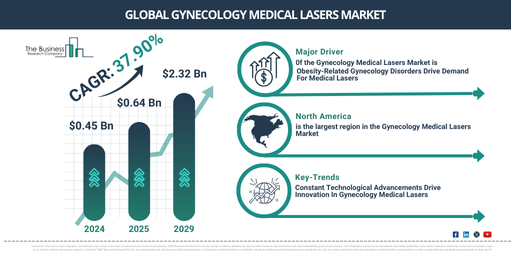
    Over recent years, the size of the gynecology medical lasers market has witnessed a significant upsurge. The market growth is anticipated to rise from $0.45 billion in 2024 to $0.64 billion in 2025, showcasing a compound annual growth rate (CAGR) of 43.9%. The uptrend during the historical period is credited to a marked increase in gynecological cancer cases, a boost in cosmetic gynecology operations, rising disposable incomes, and an intensified attention towards preventive healthcare.

    What Growth Rate Is Forecasted for the Gynecology Medical Lasers Market by 2029?

    The market for medical lasers in the field of gynecology is predicted to witness a significant surge in the coming years, aiming to reach a value of $2.32 billion in 2029 with a compounded annual growth rate (CAGR) of 37.9%. This expected growth for the mentioned period can be associated with factors such as an increase in the elderly population and menopause management, burgeoning awareness regarding gynecological health, worldwide growth of gynecological services, the incorporation of telemedicine, and less invasive procedures. The forecast period also indicates major trends such as personalized treatment schedules, non-surgical answers for gynecological issues, enhancement of fertility, restoration of vaginal microbiome, and breakthroughs in endometrial ablation.

    Download The Free Sample Report Here:

    https://www.thebusinessresearchcompany.com/sample.aspx?id=3372&type=smp

    Which Key Companies Are Shaping the Future of the Gynecology Medical Lasers Market?

    Major companies operating in the gynecology medical lasers market include Quanta System S.p.A, Cynosure Inc., Biolitec AG, Boston Scientific Corporation, DEKA Medical Inc., Limmer Laser GmbH, Linline Medical Systems LLC., Fotona d.d., GIGAA Laser Group, LISA laser products GmbH, Lumenis Ltd., Asclepion Laser Technologies GmbH, Medelux LLC., Alma Lasers Ltd., NeoLaser LLC., BTL Industries Inc., INTERmedic S.A., Jena Surgical GmbH, Cutera Inc., Sciton Inc., Syneron Candela LLC., Lutronic Corporation, Merz Aesthetics Inc., New Star Lasers Inc., Palomar Medical Technologies Inc., Sharplan Lasers Inc., Solta Medical Inc., SpectraMedi LLC, Venus Concept Ltd., Viora Ltd., Zeltiq Aesthetics Inc., Zimmer MedizinSysteme GmbH, Baltic Lasers UAB

    Which Factors Are Driving Demand in the Gynecology Medical Lasers Industry?

    The increasing number of overweight women worldwide is predicted to propel the growth of the gynecology medical lasers market. There is a higher prevalence of gynecological disorders among obese and overweight women, including a greater risk of reproductive health problems. These risks include increased rates of infertility, conception and miscarriage, as well as heightened pregnancy complications. The reproductive outcomes for overweight women are generally poor, both in natural and assisted conception scenarios. The growing issue of obesity in women globally presents a driving force for the demand in gynecological treatments and, in turn, the gynecology medical lasers market.

    Request For A Customized Report:

    https://www.thebusinessresearchcompany.com/customise?id=3372&type=smp

    How Is the Gynecology Medical Lasers Market Segmented by Several Divisions?

    The gynecology medical lasers market covered in this report is segmented –

    1) By Product Type: CO2 Laser, KTP–Argon Laser, Nd(YAG Laser)

    2) By Application: Colposcopy, Laparoscopy, Hysteroscopy

    3) By End-User: Hospital, Specialized clinics, Ambulatory surgical centers, Medical centers

    Subsegments:

    1) By CO2 Laser: Fractional CO2 Laser, Continuous Wave CO2 Laser

    2) By KTP–Argon Laser: Potassium Titanyl Phosphate (KTP) Laser, Argon Laser

    3) By Nd:YAG Laser: Long-Pulsed Nd:YAG Laser, Q-Switched Nd:YAG Laser

    What are the Emerging Market Trends Driving the Growth of the Gynecology Medical Lasers Industry?

    Manufacturers of gynecology medical lasers are perpetually investing in advancements in technology for quicker diagnoses and more effective treatments of gynecological conditions. Innovations are being made in various fields, including the introduction of new wavelengths, the establishment of more robust systems, the reduction of system costs, and other enhancements which are being integrated with minimally invasive procedures. An example of this is the FDA’s approval of the Dynamis PRO laser system for use in gynecology and genitourology treatments. This system utilizes two complementary wavelengths, enabling fast and accurate treatments.

    Access The Full Report Here:

    https://www.thebusinessresearchcompany.com/report/gynecology-medical-lasers-global-market-report

    Which Regions Are Driving Growth in the Gynecology Medical Lasers Market?

    North America was the largest region in the gynecology medical lasers market in 2023. Asia-Pacific was the second-largest region in the gynecology medical lasers market report. The regions covered in the gynecology medical lasers market report are Asia-Pacific, Western Europe, Eastern Europe, North America, South America, Middle East, and Africa.

    Purchase The Full Report Today:

    https://www.thebusinessresearchcompany.com/purchaseoptions.aspx?id=3372

    This Report Delivers Insight On:

    1. How big is the gynecology medical lasers market, and how is it changing globally?

    2. Who are the major companies in the gynecology medical lasers market, and how are they performing?

    3. What are the key opportunities and risks in the gynecology medical lasers market right now?

    4. Which products or customer segments are growing the most in the gynecology medical lasers market?

    5. What factors are helping or slowing down the growth of the gynecology medical lasers market?

    About The Business Research Company:

    With over 15000+ reports from 27 industries covering 60+ geographies, The Business Research Company has built a reputation for offering comprehensive, data-rich research and insights. Armed with 1,500,000 datasets, the optimistic contribution of in-depth secondary research, and unique insights from industry leaders, you can get the information you need to stay ahead in the game.

    Get in touch with us:

    The Business Research Company: https://www.thebusinessresearchcompany.com/

    Americas +1 310-496-7795

    Asia +44 2071930708

    Europe +44 7882 955267

    Email us at info@tbrc.info

    Follow us on:

    LinkedIn: https://in.linkedin.com/company/the-business-research-company

    YouTube: https://www.youtube.com/channel/UC24_fI0rV8cR5DxlCpgmyFQ

    Global Market Model: https://www.thebusinessresearchcompany.com/global-market-model