Category: Medical Equipment

  • Intravenous Fluid Monitoring Devices Industry Growth Expected to Reach $7.84 Billion by 2029 at a CAGR of 8.8% | Segmentation and Growth Opportunities

    Intravenous Fluid Monitoring Devices Industry Growth Expected to Reach $7.84 Billion by 2029 at a CAGR of 8.8% | Segmentation and Growth Opportunities

    Claim your 30% discount on Global Market Reports with code ONLINE30. Limited time only.

    How Has the Intravenous Fluid Monitoring Devices Market Growth Performance Trended Historically, And What Lies Ahead?

    Over the past few years, the market size of intravenous fluid monitoring devices has observed considerable expansion. The market is anticipated to surge from $5.12 billion in 2024 to $5.59 billion in 2025, yielding a compound annual growth rate (CAGR) of 9.1%. Several factors have fueled this growth during the historic period, including the rising incidence of chronic illnesses, an expanding elderly population, enhancements in healthcare facilities, tougher regulatory norms, and an uptick in surgical processes and critical care therapies.

    What Is the Forecast for the Intravenous Fluid Monitoring Devices Market Size Through 2029?

    The market size for intravenous fluid monitoring devices is set to experience significant growth in the upcoming years. It is projected to escalate to $7.84 billion in 2029, with an annual compound growth rate (CAGR) of 8.8%. The projected growth in this period can be linked to the increased focus on patient safety, enhancement of healthcare facilities, the surge in the production of remote monitoring devices, an increasing quantity of smart and connected devices, and heightened awareness concerning fluid management. Key trends anticipated for this forecast period encompass integration with Internet of Things (IoT), utilising artificial intelligence, progression in wearable technology, evolution in smart infusion pumps, and advancements made in data analytics which enhance fluid management strategies.

    Download The Free Sample Report Here:

    https://www.thebusinessresearchcompany.com/sample.aspx?id=19534&type=smp

    What are the Key Market Players in Intravenous Fluid Monitoring Devices Market and How They’re Evolving?

    Major companies operating in the intravenous fluid monitoring devices market are Cardinal Health Inc., Johnson & Johnson Services Inc., 3M Company, Medtronic plc, Becton, Dickinson and Company, Baxter International Inc., B. Braun Holding GmbH & Co. KG, Fresenius Kabi AG, Terumo Corporation, Mindray Medical International Limited, Nipro Corporation, Moog Inc., West Pharmaceutical Services Inc., ICU Medical Inc., Insulet Corporation, Merit Medical Systems Inc., Avanos Medical Inc., NxStage Medical Inc., AngioDynamics Inc., Elcam Medical Inc., Zyno Medical LLC, Sippex, Arcomed AG, Vitrex Medical A/S

    What Are the Primary Growth Drivers in the Intravenous Fluid Monitoring Devices Market?

    The increasing popularity of home healthcare is predicted to fuel the expansion of the intravenous fluid monitoring devices market. Home healthcare encompasses both medical and non-medical services delivered in a person’s residence to promote their health and wellness. Its growth can be ascribed to a variety of factors, including an aging population, innovations in medical technology, rising incidence of chronic diseases, and a shifting preference towards home-based care due to its convenience and cost-effectiveness. When used in a home healthcare setting, intravenous fluid monitoring devices offer precise measurement of fluid intake, ensuring proper hydration and medication administration, and facilitating remote patient monitoring for improved care. For instance, a report published by Public Health Scotland in November 2023 revealed that the total hours dedicated to Care at Home services in 2022/23 touched nearly 37.7 million, indicative of an approximate 3% growth over the previous year. Consequently, this trend towards home healthcare is influencing the surge in the intravenous fluid monitoring devices market.

    Request For A Customized Report:

    https://www.thebusinessresearchcompany.com/customise?id=19534&type=smp

    What Are the Leading Segments in the Global Intravenous Fluid Monitoring Devices Industry?

    The intravenous fluid monitoring devicesmarket covered in this report is segmented –

    1) By Product Type: Wired Devices, Wireless Devices

    2) By Application: Flow Monitoring, Volume Monitoring, Pressure Monitoring

    3) By End User: Hospitals And Clinics, Ambulatory Surgical Centers, Home Care Settings, Other End-Users

    Subsegments:

    1) By Wired Devices: Wired Infusion Pumps, Wired Flow Meters, Wired Pressure Monitors, Wired Temperature Sensors, Wired IV Catheters

    2) By Wireless Devices: Wireless Infusion Pumps, Wireless Flow Meters, Wireless Pressure Monitors, Wireless Temperature Sensors, Wireless IV Catheters

    What Are the Key Market Trends in the Intravenous Fluid Monitoring Devices Industry?

    Prominent businesses in the intravenous fluid monitoring devices market are focusing on forming strategic alliances to improve their product line, broaden their market influence, and spur innovation. By partnering with tech companies or research institutions, these firms are able to incorporate advanced technologies like the Internet of Things (IoT) and artificial intelligence (AI) into their devices. This boosts the precision and utility of fluid monitoring systems. For instance, in August 2023, B. Braun, a medical and pharmaceutical device firm from Germany, integrated its infusion pumps with remote monitoring technology supplied by Monitor, a health tech firm based in Finland. This addition increases the adaptability of B. Braun’s IV therapy infusion pumps and provides healthcare professionals the capability to oversee infusions from afar, enhancing both the convenience and precision of patient care.

    Access The Full Report Here:

    https://www.thebusinessresearchcompany.com/report/intravenous-fluid-monitoring-devices-global-market-report

    What Is the Regional Outlook for the Intravenous Fluid Monitoring Devices Market?

    North America was the largest region in the intravenous fluid monitoring devices market in 2024. Asia-Pacific is expected to be the fastest-growing region in the forecast period. The regions covered in the intravenous fluid monitoring devices market report are Asia-Pacific, Western Europe, Eastern Europe, North America, South America, Middle East, Africa.

    Purchase The Full Report Today:

    https://www.thebusinessresearchcompany.com/purchaseoptions.aspx?id=19534

    This Report Delivers Insight On:

    1. How big is the intravenous fluid monitoring devices market, and how is it changing globally?

    2. Who are the major companies in the intravenous fluid monitoring devices market, and how are they performing?

    3. What are the key opportunities and risks in the intravenous fluid monitoring devices market right now?

    4. Which products or customer segments are growing the most in the intravenous fluid monitoring devices market?

    5. What factors are helping or slowing down the growth of the intravenous fluid monitoring devices market?

    About The Business Research Company:

    With over 15000+ reports from 27 industries covering 60+ geographies, The Business Research Company has built a reputation for offering comprehensive, data-rich research and insights. Armed with 1,500,000 datasets, the optimistic contribution of in-depth secondary research, and unique insights from industry leaders, you can get the information you need to stay ahead in the game.

    Get in touch with us:

    The Business Research Company: https://www.thebusinessresearchcompany.com/

    Americas +1 310-496-7795

    Asia +44 2071930708

    Europe +44 7882 955267

    Email us at info@tbrc.info

    Follow us on:

    LinkedIn: https://in.linkedin.com/company/the-business-research-company

    YouTube: https://www.youtube.com/channel/UC24_fI0rV8cR5DxlCpgmyFQ

    Global Market Model: https://www.thebusinessresearchcompany.com/global-market-model
  • Intramedullary Nails Industry Valued at $1.24 Billion by 2029 With CAGR of 7.2% | Size and Share Insights

    Intramedullary Nails Industry Valued at $1.24 Billion by 2029 With CAGR of 7.2% | Size and Share Insights

    Claim your 30% discount on Global Market Reports with code ONLINE30. Limited time only.

    What Are the Projected Market Size and Growth Rates for the Intramedullary Nails Market From 2025 To 2029?

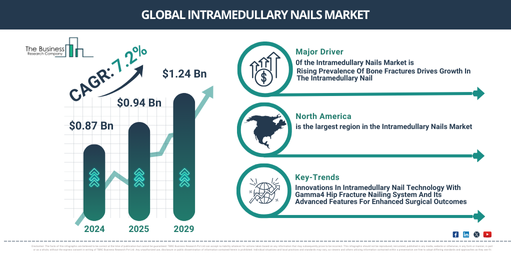
    The market size for intramedullary nails has seen robust growth in the past couple of years. The market is predicted to expand from $0.87 billion in 2024 to $0.94 billion in 2025, showcasing a compound annual growth rate (CAGR) of 7.5%. The significant growth witnessed during the historic period can be linked to the increasing fracture cases, vulnerability of the aging population, advancements in surgical procedures and technology, the pivot towards less invasive surgical practices, and enhancements in design and materials.

    What Is the Projected Market Size of the Intramedullary Nails Market?

    Over the upcoming years, the intramedullary nails market is projected to experience significant expansion, reaching a market value of $1.24 billion in 2029 with a compound annual growth rate (CAGR) of 7.2%. This growth across the forecasted period can be attributed to factors such as the rise in sports-related injuries, wider accessibility to surgical procedures, heightened healthcare awareness, and an increase in outpatient surgical operations. Key trends for the forecast period entail the adoption of locking nails, advent and usage of bioabsorbable nails, a shift towards personalized medicine, emerging economies owing to bettered healthcare access, and the integration of smart technologies into orthopedic devices.

    Download The Free Sample Report Here:

    https://www.thebusinessresearchcompany.com/sample.aspx?id=19533&type=smp

    Who are the Major Competitors in the Intramedullary Nails Market Outlook?

    Major companies operating in the intramedullary nails market are Johnson & Johnson, Medtronic plc, Stryker Corporation, B. Braun Melsungen AG, Zimmer Biomet Holdings Inc., Smith & Nephew plc, Integra LifeSciences Holdings Corporation, NuVasive Inc., Globus Medical Inc., Wright Medical Group N.V., Orthofix Medical Inc., Aesculap Inc., Paragon 28 Inc., Acumed LLC, Alphatec Spine Inc., OsteoMed LLC, Merete Medical GmbH, Skeletal Dynamics LLC, Centinel Spine Inc., Teijin Nakashima Medical Co. Ltd., MICROMED Medizintechnik GmbH, Orthopaedic Implant Company, Orthomed S.A.S., Novastep Inc., BioMedtrix LLC

    What Is Fueling Growth in the Intramedullary Nails Market?

    The escalating occurrence of bone fractures is forecasted to drive the expansion of the intramedullary nails market in the future. Bone fractures are defined as a medical condition where there’s a partial or full disruption in the structure of a bone. Such fractures happen when the pressure applied to a bone outstrips its strength, leading it to crack or break. In addition, osteoporosis, a health condition where bones grow thin, frail, and breakable due to a decrease in bone density, increases their vulnerability to fractures. Intramedullary nails, inserted into the medullary canal of long bones, offer internal fixation. This steadiness is crucial for properly lining up broken bones and nursing them back to health. For example, the International Osteoporosis Foundation reported in February 2023 that every year, there’s a global recording of up to 37 million fragility fractures in individuals older than 55, which equates to 70 fractures per minute. Thus, the rising occurrence of bone fractures is fuelling the growth of the intramedullary nails market.

    Request For A Customized Report:

    https://www.thebusinessresearchcompany.com/customise?id=19533&type=smp

    Which Intramedullary Nails Market Segments Are Growing the Fastest?

    The intramedullary nailsmarket covered in this report is segmented –

    1) By Type: Long Gamma Nail (LGN), Trochanteric Femoral Nail (TFN), Intertroch/Subtroch Nail (ITST), Other Types

    2) By Material: Titanium Alloys, Stainless Steel

    3) By Application: Femoral Fracture, Tibial Fracture, Other Applications

    4) By End User: Hospitals, Ambulatory Surgical Centers, Specialty And Orthopedic Clinics, Other End User

    Subsegments:

    1) By Long Gamma Nail (LGN): Standard Long Gamma Nails, Proximal Long Gamma Nails

    2) By Trochanteric Femoral Nail (TFN): Standard Trochanteric Femoral Nails, Cephalomedullary Trochanteric Nails

    3) By Intertroch/Subtroch Nail (ITST): Intertrochanteric Nails, Subtrochanteric Nails

    4) By Other Types: Antegrade Intramedullary Nails, Retrograde Intramedullary Nails, Tibial Intramedullary Nails, Femoral Intramedullary Nails

    Which Industry Trends Are Shaping the Future of the Intramedullary Nails Market?

    Leading entities in the intramedullary nails market are striving to introduce innovative products like hip fracture nailing systems, aimed at offering greater stability, enhanced surgical results, and sophisticated features for minimally invasive procedures. A hip fracture nailing system is a specialized surgical tool used in treating hip fractures, precisely those occurring in the proximal femur such as intertrochanteric or subtrochanteric fractures. For instance, in September 2022, Stryker Corporation, a US-based medical technology firm known for manufacturing medical devices, introduced the Gamma4 Hip Fracture Nailing System. This is the latest in its intramedullary nailing system line focused on treating hip fractures. The Gamma4 System is recommended for both stable and unstable hip fractures, including those found in the intracapsular, trochanteric, subtrochanteric, and shaft areas of the femur. The nail designed by SOMA comes with a length-dependent RoC for long nails, a shortened proximal body by 5mm, a chamfered distal tip, and a pre-inserted and cannulated set screw.

    Access The Full Report Here:

    https://www.thebusinessresearchcompany.com/report/intramedullary-nails-global-market-report

    Which Countries Are Leading the Intramedullary Nails Market?

    North America was the largest region in the intramedullary nails market in 2024. The regions covered in the intramedullary nails market report are Asia-Pacific, Western Europe, Eastern Europe, North America, South America, Middle East, Africa.

    Purchase The Full Report Today:

    https://www.thebusinessresearchcompany.com/purchaseoptions.aspx?id=19533

    This Report Delivers Insight On:

    1. How big is the intramedullary nails market, and how is it changing globally?

    2. Who are the major companies in the intramedullary nails market, and how are they performing?

    3. What are the key opportunities and risks in the intramedullary nails market right now?

    4. Which products or customer segments are growing the most in the intramedullary nails market?

    5. What factors are helping or slowing down the growth of the intramedullary nails market?

    About The Business Research Company:

    With over 15000+ reports from 27 industries covering 60+ geographies, The Business Research Company has built a reputation for offering comprehensive, data-rich research and insights. Armed with 1,500,000 datasets, the optimistic contribution of in-depth secondary research, and unique insights from industry leaders, you can get the information you need to stay ahead in the game.

    Get in touch with us:

    The Business Research Company: https://www.thebusinessresearchcompany.com/

    Americas +1 310-496-7795

    Asia +44 2071930708

    Europe +44 7882 955267

    Email us at info@tbrc.info

    Follow us on:

    LinkedIn: https://in.linkedin.com/company/the-business-research-company

    YouTube: https://www.youtube.com/channel/UC24_fI0rV8cR5DxlCpgmyFQ

    Global Market Model: https://www.thebusinessresearchcompany.com/global-market-model
  • Injectable Cement Industry Insights 2025 – Market Forecast for Executives and Planners

    Injectable Cement Industry Insights 2025 – Market Forecast for Executives and Planners

    Claim your 30% discount on Global Market Reports with code ONLINE30. Limited time only.

    How Has The Injectable Cement Market Size Shifted, And What Is the Outlook Through 2034?

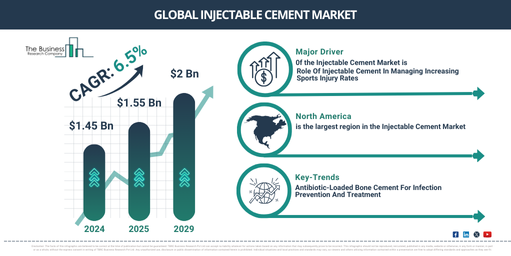
    Recent years have seen potent growth in the size of the injectable cement market. There will be a surge from $1.45 billion in 2024 to $1.55 billion in 2025, with a compound annual growth rate (CAGR) of 6.9%. This growth during the historic period is attributed to factors such as a rise in osteoporosis cases, an increase in bone fracture incidents, growing demand for joint replacement operations, regulatory approvals, and the introduction of new products to the market.

    How Much Will the Injectable Cement Market Be Worth in 2029?

    Expectations abound for substantial expansion in the injectable cement market, with projections seeing it surge to a value of $2 billion by 2029. This represents a compound annual growth rate (CAGR) of 6.5%. Anticipated growth during the forecast period is due to several factors including an aging populace, escalating concerns over bone health, healthcare infrastructure development, increased preference for outpatient care, and a higher occurrence of sports-associated injuries. The forecast period is also expected to witness several emerging trends such as improved biocompatibility, innovations in antibiotic-infused cement, less intrusive application methods, patient-centric solutions, and smart cement featuring monitoring capacities.

    Download The Free Sample Report Here:

    https://www.thebusinessresearchcompany.com/sample.aspx?id=19528&type=smp

    Which is the Largest Company in the Injectable Cement Market?

    Major companies operating in the injectable cement market are Johnson & Johnson, 3M Company, Medtronic Plc., Stryker Corporation, B. Braun Melsungen AG, Zimmer Biomet Holdings Inc., Smith & Nephew, Arthrex Inc., Cook Medical LLC, Enovis Corporation, Globus Medical Inc., Wright Medical Group N.V, Medacta International, Orthofix Medical Inc., Alphatec Spine Inc. (ATEC Spine), Exactech Inc., Spine Wave Inc., Tecres SpA, Somatex Medical Technologies, Heraeus Medical GmbH, DJO Global Inc., TEKNIMED, G-21, Kyeron Medical Innovations, Graftys SA

    What Are the Main Market Drivers in the Injectable Cement Industry?

    The growth of the injectable cement market is anticipated to be propelled by the rise in sports-related injuries. Physical damage during athletic activities such as strains, sprains, fractures, and concussions are known as sports-related injuries. These often necessitate medical care and rehabilitation for recovery. The escalation in such injuries can likely be traced back to heightened participation in sports, more rigorous training schedules, and advancements in sports gear that pushes physical boundaries, resulting in a surge in injury rates among global athletes. Injectable cement, used for treating such injuries, aids in fracture stabilization, bone healing enhancement, and improving surgical results by offering a dependable and minimally invasive solution for bone strengthening. For example, the National Safety Council, a nonprofit in the US committed to health and safety stated in 2023, that there had been a 20% increase in sports and recreational injuries reported in 2021, a 12% increase in 2022, and a minor 2% increase in 2023. Hence, the upsurge in sports-related injuries is projected to fuel the expansion of the injectable cement market.

    Request For A Customized Report:

    https://www.thebusinessresearchcompany.com/customise?id=19528&type=smp

    How Is the Injectable Cement Market Segments Structured?

    The injectable cementmarket covered in this report is segmented –

    1) By Type: High Viscosity Cement, Low Viscosity Cement, Medium Viscosity Cement

    2) By Application: Periprosthetic Fractures, Pelvic Fractures, Other Applications

    3) By End User: Hospital, Clinics, Other End Users

    Subsegments:

    1) By High Viscosity Cement: Calcium Phosphate Cements, PMMA (Polymethyl Methacrylate) Cements

    2) By Low Viscosity Cement: Acrylic-Based Injectable Cements, Bioactive Glass Cements

    3) By Medium Viscosity Cement: Hybrid Injectable Cements, Composite Injectable Cements

    What Strategic Trends Are Transforming the Injectable Cement Market?

    Key players in the injectable cement market are placing a significant emphasis on technological innovations, like antibiotic-loaded bone cement, with aims to boost infection control, enhance patient outcomes, and facilitate more precise and efficient treatment during orthopedic procedures. This kind of cement contains antibiotics integrated into the cement mix, contributing towards the prevention or treatment of infections at surgery sites, particularly in orthopedic cases. For instance, Heraeus Medical GmbH, a medical technology company based in Germany, unveiled COPAL G+C–their latest antibiotic-loaded bone cement–in April 2024. This was the company’s first product to receive MDR certification. With its combination of gentamicin and clindamycin, COPAL G+C provides targeted management of infections during arthroplasty, addressing as much as 90% of pathogens typically observed in prosthetic joint infections.

    Access The Full Report Here:

    https://www.thebusinessresearchcompany.com/report/injectable-cement-global-market-report

    Which Global Regions Offer the Highest Growth in the Injectable Cement Market?

    North America was the largest region in the injectable cement market in 2024. Asia-Pacific is expected to be the fastest-growing region in the forecast period. The regions covered in the injectable cement market report are Asia-Pacific, Western Europe, Eastern Europe, North America, South America, Middle East, Africa.

    Purchase The Full Report Today:

    https://www.thebusinessresearchcompany.com/purchaseoptions.aspx?id=19528

    This Report Delivers Insight On:

    1. How big is the injectable cement market, and how is it changing globally?

    2. Who are the major companies in the injectable cement market, and how are they performing?

    3. What are the key opportunities and risks in the injectable cement market right now?

    4. Which products or customer segments are growing the most in the injectable cement market?

    5. What factors are helping or slowing down the growth of the injectable cement market?

    About The Business Research Company:

    With over 15000+ reports from 27 industries covering 60+ geographies, The Business Research Company has built a reputation for offering comprehensive, data-rich research and insights. Armed with 1,500,000 datasets, the optimistic contribution of in-depth secondary research, and unique insights from industry leaders, you can get the information you need to stay ahead in the game.

    Get in touch with us:

    The Business Research Company: https://www.thebusinessresearchcompany.com/

    Americas +1 310-496-7795

    Asia +44 2071930708

    Europe +44 7882 955267

    Email us at info@tbrc.info

    Follow us on:

    LinkedIn: https://in.linkedin.com/company/the-business-research-company

    YouTube: https://www.youtube.com/channel/UC24_fI0rV8cR5DxlCpgmyFQ

    Global Market Model: https://www.thebusinessresearchcompany.com/global-market-model
  • In Vitro Fertilization (IVF) Devices And Consumables Market Trends Report 2025 – For Business Development and Strategy Teams

    Claim your 30% discount on Global Market Reports with code ONLINE30. Limited time only.

    How Has the In Vitro Fertilization (IVF) Devices And Consumables Market Growth Performance Trended Historically, And What Lies Ahead?

    The market size of in vitro fertilization (IVF) devices and consumables has witnessed a speedy expansion in the recent past. Its growth is projected to rise from $2.66 billion in 2024 to $3.1 billion in 2025, marking a compound annual growth rate (CAGR) of 16.7%. The historical growth can be ascribed to factors like rising infertility rates, expanding awareness and acceptance of in vitro fertilization (IVF) procedures, growing gamete donations, escalating government backing and financial aid for infertility treatments, and the increasing occurrence of delayed pregnancies.

    What Is the Forecast for the In Vitro Fertilization (IVF) Devices And Consumables Market Size Through 2029?

    Over the coming years, the market size for in vitro fertilization (IVF) devices and consumables is anticipated to experience significant growth. It is projected to escalate to $5.67 billion in 2029, with a compound annual growth rate (CAGR) of 16.3%. Factors contributing to the growth during the forecast period include the increased acceptance of minimally invasive procedures, enhanced healthcare infrastructure, the proliferation of fertility clinics, the prevalence of personalized and precision medicine in reproductive health, and a rise in disposable income. Key trends for the forecast period encompass the incorporation of artificial intelligence and machine learning, the creation of novel in vitro fertilization (IVF) consumables and devices, progress in in vitro fertilization (IVF) technology such as preimplantation genetic testing and cryopreservation methods, improvement in infertility treatments, and heightened genetic screening.

    Download The Free Sample Report Here:

    https://www.thebusinessresearchcompany.com/sample.aspx?id=19521&type=smp

    What are the Key Market Players in In Vitro Fertilization (IVF) Devices And Consumables Market and How They’re Evolving?

    Major companies operating in the in vitro fertilization (IVF) devices and consumables market are Thermo Fisher Scientific Inc., Merck KGaA, FUJIFILM Holdings Corporation, CooperSurgical Inc., Cook Medical Inc., Progyny Inc., Vitrolife AB, Esco Micro Pte. Ltd., Hamilton Thorne Ltd., Nantong Egens Biotechnology Co. Ltd., Genea Biomedx Pty Ltd., Kitazato Corporation, Fertility Center of Illinois, Rocket Medical PLC, Gynemed GmbH & Co. KG, Gynotek Ltd., Biocell Enterprise LLC, Laboratoire CCD, Invitrocare Ltd., Nidacon International AB

    What Are the Primary Growth Drivers in the In Vitro Fertilization (IVF) Devices And Consumables Market?

    The escalating rates of infertility are expected to fuel the expansion of the in vitro fertilization (IVF) devices and consumables market. Infertility is characterized as the inability to conceive after a year of regular, unprotected sexual intercourse, or the failure to maintain a pregnancy to term. The increased prevalence of infertility can be attributed to lifestyle changes, delaying pregnancies, and increasing stress levels. IVF devices and consumables, part of assisted reproductive technologies, assist in the fertilization process by including equipment used in egg retrieval, embryo culture and transfer, and address infertility issues by promoting successful conception and pregnancy. For example, the World Health Organization (WHO), a UN agency based in Switzerland, reported in April 2023 that about 17.5% of the global adult population, or one in six individuals, experience infertility at some stage in their lives. In addition, in the US, approximately 11% of women and 9% of men of reproductive age are reported to struggle with infertility. Particularly, about 19% of heterosexual women aged between 15 and 49, who have never had children, face infertility, while 6% of married women in this age group struggle with infertility. As a result, the increasing infertility rates are propelling the growth of the in vitro fertilization (IVF) devices and consumables market.

    Request For A Customized Report:

    https://www.thebusinessresearchcompany.com/customise?id=19521&type=smp

    What Are the Leading Segments in the Global In Vitro Fertilization (IVF) Devices And Consumables Industry?

    The in vitro fertilization (IVF) devices and consumables market covered in this report is segmented –

    1) By Product: Instruments, Accessories And Disposables, Reagents And Media

    2) By Technology: Fresh Embryo In Vitro Fertilization (IVF), Frozen Embryo In Vitro Fertilization (IVF), Donor Egg In Vitro Fertilization (IVF)

    3) By End User: Fertility Clinics, Hospitals, Surgical Centers, Clinical Research Institutes

    Subsegments:

    1) By Instruments: IVF Microscopes, Incubators, Sperm Analyzers, Embryo Transfer Catheters

    2) By Accessories and Disposables: Petri Dishes, Pipettes, Culture Plates, Cryopreservation Vials

    3) By Reagents and Media: Culture Media, Cryopreservation Media, Sperm Wash Solutions, Ovum Retrieval Solutions

    What Are the Key Market Trends in the In Vitro Fertilization (IVF) Devices And Consumables Industry?

    Top firms active in the in vitro fertilization (IVF) devices and consumables arena are prioritizing the development of novel products, like benchtop incubators for IVF clinics, in order to boost the effectiveness and success rates of embryo culture and consequently, enhance patient results. A benchtop incubator for IVF clinics is a particular type of equipment constructed to sustain a controlled ambiance for cultivating and maturing embryos throughout in vitro fertilization (IVF) procedures. These vital incubators maintain exact conditions necessary for embryo expansion, which includes temperature, humidity, and the composition of gases, like levels of oxygen and carbon dioxide. For instance, Cook Group Incorporated, a medical device firm based in the US, launched the MINC+TM Benchtop Incubator in May 2022. Acting as the advanced version of the widely used MINC Mini Incubator, it was released for IVF clinics in the US and Canada. The MINC+ incorporates recent features guided by user feedback to enhance the experience of clinical embryologists. It comes with the DishTrace platform that blends touchscreen and PC software functionalities to offer comprehensive dish-data management. This system facilitates tracking of culture dishes as they are logged in and out of the incubator, allowing for the simultaneous monitoring of up to 50 MINC+ incubators, as well as creating graphic histories and reports about MINC+ activity.

    Access The Full Report Here:

    https://www.thebusinessresearchcompany.com/report/in-vitro-fertilization-ivf-devices-and-consumables-global-market-report

    What Is the Regional Outlook for the In Vitro Fertilization (IVF) Devices And Consumables Market?

    North America was the largest region in the in vitro fertilization (IVF) devices and consumables market in 2024. Asia-Pacific is expected to be the fastest-growing region in the forecast period. The regions covered in the in vitro fertilization (IVF) devices and consumables market report are Asia-Pacific, Western Europe, Eastern Europe, North America, South America, Middle East, Africa.

    Purchase The Full Report Today:

    https://www.thebusinessresearchcompany.com/purchaseoptions.aspx?id=19521

    This Report Delivers Insight On:

    1. How big is the in vitro fertilization (ivf) devices and consumables market, and how is it changing globally?

    2. Who are the major companies in the in vitro fertilization (ivf) devices and consumables market, and how are they performing?

    3. What are the key opportunities and risks in the in vitro fertilization (ivf) devices and consumables market right now?

    4. Which products or customer segments are growing the most in the in vitro fertilization (ivf) devices and consumables market?

    5. What factors are helping or slowing down the growth of the in vitro fertilization (ivf) devices and consumables market?

    About The Business Research Company:

    With over 15000+ reports from 27 industries covering 60+ geographies, The Business Research Company has built a reputation for offering comprehensive, data-rich research and insights. Armed with 1,500,000 datasets, the optimistic contribution of in-depth secondary research, and unique insights from industry leaders, you can get the information you need to stay ahead in the game.

    Get in touch with us:

    The Business Research Company: https://www.thebusinessresearchcompany.com/

    Americas +1 310-496-7795

    Asia +44 2071930708

    Europe +44 7882 955267

    Email us at info@tbrc.info

    Follow us on:

    LinkedIn: https://in.linkedin.com/company/the-business-research-company

    YouTube: https://www.youtube.com/channel/UC24_fI0rV8cR5DxlCpgmyFQ

    Global Market Model: https://www.thebusinessresearchcompany.com/global-market-model
  • Market Analysis on Implantable Neurostimulation Devices Industry – Insights for Corporate Strategy and R&D

    Market Analysis on Implantable Neurostimulation Devices Industry – Insights for Corporate Strategy and R&D

    Claim your 30% discount on Global Market Reports with code ONLINE30. Limited time only.

    What Are the Projected Market Size and Growth Rates for the Implantable Neurostimulation Devices Market From 2025 To 2029?

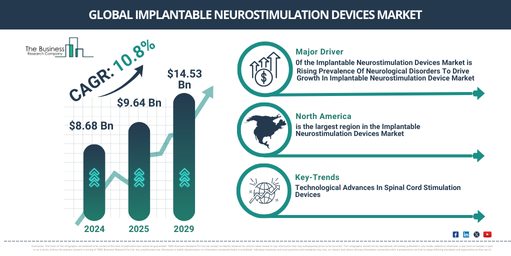
    The market for implantable neurostimulation devices has seen substantial growth recently. The market value is projected to increase from $8.68 billion in 2024 to $9.64 billion in 2025, representing a compound annual growth rate (CAGR) of 11.1%. This significant growth in the past can be linked to a rise in the demand for non-drug treatments, an increase in the preference for minimally invasive procedures, an expanding elderly population, a growing array of psychiatric disorders, and a heightened instance of chronic diseases.

    What Is the Projected Market Size of the Implantable Neurostimulation Devices Market?

    Expectations are high for a swift expansion in the implantable neurostimulation devices market within the coming years. Forecasts predict an upswing to $14.53 billion by 2029, indicative of a compound annual growth rate (CAGR) of 10.8%. Factors contributing to this projected growth during the forecast period are the increasing occurrence of neurological disorders, a surge in lifestyle diseases, escalating awareness, an upward trend in spinal cord injuries, and augmented healthcare expenditure. Some significant trends anticipated during the forecast period include the incorporation of sensing technology, progression in neurostimulation technologies, highly evolved product offerings, the inclusion of closed-loop systems, and the integration of wireless technology.

    Download The Free Sample Report Here:

    https://www.thebusinessresearchcompany.com/sample.aspx?id=19520&type=smp

    Who are the Major Competitors in the Implantable Neurostimulation Devices Market Outlook?

    Major companies operating in the implantable neurostimulation devices market are Abbott Laboratories, Medtronic PLC, Boston Scientific Corporation, Dignity Health, St. Jude Medical LLC, LivaNova PLC, Nevro Corp., Axonics Inc., NeuroPace Inc., Bioness Inc., Saluda Medical Pty Ltd., SceneRay Co. Ltd., NeuroMetrix Inc., CURE Epilepsy, Synapse Biomedical Inc., NeuroSigma Inc., Nuvectra Corporation, MicroTransponder Inc., Pain Management NYC, Curonix LLC

    What Is Fueling Growth in the Implantable Neurostimulation Devices Market?

    The growth of the implantable neurostimulation device market is set to be driven by the increasing incidence of neurological disorders. These disorders, which can impact the structure or function of the nervous system, lead to a range of symptoms, including paralysis, seizures, and cognitive impairments. Greater detection rates of neurological disorders are being attributed to a higher exposure to risk factors such as high blood pressure, developmental anomalies, and trauma or injury. When other treatments prove insufficient or ineffective, implantable neurostimulation devices are used to moderate nerve activity and ease symptoms associated with neurological disorders. For instance, data from the Alzheimer’s Association, a non-profit health organization based in the US, suggests that around 6.9 million American seniors aged 65 and older are living with Alzheimer’s disease in 2024. Furthermore, 73% of this figure represents individuals aged 75 or older. This statistic is predicted to rise to 12.7 million by 2050. Hence, the increasing incidence of neurological disorders is expected to be a driving factor for the implantable neurostimulation device market.

    Request For A Customized Report:

    https://www.thebusinessresearchcompany.com/customise?id=19520&type=smp

    Which Implantable Neurostimulation Devices Market Segments Are Growing the Fastest?

    The implantable neurostimulation devicesmarket covered in this report is segmented –

    1) By Type: Spinal Cord Stimulation (SCS), Gastric Electric Stimulation (GES), Deep Brain Stimulation (DBS), Sacral Nerve Stimulation (SNS), Vagus Nerve Stimulation (VNS), Other Types

    2) By Application: Pain Management, Parkinson’s Disease, Urinary And Fecal Incontinence, Epilepsy, Gastroparesis, Other Applications

    3) By End-User: Hospitals, Clinics, Ambulatory Surgical Centers

    Subsegments:

    1) By Spinal Cord Stimulation (SCS): Rechargeable SCS Devices, Non-Rechargeable SCS Devices

    2) By Gastric Electric Stimulation (GES): Implantable Gastric Stimulators, Adjustable Gastric Stimulators

    3) By Deep Brain Stimulation (DBS): DBS Devices for Movement Disorders, DBS Devices for Psychiatric Disorders

    4) By Sacral Nerve Stimulation (SNS): SNS Devices for Urinary Incontinence, SNS Devices for Fecal Incontinence

    5) By Vagus Nerve Stimulation (VNS): VNS Devices for Epilepsy, VNS Devices for Depression

    6) By Other Types: Peripheral Nerve Stimulation (PNS), Cortical Stimulation Devices, Novel Neurostimulation Technologies

    Which Industry Trends Are Shaping the Future of the Implantable Neurostimulation Devices Market?

    Leading firms in the implantable neurostimulation devices market are striving to produce highly innovative products like spinal cord stimulation (SCS) systems to mitigate chronic pain. SCS systems are medical devices that employ electric impulses to control nerve activity in the spinal cord, which can alleviate persistent discomfort and enhance patients’ quality of life when other methods have failed. For example, in December 2022, U.S.-based medical device firm, Abbott, secured approval from the U.S. Food and Drug Administration (FDA) for its Eterna spinal cord stimulation (SCS) system. The Eterna SCS is currently the smallest implantable and rechargeable spinal cord stimulator in the market, designed for utmost daily ease. It incorporates Abbott’s unique BurstDR stimulation technology, believed to replicate natural brain firing sequences for enhanced pain relief and preferred by 87% of users over traditional tingling stimulation methods. With the fewest recharging necessities—requiring as little as five recharges per year due to Xtend energy technology, Eterna ensures ease of use. It is compatible with full-body MRI scans thanks to TotalScan technology and can adjust to future technological developments without the need for replacement. Additionally, Abbott’s integration of a mobile app allows for live monitoring of battery life and charging status on iPhone devices.

    Access The Full Report Here:

    https://www.thebusinessresearchcompany.com/report/implantable-neurostimulation-devices-global-market-report

    Which Countries Are Leading the Implantable Neurostimulation Devices Market?

    North America was the largest region in the implantable neurostimulation devices market in 2024. Asia-Pacific is expected to be the fastest-growing region in the forecast period. The regions covered in the implantable neurostimulation devices market report are Asia-Pacific, Western Europe, Eastern Europe, North America, South America, Middle East, Africa.

    Purchase The Full Report Today:

    https://www.thebusinessresearchcompany.com/purchaseoptions.aspx?id=19520

    This Report Delivers Insight On:

    1. How big is the implantable neurostimulation devices market, and how is it changing globally?

    2. Who are the major companies in the implantable neurostimulation devices market, and how are they performing?

    3. What are the key opportunities and risks in the implantable neurostimulation devices market right now?

    4. Which products or customer segments are growing the most in the implantable neurostimulation devices market?

    5. What factors are helping or slowing down the growth of the implantable neurostimulation devices market?

    About The Business Research Company:

    With over 15000+ reports from 27 industries covering 60+ geographies, The Business Research Company has built a reputation for offering comprehensive, data-rich research and insights. Armed with 1,500,000 datasets, the optimistic contribution of in-depth secondary research, and unique insights from industry leaders, you can get the information you need to stay ahead in the game.

    Get in touch with us:

    The Business Research Company: https://www.thebusinessresearchcompany.com/

    Americas +1 310-496-7795

    Asia +44 2071930708

    Europe +44 7882 955267

    Email us at info@tbrc.info

    Follow us on:

    LinkedIn: https://in.linkedin.com/company/the-business-research-company

    YouTube: https://www.youtube.com/channel/UC24_fI0rV8cR5DxlCpgmyFQ

    Global Market Model: https://www.thebusinessresearchcompany.com/global-market-model
  • Implantable Cardiac Devices Forecast Report – Designed for Decision Makers and Product Teams

    Implantable Cardiac Devices Forecast Report – Designed for Decision Makers and Product Teams

    Claim your 30% discount on Global Market Reports with code ONLINE30. Limited time only.

    What Is the Estimated Market Size of the Implantable Cardiac Devices Market In 2029?

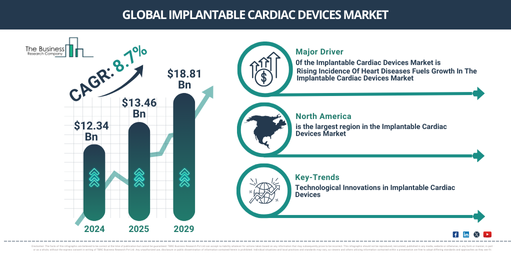
    The market for implantable cardiac devices has experienced substantial growth in recent years. The sector is set to expand from a value of $12.34 billion in 2024 to $13.46 billion in 2025, reflecting a compound annual growth rate (CAGR) of 9.1%. This notable rise during the historical period can be traced back to factors such as advancements in medical technology, increased incidences of cardiovascular diseases, augmented elderly population, enhancements in the dependability and lifespan of devices, escalated awareness, and prompt detection of cardiac conditions.

    What Growth Rate Is Forecasted for the Implantable Cardiac Devices Market by 2029?

    Expectations are high for the implantable cardiac devices market, with a robust expansion in sight for the coming years. By 2029, it’s predicted the market will hit $18.81 billion, with a compound annual growth rate (CAGR) of 8.7%. This projected growth throughout the forecast period can be traced back to various factors such as technological progression in device functionality, a rise in demand for minimally invasive procedures, a growing elderly population, escalating healthcare costs, and the development of healthcare infrastructure in up-and-coming markets. Key trends during this forecast period are predicted to include the integration of digital health and remote monitoring, the creation of technologically advanced devices with enhanced features, a surge in customized cardiac solutions, a focus on cost-effectiveness and value in healthcare, a growing interest in preventative cardiology, and the emphasis on early intervention.

    Download The Free Sample Report Here:

    https://www.thebusinessresearchcompany.com/sample.aspx?id=19097&type=smp

    Which Key Companies Are Shaping the Future of the Implantable Cardiac Devices Market?

    Major companies operating in the implantable cardiac devices market are Johnson & Johnson, Abbott Laboratories, Medtronic plc, Koninklijke Philips N.V., Stryker Corporation, Boston Scientific Corporation, B. Braun Melsungen AG, Edwards Lifesciences Corporation, Biotronik SE & Co. KG, Zoll Medical Corporation, Nihon Kohden Corporation, LivaNova plc, Lepu Medical Technology, MicroPort Scientific Corporation, AtriCure Inc., LifeTech Scientific Corporation, Berlin Heart GmbH, EBR Systems Inc., Defibtech LLC, CVRx Inc., Progetti Srl, Endotronix Inc., Jarvik Heart Inc., Xeltis AG, Carmat SA, Windmill Cardiovascular Systems Inc

    Which Factors Are Driving Demand in the Implantable Cardiac Devices Industry?

    The growing number of heart disease cases is predicted to fuel the expansion of the market for implantable cardiac devices. The escalation in heart diseases can be traced back to the rising occurrence of risks like poor diet, inactive lifestyle, obesity, and persistent conditions such as hypertension and diabetes. Moreover, elderly populations and increasing stress levels also contribute to the amplified incidence of cardiovascular disorders. Implantable cardiac devices are employed to manage and treat conditions like heart failure, arrhythmias, and coronary artery ailments. This escalating requirement promotes innovation and investment in creating new and better cardiac devices to cater to the burgeoning patient population and enhance treatment results. For example, as per the Singapore Heart Foundation (SHF), a non-profit organization based in Singapore, ischemic heart diseases caused 5,302 deaths in May 2024, showing a minor rise from 5,290 deaths in 2022. Hence, the growing incidence of heart diseases is fueling the growth of the implantable cardiac devices market.

    Request For A Customized Report:

    https://www.thebusinessresearchcompany.com/customise?id=19097&type=smp

    How Is the Implantable Cardiac Devices Market Segmented by Several Divisions?

    The implantable cardiac devicesmarket covered in this report is segmented –

    1) By Type: Pacemaker, Implantable Cardioverter Defibrillator (ICD), Biventricular Implantable Cardioverter Defibrillator (BI-V ICD)

    2) By Application: Bradycardia, Tachycardia, Heart Failure, Other Applications

    3) By End User: Hospitals, Specialty Clinics, Other End Users

    Subsegments:

    1) By Pacemaker: Single-Chamber Pacemakers, Dual-Chamber Pacemakers, Rate-Responsive Pacemakers

    2) By Implantable Cardioverter Defibrillator (ICD): Transvenous ICDs, Subcutaneous ICDs, Wearable Cardioverter Defibrillators

    3) By Biventricular Implantable Cardioverter Defibrillator (BI-V ICD): Standard BI-V ICDs, Advanced BI-V ICDs with Cardiac Resynchronization Therapy (CRT)

    What are the Emerging Market Trends Driving the Growth of the Implantable Cardiac Devices Industry?

    Leading companies in the implantable cardiac devices market strive to increase compatibility with diagnostic instruments like AutoMRI to prolong the device lifespan and enhance patient safety. The AutoMRI feature in implantable cardiac defibrillators self-regulates the device settings, providing safe operation during MRI scans, improving patient care, and allowing the usage of sophisticated imaging technology. For example, in October 2023, MicroPort CRM, a medical device company based in France, introduced the ULYS implantable cardioverter defibrillator (ICD) and INVICTA defibrillation leads in Japan. These tools offer cutting-edge technology with minimal current usage for increased device lifespan and MRI compatibility. The ULYS ICD includes the PARAD+ arrhythmia discrimination algorithm and AutoMRI functionality, while the INVICTA lead offers precise pacing and defibrillation treatment with a 100% successful implantation rate and 97.4% rate free of complications during clinical trials.

    Access The Full Report Here:

    https://www.thebusinessresearchcompany.com/report/implantable-cardiac-devices-global-market-report

    Which Regions Are Driving Growth in the Implantable Cardiac Devices Market?

    North America was the largest region in the implantable cardiac devices market in 2024. Asia-Pacific is expected to be the fastest-growing region in the forecast period. The regions covered in the implantable cardiac devices market report are Asia-Pacific, Western Europe, Eastern Europe, North America, South America, Middle East, Africa.

    Purchase The Full Report Today:

    https://www.thebusinessresearchcompany.com/purchaseoptions.aspx?id=19097

    This Report Delivers Insight On:

    1. How big is the implantable cardiac devices market, and how is it changing globally?

    2. Who are the major companies in the implantable cardiac devices market, and how are they performing?

    3. What are the key opportunities and risks in the implantable cardiac devices market right now?

    4. Which products or customer segments are growing the most in the implantable cardiac devices market?

    5. What factors are helping or slowing down the growth of the implantable cardiac devices market?

    About The Business Research Company:

    With over 15000+ reports from 27 industries covering 60+ geographies, The Business Research Company has built a reputation for offering comprehensive, data-rich research and insights. Armed with 1,500,000 datasets, the optimistic contribution of in-depth secondary research, and unique insights from industry leaders, you can get the information you need to stay ahead in the game.

    Get in touch with us:

    The Business Research Company: https://www.thebusinessresearchcompany.com/

    Americas +1 310-496-7795

    Asia +44 2071930708

    Europe +44 7882 955267

    Email us at info@tbrc.info

    Follow us on:

    LinkedIn: https://in.linkedin.com/company/the-business-research-company

    YouTube: https://www.youtube.com/channel/UC24_fI0rV8cR5DxlCpgmyFQ

    Global Market Model: https://www.thebusinessresearchcompany.com/global-market-model
  • Hysteroscopy Instruments Market Outlook 2025 – Insights for Executive and Strategic Planning

    Hysteroscopy Instruments Market Outlook 2025 – Insights for Executive and Strategic Planning

    Claim your 30% discount on Global Market Reports with code ONLINE30. Limited time only.

    How Fast Is The Hysteroscopy Instruments Market Expected to Grow Between 2025 And 2029?

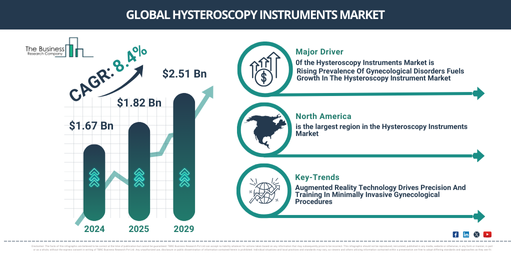
    In recent years, there has been substantial growth in the hysteroscopy instruments market. The market, which was valued at $1.67 billion in 2024, is projected to rise to $1.82 billion in 2025, reflecting a compound annual growth rate (CAGR) of 8.7%. This historical growth pattern is primarily attributable to increasing cases of gynecological conditions, advancements in hysteroscope design technology, enhanced awareness of early detection methods and minimally invasive treatments. Improvement in healthcare infrastructure across emerging regions, government and insurance companies’ favorable reimbursement policies, and a high rate of infertility and reproductive health issues have also contributed to this growth.

    What Growth Rate Is Anticipated for the Hysteroscopy Instruments Market in the Coming Years?

    Strong expansion is anticipated in the hysteroscopy instruments market over the upcoming years, with its value projected to reach $2.51 billion in 2029, marking a compound annual growth rate (CAGR) of 8.4%. This growth throughout the forecasted period could be attributed to factors such as the rising preference for minimally invasive techniques, a heightened demand for diagnostic and operative hysteroscopy procedures, increased spending on healthcare in developing nations, and a surge in gynecological procedures. The forecast period is expected to witness some significant trends, including the shift towards disposable hysteroscopy tools, an increase in office-based hysteroscopy procedures, evolving imaging and visualization technologies, establishment of more ambulatory surgery centers for hysteroscopy procedures, and a focus on early diagnosis and preventive healthcare.

    Download The Free Sample Report Here:

    https://www.thebusinessresearchcompany.com/sample.aspx?id=19518&type=smp

    Who Are the Leading Companies in the Hysteroscopy Instruments Market?

    Major companies operating in the hysteroscopy instruments market are Medtronic Plc, Fujifilm Holdings Corporation, Stryker Inc., Boston Scientific Corporation, B. Braun Melsungen AG, Olympus Corporation, Smith & Nephew Plc, Ethicon Inc., Hologic Inc., STERIS plc, CooperSurgical Inc., Teleflex Incorporated, Karl Storz GmbH & Co. KG, ConMed Corporation, Pentax of America Inc., Aesculap Inc., Lumenis Ltd., Richard Wolf GmbH, CMR Surgical, AtriCure Inc., Gynesonics Inc., Invuity Inc., MedGyn Products Inc., DYSIS Medical, Ameda Inc., UroViu Corp.

    What Are the Key Drivers of the Hysteroscopy Instruments Market?

    The escalating instances of gynecological conditions are anticipated to stimulate the expansion of the hysteroscopy instrument market. Such conditions, impacting the female reproductive system including the uterus, ovaries, fallopian tubes, and vagina, are seeing a rise. This upswing is attributed to lifestyle alterations, elevated stress levels, and postponed childbearing which lead to hormonal imbalance and issues in reproductive health. Additionally, heightened awareness and improved diagnostics are resulting in better detection, thereby shedding light on more cases. Hysteroscopy tools are employed in the handling of gynecological disorders to identify and address issues such as uterine fibroids, polyps, odd bleeding, and endometrial hyperplasia by facilitating direct visualization and action within the uterine cavity. To illustrate, in January 2024, the American Cancer Society, a US-based non-profit cancer advocacy group, reported an increase in female genital cancer cases from 114,810 in 2023 to 116,930 in 2024, indicating a growth of 1.85%. Thus, the climbing prevalence of gynecological disorders is fuelling the expansion of the hysteroscopy instrument market.

    Request For A Customized Report:

    https://www.thebusinessresearchcompany.com/customise?id=19518&type=smp

    What Are the Key Market Segments in the Hysteroscopy Instruments Industry?

    The hysteroscopy instrumentsmarket covered in this report is segmented –

    1) By Type: Hysteroscopes, Resectoscopes, Fluid Management Systems, Handheld Instruments, Hysterosheaths, Hysteroscopic Tissue Removal Systems

    2) By Usability: Reusable, Disposable

    3) By Application: Diagnostic Hysteroscopy, Operative Hysteroscopy

    4) By End-User: Hospitals, Ambulatory Surgery Centers, Other End-Users

    Subsegments:

    1) By Hysteroscopes: Rigid Hysteroscopes, Flexible Hysteroscopes

    2) By Resectoscopes: Monopolar Resectoscopes, Bipolar Resectoscopes

    3) By Fluid Management Systems: Continuous Flow Systems, Pressure Regulating Systems

    4) By Handheld Instruments: Scissors, Forceps, Graspers

    5) By Hysterosheaths: Disposable Hysterosheaths, Reusable Hysterosheaths

    6) By Hysteroscopic Tissue Removal Systems: Morcellators, Thermal Ablation Systems, Mechanical Tissue Removal Devices

    What Are the Latest Trends in the Hysteroscopy Instruments Market?

    Leading corporations in the hysteroscopy instrument market are directing their focus towards simulation technologies like augmented reality for heightened accuracy, better patient results, and the optimization of minimally invasive techniques. Augmented reality used in hysteroscopes improves visualization and instruction by overlaying digital data on real-time images inside the uterus, enhancing precision and learning interaction. For example, Inovus Medical, an American company producing surgical training technologies, in January 2022 introduced the HystAR. This is a high-fidelity hysteroscopy simulator that merges augmented reality technology with cloud-based education to provide realistic, scalable skill training for hysteroscopy procedures. The simulator improves surgical instruction by enabling performance monitoring, distant faculty feedback, and adaptability with various hysteroscopic instruments.

    Access The Full Report Here:

    https://www.thebusinessresearchcompany.com/report/hysteroscopy-instruments-global-market-report

    What Are the Key Regional Markets in the Hysteroscopy Instruments Industry?

    North America was the largest region in the hysteroscopy instruments market in 2024. Asia-Pacific is expected to be the fastest-growing region in the forecast period. The regions covered in the hysteroscopy instruments market report are Asia-Pacific, Western Europe, Eastern Europe, North America, South America, Middle East, Africa.

    Purchase The Full Report Today:

    https://www.thebusinessresearchcompany.com/purchaseoptions.aspx?id=19518

    This Report Delivers Insight On:

    1. How big is the hysteroscopy instruments market, and how is it changing globally?

    2. Who are the major companies in the hysteroscopy instruments market, and how are they performing?

    3. What are the key opportunities and risks in the hysteroscopy instruments market right now?

    4. Which products or customer segments are growing the most in the hysteroscopy instruments market?

    5. What factors are helping or slowing down the growth of the hysteroscopy instruments market?

    About The Business Research Company:

    With over 15000+ reports from 27 industries covering 60+ geographies, The Business Research Company has built a reputation for offering comprehensive, data-rich research and insights. Armed with 1,500,000 datasets, the optimistic contribution of in-depth secondary research, and unique insights from industry leaders, you can get the information you need to stay ahead in the game.

    Get in touch with us:

    The Business Research Company: https://www.thebusinessresearchcompany.com/

    Americas +1 310-496-7795

    Asia +44 2071930708

    Europe +44 7882 955267

    Email us at info@tbrc.info

    Follow us on:

    LinkedIn: https://in.linkedin.com/company/the-business-research-company

    YouTube: https://www.youtube.com/channel/UC24_fI0rV8cR5DxlCpgmyFQ

    Global Market Model: https://www.thebusinessresearchcompany.com/global-market-model

  • Hydrophilic Angiographic Catheters Industry Growth Expected to Reach $17.88 Billion by 2029 at a CAGR of 7.2% | Segmentation and Growth Opportunities

    Hydrophilic Angiographic Catheters Industry Growth Expected to Reach $17.88 Billion by 2029 at a CAGR of 7.2% | Segmentation and Growth Opportunities

    Claim your 30% discount on Global Market Reports with code ONLINE30. Limited time only.

    How Has the Hydrophilic Angiographic Catheters Market Growth Performance Trended Historically, And What Lies Ahead?

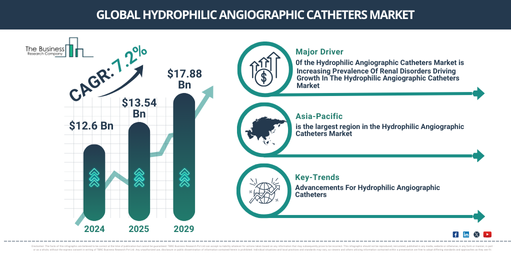
    In recent times, the market size for hydrophilic angiographic catheters has seen significant growth. The market is expected to expand from $12.6 billion in 2024 to $13.54 billion in 2025, reflecting a compounded annual growth rate (CAGR) of 7.5%. A surge in cases of cardiovascular diseases, peripheral vascular diseases alongside a rise in diagnostic and interventional procedures have contributed to this historic growth period. Furthermore, the increasing awareness towards early diagnosis and an uptick in healthcare spending play key roles in this market progression.

    What Is the Forecast for the Hydrophilic Angiographic Catheters Market Size Through 2029?

    Expectations are high for robust expansion in the hydrophilic angiographic catheters market over the upcoming years. The market is projected to reach a value of $17.88 billion by 2029, with a compound annual growth rate (CAGR) of 7.2%. This significant rise for the forecast period can be linked to several factors, such as an increasing elderly population, a burgeoning preference for less invasive medical procedures, a surge in diabetes cases, and amplified cardiovascular research funding. Emerging trends for the forecast period encompass technological progress, market expansion into developing regions, advancements in imaging technology, increased application in oncology, and an emphasis on minimally invasive procedures.

    Download The Free Sample Report Here:

    https://www.thebusinessresearchcompany.com/sample.aspx?id=19515&type=smp

    What are the Key Market Players in Hydrophilic Angiographic Catheters Market and How They’re Evolving?

    Major companies operating in the hydrophilic angiographic catheters market are Cardinal Health Inc., Abbott Laboratories, Medtronic plc, Koninklijke Philips N.V., Becton Dickinson and Company, Boston Scientific Corporation, B. Braun Melsungen AG, Terumo Corporation, Nipro Corporation, Cook Medical Inc., Teleflex Incorporated, BIOTRONIK SE & Co. KG, Lepu Medical Technology (Beijing) Co Ltd., Merit Medical Systems Inc., Cordis Corporation, MicroPort Scientific Corporation, Asahi Intecc Co Ltd., AngioDynamics Inc., Biosensors International Group Ltd., Alvimedica Medical Technologies, BrosMed Medical Co Ltd., iVascular SLU, Reva Medical Inc., Hexacath, Translumina Therapeutics LLP, Eurocor Tech GmbH, Invamed Group

    What Are the Primary Growth Drivers in the Hydrophilic Angiographic Catheters Market?

    The hydrophilic angiographic catheters market is poised for growth, propelled by the increasing occurrence of renal disorders. Renal disorders encompass a wide array of conditions affecting the kidneys’ functionality, including their ability to filter blood, expel waste, balance fluids and electrolytes, and regulate blood pressure. The growth in renal disorders is mainly due to the rising prevalence of risk factors such as diabetes, hypertension, and an aging population. Hydrophilic angiographic catheters are employed in managing renal disorders, providing accurate and smooth navigation during diagnostic and interventional procedures like renal artery angiography and stenting. For example, a report from Kidney Research UK, a non-profit organization from the UK, stated in June 2023 that approximately 7.2 million people, or over 10% of the population, are living with chronic kidney disease. Among them, 3.25 million are in the disease’s advanced stages, with an additional 3.9 million in the early stages. By 2033, the number of individuals affected by chronic kidney disease is expected to increase to 7.61 million. Consequently, the rise in the prevalence of renal disorders is fueling the growth of the hydrophilic angiographic catheters market.

    Request For A Customized Report:

    https://www.thebusinessresearchcompany.com/customise?id=19515&type=smp

    What Are the Leading Segments in the Global Hydrophilic Angiographic Catheters Industry?

    The hydrophilic angiographic cathetersmarket covered in this report is segmented –

    1) By Type: Selective Type Angiographic Catheters, Non-Selective Type Angiographic Catheters

    2) By Application: Heart Disease Treatment, Kidney Disease Treatment, Other Applications

    3) By End User: Hospitals, Diagnostic And Imaging Centers, Other End-Users

    Subsegments:

    1) By Selective Type Angiographic Catheters: Coronary Selective Catheters, Peripheral Selective Catheters, Neuro Selective Catheters

    2) By Non-Selective Type Angiographic Catheters: Non-Selective Coronary Catheters, Non-Selective Peripheral Catheters, Non-Selective Neuro Catheters

    What Are the Key Market Trends in the Hydrophilic Angiographic Catheters Industry?

    In an effort to remain competitive, leading players in the hydrophilic angiographic catheters market are prioritising the creation of innovative products, such as catheters featuring a variety of curve configurations. These specifically engineered medical devices are configured differently to navigate complex anatomical structures effectively. As an illustration, in January 2024, Cook Group Incorporated, a medical device firm based in the US, rolled out its Slip-Cath Beacon Tip hydrophilic selective catheter in the USA and Canada. This catheter, which is engineered for use in both vascular and non-vascular angiographic procedures, boasts more than 30 curve configurations and is packed in protective foil to ensure it maintains extended durability and a shelf life of three years. The catheter’s advanced technology improves its application during procedures, and it is designed to work flawlessly alongside vascular access sheaths, wire guides, and other treatment instruments.

    Access The Full Report Here:

    https://www.thebusinessresearchcompany.com/report/hydrophilic-angiographic-catheters-global-market-report

    What Is the Regional Outlook for the Hydrophilic Angiographic Catheters Market?

    Asia-Pacific was the largest region in the hydrophilic angiographic catheters market in 2024. The regions covered in the hydrophilic angiographic catheters market report are Asia-Pacific, Western Europe, Eastern Europe, North America, South America, Middle East, Africa.

    Purchase The Full Report Today:

    https://www.thebusinessresearchcompany.com/purchaseoptions.aspx?id=19515

    This Report Delivers Insight On:

    1. How big is the hydrophilic angiographic catheters market, and how is it changing globally?

    2. Who are the major companies in the hydrophilic angiographic catheters market, and how are they performing?

    3. What are the key opportunities and risks in the hydrophilic angiographic catheters market right now?

    4. Which products or customer segments are growing the most in the hydrophilic angiographic catheters market?

    5. What factors are helping or slowing down the growth of the hydrophilic angiographic catheters market?

    About The Business Research Company:

    With over 15000+ reports from 27 industries covering 60+ geographies, The Business Research Company has built a reputation for offering comprehensive, data-rich research and insights. Armed with 1,500,000 datasets, the optimistic contribution of in-depth secondary research, and unique insights from industry leaders, you can get the information you need to stay ahead in the game.

    Get in touch with us:

    The Business Research Company: https://www.thebusinessresearchcompany.com/

    Americas +1 310-496-7795

    Asia +44 2071930708

    Europe +44 7882 955267

    Email us at info@tbrc.info

    Follow us on:

    LinkedIn: https://in.linkedin.com/company/the-business-research-company

    YouTube: https://www.youtube.com/channel/UC24_fI0rV8cR5DxlCpgmyFQ

    Global Market Model: https://www.thebusinessresearchcompany.com/global-market-model
  • Hormonal Intrauterine Devices (IUDs)  Industry Valued at $4.34 Billion by 2029 With CAGR of 10.7% | Size and Share Insights

    Hormonal Intrauterine Devices (IUDs) Industry Valued at $4.34 Billion by 2029 With CAGR of 10.7% | Size and Share Insights

    Claim your 30% discount on Global Market Reports with code ONLINE30. Limited time only.

    What Are the Projected Market Size and Growth Rates for the Hormonal Intrauterine Devices (IUDs) Market From 2025 To 2029?

    The market size of hormonal intrauterine devices (IUDs) has seen impressive growth recently. The market, which was worth $2.61 billion in 2024, is expected to increase to $2.89 billion in 2025 with a compound annual growth rate (CAGR) of 11.0%. This substantial growth during the historic period can be accredited to the evolution of safer and more efficient hormonal formulations, an upsurge in the demand for long-term contraception solutions, an increase in healthcare provider recommendations, heightened public understanding of birth control options, and progress in medical technology and device design.

    What Is the Projected Market Size of the Hormonal Intrauterine Devices (IUDs) Market?

    The market for hormonal intrauterine devices (IUDs) is predicted to undergo substantial expansion in the coming years. The market will escalate to $4.34 billion by 2029, with a compound annual growth rate (CAGR) of 10.7%. Factors such as increasing consciousness about birth control options, a growing fondness for durable reversible contraception, progress in device reliability and effectiveness, a heightened focus on individualized healthcare and broader access via healthcare professionals, all contribute to this expected growth in the forecast period. Crucial trends during this period will comprise of technological advancements in devices, personalized contraception choices, the surge of patient-oriented healthcare strategies, an increased call for green and eco-friendly products and creation of novel contraceptive items.

    Download The Free Sample Report Here:

    https://www.thebusinessresearchcompany.com/sample.aspx?id=19091&type=smp

    Who are the Major Competitors in the Hormonal Intrauterine Devices (IUDs) Market Outlook?

    Major companies operating in the hormonal intrauterine devices (IUDs) market are Merck & Co. Inc., AbbVie Inc., Bayer AG, Organon & Companies, Gedeon Richter Plc, Meril Life Science Pvt Ltd., Bharat Serums and Vaccines Limited, Teva UK Limited, EurimPharm Produktions GmbH, HRA Pharma SAS, Medicines360, Hll Lifecare Limited, Pregna International Ltd., Allergan plc, Actavis Inc., DKT WomanCare Global, CrossBay Medical Inc., SMB Corporation of India, Oy Leiras, OCON Healthcare

    What Is Fueling Growth in the Hormonal Intrauterine Devices (IUDs) Market?

    The hormonal intrauterine devices market is expected to grow due to a rise in unwanted pregnancies. Unwanted pregnancies are those that were unplanned or not wanted at the time they were conceived. Reasons for such pregnancies include contraceptive failure, limited access to birth control methods, misuse of contraception, and incidents of sexual violence. Lack of access to effective contraception methods makes more people prone to unwanted pregnancies as it diminishes their ability to manage their reproductive choices effectively. Hormonal IUDs are lauded for their efficacy in preventing pregnancies, boasting a failure rate of less than 1%. They offer long-lasting protection that can last between 3 and 7 years, depending on the type of IUD, proving them a dependable choice for those wanting to prevent unwanted pregnancies. For example, in August 2023, the Office for Health Improvement & Disparities, a governmental organization in the UK under the Department of Health and Social Care, reported that from January to June 2022, there were 123,219 abortions performed in England and Wales, indicating a 17% rise compared to the same timeframe in 2021. Consequently, the growth of the hormonal intrauterine devices market is being spurred by the rise in unwanted pregnancies.

    Request For A Customized Report:

    https://www.thebusinessresearchcompany.com/customise?id=19091&type=smp

    Which Hormonal Intrauterine Devices (IUDs) Market Segments Are Growing the Fastest?

    The hormonal intrauterine devices (IUDs) market covered in this report is segmented –

    1) By Type: 13 Milligram Hormonal Intrauterine Devices, 19 Milligram Hormonal Intrauterine Devices, 52 Milligram Hormonal Intrauterine Devices

    2) By Device Design: Framed Intrauterine Devices, Frameless Intrauterine Devices

    3) By Hormone Type: Levonorgestrel Releasing Intrauterine Devices, Progesterone Releasing Intrauterine Devices

    4) By Application: Age 20-24, Age 25-34, Age 35-44, Other Applications

    Subsegments:

    1) By 13 Milligram Hormonal Intrauterine Devices: Low-Dose 13 Mg IUDs, Specialty 13 Mg IUDs For Specific Conditions

    2) By 19 Milligram Hormonal Intrauterine Devices: Low-Dose 19 Mg IUDs, Specialty 19 Mg IUDs For Specific Conditions

    3) By 52 Milligram Hormonal Intrauterine Devices: Standard 52 Mg IUDs, Extended-Release 52 Mg IUDs, Specialty 52 Mg IUDs For Heavy Menstrual Bleeding Or Endometriosis

    Which Industry Trends Are Shaping the Future of the Hormonal Intrauterine Devices (IUDs) Market?

    Key players in the hormonal intrauterine devices sector are concentrating on the creation of cutting-edge goods such as levonorgestrel-releasing intrauterine systems to provide more tailored contraceptive choices for women. These systems, also known as LNG-IUS, are hormonal intrauterine devices that consistently deliver levonorgestrel, an artificial progestin, to the uterus, thickening cervical mucus and transforming the uterine lining to hinder sperm from contacting the egg. For example, Medicines360, a pharmaceutical firm in the United States dedicated to enhancing women’s access to critical medicines and healthcare products, launched LILETTA, approved by the U.S. Food and Drug Administration (FDA) in November 2022. LILETTA is among the most durable hormonal IUDs available in the United States, with approval for up to 8 years of contraception and up to 5 years for addressing heavy menstrual bleeding. The device has an approximately 99% success rate in preventing pregnancy among various populations. It comes with a user-friendly inserter for ease of fitting on the day of consultation and can be removed at any point by a healthcare professional. It can be obtained via prescription and is offered at a lower price through the 340B drug pricing scheme, reflecting Medicines360’s commitment to improving access to women’s healthcare.

    Access The Full Report Here:

    https://www.thebusinessresearchcompany.com/report/hormonal-intrauterine-devices-iuds-global-market-report

    Which Countries Are Leading the Hormonal Intrauterine Devices (IUDs) Market?

    North America was the largest region in the hormonal intrauterine devices (IUDs) market in 2024. Asia-Pacific is expected to be the fastest-growing region in the forecast period. The regions covered in the hormonal intrauterine devices (IUDs) market report are Asia-Pacific, Western Europe, Eastern Europe, North America, South America, Middle East, Africa.

    Purchase The Full Report Today:

    https://www.thebusinessresearchcompany.com/purchaseoptions.aspx?id=19091

    This Report Delivers Insight On:

    1. How big is the hormonal intrauterine devices (iuds) market, and how is it changing globally?

    2. Who are the major companies in the hormonal intrauterine devices (iuds) market, and how are they performing?

    3. What are the key opportunities and risks in the hormonal intrauterine devices (iuds) market right now?

    4. Which products or customer segments are growing the most in the hormonal intrauterine devices (iuds) market?

    5. What factors are helping or slowing down the growth of the hormonal intrauterine devices (iuds) market?

    About The Business Research Company:

    With over 15000+ reports from 27 industries covering 60+ geographies, The Business Research Company has built a reputation for offering comprehensive, data-rich research and insights. Armed with 1,500,000 datasets, the optimistic contribution of in-depth secondary research, and unique insights from industry leaders, you can get the information you need to stay ahead in the game.

    Get in touch with us:

    The Business Research Company: https://www.thebusinessresearchcompany.com/

    Americas +1 310-496-7795

    Asia +44 2071930708

    Europe +44 7882 955267

    Email us at info@tbrc.info

    Follow us on:

    LinkedIn: https://in.linkedin.com/company/the-business-research-company

    YouTube: https://www.youtube.com/channel/UC24_fI0rV8cR5DxlCpgmyFQ

    Global Market Model: https://www.thebusinessresearchcompany.com/global-market-model

  • Hemoglobin Meter Industry Insights 2025 – Market Forecast for Executives and Planners

    Hemoglobin Meter Industry Insights 2025 – Market Forecast for Executives and Planners

    Claim your 30% discount on Global Market Reports with code ONLINE30. Limited time only.

    How Has The Hemoglobin Meter Market Size Shifted, And What Is the Outlook Through 2034?

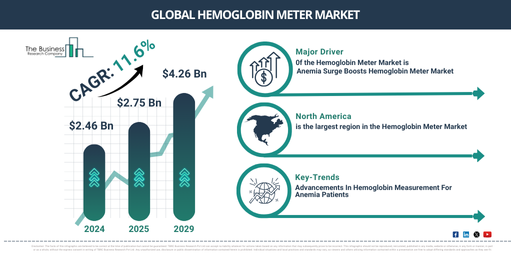
    There has been a considerable and rapid expansion in the hemoglobin meter market size in the past years. The market is set to witness growth from $2.46 billion in 2024 to $2.75 billion in 2025, registering a compound annual growth rate (CAGR) of 11.8%. Such growth during the historic phase is chiefly ascribed to the growing occurrence of anemia, escalating worldwide incidence of blood-related issues, development of healthcare facilities, augmentation in government health policies and investments, expansion in the point-of-care testing market, along with the increasing inclination towards preventive healthcare.

    How Much Will the Hemoglobin Meter Market Be Worth in 2029?

    There is an anticipated brisk expansion for the hemoglobin meter market in the coming years. By 2029, the market is projected to reach a value of $4.26 billion, boasting a compound annual growth rate (CAGR) of 11.6%. Factors responsible for this surge during the projected period involve increased cognizance about early detection, an upward trend in preventative healthcare solutions, developments in the home testing kits sector, advancements in real-time data monitoring solutions, and superior speed and accuracy in testing devices. Key trends to watch out for during this forecasted timeframe encompass technological evolution, amalgamation with digital health platforms, point-of-care testing, enhancements in sensor technology, progression in data accuracy and precision, and the manufacture of multi-purpose meters.

    Download The Free Sample Report Here:

    https://www.thebusinessresearchcompany.com/sample.aspx?id=19505&type=smp

    Which is the Largest Company in the Hemoglobin Meter Market?

    Major companies operating in the hemoglobin meter market are F Hoffmann-La Roche Ltd, Thermo Fisher Scientific Inc, Abbott Laboratories, Danaher Corporation, Siemens Healthcare GmbH, Terumo Corporation, Shenzhen Mindray Bio-Medical Electronics Co Ltd., Beckman Coulter Inc, Quidel Corporation, Sysmex Corporation, Bio-Rad Laboratories Inc, Nihon Kohden Corporation, Nova Biomedical Corporation, Green Cross Medis Corp, Instrumentation Laboratory Company, ACON Laboratories Inc, Erba Diagnostics Mannheim GmbH, Transasia Bio-Medicals Ltd, Trinity Biotech, HemoCue AB, EKF Diagnostics Holdings plc, Boule Diagnostics AB, PTS Diagnostics, HUMAN Diagnostics Worldwide, Osang Healthcare Co. Ltd., Labtronics, DiaSys Diagnostic Systems GmbH, PixCell Medical Technologies Ltd.

    What Are the Main Market Drivers in the Hemoglobin Meter Industry?

    The escalating incidence of anemia is anticipated to fuel the hemoglobin meter market’s expansion in the future. Anemia, typified by a shortage of red blood cells or hemoglobin, hampers the oxygen transport in the body. This increasing incidence of anemia is primarily caused by nutrient deficiencies such as iron, vitamin B12, and folate resulting from inadequate dietary practices and constrained access to nutrient-dense foods. Other major factors include poverty, inaccessibility to healthcare, and genetic anomalies that obstruct red blood cell production leading to chronic anemia. A hemoglobin meter plays a pivotal role in anemia; it measures the hemoglobin concentration in blood, thereby facilitating the diagnosis and monitoring of the condition. For example, data from the Institute for Health Metrics and Evaluation (IHME), a British national and international public health agency and research institute, in July 2023 indicated that nearly 2 billion individuals globally were anemic. A higher percentage of women were affected compared to men. In fact, 31.2% of women worldwide were anemic, compared to 17.5% for men. This discrepancy was predominantly observed during the reproductive ages (15–49), with 33.7% of women suffering from anemia as compared to 11.3% of men in this age bracket. Thus, the surging incidence of anemia is set to catalyze the growth of the hemoglobin meter market.

    Request For A Customized Report:

    https://www.thebusinessresearchcompany.com/customise?id=19505&type=smp

    How Is the Hemoglobin Meter Market Segments Structured?

    The hemoglobin metermarket covered in this report is segmented –

    1) By Type: Full Automatic, Semi Automatic

    2) By Product: Bench Top, Portable

    3) By Application: Hospitals, Labs, Other Applications

    Subsegments:

    1) By Full Automatic Hemoglobin Meters: Portable Full Automatic Hemoglobin Meters, Desktop Full Automatic Hemoglobin Meters, Integrated Full Automatic Hemoglobin Meters, Advanced Full Automatic Hemoglobin Meters

    2) By Semi-Automatic Hemoglobin Meters: Basic Semi-Automatic Hemoglobin Meters, Digital Display Semi-Automatic Hemoglobin Meters, Microcuvette-based Semi-Automatic Hemoglobin Meters, Handheld Semi-Automatic Hemoglobin Meters

    What Strategic Trends Are Transforming the Hemoglobin Meter Market?

    Leading firms in the hemoglobin meter market are concentrating on new solutions like fingerstick blood tests to lessen healthcare expenses linked with laboratory visits. The fingerstick blood test is an efficient and minimally invasive procedure for gathering blood samples through a tiny skin puncture, enabling swift and convenient health tracking from home. For example, in October 2023, the U.S.-based medical biotechnology firm, Sanguina Inc., received approval from the U.S. Food and Drug Administration (FDA) for their home hemoglobin testing kit, AnemoCheck Home. This kit allows people to easily track their hemoglobin levels at home. As the only FDA-approved home hemoglobin test in the United States, it addresses the needs of those suffering from conditions like anemia resulting from nutritional deficiencies, thalassemia, and sickle cell disease. The kit utilizes a simple fingerstick blood collection method, causing minimal discomfort for users while collecting a blood sample.

    Access The Full Report Here:

    https://www.thebusinessresearchcompany.com/report/hemoglobin-meter-global-market-report

    Which Global Regions Offer the Highest Growth in the Hemoglobin Meter Market?

    North America was the largest region in the hemoglobin meter market in 2024. The regions covered in the hemoglobin meter market report are Asia-Pacific, Western Europe, Eastern Europe, North America, South America, Middle East, Africa.

    Purchase The Full Report Today:

    https://www.thebusinessresearchcompany.com/purchaseoptions.aspx?id=19505

    This Report Delivers Insight On:

    1. How big is the hemoglobin meter market, and how is it changing globally?

    2. Who are the major companies in the hemoglobin meter market, and how are they performing?

    3. What are the key opportunities and risks in the hemoglobin meter market right now?

    4. Which products or customer segments are growing the most in the hemoglobin meter market?

    5. What factors are helping or slowing down the growth of the hemoglobin meter market?

    About The Business Research Company:

    With over 15000+ reports from 27 industries covering 60+ geographies, The Business Research Company has built a reputation for offering comprehensive, data-rich research and insights. Armed with 1,500,000 datasets, the optimistic contribution of in-depth secondary research, and unique insights from industry leaders, you can get the information you need to stay ahead in the game.

    Get in touch with us:

    The Business Research Company: https://www.thebusinessresearchcompany.com/

    Americas +1 310-496-7795

    Asia +44 2071930708

    Europe +44 7882 955267

    Email us at info@tbrc.info

    Follow us on:

    LinkedIn: https://in.linkedin.com/company/the-business-research-company

    YouTube: https://www.youtube.com/channel/UC24_fI0rV8cR5DxlCpgmyFQ

    Global Market Model: https://www.thebusinessresearchcompany.com/global-market-model