Category: Medical Equipment

  • ECG Devices Market 2026 Outlook: Market Size, CAGR And Key Growth Opportunities

    ECG Devices Market 2026 Outlook: Market Size, CAGR And Key Growth Opportunities

    Featuring market attractiveness scoring, total addressable market sizing, company benchmarking matrices, interactive Excel dashboards, deeper supply chain intelligence, emerging startup tracking, and granular product-level insights, The Business Research Company’s 2026 market reports are built to deliver research that is both more actionable and more strategically valuable.

    ECG Devices Market Revenue Growth On Track For A 13% CAGR Through 2030

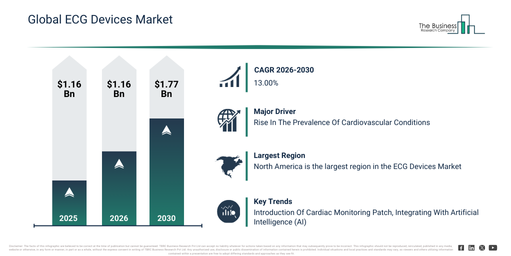
    The ecg devices market size has seen rapid expansion in recent years. It is anticipated to increase from $7.39 billion in 2025 to $8.41 billion in 2026, exhibiting a compound annual growth rate (CAGR) of 13.7%. The market’s historical growth can be attributed to several factors, including the rising prevalence of cardiovascular diseases, the expansion of hospital diagnostic infrastructure, the increasing use of holter monitoring systems, growing awareness of early cardiac diagnosis, and the availability of portable ecg devices.

    The ecg devices market is anticipated to experience significant expansion over the coming years. This market is projected to reach a valuation of $13.72 billion by 2030, demonstrating a compound annual growth rate (CAGR) of 13.0%. Key factors driving this growth during the forecast period include the increasing uptake of home-based cardiac monitoring, a surge in demand for telecardiology services, the broadening application of AI-enabled ECG interpretation, a heightened emphasis on preventive healthcare, and increasing financial commitments to digital health solutions. Significant trends expected during this period involve the greater adoption of wearable ECG monitors, an increasing need for remote cardiac monitoring solutions, the wider integration of wireless ECG systems, the expansion of portable diagnostic ECG devices, and an intensified focus on collecting continuous cardiac data.

    Get A Free Sample Report With In-Depth Market Insights:

    https://thebusinessresearchcompany.com/sample_request?id=53320890&type=smp&name=ECG%20Devices%20Market%20Report%202026&utm_source=Blogs&utm_medium=Paid&utm_campaign=Oct_PR

    ECG Devices Market Demand Drivers Opening New Revenue Streams

    The growing incidence of cardiovascular diseases is projected to drive the expansion of the ECG devices market moving forward. Cardiovascular disease is recognized as one of the most common health challenges and the leading cause of fatalities worldwide. An electrocardiogram (ECG or EKG) serves to evaluate the electrical signals from the heart to identify various cardiac ailments. This process involves attaching electrodes to the chest to record the heart’s electrical impulses that regulate its rhythm. For instance, in September 2025, the American College of Cardiology, a US-based nonprofit professional medical society, reported that cardiovascular diseases were responsible for 19.2 million deaths in 2023. Therefore, the rising cases of cardiovascular diseases, such as hypertensive heart disease, stroke, peripheral artery disease, and ischemic heart disease (IHD), are propelling the growth of the ECG devices market during the forecast period.

    ECG Devices Market Segment Landscape And Growth Outlook

    The ecg devices market covered in this report is segmented –

    1) By Product: Monitoring ECG Systems, Diagnostic ECG Systems

    2) By Technology: Portable ECG Systems, Wireless ECG Systems

    3) By Lead Type: Single Lead ECG, 3-6 Lead ECG, 12-Lead ECG

    4) By End User: Hospitals, Homecare Settings, Other End-Users

    Subsegments:

    1) By Monitoring ECG Systems: Portable ECG Monitors, Holter Monitors, Mobile Cardiac Telemetry Systems, Wearable ECG Monitors

    2) By Diagnostic ECG Systems: 12-Lead ECG Machines, Stress Test Systems, Resting ECG Systems, Event Monitors

    ECG Devices Market Trends Powering Strategic Industry Growth

    Major companies operating within the ECG devices market are increasingly focusing on the introduction of cardiac monitoring patches to gain a competitive edge. A cardiac monitoring patch, also known interchangeably as a cardiac event monitor or a cardiac Holter monitor, is a medical device employed for the continuous surveillance of a patient’s heart activity over an extended duration. For instance, in May 2023, Vivalink, a U.S.-based digital healthcare solutions provider, launched a 14-day live-stream wearable ECG patch specifically for ambulatory cardiac monitoring. This patch effectively combines wearable medical technology with a cloud-based platform to offer continuous real-time heart monitoring and patient insights through remote observation. The ECG data collected from the patch is live-streamed, then interpreted by certified cardiac technicians and cardiologists, which facilitates the detection of important arrhythmia events and other vital-sign variations with clinical-grade accuracy.

    ECG Devices Market Leading Players And Competitive Positioning

    Major companies operating in the ecg devices market are GE Healthcare Technologies Inc., Koninklijke Philips N.V., Spacelabs Healthcare Inc., CardioNet LLC, Schiller AG, Nihon Kohden Corporation, Medtronic plc, Shenzhen Bio-Medical Electronics Co. Ltd., BPL Medical Technologies Private Limited, Mortara Instrument Inc., Opto Circuits Limited, Bionet Co. Ltd., Midmark Corporation, Omron Healthcare Inc., AliveCor Inc., Compumedics Limited, BioTelemetry Inc., Welch Allyn Inc., Biotronik SE & Co. KG, Fukuda Denshi Co. Ltd., Medical International Limited, Innomed Medical Developing and Manufacturing Ltd.

    View The Full ECG Devices Market Report:

    https://thebusinessresearchcompany.com/report/ECG-devices-global-market-report?utm_source=Blogs&utm_medium=Paid&utm_campaign=Oct_PR

    ECG Devices Market Regional Split: Which Areas Are Fueling Growth?

    North America was the largest region in the ECG devices market in 2025. Asia-Pacific is expected to be the fastest-growing region in the ECG devices market during the forecast period. The regions covered in the ecg devices market report are Asia-Pacific, South East Asia, Western Europe, Eastern Europe, North America, South America, Middle East, Africa.

    Reach Out To Our Team:

    The Business Research Company: https://www.thebusinessresearchcompany.com/

    Americas: +1 310-496-7795

    Asia: +44 7882 955267 & +91 8897263534

    Europe: +44 7882 955267

    Email us at: marketing@tbrc.info

    Follow us on:

    LinkedIn: https://in.linkedin.com/company/the-business-research-company

    YouTube: https://www.youtube.com/channel/UC24_fI0rV8cR5DxlCpgmyFQ

    Global Market Model: https://www.thebusinessresearchcompany.com/global-market-model
  • ECG Cables And Lead wires Market Size Growth: From $2.66 Billion In 2026 To $3.86 Billion By 2030

    ECG Cables And Lead wires Market Size Growth: From $2.66 Billion In 2026 To $3.86 Billion By 2030

    Built to provide research that’s more actionable and strategically valuable, The Business Research Company’s 2026 market reports include market attractiveness analysis, total addressable market sizing, company benchmarking matrices, interactive Excel dashboards, broader supply chain intelligence, emerging startup tracking, and in-depth product insights.

    ECG Cables And Lead wires Market Value Growth And Long-Term Outlook

    The ecg cables and lead wires market has experienced substantial expansion over recent years. Projected figures indicate an increase from $2.43 billion in 2025 to $2.66 billion in 2026, demonstrating a compound annual growth rate (CAGR) of 9.2%. Historically, this growth has been driven by several factors, including the expansion of cardiac monitoring procedures, a rise in hospital admissions for cardiovascular conditions, the broader adoption of ECG diagnostics, enhanced availability of patient monitoring equipment, and an increase in clinical diagnostic services.

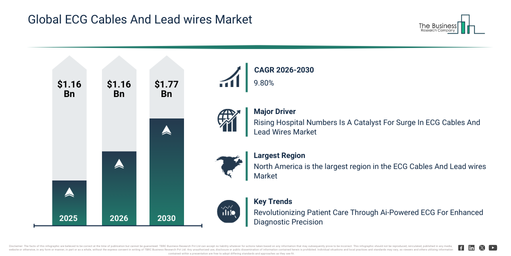
    The ECG cables and lead wires market is projected to experience substantial expansion in the coming years, reaching $3.86 billion in 2030 at a compound annual growth rate (CAGR) of 9.8%. This expansion during the forecast period is propelled by factors such as the heightened uptake of remote and continuous cardiac monitoring, the escalating need for homecare ECG products, the proliferation of wearable and portable ECG devices, a greater emphasis on reusable and environmentally friendly materials, and increased capital flowing into digital cardiology. Key developments anticipated in the forecast period encompass a surge in demand for disposable ECG lead wires, a greater embrace of lightweight and flexible components, a heightened concentration on infection control measures, the broadening of multi-lead monitoring uses, and an increased commitment to signal precision and product longevity.

    Get A Free Sample Report With In-Depth Market Insights:

    https://thebusinessresearchcompany.com/sample_request?id=81981238&type=smp&name=ECG%20Cables%20And%20Lead%20wires%20Market%20Report%202026&utm_source=Blogs&utm_medium=Paid&utm_campaign=Oct_PR

    ECG Cables And Lead wires Market Growth Backed By Core Demand Fundamentals

    The growing count of hospitals is anticipated to fuel the expansion of the ECG cables and lead wires market in the coming years. Hospitals are intricate medical facilities established to deliver a broad spectrum of healthcare services, encompassing diagnosis, treatment, and patient care for various medical conditions. ECG cables and lead wires are essential for accurate diagnosis, continuous oversight, and effective treatment of cardiac conditions within hospitals, with their design, dependability, and ease of use enhancing the overall efficiency of healthcare professionals in providing quality cardiac care to patients. For instance, according to the American Hospital Association, a US-based non-profit organization, the United States recorded 6,120 hospitals in 2024, marking an increase from 6,093 hospitals in 2022. Thus, the escalating number of hospitals is propelling the growth of the ECG cables and lead wires market.

    ECG Cables And Lead wires Market Breakdown By Product Type And Application

    The ecg cables and lead wires market covered in this report is segmented –

    1) By Product Type: Single-Lead ECG Lead Wire, 3-Lead ECG Lead Wire, 5-Lead ECG Lead Wire, 6-Lead ECG Lead Wire, 12- Lead ECG Lead Wire, Other Products

    2) By Material: Silicone, PVC, Hybrid Polymers

    3) By End User: Hospitals, Clinics, Ambulatory Services

    Subsegments:

    1) By Single-Lead ECG Lead Wire: Standard Single-Lead Wires, Disposable Single-Lead Wires

    2) By 3-Lead ECG Lead Wire: Standard 3-Lead Wires, Disposable 3-Lead Wires

    3) By 5-Lead ECG Lead Wire: Standard 5-Lead Wires, Disposable 5-Lead Wires

    4) By 6-Lead ECG Lead Wire: Standard 6-Lead Wires, Disposable 6-Lead Wires

    5) By 12-Lead ECG Lead Wire: Standard 12-Lead Wires, Disposable 12-Lead Wires

    6) By Other Products: ECG Cable Adapters, Extension Cables, Monitoring System Accessories

    ECG Cables And Lead wires Market Growth Trends Reshaping The Competitive Landscape

    Leading companies in the ECG cables and lead wires market are concentrating on innovative offerings like digital stethoscopes to increase their market revenues. Digital stethoscopes leverage electronic technology to record and magnify body sounds, including heartbeats and lung noises, which improves accuracy during patient examinations. For instance, in June 2023, Eko Health Inc., a US-based company providing innovative healthcare solutions in cardiovascular technology, launched the Core 500. This advanced stethoscope features sophisticated capabilities such as AI for detecting heart disease, a 3-lead ECG, and high-definition audio. The stethoscope serves as an essential patient assessment tool for medical professionals, designed to improve diagnostic precision and facilitate early disease identification. The Core 500 is the first stethoscope to present accurate, real-time patient auscultation data, including heart rate and ECG tracing, on a full-color display. It is made from lightweight material that resists scratches, splashes, and shattering.

    ECG Cables And Lead wires Market Competitive Overview And Top Companies

    Major companies operating in the ecg cables and lead wires market are Medtronic Plc, 3M Company, Siemens Healthineers AG, Koninklijke Philips N.V., General Electric Company, Nihon Kohden Corporation, Fukuda Denshi Co. Ltd., Mindray Medical International Limited, SCHILLER AG, Spacelabs Healthcare, Norav Medical Ltd., Ivy Biomedical Systems Inc., Rhythmlink International LLC, Cables and Sensors LLC, Innomed Medical Inc., Shenzhen Sino-K Medical Technology Co. Ltd., CONMED Corporation, OSI Systems Inc., Technocare Medisystems, Ambu A/S, Vyaire Medical

    View The Full ECG Cables And Lead wires Market Report:

    https://thebusinessresearchcompany.com/report/ECG-cables-and-lead-wires-global-market-report?utm_source=Blogs&utm_medium=Paid&utm_campaign=Oct_PR

    ECG Cables And Lead wires Market Top Region: Where Does Most Revenue Come From?

    North America was the largest region in the ECG cables and lead wires market in 2025. The regions covered in the ecg cables and lead wires market report are Asia-Pacific, South East Asia, Western Europe, Eastern Europe, North America, South America, Middle East, Africa.

    Reach Out To Our Team:

    The Business Research Company: https://www.thebusinessresearchcompany.com/

    Americas: +1 310-496-7795

    Asia: +44 7882 955267 & +91 8897263534

    Europe: +44 7882 955267

    Email us at: marketing@tbrc.info

    Follow us on:

    LinkedIn: https://in.linkedin.com/company/the-business-research-company

    YouTube: https://www.youtube.com/channel/UC24_fI0rV8cR5DxlCpgmyFQ

    Global Market Model: https://www.thebusinessresearchcompany.com/global-market-model
  • Ear-Worn Core-Temp Sensor Market Analysis 2026: Market Size, Growth Trends And Industry Outlook

    Ear-Worn Core-Temp Sensor Market Analysis 2026: Market Size, Growth Trends And Industry Outlook

    Backed by market attractiveness analysis, total addressable market sizing, company benchmarking matrices, interactive Excel dashboards, wider supply chain intelligence, emerging startup coverage, and detailed product-level insights, The Business Research Company’s 2026 market reports are designed to offer research that is more actionable and strategically valuable than ever.

    Ear-Worn Core-Temp Sensor Market Poised To Hit $1.57 Billion By 2030 With A 15.9% CAGR

    The ear-worn core-temp sensor market has seen rapid expansion in recent years. Its value is forecast to expand from $0.75 billion in 2025 to $0.87 billion in 2026, achieving a compound annual growth rate (CAGR) of 16.2%. The historical growth of this market can be ascribed to several factors, including early adoption in healthcare monitoring, advancements in infrared sensor technology, increasing awareness of non-invasive diagnostics, growing demand in sports medicine, and integration with clinical monitoring devices.

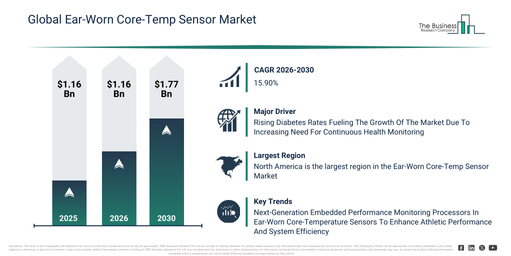
    The ear-worn core-temp sensor market is anticipated to experience substantial growth in the next few years. It is projected to reach $1.57 billion in 2030, demonstrating a compound annual growth rate (CAGR) of 15.9%. This expansion during the forecast period can be attributed to the increasing adoption of homecare and remote monitoring, integration with AI-driven health platforms, uptake in military and industrial sectors, enhanced connectivity with IoT devices, and the development of multi-functional health wearables. Key trends for the forecast period include continuous core temperature monitoring, remote health alerts, integration with wearable ecosystems, predictive fever detection, and personalized health tracking.

    Get A Free Sample Report With In-Depth Market Insights:

    https://thebusinessresearchcompany.com/sample_request?id=29044&type=smp&name=Ear-Worn%20Core-Temp%20Sensor%20Market%20Report%202026&utm_source=Blogs&utm_medium=Paid&utm_campaign=Oct_PR

    Ear-Worn Core-Temp Sensor Market Growth Catalysts And Demand Drivers

    The increasing occurrence of diabetes is anticipated to drive the expansion of the ear-worn core-temp sensor market in the future. This chronic condition is characterized by the body’s inability to produce sufficient insulin or utilize it effectively, resulting in elevated blood sugar levels. The surge in diabetes cases primarily stems from unhealthy lifestyle choices, with greater intake of high-calorie foods and a lack of physical activity contributing to obesity, a major risk factor for the disease. For diabetic patients, an ear-worn core-temperature sensor provides continuous body temperature monitoring, aiding in the early detection of infections or metabolic imbalances, which are frequent complications for those with diabetes. An illustrative example shows that in March 2025, the Office for Health Improvement & Disparities, a UK government department, reported that in England, the prevalence of type 2 diabetes among adults aged 17 and over reached 7.0% in March 2024, an increase from 6.8% in March 2023. Consequently, the escalating incidence of diabetes is fueling the growth of the ear-worn core-temp sensor market.

    Ear-Worn Core-Temp Sensor Market Segment Analysis And Revenue Potential

    The ear-worn core-temp sensor market covered in this report is segmented –

    1) By Product Type: Disposable, Reusable

    2) By Sensor Technology: Infrared, Thermistor, Other Sensor Technologies

    3) By Distribution Channel: Online, Offline

    4) By Application: Healthcare Monitoring, Sports And Fitness, Military And Defense, Industrial, Other Applications

    5) By End-User: Hospitals And Clinics, Homecare, Athletes, Military Personnel, Industrial Workers, Other End Users

    Subsegments:

    1) By Disposable: Single Use, Sterile

    2) By Reusable: Sterilizable, Multi Use

    Ear-Worn Core-Temp Sensor Market Trends Shaping Long-Term Demand

    Leading companies in the ear-worn core-temp sensor market are focusing on technological advancements, specifically next-generation wearable body temperature sensors, to boost the accuracy of real-time health monitoring, ensure user comfort, and enable continuous, non-invasive temperature tracking. These next-generation wearable body temperature sensors are sophisticated, miniaturized devices that continuously and accurately measure body temperature in real time by utilizing innovative materials and wireless technologies, thereby improving health monitoring and performance tracking. For instance, in January 2025, CORE, a Switzerland-based developer of advanced thermal monitoring solutions, introduced CORE 2. This next-generation wearable body temperature sensor is designed to assist athletes in monitoring and managing their core body temperature in real time. Built in Switzerland, CORE 2 is 48% smaller and 30% lighter than its predecessor, yet it is more powerful and offers smarter features such as LED indicators, a modular attachment system, and BLE/ANT+ connectivity for seamless integration with Garmin, Wahoo, iOS, and Android devices. It incorporates advanced thermal energy transfer technology for AI-enhanced accuracy, which allows athletes to optimize performance and heat adaptation during training and races.

    Ear-Worn Core-Temp Sensor Market Competitive Landscape: Which Companies Lead The Industry?

    Major companies operating in the ear-worn core-temp sensor market are Cosinuss GmbH, Bodytrak, GreenTEG AG, BodyCap Technologies, Equivital Ltd., Tempdrop Ltd., CORE Sensors Inc., VivaLNK Inc., Kenzen Inc., Epicore Biosystems Inc., Nix Biosensors Inc., Valencell Inc., Biofourmis Inc., Empatica Inc., Preventice Solutions Inc., Lief Therapeutics Inc., Oura Health Oy, Bloomlife Inc., Neteera Technologies Ltd., VivaQuant Inc.

    View The Full Ear-Worn Core-Temp Sensor Market Report:

    https://thebusinessresearchcompany.com/report/ear-worn-core-temp-sensor-global-market-report?utm_source=Blogs&utm_medium=Paid&utm_campaign=Oct_PR

    Ear-Worn Core-Temp Sensor Market Regional Breakdown: Where Is Demand Concentrated?

    North America was the largest region in the ear-worn core-temp sensor market in 2025. Asia-Pacific is expected to be the fastest-growing region in the forecast period. The regions covered in the ear-worn core-temp sensor market report are Asia-Pacific, South East Asia, Western Europe, Eastern Europe, North America, South America, Middle East, Africa.

    Reach Out To Our Team:

    The Business Research Company: https://www.thebusinessresearchcompany.com/

    Americas: +1 310-496-7795

    Asia: +44 7882 955267 & +91 8897263534

    Europe: +44 7882 955267

    Email us at: marketing@tbrc.info

    Follow us on:

    LinkedIn: https://in.linkedin.com/company/the-business-research-company

    YouTube: https://www.youtube.com/channel/UC24_fI0rV8cR5DxlCpgmyFQ

    Global Market Model: https://www.thebusinessresearchcompany.com/global-market-model
  • Ear, Nose, And Throat (ENT) Workstation Market Forecast To 2030: Starting From $2.32 Billion In 2026

    Ear, Nose, And Throat (ENT) Workstation Market Forecast To 2030: Starting From $2.32 Billion In 2026

    Featuring market attractiveness scoring, total addressable market sizing, company benchmarking matrices, interactive Excel dashboards, deeper supply chain intelligence, emerging startup tracking, and granular product-level insights, The Business Research Company’s 2026 market reports are built to deliver research that is both more actionable and more strategically valuable.

    Ear, Nose, And Throat (ENT) Workstation Market Size And Revenue Outlook Through 2030

    The ear, nose, and throat (ent) workstation market size has shown strong growth in recent years. It is anticipated to expand from $1.51 billion in 2025 to $1.64 billion in 2026, exhibiting a compound annual growth rate (CAGR) of 9.2%. The expansion witnessed in the historic period is attributable to an increase in ENT disorder prevalence, the growth of hospital infrastructure, a demand for efficient examination setups, the rise of specialty clinics, and increasing needs for surgical precision.

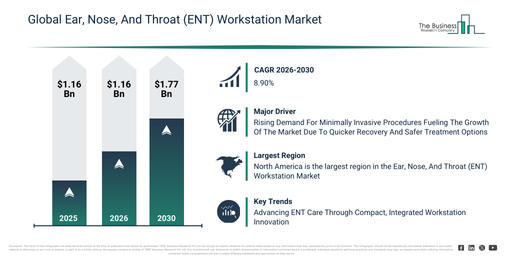
    The ear, nose, and throat (ent) workstation market is poised for significant expansion in the coming years. It is projected to achieve a market size of $2.32 billion by 2030, demonstrating a compound annual growth rate (CAGR) of 8.9%. This projected growth during the forecast period is driven by factors such as the proliferation of ambulatory surgery centers, the modernization of ENT departments, increasing demand for compact workstations, healthcare investments in emerging markets, and the broadening scope of ENT specialty care. Prominent trends anticipated in this period include the development of integrated diagnostic and treatment units, an escalating need for workflow optimization, a rise in outpatient ENT procedures, a preference for modular workstation designs, and enhanced standardization of ENT equipment.

    Get A Free Sample Report With In-Depth Market Insights:

    https://thebusinessresearchcompany.com/sample_request?id=93946875&type=smp&name=Ear%2C%20Nose%2C%20And%20Throat%20%28ENT%29%20Workstation%20Market%20Report%202026&utm_source=Blogs&utm_medium=Paid&utm_campaign=Oct_PR

    Ear, Nose, And Throat (ENT) Workstation Market Opportunity Drivers: What’s Unlocking New Revenue Potential?

    The increasing need for minimally invasive procedures is projected to propel the expansion of the ear, nose, and throat (ENT) workstation market in the future. These procedures involve medical interventions carried out via small cuts or apertures, thereby lessening patient injury and shortening recuperation periods. The growing preference for minimally invasive procedures stems from their capacity to provide quicker healing and smaller marks, rendering them more attractive to individuals looking for faster and safer treatment alternatives. The ENT workstation improves minimally invasive procedures by facilitating accurate, image-assisted interventions, which diminishes the necessity for conventional surgical methods. For example, data from February 2024, shared by the American Academy of Facial Plastic and Reconstructive Surgery, a US-based non-profit organization, indicates that in 2023, minimally invasive procedures constituted 83% of all medical interventions carried out, showing a 5% rise from 2022. Consequently, the escalating demand for minimally invasive procedures is a key driver for the expansion of the ear, nose, and throat (ENT) workstation market.

    Ear, Nose, And Throat (ENT) Workstation Market Segmentation And Category Overview

    The ear, nose, and throat (ent) workstation market covered in this report is segmented –

    1) By Product Type: Portable Ear, Nose, And Throat (ENT) Workstations, Fixed Ear, Nose, And Throat (ENT) Workstations

    2) By Application: Hospitals, Clinics, Ambulatory Surgical Centers, Other Applications

    3) By End-User: Otolaryngologists, Audiologists, Other End-Users

    Subsegments:

    1) By Portable ENT Workstations: Mobile Ear, Nose, And Throat (ENT) Workstations, Battery-Operated Ear, Nose, And Throat (ENT) Workstations, Lightweight Ear, Nose, And Throat (ENT) Workstations

    2) By Fixed ENT Workstations: Wall-Mounted Ear, Nose, And Throat (ENT) Workstations, Floor-Standing Ear, Nose, And Throat (ENT) Workstations, Modular Ear, Nose, And Throat (ENT) Workstations

    Ear, Nose, And Throat (ENT) Workstation Market Innovation Trends Shaping Future Development

    Major companies engaged in the ear, nose, and throat (ENT) workstation market are emphasizing the development of technological advancements, such as compact, mobile ENT workstations equipped with integrated multimodal functions. This effort is aimed at optimizing space efficiency and streamlining ENT consultations and procedures. These technologically advanced compact ENT workstations are specialized treatment units that consolidate core ENT diagnostic and therapeutic functionalities, including suction, irrigation, endoscopic imaging, illumination, and organized instrument storage, into an ergonomic, mobile platform. They are specifically designed for consulting rooms with limited space, all while maintaining stringent hygiene standards and operational efficiency. For example, in September 2023, Entermed BV, a Netherlands-based provider of ENT treatment units, launched the MICRONOMIC III mobile ENT workstation. This cost-effective unit features a very small footprint yet provides generous dual storage drawers and the capacity to integrate essential devices, such as a suction system, light source, irrigator, endoscopy camera system, and even an optional microscope. This setup enables ear, nose, and throat (ENT) surgeons to efficiently conduct routine examinations and minor procedures in confined spaces. Its mobile castor-based construction, handle-free easy-to-clean surfaces, and maintenance-friendly dry suction and air pumps assist clinics in maximizing room utilization, supporting infection-control protocols, and minimizing maintenance downtime in busy ear, nose, and throat (ENT) outpatient environments.

    Ear, Nose, And Throat (ENT) Workstation Market Competitive Landscape: Who Leads The Industry?

    Major companies operating in the ear, nose, and throat (ent) workstation market are Olympus Corporation, Karl Storz GmbH & Co. KG, PENTAX Medical (HOYA Corporation), MS Westfalia GmbH, Heinemann HNO Medizintechnik GmbH, Optomic España S.A., Labo America Inc., ATMOS MedizinTechnik GmbH & Co. KG, Euroclinic Medi-Care Solutions S.r.l., Mega Medical Co. Ltd., Ecleris S.R.L., Chammed Co. Ltd., Entermed B.V., Happersberger Otopront GmbH, G. Heinemann Medizintechnik GmbH, Dantschke Medizintechnik GmbH & Co. KG, XION Medical GmbH, Medstar Co. Ltd., RZ Medizintechnik GmbH, Cuadra Medical Technologies, Nagashima Medical Instruments Co. Ltd., Seiler Instrument Inc.

    View The Full Ear, Nose, And Throat (ENT) Workstation Market Report:

    https://thebusinessresearchcompany.com/report/ear-nose-and-throat-ent-workstation-global-market-report?utm_source=Blogs&utm_medium=Paid&utm_campaign=Oct_PR

    Ear, Nose, And Throat (ENT) Workstation Market Geographic Landscape: Which Region Dominates Industry Growth?

    North America was the largest region in the ear, nose, and throat (ENT) workstation market in 2025. Asia-Pacific is expected to be the fastest-growing region in the forecast period. The regions covered in the ear, nose, and throat (ent) workstation market report are Asia-Pacific, South East Asia, Western Europe, Eastern Europe, North America, South America, Middle East, Africa.

    Reach Out To Our Team:

    The Business Research Company: https://www.thebusinessresearchcompany.com/

    Americas: +1 310-496-7795

    Asia: +44 7882 955267 & +91 8897263534

    Europe: +44 7882 955267

    Email us at: marketing@tbrc.info

    Follow us on:

    LinkedIn: https://in.linkedin.com/company/the-business-research-company

    YouTube: https://www.youtube.com/channel/UC24_fI0rV8cR5DxlCpgmyFQ

    Global Market Model: https://www.thebusinessresearchcompany.com/global-market-model
  • Dynamic Blood Pressure Monitor Market Size In 2026 And Beyond: Understanding Future Growth Potential

    Dynamic Blood Pressure Monitor Market Size In 2026 And Beyond: Understanding Future Growth Potential

    Built to provide research that’s more actionable and strategically valuable, The Business Research Company’s 2026 market reports include market attractiveness analysis, total addressable market sizing, company benchmarking matrices, interactive Excel dashboards, broader supply chain intelligence, emerging startup tracking, and in-depth product insights.

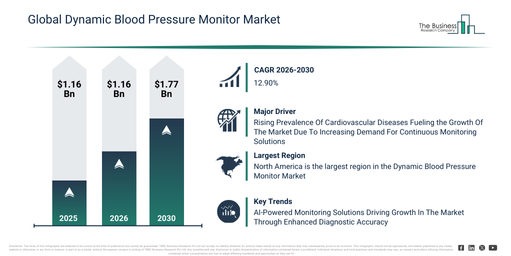
    Dynamic Blood Pressure Monitor Market Growth From $1.84 Billion In 2026 To $3 Billion By 2030 At A CAGR Of 12.9%

    The dynamic blood pressure monitor market size has experienced swift expansion in recent years. This market is projected to grow from $1.63 billion in 2025 to $1.84 billion in 2026, showing a compound annual growth rate (CAGR) of 13.2%. The historical period’s growth can be linked to factors such as the limited availability of continuous blood pressure monitoring devices, the reliance on manual measurement methods, increasing awareness of hypertension and cardiovascular diseases, expanding clinical and hospital usage, and the rising demand for home health devices.

    The blood pressure monitor market is projected to experience substantial expansion over the coming years. Its valuation is anticipated to reach $3 billion by 2030, exhibiting a compound annual growth rate (CAGR) of 12.9%. This expansion during the forecast period is driven by several factors, including innovations in wearable and wireless monitoring technologies, the incorporation of mobile health applications, the increasing uptake of telemedicine, a rise in preventive healthcare programs, and the broadening availability of remote patient monitoring options. Key trends characterizing this period involve the growing acceptance of home health monitoring devices, wider utilization of telemedicine platforms for managing hypertension, an escalating need for smaller and more portable monitors, the incorporation of Bluetooth and Wi-Fi capabilities into these devices, and a stronger focus on preventive health alongside ongoing blood pressure measurement.

    Get A Free Sample Report With In-Depth Market Insights:

    https://thebusinessresearchcompany.com/sample_request?id=19076194&type=smp&name=Dynamic%20Blood%20Pressure%20Monitor%20Market%20Report%202026&utm_source=Blogs&utm_medium=Paid&utm_campaign=Oct_PR

    Dynamic Blood Pressure Monitor Market Growth Momentum: What Factors Are Shaping Demand?

    The anticipated expansion of the dynamic blood pressure monitors market is linked to the growing incidence of cardiovascular diseases. These diseases encompass ailments affecting the heart and blood vessels, with elevated blood pressure being a key factor in heightening the likelihood of heart attacks, strokes, and other severe health issues. Sedentary lifestyles are a primary contributor to the increase in cardiovascular diseases, as insufficient physical activity compromises cardiac health and elevates blood pressure. Dynamic blood pressure monitors aid in managing cardiovascular diseases by supplying continuous, real-world blood pressure information, thereby enhancing diagnostic precision and identifying high-risk patterns like nocturnal hypertension. For instance, data from January 2024, released by the US-based non-profit American Heart Association, revealed that the age-adjusted mortality rate from cardiovascular disease reached 233.3 per 100,000 in 2024, marking a 4.0% rise from 224.4 per 100,000 in 2023. Consequently, the expanding occurrence of cardiovascular diseases is propelling the growth of the dynamic blood pressure monitors market.

    Dynamic Blood Pressure Monitor Market Segment Outlook: Which Categories Are Growing Fastest?

    The dynamic blood pressure monitor market covered in this report is segmented –

    1) By Product Type: Wrist Blood Pressure Monitors, Arm Blood Pressure Monitors, Finger Blood Pressure Monitors

    2) By Measurement Method: Automatic Measurement, Ambulatory Measurement

    3) By Distribution Channel: Online Stores, Pharmacies, Specialty Stores, Other Distribution Channels

    4) By Application: Home Health Monitoring, Clinical Settings, Preventive Healthcare, Telemedicine

    5) By End-User: Hospitals, Clinics, Home Care Settings, Other End-Users

    Subsegments:

    1) By Wrist Blood Pressure Monitors: Bluetooth-Enabled Monitors, Ambulatory Wrist Monitors, Automatic Inflation Monitors

    2) By Arm Blood Pressure Monitors: Upper Arm Monitors With Cuff, Bluetooth Or Wi-Fi Integrated Monitors, Ambulatory Upper Arm Monitors

    3) By Finger Blood Pressure Monitors: Compact Digital Monitors, Rechargeable Finger Monitors, USB-Connected Monitors

    Dynamic Blood Pressure Monitor Market Trends Redefining Industry Growth

    Leading companies in the dynamic blood pressure monitor market are concentrating on developing innovative monitoring devices, such as next-generation hemodynamic monitoring systems, to enhance the accuracy and real-time tracking of blood pressure and cardiovascular parameters. These next-generation hemodynamic monitoring systems refer to advanced medical devices designed for continuously and accurately measuring cardiovascular parameters like blood pressure, cardiac output, and blood flow dynamics in real-time. For instance, in April 2025, Becton, Dickinson and Company, a US-based medical technology company, launched the HemoSphere Alta platform, a next-generation hemodynamic monitoring solution specifically engineered for operating rooms and intensive care units. This advanced system utilizes artificial intelligence-based predictive algorithms to assist clinicians in proactively managing blood pressure instability and optimizing blood flow, detecting potential life-threatening changes instantaneously. Key features include a cerebral autoregulation index (CAI) for personalized blood pressure targets, the acumen hypotension prediction index (HPI) software for anticipating low blood pressure events, and a high-resolution touchscreen with voice and gesture commands for hands-free, sterile interaction.

    Dynamic Blood Pressure Monitor Market Company Landscape And Competitive Strategy

    Major companies operating in the dynamic blood pressure monitor market are Koninklijke Philips N.V., GE HealthCare Technologies Inc., OMRON HEALTHCARE Co. Ltd., Hill-Rom Holdings Inc., Nihon Kohden Corporation, Spacelabs Healthcare Inc., Contec Medical Systems Co. Ltd., Schiller AG, Microlife Corporation, Qingdao Meditech Equipment Co. Ltd., A&D Company Limited, SunTech Medical Inc., Rudolf Riester GmbH, Bionet America Inc., Shenzhen Hingmed Instrument Co. Ltd., CNSystems Medizintechnik GmbH, WHALETEQ Co. LTD, Bosch + Sohn GmbH & Co. KG, DynaPulse Inc., IEM GmbH, Welch Allyn Inc., Beurer GmbH

    View The Full Dynamic Blood Pressure Monitor Market Report:

    https://thebusinessresearchcompany.com/report/dynamic-blood-pressure-monitor-global-market-report?utm_source=Blogs&utm_medium=Paid&utm_campaign=Oct_PR

    Dynamic Blood Pressure Monitor Market Largest Region: Which Geography Holds The Highest Market Share?

    North America was the largest region in the dynamic blood pressure monitor market in 2025. Asia-Pacific is expected to be the fastest-growing region in the forecast period. The regions covered in the dynamic blood pressure monitor market report are Asia-Pacific, South East Asia, Western Europe, Eastern Europe, North America, South America, Middle East, Africa.

    Reach Out To Our Team:

    The Business Research Company: https://www.thebusinessresearchcompany.com/

    Americas: +1 310-496-7795

    Asia: +44 7882 955267 & +91 8897263534

    Europe: +44 7882 955267

    Email us at: marketing@tbrc.info

    Follow us on:

    LinkedIn: https://in.linkedin.com/company/the-business-research-company

    YouTube: https://www.youtube.com/channel/UC24_fI0rV8cR5DxlCpgmyFQ

    Global Market Model: https://www.thebusinessresearchcompany.com/global-market-model
  • Durable Medical Equipment Market Reaches $334.08 Billion In 2026: Key Developments Shaping Expansion

    Durable Medical Equipment Market Reaches $334.08 Billion In 2026: Key Developments Shaping Expansion

    Backed by market attractiveness analysis, total addressable market sizing, company benchmarking matrices, interactive Excel dashboards, wider supply chain intelligence, emerging startup coverage, and detailed product-level insights, The Business Research Company’s 2026 market reports are designed to offer research that is more actionable and strategically valuable than ever.

    Durable Medical Equipment Market Expansion Outlook: What Revenue Opportunities Are Ahead?

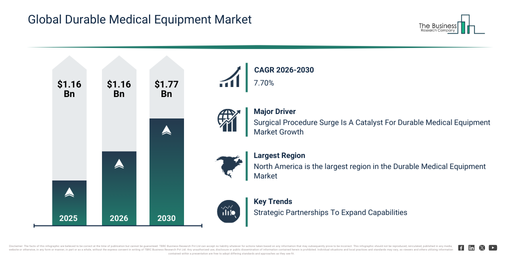
    The durable medical equipment market size has experienced significant growth in recent years. It is projected to increase from $229.95 billion in 2025 to $248.58 billion in 2026, at a compound annual growth rate (CAGR) of 8.1%. Historically, this expansion can be linked to factors such as an expanding aging population, a rise in chronic disease prevalence, the development of home healthcare services, better reimbursement options for dme, and the wider availability of assistive medical devices.

    The durable medical equipment market is set to experience significant expansion in the upcoming years, with its valuation expected to climb to $334.08 billion in 2030, exhibiting a compound annual growth rate (CAGR) of 7.7%. This projected increase is fueled by a growing demand for home healthcare solutions, the rising integration of connected medical devices, the broadening of value-based care models, a heightened focus on patient-centric care delivery, and increased investments in digital health infrastructure. Noteworthy developments anticipated in this period include the increased adoption of home-based medical equipment, a rising need for remote patient monitoring devices, an intensified concentration on long-term care solutions, the proliferation of smart and connected DME products, and an enhanced emphasis on patient mobility and independence.

    Get A Free Sample Report With In-Depth Market Insights:

    https://thebusinessresearchcompany.com/sample_request?id=71565347&type=smp&name=Durable%20Medical%20Equipment%20Market%20Report%202026&utm_source=Blogs&utm_medium=Paid&utm_campaign=Oct_PR

    Durable Medical Equipment Market Expansion Drivers: What’s Shaping Future Growth?

    The escalating volume of surgical interventions is anticipated to fuel the expansion of the durable medical equipment market in the future. Surgical procedures encompass medical treatments involving incisions or minimally invasive approaches to address, mend, extract, or identify health conditions within the human body. Durable medical equipment (DME) holds vital importance in numerous surgical operations, providing patient support and comfort, aiding mobility, ensuring safety and stability, controlling infections, improving surgical results, and shortening hospital stays. As an illustration, a report released in June 2024 by the International Society of Aesthetic Plastic Surgery, a US-based professional organization for board-certified aesthetic plastic surgeons, indicated that the combined count of surgical and non-surgical procedures climbed by 3.4% in 2023, reaching 34.9 million. Notably, face and head procedures exhibited substantial growth, exceeding 6.5 million, marking a 19.6% rise from the preceding year. Consequently, the rising frequency of surgical procedures is propelling the growth of the durable medical equipment market.

    Durable Medical Equipment Market Segment Landscape: Which Areas Lead Development?

    The durable medical equipment market covered in this report is segmented –

    1) By Product: Personal Mobility Devices, Bathroom Safety Devices And Medical Furniture, Monitoring And Therapeutic Devices

    2) By Payer: Public, Private, Out-Of-Pocket

    3) By End-Use: Nursing Homes, Home Healthcare, Other End-Uses

    Subsegments:

    1) By Personal Mobility Devices: Wheelchairs, Scooters, Walkers And Canes

    2) By Bathroom Safety Devices And Medical Furniture: Grab Bars, Shower Chairs, Commodes, Hospital Beds

    3) By Monitoring And Therapeutic Devices: Blood Pressure Monitors, Nebulizers, CPAP Machines

    Durable Medical Equipment Market Strategic Trends: What Defines The Next Growth Phase?

    Leading companies within the durable medical equipment market are prioritizing strategic alliances to broaden their operational capacities. These strategic partnerships involve businesses harnessing one another’s distinct advantages and assets to secure shared gains and accomplish objectives. For instance, in November 2023, Humana Inc., a Kentucky-based for-profit American health insurance company, entered into a collaboration with two prominent durable medical equipment (DME) organizations, AdaptHealth Corp. and Rotech Healthcare Inc., to deliver DME services to its Medicare Advantage HMO members. These joint efforts are designed to enhance members’ availability of durable medical equipment, offer increased value, and simplify the overall process for those requiring home health management. AdaptHealth Corp. operates as a home healthcare equipment enterprise situated in Pennsylvania, while Rotech Healthcare Inc. is a Florida-based provider specializing in ventilators, oxygen, sleep apnea treatment, wound care solutions, and various home medical equipment.

    Durable Medical Equipment Market Key Players Shaping Industry Direction

    Major companies operating in the durable medical equipment market are Invacare Corporation, GF Health Products Inc., Hill-Rom Holdings Inc., Koninklijke Philips NV, Sunrise Medical Inc., Drive Medical, ArjoHuntleigh, Permobil AB, ResMed Inc., OMRON Corporation, Medline Industries Inc., Compass Health Brands, Pride Mobility, Stryker Corporation, Masimo Corporation, Getinge AB, Nihon Kohden Corporation, Mindray Medical International Limited, Abbott, GE Electric Company

    View The Full Durable Medical Equipment Market Report:

    https://thebusinessresearchcompany.com/report/durable-medical-equipment-global-market-report?utm_source=Blogs&utm_medium=Paid&utm_campaign=Oct_PR

    Durable Medical Equipment Market Regional Analysis: Which Region Leads By Revenue?

    North America was the largest region in the durable medical equipment market in 2025. The regions covered in the durable medical equipment market report are Asia-Pacific, South East Asia, Western Europe, Eastern Europe, North America, South America, Middle East, Africa.

    Reach Out To Our Team:

    The Business Research Company: https://www.thebusinessresearchcompany.com/

    Americas: +1 310-496-7795

    Asia: +44 7882 955267 & +91 8897263534

    Europe: +44 7882 955267

    Email us at: marketing@tbrc.info

    Follow us on:

    LinkedIn: https://in.linkedin.com/company/the-business-research-company

    YouTube: https://www.youtube.com/channel/UC24_fI0rV8cR5DxlCpgmyFQ

    Global Market Model: https://www.thebusinessresearchcompany.com/global-market-model
  • Dual Chamber Pacemaker Market Growth Outlook For 2026: Drivers, Trends And Future Opportunities

    Dual Chamber Pacemaker Market Growth Outlook For 2026: Drivers, Trends And Future Opportunities

    Featuring market attractiveness scoring, total addressable market sizing, company benchmarking matrices, interactive Excel dashboards, deeper supply chain intelligence, emerging startup tracking, and granular product-level insights, The Business Research Company’s 2026 market reports are built to deliver research that is both more actionable and more strategically valuable.

    Dual Chamber Pacemaker Market Growth Potential: How Will Market Size Shift Through 2030?

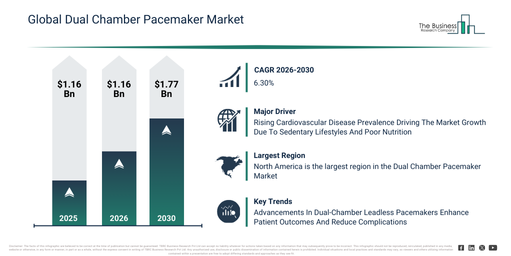
    The dual chamber pacemaker market has observed substantial growth in recent years. It is anticipated to increase from $4.24 billion in 2025 to $4.53 billion in 2026, exhibiting a compound annual growth rate (CAGR) of 6.6%. This historic expansion is largely due to the escalating incidence of atrial fibrillation and bradycardia, the widespread implementation of conventional pacemaker devices, the development of hospital cardiac care infrastructure, an increased understanding of cardiac resynchronization therapy, and a reliance on cardiac procedures conducted in hospitals.

    The dual chamber pacemaker market is projected for substantial expansion over the coming years, reaching $5.78 billion in 2030 at a compound annual growth rate (CAGR) of 6.3%. This anticipated rise during the forecast period is fueled by several factors, including advancements in dual-chamber leadless pacemakers, the integration of remote monitoring and IoT-enabled solutions, increased adoption of home healthcare for cardiac patients, the expansion of ambulatory surgical centers, and the development of more efficient and durable pacemaker batteries. Key developments expected in this period encompass a growing preference for dual-chamber pacemakers in managing arrhythmias, advancements in leadless and minimally invasive pacemaker technologies, an increase in remote cardiac monitoring systems, greater awareness and earlier detection of bradycardia and heart block conditions, and an enhanced focus on patient-centered cardiac care and at-home health solutions.

    Get A Free Sample Report With In-Depth Market Insights:

    https://thebusinessresearchcompany.com/sample_request?id=11990869&type=smp&name=Dual%20Chamber%20Pacemaker%20Market%20Report%202026&utm_source=Blogs&utm_medium=Paid&utm_campaign=Oct_PR

    Dual Chamber Pacemaker Market Development Factors: What’s Supporting Demand?

    The rising incidence of cardiovascular diseases is anticipated to propel the expansion of the dual-chamber pacemaker market moving forward. These medical conditions affect the heart and blood vessels, resulting in issues like heart attacks and strokes. The surge in cardiovascular diseases is predominantly attributed to sedentary lifestyles and poor nutrition, which contribute to obesity and related cardiac problems. A dual-chamber pacemaker aids in treating cardiovascular diseases by regulating the heart’s rhythm through electrical impulses sent to the atrium and ventricle, thereby improving coordination and efficient blood flow. For instance, in January 2024, according to the American Heart Association, a US-based non-profit organization, the age-adjusted death rate from cardiovascular disease increased to 233.3 per 100,000 in 2024, up 4.0% from 224.4 per 100,000 in 2023. Therefore, the growing prevalence of cardiovascular diseases is driving the growth of the dual-chamber pacemaker market.

    Dual Chamber Pacemaker Market Segments: Where Is Growth Concentrated?

    The dual chamber pacemaker market covered in this report is segmented –

    1) By Product Type: Single-Chamber Pacemakers, Dual-Chamber Pacemakers, Biventricular Pacemakers

    2) By Technology: Micra Pacemaker, Conventional Pacemakers, Leadless Pacemakers, Remote Monitoring Systems

    3) By Distribution Channel: Direct Sales, Distributors, Tender-Based Sales

    4) By Application: Atrial Fibrillation, Bradycardia, Heart Block, Cardiac Resynchronization Therapy

    5) By End-User: Hospitals, Cardiac Care Centers, Ambulatory Surgical Centers, Home Healthcare

    Subsegments:

    1) By Single-Chamber Pacemakers: Single-Chamber Leadless Pacemakers, Single-Chamber Conventional Pacemakers

    2) By Dual-Chamber Pacemakers: Dual-Chamber Leadless Pacemakers, Dual-Chamber Conventional Pacemakers

    3) By Biventricular Pacemakers: Cardiac Resynchronization Therapy Pacemakers (CRT-P), Cardiac Resynchronization Therapy Defibrillators (CRT-D)

    Dual Chamber Pacemaker Market Transformation Trends: What Innovations Are Driving Change?

    Major companies operating in the dual-chamber pacemaker market are prioritizing the development of advanced products, such as the dual-chamber leadless pacemaker, to improve patient comfort, reduce infection risks, and extend device longevity. A dual-chamber leadless pacemaker is a small, implantable device that stimulates both the heart’s atrium and ventricle without traditional leads, thereby reducing complications and enhancing cardiac rhythm management. For instance, in July 2023, Abbott Laboratories, a US-based medical device company, launched AVEIR, a dual-chamber leadless pacemaker that had received approval from the U.S. Food and Drug Administration. This innovative system features two miniaturized devices, one for the right atrium and one for the right ventricle, which communicate wirelessly to provide synchronized pacing for patients with abnormal or slow heart rhythms, covering all common pacemaker indications. The leadless design eliminates the need for wires and surgical pockets, consequently reducing complications and improving patient comfort, and clinical trials have demonstrated high safety and efficacy with a 98% implant success rate and over 97% atrioventricular synchrony.

    Dual Chamber Pacemaker Market Competitive Analysis Of Leading Industry Participants

    Major companies operating in the dual chamber pacemaker market are Abbott Laboratories, Medtronic plc, Boston Scientific Corporation, Biotronik SE & Co. KG, LivaNova PLC, Lepu Medical Technology Beijing Co. Ltd., MicroPort Scientific Corporation, Oscor Inc., Sorin Group, EBR Systems Inc., Vitatron, Medico S.p.A., Osypka Medical GmbH, Shree Pacetronix Ltd., Pacetronix Ltd., Medtronic India Pvt. Ltd., Abbott Medical Japan, MicroPort CRM, Biotronik India Pvt. Ltd.

    View The Full Dual Chamber Pacemaker Market Report:

    https://thebusinessresearchcompany.com/report/dual-chamber-pacemaker-global-market-report?utm_source=Blogs&utm_medium=Paid&utm_campaign=Oct_PR

    Dual Chamber Pacemaker Market Geographic Distribution And Regional Opportunities

    North America was the largest region in the dual chamber pacemaker market in 2025. Asia-Pacific is expected to be the fastest-growing region in the forecast period. The regions covered in the dual chamber pacemaker market report are Asia-Pacific, South East Asia, Western Europe, Eastern Europe, North America, South America, Middle East, Africa.

    Reach Out To Our Team:

    The Business Research Company: https://www.thebusinessresearchcompany.com/

    Americas: +1 310-496-7795

    Asia: +44 7882 955267 & +91 8897263534

    Europe: +44 7882 955267

    Email us at: marketing@tbrc.info

    Follow us on:

    LinkedIn: https://in.linkedin.com/company/the-business-research-company

    YouTube: https://www.youtube.com/channel/UC24_fI0rV8cR5DxlCpgmyFQ

    Global Market Model: https://www.thebusinessresearchcompany.com/global-market-model
  • Dry Powder Inhaler Market Size Forecast From 2026 To 2030: Key Industry Trends

    Dry Powder Inhaler Market Size Forecast From 2026 To 2030: Key Industry Trends

    Built to provide research that’s more actionable and strategically valuable, The Business Research Company’s 2026 market reports include market attractiveness analysis, total addressable market sizing, company benchmarking matrices, interactive Excel dashboards, broader supply chain intelligence, emerging startup tracking, and in-depth product insights.

    Dry Powder Inhaler Market Value Analysis: What Growth Lies Ahead Over The Forecast Period?

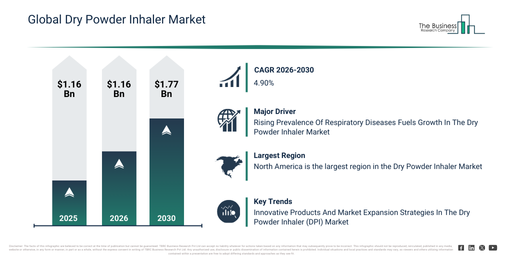
    The dry powder inhaler market has experienced consistent expansion recently. It will grow from $22.18 billion in 2025 to $23.25 billion in 2026 at a compound annual growth rate (CAGR) of 4.8%. This historical growth can be attributed to several factors, including the increasing occurrence of asthma and COPD, the broad adoption of inhalation therapy, advancements in dry powder formulation technologies, the expansion of home-based respiratory care, and the availability of economical inhaler devices.

    The dry powder inhaler market size is anticipated to show steady development over the next few years. It is set to grow to $28.16 billion in 2030, at a compound annual growth rate (CAGR) of 4.9%. This expansion during the forecast period is propelled by the increasing integration of smart inhaler technologies, a rising focus on personalized respiratory care, the broadening scope of remote patient monitoring, a growing demand for environmentally friendly inhalers, and the increasing adoption of digital health ecosystems. Significant trends for the forecast period include the rising adoption of digitally operated inhalers, an increased demand for patient-adherence monitoring, an intensified focus on portable and user-friendly designs, the expansion of multi-dose inhaler platforms, and an enhanced emphasis on dose accuracy.

    Get A Free Sample Report With In-Depth Market Insights:

    https://thebusinessresearchcompany.com/sample_request?id=12525415&type=smp&name=Dry%20Powder%20Inhaler%20Market%20Report%202026&utm_source=Blogs&utm_medium=Paid&utm_campaign=Oct_PR

    Dry Powder Inhaler Market Industry Drivers: What’s Behind The Revenue Growth?

    The expansion of the dry powder inhaler market is anticipated to be significantly boosted by the increasing occurrence of respiratory ailments. These illnesses, often referred to as respiratory disorders or lung diseases, encompass a broad spectrum of medical conditions affecting the respiratory system. Dry powder inhalers are vital in managing respiratory conditions such as asthma, COPD, and cystic fibrosis, as they deliver medication directly to the lungs for optimal effectiveness. They offer a promising alternative to traditional drug delivery methods for respiratory diseases. For instance, in December 2023, a research study published by JAMA Network Open, a medical journal by the American Medical Association, projected that the global burden of chronic obstructive pulmonary disease (COPD) could lead to nearly 600 million cases worldwide by 2050, representing a 23% increase in prevalence. Therefore, the growing prevalence of respiratory diseases will drive the growth of the dry powder inhaler market.

    Dry Powder Inhaler Market Segment Analysis: What Are The Core Market Categories?

    The dry powder inhaler market covered in this report is segmented –

    1) By Product: Single-Dose Inhalers, Multi-Dose Inhalers

    2) By Function: Manually Operated Inhaler Devices, Digitally Operated Inhaler Devices

    3) By Application: Asthma, Chronic Obstructive Pulmonary Disease (COPD), Cystic Fibrosis, Other Applications

    4) By End User: Hospitals And Clinics, Homecare Settings, Ambulatory Surgical Centers, Other End Users

    Subsegments:

    1) By Single-Dose Inhalers: Capsule-Based Inhalers, Diskus-Based Inhalers

    2) By Multi-Dose Inhalers: Blister-Based Inhalers, Rotahaler-Based Inhalers

    #Dry Powder Inhaler Market Growth Trends: What’s Shaping The Future Outlook?

    Leading firms in the dry powder inhaler market are creating novel products incorporating muscarinic antagonists to manage chronic obstructive pulmonary disease (COPD) and broaden their product offerings. A muscarinic antagonist refers to a medication that blocks the muscarinic acetylcholine receptor. This type of drug is effective in controlling and treating a range of conditions, including COPD and organophosphate poisoning. For example, in March 2024, Berry Global, a US-based company recognized for its development and production of diverse flexible packaging solutions, launched its latest dry powder inhaler at Pharmapack, signifying a strategic move into sophisticated drug-delivery technologies. This device is designed to enhance the effectiveness and uniformity of drug administration for respiratory ailments, especially COPD and asthma, where precise dosage and user-friendliness are essential. Its adaptable design enables pharmaceutical companies to customize the inhaler to meet particular formulation requirements, providing increased flexibility during product development. Through the integration of patient-focused features and flexible capabilities, Berry Global seeks to foster innovation within the respiratory therapeutics sector while reinforcing its position as a collaborator for pharmaceutical manufacturers.

    Dry Powder Inhaler Market Leading Companies And Competitive Benchmarking

    Major companies operating in the dry powder inhaler market are Novartis AG, AstraZeneca plc., GlaxoSmithKline Plc, Boehringer Ingelheim GmbH, Viatris (Mylan N.V), Otsuka Pharmaceutical Co. Ltd, Catalent Inc., Aptar Group Inc., Chiesi Farmaceutici S.p.A., Recipharm AB, Cipla Limited, Lupin Limited, Orion Corporation, Hovione, MannKind Corporation, Presspart Manufacturing Ltd, Teva Pharmaceutical Industries Limited, Pharmaxis Ltd., Iconovo AB, SRS Pharmaceuticals Pvt. Ltd.

    View The Full Dry Powder Inhaler Market Report:

    https://thebusinessresearchcompany.com/report/dry-powder-inhaler-global-market-report?utm_source=Blogs&utm_medium=Paid&utm_campaign=Oct_PR

    Dry Powder Inhaler Market Largest Region By Revenue And Market Share

    North America was the largest region in the dry powder inhaler market in 2025. The regions covered in the dry powder inhaler market report are Asia-Pacific, South East Asia, Western Europe, Eastern Europe, North America, South America, Middle East, Africa.

    Reach Out To Our Team:

    The Business Research Company: https://www.thebusinessresearchcompany.com/

    Americas: +1 310-496-7795

    Asia: +44 7882 955267 & +91 8897263534

    Europe: +44 7882 955267

    Email us at: marketing@tbrc.info

    Follow us on:

    LinkedIn: https://in.linkedin.com/company/the-business-research-company

    YouTube: https://www.youtube.com/channel/UC24_fI0rV8cR5DxlCpgmyFQ

    Global Market Model: https://www.thebusinessresearchcompany.com/global-market-model
  • Dry Eye Products Market 2026: Market Size, Growth Drivers And Emerging Opportunities

    Dry Eye Products Market 2026: Market Size, Growth Drivers And Emerging Opportunities

    Backed by market attractiveness analysis, total addressable market sizing, company benchmarking matrices, interactive Excel dashboards, wider supply chain intelligence, emerging startup coverage, and detailed product-level insights, The Business Research Company’s 2026 market reports are designed to offer research that is more actionable and strategically valuable than ever.

    Dry Eye Products Market Size Forecast: How Big Could The Market Get By 2030?

    The dry eye products market has experienced significant growth in recent years. It is anticipated to expand from $8.12 billion in 2025 to $8.62 billion in 2026, demonstrating a compound annual growth rate (CAGR) of 6.2%. Historically, this market expansion can be linked to factors such as increased exposure to screens, a growing elderly population, heightened awareness of dry eye syndrome, wider availability of OTC eye care products, and improved rates of diagnosing ocular surface disorders.

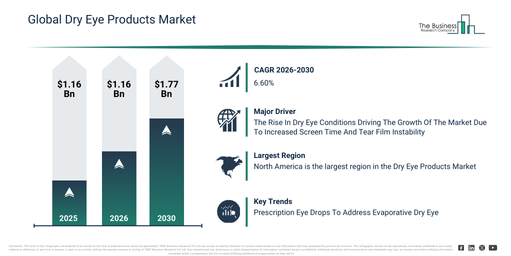
    The dry eye products market is anticipated to experience robust expansion over the next few years. This market is set to reach a valuation of $11.13 billion by 2030, growing at a compound annual growth rate (CAGR) of 6.6%. The expected increase during the forecast period is driven by factors such as an escalating demand for customized eye care solutions, a rise in the adoption of anti-inflammatory treatments for dry eye, the enlargement of e-commerce channels for pharmaceutical sales, a greater emphasis on managing chronic eye conditions, and enhanced product innovation in ocular therapeutics. Significant trends for the forecast period include a growing demand for artificial tears that are preservative-free, increased acceptance of gel-based lubricants, a heightened focus on developing long-lasting dry eye formulations, the expansion of combination therapy products, and an amplified emphasis on symptom-specific treatments.

    Get A Free Sample Report With In-Depth Market Insights:

    https://thebusinessresearchcompany.com/sample_request?id=49498688&type=smp&name=Dry%20Eye%20Products%20Market%20Report%202026&utm_source=Blogs&utm_medium=Paid&utm_campaign=Oct_PR

    Dry Eye Products Market Growth Factors: What’s Supporting Expansion?

    The increasing occurrence of dry eye conditions is anticipated to fuel the expansion of the dry eye products market in the future. A dry eye condition describes a health issue where the eyes either do not generate sufficient tears or tears vanish too rapidly, resulting in discomfort, soreness, and possible harm to the eye’s exterior. This growing prevalence of dry eye conditions largely stems from more screen time, which decreases how often one blinks and accelerates tear evaporation, causing eye dryness and irritation. Dry eye products assist individuals with dry eye conditions by moisturizing the eyes, lessening inflammation, and stabilizing the tear film to alleviate discomfort and enhance overall ocular health. For example, in September 2024, PubMed Central, a US government research repository, reported that a 2024 systematic review determined the global prevalence of dry eye disease to be 11.59%, with combined figures for the United States around 8.1%, thereby demonstrating a significant and increasing impact across various areas. Consequently, the rising prevalence of dry eye conditions is stimulating the growth of the dry eye products market.

    Dry Eye Products Market Segment Breakdown: Which Categories Lead On Revenue?

    The dry eye products market covered in this report is segmented –

    1) By Product Type: Artificial Tears, Anti-Inflammatory Eye Drops, Lubricating Ointments And Gels, Tear Conservation Products, Other Product Types

    2) By Formulation: Preservative-Free Formulations, Preserved Formulations, Gel-Based Formulations, Ointment-Based Formulations

    3) By Drug Category: Prescription Dry Eye Therapies, Over-The-Counter Dry Eye Products

    4) By Disease Severity: Mild Dry Eye, Moderate Dry Eye, Severe Dry Eye

    5) By Distribution Channel: Hospital Pharmacies, Retail Pharmacies, Online Pharmacies And E-Commerce, Ophthalmology And Specialty Clinics

    Subsegments:

    1) By Artificial Tears: Preservative-Free Artificial Tears, Preserved Artificial Tears, Lipid-Based Artificial Tears, Electrolyte-Balanced Artificial Tears

    2) By Anti-Inflammatory Eye Drops: Cyclosporine-Based Eye Drops, Lifitegrast-Based Eye Drops, Corticosteroid Eye Drops (Short-Term Use)

    3) By Lubricating Ointments And Gels: Night-Time Lubricating Ointments, Gel-Based Lubricants, Petrolatum-Based Ointments

    4) By Tear Conservation Products: Punctal Plugs, Tear-Retaining Inserts, Moisture Chamber Eye Shields

    5) By Other Product Types: Rewetting Drops For Contact Lens Users, Dry Eye Relief Sprays, Lid-Margin Cleansing Solutions

    Dry Eye Products Market Industry Trends: What’s Reshaping Demand?

    Major companies in the dry eye products market are prioritizing the development of prescription eye drops, such as perfluorohexyloctane ophthalmic solution, to effectively treat evaporative dry eye and secure a competitive position. Perfluorohexyloctane ophthalmic solution is a specialized eye drop crafted to manage evaporative dry eye by diminishing tear evaporation on the ocular surface. For example, in September 2023, Bausch + Lomb, an eye health products company from Canada, introduced Miebo, a prescription eye drop specifically for addressing dry eye disease by targeting tear evaporation. This product is a perfluorohexyloctane ophthalmic solution designed to alleviate the signs and symptoms of dry eye, particularly in instances of evaporative dry eye. Miebo is a single-ingredient eye drop formulated without water, preservatives, or steroids, which spreads quickly and comfortably, thereby reducing tear evaporation at the ocular surface.

    Dry Eye Products Market Industry Leaders And Competitive Landscape

    Major companies operating in the dry eye products market are Alcon Inc., Johnson & Johnson, AbbVie Inc., Novartis AG, Bausch Health Companies Inc., Santen Pharmaceutical Co. Ltd., Rohto Pharmaceutical Co. Ltd., Otsuka Pharmaceutical Co. Ltd., URSAPHARM Arzneimittel GmbH, AFT Pharmaceuticals Limited, Novaliq GmbH, Théa Pharmaceuticals, Sun Pharmaceutical Industries Ltd., Cipla Ltd., Lupin Limited, Pfizer Inc., Merck & Co. Inc., Bayer AG, Prestige Consumer Healthcare Inc., Similasan AG

    View The Full Dry Eye Products Market Report:

    https://thebusinessresearchcompany.com/report/dry-eye-products-global-market-report?utm_source=Blogs&utm_medium=Paid&utm_campaign=Oct_PR

    Dry Eye Products Market Regional Analysis And Leading Geography

    North America was the largest region in the dry eye products market in 2025. Asia-Pacific is expected to be the fastest-growing region in the forecast period. The regions covered in the dry eye products market report are Asia-Pacific, South East Asia, Western Europe, Eastern Europe, North America, South America, Middle East, Africa.

    Reach Out To Our Team:

    The Business Research Company: https://www.thebusinessresearchcompany.com/

    Americas: +1 310-496-7795

    Asia: +44 7882 955267 & +91 8897263534

    Europe: +44 7882 955267

    Email us at: marketing@tbrc.info

    Follow us on:

    LinkedIn: https://in.linkedin.com/company/the-business-research-company

    YouTube: https://www.youtube.com/channel/UC24_fI0rV8cR5DxlCpgmyFQ

    Global Market Model: https://www.thebusinessresearchcompany.com/global-market-model
  • Drug-Coated Balloons Market Set To Expand From $2.55 Billion In 2026: Growth Outlook Through 2030

    Drug-Coated Balloons Market Set To Expand From $2.55 Billion In 2026: Growth Outlook Through 2030

    Featuring market attractiveness scoring, total addressable market sizing, company benchmarking matrices, interactive Excel dashboards, deeper supply chain intelligence, emerging startup tracking, and granular product-level insights, The Business Research Company’s 2026 market reports are built to deliver research that is both more actionable and more strategically valuable.

    Drug-Coated Balloons Market Revenue Outlook: What CAGR Lies Ahead Through 2030?

    The drug-coated balloons market has shown substantial growth in recent years. This market is expected to expand from $1.24 billion in 2025 to $1.43 billion in 2026, reflecting a compound annual growth rate (CAGR) of 15.5%. Historically, this growth has been driven by the increasing prevalence of cardiovascular diseases, the expansion of interventional cardiology procedures, the early adoption of paclitaxel-coated balloons, a growing demand for restenosis prevention, and advancements in angioplasty techniques.

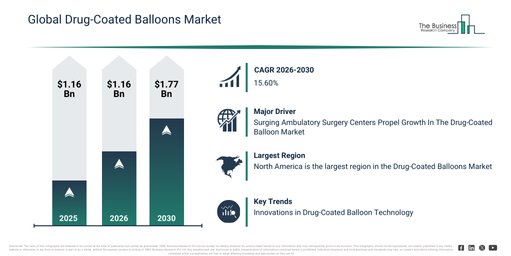
    The drug-coated balloons market size is anticipated to experience substantial growth over the upcoming years. It is projected to reach $2.55 billion in 2030 at a compound annual growth rate (CAGR) of 15.6%. This expansion during the forecast period is primarily driven by the escalating use of dcb therapies in coronary applications, the increasing embrace of next-generation coating technologies, the broadening scope of catheter-based interventions, rising investments in vascular innovation, and a growing preference for stent-free treatment options. Significant trends expected in this period include the increased adoption of sirolimus-coated balloons, a rising deployment of dcbs in peripheral artery disease, a growing inclination towards minimally invasive vascular treatments, the proliferation of advanced drug-coating technologies, and a strengthened focus on improving drug delivery efficiency.

    Get A Free Sample Report With In-Depth Market Insights:

    https://thebusinessresearchcompany.com/sample_request?id=61751896&type=smp&name=Drug-Coated%20Balloons%20Market%20Report%202026&utm_source=Blogs&utm_medium=Paid&utm_campaign=Oct_PR

    Drug-Coated Balloons Market Demand Drivers: What’s Powering Industry Growth?

    The increasing number of ambulatory surgery centers is projected to boost the growth of the drug-coated balloon market moving forward. An Ambulatory Surgical Center (ASC) is defined as a medical facility solely for conducting surgical procedures that do not necessitate an overnight hospital stay. Drug-coated balloons are crucial in ambulatory surgery centers (ASC) due to their typically shorter procedure times compared to standard balloons, which results in improved patient throughput and reduced operational costs in ASCs. For example, in March 2025, the Medicare Payment Advisory Commission (an independent U.S. federal advisory agency) reported that from 2022 through 2023, the count of Medicare-certified ASCs rose by 2.5% to 6,308 ASCs, indicating a net gain of 155 facilities during 2023. Consequently, the expansion in the number of ambulatory surgery centers is propelling the growth of the drug-coated balloon market.

    Drug-Coated Balloons Market Segmentation: How Does The Market Break Down By Category?

    The drug-coated balloons market covered in this report is segmented –

    1) By Product: Drug-Coated Balloons For Peripheral Artery Disease, Drug-Coated Balloons For Coronary Artery Disease

    2) By Drug Type: Paclitaxel, Sirolimus

    3) By End User: Hospitals, Cardiac Catheterization Labs, Ambulatory Surgical Centers

    Subsegments:

    1) By Drug-Coated Balloons For Peripheral Artery Disease: Paclitaxel-Coated Balloons, Sirolimus-Coated Balloons

    2) By Drug-Coated Balloons For Coronary Artery Disease: Paclitaxel-Coated Balloons, Sirolimus-Coated Balloons

    Drug-Coated Balloons Market Innovation Trends: What Developments Are Reshaping The Industry?

    Leading companies engaged in drug-coated balloons are dedicated to advancing their technologies, such as paclitaxel-coated balloon catheters, with the aim of improving treatment efficacy for conditions like coronary in-stent restenosis, enhancing patient outcomes, and reducing the risks of complications associated with traditional therapies. Paclitaxel-coated balloon catheters are devices engineered to release the drug paclitaxel into the artery wall when inflated, thereby helping to prevent re-narrowing following angioplasty. For instance, in March 2024, Boston Scientific Corporation, a US-based medical device company, obtained US Food and Drug Administration (FDA) approval for its AGENTTM Drug-Coated Balloon (DCB). This device is intended for the management of coronary in-stent restenosis (ISR) in patients with coronary artery disease, which occurs when a stented blood vessel becomes blocked or narrowed due to plaque or scar tissue.

    Drug-Coated Balloons Market Key Participants And Competitive Landscape

    Major companies operating in the drug-coated balloons market are Boston Scientific Corporation, Medtronic plc, Abbott Laboratories, B. Braun Melsungen AG, Terumo Corporation, Biotronik SE & Co. KG, Biosensors International Group Ltd, Concept Medical Inc., Acotec Scientific AG, Cardionovum GmbH, MedAlliance SA, iVascular SLU, Minvasys SAS, QT Vascular Ltd, Hexacath SAS, Cordis Corporation, MicroPort Scientific Corporation, Endocor GmbH, Orchestra BioMed Inc., Lepu Medical Technology Co. Ltd, Balton Sp. z o.o., BrosMed Medical Co. Ltd

    View The Full Drug-Coated Balloons Market Report:

    https://thebusinessresearchcompany.com/report/drug-coated-balloons-global-market-report?utm_source=Blogs&utm_medium=Paid&utm_campaign=Oct_PR

    Drug-Coated Balloons Market Geographic Analysis: Where Is Demand Accelerating Fastest?

    North America was the largest region in the global drug-coated balloons market in 2025. Asia-Pacific is expected to be the fastest-growing region in the forecast period. The regions covered in the drug-coated balloons market report are Asia-Pacific, South East Asia, Western Europe, Eastern Europe, North America, South America, Middle East, Africa.

    Reach Out To Our Team:

    The Business Research Company: https://www.thebusinessresearchcompany.com/

    Americas: +1 310-496-7795

    Asia: +44 7882 955267 & +91 8897263534

    Europe: +44 7882 955267

    Email us at: marketing@tbrc.info

    Follow us on:

    LinkedIn: https://in.linkedin.com/company/the-business-research-company

    YouTube: https://www.youtube.com/channel/UC24_fI0rV8cR5DxlCpgmyFQ

    Global Market Model: https://www.thebusinessresearchcompany.com/global-market-model