Category: Medical Equipment

  • Drug Screening Market Size And Growth In 2026: Key Factors Shaping Future Demand

    Drug Screening Market Size And Growth In 2026: Key Factors Shaping Future Demand

    Built to provide research that’s more actionable and strategically valuable, The Business Research Company’s 2026 market reports include market attractiveness analysis, total addressable market sizing, company benchmarking matrices, interactive Excel dashboards, broader supply chain intelligence, emerging startup tracking, and in-depth product insights.

    Drug Screening Market Growth Analysis: How Will Revenue Trend Over The Forecast Period?

    The drug screening market has experienced substantial expansion in recent times. The market is anticipated to expand from $9.72 billion in 2025 to $11.18 billion in 2026, exhibiting a compound annual growth rate (CAGR) of 15.0%. Historically, this growth was driven by factors such as the rise in workplace drug testing initiatives, the broadening of clinical trial endeavors, heightened screening demands from law enforcement, the proliferation of diagnostic laboratories, and the wider accessibility of rapid test kits.

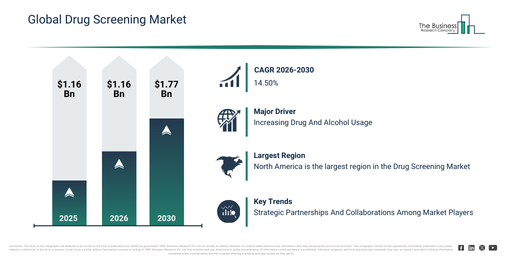
    The drug screening market size is projected to experience substantial growth over the next few years. It is anticipated to expand to $19.2 billion in 2030, with a compound annual growth rate (CAGR) of 14.5%. This growth during the forecast period is driven by factors such as the increasing adoption of AI-enabled screening analytics, a rising demand for portable drug testing devices, the expansion of regulatory drug compliance testing, the growing utilization of real-time reporting systems, and innovations in multi-panel drug screening. Significant trends expected in the forecast period include the increasing uptake of rapid drug testing kits, the rising use of automated laboratory screening systems, the growing integration of digital reporting solutions, the expansion of point-of-care drug testing, and an enhanced focus on high-accuracy detection.

    Get A Free Sample Report With In-Depth Market Insights:

    https://thebusinessresearchcompany.com/sample_request?id=72144461&type=smp&name=Drug%20Screening%20Market%20Report%202026&utm_source=Blogs&utm_medium=Paid&utm_campaign=Oct_PR

    Drug Screening Market Growth Drivers: What’s Behind The Acceleration?

    The increasing consumption of drugs and alcohol is anticipated to propel the expansion of the drug screening market in the coming period. Drug addiction is defined as a condition impacting an individual’s brain and behavior, leading to an inability to manage the use of either legal or illegal drugs or medications. Substances such as alcohol, marijuana, and nicotine are also classified as drugs. As addiction to drugs and alcohol rises, the likelihood of contracting diseases increases, which in turn fuels the necessity for drug screening. For instance, according to a June 2025 report from the Austria-based United Nations Office on Drugs and Crime, 316 million individuals, representing six percent of the population aged 15 to 64, used a drug (excluding alcohol and tobacco) in 2023. Cannabis remained the most prevalent drug, with 244 million users, followed by opioids at 61 million, amphetamines at 30.7 million, cocaine at 25 million, and “ecstasy” at 21 million. Therefore, the escalating intake of drugs and alcohol is a significant driver of growth for the drug screening market during the forecast period.

    Drug Screening Market Segment Trends And Revenue Contributors

    The drug screening market covered in this report is segmented –

    1) By Products: Rapid Testing Devices, Consumables, Other Products

    2) By Sample Type: Oral Fluid Sample, Hair Sample, Urine Sample, Breath Sample, Other Sample Types

    3) By End User: Drug Testing Laboratories, Workplaces, Criminal Justice and Law Enforcement Agencies, Hospitals, Drug Treatment Centers, Individual Users, Pain Management Centers, Schools and Colleges

    Subsegments:

    1) By Rapid Testing Devices: Urine Drug Test Kits, Saliva Drug Test Kits, Blood Drug Test Devices, Instant Test Strips

    2) By Consumables: Reagents and Assays, Sample Collection Devices, Calibration Standards

    3) By Other Products: Laboratory Equipment, Software Solutions, Storage and Transport Solutions

    Drug Screening Market Trends: What’s Defining The Industry’s Next Phase?

    Leading companies active in the drug screening market are increasingly concentrating on forming strategic alliances and cooperative ventures to strengthen their financial standing, enhance their product portfolios, and broaden their geographic reach. A strategic collaboration entails an agreement between two or more entities to pursue a common set of objectives while each organization maintains its independent status. For instance, in February 2025, Neopharma Technologies, a Canada-based drug testing company, and Impairment Science, a United States-based cognitive assessment company, announced a strategic partnership designed to revolutionize drug and impairment testing. This collaboration merges Neopharma’s NEOVAULT platform, which digitally processes and reports rapid drug test results, with Impairment Science’s DRUID cognitive impairment assessment, an AI-driven tool for evaluating functional impairment. By integrating these two distinct technologies, the partnership aims to elevate the accuracy and relevance of drug screening, providing real-time insights into both drug presence and functional impairment. This joint effort could potentially enhance workplace safety, regulatory compliance, and decision-making in safety-sensitive environments through the application of AI and digital reporting technologies.

    Drug Screening Market Top Companies Driving Competitive Growth

    Major companies operating in the drug screening market are Laboratory Corporation, Quest Diagnostics Incorporated, OraSure Technologies Inc., Alfa Scientific Designs Inc., Abbott Laboratories, Thermo Fisher Scientific Inc., Drägerwerk AG & Co. KGaA, LifeLoc Technologies Inc., MPD Inc., Omega Laboratories Inc., Premier Biotech Inc., Psychemedics Corporation, F. Hoffmann-La Roche Ltd., Shimadzu Corporation, Siemens Healthineers AG, Medtox Scientific Inc., American Screening Corporation, Clinical Reference Laboratory Inc., Express Diagnostics International Inc., Global Drug Testing Services, Kroll Laboratory Specialists Inc., Medscreen Laboratories, National Screening Centers Inc., American Bio Medica Corporation, Mayo Clinic Laboratories, ACM Global Laboratories, Intertek Group plc, Eurofins Scientific SE

    View The Full Drug Screening Market Report:

    https://thebusinessresearchcompany.com/report/drug-screening-global-market-report?utm_source=Blogs&utm_medium=Paid&utm_campaign=Oct_PR

    Drug Screening Market Global Footprint: Which Region Leads The Industry?

    North America was the largest region in the drug screening market in 2025. Asia-Pacific is expected to be the fastest-growing region in the drug screening market during the forecast period. The regions covered in the drug screening market report are Asia-Pacific, South East Asia, Western Europe, Eastern Europe, North America, South America, Middle East, Africa.

    Reach Out To Our Team:

    The Business Research Company: https://www.thebusinessresearchcompany.com/

    Americas: +1 310-496-7795

    Asia: +44 7882 955267 & +91 8897263534

    Europe: +44 7882 955267

    Email us at: marketing@tbrc.info

    Follow us on:

    LinkedIn: https://in.linkedin.com/company/the-business-research-company

    YouTube: https://www.youtube.com/channel/UC24_fI0rV8cR5DxlCpgmyFQ

    Global Market Model: https://www.thebusinessresearchcompany.com/global-market-model
  • Drug Infusion Systems Market Forecast 2026–2030: Market Size, Trends And Growth Opportunities

    Drug Infusion Systems Market Forecast 2026–2030: Market Size, Trends And Growth Opportunities

    Backed by market attractiveness analysis, total addressable market sizing, company benchmarking matrices, interactive Excel dashboards, wider supply chain intelligence, emerging startup coverage, and detailed product-level insights, The Business Research Company’s 2026 market reports are designed to offer research that is more actionable and strategically valuable than ever.

    Drug Infusion Systems Market Forecast: What Value Will The Market Reach By 2030?

    The drug infusion systems market has experienced significant expansion in recent years. It is forecast to grow from $14.23 billion in 2025 to $15.51 billion in 2026, at a compound annual growth rate (CAGR) of 9.0%. This past growth can be ascribed to elements such as an uptick in hospitalization rates, the increasing prevalence of chronic conditions, the expansion of oncology and chemotherapy interventions, the rising application of intravenous drug delivery, and improved access to infusion technologies.

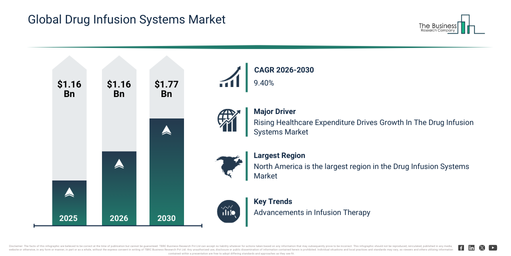
    The drug infusion systems market size is projected to experience substantial growth in the upcoming years. It is set to expand to $22.23 billion by 2030, achieving a compound annual growth rate (CAGR) of 9.4%. This anticipated growth during the forecast period stems from factors such as the increasing integration of connected infusion systems, a greater need for ambulatory and homecare infusion solutions, the broadening of precision drug delivery methods, an intensified emphasis on workflow automation within hospitals, and amplified investments in intelligent healthcare infrastructure. Key trends observed throughout the forecast period encompass a surge in the embrace of smart infusion pumps, increased incorporation of dose error reduction systems, wider utilization of multi-channel infusion devices, the proliferation of home-based infusion therapies, and a heightened emphasis on features designed for patient safety.

    Get A Free Sample Report With In-Depth Market Insights:

    https://thebusinessresearchcompany.com/sample_request?id=51795851&type=smp&name=Drug%20Infusion%20Systems%20Market%20Report%202026&utm_source=Blogs&utm_medium=Paid&utm_campaign=Oct_PR

    Drug Infusion Systems Market Growth Factors Behind Sustained Expansion

    Increasing healthcare expenditure is anticipated to boost the expansion of the drug infusion systems market in the future. Healthcare expenditure represents the overall sum allocated to healthcare products and services within a specific timeframe, usually a year. With a rise in healthcare spending, medical facilities such as hospitals and clinics acquire greater funds to invest in sophisticated drug infusion systems, consequently driving up the demand for these products. An example illustrating this trend is data from May 2024, where reports from the Office for National Statistics (ONS), a UK national statistical institute, indicated that total healthcare spending increased by 5.6% in nominal terms between 2022 and 2023, a significant jump from the 0.9% growth rate seen in 2022. Consequently, the expanding healthcare expenditure is projected to fuel the advancement of the drug infusion systems market.

    Drug Infusion Systems Market Segment Analysis Spotlighting Growth Areas

    The drug infusion systems market covered in this report is segmented –

    1) By Product Type: Elastomeric Infusion System, Disposable Infusion System, Syringe Infusion System, Peristaltic Pump, Multi-Channel Pump, Patient-Controlled Analgesia (PCA) Pump, Insulin Pump, Implantable Infusion System

    2) By Route Of Administration: Intravenous, Subcutaneous, Arterial, Epidural, Other Routes Of Administration

    3) By Application: Oncology And Chemotherapy, Diabetes, Analgesia, Nutrition, Hematology, Pediatrics, Other Applications

    4) By End User: Hospitals, Ambulatory Surgical Centers, Diagnostic Centers, Other End Users

    Subsegments:

    1) By Elastomeric Infusion System: Non-Vented Elastomeric Pumps, Vented Elastomeric Pumps

    2) By Disposable Infusion System: Disposable Infusion Pumps, IV Sets With Disposable Components

    3) By Syringe Infusion System: Manual Syringe Infusion Pumps, Electric Syringe Infusion Pumps

    4) By Peristaltic Pump: Single-Channel Peristaltic Pumps, Multi-Channel Peristaltic Pumps

    5) By Multi-Channel Pump: Multi-Channel Infusion Pumps For General Use, Multi-Channel Pumps For Specific Therapies

    6) By Patient-Controlled Analgesia (PCA) Pump: Electronic PCA Pumps, Mechanical PCA Pumps

    7) By Insulin Pump: Continuous Subcutaneous Insulin Infusion (CSII) Pumps, Patch Insulin Pumps

    8) By Implantable Infusion System: Implantable Pumps For Chronic Pain, Implantable Pumps For Chemotherapy

    Drug Infusion Systems Market Industry Trends Fueling Future Revenue Growth

    Major companies in the drug infusion systems market are advancing technology, such as cloud-based infusion management systems, to enhance patient care, improve accuracy, and streamline the management of infusion therapies. Cloud-based infusion management systems are digital platforms that facilitate the monitoring, administration, and tracking of medication infusions via the cloud. For instance, in June 2023, Eitan Medical, a US-based global leader in advanced infusion therapy and drug delivery solutions, introduced Eitan Insights, a new cloud-based infusion management system specifically designed for the unique demands of home and specialty infusions. Eitan Insights is engineered to provide healthcare professionals with real-time data and analytics, enabling them to remotely oversee patients and modify treatment plans as necessary. This system improves medication safety by decreasing the likelihood of errors and enhancing adherence to prescribed protocols.

    Drug Infusion Systems Market Leading Players And Competitive Positioning

    Major companies operating in the drug infusion systems market are Medtronic plc, Baxter International Inc., B. Braun Melsungen AG, Becton Dickinson and Company, Smiths Group plc, Terumo Corporation, Fresenius SE & Co. KGaA, ICU Medical Inc., Tandem Diabetes Care Inc., Insulet Corporation, Ypsomed Holding AG, Abbott Diabetes Care Inc., Flowonix Medical Inc., Zyno Medical Inc., IRadimed Corporation, Debiotech S.A., Valeritas Inc., Disetronic Medical Systems AG, Alaris Health Systems Inc., Hospira Inc., Mindray Medical International Limited

    View The Full Drug Infusion Systems Market Report:

    https://thebusinessresearchcompany.com/report/drug-infusion-systems-global-market-report?utm_source=Blogs&utm_medium=Paid&utm_campaign=Oct_PR

    Drug Infusion Systems Market Regional Distribution: Which Areas Power Market Growth?

    North America was the largest region in the drug infusion systems market in 2025. Asia-Pacific is expected to be the fastest-growing region in the global drug infusion systems market report during the forecast period. The regions covered in the drug infusion systems market report are Asia-Pacific, South East Asia, Western Europe, Eastern Europe, North America, South America, Middle East, Africa.

    Reach Out To Our Team:

    The Business Research Company: https://www.thebusinessresearchcompany.com/

    Americas: +1 310-496-7795

    Asia: +44 7882 955267 & +91 8897263534

    Europe: +44 7882 955267

    Email us at: marketing@tbrc.info

    Follow us on:

    LinkedIn: https://in.linkedin.com/company/the-business-research-company

    YouTube: https://www.youtube.com/channel/UC24_fI0rV8cR5DxlCpgmyFQ

    Global Market Model: https://www.thebusinessresearchcompany.com/global-market-model
  • Drug Eluting Stent Market Size Reaches $8.94 Billion In 2026: What Is Driving Growth?

    Drug Eluting Stent Market Size Reaches $8.94 Billion In 2026: What Is Driving Growth?

    Featuring market attractiveness scoring, total addressable market sizing, company benchmarking matrices, interactive Excel dashboards, deeper supply chain intelligence, emerging startup tracking, and granular product-level insights, The Business Research Company’s 2026 market reports are built to deliver research that is both more actionable and more strategically valuable.

    Drug Eluting Stent Market Size Outlook: How Quickly Will Revenue Expand Through 2030?

    The drug eluting stent market size has experienced robust expansion in recent years. It is anticipated to increase from $8.26 billion in 2025 to $8.94 billion in 2026, achieving a compound annual growth rate (CAGR) of 8.2%. The historical development can be ascribed to an escalating prevalence of coronary artery disease, an uptick in percutaneous coronary intervention procedures, a growing occurrence of lifestyle-related cardiovascular conditions, the broadening of cardiac catheterization labs, and enhanced clinical outcomes when compared to bare-metal stents.

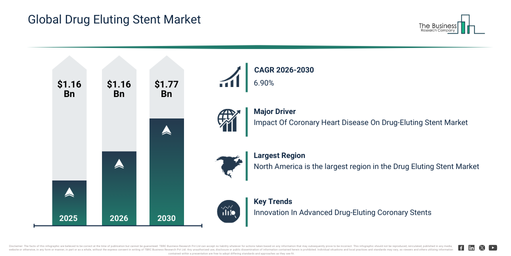
    The drug eluting stent market is projected to experience substantial expansion over the upcoming years. It is anticipated to reach $11.7 billion in 2030, exhibiting a compound annual growth rate (CAGR) of 6.9%. This growth during the forecast period is attributable to factors such as an expanding aging population, a heightened demand for minimally invasive cardiac procedures, increasing awareness regarding advanced stent technologies, the proliferation of specialty cardiac clinics, and increased healthcare spending on cardiovascular care. Significant trends expected during this period involve the increasing adoption of biodegradable polymer stents, a growing inclination towards polymer-free drug-eluting stents, their expanded application in complex coronary interventions, a movement towards long-term restenosis prevention, and a heightened demand for enhanced drug release control.

    Get A Free Sample Report With In-Depth Market Insights:

    https://thebusinessresearchcompany.com/sample_request?id=71881914&type=smp&name=Drug%20Eluting%20Stent%20Market%20Report%202026&utm_source=Blogs&utm_medium=Paid&utm_campaign=Oct_PR

    Drug Eluting Stent Market Demand Drivers Opening New Revenue Streams

    The increasing prevalence of coronary heart disease (CHD) is anticipated to drive expansion in the drug-eluting stent market moving ahead. CHD refers to a condition characterized by the constriction or obstruction of coronary arteries from plaque accumulation, which can result in serious issues like heart attacks or angina. Factors contributing to the rise in coronary heart disease include inactive lifestyles, inadequate nutrition, an aging global demographic, and improved diagnostic awareness. Drug-eluting stents (DES) offer advantages in treating coronary heart disease by efficiently unblocking constricted arteries and delivering drugs to inhibit the re-narrowing, known as restenosis, of these vessels. As an illustration, data from August 2025, provided by the National Center for Biotechnology Information, a US governmental body, indicates that from 2025 to 2050, cardiovascular disease is forecasted to experience a substantial surge, with its prevalence climbing by 90.0%, crude mortality by 73.4%, and crude DALYs by 54.7%. This trajectory suggests approximately 35.6 million cardiovascular deaths by 2050, an increase from 20.5 million in 2025. This growing incidence of coronary heart disease is anticipated to fuel the expansion of the drug-eluting stent market.

    Drug Eluting Stent Market Segment Performance And Emerging Opportunities

    The drug eluting stent market covered in this report is segmented –

    1) By Product: Polymer-Based, Polymer-Free

    2) By Drug: Sirolimus, Paclitaxel, Zotarolimus, Everolimus, Biolimus, Other Drugs

    3) By Scaffold: Cobalt-Chromium, Platinum-Chromium, Nitinol, Biodegradable, Other Scaffolds

    4) By Application: Coronary Diseases, Peripheral Vascular Diseases

    5) By End-User: Hospitals, Specialty Clinics

    Subsegments:

    1) By Polymer-Based: Durable Polymer Drug-Eluting Stents, Biodegradable Polymer Drug-Eluting Stents

    2) By Polymer-Free: Bare-Metal Stents With Drug Coating, Other Polymer-Free Drug-Eluting Stents

    Drug Eluting Stent Market Trends Powering Strategic Industry Growth

    Leading companies within the drug eluting stent market are concentrating on developing innovative products, such as low-profile, high-flexibility stents, to enhance deliverability in complex coronary anatomies and improve patient outcomes. These specific stents are drug eluting stents engineered with a reduced crossing profile and increased flexibility, allowing for easier navigation through narrow, tortuous, or calcified coronary arteries, while maintaining effective drug delivery to prevent restenosis. For example, in May 2024, Abbott Laboratories, a U.S.-based global healthcare company, launched the XIENCE Sierra Everolimus Eluting Coronary Stent System in India. The XIENCE Sierra features a novel stent design offering best-in-class deliverability, with significantly reduced crossing force when compared to competitors. It also incorporates a thinner balloon and an optimized MULTI LINK structure that enhances flexibility, while its high longitudinal strength ensures scaffold stability and resistance to deformation. Additionally, it provides a wide expansion range, permitting precise treatment even when vessel diameters vary markedly along the lesion, enabling interventional cardiologists to treat complex, calcified, or difficult-to-reach lesions with improved precision and safety.

    Drug Eluting Stent Market Competitive Overview And Top Companies

    Major companies operating in the drug eluting stent market are Abbott Laboratories, Boston Scientific Corporation, Medtronic plc, Terumo Corporation, BIOTRONIK SE & Co KG, Biosensors International Group Ltd, MicroPort Scientific Corporation, Lepu Medical Technology Beijing Co Ltd, Meril Life Sciences Pvt Ltd, Sahajanand Medical Technologies Pvt Ltd, Alvimedica Medical Technologies, Balton Sp z oo, Cordis (Cardinal Health) DES Manufacturing, Shandong JW Medical Systems Ltd, Sino Medical Sciences Technology Inc, STENTYS SA, Relisys Medical Devices Ltd, Translumina GmbH, Eurocor GmbH, Elixir Medical Corporation

    View The Full Drug Eluting Stent Market Report:

    https://thebusinessresearchcompany.com/report/drug-eluting-stent-global-market-report?utm_source=Blogs&utm_medium=Paid&utm_campaign=Oct_PR

    Drug Eluting Stent Market Leading Geography: Which Region Contributes The Most Revenue?

    North America was the largest region in the drug-eluting stent market in 2025. Asia-Pacific is expected to be the fastest-growing region in the forecast period. The regions covered in the drug eluting stent market report are Asia-Pacific, South East Asia, Western Europe, Eastern Europe, North America, South America, Middle East, Africa.

    Reach Out To Our Team:

    The Business Research Company: https://www.thebusinessresearchcompany.com/

    Americas: +1 310-496-7795

    Asia: +44 7882 955267 & +91 8897263534

    Europe: +44 7882 955267

    Email us at: marketing@tbrc.info

    Follow us on:

    LinkedIn: https://in.linkedin.com/company/the-business-research-company

    YouTube: https://www.youtube.com/channel/UC24_fI0rV8cR5DxlCpgmyFQ

    Global Market Model: https://www.thebusinessresearchcompany.com/global-market-model
  • Drug Eluting Balloons Catheters Market Valued At $2.92 Billion In 2026: Key Trends And Growth Drivers

    Drug Eluting Balloons Catheters Market Valued At $2.92 Billion In 2026: Key Trends And Growth Drivers

    Built to provide research that’s more actionable and strategically valuable, The Business Research Company’s 2026 market reports include market attractiveness analysis, total addressable market sizing, company benchmarking matrices, interactive Excel dashboards, broader supply chain intelligence, emerging startup tracking, and in-depth product insights.

    Drug Eluting Balloons Catheters Market Size, Value And Growth Trajectory Through 2030

    The drug eluting balloons catheters market size has seen rapid growth in recent years. This market is expected to increase from $1.65 billion in 2025 to $1.86 billion in 2026, demonstrating a compound annual growth rate (CAGR) of 12.5%. The expansion witnessed during the historic period is due to factors such as the rising incidence of coronary artery disease, the increasing adoption of percutaneous coronary interventions, advancements in balloon catheter materials, the clinical acceptance of paclitaxel-coated devices, and the proliferation of interventional cardiology centers.

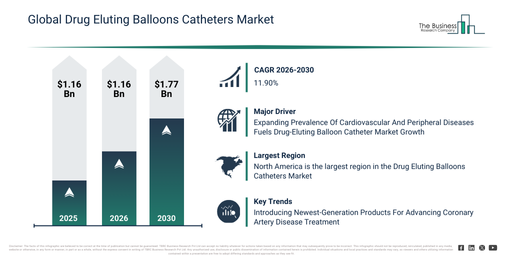
    The drug eluting balloons catheters market size is anticipated to undergo substantial growth in the forthcoming years. It is projected to expand to $2.92 billion in 2030, demonstrating a compound annual growth rate (CAGR) of 11.9%. This expansion throughout the forecast period stems from the escalating demand for minimally invasive vascular therapies, the increasing embrace of sirolimus-based balloons, the broadening array of peripheral vascular disease treatments, rising investments in next-generation catheter technologies, and a greater emphasis on long-term patient outcomes. Significant developments foreseen in this period encompass the growing adoption of drug-coated balloon technologies, their increased utilization in coronary and peripheral interventions, an evolving preference for stent-free treatment options, the advancement of sophisticated drug coating techniques, and a sharpened focus on preventing restenosis.

    Get A Free Sample Report With In-Depth Market Insights:

    https://thebusinessresearchcompany.com/sample_request?id=82733096&type=smp&name=Drug%20Eluting%20Balloons%20Catheters%20Market%20Report%202026&utm_source=Blogs&utm_medium=Paid&utm_campaign=Oct_PR

    Drug Eluting Balloons Catheters Market Growth Backed By Core Demand Fundamentals

    The increasing occurrence of peripheral and cardiovascular ailments is projected to drive expansion in the drug-eluting balloon catheter market in the future. Cardiovascular diseases (CVDs) encompass various conditions affecting the heart and circulatory system, while peripheral artery disease (PAD) is characterized by constricted arteries limiting blood flow mainly to the limbs. Drug-eluting balloon catheters offer a therapeutic approach for coronary artery disease (CAD), utilizing a semi-compliant angioplasty balloon covered with an anti-proliferative agent, designed to exert an anti-restenotic impact upon insertion into a blood vessel. A notable example is data from January 2024, where the American Heart Association, a US-based non-profit organization, reported that the age-adjusted cardiovascular disease mortality rate climbed to 233.3 deaths per 100,000 in 2024, representing a 4.0% year-on-year increase from 224.4 deaths per 100,000 in 2023. Consequently, the rising incidence of peripheral and cardiovascular conditions is fueling the drug-eluting balloon catheter market.

    Drug Eluting Balloons Catheters Market Segment Landscape And Growth Outlook

    The drug eluting balloons catheters market covered in this report is segmented –

    1) By Product: Coronary Artery Disease, Peripheral Vascular Disease, Drug-Eluting Balloon Catheters

    2) By Drug: Paclitaxel, Sirolimus, Other Drugs

    3) By Raw Material: Nylon, Polyurethane, Other Raw Materials

    4) By End-User: Hospitals And Clinics, Ambulatory Surgical Centers, Catheterization Laboratories

    Subsegments:

    1) By Coronary Artery Disease: Coronary Drug-Eluting Balloon Catheters, Coronary In-Stent Restenosis Drug-Eluting Balloon Catheters, Coronary Small-Vessel Drug-Eluting Balloon Catheters

    2) By Peripheral Vascular Disease: Drug-Eluting Balloon Catheters, Femoro-Popliteal Drug-Eluting Balloon Catheters, Below-the-Knee (BTK) Drug-Eluting Balloon Catheters

    3) By Drug-Eluting Balloon Catheters: Drug-Eluting Angioplasty Balloon Catheters

    Drug Eluting Balloons Catheters Market Growth Trends Reshaping The Competitive Landscape

    Key players within the drug-eluting balloon catheter market are intensifying their efforts to create cutting-edge, next-generation products incorporating sophisticated technologies, aiming to secure a competitive advantage. For example, in March 2024, Boston Scientific Corporation, a US-based biomedical/biotechnology engineering and medical device manufacturing multinational, declared that its AGENT Drug-Coated Balloon (DCB) had received approval from the U.S. Food and Drug Administration (FDA). The AGENT DCB represents the first drug-coated coronary balloon available in the U.S. designed to address in-stent restenosis (ISR), a condition characterized by plaque or scar tissue obstructing a vessel that has been stented. This device incorporates a paclitaxel coating which delivers a therapeutic dosage directly to the vessel wall, thereby lowering the chances of ISR recurring without requiring further stents or radiation therapy. Clinical studies demonstrated a 49% decrease in heart attack risk at the treated location and indicated minimal occurrences of adverse events.

    Drug Eluting Balloons Catheters Market Competitive Landscape: Which Companies Lead The Industry?

    Major companies operating in the drug eluting balloons catheters market are Abbott Laboratories, Medtronic PLC, Boston Scientific Corporation, B Braun Melsungen Aktiengesellschaft, Terumo Corporation, Cook Medical LLC, Lepu Medical Technology Co. Ltd., Meril Life Sciences Pvt. Ltd., MicroPort Scientific Corporation, BIOTRONIK SE & Co. KG, Acotec Scientific Co. Ltd., Cordis Corporation, Biosensors International Group Ltd., Zylox-Tonbridge Medical Technology Co. Ltd., Hexacath Limited, Zhejiang Barty Medical Technology Co. Ltd., Cardionovum GmbH, Nano Therapeutics Pvt. Ltd., Tokai Medical Products Inc., Opto Circuits Limited, Acrostak (Schweiz) AG, Concept Medical Inc., Aachen Resonance GmbH, AR Baltic Medical UAB

    View The Full Drug Eluting Balloons Catheters Market Report:

    https://thebusinessresearchcompany.com/report/drug-eluting-balloons-catheters-global-market-report?utm_source=Blogs&utm_medium=Paid&utm_campaign=Oct_PR

    Drug Eluting Balloons Catheters Market Regional Outlook: Where Is Opportunity Concentrated?

    North America was the largest region in the drug eluting balloons catheters market in 2025. Asia-Pacific is expected to be the fastest-growing region in the forecast period. The regions covered in the drug eluting balloons catheters market report are Asia-Pacific, South East Asia, Western Europe, Eastern Europe, North America, South America, Middle East, Africa.

    Reach Out To Our Team:

    The Business Research Company: https://www.thebusinessresearchcompany.com/

    Americas: +1 310-496-7795

    Asia: +44 7882 955267 & +91 8897263534

    Europe: +44 7882 955267

    Email us at: marketing@tbrc.info

    Follow us on:

    LinkedIn: https://in.linkedin.com/company/the-business-research-company

    YouTube: https://www.youtube.com/channel/UC24_fI0rV8cR5DxlCpgmyFQ

    Global Market Model: https://www.thebusinessresearchcompany.com/global-market-model
  • Drug Device Combination Market Size In 2026: Growth Outlook And Forecast Through 2030

    Drug Device Combination Market Size In 2026: Growth Outlook And Forecast Through 2030

    Backed by market attractiveness analysis, total addressable market sizing, company benchmarking matrices, interactive Excel dashboards, wider supply chain intelligence, emerging startup coverage, and detailed product-level insights, The Business Research Company’s 2026 market reports are designed to offer research that is more actionable and strategically valuable than ever.

    Drug Device Combination Market CAGR Outlook And Future Development

    The drug device combination market has seen rapid expansion in recent years. Its value is expected to rise from $144.22 billion in 2025 to $161.48 billion in 2026, achieving a compound annual growth rate (CAGR) of 12.0%. This historical growth can be attributed to the escalating prevalence of chronic diseases, the broadening of injectable drug therapies, advancements in biologics development, an uptick in the use of self-administration devices, and an increase in regulatory approvals for combination products.

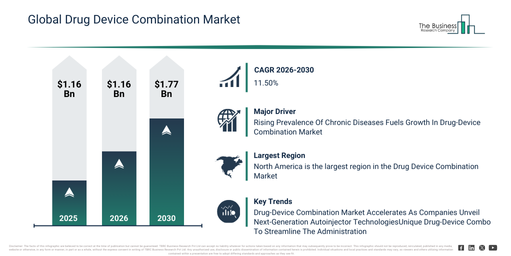
    The drug device combination market is anticipated to experience substantial expansion over the upcoming years. This market is projected to reach $249.33 billion in 2030, exhibiting a compound annual growth rate (CAGR) of 11.5%. This expansion during the forecast period is primarily driven by factors such as the rising adoption of personalized medicine, greater investments in digital therapeutics, the broadening of home-based drug delivery, an increasing need for connected medical devices, and a heightened emphasis on precision drug targeting. Key trends anticipated for this period encompass a greater uptake of smart drug delivery devices, an escalating demand for patient-focused combination products, the progressing integration of digital monitoring within drug delivery, the expansion of systems for targeted therapy delivery, and a strengthened focus on personalized treatment platforms.

    Get A Free Sample Report With In-Depth Market Insights:

    https://thebusinessresearchcompany.com/sample_request?id=35104213&type=smp&name=Drug%20Device%20Combination%20Market%20Report%202026&utm_source=Blogs&utm_medium=Paid&utm_campaign=Oct_PR

    Drug Device Combination Market Growth Catalysts And Demand Drivers

    The expanding occurrence of chronic illnesses is projected to fuel the drug-device combination market. A chronic disease is defined as an ailment lasting a minimum of one year, interfering with daily life, requiring ongoing medical attention, or both. Examples of such conditions include heart disease, diabetes, among others. Drug-device combination products assist in managing chronic diseases by combining specific medications with supportive delivery systems, which facilitates more accurate dosage, enhances patient compliance, and leads to improved long-term condition management. As an illustration, information from June 2024, provided by the National Health Service, a UK-based government department, revealed that 3,615,330 people registered with a general practitioner (GP) received a diagnosis of non-diabetic hyperglycemia or pre-diabetes (a condition with elevated blood sugar levels, not high enough to be classified as diabetes) in 2023. This represented an 18% rise compared to 3,065,825 cases recorded in 2022. Consequently, the rising occurrence of chronic diseases is propelling the expansion of the drug-device combination market.

    Drug Device Combination Market Breakdown By Product Type And Application

    The drug device combination market covered in this report is segmented –

    1) By Product: Auto-Injector, Microneedle Patch, Digital Pill, Smart Inhaler, Drug Delivery Hydrogels, Drug-Eluting Lens, Other Products

    2) By Distribution Channel: Direct Tender, Retail Sales, Other Distribution Channels

    3) By Application: Orthopedic Diseases, Respiratory Diseases, Diabetes, Oncology, Cardiovascular Diseases, Other Applications

    4) By End User: Clinics, Hospitals, Home Care Settings, Ambulatory Care Centers, Other End Users

    Subsegments:

    1) By Auto-Injector: Pre-Filled Auto-Injectors, Reusable Auto-Injectors

    2) By Microneedle Patch: Dissolving Microneedle Patches, Coated Microneedle Patches

    3) By Digital Pill: Ingestible Sensors, Smart Capsules

    4) By Smart Inhaler: Metered-Dose Inhalers (MDIs), Dry Powder Inhalers (DPIs)

    5) By Drug Delivery Hydrogels: Injectable Hydrogels, Topical Hydrogels

    6) By Drug-Eluting Lens: Contact Lenses, Intraocular Lenses

    7) By Other Products: Transdermal Patches, Implantable Drug Delivery Systems

    Drug Device Combination Market Trends Shaping Long-Term Demand

    Companies operating in the drug device combination market are concentrating on creating advanced solutions, including dual-chamber cartridge-based autoinjectors equipped with integrated needle-isolation and automated reconstitution features. These autoinjectors incorporate two distinct chambers: one designed for a lyophilized drug cake, and the other for a diluent or liquid. For example, in June 2025, SHL Medical, a drug-delivery device company located in Switzerland, introduced Reunite, a three-step, dual-chamber cartridge autoinjector. This product leverages SHL’s proprietary Needle Isolation Technology (NIT) to facilitate the automated reconstitution and administration of lyophilized formulations. The Reunite device features a dual-chamber cartridge design that ensures the needle is isolated during both storage and reconstitution. Its operation involves a three-step user process (unlock, twist, push) which automates both mixing and injection. Key characteristics of Reunite encompass mechanical needle isolation, removing the need for manual needle handling; complete command over cannula gauge and length, allowing customization of injection time and depth; and suitability for lyophilized biologics, which typically necessitate intricate vial kits.

    Drug Device Combination Market Competitive Landscape: Who Leads The Industry?

    Major companies operating in the drug device combination market are The 3M Company, Abbott India Ltd., Biotronik SE & Co. KG, Boston Scientific Corporation, Medtronic PLC, Ypsomed Holding AG, Micron Biomedical Inc., MetP Pharma AG, Sonceboz SA, Lepu Medical Technology (Beijing) Co. Ltd., Eitan Medical Ltd., Vaxess Technologies Inc., Subcuject Aps, Allergan PLC, Terumo Corporation, Stryker Corporation, Becton Dickinson and Company, Zimmer Biomet Holdings Inc., MediPrint Ophthalmics, Arrow International Inc., Alcon Inc., W. L. Gore & Associates Inc., Cook Medical LLC, Pinnacle Biologics Inc.

    View The Full Drug Device Combination Market Report:

    https://thebusinessresearchcompany.com/report/drug-device-combination-global-market-report?utm_source=Blogs&utm_medium=Paid&utm_campaign=Oct_PR

    Drug Device Combination Market Geographic Landscape: Which Region Leads Industry Growth?

    North America was the largest region in the drug-device combination market share in 2025. Asia-Pacific is expected to be the fastest-growing region in the forecast period. The regions covered in the drug device combination market report are Asia-Pacific, South East Asia, Western Europe, Eastern Europe, North America, South America, Middle East, Africa.

    Reach Out To Our Team:

    The Business Research Company: https://www.thebusinessresearchcompany.com/

    Americas: +1 310-496-7795

    Asia: +44 7882 955267 & +91 8897263534

    Europe: +44 7882 955267

    Email us at: marketing@tbrc.info

    Follow us on:

    LinkedIn: https://in.linkedin.com/company/the-business-research-company

    YouTube: https://www.youtube.com/channel/UC24_fI0rV8cR5DxlCpgmyFQ

    Global Market Model: https://www.thebusinessresearchcompany.com/global-market-model
  • Drug Delivery Systems Market Trends Supporting 7.2% CAGR Growth Through 2030

    Drug Delivery Systems Market Trends Supporting 7.2% CAGR Growth Through 2030

    Featuring market attractiveness scoring, total addressable market sizing, company benchmarking matrices, interactive Excel dashboards, deeper supply chain intelligence, emerging startup tracking, and granular product-level insights, The Business Research Company’s 2026 market reports are built to deliver research that is both more actionable and more strategically valuable.

    Drug Delivery Systems Market Set To Climb From $47.54 Billion In 2026 To $62.89 Billion By 2030

    The drug delivery systems market has shown strong growth over recent years. It is projected to grow from $44.21 billion in 2025 to $47.54 billion in 2026, at a compound annual growth rate (CAGR) of 7.5%. The historical expansion can be attributed to the widespread use of conventional oral and injectable delivery, limited biologics formulations, the development of hospital and clinical infrastructure, the rising prevalence of chronic diseases, and increasing research and development in pharmaceuticals.

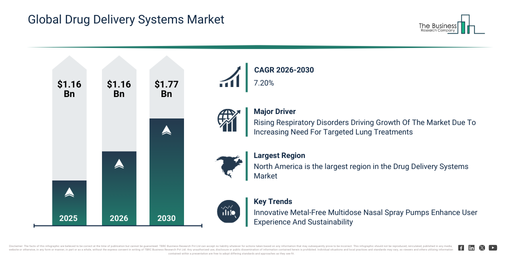
    The drug delivery systems market is projected to experience substantial expansion in the coming years. By 2030, this market is anticipated to reach $62.89 billion, exhibiting a compound annual growth rate (CAGR) of 7.2%. This projected growth during the forecast period can be attributed to several factors, including advancements in polymer and lipid-based delivery systems, the expansion of personalized medicine, the increasing application of inhalation and transmucosal delivery methods, the growing acceptance of homecare and self-administration devices, and the incorporation of digital monitoring and intelligent delivery technologies. Key trends expected within this period involve the increasing uptake of targeted and controlled drug release technologies, the expanding development of biologics and advanced therapeutics, the proliferation of homecare drug delivery solutions, the advancement of minimally invasive and needle-free delivery systems, and an elevated emphasis on patient compliance and safety.

    Get A Free Sample Report With In-Depth Market Insights:

    https://thebusinessresearchcompany.com/sample_request?id=48288219&type=smp&name=Drug%20Delivery%20Systems%20Market%20Report%202026&utm_source=Blogs&utm_medium=Paid&utm_campaign=Oct_PR

    Drug Delivery Systems Market Opportunity Drivers: What’s Unlocking New Revenue Potential?

    The rising occurrence of respiratory conditions is projected to drive the expansion of the drug delivery systems market in the future. Respiratory disorders are health issues that impede the normal functioning of the lungs and airways, leading to difficulty in breathing and reduced oxygen intake. The increase in these disorders is attributed to growing air pollution, which constantly exposes populations to toxic airborne particles and gases that impair lung function and contribute to the development and worsening of respiratory conditions. Drug delivery systems are essential for the effective treatment and management of respiratory disorders, such as asthma, chronic obstructive pulmonary disease (COPD), pulmonary fibrosis, and cystic fibrosis. These systems ensure that medications reach the lungs directly, thereby enhancing therapeutic outcomes while minimizing systemic side effects. For instance, in March 2025, the UK Health Security Agency, a UK-based government agency, reported that in 2024, tuberculosis cases in England climbed by 13%, increasing to 5,480 cases from 4,850 cases in 2023. This escalating prevalence of respiratory disorders is therefore expected to boost the growth of the drug delivery systems market.

    Drug Delivery Systems Market Segment Analysis And Revenue Potential

    The drug delivery systems market covered in this report is segmented –

    1) By Type: Injection-Based Drug Delivery System, Oral Drug Delivery System, Inhalation Or Pulmonary Drug Delivery System, Transmucosal Drug Delivery System

    2) By Material: Polymer-Based Drug Delivery Systems, Lipid-Based Drug Delivery Systems, Inorganic Drug Delivery Systems, Biologics-Based Drug Delivery Systems, Hybrid Drug Delivery Systems

    3) By Application: Infectious Disease, Oncology, Ophthalmology, Urology, Diabetes, Central Nervous System, Other Applications

    4) By End-User: Hospitals, Pharmaceutical Companies, Research Institutions, Homecare Settings, Diagnostic Laboratories

    Subsegments:

    1) By Injection-Based Drug Delivery System: Intravenous (IV), Intramuscular (IM), Subcutaneous (SC), Intradermal, Intrathecal, Depot Injections, Needle-Free Injectors

    2) By Oral Drug Delivery System: Tablets, Capsules, Solutions And Syrups, Suspensions, Powders And Granules, Modified Release Formulations

    3) By Inhalation Or Pulmonary Drug Delivery System: Metered Dose Inhalers (MDIs), Dry Powder Inhalers (DPIs), Nebulizers, Soft Mist Inhalers, Nasal Sprays

    4) By Transmucosal Drug Delivery System: Buccal Delivery, Sublingual Delivery, Rectal Delivery, Vaginal Delivery, Nasal Mucosal Delivery

    Drug Delivery Systems Market Innovation Trends Shaping Future Development

    Leading companies within the drug delivery systems market are concentrating on developing advanced solutions, such as metal-free, multidose nasal spray pumps, to enhance user comfort and ease of handling. These metal-free, multidose nasal spray pumps are devices specifically engineered to dispense multiple doses of medication through the nasal passage without incorporating any metal components, thereby ensuring both safety and compatibility with various formulations. For example, in January 2023, Aptar Pharma, a US-based pharmaceutical company, introduced the APF Futurity metal-free, multidose nasal spray pump. This particular nasal spray pump is designed for delivering nasal saline and other similar over-the-counter products, with a significant emphasis on its recyclability. It represents the first highly recyclable nasal spray pump from Aptar Pharma, having secured a Class AA certification from cyclos-HTP for European recycling systems. Being manufactured entirely from polyolefin materials and free from metal components or recycling contaminants, it aids in streamlining recycling efforts and improving the quality of recyclates. Leveraging Aptar Pharma’s Advanced Preservative Free technology, this metal-free pump provides precise and consistent dosing with a gentle operation, without sacrificing ease of use or overall effectiveness.

    Drug Delivery Systems Market Company Landscape And Competitive Strategy

    Major companies operating in the drug delivery systems market are Pfizer Inc., Johnson & Johnson, F. Hoffmann La Roche AG, Merck & Co. Inc., AbbVie Inc., Bayer AG, Sanofi S.A., Bristol Myers Squibb Company, AstraZeneca PLC, Abbott Laboratories Inc., Novartis AG, GlaxoSmithKline PLC, Eli Lilly and Company, Amgen Inc., Becton Dickinson and Company, Teva Pharmaceutical Industries Ltd., Tandem Diabetes Care, Pacira Biosciences Inc., Universal Stabilization Technologies Inc., Spectrum Pharmaceuticals Inc., West Pharmaceutical Services Inc., Catalent Inc., Recipharm AB

    View The Full Drug Delivery Systems Market Report:

    https://thebusinessresearchcompany.com/report/drug-delivery-systems-global-market-report?utm_source=Blogs&utm_medium=Paid&utm_campaign=Oct_PR

    Drug Delivery Systems Market Largest Region: Which Geography Holds The Biggest Share?

    North America was the largest region in the drug delivery system market in 2025. Asia-Pacific is expected to be the fastest-growing region in the forecast period. The regions covered in the drug delivery systems market report are Asia-Pacific, South East Asia, Western Europe, Eastern Europe, North America, South America, Middle East, Africa.

    Reach Out To Our Team:

    The Business Research Company: https://www.thebusinessresearchcompany.com/

    Americas: +1 310-496-7795

    Asia: +44 7882 955267 & +91 8897263534

    Europe: +44 7882 955267

    Email us at: marketing@tbrc.info

    Follow us on:

    LinkedIn: https://in.linkedin.com/company/the-business-research-company

    YouTube: https://www.youtube.com/channel/UC24_fI0rV8cR5DxlCpgmyFQ

    Global Market Model: https://www.thebusinessresearchcompany.com/global-market-model
  • Drug Delivery Devices Market Forecast Highlights A $128.94 Billion Opportunity For Industry Participants

    Drug Delivery Devices Market Forecast Highlights A $128.94 Billion Opportunity For Industry Participants

    Built to provide research that’s more actionable and strategically valuable, The Business Research Company’s 2026 market reports include market attractiveness analysis, total addressable market sizing, company benchmarking matrices, interactive Excel dashboards, broader supply chain intelligence, emerging startup tracking, and in-depth product insights.

    Drug Delivery Devices Market Forecast: Value Set To Climb From $102.15 Billion To $128.94 Billion

    The drug delivery devices market has experienced robust expansion in recent times. Projections indicate it will expand from $95.99 billion in 2025 to $102.15 billion in 2026 at a compound annual growth rate (CAGR) of 6.4%. This historical growth is attributable to an escalating prevalence of chronic illnesses, the broadening scope of injectable therapies, the uptick in hospital-based drug administration, greater utilization of infusion devices, and continuous improvements in pharmaceutical formulations.

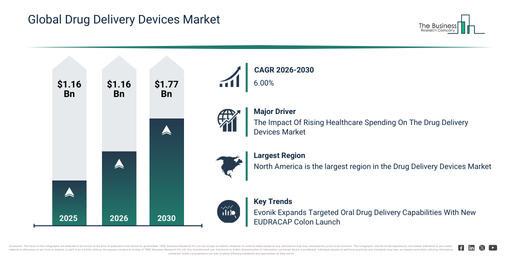
    The market for drug delivery devices is projected to experience substantial expansion over the coming years. Its valuation is anticipated to reach $128.94 billion by 2030, demonstrating a compound annual growth rate (CAGR) of 6.0%. This projected growth during the forecast period stems from factors such as the increasing uptake of home-based drug delivery, greater investments in personalized medicine, the broadening availability of biologics and biosimilars, an escalating need for connected delivery devices, and the expanding integration of digital health platforms. Key trends anticipated during this period encompass the wider adoption of intelligent drug delivery devices, a surge in the utilization of self-administration injection systems, an increasing call for controlled release technologies, the expansion of wearable drug delivery platforms, and a heightened emphasis on designs centered around the patient.

    Get A Free Sample Report With In-Depth Market Insights:

    https://thebusinessresearchcompany.com/sample_request?id=59822478&type=smp&name=Drug%20Delivery%20Devices%20Market%20Report%202026&utm_source=Blogs&utm_medium=Paid&utm_campaign=Oct_PR

    Drug Delivery Devices Market Growth Momentum: What Factors Are Shaping Demand?

    The drug delivery devices market is anticipated to expand due to an increase in healthcare spending. This spending encompasses all financial outlays for health services and products, such as costs for hospitals, doctors, nursing care, medicines, and public health initiatives. The rise in healthcare expenditure stems from an aging demographic, the growing occurrence of chronic illnesses, progress in medical technology, and elevated expenses for medical services and pharmaceuticals. Elevated healthcare spending fosters the evolution of drug delivery devices through increased investment in research, inventive solutions, and the integration of sophisticated technologies, thereby enhancing treatment effectiveness and patient results. For example, data from May 2024, released by the Office for National Statistics, a UK-based government department, indicated that UK healthcare expenditure reached around $379 billion (£292 billion) in 2023. This represented a 5.6% nominal increase compared to 2022, marking a substantial improvement over the 0.9% growth observed in 2023. Consequently, the expansion of healthcare spending is propelling the growth of the drug delivery devices market.

    Drug Delivery Devices Market Segmentation And Category Overview

    The drug delivery devices market covered in this report is segmented –

    1) By Route Of Administration: Oral Drug Delivery, Injectable Drug Delivery, Topical Drug Delivery, Ocular Drug Delivery, Pulmonary Drug Delivery, Nasal Drug Delivery, Transmucosal Drug Delivery, Implantable Drug Delivery

    2) By Patient Care Setting: Hospitals, Diagnostic Centers, Ambulatory Surgery Centers/Clinics, Home Care Settings, Other Patient Care Settings

    3) By Application: Cancer, Infectious Diseases, Respiratory Diseases, Diabetes, Cardiovascular Diseases, Autoimmune Diseases, Central Nervous System Disorders, Other Applications

    Subsegments:

    1) By Oral Drug Delivery: Tablets and Capsules, Oral Sprays, Oral Liquids, Oral Disintegrating Tablets

    2) By Injectable Drug Delivery: Syringes (manual and auto-disable), Vials and Cartridges, Pen Injectors, Infusion Pumps

    3) By Topical Drug Delivery: Creams and Ointments, Transdermal Patches, Gels and Lotions, Powders

    4) By Ocular Drug Delivery: Eye Drops, Ocular Inserts, Contact Lens Drug Delivery Systems

    5) By Pulmonary Drug Delivery: Metered-Dose Inhalers (MDIs), Dry Powder Inhalers (DPIs), Nebulizers

    6) By Nasal Drug Delivery: Nasal Sprays, Nasal Powders, Nasal Drops

    7) By Transmucosal Drug Delivery: Buccal Tablets, Sublingual Tablets, Mucoadhesive Films

    8) By Implantable Drug Delivery: Drug-Implantable Devices, Biodegradable Implants, Reservoir-based Implants

    Drug Delivery Devices Market Trends Redefining Industry Growth

    Major companies operating in the drug delivery devices market are prioritizing the development of advanced solutions, including targeted oral release capsules, to boost treatment efficacy and minimize systemic side effects. These specialized capsules are designed to endure the stomach’s acidic environment and accurately release active ingredients into specific sections of the gastrointestinal tract, thereby improving bioavailability and localizing therapy. For example, in September 2024, Evonik, a Germany-based specialty chemicals and life sciences company, unveiled its new EUDRACAP colon capsules, intended for delivering sensitive active substances to the ileo-colonic region. These capsules support the administration of live biotherapeutic products, oral biologics, peptides, proteins, and nucleotides while preserving their integrity through tailored EUDRAGIT coatings. Furthermore, the EUDRACAP colon capsules streamline formulation development with a ready-to-fill design and accelerate speed to market by reducing developmental complexity. This innovation broadens Evonik’s EUDRACAP platform and strengthens its portfolio of system solutions for advanced oral drug delivery.

    Drug Delivery Devices Market Key Players Shaping Industry Direction

    Major companies operating in the drug delivery devices market are Becton Dickinson and Company, Baxter International, B. Braun Melsungen AG, Catalent, West Pharmaceutical Services Inc., Gerresheimer AG, Smiths Medical, Elcam Medical, SMC Ltd., Injex, Ypsomed Holding AG, Nemera, H&T Presspart, Syqe Medical, Antares Pharma, Julphar, Teleflex Medical, Kedalion Therapeutics, MediPrint Ophthalmics, Sorrel Medical, Terumo Corporation, Gilero

    View The Full Drug Delivery Devices Market Report:

    https://thebusinessresearchcompany.com/report/drug-delivery-devices-global-market-report?utm_source=Blogs&utm_medium=Paid&utm_campaign=Oct_PR

    Drug Delivery Devices Market Regional Analysis: Which Geography Leads On Revenue?

    North America was the largest region in the drug delivery devices market in 2025. Asia-Pacific was the second-largest region in the global drug delivery devices market. The regions covered in the drug delivery devices market report are Asia-Pacific, South East Asia, Western Europe, Eastern Europe, North America, South America, Middle East, Africa.

    Reach Out To Our Team:

    The Business Research Company: https://www.thebusinessresearchcompany.com/

    Americas: +1 310-496-7795

    Asia: +44 7882 955267 & +91 8897263534

    Europe: +44 7882 955267

    Email us at: marketing@tbrc.info

    Follow us on:

    LinkedIn: https://in.linkedin.com/company/the-business-research-company

    YouTube: https://www.youtube.com/channel/UC24_fI0rV8cR5DxlCpgmyFQ

    Global Market Model: https://www.thebusinessresearchcompany.com/global-market-model
  • Drug And Gene Delivery Devices Market Analysis: How The Industry Is Evolving Toward A $1.01 Billion Future

    Drug And Gene Delivery Devices Market Analysis: How The Industry Is Evolving Toward A $1.01 Billion Future

    Backed by market attractiveness analysis, total addressable market sizing, company benchmarking matrices, interactive Excel dashboards, wider supply chain intelligence, emerging startup coverage, and detailed product-level insights, The Business Research Company’s 2026 market reports are designed to offer research that is more actionable and strategically valuable than ever.

    Drug And Gene Delivery Devices Market Revenue Growth On Track For A 8.6% CAGR Through 2030

    The drug and gene delivery devices market has experienced robust expansion in recent years. This market is projected to grow from $0.67 billion in 2025 to $0.73 billion in 2026, at a compound annual growth rate (CAGR) of 8.9%. The historic period’s growth can be attributed to several factors, including the limited availability of advanced delivery devices, a reliance on conventional administration routes, the early stages of gene therapy development, a growing biologics pipeline, and increasing investment in research collaborations.

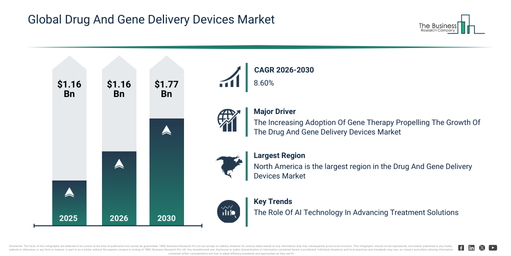
    The market for drug and gene delivery devices is projected to experience substantial expansion in the coming years. It is anticipated to reach $1.01 billion in 2030, exhibiting a compound annual growth rate (CAGR) of 8.6%. This expansion during the projection period stems from innovations in viral and non-viral vector technologies, the broadening scope of personalized medicine and gene therapy applications, a rise in regulatory approvals for novel delivery methods, growing acceptance of nanomedicine and LNPs, and the incorporation of digital monitoring and intelligent delivery platforms. Key developments predicted for the forecast timeframe encompass the proliferation of targeted drug and gene therapies, increased uptake of nanoparticle-based delivery mechanisms, a surge in the application of viral vectors for gene therapy, the broadening availability of injectable and non-invasive delivery techniques, and an emphasis on personalized medicine and controlled release technologies.

    Get A Free Sample Report With In-Depth Market Insights:

    https://thebusinessresearchcompany.com/sample_request?id=38193523&type=smp&name=Drug%20And%20Gene%20Delivery%20Devices%20Market%20Report%202026&utm_source=Blogs&utm_medium=Paid&utm_campaign=Oct_PR

    Drug And Gene Delivery Devices Market Expansion Drivers: What’s Shaping Future Growth?

    The growing acceptance of gene therapy is anticipated to boost expansion in the drug and gene delivery devices market. This medical approach entails inserting, removing, or modifying genetic material within a patient’s cells to manage or prevent illnesses. Demand for gene therapy is escalating as it holds the promise to rectify genetic ailments and chronic conditions by addressing their underlying causes, presenting revolutionary treatment alternatives where traditional methods prove inadequate. Drug and gene delivery devices play a crucial role in gene therapy by enabling accurate targeting and regulated release of therapeutic genes, thereby improving treatment effectiveness. As an illustration, in January 2025, the American Society of Gene & Cell Therapy, a US-based non-profit organization, reported that during Q4 2024, the count of pre-registration gene therapy programs saw its most significant rise in over a year, increasing by 83% relative to Q3 2024. Consequently, the heightened embrace of gene therapy is fueling the development of the drug and gene delivery devices market.

    Drug And Gene Delivery Devices Market Segment Outlook: Which Categories Are Growing Fastest?

    The drug and gene delivery devices market covered in this report is segmented –

    1) By Vector: Viral, Non-viral

    2) By Method: In Situ, Ex Vivo

    3) By Route Of Administration: Oral, Inhalation, Transdermal, Injectable, Ocular, Nasal, Topical

    Subsegments:

    1) By Viral: Adenovirus Vectors, Lentivirus Vectors, Adeno-Associated Virus (AAV) Vectors, Herpes Simplex Virus (HSV) Vectors, Retrovirus Vectors, Baculovirus Vectors, Vaccinia Virus Vectors, Sendai Virus Vectors

    2) By Non-Viral: Lipid Nanoparticles (LNP), Polymeric Nanoparticles, Liposomes, Dendrimers, Naked DNA/RNA Delivery, Electroporation-Based Delivery Systems, Nanoparticle-Based Delivery Systems, Polymer Micelles And Hydrogels.

    Drug And Gene Delivery Devices Market Strategic Trends: What Defines The Next Growth Phase?

    Major companies operating in the drug and gene delivery devices market are concentrating on developing advanced products, such as artificial intelligence (AI) technology, to gain a competitive advantage. Artificial intelligence (AI) technology in drug delivery refers to the application of AI techniques and algorithms to improve the efficiency, precision, and effectiveness of drug delivery systems. For instance, in December 2023, Envoya Inc., a US-based developer of polymer-based nanoparticles for targeted delivery, launched an innovative gene therapy drug delivery platform. This platform combines biopolymer-nanoparticles with artificial intelligence (AI) to address significant limitations in current gene therapy technologies, such as viral vectors and lipid nanoparticles. The platform aims to overcome the limitations of existing gene therapy delivery technologies, which have been restricted by safety concerns, limited payload capacities, and limited tissue targeting.

    Drug And Gene Delivery Devices Market Competitive Analysis Of Leading Industry Participants

    Major companies operating in the drug and gene delivery devices market are Medtronic plc, Moderna Inc., Halozyme Therapeutics Inc., Uniqure NV, Intellia Therapeutics Inc., Voyager Therapeutics Inc., sfm medical devices GmbH, Inovio Pharmaceuticals Inc., GenSight Biologics S.A., CRISPR Therapeutics, Pfizer Inc., Novartis AG, Becton Dickinson and Company, Shanghai Sunway Biotech Co Ltd, Epeius Biotechnologies Corporation, SiBiono GeneTech Co Ltd, F Hoffmann-La Roche Ltd, Baxter International, B Braun Melsungen, Terumo Corporation, ICU Medical, Stevanato Group, Gerresheimer AG, Ypsomed, SHL Medical

    View The Full Drug And Gene Delivery Devices Market Report:

    https://thebusinessresearchcompany.com/report/drug-and-gene-delivery-devices-global-market-report?utm_source=Blogs&utm_medium=Paid&utm_campaign=Oct_PR

    Drug And Gene Delivery Devices Market Geographic Spread And Regional Opportunities

    North America was the largest region in the drug and gene delivery devices market in 2025. The regions covered in the drug and gene delivery devices market report are Asia-Pacific, South East Asia, Western Europe, Eastern Europe, North America, South America, Middle East, Africa.

    Reach Out To Our Team:

    The Business Research Company: https://www.thebusinessresearchcompany.com/

    Americas: +1 310-496-7795

    Asia: +44 7882 955267 & +91 8897263534

    Europe: +44 7882 955267

    Email us at: marketing@tbrc.info

    Follow us on:

    LinkedIn: https://in.linkedin.com/company/the-business-research-company

    YouTube: https://www.youtube.com/channel/UC24_fI0rV8cR5DxlCpgmyFQ

    Global Market Model: https://www.thebusinessresearchcompany.com/global-market-model
  • Double Sided Foam Tape Market Outlook Through 2030: Understanding The Growth Opportunity

    Double Sided Foam Tape Market Outlook Through 2030: Understanding The Growth Opportunity

    Featuring market attractiveness scoring, total addressable market sizing, company benchmarking matrices, interactive Excel dashboards, deeper supply chain intelligence, emerging startup tracking, and granular product-level insights, The Business Research Company’s 2026 market reports are built to deliver research that is both more actionable and more strategically valuable.

    Double Sided Foam Tape Market Value Growth And Long-Term Outlook

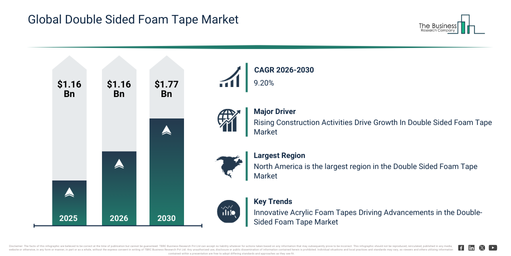
    The double sided foam tape market has experienced substantial expansion in recent years. This market is set to increase from $8.38 billion in 2025 to $9.15 billion in 2026, at a compound annual growth rate (CAGR) of 9.3%. The growth observed in previous periods is attributable to factors such as the increasing use of adhesive bonding in manufacturing, the expansion of automotive and electronics production, the growing replacement of mechanical fasteners, a rising demand for shock-absorbing materials, and the availability of advanced foam materials.

    The double sided foam tape market is projected to experience robust expansion over the coming years, with its size expected to reach $13.03 billion in 2030, growing at a compound annual growth rate (CAGR) of 9.2%. This projected growth during the forecast period is primarily fueled by factors such as the increasing demand for electric vehicle assembly solutions, a heightened focus on sustainable adhesive materials, the broadening scope of construction renovation activities, the growing integration into consumer electronics, and the rising customization of foam tape properties. Furthermore, significant trends anticipated in this period include the increasing adoption of high-performance acrylic foam tapes, a rising demand for lightweight bonding solutions, the expanding use of foam tapes in automotive assembly, the proliferation of vibration and noise damping applications, and an enhanced emphasis on long-term adhesion durability.

    Get A Free Sample Report With In-Depth Market Insights:

    https://thebusinessresearchcompany.com/sample_request?id=78180919&type=smp&name=Double%20Sided%20Foam%20Tape%20Market%20Report%202026&utm_source=Blogs&utm_medium=Paid&utm_campaign=Oct_PR

    Double Sided Foam Tape Market Development Factors: What’s Supporting Demand?

    Future expansion of the double-sided foam tape market is anticipated to be driven by rising construction endeavors. These activities encompass the processes of developing and erecting structures like roadways, edifices, and various infrastructural elements. Construction efforts have been stimulated by expanding urban zones, an increasing populace, and continuous infrastructure improvement projects. In construction, double-sided foam tape serves to firmly join surfaces invisibly, for applications including attachment, sealing, and insulation. For example, data from June 2024, published by the Office for National Statistics, an independent UK statistical body, indicated that construction new orders increased by 15.9% to $1,908 million (£1,436 million) in first quarter of 2024 when contrasted with the fourth quarter of 2023. This growth was predominantly fueled by a 27.9% surge in private commercial new work, reaching $930 million (£700 million), alongside a 43.8% leap in public other new work, totaling $712.2 million (£536 million). Consequently, the expanding scope of construction activities is propelling the double-sided foam tape market.

    Double Sided Foam Tape Market Segment Landscape: Which Areas Lead Development?

    The double sided foam tape market covered in this report is segmented –

    1) By Product: Acrylic Foam, Polyethylene (PE) Foam, Polyurethane (PU) Foam, Other Products

    2) By Density: Low, Medium, High

    3) By Application: Automotive, Construction, Electronics, Packaging, Medical Devices

    Subsegments:

    1) By Acrylic Foam: General Purpose Acrylic Foam, High-Temperature Acrylic Foam, Low-Temperature Acrylic Foam

    2) By Polyethylene (PE) Foam: Closed-Cell PE Foam, Open-Cell PE Foam

    3) By Polyurethane (PU) Foam: Rigid PU Foam, Flexible PU Foam

    4) By Other Products: Rubber Foam, Vinyl Foam, Specialty Foam Tapes

    Double Sided Foam Tape Market Transformation Trends: What Innovations Are Driving Change?

    Leading companies in the double-sided foam tape market are focusing on developing innovative products, such as UV-resistant acrylic foam tapes, to enhance durability and performance in outdoor applications. UV-resistant acrylic foam tapes are adhesive tapes designed to withstand prolonged exposure to ultraviolet (UV) rays without degrading. They are commonly utilized outdoors to ensure long-lasting bonding strength and durability in harsh environments. For instance, in November 2023, CCL Design, a UK-based manufacturer of UL labels, printed electronics, precision die-cuts, and brand security applications, launched the 5400 LSE acrylic foam tape series, showcasing significant advancements in adhesive technology. This series is particularly notable for its primerless adhesion to various substrates, including low- and medium-surface energy plastics, and it offers an ultra-strong bond to polypropylene (PP) and excellent adhesion to automotive paints.

    Double Sided Foam Tape Market Leading Companies And Competitive Benchmarking

    Major companies operating in the double sided foam tape market are Compagnie de Saint-Gobain S.A., 3M Company, Berry Global Inc., Sika AG, SEKISUI Chemical Co. Ltd., Nitto Denko Corporation, tesa SE, Lintec Corporation, ORAFOL Europe GmbH, Intertape Polymer Group Inc., Rogers Corporation, Essentra plc, Lohmann GmbH & Co. KG, Avery Dennison Corporation, Flexcon Company Inc., Scapa Group Ltd., Shurtape Technologies LLC, Adhesives Research Inc., CCT Tapes (Custom Coating & Converting), Adchem Corporation

    View The Full Double Sided Foam Tape Market Report:

    https://thebusinessresearchcompany.com/report/double-sided-foam-tape-global-market-report?utm_source=Blogs&utm_medium=Paid&utm_campaign=Oct_PR

    Double Sided Foam Tape Market Top Region By Revenue And Market Share

    North America was the largest region in the double sided foam tape market in 2025. Asia-Pacific is expected to be the fastest-growing region in the forecast period. The regions covered in the double sided foam tape market report are Asia-Pacific, South East Asia, Western Europe, Eastern Europe, North America, South America, Middle East, Africa.

    Reach Out To Our Team:

    The Business Research Company: https://www.thebusinessresearchcompany.com/

    Americas: +1 310-496-7795

    Asia: +44 7882 955267 & +91 8897263534

    Europe: +44 7882 955267

    Email us at: marketing@tbrc.info

    Follow us on:

    LinkedIn: https://in.linkedin.com/company/the-business-research-company

    YouTube: https://www.youtube.com/channel/UC24_fI0rV8cR5DxlCpgmyFQ

    Global Market Model: https://www.thebusinessresearchcompany.com/global-market-model
  • Dose Tracking Copilot Market Growth Potential: What The Latest Forecast Reveals

    Dose Tracking Copilot Market Growth Potential: What The Latest Forecast Reveals

    Built to provide research that’s more actionable and strategically valuable, The Business Research Company’s 2026 market reports include market attractiveness analysis, total addressable market sizing, company benchmarking matrices, interactive Excel dashboards, broader supply chain intelligence, emerging startup tracking, and in-depth product insights.

    Dose Tracking Copilot Market Poised To Hit $2.99 Billion By 2030 With A 17% CAGR

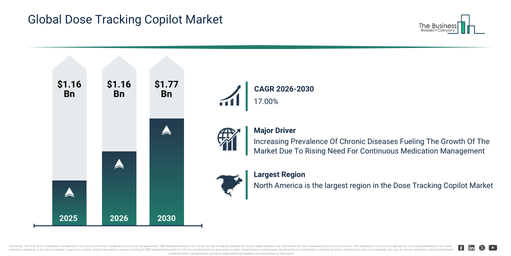
    The dose tracking copilot market has seen substantial growth recently. It is projected to expand from $1.36 billion in 2025 to $1.6 billion in 2026, demonstrating a compound annual growth rate (CAGR) of 17.3%. Historically, this market’s expansion has been fueled by an increase in chronic disease management, issues with medication non-adherence, the rise of digital health applications, the digitization of hospitals, and the growing scope of diagnostic imaging.

    The dose tracking copilot market is poised for rapid expansion over the next few years, with projections indicating it will attain a size of $2.99 billion by 2030, growing at a compound annual growth rate (CAGR) of 17.0%. This growth during the forecast period is primarily driven by advancements such as AI-driven clinical decision support, the expansion of remote patient management, a stronger regulatory focus on dose monitoring, the emergence of personalized treatment pathways, and the increasing utilization of cloud-based healthcare platforms. Significant trends anticipated in this period include enhanced medication adherence monitoring, sophisticated intelligent dose reminder systems, real-time dose analytics, patient-centric digital health tools, and greater integration with wearables.

    Get A Free Sample Report With In-Depth Market Insights:

    https://thebusinessresearchcompany.com/sample_request?id=35140544&type=smp&name=Dose%20Tracking%20Copilot%20Market%20Report%202026&utm_source=Blogs&utm_medium=Paid&utm_campaign=Oct_PR

    Dose Tracking Copilot Market Industry Drivers: What’s Behind The Revenue Growth?

    The escalating occurrence of chronic illnesses is anticipated to fuel the expansion of the dose tracking copilot market in the future. Chronic diseases are enduring health conditions, such as diabetes, heart disease, and arthritis, that typically advance slowly and necessitate continuous medical attention and lifestyle adjustments to manage symptoms and prevent complications. The rise in chronic diseases is largely attributed to unhealthy lifestyle choices, including poor diet, lack of physical activity, and smoking, which elevate the risk of conditions like diabetes, heart disease, and obesity. Dose tracking copilot supports the management of chronic diseases by offering real-time monitoring and customized dose reminders, making it particularly beneficial for patients with intricate medication schedules. It minimizes the chance of missed or incorrect doses through accurate adherence tracking, thereby enhancing treatment efficacy and overall patient well-being. For example, in June 2024, data from the National Health Service, a UK-based government entity, revealed that 3,615,330 individuals registered with a general practitioner (GP) were diagnosed with non-diabetic hyperglycemia or pre-diabetes (a condition where blood sugar levels are elevated but not high enough for a diabetes diagnosis) in 2023, representing an 18% increase from 3,065,825 cases in 2022. Consequently, the growing prevalence of chronic diseases is stimulating the growth of the dose tracking copilot market.

    Dose Tracking Copilot Market Segments: Where Is Growth Concentrated?

    The dose tracking copilot market covered in this report is segmented –

    1) By Component: Software, Services

    2) By Deployment: On-Premises, Cloud-Based

    3) By Application: Clinical Cardiac Monitoring, Remote Patient Monitoring, Sports and Fitness Monitoring, Preventive and Wellness Monitoring, Rehabilitation and Post-Surgery Care, Research and Clinical Studies

    Subsegments:

    1) By Software: Dose Management Software, Integration And Interoperability Modules, Compliance And Reporting Tools, Clinical Decision Support Systems

    2) By Services: Implementation And Integration Services, Training And Education Services, Maintenance And Support Services, Consulting And Workflow Optimization, Cloud Hosting And Managed Services

    Dose Tracking Copilot Market Industry Leaders And Competitive Landscape

    Major companies operating in the dose tracking copilot market are Medisafe Inc, AiCure Inc, etectRx Inc, Adherium Limited, Hero Health Inc, Pillsy Inc, Mango Health Inc, Proteus Digital Health Inc, CareZone Inc, WellDoc Inc, HealthBeacon plc, Smart Pill Technologies Inc, DoseTrak Systems Inc, RxCap Inc, CuePath Innovation Inc, MedMinder Systems Inc, Chrono Therapeutics Inc, SMRxT Inc, InHandPlus Inc, Pillsure Pocket Inc

    View The Full Dose Tracking Copilot Market Report:

    https://thebusinessresearchcompany.com/report/global-dose-tracking-copilot-market-report?utm_source=Blogs&utm_medium=Paid&utm_campaign=Oct_PR

    Dose Tracking Copilot Market Regional Analysis And Top Geography

    North America was the largest region in the dose tracking copilot market in 2025. Asia-Pacific is expected to be the fastest-growing region in the forecast period. The regions covered in the dose tracking copilot market report are Asia-Pacific, South East Asia, Western Europe, Eastern Europe, North America, South America, Middle East, Africa.

    Reach Out To Our Team:

    The Business Research Company: https://www.thebusinessresearchcompany.com/

    Americas: +1 310-496-7795

    Asia: +44 7882 955267 & +91 8897263534

    Europe: +44 7882 955267

    Email us at: marketing@tbrc.info

    Follow us on:

    LinkedIn: https://in.linkedin.com/company/the-business-research-company

    YouTube: https://www.youtube.com/channel/UC24_fI0rV8cR5DxlCpgmyFQ

    Global Market Model: https://www.thebusinessresearchcompany.com/global-market-model