Category: Medical Equipment

  • Ambulatory Blood Pressure Monitoring Devices Industry Insights 2025 – Market Forecast for Executives and Planners

    Ambulatory Blood Pressure Monitoring Devices Industry Insights 2025 – Market Forecast for Executives and Planners

    Claim your 30% discount on Global Market Reports with code ONLINE30. Limited time only.

    How Has the Ambulatory Blood Pressure Monitoring Devices Market Size Changed, over the years?

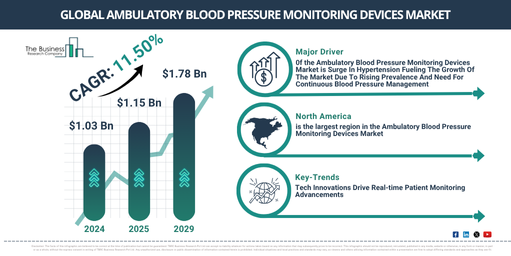
    In the recent past, the market size for ambulatory blood pressure monitoring devices has experienced a quick expansion. It’s projected to escalate from $1.03 billion in 2024 to $1.15 billion in 2025, with a compound annual growth rate (CAGR) of 11.7%. The surge during the historical period is largely due to the rising incidence of hypertension, heightened awareness of cardiovascular health, augmented adoption of home healthcare technologies, an increase in demand for persistent blood pressure monitoring, and a heightened emphasis on early detection and treatment.

    How Much Will the Ambulatory Blood Pressure Monitoring Devices Market Be Worth in 2029?

    In the coming years, a swift expansion is predicted for the market of ambulatory blood pressure monitoring devices, with its size anticipated to reach $1.78 billion by 2029, boasting a compound annual growth rate (CAGR) of 11.5%. This projected rise during the forecast period may be tied to factors such as the growing incorporation of wearable technology, the rising acceptance of telemedicine, escalating demand for tailored healthcare solutions, increased investments in healthcare facilities and growing instances of chronic diseases. The period ahead is likely to witness trends such as enhancements in wireless technology, advanced sensor precision, groundbreaking data analytics, mobile health apps integration and the creation of compact, user-friendly devices.

    Download The Free Sample Report Here:

    https://www.thebusinessresearchcompany.com/sample.aspx?id=24458&type=smp

    Which is the Largest Company in the Ambulatory Blood Pressure Monitoring Devices Market?

    Major companies operating in the ambulatory blood pressure monitoring devices market are Koninklijke Philips N.V. (Philips Healthcare), GE Healthcare Technologies Inc., Omron Healthcare Co. Ltd., Hill-Rom Holdings Inc., Halma plc, OSI Systems Inc., Contec Medical Systems Co. Ltd., Spacelabs Healthcare Inc., Schiller Holding AG, Withings S.A. (Withings Inc.), Vaso Corporation, BPL Medical Technologies Private Limited, Microlife Corporation (Microlife AG), SunTech Medical Inc., Rossmax International Ltd., Rudolf Riester GmbH, iHealth Labs Inc., American Diagnostic Corporation, AViTA Corporation, Bosch + Sohn GmbH u. Co. KG

    What Are the Main Market Drivers in the Ambulatory Blood Pressure Monitoring Devices Industry?

    The rise in hypertension cases is anticipated to spur the expansion of the ambulatory blood pressure monitoring devices market. Hypertension is typified by persistently elevated blood pressure in the arteries and is exacerbated by factors like poor diets, lack of physical activity, and rising obesity rates. Ambulatory blood pressure monitoring devices can assist in managing hypertension by offering continuous, precise measurements of blood pressure during daily activities and sleep, thereby facilitating improved diagnosis and tailored treatment management. As per the World Health Organization (WHO) in September 2023, approximately 1.3 billion adults worldwide, or one out of every three adults, suffer from hypertension. The WHO suggests increasing treatment coverage to 50% by 2025 could prevent around 76 million deaths by 2050, emphasizing the crucial role these devices can play. Consequently, the escalating prevalence of hypertension is expected to drive the growth of the ambulatory blood pressure monitoring devices market.

    Request For A Customized Report:

    https://www.thebusinessresearchcompany.com/customise?id=24458&type=smp

    How Is the Ambulatory Blood Pressure Monitoring Devices Market Segments Structured?

    The ambulatory blood pressure monitoring devices market covered in this report is segmented –

    1) By Product Type: Automatic ABPM Devices, Manual ABPM Devices, Specialised ABPM Devices

    2) By Device Type: Ambulatory Blood Pressure Monitor, Home Blood Pressure Monitor, Hospital Blood Pressure Monitor, Wearable Blood Pressure Monitor, Finger Blood Pressure Monitor

    3) By Applications: Hypertension Management, Cardiovascular Disease Monitoring, Preoperative Assessment, Postoperative Monitoring

    4) By Distribution Channel: Direct Sales, Online Retail, Third-Party Distributors, Pharmacies

    5) By End Use: Hospitals, Homecare, Prescription, OTC

    Subsegment:

    1) By Automatic ABPM Devices: Upper Arm Automatic ABPM Devices, Wrist-Worn Automatic ABPM Devices, Bluetooth-Enabled Automatic ABPM Devices, Smartphone-Integrated ABPM Devices

    2) By Manual ABPM Devices: Aneroid Manual ABPM Devices, Mercury-Based Manual ABPM Devices, Digital Readout Manual Devices (Semi-Automatic)

    3) By Specialised ABPM Devices: Pediatric ABPM Devices, Geriatric ABPM Devices, Nocturnal ABPM Devices, Wearable Patch-Based ABPM Devices

    What Strategic Trends Are Transforming the Ambulatory Blood Pressure Monitoring Devices Market?

    Prominent businesses in the ambulatory surgical pressure monitoring devices market are concentrating on advancing technology, such as point-of-care devices, to improve real-time monitoring precision, ameliorate patient comfort, and expedite clinical decisions. A point-of-care device is a medical apparatus administered close to the patient’s site to deliver swift diagnostic or monitoring outcomes, eliminating the need for a centralized laboratory. For example, in July 2022, CardiAI Inc., a biotechnology firm based in Canada, rolled out BPAro, a sophisticated 24-hour ambulatory blood pressure monitor. This novel device supports constant monitoring for up to a week, recording blood pressure data during day-to-day activities and sleep. It provides Bluetooth functionality for instantaneous data exchange with patients and medical professionals. BPAro is designed to be user-friendly, thereby enhancing its convenience and comfort levels. It facilitates superior hypertension identification and regulation outside of clinical settings.

    Access The Full Report Here:

    https://www.thebusinessresearchcompany.com/report/ambulatory-blood-pressure-monitoring-devices-global-market-report

    Which Global Regions Offer the Highest Growth in the Ambulatory Blood Pressure Monitoring Devices Market?

    North America was the largest region in the ambulatory blood pressure monitoring devices market in 2024. Asia-Pacific is expected to be the fastest-growing region in the forecast period. The regions covered in the ambulatory blood pressure monitoring devices market report are Asia-Pacific, Western Europe, Eastern Europe, North America, South America, Middle East, Africa.

    Purchase The Full Report Today:

    https://www.thebusinessresearchcompany.com/purchaseoptions.aspx?id=24458

    This Report Delivers Insight On:

    1. How big is the ambulatory blood pressure monitoring devices market, and how is it changing globally?

    2. Who are the major companies in the ambulatory blood pressure monitoring devices market, and how are they performing?

    3. What are the key opportunities and risks in the ambulatory blood pressure monitoring devices market right now?

    4. Which products or customer segments are growing the most in the ambulatory blood pressure monitoring devices market?

    5. What factors are helping or slowing down the growth of the ambulatory blood pressure monitoring devices market?

    About The Business Research Company:

    With over 15000+ reports from 27 industries covering 60+ geographies, The Business Research Company has built a reputation for offering comprehensive, data-rich research and insights. Armed with 1,500,000 datasets, the optimistic contribution of in-depth secondary research, and unique insights from industry leaders, you can get the information you need to stay ahead in the game.

    Get in touch with us:

    The Business Research Company: https://www.thebusinessresearchcompany.com/

    Americas +1 3156230293

    Asia +44 2071930708

    Europe +44 2071930708

    Email us at info@tbrc.info

    Follow us on:

    LinkedIn: https://in.linkedin.com/company/the-business-research-company

    YouTube: https://www.youtube.com/channel/UC24_fI0rV8cR5DxlCpgmyFQ

    Global Market Model: https://www.thebusinessresearchcompany.com/global-market-model
  • Patient Lifting Equipment Industry Valued at $7.4 Billion by 2029 With CAGR of 8.5% | Size and Share Insights

    Patient Lifting Equipment Industry Valued at $7.4 Billion by 2029 With CAGR of 8.5% | Size and Share Insights

    Claim your 30% discount on Global Market Reports with code ONLINE30. Limited time only.

    What Is the Forecast for the Patient Lifting Equipment Market from 2024 to 2025?

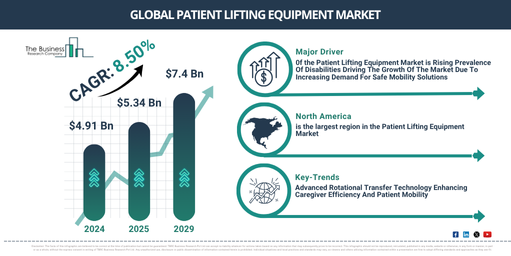
    In recent years, there has been a significant expansion in the market size of patient lifting equipment. It is projected to increase from $4.91 billion in 2024 to $5.34 billion by 2025, representing a compound annual growth rate (CAGR) of 8.8%. The historical growth trend can be linked to several factors. Among these are the development of healthcare infrastructure, an increase in the prevalence of hospitals, nursing homes, and assisted living facilities. Other contributing factors include a shift towards home healthcare approaches, a rise in healthcare spending, and a growing requirement for long-term care services.

    What Is the Projected Market Size of the Patient Lifting Equipment Market?

    Expectations are high for a robust expansion of the patient lifting equipment market in the coming years. The anticipated escalation is set to reach $7.4 billion by 2029, progressing at an 8.5% CAGR. Factors largely contributing to this forecast growth period include globally aging demographics, an increase in mobility-related ailments, escalating instances of chronic diseases causing long-term immobility, a rising count of physically impaired individuals, and extended life expectancy rates. Key trends during this expected growth timeframe consist of IoT and smart features integration into lifting apparatus, progress in patient handling automation, the creation of more lightweight, compact design features, increased battery lifespan and ease of powered lifts transportation, along with the improvement of safety features in contemporary devices.

    Download The Free Sample Report Here:

    https://www.thebusinessresearchcompany.com/sample.aspx?id=24651&type=smp

    Who are the Major Competitors in the Patient Lifting Equipment Market Outlook?

    Major companies operating in the patient lifting equipment market are Medline Industries Inc., Stryker Corporation, Baxter International Inc., Arjo AB, Savaria Corporation, Drive DeVilbiss Healthcare, Invacare Corporation, Joerns Healthcare LLC, Proactive Medical, Etac AB, GF Health Products Inc., Prism Medical UK Ltd., Handicare Group, EZ Way Inc., V. Guldmann A/S, SureHands Lift & Care Systems, Bestcare, Texas Medical Industries Inc., Benmor Medical Ltd., Vancare Inc., Antano Group.

    What Is Fueling Growth in the Patient Lifting Equipment Market?

    The projected increase in disability rates is expected to prop up the expansion of the patient lifting equipment market in the foreseeable future. Disabilities, which could be physical, mental, cognitive, or sensory, drastically inhibit an individual’s capacity for carrying out daily tasks or fully participating in social interactions. The upward trend in disabilities is fueled by an aging global populace, which amplifies the occurrence of chronic illnesses and age-associated impairments that lead to enduring functional limitations. The surge in disabilities bolsters the necessity for patient lifting equipment, as those with mobility issues typically need mechanized aid for secure and comfortable transfers, diminishing the potential for injuries to patients and caregivers alike. For example, in October 2024, the House of Commons Library – a library and information source of the lower parliamentary house of Britain – reported that approximately 16.1 million people in the UK were classified as disabled during the fiscal year 2022/23, composing nearly a quarter (24%) of the entire populace. Thus, the proliferating incidence of disabilities is set to catalyze the growth of the patient lifting equipment market.

    Request For A Customized Report:

    https://www.thebusinessresearchcompany.com/customise?id=24651&type=smp

    Which Patient Lifting Equipment Market Segments Are Growing the Fastest?

    The patient lifting equipment market covered in this report is segmented –

    1) By Type: Bariatric Care, Fall Prevention, Critical Care, Wound Care

    2) By Product: Ceiling Lifts, Stair And Wheelchair Lifts, Mobile Lifts, Sit-To-Stand Lifts, Bath And Pool Lifts, Lifting Slings, Lifting Accessories

    3) By Weight: Below 250 Lbs, 250-500 Lbs, 500-1000 Lbs, Above 1000 Lbs

    4) By End-User: Hospitals And Healthcare Facilities, Nursing Homes And Assisted Living Facilities, Home Healthcare, Rehabilitation Centers, Emergency Responders, Other End-Users

    Subsegments:

    1) By Bariatric Care: Bariatric Beds, Bariatric Patient Lifts, Bariatric Wheelchairs And Transport Chairs, Bariatric Slings, Bariatric Stretchers

    2) By Fall Prevention: Floor Lifts, Sit-To-Stand Lifts, Transfer Aids, Fall Alarms And Monitoring Devices

    3) By Critical Care: Medical Beds, ICU Stretchers, Patient Transfer Devices, Critical Care Lifts

    4) By Wound Care: Pressure Relief Mattresses, Lateral Transfer Devices, Turning And Repositioning Systems, Specialty Beds For Wound Management

    Which Industry Trends Are Shaping the Future of the Patient Lifting Equipment Market?

    Leading companies in the patient lifting equipment market are focusing their efforts on creating innovative solutions, such as patient transfer lifts, to enhance efficiency in caregiving by reducing the physical strain and time required. Patient transfer lifts are tools that assist in safely transferring individuals with restricted mobility between different positions or surfaces, like moving from a bed to a wheelchair or from a chair to a toilet. For example, in July 2023, a leading provider of accessibility solutions in the US, EZ-ACCESS, introduced the ORBIT patient transfer lift. This product has a unique design with an articulating arm and a pivoting stanchion that together can rotate a full 360 degrees, providing exceptional mobility. The ability to rotate fully increases flexibility and accessibility within domestic and care facility settings. Two height options cater to ceiling heights from 8 to 12 feet and its compact design promotes spatial efficiency. Moreover, the arm features three adjustable height positions, can clear doorways and is offered in four- and five-foot length options.

    Access The Full Report Here:

    https://www.thebusinessresearchcompany.com/report/patient-lifting-equipment-global-market-report

    Which Countries Are Leading the Patient Lifting Equipment Market?

    North America was the largest region in the patient lifting equipment market in 2024. Asia-Pacific is expected to be the fastest-growing region in the forecast period. The regions covered in the patient lifting equipment market report are Asia-Pacific, Western Europe, Eastern Europe, North America, South America, Middle East, Africa.

    Purchase The Full Report Today:

    https://www.thebusinessresearchcompany.com/purchaseoptions.aspx?id=24651

    This Report Delivers Insight On:

    1. How big is the patient lifting equipment market, and how is it changing globally?

    2. Who are the major companies in the patient lifting equipment market, and how are they performing?

    3. What are the key opportunities and risks in the patient lifting equipment market right now?

    4. Which products or customer segments are growing the most in the patient lifting equipment market?

    5. What factors are helping or slowing down the growth of the patient lifting equipment market?

    About The Business Research Company:

    With over 15000+ reports from 27 industries covering 60+ geographies, The Business Research Company has built a reputation for offering comprehensive, data-rich research and insights. Armed with 1,500,000 datasets, the optimistic contribution of in-depth secondary research, and unique insights from industry leaders, you can get the information you need to stay ahead in the game.

    Get in touch with us:

    The Business Research Company: https://www.thebusinessresearchcompany.com/

    Americas +1 3156230293

    Asia +44 2071930708

    Europe +44 2071930708

    Email us at info@tbrc.info

    Follow us on:

    LinkedIn: https://in.linkedin.com/company/the-business-research-company

    YouTube: https://www.youtube.com/channel/UC24_fI0rV8cR5DxlCpgmyFQ

    Global Market Model: https://www.thebusinessresearchcompany.com/global-market-model
  • Partially Absorbable Mesh Market to Reach $2.38 Billion by 2029 | Key Drivers and Future Outlook

    Partially Absorbable Mesh Market to Reach $2.38 Billion by 2029 | Key Drivers and Future Outlook

    Claim your 30% discount on Global Market Reports with code ONLINE30. Limited time only.

    What Is the Growth Rate of the Partially Absorbable Mesh Market?

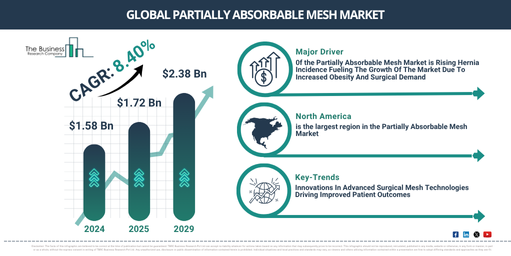
    The market size of the partially absorbable mesh has seen significant growth in the past few years. The upcoming estimate states its growth from $1.58 billion in 2024 to $1.72 billion in 2025, reflecting a compound annual growth rate (CAGR) of 8.7%. The factors leading to growth in the previous period include an increased demand for state-of-the-art surgical solutions, greater use of composite and hybrid mesh materials, a surge in the number of surgical procedures worldwide, higher healthcare spending, and a growing inclination towards enhanced biocompatibility and minimizing post-surgery complications.

    What Growth Rate Is Forecasted for the Partially Absorbable Mesh Market by 2029?

    Expectations are high for significant growth within the partially absorbable mesh market in the upcoming years. The market is projected to expand to a value of $2.38 billion by 2029, with a compound annual growth rate (CAGR) of 8.4%. The predicted growth for this period can be linked to the increased preference for robotic and laparoscopic surgeries, rise in collaborations between those producing medical devices and health service providers, increased incidence of chronic diseases necessitating soft tissue repair, growing demands for improved patient results, and a heightened focus on lowering surgical complications and recovery times. Over the same forecast period, the market will witness trends such as better biomaterials for improved biocompatibility, advancements in mesh designs for improved tissue integration, innovative coating technologies to diminish adhesions, the use of smart materials for monitored degradation, and progress in minimally invasive surgical methods.

    Download The Free Sample Report Here:

    https://www.thebusinessresearchcompany.com/sample.aspx?id=24650&type=smp

    Which Key Companies Are Shaping the Future of the Partially Absorbable Mesh Market?

    Major companies operating in the partially absorbable mesh market are Johnson And Johnson, Medtronic plc, Medline Industries Inc., Becton Dickinson and Company, Boston Scientific Corporation, Integra LifeSciences Corporation, Meril life, B. Braun Melsungen AG, Gore Medical, Demetech Corporation, TELA Bio Inc, pfm Medical AG, AFS Medical, Dolphin Mesh, Lotus Surgicals, KATSAN Medical Devices, Betatech Medical, Orion Sutures India Pvt. Ltd., Vitrex Medical A/S, BioHealth Medical Tech

    Which Factors Are Driving Demand in the Partially Absorbable Mesh Industry?

    The partially absorbable mesh market is expected to flourish due to the growing prevalence of hernias. Hernias, which involve the protrusion of an organ or tissue through a weakened area or opening in the muscle or connective tissue surrounding it, often result in discomfort or pain. The frequency of hernias is rising primarily due to the increasing rates of obesity, which trigger additional pressure on the abdominal muscles, weakening them and thereby making hernias more likely to occur. Partially absorbable mesh aids in hernia repair by blending durable reinforcement with absorbable materials which facilitate healing and minimize the risk of persistent complications. For instance, as reported by the American Society of Anesthesiologists, a nonprofit professional medical association based in the US, in March 2024, globally over 20 million hernia repair surgeries are carried out annually, with around 800,000 inguinal hernia cases occurring yearly in the United States, mainly affecting men between 75 to 80 years of age. Therefore, the burgeoning incidences of hernia are fuelling the expansion of the partially absorbable mesh market.

    Request For A Customized Report:

    https://www.thebusinessresearchcompany.com/customise?id=24650&type=smp

    How Is the Partially Absorbable Mesh Market Segmented by Several Divisions?

    The partially absorbable mesh market covered in this report is segmented –

    1) By Product Type: Polypropylene Mesh, Polytetrafluoroethylene (PTFE) Mesh, Composite Mesh, Biologic Mesh, Other Product Types

    2) By Material Composition: Synthetic Materials, Natural Materials, Hybrid Materials, Coated Materials, Other Material Compositions

    3) By Distribution Channel: Direct Sales, Distributors, Online Sales, Medical Supply Companies, Other Distribution Channels

    4) By Application: Heia Repair, Pelvic Organ Prolapse Repair, Abdominal Wall Reconstruction, Cardiac Procedures, Other Surgical Applications

    5) By End-User: Hospitals, Ambulatory Surgical Centers, Specialty Clinics, Research Institutes, Other Healthcare Facilities

    Subsegments:

    1) By Polypropylene Mesh: Lightweight Polypropylene Mesh, Heavyweight Polypropylene Mesh, Coated Polypropylene Mesh

    2) By Polytetrafluoroethylene (PTFE) Mesh: Expanded Polytetrafluoroethylene (PTFE) Mesh, Dual-Layer Polytetrafluoroethylene (PTFE) Mesh, Microporous Polytetrafluoroethylene (PTFE) Mesh

    3) By Composite Mesh: Synthetic Biologic Composite Mesh, Synthetic Absorbable Polymer Composite Mesh, Dual-Sided Composite Mesh (Anti-Adhesion)

    4) By Biologic Mesh, By Type: Porcine Dermis Mesh, Bovine Dermis Mesh, Human Cadaveric Dermis Mesh

    5) By Other Product Types: Polyester Mesh, Polyvinylidene Fluoride (PVDF) Mesh, Silk Mesh

    What are the Emerging Market Trends Driving the Growth of the Partially Absorbable Mesh Industry?

    Key players in the semi-absorbable mesh market are focusing on creating innovative products like composite meshes to bolster patient outcomes, enhance biocompatibility, and minimize post-operative issues. Composite meshes, which are surgical implants manufactured from both absorbable and non-absorbable substances, are designed to provide a blend of prolonged support and enhanced biocompatibility for procedures such as hernia fixes. For example, in February 2022, Futura Surgicare Pvt Ltd, a company based in India that specializes in the production of wound closure devices, introduced a range of sophisticated composite surgical mesh products. These meshes are constructed specifically for tension-less and laparoscopic hernia treatments, offering both lasting and interim support for organs and tissues. Significantly, the Monosolve mesh is a partially absorbable composite that combines polyglycolide-co-caprolactone (PGCL) with polypropylene to boost flexibility and promote healing.

    Access The Full Report Here:

    https://www.thebusinessresearchcompany.com/report/partially-absorbable-mesh-global-market-report

    Which Regions Are Driving Growth in the Partially Absorbable Mesh Market?

    North America was the largest region in the partially absorbable mesh market in 2024. Asia-Pacific is expected to be the fastest-growing region in the forecast period. The regions covered in the partially absorbable mesh market report are Asia-Pacific, Western Europe, Eastern Europe, North America, South America, Middle East, Africa.

    Purchase The Full Report Today:

    https://www.thebusinessresearchcompany.com/purchaseoptions.aspx?id=24650

    This Report Delivers Insight On:

    1. How big is the partially absorbable mesh market, and how is it changing globally?

    2. Who are the major companies in the partially absorbable mesh market, and how are they performing?

    3. What are the key opportunities and risks in the partially absorbable mesh market right now?

    4. Which products or customer segments are growing the most in the partially absorbable mesh market?

    5. What factors are helping or slowing down the growth of the partially absorbable mesh market?

    About The Business Research Company:

    With over 15000+ reports from 27 industries covering 60+ geographies, The Business Research Company has built a reputation for offering comprehensive, data-rich research and insights. Armed with 1,500,000 datasets, the optimistic contribution of in-depth secondary research, and unique insights from industry leaders, you can get the information you need to stay ahead in the game.

    Get in touch with us:

    The Business Research Company: https://www.thebusinessresearchcompany.com/

    Americas +1 3156230293

    Asia +44 2071930708

    Europe +44 2071930708

    Email us at info@tbrc.info

    Follow us on:

    LinkedIn: https://in.linkedin.com/company/the-business-research-company

    YouTube: https://www.youtube.com/channel/UC24_fI0rV8cR5DxlCpgmyFQ

    Global Market Model: https://www.thebusinessresearchcompany.com/global-market-model
  • Osseointegration Implants Industry Insights 2025 – Market Forecast for Executives and Planners

    Osseointegration Implants Industry Insights 2025 – Market Forecast for Executives and Planners

    Claim your 30% discount on Global Market Reports with code ONLINE30. Limited time only.

    How Has the Osseointegration Implants Market Size Changed, over the years?

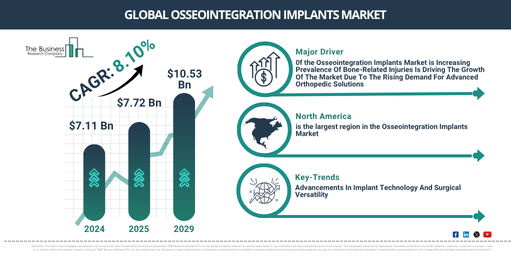
    The market size for osseointegration implants has been showing robust growth in the past years. The market is projected to expand from $7.11 billion in 2024 to $7.72 billion in 2025, exhibiting a compound annual growth rate (CAGR) of 8.5%. Factors contributing to this growth during the historic period include a surge in requirement for dental reconstruction, escalating count of orthopedic surgeries, increasing cognizance of prosthetic innovations, development of healthcare infrastructure in fortified nations, and a rise in cases of traumatic injuries.

    How Much Will the Osseointegration Implants Market Be Worth in 2029?

    In the coming years, the osseointegration implants market is projected to experience robust growth, reaching $10.53 billion in 2029 with a compound annual growth rate (CAGR) of 8.1%. This growth within the forecast period can be linked to factors such as an aging population, increased use of sophisticated prosthetics, rising health care spending in developing economies, growth in medical tourism, and a higher incidence of limb amputations due to chronic illnesses. Key trends predicted for the forecast period include progress in the material used for implants, 3D printing innovations for tailored implants, advancements in minimally invasive surgical procedures, research, and improvement in titanium surface modifications, and the incorporation of digital surgical planning systems.

    Download The Free Sample Report Here:

    https://www.thebusinessresearchcompany.com/sample.aspx?id=24638&type=smp

    Which is the Largest Company in the Osseointegration Implants Market?

    Major companies operating in the osseointegration implants market are Johnson & Johnson, Medtronic plc, Danaher Corporation, Stryker Corporation, Henry Schein Inc., Zimmer Biomet Holdings Inc., Smith & Nephew plc, Dentsply Sirona Inc., Institut Straumann AG, Straumann Holding AG, DePuy Synthes, Cochlear Limited, CONMED Corporation, OSSTEM Implant Co. Ltd., B. Braun Melsungen AG, Bicon LLC, Megagen Implant Co. Ltd., CAMLOG Biotechnologies GmbH, BTT Health GmbH, Integrum.

    What Are the Main Market Drivers in the Osseointegration Implants Industry?

    The continual rise in the instances of bone-related injuries is anticipated to fuel the expansion of the osseointegration implants market. These bone-related injuries, such as fractures, breaks, or dislocations, primarily affect the elderly population who have more brittle bones, susceptible to fractures. The role of osseointegration implants in effectively attaching prosthetics to bones is crucial, enhancing stability and facilitating healing during bone injury treatment. For example, as per a report by Healthy Bones Australia, a non-governmental organization based in Australia, in August 2024, there was a fracture every 2.7 minutes in Australia in 2023. This frequency is predicted to escalate to a fracture every 30 seconds by 2033. Hence, the escalating instances of bone-related injuries are contributing to the growth of the osseointegration implants market.

    Request For A Customized Report:

    https://www.thebusinessresearchcompany.com/customise?id=24638&type=smp

    How Is the Osseointegration Implants Market Segments Structured?

    The osseointegration implants market covered in this report is segmented –

    1) By Product: Dental Implants, Hip Implants, Knee Implants, Spinal Implants, Other Products

    2) By Material: Ceramic Implants, Zirconia Implants, Stainless Steel Implants, Titanium Implants, Metallic Implants, Other Materials

    3) By End User: Hospitals, Ambulatory Surgical Centers, Dental Clinics, Other End-Users

    Subsegments:

    1) By Dental Implants: Endosteal Implants, Subperiosteal Implants, Zygomatic Implants, Mini Dental Implants, Basal Implants

    2) By Hip Implants: Total Hip Replacement, Partial Hip Replacement, Hip Resurfacing, Revision Hip Implants

    3) By Knee Implants: Total Knee Replacement, Partial Knee Replacement, Revision Knee Implants

    4) By Spinal Implants: Interbody Fusion Devices, Pedicle Screws, Rods And Plates, Artificial Discs, Spinal Cages

    5) By Other Products: Shoulder Implants, Elbow Implants, Ankle Implants, Wrist Implants, Other Joint Implants

    What Strategic Trends Are Transforming the Osseointegration Implants Market?

    Key players in the osseointegration implants market are concentrating on fusing with digital dentistry, including surgical and restorative flexibility, to offer advanced implant solutions to dentists that enhance the predictability of treatments and patient results. Surgical and restorative flexibility indicates that the implant is structured to effectively integrate with diverse surgical methods and prosthetic alternatives, making it flexible for a variety of clinical conditions. For example, in February 2024, ZimVie Inc., a U.S. life sciences entity, introduced the TSX Implant. This cutting-edge implant is constructed for immediate positioning and support, backed by more than twenty years of clinical findings that guarantee long-lasting bone health and prosthetic steadiness. The TSX Implant flawlessly merges with ZimVie’s digitally-centered dentistry solutions and variable surgical procedures, simplifying processes and increasing reliability for dental experts. This debut further underscores the company’s dedication to creativity and industry leadership.

    Access The Full Report Here:

    https://www.thebusinessresearchcompany.com/report/osseointegration-implants-global-market-report

    Which Global Regions Offer the Highest Growth in the Osseointegration Implants Market?

    North America was the largest region in the osseointegration implants market in 2024. Asia-Pacific is expected to be the fastest-growing region in the forecast period. The regions covered in the osseointegration implants market report are Asia-Pacific, Western Europe, Eastern Europe, North America, South America, Middle East, Africa.

    Purchase The Full Report Today:

    https://www.thebusinessresearchcompany.com/purchaseoptions.aspx?id=24638

    This Report Delivers Insight On:

    1. How big is the osseointegration implants market, and how is it changing globally?

    2. Who are the major companies in the osseointegration implants market, and how are they performing?

    3. What are the key opportunities and risks in the osseointegration implants market right now?

    4. Which products or customer segments are growing the most in the osseointegration implants market?

    5. What factors are helping or slowing down the growth of the osseointegration implants market?

    About The Business Research Company:

    With over 15000+ reports from 27 industries covering 60+ geographies, The Business Research Company has built a reputation for offering comprehensive, data-rich research and insights. Armed with 1,500,000 datasets, the optimistic contribution of in-depth secondary research, and unique insights from industry leaders, you can get the information you need to stay ahead in the game.

    Get in touch with us:

    The Business Research Company: https://www.thebusinessresearchcompany.com/

    Americas +1 3156230293

    Asia +44 2071930708

    Europe +44 2071930708

    Email us at info@tbrc.info

    Follow us on:

    LinkedIn: https://in.linkedin.com/company/the-business-research-company

    YouTube: https://www.youtube.com/channel/UC24_fI0rV8cR5DxlCpgmyFQ

    Global Market Model: https://www.thebusinessresearchcompany.com/global-market-model
  • Market Analysis on Ophthalmic Equipment Industry – Insights for Corporate Strategy and R&D

    Market Analysis on Ophthalmic Equipment Industry – Insights for Corporate Strategy and R&D

    Claim your 30% discount on Global Market Reports with code ONLINE30. Limited time only.

    What Is the Forecast for the Ophthalmic Equipment Market from 2024 to 2025?

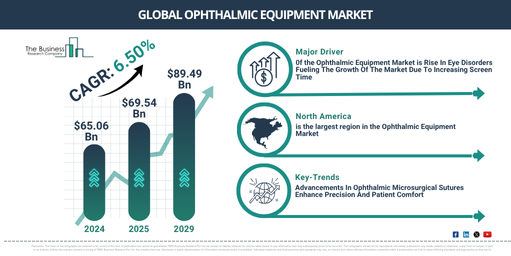
    The market size of ophthalmic equipment has been experiencing robust growth in the past years. This trend is expected to continue as the market size is projected to increase from $65.06 billion in 2024 to $69.54 billion in 2025, corresponding to a compound annual growth rate (CAGR) of 6.9%. The growth during the historical period can be attributed to the burgeoning number of ophthalmic clinics and eye care centers specializing in this field, increased disposable income, expansion of healthcare infrastructure, government-backed initiatives and funds allocated for eye care programs, and the rising frequency of eye surgeries.

    What Is the Projected Market Size of the Ophthalmic Equipment Market?

    Expectations are high for a robust growth in the ophthalmic equipment market size over the next few years, with the market predicted to reach $89.49 billion in 2029, growing at a compound annual growth rate (CAGR) of 6.5%. The growth within the forecast period can be credited to a rising prevalence of eye-related disorders, a growing elderly population susceptible to vision issues, increasing public awareness about eye health and vision care, an increase in diabetes cases, and a surge in the demand for early detection and treatment of eye diseases. The forecast period will also see major trends such as improvements in ophthalmic diagnostic technologies, the advent of minimally invasive surgical procedures, technological enhancements in laser eye surgery tools, innovations in imaging methods, and the presence of sophisticated diagnostic software that is integrated with ophthalmic devices.

    Download The Free Sample Report Here:

    https://www.thebusinessresearchcompany.com/sample.aspx?id=24636&type=smp

    Who are the Major Competitors in the Ophthalmic Equipment Market Outlook?

    Major companies operating in the ophthalmic equipment market are Medtronic Plc, Alcon Inc., Bausch + Lomb Corp., Buhler Group, Carl Zeiss Meditec AG, Rodenstock GmbH, Leica Microsystems, Corza Medical, EXTREME d.o.o., BVI Medical Inc., Heine Optotechnik, Essilor International S.A., Rumex International Co., Advancing Eyecare, MS Westfalia GmbH, Designs For Vision, FCI S.A.S., Stille AB, Visionix Ltd., Optotek Medical, Coburn Technologies Inc., Haag-Streit AG, MDT Medical Devices Manufacturer, Carleton Limited, INNOVA Medical Group Inc.

    What Is Fueling Growth in the Ophthalmic Equipment Market?

    The escalating instances of eye defects are anticipated to propel expansion in the ophthalmic equipment market. Eye disorders, conditions that detrimentally affect the eye’s structure or function, potentially leading to impaired vision or discomfort, are on the rise due to increased screen time. Extended eye strain resulting from this can lead to problems like digital eye strain and myopia. Ophthalmic equipment is necessary for the treatment of these disorders, as they facilitate precise diagnosis and accurate treatment, aiding in early detection and enhancing patient results. For instance, a report issued by the Centers for Disease Control and Prevention, a US government agency, in May 2024, suggests that without effective interventions, there could be a 72% rise in diabetic retinopathy and an 87% increase in cataracts by 2050. In addition, the number of individuals affected by vision impairment and blindness may surge by up to 150%. Hence, rising instances of eye disorder will likely amplify the growth of the ophthalmic equipment market.

    Request For A Customized Report:

    https://www.thebusinessresearchcompany.com/customise?id=24636&type=smp

    Which Ophthalmic Equipment Market Segments Are Growing the Fastest?

    The ophthalmic equipment market covered in this report is segmented –

    1) By Product Type: Ophthalmic Surgical Devices, Ophthalmic Diagnostic Devices, Ophthalmic Vision Care Devices

    2) By Technology: Laser Technology, Optical Coherence Tomography, Ultrasound Technology, Phacoemulsification

    3) By Application: Cataract Surgery, Retinal Surgery, Glaucoma Surgery, Refractive Surgery

    4) By End-Users: Hospitals, Ophthalmology Clinics, Ambulatory Surgical Centers (ASCs), Optical Retail Centers, Other End-Users

    Subsegments:

    1) By Ophthalmic Surgical Devices: Phacoemulsification Devices, Laser Surgical Devices, Vitrectomy Devices, Ophthalmic Microsurgical Instruments, Intraocular Lenses (IOLs), Ophthalmic Cryotherapy Devices

    2) By Ophthalmic Diagnostic Devices: Slit Lamp Microscopes, Optical Coherence Tomography (OCT) Devices, Visual Field Analyzers, Fundus Cameras, Keratometers, Pachymeters, Retinal Imaging Devices, Tonometers

    3) By Ophthalmic Vision Care Devices: Contact Lens Fitters, Autorefractors, Lens Meters, Trial Lens Sets, Phoropters, Lens Edgers, Vision Screening Devices

    Which Industry Trends Are Shaping the Future of the Ophthalmic Equipment Market?

    Leading enterprises in the ophthalmic equipment market are increasingly concentrating on introducing products based on advanced technology, such as ophthalmic microsurgical sutures, in efforts to mitigate the probabilities of infection and inflammatory conditions. Ophthalmic microsurgical sutures are essentially ultra-fine threads crafted for the proficient usage of eye surgeons for accurate suturing and sealing of vulnerable tissues during eye surgeries. To illustrate, Corza Medical, a medical technology corporation based in the US, rolled out the Onatec ophthalmic microsurgical sutures in October 2024. By leveraging highly tempered stainless steel, Corza Medical manufactures Onatec needles, ensuring noteworthy bending resistance and longevity. Their sophisticated automated production process assures exact needle shapes and precise grinds, facilitating the suturing of delicate tissues in extremely confined spaces. The needles entail a superior surface finish promoting smooth penetration, thereby decreasing tissue damage. This blend of accuracy and quality significantly amplifies patient comfort during ophthalmic microsurgeries.

    Access The Full Report Here:

    https://www.thebusinessresearchcompany.com/report/ophthalmic-equipment-global-market-report

    Which Countries Are Leading the Ophthalmic Equipment Market?

    North America was the largest region in the ophthalmic wquipment market in 2024. Asia-Pacific is expected to be the fastest-growing region in the forecast period. The regions covered in the ophthalmic equipment market report are Asia-Pacific, Western Europe, Eastern Europe, North America, South America, Middle East, Africa.

    Purchase The Full Report Today:

    https://www.thebusinessresearchcompany.com/purchaseoptions.aspx?id=24636

    This Report Delivers Insight On:

    1. How big is the ophthalmic equipment market, and how is it changing globally?

    2. Who are the major companies in the ophthalmic equipment market, and how are they performing?

    3. What are the key opportunities and risks in the ophthalmic equipment market right now?

    4. Which products or customer segments are growing the most in the ophthalmic equipment market?

    5. What factors are helping or slowing down the growth of the ophthalmic equipment market?

    About The Business Research Company:

    With over 15000+ reports from 27 industries covering 60+ geographies, The Business Research Company has built a reputation for offering comprehensive, data-rich research and insights. Armed with 1,500,000 datasets, the optimistic contribution of in-depth secondary research, and unique insights from industry leaders, you can get the information you need to stay ahead in the game.

    Get in touch with us:

    The Business Research Company: https://www.thebusinessresearchcompany.com/

    Americas +1 3156230293

    Asia +44 2071930708

    Europe +44 2071930708

    Email us at info@tbrc.info

    Follow us on:

    LinkedIn: https://in.linkedin.com/company/the-business-research-company

    YouTube: https://www.youtube.com/channel/UC24_fI0rV8cR5DxlCpgmyFQ

    Global Market Model: https://www.thebusinessresearchcompany.com/global-market-model
  • Obstetrics Device Industry Growth Expected to Reach $5.57 Billion by 2029 at a CAGR of 5.6% | Segmentation and Growth Opportunities

    Obstetrics Device Industry Growth Expected to Reach $5.57 Billion by 2029 at a CAGR of 5.6% | Segmentation and Growth Opportunities

    Claim your 30% discount on Global Market Reports with code ONLINE30. Limited time only.

    What Is the Forecast for the Obstetrics Device Market Growth in 2025?

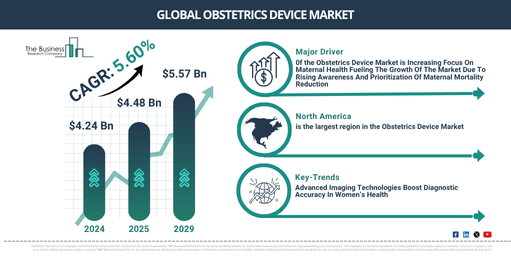
    The market size of obstetrics devices has considerably expanded over the past few years. The projection shows an increase from $4.24 billion in 2024 to $4.48 billion in 2025, indicating a compound annual growth rate (CAGR) of 5.9%. The rapid growth in the historical phase is due to factors such as growing birth rates in developing nations, increased institutional births, a surge in cesarean section frequencies, heightened awareness regarding prenatal care, and governmental initiatives targeting maternal health.

    What Is the Forecast for the Obstetrics Device Market Size Through 2029?

    Expectations are high for the obstetrics device market, which is poised for significant expansion in the upcoming years. With a compound annual growth rate (CAGR) of 5.6%, it is projected to hit $5.57 billion by 2029. The impressive growth over the next few years may be driven by factors such as increased global attention on lowering maternal deaths, an aging maternal demographic in developed nations, larger healthcare infrastructure in up and coming markets, a rise in fertility treatments, and more prevalent health insurance coverage. The forecasted period is also likely to witness trends such as the incorporation of artificial intelligence (AI) and machine learning, cutting-edge imaging technologies, patient-centered and advanced delivery rooms, sustainable and environmentally friendly product design, and innovative wearable monitoring gadgets.

    Download The Free Sample Report Here:

    https://www.thebusinessresearchcompany.com/sample.aspx?id=24632&type=smp

    What are the Key Market Players in Obstetrics Device Market and How They’re Evolving?

    Major companies operating in the obstetrics device market are Medtronic plc, Siemens Healthineers AG, Fujifilm Holdings Corporation, Becton, Dickinson and Company, Royal Philips N.V., Stryker Corporation, GE Healthcare, Boston Scientific Corporation, Olympus Corporation, Shenzhen Mindray Bio-Medical Electronics Co Ltd., Hologic Inc., Mindray Medical International Limited, CooperSurgical Inc., Canon Medical Systems Corporation, Karl Storz GmbH & Co. KG, Cook Medical Incorporated, Natus Medical Incorporated, Esaote SpA, Atom Medical Corporation, CHISON Medical Technologies Co Ltd.

    What Are the Primary Growth Drivers in the Obstetrics Device Market?

    The surge in attention towards maternal health is projected to accelerate the expansion of the obstetrics device market in the future. Maternal health concentrates on the wellness of women during pregnancy, delivery, and the postnatal phase. This escalating attention to maternal health is a result of growing consciousness as global governments and organizations are making it a priority to lower maternal deaths and enhance results of pregnancies. Obstetric devices significantly contribute to maternal health by offering precise monitoring and diagnostic features, allowing the early identification of problems and guaranteeing safer pregnancies. They enhance clinical decision-making process and contribute to better results for mothers and newborns. For example, according to the Centers for Disease Control and Prevention, a government agency based in the US, the number of births in 2024 peaked at 3,622,673, showcasing a 1% increase from 3,591,328 in 2023. As a result, the increasing focus on maternal health is propelling the growth of the obstetrics device market.

    Request For A Customized Report:

    https://www.thebusinessresearchcompany.com/customise?id=24632&type=smp

    What Are the Leading Segments in the Global Obstetrics Device Industry?

    The obstetrics device market covered in this report is segmented –

    1) By Type: Monitoring Devices, Surgical Instruments, Diagnostic Devices, Catheters

    2) By Technology: Digital Monitoring, Ultrasound Imaging, Wireless Technologies

    3) By Application: Pregnancy Monitoring, Labor And Delivery, Cesarean Sections, Neonatal Care, Reproductive Health

    4) By End User: Hospitals, Clinics, Birthing Centers, Ambulatory Surgical Centers

    Subsegments:

    1) By Monitoring Devices: Fetal Monitors, Contraction Monitors, Maternal Vital Sign Monitors, Ultrasound Monitoring Devices

    2) By Surgical Instruments: Forceps, Scissors, Retractors, Curettes, Needle Holders

    3) By Diagnostic Devices: Ultrasound Machines, Dopplers, Amniotic Fluid Analyzers, Biochemical Analyzers

    4) By Catheters: Intrauterine Catheters, Foley Catheters, Balloon Catheters, Cervical Ripening Catheters

    What Are the Key Market Trends in the Obstetrics Device Industry?

    The obstetrics device market’s main players are turning their attention towards the creation of technologically sophisticated products such as new, superior ultrasound systems to heighten diagnostic accuracy and streamline operations in obstetric and cardiovascular care. A premium ultrasound system is a high-end diagnostic imaging device with advanced imaging capabilities, excellent image quality, and state-of-the-art technologies for precise medical evaluations. For example, in September 2024, South Korea’s Samsung Medison Co. Ltd., a medical device firm, introduced HERA Z20, a new premium ultrasound system for obstetrics and gynecology. The HERA Z20 boasts advanced imaging technologies that provide unparalleled clarity and accuracy, enhanced diagnostic capabilities that focus on women’s health, and a user-friendly interface to optimize workflow efficiency. It also incorporates tools driven by artificial intelligence (AI) to help clinicians make quicker and more accurate decisions, establishing a new benchmark for ultrasound systems in obstetrics and gynecology.

    Access The Full Report Here:

    https://www.thebusinessresearchcompany.com/report/obstetrics-device-global-market-report

    What Is the Regional Outlook for the Obstetrics Device Market?

    North America was the largest region in the obstetrics device market in 2024. Asia-Pacific is expected to be the fastest-growing region in the forecast period. The regions covered in the obstetrics device market report are Asia-Pacific, Western Europe, Eastern Europe, North America, South America, Middle East, Africa.

    Purchase The Full Report Today:

    https://www.thebusinessresearchcompany.com/purchaseoptions.aspx?id=24632

    This Report Delivers Insight On:

    1. How big is the obstetrics device market, and how is it changing globally?

    2. Who are the major companies in the obstetrics device market, and how are they performing?

    3. What are the key opportunities and risks in the obstetrics device market right now?

    4. Which products or customer segments are growing the most in the obstetrics device market?

    5. What factors are helping or slowing down the growth of the obstetrics device market?

    About The Business Research Company:

    With over 15000+ reports from 27 industries covering 60+ geographies, The Business Research Company has built a reputation for offering comprehensive, data-rich research and insights. Armed with 1,500,000 datasets, the optimistic contribution of in-depth secondary research, and unique insights from industry leaders, you can get the information you need to stay ahead in the game.

    Get in touch with us:

    The Business Research Company: https://www.thebusinessresearchcompany.com/

    Americas +1 3156230293

    Asia +44 2071930708

    Europe +44 2071930708

    Email us at info@tbrc.info

    Follow us on:

    LinkedIn: https://in.linkedin.com/company/the-business-research-company

    YouTube: https://www.youtube.com/channel/UC24_fI0rV8cR5DxlCpgmyFQ

    Global Market Model: https://www.thebusinessresearchcompany.com/global-market-model

  • Nursing Robots Industry Valued at $3.04 Billion by 2029 With CAGR of 20.1% | Size and Share Insights

    Nursing Robots Industry Valued at $3.04 Billion by 2029 With CAGR of 20.1% | Size and Share Insights

    Claim your 30% discount on Global Market Reports with code ONLINE30. Limited time only.

    What Is the Forecast for the Nursing Robots Market from 2024 to 2025?

    The market size for nursing robots has seen rapid expansion in the past few years. It is projected to increase from $1.21 billion in 2024 to $1.46 billion in 2025, with a compound annual growth rate (CAGR) of 20.5%. The historic surge can be linked to factors such as the initiation of pilot programs in hospitals, heightened public awareness through media, advancements in user-friendly interfaces, contributions from research and academia, and the implementation of standardization and regulatory frameworks.

    What Is the Projected Market Size of the Nursing Robots Market?

    The market size of nursing robots is anticipated to witness substantial expansion in the coming years. It is estimated to reach a value of $3.04 billion by 2029, with a compound annual growth rate (CAGR) of 20.1%. The surge in growth during the forecast period is mainly due to the ongoing global aging phenomenon, broader implementation in home care scenarios, improved mobility and skill, customized patient engagement, and the proliferation of training and education initiatives. The forecast period will see significant trends like wearable robotic exoskeletons, natural language processing (NLP), AI-powered diagnostics, 5G network integration, and touch-responsive interfaces.

    Download The Free Sample Report Here:

    https://www.thebusinessresearchcompany.com/sample.aspx?id=24631&type=smp

    Who are the Major Competitors in the Nursing Robots Market Outlook?

    Major companies operating in the nursing robots market are Toyota Motor Corporation, Panasonic Holdings Corporation, KUKA Robotics Corporation, Sumitomo Riko Company Limited, Nikkei Inc., NCS Group, RIKEN, SoftBank Robotics Group Corp., Softeq Development Corporation, Shine Technology Co Ltd., DocCheck Community GmbH, Shenzhen Zuowei Technology Co Ltd., Diligent Robotics Inc., SARA Robotics & Automation Services, Hansen Medical Inc., Chang Robotics Co Ltd., CT Asia Robotics Co Ltd., Takayama Shoji Co Ltd., Club First Roboptics Co Ltd., Hstar Technologies.

    What Is Fueling Growth in the Nursing Robots Market?

    The projected rise in the shortage of nursing personnel is anticipated to drive the expansion of the nursing robots market. When the term nursing staff is used, it typically refers to a collective of health professionals responsible for patient care and support, which generally takes place in hospitals, clinics, nursing homes, and other healthcare facilities. The shortfall in the nursing staff is on the rise due to escalating burnout levels resulting in early resignations, decreased work hours, and a decline in professionals remaining in the healthcare arena. Nursing robots can assist nursing staff by undertaking repetitive or strenuous tasks like lifting patients, delivering provisions, or checking vital signs, which lightens the workload and lets nurses concentrate on crucial patient care. To illustrate, a report published by the World Health Organization, an intergovernmental entity based in Switzerland in May 2024, stated that the global nursing workforce comprises nearly 29 million nurses and 2.2 million midwives. The WHO foresees a future shortage of 4.5 million nurses and 310,000 midwives by 2030. Consequently, the escalating shortage of nursing staff is catalyzing the growth of the nursing robots market.

    Request For A Customized Report:

    https://www.thebusinessresearchcompany.com/customise?id=24631&type=smp

    Which Nursing Robots Market Segments Are Growing the Fastest?

    The nursing robots market covered in this report is segmented –

    1) By Type: Humanoid Robots, Assistive Robots, Autonomous Robots

    2) By Product Type: Independent Support Robots, Daily Care And Transportation Robots, Medication Dispensing Robots, Other Product Types

    3) By Application: Elderly Care, Post-Surgical Care, Mental Health Support, Patient Monitoring And Assistance, Rehabilitation And Physical Therapy

    4) By End User: Hospitals And Clinics, Home Care Settings, Nursing Home, Other End Users

    Subsegments:

    1) By Humanoid Robots: Social Assistance Robots, Caregiving Robots, Communication Robots, Monitoring And Surveillance Robots

    2) By Assistive Robots: Physical Assistance Robots, Mobility Aid Robots, Rehabilitation Robots, Prosthetic And Orthotic Assistive Devices

    3) By Autonomous Robots: Autonomous Delivery Robots, Autonomous Medication Management Robots, Autonomous Monitoring Robots, Autonomous Disinfection Robots

    Which Industry Trends Are Shaping the Future of the Nursing Robots Market?

    Prominent enterprises in the nursing robot industry are prioritizing technological innovations like telerobots to better patient care and reduce the responsibilities of healthcare professionals. Telerobot refers to a sophisticated, remotely controlled robotic system introducing pioneering features or abilities, considerably progressing robotics. For example, in June 2023, Touchlab, a Scottish deep-tech firm, presented Välkky, a revolutionary nurse-assisting telerobot, at Laakso Hospital in Helsinki, Finland, as part of a three-month pilot project. The goal is to examine how advanced robotics might reduce healthcare professionals’ responsibilities and improve patient care. Välkky comes with exclusive features like super-thin electronic skin for tactile sensing, real-time remote control through haptic systems, the ability to carry out everyday healthcare duties, and integrated safety mechanisms for safe interaction with patients.

    Access The Full Report Here:

    https://www.thebusinessresearchcompany.com/report/nursing-robots-global-market-report

    Which Countries Are Leading the Nursing Robots Market?

    North America was the largest region in the nursing robots market in 2024. Asia-Pacific is expected to be the fastest-growing region in the forecast period. The regions covered in the nursing robots market report are Asia-Pacific, Western Europe, Eastern Europe, North America, South America, Middle East, Africa.

    Purchase The Full Report Today:

    https://www.thebusinessresearchcompany.com/purchaseoptions.aspx?id=24631

    This Report Delivers Insight On:

    1. How big is the nursing robots market, and how is it changing globally?

    2. Who are the major companies in the nursing robots market, and how are they performing?

    3. What are the key opportunities and risks in the nursing robots market right now?

    4. Which products or customer segments are growing the most in the nursing robots market?

    5. What factors are helping or slowing down the growth of the nursing robots market?

    About The Business Research Company:

    With over 15000+ reports from 27 industries covering 60+ geographies, The Business Research Company has built a reputation for offering comprehensive, data-rich research and insights. Armed with 1,500,000 datasets, the optimistic contribution of in-depth secondary research, and unique insights from industry leaders, you can get the information you need to stay ahead in the game.

    Get in touch with us:

    The Business Research Company: https://www.thebusinessresearchcompany.com/

    Americas +1 3156230293

    Asia +44 2071930708

    Europe +44 2071930708

    Email us at info@tbrc.info

    Follow us on:

    LinkedIn: https://in.linkedin.com/company/the-business-research-company

    YouTube: https://www.youtube.com/channel/UC24_fI0rV8cR5DxlCpgmyFQ

    Global Market Model: https://www.thebusinessresearchcompany.com/global-market-model

  • Nuclear Radiation Scanner Market to Reach $1.81 Billion by 2029 | Key Drivers and Future Outlook

    Nuclear Radiation Scanner Market to Reach $1.81 Billion by 2029 | Key Drivers and Future Outlook

    Claim your 30% discount on Global Market Reports with code ONLINE30. Limited time only.

    What Is the Growth Rate of the Nuclear Radiation Scanner Market?

    The market size of nuclear radiation scanners has seen considerable growth in previous years. The market is expected to expand from $1.24 billion in 2024 to $1.34 billion in 2025, with a compound annual growth rate (CAGR) of 8.1%. This growth during the historic period is a result of increased industrial applications, escalated security threats linked with radioactive substances, growth in research and development, proliferation of nuclear medicine, and increased threats of nuclear terrorism.

    What Growth Rate Is Forecasted for the Nuclear Radiation Scanner Market by 2029?

    Expectations are high for significant expansion in the nuclear radiation scanner market over the coming years, with a projection to reach $1.81 billion in 2029, attaining a compound annual growth rate (CAGR) of 7.8%. This anticipated surge during the forecast period can be linked to a rise in nuclear power generation, increased government funding and initiatives targeting nuclear safety, amplified public consciousness about radiation hazards, the escalation in nuclear waste management and a higher incidence of radiation accidents. Key predicted trends for the forecast period encompass innovation in sensor tech, the conception of transportable radiation detectors, the call for instantaneous radiation monitoring, enhancements in detector sensitivity, and the integration of automated and digital systems.

    Download The Free Sample Report Here:

    https://www.thebusinessresearchcompany.com/sample.aspx?id=24630&type=smp

    Which Key Companies Are Shaping the Future of the Nuclear Radiation Scanner Market?

    Major companies operating in the nuclear radiation scanner market are Bruker Corporation, HORIBA Ltd., LANDAUER INC., Canon Electron Tubes & Devices Co. Ltd., Atomtex Co., Berkeley Nucleonics Corporation, Rotem Industries Ltd., LND Inc., AMPTEK Inc., Radiation Monitoring Devices Inc., Mediso Ltd., Advacam s.r.o., Arktis Radiation Detectors Ltd., INNORIID GMBH, CapeSym Inc., M.C. TEC B.V., Radiation Detection Technologies Inc., US Nuclear Corp., John Caunt Scientific Ltd., ELSE NUCLEAR S.r.l

    Which Factors Are Driving Demand in the Nuclear Radiation Scanner Industry?

    The increase in nuclear power generation is expected to spur the expansion of the nuclear radiation scanner market in the foreseeable future. Produced from controlled nuclear reactions, often through fission, nuclear power serves as a means to generate electricity. A surge in the demand for low-carbon energy sources is causing an upswing in nuclear power generation, as it offers a large-scale, dependable alternative to fossil fuels and aids in lowering greenhouse gas emissions. Nuclear radiation scanners play a pivotal role in nuclear power generation by monitoring and detecting radiation levels to protect personnel and the environment, prevent hazardous exposure, and ensure regulatory compliance. A report by the Belgium-based executive body, the European Commission, from February 2025 noted that the European Union’s 13 nuclear electricity-generating countries produced a total of 619,601 gigawatt hours (GWh) in 2023, reflecting a 1.7% increase from 2022’s output. Therefore, the escalating trend of nuclear power generation is expected to bolster the nuclear radiation scanner market’s growth.

    Request For A Customized Report:

    https://www.thebusinessresearchcompany.com/customise?id=24630&type=smp

    How Is the Nuclear Radiation Scanner Market Segmented by Several Divisions?

    The nuclear radiation scanner market covered in this report is segmented –

    1) By Product Type: Portable Scanners, Fixed Scanners, Handheld Scanners

    2) By Technology: Geiger-Muller Counters, Scintillation Detectors, Semiconductor Detectors, Others Technologies

    3) By Distribution Channel: Direct Sales, Online Sales, Distributors And Resellers, Aftermarket Services

    4) By End-User: Hospitals, Research Institutes, Nuclear Power Plants, Defense And Security Agencies, Other End Users

    Subsegments:

    1) By Portable Scanners: Backpack Radiation Detectors, Vehicle-Mounted Radiation Detectors, Portable Radiation Portal Monitors

    2) By Fixed Scanners: Fixed Radiation Portal Monitors, Area Radiation Monitors, Continuous Emission Monitoring Systems

    3) By Handheld Scanners: Handheld Gamma Spectrometers, Handheld Geiger Counters, Personal Radiation Detectors

    What are the Emerging Market Trends Driving the Growth of the Nuclear Radiation Scanner Industry?

    Companies leading the nuclear radiation scanner market emphasize the creation of innovative solutions such as software tools to ensure increased precision and uniformity in their tasks. These software tools are digital applications or programs specially designed to boost productivity and aid in the development and management of other software or systems. For example, the International Atomic Energy Agency, a nuclear cooperation hub based in Austria, launched the Mobile-Integrated Nuclear Security Network (M-INSN), a software tool that offers real-time radiation data, in June 2023. By supplying real-time radiation data for crowded places like border crossings, seaports, and airports, it promotes effective nuclear security. This tool gives decision-makers the ability to visualize radiation data and make informed decisions to safeguard the public during a potential nuclear or radioactive material incident. A critical feature of M-INSN is its vendor-neutral design, which allows integration with any detection equipment and provides administrators with immediate access to radiation data and the exact locations of users, including radiation specialists and security personnel. Moreover, regular updates to an interactive map displaying the status of the equipment deliver essential information for tracking nuclear security activities.

    Access The Full Report Here:

    https://www.thebusinessresearchcompany.com/report/nuclear-radiation-scanner-global-market-report

    Which Regions Are Driving Growth in the Nuclear Radiation Scanner Market?

    North America was the largest region in the nuclear radiation scanner market in 2024. Asia-Pacific is expected to be the fastest-growing region in the forecast period. The regions covered in the nuclear radiation scanner market report are Asia-Pacific, Western Europe, Eastern Europe, North America, South America, Middle East, Africa.

    Purchase The Full Report Today:

    https://www.thebusinessresearchcompany.com/purchaseoptions.aspx?id=24630

    This Report Delivers Insight On:

    1. How big is the nuclear radiation scanner market, and how is it changing globally?

    2. Who are the major companies in the nuclear radiation scanner market, and how are they performing?

    3. What are the key opportunities and risks in the nuclear radiation scanner market right now?

    4. Which products or customer segments are growing the most in the nuclear radiation scanner market?

    5. What factors are helping or slowing down the growth of the nuclear radiation scanner market?

    About The Business Research Company:

    With over 15000+ reports from 27 industries covering 60+ geographies, The Business Research Company has built a reputation for offering comprehensive, data-rich research and insights. Armed with 1,500,000 datasets, the optimistic contribution of in-depth secondary research, and unique insights from industry leaders, you can get the information you need to stay ahead in the game.

    Get in touch with us:

    The Business Research Company: https://www.thebusinessresearchcompany.com/

    Americas +1 3156230293

    Asia +44 2071930708

    Europe +44 2071930708

    Email us at info@tbrc.info

    Follow us on:

    LinkedIn: https://in.linkedin.com/company/the-business-research-company

    YouTube: https://www.youtube.com/channel/UC24_fI0rV8cR5DxlCpgmyFQ

    Global Market Model: https://www.thebusinessresearchcompany.com/global-market-model

  • Implantable Medical Devices Market Size to Exceed $140.36 Billion by 2029 | Growth and Industry Trends

    Implantable Medical Devices Market Size to Exceed $140.36 Billion by 2029 | Growth and Industry Trends

    Claim your 30% discount on Global Market Reports with code ONLINE30. Limited time only.

    How Has the Implantable Medical Devices Market Grown from 2024 to 2025?

    In recent times, there has been significant growth in the market size for implantable medical devices. The market is projected to expand from $103.16 billion in 2024 to $109.97 billion in 2025, with a Compound Annual Growth Rate (CAGR) of 6.6%. Factors contributing to this growth in the historic period include the rising prevalence of chronic diseases, an increasing elderly population, a surge in demand for minimally invasive surgeries, the development of healthcare infrastructure in emerging areas, and overall higher spending on healthcare.

    What Growth Rate Is Anticipated for the Implantable Medical Devices Market in the Coming Years?

    In the next few years, the implantable medical devices market is predicted to experience robust growth, reaching a value of $140.36 billion in 2029, with a compound annual growth rate (CAGR) of 6.3%. This projected growth during the forecast period may be due to an increase in the occurrences of disorders linked to lifestyle, the growing need for customized treatments, the broadening of outpatient surgical procedure possibilities, and the rising acceptance of bio-compatible materials. Notable trends that may be observed in this period include advancements in implantable device technologies, a flourishing focus on research and development for bioengineered implants, the evolution of smart and connected implants, impressive advancements in the miniaturization of electronics for implants, and a heightened focus on 3D printing and tailored implant design.

    Download The Free Sample Report Here:

    https://www.thebusinessresearchcompany.com/sample.aspx?id=24569&type=smp

    Who Are the Leading Companies in the Implantable Medical Devices Market?

    Major companies operating in the implantable medical devices market are Cardinal Health Inc., Johnson & Johnson, Abbott Laboratories, Medtronic plc, Koninklijke Philips N.V., Stryker Corporation, Boston Scientific Corporation, Henry Schein Inc., Alcon Inc., Zimmer Biomet Holdings Inc., Terumo Corporation, Terumo Medical Corporation, Smith & Nephew plc, W. L. Gore & Associates Inc., Edwards Lifesciences Corporation, Dentsply Sirona Inc., Demant A/S, Institut Straumann AG, Biotronik SE & Co. KG, Integra LifeSciences Holdings Corporation, Conmed Corporation, Globus Medical Inc., LivaNova Public Limited Company, MicroPort Scientific Corporation, B. Braun Melsungen Aktiengesellschaft

    What Are the Key Drivers of the Implantable Medical Devices Market?

    Expectations are high for the implantable medical devices market to experience growth in the coming years, spurred by the rising demand for minimally invasive surgical procedures. These procedures, which involve minimal incisions or openings, enable reduced recovery times and patient trauma. Patients are increasingly favoring these procedures due to their advantages of faster recovery, fewer complications, lesser pain, and minor scarring. Implantable medical devices amplify the benefits of minimally invasive procedures, as they offer precision treatments while allowing for real-time monitoring. They contribute to speedy recovery, decrease the chances of complications, and boost patient outcomes in the long run. For example, the American Society of Plastic Surgeons, a US-based non-profit body, recorded a total of 25,442,640 cosmetic minimally invasive procedures in 2023, showing a 7% rise from 23,672,269 in 2022. The growing demand for minimally invasive surgical procedures is thus fueling the expansion of the implantable medical devices market.

    Request For A Customized Report:

    https://www.thebusinessresearchcompany.com/customise?id=24569&type=smp

    What Are the Key Market Segments in the Implantable Medical Devices Industry?

    The implantable medical devices market covered in this report is segmented –

    1) By Product Type: Cardiovascular Implants, Orthopedic Implants, Ophthalmology Implants, Dental Implants, Cochlear Implants, Microchip Implants, Other Product Types

    2) By Biomaterial: Ceramic, Metallic, Polymers, Natural

    3) By End Use: Hospitals, Ambulatory Surgical Centers, Multi-Specialty Centers, Clinics, Other End Uses

    Subsegments:

    1) By Cardiovascular Implants: Pacemakers, Implantable Cardioverter Defibrillators, Stents, Heart Valves, Cardiac Resynchronization Therapy Devices

    2) By Orthopedic Implants: Hip Implants, Knee Implants, Spinal Implants, Shoulder Implants, Trauma Implants

    3) By Ophthalmology Implants: Intraocular Lenses, Glaucoma Drainage Implants, Corneal Implants, Retinal Implants

    4) By Dental Implants: Endosteal Implants, Subperiosteal Implants, Zygomatic Implants, Mini Dental Implants

    5) By Cochlear Implants: Unilateral Cochlear Implants, Bilateral Cochlear Implants

    6) By Microchip Implants: Radiofrequency Identification Implants, Biosensor Microchips, Neural Interface Microchips

    7) By Other Product Types: Neurostimulators, Contraceptive Implants, Drug Delivery Implants, Breast Implants, Penile Implants

    What Are the Latest Trends in the Implantable Medical Devices Market?

    Leading businesses in the implantable medical devices market are concentrating on creating products with advanced technology and securing approvals, such as bioelectric medicine, to boost treatment effectiveness, mitigate side effects, and provide personalized, less intrusive treatment alternatives. Bioelectric medicine is a domain that harnesses electric signals for diagnosis, therapy, or stimulation of the body’s nervous system, promoting health and disease management. For example, Boston Scientific Corporation, a biotechnology firm based in the United States, secured approval from the U.S. Food and Drug Administration (FDA) in July 2023 for their Vercise Neural Navigator 5 Software. When integrated with the Vercise Genus deep brain stimulation (DBS) systems, it offers clinicians easy to interpret data for efficient programming in treating individuals with Parkinson’s disease or essential tremor. The system provides increased programming flexibility, enabling the development of customized treatment strategies that adjust to each patient’s distinctive symptoms and requirements.

    Access The Full Report Here:

    https://www.thebusinessresearchcompany.com/report/implantable-medical-devices-global-market-report

    What Are the Key Regional Markets in the Implantable Medical Devices Industry?

    North America was the largest region in the implantable medical devices market in 2024. Asia-Pacific is expected to be the fastest-growing region in the forecast period. The regions covered in the implantable medical devices market report are Asia-Pacific, Western Europe, Eastern Europe, North America, South America, Middle East, Africa.

    Purchase The Full Report Today:

    https://www.thebusinessresearchcompany.com/purchaseoptions.aspx?id=24569

    This Report Delivers Insight On:

    1. How big is the implantable medical devices market, and how is it changing globally?

    2. Who are the major companies in the implantable medical devices market, and how are they performing?

    3. What are the key opportunities and risks in the implantable medical devices market right now?

    4. Which products or customer segments are growing the most in the implantable medical devices market?

    5. What factors are helping or slowing down the growth of the implantable medical devices market?

    About The Business Research Company:

    With over 15000+ reports from 27 industries covering 60+ geographies, The Business Research Company has built a reputation for offering comprehensive, data-rich research and insights. Armed with 1,500,000 datasets, the optimistic contribution of in-depth secondary research, and unique insights from industry leaders, you can get the information you need to stay ahead in the game.

    Get in touch with us:

    The Business Research Company: https://www.thebusinessresearchcompany.com/

    Americas +1 3156230293

    Asia +44 2071930708

    Europe +44 2071930708

    Email us at info@tbrc.info

    Follow us on:

    LinkedIn: https://in.linkedin.com/company/the-business-research-company

    YouTube: https://www.youtube.com/channel/UC24_fI0rV8cR5DxlCpgmyFQ

    Global Market Model: https://www.thebusinessresearchcompany.com/global-market-model

  • Market Analysis on Non-Absorbable Mesh Industry – Insights for Corporate Strategy and R&D

    Claim your 30% discount on Global Market Reports with code ONLINE30. Limited time only.

    What Is the Forecast for the Non-Absorbable Mesh Market from 2024 to 2025?

    In recent years, the non-absorbable mesh market has experienced robust growth. The market, which was worth $1.23 billion in 2024, is projected to increase to $1.32 billion in 2025, with a compound annual growth rate (CAGR) of 8.0%. Factors contributing to this historic growth include an increase in healthcare spending, a growing demand for long-lasting implant materials, expanded availability of specialized surgical mesh products, a rise in the number of hospitals and surgical facilities, and a heightened emphasis on enhancing patient results.

    What Is the Projected Market Size of the Non-Absorbable Mesh Market?

    Significant expansion is anticipated in the non-absorbable mesh market in the coming years, with its size set to reach $1.78 billion by 2029, reflecting a compound annual growth rate (CAGR) of 7.7%. This projected growth for the forecast period is linked to the escalating demand for persistent surgical implants, increased funding in healthcare infrastructure, a rise in chronic conditions necessitating surgical treatment, a sharpened focus on minimizing surgical complications, as well as a growing preference for outpatient surgical procedures. Key trends for the period include advancements in mesh technology for improved biocompatibility, advanced manufacturing methods for tailored mesh creation, innovation in antimicrobial coatings to decrease infection risk, the incorporation of 3D printing for individualized implants, and progress in minimally invasive surgical instruments.

    Download The Free Sample Report Here:

    https://www.thebusinessresearchcompany.com/sample.aspx?id=24626&type=smp

    Who are the Major Competitors in the Non-Absorbable Mesh Market Outlook?

    Major companies operating in the non-absorbable mesh market are Johnson and Johnson, Medtronic plc, Medline Industries Inc., Becton Dickinson And Company, MedStar Health Inc., Coloplast Group, Integra LifeSciences Corporation, Meril Life Sciences Pvt. Ltd., B. Braun Melsungen AG, W. L. Gore And Associates Inc., Demetech Corporation, Universal Suture Ltd., Lotus Surgicals Pvt. Ltd., Altaylar Medical Ltd., Betatech Medical, DIPROMED Srl, Orion Sutures India Pvt. Ltd., ProVi Swiss GmbH, Vinculum Sutures, Lizen Surgicare Private Limited

    What Is Fueling Growth in the Non-Absorbable Mesh Market?

    The non-absorbable mesh market’s expansion is anticipated to be spurred by the increasing occurrence of hernias. A hernia is a condition where an organ or tissue unnaturally bulges through a weak area in the surrounding muscle or tissue. The rising rate of obesity is leading to a surge in hernias as it exerts more strain on the abdominal muscles and weakens the abdominal wall. Non-absorbable mesh comes to the rescue in hernia treatment by offering enduring structural assistance to the weakened or impaired tissues, thus minimizing the possibility of relapses. For example, data from Eurostat, a government agency based in Luxembourg, shows that in July 2024, hernia repairs were generally conducted at rates varying from 142 to 231 per 100,000 residents in most countries in 2022. Austria was a notable exception with a substantially higher rate of 273.2 operations per 100,000 residents. As a result, the escalating incidence of hernias is propelling the non-absorbable mesh market’s progress.

    Request For A Customized Report:

    https://www.thebusinessresearchcompany.com/customise?id=24626&type=smp

    Which Non-Absorbable Mesh Market Segments Are Growing the Fastest?

    The non-absorbable mesh market covered in this report is segmented –

    1) By Product Type: Prosthetic Mesh, Composite Mesh, Monofilament Mesh, Multifilament Mesh

    2) By Material: Polypropylene, Polyester, Polyethylene, Other Biocompatible Materials

    3) By Application: Hernia Repair, Pelvic Floor Reconstruction, Other Surgical Applications

    4) By End-User: Hospitals, Ambulatory Surgical Centers, Clinics, Other End-Users

    Subsegments

    1) By Prosthetic Mesh: Polypropylene Mesh, Polyester Mesh, Expanded Polytetrafluoroethylene (ePTFE) Mesh, Polytetrafluoroethylene (PTFE) Mesh

    2) By Composite Mesh: Polypropylene + ePTFE Composite Mesh, Polyester + Collagen Composite Mesh, Polypropylene + Polyurethane Composite Mesh, Composite Mesh With Absorbable Barrier

    3) By Monofilament Mesh: Polypropylene Monofilament Mesh, Polyester Monofilament Mesh, Nylon Monofilament Mesh

    4) By Multifilament Mesh: Polyester Multifilament Mesh, Polyethylene Terephthalate (PET) Multifilament Mesh, Polyamide Multifilament Mesh

    Which Industry Trends Are Shaping the Future of the Non-Absorbable Mesh Market?

    Major firms in the non-absorbable mesh market are prioritizing the development of superior innovations like coated composite mesh, aiming to boost biocompatibility while decreasing post-operative issues. This surgical mesh possesses a protective coating that diminishes tissue adhesion and inflammation, enhancing safety once inserted into the body. For instance, in April 2024, Deep Blue Medical Advances Inc., a medical device company based in the US, unveiled the T-Line Hernia Mesh. This provides surgeons a novel solution for hernia repair, addressing frequent concerns such as tissue failure and adhesion. This upgraded mesh features integrated extensions, offering 15 times more fixation surface area than conventional sutures, and as a result, it delivers anchoring strength that is 275% more formidable. The mesh comprises a medium-weight, macroporous polypropylene structure promoting ideal tissue fusion while diminishing stress by evenly spreading tension throughout the repair site. The mesh is facile to maneuver, conforms to anatomical variations, and eradicates the necessity for additional fixation apparatus, thereby enhancing both security and operational efficiency.

    Access The Full Report Here:

    https://www.thebusinessresearchcompany.com/report/non-absorbable-mesh-global-market-report

    Which Countries Are Leading the Non-Absorbable Mesh Market?

    North America was the largest region in the non-absorbable mesh market in 2024. The regions covered in the non-absorbable mesh market report are Asia-Pacific, Western Europe, Eastern Europe, North America, South America, Middle East, Africa.

    Purchase The Full Report Today:

    https://www.thebusinessresearchcompany.com/purchaseoptions.aspx?id=24626

    This Report Delivers Insight On:

    1. How big is the non-absorbable mesh market, and how is it changing globally?

    2. Who are the major companies in the non-absorbable mesh market, and how are they performing?

    3. What are the key opportunities and risks in the non-absorbable mesh market right now?

    4. Which products or customer segments are growing the most in the non-absorbable mesh market?

    5. What factors are helping or slowing down the growth of the non-absorbable mesh market?

    About The Business Research Company:

    With over 15000+ reports from 27 industries covering 60+ geographies, The Business Research Company has built a reputation for offering comprehensive, data-rich research and insights. Armed with 1,500,000 datasets, the optimistic contribution of in-depth secondary research, and unique insights from industry leaders, you can get the information you need to stay ahead in the game.

    Get in touch with us:

    The Business Research Company: https://www.thebusinessresearchcompany.com/

    Americas +1 3156230293

    Asia +44 2071930708

    Europe +44 2071930708

    Email us at info@tbrc.info

    Follow us on:

    LinkedIn: https://in.linkedin.com/company/the-business-research-company

    YouTube: https://www.youtube.com/channel/UC24_fI0rV8cR5DxlCpgmyFQ

    Global Market Model: https://www.thebusinessresearchcompany.com/global-market-model