Category: Medical Equipment

  • Non Invasive Neurostimulation Devices Forecast Report – Designed for Decision Makers and Product Teams

    Non Invasive Neurostimulation Devices Forecast Report – Designed for Decision Makers and Product Teams

    Claim your 30% discount on Global Market Reports with code ONLINE30. Limited time only.

    What Is the Growth Rate of the Non Invasive Neurostimulation Devices Market?

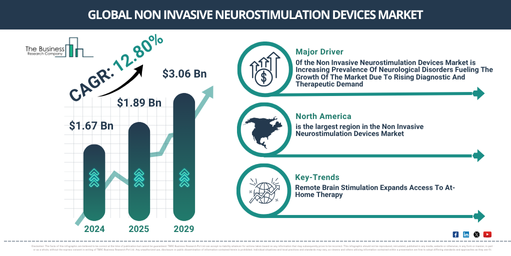
    The market size for non-invasive neurostimulation devices has seen a significant expansion in past years. The market is set to scale up from $1.67 billion in 2024 to $1.89 billion in 2025, growing at a compound annual growth rate (CAGR) of 13.1%. Factors contributing to this growth during the historical period include a rise in neurological disorder cases, growing recognition of neurostimulation therapies, increased demand for non-invasive treatment options, developments in healthcare infrastructure, and heightened neuromodulation research.

    What Growth Rate Is Forecasted for the Non Invasive Neurostimulation Devices Market by 2029?

    Over the next several years, the market for non-invasive neurostimulation devices is projected to experience a significant increase, reaching $3.06 billion in 2029 with a compound annual growth rate (CAGR) of 12.8%. This projected growth during the forecast period can be linked to factors such as the increasing geriatric population, the widening acceptance of wearable neurostimulation devices, escalating healthcare costs, favorable governmental policies, and the growing use of these devices in mental health treatment. For the forecast period, key trends include a transition towards less invasive neurostimulation, the introduction of wireless neurostimulation devices, an expansion in telehealth applications, the advent of closed-loop neurostimulation systems, and a stronger emphasis on individualized neurostimulation treatments.

    Download The Free Sample Report Here:

    https://www.thebusinessresearchcompany.com/sample.aspx?id=24625&type=smp

    Which Key Companies Are Shaping the Future of the Non Invasive Neurostimulation Devices Market?

    Major companies operating in the non invasive neurostimulation devices market are Boston Scientific Corporation, Alpha-Stim, Neurosoft Bioelectronics SA, Neuronetics Inc., BrainsWay Ltd., eNeura Inc., MagVenture A/S, Nexstim Plc, Neuroelectrics Barcelona S.L.U., Cefaly Technology, ElectroCore Inc., Brainbox India Private Limited, Flow Neuroscience AB, Fisher Wallace Laboratories Inc., Sooma Medical, Aleva Neurotherapeutics SA, NeuroSigma Inc., Mind Alive Inc., TheBrainDriver LLC, Caputron Medical Products LLC.

    Which Factors Are Driving Demand in the Non Invasive Neurostimulation Devices Industry?

    The escalating occurrence of neurological conditions is anticipated to catalyze the expansion of the non-invasive neurostimulation devices market. Neurological disorders, which impact the brain, spinal cord, and nerves and can result in cognitive, motor, and perceptual deficiencies, are becoming increasingly common, particularly among the aging population. This is because the aging process progressively weakens neuronal function, diminishes brain flexibility, and increases oxidative stress, all of which contribute to the onset and progression of these disorders. Non-invasive neurostimulation devices provide invaluable assistance in the diagnosis of neurological disorders by delivering focused stimulation to measure neural responses, offering non-surgical, real-time assessment techniques that enhance diagnostic precision and improve patient care in both clinical and home environments. For example, the National Health Service, a UK government agency, reported that as of June 30, 2024, there were 487,432 patients diagnosed with dementia (a progressive brain disorder affecting memory, cognition, and daily activities), marking an increase of 3,155 cases from May 31, 2024. As such, the growing rate of neurological disorders is fueling the expansion of the non-invasive neurostimulation devices market.

    Request For A Customized Report:

    https://www.thebusinessresearchcompany.com/customise?id=24625&type=smp

    How Is the Non Invasive Neurostimulation Devices Market Segmented by Several Divisions?

    The non invasive neurostimulation devices market covered in this report is segmented –

    1) By Type Of Stimulation Technology: Transcutaneous Electrical Nerve Stimulation (TENS), Transcranial Magnetic Stimulation (TMS), Electromagnetic Stimulation (EMS), Other Types Of Stimulation Technologies

    2) By Target Indication: Pain Management, Neurological Disorders, Psychological Disorder, Other Target Indications

    3) By End User: Hospitals And Clinics, Homecare Settings, Research And Academic Institutes

    Subsegments:

    1) By Transcutaneous Electrical Nerve Stimulation (TENS): Conventional Transcutaneous Electrical Nerve Stimulation (TENS), Acupuncture-Like Transcutaneous Electrical Nerve Stimulation (TENS), Brief-Intense Transcutaneous Electrical Nerve Stimulation (TENS), Burst Mode Transcutaneous Electrical Nerve Stimulation (TENS)

    2) By Transcranial Magnetic Stimulation (TMS): Repetitive Transcranial Magnetic Stimulation (rTMS), Deep Transcranial Magnetic Stimulation (dTMS), Single-Pulse Transcranial Magnetic Stimulation, Paired-Pulse Transcranial Magnetic Stimulation

    3) By Electromagnetic Stimulation (EMS): Functional Electromagnetic Stimulation (EMS), Neuromuscular Electromagnetic Stimulation (EMS), High-Frequency Electromagnetic Stimulation (EMS), Low-Frequency Electromagnetic Stimulation (EMS)

    4) By Other Types Of Stimulation Technology: Transcranial Direct Current Stimulation (tDCS), Vagus Nerve Stimulation, Cranial Electrotherapy Stimulation (CES), Peripheral Nerve Stimulation (PNS)

    What are the Emerging Market Trends Driving the Growth of the Non Invasive Neurostimulation Devices Industry?

    Leading businesses in the non-invasive neurostimulation devices market are concentrating on the creation of innovative products like personalized stimulation protocols. These protocols aim to elevate and optimize treatment efficacy and patient outcomes by being adapted specifically to a patient’s unique medical background, neural reaction and therapeutic objectives. The idea is to strike a balance between improving therapeutic effectiveness and reducing adverse effects. For example, Sooma Medical, a medical tech firm based in Finland, introduced a remotely supervised brain stimulation system for home usage in October 2023. The device utilizes non-invasive transcranial direct current stimulation (tDCS) and provides healthcare professionals the opportunity to remotely supervise therapy sessions. This is particularly beneficial for patients with neurological disorders and mental health issues, including depression and chronic pain, as it enhances treatment adherence and accessibility.

    Access The Full Report Here:

    https://www.thebusinessresearchcompany.com/report/non-invasive-neurostimulation-devices-global-market-report

    Which Regions Are Driving Growth in the Non Invasive Neurostimulation Devices Market?

    North America was the largest region in the non invasive neurostimulation devices market in 2024. The regions covered in the non invasive neurostimulation devices market report are Asia-Pacific, Western Europe, Eastern Europe, North America, South America, Middle East, Africa.

    Purchase The Full Report Today:

    https://www.thebusinessresearchcompany.com/purchaseoptions.aspx?id=24625

    This Report Delivers Insight On:

    1. How big is the non invasive neurostimulation devices market, and how is it changing globally?

    2. Who are the major companies in the non invasive neurostimulation devices market, and how are they performing?

    3. What are the key opportunities and risks in the non invasive neurostimulation devices market right now?

    4. Which products or customer segments are growing the most in the non invasive neurostimulation devices market?

    5. What factors are helping or slowing down the growth of the non invasive neurostimulation devices market?

    About The Business Research Company:

    With over 15000+ reports from 27 industries covering 60+ geographies, The Business Research Company has built a reputation for offering comprehensive, data-rich research and insights. Armed with 1,500,000 datasets, the optimistic contribution of in-depth secondary research, and unique insights from industry leaders, you can get the information you need to stay ahead in the game.

    Get in touch with us:

    The Business Research Company: https://www.thebusinessresearchcompany.com/

    Americas +1 3156230293

    Asia +44 2071930708

    Europe +44 2071930708

    Email us at info@tbrc.info

    Follow us on:

    LinkedIn: https://in.linkedin.com/company/the-business-research-company

    YouTube: https://www.youtube.com/channel/UC24_fI0rV8cR5DxlCpgmyFQ

    Global Market Model: https://www.thebusinessresearchcompany.com/global-market-model
  • Home Medical Alert Systems Industry Growth Expected to Reach $6.85 Billion by 2029 at a CAGR of 11.7% | Segmentation and Growth Opportunities

    Home Medical Alert Systems Industry Growth Expected to Reach $6.85 Billion by 2029 at a CAGR of 11.7% | Segmentation and Growth Opportunities

    Claim your 30% discount on Global Market Reports with code ONLINE30. Limited time only.

    What Is the Forecast for the Home Medical Alert Systems Market Growth in 2025?

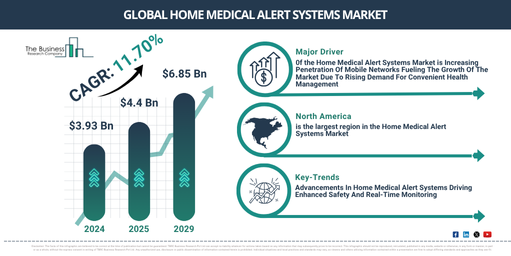
    Over the past few years, the size of the home medical alert systems market has expanded substantially. Projected growth is from $3.93 billion in 2024 to $4.4 billion in 2025, boasting a compound annual growth rate (CAGR) of 12.0%. This notable growth during the historic period is linked to a surge in the senior citizen population, escalating incidences of chronic diseases, heightening consciousness about the safety of the elderly, an uptick in the utilization of telehealth technologies, and a rising demand for patient monitoring remotely.

    What Is the Forecast for the Home Medical Alert Systems Market Size Through 2029?

    In the coming years, the home medical alert systems market size is predicted to witness significant growth. By 2029, it is expected to reach a value of $6.85 billion, with a compound annual growth rate (CAGR) of 11.7%. The anticipated growth during this forecast period can be credited to factors like a burgeoning elderly population, growing integration of AI and IoT, increasing demand for wearable medical appliances, expansion of telehealth services, and enhanced government support for elderly care. Trends guiding the growth during the forecast period consist of advancements in AI-operated alert systems, innovations in wearable and non-wearable devices, integration with smart home technologies, upsurge in utilization of mobile apps for monitoring, alongside the proliferation of subscription-based service models.

    Download The Free Sample Report Here:

    https://www.thebusinessresearchcompany.com/sample.aspx?id=24562&type=smp

    What are the Key Market Players in Home Medical Alert Systems Market and How They’re Evolving?

    Major companies operating in the home medical alert systems market are ADT Inc., Connect America LLC, Lifeline Systems Pvt. Ltd., LifeStation Inc., Medical Guardian LLC, LifeFone Inc., AlertOne Services LLC, Life Alert Emergency Response Inc., Rescue Alert of California, MyNotifi by MedHab Inc., Bay Alarm Medical, SafeGuardian LLC, LifeCall Medical Alert Systems, Senior Safety Medical Alert, AlertCare Medical Alert Systems, LifeSignals Group Inc., LogicMark Inc., ResponseNow Medical Alert Systems, Rescue Touch LLC, Vital Alert Communication Inc.

    What Are the Primary Growth Drivers in the Home Medical Alert Systems Market?

    The growth of the home medical alert systems market is projected to be fueled by the escalating prevalence of mobile networks. Mobile networks, which employ radio waves to provide internet and telephone services to mobile devices, are seeing an uptick due to the rising need for internet access in both urban and rural areas. Home medical alert systems often necessitate mobile connectivity to operate, prompting more network setups in residential locations. For instance, the GSM Association, a UK-based international organization that includes mobile operators and businesses, stated in February 2025 that globally there were 5.8 billion unique mobile subscribers, achieving a 71% penetration rate. This figure is anticipated to expand to 6.5 billion by 2030. Therefore, the amplified penetration of mobile networks is propelling the growth of the home medical alert systems market.

    Request For A Customized Report:

    https://www.thebusinessresearchcompany.com/customise?id=24562&type=smp

    What Are the Leading Segments in the Global Home Medical Alert Systems Industry?

    The home medical alert systems market covered in this report is segmented –

    1) By Type: Personal Emergency Response Systems (PERS), Wearable Alert Systems, Smartphone Based Alert Systems, In Home Alert Systems

    2) By Service Model: Subscription Based Services, One Time Purchase Models, Bundled Services, Pay-As-You-Go Services

    3) By Applications: Home Based Use, Nursing Home, Assisted Living Facilities, Hospices, Other Applications

    4) By Distribution Channel: Online Retailers, Medical Equipment Stores, Direct Sales, Healthcare Facilities

    5) By End User: Seniors, Disabled Individuals, Patients With Chronic Conditions, Other End Users

    Subsegments:

    1) By Personal Emergency Response Systems (PERS): Landline-Based PERS, Cellular-Based PERS, GPS-Enabled PERS, Two-Way Voice Communication PERS, Fall Detection-Integrated PERS

    2) By Wearable Alert Systems: Medical Alert Smartwatches, Emergency Pendant Alarms, Wristband Alert Devices, Necklace Alert Devices, Clip-On Wearable Sensors

    3) By Smartphone-Based Alert Systems: Dedicated Medical Alert Apps, Hybrid Smartphone + Wearable Systems, AI-Powered Emergency Response Apps, Family-Connected Alert Apps, GPS Location Tracking Apps

    4) By In-Home Alert Systems: Wall-Mounted Emergency Buttons, Bedside Alert Systems, Voice-Activated Home Assistants, Motion-Sensor Based Alarms, Smart Home-Integrated Medical Alerts

    What Are the Key Market Trends in the Home Medical Alert Systems Industry?

    Key players in the home medical alert systems industry are pivoting towards cutting-edge technologies like artificial intelligence (AI) fuelled fall detection for improved emergency responses, enhanced safety for users, and personalized health supervision. Using artificial intelligence algorithms in equipment, AI-fuelled fall detection can precisely recognize falls and notify caregivers immediately, enhancing the effectiveness of emergency responses while reducing incorrect alarms. For instance, in November 2024, LogicMark, a medical alert systems specialist based in the United States, introduced the Freedom Alert Max, a high-tech home medical alert gadget. This revolutionary system combines AI-driven fall detection, geographical tracking, and emergency video call facilities in one device. It offers flawless integration with mobile apps and round-the-clock monitoring by US-based professionals. The Freedom Alert Max improves safety and autonomy for senior citizens and individuals at risk.

    Access The Full Report Here:

    https://www.thebusinessresearchcompany.com/report/home-medical-alert-systems-global-market-report

    What Is the Regional Outlook for the Home Medical Alert Systems Market?

    North America was the largest region in the home medical alert systems market in 2024. Asia-Pacific is expected to be the fastest-growing region in the forecast period. The regions covered in the home medical alert systems market report are Asia-Pacific, Western Europe, Eastern Europe, North America, South America, Middle East, Africa.

    Purchase The Full Report Today:

    https://www.thebusinessresearchcompany.com/purchaseoptions.aspx?id=24562

    This Report Delivers Insight On:

    1. How big is the home medical alert systems market, and how is it changing globally?

    2. Who are the major companies in the home medical alert systems market, and how are they performing?

    3. What are the key opportunities and risks in the home medical alert systems market right now?

    4. Which products or customer segments are growing the most in the home medical alert systems market?

    5. What factors are helping or slowing down the growth of the home medical alert systems market?

    About The Business Research Company:

    With over 15000+ reports from 27 industries covering 60+ geographies, The Business Research Company has built a reputation for offering comprehensive, data-rich research and insights. Armed with 1,500,000 datasets, the optimistic contribution of in-depth secondary research, and unique insights from industry leaders, you can get the information you need to stay ahead in the game.

    Get in touch with us:

    The Business Research Company: https://www.thebusinessresearchcompany.com/

    Americas +1 3156230293

    Asia +44 2071930708

    Europe +44 2071930708

    Email us at info@tbrc.info

    Follow us on:

    LinkedIn: https://in.linkedin.com/company/the-business-research-company

    YouTube: https://www.youtube.com/channel/UC24_fI0rV8cR5DxlCpgmyFQ

    Global Market Model: https://www.thebusinessresearchcompany.com/global-market-model
  • Home Health Monitoring Devices Industry Valued at $1.74 Billion by 2029 With CAGR of 5.3% | Size and Share Insights

    Home Health Monitoring Devices Industry Valued at $1.74 Billion by 2029 With CAGR of 5.3% | Size and Share Insights

    Claim your 30% discount on Global Market Reports with code ONLINE30. Limited time only.

    What Is the Forecast for the Home Health Monitoring Devices Market from 2024 to 2025?

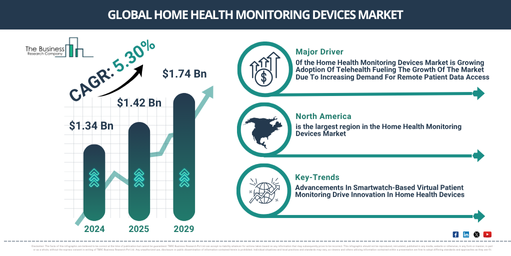
    The market size of home health monitoring devices has been expanding robustly in the last few years. The market, which stood at $1.34 billion in 2024, is predicted to rise to $1.42 billion in 2025, reflecting a compound annual growth rate (CAGR) of 5.5%. Factors contributing to this historic period growth include increased cases of chronic diseases, a rising global elderly population, greater consciousness about preventative healthcare, escalating healthcare expenses promoting home care solutions, and the expanding use of IoT in the medical field.

    What Is the Projected Market Size of the Home Health Monitoring Devices Market?

    The market for home health monitoring devices is predicted to experience significant expansion in the coming years, with forecasts indicating a growth to $1.74 billion by 2029, and a compound annual growth rate (CAGR) of 5.3%. Several factors are contributing to this projected growth within the forecast period such as: an escalating need for remote patient surveillance, governmental policies encouraging telehealth and distant monitoring, better internet availability and mobile network coverage, a surge in smartphone usage, and a heightened requirement for real-time health monitoring systems and warnings. Prominent trends during the forecast period will include advancements in wearable tech, the introduction of AI-enhanced health monitoring gadgets, widespread adoption of chronic disease control plans, technological progress in biosensors and medical-grade sensors, and improved precision and dependability of home health devices.

    Download The Free Sample Report Here:

    https://www.thebusinessresearchcompany.com/sample.aspx?id=24561&type=smp

    Who are the Major Competitors in the Home Health Monitoring Devices Market Outlook?

    Major companies operating in the home health monitoring devices market are Abbott Laboratories Inc., Omron Healthcare Co. Ltd., Garmin Ltd., ResMed Inc., Masimo Corporation, ChoiceMMed America Corp., Beurer GmbH, iRhythm Technologies Inc., A&D Company Limited, Microlife Corporation, Telli Health LLC, AliveCor Inc., CareSimple Inc., BioBeat Technologies Ltd., BioIntelliSense Inc., Tenovi Inc., 100Plus Inc., BodiMetrics LLC, Oxitone Medical Ltd., Guangdong Transtek Medical Electronics Co. Ltd.

    What Is Fueling Growth in the Home Health Monitoring Devices Market?

    The anticipated expansion of the home health monitoring devices market is largely attributed to the increasing usage of telehealth. This application of technology allows for medical care and consultations to take place without any need for physical visitation. The attractiveness of telehealth lies in its ability to provide convenient access to healthcare, sparing patients the trouble of travel by facilitating quick consultations from the comfort of their homes. The uptick in telehealth usage consequently fortifies the demand for home health monitoring devices as it permits healthcare providers to remotely monitor patients’ real-time data – a crucial element for precise diagnosis, timely intervention, and effective continuous care without the necessity for direct visits. Evidence of this growing inclination towards telehealth was observed in a survey run by Rock Health, a US-based company specialising in digital health and healthcare innovation. The survey took place between July to August 2022, with 8,014 respondents, where a jump from 72% in 2021 to 80% in February 2023 was reported in the usage of telemedicine at least once. Therefore, the continuousembracement of telehealth indicates a positive trajectory for the home health monitoring devices market.

    Request For A Customized Report:

    https://www.thebusinessresearchcompany.com/customise?id=24561&type=smp

    Which Home Health Monitoring Devices Market Segments Are Growing the Fastest?

    The home health monitoring devices market covered in this report is segmented –

    1) By Type: Heart Monitors, Breath Monitors, Hematology Monitors, Multi-Parameter Monitors, Other Types

    2) By Application: Care Centre, Household, Other Applications

    3) By End User: Elderly Population, Chronic Disease Patients, General Health-Conscious Consumers, Post-Operative And Rehabilitation Patients, Healthcare Providers And Caregivers

    Subsegments:

    1) By Heart Monitors: ECG Monitors, Heart Rate Monitors, Blood Pressure Monitors, Holter Monitors, Implantable Loop Recorders

    2) By Breath Monitors: Pulse Oximeters, Spirometers, Capnographs, Breath Analyzers

    3) By Hematology Monitors: Blood Glucose Monitors, INR Monitors, Hemoglobin Monitors, Blood Clotting Time Monitors

    4) By Multi-Parameter Monitors: Vital Signs Monitors, Portable ICU Monitors, Wearable Multi-Parameter Devices

    5) By Other Types: Body Temperature Monitors, Sleep Apnea Monitors, Urine Analyzers, Electrolyte Monitors, Activity And Fitness Trackers

    Which Industry Trends Are Shaping the Future of the Home Health Monitoring Devices Market?

    Major players in the home health monitoring devices market are concentrating their efforts on the creation of innovative solutions like smartwatches for virtual patient tracking. These devices integrate smoothly with health applications and telehealth platforms, facilitating effortless data transmission to healthcare providers. A smartwatch for monitoring virtual patients is a wearable tech device created to continually monitor and transmit health data in real-time. This enable healthcare providers to remotely keep track of a patient’s health status and respond accordingly. For example, KORE, a US-based company who specializes in Internet of Things (IoT), launched the mCareWatch 241, a smartwatch intended for virtual patient monitoring, in July 2024. This smartwatch includes an emergency SOS function for quick assistance and features such as calling capabilities, GPS tracking, and quick-dial options for reliable communication and safety. Notable health monitoring features include a heart rate monitor, step counter, fall detection, and inactivity alerts. Users can also set geo-fencing alarms and reminders through a dedicated mobile application and web dashboard.

    Access The Full Report Here:

    https://www.thebusinessresearchcompany.com/report/home-health-monitoring-devices-global-market-report

    Which Countries Are Leading the Home Health Monitoring Devices Market?

    North America was the largest region in the home health monitoring devices market in 2024. Asia-Pacific is expected to be the fastest-growing region in the forecast period. The regions covered in the home health monitoring devices market report are Asia-Pacific, Western Europe, Eastern Europe, North America, South America, Middle East, Africa.

    Purchase The Full Report Today:

    https://www.thebusinessresearchcompany.com/purchaseoptions.aspx?id=24561

    This Report Delivers Insight On:

    1. How big is the home health monitoring devices market, and how is it changing globally?

    2. Who are the major companies in the home health monitoring devices market, and how are they performing?

    3. What are the key opportunities and risks in the home health monitoring devices market right now?

    4. Which products or customer segments are growing the most in the home health monitoring devices market?

    5. What factors are helping or slowing down the growth of the home health monitoring devices market?

    About The Business Research Company:

    With over 15000+ reports from 27 industries covering 60+ geographies, The Business Research Company has built a reputation for offering comprehensive, data-rich research and insights. Armed with 1,500,000 datasets, the optimistic contribution of in-depth secondary research, and unique insights from industry leaders, you can get the information you need to stay ahead in the game.

    Get in touch with us:

    The Business Research Company: https://www.thebusinessresearchcompany.com/

    Americas +1 3156230293

    Asia +44 2071930708

    Europe +44 2071930708

    Email us at info@tbrc.info

    Follow us on:

    LinkedIn: https://in.linkedin.com/company/the-business-research-company

    YouTube: https://www.youtube.com/channel/UC24_fI0rV8cR5DxlCpgmyFQ

    Global Market Model: https://www.thebusinessresearchcompany.com/global-market-model
  • Market Analysis on Heart Rate Monitoring Devices Industry – Insights for Corporate Strategy and R&D

    Market Analysis on Heart Rate Monitoring Devices Industry – Insights for Corporate Strategy and R&D

    Claim your 30% discount on Global Market Reports with code ONLINE30. Limited time only.

    What Is the Forecast for the Heart Rate Monitoring Devices Market from 2024 to 2025?

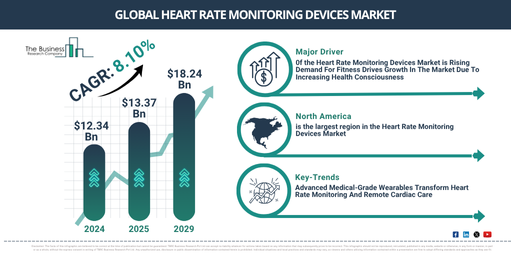
    The market for heart rate monitoring devices has witnessed significant growth in the past few years. From 2024, when it was valued at $12.34 billion, the market is expected to increase to $13.37 billion in 2025, with a compound annual growth rate (CAGR) of 8.3%. The historical growth of this market has been driven by factors including increased health consciousness, the popularity of fitness trends, rising occurrences of chronic illnesses, the integration of these devices with smartphones, and their expanding use in clinical environments.

    What Is the Projected Market Size of the Heart Rate Monitoring Devices Market?

    In the coming years, the market for heart rate monitoring devices is projected to experience significant expansion, reaching an estimated value of $18.24 billion by 2029, with a compound annual growth rate (CAGR) of 8.1%. This predicted growth for the period under study can be attributed to factors such as a rising elderly population, the proliferation of telemedicine services, the increasing incorporation of AI and analytics, augmented demand for wearable technology, and heightened government intervention in healthcare. Noteworthy trends for this forecast period encompass integration with multi-parametric health platforms, miniaturization coupled with improved wearability, a switch to preventive healthcare, the growth of remote patient monitoring (RPM), and individualization through AI and machine learning.

    Download The Free Sample Report Here:

    https://www.thebusinessresearchcompany.com/sample.aspx?id=24556&type=smp

    Who are the Major Competitors in the Heart Rate Monitoring Devices Market Outlook?

    Major companies operating in the heart rate monitoring devices market are Apple Inc., Samsung Electronics Co. Ltd., Huawei Technologies Co. Ltd., Medtronic plc, Koninklijke Philips N.V., Garmin Ltd., Polar Electro, Whoop, Beurer GmbH, Suunto, VitalConnect, Wahoo Fitness, Empatica Inc., Bellabeat Inc., Fitbit LLC, Qardio Inc., Ouraring Inc., Zewa Medical Technology, Veepoo Technology, Aurora (Shenzhen) Manufacture Co.Ltd, Skrip Electronics.

    What Is Fueling Growth in the Heart Rate Monitoring Devices Market?

    The anticipated surge in the heart rate monitoring devices market can be attributed to the burgeoning demand for gyms and physical sports. As more people actively partake in regular exercise, training, and competitive games aimed at boosting health, fitness, and sporting prowess, the interest in gyms and physical sports is on the rise. This trend is primarily driven by increasing health consciousness and the desire to prevent diseases related to sedentary lifestyles. In these athletic settings, heart rate monitoring devices offer immediate assessments of workout intensity, which aid in maintaining desired heart rate levels, enhancing performance, avoiding over-exertion, and facilitating quicker recovery. For instance, the Bureau of Labor Statistics, a US government agency, reported that in July 2023, nearly all individuals aged 15 and up participated in leisure and sports activities every day. The average time spent by men on these activities was 5.8 hours per day, and 5.1 hours for women. Compared to the previous year, this accounted for roughly a 3.6% increment for men and a 4.1% hike for women. Hence, the escalating demand for gyms and physical sports significantly contributes to the growth of the heart rate monitoring devices market.

    Request For A Customized Report:

    https://www.thebusinessresearchcompany.com/customise?id=24556&type=smp

    Which Heart Rate Monitoring Devices Market Segments Are Growing the Fastest?

    The heart rate monitoring devices market covered in this report is segmented –

    1) By Type: Wrist Watch Heart Rate Monitor, Chest Strap Heart Rate Monitor, Strapless Heart Rate Monitors, Other Types

    2) By Application: Medical, Sports And Fitness, Exercise, Other Applications

    3) By End-User: Hospitals And Clinics, Homecare, Sport Care Centers

    Subsegments:

    1) By Wrist Watch Heart Rate Monitor: Fitness Smartwatches, Sports Watches, Medical-Grade Smartwatches, Hybrid Smartwatches

    2) By Chest Strap Heart Rate Monitor: Bluetooth-Enabled Chest Straps, Ant+ Compatible Chest Straps, Electrocardiogram (ECG)-Based Chest Straps, Waterproof Chest Straps For Swimming

    3) By Strapless Heart Rate Monitors: Finger-Based Pulse Monitors, Arm Or Forearm Band Monitors, Wearable Clothing With Embedded Sensors, Handheld Heart Rate Monitors

    4) By Other Types: Earbud Heart Rate Monitors, Smart Clothing, Implantable Heart Rate Monitors, Clip-On Devices

    Which Industry Trends Are Shaping the Future of the Heart Rate Monitoring Devices Market?

    Leading players in the heart rate monitoring devices market are putting their focus into the innovation of sophisticated products such as medical-grade wearable monitors. These devices facilitate continuous health monitoring, assisting in early identification of cardiovascular irregularities. A medical-grade wearable monitor is a vetted device that monitors vital signs in real time, playing a crucial role in both clinical applications and remote care through enabling early health issue detection and ongoing patient monitoring. Take, for instance, Teltonika, an electronics manufacturer based in Lithuania. In June 2023, they rolled out TeltoHeart, a multi-purpose smart medical wristband offering ongoing heart rate monitoring and automatic arrhythmia detection through the use of advanced photoplethysmography (PPG) technology. What sets it apart is that it captures a comprehensive 6-lead ECG and generates clinically substantive data that can be conveniently shared with medical professionals via its inbuilt telemedicine platform. It provides excellent accuracy, security, and reliability, thereby considerably enhancing early detection, sickness management, and access to cardiological care, especially for patients located in remote or underprivileged regions.

    Access The Full Report Here:

    https://www.thebusinessresearchcompany.com/report/heart-rate-monitoring-devices-global-market-report

    Which Countries Are Leading the Heart Rate Monitoring Devices Market?

    North America was the largest region in the heart rate monitoring devices market in 2024. The regions covered in the heart rate monitoring devices market report are Asia-Pacific, Western Europe, Eastern Europe, North America, South America, Middle East, Africa.

    Purchase The Full Report Today:

    https://www.thebusinessresearchcompany.com/purchaseoptions.aspx?id=24556

    This Report Delivers Insight On:

    1. How big is the heart rate monitoring devices market, and how is it changing globally?

    2. Who are the major companies in the heart rate monitoring devices market, and how are they performing?

    3. What are the key opportunities and risks in the heart rate monitoring devices market right now?

    4. Which products or customer segments are growing the most in the heart rate monitoring devices market?

    5. What factors are helping or slowing down the growth of the heart rate monitoring devices market?

    About The Business Research Company:

    With over 15000+ reports from 27 industries covering 60+ geographies, The Business Research Company has built a reputation for offering comprehensive, data-rich research and insights. Armed with 1,500,000 datasets, the optimistic contribution of in-depth secondary research, and unique insights from industry leaders, you can get the information you need to stay ahead in the game.

    Get in touch with us:

    The Business Research Company: https://www.thebusinessresearchcompany.com/

    Americas +1 3156230293

    Asia +44 2071930708

    Europe +44 2071930708

    Email us at info@tbrc.info

    Follow us on:

    LinkedIn: https://in.linkedin.com/company/the-business-research-company

    YouTube: https://www.youtube.com/channel/UC24_fI0rV8cR5DxlCpgmyFQ

    Global Market Model: https://www.thebusinessresearchcompany.com/global-market-model
  • Handheld Raman Spectroscopy Industry Growth Expected to Reach $2.13 Billion by 2029 at a CAGR of 12.1% | Segmentation and Growth Opportunities

    Handheld Raman Spectroscopy Industry Growth Expected to Reach $2.13 Billion by 2029 at a CAGR of 12.1% | Segmentation and Growth Opportunities

    Claim your 30% discount on Global Market Reports with code ONLINE30. Limited time only.

    What Is the Forecast for the Handheld Raman Spectroscopy Market Growth in 2025?

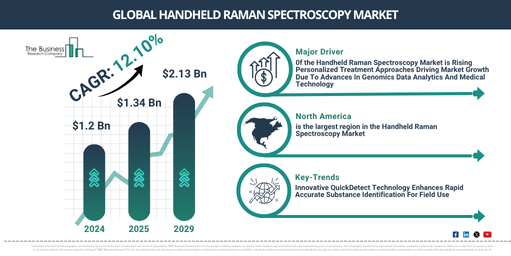
    Over the past few years, there has been a rapid expansion in the market size of handheld raman spectroscopy. It is projected to rise from $1.2 billion in 2024 to $1.34 billion in 2025, with a compound annual growth rate (CAGR) of 12.4%. This growth during the historical period could be credited to a surge in the need for on-site material recognition, a burgeoning demand in regulatory compliance requirements, a rise in demand in forensic and narcotics detection, an increased availability of miniaturized components, and a surge in investments in homeland security.

    What Is the Forecast for the Handheld Raman Spectroscopy Market Size Through 2029?

    The market for handheld raman spectroscopy is set for a substantial expansion in the coming years, with the expectation to reach $2.13 billion in 2029 with a CAGR of 12.1%. This significant increase during the forecast period is due to a variety of factors, including its growing usage in the fields of agriculture and food safety, the rise in its integration with cloud analytics and AI, the expanding demand for green chemistry practices and personal medication, and the mounting need for quality assurance and contract manufacturing. Noteworthy trends during the forecast period encompass investment in R&D, artificial intelligence and machine learning integration, the emergence of cloud-connected raman devices, advancements in the development of performance-enhanced and miniaturized systems, and innovations in ergonomic design and user-friendly interfaces.

    Download The Free Sample Report Here:

    https://www.thebusinessresearchcompany.com/sample.aspx?id=24552&type=smp

    What are the Key Market Players in Handheld Raman Spectroscopy Market and How They’re Evolving?

    Major companies operating in the handheld raman spectroscopy market are Thermo Fisher Scientific Inc., Agilent Technologies Inc., Bruker Corporation, Horiba Scientific, Anton Paar GmbH, Renishaw plc, Metrohm AG, TSI Incorporated, Zolix Instruments Co. Ltd., Smiths Detection Inc., SciAps Inc., SOL Instruments Ltd., Jasco Inc., Wasatch Photonics Inc., BaySpec Inc., Enhanced Spectrometry Inc., TechnoS Instruments, RamanLife Inc., Analyticon Instruments GmbH, TechnoSpex Pte Ltd.

    What Are the Primary Growth Drivers in the Handheld Raman Spectroscopy Market?

    The upsurge in tailored treatments is forecasted to stimulate the handheld Raman spectroscopy market’s expansion. These custom therapies cater to an individual’s genetic, lifestyle, and environmental aspects, delivering more efficient and targeted treatments. The rise in personalized treatment can be attributed mainly to advancements in genetic and molecular profiling that facilitates customized therapies considering each person’s specific biological features. Handheld Raman spectroscopy contributes to such therapy personalization by offering swift, non-invasive molecular analysis at the point of care, leading to tailored therapeutic choices based on accurate chemical and biochemical details. To illustrate, the Personalized Medicine Coalition reported in February 2024 that a US hospital and healthcare organization noted the Food and Drug Administration (FDA) approved 16 new personalized treatments for patients with rare diseases in 2023, an increase from six in 2022. Thus, the tailored treatment approach is fueling the growth of the handheld Raman spectroscopy market.

    Request For A Customized Report:

    https://www.thebusinessresearchcompany.com/customise?id=24552&type=smp

    What Are the Leading Segments in the Global Handheld Raman Spectroscopy Industry?

    The handheld raman spectroscopy market covered in this report is segmented –

    1) By Product Type: Benchtop Raman Spectroscopy, Portable Raman Spectroscopy, Handheld Raman Spectroscopy

    2) By Component: Raman Spectrometers, Accessories, Software Solutions

    3) By Technology: Surface-Enhanced Raman Scattering (SERS), Tip-Enhanced Raman Scattering (TERS), Raman Imaging, Standard Raman Spectroscopy

    4) By End-User: Academic And Research Institutes, Pharmaceutical And Biotechnology Companies, Other End Users

    Subsegments:

    1) By Benchtop Raman Spectroscopy: Dispersive Raman Spectroscopy, Fourier Transform (FT) Raman Spectroscopy, Confocal Raman Microscopy, Fiber-Optic Raman Spectroscopy

    2) By Portable Raman Spectroscopy: Handheld Portable Raman, Laptop-Based Portable Raman, Mobile Integrated Raman, Battery-Powered Portable Raman

    3) By Handheld Raman Spectroscopy: Standard Handheld Raman, Hybrid Handheld Raman, Industrial Grade Handheld Raman, Consumer Or Field Use Handheld Raman

    What Are the Key Market Trends in the Handheld Raman Spectroscopy Industry?

    Leading corporations in the handheld raman spectroscopy industry are prioritizing the development of revolutionary technologies such as QuickDetect tech. This innovation is intended to improve speed, sensitivity, and the precision of on-site chemical recognition, allowing users to identify even miniscule amounts of substances in complex mixtures and through packaging. QuickDetect Technology is a fast-response detection system engineered to swiftly detect specific substances, conditions, or anomalies. For example, Rigaku Analytical Devices Inc., an American company that produces and distributes scientific and analytical tools, launched the CQL Narc-ID in September 2023. This handheld 1064 nm Raman analyzer is specially designed to promptly identify narcotics, cutting agents, and precursor chemicals, even in very small quantities. With advanced features such as QuickDetect, in-built libraries, a durable design, and real-time reporting, it supports law enforcement and public safety activities.

    Access The Full Report Here:

    https://www.thebusinessresearchcompany.com/report/handheld-raman-spectroscopy-global-market-report

    What Is the Regional Outlook for the Handheld Raman Spectroscopy Market?

    North America was the largest region in the handheld raman spectroscopy market in 2024. Asia-Pacific is expected to be the fastest-growing region in the forecast period. The regions covered in the handheld raman spectroscopy market report are Asia-Pacific, Western Europe, Eastern Europe, North America, South America, Middle East, Africa.

    Purchase The Full Report Today:

    https://www.thebusinessresearchcompany.com/purchaseoptions.aspx?id=24552

    This Report Delivers Insight On:

    1. How big is the handheld raman spectroscopy market, and how is it changing globally?

    2. Who are the major companies in the handheld raman spectroscopy market, and how are they performing?

    3. What are the key opportunities and risks in the handheld raman spectroscopy market right now?

    4. Which products or customer segments are growing the most in the handheld raman spectroscopy market?

    5. What factors are helping or slowing down the growth of the handheld raman spectroscopy market?

    About The Business Research Company:

    With over 15000+ reports from 27 industries covering 60+ geographies, The Business Research Company has built a reputation for offering comprehensive, data-rich research and insights. Armed with 1,500,000 datasets, the optimistic contribution of in-depth secondary research, and unique insights from industry leaders, you can get the information you need to stay ahead in the game.

    Get in touch with us:

    The Business Research Company: https://www.thebusinessresearchcompany.com/

    Americas +1 3156230293

    Asia +44 2071930708

    Europe +44 2071930708

    Email us at info@tbrc.info

    Follow us on:

    LinkedIn: https://in.linkedin.com/company/the-business-research-company

    YouTube: https://www.youtube.com/channel/UC24_fI0rV8cR5DxlCpgmyFQ

    Global Market Model: https://www.thebusinessresearchcompany.com/global-market-model
  • Handheld Multi-Parameter Monitoring Device Industry Valued at $5 Billion by 2029 With CAGR of 7.9% | Size and Share Insights

    Handheld Multi-Parameter Monitoring Device Industry Valued at $5 Billion by 2029 With CAGR of 7.9% | Size and Share Insights

    Claim your 30% discount on Global Market Reports with code ONLINE30. Limited time only.

    What Is the Forecast for the Handheld Multi-Parameter Monitoring Device Market from 2024 to 2025?

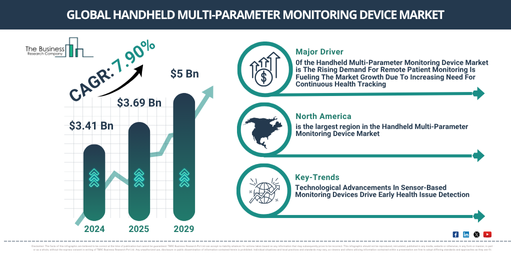
    The market for handheld multi-parameter monitoring devices has seen robust growth lately and is anticipated to expand from $3.41 billion in 2024 to $3.69 billion in 2025, reflecting a compound annual growth rate (CAGR) of 8.2%. Factors propelling the market growth during the historical phase include a surge in chronic illnesses, increased need for remote patient surveillance, growing incorporation of wireless technology in the healthcare sector, a rise in elderly population necessitating constant monitoring, and heightened consciousness regarding early detection and prevention of diseases.

    What Is the Projected Market Size of the Handheld Multi-Parameter Monitoring Device Market?

    In the coming years, the market size for handheld multi-parameter monitoring devices is projected to experience robust growth, reaching $5 billion by 2029 with a 7.9% compound annual growth rate (CAGR). Various factors fueling such growth in the projection period include enhanced investments in the healthcare sector, growing inclination towards easy-to-use and portable medical tools, incorporation of advanced analytical tools into monitoring devices, escalating need for immediate data during emergency and critical care, with a rising emphasis on personalized and home-based healthcare solutions. The forecast period will also witness trends such as advancements in wireless communication technologies, incorporation of artificial intelligence and machine learning, sensor accuracy and miniaturization technology enhancements, advancements in real-time data analytics and cloud connectivity, and telemedicine platform integration with the monitoring devices.

    Download The Free Sample Report Here:

    https://www.thebusinessresearchcompany.com/sample.aspx?id=24551&type=smp

    Who are the Major Competitors in the Handheld Multi-Parameter Monitoring Device Market Outlook?

    Major companies operating in the handheld multi-parameter monitoring device market are Abbott Laboratories, Medtronic Public Limited Company, Becton Dickinson and Company, Koninklijke Philips N.V., GE HealthCare Technologies Inc., Baxter International Inc., Omron Healthcare Co. Ltd., Shenzhen Mindray Bio-Medical Electronics Co. Ltd., Masimo Corporation, Nihon Kohden Corporation, Lepu Medical Technology (Beijing) Co. Ltd., Qingdao Meditech Equipment Co. Ltd., Wuhan Zoncare Bio-Medical Electronics Co. Ltd., BPL Medical Technologies Pvt. Ltd., Schiller Healthcare India Pvt. Ltd., Allengers Medical Systems Limited, Contec Medical Systems Co. Ltd., aXcent medical GmbH, Jiangsu Yuyue Medical Instruments Co. Ltd., Genuine Medica Pvt. Ltd., Drx Laboratories

    What Is Fueling Growth in the Handheld Multi-Parameter Monitoring Device Market?

    The growth of the handheld multi-parameter monitoring device market is expected to be fueled by the increasing need for remote patient monitoring. This entails the use of digital technologies to gather patients’ health information from one site and electronically send it to medical professionals at a different site for evaluation and advice. The surge in remote patient monitoring demand is largely a result of the increasing incidence of chronic illnesses, which necessitate regular health monitoring to control symptoms, avoid complications, and minimize hospital visits. A handheld multi-parameter monitoring device facilitates remote patient monitoring by monitoring crucial vital signs such as heart rate, blood pressure, and oxygen levels. It enables the early identification of health problems, continuous management of chronic diseases, and instant data sharing with healthcare providers, enhancing comfort and reducing hospital visits. For instance, the Alliance for Connected Care, a US-based nonprofit advocacy organization, reported in August 2023 that remote patient monitoring (RPM) usage had grown by 305% since 2021, with 81% of clinicians now deploying it and 84% intending to increase its use in 2024. 45% of providers utilize RPM for acute care, including hospital-at-home programs. Therefore, the growing demand for remote patient monitoring is propelling the expansion of the handheld multi-parameter monitoring device market.

    Request For A Customized Report:

    https://www.thebusinessresearchcompany.com/customise?id=24551&type=smp

    Which Handheld Multi-Parameter Monitoring Device Market Segments Are Growing the Fastest?

    The handheld multi-parameter monitoring device market covered in this report is segmented –

    1) By Device Type: Basic Vital Sign Monitors, Advanced Multi-Parameter Monitors, Fetal Monitors, Remote Patient Monitoring Devices (RPM) Devices

    2) By Connectivity: Wired Devices, Wireless Devices

    3) By Application: Intensive Care, Clinical Care, Ambulatory Care, Pediatric Care, Other Applications

    4) By End User: Hospitals, Ambulatory Surgical Centers, Homecare Settings, Other End Users

    Subsegments:

    1) By Basic Vital Sign Monitors: Pulse Oximeters, Blood Pressure Monitors, Thermometers, Glucose Monitors, Heart Rate Monitors

    2) By Advanced Multi-Parameter Monitors: Electrocardiogram Monitors (ECG) Monitors, Capnography Monitors, Respiratory Rate Monitors, Blood Gas Analyzers, Hemoglobin Monitors

    3) By Fetal Monitors: Doppler Fetal Monitors, Cardiotocography (CTG) Monitors, Fetal Heart Rate Monitors, Uterine Contraction Monitors

    4) By Remote Patient Monitoring Devices (RPM) Devices: Wearable Health Trackers, Telehealth Monitoring Devices, Mobile Health (mHealth) Devices, Wireless Vital Sign Monitors

    Which Industry Trends Are Shaping the Future of the Handheld Multi-Parameter Monitoring Device Market?

    Leading businesses operating in the handheld multi-parameter monitoring device sector are concentrating on medical technology advancements, like sensor technology, to boost performance, dependability, and real-time vital sign monitoring capabilities, allowing health problems to be identified at an early stage. Sensor technology involves the use of devices capable of detecting and quantifying physical or environmental modifications, such as movement, temperature, or pressure. For example, BUZUD, a healthcare solutions producer from Singapore, debuted its Multi-Parameter Monitor and PulseBit EX electrocardiogram tracker – advanced medical equipment for both hospital and home use – in July 2022. This new technology allows for real-time monitoring of crucial signs such as ECG, blood oxygen levels, heart rate, respiration rate, and body temperature. The devices are expertly engineered for high precision, and their portability, user-friendly designs, and extremely precise measurements meet the growing requirement for available and sustained health monitoring across various healthcare environments.

    Access The Full Report Here:

    https://www.thebusinessresearchcompany.com/report/handheld-multi-parameter-monitoring-device-global-market-report

    Which Countries Are Leading the Handheld Multi-Parameter Monitoring Device Market?

    North America was the largest region in the handheld multi-parameter monitoring device market in 2024. The regions covered in the handheld multi-parameter monitoring device market report are Asia-Pacific, Western Europe, Eastern Europe, North America, South America, Middle East, Africa.

    Purchase The Full Report Today:

    https://www.thebusinessresearchcompany.com/purchaseoptions.aspx?id=24551

    This Report Delivers Insight On:

    1. How big is the handheld multi-parameter monitoring device market, and how is it changing globally?

    2. Who are the major companies in the handheld multi-parameter monitoring device market, and how are they performing?

    3. What are the key opportunities and risks in the handheld multi-parameter monitoring device market right now?

    4. Which products or customer segments are growing the most in the handheld multi-parameter monitoring device market?

    5. What factors are helping or slowing down the growth of the handheld multi-parameter monitoring device market?

    About The Business Research Company:

    With over 15000+ reports from 27 industries covering 60+ geographies, The Business Research Company has built a reputation for offering comprehensive, data-rich research and insights. Armed with 1,500,000 datasets, the optimistic contribution of in-depth secondary research, and unique insights from industry leaders, you can get the information you need to stay ahead in the game.

    Get in touch with us:

    The Business Research Company: https://www.thebusinessresearchcompany.com/

    Americas +1 3156230293

    Asia +44 2071930708

    Europe +44 2071930708

    Email us at info@tbrc.info

    Follow us on:

    LinkedIn: https://in.linkedin.com/company/the-business-research-company

    YouTube: https://www.youtube.com/channel/UC24_fI0rV8cR5DxlCpgmyFQ

    Global Market Model: https://www.thebusinessresearchcompany.com/global-market-model
  • Wearable Patch Forecast Report – Designed for Decision Makers and Product Teams

    Wearable Patch Forecast Report – Designed for Decision Makers and Product Teams

    Claim your 30% discount on Global Market Reports with code ONLINE30. Limited time only.

    What Is the Growth Rate of the Wearable Patch Market?

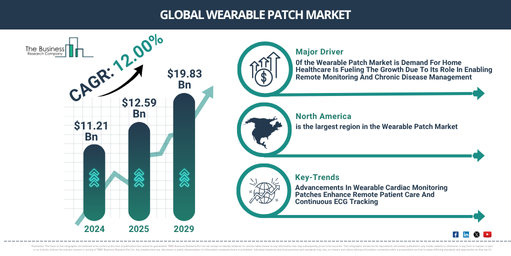
    Recent years have seen a rapid expansion in the size of the wearable patch market. The projections suggest that the market is expected to increase from a size of $11.21 billion in 2024 to $12.59 billion in 2025, representing a compound annual growth rate of 12.4%. This significant growth during the historical period can be tied back to the advancement in the miniaturization of sensors, a growing demand for chronic disease monitoring, the expansion of fitness and wellness trends, the ever-increasing use of smartphones, and its early incorporation into clinical research settings.

    What Growth Rate Is Forecasted for the Wearable Patch Market by 2029?

    Forecasts predict a swift expansion in the wearables patch market in the coming years. The market is projected to reach $19.83 billion by 2029, exhibiting a compound annual growth rate (CAGR) of 12.0%. This surge during the forecast period can be credited to the growth of remote patient monitoring programs, integration with AI and predictive analytics, an increasing need for elderly care technologies, its wider application in enhancing sports performance, and regulatory encouragement for digital health solutions. The anticipation for the forecast period includes AI integration for on-the-spot health monitoring, expansion in managing chronic diseases, the acceptance of flexible and stretchable electronics, the enlargement in remote patient monitoring solutions, and progress in energy-saving and self-reliant technologies.

    Download The Free Sample Report Here:

    https://www.thebusinessresearchcompany.com/sample.aspx?id=24745&type=smp

    Which Key Companies Are Shaping the Future of the Wearable Patch Market?

    Major companies operating in the wearable patch market are Samsung Electronics Co. Ltd., Johnson & Johnson, Abbott Laboratories, Qualcomm Inc., Covestro AG, Koninklijke Philips N.V., GE Healthcare, Molex LLC, DuPont de Nemours Inc., VARTA AG,  Tapecon Inc., VitalConnect Inc., LifeSignals Group Inc., greenTEG AG, 2M Engineering Ltd., Beneli AB, GENTAG Inc., Kenzen Inc., Nemaura Medical Inc., PKvitality S.A.S., Hudson Medical Innovations

    Which Factors Are Driving Demand in the Wearable Patch Industry?

    The wearable patch market’s expansion is projected to be powered by an increasing need for home healthcare. Home healthcare involves medical and support services being provided in a patient’s home to treat diseases, injuries or manage chronic health conditions. The growth in home healthcare is facilitated by an aging demographic that requires consistent care for chronic conditions, spurring the need for cost-effective, easy-to-access services at home. Wearable patches augment home healthcare by monitoring vital signs and transmitting real-time data to medical experts. This facilitates early problem identification, swift care, and a decreased necessity for hospital visits. For example, in April 2025, the Bureau of Labor Statistics, a governmental agency in the US, forecasted a 21% growth in employment for home health and personal care aides from 2023 to 2033, with an average of around 718,900 job vacancies predicted each year throughout the decade. Consequently, the escalating demand for home healthcare is fueling the expansion of the wearable patch market.

    Request For A Customized Report:

    https://www.thebusinessresearchcompany.com/customise?id=24745&type=smp

    How Is the Wearable Patch Market Segmented by Several Divisions?

    The wearable patch market covered in this report is segmented –

    1) By Product Type: Biometric Patches, Therapeutic Patches, Diagnostic Patches, Fitness Tracking Patches, Smart Textile Patches

    2) By Technology: Biosensors, Radio-Frequency Identification (RFID) Technology, Bluetooth Connectivity, Near Field Communication (NFC), Microelectromechanical Systems (MEMS)

    3) By Distribution Channel: Online Retail, Offline Retail, Direct Sales, Pharmacies, Third-Party Distributors

    4) By Application: Clinical, Non-Clinical

    5) By End-Use: Healthcare Providers, Individual Consumers, Fitness Centers, Research Institutions

    Subsegments:

    1) By Biometric Patches: Heart Rate Monitoring Patches, Electrocardiogram (ECG) Patches, Blood Oxygen Level Monitoring Patches (SpO2), Temperature Monitoring Patches, Respiratory Rate Monitoring Patches

    2) By Therapeutic Patches: Transdermal Drug Delivery Patches, Pain Relief Patches, Nicotine Patches, Hormone Replacement Patches, Neuromodulation Patches

    3) By Diagnostic Patches: Glucose Monitoring Patches, Cardiac Monitoring Patches, Sleep Monitoring Patches, Hydration And Electrolyte Monitoring Patches, Sweat-Based Biomarker Detection Patches

    4) By Fitness Tracking Patches: Activity Tracking Patches, Calorie Burn Monitoring Patches, Sleep Quality Tracking Patches, Step Count Patches, Stress And Recovery Monitoring Patches

    5) By Smart Textile Patches: E-Textile Biosensor Patches, Motion Sensing Textile Patches, Pressure Sensing Textile Patches, Electromyography (EMG) Textile Patches, Temperature-Regulating Textile Patches

    What are the Emerging Market Trends Driving the Growth of the Wearable Patch Industry?

    Key players in the wearable patches market are prioritizing the creation of innovative products such as ambulatory cardiac monitoring wearable patches in order to maximize remote patient care and facilitate prompt medical responses. These wearable patches are small, skin-adhesive gadgets capable of monitoring heart activity consistently throughout the wearer’s daily activities. A case in point is Vivalink, Inc., a company from the US specializing in digital health technology solutions, who in May 2023 debuted the Live Stream Wearable Electrocardiogram (ECG) Patch. This multi-sensor wearable patch can continuously monitor electrocardiogram for up to 14 days and enables medical professionals to monitor their patients’ cardiac activity remotely anytime, anywhere, thereby decreasing the demand on both patient and clinician for long-term ambulatory monitoring.

    Access The Full Report Here:

    https://www.thebusinessresearchcompany.com/report/wearable-patch-global-market-report

    Which Regions Are Driving Growth in the Wearable Patch Market?

    North America was the largest region in the wearable patch market in 2024. The regions covered in the wearable patch market report are Asia-Pacific, Western Europe, Eastern Europe, North America, South America, Middle East, Africa.

    Purchase The Full Report Today:

    https://www.thebusinessresearchcompany.com/purchaseoptions.aspx?id=24745

    This Report Delivers Insight On:

    1. How big is the wearable patch market, and how is it changing globally?

    2. Who are the major companies in the wearable patch market, and how are they performing?

    3. What are the key opportunities and risks in the wearable patch market right now?

    4. Which products or customer segments are growing the most in the wearable patch market?

    5. What factors are helping or slowing down the growth of the wearable patch market?

    About The Business Research Company:

    With over 15000+ reports from 27 industries covering 60+ geographies, The Business Research Company has built a reputation for offering comprehensive, data-rich research and insights. Armed with 1,500,000 datasets, the optimistic contribution of in-depth secondary research, and unique insights from industry leaders, you can get the information you need to stay ahead in the game.

    Get in touch with us:

    The Business Research Company: https://www.thebusinessresearchcompany.com/

    Americas +1 3156230293

    Asia +44 2071930708

    Europe +44 2071930708

    Email us at info@tbrc.info

    Follow us on:

    LinkedIn: https://in.linkedin.com/company/the-business-research-company

    YouTube: https://www.youtube.com/channel/UC24_fI0rV8cR5DxlCpgmyFQ

    Global Market Model: https://www.thebusinessresearchcompany.com/global-market-model
  • Wearable Medication Adherence Tracker Market Outlook 2025 – Insights for Executive and Strategic Planning

    Wearable Medication Adherence Tracker Market Outlook 2025 – Insights for Executive and Strategic Planning

    Claim your 30% discount on Global Market Reports with code ONLINE30. Limited time only.

    How Has the Wearable Medication Adherence Tracker Market Grown from 2024 to 2025?

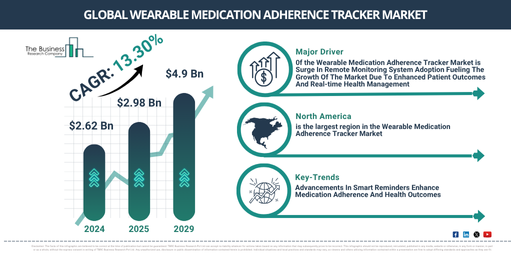
    The market size of the wearable medication adherence tracker has experienced fast growth recently. From $2.62 billion in 2024, it is expected to expand to $2.98 billion in 2025, marking a compound annual growth rate (CAGR) of 13.7%. Factors contributing to the expansion in the historical phase include the growing cases of chronic illnesses, the increase in the elderly population, the upsurge in demand for remote patient supervision, heightened attention towards personalized healthcare, and the rising awareness concerning medication adherence.

    What Growth Rate Is Anticipated for the Wearable Medication Adherence Tracker Market in the Coming Years?

    The market size of the wearable medication adherence tracker is projected to experience accelerated growth in the coming years, reaching $4.9 billion by 2029, with a compound annual growth rate (CAGR) of 13.3%. This upcoming growth could be due to factors such as the integration of AI and IoT in healthcare, the rise in the use of telehealth services, an increased level of investment in digital health technologies, the larger utilization of real-time data analytics, and an enhanced focus on preventive healthcare solutions. Key trends for the forecast period include advanced sensor technology, improved form factors for wearable, innovative drug-device combination products, incorporation of wearable trackers with electronic health records, and groundbreaking advancements in battery life and energy-efficient designs.

    Download The Free Sample Report Here:

    https://www.thebusinessresearchcompany.com/sample.aspx?id=24744&type=smp

    Who Are the Leading Companies in the Wearable Medication Adherence Tracker Market?

    Major companies operating in the wearable medication adherence tracker market are Apple Inc., Samsung Electronics Co. Ltd., Huawei Technologies Co. Ltd., Philips Healthcare, Otsuka Holdings Co. Ltd., Garmin Ltd., Guangdong Transtek Medical Electronics Co. Ltd., Bethesda Health Group Inc., Empatica Inc., CADEX Electronics Inc., PIXTA Inc., Fitbit LLC, TabTime Ltd., WatchMinder Company, Pivotell Ltd., MiniFinder Sweden AB, CareBand Inc., EtectRx Inc., Medema Group AG, Sensorem AB

    What Are the Key Drivers of the Wearable Medication Adherence Tracker Market?

    The wearable medication adherence tracker market is projected to grow due to the increased use of remote monitoring systems. These systems incorporate technology to frequently monitor and manage a patient’s health data from afar. The surging utilization of remote monitoring systems is driven by the demand for immediate access to data and intelligent decision-making, supplemented by the evolution of the Internet of Things (IoT) and superior connectivity for efficient remote handling. Wearable medication adherence trackers improve remote monitoring systems by offering live patient medication intake data, facilitating prompt interventions, and enhancing treatment efficacy. For instance, in January 2025, LondonWorld, a UK-based media company, reported that over half of the UK adult population utilized remote health tracking devices as wellness becomes increasingly prevalent. Therefore, the use of remote monitoring systems bolsters the expansion of the wearable medication adherence tracker market.

    Request For A Customized Report:

    https://www.thebusinessresearchcompany.com/customise?id=24744&type=smp

    What Are the Key Market Segments in the Wearable Medication Adherence Tracker Industry?

    The wearable medication adherence tracker market covered in this report is segmented –

    1) By Product Type: Smartwatches With Medication Features, Pill-tracking Wearables, Wearables With Biometric Monitoring And Adherence Tracking, Patch-based Wearables, Multifunctional Health Devices, Medication Adherence Platforms With Wearables

    2) By Medication Type: Chronic Disease Medications, Mental Health And Neurology, Oncology Medications, Lifestyle Or General Wellness

    3) By End-User: Patients Or Individuals, Healthcare Providers, Caregivers

    Subsegments:

    1) By Smartwatches With Medication Features: Reminder Alerts, Dose Tracking, Vibration Or Alarm Notifications, Integration With Mobile Apps, Voice Assistance Features

    2) By Pill-Tracking Wearables: Smart Pillboxes, Connected Pill Bottles, Electronic Pill Dispensers, Medication Reminder Caps, Cellular-Enabled Pill Trackers

    3) By Wearables With Biometric Monitoring And Adherence Tracking: Heart Rate Monitors, Blood Pressure Monitors, Glucose Monitors, Oxygen Saturation Sensors, Activity Or Movement Trackers

    4) By Patch-Based Wearables: Skin Patches With Drug Delivery, Adhesive Monitoring Patches, Sensor-Embedded Medication Patches, Transdermal Drug Release Patches, Connected Patch Monitors

    5) By Multifunctional Health Devices: All-In-One Health Trackers, Hybrid Smartwatches With Medication Features, Wearables Combining Vital Sign Monitoring And Adherence, Health Bands With Medication Alerts, Portable Diagnostic Devices With Adherence Features

    6) By Medication Adherence Platforms With Wearables: Cloud-Based Adherence Management Platforms, Mobile App Integration Platforms, Remote Patient Monitoring Platforms, AI-driven Adherence Analytics Platforms, Healthcare Provider Dashboard Platforms

    What Are the Latest Trends in the Wearable Medication Adherence Tracker Market?

    Key businesses in the market for wearable medication adherence trackers are prioritizing the advancement of products, like intelligent priority-based alerts, aiming to increase patient compliance and optimize overall health results through customization. The term intelligent priority-based alerts relates to artificial intelligence-driven medication notifications that modulate urgency levels, from gentle to robust, depending on the medicine’s significance and possible hazards. Samsung Electronics, an appliances firm based in South Korea, for example, launched a novel medication tracking attribute in its Samsung Health app in December 2023. This improvement is intended to assist users in effectively managing their medication timetables by offering prompt reminders and tracking features. This function smoothly combines with the existing health observation tools, thus encouraging better compliance with recommended therapies.

    Access The Full Report Here:

    https://www.thebusinessresearchcompany.com/report/wearable-medication-adherence-tracker-global-market-report

    What Are the Key Regional Markets in the Wearable Medication Adherence Tracker Industry?

    North America was the largest region in the wearable medication adherence tracker market in 2024. Asia-Pacific is expected to be the fastest-growing region in the forecast period. The regions covered in the wearable medication adherence tracker market report are Asia-Pacific, Western Europe, Eastern Europe, North America, South America, Middle East, Africa.

    Purchase The Full Report Today:

    https://www.thebusinessresearchcompany.com/purchaseoptions.aspx?id=24744

    This Report Delivers Insight On:

    1. How big is the wearable medication adherence tracker market, and how is it changing globally?

    2. Who are the major companies in the wearable medication adherence tracker market, and how are they performing?

    3. What are the key opportunities and risks in the wearable medication adherence tracker market right now?

    4. Which products or customer segments are growing the most in the wearable medication adherence tracker market?

    5. What factors are helping or slowing down the growth of the wearable medication adherence tracker market?

    About The Business Research Company:

    With over 15000+ reports from 27 industries covering 60+ geographies, The Business Research Company has built a reputation for offering comprehensive, data-rich research and insights. Armed with 1,500,000 datasets, the optimistic contribution of in-depth secondary research, and unique insights from industry leaders, you can get the information you need to stay ahead in the game.

    Get in touch with us:

    The Business Research Company: https://www.thebusinessresearchcompany.com/

    Americas +1 3156230293

    Asia +44 2071930708

    Europe +44 2071930708

    Email us at info@tbrc.info

    Follow us on:

    LinkedIn: https://in.linkedin.com/company/the-business-research-company

    YouTube: https://www.youtube.com/channel/UC24_fI0rV8cR5DxlCpgmyFQ

    Global Market Model: https://www.thebusinessresearchcompany.com/global-market-model
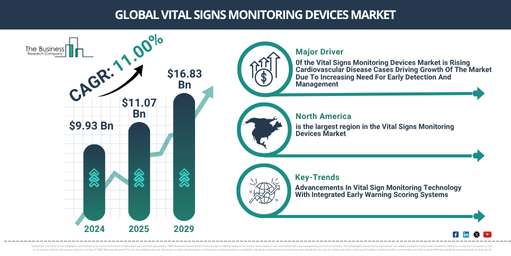
  • Vital Signs Monitoring Devices Market to Reach $16.83 Billion by 2029 | Key Drivers and Future Outlook

    Vital Signs Monitoring Devices Market to Reach $16.83 Billion by 2029 | Key Drivers and Future Outlook

    Claim your 30% discount on Global Market Reports with code ONLINE30. Limited time only.

    What Is the Growth Rate of the Vital Signs Monitoring Devices Market?

    The market size for vital signs monitoring devices has seen accelerated growth in the past few years. The market is predicted to expand from $9.93 billion in 2024 to $11.07 billion in 2025, corresponding to a compound annual growth rate (CAGR) of 11.4%. Factors contributing to this growth during the historical period include the escalating occurrence of chronic diseases, an increasing global aging population, enhanced awareness around early disease detection and health monitoring, a rise in the utilization of remote patient monitoring systems, and an increased demand for home healthcare solutions.

    What Growth Rate Is Forecasted for the Vital Signs Monitoring Devices Market by 2029?

    The market for vital sign monitoring tools is set to experience significant expansion in the coming years, with predictions indicating a growth to $16.83 billion by 2029 at a CAGR of 11.0%. This escalation in the forecast period can be linked to various factors such as the worldwide increase in healthcare spending, a rise in cardiovascular disease incidences, the proliferation of telemedicine services, an uptick in respiratory disorder cases, and a growing inclination towards minimally invasive monitoring options among patients. The forecast period is also marked by noteworthy trends including technological advancements in wearable healthcare devices, the creation of more portable and compact vital sign monitors, the integration of IoT in the healthcare sector, utilization of cloud-based solutions for data storage and analysis, as well as the increased use of multiparameter monitoring devices.

    Download The Free Sample Report Here:

    https://www.thebusinessresearchcompany.com/sample.aspx?id=24740&type=smp

    Which Key Companies Are Shaping the Future of the Vital Signs Monitoring Devices Market?

    Major companies operating in the vital signs monitoring devices market are Medtronic Plc, Koninklijke Philips NV, GE Healthcare Technologies Inc., Baxter International Inc., Omron Healthcare, Mindray Ltd., Masimo Corp., Nihon Kohden Corp., Lepu Medical Technology Co. Ltd., Contec Medical Systems Co. Ltd., iRhythm Technologies Inc., A&D Company Ltd., Spacelabs Healthcare Inc., Schiller AG, Edan Instruments Inc., Shenzhen Comen Medical Instruments Co. Ltd., Nonin Medical Inc., Recorders & Medicare Systems P Ltd., BPL Medical Technologies, SunTech Medical Inc., Rossmax International Ltd., Allengers Medical Systems Ltd., Huntleigh Healthcare LLC, BioBeat Technologies, Ababil Healthcare

    Which Factors Are Driving Demand in the Vital Signs Monitoring Devices Industry?

    The burgeoning incidence of cardiovascular diseases is projected to propel the expansion of the vital signs monitoring devices market in the forthcoming years. Cardiovascular diseases, characterized by ailments that impact the heart and blood vessels, frequently result in conditions such as heart attacks, strokes, and other complications related to the circulatory system. The growing rates of obesity contribute to the increase in cardiovascular diseases, as it intensifies the likelihood of hypertension, diabetes, and high cholesterol, all significant factors leading to heart problems. Vital signs monitoring devices play an essential role in managing, diagnosing, and averting cardiovascular diseases (CVDs). These instruments are crucial for detecting early symptoms, tracking the development of the disease, and informing treatment choices. For example, the American Heart Association, a US-based nonprofit organization, reported that the United States witnessed 941,652 deaths due to cardiovascular disease in 2022, an increase of over 10,000 from the 931,578 deaths reported in 2021. Consequently, the escalating incidence of cardiovascular diseases will catalyze the advancement of the vital signs monitoring devices market.

    Request For A Customized Report:

    https://www.thebusinessresearchcompany.com/customise?id=24740&type=smp

    How Is the Vital Signs Monitoring Devices Market Segmented by Several Divisions?

    The vital signs monitoring devices market covered in this report is segmented –

    1) By Product: Pulse Oximeters, Blood Pressure Monitors, Temperature Monitoring Devices, Glucose Monitoring Devices

    2) By Mount Type: Standalone, Portable

    3) By End-Use: Hospitals, Physician’s Office, Home Healthcare, Ambulatory Centers, Emergency Care Centers, Other End-Uses

    Subsegments:

    1) By Pulse Oximeters: Fingertip Pulse Oximeters, Handheld Pulse Oximeters, Tabletop Or Benchtop Pulse Oximeters, Wrist-Worn Pulse Oximeters, Pediatric Pulse Oximeters

    2) By Blood Pressure Monitors: Automated Or Digital Blood Pressure Monitors, Manual Blood Pressure Monitors, Ambulatory Blood Pressure Monitors, Wrist Blood Pressure Monitors, Upper Arm Blood Pressure Monitors

    3) By Temperature Monitoring Devices: Digital Thermometers, Infrared Thermometers, Mercury Thermometers, Wearable Continuous Temperature Monitoring Devices, Smart Thermometers

    4) By Glucose Monitoring Devices: Self-Monitoring Blood Glucose (SMBG) Devices, Continuous Glucose Monitoring (CGM) Systems

    What are the Emerging Market Trends Driving the Growth of the Vital Signs Monitoring Devices Industry?

    Prominent firms within the vital signs monitoring devices industry are concentrating on the creation of enhanced solutions, such as integrated monitoring devices equipped with early warning scoring tools, to minimize errors caused by human factors. These integrated systems continuously evaluate patient vital signs, allowing for early detection of possible clinical deterioration and ensuring timely medical intervention. For example, Huntleigh, a United States-based company manufacturing medical equipment, in July 2024 introduced the SC500 Series vital signs monitor. This high-performance monitor offers both spot check and long-term observation capabilities, bridging the gap between basic and multi-parameter monitors. With integrated early warning scoring tools and a three-tier alarm system, it is particularly suitable for prolonged COVID-19 observations. A comprehensive vital signs monitor for adults, children, and newborns, the SC500 features a colorful 8-inch display, both battery and mains operation, and monitors non-invasive blood pressure, pulse rate, pulse oximetry, 3-lead ECG. It even houses an optional wireless tympanic temperature sensor. Besides, the SC500 facilitates enhanced workflow through its standard connectivity options and compatibility with Smartsigns Central View monitoring software for centralized data management.

    Access The Full Report Here:

    https://www.thebusinessresearchcompany.com/report/vital-signs-monitoring-devices-global-market-report

    Which Regions Are Driving Growth in the Vital Signs Monitoring Devices Market?

    North America was the largest region in the vital signs monitoring devices market in 2024. Asia-Pacific is expected to be the fastest-growing region in the forecast period. The regions covered in the vital signs monitoring devices market report are Asia-Pacific, Western Europe, Eastern Europe, North America, South America, Middle East, Africa.

    Purchase The Full Report Today:

    https://www.thebusinessresearchcompany.com/purchaseoptions.aspx?id=24740

    This Report Delivers Insight On:

    1. How big is the vital signs monitoring devices market, and how is it changing globally?

    2. Who are the major companies in the vital signs monitoring devices market, and how are they performing?

    3. What are the key opportunities and risks in the vital signs monitoring devices market right now?

    4. Which products or customer segments are growing the most in the vital signs monitoring devices market?

    5. What factors are helping or slowing down the growth of the vital signs monitoring devices market?

    About The Business Research Company:

    With over 15000+ reports from 27 industries covering 60+ geographies, The Business Research Company has built a reputation for offering comprehensive, data-rich research and insights. Armed with 1,500,000 datasets, the optimistic contribution of in-depth secondary research, and unique insights from industry leaders, you can get the information you need to stay ahead in the game.

    Get in touch with us:

    The Business Research Company: https://www.thebusinessresearchcompany.com/

    Americas +1 3156230293

    Asia +44 2071930708

    Europe +44 2071930708

    Email us at info@tbrc.info

    Follow us on:

    LinkedIn: https://in.linkedin.com/company/the-business-research-company

    YouTube: https://www.youtube.com/channel/UC24_fI0rV8cR5DxlCpgmyFQ

    Global Market Model: https://www.thebusinessresearchcompany.com/global-market-model
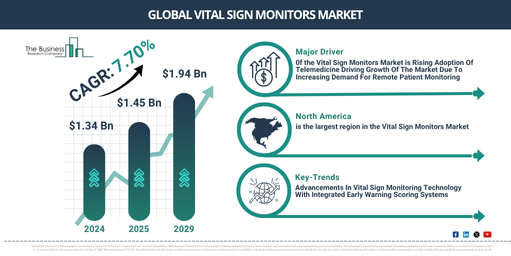
  • Vital Sign Monitors Market Size to Exceed $1.94 Billion by 2029 | Growth and Industry Trends

    Vital Sign Monitors Market Size to Exceed $1.94 Billion by 2029 | Growth and Industry Trends

    Claim your 30% discount on Global Market Reports with code ONLINE30. Limited time only.

    How Has the Vital Sign Monitors Market Grown from 2024 to 2025?

    The market size for vital sign monitors has seen robust growth in the recent past. It is projected to increase from $1.34 billion in 2024 to $1.45 billion in 2025, reflecting a compound annual growth rate (CAGR) of 7.9%. This growth during the historic period can be traced back to factors such as the increased rate of chronic diseases, a growing global elderly population, enhanced awareness about health monitoring, a surge in the acceptance of wireless and wearable gadgets, and an upswing in demand for home healthcare monitoring.

    What Growth Rate Is Anticipated for the Vital Sign Monitors Market in the Coming Years?

    Anticipations of robust increment are predicted for the vital sign monitors market size in the upcoming years, with a projection to reach $1.94 billion by 2029, experiencing a compound annual growth rate (CAGR) of 7.7%. This surge in the projection period could be linked to the broadening of telemedicine and remote patient tracking, governmental endeavors encouraging health supervision, increasing infrastructure improvement in hospitals and clinics, heightened emphasis on preliminary diagnosis and preventive care, and a growing prevalence of cardiovascular diseases. Notable trends expected during the forecast period features progresses in technological monitoring equipment, advancements in sensor technology, integration of artificial intelligence and machine learning for predictive examinations, and a demand for handy and compact devices.

    Download The Free Sample Report Here:

    https://www.thebusinessresearchcompany.com/sample.aspx?id=24739&type=smp

    Who Are the Leading Companies in the Vital Sign Monitors Market?

    Major companies operating in the vital sign monitors market are Medtronic Plc, Koninklijke Philips NV, GE Healthcare Technologies Inc., Baxter International Inc., Omron Healthcare, Mindray Ltd., Masimo Corp., Nihon Kohden Corp., Lepu Medical Technology Co. Ltd., Contec Medical Systems Co. Ltd., iRhythm Technologies Inc., A&D Company Ltd., Spacelabs Healthcare Inc., Schiller AG, Edan Instruments Inc., Shenzhen Comen Medical Instruments Co. Ltd., Nonin Medical Inc., Recorders & Medicare Systems P Ltd., BPL Medical Technologies, SunTech Medical Inc., Rossmax International Ltd., Allengers Medical Systems Ltd., Huntleigh Healthcare LLC, BioBeat Technologies, Ababil Healthcare

    What Are the Key Drivers of the Vital Sign Monitors Market?

    The growth in the vital sign monitor market is anticipated to be spurred by the escalating need for telemedicine. Telemedicine employs technology to deliver healthcare and consultation remotely, eliminating the necessity for face-to-face appointments. The demand for this convenient healthcare access solution is growing as it enables swift patient-doctor consultations from home, saving time and minimizing travel requirements. The expansion of telemedicine amplifies the need for vital sign monitors as it facilitates the remote tracking of patients’ health data, ensuring real-time and precise monitoring during virtual consultations. For instance, according to a survey carried out by Rock Health, a company based in the US specializing in digital health and healthcare innovation, it was found in February 2023 that 80% of the 8,014 participants, surveyed from July to August 2022, had utilized telemedicine at least once. This represented an increase of 8% from 72% in 2021. Consequently, the growing demand for telemedicine is expected to stimulate the development of the vital sign monitor market.

    Request For A Customized Report:

    https://www.thebusinessresearchcompany.com/customise?id=24739&type=smp

    What Are the Key Market Segments in the Vital Sign Monitors Industry?

    The vital sign monitors market covered in this report is segmented –

    1) By Component: Hardware, Software, Services

    2) By Technology: Wired Vital Signs Monitors, Wireless Vital Signs Monitors

    3) By Application: Hospitals, Ambulatory Surgical Centers, Home Care Settings, Other Applications

    4) By End-User: Healthcare Providers, Patients, Research Institutes

    Subsegments:

    1) By Hardware: Blood Pressure Monitors, Pulse Oximeters, Temperature Monitors, Electrocardiogram (ECG) Monitors, Respiration Rate Monitors, Capnography Devices, Multiparameter Monitors, Wearable Vital Sign Monitors

    2) By Software: On-Premise Software, Cloud-Based Software, Data Integration And Management Tools, Remote Monitoring Software, Analytics And Visualization Tools, Mobile Applications

    3) By Services: Installation And Maintenance Services, Training And Education Services, Technical Support Services, Remote Monitoring Services, Integration Services, Upgradation And Software Support Services

    What Are the Latest Trends in the Vital Sign Monitors Market?

    Leading corporations in the vital sign monitors market are concentrating their efforts on creating innovative solutions, such as early warning scoring tools integrated with monitoring devices, aiming to minimize the potential for human error. These integrated systems continuously monitor patient vital signs to detect early indications of clinical decline, enabling prompt and appropriate medical intervention. An example of this is Huntleigh, a medical equipment manufacturer based in the US, which in July 2024 introduced the SC500 Series vital sign monitor. This device bridges the gap between basic and multi-parameter monitors by offering robust monitoring appropriate for spot checks as well as medium to long-term observations. With incorporated early warning scoring tools and a three-tier alarm system, it is ideally suited for prolonged COVID-19 monitoring. The SC500, with an 8-inch color display and functionality on battery or mains power, offers thorough vital sign monitoring for adult, pediatric, and neonatal patients and includes non-invasive blood pressure, pulse rate, pulse oximetry, 3-lead ECG, and an optional wireless tympanic temperature detector. Moreover, through its standard connection options and compatibility with Smartsigns Central View monitoring software, the SC500 enhances workflow efficiency with centralized data management.

    Access The Full Report Here:

    https://www.thebusinessresearchcompany.com/report/vital-sign-monitors-global-market-report

    What Are the Key Regional Markets in the Vital Sign Monitors Industry?

    North America was the largest region in the vital sign monitors market in 2024. Europe is expected to be the fastest-growing region in the forecast period. The regions covered in the vital sign monitors market report are Asia-Pacific, Western Europe, Eastern Europe, North America, South America, Middle East, Africa.

    Purchase The Full Report Today:

    https://www.thebusinessresearchcompany.com/purchaseoptions.aspx?id=24739

    This Report Delivers Insight On:

    1. How big is the vital sign monitors market, and how is it changing globally?

    2. Who are the major companies in the vital sign monitors market, and how are they performing?

    3. What are the key opportunities and risks in the vital sign monitors market right now?

    4. Which products or customer segments are growing the most in the vital sign monitors market?

    5. What factors are helping or slowing down the growth of the vital sign monitors market?

    About The Business Research Company:

    With over 15000+ reports from 27 industries covering 60+ geographies, The Business Research Company has built a reputation for offering comprehensive, data-rich research and insights. Armed with 1,500,000 datasets, the optimistic contribution of in-depth secondary research, and unique insights from industry leaders, you can get the information you need to stay ahead in the game.

    Get in touch with us:

    The Business Research Company: https://www.thebusinessresearchcompany.com/

    Americas +1 3156230293

    Asia +44 2071930708

    Europe +44 2071930708

    Email us at info@tbrc.info

    Follow us on:

    LinkedIn: https://in.linkedin.com/company/the-business-research-company

    YouTube: https://www.youtube.com/channel/UC24_fI0rV8cR5DxlCpgmyFQ

    Global Market Model: https://www.thebusinessresearchcompany.com/global-market-model