Category: Medical Equipment

  • Urinary Tract Infection Testing Devices Market 2025-2034: Key Highlights, Growth Dynamics, and Emerging Trends

    Urinary Tract Infection Testing Devices Market 2025-2034: Key Highlights, Growth Dynamics, and Emerging Trends

    Stay ahead with our updated market reports featuring the latest on tariffs, trade flows, and supply chain transformations.

    How Has The Urinary Tract Infection Testing Devices Market Growth Evolved From 2024 To 2025, And What’s Ahead?

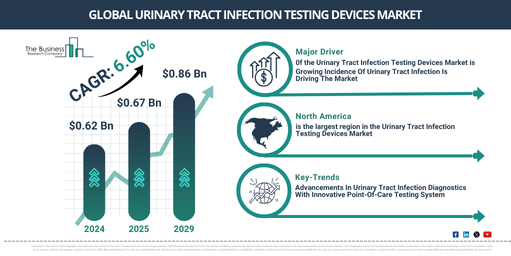
    The market size of devices used for testing urinary tract infections has shown a robust growth in the past few years. The market, which is worth $0.62 billion in 2024, is expected to inflate to $0.67 billion in 2025, with a compound annual growth rate (CAGR) of 6.9%. The historical growth in the market is credited to the surge in disease rates, elevated cases of urinary tract infections worldwide, heightened occurrence of diabetes in low to middle income countries, an increase in hospital-acquired urinary tract infections, as well as a rise in the prevalence of antibiotic-resistant urinary tract infections.

    The market for urinary tract infection testing devices is slated for impressive growth over the upcoming years, with the size expected to reach $0.86 billion in 2029, boasting a compound annual growth rate (CAGR) of 6.6%. Factors contributing to this projected growth include more people turning to self-testing kits and at-home options, greater emphasis on early diagnostics, and an intensifying need to tackle antibiotic resistance. Key trends expected during the forecast period involve integration of AI and machine learning, advancements in home-testing technology, overall technical innovations, diagnostics based on nanotechnology, and the use of CRISPR for diagnostic purposes.

    Download a free sample to assess the report’s scope and structure:

    https://www.thebusinessresearchcompany.com/sample.aspx?id=20988&type=smp

    Which Primay Drivers Are Accelerating Growth in the Urinary Tract Infection Testing Devices Market?

    The surge in urinary tract infections (UTIs) is set to spur the increase of the urinary tract infection testing devices market. UTIs, which are prevalent in any part of the urinary system such as kidneys, ureters, bladder, or urethra, are usually caused by bacteria, with Escherichia coli being the most commonly found. They majorly occur due to the extended use of catheters, poor hygiene habits, and growing antimicrobial resistance among hospital patients. The urinary tract infection testing devices are pivotal in diagnosing UTIs swiftly and accurately. This quick diagnosis aids healthcare professionals to discover the causative pathogens promptly and instigate targeted treatments, thereby diminishing complications, enhancing patient outcomes, and limiting the dispersion of antimicrobial resistance in medical environments. For example, the University of New South Wales, a public research university in Australia, reported in March 2024 that UTIs are high-frequency infections, noting a global annual incidence surpassing 400 million cases. Hence, the surge in urinary tract infections (UTIs) propels the urinary tract infection testing devices market.

    Which Primary Segments of the Urinary Tract Infection Testing Devices Market Are Driving Growth and Industry Transformations?

    The urinary tract infection testing devices market covered in this report is segmented –

    1) By Product type: Instruments, Kits

    2) By Test Type: Urinalysis, Urine Cultures, Susceptibility Testing

    3) By End-User: Hospitals, Diagnostic Labs, Other End Users

    Subsegments:

    1) By Instruments: Automated UTI Analyzers, UTI Culture Systems, UTI Microscopes, UTI Diagnostic Devices (Handheld Devices)

    2) By Kits: UTI Test Strips, UTI Reagents, Urine Culture Kits, UTI Home Testing Kits

    Request customized data on this market:

    https://www.thebusinessresearchcompany.com/customise?id=20988&type=smp

    Which Regions Are Key Players in the Growth of the Urinary Tract Infection Testing Devices Market?

    North America was the largest region in the urinary tract infection testing devices market in 2024. Asia Pacific is expected to be the fastest-growing region in the forecast period. The regions covered in the urinary tract infection testing devices market report are Asia-Pacific, Western Europe, Eastern Europe, North America, South America, Middle East, Africa.

    Which Technological Trends Are Reshaping the Urinary Tract Infection Testing Devices Industry Dynamics?

    Leading firms in the urinary tract infection testing devices market are concentrating their efforts on point-of-care (POC) testing devices. These tools are lauded for their speed and convenience in providing diagnoses, which has the effect of bettering patient outcomes. Point-of-care testing devices are medical diagnostic instruments that are used at the location of patient care, such as the doctor’s office, the patient’s bedside in the hospital, or even at home, thus eliminating the need to send samples to a lab. As an example, Sysmex Corporation, a Japan-based manufacturer of urinary tract infection testing devices, unveiled the PA-100 AST System, a Point-of-Care Testing System for identifying antimicrobial susceptibility, in June 2023. This system can discern the presence or absence of bacteria and gauge the efficacy of antimicrobials in a reduced timeframe. The device claims to detect bacterial growth in urine samples in roughly 10 minutes and can deliver susceptibility test results in less than 30 minutes. This capability encourages healthcare professionals to conduct swift testing directly from the urine samples of patients presumed to have urinary tract infections.

    View the full report here:

    https://www.thebusinessresearchcompany.com/report/urinary-tract-infection-testing-devices-global-market-report

    What Parameters Are Used to Define the Urinary Tract Infection Testing Devices Market?

    Urinary tract infection (UTI) testing devices are medical tools used to diagnose infections in the urinary system by detecting bacteria, white blood cells, or other markers in urine samples. These devices range from dipsticks and culture kits to advanced automated analyzers, providing rapid and accurate results to guide treatment decisions.

    Purchase the full report and get a swift delivery:

    https://www.thebusinessresearchcompany.com/purchaseoptions.aspx?id=20988

    About The Business Research Company:

    With over 15000+ reports from 27 industries covering 60+ geographies, The Business Research Company has built a reputation for offering comprehensive, data-rich research and insights. Armed with 1,500,000 datasets, the optimistic contribution of in-depth secondary research, and unique insights from industry leaders, you can get the information you need to stay ahead in the game.

    Get in touch with us:

    The Business Research Company: https://www.thebusinessresearchcompany.com/

    Americas +1 3156230293

    Asia +44 2071930708

    Europe +44 2071930708

    Email us at info@tbrc.info

    Follow us on:

    LinkedIn: https://in.linkedin.com/company/the-business-research-company

    YouTube: https://www.youtube.com/channel/UC24_fI0rV8cR5DxlCpgmyFQ

    Global Market Model: https://www.thebusinessresearchcompany.com/global-market-model
  • Next-Gen Urethral Stricture Treatment Devices: Market Forecast, Transformation, and Long-Term Trajectories

    Next-Gen Urethral Stricture Treatment Devices: Market Forecast, Transformation, and Long-Term Trajectories

    Stay ahead with our updated market reports featuring the latest on tariffs, trade flows, and supply chain transformations.

    What Is the Current and Projected Market Size of the Urethral Stricture Treatment Devices Market Through 2034?

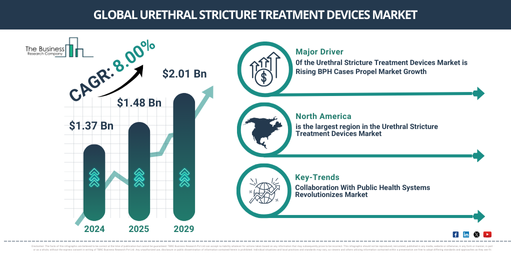
    The market for devices used in the treatment of urethral strictures has seen robust growth in recent times. The market value is set to increase from $1.37 billion in 2024 to $1.48 billion in 2025, marking a compound annual growth rate (CAGR) of 8.3%. Several factors like the heightened occurrence of urethral strictures, the growing preference for minimally invasive procedures, heightened consciousness about urological conditions, increased healthcare spending in developed regions, and enhanced diagnostics have contributed to the growth observed in the historic period.

    The market for urethral stricture treatment devices is set to experience significant growth in the upcoming years, projected to escalate to $2.01 billion by 2029 with a compound annual growth rate (CAGR) of 8.0%. The expansion during the forecast period is influenced by factors such as an increasing preference for outpatient procedures, emphasized attention to patient-centric care, the development of healthcare infrastructure in blossoming markets, a surge in trauma-related strictures cases, and healthcare organizations’ awareness initiatives. Some dominant trends for the forecast timeframe include a transition towards less invasive procedures, the application of AI in diagnostic equipment, progressive enhancements in surgical devices, breakthroughs in medical imaging methods, and an emphasis on individualized treatment strategies.

    Download a free sample to assess the report’s scope and structure:

    https://www.thebusinessresearchcompany.com/sample.aspx?id=20986&type=smp

    Which Major Market Drivers Are Expected to Boost the Growth Potential of the Urethral Stricture Treatment Devices Market?

    The urethral stricture treatment devices market is expected to be boosted by the increasing incidence of benign prostatic hyperplasia (BPH) and neurogenic bladder. BPH is a common condition among older men, where the prostate gland gets enlarged, often leading to urinary obstruction and elevating the risk of urethral strictures. The growth in BPH is primarily attributed to aging, particularly in men over 50, and its development is influenced by factors such as lifestyle, hormonal changes, and chronic conditions. Urethral stricture treatment devices are frequently used for urological conditions like BPH, where post-surgical complications or prolonged catheterization can cause the urethra to narrow. Interventions using dilators, stents, or urethrotomy tools are necessary to restore normal urinary flow in such cases. As per a report by the Royal Pharmaceutical Society, a professional body based in the UK, in September 2023, about 3 million people in the UK suffer from BPH. The condition affects around 50% of men aged 60-70 years and increases to 90% in men aged over 80 years. Consequently, the growing prevalence of BPH and neurogenic bladder is expected to stimulate the urethral stricture treatment devices market.

    Which Key Market Segments Comprise the Urethral Stricture Treatment Devices Market and Drive Its Revenue Growth?

    The urethral stricture treatment devices market covered in this report is segmented –

    1) By Product Type: Urethral Dilators, Urethral Stents, Urethral Balloon Dilation Catheters, Urinary Catheters

    2) By Stricture Location: Anterior, Posterior

    3) By End-User: Hospitals, Specialty Clinics, Other End-Users

    Subsegments:

    1) By Urethral Dilators: Semi-Rigid Urethral Dilators, Flexible Urethral Dilators, Balloon Urethral Dilators, Graded Urethral Dilators

    2) By Urethral Stents: Self-Expanding Urethral Stents, Balloon-Expandable Urethral Stents, Metallic Urethral Stents, Silicone Urethral Stents

    3) By Urethral Balloon Dilation Catheters: Single-Balloon Dilation Catheters, Double-Balloon Dilation Catheters, Coaxial Balloon Dilation Catheters, Hydrophilic-Coated Balloon Dilation Catheters

    4) By Urinary Catheters: Foley Urinary Catheters, Intermittent Urinary Catheters, External Urinary Catheters, Supra-Pubic Urinary Catheters

    Request customized data on this market:

    https://www.thebusinessresearchcompany.com/customise?id=20986&type=smp

    Which Areas Are Leading Regions in the Urethral Stricture Treatment Devices Market Expansion Across the Globe?

    North America was the largest region in the urethral stricture treatment devices market in 2024. The regions covered in the urethral stricture treatment devices market report are Asia-Pacific, Western Europe, Eastern Europe, North America, South America, Middle East, Africa.

    What Are the Key Market Trends in the Urethral Stricture Treatment Devices Market Over the Coming Years?

    Prominent businesses in the urethral stricture treatment devices market are opting for strategic partnerships to boost technological collaborations and broaden their market presence. This kind of partnership entangles a cooperative alliance between two or more entities, pooling their resources, know-how, and endeavors to accomplish shared targets or objectives. For example, in April 2024, Laborie Medical Technologies Corp., a company specializing in diagnostic and therapeutic medical technology based in the U.S., formed a partnership with the NHS Specialized Services Device Programme (SSDP), incorporating their Optilume Urethral Drug-Coated Balloon (DCB) into the program. This combined effort provides reimbursement for NHS hospitals in England, enabling broader patient reach for this innovative apparatus. Optilume merges balloon dilation with the delivery of an anti-proliferative drug to curb the relapse of urethral strictures. This low-invasive technology offers a revolutionary alternative to standard surgery or multiple treatments, answering a key requirement in the urology sphere.

    View the full report here:

    https://www.thebusinessresearchcompany.com/report/urethral-stricture-treatment-devices-global-market-report

    How Is the Urethral Stricture Treatment Devices Market Conceptually Defined?

    Urethral stricture treatment devices are medical instruments designed to treat urethral stricture, a condition where the urethra becomes narrowed, often leading to urinary retention and difficulty in urination. These devices help in widening or bypassing the narrowed area of the urethra to restore normal urine flow, with applications in both surgical and non-surgical treatment options.

    Purchase the full report and get a swift delivery:

    https://www.thebusinessresearchcompany.com/purchaseoptions.aspx?id=20986

    About The Business Research Company:

    With over 15000+ reports from 27 industries covering 60+ geographies, The Business Research Company has built a reputation for offering comprehensive, data-rich research and insights. Armed with 1,500,000 datasets, the optimistic contribution of in-depth secondary research, and unique insights from industry leaders, you can get the information you need to stay ahead in the game.

    Get in touch with us:

    The Business Research Company: https://www.thebusinessresearchcompany.com/

    Americas +1 3156230293

    Asia +44 2071930708

    Europe +44 2071930708

    Email us at info@tbrc.info

    Follow us on:

    LinkedIn: https://in.linkedin.com/company/the-business-research-company

    YouTube: https://www.youtube.com/channel/UC24_fI0rV8cR5DxlCpgmyFQ

    Global Market Model: https://www.thebusinessresearchcompany.com/global-market-model
  • Thoracic Drainage Devices Market in Focus: Forecasting Growth Drivers, Scaling Potential, and Global Opportunities

    Thoracic Drainage Devices Market in Focus: Forecasting Growth Drivers, Scaling Potential, and Global Opportunities

    Stay ahead with our updated market reports featuring the latest on tariffs, trade flows, and supply chain transformations.

    How Fast Is The Thoracic Drainage Devices Market Expected to Grow Between 2025 And 2029?

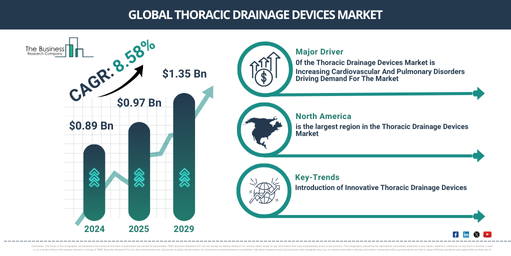
    In recent years, there has been a substantial growth in the market size of thoracic drainage devices. The anticipated growth is from $0.89 billion in 2024 to about $0.97 billion in 2025, with a compound annual growth rate (CAGR) of 8.95%. Factors contributing to this growth during the historical period include a rise in the occurrence of pulmonary ailments, an increase in the number of thoracic operations, an expanding elderly population, a heightened preference for less invasive procedures, and a surge in pneumothorax and pleural effusion cases.

    In the coming years, the market size for thoracic drainage devices is predicted to experience robust growth, expanding to $1.35 billion in 2029 at a Compound Annual Growth Rate (CAGR) of 8.58%. The predicted growth in the forthcoming period can be ascribed to factors like increased healthcare spending, enhanced understanding of post-operative care, advancements in global hospital facilities, growing need for portable drainage systems, and increased use of disposable medical devices. Key trends anticipated during the forecast period encompass medical device technological advancements, progressive developments in chest drainage systems, creation of intelligent monitoring systems, innovations in catheter and tubing materials, and launch of antimicrobial coatings for drainage devices.

    Download a free sample to assess the report’s scope and structure:

    https://www.thebusinessresearchcompany.com/sample.aspx?id=20979&type=smp

    What Are the Core Market Drivers Propelling Growth in the Thoracic Drainage Devices Industry?

    The burgeoning incidence of cardiovascular and lung disorders is projected to stimulate the expansion of the thoracic drainage devices market. These disorders encompass a variety of conditions impacting the cardiovascular system and lungs, adversely affecting respiratory and cardiovascular health. Their increasing prevalence, rooted in sedentary lifestyles, unhealthy diets, smoking, and infrequent health monitoring, prompts a rising demand for specialized treatments and preventative health measures. Thoracic drainage devices contribute to the management of these disorders by efficiently expelling excess fluid, air, or blood from the pleural or thoracic cavity, fostering optimal lung capacity and cardiovascular functionality. For example, the Australian Institute of Health and Welfare, a government agency based in Australia, reported in December 2023 that registered deaths from coronary heart disease (CHD) surged to 14,100 in 2021, with a further increase to 14,900 in 2022. In June 2024, the same agency revealed that in 2022, COPD served as the primary cause of 7,691 deaths or 29.6 deaths per 100,000 population, comprising 4.0% of all fatalities. Thus, the surging incidence of cardiovascular and lung disorders underpins the growth of the thoracic drainage devices market. Driving Market Growth for the Market is an increasing inclination for minimally invasive surgeries. These procedures involve minuscule incisions or none at all, utilizing modern tools like cameras and specialized instruments to dampen tissue damage, abbreviate recuperation periods, and minimize scarring in contrast to conventional open surgery. Their growing preference is due to their capacity to offer abbreviated recovery durations, diminished infection risk, less scarring, and shorter hospitalizations. Thoracic drainage devices are integral to minimally invasive surgeries, effectively managing pleural effusions, air leaks, and fluid accumulation, encouraging optimal lung capacity and diminishing risk of complications during recovery. For instance, in June 2024, the American Society of Plastic Surgeons, a non-profit organization based in the US, disclosed that minimally invasive procedures had experienced a 7 percent growth in 2023, outpacing the growth rate of surgical procedures by 2 percent. Therefore, the growing inclination for minimally invasive surgeries bolsters growth in the thoracic drainage devices market.

    How Is the Thoracic Drainage Devices Market Segmented?

    The thoracic drainage devices market covered in this report is segmented –

    1) By Type: Digital, Traditional

    2) By Product: Thoracic Drainage Systems, Thoracic Drainage Kits, Pleural Drainage Catheters, Other Products

    3) By Application: Cardiac Surgery, Thoracic And Pulmonary Surgery, Other Applications

    4) By End-Users: Hospitals, Ambulatory Surgical Centers, Other End-Users

    Subsegments:

    1) By Digital: Electronic Monitoring Systems, Digital Drainage Units With Real-Time Pressure Measurement, Automated Fluid Monitoring Devices

    2) By Traditional: Suction Drainage Systems, Gravity Drainage Systems, Water-Seal Chest Drains

    Request customized data on this market:

    https://www.thebusinessresearchcompany.com/customise?id=20979&type=smp

    Which Regions Are Driving the Next Phase of the Thoracic Drainage Devices Market Growth?

    North America was the largest region in the thoracic drainage devices market in 2024. The regions covered in the thoracic drainage devices market report are Asia-Pacific, Western Europe, Eastern Europe, North America, South America, Middle East, Africa.

    What Key Market Trends and Innovations Are Shaping the Future of the Thoracic Drainage Devices Industry?

    Leading corporations in the thoracic drainage devices market are striving to develop pioneering products such as evacuated drainage bottles to augment efficiency and lower infection risks during medical procedures. An evacuated drainage bottle functions as a medical appliance tasked with accumulating and storing fluid drained from wounds or surgical locations, typically using vacuum pressure, to aid healing and avert infection. For example, Merit Medical Systems Inc., an American producer of disposable medical appliances, released the Aspira evacuated drainage bottle in September 2023. This device, created for draining pleural effusions and malignant ascites, provides patients with the flexibility to self-administer treatment at home, affording enhanced comfort and command over drainage velocity and requires 23% less storage area compared to conventional drainage bottles.

    View the full report here:

    https://www.thebusinessresearchcompany.com/report/thoracic-drainage-devices-global-market-report

    How Is the Thoracic Drainage Devices Market Defined and What Are Its Core Parameters?

    Thoracic drainage devices are medical tools used to remove air, fluid, or blood from the pleural space to prevent complications like pneumothorax or pleural effusion. They typically consist of a tube inserted into the chest, connected to a collection system to facilitate continuous drainage and promote lung re-expansion.

    Purchase the full report and get a swift delivery:

    https://www.thebusinessresearchcompany.com/purchaseoptions.aspx?id=20979

    About The Business Research Company:

    With over 15000+ reports from 27 industries covering 60+ geographies, The Business Research Company has built a reputation for offering comprehensive, data-rich research and insights. Armed with 1,500,000 datasets, the optimistic contribution of in-depth secondary research, and unique insights from industry leaders, you can get the information you need to stay ahead in the game.

    Get in touch with us:

    The Business Research Company: https://www.thebusinessresearchcompany.com/

    Americas +1 3156230293

    Asia +44 2071930708

    Europe +44 2071930708

    Email us at info@tbrc.info

    Follow us on:

    LinkedIn: https://in.linkedin.com/company/the-business-research-company

    YouTube: https://www.youtube.com/channel/UC24_fI0rV8cR5DxlCpgmyFQ

    Global Market Model: https://www.thebusinessresearchcompany.com/global-market-model
  • Surgical Lasers Market Insights: In-Depth Look at Growth Trends, Market Size, and Opportunities for 2025-2034

    Surgical Lasers Market Insights: In-Depth Look at Growth Trends, Market Size, and Opportunities for 2025-2034

    Stay ahead with our updated market reports featuring the latest on tariffs, trade flows, and supply chain transformations.

    What Are the Projected Market Size and Growth Rates for the Surgical Lasers Market From 2025 To 2029?

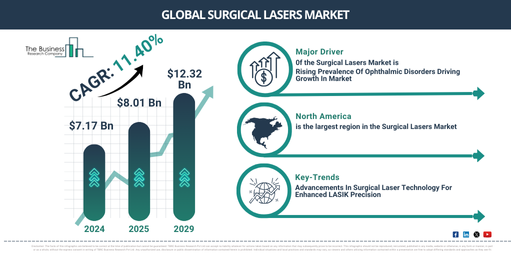
    In the past few years, the surgical lasers market has experienced substantial growth, with its value expected to increase from $7.17 billion in 2024 to $8.01 billion in 2025, reflecting a compound annual growth rate (CAGR) of 11.7%. Several factors have contributed to the growth recorded during the historic period, including the technological advancements in CO₂ lasers for more accurate surgeries; the employment of argon lasers in the field of ophthalmology; the advent of multifunctional diode lasers; progress in excimer lasers for eye surgeries; the deployment of cooling systems in laser apparatus; the presentation of fibre-optic laser delivery; the widening of laser uses in dentistry; enhancements in the precision and targeting of lasers; the development of high-powered lasers for cancer treatments; and the ongoing investment in research and development for less invasive laser systems.

    In the next few years, the market size for surgical lasers is anticipated to experience swift expansion, eventually reaching $12.32 billion by 2029 with a compound annual growth rate (CAGR) of 11.4%. Various factors are expected to fuel this growth within the forecast period such as the evolution of AI-integrated laser systems, advancements in compact and portable laser tools, enhanced safety and efficiency of laser systems, rising traction for photothermal and photochemical therapies, the creation of multifunctional laser platforms, and the incorporation of Internet of Things (IoT) in laser systems. Additionally, an upsurge in real-time imaging for laser guidance, and globally increasing demand for minimally invasive treatments also contribute. Noteworthy trends within this period comprise quicker approvals for AI-integrated mechanisms, incentives for research and development in laser technology, embracement of robotic-assisted surgical lasers, and product innovations.

    Download a free sample to assess the report’s scope and structure:

    https://www.thebusinessresearchcompany.com/sample.aspx?id=20970&type=smp

    What External and Internal Drivers Are Contributing to the Growth of the Surgical Lasers Market?

    The escalating occurrence of eye-related diseases is predicted to boost the surgical laser market’s growth in the future. These diseases, collectively called ophthalmic disorders, affect not only the eyes but also related structures such as eyelids, tear ducts, optic nerves, and adjacent tissues. The reasons for the increasing prevalence of these disorders are numerous, including an aging population, longer screen exposure time, environmental pollution, genetic factors, and lifestyle alterations. These factors lead to conditions like cataracts, glaucoma, and macular degeneration. Surgical lasers have been instrumental in treating these conditions by producing precise light energy to target specific areas, allowing for minimally invasive procedures that lower recovery periods, reduce complications and enhance visual outcomes. As a result, the quality of life improves for those affected by such conditions. According to a 2024 report by the World Health Organization (WHO), a specialized United Nations agency for global health located in Switzerland, more than 2.2 billion individuals worldwide experienced vision impairment, whether near or distant. Prominent causes included cataracts (94 million cases), refractive errors (88.4 million), age-related macular degeneration (8 million), glaucoma (7.7 million), and diabetic retinopathy (3.9 million). Consequently, the surgical lasers market is getting a significant push from the increased prevalence of optical disorders.

    What Segment Types Define the Surgical Lasers Market Structure?

    The surgical lasers market covered in this report is segmented –

    1) By Type: Carbon Dioxide Lasers, Argon Lasers, ND:Yag Lasers, Diode Lasers, Other Surgical Lasers Connected Sensors

    2) By Procedure Type: Open Surgery, Laparoscopic Surgery, Percutaneous Surgery

    3) Application: Ophthalmology, Dermatology, Dentistry, Urology, Cardiology, Gynecology, Oncology, Other Applications

    4) By End-Use: Hospitals, Specialty Clinics, Ambulatory Surgical Centers

    Subsegments:

    1) By Carbon Dioxide Lasers: Laser Scalpel Systems, CO2 Laser Resurfacing Systems, CO2 Laser Ablation Systems

    2) By Argon Lasers: Laser Photocoagulation Systems, Retinal Phototherapy Lasers, Laser Surgical Systems

    3) By ND:YAG Lasers: Laser Lithotripsy Systems, Laser Hair Removal Systems, Laser Coagulation Systems

    4) By Diode Lasers: Diode Laser For Soft Tissue Surgery, Diode Laser For Dental Applications, Diode Laser For Aesthetic Treatments

    5) By Other Surgical Lasers Connected Sensors: Holmium Lasers For Urology, KTP Lasers For Endoscopic Surgery, Alexandrite Lasers For Dermatology, Excimer Lasers For Ophthalmology

    Request customized data on this market:

    https://www.thebusinessresearchcompany.com/customise?id=20970&type=smp

    Which Geographic Areas Hold the Strongest Growth Potential in the Surgical Lasers Market?

    North America was the largest region in the surgical lasers market in 2024. Asia-Pacific is expected to be the fastest-growing region in the forecast period. The regions covered in the surgical lasers market report are Asia-Pacific, Western Europe, Eastern Europe, North America, South America, Middle East, Africa.

    What Key Trends Are Shaping the Future of the Surgical Lasers Market?

    In the surgical lasers market, leading companies are concentrating their efforts on creating highly sophisticated technologies such as the ELITA Laser Technology. This is intended to boost the trust of surgeons and provide improved visual results, as well as expedite patient recovery from LASIK procedures. The ELITA Laser Technology is a cutting-edge femtosecond laser system specifically designed to provide precision in LASIK eye surgeries. For example, in April 2023, US-based medical device manufacturer Johnson & Johnson, received FDA clearance for its ELITA Femtosecond Laser. This state-of-the-art laser technology aims to fabricate accurate LASIK flaps. The ELITA Femtosecond Laser is equipped with low-energy pulses, ultra-fast repetition rates, and sub-micron level accuracy to enhance surgical precision, facilitating smoother flap lifts, and ensuring extraordinary visual results. The user-friendly design of this product promotes efficient practice management, speedy setup and shorter recovery times for patients.

    View the full report here:

    https://www.thebusinessresearchcompany.com/report/surgical-lasers–global-market-report

    What Is the Definition of the Surgical Lasers Market?

    Surgical lasers are specialized medical devices that use focused light energy to perform precise surgical procedures, such as cutting, coagulating, or vaporizing tissue. These devices are widely used across various medical specialties for cutting, vaporizing, or coagulating tissue with high precision and minimal damage to surrounding areas.

    Purchase the full report and get a swift delivery:

    https://www.thebusinessresearchcompany.com/purchaseoptions.aspx?id=20970

    About The Business Research Company:

    With over 15000+ reports from 27 industries covering 60+ geographies, The Business Research Company has built a reputation for offering comprehensive, data-rich research and insights. Armed with 1,500,000 datasets, the optimistic contribution of in-depth secondary research, and unique insights from industry leaders, you can get the information you need to stay ahead in the game.

    Get in touch with us:

    The Business Research Company: https://www.thebusinessresearchcompany.com/

    Americas +1 3156230293

    Asia +44 2071930708

    Europe +44 2071930708

    Email us at info@tbrc.info

    Follow us on:

    LinkedIn: https://in.linkedin.com/company/the-business-research-company

    YouTube: https://www.youtube.com/channel/UC24_fI0rV8cR5DxlCpgmyFQ

    Global Market Model: https://www.thebusinessresearchcompany.com/global-market-model
  • Key Factors Fueling the Growth of the Spinal Cord Stimulation Devices Market in 2025: Increasing Prevalence Of Chronic Pain Driving Demand For Advanced Pain Management Solutions

    Key Factors Fueling the Growth of the Spinal Cord Stimulation Devices Market in 2025: Increasing Prevalence Of Chronic Pain Driving Demand For Advanced Pain Management Solutions

    Stay ahead with our updated market reports featuring the latest on tariffs, trade flows, and supply chain transformations.

    What Is the Current and Projected Market Size of the Spinal Cord Stimulation Devices Market Through 2034?

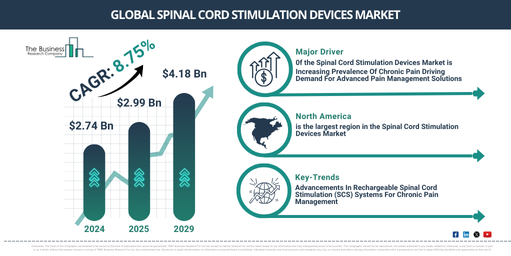
    In recent years, the market size of spinal cord stimulation devices has significantly expanded. Predictions for growth include a rise from $2.74 billion in 2024 to $2.99 billion in 2025, boasting a compound annual growth rate (CAGR) of 9.01%. This developmental surge during the historic period resulted from factors such as enhanced clinical results and patient satisfaction, heightened awareness regarding alternative pain management strategies, increased support from reimbursement policies, growth in clinical research and regulatory endorsements, along with a spike in the number of pain management clinics and centers.

    The market for spinal cord stimulation devices is set to experience considerable growth in the coming years, reaching an estimated $4.18 billion by 2029 with a compound annual growth rate of 8.75%. This predicted growth is due to several factors including an increase in chronic pain conditions, rising demand for non-opioid pain management alternatives, growth in the elderly population, favourable reimbursement policies, increased adoption of wireless and rechargeable devices and heightened awareness of neuromodulation therapies among healthcare professionals and patients. Key trends to watch during this period will include developments in minimally invasive technology, improvements in wireless and rechargeable devices, advances in frequency stimulation, the use of closed-loop feedback systems, the integration of wireless connectivity, enhanced waveform options, and the rise of personalized pain management algorithms.

    Download a free sample to assess the report’s scope and structure:

    https://www.thebusinessresearchcompany.com/sample.aspx?id=20964&type=smp

    What are the Fundamental Drivers and Innovations Shaping the Spinal Cord Stimulation Devices Market?

    Growth in the spinal cord stimulation devices market is anticipated due to a surge in chronic pain instances. Chronic pain is any constant discomfort that persists for a period of 12 weeks or longer, usually arising from ailments like arthritis, neuropathy or lower back pain. The increment in chronic pain cases is often attributed to several factors, notably an aging populace, shifts in lifestyle, long-term health conditions, or due to injury or physical trauma. Electrical impulses employed to perturb pain signals is how spinal cord stimulation (SCS) devices mitigate chronic pain, making it manageable for sustained conditions. For example, in November 2024, statistical data from the Centers for Disease Control and Prevention (a government agency in the US), revealed that in 2023, 24.3% of adults experienced chronic pain. Of these, 8.5% suffered from high-impact chronic pain, which constituted 34.9% of chronic pain sufferers. Thus, this surge in chronic pain instances is catalyzing the growth of the spinal cord stimulation devices market.

    How Is the Spinal Cord Stimulation Devices Market Segmented?

    The spinal cord stimulation devices market covered in this report is segmented –

    1) By Type: Implantable Spinal Cord Stimulators, Non-Implantable Spinal Cord Stimulators

    2) By Product Type: Rechargeable Devices, Non-Rechargeable Devices

    3) By Application: Failed Back Surgery Syndrome, Complex Regional Pain Syndrome, Degenerative Disc Disease, Unsuccessful Disk Surgery, Other Applications

    4) By End User: Hospitals, Ambulatory Surgical Centers, Neuro Clinics

    Subsegments:

    1) By Implantable Spinal Cord Stimulators: Rechargeable Spinal Cord Stimulators, Non-Rechargeable Spinal Cord Stimulators, Multi-Lead Implantable Spinal Cord Stimulators

    2) By Non-Implantable Spinal Cord Stimulators: External Spinal Cord Stimulators, Wearable Spinal Cord Stimulators, Transcutaneous Spinal Cord Stimulators

    Request customized data on this market:

    https://www.thebusinessresearchcompany.com/customise?id=20964&type=smp

    Which Regions Are Driving the Next Phase of the Spinal Cord Stimulation Devices Market Growth?

    North America was the largest region in the spinal cord stimulation devices market in 2024. Asia-Pacific is expected to be the fastest-growing region in the forecast period. The regions covered in the spinal cord stimulation devices market report are Asia-Pacific, Western Europe, Eastern Europe, North America, South America, Middle East, Africa.

    Which Technological Trends Are Reshaping the Spinal Cord Stimulation Devices Industry Dynamics?

    Leading enterprises in the spinal cord stimulation devices market are emphasizing the progression of high-tech solutions such as rechargeable spinal cord stimulation systems. These advancements aim to ameliorate patient results, extend device durability, and render more bespoke pain management solutions for chronic pain sufferers. Rechargeable spinal cord stimulation (SCS) systems are highly sophisticated medical devices engineered to control chronic pain by transmitting electrical impulses to the spinal cord. For example, Abbott Laboratories, an American medical device manufacturer, attained approval from the US Food and Drug Administration (FDA) in December 2022 for their Eterna spinal cord stimulation (SCS) system – a revolutionary approach to chronic pain management. This unique device integrates a compact design with state-of-the-art operability, providing improved comfort and decreased physical strain for patients. The rechargeable aspect guarantees prolonged utility, reducing the necessity for surgical replacements and enhancing convenience. The system possesses accurate stimulation capacities, offering custom-made pain alleviation in line with individual patient requirements. Its sleek design makes for minimal invasive implantation, lessening recovery periods and enhancing overall patient results.

    View the full report here:

    https://www.thebusinessresearchcompany.com/report/spinal-cord-stimulation-devices-global-market-report

    How Is the Spinal Cord Stimulation Devices Market Defined and What Are Its Core Parameters?

    Spinal cord stimulation (SCS) devices are implantable medical devices designed to manage chronic pain by delivering mild electrical pulses to the spinal cord, disrupting pain signals before they reach the brain. These devices combine advanced neurotechnology with customizable programming, offering a minimally invasive solution for conditions such as neuropathic pain and failed back surgery syndrome.

    Purchase the full report and get a swift delivery:

    https://www.thebusinessresearchcompany.com/purchaseoptions.aspx?id=20964

    About The Business Research Company:

    With over 15000+ reports from 27 industries covering 60+ geographies, The Business Research Company has built a reputation for offering comprehensive, data-rich research and insights. Armed with 1,500,000 datasets, the optimistic contribution of in-depth secondary research, and unique insights from industry leaders, you can get the information you need to stay ahead in the game.

    Get in touch with us:

    The Business Research Company: https://www.thebusinessresearchcompany.com/

    Americas +1 3156230293

    Asia +44 2071930708

    Europe +44 2071930708

    Email us at info@tbrc.info

    Follow us on:

    LinkedIn: https://in.linkedin.com/company/the-business-research-company

    YouTube: https://www.youtube.com/channel/UC24_fI0rV8cR5DxlCpgmyFQ

    Global Market Model: https://www.thebusinessresearchcompany.com/global-market-model
  • Shoulder Replacement DevicesMarket Overview 2025–2034: CAGR Trends, Long-Term Growth Paths, and Business Implications

    Shoulder Replacement DevicesMarket Overview 2025–2034: CAGR Trends, Long-Term Growth Paths, and Business Implications

    Stay ahead with our updated market reports featuring the latest on tariffs, trade flows, and supply chain transformations.

    What Is the Current and Projected Market Size of the Shoulder Replacement Devices Market Through 2034?

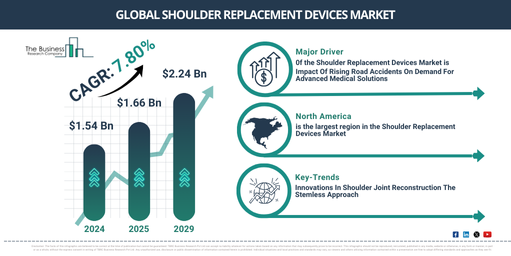
    In recent years, the market size for shoulder replacement devices has seen robust growth. The projection shows that it will expand from $1.54 billion in 2024 to $1.66 billion in 2025, exhibiting a compound annual growth rate (CAGR) of 8.1%. Several factors contributed to this growth during the historic period, including a rise in shoulder fracture cases, enhancements in surgical tools and techniques, an increase in insurance coverage for such surgeries, the advent of reverse shoulder prostheses, and a heightened demand from patients for functional recovery.

    The market for shoulder replacement devices anticipates a robust growth in the coming years, with projections indicating a rise to $2.24 billion in 2029 at a CAGR of 7.8%. This growth is anticipated due to advancements in robotic surgery, wider acceptance of 3D printing for personalized implants, increasing knowledge about joint health, a rise in sports-related injuries, and increased healthcare access in developing markets. Noteworthy trends impacting the market include the rising demand for implants designed for an active lifestyle, a growing emphasis on post-operative rehabilitation technologies, the growth of robotic-assisted shoulder surgeries, the use of pioneering imaging techniques for preoperative planning, and a move towards more cost-effective shoulder replacement alternatives.

    Download a free sample to assess the report’s scope and structure:

    https://www.thebusinessresearchcompany.com/sample.aspx?id=20953&type=smp

    What Are the Primary Drivers Supporting the Market Growth of the Shoulder Replacement Devices Market?

    The escalation in road accidents is anticipated to boost the shoulder replacement devices market’s expansion. The surge in accidents can be attributed to increased vehicular utilization, insufficient road safety protocols, and distracted driving, which results in escalated accident incidences and higher risk on the road. Shoulder replacement devices play a vital role in offering essential solutions for patients who have sustained severe shoulder injuries in road mishaps by restoring joint function, relieving pain, and facilitating a return to daily tasks and an enhanced quality of life through specialized surgical treatments crafted for their specific wounds. For example, the Bureau of Infrastructure and Transport Research Economics, a government department based in Australia, reported in December 2023 that there were 1,266 road-related deaths in 2023, a 7.3% increase compared to the 1,178 deaths documented in 2022. Therefore, the escalating frequency of road accidents is a major factor propelling the growth of the shoulder replacement devices market.

    Which Primary Segments of the Shoulder Replacement Devices Market Are Driving Growth and Industry Transformations?

    The shoulder replacement devices market covered in this report is segmented –

    1) By Type: Anatomical Shoulder Prosthesis, Reverse Shoulder Prosthesis

    2) By Material: Metal, Polyethylene, Ceramic

    3) By Procedure: Partial Shoulder Arthroplasty, Total Shoulder Arthroplasty, Revision Shoulder Arthroplasty

    4) By End-User: Hospitals, Clinics, Outpatient Surgical Centers

    Subsegments:

    1) By Anatomical Shoulder Prosthesis: Humeral Head Prosthesis, Total Shoulder Prosthesis (Humeral And Glenoid Components), Partial Shoulder Prosthesis

    2) By Reverse Shoulder Prosthesis: Reverse Total Shoulder Prosthesis (RTSA), Reverse Hemiarthroplasty, Inverted Ball-And-Socket Designs

    Request customized data on this market:

    https://www.thebusinessresearchcompany.com/customise?id=20953&type=smp

    Which Regions Are Key Players in the Growth of the Shoulder Replacement Devices Market?

    North America was the largest region in the shoulder replacement devices market in 2024. Asia-Pacific is expected to be the fastest-growing region in the forecast period. The regions covered in the shoulder replacement devices market report are Asia-Pacific, Western Europe, Eastern Europe, North America, South America, Middle East, Africa.

    Which Cutting-Edge Market Trends Are Expected to Drive the Shoulder Replacement Devices Market’s Growth?

    Leading organizations involved in the shoulder replacement devices market are leading the way in novel technology development, such as OsseoTi porous metal technology, with the aim of enhancing patient results and meeting specific health requirements. The OsseoTi porous metal technology is a cutting-edge engineering innovation that effectively replicates the natural bone structure, facilitating a highly porous surface that fosters osseointegration. For instance, Zimmer Biomet Holdings Inc., a renowned medical technology firm based in the US, in January 2024, received the 510(k) clearance from the United States Food and Drug Administration (FDA) for its Osseo Fit Stemless Shoulder System. This system, intended for total shoulder replacement, incorporates the OsseoTi porous metal technology, providing improved biological fixation through bone ingrowth. The integration of a press-fit mechanism guarantees secure initial fixation without damaging bone integrity, along with the flexibility offered by the compatibility with existing Identity Humeral Heads. Constructed with strategic suture holes for subscapularis repair, and presented in a single instrument tray, the system simplifies surgical procedures.

    View the full report here:

    https://www.thebusinessresearchcompany.com/report/shoulder-replacement-devices-global-market-report

    What Parameters Are Used to Define the Shoulder Replacement Devices Market?

    Shoulder replacement devices are medical implants used in shoulder replacement surgery to replace damaged or arthritic joints. They aim to restore joint function, alleviate pain, and enhance the quality of life for individuals with osteoarthritis or rotator cuff tears.

    Purchase the full report and get a swift delivery:

    https://www.thebusinessresearchcompany.com/purchaseoptions.aspx?id=20953

    About The Business Research Company:

    With over 15000+ reports from 27 industries covering 60+ geographies, The Business Research Company has built a reputation for offering comprehensive, data-rich research and insights. Armed with 1,500,000 datasets, the optimistic contribution of in-depth secondary research, and unique insights from industry leaders, you can get the information you need to stay ahead in the game.

    Get in touch with us:

    The Business Research Company: https://www.thebusinessresearchcompany.com/

    Americas +1 3156230293

    Asia +44 2071930708

    Europe +44 2071930708

    Email us at info@tbrc.info

    Follow us on:

    LinkedIn: https://in.linkedin.com/company/the-business-research-company

    YouTube: https://www.youtube.com/channel/UC24_fI0rV8cR5DxlCpgmyFQ

    Global Market Model: https://www.thebusinessresearchcompany.com/global-market-model
  • Emerging Trends Redefining the Plaque Modification Devices Market Landscape: Advancements In AI-Enabled Chest X-Ray Solutions For Pneumothorax Detection

    Emerging Trends Redefining the Plaque Modification Devices Market Landscape: Advancements In AI-Enabled Chest X-Ray Solutions For Pneumothorax Detection

    Stay ahead with our updated market reports featuring the latest on tariffs, trade flows, and supply chain transformations.

    What Are the Key Milestones in the Pneumothorax Treatment Devices Market’s Growth Trajectory From 2025 To 2034?

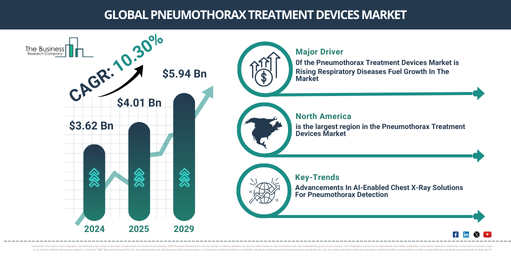
    The market size for pneumothorax treatment devices has seen considerable growth in the past years. It is projected to expand from $3.62 billion in 2024 to $4.01 billion in 2025, with a compound annual growth rate (CAGR) of 10.6%. The increase during the historical period can be credited to the escalating prevalence of pneumothorax, enhanced knowledge about pneumothorax, improvements in emergency and trauma care services, an aged population, and an uptick in surgical procedures.

    Expectations are that the pneumothorax treatment devices market will undergo significant growth in the upcoming years, reaching a value of $5.94 billion by 2029, with a compound annual growth rate (CAGR) of 10.3%. The forecasted growth can be ascribed to a rise in respiratory illnesses, an increment in thoracic surgeries, expanding investments in health infrastructure, better diagnostic procedures, and heightened emphasis on preventive healthcare. Significant trends for the forecast period encompass enhancements in medical equipment, cutting-edge chest drainage systems, automated thoracic catheters, progress in minimally invasive techniques, and incorporation of telemedicine.

    Download a free sample to assess the report’s scope and structure:

    https://www.thebusinessresearchcompany.com/sample.aspx?id=20929&type=smp

    What Are the Core Market Drivers Propelling Growth in the Pneumothorax Treatment Devices Industry?

    The surge in respiratory conditions is anticipated to fuel the expansion of the pneumothorax treatment devices market. These medical conditions that impact the lungs and airways can impede breathing and hinder oxygen exchange. The escalation of these diseases can be linked to a mixture of factors, such as increased particulate matter in the air, tobacco use, viral infections, and heightened contact with allergens. Devices used in the treatment of pneumothorax serve a key part in the medical management of respiratory ailments as they aid in addressing lung collapses and reinstating regular breathing function. For instance, the American Lung Association, a non-profit organization based in the U.S., noted in June 2024 that about 44.2 million Americans, equating to 13.5% of the population, were professionally diagnosed with asthma in 2022. As such, the upswing in respiratory diseases propels the expansion of the pneumothorax treatment devices market.

    How Is the Pneumothorax Treatment Devices Market Segmented?

    The pneumothorax treatment devices market covered in this report is segmented –

    1) By Type: Ventilator Devices, Thoracic Vent Devices, Other Types

    2) By Application: Traumatic Pneumothorax, Spontaneous Pneumothorax, Other Applications

    3) By End-User: Hospitals, Ambulatory Surgical Centers, Other End Users

    Subsegments:

    1) By Ventilator Devices: Portable Ventilators, Non-Invasive Ventilators, Invasive Ventilators

    2) By Thoracic Vent Devices: Chest Drainage Systems, Heimlich Valves, One-Way Chest Valve Systems

    3) By Other Types: Needle Aspiration Devices, Pleural Catheters, Oxygen Therapy Devices

    Request customized data on this market:

    https://www.thebusinessresearchcompany.com/customise?id=20929&type=smp

    Which Regions Are Driving the Next Phase of the Pneumothorax Treatment Devices Market Growth?

    North America was the largest region in the pneumothorax treatment devices market in 2024. The regions covered in the pneumothorax treatment devices market report are Asia-Pacific, Western Europe, Eastern Europe, North America, South America, Middle East, Africa.

    What Are the Most Significant Market Trends in the Pneumothorax Treatment Devices Market?

    Leading businesses in the pneumothorax treatment devices market are focusing on generating tech-savvy solutions like chest X-ray solutions to maintain their market dominance. These solutions include imaging systems, equipment, and technologically advanced capabilities that enable the capturing of intricate radiographic images of the chest, including the lungs, heart, ribs, and other adjoining structures. For example, in September 2023, Qure.ai, a healthcare technology company based in the US, revealed that it had gained FDA 510(k) clearance for its revolutionary chest X-ray solution, qXR-PTX-PE. This solution is developed to expedite the detection of pneumothorax (PTX) and pleural effusion (PE). The AI-powered software augments care pathways in intense care units (ICUs) and emergency rooms (ERs) by offering prompt alerts to healthcare personnel. The qXR-PTX-PE solution scrutinizes chest X-ray images for critical findings, significantly enhancing triage effectiveness in emergency situations where these ailments pose severe risks to patients’ health.

    View the full report here:

    https://www.thebusinessresearchcompany.com/report/pneumothorax-treatment-devices-global-market-report

    How Is the Pneumothorax Treatment Devices Market Defined and What Are Its Core Parameters?

    Pneumothorax treatment devices are medical instruments used to manage and treat the condition of a collapsed lung, where air accumulates in the pleural space. Their purpose is to remove the excess air, restore lung expansion, and prevent further complications, often through techniques such as needle decompression or chest tube insertion.

    Purchase the full report and get a swift delivery:

    https://www.thebusinessresearchcompany.com/purchaseoptions.aspx?id=20929

    About The Business Research Company:

    With over 15000+ reports from 27 industries covering 60+ geographies, The Business Research Company has built a reputation for offering comprehensive, data-rich research and insights. Armed with 1,500,000 datasets, the optimistic contribution of in-depth secondary research, and unique insights from industry leaders, you can get the information you need to stay ahead in the game.

    Get in touch with us:

    The Business Research Company: https://www.thebusinessresearchcompany.com/

    Americas +1 3156230293

    Asia +44 2071930708

    Europe +44 2071930708

    Email us at info@tbrc.info

    Follow us on:

    LinkedIn: https://in.linkedin.com/company/the-business-research-company

    YouTube: https://www.youtube.com/channel/UC24_fI0rV8cR5DxlCpgmyFQ

    Global Market Model: https://www.thebusinessresearchcompany.com/global-market-model
  • Plaque Modification Devices Market 2025-2034: Key Highlights, Growth Dynamics, and Emerging Trends

    Plaque Modification Devices Market 2025-2034: Key Highlights, Growth Dynamics, and Emerging Trends

    Stay ahead with our updated market reports featuring the latest on tariffs, trade flows, and supply chain transformations.

    How Has The Plaque Modification Devices Market Size Shifted, And What Is the Outlook Through 2034?

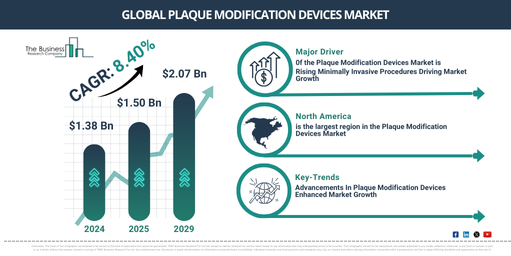
    The market size for plaque modification devices has experienced a significant increase in recent times. The industry is projected to grow from $1.38 billion in 2024 to $1.50 billion in 2025, marking a compound annual growth rate (CAGR) of 8.7%. Numerous factors have contributed to this growth during the historical period. This includes an increase in the prevalence of cardiovascular and associated conditions, a burgeoning demand for minimally invasive procedures, a growing elderly population, an uptick in atherosclerosis cases, and a rise in obesity rates within the community.

    Strong expansion is anticipated in the plaque modification devices market size over the next few years, with a prediction to reach $2.07 billion by 2029, growing at a compound annual growth rate (CAGR) of 8.4%. Factors contributing to this growth during the forecast period include the rising prevalence of minimally invasive procedures, an increasing number of patients with coronary ailments, a surging elderly population, beneficial reimbursement policies, and a dramatic increase in sedentary lifestyle-related disorders. Key trends during this period are expected to be the embrace of minimally invasive surgeries, the innovation and introduction of atherectomy devices, advancements in technology, investments in the production of precise, cutting-edge plaque modification devices, and the incorporation of new technologies.

    Download a free sample to assess the report’s scope and structure:

    https://www.thebusinessresearchcompany.com/sample.aspx?id=20928&type=smp

    Which Primay Drivers Are Accelerating Growth in the Plaque Modification Devices Market?

    The increasing popularity of minimally invasive procedures is anticipated to fuel the expansion of the plaque modification devices market in the future. These procedures involve smaller cuts, minimal disruption of tissues, and less physical trauma than traditional surgeries. The surge in minimally invasive procedures can be attributed to technologic advancements such as high-definition imaging and robotic systems that enhance accuracy. Moreover, there’s a rising patient preference for quicker recovery and lesser scarring. Plaque modification devices heighten the safety and effectiveness of minimally invasive procedures by enabling precision in the removal of arterial blockages and widening treatment options for patients with intricate vascular conditions. For example, Intuitive Surgical Inc., a US-based firm that manufactures robotic items, confirmed that they had deployed 415 da Vinci surgical systems, which are robotic surgical systems that utilize a minimally invasive surgical method, in the last quarter of 2023, marking a 12% rise compared to 2022. Consequently, the growing frequency of minimally invasive procedures is stimulating the development of the plaque modification devices market.

    Which Primary Segments of the Plaque Modification Devices Market Are Driving Growth and Industry Transformations?

    The plaque modification devices market covered in this report is segmented –

    1) By Type: Atherectomy Devices, Thrombectomy Devices, Chronic Total Occlusion Devices, Embolic Protection Devices

    2) By Application: Coronary Artery Disease, Peripheral Artery Disease, Neurovascular Diseases

    3) By End User: Hospitals, Ambulatory Surgical Centers, Other End Users

    Subsegments:

    1) By Atherectomy Devices: Rotational Atherectomy Devices, Directional Atherectomy Devices, Laser Atherectomy Devices, Orbital Atherectomy Devices

    2) By Thrombectomy Devices: Mechanical Thrombectomy Devices, Aspiration Thrombectomy Devices, Manual Thrombectomy Devices, Hybrid Thrombectomy Devices

    3) By Chronic Total Occlusion (CTO) Devices: CTO Crossing Guidewires, CTO Balloons, CTO Catheters, CTO Support Systems

    4) By Embolic Protection Devices: Distal Protection Devices, Proximal Protection Devices, Filter-Based Embolic Protection Devices, Balloon-Based Embolic Protection Devices

    Request customized data on this market:

    https://www.thebusinessresearchcompany.com/customise?id=20928&type=smp

    Which Regions Are Key Players in the Growth of the Plaque Modification Devices Market?

    North America was the largest region in the plaque modification devices market in 2024. Asia-Pacific is expected to be the fastest-growing region in the forecast period. The regions covered in the plaque modification devices market report are Asia-Pacific, Western Europe, Eastern Europe, North America, South America, Middle East, Africa.

    What Are the Current Market Growth and Trends in the Plaque Modification Devices Industry?

    Leading enterprises in the plaque modification devices market are concentrating efforts on creating state-of-the-art solutions, like intravascular image-guided, catheter-oriented systems to secure an advantage over competitors. Intravascular image-guided indicates medical interventions using imaging technology to maneuver instruments or devices within blood vessels. For instance, Avinger, an American medical equipment firm, released the Pantheris LV image-guided directional atherectomy system in August 2024. The system, specifically designed to treat peripheral artery disease (PAD) in larger arteries such as the superficial femoral and popliteal, boasts unique features including high-speed plaque excision for efficient occlusive tissue removal, a proprietary jog mechanism to enhance plaque apposition and an innovative guidewire management system for streamlined user operation.

    View the full report here:

    https://www.thebusinessresearchcompany.com/report/plaque-modification-devices-global-market-report

    What Parameters Are Used to Define the Plaque Modification Devices Market?

    Plaque modification devices refer to medical tools and technologies designed to treat atherosclerotic plaque buildup in blood vessels. These devices are used in minimally invasive procedures to restore blood flow by removing, modifying, or managing plaque within the arteries, particularly in cases of cardiovascular or peripheral artery diseases.

    Purchase the full report and get a swift delivery:

    https://www.thebusinessresearchcompany.com/purchaseoptions.aspx?id=20928

    About The Business Research Company:

    With over 15000+ reports from 27 industries covering 60+ geographies, The Business Research Company has built a reputation for offering comprehensive, data-rich research and insights. Armed with 1,500,000 datasets, the optimistic contribution of in-depth secondary research, and unique insights from industry leaders, you can get the information you need to stay ahead in the game.

    Get in touch with us:

    The Business Research Company: https://www.thebusinessresearchcompany.com/

    Americas +1 3156230293

    Asia +44 2071930708

    Europe +44 2071930708

    Email us at info@tbrc.info

    Follow us on:

    LinkedIn: https://in.linkedin.com/company/the-business-research-company

    YouTube: https://www.youtube.com/channel/UC24_fI0rV8cR5DxlCpgmyFQ

    Global Market Model: https://www.thebusinessresearchcompany.com/global-market-model
  • Peripheral Nerve Repair Devices Outlook 2034: Key Drivers, Trends, and Market Frontiers

    Peripheral Nerve Repair Devices Outlook 2034: Key Drivers, Trends, and Market Frontiers

    Stay ahead with our updated market reports featuring the latest on tariffs, trade flows, and supply chain transformations.

    How Has The Peripheral Nerve Repair Devices Market Growth Evolved From 2024 To 2025, And What’s Ahead?

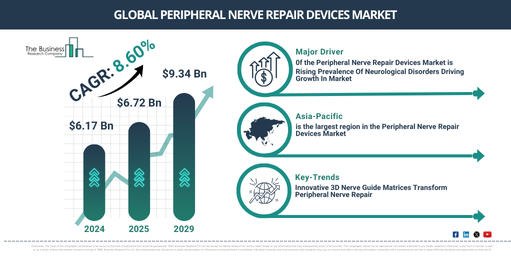
    The market for peripheral nerve repair devices has seen substantial growth over the past few years. The market is projected to expand from $6.17 billion in 2024 to $6.72 billion in 2025, experiencing a compound annual growth rate (CAGR) of 8.9%. This growth during the historical period can be credited to the heightened demand for efficient repair devices, escalation in healthcare expenditure, a surge in the need for nerve repair devices, a rising emphasis on product refinement and regulatory authorizations, and an amplified demand for biomaterials.

    In the upcoming years, significant expansion is predicted for the market size of peripheral nerve repair devices. The expectation is that it will burgeon to a valuation of $9.34 billion by the year 2029 with a Compound Annual Growth Rate (CAGR) of 8.6%. The anticipated growth within the forecast period is attributed to rise in nerve injury cases, increase in neurological disorder rate, mounting focus on patient-oriented solutions, escalating demand for efficient treatment options, and increasing older population. The foreseeable period is also expected to usher in major market developments such as technological innovations, introductions of new products, acquisition of regulatory approvals, establishment of partnerships and collaborations, and the integration of advanced technology.

    Download a free sample to assess the report’s scope and structure:

    https://www.thebusinessresearchcompany.com/sample.aspx?id=20922&type=smp

    How Are Key Drivers in the Industry Acting as Catalysts for the Growth of the Peripheral Nerve Repair Devices Market?

    The peripheral nerve repair devices market is anticipated to benefit from the rise of neurological disorders. These disorders, which affect the brain, spinal cord, and nerves, result in complications related to movement, cognition, and other nervous system activities. Factors such as the growing number of elderly people, enhanced diagnostic methods, environmental influences, genetic factors, and lifestyle habits like bad nutritional choices and insufficient physical exercise are contributing to the increasing occurrence of neurological disorders. Peripheral nerve repair devices offer solutions to these disorders by encouraging nerve regeneration, enhancing function, and stimulating healing through techniques like electrical stimulation and bioactive materials. It was stated by the Alzheimer’s Society, a dementia charity based in the UK, that roughly one million UK residents were living with a form of dementia in May 2024. This figure is projected to rise to 1.4 million by 2040. Hence, the escalating prevalence of neurological disorders propels the peripheral nerve repair devices market’s expansion.

    Which Segments in the Peripheral Nerve Repair Devices Offer the Most Growth?

    The peripheral nerve repair devices market covered in this report is segmented –

    1) By Type: Nerve Grafts, Nerve Protectors, Nerve Conduit

    2) By Application: Extremity Trauma, Breast Neurotization, Carpal And Cubital Tunnel Revision, Oral And Maxillofacial

    3) By End-User: Hospitals, Ambulatory Surgical Centers, Clinics

    Subsegments:

    1) By Nerve Grafts: Autografts, Allografts, Xenografts, Synthetic Nerve Grafts

    2) By Nerve Protectors: Nerve Wrapping Devices, Nerve Repair Gels And Films, Nerve Protection Matrices, Biodegradable Nerve Protectors

    3) By Nerve Conduit: Hollow Nerve Conduits, Collagen-Based Nerve Conduits, Silicone-Based Nerve Conduits, Tubular Nerve Conduits, Biodegradable Nerve Conduits

    Request customized data on this market:

    https://www.thebusinessresearchcompany.com/customise?id=20922&type=smp

    What Are the Fastest-Growing Geographies in the Peripheral Nerve Repair Devices Market?

    Asia-Pacific was the largest region in the peripheral nerve repair devices market in 2024. North America is expected to be the fastest-growing region in the forecast period. The regions covered in the peripheral nerve repair devices market report are Asia-Pacific, Western Europe, Eastern Europe, North America, South America, Middle East, Africa.

    What Are the Key Market Trends in the Peripheral Nerve Repair Devices Market Over the Coming Years?

    Leading entities in the peripheral nerve repair devices market are focusing on the invention of cutting-edge solutions, such as 3D nerve guide matrices, to amplify nerve regeneration and boost patient results. The use of 3D nerve guide matrices, sophisticated biomaterials that act as frameworks to assist and direct the restoration of impaired peripheral nerves, is a notable example. In May 2022, Integra LifeSciences, a science company located in the US, introduced the NeuraGen 3D Nerve Guide Matrix, a state-of-the-art resorbable implant engineered for the repair of peripheral nerve discontinuities. It’s especially effective for gaps of 1 to 2 cm. The innovative matrix comprises an outer conduit fabricated from Type I bovine collagen and an inner structure that facilitates Schwann cell movement and axonal expansion. NeuraGen 3D’s aim is to enhance functional recovery compared to conventional nerve repair techniques by optimizing the healing environment. This represents a significant evolution in the management of peripheral nerve injuries.

    View the full report here:

    https://www.thebusinessresearchcompany.com/report/peripheral-nerve-repair-devices-global-market-report

    What Are the Key Elements That Define the Peripheral Nerve Repair Devices Market?

    Peripheral nerve repair devices are medical tools and implants designed to restore the function of damaged or severed peripheral nerves. These devices, including nerve conduits, wraps, and grafts, support nerve regeneration by providing a scaffold for growth and protecting the repair site to facilitate recovery.

    Purchase the full report and get a swift delivery:

    https://www.thebusinessresearchcompany.com/purchaseoptions.aspx?id=20922

    About The Business Research Company:

    With over 15000+ reports from 27 industries covering 60+ geographies, The Business Research Company has built a reputation for offering comprehensive, data-rich research and insights. Armed with 1,500,000 datasets, the optimistic contribution of in-depth secondary research, and unique insights from industry leaders, you can get the information you need to stay ahead in the game.

    Get in touch with us:

    The Business Research Company: https://www.thebusinessresearchcompany.com/

    Americas +1 3156230293

    Asia +44 2071930708

    Europe +44 2071930708

    Email us at info@tbrc.info

    Follow us on:

    LinkedIn: https://in.linkedin.com/company/the-business-research-company

    YouTube: https://www.youtube.com/channel/UC24_fI0rV8cR5DxlCpgmyFQ

    Global Market Model: https://www.thebusinessresearchcompany.com/global-market-model
  • Global Percutaneous Mechanical Circulatory Support Devices Market Trends: Regional Breakdowns and Strategic Insights

    Global Percutaneous Mechanical Circulatory Support Devices Market Trends: Regional Breakdowns and Strategic Insights

    Stay ahead with our updated market reports featuring the latest on tariffs, trade flows, and supply chain transformations.

    What is the Projected CAGR for the Percutaneous Mechanical Circulatory Support Devices Market Size from 2025 to 2034?

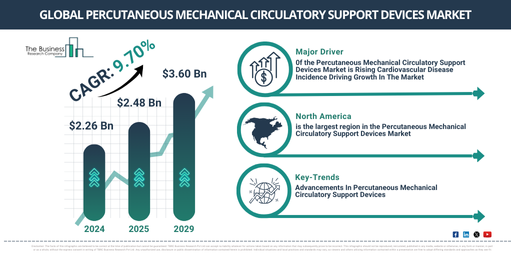
    The market for percutaneous mechanical circulatory support devices has seen a significant expansion in recent years. The market, which was worth $2.26 billion in 2024, is expected to rise to $2.48 billion in 2025, registering a compound annual growth rate (CAGR) of 10.0%. Factors contributing to growth during the historic period include a rise in cardiovascular diseases, an ageing population, greater incidences of heart attacks, enhanced awareness and screening initiatives, and higher demand for heart pump devices.

    The market size for percutaneous mechanical circulatory support devices is forecasted to experience substantial growth in the coming years. The market is anticipated to reach a value of $3.60 billion by 2029, increasing at a compound annual growth rate (CAGR) of 9.7%. Factors contributing to this expected growth during the forecast period include an increased need for long-term mechanical circulatory support, a rise in healthcare spending, growing numbers of individuals with diabetes and obesity, an increased demand for heart transplants, and wider acceptance of percutaneous procedures. Other influential trends during the forecast period comprise advancements in pump and cardiac support technologies, progress in minimally invasive medical technologies, and creation of biocompatible material.

    Download a free sample to assess the report’s scope and structure:

    https://www.thebusinessresearchcompany.com/sample.aspx?id=20921&type=smp

    What Are the Major Market Drivers Behind the Rising Adoption of Percutaneous Mechanical Circulatory Support Devices Market?

    An upsurge in cardiovascular diseases is predicted to boost the growth trajectory of the percutaneous mechanical circulatory support devices market. These diseases collectively involve disorders impacting the heart and blood vessels, including coronary artery disease, heart failure, heart attacks, stroke, and elevated blood pressure. The escalating incidence rates of cardiovascular conditions can be linked to an aging demographic, unhealthy lifestyle habits, obesity, hypertension, and genetic susceptibility. Percutaneous mechanical circulatory support devices are employed in treating cardiovascular diseases to enhance cardiac functionality, alleviate heart strain, and help facilitate recovery in severe heart conditions. As an example, in December 2023, the Australian Institute of Health and Welfare, a governmental agency in Australia, reported an increase in doctor-certified deaths due to coronary heart disease (CHD) to 14,100 in 2021 and subsequently to 14,900 in 2022. As such, the mounting incidence of cardiovascular diseases is catalyzing the growth of the percutaneous mechanical circulatory support (MCS) devices market.

    Which Key Market Segments Comprise the Percutaneous Mechanical Circulatory Support Devices Market and Drive Its Revenue Growth?

    The percutaneous mechanical circulatory support devices market covered in this report is segmented –

    1) By Product Type: Intra-Aortic Balloon Pumps, Impella Devices, Extracorporeal Membrane Oxygenation, TandemHeart, Other Types

    2) By Application: Cardiogenic Shock, Acute Myocardial Infarction, Heart Failure, Other Applications

    3) By End-User: Hospitals, Ambulatory Surgical Centers, Other End Users

    Subsegments:

    1) By Intra-Aortic Balloon Pumps (IABP): Standard IABP Devices, Enhanced IABP Devices

    2) By Impella Devices: Impella 2.5, Impella 5.0, Impella CP (Cardiac Power)

    3) By Extracorporeal Membrane Oxygenation (ECMO): Veno-Venous ECMO (VV ECMO), Veno-Arterial ECMO (VA ECMO)

    4) By Tandemheart: Tandemheart PUMP System, Tandemheart PRO System

    5) By Other Types: Centrifugal Pumps, Pneumatic Assist Devices

    Request customized data on this market:

    https://www.thebusinessresearchcompany.com/customise?id=20921&type=smp

    Which Areas Are Leading Regions in the Percutaneous Mechanical Circulatory Support Devices Market Expansion Across the Globe?

    North America was the largest region in the percutaneous mechanical circulatory support devices market in 2024. The regions covered in the percutaneous mechanical circulatory support devices market report are Asia-Pacific, Western Europe, Eastern Europe, North America, South America, Middle East, Africa.

    Which Emerging Trends that Are Influencing the Percutaneous Mechanical Circulatory Support Devices Industry Evolution?

    Leading firms in the percutaneous mechanical circulatory support devices market are striving to create groundbreaking solutions such as intra-aortic axial-flow devices to improve patient results and lessen surgical hazards. The intra-aortic axial-flow device, a form of percutaneous mechanical circulatory support device, is crafted to support the cardiovascular function by boosting the blood flow from the left ventricle to the aorta. For example, in February 2023, US medical device company Procyrion, Inc. revealed the successful inaugural human usage of their Aortix pump. This novel device aims to avert acute kidney injury in patients during cardiac surgery. Deployed via a catheter into the descending thoracic aorta, the Aortix pump elevates renal perfusion and reduces the cardiac stress during surgery. It manages to do so by simultaneously improving renal and systemic perfusion and decreasing heart strain, marking it as highly beneficial for patients with weak left ventricular function and kidney impairment. The Aortix pump, capable of pumping up to 5.0 liters per minute, is designed for temporary use in procedures like percutaneous coronary interventions (PCI).

    View the full report here:

    https://www.thebusinessresearchcompany.com/report/percutaneous-mechanical-circulatory-support-devices-global-market-report

    How Is the Percutaneous Mechanical Circulatory Support Devices Market Conceptually Defined?

    Percutaneous mechanical circulatory support (pMCS) devices are minimally invasive systems used to temporarily assist or completely replace the pumping function of the heart. These devices are inserted through a catheter into blood vessels, typically via the femoral artery, and positioned in the heart to provide mechanical support during acute heart failure, cardiogenic shock, or high-risk cardiac interventions.

    Purchase the full report and get a swift delivery:

    https://www.thebusinessresearchcompany.com/purchaseoptions.aspx?id=20921

    About The Business Research Company:

    With over 15000+ reports from 27 industries covering 60+ geographies, The Business Research Company has built a reputation for offering comprehensive, data-rich research and insights. Armed with 1,500,000 datasets, the optimistic contribution of in-depth secondary research, and unique insights from industry leaders, you can get the information you need to stay ahead in the game.

    Get in touch with us:

    The Business Research Company: https://www.thebusinessresearchcompany.com/

    Americas +1 3156230293

    Asia +44 2071930708

    Europe +44 2071930708

    Email us at info@tbrc.info

    Follow us on:

    LinkedIn: https://in.linkedin.com/company/the-business-research-company

    YouTube: https://www.youtube.com/channel/UC24_fI0rV8cR5DxlCpgmyFQ

    Global Market Model: https://www.thebusinessresearchcompany.com/global-market-model