Category: Medical Equipment

  • Personal Emergency Response Systems (PERS) Outlook 2034: Key Drivers, Trends, and Market Frontiers

    Personal Emergency Response Systems (PERS) Outlook 2034: Key Drivers, Trends, and Market Frontiers

    Discover trends, market shifts, and competitive outlooks for the personal emergency response systems (pers) industry through 2025-2034 with The Business Research Company’s reliable data and in-depth research

    How Has The Personal Emergency Response Systems (PERS) Market Growth Evolved From 2024 To 2025, And What’s Ahead?

    The market size for personal emergency response systems (PERS) has seen significant growth in recent times. It’s projected to increase from a value of $7.58 billion in 2024 to $8.30 billion in 2025, indicating a compound annual growth rate (CAGR) of 9.5%. Factors contributing to this growth during the historical period include the increasing acceptance of smart home integration, heightened health consciousness, a rising necessity for emergency help, an escalating incidence of heart diseases, and amplified investment in healthcare technology.

    The size of the market for personal emergency response systems (PERS) is predicted to experience significant expansion in the coming few years, reaching $11.83 billion in 2029 with a compound annual growth rate (CAGR) of 9.3%. This projected growth throughout the forecasted period is due to factors such as increasing demand for elderly care solutions, the growing aging population, a surge in insurance policies, heightened reliance on IoT devices and integration of GPS technology. Key trends anticipated during this forecast period include progress in fall detection technology, evolution in remote monitoring services, the rising use of wearable medical devices, advancements in geofencing technology, and improvements in smartphone technologies.

    Download a free sample to assess the report’s scope and structure:

    https://www.thebusinessresearchcompany.com/sample.aspx?id=22095&type=smp

    How Are Key Drivers in the Industry Acting as Catalysts for the Growth of the Personal Emergency Response Systems (PERS) Market?

    Forecasted growth in the personal emergency response systems (PERS) market is largely due to the increasing incidence of chronic illnesses. These long-term health issues – such as diabetes, heart disease, and arthritis – evolve slowly over time and require ongoing care. Lifestyle factors like poor diet, lack of exercise, smoking, and heavy drinking contribute significantly to the rise of chronic diseases, including diabetes, hypertension, and heart diseases. These poor lifestyle habits contribute to obesity, insulin resistance, and inflammation which are central to the development of chronic conditions. As the prevalence of these chronic illnesses grows, so does the demand for personal emergency response systems (PERS) which provide continuous monitoring and timely medical assistance. PERS offer an essential solution, giving users the ability to call for emergency help or notify caregivers during health emergencies, enhancing patient safety and offering peace of mind. For example, the National Health Service reported in June 2024 that in 2023, an additional half a million individuals (549,000) in England were at risk of developing type 2 diabetes, bringing the total number of pre-diabetic individuals registered with a GP to 3,615,330. This figure is significantly higher than the 3,065,825 reported in 2022, representing an increase of nearly 20%. Hence, the growth in the incidence of chronic diseases is a key driver for the expansion of the PERS market.

    Which Segments in the Personal Emergency Response Systems (PERS) Offer the Most Growth?

    The personal emergency response systems (PERS) market covered in this report is segmented –

    1) By Type: Landline Personal Emergency Response System (PERS), Mobile Personal Emergency Response System (PERS)

    2) By Component: Smoke Detectors, Bed Sensors, Pull-Cord Residential, Fall Detection Sensors, Flood Detectors

    3) By End-User: Nursing Home, Home-Based User, Assisted Living Facilities, Hospices, Senior Living Facilities

    Subsegments:

    1) By Landline Personal Emergency Response System (PERS): Basic Landline PERS, Auto-Alert Landline PERS, Voice-Activated Landline PERS

    2) By Mobile Personal Emergency Response System (PERS): GPS-enabled Mobile PERS, Non-GPS Mobile PERS, Wearable Mobile PERS, Smartphone-based Mobile PERS

    Request customized data on this market:

    https://www.thebusinessresearchcompany.com/customise?id=22095&type=smp

    What Are the Fastest-Growing Geographies in the #How Are Key Drivers in the Industry Acting as Catalysts for the Growth of the Personal Emergency Response Systems (PERS) Market?# Market?

    North America was the largest region in the personal emergency response systems market in 2024. The regions covered in the personal emergency response systems (PERS) market report are Asia-Pacific, Western Europe, Eastern Europe, North America, South America, Middle East, Africa.

    What Are the Current Market Growth and Trends in the Personal Emergency Response Systems (PERS) Industry?

    Major players in the personal emergency response systems (PERS) industry are focusing on the creation of sophisticated products, including medical alert devices, to optimize real-time observation for superior emergency reaction and the proactive handling of healthcare. A medical alert device is a digital system that provides instant help during health emergencies and incorporates a wearable help button that connects users to emergency response services. For instance, in February 2025, LogicMark, Inc., a medical equipment manufacturer based in the US, introduced the cutting-edge Guardian Alert 911 Plus. This advance in the PERS device market includes fall detection, 4G LTE technology, and a modern yet unobtrusive design, ensuring crucial, hand-free fall detection and immediate connection to emergency services. This presents older individuals and those with health conditions improved safety and autonomy without the added stress of continuous costs.

    View the full report here:

    https://www.thebusinessresearchcompany.com/report/personal-emergency-response-systems-pers-global-market-report

    What Are the Key Elements That Define the Personal Emergency Response Systems (PERS) Market?

    Personal emergency response systems (PERS) refer to wearable or home-based devices that enable users, especially older people or individuals with medical conditions, to call for emergency assistance with a button. These systems typically use wireless communication and GPS technology to connect users with caregivers or emergency services for immediate support.

    Purchase the full report and get a swift delivery:

    https://www.thebusinessresearchcompany.com/purchaseoptions.aspx?id=22095

    About The Business Research Company:

    With over 15000+ reports from 27 industries covering 60+ geographies, The Business Research Company has built a reputation for offering comprehensive, data-rich research and insights. Armed with 1,500,000 datasets, the optimistic contribution of in-depth secondary research, and unique insights from industry leaders, you can get the information you need to stay ahead in the game.

    Get in touch with us:

    The Business Research Company: https://www.thebusinessresearchcompany.com/

    Americas +1 3156230293

    Asia +44 2071930708

    Europe +44 2071930708

    Email us at info@tbrc.info

    Follow us on:

    LinkedIn: https://in.linkedin.com/company/the-business-research-company

    YouTube: https://www.youtube.com/channel/UC24_fI0rV8cR5DxlCpgmyFQ

    Global Market Model: https://www.thebusinessresearchcompany.com/global-market-model

  • Intravenous Stopcock Market Outlook 2025–2034: Identifying Growth Drivers, Technology Trends, and Policy Impact

    Intravenous Stopcock Market Outlook 2025–2034: Identifying Growth Drivers, Technology Trends, and Policy Impact

    Discover trends, market shifts, and competitive outlooks for the intravenous stopcock industry through 2025-2034 with The Business Research Company’s reliable data and in-depth research

    What Are the Projected Market Size and Growth Rates for the Intravenous Stopcock Market From 2025 To 2029?

    The market size for intravenous stopcocks has seen a significant increase in recent years. The projections indicate that this market will expand from $1.14 billion in 2024 to $1.26 billion in 2025, suggesting a compound annual growth rate (CAGR) of 10.5%. The growth during the historical phase can be credited to factors such as the escalation in surgical interventions, the rising trend of chronic diseases, advancements in hospital infrastructure, the increase in the worldwide aged population, and the heightened use of IV stopcocks.

    In the ensuing years, there is an anticipated rapid growth in the intravenous stopcock market size, escalating to $1.86 billion in 2029 with a compound annual growth rate of 10.2%. Factors contributing to this predicted expansion during the forecast period involve the rise in ambulatory surgical centers, the expansion of the pharmaceutical industry, increased investment in healthcare infrastructure, an escalating incidence of cancer, and a surge in regulatory approvals. There are key trends to look out for in this forecast period including advances in IV stopcock technology, IoT integration, the creation of antimicrobial-coated IV stopcocks, superior automation for accurate fluid management, and the invention of intelligent stopcocks.

    Download a free sample to assess the report’s scope and structure:

    https://www.thebusinessresearchcompany.com/sample.aspx?id=22022&type=smp

    What Are the Core Market Drivers Propelling Growth in the Intravenous Stopcock Industry?

    Expectations of an increase in the intravenous stopcock market are hinged on the escalating demand for precise fluid control devices. The essence of precision-oriented instruments that regulate fluid flow lies in ensuring industry efficiency, reliability, and top-level performance. The mounting demand for these devices comes as a result of the need for exact medication delivery and safeguarding patient well-being. The surge in the need for accurate fluid control devices stimulates the usage of intravenous stopcocks, which enhance medication delivery accuracy, reduce infection risks, and elevate patient safety during infusion therapies. For example, as the US’ National Library of Medicine indicated in February 2024, medication anomalies affect 6.5 in every 100 US hospital admissions, resulting in 44,000–98,000 avoidable annual fatalities and costing between $37.6–50 billion. Nearly 50% of these inaccuracies happen at the prescribing stage, with nurses and pharmacists catching 30–70% of them. Worldwide, medication errors cause 5%–41.3% of hospital admissions and 22% of re-admissions after discharge. Consequently, the escalating demand for precise fluid control devices fuels the growth of the intravenous stopcock market. The dramatic increase in chronic diseases is poised to push the intravenous stopcock market forward due to amplified demand for extended intravenous therapies. Chronic diseases, defined as conditions that last a year or longer, which necessitate continuous medical care or limit everyday activities, are on the rise. The main drivers include aging populations, unhealthy lifestyle habits, poor dietary choices, insufficient physical exercise, and growing environmental stressors. Chronic conditions such as cardiovascular disease and diabetes contribute to a higher demand for long-term intravenous therapies, thus necessitating intravenous stopcocks for fluid management in these treatments. For instance, a July 2024 report by the US-based government agency, the Centers for Disease Control and Prevention (CDC), projected the financial strain of cardiovascular disease to reach nearly $2 trillion by 2050, and predicted that cancer care costs would surpass $240 billion by 2030. Consequently, the increasing prevalence of chronic diseases feeds the growth of the intravenous stopcock market.

    How Is the Intravenous Stopcock Market Segmented?

    The intravenous stopcock market covered in this report is segmented –

    1) By Product Type: Three-Way Stopcocks, Two-Way Stopcocks, Multi-Port Stopcocks, Automated Stopcocks

    2) By Material: Plastic Stopcocks, Metal Stopcocks, Silicone Stopcocks

    3) By Application: Intravenous Therapy, Blood Transfusion, Diagnostic Procedures, Surgical Procedures

    4) By Sales Channel: Direct Sales, Distributors, Online Sales, Retail Pharmacies

    5) By End-User: Hospitals, Clinics, Ambulatory Surgical Centers, Other End-Users

    Subsegments:

    1) By Three-Way Stopcocks: Standard Three-Way Stopcocks, High-Pressure Three-Way Stopcocks, Lipid-Resistant Three-Way Stopcocks

    2) By Two-Way Stopcocks: Standard Two-Way Stopcocks, High-Flow Two-Way Stopcocks

    3) By Multi-Port Stopcocks: Four-Way Stopcocks, Five-Way Stopcocks, Customizable Multi-Port Stopcocks

    4) By Automated Stopcocks: Electronic Stopcocks, Smart Stopcocks with Flow Control, Integrated Stopcock Systems

    Request customized data on this market:

    https://www.thebusinessresearchcompany.com/customise?id=22022&type=smp

    Which Regions Are Driving the Next Phase of the Intravenous Stopcock Market Growth?

    North America was the largest region in the intravenous stopcock market in 2024. Asia-Pacific is expected to be the fastest-growing region in the forecast period. The regions covered in the intravenous stopcock market report are Asia-Pacific, Western Europe, Eastern Europe, North America, South America, Middle East, Africa.

    View the full report here:

    https://www.thebusinessresearchcompany.com/report/intravenous-stopcock-global-market-report

    How Is the Intravenous Stopcock Market Defined and What Are Its Core Parameters?

    Intravenous (IV) stopcocks are medical devices used in intravenous (IV) therapy to control the flow of fluids or medications through IV lines. They are typically small, valve-like components that allow healthcare providers to stop, divert, or redirect the flow of fluids within an IV system without the need to disconnect the IV line. These devices are commonly used in hospitals and clinics for administering medications, hydration, or blood transfusions to patients.

    Purchase the full report and get a swift delivery:

    https://www.thebusinessresearchcompany.com/purchaseoptions.aspx?id=22022

    About The Business Research Company:

    With over 15000+ reports from 27 industries covering 60+ geographies, The Business Research Company has built a reputation for offering comprehensive, data-rich research and insights. Armed with 1,500,000 datasets, the optimistic contribution of in-depth secondary research, and unique insights from industry leaders, you can get the information you need to stay ahead in the game.

    Get in touch with us:

    The Business Research Company: https://www.thebusinessresearchcompany.com/

    Americas +1 3156230293

    Asia +44 2071930708

    Europe +44 2071930708

    Email us at info@tbrc.info

    Follow us on:

    LinkedIn: https://in.linkedin.com/company/the-business-research-company

    YouTube: https://www.youtube.com/channel/UC24_fI0rV8cR5DxlCpgmyFQ

    Global Market Model: https://www.thebusinessresearchcompany.com/global-market-model
  • Next-Gen Hybrid Operating Room : Market Forecast, Transformation, and Long-Term Trajectories

    Next-Gen Hybrid Operating Room : Market Forecast, Transformation, and Long-Term Trajectories

    Discover trends, market shifts, and competitive outlooks for the hybrid operating room industry through 2025-2034 with The Business Research Company’s reliable data and in-depth research

    How Fast Is The Hybrid Operating Room Market Expected to Grow Between 2025 And 2029?

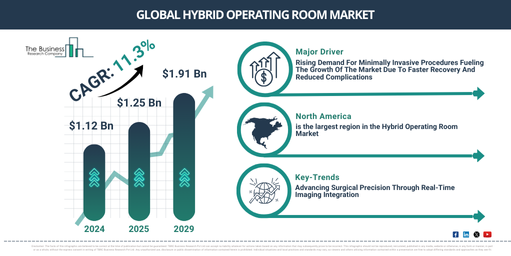
    The market size of the hybrid operating room has seen significant expansion in the past few years. It is projected to rise from $1.12 billion in 2024 to approximately $1.25 billion in 2025, with a compound annual growth rate (CAGR) of 11.7%. The growth observed in the historical period is due to factors such as an increase in minimally invasive procedures, a surge in complicated surgeries, an aging population, demand from surgeons for modern facilities, and a rise in medical tourism.

    The market size for hybrid operating rooms is predicted to increase significantly in the coming years, expanding to $1.91 billion in 2029 with a compound annual growth rate (CAGR) of 11.3%. The predicted growth within this forecast period can be credited to the expansion of the medical device industry, increased insurance coverage, urbanization growth, economical advancements, and the uptick in investments towards healthcare infrastructure. Key developments for this forecast period will include the inclusion of IT in healthcare, innovations in technology, medical imaging advancements, the integration of surgical robotics, and progress in anesthesiology.

    Download a free sample to assess the report’s scope and structure:

    https://www.thebusinessresearchcompany.com/sample.aspx?id=22009&type=smp

    Which Major Market Drivers Are Expected to Boost the Growth Potential of the Hybrid Operating Room Market?

    The hybrid operating room market is projected to expand, driven by the rising demand for minimally invasive procedures. These procedures, known as Minimally Invasive Procedures (MIPs), are medical or surgical operations conducted with no or minute incisions, utilizing dedicated instruments, cameras, and imaging technology. The preference for MIPs is increasing primarily due to faster healing times and a decrease in complication risks. The procedures involve smaller incisions leading to less tissue damage, minimal blood loss, and reduced infection risks, facilitating speedier recovery and an earlier return to regular routines. Hybrid operating rooms or Hybrid ORs are invaluable in carrying out MIPs since they blend modern imaging technologies with surgical potential, paving the way for real-time image guidance and accurate interventions. To illustrate, Intuitive Surgical Inc., an American robotic products producer, reported a 12% rise in the number of da Vinci surgical systems – which utilise a minimally invasive surgical strategy – in Q4 2023 to 415 systems, compared to the previous year. Therefore, the hybrid operating room market is anticipated to grow in tandem with the rising demand for minimally invasive procedures.

    Which Key Market Segments Comprise the Hybrid Operating Room Market and Drive Its Revenue Growth?

    The hybrid operating room market covered in this report is segmented –

    1) By Product: Intraoperative Diagnostic Imaging Systems, Operating Room Fixtures, Surgical Equipment, Other Products

    2) By Technique: Fluoroscopy And Data Acquisition, Rotational Angiography, Digital Subtraction Angiography, Other Techniques

    3) By Application: Cardiovascular Surgery, Neurosurgery, Thoracic Surgery, Orthopedic Surgery, Other Applications

    4) By End User: Hospitals, Ambulatory Surgical Centers

    Subsegments:

    1) By Intraoperative Diagnostic Imaging Systems: Intraoperative MRI (iMRI), Intraoperative CT (iCT), Intraoperative Ultrasound, Fluoroscopy Systems, Mobile C-Arms, Robotic Imaging Systems

    2) By Operating Room Fixtures: Surgical Lights, Operating Tables, Booms And Mounting Systems, Integration And Control Systems, Surgical Displays And Monitors

    3) By Surgical Equipment: Robotic-Assisted Surgical Systems, Endoscopy And Laparoscopy Systems, Electrosurgical Units, Surgical Navigation Systems, Anesthesia Machines

    4) By Other Products: Patient Monitoring Systems, Surgical Instruments And Tools, Sterilization And Disinfection Systems, Medical Gas Management Systems, Communication And Connectivity Solutions

    Request customized data on this market:

    https://www.thebusinessresearchcompany.com/customise?id=22009&type=smp

    Which Areas Are Leading Regions in the Hybrid Operating Room Market Expansion Across the Globe?

    North America was the largest region in the hybrid operating room market in 2024. Asia-Pacific is expected to be the fastest-growing region in the forecast period. The regions covered in the hybrid operating room market report are Asia-Pacific, Western Europe, Eastern Europe, North America, South America, Middle East, Africa.

    What Are the Key Market Trends in theHybrid Operating Room Market Over the Coming Years?

    In the hybrid operating room market, leading firms are turning to technological innovations, such as the integration of real-time imaging, to increase surgical accuracy, boost operational efficiency, and aid with intricate minimally invasive procedures. Through the combination of advanced imaging technology and surgical methods, real-time imaging integration allows surgeons to operate with extreme precision by fully visualizing and navigating patient anatomy during surgeries. For example, Sunnybrook Health Sciences Centre, a prominent academic health science center based in Canada, inaugurated a high-tech hybrid operating room in January 2022. This progressive facility merges real-time imaging and surgical prowess, paving the way for minimally invasive and extremely precise procedures. It caters to diverse specialties like cardiovascular, vascular, and neurosurgical surgeries, thus enhancing patient results. The hybrid OR facilitates swift recovery and minimizes complications, thus providing state-of-the-art technology for superior healthcare services.

    View the full report here:

    https://www.thebusinessresearchcompany.com/report/hybrid-operating-room-global-market-report

    How Is the Hybrid Operating Room Market Conceptually Defined?

    A hybrid operating room (OR) is a surgical space that combines traditional operating room capabilities with advanced imaging and diagnostic technologies, such as CT scans, fluoroscopy, or robotic-assisted systems. This integration allows surgeons, interventional radiologists, and other specialists to perform minimally invasive procedures and open surgeries within the same environment, improving patient outcomes and efficiency.

    Purchase the full report and get a swift delivery:

    https://www.thebusinessresearchcompany.com/purchaseoptions.aspx?id=22009

    About The Business Research Company:

    With over 15000+ reports from 27 industries covering 60+ geographies, The Business Research Company has built a reputation for offering comprehensive, data-rich research and insights. Armed with 1,500,000 datasets, the optimistic contribution of in-depth secondary research, and unique insights from industry leaders, you can get the information you need to stay ahead in the game.

    Get in touch with us:

    The Business Research Company: https://www.thebusinessresearchcompany.com/

    Americas +1 3156230293

    Asia +44 2071930708

    Europe +44 2071930708

    Email us at info@tbrc.info

    Follow us on:

    LinkedIn: https://in.linkedin.com/company/the-business-research-company

    YouTube: https://www.youtube.com/channel/UC24_fI0rV8cR5DxlCpgmyFQ

    Global Market Model: https://www.thebusinessresearchcompany.com/global-market-model
  • Fiberscopes Market Forecast 2025–2034: Trends Reshaping Demand, Investment, and Innovation

    Fiberscopes Market Forecast 2025–2034: Trends Reshaping Demand, Investment, and Innovation

    Discover trends, market shifts, and competitive outlooks for the fiberscopes industry through 2025-2034 with The Business Research Company’s reliable data and in-depth research

    What Is the Estimated Market Size of the Fiberscopes Market In 2029?

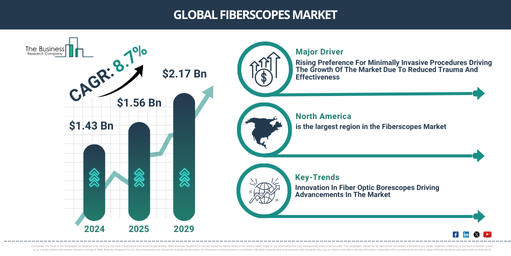
    In the past few years, the market size for fiberscopes has robustly expanded. The market is projected to increase from $1.43 billion in 2024 to $1.56 billion in 2025, yielding a compound annual growth rate (CAGR) of 8.9%. Factors contributing to this growth during the historic period include the escalating demand for precise and effective diagnostic tools, increasing investments in healthcare, heightened focus on comfort and safety during medical procedures for patients, vast usage of lasers in dental and cosmetic procedures, as well as the rising popularity of minimally invasive surgeries.

    The market for fiberscopes is projected to experience a robust increase in the coming years. The market is predicted to expand to $2.17 billion by 2029, with a compound annual growth rate (CAGR) of 8.7%. This anticipated growth within the forecast period is largely due to continued research in biomedical sensors, a rising elderly population, the frequency of chronic diseases, rigid safety guidelines, and a climb in the demand for tailored fiberscopes. Noteworthy trends during the forecast timeline include advancements in technology, environment-friendly design strategies, the incorporation of artificial intelligence and machine learning, alongside telemedicine or the advent of high-tech robotic-assisted procedures.

    Download a free sample to assess the report’s scope and structure:

    https://www.thebusinessresearchcompany.com/sample.aspx?id=21966&type=smp

    What Are the Primary Drivers Supporting the Market Growth of the Fiberscopes Market?

    The fiberscopes market is predicted to advance due to an escalating inclination towards minimally invasive techniques. These strategies involve either minute or no surgical cuts at all and aim to minimize bodily trauma compared to traditional invasive surgeries. Various factors are fueling the preference for these procedures, which include patient benefits and significant improvements in medical technology. Fiberscopes contribute to minimally invasive procedures by offering superior imaging resolution and flexible navigation in tight or difficult-to-access locations, thus facilitating accurate diagnostics and treatments with insignificant tissue disruption. As an illustration, the American Society of Plastic Surgeons, a US-based medication company, disclosed in June 2024 that there was a 7% growth in minimally invasive procedures in 2023, thereby surpassing surgical procedures. Over 9 million neuromodulator injections and 5 million hyaluronic acid fillers were done during this period. In 2023, there were 347,782 liposuction procedures conducted, amounting to a 7% surge compared to 2022. Thus, the increasing preference for minimally invasive methods is facilitating the expansion of the fiberscopes market.

    Which Primary Segments of the Fiberscopes Market Are Driving Growth and Industry Transformations?

    The fiberscopes market covered in this report is segmented –

    1) By Product Type: Disposable Fiberscopes, Flexible Fiberscopes, Rigid Fiberscopes, Video Fiberscopes

    2) By Application: Industrial Inspection, Medical Diagnostics, Research And Development

    3) By End User: Aerospace Maintenance Facilities, Automotive Facilities, Clinics, Diagnostic Laboratories, Hospitals

    Subsegments:

    1) By Disposable Fiberscopes: Medical Disposable Fiberscopes, Industrial Disposable Fiberscopes

    2) By Flexible Fiberscopes: Diagnostic Flexible Fiberscopes, Therapeutic Flexible Fiberscopes

    3) By Rigid Fiberscopes: Short Rigid Fiberscopes, Long Rigid Fiberscopes

    4) By Video Fiberscopes: HD Video Fiberscopes, Standard-Definition Video Fiberscopes

    Request customized data on this market:

    https://www.thebusinessresearchcompany.com/customise?id=21966&type=smp

    Which Regions Are Key Players in the Growth of the #What Are the Primary Drivers Supporting the Market Growth of the Fiberscopes Market?# Market?

    North America was the largest region in the fiberscopes market in 2024. The regions covered in the fiberscopes market report are Asia-Pacific, Western Europe, Eastern Europe, North America, South America, Middle East, Africa.

    What Are the Most Significant Market Trends in the Fiberscopes Market?

    Leading firms in the fiberscope industry are concentrating on creating advanced products like fiber optic borescopes to improve the accuracy, adaptability, and resilience of imaging for industrial and medical examinations. These inspection tools, which exploit fiber optic technology to facilitate visual access to otherwise inaccessible areas, comprise a flexible tube outfitted with an optical fiber cluster, a light source, and a camera or lens on the tube’s end. For example, in June 2023, Titan Tool Supply Inc., a US-based manufacturer, introduced its Industrial Micro Fiberscope Series. This included the L-Series with two models, specifically the L-1 (1 mm diameter, 42° field of view, 6-inch operating range) and the L-2 (2 mm diameter). These precision tools are engineered for remote visual inspections in demanding conditions and are thus perfect for sectors like automotive, aerospace, and manufacturing. Moreover, the series integrates the Model TR.L1 16-LED Ring Illuminator, offering adjustable, shadow-less lighting to amplify visibility during inspections.

    View the full report here:

    https://www.thebusinessresearchcompany.com/report/fiberscopes-global-market-report

    What Parameters Are Used to Define the Fiberscopes Market?

    Fiberscopes are flexible, fiber-optic instruments used for visual inspection of hard-to-reach areas, such as inside machinery, pipelines, or the human body. They consist of a bundle of optical fibers that transmit light and images, allowing for real-time observation in medical, industrial, and scientific applications.

    Purchase the full report and get a swift delivery:

    https://www.thebusinessresearchcompany.com/purchaseoptions.aspx?id=21966

    About The Business Research Company:

    With over 15000+ reports from 27 industries covering 60+ geographies, The Business Research Company has built a reputation for offering comprehensive, data-rich research and insights. Armed with 1,500,000 datasets, the optimistic contribution of in-depth secondary research, and unique insights from industry leaders, you can get the information you need to stay ahead in the game.

    Get in touch with us:

    The Business Research Company: https://www.thebusinessresearchcompany.com/

    Americas +1 3156230293

    Asia +44 2071930708

    Europe +44 2071930708

    Email us at info@tbrc.info

    Follow us on:

    LinkedIn: https://in.linkedin.com/company/the-business-research-company

    YouTube: https://www.youtube.com/channel/UC24_fI0rV8cR5DxlCpgmyFQ

    Global Market Model: https://www.thebusinessresearchcompany.com/global-market-model
  • Disposable Contact Lenses Market Valuation Expected To Reach $3.63 Billion By 2029, Growing At A Rate Of 21.3%

    Disposable Contact Lenses Market Valuation Expected To Reach $3.63 Billion By 2029, Growing At A Rate Of 21.3%

    Discover trends, market shifts, and competitive outlooks for the disposable contact lenses industry through 2025-2034 with The Business Research Company’s reliable data and in-depth research

    What is the Projected CAGR for the Disposable Contact Lenses Market Size from 2025 to 2034?

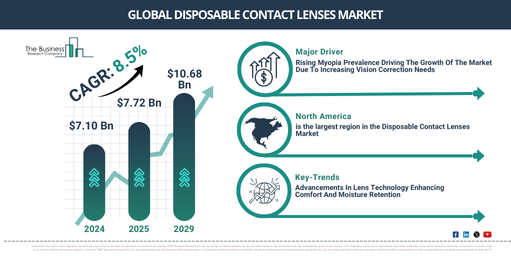
    The market for disposable contact lenses has seen significant expansion in the recent past. The market size is set to inflate from $7.10 billion in 2024 to $7.72 billion in 2025, registering a compound annual growth rate (CAGR) of 8.7%. The rise in the historic phase can be tied to the escalation in vision impairments, heightened awareness regarding ocular health, the increase in choosing contact lenses over glasses, the growing effect of digital eye strain necessitating lenses, and the surge in use of subscription-based services for lens distribution.

    The market for disposable contact lenses is projected to experience a significant increase in the coming years, with an expected rise to $10.68 billion in 2029, exhibiting a Compound Annual Growth Rate (CAGR) of 8.5%. Various factors contributing to this anticipated expansion over the forecast period include an escalating demand for daily disposable lenses, a surge in occurrences of myopia among young individuals, an increased inclination towards hygiene and ease-of-use, a growing elderly population requiring vision correction, and a rise in tailoring and individualization of lenses. The forecast period is also set to be marked by key trends such as the progression in lens materials technology, improvements in silicone hydrogel lenses, a transition towards eco-friendly and decomposable lenses, incorporation of advanced technology in contact lenses, and enhancements in moisture retainment and oxygen permeability.

    Download a free sample to assess the report’s scope and structure:

    https://www.thebusinessresearchcompany.com/sample.aspx?id=21940&type=smp

    Which Factors and External Forces Are Driving Demand in the Disposable Contact Lenses Market?

    The disposable contact lens market’s expansion is anticipated to be fuelled by the growing occurrence of myopia. Myopia, also known as nearsightedness, is a vision condition in which faraway objects appear fuzzy, while near objects remain clear. Limited exposure to the outdoors contributes significantly to the raising prevalence of this condition since natural light is crucial in managing eye growth and in preventing the eyeball from excessively elongating. This spike in myopia incidence heightens the demand for disposable contact lenses, which offer a practical and sanitary option for correcting vision. For example, the Lions Eye Institute, a non-profit entity based in Australia, reported in October 2024 that global rates of myopia are soaring, affecting over 90% of students at Chinese universities and more than 6 million Australians (constituting over 20% of the population). If current trends continue, myopia could affect half of the global population by 2050. Hence, the escalating prevalence of myopia is propelling the disposable contact lens market’s progression.

    Which Segments in the Disposable Contact Lenses Offer the Most Growth?

    The disposable contact lenses market covered in this report is segmented –

    1) By Type: Cylindrical Lenses, Toric Lenses, Spherical Lenses

    2) By Material: Silicon, Hydrogel, Polymers

    3) By Distribution Channel: Optical Stores, Online Stores

    4) By Applications: Corrective, Therapeutic, Cosmetic

    Subsegments:

    1) By Cylindrical Lenses: Soft Cylindrical Lenses, Rigid Gas Permeable (RGP) Cylindrical Lenses, Hybrid Cylindrical Lenses

    2) By Toric Lenses: Daily Disposable Toric Lenses, Weekly Disposable Toric Lenses, Monthly Disposable Toric Lenses

    3) By Spherical Lenses: Daily Disposable Spherical Lenses, Weekly Disposable Spherical Lenses, Monthly Disposable Spherical Lenses

    Request customized data on this market:

    https://www.thebusinessresearchcompany.com/customise?id=21940&type=smp

    What Are the Fastest-Growing Geographies in the Disposable Contact Lenses Market?

    North America was the largest region in the disposable contact lenses market in 2024. Asia-Pacific is expected to be the fastest-growing region in the forecast period. The regions covered in the disposable contact lenses market report are Asia-Pacific, Western Europe, Eastern Europe, North America, South America, Middle East, Africa.

    Which Cutting-Edge Market Trends Are Expected to Drive theDisposable Contact Lenses Market’s Growth?

    Focus on the development of advanced lens technology, such as ProBalance technology, are the primary scope for major enterprises in the disposable contact lenses market to gain a significant market advantage. ProBalance technology marks a breakthrough in lens innovation by utilizing moisturizing elements to sustain ocular surface balance, lessen eye dryness, and improve comfort during the use of contact lenses. As an illustration, Bausch + Lomb Incorporated, a U.S.-based medical company, rolled out Infuse Multifocal silicone hydrogel everyday disposable contact lenses in the United States in May 2023. These lenses have been designed to offer clear sight across all lengths for individuals with presbyopia. They employ ProBalance technology to retain moisture and alleviate dryness, thus addressing prevalent challenges experienced by people who use multifocal lenses. They are manufactured using the advanced SiHy material (kalifilcon A), becoming high in breathability, comfort, and extended moisture preservation.

    View the full report here:

    https://www.thebusinessresearchcompany.com/report/disposable-contact-lenses-global-market-report

    What Are the Key Elements That Define the Disposable Contact Lenses Market?

    Disposable contact lenses are soft lenses designed for short-term use and discarded after a specified period, such as daily, biweekly, or monthly. They are used for vision correction or cosmetic purposes, offering convenience and reducing the risk of infections compared to reusable lenses.

    Purchase the full report and get a swift delivery:

    https://www.thebusinessresearchcompany.com/purchaseoptions.aspx?id=21940

    About The Business Research Company:

    With over 15000+ reports from 27 industries covering 60+ geographies, The Business Research Company has built a reputation for offering comprehensive, data-rich research and insights. Armed with 1,500,000 datasets, the optimistic contribution of in-depth secondary research, and unique insights from industry leaders, you can get the information you need to stay ahead in the game.

    Get in touch with us:

    The Business Research Company: https://www.thebusinessresearchcompany.com/

    Americas +1 3156230293

    Asia +44 2071930708

    Europe +44 2071930708

    Email us at info@tbrc.info

    Follow us on:

    LinkedIn: https://in.linkedin.com/company/the-business-research-company

    YouTube: https://www.youtube.com/channel/UC24_fI0rV8cR5DxlCpgmyFQ

    Global Market Model: https://www.thebusinessresearchcompany.com/global-market-model
  • Emerging Trends Redefining the Tibial Bearings Market Landscape: Advancements In Tibial Cones For Enhanced Knee Revision Surgeries

    Emerging Trends Redefining the Tibial Bearings Market Landscape: Advancements In Tibial Cones For Enhanced Knee Revision Surgeries

    Discover trends, market shifts, and competitive outlooks for the tibial bearings industry through 2025-2034 with The Business Research Company’s reliable data and in-depth research

    What Are the Key Projections for the CAGR of the Tibial Bearings Market Size From 2025 to 2034?

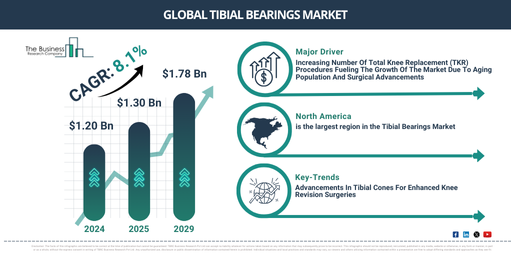
    The market for tibial bearings has witnessed significant growth in the recent past. Projected growth from $1.20 billion in 2024 to $1.30 billion in 2025, at a Compound Annual Growth Rate (CAGR) of 8.5%, indicates a strong upward trend. This historical market growth has been driven by a rise in total knee replacement (TKR) procedures, an increasing incidence of obesity, a surge in sedentary lifestyles, growth in disposable income, and an upward pressuring demand for knee implants.

    Expectations are high for the tibial bearings market as it’s projected to significantly expand in the upcoming years. By 2029, the market could be worth an estimated $1.78 billion, achieving an 8.1% compound annual growth rate (CAGR). The anticipated market expansion during the forecast period is driven by factors such as an aging population, increasing instances of arthritis and osteoporosis, evolving demands for individualized and patient-specific implants, higher infection rates, and the growing inclination towards bicruciate-retaining total knee arthroplasty. Additionally, the forecast period will likely see trends such as advancements in personalized medicine and patient-specific implants, breakthroughs in surgical robotics and minimally invasive techniques, progression in surgical techniques, a transition towards minimally invasive surgical procedures, and further progress in surgical techniques.

    Download a free sample to assess the report’s scope and structure:

    https://www.thebusinessresearchcompany.com/sample.aspx?id=22162&type=smp

    What Are the Core Market Drivers Propelling Growth in the Tibial Bearings Industry?

    The tibial bearings market is predicted to grow, driven by the rising number of total knee replacement (TKR) procedures. These procedures, which replace damaged knee joint surfaces with artificial implants, are increasing due to the growing incidence of osteoarthritis, a condition affected by aging and lifestyle factors. Tibial bearings, which boost the durability and performance of TKR surgeries and thus patient results, are thus seeing greater demand. This is evidenced by data from the Australian Orthopedic Association National Joint Replacement Registry, which revealed that TKR procedures saw a significant uptick of 19.2% between 2022 and 2023. Consequently, the tibial bearings market is reaping the benefits of this proliferation of TKR surgeries. Moreover, the tibial bearings market growth is further fueled by the rising incidence of obesity, which is known to increase the prevalence of osteoarthritis and hence the demand for knee replacement procedures. Obesity, characterized by excessive body weight and posing immense health risks, is escalating due to increased consumption of processed, high-calorie food and sedentary lifestyles. The additional stress on knee joints caused by increased body weight prompts heightened osteoarthritis rates and knee replacement needs, thereby sparking demand for tibial bearings. For instance, a May 2024 report by the Office for Health Improvement & Disparities (OHID) revealed that an estimated 26.2% of adults were classified as obese between 2022 and 2023, marking a slight rise from 25.9% in 2021-2022. Therefore, obesity’s increasing prevalence is a significant driver for the tibial bearings market’s expansion.

    How Is the Tibial Bearings Market Segmented?

    The tibial bearings market covered in this report is segmented –

    1) By Type Of Bearing System: Fixed Bearing Systems, Mobile Bearing Systems, Conventional Bearing Systems, Hybrid Systems

    2) By Material Type: Polyethylene, Ceramic, Metallic Alloys, Composite Materials

    3) By Distribution Channel: Direct Sales, Online Retailers, Third-Party Distributors, Medical Supply Stores

    4) By Application: Orthopedic Implants, Sports Medicine, Trauma Surgery, Reconstructive Surgery

    5) By End-User: Hospitals, Orthopedic Clinics, Ambulatory Surgical Centers, Other End-Users

    Subsegments:

    1) By Fixed Bearing Systems: Polyethylene Bearings, Metal-Backed Bearings, Highly Cross-Linked Polyethylene Bearings

    2) By Mobile Bearing Systems: Rotating Platform Bearings, Medial-Pivot Bearings, High-Flex Bearings

    3) By Conventional Bearing Systems: Standard Polyethylene Bearings, Cemented Bearings, Uncemented Bearings

    4) By Hybrid Systems: Metal-Polyethylene Hybrid Bearings, Ceramic-Polyethylene Hybrid Bearings, Advanced Composite Bearings

    Request customized data on this market:

    https://www.thebusinessresearchcompany.com/customise?id=22162&type=smp

    Which Regions Are Driving the Next Phase of the Tibial Bearings Market Growth?

    North America was the largest region in the tibial bearings market in 2024. Asia-Pacific is expected to be the fastest-growing region in the forecast period. The regions covered in the tibial bearings market report are Asia-Pacific, Western Europe, Eastern Europe, North America, South America, Middle East, Africa.

    What Key Market Trends and Innovations Are Shaping the Future of the Tibial Bearings Industry?

    Prominent enterprises in the domain of the tibial bearings market have been investing their efforts in the creation of tibial cones. This accelerated focus aims to improve the stability of implants, ensure better integration with the bone, and tackle sever bone loss issues during revision total knee arthroplasty (TKA). Serving as handy tools in total knee arthroplasty, tibial cones are meant to manage metaphyseal bone loss in the tibial section. A case in point is the launch of Evolution Tibial Cones by MicroPort Orthopaedics, a U.S. medical device company, in North America in September 2024. These tools are designed to manage metaphyseal bone loss during revision total knee arthroplasty (TKA). The uses of OsteoSync Ti, an extremely porous variant of titanium, speaks to the superior craftsmanship behind these cones, whose structural support, initial fixing, and bone integration make them stand out. The extraordinary friction coefficient, when compared to competitor products, not only enhances implant stability but also guarantees early rigid fixation, which is a necessary factor in successful knee revision surgeries.

    View the full report here:

    https://www.thebusinessresearchcompany.com/report/tibial-bearings-global-market-report

    How Is the Tibial Bearings Market Defined and What Are Its Core Parameters?

    Tibial bearings are components of knee prostheses used in total knee replacements. They provide articulation between the femoral component and the tibial baseplate. Made from materials such as polyethylene, they help distribute loads and reduce wear. Their design affects knee stability, movement, and longevity of the implant.

    Purchase the full report and get a swift delivery:

    https://www.thebusinessresearchcompany.com/purchaseoptions.aspx?id=22162

    About The Business Research Company:

    With over 15000+ reports from 27 industries covering 60+ geographies, The Business Research Company has built a reputation for offering comprehensive, data-rich research and insights. Armed with 1,500,000 datasets, the optimistic contribution of in-depth secondary research, and unique insights from industry leaders, you can get the information you need to stay ahead in the game.

    Get in touch with us:

    The Business Research Company: https://www.thebusinessresearchcompany.com/

    Americas +1 3156230293

    Asia +44 2071930708

    Europe +44 2071930708

    Email us at info@tbrc.info

    Follow us on:

    LinkedIn: https://in.linkedin.com/company/the-business-research-company

    YouTube: https://www.youtube.com/channel/UC24_fI0rV8cR5DxlCpgmyFQ

    Global Market Model: https://www.thebusinessresearchcompany.com/global-market-model
  • Strong CAGR to Propel in the Spinal Surgery Devices Market and Beyond upto $16.98 Billion by 2029

    Discover trends, market shifts, and competitive outlooks for the spinal surgery devices industry through 2025-2034 with The Business Research Company’s reliable data and in-depth research

    What Are the Key Projections for the CAGR of the Spinal Surgery Devices Market Size From 2025 to 2034?

    The market for spinal surgery devices has seen significant growth over recent years. The market value is predicted to increase from $12.67 billion in 2024 to $13.47 billion in 2025, demonstrating a compound annual growth rate (CAGR) of 6.3%. Factors that contribute to this growth during the historic period include a growing preference for minimally invasive procedures, an increasing incidence of spinal disorders, a trend towards motion preservation surgeries, a higher demand for endoscopic spinal procedures, and a rise in the number of fractures related to osteoporosis.

    In the coming years, the market for spinal surgery devices is predicted to experience robust growth. It’s projected to expand to $16.99 billion by 2029, with a compound annual growth rate (CAGR) of 6.0%. This growth during the forecasted period is attributable to factors such as a growing elderly population, increased use of image-guided systems for spinal navigation, heightened demand for motion preservation technologies and ergonomic medical devices for spinal care, and an increase in the number of dedicated centers for spinal care. The forecast period is also anticipated to see significant trends such as minimally invasive surgical (MIS) methods, 3D printing for tailor-made implants, robot-assisted surgeries, motion preservation devices, and intelligent implants outfitted with sensors.

    Download a free sample to assess the report’s scope and structure:

    https://www.thebusinessresearchcompany.com/sample.aspx?id=22151&type=smp

    Which Primay Drivers Are Accelerating Growth in the Spinal Surgery Devices Market?

    The escalating issues related to back problems are predicted to stimulate the progression of the spinal surgery devices market. Factors fueling the market’s expansion include conditions that induce pain, discomfort, or restricted mobility in the upper, lower, or middle back due to structural, muscular, or nerve-related complications. The surge in back problems is tied to a sedentary lifestyle, as extended sitting, improper posture, and lack of physical activity put excessive pressure on the spine, weaken the core muscles, and hasten disc degeneration. This can result in chronic pain and mobility challenges. Spinal surgery devices assist patients with back issues by offering structural stability, alleviating nerve pressure, reestablishing spinal alignment, and improving mobility, effectively reducing pain, augmenting function, and improving overall life quality. An illustration of this is evident from data collected by the Australian Welfare of Health and Welfare in June 2024. This Australia-based government entity reported that an estimated 177,000 hospitalizations were due to back issues as the main diagnosis in 2021–22. Moreover, in 2022, approximately 72% of individuals coping with back problems were also managing at least one other chronic condition. Thus, the rise in back problems fuels the spinal surgery devices market.

    Which Primary Segments of the Spinal Surgery Devices Market Are Driving Growth and Industry Transformations?

    The spinal surgery devices market covered in this report is segmented –

    1) By Device Type: Spinal Decompression, Spinal Fusion, Fracture Repair Devices, Arthroplasty Devices, Non-Fusion Devices

    2) By Disease Indication: Degenerative Disc Disease, Complex Deformity, Traumas And Fractures

    3) By Technology: Fusion, Non-Fusion, Vertebral Compression Fracture, Spine Biologics, Spinal Decompression

    4) By End-Users: Hospitals And Ambulatory Surgery Centers, Specialty Clinics, Other End Users

    Subsegmentss:

    1) By Spinal Decompression Device Type: Cervical Decompression, Lumbar Decompression, Thoracic Decompression

    2) By Spinal Fusion Device Type: Anterior Cervical Discectomy and Fusion (ACDF), Posterior Lumbar Interbody Fusion (PLIF), Transforaminal Lumbar Interbody Fusion (TLIF), Lateral Lumbar Interbody Fusion (LLIF), Interbody Fusion Devices

    3) By Fracture Repair Device Type: Pedicle Screws, Vertebroplasty Devices, Kyphoplasty Devices

    4) By Arthroplasty Device Type: Cervical Arthroplasty Devices, Lumbar Arthroplasty Devices

    5) By Non-Fusion Device Type: Artificial Discs, Dynamic Stabilization Devices

    Request customized data on this market:

    https://www.thebusinessresearchcompany.com/customise?id=22151&type=smp

    Which Regions Are Key Players in the Growth of the Spinal Surgery Devices Market?

    North America was the largest region in the spinal surgery devices market in 2024. Asia-Pacific is expected to be the fastest-growing region in the forecast period. The regions covered in the spinal surgery devices market report are Asia-Pacific, Western Europe, Eastern Europe, North America, South America, Middle East, Africa.

    Which Technological Trends Are Reshaping the Spinal Surgery Devices Industry Dynamics?

    Primary firms active in the spinal surgery devices market are prioritizing the development of advanced fixation systems that employ elastic interference technology and compliant mechanism engineering to boost stability and better surgical results. Elastic interference technology involves using a flexible element to stretch over and strongly hold another element, establishing a secure, press-fit connection without traditional fasteners like set screws being necessary. For example, Nexus Spine, a medical technology company located in the US, introduced the PressON posterior lumbar fixation system in August 2022. This system employs elastic interference technology and removes the requirement for set screws by firmly fastening rods through a flexible bore that is extended over pedicle screw heads. This approach increases stability, minimizes the size of the implant, and enhances surgical productivity by promoting quicker implantation and customization of rods specific to each patient during surgery.

    View the full report here:

    https://www.thebusinessresearchcompany.com/report/spinal-surgery-devices-global-market-report

    What Parameters Are Used to Define the Spinal Surgery Devices Market?

    Spinal surgery devices refer to medical instruments and implants designed to support surgical procedures that address spinal conditions, including degenerative disc disease, fractures, and deformities. These devices refer to tools that assist surgeons in stabilizing the spine, relieving pressure on nerves, and promoting proper alignment to enhance recovery and improve patient mobility.

    Purchase the full report and get a swift delivery:

    https://www.thebusinessresearchcompany.com/purchaseoptions.aspx?id=22151

    About The Business Research Company:

    With over 15000+ reports from 27 industries covering 60+ geographies, The Business Research Company has built a reputation for offering comprehensive, data-rich research and insights. Armed with 1,500,000 datasets, the optimistic contribution of in-depth secondary research, and unique insights from industry leaders, you can get the information you need to stay ahead in the game.

    Get in touch with us:

    The Business Research Company: https://www.thebusinessresearchcompany.com/

    Americas +1 3156230293

    Asia +44 2071930708

    Europe +44 2071930708

    Email us at info@tbrc.info

    Follow us on:

    LinkedIn: https://in.linkedin.com/company/the-business-research-company

    YouTube: https://www.youtube.com/channel/UC24_fI0rV8cR5DxlCpgmyFQ

    Global Market Model: https://www.thebusinessresearchcompany.com/global-market-model

  • Pressure Relief Devices Market Outlook 2025–2034: Identifying Growth Drivers, Technology Trends, and Policy Impact

    Pressure Relief Devices Market Outlook 2025–2034: Identifying Growth Drivers, Technology Trends, and Policy Impact

    Discover trends, market shifts, and competitive outlooks for the pressure relief devices industry through 2025-2034 with The Business Research Company’s reliable data and in-depth research

    How Has The Pressure Relief Devices Market Size Shifted, And What Is the Outlook Through 2034?

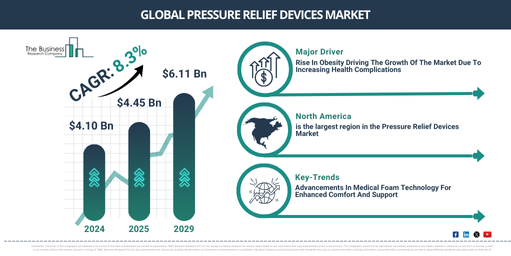
    The market for pressure relief devices has seen considerable growth in the past few years. The industry, which was valued at $4.10 billion in 2024, is anticipated to reach $4.45 billion in 2025, indicating a compound annual growth rate (CAGR) of 8.5%. The growth witnessed during the historical period is linked to factors such as an increase in pressure ulcers, a rise in the elderly population, escalating consciousness about patient safety, an upsurge in diseases related to lifestyle, and enhancing knowledge about severe complications.

    The market for pressure relief devices is anticipated to experience robust expansion in the succeeding years, projected to escalate to $6.11 billion in 2029 with an 8.3% compound annual growth rate (CAGR). The predicted growth in the forecast period can be credited to the escalating demand for less invasive medical procedures, increased occurrence of chronic diseases, surging demand for equipment to manage bedsores, augmenting demand for healthcare services, and increased consciousness about surgical wound care. The chief trends within the forecasted period comprise investments in research and development, strategic partnerships, advancements in technology, incorporation of telemedicine, and progressive wound therapy.

    Download a free sample to assess the report’s scope and structure:

    https://www.thebusinessresearchcompany.com/sample.aspx?id=22112&type=smp

    What Are the Core Market Drivers Propelling Growth in the Pressure Relief Devices Industry?

    The projected increase in obesity-related cases is anticipated to stimulate the expansion of the pressure relief devices market. Obesity, characterized by an unhealthy buildup of body fat, exposes individuals to various health risks. The surge in obesity primarily stems from the ubiquitous consumption of sugary, unhealthy foods and processed items that are calorie-dense. Modern lifestyle patterns have resulted in a strong dependence on fast foods, sugar-rich beverages, and meals that are easy to prepare but lacking in nutritional value, contributing to overeating. By distributing weight evenly, reducing pressure ulcers, and promoting mobility, pressure relief devices assist in the management of obesity, thereby enhancing overall health. The World Obesity Federation, a UK-based entity committed to tackling the worldwide obesity dilemma, projects that the international adult obesity count will increase from 0.81 billion in 2020 to 1.53 billion by 2035. Consequently, the upsurge in obesity cases is fueling the expansion of the pressure relief devices market.

    How Is the Pressure Relief Devices Market Segmented?

    The pressure relief devices market covered in this report is segmented –

    1) By Type: Low-Tech Devices, High-Tech Devices

    2) By Application: Pressure Ulcers, Burns, Surgical Wounds, Other Applications

    3) By End User: Hospitals, Home Care, Long-Term Care Centers, Rehabilitation Centers, Other End Users

    Subsegments:

    1) By Low-Tech Devices: Foam-Based Mattress, Gel-Based Mattress, Fiber Filled Mattress, Water Or Fluid Filled Mattress, Air Filled Mattress, Other Low-Tech Devices

    2) By High-Tech Devices: Dynamic Air Therapy Beds, Kinetic Beds, Other High-Tech Devices

    Request customized data on this market:

    https://www.thebusinessresearchcompany.com/customise?id=22112&type=smp

    Which Regions Are Driving the Next Phase of the Pressure Relief Devices Market Growth?

    North America was the largest region in the pressure relief devices market in 2024. Asia-Pacific is expected to be the fastest-growing region in the forecast period. The regions covered in the pressure relief devices market report are Asia-Pacific, Western Europe, Eastern Europe, North America, South America, Middle East, Africa.

    What Key Market Trends and Innovations Are Shaping the Future of the Pressure Relief Devices Industry?

    Major firms in the pressure relief devices market are prioritizing the creation of innovative technologies like TrueGel technology. This advanced material aims to enhance comfort and offer therapeutic advantages by relieving pressure, supporting the spine, and controlling temperature. In August 2023, the UK-based foam producing company, GNG Group, launched KomfiMed which is a specialized foam equipped with TrueGel technology for superior pressure relief. These mattresses, made from specialized foam, offer increased durability, breathability, and antimicrobial features to uphold cleanliness in medical environments. They are specifically designed to assist bariatic patients, ensuring maximum stability and comfort while adhering to the strict quality requirements of hospital and healthcare settings.

    View the full report here:

    https://www.thebusinessresearchcompany.com/report/pressure-relief-devices-global-market-report

    How Is the Pressure Relief Devices Market Defined and What Are Its Core Parameters?

    Pressure relief devices refer to medical equipment designed to reduce prolonged pressure on the body, helping to prevent skin breakdown and improve blood circulation. These devices are used for individuals with limited mobility, ensuring comfort and reducing the risk of pressure ulcers and related complications.

    Purchase the full report and get a swift delivery:

    https://www.thebusinessresearchcompany.com/purchaseoptions.aspx?id=22112

    About The Business Research Company:

    With over 15000+ reports from 27 industries covering 60+ geographies, The Business Research Company has built a reputation for offering comprehensive, data-rich research and insights. Armed with 1,500,000 datasets, the optimistic contribution of in-depth secondary research, and unique insights from industry leaders, you can get the information you need to stay ahead in the game.

    Get in touch with us:

    The Business Research Company: https://www.thebusinessresearchcompany.com/

    Americas +1 3156230293

    Asia +44 2071930708

    Europe +44 2071930708

    Email us at info@tbrc.info

    Follow us on:

    LinkedIn: https://in.linkedin.com/company/the-business-research-company

    YouTube: https://www.youtube.com/channel/UC24_fI0rV8cR5DxlCpgmyFQ

    Global Market Model: https://www.thebusinessresearchcompany.com/global-market-model

  • Critical Market Drivers Shaping the Outlook for Positive Air Pressure Devices Market from 2025-2034: Rising Prevalence Of Respiratory Disorders Fueling The Growth Of The Market Due To Increasing Demand For Effective Breathing Solutions

    Critical Market Drivers Shaping the Outlook for Positive Air Pressure Devices Market from 2025-2034: Rising Prevalence Of Respiratory Disorders Fueling The Growth Of The Market Due To Increasing Demand For Effective Breathing Solutions

    Discover trends, market shifts, and competitive outlooks for the positive air pressure devices industry through 2025-2034 with The Business Research Company’s reliable data and in-depth research

    How Fast Is The Positive Air Pressure Devices Market Expected to Grow Between 2025 And 2029?

    The market size for positive air pressure devices has seen considerable growth in the past few years. The size is set to increase from $2.94 billion in 2024 to hit a new high of $3.17 billion by 2025, portraying a robust compound annual growth rate (CAGR) of 7.7%. The historic growth of this sector can be credited to the increasing cognizance of sleep-related issues, a surge in instances of respiratory diseases, a mounting demand for non-invasive therapeutic methods, growing societal impacts of sleep deprivation and a heightened focus on mental health and sleep.

    It is anticipated that the market size for positive air pressure devices will undergo substantial growth in the forthcoming years, eventually expanding to $4.23 billion by 2029 with a 7.5% compound annual growth rate (CAGR). Several contributors to this predicted growth include increased prevalence of respiratory illnesses, heightened preference for treatments from home, greater awareness and understanding around sleep health, a stronger focus on preventive care, and an amplified emphasis on optimizing devices. The upcoming period will also see key developments such as advancements in pressure sensing, enhancements of smart positive air pressure devices, innovations in the integration of telemedicine and telehealth, and progress in airflow technology.

    Download a free sample to assess the report’s scope and structure:

    https://www.thebusinessresearchcompany.com/sample.aspx?id=22108&type=smp

    What Are the Core Growth Drivers Propelling the Positive Air Pressure Devices Market Forward?

    The ever-increasing instances of respiratory ailments are predicted to stimulate the positive air pressure devices market’s expansion in future. Respiratory issues comprise a variety of diseases impacting the lungs and air passages, resulting in breathing complications and obstructed oxygen transit. The escalation in respiratory diseases can be credited to amplified air contamination and exposure to environmental toxins. The rapid surge of urbanization has led to an increased accumulation of pollutants like particulate matter (PM), nitrogen dioxide (NO2), and ozone, exacerbating respiratory issues like asthma, bronchitis, and chronic obstructive pulmonary disease (COPD). Positive air pressure devices are instrumental in managing these respiratory ailments by producing a clean, regulated environment that aids in minimizing exposure to dangerous pollutants, allergens, and airborne diseases. For instance, projections from the National Library of Medicine, a U.S. government agency, suggest that by 2050, the global occurrences of chronic obstructive pulmonary disease (COPD) are slated to reach an alarming nearly 600 million cases, indicating the escalating burden of respiratory issues globally. Consequently, the escalating instances of respiratory diseases fuel the expansion of the positive air pressure devices market.

    What Segment Types Define the Positive Air Pressure Devices Market Structure?

    The positive air pressure devices market covered in this report is segmented –

    1) By Product: Continuous Positive Airways Pressure Devices (CPAP), Bi-level Positive Airway Pressure (BiPAP) And Variable Positive Airway Pressure (VPAP), Automatic Positive Airway Pressure Devices (APAP)

    2) By Technology: Microfluidics, Optical Detection, Fluorescence-Based Detection, Mass Spectrometry, Immunoassays

    3) By Distribution Channel: Direct Sales, Online Sales, Third-Party Distributors, Pharmacies, Other Distribution Channels

    4) By Application: Sleep Apnea, Chronic Obstructive Pulmonary Disease (COPD), Respiratory Distress Syndrome, Other Applications

    5) By End-User: Hospitals, Home Care Settings, Sleep Clinics, Other End-Users

    Subsegments:

    1) By Continuous Positive Airway Pressure (CPAP) Devices: Fixed Continuous Positive Airway Pressure (CPAP) Devices, Portable Continuous Positive Airway Pressure (CPAP) Devices

    2) By Bi-level Positive Airway Pressure (BiPAP) And Variable Positive Airway Pressure (VPAP) Devices: Fixed Bi-level Positive Airway Pressure (BiPAP) Devices, Auto Bi-level Positive Airway Pressure (BiPAP) Devices

    3) By Automatic Positive Airway Pressure (APAP) Devices: Standard Automatic Positive Airway Pressure (APAP) Devices, Smart Automatic Positive Airway Pressure (APAP) Devices

    Request customized data on this market:

    https://www.thebusinessresearchcompany.com/customise?id=22108&type=smp

    Which Geographic Areas Hold the Strongest Growth Potential in the Positive Air Pressure Devices Market?

    North America was the largest region in the positive air pressure devices market in 2024. Asia-Pacific is expected to be the fastest-growing region in the forecast period. The regions covered in the positive air pressure devices market report are Asia-Pacific, Western Europe, Eastern Europe, North America, South America, Middle East, Africa.

    Which Emerging Trends that Are Influencing thePositive Air Pressure Devices Industry Evolution?

    Many key players in the positive air pressure devices market are prioritizing the creation of novel products, like sleep apnea devices, in order to enhance patient comfort, improve device efficacy, and provide tailored solutions. These devices are regularly employed to address sleep apnea, a disorder characterized by breathing interruptions during sleep due to a blocked or constricted airway. For instance, in February 2024, the American company ResMed introduced AirCurve 11 Bilevel Devices that offer inventive remedies for sleep apnea, chronic obstructive pulmonary disease (COPD), and other breathing ailments by utilizing PAP devices. This device uses dual pressure settings (IPAP and EPAP) to handle sleep apnea and is equipped with state-of-the-art features like built-in humidification and wireless connectivity for tracking.

    View the full report here:

    https://www.thebusinessresearchcompany.com/report/positive-air-pressure-devices-global-market-report

    What Is the Definition of the Positive Air Pressure Devices Market?

    Positive air pressure devices are equipment designed to maintain higher air pressure inside a controlled environment than outside one. These devices help prevent the entry of contaminants, dust, or pollutants by ensuring that air flows outward rather than inward when doors or vents are opened

    Purchase the full report and get a swift delivery:

    https://www.thebusinessresearchcompany.com/purchaseoptions.aspx?id=22108

    About The Business Research Company:

    With over 15000+ reports from 27 industries covering 60+ geographies, The Business Research Company has built a reputation for offering comprehensive, data-rich research and insights. Armed with 1,500,000 datasets, the optimistic contribution of in-depth secondary research, and unique insights from industry leaders, you can get the information you need to stay ahead in the game.

    Get in touch with us:

    The Business Research Company: https://www.thebusinessresearchcompany.com/

    Americas +1 3156230293

    Asia +44 2071930708

    Europe +44 2071930708

    Email us at info@tbrc.info

    Follow us on:

    LinkedIn: https://in.linkedin.com/company/the-business-research-company

    YouTube: https://www.youtube.com/channel/UC24_fI0rV8cR5DxlCpgmyFQ

    Global Market Model: https://www.thebusinessresearchcompany.com/global-market-model

  • Global Medical Low Value Consumables Market Trends: Regional Breakdowns and Strategic Insights

    Global Medical Low Value Consumables Market Trends: Regional Breakdowns and Strategic Insights

    Get 30% off on our Global Market Reports with code ONLINE30 – Hurry, limited time offer!

    How Has the Medical Low Value Consumables Market Growth Performance Trended Historically, And What Lies Ahead?

    There has been significant expansion in the medical low value consumables market size in the past few years. The market is projected to enlarge from $12.46 billion in 2024 to $13.26 billion in 2025, following a compound annual growth rate (CAGR) of 6.4%. The historic period growth is ascribed to a surge in healthcare expenditure, an escalated demand for single-use medical items, an uptick in chronic illnesses, an intensified emphasis on infection prevention, and a rise in the number of surgical procedures.

    The market size of medical low value consumables is projected to experience significant growth within the next few years, escalating to a total of $16.78 billion in 2029 with a compound annual growth rate (CAGR) of 6.1%. This projected increase during the forecast period can be attributed to factors such as the growth of the aging population, expanded healthcare access in emerging markets, an uptick in outpatient surgeries, heightened awareness surrounding hygiene and safety standards, and a rising demand for affordable medical solutions. Key trends anticipated during the forecast period encompass advancements in automation and packaging technologies, innovations in advanced materials for enhanced safety, an evolution in eco-friendly and sustainable consumables, the creation of custom-designed low-value consumables, and progression in point-of-care diagnostic consumables.

    Download a free sample to assess the report’s scope and structure:

    https://www.thebusinessresearchcompany.com/sample.aspx?id=23446&type=smp

    What Are the Major Market Drivers Behind the Rising Adoption of Medical Low Value Consumables Market?

    The increase in chronic diseases is predicted to fuel the expansion of the medical low value consumables market. Chronic diseases, such as diabetes, heart disease, and cancer, are slowly progressive, long-term conditions. Lifestyle modifications and environmental influences, which lead to a poor diet, lack of physical activity, and prolonged exposure to harmful substances, are contributing to the increase in chronic illnesses. The usage of medical low value consumables inadvertently promotes the rise of these diseases through excessive or inadequate use of healthcare resources, leading to misdiagnosis, delayed treatments, and unnecessary patient exposure to interventions. For example, in December 2023, the Australian bureau of Statistics, a government agency based in Australia, reported that 81.4% of individuals had at least one long-term health condition, while 49.9% had at least one chronic condition. Consequently, the increasing prevalence of chronic diseases is propelling the growth of the medical low value consumables market.

    Which Key Market Segments Comprise the Medical Low Value Consumables Market and Drive Its Revenue Growth?

    The medical low value consumables market covered in this report is segmented –

    1) By Product Type: Syringes, Needles, Gloves, Bandages, Catheters

    2) By Material Type: Plastic, Glass, Metal, Biodegradable Materials, Synthetic Polymers

    3) By Usage Type: Single Use Products, Reusable Products, Disposables, Repairable Products

    4) By End User: Hospitals, Clinics, Diagnostic Laboratories, Home Care Settings, Research Laboratories

    Subsegments:

    1) By Syringes: Insulin Syringes, Tuberculin Syringes, Prefilled Syringes, Disposable Syringes, Safety Syringes

    2) By Needles: Hypodermic Needles, Suture Needles, Biopsy Needles, Spinal Needles, Dental Needles

    3) By Gloves: Examination Gloves, Surgical Gloves, Nitrile Gloves, Latex Gloves, Vinyl Gloves

    4) By Bandages: Adhesive Bandages, Elastic Bandages, Gauze Bandages, Cohesive Bandages, Triangular Bandages

    5) By Catheters: Foley Catheters, Intermittent Catheters, Central Venous Catheters, Peripheral IV Catheters, Suprapubic Catheters

    Request customized data on this market:

    https://www.thebusinessresearchcompany.com/customise?id=23446&type=smp

    Which Areas Are Leading Regions in the Medical Low Value Consumables Market Expansion Across the Globe?

    North America was the largest region in the medical low-value consumables market in 2024. Asia-Pacific is expected to be the fastest-growing region in the forecast period. The regions covered in the medical low value consumables market report are Asia-Pacific, Western Europe, Eastern Europe, North America, South America, Middle East, Africa.

    What Are the Key Market Trends in the Medical Low Value Consumables Market Over the Coming Years?

    Key players in the medical low-value consumables industry are turning their attention towards innovations such as glass prefillable syringes with the aim of increasing drug delivery precision, enhancing patient safety, and catering to a rising demand for ready-to-use injectable solutions in both hospital and out-patient environments. Glass prefillable syringes are sterile and ready-to-fill syringes fashioned from glass, employed in the packaging and administration of drugs that are injected. They display elevated chemical resistance, are compatible with a multitude of medicines, and assist in lowering the risk of drug contamination. For instance, in September 2022, the BD Effivax Glass Prefillable Syringe was launched by Becton, Dickinson and Company (BD), a medical technology enterprise based in the U.S. The enhancements in its design minimize the chances of production line halts and improve the dependability of the container. This helps to improve manufacturing efficiency and optimize costs. The syringe enables quicker administration, supports saving doses, minimizes waste of vaccines, and is designed to accommodate next-gen vaccines like mRNA formulations that necessitate very cold storage (up to -75°C).

    View the full report here:

    https://www.thebusinessresearchcompany.com/report/medical-low-value-consumables-global-market-report

    How Is the Medical Low Value Consumables Market Conceptually Defined?

    Medical low-value consumables refer to inexpensive, single-use items commonly used in healthcare settings, such as gloves, bandages, syringes, and masks. These products are typically disposable and used in routine medical procedures. Their low cost makes them essential for daily operations, but not significant drivers of revenue in healthcare systems.

    Purchase the full report and get a swift delivery:

    https://www.thebusinessresearchcompany.com/purchaseoptions.aspx?id=23446

    About The Business Research Company:

    With over 15000+ reports from 27 industries covering 60+ geographies, The Business Research Company has built a reputation for offering comprehensive, data-rich research and insights. Armed with 1,500,000 datasets, the optimistic contribution of in-depth secondary research, and unique insights from industry leaders, you can get the information you need to stay ahead in the game.

    Get in touch with us:

    The Business Research Company: https://www.thebusinessresearchcompany.com/

    Americas +1 3156230293

    Asia +44 2071930708

    Europe +44 2071930708

    Email us at info@tbrc.info

    Follow us on:

    LinkedIn: https://in.linkedin.com/company/the-business-research-company

    YouTube: https://www.youtube.com/channel/UC24_fI0rV8cR5DxlCpgmyFQ

    Global Market Model: https://www.thebusinessresearchcompany.com/global-market-model