Category: Medical Equipment

  • From Insight to Impact: Strategic Growth Mapping in the Occlusion Devices Market

    From Insight to Impact: Strategic Growth Mapping in the Occlusion Devices Market

    Discover trends, market shifts, and competitive outlooks for the occlusion devices industry through 2025-2034 with The Business Research Company’s reliable data and in-depth research

    How Has The Occlusion Devices Market Growth Evolved From 2024 To 2025, And What’s Ahead?

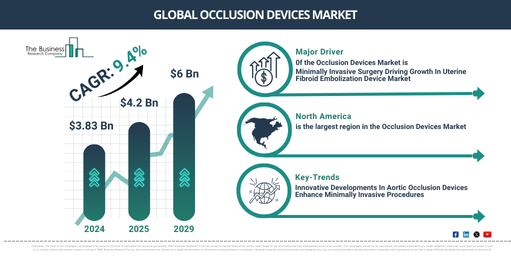
    The market size for occlusion devices has seen impressive growth lately. The market is anticipated to rise from $3.83 billion in 2024 to $4.2 billion in 2025, showcasing a compound annual growth rate (CAGR) of 9.6%. The growth observed in the past can be linked to the escalating demand for minimal medical device facilities, a surge in diagnostic services accessibility, an increase in healthcare infrastructure investment, high incidence of chronic disorders, and a rise in spending on research and development.

    The market for occlusion devices is projected to undergo robust growth in the upcoming years, with its size estimated to reach $6 billion in 2029. This growth equates to a compound annual growth rate (CAGR) of 9.4%. The expansion projected for the forecast timeframe is primarily ascribed to various factors such as an aging population, growing number of obese individuals, rise in heart-related ailments, increasing incidence of hypertension, and a higher number of stroke cases. Key trends discerned for the forecast period include evolving technology and innovation, technological progress, the creation of more accurate and efficient occlusion devices, product innovation, and the incorporation of 3D printing.

    Download a free sample to assess the report’s scope and structure:

    https://www.thebusinessresearchcompany.com/sample.aspx?id=20584&type=smp

    What are the Fundamental Drivers and Innovations Shaping the Occlusion Devices Market?

    The increasing preference for less invasive medical approaches is predicted to fuel the expansion of the occlusion devices market. These minimally invasive surgeries are operations that employ minor incisions or natural body openings to diagnose and treat internal organs, tissues or structures with the least possible damage to the patient. These techniques offer numerous health, economic, and aesthetic advantages, attracting patients and healthcare providers alike, thus sparking a surge in the demand in countless medical fields. Occlusion devices, which are medical instruments utilized in minimally invasive procedures to seal blood vessels, ducts, or other channels in the body, play an instrumental role in these processes. They are frequently employed in areas such as interventional cardiology, radiology among others to alleviate conditions like aneurysms, abnormal blood circulation, or congenital heart defects. For example, Intuitive Surgical Inc., an American tech company specializing in minimally invasive healthcare products, reported in January 2023 that approximately 1,875,000 surgeries were conducted using vinci surgical systems in 2022, marking an approximately 18% rise from about 1,594,000 surgeries performed in 2021. Consequently, this heightened demand for minimally invasive methods is spurring the growth of the occlusion devices market.

    How Is the Occlusion Devices Market Segmented?

    The occlusion devices market covered in this report is segmented –

    1) By Product: Occlusion Removal Devices, Embolization Devices, Tubal Occlusion Devices, Support Devices

    2) By Application: Neurology, Cardiology, Peripheral Vascular Diseases, Urology, Oncology, Gynecology

    3) By End User: Hospitals Diagnostic Centers And Surgical Centers, Ambulatory Care Centers, Research Laboratories And Academic Institutes

    Subsegments:

    1) By Occlusion Removal Devices: Thrombectomy Devices, Catheter-Based Occlusion Removal Devices, Aspiration Systems, Mechanical Clot Retrieval Systems

    2) By Embolization Devices: Coil Embolization Devices, Particle Embolization Devices, Balloon Embolization Devices, Gel Embolic Agents, Liquid Embolic Agents, Stent-Assisted Embolization Devices

    3) By Tubal Occlusion Devices: Essure Devices, Hysteroscopic Sterilization Systems, Fallopian Tube Clips, Tubal Ligation Devices

    4) By Support Devices: Occlusion Catheters, Guidewires For Occlusion, Supportive Sheaths, Stent-Grafts For Occlusion Support

    Request customized data on this market:

    https://www.thebusinessresearchcompany.com/customise?id=20584&type=smp

    Which Regions Are Driving the Next Phase of the Occlusion Devices Market Growth?

    North America was the largest region in the occlusion devices market in 2024. Asia-Pacific is expected to be the fastest-growing region in the forecast period. The regions covered in the occlusion devices market report are Asia-Pacific, Western Europe, Eastern Europe, North America, South America, Middle East, Africa.

    What Are the Most Significant Market Trends in the Occlusion Devices Market?

    Leading businesses in the occlusion devices market, such as those manufacturing aortic occlusion devices, are concentrating on innovative product development to promote minimally invasive methods and improve patient results. Aortic occlusion devices, which are medical instruments engineered to hinder or limit aortic blood flow, are normally employed in aortic surgeries or for managing certain aneurysms or emergencies. For example, in February 2022, Front Line Medical Technologies Inc, a medical device firm based in the USA, debuted COBRA-OS, an aortic occlusion device designed for critical medical situations, particularly for use in resuscitative endovascular balloon occlusion of the aorta (REBOA) procedures. The COBRA-OS, with its substantial smaller 4 F size, minimizes procedure duration and complication risks. This device provides full, intermittent or partial occlusion according to the patient’s needs, and features a specialized safety shoulder reservoir that safeguards against aortic rupture during inflation. The COBRA-OS has garnered approval from Health Canada and clearance from the FDA for usage in the United States.

    View the full report here:

    https://www.thebusinessresearchcompany.com/report/occlusion-devices-global-market-report

    How Is the Occlusion Devices Market Defined and What Are Its Core Parameters?

    Occlusion devices refer to medical instruments designed to block or restrict the flow of blood or other fluids within the body. They are commonly used in procedures such as embolization to treat conditions such as aneurysms, vascular malformations, or to control bleeding. These devices include products such coils, stents, and balloons and are crucial in minimally invasive surgeries.

    Purchase the full report and get a swift delivery:

    https://www.thebusinessresearchcompany.com/purchaseoptions.aspx?id=20584

    About The Business Research Company:

    With over 15000+ reports from 27 industries covering 60+ geographies, The Business Research Company has built a reputation for offering comprehensive, data-rich research and insights. Armed with 1,500,000 datasets, the optimistic contribution of in-depth secondary research, and unique insights from industry leaders, you can get the information you need to stay ahead in the game.

    Get in touch with us:

    The Business Research Company: https://www.thebusinessresearchcompany.com/

    Americas +1 3156230293

    Asia +44 2071930708

    Europe +44 2071930708

    Email us at info@tbrc.info

    Follow us on:

    LinkedIn: https://in.linkedin.com/company/the-business-research-company

    YouTube: https://www.youtube.com/channel/UC24_fI0rV8cR5DxlCpgmyFQ

    Global Market Model: https://www.thebusinessresearchcompany.com/global-market-model
  • Nuclear Medicine Equipment Outlook 2034: Key Drivers, Trends, and Market Frontiers

    Nuclear Medicine Equipment Outlook 2034: Key Drivers, Trends, and Market Frontiers

    Discover trends, market shifts, and competitive outlooks for the nuclear medicine equipment industry through 2025-2034 with The Business Research Company’s reliable data and in-depth research

    What Is the Current and Projected Market Size of the Nuclear Medicine Equipment Market Through 2034?

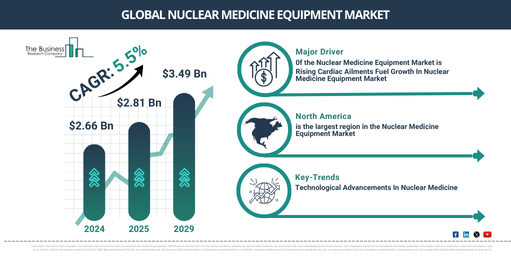
    The market size of nuclear medicine equipment has seen consistent growth in the past few years. The market is expected to expand from $2.66 billion in 2024 to $2.81 billion in 2025 with a compound annual growth rate (CAGR) of 5.8%. The growth in the previous years has been due to the increased need for early detection of diseases, rise in the elderly population, expansion in healthcare infrastructure, increased funds for research and development, and a surge in the demand for functional imaging.

    In the coming years, the nuclear medicine equipment market is projected to exhibit robust growth. The market value is forecasted to reach $3.49 billion in 2029, growing at a compound annual growth rate (CAGR) of 5.5%. Factors propelling this growth during the forecast period include an increase in cancer cases, the escalating cost of nuclear imaging systems, a heightened emphasis on personalized medicine, the rising adoption of hybrid imaging systems, and growing demand for treatment and diagnostics of Alzheimer’s and Parkinson’s disease. Notable trends for the forecast period consist of technological progress, artificial intelligence integration, hybrid imaging systems, telemedicine, and the advent of compact devices.

    Download a free sample to assess the report’s scope and structure:

    https://www.thebusinessresearchcompany.com/sample.aspx?id=20582&type=smp

    How Are Key Drivers in the Industry Acting as Catalysts for the Growth of the Nuclear Medicine Equipment Market?

    The escalating occurrence of heart disorders is predicted to boost the nuclear medicine equipment market’s evolution in the future. Heart disorders, also referred to as heart or cardiovascular diseases, encompass a wide array of conditions impacting the heart and the circulatory system. These diseases can influence the function and structure of the heart, as well as the blood circulation within. The rising incidence of heart disorders is primarily accredited to aspects like aging population, lifestyle decisions including unhealthy dietary habits and sedentarism, environmental exposure, and enhancements in detection technologies. Nuclear medicine devices play a pivotal role in managing heart disorders by providing precise imaging and diagnostic data facilitating early detection, accurate assessment, and efficient tracking of these illnesses. For instance, the data from the British Heart Foundation, a UK-based heart research charity, revealed that around 7.6 million people in the UK suffered from heart and blood circulation diseases in January 2024, comprising approximately 4 million males and 3.6 million female patients. These diseases accounted for nearly 27% of the total deaths in the UK, equivalent to over 170,000 deaths per year or approximately 480 fatalities daily, i.e., one death in every three minutes. Consequently, this amplified incidence of heart disorders propels the growth of the nuclear medicine equipment market.

    Which Segments in the Nuclear Medicine Equipment Offer the Most Growth?

    The nuclear medicine equipment market covered in this report is segmented –

    1) By Product: Single Photon Emission Computed Tomography, Hybrid Positron Emission Tomography, Planar Scintigraphy

    2) By Application: Oncology, Cardiology, Neurology, Other Applications

    3) By End User: Hospitals, Imaging Centers, Academic And Research Institutes, Other End Users

    Subsegments:

    1) By Single Photon Emission Computed Tomography (SPECT): Standalone SPECT Systems, Hybrid SPECT/CT Systems

    2) By Hybrid Positron Emission Tomography (PET): PET/CT Systems, PET/MRI Systems

    3) By Planar Scintigraphy: Cardiac Imaging Systems, Bone Scintigraphy Systems, Thyroid Imaging Systems

    Request customized data on this market:

    https://www.thebusinessresearchcompany.com/customise?id=20582&type=smp

    What Are the Fastest-Growing Geographies in the Nuclear Medicine Equipment Market?

    North America was the largest region in the nuclear medicine equipment market in 2024. Asia-Pacific is expected to be the fastest-growing region in the forecast period. The regions covered in the nuclear medicine equipment market report are Asia-Pacific, Western Europe, Eastern Europe, North America, South America, Middle East, Africa.

    What Are the Strategic Trends Steering the Nuclear Medicine Equipment Market Direction?

    Leading entities in the nuclear medicine equipment sector are concentrating their efforts on the creation of sophisticated products like PET/CT scanners, aimed at delivering in-depth, functional snapshots of the body’s metabolic functions. The PET/CT scanner is a state-of-the-art imaging machine utilized in nuclear medicine that merges two techniques: positron emission tomography (PET) and computed tomography (CT). This dual-function scanner provides both functional and anatomical imaging in a single session, enhancing the accuracy of detection and diagnosis of various conditions by doctors. For example, in June 2024, Siemens Healthineers, a healthcare corporation based in Germany, introduced the Biograph Trinion PET/CT scanner. This PET scanner presents a unique, scalable axial field-of-view design, enabling technological upgrades on-site without the need for expensive room renovations or interruptions to the workflow. It includes a lutetium oxyorthosilicate (LSO) crystal detector providing high spatial resolution and a highly rapid time-of-flight performance of 239 picoseconds, thus improving small lesion detection and ensuring sufficient sensitivity up to 128 cps/kBq. Consequently, it allows for faster scans while lowering patient radiation exposure. Moreover, the Biograph Trinion incorporates a new air-cooled digital detector, making installation simpler compared to the conventional water-cooled mechanisms.

    View the full report here:

    https://www.thebusinessresearchcompany.com/report/nuclear-medicine-equipment-global-market-report

    What Are the Key Elements That Define the Nuclear Medicine Equipment Market?

    Nuclear medicine equipment refers to specialized medical devices used in nuclear medicine to diagnose and treat diseases using radioactive substances. These devices capture images of organs and tissues or deliver targeted radiation therapy. Nuclear medicine equipment allows for early diagnosis, treatment planning, and monitoring of various diseases, particularly cancers and cardiovascular disorders.

    Purchase the full report and get a swift delivery:

    https://www.thebusinessresearchcompany.com/purchaseoptions.aspx?id=20582

    About The Business Research Company:

    With over 15000+ reports from 27 industries covering 60+ geographies, The Business Research Company has built a reputation for offering comprehensive, data-rich research and insights. Armed with 1,500,000 datasets, the optimistic contribution of in-depth secondary research, and unique insights from industry leaders, you can get the information you need to stay ahead in the game.

    Get in touch with us:

    The Business Research Company: https://www.thebusinessresearchcompany.com/

    Americas +1 3156230293

    Asia +44 2071930708

    Europe +44 2071930708

    Email us at info@tbrc.info

    Follow us on:

    LinkedIn: https://in.linkedin.com/company/the-business-research-company

    YouTube: https://www.youtube.com/channel/UC24_fI0rV8cR5DxlCpgmyFQ

    Global Market Model: https://www.thebusinessresearchcompany.com/global-market-model
  • Neurorehabilitation Devices Market in Focus: Forecasting Growth Drivers, Scaling Potential, and Global Opportunities

    Neurorehabilitation Devices Market in Focus: Forecasting Growth Drivers, Scaling Potential, and Global Opportunities

    Discover trends, market shifts, and competitive outlooks for the neurorehabilitation devices industry through 2025-2034 with The Business Research Company’s reliable data and in-depth research

    How Has The Neurorehabilitation Devices Market Size Shifted, And What Is the Outlook Through 2034?

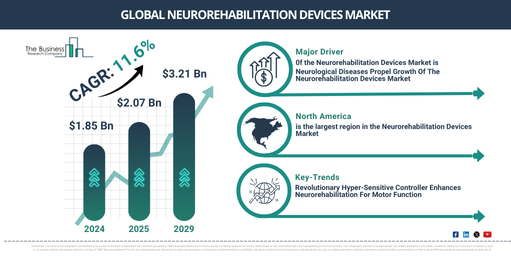
    In recent times, there has seen a swift expansion in the neurorehabilitation devices market. The market, which was valued at $1.85 billion in 2024, is forecasted to reach $2.07 billion in 2025, projecting a compound annual growth rate (CAGR) of 11.9%. Factors such as an increase in the aging population, the widespread nature of neurodegenerative diseases, rising public awareness, regulatory sanctions, and advancements in research and development are credited with this growth observed in the past period.

    In the coming few years, significant expansion is predicted for the neurorehabilitation devices market. Its value is expected to escalate to $3.21 billion by 2029, with an 11.6% compound annual growth rate (CAGR). The anticipated expansion during the forecast period is traced back to factors like burgeoning healthcare expenditure, enhanced educational levels among healthcare workers, development in telemedicine, proliferation of specialty clinics, and improved patient results. Key trends to watch during this forecast period encompass technological evolution, incorporation of robotics and artificial intelligence in neurorehabilitation devices, the emergence of wearable neurorehabilitation gadgets, as well as real-time data that enables ongoing monitoring.

    Download a free sample to assess the report’s scope and structure:

    https://www.thebusinessresearchcompany.com/sample.aspx?id=20579&type=smp

    What Are the Core Market Drivers Propelling Growth in the Neurorehabilitation Devices Industry?

    The neurorehabilitation devices market is foreseen to expand due to the escalating occurrence of neurological disorders. Various factors contribute to the surging cases of these diseases such as growing older population, enhanced diagnostic procedures, heightened awareness and concerns pertaining to stress and mental health. Neurorehabilitation devices provide a helping hand in treating these diseases by recovering motor, cognitive, and sensory functions via specific therapies and stimulation. The World Federation of Neurology, a UK-based representatives of global neurology and neurologists, reported in October 2023 that above 40% of the global population are presently dealing with some sort of neurological problems, with an expectation that this figure will almost double by 2050. Furthermore, as per the UK Parliament’s statistics from September 2021, about one in six people in the UK suffer from a minimum of one neurological disorder, with approximately 600,000 people diagnosed each year. Hence, the accelerating occurrence of neurological diseases is fueling the expansion of the neurorehabilitation devices market.

    How Is the Neurorehabilitation Devices Market Segmented?

    The neurorehabilitation devices market covered in this report is segmented –

    1) By Product: Neurorobotics, Brain-Computer Interface, Wearable Devices, Non-Invasive Stimulators, Other Products

    2) By Application: Stroke, Parkinson’s Disease, Brain And Spinal Cord Injury, Cerebral Palsy, Multiple Sclerosis, Other Applications

    3) By End User: Rehabilitation Centers, Hospitals And Clinics, Home Care, Other End Users

    Subsegments:

    1) By Neurorobotics: Robotic Exoskeletons, Robotic Rehabilitation Devices, Assistive Robots For Gait Training

    2) By Brain-Computer Interface: Invasive Brain-Computer Interfaces, Non-Invasive Brain-Computer Interfaces, Hybrid Brain-Computer Interfaces

    3) By Wearable Devices: Smart Gloves, Smart Sensors, Exosuits and Wearable Robotics

    4) By Non-Invasive Stimulators: Transcranial Magnetic Stimulation (TMS) Devices, Transcranial Direct Current Stimulation (tDCS) Devices, Functional Electrical Stimulation (FES) Devices

    5) By Other Products: Virtual Reality Rehabilitation Systems, Software Platforms For Neurorehabilitation, Cognitive Training Devices

    Request customized data on this market:

    https://www.thebusinessresearchcompany.com/customise?id=20579&type=smp

    Which Regions Are Driving the Next Phase of the Neurorehabilitation Devices Market Growth?

    North America was the largest region in the neurorehabilitation devices market in 2024. The regions covered in the neurorehabilitation devices market report are Asia-Pacific, Western Europe, Eastern Europe, North America, South America, Middle East, Africa.

    Which Technological Trends Are Reshaping the Neurorehabilitation Devices Industry Dynamics?

    Leading firms in the neurorehabilitation devices market are prioritizing the creation of novel products, including hyper-sensitive controllers that increase exactness and patient engagement during rehabilitation therapies. In this context, a hyper-sensitive controller is a component or system constructed to react highly sensitively to movements, intentions or neural signals of a user. For example, in February 2023, MindMaze, a Swiss firm focused on digital neurotherapeutic (DTx) solutions, introduced Izar, a cutting-edge smart peripheral device specifically designed to improve hand motor functionalities in patients with neurological disorders like stroke and Parkinson’s disease. This advanced, mobile device augments hand flexibility and power by precisely recognizing fine grasp forces and wrist maneuvers, fostering exact training and assessment. Izar meets a crucial requirement in neurological rehabilitation by offering both in-clinic and personal home-based training.

    View the full report here:

    https://www.thebusinessresearchcompany.com/report/neurorehabilitation-devices-global-market-report

    How Is the Neurorehabilitation Devices Market Defined and What Are Its Core Parameters?

    Neurorehabilitation devices refer to specialized tools and equipment designed to assist in the rehabilitation of individuals with neurological disorders or injuries. These devices aim to restore or improve functions that have been impaired due to conditions such as stroke, traumatic brain injury, spinal cord injury, multiple sclerosis, or other neurological diseases.

    Purchase the full report and get a swift delivery:

    https://www.thebusinessresearchcompany.com/purchaseoptions.aspx?id=20579

    About The Business Research Company:

    With over 15000+ reports from 27 industries covering 60+ geographies, The Business Research Company has built a reputation for offering comprehensive, data-rich research and insights. Armed with 1,500,000 datasets, the optimistic contribution of in-depth secondary research, and unique insights from industry leaders, you can get the information you need to stay ahead in the game.

    Get in touch with us:

    The Business Research Company: https://www.thebusinessresearchcompany.com/

    Americas +1 3156230293

    Asia +44 2071930708

    Europe +44 2071930708

    Email us at info@tbrc.info

    Follow us on:

    LinkedIn: https://in.linkedin.com/company/the-business-research-company

    YouTube: https://www.youtube.com/channel/UC24_fI0rV8cR5DxlCpgmyFQ

    Global Market Model: https://www.thebusinessresearchcompany.com/global-market-model
  • Strong CAGR to Propel in the Neurology Diagnostic And Monitoring Devices Market and Beyond upto $13.21 Billion by 2029

    Strong CAGR to Propel in the Neurology Diagnostic And Monitoring Devices Market and Beyond upto $13.21 Billion by 2029

    Discover trends, market shifts, and competitive outlooks for the neurology diagnostic and monitoring devices industry through 2025-2034 with The Business Research Company’s reliable data and in-depth research

    How Has the Neurology Diagnostic And Monitoring Devices Market Growth Performance Trended Historically, And What Lies Ahead?

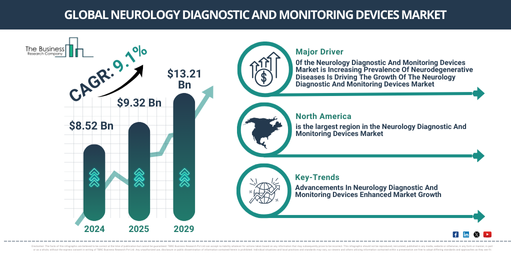
    There has been a robust growth in the size of the neurology diagnostic and monitoring devices market in the past few years. The market, which stands at $8.52 billion in 2024, is expected to rise to $9.32 billion in 2025, showing a compound annual growth rate (CAGR) of 9.4%. The historical growth of the market can be credited to several factors, including escalated healthcare expenditure, a surge in EEG procedures, increased expenditure on healthcare, more investment funnelled into research and development, as well as advancements in diagnostic precision.

    In the upcoming years, the market for neurology diagnostic and monitoring devices is predicted to witness robust growth. The market value is projected to reach $13.21 billion in 2029 with a compound annual growth rate (CAGR) of 9.1%. This anticipated growth in the market during the projected period can be ascribed to activities initiated by the government and healthcare sector, the advent of personalized medicine, the progression of telemedicine, upgrading healthcare infrastructure, and ratifications and standards set by regulatory bodies. The expansion of telehealth, progress in neurostimulation devices, breakthroughs in biomarker discovery and integration, advances in neuroinformatics and data integration, and developments in nanotechnology are some of the major trends expected during the forecast period.

    Download a free sample to assess the report’s scope and structure:

    https://www.thebusinessresearchcompany.com/sample.aspx?id=20578&type=smp

    Which Primay Drivers Are Accelerating Growth in the Neurology Diagnostic And Monitoring Devices Market?

    The neurology diagnostic and monitoring devices market is predicted to benefit from the rise in neurodegenerative diseases. These diseases, which involve progressive nerve cell deterioration or death in the brain and spinal cord, are becoming more common due to factors like an aging population, longer life spans, and increased exposure to environmental and genetic risks. Neurology diagnostic and monitoring devices offer accurate, real-time analysis of brain function and disease progression, making early diagnosis, personalized treatment plans, and effective therapeutic response monitoring possible. For example, National Records of Scotland reported in September 2023, that Alzheimer’s disease and other forms of dementia accounted for 6,277 deaths in Scotland in 2022, a 4% increase from the preceding year, with a rise of 231 deaths. Consequently, the escalating prevalence of neurodegenerative diseases is the driving force behind the growth of the neurology diagnostic and monitoring devices market.

    Which Primary Segments of the Neurology Diagnostic And Monitoring Devices Market Are Driving Growth and Industry Transformations?

    The neurology diagnostic and monitoring devices market covered in this report is segmented –

    1) By Device Type: Electroencephalogram (EEG) Systems, Magnetic Resonance Imaging (MRI) Systems, Computed Tomography (CT) Scanner, Position Emission Tomography (PET) System, Ultrasound Imaging Systems, Other Device Types

    2) By Indication: Neurodegenerative Disease, Epilepsy, Stroke, Other Indications

    3) By End-User: Hospitals And Surgery Centers, Neurology Centers, Ambulatory Care Centers, Diagnostic Laboratories And Imaging Centers, Research Laboratories And Academic Institutes

    Subsegments:

    1) By Electroencephalogram (EEG) Systems: Portable EEG Systems, Clinical EEG Systems, Wireless EEG Systems

    2) By Magnetic Resonance Imaging (MRI) Systems: Closed MRI Systems, Open MRI Systems, Functional MRI (fMRI) Systems

    3) By Computed Tomography (CT) Scanner: Standard CT Scanners, High-Definition CT Scanners, 3D CT Scanners

    4) By Position Emission Tomography (PET) System: PET-CT Scanners, PET-MRI Scanners

    5) By Ultrasound Imaging Systems: Diagnostic Ultrasound Systems, 3D and 4D Ultrasound Systems, Portable Ultrasound Systems

    6) By Other Device Types: Nerve Conduction Study (NCS) Devices, Evoked Potential (EP) Systems, Brain Implants and Neurostimulators

    Request customized data on this market:

    https://www.thebusinessresearchcompany.com/customise?id=20578&type=smp

    Which Regions Are Key Players in the Growth of the Neurology Diagnostic And Monitoring Devices Market?

    North America was the largest region in the neurology diagnostic and monitoring devices market in 2024. Asia-Pacific is expected to be the fastest-growing region in the forecast period. The regions covered in the neurology diagnostic and monitoring devices market report are Asia-Pacific, Western Europe, Eastern Europe, North America, South America, Middle East, Africa.

    Which Cutting-Edge Market Trends Are Expected to Drive the Neurology Diagnostic And Monitoring Devices Market’s Growth?

    Leading firms in the neurology diagnostic and monitoring devices market are concentrating their efforts on creating innovative solutions like image-guided therapy systems to increase accuracy in neurovascular procedures. This type of medical technology is often used for assistance during the planning, performing and navigating of different therapeutic procedures, typically in real-time. For example, Koninklijke Philips N.V., a health technology company headquartered in The Netherlands, in February 2024, launched an innovative Azurion neuro biplane system designed to quicken and improve the non-invasive diagnostic process as well as treatment for neurovascular patients. This system includes distinctive features like improved C-arm rotation and angulation for superior imaging flexibility, swift shifts from 2D to 3D imaging for a streamlined workflow, extensive table-side control for a sterile working field, auto rotating beam for precise image positioning, a new head immobilizer to aid in stroke patient care, and integration of AI and machine learning for performance monitoring and service issue prediction.

    View the full report here:

    https://www.thebusinessresearchcompany.com/report/neurology-diagnostic-and-monitoring-devices-global-market-report

    What Parameters Are Used to Define the Neurology Diagnostic And Monitoring Devices Market?

    Neurology diagnostic and monitoring devices are medical tools used to diagnose and monitor disorders of the nervous system, including the brain, spinal cord, and peripheral nerves. These devices assess neurological functions and help detect conditions such as epilepsy, stroke, Alzheimer’s disease, and multiple sclerosis.

    Purchase the full report and get a swift delivery:

    https://www.thebusinessresearchcompany.com/purchaseoptions.aspx?id=20578

    About The Business Research Company:

    With over 15000+ reports from 27 industries covering 60+ geographies, The Business Research Company has built a reputation for offering comprehensive, data-rich research and insights. Armed with 1,500,000 datasets, the optimistic contribution of in-depth secondary research, and unique insights from industry leaders, you can get the information you need to stay ahead in the game.

    Get in touch with us:

    The Business Research Company: https://www.thebusinessresearchcompany.com/

    Americas +1 3156230293

    Asia +44 2071930708

    Europe +44 2071930708

    Email us at info@tbrc.info

    Follow us on:

    LinkedIn: https://in.linkedin.com/company/the-business-research-company

    YouTube: https://www.youtube.com/channel/UC24_fI0rV8cR5DxlCpgmyFQ

    Global Market Model: https://www.thebusinessresearchcompany.com/global-market-model
  • Global Metzenbaum Scissors Market Projected to Reach $1.99 Billion by 2029 at a CAGR of 4%

    Global Metzenbaum Scissors Market Projected to Reach $1.99 Billion by 2029 at a CAGR of 4%

    Discover trends, market shifts, and competitive outlooks for the metzenbaum scissors industry through 2025-2034 with The Business Research Company’s reliable data and in-depth research

    What Are the Key Projections for the CAGR of the Metzenbaum Scissors Market Size From 2025 to 2034?

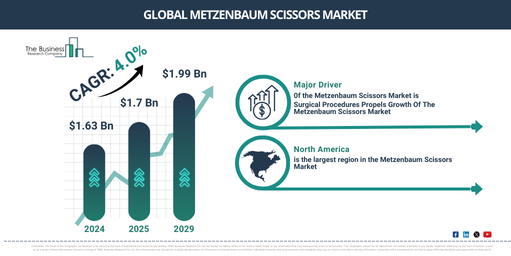
    In recent times, the market size for Metzenbaum scissors has consistently seen an upward trend. The market which is projected at $1.63 billion in 2024, is forecasted to escalate to $1.7 billion in 2025, advancing at a compound annual growth rate (CAGR) of 4.4%. The growth witnessed during the historical period is a result of the increased prevalence of laparoscopic and endoscopic surgeries, the need for unique surgical tools, the development of the healthcare infrastructure, augmentation in surgical procedures and the rising trade in medical instruments.

    Expected to experience continuous growth in the coming years, the metzenbaum scissors market is set to reach $1.99 billion by 2029, with a Compound Annual Growth Rate (CAGR) of 4.0%. The growth projected within this period can be ascribed to the surge in surgical procedures, growth in the aging population, predilection for single-use metzenbaum scissors, and strict adherence to regulatory standards. Key trends within this forecast period encapsulate the progression in surgical procedures, the creation of innovative materials and designs, increased demand for precision equipment, the ascension of e-commerce platforms, and enhancements in surgical tools.

    Download a free sample to assess the report’s scope and structure:

    https://www.thebusinessresearchcompany.com/sample.aspx?id=20574&type=smp

    What are the Fundamental Drivers and Innovations Shaping the Metzenbaum Scissors Market?

    Looking ahead, the metzenbaum scissors market is anticipated to expand due to the increasing number of surgical procedures. Specialist surgeons use surgical procedures to manage diseases, physical conditions or injuries by making incisions or manipulating tissues, organs or bones in the body via specific tools. Factors like an aging population, technological advancement in healthcare, higher incidence of chronic diseases and better healthcare access have fueled the increase in surgical procedures. Metzenbaum scissors are mostly used in surgeries for the dissection and cutting of soft tissues. The long, slender blades with dull ends make them perfect for precise tissue intervention without inflicting unnecessary trauma. The British Association of Aesthetic Plastic Surgeons, a UK-based surgical body, reported in March 2023 that approximately 31,057 cosmetic surgeries were conducted in the UK in 2022, registering a significant 102% increase from the year before. Hence, the uptick in surgical procedures is pushing the growth of the metzenbaum scissors market.

    Metzenbaum Scissors Market Driver: Growing Incidence of Cancer Fuels Growth of Metzenbaum Scissor Market


    How Is the Metzenbaum Scissors Market Segmented?

    The metzenbaum scissors market covered in this report is segmented –

    1) By Type: Bending, Straight

    2) By Material: Stainless Steel, Titanium, Plastic

    3) By Jaw Design: Straight, Angled, Curved

    4) By Application: Surgical, Dental, Veterinary

    5) By End-User: Hospitals, Clinics, Private Practices, Veterinary Clinics

    Subsegments:

    1) By Bending Metzenbaum Scissors: Curved Bending Metzenbaum Scissors, Heavy-Duty Bending Metzenbaum Scissors, Micro Bending Metzenbaum Scissors, Bending Metzenbaum Scissors For Precision Surgery

    2) By Straight Metzenbaum Scissors: Standard Straight Metzenbaum Scissors, Long Straight Metzenbaum Scissors, Straight Metzenbaum Scissors For General Surgery, Straight Metzenbaum Scissors For Delicate Procedures

    Request customized data on this market:

    https://www.thebusinessresearchcompany.com/customise?id=20574&type=smp

    Which Regions Are Driving the Next Phase of the Metzenbaum Scissors Market Growth?

    North America was the largest region in the metzenbaum scissors market in 2024. The regions covered in the metzenbaum scissors market report are Asia-Pacific, Western Europe, Eastern Europe, North America, South America, Middle East, Africa.

    View the full report here:

    https://www.thebusinessresearchcompany.com/report/metzenbaum-scissors-global-market-report

    How Is the Metzenbaum Scissors Market Defined and What Are Its Core Parameters?

    Metzenbaum scissors are surgical instruments primarily used to cut delicate tissue during operations. They have long, slender, and curved or straight blades with blunt tips designed to precisely cut soft tissues without damaging surrounding structures. These scissors are commonly used in various surgical procedures, particularly in dissection and cutting fine tissues in muscles, intestines, or organs.

    Purchase the full report and get a swift delivery:

    https://www.thebusinessresearchcompany.com/purchaseoptions.aspx?id=20574

    About The Business Research Company:

    With over 15000+ reports from 27 industries covering 60+ geographies, The Business Research Company has built a reputation for offering comprehensive, data-rich research and insights. Armed with 1,500,000 datasets, the optimistic contribution of in-depth secondary research, and unique insights from industry leaders, you can get the information you need to stay ahead in the game.

    Get in touch with us:

    The Business Research Company: https://www.thebusinessresearchcompany.com/

    Americas +1 3156230293

    Asia +44 2071930708

    Europe +44 2071930708

    Email us at info@tbrc.info

    Follow us on:

    LinkedIn: https://in.linkedin.com/company/the-business-research-company

    YouTube: https://www.youtube.com/channel/UC24_fI0rV8cR5DxlCpgmyFQ

    Global Market Model: https://www.thebusinessresearchcompany.com/global-market-model
  • Medical Linear Accelerator Market 2025-2034: Key Highlights, Growth Dynamics, and Emerging Trends

    Discover trends, market shifts, and competitive outlooks for the medical linear accelerator industry through 2025-2034 with The Business Research Company’s reliable data and in-depth research

    What is the Projected CAGR for the Medical Linear Accelerator Market Size from 2025 to 2034?

    The market size for medical linear accelerators has seen robust growth in recent times. The market, which is projected to grow from $3.69 billion in 2024 to $4 billion in 2025, is pegged at a compound annual growth rate (CAGR) of 8.6%. The growth in the past can be attributed to various factors such as an increase in cancer cases, advancements in radiation therapy technology, governmental backing and funding for cancer care, rising availability of both public and private healthcare infrastructure, along with an escalated awareness of radiation therapy as a potential treatment option for cancer.

    The market size of medical linear accelerators is predicted to demonstrate significant growth in the upcoming years, expanding to $5.54 billion by 2029 with a compound annual growth rate of 8.5%. This increasing trend in the future years is due to factors such as the growth of cancer treatment facilities in developing nations, heightened concentration on individualized cancer treatments, benevolent governmental policies and initiatives related to cancer care, coupled with a growing elderly population. Key trends in the prediction period encompass advancements in medical linear accelerator technology, continuous progression in LINAC technology, innovations such as Intensity-Modulated Radiation Therapy (IMRT), the introduction of latest medical linear accelerators, real-time management of organ motion, and enhancements in the delivery of dosage.

    Download a free sample to assess the report’s scope and structure:

    https://www.thebusinessresearchcompany.com/sample.aspx?id=20572&type=smp

    How Are Key Drivers in the Industry Acting as Catalysts for the Growth of the Medical Linear Accelerator Market?

    The growing incidence of cancer is predicted to fuel the expansion of the medical linear accelerator market in the future. The surging need for cancer therapeutics stems from the escalating number of cancer incidences globally, propelled by elements like increasing geriatric population, shifts in lifestyle, and environmental impacts, all requiring more sophisticated and accessible health care responses. Medical linear accelerators, which provide precise, high-energy radiation beams for targeting and killing cancer cells with minimal harm to surrounding healthy tissues, play a crucial role in achieving effective and controlled radiation treatment. The American Cancer Society, a US organization, reported in January 2024 that about 297,790 new instances of invasive breast cancer were identified in women during 2023. As a result, the increasing cancer incidence is propelling the growth of the medical linear accelerator market.

    Which Segments in the Medical Linear Accelerator Offer the Most Growth?

    The medical linear accelerator market covered in this report is segmented –

    1) By Type: Low-Energy, High-Energy

    2) By Product Type: Dedicated Linear Accelerator, Non-Dedicated Linear Accelerator

    3) By Treatment Type: Intensity Modulated Radiation Therapy, Volumetric Modulated Arc Therapy (VMAT), Image Guided Radiation Therapy, Stereotactic Radiosurgery Or Stereotactic Body Radiotherapy

    4) By End User: Hospitals, Clinics, Research Centers

    Subsegments:

    1) By Low-Energy: Low-Energy X-Ray Medical Linear Accelerators, Low-Energy Electron Beam Linear Accelerators, Low-Energy Linear Accelerators For Pediatric Treatments, Low-Energy Linear Accelerators For Skin Cancer Treatment

    2) By High-Energy: High-Energy X-Ray Medical Linear Accelerators, High-Energy Electron Beam Linear Accelerators, High-Energy Proton Therapy Linear Accelerators, High-Energy Linear Accelerators For Advanced Radiation Therapy, High-Energy Linear Accelerators For Stereotactic Body Radiation Therapy (SBRT)

    Request customized data on this market:

    https://www.thebusinessresearchcompany.com/customise?id=20572&type=smp

    What Are the Fastest-Growing Geographies in the Medical Linear Accelerator Market?

    North America was the largest region in the medical linear accelerator market in 2024. Asia-Pacific is expected to be the fastest-growing region in the market. The regions covered in the medical linear accelerator market report are Asia-Pacific, Western Europe, Eastern Europe, North America, South America, Middle East, Africa.

    What Are the Current Market Growth and Trends in the Medical Linear Accelerator Industry?

    Big players in the medical linear accelerator market are prioritizing the development and enhancement of treatment planning using artificial intelligence and machine learning methodologies. This includes AI-enhanced imaging techniques which improve the precision of treatment and patient outcomes while boosting operational effectiveness. AI-assisted imaging refines treatment accuracy by offering clearer, more specific images, contributing to improved tumor identification, localization, and bespoke treatment planning. For example, in May 2024, Elekta., a company rooted in Swedish neuroscience, introduced its latest linear accelerator, the Evo, a CT-Linac integrated with sophisticated AI-enhanced imaging. This pioneering system includes offline and online adaptive radiation therapy and enhanced standard image-guided radiation therapy treatments. The multifunctional Evo allows medical professionals to choose the best radiation therapy method according to each patient’s requirements. The adaptive radiation therapy features of the Evo are designed to reduce uncertainties and possible damage to adjacent organs. Iris, aided by the system’s advanced AI and specific anatomy algorithms, enhances high-quality imaging, pinpoint target visualization, and increased automation. Furthermore, Elekta has broadened its software offerings with Elekta ONE Planning, supported by MIM, which includes distributed treatment planning, quickened dose calculations, and automated AI-based contouring and dose planning.

    View the full report here:

    https://www.thebusinessresearchcompany.com/report/medical-linear-accelerator-global-market-report

    What Are the Key Elements That Define the Medical Linear Accelerator Market?

    A medical linear accelerator (LINAC) is a device used in radiation therapy to deliver high-energy X-rays or electron beams to treat cancerous tumors. It works by accelerating electrons to high speeds using microwave technology and directing these accelerated electrons to a target, producing radiation precisely aimed at the cancer. A medical linear accelerator is essential for precise tumor targeting, minimizing damage to surrounding healthy tissues and delivering effective treatment for various types of cancer.

    Purchase the full report and get a swift delivery:

    https://www.thebusinessresearchcompany.com/purchaseoptions.aspx?id=20572

    About The Business Research Company:

    With over 15000+ reports from 27 industries covering 60+ geographies, The Business Research Company has built a reputation for offering comprehensive, data-rich research and insights. Armed with 1,500,000 datasets, the optimistic contribution of in-depth secondary research, and unique insights from industry leaders, you can get the information you need to stay ahead in the game.

    Get in touch with us:

    The Business Research Company: https://www.thebusinessresearchcompany.com/

    Americas +1 3156230293

    Asia +44 2071930708

    Europe +44 2071930708

    Email us at info@tbrc.info

    Follow us on:

    LinkedIn: https://in.linkedin.com/company/the-business-research-company

    YouTube: https://www.youtube.com/channel/UC24_fI0rV8cR5DxlCpgmyFQ

    Global Market Model: https://www.thebusinessresearchcompany.com/global-market-model
  • Mastectomy Reconstruction Implants Market Trends 2025-2034: Growth, Strategic Insights, and Opportunities Ahead

    Mastectomy Reconstruction Implants Market Trends 2025-2034: Growth, Strategic Insights, and Opportunities Ahead

    Discover trends, market shifts, and competitive outlooks for the mastectomy reconstruction implants industry through 2025-2034 with The Business Research Company’s reliable data and in-depth research

    What Is the Current and Projected Market Size of the Mastectomy Reconstruction Implants Market Through 2034?

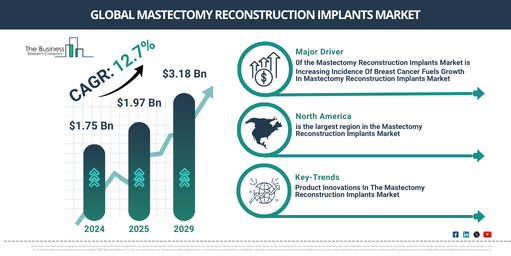
    In the last years, there has been a swift expansion in the market size of mastectomy reconstruction implants. The market is projected to develop from $1.75 billion in 2024 to $1.97 billion in 2025, with a compound annual growth rate (CAGR) of 13.0%. The significant increase in the past came as a result of a rise in breast augmentation treatments, increased knowledge about options for breast reconstruction, growing comprehension of the significance of natural appearance, the availability of smaller sized breast implants and a spike in the acceptance of minimally invasive breast reconstruction procedures.

    In the ensuing years, swift expansion is anticipated in the mastectomy reconstruction implants market, reaching a valuation of $3.18 billion in 2029, boasting a compound annual growth rate (CAGR) of 12.7%. The predicted growth during this forecast period stems from the rising prevalence of breast cancer, amplified demand for cosmetic and breast reconstruction surgeries, the requirements for mastectomy reconstruction implants, and encouraging reimbursement policies. Key trends for the projected period encompass advancements in breast implants, surgical technique innovations, prepectoral reconstruction, incorporation of radiation therapy, and technological progression.

    Download a free sample to assess the report’s scope and structure:

    https://www.thebusinessresearchcompany.com/sample.aspx?id=20571&type=smp

    What Are the Major Market Drivers Behind the Rising Adoption of Mastectomy Reconstruction Implants Market?

    The surge in breast cancer cases is anticipated to drive the expansion of the mastectomy reconstruction implant market. Breast cancer, a malignant tumor originating from breast cells, is seeing a rise due to factors such as the elderly population, lifestyle and hormonal influences, genetic variables, and shifts in diet. Breast cancer patients turn to mastectomy reconstruction implants to regain a naturalistic appearance and form of the breast post-mastectomy, thus promoting both physical and psychological welfare through the provision of a naturally-appearing breast after the cancer is removed. For example, a report by the American Cancer Society, a United States establishment, revealed that approximately 297,790 new instances of invasive breast cancer were identified in women in 2023, marking an annual growth rate of 0.6%. Hence, this escalating incidence of breast cancer is fuelling development in the mastectomy reconstruction implant sector.

    Which Key Market Segments Comprise the Mastectomy Reconstruction Implants Market and Drive Its Revenue Growth?

    The mastectomy reconstruction implants market covered in this report is segmented –

    1) By Product: Two-Stage Implant Reconstruction, Direct-To-Implant Reconstruction

    2) By Shape: Round, Anatomical

    3) By Application: Hospital, Beauty Clinic, Ambulatory Surgery Centers (ASCs), Other Applications

    Subsegments:

    1) By Two-Stage Implant Reconstruction: Tissue Expander-Based Two-Stage Reconstruction, Expander To Implant Conversion For Reconstruction, Silicone Two-Stage Reconstruction Implants, Saline Two-Stage Reconstruction Implants, Customizable Two-Stage Implants

    2) By Direct-To-Implant Reconstruction: Silicone Direct-To-Implant Reconstruction, Saline Direct-To-Implant Reconstruction, Pre-formed Direct-To-Implant Options, Hybrid Direct-To-Implant With Tissue Grafting, Anatomical/Teardrop Direct-To-Implants, Round Direct-To-Implants

    Request customized data on this market:

    https://www.thebusinessresearchcompany.com/customise?id=20571&type=smp

    Which Areas Are Leading Regions in the Mastectomy Reconstruction Implants Market Expansion Across the Globe?

    North America was the largest region in the mastectomy reconstruction implants market in 2024. The regions covered in the mastectomy reconstruction implants market report are Asia-Pacific, Western Europe, Eastern Europe, North America, South America, Middle East, Africa.

    What Are the Strategic Trends Steering the Mastectomy Reconstruction Implants Market Direction?

    Major firms in the mastectomy reconstruction implants market are concentrating on technological progress, such as FixNip NRI (Nipple Reconstruction Implant), to improve quality in the breast reconstruction sector. The FixNip NRI is a groundbreaking device designed to tackle problems related to the reconstruction of the nipple-areola complex (NAC), essential for recreating the breast’s aesthetic look and enhancing patient satisfaction. For example, in March 2024, GC Aesthetics France SAS, a medical technology firm based in France, introduced the FixNip NRI, a game-changing nipple implant intended for women undertaking breast reconstruction after a mastectomy. The implant, composed of biocompatible smooth silicone and adorned with a floral-shaped nitinol frame, permits a minor invasive insertion process. This operation can be completed in roughly 15 minutes, leading to a small scar and minimal interruption for the patient.

    View the full report here:

    https://www.thebusinessresearchcompany.com/report/mastectomy-reconstruction-implants-global-market-report

    How Is the Mastectomy Reconstruction Implants Market Conceptually Defined?

    Mastectomy reconstruction implants are medical devices used to restore the breast’s shape and size following a mastectomy, which is a surgical procedure to remove one or both breasts, typically due to breast cancer. These implants are designed to replicate the breast’s natural appearance and may be made of silicone gel or saline. Mastectomy reconstruction implants are used in either two-stage implant reconstruction, where a tissue expander is placed before the implant, or direct-to-implant rebuilding, where the implant is placed immediately after the mastectomy.

    Purchase the full report and get a swift delivery:

    https://www.thebusinessresearchcompany.com/purchaseoptions.aspx?id=20571

    About The Business Research Company:

    With over 15000+ reports from 27 industries covering 60+ geographies, The Business Research Company has built a reputation for offering comprehensive, data-rich research and insights. Armed with 1,500,000 datasets, the optimistic contribution of in-depth secondary research, and unique insights from industry leaders, you can get the information you need to stay ahead in the game.

    Get in touch with us:

    The Business Research Company: https://www.thebusinessresearchcompany.com/

    Americas +1 3156230293

    Asia +44 2071930708

    Europe +44 2071930708

    Email us at info@tbrc.info

    Follow us on:

    LinkedIn: https://in.linkedin.com/company/the-business-research-company

    YouTube: https://www.youtube.com/channel/UC24_fI0rV8cR5DxlCpgmyFQ

    Global Market Model: https://www.thebusinessresearchcompany.com/global-market-model
  • Magnetic Bead Purification Kits Market Insights: In-Depth Look at Growth Trends, Market Size, and Opportunities for 2025-2034

    Magnetic Bead Purification Kits Market Insights: In-Depth Look at Growth Trends, Market Size, and Opportunities for 2025-2034

    Discover trends, market shifts, and competitive outlooks for the magnetic bead purification kits industry through 2025-2034 with The Business Research Company’s reliable data and in-depth research

    What is the Anticipated CAGR of the Magnetic Bead Purification Kits Market, and What Factors Will Drive It?

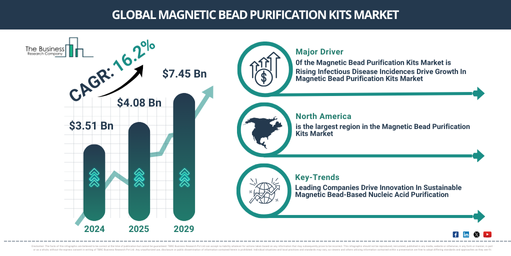
    In recent times, there has been a significant expansion in the market size of magnetic bead purification kits. Predictions suggest that it will escalate from a worth of $3.51 billion in 2024 to $4.08 billion in 2025, exhibiting a compound annual growth rate (CAGR) of 16.5%. The historical period’s growth can be linked to numerous factors such as the heightened study into infectious diseases, the rise in customization and automation catering to diverse research needs, emphasis on sustainability and lessening plastic waste, growing requirement for top-notch purification solutions, and a rising awareness amongst researchers.

    In the coming years, the magnetic bead purification kits market is predicted to experience a significant surge in growth, reaching $7.45 billion by 2029 with a compound annual growth rate (CAGR) of 16.2%. This anticipated growth over the forecast period is seen as a result of various factors such as the proliferation of research in the fields of biotechnology and life sciences, the escalating demand for clinical diagnostic services, the increased uptake of drug discovery, the surging necessity for high-quality proteins and nucleic acids in proteomics, and the growing demand for next-generation sequencing and molecular diagnostics. Key trends during the forecast period are expected to include advancements in the integration of robotic systems, evolution in molecular biology and biotechnology, the advancement of accurate and efficient sample purification methodologies, the creation of multiplexed assays, and the assimilation of automation systems.

    Download a free sample to assess the report’s scope and structure:

    https://www.thebusinessresearchcompany.com/sample.aspx?id=20570&type=smp

    What External and Internal Drivers Are Contributing to the Growth of the Magnetic Bead Purification Kits Market?

    The upsurge in infectious disease occurrences is anticipated to boost the progress of the magnetic bead purification kits market in the future. Infectious diseases, the result of harmful microorganisms such as bacteria, viruses, fungi or parasites invading and multiplying in the body, are an increasing concern. This encompasses diseases like tuberculosis (TB), streptococcal infections, methicillin-resistant staphylococcus aureus (MRSA), influenza (Flu), among others. The rising incidence of these diseases can be attributed to insufficient antimicrobial resistance, environmental shifts, and social and behavioral factors. Virology and bacteriology testing offer a diagnosis for these diseases by identifying the precise pathogens causing the illness, providing a path for specialized treatment and management. For example, in November 2023, the US governmental agency, Centers for Disease Control and Prevention reported a 5.9% rise in tuberculosis (TB) cases in the US, from 7,870 cases in 2021 to 8,331 cases in 2022. Hence, the increasing frequency of infectious diseases propels the growth of the magnetic bead purification kits market.

    What Segment Types Define the Magnetic Bead Purification Kits Market Structure?

    The magnetic bead purification kits market covered in this report is segmented –

    1) By Type: Semi-Automated Magnetic Bead-based Kits, Manual Membrane Column-Based Kits, Isolation Reagents

    2) By Nucleic Acid Type: DNA Purification Kits, RNA Purification Kits, miRNA Purification Kits

    3) By End-User: Biotechnology And Pharmaceutical Companies, Academic And Research Institutes, Diagnostic Laboratories

    Subsegments:

    1) By Semi-Automated Magnetic Bead-based Kits: Semi-Automated RNA Purification Kits, Semi-Automated DNA Purification Kits, Semi-Automated Protein Purification Kits, Semi-Automated Cell Isolation Kits, Semi-Automated Immunoprecipitation Kits

    2) By Manual Membrane Column-Based Kits: Manual RNA Isolation Kits, Manual DNA Isolation Kits, Manual Protein Purification Kits, Manual Antibody Purification Kits, Manual Cell Isolation Kits

    3) By Isolation Reagents: RNA Isolation Reagents, DNA Isolation Reagents, Protein Isolation Reagents, Cell Isolation Reagents, Immunoprecipitation Reagents

    Request customized data on this market:

    https://www.thebusinessresearchcompany.com/customise?id=20570&type=smp

    Which Geographic Areas Hold the Strongest Growth Potential in the Magnetic Bead Purification Kits Market?

    North America was the largest region in the magnetic bead purification kits market in 2024. The regions covered in the magnetic bead purification kits market report are Asia-Pacific, Western Europe, Eastern Europe, North America, South America, Middle East, Africa.

    What Long-Term Trends Are Transforming the Competitive Landscape of the Magnetic Bead Purification Kits Market?

    Leading entities in the market for magnetic bead purification kits are pouring efforts into the production of advanced offerings such as magnetic bead-based extraction kits to better the precision and efficacy of protein and nucleic acid purification. These will simplify sample preparations and cut down processing times for diverse applications like research, diagnostics, and biotechnology. The magnetic bead-based extraction kit is an instrument designed for the separation and purification of particular biomolecules from a mix. Magnetic beads encrusted with capture molecules that specifically latch onto the targeted biomolecules, be it DNA, RNA or proteins, are utilized in these kits. For example, New England Biolabs, Inc., an American biotechnology firm, rolled out the Monarch Mag Viral DNA/RNA Extraction Kit, a magnetic bead-based extraction kit, in April 2024. This product increases the recovery rate of small amounts of viral nucleic acids, aiding in sensitive detection. The kit uses a magnetic bead-based approach to effectively and consistently extract viral RNA and DNA and can be scaled up for high-throughput automation. It is compatible with a variety of sample types such as saliva, respiratory swabs and wastewater samples, following an enrichment phase. The Monarch Mag Viral DNA/RNA Extraction Kit is designed to perfectly complement NEB’s downstream amplification and library preparation products for next-gen sequencing applications and can be used together with these product lines.

    View the full report here:

    https://www.thebusinessresearchcompany.com/report/magnetic-bead-purification-kits-global-market-report

    What Is the Definition of the Magnetic Bead Purification Kits Market?

    Magnetic bead purification kits are laboratory tools that isolate and purify specific biomolecules, such as proteins, nucleic acids (deoxyribonucleic acid (DNA) or ribonucleic acid (RNA)), or cells from a mixture. These kits utilize magnetic beads coated with specific capture molecules (such as antibodies or nucleic acid probes) that bind to the target biomolecules. Magnetic bead purification kits provide a quick, efficient, and highly selective way to purify biomolecules with minimal manual intervention.

    Purchase the full report and get a swift delivery:

    https://www.thebusinessresearchcompany.com/purchaseoptions.aspx?id=20570

    About The Business Research Company:

    With over 15000+ reports from 27 industries covering 60+ geographies, The Business Research Company has built a reputation for offering comprehensive, data-rich research and insights. Armed with 1,500,000 datasets, the optimistic contribution of in-depth secondary research, and unique insights from industry leaders, you can get the information you need to stay ahead in the game.

    Get in touch with us:

    The Business Research Company: https://www.thebusinessresearchcompany.com/

    Americas +1 3156230293

    Asia +44 2071930708

    Europe +44 2071930708

    Email us at info@tbrc.info

    Follow us on:

    LinkedIn: https://in.linkedin.com/company/the-business-research-company

    YouTube: https://www.youtube.com/channel/UC24_fI0rV8cR5DxlCpgmyFQ

    Global Market Model: https://www.thebusinessresearchcompany.com/global-market-model
  • Strong CAGR to Propel in the Heart Closure Devices Market and Beyond upto $4.87 Billion by 2029

    Strong CAGR to Propel in the Heart Closure Devices Market and Beyond upto $4.87 Billion by 2029

    Stay ahead with our updated market reports featuring the latest on tariffs, trade flows, and supply chain transformations.

    How Has the Heart Closure Devices Market Growth Performance Trended Historically, And What Lies Ahead?

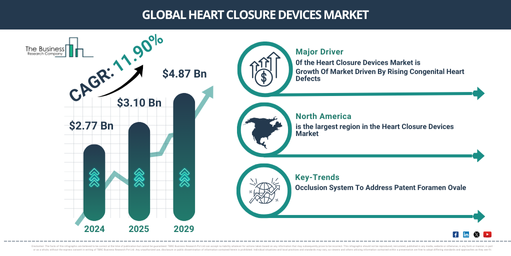
    The market size of heart closure devices has witnessed an accelerated growth lately. It is set to expand from a value of $2.77 billion in 2024 to about $3.10 billion in 2025, attaining a compound annual growth rate (CAGR) of 12.2%. The previously recorded growth can be credited to heightened awareness amongst healthcare professionals, a rise in device approvals by regulatory bodies, favorable reimbursement policies, escalating cases of cardiovascular diseases, and a rising elderly population.

    In the forthcoming years, the market size of heart closure devices is slated to witness a swift expansion, growing to a remarkable $4.87 billion by 2029 at a Compound Annual Growth Rate (CAGR) of 11.9%. This projected growth during the forecast period can be credited to several factors including an uptick in congenital heart defects, escalating use of MRI procedures, an increase in occurrences of heart strokes, a rise in atrial fibrillation incidents, and a growing inclination toward minimally invasive procedures. The forecast period will also see major trends such as the amalgamation of multi-functional devices, advancements in technology, innovation in materials and design, the incorporation of imaging technologies, and novel developments in bioresorbable materials.

    Download a free sample to assess the report’s scope and structure:

    https://www.thebusinessresearchcompany.com/sample.aspx?id=20828&type=smp

    Which Primay Drivers Are Accelerating Growth in the Heart Closure Devices Market?

    The heart closure devices market growth is likely to be fueled by the escalating number of cardiovascular diseases (CVDs). Aging, unhealthy lifestyle choices, genetic predisposition, and a heightened prevalence of risk factors such as hypertension, diabetes, and obesity, are factors contributing to the rise in CVDs. Heart closure devices ameliorate congenital heart defect complications by minimally invasively closing unconventional heart openings, enhancing blood circulation, and preventing further health complications. For instance, the Singapore Heart Foundation (SHF) reported in May 2024 that the total deaths from cardiovascular disease stood at 26,885 in 2023. Also, deaths from ischemic heart disease increased to 5,302 from 5,290 deaths in 2022. Owing to this, the growing prevalence of cardiovascular diseases (CVDs) remains a significant driver of the heart closure devices market.

    Which Primary Segments of the Heart Closure Devices Market Are Driving Growth and Industry Transformations?

    The heart closure devices market covered in this report is segmented –

    1) By Product: Atrial Septal Defect (ASD) Closure Devices, Ventricular Septal Defect (VSD) Closure Devices, Patent Foramen Ovale (PFO) Closure Devices, Left Atrial Appendage (LAA) Closure Devices, Other Products

    2) By Material: Nitinol-Based Devices, Stainless Steel Devices, Other Materials

    3) By Mode of Delivery: Transcatheter Delivery, Surgical Delivery

    4) By End Use: Hospitals, Ambulatory Surgical Centers (ASCs), Cardiac Catheterization Laboratories, Other End Uses

    Subsegments:

    1) By Atrial Septal Defect (ASD) Closure Devices: Self-expanding Occluders, Balloon-expandable Occluders, Other ASD Closure Devices

    2) By Ventricular Septal Defect (VSD) Closure Devices: Transcatheter VSD Closure Devices, Surgical VSD Closure Devices, Other VSD Closure Devices

    3) By Patent Foramen Ovale (PFO) Closure Devices: Double-Disc Occluders, Single-Disc Occluders, Other PFO Closure Devices

    4) By Left Atrial Appendage (LAA) Closure Devices: LAA Occluders, LAA Clip Systems, Other LAA Closure Devices

    5) By Other Products: Septal Defect Closure Devices, Endovascular Closure Devices, Other Specialty Closure Devices

    Request customized data on this market:

    https://www.thebusinessresearchcompany.com/customise?id=20828&type=smp

    Which Regions Are Key Players in the Growth of the Heart Closure Devices Market?

    North America was the largest region in the heart closure devices market in 2024. Asia-Pacific is expected to be the fastest-growing region in the forecast period. The regions covered in the heart closure devices market report are Asia-Pacific, Western Europe, Eastern Europe, North America, South America, Middle East, Africa.

    What Long-Term Trends Are Transforming the Competitive Landscape of the Heart Closure Devices Market?

    Leading firms in the heart closure devices market are concentrating on the creation of cutting-edge technologies like patent foramen ovale occlusion systems to enhance patient outcomes and minimize procedural complications. Patent foramen ovale (PFO) occlusion systems, a type of medical device for sealing a PFO—a persistent aperture in the heart between the right and left atria which should have naturally sealed post-birth but stays open—are being innovated. For instance, in September 2022, Abbott Laboratories, a medical devices company based in the US, introduced the Amplatzer Talisman PFO Occlusion System. This groundbreaking device aims to assist people with PFO, especially those who have suffered a stroke and face a high recurrence risk. The system comes with an already attached occluder to simplify procedures, a versatile 30mm size for increased adaptability, and a completely recapturable design, to ensure effective closure of PFO, thus reducing the possibilities of future strokes.

    View the full report here:

    https://www.thebusinessresearchcompany.com/report/heart-closure-devices-global-market-report

    What Parameters Are Used to Define the Heart Closure Devices Market?

    Heart closure devices are advanced medical tools designed to seal holes or openings in the heart, commonly arising from congenital defects or surgical interventions. They are used to treat conditions such as atrial septal defects (ASD), patent foramen ovale (PFO), and other structural heart abnormalities. These minimally invasive devices are typically delivered through catheter-based procedures, offering a safer alternative to open-heart surgery.?

    Purchase the full report and get a swift delivery:

    https://www.thebusinessresearchcompany.com/purchaseoptions.aspx?id=20828

    About The Business Research Company:

    With over 15000+ reports from 27 industries covering 60+ geographies, The Business Research Company has built a reputation for offering comprehensive, data-rich research and insights. Armed with 1,500,000 datasets, the optimistic contribution of in-depth secondary research, and unique insights from industry leaders, you can get the information you need to stay ahead in the game.

    Get in touch with us:

    The Business Research Company: https://www.thebusinessresearchcompany.com/

    Americas +1 3156230293

    Asia +44 2071930708

    Europe +44 2071930708

    Email us at info@tbrc.info

    Follow us on:

    LinkedIn: https://in.linkedin.com/company/the-business-research-company

    YouTube: https://www.youtube.com/channel/UC24_fI0rV8cR5DxlCpgmyFQ

    Global Market Model: https://www.thebusinessresearchcompany.com/global-market-model

  • Hearing Screening And Diagnostic Devices Market Valuation Expected To Reach $12.45 Billion By 2029, Growing At A Rate Of 9.6%

    Hearing Screening And Diagnostic Devices Market Valuation Expected To Reach $12.45 Billion By 2029, Growing At A Rate Of 9.6%

    Stay ahead with our updated market reports featuring the latest on tariffs, trade flows, and supply chain transformations.

    What Are the Projected Market Size and Growth Rates for the Hearing Screening And Diagnostic Devices Market From 2025 To 2029?

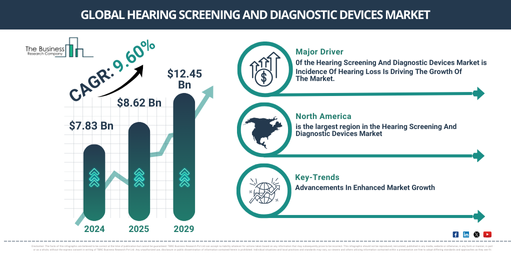
    The market for hearing screening and diagnostic devices has experienced swift growth in the recent past. The market value is set to increase from $7.83 billion in 2024 to $8.62 billion in 2025, at a compound annual growth rate (CAGR) of 10.0%. The historic period’s growth can be credited to government testing initiatives, advancements in healthcare infrastructure, existence of health insurance, funding from the government and non-governmental organizations, regulatory backing and adherence to industry standards.

    The market size for hearing screening and diagnostic devices is projected to experience robust growth in the ensuing years, expanding to $12.45 billion by 2029, with a Compound Annual Growth Rate (CAGR) of 9.6%. This surge during the forecast timeframe can be linked to the rise of telehealth and remote diagnostics, a prioritization on preventative healthcare, enhanced device affordability, early detection focus, and bespoke hearing solutions. Upcoming trends during the forecast period will feature wireless and remote connectivity, device miniaturization and portability, multifunctional and hybrid devices, and advancements in 3D and virtual reality (VR) simulations and noise-cancellation technologies.

    Download a free sample to assess the report’s scope and structure:

    https://www.thebusinessresearchcompany.com/sample.aspx?id=20827&type=smp

    Which Factors and External Forces Are Driving Demand in the Hearing Screening And Diagnostic Devices Market?

    The anticipated growth of the hearing screening and diagnostic devices market may be underpinned by the rising prevalence of auditory impairment. This loss of hearing often results from internal ear decay, sensory hair cell loss, and modification in auditory nerve routes, causing a diminished capacity to perceive sounds and thus adversely affecting communication and lifestyle quality. This condition, also known as presbycusis, can be managed by the utilization of hearing screening and diagnostic tools, which facilitate early detection, precision evaluation, and tailored treatment plans. These interventions aid people in comprehending their hearing status, tracking alterations over time, and accessing suitable interventions to enhance their living standards and communication capabilities. The World Health Organization, a UN agency based in Switzerland, revealed in February 2024 an estimate that 430 million individuals, 34 million of them children, would require rehabilitation due to disabling hearing loss, constituting over 5% of the world population. The number is expected to escalate to about 2.5 billion by 2050, with at least 700 million necessitating hearing rehabilitation services. Consequently, the escalation in auditory impairment prevalence is fuelling the growth of the hearing screening and diagnostic devices market.

    Which Segments in the Hearing Screening And Diagnostic Devices Offer the Most Growth?

    The hearing screening and diagnostic devices market covered in this report is segmented –

    1) By Product Type: OAE (Otoacoustic Emission) And ABR (Auditory Brainstem Response) Testing Devices, Audiometers, Immittance Screeners

    2) By Age Group: Newborn Hearing Screening, Other Age Group

    3) By Indication: Conductive Hearing Loss, Sensorineural Hearing Loss, Combination Hearing Loss, Other Indications

    4) By Test: Pure-Tone Test, Bone Conduction Test, Tests Of The Middle Ear, Speech Discrimination Test, Speech Recognition Threshold Test, Most Comfortable Listening Test, Uncomfortable Loudness Level Test

    5) By End User: Hospitals And Clinics, Diagnostic Centers, Other End Users

    Subsegments:

    1) By OAE (Otoacoustic Emission) And ABR (Auditory Brainstem Response) Testing Devices: Portable OAE And ABR Testing Devices, Standalone OAE And ABR Testing Devices

    2) By Audiometers: Clinical Audiometers, Screening Audiometers, Diagnostic Audiometers

    3) By Immittance Screeners: Tympanometers, Acoustic Reflex Testers, Middle Ear Analyzers

    Request customized data on this market:

    https://www.thebusinessresearchcompany.com/customise?id=20827&type=smp

    What Are the Fastest-Growing Geographies in the Hearing Screening And Diagnostic Devices Market?

    North America was the largest region in the hearing screening and diagnostic devices market in 2024. Asia Pacific is expected to be the fastest-growing region in the forecast period. The regions covered in the hearing screening and diagnostic devices market report are Asia-Pacific, Western Europe, Eastern Europe, North America, South America, Middle East, Africa.

    What Key Market Trends and Innovations Are Shaping the Future of the Hearing Screening And Diagnostic Devices Industry?

    Key players in the hearing screening and diagnostic devices market are focusing on technological innovation, like AI-based hearing technology, to improve diagnostic precision, enhance patient results, and offer customised hearing solutions. AI-based hearing technology relates to novel hearing aids that use artificial intelligence to automatically tailor sound processing to varying environments, boosting speech transparency, minimising background noise, and individualising listening experiences by learning from user interactions. For example, in February 2023, Starkey Hearing Technologies, an American hearing aids manufacturer, introduced Edge AI and Genesis AI hearing aids, marking significant progress in performance, connectivity, and user experience. These devices boast unique features such as the G2 Neuro Processor for better speech clarity and noise reduction, a battery life of up to 51 hours, and a waterproof design. They also provide Bluetooth LE Audio connectivity, health tracking features like fall detection and balance assessments, and a voice-activated assistant backed by generative AI for convenient adjustments.

    View the full report here:

    https://www.thebusinessresearchcompany.com/report/hearing-screening-and-diagnostic-devices-global-market-report

    What Are the Key Elements That Define the Hearing Screening And Diagnostic Devices Market?

    Hearing screening and diagnostic devices refer to tools and equipment used to assess and diagnose hearing abilities and auditory disorders. It was utilized to detect, assess, and diagnose hearing impairments, ensuring early intervention and appropriate treatment for individuals across all age groups.

    Purchase the full report and get a swift delivery:

    https://www.thebusinessresearchcompany.com/purchaseoptions.aspx?id=20827

    About The Business Research Company:

    With over 15000+ reports from 27 industries covering 60+ geographies, The Business Research Company has built a reputation for offering comprehensive, data-rich research and insights. Armed with 1,500,000 datasets, the optimistic contribution of in-depth secondary research, and unique insights from industry leaders, you can get the information you need to stay ahead in the game.

    Get in touch with us:

    The Business Research Company: https://www.thebusinessresearchcompany.com/

    Americas +1 3156230293

    Asia +44 2071930708

    Europe +44 2071930708

    Email us at info@tbrc.info

    Follow us on:

    LinkedIn: https://in.linkedin.com/company/the-business-research-company

    YouTube: https://www.youtube.com/channel/UC24_fI0rV8cR5DxlCpgmyFQ

    Global Market Model: https://www.thebusinessresearchcompany.com/global-market-model