Category: Medical Equipment

  • Automated Compounding Devices Market 2025-2034: Key Highlights, Growth Dynamics, and Emerging Trends

    Automated Compounding Devices Market 2025-2034: Key Highlights, Growth Dynamics, and Emerging Trends

    Discover trends, market shifts, and competitive outlooks for the automated compounding devices industry through 2025-2034 with The Business Research Company’s reliable data and in-depth research

    What Are the Key Milestones in the Automated Compounding Devices Market’s Growth Trajectory From 2025 To 2034?

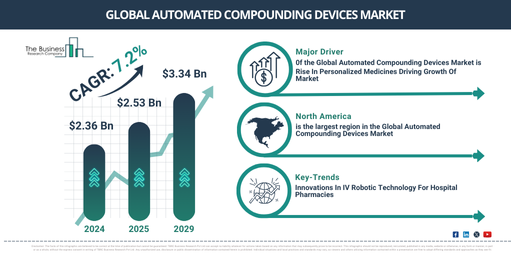
    There has been a considerable growth in the size of the automated compounding devices market in the recent past. The market, which was worth $2.36 billion in 2024, is projected to increase to $2.53 billion in 2025, recording a compound annual growth rate (CAGR) of 7.4%. Factors contributing to this growth during the historic period include the increase in chronic disease incidences, an aging demographic, enhancements in healthcare infrastructure, regulatory stipulations, and the rise in medication mistakes.

    The market for automated compounding devices is predicted to experience a substantial growth in the coming years, increasing to $3.34 billion by 2029 with a 7.2% compound annual growth rate (CAGR). This predicted growth in the forecast period can be credited to the escalating incidence of cancer, the worldwide healthcare growth, a greater emphasis on patient security, regulatory approval, and a heightened focus on sustainability. Key trends for the forecast period encompass telemedicine, remote healthcare, artificial intelligence development, digitization in healthcare, and real-time monitoring.

    Download a free sample to assess the report’s scope and structure:

    https://www.thebusinessresearchcompany.com/sample.aspx?id=18231&type=smp

    How Are Key Drivers in the Industry Acting as Catalysts for the Growth of the Automated Compounding Devices Market?

    The rise in the number of tailored medical treatments is anticipated to propel the growth of the automated compounding devices market. Personalized medicine is a medical strategy that customizes healthcare decisions, practices, procedures, and interventions based on each patient’s specific characteristics. The advancement in the number of individualized medicines is attributed to improved comprehension of genetics, patient-centric data, and regulatory backing. Automated compounding devices are vital instruments that ensure accurate and exact composition of tailor-made medication prescriptions suited to every individual’s needs. These appliances streamline the process of merging various pharmaceutical constituents in precise proportions, a necessary aspect of developing personalized therapies. To illustrate, the Personalized Medicine Coalition, a US-based non-profit organization, pointed out in February 2024 that the FDA approved sixteen new personalized treatments for rare disease patients in 2023 versus just six in 2022. Hence, the surge in the number of tailor-made medicines is assisting in driving the automated compounding devices market’s expansion.

    Which Segments in the Automated Compounding Devices Offer the Most Growth?

    The automated compounding devices market covered in this report is segmented –

    1) By Component: Automated Compounding Systems Equipment, Automated Compounding Systems Software

    2) By Product Type: Intravenous Compounding Systems, Oral Compounding Systems, Total Parenteral Nutrition (TPN) Compounding Systems

    3) By Mode Of Operation: Fully Automated Compounding Systems, Semi-Automated Compounding Systems

    4) By End-User: Hospitals, Ambulatory Surgical Centers, Other End Users

    Subsegments:

    1) By Automated Compounding Systems Equipment: Compounding Workstations, Compounding Pumps, Mixing Chambers, Scales And Balances, Dispensing Units, Vial And Syringe Filling Systems, Other Related Equipment (Filtration Devices)

    2) By Automated Compounding Systems Software: Prescription Management Software, Workflow Management Software, Monitoring And Control Software, Data Analytics And Reporting Software, Safety And Compliance Software, Integration Software For Hospital Or Pharmacy Management Systems

    Request customized data on this market:

    https://www.thebusinessresearchcompany.com/customise?id=18231&type=smp

    What Are the Fastest-Growing Geographies in the Automated Compounding Devices Market?

    North America was the largest region in the automated compounding devices market in 2023. Asia-Pacific is expected to be the fastest-growing region in the forecast period. The regions covered in the automated compounding devices market report are Asia-Pacific, Western Europe, Eastern Europe, North America, South America, Middle East, Africa.

    What Are the Key Market Trends in the Automated Compounding Devices Market Over the Coming Years?

    Leading firms in the automated compounding device sector are striving to decrease medication errors and boost patient safety via cutting-edge technologies like robotic compounding, with an eye to increasing client confidence, achieving regulatory compliance, and securing an edge in the competition. Robotic compounding technology automates the careful preparation and blending of pharmaceutical compounds using sophisticated robotic systems, thereby improving precision, efficiency, and safety in the preparation of medications. To provide an example, in March 2022, Omnicell Inc., a healthcare technology firm based in the United States, introduced the IVX Station, a novel automated compounding device. With this innovative solution, the company hopes to widen the availability of IV robotic technology in the larger market, promoting patient safety, precision, cost-effectiveness, supply chain management, and regulatory conformity. The IVX Station has a throughput speed three times faster than existing IV robotic systems, features a robust design to reduce downtime, and retains a compact size perfect for pharmacy operations.

    View the full report here:

    https://www.thebusinessresearchcompany.com/report/automated-compounding-devices-global-market-report

    What Are the Key Elements That Define the Automated Compounding Devices Market?

    Automated compounding devices refer to specialized equipment designed to automate the preparation of medications, including intravenous (IV) solutions, in healthcare settings. These devices ensure precise and efficient compounding, enhancing patient safety and reducing the risk of human error in medication preparation.

    Purchase the full report and get a swift delivery:

    https://www.thebusinessresearchcompany.com/purchaseoptions.aspx?id=18231

    About The Business Research Company:

    With over 15000+ reports from 27 industries covering 60+ geographies, The Business Research Company has built a reputation for offering comprehensive, data-rich research and insights. Armed with 1,500,000 datasets, the optimistic contribution of in-depth secondary research, and unique insights from industry leaders, you can get the information you need to stay ahead in the game.

    Get in touch with us:

    The Business Research Company: https://www.thebusinessresearchcompany.com/

    Americas +1 3156230293

    Asia +44 2071930708

    Europe +44 2071930708

    Email us at info@tbrc.info

    Follow us on:

    LinkedIn: https://in.linkedin.com/company/the-business-research-company

    YouTube: https://www.youtube.com/channel/UC24_fI0rV8cR5DxlCpgmyFQ

    Global Market Model: https://www.thebusinessresearchcompany.com/global-market-model
  • Top Trends Driving Innovation and Change in the Atherectomy Devices Market: Innovative Atherectomy Peripheral Platform Catheters Shaping The Atherectomy Devices Market

    Top Trends Driving Innovation and Change in the Atherectomy Devices Market: Innovative Atherectomy Peripheral Platform Catheters Shaping The Atherectomy Devices Market

    Discover trends, market shifts, and competitive outlooks for the atherectomy devices industry through 2025-2034 with The Business Research Company’s reliable data and in-depth research

    How Has The Atherectomy Devices Market Size Shifted, And What Is the Outlook Through 2034?

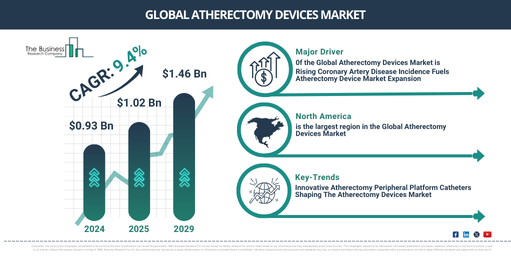
    Recent years have seen a robust growth in the market size of atherectomy devices, which is projected to increase from $0.93 billion in 2024 to $1.02 billion in 2025 at a compound annual growth rate (CAGR) of 9.8%. Factors contributing to this growth during the historic period include a surge in cardiovascular diseases, an ageing population, escalating obesity figures, enhanced funding and investment towards cardiovascular research and healthcare facilities, and heightened awareness about minimally invasive procedures.

    The market size for atherectomy devices is projected to experience substantial growth in the coming years, surging to $1.46 billion in 2029 at a Compound Annual Growth Rate (CAGR) of 9.4%. This anticipated growth within the forecast period is linked to factors such as increasing diabetes rates, a rise in diseases related to lifestyle, the expanding availability of reimbursement for atherectomy system costs, an increase in disposable income, and a heightened demand for atherectomy procedures. Key trends expected in the forecast period consist of ongoing enhancements in atherectomy device technology, the incorporation of sophisticated imaging technologies, a focus on care that centers around the patient, the application of robotic systems, along with the employment of real-time data analytics and machine learning.

    Download a free sample to assess the report’s scope and structure:

    https://www.thebusinessresearchcompany.com/sample.aspx?id=15728&type=smp

    What External and Internal Drivers Are Contributing to the Growth of the Atherectomy Devices Market?

    The growth of the atherectomy devices market is expected to be spurred by the increasing prevalence of coronary artery disease (CAD). Known for its characteristic narrowing or blockage of coronary arteries due to plaque accumulation, coronary artery disease impairs blood flow to the heart. A global surge in the senior population, elevated sedentary behaviours, rising stress and mental health problems, and an uptake in unhealthy food consumption are contributing to the pervasiveness of CAD. Directional coronary atherectomy is a less intrusive procedure targeting the removal of blockages from coronary arteries, improving heart muscle blood supply and reducing pain. For example, the Singapore Heart Foundation (SHF), a non-profit organization based in Singapore, reported that total cardiovascular disease-related deaths reached 8,311 in 2023, which was an increase from 7,762 in 2021. Furthermore, in 2023, atherosclerosis was responsible for 60% of these deaths, a slight increase from 59% in 2022. Thus, the ever-increasing prevalence of coronary artery disease is fuelling the growth of the atherectomy devices market.

    What Segment Types Define the Atherectomy Devices Market Structure?

    The atherectomy devices market covered in this report is segmented –

    1) By Product: Rotational Atherectomy Devices, Orbital Atherectomy Devices, Directional Atherectomy Devices, Other Products

    2) By Application: Peripheral Vascular Applications, Cardiovascular Applications, Neurovascular Applications

    3) By End User: Hospitals And Surgical Centers, Ambulatory Care Centers, Other End Users

    Subsegments:

    1) By Rotational Atherectomy Devices: Coronary Rotational Atherectomy Devices, Peripheral Rotational Atherectomy Devices

    2) By Orbital Atherectomy Devices: Coronary Orbital Atherectomy Devices, Peripheral Orbital Atherectomy Devices

    3) By Directional Atherectomy Devices: Coronary Directional Atherectomy Devices, Peripheral Directional Atherectomy Devices

    4) By Other Products: Laser Atherectomy Devices, Excimer Laser Atherectomy Systems

    Request customized data on this market:

    https://www.thebusinessresearchcompany.com/customise?id=15728&type=smp

    Which Geographic Areas Hold the Strongest Growth Potential in the Atherectomy Devices Market?

    North America was the largest region in the atherectomy devices market in 2023. Asia-Pacific is expected to be the fastest-growing region in the forecast period. The regions covered in the atherectomy devices market report are Asia-Pacific, Western Europe, Eastern Europe, North America, South America, Middle East and Africa.

    What Key Trends Are Shaping the Future of the Atherectomy Devices Market?

    Leading corporations in the atherectomy devices market are pioneering novel products, including atherectomy peripheral platform-based catheters, to earn a competitive advantage. The application of such catheters, which are medical instruments used to treat peripheral artery disease by traveling through the bloodstream to alleviate arterial obstructions in the legs, is increasing. For example, Cardio Flow, an American medical device manufacturing company, introduced the FreedomFlow, a cutting-edge orbital atherectomy peripheral platform, in October 2023. Using a unique mechanism to get rid of plaque blockages in the leg arteries, FreedomFlow system leverages a distinctive catheter-based layout using the principles of angular momentum physics and features a spiral geometric design with five diamond-covered spheres that keep constant touch with the vessel wall during both forward and backward movement.

    View the full report here:

    https://www.thebusinessresearchcompany.com/report/atherectomy-devices-global-market-report

    What Is the Definition of the Atherectomy Devices Market?

    Atherectomy devices are specialized medical instruments used in the procedure of atherectomy, a minimally invasive surgical technique to remove atherosclerotic plaque from blood vessels. Atherectomy devices are crucial in managing arterial blockages, offering a precise and minimally invasive solution to restore blood flow and alleviate symptoms associated with peripheral artery disease (PAD) and coronary artery disease (CAD).

    Purchase the full report and get a swift delivery:

    https://www.thebusinessresearchcompany.com/purchaseoptions.aspx?id=15728

    About The Business Research Company:

    With over 15000+ reports from 27 industries covering 60+ geographies, The Business Research Company has built a reputation for offering comprehensive, data-rich research and insights. Armed with 1,500,000 datasets, the optimistic contribution of in-depth secondary research, and unique insights from industry leaders, you can get the information you need to stay ahead in the game.

    Get in touch with us:

    The Business Research Company: https://www.thebusinessresearchcompany.com/

    Americas +1 3156230293

    Asia +44 2071930708

    Europe +44 2071930708

    Email us at info@tbrc.info

    Follow us on:

    LinkedIn: https://in.linkedin.com/company/the-business-research-company

    YouTube: https://www.youtube.com/channel/UC24_fI0rV8cR5DxlCpgmyFQ

    Global Market Model: https://www.thebusinessresearchcompany.com/global-market-model
  • Asthma Spacers Market 2025-2034: Key Highlights, Growth Dynamics, and Emerging Trends

    Asthma Spacers Market 2025-2034: Key Highlights, Growth Dynamics, and Emerging Trends

    Discover trends, market shifts, and competitive outlooks for the asthma spacers industry through 2025-2034 with The Business Research Company’s reliable data and in-depth research

    What Are the Projected Market Size and Growth Rates for the Asthma Spacers Market From 2025 To 2029?

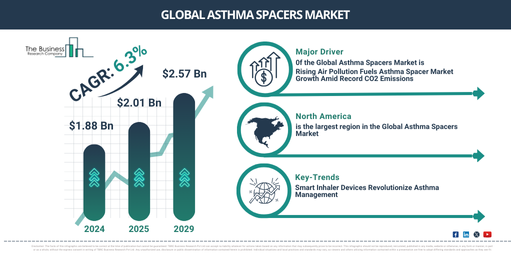
    In the past few years, the market size for asthma spacers has shown robust growth. The market is expected to expand from $1.88 billion in 2024 to $2.01 billion in 2025, representing a compound annual growth rate (CAGR) of 6.6%. The historical growth in the market can be linked to factors such as a surge in asthma cases, advancements in diagnosis and awareness initiatives, approval from regulatory bodies and guidelines provided by them, enhancements in healthcare infrastructure, and policies related to insurance and reimbursements.

    The market for asthma spacers is predicted to witness robust expansion in the coming years, reaching $2.57 billion in 2029 with a CAGR of 6.3%. This projected acceleration during the forecast period results from numerous contributing factors such as an increase in the number of children and elderly, an emphasis on preventative health care, innovations in telemedicine, emerging markets, and the implementation of patient-focused educational and training programs, as well as collaborations and partnerships, and the rise of personalized medicine. Key trends throughout this period include the uptake of intelligent inhalers, the concentration on managing children’s asthma, the need for portable devices, integration with telehealth, growth in R&D investments, and customizable solutions.

    Download a free sample to assess the report’s scope and structure:

    https://www.thebusinessresearchcompany.com/sample.aspx?id=15727&type=smp

    Which Primay Drivers Are Accelerating Growth in the Asthma Spacers Market?

    The escalating issue of air pollution is set to boost the expansion of the asthma spacer market. Essentially, air pollution involves dangerous substances in the air that pose a threat to humans, the environment, and the overall living conditions. It’s a major environmental and public health problem instigated by both, natural and man-made events, incorporating numerous harmful elements that jeopardize human well-being and ecosystems. Asthma spacers can serve as a safeguard during times of elevated air pollution, reducing the amount of pollutants that make their way into the respiratory system while employing inhalers and consequently, lowering the risk of worsening asthma symptoms due to airborne irritants. For instance, the International Energy Agency (IEA), an autonomous intergovernmental entity based in France, reported in March 2024, that in 2023 the global energy-related carbon dioxide (CO2) emissions surged by 1.1%, equivalent to an increase from 321 million metric tons to 410 million metric tons (Mt CO2). These emissions achieved a record high of over 37.4 metric tons in 2023, an increase from 36.8 billion metric tons in 2022. The ever-increasing air pollution will thus stimulate the expansion of the asthma spacer market.

    Which Primary Segments of the Asthma Spacers Market Are Driving Growth and Industry Transformations?

    The asthma spacers market covered in this report is segmented –

    1) By Product: Aerochamber, Optichamber, Volumatic, Inspirease, Other Products

    2) By Distribution Channels: E-commerce Channels, Retail Pharmacies, Hospital Pharmacies, Other Distribution Channels

    3) By Application: Preventive Use, Rescue Use, Combined Use

    4) By End-Use: Homecare Settings, Hospitals And Clinics, Other End-Users

    Subsegments:

    1) By Aerochamber: Aerochamber Plus, Aerochamber Flow-Vu

    2) By Optichamber: Optichamber Diamond, Optichamber Standard

    3) By Volumatic: Volumatic Spacer, Volumatic Plus

    4) By Inspirease: Inspirease Spacer Device

    5) By Other Products: Babyhaler, Funhaler

    Request customized data on this market:

    https://www.thebusinessresearchcompany.com/customise?id=15727&type=smp

    Which Regions Are Key Players in the Growth of the Asthma Spacers Market?

    North America was the largest region in the asthma spacers market in 2023. Asia-Pacific is expected to be the fastest-growing region in the forecast period. The regions covered in the asthma spacers market report are Asia-Pacific, Western Europe, Eastern Europe, North America, South America, Middle East and Africa.

    What Long-Term Trends Are Transforming the Competitive Landscape of the Asthma Spacers Market?

    Major businesses in the asthma spacer market are prioritizing the inclusion of intelligent technologies in connected metered-dose inhaler (MDI) devices, aiming to boost patient compliance and improve the results of treatments. A connected MDI device is an advanced inhaler that integrates digital technology to measure usage, monitor adherence and offer data to patients and healthcare professionals for improved respiratory disease management. Take for example, in February 2022, Aptar Pharma, an American pharmaceutical manufacturing company, introduced the HeroTracker Sense, a smart connected health device built to track and monitor treatment usage for respiratory diseases, such as asthma. This innovation allows patients to correctly quantify and log their inhaler doses, offering key insights to healthcare professionals for tailored treatment plans. This trend emphasizes a move towards individualized, technologically advanced solutions in the asthma spacer market to enhance patient outcomes and overall healthcare efficacy.

    View the full report here:

    https://www.thebusinessresearchcompany.com/report/asthma-spacers-global-market-report

    What Parameters Are Used to Define the Asthma Spacers Market?

    Asthma spacers are medical devices used in conjunction with metered-dose inhalers (MDIs) to enhance the delivery of aerosolized medication to the lungs. The primary purpose of asthma spacers is to improve the efficiency of medication delivery to the lungs. They are often referred to as ‘holding chambers’ and come in various shapes and sizes.

    Purchase the full report and get a swift delivery:

    https://www.thebusinessresearchcompany.com/purchaseoptions.aspx?id=15727

    About The Business Research Company:

    With over 15000+ reports from 27 industries covering 60+ geographies, The Business Research Company has built a reputation for offering comprehensive, data-rich research and insights. Armed with 1,500,000 datasets, the optimistic contribution of in-depth secondary research, and unique insights from industry leaders, you can get the information you need to stay ahead in the game.

    Get in touch with us:

    The Business Research Company: https://www.thebusinessresearchcompany.com/

    Americas +1 3156230293

    Asia +44 2071930708

    Europe +44 2071930708

    Email us at info@tbrc.info

    Follow us on:

    LinkedIn: https://in.linkedin.com/company/the-business-research-company

    YouTube: https://www.youtube.com/channel/UC24_fI0rV8cR5DxlCpgmyFQ

    Global Market Model: https://www.thebusinessresearchcompany.com/global-market-model
  • Artificial Lung Market in Focus: Forecasting Growth Drivers, Scaling Potential, and Global Opportunities

    Artificial Lung Market in Focus: Forecasting Growth Drivers, Scaling Potential, and Global Opportunities

    Discover trends, market shifts, and competitive outlooks for the artificial lung industry through 2025-2034 with The Business Research Company’s reliable data and in-depth research

    How Has The Artificial Lung Market Size Shifted, And What Is the Outlook Through 2034?

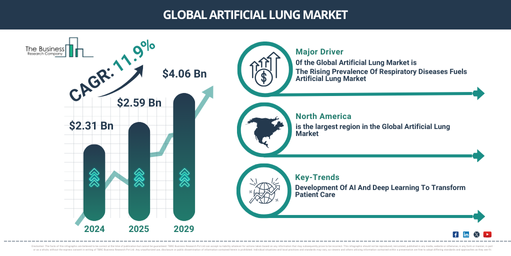
    In recent years, the artificial lung market has seen sharp increases in its size. Projected growth is expected to take the market from $2.31 billion in 2024 to $2.59 billion the following year, with a CAGR standing at 12.2%. The various reasons that have fueled this growth include enhanced understanding among healthcare professionals, broader market reach, more applications in domestic healthcare settings, a surge in medical tourism, and advancements in healthcare facilities.

    In the coming years, the artificial lung market is anticipated to experience considerable expansion. By 2029, the market size is expected to rise to $4.06 billion, with an compound annual growth rate (CAGR) of 11.9%. The projected increase during this period can be related to the growing incidence of respiratory disorders, advancements in healthcare amenities, increasing adoption of minimally invasive treatments, improved patient life quality, and elevated chronic obstructive pulmonary disease prevalence. Noteworthy trends for the forecast period are the inclusion of wireless technology, integration of artificial intelligence (AI), progression in genomics and medical tech, and creation of compact and transportable artificial lungs.

    Download a free sample to assess the report’s scope and structure:

    https://www.thebusinessresearchcompany.com/sample.aspx?id=16591&type=smp

    What Are the Core Market Drivers Propelling Growth in the Artificial Lung Industry?

    Rising instances of respiratory ailments are projected to stimulate the expansion of the artificial lung industry in the future. Factors such as escalating levels of air pollution, climate variations, and shifts in lifestyle are contributing to the growth in respiratory diseases, which in turn, exert significant pressure on public healthcare systems. Artificial lungs, used to support or replace compromised lung function by providing oxygen and removing carbon dioxide from blood, play a key role in the treatment of these conditions. For example, data from the Australian Institute of Health and Welfare, a health and welfare organization based in Australia, showed that around 8.5 million individuals or 34% of Australia’s population were suffering from chronic respiratory diseases in June 2024. The affected demographic includes an estimated 2.8 million individuals or 11% of the population with asthma, and approximately 638,000 individuals or 2.5% of the population with Chronic Obstructive Pulmonary Disease (COPD). Consequently, the surge in respiratory diseases is influencing the growth of the artificial lung industry.

    How Is the Artificial Lung Market Segmented?

    The artificial lung market covered in this report is segmented –

    1) By Product Type: Single Roller Pump Heart Lung Machines, Double Roller Pump Heart Lungs Machines, Bubble Artificial Lung, Membrane Artificial Lung

    2) By Application: Cardiac Surgery, Lung Transplant Operation, Acute Respiratory Failure Treatment, Other Applications

    3) By End-Users: Hospital, Emergency Center, Other End-users

    Subsegments:

    1) By Single Roller Pump Heart Lung Machines: Portable Single Roller Pump Heart Lung Machines, Stationary Single Roller Pump Heart Lung Machines

    2) By Double Roller Pump Heart Lung Machines: Portable Double Roller Pump Heart Lung Machines, Stationary Double Roller Pump Heart Lung Machines

    3) By Bubble Artificial Lung: Disposable Bubble Artificial Lung, Reusable Bubble Artificial Lung

    4) By Membrane Artificial Lung: Oxygenator Membrane Artificial Lung, Carbon Dioxide Removal Membrane Artificial Lung

    Request customized data on this market:

    https://www.thebusinessresearchcompany.com/customise?id=16591&type=smp

    Which Regions Are Driving the Next Phase of the Artificial Lung Market Growth?

    North America was the largest region in the artificial lung market in 2024. The regions covered in the artificial lung market report are Asia-Pacific, Western Europe, Eastern Europe, North America, South America, Middle East, Africa.

    What Are the Current Market Growth and Trends in the Artificial Lung Industry?

    Leading corporations within the artificial lung market are concentrating their efforts on creating innovative solutions, for example, the implementation of remote monitoring and control systems, in order to secure a competitive advantage. This arrangement enables health professionals to oversee patients’ key readings and tweak ventilation settings without the necessity to be in physical proximity to the patient’s bed, thereby diminishing infection risk and boosting patient safety during their treatment. For example, in August 2022, Teltonika Telemedic, a electronics manufacturer based in the US, made significant headway in the creation of its artificial lung ventilator, known as TELTOMED. Teltonika Telemedic has obtained an exclusive patent for this secure remote data transmission and control of its ventilator. This technological advancement heightens the security and dependability of patient data communications, which is a crucial aspect of contemporary medical equipment.

    View the full report here:

    https://www.thebusinessresearchcompany.com/report/artificial-lung-global-market-report

    How Is the Artificial Lung Market Defined and What Are Its Core Parameters?

    An artificial lung refers to a medical device designed to take over the function of natural lungs, providing oxygen to the blood and removing carbon dioxide. It is typically used in patients with severe respiratory failure or during surgeries that require the heart and lungs to be temporarily non-functional. This technology aims to support or replace lung function, allowing patients to survive and recover from critical conditions.

    Purchase the full report and get a swift delivery:

    https://www.thebusinessresearchcompany.com/purchaseoptions.aspx?id=16591

    About The Business Research Company:

    With over 15000+ reports from 27 industries covering 60+ geographies, The Business Research Company has built a reputation for offering comprehensive, data-rich research and insights. Armed with 1,500,000 datasets, the optimistic contribution of in-depth secondary research, and unique insights from industry leaders, you can get the information you need to stay ahead in the game.

    Get in touch with us:

    The Business Research Company: https://www.thebusinessresearchcompany.com/

    Americas +1 3156230293

    Asia +44 2071930708

    Europe +44 2071930708

    Email us at info@tbrc.info

    Follow us on:

    LinkedIn: https://in.linkedin.com/company/the-business-research-company

    YouTube: https://www.youtube.com/channel/UC24_fI0rV8cR5DxlCpgmyFQ

    Global Market Model: https://www.thebusinessresearchcompany.com/global-market-model
  • Arthroscopic Shavers Market 2025-2034: Key Highlights, Growth Dynamics, and Emerging Trends

    Arthroscopic Shavers Market 2025-2034: Key Highlights, Growth Dynamics, and Emerging Trends

    Discover trends, market shifts, and competitive outlooks for the arthroscopic shavers industry through 2025-2034 with The Business Research Company’s reliable data and in-depth research

    What is the Projected CAGR for the Arthroscopic Shavers Market Size from 2025 to 2034?

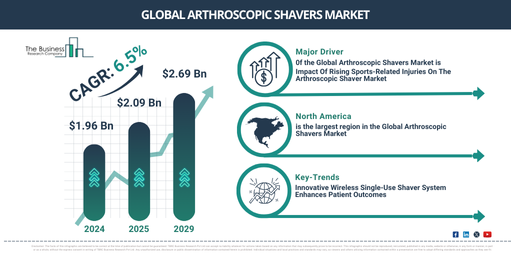
    The market for arthroscopic shavers has seen substantial growth in the past few years. The market’s rise from $1.96 billion in 2024 to $2.09 billion in 2025, with a compound annual growth rate (CAGR) of 6.7%, has been noteworthy. This growth during the historic period can be traced back to factors such as an increase in sports-related injuries, an aging demographic, advancements in healthcare infrastructure, a trend towards minimally invasive surgeries amongst patients, and an uptick in the utilization of outpatient and ambulatory surgical centers.

    In the coming years, we can anticipate a significant expansion in the market size of arthroscopic shavers, with expectations to reach $2.69 billion by 2029, reflecting a compound annual growth rate (CAGR) of 6.5%. The anticipated growth over the forecast period can be linked to a multitude of factors such as a growing elderly population, the enhancement of healthcare infrastructure, a growing preference for single-use surgical tools, strategic alliances, and an increased demand for outpatient services. Key market trends anticipated during the forecast period encompass the incorporation of robotics, customization in medicine, developments in minimally invasive surgery, a growing adoption of single-use instruments, and the emergence of portable arthroscopic shavers.

    Download a free sample to assess the report’s scope and structure:

    https://www.thebusinessresearchcompany.com/sample.aspx?id=17064&type=smp

    How Are Key Drivers in the Industry Acting as Catalysts for the Growth of the Arthroscopic Shavers Market?

    The escalating prevalence of injuries associated with sports is anticipated to fuel the expansion of the arthroscopic shaver market in the future. Injuries from sports and exercise can lead to physical damage, particularly affecting the muscles, bones, and joints. The surge in such injuries can be attributed to an increased participation in sports, enhanced training techniques, and improved sports gadgets that test physical limits, which collectively result in heightened injury rate among sportspeople worldwide. Arthroscopic shavers serve as an effective tool in treating these burgeoning sports injuries by adeptly eliminating impaired tissue and mending joint structures via less invasive procedures, thereby ensuring faster recovery and lessened idle periods for athletes. As an illustration, in 2022, the National Safety Council, a not-for-profit public service organization targeting health and safety based in the US, disclosed that the reported cases of sports and leisure injuries in 2020 surged by 20% in 2021 and saw a further rise of 12% in 2022. Consequently, the increasing trend of sports-related injuries is projected to stimulate the growth of the arthroscopic shaver market.

    Which Segments in the Arthroscopic Shavers Offer the Most Growth?

    The arthroscopic shavers market covered in this report is segmented –

    1) By Product Type: Arthroscopic Shaver Systems, Arthroscopic Shaver Accessories

    2) By Application: Knee Arthroscopy, Hip Arthroscopy, Shoulder And Elbow Arthroscopy, Spine Arthroscopy, Foot And Ankle Arthroscopy, Other Applications

    3) By End User: Hospitals, Ambulatory Surgical Centers, Orthopedic Clinics

    Subsegments:

    1) By Arthroscopic Shaver Systems: Handheld Arthroscopic Shaver Systems, Powered Arthroscopic Shaver Systems, Electric Arthroscopic Shaver Systems

    2) By Arthroscopic Shaver Accessories: Shaver Blades, Shaver Burrs, Shaver Sheaths, Shaver Drills, Shaver Motors

    Request customized data on this market:

    https://www.thebusinessresearchcompany.com/customise?id=17064&type=smp

    What Are the Fastest-Growing Geographies in the Arthroscopic Shavers Market?

    North America was the largest region in the arthroscopic shavers market in 2024. Asia-Pacific is expected to be the fastest-growing region in the forecast period. The regions covered in the arthroscopic shavers market report are Asia-Pacific, Western Europe, Eastern Europe, North America, South America, Middle East, Africa.

    Which Emerging Trends that Are Influencing the Arthroscopic Shavers Industry Evolution?

    Significant businesses in the arthroscopic shaver market are concentrating on technological breakthroughs like wireless single-use shaver systems for enhancing surgical efficiency and augmenting patient results. An arthroscopic wireless single-use shaver system is a battery-driven, single-use surgical instrument devised for minimally invasive joints procedures that offer wireless functionality to increase operative efficiency and lower infection hazards. In 2024, Integrated Endoscopy, an American manufacturer specialising in complex, integrated, and ergonomic endoscopic imaging systems for medical procedures, collaborated with UK-based Frii Medical which specializes in pioneering medical equipment development, to unveil a proprietary single-use shaver system on a worldwide scale. This innovative cordless shaver allows surgeons to operate without the need for power cords, comprising a reusable motor/battery module and a recharging hub. Frii’s system removes sterilization costs and guarantees consistent quality, resulting in significant savings compared to conventional shaver systems.

    View the full report here:

    https://www.thebusinessresearchcompany.com/report/arthroscopic-shavers-global-market-report

    What Are the Key Elements That Define the Arthroscopic Shavers Market?

    An arthroscopic shaver refers to a surgical tool used in arthroscopic procedures to shave, cut, or remove damaged tissue or debris from inside a joint. It typically consists of a small, rotating blade housed within a tube-like instrument, allowing precise and minimally invasive treatment of joint conditions.

    Purchase the full report and get a swift delivery:

    https://www.thebusinessresearchcompany.com/purchaseoptions.aspx?id=17064

    About The Business Research Company:

    With over 15000+ reports from 27 industries covering 60+ geographies, The Business Research Company has built a reputation for offering comprehensive, data-rich research and insights. Armed with 1,500,000 datasets, the optimistic contribution of in-depth secondary research, and unique insights from industry leaders, you can get the information you need to stay ahead in the game.

    Get in touch with us:

    The Business Research Company: https://www.thebusinessresearchcompany.com/

    Americas +1 3156230293

    Asia +44 2071930708

    Europe +44 2071930708

    Email us at info@tbrc.info

    Follow us on:

    LinkedIn: https://in.linkedin.com/company/the-business-research-company

    YouTube: https://www.youtube.com/channel/UC24_fI0rV8cR5DxlCpgmyFQ

    Global Market Model: https://www.thebusinessresearchcompany.com/global-market-model
  • Top Trends Driving Innovation and Change in the Aortic Stent Grafts Market: Advancements in Aortic Stent Graft Systems

    Top Trends Driving Innovation and Change in the Aortic Stent Grafts Market: Advancements in Aortic Stent Graft Systems

    Discover trends, market shifts, and competitive outlooks for the aortic stent grafts industry through 2025-2034 with The Business Research Company’s reliable data and in-depth research

    What Is the Current and Projected Market Size of the Aortic Stent Grafts Market Through 2034?

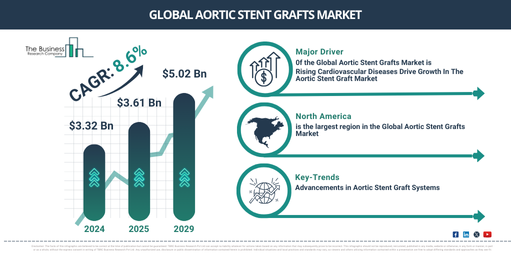
    In recent times, the market size for aortic stent grafts has notably expanded. It is projected to increase from a value of $3.32 billion in 2024 to $3.61 billion in 2025, predicting a compound annual growth rate (CAGR) of about 8.8%. Factors contributing to the growth during the historical period can be attributed to a rising preference for minimally invasive surgical procedures, an increased rate of life expectancy, heightened usage of diagnostic imaging technologies within the healthcare field, advancements in medical science and technologies, and an increased implementation and adoption rate of endovascular repair.

    In the ensuing years, the market for aortic stent grafts is anticipated to experience significant growth. The market is projected to expand to $5.02 billion by 2029, with a compound annual growth rate (CAGR) of 8.6%. This increase during the forecast period is due to factors such as the enhancement in the healthcare infrastructure, advantageous compensation policies, the transition towards bifurcated abdominal aortic stent grafts, the rising trend of hybrid procedures, and the amplified emphasis on educational and training programs for healthcare professionals. In the forecast period, major trends will be driven by technological advancements, inventive products, escalated regulatory approvals, heightened investment in research and development, and improved healthcare infrastructure.

    Download a free sample to assess the report’s scope and structure:

    https://www.thebusinessresearchcompany.com/sample.aspx?id=17062&type=smp

    What External and Internal Drivers Are Contributing to the Growth of the Aortic Stent Grafts Market?

    The growing incidence of cardiovascular diseases is fueling the expansion of the aortic stent graft market. This increase in the conditions related to the heart is largely influenced by lifestyle factors like poor nutrition, sedentary habits, smoking, and a surge in obesity. Aortic stent grafts play a crucial role in treating cardiovascular diseases by mending and reinforcing the aorta’s frail or impaired areas, especially in aneurysm cases. For instance, as reported by the British Heart Foundation, a charity specializing in cardiovascular research in the UK, coronary heart disease (CHD) was a significant mortality reason in the UK in January 2024, contributing to about 68,000 yearly deaths. This means around 190 people die each day, or one person almost every eight minutes. In the UK, one out of every eight men and one of every 14 women’s deaths are due to coronary heart disease. Hence, the surge in cardiovascular diseases is eliciting the robust growth of the aortic stent graft market.

    What Segment Types Define the Aortic Stent Grafts Market Structure?

    The aortic stent grafts market covered in this report is segmented –

    1) By Product: Abdominal Aortic Stents Graft, Thoracic Aortic Stents Graft

    2) By Type: Abdominal Aortic Aneurysms, Thoracic Aortic Aneurysms

    3) By End User: Hospitals, Ambulatory Surgical Centers Or Outpatient Surgical Centers, Other End-Users

    Subsegments:

    1) By Abdominal Aortic Stent Graft: Endovascular Aneurysm Repair (EVAR) Stent Grafts, Aortic Aneurysm Stent Grafts

    2) By Thoracic Aortic Stent Graft: Thoracic Endovascular Aortic Repair (TEVAR) Stent Grafts, Hybrid Aortic Stent Grafts

    Request customized data on this market:

    https://www.thebusinessresearchcompany.com/customise?id=17062&type=smp

    Which Geographic Areas Hold the Strongest Growth Potential in the Aortic Stent Grafts Market?

    North America was the largest region in the aortic stent grafts market in 2024. Asia-Pacific is expected to be the fastest-growing region in the forecast period. The regions covered in the aortic stent grafts market report are Asia-Pacific, Western Europe, Eastern Europe, North America, South America, Middle East, Africa.

    What Are the Most Significant Market Trends in the Aortic Stent Grafts Market?

    Leading firms in the aortic stent graft market are concentrating their efforts on creating enhanced products such as stent-graft systems with greater stability, flexibility, and reduced risks of complications. A stent-graft system is a medical apparatus utilized in endovascular procedures to address aneurysms, comprising a stent for support and a graft to strengthen the vessel wall. For example, in August 2024, Terumo India, a medical device company based in India, unveiled the TREO Abdominal Stent-graft system. This innovative endovascular device is crafted for the treatment of infrarenal abdominal aortic aneurysms, providing features like in situ limb adjustability, superior sealing, and strong fixation for enhanced stability and beneficial long-term patient results.

    View the full report here:

    https://www.thebusinessresearchcompany.com/report/aortic-stent-grafts-global-market-report

    What Is the Definition of the Aortic Stent Grafts Market?

    Aortic stent grafts refer to medical devices used to reinforce a weakened section of the aorta, the main blood vessel in the body. They consist of a fabric tube (graft) supported by a metal mesh (stent) and are inserted via a minimally invasive procedure to treat aneurysms or other conditions affecting the aorta.

    Purchase the full report and get a swift delivery:

    https://www.thebusinessresearchcompany.com/purchaseoptions.aspx?id=17062

    About The Business Research Company:

    With over 15000+ reports from 27 industries covering 60+ geographies, The Business Research Company has built a reputation for offering comprehensive, data-rich research and insights. Armed with 1,500,000 datasets, the optimistic contribution of in-depth secondary research, and unique insights from industry leaders, you can get the information you need to stay ahead in the game.

    Get in touch with us:

    The Business Research Company: https://www.thebusinessresearchcompany.com/

    Americas +1 3156230293

    Asia +44 2071930708

    Europe +44 2071930708

    Email us at info@tbrc.info

    Follow us on:

    LinkedIn: https://in.linkedin.com/company/the-business-research-company

    YouTube: https://www.youtube.com/channel/UC24_fI0rV8cR5DxlCpgmyFQ

    Global Market Model: https://www.thebusinessresearchcompany.com/global-market-model
  • Emerging Trends Redefining the Antipsychotic Drugs Market Landscape: Technological Advancements Drive Efficiency In Anti-Retropulsion Device Market

    Emerging Trends Redefining the Antipsychotic Drugs Market Landscape: Technological Advancements Drive Efficiency In Anti-Retropulsion Device Market

    Discover trends, market shifts, and competitive outlooks for the anti-retropulsion devices industry through 2025-2034 with The Business Research Company’s reliable data and in-depth research

    What is the Anticipated CAGR of the Anti-Retropulsion Devices Market, and What Factors Will Drive It?

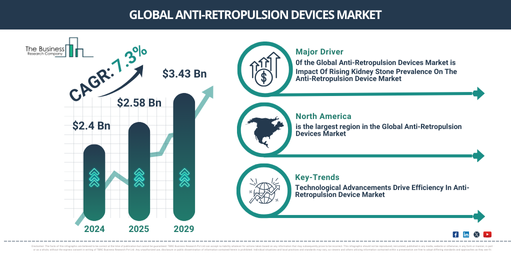
    The market for anti-retropulsion devices has seen robust growth in the past few years. The market is projected to expand from a worth of $2.4 billion in 2024 to $2.58 billion in 2025, reflecting a compound annual growth rate (CAGR) of 7.6%. This substantial growth during the historical period can be credited to the rising incidence of kidney stones, a growing preference for minimally invasive procedures, advancements in the global healthcare industry, changes in regulatory approvals and standards, and an increasing aging population.

    The market size for anti-retropulsion devices is anticipated to undergo substantial growth in the coming years, projected to expand to $3.43 billion in 2029 with a compound annual growth rate (CAGR) of 7.3%. Multiple factors such as the broadening of healthcare infrastructure in emerging markets, regulatory assistance, augmentation of healthcare facilities, increased consciousness and education, along with a transition towards outpatient operations account for this predicted growth. Significant trends predicted for this period comprise advancements in technology, device design and material innovations, the introduction of robotics and automation, development of biodegradable devices, and personalized patient solutions.

    Download a free sample to assess the report’s scope and structure:

    https://www.thebusinessresearchcompany.com/sample.aspx?id=17061&type=smp

    What Are the Core Market Drivers Propelling Growth in the Anti-Retropulsion Devices Industry?

    The growth of the anti-retropulsion device market is predicted to be driven by the increasing occurrence of chronic kidney disease. This disease encompasses a variety of conditions that impair the structure and functioning of the kidneys. Factors such as poor diet, lack of physical activity, obesity, smoking, and heavy alcohol consumption contribute to kidney complications. Anti-retropulsion devices aid in increasing the efficiency of urological procedures by blocking the backward movement of kidney stone fragments during treatment. For example, the Australian Institute of Health and Welfare, a governmental agency based in Australia, reported in June 2024 that the mortality rate for chronic kidney disease noticed a modest annual increase in both 2021 and 2022, surging by 4.2% and 6.2% respectively. Consequently, the escalating incidence of chronic kidney disease is projected to stimulate the expansion of the anti-retropulsion device market.

    How Is the Anti-Retropulsion Devices Market Segmented?

    The anti-retropulsion devices market covered in this report is segmented –

    1) By Product Type: Basket Type Anti-Retropulsion Devices, Balloon Type Anti-Retropulsion Devices, Other Anti-Retropulsion Devices

    2) By Application: Ureteroscopy, Lithotripsy

    3) By End-User: Hospitals, Ambulatory Surgical Centers, Other End Users

    Subsegments:

    1) By Basket Type Anti-Retropulsion Devices: Self-Expanding Basket Devices, Balloon-Expandable Basket Devices, Balloon Type Anti-Retropulsion Devices,

    2) By Balloon Type Anti-Retropulsion Devices: Single-Lumen Balloon Devices, Multi-Lumen Balloon Devices, Other Anti-Retropulsion Devices,

    3) By Mechanical Retropulsion Devices: Mechanical Retropulsion Devices, Stent-Based Anti-Retropulsion Devices.

    Request customized data on this market:

    https://www.thebusinessresearchcompany.com/customise?id=17061&type=smp

    Which Regions Are Driving the Next Phase of the Anti-Retropulsion Devices Market Growth?

    North America was the largest region in the anti-retropulsion devices market in 2024. Asia-Pacific is expected to be the fastest-growing region in the forecast period. The regions covered in the anti-retropulsion devices market report are Asia-Pacific, Western Europe, Eastern Europe, North America, South America, Middle East, Africa.

    What Are the Current Market Growth and Trends in the Anti-Retropulsion Devices Industry?

    Leading organizations in the anti-retropulsion device marketplace are prioritizing enhancements in product design and embracing user-oriented breakthroughs, such as vacuum-supported kidney stone removal devices. These are engineered to boost the effectiveness of urological procedures by utilizing suction to detain and extract kidney stones out of the urinary system. For instance, in March 2024, Calyxo, Inc., a US-based medical device firm specializing in bettering treatment for kidney stone patients, introduced the CVAC System. It’s an inclusive solution conceived for efficient and effective kidney stone eradication, using irrigation and vacuum aspiration to consistently eliminate stone fragments during and post laser lithotripsy, equipping physicians to ensure stone-free results.

    View the full report here:

    https://www.thebusinessresearchcompany.com/report/anti-retropulsion-devices-global-market-report

    How Is the Anti-Retropulsion Devices Market Defined and What Are Its Core Parameters?

    Anti-retropulsion devices refer to instruments or tools used during medical procedures, particularly in urology, to prevent kidney stones or fragments from moving back up the ureter toward the kidney during lithotripsy or other stone removal procedures. These devices are designed to stabilize stones or stone fragments within the urinary tract, facilitating their passage or extraction without causing obstruction or additional complications.

    Purchase the full report and get a swift delivery:

    https://www.thebusinessresearchcompany.com/purchaseoptions.aspx?id=17061

    About The Business Research Company:

    With over 15000+ reports from 27 industries covering 60+ geographies, The Business Research Company has built a reputation for offering comprehensive, data-rich research and insights. Armed with 1,500,000 datasets, the optimistic contribution of in-depth secondary research, and unique insights from industry leaders, you can get the information you need to stay ahead in the game.

    Get in touch with us:

    The Business Research Company: https://www.thebusinessresearchcompany.com/

    Americas +1 3156230293

    Asia +44 2071930708

    Europe +44 2071930708

    Email us at info@tbrc.info

    Follow us on:

    LinkedIn: https://in.linkedin.com/company/the-business-research-company

    YouTube: https://www.youtube.com/channel/UC24_fI0rV8cR5DxlCpgmyFQ

    Global Market Model: https://www.thebusinessresearchcompany.com/global-market-model
  • Neurology Monitoring Growth Trajectory: Key Forecasts and Strategic Insights

    Neurology Monitoring Growth Trajectory: Key Forecasts and Strategic Insights

    Discover trends, market shifts, and competitive outlooks for the neurology monitoring industry through 2025-2034 with The Business Research Company’s reliable data and in-depth research

    What Are the Projected Market Size and Growth Rates for the Neurology Monitoring Market From 2025 To 2029?

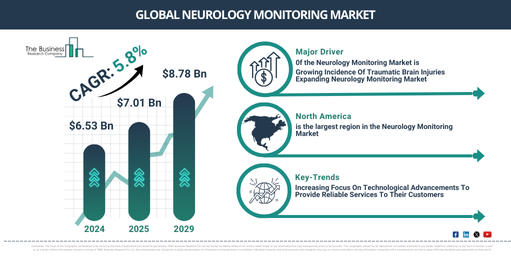
    The size of the neurology monitoring market has seen substantial growth in recent periods. It is forecast to increase from $6.53 billion in 2024 to $7.01 billion in 2025, representing a compound annual growth rate (CAGR) of 7.2%. The surge experienced in the previous phase can be credited to factors such as the increasing occurrence of neurological disorders, an uptick in the aging population, heightened awareness and diagnosis rates, the need for non-invasive monitoring, and incorporation of remote patient monitoring.

    The market for neurology monitoring is projected to experience substantial expansion in the ensuing years, with expectations to escalate to $8.78 billion in 2029, by recording a compound annual growth rate (CAGR) of 5.8%. The projected surge within this period is accredited to the prioritization of initial detection and intervention, the broadening scope of telemedicine and remote surveillance, personalized medicinal strategies, as well as government-supported endeavors for neurological healthcare. Prominent trends within this period are expected to comprise the procurement of wearable devices for neural monitoring, integration of virtual reality (VR) and augmented reality (AR) into neurology monitoring, utilization of wireless connectivity in neurological surveillance devices, advancement of home-bound neurological monitoring solutions, and emphasis on multi-modal neurophysiological monitoring systems.

    Download a free sample to assess the report’s scope and structure:

    https://www.thebusinessresearchcompany.com/sample.aspx?id=13496&type=smp

    Which Factors and External Forces Are Driving Demand in the Neurology Monitoring Market?

    The escalation in traumatic brain injuries is anticipated to drive the neurology monitoring market’s expansion in the future. Traumatic brain injuries (TBI) are damages to the brain caused by external force or trauma. Neurology monitoring plays a critical role in the management of such injuries, assisting in assessing brain functionality, tracking intracranial pressure, and noticing any changes in neurological status. This information guides healthcare professionals in crafting suitable treatment plans and intervening timely per the patient’s unique needs. For example, the Colorado Department of Human Services (CDHS) stated in March 2023 that each year approximately 2.8 million Americans suffer a traumatic brain injury, resulting in about 2.5 million emergency room visits, 225,000 hospital admissions, and 65,000 deaths annually. Thus, the soaring incidence of traumatic brain injuries is stimulating the neurology monitoring market.

    Neurology Monitoring Market Growth Stimulus: Increasing Prevalence Of Neurodegenerative Disorders Boosts Demand In Neurology Monitoring Market


    Which Segments in the Neurology Monitoring Offer the Most Growth?

    The neurology monitoring market covered in this report is segmented –

    1) By Product Type: Magnetic Resonance Imaging (MRI) Devices, Electroencephalography Devices, Cerebral Oximeters, Intracranial Pressure Monitors, Other Product Types

    2) By Disease Type: Traumatic Brain Injury (TBI), Stroke, Sleep Disorders, Parkinson’s Disease, Epilepsy, Other Disease Types

    3) By End User: Hospitals, Neurology Centers, Diagnostic Centers, Advancing Surgical Care And Clinics, Other End Users

    Subsegments:

    1) By Magnetic Resonance Imaging (MRI) Devices: Functional MRI (fMRI), Closed MRI Systems, Open MRI Systems, Portable MRI Systems

    2) By Electroencephalography (EEG) Devices: Portable EEG Devices, Wireless EEG Devices, Ambulatory EEG Devices, Clinical EEG Devices

    3) By Cerebral Oximeters: Non-Invasive Cerebral Oximeters, Handheld Cerebral Oximeters

    4) By Intracranial Pressure Monitors: Invasive Intracranial Pressure Monitors, Non-Invasive Intracranial Pressure Monitors

    5) By Other Product Types: Electromyography (EMG) Devices, Transcranial Doppler (TCD) Devices, Evoked Potential Systems, Near-Infrared Spectroscopy (NIRS) Devices

    Request customized data on this market:

    https://www.thebusinessresearchcompany.com/customise?id=13496&type=smp

    What Are the Fastest-Growing Geographies in the Neurology Monitoring Market?

    North America was the largest region in the neurology monitoring market in 2024. Asia-Pacific is expected to be the fastest-growing region in the forecast period. The regions covered in the neurology monitoring market report are Asia-Pacific, Western Europe, Eastern Europe, North America, South America, Middle East, Africa.

    Which Cutting-Edge Market Trends Are Expected to Drive theNeurology Monitoring Market’s Growth?

    Leading firms in the neurology monitoring market are concentrating on creating advanced electroencephalogram (EEG) monitoring instruments, such as cloud-connected portable EEG devices, in order to offer dependable solutions to their clients. These portable devices allow real-time monitoring of brain activities by sending data wirelessly to the cloud for remote analysis and storage. In November 2023, BioSerenity, a healthcare company based in France, obtained approval from the FDA for their product, Neuronaute Plus, a streamlined and comprehensive EEG device. This portable healthcare gadget gathers EEG information, which can then be transferred to the cloud, making it easier for professionals in Europe, Canada, and the US to examine the data. Its user-friendly design minimizes the need for extensive training and is partnered with the Icecap, a revolutionary EEG electrode net, to simplify the recording process.

    View the full report here:

    https://www.thebusinessresearchcompany.com/report/neurology-monitoring-global-market-report

    What Are the Key Elements That Define the Neurology Monitoring Market?

    Neurology monitoring, or neuromonitoring, is a technique used during high-risk medical procedures such as brain, nerve, and spine surgery to detect, treat, and prevent potential damage to the nervous system. Neurology monitoring is performed to observe, measure, and record neurological parameters to evaluate the operation of the nervous system and the brain.

    Purchase the full report and get a swift delivery:

    https://www.thebusinessresearchcompany.com/purchaseoptions.aspx?id=13496

    About The Business Research Company:

    With over 15000+ reports from 27 industries covering 60+ geographies, The Business Research Company has built a reputation for offering comprehensive, data-rich research and insights. Armed with 1,500,000 datasets, the optimistic contribution of in-depth secondary research, and unique insights from industry leaders, you can get the information you need to stay ahead in the game.

    Get in touch with us:

    The Business Research Company: https://www.thebusinessresearchcompany.com/

    Americas +1 3156230293

    Asia +44 2071930708

    Europe +44 2071930708

    Email us at info@tbrc.info

    Follow us on:

    LinkedIn: https://in.linkedin.com/company/the-business-research-company

    YouTube: https://www.youtube.com/channel/UC24_fI0rV8cR5DxlCpgmyFQ

    Global Market Model: https://www.thebusinessresearchcompany.com/global-market-model
  • Neuroendovascular Coil Market Overview 2025: Competitive Shifts, Forecast Models, and Emerging Opportunities

    Neuroendovascular Coil Market Overview 2025: Competitive Shifts, Forecast Models, and Emerging Opportunities

    Discover trends, market shifts, and competitive outlooks for the neuroendovascular coil industry through 2025-2034 with The Business Research Company’s reliable data and in-depth research

    How Fast Is The Neuroendovascular Coil Market Expected to Grow Between 2025 And 2029?

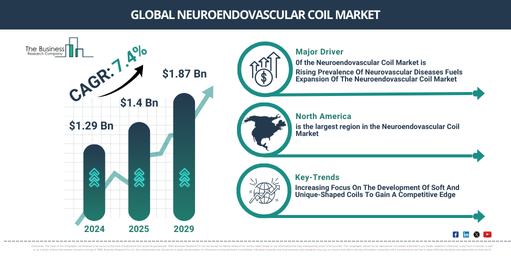
    The scale of the neuroendovascular coil market has seen robust expansion in previous years. The market value is projected to rise from $1.29 billion in 2024 to $1.4 billion in 2025, with a compound annual growth rate (CAGR) of 9.2%. This substantial growth experienced in the historical period can be credited to several factors such as a surge in neurovascular diseases, an upward trend in the aging population, advancements in diagnostic technologies, the broadening scope of neurointerventional facilities, initiatives focusing on awareness and education, along with regulatory approvals and set standards.

    The market for neuroendovascular coils is anticipated to see considerable growth in the upcoming years, expanding to a value of $1.87 billion by 2029, with a compound annual growth rate (CAGR) of 7.4%. Factors contributing to the growth during the forecast period include a consistent increase in neurovascular complications, the enlargement of neurointerventional facilities, concentration on early detection, advancement of global healthcare infrastructure, emphasis on patient-focused care approach, and international research partnerships. Key trends during this period encompass developments in the field of detachable neuroendovascular coils, increased usage of liquid embolics, innovation in bioactive and bioabsorbable coils, the amalgamation of dual-layer coil technologies, and a focus on flow diverters for the treatment of aneurysms.

    Download a free sample to assess the report’s scope and structure:

    https://www.thebusinessresearchcompany.com/sample.aspx?id=13495&type=smp

    What Are the Core Growth Drivers Propelling the Neuroendovascular Coil Market Forward?

    The increasing occurrence of neurovascular diseases is projected to drive growth in the neuroendovascular coil market. Neurovascular diseases impact the blood vessels that supply the nervous system, which frequently leads to neurological symptoms and complications. Neuroendovascular coils are utilised to treat these diseases by inserting them into the blood vessels to seal or stabilise abnormal blood vessel structures, thereby minimising the risk of bleeding or other complications. For instance, data from the National Board of Health and Welfare (Socialstyrelsen), a Swedish governmental agency, in November 2023 showed that in 2022, there were about 26,800 stroke incidents affecting nearly 25,100 people. Among them, 12 percent died on the same day, 23 percent within 28 days, and 34 percent within one year. As such, the growing incidence of neurovascular conditions is fueling the expansion of the neuroendovascular coil market. The rise in healthcare spending is also anticipated to lend momentum to the growth of the neuroendovascular coil market. This expenditure entails money spent on medical products and services, public health initiatives, and administration. It is largely driven by factors such as an aging population, advancements in medical technology, skyrocketing pharmaceutical costs, and higher rates of chronic diseases. The increasing healthcare expenditure supports progress in neuroendovascular coil technology, stimulating invention, enhancing accessibility, and improving patient results in the management of cerebral aneurysms and vascular disorders. For instance, a forecast by the US-based academic journal Health Affairs in June 2024 shows the national healthcare spending in the U.S. is projected to increase from $4,799.3 billion in 2023 to $5,048.8 billion in 2024, indicating a rise of approximately $249.5 billion. Therefore, the growth in healthcare expenditure is encouraging the expansion of the neuroendovascular coil market.

    What Segment Types Define the Neuroendovascular Coil Market Structure?

    The neuroendovascular coil market covered in this report is segmented –

    1) By Product Type: Guglielmi Detachable Coils (GDCs), Matrix Coils

    2) By Indication: Ruptured Aneurysm, Unruptured Aneurysm

    3) By Application: Tumor Surgery, Medical Teaching

    4) By End User: Hospitals, Ambulatory Surgical Centers (ASCs), Stroke Centers, Other End Users

    Subsegments:

    1) By Guglielmi Detachable Coils (GDCs): Soft GDCs, Standard GDCs, Detachable GDCs With Various Configurations

    2) By Matrix Coils: Soft Matrix Coils, Coated Matrix Coils, Detachable Matrix Coils, Flow Diverter Matrix Coils

    Request customized data on this market:

    https://www.thebusinessresearchcompany.com/customise?id=13495&type=smp

    Which Geographic Areas Hold the Strongest Growth Potential in the Neuroendovascular Coil Market?

    North America was the largest region in the neuroendovascular coil market in 2024. Asia-Pacific is expected to be the fastest-growing region in the forecast period. The regions covered in the neuroendovascular coil market report are Asia-Pacific, Western Europe, Eastern Europe, North America, South America, Middle East, Africa.

    Which Emerging Trends that Are Influencing theNeuroendovascular Coil Industry Evolution?

    Top businesses in the neuroendovascular coil market are striving for a competitive advantage through the creation of uniquely tailored, soft coils. These coils, including ones shaped like tetrahedrons, can significantly improve outcomes in complex aneurysm treatments by fitting in contrast to the structure of the blood vessels, minimizing risks, and enhancing patient health. Stryker Corporation, a prominent American medical tech company that produces neuroendovascular coils, unveiled the Target Tetra Detachable Coil in December 2022. Specifically designed for treating minor aneurysms, this state-of-the-art coil combines a novel tetrahedral shape with softness. It’s a dual-feature coil; the tetrahedral shape ensures stability within wide-necked aneurysms and the soft helical tail caters to smaller aneurysms. Hence, the developed coil not only retains its structural integrity but is also soft, making it an optimal solution for treating small aneurysms.

    View the full report here:

    https://www.thebusinessresearchcompany.com/report/neuroendovascular-coil-global-market-report

    What Is the Definition of the Neuroendovascular Coil Market?

    A neuroendovascular coil is a thin wire inserted into blood vessels to block off or divert blood flow from the affected area, promoting clotting and preventing further complications. It is a medical device for treating cerebral aneurysms and other vascular abnormalities.

    Purchase the full report and get a swift delivery:

    https://www.thebusinessresearchcompany.com/purchaseoptions.aspx?id=13495

    About The Business Research Company:

    With over 15000+ reports from 27 industries covering 60+ geographies, The Business Research Company has built a reputation for offering comprehensive, data-rich research and insights. Armed with 1,500,000 datasets, the optimistic contribution of in-depth secondary research, and unique insights from industry leaders, you can get the information you need to stay ahead in the game.

    Get in touch with us:

    The Business Research Company: https://www.thebusinessresearchcompany.com/

    Americas +1 3156230293

    Asia +44 2071930708

    Europe +44 2071930708

    Email us at info@tbrc.info

    Follow us on:

    LinkedIn: https://in.linkedin.com/company/the-business-research-company

    YouTube: https://www.youtube.com/channel/UC24_fI0rV8cR5DxlCpgmyFQ

    Global Market Model: https://www.thebusinessresearchcompany.com/global-market-model
  • $0.56 Billion Forecast for Neonatal Intensive Care Units (NICU) Catheters Market by 2029, Backed by Demand and Innovation

    $0.56 Billion Forecast for Neonatal Intensive Care Units (NICU) Catheters Market by 2029, Backed by Demand and Innovation

    Discover trends, market shifts, and competitive outlooks for the neonatal intensive care units (nicu) catheters industry through 2025-2034 with The Business Research Company’s reliable data and in-depth research

    What Is the Estimated Market Size of the Neonatal Intensive Care Units (NICU) Catheters Market In 2029?

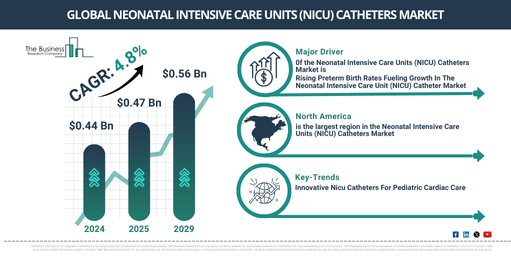
    The market size for catheters in neonatal intensive care units (NICU) has witnessed substantial growth in the past years. The market value is projected to rise from $0.44 billion in 2024 to $0.47 billion in 2025, showing a compound annual growth rate (CAGR) of 6.1%. This growth during the historic period can be tied to factors such as the rising incidence of premature births, an increase in admissions to neonatal intensive care units, a concentrated effort towards preventing infection, healthcare initiatives from the government, and heightened awareness among healthcare professionals.

    In the forthcoming years, the market for neonatal intensive care units (NICU) catheters is projected to consistently expand, reaching a valuation of $0.56 billion in 2029 with a compound annual growth rate (CAGR) of 4.8%. The anticipated growth during the forecast period may be due to factors such as increased global birth rates, higher healthcare spending, focus on less intrusive procedures, regulatory backing and adherence, and the development of healthcare infrastructure in booming markets. For the forecast period, significant trends would include a focus on patient-centric methods, technological progress in catheter construction, partnerships and collaborations, advancements in medical technology, and the increasing demand for minimally invasive procedures.

    Download a free sample to assess the report’s scope and structure:

    https://www.thebusinessresearchcompany.com/sample.aspx?id=13494&type=smp

    What Are the Core Growth Drivers Propelling the Neonatal Intensive Care Units (NICU) Catheters Market Forward?

    The increasing incidence of preterm births is expected to fuel the expansion of the neonatal intensive care unit (NICU) catheter market in the future. Preterm birth or premature birth indicates that a baby is born before completing 37 weeks of pregnancy. Such infants often need specialized healthcare, which includes the use of catheters for purposes like intravenous access, nourishing, and keeping an eye on their health. As an example, in January 2023, the Centers for Disease Control and Prevention, a US-based national public health institution, reported that an increase of 1% was noticed in registered births in the United States, amounting to 3,664,292, in contrast with the previous year. Subsequently, escalating rates of preterm births are giving rise to the growth of the neonatal intensive care unit (NICU) catheter market in the future. An increase in neonatal admissions is also expected to boost the growth of the neonatal intensive care unit (NICU) catheter market. Neonatal admissions involve the hospitalization or admission of newborns, usually within the first 28 days of birth, for medical care and health monitoring. Infant care makes use of neonatal intensive care unit (NICU) catheters to offer specialized medical treatments and surveillance for premature or gravely ill babies, addressing their instant health requirements and enhancing their survival and healthy growth prospects. For instance, in October 2023, the American Academy of Pediatrics (AAP), a non-profit organization based in the US, documented that the percentage of infants classified as late preterm (LPT) and low birth weight (LBW) who were cared for solely in the nursery climbed from 83.9% to 88.8% owing to unusual conditions. Consequently, the rising neonatal admissions are fueling the growth of the neonatal intensive care unit (NICU) catheter market in the future.

    What Segment Types Define the Neonatal Intensive Care Units (NICU) Catheters Market Structure?

    The neonatal intensive care units (NICU) catheters market covered in this report is segmented –

    1) By Type: Peripherally Inserted Central Catheters (PICCs), Central Venous Catheters (CVCs), Umbilical Venous Catheters (UVCs), Other Types

    2) By Application: Medication Administration, Transfusion Of Blood, Diagnostic Testing, Feeding

    3) By End User: Hospitals, Specialty Clinics, Ambulatory Surgical Centers, Other End Users

    Subsegments:

    1) By Peripherally Inserted Central Catheters (PICCs): Single-Lumen PICCs, Multi-Lumen PICCs, Coated PICCs

    2) By Central Venous Catheters (CVCs): Single-Lumen CVCs, Multi-Lumen CVCs, Tunneled CVCs

    3) By Umbilical Venous Catheters (UVCs): Single-Lumen UVCs, Multi-Lumen UVCs

    4) By Other Types: Arterial Catheters, Thoracic Catheters, Dialysis Catheters, Endotracheal Tubes

    Request customized data on this market:

    https://www.thebusinessresearchcompany.com/customise?id=13494&type=smp

    Which Geographic Areas Hold the Strongest Growth Potential in the Neonatal Intensive Care Units (NICU) Catheters Market?

    North America was the largest region in the neonatal intensive care units (NICU) catheters market in 2024. Asia-Pacific is expected to be the fastest-growing region in the forecast period. The regions covered in the neonatal intensive care units (nicu) catheters market report are Asia-Pacific, Western Europe, Eastern Europe, North America, South America, Middle East, Africa.

    Which Emerging Trends that Are Influencing theNeonatal Intensive Care Units (NICU) Catheters Industry Evolution?

    Prominent firms in the neonatal intensive care unit (NICU) catheter market are focusing on the creation of advanced items like cardiac cryoablation focal catheters to enhance their market profitability. These catheters are designed for the treatment of pediatric atrioventricular nodal reentrant tachycardia (AVNRT) – a disorder leading to irregular heart rhythm in pediatric cardiology patients. To give an example, Medtronic plc, a healthcare technology company based in Ireland, in February 2022, obtained FDA approval for their Freezor and Freezor Xtra Cardiac Cryoablation Focal Catheters. These catheters, specifically designed for cardiology procedures, treat severe heart rhythm conditions in pediatric patients. The Freezor and Freezor Xtra Catheters are versatile, single-use tools used for the refrigeration of cardiac tissue and the suppression of unnecessary electrical heart impulses.

    View the full report here:

    https://www.thebusinessresearchcompany.com/report/neonatal-intensive-care-units-nicu-catheters-global-market-report

    What Is the Definition of the Neonatal Intensive Care Units (NICU) Catheters Market?

    A neonatal intensive care unit catheter is a lengthy, pliable, hollow tube employed to enter a newborn baby’s vein or artery, allowing for intravenous access for the delivery of fluids, drugs, and blood products. These catheters are also used in neonatal intensive care units as a way for central venous pressure monitoring. It is used to help with breathing, deliver oxygen, or assist in mechanical ventilation when an infant has respiratory difficulties.

    Purchase the full report and get a swift delivery:

    https://www.thebusinessresearchcompany.com/purchaseoptions.aspx?id=13494

    About The Business Research Company:

    With over 15000+ reports from 27 industries covering 60+ geographies, The Business Research Company has built a reputation for offering comprehensive, data-rich research and insights. Armed with 1,500,000 datasets, the optimistic contribution of in-depth secondary research, and unique insights from industry leaders, you can get the information you need to stay ahead in the game.

    Get in touch with us:

    The Business Research Company: https://www.thebusinessresearchcompany.com/

    Americas +1 3156230293

    Asia +44 2071930708

    Europe +44 2071930708

    Email us at info@tbrc.info

    Follow us on:

    LinkedIn: https://in.linkedin.com/company/the-business-research-company

    YouTube: https://www.youtube.com/channel/UC24_fI0rV8cR5DxlCpgmyFQ

    Global Market Model: https://www.thebusinessresearchcompany.com/global-market-model