Category: Medical Equipment

  • $10.88 Billion Forecast for Medical Specialty Bags Market by 2029, Backed by Demand and Innovation

    $10.88 Billion Forecast for Medical Specialty Bags Market by 2029, Backed by Demand and Innovation

    Discover trends, market shifts, and competitive outlooks for the medical specialty bags industry through 2025-2034 with The Business Research Company’s reliable data and in-depth research

    What Are the Key Projections for the CAGR of the Medical Specialty Bags Market Size From 2025 to 2034?

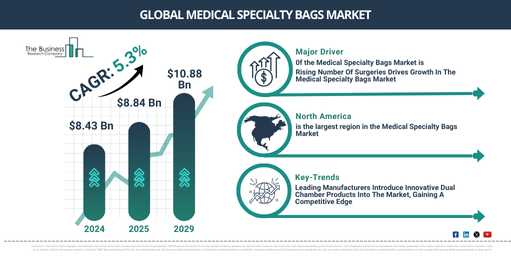
    There has been consistent growth in the size of the medical specialty bags market in the past few years. The market, which is projected to increase from $8.43 billion in 2024 to $8.84 billion in 2025, has a compound annual growth rate (CAGR) of 4.9%. This increase during the historical period can be credited to factors such as the increasing specialization within the medical field, a rise in chronic disease cases, escalating demand for less invasive procedures, an expansion in global healthcare and an increase in disposable income.

    In the following years, the market size of medical specialty bags is predicted to experience robust growth. It will surge to $10.88 billion in 2029, with a compound annual growth rate (CAGR) of 5.3%. The upswing during the forecast period can be linked to the heightened emphasis on preventive healthcare, the growth in personalized medicine demand, the burgeoning need for home healthcare services, increased attention towards patient safety, and an ageing population. Key trends projected for this period encompass the utilization of digital health technologies, intelligent medical bags, bespoke patient-focused solutions, infection management, sustainability, and biodegradability.

    Download a free sample to assess the report’s scope and structure:

    https://www.thebusinessresearchcompany.com/sample.aspx?id=12955&type=smp

    What Are the Core Growth Drivers Propelling the Medical Specialty Bags Market Forward?

    The medical specialty bags market’s progression is predicted to be boosted by the rising amount of surgeries. Surgery is a therapeutic engagement that employs various instruments and methodologies to identify, rectify, or treat a range of conditions, illnesses, or injuries in the body. Surgical operations necessitate the use of medical specialty bags for a variety of responsibilities, including patient care, waste management, and equipment sterilization. For example, the International Society of Aesthetic Plastic Surgery (ISAPS), based in the UK, reported in June 2024 that the combined tally of surgical and non-surgical procedures was around 34.9 million, indicating a 3.4% growth. Surgical procedures alone marked a 5.5% upswing, reaching over 15.8 million in 2023. Therefore, the rise in surgery operations is inciting the expansion of the medical specialty bags market.

    Medical Specialty Bags Market Driver: Escalating Occurrence Of Chronic Illnesses Promotes Growth Of The Medical Specialty Bags Market


    What Segment Types Define the Medical Specialty Bags Market Structure?

    The medical specialty bags market covered in this report is segmented –

    1) By Product: Intravenous Fluid Bags, Ostomy Bags, Sterile Packaging Bags, Continuous Ambulatory Peritoneal Dialysis Bags (CAPD), Anesthesia And Resuscitation Bags, Other Products

    2) By Material: Polyvinyl Chloride (PVC) Compounds, Polyolefins, Other Materials

    3) By End-User: Hospitals, Ambulatory Surgical Centers, Home Healthcare, Other End-Users

    Subsegments:

    1) By Intravenous Fluid Bags: PVC IV Bags, Non-PVC IV Bags, Combination IV Bags

    2) By Ostomy Bags: Colostomy Bags, Ileostomy Bags, Urostomy Bags

    3) By Sterile Packaging Bags: Pouch Bags, Roll Bags, Custom Sterile Packaging Bags

    4) By Continuous Ambulatory Peritoneal Dialysis (CAPD) Bags: Standard CAPD Bags, CAPD Bags With Integrated Filters, Specialty CAPD Bags

    5) By Anesthesia And Resuscitation Bags: Manual Resuscitators (Ambu Bags), Anesthesia Breathing Circuits, Disposable Anesthesia Bags

    6) By Other Products: Drainage Bags, Blood Bags, Collection Bags

    Request customized data on this market:

    https://www.thebusinessresearchcompany.com/customise?id=12955&type=smp

    Which Geographic Areas Hold the Strongest Growth Potential in the Medical Specialty Bags Market?

    North America was the largest region in the medical specialty bags market in 2024. Asia-Pacific is expected to be the fastest-growing region in the forecast period. The regions covered in medical specialty bags market report are Asia-Pacific, Western Europe, Eastern Europe, North America, South America, Middle East and Africa.

    Which Emerging Trends that Are Influencing theMedical Specialty Bags Industry Evolution?

    Prominent companies in the medical specialty bags market are introducing new and advanced products, such as dual chamber bag items, to maintain their market position. Dual chamber bags are unique medical bags that feature two separate compartments for storing and transporting different components needed in medical treatments. For example, Gufic Biosciences Ltd., a pharmaceutical company based in India, in June 2022, released its own version of dual chamber bags made from DEHP free polypropylene and a peelable aluminum foil. These bags are particularly designed for the storage of unstable drugs that need reconstitution just prior to being administered to the patient. The introduction of these bags presents a fresh method of drug delivery for healthcare professionals and patients alike, offering an effective and convenient way to store and administer unstable drugs.

    View the full report here:

    https://www.thebusinessresearchcompany.com/report/medical-specialty-bags-global-market-report

    What Is the Definition of the Medical Specialty Bags Market?

    Medical specialty bags refer to a category of specialized bags or pouches that are used in the medical field for various purposes. These bags are generally used in hospitals to keep blood stored in sterile conditions and to provide patients with nourishment during operations and other crucial situations.

    Purchase the full report and get a swift delivery:

    https://www.thebusinessresearchcompany.com/purchaseoptions.aspx?id=12955

    About The Business Research Company:

    With over 15000+ reports from 27 industries covering 60+ geographies, The Business Research Company has built a reputation for offering comprehensive, data-rich research and insights. Armed with 1,500,000 datasets, the optimistic contribution of in-depth secondary research, and unique insights from industry leaders, you can get the information you need to stay ahead in the game.

    Get in touch with us:

    The Business Research Company: https://www.thebusinessresearchcompany.com/

    Americas +1 3156230293

    Asia +44 2071930708

    Europe +44 2071930708

    Email us at info@tbrc.info

    Follow us on:

    LinkedIn: https://in.linkedin.com/company/the-business-research-company

    YouTube: https://www.youtube.com/channel/UC24_fI0rV8cR5DxlCpgmyFQ

    Global Market Model: https://www.thebusinessresearchcompany.com/global-market-model
  • Medical Imaging Equipment Market Trends 2025-2034: Growth, Strategic Insights, and Opportunities Ahead

    Medical Imaging Equipment Market Trends 2025-2034: Growth, Strategic Insights, and Opportunities Ahead

    Discover trends, market shifts, and competitive outlooks for the medical imaging equipment industry through 2025-2034 with The Business Research Company’s reliable data and in-depth research

    What is the Anticipated CAGR of the Medical Imaging Equipment Market, and What Factors Will Drive It?

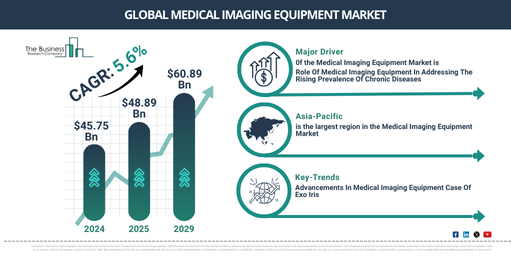
    The scale of the medical imaging equipment market has seen robust growth in the past years. The market, which stood at $45.75 billion in 2024, is forecasted to rise to $48.89 billion in 2025, reflecting a compound annual growth rate (CAGR) of 6.9%. This growth during the historic timeframe is a result of factors such as the increase in the elderly population, higher disease prevalence, governmental initiatives, enhanced awareness and the integration of AI.

    The market size of medical imaging equipment is projected to experience considerable expansion in the coming years, increasing to $60.89 billion in 2029 at a CAGR of 5.6%. The predicted growth within the forecast period can be associated with the rise in personalized medicine, enhanced remote patient monitoring, emerging markets growth, value-based healthcare systems, and precision medicine advancements. Key trends expected during this period comprise the integration of digital health, innovative imaging modalities, technological progress, the integration of telemedicine, and the portability and convenience of point-of-care imaging.

    Download a free sample to assess the report’s scope and structure:

    https://www.thebusinessresearchcompany.com/sample.aspx?id=14429&type=smp

    What Are the Major Market Drivers Behind the Rising Adoption of Medical Imaging Equipment Market?

    The increasing occurrence of chronic conditions is anticipated to spur the expansion of the medical imaging equipment market. Chronic diseases, characterized by their slow progression and long duration, often lasting for years or a lifetime, arise from changes in lifestyle, genetic predispositions, and aging demographics. Medical imaging equipment assists patients with chronic diseases by enabling early detection, precise diagnosis, custom treatment planning, consistent monitoring of disease progression, and response to treatment. For example, the World Health Organization, a Switzerland-based specialized agency of the United Nations, reported in September 2022 that there were 41 million deaths, or 74% of total deaths, from non-communicable diseases (NCDs) or chronic diseases globally. These included 17.9 million deaths from cardiovascular diseases, 9.3 million from cancer, 4.1 million from chronic respiratory diseases, and 2.0 million from diabetes. Hence, the escalating prevalence of chronic diseases fuels the growth of the medical imaging equipment market.

    Which Key Market Segments Comprise the Medical Imaging Equipment Market and Drive Its Revenue Growth?

    The medical imaging equipment market covered in this report is segmented –

    1) By Equipment: Computed Tomography, X-Ray Systems, Magnetic Resonance Imaging (MRI) Systems, Ultrasound Systems, Nuclear Imaging Equipment, Mammography Equipment, Contrast Media Injectors, C-Arms And Fluoroscopy Device

    2) By Modality: Stand-Alone Devices, Portable Devices, Hand-Held Devices

    3) By Application: Cardiology, Neurology, Orthopedics, Gynecology, Oncology, Other Applications

    4) By End-User: Diagnostic Imaging Centers, Ambulatory Surgical Centers, Specialty Clinics, Research Institutes

    Subsegments:

    1) By Computed Tomography (CT) Systems: Stationary CT Scanners, Portable Or Handheld CT Scanners

    2) By X-Ray Systems: Analog X-Ray Systems, Digital X-Ray Systems, Fluoroscopy X-Ray Systems

    3) By Magnetic Resonance Imaging (MRI) Systems: Closed MRI Systems, Open MRI Systems, Extremity MRI Systems

    4) By Ultrasound Systems: Diagnostic Ultrasound Systems, Therapeutic Ultrasound Systems, Portable Ultrasound Systems

    5) By Nuclear Imaging Equipment: Single Photon Emission Computed Tomography (SPECT), Positron Emission Tomography (PET) Scanners, Hybrid PET Or CT Scanners

    6) By Mammography Equipment: Analog Mammography Systems, Digital Mammography Systems, 3D Tomosynthesis Mammography Systems

    7) By Contrast Media Injectors: CT Contrast Media Injectors, MRI Contrast Media Injectors, PET Or CT Contrast Media Injectors

    8) By C-Arms And Fluoroscopy Devices: Mobile C-Arms, Mini C-Arms, Fixed C-Arms, Fluoroscopy Systems

    Request customized data on this market:

    https://www.thebusinessresearchcompany.com/customise?id=14429&type=smp

    Which Areas Are Leading Regions in the Medical Imaging Equipment Market Expansion Across the Globe?

    Asia-Pacific was the largest region in the medical imaging equipment market in 2024. The regions covered in the medical imaging equipment market report are Asia-Pacific, Western Europe, Eastern Europe, North America, South America, Middle East, Africa.

    What Are the Strategic Trends Steering theMedical Imaging Equipment Market Direction?

    Leading enterprises in the medical imaging equipment sector are focusing on creating advanced products such as Exo Iris, their latest medical imaging device. This device utilizes real-time artificial intelligence (AI) technology, such as SweepAI, to automatically obtain vital images, thereby reducing reliance on operator abilities and providing accurate and consistent imaging. For example, Exo, a medical imaging startup from the U.S., introduced in September 2023, its latest imaging device, Exo Iris. Created to be cost-effective, compact, and user-friendly, it targets a broad range of healthcare providers, from physicians, nurses, and EMTs, to clinicians operating in emergency, acute care, outpatient, and home-care environments. It also boasts features like an ultra-wide field of view for capturing up to 150 degrees, allowing caregivers to image an entire liver or a full-body fetus in a single view. The device is also paired with Exo Works, a point-of-care ultrasound workflow solution, for easy documentation and review of exams from anywhere in moments.

    View the full report here:

    https://www.thebusinessresearchcompany.com/report/medical-imaging-equipment-global-market-report

    How Is the Medical Imaging Equipment Market Conceptually Defined?

    Medical imaging equipment refers to a broad category of devices and technologies used in the field of medicine to visualize the internal structures and functions of the body. It enhances patient care by enabling accurate diagnosis, personalized treatment planning, and effective monitoring of health conditions.

    Purchase the full report and get a swift delivery:

    https://www.thebusinessresearchcompany.com/purchaseoptions.aspx?id=14429

    About The Business Research Company:

    With over 15000+ reports from 27 industries covering 60+ geographies, The Business Research Company has built a reputation for offering comprehensive, data-rich research and insights. Armed with 1,500,000 datasets, the optimistic contribution of in-depth secondary research, and unique insights from industry leaders, you can get the information you need to stay ahead in the game.

    Get in touch with us:

    The Business Research Company: https://www.thebusinessresearchcompany.com/

    Americas +1 3156230293

    Asia +44 2071930708

    Europe +44 2071930708

    Email us at info@tbrc.info

    Follow us on:

    LinkedIn: https://in.linkedin.com/company/the-business-research-company

    YouTube: https://www.youtube.com/channel/UC24_fI0rV8cR5DxlCpgmyFQ

    Global Market Model: https://www.thebusinessresearchcompany.com/global-market-model
  • Major Trends and Emerging Patterns in the Medical Device Connectivity Market: Technological Advancements In Medical Device Connectivity

    Major Trends and Emerging Patterns in the Medical Device Connectivity Market: Technological Advancements In Medical Device Connectivity

    Discover trends, market shifts, and competitive outlooks for the medical device connectivity industry through 2025-2034 with The Business Research Company’s reliable data and in-depth research

    How Has The Medical Device Connectivity Market Growth Evolved From 2024 To 2025, And What’s Ahead?

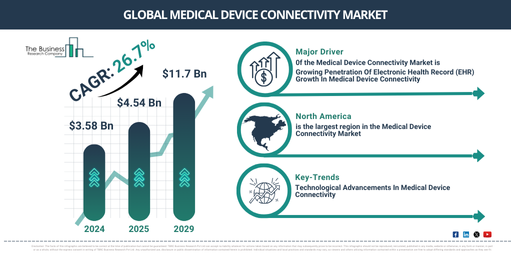
    The market size for medical device connectivity has seen an exponential surge recently. Its growth is projected to increase from $3.58 billion in 2024 to $4.54 billion in 2025, marking a compound annual growth rate (CAGR) of 27.0%. Factors such as the increase in chronic illnesses, the need for streamlined healthcare procedures, rising demand for telehealth services and remote patient monitoring, alongside a focus on data analytics and predictive insights have contributed to the growth during the historical period.

    The market size of medical device connectivity is projected to witness a significant spike in the coming years, shooting up to $11.7 billion by 2029 at a compound annual growth rate (CAGR) of 26.7%. The upward trend during the forecast period can be credited to the heightened need for flawless integration, the progressive digitalization of healthcare, an aging population, escalating adoption rates of electronic health records, and progressively higher healthcare costs. Key developments expected during this forecast period include the evolution of IoT-enabled devices, electronic health record (EHR) systems, real-time patient data processing, enhanced patient engagement, remote diagnostics, and telemonitoring.

    Download a free sample to assess the report’s scope and structure:

    https://www.thebusinessresearchcompany.com/sample.aspx?id=14750&type=smp

    What Are the Primary Drivers Supporting the Market Growth of the Medical Device Connectivity Market?

    The rise in the adoption of electronic health records is projected to fuel the expansion of the medical device connectivity market in the future. An electronic health record (EHR) is essentially a digital replica of a patient’s paper records, providing real-time, patient-specific details that can only be accessed by authorised individuals. Medical device connectivity options aid in the effortless transfer of data between medical devices and EHR systems, enabling the real-time amalgamation of patient monitoring data, diagnostic outcomes, and treatment specifics. Linking medical devices with EHRs permits healthcare professionals to have extensive patient data at the moment of treatment, thus improving clinical judgement and care coordination. For example, The London School of Hygiene & Tropical Medicine (LSHTM), an esteemed UK-based research and postgraduate education centre in public and global health, reported in August 2024 that over 1.3 million individuals decided to opt out of NHS data between May 31 and June 30. This rise increased the total opt-out rate from 2.77% to 4.97% of the 2021 population. Consequently, the escalating adoption of electronic health records (EHR) is propelling the medical device connectivity market.

    Which Primary Segments of the Medical Device Connectivity Market Are Driving Growth and Industry Transformations?

    The medical device connectivity market covered in this report is segmented –

    1) By Component: Hardware, Services, Software

    2) By Technology: Wired Technologies, Wireless Technologies, Hybrid Technologies

    3) By Application: Vital Sign Monitoring Systems, Cardiology Devices, ICU Systems, Oncology Systems, Home Healthcare Devices, Other Applications

    4) By End-Use Vertical: Hospitals And Clinics, Diagnostic Centers, Healthcare Research Centers, Other End Users

    Subsegments:

    1) By Hardware: Medical Device Gateways, Connectivity Modules, Sensors And Actuators, Network Infrastructure (Routers, Switches)

    2) By Services: Consulting Services, Integration Services, Maintenance And Support Services, Managed Services

    3) By Software: Device Connectivity Software, Cloud-Based Platforms, Data Analytics And Management Software, Security And Authentication Software

    Request customized data on this market:

    https://www.thebusinessresearchcompany.com/customise?id=14750&type=smp

    Which Regions Are Key Players in the Growth of the Medical Device Connectivity Market?

    North America was the largest region in the medical device connectivity market in 2024. Europe is expected to be the fastest-growing region in the forecast period. The regions covered in the medical device connectivity market report are Asia-Pacific, Western Europe, Eastern Europe, North America, South America, Middle East and Africa.

    What Are the Most Significant Market Trends in the Medical Device Connectivity Market?

    Prominent businesses in the medical device connectivity market are concentrating on the innovation of technological advancements like LocationAI to improve medical imaging, diagnosis, and treatment planning processes. LocationAI is a precision-driven location engine powered by machine learning that maintains room-level accuracy without disrupting clinical routines with intricate setup methods or requiring to situate hardware in patient quarters, which is typical in other systems. For example, in March 2022, Cognosos Inc., a company based in the US that offers real-time asset visibility solutions, incorporated LocationAI into its real-time location system (RTLS) for healthcare to tackle common issues in asset tracking systems. This inclusion bolsters location precision in hospitals by leveraging machine learning to identify signal patterns tied to distinct locations, thus guaranteeing exact tracking of tagged items.

    View the full report here:

    https://www.thebusinessresearchcompany.com/report/medical-device-connectivity-global-market-report

    What Parameters Are Used to Define the Medical Device Connectivity Market?

    Medical device connectivity refers to the ability of medical devices to securely and seamlessly communicate with healthcare devices, revolutionizing healthcare by enabling data sharing, remote monitoring, and improved patient care. This connectivity is used for the exchange of data between medical devices and electronic health record (EHR) systems, clinical decision support systems, and other healthcare IT systems by enabling remote monitoring, real-time data analysis, interoperability, and clinical decision-making, ultimately improving patient care, enhancing workflow efficiency, and supporting healthcare provider collaboration.

    Purchase the full report and get a swift delivery:

    https://www.thebusinessresearchcompany.com/purchaseoptions.aspx?id=14750

    About The Business Research Company:

    With over 15000+ reports from 27 industries covering 60+ geographies, The Business Research Company has built a reputation for offering comprehensive, data-rich research and insights. Armed with 1,500,000 datasets, the optimistic contribution of in-depth secondary research, and unique insights from industry leaders, you can get the information you need to stay ahead in the game.

    Get in touch with us:

    The Business Research Company: https://www.thebusinessresearchcompany.com/

    Americas +1 3156230293

    Asia +44 2071930708

    Europe +44 2071930708

    Email us at info@tbrc.info

    Follow us on:

    LinkedIn: https://in.linkedin.com/company/the-business-research-company

    YouTube: https://www.youtube.com/channel/UC24_fI0rV8cR5DxlCpgmyFQ

    Global Market Model: https://www.thebusinessresearchcompany.com/global-market-model
  • Market Trends Influencing Strategic Decisions in the Medical Bed Industry: Smart Beds With AI Sensors Improve Patient Monitoring And Healthcare Efficiency

    Market Trends Influencing Strategic Decisions in the Medical Bed Industry: Smart Beds With AI Sensors Improve Patient Monitoring And Healthcare Efficiency

    Discover trends, market shifts, and competitive outlooks for the medical bed industry through 2025-2034 with The Business Research Company’s reliable data and in-depth research

    What Is the Current and Projected Market Size of the Medical Bed Market Through 2034?

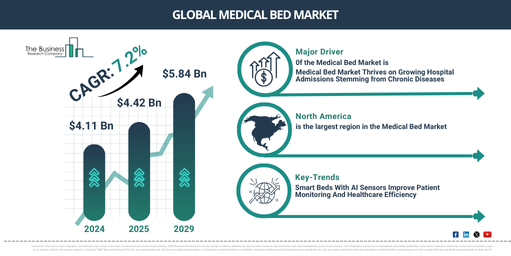
    The size of the medical bed market has shown robust growth in the past few years. It’s projected to increase from $4.11 billion in 2024 to $4.42 billion in 2025, with a compound annual growth rate (CAGR) of 7.5%. The growth witnessed during the historical period is due to factors such as an increase in the aging population, the widespread occurrence of chronic diseases, advancements in healthcare infrastructure, rising healthcare spending, and the need for care of bariatric patients.

    The value of the medical bed market is anticipated to experience robust growth in the upcoming years. It is estimated to reach a value of $5.84 billion in 2029, with a compound annual growth rate (CAGR) of 7.2%. This upward trend during the forecasted period can be associated with the emphasis on patient safety and comfort, readiness for global pandemics, an increment in surgical procedures, demographic changes, and an increased prevalence of diseases related to lifestyle. Major anticipated trends in the forecasted period include advancements in technology, medical tourism, regulatory standards and compliance requirements, material innovation, the rise of telemedicine, and a comprehensive patient care approach.

    Download a free sample to assess the report’s scope and structure:

    https://www.thebusinessresearchcompany.com/sample.aspx?id=13700&type=smp

    What Are the Major Market Drivers Behind the Rising Adoption of Medical Bed Market?

    The medical bed market’s growth is anticipated to be spurred by an increase in hospital admissions due to chronic illnesses. Various elements, such as personal health, socio-economical factors, healthcare infrastructure, and public health regulations, play a pivotal role in hospital admittances. Medical beds are essential in extending care and support to patients during hospitalizations and they significantly enhance patient safety, comfort, and medical oversight. For example, according to data collected by NHS Digital, a UK-based public organization, in 2023 the total number of Finished Admission Episodes (FAEs) in England saw an increase of 7.1% reaching 17.6 million from 2022-23. Further, Allergy UK, a nationally recognized UK charity, states that in April 2024, over 21 million individuals in the UK had been affected by allergies. This made allergies the most frequently reported chronic health issue in 2022, with expectations that by 2026, half of Europe’s populace will suffer from at least one type of allergy. Hence, the surge in chronic disease-related hospital admissions is fueling the expansion of the medical bed market.

    Which Key Market Segments Comprise the Medical Bed Market and Drive Its Revenue Growth?

    The medical bed market covered in this report is segmented –

    1) By Type: Electric Medical Beds, Semi Electric Medical Beds, Manual Medical Beds

    2) By Usage: Intensive Care, Non-intensive Care

    3) By End-User: Hospitals, Home Care Settings, Rehabilitation Centers, Other End-Users

    Subsegments:

    1) By Electric Medical Beds: Full Electric Beds, Adjustable Electric Beds

    2) By Semi Electric Medical Beds: Adjustable Head And Foot Sections, Manual Adjustment Options

    3) By Manual Medical Beds: Fixed Manual Beds, Basic Adjustable Manual Beds

    Request customized data on this market:

    https://www.thebusinessresearchcompany.com/customise?id=13700&type=smp

    Which Areas Are Leading Regions in the Medical Bed Market Expansion Across the Globe?

    North America was the largest region in the medical bed market in 2024. Asia-Pacific is expected to be the fastest-growing region in the forecast period. The regions covered in the medical bed market report are Asia-Pacific, Western Europe, Eastern Europe, North America, South America, Middle East, Africa.

    What Are the Strategic Trends Steering theMedical Bed Market Direction?

    Leading entities in the medical bed industry are constantly pushing boundaries by developing cutting-edge products like smart connected beds to elevate patient care. These state-of-the-art beds employ sophisticated technologies, inclusive of AI-powered sensors, to closely track patient health, streamline care procedures, and heighten patient safety. The firms operating in the medical bed sector are incessantly innovating to fulfill the surging need for effective healthcare solutions. By way of illustration, in August 2022, a collaboration between Dozee, an Indian enterprise specializing in connected health devices, and Midmark India, a reputed hospital bed maker in India, led to the launch of the Dozee Smart Connected Bed. This technologically advanced bed boasts of Dozee’s AI-enabled contactless sensor that keeps an eye on crucial parameters like heart rate, respiratory rate, body temperature, and oxygen saturation levels, acting as an early alert system for immediate medical attention. The bed can be connected seamlessly with a hospital’s central command hub and HMIS, thereby elevating the quality of patient care.

    View the full report here:

    https://www.thebusinessresearchcompany.com/report/medical-bed-global-market-report

    How Is the Medical Bed Market Conceptually Defined?

    A medical bed is a specialized piece of furniture designed for patients in healthcare settings. These beds are specifically engineered to provide comfort, support, and safety for individuals receiving medical care, whether in hospitals, clinics, or at home. Medical beds are equipped with various features and functionalities to address the specific needs of patients and healthcare providers.

    Purchase the full report and get a swift delivery:

    https://www.thebusinessresearchcompany.com/purchaseoptions.aspx?id=13700

    About The Business Research Company:

    With over 15000+ reports from 27 industries covering 60+ geographies, The Business Research Company has built a reputation for offering comprehensive, data-rich research and insights. Armed with 1,500,000 datasets, the optimistic contribution of in-depth secondary research, and unique insights from industry leaders, you can get the information you need to stay ahead in the game.

    Get in touch with us:

    The Business Research Company: https://www.thebusinessresearchcompany.com/

    Americas +1 3156230293

    Asia +44 2071930708

    Europe +44 2071930708

    Email us at info@tbrc.info

    Follow us on:

    LinkedIn: https://in.linkedin.com/company/the-business-research-company

    YouTube: https://www.youtube.com/channel/UC24_fI0rV8cR5DxlCpgmyFQ

    Global Market Model: https://www.thebusinessresearchcompany.com/global-market-model
  • Major Drivers Propelling the Growth oh theMammography Systems Market Forward: The Surge In Breast Cancer Cases Fueling Demand For Mammography Systems

    Major Drivers Propelling the Growth oh theMammography Systems Market Forward: The Surge In Breast Cancer Cases Fueling Demand For Mammography Systems

    Discover trends, market shifts, and competitive outlooks for the mammography systems industry through 2025-2034 with The Business Research Company’s reliable data and in-depth research

    How Has The Mammography Systems Market Size Shifted, And What Is the Outlook Through 2034?

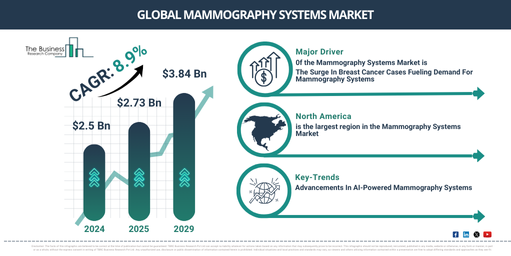
    There has been significant growth in the size of the mammography systems market in the recent past years. The market, which stood at $2.5 billion in 2024, is predicted to rise to $2.73 billion in 2025, exhibiting a compound annual growth rate (CAGR) of 9.2%. This notable growth during the historic period can be credited to factors such as the rise in breast cancer cases, various government initiatives and schemes advocating for breast cancer, advantageous reimbursement policies, as well as heightened awareness about the criticality of detecting breast cancer at an early stage.

    The market of mammography systems is anticipated to witness robust growth in the upcoming years, reaching a peak of $3.84 billion by 2029 with a Compound Annual Growth Rate (CAGR) of 8.9%. This growth during the forecast period is a result of the rising adoption of 3D mammography, increased expenses in healthcare, shifting towards digital mammography systems, growing market expansion in emerging markets due to enhanced healthcare infrastructure, and an increasing emphasis on preventive healthcare and early detection of diseases. The forecast period also presents major trends such as the incorporation of AI algorithms in mammography systems as well as the attraction towards 3D tomosynthesis, mobile mammography units, AI-aided diagnostics, telemedicine, and remote monitoring.

    Download a free sample to assess the report’s scope and structure:

    https://www.thebusinessresearchcompany.com/sample.aspx?id=15214&type=smp

    Which Major Market Drivers Are Expected to Boost the Growth Potential of the Mammography Systems Market?

    The ongoing surge in breast cancer incidences is anticipated to stimulate the mammography systems market’s expansion. Breast cancer is characterized by uncontrolled cell growth in breast tissue, potentially forming a malignant tumor that could metastasize to other body parts. Increased breast cancer rates can be attributed to lifestyle alterations, an older population, inherited genetic abnormalities, and hormonal influences. Mammography systems serve as essential weaponry in battling breast cancer, facilitating early detection, precise diagnostics, and efficient treatment approaches, ultimately boosting patient prognosis and survival statistics. For example, as reported by the American Cancer Society, a non-profit cancer advocacy organization based in the US, the number of breast cancer cases surged from 284,200 in 2021 to 300,590 in January 2023, indicating a 5.76% growth. Hence, the escalating breast cancer incidences are fueling the growth of the mammography systems market.

    Which Key Market Segments Comprise the Mammography Systems Market and Drive Its Revenue Growth?

    The mammography systems market covered in this report is segmented –

    1) By Product: Analog Systems, Full Field Digital Mammography Systems, Breast Tomosynthesis Systems

    2) By Technology: Screen Film, 2D Mammography, 3D Mammography, Other Technologies

    3) By Modality: Portable Mammography Systems, Non-Portable Mammography Systems

    4) By End-User: Hospitals, Ambulatory Surgical Centers, Other End-Users

    Subsegments:

    1) By Analog Systems: Film-Based Mammography Systems, Screen-Film Mammography Systems

    2) By Full Field Digital Mammography Systems: Direct Radiography (DR) Systems, Computed Radiography (CR) Systems

    3) By Breast Tomosynthesis Systems: Digital Breast Tomosynthesis (DBT) Systems, 3D Mammography Systems

    Request customized data on this market:

    https://www.thebusinessresearchcompany.com/customise?id=15214&type=smp

    Which Areas Are Leading Regions in the Mammography Systems Market Expansion Across the Globe?

    North America was the largest region in the mammography systems market in 2024. Asia Pacific is expected to be the fastest-growing region in the forecast period. The regions covered in the mammography systems market report are Asia-Pacific, Western Europe, Eastern Europe, North America, South America, Middle East, Africa.

    What Are the Key Market Trends in theMammography Systems Market Over the Coming Years?

    Top-notch corporations in the mammography systems market are making strides towards inventing artificial intelligence (AI)-driven mammography systems like Amulet Sophinity. These systems aim to boost diagnostic precision, enhance workflow efficiency, and elevate patient results. Amulet Sophinity is essentially an AI-backed digital mammography system that improves both the accuracy and comfort level of breast cancer diagnosis procedures. For instance, in February 2024, the Japan-based Fujifilm Holdings Corporation, known for its innovation and contribution in medical imaging and diagnostic solutions, introduced Amulet Sophinity. This digital mammography apparatus boasts low dosage, superior image quality, and refined workflow characteristics inclusive of artificial intelligence (AI) technology. It is designed to facilitate dual-angle tomosynthesis with crisply constructed images for the effective detection of calcification. Additionally, the system includes an AI-based projection function that assists in positioning the breast based on prior mammography images.

    View the full report here:

    https://www.thebusinessresearchcompany.com/report/mammography-systems-global-market-report

    How Is the Mammography Systems Market Conceptually Defined?

    Mammography systems are medical imaging devices used for detecting breast cancer. They utilize low-dose X-rays to create detailed images of breast tissue, aiding in the detection of abnormalities such as tumors or cysts. These systems are crucial for early detection, improving treatment outcomes, and patient survival rates. It also uses digital or analog technology for screening and diagnostic purposes.

    Purchase the full report and get a swift delivery:

    https://www.thebusinessresearchcompany.com/purchaseoptions.aspx?id=15214

    About The Business Research Company:

    With over 15000+ reports from 27 industries covering 60+ geographies, The Business Research Company has built a reputation for offering comprehensive, data-rich research and insights. Armed with 1,500,000 datasets, the optimistic contribution of in-depth secondary research, and unique insights from industry leaders, you can get the information you need to stay ahead in the game.

    Get in touch with us:

    The Business Research Company: https://www.thebusinessresearchcompany.com/

    Americas +1 3156230293

    Asia +44 2071930708

    Europe +44 2071930708

    Email us at info@tbrc.info

    Follow us on:

    LinkedIn: https://in.linkedin.com/company/the-business-research-company

    YouTube: https://www.youtube.com/channel/UC24_fI0rV8cR5DxlCpgmyFQ

    Global Market Model: https://www.thebusinessresearchcompany.com/global-market-model
  • Left Atrial Appendage Closure Device Market Outlook 2025–2034: Identifying Growth Drivers, Technology Trends, and Policy Impact

    Discover trends, market shifts, and competitive outlooks for the left atrial appendage closure device industry through 2025-2034 with The Business Research Company’s reliable data and in-depth research

    What Are the Projected Market Size and Growth Rates for the Left Atrial Appendage Closure Device Market From 2025 To 2029?

    In recent times, there has been a swift expansion in the market size of the left atrial appendage closure device. The projected growth is from $1.67 billion in 2024 to $2 billion in 2025, registering a compound annual growth rate (CAGR) of 19.5%. The increase in the historical span was influenced by factors such as the occurrence of atrial fibrillation, strategies developed for stroke prevention, existing clinical research and evidence, the advent of minimally invasive alternatives, the inclination of patients towards non-pharmacological options, the ageing population, and the proficiency and training of physicians.

    In the coming years, the market size of the left atrial appendage closure device is anticipated to experience substantial growth. It is projected to expand to $3.74 billion in 2029 with a CAGR of 17.0%. The expansion during the forecast period is due to a rising global prevalence of atrial fibrillation, emphasis on preventing strokes in high-risk patients, increased patient awareness, assimilation into standard medical practice, and worldwide initiatives in managing cardiovascular diseases. The forecast period will see prevalent trends like the introduction of percutaneous closure techniques, advancements in the design of devices, a growing utilization of imaging technologies, a focus on less invasive methods, and customizing device selection based on patient anatomy.

    Download a free sample to assess the report’s scope and structure:

    https://www.thebusinessresearchcompany.com/sample.aspx?id=13474&type=smp

    What Are the Core Market Drivers Propelling Growth in the Left Atrial Appendage Closure Device Industry?

    The increasing occurrence of atrial fibrillation is projected to drive the expansion of the left atrial appendage (LAA) closure device sector. Atrial fibrillation is a health issue defined by an erratic, typically quickened heartbeat, which arises when the atria, the heart’s upper compartments, fail to beat in a synchronized and rhythmic fashion. LAA closure devices principally serve to treat atrial fibrillation, mitigating stroke risks in patients suffering from this cardiac arrhythmia and inhibiting clot formation or discharge. For instance, according to an October 2022 report by the Centers for Disease Control and Prevention, a U.S. government agency, atrial fibrillation was the chief diagnosis in over 454,000 yearly hospital admissions, and the number of people with atrial fibrillation in the U.S. is predicted to reach 12.1 million by 2030. As such, the upsurge in atrial fibrillation cases is likely to boost the LAA closure device market’s growth prospects. The surge in the senior population is anticipated to further spur the growth of the LAA closure device market. The categorization of the senior population includes individuals aged 65 and above, underlining their unique health needs and age-related challenges. LAA closure devices can decrease the stroke risk that comes with atrial fibrillation, a condition typically found in older adults. For example, in 2023, a government agency based in Europe, Eurostat, disclosed that over 21% of the EU population in 2022 was aged 65 and over, with the median age reaching 44.4 years, meaning that half of the people were aged above this. This increasing geriatric population, therefore, is propelling the LAA closure device market’s growth.

    How Is the Left Atrial Appendage Closure Device Market Segmented?

    The left atrial appendage closure device market covered in this report is segmented –

    1) By Product: Epicardial Left Atrial Appendage (LAA) Devices, Endocardial Left Atrial Appendage (LAA) Devices

    2) By Procedure: Percutaneous, Surgical

    3) By End-User: Hospital, Ambulatory Surgical Centers, Other End-Users

    Subsegments:

    1) By Epicardial Left Atrial Appendage (LAA) Devices: Suture-Based Closure Devices, Ligation-Based Closure Devices, Clip-Based Closure Devices

    2) By Endocardial Left Atrial Appendage (LAA) Devices: Plug-Based Closure Devices, Disc-Based Closure Devices, Mesh-Based Closure Devices

    Request customized data on this market:

    https://www.thebusinessresearchcompany.com/customise?id=13474&type=smp

    Which Regions Are Driving the Next Phase of the Left Atrial Appendage Closure Device Market Growth?

    North America was the largest region in the left atrial appendage closure devices market in 2024. The regions covered in the left atrial appendage closure device market report are Asia-Pacific, Western Europe, Eastern Europe, North America, South America, Middle East, Africa.

    What Key Market Trends and Innovations Are Shaping the Future of the Left Atrial Appendage Closure Device Industry?

    Leading entities in the left atrial appendage closure device market are spearheading innovation with products like Watchman FLX, designed to progress treatment for non-valvular atrial fibrillation (NVAF). These advancements provide patients an alternative to oral anticoagulation therapy. The Watchman FLX pro, a self-expanding device, is implanted in the LAA to stop blood clots from forming. In September 2022, US manufacturer Boston Scientific Corporation gained approval from the Food and Drug Administration in the US for the Watchman FLX to minimize stroke risk in NVAF patients. The device’s design allows for easier implantation compared to its predecessors, expanding its applicability to a wider range of patients. It remains a safe and effective stroke prevention method for NVAF sufferers, and a worthwhile option for those unable to handle oral anticoagulation therapy or deemed unsuitable for it.

    View the full report here:

    https://www.thebusinessresearchcompany.com/report/left-atrial-appendage-closure-device-global-market-report

    How Is the Left Atrial Appendage Closure Device Market Defined and What Are Its Core Parameters?

    A left atrial appendage closure device is a medical implant used to treat certain heart conditions, specifically in atrial fibrillation (AF) patients. These devices are implanted in a minimally invasive surgery to lower the risk of stroke in AF patients by sealing off or occluding the left atrial appendage (LAA), preventing blood from entering and clotting.

    Purchase the full report and get a swift delivery:

    https://www.thebusinessresearchcompany.com/purchaseoptions.aspx?id=13474

    About The Business Research Company:

    With over 15000+ reports from 27 industries covering 60+ geographies, The Business Research Company has built a reputation for offering comprehensive, data-rich research and insights. Armed with 1,500,000 datasets, the optimistic contribution of in-depth secondary research, and unique insights from industry leaders, you can get the information you need to stay ahead in the game.

    Get in touch with us:

    The Business Research Company: https://www.thebusinessresearchcompany.com/

    Americas +1 3156230293

    Asia +44 2071930708

    Europe +44 2071930708

    Email us at info@tbrc.info

    Follow us on:

    LinkedIn: https://in.linkedin.com/company/the-business-research-company

    YouTube: https://www.youtube.com/channel/UC24_fI0rV8cR5DxlCpgmyFQ

    Global Market Model: https://www.thebusinessresearchcompany.com/global-market-model
  • From Insight to Impact: Strategic Growth Mapping in the Oncology Biomarkers Market

    Discover trends, market shifts, and competitive outlooks for the oncology biomarkers industry through 2025-2034 with The Business Research Company’s reliable data and in-depth research

    What Is the Estimated Market Size of the Oncology Biomarkers Market In 2029?

    In recent times, there has been a swift expansion in the scale of the oncology biomarkers market. Estimated at $15.3 billion in 2024, it is projected to swell to $17.43 billion in 2025, showcasing a compound annual growth rate (CAGR) of 13.9%. The notable growth observed in the historic phase could be ascribed to wider acceptance in developing nations, efforts towards precision medicine, advancements in diagnostic procedures, support for drug development, and a rising occurrence of cancer.

    In the coming years, the oncology biomarkers market is projected to experience swift expansion. The market is anticipated to reach $29.64 billion by 2029, with a compound annual growth rate (CAGR) of 14.2%. Factors contributing to this predicted growth during the specified period include the integration of next-generation sequencing (ngs), the growth of biomarker informatics, emphasis on predictive pharmacogenomics, quick progression of exosome-based biomarkers, and the utilization of spatial transcriptomics. Key trends expected within this period are the standardization and quality assurance, a move towards functional biomarkers, the function of biomarkers in clinical trials, wider applications in immunotherapy, and real-time observation of therapy responses.

    Download a free sample to assess the report’s scope and structure:

    https://www.thebusinessresearchcompany.com/sample.aspx?id=12493&type=smp

    What are the Fundamental Drivers and Innovations Shaping the Oncology Biomarkers Market?

    The oncology biomarker market is predicted to expand due to the increasing prevalence of cancer. This illness begins when some cells in the body start multiplying without control, gradually affecting the whole body. Oncology biomarkers help gain a deeper insight into the specific kind of cancer by evaluating the genes, proteins, and other substances present in a patient’s body. For instance, the National Library of Medicine, a government institution based in the US, projected in January 2024, that the United States might see 2,001,140 new cancer cases and 611,720 cancer-related fatalities in 2024. On top of that, the annual incidence rates of cervical cancer among individuals between 30 and 44 years old, and colorectal cancer in those under 55 years old, have been witnessing 1% to 2% increases among the younger population. Hence, the growing cancer prevalence is expected to steer the growth in the oncology biomarker market.

    How Is the Oncology Biomarkers Market Segmented?

    The oncology biomarkers market covered in this report is segmented –

    1) By Biomarker Type: Protein Biomarkers, Genetic Biomarkers, Other Cancer Biomarkers

    2) By Profiling Technologies: Omics Technologies, Imaging Technologies, Immunoassay, Bioinformatics, Other Profiling Technologies

    3) By Cancer Type: Breast Cancer, Lung Cancer, Colorectal Cancer, Prostate Cancer, Melanoma, Leukemia, Ovarian Cancer, Liver Cancer, Other Cancer Types

    4) By Application: Diagnostics, Research And Development, Prognostics, Risk Assessment, Other Applications

    5) By End-User: Hospitals, Academic And Cancer Research Institutes, Ambulatory Surgical Centers, Diagnostic Laboratories

    Subsegments:

    1) By Protein Biomarkers: Tumor-Specific Antigens, Circulating Tumor Cells (CTCs), Enzymatic Biomarkers

    2) By Genetic Biomarkers: DNA Mutations, Gene Expression Profiles, Single Nucleotide Polymorphisms (SNPs)

    3) By Other Cancer Biomarkers: Metabolomic Biomarkers, Epigenetic Biomarkers, MicroRNA Biomarkers

    Request customized data on this market:

    https://www.thebusinessresearchcompany.com/customise?id=12493&type=smp

    Which Regions Are Driving the Next Phase of the Oncology Biomarkers Market Growth?

    North America was the largest region in the oncology biomarkers market in 2024. The regions covered in the oncology biomarkers market report are Asia-Pacific, Western Europe, Eastern Europe, North America, South America, Middle East, Africa

    What Key Trends Are Shaping the Future of the Oncology Biomarkers Market?

    The trend of embracing groundbreaking and sophisticated technologies is prevalent in the oncology biomarker industry. To consolidate their market standing in the field of oncology biomarkers, top corporations are rolling out novel and pioneering technologies. A case in point is OncoDNA, a Belgium-based corporation specializing in precision medicine in oncology, which unveiled the OncoDEEP kit in 2022. This distinctive kit empowers laboratories to conduct thorough biomarker testing. Via the use of Next-generation sequencing (NGS) technology coupled with cloud-based software applications, OncoDEEP offers labs the means to carry out broad-panel sequencing, gain a molecular understanding of a tumor, scrutinize the raw data, and avail detailed quality control checks.

    View the full report here:

    https://www.thebusinessresearchcompany.com/report/oncology-biomarkers-global-market-report

    How Is the Oncology Biomarkers Market Defined and What Are Its Core Parameters?

    Oncology biomarkers refer to biological indicators, such as genes, proteins, or other molecules, that can signal the presence of cancer or its progression. They are used to diagnose cancer, predict treatment responses, and monitor disease progression or recurrence. By analyzing these biomarkers, healthcare providers can tailor personalized treatment plans for patients.

    Purchase the full report and get a swift delivery:

    https://www.thebusinessresearchcompany.com/purchaseoptions.aspx?id=12493

    About The Business Research Company:

    With over 15000+ reports from 27 industries covering 60+ geographies, The Business Research Company has built a reputation for offering comprehensive, data-rich research and insights. Armed with 1,500,000 datasets, the optimistic contribution of in-depth secondary research, and unique insights from industry leaders, you can get the information you need to stay ahead in the game.

    Get in touch with us:

    The Business Research Company: https://www.thebusinessresearchcompany.com/

    Americas +1 3156230293

    Asia +44 2071930708

    Europe +44 2071930708

    Email us at info@tbrc.info

    Follow us on:

    LinkedIn: https://in.linkedin.com/company/the-business-research-company

    YouTube: https://www.youtube.com/channel/UC24_fI0rV8cR5DxlCpgmyFQ

    Global Market Model: https://www.thebusinessresearchcompany.com/global-market-model
  • Strong CAGR to Propel in the Ocular Drug Delivery Market and Beyond upto $27.18 Billion by 2029

    Strong CAGR to Propel in the Ocular Drug Delivery Market and Beyond upto $27.18 Billion by 2029

    Discover trends, market shifts, and competitive outlooks for the ocular drug delivery industry through 2025-2034 with The Business Research Company’s reliable data and in-depth research

    What is the Anticipated CAGR of the Ocular Drug Delivery Market, and What Factors Will Drive It?

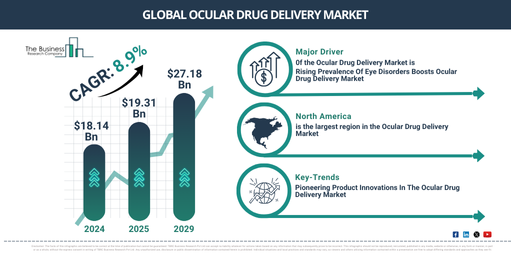
    In recent years, the market for ocular drug delivery has significantly increased, with projections showing it will escalate from $18.14 billion in 2024 to $19.31 billion in 2025, reflecting a compound annual growth rate (CAGR) of 6.4%. The growth observed during the historic period is linked to an increase in eye diseases, the demographic trend of an aging population, progress in pharmaceutical formulations, advancements in ophthalmology, and a higher rate of diabetes-related eye conditions.

    Expectations are high for strong expansions in the ocular drug delivery market in the upcoming years, with projections suggesting it could increase to a value of $27.18 billion by 2029. This growth, calculated at a compound annual growth rate (CAGR) of 8.9%, can be linked to a number of factors such as the increased rates of eye conditions connected to aging, the emerging focus on personalized medicine within the field of ophthalmology, higher levels of funding for research into ophthalmic treatments, a growing demand for long-lasting drug release, and worldwide efforts to improve eye health. Over this forecast period, it’s anticipated that important trends will emerge, such as the creation of smart devices for administering drugs, the personalization of ocular drug formulations, advancement in topical ophthalmic therapies, and cross-sector collaborations for the sake of developing innovative solutions.

    Download a free sample to assess the report’s scope and structure:

    https://www.thebusinessresearchcompany.com/sample.aspx?id=11901&type=smp

    Which Primay Drivers Are Accelerating Growth in the Ocular Drug Delivery Market?

    The anticipated rise in ocular conditions is forecasted to stimulate the expansion of the ocular drug delivery market. The term “eye disorders” encompasses a broad spectrum of illnesses that impact the eyes, visibility, and the surrounding structures. With ocular drug delivery, medication is directly delivered to the desired site, which increases drug concentration at the targeted region, heightens therapeutic effectiveness, mitigates systemic side effects, and enhances ocular health. For instance, the World Health Organization, a United Nations agency headquartered in Switzerland, projected in March 2023 that globally, around 2.2 billion individuals will suffer from myopia or hypermetropia. As per the calculations, the leading causes of vision loss or impaired vision are cataracts (94 million) and uncorrected refractive errors (88.4 million). Other common vision impairment causes include glaucoma (7.7 million cases), corneal opacities (4.2 million cases), diabetic retinopathy (3.9 million cases), and trachoma (2 million cases). As a result, the rising prevalence of ocular disorders is accelerating the growth of the ocular drug delivery market.

    Which Primary Segments of the Ocular Drug Delivery Market Are Driving Growth and Industry Transformations?

    The ocular drug delivery market covered in this report is segmented –

    1) By Technology: Implantable Ocular Drug Delivery Systems, Particulate Drug Delivery Systems, Nano-Particle Drug Delivery System, Other Technologies

    2) By Formulation: Liposomes And Nanoparticles, Solution, Emulsion, Suspension, Ointment

    3) By Disease: Glaucoma, Diabetic Retinopathy, Dry Eye Syndrome, Macular Degeneration, Cataract, Diabetic Macular Edema, Other Diseases

    4) By End User: Hospitals, Ophthalmic Clinics, Ambulatory Surgical Centers

    Subsegments:

    1) By Implantable Ocular Drug Delivery Systems: Intravitreal Implants, Subconjunctival Implants, Retrobulbar Implants

    2) By Particulate Drug Delivery Systems: Microparticles, Liposomes, Microspheres

    3) By Nano-Particle Drug Delivery Systems: Nanoemulsions, Nanoparticles For Sustained Release, Dendrimers

    4) By Other Technologies: Hydrogels, Contact Lenses With Drug Delivery, In situ Gel-Forming Systems

    Request customized data on this market:

    https://www.thebusinessresearchcompany.com/customise?id=11901&type=smp

    Which Regions Are Key Players in the Growth of the #Which Primay Drivers Are Accelerating Growth in the Ocular Drug Delivery Market?# Market?

    North America was the largest region in the ocular drug delivery market in 2024. The regions covered in the ocular drug delivery market report are Asia-Pacific, Western Europe, Eastern Europe, North America, South America, Middle East, Africa.

    Which Technological Trends Are Reshaping the Ocular Drug Delivery Industry Dynamics?

    Product enhancement is an emerging trend catching on in the ocular drug delivery sector. Firms in this sector are concentrating on creating novel product innovations to maintain their market standing. For example, in March 2023, Alcon AG, a Swiss company specializing in eye care pharmaceuticals and medical devices, introduced TOTAL30 for astigmatism and SYSTANE HYDRATION for dry eye and ocular wellness. TOTAL30 is the pioneer and sole Toric lens incorporating water Gradient and Celligent Technology, enabling the lens to reflect the structure of the ocular surface and deliver outstanding performance in areas such as comfort, stability, and visual clarity. SYSTANE HYDRATION PF is an eye drop designed for ocular health that employs HydroBoost technology to replenish moisture, avert irritation, and bring relief from dry eye symptoms.

    View the full report here:

    https://www.thebusinessresearchcompany.com/report/ocular-drug-delivery-global-market-report

    What Parameters Are Used to Define the Ocular Drug Delivery Market?

    Ocular drug delivery refers to the administration of medications or therapeutic agents to the eye. It involves delivering drugs to various ocular tissues to treat various eye conditions. It improves drug bioavailability, provides targeted treatment, and reduces systemic side effects, leading to better patient outcomes in conditions such as glaucoma, infections, and retinal disorders.

    Purchase the full report and get a swift delivery:

    https://www.thebusinessresearchcompany.com/purchaseoptions.aspx?id=11901

    About The Business Research Company:

    With over 15000+ reports from 27 industries covering 60+ geographies, The Business Research Company has built a reputation for offering comprehensive, data-rich research and insights. Armed with 1,500,000 datasets, the optimistic contribution of in-depth secondary research, and unique insights from industry leaders, you can get the information you need to stay ahead in the game.

    Get in touch with us:

    The Business Research Company: https://www.thebusinessresearchcompany.com/

    Americas +1 3156230293

    Asia +44 2071930708

    Europe +44 2071930708

    Email us at info@tbrc.info

    Follow us on:

    LinkedIn: https://in.linkedin.com/company/the-business-research-company

    YouTube: https://www.youtube.com/channel/UC24_fI0rV8cR5DxlCpgmyFQ

    Global Market Model: https://www.thebusinessresearchcompany.com/global-market-model

  • Nucleic Acid Extraction Instruments And Reagents Market Insights: In-Depth Look at Growth Trends, Market Size, and Opportunities for 2025-2034

    Nucleic Acid Extraction Instruments And Reagents Market Insights: In-Depth Look at Growth Trends, Market Size, and Opportunities for 2025-2034

    Discover trends, market shifts, and competitive outlooks for the nucleic acid extraction instruments and reagents industry through 2025-2034 with The Business Research Company’s reliable data and in-depth research

    How Has The Nucleic Acid Extraction Instruments And Reagents Market Growth Evolved From 2024 To 2025, And What’s Ahead?

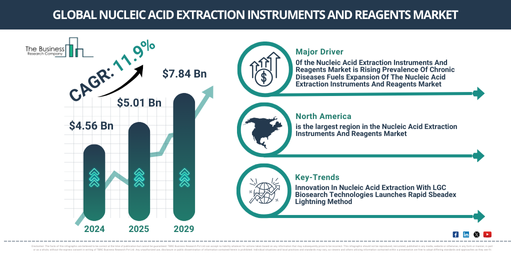
    The market size for nucleic acid extraction instruments and reagents has seen a robust growth in the past few years. Expectations are for this market to expand from $4.56 billion in 2024 to $5.01 billion in 2025, representing a compound annual growth rate (CAGR) of 9.9%. Factors such as progress in genomic research, the increased focus on clinical diagnostics, the advent of next-generation sequencing, the rise in genetic disorders, and a worldwide emphasis on researching infectious diseases have all significantly contributed to the growth seen in the historical period.

    Expectations indicate a swift expansion in the market size of nucleic acid extraction instruments and reagents, which is likely to reach $7.84 billion by 2029 with a compound annual growth rate (CAGR) of 11.9%. The anticipated rise in the forecast period can be linked to the speedy improvement in personalized medicine, the broadening of point-of-care testing, heightened attention on rare diseases, and breakthroughs in cancer studies. Forecasts for the period also underline the key trends, including the applications in agricultural biotechnology, the surge in biotechnology, advancements in automated technology, environmental DNA (EDNA) analysis, and integration of blockchain for genomic data security.

    Download a free sample to assess the report’s scope and structure:

    https://www.thebusinessresearchcompany.com/sample.aspx?id=12390&type=smp

    What External and Internal Drivers Are Contributing to the Growth of theNucleic Acid Extraction Instruments And Reagents Market?

    The surge in chronic illness prevalence is predicted to fuel the expansion of the nucleic acid extraction instruments and reagents market in the future. Chronic diseases, which are persistent medical conditions that usually develop over a lengthy period, necessitate the use of nucleic acid extraction instruments and reagents. These tools and reagents are vital in the realm of molecular diagnostics and research related to chronic diseases. They facilitate genetic tests, biomarker assessment, research, pharmacogenomic testing, and disease monitoring, contributing to enhanced comprehension and management of long-term conditions. For example, the World Health Organization, a Switzerland-based United Nations specialized agency, reported 41 million deaths in September 2023, accounting for 74% of yearly global deaths caused by non-communicable diseases or chronic diseases. Cardiovascular diseases led to 17.9 million deaths, cancer caused 9.3 million deaths, chronic respiratory diseases resulted in 4.1 million deaths, and diabetes recorded 2.0 million deaths. Hence, the escalating prevalence of chronic diseases is propelling the growth of the nucleic acid extraction instruments and reagents market.

    What Segment Types Define the Nucleic Acid Extraction Instruments And Reagents Market Structure?

    The nucleic acid extraction instruments and reagents market covered in this report is segmented –

    1) By Type: Instruments, Spin Columns, Beads Or Magnetic Beads, Automated Nucleic Acid Extraction Systems, Extraction Kits And Reagents And Consumables, Other Types

    2) By Extraction Type: DNA Extraction, DNA Or RNA Extraction, RNA Extraction

    3) By Method: Solution-Based Methods, Solid-Phase-Based Methods

    4) By End User: Academic Research Institutes, Hospitals And Diagnostic Centers, Pharmaceutical And Biotechnology Industry, Contract Research Organizations (CROs), Other End Users

    Subsegments:

    1) By Instruments: Manual Extraction Instruments, Automated Extraction Instruments, Specialized Nucleic Acid Extractors

    2) By Spin Columns: Standard, High-Throughput, Specialized

    3) By Beads Or Magnetic Beads: Silica-Based Beads, Magnetic Beads For DNA Or RNA Extraction, Functionalized Beads For Nucleic Acid Binding

    4) By Automated Nucleic Acid Extraction Systems: Fully Automated Systems, Semi-Automated Systems

    5) By Extraction Kits And Reagents And Consumables: DNA Extraction Kits, RNA Extraction Kits, Reagents For Nucleic Acid Purification, Consumables

    6) By Other Types: Specialized Extraction Methods, Hybrid Methods

    Request customized data on this market:

    https://www.thebusinessresearchcompany.com/customise?id=12390&type=smp

    Which Geographic Areas Hold the Strongest Growth Potential in the Nucleic Acid Extraction Instruments And Reagents Market?

    North America was the largest region in the nucleic acid extraction instruments and reagents market in 2024. The regions covered in the nucleic acid extraction instruments and reagents market report are Asia-Pacific, Western Europe, Eastern Europe, North America, South America, Middle East, Africa

    What Long-Term Trends Are Transforming the Competitive Landscape of the Nucleic Acid Extraction Instruments And Reagents Market?

    Key players in the nucleic acid extraction instruments and reagents marketplace are prioritizing the development of novel solutions, such as nucleic acid extraction systems, to boost innovation and meet specific market demands. Nucleic acid extraction systems are lab tools and procedures designed to isolate and purify DNA and RNA from biological specimens like blood, tissues, cells and various fluids. For example, LGC Biosearch Technologies, a British biotech firm, rolled out the sbeadex Lightning nucleic acid extraction approach in January 2024, revolutionizing DNA purification by facilitating high-quality extraction from plant and animal samples in a mere 5 minutes. This cutting-edge approach condenses the conventional five-step procedure into three steps—bind, wash, and elute—saving up to 40 minutes per sample and enhancing throughput up to tenfold. The resultant DNA usually boasts high purity, with 260/280 ratios ranging from 1.7 to 2, making it compatible with uses like PCR and next-generation sequencing (NGS).

    View the full report here:

    https://www.thebusinessresearchcompany.com/report/nucleic-acid-extraction-instruments-and-reagents-global-market-report

    What Is the Definition of the Nucleic Acid Extraction Instruments And Reagents Market?

    Nucleic acid extraction instruments and reagents refer to the tools and substances used in the process of isolating and purifying nucleic acids, such as DNA or RNA, from biological samples. Nucleic acid extraction instruments typically include specialized equipment designed to perform various steps of the extraction process. These instruments and reagents are essential in molecular biology, genetics, and diagnostic laboratories.

    Purchase the full report and get a swift delivery:

    https://www.thebusinessresearchcompany.com/purchaseoptions.aspx?id=12390

    About The Business Research Company:

    With over 15000+ reports from 27 industries covering 60+ geographies, The Business Research Company has built a reputation for offering comprehensive, data-rich research and insights. Armed with 1,500,000 datasets, the optimistic contribution of in-depth secondary research, and unique insights from industry leaders, you can get the information you need to stay ahead in the game.

    Get in touch with us:

    The Business Research Company: https://www.thebusinessresearchcompany.com/

    Americas +1 3156230293

    Asia +44 2071930708

    Europe +44 2071930708

    Email us at info@tbrc.info

    Follow us on:

    LinkedIn: https://in.linkedin.com/company/the-business-research-company

    YouTube: https://www.youtube.com/channel/UC24_fI0rV8cR5DxlCpgmyFQ

    Global Market Model: https://www.thebusinessresearchcompany.com/global-market-model

  • Market Trends Influencing Strategic Decisions in the Fibrin Sealants Industry: Development of Hemostatic Agents In The Fibrin Sealants Market

    Market Trends Influencing Strategic Decisions in the Fibrin Sealants Industry: Development of Hemostatic Agents In The Fibrin Sealants Market

    Discover trends, market shifts, and competitive outlooks for the fibrin sealants industry through 2025-2034 with The Business Research Company’s reliable data and in-depth research

    What Is the Estimated Market Size of the Fibrin Sealants Market In 2029?

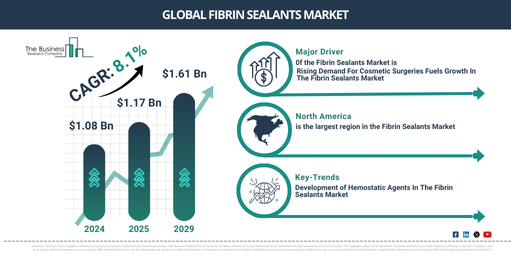
    The market size of fibrin sealants has seen robust growth in recent years. Projected figures reveal an expansion from $1.08 billion in 2024 to $1.17 billion in 2025, representing a compound annual growth rate (CAGR) of 8.4%. The historical period’s growth can be ascribed to factors such as the advancement in medical tourism, strengthening healthcare infrastructure, the increasing number of elective surgical procedures, the rising prevalence of chronic diseases, and an ascendant demand for swift hemostasis solutions.

    In the coming years, the fibrin sealants market is predicted to experience robust growth, reaching a value of $1.61 billion in 2029 with a compound annual growth rate (CAGR) of 8.1%. The anticipated expansion during the forecast period is due to factors such as a growing number of cosmetic and dental surgeries, a rising geriatric population, an increase in CABG cases, and escalating instances of blood-related disorders. The period is also expected to witness a surge in trends like technological advancements, advanced haemostatic technologies, personalised medicine, digital health technologies, and the use of robotic-assisted surgeries.

    Download a free sample to assess the report’s scope and structure:

    https://www.thebusinessresearchcompany.com/sample.aspx?id=19434&type=smp

    What Are the Major Market Drivers Behind the Rising Adoption of Fibrin Sealants Market?

    The fibrin sealants market’s growth is set to be propelled by the rising number of cosmetic surgeries. These medical procedures, focused mainly on altering or enhancing an individual’s appearance, have seen an upward trend due to societal focus on aesthetics, advancements in surgical methods, and increasing availability of minimally invasive procedures. Fibrin sealants play a crucial role in cosmetic surgeries by speeding up wound healing, controlling bleeding, and reducing scars, thereby improving surgical results and patient healing process. For example, the CosmetAssure report in September 2023 from the American Society of Plastic Surgeons in the US revealed that liposuction was the most sought-after plastic surgery procedure in 2023, with 347,782 procedures carried out, marking a 7% rise from 2022. Tummy tucks too witnessed a 5% growth, with 170,110 procedures undertaken. Hence, the growth of the fibrin sealants market is being fueled by the escalating number of cosmetic surgeries.

    Which Key Market Segments Comprise the Fibrin Sealants Market and Drive Its Revenue Growth?

    The fibrin sealantsmarket covered in this report is segmented –

    1) By Type: Liquid, Patch, Powder

    2) By Technology: Autologous Donation, Viral Inactivation, Recombinant Production, Other Technologies

    3) By Application: General Surgery, Cardiovascular Surgery, Wound Management, Orthopedic Surgery, Urological Surgeries, Ophthalmic Surgeries, Transplant Surgery, Other Applications

    4) By End-User: Hospitals, Ambulatory Surgical Centers, Other End-Users

    Subsegments:

    1) By Liquid: Bovine-Derived Liquid Sealants, Human-Derived Liquid Sealants, Synthetic Liquid Sealants, Recombinant Fibrin Sealants

    2) By Patch: Bovine-Derived Fibrin Patches, Human-Derived Fibrin Patches, Synthetic Fibrin Patches, Bioabsorbable Fibrin Patches

    3) By Powder: Bovine-Derived Fibrin Powder, Human-Derived Fibrin Powder, Synthetic Fibrin Powder, Recombinant Fibrin Powder

    Request customized data on this market:

    https://www.thebusinessresearchcompany.com/customise?id=19434&type=smp

    Which Areas Are Leading Regions in the Fibrin Sealants Market Expansion Across the Globe?

    North America was the largest region in the fibrin sealants market in 2024. Asia-Pacific is expected to be the fastest-growing region in the forecast period. The regions covered in the fibrin sealants market report are Asia-Pacific, Western Europe, Eastern Europe, North America, South America, Middle East, Africa.

    Which Technological Trends Are Reshaping the Fibrin Sealants Industry Dynamics?

    In the fibrin sealants market, prominent firms are honing their focus on the creation of hemostatic agents, which quickly halt bleeding upon exposure to them. These agents function by encouraging blood clot formation at wounds or surgical incision points. Swasth Kare, an Indian hemostatic agent producer, in February 2022, introduced SeraSeal. It’s a product of Wortham Laboratories, also an Indian company specializing in the development of hemostatic wound healing and coagulation products. SeraSeal, a fibrin sealant, is engineered to promptly halt bleeding upon contact, achieving hemostasis in seconds, even in instances of arterial bleeding. The quick response time of SeraSeal can be pivotal during emergency situations where time is of the essence. The product’s translucent property enables surgeons to clearly view the bleeding site and thus, make informed decisions during surgical procedures.

    View the full report here:

    https://www.thebusinessresearchcompany.com/report/fibrin-sealants-global-market-report

    How Is the Fibrin Sealants Market Conceptually Defined?

    Fibrin sealants, also known as fibrin glues or fibrin tissue adhesives, are specialized medical products used to promote blood clotting and tissue healing. They are composed of two main components derived from human or animal blood, fibrinogen (a protein involved in blood clot formation) and thrombin (an enzyme that converts fibrinogen into fibrin, the main substance in blood clots). Fibrin sealants are commonly used during surgeries to control bleeding, especially in delicate or hard-to-reach areas where traditional sutures or cauterization may be insufficient.

    Purchase the full report and get a swift delivery:

    https://www.thebusinessresearchcompany.com/purchaseoptions.aspx?id=19434

    About The Business Research Company:

    With over 15000+ reports from 27 industries covering 60+ geographies, The Business Research Company has built a reputation for offering comprehensive, data-rich research and insights. Armed with 1,500,000 datasets, the optimistic contribution of in-depth secondary research, and unique insights from industry leaders, you can get the information you need to stay ahead in the game.

    Get in touch with us:

    The Business Research Company: https://www.thebusinessresearchcompany.com/

    Americas +1 3156230293

    Asia +44 2071930708

    Europe +44 2071930708

    Email us at info@tbrc.info

    Follow us on:

    LinkedIn: https://in.linkedin.com/company/the-business-research-company

    YouTube: https://www.youtube.com/channel/UC24_fI0rV8cR5DxlCpgmyFQ

    Global Market Model: https://www.thebusinessresearchcompany.com/global-market-model