Category: Medical Equipment

  • Digital Health For Cardiovascular Market 2026 Outlook: Market Size, CAGR And Key Growth Opportunities

    Digital Health For Cardiovascular Market 2026 Outlook: Market Size, CAGR And Key Growth Opportunities

    Featuring market attractiveness scoring, total addressable market sizing, company benchmarking matrices, interactive Excel dashboards, deeper supply chain intelligence, emerging startup tracking, and granular product-level insights, The Business Research Company’s 2026 market reports are built to deliver research that is both more actionable and more strategically valuable.

    Digital Health For Cardiovascular Market Forecast: Value Set To Climb From $60.99 Billion To $137.87 Billion

    The digital health for cardiovascular market has seen substantial expansion in recent years. Its valuation is set to climb from $49.64 billion in 2025 to $60.99 billion in 2026, exhibiting a compound annual growth rate (CAGR) of 22.9%. Historically, this market’s growth has been fueled by the increasing occurrence of cardiovascular diseases, the development of digital infrastructure in hospitals, the implementation of electronic health records, the growing demand for remote healthcare services, and the advancement of wearable health technology.

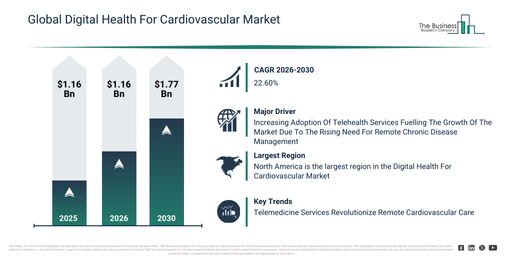
    The digital health for cardiovascular market is projected to experience substantial expansion in the upcoming years, with its value expected to reach $137.87 billion by 2030, exhibiting a compound annual growth rate (CAGR) of 22.6%. This anticipated growth throughout the forecast period stems from factors such as a heightened demand for home-based cardiac care, increased investments in AI-driven diagnostics, the broadening of cloud-based healthcare platforms, a greater emphasis on preventive cardiovascular care, and the rising uptake of real-time patient monitoring. Prominent trends observed during this period include the wider adoption of remote cardiac monitoring solutions, the growing utilization of wearable ECG devices, the increasing integration of AI-based diagnostic software, the expansion of telecardiology platforms, and an enhanced focus on continuous patient surveillance.

    Get A Free Sample Report With In-Depth Market Insights:

    https://thebusinessresearchcompany.com/sample_request?id=17172389&type=smp&name=Digital%20Health%20For%20Cardiovascular%20Market%20Report%202026&utm_source=Blogs&utm_medium=Paid&utm_campaign=Oct_PR

    Digital Health For Cardiovascular Market Growth Catalysts And Demand Drivers

    The expanding integration of telehealth services is anticipated to fuel the progression of the digital health for cardiovascular care market moving forward. Telehealth services encompass healthcare provisions delivered remotely through phones, video calls, or applications, enabling patients to consult medical professionals without physically visiting a clinic or hospital. The growing acceptance of telehealth services stems from their convenience in providing access to healthcare from home, particularly for managing ongoing conditions such as heart disease. Digital health for cardiovascular care plays a supportive role for telehealth services by facilitating remote monitoring and consultations, thereby making healthcare more accessible to patients. It enhances healthcare efficiency by supplying real-time data, which improves diagnostic and treatment strategies and lessens the requirement for in-person visits. For instance, in November 2024, the Australian Digital Health Agency 2022, an Australian government entity, reported in its Patient Experiences 2023–24 publication that 89.2% of individuals who had a telehealth consultation stated they would use telehealth again for future consultations if offered. This represented an increase from 87.7% in 2022-23. Accordingly, the widespread adoption of telehealth services is a significant driver for the growth of the digital health for cardiovascular care market.

    Digital Health For Cardiovascular Market Segment Analysis Spotlighting Growth Areas

    The digital health for cardiovascular market covered in this report is segmented –

    1) By Product Type: Remote Monitoring Devices, Mobile Health Applications, Diagnostic Software, Wearable ECG Monitors, Blood Pressure Monitors, Biosensors

    2) By Technology: Artificial Intelligence (AI), Internet Of Things (IoT), Telemedicine, Wearable Devices, Big Data Analytics, Interoperable Health Data Platforms

    3) By Deployment: On-Premise, Cloud

    4) By Application: Cardiac Monitoring, Diagnosis And Early Detection, Post-Surgical Care, Preventive Care, Rehabilitation Management

    5) By End User: Hospitals And Clinics, Homecare Settings, Ambulatory Care Centers, Academic And Research Institutes

    Subsegments:

    1) By Remote Monitoring Devices: Implantable Loop Recorders, Holter Monitors, Mobile Cardiac Telemetry Devices, Patch Monitors

    2) By Mobile Health Applications: Heart Rate Monitoring Apps, Blood Pressure Monitoring Apps, Medication Adherence Apps, Diet And Lifestyle Management Apps

    3) By Diagnostic Software: Electrocardiogram (ECG) Interpretation Software, Artificial intelligence (AI)-Powered Diagnostic Tools, Cardiac Imaging Analysis Software, Risk Assessment Tools

    4) By Wearable Electrocardiogram (ECG) Monitors: Smartwatches With Electrocardiogram (ECG) Functionality, Chest Strap Electrocardiogram (ECG) Monitors, Wristband Electrocardiogram (ECG) Monitors, Clothing-Integrated Electrocardiogram (ECG) Sensors

    5) By Blood Pressure Monitors: Arm Cuff Monitors, Wrist Cuff Monitors, Cuffless Continuous BP Monitors, Wireless Blood Pressure (BP) Monitors

    6) By Biosensors: Implantable Biosensors, Skin Patch Biosensors, Sweat-Based Sensors, Multi-Parameter Biosensors

    Digital Health For Cardiovascular Market Trends Shaping Long-Term Demand

    Leading companies in the digital health for cardiovascular care market are concentrating on developing innovative services, such as telemedicine, to improve remote patient monitoring, enhance access to care, and provide timely interventions for individuals with heart conditions. Telemedicine service refers to the application of digital communication technologies, including video calls, mobile applications, and remote monitoring devices, to deliver medical consultations, diagnoses, and treatment from a distance. For instance, in January 2025, Withings, a France-based consumer electronics company, launched Cardio Check-Up, a telemedicine service that is part of its Withings Plus subscription. Subscribers can utilize any Withings device collecting electrocardiogram data to receive a professional review of their heart health. This service offers four annual cardiologist reports, based on the collected data, facilitated through Heartbeat Health.

    Digital Health For Cardiovascular Market Competitive Analysis Of Leading Industry Participants

    Major companies operating in the digital health for cardiovascular market are Abbott Laboratories, Medtronic plc, Siemens Healthineers AG, Philips Healthcare, GE HealthCare Technologies Inc., Boston Scientific Corporation, Edwards Lifesciences Corporation, Biotronik SE & Co. KG, LivaNova PLC, HeartFlow Inc., Viz.ai Inc., Bardy Diagnostics Inc., Ultromics Limited, RSIP Vision Ltd., Cardiologs Technologies SAS, Aktiia SA, FibriCheck, Cleerly Inc., AliveCor Inc., iRhythm Technologies Inc., Preventice Solutions (Boston Scientific), Eko Health Inc., BioTelemetry Inc., Withings Health Solutions

    View The Full Digital Health For Cardiovascular Market Report:

    https://thebusinessresearchcompany.com/report/digital-health-for-cardiovascular-global-market-report?utm_source=Blogs&utm_medium=Paid&utm_campaign=Oct_PR

    Digital Health For Cardiovascular Market Geographic Distribution And Regional Opportunities

    North America was the largest region in the digital health for cardiovascular market in 2025. Asia-Pacific is expected to be the fastest-growing region in the forecast period. The regions covered in the digital health for cardiovascular market report are Asia-Pacific, South East Asia, Western Europe, Eastern Europe, North America, South America, Middle East, Africa.

    Reach Out To Our Team:

    The Business Research Company: https://www.thebusinessresearchcompany.com/

    Americas: +1 310-496-7795

    Asia: +44 7882 955267 & +91 8897263534

    Europe: +44 7882 955267

    Email us at: marketing@tbrc.info

    Follow us on:

    LinkedIn: https://in.linkedin.com/company/the-business-research-company

    YouTube: https://www.youtube.com/channel/UC24_fI0rV8cR5DxlCpgmyFQ

    Global Market Model: https://www.thebusinessresearchcompany.com/global-market-model
  • Digital Fluoroscopy System Market Size Growth: From $7.26 Billion In 2026 To $9.51 Billion By 2030

    Digital Fluoroscopy System Market Size Growth: From $7.26 Billion In 2026 To $9.51 Billion By 2030

    Built to provide research that’s more actionable and strategically valuable, The Business Research Company’s 2026 market reports include market attractiveness analysis, total addressable market sizing, company benchmarking matrices, interactive Excel dashboards, broader supply chain intelligence, emerging startup tracking, and in-depth product insights.

    Digital Fluoroscopy System Market Revenue Growth On Track For A 7% CAGR Through 2030

    The digital fluoroscopy system market size has experienced considerable growth in the last few years. It will grow from $6.77 billion in 2025 to $7.26 billion in 2026 at a compound annual growth rate (CAGR) of 7.3%. The historic period’s growth stemmed from factors such as the prevalence of analog fluoroscopy systems, restricted access to sophisticated imaging technology, an increase in diagnostic medical procedures, expanding hospital facilities, and heightened recognition of patient safety concerns during imaging.

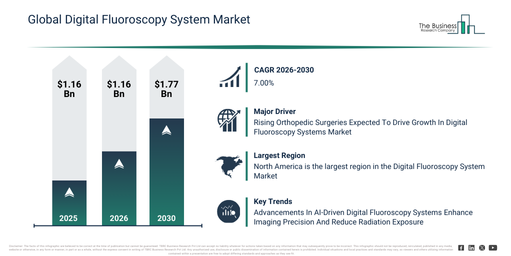
    The digital fluoroscopy system market is projected to experience robust expansion in the coming years, set to reach a valuation of $9.51 billion by 2030, demonstrating a compound annual growth rate (CAGR) of 7.0%. This anticipated growth can be attributed to several factors, including the advancement of mobile and ceiling-mounted c-arms, increased uptake of sophisticated fixed fluoroscopy systems, a growing volume of interventional procedures, the increasing incorporation of AI-based imaging analytics, and the proliferation of ambulatory surgery centers. Key trends anticipated during the forecast timeframe encompass the expanding utilization of real-time imaging systems, a heightened demand for minimally invasive surgical interventions, improved radiation dose management and safety measures, seamless integration with hospital information systems (HIS), and the broadening scope of gastrointestinal and interventional procedures.

    Get A Free Sample Report With In-Depth Market Insights:

    https://thebusinessresearchcompany.com/sample_request?id=12416384&type=smp&name=Digital%20Fluoroscopy%20System%20Market%20Report%202026&utm_source=Blogs&utm_medium=Paid&utm_campaign=Oct_PR

    Digital Fluoroscopy System Market Opportunity Drivers: What’s Unlocking New Revenue Potential?

    The digital fluoroscopy system market is anticipated to expand with the rising volume of orthopedic surgeries. Orthopedic procedures focus on correcting or treating conditions affecting the musculoskeletal system, such as bones, joints, muscles, ligaments, and tendons. The increase in these surgeries stems from an aging global population and a higher occurrence of musculoskeletal problems and injuries. Digital fluoroscopy systems offer live imaging during orthopedic operations, thereby improving the accuracy of both diagnosis and treatment of musculoskeletal ailments. As an illustration, in April 2024, data from the Independent Healthcare Providers Network, a healthcare organization based in the UK, indicated that in February 2024, the independent sector performed 25.7% of all NHS elective trauma and orthopaedics procedures and 22.6% of all NHS ophthalmology activity. Consequently, the growing frequency of orthopedic surgeries is set to stimulate the digital fluoroscopy system market.

    Digital Fluoroscopy System Market Driver: Rise In Cardiovascular Disease Cases Fueling The Growth Of The Market Due To Increasing Need For Real-Time Imaging In Cardiac Diagnosis And Treatment

    Digital Fluoroscopy System Market Segment Performance And Emerging Opportunities

    The digital fluoroscopy system market covered in this report is segmented –

    1) By Type: Fixed Fluoroscopy Equipment, C Arms

    2) By Application: Diagnostics, Surgeries, Gastrointestinal Surgeries, Other Applications

    3) By End User: Hospital And Clinics, Diagnostics Centers, Ambulatory Surgery Centers, Other End Users

    Subsegments:

    1) By Fixed Fluoroscopy Equipment: Single-Plane Fixed Fluoroscopy, Bi-Plane Fixed Fluoroscopy, Advanced Fixed Fluoroscopy Systems, Mobile Integration Fixed Fluoroscopy

    2) By C-Arms: Mobile C-Arms, Ceiling-Mounted C-Arms, Compact C-Arms, High-End C-Arms, Mini C-Arms

    Digital Fluoroscopy System Market Innovation Trends Shaping Future Development

    Leading companies in the digital fluoroscopy system market are concentrating on data-integrated imaging systems, such as AI-based solutions tailored for cardiology suites, with the goal of enhancing imaging precision and operational efficiency while simultaneously lowering radiation exposure. AI-driven solutions within cardiology suites, used for digital fluoroscopy, improve image sharpness and procedural exactness, allowing for immediate analysis and better choices during complex cardiovascular interventions. For example, in August 2023, Canon Medical Systems Corporation, a Japan-based manufacturer of X-ray systems, launched the Alphenix/Evolve Edition Angiography system in Europe, which incorporates real-time AI technology specifically designed to optimize imaging for interventional cardiology. This particular system integrates deep learning processes for minimizing noise and improving image clarity, which in turn reduces both radiation exposure and the duration of procedures. Among its primary innovations are the αEvolve Imaging for exceptional contrast, the Dynamic Device Stabilizer for real-time detection of balloon markers, and Echo Fusion for the automated integration of fluoroscopic and echocardiography images. Furthermore, the system is equipped with a 12×12-inch flat panel detector and a Dose Tracking System, contributing to increased procedural adaptability and comprehensive radiation monitoring.

    Digital Fluoroscopy System Market Leading Companies And Competitive Benchmarking

    Major companies operating in the digital fluoroscopy system market are Medtronic Plc, Siemens Healthineers AG, Fujifilm Holdings Corporation, Koninklijke Philips NV, GE HealthCare Technologies Inc., Hologic Inc, Hitachi High-Tech Corporation, Shimadzu Corporation, Neusoft Medical Systems Co Ltd, Agfa-Gevaert NV, Carestream Health Inc, Varex Imaging Corporation, United Imaging Healthcare Co Ltd, Canon Medical Systems Corporation, Ziehm Imaging GmbH, Orthoscan Inc, Villa Sistemi Medicali SpA, Planmed Oy, Allengers Medical Systems Limited, Xoran Technologies LLC, Del Medical Inc, Omega Medical Imaging LLC, Eurocolumbus srl

    View The Full Digital Fluoroscopy System Market Report:

    https://thebusinessresearchcompany.com/report/digital-fluoroscopy-system-global-market-report?utm_source=Blogs&utm_medium=Paid&utm_campaign=Oct_PR

    Digital Fluoroscopy System Market Largest Region By Revenue And Market Share

    North America was the largest region in the digital fluoroscopy system market in 2025. Asia-Pacific is expected to be the fastest-growing region in the forecast period. The regions covered in the digital fluoroscopy system market report are Asia-Pacific, South East Asia, Western Europe, Eastern Europe, North America, South America, Middle East, Africa.

    Reach Out To Our Team:

    The Business Research Company: https://www.thebusinessresearchcompany.com/

    Americas: +1 310-496-7795

    Asia: +44 7882 955267 & +91 8897263534

    Europe: +44 7882 955267

    Email us at: marketing@tbrc.info

    Follow us on:

    LinkedIn: https://in.linkedin.com/company/the-business-research-company

    YouTube: https://www.youtube.com/channel/UC24_fI0rV8cR5DxlCpgmyFQ

    Global Market Model: https://www.thebusinessresearchcompany.com/global-market-model
  • Digital Dose Inhalers Market Analysis 2026: Market Size, Growth Trends And Industry Outlook

    Digital Dose Inhalers Market Analysis 2026: Market Size, Growth Trends And Industry Outlook

    Backed by market attractiveness analysis, total addressable market sizing, company benchmarking matrices, interactive Excel dashboards, wider supply chain intelligence, emerging startup coverage, and detailed product-level insights, The Business Research Company’s 2026 market reports are designed to offer research that is more actionable and strategically valuable than ever.

    Digital Dose Inhalers Market Value Growth And Long-Term Outlook

    The digital dose inhalers market has experienced substantial growth in recent years. It is projected to increase from $23.78 billion in 2025 to $28.97 billion in 2026, reflecting a compound annual growth rate (CAGR) of 21.8%. This historical expansion can be attributed to the rising prevalence of asthma and COPD, the escalating burden of chronic respiratory diseases, the increased adoption of inhalation therapy, the expansion of hospital respiratory care services, and enhanced access to inhaler medications.

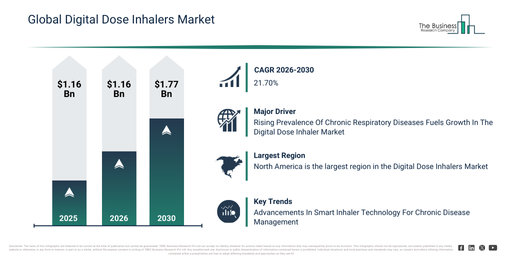
    The digital dose inhalers market size is projected for substantial expansion in the coming years. It will grow to $63.58 billion in 2030 at a compound annual growth rate (CAGR) of 21.7%. This anticipated growth stems from several factors, including the increasing demand for remote patient monitoring, a greater emphasis on personalized respiratory care, improved awareness of the advantages of medication adherence, the broadening of digital health ecosystems, and higher healthcare expenditures on managing chronic diseases. Key trends anticipated during this period involve the increasing adoption of smart inhalation devices, a heightened focus on monitoring medication adherence, the expanded deployment of connected respiratory care solutions, a move towards managing respiratory diseases at home, and a greater need for accurate dosing and usage tracking.

    Get A Free Sample Report With In-Depth Market Insights:

    https://thebusinessresearchcompany.com/sample_request?id=43090379&type=smp&name=Digital%20Dose%20Inhalers%20Market%20Report%202026&utm_source=Blogs&utm_medium=Paid&utm_campaign=Oct_PR

    Digital Dose Inhalers Market Growth Momentum: What Factors Are Shaping Demand?

    The increasing incidence of chronic respiratory conditions is projected to fuel the expansion of the digital dose inhalers market. Chronic respiratory diseases are persistent health issues impacting the lungs and air passages, leading to ongoing challenges with breathing. This surge in chronic respiratory diseases stems from multiple factors such as elevated air pollution levels, a growing elderly demographic, and an increase in tobacco consumption. Digital dose inhalers are crucial for enhancing medication compliance and tracking for individuals suffering from conditions like asthma and chronic obstructive pulmonary disease (COPD). As an illustration, in December 2023, the National Center for Biotechnology Information, a US-based government entity, projected that the count of COPD cases would increase by 112 million, reaching 592 million by 2050, constituting 9.5% of the eligible population. Consequently, the expanding occurrence of chronic respiratory illnesses is stimulating growth within the digital dose inhalers market.

    Digital Dose Inhalers Market Segment Landscape And Growth Outlook

    The digital dose inhalers market covered in this report is segmented –

    1) By Product: Metered Dose Inhaler (MDI), Dry Powder Inhaler (DPI)

    2) By Formulation Type: Branded Medication, Generic Medication

    3) By Indications: Asthma, Chronic Obstructive Pulmonary Disease (COPD), Other Indications

    4) By End User: Medical Device Industry, Hospital

    Subsegments:

    1) By Metered Dose Inhaler (MDI): Conventional MDI, Smart MDI

    2) By Dry Powder Inhaler (DPI): Single-Dose DPI, Multi-Dose DPI, Smart DPI

    Digital Dose Inhalers Market Trends Redefining Industry Growth

    Companies operating within the digital dose inhalers market are dedicated to developing inventive products, such as smart inhalers, to elevate patient outcomes and optimize medication management. Smart inhalers represent sophisticated devices equipped with sensors and connectivity functions that monitor drug usage, inhalation technique, and adherence, while simultaneously delivering real-time feedback through mobile applications. For instance, in June 2024, Aseptika Ltd., a healthcare company from the UK, unveiled the PUFFClicker3 universal smart inhaler dose tracker at the Med-Tech Innovation Expo. The PUFFClicker3 holds the distinction of being the world’s inaugural inhaler dose tracker compatible with both pressurized metered dose inhalers (pMDI) and dry powder inhalers (DPI), supporting 101 SNOMED-coded inhaler types. This innovation simplifies the transition for patients between different inhaler types and provides integrated graphical instructions for using each supported inhaler.

    Digital Dose Inhalers Market Industry Leaders And Competitive Landscape

    Major companies operating in the digital dose inhalers market are Teva Pharmaceutical Industries Ltd., AstraZeneca plc, GlaxoSmithKline plc, Novartis AG, Propeller Health, Adherium Limited, Cohero Health, FindAir Sp z o o, Amiko Digital Health Limited, Sensirion AG, H&T Presspart Manufacturing Ltd., Philips Respironics, Boehringer Ingelheim GmbH, Cipla Limited, Glenmark Pharmaceuticals Limited, OPKO Health Inc., Mundipharma International Limited, Pneuma Respiratory Inc., Cognita Labs, AptarGroup Inc.

    View The Full Digital Dose Inhalers Market Report:

    https://thebusinessresearchcompany.com/report/digital-dose-inhalers-global-market-report?utm_source=Blogs&utm_medium=Paid&utm_campaign=Oct_PR

    Digital Dose Inhalers Market Regional Analysis And Leading Geography

    North America was the largest region in the digital dose inhalers market in 2025. Asia-Pacific is expected to be the fastest-growing region inthe forecast period. The regions covered in the digital dose inhalers market report are Asia-Pacific, South East Asia, Western Europe, Eastern Europe, North America, South America, Middle East, Africa.

    Reach Out To Our Team:

    The Business Research Company: https://www.thebusinessresearchcompany.com/

    Americas: +1 310-496-7795

    Asia: +44 7882 955267 & +91 8897263534

    Europe: +44 7882 955267

    Email us at: marketing@tbrc.info

    Follow us on:

    LinkedIn: https://in.linkedin.com/company/the-business-research-company

    YouTube: https://www.youtube.com/channel/UC24_fI0rV8cR5DxlCpgmyFQ

    Global Market Model: https://www.thebusinessresearchcompany.com/global-market-model
  • Digital Dentistry Market Forecast To 2030: Starting From $11.15 Billion In 2026

    Digital Dentistry Market Forecast To 2030: Starting From $11.15 Billion In 2026

    Featuring market attractiveness scoring, total addressable market sizing, company benchmarking matrices, interactive Excel dashboards, deeper supply chain intelligence, emerging startup tracking, and granular product-level insights, The Business Research Company’s 2026 market reports are built to deliver research that is both more actionable and more strategically valuable.

    Digital Dentistry Market Poised To Hit $11.15 Billion By 2030 With A 10.2% CAGR

    The digital dentistry market has experienced rapid expansion in recent years. Its valuation is projected to increase from $6.79 billion in 2025 to $7.57 billion in 2026, achieving a compound annual growth rate (CAGR) of 11.4%. This past growth can be attributed to various factors, including an uptick in dental care procedures, the increasing demand for precise diagnostics, the proliferation of private dental clinics, a growing awareness of advanced dental treatments, and enhanced accessibility to dental technologies.

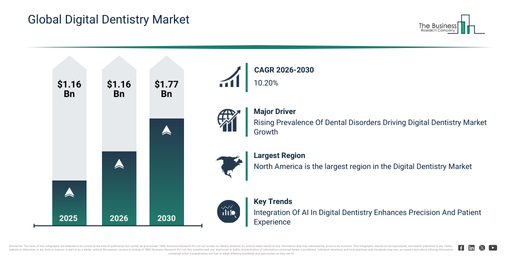
    The digital dentistry market is projected to experience substantial growth in the upcoming years, with its size expected to reach $11.15 billion in 2030, demonstrating a compound annual growth rate (CAGR) of 10.2%. This anticipated expansion is fueled by an escalating demand for efficient dental workflows, rising patient expectations for precise treatments, the ongoing expansion of cosmetic and implant dentistry, increased investments in digital healthcare infrastructure, and the growing adoption of technology-driven dental solutions. Prominent trends throughout this forecast period encompass the increasing use of intraoral scanners, a rise in the application of CAD/CAM-based restorations, a growing inclination towards chairside digital workflows, a shift towards comprehensive digital treatment planning, and the expanding integration of 3D printing within dental practices.

    Get A Free Sample Report With In-Depth Market Insights:

    https://thebusinessresearchcompany.com/sample_request?id=29460820&type=smp&name=Digital%20Dentistry%20Market%20Report%202026&utm_source=Blogs&utm_medium=Paid&utm_campaign=Oct_PR

    Digital Dentistry Market Expansion Drivers: What’s Shaping Future Growth?

    The expanding occurrence of dental ailments is projected to drive the future growth of the digital dentistry market. These conditions encompass various issues impacting teeth, gums, and other oral structures, such as cavities, gum disease, tooth decay, and infections within the mouth. Such disorders arise from elements like insufficient oral hygiene, detrimental dietary choices, tobacco consumption, limited availability of dental services, and the demographics of an aging population. Digital dentistry is revolutionizing the identification and management of dental conditions through innovations like computer-aided design or computer-aided manufacturing (CAD or CAM) systems, digital imaging techniques, and artificial intelligence (AI) diagnostics, thereby improving accuracy and results. For example, in October 2024, data from the Australian Institute of Health and Welfare, an Australia-based government agency, indicated that in 2022–23 approximately 87,400 hospitalizations occurred due to dental conditions that could have been prevented with prompt intervention. The highest rate of these avoidable hospitalizations was observed in children aged 5–9 years, reaching 12.3 per 1,000 population. Consequently, the rising occurrence of dental disorders is fueling the expansion of the digital dentistry market.

    Digital Dentistry Market Breakdown By Product Type And Application

    The digital dentistry market covered in this report is segmented –

    1) By Type: Instruments, Consumables

    2) By Specialty Areas: Orthodontics, Prosthodontics, Implantology, Other Specialty Areas

    3) By Application: Diagnostics, Therapeutics, Other Applications

    4) By End User: Hospitals, Dental Clinics, Others End Users

    Subsegments:

    1) By Instruments: Digital X-ray Systems, Intraoral Scanners, CAD Or CAM Systems, 3D Printers

    2) By Consumables: Dental Imaging Software, Impression Materials, Digital Inks, 3D Printing Resins

    Digital Dentistry Market Strategic Trends: What Defines The Next Growth Phase?

    Leading companies in the digital dentistry market are increasingly integrating artificial intelligence and machine learning technologies into diagnostic products, such as AI-guided orthodontic scans, to elevate treatment precision, efficiency, and capabilities for early detection. An AI-guided orthodontics scan employs artificial intelligence to assist in performing accurate scans of a patient’s teeth, thereby facilitating treatment planning and customization. For instance, in June 2023, DentalMonitoring, a France-based medical equipment manufacturing company, introduced an AI-guided scan specifically for orthodontics, named ScanAssist. This device utilizes AI-guided instructions and real-time feedback to support patients in completing their scans, with the aim of improving patient engagement and overall experience. The in-app system produces a 3D mouth model that tracks patients’ scans, providing high-quality images and a detailed analysis of both treatment progression and oral health. ScanAssist, a recently added feature within the DentalMonitoring app, leverages software and AI to identify over 130 intraoral observations relevant to braces and aligner treatments.

    Digital Dentistry Market Key Participants And Competitive Landscape

    Major companies operating in the digital dentistry market are 3M Company, Danaher Corporation, Zimmer Biomet Holdings Inc., DWS Systems, Dentsply Sirona Inc., Align Technology Inc., Institut Straumann AG, Planmeca Oy, Carestream Health Inc., Glidewell Dental, Ivoclar Vivadent, ZimVie Inc, Midmark Corporation, Stratasys, J. Morita Corporation, 3Shape A/S, Roland DG Corporation, Formlabs Inc., KaVo Dental GmbH, Implant Sciences Corporation, Biolase Inc, VITA North America, Medit, exocad GmbH, Kuraray Noritake Dental Inc, DOT GmBH, Apteryx Inc

    View The Full Digital Dentistry Market Report:

    https://thebusinessresearchcompany.com/report/digital-dentistry-global-market-report?utm_source=Blogs&utm_medium=Paid&utm_campaign=Oct_PR

    Digital Dentistry Market Geographic Analysis: Where Is Demand Accelerating Fastest?

    North America was the largest region in the digital dentistry market in 2025. Asia-Pacific is expected to be the fastest-growing region in the forecast period. The regions covered in the digital dentistry market report are Asia-Pacific, South East Asia, Western Europe, Eastern Europe, North America, South America, Middle East, Africa.

    Reach Out To Our Team:

    The Business Research Company: https://www.thebusinessresearchcompany.com/

    Americas: +1 310-496-7795

    Asia: +44 7882 955267 & +91 8897263534

    Europe: +44 7882 955267

    Email us at: marketing@tbrc.info

    Follow us on:

    LinkedIn: https://in.linkedin.com/company/the-business-research-company

    YouTube: https://www.youtube.com/channel/UC24_fI0rV8cR5DxlCpgmyFQ

    Global Market Model: https://www.thebusinessresearchcompany.com/global-market-model
  • Digital Cell Morphology System Market Size In 2026 And Beyond: Understanding Future Growth Potential

    Digital Cell Morphology System Market Size In 2026 And Beyond: Understanding Future Growth Potential

    Built to provide research that’s more actionable and strategically valuable, The Business Research Company’s 2026 market reports include market attractiveness analysis, total addressable market sizing, company benchmarking matrices, interactive Excel dashboards, broader supply chain intelligence, emerging startup tracking, and in-depth product insights.

    Digital Cell Morphology System Market Size And Revenue Outlook Through 2030

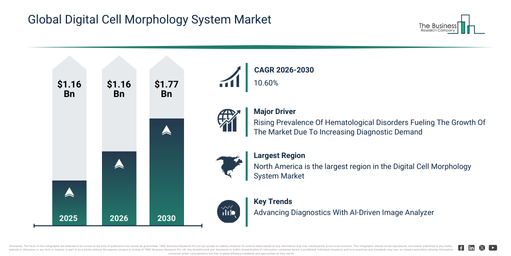
    The digital cell morphology system market has witnessed rapid growth in recent years. Its size is expected to expand from $2.1 billion in 2025 to $2.33 billion in 2026, at a compound annual growth rate (CAGR) of 11.0%. This market’s historical development can be ascribed to several factors, including dependence on manual microscopic analysis, an increasing need for accurate hematology diagnostics, limited adoption of digital imaging, the expansion of academic and research institutes, and the rising incidence of hematological disorders.

    The digital cell morphology system market is anticipated to experience rapid expansion in the coming years. This market is set to reach $3.49 billion by 2030, demonstrating a compound annual growth rate (CAGR) of 10.6%. This growth during the forecast period is propelled by factors such as progress in image processing software, wider embrace of flow cytometry and automated analyzers, increased capital allocation for biotechnology and pharmaceutical research and development, the incorporation of AI-driven diagnostic instruments, and the expansion of telemedicine and remote laboratory offerings. Key trends anticipated over this period encompass a greater uptake of automated cell imaging and analysis platforms, increased application of high-content screening within hematology and oncology, improvements in laboratory efficiency alongside result standardization, the broadening of the consumables and reagents market specifically for digital morphology, and the incorporation of remote diagnostics and telepathology technologies.

    Get A Free Sample Report With In-Depth Market Insights:

    https://thebusinessresearchcompany.com/sample_request?id=58858635&type=smp&name=Digital%20Cell%20Morphology%20System%20Market%20Report%202026&utm_source=Blogs&utm_medium=Paid&utm_campaign=Oct_PR

    Digital Cell Morphology System Market Development Factors: What’s Supporting Demand?

    The growing occurrence of hematological conditions is anticipated to fuel expansion in the digital cell morphology system market. These disorders encompass health issues impacting the blood, bone marrow, and lymphatic system, such as anemia, leukemia, and various clotting disorders. The rise in hematological disorder prevalence stems from the increasing incidence of chronic illnesses, which directly affect blood health and necessitate continuous oversight. Digital cell morphology systems assist in diagnosing hematological disorders by offering precise and automated analysis of blood cell images, facilitating accurate classification. These systems improve laboratory efficiency by minimizing manual reviews, boosting consistency, and accelerating clinical decisions. For example, data from October 2025, gathered by the World Federation of Hemophilia (WFH), a non-profit organization based in Canada, indicated in its Annual Global Survey 2024 a 6% increase worldwide in individuals identified with hemophilia, a 6% growth in recognized von Willebrand disease cases, and a 9% increase in other inherited bleeding disorders, alongside a 9% rise in women and girls affected by bleeding disorders. Consequently, the increasing prevalence of hematological disorders is driving the expansion of the digital cell morphology system market.

    Digital Cell Morphology System Market Segment Analysis And Revenue Potential

    The digital cell morphology system market covered in this report is segmented –

    1) By Product Type: Cell Imaging Systems, Cell Analysis Systems, Accessories And Consumables

    2) By Technology: Microscopy, Flow Cytometry, Image Processing Software

    3) By Distribution Channel: Direct Sales, Distributors, Online Sales

    4) By Application: Hematology, Oncology, Infectious Diseases, Other Applications

    5) By End-User: Academic And Research Institutes, Hospitals And Clinical Laboratories, Biotechnology And Pharmaceutical Companies

    Subsegments:

    1) By Cell Imaging Systems: Digital Microscopes, Fluorescence Microscopes, Full-Field Digital Imaging Systems, Automated Slide Scanners, High-Content Screening Systems

    2) By Cell Analysis Systems: Flow Cytometers, Hematology Analyzers, Morphology Analyzers, Spectrophotometers, Cell Counters

    3) By Accessories And Consumables: Reagents and Stains, Sample Preparation Kits, Slides and Cover Slips, Imaging Plates, Cell Fixatives

    Digital Cell Morphology System Market Transformation Trends: What Innovations Are Driving Change?

    Leading companies within the digital cell morphology system market are concentrating on creating advanced products, such as AI-driven image analyzers, to enhance diagnostic speed and accuracy. These AI-driven image analyzers are tools that utilize artificial intelligence for automated interpretation and insight extraction from digital images, thereby improving analysis speed, accuracy, and consistency. For example, in July 2025, Scopio Labs Ltd., an Israel-based medical equipment manufacturing company, introduced the complete blood morphology (CBM) analyzer, an automated AI-driven image analyzer designed for peripheral blood smear review. The CBM analyzer employs full-field imaging technology to independently process and assess up to 10 times more cells than conventional methods. It also provides potential for the development of new morphology-based biomarkers and diagnostic panels, facilitating earlier disease detection and real-time patient monitoring. This innovation addresses critical challenges like the global scarcity of trained laboratory technologists, variations in manual interpretations, and increasing diagnostic demand.

    Digital Cell Morphology System Market Top Companies Driving Competitive Growth

    Major companies operating in the digital cell morphology system market are F. Hoffmann-La Roche AG, Thermo Fisher Scientific Inc., Abbott Laboratories, Danaher Corporation, Merck KGaA, Siemens Healthineers AG, Becton Dickinson and Company, Agilent Technologies Inc., Mindray Medical International Limited, Nikon Corporation, IDEXX Laboratories Inc., Sysmex Corporation, Bio-Rad Laboratories Inc., Horiba ABX SAS, Leica Microsystems GmbH, Medica Corporation, Scopio Labs Ltd., MetaSystems Hard & Software GmbH, West Medica Produktions- und Handels-GmbH, ZhiWei Information & Technology Co. Ltd.

    View The Full Digital Cell Morphology System Market Report:

    https://thebusinessresearchcompany.com/report/digital-cell-morphology-system-global-market-report?utm_source=Blogs&utm_medium=Paid&utm_campaign=Oct_PR

    Digital Cell Morphology System Market Global Footprint: Which Region Leads The Industry?

    North America was the largest region in the digital cell morphology system market in 2025. Asia-Pacific is expected to be the fastest-growing region in the forecast period. The regions covered in the digital cell morphology system market report are Asia-Pacific, South East Asia, Western Europe, Eastern Europe, North America, South America, Middle East, Africa.

    Reach Out To Our Team:

    The Business Research Company: https://www.thebusinessresearchcompany.com/

    Americas: +1 310-496-7795

    Asia: +44 7882 955267 & +91 8897263534

    Europe: +44 7882 955267

    Email us at: marketing@tbrc.info

    Follow us on:

    LinkedIn: https://in.linkedin.com/company/the-business-research-company

    YouTube: https://www.youtube.com/channel/UC24_fI0rV8cR5DxlCpgmyFQ

    Global Market Model: https://www.thebusinessresearchcompany.com/global-market-model
  • Digital Auscultation Market Reaches $1.85 Billion In 2026: Key Developments Shaping Expansion

    Digital Auscultation Market Reaches $1.85 Billion In 2026: Key Developments Shaping Expansion

    Backed by market attractiveness analysis, total addressable market sizing, company benchmarking matrices, interactive Excel dashboards, wider supply chain intelligence, emerging startup coverage, and detailed product-level insights, The Business Research Company’s 2026 market reports are designed to offer research that is more actionable and strategically valuable than ever.

    Digital Auscultation Market Growth From $1.03 Billion In 2026 To $1.85 Billion By 2030 At A CAGR Of 15.7%

    The digital auscultation market has experienced swift expansion in recent years. It is projected to grow from $0.89 billion in 2025 to $1.03 billion in 2026, at a compound annual growth rate (CAGR) of 16.0%. Historically, the market’s expansion can be attributed to factors such as a reliance on manual stethoscopes, limited diagnostic accuracy, the low adoption of digital auscultation technologies, high device costs, and fragmented healthcare IT systems.

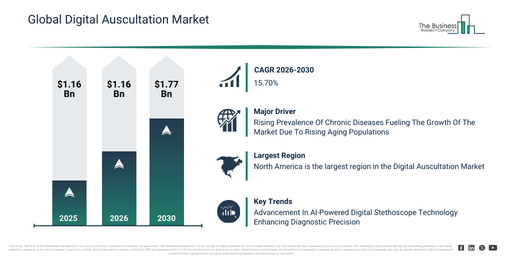
    The digital auscultation market is poised for significant expansion in the coming years. Its valuation is projected to reach $1.85 billion by 2030, exhibiting a compound annual growth rate (CAGR) of 15.7%. This anticipated growth during the forecast period is largely driven by factors such as increased uptake in healthcare facilities like hospitals and clinics, the expansion of telehealth services, the incorporation of AI and cloud technologies, a rising need for pediatric and cardiology monitoring solutions, and the broader availability of homecare diagnostic instruments. Key trends anticipated for this period encompass improvements in heart and lung sound analysis, the proliferation of wireless auscultation devices, seamless integration with electronic health record (EHR) systems, capabilities for real-time remote diagnostics, and AI-powered signal interpretation.

    Get A Free Sample Report With In-Depth Market Insights:

    https://thebusinessresearchcompany.com/sample_request?id=64538345&type=smp&name=Digital%20Auscultation%20Market%20Report%202026&utm_source=Blogs&utm_medium=Paid&utm_campaign=Oct_PR

    Digital Auscultation Market Industry Drivers: What’s Behind The Revenue Growth?

    The increasing occurrence of chronic illnesses is anticipated to boost the expansion of the digital auscultation market in the future. These diseases encompass enduring health problems, including cardiovascular ailments, diabetes, respiratory conditions, and high blood pressure, which advance gradually and last for extended periods. The surge in chronic diseases is largely attributable to an aging global populace, given that older age is associated with diminished cellular repair, compromised immune systems, and elevated susceptibility to metabolic and cardiovascular issues. Digital auscultation aids in managing chronic conditions by offering precise, real-time tracking of heart and lung acoustics, thereby facilitating the prompt identification of irregularities and swift intervention to enhance sustained patient well-being. As an illustration, in February 2024, the World Health Organization, an intergovernmental body situated in Switzerland, projected that by 2050, new cancer cases would exceed 35 million, signifying a 77% rise from the approximately 20 million cases estimated in 2022. Consequently, the growing incidence of chronic diseases is fueling the development of the digital auscultation market.

    Digital Auscultation Market Segmentation And Category Overview

    The digital auscultation market covered in this report is segmented –

    1) By Product Type: Stethoscopes, Heart Sound Analyzers, Accessories

    2) By Technology: Wireless, Wired

    3) By Application: Cardiology, Respiratory, Pediatrics, Other Applications

    4) By End-User: Hospitals, Clinics, Ambulatory Surgical Centers, Homecare Settings, Other End-Users

    Subsegments:

    1) By Stethoscopes: Electronic Stethoscopes, Wireless Stethoscopes, Bluetooth-Enabled Stethoscopes, Smart Stethoscopes, Amplified Stethoscopes

    2) By Heart Sound Analyzers: Portable Heart Sound Analyzers, Handheld Heart Sound Analyzers, Integrated Heart Sound Analyzers, Wearable Heart Sound Analyzers

    3) By Accessories: Chest Pieces, Earpieces, Tubing, Diaphragms, Power Adapters, Carrying Cases

    #Digital Auscultation Market Growth Trends: What’s Shaping The Future Outlook?

    Leading companies in the digital auscultation market are concentrating on developing advanced products, such as AI-powered auscultation, to enhance diagnostic accuracy and improve the efficiency of clinical decision-making. This AI-powered auscultation utilizes artificial intelligence to analyze heart and lung sounds from digital stethoscopes, facilitating the automatic detection of problems and providing valuable information for quicker and more precise diagnoses. For instance, in September 2025, Sanolla, a US-based digital health company, introduced the VoqX smart stethoscope, which is the world’s first smart AI-powered stethoscope offering full-spectrum auscultation, including the ability to detect low-frequency infrasound that traditional stethoscopes cannot hear. The device incorporates real-time AI analysis to assist clinicians in diagnosing cardiopulmonary conditions more effectively. Sanolla initiated direct sales of this FDA-certified device, representing a major advancement in clinical diagnostic technology by making it accessible to frontline healthcare professionals.

    Digital Auscultation Market Leading Players And Competitive Positioning

    Major companies operating in the digital auscultation market are 3M Company, Eko Health Inc., Thinklabs Medical Inc., StethoMe, Stemoscope, Strados Labs Inc., TytoCare Ltd., Rudolf Riester GmbH, American Diagnostic Corporation, Contec Medical Systems Co. Ltd., Sanolla Ltd., Ayu Devices Pvt. Ltd., M3DICINE Pty. Ltd., Ai Health Highway Pvt. Ltd., Dongjin Medical, Saintiant Technologies, GlobalMed Holdings LLC, AMD Global Telemedicine Inc., Halma Public Limited Company, Rijuven

    View The Full Digital Auscultation Market Report:

    https://thebusinessresearchcompany.com/report/digital-auscultation-global-market-report?utm_source=Blogs&utm_medium=Paid&utm_campaign=Oct_PR

    Digital Auscultation Market Regional Distribution: Which Areas Power Market Growth?

    North America was the largest region in the digital auscultation market in 2025. Asia-Pacific is expected to be the fastest-growing region in the forecast period. The regions covered in the digital auscultation market report are Asia-Pacific, South East Asia, Western Europe, Eastern Europe, North America, South America, Middle East, Africa.

    Reach Out To Our Team:

    The Business Research Company: https://www.thebusinessresearchcompany.com/

    Americas: +1 310-496-7795

    Asia: +44 7882 955267 & +91 8897263534

    Europe: +44 7882 955267

    Email us at: marketing@tbrc.info

    Follow us on:

    LinkedIn: https://in.linkedin.com/company/the-business-research-company

    YouTube: https://www.youtube.com/channel/UC24_fI0rV8cR5DxlCpgmyFQ

    Global Market Model: https://www.thebusinessresearchcompany.com/global-market-model
  • Digestible Sensor Market Growth Outlook For 2026: Drivers, Trends And Future Opportunities

    Digestible Sensor Market Growth Outlook For 2026: Drivers, Trends And Future Opportunities

    Featuring market attractiveness scoring, total addressable market sizing, company benchmarking matrices, interactive Excel dashboards, deeper supply chain intelligence, emerging startup tracking, and granular product-level insights, The Business Research Company’s 2026 market reports are built to deliver research that is both more actionable and more strategically valuable.

    Digestible Sensor Market Expansion Outlook: What Revenue Opportunities Are Ahead?

    The digestible sensor market has experienced rapid expansion recently. It is projected to increase from $1.37 billion in 2025 to $1.56 billion in 2026, exhibiting a compound annual growth rate (CAGR) of 14.0%. Historically, this growth was driven by factors such as the limited availability of ingestible sensor technologies, the reliance on conventional diagnostics methods, increasing awareness of GI health, the early adoption of capsule endoscopy, and a rise in research and development in bioelectronic interfaces.

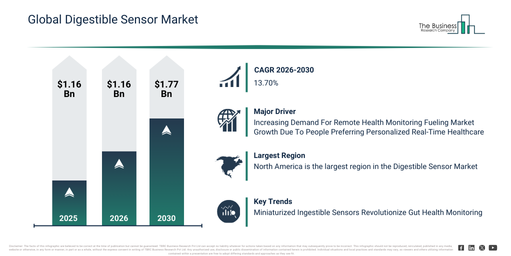
    The digestible sensor market size is projected to experience substantial expansion over the coming years. This market is set to reach $2.6 billion in 2030, exhibiting a compound annual growth rate (CAGR) of 13.7%. This anticipated expansion during the forecast period stems from various factors such as progress in wireless communication and MEMS technologies, their incorporation into digital health platforms, the proliferation of personalized medicine programs, increasing need for continuous patient monitoring, and the rise of home healthcare and telemedicine services. Key developments expected in this period encompass the growing acceptance of ingestible sensors for monitoring gastrointestinal health, the incorporation of these sensors into drug adherence initiatives, the broadened use of smart capsule endoscopy, the increasing deployment of electrochemical and gas sensing technologies, and the development of tailored patient monitoring solutions.

    Get A Free Sample Report With In-Depth Market Insights:

    https://thebusinessresearchcompany.com/sample_request?id=58367248&type=smp&name=Digestible%20Sensor%20Market%20Report%202026&utm_source=Blogs&utm_medium=Paid&utm_campaign=Oct_PR

    Digestible Sensor Market Growth Factors: What’s Supporting Expansion?

    The rising need for remote health monitoring is anticipated to drive the expansion of the digestible sensor market in the future. Remote health monitoring involves leveraging technology to oversee and manage patient well-being beyond conventional medical environments, usually remotely. Its growth stems from individuals’ preference for tailored, instant healthcare delivered at home, alongside more economical options compared to standard in-person appointments. Digestible sensors assist remote health monitoring by facilitating the live tracking of internal health indicators like gastrointestinal activity. They equip doctors with crucial insights into a patient’s digestive system, enabling prompt identification of problems like infections or illnesses without invasive methods. For example, an August 2025 data-snapshot from the Office of Inspector General, U.S. Department of Health & Human Services (OIG), indicated that in 2024, Medicare payments for remote patient monitoring surpassed US $536 million (marking a 31 % increase from 2023). Almost 1 million enrollees utilized RPM services (a 27 % rise from 2023), and approximately 4,600 medical practices regularly billed for RPM. Consequently, the expanding need for remote health monitoring is propelling the development of the digestible sensor market.

    Digestible Sensor Market Segment Outlook: Which Categories Are Growing Fastest?

    The digestible sensor market covered in this report is segmented –

    1) By Type: Capsule Sensors, Wearable Sensors, Ingestible Sensors, Implantable Sensors

    2) By Distribution Channel: Online Retail, Pharmacies, Hospitals And Clinics, Direct Sales

    3) By Technology: Microelectromechanical Systems (MEMS), Wireless Communication Technologies, Optical Sensors, Bioelectronic Interfaces

    4) By Application: Medical Diagnostics, Drug Delivery, Patient Monitoring, Sports And Fitness, Other Applications

    5) By End-User: Healthcare Providers, Research Institutions, Pharmaceutical Companies, Individual Consumers

    Subsegments:

    1) By Capsule Sensors: pH Monitoring Capsules, Temperature Monitoring Capsules, Pressure Sensing Capsules, Smart Capsule Endoscopy, Drug Delivery Capsules With Sensors

    2) By Wearable Sensors: Patch-Based External Receivers, Gastrointestinal Motility Trackers, Bio-Signal Monitoring Wearables, Wearable Adherence Trackers

    3) By Ingestible Sensors: Vital Sign Monitoring Sensors, Drug Adherence Monitoring Sensors, Imaging Sensors, Gas Sensing Sensors, Electrochemical Sensors

    4) By Implantable Sensors: GI Electrophysiology Sensors, pH And Enzyme Sensors, Neuromodulation Devices, Metabolic Sensors

    Digestible Sensor Market Industry Trends: What’s Reshaping Demand?

    Major companies in the digestible sensor market are concentrating on advanced solutions like multi-parameter sensors to improve diagnostic precision, widen application scope, and enhance real-time health monitoring capabilities. Multi-parameter sensors are defined as devices engineered to simultaneously gauge multiple physical or chemical parameters from their environment or subject, consolidating various sensing technologies into a single compact unit. For instance, in May 2025, the Interuniversity Microelectronics Centre, a non-profit research organization based in Belgium, unveiled a highly miniaturized ingestible sensor for monitoring gut health. This highly miniaturized ingestible sensor measures just 2.1 cm in length and 0.75 cm in diameter. The capsule is roughly three times smaller than traditional endoscopic capsules, allowing for simpler swallowing and improved patient comfort. It integrates multiple sensors, including oxidation-reduction potential (ORP), pH, and temperature, to provide real-time biochemical data from the gastrointestinal tract. The capsule records readings every 20 seconds throughout the entire digestive journey, powered by low-energy electronics and a compact battery. With wireless data transmission and a biocompatible casing, the device enables continuous, noninvasive analysis of internal gut conditions, offering significant potential for the early diagnosis of inflammation, oxidative stress, and microbiome imbalances.

    Digestible Sensor Market Competitive Overview And Top Companies

    Major companies operating in the digestible sensor market are Medtronic plc, Koninklijke Philips N.V., Otsuka Pharmaceutical Co Ltd, Olympus Corporation, Sencure B.V., Millar Inc., Check‑Cap Ltd, Proteus Digital Health Inc., CapsoVision Inc., Atmo Biosciences, IntroMedic Co Ltd, BodyCAP S.A.S., Capsule Technologies Inc., etectRx Inc., Motus GI Inc., SmartPill Corporation, JINSHAN Science & Technology Group Co Ltd, MC10, Medtronic GI Solutions, Proteus GI Technologies

    View The Full Digestible Sensor Market Report:

    https://thebusinessresearchcompany.com/report/digestible-sensor-global-market-report?utm_source=Blogs&utm_medium=Paid&utm_campaign=Oct_PR

    Digestible Sensor Market Leading Geography: Which Region Contributes The Most Revenue?

    North America was the largest region in the digestible sensor market in 2025. Asia-Pacific is expected to be the fastest-growing region in the forecast period. The regions covered in the digestible sensor market report are Asia-Pacific, South East Asia, Western Europe, Eastern Europe, North America, South America, Middle East, Africa.

    Reach Out To Our Team:

    The Business Research Company: https://www.thebusinessresearchcompany.com/

    Americas: +1 310-496-7795

    Asia: +44 7882 955267 & +91 8897263534

    Europe: +44 7882 955267

    Email us at: marketing@tbrc.info

    Follow us on:

    LinkedIn: https://in.linkedin.com/company/the-business-research-company

    YouTube: https://www.youtube.com/channel/UC24_fI0rV8cR5DxlCpgmyFQ

    Global Market Model: https://www.thebusinessresearchcompany.com/global-market-model

  • Dietary Supplements In An Age Of Personalized Nutrition Market Size Forecast From 2026 To 2030: Key Industry Trends

    Dietary Supplements In An Age Of Personalized Nutrition Market Size Forecast From 2026 To 2030: Key Industry Trends

    Built to provide research that’s more actionable and strategically valuable, The Business Research Company’s 2026 market reports include market attractiveness analysis, total addressable market sizing, company benchmarking matrices, interactive Excel dashboards, broader supply chain intelligence, emerging startup tracking, and in-depth product insights.

    Dietary Supplements In An Age Of Personalized Nutrition Market Growth Potential: How Will Market Size Shift Through 2030?

    The market size for dietary supplements in an age of personalized nutrition has witnessed rapid growth in recent years. This market is expected to increase from $97.46 billion in 2025 to $107.7 billion in 2026, achieving a compound annual growth rate (CAGR) of 10.5%. The expansion observed historically can be attributed to rising consumer interest in preventive healthcare, the growing consumption of dietary supplements, heightened awareness of nutritional deficiencies, the availability of advanced nutrigenomic research, and the growth of e-commerce for supplement distribution.

    The market size for dietary supplements in an age of personalized nutrition is projected to undergo rapid expansion over the upcoming years. It is expected to reach $160.25 billion by 2030, exhibiting a compound annual growth rate (CAGR) of 10.4%. This anticipated growth can be attributed to several factors, including the increasing embrace of personalized healthcare solutions, the rising integration of AI-driven nutrition analytics, the expansion of subscription-based supplement models, the growing demand for precision wellness products, and enhanced regulatory clarity for personalized nutrition. Significant trends during the forecast period involve the increasing application of genetic-based supplement formulations, the rising adoption of digital nutrition platforms, the growing integration of wearables with supplement programs, the expansion of personalized vitamin and mineral blends, and a strengthened focus on data-driven nutrition planning.

    Get A Free Sample Report With In-Depth Market Insights:

    https://thebusinessresearchcompany.com/sample_request?id=52083278&type=smp&name=Dietary%20Supplements%20In%20An%20Age%20Of%20Personalized%20Nutrition%20Market%20Report%202026&utm_source=Blogs&utm_medium=Paid&utm_campaign=Oct_PR

    Dietary Supplements In An Age Of Personalized Nutrition Market Demand Drivers: What’s Powering Industry Growth?

    The expansion of the dietary supplements in an age of personalized nutrition market is anticipated to be fueled by the increasing occurrence of chronic illnesses. These are defined as enduring health conditions that usually advance gradually and necessitate continuous care, encompassing ailments like diabetes, heart disease, hypertension, arthritis, chronic respiratory diseases, cancer, and obesity. Their rising prevalence stems from shifts in lifestyle, particularly inadequate diet and insufficient physical activity, leading to prolonged health issues. Dietary supplements in an age of personalized nutrition aid in managing chronic diseases by providing customized nutrient solutions aligned with individual health data. These supplements target specific deficiencies and foster focused well-being, thereby improving general health results and lessening complications associated with diseases. An illustration of this trend is provided by the National Health Service, a UK government healthcare system, which reported in June 2024 that pre-diabetes cases in England climbed by 549,000, representing an 18% increase, from 3,065,825 in 2022 to 3,615,330 in 2023. Furthermore, for individuals under 40, cases saw a 25% rise, moving from 173,166 to 216,440. Consequently, the expanding occurrence of chronic illnesses is propelling the growth of the dietary supplements in an age of personalized nutrition market.

    Dietary Supplements In An Age Of Personalized Nutrition Market Segment Landscape: Which Areas Lead Development?

    The dietary supplements in an age of personalized nutrition market covered in this report is segmented –

    1) By Product Type: Vitamins, Minerals, Amino Acids, Herbal And Botanicals, Other Product Types

    2) By Technological: Mobile Applications, Wearable Devices, Health Monitoring Software

    3) By Dosage Form: Capsules, Powder, Liquids, Soft Gels, Other Dosage Forms

    4) By Application: General Wellness, Sports Nutrition, Immune Support, Skin Health, Other Applications

    5) By End-User: Children, Adults, Elderly

    Subsegments:

    1) By Vitamins: Vitamin A, Vitamin B-Complex, Vitamin C, Vitamin D, Vitamin E, Vitamin K

    2) By Minerals: Calcium, Magnesium, Zinc, Iron, Potassium, Selenium

    3) By Amino Acids: Essential Amino Acids, Non-Essential Amino Acids, Branched-Chain Amino Acids (BCAAs), Amino Acid Blends

    4) By Herbal and Botanicals: Ginseng, Turmeric, Ashwagandha, Ginkgo Biloba, Green Tea Extract, Milk Thistle

    5) By Other Product Types: Probiotics, Omega Fatty Acids, Enzymes, Fiber Supplements, Collagen Supplements

    Dietary Supplements In An Age Of Personalized Nutrition Market Innovation Trends: What Developments Are Reshaping The Industry?

    Major companies in the dietary supplements market, particularly in the realm of personalized nutrition, are prioritizing the creation of innovative dietary supplement solutions, such as customized vitamin assessments. This focus aims to deliver consumers personalized health remedies that cater to individual nutritional demands, enhance overall wellness, and support proactive health management. A customized vitamin assessment serves as a tailored evaluation, analyzing an individual’s specific nutritional requirements, lifestyle, and health ambitions to suggest the most fitting vitamin and supplement regimen. For instance, in November 2024, Persona Nutrition, a US-based personalized nutrition company, unveiled a white label service intended to assist brands in offering bespoke supplement solutions, boosting customer interaction, and simplifying subscription oversight. This cutting-edge dietary supplement incorporates customized vitamin assessments, allowing businesses to provide tailored products, improve customer loyalty, and expand effectively within the personalized nutrition landscape. The white label service is exceptionally versatile, enabling seamless personalization across a range of health needs by employing customized vitamin assessments to furnish precise supplement recommendations and strengthen customer engagement.

    Dietary Supplements In An Age Of Personalized Nutrition Market Competitive Landscape: Which Companies Lead The Industry?

    Major companies operating in the dietary supplements in an age of personalized nutrition market are Amway Corporation, Athletic Greens, Niagen Bioscience, Darwin AG, Viome Life Sciences Inc., Harbin Pharmaceutical Group Co. Ltd., DNALYSIS Biotechnology, Panaceutics Nutrition, Segterra Inc., GenoPalate Inc., Bioniq Health-Tech Solutions Ltd., Vous Vitamin LLC, Nourished, NutriStyle Inc., Vitable, Quantbiome Inc., Elo Health, Cuure, Care/of, Persona Nutrition, Rootine, InsideTracker, HUM Nutrition, Thorne HealthTech, Nestlé Health Science

    View The Full Dietary Supplements In An Age Of Personalized Nutrition Market Report:

    https://thebusinessresearchcompany.com/report/dietary-supplements-in-an-age-of-personalized-nutrition-global-market-report?utm_source=Blogs&utm_medium=Paid&utm_campaign=Oct_PR

    Dietary Supplements In An Age Of Personalized Nutrition Market Regional Outlook: Where Is Opportunity Concentrated?

    North America was the largest region in the dietary supplements in an age of personalized nutrition market in 2025. Asia-Pacific is expected to be the fastest-growing region in the forecast period. The regions covered in the dietary supplements in an age of personalized nutrition market report are Asia-Pacific, South East Asia, Western Europe, Eastern Europe, North America, South America, Middle East, Africa.

    Reach Out To Our Team:

    The Business Research Company: https://www.thebusinessresearchcompany.com/

    Americas: +1 310-496-7795

    Asia: +44 7882 955267 & +91 8897263534

    Europe: +44 7882 955267

    Email us at: marketing@tbrc.info

    Follow us on:

    LinkedIn: https://in.linkedin.com/company/the-business-research-company

    YouTube: https://www.youtube.com/channel/UC24_fI0rV8cR5DxlCpgmyFQ

    Global Market Model: https://www.thebusinessresearchcompany.com/global-market-model
  • Dialyzers Market 2026: Market Size, Growth Drivers And Emerging Opportunities

    Dialyzers Market 2026: Market Size, Growth Drivers And Emerging Opportunities

    Backed by market attractiveness analysis, total addressable market sizing, company benchmarking matrices, interactive Excel dashboards, wider supply chain intelligence, emerging startup coverage, and detailed product-level insights, The Business Research Company’s 2026 market reports are designed to offer research that is more actionable and strategically valuable than ever.

    Dialyzers Market Value Analysis: What Growth Lies Ahead Over The Forecast Period?

    The size of the dialyzers market has shown substantial growth in recent years. It is projected to expand from $2.34 billion in 2025 to $2.5 billion in 2026, reflecting a compound annual growth rate (CAGR) of 7.1%. This historical expansion can be linked to factors such as the increasing prevalence of chronic kidney disease, the proliferation of dialysis treatment centers, a heightened demand for renal replacement therapy, advances in membrane technology, and improved access to dialysis services.

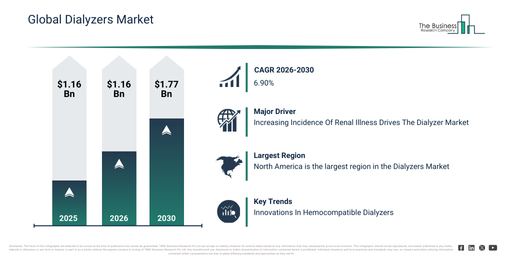
    The dialyzers market is projected to experience robust expansion over the coming years. This market is anticipated to reach a valuation of $3.27 billion by 2030, driven by a compound annual growth rate (CAGR) of 6.9%. Factors contributing to this growth during the projected period include the increasing uptake of home hemodialysis, a surge in the demand for single-use dialyzers, the broadening of patient-centric dialysis services, advancements in membrane materials, and a heightened emphasis on infection control and patient safety. Key developments expected within the forecast timeframe encompass a greater acceptance of high-flux dialyzers, an escalating need for biocompatible dialyzer membranes, the proliferation of home dialysis options, a stronger emphasis on optimizing filtration efficiency, and increased utilization of synthetic membrane materials.

    Get A Free Sample Report With In-Depth Market Insights:

    https://thebusinessresearchcompany.com/sample_request?id=89132309&type=smp&name=Dialyzers%20Market%20Report%202026&utm_source=Blogs&utm_medium=Paid&utm_campaign=Oct_PR

    Dialyzers Market Growth Drivers: What’s Behind The Acceleration?

    The rising occurrence of end-stage renal illness is anticipated to drive the expansion of the dialyzer market going forward. End-stage renal failure (ESRF), alternatively known as end-stage renal disease (ESRD), represents the final, irreversible phase of chronic kidney disease where kidney function has deteriorated to a point where the organs are incapable of independent operation. During dialysis, a dialyzer serves to remove waste products and excess fluid from the blood, after which the purified blood is returned to the body of individuals with end-stage renal disease. For example, in 2024, data from the National Institute of Diabetes and Digestive and Kidney Diseases, a US-based government research body focused on disease knowledge and treatment, indicated that chronic kidney disease (CKD) impacts over 1 in 7 U.S. adults, translating to an estimated 35.5 million Americans. Additionally, in 2023, 27,332 kidney transplants were performed, and by November 2024, 90,323 individuals were awaiting a kidney transplant in the United States. Consequently, the rising prevalence of end-stage renal illness is a key factor propelling the dialyzer market.

    Dialyzers Market Segments: Where Is Growth Concentrated?

    The dialyzers market covered in this report is segmented –

    1) By Type: High-Flux Dialyzers, Low-Flux Dialyzer

    2) By Usage Type: Disposable, Reusable

    3) By End-Uses: In-Centre Dialysis, Home Dialysis

    Subsegments:

    1) By High-Flux Dialyzers: Polyethersulfone (PES) Dialyzers, Polysulfone (PS) Dialyzers, Polyacrylonitrile (PAN) Dialyzers

    2) By Low-Flux Dialyzers: Cellulose Dialyzers, Cellulose Acetate Dialyzers, Synthetic Low-Flux Dialyzers

    Dialyzers Market Trends: What’s Defining The Industry’s Next Phase?

    Leading companies in the dialyzer market are concentrating on developing innovative products, such as hemocompatible dialyzers, to offer dependable patient service. A hemocompatible dialyzer is engineered to minimize the activation of the blood’s clotting system and the inflammatory response, thereby reducing the risk of complications during dialysis like blood clots, bleeding, and infection. For instance, in February 2024, Fresenius Medical Care AG & Co. KGaA, a Germany-based manufacturer of dialyzers, launched the 5008X Hemodialysis System. The 5008X Haemodialysis System and its companion FX CorAL dialyser underscore the company’s global leadership in innovation within medical device and membrane engineering technologies. The 5008X Haemodialysis System integrates advanced device engineering and membrane technologies to enable high-volume hemodiafiltration.

    Dialyzers Market Competitive Landscape: Who Leads The Industry?

    Major companies operating in the dialyzers market are Fresenius Medical Care AG & Co. KGaA, Baxter International Inc., B. Braun Melsungen AG, Nipro Corporation, Asahi Kasei Medical Co. Ltd., Toray Medical Co. Ltd., Terumo Corporation, WEGO Group, Allmed Medical Products Co. Ltd., Jiangxi Sanxin Medical Technology Co. Ltd., Farmasol S.A., DIA-MED GmbH, Medica S.p.A., Hemoclean Co. Ltd., Biosystems Dialysis Solutions Ltd., Exelint International Co. Ltd., SWS Hemodialysis Care Co. Ltd., Shandong Haidylena Medical Technology Co. Ltd., Chongqing Tianwai Tian Medical Equipment Co. Ltd., Dialife SA

    View The Full Dialyzers Market Report:

    https://thebusinessresearchcompany.com/report/dialyzers-global-market-report?utm_source=Blogs&utm_medium=Paid&utm_campaign=Oct_PR

    Dialyzers Market Geographic Landscape: Which Region Leads Industry Growth?

    North America was the largest region in the dialyzers market in 2025. The regions covered in the dialyzers market report are Asia-Pacific, South East Asia, Western Europe, Eastern Europe, North America, South America, Middle East, Africa.

    Reach Out To Our Team:

    The Business Research Company: https://www.thebusinessresearchcompany.com/

    Americas: +1 310-496-7795

    Asia: +44 7882 955267 & +91 8897263534

    Europe: +44 7882 955267

    Email us at: marketing@tbrc.info

    Follow us on:

    LinkedIn: https://in.linkedin.com/company/the-business-research-company

    YouTube: https://www.youtube.com/channel/UC24_fI0rV8cR5DxlCpgmyFQ

    Global Market Model: https://www.thebusinessresearchcompany.com/global-market-model
  • Dialysis Devices And Equipment Market Set To Expand From $17.47 Billion In 2026: Growth Outlook Through 2030

    Dialysis Devices And Equipment Market Set To Expand From $17.47 Billion In 2026: Growth Outlook Through 2030

    Featuring market attractiveness scoring, total addressable market sizing, company benchmarking matrices, interactive Excel dashboards, deeper supply chain intelligence, emerging startup tracking, and granular product-level insights, The Business Research Company’s 2026 market reports are built to deliver research that is both more actionable and more strategically valuable.

    Dialysis Devices And Equipment Market Size Forecast: How Big Could The Market Get By 2030?

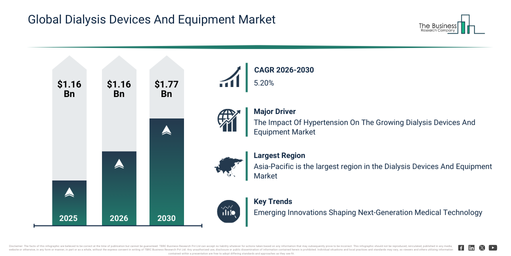
    The market size for dialysis devices and equipment has shown consistent growth over recent years. This market is expected to expand from $13.62 billion in 2025 to $14.28 billion in 2026, at a compound annual growth rate (CAGR) of 4.8%. Historically, this growth can be attributed to several factors including the increasing prevalence of chronic kidney disease, the expansion of hospital dialysis infrastructure, improved access to hemodialysis machines, a rising aging population, and the growth of renal care clinics.

    The dialysis devices and equipment market is projected to experience substantial expansion in the coming years. It is anticipated to reach $17.47 billion in 2030, exhibiting a compound annual growth rate (CAGR) of 5.2%. This growth during the forecast period can be attributed to several factors, including the escalating demand for home-based dialysis treatments, increased investment in next-generation dialysis technologies, the broadening availability of tele-nephrology services, a stronger emphasis on cost-effective renal care, and the greater uptake of wearable dialysis devices. Key trends characterizing this period involve the rising adoption of home dialysis systems, the growing utilization of automated peritoneal dialysis devices, increased integration of remote patient monitoring, the expansion of portable dialysis equipment, and a heightened focus on patient safety and treatment efficiency.

    Get A Free Sample Report With In-Depth Market Insights:

    https://thebusinessresearchcompany.com/sample_request?id=31225375&type=smp&name=Dialysis%20Devices%20And%20Equipment%20Market%20Report%202026&utm_source=Blogs&utm_medium=Paid&utm_campaign=Oct_PR

    Dialysis Devices And Equipment Market Growth Factors Behind Sustained Expansion

    The increasing occurrence of hypertension is anticipated to boost the expansion of the dialysis devices and equipment market in the future. Hypertension is a medical condition defined by persistently high blood pressure within the arteries. During hemodialysis, an external machine filters the blood, thereby aiding in blood pressure regulation and maintaining equilibrium of essential minerals such as potassium, sodium, and calcium. While not fully replicating kidney function, hemodialysis can partially substitute it, potentially enhancing energy and decreasing fluid accumulation in the body between sessions. For example, in September 2025, the World Health Organization (WHO), a specialized agency of the United Nations based in Switzerland, provided global estimates for 2024 showing that roughly 1.4 billion adults aged 30–79 had hypertension. This data indicated about one-third of this population with two-thirds living in low- and middle-income countries, with 600 million unaware of their condition, approximately 630 million receiving treatment, and only about 320 million achieving controlled blood pressure. Consequently, the rising prevalence of hypertension is fueling the expansion of the dialysis devices and equipment market.

    Dialysis Devices And Equipment Market Segment Analysis: What Are The Core Market Categories?

    The dialysis devices and equipment market covered in this report is segmented –

    1) By Product: Hemodialysis Devices, Peritoneal Dialysis Devices, Continuous Renal Replacement Therapy (CRRT) Systems, Consumables

    2) By Application: Serum And Blood Treatment, Virus Purification, Drug Binding Studies

    3) By End-User: Hospitals, Clinics, Ambulatory Surgical Centers, Home Care Settings

    Subsegments:

    1) By Hemodialysis Devices: Hemodialysis Machines, Dialyzers (Artificial Kidneys), Blood Tubing Sets, Hemodialysis Catheters

    2) By Peritoneal Dialysis Devices: Automated Peritoneal Dialysis (APD) Machines, Continuous Ambulatory Peritoneal Dialysis (CAPD) Sets, Peritoneal Dialysis Catheters, Transfer Sets for Peritoneal Dialysis

    3) By Continuous Renal Replacement Therapy (CRRT) Systems: CRRT Machines, CRRT Filters, CRRT Blood Tubing Sets

    4) By Consumables: Dialysis Solutions, Renal Replacement Therapy Consumables, Heparin And Other Anticoagulants, Patient Monitoring Supplies

    Dialysis Devices And Equipment Market Industry Trends Fueling Future Revenue Growth

    Major companies within the dialysis devices and equipment market are directing their efforts toward developing advanced solutions, such as AI-driven remote monitoring, to bolster the accessibility and quality of care. AI-driven remote monitoring involves integrating artificial intelligence and cloud-based platforms into dialysis machines, enabling them to transmit real-time data to clinicians for improved clinical decision-making, continuous oversight, and the early detection of complications. For instance, in February 2025, Renalyx Health Systems, an India-based provider of renal care technology, introduced the RENALYX–RxT 21, recognized as India’s first fully indigenous smart hemodialysis machine, featuring real-time cloud connectivity and tele-nephrology capabilities. This system offers critical care quality for patients experiencing cardiovascular or acute kidney injury issues and supports end-stage renal disease treatment, all while being significantly more affordable than imported alternatives. Manufactured in India, it helps to bridge the demand gap in semi-urban and rural regions and is supported by plans to escalate production to thousands of machines in the next few years.

    Dialysis Devices And Equipment Market Company Landscape And Competitive Strategy

    Major companies operating in the dialysis devices and equipment market are Fresenius Medical Care AG & Co. KGaA, Baxter International Inc., Nipro Corporation, B. Braun Medical Inc., Nikkiso Co. Ltd., Asahi Kasei Corporation, Toray Medical Co. Ltd., JMS Co. Ltd., Kawasumi Laboratories Inc., Terumo Corporation, DaVita Inc., NxStage Medical Inc., Outset Medical Inc., Renalyx Health Systems, Medikit Co. Ltd., Otsuka Medical Devices Co. Ltd., Shanwaishan Medical Group, Bain Medical Equipment Co. Ltd., Jiangsu Lengthen Life Science and Technology Co. Ltd., Shenzhen Landwind Industry Co. Ltd.

    View The Full Dialysis Devices And Equipment Market Report:

    https://thebusinessresearchcompany.com/report/dialysis-devices-and-equipment-global-market-report?utm_source=Blogs&utm_medium=Paid&utm_campaign=Oct_PR

    Dialysis Devices And Equipment Market Largest Region: Which Geography Holds The Biggest Share?

    Asia-Pacific was the largest region in the global dialysis devices and equipment market in 2025. North America was the second largest market in dialysis devices and equipment market. The regions covered in the dialysis devices and equipment market report are Asia-Pacific, South East Asia, Western Europe, Eastern Europe, North America, South America, Middle East, Africa.

    Reach Out To Our Team:

    The Business Research Company: https://www.thebusinessresearchcompany.com/

    Americas: +1 310-496-7795

    Asia: +44 7882 955267 & +91 8897263534

    Europe: +44 7882 955267

    Email us at: marketing@tbrc.info

    Follow us on:

    LinkedIn: https://in.linkedin.com/company/the-business-research-company

    YouTube: https://www.youtube.com/channel/UC24_fI0rV8cR5DxlCpgmyFQ

    Global Market Model: https://www.thebusinessresearchcompany.com/global-market-model