Category: Medical Equipment

  • Disposable Endoscopes Market Forecast To Reach $4.79 Billion By 2030: Key Trends Explained

    Disposable Endoscopes Market Forecast To Reach $4.79 Billion By 2030: Key Trends Explained

    Featuring market attractiveness scoring, total addressable market sizing, company benchmarking matrices, interactive Excel dashboards, deeper supply chain intelligence, emerging startup tracking, and granular product-level insights, The Business Research Company’s 2026 market reports are built to deliver research that is both more actionable and more strategically valuable.

    Disposable Endoscopes Market Size, Value And Growth Trajectory Through 2030

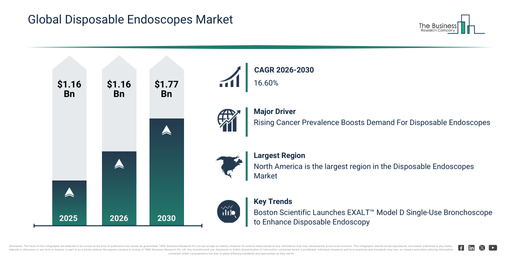
    The disposable endoscopes market size has experienced swift expansion over recent years. It is projected to increase from $2.24 billion in 2025 to $2.6 billion in 2026, showing a compound annual growth rate (CAGR) of 15.9%. This past growth can be attributed to several factors, including heightened concerns about hospital-acquired infections, the increasing use of minimally invasive procedures, the proliferation of outpatient surgical centers, a rising demand for flexible endoscopy solutions, and the limitations inherent in reprocessing reusable devices.

    The market for disposable endoscopes is projected to experience substantial expansion in the coming years. Its value is anticipated to reach $4.79 billion by 2030, demonstrating a compound annual growth rate (CAGR) of 16.6%. This anticipated growth during the forecast period is fueled by factors such as a heightened regulatory emphasis on patient safety, an increase in the uptake of disposable devices that offer predictable costs, the broadening application of single-use technologies across various medical fields, greater investments in minimally invasive diagnostic procedures, and a growing need for quicker procedure turnaround times. Key trends expected during this period involve a rising acceptance of single-use endoscopic tools, a greater need for solutions to prevent infections, the increased deployment of disposable ureteroscopes and bronchoscopes, the wider availability of portable visualization systems, and a sharpened focus on improving workflow efficiency.

    Get A Free Sample Report With In-Depth Market Insights:

    https://thebusinessresearchcompany.com/sample_request?id=24589166&type=smp&name=Disposable%20Endoscopes%20Market%20Report%202026&utm_source=Blogs&utm_medium=Paid&utm_campaign=Oct_PR

    Disposable Endoscopes Market Development Factors: What’s Supporting Demand?

    The growing occurrence of cancer is projected to stimulate the expansion of the disposable endoscopes market. Cancer is a complicated set of illnesses marked by the unregulated proliferation and splitting of irregular cells. Disposable endoscopes can deliver superior imaging functionalities, enabling more precise assessments during endoscopic examinations. This medical apparatus assists in pinpointing cancerous lesions or anomalies within the gastrointestinal tract. For instance, in February 2024, according to the World Health Organization, a Switzerland-based intergovernmental organization, by 2050, new cancer cases are expected to exceed 35 million, representing a 77% rise from the roughly 20 million cases recorded in 2022. Consequently, the rising prevalence of cancer is fueling the growth of the disposable endoscopes market.

    Disposable Endoscopes Market Segment Outlook: Which Categories Are Growing Fastest?

    The disposable endoscopes market covered in this report is segmented –

    1) By Product: Gastroscopes, Bronchoscopes, Duodenoscopes, Laryngoscopes, Colonoscopes, Ureteroscope?s, Other Endoscopes

    2) By Patient Type: Adult, Pediatric

    3) By End User: Hospitals, Ambulatory Surgical Centers, Diagnostic Centers

    Subsegments:

    1) By Gastroscopes: Standard Gastroscopes, Pediatric Gastroscopes

    2) By Bronchoscopes: Flexible Bronchoscopes, Rigid Bronchoscopes

    3) By Duodenoscopes: Single-Use Duodenoscopes

    4) By Laryngoscopes: Standard Laryngoscopes, Video Laryngoscopes

    5) By Colonoscopes: Flexible Colonoscopes, Pediatric Colonoscopes

    6) By Ureteroscopes: Flexible Ureteroscopes, Rigid Ureteroscopes

    7) By Other Endoscopes: Cystoscopes, Arthroscopes

    Disposable Endoscopes Market Transformation Trends: What Innovations Are Driving Change?

    Major companies operating in the disposable endoscopes market are actively focusing on developing innovative products, such as single-use bronchoscopes, to solidify their market presence. Single-use bronchoscopes are medical devices specifically designed for a single patient’s use, effectively reducing the risk of cross-contamination and significantly enhancing patient safety. For example, in January 2025, Boston Scientific, a US-based medical device company, launched its EXALT Model D Bronch single-use bronchoscope. The EXALT Model D offers high-definition imaging for superior visualization, improved suction performance, and a slim, flexible insertion tube for excellent maneuverability. Its ergonomic design and intuitive controls are designed to help healthcare providers streamline procedures, minimize preparation and cleaning time, and increase efficiency within bronchoscopy workflows.

    Disposable Endoscopes Market Industry Leaders And Competitive Landscape

    Major companies operating in the disposable endoscopes market are Medtronic plc, Fujifilm Holdings Corporation, Boston Scientific Corporation, Olympus Corporation, Karl Storz SE & Co. KG, PENTAX Medical, Ambu A/S, Cooper Surgical Inc., Verathon Inc., Henke-Sass Wolf GmbH, Apollo Endosurgery Inc., Reach Surgical Co. Ltd., EndoChoice Inc., CapsoVision Inc., Optim LLC, Taewoong Medical Co. Ltd., Hoya Corporation, XION Medical GmbH, Avantis Medical Systems Inc., EndoMed Systems GmbH, Neoscope Inc., Otu Medical Inc., Richard Wolf GmbH, Vision-Sciences Inc.

    View The Full Disposable Endoscopes Market Report:

    https://thebusinessresearchcompany.com/report/disposable-endoscopes-global-market-report?utm_source=Blogs&utm_medium=Paid&utm_campaign=Oct_PR

    Disposable Endoscopes Market Regional Analysis And Leading Geography

    North America was the largest region in the disposable endoscope market in 2025. The regions covered in the disposable endoscopes market report are Asia-Pacific, South East Asia, Western Europe, Eastern Europe, North America, South America, Middle East, Africa.

    Reach Out To Our Team:

    The Business Research Company: https://www.thebusinessresearchcompany.com/

    Americas: +1 310-496-7795

    Asia: +44 7882 955267 & +91 8897263534

    Europe: +44 7882 955267

    Email us at: marketing@tbrc.info

    Follow us on:

    LinkedIn: https://in.linkedin.com/company/the-business-research-company

    YouTube: https://www.youtube.com/channel/UC24_fI0rV8cR5DxlCpgmyFQ

    Global Market Model: https://www.thebusinessresearchcompany.com/global-market-model
  • Disposable Contact Lenses Market Analysis Through 2030: Market Size, Growth Trends And Industry Outlook

    Disposable Contact Lenses Market Analysis Through 2030: Market Size, Growth Trends And Industry Outlook

    Backed by market attractiveness analysis, total addressable market sizing, company benchmarking matrices, interactive Excel dashboards, wider supply chain intelligence, emerging startup coverage, and detailed product-level insights, The Business Research Company’s 2026 market reports are designed to offer research that is more actionable and strategically valuable than ever.

    Disposable Contact Lenses Market CAGR Outlook And Future Development

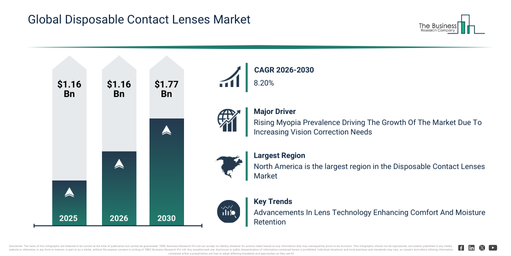
    The disposable contact lenses market size has experienced robust expansion over recent years. Projections indicate an increase from $7.66 billion in 2025 to $8.31 billion in 2026, demonstrating a compound annual growth rate (CAGR) of 8.4%. Factors contributing to this historical growth include vision correction demand, urban lifestyle changes, growth in myopia cases, optometry clinic expansion, and hygiene concerns.

    The disposable contact lenses market is projected to experience substantial expansion in the coming years. Its valuation is anticipated to reach $11.38 billion by 2030, exhibiting a compound annual growth rate (CAGR) of 8.2%. This expansion during the projection period can be attributed to factors such as the visual requirements of an aging demographic, the widespread occurrence of digital eye strain, prevailing cosmetic fashion trends, the increasing reach of e-commerce, and advancements in lens material technology. Key developments expected during this timeframe encompass a rise in the adoption of daily disposable lenses, greater utilization of cosmetic lenses, enhancements in oxygen permeability, the proliferation of online lens sales, and the development of materials offering improved eye comfort.

    Get A Free Sample Report With In-Depth Market Insights:

    https://thebusinessresearchcompany.com/sample_request?id=42651614&type=smp&name=Disposable%20Contact%20Lenses%20Market%20Report%202026&utm_source=Blogs&utm_medium=Paid&utm_campaign=Oct_PR

    Disposable Contact Lenses Market Industry Drivers: What’s Behind The Revenue Growth?

    The rising occurrence of myopia is projected to fuel expansion in the disposable contact lens market moving ahead. Myopia, also known as nearsightedness, is a frequent ocular condition characterized by blurry distant vision while close-up items remain sharp. The growing incidence of myopia is significantly impacted by less time spent outdoors, given that natural light is crucial for regulating eye development and inhibiting excessive elongation of the eyeball. This increasing prevalence of myopia consequently elevates the demand for disposable contact lenses, which offer a practical and sanitary method for correcting vision. For example, data from October 2024 by the Lions Eye Institute, an Australia-based non-profit organization, indicates a rapid global rise in myopia rates, affecting over 90% of Chinese university students and more than 6 million Australians (exceeding 20% of the population). Should current trends continue, myopia might affect 50% of the population by 2050. Consequently, the escalating occurrence of myopia is a primary driver for the expansion of the disposable contact lens market.

    Disposable Contact Lenses Market Segment Landscape: Which Areas Lead Development?

    The disposable contact lenses market covered in this report is segmented –

    1) By Type: Cylindrical Lenses, Toric Lenses, Spherical Lenses

    2) By Material: Silicon, Hydrogel, Polymers

    3) By Distribution Channel: Optical Stores, Online Stores

    4) By Applications: Corrective, Therapeutic, Cosmetic

    Subsegments:

    1) By Cylindrical Lenses: Soft Cylindrical Lenses, Rigid Gas Permeable (RGP) Cylindrical Lenses, Hybrid Cylindrical Lenses

    2) By Toric Lenses: Daily Disposable Toric Lenses, Weekly Disposable Toric Lenses, Monthly Disposable Toric Lenses

    3) By Spherical Lenses: Daily Disposable Spherical Lenses, Weekly Disposable Spherical Lenses, Monthly Disposable Spherical Lenses

    #Disposable Contact Lenses Market Growth Trends: What’s Shaping The Future Outlook?

    Leading companies in the disposable contact lenses market are concentrating on advancements in lens technology, such as ProBalance technology, to gain a competitive edge. ProBalance Technology is a lens innovation designed with moisturizing ingredients to maintain ocular surface homeostasis, reduce dryness, and enhance comfort during contact lens wear. For instance, in May 2023, Bausch + Lomb Incorporated, a US-based healthcare company, introduced Infuse Multifocal silicone hydrogel daily disposable contact lenses in the US, formulated to deliver clear vision at all distances for presbyopic patients. These lenses feature ProBalance technology to sustain moisture and minimize dryness, thereby addressing common concerns for multifocal lens wearers. Fabricated from next-generation SiHy material (kalifilcon A), they provide high breathability, comfort, and prolonged moisture retention.

    Disposable Contact Lenses Market Key Participants And Competitive Landscape

    Major companies operating in the disposable contact lenses market are Johnson & Johnson Vision Care Inc., Carl Zeiss AG, Alcon Inc., HOYA Corporation, Bausch + Lomb Incorporated, CooperVision Inc., Menicon Co. Ltd., BenQ Materials Corporation, St.Shine Optical Co. Ltd., SEED Co. Ltd., Interojo Co. Ltd., Hubble Contacts Inc., Oculus Optikgeräte GmbH, ClearLab International, Visioneering Technologies Inc., UltraVision CLPL, Visco Vision Inc., Maxvue Vision Sdn Bhd, Shinagawa Contact Lens Co. Ltd., EYELOOP GmbH

    View The Full Disposable Contact Lenses Market Report:

    https://thebusinessresearchcompany.com/report/disposable-contact-lenses-global-market-report?utm_source=Blogs&utm_medium=Paid&utm_campaign=Oct_PR

    Disposable Contact Lenses Market Geographic Analysis: Where Is Demand Accelerating Fastest?

    North America was the largest region in the disposable contact lenses market in 2025. Asia-Pacific is expected to be the fastest-growing region in the forecast period. The regions covered in the disposable contact lenses market report are Asia-Pacific, South East Asia, Western Europe, Eastern Europe, North America, South America, Middle East, Africa.

    Reach Out To Our Team:

    The Business Research Company: https://www.thebusinessresearchcompany.com/

    Americas: +1 310-496-7795

    Asia: +44 7882 955267 & +91 8897263534

    Europe: +44 7882 955267

    Email us at: marketing@tbrc.info

    Follow us on:

    LinkedIn: https://in.linkedin.com/company/the-business-research-company

    YouTube: https://www.youtube.com/channel/UC24_fI0rV8cR5DxlCpgmyFQ

    Global Market Model: https://www.thebusinessresearchcompany.com/global-market-model
  • Disposable Bronchoscope Market Outlook From 2026 To 2030: Key Growth Factors And Future Opportunities

    Disposable Bronchoscope Market Outlook From 2026 To 2030: Key Growth Factors And Future Opportunities

    Featuring market attractiveness scoring, total addressable market sizing, company benchmarking matrices, interactive Excel dashboards, deeper supply chain intelligence, emerging startup tracking, and granular product-level insights, The Business Research Company’s 2026 market reports are built to deliver research that is both more actionable and more strategically valuable.

    Disposable Bronchoscope Market Set To Climb From $1.29 Billion In 2026 To $2.43 Billion By 2030

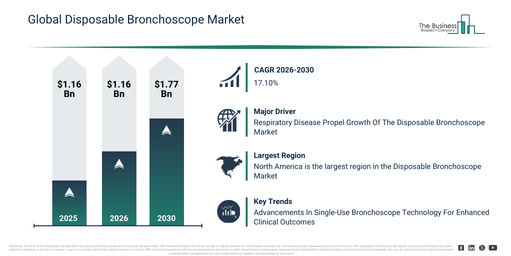
    The disposable bronchoscope market size has experienced rapid growth in recent years. It is projected to expand from $1.08 billion in 2025 to $1.29 billion in 2026, achieving a compound annual growth rate (CAGR) of 19.2%. The expansion observed historically stems from factors such as an increase in pulmonary diagnostic procedures, a rise in respiratory infection cases, the enlargement of critical care units, growing worries about hospital-acquired infections, and better access to bronchoscopy services.

    The disposable bronchoscope market is poised for substantial expansion over the next few years. Its valuation is anticipated to reach $2.43 billion by 2030, demonstrating a compound annual growth rate (CAGR) of 17.1%. This growth during the forecast period is primarily fueled by the increasing prevalence of lung cancer and COPD, a growing requirement for rapid airway diagnostics, the expansion of intensive care infrastructure, an elevated emphasis on infection prevention protocols, and increased healthcare expenditure on respiratory care. Prominent trends for the forecast period encompass a rising preference for single-use bronchoscopes, a growing focus on infection control and patient safety, increased adoption in ICU and emergency settings, a shift towards portable and bedside bronchoscopy, and a rising demand for cost-effective airway visualization.

    Get A Free Sample Report With In-Depth Market Insights:

    https://thebusinessresearchcompany.com/sample_request?id=45153790&type=smp&name=Disposable%20Bronchoscope%20Market%20Report%202026&utm_source=Blogs&utm_medium=Paid&utm_campaign=Oct_PR

    Disposable Bronchoscope Market Growth Factors: What’s Supporting Expansion?

    The increasing occurrence of respiratory conditions is anticipated to fuel the expansion of the disposable bronchoscope market in the coming years. Respiratory diseases encompass various medical issues affecting organs and tissues essential for breathing, such as the airways, lungs, and respiratory muscles. The uptick in these diseases is attributed to factors like smoking, air pollution, an aging global populace, environmental influences, and respiratory infections. Disposable bronchoscopes offer a notable advantage by mitigating the danger of infection transmission when compared to their reusable counterparts, proving particularly vital in preventing cross-contamination among patients suffering from infectious respiratory ailments. As an illustration, the National Center for Biotechnology Information, a US-based government agency, indicated in December 2023 that the number of COPD cases was predicted to surge by 112 million, reaching a total of 592 million by 2050, which would constitute 9.5% of the eligible population. Consequently, the rising incidence of respiratory diseases is a significant driver for the disposable bronchoscope market’s growth. The expansion of minimally invasive procedures is set to propel the growth of the disposable bronchoscope market in the foreseeable future. Minimally invasive procedures are medical or surgical approaches carried out through small incisions or natural body orifices, designed to minimize tissue damage, discomfort, and recovery duration compared to traditional surgery. The increase in minimally invasive procedures stems from benefits such as quicker patient recuperation, reduced hospital stays, and less post-operative pain. Disposable bronchoscopes support these procedures by providing a sterile, single-use, and flexible tool for visualizing and intervening in airways, thereby lowering infection risks, eliminating the need for reprocessing, and facilitating faster and safer diagnostic and therapeutic interventions. For example, as of September 2023, the National Library of Medicine, a US-based federal government entity, reported that 7,733 robotic surgical systems had been deployed globally, with more than 10 million robotic surgeries already performed. Therefore, the increase in minimally invasive procedures is a key factor driving the expansion of the disposable bronchoscope market.

    Disposable Bronchoscope Market Segments: Where Is Growth Concentrated?

    The disposable bronchoscope market covered in this report is segmented –

    1) By Product: Large, Regular, Slim, Ultra-slim, Extra-large

    2) By Usage: Bedside Procedures, Emergency Rooms, Bronchoscopy Suites, Intensive Care Units (ICU)

    3) By Indication: Lung Cancer, Pulmonary Infections, Interstitial Lung Disease, Tuberculosis, Chronic Obstructive Pulmonary Disease (COPD), Cystic Fibrosis

    4) By End User: Hospitals, Ambulatory Surgical Centers (ASCs), Specialty Clinics, Diagnostic Centers

    Subsegments:

    1) By Large: Adult Large Bronchoscopes, Pediatric Large Bronchoscopes

    2) By Regular: Adult Regular Bronchoscopes, Pediatric Regular Bronchoscopes

    3) By Slim: Adult Slim Bronchoscopes, Pediatric Slim Bronchoscopes

    4) By Ultra-Slim: Adult Ultra-Slim Bronchoscopes, Pediatric Ultra-Slim Bronchoscopes

    5) By Extra-Large: Adult Extra-Large Bronchoscopes, Pediatric Extra-Large Bronchoscopes

    Disposable Bronchoscope Market Industry Trends: What’s Reshaping Demand?

    Leading companies active in the disposable bronchoscope market are concentrating on developing innovative solutions, such as single-use bronchoscopes with enhanced capabilities, to improve procedural effectiveness, patient safety, and clinical results. Single-use bronchoscopes are sterile, pre-assembled instruments made for a singular application, thereby lowering the chances of cross-contamination and removing the requirement for reprocessing. For example, in April 2023, Verathon Inc., a US-based medical device company, unveiled the BFlex 2, which offers better maneuverability, high-definition imaging, and an intuitive layout to assist complex airway procedures while maintaining patient safety and operational efficiency. The BFlex 2 additionally offers economical use, a decreased risk of infection, and a simplified workflow in healthcare environments.

    Disposable Bronchoscope Market Top Companies Driving Competitive Growth

    Major companies operating in the disposable bronchoscope market are Medtronic plc, Boston Scientific Corporation, Olympus Corporation, Teleflex Incorporated, Cook Medical, Karl Storz SE, MicroPort Scientific, Ambu A/S, Richard Wolf GmbH, PENTAX Medical, SonoScape Medical Corp., Clarus Medical LLC, Flexicare (Group) Limited, Endotherapeutics Pty Ltd., VBM Medizintechnik GmbH, Novatech SA, EMOS Technology GmbH, Shenzhen HugeMed Medical Technical Development Co. Ltd., NeoScope Inc., ACE Medical Devices Pvt. Ltd., The Surgical Company, Zhuhai Seesheen Medical Technology Co. Ltd.

    View The Full Disposable Bronchoscope Market Report:

    https://thebusinessresearchcompany.com/report/disposable-bronchoscope-global-market-report?utm_source=Blogs&utm_medium=Paid&utm_campaign=Oct_PR

    Disposable Bronchoscope Market Global Footprint: Which Region Leads The Industry?

    North America was the largest region in the disposable bronchoscope market in 2025. Asia-Pacific is expected to be the fastest-growing region in the forecast period. The regions covered in the disposable bronchoscope market report are Asia-Pacific, South East Asia, Western Europe, Eastern Europe, North America, South America, Middle East, Africa.

    Reach Out To Our Team:

    The Business Research Company: https://www.thebusinessresearchcompany.com/

    Americas: +1 310-496-7795

    Asia: +44 7882 955267 & +91 8897263534

    Europe: +44 7882 955267

    Email us at: marketing@tbrc.info

    Follow us on:

    LinkedIn: https://in.linkedin.com/company/the-business-research-company

    YouTube: https://www.youtube.com/channel/UC24_fI0rV8cR5DxlCpgmyFQ

    Global Market Model: https://www.thebusinessresearchcompany.com/global-market-model
  • Disc Sterilizer Steam Market Growth Forecast: Market Size, Key Trends And Emerging Opportunities Through 2030

    Disc Sterilizer Steam Market Growth Forecast: Market Size, Key Trends And Emerging Opportunities Through 2030

    Built to provide research that’s more actionable and strategically valuable, The Business Research Company’s 2026 market reports include market attractiveness analysis, total addressable market sizing, company benchmarking matrices, interactive Excel dashboards, broader supply chain intelligence, emerging startup tracking, and in-depth product insights.

    Disc Sterilizer Steam Market Forecast: Value Set To Climb From $1.88 Billion To $2.79 Billion

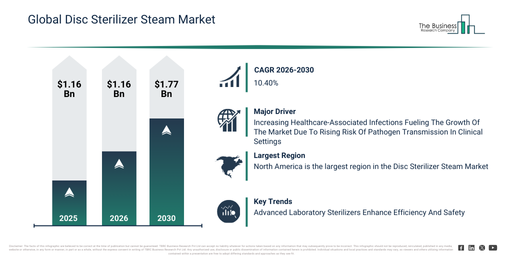
    The disc sterilizer steam market has experienced rapid expansion in recent years. It is forecast to rise from $1.69 billion in 2025 to $1.88 billion in 2026, exhibiting a compound annual growth rate (CAGR) of 10.7%. The historical increase can be ascribed to elements like growth in infection control standards, expansion of laboratories, increased surgical procedures, demand for reusable instruments, and healthcare infrastructure development.

    The disc sterilizer steam market size is anticipated to undergo significant expansion over the next few years. It is projected to reach $2.79 billion in 2030, achieving a compound annual growth rate (CAGR) of 10.4%. This growth throughout the forecast period is largely propelled by stringent sterilization regulations, the increase in outpatient facilities, the broadening of pharmaceutical manufacturing, greater automation in sterilization processes, and the demand for portable medical equipment. Additionally, prominent trends during this period are expected to include compact tabletop sterilizers, swift steam sterilization cycles, automated sterilization controls, energy-efficient sterilization systems, and portable sterilization devices.

    Get A Free Sample Report With In-Depth Market Insights:

    https://thebusinessresearchcompany.com/sample_request?id=19122886&type=smp&name=Disc%20Sterilizer%20Steam%20Market%20Report%202026&utm_source=Blogs&utm_medium=Paid&utm_campaign=Oct_PR

    Disc Sterilizer Steam Market Demand Drivers: What’s Powering Industry Growth?

    The disc sterilizer steam market is anticipated to expand due to the rising incidence of healthcare-associated infections. Healthcare-associated infections (HAIs) refer to infections contracted by patients within medical environments during treatment for unrelated conditions. The increase in HAIs is mainly attributed to more frequent invasive medical procedures and devices, which elevate the likelihood of pathogen spread in clinical environments. Disc sterilizer steam aids in diminishing healthcare-associated infections through its high-temperature sterilization of medical and lab instruments, thereby eliminating bacteria, viruses, and other pathogens. These systems lower contamination risks by ensuring consistent and dependable sterilization cycles, enhancing patient safety and infection control across healthcare facilities. As an illustration, the UK Health Security Agency (UKHSA), a UK-based government body, reported in July 2025 that the incidence of methicillin-resistant Staphylococcus aureus (MRSA) bacteremia reached 1.8 cases per 100,000 population from January to March 2025, representing a rise from 1.7 cases per 100,000 population recorded in the corresponding period of 2024. Consequently, the growing number of healthcare-associated infections is fueling the expansion of the disc sterilizer steam market.

    Disc Sterilizer Steam Market Segment Analysis: What Are The Core Market Categories?

    The disc sterilizer steam market covered in this report is segmented –

    1) By Product Type: Automatic Disc Sterilizer, Semi-Automatic Disc Sterilizer, Manual Disc Sterilizer

    2) By Distribution Channel: Direct Sales, Distributors

    3) By Application: Biotechnology, Laboratories

    4) By End-User: Hospitals, Research Institutes

    Subsegments:

    1) By Automatic Disc Sterilizer: Fully Programmable Systems, Touchscreen Controlled Models, Internet Of Things (IoT) Enabled Sterilizers, High Capacity Automatic Units, Compact Automatic Units

    2) By Semi Automatic Disc Sterilizer: Timer Controlled Models, Partially Automated Loading Systems, Pressure Assisted Semi Automatic Units, Medium Capacity Semi Automatic Units

    3) By Manual Disc Sterilizer: Hand Operated Sterilizers, Basic Valve Control Systems, Small Capacity Manual Units, Portable Manual Sterilizers

    Disc Sterilizer Steam Market Innovation Trends: What Developments Are Reshaping The Industry?

    Major companies within the disc sterilizer steam market are concentrating on creating advanced products, such as automated laboratory sterilizers, to boost efficiency, safety, and consistency. Automated laboratory sterilizers are autoclaves employing digital controls to sterilize equipment with minimal manual intervention. For instance, in May 2024, Getinge, a medical technology company based in Sweden, introduced the Lancer LSS. This is a versatile automated laboratory sterilizer specifically designed for research and pharmaceutical environments, featuring a user-friendly interface with a large color touchscreen for easy operation and monitoring. It incorporates automated data management and advanced cycle configurations, enabling seamless validation and documentation without manual intervention, while its eco-mode significantly lowers water and energy consumption.

    Disc Sterilizer Steam Market Leading Players And Competitive Positioning

    Major companies operating in the disc sterilizer steam market are STERIS plc, Getinge AB, Shinva Medical Instrument Co. Ltd., Belimed AG, Midmark Corporation, Antonio Matachana S.A., SciCan Ltd, Fedegari Autoclavi S.p.A., Celitron Medical Technologies Kft, MELAG Medizintechnik GmbH & Co. KG, Tuttnauer Limited, Astell Scientific Limited, Cistron Systems Pvt. Ltd., Priorclave Ltd, Steelco SpA, Hirayama Manufacturing Corporation, CISA Production, Sakura Seiki Co. Ltd., Hanshin Medical, LTE Scientific Ltd

    View The Full Disc Sterilizer Steam Market Report:

    https://thebusinessresearchcompany.com/report/global-disc-sterilizer-steam-market-report?utm_source=Blogs&utm_medium=Paid&utm_campaign=Oct_PR

    Disc Sterilizer Steam Market Regional Distribution: Which Areas Power Market Growth?

    North America was the largest region in the disc sterilizer steam market in 2025. Asia-Pacific is expected to be the fastest-growing region in the forecast period. The regions covered in the disc sterilizer steam market report are Asia-Pacific, South East Asia, Western Europe, Eastern Europe, North America, South America, Middle East, Africa.

    Reach Out To Our Team:

    The Business Research Company: https://www.thebusinessresearchcompany.com/

    Americas: +1 310-496-7795

    Asia: +44 7882 955267 & +91 8897263534

    Europe: +44 7882 955267

    Email us at: marketing@tbrc.info

    Follow us on:

    LinkedIn: https://in.linkedin.com/company/the-business-research-company

    YouTube: https://www.youtube.com/channel/UC24_fI0rV8cR5DxlCpgmyFQ

    Global Market Model: https://www.thebusinessresearchcompany.com/global-market-model
  • Disability Devices Market CAGR Forecast Through 2030: Key Trends Shaping Industry Expansion

    Disability Devices Market CAGR Forecast Through 2030: Key Trends Shaping Industry Expansion

    Backed by market attractiveness analysis, total addressable market sizing, company benchmarking matrices, interactive Excel dashboards, wider supply chain intelligence, emerging startup coverage, and detailed product-level insights, The Business Research Company’s 2026 market reports are designed to offer research that is more actionable and strategically valuable than ever.

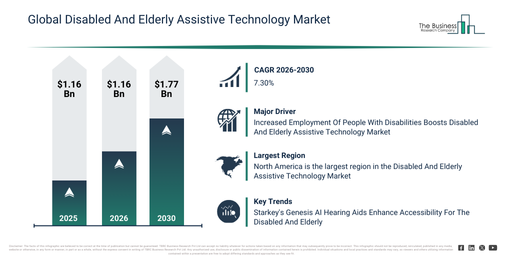
    Disabled And Elderly Assistive Technology Market Revenue Growth On Track For A 7.3% CAGR Through 2030

    The disabled and elderly assistive technology market has experienced substantial expansion in recent years. Projections indicate it will grow from $45.53 billion in 2025 to $48.87 billion in 2026, achieving a compound annual growth rate (CAGR) of 7.3%. The market’s historical growth can be attributed to an expanding elderly population, an increasing prevalence of physical disabilities, the broadening of homecare services, rising awareness of assistive devices, and enhanced availability of mobility aids.

    The disabled and elderly assistive technology market is anticipated to show significant expansion in the upcoming years. It is projected to achieve a value of $64.72 billion by 2030, growing at a compound annual growth rate (CAGR) of 7.3%. This expansion during the forecast period is driven by an increasing aging population, a growing preference for aging in place, a rising need for daily activity assistance, the expansion of elderly care infrastructure, and increased healthcare spending on long-term care. Notable trends expected in this period include an increased demand for home-based assistive solutions, a greater adoption of mobility and ambulatory aids, a stronger focus on independent living support, a shift towards personalized assistive devices, and an escalating use of wearable monitoring and safety products.

    Get A Free Sample Report With In-Depth Market Insights:

    https://thebusinessresearchcompany.com/sample_request?id=65293670&type=smp&name=Disabled%20And%20Elderly%20Assistive%20Technology%20Market%20Report%202026&utm_source=Blogs&utm_medium=Paid&utm_campaign=Oct_PR

    Disabled And Elderly Assistive Technology Market Growth Drivers: What’s Behind The Acceleration?

    A growing employment-population ratio among individuals with disabilities is anticipated to propel the expansion of the disabled and elderly assistive technology market in the future. This rising ratio for people with disabilities is attributed to improved accessibility, inclusive hiring practices, and enhanced support programs. Disabled and elderly assistive technology enables individuals with disabilities to perform job tasks more effectively and independently, improving their employability and access to a wider range of job opportunities. For instance, in February 2024, according to the Bureau of Labor Statistics, a US-based agency of the United States Department of Labor, in 2023, the employment-population ratio for individuals with disabilities rose by 1.2% points, reaching 22.5%. Therefore, the increasing employment-population ratio for individuals with disabilities is driving the disabled and elderly assistive technology market.

    Disabled And Elderly Assistive Technology Market Segment Breakdown: Which Categories Lead On Revenue?

    The disabled and elderly assistive technology market covered in this report is segmented –

    1) By Product Type: Medical Mobility Aids And Ambulatory Devices, Assistive Furniture, Bathroom Safety And Assistive Products, Communication Aids, Activity Monitors, Location Monitors, Other Product Types

    2) By Distribution Channel: Online, Offline

    3) By End-User: Hospitals, Elderly Nursing Homes, Homecare, Other End-Users

    Subsegments:

    1) By Medical Mobility Aids And Ambulatory Devices: Wheelchairs (Manual And Powered), Walking Aids (Canes, Crutches, Walkers), Scooters, Prosthetics And Orthotics, Transfer Aids (Lift Chairs, Slings, Hoists)

    2) By Assistive Furniture: Adjustable Beds, Recliners And Lift Chairs, Ergonomic Chairs And Desks, Raised Seating And Supportive Chairs, Overbed Tables And Ramps

    3) By Bathroom Safety And Assistive Products: Grab Bars, Shower Chairs And Stools, Raised Toilet Seats, Bath Lifts, Non-Slip Mats And Flooring, Commode Chairs

    4) By Communication Aids: Voice-Activated Devices, Hearing Aids, Speech Generating Devices, Text-to-speech Systems, Amplified Telephones

    5) By Activity Monitors: Wearable Health Devices (Smartwatches, Fitness Trackers), Heart Rate Monitors, Fall Detection Systems, Sleep Trackers, Blood Pressure Monitors

    6) By Location Monitors: Gps Tracking Devices For Seniors, Wearable Location Trackers, Mobile Apps For Location Monitoring, Fall Detection And Alert Systems With Location Tracking

    7) By Other Product Types: Cognitive Aids (Memory Assistance Tools), Vision Aids (Magnifiers, Electronic Glasses), Environmental Control Systems (Smart Home Devices), Medication Management Aids

    Disabled And Elderly Assistive Technology Market Trends: What’s Defining The Industry’s Next Phase?

    Key companies operating in the disabled and elderly assistive technology market are concentrating on technological advancements, especially with AI-powered hearing aids and other assistive devices, to gain a competitive edge. These hearing aids harness artificial intelligence to enhance sound fidelity, adapt to various surroundings, and deliver tailored hearing solutions. For instance, in January 2024, Starkey, a U.S.-based hearing aid manufacturer, introduced the Genesis AI hearing aids in Australia and New Zealand. These devices incorporate real-time environmental adjustments, advanced noise reduction, and seamless connectivity with smart devices, providing users with clearer audio and improved conversational abilities. This breakthrough demonstrates how AI integration in hearing aids considerably boosts accessibility and user experience, addressing the particular requirements of individuals with hearing difficulties.

    Disabled And Elderly Assistive Technology Market Competitive Overview And Top Companies

    Major companies operating in the disabled and elderly assistive technology market are Medline Industries LP, Sonova Holding AG, Demant A/S, GN Store Nord A/S, Otto Bock HealthCare GmbH, Cochlear Ltd, Starkey Laboratories Inc., Invacare Holdings Corp, MED-EL Medical Electronics, Permobil Inc., Sunrise Medical LLC, Pride Mobility Products Corp., Tobii Dynavox LLC, Freedom Scientific Inc., Liberator Ltd., Jabbla UK Ltd., Blue Chip Medical Products Inc., Medical Depot Inc., Inclusive Technology Ltd, Exact Dynamics B.V.

    View The Full Disabled And Elderly Assistive Technology Market Report:

    https://thebusinessresearchcompany.com/report/disabled-and-elderly-assistive-technology-global-market-report?utm_source=Blogs&utm_medium=Paid&utm_campaign=Oct_PR

    Disabled And Elderly Assistive Technology Market Leading Geography: Which Region Contributes The Most Revenue?

    North America was the largest region in the disabled and elderly assistive technology market in 2025. Asia-Pacific is expected to be the fastest-growing region in the forecast period. The regions covered in the disabled and elderly assistive technology market report are Asia-Pacific, South East Asia, Western Europe, Eastern Europe, North America, South America, Middle East, Africa.

    Reach Out To Our Team:

    The Business Research Company: https://www.thebusinessresearchcompany.com/

    Americas: +1 310-496-7795

    Asia: +44 7882 955267 & +91 8897263534

    Europe: +44 7882 955267

    Email us at: marketing@tbrc.info

    Follow us on:

    LinkedIn: https://in.linkedin.com/company/the-business-research-company

    YouTube: https://www.youtube.com/channel/UC24_fI0rV8cR5DxlCpgmyFQ

    Global Market Model: https://www.thebusinessresearchcompany.com/global-market-model
  • Disability Devices Market To Witness 5.5% CAGR Growth Through 2030: Key Industry Drivers

    Disability Devices Market To Witness 5.5% CAGR Growth Through 2030: Key Industry Drivers

    Featuring market attractiveness scoring, total addressable market sizing, company benchmarking matrices, interactive Excel dashboards, deeper supply chain intelligence, emerging startup tracking, and granular product-level insights, The Business Research Company’s 2026 market reports are built to deliver research that is both more actionable and more strategically valuable.

    Disability Devices Market Value Growth And Long-Term Outlook

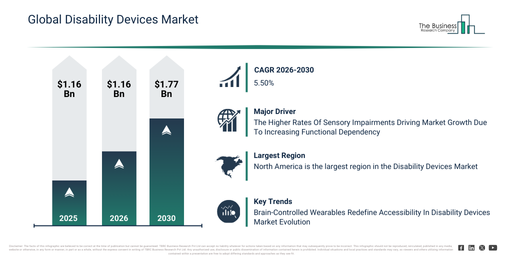
    The disability devices market size has exhibited strong growth over recent years. Its expansion is projected to move from $25.38 billion in 2025 to $26.87 billion in 2026, demonstrating a compound annual growth rate (CAGR) of 5.9%. The market’s historical growth can be attributed to a limited supply of advanced disability devices, the high cost associated with assistive technology, a reliance on conventional mobility aids, an increasing elderly population, and low awareness concerning cognitive and communication aids.

    The disability devices market is projected to experience robust expansion over the coming years. Its valuation is anticipated to reach $33.33 billion by 2030, demonstrating a compound annual growth rate (CAGR) of 5.5%. This growth during the forecast period is primarily driven by advancements in smart and connected disability technologies, augmented governmental backing and insurance provisions, an expansion in rehabilitation facilities and home-based care services, a heightened emphasis on accessible and inclusive education, and the creation of AI-driven vision and hearing solutions. Significant trends expected during this period include a greater uptake of intelligent mobility devices, an increasing need for vision and hearing aids, the incorporation of tools for cognitive and communication assistance, a rise in the deployment of environmental control and home automation systems, and a focus on designing disability devices that are both customizable and ergonomic.

    Get A Free Sample Report With In-Depth Market Insights:

    https://thebusinessresearchcompany.com/sample_request?id=31062712&type=smp&name=Disability%20Devices%20Market%20Report%202026&utm_source=Blogs&utm_medium=Paid&utm_campaign=Oct_PR

    Disability Devices Market Growth Factors Behind Sustained Expansion

    The rising incidence of sensory impairments is anticipated to drive growth within the disability devices market. Sensory impairments refer to the partial or complete absence of one or more senses, predominantly impacting vision, hearing, or other sensory functions, thereby substantially limiting an individual’s capability to perceive, interpret, or react to environmental stimuli. The elevated rates of sensory impairments are primarily fueled by factors such as an aging demographic, chronic health conditions, and increased exposure to environmental risks, as these circumstances frequently degrade sensory functions over time and become more prevalent with advancing age, resulting in a greater occurrence of impairments. Disability devices are crucial in addressing the increasing burden of sensory impairments by improving functional capabilities, supporting independence, and enhancing the overall quality of life for affected individuals. For instance, in November 2024, according to The Hull Joint Strategic Needs Assessment (JSNA) by the Hull City Council, a UK-based unitary authority, sensory impairment accounts for 6.0% of healthy life years lost, with a higher burden in older age, rising from 2.5% in those under 50 to 12.9% in people aged 70+ in Hull. Additionally, serious visual impairment among those 75+ is expected to climb from 2,100 to 3,100 by 2040 due to aging. Therefore, the greater prevalence of sensory impairments is propelling the expansion of the disability devices market.

    Disability Devices Market Segmentation: How Does The Market Break Down By Category?

    The disability devices market covered in this report is segmented –

    1) By Device Type: Vision Aids, Hearing Aids, Mobility Aids, Other Device Types

    2) By Material: Plastic, Metal, Wood, Fabric

    3) By Application: Home Care Settings, Hospitals, Ambulatory Care Centers And Rehabilitation Centers

    4) By End User: Elderly, Physically Challenged, Visually Impaired, Hearing Impaired

    Subsegments:

    1) By Vision Aids: Magnifiers, Braille Readers, Screen Reading Software, Smart Glasses

    2) By Hearing Aids: Behind-The-Ear (BTE), In-The-Ear (ITE), Receiver-In-Canal (RIC), Cochlear Implants

    3) By Mobility Aids: Wheelchairs, Walkers And Rollators, Crutches, Mobility Scooters

    4) By Other Device Types: Communication Aids, Cognitive Aids, Environmental Control Devices, Prosthetic Devices

    Disability Devices Market Industry Trends Fueling Future Revenue Growth

    Major companies in the disability devices market are prioritizing the development of advanced technologies, such as brain-controlled assistive wearables, aiming to improve accessibility and enhance user autonomy through intuitive, non-invasive control mechanisms. A brain-controlled assistive wearable is defined as a device that leverages neural and physiological signals, allowing individuals with physical or motor impairments to interact with digital systems using non-verbal, movement-based commands. For example, in March 2024, AAVAA Inc., a Canada-based neurotechnology company, released its Brain-Computer Interface (BCI) System for Smart Glasses. This system empowers users to operate digital devices by interpreting brain and biosignals derived from eye movements, facial gestures, and head motion. Its design, featuring lightweight sensors and computational efficiency, facilitates seamless integration into eyewear, thus offering enhanced usability across assistive, smart home, augmented reality, and virtual reality applications.

    Disability Devices Market Competitive Landscape: Which Companies Lead The Industry?

    Major companies operating in the disability devices market are Medline Industries LP, Sonova Holding AG, William Demant Holding A/S, GN Store Nord A/S, Ottobock SE & Co. KGaA, Hollister Inc., Cochlear Ltd., Arjo AB, Invacare Corporation, GN Hearing A/S, MED−EL Elektromedizinische Geräte Gesellschaft m.b.H., DRIVE MEDICAL GMBH & CO. KG, Permobil AB, Pride Mobility Products Corporation, Steeper Group, GF Health Products Inc., WHILL Inc., Carex Health Brands Inc., Merits Health Products, MEYRA Group, Hearing Health & Technology Matters LLC, Magic Mobility Pty Ltd, LEVO AG, Batec Mobility S.L., BetterLiving.

    View The Full Disability Devices Market Report:

    https://thebusinessresearchcompany.com/report/disability-devices-global-market-report?utm_source=Blogs&utm_medium=Paid&utm_campaign=Oct_PR

    Disability Devices Market Regional Outlook: Where Is Opportunity Concentrated?

    North America was the largest region in the disability devices market in 2025. Asia-Pacific is expected to be the fastest-growing region in the forecast period. The regions covered in the disability devices market report are Asia-Pacific, South East Asia, Western Europe, Eastern Europe, North America, South America, Middle East, Africa.

    Reach Out To Our Team:

    The Business Research Company: https://www.thebusinessresearchcompany.com/

    Americas: +1 310-496-7795

    Asia: +44 7882 955267 & +91 8897263534

    Europe: +44 7882 955267

    Email us at: marketing@tbrc.info

    Follow us on:

    LinkedIn: https://in.linkedin.com/company/the-business-research-company

    YouTube: https://www.youtube.com/channel/UC24_fI0rV8cR5DxlCpgmyFQ

    Global Market Model: https://www.thebusinessresearchcompany.com/global-market-model
  • Direct Oral Anticoagulants (DOACs) Device Market Projected For Strong Expansion Through 2030: Key Trends And Future Outlook

    Direct Oral Anticoagulants (DOACs) Device Market Projected For Strong Expansion Through 2030: Key Trends And Future Outlook

    Built to provide research that’s more actionable and strategically valuable, The Business Research Company’s 2026 market reports include market attractiveness analysis, total addressable market sizing, company benchmarking matrices, interactive Excel dashboards, broader supply chain intelligence, emerging startup tracking, and in-depth product insights.

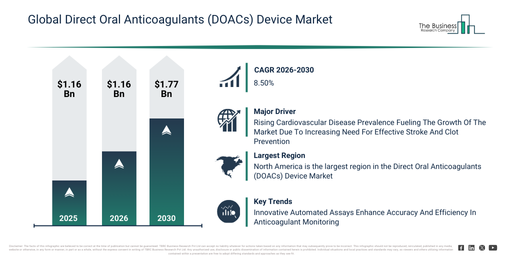
    Direct Oral Anticoagulants (DOACs) Device Market Poised To Hit $49.48 Billion By 2030 With A 8.5% CAGR

    The direct oral anticoagulants (doacs) device market has experienced significant expansion in recent years. It is forecast to rise from $32.8 billion in 2025 to $35.69 billion in 2026, exhibiting a compound annual growth rate (CAGR) of 8.8%. The growth observed in previous periods was driven by factors such as the limited access to doac monitoring equipment, the reliance on hospital-based coagulation assessments, the increasing incidence of atrial fibrillation and thrombotic conditions, the widespread adoption of oral anticoagulant treatments, and a heightened focus on patient safety and effective anticoagulation monitoring.

    The market for direct oral anticoagulants (doacs) devices is projected to experience substantial expansion over the forthcoming years. This market is anticipated to reach a valuation of $49.48 billion by 2030, demonstrating a compound annual growth rate (CAGR) of 8.5%. Several factors are expected to fuel this growth during the projection period, including progress in portable and point-of-care device technologies, the integration of digital health platforms with cloud-based monitoring solutions, a growing preference for personalized anticoagulation management, the expansion of services in homecare and specialized clinics, and a rise in regulatory endorsements for new monitoring systems. Key trends anticipated during the forecast encompass a greater embrace of point-of-care doac monitoring devices, an increased application of factor Xa and direct thrombin inhibitor monitoring, heightened public awareness regarding stroke and thromboembolism prevention, the broadening of homecare and ambulatory monitoring options, and a reinforced emphasis on improving accuracy, sensitivity, and speed in testing.

    Get A Free Sample Report With In-Depth Market Insights:

    https://thebusinessresearchcompany.com/sample_request?id=96455245&type=smp&name=Direct%20Oral%20Anticoagulants%20%28DOACs%29%20Device%20Market%20Report%202026&utm_source=Blogs&utm_medium=Paid&utm_campaign=Oct_PR

    Direct Oral Anticoagulants (DOACs) Device Market Demand Drivers Opening New Revenue Streams

    The expanding occurrence of cardiovascular conditions is projected to boost the growth of the direct oral anticoagulants (DOACs) device market in the future. Cardiovascular disorders encompass various ailments affecting the heart and blood vessels, frequently resulting in complications like heart attacks, strokes, or other circulatory issues. These disorders are escalating due to progressively inactive lifestyles, contributing to weight gain, heightened blood pressure, and a gradual decline in cardiovascular function. Direct oral anticoagulants (DOACs) assist in managing cardiovascular disorders by effectively reducing the likelihood of stroke and blood clots in individuals with atrial fibrillation, providing dependable anticoagulation without requiring regular blood tests. For example, in October 2024, data from the Centers for Disease Control and Prevention, a US-based government agency, indicated that in 2023, cardiovascular disease was responsible for 919,032 lives lost, representing one in every three deaths. Coronary heart disease continued to be the most common type of heart disease, and notably, approximately one in six cardiovascular disease fatalities affected adults younger than 65 years. Consequently, the rising occurrence of cardiovascular disorders is propelling the expansion of the direct oral anticoagulants (DOACs) device market.

    Direct Oral Anticoagulants (DOACs) Device Market Segment Trends And Revenue Contributors

    The direct oral anticoagulants (doacs) device market covered in this report is segmented –

    1) By Product: Factor Xa Inhibitors, Direct Thrombin Inhibitors

    2) By Disease: Atrial Fibrillation, Deep Vein Thrombosis, Pulmonary Embolism, Heart Attacks, Post-Surgical Thromboprophylaxis, Other Diseases

    3) By Application: Stroke Prevention, Venous Thromboembolism Prevention, Treatment Of Acute Thrombotic Events, Long-Term Prophylaxis, Other Applications

    4) By End User: Hospitals, Ambulatory Surgical Centers, Specialty Clinics, Homecare Settings, Other End Users

    Subsegments:

    1) By Factor Xa Inhibitors: Rivaroxaban Monitoring Devices, Apixaban Monitoring Devices, Edoxaban Monitoring Devices, Betrixaban Monitoring Devices

    2) By Direct Thrombin Inhibitors: Dabigatran Etexilate, Dabigatran Mesylate

    Direct Oral Anticoagulants (DOACs) Device Market Trends Powering Strategic Industry Growth

    Leading companies within the direct oral anticoagulants (DOACs) device market are concentrating on developing advanced solutions, such as automated coagulation assays, to enhance the accuracy, efficiency, and consistency of direct oral anticoagulant level monitoring in clinical laboratories. Automated coagulation assays are laboratory tests performed by machines that measure how quickly blood clots, aiding in the diagnosis of bleeding or clotting disorders. For instance, in February 2024, Roche Holding AG, a Switzerland-based pharmaceutical company, introduced three new coagulation tests specifically tailored for Factor Xa inhibitors. These tests improve clinicians’ capability to accurately evaluate the anticoagulation status of patients taking direct Factor Xa inhibitors like rivaroxaban and apixaban. They support clinical decision-making by precisely measuring the anti-Xa activity of apixaban, edoxaban, rivaroxaban, and heparin in critical scenarios such as bleeding, overdose, or urgent surgery. Utilizing Roche’s reagent cassette technology on cobas t analyzers, these automated tests deliver high-quality results, minimize manual handling, and streamline laboratory workflow efficiency.

    Direct Oral Anticoagulants (DOACs) Device Market Competitive Landscape: Who Leads The Industry?

    Major companies operating in the direct oral anticoagulants (doacs) device market are Pfizer Inc., Roche Diagnostics Corporation, Bristol-Myers Squibb Company, Siemens Healthcare GmbH, Becton Dickinson And Company, Boehringer Ingelheim International GmbH, Teva Pharmaceutical Industries Limited, Daiichi Sankyo Co. Ltd, Sysmex Corporation, Dr. Reddy’s Laboratories Limited, Werfen S.A., Alembic Pharmaceuticals Limited, Diagnostica Stago SAS, Helena Laboratories Corporation, iLine Microsystems S.L., Technoclone GmbH, Anthos Therapeutics Inc., FLoBio LLC, Perosphere Technologies Inc., DOASENSE GmbH.

    View The Full Direct Oral Anticoagulants (DOACs) Device Market Report:

    https://thebusinessresearchcompany.com/report/direct-oral-anticoagulants-doacs-device-global-market-report?utm_source=Blogs&utm_medium=Paid&utm_campaign=Oct_PR

    Direct Oral Anticoagulants (DOACs) Device Market Geographic Landscape: Which Region Leads Industry Growth?

    North America was the largest region in the direct oral anticoagulants (DOACs) device market in 2025. The regions covered in the direct oral anticoagulants (doacs) device market report are Asia-Pacific, South East Asia, Western Europe, Eastern Europe, North America, South America, Middle East, Africa.

    Reach Out To Our Team:

    The Business Research Company: https://www.thebusinessresearchcompany.com/

    Americas: +1 310-496-7795

    Asia: +44 7882 955267 & +91 8897263534

    Europe: +44 7882 955267

    Email us at: marketing@tbrc.info

    Follow us on:

    LinkedIn: https://in.linkedin.com/company/the-business-research-company

    YouTube: https://www.youtube.com/channel/UC24_fI0rV8cR5DxlCpgmyFQ

    Global Market Model: https://www.thebusinessresearchcompany.com/global-market-model
  • Digital X-ray Devices Market Outlook 2026–2030: Growth Trends, Market Dynamics And Emerging Opportunities

    Digital X-ray Devices Market Outlook 2026–2030: Growth Trends, Market Dynamics And Emerging Opportunities

    Backed by market attractiveness analysis, total addressable market sizing, company benchmarking matrices, interactive Excel dashboards, wider supply chain intelligence, emerging startup coverage, and detailed product-level insights, The Business Research Company’s 2026 market reports are designed to offer research that is more actionable and strategically valuable than ever.

    Digital X-ray Devices Market Size And Revenue Outlook Through 2030

    The digital x-ray devices market size has seen substantial growth in recent years. Its value is expected to rise from $14.3 billion in 2025 to $16.41 billion in 2026, demonstrating a compound annual growth rate (CAGR) of 14.7%. This historic growth can be linked to factors such as increasing demand for diagnostic imaging services, the shift from analog to digital radiography, the expansion of hospital imaging infrastructure, a growing prevalence of chronic diseases, and the improved availability of digital imaging solutions.

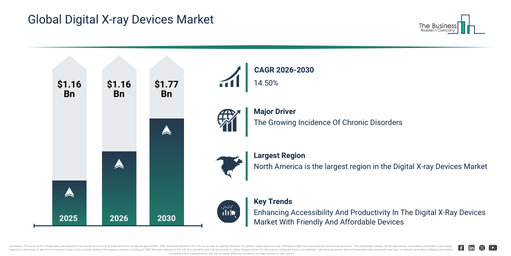
    The digital x-ray devices market is anticipated to undergo significant expansion over the next few years. It is projected to grow to $28.17 billion in 2030, achieving a compound annual growth rate (CAGR) of 14.5%. This growth during the forecast period is fueled by several factors, including the increasing integration of AI-based diagnostics, a rising demand for point-of-care imaging solutions, the expansion of tele-radiology services, growing investments in advanced healthcare infrastructure, and an increased focus on workflow automation. Key trends expected in this period involve the greater adoption of AI-assisted image analysis, the wider deployment of portable and mobile x-ray systems, a growing preference for flat panel detector technologies, the expansion of cloud-connected imaging platforms, and an enhanced focus on dose reduction technologies.

    Get A Free Sample Report With In-Depth Market Insights:

    https://thebusinessresearchcompany.com/sample_request?id=44437654&type=smp&name=Digital%20X-ray%20Devices%20Market%20Report%202026&utm_source=Blogs&utm_medium=Paid&utm_campaign=Oct_PR

    Digital X-ray Devices Market Growth Backed By Core Demand Fundamentals

    The rising occurrence of chronic conditions, such as cancer, is anticipated to propel the expansion of the digital X-ray devices market over the coming years. Such chronic conditions, including cancer, are defined as health issues that persist for an extended period and frequently advance slowly. Digital X-ray devices contribute to cancer care by providing enhanced imaging capabilities, reducing radiation exposure, and improving diagnostic accuracy. For instance, in July 2024, according to the projections published by Cancer Research UK, a UK-based cancer charity, cancer incidence rates in the United Kingdom are forecast to increase for most types between 2023-2025 and 2038-2040, with rises ranging from less than 1% for breast cancer to 50% for eye cancer, while a smaller number of cancers are expected to show a decline, with reductions ranging from 2% for lung cancer to 27% for mesothelioma. Consequently, the increasing incidence of chronic disorders, such as cancer, fuels the digital X-ray devices market.

    Digital X-ray Devices Market Segment Analysis Spotlighting Growth Areas

    The digital x-ray devices market covered in this report is segmented –

    1) By Technology: Direct Radiography, Computed Radiography

    2) By Portability: Handheld Systems, Portable X-Ray Systems, Mobile X-Ray Systems, Floor-to-ceiling Mounted Systems, Ceiling Mounted Systems, Fixed Digital X-Ray Systems

    3) By Application: General Radiography, Chest Imaging Applications, Orthopedic Applications, Cardiovascular Imaging, Other General Radiography Applications, Dental Applications, Mammography, Fluoroscopy

    4) By End Users: Hospitals, Diagnostic Centers, Dental Care Centers

    Subsegments:

    1) By Direct Radiography (DR): Flat Panel Detectors, Portable DR Systems

    2) By Computed Radiography (CR): CR Cassette-Based Systems, CR Tabletop Systems

    Digital X-ray Devices Market Growth Trends Reshaping The Competitive Landscape

    Leading companies in the digital x-ray devices market are dedicated to developing user-friendly and affordable equipment to boost productivity. By prioritizing intuitive designs and accessible pricing, these manufacturers aim to improve healthcare providers’ access to advanced imaging technology. For instance, in November 2023, Carestream Health, a US-based company specializing in medical and dental imaging systems, launched the HORIZON X-ray System. This system is an affordable and digital-ready imaging solution intended for small to midsize healthcare facilities, including imaging centers, orthopedic clinics, and urgent care centers. The HORIZON X-ray System is engineered to be user-friendly and economical, making it an excellent option for such facilities. Its compact, floor-mounted design facilitates easy installation in confined spaces, eliminating the need for extra ceiling support. The intuitive manual analog system allows operators to quickly learn how to use the device, enhancing productivity during patient examinations. The system also features a floating tabletop that assists with rapid positioning for various procedures, further optimizing workflow. Moreover, its budget-friendly pricing and low maintenance costs provide a practical solution for facilities mindful of expenses, enabling them to access high-quality imaging without a substantial financial burden.

    Digital X-ray Devices Market Company Landscape And Competitive Strategy

    Major companies operating in the digital x-ray devices market are Samsung Medison, Esaote SpA, Hitachi Ltd, Canon Inc., Siemens Healthcare GmbH, FUJIFILM Holdings Corporation, Koninklijke Philips N.V., GE Healthcare, Villa Sistemi Medicali S.p.A., Konica Minolta, Hologic Inc., Toshiba Medical Systems Corporation, Shenzhen Mindray Bio-Medical Electronics Co., Dentsply Sirona, Shimadzu Corporation, Carestream Health, Agfa-Gevaert Group, Planmeca Oy, J. Morita Corporation, MinXray Inc.

    View The Full Digital X-ray Devices Market Report:

    https://thebusinessresearchcompany.com/report/digital-xray-devices-global-market-report?utm_source=Blogs&utm_medium=Paid&utm_campaign=Oct_PR

    Digital X-ray Devices Market Largest Region: Which Geography Holds The Biggest Share?

    North America was the largest region in the digital X-ray devices market in 2025. Asia-Pacific is expected to be the fastest-growing region in the forecast period. The regions covered in the digital x-ray devices market report are Asia-Pacific, South East Asia, Western Europe, Eastern Europe, North America, South America, Middle East, Africa.

    Reach Out To Our Team:

    The Business Research Company: https://www.thebusinessresearchcompany.com/

    Americas: +1 310-496-7795

    Asia: +44 7882 955267 & +91 8897263534

    Europe: +44 7882 955267

    Email us at: marketing@tbrc.info

    Follow us on:

    LinkedIn: https://in.linkedin.com/company/the-business-research-company

    YouTube: https://www.youtube.com/channel/UC24_fI0rV8cR5DxlCpgmyFQ

    Global Market Model: https://www.thebusinessresearchcompany.com/global-market-model
  • Digital Wound Measurement Devices Market Growth Outlook From $2.93 Billion In 2026 To $3.79 Billion By 2030

    Digital Wound Measurement Devices Market Growth Outlook From $2.93 Billion In 2026 To $3.79 Billion By 2030

    Featuring market attractiveness scoring, total addressable market sizing, company benchmarking matrices, interactive Excel dashboards, deeper supply chain intelligence, emerging startup tracking, and granular product-level insights, The Business Research Company’s 2026 market reports are built to deliver research that is both more actionable and more strategically valuable.

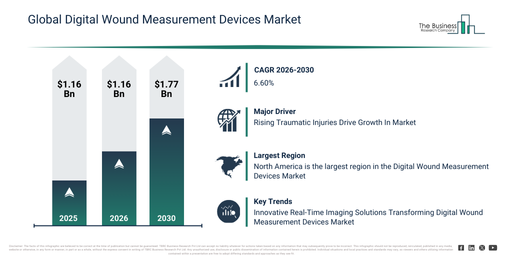
    Digital Wound Measurement Devices Market Growth From $2.93 Billion In 2026 To $3.79 Billion By 2030 At A CAGR Of 6.6%

    The market for digital wound measurement devices has demonstrated robust growth in recent years. This market is projected to expand from $2.74 billion in 2025 to $2.93 billion in 2026, exhibiting a compound annual growth rate (CAGR) of 6.9%. Historically, this growth can be ascribed to factors such as the rising incidence of chronic wounds, the greater integration of digital healthcare solutions, the increased need for precise wound documentation, the broadening of hospital-based wound care initiatives, and advancements in imaging sensor technologies.

    The market for digital wound measurement devices is anticipated to show significant expansion over the next few years, set to reach $3.79 billion in 2030, growing at a compound annual growth rate (CAGR) of 6.6%. This increase during the projection period can be attributed to the rising adoption of telemedicine in wound care, the escalating demand for at-home wound monitoring solutions, increased investments in digital health infrastructure, the broadening availability of AI-assisted wound assessment tools, and a sharpened focus on outcome-based wound management. Noteworthy trends during this forecast period involve the expanding use of non-contact wound measurement technologies, greater integration with electronic medical records, more widespread application of 3D imaging for wound assessment, the growth of remote wound monitoring solutions, and an intensified emphasis on clinical accuracy and proper documentation.

    Get A Free Sample Report With In-Depth Market Insights:

    https://thebusinessresearchcompany.com/sample_request?id=67006770&type=smp&name=Digital%20Wound%20Measurement%20Devices%20Market%20Report%202026&utm_source=Blogs&utm_medium=Paid&utm_campaign=Oct_PR

    Digital Wound Measurement Devices Market Growth Catalysts And Demand Drivers

    An anticipated increase in traumatic injuries is projected to boost the digital wound measurement devices market moving ahead. These injuries are medically defined as acute physical harm demanding immediate clinical care due to their critical nature. This surge in traumatic injuries stems from various elements such as more road accidents, an uptick in workplace mishaps, sports-related harm, and the increasing occurrence of violent clashes or natural catastrophes, collectively fueling the need for medical interventions and equipment, including digital wound measurement solutions. Digital wound measurement devices assist individuals with traumatic injuries by providing precise, live data on wound dimensions, depth, and healing trajectory, enabling medical professionals to customize treatment strategies, monitor recuperation more efficiently, and enhance healing results, thereby lowering infection risks and enhancing overall patient care quality. As an illustration, in May 2025, the Department for Transport, a UK-based government agency, stated that Great Britain recorded an estimated 1,633 road fatalities in 2024, representing a 1% increase from 2023. Notably, motorcyclists witnessed the most significant rise in fatalities among key road user groups, climbing by 9% compared to 2023. Consequently, the increase in traumatic injuries is propelling the expansion of the digital wound measurement devices market.

    Digital Wound Measurement Devices Market Segment Performance And Emerging Opportunities

    The digital wound measurement devices market covered in this report is segmented –

    1) By Product: Contact Wound Measuring Devices, Non-contact Measuring Devices

    2) By Wound Type: Chronic Wounds, Acute Wounds

    3) By Technique: 2D, 3D

    4) By End User: Hospitals And Clinics, Long Term Care Facilities, Home Care Settings, Other End Users

    Subsegments:

    1) By Contact Wound Measuring Devices: Contact Laser Wound Measurement Devices, Contact Optical Wound Measuring Devices, Contact Ultrasound Wound Measuring Devices

    2) By Non-Contact Measuring Devices: 3D Imaging Wound Measurement Devices, Laser Scanning Wound Measuring Devices, Infrared Wound Measurement Devices

    Digital Wound Measurement Devices Market Trends Shaping Long-Term Demand

    Major companies operating in the digital wound measurement devices market are developing innovative solutions, such as flagship wound imaging devices, to enhance the accuracy of wound assessments, streamline clinical workflows, and provide real-time data that aids in personalized treatment planning, ultimately improving patient outcomes and reducing healthcare costs. A flagship wound imaging device refers to a leading or primary product in the field of wound care technology that utilizes advanced imaging techniques to enhance the diagnosis and treatment of wounds. For instance, in December 2024, MolecuLight Corp., a Canada-based digital wound measurement company, launched the MolecuLight digital wound measurement devices, expanding the capabilities of its flagship wound imaging device. The device provides immediate visual feedback, allowing healthcare professionals to assess wounds accurately at the point of care. It utilizes advanced imaging technology to create three-dimensional representations of wounds, enabling precise measurements of size and depth. The device is designed for non-invasive use, minimizing discomfort for patients while ensuring accurate data collection.

    Digital Wound Measurement Devices Market Key Players Shaping Industry Direction

    Major companies operating in the digital wound measurement devices market are 3M company, Medline Industries Inc., Smith & Nephew plc, Coloplast A/S, ConvaTec Group plc, Molnlycke Health Care AB, Net Health Systems Inc., WoundSource Inc., DermaRite Industries LLC, Advancis Medical, Swift Medical Inc., Spectral MD Inc., Kent Imaging Inc., Arnaz Medical Ltd., eKare Inc., Wound Matrix Inc., WoundZoom Inc., MolecuLight Inc., BSN Medical GmbH, WoundVision

    View The Full Digital Wound Measurement Devices Market Report:

    https://thebusinessresearchcompany.com/report/digital-wound-measurement-devices-global-market-report?utm_source=Blogs&utm_medium=Paid&utm_campaign=Oct_PR

    Digital Wound Measurement Devices Market Regional Analysis: Which Geography Leads On Revenue?

    North America was the largest region in the digital wound measurement devices market in 2025. Asia-Pacific is expected to be the fastest-growing region in the forecast period. The regions covered in the digital wound measurement devices market report are Asia-Pacific, South East Asia, Western Europe, Eastern Europe, North America, South America, Middle East, Africa.

    Reach Out To Our Team:

    The Business Research Company: https://www.thebusinessresearchcompany.com/

    Americas: +1 310-496-7795

    Asia: +44 7882 955267 & +91 8897263534

    Europe: +44 7882 955267

    Email us at: marketing@tbrc.info

    Follow us on:

    LinkedIn: https://in.linkedin.com/company/the-business-research-company

    YouTube: https://www.youtube.com/channel/UC24_fI0rV8cR5DxlCpgmyFQ

    Global Market Model: https://www.thebusinessresearchcompany.com/global-market-model
  • Digital Twin Cardio-Pulmonary Bypass Market Forecast To Reach $1.49 Billion By 2030: Key Growth Drivers And Industry Trends

    Digital Twin Cardio-Pulmonary Bypass Market Forecast To Reach $1.49 Billion By 2030: Key Growth Drivers And Industry Trends

    Built to provide research that’s more actionable and strategically valuable, The Business Research Company’s 2026 market reports include market attractiveness analysis, total addressable market sizing, company benchmarking matrices, interactive Excel dashboards, broader supply chain intelligence, emerging startup tracking, and in-depth product insights.

    Digital Twin Cardio-Pulmonary Bypass Market Expansion Outlook: What Revenue Opportunities Are Ahead?

    The digital twin cardio-pulmonary bypass market size has seen substantial growth recently. It will grow from $0.6 billion in 2025 to $0.72 billion in 2026 at a compound annual growth rate (CAGR) of 20.1%. This historical expansion can be attributed to several factors, including the increasing use of simulation software in cardiac surgeries, improvements in cardio-pulmonary modeling, the creation of real-time monitoring systems, the incorporation of predictive analytics, and a rising demand for risk-free training platforms.

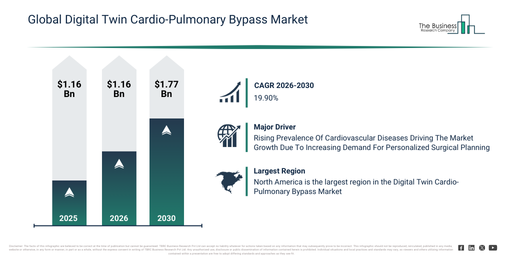
    The digital twin cardio-pulmonary bypass market is projected to experience substantial expansion over the upcoming years. It is anticipated to reach $1.49 billion by 2030, exhibiting a compound annual growth rate (CAGR) of 19.9%. This projected growth is driven by factors such as its integration with AI-powered decision support systems, the broadening scope of remote surgical monitoring, its increasing application in clinical training curricula, improved predictive modeling for patient results, and wider adoption among hospitals and research institutions. Key developments anticipated during this period encompass real-time hemodynamic simulation, advanced predictive surgical planning, AI-enabled procedural optimization, virtual reality training for surgeons, and remote clinical oversight.

    Get A Free Sample Report With In-Depth Market Insights:

    https://thebusinessresearchcompany.com/sample_request?id=61451237&type=smp&name=Digital%20Twin%20Cardio-Pulmonary%20Bypass%20Market%20Report%202026&utm_source=Blogs&utm_medium=Paid&utm_campaign=Oct_PR

    Digital Twin Cardio-Pulmonary Bypass Market Opportunity Drivers: What’s Unlocking New Revenue Potential?

    The increasing occurrence of cardiovascular diseases (CVDs) is projected to boost the expansion of the digital twin cardio-pulmonary bypass market in the future. These diseases encompass a range of ailments impacting the heart and blood vessels, specifically conditions like coronary artery disease, heart failure, stroke, and high blood pressure. The growing incidence of CVDs stems from an aging global population, as advancing age naturally leads to a gradual weakening of the heart and blood vessels, heightening the susceptibility to cardiac issues. Digital Twin Cardio-Pulmonary Bypass offers a solution by enabling the simulation of a patient’s cardiac and circulatory systems. This capability empowers medical professionals to forecast surgical results, refine medical interventions, and minimize potential complications, thus directly aiding in the care and therapy of cardiovascular diseases (CVDs). As an illustration, data from the Centers for Disease Control and Prevention, a US-based government agency, indicated in October 2024 that in 2023, cardiovascular disease was responsible for 919,032 lives lost, representing one in every three deaths. Coronary heart disease continued to be the most common type of heart disease, and it’s important to note that approximately one in six deaths attributed to cardiovascular diseases affected individuals under 65 years of age. Consequently, the increasing prevalence of cardiovascular diseases is serving as a key driver for the expansion of the digital twin cardio-pulmonary bypass market.

    Digital Twin Cardio-Pulmonary Bypass Market Segment Landscape And Growth Outlook

    The digital twin cardio-pulmonary bypass market covered in this report is segmented –

    1) By Component: Software, Hardware, Services

    2) By Deployment Mode: On-Premises, Cloud-Based

    3) By Application: Cardiac Surgery, Pulmonary Surgery, Research And Development, Training And Education, Other Applications

    4) By End-User: Hospitals, Specialty Clinics, Academic And Research Institutes, Other End-Users

    Subsegments:

    1) By Software: Simulation Software, Data Analytics Software, Monitoring Software, Integration Software

    2) By Hardware: Sensors And Monitoring Devices, Computing Systems, Imaging Devices, Connectivity Modules

    3) By Services: Implementation Services, Maintenance Services, Training Services, Consulting Services

    Digital Twin Cardio-Pulmonary Bypass Market Competitive Analysis Of Leading Industry Participants

    Major companies operating in the digital twin cardio-pulmonary bypass market are Tata Consultancy Services Limited (TCS), Medtronic plc, Siemens Healthineers AG, Koninklijke Philips N.V., GE HealthCare Technologies Inc., Boston Scientific Corporation, Dassault Systèmes SE, Terumo Corporation, Synopsys Inc., Getinge AB, LivaNova PLC, Materialise NV, HeartFlow Inc., CFD Research Corporation (CFDRC), Kitware Inc., Circle Cardiovascular Imaging Inc., Keya Medical Inc., inHEART SAS, PrediSurge Inc., InSilicoTrials Technologies SA

    View The Full Digital Twin Cardio-Pulmonary Bypass Market Report:

    https://thebusinessresearchcompany.com/report/digital-twin-cardio-pulmonary-bypass-global-market-report?utm_source=Blogs&utm_medium=Paid&utm_campaign=Oct_PR

    Digital Twin Cardio-Pulmonary Bypass Market Geographic Spread And Regional Opportunities

    North America was the largest region in the digital twin cardio-pulmonary bypass market in 2025. Asia-Pacific is expected to be the fastest-growing region in the forecast period. The regions covered in the digital twin cardio-pulmonary bypass market report are Asia-Pacific, South East Asia, Western Europe, Eastern Europe, North America, South America, Middle East, Africa.

    Reach Out To Our Team:

    The Business Research Company: https://www.thebusinessresearchcompany.com/

    Americas: +1 310-496-7795

    Asia: +44 7882 955267 & +91 8897263534

    Europe: +44 7882 955267

    Email us at: marketing@tbrc.info

    Follow us on:

    LinkedIn: https://in.linkedin.com/company/the-business-research-company

    YouTube: https://www.youtube.com/channel/UC24_fI0rV8cR5DxlCpgmyFQ

    Global Market Model: https://www.thebusinessresearchcompany.com/global-market-model