Category: Medical Equipment

  • Major Trends and Emerging Patterns in the 3D Printed Medical Devices Market: Innovations in 3D Printed Oral Health Devices

    Major Trends and Emerging Patterns in the 3D Printed Medical Devices Market: Innovations in 3D Printed Oral Health Devices

    Discover trends, market shifts, and competitive outlooks for the 3d printed medical devices industry through 2025-2034 with The Business Research Company’s reliable data and in-depth research

    How Fast Is The 3D Printed Medical Devices Market Expected to Grow Between 2025 And 2029?

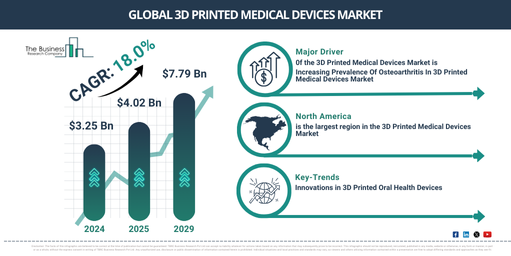
    In recent times, there has been a phenomenal growth in the market size of 3D printed medical devices. This expansion is expected to surge from $3.25 billion in 2024, to a notable $4.02 billion in 2025, at a compound annual growth rate (CAGR) of 23.7%. The significant advancement in the historical timeframe can be credited to factors like customization and personalization, approvals and standards set by regulatory authorities, increasing demand for solutions tailored to individual patients, strategic collaborations and partnerships, and notable savings in time and costs.

    Expectations indicate a swift expansion in the market size of 3D printed medical devices in the forthcoming years. The market is predicted to reach a worth of $7.79 billion by 2029, with a compound annual growth rate (CAGR) of 18.0%. The anticipated growth during this period can be credited to reasons such as a rise in accessibility and affordability, the prevalent use of 3D printing in the healthcare sect, the amalgamation of remote healthcare and telemedicine, a greater emphasis on sustainable and environmentally-friendly methods, and innovations in biocompatible materials. Key trends during this forecast period to watch for include regulatory adjustments to technological improvements, assimilation of artificial intelligence, advanced progress in 3D printing, point-of-care printing, and the incline towards remote printing and telemedicine.

    Download a free sample to assess the report’s scope and structure:

    https://www.thebusinessresearchcompany.com/sample.aspx?id=2503&type=smp

    What Are the Primary Drivers Supporting the Market Growth of the 3D Printed Medical Devices Market?

    The escalating occurrence of osteoarthritis and related musculoskeletal disorders is a major driving force for the expansion of the 3D printed medical devices market. Osteoarthritis is a condition that undermines joint cartilage and nearby tissues, leading to pain, stiffness, and deterioration of joint performance in the affected individuals. 3D printed medical devices facilitate the production of an exact copy of a patient’s joint, offering surgeons critical information that a 2-dimensional scan might not reveal. The likelihood of contracting osteoarthritis rises with aging. For instance, as per a report by the US National Library of Medicine, by 2040, it is projected that nearly 78 million (26%) US adults of 18 years and older will be medically diagnosed with arthritis. This, in turn, is leading to an increased adoption of 3D printed medical devices, thereby cultivating the market’s growth in a positive way.

    Which Primary Segments of the 3D Printed Medical Devices Market Are Driving Growth and Industry Transformations?

    The 3D printed medical devices market covered in this report is segmented –

    1) By Type: Implants, Surgical instruments, Prosthetics, Tissue engineering devices, Other Types

    2) By Raw Material: Plastics, Biomaterial inks, Metals and Alloys

    3) By Technology: Fused Deposition Modelling, Digital Light Processing, Stereolithography, Selective Laser melting

    4) By Application: Orthopedic, Spinal, Dental, Hearing Aids, Other Applications

    5) By End User: Hospitals, Diagnostics Centers, Academic Institutions, Other End Users

    Subsegments:

    1) By Implants: Orthopedic Implants, Dental Implants, Cranial Implants

    2) By Surgical Instruments: Customized Surgical Tools, 3D Printed Guides And Templates

    3) By Prosthetics: Limb Prosthetics, Facial Prosthetics

    4) By Tissue Engineering Devices: Scaffolds, Bioprinted Tissues

    5) By Other Types: Patient-Specific Models, Medical Training Models

    Request customized data on this market:

    https://www.thebusinessresearchcompany.com/customise?id=2503&type=smp

    Which Regions Are Key Players in the Growth of the #What Are the Primary Drivers Supporting the Market Growth of the 3D Printed Medical Devices Market?# Market?

    North America was the largest region in the 3D printed medical devices market in 2024. Western Europe was the second largest region in the global 3D printed medical devices market report. The regions covered in the 3D printed medical devices market report are Asia-Pacific, Western Europe, Eastern Europe, North America, South America, Middle East, Africa.

    What Are the Most Significant Market Trends in the 3D Printed Medical Devices Market?

    Leading firms in the 3D printed medical devices market are concentrating on the launch of innovative products, specifically in the oral health sector. These products aim to advance dental care by offering personalized solutions for patients. Oral health devices include a range of products uniquely created for preventing, identifying, and treating dental issues. They encompass products such as 3D-printed dentures, aligners, and surgical guides, all of which increase the patient comfort and precision in dental processes. Proclaim, a company based in the US, for example, unveiled the Custom-Jet Oral Health System in January 2024. This brand-new Custom-Jet Oral Health System showcases a 3D printed mouthpiece created to wipe out harmful bacteria, especially P.Gingivalis, within a mere seven seconds. This device is groundbreaking and has been clinically approved to enhance oral health, significantly diminishing symptoms of gum disease and boosting systemic health overall.

    View the full report here:

    https://www.thebusinessresearchcompany.com/report/3d-printed-medical-devices-global-market-report

    What Parameters Are Used to Define the 3D Printed Medical Devices Market?

    3D printed medical devices are artificial devices that replace a missing body part or biological structure and are manufactured by laying successive layers of material using inputs from a digital 3D model.

    Purchase the full report and get a swift delivery:

    https://www.thebusinessresearchcompany.com/purchaseoptions.aspx?id=2503

    About The Business Research Company:

    With over 15000+ reports from 27 industries covering 60+ geographies, The Business Research Company has built a reputation for offering comprehensive, data-rich research and insights. Armed with 1,500,000 datasets, the optimistic contribution of in-depth secondary research, and unique insights from industry leaders, you can get the information you need to stay ahead in the game.

    Get in touch with us:

    The Business Research Company: https://www.thebusinessresearchcompany.com/

    Americas +1 3156230293

    Asia +44 2071930708

    Europe +44 2071930708

    Email us at info@tbrc.info

    Follow us on:

    LinkedIn: https://in.linkedin.com/company/the-business-research-company

    YouTube: https://www.youtube.com/channel/UC24_fI0rV8cR5DxlCpgmyFQ

    Global Market Model: https://www.thebusinessresearchcompany.com/global-market-model
  • Key Developments and Trends Steering the 3D Printed Implants Market Forward: Advancements In 3D Printed Implants With Impulse Am

    Key Developments and Trends Steering the 3D Printed Implants Market Forward: Advancements In 3D Printed Implants With Impulse Am

    Discover trends, market shifts, and competitive outlooks for the 3d printed implants industry through 2025-2034 with The Business Research Company’s reliable data and in-depth research

    #What Are the Key Projections for the CAGR of the 3D Printed Implants Market Size From 2025 to 2034?

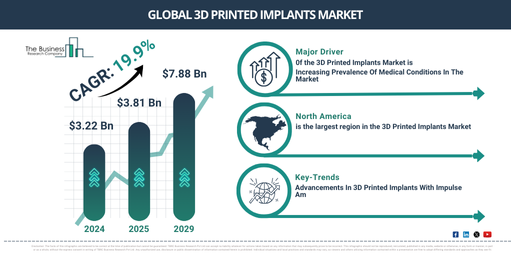
    The market size for 3D printed implants has experienced swift expansion in the past few years. The market is projected to increase from $3.22 billion in 2024 to $3.81 billion in 2025, marking a compound annual growth rate (CAGR) of 18.2%. The significant growth during the historic period is largely due to advancements in medical research and development, regulatory authorization, as well as the benefits of customization, cost-effectiveness, and time efficiency.

    The market size for 3D printed implants is predicted to witness substantial growth in the coming years, escalating to $7.88 billion in 2029 with a compound annual growth rate (CAGR) of 19.9%. The anticipated growth during this forecasted period can be accredited to the innovation of biocompatible materials, widening of medical applications, development in remote surgery and telemedicine, expansion in the global market, and bespoke implant solutions for patients. Notable trends during the forecasted period are expected to be bio-printing and regenerative medicine, innovative materials, dominance of orthopedic implants, dental applications, and a rise in collaborations and partnerships.

    Download a free sample to assess the report’s scope and structure:

    https://www.thebusinessresearchcompany.com/sample.aspx?id=2460&type=smp

    How Are Key Drivers in the Industry Acting as Catalysts for the Growth of the3D Printed Implants Market?

    The escalating incidences of various health disorders are fuelling the expansion of the 3D printed implants market. With the growing population afflicted by orthopedic, cardiac, and dental conditions, there’s an increased demand for 3D dental crowns, 3D dental bridges, 3D acetabular hip implants, shoulder implants, and other implants. Based on data from the World Health Organization (WHO), around 65 million individuals in the US suffered from periodontitis, an inflammation and infection of the ligaments and bones that support the teeth. This surge has largely been due to the escalating rates of periodontitis, diabetes-associated gangrene, osteoarthritis, and peripheral vascular disease. Therefore, the growing incidences of these medical conditions are propelling the uptake of 3D printed implants.

    Which Segments in the 3D Printed Implants Offer the Most Growth?

    The 3D printed implants market covered in this report is segmented –

    1) By Implantation Technology: Laser Beam Melting, Electronic Beam Melting, Droplet Deposition, Laminated Deposition, Two-photon Polymerization

    2) By Application: Dental, Orthopedic, Cranio-maxillofacial

    3) By End Users: Medical And Surgical Centers, Pharmaceutical Companies, Biotechnology Industry, Medical Institution

    Subsegments:

    1) By Laser Beam Melting (LBM): Selective Laser Melting (SLM), Direct Metal Laser Sintering (DMLS)

    2) By Electronic Beam Melting (EBM): Vacuum EBM, Atmospheric EBM

    3) By Droplet Deposition: Material Jetting, Binder Jetting

    4) By Laminated Deposition: Laminated Object Manufacturing (LOM)

    5) By Two-Photon Polymerization: Nanoscale 3D Printing, Microfabrication Techniques

    Request customized data on this market:

    https://www.thebusinessresearchcompany.com/customise?id=2460&type=smp

    What Are the Fastest-Growing Geographies in the #How Are Key Drivers in the Industry Acting as Catalysts for the Growth of the3D Printed Implants Market?# Market?

    North America was the largest region in the 3D printed medical implants market in 2024. Asia-Pacific was the second-largest region in the global 3D printed medical implants market. The regions covered in the 3d printed implants market report are Asia-Pacific, Western Europe, Eastern Europe, North America, South America, Middle East, Africa.

    What Are the Current Market Growth and Trends in the 3D Printed Implants Industry?

    Leading businesses in the 3D printed implant market are introducing innovative products like Impulse AM, aimed at offering dependable services to clients. Designed for 3D medical implants, Impulse AM enhances visual clarity during surgical operations. To illustrate, DeGen Medical, Inc., an American medical device development enterprise, unveiled Impulse AM in February 2022. The Impulse AM, crafted from a unique Puri-Ti titanium type through 3D printing, is the very first 3D-printed spinal implant that uses Puri-Ti. The utility of Impulse AM extends to the generation of complex configurations and structures that pose challenges or are unachievable with conventional manufacturing processes.

    View the full report here:

    https://www.thebusinessresearchcompany.com/report/3d-printed-implants-global-market-report

    What Are the Key Elements That Define the 3D Printed Implants Market?

    3D printed implants are artificial devices used to replace a missing or damaged biological structure in the body and are manufactured by laying successive layers of material using inputs from a digital 3D model.

    Purchase the full report and get a swift delivery:

    https://www.thebusinessresearchcompany.com/purchaseoptions.aspx?id=2460

    About The Business Research Company:

    With over 15000+ reports from 27 industries covering 60+ geographies, The Business Research Company has built a reputation for offering comprehensive, data-rich research and insights. Armed with 1,500,000 datasets, the optimistic contribution of in-depth secondary research, and unique insights from industry leaders, you can get the information you need to stay ahead in the game.

    Get in touch with us:

    The Business Research Company: https://www.thebusinessresearchcompany.com/

    Americas +1 3156230293

    Asia +44 2071930708

    Europe +44 2071930708

    Email us at info@tbrc.info

    Follow us on:

    LinkedIn: https://in.linkedin.com/company/the-business-research-company

    YouTube: https://www.youtube.com/channel/UC24_fI0rV8cR5DxlCpgmyFQ

    Global Market Model: https://www.thebusinessresearchcompany.com/global-market-model
  • $11.31 Billion Forecast for Wearable ECG Monitors Market by 2029, Backed by Demand and Innovation

    $11.31 Billion Forecast for Wearable ECG Monitors Market by 2029, Backed by Demand and Innovation

    Discover trends, market shifts, and competitive outlooks for the wearable ecg monitors industry through 2025-2034 with The Business Research Company’s reliable data and in-depth research

    #How Has The Wearable ECG Monitors Market Size Shifted, And What Is the Outlook Through 2034?

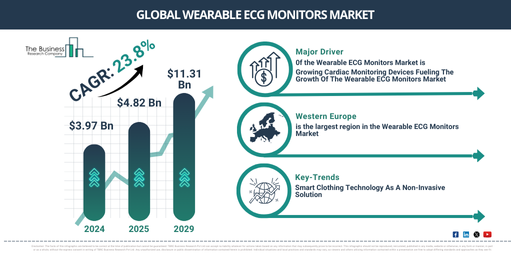
    There has been a significant expansion in the size of the wearable ECG monitors market in recent years. The market stands to increase from a value of $3.97 billion in 2024 to $4.82 billion in 2025, resulting in a compound annual growth rate (CAGR) of 21.5%. Key factors driving growth during the historic period include a surge in cases of atrial fibrillation, increased health and fitness consciousness among the general public, and a swift rise in the senior population.

    In the forthcoming years, the market size of wearable ecg monitors is predicted to witness substantial growth. The market is forecasted to reach $11.31 billion in 2029 with a compound annual growth rate (CAGR) of 23.8%. This boost during the forecasted period can be ascribed to the rising occurrence of cardiovascular disorders, the proliferating requirement for non-invasive ambulatory rhythm tracking, and quick advancements in technology, which are catalysing the wearable ECG monitors market. Key trends predicted for the forecast period include the implementation of artificial intelligence in wearable ECG devices, technological progress in patient care analytics, investments flowing into wearable and mobile applications, and advancements in cardiovascular monitoring technologies.

    Download a free sample to assess the report’s scope and structure:

    https://www.thebusinessresearchcompany.com/sample.aspx?id=3984&type=smp

    What Are the Core Growth Drivers Propelling the Wearable ECG Monitors Market Forward?

    The rise in cardiovascular diseases (CVD) incidents has prompted an upsurge in the creation of wearable devices capable of ceaseless cardiac function monitoring. As the Centers for Disease Control and Prevention reveals, every 36 seconds, a person in the USA succumbs to CVD. This amounts to around 836,546 deaths solely within the US. For example, the National Library of Medicine, a US-based organization, stated in October 2022 that almost 45.1% of the American population would likely suffer from a version of cardiovascular disease by 2035. Predicted total expenditures on addressing cardiovascular diseases could escalate to an astonishing $1.1 trillion by 2035. Therefore, the growing prevalence of cardiovascular diseases (CVD) is indeed triggering the expansion of the wearable ECG monitors market.

    What Segment Types Define the Wearable ECG Monitors Market Structure?

    The wearable ecg monitors market covered in this report is segmented –

    1) By Type: Wired, Wireless

    2) By Application: Atrial Fibrillation, Atherosclerosis, Cardiac Dysrhythmia, Congestive Heart Failures (CHF), Coronary Artery Disease, Angina And Heart Attack, Bradycardia, Tachycardia

    3) By Grade: Consumer, Clinical

    4) By Sales Channel: Online, Pharmacy

    Subsegments:

    1) By Wired: Single-Lead Wired ECG Monitors, Multi-Lead Wired ECG Monitors

    2) By Wireless: Bluetooth-Enabled ECG Monitors, Wi-Fi-Enabled ECG Monitors, Smartphone-Compatible ECG Monitors

    Request customized data on this market:

    https://www.thebusinessresearchcompany.com/customise?id=3984&type=smp

    Which Geographic Areas Hold the Strongest Growth Potential in the Wearable ECG Monitors Market?

    Western Europe was the largest region in the wearable ECG monitor market in 2024. North America was the second-largest region in the global wearable ECG monitors market share. The regions covered in the wearable ECG monitors market report are Asia-Pacific, Western Europe, Eastern Europe, North America, South America, Middle East, Africa

    Which Emerging Trends that Are Influencing theWearable ECG Monitors Industry Evolution?

    Extended monitoring of ambulatory rhythm is vital for identifying sporadic arrhythmia. Traditional non-invasive rhythm monitoring techniques, such as Holter monitoring or external cardiac event recorders, are unfortunately hampered by low sensitivity, low rate of diagnosis, and reduced patient adherence. Notwithstanding the benefit of long-term tracking provided by implantable cardiac monitors (ICMs), they necessitate minor surgical procedures and are also associated with considerable costs. As a result, there is a surge in demand for non-invasive methods of ambulatory rhythm monitoring. In response to this need, smart clothing technology has emerged as an innovative alternative for non-invasive ambulatory rhythm monitoring.

    View the full report here:

    https://www.thebusinessresearchcompany.com/report/wearable-ecg-monitors-global-market-report

    What Is the Definition of the Wearable ECG Monitors Market?

    Wearable ECG Monitors are portable devices that continuously record the heart’s electrical signals, enabling real-time tracking of cardiac health and the detection of conditions such as atrial fibrillation, while being user-friendly and easily integrated with smartphones for data sharing.

    Purchase the full report and get a swift delivery:

    https://www.thebusinessresearchcompany.com/purchaseoptions.aspx?id=3984

    About The Business Research Company:

    With over 15000+ reports from 27 industries covering 60+ geographies, The Business Research Company has built a reputation for offering comprehensive, data-rich research and insights. Armed with 1,500,000 datasets, the optimistic contribution of in-depth secondary research, and unique insights from industry leaders, you can get the information you need to stay ahead in the game.

    Get in touch with us:

    The Business Research Company: https://www.thebusinessresearchcompany.com/

    Americas +1 3156230293

    Asia +44 2071930708

    Europe +44 2071930708

    Email us at info@tbrc.info

    Follow us on:

    LinkedIn: https://in.linkedin.com/company/the-business-research-company

    YouTube: https://www.youtube.com/channel/UC24_fI0rV8cR5DxlCpgmyFQ

    Global Market Model: https://www.thebusinessresearchcompany.com/global-market-model
  • Global Wearable Blood Pressure Monitors Market Projected to Reach $3.19 Billion by 2029 at a CAGR of 16.2%

    Global Wearable Blood Pressure Monitors Market Projected to Reach $3.19 Billion by 2029 at a CAGR of 16.2%

    Discover trends, market shifts, and competitive outlooks for the wearable blood pressure monitors industry through 2025-2034 with The Business Research Company’s reliable data and in-depth research

    #How Has the Wearable Blood Pressure Monitors Market Growth Performance Trended Historically, And What Lies Ahead?

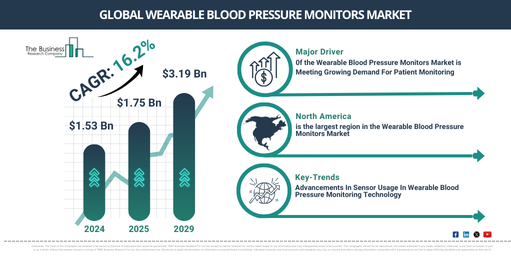
    In recent times, there has been a significant expansion in the market size for wearable blood pressure monitors. This industry’s growth is expected to escalate from $1.53 billion in 2024 to $1.75 billion in 2025, demonstrating a compound annual growth rate (CAGR) of 14.6%. The notable growth during the historic period resulted from factors like a rise in hypertension cases, increased investment in healthcare, swift progress in technology, and robust economic development in newly emerging markets.

    The market for wearable blood pressure monitors is projected to experience accelerated expansion in the upcoming years, reaching $3.19 billion in 2029 with a compound annual growth rate (CAGR) of 16.2%. This growth during the forecasted period can be credited to factors such as an increasing demand for remote patient monitoring devices, a swelling adoption of wireless and wearable technology, an expanding elderly population, and advancements in technology that are anticipated to stimulate market growth. Principal trends during the forecast period encompass the exploration of investment opportunities in advanced technologies to stay competitive, the investment in AI to maximize revenue and enhance process efficiency, the notion of utilizing radar technology in wearable blood pressure monitors to yield more precise and continuous blood pressure reads, and considering the acquisition, merging, or collaboration with other firms to upgrade product ranges and broaden operations.

    Download a free sample to assess the report’s scope and structure:

    https://www.thebusinessresearchcompany.com/sample.aspx?id=3189&type=smp

    What are the Fundamental Drivers and Innovations Shaping the Wearable Blood Pressure Monitors Market?

    The wearable blood pressure monitors market is anticipated to be driven by the increased demand for patient monitoring devices. This demand has largely been fueled by the growing prevalence of chronic diseases and the increasing number of surgeries requiring continuous monitoring. Moreover, a growing trend towards healthy living and fitness has led to individuals wanting to constantly monitor their health, as a preventive measure and as a way to enhance their health status. A report by Valencell, a company in the wearable technology sector, reveals that two-thirds of consumers own wearable devices due to their belief that it positively affects their health. Around 55% of the participants expressed interest in leveraging wearable technologies to monitor their blood pressure. Given this, it is projected that the rising demand for these monitoring devices will drive growth in the wearable blood pressure market.

    How Is the Wearable Blood Pressure Monitors Market Segmented?

    The wearable blood pressure monitors market covered in this report is segmented –

    1) By Product: Wrist Blood Pressure Monitor, Upper Arm Blood Pressure Monitor, Finger Blood Pressure Monitor

    2) By Technology: Wi-Fi Based, Bluetooth Based

    3) By Application: Hospital, Clinic, Home Care Settings, Other Applications

    Subsegments:

    1) By Wrist Blood Pressure Monitor: Automatic Wrist Monitors, Manual Wrist Monitors, Bluetooth-Enabled Wrist Monitors

    2) By Upper Arm Blood Pressure Monitor: Automatic Upper Arm Monitors, Manual Upper Arm Monitors, Bluetooth-Enabled Upper Arm Monitors

    3) By Finger Blood Pressure Monitor: Automatic Finger Monitors, Manual Finger Monitors, Bluetooth-Enabled Finger Monitors

    Request customized data on this market:

    https://www.thebusinessresearchcompany.com/customise?id=3189&type=smp

    Which Regions Are Driving the Next Phase of the Wearable Blood Pressure Monitors Market Growth?

    North America was the largest region in the wearable blood pressure monitors market in 2024. Asia-Pacific was the second largest market in the global wearable blood pressure monitors market analysis. The regions covered in the wearable blood pressure monitors market report are Asia-Pacific, Western Europe, Eastern Europe, North America, South America, Middle East, Africa

    What Key Trends Are Shaping the Future of the Wearable Blood Pressure Monitors Market?

    The majority of wearable technologies for blood pressure monitoring are still in the experimental or R&D phase. Both corporations and scientific researchers are exploring various wearable devices designed for blood pressure tracking. One such technology involves the usage of a smartphone video, which detects blood pressure changes via alterations in facial blood vessels. Valencell, a firm specializing in health technology, is developing an earbud sensor capable of blood pressure detection through photoplethysmography. Additionally, the Akttia bracelet, a cuff-less device leveraging an optical sensor to monitor blood pressure, is in the stages of verification. Thus, additional research in this field is anticipated to offer growth prospects for the wearable blood pressure market.

    View the full report here:

    https://www.thebusinessresearchcompany.com/report/wearable-blood-pressure-monitors-global-market-report

    How Is the Wearable Blood Pressure Monitors Market Defined and What Are Its Core Parameters?

    Wearable blood pressure monitors are advanced, comfortable devices designed for continuous, non-invasive tracking of blood pressure, utilizing technologies like pulse wave transit time and photoplethysmography to enable early detection of hypertension and integrate with overall health monitoring.

    Purchase the full report and get a swift delivery:

    https://www.thebusinessresearchcompany.com/purchaseoptions.aspx?id=3189

    About The Business Research Company:

    With over 15000+ reports from 27 industries covering 60+ geographies, The Business Research Company has built a reputation for offering comprehensive, data-rich research and insights. Armed with 1,500,000 datasets, the optimistic contribution of in-depth secondary research, and unique insights from industry leaders, you can get the information you need to stay ahead in the game.

    Get in touch with us:

    The Business Research Company: https://www.thebusinessresearchcompany.com/

    Americas +1 3156230293

    Asia +44 2071930708

    Europe +44 2071930708

    Email us at info@tbrc.info

    Follow us on:

    LinkedIn: https://in.linkedin.com/company/the-business-research-company

    YouTube: https://www.youtube.com/channel/UC24_fI0rV8cR5DxlCpgmyFQ

    Global Market Model: https://www.thebusinessresearchcompany.com/global-market-model
  • Next-Gen Ventricular Assist Device : Market Forecast, Transformation, and Long-Term Trajectories

    Next-Gen Ventricular Assist Device : Market Forecast, Transformation, and Long-Term Trajectories

    Discover trends, market shifts, and competitive outlooks for the ventricular assist device industry through 2025-2034 with The Business Research Company’s reliable data and in-depth research

    #What Is the Current and Projected Market Size of the Ventricular Assist Device Market Through 2034?

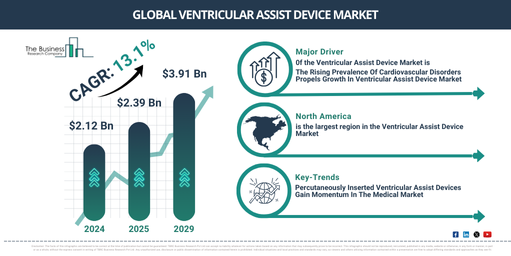
    The market size for ventricular assist devices has seen swift expansion in recent times. It is projected to rise from $2.12 billion in 2024 to around $2.39 billion in 2025, reflecting a Compound Annual Growth Rate (CAGR) of 12.6%. This growth during the historical period is fundamentally driven by a surge in heart failure cases and increased need for organ transplant procedures.

    The market size for ventricular assist devices is projected to experience swift expansion in the coming years. It’s estimated to reach $3.91 billion by 2029, with a compound annual growth rate (CAGR) of 13.1%. A number of factors can be credited for the anticipated growth during the forecast period including the rising requirement for destination therapy, the aging population, hikes in healthcare spending, and increased awareness about heart failure treatments. Some major trends to watch for during the forecast period involve initiatives to improve VAD longevity, efforts to make VADs smaller, advanced pump technologies, emphasis on the safety and efficiency of VADs, attempts to decrease VAD side effects and the emergence of percutaneously inserted ventricular assist devices.

    Download a free sample to assess the report’s scope and structure:

    https://www.thebusinessresearchcompany.com/sample.aspx?id=6680&type=smp

    Which Major Market Drivers Are Expected to Boost the Growth Potential of the Ventricular Assist Device Market?

    The escalated occurrence of cardiovascular ailments is a primary stimulant for the expansion of the ventricular assist device market. Such heart conditions arise from factors including elevated blood pressure, smoking, heightened cholesterol levels, a lack of physical activity, among others. In addition, non-infectious diseases like diabetes, chronic respiratory illness, and hypertension-induced heart attacks contribute to the rise in cardiovascular disorders. This surge is likely to amplify the requirement for ventricular assist devices that play an essential role in supporting gravely sick cardiac patients. As reported by the National Library of Medicine, an American federal agency, as of October 2022, it is projected that by 2035, cardiovascular disease will afflict 45.1% of the American populace. Predictions suggest that the total expenditure related to these heart ailments will escalate to $1.1 trillion by 2035. Thus, the mounting occurrence rate of cardiovascular ailments is likely to spur the demand for ventricular assist devices in the future.

    Which Key Market Segments Comprise the Ventricular Assist Device Market and Drive Its Revenue Growth?

    The ventricular assist device market covered in this report is segmented –

    1) By Product: Left Ventricular Assist Devices (LVADs), Right Ventricular Assist Devices (RVADs), Biventricular Assist Devices (BIVADs).

    2) By Type: Pulsatile Flow, Continuous Flow

    3) By Design: Transcutaneous Ventricular Assist Devices, Implantable Ventricular Assist Devices

    4) By Application: Bridge-To-Transplant (BTT) Therapy, Destination Therapy, Bridge-To-Recovery (BTR) Therapy, Bridge-To-Candidacy (BTC) Therapy

    5) By End Users: Hospital, Ambulatory Surgical Centres, Cardiology Centres

    Subsegments:

    1) By Left Ventricular Assist Devices (LVADs): Implantable LVADs, Temporary LVADs

    2) By Right Ventricular Assist Devices (RVADs): Implantable RVADs, Temporary RVADs

    3) By Biventricular Assist Devices (BIVADs): Full Support BIVADs, Hybrid BIVADs

    Request customized data on this market:

    https://www.thebusinessresearchcompany.com/customise?id=6680&type=smp

    Which Areas Are Leading Regions in the Ventricular Assist Device Market Expansion Across the Globe?

    North America was the largest region in the ventricular assist device market in 2024. Asia-Pacific is expected to be the fastest-growing region in the forecast period. The regions covered in the ventricular assist device market report are Asia-Pacific, Western Europe, Eastern Europe, North America, South America, Middle East, Africa.

    What Are the Key Market Trends in theVentricular Assist Device Market Over the Coming Years?

    Ventricular assist devices that are inserted percutaneously are seeing an increased demand within the market. Essentially, they are non-pulsatile axial flow pumps that are positioned across the aortic valve, pumping blood from the left ventricle. The benefits of a percutaneously inserted ventricular assist device (VAD) include decreased pressure on the left ventricle, reduced myocardial oxygen consumption, improved cardiac output, and a reduction in left ventricular end-diastolic pressure. In August 2022, a company based in the US called Abiomed Inc. released Impella, a percutaneous VAD designed for eligible pediatric patients in the US. With the ability to significantly support the cardiac function in patients with a failed left ventricle, the device can function as a replacement for extracorporeal membrane oxygenation (ECMO), or accompany other therapies to enhance hemodynamics.

    View the full report here:

    https://www.thebusinessresearchcompany.com/report/ventricular-assist-device-global-market-report

    How Is the Ventricular Assist Device Market Conceptually Defined?

    A ventricular assist device refers to an implantable mechanical circulatory device used to treat heart failure by pumping blood from the heart to the rest of the body, improving circulation to vital organs. A wide range of ventricular assist devices are approved by the US FDA to provide long-term or permanent support to patients with end-stage heart failure.

    Purchase the full report and get a swift delivery:

    https://www.thebusinessresearchcompany.com/purchaseoptions.aspx?id=6680

    About The Business Research Company:

    With over 15000+ reports from 27 industries covering 60+ geographies, The Business Research Company has built a reputation for offering comprehensive, data-rich research and insights. Armed with 1,500,000 datasets, the optimistic contribution of in-depth secondary research, and unique insights from industry leaders, you can get the information you need to stay ahead in the game.

    Get in touch with us:

    The Business Research Company: https://www.thebusinessresearchcompany.com/

    Americas +1 3156230293

    Asia +44 2071930708

    Europe +44 2071930708

    Email us at info@tbrc.info

    Follow us on:

    LinkedIn: https://in.linkedin.com/company/the-business-research-company

    YouTube: https://www.youtube.com/channel/UC24_fI0rV8cR5DxlCpgmyFQ

    Global Market Model: https://www.thebusinessresearchcompany.com/global-market-model
  • From Insight to Impact: Strategic Growth Mapping in the Vascular Grafts Market

    From Insight to Impact: Strategic Growth Mapping in the Vascular Grafts Market

    Discover trends, market shifts, and competitive outlooks for the vascular grafts industry through 2025-2034 with The Business Research Company’s reliable data and in-depth research

    #What Are the Key Milestones in the Vascular Grafts Market’s Growth Trajectory From 2025 To 2034?

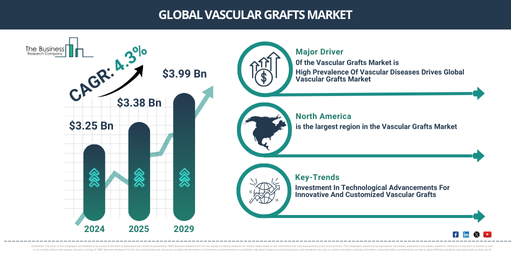
    In the past few years, the market size for vascular grafts has seen consistent growth. The market, which stood at $3.25 billion in 2024, is forecasted to expand to $3.38 billion in 2025, registering a Compound Annual Growth Rate (CAGR) of 4.0%. The historic growth can be traced back to various factors including a surge in cardiovascular diseases (CVDs), an aging population, robust economic progress in developing markets, an increase in healthcare spending and the expansion of healthcare facilities.

    The market for vascular grafts is predicted to experience consistent expansion in the coming years, with projections estimating it will swell to $3.99 billion by 2029, boasting a compound annual growth rate (CAGR) of 4.3%. Several factors are set to contribute to this growth. These include the increasing prevalence of renal disorders, hypertension, sedentary lifestyles, a rapidly aging population, diabetes, and cardiovascular diseases (CVDs), as well as a rise in healthcare expenditures. Key trends over this forecast period include investments in cutting-edge technology to optimize compliance with smaller vascular grafts, further invest in technological advancements such as 3D cell printing for higher safety and success rates, the development of cell-free vascular grafts, investments in self-monitoring tools like smart patches, and pouring funds into research and development to uncover new and innovative solutions that enhance patient care.

    Download a free sample to assess the report’s scope and structure:

    https://www.thebusinessresearchcompany.com/sample.aspx?id=3419&type=smp

    What are the Fundamental Drivers and Innovations Shaping the Vascular Grafts Market?

    The escalating incidence of vascular conditions is propelling the expansion of the international vascular grafts market. Research conducted by the US National Center for Biotechnology Information indicates that cardiovascular ailments are the predominant cause of global mortality, and data from the American Heart Association (AHA) reveals an overall yearly rate of myocardial infarction in the US at approximately 7.9 million. In addition, the estimated annual cases of heart attacks in the US consists of 720,000 new episodes and 335,000 relapses. Similarly, NHS Inform, Scotland’s national health service, reports that every year there are around 20,000 coronary bypass grafts performed in England. Consequently, the sweeping prevalence of vascular diseases is expected to fuel growth in the global vascular grafts market.

    How Is the Vascular Grafts Market Segmented?

    The vascular grafts market covered in this report is segmented –

    1) By Product: Hemodialysis Access Graft, Endovascular Stent Graft, Peripheral Vascular Graft, Coronary Artery By-pass Graft

    2) By Raw Material: Polyester Grafts, Polytetrafluoroethylene Grafts, Polyurethane Grafts, Biosynthetic Grafts

    3) By Application: Coronary Artery Disease, Aneurysm, Vascular Occlusion, Renal Failure

    4) By End-User: Hospitals, Ambulatory Surgical Centers

    Subsegments:

    1) Hemodialysis Access Graft: Synthetic Grafts, Biological Grafts

    2) Endovascular Stent Graft: Aneurysm Stent Grafts, Thoracic Stent Grafts, Abdominal Stent Grafts

    3) Peripheral Vascular Graft: Synthetic Grafts, Biological Grafts

    4) Coronary Artery Bypass Graft (Cabg): Arterial Grafts, Venous Grafts

    Request customized data on this market:

    https://www.thebusinessresearchcompany.com/customise?id=3419&type=smp

    Which Regions Are Driving the Next Phase of the Vascular Grafts Market Growth?

    North America was the largest region in the vascular grafts market in 2024. Western Europe was the second largest region in the vascular grafts market report. The regions covered in the vascular grafts market report are Asia-Pacific, Western Europe, Eastern Europe, North America, South America, Middle East, Africa

    What Key Trends Are Shaping the Future of the Vascular Grafts Market?

    In the vascular grafts market, there’s a growing trend of firms increasingly investing in technologically advanced methods for creating innovative vascular graft materials, which includes personalizing these grafts. Examples of this include the introduction of RelayPro, a thoracic stent graft system, by Terumo Aortic, which is a compact device devised for individuals with smaller access vessels addressing thoracic endovascular aortic repair (TEVAR). This device provides physicians with a wide variety of diameter, length, taper, and proximal configuration options. In addition, a variety of bare stent and non-bare stent (NBS) versions of this device are available, which can be tailored to the patient’s individual anatomical requirements.

    View the full report here:

    https://www.thebusinessresearchcompany.com/report/vascular-grafts-global-market-report

    How Is the Vascular Grafts Market Defined and What Are Its Core Parameters?

    The vascular grafts are used to repair the diseased or blocked blood vessel during the surgical procedure called vascular grafting or vascular bypass. Vascular grafting is performed to bypass a partial or complete blockage in an artery by reconnecting the blood vessels. This process improves the blood flow by redirecting blood from one area of the body to another.

    Purchase the full report and get a swift delivery:

    https://www.thebusinessresearchcompany.com/purchaseoptions.aspx?id=3419

    About The Business Research Company:

    With over 15000+ reports from 27 industries covering 60+ geographies, The Business Research Company has built a reputation for offering comprehensive, data-rich research and insights. Armed with 1,500,000 datasets, the optimistic contribution of in-depth secondary research, and unique insights from industry leaders, you can get the information you need to stay ahead in the game.

    Get in touch with us:

    The Business Research Company: https://www.thebusinessresearchcompany.com/

    Americas +1 3156230293

    Asia +44 2071930708

    Europe +44 2071930708

    Email us at info@tbrc.info

    Follow us on:

    LinkedIn: https://in.linkedin.com/company/the-business-research-company

    YouTube: https://www.youtube.com/channel/UC24_fI0rV8cR5DxlCpgmyFQ

    Global Market Model: https://www.thebusinessresearchcompany.com/global-market-model

  • Strong CAGR to Propel in the Urology Medical Lasers Market and Beyond upto $1.36 Billion by 2029

    Strong CAGR to Propel in the Urology Medical Lasers Market and Beyond upto $1.36 Billion by 2029

    Discover trends, market shifts, and competitive outlooks for the urology medical lasers industry through 2025-2034 with The Business Research Company’s reliable data and in-depth research

    #What Are the Key Projections for the CAGR of the Urology Medical Lasers Market Size From 2025 to 2034?

    In the past few years, the market size for urology medical lasers has seen consistent growth. It is projected to rise from $1.03 billion in 2024 to $1.07 billion in 2025, showing a compound annual growth rate (CAGR) of 4.2%. Factors such as swift developments in technology, a surge in healthcare spending, the rapid aging population, reforms in public health insurance, and robust economic expansion in developing markets have contributed to the growth experienced during the historical period.

    The market for urology medical lasers is projected to experience substantial expansion in the coming years, escalating to a value of $1.36 billion in 2029, with a compound annual growth rate (CAGR) of 6.2%. The amplified progression during the projected period can be credited to a rise in mergers and acquisitions, a surge in research and development, advancements in technology and government-driven initiatives. Some of the major advancements to look forward to in the projected period include the introduction of new technologies, application of extensive data and artificial intelligence, innovative laser treatments for benign prostatic hyperplasia, and the growing utilization of fiber-optics in laser technology.

    Download a free sample to assess the report’s scope and structure:

    https://www.thebusinessresearchcompany.com/sample.aspx?id=3289&type=smp

    Which Primay Drivers Are Accelerating Growth in the Urology Medical Lasers Market?

    The escalating occurrence of urological disorders is fueling the need for the urology medical lasers market. The rise in urological issues such as bladder cancer and prostate diseases enhances the requirement for minimally invasive surgeries and associated tools. As per the data from the American Institute for Cancer Research on bladder statistics, men rank bladder cancer as the sixth most prevalent cancer, whereas, for women, it is at the seventeenth rank. This uplift in urological ailments increases the need for urological operations and aids in the expansion of the urology medical lasers market.

    Which Primary Segments of the Urology Medical Lasers Market Are Driving Growth and Industry Transformations?

    The urology medical lasers market covered in this report is segmented –

    1) By Laser Type: Holmium Laser System, Diode Laser System, Thulium Laser System, Others

    2) By Application: Benign Prostatic Hyperplasia (BPH), Urolithiasis, Non-Muscle-Invasive Bladder Cancer (NMIBC), Others

    3) By End User: Hospitals, Clinic, Others

    Subsegments:

    1) By Holmium Laser System: Used For Procedures Like Laser Lithotripsy And Prostatectomy

    2) By Diode Laser System: Employed In Various Urological Procedures, Including Tissue Ablation

    3) By Thulium Laser System: Utilized For Soft Tissue Procedures, Particularly In Treating Benign Prostatic Hyperplasia (BPH)

    4) By Others: Includes Other Types Of Lasers, Such As CO2 Lasers And Nd Lasers, Used In Specific Urological Applications

    Request customized data on this market:

    https://www.thebusinessresearchcompany.com/customise?id=3289&type=smp

    Which Regions Are Key Players in the Growth of the #Which Primay Drivers Are Accelerating Growth in the Urology Medical Lasers Market?# Market?

    North America was the largest region in the urology medical lasers market in 2024. Asia-Pacific was the second largest region in the urology medical lasers report. The regions covered in the urology medical lasers market report are Asia-Pacific, Western Europe, Eastern Europe, North America, South America, Middle East, Africa

    Which Technological Trends Are Reshaping the Urology Medical Lasers Industry Dynamics?

    Innovations in products are a predominant trend being noticed in the urology medical lasers industry. These advancements in products are helping urological specialists achieve improved results, offering diagnostic, therapeutic, and minimally invasive procedures to enhance patient outcomes, bring down overall expenses, and elevate patients’ quality of life. Taking an example, Apollo, a hospital based in India, introduced the first Moses 2.0 in November 2022. This novel laser technology is used to address large kidney stones and prostate enlargement in high-risk patients, in an entirely painless and blood-free method. Procedures utilizing Moses 2.0 are endoscopic, precluding the requirement of skin incisions. It can effectively treat any size of kidney stones and the prostate in total.

    View the full report here:

    https://www.thebusinessresearchcompany.com/report/urology-medical-lasers-global-market-report

    What Parameters Are Used to Define the Urology Medical Lasers Market?

    Urology medical lasers are specialized devices used in the field of urology to perform various minimally invasive surgeries and treatments involving the urinary tract, bladder, kidneys, prostate, and other related organs. These lasers operate by emitting focused beams of light energy to precisely cut, vaporize, or fragment tissue, offering advantages such as reduced bleeding, faster recovery times, and minimal damage to surrounding tissues.

    Purchase the full report and get a swift delivery:

    https://www.thebusinessresearchcompany.com/purchaseoptions.aspx?id=3289

    About The Business Research Company:

    With over 15000+ reports from 27 industries covering 60+ geographies, The Business Research Company has built a reputation for offering comprehensive, data-rich research and insights. Armed with 1,500,000 datasets, the optimistic contribution of in-depth secondary research, and unique insights from industry leaders, you can get the information you need to stay ahead in the game.

    Get in touch with us:

    The Business Research Company: https://www.thebusinessresearchcompany.com/

    Americas +1 3156230293

    Asia +44 2071930708

    Europe +44 2071930708

    Email us at info@tbrc.info

    Follow us on:

    LinkedIn: https://in.linkedin.com/company/the-business-research-company

    YouTube: https://www.youtube.com/channel/UC24_fI0rV8cR5DxlCpgmyFQ

    Global Market Model: https://www.thebusinessresearchcompany.com/global-market-model
  • Tuberculosis Diagnostics Market 2025-2034: Key Highlights, Growth Dynamics, and Emerging Trends

    Tuberculosis Diagnostics Market 2025-2034: Key Highlights, Growth Dynamics, and Emerging Trends

    Discover trends, market shifts, and competitive outlooks for the tuberculosis diagnostics industry through 2025-2034 with The Business Research Company’s reliable data and in-depth research

    #How Has The Tuberculosis Diagnostics Market Size Shifted, And What Is the Outlook Through 2034?

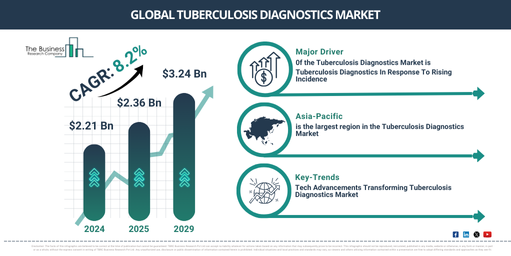
    In recent times, the tuberculosis diagnostics market has witnessed significant growth. The size of the market will escalate from $2.21 billion in 2024 to $2.36 billion in 2025, with a compound annual growth rate (CAGR) of 6.9%. The surge in historic growth is due to various factors such as the increasing occurrence of tuberculosis, enhanced expenditure in healthcare, expansion in the quantity of healthcare facilities, and the increasing adoption of nucleic acid testing.

    The market for tuberculosis diagnostics is predicted to experience substantial expansion in the upcoming years, escalating to a value of $3.24 billion in 2029, representing a compound annual growth rate (CAGR) of 8.2%. The predicted growth within this period is largely due to robust governmental backing, rising numbers of FDA approvals specific to tuberculosis diagnostics, an upsurge in research and development (R&D) endeavors, and the advent of drug-resistant TB. The forecast period is anticipated to see trends such as a greater emphasis on next-generation sequencing (NGS) platforms for TB diagnostics, advancements in product innovations, t-cell tests for identifying TB infection, the incorporation of artificial intelligence (AI) in tuberculosis diagnostics, the utilization of portable devices, and cooperative efforts between government entities and manufacturers.

    Download a free sample to assess the report’s scope and structure:

    https://www.thebusinessresearchcompany.com/sample.aspx?id=8165&type=smp

    How Are Key Drivers in the Industry Acting as Catalysts for the Growth of theTuberculosis Diagnostics Market?

    An increase in tuberculosis cases is propelling the need for tuberculosis diagnostics forward. Tuberculosis, an infectious disease mainly impacting the lungs, can be quite intense. It transmits via coughing and sneezing, which spreads small germs into the air. Diagnostics for tuberculosis aid in identifying the disease in patients earlier leading to better detection. For example, the Centers for Disease Control and Prevention, an important public health organization in the US, reported 8,300 tuberculosis cases in March 2023, reflecting a hike from 7,874 cases in 2021. This spike in tuberculosis occurrence fuels the tuberculosis diagnostics market, consequently, this escalation in tuberculosis occurrence is fostering the expansion of the tuberculosis diagnostics market.

    Which Segments in the Tuberculosis Diagnostics Offer the Most Growth?

    The tuberculosis diagnostics market covered in this report is segmented –

    1) By Test Type: Radiographic Tests, Nucleic Acid Testing, Cytokine Detection Tests, Drug Resistance Tests, Skin Test / Mantoux Test (TST), Blood/Serology Test, Smear Microscopy Tests, Cell Culture-Based Tests, Other Test Types

    2) By Disease Stage: Latent Tuberculosis, Active Tuberculosis

    3) By End-User: Hospitals And Diagnostic Laboratories, Physician’s Office Laboratories, Reference Laboratories, Academics And Research Facilities

    Subsegments:

    1) By Radiographic Tests: Chest X-rays, CT Scans

    2) By Nucleic Acid Testing: Polymerase Chain Reaction (PCR), Nucleic Acid Amplification Tests (NAATs)

    3) By Cytokine Detection Tests: Interferon Gamma Release Assays (IGRAs)

    4) By Drug Resistance Tests: GeneXpert MTB/RIF, Line Probe Assays

    5) By Skin Test or Mantoux Test (TST): Tuberculin Skin Test (TST)

    6) By Blood Or Serology Test: Serological Tests for Antibodies

    7) By Smear Microscopy Tests: Acid-Fast Bacilli (AFB) Smear Test

    8) By Cell Culture-Based Tests: Solid Media Cultures, Liquid Media Cultures

    9) By Other Test Types: Molecular Tests, Advanced Imaging Techniques

    Request customized data on this market:

    https://www.thebusinessresearchcompany.com/customise?id=8165&type=smp

    What Are the Fastest-Growing Geographies in the #How Are Key Drivers in the Industry Acting as Catalysts for the Growth of theTuberculosis Diagnostics Market?# Market?

    Asia-Pacific was the largest region in the tuberculosis diagnostics market in 2024. The regions covered in the tuberculosis diagnostics market report are Asia-Pacific, Western Europe, Eastern Europe, North America, South America, Middle East, Africa.

    What Are the Current Market Growth and Trends in the Tuberculosis Diagnostics Industry?

    Technological advancements mark a major trend taking hold in the tuberculosis diagnostics market. To solidify their market standing, key businesses in the sector are unveiling novel technologies, such as advanced point-of-care (POC) diagnostic techniques harnessing the power of AI. As an example, Fujifilm, a leading medical imaging devices manufacturer based in Japan, entered a collaboration with Qure.ai, an American firm specializing in the creation of AI-powered medical imaging solutions, in August 2022. They launched a sophisticated point-of-care (POC) diagnostic technique that utilizes a battery-operated X-ray machine for diagnosing tuberculosis. Artificial intelligence underpins algorithms in effective diagnostic programs, providing ultra-mobility, high precision, and efficient point-of-care diagnostic solutions.

    View the full report here:

    https://www.thebusinessresearchcompany.com/report/tuberculosis-diagnostics-global-market-report

    What Are the Key Elements That Define the Tuberculosis Diagnostics Market?

    Tuberculosis diagnostics refers to a tool or test with high sensitivity and specificity for TB diagnosis and tracking the effectiveness of treatment. Tuberculosis diagnostics are used to identify acid-fast bacilli (AFB) in clinical specimens and to detect tuberculosis.

    Purchase the full report and get a swift delivery:

    https://www.thebusinessresearchcompany.com/purchaseoptions.aspx?id=8165

    About The Business Research Company:

    With over 15000+ reports from 27 industries covering 60+ geographies, The Business Research Company has built a reputation for offering comprehensive, data-rich research and insights. Armed with 1,500,000 datasets, the optimistic contribution of in-depth secondary research, and unique insights from industry leaders, you can get the information you need to stay ahead in the game.

    Get in touch with us:

    The Business Research Company: https://www.thebusinessresearchcompany.com/

    Americas +1 3156230293

    Asia +44 2071930708

    Europe +44 2071930708

    Email us at info@tbrc.info

    Follow us on:

    LinkedIn: https://in.linkedin.com/company/the-business-research-company

    YouTube: https://www.youtube.com/channel/UC24_fI0rV8cR5DxlCpgmyFQ

    Global Market Model: https://www.thebusinessresearchcompany.com/global-market-model
  • Trauma Fixation Devices And Equipment Market Outlook 2025–2034: Identifying Growth Drivers, Technology Trends, and Policy Impact

    Trauma Fixation Devices And Equipment Market Outlook 2025–2034: Identifying Growth Drivers, Technology Trends, and Policy Impact

    Discover trends, market shifts, and competitive outlooks for the trauma fixation devices and equipment industry through 2025-2034 with The Business Research Company’s reliable data and in-depth research

    What Is the Estimated Market Size of the Trauma Fixation Devices And Equipment Market In 2029?

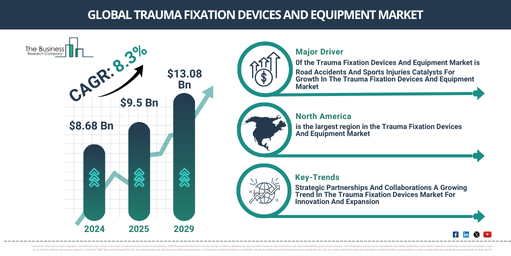
    The market for trauma fixation devices and equipment has seen robust growth in previous years. Its market size is projected to expand from $8.68 billion in 2024 to $9.5 billion in 2025, portraying a compound annual growth rate (CAGR) of 9.5%. The surge observed in the historical phase can be attributed to several factors, such as a rise in the quantity of accidents, an increase in healthcare facilities, a swift increase in the elderly population, economic prosperity in emerging markets, quick technological advancements, and an upswing in healthcare expenditure.

    Anticipated robust expansion is on the horizon for the trauma fixation devices and equipment market, with projections indicating a growth to $13.08 billion by 2029, at a compound annual growth rate of 8.3%. Factors driving this expansion during the predicted period include an increased occurrence of osteoporosis, higher incidence of sports-related injuries, a rise in workplace accidents, and improvements in healthcare facilities. Market trends in the forecast period comprise advancements in artificial intelligence and robotics, the rise of holomedicine, the creation of biodegradable and 3D printed implants, and strategic business collaborations between companies.

    Download a free sample to assess the report’s scope and structure:

    https://www.thebusinessresearchcompany.com/sample.aspx?id=2403&type=smp

    What Are the Core Market Drivers Propelling Growth in the Trauma Fixation Devices And Equipment Industry?

    The surge in the market for trauma fixation devices and equipment can be attributed to the rising number of road mishaps and sports-related injuries. As estimated by the World Health Organization, road traffic accidents claim close to 1.35 million lives annually. Moreover, between 20 and 50 million individuals sustain non-fatal injuries which ultimately lead to disabilities. Based on the data provided by the National Safety Council (NSC), the highest number of injuries (526,000) are due to exercising and using exercise equipment. Incidents involving basketball players came to around 500,000, while injuries among bicycling sports enthusiasts amounted to 457,000. Furthermore, about 341,000 injuries were reported among footballers. The swift escalation in road mishaps and sports accidents is predicted to fuel the demand for trauma fixation devices and equipment in the forecast period.

    How Is the Trauma Fixation Devices And Equipment Market Segmented?

    The trauma fixation devices and equipment market covered in this report is segmented –

    1) By Device Type: Internal Fixation Devices and External Fixation Devices

    2) By Product Type: Metal Plates and Screws, Pins/Wires, Nails and Rods, Circular Fixator, Hybrid Fixator and Unilateral Fixator

    3) By End-User: Hospitals, Trauma Centers, and Ambulatory Surgical Centers

    Subsegments:

    1) By Internal Fixation Devices: Plates And Screws, Intramedullary Nails, Rods And Pins, Bone Screws, Compression Plates

    2) By External Fixation Devices: External Fixators, Ring Fixators, Hybrid Fixators, Soft Tissue Fixators

    Request customized data on this market:

    https://www.thebusinessresearchcompany.com/customise?id=2403&type=smp

    Which Regions Are Driving the Next Phase of the Trauma Fixation Devices And Equipment Market Growth?

    North America was the largest region in the trauma fixation devices and equipment market in 2024. Western Europe was the second largest region in the trauma fixation devices and equipment market report. The regions covered in the trauma fixation devices and equipment market report are Asia-Pacific, Western Europe, Eastern Europe, North America, South America, Middle East, Africa

    What Key Market Trends and Innovations Are Shaping the Future of the Trauma Fixation Devices And Equipment Industry?

    The most recent pattern observed in the trauma fixation devices sector is the implementation of strategic alliances and collaborations. This trend can be attributed to a large number of suppliers in the market, with companies establishing strategic relationships with other firms and research institutes to maintain their market share amidst stiff competition and breach new territories. For example, in June 2023, Invibio, a biomaterial solutions provider based in the United Kingdom, formed a partnership with Paragon, an American medical technology company that specialises in the development and production of orthopedic implants and surgical instruments. This partnership between Invibio and Paragon Medical expects to increase the production of top-quality PEEK-OPTIMA ultra-reinforced composite fracture fixation devices, boosting their scalability. With Paragon Medical’s recent expansion of its manufacturing facility in Changzhou, China, this agreement will create additional medical composite manufacturing abilities for Invibio customers, satisfying the growing need for these items.

    View the full report here:

    https://www.thebusinessresearchcompany.com/report/trauma-fixation-devices-and-equipment-global-market-report

    How Is the Trauma Fixation Devices And Equipment Market Defined and What Are Its Core Parameters?

    Trauma fixation devices and equipment play a crucial role in orthopedic procedures by stabilizing fractured bones and joint injuries. They help maintain proper alignment and support the healing process, reducing complications and enhancing recovery.

    Purchase the full report and get a swift delivery:

    https://www.thebusinessresearchcompany.com/purchaseoptions.aspx?id=2403

    About The Business Research Company:

    With over 15000+ reports from 27 industries covering 60+ geographies, The Business Research Company has built a reputation for offering comprehensive, data-rich research and insights. Armed with 1,500,000 datasets, the optimistic contribution of in-depth secondary research, and unique insights from industry leaders, you can get the information you need to stay ahead in the game.

    Get in touch with us:

    The Business Research Company: https://www.thebusinessresearchcompany.com/

    Americas +1 3156230293

    Asia +44 2071930708

    Europe +44 2071930708

    Email us at info@tbrc.info

    Follow us on:

    LinkedIn: https://in.linkedin.com/company/the-business-research-company

    YouTube: https://www.youtube.com/channel/UC24_fI0rV8cR5DxlCpgmyFQ

    Global Market Model: https://www.thebusinessresearchcompany.com/global-market-model
  • Strategic Growth Drivers Shaping the Poc Hba1C Testing Market Outlook 2025- 2034:Rising Diabetes Prevalence Fuels Growth In Point-Of-Care Hba1C Testing Market

    Strategic Growth Drivers Shaping the Poc Hba1C Testing Market Outlook 2025- 2034:Rising Diabetes Prevalence Fuels Growth In Point-Of-Care Hba1C Testing Market

    Discover trends, market shifts, and competitive outlooks for the poc hba1c testing industry through 2025-2034 with The Business Research Company’s reliable data and in-depth research

    How Fast Is The Poc Hba1C Testing Market Expected to Grow Between 2025 And 2029?

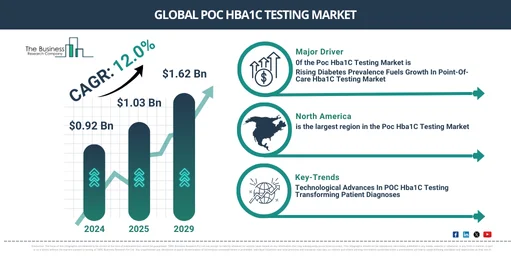
    The market size for Poc Hba1C testing has been experiencing a speedy growth over the past years. Its size is set to expand from $0.92 billion in 2024 to $1.03 billion in 2025 with a compound annual growth rate (CAGR) of 11.2%. The expansion experienced in the historical period is due to robust economic development in upcoming markets, soaring diabetes rates, the upsurge of COVID-19 cases, and a boost in disposable income.

    Rapid expansion is anticipated in the Poc Hba1C testing market in the coming years, with projections indicating a rise to $1.62 billion by 2029, exhibiting a compound annual growth rate (CAGR) of 12.0%. The surge in this period can be credited to factors such as enhanced government backing, an upward trend in type II diabetes, the convenience of POC tests, and quicker result turnover compared to traditional lab testing methods. Within the forecast period, several trends are expected to emerge including a shift towards hba1c microfluidic immunofluorescence testing, a rise in the use of hba1c testing kits for home use, a focus on hba1c assessments using capillary electrophoresis technology, and progress in testing techniques.

    Download a free sample to assess the report’s scope and structure:

    https://www.thebusinessresearchcompany.com/sample.aspx?id=6833&type=smp

    Which Factors and External Forces Are Driving Demand in the Poc Hba1C Testing Market?

    The escalating incidence of diabetes is anticipated to stimulate the expansion of the POC HbA1C testing market. Prolonged work hours, minimal physical exertion, and poor food and beverage consumption habits are contributing to the mounting cases of diabetes. Diabetes detection and supervision can be done using point-of-care (POC) HbA1c tests, which can conveniently be utilized in community locations as well as healthcare institutions without labs. For instance, in June 2024, data from the National Health Service (NHS), a department of the UK government, indicated an increase in the number of individuals under 40 with diabetes, from 173,166 in 2022, soaring to 216,440 in 2023. This substantial escalation underscored a worrisome trend in this demographic. This data exhibits a swift surge in diabetes cases amongst the younger populace. As such, the burgeoning incidence of diabetes is fuelling the expansion of the POC HbA1C testing market.

    Which Segments in the Poc Hba1C Testing Offer the Most Growth?

    The Poc Hba1C testing market covered in this report is segmented –

    1) By Type of Product: Instruments, Consumables

    2) By Technology: Ion-Exchange HPLC, Enzymatic Assay, Affinity Binding Chromatography, Immunoassay, Other Technologies

    3) By End User: Hospitals, Physician Office Or Outpatient Center, Home Care, Other End Users

    Subsegments:

    1) By Instruments: Handheld HbA1c Testing Devices, Portable HbA1c Analyzers, Desktop HbA1c Testing Systems, Integrated Point Of Care Testing Systems

    2) By Consumables: Test Strips, Control Solutions, Reagents, Calibration Solutions, Sample Collection Devices

    Request customized data on this market:

    https://www.thebusinessresearchcompany.com/customise?id=6833&type=smp

    What Are the Fastest-Growing Geographies in the #Which Factors and External Forces Are Driving Demand in the Poc Hba1C Testing Market?# Market?

    North America was the largest region in the POC HbA1C testing market in 2024. Africa is expected to be the fastest-growing region in the forecast- period. The regions covered in the POC hba1c testing market report are Asia-Pacific, Western Europe, Eastern Europe, North America, South America, Middle East, Africa.

    Which Cutting-Edge Market Trends Are Expected to Drive thePoc Hba1C Testing Market’s Growth?

    One of the primary trends emerging in the POC HbA1C testing market is the advancement in technology. Key players in the sector are focusing their investments on developing innovative technologies that deliver precise and speedy results, thus aiding labs to tackle the growing demand for testing. As an example, Abbott, a healthcare and medical devices establishment in the US, launched Afinion HbA1c Dx assay, a diagnostic test kit for measuring the quantity of HbA1c in the human capillary and venous whole blood for utilisation on the devices Afinion 2 Analyzer and Afinion AS100 Analyzer. This assay is the sole rapid POC test sanctioned by the U.S. FDA to aid health professionals in diagnosing diabetes and assessing the patient’s risk of developing the condition. The test offers trustworthy and precise results of 1,2 glycated hemoglobin within only three minutes, thus assisting doctors in evaluating patients and allowing them to craft personalised care schemes during one doctor’s appointment.

    View the full report here:

    https://www.thebusinessresearchcompany.com/report/poc-hba1c-testing-global-market-report

    What Are the Key Elements That Define the Poc Hba1C Testing Market?

    POC HbA1C testing devices are designed to diagnose average levels of glucose in patients’ blood and to control type I and type II diabetes mellitus. Diabetes is a chronic disease that occurs either when an inadequate amount of insulin is produced by the pancreas or when the body cannot use the insulin it produces effectively. This assesses the average level of blood sugar over 2 to 3 months in an individual.

    Purchase the full report and get a swift delivery:

    https://www.thebusinessresearchcompany.com/purchaseoptions.aspx?id=6833

    About The Business Research Company:

    With over 15000+ reports from 27 industries covering 60+ geographies, The Business Research Company has built a reputation for offering comprehensive, data-rich research and insights. Armed with 1,500,000 datasets, the optimistic contribution of in-depth secondary research, and unique insights from industry leaders, you can get the information you need to stay ahead in the game.

    Get in touch with us:

    The Business Research Company: https://www.thebusinessresearchcompany.com/

    Americas +1 3156230293

    Asia +44 2071930708

    Europe +44 2071930708

    Email us at info@tbrc.info

    Follow us on:

    LinkedIn: https://in.linkedin.com/company/the-business-research-company

    YouTube: https://www.youtube.com/channel/UC24_fI0rV8cR5DxlCpgmyFQ

    Global Market Model: https://www.thebusinessresearchcompany.com/global-market-model