Category: Medical Equipment

  • Strong CAGR to Propel in the Operating Room Equipment Market and Beyond upto $22.17 Billion by 2029

    Strong CAGR to Propel in the Operating Room Equipment Market and Beyond upto $22.17 Billion by 2029

    Discover trends, market shifts, and competitive outlooks for the operating room equipment industry through 2025-2034 with The Business Research Company’s reliable data and in-depth research

    #What is the Anticipated CAGR of the Operating Room Equipment Market, and What Factors Will Drive It?

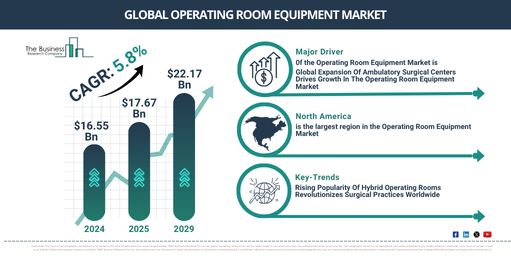
    The scale of the operating room equipment market has seen considerable expansion in the last few years. The market is projected to rise from $16.55 billion in 2024 to roughly $17.67 billion in 2025, indicating a compound annual growth rate (CAGR) of 6.8%. Factors such as a rapidly aging populace, supportive government policies, growing healthcare expenditure, and fast-paced growth in emerging markets have largely contributed to the market’s growth during the historical period.

    Expectations for the operating room equipment market are high, with robust growth predicted in the upcoming years. The market is projected to reach $22.17 billion by 2029, with a compound annual growth rate (CAGR) of 5.8%. The growth during the forecast period is linked to a rapidly growing economy, the rising demand for minimal invasive surgeries and critical care equipment, the increasing incidences of chronic diseases, as well as reforms in insurance initiated by the government. Key trends projected for the forecast period involve the creation of personalized MPMS, the application of Evoked Potential Assessment Device (EPAD) technology in neuromonitoring devices used during surgeries, the introduction of advanced ultrasonic surgical devices, the provision of multi-modal surgical equipment, and the adoption of pay-per-use models to cut down on operational expenses.

    Download a free sample to assess the report’s scope and structure:

    https://www.thebusinessresearchcompany.com/sample.aspx?id=3804&type=smp

    Which Primay Drivers Are Accelerating Growth in the Operating Room Equipment Market?

    The worldwide ascension of the operating room (OR) equipment market is propelled by the escalating number of ambulatory surgical centers (ASCs). Since every ASC necessitates an OR to perform surgeries, the proliferating quantity of ASCs globally acts as a crucial facilitator in the expansion of the OR equipment market.

    Which Primary Segments of the Operating Room Equipment Market Are Driving Growth and Industry Transformations?

    The operating room equipment market covered in this report is segmented –

    1) By Type: Anesthesia Devices, Endoscopes, Operating Room Lights, Operating Tables, Electrosurgical Devices, Surgical Imaging Devices, Patient Monitors

    2) By Application: Cardiovascular Surgery, Thoracic Surgery, Neurosurgery, Other Applications

    3) By End User: Hospitals, Outpatient Facilities And Ambulatory Surgery Centers

    Subsegments:

    1) By Anesthesia Devices: Anesthesia Machines, Vaporizers, Anesthesia Monitors

    2) By Endoscopes: Rigid Endoscopes, Flexible Endoscopes, Accessories For Endoscopy

    3) By Operating Room Lights: Surgical LED Lights, Surgical Halogen Lights, Examination Lights

    4) By Operating Tables: General Surgical Tables, Specialty Surgical Tables, Adjustable Operating Tables

    5) By Electrosurgical Devices: Electrosurgical Generators, Electrosurgical Instruments, Smoke Evacuators

    6) By Surgical Imaging Devices: C-Arms, Surgical Ultrasound Systems, Intraoperative CT Scanners

    7) By Patient Monitors: Multi-Parameter Monitors, Bedside Monitors, Portable Monitors

    Request customized data on this market:

    https://www.thebusinessresearchcompany.com/customise?id=3804&type=smp

    Which Regions Are Key Players in the Growth of the #Which Primay Drivers Are Accelerating Growth in the Operating Room Equipment Market?# Market?

    North America was the largest region in the global operating room equipment market in 2024. Western Europe was the second largest market in the operating room equipment market. The regions covered in the operating room equipment market report are Asia-Pacific, Western Europe, Eastern Europe, North America, South America, Middle East, Africa

    Which Technological Trends Are Reshaping the Operating Room Equipment Industry Dynamics?

    The trend of the hybrid operating room is emerging in the worldwide operating room market. Different from a traditional operating room, a hybrid operating room comes with advanced medical imaging systems and devices, enabling high-quality interventional imaging and less invasive surgical procedures. This room creates a multifaceted surrounding wherein numerous surgeons, nurses, anesthesiologists, and technicians can collaborate. There has been a global increase in healthcare facilities implementing hybrid operating rooms, as they provide a sterile environment for surgeons to conduct operations effortlessly. The fact these operating rooms help decrease overall healthcare costs, increase patient safety, and cut down on surgical time, forecasts a rise in their acceptance particularly in neurosurgery, cardiology, and orthopedics sectors.

    View the full report here:

    https://www.thebusinessresearchcompany.com/report/operating-room-equipment-global-market-report

    What Parameters Are Used to Define the Operating Room Equipment Market?

    Operating room equipment are different types of equipment that are used during surgery. These machines deliver anesthetic agents to patients and control oxygen flow, ensuring patients remain unconscious and pain-free during surgery. They monitor vital signs and adjust anesthesia levels in real-time to maintain patient safety.

    Purchase the full report and get a swift delivery:

    https://www.thebusinessresearchcompany.com/purchaseoptions.aspx?id=3804

    About The Business Research Company:

    With over 15000+ reports from 27 industries covering 60+ geographies, The Business Research Company has built a reputation for offering comprehensive, data-rich research and insights. Armed with 1,500,000 datasets, the optimistic contribution of in-depth secondary research, and unique insights from industry leaders, you can get the information you need to stay ahead in the game.

    Get in touch with us:

    The Business Research Company: https://www.thebusinessresearchcompany.com/

    Americas +1 3156230293

    Asia +44 2071930708

    Europe +44 2071930708

    Email us at info@tbrc.info

    Follow us on:

    LinkedIn: https://in.linkedin.com/company/the-business-research-company

    YouTube: https://www.youtube.com/channel/UC24_fI0rV8cR5DxlCpgmyFQ

    Global Market Model: https://www.thebusinessresearchcompany.com/global-market-model
  • Market Trends Influencing Strategic Decisions in the Non Contact Infrared Thermometers Industry: Enhanced Connectivity With The Bluetooth-Based Infrared Thermometer Trend

    Market Trends Influencing Strategic Decisions in the Non Contact Infrared Thermometers Industry: Enhanced Connectivity With The Bluetooth-Based Infrared Thermometer Trend

    Discover trends, market shifts, and competitive outlooks for the non contact infrared thermometers industry through 2025-2034 with The Business Research Company’s reliable data and in-depth research

    How Fast Is The Non Contact Infrared Thermometers Market Expected to Grow Between 2025 And 2029?

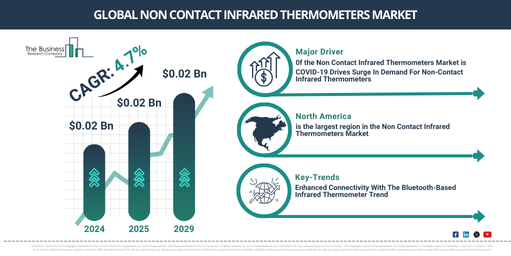
    In recent times, there has been a robust growth in the market size of non-contact infrared thermometers. This market is projected to expand from a worth of $0.02 billion in 2024 to an estimated value of $0.02 billion in 2025, reflecting a compound annual growth rate (CAGR) of 6.4%. Factors contributing to this significant growth seen during the historical period include the impact of COVID-19, advancement in emerging markets, heightened occurrence of infectious diseases, an increase in disease prevalence in animals, a surge in healthcare spending and a growing older population.

    The market size of non-contact infrared thermometers is projected to observe consistent growth in the forthcoming years, escalating to $0.02 billion by 2029 with a compound annual growth rate (CAGR) of 4.7%. The expected growth within the forecasted timeframe can be connected to the surge in online pharmacies, the rise of e-commerce, and the increasing accessibility and technological progress of non-contact infrared thermometers. Key trends projected during the forecast period involve the incorporation of Bluetooth capabilities to enhance the tracking of cluster cases with temperature, cooperation with government entities to augment production speed and expand customer base, and promoting products on online platforms to boost sales and revenue.

    Download a free sample to assess the report’s scope and structure:

    https://www.thebusinessresearchcompany.com/sample.aspx?id=3277&type=smp

    What Are the Major Market Drivers Behind the Rising Adoption of Non Contact Infrared Thermometers Market?

    The rise in demand for non-contact infrared thermometers market amid the COVID-19 crisis is a crucial factor propelling the market’s expansion. The swift rise in COVID-19 infections, where fever is a primary symptom, necessitates temperature checks in locations with large crowds. Infrared thermometers are effective tools for timely and accurate measurement of body temperature. They measure temperature via the forehead at a safe distance within seconds, thus the requirement for the infrared thermometer is escalating daily due to its quick computation and high accuracy characteristics.

    Which Key Market Segments Comprise the Non Contact Infrared Thermometers Market and Drive Its Revenue Growth?

    The non contact infrared thermometers market covered in this report is segmented –

    1) By Product Type: Forehead, In-Ear, Multifunction

    2) By Distribution Channel: Hospital Pharmacy, Retail Pharmacy, Online Sales

    3) By Application: Veterinary, Medical

    Subsegments:

    1) By Forehead: Handheld Forehead Thermometers, Stationary Forehead Thermometers

    2) By In-Ear: Digital In-Ear Thermometers, Infrared In-Ear Thermometers

    3) By Multifunction: Forehead And Ear Combination Thermometers, Body And Surface Temperature Thermometers

    Request customized data on this market:

    https://www.thebusinessresearchcompany.com/customise?id=3277&type=smp

    Which Areas Are Leading Regions in the Non Contact Infrared Thermometers Market Expansion Across the Globe?

    North America was the largest region in the non-contact infrared thermometers market in 2024. Western Europe was the second largest region in the non-contact infrared thermometers market report. The regions covered in the non contact infrared thermometers market report are Asia-Pacific, Western Europe, Eastern Europe, North America, South America, Middle East, Africa

    What Are the Strategic Trends Steering theNon Contact Infrared Thermometers Market Direction?

    A significant trend within the non-contact infrared thermometer market is the emergence of Bluetooth-based thermometers. Given the rise in COVID-19 cases, door-to-door temperature screening campaigns are becoming increasingly difficult to implement. This is where the role of the smart thermometer comes into play. Upon activating the thermometer, it pairs with a mobile device through Bluetooth, mirroring the position on the corresponding app. This allows a person to self-assess just like with any other thermometer, but the results are instantly signified on the phone. In case of fever, crucial information including location is sent to the server. The Digi-Sense D/S IR Therm app showcases this functionality, connecting the infrared thermometer to any smartphone or iOS device via Bluetooth and transferring data. All results are automatically logged with a timestamp on the app, which can then be saved in a CSV format and emailed for subsequent referral.

    View the full report here:

    https://www.thebusinessresearchcompany.com/report/non-contact-infrared-thermometers-global-market-report

    How Is the Non Contact Infrared Thermometers Market Conceptually Defined?

    Non-contact infrared thermometers are tools that determine temperature remotely by sensing infrared energy from an object’s surface. These devices are ideal for applications where direct contact is unsuitable, like gauging the temperature of moving objects, dangerous environments, or taking body temperatures without touching.

    Purchase the full report and get a swift delivery:

    https://www.thebusinessresearchcompany.com/purchaseoptions.aspx?id=3277

    About The Business Research Company:

    With over 15000+ reports from 27 industries covering 60+ geographies, The Business Research Company has built a reputation for offering comprehensive, data-rich research and insights. Armed with 1,500,000 datasets, the optimistic contribution of in-depth secondary research, and unique insights from industry leaders, you can get the information you need to stay ahead in the game.

    Get in touch with us:

    The Business Research Company: https://www.thebusinessresearchcompany.com/

    Americas +1 3156230293

    Asia +44 2071930708

    Europe +44 2071930708

    Email us at info@tbrc.info

    Follow us on:

    LinkedIn: https://in.linkedin.com/company/the-business-research-company

    YouTube: https://www.youtube.com/channel/UC24_fI0rV8cR5DxlCpgmyFQ

    Global Market Model: https://www.thebusinessresearchcompany.com/global-market-model
  • Next-Gen Next Generation Sequencing : Market Forecast, Transformation, and Long-Term Trajectories

    Next-Gen Next Generation Sequencing : Market Forecast, Transformation, and Long-Term Trajectories

    Discover trends, market shifts, and competitive outlooks for the next generation sequencing industry through 2025-2034 with The Business Research Company’s reliable data and in-depth research

    #What is the Anticipated CAGR of the Next Generation Sequencing Market, and What Factors Will Drive It?

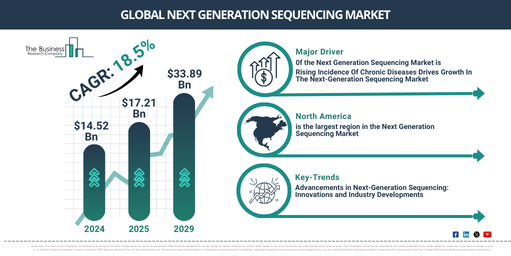
    In recent times, the market size for next generation sequencing has expanded at a fast pace. There is an expected growth from $14.52 billion in 2024 to $17.21 billion in 2025, signifying a compound annual growth rate (CAGR) of 18.5%. The growth experienced in the past period is due to factors like increased funding, a surge in healthcare spending, the emergence of growing markets, quick technological advancements, and a swift increase in the elderly population.

    In the coming few years, the next generation sequencing market size is anticipated to experience a swift expansion. The market is forecasted to escalate to $33.89 billion in 2029, growing at a compound annual growth rate (CAGR) of 18.5%. Factors propelling this growth in the forecast period encompass an ageing population, increased accessibility to healthcare, a rising surge in chronic diseases and a heightened demand for next generation sequencing due to the COVID-19 pandemic. Key trends expected in the forecast period are the emphasis on the application of artificial intelligence to minimize costs and time, researching rare diseases in a cost-efficient way to stay ahead of competing technologies, offering NGS technologies for newborn screening, and embracing big data technologies for the analysis of extensive genomic data.

    Download a free sample to assess the report’s scope and structure:

    https://www.thebusinessresearchcompany.com/sample.aspx?id=3990&type=smp

    Which Major Market Drivers Are Expected to Boost the Growth Potential of the Next Generation Sequencing Market?

    The rise in incidences of chronic diseases like cancer, AIDS, and thalassemia is significantly impacting the expansion of the next-generation sequencing market. There’s a global increase in chronic health conditions due to factors such as aging populations and changes in societal behaviors, which subsequently escalate the prevalence and cost of long-term healthcare needs. Next-generation sequencing (NGS) proves to be an adaptable developmental platform used by scientists and healthcare providers in various oncology studies for pinpointing biomarkers that direct the course of treatment. As per the World Health Organization, chronic disease prevalence is likely to surge considerably. Therefore, the escalation in chronic disease incidents will heighten the demand for NGS sequencing and enhance the revenue capacity, hence boosting the growth of the next generation sequencing market.

    Which Key Market Segments Comprise the Next Generation Sequencing Market and Drive Its Revenue Growth?

    The next generation sequencing market covered in this report is segmented –

    1) By Product: Instruments, Reagents And Kits, Software

    2) By Technology: Sequencing by Synthesis, Ion Semiconductor Sequencing, Single-molecule Real-time Sequencing, Nanopore Sequencing, Other Sequencing Technologies

    3) By Application: Diagnostics, Drug Discovery, Other Applications

    Subsegments:

    1) By Instruments: Sequencing Systems, Library Preparation Instruments, Quality Control Instruments

    2) By Reagents And Kits: Sequencing Reagents, Library Preparation Kits, Amplification Kits

    3) By Software: Data Analysis Software, Bioinformatics Software, Workflow Management Software

    Request customized data on this market:

    https://www.thebusinessresearchcompany.com/customise?id=3990&type=smp

    Which Areas Are Leading Regions in the Next Generation Sequencing Market Expansion Across the Globe?

    North America was the largest region in the next generation sequencing market in 2024. Asia-Pacific was the second largest region in the global next generation sequencing market share. The regions covered in the next generation sequencing market report are Asia-Pacific, Western Europe, Eastern Europe, North America, South America, Middle East, Africa

    What Are the Key Market Trends in theNext Generation Sequencing Market Over the Coming Years?

    Prominent corporations operating within the next-generation sequencing market are concentrating on creating innovative technologies like next-generation sequencing (NGS) platform technology to improve speed, precision, and cost-efficiency. Significant advancements encompass improved precision, better throughput, and the incorporation of artificial intelligence for data evaluation. Next-generation sequencing (NGS) platforms are state-of-the-art technologies that expedite and economize the sequencing of DNA and RNA by processing countless fragments at the same time. These platforms find usage in diverse applications, including whole-genome sequencing and targeted resequencing, revolutionizing genomic research and customized medicine. An example of this is in April 2022, Thermo Fisher Scientific, a biotechnology company based in the U.S, introduced an IonTorrent Genexus Dx Integrated Sequencer. This sequencer accelerates automated next-generation sequencing in clinical labs and delivers outcomes in as few as 24 hours. The sequencer’s simplicity and flexibility boost both diagnostic testing and research, thereby efficiently propelling the advancements in precision medicine.

    View the full report here:

    https://www.thebusinessresearchcompany.com/report/next-generation-sequencing-global-market-report

    How Is the Next Generation Sequencing Market Conceptually Defined?

    Next-generation sequencing is a sequencing technology that offers ultra-high throughput, scalability, and speed. The technology is used to determine the genetic variation associated with diseases or other biological phenomena.

    Purchase the full report and get a swift delivery:

    https://www.thebusinessresearchcompany.com/purchaseoptions.aspx?id=3990

    About The Business Research Company:

    With over 15000+ reports from 27 industries covering 60+ geographies, The Business Research Company has built a reputation for offering comprehensive, data-rich research and insights. Armed with 1,500,000 datasets, the optimistic contribution of in-depth secondary research, and unique insights from industry leaders, you can get the information you need to stay ahead in the game.

    Get in touch with us:

    The Business Research Company: https://www.thebusinessresearchcompany.com/

    Americas +1 3156230293

    Asia +44 2071930708

    Europe +44 2071930708

    Email us at info@tbrc.info

    Follow us on:

    LinkedIn: https://in.linkedin.com/company/the-business-research-company

    YouTube: https://www.youtube.com/channel/UC24_fI0rV8cR5DxlCpgmyFQ

    Global Market Model: https://www.thebusinessresearchcompany.com/global-market-model
  • Neurology Devices Market Overview 2025: Competitive Shifts, Forecast Models, and Emerging Opportunities

    Neurology Devices Market Overview 2025: Competitive Shifts, Forecast Models, and Emerging Opportunities

    Discover trends, market shifts, and competitive outlooks for the neurology devices industry through 2025-2034 with The Business Research Company’s reliable data and in-depth research

    #What Are the Key Milestones in the Neurology Devices Market’s Growth Trajectory From 2025 To 2034?

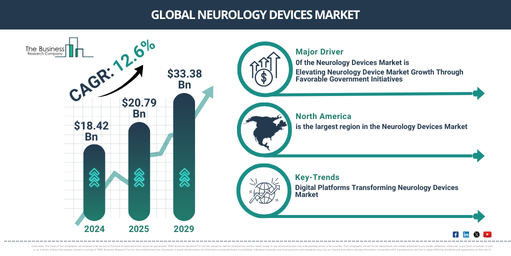
    The market for neurology devices has seen significant expansion in the past few years. The market value is expected to rise from $18.42 billion in 2024 to $20.79 billion in 2025, reflecting a compound annual growth rate (CAGR) of 12.9%. The notable growth seen during the historical time period can be traced back to a rapidly aging population, swift advancements in technology, prolific economic progress in developing markets, a boost in research and development within the sector, as well as substantial investments in neurology devices by private enterprises.

    Anticipated to experience quick expansion in the coming years, the neurology devices market is projected to reach $33.38 billion by 2029, with a compound annual growth rate (CAGR) of 12.6%. The escalation anticipated in the forecast period could be due to the growing age-old population, lifestyle alterations, increased consciousness regarding neurological disorders, an uptick in neurological disease load, and brisk economic growth. Predominant trends during the forecast period comprise investment in the development of neuromodulation devices, the emergence of wearable neurology devices, launching of new products, the adoption of merger and acquisition strategies, and the amplification of research and development endeavors.

    Download a free sample to assess the report’s scope and structure:

    https://www.thebusinessresearchcompany.com/sample.aspx?id=1977&type=smp

    What Are the Core Growth Drivers Propelling the Neurology Devices Market Forward?

    The anticipated growth in demand for neurology devices can be attributed to positive government policies and regulations. These government initiatives, encompassing a variety of measures to ensure and enhance healthcare product safety and quality, can profoundly influence the neurology device market. They do this through influencing regulations, supporting R&D, offering financial incentives, broadening the field of telemedicine, boosting public health awareness, and improving overall healthcare infrastructure and access. For example, in October 2023, the Food and Drug Administration (FDA), a US-based federal agency part of the Department of Health and Human Services, expanded the Total Product Life Cycle Advisory Programme (TAP) to cover neurological and physical medicine devices. This move was designed to accelerate progress in these fields. By the first quarter of 2025, the FDA has plans to include four more offices into this program, subsequently increasing the enrolment of devices by as many as 65. As such, these beneficial government initiatives will spur the growth of the neurology device market in the forthcoming period.

    What Segment Types Define the Neurology Devices Market Structure?

    The neurology devices market covered in this report is segmented –

    1) By Type: Cerebrospinal Fluid Management (CSF) Devices And Equipment, Interventional Neurology Devices And Equipment, Neurosurgery Devices And Equipment, Neurostimulation Devices

    2) By Type of Expenditure: Public, Private

    3) By Product: Instruments/Equipment, Disposables

    4) By End User: Hospitals And Clinics, Diagnostic Laboratories, Other End Users

    Subsegments:

    1) By Cerebrospinal Fluid Management (CSF) Devices And Equipment: CSF Shunts, CSF Drainage Systems, Ventriculostomy Devices

    2) By Interventional Neurology Devices And Equipment: Intracranial Stents, Embolic Coils, Neurovascular Catheters

    3) By Neurosurgery Devices And Equipment: Surgical Microscopes, Surgical Navigation Systems, Neurosurgical Instruments

    4) By Neurostimulation Devices: Deep Brain Stimulation Devices, Spinal Cord Stimulation Devices, Transcranial Magnetic Stimulation Devices

    Request customized data on this market:

    https://www.thebusinessresearchcompany.com/customise?id=1977&type=smp

    Which Geographic Areas Hold the Strongest Growth Potential in the Neurology Devices Market?

    North America was the largest region in the global neurology devices market in 2024. Asia-Pacific was the second largest region in the global neurology devices market. Africa was the smallest region in the global neurology devices market. The regions covered in the neurology devices market report are Asia-Pacific, Western Europe, Eastern Europe, North America, South America, Middle East, Africa

    Which Emerging Trends that Are Influencing theNeurology Devices Industry Evolution?

    Key enterprises in the neurology devices market, like BrainTale, are innovating their services with digital solutions such as the BrainTale-care platform to improve patient care and extend their product range. BrainTale-Care, a dedicated digital tool, is specifically designed for tracking and predicting neurological disorders. In a notable move in March 2022, BrainTale, a medical devices firm hailing from France, launched the BrainTale-care system, featuring aspects such as brainQuant to quantify white matter, and brainScore-coma to predict coma recovery. This proves a significant stride in the company’s progress, as its vision is to provide European medical professionals with an innovative digital medical device to aid in decision-making. The aim of BrainTale is to offer non-invasive, clinically approved remedies to neurologists and resuscitation specialists, in an effort to enhance the diagnosis, monitoring, and forecasting of the progression of neurological diseases.

    View the full report here:

    https://www.thebusinessresearchcompany.com/report/neurology-devices-global-market-report

    What Is the Definition of the Neurology Devices Market?

    Neurology devices are used to diagnose, prevent, and treat various neurological disorders such as Alzheimer’s, spinal cord injury, and traumatic brain injury. These devices are also used to restore hearing and sight for patients with limb loss or congenital limb differences.

    Purchase the full report and get a swift delivery:

    https://www.thebusinessresearchcompany.com/purchaseoptions.aspx?id=1977

    About The Business Research Company:

    With over 15000+ reports from 27 industries covering 60+ geographies, The Business Research Company has built a reputation for offering comprehensive, data-rich research and insights. Armed with 1,500,000 datasets, the optimistic contribution of in-depth secondary research, and unique insights from industry leaders, you can get the information you need to stay ahead in the game.

    Get in touch with us:

    The Business Research Company: https://www.thebusinessresearchcompany.com/

    Americas +1 3156230293

    Asia +44 2071930708

    Europe +44 2071930708

    Email us at info@tbrc.info

    Follow us on:

    LinkedIn: https://in.linkedin.com/company/the-business-research-company

    YouTube: https://www.youtube.com/channel/UC24_fI0rV8cR5DxlCpgmyFQ

    Global Market Model: https://www.thebusinessresearchcompany.com/global-market-model
  • From Insight to Impact: Strategic Growth Mapping in the Nebulizers Market

    From Insight to Impact: Strategic Growth Mapping in the Nebulizers Market

    Discover trends, market shifts, and competitive outlooks for the nebulizers industry through 2025-2034 with The Business Research Company’s reliable data and in-depth research

    #How Has The Nebulizers Market Size Shifted, And What Is the Outlook Through 2034?

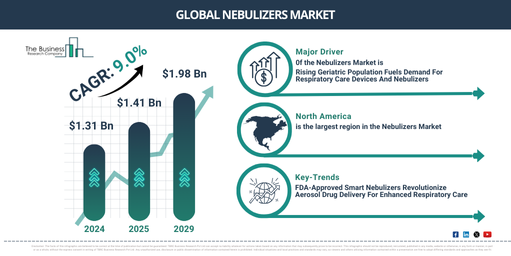
    In recent years, the market size of nebulizers has witnessed significant growth. The market, which was valued at $1.31 billion in 2024, is projected to reach $1.41 billion in 2025 with a compound annual growth rate (CAGR) of 7.4%. The upward trend in the historic period can be traced back to a higher occurrence of chronic respiratory diseases, along with a surge in healthcare spending in developing economies.

    Expectations are high for solid expansion in the nebulizers market in the next few years, with predictions indicating a rise to $1.98 billion by 2029, maintaining a compound annual growth rate (CAGR) of 9.0%. The projected growth during this forecast period can be tied to factors such as increasing older adult population, rising demand for home healthcare equipment like portable devices, heightened acceptance of mesh nebulizers, the global spread of COVID-19, and an uptick in tobacco and alcohol use. Some significant trends anticipated for the forecast period are the development of connected nebulizers, an emphasis on the creation of lightweight portable nebulizers, a focus on vibration technology for the creation of new nebulizers, and the push for initiatives to generate products from eco-friendly materials.

    Download a free sample to assess the report’s scope and structure:

    https://www.thebusinessresearchcompany.com/sample.aspx?id=3790&type=smp

    What are the Fundamental Drivers and Innovations Shaping the Nebulizers Market?

    Growing numbers of elderly people worldwide are anticipated to boost the demand for respiratory care devices, including nebulizers, in the coming years. For example, the Pew Research Center in the US predicted in January 2024 that from a 0.2% growth rate in 2024, the geriatric population will grow by 0.5% by 2054. Older individuals are particularly vulnerable to respiratory ailments such as Chronic Obstructive Pulmonary Disease (COPD), sleep apnea, and the novel coronavirus, in part due to a natural decrease in immune function. Therefore, the expanding elderly population is expected to drive the nebulizers market’s growth.

    How Is the Nebulizers Market Segmented?

    The nebulizers market covered in this report is segmented –

    1) By Type: Pneumatic Nebulizer, Ultrasonic Nebulizer, Mesh Nebulizer

    2) By Portability: Portable Nebulizer, Tabletop Nebulizer

    3) By Application: COPD, Cystic Fibrosis, Asthma, Other Applications

    4) By End Use: Hospitals and Clinics, Emergency Centers, Home Healthcare

    Subsegments:

    1) By Pneumatic Nebulizer: Jet Nebulizers, Handheld Pneumatic Nebulizers, Tabletop Pneumatic Nebulizers

    2) By Ultrasonic Nebulizer: Portable Ultrasonic Nebulizers, Stationary Ultrasonic Nebulizers

    3) By Mesh Nebulizer: Portable Mesh Nebulizers, Battery-Operated Mesh Nebulizers, Hospital-Grade Mesh Nebulizers

    Request customized data on this market:

    https://www.thebusinessresearchcompany.com/customise?id=3790&type=smp

    Which Regions Are Driving the Next Phase of the Nebulizers Market Growth?

    North America was the largest region in the nebulizers market in 2024. Asia-Pacific was the second largest region in the global nebulizers market share. The regions covered in the nebulizers market report are Asia-Pacific, Western Europe, Eastern Europe, North America, South America, Middle East, Africa

    What Key Trends Are Shaping the Future of the Nebulizers Market?

    Prominent corporations in the nebulizer market are gaining FDA approvals for innovative devices like Smart Nebulizers, as a strategy to boost their market profitability. These Smart Nebulizers, integrating digital technology, revolutionize the delivery of aerosol drugs to the lungs. For instance, in June 2022, the UK-based pharmaceutical firm, Vectura Group Limited, made a momentous announcement of having received FDA approval for their Smart Nebulizers, aimed at augmenting pediatric asthma care. The devices, taking into account the patient’s specific breathing capacity, can facilitate the effective dispersion of the aerosol to the lungs. The applications of these Smart Nebulizers extend to the treatment of various respiratory ailments – asthma, bronchitis, sore throats, and acute as well as chronic tracheitis.

    View the full report here:

    https://www.thebusinessresearchcompany.com/report/nebulizers-global-market-report

    How Is the Nebulizers Market Defined and What Are Its Core Parameters?

    A nebulizer device is a piece of medical device that anyone who has asthma or similar respiratory illness can use to deliver medication swiftly and efficiently to the lungs. The nebulizer devices are used in respiratory care for patients with respiratory diseases including asthma, cystic fibrosis, and COPD.

    Purchase the full report and get a swift delivery:

    https://www.thebusinessresearchcompany.com/purchaseoptions.aspx?id=3790

    About The Business Research Company:

    With over 15000+ reports from 27 industries covering 60+ geographies, The Business Research Company has built a reputation for offering comprehensive, data-rich research and insights. Armed with 1,500,000 datasets, the optimistic contribution of in-depth secondary research, and unique insights from industry leaders, you can get the information you need to stay ahead in the game.

    Get in touch with us:

    The Business Research Company: https://www.thebusinessresearchcompany.com/

    Americas +1 3156230293

    Asia +44 2071930708

    Europe +44 2071930708

    Email us at info@tbrc.info

    Follow us on:

    LinkedIn: https://in.linkedin.com/company/the-business-research-company

    YouTube: https://www.youtube.com/channel/UC24_fI0rV8cR5DxlCpgmyFQ

    Global Market Model: https://www.thebusinessresearchcompany.com/global-market-model

  • Global Molecular Diagnostics Devices And Equipment Market Projected to Reach $24.77 Billion by 2029 at a CAGR of 6.8%

    Global Molecular Diagnostics Devices And Equipment Market Projected to Reach $24.77 Billion by 2029 at a CAGR of 6.8%

    Discover trends, market shifts, and competitive outlooks for the molecular diagnostics devices and equipment industry through 2025-2034 with The Business Research Company’s reliable data and in-depth research

    #What Are the Key Milestones in the Molecular Diagnostics Devices And Equipment Market’s Growth Trajectory From 2025 To 2034?

    In recent years, the market size of molecular diagnostics devices and equipment has significantly expanded. Predictions show that it is set to increase from $17.58 billion in 2024 to $19.01 billion in 2025, with a compound annual growth rate (CAGR) of 8.1%. This growth in the historic period can be credited to factors such as heightened funding, increased spending in healthcare, economic development in emerging markets, swift technological progress, the emergence of new forms of pathogenic infestations, and a rapidly increasing elderly population.

    Anticipated to witness a robust expansion in the forthcoming years, the market size for molecular diagnostics devices and equipment is projected to reach $24.77 billion by 2029, escalating at a compound annual growth rate (CAGR) of 6.8%. This predicted growth during the forecast period is largely due to the quick ascent in numerous bacterial and viral epidemics, an aging demographic, enhanced healthcare accessibility, a rising incidence of chronic diseases, and an escalating demand for molecular diagnostic devices and equipment in light of the COVID-19 pandemic. Key forward-looking trends encompass automation within the molecular diagnostics sector, implementation of artificial intelligence, heightened demand for molecular diagnostic devices for researching rare diseases, a growing embrace of big data, utilising next-generation sequencing for newborn screening, and the use of point-of-care molecular diagnostics (POC mdx).

    Download a free sample to assess the report’s scope and structure:

    https://www.thebusinessresearchcompany.com/sample.aspx?id=2595&type=smp

    What are the Fundamental Drivers and Innovations Shaping the Molecular Diagnostics Devices And Equipment Market?

    The surge in instances of infectious diseases is anticipated to fuel the expansion of the molecular diagnostic devices and equipment market in the future. Infectious diseases are characterized by pathological microorganisms like bacteria, viruses, fungi, or parasites, which can be spread from one person to another or from animals to humans. The increasing rate of these diseases is influenced by antimicrobial resistance, globalization and travel, urbanization, socioeconomic inequalities, and an aging population. Molecular diagnostic devices and equipment play a crucial role in detecting and managing these infectious diseases. As an illustration, the Office for National Statistics, a government department based in the UK, reported in March 2023 that the UK registered 619 COVID-19 related deaths in the week ending on 17 March 2023, a rise from 605 the previous week. During this week, 4.5% of all deaths in the UK were due to COVID-19, a slight decline from 4.6% the week before. Consequently, the growing prevalence of infectious diseases is stimulating the expansion of the molecular diagnostic devices and equipment market.

    How Is the Molecular Diagnostics Devices And Equipment Market Segmented?

    The molecular diagnostics devices and equipment market covered in this report is segmented –

    1) By Product: Instruments, Reagents And Consumables, Software

    2) By Technology: DNA(Deoxyribonucleic acid) sequencing, Polymerase chain reaction, Isothermal Nucleic Acid Amplification Technology, Transcription Mediated Amplification (TMA), In situ hybridization, Microarrays, Mass spectrometry, Other Technologies

    3) By Application: Cancer, Pharmacogenomics, Genetic testing, Infectious disease, Prenatal, Other Applications

    4) By End User: Diagnostic laboratories, Hospitals, Other End Users

    Subsegments:

    1) By Instruments: Polymerase Chain Reaction (PCR) Machines, Nucleic Acid Analyzers, DNA Sequencers, Microarrays

    2) By Reagents And Consumables: PCR Reagents, DNA Probes And Primers, Sample Preparation Kits, Control And Calibration Materials

    3) By Software: Data Analysis Software, Laboratory Information Management Systems (LIMS), Bioinformatics Software, Integration Software For Instrumentation

    Request customized data on this market:

    https://www.thebusinessresearchcompany.com/customise?id=2595&type=smp

    Which Regions Are Driving the Next Phase of the Molecular Diagnostics Devices And Equipment Market Growth?

    Asia-Pacific was the largest region in the global molecular diagnostics devices (or) equipment market in 2024. Western Europe was the second largest market in molecular diagnostics devices (or) equipment market. The regions covered in the molecular diagnostics devices and equipment market report are Asia-Pacific, Western Europe, Eastern Europe, North America, South America, Middle East, Africa

    What Key Trends Are Shaping the Future of the Molecular Diagnostics Devices And Equipment Market?

    Leading entities in the molecular diagnostic sector are prioritizing the development of automated solutions for their molecular diagnostics devices and tools. This type of automation will increase the productivity and uniformity of the entire diagnostic operation. The digitalization of the diagnostic procedure offers dependable and efficient results which cannot be achieved by manual testing from different experts. Key industry figures are now utilising nanotechnology-powered Oral Fluid Nano Sensor Test (OFNASET) catering to the detection of oral cancer biomarkers present in saliva. Keeping pace with the trend towards automation and precision, Roche has engineered cobas connection modules (CCM) to enhance scalability and sample-flow efficiency. This is achieved by automating the movement of samples across various systems and instruments, establishing a fully automated workflow.

    View the full report here:

    https://www.thebusinessresearchcompany.com/report/molecular-diagnostics-devices-and-equipment-global-market-report

    How Is the Molecular Diagnostics Devices And Equipment Market Defined and What Are Its Core Parameters?

    Molecular diagnostics devices are used to diagnose infectious diseases and perform screening by detecting specific sequences in DNA or RNA. It helps doctors prescribe more accurate therapeutic interventions in the early stages of a disease.

    Purchase the full report and get a swift delivery:

    https://www.thebusinessresearchcompany.com/purchaseoptions.aspx?id=2595

    About The Business Research Company:

    With over 15000+ reports from 27 industries covering 60+ geographies, The Business Research Company has built a reputation for offering comprehensive, data-rich research and insights. Armed with 1,500,000 datasets, the optimistic contribution of in-depth secondary research, and unique insights from industry leaders, you can get the information you need to stay ahead in the game.

    Get in touch with us:

    The Business Research Company: https://www.thebusinessresearchcompany.com/

    Americas +1 3156230293

    Asia +44 2071930708

    Europe +44 2071930708

    Email us at info@tbrc.info

    Follow us on:

    LinkedIn: https://in.linkedin.com/company/the-business-research-company

    YouTube: https://www.youtube.com/channel/UC24_fI0rV8cR5DxlCpgmyFQ

    Global Market Model: https://www.thebusinessresearchcompany.com/global-market-model
  • Market Trends Influencing Strategic Decisions in the Interventional Oncology Devices Industry: Integration Of Robotics Technology Enhances Efficiency In Interventional Oncology Devices Market

    Market Trends Influencing Strategic Decisions in the Interventional Oncology Devices Industry: Integration Of Robotics Technology Enhances Efficiency In Interventional Oncology Devices Market

    Discover trends, market shifts, and competitive outlooks for the interventional oncology devices industry through 2025-2034 with The Business Research Company’s reliable data and in-depth research

    How Has The Interventional Oncology Devices Market Growth Evolved From 2024 To 2025, And What’s Ahead?

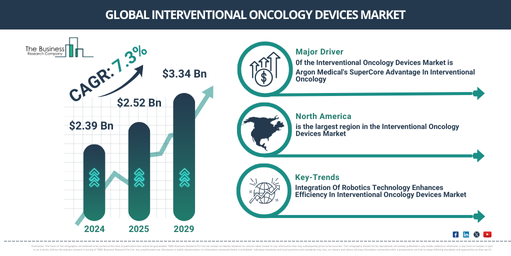
    The market size for interventional oncology devices has seen a robust enhancement in recent years. An increase from $2.39 billion in 2024 to $2.52 billion in 2025, marking a compound annual growth rate (CAGR) of 5.3% is anticipated. Factors such as an aging populace, rising prevalence of cancer, amplified spending on pharmaceutical research and development, elevated healthcare expenditures, and an increase in the volume of healthcare facilities, can be credited for this growth observed in the past.

    The market for interventional oncology devices is set to experience significant expansion in the coming years, reaching a worth of $3.34 billion in 2029, at a compound annual growth rate (CAGR) of 7.3%. The rise during the forecast period is due to several factors such as an increase in elderly population, an upward trend in using minimally invasive surgeries (MIS), increased investment in research and development, enhanced healthcare spending, ambitious potential in developing nations, and the escalating prevalence of cancer and chronic illnesses. The forecast period is also expected to witness major trends such as concentration on the advancement of image-guided oncology devices, utilization of artificial intelligence for the creation of novel devices, development of innovative embolic devices for improved oncology procedures, emphasis on the integration of robotic technology and strategic partnerships with companies and research institutions to expedite the process of product development and innovation.

    Download a free sample to assess the report’s scope and structure:

    https://www.thebusinessresearchcompany.com/sample.aspx?id=3304&type=smp

    What Are the Major Market Drivers Behind the Rising Adoption of Interventional Oncology Devices Market?

    Top firms in the interventional oncology devices market are honing in on technologies like tissue volume, with the aim of boosting diagnostic precision and the efficiency of oncology treatments. The term tissue volume entails the measure of biological tissue gathered during a biopsy. A larger scope of tissue volumes can offer a more extensive range of samples, which in turn elevates diagnostic accuracy and the viability of treatment strategies. For example, Argon Medical, a medical device company based in the United States, unveiled the SuperCore Advantage semi-automatic biopsy in June 2023. The SuperCore Advantage is capable of securing up to 35% additional samples compared to its top competitors, thereby diminishing the necessity for numerous runs during biopsies. This capability is integral for accumulating sufficient tissue samples requisite for accurate diagnosis.

    Which Key Market Segments Comprise the Interventional Oncology Devices Market and Drive Its Revenue Growth?

    The interventional oncology devices market covered in this report is segmented –

    1) By Product: Embolization Devices, Ablation Devices, Support Devices

    2) By procedure: Thermal Tumor Ablation, Non-Thermal Tumor Ablation, Transcatheter Arterial Chemoembolization (TACE), Transcatheter Arterial Radioembolization (TARE), Selective Internal Radiation Therapy (SIRT), Transcatheter Arterial Embolization (TAE), Bland Embolization

    3) By Cancer Type: Liver Cancer, Kidney Cancer, Lung Cancer, Bone Cancer, Other Cancer Types

    Subsegments:

    1) By Embolization Devices: Embolic Agents, Catheters For Embolization, Delivery Systems For Embolic Agents

    2) By Ablation Devices: Radiofrequency Ablation Devices, Microwave Ablation Devices, Cryoablation Devices, Laser Ablation Devices

    3) By Support Devices: Imaging Guidance Systems, Access Devices, Fluid Management Systems

    Request customized data on this market:

    https://www.thebusinessresearchcompany.com/customise?id=3304&type=smp

    Which Areas Are Leading Regions in the Interventional Oncology Devices Market Expansion Across the Globe?

    North America was the largest region in the interventional oncology devices market in 2024. Asia-Pacific was the second largest region in the global interventional oncology devices market report. The regions covered in the interventional oncology devices market report are Asia-Pacific, Western Europe, Eastern Europe, North America, South America, Middle East, Africa

    What Are the Strategic Trends Steering theInterventional Oncology Devices Market Direction?

    Significant firms are zeroing in on employing robotics technology in interventional oncology apparatus for improved efficiency. The system combines image-guided planning and direction with the attachment of various tools to the required body region with greater accuracy and effectiveness. As an illustration, Quantum Surgical’s Epione interventional oncology robotics platform received approval from the U.S. Food and Drug Administration in March 2022.

    View the full report here:

    https://www.thebusinessresearchcompany.com/report/interventional-oncology-devices-global-market-report

    How Is the Interventional Oncology Devices Market Conceptually Defined?

    Interventional oncology devices refer to medical tools and technologies used to diagnose and treat cancer through minimally invasive procedures. They are used to target tumors directly, delivering treatments like ablation or embolization while minimizing damage to surrounding healthy tissue.

    Purchase the full report and get a swift delivery:

    https://www.thebusinessresearchcompany.com/purchaseoptions.aspx?id=3304

    About The Business Research Company:

    With over 15000+ reports from 27 industries covering 60+ geographies, The Business Research Company has built a reputation for offering comprehensive, data-rich research and insights. Armed with 1,500,000 datasets, the optimistic contribution of in-depth secondary research, and unique insights from industry leaders, you can get the information you need to stay ahead in the game.

    Get in touch with us:

    The Business Research Company: https://www.thebusinessresearchcompany.com/

    Americas +1 3156230293

    Asia +44 2071930708

    Europe +44 2071930708

    Email us at info@tbrc.info

    Follow us on:

    LinkedIn: https://in.linkedin.com/company/the-business-research-company

    YouTube: https://www.youtube.com/channel/UC24_fI0rV8cR5DxlCpgmyFQ

    Global Market Model: https://www.thebusinessresearchcompany.com/global-market-model
  • Global Medical Equipment Market Trends: Regional Breakdowns and Strategic Insights

    Discover trends, market shifts, and competitive outlooks for the medical equipment industry through 2025-2034 with The Business Research Company’s reliable data and in-depth research

    #How Has The Medical Equipment Market Size Shifted, And What Is the Outlook Through 2034?

    In recent times, there has been a swift expansion in the size of the medical equipment market. It is projected to rise from $764.67 billion in 2024 to $842.49 billion in 2025, with a compound annual growth rate (CAGR) of 10.2%. Factors such as increased healthcare spending, robust economic development in emerging markets, expansion in the number of healthcare facilities, and a rise in the frequency of surgical procedures are credited for the growth witnessed in the historic period.

    The market size for medical equipment is projected to experience substantial expansion in the upcoming years, with the growth expected to reach $1183.02 billion in 2029 at a compound annual growth rate (CAGR) of 8.9%. This growth may be ascribed to various factors including the aging population, a rising prevalence of chronic illnesses, and government backing. The anticipated period will see some significant trends such as the creation of new technological solutions, an emphasis on expanding medical equipment manufacturing facilities, an effort towards partnership and collaborations, a concentration on cardiovascular devices creation, and development of hybrid image technologies.

    Download a free sample to assess the report’s scope and structure:

    https://www.thebusinessresearchcompany.com/sample.aspx?id=3157&type=smp

    What Are the Major Market Drivers Behind the Rising Adoption of Medical Equipment Market?

    The escalating occurrence of cardiovascular ailments is anticipated to fuel the expansion of the medical equipment market. The term Cardiovascular disease (CVD) encompasses conditions impacting the heart or blood vessels. The diseases are frequently linked with the buildup of fatty substances in the arteries, known as atherosclerosis, and an increased possibility of blood clots. Various medical equipment is crucial for preventing, diagnosing, and treating cardiovascular diseases. To illustrate, the Centers for Disease Control and Prevention, a US-based governmental body, reported in May 2024 that heart disease was responsible for the demise of 702,880 individuals in 2022, corresponding to 1 in 5 deaths. Each year, around 805,000 people in the U.S. suffer a heart attack, with 605,000 being their first time and 200,000 happening to those with a history of a heart attack. Thus, the escalating occurrence of cardiovascular ailments is sure to boost the medical equipment market’s progress in the future.

    Which Key Market Segments Comprise the Medical Equipment Market and Drive Its Revenue Growth?

    The medical equipment market covered in this report is segmented –

    1) By Type: In-Vitro Diagnostics, Dental Equipment And Supplies, Ophthalmic Devices, Diagnostic Imaging Equipment, Cardiovascular Devices, Hospital Supplies, Surgical Equipment, Orthopedic Devices, Patient Monitoring Devices, Others

    2) By Type Of Expenditure: Public, Private

    3) By Product: Instruments And Equipment, Disposables And Consumables

    4) By End User: Hospitals And Clinics, Homecare And Diagnostic Centers, Other End Users

    Subsegments:

    1) By In-Vitro Diagnostics: Clinical Chemistry, Immunoassay, Molecular Diagnostics, Hematology, Microbiology

    2) By Dental Equipment And Supplies: Dental Instruments, Dental Implants, Dental Chairs And Equipment, Orthodontic Supplies, Dental Consumables

    3) By Ophthalmic Devices: Contact Lenses, Intraocular Lenses, Ophthalmic Lasers, Diagnostic Devices, Surgical Devices

    4) By Diagnostic Imaging Equipment: X-Ray Systems, Ultrasound Systems, MRI Systems, CT Scanners, Nuclear Imaging Systems

    5) By Cardiovascular Devices: Cardiac Rhythm Management Devices, Catheters, Heart Valves, Stents, Cardiac Assist Devices

    6) By Hospital Supplies: Disposables, Sterilization Equipment, Surgical Masks And Gowns, IV Solutions And Administration Sets, Diagnostic Strips

    7) By Surgical Equipment: Surgical Instruments, Electrosurgical Devices, Robotic Surgery Systems, Surgical Sutures And Staplers, Minimally Invasive Surgery Devices

    8) By Orthopedic Devices: Joint Replacement Devices, Trauma Fixation Devices, Spinal Implants, Orthopedic Braces And Supports, Arthroscopy Devices

    9) By Patient Monitoring Devices: Vital Signs Monitors, Remote Patient Monitoring Devices, Fetal And Neonatal Monitors, Cardiac Monitoring Devices, Multi-Parameter Monitors

    10) By Others: Blood Glucose Meters, Insulin Delivery Devices, Continuous Glucose Monitoring Systems (CGMs), Lancets And Strips, Dialysis Equipment (Hemodialysis, Peritoneal Dialysis), Urinary Catheters, Stone Management Devices

    Request customized data on this market:

    https://www.thebusinessresearchcompany.com/customise?id=3157&type=smp

    Which Areas Are Leading Regions in the Medical Equipment Market Expansion Across the Globe?

    North America was the largest region in the global medical equipment market in 2024. Asia-Pacific was the second largest region in the global medical equipment market. The regions covered in the medical equipment market report are Asia-Pacific, Western Europe, Eastern Europe, North America, South America, Middle East, Africa

    What Are the Strategic Trends Steering theMedical Equipment Market Direction?

    Key players in the medical equipment market, such as the Stryker Corporation, are focusing on innovation to boost their market profitability. For example, in May 2022, the US-based medical tech firm unveiled the EasyFuse Dynamic Compression System. This comprehensive super-elastic nitinol staple system aims to provide quick, straightforward fixation for high-demand foot and ankle applications. Designed to simplify surgical operations, it offers strong dynamic-compression implants, and reduces surgical waste. Notably, the EasyFuse System’s expansive staple bridge is designed to evenly spread forces and guarantee steady implant strength.

    View the full report here:

    https://www.thebusinessresearchcompany.com/report/medical-equipment-global-market-report

    How Is the Medical Equipment Market Conceptually Defined?

    Medical equipment are devices that can be instrument, apparatus or machine that can be used in the prevention, diagnosis or treatment of illness or disease, or for detecting, measuring, restoring, correcting or modifying the structure or function of the body for health purpose.

    Purchase the full report and get a swift delivery:

    https://www.thebusinessresearchcompany.com/purchaseoptions.aspx?id=3157

    About The Business Research Company:

    With over 15000+ reports from 27 industries covering 60+ geographies, The Business Research Company has built a reputation for offering comprehensive, data-rich research and insights. Armed with 1,500,000 datasets, the optimistic contribution of in-depth secondary research, and unique insights from industry leaders, you can get the information you need to stay ahead in the game.

    Get in touch with us:

    The Business Research Company: https://www.thebusinessresearchcompany.com/

    Americas +1 3156230293

    Asia +44 2071930708

    Europe +44 2071930708

    Email us at info@tbrc.info

    Follow us on:

    LinkedIn: https://in.linkedin.com/company/the-business-research-company

    YouTube: https://www.youtube.com/channel/UC24_fI0rV8cR5DxlCpgmyFQ

    Global Market Model: https://www.thebusinessresearchcompany.com/global-market-model

  • $7.54 Billion Forecast for Masks (N95 Respirators And Other Surgical Masks) Market by 2029, Backed by Demand and Innovation

    $7.54 Billion Forecast for Masks (N95 Respirators And Other Surgical Masks) Market by 2029, Backed by Demand and Innovation

    Discover trends, market shifts, and competitive outlooks for the masks (n95 respirators and other surgical masks) industry through 2025-2034 with The Business Research Company’s reliable data and in-depth research

    #How Has The Masks (N95 Respirators And Other Surgical Masks) Market Growth Evolved From 2024 To 2025, And What’s Ahead?

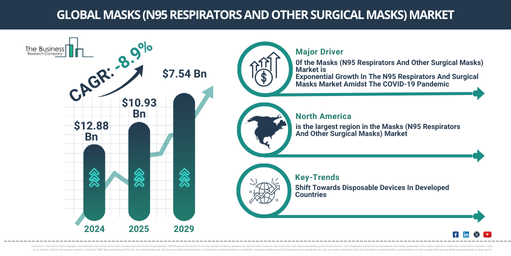
    The size of the market for masks, including N95 respirators and surgical masks, has witnessed a sharp decrease in recent times. It is predicted to fall from “$12.88 billion in 2024 to $10.93 billion in 2025, with a compound annual growth rate (CAGR) of -15.2%. This shrinkage during the past period is due to lesser demand influenced by the pandemic, heightened consciousness and accessibility of reusable masks, and a cutback in government and institutional financing.

    The market for masks, including N95 respirators and other surgical masks, is predicted to experience a sharp decrease in the coming years. The market valuation is forecasted to reach $7.54 billion in 2029, representing a compound annual growth rate (CAGR) of -8.9%. This growth prediction for the forecast period is due to factors such as the emergence of new COVID-19 variants, an increase in airborne illnesses, government actions, and the surge in online pharmacies. The expected trends for the forecast period encompass the creation of N95 masks integrated with Bluetooth technology, the addition of new technologies to improve customer experience, technological progress, a rise in mergers and acquisitions, investments in biodegradable and repeat-use materials, the application of nanotechnology, the production of custom-made masks, and the creation of reusable silicon masks.

    Download a free sample to assess the report’s scope and structure:

    https://www.thebusinessresearchcompany.com/sample.aspx?id=3992&type=smp

    What Are the Core Growth Drivers Propelling the Masks (N95 Respirators And Other Surgical Masks) Market Forward?

    The market for N95 respirators and other surgical masks is witnessing rapid expansion due to the outbreak of the COVID-19 pandemic. The critical nature of COVID-19 as a severe acute respiratory syndrome, which can spread through airborne droplets that can be potentially blocked with masks, is the main reason for this increase. These masks have now become vital gear for healthcare workers interacting with infected patients. Moreover, as a preventive measure, numerous workers and individuals are also making use of these face masks.

    What Segment Types Define the Masks (N95 Respirators And Other Surgical Masks) Market Structure?

    The masks (N95 respirators and other surgical masks) market covered in this report is segmented –

    1) By Type: N95 Respirator, Common Grade Surgical Masks, Others (Comfort Masks/Dust Masks)

    2) By End User: Hospitals and Clinics, Individual, Other End Users

    3) By Nature: Reusable, Disposable

    Subsegments:

    1) By N95 Respirator: Standard N95 Respirators, N95 Respirators With Valves, N95 Respirators With Additional Features

    2) By Common Grade Surgical Masks: Disposable Surgical Masks, Medical-Grade Surgical Masks, Fluid-Resistant Surgical Masks

    3) By Others (Comfort Masks/Dust Masks): Cloth Masks, Dust Masks, Comfort Masks With Additional Filtration

    Request customized data on this market:

    https://www.thebusinessresearchcompany.com/customise?id=3992&type=smp

    Which Geographic Areas Hold the Strongest Growth Potential in the Masks (N95 Respirators And Other Surgical Masks) Market?

    North America was the largest region in the N95 respirators and other surgical masks market in 2024. Asia-Pacific was the second largest region in the N95 respirators and other surgical masks market share. The regions covered in the masks (N95 respirators and other surgical masks) market report are Asia-Pacific, Western Europe, Eastern Europe, North America, South America, Middle East, Africa

    Which Emerging Trends that Are Influencing theMasks (N95 Respirators And Other Surgical Masks) Industry Evolution?

    One of the prominent trends observed in developed nations in the context of the N95 respirators and other surgical masks market revolves around the preference for disposable devices. The appeal of disposable masks lies in their ability to eradicate the need for sterilizing the product and diminishing the probability of cross-contamination with other reusable items. Economically feasible, these masks help in lowering the patient’s hospital stay and reducing the risk of infection compared to reusable non-woven masks, which require decontamination, washing, and sterilizing each time. While reusable surgical face masks can indeed be sterilized and cleaned for reuse, they offer less protection and require more time for production, washing, and sterilization. The FDA states that surgical masks are not meant for repeated use, which may incite increased interest in disposable respiratory masks. Disposable surgical face masks are frequently viewed as offering superior protection compared to their reusable counterparts since they need to be discarded right after use, given their bio-hazardous nature.

    View the full report here:

    https://www.thebusinessresearchcompany.com/report/masks-n95-respirators-and-other-surgical-masks-global-market-report

    What Is the Definition of the Masks (N95 Respirators And Other Surgical Masks) Market?

    The N95 respirators and other surgical masks are used as personal protective equipment to protect the wearer from airborne particles and liquid contaminating the face. The N95 respirators and other surgical masks are available in a variety of thicknesses and liquid contact protection levels. These characteristics may also have an impact on how readily people can breathe through the surgical mask and how well it protects people.

    Purchase the full report and get a swift delivery:

    https://www.thebusinessresearchcompany.com/purchaseoptions.aspx?id=3992

    About The Business Research Company:

    With over 15000+ reports from 27 industries covering 60+ geographies, The Business Research Company has built a reputation for offering comprehensive, data-rich research and insights. Armed with 1,500,000 datasets, the optimistic contribution of in-depth secondary research, and unique insights from industry leaders, you can get the information you need to stay ahead in the game.

    Get in touch with us:

    The Business Research Company: https://www.thebusinessresearchcompany.com/

    Americas +1 3156230293

    Asia +44 2071930708

    Europe +44 2071930708

    Email us at info@tbrc.info

    Follow us on:

    LinkedIn: https://in.linkedin.com/company/the-business-research-company

    YouTube: https://www.youtube.com/channel/UC24_fI0rV8cR5DxlCpgmyFQ

    Global Market Model: https://www.thebusinessresearchcompany.com/global-market-model

  • $8.3 Billion Forecast for Lateral Flow Immunoassay (LFIA) Based Rapid Test Market by 2029, Backed by Demand and Innovation

    Discover trends, market shifts, and competitive outlooks for the lateral flow immunoassay (lfia) based rapid test industry through 2025-2034 with The Business Research Company’s reliable data and in-depth research

    What Is the Estimated Market Size of the Lateral Flow Immunoassay (LFIA) Based Rapid Test Market In 2029?

    In recent times, the market size of the lateral flow immunoassay (LFIA) based rapid test has witnessed a significant drop. It experienced a decrease from “$8.03 billion in 2024 to $7.23 billion in 2025, leading to a compound annual growth rate (CAGR) of -9.9%. The reasons for this decline during the historical period include limited sensitivity and specificity, intricacies of multiplexing, issues with cross-reactivity, challenges related to storage and shelf-life, along with restricted quantitative capability.

    The market size for rapid tests based on the lateral flow immunoassay (LFIA) is anticipated to witness consistent expansion in the upcoming years, with a projected growth to $8.3 billion in 2029 at a compound annual growth rate (CAGR) of 3.5%. The predicted reduction during this period can be ascribed to international supply chain interruptions, regulatory obstacles, heightened competition, the rise of substitutive technologies, and integration with digital health platforms. Key tendencies for this period involve the maturation of superior technologies for multiple or recurring LFIA based rapid exams and results storage/ communication, a focus on partnerships and alliances, home test kit development, investment in AI-based illness screening and detection tests, and the creation of affordable testing kits for easy patient access at a reduced cost.

    Download a free sample to assess the report’s scope and structure:

    https://www.thebusinessresearchcompany.com/sample.aspx?id=3293&type=smp

    What Are the Core Growth Drivers Propelling the Lateral Flow Immunoassay (LFIA) Based Rapid Test Market Forward?

    The persistent problem of quality control is predicted to impede the growth of the rapid test market built on the platform of the lateral flow immunoassay (LFIA). A rise in operational expenses, such as wages and investments in technology, have squeezed the profit margins of numerous law firms. For example, in June 2023, PLOS, an American non-profit organization, stated that LFIA products available in the market fail to consistently satisfy the high standards of reliability and specificity. An after-the-fact assessment of four LFIA tests uncovered diverse diagnostic results with some tests indicating as low as 47% precision in detecting IgG.

    What Segment Types Define the Lateral Flow Immunoassay (LFIA) Based Rapid Test Market Structure?

    The lateral flow immunoassay (LFIA) based rapid test market covered in this report is segmented –

    1) By Technique: Competitive Assay, Sandwich Assay, Multiplex Detection Assay

    2) By Application: Infectious Disease, Pregnancy And Fertility, Toxicology, Cardiac Marker And Cholesterol Testing, Other Applications

    3) By End-Users: Hospitals And Clinics, Diagnostic Laboratories, Home Care, Other End Users

    Subsegments:

    1) By Competitive Assay: Direct Competitive Assays, Indirect Competitive Assays

    2) By Sandwich Assay: Single-step Sandwich Assays, Two-step Sandwich Assays

    3) By Multiplex Detection Assay: Multi-analyte Assays, Simultaneous Detection Of Various Targets

    Request customized data on this market:

    https://www.thebusinessresearchcompany.com/customise?id=3293&type=smp

    Which Geographic Areas Hold the Strongest Growth Potential in the Lateral Flow Immunoassay (LFIA) Based Rapid Test Market?

    North America was the largest region in the lateral flow immunoassay (LFIA) based rapid test market in 2024. Asia-Pacific was the second largest region in the global lateral flow immunoassay (LFIA) based rapid test market. The regions covered in the lateral flow immunoassay (LFIA) based rapid test market report are Asia-Pacific, Western Europe, Eastern Europe, North America, South America, Middle East, Africa

    Which Emerging Trends that Are Influencing theLateral Flow Immunoassay (LFIA) Based Rapid Test Industry Evolution?

    Leading firms operating in the lateral flow immunoassay (LFIA)-based rapid test sector are focusing on enhancing their tests’ sensitivity and specificity, improving detection pace, and broadening the spectrum of identifiable pathogens or biomarkers, by leveraging technologies like qPCR. This, in turn, is propelling them towards delivering more dependable and precise diagnostic solutions for various medical applications. The quantitative polymerase chain reaction (qPCR) technique, a molecular biology method used for amplifying and quantifying DNA or RNA sequences in real time, allows accurate measurement of gene expression levels or the identification of specific pathogens in different sample types. To illustrate, in November 2023, Switzerland’s F. Hoffmann-La Roche AG introduced the LightCycler PRO System. This system, building on Roche’s legacy of qPCR equipment, employs gold-standard technology to ensure high caliber, precision, and dependability, vital factors for correct patient diagnosis and efficient clinical decision-making.

    View the full report here:

    https://www.thebusinessresearchcompany.com/report/lateral-flow-immunoassay-based-rapid-test-global-market-report

    What Is the Definition of the Lateral Flow Immunoassay (LFIA) Based Rapid Test Market?

    Lateral Flow Immunoassay (LFIA) based rapid test is a simple technology-based diagnostic device that is used to determine the presence of a target such as pathogens or biomarkers in samples collected from the human body. These samples may include urine, saliva, blood, sweat and other fluids.

    Purchase the full report and get a swift delivery:

    https://www.thebusinessresearchcompany.com/purchaseoptions.aspx?id=3293

    About The Business Research Company:

    With over 15000+ reports from 27 industries covering 60+ geographies, The Business Research Company has built a reputation for offering comprehensive, data-rich research and insights. Armed with 1,500,000 datasets, the optimistic contribution of in-depth secondary research, and unique insights from industry leaders, you can get the information you need to stay ahead in the game.

    Get in touch with us:

    The Business Research Company: https://www.thebusinessresearchcompany.com/

    Americas +1 3156230293

    Asia +44 2071930708

    Europe +44 2071930708

    Email us at info@tbrc.info

    Follow us on:

    LinkedIn: https://in.linkedin.com/company/the-business-research-company

    YouTube: https://www.youtube.com/channel/UC24_fI0rV8cR5DxlCpgmyFQ

    Global Market Model: https://www.thebusinessresearchcompany.com/global-market-model