Category: Medical Equipment

  • Audiometric Screening Equipment Market 2026 Outlook: Market Size, CAGR And Key Growth Opportunities

    Audiometric Screening Equipment Market 2026 Outlook: Market Size, CAGR And Key Growth Opportunities

    Featuring market attractiveness scoring, total addressable market sizing, company benchmarking matrices, interactive Excel dashboards, deeper supply chain intelligence, emerging startup tracking, and granular product-level insights, The Business Research Company’s 2026 market reports are built to deliver research that is both more actionable and more strategically valuable.

    Audiometric Screening Equipment Market Revenue Outlook: What CAGR Lies Ahead Through 2030?

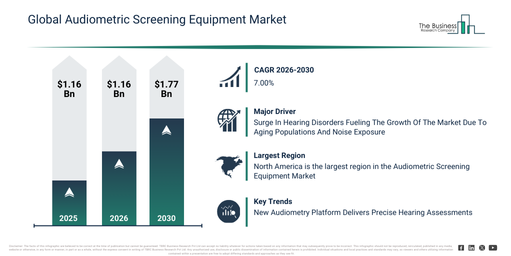
    The audiometric screening equipment market size has seen significant expansion in recent years. It is anticipated to increase from $1.73 billion in 2025 to $1.86 billion in 2026, reflecting a compound annual growth rate (CAGR) of 7.3%. The factors contributing to its historical growth include the constrained supply of digital audiometers, a reliance on traditional analog screening techniques, heightened understanding of hearing disorders, the expansion of healthcare infrastructure, and the adoption of regular hearing assessments.

    The audiometric screening equipment market size is anticipated to experience robust growth in the upcoming years. It is forecast to reach $2.43 billion in 2030, demonstrating a compound annual growth rate (CAGR) of 7.0%. The expansion during this forecast period is primarily driven by technological innovations in tele-audiometry, an increasing need for hearing screenings in schools and workplaces, the integration of cloud-based data management systems, the proliferation of pediatric audiometry programs, and the enlargement of research and diagnostic laboratories. Significant trends expected include the rising adoption of portable and handheld audiometers, the incorporation of tele-audiometry solutions for remote screening, greater utilization of OAE devices for early hearing detection, the broadening of pediatric and occupational hearing screening programs, and an increasing demand for software-based audiometric systems.

    Get A Free Sample Report With In-Depth Market Insights:

    https://thebusinessresearchcompany.com/sample_request?id=78461679&type=smp&name=Audiometric%20Screening%20Equipment%20Market%20Report%202026&utm_source=Blogs&utm_medium=Paid&utm_campaign=Sep_PR

    Audiometric Screening Equipment Market Growth Momentum: What Factors Are Shaping Demand?

    The growing incidence of hearing disorders is projected to advance the expansion of the audiometric screening equipment market moving forward. Hearing disorders are defined as conditions that hinder an individual’s capacity to effectively perceive, process, or interpret sounds. The increase in these disorders is driven by a combination of aging populations and greater exposure to noise pollution, subsequently raising the demand for hearing care solutions. Audiometric screening equipment assists in determining the prevalence of hearing disorders by enabling the rapid and precise detection of hearing loss within large populations. For instance, in March 2024, according to the European Federation of Hard of Hearing People, a Belgium-based, non-governmental organization, approximately 59 million Europeans suffer from hearing loss that impairs daily communication, affecting 20.7% of those aged 65 and older. Therefore, the rising occurrence of hearing disorders is stimulating the growth of the audiometric screening equipment market.

    Audiometric Screening Equipment Market Segment Trends And Revenue Contributors

    The audiometric screening equipment market covered in this report is segmented –

    1) By Product Type: Pure-Tone Audiometers, Tympanometers, Otoacoustic Emissions (OAE) Devices, Hearing Screening Systems, Portable And Handheld Audiometers

    2) By Technology: Analog Audiometers, Digital Audiometers, Hybrid Audiometers, Software-Based Audiometric Systems, Tele-audiometry Solutions

    3) By Application: Routine Screening, Diagnostic Assessment, Research Purposes, Occupational Health Screening, Pediatric Audiometry

    4) By End Users: Hospitals And Clinics, Diagnostic Laboratories, Educational Institutions, Hearing Aid Manufacturers, Research Institutions

    Subsegments:

    1) By Pure-Tone Audiometers: Diagnostic Pure-Tone Audiometers, Screening Pure-Tone Audiometers, Clinical Pure-Tone Audiometers, PC-Based Pure-Tone Audiometers, Manual Pure-Tone Audiometers, Automatic Pure-Tone Audiometers

    2) By Tympanometers: Single-Frequency Tympanometers, Multi-Frequency Tympanometers, Automated Tympanometers, Portable Tympanometers

    3) By Otoacoustic Emissions (OAE) Devices: Transient Evoked OAE (TEOAE) Devices, Distortion Product OAE (DPOAE) Devices, Automated OAE Screening Devices, Diagnostic OAE Devices

    4) By Hearing Screening Systems: Newborn Hearing Screening Systems, School Hearing Screening Systems, Workplace Hearing Screening Systems, Mobile Hearing Screening Systems

    5) By Portable And Handheld Audiometers: Battery-Operated Portable Audiometers, PC-Based Portable Audiometers, Smartphone-Connected Handheld Audiometers, Wireless Handheld Audiometers

    Audiometric Screening Equipment Market Trends Redefining Industry Growth

    Major companies operating in the audiometric screening equipment market are prioritizing the development of technologically advanced solutions, such as precise hearing assessments, to improve diagnostic accuracy, enhance patient outcomes, and optimize clinical workflows. Precise hearing assessments refer to thorough and detailed evaluations of an individual’s hearing capability across varying frequencies and sound levels. For instance, in September 2024, AURITEC, a Germany-based medical equipment manufacturing company, launched its innovative AT2000 audiometry platform. This state-of-the-art device delivers highly accurate hearing assessments via its advanced multichannel audiometer. It also introduces enhanced testing methods for improved diagnostic precision and is engineered with cutting-edge features to address the demands of modern audiology.

    Audiometric Screening Equipment Market Company Landscape And Competitive Strategy

    Major companies operating in the audiometric screening equipment market are Sonova Holding AG, Demant AS, GN Store Nord AS, WS Audiology AS, Grason Stadler Inc, GN Otometrics AS, Amplivox Ltd, Inventis Srl, MAICO Diagnostics GmbH, Natus Medical Incorporated, Frye Electronics Inc, Path Medical GmbH, Interacoustics AS, Audiology Systems Inc, Neurosoft Ltd, eMoyo Technologies, Hearing Diagnostics Inc, Otometrics Medical Systems, Etymotic Research Inc, Sibel Health Diagnostics

    View The Full Audiometric Screening Equipment Market Report:

    https://thebusinessresearchcompany.com/report/audiometric-screening-equipment-global-market-report?utm_source=Blogs&utm_medium=Paid&utm_campaign=Sep_PR

    Audiometric Screening Equipment Market Largest Region: Which Geography Holds The Highest Market Share?

    North America was the largest region in the audiometric screening equipment market in 2025. Asia-Pacific is expected to be the fastest-growing region in the forecast period. The regions covered in the audiometric screening equipment market report are Asia-Pacific, South East Asia, Western Europe, Eastern Europe, North America, South America, Middle East, Africa.

    Reach Out To Our Team:

    The Business Research Company: https://www.thebusinessresearchcompany.com/

    Americas: +1 310-496-7795

    Asia: +44 7882 955267 & +91 8897263534

    Europe: +44 7882 955267

    Email us at: marketing@tbrc.info

    Follow us on:

    LinkedIn: https://in.linkedin.com/company/the-business-research-company

    YouTube: https://www.youtube.com/channel/UC24_fI0rV8cR5DxlCpgmyFQ

    Global Market Model: https://www.thebusinessresearchcompany.com/global-market-model
  • Audiology Services Market Size Growth: From $11.4 Billion In 2026 To $14.72 Billion By 2030

    Audiology Services Market Size Growth: From $11.4 Billion In 2026 To $14.72 Billion By 2030

    Built to provide research that’s more actionable and strategically valuable, The Business Research Company’s 2026 market reports include market attractiveness analysis, total addressable market sizing, company benchmarking matrices, interactive Excel dashboards, broader supply chain intelligence, emerging startup tracking, and in-depth product insights.

    Audiology Services Market Growth Analysis: How Will Revenue Trend Over The Forecast Period?

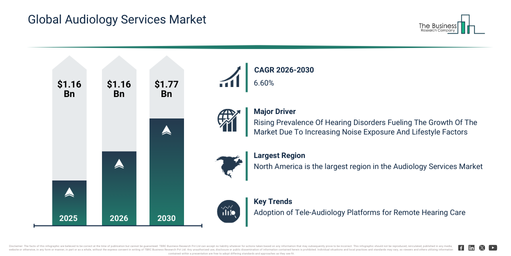
    The audiology services market has shown strong growth in recent years. Its valuation is anticipated to rise from $10.68 billion in 2025 to $11.4 billion in 2026, achieving a compound annual growth rate (CAGR) of 6.7%. This historical growth can be linked to heightened awareness of hearing disorders, the expansion of audiology clinics and service centers, an increase in the geriatric population, the availability of diagnostic audiology tools, and the integration of hearing services into healthcare systems.

    The audiology services market is projected to experience substantial expansion over the coming years. Its valuation is anticipated to reach $14.72 billion in 2030, demonstrating a compound annual growth rate (CAGR) of 6.6%. This projected growth during the forecast period is driven by several factors, including the escalating demand for audiology services delivered remotely and at home, the increasing integration of AI-enabled diagnostic instruments, the broadening scope of digital healthcare platforms, a heightened emphasis on the early detection of hearing loss, and greater investments in infrastructure for hearing healthcare. Key developments expected within this period involve the rising uptake of tele-audiology services, a greater utilization of smart and interconnected hearing aids, an increasing need for remote hearing evaluations, the expansion of customized hearing care initiatives, and a stronger focus on maintaining preventive hearing health.

    Get A Free Sample Report With In-Depth Market Insights:

    https://thebusinessresearchcompany.com/sample_request?id=82516960&type=smp&name=Audiology%20Services%20Market%20Report%202026&utm_source=Blogs&utm_medium=Paid&utm_campaign=Sep_PR

    Audiology Services Market Expansion Drivers: What’s Shaping Future Growth?

    The growing incidence of hearing disorders is anticipated to propel the expansion of the audiology services market in the future. Hearing disorders are defined as conditions that hinder the capacity to perceive, process, or interpret sound, originating from problems in the outer, middle, or inner ear, or within the auditory pathways. Their rise is primarily attributed to heightened exposure to loud noise, particularly through extended use of headphones and earbuds and frequenting noisy gatherings, which can lead to progressive and irreparable damage to the inner ear’s sensitive hair cells. These disorders bolster audiology services by generating a steady demand for diagnostic assessments and hearing solutions, thus encouraging individuals to pursue professional assistance for prompt detection, intervention, and continuous oversight of their auditory health. For example, in February 2025, the World Health Organization, a Switzerland-based intergovernmental organization, reported that approximately 2.5 billion individuals are projected to experience some level of hearing loss by 2050, with more than 700 million likely needing hearing care and rehabilitation services. Consequently, the expanding prevalence of hearing disorders is fueling the growth of the audiology services market.

    Audiology Services Market Segment Analysis Spotlighting Growth Areas

    The audiology services market covered in this report is segmented –

    1) By Audiology Service Type: Diagnostic Auditory Services, Rehabilitative Services, Consultative Services, Hearing Aid Dispensing Services, Tele-Audiology Services

    2) By Technology Adoption: Traditional Hearing Aids, Bluetooth Hearing Aids, Smart Hearing Aids, Assistive Listening Aids, Implantable Devices

    3) By Patient Demographics: Pediatric Audiology, Adult Audiology, Geriatric Audiology

    4) By Service Delivery Model: In-Person Services, Home Healthcare Services, Online Or Remote Services, Community Outreach Programs

    5) By End-User: Hospitals, Clinics, Ambulatory Surgical Centres, Other End Users

    Subsegments:

    1) By Diagnostic Auditory Services: Pure Tone Audiometry (Pta), Central Auditory Processing Evaluation, Speech Audiometry, Electrocochleography (Ecochg), Tympanometry And Acoustic Reflex Testing, Otoacoustic Emissions (Oae) Testing, Auditory Brainstem Response (Abr) Testing

    2) By Rehabilitative Services: Auditory Training Programs, Assistive Listening Device (Ald) Training, Speech And Language Therapy, Cochlear Implant Rehabilitation, Tinnitus Management, Auditory-Verbal Therapy (Avt), Vestibular (Balance) Rehabilitation

    3) By Consultative Services: Occupational Hearing Conservation Consultation, Multidisciplinary Care Planning, School Hearing Health Programs, Geriatric Hearing Health Advisory, Pre-Employment And Industrial Screening, Pediatric Audiology Consultation, Legal Or Forensic Audiology Consultation

    4) By Hearing Aid Dispensing Services: Hearing Aid Evaluation And Fitting, Rechargeable And Bluetooth-Enabled Devices, Real-Ear Measurement And Verification, In-The-Ear (Ite), Behind-The-Ear (Bte), And Receiver-In-Canal (Ric) Devices, Hearing Aid Repair And Maintenance, Hearing Aid Counseling And Training, Custom Ear Molds And Earmolds Fitting

    5) By Tele-Audiology Services: Remote Hearing Assessments, Virtual Counseling And Follow-Ups, Virtual Hearing Aid Fitting And Adjustments, Cloud-Based Audiometry Tools, Remote Patient Monitoring, Mobile App-Based Hearing Health Support, Online Aural Rehabilitation Sessions

    Audiology Services Market Strategic Trends: What Defines The Next Growth Phase?

    Leading companies in the audiology services market are increasingly focusing on remote audiological care, utilizing tele-audiology systems. These systems empower hearing care professionals to perform diagnostic testing, fittings, programming, and follow-ups with patients through internet-connected devices, thereby eliminating or significantly reducing the need for in-person clinic visits. For example, in August 2024, Sonova Holding AG, a Switzerland-based hearing care company, introduced a completely remote fitting solution under its Phonak brand. This solution allows for real-time remote hearing aid programming and fine-tuning via the myPhonak app. Key functionalities include the capability to conduct an audiogram directly through the patient’s hearing aid, secure data transfer between the clinician and patient device, and an easy-to-use interface that enables patients to receive expert care without the necessity of travel. This growing tele-audiology trend is enhancing the accessibility of audiological services, especially for patients in remote or underserved regions, and is fundamentally transforming how hearing care is provided within the audiology services market.

    Audiology Services Market Key Players Shaping Industry Direction

    Major companies operating in the audiology services market are Eargo Inc., Sonova Holding AG, William Demant Holding A/S, GN Store Nord A/S, Amplifon S.p.A., Starkey Laboratories Inc., Cochlear Limited, Miracle-Ear Inc., MED-EL Elektromedizinische Geräte GmbH, Natus Medical Incorporated, Beltone, Advanced Bionics LLC, HearUSA Inc., Hear.com LLC, Audicus Inc., Zounds Hearing Inc., Audina Hearing Instruments Inc., Lively Hearing Corporation, Clarity Hearing, ZipHearing LLC

    View The Full Audiology Services Market Report:

    https://thebusinessresearchcompany.com/report/audiology-services-global-market-report?utm_source=Blogs&utm_medium=Paid&utm_campaign=Sep_PR

    Audiology Services Market Regional Analysis: Which Region Leads By Revenue?

    North America was the largest region in the audiology services market in 2025. Asia-Pacific is expected to be the fastest-growing region in the forecast period. The regions covered in the audiology services market report are Asia-Pacific, South East Asia, Western Europe, Eastern Europe, North America, South America, Middle East, Africa.

    Reach Out To Our Team:

    The Business Research Company: https://www.thebusinessresearchcompany.com/

    Americas: +1 310-496-7795

    Asia: +44 7882 955267 & +91 8897263534

    Europe: +44 7882 955267

    Email us at: marketing@tbrc.info

    Follow us on:

    LinkedIn: https://in.linkedin.com/company/the-business-research-company

    YouTube: https://www.youtube.com/channel/UC24_fI0rV8cR5DxlCpgmyFQ

    Global Market Model: https://www.thebusinessresearchcompany.com/global-market-model
  • Audiology Devices Market Analysis 2026: Market Size, Growth Trends And Industry Outlook

    Audiology Devices Market Analysis 2026: Market Size, Growth Trends And Industry Outlook

    Backed by market attractiveness analysis, total addressable market sizing, company benchmarking matrices, interactive Excel dashboards, wider supply chain intelligence, emerging startup coverage, and detailed product-level insights, The Business Research Company’s 2026 market reports are designed to offer research that is more actionable and strategically valuable than ever.

    Audiology Devices Market Forecast: What Value Will The Market Reach By 2030?

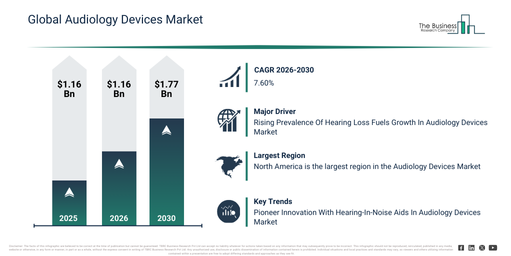
    The audiology devices market has experienced robust expansion in recent years. It is projected to grow from $11.21 billion in 2025 to $12.02 billion in 2026, at a compound annual growth rate (CAGR) of 7.2%. The historical increase in this market can be linked to the rising prevalence of hearing loss disorders, an increasing aging population, wider availability of digital hearing aids, the expansion of audiology clinics, and growing awareness of early hearing diagnosis.

    The audiology devices market is projected to experience robust expansion over the coming years. This market is set to reach $16.11 billion in 2030, exhibiting a compound annual growth rate (CAGR) of 7.6%. The anticipated growth during this period stems from factors such as a heightened demand for wireless and app-integrated devices, an uptick in the adoption of hearing solutions for children, the broadening scope of cochlear implant surgeries, an increasing emphasis on at-home hearing care, and ongoing advancements in audiology software platforms. Key developments expected in the forecast timeframe encompass the wider integration of smart and internet-connected hearing devices, a surge in the need for rechargeable hearing aids, the expanding application of AI-powered sound processing, the proliferation of less invasive implant techniques, and a sharpened emphasis on customized hearing solutions.

    Get A Free Sample Report With In-Depth Market Insights:

    https://thebusinessresearchcompany.com/sample_request?id=37056813&type=smp&name=Audiology%20Devices%20Market%20Report%202026&utm_source=Blogs&utm_medium=Paid&utm_campaign=Sep_PR

    Audiology Devices Market Development Factors: What’s Supporting Demand?

    The increasing incidence of hearing impairment is anticipated to boost the expansion of the audiology devices market in the future. Hearing loss, defined as a partial or complete inability to perceive sounds in one or both ears, stems from various factors such as genetic predispositions, advancing age, exposure to loud noise, ear injuries or trauma, infections, and certain medications or diseases. Audiology devices play a crucial role in managing and treating hearing deficits by enhancing speech clarity and improving communication capabilities, thus the rising prevalence of hearing loss directly fuels the demand within the audiology devices market. For example, a February 2023 article from the World Health Organization, a public health body based in Switzerland, reported that approximately 430 million people, constituting over 5% of the global population (specifically 432 million adults and 34 million children), will require rehabilitation for their disabling hearing loss. Furthermore, more than 25% of individuals aged 60 and above experience hearing loss, with nearly 80% of those having permanent hearing loss residing in developing or underdeveloped countries. Projections also indicate that over 700 million individuals are expected to suffer from hearing loss by 2050. Consequently, the growing occurrence of hearing loss is a significant catalyst for the growth of the audiology devices market.

    Audiology Devices Market Segment Performance And Emerging Opportunities

    The audiology devices market covered in this report is segmented –

    1) By Product: Hearing Aids, In-The-Ear Hearing Aids (ITE), Receiver-In-The-Ear Hearing Aids (RITE), Behind-The-Ear Hearing Aids (BTE), Canal Hearing Aids (CHA), Cochlear Implants, Bone Anchored Healing Aids, Diagnostic Devices

    2) By Technology: Digital, Analog, Wireless & Bluetooth-Enabled Devices

    3) By Diseases Type: Otosclerosis, Meniere’s Disease, Acoustic Tumors, Otitis Media, Other Diseases

    4) By End User: Hospitals,ENT Clinics & Audiology Clinics, Research Institutes

    Subsegments:

    1) By Hearing Aids: Digital Hearing Aids, Analog Hearing Aids, Wireless Hearing Aids, Rechargeable Hearing Aids, Pediatric Hearing Aids, High-Gain Hearing Aids, Low-Noise Hearing Aids

    2) By In-The-Ear (ITE) Hearing Aids: Full Shell ITE, Half Shell ITE, Mini ITE, Wireless ITE, Rechargeable ITE, Directional Microphone ITE

    3) By Receiver-In-The-Ear (RITE) Hearing Aids: Mini RITE, Power RITE, Rechargeable RITE, RITE with Telecoil, Wireless RITE, Invisible RITE

    4) By Behind-The-Ear (BTE) Hearing Aids: Standard BTE, Mini BTE, Power BTE, Open-Fit BTE, Rechargeable BTE, Wireless BTE, Water-Resistant BTE

    5) By Canal Hearing Aids (CHA): Completely-in-the-Canal (CIC), Invisible-in-the-Canal (IIC), Low Profile CHA, Wireless CIC/IIC, Directional Microphone CHA, Rechargeable CHA

    6) By Cochlear Implants: Single-Sided Cochlear Implants, Bilateral Cochlear Implants, Hybrid Cochlear Implants, Fully Implantable Cochlear Implants, Pediatric Cochlear Implants, Advanced Cochlear Implants

    7) By Bone Anchored Hearing Aids (BAHA): Percutaneous BAHA, Transcutaneous BAHA, Active Bone Conduction Implant, Non-Surgical BAHA, Pediatric BAHA, Rechargeable BAHA

    8) By Diagnostic Devices: Audiometers, Otoacoustic Emission (OAE) Devices, Tympanometers

    Audiology Devices Market Transformation Trends: What Innovations Are Driving Change?

    Leading companies within the audiology devices market are concentrating on developing groundbreaking products, such as hearing-in-noise aids, to establish a competitive edge. Hearing-in-noise aids represent a specialized category of hearing device engineered to enhance an individual’s capacity to comprehend speech in loud settings. For example, in September 2023, ReSound, a Denmark-based supplier of advanced hearing solutions, unveiled its Nexia Hearing Aids. This product integrates Auracast broadcast audio technology, which permits Nexia users to seamlessly link to public sound systems in locations like airports, theaters, and restaurants. This design ensures that crucial announcements or information are not overlooked. Utilizing Auracast and Bluetooth LE Audio, Nexia hearing aids achieve effortless connectivity with various devices, delivering a genuine wireless experience. Additionally, the Nexia hearing aids are entirely dustproof and water-resistant, allowing customers to use them confidently in any weather conditions.

    Audiology Devices Market Competitive Analysis Of Leading Industry Participants

    Major companies operating in the audiology devices market are Sonova Holding AG, Demant A/S, GN Store Nord A/S, Cochlear Ltd., MED-EL Medical Electronics, Starkey Laboratories Inc., WS Audiology A/S, RION Co. Ltd., Natus Medical Incorporated, MedRx Inc., Inventis s.r.l., MAICO Diagnostics GmbH, Benson Medical Instruments, Horentek Hearing Diagnostic, Zhejiang Nurotron Biotechnology Co. Ltd., Audina Hearing Instruments Inc., Elkon Pvt. Ltd., Eargo Inc., SeboTek Hearing Systems LLC, BHM-Tech Produktionsgesellschaft mbH, Earlens Corporation, Austar Hearing Science and Technology (Xiamen) Co. Ltd.

    View The Full Audiology Devices Market Report:

    https://thebusinessresearchcompany.com/report/audiology-devices-global-market-report?utm_source=Blogs&utm_medium=Paid&utm_campaign=Sep_PR

    Audiology Devices Market Geographic Distribution And Regional Opportunities

    North America was the largest region in the audiology devices market in 2025. Asia-Pacific is expected to be the fastest-growing region in the global audiology devices market report during the forecast period. The regions covered in the audiology devices market report are Asia-Pacific, South East Asia, Western Europe, Eastern Europe, North America, South America, Middle East, Africa.

    Reach Out To Our Team:

    The Business Research Company: https://www.thebusinessresearchcompany.com/

    Americas: +1 310-496-7795

    Asia: +44 7882 955267 & +91 8897263534

    Europe: +44 7882 955267

    Email us at: marketing@tbrc.info

    Follow us on:

    LinkedIn: https://in.linkedin.com/company/the-business-research-company

    YouTube: https://www.youtube.com/channel/UC24_fI0rV8cR5DxlCpgmyFQ

    Global Market Model: https://www.thebusinessresearchcompany.com/global-market-model
  • Atrial Fibrillation Devices Market Forecast To 2030: Starting From $14.77 Billion In 2026

    Atrial Fibrillation Devices Market Forecast To 2030: Starting From $14.77 Billion In 2026

    Featuring market attractiveness scoring, total addressable market sizing, company benchmarking matrices, interactive Excel dashboards, deeper supply chain intelligence, emerging startup tracking, and granular product-level insights, The Business Research Company’s 2026 market reports are built to deliver research that is both more actionable and more strategically valuable.

    Atrial Fibrillation Devices Market Size Outlook: How Quickly Will Revenue Expand Through 2030?

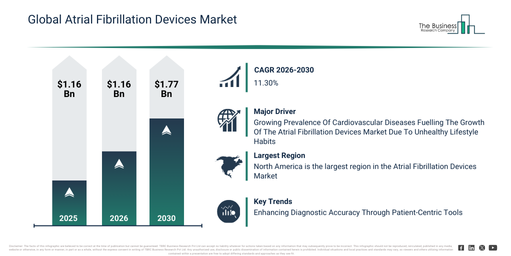
    The atrial fibrillation devices market size has experienced rapid expansion in recent years. It is projected to increase from $8.6 billion in 2025 to $9.61 billion in 2026, at a compound annual growth rate (CAGR) of 11.7%. The market’s past growth is attributable to factors such as the increasing prevalence of atrial fibrillation, a rising geriatric population, the growing burden of cardiovascular diseases, the expansion of electrophysiology labs, and the wider adoption of implantable cardiac devices.

    The atrial fibrillation devices market size is projected to experience substantial growth in the coming years, reaching $14.77 billion by 2030, with a compound annual growth rate (CAGR) of 11.3%. This expansion during the forecast period is driven by advancements in ablation technologies, an increasing reliance on remote patient monitoring, a heightened awareness of stroke prevention, the expansion of ambulatory surgical centers, and technological innovation in mapping and navigation systems. Prominent trends observed in this period include the rising adoption of catheter ablation procedures, the growing utilization of wearable and remote ECG monitoring devices, an increasing demand for minimally invasive AFib treatments, the expansion of left atrial appendage closure device usage, and an improved focus on early detection and long-term rhythm monitoring.

    Get A Free Sample Report With In-Depth Market Insights:

    https://thebusinessresearchcompany.com/sample_request?id=57413065&type=smp&name=Atrial%20Fibrillation%20Devices%20Market%20Report%202026&utm_source=Blogs&utm_medium=Paid&utm_campaign=Sep_PR

    Atrial Fibrillation Devices Market Industry Drivers: What’s Behind The Revenue Growth?

    The increasing prevalence of cardiovascular ailments is anticipated to drive the expansion of the atrial fibrillation device market in the future. These conditions encompass various disorders impacting the heart and circulatory system, such as heart attacks, strokes, and high blood pressure. The escalation in cardiovascular disease cases stems from a worldwide surge in obesity and diabetes, alongside the widespread embrace of inactive lifestyles and unhealthy eating patterns. Atrial fibrillation (AFib) devices are crucial for handling cardiovascular diseases, as they identify, track, and address abnormal heart rhythms frequently linked to or resulting from existing heart issues. For example, in June 2024, data released by the American Heart Association, a US-based public health organization, indicated that with high blood pressure anticipated to climb from 51.2% to 61.0%, the count of individuals diagnosed with cardiovascular diseases is forecasted to climb from 128 million in 2020 to exceed 184 million by 2050. Consequently, the rising incidence of cardiovascular diseases is fueling the development of the atrial fibrillation device market.

    Atrial Fibrillation Devices Market Segment Landscape And Growth Outlook

    The atrial fibrillation devices market covered in this report is segmented –

    1) By Device Type: Implantable Devices, External Devices, Catheter-Based Devices

    2) By Product: Electrophysiology Ablation Catheters, Cardiac Monitors Or Implantable Loop Recorder, Electrophysiology Diagnostic Catheters, Mapping And Recording Systems, Access Devices, Intracardiac Echocardiography, Left Atrial Appendage Closure Devices, Other Products

    3) By Technology: Radiofrequency, Cryotherapy, Ultrasound, Other Technologies

    4) By Distribution Channel: Direct Sales, Distributors, Online Sales

    5) By End-Use: Hospitals, Cardiac Centers, Ambulatory Surgical Centers, Other End Users

    Subsegments:

    1) By Implantable Devices: Implantable Cardioverter Defibrillators, Pacemakers, Insertable Cardiac Monitors

    2) By External Devices: External Defibrillators, Holter Monitors, Mobile Cardiac Telemetry Devices, Electrocardiogram Monitors

    3) By Catheter-Based Devices: Radiofrequency Ablation Catheters, Cryoablation Catheters, Laser Ablation Catheters, Mapping and Navigation Systems, Transseptal Access Devices

    #Atrial Fibrillation Devices Market Growth Trends: What’s Shaping The Future Outlook?

    Leading companies in the atrial fibrillation devices market are concentrating on technological advancements, such as patient-centric clinical decision support tools, to improve diagnostic precision, personalize treatment approaches, and achieve better patient outcomes. These patient-centric clinical decision support tools are digital solutions that assist healthcare professionals in customizing treatment decisions by analyzing individual patient data. For instance, in August 2023, GE HealthCare Technologies Inc., a US-based medical technology company, launched CardioVisio for Atrial Fibrillation, a digital clinical decision support tool designed to streamline clinician workflows and facilitate precision care for patients with atrial fibrillation. This tool allows healthcare providers to visualize the progression of AFib, including previous diagnoses, treatments, medications, and associated conditions. The platform offers guideline-based therapy recommendations, which helps to reduce diagnostic errors and streamline clinical decision-making. CardioVisio organizes fragmented patient information into an accessible format, thereby easing the burden on medical staff and enabling more timely, personalized, and effective management of atrial fibrillation.

    Atrial Fibrillation Devices Market Leading Companies And Competitive Benchmarking

    Major companies operating in the atrial fibrillation devices market are Johnson And Johnson Services Inc, Abbott Laboratories, Medtronic Public Limited Company, Koninklijke Philips NV, Boston Scientific Corporation, Shanghai MicroPort EP MedTech Co Ltd, Japan Lifeline Co Ltd, AliveCor Inc, CardioFocus Inc, Imricor Medical Systems Inc, Kardium Inc, Stereotaxis Inc, Volta Medical, Osypka AG, CathRx Ltd, BIOTRONIK SE And Co KG, EP Solutions SA, CardiacSense Ltd, Biosense Webster Inc, Abbott Electrophysiology, Medtronic Cardiac Rhythm And Heart Failure, Boston Scientific Electrophysiology

    View The Full Atrial Fibrillation Devices Market Report:

    https://thebusinessresearchcompany.com/report/atrial-fibrillation-devices-global-market-report?utm_source=Blogs&utm_medium=Paid&utm_campaign=Sep_PR

    Atrial Fibrillation Devices Market Largest Region By Revenue And Market Share

    North America was the largest region in the atrial fibrillation devices market in 2025. Asia-Pacific is expected to be the fastest-growing region in the forecast period. The regions covered in the atrial fibrillation devices market report are Asia-Pacific, South East Asia, Western Europe, Eastern Europe, North America, South America, Middle East, Africa.

    Reach Out To Our Team:

    The Business Research Company: https://www.thebusinessresearchcompany.com/

    Americas: +1 310-496-7795

    Asia: +44 7882 955267 & +91 8897263534

    Europe: +44 7882 955267

    Email us at: marketing@tbrc.info

    Follow us on:

    LinkedIn: https://in.linkedin.com/company/the-business-research-company

    YouTube: https://www.youtube.com/channel/UC24_fI0rV8cR5DxlCpgmyFQ

    Global Market Model: https://www.thebusinessresearchcompany.com/global-market-model
  • Atomic Spectroscopy Market Size In 2026 And Beyond: Understanding Future Growth Potential

    Atomic Spectroscopy Market Size In 2026 And Beyond: Understanding Future Growth Potential

    Built to provide research that’s more actionable and strategically valuable, The Business Research Company’s 2026 market reports include market attractiveness analysis, total addressable market sizing, company benchmarking matrices, interactive Excel dashboards, broader supply chain intelligence, emerging startup tracking, and in-depth product insights.

    Atomic Spectroscopy Market Size, Value And Growth Trajectory Through 2030

    The atomic spectroscopy market size has experienced significant expansion in recent years. It is projected to grow from $8.2 billion in 2025 to reach $8.9 billion in 2026, demonstrating a compound annual growth rate (CAGR) of 8.6%. The historical growth can be attributed to several factors, including increased regulatory demands for elemental impurity testing, the expansion of pharmaceutical manufacturing activities, the rising application of spectroscopy in environmental monitoring, the proliferation of academic research laboratories, and the enhanced adoption of XRF and AAS techniques.

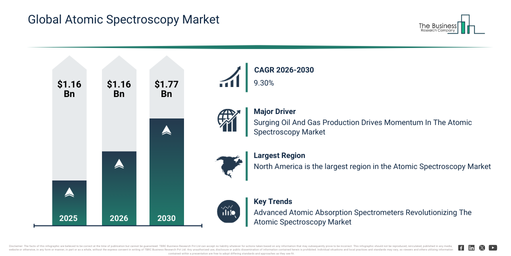
    The atomic spectroscopy market size is projected to experience substantial expansion over the coming years. It is anticipated to reach $12.7 billion in 2030, exhibiting a compound annual growth rate (CAGR) of 9.3%. This growth during the forecast period can be attributed to a heightened need for rapid analytical testing, greater capital deployment in sophisticated lab equipment, a broadening scope of food and beverage safety assessments, an increasing emphasis on immediate elemental examination, and ongoing advancements in spectroscopy software and automated systems. Prominent developments expected during this timeframe involve a wider embrace of highly sensitive elemental analysis solutions, increased application of ICP-MS in pharmaceutical evaluations, an escalating requirement for automated spectroscopy setups, extended capacities for detecting multiple elements, and an intensified concentration on precision at trace levels.

    Get A Free Sample Report With In-Depth Market Insights:

    https://thebusinessresearchcompany.com/sample_request?id=79024804&type=smp&name=Atomic%20Spectroscopy%20Market%20Report%202026&utm_source=Blogs&utm_medium=Paid&utm_campaign=Sep_PR

    Atomic Spectroscopy Market Growth Factors: What’s Supporting Expansion?

    The atomic spectroscopy market is anticipated to expand due to the rising demand for oil and gas production. Oil and gas production involves the fundamental process of converting crude oil and natural gas from wells into consumer-ready petroleum products. The oil and gas industry employs atomic spectroscopy to obtain precise and dependable analytical data for exploration, production, refining, and environmental adherence, thereby aiding in process optimization, product quality assurance, and equipment integrity preservation. As an illustration, the US Energy Information Administration, a US-based government body, reported in March 2023 that crude oil output reached 12.4 million b/d in 2023, an increase from 11.7 million b/d in 2022 in the US. Consequently, the heightened demand for oil and gas production is fueling the expansion of the atomic spectroscopy market.

    Atomic Spectroscopy Market Breakdown By Product Type And Application

    The atomic spectroscopy market covered in this report is segmented –

    1) By Type: Atomic Absorption Spectroscopy (AAS) Instruments, Atomic Emission Spectroscopy (AES) Instruments, Inductively Coupled Plasma (ICP) Spectrometers (ICP-OES and ICP-MS), X-Ray Fluorescence (XRF) Spectrometers, Laser-Induced Breakdown Spectroscopy (LIBS) Instruments, Other Atomic Spectroscopy Instruments

    2) By Technology: Atomic Absorption Spectroscopy (AAS), X-ray Fluorescence (XRF), Inductively Coupled Plasma-Optical Emission Spectroscopy (ICP-OES), Inductively Coupled Plasma-Mass Spectrometry (ICP-MS), Elemental Analyzers, Other Technologies

    3) By Application: Food And Beverage Testing, Pharmaceutical, Industrial, Environmental Testing, Geological Sciences, Petrochemical, Academics, Other Applications

    4) By Distribution Channel: Direct Tenders, Authorized Distributors / Channel Partners, Government & Institutional Tenders

    5) By End-User: Laboratories, Universities, Manufacturing Facilities, Government Agencies

    Subsegments:

    1) By Atomic Absorption Spectroscopy (AAS) Instruments: Flame Atomic Absorption Spectrometers (FAAS), Graphite Furnace Atomic Absorption Spectrometers (GFAAS), Hydride Generation AAS, Cold Vapor AAS

    2) By Atomic Emission Spectroscopy (AES) Instruments: Flame Emission Spectrometers, Arc Spark Atomic Emission Spectrometers

    3) By Inductively Coupled Plasma (ICP) Spectrometers: Inductively Coupled Plasma And Optical Emission Spectroscopy (ICP-OES And ICP-AES), Inductively Coupled Plasma And Mass Spectrometry (ICP-MS)

    4) By X-Ray Fluorescence (XRF) Spectrometers: Energy-Dispersive X-Ray Fluorescence (EDXRF), Wavelength-Dispersive X-Ray Fluorescence (WDXRF), Handheld And Portable XRF Spectrometers

    5) By Laser-Induced Breakdown Spectroscopy (LIBS) Instruments: Laboratory-Based LIBS Systems, Portable And Handheld LIBS Systems, Inline And Process LIBS Systems

    6) By Other Atomic Spectroscopy Instruments: Glow Discharge Optical Emission Spectroscopy (GD-OES), Atomic Fluorescence Spectroscopy (AFS), Microwave-Induced Plasma Spectroscopy (MIP)

    Atomic Spectroscopy Market Industry Trends: What’s Reshaping Demand?

    Companies active in the atomic spectroscopy market are concentrating on bringing advanced solutions, such as atomic absorption (AA) spectrometers, to the forefront to secure a competitive advantage. An atomic absorption (AA) spectrometer serves as an analytical device for identifying the concentration of particular elements within a sample, achieved by quantifying the absorption of light, generally from a flame or graphite furnace, by the sample’s free atoms. For example, Thermo Fisher Scientific Inc., a US-based company specializing in life science and clinical research, introduced the atomic absorption (AA) spectrometer iCE 3300GF in September 2024. The iCE 3300GF AA spectrometer is well-suited for laboratories mindful of costs, providing assured deuterium background correction and an automated optical configuration to ensure peak sensitivity, reliability, and accuracy. This spectrometer excels in trace elemental analysis and is engineered for diverse analytical uses across environmental, academic, clinical, and food safety laboratories. Its integrated furnace autosampler streamlines standard preparation and enables smart dilution for samples exceeding measurement limits, simultaneously, the Ebert optical system boosts productivity through automated, unattended operation. A notable attribute is its pioneering graphite furnace vision system (GFTV), which offers a live internal view of the graphite cuvette, facilitating observation of sample deposition and drying, thus advancing method development.

    Atomic Spectroscopy Market Industry Leaders And Competitive Landscape

    Major companies operating in the atomic spectroscopy market are Thermo Fisher Scientific Inc., Agilent Technologies Inc., Shimadzu Corporation, PerkinElmer Inc., Bruker Corporation, JEOL Ltd., Rigaku Corporation, Hitachi High-Tech Corporation, Analytik Jena AG, GBC Scientific Equipment Pty Ltd., Lumex Instruments, AMETEK Inc., Buck Scientific Instruments LLC, PG Instruments Limited, Teledyne Leeman Labs, Horiba Ltd., Skyray Instrument Co. Ltd., Focused Photonics Inc., Aurora Instruments Ltd., Beijing Beifen-Ruili Analytical Instrument (Group) Co. Ltd.

    View The Full Atomic Spectroscopy Market Report:

    https://thebusinessresearchcompany.com/report/atomic-spectroscopy-global-market-report?utm_source=Blogs&utm_medium=Paid&utm_campaign=Sep_PR

    Atomic Spectroscopy Market Regional Analysis And Leading Geography

    North America was the largest region in the atomic spectroscopy market in 2025. Asia-Pacific is expected to be the fastest-growing region in the forecast period. The regions covered in the atomic spectroscopy market report are Asia-Pacific, South East Asia, Western Europe, Eastern Europe, North America, South America, Middle East, Africa.

    Reach Out To Our Team:

    The Business Research Company: https://www.thebusinessresearchcompany.com/

    Americas: +1 310-496-7795

    Asia: +44 7882 955267 & +91 8897263534

    Europe: +44 7882 955267

    Email us at: marketing@tbrc.info

    Follow us on:

    LinkedIn: https://in.linkedin.com/company/the-business-research-company

    YouTube: https://www.youtube.com/channel/UC24_fI0rV8cR5DxlCpgmyFQ

    Global Market Model: https://www.thebusinessresearchcompany.com/global-market-model

  • Atomic Emission Spectroscopy Market Reaches $9.55 Billion In 2026: Key Developments Shaping Expansion

    Atomic Emission Spectroscopy Market Reaches $9.55 Billion In 2026: Key Developments Shaping Expansion

    Backed by market attractiveness analysis, total addressable market sizing, company benchmarking matrices, interactive Excel dashboards, wider supply chain intelligence, emerging startup coverage, and detailed product-level insights, The Business Research Company’s 2026 market reports are designed to offer research that is more actionable and strategically valuable than ever.

    Atomic Emission Spectroscopy Market CAGR Outlook And Future Development

    The atomic emission spectroscopy market has experienced robust expansion in recent years. Its valuation is set to rise from $6.32 billion in 2025 to $6.88 billion in 2026, reflecting a compound annual growth rate (CAGR) of 8.9%. Historically, this growth has been influenced by factors including a reliance on conventional flame and arc emission spectrometers, constrained multi-element analysis capabilities, a rise in industrial and laboratory applications, increasing regulatory compliance for elemental testing, and the broadening of environmental monitoring programs.

    The atomic emission spectroscopy market is anticipated to show significant expansion over the next few years, with its size projected to reach $9.55 billion by 2030, demonstrating a compound annual growth rate (CAGR) of 8.5%. This growth during the forecast period is primarily fueled by technological advancements in icp-aes and mp-aes, the increasing uptake of portable and handheld spectrometers, a rise in testing activities within the pharmaceutical and biotechnology sectors, the proliferation of high-throughput and automated analysis, and the incorporation of digital data management and cloud-based systems. Prominent trends for the upcoming period include a growing requirement for multi-element and high-precision spectroscopy, the broader deployment of portable and handheld aes instruments, expanding applications in environmental and clinical testing, the increased utilization of icp-aes systems in pharmaceutical analysis, and the integration of automated sample handling and high-throughput analysis.

    Get A Free Sample Report With In-Depth Market Insights:

    https://thebusinessresearchcompany.com/sample_request?id=20457297&type=smp&name=Atomic%20Emission%20Spectroscopy%20Market%20Report%202026&utm_source=Blogs&utm_medium=Paid&utm_campaign=Sep_PR

    Atomic Emission Spectroscopy Market Demand Drivers: What’s Powering Industry Growth?

    The expanding pharmaceutical industry is anticipated to boost the atomic emission spectroscopy market’s growth in the foreseeable future. This sector is primarily focused on the research, development, production, and marketing of various medications to enhance health outcomes. The pharmaceutical industry’s current growth can be attributed to an increasing demand for innovative treatments, significant advancements in drug development technologies, and rising healthcare needs across the globe. Atomic emission spectroscopy finds application in the pharmaceutical industry for accurately detecting and quantifying trace elements and metal impurities present in drugs and formulations, thus ensuring adherence to regulatory standards. For example, as disclosed in August 2025 by the European Federation of Pharmaceutical Industries and Associations (EFPIA), a Belgium-based trade association representing the pharmaceutical industry, investments in R&D by the pharmaceutical industry in Europe reached approximately ($ 60364.80 million) €52,400 million in 2023. Thus, the continuous expansion of the pharmaceutical industry is a key driver for the growth of the atomic emission spectroscopy market.

    Atomic Emission Spectroscopy Market Segment Analysis And Revenue Potential

    The atomic emission spectroscopy market covered in this report is segmented –

    1) By Type: Flame Emission Spectroscopy (FES), Spark Atomic Emission Spectroscopy (SAES), Arc Atomic Emission Spectroscopy (AES), Inductively Coupled Plasma Atomic Emission Spectroscopy (ICP-AES), Other Types

    2) By Application: Biotechnology, Environmental Testing, Clinical Applications

    3) By End-User: Pharmaceutical companies, Hospitals, Laboratories, Research institutes, Other End Users

    Subsegments:

    1) By Flame Emission Spectroscopy (FES): Single Element Flame Emission Spectrometers, Multi-Element Flame Emission Spectrometers, Portable Flame Emission Spectrometers, High-Throughput Flame Emission Spectrometers

    2) By Spark Atomic Emission Spectroscopy (SAES): Laboratory Spark Atomic Emission Spectrometers, Industrial Spark Atomic Emission Spectrometers, Handheld Spark Atomic Emission Spectrometers, High-Precision Spark Atomic Emission Spectrometers

    3) By Arc Atomic Emission Spectroscopy (AES): Direct Current Arc Atomic Emission Spectrometers, Radio Frequency Arc Atomic Emission Spectrometers, High-Temperature Arc Atomic Emission Spectrometers, Portable Arc Atomic Emission Spectrometers

    4) By Inductively Coupled Plasma Atomic Emission Spectroscopy (ICP-AES): Quadrupole ICP-AES, High-Resolution ICP-AES, Multi-Element ICP-AES, Portable ICP-AES Systems, High-Sensitivity ICP-AES Systems

    5) By Other Types: Laser-Induced Breakdown Spectroscopy (LIBS), Microwave Plasma Atomic Emission Spectroscopy (MP-AES), Continuous Wave Atomic Emission Spectroscopy (CWAES)

    Atomic Emission Spectroscopy Market Innovation Trends: What Developments Are Reshaping The Industry?

    Leading companies active in the atomic emission spectroscopy market are prioritizing advancements in instrument performance. This focus includes faster processing, enhanced stability, longer maintenance intervals, and integrated automation technologies to deliver more accurate, efficient, and reliable elemental analysis solutions for industrial and research applications. For instance, in November 2023, Thermo Fisher Scientific, a US-based medical technology company, introduced its next-generation ARL iSpark Plus Optical Emission Spectrometers, which are engineered to provide faster, more reliable elemental analysis for metal producers, processors, recyclers, and research labs. Building on the foundation of the ARL iSpark series, these new systems incorporate upgraded optics, digital spark generation, intelligent algorithms, and an improved spark stand that reduces signal drift, eliminates memory effects, and extends maintenance intervals by 30%. Their optimized software and firmware also contribute to a 15% reduction in processing time. These enhancements facilitate ultra-fast detection of non-metallic inclusions and support increased productivity, energy savings, and better quality control across metal production and processing environments.

    Atomic Emission Spectroscopy Market Key Participants And Competitive Landscape

    Major companies operating in the atomic emission spectroscopy market are Hitachi Ltd, Thermo Fisher Scientific Inc., Agilent Technologies Inc., Wuxi Jinyibo Instrument Technology, Shimadzu Corporation, Bruker Corporation, Horiba Ltd., Oxford Instruments PLC, Leco Corporation, SPECTRO Analytical Instruments GmbH, Jiangsu Skyray Instrument Co. Ltd., CAMECA Instruments Inc., Teledyne Leeman Labs, Nippon Instruments Corporation, PerkinElmer Inc, Analytik Jena AG, AMETEK Inc, Rigaku Corporation, JEOL Ltd, Focused Photonics Inc, GNR Analytical Instruments Group SpA, Aurora Instruments Ltd.

    View The Full Atomic Emission Spectroscopy Market Report:

    https://thebusinessresearchcompany.com/report/atomic-emission-spectroscopy-global-market-report?utm_source=Blogs&utm_medium=Paid&utm_campaign=Sep_PR

    Atomic Emission Spectroscopy Market Geographic Analysis: Where Is Demand Accelerating Fastest?

    North America was the largest region in the atomic emission spectroscopy market in 2025. Asia-Pacific is expected to be the fastest-growing region in the forecast period. The regions covered in the atomic emission spectroscopy market report are Asia-Pacific, South East Asia, Western Europe, Eastern Europe, North America, South America, Middle East, Africa.

    Reach Out To Our Team:

    The Business Research Company: https://www.thebusinessresearchcompany.com/

    Americas: +1 310-496-7795

    Asia: +44 7882 955267 & +91 8897263534

    Europe: +44 7882 955267

    Email us at: marketing@tbrc.info

    Follow us on:

    LinkedIn: https://in.linkedin.com/company/the-business-research-company

    YouTube: https://www.youtube.com/channel/UC24_fI0rV8cR5DxlCpgmyFQ

    Global Market Model: https://www.thebusinessresearchcompany.com/global-market-model

  • Atomic Absorption Spectrometer Market Growth Outlook For 2026: Drivers, Trends And Future Opportunities

    Atomic Absorption Spectrometer Market Growth Outlook For 2026: Drivers, Trends And Future Opportunities

    Featuring market attractiveness scoring, total addressable market sizing, company benchmarking matrices, interactive Excel dashboards, deeper supply chain intelligence, emerging startup tracking, and granular product-level insights, The Business Research Company’s 2026 market reports are built to deliver research that is both more actionable and more strategically valuable.

    Atomic Absorption Spectrometer Market Set To Climb From $8.72 Billion In 2026 To $11.75 Billion By 2030

    The atomic absorption spectrometer market size has observed significant expansion in recent years. It is projected to increase from $8.07 billion in 2025 to $8.72 billion in 2026, demonstrating a compound annual growth rate (CAGR) of 8.1%. Historically, this market’s growth was fueled by factors such as a dependence on manual and single-element AAS systems, restricted access to automated instruments, increasingly stringent industrial and environmental regulations, rising demand from the mining and petrochemical sectors, and the widespread adoption of flame atomic absorption spectrometers.

    The atomic absorption spectrometer market is anticipated to experience substantial growth in the upcoming years, with projections indicating it will reach $11.75 billion in 2030, advancing at a compound annual growth rate (CAGR) of 7.7%. This expansion during the forecast period is driven by factors such as the development of integrated and modular AAS systems, increasing applications in biotechnology and pharmaceuticals, the rising demand for portable and software-integrated spectrometers, growth in multi-element and high-throughput analysis, and expanding environmental and food safety testing requirements. Key trends expected over the forecast period involve a growing demand for high-precision elemental analysis, continued growth in environmental and food safety testing, increased adoption of portable and automated AAS systems, integration with chromatography and other analytical techniques, and a focus on high-throughput and multi-element spectroscopy.

    Get A Free Sample Report With In-Depth Market Insights:

    https://thebusinessresearchcompany.com/sample_request?id=57580544&type=smp&name=Atomic%20Absorption%20Spectrometer%20Market%20Report%202026&utm_source=Blogs&utm_medium=Paid&utm_campaign=Sep_PR

    Atomic Absorption Spectrometer Market Growth Drivers: What’s Behind The Acceleration?

    The increasing apprehension regarding food safety is anticipated to propel the expansion of the atomic absorption spectrometer market in the future. These escalating food safety concerns are fueled by a rise in instances of foodborne illnesses, contamination, and the growing intricacy of global food supply chains. The atomic absorption spectrometer is utilized in food safety contexts to identify and quantify trace levels of heavy metals and other impurities, thereby ensuring that food products adhere to safety standards and regulatory limits. For instance, in August 2025, the United States Department of Agriculture, a US-based government department, reported that in 2023, 18 million U.S. households (13.5%) encountered food insecurity at some point, an increase from 17 million households (12.8%) in 2022. Consequently, the heightened worries about food safety are stimulating the growth of the atomic absorption spectrometer market.

    Atomic Absorption Spectrometer Market Segmentation And Category Overview

    The atomic absorption spectrometer market covered in this report is segmented –

    1) By Type: Flame Atomic Absorption Spectrometer, Graphite Furnace Atomic Absorption Spectrometer, Integrated Atomic Absorption Spectrometer

    2) By Application: Environmental Analysis, Food And Beverages Testing, Biotechnology, Other Applications

    3) By End User: Pharmaceutical Industry, Mining Industry, Petrochemical Industry, Agriculture Industry, Other End Users

    Subsegments:

    1) By Flame Atomic Absorption Spectrometer: Single Element Flame Atomic Absorption Spectrometers, Multi-Element Flame Atomic Absorption Spectrometers, Portable Flame Atomic Absorption Spectrometers, High-Throughput Flame Atomic Absorption Spectrometers

    2) By Graphite Furnace Atomic Absorption Spectrometer: Single Element Graphite Furnace Atomic Absorption Spectrometers, Multi-Element Graphite Furnace Atomic Absorption Spectrometers, Automated Graphite Furnace Atomic Absorption Spectrometers, High-Resolution Graphite Furnace Atomic Absorption Spectrometers

    3) By Integrated Atomic Absorption Spectrometer: Combination Flame And Graphite Furnace Atomic Absorption Spectrometers, Integrated Systems With Spectroscopy And Chromatography, Modular Integrated Atomic Absorption Spectrometers, Software-Integrated Atomic Absorption Spectrometers

    Atomic Absorption Spectrometer Market Top Companies Driving Competitive Growth

    Major companies operating in the atomic absorption spectrometer market are Hitachi Ltd., Thermo Fisher Scientific Inc., Agilent Technologies, Shimadzu Corporation, PerkinElmer Inc., Horiba Scientific, Techcomp, Analytik Jena, Spectro Analytical Instruments, GBC Scientific Equipment, Buck Scientific Instruments LLC, JEOL Ltd., Rigaku Corporation, PG Instruments Limited, Skyray Instrument, Rayleigh Instruments, Aurora Scientific Instruments, Beijing Beifen Ruili Analytical Instrument Group, Aurora Biomed, LABINDIA Analytical Instruments, KLAB Instrument, Sanco Scientific, Toshniwal Instruments, Chemito Technologies, Galaxy Scientific, ECIL Analytical Instruments

    View The Full Atomic Absorption Spectrometer Market Report:

    https://thebusinessresearchcompany.com/report/atomic-absorption-spectrometer-global-market-report?utm_source=Blogs&utm_medium=Paid&utm_campaign=Sep_PR

    Atomic Absorption Spectrometer Market Global Footprint: Which Region Leads The Industry?

    North America was the largest region in the atomic absorption spectrometer market in 2025. The regions covered in the atomic absorption spectrometer market report are Asia-Pacific, South East Asia, Western Europe, Eastern Europe, North America, South America, Middle East, Africa.

    Reach Out To Our Team:

    The Business Research Company: https://www.thebusinessresearchcompany.com/

    Americas: +1 310-496-7795

    Asia: +44 7882 955267 & +91 8897263534

    Europe: +44 7882 955267

    Email us at: marketing@tbrc.info

    Follow us on:

    LinkedIn: https://in.linkedin.com/company/the-business-research-company

    YouTube: https://www.youtube.com/channel/UC24_fI0rV8cR5DxlCpgmyFQ

    Global Market Model: https://www.thebusinessresearchcompany.com/global-market-model
  • At-Home Orthodontic Aligner Market Size Forecast From 2026 To 2030: Key Industry Trends

    At-Home Orthodontic Aligner Market Size Forecast From 2026 To 2030: Key Industry Trends

    Built to provide research that’s more actionable and strategically valuable, The Business Research Company’s 2026 market reports include market attractiveness analysis, total addressable market sizing, company benchmarking matrices, interactive Excel dashboards, broader supply chain intelligence, emerging startup tracking, and in-depth product insights.

    At-Home Orthodontic Aligner Market Forecast: Value Set To Climb From $5.54 Billion To $10.07 Billion

    The at-home orthodontic aligner market has shown substantial expansion in recent years. This market is set to expand from $4.76 billion in 2025 to $5.54 billion in 2026, exhibiting a compound annual growth rate (CAGR) of 16.4%. Historical growth in this sector is primarily due to factors like increased awareness of dental aesthetics, the elevated cost associated with traditional braces, the swift embrace of clear aligner technology, the proliferation of online dental platforms, and the rising demand for adult orthodontic treatment.

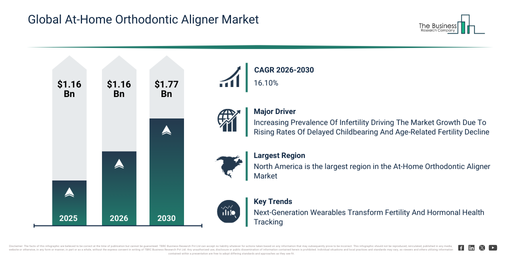
    The at-home orthodontic aligner market is projected to experience substantial growth in the coming years. Its valuation is anticipated to reach $10.07 billion by 2030, exhibiting a compound annual growth rate (CAGR) of 16.1%. This expansion over the forecast period is primarily fueled by advancements such as AI-driven treatment planning, the rising adoption of remote dental monitoring, a greater need for cost-effective orthodontic options, innovations in aligner materials, and the increased availability of teledentistry services. Significant trends shaping this period include an escalating demand for remote orthodontic care, the wider embrace of direct-to-consumer dental products, a growing preference for invisible and aesthetically pleasing aligners, the broadening scope of adult orthodontic treatments, and a movement towards more concise and personalized treatment regimens.

    Get A Free Sample Report With In-Depth Market Insights:

    https://thebusinessresearchcompany.com/sample_request?id=19068036&type=smp&name=At-Home%20Orthodontic%20Aligner%20Market%20Report%202026&utm_source=Blogs&utm_medium=Paid&utm_campaign=Sep_PR

    At-Home Orthodontic Aligner Market Growth Factors Behind Sustained Expansion

    The expanding occurrence of infertility is projected to boost the at-home fertility hormone patch market in the future. Infertility, defined as the inability to conceive after 12 months of regular unprotected intercourse or difficulties with conception or carrying a pregnancy to live birth, is becoming more widespread. This rise is attributed to trends of delayed childbearing, where individuals put off family planning until later in life, leading to age-related reductions in egg quality, ovarian reserve, and sperm parameters that lower successful conception rates. The growing challenge of infertility boosts the need for at-home fertility hormone testing solutions. These patches provide a convenient, non-invasive way to monitor reproductive hormones, helping users track ovulation, pinpoint fertile windows, and make educated choices about their reproductive health without needing frequent clinic visits. For example, in April 2023, the World Health Organization (WHO), a Switzerland-based intergovernmental organization, reported that around 17.5% of the adult population, approximately 1 in 6 people worldwide, experience infertility, underscoring the critical need for improved access to affordable, quality fertility care for those impacted. Consequently, the increasing prevalence of infertility is a primary factor fueling the growth of the at-home fertility hormone patch market.

    At-Home Orthodontic Aligner Market Segment Outlook: Which Categories Are Growing Fastest?

    The at-home orthodontic aligner market covered in this report is segmented –

    1) By Product Type: Clear Aligners, Hybrid Orthodontic Aligners, Nighttime Wear Aligners, Short-Term Treatment Aligners, Other Product Types

    2) By Treatment Scope: Mild Malocclusion Correction, Moderate Malocclusion Correction, Cosmetic Alignment, Relapse Correction

    3) By Age Group: Teenagers, Adults

    4) By Material: Polyurethane Plastic, Polyethylene Terephthalate Glycol, Multilayer Thermoplastic Polymers, Other Biocompatible Materials

    5) By Distribution Channel: Direct-to-Consumer Online Platforms, Company-Owned Websites, Tele-Orthodontic Platforms, Hybrid Dental Network Partnerships, Other Online Distribution Channels

    6) By End User: Home Care Users, Hybrid Home-Clinic Users

    Subsegments:

    1) By Clear Aligners: Single-Arch Clear Aligners, Dual-Arch Clear Aligners, Three-Dimensional (3D) Printed Clear Aligners, Artificial Intelligence (AI)-Designed Clear Aligners, Remote-Monitoring-Enabled Clear Aligners

    2) By Hybrid Orthodontic Aligners: Dentist-Prescribed Hybrid Aligners, Remote-Supervised Hybrid Aligners, Periodic In-Clinic Adjustment Aligners, Tele-Orthodontics-Integrated Aligners

    3) By Nighttime Wear Aligners: Part-Time Wear Clear Aligners, Accelerated Night-Only Treatment Aligners, Cosmetic Night-Use Aligners, Compliance-Tracking Night Aligners

    4) By Short-Term Treatment Aligners: Mild Misalignment Correction Aligners, Relapse Correction Aligners, Cosmetic Alignment Aligners, Event-Based Short-Duration Aligners

    5) By Other Product Types: Removable Orthodontic Systems, Retainer-Style Aligner Systems, Subscription-Based Aligner Programs, Custom-Fit At-Home Orthodontic Systems

    At-Home Orthodontic Aligner Market Industry Trends Fueling Future Revenue Growth

    Leading companies in the at-home fertility hormone patch market are concentrating on developing innovative solutions, such as deoxyribonucleic acid (DNA)-based wearable patches, to facilitate real-time, non-invasive hormone tracking. These deoxyribonucleic acid (DNA)-based wearable patches are devices that utilize DNA-derived sensors to detect hormone levels in interstitial fluid, enabling users to monitor their hormonal fluctuations in real time without invasive blood tests, thereby supporting fertility tracking and overall hormonal health. For instance, in February 2025, Level Zero Health Inc., a UK-based biotechnology company, secured $6.9 million in an oversubscribed pre-seed funding round to create the world’s first continuous hormone monitoring patch. The company’s deoxyribonucleic acid (DNA)-based wearable patch measures key hormones including cortisol, progesterone, estrogen, and testosterone in interstitial fluid, offering real-time insights to aid fertility tracking, hormonal health management, and remote clinical monitoring. This non-invasive device allows users to monitor their hormonal fluctuations either continuously or intermittently through a convenient arm-worn patch, reducing the necessity for clinic visits and invasive procedures. The startup plans to initially target B2B clinical applications, such as fertility clinics and endocrine treatment centers, while also establishing the foundation for potential expansion into consumer-focused wellness markets.

    At-Home Orthodontic Aligner Market Leading Players And Competitive Positioning

    Major companies operating in the at-home orthodontic aligner market are Align Technology Inc., Candid Care Co., SmileLove LLC, WonderSmile Pty Ltd., ALIGNERCO, NewSmile, Straight Teeth Direct, EZ Smile Pty Ltd., Smileie, Alinger32, OrthoFX Inc., Angel Aligner, Snazzy Clear Aligners, FlexAligners, Smileie Europe, Dezy, Zenyum, PlusDental, SmileWhite, Illusion Aligners, Smartee Aligners

    View The Full At-Home Orthodontic Aligner Market Report:

    https://thebusinessresearchcompany.com/report/at-home-orthodontic-aligner-global-market-report?utm_source=Blogs&utm_medium=Paid&utm_campaign=Sep_PR

    At-Home Orthodontic Aligner Market Regional Distribution: Which Areas Power Market Growth?

    North America was the largest region in the at-home fertility hormone patch market in 2025. The regions covered in the at-home orthodontic aligner market report are Asia-Pacific, South East Asia, Western Europe, Eastern Europe, North America, South America, Middle East, Africa.

    Reach Out To Our Team:

    The Business Research Company: https://www.thebusinessresearchcompany.com/

    Americas: +1 310-496-7795

    Asia: +44 7882 955267 & +91 8897263534

    Europe: +44 7882 955267

    Email us at: marketing@tbrc.info

    Follow us on:

    LinkedIn: https://in.linkedin.com/company/the-business-research-company

    YouTube: https://www.youtube.com/channel/UC24_fI0rV8cR5DxlCpgmyFQ

    Global Market Model: https://www.thebusinessresearchcompany.com/global-market-model
  • At-Home IPL Device Market 2026: Market Size, Growth Drivers And Emerging Opportunities

    At-Home IPL Device Market 2026: Market Size, Growth Drivers And Emerging Opportunities

    Backed by market attractiveness analysis, total addressable market sizing, company benchmarking matrices, interactive Excel dashboards, wider supply chain intelligence, emerging startup coverage, and detailed product-level insights, The Business Research Company’s 2026 market reports are designed to offer research that is more actionable and strategically valuable than ever.

    At-Home IPL Device Market Revenue Growth On Track For A 17.2% CAGR Through 2030

    The at-home ipl device market has witnessed significant expansion in recent years. It is projected to grow from $1.79 billion in 2025 to $2.11 billion in 2026 at a compound annual growth rate (CAGR) of 17.5%. This market’s past growth can be attributed to increased salon treatment costs, the rise of consumer beauty electronics, growing awareness of aesthetic care, the early embrace of home-use light therapy devices, and the spread of e-commerce beauty platforms.

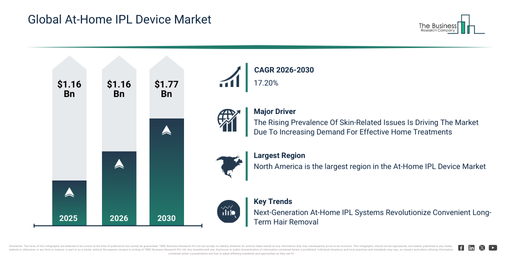
    The at-home ipl device market size is projected to experience substantial growth in the next few years, set to reach $3.97 billion in 2030, with a compound annual growth rate (CAGR) of 17.2%. This expansion during the forecast period is attributed to advancements in light-based devices, a growing consumer focus on self-care, an increasing demand for portable beauty solutions, the emergence of direct-to-consumer beauty brands, and the expanding acceptance of unisex grooming products. Major trends expected in this period include a rising preference for at-home aesthetic treatments, a greater adoption of cost-effective beauty devices, an increasing demand for multi-functional ipl systems, the broadened scope of personal grooming among both men and women, and a shift towards long-term hair reduction solutions.

    Get A Free Sample Report With In-Depth Market Insights:

    https://thebusinessresearchcompany.com/sample_request?id=54712428&type=smp&name=At-Home%20IPL%20Device%20Market%20Report%202026&utm_source=Blogs&utm_medium=Paid&utm_campaign=Sep_PR

    At-Home IPL Device Market Demand Drivers Opening New Revenue Streams

    The increasing incidence of skin-related conditions is anticipated to propel the growth of the at-home IPL device market moving forward. These skin-related issues encompass any ailment impacting the skin’s well-being, appearance, or functionality, potentially stemming from factors such as allergies, infections, hormonal shifts, or environmental exposure. The growing prevalence of skin problems is largely driven by increased exposure to environmental pollution, which compromises the skin’s protective barrier and initiates irritation and inflammation. At-home IPL devices offer a method to address skin-related issues by utilizing intense pulsed light to target deeper skin layers, thereby reducing pigmentation and hair growth, enhancing skin texture, and promoting collagen synthesis for healthier, smoother skin. For instance, in March 2025, according to the British Dermatological Nursing Group (BDNG), a professional organization based in the UK, approximately 60% of people in the United Kingdom are currently affected by a skin disease, and over 100,000 new cases of skin cancer are reported annually. Consequently, the escalating occurrence of skin-related concerns is a primary factor driving the expansion of the at-home IPL device market.

    At-Home IPL Device Market Segment Landscape: Which Areas Lead Development?

    The at-home ipl device market covered in this report is segmented –

    1) By Product Type: Corded, Cordless

    2) By Distribution Channel: Online Retail, Offline Retail, Specialty Stores, Pharmacies, Other Distribution Channels

    3) By Application: Hair Removal, Skin Rejuvenation, Acne Treatment, Other Applications

    4) By End-User: Men, Women, Unisex

    Subsegments:

    1) By Corded: Handheld Device, Tabletop Device

    2) By Cordless: Rechargeable Handheld Device, Battery Operated Device

    At-Home IPL Device Market Trends Powering Strategic Industry Growth

    Leading firms in the at-home IPL device market are concentrating on creating novel advancements, specifically IPL hair removal systems, to offer a practical and dependable solution for extended hair reduction at home. Such systems employ pulsed light technology to target hair follicles, thereby safely and effectively diminishing hair growth for use within the home. A prime example is Procter & Gamble, a US-based consumer goods company, which introduced the Braun Skin i·expert IPL in October 2025. This particular product boasts features like automatic adjustment to diverse skin tones across various body regions, incorporates a high-frequency pulsed light mechanism, and includes a mobile application for guiding users through their treatment sessions. These improvements facilitate more accurate, efficient, and convenient hair reduction, signifying a significant leap forward in at-home intense pulsed light hair removal technology.

    At-Home IPL Device Market Competitive Overview And Top Companies

    Major companies operating in the at-home ipl device market are Panasonic Holdings Corporation, Koninklijke Philips N.V., Cyden Ltd.(Smooth Skin), SilkÂ’n, Shenzhen Mismon Technology Co. Ltd., VISS BEAUTY UK LIMITED, Shenzhen Ulike Smart Electronics Co. Ltd., Remington Arms Company LLC, Nood, Amiro Ltd., Braun GmbH, HAPPY SKIN CO PTY. LTD., Iluminage Beauty Inc., Kenzzi Limited, Shenzhen Bosidin Technology Co. Ltd., Shenzhen DEESS Science & Technology Co. Ltd., Aopvui, JOVS LTD., Shenzhen Lescolton Electric Appliance Co. Ltd., Zhongshan Aimanfun Intelligent Technology Co. Ltd.

    View The Full At-Home IPL Device Market Report:

    https://thebusinessresearchcompany.com/report/at-home-ipl-device-global-market-report?utm_source=Blogs&utm_medium=Paid&utm_campaign=Sep_PR

    At-Home IPL Device Market Leading Geography: Which Region Contributes The Most Revenue?

    North America was the largest region in the at-home IPL device market in 2025. Asia-Pacific is expected to be the fastest-growing region in the forecast period. The regions covered in the at-home ipl device market report are Asia-Pacific, South East Asia, Western Europe, Eastern Europe, North America, South America, Middle East, Africa.

    Reach Out To Our Team:

    The Business Research Company: https://www.thebusinessresearchcompany.com/

    Americas: +1 310-496-7795

    Asia: +44 7882 955267 & +91 8897263534

    Europe: +44 7882 955267

    Email us at: marketing@tbrc.info

    Follow us on:

    LinkedIn: https://in.linkedin.com/company/the-business-research-company

    YouTube: https://www.youtube.com/channel/UC24_fI0rV8cR5DxlCpgmyFQ

    Global Market Model: https://www.thebusinessresearchcompany.com/global-market-model
  • At-Home Fertility Hormone Patch Market Set To Expand From $1.21 Billion In 2026: Growth Outlook Through 2030

    At-Home Fertility Hormone Patch Market Set To Expand From $1.21 Billion In 2026: Growth Outlook Through 2030

    Featuring market attractiveness scoring, total addressable market sizing, company benchmarking matrices, interactive Excel dashboards, deeper supply chain intelligence, emerging startup tracking, and granular product-level insights, The Business Research Company’s 2026 market reports are built to deliver research that is both more actionable and more strategically valuable.

    At-Home Fertility Hormone Patch Market Value Growth And Long-Term Outlook

    The at-home fertility hormone patch market size has seen rapid expansion in recent years. It is anticipated to increase from $0.59 billion in 2025 to $0.68 billion in 2026, exhibiting a compound annual growth rate (CAGR) of 15.6%. The historical growth in this market can be ascribed to increasing infertility rates, growth of home diagnostic devices, rising awareness of reproductive health, expansion of digital health platforms, and early adoption of wearable biosensors.

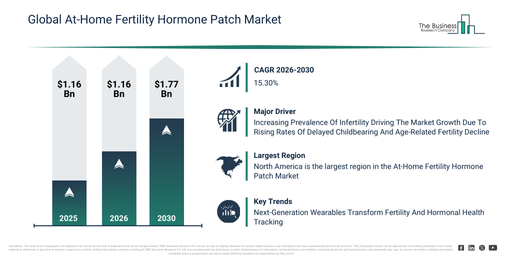
    The at-home fertility hormone patch market is projected to experience substantial growth in the upcoming years, with its valuation set to reach $1.21 billion by 2030, driven by a compound annual growth rate (CAGR) of 15.3%. This expansion is primarily fueled by factors such as AI-enabled hormone analytics, a heightened demand for personalized fertility planning, a greater emphasis on preventive reproductive healthcare, the increasing adoption of connected health devices, and the broader availability of tele-fertility services. Concurrently, major trends expected during this period include the growing embrace of non-invasive fertility monitoring, a surge in demand for at-home reproductive health solutions, wider acceptance of wearable hormone tracking devices, the proliferation of female-centric health technologies, and a noticeable shift towards customized fertility insights.

    Get A Free Sample Report With In-Depth Market Insights:

    https://thebusinessresearchcompany.com/sample_request?id=88107697&type=smp&name=At-Home%20Fertility%20Hormone%20Patch%20Market%20Report%202026&utm_source=Blogs&utm_medium=Paid&utm_campaign=Sep_PR

    At-Home Fertility Hormone Patch Market Growth Backed By Core Demand Fundamentals

    The growing incidence of infertility is projected to boost the expansion of the at-home fertility hormone patch market in the future. Infertility is defined as a medical condition where pregnancy cannot be achieved after 12 months of consistent unprotected sexual activity, or due to physical challenges in conceiving or carrying a pregnancy to full term. This rise in infertility is primarily attributed to delayed childbearing patterns, as more people choose to start families later in life. During these later reproductive years, age-related reductions in egg quality, ovarian reserve, and sperm characteristics significantly lower the likelihood of successful conception. The escalating challenge of infertility fuels the need for at-home fertility hormone testing options, given that these patches provide a convenient, non-invasive way to monitor reproductive hormones. This monitoring helps individuals pinpoint ovulation cycles, identify their most fertile periods, and make well-informed decisions about their reproductive well-being without requiring frequent visits to clinics. For example, in April 2023, data from the World Health Organization (WHO), a Switzerland-based intergovernmental organization, revealed that about 17.5% of the adult population, or roughly 1 in 6 individuals worldwide, experience infertility, underscoring the critical necessity for better access to affordable, high-quality fertility treatment for those affected. Consequently, the increasing prevalence of infertility is a key driver for the growth of the at-home fertility hormone patch market.

    At-Home Fertility Hormone Patch Market Driver: Increasing Investment In Women’s Health Initiatives Driving The Market Growth Due To Recognition Of Healthcare Disparities And Need For Accessible Community-Based Services

    At-Home Fertility Hormone Patch Market Segments: Where Is Growth Concentrated?

    The at-home fertility hormone patch market covered in this report is segmented –

    1) By Product Type: Single-Use Patch, Reusable Patch

    2) By Hormone Type: Estrogen, Progesterone, Luteinizing Hormone, Follicle-Stimulating Hormone, Other Hormone Types

    3) By Distribution Channel: Online Pharmacies, Retail Pharmacies, Supermarkets Or Hypermarkets, Other Distribution Channels

    4) By Application: Female Fertility Testing, Male Fertility Testing

    5) By End-User: Home Care, Clinics, Hospitals, Other End Users

    Subsegments:

    1) By Single-Use Patch: Disposable Fertility Hormone Patches, One-Time Ovulation Monitoring Patches, Single-Cycle Hormone Tracking Patches, Adhesive Single-Use Hormone Detection Patches

    2) By Reusable Patch: Multi-Cycle Fertility Hormone Patches, Rechargeable Hormone Monitoring Patches, Long-Term Wearable Hormone Tracking Patches, Smart Reusable Hormone Patches

    At-Home Fertility Hormone Patch Market Growth Trends Reshaping The Competitive Landscape

    Companies operating within the at-home fertility hormone patch market are prioritizing the creation of novel solutions, such as deoxyribonucleic acid (DNA)-based wearable patches, to facilitate real-time, non-invasive hormone tracking. Deoxyribonucleic acid (DNA)-based wearable patches are devices employing DNA-derived sensors to detect hormone levels in interstitial fluid, allowing users to monitor their hormonal fluctuations in real time without invasive blood tests, which supports fertility tracking and overall hormonal health. For instance, in February 2025, Level Zero Health Inc., a UK-based biotechnology company, successfully raised $6.9 million in an oversubscribed pre-seed funding round to develop the world’s first continuous hormone monitoring patch. The company’s DNA-based wearable patch measures key hormones such as cortisol, progesterone, estrogen, and testosterone in interstitial fluid, offering real-time insights to assist fertility tracking, hormonal health management, and remote clinical monitoring. This non-invasive device enables users to observe their hormonal changes either continuously or intermittently through an easily worn arm patch, thereby reducing the need for clinic visits and invasive procedures. The startup intends to initially target B2B clinical applications, including fertility clinics and endocrine treatment centers, while establishing a foundation for potential expansion into consumer-focused wellness markets.

    At-Home Fertility Hormone Patch Market Competitive Landscape: Which Companies Lead The Industry?

    Major companies operating in the at-home fertility hormone patch market are Level Zero Health, Persperity Health, Muun Health, Epicore Biosystems, Impli, POM Health, Eli Health, Mira, Oova, Symex Labs, Arva Health, Ava Science Inc., Tempdrop, Inito, Proov, Hormona, Kegg, Femometer, Fairhaven Health, Ovia Health

    View The Full At-Home Fertility Hormone Patch Market Report:

    https://thebusinessresearchcompany.com/report/at-home-fertility-hormone-patch-global-market-report?utm_source=Blogs&utm_medium=Paid&utm_campaign=Sep_PR

    At-Home Fertility Hormone Patch Market Regional Outlook: Where Is Opportunity Concentrated?

    North America was the largest region in the at-home fertility hormone patch market in 2025. The regions covered in the at-home fertility hormone patch market report are Asia-Pacific, South East Asia, Western Europe, Eastern Europe, North America, South America, Middle East, Africa.

    Reach Out To Our Team:

    The Business Research Company: https://www.thebusinessresearchcompany.com/

    Americas: +1 310-496-7795

    Asia: +44 7882 955267 & +91 8897263534

    Europe: +44 7882 955267

    Email us at: marketing@tbrc.info

    Follow us on:

    LinkedIn: https://in.linkedin.com/company/the-business-research-company

    YouTube: https://www.youtube.com/channel/UC24_fI0rV8cR5DxlCpgmyFQ

    Global Market Model: https://www.thebusinessresearchcompany.com/global-market-model