Category: Medical Equipment

  • At-Home Electroencephalogram (EEG) Neurofeedback Kit Market Size And Growth In 2026: Key Factors Shaping Future Demand

    At-Home Electroencephalogram (EEG) Neurofeedback Kit Market Size And Growth In 2026: Key Factors Shaping Future Demand

    Built to provide research that’s more actionable and strategically valuable, The Business Research Company’s 2026 market reports include market attractiveness analysis, total addressable market sizing, company benchmarking matrices, interactive Excel dashboards, broader supply chain intelligence, emerging startup tracking, and in-depth product insights.

    At-Home Electroencephalogram (EEG) Neurofeedback Kit Market Poised To Hit $0.99 Billion By 2030 With A 13.2% CAGR

    The at-home electroencephalogram (eeg) neurofeedback kit market size has seen significant expansion in recent years. This market is projected to grow from $0.53 billion in 2025 to $0.6 billion in 2026, at a compound annual growth rate (CAGR) of 13.5%. The historical growth can be attributed to factors such as increased awareness of mental health, the early adoption of consumer EEG devices, a rise in stress-related disorders, the development of wearable health electronics, and the wider reach of digital health platforms.

    The at-home electroencephalogram (eeg) neurofeedback kit market size is projected to experience substantial expansion in the coming years. It is anticipated to reach $0.99 billion by 2030, demonstrating a compound annual growth rate (CAGR) of 13.2%. This growth during the forecast period is largely driven by factors such as AI-driven neurofeedback personalization, an increasing need for remote mental wellness tools, a heightened emphasis on preventive brain health, the broadening of tele-neurotherapy services, and the growing acceptance of self-guided therapy solutions. Prominent trends expected in this period encompass personalized brain training programs, the rise of home-based mental wellness solutions, seamless integration with mobile health applications, expanded utilization for enhancing cognitive performance, and the increased adoption of non-clinical neurotherapy.

    Get A Free Sample Report With In-Depth Market Insights:

    https://thebusinessresearchcompany.com/sample_request?id=21437067&type=smp&name=At-Home%20Electroencephalogram%20%28EEG%29%20Neurofeedback%20Kit%20Market%20Report%202026&utm_source=Blogs&utm_medium=Paid&utm_campaign=Sep_PR

    At-Home Electroencephalogram (EEG) Neurofeedback Kit Market Growth Catalysts And Demand Drivers

    The increasing prevalence of mental health disorders is expected to propel the growth of the at-home electroencephalogram (EEG) neurofeedback kit market going forward. These conditions are medical ailments that influence a person’s thinking, emotions, or behavior, often hindering daily functioning and overall well-being. A factor contributing to the rise in mental health disorders is social isolation, which reduces emotional support and connection, leading to elevated risks of depression and anxiety. An at-home EEG neurofeedback kit helps manage mental health disorders by monitoring brain activity and providing immediate feedback, empowering users to train their brain patterns to improve concentration, lessen anxiety, handle stress, and stabilize mood. For instance, in September 2024, data from the Australian Bureau of Statistics (ABS), the national statistical agency of Australia, showed that in 2023–24, 17.0% of people consulted at least one health professional for their mental health, which was a slight increase from 16.5% in 2022–23. Consequently, the increasing prevalence of mental health disorders is driving the growth of the at-home electroencephalogram (EEG) neurofeedback kit market.

    At-Home Electroencephalogram (EEG) Neurofeedback Kit Market Segment Analysis: What Are The Core Market Categories?

    The at-home electroencephalogram (eeg) neurofeedback kit market covered in this report is segmented –

    1) By Product Type: Wearable Electroencephalogram (EEG) Kits, Headband Electroencephalogram (EEG) Kits, Other Product Types

    2) By Distribution Channel: Online Stores, Specialty Stores, Other Distribution Channels

    3) By Application: Cognitive Enhancement, Stress Management, Sleep Improvement, Other Applications

    Subsegments:

    1) By Wearable Electroencephalogram Kits: Dry Sensor Wearable Kits, Wet Sensor Wearable Kits, Wireless Wearable Kits

    2) By Headband Electroencephalogram Kits: Adjustable Headband Kits, Fixed-Size Headband Kits, Multi-Channel Headband Kits

    3) By Other Product-Types: Clip-On Sensor Kits, Ear-Mounted Kits, Adhesive Patch Kits

    At-Home Electroencephalogram (EEG) Neurofeedback Kit Market Trends Shaping Long-Term Demand

    Major companies operating in the at-home electroencephalogram (EEG) neurofeedback kit market are concentrating on developing advanced technologies, such as cognitive fitness wearable technology, to enhance personalized brain training, improve mental wellness, and provide real-time neurofeedback for users. Cognitive fitness wearable technology refers to devices worn on the body that monitor brain activity and provide feedback or training designed to improve cognitive functions like memory, attention, focus, and mental resilience. For instance, in March 2025, Muse by Interaxon, a Canada-based technology company, introduced Muse S Athena, a wearable headband that combines EEG and fNIRS sensing to deliver personalized neurofeedback, cognitive training, and sleep optimization. The device features dual-modality brain monitoring, artificial intelligence (AI)-based brain state modeling, and multi-sensor fusion for artifact reduction, which collectively improves signal reliability, session personalization, and the depth of insights available in home-based neurofeedback applications.

    At-Home Electroencephalogram (EEG) Neurofeedback Kit Market Competitive Landscape: Who Leads The Industry?

    Major companies operating in the at-home electroencephalogram (eeg) neurofeedback kit market are BrainCo Inc., Emotiv Inc., NeuroSky Inc., InteraXon Inc., Neurosity Inc., BrainBit Inc., Narbis Inc., Neeuro Pte Ltd., OpenBCI, FocusCalm Inc., Mindfield Biosystems Ltd., BrainMaster Technologies Inc., Neurobit Systems Inc., Zengar Institute Inc., PiEEG Box, Sens.ai Inc., Myndlift Ltd., Neuophony, MyBrain Technologies SAS, Soterix Medical Inc.

    View The Full At-Home Electroencephalogram (EEG) Neurofeedback Kit Market Report:

    https://thebusinessresearchcompany.com/report/at-home-electroencephalogram-eeg-neurofeedback-kit-global-market-report?utm_source=Blogs&utm_medium=Paid&utm_campaign=Sep_PR

    At-Home Electroencephalogram (EEG) Neurofeedback Kit Market Geographic Landscape: Which Region Leads Industry Growth?

    North America was the largest region in the at-home electroencephalogram (EEG) neurofeedback kit market in 2025. Asia-Pacific is expected to be the fastest-growing region in the forecast period. The regions covered in the at-home electroencephalogram (eeg) neurofeedback kit market report are Asia-Pacific, South East Asia, Western Europe, Eastern Europe, North America, South America, Middle East, Africa.

    Reach Out To Our Team:

    The Business Research Company: https://www.thebusinessresearchcompany.com/

    Americas: +1 310-496-7795

    Asia: +44 7882 955267 & +91 8897263534

    Europe: +44 7882 955267

    Email us at: marketing@tbrc.info

    Follow us on:

    LinkedIn: https://in.linkedin.com/company/the-business-research-company

    YouTube: https://www.youtube.com/channel/UC24_fI0rV8cR5DxlCpgmyFQ

    Global Market Model: https://www.thebusinessresearchcompany.com/global-market-model
  • Cementless Total Knee Arthroplasty Market Analysis Through 2030: Market Size, Growth Trends And Industry Outlook

    Cementless Total Knee Arthroplasty Market Analysis Through 2030: Market Size, Growth Trends And Industry Outlook

    Backed by market attractiveness analysis, total addressable market sizing, company benchmarking matrices, interactive Excel dashboards, wider supply chain intelligence, emerging startup coverage, and detailed product-level insights, The Business Research Company’s 2026 market reports are designed to offer research that is more actionable and strategically valuable than ever.

    Cementless Total Knee Arthroplasty Market Growth Analysis: How Will Revenue Trend Over The Forecast Period?

    The market for cementless total knee arthroplasty has seen significant expansion in recent years. Its value is set to increase from $2.95 billion in 2025 to $3.31 billion in 2026, reflecting a compound annual growth rate (CAGR) of 12.2%. This historical growth can be attributed to factors such as the increasing incidence of osteoarthritis, an expanding elderly demographic, advancements in conventional knee arthroplasty techniques, a rise in orthopedic surgical interventions, and greater understanding of long-term implant longevity.

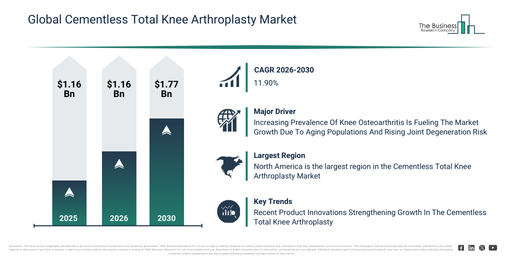
    The cementless total knee arthroplasty market size is projected to experience substantial growth in the upcoming years. This market is anticipated to expand to $5.19 billion in 2030, at a compound annual growth rate (CAGR) of 11.9%. The expansion during the forecast period is propelled by innovations in cementless implant coatings, a growing preference for minimally invasive surgeries, the expansion of orthopedic infrastructure, the adoption of patient-specific implants, and the integration of robotic-assisted knee arthroplasty. Significant developments expected over this period include the increasing uptake of cementless knee implants, a rising demand for minimally invasive knee operations, advancements in porous and coated implant surfaces, the proliferation of orthopedic surgery centers, and an increasing focus on patient-specific knee implants.

    Get A Free Sample Report With In-Depth Market Insights:

    https://thebusinessresearchcompany.com/sample_request?id=29625673&type=smp&name=Cementless%20Total%20Knee%20Arthroplasty%20Market%20Report%202026&utm_source=Blogs&utm_medium=Paid&utm_campaign=Sep_PR

    Cementless Total Knee Arthroplasty Market Opportunity Drivers: What’s Unlocking New Revenue Potential?

    The rising incidence of knee osteoarthritis is anticipated to propel the expansion of the cementless total knee arthroplasty market moving forward. Knee osteoarthritis, a degenerative joint condition, is characterized by pain, swelling, and stiffness in the knee joint, limiting an individual’s freedom of movement. The surge in knee osteoarthritis cases is primarily fueled by the rising prevalence of obesity, as excessive body weight imposes additional stress on knee joints, accelerating cartilage degradation and joint deterioration. Cementless total knee arthroplasty addresses knee osteoarthritis by replacing compromised joint surfaces with prosthetic components that foster natural bone growth for lasting stability and enhanced joint function. For instance, in February 2024, Arthritis Australia, an Australia-based non-profit organization, reported that by 2025, osteoarthritis (OA) is projected to affect 2.35 million Australians, accounting for 57% of the total arthritis population and making it the most common form of arthritis in the country. By 2040, the count of Australians with OA is expected to climb to 3.11 million, indicating a 32% increase from 2025. This equates to an additional 762,515 people living with OA in Australia by 2040 compared to 2025. Hence, the increasing prevalence of knee osteoarthritis is a significant factor driving the growth of the cementless total knee arthroplasty market.

    Cementless Total Knee Arthroplasty Market Segment Trends And Revenue Contributors

    The cementless total knee arthroplasty market covered in this report is segmented –

    1) By Product: Fixed-Bearing, Mobile-Bearing

    2) By Material: Titanium, Cobalt-Chromium, Polyethylene, Ceramic

    3) By Distribution Channels: Direct Sales, Distributors And Resellers

    4) By Application: Primary Total Knee Arthroplasty, Revision Total Knee Arthroplasty

    5) By End User: Hospitals, Specialty Clinics, Ambulatory Surgery Centers, Other End Users

    Subsegments:

    1) By Fixed-Bearing: Posterior Stabilized Fixed-Bearing, Cruciate Retaining Fixed-Bearing, Medial Pivot Fixed-Bearing

    2) By Mobile-Bearing: Rotating Platform Mobile-Bearing, Meniscal Bearing Mobile-Bearing, Dual Mobility Mobile-Bearing

    Cementless Total Knee Arthroplasty Market Innovation Trends Shaping Future Development

    Leading enterprises within the cementless total knee arthroplasty market are increasingly concentrating on the creation of 3D-printed, patient-specific cementless implants. This development aims to satisfy the growing need for prostheses that biologically integrate, offer improved long-term stability, and achieve better outcomes for younger, more active individuals. These implants are produced utilizing additive-manufacturing (3D-printing) technology to form a porous lattice structure, which promotes bone in-growth and thus achieves osseointegration. This differs from traditional cemented knee implants, which depend on bone cement for immediate attachment. As an illustration, in April 2025, restor3D Inc., a medical technology firm based in the US, secured U.S. Food and Drug Administration (FDA) 510(k) clearance for its iTotal Identity CR 3DP Porous Total Knee Replacement System. This signified the company’s inaugural cementless offering within its patient-specific implant portfolio. The system employs restor3d’s proprietary TIDAL Technology, which features a robust porous lattice engineered for enhanced bone ingrowth, fatigue resistance, and load distribution. It comprises femoral, tibial, and patellar components individually tailored to each patient’s anatomy, alongside customized, pre-navigated surgical instruments provided in a sterile, single-use kit. This setup minimizes intraoperative uncertainties and boosts surgical efficiency. Through the combination of patient-matched design and advanced surface engineering, this implant delivers a more natural sensation and durable attachment compared to traditional cemented options.

    Cementless Total Knee Arthroplasty Market Leading Players And Competitive Positioning

    Major companies operating in the cementless total knee arthroplasty market are Johnson & Johnson, Stryker Corporation, Zimmer Biomet Holdings Inc., Smith & Nephew Plc, Enovis Corporation, CONMED Corporation, Globus Medical Inc., MicroPort Scientific Corporation, Medacta Group SA, B. Braun Melsungen SE, TTK Healthcare Limited, Waldemar Link GmbH & Co. KG, United Orthopedic Corporation, Symbios Orthopédie SA, Gruppo Bioimpianti S.p.A., Permedica Orthopaedics S.p.A., Uteshiya Medicare Private Limited, LINK Orthopaedics GmbH, Plus Orthopaedics India Pvt. Ltd., XLO India Pvt. Ltd.

    View The Full Cementless Total Knee Arthroplasty Market Report:

    https://thebusinessresearchcompany.com/report/cementless-total-knee-arthroplasty-global-market-report?utm_source=Blogs&utm_medium=Paid&utm_campaign=Sep_PR

    Cementless Total Knee Arthroplasty Market Regional Distribution: Which Areas Power Market Growth?

    North America was the largest region in the cementless total knee arthroplasty market in 2025. Asia-Pacific is expected to be the fastest-growing region in the forecast period. The regions covered in the cementless total knee arthroplasty market report are Asia-Pacific, South East Asia, Western Europe, Eastern Europe, North America, South America, Middle East, Africa.

    Reach Out To Our Team:

    The Business Research Company: https://www.thebusinessresearchcompany.com/

    Americas: +1 310-496-7795

    Asia: +44 7882 955267 & +91 8897263534

    Europe: +44 7882 955267

    Email us at: marketing@tbrc.info

    Follow us on:

    LinkedIn: https://in.linkedin.com/company/the-business-research-company

    YouTube: https://www.youtube.com/channel/UC24_fI0rV8cR5DxlCpgmyFQ

    Global Market Model: https://www.thebusinessresearchcompany.com/global-market-model

  • Cell-Free DNA (cfDNA) Kits Market Outlook From 2026 To 2030: Key Growth Factors And Future Opportunities

    Cell-Free DNA (cfDNA) Kits Market Outlook From 2026 To 2030: Key Growth Factors And Future Opportunities

    Featuring market attractiveness scoring, total addressable market sizing, company benchmarking matrices, interactive Excel dashboards, deeper supply chain intelligence, emerging startup tracking, and granular product-level insights, The Business Research Company’s 2026 market reports are built to deliver research that is both more actionable and more strategically valuable.

    Cell-Free DNA (cfDNA) Kits Market Forecast: What Value Will The Market Reach By 2030?

    The cell-free DNA (cfDNA) kits market has experienced significant expansion in recent years. It is anticipated to increase from $1.8 billion in 2025 to $2.02 billion in 2026, exhibiting a compound annual growth rate (CAGR) of 12.4%. Historically, this market’s growth has been driven by factors such as the increasing utilization of liquid biopsy, advancements in cancer diagnostics, a rise in prenatal testing, the development of PCR and NGS technologies, and the proliferation of research laboratories.

    The cell-free dna (cfdna) kits market is anticipated to experience substantial growth in the upcoming years. Its valuation is projected to reach $3.2 billion by 2030, exhibiting a compound annual growth rate (CAGR) of 12.2%. This expected expansion during the forecast period stems from various factors, including technological advancements in cfDNA kits, a growing emphasis on non-invasive diagnostic approaches, the integration of AI into analytical processes, the expansion of molecular testing into emerging markets, and intensified research and development efforts in cancer biomarkers. Prominent trends expected in this period encompass high-sensitivity DNA isolation, the automation of sample preparation, integration with NGS platforms, rapid DNA extraction methodologies, and the development of standardized cfDNA kits.

    Get A Free Sample Report With In-Depth Market Insights:

    https://thebusinessresearchcompany.com/sample_request?id=81990527&type=smp&name=Cell-Free%20DNA%20%28cfDNA%29%20Kits%20Market%20Report%202026&utm_source=Blogs&utm_medium=Paid&utm_campaign=Sep_PR

    Cell-Free DNA (cfDNA) Kits Market Growth Momentum: What Factors Are Shaping Demand?

    An anticipated increase in genetic disorders is projected to propel the expansion of the cell-free DNA (cfDNA) kits market in the upcoming period. These disorders are health conditions stemming from alterations in an individual’s DNA, often due to single-gene mutations, multiple-gene mutations, or chromosomal irregularities. This growing incidence of genetic disorders is fueled by shifts in lifestyle and environmental elements like pollution and poor dietary habits, which can either induce new genetic mutations or exacerbate existing inherited conditions. Cell-free DNA (cfDNA) kits facilitate the early, non-invasive identification of genetic anomalies through the analysis of DNA fragments found in blood or other bodily fluids, leading to quicker diagnoses and empowering healthcare professionals to make precise and prompt treatment choices. For example, data from November 2024, provided by the US-based government body, the Centers for Disease Control and Prevention (CDC), indicates that approximately 1 in every 33 newborns in the US are affected by a birth defect, many of which have genetic origins. Consequently, the increasing occurrence of genetic disorders is a primary catalyst for the expansion of the cell-free DNA (cfDNA) kits market.

    Cell-Free DNA (cfDNA) Kits Market Segment Analysis Spotlighting Growth Areas

    The cell-free dna (cfdna) kits market covered in this report is segmented –

    1) By Product Type: Plasma Cell-Free DNA (Cfdna) Kits, Serum Cell-Free DNA (Cfdna) Kits, Urine Cell-Free DNA (Cfdna) Kits, Other Product Types

    2) By Technology: Next-Generation Sequencing (NGS), Polymerase Chain Reaction (PCR), Microarray Technology, Digital Polymerase Chain Reaction(PCR)

    3) By Application: Cancer Diagnostics, Prenatal Testing, Transplant Rejection Monitoring, Non-Invasive Disease Detection

    4) By Distribution Channel: Direct Sales, Retail Pharmacies, Online Sales, Distributors

    5) By End User: Hospitals, Research Laboratories, Diagnostic Laboratories, Academic Institutions

    Subsegments:

    1) By Plasma Cell-Free DNA Kits: Single-Stranded DNA Kits, Double-Stranded DNA Kits, High-Sensitivity DNA Kits, Rapid Extraction DNA Kits

    2) By Serum Cell-Free DNA Kits: Low-Volume DNA Kits, High-Yield DNA Kits, Automated DNA Kits, Manual Extraction DNA Kits

    3) By Urine Cell-Free DNA Kits: Early Detection DNA Kits, Concentration DNA Kits, High-Purity DNA Kits, Long-Term Stability DNA Kits

    4) By Other Product Types: Saliva DNA Kits, Cerebrospinal Fluid DNA Kits, Amniotic Fluid DNA Kits, Tissue-Derived DNA Kits

    Cell-Free DNA (cfDNA) Kits Market Trends Redefining Industry Growth

    Major companies operating in the cell-free DNA (cfDNA) kits market are focusing on developing innovative products with digital polymerase chain reaction (PCR)-based absolute quantification to enhance the sensitivity and precision of cfDNA analysis. Digital PCR-based absolute quantification enables highly accurate detection of low-frequency genetic variants with improved consistency, supporting critical applications in cancer diagnostics, prenatal testing, and transplant rejection monitoring. For instance, in June 2024, Omixon, a Hungary-based molecular diagnostics company, launched HoloGRAFT ONE, a research-use-only kit designed for post-transplant monitoring of donor-derived cell-free DNA (dd-cfDNA). The kit leverages proprietary genetic markers and digital PCR to distinguish donor DNA from the patient’s DNA, measuring both absolute and relative amounts of dd-cfDNA through copy-number variants. This innovative test aims to enable early detection of transplant rejection, enhance patient monitoring, and support personalized post-transplant care by providing clinicians with precise, actionable cfDNA measurements.

    Cell-Free DNA (cfDNA) Kits Market Competitive Overview And Top Companies

    Major companies operating in the cell-free dna (cfdna) kits market are F. Hoffmann-La Roche Ltd, Thermo Fisher Scientific Inc., Agilent Technologies Inc., Illumina Inc., Bio-Rad Laboratories Inc., QIAGEN N.V, Natera Inc., Myriad Genetics Inc., Guardant Health Inc., Bioneer Corporation, Streck Inc., Freenome Holdings Inc., GRAIL Inc., Zymo Research Corporation, Geneseeq Technology Inc, Covaris LLC, Active Motif Inc., Norgen Biotek Corp, AMSBIO LLC, EpiGentek Group Inc., Paragon Genomics Inc., Suzhou Beaver Biomedical Engineering.

    View The Full Cell-Free DNA (cfDNA) Kits Market Report:

    https://thebusinessresearchcompany.com/report/cell-free-dna-cfdna-kits-global-market-report?utm_source=Blogs&utm_medium=Paid&utm_campaign=Sep_PR

    Cell-Free DNA (cfDNA) Kits Market Leading Geography: Which Region Contributes The Most Revenue?

    North America was the largest region in the cell-free DNA (cfDNA) kits market in 2025. Asia-Pacific is expected to be the fastest-growing region in the forecast period. The regions covered in the cell-free dna (cfdna) kits market report are Asia-Pacific, South East Asia, Western Europe, Eastern Europe, North America, South America, Middle East, Africa.

    Reach Out To Our Team:

    The Business Research Company: https://www.thebusinessresearchcompany.com/

    Americas: +1 310-496-7795

    Asia: +44 7882 955267 & +91 8897263534

    Europe: +44 7882 955267

    Email us at: marketing@tbrc.info

    Follow us on:

    LinkedIn: https://in.linkedin.com/company/the-business-research-company

    YouTube: https://www.youtube.com/channel/UC24_fI0rV8cR5DxlCpgmyFQ

    Global Market Model: https://www.thebusinessresearchcompany.com/global-market-model
  • Atherectomy Devices Market Forecast 2026–2030: Market Size, Trends And Growth Opportunities

    Atherectomy Devices Market Forecast 2026–2030: Market Size, Trends And Growth Opportunities

    Backed by market attractiveness analysis, total addressable market sizing, company benchmarking matrices, interactive Excel dashboards, wider supply chain intelligence, emerging startup coverage, and detailed product-level insights, The Business Research Company’s 2026 market reports are designed to offer research that is more actionable and strategically valuable than ever.

    Atherectomy Devices Market Size And Revenue Outlook Through 2030

    The atherectomy devices market size has demonstrated robust growth in recent years. This market is projected to expand from $1.01 billion in 2025 to $1.11 billion in 2026, exhibiting a compound annual growth rate (CAGR) of 9.6%. The historical expansion can be attributed to the rising prevalence of peripheral artery disease, the expanding clinical adoption of minimally invasive debulking procedures, an increase in hospital-based coronary intervention volumes, the early introduction of rotational atherectomy technologies, and the growth of vascular specialty centers.

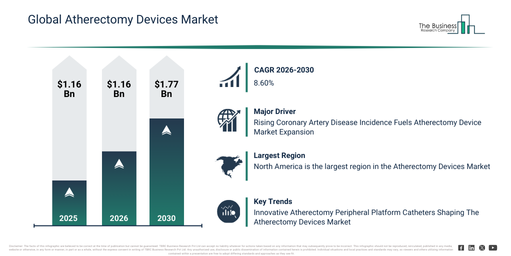
    The atherectomy devices market is anticipated to experience substantial growth in the coming years, with its size projected to reach $1.54 billion by 2030, demonstrating a compound annual growth rate (CAGR) of 8.6%. This expansion during the forecast period is primarily driven by factors such as the increasing demand for advanced plaque modification tools, a wider application of atherectomy in challenging calcified lesions, rising investments in next-generation device design and materials, the growth of outpatient and ambulatory vascular procedures, and the broader adoption of image-guided endovascular therapies. Significant trends influencing this period include the increasing use of atherectomy devices as a minimally invasive alternative for plaque removal in PAD and CAD cases, a heightened demand for specialized atherectomy systems designed for peripheral, coronary, and neurovascular interventions, a growing clinical preference for precise plaque debulking to improve vessel patency and reduce restenosis risk, the expanded utilization of atherectomy in conjunction with angioplasty and stenting for complex arterial lesions, and the ongoing development of multi-technology atherectomy portfolios, which include rotational, orbital, directional, and laser systems.

    Get A Free Sample Report With In-Depth Market Insights:

    https://thebusinessresearchcompany.com/sample_request?id=42444000&type=smp&name=Atherectomy%20Devices%20Market%20Report%202026&utm_source=Blogs&utm_medium=Paid&utm_campaign=Sep_PR

    Atherectomy Devices Market Opportunity Drivers: What’s Unlocking New Revenue Potential?

    The increasing occurrence of coronary artery disease is projected to drive expansion within the atherectomy devices market moving forward. Coronary artery disease (CAD) describes a condition where plaque accumulation narrows or obstructs the coronary arteries, thereby diminishing blood flow to the heart. The widespread presence of coronary artery disease stems from a worldwide surge in the aging population, a rise in inactive lifestyles, heightened stress and mental health concerns, and greater intake of unhealthy diets. Directional coronary atherectomy represents a minimally invasive procedure aimed at clearing obstructions from coronary arteries, thereby improving blood flow to the heart muscle and relieving discomfort. As an illustration, data from May 2024 from the Singapore Heart Foundation (SHF), a non-profit organization based in Singapore, indicated that the overall number of fatalities from cardiovascular disease reached 8,311 in 2023, an increase from 2022, and deaths linked to atherosclerosis accounted for 60% of all cardiovascular deaths in 2023, rising from 59% in 2022. Therefore, the growing prevalence of coronary artery disease is fueling the expansion of the atherectomy devices market.

    Atherectomy Devices Market Segment Breakdown: Which Categories Lead On Revenue?

    The atherectomy devices market covered in this report is segmented –

    1) By Product: Rotational Atherectomy Devices, Orbital Atherectomy Devices, Directional Atherectomy Devices, Other Products

    2) By Application: Peripheral Vascular Applications, Cardiovascular Applications, Neurovascular Applications

    3) By End User: Hospitals And Surgical Centers, Ambulatory Care Centers, Other End Users

    Subsegments:

    1) By Rotational Atherectomy Devices: Coronary Rotational Atherectomy Devices, Peripheral Rotational Atherectomy Devices

    2) By Orbital Atherectomy Devices: Coronary Orbital Atherectomy Devices, Peripheral Orbital Atherectomy Devices

    3) By Directional Atherectomy Devices: Coronary Directional Atherectomy Devices, Peripheral Directional Atherectomy Devices

    4) By Other Products: Laser Atherectomy Devices, Excimer Laser Atherectomy Systems

    Atherectomy Devices Market Innovation Trends Shaping Future Development

    Prominent companies operating in the atherectomy devices market are developing cutting-edge products, such as the atherectomy peripheral platform-based catheter, to achieve a competitive advantage in the industry. An atherectomy peripheral platform-based catheter is a medical instrument used for treating peripheral artery disease by navigating through blood vessels to resolve arterial blockages located in the legs. For instance, in October 2023, Cardio Flow, a US-based medical device company specializing in manufacturing, launched the FreedomFlow, an orbital atherectomy peripheral platform. The FreedomFlow platform utilizes a modern mechanism to clear plaque blockages in the leg arteries, employing a proprietary catheter-based design that incorporates angular momentum physics, distinguished by a spiral geometry with five diamond-coated spheres that maintain consistent contact with the vessel wall during both its advancement and retraction.

    Atherectomy Devices Market Company Landscape And Competitive Strategy

    Major companies operating in the atherectomy devices market are Boston Scientific Corporation, Medtronic plc, Abbott Laboratories, Cardiovascular Systems Inc, Terumo Corporation, Avinger Inc, Straub Medical AG, AngioDynamics Inc, Rex Medical LP, Ra Medical Systems Inc, Koninklijke Philips NV, Shockwave Medical Inc, Merit Medical Systems Inc, iVascular SLU, Hawk Medical Technologies, Medinol Ltd, Cardionovum GmbH, Wellinq Medical Products, Veryan Medical, Penumbra Inc

    View The Full Atherectomy Devices Market Report:

    https://thebusinessresearchcompany.com/report/atherectomy-devices-global-market-report?utm_source=Blogs&utm_medium=Paid&utm_campaign=Sep_PR

    Atherectomy Devices Market Largest Region: Which Geography Holds The Biggest Share?

    North America was the largest region in the atherectomy devices market in 2025. Asia-Pacific is expected to be the fastest-growing region in the forecast period. The regions covered in the atherectomy devices market report are Asia-Pacific, South East Asia, Western Europe, Eastern Europe, North America, South America, Middle East, Africa.

    Reach Out To Our Team:

    The Business Research Company: https://www.thebusinessresearchcompany.com/

    Americas: +1 310-496-7795

    Asia: +44 7882 955267 & +91 8897263534

    Europe: +44 7882 955267

    Email us at: marketing@tbrc.info

    Follow us on:

    LinkedIn: https://in.linkedin.com/company/the-business-research-company

    YouTube: https://www.youtube.com/channel/UC24_fI0rV8cR5DxlCpgmyFQ

    Global Market Model: https://www.thebusinessresearchcompany.com/global-market-model

  • Cell-Free DNA (cfDNA) Blood Collection Tube Market Growth Forecast: Market Size, Key Trends And Emerging Opportunities Through 2030

    Cell-Free DNA (cfDNA) Blood Collection Tube Market Growth Forecast: Market Size, Key Trends And Emerging Opportunities Through 2030

    Built to provide research that’s more actionable and strategically valuable, The Business Research Company’s 2026 market reports include market attractiveness analysis, total addressable market sizing, company benchmarking matrices, interactive Excel dashboards, broader supply chain intelligence, emerging startup tracking, and in-depth product insights.

    Cell-Free DNA (cfDNA) Blood Collection Tube Market Size Outlook: How Quickly Will Revenue Expand Through 2030?

    The market for cell-free dna (cfdna) blood collection tubes has seen significant growth in recent years. This market is set to expand from $1.33 billion in 2025 to $1.51 billion in 2026, achieving a compound annual growth rate (CAGR) of 13.6%. The historical expansion of this market can be attributed to factors like the increasing demand for prenatal testing, advancements in cancer diagnostics, the wider adoption of cfDNA in research, improvements in laboratory automation, and the continuous expansion of diagnostic centers.

    The cell-free dna (cfdna) blood collection tube market is anticipated to experience substantial expansion in the coming years. Its valuation is projected to reach $2.49 billion by 2030, demonstrating a compound annual growth rate (CAGR) of 13.3%. This expansion during the forecast period is fueled by several factors, including advancements in blood tube preservatives, the incorporation of AI diagnostics, the increasing size of the liquid biopsy market, a rise in clinical trial activity, and growing interest in developing regions. Key developments expected within this period involve improved sample preservation, connectivity with liquid biopsy platforms, standardized approaches for blood collection, automated sample handling, and designs for highly stable tubes.

    Get A Free Sample Report With In-Depth Market Insights:

    https://thebusinessresearchcompany.com/sample_request?id=59273187&type=smp&name=Cell-Free%20DNA%20%28cfDNA%29%20Blood%20Collection%20Tube%20Market%20Report%202026&utm_source=Blogs&utm_medium=Paid&utm_campaign=Sep_PR

    Cell-Free DNA (cfDNA) Blood Collection Tube Market Expansion Drivers: What’s Shaping Future Growth?

    A rise in respiratory illnesses is anticipated to propel the expansion of the cell-free DNA (cfDNA) blood collection tube market in the coming years. These conditions involve the lungs and respiratory system, hindering effective breathing and oxygen/carbon dioxide exchange. The rising incidence of such disorders is significantly linked to air pollution, which inflames airways, diminishes lung capacity, and heightens the risk of ailments such as asthma, bronchitis, and chronic obstructive pulmonary disease (COPD). Cell-free DNA (cfDNA) blood collection tubes offer a method to manage respiratory conditions by identifying genetic mutations, tracking disease advancement, and evaluating treatment efficacy via a straightforward blood test, thus decreasing the necessity for intrusive lung biopsies. As an illustration, in December 2024, data from the Centers for Disease Control and Prevention, a US-based government agency, indicated that approximately 17,000 to 34,000 hospitalizations resulted from respiratory syncytial virus (RSV) between October 1 and November 30, 2024. Consequently, the growing occurrence of respiratory disorders is fueling the growth of the cell-free DNA (cfDNA) blood collection tube market.

    Cell-Free DNA (cfDNA) Blood Collection Tube Market Segment Performance And Emerging Opportunities

    The cell-free dna (cfdna) blood collection tube market covered in this report is segmented –

    1) By Type: 5ml, 10ml

    2) By Sample Type: Plasma, Serum, Whole Blood

    3) By Application: In Vitro Diagnostics, Scientific Research

    4) By End-User: Diagnostic Laboratories, Hospitals Or Clinical Centers, Genetic Diagnostic Labs, Cancer Research Centers, Research And Development Institutions, Conventional Diagnostic Centers

    Subsegments:

    1) By 5 mL: Single Use Tube, Vacuum Blood Collection Tube, Gel Separator Tube

    2) By 10 mL: Double Draw Tube, High Volume Collection Tube, Anticoagulant Treated Tube

    Cell-Free DNA (cfDNA) Blood Collection Tube Market Strategic Trends: What Defines The Next Growth Phase?

    Leading companies in the cell-free DNA (cfDNA) blood collection tube market are prioritizing the automation of cfDNA extraction to boost workflow efficiency. This automation involves employing sophisticated robotic instruments and standardized protocols to isolate cell-free DNA from blood samples with minimal manual involvement, thereby enhancing efficiency, accuracy, and consistency, while also reducing turnaround time and potential human error. For example, in September 2023, Yourgene Health plc, a UK-based molecular diagnostics company, introduced the MagBench Automated DNA Extraction Instrument and Kit. This offering provides a fast, simple, and cost-efficient bench-top robotic solution specifically optimized for cell-free DNA extraction within non-invasive prenatal testing (NIPT) workflows. The launch aims to strengthen automation in NIPT workflows by delivering increased throughput, reproducibility, and reliability in cfDNA extraction, simultaneously decreasing hands-on time and operational costs.

    Cell-Free DNA (cfDNA) Blood Collection Tube Market Competitive Landscape: Which Companies Lead The Industry?

    Major companies operating in the cell-free dna (cfdna) blood collection tube market are Roche Holding AG, Thermo Fisher Scientific Inc., Becton Dickinson (BD), Qiagen N.V., SARSTEDT AG & Co. KG, Guangzhou Improve Medical Technology, Streck Inc., DiaCarta Inc., Zymo Research Corporation, Biomatrica Inc., PreAnalytiX GmbH, Beijing Cowin Bioscience Co.Ltd., Norgen Biotek Corporation, Nonacus Limited, Guangdong Ardent Biomed Co. Ltd, MagBio Genomics Inc., VanGenes, BEAVER, Hebei Xinle Science & Technology Co. Ltd., Nasmed Diagnostics Pvt. Ltd.

    View The Full Cell-Free DNA (cfDNA) Blood Collection Tube Market Report:

    https://thebusinessresearchcompany.com/report/cell-free-dna-cfdna-blood-collection-tube-global-market-report?utm_source=Blogs&utm_medium=Paid&utm_campaign=Sep_PR

    Cell-Free DNA (cfDNA) Blood Collection Tube Market Regional Outlook: Where Is Opportunity Concentrated?

    North America was the largest region in the cell-free DNA (cfDNA) blood collection tube market in 2025. Asia-Pacific is expected to be the fastest-growing region in the forecast period. The regions covered in the cell-free dna (cfdna) blood collection tube market report are Asia-Pacific, South East Asia, Western Europe, Eastern Europe, North America, South America, Middle East, Africa.

    Reach Out To Our Team:

    The Business Research Company: https://www.thebusinessresearchcompany.com/

    Americas: +1 310-496-7795

    Asia: +44 7882 955267 & +91 8897263534

    Europe: +44 7882 955267

    Email us at: marketing@tbrc.info

    Follow us on:

    LinkedIn: https://in.linkedin.com/company/the-business-research-company

    YouTube: https://www.youtube.com/channel/UC24_fI0rV8cR5DxlCpgmyFQ

    Global Market Model: https://www.thebusinessresearchcompany.com/global-market-model

  • Cell Processing Instruments Market CAGR Forecast Through 2030: Key Trends Shaping Industry Expansion

    Cell Processing Instruments Market CAGR Forecast Through 2030: Key Trends Shaping Industry Expansion

    Backed by market attractiveness analysis, total addressable market sizing, company benchmarking matrices, interactive Excel dashboards, wider supply chain intelligence, emerging startup coverage, and detailed product-level insights, The Business Research Company’s 2026 market reports are designed to offer research that is more actionable and strategically valuable than ever.

    Cell Surface Marker Detection Market Size, Value And Growth Trajectory Through 2030

    The cell surface marker detection market size has seen rapid expansion in recent years. It is anticipated to expand from $6.39 billion in 2025 to $7.11 billion in 2026, advancing at a compound annual growth rate (CAGR) of 11.2%. The past growth in this market can be attributed to an increase in biomedical research activities, the broadening of pharmaceutical drug discovery programs, the greater use of flow cytometry in diagnostics, growing investments within life sciences research, and the more widespread availability of laboratory automation.

    The cell surface marker detection market is projected to experience swift expansion in the coming years. Its size is anticipated to reach $10.81 billion by 2030, exhibiting a compound annual growth rate (CAGR) of 11.0%. This expansion during the forecast period is fueled by factors such as the greater adoption of precision medicine techniques, a surge in demand for single-cell analysis, the proliferation of translational research projects, the increasing application of AI-assisted cell analysis, and heightened investments in advanced diagnostic facilities. Key trends anticipated within the same period encompass the growing integration of high-throughput flow cytometry systems, an escalating need for sophisticated reagents and kits, wider deployment of automated cell analysis platforms, the broadening scope of marker-based precision diagnostics, and a sharper emphasis on multiparameter cell profiling.

    Get A Free Sample Report With In-Depth Market Insights:

    https://thebusinessresearchcompany.com/sample_request?id=24363828&type=smp&name=Cell%20Surface%20Marker%20Detection%20Market%20Report%202026&utm_source=Blogs&utm_medium=Paid&utm_campaign=Sep_PR

    Cell Surface Marker Detection Market Development Factors: What’s Supporting Demand?

    The growing prevalence of cancer is anticipated to drive the expansion of the cell surface marker detection market in the future. Cancer is characterized by the uncontrolled proliferation of certain cells, which can then spread to other regions of the body. Factors such as the embrace of Western lifestyles, inadequate dietary practices, regular consumption of non-vegetarian food, chemical contamination, and insufficient physical activity have collectively led to a global surge in cancer diagnoses. Cell surface marker detection aids cancer cells by offering point-of-care predictions of how patients will respond to various cancer medications, consequently escalating its demand. For example, data from February 2024 by the World Health Organization, an international organization based in Switzerland focused on global health policy and public health programs, projects more than 35 million new cancer diagnoses by 2050. This represents a significant 77% rise from the estimated 20 million cases recorded in 2022. Consequently, the escalating occurrence of oncology diseases is a key driver for the expansion of the cell surface marker detection market.

    Cell Surface Marker Detection Market Segment Landscape And Growth Outlook

    The cell surface marker detection market covered in this report is segmented –

    1) By Product: Flow Cytometry, Reagents And Kits

    2) By Application: Disease Diagnosis, Diseases Identification, Research For Drug Discovery, Cytological Academic Research

    3) By End-Users: Pharmaceutical And Biotechnology Companies, Hospitals And Clinical Testing Laboratories, Academic And Research Institutes, Other End Users

    Subsegments:

    1) By Flow Cytometry: Benchtop Flow Cytometers, Portable Flow Cytometers, High-Throughput Flow Cytometers

    2) By Reagents And Kits: Antibodies And Conjugates, Staining Kits, Calibration And Control Kits

    Cell Surface Marker Detection Market Transformation Trends: What Innovations Are Driving Change?

    Leading firms within the cell surface marker detection market are allocating resources to cutting-edge technologies, including novel fluorescent dyes and antibodies. This investment aims to boost multicolour flow cytometry capabilities, thereby refining the precision and effectiveness of immunological studies and diagnostic procedures. Bio-Rad has broadened its StarBright Violet Dye series by incorporating 29 thoroughly validated antibodies linked to diverse StarBright Violet Dyes. This development improves the capacity to identify and examine numerous cell surface markers in both human and animal research using multicolour flow cytometry. As an illustration, in May 2024, Bio-Rad Laboratories, Inc., a US-based firm specializing in the creation and production of advanced technological products, introduced three new StarBright Red Dyes: StarBright Red 715, 775, and 815. This addition expands their current range of fluorescent dyes, which now offers a total of 32 choices compatible with various lasers, specifically tailored for conventional and full-spectrum flow cytometry uses. Furthermore, these dyes show very little background interference when contrasted with conventional cyanine tandem dyes and possess sufficient stability to be fixed in formalin or alcohol-based solutions without any loss of signal quality.

    Cell Surface Marker Detection Market Competitive Landscape: Who Leads The Industry?

    Major companies operating in the cell surface marker detection market are Thermo Fisher Scientific Inc, Beckman Coulter Inc, Bio-Rad Laboratories Inc, Becton Dickinson and Company, BD Biosciences, Agilent Inc, Sigma-Aldrich, Qiagen NV, Abcam PLC, GenScript Biotech, BioLegend, Cell Signaling Technology Inc, Merck KGaA, Bio-Techne Corporation, Affymetrix, Danaher Corporation, Miltenyi Biotec, R&D Systems, Siemens Healthineers, F Hoffmann-La Roche Ltd, Sartorius, Sysmex Corporation, Nihon Kohden Corporation, Diasorin SpA, Janssen Diagnostics

    View The Full Cell Surface Marker Detection Market Report:

    https://thebusinessresearchcompany.com/report/cell-surface-marker-detection-global-market-report?utm_source=Blogs&utm_medium=Paid&utm_campaign=Sep_PR

    Cell Surface Marker Detection Market Geographic Landscape: Which Region Leads Industry Growth?

    North America was the largest region in the cell surface marker detection market in 2025. Asia-Pacific is expected to be the fastest-growing region in the forecast period. The regions covered in the cell surface marker detection market report are Asia-Pacific, South East Asia, Western Europe, Eastern Europe, North America, South America, Middle East, Africa.

    Reach Out To Our Team:

    The Business Research Company: https://www.thebusinessresearchcompany.com/

    Americas: +1 310-496-7795

    Asia: +44 7882 955267 & +91 8897263534

    Europe: +44 7882 955267

    Email us at: marketing@tbrc.info

    Follow us on:

    LinkedIn: https://in.linkedin.com/company/the-business-research-company

    YouTube: https://www.youtube.com/channel/UC24_fI0rV8cR5DxlCpgmyFQ

    Global Market Model: https://www.thebusinessresearchcompany.com/global-market-model

  • Cell Processing Instruments Market To Witness 7.7% CAGR Growth Through 2030: Key Industry Drivers

    Cell Processing Instruments Market To Witness 7.7% CAGR Growth Through 2030: Key Industry Drivers

    Featuring market attractiveness scoring, total addressable market sizing, company benchmarking matrices, interactive Excel dashboards, deeper supply chain intelligence, emerging startup tracking, and granular product-level insights, The Business Research Company’s 2026 market reports are built to deliver research that is both more actionable and more strategically valuable.

    Cell Processing Instruments Market CAGR Outlook And Future Development

    The cell processing instruments market has shown robust expansion in recent years. Its valuation is anticipated to rise from $6.95 billion in 2025 to $7.51 billion in 2026, reflecting a compound annual growth rate (CAGR) of 8.1%. The growth observed in prior periods stemmed from factors such as constrained automation in cell processing, a reliance on manual cell counting and separation techniques, increasing academic and research endeavors, a heightened need for accurate cell analysis, and the introduction of flow cytometry technologies.

    The cell processing instruments market is set to observe significant expansion over the next few years. It is projected to increase to $10.1 billion in 2030, growing at a compound annual growth rate (CAGR) of 7.7%. This expansion during the forecast period can be ascribed to the progression of integrated cell processing platforms, increasing investments in cell therapy and regenerative medicine, the adoption of digital and automated imaging systems, a rise in contract research and manufacturing activities, and advancements in live cell analysis and high-content screening. Noteworthy trends expected in this period include an escalating demand for automated cell processing systems, the broader uptake of flow cytometry and high-content imaging, growth in cell therapy and regenerative medicine applications, an emphasis on standardization and regulatory adherence, and the integration of multi-functional cell analysis platforms.

    Get A Free Sample Report With In-Depth Market Insights:

    https://thebusinessresearchcompany.com/sample_request?id=95949961&type=smp&name=Cell%20Processing%20Instruments%20Market%20Report%202026&utm_source=Blogs&utm_medium=Paid&utm_campaign=Sep_PR

    Cell Processing Instruments Market Industry Drivers: What’s Behind The Revenue Growth?

    Future expansion of the cell processing instruments market is anticipated, driven by the rising investment in biopharmaceutical research. This research involves the scientific investigation and creation of therapeutic products originating from biological sources or engineered to replicate biological molecules, intended for disease diagnosis, prevention, or treatment. The surge in biopharmaceutical research investment stems from an escalating need for novel therapies to tackle the growing prevalence of chronic diseases and unmet medical requirements, thereby stimulating more extensive research and development endeavors for precise and potent treatments. Cell processing instruments facilitate biopharmaceutical research by providing capabilities for efficient, standardized, and scalable cell manipulation, consequently speeding up the creation and manufacturing of sophisticated cell-based therapies. For example, reports from the BioIndustry Association (BIA), a UK-based trade association, indicated that in January 2025, the UK biotech sector achieved significant growth in 2024, attracting £3.5 billion (approximately $ 4.4 billion) in investment, marking a notable 94% increase compared to the prior year. Consequently, the growing financial commitment to biopharmaceutical research is propelling the expansion of the cell processing instruments market.

    Cell Processing Instruments Market Breakdown By Product Type And Application

    The cell processing instruments market covered in this report is segmented –

    1) By Type: Cell Counters, Cell Imaging Systems, Flow Cytometers, Cell Separator Systems, Automated Cell Processing Systems, Other Instruments

    2) By Application: Cell Isolation Or Separation, Cell Imaging And Counting, Cell Viability And Proliferation, Other Applications

    3) By End-Use: Pharmaceutical And Biotechnology Companies, Contract Research Organizations (CROs) And Contract Manufacturing Organizations (CMOs), Academic And Research Institutes, Other End-Uses

    Subsegments:

    1) By Cell Counters: Manual Cell Counters, Automated Cell Counters, Digital Cell Counters

    2) By Cell Imaging Systems: Brightfield Imaging Systems, Fluorescence Imaging Systems, High-Content Imaging Systems, Live Cell Imaging Systems

    3) By Flow Cytometers: Analog Flow Cytometers, Digital Flow Cytometers, Benchtop Flow Cytometers, Clinical Flow Cytometers

    4) By Cell Separator Systems: Magnetic-Activated Cell Sorting (MACS) Systems, Fluorescence-Activated Cell Sorting (FACS) Systems, Centrifugal Elutriation Systems

    5) By Automated Cell Processing Systems: Cell Expansion Systems, Cell Washing And Concentration Systems, Cell Harvesting Systems, Integrated Cell Processing Platforms

    6) By Other Instruments: Cell Disruption Systems, Cell Viability Analyzers, Centrifuges For Cell Processing, Cell Freezing And Thawing Systems

    #Cell Processing Instruments Market Growth Trends: What’s Shaping The Future Outlook?

    Leading companies in the cell processing instruments market are concentrating on devising innovative methods, such as multi-channel asynchronous processing, to elevate workflow efficiency and adaptability in cell therapy development. Multi-channel asynchronous processing defines a system’s capacity to execute multiple distinct workflows simultaneously on separate channels, thereby enabling various processes to operate concurrently without one waiting for another to conclude. For example, in June 2023, Singleron Biotechnologies GmbH, a biotechnology firm based in Germany, introduced two new instruments, Python Junior and Matrix NEO, designed to improve and standardize the single-cell analysis workflow. Python Junior simplifies the dissociation of solid tissues into high-quality single-cell suspensions utilizing dual independent channels and a blend of mechanical and enzymatic processing, whereas Matrix NEO allows for high-throughput, fully automated single-cell library preparation, encompassing chip priming, cell partitioning, lysis, and nucleic acid capture across four channels, thus catering to diverse applications and throughput requirements in both research and clinical contexts.

    Cell Processing Instruments Market Company Landscape And Competitive Strategy

    Major companies operating in the cell processing instruments market are Thermo Fisher Scientific Inc., Danaher Corporation, Merck KGaA, Becton Dickinson and Company, Avantor Inc., Agilent Technologies Inc., Sartorius AG, Revvity Inc., Bio-Rad Laboratories Inc., Eppendorf SE, Tecan Group Ltd., Bio-Techne Corporation, STEMCELL Technologies Inc., Miltenyi Biotec B.V. & Co. KG, Takara Bio Inc., 10x Genomics Inc., Promega Corporation, Esco Lifesciences Group Ltd., NanoCellect Biomedical Inc., InGeneron Inc.

    View The Full Cell Processing Instruments Market Report:

    https://thebusinessresearchcompany.com/report/cell-processing-instruments-global-market-report?utm_source=Blogs&utm_medium=Paid&utm_campaign=Sep_PR

    Cell Processing Instruments Market Largest Region: Which Geography Holds The Biggest Share?

    North America was the largest region in the cell processing instruments market in 2025. Asia-Pacific is expected to be the fastest-growing region in the forecast period. The regions covered in the cell processing instruments market report are Asia-Pacific, South East Asia, Western Europe, Eastern Europe, North America, South America, Middle East, Africa.

    Reach Out To Our Team:

    The Business Research Company: https://www.thebusinessresearchcompany.com/

    Americas: +1 310-496-7795

    Asia: +44 7882 955267 & +91 8897263534

    Europe: +44 7882 955267

    Email us at: marketing@tbrc.info

    Follow us on:

    LinkedIn: https://in.linkedin.com/company/the-business-research-company

    YouTube: https://www.youtube.com/channel/UC24_fI0rV8cR5DxlCpgmyFQ

    Global Market Model: https://www.thebusinessresearchcompany.com/global-market-model

  • Asthma Spacers Market Size Reaches $2.12 Billion In 2026: What Is Driving Growth?

    Asthma Spacers Market Size Reaches $2.12 Billion In 2026: What Is Driving Growth?

    Featuring market attractiveness scoring, total addressable market sizing, company benchmarking matrices, interactive Excel dashboards, deeper supply chain intelligence, emerging startup tracking, and granular product-level insights, The Business Research Company’s 2026 market reports are built to deliver research that is both more actionable and more strategically valuable.

    Asthma Spacers Market Growth From $2.12 Billion In 2026 To $2.61 Billion By 2030 At A CAGR Of 5.4%

    The asthma spacers market size has experienced strong growth in recent years. It is anticipated to expand from $1.99 billion in 2025 to $2.12 billion in 2026, exhibiting a compound annual growth rate (CAGR) of 6.1%. This historical growth can be attributed to several factors, including an increase in asthma prevalence among both children and adults, the widespread application of MDIs in chronic respiratory care, an early clinical emphasis on optimizing inhaler technique, the expansion of home-based respiratory therapy, and enhanced hospital recommendations for spacer-assisted dosing.

    The asthma spacers market is projected to experience substantial expansion in the coming years. Its size is anticipated to reach $2.61 billion by 2030, exhibiting a compound annual growth rate (CAGR) of 5.4%. This projected growth during the forecast period is fueled by several factors, including the increasing need for patient-compliant inhalation devices, the broadening of preventive asthma management initiatives, a rising inclination towards homecare and tele-respiratory support solutions, advancements in spacer chamber materials and valve designs, and the expanded integration of spacers within emerging healthcare markets. Key trends anticipated during this period encompass a greater preference for asthma spacers to enhance the effectiveness of inhaler medication delivery, the wider adoption of child-friendly spacer designs featuring ergonomic and user-safe characteristics, an increasing deployment of compact and portable spacer devices for home-based care and personal management, the continued advancement of anti-static and transparent spacer chambers for improved dose accuracy, and the expanding availability of product variations designed for preventive, rescue, and combined applications.

    Get A Free Sample Report With In-Depth Market Insights:

    https://thebusinessresearchcompany.com/sample_request?id=23113159&type=smp&name=Asthma%20Spacers%20Market%20Report%202026&utm_source=Blogs&utm_medium=Paid&utm_campaign=Sep_PR

    Asthma Spacers Market Growth Momentum: What Factors Are Shaping Demand?

    The anticipated increase in air pollution is projected to boost the expansion of the asthma spacer market in the future. Air pollution is defined as the presence of noxious elements in the atmosphere that adversely affect human well-being, ecological systems, and the overall standard of living. This issue represents a major environmental and public health concern, stemming from both natural occurrences and human-induced actions, encompassing numerous detrimental agents impacting human health and ecosystems. During times of elevated air pollution, asthma spacers can serve as a preventive tool, as they decrease the quantity of pollutants entering the airways during inhaler use, thereby diminishing the likelihood of asthma symptoms deteriorating due to airborne irritants. For example, reports from March 2024 by the International Energy Agency (IEA), an independent intergovernmental body based in France, indicated that in 2023, worldwide energy-related carbon dioxide (CO2) emissions saw an increase of 1.1%, amounting to 410 million metric tons (Mt CO2) as opposed to 321 million metric tons recorded in 2022. This led to a record high of over 37.4 metric tons in 2023, up from 36.8 billion metric tons in 2022. Consequently, the escalating air pollution is set to drive the expansion of the asthma spacer market.

    Asthma Spacers Market Segmentation: How Does The Market Break Down By Category?

    The asthma spacers market covered in this report is segmented –

    1) By Product: Aerochamber, Optichamber, Volumatic, Inspirease, Other Products

    2) By Distribution Channels: E-commerce Channels, Retail Pharmacies, Hospital Pharmacies, Other Distribution Channels

    3) By Application: Preventive Use, Rescue Use, Combined Use

    4) By End-Use: Homecare Settings, Hospitals And Clinics, Other End-Users

    Subsegments:

    1) By Aerochamber: Aerochamber Plus, Aerochamber Flow-Vu

    2) By Optichamber: Optichamber Diamond, Optichamber Standard

    3) By Volumatic: Volumatic Spacer, Volumatic Plus

    4) By Inspirease: Inspirease Spacer Device

    5) By Other Products: Babyhaler, Funhaler

    Asthma Spacers Market Trends Redefining Industry Growth

    Leading companies within the asthma spacer market are concentrating on developing smart, interconnected spacers, including digital monitoring valved holding chambers which track inhaler usage and give feedback to patients and clinicians regarding adherence and technique. A digital monitoring valved holding chamber is a spacer apparatus fitted with embedded sensors that log each actuation, observe breathing patterns, and relay real-time usage data to mobile or clinical platforms to enhance adherence and dosing accuracy. For example, in May 2023, the Allergy Foundation of South Africa, a non-profit organization located in South Africa, unveiled the AfriSpacer, an inexpensive, reusable asthma spacer that incorporates a design to reduce aerosol speed for greater lung deposition, a washable construction encompassing its one-way valve, and a build focused on affordability to aid patients in settings with scarce resources.

    Asthma Spacers Market Key Players Shaping Industry Direction

    Major companies operating in the asthma spacers market are Trudell Medical International, PARI GmbH, Koninklijke Philips NV, Medical Developments International Ltd, Teleflex Incorporated, Monaghan Medical Corporation, Clement Clarke International Ltd, Rossmax International Ltd, Visiomed Group Ltd, Laboratoire ProtecSom, Koo Medical Equipment, AGPMED, SunMed Holdings LLC, Bird HealthCare Pty Ltd, Allied Healthcare Products Inc, Drive DeVilbiss Healthcare, Vyaire Medical Inc, Luckys Pharma, Mediacare Equipments Pvt Ltd, Asia Connection Co Ltd

    View The Full Asthma Spacers Market Report:

    https://thebusinessresearchcompany.com/report/asthma-spacers-global-market-report?utm_source=Blogs&utm_medium=Paid&utm_campaign=Sep_PR

    Asthma Spacers Market Regional Analysis: Which Geography Leads On Revenue?

    North America was the largest region in the asthma spacers market in 2025. Asia-Pacific is expected to be the fastest-growing region in the forecast period. The regions covered in the asthma spacers market report are Asia-Pacific, South East Asia, Western Europe, Eastern Europe, North America, South America, Middle East, Africa.

    Reach Out To Our Team:

    The Business Research Company: https://www.thebusinessresearchcompany.com/

    Americas: +1 310-496-7795

    Asia: +44 7882 955267 & +91 8897263534

    Europe: +44 7882 955267

    Email us at: marketing@tbrc.info

    Follow us on:

    LinkedIn: https://in.linkedin.com/company/the-business-research-company

    YouTube: https://www.youtube.com/channel/UC24_fI0rV8cR5DxlCpgmyFQ

    Global Market Model: https://www.thebusinessresearchcompany.com/global-market-model

  • Cell Free Tumor Deoxyribonucleic Acid (DNA) Detection Market Projected For Strong Expansion Through 2030: Key Trends And Future Outlook

    Cell Free Tumor Deoxyribonucleic Acid (DNA) Detection Market Projected For Strong Expansion Through 2030: Key Trends And Future Outlook

    Built to provide research that’s more actionable and strategically valuable, The Business Research Company’s 2026 market reports include market attractiveness analysis, total addressable market sizing, company benchmarking matrices, interactive Excel dashboards, broader supply chain intelligence, emerging startup tracking, and in-depth product insights.

    Cell Free Tumor Deoxyribonucleic Acid (DNA) Detection Market Set To Climb From $3.02 Billion In 2026 To $5.64 Billion By 2030

    The cell free tumor deoxyribonucleic acid (dna) detection market size has seen rapid growth in recent years. It is anticipated to increase from $2.58 billion in 2025 to $3.02 billion in 2026, at a compound annual growth rate (CAGR) of 17.2%. This historical growth can be attributed to the rising prevalence of cancer, continuous advancements in molecular diagnostics, an increasing demand for non-invasive testing, the widespread adoption of PCR and NGS techniques, and a surge in clinical research studies.

    The cell free tumor deoxyribonucleic acid (dna) detection market size is anticipated to experience rapid expansion in the coming years. It is forecast to grow to $5.64 billion in 2030, achieving a compound annual growth rate (CAGR) of 16.9%. This growth throughout the forecast period can be attributed to the broadening application of precision medicine, advancements in ctDNA analysis technology, the incorporation of AI-based diagnostic tools, increasing healthcare investments in developing economies, and the expansion of early cancer detection programs. Major developments expected in this period include the widespread adoption of liquid biopsy, integration with genomic data platforms, real-time tumor monitoring capabilities, non-invasive methods for cancer diagnostics, and sophisticated ctdna detection technologies.

    Get A Free Sample Report With In-Depth Market Insights:

    https://thebusinessresearchcompany.com/sample_request?id=75222632&type=smp&name=Cell%20Free%20Tumor%20Deoxyribonucleic%20Acid%20%28DNA%29%20Detection%20Market%20Report%202026&utm_source=Blogs&utm_medium=Paid&utm_campaign=Sep_PR

    Cell Free Tumor Deoxyribonucleic Acid (DNA) Detection Market Growth Factors: What’s Supporting Expansion?

    The expanding need for personalized medicine is anticipated to fuel the expansion of the cell free tumor deoxyribonucleic acid (DNA) detection market in the future. Personalized medicine defines a healthcare method where treatment and preventive actions are customized to an individual’s distinct genetic composition, way of life, and surroundings. The rising uptake of personalized medicine is largely attributable to progress in genomics, which facilitates precise identification of genetic differences and bespoke therapies for patients. Cell free tumor deoxyribonucleic acid (DNA) detection improves personalized medicine by offering non-invasive, real-time understanding of a patient’s tumor genetics. This capability enables medical professionals to customize therapies according to specific mutation profiles, track treatment efficacy, and identify disease recurrence at an early stage, thereby enhancing patient results and the accuracy of cancer treatment. For example, in February 2024, the U.S. Food and Drug Administration (FDA) sanctioned 26 novel personalized medicines in 2023, a notable rise from the 12 approved in 2022, as reported by the US-based nonprofit, Personalized Medicine Coalition (PMC). Consequently, the growing demand for personalized medicine is propelling the development of the cell free tumor deoxyribonucleic acid (DNA) detection market.

    Cell Free Tumor Deoxyribonucleic Acid (DNA) Detection Market Segment Analysis And Revenue Potential

    The cell free tumor deoxyribonucleic acid (dna) detection market covered in this report is segmented –

    1) By Technology: Polymerase Chain Reaction (PCR), Next-Generation Sequencing (NGS), Digital Polymerase Chain Reaction (dPCR)

    2) By Source: Plasma, Serum, Urine

    3) By Application: Oncology, Non-Invasive Prenatal Testing, Transplantation, Other Applications

    4) By End-User: Hospitals, Diagnostic Laboratories, Academic And Research Institutes, Other End-Users

    Subsegments:

    1) By Polymerase Chain Reaction (PCR): Real-Time Polymerase Chain Reaction (qPCR), Multiplex Polymerase Chain Reaction (PCR), Allele-Specific Polymerase Chain Reaction (PCR), High-Resolution Melting (HRM) Analysis, Beaming Polymerase Chain Reaction (PCR)

    2) By Next-Generation Sequencing (NGS): Whole Genome Sequencing (WGS), Whole Exome Sequencing (WES), Targeted Gene Panels, Ribonucleic Acid Sequencing (RNA-seq), Methylation Sequencing

    3) By Digital Polymerase Chain Reaction (dPCR): Droplet Digital Polymerase Chain Reaction (ddPCR), Chip-Based Digital Polymerase Chain Reaction (PCR), Nanofluidic Digital Polymerase Chain Reaction (PCR)

    Cell Free Tumor Deoxyribonucleic Acid (DNA) Detection Market Industry Trends: What’s Reshaping Demand?

    Leading firms within the cell free tumor deoxyribonucleic acid (DNA) detection market are concentrating on creating sophisticated offerings, including library preparation kits, aimed at boosting the accuracy, sensitivity, and pace of cancer diagnostics. These library preparation kits are essentially reagent sets designed to prepare DNA or RNA samples for sequencing, a process achieved by fragmenting, tagging, and amplifying the samples to ensure precise analysis. As an illustration, in February 2024, Twist Bioscience Corporation, a biotechnology firm based in the US, introduced its cfDNA Library Preparation Kit, which was developed to improve the sensitivity and exactness of liquid biopsy uses. This kit facilitates the creation of high-conversion cfDNA libraries for next-generation sequencing on Illumina platforms, thereby effectively overcoming difficulties presented by cfDNA samples that are low in quantity or degraded. This advancement aims to bolster the dependability and efficiency of liquid biopsy tests, facilitating earlier and more precise cancer detection, alongside enhanced monitoring of treatment efficacy.

    Cell Free Tumor Deoxyribonucleic Acid (DNA) Detection Market Key Players Shaping Industry Direction

    Major companies operating in the cell free tumor deoxyribonucleic acid (dna) detection market are F. Hoffmann-La Roche AG, Thermo Fisher Scientific Inc., Labcorp Holdings Inc., Illumina Inc., Sysmex Inostics Inc., Bio-Rad Laboratories Inc., QIAGEN N.V., Natera Inc., Guardant Health Inc., Invitae Corporation, Foundation Medicine Inc, Adaptive Biotechnologies Corporation, Freenome Holdings Inc., Grail Inc., Biodesix Inc, Personal Genome Diagnostics Inc., Agena Bioscience Inc., Menarini Silicon Biosystems SpA, Exosome Diagnostics Inc., Lucence Health Inc.

    View The Full Cell Free Tumor Deoxyribonucleic Acid (DNA) Detection Market Report:

    https://thebusinessresearchcompany.com/report/cell-free-tumor-deoxyribonucleic-acid-dna-detection-global-market-report?utm_source=Blogs&utm_medium=Paid&utm_campaign=Sep_PR

    Cell Free Tumor Deoxyribonucleic Acid (DNA) Detection Market Regional Analysis: Which Geography Leads On Revenue?

    North America was the largest region in the cell free tumor deoxyribonucleic acid (DNA) detection market in 2025. Asia-Pacific is expected to be the fastest-growing region in the forecast period. The regions covered in the cell free tumor deoxyribonucleic acid (dna) detection market report are Asia-Pacific, South East Asia, Western Europe, Eastern Europe, North America, South America, Middle East, Africa.

    Reach Out To Our Team:

    The Business Research Company: https://www.thebusinessresearchcompany.com/

    Americas: +1 310-496-7795

    Asia: +44 7882 955267 & +91 8897263534

    Europe: +44 7882 955267

    Email us at: marketing@tbrc.info

    Follow us on:

    LinkedIn: https://in.linkedin.com/company/the-business-research-company

    YouTube: https://www.youtube.com/channel/UC24_fI0rV8cR5DxlCpgmyFQ

    Global Market Model: https://www.thebusinessresearchcompany.com/global-market-model

  • Cell Culture Plates Market Outlook 2026–2030: Growth Trends, Market Dynamics And Emerging Opportunities

    Cell Culture Plates Market Outlook 2026–2030: Growth Trends, Market Dynamics And Emerging Opportunities

    Backed by market attractiveness analysis, total addressable market sizing, company benchmarking matrices, interactive Excel dashboards, wider supply chain intelligence, emerging startup coverage, and detailed product-level insights, The Business Research Company’s 2026 market reports are designed to offer research that is more actionable and strategically valuable than ever.

    Cell Culture Plates Market Forecast: Value Set To Climb From $2.44 Billion To $3.09 Billion

    The cell culture plates market size has seen substantial growth recently. It is anticipated to expand from $2.29 billion in 2025 to $2.44 billion in 2026, achieving a compound annual growth rate (CAGR) of 6.2%. The historical increase in this market can be attributed to the broadening of biomedical research initiatives, the increased adoption of in vitro testing models, a rise in pharmaceutical R&D expenditure, the growing use of cell-based assays, and the availability of standardized laboratory consumables.

    The cell culture plates market is expected to demonstrate significant expansion over the next few years. It is projected to achieve a value of $3.09 billion by 2030, advancing at a compound annual growth rate (CAGR) of 6.1%. This anticipated growth within the forecast period stems from factors such as the increasing need for advanced cell culture models, growing investments in regenerative medicine research, the expansion of biopharmaceutical manufacturing, the rising embrace of automated lab workflows, and a greater emphasis on precision medicine research. Dominant trends during this period are foreseen to include a surge in the adoption of high-throughput cell culture plates, increased utilization of 3D cell culture systems, an escalating demand for coated culture surfaces, the diversification of plates for organoid and stem cell research, and a heightened focus on ensuring reproducibility in cell-based assays.

    Get A Free Sample Report With In-Depth Market Insights:

    https://thebusinessresearchcompany.com/sample_request?id=16321216&type=smp&name=Cell%20Culture%20Plates%20Market%20Report%202026&utm_source=Blogs&utm_medium=Paid&utm_campaign=Sep_PR

    Cell Culture Plates Market Demand Drivers: What’s Powering Industry Growth?

    The growth of the cell culture plates market is anticipated to be driven by the increasing incidence of chronic illnesses. These conditions are defined as health issues persisting for at least a year, requiring ongoing medical attention, limiting daily functions, or a combination of these factors. In research and development, cell culture plates are utilized to bring together various cell types within integrated, self-organizing systems, facilitating the study of disease progression, offering optimal environments for cell cultivation, evaluating novel therapies, and appraising drug efficacy. As an illustration, figures from June 2024 reported by the National Health Service, a UK-based government entity, indicated that 3,615,330 individuals registered with a general practitioner (GP) were diagnosed with non-diabetic hyperglycemia or pre-diabetes (a condition characterized by higher-than-normal blood sugar levels, though not at diabetic levels) in 2023. This represents an 18% increase compared to 3,065,825 cases recorded in 2022. Consequently, the expanding occurrence of chronic diseases is fueling the expansion of the cell culture plate market.

    Cell Culture Plates Market Segmentation And Category Overview

    The cell culture plates market covered in this report is segmented –

    1) By Type: Standard Cell Culture Plates, Coated Cell Culture Plates, Specialty Cell Culture Plates

    2) By Material: Polystyrene, Glass, Other Materials

    3) By Surface: Treated, Untreated

    4) By Application: Drug Discovery And Development, Biopharmaceutical Production, Tissue Engineering And Regenerative Medicine, Other Applications

    5) By End-User: Research Institutes, Pharmaceutical And Biotechnology, Diagnostic Laboratories

    Subsegments:

    1) By Standard Cell Culture Plates: 6-Well Plates, 12-Well Plates, 24-Well Plates, 48-Well Plates, 96-Well Plates, 384-Well Plates

    2) By Coated Cell Culture Plates: Collagen-Coated Plates, Poly-D-Lysine-Coated Plates, Fibronectin-Coated Plates

    3) By Specialty Cell Culture Plates: 3D Cell Culture Plates, Microplates For High-Throughput Screening, Plates For Stem Cell Culture, Plates For Organoid Culture

    Cell Culture Plates Market Innovation Trends: What Developments Are Reshaping The Industry?

    Major companies operating in the cell culture plate market are focused on developing advanced products such as 3D Cell Culture Plates to strengthen their position in the market. 3D cell culture plates meet the demand for advanced, physiologically relevant models, significantly contributing to the cell culture plates market across diverse research and development applications. For instance, in May 2024, TheWell Bioscience, a US-based biotechnology research company, launched VitroPrime Spread-Attach Plates. The VitroPrime Spread-Attach Plates are designed for hydrogel-based 3D and 2D cell culture, offering superior hydrogel spreading and adherence to enhance cell attachment. These plates ensure homogenous gel distribution, minimize edge effects, and promote rapid cell growth for high-throughput applications.

    Cell Culture Plates Market Competitive Analysis Of Leading Industry Participants

    Major companies operating in the cell culture plates market are Thermo Fisher Scientific Inc., Corning Inc., Merck KGaA, Lonza Group AG, Sartorius AG, Eppendorf AG, Greiner Bio-One International GmbH, Sarstedt AG & Co., TPP Techno Plastic Products AG, Sumitomo Bakelite Co. Ltd., USA Scientific Inc., Himedia Laboratories Pvt. Ltd., Porvair PLC, Brand GmbH & Co. KG, Stemcell Technologies Inc., MatTek Corporation, Celltreat Scientific Products, Crystalgen Inc., Jet Bio-Filtration Co. Ltd., Zhejiang Sorfa Life Science Research Co. Ltd., Wuxi NEST Biotechnology Co. Ltd., Cellvis

    View The Full Cell Culture Plates Market Report:

    https://thebusinessresearchcompany.com/report/cell-culture-plates-global-market-report?utm_source=Blogs&utm_medium=Paid&utm_campaign=Sep_PR

    Cell Culture Plates Market Geographic Spread And Regional Opportunities

    North America was the largest region in the cell culture plates market in 2025. The regions covered in the cell culture plates market report are Asia-Pacific, South East Asia, Western Europe, Eastern Europe, North America, South America, Middle East, Africa.

    Reach Out To Our Team:

    The Business Research Company: https://www.thebusinessresearchcompany.com/

    Americas: +1 310-496-7795

    Asia: +44 7882 955267 & +91 8897263534

    Europe: +44 7882 955267

    Email us at: marketing@tbrc.info

    Follow us on:

    LinkedIn: https://in.linkedin.com/company/the-business-research-company

    YouTube: https://www.youtube.com/channel/UC24_fI0rV8cR5DxlCpgmyFQ

    Global Market Model: https://www.thebusinessresearchcompany.com/global-market-model