Category: Medical Equipment

  • Blood Transfusion Devices Market Growth Outlook: Why Analysts Expect Continued Expansion

    Blood Transfusion Devices Market Growth Outlook: Why Analysts Expect Continued Expansion

    Backed by market attractiveness analysis, total addressable market sizing, company benchmarking matrices, interactive Excel dashboards, wider supply chain intelligence, emerging startup coverage, and detailed product-level insights, The Business Research Company’s 2026 market reports are designed to offer research that is more actionable and strategically valuable than ever.

    Blood Transfusion Devices Market CAGR Outlook And Future Development

    The blood transfusion devices market size has experienced robust expansion in recent years. It is anticipated to grow from $5.45 billion in 2025 to $5.84 billion in 2026, reflecting a compound annual growth rate (CAGR) of 7.0%. Historically, this growth can be ascribed to factors such as dependence on manual blood transfusion techniques, restricted availability of advanced pathogen reduction systems, a rising number of surgical procedures, the development of hospital and blood bank infrastructures, and increasing awareness of transfusion safety.

    The blood transfusion devices market size is anticipated to experience robust growth in the coming years. It is projected to expand to $7.55 billion in 2030, showing a compound annual growth rate (CAGR) of 6.7%. This growth during the forecast period is attributed to advancements in automated apheresis and component separators technology, a rising demand for minimally invasive surgical procedures, the expansion of blood bank networks, increasing regulatory standards for transfusion devices, and the integration of smart monitoring and digital tracking in transfusion systems. Key trends in this period include the rising adoption of automated blood component separation systems, a growing use of pathogen reduction technologies, the expansion of innovations in blood bags and accessories, an increase in specialized venous access devices, and a heightened demand for blood storage and transfusion equipment.

    Get A Free Sample Report With In-Depth Market Insights:

    https://thebusinessresearchcompany.com/sample_request?id=64183149&type=smp&name=Blood%20Transfusion%20Devices%20Market%20Report%202026&utm_source=Blogs&utm_medium=Paid&utm_campaign=Sep_PR

    Blood Transfusion Devices Market Growth Factors: What’s Supporting Expansion?

    The expansion of the blood transfusion devices market is projected to be driven by a rise in accidents and trauma cases. These incidents are increasing due to factors such as enhanced urbanization, greater vehicle utilization, and unsafe road environments. Blood transfusion devices play a crucial role in accidents and trauma situations by enabling the rapid administration of life-saving blood products to stabilize patients and control severe hemorrhaging. For instance, in July 2024, the National Safety Council (NSC) Injury Facts, a US-based safety organization, reported that motor-vehicle fatalities in the US totaled 20,900 in the first half of 2024, staying nearly consistent with the 20,930 recorded in the same period of 2023, despite a 0.8% increase in mileage from 2023 and a 3.1% rise from 2022. Therefore, the growing number of accidents and trauma cases is propelling the growth of the blood transfusion devices market.

    Blood Transfusion Devices Market Segment Breakdown: Which Categories Lead On Revenue?

    The blood transfusion devices market covered in this report is segmented –

    1) By Product Type: Pathogen Reduction System, Apheresis Devices, Blood Component Separator, Blood Bag And Accessory, Venous Access Devices, Other Product Types

    2) By Application: Cardiovascular Surgeries, Orthopedic Surgeries, Neurological Surgeries, Obstetrics And Gynecological Surgeries, Other Applications

    3) By End User: Hospital, Ambulatory Surgical Centers, Blood Bank, Other End Users

    Subsegments:

    1) By Pathogen Reduction System: Plasma Pathogen Reduction Devices, Platelet Pathogen Reduction Devices

    2) By Apheresis Devices: Plasma Apheresis Devices, Platelet Apheresis Devices, Red Blood Cell Apheresis Devices

    3) By Blood Component Separator: Automated Blood Component Separators, Manual Blood Component Separators

    4) By Blood Bag and Accessory: Single Blood Bags, Double Blood Bags, Triple Blood Bags, Quadruple Blood Bags, Blood Bag Tubing and Clamps

    5) By Venous Access Devices: Peripheral Venous Catheters, Central Venous Catheters, Peripherally Inserted Central Catheters (PICCs), Implantable Ports

    6) By Other Product Types: Blood Warmers, Blood Mixers, Blood Transfusion Sets and Filters, Blood Storage And Refrigeration Systems

    Blood Transfusion Devices Market Industry Trends: What’s Reshaping Demand?

    Leading companies in the blood transfusion devices market are concentrating on developing sophisticated blood grouping and testing solutions to achieve a competitive advantage. Blood grouping and testing solutions refer to medical instruments and reagents employed to ascertain an individual’s blood type and confirm compatibility for transfusions. For example, in June 2024, Innobiochips, a biopharmaceutical firm based in France, introduced Omnys, a groundbreaking blood transfusion device. Omnys is specifically engineered for transfusion applications and improves laboratory productivity and accuracy through its multiplex analysis capabilities. This feature facilitates high-resolution analysis of blood components, encompassing routine ABO/D typing and comprehensive phenotyping. The apparatus integrates various technologies to optimize the blood testing procedure, markedly decreasing the number of wells necessary for testing and subsequently reducing waste.

    Blood Transfusion Devices Market Competitive Overview And Top Companies

    Major companies operating in the blood transfusion devices market are BAG Health Care GmbH, Grifols S.A., Bio-Rad Laboratories Inc., Abbott Laboratories, Immucor Inc., Ortho Clinical Diagnostics, Siemens Healthineers, Beckman Coulter Inc., Diagast SAS, QuidelOrtho Corporation, Danaher Corporation, Becton Dickinson and Company, Quotient Biodiagnostics, Sysmex Corporation, HemoCue AB, Agena Bioscience Inc., Tulip Diagnostics P Ltd, Merck KGaA, Trinity Biotech, MTC Med Testconsult GmbH, BioMedomics Inc, Agappe Diagnostics Ltd, Day Medical SA

    View The Full Blood Transfusion Devices Market Report:

    https://thebusinessresearchcompany.com/report/blood-transfusion-devices-global-market-report?utm_source=Blogs&utm_medium=Paid&utm_campaign=Sep_PR

    Blood Transfusion Devices Market Leading Geography: Which Region Contributes The Most Revenue?

    North America was the largest region in the blood transfusion devices market in 2025. The regions covered in the blood transfusion devices market report are Asia-Pacific, South East Asia, Western Europe, Eastern Europe, North America, South America, Middle East, Africa.

    Reach Out To Our Team:

    The Business Research Company: https://www.thebusinessresearchcompany.com/

    Americas: +1 310-496-7795

    Asia: +44 7882 955267 & +91 8897263534

    Europe: +44 7882 955267

    Email us at: marketing@tbrc.info

    Follow us on:

    LinkedIn: https://in.linkedin.com/company/the-business-research-company

    YouTube: https://www.youtube.com/channel/UC24_fI0rV8cR5DxlCpgmyFQ

    Global Market Model: https://www.thebusinessresearchcompany.com/global-market-model

  • Blood Purification Equipment Market Forecast Insights: The Road To $33.23 Billion By 2030

    Blood Purification Equipment Market Forecast Insights: The Road To $33.23 Billion By 2030

    Featuring market attractiveness scoring, total addressable market sizing, company benchmarking matrices, interactive Excel dashboards, deeper supply chain intelligence, emerging startup tracking, and granular product-level insights, The Business Research Company’s 2026 market reports are built to deliver research that is both more actionable and more strategically valuable.

    Blood Purification Equipment Market Set To Climb From $23.73 Billion In 2026 To $33.23 Billion By 2030

    The blood purification equipment market size has experienced robust expansion over recent years. It will grow from $21.81 billion in 2025 to $23.73 billion in 2026 at a compound annual growth rate (CAGR) of 8.8%. This historical expansion is primarily due to several factors, including a rise in cases of renal failure and sepsis, the broadening of intensive care facilities, the adoption of dialysis-based treatments, enhancements in hollow-fiber membrane technology, and an increase in hospitalizations for severe conditions.

    The blood purification equipment market is projected to experience robust expansion over the coming years, with its size anticipated to reach $33.23 billion in 2030, exhibiting a compound annual growth rate (CAGR) of 8.8%. This forecasted increase can be linked to several factors, such as the surging demand for home-based blood purification solutions, a heightened emphasis on therapies for early toxin removal, the broader utilization of portable devices, increasing capital allocated to advanced filtration technologies, and the rising uptake in emerging healthcare markets. Key developments anticipated during this period encompass the growing acceptance of continuous blood purification systems, a rise in the deployment of portable and compact devices, the expanding integration of sophisticated membrane technologies, wider applicability in critical care settings, and a sharper focus on treatment protocols tailored to individual patients.

    Get A Free Sample Report With In-Depth Market Insights:

    https://thebusinessresearchcompany.com/sample_request?id=69486198&type=smp&name=Blood%20Purification%20Equipment%20Market%20Report%202026&utm_source=Blogs&utm_medium=Paid&utm_campaign=Sep_PR

    Blood Purification Equipment Market Demand Drivers: What’s Powering Industry Growth?

    The blood purification equipment market is projected to expand due to the increasing volume of kidney transplants. A kidney transplant involves a surgical procedure where a healthy kidney from a donor is placed into a patient suffering from end-stage renal disease (ESRD) or other severe kidney conditions. This equipment assists in managing these patients by effectively removing surplus medications from the blood, maintaining electrolyte balance, and regulating fluid levels. For example, the US-based non-profit Organ Procurement and Transplantation Network reported in January 2025 a modest increase in kidney transplants, totaling 27,759 in 2024, representing a 1.6 percent rise compared to 2023. In contrast, heart transplants remained almost constant, with 4,572 procedures in 2024 versus 4,545 in 2023. Therefore, the rising number of kidney transplants is a key driver for the blood purification equipment market.

    Blood Purification Equipment Market Segmentation: How Does The Market Break Down By Category?

    The blood purification equipment market covered in this report is segmented –

    1) By Product Type: Portable, Stationary

    2) By Indication: Sepsis, Renal Diseases, Other Indications

    3) By End User: Hospitals And Clinics, Dialysis Centers, Other End Users

    Subsegments:

    1) By Portable: Handheld Devices, Compact Systems

    2) By Stationary: Large-Scale Purification Units, Hospital-Based Systems

    Blood Purification Equipment Market Innovation Trends: What Developments Are Reshaping The Industry?

    Key players in the blood purification equipment market are advancing technologies, including large-bore aspiration systems, to optimize the efficiency and efficacy of blood purification, leading to better patient outcomes and fewer procedural complications. Such a system is a medical tool engineered for the efficient extraction of significant fluid or debris quantities from the body during minimally invasive operations. For instance, in September 2024, Argon Medical Devices, a US-based manufacturer of medical devices, introduced the CLEANER Vac Thrombectomy System. The CLEANER Vac functions as a disposable, large-bore aspiration system that facilitates quick and effective thrombus removal. Its design is particularly suited for vessels with limited blood flow. This system provides physicians with manual control over powered aspiration, which is crucial for achieving precise clot removal, thus minimizing potential vessel harm and reducing blood loss during operations.

    Blood Purification Equipment Market Competitive Landscape: Which Companies Lead The Industry?

    Major companies operating in the blood purification equipment market are B. Braun Melsungen AG, Baxter International Inc., Nikkiso Co. Ltd., Fresenius SE And Co. KGaA, Asahi Kasei Corporation, Toray Medical Co Ltd., NxStage Medical Inc., Nipro Pharma Corporation, Terumo Corporation, JMS Co. Ltd., WEGO Group, Medica S.p.A., Belco, Rockwell Medical Inc., Cytosorbents Corporation, Jafron Biomedical Co. Ltd., Aethlon Medical Inc., ExThera Medical Corporation, Infomed SA, SWS Medical Group, Healthwell Medical Tech. Co. Ltd., Shanwaishan Medical Group, SWS Hemodialysis Care Co Ltd

    View The Full Blood Purification Equipment Market Report:

    https://thebusinessresearchcompany.com/report/blood-purification-equipment-global-market-report?utm_source=Blogs&utm_medium=Paid&utm_campaign=Sep_PR

    Blood Purification Equipment Market Regional Outlook: Where Is Opportunity Concentrated?

    Asia-Pacific was the largest region in the blood purification equipment market in 2025. The regions covered in the blood purification equipment market report are Asia-Pacific, South East Asia, Western Europe, Eastern Europe, North America, South America, Middle East, Africa.

    Reach Out To Our Team:

    The Business Research Company: https://www.thebusinessresearchcompany.com/

    Americas: +1 310-496-7795

    Asia: +44 7882 955267 & +91 8897263534

    Europe: +44 7882 955267

    Email us at: marketing@tbrc.info

    Follow us on:

    LinkedIn: https://in.linkedin.com/company/the-business-research-company

    YouTube: https://www.youtube.com/channel/UC24_fI0rV8cR5DxlCpgmyFQ

    Global Market Model: https://www.thebusinessresearchcompany.com/global-market-model

  • Blood Processing Devices And Consumables Market Explained: What Is Fueling Growth To $82.01 Billion By 2030?

    Blood Processing Devices And Consumables Market Explained: What Is Fueling Growth To $82.01 Billion By 2030?

    Built to provide research that’s more actionable and strategically valuable, The Business Research Company’s 2026 market reports include market attractiveness analysis, total addressable market sizing, company benchmarking matrices, interactive Excel dashboards, broader supply chain intelligence, emerging startup tracking, and in-depth product insights.

    Blood Processing Devices And Consumables Market Forecast: Value Set To Climb From $56.12 Billion To $82.01 Billion

    The blood processing devices and consumables market size has demonstrated robust expansion in recent years. It is projected to increase from $51.21 billion in 2025 to $56.12 billion in 2026, achieving a compound annual growth rate (CAGR) of 9.6%. The historical growth in this market can be attributed to factors such as the expansion of blood transfusion procedures, growth in hospital-based diagnostics, an increasing number of surgical interventions, rising demand for blood component therapy, and the availability of standardized blood consumables.

    The blood processing devices and consumables market size is projected to experience robust growth in the coming years. It is expected to expand to $82.01 billion in 2030, showing a compound annual growth rate (CAGR) of 9.9%. This expansion during the forecast period can be attributed to the increasing need for automated and closed-system processing, a heightened focus on transfusion safety, the proliferation of therapeutic apheresis procedures, rising investments in modernizing blood banks, and the expanding use of digital tracking systems. Significant trends anticipated in this period encompass the increasing integration of automated blood processing systems, a growing demand for high-throughput blood separation devices, the expanding utilization of single-use blood consumables, the advancement of blood storage solutions, and an intensified focus on process standardization.

    Get A Free Sample Report With In-Depth Market Insights:

    https://thebusinessresearchcompany.com/sample_request?id=48949730&type=smp&name=Blood%20Processing%20Devices%20And%20Consumables%20Market%20Report%202026&utm_source=Blogs&utm_medium=Paid&utm_campaign=Sep_PR

    Blood Processing Devices And Consumables Market Growth Drivers: What’s Behind The Acceleration?

    The escalating occurrence of infectious diseases is poised to propel the blood processing devices and consumables market. These ailments, triggered by pathogens like bacteria, viruses, fungi, or parasites, are capable of transmission between individuals or from animals to humans. A number of factors contribute to the growing frequency of infectious diseases, including urbanization, globalization, climate change, increased travel, and the development of antibiotic resistance. Such elements facilitate the dissemination of pathogens, rendering populations more susceptible to infections. Blood processing devices and consumables are vital in managing the increasing spread of infectious diseases by ensuring the safety of blood transfusions and the accuracy of diagnostics. These instruments are instrumental in screening blood for various infectious agents, thereby reducing the danger of transmission during medical interventions and enhancing patient welfare. As an illustration, in March 2024, data from the Centers for Disease Control and Prevention, a US-based government agency, indicated an increase in tuberculosis cases from 8,320 in 2022 to 9,615 in 2023, marking an increment of 1,295 cases. Consequently, the growing prevalence of infectious diseases is anticipated to significantly boost the blood processing devices and consumables market.

    Blood Processing Devices And Consumables Market Segment Trends And Revenue Contributors

    The blood processing devices and consumables market covered in this report is segmented –

    1) By Product Type: Devices, Consumables

    2) By Application: Blood Collection, Blood Separation & Component Processing, Blood Storage & Preservation, Blood Transfusion, Therapeutic Apheresis

    3) By End User: Hospitals, Diagnostic Centers, Blood Banks

    Subsegments:

    1) By Devices: Blood Collection Devices, Blood Separation Devices, Blood Transfusion Devices, Blood Storage Devices, Automated Blood Processing Systems

    2) By Consumables: Blood Collection Tubes, Blood Filters, Blood Bags, Reagents And Chemicals, Anticoagulants, Blood Processing Kits

    Blood Processing Devices And Consumables Market Trends: What’s Defining The Industry’s Next Phase?

    Leading companies in the blood processing devices and consumables sector are concentrating on technological enhancements, specifically in products like blood collection devices, to improve efficiency. A blood collection device is a medical tool crafted to extract blood samples for diagnostic examinations, transfusions, or research. For example, in May 2024, Becton, Dickinson, and Company, a US-based medical technology firm, unveiled UltraTouch, which is engineered to streamline the process of acquiring blood samples while reducing patient discomfort. It employs advanced technology to enable swift and effective venipuncture, ensuring great precision in sample collection. Featuring an intuitive interface and ergonomic attributes, it is suitable for healthcare professionals in various settings, including hospitals, clinics, and laboratories. This device is particularly beneficial for patients who experience apprehension during blood draws, as its innovative design contributes to pain reduction and an improved overall experience. Additionally, it integrates safety features to diminish the likelihood of needle-stick injuries, making it a favored instrument in current medical practice.

    Blood Processing Devices And Consumables Market Competitive Landscape: Who Leads The Industry?

    Major companies operating in the blood processing devices and consumables market are Grifols S.A., Haemonetics Corporation, Becton Dickinson and Company, Fresenius Kabi AG, Terumo Corporation, Nipro Corporation, Kawasumi Laboratories Inc., Maco Pharma International GmbH, Immucor Inc., Bio-Rad Laboratories Inc., Abbott Laboratories, bioMérieux SA, Thermo Fisher Scientific Inc., SARSTEDT AG & Co. KG, Greiner Bio-One International GmbH, Sekisui Chemical Co. Ltd., Poly Medicure Ltd., Lmb Technologie GmbH, Sigma Laborzentrifugen GmbH, Roche Holdings AG

    View The Full Blood Processing Devices And Consumables Market Report:

    https://thebusinessresearchcompany.com/report/blood-processing-devices-and-consumables-global-market-report?utm_source=Blogs&utm_medium=Paid&utm_campaign=Sep_PR

    Blood Processing Devices And Consumables Market Geographic Landscape: Which Region Leads Industry Growth?

    North America was the largest region in the blood processing devices and consumables market in 2025. Asia-Pacific is expected to be the fastest-growing region in the global blood processing devices and consumables market report during the forecast period. The regions covered in the blood processing devices and consumables market report are Asia-Pacific, South East Asia, Western Europe, Eastern Europe, North America, South America, Middle East, Africa.

    Reach Out To Our Team:

    The Business Research Company: https://www.thebusinessresearchcompany.com/

    Americas: +1 310-496-7795

    Asia: +44 7882 955267 & +91 8897263534

    Europe: +44 7882 955267

    Email us at: marketing@tbrc.info

    Follow us on:

    LinkedIn: https://in.linkedin.com/company/the-business-research-company

    YouTube: https://www.youtube.com/channel/UC24_fI0rV8cR5DxlCpgmyFQ

    Global Market Model: https://www.thebusinessresearchcompany.com/global-market-model

  • Blood Pressure Monitoring Devices Market Forecast To Reach $4.81 Billion By 2030: Key Trends Explained

    Blood Pressure Monitoring Devices Market Forecast To Reach $4.81 Billion By 2030: Key Trends Explained

    Backed by market attractiveness analysis, total addressable market sizing, company benchmarking matrices, interactive Excel dashboards, wider supply chain intelligence, emerging startup coverage, and detailed product-level insights, The Business Research Company’s 2026 market reports are designed to offer research that is more actionable and strategically valuable than ever.

    Blood Pressure Monitoring Devices Market Revenue Growth On Track For A 8.8% CAGR Through 2030

    The market for blood pressure monitoring devices has demonstrated strong growth over recent years. It is projected to increase from $3.16 billion in 2025 to $3.43 billion in 2026, achieving a compound annual growth rate (CAGR) of 8.5%. The expansion witnessed in the past can be linked to the rising prevalence of hypertension, the broader availability of digital monitoring devices, an increase in outpatient and home-care services, heightened awareness regarding cardiovascular health, and improved access to diagnostic tools.

    The blood pressure monitoring devices market is projected to experience substantial expansion over the upcoming years. This market is anticipated to reach a valuation of $4.81 billion in 2030, demonstrating a compound annual growth rate (CAGR) of 8.8%. Factors contributing to this growth during the forecast timeframe include the escalating integration of AI-driven health analytics, a rise in the adoption of remote healthcare paradigms, an expanding need for continuous monitoring options, the broadening of telehealth platforms, and a heightened emphasis on preventive healthcare. Key trends anticipated within the forecast period involve a greater embrace of connected blood pressure devices, an escalating desire for home-based monitoring solutions, the increasing utilization of wearable blood pressure monitors, the broadening of smartphone-compatible monitoring systems, and an elevated focus on remote patient observation.

    Get A Free Sample Report With In-Depth Market Insights:

    https://thebusinessresearchcompany.com/sample_request?id=58248115&type=smp&name=Blood%20Pressure%20Monitoring%20Devices%20Market%20Report%202026&utm_source=Blogs&utm_medium=Paid&utm_campaign=Sep_PR

    Blood Pressure Monitoring Devices Market Growth Factors Behind Sustained Expansion

    Increased spending on healthcare is expected to fuel the growth of the blood pressure monitoring devices market going forward. This expenditure encompasses all funds allocated to healthcare costs, representing the cumulative sum dedicated to healthcare goods and services within a specific health system or economic framework. Such spending is vital for facilitating the advancement and availability of blood pressure monitoring devices. An illustrative example comes from June 2025, where the US-based government agency, the Centers for Medicare & Medicaid Services, reported that hospital spending in 2023 surged by 10.4%, achieving a total of $1,519.7 billion. This represents a significant acceleration when contrasted with the 3.2% increase observed in 2022. Consequently, the upward trend in healthcare spending fosters increased investment in medical technologies, including blood pressure monitors.

    Blood Pressure Monitoring Devices Market Segment Analysis Spotlighting Growth Areas

    The blood pressure monitoring devices market covered in this report is segmented –

    1) By Product Type: Digital Blood Pressure Monitor, Sphygmomanometer, Ambulatory Blood Pressure Monitor

    2) By Technology: Digital, Aneroid, Wearable

    3) By End User: Hospitals, Home-Care Settings, Other End Users

    Subsegments:

    1) By Digital Blood Pressure Monitor: Automatic Upper Arm Monitors, Automatic Wrist Monitors, Handheld Monitors, Smartphone-compatible Monitors

    2) By Sphygmomanometer: Aneroid Sphygmomanometer, Digital Sphygmomanometer

    3) By Ambulatory Blood Pressure Monitor: 24-hour Monitoring Devices, 48-hour Monitoring Devices

    Blood Pressure Monitoring Devices Market Industry Trends Fueling Future Revenue Growth

    Leading companies in the blood pressure monitoring devices market are increasingly concentrating on developing innovative technologies, such as a revolutionary cellular blood pressure monitor designed to offer real-time monitoring and data transmission. This capability allows both patients and healthcare providers to track blood pressure levels from a distance and initiate timely interventions for improved management of cardiovascular health. A revolutionary cellular blood pressure monitor stands as an advanced medical instrument that utilizes cellular technology for the real-time measurement and transmission of blood pressure readings. For instance, in October 2024, Withings Health Solutions, a US-based digital health technology company, introduced BPM Pro 2, a revolutionary cellular blood pressure monitor. BPM Pro 2 is engineered to deliver accurate and consistent blood pressure measurements, benefiting from cellular connectivity that allows users to effortlessly synchronize their readings with a companion application. This sophisticated device not only features an intuitive interface for straightforward operation but also incorporates functions for automatic data sharing with healthcare professionals, which enhances the overall management of hypertension.

    Blood Pressure Monitoring Devices Market Company Landscape And Competitive Strategy

    Major companies operating in the blood pressure monitoring devices market are Rossmax International Ltd., Koninklijke Philips N.V., SunTech Medical Inc., Welch Allyn Inc., Microlife Corporation, A&D Company Limited, Omron Corporation, Withings Health Solutions, Braun Healthcare, Panasonic Corporation, Spacelabs Healthcare Inc., Schiller AG, BPL Medical Technologies, ForaCare Inc., iHealth Labs Inc., Qardio Inc., Beurer GmbH, Citizen Systems Japan Co. Ltd., Graham-Field Health Products Inc., American Diagnostic Corporation, Vasomedical Inc.

    View The Full Blood Pressure Monitoring Devices Market Report:

    https://thebusinessresearchcompany.com/report/blood-pressure-monitoring-devices-global-market-report?utm_source=Blogs&utm_medium=Paid&utm_campaign=Sep_PR

    Blood Pressure Monitoring Devices Market Largest Region: Which Geography Holds The Biggest Share?

    North America was the largest region in the blood pressure monitoring devices market in 2025. The regions covered in the blood pressure monitoring devices market report are Asia-Pacific, South East Asia, Western Europe, Eastern Europe, North America, South America, Middle East, Africa.

    Reach Out To Our Team:

    The Business Research Company: https://www.thebusinessresearchcompany.com/

    Americas: +1 310-496-7795

    Asia: +44 7882 955267 & +91 8897263534

    Europe: +44 7882 955267

    Email us at: marketing@tbrc.info

    Follow us on:

    LinkedIn: https://in.linkedin.com/company/the-business-research-company

    YouTube: https://www.youtube.com/channel/UC24_fI0rV8cR5DxlCpgmyFQ

    Global Market Model: https://www.thebusinessresearchcompany.com/global-market-model
  • Blood Ketone Meters Market Analysis: Understanding The Drivers Behind 9% CAGR Through 2030 Growth

    Blood Ketone Meters Market Analysis: Understanding The Drivers Behind 9% CAGR Through 2030 Growth

    Featuring market attractiveness scoring, total addressable market sizing, company benchmarking matrices, interactive Excel dashboards, deeper supply chain intelligence, emerging startup tracking, and granular product-level insights, The Business Research Company’s 2026 market reports are built to deliver research that is both more actionable and more strategically valuable.

    Blood Ketone Meters Market Value Growth And Long-Term Outlook

    The blood ketone meters market size has experienced significant expansion in recent years. It is projected to increase from $0.44 billion in 2025 to $0.48 billion in 2026, achieving a compound annual growth rate (CAGR) of 9.2%. The growth observed in the preceding period can be attributed to factors like the rising prevalence of diabetes, the increased adoption of ketogenic diets, growing awareness regarding diabetic ketoacidosis risks, the expansion of point-of-care diagnostic devices, and enhanced accessibility of handheld meters.

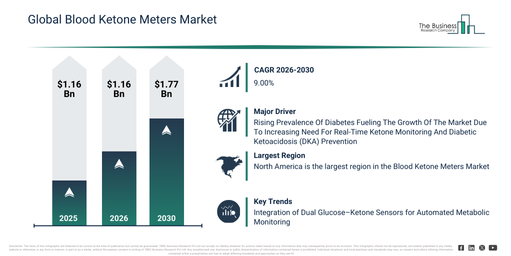
    The blood ketone meters market is projected to experience substantial expansion over the coming years. Its valuation is anticipated to reach $0.68 billion by 2030, demonstrating a compound annual growth rate (CAGR) of 9.0%. This expansion during the forecast period is primarily driven by factors such as the increasing uptake of remote patient monitoring, a surge in demand for connected diagnostic tools, the broadening scope of preventive diabetes management, escalating investments in digital health platforms, and an intensified emphasis on personalized metabolic monitoring. Key trends expected throughout this period encompass the growing acceptance of dual-analyte monitoring devices, an uptick in the need for at-home ketone testing, the increasing integration of smartphone-linked meters, the development of continuous ketone monitoring solutions, and a heightened emphasis on the early detection of diabetic ketoacidosis (DKA).

    Get A Free Sample Report With In-Depth Market Insights:

    https://thebusinessresearchcompany.com/sample_request?id=31287756&type=smp&name=Blood%20Ketone%20Meters%20Market%20Report%202026&utm_source=Blogs&utm_medium=Paid&utm_campaign=Sep_PR

    Blood Ketone Meters Market Demand Drivers Opening New Revenue Streams

    The increasing occurrence of diabetes is anticipated to significantly advance the blood ketone meters market. This chronic ailment prevents the body from effectively managing its blood sugar, or glucose, concentrations. The escalation in diabetes cases is primarily attributable to more inactive lifestyles and unhealthy eating patterns, which contribute to obesity, insulin resistance, and an elevated incidence of type 2 diabetes. Blood ketone meters facilitate improved diabetes care through real-time tracking of ketone levels, assisting in the identification and avoidance of diabetic ketoacidosis. They enable more informed treatment choices by supplying precise, readily available information, thereby boosting overall patient well-being and ease of use. For example, data from April 2023, published by the International Diabetes Federation (IDF), a non-profit organization based in Belgium, indicates that around 589 million adults are currently living with diabetes in 2024, with this figure expected to climb to 853 million by 2050. Consequently, the growing incidence of diabetes is a significant catalyst for the expansion of the blood ketone meters market.

    Blood Ketone Meters Market Segment Performance And Emerging Opportunities

    The blood ketone meters market covered in this report is segmented –

    1) By Product Type: Blood Ketone Monitoring, Blood Glucose And Ketone Monitoring, Continuous Ketone Monitoring Devices, Consumables

    2) By Testing Site: Fingertip Testing, Alternate Site Testing

    3) By Application: Human, Veterinary

    4) By Distribution Channel: Brick And Mortar, E-commerce

    5) By End-Use: Hospitals, Diagnostic Centers, Homecare Settings, Other End-Uses

    Subsegments:

    1) By Blood Ketone Monitoring: Handheld Ketone Meters, Wearable Ketone Monitors, Integrated Smartphone-Compatible Meters

    2) By Blood Glucose And Ketone Monitoring: Dual-Analyte Meters, Continuous Glucose-Ketone Monitors, Bluetooth-Enabled Hybrid Devices

    3) By Continuous Ketone Monitoring Devices: Continuous Ketone Sensors, Non-Invasive Or Minimally Invasive Ketone Sensors, Clinical-Grade Ketone Meters

    4) By Consumables: Ketone Test Strips, Control Solutions, Lancets And Lancing Devices, Sensor Adhesives And Patches

    Blood Ketone Meters Market Trends Powering Strategic Industry Growth

    Leading companies within the blood ketone meters market are increasingly prioritizing integrated dual-analyte sensing, specifically dual glucose-ketone sensors capable of simultaneously assessing both blood glucose and ketone (ß-hydroxybutyrate) concentrations using a single device. Employing electrochemical biosensing, these sensors offer real-time, simultaneous monitoring of an individual’s metabolic (ketone) and glycemic (glucose) conditions, thereby eliminating the need for distinct devices or traditional finger-stick testing. Illustrating this trend, Tandem Diabetes Care, a diabetes device company headquartered in the US, declared in June 2025 its intention to incorporate Abbott’s forthcoming dual glucose-ketone sensor into its automated insulin delivery systems. This sensor is engineered to enable early detection of elevated ketones to aid in preventing diabetic ketoacidosis, consolidate glucose and ketone sensing into a single filament for reduced device complexity, and function smoothly with Tandem’s insulin pumps to deliver automated safety interventions. This progression signifies a distinct movement within the blood ketone meter market towards comprehensive and automated metabolic monitoring, ultimately boosting user convenience and clinical safety.

    Blood Ketone Meters Market Key Players Shaping Industry Direction

    Major companies operating in the blood ketone meters market are Abbott Laboratories, Roche Diagnostics, Nipro Corporation, Lepu Medical Technology (Beijing) Co. Ltd., Taidoc Technology Corporation, APEX Biotechnology Corporation, EKF Diagnostics Holdings plc, ForaCare Inc., A. Menarini Diagnostics S.r.l., Bioptik Technology Inc., Visgeneer Inc., Keto-Mojo Inc., GlucoRx Ltd., e-LinkCare Meditech Co. Ltd., Ketoscan, Ringbio, Nova Biomedical Corporation, Ascensia Diabetes Care, ARKRAY Inc., i-SENS Inc.

    View The Full Blood Ketone Meters Market Report:

    https://thebusinessresearchcompany.com/report/blood-ketone-meters-global-market-report?utm_source=Blogs&utm_medium=Paid&utm_campaign=Sep_PR

    Blood Ketone Meters Market Regional Analysis: Which Geography Leads On Revenue?

    North America was the largest region in the blood ketone meters market in 2025. Asia-Pacific is expected to be the fastest-growing region in the forecast period. The regions covered in the blood ketone meters market report are Asia-Pacific, South East Asia, Western Europe, Eastern Europe, North America, South America, Middle East, Africa.

    Reach Out To Our Team:

    The Business Research Company: https://www.thebusinessresearchcompany.com/

    Americas: +1 310-496-7795

    Asia: +44 7882 955267 & +91 8897263534

    Europe: +44 7882 955267

    Email us at: marketing@tbrc.info

    Follow us on:

    LinkedIn: https://in.linkedin.com/company/the-business-research-company

    YouTube: https://www.youtube.com/channel/UC24_fI0rV8cR5DxlCpgmyFQ

    Global Market Model: https://www.thebusinessresearchcompany.com/global-market-model

  • Blood Group Typing Market Growth To $6.46 Billion By 2030: What’s Driving The Expansion?

    Blood Group Typing Market Growth To $6.46 Billion By 2030: What’s Driving The Expansion?

    Built to provide research that’s more actionable and strategically valuable, The Business Research Company’s 2026 market reports include market attractiveness analysis, total addressable market sizing, company benchmarking matrices, interactive Excel dashboards, broader supply chain intelligence, emerging startup tracking, and in-depth product insights.

    Blood Group Typing Market Poised To Hit $6.46 Billion By 2030 With A 13.2% CAGR

    The blood group typing market has experienced substantial growth in recent years. It is projected to increase from $3.46 billion in 2025 to $3.93 billion in 2026, demonstrating a compound annual growth rate (CAGR) of 13.9%. This historic growth is attributable to the expansion of blood transfusion procedures, the growth in hospital laboratory services, rising surgical volumes, increased blood donation screening, and the standardization of transfusion protocols.

    The blood group typing market size is projected to experience rapid expansion in the coming years. It is expected to reach $6.46 billion in 2030, exhibiting a compound annual growth rate (CAGR) of 13.2%. This anticipated growth during the forecast period is due to factors such as the increasing adoption of molecular typing techniques, a rising demand for rapid compatibility testing, the expansion of automated laboratory workflows, growing investments in transfusion safety systems, and technological advances in blood group diagnostics. Key trends during this period include the increasing adoption of automated blood typing systems, a rising demand for high-throughput testing platforms, the growing use of molecular blood group typing, the expansion of advanced reagent and kit solutions, and an enhanced focus on transfusion safety.

    Get A Free Sample Report With In-Depth Market Insights:

    https://thebusinessresearchcompany.com/sample_request?id=79688961&type=smp&name=Blood%20Group%20Typing%20Market%20Report%202026&utm_source=Blogs&utm_medium=Paid&utm_campaign=Sep_PR

    Blood Group Typing Market Growth Backed By Core Demand Fundamentals

    The rising volume of blood donations and transfusions served as a primary impetus for the blood group typing market during the historic period. Various nonprofit organizations, government organizations, and other agencies are actively emphasizing the crucial importance of blood donations and transfusions, and are spreading awareness through numerous campaigns. A surge in blood donations consequently heightened the demand for blood group typing, allowing donors to identify their specific blood type. For instance, in February 2024, the Centers for Disease Control and Prevention, a US-based government agency, reported that, in 2024, there are approximately 7 million blood donors and more than 14 million units of blood transfused annually in the United States. This increased incidence of blood donations and transfusions thereby substantially contributed to the expansion of the blood typing market.

    Blood Group Typing Market Segment Landscape And Growth Outlook

    The blood group typing market covered in this report is segmented –

    1) By Test Type: Antibody Screening, Cross-Matching Tests, ABO Tests, Antigen Typing, HLA Typing

    2) By Product: Instruments, Reagents And Kits

    3) By Techniques: Serology Tests, Molecular Tests

    4) By End User: Hospital Based Laboratories, Independent Laboratories And Blood Banks

    Subsegments:

    1) By Antibody Screening: Indirect Coombs Test, Enzyme-Linked Immunosorbent Assay (ELISA)

    2) By Cross-Matching Tests: Major Crossmatch, Minor Crossmatch, Electronic Crossmatch

    3) By ABO Tests: Forward Typing, Reverse Typing

    4) By Antigen Typing: Rh Factor Typing, Kell Typing, Other Blood Group Antigen Typings

    5) By HLA Typing: Serological Methods, Molecular Methods (PCR-based)

    Blood Group Typing Market Growth Trends Reshaping The Competitive Landscape

    Companies operating in the blood group typing market are developing innovative products with advanced technologies, such as next-generation sequencing (NGS), to enhance the accuracy and efficiency of blood typing processes. NGS facilitates the detailed analysis of genetic variations in blood group antigens, providing more precise and comprehensive blood group typing. For instance, in April 2023, Metropolis Healthcare Limited, an India-based health company, launched the NextGen HLA Typing Test, which utilizes next-generation sequencing (NGS) technology to enhance the accuracy of human leukocyte antigen (HLA) typing for organ transplantation. This advanced testing method is designed to improve compatibility assessments between donors and recipients, which is crucial for successful transplants.

    Blood Group Typing Market Competitive Analysis Of Leading Industry Participants

    Major companies operating in the blood group typing market are Grifols S.A., Bio-Rad Laboratories Inc., Immucor Inc., Ortho-Clinical Diagnostics Inc., Quotient Limited, AXO Science SAS, Agena Bioscience Inc., Merck KGaA, Beckman Coulter Inc., DIAGAST SAS, Thermo Fisher Scientific Inc., One Lambda Inc., Tulip Diagnostics (P) Ltd., Guangzhou Wondfo Biotech Co. Ltd., DiaSorin S.p.A., Grifols Diagnostic Solutions Inc., Hemo bioscience Inc., Medion Diagnostics GmbH, ZenTech S.A., BioMedomics Inc., Lifespan Diagnostics LLC

    View The Full Blood Group Typing Market Report:

    https://thebusinessresearchcompany.com/report/blood-group-typing-global-market-report?utm_source=Blogs&utm_medium=Paid&utm_campaign=Sep_PR

    Blood Group Typing Market Geographic Spread And Regional Opportunities

    North America was the largest region in the blood group typing market in 2025. Asia-Pacific is expected to be the fastest growing region in the forecast period. The regions covered in the blood group typing market report are Asia-Pacific, South East Asia, Western Europe, Eastern Europe, North America, South America, Middle East, Africa.

    Reach Out To Our Team:

    The Business Research Company: https://www.thebusinessresearchcompany.com/

    Americas: +1 310-496-7795

    Asia: +44 7882 955267 & +91 8897263534

    Europe: +44 7882 955267

    Email us at: marketing@tbrc.info

    Follow us on:

    LinkedIn: https://in.linkedin.com/company/the-business-research-company

    YouTube: https://www.youtube.com/channel/UC24_fI0rV8cR5DxlCpgmyFQ

    Global Market Model: https://www.thebusinessresearchcompany.com/global-market-model

  • Blood Glucose Monitoring Systems Market Trends Reshaping Industry Growth Through 2030

    Blood Glucose Monitoring Systems Market Trends Reshaping Industry Growth Through 2030

    Backed by market attractiveness analysis, total addressable market sizing, company benchmarking matrices, interactive Excel dashboards, wider supply chain intelligence, emerging startup coverage, and detailed product-level insights, The Business Research Company’s 2026 market reports are designed to offer research that is more actionable and strategically valuable than ever.

    Blood Glucose Monitoring Systems Market Size And Revenue Outlook Through 2030

    The blood glucose monitoring systems market size has experienced robust growth in recent years. It is anticipated to expand from $17.66 billion in 2025 to $19 billion in 2026, demonstrating a compound annual growth rate (CAGR) of 7.6%. The historical expansion of this market can be attributed to several factors including the rising global prevalence of diabetes, enhanced awareness of glucose self-monitoring, the early introduction of invasive glucose meters and test strips, the expansion of home healthcare and outpatient diabetes care services, and an increasing emphasis on glycemic control to minimize associated complications.

    The blood glucose monitoring systems market is projected to experience robust expansion over the coming years, with its size expected to reach $24.68 billion in 2030, growing at a compound annual growth rate (CAGR) of 6.8%. This anticipated growth during the forecast period can be attributed to a surge in demand for continuous and flash glucose monitoring systems, the increasing integration of wearable and implantable monitoring devices, a higher uptake of remote and connected diabetes management solutions, the expanding reach of non-invasive glucose sensing technologies, and the broader application of monitoring systems in the care of type 2, type 1, and gestational diabetes. Significant trends during this period include the rising adoption of continuous and real-time blood glucose monitoring solutions, a growing shift towards minimally invasive and non-invasive glucose monitoring technologies, increased use of portable, home-based, and self-monitoring glucose devices, the expansion of blood glucose monitoring into preventive and chronic disease management, and a dedicated focus on enhancing accuracy, convenience, and patient control within diabetes care.

    Get A Free Sample Report With In-Depth Market Insights:

    https://thebusinessresearchcompany.com/sample_request?id=89333032&type=smp&name=Blood%20Glucose%20Monitoring%20Systems%20Market%20Report%202026&utm_source=Blogs&utm_medium=Paid&utm_campaign=Sep_PR

    Blood Glucose Monitoring Systems Market Growth Catalysts And Demand Drivers

    The increasing number of individuals with diabetes is anticipated to fuel the expansion of the blood glucose monitoring systems market in the foreseeable future. This increase in diabetes prevalence stems from factors like inactive lifestyles, poor dietary choices, an aging global demographic, and inherited predispositions. Such systems serve to track and regulate blood sugar levels, thereby assisting in disease management and averting potential complications. For instance, as per a 2025 report by the International Diabetes Federation, a Belgium-based health organization, approximately 589 million adults aged 20-79 were living with diabetes in 2024. This figure is projected to escalate to 853 million by 2050, and notably, over 4 in 5 adults with diabetes reside in low and middle income countries. Additionally, higher diabetes rates are linked to factors such as foreign birth, residence in economically disadvantaged regions, and the presence of a disability. Consequently, the expanding diabetic population will continue to propel the blood glucose monitoring systems market.

    Blood Glucose Monitoring Systems Market Breakdown By Product Type And Application

    The blood glucose monitoring systems market covered in this report is segmented –

    1) By Type: Non-Invasive, Invasive

    2) By Device Type: Continuous Glucose Monitoring Systems, Self-Monitoring Blood Glucose Systems

    3) By Testing Site: Fingertip Testing, Alternate Site Testing

    4) By Distribution Channel: Institutional Sales, Retail Sales

    5) By Application: Type 2 Diabetes, Type 1 Diabetes, Gestational Diabetes

    Subsegments:

    1) By Non-Invasive: Optical Sensors, Ultrasound-Based Sensors, Bioimpedance-Based Sensors, Electromagnetic Sensors, Tear Or Saliva-Based Sensors

    2) By Invasive: Continuous Glucose Monitoring (CGM) Systems, Self-Monitoring Blood Glucose (SMBG) Systems, Implantable Glucose Monitoring Devices, Flash Glucose Monitoring Systems

    Blood Glucose Monitoring Systems Market Trends Shaping Long-Term Demand

    Leading companies within the glucose monitoring systems market are directing their efforts towards developing cutting-edge monitoring solutions, such as sophisticated hybrid closed-loop systems and smartphone applications for immediate data access and management. These advanced hybrid closed-loop systems are defined as glucose monitoring devices that automatically deliver insulin based on real-time glucose levels, thereby improving blood sugar regulation for individuals living with diabetes. As an illustration, in February 2024, DexCom Inc., a US-based continuous glucose monitoring systems manufacturing company, launched its Dexcom ONE+ product in several European countries. Dexcom ONE+ integrates the company’s best-in-class sensor technology and features designed to offer an easy-to-use, highly effective continuous glucose monitoring (CGM) experience for people with type 1 or type 2 diabetes who utilize insulin. The system includes a water-resistant sensor, a transmitter responsible for sending CGM readings, and a Dexcom One smartphone-compatible app. Dexcom ONE+ enables real-time blood glucose monitoring by both the individual user and up to ten additional people, thereby supporting shared monitoring capabilities.

    Blood Glucose Monitoring Systems Market Leading Companies And Competitive Benchmarking

    Major companies operating in the blood glucose monitoring systems market are F. Hoffmann-La Roche Ltd., Medtronic plc, Dexcom Inc., SD Biosensor Co. Ltd., Arkray Inc., Abbott Laboratories, Ypsomed Holding AG, LifeScan IP Holdings LLC, Ascensia Diabetes Care Holdings AG, TaiDoc Technology Corporation, Nemaura Medical Inc., Bionime GmbH, Acon Laboratories Inc., Rossmax International Ltd, AgaMatrix Inc., A. Menarini Diagnostics S.r.l., Medisana GmbH, Intuity Medical Inc., GlucoTrack Ltd., Sinocare Inc., Omron Healthcare Co Ltd, Trividia Health Inc.

    View The Full Blood Glucose Monitoring Systems Market Report:

    https://thebusinessresearchcompany.com/report/blood-glucose-monitoring-systems-global-market-report?utm_source=Blogs&utm_medium=Paid&utm_campaign=Sep_PR

    Blood Glucose Monitoring Systems Market Top Region By Revenue And Market Share

    North America was the largest region in the blood glucose monitoring systems market in 2025. Asia-Pacific is expected to be the fastest-growing region in the forecast period. The regions covered in the blood glucose monitoring systems market report are Asia-Pacific, South East Asia, Western Europe, Eastern Europe, North America, South America, Middle East, Africa.

    Reach Out To Our Team:

    The Business Research Company: https://www.thebusinessresearchcompany.com/

    Americas: +1 310-496-7795

    Asia: +44 7882 955267 & +91 8897263534

    Europe: +44 7882 955267

    Email us at: marketing@tbrc.info

    Follow us on:

    LinkedIn: https://in.linkedin.com/company/the-business-research-company

    YouTube: https://www.youtube.com/channel/UC24_fI0rV8cR5DxlCpgmyFQ

    Global Market Model: https://www.thebusinessresearchcompany.com/global-market-model
  • Blood Glucose Meters Market Growth To $27.74 Billion Creates New Opportunities Across The Industry

    Blood Glucose Meters Market Growth To $27.74 Billion Creates New Opportunities Across The Industry

    Featuring market attractiveness scoring, total addressable market sizing, company benchmarking matrices, interactive Excel dashboards, deeper supply chain intelligence, emerging startup tracking, and granular product-level insights, The Business Research Company’s 2026 market reports are built to deliver research that is both more actionable and more strategically valuable.

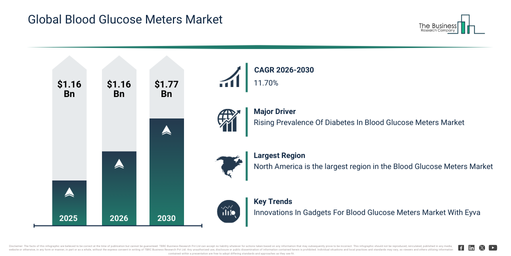
    Blood Glucose Meters Market Growth From $17.82 Billion In 2026 To $27.74 Billion By 2030 At A CAGR Of 11.7%

    The blood glucose meters market size has seen rapid expansion in recent years. It is anticipated to grow from $16 billion in 2025 to $17.82 billion in 2026, at a compound annual growth rate (CAGR) of 11.4%. The historical growth of this market can be attributed to the increasing prevalence of diabetes, broader adoption of home-based glucose monitoring, the expansion of diabetes awareness programs, enhanced affordability of glucose testing devices, and the accessibility of strip-based monitoring solutions.

    The market for blood glucose meters is projected to experience swift expansion in the coming years. By 2030, its valuation is anticipated to reach $27.74 billion, demonstrating a compound annual growth rate (CAGR) of 11.7%. This anticipated growth throughout the forecast period stems from factors such as the greater acceptance of digital platforms for diabetes management, a surging need for non-invasive glucose tracking, the broadening scope of individualized diabetes care, the increasing incorporation of AI-powered analytics, and an intensified emphasis on remote patient oversight. Key trends anticipated during this period involve the heightened uptake of continuous glucose monitoring systems, a growing desire for internet-connected blood glucose meters, the deeper integration of mobile health apps, the development of more accessible home monitoring equipment, and a stronger emphasis on the precision of real-time data.

    Get A Free Sample Report With In-Depth Market Insights:

    https://thebusinessresearchcompany.com/sample_request?id=22324317&type=smp&name=Blood%20Glucose%20Meters%20Market%20Report%202026&utm_source=Blogs&utm_medium=Paid&utm_campaign=Sep_PR

    Blood Glucose Meters Market Opportunity Drivers: What’s Unlocking New Revenue Potential?

    The increasing occurrence of diabetes is propelling the blood glucose meters market. A shift in lifestyle, including heightened alcohol intake, a lack of physical activity, and poor dietary choices, is contributing to a global rise in obesity. This rapid expansion in the obese population is directly linked to a significant surge in the acquisition of blood glucose meters. Obesity leads to fat tissues releasing an excess of fat molecules into the bloodstream, impacting insulin-responsive cells, which subsequently diminishes insulin sensitivity and consequently leads to diabetes. To illustrate, the British Diabetic Association, a UK-based non-profit body, projected in October 2021 that 5.5 million individuals in the UK could be living with diabetes by the year 2030. Consequently, the expanding incidence of diabetes is fueling the expansion of the blood glucose meters market.

    Blood Glucose Meters Market Segment Analysis And Revenue Potential

    The blood glucose meters market covered in this report is segmented –

    1) By Product Type: Electrode Type Blood Glucose Meter, Photoelectric Blood Glucose Meter

    2) By Application: Type 1 Diabetes, Type 2 Diabetes, Gestational Diabetes

    3) By End User: Hospitals, Home Care

    Subsegments:

    1) By Electrode Type Blood Glucose Meter: Strip-based Meters, Continuous Glucose Monitors (CGMs)

    2) By Photoelectric Blood Glucose Meter: Reflectance Meters, Fluorescence Meters

    Blood Glucose Meters Market Innovation Trends Shaping Future Development

    Leading companies in the blood glucose meters market are concentrating on developing products such as Eyva to address the increasing need for more effective devices and gain a competitive edge. Eyva is widely utilized as a blood glucose monitoring gadget for diabetic patients to check their sugar levels. For instance, in March 2023, Bluesemi, an India-based customer-centric health tech company, launched Eyva, which is a non-invasive blood glucose monitoring gadget. Eyva provides a home-friendly glucose monitoring system, assisting users in achieving a holistically healthy lifestyle. It is a unique health and wellness gadget that communicates about six key human body vitals in 60 seconds with just a touch.

    Blood Glucose Meters Market Industry Leaders And Competitive Landscape

    Major companies operating in the blood glucose meters market are Roche Diagnostics, Abbott Laboratories, Medtronic, Bayer Healthcare, LifeScan Inc, Ascensia Diabetes Care, ARKRAY Inc, Dexcom Inc, Bionime Corporation, Ypsomed AG, Nova Biomedical, ForaCare Inc, AgaMatrix Inc, Entra Health Systems, i-SENS Inc, Prodigy Diabetes Care, Infopia Co Ltd, HMD Biomedical Inc, 77 Elektronika Kft, Trividia Health Inc, Nipro Corporation, Beijing Yicheng Bioelectronics Technology Co Ltd, All Medicus Co Ltd, Sinocare Inc, Bioland Technology

    View The Full Blood Glucose Meters Market Report:

    https://thebusinessresearchcompany.com/report/blood-glucose-meters-global-market-report?utm_source=Blogs&utm_medium=Paid&utm_campaign=Sep_PR

    Blood Glucose Meters Market Regional Analysis And Top Geography

    North America was the largest region in the global blood glucose meters market in 2025. Western Europe was the second-largest region in the blood glucose meters market. The regions covered in the blood glucose meters market report are Asia-Pacific, South East Asia, Western Europe, Eastern Europe, North America, South America, Middle East, Africa.

    Reach Out To Our Team:

    The Business Research Company: https://www.thebusinessresearchcompany.com/

    Americas: +1 310-496-7795

    Asia: +44 7882 955267 & +91 8897263534

    Europe: +44 7882 955267

    Email us at: marketing@tbrc.info

    Follow us on:

    LinkedIn: https://in.linkedin.com/company/the-business-research-company

    YouTube: https://www.youtube.com/channel/UC24_fI0rV8cR5DxlCpgmyFQ

    Global Market Model: https://www.thebusinessresearchcompany.com/global-market-model

  • Blood Filtration And Purification Market Forecast: Breaking Down The Numbers Behind Future Expansion

    Blood Filtration And Purification Market Forecast: Breaking Down The Numbers Behind Future Expansion

    Built to provide research that’s more actionable and strategically valuable, The Business Research Company’s 2026 market reports include market attractiveness analysis, total addressable market sizing, company benchmarking matrices, interactive Excel dashboards, broader supply chain intelligence, emerging startup tracking, and in-depth product insights.

    Blood Filtration And Purification Market Expansion Outlook: What Revenue Opportunities Are Ahead?

    The blood filtration and purification market has experienced significant expansion recently. This market is projected to expand from $4.38 billion in 2025 to $4.83 billion in 2026, demonstrating a compound annual growth rate (CAGR) of 10.3%. Historically, this growth was influenced by factors such as the dependence on manual blood purification techniques, the restricted supply of sophisticated filtration membranes, the rising incidence of infectious and chronic illnesses, the proliferation of hospital and clinical laboratory facilities, and the utilization of traditional sample preparation methods.

    The blood filtration and purification market size is set to experience substantial expansion in the upcoming years. It is forecast to grow to $7.12 billion in 2030, achieving a compound annual growth rate (CAGR) of 10.2%. This expected growth during the forecast period stems from the creation of automated and high-throughput filtration systems, increased research in genetic and molecular diagnostics, heightened investment in clinical diagnostic laboratories, a greater need for disposable and specialized kits, and technological improvements in membrane and assay design. Significant trends during the forecast period encompass a wider adoption of automated blood filtration systems, a rising demand for disposable filtration kits and reagents, an increased application of specialty assays and columns in diagnostics, the growth of the membranes, filters, and consumables segment, and an intensified focus on the efficiency of sample preparation and blood purification.

    Get A Free Sample Report With In-Depth Market Insights:

    https://thebusinessresearchcompany.com/sample_request?id=22101918&type=smp&name=Blood%20Filtration%20And%20Purification%20Market%20Report%202026&utm_source=Blogs&utm_medium=Paid&utm_campaign=Sep_PR

    Blood Filtration And Purification Market Growth Momentum: What Factors Are Shaping Demand?

    The escalating occurrence of blood-related disorders is anticipated to boost the expansion of the blood filtration and purification market in the future. These medical conditions affect the cells, components, or overall functions of blood. The rise in such disorders is primarily attributed to the world’s aging population, as older individuals are more susceptible to blood health issues, leading to higher rates of incidence and a greater need for diagnosis and treatment. Blood filtration and purification systems play a crucial role in managing these disorders by effectively removing harmful components and toxins from the bloodstream, thereby helping to restore healthy blood function and alleviate disease symptoms. For example, in November 2024, the American Society of Hematology, a US-based non-profit organization, estimated that new leukemia cases in the United States would surge to 519,540 by 2050. Consequently, the growing prevalence of blood-related disorders is a significant factor propelling the growth of the blood filtration and purification market.

    Blood Filtration And Purification Market Segmentation And Category Overview

    The blood filtration and purification market covered in this report is segmented –

    1) By Product: Filtration Kits And Reagents, Membranes, Filters And Consumables, Sample Preparation Systems, Specialty Assays And Columns

    2) By Application: Infectious Disease Diagnostics, Toxicology And Immunodiagnostics, Cancer Diagnostics, Genetic Or Molecular Diagnostics, Others Applications

    3) By End User: Clinical Diagnostic Labs, Hospitals, Research And Academic Institutes, Other End Users

    Subsegments:

    1) By Filtration Kits And Reagents: Disposable Filtration Kits, Reagent Kits For Blood Purification, Enzyme-Based Reagents, Chemical Reagents, Buffer Solutions

    2) By Membranes, Filters And Consumables: Hollow Fiber Membranes, Flat Sheet Membranes, Microfiltration Filters, Ultrafiltration Filters, Nanofiltration Filters, Filter Cartridges, Consumable Accessories

    3) By Sample Preparation Systems: Automated Sample Preparation Instruments, Manual Sample Preparation Devices, Centrifugation Systems, Blood Separation Units, Cell Sorting Systems

    4) By Specialty Assays And Columns: Affinity Chromatography Columns, Ion Exchange Columns, Size Exclusion Columns, Immunoaffinity Assays, Enzymatic Assays

    Blood Filtration And Purification Market Trends Redefining Industry Growth

    Leading companies within the blood filtration and purification market are focusing on creating advanced solutions, including enhanced touchscreen interfaces, to offer user-friendly systems that streamline dialysis procedures and improve the patient experience for home-based therapies. Such an improved touchscreen interface features an upgraded, easy-to-use display with superior graphics and intuitive navigation, simplifying the operation of home hemodialysis systems. For example, in August 2023, Fresenius Medical Care, a Germany-based healthcare company, announced that its VersiHD with GuideMe Software had received Food and Drug Administration (FDA) clearance. This advanced home hemodialysis system integrates a reliable dialysis machine with an intuitive, self-guided interface to facilitate easier treatment for patients and their caregivers. It offers clear, step-by-step visual instructions to enhance usability, increase patient confidence, and shorten training time, thereby helping more individuals manage dialysis at home. Building upon NxStage’s extensive expertise in home hemodialysis, this system delivers effective blood filtration and purification for people with chronic kidney disease, allowing them to perform dialysis independently, safely, and comfortably.

    Blood Filtration And Purification Market Key Participants And Competitive Landscape

    Major companies operating in the blood filtration and purification market are Thermo Fisher Scientific Inc., Asahi Kasei Corporation, Fresenius SE & Co. KGaA, Toray Industries Inc., Baxter International Inc., DaVita Inc., Kaneka Corporation, Nipro Corporation, Nikkiso Co. Ltd., Jafron Biomedical Co. Ltd., Satellite Healthcare Inc., B. Braun Melsungen AG, Biotage AB, CytoSorbents Europe GmbH, Medica S.p.A., SWS Medical Group, Spectral Medical Inc., ExThera Medical Corporation, Infomed SA, Baihe Medical Co. Ltd., Guangdong Biolight Meditech Co. Ltd.

    View The Full Blood Filtration And Purification Market Report:

    https://thebusinessresearchcompany.com/report/blood-filtration-and-purification-global-market-report?utm_source=Blogs&utm_medium=Paid&utm_campaign=Sep_PR

    Blood Filtration And Purification Market Geographic Analysis: Where Is Demand Rising Fastest?

    North America was the largest region in the blood filtration and purification market in 2025. Asia Pacific is expected to be the fastest-growing region in the forecast period. The regions covered in the blood filtration and purification market report are Asia-Pacific, South East Asia, Western Europe, Eastern Europe, North America, South America, Middle East, Africa.

    Reach Out To Our Team:

    The Business Research Company: https://www.thebusinessresearchcompany.com/

    Americas: +1 310-496-7795

    Asia: +44 7882 955267 & +91 8897263534

    Europe: +44 7882 955267

    Email us at: marketing@tbrc.info

    Follow us on:

    LinkedIn: https://in.linkedin.com/company/the-business-research-company

    YouTube: https://www.youtube.com/channel/UC24_fI0rV8cR5DxlCpgmyFQ

    Global Market Model: https://www.thebusinessresearchcompany.com/global-market-model
  • Blood Dialyzer Market Expected To Grow At 5.7% CAGR Through 2030: What Businesses Need To Know

    Blood Dialyzer Market Expected To Grow At 5.7% CAGR Through 2030: What Businesses Need To Know

    Backed by market attractiveness analysis, total addressable market sizing, company benchmarking matrices, interactive Excel dashboards, wider supply chain intelligence, emerging startup coverage, and detailed product-level insights, The Business Research Company’s 2026 market reports are designed to offer research that is more actionable and strategically valuable than ever.

    Blood Dialyzer Market Growth Potential: How Will Market Size Shift Through 2030?

    The blood dialyzer market has experienced robust expansion in recent years. It is projected to increase from $5.39 billion in 2025 to $5.72 billion in 2026, showing a compound annual growth rate (CAGR) of 6.0%. The growth observed in the past can be linked to factors such as a limited supply of synthetic membranes, the predominant use of hospital-based dialysis, a rising incidence of chronic kidney disease, an expanding elderly demographic, and heightened recognition of renal care.

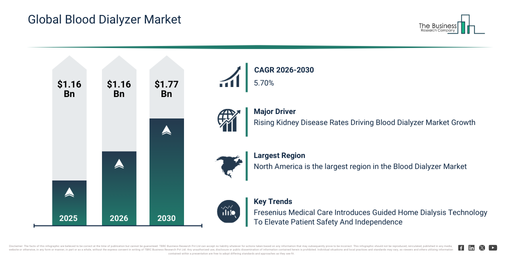
    The blood dialyzer market size is expected to see strong growth in the next few years, set to reach $7.13 billion in 2030 at a compound annual growth rate (CAGR) of 5.7%. This expansion during the forecast period is attributable to factors such as the expansion of home care dialysis programs, technological improvements enhancing dialyzer efficiency, the development of biocompatible and high-performance membranes, the proliferation of specialty clinics and ambulatory surgical centers, and the integration of smart monitoring systems with dialysis devices. Noteworthy trends in the forecast period include the rising adoption of high-flux and low-flux dialyzers, an increasing preference for disposable dialyzers, a growing demand for home dialysis solutions, advancements in synthetic dialysis membranes, and an enhanced focus on patient safety and infection control.

    Get A Free Sample Report With In-Depth Market Insights:

    https://thebusinessresearchcompany.com/sample_request?id=51421895&type=smp&name=Blood%20Dialyzer%20Market%20Report%202026&utm_source=Blogs&utm_medium=Paid&utm_campaign=Sep_PR

    Blood Dialyzer Market Expansion Drivers: What’s Shaping Future Growth?

    The rising incidence of chronic kidney conditions is anticipated to fuel the expansion of the blood dialyzer market in the future. Chronic Kidney Disease (CKD) involves a gradual decline in kidney function over time, frequently stemming from ailments like diabetes or high blood pressure, and can progress to kidney failure without proper management. The growing occurrence of kidney diseases is linked to the escalating rates of chronic ailments such as diabetes and hypertension, compounded by an aging demographic. Blood dialyzers play a crucial role in CKD management, enabling patients to uphold a superior quality of life by carrying out the filtration processes that their impaired kidneys are no longer capable of. For example, data from June 2023, provided by Kidney Research UK, a UK-based charity funding kidney disease research, projects that by 2033, the population impacted by CKD stages 3–5 will likely increase to approximately 3.9 million. Consequently, the rising occurrence of chronic kidney diseases is a key factor propelling the expansion of the blood dialyzer market.

    Blood Dialyzer Market Segment Outlook: Which Categories Are Growing Fastest?

    The blood dialyzer market covered in this report is segmented –

    1) By Type: Single Pump, Double Pump

    2) By Durability: Reusable, Disposable

    3) By Dialysis Membrane Material: Cellulose Membranes, Synthetic Membranes

    4) By End-User: Hospitals, Ambulatory Surgical Centers, Home Care Settings, Specialty Clinics

    Subsegments:

    1) By Single Pump: Standard Single Pump Dialyzers, High-Flux Single Pump Dialyzers, Low-Flux Single Pump Dialyzers

    2) By Double Pump: Standard Double Pump Dialyzers, High-Flux Double Pump Dialyzers, Low-Flux Double Pump Dialyzers

    Blood Dialyzer Market Strategic Trends: What Defines The Next Growth Phase?

    Companies operating within the home hemodialysis equipment market are concentrating on creating innovative products, such as integrated user-guidance software, to bolster patient confidence and safety during at-home dialysis treatments. Integrated user-guidance software refers to an intelligent digital interface designed to provide real-time, step-by-step instructions and feedback to patients utilizing medical devices independently. For instance, in April 2024, Fresenius Medical Care, a Germany-based provider of dialysis products and services, launched the NxStage Versi HD with GuideMe Software. This next-generation home hemodialysis system features an intuitive touchscreen interface that delivers personalized, on-screen guidance, assisting patients in performing dialysis safely and confidently at home. The GuideMe software simplifies complex procedures by breaking them into manageable steps, thereby reducing training time and empowering patients with greater independence. The system also includes remote monitoring capabilities, enabling clinicians to track treatment progress and intervene when necessary.

    Blood Dialyzer Market Top Companies Driving Competitive Growth

    Major companies operating in the blood dialyzer market are Medtronic plc, Fresenius Medical Care AG & Co KGaA, Asahi Kasei Medical Co. Ltd., Toray Industries Inc., Baxter International Inc., DaVita Healthcare Partners Inc., Nipro Corporation, Shandong Weigao Group Medical Polymer Company Limited, Nikkiso Co. Ltd., Lepu Medical Technology Co. Ltd., Nxstage Medical Inc., Jiangxi Sanxin Medtec Co. Ltd., JMS Co. Ltd., B Braun Melsungen AG, Dialife SA, SWS Hemodialysis Care Co. Ltd., Shenzhen Landwind Industry Co. Ltd., Chengdu OCI Medical Devices Co. Ltd., Sundial Medical Technology Co. Ltd., Guangdong Biolight Meditech Co. Ltd., Kawasumi Laboratories Inc.

    View The Full Blood Dialyzer Market Report:

    https://thebusinessresearchcompany.com/report/blood-dialyzer-global-market-report?utm_source=Blogs&utm_medium=Paid&utm_campaign=Sep_PR

    Blood Dialyzer Market Global Footprint: Which Region Leads The Market?

    North America was the largest region in the blood dialyzer market in 2025. Asia-Pacific is expected to be the fastest-growing region in the forecast period. The regions covered in the blood dialyzer market report are Asia-Pacific, South East Asia, Western Europe, Eastern Europe, North America, South America, Middle East, Africa.

    Reach Out To Our Team:

    The Business Research Company: https://www.thebusinessresearchcompany.com/

    Americas: +1 310-496-7795

    Asia: +44 7882 955267 & +91 8897263534

    Europe: +44 7882 955267

    Email us at: marketing@tbrc.info

    Follow us on:

    LinkedIn: https://in.linkedin.com/company/the-business-research-company

    YouTube: https://www.youtube.com/channel/UC24_fI0rV8cR5DxlCpgmyFQ

    Global Market Model: https://www.thebusinessresearchcompany.com/global-market-model