Category: Medical Equipment

  • Blood Culture Tests Market Forecast To Reach $14.77 Billion By 2030: Key Trends Explained

    Blood Culture Tests Market Forecast To Reach $14.77 Billion By 2030: Key Trends Explained

    Featuring market attractiveness scoring, total addressable market sizing, company benchmarking matrices, interactive Excel dashboards, deeper supply chain intelligence, emerging startup tracking, and granular product-level insights, The Business Research Company’s 2026 market reports are built to deliver research that is both more actionable and more strategically valuable.

    Blood Culture Tests Market Value Analysis: What Growth Lies Ahead Over The Forecast Period?

    The blood culture tests market size has seen rapid expansion in recent years. Its valuation is set to climb from $7.51 billion in 2025 to $8.6 billion in 2026, advancing at a compound annual growth rate (CAGR) of 14.5%. Historically, this growth has been influenced by factors including a rise in bloodstream infections, the broadening of hospital laboratory infrastructure, enhanced adoption of culture-based diagnostics, increasing concerns regarding antimicrobial resistance, and the accessibility of automated laboratory instruments.

    The blood culture tests market size is poised for substantial growth over the coming years. It is projected to expand to $14.77 billion in 2030, demonstrating a compound annual growth rate (CAGR) of 14.5%. This anticipated growth during the forecast period is driven by increasing demand for rapid diagnostic results, the rising adoption of AI-assisted laboratory workflows, the expansion of molecular testing capabilities, a growing focus on infection control programs, and technological advancements in blood culture analytics. Prominent trends for the forecast period include the increasing adoption of automated blood culture systems, the rising use of molecular diagnostic technologies, the growing integration of rapid pathogen identification tools, the expansion of continuous monitoring blood culture platforms, and an enhanced focus on early sepsis detection.

    Get A Free Sample Report With In-Depth Market Insights:

    https://thebusinessresearchcompany.com/sample_request?id=54699948&type=smp&name=Blood%20Culture%20Tests%20Market%20Report%202026&utm_source=Blogs&utm_medium=Paid&utm_campaign=Sep_PR

    Blood Culture Tests Market Development Factors: What’s Supporting Demand?

    The rising occurrence of infectious diseases is anticipated to fuel the expansion of the blood culture test market. These illnesses are attributed to pathogens, encompassing viruses, bacteria, fungi, and parasites. They involve hazardous microorganisms or disease-causing agents that invade a person’s body either externally or from an already infected individual. Examples of such infectious diseases include COVID-19, tuberculosis, flu, measles, HIV, and strep throat, which can lead to temporary discomfort, extensive tissue harm, or even be fatal. Globally, infectious diseases are identified by the World Health Organization as the second leading cause of mortality. The growing prevalence of these diseases has resulted in a heightened need for blood culture tests, which help ascertain if a patient is suffering from bacteremia/septicemia, a condition that could be deadly. For example, in February 2024, data from the UK Health Security Agency, a UK-based governmental body, indicated that tuberculosis (a contagious bacterial infection mainly impacting the lungs) instances in England climbed to 4,850 in 2023, representing a 10.7% rise from 4,380 cases recorded in 2022. Consequently, the rising frequency of infectious diseases is a key factor propelling the expansion of the blood culture test market.

    Blood Culture Tests Market Segment Landscape: Which Areas Lead Development?

    The blood culture tests market covered in this report is segmented –

    1) By Method: Conventional/Manual Methods, Automated Methods

    2) By Product: Consumables, Instruments, Software and Services

    3) By Technology: Culture-Based Technology, Molecular Technologies, Microarrays, PCR (Polymerase Chain Reaction), PNA-FiSH (Peptide Nucleic Acid – Fluorescent in Situ Hybridization), Proteomics Technology

    4) By Application: Bacteremia, Fungemia, Mycobacterial Detection

    5) By End User: Hospital Laboratories, Reference Laboratories, Academic Research Laboratories, Other Laboratories

    Subsegments:

    1) By Conventional/Manual Methods: Blood Culture Bottles (Aerobic and Anaerobic), Culture Media Preparation, Manual Observation and Identification

    2) By Automated Methods: Automated Blood Culture Systems, Continuous Monitoring Systems, Integrated Identification and Sensitivity Testing Systems

    Blood Culture Tests Market Transformation Trends: What Innovations Are Driving Change?

    Leading companies in the organic blood culture tests market are advancing sophisticated technologies, such as clinical chemistry technologies, to improve diagnostic precision, decrease turnaround times, and enhance patient care through unified testing solutions that offer extensive insights into infections and related health conditions. Clinical chemistry technologies are defined as diagnostic methodologies and instruments utilized for analyzing bodily fluids, primarily blood, to quantify chemical components and assess overall health. For example, in April 2024, Mindray Medical International Limited, a medical device company based in China, introduced offerings tailored for mid-volume laboratories. These advancements demonstrate Mindray’s dedication to supporting mid-volume laboratories by providing straightforward yet effective solutions that elevate diagnostic capabilities while addressing the increasing requirements of healthcare providers.

    Blood Culture Tests Market Leading Players And Competitive Positioning

    Major companies operating in the blood culture tests market are Becton Dickinson and Company, BioMerieux SA, Thermo Fisher Scientific Inc., Luminex Corporation, Danaher Corporation, F. Hoffmann-La Roche AG, Biobase Biotech Co. Ltd., Scenker Biological Technology Co. Ltd., Anaerobe Systems Inc., Himedia Laboratories Pvt. Ltd., Autobio Diagnostics Co. Ltd., Roche Diagnostics, Mikroscan Technologies Inc., Hardy Diagnostics, Siemens Healthineers, Abbott Laboratories, Cepheid, T2 Biosystems Inc., Beckman Coulter Inc., Accelerate Diagnostics, Bio-Rad Laboratories Inc., Copan Diagnostics Inc., Greiner Bio-One International GmbH, GenMark Diagnostics, Meridian Bioscience Inc.

    View The Full Blood Culture Tests Market Report:

    https://thebusinessresearchcompany.com/report/blood-culture-tests-global-market-report?utm_source=Blogs&utm_medium=Paid&utm_campaign=Sep_PR

    Blood Culture Tests Market Regional Split: Which Areas Are Fueling Growth?

    North America was the largest region in the blood culture tests market in 2025. The regions covered in the blood culture tests market report are Asia-Pacific, South East Asia, Western Europe, Eastern Europe, North America, South America, Middle East, Africa.

    Reach Out To Our Team:

    The Business Research Company: https://www.thebusinessresearchcompany.com/

    Americas: +1 310-496-7795

    Asia: +44 7882 955267 & +91 8897263534

    Europe: +44 7882 955267

    Email us at: marketing@tbrc.info

    Follow us on:

    LinkedIn: https://in.linkedin.com/company/the-business-research-company

    YouTube: https://www.youtube.com/channel/UC24_fI0rV8cR5DxlCpgmyFQ

    Global Market Model: https://www.thebusinessresearchcompany.com/global-market-model
  • 3D Digital X-Ray Systems Market Forecast Reveals Where Future Industry Value Will Be Created

    3D Digital X-Ray Systems Market Forecast Reveals Where Future Industry Value Will Be Created

    Delivering more actionable and strategically valuable research, The Business Research Company’s 2026 market reports feature market attractiveness analysis, total addressable market evaluation, company benchmarking matrices, interactive Excel dashboards, expanded supply chain intelligence, emerging startup coverage, and detailed product insights.

    3D Digital X-Ray Systems Market Forecast: What Market Value Is Expected By 2030?

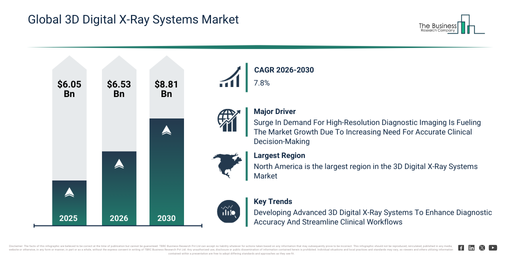
    The 3D digital X-Ray systems market size has demonstrated significant expansion over recent years. It is anticipated to expand from $6.05 billion in 2025 to $6.53 billion in 2026, progressing at a compound annual growth rate (CAGR) of 8.1%. This historical growth can be ascribed to a heightened demand for advanced diagnostic imaging, an increasing prevalence of chronic and orthopedic diseases, a wider embrace of digital radiography, expanded application of 3D imaging in dental care, increased awareness regarding early disease detection, a growing inclination towards minimally invasive diagnosis, enhanced integration of imaging within outpatient settings, rising healthcare expenditure, greater availability of portable 3D x-ray devices, and a stronger preference for highly accurate diagnostics.

    The 3D digital X-Ray systems market size is set to witness robust growth over the next few years. It is foreseen to expand to $8.81 billion by 2030, achieving a compound annual growth rate (CAGR) of 7.8%. This projected increase is propelled by the escalating adoption of digital radiography, a rising preference for accurate 3D imaging, the expanding demand for early diagnosis tools, increasing investment in imaging innovations, ongoing hospital modernization programs, the greater utilization of imaging in chronic disease management, a growing shift towards automated radiology tools, the surge in tele-radiology adoption, a preference for low-dose imaging techniques, and the increasing deployment of portable digital x-ray units. Significant trends anticipated in this period include advancements in high-resolution 3D imaging technology, progress in low-dose radiation solutions, improvements in portable 3D x-ray devices, innovations in AI-based diagnostic tools, advancements in automated image enhancement, the development of workflow-digital platforms, integration with cloud-based storage, integration with hospital digital ecosystems, the combination of 3D imaging with robotics, and progress in making digital radiography more affordable.

    Download A Free Sample Report For Comprehensive Market Insights:

    https://www.thebusinessresearchcompany.com/sample.aspx?id=30490&type=smp&utm_source=Blogs&utm_medium=Paid&utm_campaign=Jul_PR

    3D Digital X-Ray Systems Market Demand Drivers: What Is Fueling Industry Growth?

    The increasing need for high-resolution diagnostic imaging is anticipated to drive the expansion of the 3D Digital X-Ray Systems market in the future. This type of imaging involves medical technologies that produce sharp, clear pictures of internal body parts, facilitating precise diagnoses and effective clinical choices. The need for such imaging is growing because healthcare providers are broadening their services to identify intricate conditions sooner, enhance patient care, and boost the effectiveness of diagnostics. The 3D Digital X-Ray Systems facilitates high-resolution diagnostic imaging by offering sophisticated systems that provide excellent image clarity, boost diagnostic precision, and optimize patient flow in healthcare environments. For example, data from March 2024 from the Australian Institute of Health and Welfare (AIHW), an Australian government health body, indicated that approximately 2 in 5 Australians (39%) utilized more than 27 million Medicare-subsidised diagnostic imaging services. The rate of imaging services per 100 individuals increased from 103 in 2022–23 to 106 in 2023–24, showing an annual rise and increased adoption of modern imaging techniques. Consequently, the increased demand for high-resolution diagnostic imaging is fueling the expansion of the 3D Digital X-Ray Systems market.

    3D Digital X-Ray Systems Market Segment Breakdown: Which Categories Generate The Most Revenue?

    The 3D digital x-ray systems market covered in this report is segmented –

    1) By Product Type: Stationary 3D Digital X-Ray Systems, Portable 3D Digital X-Ray Systems, Mobile 3D Digital X-Ray Systems

    2) By Detector Type: Flat Panel Detectors, Charge-Coupled Devices (CCD), Image Intensifier Detectors, Computed Radiography (CR) Systems, Line-Scanning Detectors

    3) By Technology: Computed Tomography (CT) Systems, Digital Radiography (DR) Systems, Fluoroscopy Systems, X-Ray Systems With Dual Energy, Portable X-Ray Systems

    4) By Application: Orthopedics, Dental Imaging, Oncology, Pediatric Imaging, Cardiology

    5) By End-User: Hospitals, Diagnostic Imaging Centers, Outpatient Surgery Centers, Research Institutions, Veterinary Clinics

    Subsegments:

    1) By Stationary 3D Digital X-Ray Systems: Fixed-Room 3D Imaging Systems, Hospital Radiology Department Systems, High-Capacity 3D X-Ray Units, Floor-Mounted 3D X-Ray Systems, Ceiling-Mounted 3D X-Ray Systems, Advanced Diagnostic 3D Systems, Large-Format 3D Orthopedic Imaging Units

    2) By Portable 3D Digital X-Ray Systems: Handheld 3D X-Ray Devices, Backpack-Style Portable 3D Systems, Battery-Powered Portable 3D X-Ray Units, Emergency Or Trauma Portable 3D Systems, Field-Use Portable 3D Devices, Compact Point-Of-Care 3D X-Ray Units

    3) By Mobile 3D Digital X-Ray Systems: Cart-Based Mobile 3D X-Ray Systems, Motorized Mobile 3D Systems, Mobile 3D C-Arm Units, ICU Or Mobile Ward 3D Imaging Systems, Mobile Surgical 3D X-Ray Units, Mobile Diagnostic Screening Units

    3D Digital X-Ray Systems Market Innovation Trends: Which Developments Are Transforming The Industry?

    Leading companies in the 3D digital X-ray systems market are prioritizing the creation of clinical imaging solutions, including multi-purpose 3D dental imaging platforms, to improve diagnostic precision, assist with treatment planning, and streamline surgical procedures. Multi-purpose 3D dental imaging platforms are technologies used for acquiring volumetric images, planning interventions, and facilitating accurate clinical decision-making in dental and oral surgery settings. For instance, in September 2024, Dental Imaging Technologies Corporation (DEXIS), a US-based dental imaging technology company, unveiled the ORTHOPANTOMOGRAPH OP 3D EX. This 3D X-ray platform incorporates flexible field of view choices, advanced imaging software for chairside treatment planning, and integrated utilities to quickly produce surgical guides within practice environments. It is specifically engineered for general practitioners aiming to enhance their diagnostic capabilities with 3D imaging, supporting a wide array of clinical indications through various field of view sizes.

    3D Digital X-Ray Systems Market Key Players And Strategic Industry Positioning

    Major companies operating in the 3D digital x-ray systems market are Siemens Healthineers AG, Fujifilm Holdings Corporation, Koninklijke Philips N.V., GE HealthCare Technologies Inc., Mindray Medical International Limited, Dentsply Sirona Inc., Shimadzu Corporation, Canon Medical Systems Corporation, Acteon Group Ltd., United Imaging Healthcare Co. Ltd., Hamamatsu Photonics K.K., Agfa-Gevaert Group, Carestream Health Inc., Samsung Medison Co. Ltd., Analogic Corporation, Planmed Oy, Vatech Co. Ltd., Carestream Dental LLC, Ziehm Imaging GmbH, EOS Imaging S.A.

    Access The Complete 3D Digital X-Ray Systems Market Report:

    https://www.thebusinessresearchcompany.com/report/3d-digital-x-ray-systems-market-report?utm_source=Blogs&utm_medium=Paid&utm_campaign=Jul_PR

    #3D Digital X-Ray Systems Market Largest Region: Which Geography Holds The Highest Market Share?

    North America was the largest region in the 3D digital X-Ray systems market in 2025. Asia-Pacific is expected to be the fastest-growing region in the forecast period. The regions covered in the 3D digital x-ray systems market report are Asia-Pacific, South East Asia, Western Europe, Eastern Europe, North America, South America, Middle East, Africa.

    Get in touch with us:

    The Business Research Company: https://www.thebusinessresearchcompany.com/

    Americas: +1 310-496-7795

    Asia: +44 7882 955267 & +91 8897263534

    Europe: +44 7882 955267

    Email us at: marketing@tbrc.info

    Follow us on:

    LinkedIn: https://in.linkedin.com/company/the-business-research-company

    YouTube: https://www.youtube.com/channel/UC24_fI0rV8cR5DxlCpgmyFQ

    Global Market Model: https://www.thebusinessresearchcompany.com/global-market-model
  • 3D Digital X-Ray Systems Market Forecast Reveals Where Future Industry Value Will Be Created

    Delivering more actionable and strategically valuable research, The Business Research Company’s 2026 market reports feature market attractiveness analysis, total addressable market evaluation, company benchmarking matrices, interactive Excel dashboards, expanded supply chain intelligence, emerging startup coverage, and detailed product insights.

    3D Digital X-Ray Systems Market Forecast: What Market Value Is Expected By 2030?

    The 3D digital X-Ray systems market size has demonstrated significant expansion over recent years. It is anticipated to expand from $6.05 billion in 2025 to $6.53 billion in 2026, progressing at a compound annual growth rate (CAGR) of 8.1%. This historical growth can be ascribed to a heightened demand for advanced diagnostic imaging, an increasing prevalence of chronic and orthopedic diseases, a wider embrace of digital radiography, expanded application of 3D imaging in dental care, increased awareness regarding early disease detection, a growing inclination towards minimally invasive diagnosis, enhanced integration of imaging within outpatient settings, rising healthcare expenditure, greater availability of portable 3D x-ray devices, and a stronger preference for highly accurate diagnostics.

    The 3D digital X-Ray systems market size is set to witness robust growth over the next few years. It is foreseen to expand to $8.81 billion by 2030, achieving a compound annual growth rate (CAGR) of 7.8%. This projected increase is propelled by the escalating adoption of digital radiography, a rising preference for accurate 3D imaging, the expanding demand for early diagnosis tools, increasing investment in imaging innovations, ongoing hospital modernization programs, the greater utilization of imaging in chronic disease management, a growing shift towards automated radiology tools, the surge in tele-radiology adoption, a preference for low-dose imaging techniques, and the increasing deployment of portable digital x-ray units. Significant trends anticipated in this period include advancements in high-resolution 3D imaging technology, progress in low-dose radiation solutions, improvements in portable 3D x-ray devices, innovations in AI-based diagnostic tools, advancements in automated image enhancement, the development of workflow-digital platforms, integration with cloud-based storage, integration with hospital digital ecosystems, the combination of 3D imaging with robotics, and progress in making digital radiography more affordable.

    Download A Free Sample Report For Comprehensive Market Insights:

    https://www.thebusinessresearchcompany.com/sample.aspx?id=30490&type=smp&utm_source=Blogs&utm_medium=Paid&utm_campaign=Jul_PR

    3D Digital X-Ray Systems Market Demand Drivers: What Is Fueling Industry Growth?

    The increasing need for high-resolution diagnostic imaging is anticipated to drive the expansion of the 3D Digital X-Ray Systems market in the future. This type of imaging involves medical technologies that produce sharp, clear pictures of internal body parts, facilitating precise diagnoses and effective clinical choices. The need for such imaging is growing because healthcare providers are broadening their services to identify intricate conditions sooner, enhance patient care, and boost the effectiveness of diagnostics. The 3D Digital X-Ray Systems facilitates high-resolution diagnostic imaging by offering sophisticated systems that provide excellent image clarity, boost diagnostic precision, and optimize patient flow in healthcare environments. For example, data from March 2024 from the Australian Institute of Health and Welfare (AIHW), an Australian government health body, indicated that approximately 2 in 5 Australians (39%) utilized more than 27 million Medicare-subsidised diagnostic imaging services. The rate of imaging services per 100 individuals increased from 103 in 2022–23 to 106 in 2023–24, showing an annual rise and increased adoption of modern imaging techniques. Consequently, the increased demand for high-resolution diagnostic imaging is fueling the expansion of the 3D Digital X-Ray Systems market.

    3D Digital X-Ray Systems Market Segment Breakdown: Which Categories Generate The Most Revenue?

    The 3D digital x-ray systems market covered in this report is segmented –

    1) By Product Type: Stationary 3D Digital X-Ray Systems, Portable 3D Digital X-Ray Systems, Mobile 3D Digital X-Ray Systems

    2) By Detector Type: Flat Panel Detectors, Charge-Coupled Devices (CCD), Image Intensifier Detectors, Computed Radiography (CR) Systems, Line-Scanning Detectors

    3) By Technology: Computed Tomography (CT) Systems, Digital Radiography (DR) Systems, Fluoroscopy Systems, X-Ray Systems With Dual Energy, Portable X-Ray Systems

    4) By Application: Orthopedics, Dental Imaging, Oncology, Pediatric Imaging, Cardiology

    5) By End-User: Hospitals, Diagnostic Imaging Centers, Outpatient Surgery Centers, Research Institutions, Veterinary Clinics

    Subsegments:

    1) By Stationary 3D Digital X-Ray Systems: Fixed-Room 3D Imaging Systems, Hospital Radiology Department Systems, High-Capacity 3D X-Ray Units, Floor-Mounted 3D X-Ray Systems, Ceiling-Mounted 3D X-Ray Systems, Advanced Diagnostic 3D Systems, Large-Format 3D Orthopedic Imaging Units

    2) By Portable 3D Digital X-Ray Systems: Handheld 3D X-Ray Devices, Backpack-Style Portable 3D Systems, Battery-Powered Portable 3D X-Ray Units, Emergency Or Trauma Portable 3D Systems, Field-Use Portable 3D Devices, Compact Point-Of-Care 3D X-Ray Units

    3) By Mobile 3D Digital X-Ray Systems: Cart-Based Mobile 3D X-Ray Systems, Motorized Mobile 3D Systems, Mobile 3D C-Arm Units, ICU Or Mobile Ward 3D Imaging Systems, Mobile Surgical 3D X-Ray Units, Mobile Diagnostic Screening Units

    3D Digital X-Ray Systems Market Innovation Trends: Which Developments Are Transforming The Industry?

    Leading companies in the 3D digital X-ray systems market are prioritizing the creation of clinical imaging solutions, including multi-purpose 3D dental imaging platforms, to improve diagnostic precision, assist with treatment planning, and streamline surgical procedures. Multi-purpose 3D dental imaging platforms are technologies used for acquiring volumetric images, planning interventions, and facilitating accurate clinical decision-making in dental and oral surgery settings. For instance, in September 2024, Dental Imaging Technologies Corporation (DEXIS), a US-based dental imaging technology company, unveiled the ORTHOPANTOMOGRAPH OP 3D EX. This 3D X-ray platform incorporates flexible field of view choices, advanced imaging software for chairside treatment planning, and integrated utilities to quickly produce surgical guides within practice environments. It is specifically engineered for general practitioners aiming to enhance their diagnostic capabilities with 3D imaging, supporting a wide array of clinical indications through various field of view sizes.

    3D Digital X-Ray Systems Market Key Players And Strategic Industry Positioning

    Major companies operating in the 3D digital x-ray systems market are Siemens Healthineers AG, Fujifilm Holdings Corporation, Koninklijke Philips N.V., GE HealthCare Technologies Inc., Mindray Medical International Limited, Dentsply Sirona Inc., Shimadzu Corporation, Canon Medical Systems Corporation, Acteon Group Ltd., United Imaging Healthcare Co. Ltd., Hamamatsu Photonics K.K., Agfa-Gevaert Group, Carestream Health Inc., Samsung Medison Co. Ltd., Analogic Corporation, Planmed Oy, Vatech Co. Ltd., Carestream Dental LLC, Ziehm Imaging GmbH, EOS Imaging S.A.

    Access The Complete 3D Digital X-Ray Systems Market Report:

    https://www.thebusinessresearchcompany.com/report/3d-digital-x-ray-systems-market-report?utm_source=Blogs&utm_medium=Paid&utm_campaign=Jul_PR

    #3D Digital X-Ray Systems Market Largest Region: Which Geography Holds The Highest Market Share?

    North America was the largest region in the 3D digital X-Ray systems market in 2025. Asia-Pacific is expected to be the fastest-growing region in the forecast period. The regions covered in the 3D digital x-ray systems market report are Asia-Pacific, South East Asia, Western Europe, Eastern Europe, North America, South America, Middle East, Africa.

    Get in touch with us:

    The Business Research Company: https://www.thebusinessresearchcompany.com/

    Americas: +1 310-496-7795

    Asia: +44 7882 955267 & +91 8897263534

    Europe: +44 7882 955267

    Email us at: marketing@tbrc.info

    Follow us on:

    LinkedIn: https://in.linkedin.com/company/the-business-research-company

    YouTube: https://www.youtube.com/channel/UC24_fI0rV8cR5DxlCpgmyFQ

    Global Market Model: https://www.thebusinessresearchcompany.com/global-market-model
  • Rapid Immunoassay Analyzers Market Expansion Is Reshaping Competitive Dynamics Across The Industry

    Through market attractiveness analysis, total addressable market evaluation, company benchmarking matrices, interactive Excel dashboards, expanded supply chain intelligence, emerging startup coverage, and detailed product insights, The Business Research Company’s 2026 market reports provide more actionable and strategically valuable research.

    #Rapid Immunoassay Analyzers Market CAGR Analysis And Future Market Development#_x000D_

    The rapid immunoassay analyzers market size has shown substantial growth in recent times, and it is forecast to expand from $1.23 billion in 2025 to $1.36 billion in 2026, at a compound annual growth rate (CAGR) of 10.8%. This historic growth has been driven by several factors, including the increasing prevalence of infectious and chronic diseases, a heightened demand for early and rapid disease diagnosis, the wider adoption of point-of-care testing solutions, the expansion of diagnostic laboratory infrastructure, and greater awareness concerning preventive healthcare and routine screening._x000D_

    _x000D_

    The rapid immunoassay analyzers market is expected to experience substantial growth in the coming years, with projections indicating it will reach $2.08 billion by 2030, demonstrating an 11.1% compound annual growth rate (CAGR). This anticipated expansion over the forecast period is primarily fueled by the accelerating development of next-generation biomarker detection technologies, increased investment in decentralized healthcare diagnostics, the growing demand for home-based diagnostic testing solutions, the proliferation of automated laboratory testing systems, and the increasing integration of digital health monitoring with connected diagnostic platforms. Prominent trends for the forecast duration include a greater adoption of rapid point-of-care diagnostic testing solutions, a rising need for portable and handheld immunoassay analyzers, the expanding use of multiplex testing for infectious disease detection, the spread of high-throughput automated immunoassay systems in laboratories, and a heightened focus on achieving fast turnaround times and accurate clinical diagnostics._x000D_

    _x000D_

    #Download A Free Sample Report For Comprehensive Market Insights:#_x000D_

    https://www.thebusinessresearchcompany.com/sample_request?id=64627493&type=smp_x000D_

    _x000D_

    #Rapid Immunoassay Analyzers Market Growth Factors: Which Forces Are Supporting Market Expansion?_x000D_

    The increasing occurrence of infectious and chronic diseases is projected to drive the expansion of the rapid immunoassay analyzers market in the future. These conditions encompass health issues stemming from pathogenic microbes or enduring physiological ailments, necessitating ongoing surveillance and prompt diagnosis. The incidence of infectious and chronic diseases is escalating, partly attributable to aging demographics. The rapid immunoassay analyzers market benefits from the growing spread of these diseases, given that such systems offer swift, dependable diagnostic outcomes, thereby aiding in early identification, prompt therapeutic intervention, and efficient disease management. For example, as reported by the Centers for Disease Control and Prevention, a US-based federal agency, in April 2025, roughly 76.4% of U.S. adults in 2023 indicated experiencing at least one of 12 selected chronic conditions, with 51.4% of U.S. adults noting multiple chronic conditions. Consequently, the growing frequency of infectious and chronic diseases fuels the expansion of the rapid immunoassay analyzers market._x000D_

    _x000D_

    #Rapid Immunoassay Analyzers Market Segmentation: How Is The Market Structured Across Key Categories?#_x000D_

    The rapid immunoassay analyzers market covered in this report is segmented – _x000D_

    _x000D_

    1) By Type: Benchtop Immunoassay Analyzers, Portable Immunoassay Analyzers, Fully Automated Systems, Semi-Automated Analyzers, Lateral Flow Assay Readers_x000D_

    2) By Technology: Lateral Flow Immunoassay, Fluorescence Immunoassay, Chemiluminescence Immunoassay, Enzyme-Linked Immunosorbent Assay, Radioimmunoassay_x000D_

    3) By Mode Of Use: Point Of Care Testing, Laboratory-Based Testing_x000D_

    4) By Application: Infectious Disease Testing, Cardiac Marker Testing, Oncology Testing, Hormone Testing, Allergy Testing, Drug Of Abuse Testing, Pregnancy And Fertility Testing_x000D_

    5) By End-User: Hospitals And Clinics, Diagnostic Laboratories, Home Care Settings, Research And Academic Institutes, Other End-Users_x000D_

    _x000D_

    Subsegments:_x000D_

    1) By Benchtop Immunoassay Analyzers: Single Channel Benchtop Analyzers, Multi Channel Benchtop Analyzers, Compact Benchtop Analyzers, High Throughput Benchtop Analyzers_x000D_

    2) By Portable Immunoassay Analyzers: Handheld Immunoassay Analyzers, Battery Operated Portable Analyzers, Point Of Care Portable Analyzers, Field Use Immunoassay Analyzers_x000D_

    3) By Fully Automated Systems: Random Access Automated Systems, Batch Processing Automated Systems, Integrated Laboratory Automation Systems, High Throughput Automated Systems_x000D_

    4) By Semi-Automated Analyzers: Manual Sample Loading Semi Automated Analyzers, Programmable Semi Automated Analyzers, Compact Semi Automated Analyzers, Low Throughput Semi Automated Analyzers_x000D_

    5) By Lateral Flow Assay Readers: Optical Lateral Flow Readers, Digital Lateral Flow Readers, Smartphone Based Lateral Flow Readers, Quantitative Lateral Flow Readers_x000D_

    _x000D_

    #Rapid Immunoassay Analyzers Market Industry Trends: What Changes Are Reshaping Demand?#_x000D_

    Leading companies within the rapid immunoassay analyzers market are prioritizing portable diagnostic technologies, including handheld fluorescence immunoassay analyzers, to shorten testing turnaround time and improve cost efficiency in decentralized healthcare settings. Handheld fluorescence immunoassay analyzers are compact diagnostic devices that utilize fluorescence-labeled antibodies for highly sensitive detection of specific biomarkers, providing rapid results at the point of care without the need for centralized laboratory infrastructure. For instance, in November 2025, Boditech Med Inc., a South Korea-based diagnostics company, introduced its expanded point-of-care diagnostic product lineup at MEDICA 2025. This solution portfolio includes portable immunoassay systems featuring simplified workflows and short testing times, which enhance operational efficiency. It also supports both automated and manual formats, thereby boosting flexibility in low-resource settings and decreasing infrastructure-related costs._x000D_

    _x000D_

    #Rapid Immunoassay Analyzers Market Competitive Landscape And Leading Companies#_x000D_

    Major companies operating in the rapid immunoassay analyzers market are Thermo Fisher Scientific Inc., Abbott Laboratories, Danaher Corporation, Siemens Healthineers AG, BioMérieux S. A., Quidelortho Corporation, Tecan Trading AG, DiaSorin S. p. A., Euroimmun Medizinische Labordiagnostika AG, Autobio Diagnostics Co. Ltd., EKF Diagnostics, Boditech Med Inc., Dynex Technologies Inc., QuantuMDx Group Ltd., NanoEntek, J. Mitra & Co. Pvt. Ltd., Baebies, Micropoint Bioscience, Coris BioConcept, MiCo BioMed Inc., Abionic SA, ANP Technologies Inc., Epitope Diagnostics Inc., MedMira Inc., Nanomix Inc. _x000D_

    _x000D_

    #Access The Complete Rapid Immunoassay Analyzers Market Report:#_x000D_

    https://www.thebusinessresearchcompany.com/report/rapid-immunoassay-analyzers-market-report_x000D_

    _x000D_

    #Rapid Immunoassay Analyzers Market Regional Analysis And Leading Geography#_x000D_

    North America was the largest region in the rapid immunoassay analyzers market in 2025. Asia-Pacific is expected to be the fastest-growing region in the forecast period. The regions covered in the rapid immunoassay analyzers market report are Asia-Pacific, South East Asia, Western Europe, Eastern Europe, North America, South America, Middle East and Africa. _x000D_

    _x000D_

    _x000D_

    _x000D_

    _x000D_

    #Get in touch with us:#_x000D_

    _x000D_

    The Business Research Company: https://www.thebusinessresearchcompany.com/_x000D_

    Americas: +1 310-496-7795_x000D_

    Asia: +44 7882 955267 & +91 8897263534_x000D_

    Europe: +44 7882 955267_x000D_

    Email us at: marketing@tbrc.info_x000D_

    _x000D_

    #Follow us on:#_x000D_

    _x000D_

    LinkedIn: https://in.linkedin.com/company/the-business-research-company_x000D_

    YouTube: https://www.youtube.com/channel/UC24_fI0rV8cR5DxlCpgmyFQ_x000D_

    Global Market Model: https://www.thebusinessresearchcompany.com/global-market-model

  • Robotic Knee Replacement Market Growth Outlook Reveals A CAGR Of 12.7% And A Market Value Of $5.02 Billion By 2030

    Through market attractiveness analysis, total addressable market evaluation, company benchmarking matrices, interactive Excel dashboards, expanded supply chain intelligence, emerging startup coverage, and detailed product insights, The Business Research Company’s 2026 market reports provide more actionable and strategically valuable research.

    #Robotic Knee Replacement Market Expected To Reach $5.02 Billion By 2030 At 12.7% CAGR#_x000D_

    The robotic knee replacement market size has seen substantial growth in recent years. This market is set to expand from $2.77 billion in 2025 to $3.12 billion in 2026, achieving a compound annual growth rate (CAGR) of 12.4%. Historically, this expansion has been driven by the increasing occurrence of osteoarthritis and joint disorders, a worldwide increase in the aging population, a rising need for advanced orthopedic surgical procedures, the development of healthcare infrastructure and specialized orthopedic centers, and improvements in robotic-assisted surgical technologies._x000D_

    _x000D_

    The robotic knee replacement market is anticipated to experience substantial expansion in the coming years. It is projected to reach $5.02 billion by 2030, demonstrating a compound annual growth rate (CAGR) of 12.7%. This anticipated growth during the forecast period stems from several factors: the increasing integration of AI-enabled surgical planning systems, rising investments in robotic orthopedic surgery platforms, greater uptake of personalized and precision-based implant solutions, the expansion of outpatient robotic surgery centers, and a growing demand for improved surgical accuracy alongside shorter hospital stays. Key trends expected within this period involve the increasing embrace of minimally invasive robotic knee replacement procedures, a rising need for patient-specific implant alignment and surgical planning, a growing preference for quicker recovery times and fewer post-operative complications, the wider deployment of real-time intraoperative guidance systems in orthopedic surgeries, and an intensified focus on precision-based knee arthroplasty procedures to enhance implant longevity._x000D_

    _x000D_

    #Download A Free Sample Report For Comprehensive Market Insights:#_x000D_

    https://www.thebusinessresearchcompany.com/sample_request?id=39091604&type=smp_x000D_

    _x000D_

    #Robotic Knee Replacement Market Growth Factors: Which Forces Are Supporting Market Expansion?_x000D_

    The expansion of total knee arthroplasty (TKA) procedures is anticipated to fuel the growth of the robotic knee replacement market. TKA is a surgical intervention where a damaged or diseased knee joint is substituted with an artificial implant to restore functionality and alleviate discomfort, frequently undertaken by individuals suffering from advanced osteoarthritis or degenerative joint conditions. The volume of TKA procedures is escalating due to the rising occurrence of osteoarthritis and a heightened desire for enhanced mobility and a better quality of life among the aging population. Robotic knee replacement systems contribute to greater surgical accuracy, facilitate superior implant alignment, and lead to improved patient results, thus bolstering the expanding procedural figures. For example, the National Institutes of Health, a US-based government medical research agency, reported in November 2025 that the total annual utilization of primary total knee arthroplasty (TKA) procedures in the United States is forecast to expand substantially, with projected increases of 110% by 2025, 182% by 2030, and 401% by 2040, indicating robust long-term demand growth. Consequently, the rising count of total knee arthroplasty procedures is stimulating expansion within the robotic knee replacement market._x000D_

    _x000D_

    #Robotic Knee Replacement Market Segmentation Trends And Revenue Drivers#_x000D_

    The robotic knee replacement market covered in this report is segmented – _x000D_

    _x000D_

    1) By Technology Or Guidance Type: Image Guided, Computed Tomography Guided, Fluoroscopy Guided, Magnetic Resonance Imaging Guided, Manual Setup_x000D_

    2) By Type: Autonomous Robotic Surgery Platforms, Haptic Feedback Guidance Systems, Artificial Intelligence Enhanced Robotic Assistants_x000D_

    3) By Procedure Type: Total Knee Replacement, Partial Knee Replacement_x000D_

    4) By Application: Total Knee Arthroplasty, Partial Knee Replacement, Pre-Operative Surgical Planning, Alignment Optimization_x000D_

    _x000D_

    Subsegments:_x000D_

    1) By Image Guided: Computer Assisted Navigation Systems, Real Time Imaging Guidance Systems, Three Dimensional Visualization Systems, Preoperative Planning Integration Systems, Intraoperative Feedback Systems_x000D_

    2) By Computed Tomography Guided: Preoperative Computed Tomography Planning Systems, Intraoperative Computed Tomography Navigation Systems, Three Dimensional Bone Mapping Systems, Computed Tomography Based Alignment Systems, Patient Specific Instrumentation Systems_x000D_

    3) By Fluoroscopy Guided: Real Time Fluoroscopy Imaging Systems, C Arm Based Navigation Systems, Dynamic Alignment Monitoring Systems, Intraoperative Position Verification Systems, Radiation Optimized Guidance Systems_x000D_

    4) By Magnetic Resonance Imaging Guided: Magnetic Resonance Imaging Based Planning Systems, Soft Tissue Visualization Guidance Systems, Three Dimensional Anatomical Mapping Systems, Radiation Free Navigation Systems, Advanced Imaging Integration Systems_x000D_

    5) By Manual Setup: Conventional Mechanical Alignment Techniques, Standard Surgical Instrumentation Systems, Manual Jig Based Positioning Systems, Surgeon Guided Alignment Methods, Traditional Implant Placement Techniques_x000D_

    _x000D_

    #Robotic Knee Replacement Market Industry Trends: What Changes Are Reshaping Demand?#_x000D_

    Major companies in the robotic knee replacement market are actively developing innovative robotic surgical systems, including handheld robotic power systems, to boost surgical accuracy and workflow efficiency. Handheld robotic power systems are defined as portable, surgeon-controlled instruments that integrate powered surgical tools with robotic guidance, sensors, and real-time feedback to improve precision and control during operations such as bone cutting or implant placement. As an illustration, in February 2026, Stryker, a US-based medical technology company, introduced the Mako RPS (Robotic Power System) for Total Knee. This handheld robotic platform provides intuitive intraoperative planning, features robotically enabled saw guidance that adapts to the surgeon’s hand motion, and maintains compatibility with the Triathlon Total Knee System to support consistent joint alignment while preserving established surgical workflows. While these technologies necessitate investment in training and integration, they significantly enhance procedural precision, support predictable outcomes, and strengthen surgeon confidence in robotic knee replacement procedures._x000D_

    _x000D_

    #Robotic Knee Replacement Market Industry Leaders: Which Organizations Are Driving Competition?_x000D_

    Major companies operating in the robotic knee replacement market are Johnson & Johnson, Stryker Corporation, Smith & Nephew plc, Zimmer Biomet Holdings Inc., Penn Medicine, Intuitive Surgical Inc., Meril Life Sciences Pvt. Ltd., Renishaw plc, Medacta International SA, MicroPort Scientific Corporation, Corin Group plc, ConforMIS Inc., SUM Ultimate Medicare, THINK Surgical Inc., Curexo Inc., OMNIlife Science Inc., Monogram Technologies Inc., Kinomatic Ltd., Just Medical Inc., Orthokey Italia S. r. l. _x000D_

    _x000D_

    #Access The Complete Robotic Knee Replacement Market Report:#_x000D_

    https://www.thebusinessresearchcompany.com/report/robotic-knee-replacement-market-report_x000D_

    _x000D_

    #Robotic Knee Replacement Market Largest Region By Revenue And Market Share#_x000D_

    North America was the largest region in the robotic knee replacement market in 2025. Asia-Pacific is expected to be the fastest-growing region in the forecast period. The regions covered in the robotic knee replacement market report are Asia-Pacific, South East Asia, Western Europe, Eastern Europe, North America, South America, Middle East and Africa. _x000D_

    _x000D_

    _x000D_

    _x000D_

    _x000D_

    #Get in touch with us:#_x000D_

    _x000D_

    The Business Research Company: https://www.thebusinessresearchcompany.com/_x000D_

    Americas: +1 310-496-7795_x000D_

    Asia: +44 7882 955267 & +91 8897263534_x000D_

    Europe: +44 7882 955267_x000D_

    Email us at: marketing@tbrc.info_x000D_

    _x000D_

    #Follow us on:#_x000D_

    _x000D_

    LinkedIn: https://in.linkedin.com/company/the-business-research-company_x000D_

    YouTube: https://www.youtube.com/channel/UC24_fI0rV8cR5DxlCpgmyFQ_x000D_

    Global Market Model: https://www.thebusinessresearchcompany.com/global-market-model

  • Rapid Immunoassay Analyzers Market Expansion Is Reshaping Competitive Dynamics Across The Industry

    Through market attractiveness analysis, total addressable market evaluation, company benchmarking matrices, interactive Excel dashboards, expanded supply chain intelligence, emerging startup coverage, and detailed product insights, The Business Research Company’s 2026 market reports provide more actionable and strategically valuable research.

    #Rapid Immunoassay Analyzers Market CAGR Analysis And Future Market Development#_x000D_

    The rapid immunoassay analyzers market size has shown substantial growth in recent times, and it is forecast to expand from $1.23 billion in 2025 to $1.36 billion in 2026, at a compound annual growth rate (CAGR) of 10.8%. This historic growth has been driven by several factors, including the increasing prevalence of infectious and chronic diseases, a heightened demand for early and rapid disease diagnosis, the wider adoption of point-of-care testing solutions, the expansion of diagnostic laboratory infrastructure, and greater awareness concerning preventive healthcare and routine screening._x000D_

    _x000D_

    The rapid immunoassay analyzers market is expected to experience substantial growth in the coming years, with projections indicating it will reach $2.08 billion by 2030, demonstrating an 11.1% compound annual growth rate (CAGR). This anticipated expansion over the forecast period is primarily fueled by the accelerating development of next-generation biomarker detection technologies, increased investment in decentralized healthcare diagnostics, the growing demand for home-based diagnostic testing solutions, the proliferation of automated laboratory testing systems, and the increasing integration of digital health monitoring with connected diagnostic platforms. Prominent trends for the forecast duration include a greater adoption of rapid point-of-care diagnostic testing solutions, a rising need for portable and handheld immunoassay analyzers, the expanding use of multiplex testing for infectious disease detection, the spread of high-throughput automated immunoassay systems in laboratories, and a heightened focus on achieving fast turnaround times and accurate clinical diagnostics._x000D_

    _x000D_

    #Download A Free Sample Report For Comprehensive Market Insights:#_x000D_

    https://www.thebusinessresearchcompany.com/sample_request?id=64627493&type=smp_x000D_

    _x000D_

    #Rapid Immunoassay Analyzers Market Growth Factors: Which Forces Are Supporting Market Expansion?_x000D_

    The increasing occurrence of infectious and chronic diseases is projected to drive the expansion of the rapid immunoassay analyzers market in the future. These conditions encompass health issues stemming from pathogenic microbes or enduring physiological ailments, necessitating ongoing surveillance and prompt diagnosis. The incidence of infectious and chronic diseases is escalating, partly attributable to aging demographics. The rapid immunoassay analyzers market benefits from the growing spread of these diseases, given that such systems offer swift, dependable diagnostic outcomes, thereby aiding in early identification, prompt therapeutic intervention, and efficient disease management. For example, as reported by the Centers for Disease Control and Prevention, a US-based federal agency, in April 2025, roughly 76.4% of U.S. adults in 2023 indicated experiencing at least one of 12 selected chronic conditions, with 51.4% of U.S. adults noting multiple chronic conditions. Consequently, the growing frequency of infectious and chronic diseases fuels the expansion of the rapid immunoassay analyzers market._x000D_

    _x000D_

    #Rapid Immunoassay Analyzers Market Segmentation: How Is The Market Structured Across Key Categories?#_x000D_

    The rapid immunoassay analyzers market covered in this report is segmented – _x000D_

    _x000D_

    1) By Type: Benchtop Immunoassay Analyzers, Portable Immunoassay Analyzers, Fully Automated Systems, Semi-Automated Analyzers, Lateral Flow Assay Readers_x000D_

    2) By Technology: Lateral Flow Immunoassay, Fluorescence Immunoassay, Chemiluminescence Immunoassay, Enzyme-Linked Immunosorbent Assay, Radioimmunoassay_x000D_

    3) By Mode Of Use: Point Of Care Testing, Laboratory-Based Testing_x000D_

    4) By Application: Infectious Disease Testing, Cardiac Marker Testing, Oncology Testing, Hormone Testing, Allergy Testing, Drug Of Abuse Testing, Pregnancy And Fertility Testing_x000D_

    5) By End-User: Hospitals And Clinics, Diagnostic Laboratories, Home Care Settings, Research And Academic Institutes, Other End-Users_x000D_

    _x000D_

    Subsegments:_x000D_

    1) By Benchtop Immunoassay Analyzers: Single Channel Benchtop Analyzers, Multi Channel Benchtop Analyzers, Compact Benchtop Analyzers, High Throughput Benchtop Analyzers_x000D_

    2) By Portable Immunoassay Analyzers: Handheld Immunoassay Analyzers, Battery Operated Portable Analyzers, Point Of Care Portable Analyzers, Field Use Immunoassay Analyzers_x000D_

    3) By Fully Automated Systems: Random Access Automated Systems, Batch Processing Automated Systems, Integrated Laboratory Automation Systems, High Throughput Automated Systems_x000D_

    4) By Semi-Automated Analyzers: Manual Sample Loading Semi Automated Analyzers, Programmable Semi Automated Analyzers, Compact Semi Automated Analyzers, Low Throughput Semi Automated Analyzers_x000D_

    5) By Lateral Flow Assay Readers: Optical Lateral Flow Readers, Digital Lateral Flow Readers, Smartphone Based Lateral Flow Readers, Quantitative Lateral Flow Readers_x000D_

    _x000D_

    #Rapid Immunoassay Analyzers Market Industry Trends: What Changes Are Reshaping Demand?#_x000D_

    Leading companies within the rapid immunoassay analyzers market are prioritizing portable diagnostic technologies, including handheld fluorescence immunoassay analyzers, to shorten testing turnaround time and improve cost efficiency in decentralized healthcare settings. Handheld fluorescence immunoassay analyzers are compact diagnostic devices that utilize fluorescence-labeled antibodies for highly sensitive detection of specific biomarkers, providing rapid results at the point of care without the need for centralized laboratory infrastructure. For instance, in November 2025, Boditech Med Inc., a South Korea-based diagnostics company, introduced its expanded point-of-care diagnostic product lineup at MEDICA 2025. This solution portfolio includes portable immunoassay systems featuring simplified workflows and short testing times, which enhance operational efficiency. It also supports both automated and manual formats, thereby boosting flexibility in low-resource settings and decreasing infrastructure-related costs._x000D_

    _x000D_

    #Rapid Immunoassay Analyzers Market Competitive Landscape And Leading Companies#_x000D_

    Major companies operating in the rapid immunoassay analyzers market are Thermo Fisher Scientific Inc., Abbott Laboratories, Danaher Corporation, Siemens Healthineers AG, BioMérieux S. A., Quidelortho Corporation, Tecan Trading AG, DiaSorin S. p. A., Euroimmun Medizinische Labordiagnostika AG, Autobio Diagnostics Co. Ltd., EKF Diagnostics, Boditech Med Inc., Dynex Technologies Inc., QuantuMDx Group Ltd., NanoEntek, J. Mitra & Co. Pvt. Ltd., Baebies, Micropoint Bioscience, Coris BioConcept, MiCo BioMed Inc., Abionic SA, ANP Technologies Inc., Epitope Diagnostics Inc., MedMira Inc., Nanomix Inc. _x000D_

    _x000D_

    #Access The Complete Rapid Immunoassay Analyzers Market Report:#_x000D_

    https://www.thebusinessresearchcompany.com/report/rapid-immunoassay-analyzers-market-report_x000D_

    _x000D_

    #Rapid Immunoassay Analyzers Market Regional Analysis And Leading Geography#_x000D_

    North America was the largest region in the rapid immunoassay analyzers market in 2025. Asia-Pacific is expected to be the fastest-growing region in the forecast period. The regions covered in the rapid immunoassay analyzers market report are Asia-Pacific, South East Asia, Western Europe, Eastern Europe, North America, South America, Middle East and Africa. _x000D_

    _x000D_

    _x000D_

    _x000D_

    _x000D_

    #Get in touch with us:#_x000D_

    _x000D_

    The Business Research Company: https://www.thebusinessresearchcompany.com/_x000D_

    Americas: +1 310-496-7795_x000D_

    Asia: +44 7882 955267 & +91 8897263534_x000D_

    Europe: +44 7882 955267_x000D_

    Email us at: marketing@tbrc.info_x000D_

    _x000D_

    #Follow us on:#_x000D_

    _x000D_

    LinkedIn: https://in.linkedin.com/company/the-business-research-company_x000D_

    YouTube: https://www.youtube.com/channel/UC24_fI0rV8cR5DxlCpgmyFQ_x000D_

    Global Market Model: https://www.thebusinessresearchcompany.com/global-market-model

  • Hernia Mesh Repair Devices Market Size Projected To Increase From $3.88 Billion To $4.54 Billion During The Forecast Period

    Hernia Mesh Repair Devices Market Size Projected To Increase From $3.88 Billion To $4.54 Billion During The Forecast Period

    Enhanced with market attractiveness analysis, total addressable market evaluation, company benchmarking matrices, interactive Excel dashboards, expanded supply chain intelligence, emerging startup coverage, and detailed product insights, The Business Research Company’s 2026 market reports deliver more actionable and strategically valuable research.

    Hernia Mesh Repair Devices Market Growth Potential: How Will Market Size Change Through 2030?

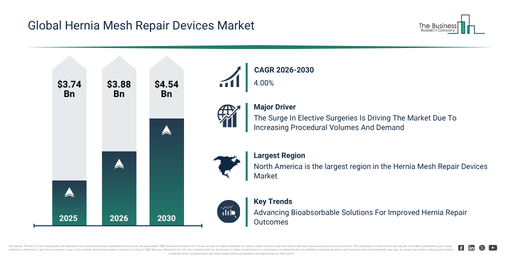
    The hernia mesh repair devices market has seen consistent expansion over recent years. This market is set to grow from $3.74 billion in 2025 to $3.88 billion in 2026, achieving a compound annual growth rate (CAGR) of 3.8%. The historical growth can be attributed to the increasing global occurrence of hernia due to obesity and an aging population, a rise in the adoption of synthetic polypropylene meshes, the development of hospital surgical infrastructure, heightened awareness of early hernia treatment, and an increase in open surgical repair procedures.

    The hernia mesh repair devices market size is projected to experience consistent expansion over the upcoming years. This market is anticipated to reach $4.54 billion by 2030, demonstrating a compound annual growth rate (CAGR) of 4.0%. This expansion during the projected timeframe stems from several factors, including a move towards minimally invasive and robotic-assisted surgeries, an increasing need for bioresorbable and biologic meshes, innovations in anti-infective mesh coatings, the expansion of ambulatory surgical centers and outpatient procedures, and a greater emphasis on personalized and precision surgical solutions. Key developments expected during the forecast period encompass the growing embrace of bioresorbable and absorbable mesh solutions, a heightened inclination towards minimally invasive laparoscopic hernia repair procedures, a surge in hernia occurrences attributed to an aging population and obesity, the proliferation of ambulatory surgical centers for cost-effective operations, and improvements in composite mesh materials with enhanced anti-adhesion and infection-resistant properties.

    Download A Free Sample Report For Comprehensive Market Insights:

    https://www.thebusinessresearchcompany.com/sample_request?id=31593609&type=smp

    Hernia Mesh Repair Devices Market Industry Drivers: What Is Driving Revenue Growth?

    The future expansion of the hernia mesh repair devices market is anticipated to be driven by the increasing volume of elective surgeries. These procedures are non-urgent, pre-scheduled operations arranged by healthcare providers considering clinical necessity and resource accessibility. The rise in elective surgeries stems from a growing backlog of procedures delayed because of pandemic-induced disruptions in healthcare. Such devices enhance surgical results for hernia repairs by strengthening compromised abdominal tissue, lowering recurrence risks, and facilitating effective procedures. An example is the data from June 2024, released by the American Society of Plastic Surgeons (ASPS), a US-based plastic surgery specialty organization, which indicated that liposuction was the leading plastic surgery in 2023, with almost 350,000 procedures, representing a 7% increase from 2022; hand surgeries amounted to 207,887, a 2% rise; and maxillofacial surgeries reached 52,868, a 1% increase over the prior year. Consequently, the uptick in elective surgeries is fostering the expansion of the hernia mesh repair devices market.

    Hernia Mesh Repair Devices Market Segments: Where Are The Largest Growth Opportunities?

    The hernia mesh repair devices market covered in this report is segmented –

    1) By Product Type: Synthetic Mesh, Biologic Mesh, Bioresorbable Mesh, Fixation Devices

    2) By Surgery Type: Open Surgical Repair, Laparoscopic Or Minimally Invasive Repair

    3) By Material: Non Absorbable, Absorbable, Biological Mesh

    4) By Application: Inguinal Hernia, Incisional Hernia, Umbilical And Epigastric Hernia, Femoral Hernia, Hiatal Hernia, Other Hernias

    5) By End User: Hospitals, Ambulatory Surgical Centers, Specialty Surgical Clinics, Other Healthcare Settings

    Subsegments:

    1) By Synthetic Mesh: Polypropylene Mesh, Polyester Mesh, Expanded Polytetrafluoroethylene Mesh, Composite Synthetic Mesh

    2) By Biologic Mesh: Porcine Dermis Mesh, Bovine Pericardium Mesh, Human Dermis Mesh, Collagen Based Mesh

    3) By Bioresorbable Mesh: Polylactic Acid Mesh, Polyglycolic Acid Mesh, Polycaprolactone Mesh, Poly Four Hydroxybutyrate Mesh

    4) By Fixation Devices: Sutures, Tacks, Staples, Adhesives

    #Hernia Mesh Repair Devices Market Growth Trends: What Is Influencing The Future Outlook?

    Leading companies in the hernia mesh repair devices market are concentrating on creating sophisticated solutions, like bioabsorbable hernia patches, to enhance patient outcomes and mitigate long-term complications linked to implants. A bioabsorbable hernia patch functions as a temporary implant, engineered to reinforce compromised tissue and progressively dissolve within the body once tissue healing is supported. For example, in April 2025, Becton, Dickinson and Company, a US-based medical technology company, introduced the Phasix ST Umbilical Hernia Patch. This product employs a biologically derived polymer along with a hydrogel barrier to aid tissue repair and simultaneously reduce adhesion risks. It is crafted for straightforward application using established surgical techniques, offering surgeons adaptability while addressing patients’ desire for non-permanent implant options.

    Hernia Mesh Repair Devices Market Major Participants And Competitive Dynamics

    Major companies operating in the hernia mesh repair devices market are Medtronic plc, Becton Dickinson and Company, Boston Scientific Corporation, DSM-Firmenich AG, B. Braun Melsungen AG, Cook Group Incorporated, Molnlycke Health Care AB, Integra LifeSciences Holdings Corporation, Advanced Medical Solutions Group plc, Peters Surgical SAS, W. L. Gore & Associates Inc., TELA Bio Inc., Duomed Group, Aroa Biosurgery Limited, FEG Textiltechnik Forschungs- und Entwicklungsgesellschaft m. b. H., Poly-Med Inc., Via Surgical Ltd., Cousin Surgery SAS, Dipromed S. r. l., Herniamesh S. r. l., Novus Scientific AB, Insightra Medical Inc., SurgiMatrix Inc., Aspide Medical

    Access The Complete Hernia Mesh Repair Devices Market Report:

    https://www.thebusinessresearchcompany.com/report/hernia-mesh-repair-devices-market-report

    Hernia Mesh Repair Devices Market Regional Distribution: Which Areas Drive Market Expansion?

    North America was the largest region in the hernia mesh repair devices market in 2025. Asia-Pacific is expected to be the fastest-growing region in the forecast period. The regions covered in the hernia mesh repair devices market report are Asia-Pacific, South East Asia, Western Europe, Eastern Europe, North America, South America, Middle East and Africa.

    Get in touch with us:

    The Business Research Company: https://www.thebusinessresearchcompany.com/

    Americas: +1 310-496-7795

    Asia: +44 7882 955267 & +91 8897263534

    Europe: +44 7882 955267

    Email us at: marketing@tbrc.info

    Follow us on:

    LinkedIn: https://in.linkedin.com/company/the-business-research-company

    YouTube: https://www.youtube.com/channel/UC24_fI0rV8cR5DxlCpgmyFQ

    Global Market Model: https://www.thebusinessresearchcompany.com/global-market-model
  • Gynecological Examination Chairs Market Growth Is Accelerating As Industry Transformation Continues

    Gynecological Examination Chairs Market Growth Is Accelerating As Industry Transformation Continues

    Through market attractiveness analysis, total addressable market evaluation, company benchmarking matrices, interactive Excel dashboards, expanded supply chain intelligence, emerging startup coverage, and detailed product insights, The Business Research Company’s 2026 market reports provide more actionable and strategically valuable research.

    Gynecological Examination Chairs Market Forecast Highlighting Growth From $0.55 Billion To $0.72 Billion

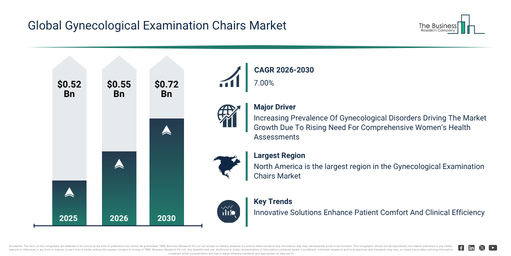
    The gynecological examination chairs market size has experienced significant growth in recent years. It is projected to increase from $0.52 billion in 2025 to $0.55 billion in 2026, registering a compound annual growth rate (CAGR) of 6.8%. Historically, this expansion can be attributed to the rising demand for enhanced women’s healthcare infrastructure, the global proliferation of hospitals and gynecology clinics, increasing awareness surrounding preventive gynecological examinations, the adoption of basic mechanical examination furniture in clinical settings, and the growth in maternal and prenatal care services.

    The market for gynecological examination chairs is anticipated to experience substantial expansion over the coming years. This sector is projected to reach $0.72 billion by 2030, demonstrating a compound annual growth rate (CAGR) of 7.0%. Factors contributing to this growth during the forecast period include the incorporation of intelligent digital control systems in medical seating, a surge in demand for outpatient and mobile gynecological interventions, advancements in minimally invasive diagnostic techniques, an uptick in healthcare spending within developing nations, and the implementation of automated positioning and ergonomic improvement systems. Key trends anticipated during this period involve a greater embrace of electric and motorized gynecological examination chairs to enhance patient comfort and precise positioning, the expanding integration of IoT-enabled smart examination chairs for dynamic adjustments and oversight, a heightened preference for ergonomic and patient-focused chair designs in women’s health settings, the proliferation of versatile gynecological chairs capable of supporting both diagnostic and minor surgical procedures, and an intensified emphasis on medical chair materials that are resistant to infection and easy to sanitize within clinical environments.

    Download A Free Sample Report For Comprehensive Market Insights:

    https://www.thebusinessresearchcompany.com/sample_request?id=35576158&type=smp

    Gynecological Examination Chairs Market Expansion Drivers: What Is Shaping Future Growth?

    The anticipated expansion of the gynecological examination chairs market is linked to the growing incidence of gynecological disorders. These disorders encompass various medical conditions impacting the female reproductive system, such as hormonal, structural, and functional issues involving the uterus, ovaries, and associated organs. The heightened occurrence of gynecological disorders is attributed to shifts in lifestyle, including inadequate diet, inactive lifestyles, and elevated stress, all of which can disturb hormonal equilibrium and reproductive well-being. These specialized chairs facilitate healthcare professionals in conducting comprehensive and comfortable examinations, diagnostic processes, and therapeutic interventions for women experiencing gynecological disorders, thereby ensuring precise evaluation and efficient management of conditions impacting the reproductive system. An example illustrates this trend: in September 2025, data from the Centers for Disease Control and Prevention, a US-based government agency, indicated approximately 209,253 syphilis cases were reported in 2023, marking a 1% increase from 207,269 cases in 2022. Consequently, the rising prevalence of gynecological disorders is acting as a primary catalyst for the expansion of the gynecological examination chairs market.

    Gynecological Examination Chairs Market Segmentation And Category Breakdown

    The gynecological examination chairs market covered in this report is segmented –

    1) By Product Type: Non Electric, Electric, Hydraulic, Electro Hydraulic Hybrid, Smart Or Internet Of Things (IOT) Integrated Models

    2) By Sales Channel: Direct Sales, Distributor And Wholesaler Sales, Original Equipment Manufacturer And Private Label

    3) By Application: Diagnostic Examinations, Surgical Procedures, Prenatal Care And Monitoring

    4) By End User: Hospitals, Diagnostic Centers, Acute Care Centers, Ambulatory Surgical Centers, Clinics

    Subsegments:

    1) By Non Electric: Fixed Height Chairs, Adjustable Backrest Chairs, Foldable Examination Chairs, Basic Mechanical Leg Support Chairs

    2) By Electric: Single Motor Chairs, Dual Motor Chairs, Multi Motor Chairs, Programmable Position Chairs

    3) By Hydraulic: Foot Operated Hydraulic Chairs, Manual Pump Hydraulic Chairs, Height Adjustable Hydraulic Chairs, Heavy Duty Hydraulic Chairs

    4) By Electro Hydraulic Hybrid: Electric Height Hydraulic Tilt Chairs, Programmable Electro Hydraulic Chairs, Dual Control Hybrid Chairs, High Stability Hybrid Chairs

    5) By Smart Or Internet Of Things (IOT) Integrated Models: Connected Digital Control Chairs, Remote Monitoring Enabled Chairs, Automated Position Memory Chairs, Integrated Data System Chairs

    Gynecological Examination Chairs Market Strategic Trends: What Is Defining The Next Phase Of Growth?

    Key companies in the gynecological examination chairs market are dedicating efforts to creating groundbreaking products, such as sophisticated ergonomic and hygienic examination chairs, aiming to improve patient comfort and optimize clinical workflows. These advanced ergonomic and hygienic examination chairs are specifically engineered with adjustable settings, supportive contours, and easy-to-clean materials, which collectively enhance patient comfort, lessen clinician fatigue, and guarantee elevated hygiene levels during gynecological examinations. For example, in March 2024, SCHMITZ GmbH & Co. KG, a medical equipment manufacturer based in Germany, unveiled the medi-matic, a pioneering gynecological examination chair. The medi-matic chair merges excellent ergonomic qualities with intelligent, straightforward functionality, incorporating adjustable height and tilt, hygienic surfaces suitable for quick disinfection, and adaptable positions for various examinations and minor procedures. Its construction prioritizes both the comfort of the patient and the efficiency of the practitioner, setting a new standard for medical and surgical examination chairs.

    Gynecological Examination Chairs Market Competitive Analysis Of Major Industry Participants

    Major companies operating in the gynecological examination chairs market are Stryker Corporation, Baxter International Inc., STERIS plc, Midmark Corporation, Paramount Bed Holdings Co. Ltd., FAMED Zywiec Sp. z o. o., Promotal, UFSK-International OSYS GmbH, IndoSurgicals Private Limited, Euroclinic Group S. r. l., LINET Group SE, Schmitz u. Söhne GmbH & Co. KG, medifa GmbH & Co. KG, AGA Sanitätsartikel GmbH, Brumaba GmbH & Co. KG, Malvestio S. p. A., Novak M d. o. o., Lemi Group S. r. l., United Poly Engineering Private Limited, Adequate Medical Equipment Private Limited, Moretti S. p. A., Esthetica Medical & Spa Solution

    Access The Complete Gynecological Examination Chairs Market Report:

    https://www.thebusinessresearchcompany.com/report/gynecological-examination-chairs-market-report

    Gynecological Examination Chairs Market Global Footprint: Which Region Holds Market Leadership?

    North America was the largest region in the gynecological examination chairs market in 2025. Asia-Pacific is expected to be the fastest-growing region in the forecast period. The regions covered in the gynecological examination chairs market report are Asia-Pacific, South East Asia, Western Europe, Eastern Europe, North America, South America, Middle East and Africa.

    Get in touch with us:

    The Business Research Company: https://www.thebusinessresearchcompany.com/

    Americas: +1 310-496-7795

    Asia: +44 7882 955267 & +91 8897263534

    Europe: +44 7882 955267

    Email us at: marketing@tbrc.info

    Follow us on:

    LinkedIn: https://in.linkedin.com/company/the-business-research-company

    YouTube: https://www.youtube.com/channel/UC24_fI0rV8cR5DxlCpgmyFQ

    Global Market Model: https://www.thebusinessresearchcompany.com/global-market-model

  • Food And Drug Administration (FDA)-Cleared Pediatric Wearable Devices Market Trends Are Creating New Opportunities For Industry Leaders

    Delivering more actionable and strategically valuable research, The Business Research Company’s 2026 market reports feature market attractiveness analysis, total addressable market evaluation, company benchmarking matrices, interactive Excel dashboards, expanded supply chain intelligence, emerging startup coverage, and detailed product insights.

    Food And Drug Administration (FDA)-Cleared Pediatric Wearable Devices Market Size Outlook: How Fast Will Revenue Grow Through 2030?

    The market for food and drug administration (FDA)-cleared pediatric wearable devices has seen substantial growth in recent years. It is projected to increase from $0.61 billion in 2025 to $0.73 billion in 2026, exhibiting a compound annual growth rate (CAGR) of 20.1%. This historical expansion can be attributed to the increasing prevalence of pediatric chronic diseases, a rising demand for early diagnostic interventions, the limited availability of child-specific medical wearables, a growing dependency on hospital-based monitoring, and heightened awareness of preventive pediatric healthcare.

    The market for food and drug administration (FDA)-cleared pediatric wearable devices is projected to experience substantial growth in the coming years, reaching $1.52 billion by 2030, with a compound annual growth rate (CAGR) of 20.3%. This expansion during the forecast period is propelled by factors such as the broadening of home-based pediatric healthcare monitoring, the rising adoption of AI-driven predictive health analytics, increased investment in pediatric digital health infrastructure, a surge in regulatory approvals for wearable medical devices, and greater integration of cloud and IoT healthcare ecosystems. Key trends anticipated within this timeframe encompass the growing uptake of AI-enabled pediatric wearable diagnostics for immediate health insights, enhanced integration of IoT-based connected monitoring ecosystems within pediatric care, the expansion of cloud-based remote patient monitoring platforms for children, the increasing application of advanced biosensor miniaturization to boost wearable accuracy, and the greater implementation of cybersecurity frameworks to protect pediatric health data.

    Download A Free Sample Report For Comprehensive Market Insights:

    https://www.thebusinessresearchcompany.com/sample_request?id=76754310&type=smp

    Food And Drug Administration (FDA)-Cleared Pediatric Wearable Devices Market Development Factors: Which Trends Are Supporting Demand?

    The rise in chronic pediatric conditions is anticipated to fuel the expansion of the FDA-cleared pediatric wearable devices market in the future. These conditions are enduring health issues impacting infants, children, or adolescents, generally lasting for three months or more, and frequently necessitate continuous medical attention, management, and occasional lifestyle modifications. Their increasing occurrence stems from various factors, including environmental exposures, shifts in lifestyle like inactive habits and unhealthy eating patterns, alongside better diagnostic methods and greater awareness. FDA-cleared pediatric wearable devices, such as continuous glucose monitors and cardiac monitoring systems, facilitate real-time physiological monitoring and prompt identification of complications, which leads to more anticipatory disease management and enhanced adherence to treatment. With the increasing strain from chronic conditions, healthcare systems and caregivers are progressively adopting these technologies to improve patient results and decrease long-term healthcare expenses. For instance, in December 2025, according to the World Health Organization (WHO), a Switzerland-based United Nations (UN) organization, globally, an estimated 35 million children below five years of age were affected by excess weight in 2024, while more than 390 million individuals aged five to nineteen were overweight in 2022, including around 160 million with obesity. Consequently, the expanding prevalence of chronic pediatric conditions is propelling the growth of the FDA-cleared pediatric wearable devices market.

    Food And Drug Administration (FDA)-Cleared Pediatric Wearable Devices Market Segmentation And Category Breakdown

    The food and drug administration (fda)-cleared pediatric wearable devices market covered in this report is segmented –

    1) By Device Type: Pulse Oximeters, Cardiac Monitors Or Electrocardiogram Wearables, Respiratory Monitors, Multi-Vital Monitors, Glucose Monitoring Wearables, Sleep Trackers

    2) By Clinical Use: Cardiac Monitoring, Respiratory Monitoring, Glucose Monitoring, Temperature Monitoring, Sudden Infant Death Syndrome Adjunct Monitoring

    3) By Technology: Optical (Photoplethysmography), Electrical (Electrocardiography), Accelerometers, Bio-Impedance

    4) By End-User: Hospitals And Neonatal Intensive Care Units, Pediatric Clinics And Outpatient Centers, Homecare Settings And Caregivers, Ambulatory Surgical Centers

    Subsegments:

    1) By Pulse Oximeters: Fingertip Pulse Oximeters, Wrist-Worn Pulse Oximeters, Handheld Pulse Oximeters, Ring-Based Pulse Oximeters

    2) By Cardiac Monitors Or Electrocardiogram Wearables: Patch-Based Cardiac Monitors, Chest Strap Heart Monitors, Wearable Holter Monitors, Smart Garment Cardiac Monitors

    3) By Respiratory Monitors: Wearable Respiratory Rate Monitors, Chest-Worn Breathing Monitors, Apnea Monitoring Devices, Smart Garment Respiratory Monitors

    4) By Multi-Vital Monitors: Integrated Vital Sign Monitoring Wearables, Smart Patch Multi-Vital Monitors, Wrist-Worn Multi-Parameter Monitors, Smart Clothing Multi-Vital Monitors

    5) By Glucose Monitoring Wearables: Continuous Glucose Monitoring Devices, Flash Glucose Monitoring Devices, Implantable Glucose Monitoring Devices, Non-Invasive Glucose Monitoring Wearables

    6) By Sleep Trackers: Wearable Sleep Monitoring Bands, Smart Sock Sleep Trackers, Mattress-Integrated Sleep Monitoring Devices, Smart Pajamas And Sleep Garment Trackers, Wrist-Worn Pediatric Sleep Trackers, Sleep And Movement Monitoring Patches, Infant Sleep Position Monitors, Multi-Parameter Sleep Tracking Wearables

    Food And Drug Administration (FDA)-Cleared Pediatric Wearable Devices Market Transformation Trends: Which Innovations Are Driving Change?

    Leading firms within the FDA-cleared pediatric wearable devices sector are prioritizing groundbreaking developments, notably therapeutic wearable devices, to facilitate non-invasive and individualized treatment options. Such a device represents a medical technology worn on the body, engineered to provide specific therapeutic intervention directly to the individual. An example is seen in June 2025, when SoundHealth, a US-based medical technology enterprise focused on artificial intelligence-powered healthcare solutions, publicized the U. S. Food and Drug Administration (FDA) approval for its SONU Band. This particular device employs artificial intelligence to chart sinus anatomies and dispense tailored acoustic vibrations, which assist in decreasing nasal inflammation and enhancing airflow. With its non-invasive, drug-free methodology and home-based usability, it stands out as a notable leap forward in pediatric respiratory care, boosting both safety and access to treatment.

    Food And Drug Administration (FDA)-Cleared Pediatric Wearable Devices Market Competitive Analysis Of Major Industry Participants

    Major companies operating in the food and drug administration (fda)-cleared pediatric wearable devices market are Abbott Laboratories, Medtronic plc, Koninklijke Philips N. V., GE HealthCare Technologies Inc., Dexcom Inc., Masimo Corporation, Insulet Corporation, Nihon Kohden Corporation, iRhythm Technologies Inc., Natus Medical Incorporated, Bittium Corporation, Current Health Ltd., Sibel Health Inc., Empatica Inc., Owlet Baby Care Inc., LifeSignals Inc., VitalConnect Inc., Blue Spark Technologies Inc., BioIntelliSense Inc., Nonin Medical Inc., Biobeat Technologies Ltd., Lief Therapeutics Inc., Preventice Solutions Inc.

    Access The Complete Food And Drug Administration (FDA)-Cleared Pediatric Wearable Devices Market Report:

    https://www.thebusinessresearchcompany.com/report/food-and-drug-administration-fda-cleared-pediatric-wearable-devices-market-report

    Food And Drug Administration (FDA)-Cleared Pediatric Wearable Devices Market Leading Geography: Which Region Generates The Most Revenue?

    North America was the largest region in the food and drug administration (FDA)-cleared pediatric wearable devices market in 2025. Asia-Pacific is expected to be the fastest-growing region in the forecast period. The regions covered in the food and drug administration (FDA)-cleared pediatric wearable devices market report are Asia-Pacific, South East Asia, Western Europe, Eastern Europe, North America, South America, Middle East and Africa.

    Get in touch with us:

    The Business Research Company: https://www.thebusinessresearchcompany.com/

    Americas: +1 310-496-7795

    Asia: +44 7882 955267 & +91 8897263534

    Europe: +44 7882 955267

    Email us at: marketing@tbrc.info

    Follow us on:

    LinkedIn: https://in.linkedin.com/company/the-business-research-company

    YouTube: https://www.youtube.com/channel/UC24_fI0rV8cR5DxlCpgmyFQ

    Global Market Model: https://www.thebusinessresearchcompany.com/global-market-model

  • Eye Examination Equipment Market Trends And Growth Drivers Point To Strong Future Potential

    Eye Examination Equipment Market Trends And Growth Drivers Point To Strong Future Potential

    Through market attractiveness analysis, total addressable market evaluation, company benchmarking matrices, interactive Excel dashboards, expanded supply chain intelligence, emerging startup coverage, and detailed product insights, The Business Research Company’s 2026 market reports provide more actionable and strategically valuable research.

    Eye Examination Equipment Market Revenue Growth Supported By A CAGR Of 4.55% Through 2030

    The eye examination equipment market size has shown substantial growth in recent years. It is anticipated to expand from $3.1 billion in 2025 to $3.34 billion in 2026, achieving a compound annual growth rate (CAGR) of 7.8%. This historical growth can be linked to factors such as an increase in the prevalence of refractive errors and age-related eye conditions, the expansion of ophthalmic clinics and eye care infrastructure, growing public awareness of preventive eye health screenings, a rise in the adoption of conventional diagnostic instruments like slit lamps and tonometers, and greater healthcare spending along with improved access to vision care services.

    The eye examination equipment market is projected to experience robust expansion over the coming years, anticipated to reach $4.55 billion by 2030, exhibiting a compound annual growth rate (CAGR) of 8.0%. This growth during the forecast period is primarily driven by several factors, including advancements in AI-driven retinal imaging and improved diagnostic precision, a rising need for early detection of conditions like glaucoma and diabetic retinopathy, the proliferation of mobile and portable eye examination solutions, the expansion of digital healthcare infrastructure and telemedicine integration, and an aging population boosting demand for vision correction and monitoring. Key trends anticipated during this period encompass the growing acceptance of AI-assisted ophthalmic diagnostic systems, an escalating demand for portable and handheld eye examination devices, increasing incorporation of cloud-based patient eye health records, the broadening scope of tele-ophthalmology and remote vision screening services, and a greater utilization of automated retinal imaging and screening technologies.

    Download A Free Sample Report For Comprehensive Market Insights:

    https://www.thebusinessresearchcompany.com/sample_request?id=16592898&type=smp

    Eye Examination Equipment Market Growth Factors Supporting Long-Term Expansion

    The increasing occurrence of vision impairments is projected to fuel the expansion of the eye examination equipment market in the future. These disorders encompass conditions hindering normal sight or impacting the eye’s structure and function, such as refractive errors, cataracts, glaucoma, and age-related macular degeneration. Their prevalence is rising due to factors like an aging demographic and extended exposure to digital screens. Eye examination equipment is crucial for early detection and ongoing monitoring, facilitating precise diagnosis of visual and ocular conditions, which in turn boosts the demand for diagnostic methods and equipment usage. For example, data from February 2026, provided by the Switzerland-based World Health Organization, indicates that at least 2. 2 billion individuals globally suffer from near or distance vision impairment, with more than 1 billion of these cases being either preventable or still requiring intervention. Consequently, the growing occurrence of vision disorders is propelling the eye examination equipment market’s growth.

    Eye Examination Equipment Market Segment Breakdown: Which Categories Generate The Most Revenue?

    The eye examination equipment market covered in this report is segmented –

    1) By Product: Optical Coherent Tomography Scanners (OCT), Ophthalmic Ultrasound Imaging Systems, Corneal Topography Systems, Slit Lamps, Tonometer, Ophthalmoscopes, Perimeters Or Visual Field Analyzers, Fundus Cameras, Autorefractors And Keratometers

    2) By Technology: Manual Equipment, Automated Equipment, Digital Systems, AI-Integrated Diagnostic Systems

    3) By Distribution: Direct Sales, Distributors And Dealers, Online Sales

    4) By Application: Refractive Error Testing, Glaucoma Detection, Cataract Diagnosis, Retinal Disorders, Corneal Disorders, General Eye Examination

    5) By End User: Hospitals, Clinics, Other End User

    Subsegments:

    1) By Optical Coherent Tomography Scanners: Spectral Domain Optical Coherent Tomography Scanners, Swept Source Optical Coherent Tomography Scanners, Time Domain Optical Coherent Tomography Scanners, Handheld Optical Coherent Tomography Scanners

    2) By Ophthalmic Ultrasound Imaging Systems: A Scan Ultrasound Systems, B Scan Ultrasound Systems, Combined Scan Ultrasound Systems, Ultrasound Biomicroscopy Systems

    3) By Corneal Topography Systems: Placido Disc Based Systems, Scheimpflug Imaging Systems, Scanning Slit Based Systems, Color Led Topography Systems

    4) By Slit Lamps: Table Top Slit Lamps, Portable Slit Lamps, Digital Slit Lamps, Led Slit Lamps

    5) By Tonometer: Applanation Tonometer, Indentation Tonometer, Rebound Tonometer, Non Contact Tonometer

    6) By Ophthalmoscopes: Direct Ophthalmoscopes, Indirect Ophthalmoscopes, Digital Ophthalmoscopes, Panoramic Ophthalmoscopes

    7) By Perimeters Visual Field Analyzers: Static Perimeters, Kinetic Perimeters, Automated Perimeters, Combination Perimeters

    8) By Fundus Cameras: Mydriatic Fundus Cameras, Non Mydriatic Fundus Cameras, Handheld Fundus Cameras, Ultra Widefield Fundus Cameras

    9) By Autorefractors And Keratometers Phoropters: Manual Autorefractors, Automatic Autorefractors, Manual Keratometers, Automatic Keratometers, Digital Phoropters, Manual Phoropters

    Eye Examination Equipment Market Industry Trends Shaping Future Revenue Growth

    Companies operating in the eye examination equipment market are prioritizing innovations in AI-powered diagnostic systems, especially AI-integrated retinal imaging devices, to enhance diagnostic accuracy and broaden access to screening. These devices combine fundus cameras with artificial intelligence algorithms to automatically analyze retinal images and identify eye conditions such as diabetic retinopathy, glaucoma, and macular degeneration. For example, in May 2024, Optomed Oyj, a medical technology company from Finland, launched the Optomed Aurora handheld fundus camera, which is integrated with AI. This device enables autonomous detection of diabetic retinopathy, provides results in less than one minute, and facilitates portable screening across various care settings, highlighting the growing trend towards AI-enabled and decentralized eye diagnostics.

    Eye Examination Equipment Market Key Players And Strategic Industry Positioning

    Major companies operating in the eye examination equipment market are Topcon Corporation, NIDEK Co. Ltd., Appasamy Associates, Heidelberg Engineering, Rexxam Co. Ltd., Lumibird Medical, Keeler Ltd, Oculus Optikgeräte GmbH, Optopol Technology, Forus Health, Volk Optical, Optovue Inc., Luneau Technology Group, Remidio Innovative Solutions, Takagi Seiko Co. Ltd., Visionix, Haag-Streit Group, DGH Technology Inc., Ziemer Ophthalmic Systems, CSO Italy

    Access The Complete Eye Examination Equipment Market Report:

    https://www.thebusinessresearchcompany.com/report/eye-examination-equipment-market-report

    Eye Examination Equipment Market Geographic Distribution And Regional Opportunities

    North America was the largest region in the eye examination equipment market in 2025. Asia-Pacific is expected to be the fastest-growing region in the forecast period. The regions covered in the eye examination equipment market report are Asia-Pacific, South East Asia, Western Europe, Eastern Europe, North America, South America, Middle East and Africa.

    Get in touch with us:

    The Business Research Company: https://www.thebusinessresearchcompany.com/

    Americas: +1 310-496-7795

    Asia: +44 7882 955267 & +91 8897263534

    Europe: +44 7882 955267

    Email us at: marketing@tbrc.info

    Follow us on:

    LinkedIn: https://in.linkedin.com/company/the-business-research-company

    YouTube: https://www.youtube.com/channel/UC24_fI0rV8cR5DxlCpgmyFQ

    Global Market Model: https://www.thebusinessresearchcompany.com/global-market-model