Category: Medical Equipment

  • What Is The Forecast Growth Rate For The Pharmacy Automation Devices Market?

    What Is The Forecast Growth Rate For The Pharmacy Automation Devices Market?

    The Business Research Company’s market reports offer an in-depth analysis on the market’s growth potential, major drivers, key trends and more.

    Rapid Growth and Forecast

    • The pharmacy automation devices market size has surged in recent years.
    • Expected growth from $5.5 billion in 2023 to $6.11 billion in 2024.
    • Compound annual growth rate (CAGR) of 11.2% attributed to various factors.

    Factors Driving Growth

    • Increasing prescription volume.
    • Demand for error reduction.
    • Pressure to improve operational efficiency.
    • Regulatory compliance requirements.
    • Pharmacy workforce shortages.
    • Patient demand for quick service.
    • Inventory management challenges.

    Anticipated Growth Trends

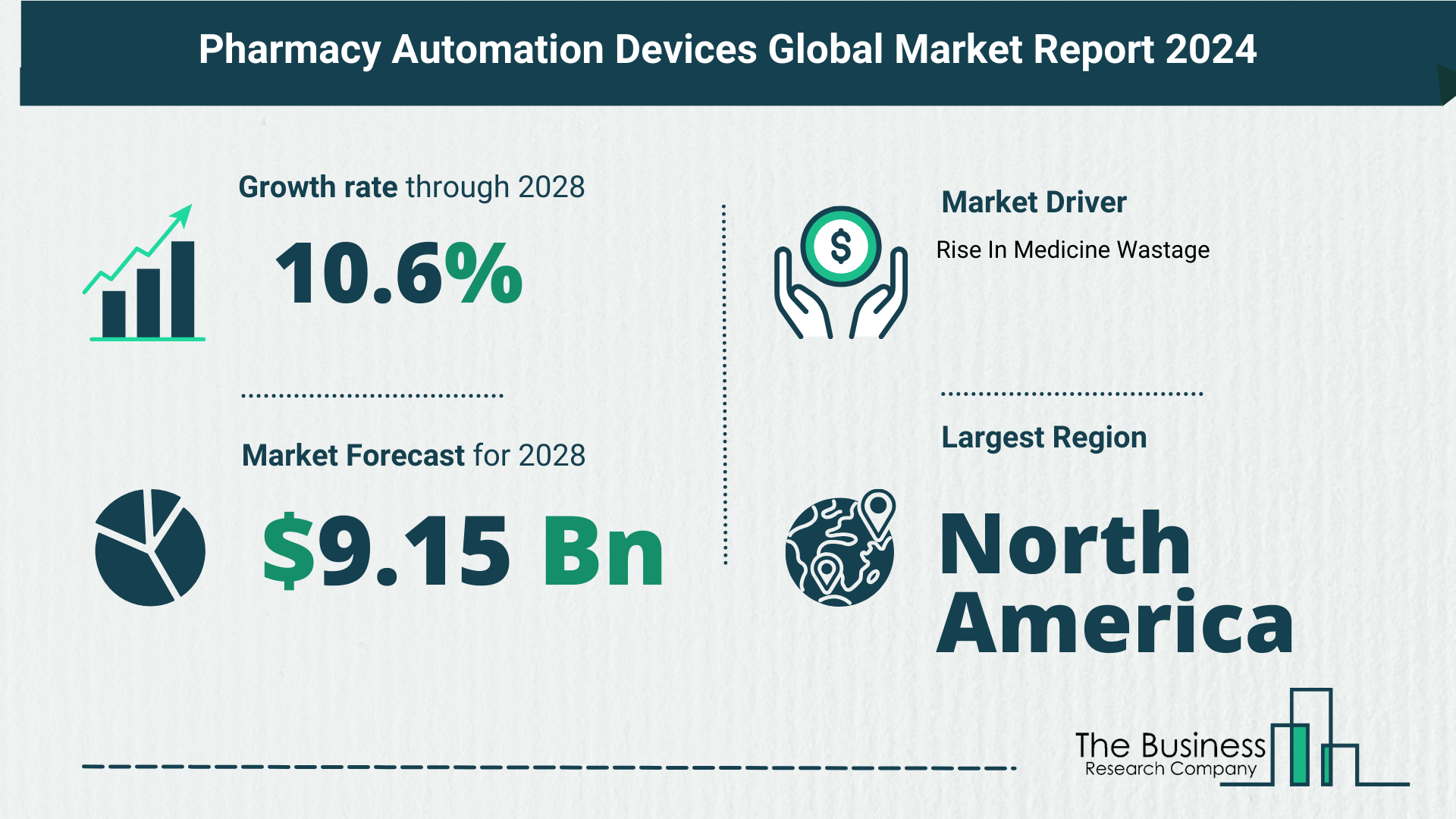
    • Projected growth to $9.15 billion in 2028.
    • Compound annual growth rate (CAGR) of 10.6%.
    • Factors include globalization of pharmacy services, workflow optimization, and more.
    • Major trends include adoption of robotics, AI integration, and telepharmacy services.

    Rising Medicine Waste Drives Market Growth

    • Medicine waste includes expired, unused, and contaminated pharmaceutical items.
    • Automated dispensing machines reduce waste.
    • Pharmaceutical supplies account for significant wastage.
    • Rising medicine wastage drives demand for automation devices.
    • Major companies in the market include Omnicell Inc., McKesson Corporation, and more.

    Read More On The Pharmacy Automation Devices Market Report 2024 – https://www.thebusinessresearchcompany.com/report/pharmacy-automation-devices-global-market-report

    Product Innovation Enhances Efficiency

    • Key trend: product innovation.
    • Companies focus on developing innovative solutions.
    • Example: SmartPod and iA Therapy Management Solutions by Innovative Associates.
    • Becton, Dickinson, and Company’s acquisition of Parata Systems for $1.5 billion.
    • Parata Systems offers robotics technologies for pharmacy automation.

    Market Segmentation

    1. By Product:
      • Medication Dispensing Systems
      • Packaging And Labeling Systems
      • Storage And Retrieval Systems
      • Automated Medication Compounding Systems
      • Tabletop Tablet Counters
    2. By End-User:
      • Retail Pharmacy
      • Inpatient Pharmacies
      • Outpatient Pharmacies
      • Pharmacy Benefit Management Organizations
      • Mail-Order Pharmacies

    Regional Insights

    • North America led the pharmacy automation devices market in 2023.

    The pharmacy automation devices market is experiencing robust growth, driven by a combination of factors such as increased prescription volumes, regulatory demands, and the need for operational efficiency. The rise in medicine wastage has emerged as a significant concern, further propelling the adoption of automation solutions. Companies are investing in product innovation to meet evolving customer needs, introducing solutions like SmartPod and iA Therapy Management Systems.

    The recent acquisition of Parata Systems by Becton, Dickinson, and Company underscores the industry’s focus on technological advancement and expansion. With a diverse range of products and end-users, the market offers ample opportunities for growth and innovation. As trends like robotics, AI integration, and telepharmacy services continue to shape the landscape, the pharmacy automation devices market is poised for sustained expansion in the coming years.

    Request for A Sample Of The Global Pharmacy Automation Devices Market Report:
    https://www.thebusinessresearchcompany.com/sample_request?id=7894&type=smp
  • Overview Of The Self-Injections Market 2024-2033: Growth And Major Players Analysis

    Overview Of The Self-Injections Market 2024-2033: Growth And Major Players Analysis

    The Business Research Company’s global market reports are now updated with the latest market sizing information for the year 2024 and forecasted to 2033

    Exponential Growth Trajectory

    • The self-injections market has experienced exponential growth recently.
    • From $50.72 billion in 2023, it surged to $63.54 billion in 2024, at a CAGR of 25.3%.

    Drivers of Growth in Historic Period

    • Rising chronic diseases.
    • Improved patient empowerment.
    • Regulatory support.
    • Preference for home healthcare.
    • Cost-effectiveness.

    Forecasted Expansion

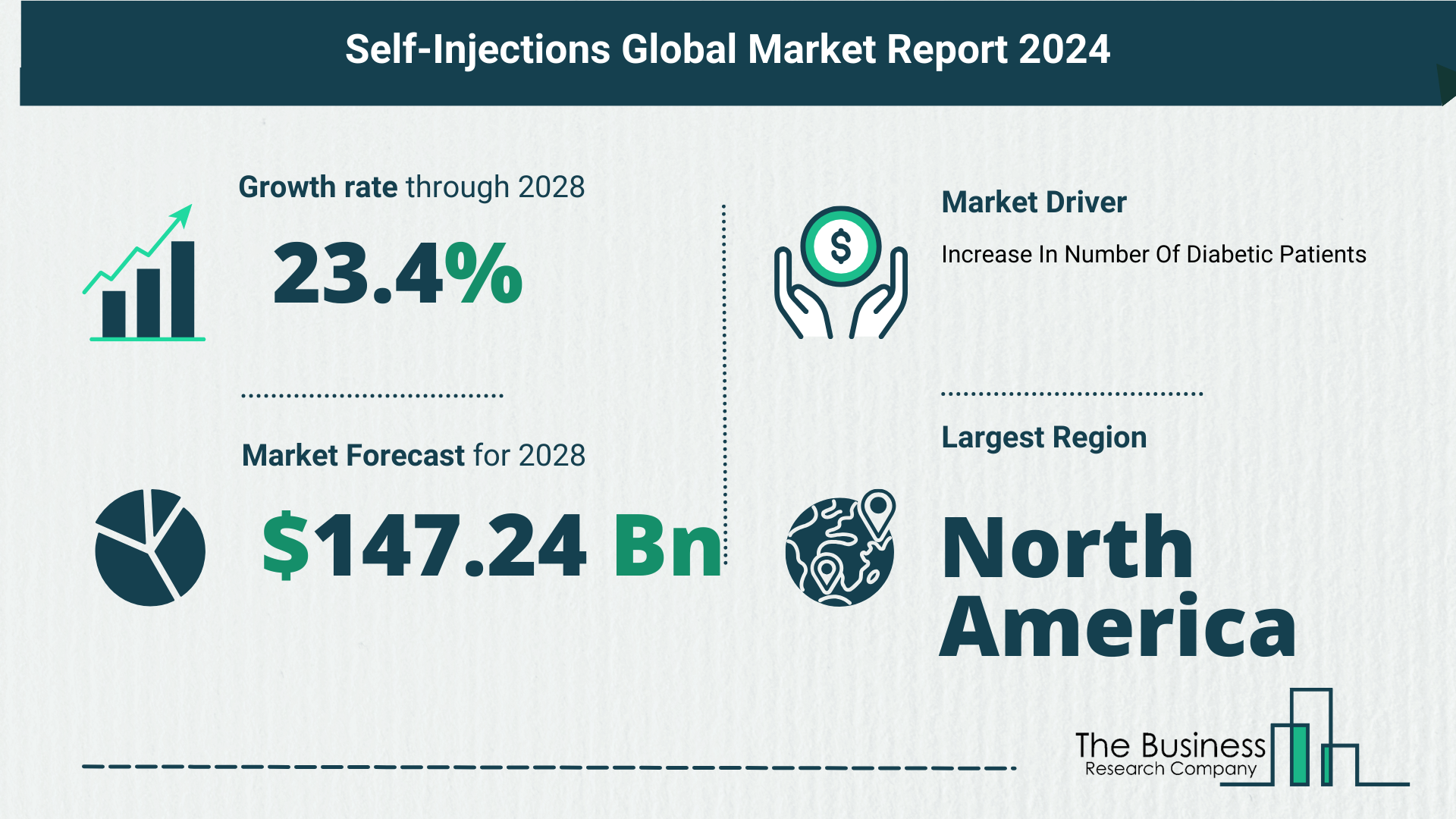
    • The market is projected to reach $147.24 billion in 2028, with a CAGR of 23.4%.
    • Key factors: pandemic impact, expansion into emerging markets, patient-centric healthcare, advantages in drug delivery, personalized medicine trends.

    Emerging Trends

    • Smart technology integration.
    • Rise in biologics usage.
    • Miniaturization and wearable devices.
    • Enhanced safety features.
    • Adoption of autoinjectors.

    Surging Diabetic Cases Fueling Growth

    • Diabetic patients increasingly drive the self-injections market.
    • Diabetes complications necessitate regular insulin injections.
    • International Diabetes Federation predicts a rise in diabetic cases to 643 million by 2030 and 783 million by 2045.

    Key Players and Market Landscape

    • Major companies include AbbVie Inc., Baxter International Inc., Eli Lilly and Company, Pfizer Inc., and more.
    • Product diversity ranges from pen devices to formulations.

    View More On The Self-Injections Market Report 2024 – https://www.thebusinessresearchcompany.com/report/self-injections-global-market-report

    Product Innovations

    • Companies focus on innovative solutions for insulin injections.
    • Example: Terumo Corporation’s FineGlide, prioritizing patient comfort and compliance.
    • Reddy’s Laboratories expands its injectable portfolio through strategic acquisitions.

    Market Segmentation

    1. By Type:Devices, Formulations
    2. By Route Of Administration:Skin, Circulatory or Musculoskeletal, Organs, Central Nervous System
    3. By Dosage:Single Dose, Multi Dose
    4. By Application:Autoimmune Diseases, Hormonal Disorders, Oncology, Orphan Diseases, Pain Management, Respiratory Therapy, Other Applications
    5. By Distribution Channel:Hospitals Pharmacies, Clinics, Chemist, Online Pharmacies

    Regional Dynamics

    • North America led the market in 2023.
    • Asia-Pacific poised as the fastest-growing region.

    Request A Sample Of The Global Self-Injections Market Report 2024:
    https://www.thebusinessresearchcompany.com/sample_request?id=8235&type=smp

  • Key Trends And Drivers In The Scientific Instruments Market 2024

    Key Trends And Drivers In The Scientific Instruments Market 2024

    The Business Research Company’s market reports offer an in-depth analysis on the market’s growth potential, major drivers, key trends and more.

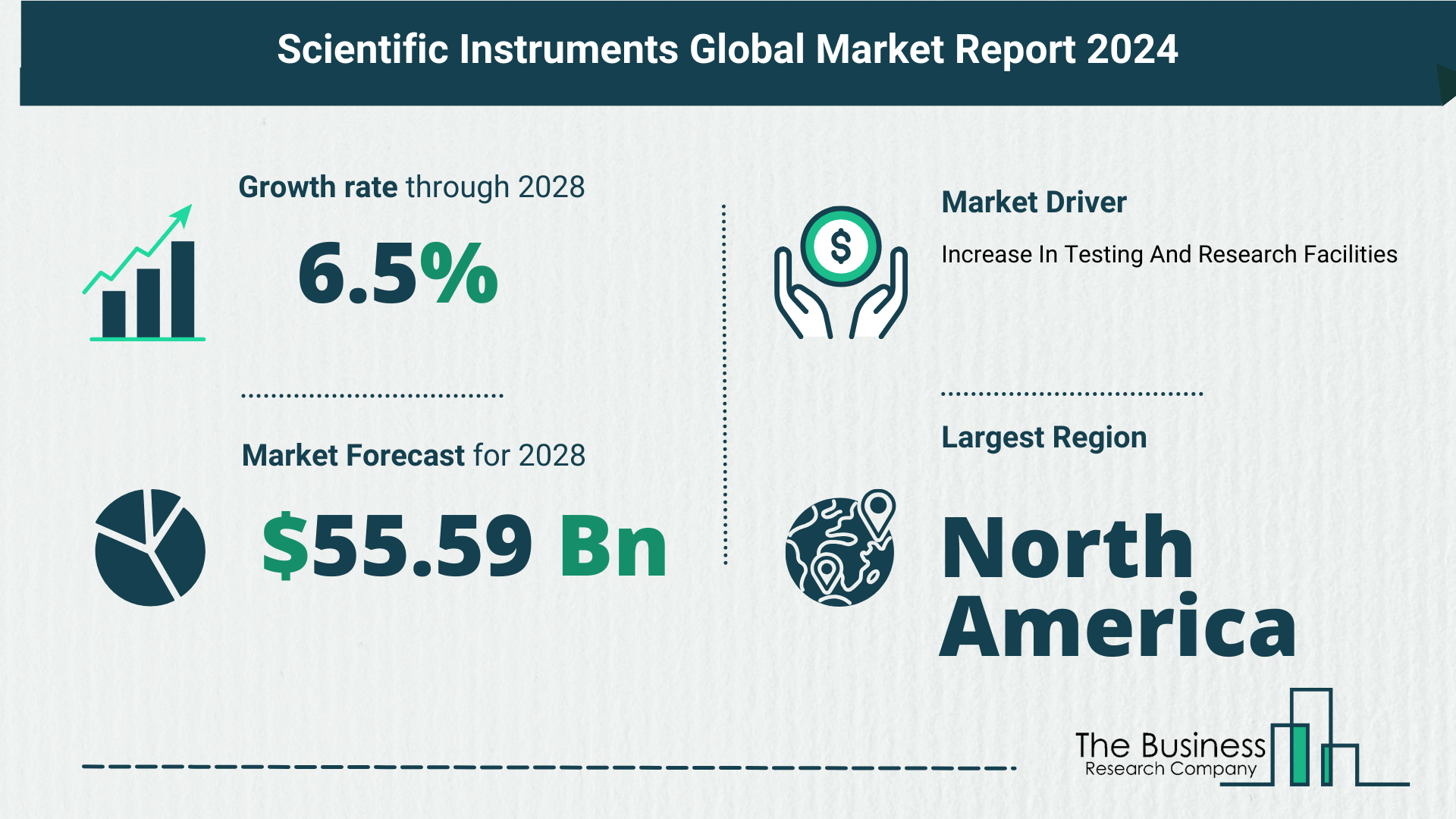
    The scientific instruments market has experienced robust growth in recent years, with the market size expanding from $40.98 billion in 2023 to $43.29 billion in 2024, marking a compound annual growth rate (CAGR) of 5.6%. This growth is attributed to various factors:

    • Increasing Focus on Life Sciences:The life sciences sector has witnessed heightened attention, fostering the demand for advanced scientific instruments.
    • Government Funding for Scientific Research:Enhanced funding from governments worldwide has fueled scientific exploration and necessitated the use of sophisticated instruments.
    • Environmental Monitoring:With growing environmental concerns, the need for precise monitoring instruments has surged.
    • Complex Scientific Inquiries:Scientific inquiries have become more intricate, demanding sophisticated instrumentation for accurate analysis.
    • Globalization of Research:The globalization trend has led to expanded research endeavors, further driving the demand for scientific instruments.

    The market is poised for substantial expansion, with projections indicating a growth to $55.59 billion by 2028, at a CAGR of 6.5%. Anticipated drivers and trends in the forecast period include:

    • Precision Medicine and Personalized Healthcare:Advancements in healthcare emphasize personalized approaches, necessitating precise scientific instruments.
    • Emergence of Point-of-Care Testing:Convenient and rapid testing methods are gaining prominence, boosting the demand for compact scientific instruments.
    • Rise of Regenerative Medicine:Innovations in regenerative medicine require specialized instrumentation for research and application.
    • Customization and Modular Design:Flexible instrument design enables customization to diverse research needs.
    • Regulatory Compliance and Quality Assurance:Stringent regulatory standards mandate the use of high-quality instruments for compliance.
    • Major Trends:Biotechnology demand, sustainable and green technologies, multi-modal imaging, material science applications, enhanced connectivity, and global R&D expansion characterize the forecast period.

    Read More On The Scientific Instruments Market Report 2024 – https://www.thebusinessresearchcompany.com/report/scientific-instruments-global-market-report

    Strategic Collaborations Drive Innovation

    Major companies in the scientific instruments market engage in strategic partnerships to bolster their market presence and foster innovation:

    • Quantum Detectors and Amsterdam Scientific Instruments:Noteworthy collaboration aiming to advance scientific research by offering comprehensive technology solutions.
    • Business Strategic Partnerships:Structured affiliations between enterprises streamline distribution and enhance accessibility to cutting-edge technologies.

    Tibidabo Scientific Industries’ Acquisition for Market Expansion

    In October 2021, Tibidabo Scientific Industries Ltd. strategically acquired Lambert Instruments B.V., a Netherlands-based company specializing in scientific imaging solutions:

    • Strategic Acquisition:Tibidabo aims to leverage Lambert’s expertise and product portfolio to broaden its market reach.
    • Innovative Imaging Solutions:Lambert Instruments’ advanced imaging modalities complement Tibidabo’s existing offerings, enhancing its competitive edge.

    Segmentation and Regional Outlook

    The scientific instruments market is segmented based on type, application, and end-user:

    1. By Type:Clinical Analyzers, Analytical Instruments, Other Types
    2. By Application:Research, Clinical and Diagnostics, Other Applications
    3. By End User:Hospitals and Diagnostic Laboratories, Pharmaceutical and Biotechnology Companies, Other End-users
    • Regional Dynamics:North America led the market in 2023, while Asia-Pacific is anticipated to witness the fastest growth in the forecast period. 

    Request for A Sample Of The Global Scientific Instruments Market Report:
    https://www.thebusinessresearchcompany.com/sample_request?id=8125&type=smp

  • 5 Key Insights On The Recombinant DNA Technology Market 2024

    5 Key Insights On The Recombinant DNA Technology Market 2024

    The Business Research Company’s global market reports are now updated with the latest market sizing information for the year 2024 and forecasted to 2033

    As per The Business Research Company’s Recombinant DNA Technology Global Market Report 2024, the recombinant DNA technology market is expected to show significant growth in the forecast period.

    The recombinant DNA technology market has witnessed robust growth in recent years and is poised for further expansion. Key factors driving this surge include healthcare demands, the growth of the biopharmaceutical industry, increased investments in research and development (R&D), and the emergence of personalized medicine. In this blog, we delve into the market’s current status, forecasted growth, and the influential trends shaping its trajectory.

    Market Expansion from 2023 to 2024

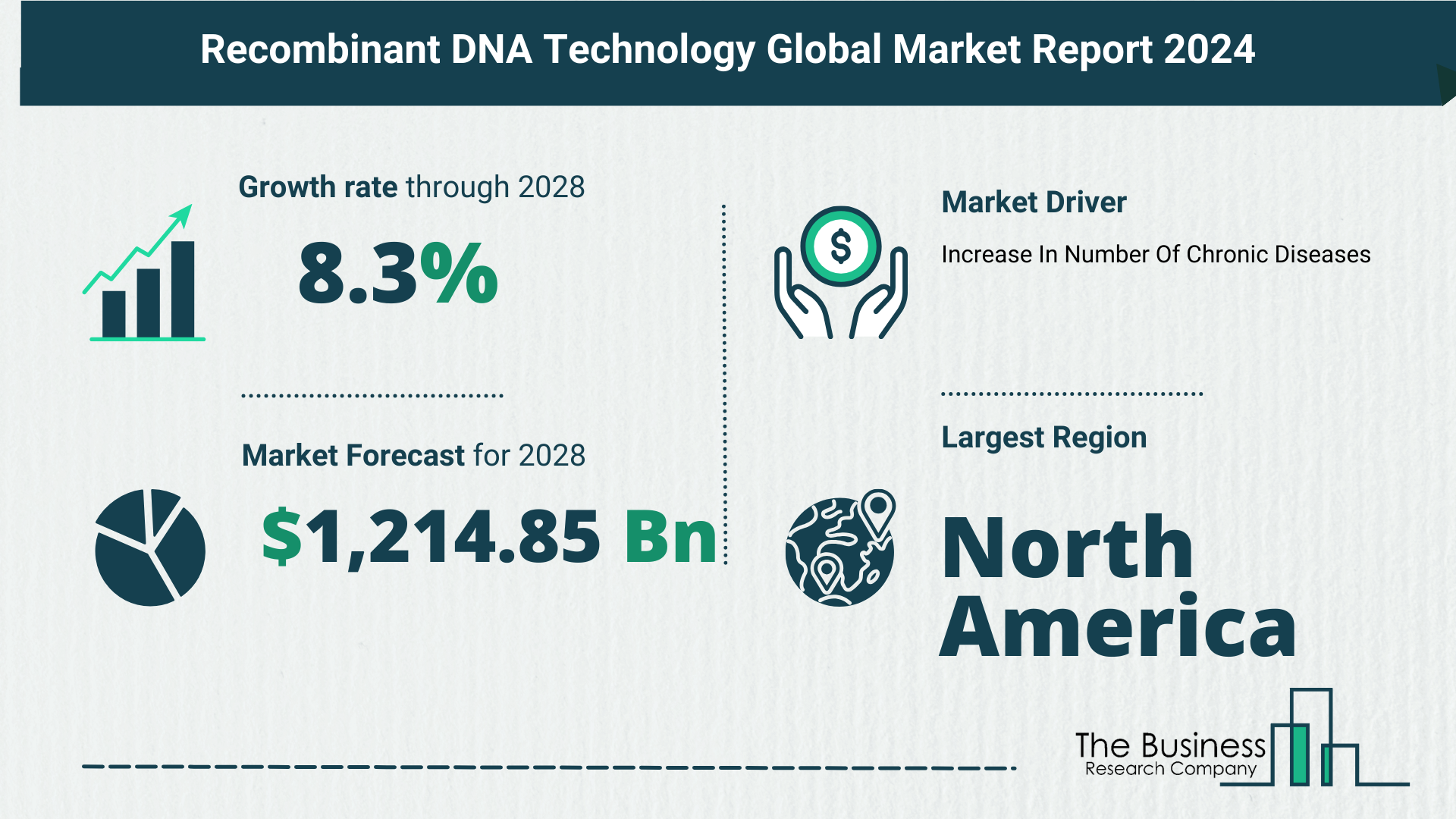
    The market size is set to soar from $816.9 billion in 2023 to $882.04 billion in 2024, boasting a compound annual growth rate (CAGR) of 8.0%. This robust growth is attributed to various factors, including the rising prevalence of chronic diseases and the proliferation of biotech startups. Let’s explore the driving forces behind this surge.

    Rising Prevalence Of Chronic Diseases To Drive Market Growth

    The escalating number of chronic diseases is a primary catalyst for the recombinant DNA technology market’s growth. Chronic diseases, persisting for a year or longer, have witnessed a surge, demanding continuous medical care. Recombinant DNA technology plays a pivotal role by improving healthcare through the creation of biopharmaceutical proteins used in pharmaceuticals and facilitating gene therapy. Notably, noncommunicable diseases (NCDs) accounted for 71% of global deaths, emphasizing the critical role of advanced technologies in addressing these health challenges.

    • Recombinant DNA technology addresses chronic diseases by creating biopharmaceuticals and gene therapies.
    • WHO reports highlight the significant global impact of noncommunicable diseases.

    Key Market Players

    Major players driving the recombinant DNA technology market include Profacgen BioTech Corp., Amgen Inc., Novartis International AG, GenScript Biotech Corporation, Pfizer Inc., and more. These industry giants contribute to market growth by leveraging their expertise and resources.

    View More On The Recombinant DNA Technology Market Report 2024 – https://www.thebusinessresearchcompany.com/report/recombinant-dna-technology-global-market-report

    Technological Advancements Driving Innovation In Recombinant DNA Technology Market

    Technological advancements stand out as a prominent trend shaping the recombinant DNA technology market. Industry leaders are investing in cutting-edge technologies to maintain a competitive edge. For example, Thermo Fisher Scientific’s introduction of the Applied Biosystem QuantStudio Absolute Q-Digital PCR System exemplifies the commitment to innovation. This system streamlines genetic analysis, delivering precise and reliable results in under 90 minutes. Additionally, Thermo Fisher’s strategic acquisition of PeproTech in January 2022 fortifies its position by integrating PeproTech’s recombinant proteins portfolio into its offerings.

    • Technological advancements, such as Thermo Fisher’s QuantStudio Absolute Q System, enhance precision in genetic analysis.
    • Strategic acquisitions, like Thermo Fisher’s acquisition of PeproTech, strengthen companies’ capabilities and market presence.

    Market Segmentation

    The recombinant DNA technology market is segmented based on various criteria, providing a nuanced understanding of its dynamics. Key segments include product type, component type, application type, and end-use type. These segments offer insights into the diverse applications and industries driving the market.

    1. Product Type:
      • Recombinant Protein Drugs
      • Vaccines
      • Genetically Modified Crops
      • Expression Systems
      • Cell and Gene Therapy
      • Gene Editing
    2. Component Type:
      • Expression System
      • Cloning Vector
    3. Application Type:
      • Food And Agriculture
      • Health And Disease
      • Environment
      • Other Application Types
    4. End-Use Type:
      • Biotechnology And Pharmaceutical Companies
      • Academic And Government Research Institutes
      • Other End-Use Types

    Regional Insights

    In 2023, North America led the recombinant DNA technology market, while the Asia-Pacific region is anticipated to be the fastest-growing region in the forecast period. This shift reflects the global nature of the biotech industry and its expanding footprint across diverse geographical regions.

    Request A Sample Of The Global Recombinant DNA Technology Market Report 2024:
    https://www.thebusinessresearchcompany.com/sample_request?id=8233&type=smp

  • How Is The Paper Diagnostics Market Expected To Grow Through 2024-2033

    How Is The Paper Diagnostics Market Expected To Grow Through 2024-2033

    The Business Research Company’s global market reports are now updated with the latest market sizing information for the year 2024 and forecasted to 2033

    According to The Business Research Company’s Paper Diagnostics Global Market Report 2024, the paper diagnostics market is expected to show promising growth in the forecast period.

    Strong Growth Trajectory

    • The paper diagnostics market has experienced robust growth.
    • From $9.16 billion in 2023, it surged to $10.01 billion in 2024, with a CAGR of 9.2%.

    Drivers of Historic Growth

    • Need for affordable healthcare.
    • Global health crisis preparedness.
    • Point-of-care testing for chronic diseases.
    • Diagnostic applications in resource-limited settings.
    • Rapid results for timely decision-making.
    • Increased focus on preventive healthcare.

    Anticipated Growth in Forecast Period

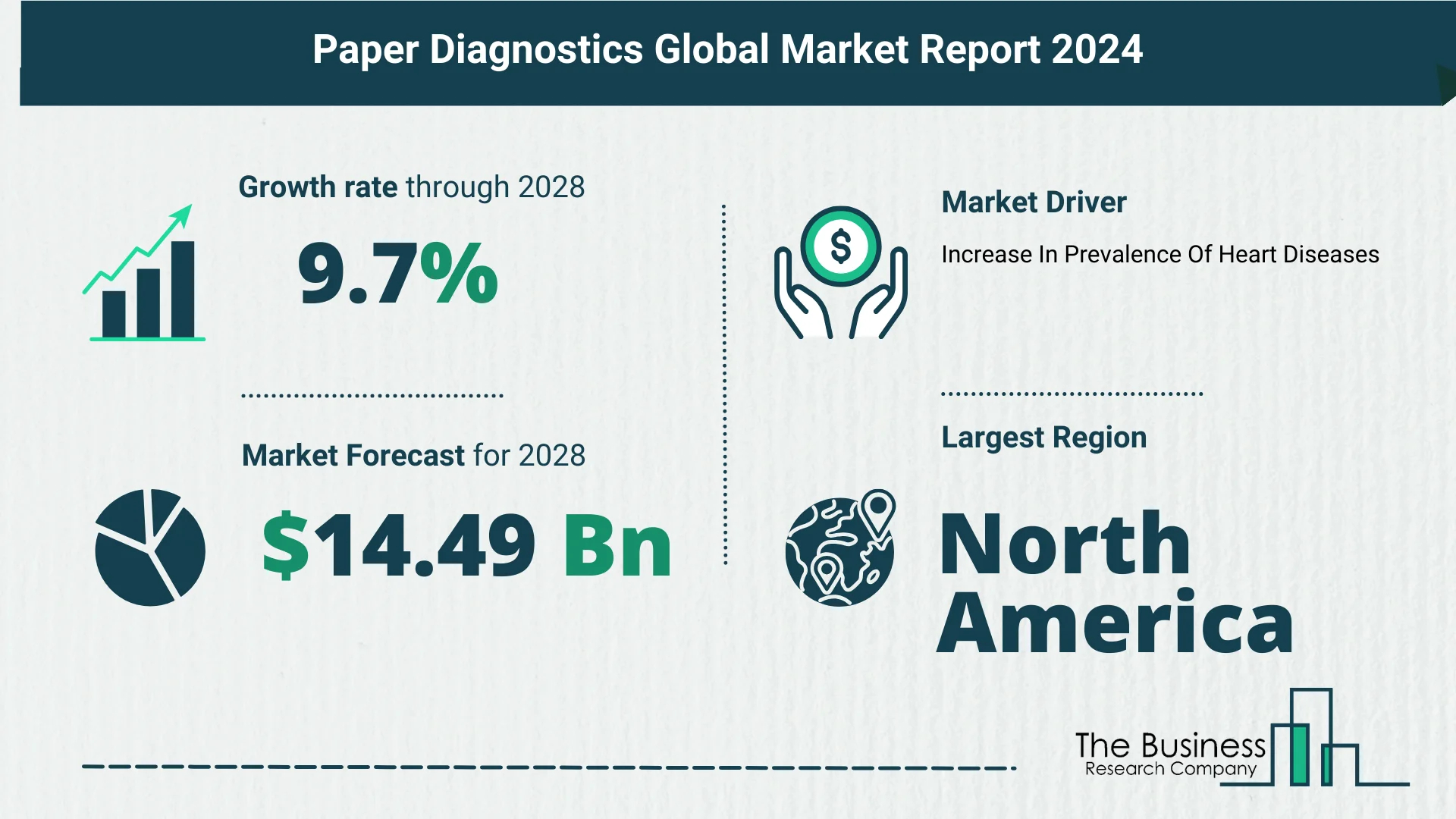
    • Expected to reach $14.49 billion in 2028, with a CAGR of 9.7%.
    • Driven by advancements in paper-based biosensors, integration with wearable health devices, growth in personalized medicine, expansion of telehealth services, demand for early cancer detection, expansion of veterinary diagnostics, government initiatives for preventive healthcare.

    Emerging Trends

    • Advancements in paper-based technologies.
    • Technological convergence in diagnostics.
    • Chronic disease management apps.
    • Multiplexing capabilities.
    • Use of microfluidics in paper devices.
    • Integration of smartphone technology.

    Rising Heart Disease Prevalence Fuels Market Growth

    • Cardiovascular diseases drive demand for paper diagnostics.
    • Microfluidic paper-based devices aid in the diagnosis of heart conditions.
    • Statistics Canada reports a notable increase in heart disease-related deaths in 2021, emphasizing the market’s significance.

    Key Players and Market Landscape

    • Major companies include Navigene, Siemens Healthcare GmbH, Arkray Inc., and more.
    • Diverse product offerings cater to various diagnostic needs.

    View More On The Paper Diagnostics Market Report 2024 – https://www.thebusinessresearchcompany.com/report/paper-diagnostics-global-market-report

    Launch of Rapid POC Test

    • Mylab Discovery Solutions introduces rapid point-of-care tests for detecting dengue infections.
    • Tests offer quick results within 15-20 minutes without laboratory setup.
    • Differentiation between IgM and IgG antibodies aids in effective disease management.

    Partnerships and Developments

    • Servier partners with QIAGEN to develop companion diagnostic test for detecting IDH1 mutations in Acute Myeloid Leukemia (AML) patients.
    • Collaboration driven by superior results from clinical phase 3 data.
    • Focus on empowering healthcare professionals with accurate diagnostic tools.

    Market Segmentation

    1. By Product: Dipsticks, Lateral Flow Assays: Paper Based Microfluidics
    2. By Device Type: Monitoring Devices, Diagnostic Devices
    3. By Application: Environmental Monitoring, Clinical Diagnostics, Food Quality Testing
    4. By End-User: Home Healthcare, Assisted Living Healthcare Facilities, Hospital And Clinics

    Regional Dynamics

    • North America leads the market share in 2023.
    • Asia-Pacific emerges as the fastest-growing region in the forecast period.

    The paper diagnostics market is not just about growth but about innovation, accessibility, and improved healthcare outcomes. As the world grapples with health challenges, paper diagnostics play a crucial role in providing timely and accurate diagnostic solutions. With advancements in technology and strategic collaborations, the paper diagnostics market continues to evolve, promising a future of enhanced healthcare delivery and disease management.

    Request A Sample Of The Global Paper Diagnostics Market Report 2024:
    https://www.thebusinessresearchcompany.com/sample_request?id=8582&type=smp

  • What’s The Growth Forecast For Ostomy Drainage Bags Market Through 2024-2033?

    What’s The Growth Forecast For Ostomy Drainage Bags Market Through 2024-2033?

    The Business Research Company’s global market reports provide comprehensive analysis on the various markets in 27 industries across 60 geographies.

    The ostomy drainage bags market has exhibited steady growth in recent years, fueled by various factors such as the rising incidence of ostomy procedures and advancements in material technologies. In this blog, we explore the current status of the market, its projected growth, and the key trends shaping its landscape.

    Market Expansion from 2023 to 2024
    The ostomy drainage bags market is set to expand from $2.17 billion in 2023 to $2.26 billion in 2024, registering a compound annual growth rate (CAGR) of 3.8%. This growth is attributed to factors like healthcare expenditure and favorable reimbursement policies, driving the adoption of ostomy drainage bags.

    Steady Growth Outlook: 2024 to 2028
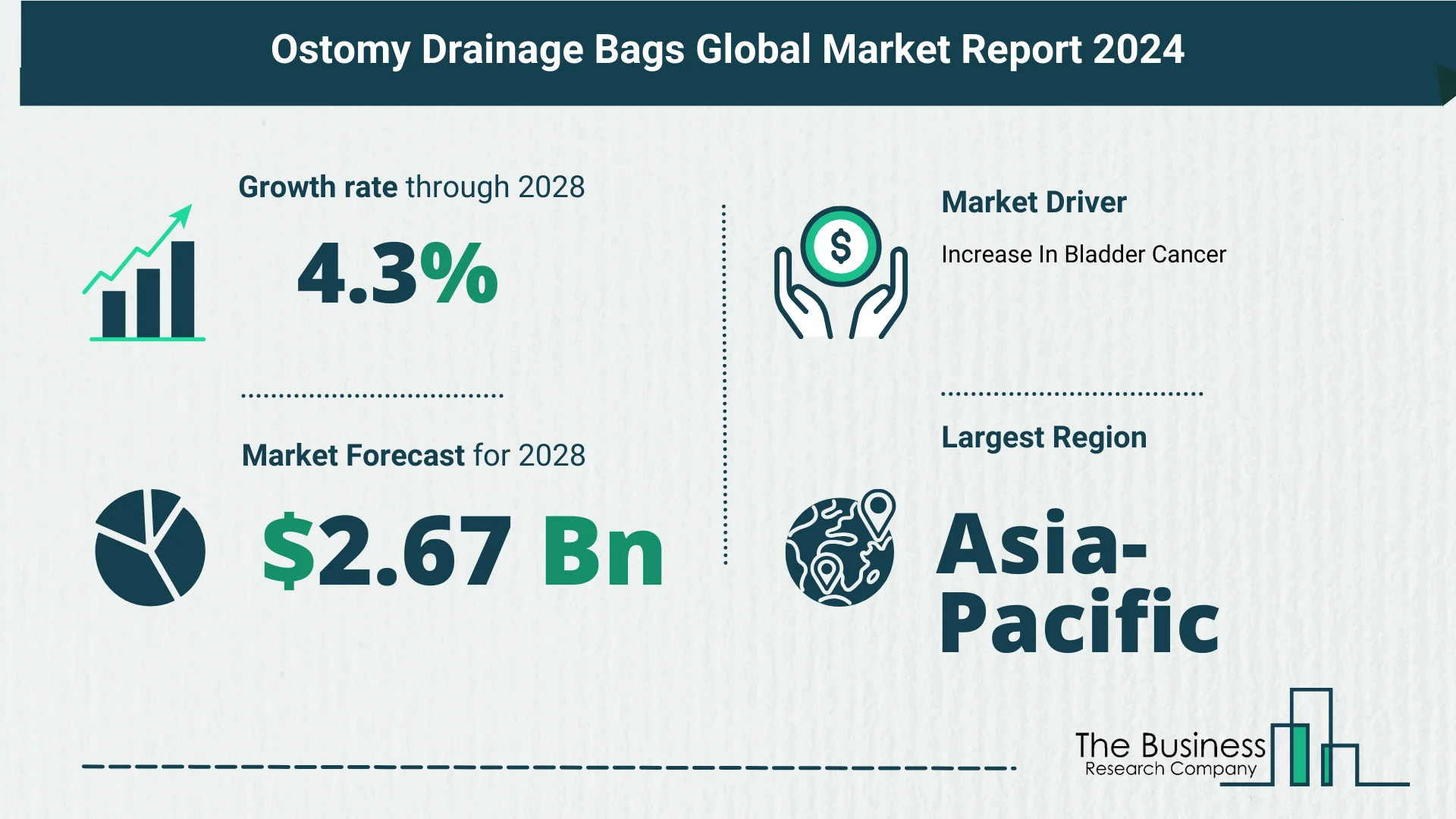
    The market is expected to continue its upward trajectory, reaching $2.67 billion in 2028 at a CAGR of 4.3%. Key drivers of this growth include the increasing prevalence of chronic diseases and initiatives focused on patient education and awareness.

    Impact of Rising Incidence of Bladder Cancer
    The surge in bladder cancer cases is anticipated to propel the demand for ostomy drainage bags. Drainable ostomy bags, which enable users to empty and reuse pouch contents, cater to individuals with urine-based diseases. With bladder cancer cases on the rise globally, the demand for ostomy drainage bags is expected to escalate significantly.

    • Bladder cancer incidents have surged, driving the demand for ostomy drainage bags.
    • Statistics from the American Cancer Society underscore the increasing prevalence of bladder cancer cases.

    Key Market Players
    Major companies driving innovation in the ostomy drainage bags market include Alcare Co. Ltd., B. Braun Melsungen AG, Coloplast A/S, and Hollister Inc. These companies play a pivotal role in meeting the evolving needs of patients through product innovation and quality offerings.

    View More On The Ostomy Drainage Bags Market Report 2024 – https://www.thebusinessresearchcompany.com/report/ostomy-drainage-bags-global-market-report

    Pioneering Product Innovations
    Innovative solutions are reshaping the ostomy drainage bags market landscape. Companies are focusing on lifestyle-centric designs to enhance user experience and improve quality of life. Pelican Healthcare Ltd.’s launch of ModaVi exemplifies this trend, offering ostomates greater independence and a sense of normalcy in their daily lives.

    • Pelican Healthcare’s ModaVi range pioneers lifestyle-centric solutions in the ostomy drainage bags market.
    • The introduction of innovative products aims to combat stigma and empower ostomates.

    Strategic Acquisitions Driving Growth
    Strategic acquisitions are instrumental in enhancing companies’ capabilities and expanding their market presence. Coloplast A/S’s acquisition of Nine Continents Medical Inc underscores the company’s commitment to offering cutting-edge solutions for the treatment of overactive bladder.

    • Coloplast’s acquisition of Nine Continents Medical Inc reinforces its position in the interventional urology business.
    • Strategic acquisitions support companies’ missions to deliver innovative healthcare solutions.

    Market Segmentation
    The ostomy drainage bags market is segmented based on various criteria, including type, clinical application, usage type, and end-user. This segmentation offers insights into the diverse needs of patients and healthcare providers, driving tailored solutions and services.

    1. Type:
      • Colostomy Bags
      • Ileostomy Bags
      • Urostomy Bags
      • Continent Ileostomy Bags
      • Continent Urostomy Bags
    2. Clinical Application:
      • Colorectal Cancer
      • Bladder Cancer
      • Colonic Diverticulitis
      • Inflammatory Bowel Disease
      • Other Diseases
    3. Usage Type:
      • Single-Use Ostomy Drainage Bags
      • Multi-Use Ostomy Drainage Bags
    4. End User:
      • Hospitals
      • Home Care Setups

    Regional Insights
    In 2023, North America dominated the ostomy drainage bags market, with Asia-Pacific poised to emerge as the fastest-growing region in the forecast period. This shift underscores the global nature of healthcare markets and the increasing demand for innovative medical solutions worldwide.

    In conclusion, the ostomy drainage bags market’s trajectory reflects steady growth, driven by factors such as rising disease prevalence and technological advancements. With a focus on innovation and patient-centric solutions, the market continues to evolve, offering enhanced care and support for individuals living with ostomies.

    Request A Sample Of The Global Ostomy Drainage Bags Market Report 2024:
    https://www.thebusinessresearchcompany.com/sample_request?id=8811&type=smp

  • Top 5 Insights From The Optometry Equipment Market Report 2024

    Top 5 Insights From The Optometry Equipment Market Report 2024

    The Business Research Company’s global market reports are now updated with the latest market sizing information for the year 2024 and forecasted to 2033

    According to The Business Research Company’s Optometry Equipment Global Market Report 2024, the optometry equipment market is expected to show promising growth in the forecast period.

    The optometry equipment market has experienced robust growth in recent years, marking a transition from $3.42 billion in 2023 to $3.67 billion in 2024, with a notable compound annual growth rate (CAGR) of 7.5%. This growth is attributed to several factors, including the aging population, increasing prevalence of eye disorders, expanding access to eye care services, rising consumer awareness of eye health, and government initiatives supporting eye health.

    Key Growth Metrics:

    • Market Size (2023): $3.42 billion
    • Market Size (2024): $3.67 billion
    • CAGR (2023-2024):5%

    Unveiling Future Projections
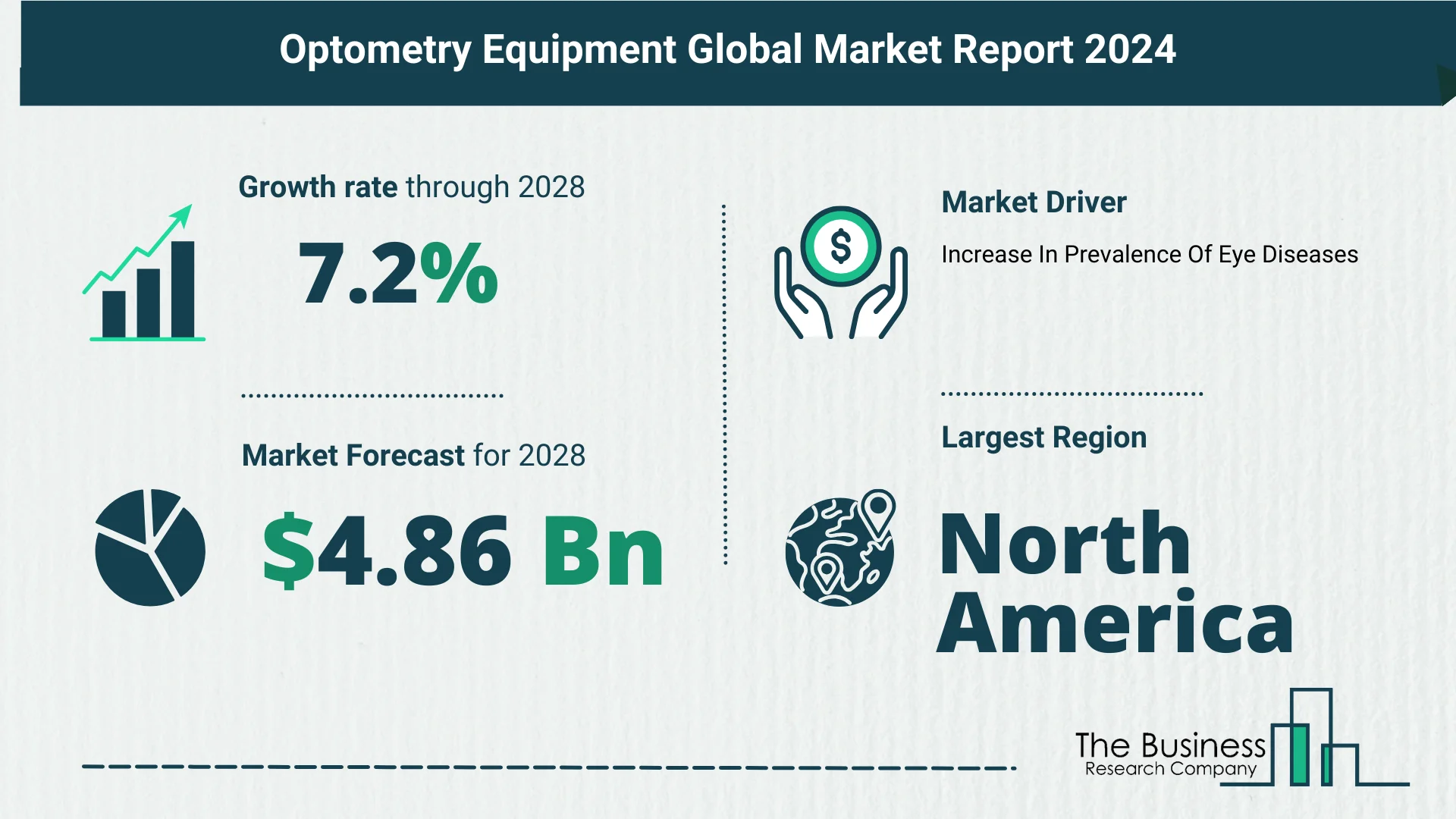
    The optometry equipment market is poised for continued growth, with projections estimating a market size of $4.86 billion by 2028, showcasing a CAGR of 7.2%. This anticipated growth is fueled by advancements in tele optometry, personalized vision correction solutions, preventive eye care, global expansion of optometry services, increased collaboration with ophthalmology, and a growing demand for specialty lenses.

    Future Growth Metrics:

    • Projected Market Size (2028): $4.86 billion
    • CAGR (2024-2028):2%

    Addressing Rising Eye Disease Prevalence
    Navigating The Surge In Optometry Equipment Demand Driven By Rising Eye Disease Prevalence
    The escalating prevalence of eye diseases is a significant driver behind the expanding optometry equipment market. With at least 2.2 billion people globally experiencing near or distance vision impairment, the need for advanced optometry equipment becomes imperative. Tools for refractive error determination and magnified examination of the eye’s anterior segment play pivotal roles in addressing this growing health concern.

    View More On The Optometry Equipment Market Report 2024 – https://www.thebusinessresearchcompany.com/report/optometry-equipment-global-market-report

    Industry Innovations: Technological Leap in Optometry
    Vision Rx Lab’s Technological Leap With Nova Ai Lenses In The Optometry Equipment Landscape
    Technological advancements are reshaping the optometry landscape, with major players introducing novel solutions like the Nova Ai lenses. Vision Rx Lab’s AI-powered progressive lenses offer wearers unparalleled natural vision tailored to their unique needs. The incorporation of ‘Metamorph technology’ and the Binocular Balancing System redefines the standard for personalized visual experiences, marking a significant milestone in progressive lens technology.

    Strategic Acquisitions: Strengthening Market Presence
    Advancing Eyecare’s Strategic Acquisition Of Santinelli International
    In January 2022, Advancing Eyecare bolstered its position in the optometry equipment market through the acquisition of Santinelli International. This strategic move aligns with Advancing Eyecare’s commitment to enhancing ophthalmic practices. Santinelli International’s expertise in optical finishing equipment enhances Advancing Eyecare’s capabilities, fostering innovation and service excellence.

    Market Segmentation: Tailoring Solutions
    The optometry equipment market covered in this report is segmented:

    1. By Product:
      • Cataract Surgery Devices
      • Glaucoma Surgery Devices
      • Ophthalmic Diagnostic Equipment
      • Vitreo Retinal Surgery Devices
      • Ophthalmic Lasers
    2. By Type Of Examination:
      • Retina Examination
      • Cornea Examination
      • General Examination
    3. By End-User:
      • Hospital Outpatients
      • Physician Practice
      • Specialty Clinics
      • Ambulatory Care Centers
      • Research Institutes

    North America: Leading the Charge
    North America was the largest region in the optometry equipment market share in 2023.
    The dominance of North America underscores the region’s commitment to advancing eye care services and technologies. With a strong healthcare infrastructure and a focus on innovation, North America sets the pace for global advancements in optometry equipment.

    In conclusion, the optometry equipment market’s trajectory reflects a convergence of technological innovation, strategic acquisitions, and a growing emphasis on preventive eye care. As industry players continue to innovate and collaborate, the landscape of optometry evolves, offering promising solutions for vision enhancement and eye health preservation.

    Request A Sample Of The Global Optometry Equipment Market Report 2024:
    https://www.thebusinessresearchcompany.com/sample_request?id=8809&type=smp

  • Overview Of The Optical Imaging Market 2024-2033: Growth And Major Players Analysis

    Overview Of The Optical Imaging Market 2024-2033: Growth And Major Players Analysis

    The Business Research Company’s global market reports are now updated with the latest market sizing information for the year 2024 and forecasted to 2033

    Rapid Expansion and Forecasts

    • Optical imaging market has seen rapid growth.
    • Expected rise from $2.1 billion in 2023 to $2.4 billion in 2024.
    • Compound annual growth rate (CAGR) of 14.4% attributed to various factors.

    Driving Forces Behind Growth

    • Data analytics and image processing.
    • Consumer electronics integration.
    • Cost reduction and accessibility.
    • Academic and research institutes.
    • Industrial applications.

    Future Growth Trajectory

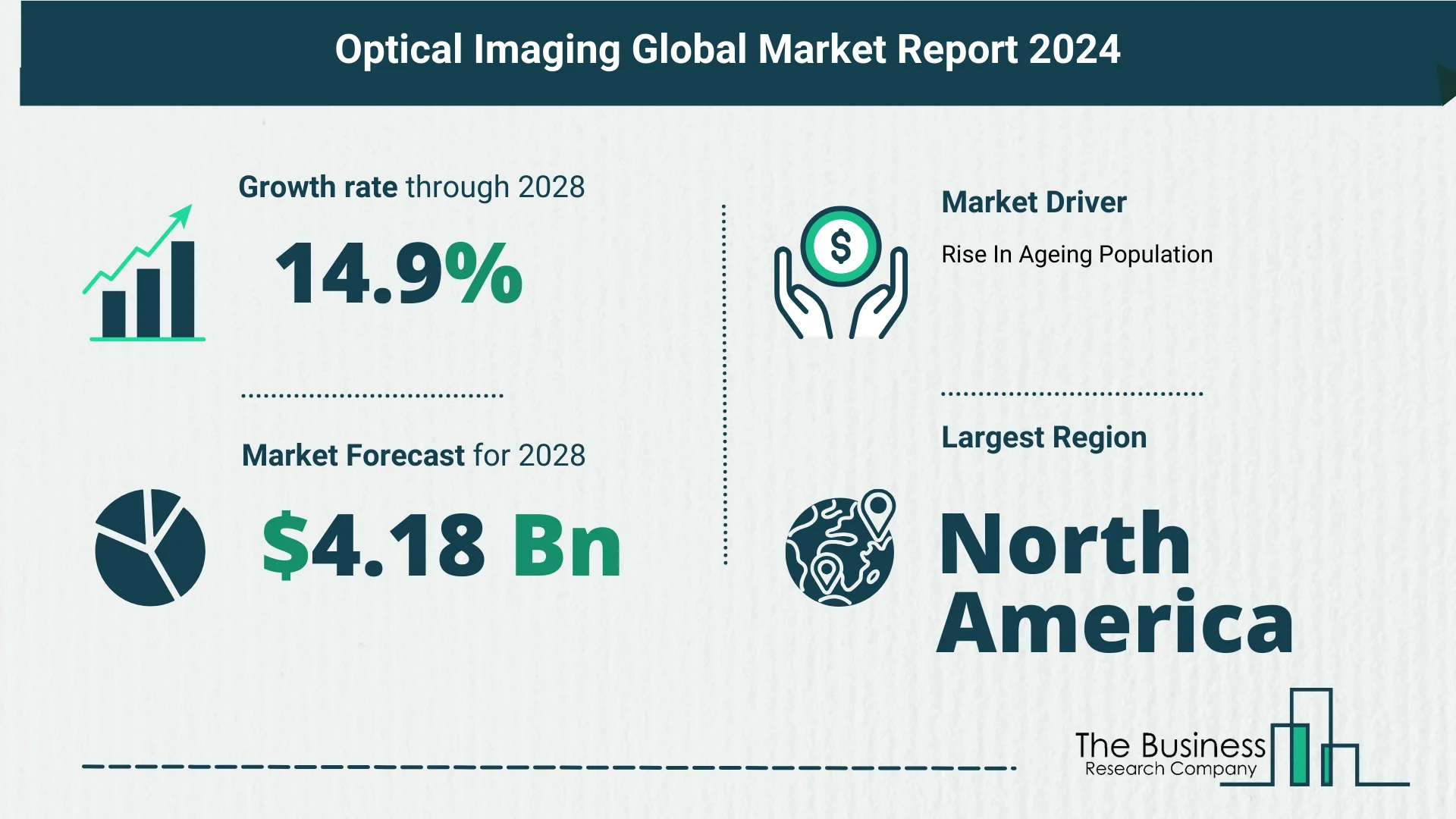
    • Expected growth to $4.18 billion in 2028.
    • Compound annual growth rate (CAGR) of 14.9%.
    • Factors include healthcare industry evolution and demand for non-invasive imaging.
    • Major trends include regulatory adaptation and research investments.

    Clear Vision for the Future: Optical Imaging Market Soars

    • Rising aging population fuels market growth.
    • Optical imaging technology aids in diagnosis and treatment.
    • Non-ionizing radiation enhances safety for elderly patients.
    • Major companies include St. Jude Medical Inc. and PerkinElmer Inc.

    View More On The Optical Imaging Market Report 2024 – https://www.thebusinessresearchcompany.com/report/optical-imaging-global-market-report

    Pioneering Technologies Transforming the Landscape

    • Advancements drive market trends.
    • Launch of technologically advanced products.
    • Example: Exo launches Exo Iris, a portable ultrasound device.
    • Strategic acquisitions boost innovation and expertise.

    Strategic Synergy: Precision Optics Corporation Acquires Lighthouse Imaging

    • Acquisition enhances capabilities in medical optics.
    • Combines expertise in advanced optical instruments.
    • Precision Optics Corporation and Lighthouse Imaging lead in medical optics.

    Market Segmentation

    1. By Product:
      • Imaging Systems
      • Cameras
      • Software
      • Other Products
    2. By Application:
      • Pathological Imaging
      • Intra-operative Imaging
    3. By End-User:
      • Hospitals & Clinics
      • Research Laboratories
      • Pharmaceutical and Biotechnology Industry

    Regional Insights

    • North America leads the optical imaging market in 2023.

    The optical imaging market showcases immense growth potential driven by technological advancements and rising healthcare demands. The aging population serves as a catalyst, propelling the need for advanced diagnostic tools. Pioneering technologies and strategic acquisitions reshape the market landscape, offering innovative solutions to healthcare providers and researchers alike.

    As the industry evolves, investments in research and development drive product innovation and market expansion. Regulatory adaptations and cost-effectiveness strategies further fuel market growth. Segmentation by product, application, and end-user provides insights into diverse market dynamics, catering to various healthcare needs.

    The future of the optical imaging market holds promise, with continued advancements expected to transform healthcare diagnostics and treatments. Collaborations and strategic synergies foster innovation, ensuring the delivery of cutting-edge solutions to address evolving healthcare challenges.

    In summary, the optical imaging market stands at the forefront of technological innovation, poised for significant growth in the coming years. With a clear vision for the future and a commitment to excellence, stakeholders navigate opportunities for growth and development, shaping the future of healthcare imaging and diagnostics.

    Request A Sample Of The Global Optical Imaging Market Report 2024:
    https://www.thebusinessresearchcompany.com/sample_request?id=8360&type=smp

  • Top 5 Insights From The Optical Coherence Tomography Market Report 2024

    Top 5 Insights From The Optical Coherence Tomography Market Report 2024

    The Business Research Company’s global market reports are now updated with the latest market sizing information for the year 2024 and forecasted to 2033

    According to The Business Research Company’s Optical Coherence Tomography Global Market Report 2024, the optical coherence tomography market is expected to show promising growth in the forecast period.

    The optical coherence tomography (OCT) market has experienced rapid expansion in recent years, driven by several key factors. Here’s an insight into the market dynamics and trends shaping its growth:

    Market Growth and Projections

    • The optical coherence tomography market is set to grow from $1.72 billion in 2023 to $1.94 billion in 2024, with a compound annual growth rate (CAGR) of 12.9%.
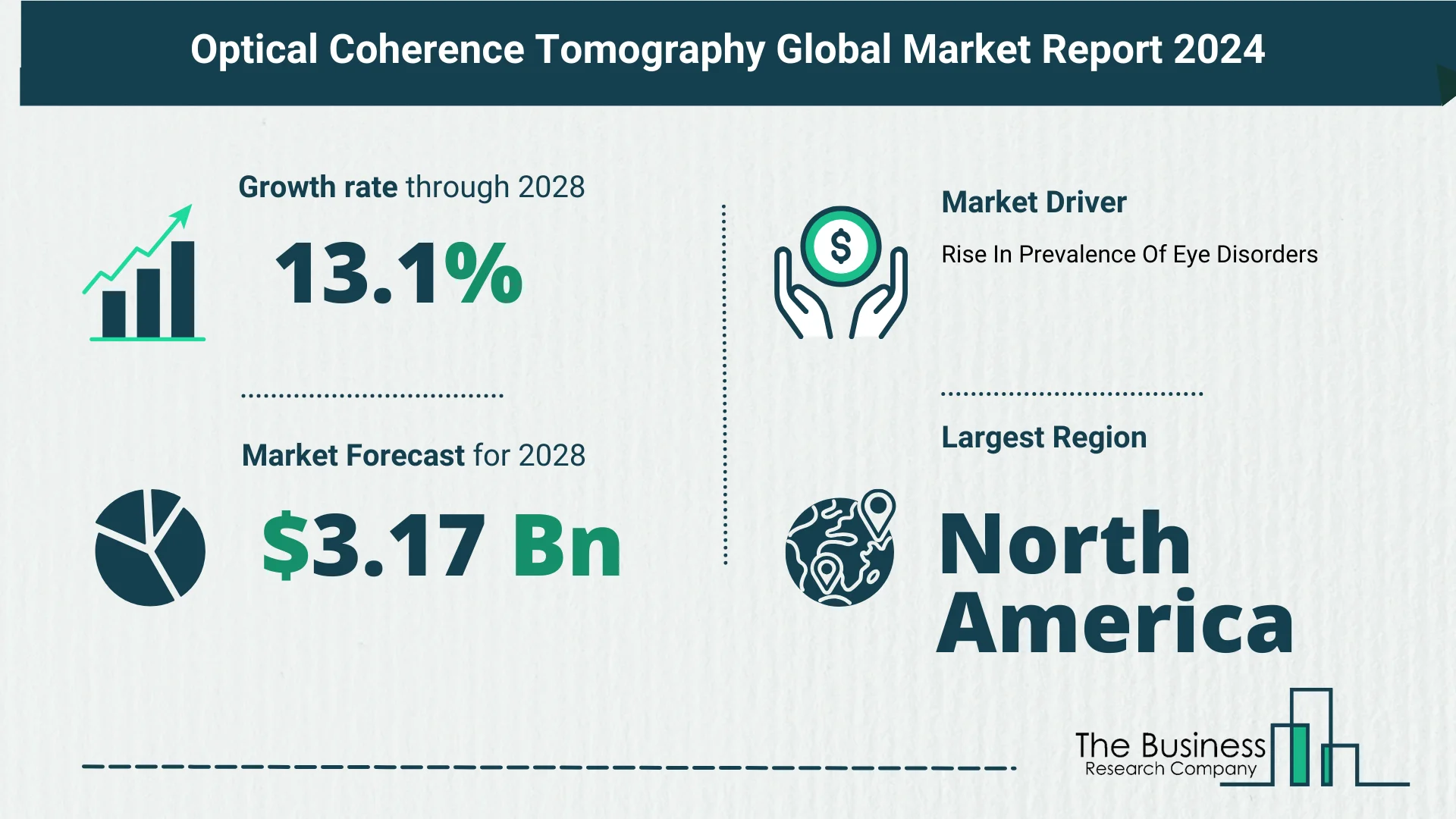
    • Projections indicate growth to $3.17 billion by 2028, with a CAGR of 13.1%.

    Factors Driving Market Growth

    • Global pandemic impact.
    • Patient preferences.
    • Competitive landscape.
    • Rapid research & development.
    • Regulatory support.
    • Miniaturization of devices.

    Addressing Rising Prevalence of Eye Disorders

    • Eye disorders like cataracts, glaucoma, and age-related macular degeneration (AMD) contribute to vision loss globally.
    • Demand for advanced diagnostic tools like OCT systems is increasing.
    • Over 2.2 billion individuals worldwide suffer from near-or vision problems, according to the World Health Organization (WHO).

    View More On The Optical Coherence Tomography Market Report 2024 – https://www.thebusinessresearchcompany.com/report/optical-coherence-tomography-global-market-report

    Key Players and Innovations

    • Major companies in the OCT market include Carl Zeiss Meditec AG, Abbott Laboratories, and Luneau Technology Group.
    • Technological advancements drive innovation and market growth.
    • Abbott Laboratories launched a vascular imaging platform integrating OCT with AI for precise assessment of blood flow and blockages.

    Strategic Acquisitions Fuel Market Expansion

    • Luneau Technology Group acquired Optovue Inc. to strengthen its global presence in ophthalmic diagnostic technology.
    • Optovue Inc. specializes in high-speed OCT and optical coherence tomography angiography (OCTA) technology.

    Market Segmentation
    The OCT market is segmented based on type, technology, and application:

    1. By Type: Catheter-Based OCT Devices, Doppler OCT Devices, Handheld OCT Devices, Tabletop OCT Devices.
    2. By Technology: Time Domain OCT (TDOCT), Frequency Domain OCT (FD-OCT), Spatial Encoded Frequency Domain OCT.
    3. By Application: Ophthalmology, Cardiovascular, Oncology, Dermatology, Other Applications.

    Regional Insights

    • North America dominated the OCT market in 2023.
    • Asia-Pacific is anticipated to be the fastest-growing region in the forecast period.

    Conclusion
    The optical coherence tomography market is witnessing significant growth driven by the rising prevalence of eye disorders globally. With advancements in technology, strategic acquisitions, and expanding applications, OCT systems play a crucial role in early diagnosis and treatment planning for various ocular conditions. As healthcare systems prioritize patient-centric care and technological integration, the OCT market is poised for continued expansion, offering innovative solutions to meet evolving healthcare needs worldwide.

    Request A Sample Of The Global Optical Coherence Tomography Market Report 2024:
    https://www.thebusinessresearchcompany.com/sample_request?id=8231&type=smp

  • Global Non-Invasive Brain Trauma Monitoring Devices Market Key Insights 2024-2033

    Global Non-Invasive Brain Trauma Monitoring Devices Market Key Insights 2024-2033

    The Business Research Company’s global market reports are now updated with the latest market sizing information for the year 2024 and forecasted to 2033

    According to The Business Research Company’s Non-Invasive Brain Trauma Monitoring Devices Global Market Report 2024, the non-invasive brain trauma monitoring devices market is expected to show promising growth in the forecast period.

    Introduction: Understanding the Growth Trajectory

    • Market expansion from $7.96 billion in 2023 to $8.91 billion in 2024.
    • Compound Annual Growth Rate (CAGR) of 11.9% attributed to various factors.

    Anticipated Growth: Insights into the Forecast

    • Projected growth to $13.69 billion by 2028 at a CAGR of 11.3%.
    • Factors driving the forecasted growth include increased awareness, technological innovations, and collaborative research efforts.

    Emerging Trends: Shaping the Landscape

    • Miniaturization and wearables.
    • Advancements in sensor technology.
    • Focus on real-time and remote monitoring.
    • Non-invasive imaging techniques gaining prominence.

    View More On The Non-Invasive Brain Trauma Monitoring Devices Market Report 2024 – https://www.thebusinessresearchcompany.com/report/non-invasive-brain-trauma-monitoring-devices-global-market-report

    Surge In Demand For Non-Invasive Brain Trauma Monitoring Devices Amidst The Rise In Neurological Disorders

    • Neurological disorders impact thoughts, emotions, and behavior.
    • Non-invasive monitoring aids in continuous assessment.
    • WHO estimates 50 million epilepsy cases globally in 2022.
    • Companies like Sophysa Ltd., Natus Medical Inc., and Philips Healthcare lead the market.

    Advancements In Technology Propel The Evolution Of Non-Invasive Brain Trauma Monitoring Devices

    • Technological innovation drives market growth.
    • FieldLine Inc. introduces HEDscan, a wearable MEG device.
    • SonderMind’s acquisition of Total Brain enhances digital behavioral health integration.

    Segmentation Insights: Understanding the Market Dynamics

    • Types include Non-invasive Intracranial Pressure Monitor, Non-invasive Cerebral Edema Dynamic Monitor, and Others.
    • Applications span Cardiology, Urology, Oncology, and more.
    • End-users comprise Hospitals, Neurological Centers, and others.

    Regional Dominance: North America Leads the Charge

    • North America led the market in 2023.
    • The region boasts advanced healthcare infrastructure and technological innovations.

    Conclusion: Pioneering the Future of Brain Trauma Monitoring

    • The non-invasive brain trauma monitoring devices market is on an upward trajectory.
    • Technological advancements and rising awareness drive growth.
    • Collaboration and innovation will define the future of neurological care.

    In conclusion, the rapid evolution of non-invasive brain trauma monitoring devices reflects a transformative shift in healthcare. With technological advancements and increasing awareness, the market is poised for substantial growth. As companies strive for innovation and collaboration, the landscape of neurological care is set to undergo a profound transformation, promising improved outcomes for patients worldwide.

    Request A Sample Of The Global Non-Invasive Brain Trauma Monitoring Devices Market Report 2024:
    https://www.thebusinessresearchcompany.com/sample_request?id=8325&type=smp