Category: Medical Equipment

  • Orthobiologics Devices And Equipment Market Growth Is Accelerating As Industry Transformation Continues

    Orthobiologics Devices And Equipment Market Growth Is Accelerating As Industry Transformation Continues

    Enhanced with market attractiveness analysis, total addressable market evaluation, company benchmarking matrices, interactive Excel dashboards, expanded supply chain intelligence, emerging startup coverage, and detailed product insights, The Business Research Company’s 2026 market reports deliver more actionable and strategically valuable research.

    The orthobiologics devices and equipment market has demonstrated significant growth recently, driven by an increasing need for advanced treatments in musculoskeletal health. This sector is poised for continued expansion as technological innovations and demographic shifts contribute to rising demand worldwide. Let’s explore the market’s current size, growth drivers, segmentation, key industry players, and geographic trends shaping its future.

    Orthobiologics Devices and Equipment Market Size and Growth Forecast

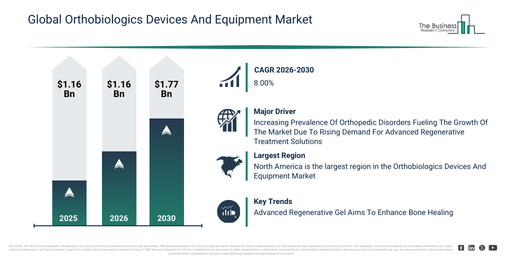
    The market for orthobiologics devices and equipment is on an upward trajectory, projected to grow from $5.99 billion in 2025 to $6.36 billion in 2026, reflecting a compound annual growth rate (CAGR) of 6.2%. This growth is supported by factors such as the rising incidence of musculoskeletal disorders, increased sports injuries, a surge in orthopedic surgeries, wider acceptance of platelet-rich plasma (PRP) therapies, and the clinical success of bone graft applications. Looking ahead, the market is expected to reach $8.64 billion by 2030, growing at a CAGR of 8.0%. This forecasted growth will be fueled by the aging population, advancements in regenerative medicine, demand for minimally invasive procedures, expanded reimbursement policies, and innovations in biomaterials. Important trends anticipated during this period include increased adoption of regenerative therapies, growth in treatments for sports-related injuries, rising use of stem cell-based products, a preference for non-surgical orthopedic options, and the expansion of specialized orthopedic clinics.

    Download A Free Sample Report For Comprehensive Market Insights:

    https://www.thebusinessresearchcompany.com/sample.aspx?id=2568&type=smp

    Primary Factors Propelling Growth in the Orthobiologics Devices and Equipment Market

    The growing prevalence of orthopedic conditions is a significant driver behind the market’s expansion. Orthopedic disorders encompass a range of ailments affecting bones, joints, muscles, ligaments, tendons, and nerves, with the aging population being particularly susceptible to issues such as osteoarthritis, osteoporosis, and fractures. Orthobiologics devices and equipment play a crucial role in these treatments by promoting natural tissue regeneration, thereby enhancing bone and joint function restoration. These technologies not only improve healing effectiveness but also shorten patient recovery periods.

    For example, a survey conducted in August 2023 by the Institute for Health Metrics and Evaluation in the United States found that 15% of adults aged 30 and above suffered from osteoarthritis in 2023. The number of affected individuals worldwide is projected to approach 1 billion by 2050, highlighting the urgency and scale of demand for orthobiologics solutions.

    Segments Offering the Greatest Opportunities in the Orthobiologics Devices and Equipment Market

    This market is categorized into several segments to better understand growth areas:

    1) Product Type: Demineralized Bone Matrix, Synthetic Bone Substitutes, Stem Cell Therapy, Plasma-Rich Protein, Viscosupplementation, Bone Morphogenetic Protein, Synthetic Orthobiologics

    2) Application Areas: Osteoarthritis and Degenerative Arthritis, Soft-Tissue Injuries, Fracture Recovery, Maxillofacial and Dental Applications, Spinal Fusion, Trauma Repair, Reconstructive Surgery

    3) End Users: Hospitals, Orthopedic Clinics, Other Users

    Access The Complete Orthobiologics Devices And Equipment Market Report:

    https://www.thebusinessresearchcompany.com/report/orthobiologics-devices-and-equipment-global-market-report

    The product types are further broken down, such as:

    – Demineralized Bone Matrix: injectable forms, paste and putty, scaffolds

    – Synthetic Bone Substitutes: calcium phosphate ceramics, bioactive glasses, polymers, and composites

    – Stem Cell Therapy: adipose-derived, bone marrow-derived, umbilical cord blood-derived products

    – Plasma-Rich Protein: platelet-rich plasma (PRP) and platelet-rich fibrin (PRF) products

    – Viscosupplementation: hyaluronic acid injections and combination products

    – Bone Morphogenetic Protein (BMP): recombinant proteins and delivery systems

    – Synthetic Orthobiologics: growth factor-enhanced products, biodegradable scaffolds with bioactive agents, and other synthetic formulations

    Recent Trends and Innovations Influencing the Orthobiologics Market

    Companies in this market are increasingly focusing on developing cutting-edge regenerative technologies to improve patient outcomes and minimize complications. One such innovation is synthetic bone fusion gels, which serve as both a scaffold and delivery mechanism for growth factors, aiding bone growth in spinal and orthopedic surgeries.

    For instance, in January 2024, Renovos Biologics Ltd., a UK biomaterial firm affiliated with Biocomposites, received FDA Breakthrough Device Designation for its synthetic nanoclay bone fusion gel called Renovite BMP-2. This injectable and moldable gel is designed to retain bone morphogenetic protein-2 (BMP-2) at the surgical site, promoting efficient bone healing while reducing risks such as ectopic bone formation and soft tissue complications that are common with older carriers. This advancement offers a more controlled and effective fusion process.

    Key Players Shaping the Orthobiologics Devices and Equipment Market

    The competitive landscape includes a number of influential companies such as BONESUPPORT AB, Medtronic plc, Kuros Biosciences Ltd., Stryker Corporation, Baxter International Inc., DePuy Synthes, Braun Melsungen AG, Zimmer Biomet Holdings Inc., Smith & Nephew plc, Arthrex Inc., Enovis Corp., Integra Lifesciences Holding Corporation, NuVasive Inc., Globus Medical Inc., Bioventus LLC, Orthofix Medical Inc., SeaSpine Holdings Corporation, Xtant Medical Holdings Inc., Acumed LLC, and Bone Biologics Corp.

    Geographical Breakdown and Market Expansion Trends

    In 2025, North America dominated the orthobiologics devices and equipment market as the largest regional segment. Western Europe followed as the second largest. The market report also covers other key regions, including Asia-Pacific, South East Asia, Eastern Europe, South America, the Middle East, and Africa, providing a broad perspective on global demand patterns and growth opportunities.

    Get in touch with us:

    The Business Research Company: https://www.thebusinessresearchcompany.com/

    Americas: +1 310-496-7795

    Asia: +44 7882 955267 & +91 8897263534

    Europe: +44 7882 955267

    Email us at: marketing@tbrc.info

    Follow us on:

    LinkedIn: https://in.linkedin.com/company/the-business-research-company

    YouTube: https://www.youtube.com/channel/UC24_fI0rV8cR5DxlCpgmyFQ

    Global Market Model: https://www.thebusinessresearchcompany.com/global-market-model
  • Organoid Kit Market Outlook Highlights The Next Major Growth Opportunities

    Organoid Kit Market Outlook Highlights The Next Major Growth Opportunities

    Through market attractiveness analysis, total addressable market evaluation, company benchmarking matrices, interactive Excel dashboards, expanded supply chain intelligence, emerging startup coverage, and detailed product insights, The Business Research Company’s 2026 market reports provide more actionable and strategically valuable research.

    The organoid kit market is swiftly evolving, driven by advancements in biomedical research and increasing applications in drug development and personalized medicine. This sector is poised for strong expansion as new technologies and collaborative efforts continue to enhance its potential, providing valuable tools for disease modeling and therapeutic innovation.

    Steady Expansion Seen in Organoid Kit Market Size and Forecast

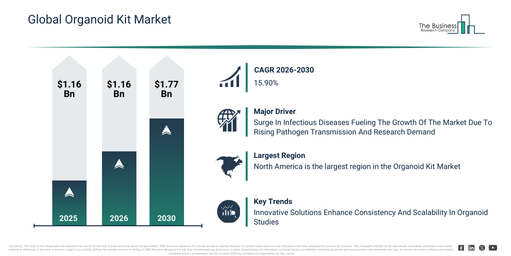
    The organoid kit market has experienced significant growth recently, with its value rising from $1.31 billion in 2025 to an anticipated $1.52 billion in 2026. This represents a compound annual growth rate (CAGR) of 16.2%. This upward trend is largely due to progress in stem cell research, greater use of organoid kits in drug discovery, the introduction of standardized kits, the growth of biomedical research, and increased funding for organoid-related studies. Looking ahead, the market is projected to continue this rapid expansion, reaching $2.75 billion by 2030, with a CAGR of 15.9%. Factors driving this forecasted growth include advancements in personalized medicine, the integration of artificial intelligence (AI) in organoid analysis, improvements in microfluidic platforms, the rise of regenerative medicine, and growing collaborations between pharmaceutical and biotechnology companies. Key trends expected to shape the market include innovations in 3D cell culture, personalized organoid development, microfluidics-based platforms, organoid bioprinting, and stem cell-derived disease modeling.

    Download A Free Sample Report For Comprehensive Market Insights:

    https://www.thebusinessresearchcompany.com/sample.aspx?id=28286&type=smp

    Factors Encouraging Growth in the Organoid Kit Market

    One major factor fueling the organoid kit market is the rising occurrence of infectious diseases worldwide. Infectious diseases, which are caused by bacteria, viruses, fungi, or parasites, spread through various means such as direct contact or contaminated environments. Poor sanitation and overcrowding have worsened the spread of these illnesses, increasing infection rates globally. Organoid kits play an important role in combating infectious diseases by enabling researchers to replicate human tissues in laboratory settings. This allows for precise investigation of how pathogens behave, how infections develop, and testing of potential treatments. For example, in August 2024, the UK Health Security Agency reported a significant rise in measles cases in England during 2023, with 368 cases compared to just 53 in 2022. The West Midlands and London were the most affected areas, accounting for nearly 77% of the cases. Such increases in infectious diseases are a key driver boosting demand for organoid kits.

    Additional Drivers Boosting Organoid Kit Market Development

    Besides infectious disease concerns, the growing focus on personalized medicine is accelerating market growth. Organoid kits enable tailored treatment approaches by modeling individual patient tissues, improving drug efficacy and safety testing. Furthermore, advances in technology like microfluidics and AI-driven analysis enhance the precision and scalability of organoid research. Increased funding and partnerships between pharmaceutical and biotech companies are also fostering innovation and commercialization in this space, further propelling the market forward.

    Access The Complete Organoid Kit Market Report:

    https://www.thebusinessresearchcompany.com/report/organoid-kit-global-market-report

    Breakdown of Organoid Kit Market Segments and Categories

    This report categorizes the organoid kit market across several major divisions:

    1) By Type: Brain Organoids, Kidney Organoids, Intestinal Organoids, Liver Organoids, and Other Organoid Types

    2) By Technology: 3D Cell Culture Technology and Microfluidics Technology

    3) By Source: Human-Derived Organoids, Animal-Derived Organoids, and Cell Line-Derived Organoids

    4) By Application: Drug Discovery and Development, Disease Modeling, Personalized Medicine, and Other Applications

    5) By End-User: Research Institutes, Pharmaceutical Companies, Contract Research Organizations, and Biotech Companies

    Further subcategories are detailed for each organoid type, such as cerebral, midbrain, and retinal organoids for brain types; nephron, collecting duct, and glomerular organoids for kidneys; small intestine, colon, and gastric organoids for intestinal types; hepatic, cholangiocyte, and biliary organoids for liver types; and other types including pancreatic, lung, heart, and tumor organoids.

    Market Trends Shaping the Future of Organoid Kits

    Leading companies in the organoid kit market are increasingly focusing on rapid aggregate formation techniques to speed up organoid development. This approach allows for generating thousands of uniform pluripotent stem cell aggregates quickly, significantly reducing the time needed to produce mature organoids. For instance, in June 2025, Pluristyx Inc., a US biotech firm, launched its PluriForm Organoid Kit, which simplifies the process of creating stem cell aggregates and cuts development timelines from months to weeks. This kit combines optimized growth media and standardized protocols to ensure reproducibility across different cell types and supports high-throughput applications such as disease modeling and drug screening.

    Key Players Driving Competition in the Organoid Kit Sector

    Several major companies are at the forefront of the organoid kit market, including STEMCELL Technologies Inc., Bio-Techne Corporation, Takara Bio Inc., American Type Culture Collection (ATCC), ACROBiosystems Inc., MIMETAS B.V., Emulate Inc., CN Bio Innovations Limited, InSCREENeX GmbH, TheWell Bioscience Inc., Prellis Biologics Inc., Crown Bioscience International, AMS Biotechnology (Europe) Limited (AMSBIO), Xylyx Bio Inc., Organovo Holdings Inc., HUB Organoids Holding B.V., Cellesce Ltd., DefiniGEN Ltd., OcellO B.V., AlveoliX AG, and VitroLabs Inc. These firms continue to invest in research and product development to maintain their competitive advantage.

    Regional Market Leadership and Growth Opportunities

    As of 2025, North America holds the largest share of the organoid kit market. However, the Asia-Pacific region is expected to emerge as the fastest-growing market during the forecast period. The report covers key regions including Asia-Pacific, South East Asia, Western Europe, Eastern Europe, North America, South America, the Middle East, and Africa, providing a thorough view of market dynamics worldwide.

    Get in touch with us:

    The Business Research Company: https://www.thebusinessresearchcompany.com/

    Americas: +1 310-496-7795

    Asia: +44 7882 955267 & +91 8897263534

    Europe: +44 7882 955267

    Email us at: marketing@tbrc.info

    Follow us on:

    LinkedIn: https://in.linkedin.com/company/the-business-research-company

    YouTube: https://www.youtube.com/channel/UC24_fI0rV8cR5DxlCpgmyFQ

    Global Market Model: https://www.thebusinessresearchcompany.com/global-market-model
  • Oral Thin Films Market Trends And Growth Drivers Point To Strong Future Potential

    Oral Thin Films Market Trends And Growth Drivers Point To Strong Future Potential

    Delivering more actionable and strategically valuable research, The Business Research Company’s 2026 market reports feature market attractiveness analysis, total addressable market evaluation, company benchmarking matrices, interactive Excel dashboards, expanded supply chain intelligence, emerging startup coverage, and detailed product insights.

    The oral thin films market has been experiencing rapid advancement, driven by innovations and shifting preferences in drug delivery systems. As healthcare professionals and patients seek more convenient and effective medication options, this sector is positioned for substantial growth. Below is an overview of the market’s size, growth drivers, segmentation, innovations, key players, and regional dynamics shaping its future.

    Oral Thin Films Market Size and Growth Forecast

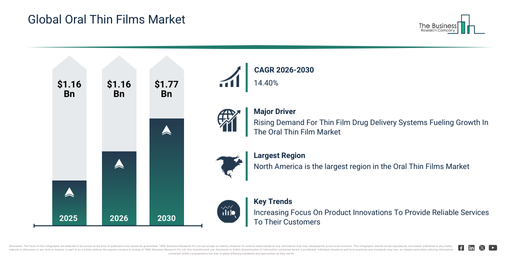
    The oral thin films market has demonstrated significant expansion in recent years. It is projected to increase from $4.99 billion in 2025 to $5.72 billion in 2026, reflecting a strong compound annual growth rate (CAGR) of 14.6%. This upward trend is largely fueled by a growing preference for non-invasive drug delivery methods, the broadening scope of psychiatric and neurological treatments, demand for faster-acting therapies, increasing acceptance of over-the-counter (OTC) drug formats, and advances in pharmaceutical film manufacturing technology. Looking ahead, the market is expected to maintain its momentum, reaching $9.82 billion by 2030 with a CAGR of 14.4%. Key factors contributing to this growth include the rising adoption of personalized medicine delivery, investments in new polymer formulations, expansion of OTC oral therapeutics, heightened attention to pediatric and geriatric patient needs, and the increasing demand for rapid-onset treatments. Emerging trends forecasted for this period involve greater use of fast-acting drug delivery films, a focus on dosage forms that enhance patient convenience, broader application of polymer-based film technologies, growth in OTC oral film products, and improved bioavailability of medications.

    Download A Free Sample Report For Comprehensive Market Insights:

    https://www.thebusinessresearchcompany.com/sample.aspx?id=6067&type=smp

    Factors Fueling the Rise of the Oral Thin Films Market

    One of the main drivers behind the surge in the oral thin films market is the increasing demand for thin film drug delivery systems. These films offer an attractive alternative to traditional dosage forms due to their convenience, self-administration capability, and quick dissolution rates. Since oral thin films can be taken without water, they provide a patient-friendly option for medication intake. Their rapid absorption makes them especially suitable for delivering drugs efficiently, which has led to heightened demand for these systems.

    Additionally, the prevalence of chronic diseases such as cardiovascular conditions in the United States, impacting over half of the population, contributes to market growth. For example, a January 2023 report by The American Cancer Society notes that approximately 42% of newly diagnosed cancers in the U.S. (excluding non-melanoma skin cancers) amount to around 820,000 cases in 2023 and 840,000 cases in 2024. Such figures emphasize the urgent need for advanced drug delivery technologies to improve treatment outcomes, further propelling the oral thin films market.

    Access The Complete Oral Thin Films Market Report:

    https://www.thebusinessresearchcompany.com/report/oral-thin-films-global-market-report

    Breakdown of Segments Within the Oral Thin Films Market

    The oral thin films market is divided into several key segments to better understand revenue sources. By type, the market includes Sublingual Films and Fast Dissolving Dental/Buccal Films. Regarding disease indications, the categories covered include Schizophrenia, Migraine, Opioid Dependence, Nausea & Vomiting, and other conditions. Distribution channels are segmented into Hospital Pharmacies, Retail Pharmacies, and other outlets.

    Further subsegment analysis highlights that Sublingual Films are categorized into Drug Delivery Films and Nutritional Supplement Films, while Fast Dissolving Dental or Buccal Films are split between Over-the-Counter (OTC) Products and Prescription Products.

    Innovations Steering the Future of Oral Thin Films

    Leading companies in the oral thin films market are prioritizing innovation to boost revenues and meet evolving needs. Products such as Rizaport, a brand-name oral thin-film formulation containing rizatriptan benzoate (an active ingredient commonly used in migraine treatment), exemplify this focus. For instance, in February 2024, CD Formulation, a U.S.-based drug formulation firm, introduced a novel oral thin film technology designed to facilitate easy administration, especially for patients with swallowing difficulties. This technology enables rapid absorption through the oral cavity, bypassing the digestive system and allowing for a quicker onset of action. It also enhances bioavailability, supports precise dosing tailored to individual needs, and improves patient compliance, particularly in emergency scenarios.

    Key Players Leading the Oral Thin Films Industry

    Several prominent companies are shaping the oral thin films market landscape. These include ZIM Laboratories Limited, Cure Pharmaceutical Holding Corp., IntelGenx Corp., Aquestive Therapeutics Inc., BioDelivery Sciences International Inc., Indivior PLC, LTS Lohmann Therapie-Systeme AG, Tesa Labtec GmbH, APR Applied Pharma Research SA, NAL Pharma, Panacea Biotec Ltd., Shilpa Therapeutics Pvt. Ltd., LIVKON Pharmaceuticals Pvt. Ltd., Kyu Kyu Pharmaceutical Co. Ltd., Seoul Pharma Co. Ltd., Adare Pharmaceuticals Inc., Sumitomo Dainippon Pharma Co. Ltd., Sunovion Pharmaceuticals Inc., MonoSol Rx LLC, and C.L. Pharm Co. Ltd. These firms are critical to the competitive dynamics and innovation within the market.

    Regional Market Trends and Growth Leaders

    In 2025, North America held the largest share of the oral thin films market, benefiting from strong healthcare infrastructure and high adoption rates of advanced drug delivery systems. Meanwhile, the Asia-Pacific region is expected to emerge as the fastest-growing market during the forecast period. The report includes a comprehensive review of regions such as Asia-Pacific, South East Asia, Western Europe, Eastern Europe, North America, South America, the Middle East, and Africa, providing a global perspective on market expansion trends.

    Get in touch with us:

    The Business Research Company: https://www.thebusinessresearchcompany.com/

    Americas: +1 310-496-7795

    Asia: +44 7882 955267 & +91 8897263534

    Europe: +44 7882 955267

    Email us at: marketing@tbrc.info

    Follow us on:

    LinkedIn: https://in.linkedin.com/company/the-business-research-company

    YouTube: https://www.youtube.com/channel/UC24_fI0rV8cR5DxlCpgmyFQ

    Global Market Model: https://www.thebusinessresearchcompany.com/global-market-model
  • Oral Syringes Market Expansion Is Reshaping Competitive Dynamics Across The Industry

    Oral Syringes Market Expansion Is Reshaping Competitive Dynamics Across The Industry

    Enhanced with market attractiveness analysis, total addressable market evaluation, company benchmarking matrices, interactive Excel dashboards, expanded supply chain intelligence, emerging startup coverage, and detailed product insights, The Business Research Company’s 2026 market reports deliver more actionable and strategically valuable research.

    The oral syringes market has witnessed significant growth recently, driven by evolving healthcare needs and increasing adoption of safe medication practices. As more patients require precise and convenient drug delivery options, this market is set to experience continued expansion. Let’s explore the current market landscape, the factors fueling its growth, key players, emerging trends, and future prospects within this sector.

    Oral Syringes Market Size and Growth Outlook

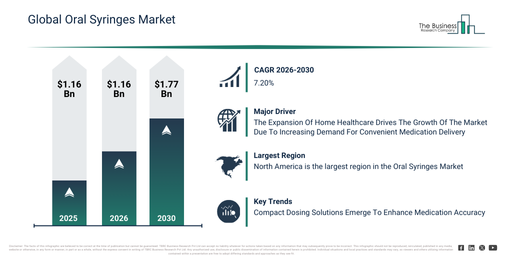
    The oral syringes market has shown steady growth, with its value rising from $1.14 billion in 2025 to an estimated $1.22 billion in 2026, reflecting a compound annual growth rate (CAGR) of 7.0%. This past growth has been supported by increased use of pediatric liquid medications, higher hospital admissions, growing awareness about dosing errors, the expansion of liquid pharmaceutical formulations, and wider acceptance of oral drug delivery systems. Looking ahead, the market is projected to reach $1.61 billion by 2030, growing at a CAGR of 7.2%. Key factors behind this forecast include the aging population, a surge in home healthcare services, demand for safer needle-free medication administration, the growth of online pharmacy platforms, and innovations in ergonomic syringe designs. Important trends anticipated in the coming years involve a focus on dose accuracy and medication safety, rising demand for pediatric and geriatric care, a shift towards disposable single-use devices, increased home-based and self-administered care, and customization options for syringe design and capacity.

    Download A Free Sample Report For Comprehensive Market Insights:

    https://www.thebusinessresearchcompany.com/sample.aspx?id=25856&type=smp

    Factors Behind Oral Syringes Market Growth: The Rise of Home Healthcare

    One major driver of the oral syringes market is the expanding home healthcare sector. Home healthcare encompasses medical and supportive services delivered in patients’ residences to aid recovery, manage chronic illnesses, or maintain overall well-being and independence. This sector’s growth is largely due to the increasing prevalence of chronic diseases, which require long-term care solutions that are both practical and cost-effective. Oral syringes play a vital role by enabling safe, accurate, and straightforward administration of liquid medications, particularly for children and elderly patients. For example, data from the U.S. Bureau of Labor Statistics in October 2024 shows that home- and community-based care jobs in the United States reached 4.3 million, including 2.5 million workers serving elderly and disabled populations and 1.8 million in home health care roles. This expansion directly supports the rise in oral syringe demand.

    Impact of Chronic Diseases on Oral Syringes Market Expansion

    The growing incidence of chronic diseases is another significant factor driving the oral syringes market forward. Chronic conditions tend to develop slowly and persist over long periods, often requiring ongoing medical attention and affecting daily life. The rise in these diseases is closely linked to unhealthy lifestyle habits such as poor nutrition, physical inactivity, smoking, and excessive alcohol consumption, which increase the risk of long-term health problems. Oral syringes facilitate chronic disease management by ensuring precise, safe, and consistent dosing of liquid medicines for patients needing extended treatment periods. For instance, the Centers for Disease Control and Prevention reported in April 2025 that 76.4% of US adults (about 194 million people) had one or more chronic conditions in 2023, including 59.5% of young adults, 78.4% of middle-aged adults, and 93.0% of older adults. This widespread prevalence fuels the demand for oral syringes.

    Access The Complete Oral Syringes Market Report:

    https://www.thebusinessresearchcompany.com/report/oral-syringes-global-market-report

    Breaking Down the Oral Syringes Market Segments

    This report categorizes the oral syringes market into several key segments:

    1) By Type: Clear Oral Syringes and Colorful Oral Syringes

    2) By Capacity: Small Volume Syringes, Medium Volume Syringes, and Large Volume Syringes

    3) By Application: Pediatric Care, Geriatric Care, Post-Surgery or Critical Care, Dental Procedures, and Other Applications

    4) By Distribution Channel: Direct Sales, Distributors, Online Retail, and Pharmacy Chains

    5) By End-User: Hospitals, Clinics, Home Care Settings, and Other End-Users

    There are further subcategories within some segments, such as clear oral syringes with or without printing, and colorful syringes available as single-color or multi-color options.

    Innovations and Industry Trends Shaping the Oral Syringes Market

    Leading companies in the oral syringes market are concentrating on innovative product development to enhance dosing accuracy and user convenience. A notable trend is the introduction of short-form syringes—compact oral dosing devices with a shorter barrel length that deliver precise medication doses in a smaller size, improving ease of handling and administration. For example, in August 2024, Adelphi Healthcare Packaging, a UK-based pharmaceutical packaging company, unveiled a new 1.5 ml short-form oral syringe designed for both human and veterinary use. This syringe offers high precision in a compact design and features an elm-end tip that prevents attachment of luer connectors or needles, reducing the risk of misuse for injections.

    The Competitive Landscape and Leading Players in Oral Syringes

    The oral syringes market features several prominent players, including Cardinal Health Inc., Medline Industries LP, Becton Dickinson and Company, Baxter International Inc., Terumo Corporation, Vygon SA, B. Braun Melsungen AG, Sol-Millennium Medical Group, CODAN Medizinische Geräte GmbH and Co KG, Changzhou Medical Appliances General Factory Co. Ltd., Neelkanth Polymer Industries Private Limited, Shako Flexipack Private Limited, Apex Medical Devices Private Limited, Vastmed LLC, Shanghai Kindly Enterprise Development Group Co. Ltd., Nipro Corporation, Hindustan Syringes and Medical Devices Limited, Weigao Group Medical Polymer Company Limited, JMS Co. Ltd., and Narang Medical Limited.

    Regional Market Overview Highlighting Revenue Leaders

    In 2025, North America was the largest region for the oral syringes market. However, the Asia-Pacific region is expected to exhibit the fastest growth during the forecast period. The analysis encompasses major regions such as Asia-Pacific, South East Asia, Western Europe, Eastern Europe, North America, South America, the Middle East, and Africa, providing a comprehensive perspective on global market trends.

    Get in touch with us:

    The Business Research Company: https://www.thebusinessresearchcompany.com/

    Americas: +1 310-496-7795

    Asia: +44 7882 955267 & +91 8897263534

    Europe: +44 7882 955267

    Email us at: marketing@tbrc.info

    Follow us on:

    LinkedIn: https://in.linkedin.com/company/the-business-research-company

    YouTube: https://www.youtube.com/channel/UC24_fI0rV8cR5DxlCpgmyFQ

    Global Market Model: https://www.thebusinessresearchcompany.com/global-market-model
  • Oral Sleep Apnea Devices Market Forecast Reveals Where Future Industry Value Will Be Created

    Oral Sleep Apnea Devices Market Forecast Reveals Where Future Industry Value Will Be Created

    Through market attractiveness analysis, total addressable market evaluation, company benchmarking matrices, interactive Excel dashboards, expanded supply chain intelligence, emerging startup coverage, and detailed product insights, The Business Research Company’s 2026 market reports provide more actionable and strategically valuable research.

    The oral sleep apnea devices market is experiencing rapid expansion, driven by increasing awareness and better diagnosis of sleep disorders. As more individuals seek effective alternatives to traditional therapies, the market is set to witness significant growth in the upcoming years. Let’s explore the current market size, key growth drivers, segmentation, emerging trends, major players, and regional outlook shaping this evolving industry.

    Market Size and Growth Projections for Oral Sleep Apnea Devices

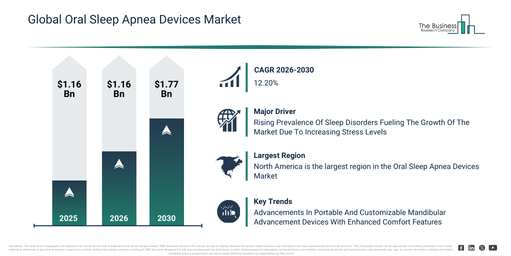
    The market for oral sleep apnea devices has seen strong growth in recent years. It is projected to rise from $1.46 billion in 2025 to $1.64 billion in 2026, exhibiting a compound annual growth rate (CAGR) of 12.6%. Looking further ahead, the market is expected to reach $2.6 billion by 2030, maintaining a CAGR of 12.2%. This upward trajectory is fueled by technological advancements in custom dental appliance design, increased diagnoses of mild and moderate sleep apnea, the spread of e-commerce for medical devices, a growing elderly population, and a rising demand for home-based therapies. Key trends include a preference for non-invasive treatments, greater use of custom-fitted oral appliances, integration of dental care in sleep medicine, expansion of at-home sleep apnea management, and a focus on patient comfort and adherence.

    Download A Free Sample Report For Comprehensive Market Insights:

    https://www.thebusinessresearchcompany.com/sample.aspx?id=25855&type=smp

    Rising Prevalence of Sleep Disorders Driving Oral Sleep Apnea Devices Market Growth

    The increasing incidence of sleep disorders is a major factor propelling the oral sleep apnea devices market forward. Sleep disorders disrupt normal sleep patterns, affecting the quality and timing of rest. Heightened stress levels contribute to these disruptions by making it harder to fall asleep and achieve restorative sleep. Oral sleep apnea devices play a critical role in managing these disorders by keeping airways open during sleep, reducing breathing interruptions, and improving overall sleep quality. For example, in December 2023, SleepFoundation reported that 37% of American adults experienced poorer sleep than the previous year, underscoring the growing need for effective sleep solutions.

    Additional Factors Supporting Market Expansion

    Beyond the growing prevalence of sleep problems, the market benefits from the rising limitations and lower acceptance of continuous positive airway pressure (CPAP) therapy. Many patients find CPAP devices cumbersome or uncomfortable, prompting them to seek alternative treatments like oral appliances. Furthermore, the development of dental sleep medicine as a specialized field has increased awareness and availability of oral devices for sleep apnea, contributing to the market’s strong performance.

    Access The Complete Oral Sleep Apnea Devices Market Report:

    https://www.thebusinessresearchcompany.com/report/oral-sleep-apnea-devices-global-market-report

    How the Oral Sleep Apnea Devices Market is Structured by Segments

    This market is segmented by device type, indication, distribution channel, and end user. Device types include Mandibular Advancement Devices, Tongue-Retaining Devices, Rapid Maxillary Expansion devices, and Mouth Guards. Indications are classified into mild and moderate sleep apnea. Distribution channels cover brick-and-mortar stores, e-commerce platforms, and hospital pharmacies. End users range from homecare settings to sleep laboratories, hospitals, and dental clinics.

    Further subcategories break down each device type in detail. Mandibular Advancement Devices include custom-fitted, prefabricated or boil-and-bite, adjustable, and fixed-position variants. Tongue-Retaining Devices consist of silicone, thermoplastic, and custom-molded types. Rapid Maxillary Expansion devices are categorized into fixed palatal expanders, removable palatal expanders, and implant-supported expanders. Mouth Guards include night guards for snoring, soft mouth guards, dual-laminate mouth guards, and custom dental sleep guards.

    Advancements Defining the Next Growth Phase in the Oral Sleep Apnea Devices Market

    Leading companies in this industry are focusing on innovation, particularly the development of portable and customizable devices. One example is replaceable nylon connectors that enable precise adjustments to mandibular positioning, enhancing comfort and treatment effectiveness.

    For instance, in May 2024, James R. Glidewell Dental Ceramics, Inc. introduced the Silent Nite 3D Sleep Appliance. This 3D-printed mandibular advancement device is digitally fabricated and designed for treating snoring and mild to moderate obstructive sleep apnea. It features adjustable nylon connectors that allow mandibular adjustments in 0.5 mm increments, ensuring a personalized fit. Additionally, its scalloped edge design improves retention while minimizing gum contact, increasing overall comfort.

    Key Competitors Making an Impact in the Oral Sleep Apnea Devices Market

    Several prominent players dominate the oral sleep apnea devices market, including James R Glidewell Dental Ceramics Inc, SomnoMed Limited, ProSomnus Sleep Technologies Inc, DynaFlex, Vivos Therapeutics Inc, Signifier Medical Technologies Ltd, Myerson LLC, Panthera Dental Inc, Apnea Sciences Corporation, PureSleep Company, Somnics Health Co Ltd, OravanOSA LLC, EMA Sleep, Alliance Sleep Corporation, OSAWELL Co Ltd, Comprehensive Sleep Solutions LLC, The Snore Reliever Company LLC, Glidewell Laboratories, SomnoDent USA, ProSomnus EVO, Panthera Sleep, and BlueSleep Dental.

    Regional Market Dynamics and Growth Opportunities

    North America held the largest share of the oral sleep apnea devices market in 2025, demonstrating strong adoption and awareness. Meanwhile, the Asia-Pacific region is expected to experience the fastest growth during the forecast period, driven by rising healthcare infrastructure development, increasing diagnosis rates, and expanding consumer awareness. This report also covers other key regions such as South East Asia, Western Europe, Eastern Europe, South America, the Middle East, and Africa, presenting a comprehensive view of global market trends and opportunities.

    Get in touch with us:

    The Business Research Company: https://www.thebusinessresearchcompany.com/

    Americas: +1 310-496-7795

    Asia: +44 7882 955267 & +91 8897263534

    Europe: +44 7882 955267

    Email us at: marketing@tbrc.info

    Follow us on:

    LinkedIn: https://in.linkedin.com/company/the-business-research-company

    YouTube: https://www.youtube.com/channel/UC24_fI0rV8cR5DxlCpgmyFQ

    Global Market Model: https://www.thebusinessresearchcompany.com/global-market-model
  • Optometry Equipment Market Growth Through 2030 Creates New Strategic Opportunities

    Optometry Equipment Market Growth Through 2030 Creates New Strategic Opportunities

    Delivering more actionable and strategically valuable research, The Business Research Company’s 2026 market reports feature market attractiveness analysis, total addressable market evaluation, company benchmarking matrices, interactive Excel dashboards, expanded supply chain intelligence, emerging startup coverage, and detailed product insights.

    The optometry equipment sector has been witnessing steady growth, driven by rising demand for advanced eye care solutions and innovative diagnostic technologies. As vision-related health issues become more prevalent, the market is set to continue expanding, fueled by technological advancements and demographic shifts. Here is an overview of the current market size, key growth factors, segmentation, leading companies, and regional dynamics shaping the industry.

    Strong Market Size Increase in Optometry Equipment from 2025 to 2030

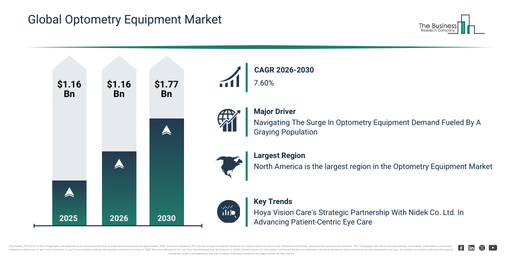
    The optometry equipment market has experienced significant growth recently and is projected to continue doing so. The market is expected to grow from $3.79 billion in 2025 to $4.1 billion in 2026, representing a compound annual growth rate (CAGR) of 8.1%. This growth during the historical period has been mainly driven by the increasing occurrence of vision disorders, expansion of eye care infrastructure, enhanced use of diagnostic imaging in optometry, a rise in cataract and glaucoma surgeries, and continual advancements in ophthalmic equipment design. Looking ahead, the market size is forecasted to reach $5.5 billion by 2030, growing at a CAGR of 7.6%. Factors contributing to the projected growth include the rising demand for preventive eye care, greater adoption of AI-powered diagnostic tools, more outpatient ophthalmic procedures, enhanced focus on precision vision correction, and ongoing innovation in ophthalmic laser technologies.

    Download A Free Sample Report For Comprehensive Market Insights:

    https://www.thebusinessresearchcompany.com/sample.aspx?id=8809&type=smp

    Population Aging as a Major Driver of Market Expansion

    One of the primary forces pushing the optometry equipment market forward is the increasing size of the aging population. Defined as individuals aged 60 and above, this demographic is growing rapidly around the world due to lower fertility rates and longer life expectancy. The expanding elderly population creates greater demand for advanced diagnostic and monitoring devices tailored to age-related eye conditions. For example, the World Health Organization projected in February 2025 that the global population aged 60 and older would rise from 1.1 billion in 2023 to 1.4 billion by 2030. This demographic shift is fueling greater adoption of sophisticated optometry equipment to better manage vision health in older adults.

    Technological Innovations Accelerate Market Demand

    Another significant factor supporting market growth is the shift toward more advanced and precise ophthalmic technologies. The integration of artificial intelligence and digital imaging techniques is enabling higher accuracy in eye diagnostics and treatments. This trend is accompanied by growing demand for minimally invasive surgery equipment and expansion of laser-based vision correction methods. Such technological progress is broadening the scope and effectiveness of optometry equipment, encouraging healthcare providers to upgrade their systems.

    Access The Complete Optometry Equipment Market Report:

    https://www.thebusinessresearchcompany.com/report/optometry-equipment-global-market-report

    Market Structure and Key Segments in Optometry Equipment

    The optometry equipment market is categorized into several segments to reflect product types, examination types, modality, portability, and end users. Key product types include ophthalmic diagnostic equipment, vision testing instruments, refraction devices, imaging equipment, and other specialized tools. Examination types cover retina, cornea, anterior segment, and general eye exams. Equipment is further classified by modality into manual, automated, and digital devices. Portability divides the market between tabletop systems and portable handheld devices. End users comprise hospitals and outpatient departments, optometry clinics, physician offices, specialty eye clinics, and academic research centers. Some notable subcategories include autorefractors, keratometers, tonometers, slit lamps, phoropters, trial lens sets, fundus cameras, optical coherence tomography devices, visual field analyzers, pachymeters, and corneal topographers.

    Collaborative Partnerships Drive Market Innovation

    Leading companies in optometry equipment are increasingly forming strategic partnerships to strengthen their market positions and expand product offerings. These alliances typically involve agreements to collaborate on research, development, manufacturing, or distribution. For instance, in February 2023, HOYA Vision Care, based in Thailand, partnered with Japan’s NIDEK Co. Ltd. This collaboration aims to provide comprehensive optical solutions, ranging from eye exams to the delivery of premium spectacle lenses, leveraging NIDEK’s extensive portfolio of ophthalmic instruments.

    Top Market Players Shaping the Optometry Equipment Industry

    Several major corporations hold significant positions within the optometry equipment market. These include Carl Zeiss Meditec AG, Essilor International SA, Topcon Medical Systems Inc., Canon Inc., Heidelberg Engineering GmbH, Nidek Co Ltd, Hoya Corporation, Bausch Health Companies Inc., Alcon Inc., Oculus Inc., Revenio Group PLC, Huvitz Co Ltd, Shin Nippon Machinery Co Ltd, Takagi Ophthalmic Instruments Ltd, Medmont International Pty Ltd, Tomey Corporation, Marco Ophthalmic Inc., Kowa Company Ltd, Keeler Ltd, HEINE Optotechnik GmbH And Co KG, and Welch Allyn Inc.

    Geographical Insights Highlighting Market Leaders and Growth Areas

    In terms of regional performance, North America captured the largest share of the optometry equipment market in 2025. However, the analysis also covers other significant regions including Asia-Pacific, South East Asia, Western Europe, Eastern Europe, South America, the Middle East, and Africa. While North America leads in market size, other regions are expected to display promising growth potential due to expanding healthcare infrastructure and rising awareness about eye health.

    In summary, the optometry equipment market is poised for robust expansion driven by demographic trends, technological innovation, and strategic industry collaborations. With increasing prevalence of vision disorders and growing emphasis on advanced diagnostics, the market outlook through 2030 remains highly positive.

    Get in touch with us:

    The Business Research Company: https://www.thebusinessresearchcompany.com/

    Americas: +1 310-496-7795

    Asia: +44 7882 955267 & +91 8897263534

    Europe: +44 7882 955267

    Email us at: marketing@tbrc.info

    Follow us on:

    LinkedIn: https://in.linkedin.com/company/the-business-research-company

    YouTube: https://www.youtube.com/channel/UC24_fI0rV8cR5DxlCpgmyFQ

    Global Market Model: https://www.thebusinessresearchcompany.com/global-market-model
  • Optogenetics Market Size Projected To Increase From $47.12 Billion To $81.04 Billion During The Forecast Period

    Optogenetics Market Size Projected To Increase From $47.12 Billion To $81.04 Billion During The Forecast Period

    Enhanced with market attractiveness analysis, total addressable market evaluation, company benchmarking matrices, interactive Excel dashboards, expanded supply chain intelligence, emerging startup coverage, and detailed product insights, The Business Research Company’s 2026 market reports deliver more actionable and strategically valuable research.

    The optogenetics sector is experiencing a remarkable surge, driven by technological advancements and growing research activities in neuroscience. As this field evolves, it is expected to play an increasingly important role in medical and scientific studies, promising substantial growth and innovation in the coming years. Below, we explore the market size, key drivers, segment details, emerging trends, major players, and regional outlook shaping the optogenetics industry.

    Market Expansion and Future Projections for the Optogenetics Market

    The optogenetics market has seen significant growth recently, with its value projected to rise from $40.9 billion in 2025 to $47.13 billion in 2026, representing a compound annual growth rate (CAGR) of 15.2%. This increase during the historical period is attributed to improvements in genetic engineering tools, increased funding for neuroscience research, wider adoption of optical stimulation techniques, growth in academic and laboratory studies, and enhanced optical sensor sensitivity.

    Download A Free Sample Report For Comprehensive Market Insights:

    https://www.thebusinessresearchcompany.com/sample.aspx?id=9009&type=smp

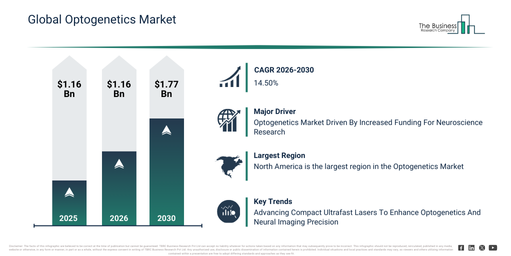
    Looking ahead, the market is forecasted to grow rapidly, reaching $81.05 billion by 2030 at a CAGR of 14.5%. This anticipated expansion is driven by the growing utilization of optogenetics in disease research, heightened investments in brain research projects, broader translational neuroscience efforts, deeper integration with AI-based data analysis, and continued advancements in sophisticated optical actuators. Important trends shaping the market’s future include increased use of light-based neural control methods, adoption of genetically encoded optical sensors, stronger ties between optogenetics and neuroscience investigations, growth in behavioral and neural circuit mapping research, and a sharp focus on precise neuromodulation techniques.

    Key Factors Fueling Growth in the Optogenetics Market

    One of the primary forces behind the optogenetics market’s rapid growth is the rising support and funding for neuroscience research. Neuroscience involves the detailed scientific study of the nervous system, including the brain, spinal cord, and peripheral nerves. Optogenetics, a cutting-edge technique within this field, uses light to selectively manipulate neuron activity in living tissue, revolutionizing how researchers understand neural circuits.

    Access The Complete Optogenetics Market Report:

    https://www.thebusinessresearchcompany.com/report/optogenetics-global-market-report

    For instance, in March 2023, the National Institutes of Health (NIH), a leading US government agency for medical research, reported funding for neuroscience research reached approximately $11.3 billion in fiscal year 2022, with expectations to increase to $12.1 billion in 2023. This upward trend in financial backing is expected to continue propelling the optogenetics market forward.

    Breakdown of Optogenetics Market Segments and Opportunities

    The optogenetics market is segmented comprehensively to address different facets of the industry:

    By Product:

    – Lasers

    – Actuators

    – Sensors

    By Application:

    – Neuroscience

    – Behavioral Tracking

    – Retinal Disease Treatment

    – Other Applications

    By End User:

    – Hospitals and Clinics

    – Diagnostics Centers

    – Research Centers

    – Other End Users

    Further subcategories include types of lasers such as continuous wave, pulsed, and fiber-coupled lasers. Actuators are divided into channelrhodopsins, halorhodopsins, and opto-xRs, while sensors consist of calcium sensors, voltage sensors, and genetically encoded indicators. This segmentation allows for targeted growth strategies across multiple domains.

    Innovative Trends Shaping the Optogenetics Marketplace

    Leading companies in the optogenetics field are dedicating resources to create novel products, including compact femtosecond lasers designed to improve imaging resolution and enhance experimental precision. Femtosecond lasers emit ultra-short pulses, enabling detailed stimulation and imaging of neural tissue without causing thermal damage.

    For example, in June 2025, Coherent, Inc., a US photonics firm, introduced the Osprey, a compact femtosecond laser tailored for optogenetics, microsurgery, and medical device manufacturing. The Osprey delivers pulse energy up to 5 µJ with sub-350 femtosecond pulse widths, high beam quality, and stable pointing, all packaged in a robust design ideal for advanced microscopy and medical applications.

    Key Industry Players Driving Competition in the Optogenetics Landscape

    Several prominent companies dominate the optogenetics sector, shaping its competitive environment. These include Elliot Scientific Ltd., Shanghai Laser & Optics Century Co. Ltd., GenSight Biologics, Coherent Inc., Thorlabs Inc., Prizmatix Ltd., Bruker Corporation, Merck KGaA, The Jackson Laboratory, Applied Genetic Technologies Corporation, Circuit Therapeutics Inc., Bionic Sight LLC, Teledyne Photometrics, Campden Instruments, Nanoscope Therapeutics Inc., Laserglow Technologies, Hubner Group, Physical Sciences Inc., Ray Therapeutics, OptoGenTech, opto biolabs, Neurolux, Ugenex Therapeutics, Scientifica, Cobolt Inc., Inscopix, and Mightex Systems.

    Geographical Distribution and Market Leadership in Optogenetics

    In 2025, North America held the largest share of the optogenetics market. The market report also covers other important regions such as Asia-Pacific, South East Asia, Western Europe, Eastern Europe, South America, the Middle East, and Africa, providing a well-rounded view of the global market dynamics and growth prospects.

    Get in touch with us:

    The Business Research Company: https://www.thebusinessresearchcompany.com/

    Americas: +1 310-496-7795

    Asia: +44 7882 955267 & +91 8897263534

    Europe: +44 7882 955267

    Email us at: marketing@tbrc.info

    Follow us on:

    LinkedIn: https://in.linkedin.com/company/the-business-research-company

    YouTube: https://www.youtube.com/channel/UC24_fI0rV8cR5DxlCpgmyFQ

    Global Market Model: https://www.thebusinessresearchcompany.com/global-market-model
  • Optical Microscopes Market Growth Outlook Reveals A CAGR Of 7.5% And A Market Value Of $4.6 Billion By 2030

    Optical Microscopes Market Growth Outlook Reveals A CAGR Of 7.5% And A Market Value Of $4.6 Billion By 2030

    Through market attractiveness analysis, total addressable market evaluation, company benchmarking matrices, interactive Excel dashboards, expanded supply chain intelligence, emerging startup coverage, and detailed product insights, The Business Research Company’s 2026 market reports provide more actionable and strategically valuable research.

    The optical microscopes market has been experiencing significant growth recently, driven by advances in technology and expanding applications across various fields. With increasing demand from healthcare, research, and industrial sectors, the market is set for continued expansion in the coming years. Here’s an in-depth look at the market’s size, key drivers, major players, trends, and regional outlook.

    Market Size Growth and Future Outlook of the Optical Microscopes Market

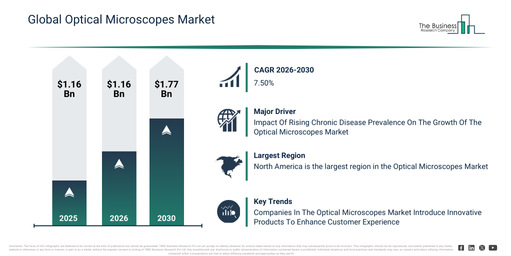
    The optical microscopes market has seen robust growth over recent years. It is anticipated to increase from $3.18 billion in 2025 to $3.45 billion in 2026, reflecting a compound annual growth rate (CAGR) of 8.4%. This growth during the historical period stems from the expansion of medical diagnostics, the rise in academic research activities, more frequent use of microscopy in clinical environments, affordability of optical systems, and advances in lens manufacturing technologies. Looking ahead, the market is projected to reach $4.61 billion by 2030, growing at a CAGR of 7.5%. Drivers for this future growth include higher investments in life sciences research, greater demand for digital pathology solutions, the expansion of clinical diagnostics infrastructure, increasing integration of AI-based image analysis tools, and a heightened focus on precision diagnostics. Notable trends include the rise in adoption of digital optical microscopes, the increasing need for high-resolution imaging, growth in laboratory and clinical applications, enhanced image analysis software integration, and ergonomic design improvements.

    Download A Free Sample Report For Comprehensive Market Insights:

    https://www.thebusinessresearchcompany.com/sample.aspx?id=15883&type=smp

    Key Factors Fueling Growth in the Optical Microscopes Market

    One of the main factors pushing the optical microscopes market forward is the rising prevalence of chronic diseases worldwide. Chronic diseases, which last over three months and often worsen over time, are linked to lifestyle factors such as poor diet, inactivity, and stress. Optical microscopes play a critical role in researching these diseases by enabling detailed observation and analysis of cellular and tissue changes.

    For instance, in February 2024, the World Health Organization, a Switzerland-based intergovernmental organization, projected over 35 million new cancer cases by 2050, a 77% increase compared to the estimated 20 million cases in 2022. This growing burden of chronic illnesses is a key driver behind the expanding optical microscopes market.

    Product and Application Segments Defining the Optical Microscopes Market

    This market is broadly categorized into several segments:

    1) By Product Type: Digital Microscopes, Stereo Microscopes, Inverted Microscopes, and Other Products

    2) By Application: Aerospace, Construction, Power Industry, Medical, and Other Applications

    3) By End-User: Hospitals and Clinics, Academic and Research Institutes, Diagnostic Laboratories, and Other End Users

    Further subcategories include:

    – Digital Microscopes, which encompass handheld, USB, and laboratory digital microscopes

    – Stereo Microscopes, consisting of trinocular, binocular, and zoom stereo microscopes

    – Inverted Microscopes, divided into research and routine types

    – Other Products, such as monocular, compound, and polarizing microscopes

    Access The Complete Optical Microscopes Market Report:

    https://www.thebusinessresearchcompany.com/report/optical-microscopes-global-market-report

    Innovation Trends Transforming the Optical Microscopes Industry

    Leading companies in the optical microscopes sector are focusing on the development of cutting-edge products to meet sophisticated research and clinical demands. One notable innovation is the advancement of multiphoton confocal microscopes, which use multiphoton excitation to capture high-resolution images deep within thick biological specimens with minimal damage. This technology is especially valuable for live tissue and cell imaging, contributing significantly to biomedical research including studies on chronic diseases.

    For example, in July 2023, Nikon Corporation, a Japan-based optical instruments manufacturer, introduced the AX R MP with NSPARC, a super-resolution multiphoton confocal microscope designed to provide sensitive array detection and super-resolution imaging in large living specimens. This breakthrough supports enhanced research into neurological conditions like Alzheimer’s and Parkinson’s diseases and accelerates drug discovery efforts.

    Key Players Leading the Optical Microscopes Market

    The market features several prominent companies, including Thermo Fisher Scientific Inc., Danaher Corporation, Carl Zeiss AG, Keyence Corporation, Olympus Corporation, VWR International Inc., Sunny Optical Technology (Group) Company Limited, Nikon Corporation, Leica Microsystems GmbH, Motic (Xiamen) Electric Group Co. Ltd., Meiji Techno Co. Ltd., Celestron LLC, Prior Scientific Instruments Ltd., Levenhuk Inc., Labomed Inc., Euromex Microscopen BV, ACCU-SCOPE Inc., Hirox Co. Ltd., AmScope LLC, Swift Optical Instruments, and Optec Instrumentation (Shanghai) Co. Ltd.

    Regional Market Insights and Growth Patterns

    In 2025, North America held the largest share of the optical microscopes market, driven by its advanced healthcare infrastructure and research capabilities. However, the Asia-Pacific region is anticipated to be the fastest-growing market in the forecast period, owing to expanding clinical diagnostics, rising investments in life sciences, and increasing adoption of advanced microscopy technologies. Other regions covered in the market report include South East Asia, Western Europe, Eastern Europe, South America, the Middle East, and Africa, offering a comprehensive global perspective on market dynamics.

    Get in touch with us:

    The Business Research Company: https://www.thebusinessresearchcompany.com/

    Americas: +1 310-496-7795

    Asia: +44 7882 955267 & +91 8897263534

    Europe: +44 7882 955267

    Email us at: marketing@tbrc.info

    Follow us on:

    LinkedIn: https://in.linkedin.com/company/the-business-research-company

    YouTube: https://www.youtube.com/channel/UC24_fI0rV8cR5DxlCpgmyFQ

    Global Market Model: https://www.thebusinessresearchcompany.com/global-market-model
  • Optical Imaging Market Forecast Highlights Expansion From $3.07 Billion To $5.5 Billion Through 2030

    Optical Imaging Market Forecast Highlights Expansion From $3.07 Billion To $5.5 Billion Through 2030

    Delivering more actionable and strategically valuable research, The Business Research Company’s 2026 market reports feature market attractiveness analysis, total addressable market evaluation, company benchmarking matrices, interactive Excel dashboards, expanded supply chain intelligence, emerging startup coverage, and detailed product insights.

    The optical imaging sector has experienced substantial growth recently, driven by technological advancements and increasing applications across healthcare and research. This overview explores the current market size, key growth factors, main players, technological innovations, and regional developments shaping the industry’s future.

    Market Expansion and Revenue Projections in the Optical Imaging Market

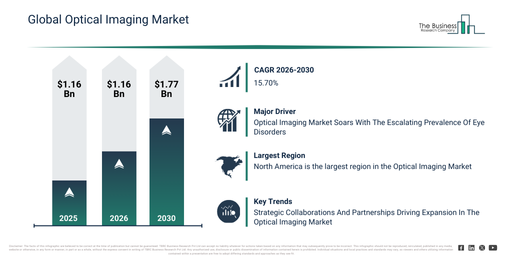
    The optical imaging market has witnessed rapid growth, with its value rising from $2.65 billion in 2025 to $3.07 billion in 2026, representing a compound annual growth rate (CAGR) of 16.0%. This expansion during the historical period is largely due to the growing use of optical imaging in scientific research, broader clinical diagnostic applications, progress in photon-based imaging technologies, increased utilization of pathological imaging, and a surge in demand for non-invasive imaging methods. Looking ahead, the market is forecasted to continue expanding swiftly, reaching $5.5 billion by 2030 with a CAGR of 15.7%. This future growth is expected to be driven by wider adoption of precision medicine diagnostics, greater investment in biomedical research imaging, enhanced intraoperative visualization tools, deeper integration of AI-powered image analysis, and ongoing innovations in optical sensor technologies. Key trends anticipated to influence the market include a rise in advanced optical imaging system usage, growing applications of multispectral and hyperspectral imaging, increasing incorporation of imaging software and analytics, expanded intraoperative imaging, and a stronger emphasis on cellular and molecular-level imaging.

    Download A Free Sample Report For Comprehensive Market Insights:

    https://www.thebusinessresearchcompany.com/sample.aspx?id=8360&type=smp

    Main Factors Contributing to Growth in the Optical Imaging Market

    One of the primary factors propelling the optical imaging market is the increasing prevalence of eye disorders worldwide. These conditions affect the eye’s normal function and can lead to visual impairments or other complications. Optical imaging technologies, known for their high-resolution and non-invasive characteristics, provide precise visualization of eye structures, which supports accurate diagnosis and ongoing monitoring of various ocular diseases. For example, in August 2023, the World Health Organization reported that at least 2.2 billion people globally suffer from near or distance vision impairment, with 1 billion cases being potentially preventable or untreated. This widespread occurrence of eye disorders is expected to significantly drive demand for optical imaging solutions.

    Optical Imaging Market Segmentation by Product and Application

    The optical imaging industry can be broken down into several key segments for analysis:

    1) By Product Type: Imaging Systems, Cameras, Software, and Other Products

    2) By Application Area: Pathological Imaging and Intra-operative Imaging

    3) By End-User: Academic and Research Institutes, Pharmaceutical and Biotechnology Firms, Contract Research Organizations (CROs), Neuroscience and Behavioral Research Labs, Clinical Research Centers and Specialized Hospitals, among others

    Further subcategories include types of imaging systems such as fluorescence, multispectral, and hyperspectral imaging; camera varieties including CCD, CMOS, and scientific cameras; diverse software categories like image analysis, visualization, and processing tools; and other essential components including light sources, optical filters, lenses, and accessories.

    Access The Complete Optical Imaging Market Report:

    https://www.thebusinessresearchcompany.com/report/optical-imaging-global-market-report

    Innovative Developments Transforming the Optical Imaging Industry

    The optical imaging market is witnessing a wave of strategic partnerships and collaborations aimed at expanding product offerings and geographic reach. Companies are increasingly teaming up with startups and mid-sized firms to enhance their technological capabilities and market presence. As an example, in January 2023, Canon Medical Systems USA, a subsidiary of Canon Medical Systems Corporation, formed a partnership with ScImage, Inc., a company specializing in cloud-native enterprise image management and PACS solutions for healthcare. This collaboration is set to strengthen Canon’s position in hemodynamic imaging through the Fysicon QMAPP Hemo portfolio, demonstrating how alliances are driving innovation and growth in the sector.

    Competitive Landscape Featuring Leading Optical Imaging Market Players

    The market features a range of prominent companies actively shaping the optical imaging space, including PerkinElmer Inc., Carl Zeiss Meditec AG, Koninklijke Philips N.V., Topcon Corporation, Bioptigen Inc., Canon Inc., Heidelberg Engineering Inc., Optovue Inc., Headwall Photonics Inc., Agfa-Gevaert N.V., Hamamatsu Photonics K.K., Hitachi Medical Corporation, Imalux Corporation, Infraredx Inc., Bruker Corporation, ChemImage Corporation, Cytoviva Inc., Leica Biosystems Nussloch GmbH, Michelson Diagnostics Ltd., Raytheon ELCAN Optical Technologies, Santec Corporation, Danaher Corporation, Thorlabs Inc., Tomophase Corporation, Ziemer Ophthalmic Systems AG, Axsun Technologies, Bioptics Inc., Andor Technology Ltd., and Abberior Instruments GmbH.

    Regional Distribution and Growth Opportunities in the Optical Imaging Market

    North America held the largest share of the optical imaging market in 2025, maintaining a strong foothold in the industry. However, significant opportunities are emerging across other regions, including Asia-Pacific, South East Asia, Western Europe, Eastern Europe, South America, the Middle East, and Africa. These diverse geographic areas present varying growth dynamics, with many expected to contribute substantially to the market’s expansion in the years ahead.

    Get in touch with us:

    The Business Research Company: https://www.thebusinessresearchcompany.com/

    Americas: +1 310-496-7795

    Asia: +44 7882 955267 & +91 8897263534

    Europe: +44 7882 955267

    Email us at: marketing@tbrc.info

    Follow us on:

    LinkedIn: https://in.linkedin.com/company/the-business-research-company

    YouTube: https://www.youtube.com/channel/UC24_fI0rV8cR5DxlCpgmyFQ

    Global Market Model: https://www.thebusinessresearchcompany.com/global-market-model
  • Optical Coherence Tomography (OCT) For Healthcare And Life Science Market Expected To Reach $4.76 Billion By 2030 As Growth Accelerates At 16.1% CAGR

    Optical Coherence Tomography (OCT) For Healthcare And Life Science Market Expected To Reach $4.76 Billion By 2030 As Growth Accelerates At 16.1% CAGR

    Enhanced with market attractiveness analysis, total addressable market evaluation, company benchmarking matrices, interactive Excel dashboards, expanded supply chain intelligence, emerging startup coverage, and detailed product insights, The Business Research Company’s 2026 market reports deliver more actionable and strategically valuable research.

    The optical coherence tomography (OCT) market within healthcare and life sciences is experiencing rapid expansion, driven by technological progress and growing medical needs. As this imaging technology becomes increasingly vital in diagnostics and treatment, its adoption across various medical fields continues to rise. Let’s explore the market’s current size, growth drivers, key players, trends, and segment breakdowns shaping its future.

    Market Size and Projected Growth in Optical Coherence Tomography for Healthcare and Life Science

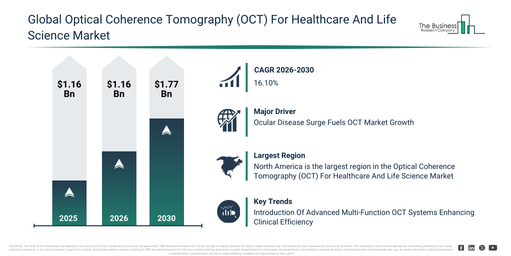
    The OCT market has been growing swiftly, moving from $2.26 billion in 2025 to $2.63 billion in 2026, reflecting a strong compound annual growth rate (CAGR) of 16.1%. This historical growth is mainly due to the rising prevalence of eye disorders, the expansion of ophthalmic diagnostic procedures, technological improvements in optical imaging, development of specialty eye clinics, and early utilization of OCT in research. Looking ahead, the market is forecasted to reach $4.77 billion by 2030, maintaining the same CAGR of 16.1%. The expected growth is fueled by increasing demand for point-of-care diagnostics, wider use in cardiology and dermatology, growth of tele-ophthalmology services, substantial investments in imaging technology innovations, and heightened emphasis on early disease detection. Emerging trends include the adoption of AI-driven image analysis, demand for high-resolution, non-invasive imaging, rising use of portable and handheld OCT devices, expanding applications beyond ophthalmology, and better integration with digital health systems.

    Download A Free Sample Report For Comprehensive Market Insights:

    https://www.thebusinessresearchcompany.com/sample.aspx?id=19130&type=smp

    Factors Accelerating Growth in the Optical Coherence Tomography Market

    A major factor driving expansion in the OCT market is the increasing incidence of ocular diseases. These conditions affect the eyes and the surrounding structures, often leading to vision loss or impairment. The rising number of aging individuals and the growing prevalence of chronic illnesses like diabetes contribute significantly to this trend. OCT technology provides detailed cross-sectional imaging of the retina and optic nerve, essential for diagnosing and tracking these diseases. For example, a report by the Review of Optometry highlights that around 80 million people worldwide suffer from glaucoma, with open-angle glaucoma accounting for 95% of cases. In the U.S. alone, over three million people are affected, and this number is projected to rise beyond 111 million by 2040. This growing patient base is a key driver for OCT market growth.

    Further Drivers Supporting OCT Market Expansion

    Beyond ocular disease prevalence, the OCT market benefits from technological advancements that improve diagnostic accuracy and patient outcomes. Increasing adoption of minimally invasive and portable imaging devices is making OCT more accessible across healthcare settings. Additionally, expanding telemedicine and tele-ophthalmology services are broadening geographic reach and patient access to high-quality eye care. These developments highlight OCT’s rising importance as a versatile diagnostic tool in healthcare.

    Access The Complete Optical Coherence Tomography (OCT) For Healthcare And Life Science Market Report:

    https://www.thebusinessresearchcompany.com/report/optical-coherence-tomography-oct-for-healthcare-and-life-science-global-market-report

    Detailed Segment Analysis and Revenue Potential Within the OCT Market

    The OCT market is segmented into various categories to better understand its scope and opportunities. By type, it includes Catheter-Based OCT Devices, Doppler OCT Devices, Handheld OCT Devices, and Tabletop OCT Devices. From a technology perspective, the market covers Time Domain OCT (TD-OCT), Frequency Domain OCT (FD-OCT), and other emerging technologies. Applications span multiple medical fields such as Ophthalmology, Cardiology, Dermatology, Gastroenterology, and other specialized uses. End users primarily include Hospitals, Specialty Clinics, Research Institutes, and other healthcare providers. Subcategories under catheter-based devices feature Intravascular OCT (IV-OCT), Endoscopic OCT, and other catheter types. Doppler OCT devices break down into Speckle-Tracking Doppler OCT and Phase-Resolved Doppler OCT, while handheld devices include portable and compact systems. Tabletop devices are further divided into standalone and modular configurations.

    How Innovations and Trends Are Shaping the Future of the OCT Market

    Leading companies in the OCT sector are focusing on developing cutting-edge solutions to improve clinical workflows and diagnostic precision. For instance, in July 2025, Huvitz, a South Korean medical equipment manufacturer, launched the OCTavius ophthalmic diagnostic device, a versatile 5-in-1 OCT system that integrates multiple eye diagnostic functions into a single unit. This reduces reliance on multiple instruments, accelerates scanning processes, and delivers high-resolution images for detailed evaluation of the macula and choroid layers. Such innovations streamline clinical operations and enhance early detection capabilities in ophthalmology, setting new standards for diagnostic technology.

    Key Players Influencing the Optical Coherence Tomography Market Direction

    The OCT market is shaped by several prominent companies, including Abbott Laboratories, Canon Inc., Carl Zeiss Meditec AG, Leica Microsystems GmbH, Thorlabs Inc., Edmund Optics Inc., Huvitz Co. Ltd., Santec Corporation, Topcon Medical Systems Inc., OPTOPOL Technology SA, NinePoint Medical, Wasatch Photonics Inc., Perimeter Medical Imaging AI Inc., Nidek Co. Ltd., Novacam Technologies Inc., DermaLumics, BaySpec Inc., Imalux Corporation, Lumedica, and Heidelberg Engineering GmbH. These organizations are at the forefront of advancing OCT technologies and expanding their applications.

    Regional Market Shares and Growth Outlook for OCT

    In 2025, North America held the largest share of the OCT market, driven by advanced healthcare infrastructure and high adoption rates of innovative diagnostic technologies. Meanwhile, the Asia-Pacific region is expected to witness the fastest growth over the coming years, fueled by expanding healthcare access, increased investment in medical technology, and rising disease prevalence. Other regions covered in the market analysis include South East Asia, Western Europe, Eastern Europe, South America, the Middle East, and Africa, providing a comprehensive view of global market dynamics.

    Get in touch with us:

    The Business Research Company: https://www.thebusinessresearchcompany.com/

    Americas: +1 310-496-7795

    Asia: +44 7882 955267 & +91 8897263534

    Europe: +44 7882 955267

    Email us at: marketing@tbrc.info

    Follow us on:

    LinkedIn: https://in.linkedin.com/company/the-business-research-company

    YouTube: https://www.youtube.com/channel/UC24_fI0rV8cR5DxlCpgmyFQ

    Global Market Model: https://www.thebusinessresearchcompany.com/global-market-model