Category: Medical Equipment

  • Healthcare Adhesive Tapes Market Forecast Highlights Expansion From $45.59 Billion To $65.67 Billion Through 2030

    Healthcare Adhesive Tapes Market Forecast Highlights Expansion From $45.59 Billion To $65.67 Billion Through 2030

    Enhanced with market attractiveness analysis, total addressable market evaluation, company benchmarking matrices, interactive Excel dashboards, expanded supply chain intelligence, emerging startup coverage, and detailed product insights, The Business Research Company’s 2026 market reports deliver more actionable and strategically valuable research.

    The healthcare adhesive tapes sector has shown remarkable growth recently, driven by advancements in medical technology and increasing demand across various healthcare settings. With rising healthcare needs worldwide, this market is set to experience substantial expansion in the years to come. Let’s explore the current market size, key growth drivers, segmentation details, competitive landscape, and regional insights shaping this industry.

    Healthcare Adhesive Tapes Market Size Forecast Through 2030

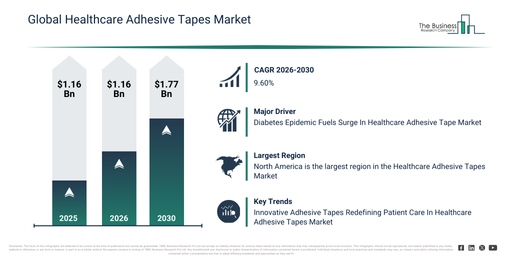
    The healthcare adhesive tapes market has seen significant growth, expanding from $41.58 billion in 2025 to an estimated $45.6 billion in 2026, reflecting a strong compound annual growth rate (CAGR) of 9.6%. This increase during recent years is mainly due to a rise in surgical procedures, the growing number of chronic wound cases, expansion in hospital and clinical care facilities, wider use of diagnostic and monitoring devices, and improvements in medical adhesive technologies. Looking ahead, the market is projected to reach $65.67 billion by 2030, maintaining the same robust CAGR of 9.6%. Factors fueling this future growth include increasing demand for home healthcare products, greater emphasis on patient safety and comfort, growth in minimally invasive surgeries, rising adoption of wearable medical devices, and the use of innovative wound care solutions. Emerging trends expected to drive the market forward encompass the growing preference for skin-friendly and hypoallergenic tapes, higher demand for silicone-based adhesives, wider use of breathable and flexible backing materials, development of advanced pressure-sensitive adhesives, and a focus on long-lasting secure fixation products.

    Download A Free Sample Report For Comprehensive Market Insights:

    https://www.thebusinessresearchcompany.com/sample.aspx?id=7283&type=smp

    Key Factors Accelerating Growth in Healthcare Adhesive Tapes

    The rising incidence of diabetes is a major factor propelling the expansion of the healthcare adhesive tapes market. Adhesive tapes play an essential role in diabetes care by securely fastening devices while minimizing skin irritation and providing comfort and reliability for patients. These tapes assist in securing various medical devices, dressings, and infusion sites critical to diabetes management. For example, in April 2025, the International Diabetes Federation based in Belgium reported that 589 million adults aged 20 to 79 were living with diabetes worldwide—a number that surpasses the combined population of the U.S., Canada, Mexico, and the Caribbean. This figure is expected to rise to 853 million by 2050, highlighting the growing demand for supportive healthcare adhesive solutions.

    Healthcare Adhesive Tapes Market Segmentation and Key Categories

    This report segments the healthcare adhesive tapes market as follows:

    1) Resin Type: Acrylic, Rubber, Silicone

    2) Backing Material: Paper, Fabric, Plastic, and other backing types

    3) Application Areas: Surgery, Wound Dressing, Splints, Secure IV Line, Ostomy Seal, Hygiene, Bandages, Transdermal Patches, Blister Protection, Diagnostic, Monitoring and Medical Devices, Optical Care, and other uses.

    Access The Complete Healthcare Adhesive Tapes Market Report:

    https://www.thebusinessresearchcompany.com/report/healthcare-adhesive-tapes-global-market-report

    Further breakdowns include:

    – Acrylic tapes split into Pressure-Sensitive Acrylic Tapes and Medical-Grade Acrylic Tapes

    – Rubber tapes divided into Natural Rubber Tapes and Synthetic Rubber Tapes

    – Silicone tapes categorized as Silicone Adhesive Tapes and Silicone Gel Tapes

    Innovations Shaping Market Competition Through Advanced Adhesives

    Leading companies in the healthcare adhesive tapes sector are prioritizing the development of advanced, skin-friendly tapes to enhance patient comfort and adhesion reliability. One key innovation is the double-coated silicone medical tape, which offers secure fixation with minimal skin trauma and pain upon removal. These tapes significantly reduce the risk of medical adhesive-related skin injuries, particularly benefiting patients with delicate or sensitive skin. For instance, in October 2024, US-based Solventum introduced a double-coated silicone medical tape that delivers strong yet gentle adhesion for medical devices and dressings. This tape maintains consistent performance even after multiple repositionings, making it ideal for wound care, wearable medical devices, and long-term dressings. Its breathable design and soft silicone adhesive help preserve skin health while ensuring reliable attachment, reinforcing the trend toward combining durability, comfort, and safety in healthcare adhesives.

    Competitive Landscape of the Healthcare Adhesive Tapes Market

    The healthcare adhesive tapes market features several prominent companies competing to deliver innovative solutions. Key players include 3M Company, Cardinal Health Inc., Nitto Denko Corporation, Johnson & Johnson, Paul Hartmann AG, Avery Dennison Corporation, NICHIBAN Co. Ltd., Smith & Nephew plc, Lohmann GmbH & Co. KG, Scapa Group plc, Medline Industries Inc., Essity Aktiebolag, Adchem Corporation, CCT Tapes, Dermamed Coatings Company LLC, Dermarite Industries LLC, Jiangsu Nanfang Medical Co. Ltd., Libatape Pharmaceutical Co. Ltd., Mactac LLC, Lintec Corporation, Sekisui Chemical Co. Ltd., and Tesa SE.

    Regional Healthcare Adhesive Tapes Market Size and Growth Outlook

    In 2025, North America held the largest share of the healthcare adhesive tapes market. However, the Asia-Pacific region is expected to experience the fastest growth during the forecast period. The market analysis covers major regions including Asia-Pacific, South East Asia, Western Europe, Eastern Europe, North America, South America, the Middle East, and Africa, providing a well-rounded perspective on global market trends.

    Get in touch with us:

    The Business Research Company: https://www.thebusinessresearchcompany.com/

    Americas: +1 310-496-7795

    Asia: +44 7882 955267 & +91 8897263534

    Europe: +44 7882 955267

    Email us at: marketing@tbrc.info

    Follow us on:

    LinkedIn: https://in.linkedin.com/company/the-business-research-company

    YouTube: https://www.youtube.com/channel/UC24_fI0rV8cR5DxlCpgmyFQ

    Global Market Model: https://www.thebusinessresearchcompany.com/global-market-model
  • Head And Neck Cancer Diagnostics Market Expected To Reach $4.5 Billion By 2030 As Growth Accelerates At 17.3% CAGR

    Head And Neck Cancer Diagnostics Market Expected To Reach $4.5 Billion By 2030 As Growth Accelerates At 17.3% CAGR

    Through market attractiveness analysis, total addressable market evaluation, company benchmarking matrices, interactive Excel dashboards, expanded supply chain intelligence, emerging startup coverage, and detailed product insights, The Business Research Company’s 2026 market reports provide more actionable and strategically valuable research.

    The diagnostics landscape for head and neck cancers has seen significant advances recently, driven by technological progress and rising awareness of early detection. The market is on track for strong growth as new diagnostic techniques and personalized medicine approaches become more widely adopted. Let’s explore the current market size, key drivers, segment developments, leading companies, and regional outlook to understand where this sector is heading.

    Rapid Expansion in the Head and Neck Cancer Diagnostics Market Size

    The head and neck cancer diagnostics market has experienced fast growth over recent years. From an estimated value of $2.03 billion in 2025, it is projected to reach $2.38 billion in 2026, registering a compound annual growth rate (CAGR) of 17.1%. This surge has been primarily fueled by rising cases of head and neck cancers, expansion of diagnostic imaging facilities, growing awareness around early cancer detection, an increase in biopsy-based diagnostic procedures, and better access to specialized oncology services.

    Download A Free Sample Report For Comprehensive Market Insights:

    https://www.thebusinessresearchcompany.com/sample.aspx?id=12016&type=smp

    Projected Market Growth and Future Outlook

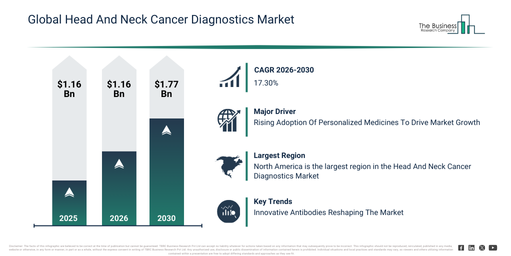
    Looking ahead, the market is set to expand rapidly, reaching $4.5 billion by 2030 with a CAGR of 17.3%. Key factors supporting this growth include the increasing adoption of personalized cancer diagnostics, investments in AI-powered imaging technologies, expansion in molecular diagnostic testing, heightened emphasis on early detection initiatives, and greater integration of digital pathology tools. Market trends expected to shape the forecast period include wider use of advanced imaging diagnostics, growth in molecular and genetic testing, AI integration in cancer detection methods, broader early-stage screening programs, and an intensified focus on precision oncology.

    Personalized Medicine as a Growth Catalyst in Head and Neck Cancer Diagnostics

    Personalized medicine is becoming a major growth driver for the head and neck cancer diagnostics market. This approach customizes treatment plans and interventions based on the unique characteristics of each patient, improving outcomes and minimizing side effects. Precision imaging and tailored follow-up care are key components that enhance the management of head and neck cancers. For instance, in February 2024, the Personalized Medicine Coalition reported that the FDA approved 16 new personalized therapies for rare diseases in 2023, a marked increase from six approvals in 2022. This demonstrates the accelerating adoption of personalized medicine, boosting demand for advanced diagnostic tools.

    Access The Complete Head And Neck Cancer Diagnostics Market Report:

    https://www.thebusinessresearchcompany.com/report/head-and-neck-cancer-diagnostics-global-market-report

    Growing Role of Innovative Diagnostic Technologies in Market Expansion

    The increasing use of AI-enabled imaging and molecular diagnostics is also propelling the market forward. These technologies offer more accurate and earlier detection capabilities, which are critical for effective treatment. The expansion of molecular testing and digital pathology solutions further supports this trajectory, enabling clinicians to better identify cancer subtypes and tailor therapies accordingly.

    Key Segment Breakdown in the Head and Neck Cancer Diagnostics Market

    This market is categorized into several important segments:

    1) Diagnostic Methods: Diagnostic imaging equipment, endoscopy screening equipment, and biopsy screening tests.

    2) Assay Types: Histopathology and cytology, immunohistochemistry and biomarker testing, molecular diagnostics, liquid biopsy, cytogenetics and FISH, point-of-care and rapid tests, and AI-based image analysis with computer-aided diagnostics.

    3) Distribution Channels: Hospitals and hospital-based diagnostic departments, independent diagnostic and imaging centers, and specialty clinics.

    Further subsegments include specific diagnostic imaging equipment such as CT scans, MRI, PET scans, and X-rays; endoscopy tools like rigid and flexible endoscopes plus video endoscopy systems; and various biopsy tests including fine needle aspiration (FNA), core needle biopsy, and surgical biopsy.

    Emerging Trends Shaping Demand in Head and Neck Cancer Diagnostics

    Leading players in the market are focusing on developing novel antibodies and diagnostic reagents to maintain a competitive edge. Antibodies, which the immune system produces in response to foreign agents, play a crucial role in cancer diagnostics. For example, in February 2023, Roche Holding AG launched the IDH1 R132H (MRQ-67) Rabbit Monoclonal Primary Antibody and ATRX Rabbit Polyclonal Antibody, designed to detect mutations in IDH1 and ATRX genes. These products provide clinicians with vital diagnostic and prognostic insights, aiding patient stratification for clinical trials and improving management of gliomas and related cancers.

    Competitive Landscape and Leading Organizations in the Market

    The head and neck cancer diagnostics market includes many prominent companies, such as Siemens Healthineers AG, Koninklijke Philips N.V., GE HealthCare Technologies Inc., Canon Medical Systems Corporation, Shimadzu Corporation, Carestream Health Inc., Agilent Technologies Inc., Abbott Laboratories, F. Hoffmann-La Roche Ltd., QIAGEN N.V., Illumina Inc., Exact Sciences Corp., Hologic Inc., Sysmex Corporation, Cepheid Inc., NanoString Technologies Inc., Myriad Genetics Inc., Bio-Techne Corp., Caris Life Sciences Inc., HTG Molecular Diagnostics Inc., VolitionRx Ltd., Perseus Proteomics Inc., and Oncgnostics GmbH.

    Regional Market Position and Growth Outlook

    In 2025, North America held the largest share of the head and neck cancer diagnostics market. However, the Asia-Pacific region is anticipated to experience the fastest growth over the forecast period. The market report covers key geographic regions including Asia-Pacific, South East Asia, Western Europe, Eastern Europe, North America, South America, the Middle East, and Africa, providing a comprehensive global perspective on market trends and opportunities.

    Get in touch with us:

    The Business Research Company: https://www.thebusinessresearchcompany.com/

    Americas: +1 310-496-7795

    Asia: +44 7882 955267 & +91 8897263534

    Europe: +44 7882 955267

    Email us at: marketing@tbrc.info

    Follow us on:

    LinkedIn: https://in.linkedin.com/company/the-business-research-company

    YouTube: https://www.youtube.com/channel/UC24_fI0rV8cR5DxlCpgmyFQ

    Global Market Model: https://www.thebusinessresearchcompany.com/global-market-model
  • Hazmat Suits Market Set To Grow From $10.82 Billion In 2026 To $15.7 Billion By 2030 At A CAGR Of 9.8%

    Hazmat Suits Market Set To Grow From $10.82 Billion In 2026 To $15.7 Billion By 2030 At A CAGR Of 9.8%

    Delivering more actionable and strategically valuable research, The Business Research Company’s 2026 market reports feature market attractiveness analysis, total addressable market evaluation, company benchmarking matrices, interactive Excel dashboards, expanded supply chain intelligence, emerging startup coverage, and detailed product insights.

    The demand for hazmat suits has been rising steadily due to growing awareness of safety measures in various industries. As the need for protection against hazardous materials becomes more critical, the market for these specialized suits is set to experience substantial growth. Let’s explore the current market size, driving factors, segment breakdown, innovation trends, key players, and regional demand patterns shaping this sector.

    Hazmat Suits Market Size Growth and Future Projection

    The hazmat suits market has shown impressive growth in recent years. It is projected to expand from $9.86 billion in 2025 to $10.82 billion in 2026, reflecting a compound annual growth rate (CAGR) of 9.7%. This growth during the past period has been fueled by stricter industrial safety regulations, the growth of chemical and oil and gas industries, increased use in healthcare settings, the availability of standardized safety certifications, and heightened awareness of risks associated with hazardous materials exposure.

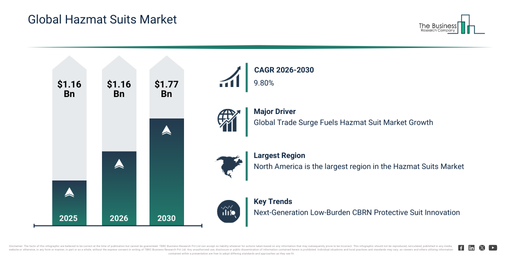
    Looking ahead, the market is expected to continue its upward trajectory, reaching $15.71 billion by 2030 at a CAGR of 9.8%. Key factors propelling this expansion include rising investments in advanced protective materials, increasing demand driven by biohazard and infection control needs, improved emergency response readiness, growing emphasis on sustainable protective equipment, and the adoption of custom-designed hazmat suits. Emerging trends point toward higher protection-level suits, the use of lightweight and flexible materials, reusable and multi-layer designs, broader applications across industry and healthcare, and stronger compliance with international safety standards.

    Download A Free Sample Report For Comprehensive Market Insights:

    https://www.thebusinessresearchcompany.com/sample.aspx?id=8178&type=smp

    Increasing Global Trade as a Catalyst for Hazmat Suits Market Expansion

    One significant factor contributing to the growth of the hazmat suits market is the rise in global trade. As goods, services, and capital move more frequently across borders, the transportation and handling of hazardous materials have intensified. This makes protective suits essential for workers to maintain safety and meet regulatory requirements.

    For example, a report released in September 2023 by the United Nations Conference on Trade and Development highlighted that maritime trade is expected to grow by 2.4% in 2023 and by over 2% annually from 2024 to 2028. Additionally, as pandemic restrictions eased, energy sector trades in oil and gas increased by 6.0% and 4.6%, respectively, in 2022. These trends underline how expanding global commerce is driving demand for hazmat protective gear.

    Breakdown of the Hazmat Suits Market Segments

    The hazmat suits market is categorized by several dimensions for detailed analysis:

    – Safety Standards: Level A, Level B, Level C, and Other Safety Standards

    – Application Areas: Chemical Waste, Infection Control, Biohazard and Hazardous Material, Fire or High-Temperature Situations

    – End-User Industries: Oil and Gas, Mining, Construction, Healthcare, and others

    Access The Complete Hazmat Suits Market Report:

    https://www.thebusinessresearchcompany.com/report/hazmat-suits-global-market-report

    Further subcategories include:

    – Level A: Fully encapsulated suits and positive pressure suits

    – Level B: Non-encapsulated suits and air-purifying respirators (APRs)

    – Level C: Splash protection suits and APRs with chemical filters

    – Other Safety Standards: Specialized industry-specific standards and custom-designed suits tailored to particular hazards

    Innovations Transforming the Hazmat Suits Market

    Leading companies in the hazmat suits sector are pushing the envelope by developing innovative protective ensembles that are lightweight and integrated for enhanced mobility and protection. These new designs often include multi-layer materials, such as activated carbon layers combined with durable outer shells, and ergonomic tailoring to reduce wearer fatigue while maintaining safety.

    For instance, in February 2024, Avon Technologies plc from the UK introduced the EXOSKIN-S1—a low-burden, high-performance CBRN protective suit meeting NATO AEP-38 standards. This suit uses a cotton-polyester outer fabric with an activated carbon inner layer to protect against various chemical warfare agents and toxic industrial chemicals. It offers 24-hour continuous protection, fits closely like a second skin to maximize comfort and movement, and includes features like adjustable leg and wrist closures to prevent contamination entry. Designed for military, special forces, and first responders, it also integrates seamlessly with other protective equipment from Avon, such as respirators and gloves.

    Top Companies Leading the Hazmat Suits Industry

    The hazmat suits market includes a variety of prominent manufacturers and suppliers, such as 3M Company, Alpha Pro Tech Ltd., Ansell Limited, Drägerwerk AG & Co., DuPont de Nemours Inc., Halyard Health Inc., Honeywell Inc., International Enviroguard Systems Inc., Kappler Inc., Kimberly-Clark Corporation, Lakeland Industries Inc., Matisec SA, MSA Safety Incorporated, SealWerks, Conney Safety Products, Haggard & Stocking Associates Inc., Jorgensen Co., Kinequip Inc., Medline Industries Inc., Moldex-Metric Inc., New Pig Corp., Northern Safety Co. Inc., O&M Halyard Inc., Protective Industrial Products Inc., Queen Industries, Sioen Industries NV, The Cary Company, TST Sweden AB, Uvex Winter Holdings Co. GmbH, W.L. Gore & Associates Inc., and Workrite Uniform Company Inc.

    Regions Where Hazmat Suits Demand Is Surging

    In 2025, North America held the largest share of the hazmat suits market. However, the Asia-Pacific region is projected to be the fastest-growing market during the forecast period. The analysis covers major regions including Asia-Pacific, South East Asia, Western Europe, Eastern Europe, North America, South America, the Middle East, and Africa, providing a comprehensive perspective on global demand patterns.

    Get in touch with us:

    The Business Research Company: https://www.thebusinessresearchcompany.com/

    Americas: +1 310-496-7795

    Asia: +44 7882 955267 & +91 8897263534

    Europe: +44 7882 955267

    Email us at: marketing@tbrc.info

    Follow us on:

    LinkedIn: https://in.linkedin.com/company/the-business-research-company

    YouTube: https://www.youtube.com/channel/UC24_fI0rV8cR5DxlCpgmyFQ

    Global Market Model: https://www.thebusinessresearchcompany.com/global-market-model
  • Hand-Held Surgical Instruments Market Opportunities Are Emerging Beyond Traditional Growth Areas

    Hand-Held Surgical Instruments Market Opportunities Are Emerging Beyond Traditional Growth Areas

    Enhanced with market attractiveness analysis, total addressable market evaluation, company benchmarking matrices, interactive Excel dashboards, expanded supply chain intelligence, emerging startup coverage, and detailed product insights, The Business Research Company’s 2026 market reports deliver more actionable and strategically valuable research.

    The hand-held surgical instruments market is experiencing significant growth, driven by advancements in surgical procedures and expanding healthcare needs worldwide. As innovations continue to emerge and healthcare facilities increase their surgical capacities, this market is set to see substantial developments in the coming years. Below is a detailed overview of the market’s size, key drivers, major players, and evolving trends shaping its future.

    Steady Growth in the Hand-Held Surgical Instruments Market Size

    The hand-held surgical instruments market has witnessed rapid expansion recently. From a valuation of $7.54 billion in 2025, it is projected to grow to $8.4 billion in 2026, reflecting a compound annual growth rate (CAGR) of 11.4%. This historical growth is primarily due to a rise in surgical procedures across various specialties, increased surgical volumes in hospitals, widespread availability of standardized stainless steel instruments, growth in ambulatory surgical centers, and a higher demand for reusable surgical tools.

    Download A Free Sample Report For Comprehensive Market Insights:

    https://www.thebusinessresearchcompany.com/sample.aspx?id=7428&type=smp

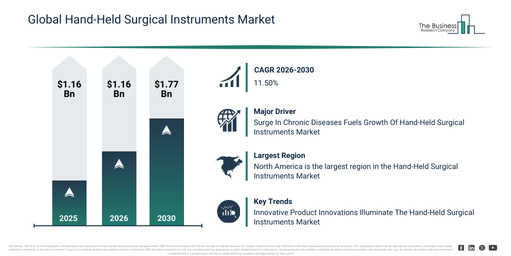
    Looking ahead, the market is expected to maintain strong growth momentum, reaching $12.96 billion by 2030 with a CAGR of 11.5%. This forecasted expansion is driven by the growing adoption of advanced surgical techniques, heightened focus on infection control, the surge in outpatient surgical procedures, rising investments in surgical innovations, and a growing need for instruments tailored to specific procedures. Key trends anticipated during this period include a rising preference for precision instruments, increased use of disposable and single-use tools, ergonomic designs gaining traction, growth in minimally invasive surgical devices, and an emphasis on enhanced sterility and durability.

    The Rising Impact of Chronic Diseases on Market Demand

    One of the main factors fueling the hand-held surgical instruments market is the increasing prevalence of chronic diseases. These long-term health conditions typically require continuous medical management, and handheld surgical tools play an essential role in diagnosing, assessing, and treating such illnesses. They are used for biopsy, tissue sampling, pain management, and improving patient outcomes.

    Access The Complete Hand-Held Surgical Instruments Market Report:

    https://www.thebusinessresearchcompany.com/report/hand-held-surgical-instruments-global-market-report

    For example, data from January 2023 by the National Center for Biotechnology Information (NCBI), a branch of the US National Library of Medicine, predicts that by 2050, the number of people aged 50 and above with at least one chronic illness will rise dramatically, from 99.5 million to 142.66 million. This demographic trend underscores the growing need for surgical instruments adapted to manage chronic health issues, thus supporting market growth.

    Key Segments in the Hand-Held Surgical Instruments Market

    The hand-held surgical instruments market is categorized into several important segments:

    1) By Product Type: Forceps, Retractors, Dilators, Graspers, Scalpels, and Other Products

    2) By Application: Including Neurosurgery, Cardiovascular, Orthopedic, Plastic and Reconstructive Surgery, Obstetrics and Gynecology, and Other medical fields

    3) By End User: Clinics, Ambulatory Surgical Centers, and Other healthcare settings

    Further sub-segmentation includes types of forceps such as tissue, hemostatic, and dressing forceps; retractors divided into hand-held and self-retaining; dilators categorized as urethral and cervical; graspers including tissue and laparoscopic variants; scalpels split between disposable, reusable, and surgical blades; and other products like needle holders, scissors, and speculums.

    Innovations and Technological Trends Fueling Market Evolution

    Leading companies in this space are focusing on innovation to differentiate themselves and meet evolving clinical demands. One notable example is the introduction of advanced lighting solutions to enhance surgical precision. The Sunoptic Surgical Light Wand, a single-use, sterile, pre-packaged light source, provides illumination directly within the surgical site, improving visibility while being cost-effective.

    In June 2023, UK-based medical device manufacturer SURE Retractors Inc. launched this product featuring an LED light designed to illuminate deep surgical cavities without shadows, reducing eye strain during lengthy procedures. It delivers bright, focused light for up to 90 minutes, eliminating the need for external light sources like headlamps, thereby improving surgical workflow and outcomes.

    Major Players Shaping the Hand-Held Surgical Instruments Market

    The market features a competitive landscape with several prominent companies driving innovation and expansion. Key participants include Johnson & Johnson, B. Braun Melsungen AG, Zimmer Biomet Holdings Inc., KLS Martin Group, Aspen Surgical Products Inc., CooperSurgical Inc., Thompson Surgical Instruments Inc., Becton Dickinson and Company, Swann-Morton Limited, Peters Surgical SAS, Huaiyin Medical Instruments Co. Ltd., ConMed Corp., Stryker Corporation, Integra LifeSciences Corporation, Smith & Nephew plc, Aesculap AG, Scanlan International Inc., Sklar Surgical Instruments, Symmetry Surgical Inc., Millennium Surgical Corp., Surgipro Inc., Wexler Surgical, Grena Ltd., Surgmed Group, Surtex Instruments Ltd., Instrumed International B.V., Surgitrac Instruments UK Limited, and Sontec Instruments Inc.

    Global Reach and Regional Market Leadership

    In 2025, North America emerged as the largest market for hand-held surgical instruments, supported by advanced healthcare infrastructure and high adoption rates of surgical technologies. Meanwhile, the Asia-Pacific region is forecast to be the fastest-growing market over the coming years, driven by rising healthcare expenditure, expanding surgical healthcare facilities, and increasing awareness of minimally invasive procedures.

    This market analysis also encompasses other significant regions such as South East Asia, Western Europe, Eastern Europe, South America, the Middle East, and Africa, providing a comprehensive global perspective.

    Get in touch with us:

    The Business Research Company: https://www.thebusinessresearchcompany.com/

    Americas: +1 310-496-7795

    Asia: +44 7882 955267 & +91 8897263534

    Europe: +44 7882 955267

    Email us at: marketing@tbrc.info

    Follow us on:

    LinkedIn: https://in.linkedin.com/company/the-business-research-company

    YouTube: https://www.youtube.com/channel/UC24_fI0rV8cR5DxlCpgmyFQ

    Global Market Model: https://www.thebusinessresearchcompany.com/global-market-model
  • Handheld Surgical Devices And Equipment Market Expansion Is Opening New Pathways For Strategic Investment

    Handheld Surgical Devices And Equipment Market Expansion Is Opening New Pathways For Strategic Investment

    Through market attractiveness analysis, total addressable market evaluation, company benchmarking matrices, interactive Excel dashboards, expanded supply chain intelligence, emerging startup coverage, and detailed product insights, The Business Research Company’s 2026 market reports provide more actionable and strategically valuable research.

    The handheld surgical devices and equipment sector has experienced significant growth recently, driven by several healthcare trends and technological advancements. With surgical procedures becoming more frequent and hospitals expanding, this market is set for continued expansion. Let’s explore the current market size, key factors propelling growth, the main market segments, strategic innovations, leading companies, and regional market dynamics shaping this industry’s future.

    Handheld Surgical Devices and Equipment Market Size and Projected Growth

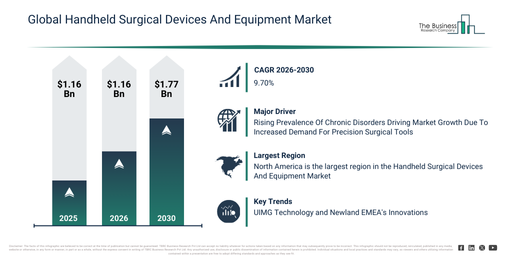
    In recent years, the handheld surgical devices and equipment market has demonstrated robust growth, moving from $8.86 billion in 2025 to an anticipated $9.65 billion in 2026 at a compound annual growth rate (CAGR) of 8.9%. This growth reflects increased surgical volumes, hospital infrastructure development, more minimally invasive surgeries, improved safety standards, and the availability of standardized instrument kits. Looking ahead, the market is forecasted to surge to $13.95 billion by 2030, growing at a CAGR of 9.7%. The forecasted expansion is fueled by greater adoption of single-use devices, growing demand from ambulatory surgery centers, the rise in specialty surgical procedures, a focus on cost-efficient tools, and increased investments in surgical infrastructure. Emerging trends include a preference for ergonomically designed instruments, widespread use of disposable handheld tools, heightened attention to infection control, specialty-specific instrument sets, and precision-engineered surgical devices.

    Download A Free Sample Report For Comprehensive Market Insights:

    https://www.thebusinessresearchcompany.com/sample.aspx?id=2420&type=smp

    Factors Driving Growth in the Handheld Surgical Devices Market

    One major factor supporting market expansion is the rising prevalence of chronic diseases. Chronic or non-communicable diseases are long-lasting conditions that progress slowly over time. Their increasing incidence has boosted the need for handheld surgical devices that facilitate minimally invasive procedures. These devices enable healthcare providers to conduct surgeries with enhanced accuracy and less trauma, improving patient outcomes. In July 2023, the United Kingdom’s Health Foundation reported that the number of people living with major illnesses in England is expected to rise by 37 percent by 2040—much faster than the 4 percent growth rate of the working-age population. This surge in chronic conditions is thus a significant driver behind the growing demand for handheld surgical instruments.

    Additional Market Drivers Shaping Demand

    Besides chronic disease prevalence, other factors influencing market growth include expanding hospital infrastructure worldwide and the increasing demand for safer, more efficient surgical tools. The push towards ambulatory surgery centers and specialty surgeries also encourages adoption of advanced handheld devices. Moreover, the shift toward cost-effective and single-use instruments helps reduce risks of infection and lowers overall healthcare expenses, further propelling market growth.

    Access The Complete Handheld Surgical Devices And Equipment Market Report:

    https://www.thebusinessresearchcompany.com/report/handheld-surgical-devices-and-equipment-global-market-report

    Key Segments Within the Handheld Surgical Devices and Equipment Market

    This market is organized into several important categories to better understand its structure. By product type, the segments include scalpels, forceps, retractors, dilators, graspers, and other surgical tools. Applications cover areas such as neurosurgery, cardiovascular surgery, orthopedic procedures, plastic and reconstructive surgeries, obstetrics and gynecology, alongside other specialties. Regarding end-users, the market serves hospitals, specialized clinics, ambulatory surgery centers, and various other healthcare providers. Subsegments further break down each product group—for example, scalpels are divided into disposable and reusable types; forceps include hemostatic, tissue, and surgical forceps; retractors can be handheld or self-retaining; dilators cover urethral, cervical, and esophageal types, while graspers include open surgical and manual handheld varieties. Other products encompass surgical hooks, scissors, clamps, spatulas, and needle holders.

    Innovations and Technologies Defining Market Trends

    Leading companies in the handheld surgical devices space are pushing forward with technological innovations to enhance surgery precision and safety. One notable advancement is UIMG image technology, a standardized format that enables efficient, cross-platform image handling with adaptive compression and resolution. For example, in November 2023, a Netherlands-based firm introduced the IVD Product Line at MEDICA, featuring high-performance barcode scanners designed for integration into in vitro diagnostic (IVD) instruments. These scanners provide ultra-fast scanning capabilities that improve the speed and accuracy of diagnostics, supporting better detection, prevention, and patient care.

    Top Players Shaping the Handheld Surgical Devices Market

    The competitive landscape includes prominent companies such as B. Braun Melsungen AG, Smith & Nephew, Johnson & Johnson Services Inc., Integra LifeSciences Corporation, Zimmer Biomet, CooperSurgical Inc., Becton Dickinson and Company, Moria, Pelion Surgical, Elite Medical, Millennium Surgical, Gsource LLC, Medicon eG, Sklar Corporation, Ethicon US LLC, CONMED Corporation, Synergetics USA Inc., Stryker Corporation, KLS Martin, Grena Ltd., GPC Medical Ltd., Teleflex Incorporated, and Cook Medical LLC. These organizations drive innovation and market growth through continuous product development and strategic collaborations.

    Geographical Breakdown and Regional Market Leaders

    In 2025, North America was the largest regional market for handheld surgical devices and equipment, reflecting advanced healthcare infrastructure and high adoption rates. Western Europe ranked as the second-largest market globally. The report also covers regions including Asia-Pacific, South East Asia, Eastern Europe, South America, the Middle East, and Africa, highlighting diverse growth opportunities and market trends across these areas.

    Get in touch with us:

    The Business Research Company: https://www.thebusinessresearchcompany.com/

    Americas: +1 310-496-7795

    Asia: +44 7882 955267 & +91 8897263534

    Europe: +44 7882 955267

    Email us at: marketing@tbrc.info

    Follow us on:

    LinkedIn: https://in.linkedin.com/company/the-business-research-company

    YouTube: https://www.youtube.com/channel/UC24_fI0rV8cR5DxlCpgmyFQ

    Global Market Model: https://www.thebusinessresearchcompany.com/global-market-model
  • Handheld Raman Spectroscopy Market Trends Are Creating New Opportunities For Industry Leaders

    Handheld Raman Spectroscopy Market Trends Are Creating New Opportunities For Industry Leaders

    Delivering more actionable and strategically valuable research, The Business Research Company’s 2026 market reports feature market attractiveness analysis, total addressable market evaluation, company benchmarking matrices, interactive Excel dashboards, expanded supply chain intelligence, emerging startup coverage, and detailed product insights.

    The handheld Raman spectroscopy market has been witnessing remarkable growth driven by the need for portable and efficient chemical analysis tools. As industries and research institutions increasingly seek fast and accurate on-site solutions, this market is poised for significant expansion. Below is an in-depth overview of the current market size, growth drivers, segmentation, technological advancements, key players, and regional trends shaping the future landscape of handheld Raman spectroscopy.

    Current Market Size and Projected Growth of the Handheld Raman Spectroscopy Market

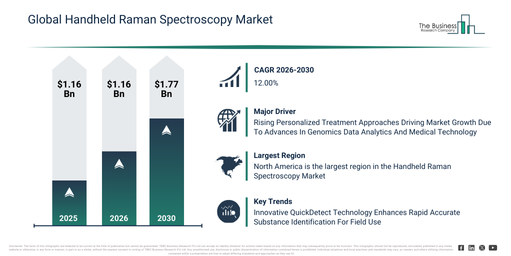
    The handheld Raman spectroscopy market has experienced rapid growth in recent years, expanding from $1.34 billion in 2025 to an expected $1.51 billion in 2026, reflecting a compound annual growth rate (CAGR) of 12.4%. This historic expansion is largely due to the high cost associated with benchtop Raman systems, limited portability of early devices, rising pharmaceutical research activities, and growing academic and industrial demand for laboratory-based chemical analysis. Moving forward, the market is anticipated to grow even faster, reaching $2.38 billion by 2030 with a CAGR of 12.0%. This surge will be supported by advancements in handheld and hybrid Raman technologies, greater adoption for on-site industrial and field testing, the use of AI-driven spectral analysis, increasing quality assurance requirements in pharmaceuticals and biotechnology, and innovations in battery-powered, mobile-integrated Raman instruments. Notable trends during the forecast period include heightened demand for portable devices, integration with real-time chemical analysis software, expanded pharmaceutical quality control applications, growth in environmental and field testing, and a focus on lightweight, user-friendly designs.

    Download A Free Sample Report For Comprehensive Market Insights:

    https://www.thebusinessresearchcompany.com/sample.aspx?id=24552&type=smp

    Key Factors Energizing Demand in the Handheld Raman Spectroscopy Market

    One significant driver of market growth is the rise of personalized treatment approaches in healthcare. Personalized medicine tailors therapies to an individual’s genetic profile, lifestyle, and environment to improve treatment effectiveness. Developments in genetic and molecular profiling have accelerated this trend by enabling customized therapies based on unique biological markers. Handheld Raman spectroscopy supports personalized care by providing rapid, non-invasive molecular analysis at the point of care, empowering clinicians to make precise therapeutic decisions grounded in detailed chemical and biochemical data. For instance, the Personalized Medicine Coalition reported in February 2024 that the FDA approved 16 new personalized treatments for rare diseases in 2023, up from six approvals in 2022, exemplifying the growing emphasis on tailored medicine and driving demand for Raman technology.

    Additional Market Expansion Drivers in Handheld Raman Spectroscopy

    Besides personalized medicine, ongoing advancements in technology and shifting industry needs contribute to market growth. The transition from bulky, stationary Raman systems to compact, portable, and hybrid devices has opened up new possibilities for on-site analysis across diverse sectors. Moreover, the integration of AI and machine learning with Raman spectroscopy enhances the precision and speed of spectral interpretation, broadening its applications. The pharmaceutical and biotechnology industries continue to adopt handheld Raman tools for quality control and validation, while environmental monitoring and field testing also present growing opportunities.

    Access The Complete Handheld Raman Spectroscopy Market Report:

    https://www.thebusinessresearchcompany.com/report/handheld-raman-spectroscopy-global-market-report

    Breakdown of Handheld Raman Spectroscopy Market Segments

    This market is categorized across several dimensions:

    1) Product Type, including Portable Raman Spectroscopy and Handheld Raman Spectroscopy.

    2) Components such as Raman Spectrometers, Accessories, and Software Solutions.

    3) Technology types like Surface-Enhanced Raman Scattering (SERS) and Standard Raman Spectroscopy.

    4) End-Users including Academic and Research Institutes, Pharmaceutical and Biotechnology Companies, and other sectors.

    Subcategories provide further granularity: Portable Raman includes handheld portable Raman, laptop-based portable Raman, mobile integrated Raman, and battery-powered portable Raman. Handheld Raman covers standard handheld Raman, hybrid handheld Raman, industrial-grade handheld Raman, and consumer or field-use handheld Raman devices.

    Innovative Developments Shaping the Handheld Raman Spectroscopy Market

    Leading companies are focused on enhancing technology to improve speed, sensitivity, and accuracy in real-time chemical identification. A notable example is QuickDetect technology, which enables rapid detection of substances, even in trace amounts and through packaging or complex mixtures. This innovation facilitates swift on-site analysis crucial for safety and regulatory compliance. For example, in September 2023, Rigaku Analytical Devices Inc. introduced the CQL Narc-ID, a handheld 1064 nm Raman analyzer purpose-built for the quick identification of narcotics, cutting agents, and precursor chemicals. The device features QuickDetect, a rugged design, built-in spectral libraries, and real-time reporting tailored to support law enforcement and public safety efforts.

    Major Industry Players and Their Market Roles

    Key players shaping the handheld Raman spectroscopy market include Thermo Fisher Scientific Inc., Agilent Technologies Inc., Bruker Corporation, Horiba Scientific, Anton Paar GmbH, Metrohm AG, Smiths Detection Inc., SciAps Inc., SOL Instruments Ltd., Jasco Inc., Wasatch Photonics Inc., BaySpec Inc., Enhanced Spectrometry Inc., Analyticon Instruments GmbH, TechnoSpex Pte Ltd., Snowy Range Instruments, Rigaku Analytical Devices Inc., B&W Tek Inc., Kaiser Optical Systems Inc., and Ocean Insight Inc. These companies are driving innovation, expanding product portfolios, and strengthening distribution to meet growing global demand.

    Geographical Insights into Handheld Raman Spectroscopy Market Performance

    In 2025, North America held the largest share of the handheld Raman spectroscopy market, reflecting strong adoption across pharmaceutical, research, and industrial sectors. Meanwhile, the Asia-Pacific region is projected to be the fastest-growing market during the forecast period. The comprehensive market analysis also covers regions such as South East Asia, Western Europe, Eastern Europe, South America, the Middle East, and Africa, providing a global perspective on emerging opportunities and regional dynamics.

    Get in touch with us:

    The Business Research Company: https://www.thebusinessresearchcompany.com/

    Americas: +1 310-496-7795

    Asia: +44 7882 955267 & +91 8897263534

    Europe: +44 7882 955267

    Email us at: marketing@tbrc.info

    Follow us on:

    LinkedIn: https://in.linkedin.com/company/the-business-research-company

    YouTube: https://www.youtube.com/channel/UC24_fI0rV8cR5DxlCpgmyFQ

    Global Market Model: https://www.thebusinessresearchcompany.com/global-market-model
  • Handheld Multi-Parameter Monitoring Device Market Growth Is Reshaping Competitive Advantage Across The Industry

    Handheld Multi-Parameter Monitoring Device Market Growth Is Reshaping Competitive Advantage Across The Industry

    Enhanced with market attractiveness analysis, total addressable market evaluation, company benchmarking matrices, interactive Excel dashboards, expanded supply chain intelligence, emerging startup coverage, and detailed product insights, The Business Research Company’s 2026 market reports deliver more actionable and strategically valuable research.

    The handheld multi-parameter monitoring device market has been expanding rapidly, reflecting the growing demand for portable and efficient health monitoring solutions. This overview explores the current market size, growth factors, key players, and future trends shaping this important healthcare technology sector.

    Market Size of the Handheld Multi-Parameter Monitoring Device Market and Its Growth Potential

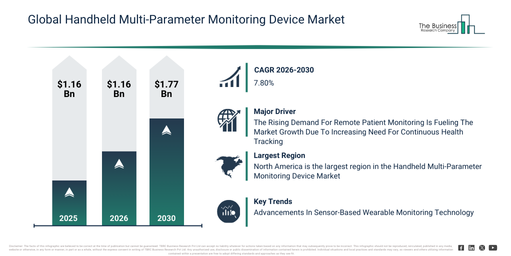
    The market for handheld multi-parameter monitoring devices has experienced substantial growth in recent years. It is projected to increase from $3.69 billion in 2025 to $3.99 billion in 2026, representing a compound annual growth rate (CAGR) of 8.1%. This historical growth was driven by limited availability of portable devices, dependence on wired connections, expansion of hospital and clinical infrastructure, and rising demand for vital sign monitoring alongside traditional patient assessment methods. Looking ahead, the market is expected to continue its upward trajectory, reaching $5.38 billion by 2030 with a CAGR of 7.8%. The forecast period benefits from advances in wireless and wearable technologies, broader adoption of telehealth and homecare services, increased use of sophisticated multi-parameter monitors, integration with artificial intelligence and cloud platforms, as well as growth in pediatric and ambulatory care sectors. Key trends include a surge in wireless and wearable devices, expansion of remote patient monitoring (RPM) solutions, and the growing emphasis on portability, ease of use, real-time data accuracy, and patient safety.

    Download A Free Sample Report For Comprehensive Market Insights:

    https://www.thebusinessresearchcompany.com/sample.aspx?id=24551&type=smp

    Key Factors Propelling the Handheld Multi-Parameter Monitoring Device Market Forward

    One major driver fueling market growth is the rising interest in remote patient monitoring. This technology involves collecting patient health data digitally at one location and transmitting it electronically to healthcare providers elsewhere for evaluation and guidance. The increasing demand for RPM mainly stems from the growing prevalence of chronic diseases, which require continuous health surveillance to manage symptoms, prevent complications, and reduce hospital visits. Handheld multi-parameter devices play an essential role in RPM by tracking vital signs such as heart rate, blood pressure, and oxygen saturation. These devices enable early detection of health problems, facilitate ongoing care for chronic conditions, and allow real-time data sharing that improves convenience and reduces hospital admissions. For example, in August 2023, the Alliance for Connected Care, a US nonprofit organization, reported that 81% of clinicians were using RPM, with 84% planning to expand its use in 2024; notably, 45% of providers employ RPM for acute care, including hospital-at-home programs. This growing uptake of remote monitoring solutions strongly supports the handheld multi-parameter monitoring device market’s expansion.

    Chronic Diseases Driving Demand for Continuous Monitoring Devices in the Handheld Multi-Parameter Monitoring Device Market

    Another key factor pushing this market forward is the increasing prevalence of chronic diseases, which require ongoing management over long periods. Chronic conditions such as diabetes, heart disease, and arthritis tend to impact quality of life deeply and persist for three months or more. Factors contributing to their rise include aging populations, unhealthy lifestyles, poor diets, insufficient physical activity, and elevated stress levels. Handheld multi-parameter monitors enable continuous, real-time tracking of crucial vital signs outside traditional clinical environments, allowing healthcare providers to identify deteriorations earlier and intervene promptly. For instance, in April 2025, the NIHCM Foundation, a US nonprofit, noted that chronic diseases affect roughly 60% of Americans, many of whom have multiple chronic illnesses. This widespread burden of chronic conditions is a significant catalyst for the increasing adoption of handheld multi-parameter monitoring devices.

    Access The Complete Handheld Multi-Parameter Monitoring Device Market Report:

    https://www.thebusinessresearchcompany.com/report/handheld-multi-parameter-monitoring-device-global-market-report

    Understanding the Structure of the Handheld Multi-Parameter Monitoring Device Market

    This market is divided into several key segments to better understand its composition:

    1) Device Type: Basic Vital Sign Monitors, Advanced Multi-Parameter Monitors, Fetal Monitors, Remote Patient Monitoring Devices (RPM)

    2) Connectivity: Wired Devices, Wireless Devices

    3) Application Area: Intensive Care, Clinical Care, Ambulatory Care, Pediatric Care, Other Applications

    4) End User: Hospitals, Ambulatory Surgical Centers, Homecare Settings, Other End Users

    Further subsegments within device types include pulse oximeters, blood pressure monitors, thermometers, glucose monitors, and heart rate monitors for basic devices; electrocardiogram (ECG) monitors, capnography monitors, respiratory rate monitors, and hemoglobin monitors for advanced devices; Doppler fetal and fetal heart rate monitors; and wearable health trackers, telehealth monitoring devices, mobile health (mHealth) devices, and wireless vital sign monitors within the RPM category.

    Key Technological Advances and Future Trends Impacting the Handheld Multi-Parameter Monitoring Device Market

    Leading companies in this space are investing heavily in medical technology improvements, especially in sensor technology, to deliver more accurate, reliable, and timely monitoring of vital signs. Sensors can detect and measure physical or environmental changes such as temperature, motion, or pressure, which are critical in health monitoring. For example, in May 2024, Sempulse Corporation, a US-based medical device maker, introduced the Halo Vital Signs Monitoring System. This compact, durable wearable attaches behind the ear or on the neck and provides continuous, non-invasive monitoring of core body temperature, skin temperature, oxygen saturation (SpO2), pulse rate, and respiratory rate. The device is designed for high accuracy even when the wearer is active or in challenging environments, supporting rapid clinical decisions in emergency or remote care settings.

    Leading Players in the Handheld Multi-Parameter Monitoring Device Market

    The handheld multi-parameter monitoring device market is shaped by numerous prominent companies, including Abbott Laboratories, Medtronic Public Limited Company, Koninklijke Philips N.V., GE HealthCare Technologies Inc., Omron Healthcare Co. Ltd., Shenzhen Mindray Bio-Medical Electronics Co. Ltd., Masimo Corporation, Nihon Kohden Corporation, Lepu Medical Technology Beijing Co. Ltd., Qingdao Meditech Equipment Co. Ltd., Wuhan Zoncare Bio-Medical Electronics Co. Ltd., BPL Medical Technologies Pvt. Ltd., Schiller Healthcare India Pvt. Ltd., Contec Medical Systems Co. Ltd., aXcent medical GmbH, Jiangsu Yuyue Medical Instruments Co. Ltd., Edan Instruments Inc., iHealth Labs Inc., Nonin Medical Inc., Welch Allyn Inc., Beurer GmbH, and SunTech Medical Inc. These companies continue to innovate and expand their market presence through advanced technology and strategic collaborations.

    Geographical Outlook on the Handheld Multi-Parameter Monitoring Device Market

    In 2025, North America held the largest share of the handheld multi-parameter monitoring device market, reflecting its advanced healthcare infrastructure and early technology adoption. The market report also covers other key regions such as Asia-Pacific, South East Asia, Western Europe, Eastern Europe, South America, the Middle East, and Africa, providing a detailed view of global opportunities and growth patterns. The Asia-Pacific region, in particular, is expected to demonstrate rapid growth driven by rising healthcare investments, increasing telehealth adoption, and expanding clinical care infrastructure.

    Get in touch with us:

    The Business Research Company: https://www.thebusinessresearchcompany.com/

    Americas: +1 310-496-7795

    Asia: +44 7882 955267 & +91 8897263534

    Europe: +44 7882 955267

    Email us at: marketing@tbrc.info

    Follow us on:

    LinkedIn: https://in.linkedin.com/company/the-business-research-company

    YouTube: https://www.youtube.com/channel/UC24_fI0rV8cR5DxlCpgmyFQ

    Global Market Model: https://www.thebusinessresearchcompany.com/global-market-model
  • Dental Preventive Supplies Market Growth Is Accelerating As Industry Transformation Continues

    Dental Preventive Supplies Market Growth Is Accelerating As Industry Transformation Continues

    Through market attractiveness analysis, total addressable market evaluation, company benchmarking matrices, interactive Excel dashboards, expanded supply chain intelligence, emerging startup coverage, and detailed product insights, The Business Research Company’s 2026 market reports provide more actionable and strategically valuable research.

    The dental preventive supplies market is experiencing steady growth, driven by increasing awareness about oral health and advancements in product innovation. This sector’s expansion is influenced by various factors ranging from rising dental disease prevalence to evolving consumer preferences for more effective and sustainable oral care solutions. Let’s explore the current market size, key growth drivers, segmentation, competitive landscape, and regional outlook shaping this important industry.

    Current Market Size and Growth Prospects in the Dental Preventive Supplies Market

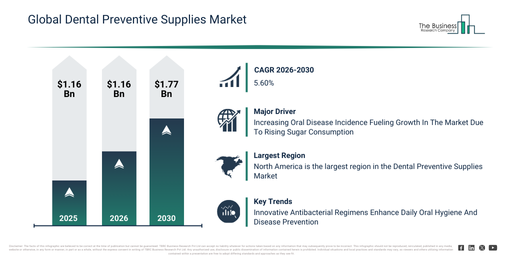
    The dental preventive supplies market has shown consistent expansion in recent years. It is projected to increase from $5 billion in 2025 to $5.29 billion in 2026, growing at a compound annual growth rate (CAGR) of 5.8%. Looking ahead, the market is expected to reach $6.57 billion by 2030, with a slightly moderated CAGR of 5.6%. The historical growth has been largely influenced by the rising occurrence of dental caries, widespread use of manual toothbrushes, limited oral care awareness in developing countries, dependence on traditional retail outlets, and relatively low usage of interdental brushes.

    Download A Free Sample Report For Comprehensive Market Insights:

    https://www.thebusinessresearchcompany.com/sample.aspx?id=25741&type=smp

    Factors Contributing to Future Market Growth

    In the coming years, the dental preventive supplies market is anticipated to grow strongly, backed by increasing preventive dental care initiatives. The rising popularity of electric and smart toothbrushes, expansion of dental clinics and professional oral hygiene services, and greater availability of biodegradable and natural fiber oral care products are significant contributors to this progress.

    Emerging trends also play a major role, with a growing emphasis on oral hygiene awareness, higher adoption rates of herbal and fluoride-based products, increasing use of electric and soft-bristle toothbrushes, growth in e-commerce and online retail channels, and a stronger demand for cosmetic oral care products such as teeth whitening solutions.

    Access The Complete Dental Preventive Supplies Market Report:

    https://www.thebusinessresearchcompany.com/report/dental-preventive-supplies-global-market-report

    Understanding the Impact of Oral Diseases on Market Demand

    A major factor driving the dental preventive supplies market is the growing burden of oral diseases worldwide. These conditions, which include tooth decay, gum disease, oral infections, and oral cancer, are becoming more prevalent due to increased sugar consumption that promotes harmful bacterial growth in the mouth. Dental preventive products help reduce plaque, maintain oral hygiene, and protect teeth and gums from decay and infection. For instance, in May 2024, the World Health Organization reported that oral diseases affect around 3.5 billion people globally, highlighting their status as one of the most common noncommunicable diseases and underscoring the urgent need for effective preventive care.

    Detailed Segmentation of the Dental Preventive Supplies Market

    The market is segmented based on various criteria to provide a comprehensive understanding of its structure:

    1) Product Type: Toothbrushes, Toothpaste, Dental Floss, Interdental Brushes, Rinses and Mouthwashes, Dental Chewing Gums

    2) Material Type: Plastic, Natural Fiber, Metal, Synthetic Fiber, Biodegradable Materials

    3) Distribution Channel: Retail Pharmacies, Drug Stores, E-Commerce

    4) Application: Teeth Cleaning, Teeth Whitening, Teeth Coating

    5) End-User: Individuals, Dental Clinics, Hospitals, Nursing Homes, Schools and Educational Institutions, Corporate Offices

    Further subcategories include:

    – Toothbrushes: Manual, Electric, Soft Bristle

    – Toothpaste: Fluoride, Whitening, Herbal

    – Dental Floss: Waxed, Unwaxed, Flavored

    – Interdental Brushes: Plastic Handle, Wire Handle, Reusable

    – Rinses and Mouthwashes: Fluoride, Antiseptic, Cosmetic

    – Dental Chewing Gums: Sugar-Free, Xylitol-Based, Fluoride-Infused

    Innovations and Strategic Trends in the Dental Preventive Supplies Market

    Leading companies are focusing on innovation by developing antibacterial oral care regimens that offer more comprehensive protection against oral diseases. These regimens incorporate antibacterial agents to combat harmful bacteria responsible for plaque, gum disease, and bad breath, thereby enhancing oral hygiene.

    A notable example is the February 2025 launch by The Colgate-Palmolive Company of its Colgate Total Active Prevention System. This three-product regimen (toothpaste, toothbrush, and mouthwash) is designed to proactively reduce oral bacteria and is reported to be 15 times more effective at preventing issues like gingivitis and cavities compared to standard products. This innovative system aims to provide clinically proven, comprehensive oral health protection, helping users maintain healthier mouths and be prepared for dental visits every day.

    Competitive Landscape and Leading Players in Dental Preventive Supplies

    The market is populated by prominent companies including Procter and Gamble, 3M Oral Care, Koninklijke Philips NV, Colgate-Palmolive Company, Henry Schein Inc, Dentsply Sirona Inc, Sunstar Americas GUM, Ultradent Products Inc, Kerr Dental, Septodont Holding SAS, Voco GmbH, GC Corporation, Premier Dental Products Company, DenMat Holdings LLC, Bisco Dental, Pulpdent Corporation, Young Dental, The Dentists Supply Company, Lion Corporation Oral Care, Church and Dwight Co Inc, Dr Fresh LLC, and Unilever Oral Care. These players are continuously investing in research and development to address evolving consumer demands and maintain competitive advantages.

    Regional Market Overview and Growth Forecast

    In 2025, North America held the largest share of the dental preventive supplies market. However, the Asia-Pacific region is expected to emerge as the fastest-growing market during the forecast period. The report also considers other key regions including South East Asia, Western Europe, Eastern Europe, South America, the Middle East, and Africa, providing a global perspective on market trends and opportunities.

    Get in touch with us:

    The Business Research Company: https://www.thebusinessresearchcompany.com/

    Americas: +1 310-496-7795

    Asia: +44 7882 955267 & +91 8897263534

    Europe: +44 7882 955267

    Email us at: marketing@tbrc.info

    Follow us on:

    LinkedIn: https://in.linkedin.com/company/the-business-research-company

    YouTube: https://www.youtube.com/channel/UC24_fI0rV8cR5DxlCpgmyFQ

    Global Market Model: https://www.thebusinessresearchcompany.com/global-market-model
  • Dental Polishing Machine Market Outlook Highlights The Next Major Growth Opportunities

    Dental Polishing Machine Market Outlook Highlights The Next Major Growth Opportunities

    Delivering more actionable and strategically valuable research, The Business Research Company’s 2026 market reports feature market attractiveness analysis, total addressable market evaluation, company benchmarking matrices, interactive Excel dashboards, expanded supply chain intelligence, emerging startup coverage, and detailed product insights.

    The dental polishing machine market has been experiencing notable growth recently, driven by advancements in dental care and increasing demand for aesthetic dental procedures. As oral health awareness rises globally, the market is set to expand further, reflecting important shifts in both technology and consumer preferences. Let’s explore the current market size, key factors influencing growth, leading players, and emerging trends shaping this sector.

    Significant Market Size and Growth Forecast for Dental Polishing Machines

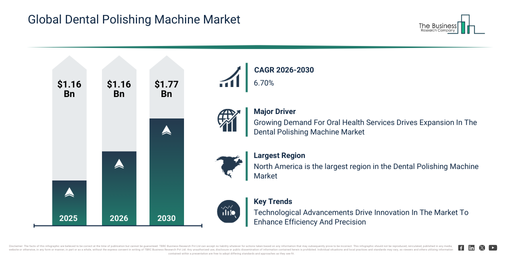
    The dental polishing machine market has demonstrated strong expansion in recent years, with its size expected to increase from $3.53 billion in 2025 to $3.77 billion in 2026, registering a compound annual growth rate (CAGR) of 6.7%. This historical growth has been driven by factors such as the rise in restorative dental procedures, greater adoption of dental fillings and crowns, expansion of private dental clinics, heightened awareness of cosmetic dentistry, and improved accessibility to dental equipment. Looking ahead, the market is projected to continue this upward trend, reaching $4.88 billion by 2030, maintaining the same CAGR of 6.7%. The anticipated growth is attributed to growing demand for cosmetic dentistry, heightened patient expectations for aesthetic results, expansion of dental research facilities, increased use of advanced dental materials, and rising healthcare expenditure focused on dental care.

    Download A Free Sample Report For Comprehensive Market Insights:

    https://www.thebusinessresearchcompany.com/sample.aspx?id=18785&type=smp

    Key Drivers Fueling Dental Polishing Machine Market Expansion

    A rising demand for oral health services is expected to be a major factor propelling the dental polishing machine market forward. Oral health services encompass a variety of professional treatments aimed at maintaining and improving the teeth, gums, and overall oral condition. This surge is linked to growing public awareness of oral hygiene importance, advances in dental technology, and greater demand for both preventive and therapeutic dental care. Dental polishing machines play a crucial role in these services by cleaning and smoothing tooth surfaces, effectively removing plaque and stains to improve dental health and appearance.

    Supporting this growth, data from the Health & Social Care Business Services Organisation in the UK revealed that dental treatments performed in 2023/24 increased compared to the previous year. Specifically, the overall patient count grew by 2.4% compared to 2022/23, with a 4.3% rise among children and a 1.6% increase among adults. This trend clearly indicates the expanding need for oral health services, which in turn is driving demand for dental polishing machines.

    Access The Complete Dental Polishing Machine Market Report:

    https://www.thebusinessresearchcompany.com/report/dental-polishing-machine-global-market-report

    Breakdown of Market Segments Offering Revenue Prospects

    This market is divided into several key segments based on machine type, filling material, and application:

    1) By Machine Type: Electric Polishing Machine, Handheld Polishing Machine, Other Machine Types

    2) By Filling Material: Instrument Polishers, Disposable Polishers, Paste Polishers

    3) By Application: Dentist Clinics, Dental Research Facilities, Other Applications

    Further subcategories include:

    – Electric Polishing Machines split into Corded and Cordless types

    – Handheld Polishing Machines divided into Manual and Battery-Operated options

    – Other Machine Types include Bench-Top, Foot-Operated, and Air-Driven Polishing Machines

    Innovations Driving Transformation in the Dental Polishing Machine Market

    Leading manufacturers in the dental polishing machine sector are focusing on creating innovative products that emphasize lightweight designs, ergonomic features, and high performance. These solutions aim to boost efficiency, precision, and workflow in dental laboratories. The emphasis on ergonomic and easy-to-handle devices helps reduce operator fatigue while ensuring consistent and precise polishing results. For example, in March 2023, GPAINNOVA, a dental technology company based in Spain, introduced the DLyte Mini. This machine is recognized as the lightest polishing device for dental laboratories, offering improved workflow, reduced operator strain, and superior surface finishing for dental restorations. Such innovations contribute to higher productivity and support advanced dental manufacturing techniques.

    Key Companies Influencing the Dental Polishing Machine Industry

    Several prominent companies shape the direction of the dental polishing machine market. These include 3M Company, Henry Schein Inc., Dentsply Sirona Inc., Ivoclar Vivadent AG, Midmark Corporation, J. Morita Corp, Cefla S.C., Kerr Corporation, A-dec Inc., Coltene Whaledent Inc., Hu-Friedy Manufacturing Co LLC, Acteon Group, Brasseler USA Dental LLC, DentalEZ Group Inc., Air Techniques Inc., Belmont Equipment And Tech., Convergent Dental Inc., Aseptico Inc., BA International Ltd, Mydent International Inc., and Cosmedent Inc. Their ongoing investments in product development and innovation continue to advance market offerings.

    Regional Market Overview Highlighting North America’s Lead

    In 2025, North America stood as the largest regional market for dental polishing machines. The broader market analysis also covers regions including Asia-Pacific, South East Asia, Western Europe, Eastern Europe, South America, the Middle East, and Africa, providing a comprehensive perspective on global demand trends and growth opportunities.

    Get in touch with us:

    The Business Research Company: https://www.thebusinessresearchcompany.com/

    Americas: +1 310-496-7795

    Asia: +44 7882 955267 & +91 8897263534

    Europe: +44 7882 955267

    Email us at: marketing@tbrc.info

    Follow us on:

    LinkedIn: https://in.linkedin.com/company/the-business-research-company

    YouTube: https://www.youtube.com/channel/UC24_fI0rV8cR5DxlCpgmyFQ

    Global Market Model: https://www.thebusinessresearchcompany.com/global-market-model
  • Dental Orthotic Devices Market Trends And Growth Drivers Point To Strong Future Potential

    Dental Orthotic Devices Market Trends And Growth Drivers Point To Strong Future Potential

    Enhanced with market attractiveness analysis, total addressable market evaluation, company benchmarking matrices, interactive Excel dashboards, expanded supply chain intelligence, emerging startup coverage, and detailed product insights, The Business Research Company’s 2026 market reports deliver more actionable and strategically valuable research.

    The dental orthotic devices sector is witnessing notable growth fueled by advancements in technology and increased awareness of oral health issues. As demand for personalized and effective dental care solutions rises, this market is positioned for significant expansion. Below is an overview of the current market size, key growth drivers, segmentation, trends, competitive landscape, and regional insights shaping the future of dental orthotic devices.

    Dental Orthotic Devices Market Size Showing Strong Growth Potential

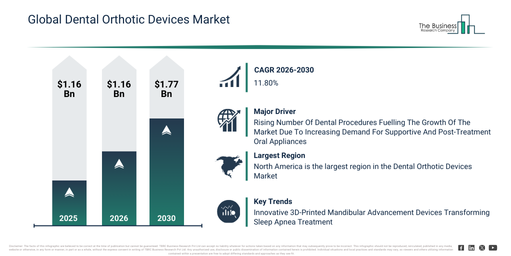
    The market for dental orthotic devices has expanded rapidly over recent years, with projections indicating a rise from $5.23 billion in 2025 to $5.87 billion in 2026, reflecting a compound annual growth rate (CAGR) of 12.1%. This growth during the historical period is mainly because of factors such as limited availability of customized dental orthotic solutions, continued use of traditional materials like metal and acrylic, heightened awareness around TMJ and bite disorders, expansion of dental clinics and orthopedic centers, and growing demand for post-surgical rehabilitation. Looking ahead, the market is expected to reach $9.15 billion by 2030 at a CAGR of 11.8%, driven by innovations such as 3D printing and digital impression technologies, increased spending on dental and orthopedic healthcare, growth in home care and specialized rehabilitation facilities, rising preference for tailored oral appliances, and the development of advanced composite and carbon fiber materials.

    Download A Free Sample Report For Comprehensive Market Insights:

    https://www.thebusinessresearchcompany.com/sample.aspx?id=27271&type=smp

    Key Factors Fueling Growth in the Dental Orthotic Devices Market

    One major factor supporting the market’s growth is the increase in dental procedures worldwide. These procedures encompass a broad range of treatments aimed at maintaining or improving dental health, appearance, and functionality. Growing public awareness about oral health has encouraged more people to undergo routine check-ups and preventive care, which in turn raises the demand for dental orthotic devices that offer customized support for jaw stabilization and bite alignment. These devices are crucial in treating conditions like TMJ disorders and bruxism by minimizing strain on oral structures and enhancing patient comfort and dental health outcomes.

    An example of this trend can be seen in January 2024, when Uniqa Dental, an Israel-based dental solutions provider, reported that approximately 5.5 million dental implants were placed in the United States during 2023, representing a 10% increase compared to the previous year. This surge in dental procedures directly contributes to the expanding demand for orthotic devices designed to support various dental treatments.

    Access The Complete Dental Orthotic Devices Market Report:

    https://www.thebusinessresearchcompany.com/report/dental-orthotic-devices-global-market-report

    Important Segments within the Dental Orthotic Devices Market

    The dental orthotic devices market is organized into several key segments to better understand product variations and applications. These include:

    1) Type: Anterior Repositioning Dental Orthotic Devices, Anterior Bite Plane Dental Orthotic Devices, Posterior Bite Plane Dental Orthotic Devices, and Other Types.

    2) Material: Metal, Plastic, Carbon Fiber, Rubber, and Composite Materials.

    3) Application: Orthodontics, Temporomandibular Joint (TMJ) Disorders, Post-Surgical Rehabilitation, Accident Recovery, and General Orthopedic Treatment.

    4) Distribution Channel: Online Stores and Offline Stores.

    5) End-User: Dental Clinics, Hospitals, Orthopedic Centers, Home Care Settings, and Specialized Rehabilitation Centers.

    Further subcategories include specific devices such as mandibular advancement devices, TMJ repositioning splints, bite planes of varying hardness, occlusal stabilization splints, and custom night guards, reflecting the breadth and specificity of products available in the market.

    Technological Advancements and Trends Shaping Market Direction

    Leading companies in the dental orthotic devices industry are investing heavily in technologically advanced solutions to improve treatment accuracy and patient comfort. One prominent innovation is the introduction of 3D-printed mandibular advancement devices, which are custom-fabricated oral appliances designed to reposition the lower jaw forward. These devices help maintain an open airway during sleep and are primarily used for managing obstructive sleep apnea and snoring.

    For example, in May 2024, Glidewell, a US-based dental manufacturer, launched the Silent Nite 3D Sleep Appliance. This digitally designed, 3D-printed device is made from durable light-cured resin and offers precise customization. It gently advances the lower jaw during sleep, utilizing adjustable nylon connectors that allow fine-tuning in small increments, improving both efficacy and patient comfort.

    Competitive Landscape of the Dental Orthotic Devices Industry

    The dental orthotic devices market features several prominent companies driving innovation and market growth. Key players include Dentsply Sirona Inc., Align Technology Inc., Straumann Holding AG, Glidewell, Ivoclar Vivadent AG, Ormco Corporation, Angelalign Technology Inc., ClearCorrect LLC, American Orthodontics Corporation, Byte Inc., TP Orthodontics Inc., Great Lakes Dental Technologies Inc., SCHEU-DENTAL GmbH, FORESTADENT Bernhard Förster GmbH, G&H Orthodontics Inc., ProSomnus Sleep Technologies, Vivos Therapeutics Inc., Smartee Denti-Technology Co. Ltd., Candid Care Co., Panthera Dental, Dynaflex Company LLC, Geniova Technologies S.L., and Institut Straumann AG. These organizations focus on product innovation, expanding distribution channels, and enhancing customization to meet growing consumer demands.

    Regional Market Trends Highlight North America’s Leadership and Asia-Pacific Growth

    In 2025, North America holds the largest share of the dental orthotic devices market, driven by advanced healthcare infrastructure, rising dental awareness, and innovation adoption. Meanwhile, the Asia-Pacific region is projected to experience the fastest growth rate during the forecast period due to increasing healthcare expenditure, expanding dental services, and rising consumer interest in personalized oral care solutions. Other important regions covered include South East Asia, Western Europe, Eastern Europe, South America, the Middle East, and Africa, each contributing to the global market dynamics in distinct ways.

    Get in touch with us:

    The Business Research Company: https://www.thebusinessresearchcompany.com/

    Americas: +1 310-496-7795

    Asia: +44 7882 955267 & +91 8897263534

    Europe: +44 7882 955267

    Email us at: marketing@tbrc.info

    Follow us on:

    LinkedIn: https://in.linkedin.com/company/the-business-research-company

    YouTube: https://www.youtube.com/channel/UC24_fI0rV8cR5DxlCpgmyFQ

    Global Market Model: https://www.thebusinessresearchcompany.com/global-market-model