Category: Medical Equipment

  • Hematology Analyzers and Reagents Market Forecast Reveals Where Future Industry Value Will Be Created

    Hematology Analyzers and Reagents Market Forecast Reveals Where Future Industry Value Will Be Created

    Through market attractiveness analysis, total addressable market evaluation, company benchmarking matrices, interactive Excel dashboards, expanded supply chain intelligence, emerging startup coverage, and detailed product insights, The Business Research Company’s 2026 market reports provide more actionable and strategically valuable research.

    The hematology analyzers and reagents market is evolving steadily, supported by ongoing advancements in diagnostic technologies and a growing need for accurate blood disorder testing. This industry plays a vital role in healthcare by enabling efficient analysis of blood samples, which is crucial for diagnosing and managing various diseases. Let’s explore the current market size, growth drivers, segmentation, key players, and geographic trends shaping this sector through 2030.

    Current Status and Growth Outlook for the Hematology Analyzers and Reagents Market

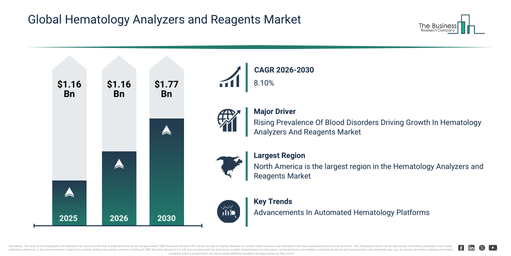
    In recent years, the hematology analyzers and reagents market has experienced modest growth, rising from $5.25 billion in 2025 to $5.26 billion in 2026, reflecting a low compound annual growth rate (CAGR) of 0.2%. This slow but steady expansion is largely driven by factors such as the increasing prevalence of anemia and other blood disorders, enhanced hospital and diagnostic lab infrastructure, continued reliance on manual and semi-automated analyzers, greater demand for complete blood count (CBC) testing, and the broadening scope of clinical diagnostic services.

    Download A Free Sample Report For Comprehensive Market Insights:

    https://www.thebusinessresearchcompany.com/sample.aspx?id=2572&type=smp

    Looking ahead, the market is poised for more robust growth with projections reaching $7.19 billion by 2030, at a healthy CAGR of 8.1%. This expected acceleration stems from the adoption of AI-powered cell analysis, widespread use of fully automated hematology systems, a stronger focus on precision medicine and personalized diagnostic approaches, expanding diagnostic centers across emerging markets, and rising demand for sophisticated reagents and consumables. Important trends for the forecast period include increasing use of automated and high-throughput analyzers, heightened demand for early and precise diagnosis of blood disorders, growth in point-of-care testing, expansion of reagent rental and consumable-based models, and an intensified emphasis on standardization and quality control in hematology testing.

    Rising Blood Disorder Rates as a Key Growth Driver in the Hematology Analyzers and Reagents Market

    One of the primary factors propelling the hematology analyzers and reagents market forward is the increasing prevalence of blood disorders. These medical conditions disrupt the normal functioning of blood components—such as red blood cells, white blood cells, or platelets—and require accurate diagnosis and ongoing monitoring. Hematology analyzers and reagents are essential tools in this process, helping to analyze blood cell counts and morphology, which are critical for detecting diseases like cancer.

    Access The Complete Hematology Analyzers and Reagents Market Report:

    https://www.thebusinessresearchcompany.com/report/hematology-analyzers-and-reagents-global-market-report

    For instance, according to Cancer Research UK in July 2024, the annual number of new Hodgkin lymphoma cases in the UK is projected to rise from about 2,400 cases during 2023-2025 to nearly 2,900 cases by 2038-2040. This increasing incidence underscores the growing demand for effective hematology testing equipment and reagents, contributing significantly to the expansion of the market.

    Detailed Segmentation of the Hematology Analyzers and Reagents Market

    The hematology analyzers and reagents market is categorized across several essential segments to provide a comprehensive view of its structure:

    1) By Product Type: Hematology Analyzers, Hemostasis Analyzers, Plasma Protein Analyzers, Hemoglobin Analyzers, Erythrocyte Sedimentation Rate (ESR) Analyzers, and Coagulation Analyzers.

    2) By Application: Anemias, Blood Cancers, Hemorrhagic Conditions, Infection-Related Conditions, Immune System Disorders, and other applications.

    3) By End User: Specialized Research Institutes, Hospitals, Specialized Diagnostic Centers, and other end users.

    Further subdivisions include:

    – Hematology Analyzers split into Automated and Semi-Automated versions.

    – Hemostasis Analyzers classified as Platelet Function Analyzers and Coagulation Testing Analyzers.

    – Plasma Protein Analyzers divided into Electrophoresis and Immunofixation Analyzers.

    – Hemoglobin Analyzers differentiated as Point-Of-Care and Laboratory Hemoglobin Analyzers.

    – ESR Analyzers segmented into Manual and Automated types.

    – Coagulation Analyzers categorized as Clotting Time Analyzers and Thromboelastography (TEG) Analyzers.

    Innovative Developments and Strategic Trends in the Hematology Market

    Leading companies in the hematology analyzers and reagents market are focusing on innovation to improve diagnostic precision, streamline laboratory operations, and deliver comprehensive patient data. Automated hematology platforms stand out as advanced, computerized instruments capable of performing complete blood counts and related tests rapidly and with minimal human input.

    For example, in January 2024, HORIBA Medical from France introduced the Yumizen Helo, a next-generation, fully automated, modular hematology system. This device combines a high-throughput analyzer with digital cell morphology and an automated reticulocyte module into one compact unit. Its standout feature is walkaway automation, where an intelligent robotic arm handles blood smear sorting and preparation automatically. This significantly cuts down manual steps compared to traditional benchtop analyzers that require separate, manual slide preparation and review processes. This innovation is designed to enhance clinical laboratory productivity by integrating multiple hematology tasks into a seamless, automated workflow.

    Key Players Leading the Hematology Analyzers and Reagents Market

    The competitive landscape of the hematology analyzers and reagents market features several prominent companies, including Abbott Laboratories, Bio-Rad Laboratories, Horiba Ltd., Siemens AG, Sysmex Corporation, BioSystems Diagnostics Pvt. Ltd, Boule Diagnostics, Danaher Corporation, Diatron MI PLC, Drew Scientific, EKF Diagnostics, Mindray, Nihon Kohden, Ortho Clinical Diagnostics, Roche, Beckman Coulter, Bayer AG, Heska, Drucker, Instrumentation Laboratory, Abaxis Inc., Accriva Diagnostics, ACON, Diamond Diagnostics, ERBA Diagnostics, Hycel, Maccura Biotechnology Co. Ltd., Genrui Biotech Inc., A&T Corporation, Beijing Succeeder Technology Inc., and Diagnostica Stago SAS.

    Regional Market Dynamics and Growth Hotspots

    In 2025, North America accounted for the largest share of the hematology analyzers and reagents market, followed by Western Europe as the second-largest region. The global analysis also includes detailed insights on Asia-Pacific, South East Asia, Eastern Europe, South America, the Middle East, and Africa, highlighting areas where market demand is growing most rapidly and offering a broad perspective on regional trends influencing this market’s trajectory.

    Get in touch with us:

    The Business Research Company: https://www.thebusinessresearchcompany.com/

    Americas: +1 310-496-7795

    Asia: +44 7882 955267 & +91 8897263534

    Europe: +44 7882 955267

    Email us at: marketing@tbrc.info

    Follow us on:

    LinkedIn: https://in.linkedin.com/company/the-business-research-company

    YouTube: https://www.youtube.com/channel/UC24_fI0rV8cR5DxlCpgmyFQ

    Global Market Model: https://www.thebusinessresearchcompany.com/global-market-model
  • Hematocrit Test Devices Market Growth Through 2030 Creates New Strategic Opportunities

    Hematocrit Test Devices Market Growth Through 2030 Creates New Strategic Opportunities

    Delivering more actionable and strategically valuable research, The Business Research Company’s 2026 market reports feature market attractiveness analysis, total addressable market evaluation, company benchmarking matrices, interactive Excel dashboards, expanded supply chain intelligence, emerging startup coverage, and detailed product insights.

    The hematocrit test devices market has experienced notable growth recently, driven by increasing healthcare needs and advancements in diagnostic technologies. As conditions related to blood health become more prevalent, the demand for accurate and efficient hematocrit testing solutions is rising. This overview explores the market’s current size, growth factors, key players, and evolving innovations shaping its future.

    Current Market Size and Projected Growth of the Hematocrit Test Devices Market

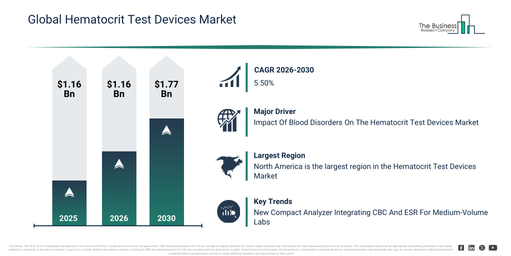
    The hematocrit test devices market demonstrated strong expansion from $4.91 billion in 2025 to $5.22 billion in 2026, growing at a compound annual growth rate (CAGR) of 6.4%. This growth during the past years has been driven by a rise in anemia and blood disorder cases, increasing diagnostic testing in hospitals and laboratories, higher demand for screening blood donors, the broadening scope of emergency and trauma care, and a stronger awareness of hematocrit monitoring in clinical settings. Looking ahead, the market is forecasted to reach $6.47 billion by 2030, growing at a CAGR of 5.5%. This anticipated growth will be fueled by the expanding need for point-of-care diagnostics, the rising incidence of chronic and lifestyle-related illnesses, the growth of decentralized health services and home-testing options, increased investments in diagnostic infrastructure, and a growing emphasis on early disease detection and preventive healthcare.

    Download A Free Sample Report For Comprehensive Market Insights:

    https://www.thebusinessresearchcompany.com/sample.aspx?id=15582&type=smp

    Factors Supporting Demand Growth in the Hematocrit Test Devices Market

    One key element bolstering the hematocrit test devices market is the rising occurrence of blood disorders worldwide. These disorders impact various blood components such as red and white blood cells, platelets, and plasma. Their increasing prevalence is influenced by genetic factors, environmental pollution, and lifestyle changes. Hematocrit test devices play a vital role in measuring the proportion of red blood cells in blood, providing essential data on a patient’s hematologic status. For instance, the American Cancer Society’s January 2024 report expects about 62,770 new leukemia cases in the US in 2024, with approximately 23,670 deaths. Acute myeloid leukemia (AML) accounts for roughly 20,800 new cases, primarily in adults, and about 11,220 deaths mostly within this group. Such statistics highlight how the rising number of blood disorders is steering demand for hematocrit testing technologies.

    Additional Drivers Accelerating Hematocrit Test Devices Market Demand

    Moreover, the growing awareness of hematocrit testing’s importance in routine health monitoring and chronic disease management continues to propel the market. The expansion of healthcare infrastructure and the integration of advanced diagnostic tools contribute further. Emergency care settings increasingly rely on rapid hematocrit testing to guide treatment decisions, enhancing patient outcomes and efficiency.

    Access The Complete Hematocrit Test Devices Market Report:

    https://www.thebusinessresearchcompany.com/report/hematocrit-test-devices-global-market-report

    Hematocrit Test Devices Market Segmentation and Revenue Generators

    The hematocrit test devices market is categorized into several segments to better understand its scope:

    1) Product types: Hematocrit Test Meter, Hematocrit Test Analyzer, and Reagents and Consumables.

    2) Applications: Anemia, Polycythemia Vera, Congenital Heart Diseases, and other uses.

    3) End-Users: Hospitals and Ambulatory Surgical Centers, Clinics, Diagnostic and Pathology Labs, and various other end-users.

    Within product subcategories, hematocrit test meters include handheld, portable, desktop, point-of-care, digital, and battery-powered variants. Hematocrit analyzers range from automated, benchtop, semi-automated, microhematocrit, high-throughput, to compact analyzers. Reagents and consumables consist of test strips, pipettes and capillaries, blood collection tubes, quality control reagents, calibration standards, and disposable kits.

    Technological Developments and Innovations Driving Market Transformation

    Leading companies in the hematocrit test devices sector are advancing their offerings by focusing on user-friendly platforms suited for medium-volume laboratories. These systems emphasize ease of use with minimal training required. For example, in March 2024, Mindray introduced the BC-700 Series, a compact hematology analyzer combining CBC and ESR testing in one device designed for smaller labs. It delivers results in 1.5 minutes, improving workflow efficiency. Its SF Cube 3D analysis technology allows precise cell differentiation, and the inclusion of the PLT-H parameter enhances platelet counting. Combining multiple tests into a single unit reduces costs for equipment and consumables. Available in open vial and autoloader formats, the BC-700 Series offers reliable, automated, and space-saving testing with strong consistency compared to traditional methods, alongside improved safety and repeatability.

    Key Companies Leading the Hematocrit Test Devices Market Competition

    The market features several prominent players, including F. Hoffmann-La Roche Ltd., Thermo Fisher Scientific Inc., Abbott Laboratories, Danaher Corporation, Siemens Healthcare GmbH, Becton Dickinson and Company, Terumo Corporation, Beckman Coulter Inc., Mindray Medical International Limited, bioMérieux SA, Sysmex Corporation, Horiba Ltd., Nihon Kohden Corporation, Erba Mannheim, EKF Diagnostics Holding Plc., Nova Biomedical Corporation, Boule Diagnostics AB, Stanbio Laboratory LP, Drucker Diagnostics, A. Menarini Diagnostics Srl, Sensa Core, and Mikroscan Technologies Inc. These organizations compete by innovating product features, expanding distribution networks, and enhancing service capabilities.

    Geographical Market Presence and Regional Leadership in Hematocrit Testing

    In 2025, North America held the largest share of the hematocrit test devices market. However, the Asia-Pacific region is expected to exhibit the fastest growth rate during the forecast period. The market report covers regions such as Asia-Pacific, Southeast Asia, Western Europe, Eastern Europe, North America, South America, the Middle East, and Africa, providing a detailed global perspective on market trends and opportunities.

    Get in touch with us:

    The Business Research Company: https://www.thebusinessresearchcompany.com/

    Americas: +1 310-496-7795

    Asia: +44 7882 955267 & +91 8897263534

    Europe: +44 7882 955267

    Email us at: marketing@tbrc.info

    Follow us on:

    LinkedIn: https://in.linkedin.com/company/the-business-research-company

    YouTube: https://www.youtube.com/channel/UC24_fI0rV8cR5DxlCpgmyFQ

    Global Market Model: https://www.thebusinessresearchcompany.com/global-market-model
  • Hemato Oncology Testing Market Size Projected To Increase From $4.49 Billion To $7.76 Billion During The Forecast Period

    Hemato Oncology Testing Market Size Projected To Increase From $4.49 Billion To $7.76 Billion During The Forecast Period

    Enhanced with market attractiveness analysis, total addressable market evaluation, company benchmarking matrices, interactive Excel dashboards, expanded supply chain intelligence, emerging startup coverage, and detailed product insights, The Business Research Company’s 2026 market reports deliver more actionable and strategically valuable research.

    The hemato oncology testing market is experiencing rapid expansion as advancements in diagnostic technologies and rising cancer incidences drive demand. This sector is evolving swiftly, offering promising revenue opportunities fueled by innovation and growing awareness around early detection and personalized medicine. Below is an overview of the market size, key factors influencing growth, leading companies, emerging trends, and regional insights shaping the future of hemato oncology testing.

    Current and Projected Size of the Hemato Oncology Testing Market

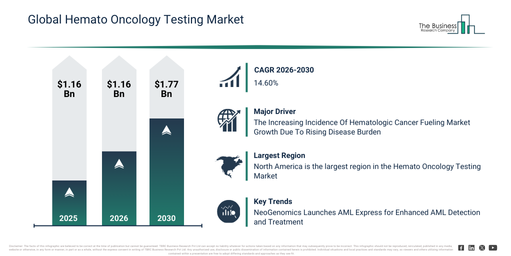
    The hemato oncology testing market has seen substantial growth recently and is projected to increase from $3.93 billion in 2025 to $4.5 billion in 2026, representing a compound annual growth rate (CAGR) of 14.4%. This expansion during the historical period is largely driven by the rising number of blood cancer cases, the growth of hospital diagnostic labs, heightened awareness about early cancer diagnosis, advances in clinical research, and the availability of sophisticated testing reagents. Looking ahead, the market is expected to continue this upward trajectory, reaching $7.76 billion by 2030 with a CAGR of 14.6%. Key future growth drivers include the adoption of precision oncology diagnostics, increased investments in genomic testing infrastructure, the rise of AI-powered diagnostic platforms, growing demand for companion diagnostics, and ongoing innovation in assay technologies. Emerging trends forecasted in this period include a surge in molecular diagnostic testing, expanded use of next-generation sequencing in oncology, heightened demand for personalized cancer diagnostics, broader implementation of automated laboratory systems, and deeper integration of data analytics in hemato-oncology.

    Download A Free Sample Report For Comprehensive Market Insights:

    https://www.thebusinessresearchcompany.com/sample.aspx?id=10075&type=smp

    Rising Hematologic Cancer Cases as a Major Growth Driver

    The increasing prevalence of hematologic cancers is a principal factor propelling the hemato oncology testing market’s expansion. Hematologic cancers, which originate in blood-forming tissues and affect blood, bone marrow, and the lymphatic system, include leukemia, lymphoma, and multiple myeloma. Early detection through hemato oncology testing is crucial in managing these diseases effectively. For example, Cancer Research UK reported in September 2025 that leukemia incidence in the UK is projected to hover around 17.9 cases per 100,000 people annually from 2024 to 2026, with a slight estimated decline of 3% to 17.4 cases per 100,000 people by 2038-2040. This upward trend in cancer incidence highlights the growing need for advanced testing solutions, fueling the market’s growth.

    Detailed Segmentation of the Hemato Oncology Testing Market

    This market is categorized across several dimensions to capture its diverse scope:

    – Product and Services: Assay Kits and Reagents, Services

    – Cancer Types: Leukemia, Lymphoma, Multiple Myeloma

    – Technologies: Polymerase Chain Reaction (PCR), Immunohistochemistry (IHC), Next-Generation Sequencing (NGS)

    – End Users: Hospitals, Academic and Research Institutes

    Further subsegments include specific assay kits such as PCR kits, NGS kits, flow cytometry reagents, and antibodies, alongside service-based offerings like testing services and data analysis services.

    Access The Complete Hemato Oncology Testing Market Report:

    https://www.thebusinessresearchcompany.com/report/hemato-oncology-testing-global-market-report

    Innovations and Trends Shaping the Hemato Oncology Testing Landscape

    Key players in the hemato oncology testing space are embracing next-generation sequencing (NGS) to enhance the precision and speed of genetic analysis. NGS technology enables comprehensive profiling of hematologic malignancies, facilitating tailored treatment approaches based on individual genetic profiles. For instance, in October 2024, NeoGenomics Inc., a US-based diagnostics and genomic testing firm, launched AML Express, an NGS tool designed for rapid mutation detection in Acute Myeloid Leukemia (AML). This platform provides high accuracy and fast turnaround times, empowering oncologists to make timely and personalized treatment decisions. AML Express exemplifies how cutting-edge diagnostics can improve patient outcomes by delivering precise genetic insights specific to AML.

    Key Industry Players Dominating the Hemato Oncology Testing Market

    The hemato oncology testing market features a competitive landscape with prominent companies including F. Hoffmann-La Roche Ltd., Abbott Laboratories, Thermo Fisher Scientific Inc., Illumina Inc., Invivoscribe Inc., Qiagen N.V., Bio-Rad Laboratories Inc., Archerdx Inc., ARUP Laboratories Inc., Asuragen Inc., Adaptive Biotechnologies Corp., Cepheid Inc., EntroGen Inc., CORE Diagnostics Inc., Genoptix Inc., GenPath Diagnostics, NeoGenomics Laboratories Inc., Siemens AG, Sysmex Corporation, Laboratory Corporation of America Holdings, Agilent Technologies, Danaher Corporation, Grifols SA, Diaorin SpA, HTG Molecular Diagnostics Inc., and Admera Health. These companies are at the forefront of developing innovative testing technologies and expanding diagnostic capabilities worldwide.

    Regional Market Dynamics and Growth Potential

    In 2025, North America held the largest share of the hemato oncology testing market, reflecting its advanced healthcare infrastructure and widespread adoption of cutting-edge diagnostics. Meanwhile, the Asia-Pacific region is anticipated to be the fastest-growing market throughout the forecast period. The analysis covers regions including Asia-Pacific, South East Asia, Western Europe, Eastern Europe, North America, South America, Middle East, and Africa, providing a comprehensive view of regional performance and growth prospects within the hemato oncology testing sector.

    Get in touch with us:

    The Business Research Company: https://www.thebusinessresearchcompany.com/

    Americas: +1 310-496-7795

    Asia: +44 7882 955267 & +91 8897263534

    Europe: +44 7882 955267

    Email us at: marketing@tbrc.info

    Follow us on:

    LinkedIn: https://in.linkedin.com/company/the-business-research-company

    YouTube: https://www.youtube.com/channel/UC24_fI0rV8cR5DxlCpgmyFQ

    Global Market Model: https://www.thebusinessresearchcompany.com/global-market-model
  • Heavy Payload Robotic Arm Market Growth Outlook Reveals A CAGR Of 7.4% And A Market Value Of $19.72 Billion By 2030

    Heavy Payload Robotic Arm Market Growth Outlook Reveals A CAGR Of 7.4% And A Market Value Of $19.72 Billion By 2030

    Through market attractiveness analysis, total addressable market evaluation, company benchmarking matrices, interactive Excel dashboards, expanded supply chain intelligence, emerging startup coverage, and detailed product insights, The Business Research Company’s 2026 market reports provide more actionable and strategically valuable research.

    The heavy payload robotic arm market is experiencing considerable growth as industries increasingly seek efficient automation solutions to handle heavy materials. With rapid technological advancements and expanding industrial applications, this market is set to see steady gains through 2030. Below, we explore the current market size, key factors fueling expansion, segmentation, industry trends, top players, and regional performance.

    Heavy Payload Robotic Arm Market Size and Growth Projections

    The market for heavy payload robotic arms has shown strong growth recently and is expected to continue expanding. From $13.79 billion in 2025, the market is projected to reach $14.84 billion in 2026, registering a compound annual growth rate (CAGR) of 7.6%. This past growth has been driven by industries heavily dependent on manual labor for material handling, limited automation in welding and metal fabrication, increasing industrial manufacturing output, growth in automotive production, and widespread use of standard robotic arm models.

    Download A Free Sample Report For Comprehensive Market Insights:

    https://www.thebusinessresearchcompany.com/sample.aspx?id=27303&type=smp

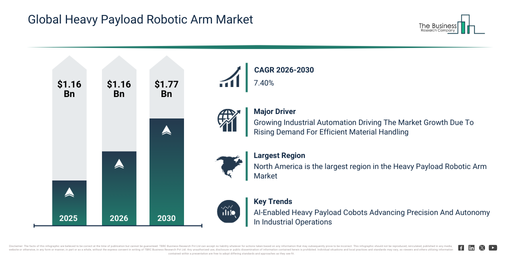
    Looking ahead, the market is forecasted to grow robustly, reaching $19.72 billion by 2030 with a CAGR of 7.4%. Factors supporting this expansion include advancements in multi-axis robotic arms, AI and machine learning integration for greater precision, rapid growth in electronics and automotive sectors, rising use in construction and chemical industries, and improvements in wireless and computer-based control technologies. Key emerging trends involve broader adoption of heavy payload arms in material handling, increased demand for multi-axis designs, enhanced automation in welding and metal fabrication, expanded applications in palletizing and packaging, and heightened emphasis on safety and accuracy in industrial operations.

    Factors Driving Growth in the Heavy Payload Robotic Arm Market

    Industrial automation is a major force propelling the demand for heavy payload robotic arms. By employing advanced control systems and machinery, industries can minimize human intervention in processes, leading to faster production, better precision, and less downtime. Heavy payload robotic arms play a critical role in this automation, efficiently handling cumbersome materials to boost productivity, reduce labor costs, and improve workplace safety.

    Access The Complete Heavy Payload Robotic Arm Market Report:

    https://www.thebusinessresearchcompany.com/report/heavy-payload-robotic-arm-global-market-report

    For example, in September 2024, the International Federation of Robotics (IFR) reported a 51% increase in industrial robot installations in the UK during 2023, totaling 3,830 units. This surge highlights the growing reliance on automated systems, which directly supports the heavy payload robotic arm market’s upward trajectory.

    Detailed Segmentation of the Heavy Payload Robotic Arm Market

    The heavy payload robotic arm market is categorized into several segments:

    1) By Type: Articulated, Cartesian, Selective Compliance Assembly Robot Arm (SCARA), Cylindrical, and Other Types

    2) By Payload Capacity: Up to 500 Kilograms (Kg), 500 to 1000 Kg, 1000 to 2000 Kg, and Over 2000 Kg

    3) By Control System: Manual Control, Programmable Logic Controller (PLC), Computer-Based Control Systems, Wireless Control Systems

    4) By Application: Material Handling, Welding and Metal Fabrication, Palletizing and Packaging, Other Applications

    5) By End-User Industry: Automotive, Healthcare, Electrical or Electronics, Metal and Machinery, Chemical, Construction, and Others

    Subcategories further break down each type: Articulated arms are divided into four, five, six, and seven axis models; Cartesian robots include two, three, and four axis as well as gantry types; SCARA robots comprise horizontal arm, vertically articulated, single arm, and dual arm variants; Cylindrical types feature fixed base, mobile base, dual arm, and telescopic designs; Other types cover spherical, delta, polar, and hybrid robotic arms.

    Innovations and Industry Trends Transforming the Heavy Payload Robotic Arm Market

    Leading companies in the sector are focusing on developing heavy payload collaborative robots (cobots) that work safely alongside human operators in demanding environments. These cobots combine strong lifting capacity with advanced safety mechanisms and adaptability across industries.

    A notable example is the TM30S model from Taiwan-based Techman Robot Inc., launched in May 2024. This robotic arm supports a maximum payload of 35 kg with a reach of 1,702 mm, and features integrated smart vision and a 3D camera powered by AI. This technology enables the robot to detect object size and position in real time, allowing it to perform palletizing, pick-and-place, and material handling without relying on fixed stacking patterns. Such AI-enabled vision systems enhance operational accuracy and autonomy in complex industrial environments, reflecting a growing trend toward smarter robotic solutions.

    Key Players Shaping the Heavy Payload Robotic Arm Industry

    The market is led by several prominent companies, including Mitsubishi Electric Corporation, ABB Ltd., Kawasaki Heavy Industries Ltd., Seiko Epson Corporation, Hyundai Heavy Industries Co. Ltd., FANUC Corporation, Yaskawa Electric Corporation, Stäubli International AG, NACHI-FUJIKOSHI CORP., Comau S.p.A., SIASUN Robot & Automation Co. Ltd., Scott Technology Limited, Vulcan Engineering Co. Inc., Ellison Technologies Inc., Apex Automation and Robotics Pty. Ltd., TM Robotics Ltd., OTC DAIHEN Inc., Black-I Robotics Inc., CHAIFU Industries Co. Ltd., and GS Automatic Co. Ltd. These players are instrumental in driving innovation and expanding market reach globally.

    Regional Market Leaders and Growth Outlook for Heavy Payload Robotic Arms

    In 2025, North America held the largest share of the heavy payload robotic arm market. Meanwhile, the Asia-Pacific region is anticipated to be the fastest-growing market throughout the forecast period. The comprehensive market analysis includes regions such as Asia-Pacific, South East Asia, Western Europe, Eastern Europe, North America, South America, the Middle East, and Africa, offering a global perspective on evolving market dynamics.

    Get in touch with us:

    The Business Research Company: https://www.thebusinessresearchcompany.com/

    Americas: +1 310-496-7795

    Asia: +44 7882 955267 & +91 8897263534

    Europe: +44 7882 955267

    Email us at: marketing@tbrc.info

    Follow us on:

    LinkedIn: https://in.linkedin.com/company/the-business-research-company

    YouTube: https://www.youtube.com/channel/UC24_fI0rV8cR5DxlCpgmyFQ

    Global Market Model: https://www.thebusinessresearchcompany.com/global-market-model
  • Heated Shoulder Wrap Market Forecast Highlights Expansion From $1.36 Billion To $1.99 Billion Through 2030

    Heated Shoulder Wrap Market Forecast Highlights Expansion From $1.36 Billion To $1.99 Billion Through 2030

    Delivering more actionable and strategically valuable research, The Business Research Company’s 2026 market reports feature market attractiveness analysis, total addressable market evaluation, company benchmarking matrices, interactive Excel dashboards, expanded supply chain intelligence, emerging startup coverage, and detailed product insights.

    The heated shoulder wrap market has gained significant traction recently, driven by an increasing focus on health, wellness, and effective pain management. As more people seek non-invasive therapies and convenient recovery solutions, this market is set to experience substantial growth. Let’s explore the current market size, key growth drivers, segment breakdowns, competitive players, and regional trends shaping the future of heated shoulder wraps.

    Heated Shoulder Wrap Market Size and Expected Growth Trajectory

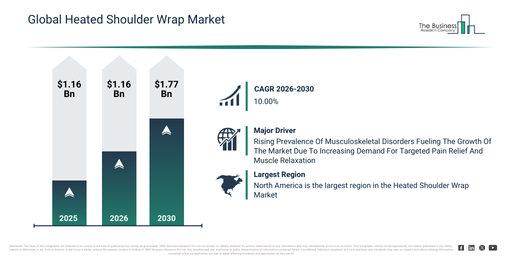
    The heated shoulder wrap market has seen rapid expansion in recent years and is forecasted to grow from $1.24 billion in 2025 to $1.37 billion in 2026, achieving a compound annual growth rate (CAGR) of 10.3%. This historical growth is mainly fueled by the rise in musculoskeletal disorders, the expanding home healthcare segment, the aging population, broader retail availability, and increased awareness of heat therapy’s benefits. Looking ahead, the market is projected to reach $2 billion by 2030, maintaining a strong CAGR of 10.0%. Factors driving this future growth include rising demand for sports rehabilitation, growth in e-commerce channels, innovative wearable heat therapy technologies, a higher prevalence of chronic pain, and greater adoption of smart therapeutic devices. Key market trends anticipated during the forecast period include increased preference for home therapy, portable and lightweight product designs, smart heated wraps, expanded use in sports recovery, and a growing inclination toward drug-free pain relief options.

    Download A Free Sample Report For Comprehensive Market Insights:

    https://www.thebusinessresearchcompany.com/sample.aspx?id=28243&type=smp

    Musculoskeletal Disorders as a Key Growth Catalyst in the Heated Shoulder Wrap Market

    One of the main factors boosting the heated shoulder wrap market is the increasing prevalence of musculoskeletal disorders worldwide. These disorders affect muscles, bones, joints, ligaments, tendons, or nerves, resulting in pain and reduced mobility. Sedentary lifestyles contribute significantly to this rise, as prolonged sitting and limited physical activity strain the musculoskeletal system, leading to chronic conditions. Heated shoulder wraps play a crucial role in managing these disorders by delivering targeted heat therapy that relaxes tight muscles, enhances blood circulation, reduces joint stiffness, and eases localized shoulder pain. For example, in January 2024, the UK’s Office for Health Improvement and Disparities reported that in 2023, 18.4% of individuals aged 16 and over experienced a long-term musculoskeletal condition, a slight increase from 17.6% in 2022. Notably, females (20.9%) reported these conditions more than males (15.8%). This growing prevalence is a significant driver of demand within the heated shoulder wrap market.

    Fitness Trends Accelerate Heated Shoulder Wrap Market Growth

    The rising popularity of fitness activities is also pushing the heated shoulder wrap market forward. Fitness routines involve structured physical movements aimed at improving health, physical fitness, and overall wellness. Growing health awareness motivates people to engage more in such activities to prevent chronic diseases and maintain well-being. Heated shoulder wraps complement fitness efforts by providing targeted muscle relief and enhancing recovery after workouts, alleviating soreness and discomfort through consistent heat therapy. This improved recovery supports better exercise performance and convenience. According to the Sports and Fitness Industry Association (SFIA), in February 2024, 242 million Americans—about 78.8% of the population—participated in at least one physical activity in 2023, marking a 2.2% increase compared to the previous year. This surge in fitness engagement is helping to drive growth in the heated shoulder wrap sector.

    Access The Complete Heated Shoulder Wrap Market Report:

    https://www.thebusinessresearchcompany.com/report/heated-shoulder-wrap-global-market-report

    Impact of Sports Injuries on Market Expansion of Heated Shoulder Wraps

    Another important factor fueling the heated shoulder wrap market is the rising number of sports-related injuries. These injuries occur during athletic, exercise, or recreational activities and have increased as more people participate in such pursuits. Heated shoulder wraps aid in managing these injuries by providing localized heat therapy that helps relieve muscle strains and joint pain, thereby reducing recovery time and discomfort. By improving blood flow and relaxing tense muscles, these wraps support effective post-injury care and boost athletic performance. For instance, data from the U.S. National Safety Council in 2024 shows that sports and recreational injuries increased to 564,845 cases, up from 482,886 in 2023. This growing injury incidence is a key factor driving demand in this market.

    Product and Distribution Segments Defining the Heated Shoulder Wrap Market

    This market is segmented by product type, distribution channels, applications, and end-users.

    – Product types include Electric Heated Shoulder Wraps, Microwaveable Heated Shoulder Wraps, Chemical Heated Shoulder Wraps, and other varieties.

    – Distribution channels cover Online Stores, Pharmacies, Specialty Stores, Supermarkets or Hypermarkets, and others.

    – Applications span Pain Relief, Injury Recovery, Sports Rehabilitation, and other uses.

    – End-users include Hospitals and Clinics, Home Care settings, Sports and Fitness Centers, among others.

    Further subdivisions exist within product types. For electric wraps, subcategories include Battery-Powered, Rechargeable, Corded, and Infrared varieties. Microwaveable wraps are classified into Herbal-Filled, Gel-Filled, Bead-Filled, and Grain-Filled. Chemical wraps include Single-Use, Reusable, Air-Activated, and Liquid-Based types. Additional product types include Hybrid, Smart, Water-Heated wraps, and Portable Heat Pack-Integrated wraps, offering a wide range of choices to meet diverse consumer needs.

    Key Players Leading the Heated Shoulder Wrap Market

    Several major companies are prominent in this market, such as Conair Corporation, DJO LLC, Beurer GmbH, TheraCare Inc., HoMedics Inc., Compass Health Brands, RENPHO, Pure Enrichment, ThermoTek Inc., Vive Health, iReliev, Nature Creation, UTK Technology, REVIX, TheraICE, Bedsure, Bearaby, Tech Love, Intelex Group, and Fabludo. These players contribute significantly to product innovation, distribution, and market penetration worldwide.

    Regional Market Insights and Future Opportunities

    North America held the largest share of the heated shoulder wrap market in 2025. However, the overall market outlook includes key regions such as Asia-Pacific, South East Asia, Western Europe, Eastern Europe, South America, Middle East, and Africa. Each region presents unique opportunities and challenges, with emerging markets expected to contribute notably to future growth due to rising healthcare awareness, expanding fitness trends, and improving retail infrastructure.

    Get in touch with us:

    The Business Research Company: https://www.thebusinessresearchcompany.com/

    Americas: +1 310-496-7795

    Asia: +44 7882 955267 & +91 8897263534

    Europe: +44 7882 955267

    Email us at: marketing@tbrc.info

    Follow us on:

    LinkedIn: https://in.linkedin.com/company/the-business-research-company

    YouTube: https://www.youtube.com/channel/UC24_fI0rV8cR5DxlCpgmyFQ

    Global Market Model: https://www.thebusinessresearchcompany.com/global-market-model
  • Heart Rate Monitoring Devices Market Expected To Reach $19.67 Billion By 2030 As Growth Accelerates At 8% CAGR

    Heart Rate Monitoring Devices Market Expected To Reach $19.67 Billion By 2030 As Growth Accelerates At 8% CAGR

    Enhanced with market attractiveness analysis, total addressable market evaluation, company benchmarking matrices, interactive Excel dashboards, expanded supply chain intelligence, emerging startup coverage, and detailed product insights, The Business Research Company’s 2026 market reports deliver more actionable and strategically valuable research.

    The heart rate monitoring devices market has seen impressive growth recently, driven by rising health awareness and technological advancements. As more people engage in physical fitness and seek better health management tools, the demand for these devices continues to accelerate. Let’s explore the current market size, key growth factors, segment details, notable trends, leading companies, and regional insights shaping this industry.

    Forecasting the Size and Growth of the Heart Rate Monitoring Devices Market

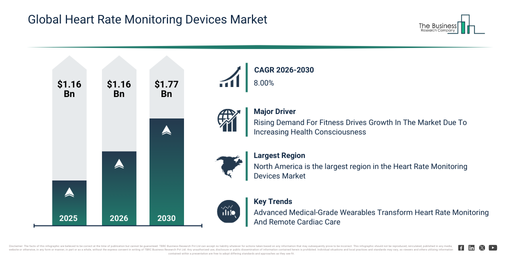
    The heart rate monitoring devices market has experienced substantial expansion in recent years. It is projected to grow from $13.37 billion in 2025 to $14.48 billion in 2026, at a compound annual growth rate (CAGR) of 8.3%. This past growth stems from factors such as limited availability of wearable heart rate devices in the past, reliance on conventional monitoring techniques, heightened awareness around cardiovascular health, increased participation in sports and fitness, and early integration with mobile technology. Looking ahead, the market is anticipated to reach $19.67 billion by 2030, growing at a CAGR of 8.0%. This forecasted growth is supported by advancements in sensor technology, the rising popularity of smartwatches and hybrid monitors, expansion of telemedicine and remote patient monitoring, broader adoption of AI-powered health analytics, and the growing use of sports performance monitoring solutions. Key trends expected to influence the market include increased uptake of wearable heart rate monitors, seamless integration with fitness and health applications, enhanced use in homecare and remote monitoring settings, preference for non-invasive devices, and continued growth in sports and fitness applications.

    Download A Free Sample Report For Comprehensive Market Insights:

    https://www.thebusinessresearchcompany.com/sample.aspx?id=24556&type=smp

    Fitness and Sports as Key Drivers Fueling Heart Rate Monitoring Devices Growth

    The surge in gym memberships and participation in physical sports is a major factor boosting the heart rate monitoring devices market. Gyms and sports activities are designed to enhance physical fitness, health, and athletic performance by providing structured exercise, training, and competition. Rising health awareness is encouraging more people to join gyms and engage in sports as a way to prevent lifestyle-related illnesses. In these settings, heart rate monitors play a vital role by providing real-time feedback on workout intensity, enabling users to stay within optimal heart rate zones. This helps improve athletic performance, reduces the risk of overtraining, and promotes faster recovery. For example, in August 2025, a survey reported by Time, a US media company, found that 80% of Americans—about 247 million people—participated in at least one sport or fitness activity annually. This increasing demand for gyms and sports activities is a significant factor driving the market forward.

    Segmenting the Heart Rate Monitoring Devices Market by Type and Application

    This market is categorized into several key segments to better understand consumer preferences and industry trends. By type, it includes wrist watch heart rate monitors, chest strap heart rate monitors, strapless heart rate monitors, and other types. Applications cover medical use, sports and fitness, exercise, and other relevant areas. The market also distinguishes end-users such as hospitals and clinics, homecare settings, and sports care centers. Diving deeper, wrist watch monitors are further broken down into fitness smartwatches, sports watches, medical-grade smartwatches, and hybrid smartwatches. Chest strap monitors include Bluetooth-enabled chest straps, Ant+ compatible straps, ECG-based chest straps, and waterproof options for swimming. Strapless monitors consist of finger-based pulse monitors, arm or forearm bands, wearable clothing with embedded sensors, and handheld devices. The “other types” segment features earbud heart rate monitors, smart clothing, and clip-on devices, offering diverse options tailored to specific user needs.

    Access The Complete Heart Rate Monitoring Devices Market Report:

    https://www.thebusinessresearchcompany.com/report/heart-rate-monitoring-devices-global-market-report

    Emerging Trends Highlight Advances in Heart Rate Monitoring Technology

    Leading companies in the heart rate monitoring market are increasingly focusing on innovative products like medical-grade wearable monitors, which provide continuous, accurate health tracking and support early detection of cardiovascular conditions. Medical-grade wearables are certified devices widely used in clinical environments and remote care settings to enable ongoing patient monitoring and timely identification of health concerns. For instance, in June 2023, Lithuania-based electronics manufacturer Teltonika introduced TeltoHeart—a multifunctional smart medical wristband. It offers continuous heart rate tracking and automatic arrhythmia detection through advanced photoplethysmography (PPG) technology. Notably, it records a detailed 6-lead ECG and allows users to share clinically valuable data easily with health professionals via an integrated telemedicine platform. This device stands out for its high accuracy, safety, and reliability, significantly enhancing early diagnosis, disease management, and cardiac care access, especially for patients in remote or underserved regions.

    Competitive Landscape of the Heart Rate Monitoring Devices Market

    The market is shaped by several prominent players including Apple Inc, Samsung Electronics Co Ltd, Huawei Technologies Co Ltd, Koninklijke Philips N V, Garmin Ltd, Polar Electro, Whoop, Beurer GmbH, Suunto, VitalConnect, Wahoo Fitness, Empatica Inc, Bellabeat Inc, Fitbit LLC, Qardio Inc, Ouraring Inc, Zewa Medical Technology, Veepoo Technology, Aurora Shenzhen Manufacture Co Ltd, Xiaomi Corporation, Amazfit Zepp Health Corporation, and Omron Healthcare Co Ltd. These companies are continuously innovating and competing to capture market share through advanced product offerings and strategic initiatives.

    Regional Market Distribution and Growth Outlook for Heart Rate Monitoring Devices

    In 2025, North America held the largest share of the heart rate monitoring devices market. The report covers important regions such as Asia-Pacific, South East Asia, Western Europe, Eastern Europe, North America, South America, the Middle East, and Africa, providing a comprehensive overview of global market dynamics. While North America leads currently, emerging markets in Asia-Pacific and other regions are also expected to witness significant growth in the coming years.

    Get in touch with us:

    The Business Research Company: https://www.thebusinessresearchcompany.com/

    Americas: +1 310-496-7795

    Asia: +44 7882 955267 & +91 8897263534

    Europe: +44 7882 955267

    Email us at: marketing@tbrc.info

    Follow us on:

    LinkedIn: https://in.linkedin.com/company/the-business-research-company

    YouTube: https://www.youtube.com/channel/UC24_fI0rV8cR5DxlCpgmyFQ

    Global Market Model: https://www.thebusinessresearchcompany.com/global-market-model
  • Heart Pump Devices Market Set To Grow From $5.32 Billion In 2026 To $10.37 Billion By 2030 At A CAGR Of 18.1%

    Heart Pump Devices Market Set To Grow From $5.32 Billion In 2026 To $10.37 Billion By 2030 At A CAGR Of 18.1%

    Through market attractiveness analysis, total addressable market evaluation, company benchmarking matrices, interactive Excel dashboards, expanded supply chain intelligence, emerging startup coverage, and detailed product insights, The Business Research Company’s 2026 market reports provide more actionable and strategically valuable research.

    The heart pump devices market is witnessing remarkable growth driven by advances in cardiac care and technology. As cardiovascular diseases become more prevalent worldwide, the demand for innovative heart support devices is accelerating. This overview delves into the market’s current size, the main factors fueling its expansion, key segments, industry trends, and the leading players shaping its future.

    Rapid Growth Forecast for the Heart Pump Devices Market

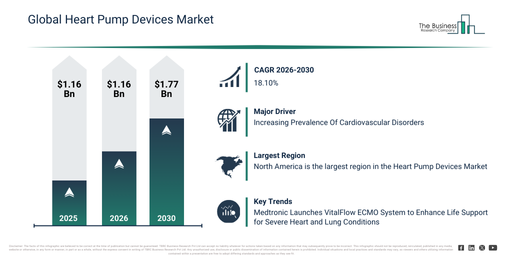
    The heart pump devices market has shown substantial growth recently and is expected to continue on this trajectory. From a market size of $4.48 billion in 2025, it is projected to rise to $5.32 billion in 2026, marking a CAGR of 19.0%. Factors behind this historical growth include an increasing number of heart failure cases, the spread of cardiac surgery programs, innovations in mechanical pump designs, longer transplant waiting lists, and the expanding use of extracorporeal support systems. Looking ahead, the market is predicted to reach $10.37 billion by 2030 with a CAGR of 18.1%, supported by rising demand for long-term circulatory support, wider adoption of destination therapy devices, growth in minimally invasive cardiac procedures, enhanced integration of smart monitoring technologies, and increased investments in cutting-edge cardiac care.

    Download A Free Sample Report For Comprehensive Market Insights:

    https://www.thebusinessresearchcompany.com/sample.aspx?id=8766&type=smp

    Primary Drivers Behind Heart Pump Devices Market Expansion

    The growing incidence of cardiovascular diseases is a key factor propelling the heart pump devices market forward. Cardiovascular disorders encompass a range of conditions affecting the heart and blood vessels, which necessitate advanced treatment options such as heart pump devices. These devices assist in maintaining blood flow during critical interventions like high-risk percutaneous coronary procedures, boosting their demand. For example, the American Heart Association reported that the age-adjusted death rate from cardiovascular disease in the United States increased to 233.3 per 100,000 people in 2024, up 4.0% from 224.4 per 100,000 in 2023. This rising prevalence underscores the urgent need for innovative cardiac support solutions, thereby driving market growth.

    Key Segments Defining Revenue Opportunities in the Heart Pump Devices Market

    This market is segmented into three main categories:

    1) By Type: Implantable Heart Pump Devices and Extracorporeal Heart Pump Devices

    2) By Therapy: Bridge-To-Transplant (BTT), Bridge-To-Candidacy (BTC), Destination Therapy (DT), and Other Therapies

    3) By End-user: Hospitals, Cardiac Specialty Hospitals/Heart Centers, Transplant Centers, and Other End-Users

    Further detail includes implantable devices such as Left Ventricular Assist Devices (LVADs), Right Ventricular Assist Devices (RVADs), Biventricular Assist Devices (BiVADs), and Total Artificial Hearts (TAHs). Extracorporeal heart pump devices cover Intra-Aortic Balloon Pumps (IABPs) and temporary Ventricular Assist Devices like centrifugal blood pumps.

    Access The Complete Heart Pump Devices Market Report:

    https://www.thebusinessresearchcompany.com/report/heart-pump-devices-global-market-report

    Emerging Trends Influencing the Heart Pump Devices Market

    Leading companies in the heart pump devices sector are increasingly focusing on extracorporeal membrane oxygenation (ECMO) technology to offer advanced life support for patients with severe cardiac and pulmonary failure. ECMO systems provide prolonged mechanical assistance by taking over the functions of the heart and lungs, which is critical in life-threatening situations. For instance, in September 2024, Medtronic plc introduced the VitalFlow system, an innovative ECMO solution combining a pump and oxygenator to support circulation in patients with serious heart or lung conditions. This technology enables vital organ rest and recovery, marking a significant advancement in the field.

    Prominent Companies Driving Innovation in the Heart Pump Devices Market

    The heart pump devices market includes several influential players shaping its development, such as Abbott Laboratories, Medtronic plc, Getinge AB, Terumo Corporation, LivaNova plc, SynCardia Systems Inc, CARMAT SA, Jarvik Heart Inc, BiVACOR Inc, CorWave SA, Fresenius Kabi AG, Asahi Kasei Medical Co Ltd, Nipro Corporation, Eurosets Srl, CardioBridge GmbH, Hemovent GmbH, Evaheart Inc, Calon Cardio-Technology Ltd, Lepu Medical Technology Co Ltd, and NewHeart Technologies Inc. These companies are at the forefront of research, development, and commercialization of advanced cardiac support devices.

    North America Leading the Heart Pump Devices Market Share

    In 2025, North America held the largest portion of the heart pump devices market. The market report also covers other key regions including Asia-Pacific, South East Asia, Western Europe, Eastern Europe, South America, the Middle East, and Africa, providing a comprehensive view of global market distribution and growth patterns.

    Get in touch with us:

    The Business Research Company: https://www.thebusinessresearchcompany.com/

    Americas: +1 310-496-7795

    Asia: +44 7882 955267 & +91 8897263534

    Europe: +44 7882 955267

    Email us at: marketing@tbrc.info

    Follow us on:

    LinkedIn: https://in.linkedin.com/company/the-business-research-company

    YouTube: https://www.youtube.com/channel/UC24_fI0rV8cR5DxlCpgmyFQ

    Global Market Model: https://www.thebusinessresearchcompany.com/global-market-model
  • Heart Defect Closure Device Market Opportunities Are Emerging Beyond Traditional Growth Areas

    Heart Defect Closure Device Market Opportunities Are Emerging Beyond Traditional Growth Areas

    Delivering more actionable and strategically valuable research, The Business Research Company’s 2026 market reports feature market attractiveness analysis, total addressable market evaluation, company benchmarking matrices, interactive Excel dashboards, expanded supply chain intelligence, emerging startup coverage, and detailed product insights.

    The heart defect closure device market is witnessing rapid expansion, driven by advancements in medical technology and increasing awareness of congenital heart conditions. As the demand for less invasive cardiac treatments grows, this market is set to achieve significant revenue growth over the coming years. Let’s explore the current market size, key drivers, segmentation, technological trends, major competitors, and regional outlook shaping this important healthcare sector.

    Market Size Forecast and Growth Trajectory of the Heart Defect Closure Device Market

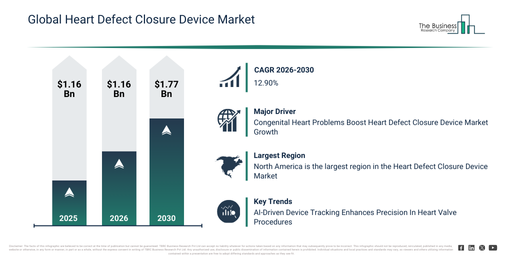
    The heart defect closure device market has seen substantial growth in recent years. It is projected to increase from $1.27 billion in 2025 to $1.45 billion in 2026, registering a compound annual growth rate (CAGR) of 14.5%. The historical growth is largely fueled by the rising incidence of congenital heart defects, progress in interventional cardiology, heightened awareness about septal defect treatments, the growing number of cardiac catheterization labs, and increasing demand for minimally invasive cardiac procedures. Looking ahead, this market is expected to further expand to $2.36 billion by 2030, with a steady CAGR of 12.9%. This forecasted growth can be attributed to a growing elderly and pediatric population affected by structural heart defects, wider adoption of transcatheter interventions, increased healthcare spending on cardiovascular care, expansion of specialized cardiac centers, and a stronger emphasis on early diagnosis and treatment.

    Download A Free Sample Report For Comprehensive Market Insights:

    https://www.thebusinessresearchcompany.com/sample.aspx?id=16074&type=smp

    Factors Stimulating Growth in the Heart Defect Closure Device Market

    One major factor propelling the heart defect closure device market is the increasing number of individuals born with congenital heart defects. These structural abnormalities in the heart arise from genetic factors, environmental exposures, and maternal health conditions such as diabetes, obesity, or medication use during pregnancy. Heart defect closure devices offer minimally invasive ways to seal these abnormal openings, restoring proper blood flow, reducing complications, and improving heart function. For example, a report released in August 2025 by the National Center for Biotechnology Information highlights a projected 90% rise in cardiovascular disease prevalence between 2025 and 2050. This alarming increase underscores the pressing need for effective treatment options like closure devices, which in turn drives market demand.

    Additional Drivers Enhancing Market Expansion

    Beyond the rise in congenital defects, advancements in medical technology and the growing preference for minimally invasive procedures are also key growth enablers. Increasing healthcare investments and the expansion of cardiac centers worldwide are making these innovative treatments more accessible. Moreover, enhanced focus on improving patient outcomes and long-term efficacy of devices is encouraging broader adoption among clinicians and patients alike.

    Access The Complete Heart Defect Closure Device Market Report:

    https://www.thebusinessresearchcompany.com/report/heart-defect-closure-device-global-market-report

    Detailed Segmentation of the Heart Defect Closure Device Market

    This market is categorized comprehensively by type, material, mode of delivery, and end-user. Key device types include Atrial Septal Defect (ASD) Closure Devices, Left Atrial Appendage (LAA) Closure Devices, Patent Foramen Ovale (PFO) Closure Devices, Patent Ductus Arteriosus (PDA) Closure Devices, and Ventricular Septal Defect (VSD) Closure Devices. Materials used in these products primarily include nitinol-based and stainless steel devices, among others. Delivery methods are classified as transcatheter delivery, surgical delivery, and other modes. The main end-users are hospitals, clinics, ambulatory surgical centers, and various other healthcare providers. Each device type further breaks down into subcategories, such as septal occluders, self-expanding devices, balloon-expandable devices, and implantable patches, catering to specific patient needs and procedural techniques.

    Technological Innovations and Market Trends in Heart Defect Closure Devices

    Leading firms in the heart defect closure device market are pushing technological boundaries by developing device tracking tools that improve procedural accuracy and clinician confidence. These tools offer real-time visualization of device positioning during treatments, which is crucial for complex cardiac interventions. For instance, in November 2025, Philips, a healthcare technology company based in the Netherlands, unveiled DeviceGuide—an AI-powered tracking system designed to assist clinicians during minimally invasive mitral valve repair procedures. Integrated with the EchoNavigator platform, DeviceGuide blends live X-ray and ultrasound imaging to create a real-time 3D model of the device inside the beating heart, enhancing visualization, precision, and orientation. This innovation, developed in partnership with Edwards Lifesciences, streamlines workflow, supports team coordination, and broadens access to advanced cardiac therapies globally.

    Notable Companies Leading the Heart Defect Closure Device Industry

    The competitive landscape of the heart defect closure device market features several prominent organizations, including Abbott Laboratories, Medtronic, W L Gore and Associates, Occlutech, LifeTech Scientific Corporation, Lepu Medical Technology, Meril Life Sciences Pvt Ltd, MicroPort Scientific Corporation, Boston Scientific Corporation, Edwards Lifesciences, Terumo Corporation, Cardia Inc, Coherex Medical Inc, AtriCure Inc, Sahajanand Medical Technologies Limited, Vivasure Medical, Transmural Systems Inc, Cormatrix Cardiovascular Inc, Baylis Medical Company Inc, Biosense Webster Inc, BIOTRONIK SE and Co KG, and B Braun. These companies continue to innovate and expand their product portfolios to meet growing clinical needs.

    Regional Market Leadership and Growth Prospects

    In 2025, North America held the largest share of the heart defect closure device market, benefiting from advanced healthcare infrastructure and high adoption rates of innovative cardiac treatments. Meanwhile, the Asia-Pacific region is anticipated to experience the fastest growth throughout the forecast period, driven by increasing healthcare investments, rising cardiovascular disease burden, and expanding medical facilities. The market report provides insights into additional regions such as South East Asia, Western Europe, Eastern Europe, South America, the Middle East, and Africa, painting a global picture of market dynamics.

    Get in touch with us:

    The Business Research Company: https://www.thebusinessresearchcompany.com/

    Americas: +1 310-496-7795

    Asia: +44 7882 955267 & +91 8897263534

    Europe: +44 7882 955267

    Email us at: marketing@tbrc.info

    Follow us on:

    LinkedIn: https://in.linkedin.com/company/the-business-research-company

    YouTube: https://www.youtube.com/channel/UC24_fI0rV8cR5DxlCpgmyFQ

    Global Market Model: https://www.thebusinessresearchcompany.com/global-market-model
  • Heart Closure Devices Market Expansion Is Opening New Pathways For Strategic Investment

    Heart Closure Devices Market Expansion Is Opening New Pathways For Strategic Investment

    Enhanced with market attractiveness analysis, total addressable market evaluation, company benchmarking matrices, interactive Excel dashboards, expanded supply chain intelligence, emerging startup coverage, and detailed product insights, The Business Research Company’s 2026 market reports deliver more actionable and strategically valuable research.

    The heart closure devices market has witnessed significant growth in recent years and is poised for further expansion as advancements in cardiac care continue to evolve. This industry is benefiting from rising awareness of heart conditions and increasing adoption of minimally invasive procedures, which are reshaping treatment approaches worldwide. Let’s explore the current market size, driving factors, segment outlook, competitive landscape, and regional dynamics shaping this sector.

    Steady Market Growth and Future Projections for Heart Closure Devices

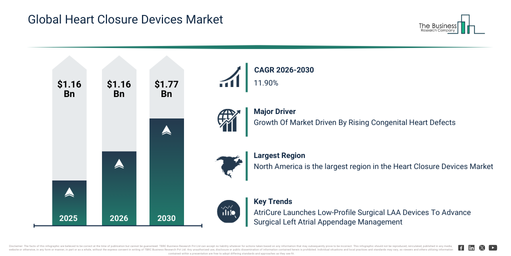
    The heart closure devices market has experienced rapid growth, with its size expected to increase from $3.08 billion in 2025 to $3.46 billion in 2026 at a compound annual growth rate (CAGR) of 12.2%. Looking ahead, the market is projected to reach $5.42 billion by 2030, growing at a CAGR of 11.9%. This expansion is driven by rising cases of congenital heart defects, the growing number of catheterization labs, wider acceptance of minimally invasive cardiac treatments, heightened awareness of structural heart disorders, and the availability of sophisticated imaging guidance technologies. Continued innovation and investment in these areas are set to fuel sustained growth throughout the forecast period.

    Download A Free Sample Report For Comprehensive Market Insights:

    https://www.thebusinessresearchcompany.com/sample.aspx?id=20828&type=smp

    Factors Contributing to Market Growth in the Forecast Period

    One significant factor driving the market forward is the increasing demand for catheter-based cardiac therapies, which offer less risk and faster recovery compared to traditional surgeries. Furthermore, there is a surge in funding directed toward structural heart disease treatments, which supports the development and expansion of specialized cardiac care centers. These centers enhance access to advanced treatment options for patients, making minimally invasive procedures more widely available.

    Advances in device design and an emphasis on reducing surgical risks are also crucial contributors. Technological improvements enable the production of more effective closure devices, which in turn boost confidence among healthcare providers and patients. Key trends for the upcoming years include a rise in transcatheter heart closure procedures, the growing popularity of nitinol-based closure systems, expansion of heart intervention programs, and a strong focus on procedural safety and efficacy.

    Access The Complete Heart Closure Devices Market Report:

    https://www.thebusinessresearchcompany.com/report/heart-closure-devices-global-market-report

    Underlying Drivers Fueling the Heart Closure Devices Market

    A major factor influencing market growth is the escalating prevalence of cardiovascular diseases (CVDs) globally. This increase is linked to aging populations, unhealthy lifestyles, genetic factors, and a rise in associated risk factors like hypertension, diabetes, and obesity. Heart closure devices play a critical role by offering minimally invasive solutions to close abnormal openings in the heart caused by congenital defects, thereby improving blood flow and lowering the risk of complications.

    For instance, data released in May 2024 by the Singapore Heart Foundation revealed that cardiovascular diseases caused 26,885 deaths in Singapore in 2023. Ischemic heart disease accounted for 5,302 of these deaths, a slight rise from 5,290 in 2022. Such statistics highlight the pressing need for effective interventions, which supports the growing market for heart closure devices.

    Expanding Categories Within the Heart Closure Devices Sector

    This market is organized into several key segments to address the variety of clinical needs:

    1) Product Types: Atrial Septal Defect (ASD) Closure Devices, Ventricular Septal Defect (VSD) Closure Devices, Patent Foramen Ovale (PFO) Closure Devices, Left Atrial Appendage (LAA) Closure Devices, and other products.

    2) Materials Used: Nitinol-Based Devices, Stainless Steel Devices, and other materials.

    3) Delivery Methods: Transcatheter Delivery and Surgical Delivery.

    4) End Users: Hospitals, Ambulatory Surgical Centers (ASCs), Cardiac Catheterization Laboratories, and others.

    Subcategories include self-expanding and balloon-expandable occluders for ASD devices; transcatheter and surgical options for VSD closure; double-disc and single-disc occluders for PFO devices; LAA occluders and clip systems; plus various specialized closure devices.

    Innovations and Competitive Developments Shaping the Market

    Leading companies in the heart closure devices market are prioritizing advancements that improve procedural precision and patient outcomes. For example, there is a focus on developing low-profile, ergonomic surgical devices for left atrial appendage closure that provide consistent closing force and enhance visibility during operations. Such features help physicians perform procedures more efficiently and safely.

    A case in point is the launch in August 2024 by AtriCure, Inc. of their AtriClip FLEX-Mini device, the smallest-profile surgical LAA closure device currently available. Building on their established AtriClip technology, this device features a fully enclosed design with parallel beams to maintain continuous compression and an ergonomic handle designed for single-handed placement, facilitating minimally invasive procedures for atrial fibrillation patients.

    Key Market Players Driving Innovation and Competition

    The heart closure devices market includes several prominent companies such as Abbott Laboratories, Medtronic plc, Boston Scientific Corp., Lepu Medical Technology Ltd., Terumo Corporation, Edwards Lifesciences, Teleflex Incorporated, Merit Medical Systems Inc., Cordis Corporation, AtriCure Inc., Lifetech Scientific Corp., Sahajanand Medical Technologies, W. L. Gore and Associates Inc., Occlutech GmbH, NMT Medical Inc., Sorin Group Italia S.p.A., Vivasure Medical Limited, B Braun Interventional Systems, HeartStitch Inc., and MicroPort Scientific Corporation. These firms compete by investing heavily in research and development to advance product features and expand their market presence.

    Regional Market Dynamics and Growth Opportunities

    In 2025, North America held the largest share of the heart closure devices market, reflecting well-established healthcare infrastructure and widespread adoption of cardiac technologies. However, the Asia-Pacific region is forecast to register the fastest growth during the coming years. This rapid expansion is supported by increasing healthcare investments, rising patient awareness, and expanding cardiac care facilities across countries in the region. Other key regions covered in the market analysis include South East Asia, Western Europe, Eastern Europe, South America, the Middle East, and Africa, each exhibiting unique opportunities for growth tailored to their healthcare environments.

    Get in touch with us:

    The Business Research Company: https://www.thebusinessresearchcompany.com/

    Americas: +1 310-496-7795

    Asia: +44 7882 955267 & +91 8897263534

    Europe: +44 7882 955267

    Email us at: marketing@tbrc.info

    Follow us on:

    LinkedIn: https://in.linkedin.com/company/the-business-research-company

    YouTube: https://www.youtube.com/channel/UC24_fI0rV8cR5DxlCpgmyFQ

    Global Market Model: https://www.thebusinessresearchcompany.com/global-market-model
  • Heart Blocks Treatment Devices Market Trends Are Creating New Opportunities For Industry Leaders

    Heart Blocks Treatment Devices Market Trends Are Creating New Opportunities For Industry Leaders

    Through market attractiveness analysis, total addressable market evaluation, company benchmarking matrices, interactive Excel dashboards, expanded supply chain intelligence, emerging startup coverage, and detailed product insights, The Business Research Company’s 2026 market reports provide more actionable and strategically valuable research.

    The heart blocks treatment devices market has witnessed significant progress recently, driven by various healthcare and demographic factors. As cardiovascular diseases continue to rise globally, the demand for effective treatment options, including advanced devices, is growing steadily. This overview explores the market’s size, growth drivers, key segments, ongoing trends, major players, and regional outlook to provide a comprehensive understanding of the sector’s future trajectory.

    Heart Blocks Treatment Devices Market Size and Expected Growth Through 2030

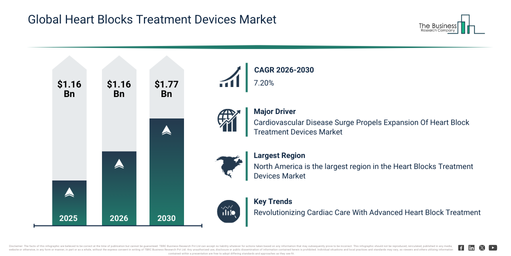
    The market for heart blocks treatment devices has demonstrated solid growth in recent years. It is forecasted to expand from $3.36 billion in 2025 to $3.59 billion in 2026, marking a compound annual growth rate (CAGR) of 6.9%. Looking ahead, this market is projected to further increase to $4.74 billion by 2030, growing at an accelerated CAGR of 7.2%. Factors contributing to this expansion include a rising number of cardiovascular disease cases, an aging population, enhancements in hospital cardiac care infrastructure, wider access to cardiac diagnostics, and technological improvements in implantable devices.

    Download A Free Sample Report For Comprehensive Market Insights:

    https://www.thebusinessresearchcompany.com/sample.aspx?id=12062&type=smp

    Growing Adoption of Digital Health and Remote Monitoring Boosts Heart Blocks Device Market

    The period ahead is expected to see expanding use of remote patient monitoring systems and increased investments in cardiac digital health solutions. These advancements are driving demand for personalized rhythm management and pushing the growth of home-based cardiac care models. Continuous innovation in implantable cardiac devices is playing a crucial role as well. Key trends influencing the market include wider adoption of advanced pacemaker technologies, greater utilization of implantable cardiac rhythm devices, integration of remote cardiac monitoring tools, a shift toward minimally invasive cardiac procedures, and increasing emphasis on long-term rhythm management strategies.

    Rising Cardiovascular Disease Rates Propel Market Demand for Heart Block Treatment Devices

    One of the primary factors fueling growth in the heart blocks treatment devices market is the increasing prevalence of cardiovascular diseases. These conditions, which affect the heart and blood vessels, include coronary artery disease, heart failure, and stroke. The surge in cardiovascular disease cases is largely driven by lifestyle changes, dietary habits, rising obesity and diabetes rates, and an aging global population. Heart block treatment devices are essential in managing abnormalities or defects in the heart’s electrical conduction system, offering critical support for those affected. For example, in March 2024, GOV.UK reported that over 1,862,500 people in England—approximately 3% of the population—were diagnosed with coronary heart disease during the 2023 financial year, illustrating the large patient base driving demand for these devices.

    Access The Complete Heart Blocks Treatment Devices Market Report:

    https://www.thebusinessresearchcompany.com/report/heart-blocks-treatment-devices-global-market-report

    Aging Population as a Key Factor Supporting Heart Blocks Treatment Device Market Expansion

    The growing proportion of older adults worldwide represents another significant market driver. As people age, the likelihood of developing heart block and other cardiac conduction system disorders increases, consequently boosting the need for treatment devices. In July 2024, data from the UK Parliament’s House of Commons Library indicated that in 2022 there were 12.7 million individuals aged 65 or older in the UK, making up 19% of the total population. This number is expected to climb to 22.1 million by 2072, or 27% of the population. Such demographic shifts are anticipated to elevate demand for heart blocks treatment devices in the coming decades.

    Heart Blocks Treatment Devices Market Segmentation by Clinical Type, Product, and End User

    The market is categorized into several key segments:

    – By Clinical Classification: First-Degree Heart Block, Second-Degree Heart Block, Third-Degree Heart Block

    – By Product Type: Transcutaneous Pacing (TCP), Pacemakers

    – By End-User: Hospitals and Cardiac Care Centers, Clinics, Home-Care and Remote Monitoring Users

    Additional subsegments include:

    – For First-Degree Heart Block: Cardiac Monitoring Devices, Temporary Pacing Devices (rare or symptomatic cases)

    – For Second-Degree Heart Block: Type I (Wenckebach) Management Devices, Type II Management Devices, Pacemakers

    – For Third-Degree Heart Block: Permanent Pacemakers (primary treatment), Cardiac Resynchronization Therapy (CRT) Devices, Temporary Pacing Devices (acute or emergency management)

    Emerging Technological Advances Highlighted in Heart Blocks Treatment Devices

    Market leaders are focusing on cutting-edge technologies, such as dual-chamber pacemakers, to enhance treatment reliability. These devices, including leadless pacing systems, address abnormal or slow heart rhythms by pacing two chambers of the heart—the right atrium and right ventricle. For instance, in November 2023, Abbott Laboratories introduced a dual-chamber pacemaker in the U.S. using innovative i2i technology. This method uses high-frequency pulses transmitted through the body’s blood to communicate between the leadless pacemakers, representing a major leap in device functionality and patient care.

    Key Players Driving Innovation and Competition in the Heart Blocks Treatment Devices Market

    The heart blocks treatment devices market is competitive, with several prominent companies shaping its development. Leading organizations include Medtronic plc, Abbott Laboratories, Boston Scientific Corporation, Biotronik SE & Co. KG, MicroPort Scientific Corporation, Lepu Medical Technology (Beijing) Co. Ltd., Nihon Kohden Corporation, ZOLL Medical Corporation, LivaNova PLC, Osypka Medical GmbH, Shree Pacetronix Ltd., EBR Systems Inc., Medico S.p.A., Cook Medical, B. Braun SE, Oscor Inc., Pacetronix Ltd., Fukuda Denshi Co. Ltd., Teleflex Incorporated, and NIPRO Corporation.

    Regional Market Leadership and Growth Outlook for Heart Blocks Treatment Devices

    In 2025, North America held the largest market share in the heart blocks treatment devices sector. Meanwhile, the Asia-Pacific region is expected to experience the fastest growth during the forecast period. The report covers multiple geographic regions, including Asia-Pacific, South East Asia, Western Europe, Eastern Europe, North America, South America, the Middle East, and Africa, providing a global perspective on market opportunities and trends.

    Get in touch with us:

    The Business Research Company: https://www.thebusinessresearchcompany.com/

    Americas: +1 310-496-7795

    Asia: +44 7882 955267 & +91 8897263534

    Europe: +44 7882 955267

    Email us at: marketing@tbrc.info

    Follow us on:

    LinkedIn: https://in.linkedin.com/company/the-business-research-company

    YouTube: https://www.youtube.com/channel/UC24_fI0rV8cR5DxlCpgmyFQ

    Global Market Model: https://www.thebusinessresearchcompany.com/global-market-model