Category: Medical Equipment

  • Cold Allergy And Sinus Tablet Market Growth Through 2030 Creates New Strategic Opportunities

    Cold Allergy And Sinus Tablet Market Growth Through 2030 Creates New Strategic Opportunities

    Enhanced with market attractiveness analysis, total addressable market evaluation, company benchmarking matrices, interactive Excel dashboards, expanded supply chain intelligence, emerging startup coverage, and detailed product insights, The Business Research Company’s 2026 market reports deliver more actionable and strategically valuable research.

    The cold allergy and sinus tablet market has seen notable expansion recently, driven by rising health concerns and increasing access to medications. As more people seek effective relief from allergies and sinus issues, this sector is set to experience continued growth. Let’s explore the current market size, key growth factors, important trends, major players, and regional dynamics shaping the future of this industry.

    Cold Allergy and Sinus Tablet Market Size and Future Growth Outlook

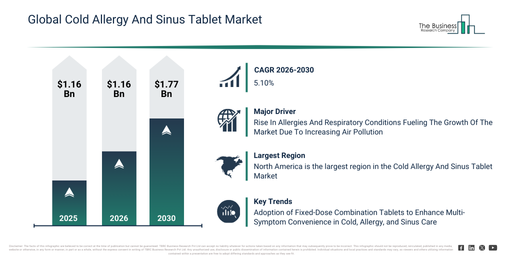
    The market for cold allergy and sinus tablets has experienced strong growth over recent years. It is projected to increase from $30.4 billion in 2025 to $32 billion in 2026, reflecting a compound annual growth rate (CAGR) of 5.2%. This past growth has been supported by factors such as the rising incidence of allergic rhinitis, more frequent seasonal colds, broad availability of over-the-counter (OTC) medications, an uptick in self-medication practices, and well-established pharmaceutical retail channels. Looking ahead, the market is expected to reach $39.08 billion by 2030, growing at a CAGR of 5.1%. This anticipated expansion is fueled by increasing urban pollution, stronger consumer preference for combination therapies, rising demand for allergy management products, the growth of online pharmacies, and ongoing innovation in product formulations. Trends likely to influence the market include growing use of multi-symptom combination tablets, a shift toward non-drowsy formulations, emphasis on rapid relief options, introduction of age-specific dosages, and extended-release tablet options.

    Download A Free Sample Report For Comprehensive Market Insights:

    https://www.thebusinessresearchcompany.com/sample.aspx?id=24193&type=smp

    Key Factors Stimulating Growth in the Cold Allergy and Sinus Tablet Market

    The rising prevalence of allergies and respiratory illnesses is a significant driver for market growth. Conditions like allergic rhinitis and asthma are becoming more common due to increased exposure to pollutants and allergens in the environment. These health issues cause immune and respiratory responses that heighten the need for effective treatment options. Cold allergy and sinus tablets help patients manage symptoms related to colds, sinus infections, and allergies, thus enhancing their quality of life. For example, in September 2023, the World Health Organization highlighted that chronic respiratory diseases accounted for 4.1 million deaths globally, underscoring the substantial health burden these conditions impose. This growing prevalence of respiratory and allergic conditions directly supports the expanding demand for cold allergy and sinus medications.

    Additional Factors Driving Demand for Cold Allergy and Sinus Tablets

    Another important growth driver is the convenience and accessibility of these medications. The widespread availability of OTC options enables consumers to self-manage symptoms without needing prescriptions. Furthermore, established pharmaceutical retail networks and the increasing adoption of online sales channels make these products easier to obtain worldwide. Advances in formulation technology also contribute, with new combinations and delivery methods improving patient compliance and effectiveness. Together, these factors contribute to the steady rise in market demand.

    Access The Complete Cold Allergy And Sinus Tablet Market Report:

    https://www.thebusinessresearchcompany.com/report/cold-allergy-and-sinus-tablet-global-market-report

    Segment Breakdown of the Cold Allergy and Sinus Tablet Market

    This market can be segmented across several categories to better understand consumer preferences and product offerings:

    – Product Types include Antihistamines, Decongestants, Cough Suppressants, Expectorants, and Combination Tablets.

    – Formulation Types cover Tablets, Capsules, Liquids, Effervescent Tablets, and Powders.

    – Consumer Age Groups are divided into Children (0-12 years), Teenagers (13-19 years), Adults (20-64 years), and Seniors (65 years and above).

    – Application Areas involve Allergic Rhinitis, Common Cold, Sinusitis, and Upper Respiratory Tract Infections.

    – Distribution Channels include Pharmacies, Online Stores, Supermarkets or Hypermarkets, and other methods.

    Further subcategories highlight detailed product types such as specific antihistamines (like Loratadine or Cetirizine), decongestants (such as Pseudoephedrine), cough suppressants (including Dextromethorphan), expectorants, and various multi-symptom combination tablets.

    Innovations and Emerging Trends in the Cold Allergy and Sinus Tablet Market

    Leading companies are increasingly focusing on developing fixed-dose combination (FDC) tablets that combine multiple active ingredients into one convenient dose. These FDCs provide broader symptom relief and simplify treatment regimens by reducing the need for several separate medications. By integrating analgesics, nasal decongestants, and antihistamines, these products offer comprehensive relief from cold, allergy, and sinus symptoms. For example, in April 2025, Johnson & Johnson introduced Sinumax Allergy Sinus Caplets in the U.S., which contain paracetamol, pseudoephedrine hydrochloride, and chlorphenamine maleate. This product features a sugar-free film coating, immediate-release formulation, and a non-sedating antihistamine, enhancing patient comfort and ease of use.

    Additional Trends Influencing Market Growth

    There is also a growing preference for non-drowsy formulations and fast-acting relief options, which cater to consumers’ desires for effective symptom management without sedation. Age-specific dosage variants are becoming more prominent, addressing the unique needs of children, adults, and seniors. Extended-release tablets are gaining traction as well, providing sustained relief throughout the day. These trends reflect an overall focus on improving patient experience and treatment outcomes.

    Key Players Leading the Cold Allergy and Sinus Tablet Market

    Several prominent pharmaceutical companies hold significant market positions in this sector, including Johnson & Johnson, Merck & Co. Inc., Bayer AG, Sanofi S.A., GlaxoSmithKline plc, Reckitt Benckiser Group plc, Teva Pharmaceutical Industries Ltd., Viatris Inc., Sandoz Group AG, Sun Pharmaceutical Industries Ltd., Perrigo Company plc, Dr. Reddy’s Laboratories, Cipla Limited, Hikma Pharmaceuticals plc, Lupin Ltd., Glenmark Pharmaceuticals Ltd., LETI Pharma GmbH, Pfizer Inc., Novartis AG, Haleon Group plc, Perrigo Consumer Healthcare, and Zydus Lifesciences Ltd.

    Geographical Distribution and Market Leadership

    In 2025, North America dominated the cold allergy and sinus tablet market in terms of size. However, the Asia-Pacific region is expected to be the fastest-growing market during the forecast period. The market analysis includes regions such as Asia-Pacific, South East Asia, Western Europe, Eastern Europe, North America, South America, the Middle East, and Africa, offering a comprehensive view of global market dynamics.

    Get in touch with us:

    The Business Research Company: https://www.thebusinessresearchcompany.com/

    Americas: +1 310-496-7795

    Asia: +44 7882 955267 & +91 8897263534

    Europe: +44 7882 955267

    Email us at: marketing@tbrc.info

    Follow us on:

    LinkedIn: https://in.linkedin.com/company/the-business-research-company

    YouTube: https://www.youtube.com/channel/UC24_fI0rV8cR5DxlCpgmyFQ

    Global Market Model: https://www.thebusinessresearchcompany.com/global-market-model
  • Coil Transcatheter Embolization And Occlusion Devices Market Size Projected To Increase From $1.89 Billion To $2.54 Billion During The Forecast Period

    Coil Transcatheter Embolization And Occlusion Devices Market Size Projected To Increase From $1.89 Billion To $2.54 Billion During The Forecast Period

    Through market attractiveness analysis, total addressable market evaluation, company benchmarking matrices, interactive Excel dashboards, expanded supply chain intelligence, emerging startup coverage, and detailed product insights, The Business Research Company’s 2026 market reports provide more actionable and strategically valuable research.

    The coil transcatheter embolization and occlusion devices market has experienced significant growth in recent years, driven by advances in medical technology and increasing prevalence of vascular conditions. As the medical community continues to adopt innovative techniques and materials, this market is set to expand further, offering promising opportunities over the coming decade. Let’s explore the current market landscape, growth factors, key segments, leading players, and regional insights shaping this industry.

    Steady Growth and Market Value in the Coil Transcatheter Embolization and Occlusion Devices Industry

    The coil transcatheter embolization and occlusion devices market has demonstrated robust development, with its value rising from $1.76 billion in 2025 to $1.9 billion in 2026, exhibiting a compound annual growth rate (CAGR) of 7.7%. This earlier expansion can be linked to the rising incidence of vascular diseases, the broader implementation of interventional radiology techniques, widespread use of platinum-based embolization coils, growth in hospital catheterization laboratories, and increasing clinician proficiency in endovascular procedures.

    Download A Free Sample Report For Comprehensive Market Insights:

    https://www.thebusinessresearchcompany.com/sample.aspx?id=24192&type=smp

    Outlook and Future Market Expansion Forecast for Coil Transcatheter Embolization and Occlusion Devices

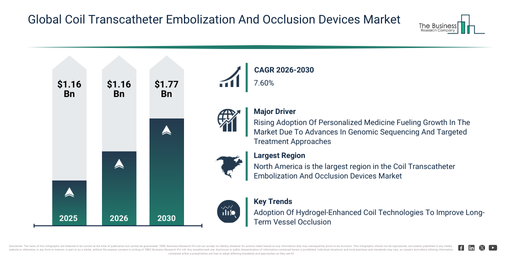
    Looking ahead, the market is expected to maintain strong momentum, reaching $2.55 billion by 2030, with a CAGR of 7.6%. This forecasted growth is fueled by the growing use of image-guided embolization methods, rising demand for advanced coil technologies, expansion of tumor embolization interventions, an increasing focus on minimally invasive treatment options, and ongoing innovation in embolic materials. Notable trends predicted in this timeframe include greater adoption of minimally invasive procedures, enhanced use of detachable and precision coils, increased interest in neurovascular treatments, development of sophisticated coil designs and materials, and heightened emphasis on procedural safety and accuracy.

    Personalized Medicine as a Key Driver in Coil Transcatheter Embolization and Occlusion Devices Market Growth

    One of the major factors propelling market growth is the rising focus on personalized medicine. This approach customizes healthcare decisions and therapies based on an individual’s genetics, lifestyle, and environment. Thanks to advances in genomic sequencing, personalized treatments are becoming more accessible and cost-effective, allowing clinicians to tailor therapies with greater precision.

    Access The Complete Coil Transcatheter Embolization And Occlusion Devices Market Report:

    https://www.thebusinessresearchcompany.com/report/coil-transcatheter-embolization-and-occlusion-devices-global-market-report

    How Coil Transcatheter Embolization and Occlusion Devices Support Tailored Treatments

    These devices play a critical role in personalized medicine by enabling highly specific treatments customized to a patient’s vascular anatomy. Using advanced imaging techniques, physicians can accurately target abnormal blood vessels or tumors while minimizing damage to surrounding healthy tissues. For example, in February 2024, the Personalized Medicine Coalition reported that the FDA approved 16 new personalized therapies for rare diseases in 2023, compared to only 6 in 2022, highlighting the increasing relevance of tailored medical solutions in driving the coil embolization devices market.

    Segmented Overview of the Coil Transcatheter Embolization and Occlusion Devices Market

    This market is organized into several key segments:

    1) Product Type: Detachable Coils, Pushable Coils, and Other Product Types

    2) Procedure Type: Hemorrhage Control, Vascular Occlusion, Aneurysm Treatment, Tumor Embolization, and Others

    3) Material: Platinum or Platinum Alloy, Nickel Titanium, Stainless Steel, and Other Materials

    4) End-User: Hospitals, Ambulatory Surgical Centers (ASCs), Specialty Clinics, Research and Academic Institutes

    Further subdivisions include:

    – Detachable Coils: Electrically Detachable Coils and Mechanically Detachable Coils

    – Pushable Coils: Fibered and Non-Fibered Coils

    – Other Products: Framing Coils, Filling Coils, Complex-Shaped, and Finishing Coils

    Innovative Trends Driving Future Revenue in the Coil Transcatheter Embolization and Occlusion Devices Market

    Leading companies in this field focus on developing cutting-edge solutions like hydrogel-core detachable coils, which improve packing density, enhance the durability of occlusion, and reduce the number of coils needed during procedures. Hydrogel-core coils contain an expandable hydrogel material within a platinum coil framework that swells upon contact with blood, occupying more space within vessels or aneurysms compared to traditional coils. This leads to more reliable occlusion, less dependence on clot formation, and better long-term outcomes.

    Examples of New Product Launches Highlighting Market Innovation

    For instance, in December 2023, Terumo Medical Corporation, a US-based subsidiary of Terumo Corporation, introduced the AZUR HydroPack Peripheral Coil System. This product features soft universal-shaped coils ranging from 5 cm to 60 cm, a proprietary hydrogel that expands to create a lasting occlusion, and offers enhanced microcatheter stability and smooth delivery. It also shortens procedure times by reducing coil quantity requirements, representing a significant advancement in peripheral embolization treatment.

    Key Competitors Influencing the Coil Transcatheter Embolization and Occlusion Devices Market

    Some of the major players driving competition in this market include Johnson and Johnson, Medtronic plc, Stryker Corporation, Boston Scientific Corporation, Terumo Medical Corporation, Cook Medical LLC, Merit Medical Systems Inc., Penumbra Inc., MicroVention Inc., Balt Extrusion SAS, Phenox GmbH, Acandis GmbH & Co. KG, B. Braun Interventional Systems Inc., EndoShape Inc., Shape Memory Medical Inc., Artio Medical Inc., Kaneka Corporation, Asahi Intecc Co. Ltd., Medico’s Hirata Inc., Wallaby Medical, Rapid Medical, Stereotaxis Inc., and Imperative Care.

    Regional Market Distribution and Growth Drivers for Coil Transcatheter Embolization and Occlusion Devices

    In 2025, North America held the largest share of the coil transcatheter embolization and occlusion devices market. Looking forward, Asia-Pacific is projected to be the fastest-growing region during the forecast period. The market evaluation covers key territories such as Asia-Pacific, South East Asia, Western Europe, Eastern Europe, North America, South America, the Middle East, and Africa, providing a broad perspective on global market dynamics.

    Get in touch with us:

    The Business Research Company: https://www.thebusinessresearchcompany.com/

    Americas: +1 310-496-7795

    Asia: +44 7882 955267 & +91 8897263534

    Europe: +44 7882 955267

    Email us at: marketing@tbrc.info

    Follow us on:

    LinkedIn: https://in.linkedin.com/company/the-business-research-company

    YouTube: https://www.youtube.com/channel/UC24_fI0rV8cR5DxlCpgmyFQ

    Global Market Model: https://www.thebusinessresearchcompany.com/global-market-model
  • Cochlear Implant Market Growth Outlook Reveals A CAGR Of 9.1% And A Market Value Of $3 Billion By 2030

    Cochlear Implant Market Growth Outlook Reveals A CAGR Of 9.1% And A Market Value Of $3 Billion By 2030

    Delivering more actionable and strategically valuable research, The Business Research Company’s 2026 market reports feature market attractiveness analysis, total addressable market evaluation, company benchmarking matrices, interactive Excel dashboards, expanded supply chain intelligence, emerging startup coverage, and detailed product insights.

    The cochlear implant market has been witnessing strong growth, driven by technological advancements and increasing awareness of hearing rehabilitation. As more individuals experience hearing loss globally, the demand for effective auditory solutions like cochlear implants continues to rise. This report explores the market’s current size, key drivers, major players, and the evolving trends shaping its future trajectory.

    Steady Expansion of the Cochlear Implant Market Size

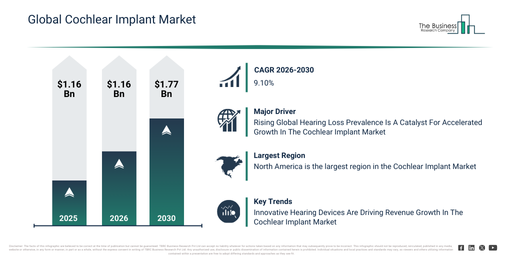
    The cochlear implant market has demonstrated robust growth in recent years, with its value projected to rise from $1.96 billion in 2025 to $2.13 billion in 2026. This represents a compound annual growth rate (CAGR) of 8.7%. The growth during this period is largely due to increased rates of hearing loss diagnosis, improvements in implantable medical electronics, greater awareness of auditory rehabilitation options, expansion of ENT surgical infrastructure, and the availability of reimbursement support. Looking ahead, the market is expected to continue this upward trend, reaching $3.01 billion by 2030, with an accelerated CAGR of 9.1%. Factors fueling this future expansion include a growing preference for personalized hearing solutions, rising adoption of smart and connected implants, expansion of early intervention hearing programs, increased investment in neuroprosthetics research, and ongoing innovation in sound processing technologies. Key trends during this forecast period involve the use of advanced signal processing algorithms, integration of wireless and smart implant technologies, greater focus on pediatric implant programs, the growth of minimally invasive implantation techniques, and enhanced post-implant rehabilitation efforts.

    Download A Free Sample Report For Comprehensive Market Insights:

    https://www.thebusinessresearchcompany.com/sample.aspx?id=12110&type=smp

    Increasing Prevalence of Hearing Loss as a Market Driver

    One of the main forces propelling the cochlear implant market is the rising number of people experiencing hearing loss worldwide. Hearing loss is defined as the reduced ability to hear sounds compared to individuals with normal hearing, typically characterized by hearing thresholds of 20 decibels or more in each ear. Cochlear implants provide a means for those with severe to profound nerve deafness to perceive sounds and speech by electrically stimulating the auditory nerves inside the inner ear. According to the World Health Organization in February 2023, at least 700 million people will require hearing rehabilitation by 2050, and over 2.5 billion individuals are expected to suffer from hearing loss. In the United States alone, 217 million people—accounting for 21.52% of the population—were living with hearing loss in 2022, a number projected to increase to 322 million by 2050. This growing prevalence is a significant factor driving demand for cochlear implant technologies.

    Cochlear Implant Market Segmentation and Growth Potential

    The cochlear implant market can be segmented by several key categories. By type, it includes unilateral implants and bilateral implants. Technology-wise, the market is divided into Electro-Acoustic Stimulation (EAS) and Electro-Stimulation Technology. Patient segments cover adults and pediatric populations. In terms of end-use, the market encompasses hospitals and specialized ENT clinics. Further subcategories include standard and advanced unilateral implants, as well as simultaneous and sequential bilateral implants. This segmentation helps in identifying specific areas for growth opportunities and targeted innovation.

    Access The Complete Cochlear Implant Market Report:

    https://www.thebusinessresearchcompany.com/report/cochlear-implant-global-market-report

    Innovative Product Developments Accelerating Market Expansion

    Leading companies in the cochlear implant space have been focusing on launching innovative products to capture additional market share. One notable example is the rechargeable loop listener, an assistive listening device designed to amplify and clarify audio signals transmitted via hearing loop systems. In October 2023, Contacta Systems Ltd., a UK-based company specializing in assistive technology, introduced the RX-30 rechargeable loop listener. This compact, pocket-sized device resembles a hearing aid and receives signals from current hearing loop systems. Its features include smooth frequency response, a bass cut filter, volume control, and a headphone jack, enabling users to enjoy clear sound effortlessly. The RX-30 is particularly useful for individuals with hearing loss who do not use cochlear implants or hearing aids, serving as a fully wireless receiver.

    Key Players Shaping the Cochlear Implant Market Landscape

    The cochlear implant market features several prominent companies driving innovation and growth. These include Cochlear Limited, MED-EL Elektromedizinische Geräte Gesellschaft m.b.H., Advanced Bionics AG, Nurotron Biotechnology Co. Ltd., Envoy Medical Corporation, Microson S.A., Neurotone Inc., Oticon Medical, Hearing Implant Solutions, Cochlear Research Laboratories, Neurelec, MXM Medical, AllHear Inc., Second Sight Medical Products, iHear Medical, NeuroHear Technologies, Audion Therapeutics, Hough Ear Institute, Bionic Ear Institute, and NeuroCochlear Systems. These organizations are at the forefront of developing advanced cochlear implant technologies and expanding market reach.

    Geographic Insights on Market Revenue Generation

    In 2025, North America held the largest share of the cochlear implant market, reflecting strong healthcare infrastructure and high adoption rates. The market report also includes analysis of other regions such as Asia-Pacific, South East Asia, Western Europe, Eastern Europe, South America, the Middle East, and Africa, providing a broad perspective on global market dynamics and growth opportunities.

    Get in touch with us:

    The Business Research Company: https://www.thebusinessresearchcompany.com/

    Americas: +1 310-496-7795

    Asia: +44 7882 955267 & +91 8897263534

    Europe: +44 7882 955267

    Email us at: marketing@tbrc.info

    Follow us on:

    LinkedIn: https://in.linkedin.com/company/the-business-research-company

    YouTube: https://www.youtube.com/channel/UC24_fI0rV8cR5DxlCpgmyFQ

    Global Market Model: https://www.thebusinessresearchcompany.com/global-market-model
  • Cosmetic Lasers Market Expected To Reach $2.22 Billion By 2030 As Growth Accelerates At 5.5% CAGR

    Cosmetic Lasers Market Expected To Reach $2.22 Billion By 2030 As Growth Accelerates At 5.5% CAGR

    Through market attractiveness analysis, total addressable market evaluation, company benchmarking matrices, interactive Excel dashboards, expanded supply chain intelligence, emerging startup coverage, and detailed product insights, The Business Research Company’s 2026 market reports provide more actionable and strategically valuable research.

    The cosmetic lasers industry has experienced significant momentum in recent years, driven by rising consumer interest in aesthetic procedures and advancements in technology. As the market continues to evolve, it is expected to see sustained growth fueled by new innovations and expanding applications. Here, we explore the market’s size, key growth factors, leading players, trends, and regional outlook.

    Market Size Evolution and Growth Forecast in the Cosmetic Lasers Market

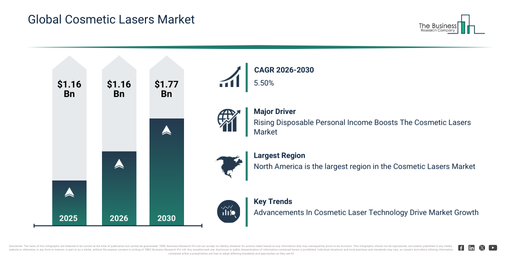
    The cosmetic lasers market has shown considerable growth, expanding from $1.7 billion in 2025 to an estimated $1.8 billion in 2026, reflecting a compound annual growth rate (CAGR) of 5.7%. This upward trend during the historical period is largely attributed to increasing awareness around aesthetic treatments, the proliferation of dermatology and cosmetic clinics, rising disposable incomes among urban populations, a growing incidence of skin disorders, and technological improvements in laser equipment. Looking ahead, the market is projected to reach $2.22 billion by 2030, with a CAGR of 5.5%. Factors behind this forecast include a stronger preference for minimally invasive cosmetic procedures, heightened demand for personalized aesthetic care, growth in medical tourism, wider adoption of advanced laser technologies, and increasing investments in healthcare infrastructure focused on aesthetics. Emerging trends such as multi-platform laser systems, AI-assisted treatment calibration, home-use laser devices, and a focus on precision and safety controls are expected to shape market dynamics.

    Download A Free Sample Report For Comprehensive Market Insights:

    https://www.thebusinessresearchcompany.com/sample.aspx?id=4101&type=smp

    Increasing Disposable Income Boosts Cosmetic Lasers Market Growth

    One of the significant drivers behind the cosmetic lasers market expansion is the rise in disposable personal income. This metric represents the amount of money individuals have available to spend after taxes, influencing their ability to invest in beauty and body care treatments. For example, data from October 2025 shows that in the United States, disposable personal income rose from $21,847 billion in May 2024 to $22,799 billion by May 2025. This increase in available spending power is anticipated to propel further growth in the cosmetic lasers market as more consumers prioritize aesthetic enhancements.

    Additional Factors Supporting Market Expansion

    Besides income growth, the rising incidence of skin conditions and technological progress in laser systems contribute to the expanding market. The continued expansion of dermatology clinics and cosmetic treatment centers worldwide also supports demand. Furthermore, growing urbanization and awareness about aesthetic treatments play crucial roles in attracting a larger customer base for cosmetic laser procedures.

    Access The Complete Cosmetic Lasers Market Report:

    https://www.thebusinessresearchcompany.com/report/cosmetic-lasers-global-market-report

    Segments Offering the Biggest Growth Opportunities in Cosmetic Lasers

    This report divides the cosmetic lasers market into several key segments for better clarity:

    1) By Type: Standalone Lasers and Multiplatform Lasers

    2) By Laser Technology: YAG Laser, Carbon Dioxide Laser, Erbium, Intense Pulsed Light (IPL), Radiofrequency, and Other Lasers

    3) By Application: Hair Removal, Skin Resurfacing, Vascular Lesions, Scar and Acne Removal, Body Contouring, and Other Uses

    4) By End User: Hospitals, Skin Care Clinics, and Cosmetic Surgical Centers

    Further breakdowns include standalone laser types such as CO2, Erbium, Diode, and Nd lasers, as well as multiplatform laser systems including combination, modular, and hybrid devices.

    Innovations and Trends Shaping Future Demand in Cosmetic Lasers

    Leading companies in the cosmetic lasers market are focusing on developing advanced, versatile laser and light-based platforms that cater to multiple aesthetic and dermatological treatments. These multi-application systems combine cutting-edge technologies for enhanced performance and improved patient outcomes. For instance, in April 2024, US-based Cutera, Inc. introduced the xeo+, a next-generation multi-application platform featuring updated technology and redesigned handpieces that enable faster treatments, ease of use, and a better overall patient experience. This innovation highlights the industry’s push toward offering comprehensive solutions that meet evolving clinical needs.

    Additional Trends Influencing the Cosmetic Lasers Sector

    Alongside multi-platform systems, other notable trends include the increasing integration of AI for treatment calibration, the rise of portable and home-use laser devices, and an emphasis on safety and precision controls. These developments reflect the market’s adaptation to consumer demands for personalized, efficient, and minimally invasive cosmetic procedures.

    Key Players Driving the Cosmetic Lasers Market

    The competitive landscape includes prominent companies such as Cynosure Inc., Lumenis, Candela Medical, Solta Medical International Inc., Cutera Inc., El.En. SpA, Alma Lasers Ltd., Sciton Inc., Lynton Lasers Ltd., Aerolase, Strata Skin Sciences, Viora, Bausch Health, MicroAire Surgical, Fotona LLC, Galderma Laboratories LP, Syneron Medical Inc., Arak Medical Equipment Company, Jeisys, and ASP medica. These organizations continue to innovate and expand their market presence through product development and strategic initiatives.

    Regional Market Leadership in Cosmetic Lasers

    As of 2025, North America accounted for the largest share of the cosmetic lasers market, supported by advanced healthcare infrastructure and high consumer demand. Asia-Pacific ranked as the second largest market, exhibiting rapid growth driven by increasing urbanization and rising awareness of aesthetic treatments. The report covers other regions as well, including South East Asia, Western Europe, Eastern Europe, South America, the Middle East, and Africa, providing a comprehensive view of global market trends and opportunities.

    Get in touch with us:

    The Business Research Company: https://www.thebusinessresearchcompany.com/

    Americas: +1 310-496-7795

    Asia: +44 7882 955267 & +91 8897263534

    Europe: +44 7882 955267

    Email us at: marketing@tbrc.info

    Follow us on:

    LinkedIn: https://in.linkedin.com/company/the-business-research-company

    YouTube: https://www.youtube.com/channel/UC24_fI0rV8cR5DxlCpgmyFQ

    Global Market Model: https://www.thebusinessresearchcompany.com/global-market-model
  • Coagulation Markers Market Forecast Highlights Expansion From $1.32 Billion To $1.67 Billion Through 2030

    Coagulation Markers Market Forecast Highlights Expansion From $1.32 Billion To $1.67 Billion Through 2030

    Enhanced with market attractiveness analysis, total addressable market evaluation, company benchmarking matrices, interactive Excel dashboards, expanded supply chain intelligence, emerging startup coverage, and detailed product insights, The Business Research Company’s 2026 market reports deliver more actionable and strategically valuable research.

    The coagulation markers market has witnessed significant growth in recent years, driven by advancing diagnostic techniques and rising health concerns related to blood clotting disorders. As medical technology continues to evolve, this sector is set for further expansion, reflecting increasing demand across healthcare settings worldwide. Let’s explore the current market size, key drivers, segment breakdowns, leading companies, and regional outlook shaping the future of this important market.

    Steady Growth and Future Potential of the Coagulation Markers Market

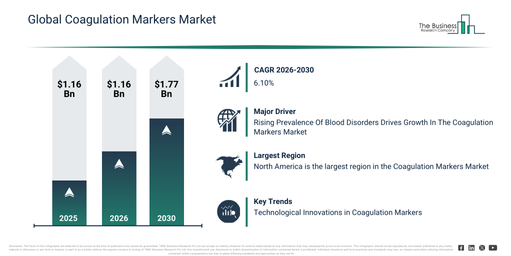
    The coagulation markers market has demonstrated strong growth, expanding from $1.24 billion in 2025 to an anticipated $1.32 billion in 2026, representing a compound annual growth rate (CAGR) of 6.8%. Moving forward, the market is predicted to reach $1.67 billion by 2030, growing at a CAGR of 6.1%. This upward trend is supported by factors such as an aging population prone to clotting complications, increased demand for quick diagnostic tools, expansion of trauma and emergency care services, greater emphasis on preventive assessments for thrombotic risks, and wider adoption of advanced coagulation testing technologies. Emerging trends also include growing use of coagulation markers for early thrombosis detection, expanding applications in emergency and critical care, rising popularity of rapid and point-of-care testing, and integration of coagulation analysis in surgical and trauma settings.

    Download A Free Sample Report For Comprehensive Market Insights:

    https://www.thebusinessresearchcompany.com/sample.aspx?id=17117&type=smp

    Rising Incidence of Blood Disorders Fuels Market Expansion

    The increasing prevalence of blood disorders is a primary factor driving growth in the coagulation markers market. Blood disorders encompass a range of conditions that impair normal blood function. Growing numbers of affected individuals are attributed to ageing populations, heightened awareness, and improved diagnostic techniques. Coagulation markers play a crucial role in diagnosing and managing these conditions by evaluating clotting function, detecting abnormalities, and monitoring treatment efficacy for diseases like hemophilia and thrombosis. For example, data from May 2024 by the Leukaemia Foundation, an Australian non-profit, indicates that approximately 135,000 people in Australia currently live with blood cancer or related disorders, a figure expected to surpass 275,000 by 2035. Such increasing prevalence supports the expanding demand for coagulation markers.

    Breakdown of Coagulation Markers Market by Product and Application

    This market analysis categorizes coagulation markers based on several criteria:

    1) Product Types: D-Dimer Assay, Fibrinogen Assay

    2) Sample Types: Plasma, Whole Blood Sample, Other Samples

    3) Technology Platforms: Fluorescence Immunoassay, Enzyme-Linked Immuno Sorbent Assay (ELISA), Rapid Test, Particle Enhanced Immunoturbidimetric Assay

    4) Applications: Deep Venous Thrombosis (DVT), Pulmonary Embolism (PE), Disseminated Intravascular Coagulation (DIC), Trauma, Other Uses

    5) End Users: Hospitals, Specialty Clinics, Academic and Research Institutes, Diagnostic Laboratories

    Further product subcategories include types of D-Dimer assays like ELISA-based, lateral flow immunoassays, and chemiluminescent immunoassays, as well as fibrinogen assays such as Clauss, functional, and automated methods.

    Access The Complete Coagulation Markers Market Report:

    https://www.thebusinessresearchcompany.com/report/coagulation-markers-global-market-report

    Technological Innovations Shaping Competitive Dynamics in Coagulation Markers

    Leading companies in this market are focusing on technological advancements to enhance the speed and accuracy of diagnosing clot-related disorders. Products like D-dimer kits are critical diagnostic tools measuring D-dimer protein fragments released during clot breakdown, aiding in detecting conditions such as deep vein thrombosis and pulmonary embolism. For instance, in July 2024, Bionote Inc., a US biotechnology firm, introduced the Vcheck D-dimer 5Tests/Kit, an immunodiagnostic product intended for veterinary use. This kit provides five tests per package and helps diagnose thrombosis, sepsis, and disseminated intravascular coagulation (DIC) in animals, illustrating innovation within the coagulation markers field.

    Key Players Competing in the Coagulation Markers Market

    The coagulation markers industry features several prominent companies, including Johnson & Johnson, Abbott Laboratories, Medtronic plc, Boston Scientific Corporation, W L Gore & Associates Inc, Lepu Medical Technology Beijing Co Ltd, MicroPort Scientific Corporation, Berlin Heart GmbH, Syncardia Systems LLC, Occlutech Holding AG, Sahajanand Medical Technologies Pvt Ltd, Xeltis AG, Procyrion Inc, Heartstitch Inc, Cardia Inc, OSYPKA Medical GmbH, On-X Life Technologies Inc, Ventracor Limited, HemoFlow Technologies, and NuPulseCV Inc. These organizations focus on innovation, product development, and strategic partnerships to strengthen their market presence.

    Regional Overview Highlighting Largest Markets and Growth Areas

    In 2025, North America held the largest share of the coagulation markers market. The global market coverage also includes regions such as Asia-Pacific, Southeast Asia, Western Europe, Eastern Europe, South America, the Middle East, and Africa. While North America currently dominates, emerging markets in Asia-Pacific and other regions are expected to offer significant growth opportunities due to rising healthcare infrastructure investments and increasing disease prevalence.

    Get in touch with us:

    The Business Research Company: https://www.thebusinessresearchcompany.com/

    Americas: +1 310-496-7795

    Asia: +44 7882 955267 & +91 8897263534

    Europe: +44 7882 955267

    Email us at: marketing@tbrc.info

    Follow us on:

    LinkedIn: https://in.linkedin.com/company/the-business-research-company

    YouTube: https://www.youtube.com/channel/UC24_fI0rV8cR5DxlCpgmyFQ

    Global Market Model: https://www.thebusinessresearchcompany.com/global-market-model
  • Coagulation Analyzer Market Expected To Reach $4.95 Billion By 2030 As Growth Accelerates At 8.8% CAGR

    Coagulation Analyzer Market Expected To Reach $4.95 Billion By 2030 As Growth Accelerates At 8.8% CAGR

    Through market attractiveness analysis, total addressable market evaluation, company benchmarking matrices, interactive Excel dashboards, expanded supply chain intelligence, emerging startup coverage, and detailed product insights, The Business Research Company’s 2026 market reports provide more actionable and strategically valuable research.

    The coagulation analyzer market is experiencing notable growth as advancements in healthcare diagnostics continue to evolve. Rising health concerns and technological improvements are shaping the future of this sector, making it a critical component in effective patient care. Here is an overview of the current market size, key drivers, segmentation, trends, major players, and regional dynamics.

    Coagulation Analyzer Market Size and Projected Growth

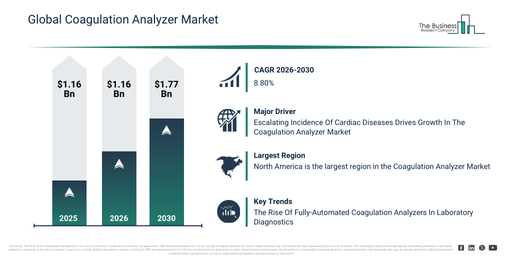
    The coagulation analyzer market has witnessed significant expansion in recent years. It is projected to grow from $3.26 billion in 2025 to $3.53 billion in 2026, registering a compound annual growth rate (CAGR) of 8.2%. This positive trend during the historical period is largely due to the growing prevalence of cardiovascular diseases, increased use of anticoagulant therapy monitoring, enhanced hospital diagnostic infrastructure, adoption of standardized coagulation testing protocols, and a rise in surgical procedures.

    Download A Free Sample Report For Comprehensive Market Insights:

    https://www.thebusinessresearchcompany.com/sample.aspx?id=11991&type=smp

    Looking ahead, the market is expected to advance even further, reaching $4.95 billion by 2030, with a CAGR of 8.8%. Factors propelling growth in this forecast period include the expanding need for rapid coagulation diagnostics, the rise of decentralized testing setups, increased investments in cutting-edge hematology analyzers, a stronger focus on patient safety monitoring, and the integration of intelligent diagnostic platforms. Emerging trends anticipate wider acceptance of fully automated coagulation systems, demand for highly sensitive clotting assays, AI-assisted interpretation of results, growth of point-of-care coagulation testing, and greater emphasis on workflow automation.

    Key Factors Fueling Growth in the Coagulation Analyzer Market

    The rising incidence of cardiac diseases is a major driver supporting the expansion of the coagulation analyzer market. Cardiovascular conditions affect both the heart and blood vessels, requiring precise management of blood clotting parameters. Coagulation analyzers play an essential role in monitoring anticoagulant therapy and preventing complications, thereby improving patient outcomes.

    Access The Complete Coagulation Analyzer Market Report:

    https://www.thebusinessresearchcompany.com/report/coagulation-analyzer-global-market-report

    For instance, in June 2024, the National Health Service in the UK reported that 3,615,330 people registered with general practitioners were diagnosed with non-diabetic hyperglycemia or pre-diabetes in 2023, representing an 18% increase from 3,065,825 cases in 2022. This surge in cardiac-related health issues is directly contributing to growing demand for coagulation testing technologies.

    Breakdown of Coagulation Analyzer Market Segments and Revenue Potential

    This market is categorized into several key segments, including:

    1) Product Type: Semi-automated Coagulation Analyzer and Automated Coagulation Analyzer

    2) Test Type: Prothrombin Time Testing, Fibrinogen Testing, Activated Partial Thromboplastin Time Testing, D-dimer Testing, Anti-factor Xa Testing, and other tests

    3) Technology Type: Optical Technology, Mechanical Technology, and Other Technologies

    4) End User: Hospitals and Clinics, Diagnostic Centers, and Other End-Users

    Further subsegments include types of semi-automated analyzers, such as benchtop and portable models, as well as automated analyzers including fully automated, high-throughput, and point-of-care devices.

    Prominent Trends Shaping the Future Demand for Coagulation Analyzers

    Leading manufacturers in the coagulation analyzer market are pushing the envelope by introducing highly advanced products designed to handle large test volumes with minimal manual input. Fully automated coagulation analyzers are laboratory instruments that perform blood clotting tests automatically, ensuring precise and efficient diagnosis of coagulation disorders without human intervention.

    An example of such innovation is the EXT 9800 fully automated coagulation analyzer launched by Zybio Inc. in March 2024. This device is notable for being the first to employ micro magnetic particle detection, enabling a visual, multi-dimensional analysis of coagulation for enhanced accuracy. It features a modular design with distributed architecture and high-throughput capabilities, offering a lightweight yet comprehensive solution for clinical laboratories. The EXT 9800 represents a significant leap forward in coagulation testing technology.

    Leading Companies Influencing the Coagulation Analyzer Industry

    The coagulation analyzer market is shaped by several key players, including Siemens AG, F. Hoffmann-La Roche Ltd., Abbott Laboratories, Sysmex Corporation, Werfen S.A., Nihon Kohden Corporation, Diagnostica Stago SAS, ARKRAY Inc., Beckman Coulter Inc., Helena Laboratories Corporation, Maccura Biotechnology Co. Ltd., Beijing Succeeder Technology Inc., Trivitron Healthcare Pvt. Ltd., A&T Corporation, ACON Laboratories Inc., Genrui Biotech Inc., Teco Medical Instruments, Eurolyser Diagnostica GmbH, and Meril Life Science Pvt. Ltd., as well as Bioevopeak Co. Ltd.

    Regional Market Overview and Growth Patterns

    In 2025, North America held the largest share in the coagulation analyzer market. However, the Asia-Pacific region is anticipated to grow at the fastest pace during the forecast period. The market report includes analysis of key geographic areas such as Asia-Pacific, South East Asia, Western Europe, Eastern Europe, North America, South America, the Middle East, and Africa, providing a comprehensive view of global market dynamics.

    Get in touch with us:

    The Business Research Company: https://www.thebusinessresearchcompany.com/

    Americas: +1 310-496-7795

    Asia: +44 7882 955267 & +91 8897263534

    Europe: +44 7882 955267

    Email us at: marketing@tbrc.info

    Follow us on:

    LinkedIn: https://in.linkedin.com/company/the-business-research-company

    YouTube: https://www.youtube.com/channel/UC24_fI0rV8cR5DxlCpgmyFQ

    Global Market Model: https://www.thebusinessresearchcompany.com/global-market-model
  • Cosmetic Implants Market Set To Grow From $13.26 Billion In 2026 To $17.55 Billion By 2030 At A CAGR Of 7.3%

    Cosmetic Implants Market Set To Grow From $13.26 Billion In 2026 To $17.55 Billion By 2030 At A CAGR Of 7.3%

    Delivering more actionable and strategically valuable research, The Business Research Company’s 2026 market reports feature market attractiveness analysis, total addressable market evaluation, company benchmarking matrices, interactive Excel dashboards, expanded supply chain intelligence, emerging startup coverage, and detailed product insights.

    The cosmetic implants sector has experienced significant growth recently and is anticipated to continue expanding steadily in the coming years. This market is influenced by technological advancements, shifting consumer preferences, and increasing acceptance of aesthetic enhancement procedures worldwide. Let’s explore the current market size, key growth drivers, segmentation, innovation trends, leading companies, and regional outlook shaping this dynamic industry.

    Market Size and Anticipated Growth Trajectory of the Cosmetic Implants Market

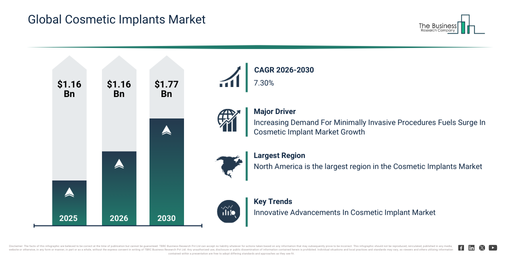
    The cosmetic implants market has shown strong growth in recent years. It is projected to increase from $12.36 billion in 2025 to $13.27 billion in 2026, with a compound annual growth rate (CAGR) of 7.4%. This historical expansion has been fueled by a rise in cosmetic surgery procedures, broader acceptance of aesthetic enhancements, improvements in implant materials, the growing use of dental implants, and greater availability of certified cosmetic surgeons.

    Looking ahead, the market is expected to reach $17.56 billion by 2030, maintaining a CAGR of 7.3%. This forecasted growth is driven by the rising demand for personalized cosmetic solutions, increased attention to facial aesthetics and reconstructive procedures, the booming medical tourism sector for cosmetic treatments, innovations in bioengineered implants, and the expanding regulatory approval for advanced implant materials. Key trends shaping the market include a growing preference for advanced aesthetic techniques, wider adoption of biocompatible materials, increased use of customized implants, growth in minimally invasive surgeries, and a heightened focus on implant safety over the long term.

    Download A Free Sample Report For Comprehensive Market Insights:

    https://www.thebusinessresearchcompany.com/sample.aspx?id=13409&type=smp

    Rising Popularity of Minimally Invasive Procedures Boosting Cosmetic Implants Demand

    One of the primary factors propelling market growth is the increasing preference for minimally invasive cosmetic procedures. These interventions involve smaller incisions or openings, leading to quicker recovery, less pain, minimal scarring, and reduced complication risks. This makes them highly attractive to patients seeking safer and faster treatment options.

    Cosmetic implants complement these minimally invasive techniques by utilizing advanced biocompatible materials that allow for precise placement through smaller incisions. This not only simplifies the surgical process but also enhances patient comfort and speeds up recovery. For example, in June 2024, the American Society of Plastic Surgeons reported a 7% rise in minimally invasive procedures during 2023, outpacing the growth of traditional surgeries by 2%. This trend highlights the escalating market potential driven by minimally invasive approaches.

    Detailed Breakdown of Cosmetic Implants Market Segmentation

    The cosmetic implants market is divided into several key categories for a thorough analysis:

    1) By Raw Material: Polymer, Ceramic, Metal, and Biological

    2) By Application: Dental Implants, Breast Implants, Facial Implants, and Other Applications

    3) By End User: Hospitals, Ambulatory Surgical Centers, Specialty Clinics, and Other Users

    Within these segments, further subcategories provide insight, such as polymer implants including silicone-based, polyurethane-based, and polymethylmethacrylate (PMMA) implants. Ceramic implants are broken down into alumina and zirconia ceramic types. Metal implants include titanium, stainless steel, and cobalt-chromium variants. Biological implants cover collagen, hyaluronic acid, and growth factor-based options.

    Access The Complete Cosmetic Implants Market Report:

    https://www.thebusinessresearchcompany.com/report/cosmetic-implants-global-market-report

    Innovation and Product Development Trends in the Cosmetic Implants Market

    Leading players in the cosmetic implants industry are focusing on developing innovative products to attract more customers and boost revenues. One example is breast tissue dynamic gel, a colorless filler composed of hyaluronic acid and water used to enhance breast size or fullness.

    For instance, in July 2024, GC Aesthetics, a France-based global leader in breast implants and medical devices, launched two new products in Hainan, China: Luna XT and PERLE. The Luna XT implant offers outstanding support for women undergoing both immediate and delayed breast reconstruction, featuring a unique microtextured surface, highly cohesive silicone gel, and a durable shell. Meanwhile, PERLE introduces a novel BioQ-Surface combined with Emunomic Breast Tissue Dynamic Gel, designed to improve patient safety and aesthetic results.

    Top Companies Leading Growth in the Cosmetic Implants Sector

    The cosmetic implants market is dominated by several major companies such as Johnson & Johnson Services Inc., Allergan Inc., Zimmer Biomet Holdings Inc., Dentsply Sirona Inc., Institut Straumann AG, KLS Martin Group, Sientra Inc., Mentor Worldwide LLC, GC Aesthetics plc, Nobel Biocare Holding AG, Megagen Implant Co. Ltd., Groupe Sebbin SAS, Polytech Health & Aesthetics GmbH, Silimed, Spectrum Designs Medical, Alpha Aesthetics Implants, Nagor, Implantech Associations Inc., Surgiform Technology Ltd., and Aesthetic And Reconstructive Technologies (AART) Inc. These organizations are actively contributing to innovation, expanding product portfolios, and increasing market reach globally.

    Geographical Insights Highlighting Regions Driving Cosmetic Implants Market Growth

    In 2025, North America held the largest share of the cosmetic implants market. However, the Asia-Pacific region is expected to experience the fastest growth during the forecast period. This report covers various geographical segments including Asia-Pacific, South East Asia, Western Europe, Eastern Europe, North America, South America, the Middle East, and Africa, providing a comprehensive view of regional market dynamics and opportunities.

    Get in touch with us:

    The Business Research Company: https://www.thebusinessresearchcompany.com/

    Americas: +1 310-496-7795

    Asia: +44 7882 955267 & +91 8897263534

    Europe: +44 7882 955267

    Email us at: marketing@tbrc.info

    Follow us on:

    LinkedIn: https://in.linkedin.com/company/the-business-research-company

    YouTube: https://www.youtube.com/channel/UC24_fI0rV8cR5DxlCpgmyFQ

    Global Market Model: https://www.thebusinessresearchcompany.com/global-market-model
  • Clot Management Devices Market Set To Grow From $1.92 Billion In 2026 To $2.37 Billion By 2030 At A CAGR Of 5.3%

    Clot Management Devices Market Set To Grow From $1.92 Billion In 2026 To $2.37 Billion By 2030 At A CAGR Of 5.3%

    Delivering more actionable and strategically valuable research, The Business Research Company’s 2026 market reports feature market attractiveness analysis, total addressable market evaluation, company benchmarking matrices, interactive Excel dashboards, expanded supply chain intelligence, emerging startup coverage, and detailed product insights.

    The clot management devices sector is witnessing steady expansion as advancements in medical technology and increasing health concerns drive demand. With the rise in cardiovascular conditions and innovative treatment options, this market is set to experience significant developments. Let’s explore the current market size, growth factors, key players, and emerging trends shaping the future of clot management devices.

    Clot Management Devices Market Size Showing Strong Growth Between 2025 and 2030

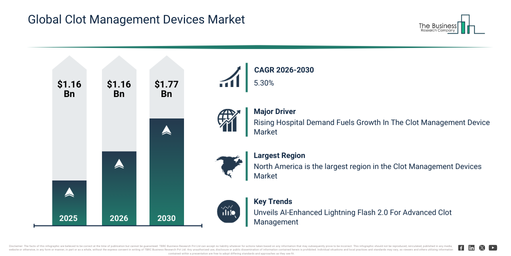
    The clot management devices market has seen notable growth in recent years, with its size expected to rise from $1.82 billion in 2025 to $1.93 billion in 2026, reflecting a compound annual growth rate (CAGR) of 6.0%. This growth during the historical period is largely driven by the increasing incidence of deep vein thrombosis and pulmonary embolism, a rising prevalence of cardiovascular diseases, the growth of interventional radiology procedures, expanded vascular care in hospitals, and heightened awareness surrounding clot-related complications. Looking ahead, the market is projected to continue expanding robustly, reaching $2.37 billion by 2030 with a CAGR of 5.3%. Factors contributing to this forecasted growth include an aging population vulnerable to thrombotic events, increased demand for minimally invasive vascular treatments, a stronger focus on early clot diagnosis and management, the development of advanced stroke and thrombosis centers, and broader adoption of endovascular therapies. Key trends anticipated during this period involve greater use of minimally invasive clot removal methods, rising adoption of mechanical and aspiration thrombectomy devices, emphasis on rapid interventions for acute thrombotic episodes, growth in catheter-based treatments for deep vein thrombosis and pulmonary embolism, and a growing preference for retrievable inferior vena cava filters.

    Download A Free Sample Report For Comprehensive Market Insights:

    https://www.thebusinessresearchcompany.com/sample.aspx?id=15768&type=smp

    Rising Hospital Demand as a Key Driver in the Clot Management Devices Market

    The growing need for hospitals is playing a crucial role in fueling the clot management devices market. Hospitals serve as essential healthcare centers offering treatment and care for various medical conditions, including clot-related disorders such as deep vein thrombosis, pulmonary embolism, and ischemic stroke. Several factors contribute to the rising number of hospitals, such as population growth, urbanization, expanding healthcare access, aging populations, and the rise of medical tourism. In this context, clot management devices provide effective, minimally invasive treatment options that enhance patient safety and improve clinical outcomes. For example, in May 2024, the American Health Care Association reported that the number of hospitals in the US increased to 6,120, up from 5,129 in 2022. This expansion in hospital infrastructure is a significant growth driver for the clot management devices market.

    Core Segments and Breakdown of the Clot Management Devices Market

    This market can be segmented into several categories based on product type, device subtype, and end user. The primary product types include neurovascular embolectomy devices, embolectomy balloon catheters, percutaneous thrombectomy devices, catheter-directed thrombolysis (CDT) devices, and inferior vena cava filters (IVCF). Within percutaneous thrombectomy devices, the key categories are aspiration thrombectomy devices and mechanical thrombectomy devices. The neurovascular embolectomy devices segment further breaks down into aspiration embolectomy devices, mechanical embolectomy devices, and embolectomy balloon catheters, which themselves include high-pressure and low-pressure balloon catheters. CDT devices consist of infusion catheters and guidewires designed specifically for thrombolysis. The inferior vena cava filters segment is divided into permanent and retrievable filter types. End users of these devices primarily encompass diagnostic centers and hospitals.

    Access The Complete Clot Management Devices Market Report:

    https://www.thebusinessresearchcompany.com/report/clot-management-devices-global-market-report

    Innovation Trends Accelerating the Clot Management Devices Market

    Leading companies in the clot management devices industry are continuously innovating to develop advanced technologies that improve treatment outcomes. One notable advancement is the development of computer-assisted vacuum thrombectomy (CAVT) systems, which are designed for efficient removal of blood clots in conditions like deep vein thrombosis and pulmonary embolism. For instance, in April 2024, Penumbra Inc., a US-based medical device manufacturer, introduced the Lightning Flash 2.0 system. This cutting-edge clot aspiration and vacuum thrombectomy technology offers rapid clot removal with enhanced performance by integrating artificial intelligence and sophisticated engineering. It features advanced imaging and suction capabilities, allowing precise clot extraction tailored to various medical scenarios. Such innovations are helping to raise the standard of care in acute and chronic vascular conditions.

    Competitive Landscape and Major Players in the Clot Management Devices Market

    The clot management devices market features a range of prominent companies that influence its development and competitive dynamics. Key players include Bayer AG, Abbott Laboratories, Medtronic plc, Boston Scientific Corporation, B. Braun Melsungen AG, Terumo Corporation, Acandis GmbH & Co KG, Cook Medical, Merit Medical Systems Inc., Penumbra Inc., MicroVention Inc., Inari Medical Inc., AngioDynamics Inc., Argon Medical Devices Inc., LeMaitre Vascular Inc., iVascular SLU, Straub Medical AG, Rapid Medical, C.R. Bard Inc., and InspireMD Inc. These industry leaders are actively investing in research and development to maintain their market positions and meet evolving clinical needs.

    Geographical Market Insights Highlighting Regional Growth Patterns

    In 2025, North America held the largest share of the clot management devices market, driven by advanced healthcare infrastructure and widespread adoption of innovative therapies. Meanwhile, the Asia-Pacific region is expected to experience the fastest growth during the forecast period, fueled by increasing healthcare investments, expanding patient populations, and improving access to advanced medical technologies. Other regions covered in the market analysis include South East Asia, Western Europe, Eastern Europe, South America, the Middle East, and Africa, offering a comprehensive view of global market dynamics.

    Get in touch with us:

    The Business Research Company: https://www.thebusinessresearchcompany.com/

    Americas: +1 310-496-7795

    Asia: +44 7882 955267 & +91 8897263534

    Europe: +44 7882 955267

    Email us at: marketing@tbrc.info

    Follow us on:

    LinkedIn: https://in.linkedin.com/company/the-business-research-company

    YouTube: https://www.youtube.com/channel/UC24_fI0rV8cR5DxlCpgmyFQ

    Global Market Model: https://www.thebusinessresearchcompany.com/global-market-model
  • Cortical Haptic Virtual Reality Glove Market Opportunities Are Emerging Beyond Traditional Growth Areas

    Cortical Haptic Virtual Reality Glove Market Opportunities Are Emerging Beyond Traditional Growth Areas

    Enhanced with market attractiveness analysis, total addressable market evaluation, company benchmarking matrices, interactive Excel dashboards, expanded supply chain intelligence, emerging startup coverage, and detailed product insights, The Business Research Company’s 2026 market reports deliver more actionable and strategically valuable research.

    The market for cortical haptic virtual reality gloves is rapidly evolving, driven by technological advances and increasing adoption across various sectors. This emerging industry is poised for significant expansion, fueled by innovations and growing applications in gaming, healthcare, training, and beyond. Let’s explore the current market size, key growth drivers, leading companies, and future trends shaping this exciting field.

    Cortical Haptic Virtual Reality Glove Market Size and Projected Growth

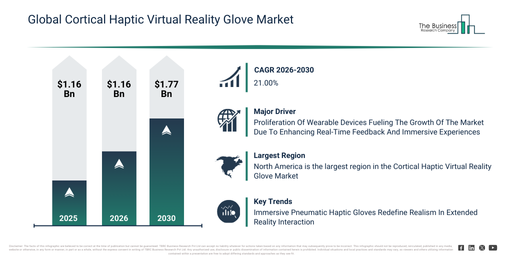
    The cortical haptic virtual reality glove market has experienced remarkable growth in recent years. It is projected to increase from $1.84 billion in 2025 to $2.23 billion in 2026, marking a compound annual growth rate (CAGR) of 21.3%. Factors contributing to this growth during the historical period include the rising popularity of VR gaming and entertainment, early-stage development of haptic glove technologies, expanded use in industrial simulation and training, investments in rehabilitation and healthcare, and advancements in sensor and exoskeleton technology. Looking ahead, the market is set to soar further, reaching $4.79 billion by 2030 with a CAGR of 21.0%. This future expansion will be driven by AI integration for adaptive haptic responses, growth in industrial and engineering training applications, the rise of immersive educational platforms, wireless and soft robotic glove innovations, and an increasing demand for realistic remote and metaverse experiences. Key trends anticipated in the coming years include neural interface-enabled tactile feedback, sophisticated force and vibrotactile sensations, wireless haptic glove breakthroughs, deeper healthcare integration, and high-fidelity simulation and gaming experiences.

    Download A Free Sample Report For Comprehensive Market Insights:

    https://www.thebusinessresearchcompany.com/sample.aspx?id=28185&type=smp

    Wearable Devices as a Catalyst in the Cortical Haptic Virtual Reality Glove Market

    The growing popularity of wearable devices is a major factor propelling the cortical haptic virtual reality glove market forward. These devices, worn on the body, are designed to monitor health, fitness, and provide smart functionalities. The rising health awareness among consumers encourages the adoption of such technology to track vital signs, improve fitness, and manage overall wellbeing. Wearable devices enhance the capabilities of cortical haptic VR gloves by providing real-time, precise feedback, which boosts the realism and effectiveness of virtual environments. This improved interaction simulates touch, pressure, and textures, significantly increasing user engagement and immersion. For example, in April 2025, the UK’s Parliamentary Office of Science and Technology reported that between 2023 and 2024, the National Institute for Health and Care Research (NIHR) and UK Research and Innovation (UKRI) invested £11.5 million ($15.52 million) in 10 projects focused on wearable tech to improve independence for individuals with frailty or long-term disabilities. Such initiatives highlight how wearable devices are playing a crucial role in driving market expansion.

    Market Segmentation Overview of the Cortical Haptic Virtual Reality Glove Industry

    This market is segmented by several key categories, including:

    1) Product Type: Wired Gloves and Wireless Gloves

    2) Technology: Force Feedback, Vibrotactile Feedback, Electroactive Polymer or Soft Actuators

    3) Distribution Channel: Online and Offline

    4) Application: Gaming and Entertainment, Healthcare and Rehabilitation, Industrial and Training

    5) End-User: Consumer, Enterprise or Commercial, Research and Education

    Within product types, wired gloves include subtypes such as exoskeleton gloves, rigid frame gloves, and cable-driven gloves. Wireless gloves comprise soft robotic gloves, finger tracking gloves, and wearable sensor gloves. These diverse segments cater to a wide range of use cases, from immersive gaming to professional training and medical rehabilitation.

    Access The Complete Cortical Haptic Virtual Reality Glove Market Report:

    https://www.thebusinessresearchcompany.com/report/cortical-haptic-virtual-reality-glove-global-market-report

    Innovations and Trends Reinventing the Cortical Haptic Virtual Reality Glove Market

    Leading companies in this sector are focusing on cutting-edge innovations to enhance realism and user interaction. One notable advancement is the development of pneumatic haptic gloves, which use air pressure to deliver precise tactile feedback, offering a more natural feel during virtual interactions. For example, in January 2024, Singapore-based Microtube Technologies launched the HEXR Glove, a wireless pneumatic haptic device that provides high-fidelity tactile sensations without the need for external pumps or bulky equipment. Compatible with major VR, AR, and XR headsets, this glove supports applications across healthcare, education, entertainment, and training, demonstrating how innovation is advancing market potential.

    Key Players Shaping the Cortical Haptic Virtual Reality Glove Market

    Several prominent companies dominate this market, including HaptX Inc, Manus VR, SenseGlove, CyberGlove Systems, VRgluv, Dexta Robotics, BeBop Sensors, Contact CI, NeuroDigital Technologies, Noitom Ltd, Teslasuit, Meta Platforms Inc, Apple Inc, Sony Interactive Entertainment, Razer Inc, bHaptics, Virtuix, Quantanx, Ultraleap, Straythink, ExoGeniX, GestureTek, Tactai, VRGluv, and AxonVR. These firms are investing heavily in research and development to create innovative products that meet evolving consumer and enterprise needs.

    Geographical Breakdown and Regional Market Leadership in Cortical Haptic VR Gloves

    In 2025, North America held the largest share of the cortical haptic virtual reality glove market. However, the Asia-Pacific region is anticipated to experience the fastest growth throughout the forecast period. The market report covers regions such as Asia-Pacific, South East Asia, Western Europe, Eastern Europe, North America, South America, the Middle East, and Africa, providing a detailed global perspective on market trends and opportunities.

    Get in touch with us:

    The Business Research Company: https://www.thebusinessresearchcompany.com/

    Americas: +1 310-496-7795

    Asia: +44 7882 955267 & +91 8897263534

    Europe: +44 7882 955267

    Email us at: marketing@tbrc.info

    Follow us on:

    LinkedIn: https://in.linkedin.com/company/the-business-research-company

    YouTube: https://www.youtube.com/channel/UC24_fI0rV8cR5DxlCpgmyFQ

    Global Market Model: https://www.thebusinessresearchcompany.com/global-market-model
  • Closed-Loop Neuromodulation Processor Market Opportunities Are Emerging Beyond Traditional Growth Areas

    Closed-Loop Neuromodulation Processor Market Opportunities Are Emerging Beyond Traditional Growth Areas

    Enhanced with market attractiveness analysis, total addressable market evaluation, company benchmarking matrices, interactive Excel dashboards, expanded supply chain intelligence, emerging startup coverage, and detailed product insights, The Business Research Company’s 2026 market reports deliver more actionable and strategically valuable research.

    The closed-loop neuromodulation processor market is experiencing significant expansion fueled by advancements in technology and increasing demand for effective neurological treatments. As neurological disorders become more prevalent worldwide, the market is set to witness robust growth driven by innovative solutions and rising adoption across various healthcare settings. Below, we explore the market size, key growth drivers, segment developments, emerging trends, leading companies, and regional prospects shaping this dynamic industry.

    Steady Growth Trajectory in the Closed-Loop Neuromodulation Processor Market

    This market has demonstrated rapid growth recently, with its size projected to rise from $2.52 billion in 2025 to $2.85 billion in 2026 at a strong compound annual growth rate (CAGR) of 13.2%. The historic surge has been propelled by the increasing occurrence of neurological disorders, heightened demand for precise neuromodulation therapies, significant progress in implantable devices, broader use of DBS (Deep Brain Stimulation) and SCS (Spinal Cord Stimulation) systems, and increased research funding in neurotechnology.

    Download A Free Sample Report For Comprehensive Market Insights:

    https://www.thebusinessresearchcompany.com/sample.aspx?id=28175&type=smp

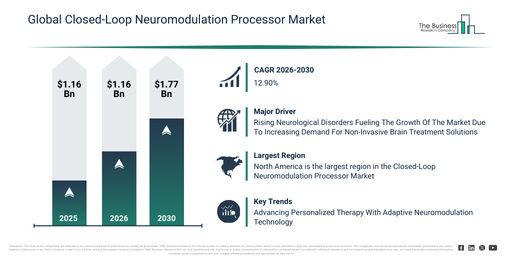
    Looking ahead, the market is anticipated to expand even further, reaching $4.63 billion by 2030 with a CAGR of 12.9%. This anticipated growth will be supported by innovations such as AI-enabled adaptive processors, growing availability of external wearable controllers, integration with telemedicine platforms, expansion of home-based neuromodulation treatments, and rising usage in emerging markets. Important market trends for the forecast period include real-time neural feedback mechanisms, adaptive stimulation algorithms, seamless integration with wearable devices, remote patient monitoring features, and multimodal therapy optimization.

    Increasing Prevalence of Neurological Disorders Boosting Closed-Loop Neuromodulation Processor Demand

    One of the primary factors driving demand in this market is the rising number of neurological disorders globally. These conditions, which affect the brain, spinal cord, or peripheral nerves, can cause impairments in movement, cognition, and sensation. The global aging population is a significant contributor to the increasing incidence of diseases such as Alzheimer’s and Parkinson’s. Closed-loop neuromodulation processors play a crucial role in treating these disorders by continuously monitoring brain activity and delivering targeted electrical stimulation to regulate abnormal neural signals in real time.

    Access The Complete Closed-Loop Neuromodulation Processor Market Report:

    https://www.thebusinessresearchcompany.com/report/closed-loop-neuromodulation-processor-global-market-report

    For example, data from the Institute for Health Metrics and Evaluation indicated that neurological conditions affected 43% of the global population in 2022, with projections suggesting this figure could double by 2050. This alarming rise in neurological disorders is a key driver fueling the growth of the closed-loop neuromodulation processor market.

    Technological Advances and Market Segmentation in Closed-Loop Neuromodulation Processors

    The report breaks down the closed-loop neuromodulation processor market into several critical segments, including:

    1) By Product Type: Implantable Processors and External Processors

    2) By Technology: Deep Brain Stimulation, Spinal Cord Stimulation, Vagus Nerve Stimulation, and Other Technologies

    3) By Application: Chronic Pain Management, Epilepsy, Parkinson’s Disease, Depression, and other uses

    4) By End-User: Hospitals, Specialty Clinics, Research Institutes, and various other healthcare providers

    Further subcategories under Implantable Processors include DBS, SCS, VNS, Sacral Nerve Stimulation (SNS), and Peripheral Nerve Stimulation (PNS) processors. External Processors cover wearable neuromodulation controllers, handheld programming devices, external pulse generators, charging and power management units, and wireless communication interfaces.

    Brain-Computer Interface Integration and Innovations Transforming Market Growth

    Key players in this sector are placing significant emphasis on incorporating brain-computer interface (BCI) technology to enhance therapy precision and tailor treatments to individual patient needs. BCIs enable direct communication between the brain and external devices by interpreting neural signals as commands, thereby allowing real-time monitoring and adaptive neuromodulation therapies.

    A notable example occurred in February 2025 when Medtronic plc received FDA approval for its BrainSense Adaptive Deep Brain Stimulation (aDBS) and BrainSense Electrode Identifier (EI). This system represents one of the largest commercial launches of BCI technology, continuously monitoring brain activity and automatically adjusting stimulation to optimize treatment for Parkinson’s disease. Clinical trials showed that this approach improved symptom control, reduced motor fluctuations, and enhanced patient outcomes compared to traditional continuous DBS.

    Key Players Leading the Closed-Loop Neuromodulation Processor Market

    The competitive landscape of this market is shaped by several prominent companies, including Abbott Laboratories, Medtronic PLC, Boston Scientific Corporation, Beijing PINS Medical, CorTec, NeuroPace, Saluda Medical, NeuSpera Medical, Inbrain Neuroelectronics, Blackrock Neurotech, Great Lakes NeuroTechnologies, SensArs Neuroprosthetics, BioControl Medical, Precision Neuroscience, Motif Neurotech, Synergia Medical, BrainQ Technologies, and Soterix Medical (to some extent).

    Regional Market Dynamics Highlight North America’s Dominance and Asia-Pacific’s Growth Potential

    In 2025, North America held the largest revenue share in the closed-loop neuromodulation processor market. However, the Asia-Pacific region is forecast to be the fastest-growing market throughout the coming years. The comprehensive market analysis also covers South East Asia, Western Europe, Eastern Europe, South America, the Middle East, and Africa, providing a global perspective on evolving regional trends and opportunities.

    Get in touch with us:

    The Business Research Company: https://www.thebusinessresearchcompany.com/

    Americas: +1 310-496-7795

    Asia: +44 7882 955267 & +91 8897263534

    Europe: +44 7882 955267

    Email us at: marketing@tbrc.info

    Follow us on:

    LinkedIn: https://in.linkedin.com/company/the-business-research-company

    YouTube: https://www.youtube.com/channel/UC24_fI0rV8cR5DxlCpgmyFQ

    Global Market Model: https://www.thebusinessresearchcompany.com/global-market-model