Category: Medical Equipment

  • C-Reactive Protein Testing Market Outlook Highlights The Next Major Growth Opportunities

    C-Reactive Protein Testing Market Outlook Highlights The Next Major Growth Opportunities

    Delivering more actionable and strategically valuable research, The Business Research Company’s 2026 market reports feature market attractiveness analysis, total addressable market evaluation, company benchmarking matrices, interactive Excel dashboards, expanded supply chain intelligence, emerging startup coverage, and detailed product insights.

    The market for C-reactive protein (CRP) testing has experienced significant growth recently, fueled by rising awareness and expanded applications in healthcare diagnostics. This sector is poised for continued expansion as advances in technology and increasing demand for early disease detection drive further adoption across various medical settings. Below is an in-depth overview of the market size, key growth drivers, major players, and emerging trends shaping the future of CRP testing.

    Market Size and Growth Forecast for the C-Reactive Protein Testing Market

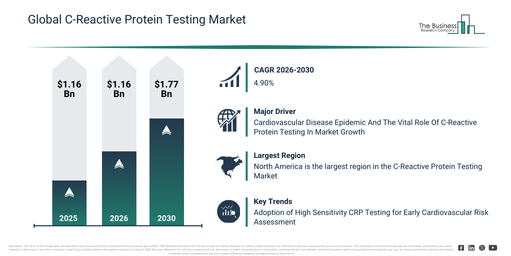
    The value of the c-reactive protein testing market has seen steady growth, rising from $3.52 billion in 2025 to $3.7 billion in 2026, which corresponds to a compound annual growth rate (CAGR) of 5.1%. This positive momentum during the historical period stems from factors such as the growing prevalence of inflammatory diseases, increased utilization of CRP testing in clinical diagnostics, expanded hospital lab infrastructure, heightened awareness of early disease detection, and the availability of standardized assay kits. Looking ahead, the market is projected to reach $4.48 billion by 2030, maintaining a CAGR of 4.9%. This upcoming growth phase is driven by rising demand for point-of-care inflammatory testing, greater integration of automated diagnostic platforms, expansion of preventive health screening programs, broader adoption of high-throughput laboratory systems, and the increasing focus on personalized medicine diagnostics. Among the key trends expected to influence the market are the growing use of high-sensitivity CRP assays, automated immunoassay systems, rapid inflammation diagnostic tools, expanded CRP testing for cardiovascular risk assessment, and enhanced laboratory workflow automation.

    Download A Free Sample Report For Comprehensive Market Insights:

    https://www.thebusinessresearchcompany.com/sample.aspx?id=6719&type=smp

    Factors Fueling Growth in the C-Reactive Protein Testing Market

    One of the primary growth catalysts for the CRP testing market is the increasing incidence of cardiovascular diseases (CVD). These diseases encompass various heart conditions, including diseased blood vessels, structural heart problems, and blood clots. While the exact causes of CVD remain complex, lifestyle-related behavioral risk factors such as poor diet, physical inactivity, smoking, and alcohol consumption contribute to the buildup of fatty deposits in arteries (atherosclerosis), which increases the likelihood of blood clots. These behaviors also lead to elevated blood pressure, glucose levels, blood lipids, weight gain, and obesity. As CVD cases rise, there is a heightened need for CRP testing to assist in diagnosing or predicting cardiovascular risk, offering a comparable measure to cholesterol levels. For example, in October 2024, data from the US Centers for Disease Control revealed that in 2023, cardiovascular diseases were responsible for about 919,032 deaths in the United States alone, representing nearly one-third of all deaths. This alarming statistic underscores why the growing prevalence of cardiovascular conditions is a key driver in the expansion of the CRP testing market.

    Detailed Segmentation Analysis of the C-Reactive Protein Testing Market

    The c-reactive protein testing market is categorized into several segments to better understand its growth areas:

    1) By Assay Type:

    – Enzyme-Linked Immunosorbent Assay (ELISA)

    – Chemiluminescence Immunoassay (CLIA)

    – Immunoturbidimetric Assays

    2) By Application:

    – Diabetes

    – Rheumatoid Arthritis

    – Cardiovascular Disease

    – Inflammatory Bowel Disease

    – Cancer

    – Other Applications

    3) By End Use:

    – Clinics

    – Hospitals

    – Diagnostic Laboratories

    Further subcategories include specific assay techniques such as Direct ELISA, Indirect ELISA, and Sandwich ELISA under the ELISA segment; Luminometer-Based and Automated CLIA Systems within CLIA; and Nephelometry-Based and Latex Agglutination Immunoturbidimetric Assays. This detailed segmentation helps clarify the areas where demand is expanding and technological advancements are focused.

    Access The Complete C-Reactive Protein Testing Market Report:

    https://www.thebusinessresearchcompany.com/report/c-reactive-protein-testing-global-market-report

    Innovations Driving Transformation in the C-Reactive Protein Testing Market

    Leading companies in the CRP testing space are emphasizing technological innovation, particularly through the development of high-sensitivity automated immunoassays. These cutting-edge tools enable the accurate and rapid detection of very low levels of CRP, which is crucial for early cardiovascular risk assessment and real-time inflammation monitoring. High-sensitivity automated immunoassays use refined immunoturbidimetric or nephelometric methods to detect CRP concentrations that fall well below those measurable by standard assays, allowing for earlier clinical intervention and better prognostic evaluations. For instance, in January 2024, Siemens Healthineers introduced the Atellica CH High Sensitivity C-Reactive Protein 2 (hCRP2) assay for their Atellica CH Analyzer. This assay utilizes two ready-to-use reagent packs—one with a phosphate buffer and surfactant, and the other containing monoclonal anti-CRP antibodies bound to polystyrene particles. The presence of CRP causes these particles to aggregate, and the system measures light scattering intensity proportional to CRP concentration. Designed for use with serum or plasma samples, this assay delivers fast, quantitative results to support timely clinical decisions in cardiovascular risk stratification.

    Key Players Leading the C-Reactive Protein Testing Industry

    Several prominent companies hold significant positions in the CRP testing market, driving both innovation and market growth. These include Thermo Fisher Scientific Inc., F Hoffmann-La Roche AG, Danaher Corporation, Quest Diagnostics Incorporated, Siemens AG, Abbott Laboratories, Aidian Oy, Boditech Med Inc., Horiba Ltd., Laboratory Corporation, Merck KGAA, Randox Laboratories Limited, Getein Biotech Inc., Bio-Rad Laboratories Inc., DiaSorin S.p.A., Eurofins Scientific SE, Inova Diagnostics Inc., Luminex Corporation, Sekisui Diagnostics LLC, Sysmex Corporation, Tosoh Corporation, Trinity Biotech Plc, WerfenLife Group LLC, ZEUS Scientific Inc., BioMérieux SA, Biomerica Inc., Gold Standard Diagnostics Corp., Immunodiagnostic Systems Holdings PLC, and Nova Biomedical Corporation. Their ongoing research and product development efforts are central to advancing CRP testing capabilities.

    Geographical Insights and Regional Market Opportunities for CRP Testing

    In 2025, North America dominated the c-reactive protein testing market in terms of size. Nonetheless, the fastest expansion is anticipated in the Asia-Pacific region during the forecast period. The market report covers key regions including Asia-Pacific, South East Asia, Western Europe, Eastern Europe, North America, South America, the Middle East, and Africa, offering a comprehensive global perspective on market dynamics and growth prospects.

    Get in touch with us:

    The Business Research Company: https://www.thebusinessresearchcompany.com/

    Americas: +1 310-496-7795

    Asia: +44 7882 955267 & +91 8897263534

    Europe: +44 7882 955267

    Email us at: marketing@tbrc.info

    Follow us on:

    LinkedIn: https://in.linkedin.com/company/the-business-research-company

    YouTube: https://www.youtube.com/channel/UC24_fI0rV8cR5DxlCpgmyFQ

    Global Market Model: https://www.thebusinessresearchcompany.com/global-market-model
  • Cone Beam Computed Tomography Market Expected To Reach $2.61 Billion By 2030 As Growth Accelerates At 12.2% CAGR

    Cone Beam Computed Tomography Market Expected To Reach $2.61 Billion By 2030 As Growth Accelerates At 12.2% CAGR

    Enhanced with market attractiveness analysis, total addressable market evaluation, company benchmarking matrices, interactive Excel dashboards, expanded supply chain intelligence, emerging startup coverage, and detailed product insights, The Business Research Company’s 2026 market reports deliver more actionable and strategically valuable research.

    The cone beam computed tomography (CBCT) market is witnessing swift expansion, driven by technological advancements and increasing demand for precise dental imaging. As dental health awareness grows globally, the market is set to experience significant growth in the upcoming years. Let’s explore the current market size, key growth factors, segmentation, emerging trends, leading companies, and geographic insights shaping this dynamic industry.

    Strong Growth Trajectory in the Cone Beam Computed Tomography Market Size

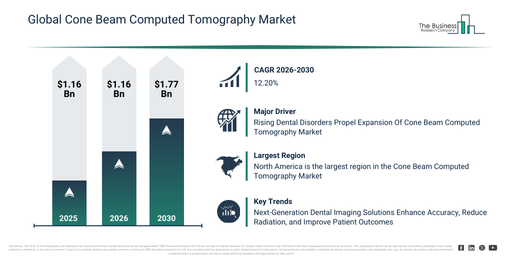
    The cone beam computed tomography market has experienced rapid growth in recent years. It is projected to increase from $1.47 billion in 2025 to $1.65 billion in 2026, reflecting a compound annual growth rate (CAGR) of 11.9%. This rise is fueled by a growing incidence of dental disorders, expansion in orthodontic and implant procedures, the adoption of digital dentistry, the need for accurate diagnostic imaging, and the availability of cutting-edge imaging equipment. Looking ahead, the market is expected to continue its upward trend, reaching $2.61 billion by 2030 at an accelerated CAGR of 12.2%. This forecasted growth is supported by heightened investments in dental imaging technologies, rising demand for minimally invasive diagnostic methods, and the expansion of dental clinics especially in emerging markets. Additionally, trends such as AI-driven treatment planning and patient-specific imaging solutions are set to further propel market growth.

    Download A Free Sample Report For Comprehensive Market Insights:

    https://www.thebusinessresearchcompany.com/sample.aspx?id=10235&type=smp

    Increasing Dental Disorders as a Key Driver for CBCT Market Expansion

    One important factor stimulating the CBCT market is the rising occurrence of dental disorders, which include gum diseases, cavities, and tooth erosion. These conditions often cause pain, affect eating ability, and impact self-confidence. Cone beam computed tomography enables early detection of dental problems, improving the ability of endodontists and dentists to diagnose and treat conditions involving teeth, jaws, and facial skeletal structures. For example, a report from March 2023 by the World Health Organization highlights that nearly 3.5 billion people worldwide suffer from oral diseases. Approximately 10 percent of the global population has severe periodontal gum disease, potentially leading to tooth loss, while 2.3 billion individuals have dental caries in permanent teeth, and 520 million children are affected by primary tooth decay. This widespread prevalence emphasizes the necessity for advanced diagnostic tools like CBCT, which is driving the market forward.

    How Adoption of Digital Dentistry and Advanced Imaging Technologies Accelerate Market Demand

    The expanding adoption of digital dentistry techniques plays a crucial role in the CBCT market growth. Increasingly, dental professionals are turning to digital workflows to enhance treatment precision and efficiency. Furthermore, the rising availability of sophisticated imaging hardware, combined with AI-enabled software, supports better diagnostics and personalized treatment planning, encouraging market expansion.

    Access The Complete Cone Beam Computed Tomography Market Report:

    https://www.thebusinessresearchcompany.com/report/cone-beam-computed-tomography-global-market-report

    Cone Beam Computed Tomography Market Segments and Usage Areas

    This market is categorized based on patient positioning, applications, and end users. Patient position segments include standing (upright standing and standing with head stabilization), seated (upright seated and seated with head stabilization), and supine (standard and adjustable supine positions). Applications cover a broad spectrum such as dental implantology, oral and maxillofacial surgery, orthodontics, endodontics, general dentistry, temporomandibular joint (TMJ) disorders, periodontics, forensic dentistry, and other related fields. End users primarily consist of hospitals, dental clinics, and other healthcare facilities, reflecting the diverse utilization of CBCT technology in clinical practice.

    Innovations and Technological Trends Shaping the Cone Beam Computed Tomography Market

    Leading players in the CBCT space are consistently developing advanced imaging solutions aimed at enhancing diagnostic precision and patient care. Improvements such as optimized exposure protocols, enhanced sensor technology, and motion-artifact correction are enabling clearer images with lower radiation doses and greater reliability, even when patients move during scans. For example, in March 2025, Planmeca Oy from Finland introduced the Planmeca Viso® G1 CBCT at IDS 2025. This system offers a field of view up to 11 × 11 cm, features an Ultra Low Dose protocol, and incorporates a CALM motion-artifact correction algorithm, allowing delivery of high-quality 3D imaging even if patient movement occurs, thereby supporting improved clinical decisions and diagnostic confidence.

    Key Companies Driving Competition in the Cone Beam Computed Tomography Market

    The competitive landscape of the CBCT market consists of several established companies including Planmeca Group, Vatech Co. Ltd., Asahi Roentgen Industry Co. Ltd., J Morita Corporation, QR s.r.l., CurveBeam AI, PreXion Inc., Canon Medical Systems Corporation, Fussen Technology Co. Ltd., Genoray Co. Ltd., Carestream Health Inc., Villa Sistemi Medicali S.p.A., Cefla S.C., PointNix Co. Ltd., LargeV Instrument Corp., Idetec Medical Imaging, Dentsply Sirona Inc., ACTEON Group, Owandy Radiology, and Ray Co. Ltd. These companies are at the forefront of innovation, product development, and market expansion.

    Geographic Market Outlook with a Focus on Growth Areas

    In 2025, North America led the cone beam computed tomography market in terms of size. However, the Asia-Pacific region is projected to emerge as the fastest-growing market during the forecast period. The comprehensive market analysis includes regions such as Asia-Pacific, South East Asia, Western Europe, Eastern Europe, North America, South America, the Middle East, and Africa, providing a global perspective on demand and growth trends in CBCT technology.

    Get in touch with us:

    The Business Research Company: https://www.thebusinessresearchcompany.com/

    Americas: +1 310-496-7795

    Asia: +44 7882 955267 & +91 8897263534

    Europe: +44 7882 955267

    Email us at: marketing@tbrc.info

    Follow us on:

    LinkedIn: https://in.linkedin.com/company/the-business-research-company

    YouTube: https://www.youtube.com/channel/UC24_fI0rV8cR5DxlCpgmyFQ

    Global Market Model: https://www.thebusinessresearchcompany.com/global-market-model
  • Craniotomy Equipment Package Market Trends And Growth Drivers Point To Strong Future Potential

    Craniotomy Equipment Package Market Trends And Growth Drivers Point To Strong Future Potential

    Enhanced with market attractiveness analysis, total addressable market evaluation, company benchmarking matrices, interactive Excel dashboards, expanded supply chain intelligence, emerging startup coverage, and detailed product insights, The Business Research Company’s 2026 market reports deliver more actionable and strategically valuable research.

    The craniotomy equipment package market is witnessing significant growth as advancements in surgical technology and increasing prevalence of neurological conditions drive demand. This sector is evolving rapidly with innovation and rising investments, marking a promising future for medical professionals and patients alike. Below, we explore the market’s size, key factors fueling its expansion, leading participants, emerging trends, and regional dynamics.

    Market Size and Growth Outlook for the Craniotomy Equipment Package Market

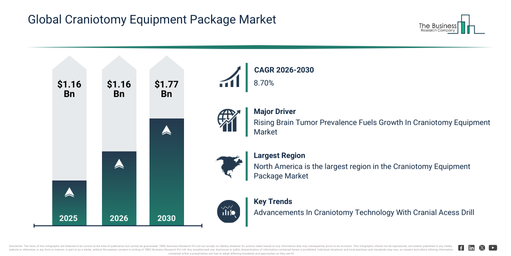
    The craniotomy equipment package market has shown robust expansion in recent years. It is projected to rise from $14.32 billion in 2025 to $15.61 billion in 2026, reflecting a compound annual growth rate (CAGR) of 9.0%. Historically, this growth was supported by the continued reliance on traditional open craniotomy techniques, limited access to advanced navigation technology, a higher incidence of brain tumors, growth in hospital-based neurosurgery centers, and increased awareness regarding the importance of surgical precision. Moving forward, the market is expected to reach $21.81 billion by 2030 at a CAGR of 8.7%. This forecasted growth will likely be driven by innovations such as robotic-assisted craniotomy, the rise of minimally invasive neurosurgery, greater investment in intraoperative imaging, wider usage of customizable cranioplasty implants, and the integration of AI-powered surgical planning and guidance systems. Key trends anticipated during this period include increasing adoption of robotic and minimally invasive techniques, enhanced image-guided surgery systems, expanding use of bioabsorbable and tailor-made skull implants, and growing demand for highly precise craniotomy drills and positioning equipment.

    Download A Free Sample Report For Comprehensive Market Insights:

    https://www.thebusinessresearchcompany.com/sample.aspx?id=19388&type=smp

    Factors Contributing to Market Growth: Rising Brain Tumor Incidence

    A major force propelling the craniotomy equipment package market is the rising prevalence of brain tumors. These abnormal cellular growths within the brain or central nervous system may be malignant or benign, with cases increasing due to improved diagnostics, aging populations, and potential genetic and environmental factors. Craniotomy equipment packages play a crucial role in enabling precise surgical removal of tumors, improving patient outcomes. For example, the American Cancer Society reported in January 2024 that approximately 25,400 new cases of brain and nervous system cancers are expected in the U.S., including 14,420 males and 10,980 females, with an estimated 18,760 deaths. Additionally, a May 2023 report from End Brain Cancer indicated around 80,000 new primary brain tumor diagnoses in the United States. This growing patient base directly supports increased demand for craniotomy equipment.

    Additional Market Drivers Supporting Expansion

    Beyond tumor incidence, other factors also support market growth. The expansion of hospital neurosurgery centers enhances access to advanced surgical procedures, while rising awareness of the need for precise, minimally invasive surgery promotes adoption of innovative equipment. Furthermore, technological advancements such as integrated AI planning tools and intraoperative imaging systems improve surgical accuracy and safety, encouraging healthcare providers to invest in modern craniotomy solutions.

    Access The Complete Craniotomy Equipment Package Market Report:

    https://www.thebusinessresearchcompany.com/report/craniotomy-equipment-package-global-market-report

    Detailed Segmentation of the Craniotomy Equipment Package Market

    This market is segmented into several categories to highlight product types, modalities, sales channels, applications, and end users. Key product types include craniotomy frames and attachments, drills and burs, skull plates and implants, navigation systems, and imaging systems. Modalities cover open craniotomy, minimally invasive craniotomy, and robotic craniotomy. Sales channels involve direct hospital sales, distributor networks, and online platforms. Application areas encompass tumor resection, brain injury repair, treatment of vascular malformations, and epilepsy surgery. End users primarily consist of hospitals, ambulatory surgery centers, and neurosurgery centers. Further subsegments elaborate on specific product details such as Mayfield headrests and positioning systems under frames and attachments, high-speed and pneumatic drills under the drill category, bioabsorbable and titanium skull plates under implants, as well as optical and electromagnetic navigation systems, and intraoperative MRI and fluorescence imaging under imaging systems.

    Innovations Shaping the Future of Craniotomy Equipment

    Companies in the craniotomy equipment space are constantly developing cutting-edge technologies to improve surgical precision and patient safety. A notable advancement is the smart auto-stop feature, an intelligent system integrated into surgical instruments that automatically halts operation upon detecting preset conditions, reducing human error and complications. For example, in May 2023, Hubly Surgical introduced the Hubly Cranial Access Kit and Drill, designed to enhance neurosurgical outcomes through precise control and safety with this smart auto-stop technology. Such innovations reflect the sector’s commitment to refining surgical procedures and elevating clinical results.

    Key Players Influencing Competition in the Craniotomy Equipment Package Industry

    The competitive landscape of the craniotomy equipment package market includes major global players such as Johnson & Johnson, Medtronic plc, Stryker Corporation, Zimmer Biomet Holdings, Integra LifeSciences Corporation, Leica Microsystems GmbH, KLS Martin Group, Brainlab AG, Mizuho America Inc., Narang Medical Limited, PMT Corporation, Hubly Surgical Inc., IRRAS AB, Karl Storz SE & Co KG, Zeta Surgical Inc., Boston Scientific Corporation, ConMed Corporation, Olympus Corporation, Elekta AB, NICO Corporation, Penumbra Inc., Synaptive Medical Inc., and IMRIS. These companies drive innovation, production, and distribution across various product ranges and geographies.

    Regional Perspectives on Market Leadership and Growth

    In 2025, North America held the largest share of the craniotomy equipment package market, benefiting from advanced healthcare infrastructure and high adoption of cutting-edge technologies. Meanwhile, the Asia-Pacific region is expected to experience the fastest growth during the forecast period, driven by increasing healthcare expenditure, expansion of neurosurgical centers, and rising awareness about neurological health. The market analysis also encompasses regions including South East Asia, Western Europe, Eastern Europe, South America, the Middle East, and Africa, offering a comprehensive view of global market dynamics.

    Get in touch with us:

    The Business Research Company: https://www.thebusinessresearchcompany.com/

    Americas: +1 310-496-7795

    Asia: +44 7882 955267 & +91 8897263534

    Europe: +44 7882 955267

    Email us at: marketing@tbrc.info

    Follow us on:

    LinkedIn: https://in.linkedin.com/company/the-business-research-company

    YouTube: https://www.youtube.com/channel/UC24_fI0rV8cR5DxlCpgmyFQ

    Global Market Model: https://www.thebusinessresearchcompany.com/global-market-model
  • Computed Tomography (CT) Scanners Devices And Equipment Market Set To Grow From $8.77 Billion In 2026 To $10.21 Billion By 2030 At A CAGR Of 3.9%

    Computed Tomography (CT) Scanners Devices And Equipment Market Set To Grow From $8.77 Billion In 2026 To $10.21 Billion By 2030 At A CAGR Of 3.9%

    Through market attractiveness analysis, total addressable market evaluation, company benchmarking matrices, interactive Excel dashboards, expanded supply chain intelligence, emerging startup coverage, and detailed product insights, The Business Research Company’s 2026 market reports provide more actionable and strategically valuable research.

    The computed tomography (CT) scanners devices and equipment market has witnessed steady progress in recent times, driven by advancements in technology and increasing healthcare needs. As diagnostic imaging becomes more widespread and sophisticated, this market is on track for continued growth. Below, we explore its current size, key drivers, market segmentation, innovations, leading companies, and regional outlooks shaping its future.

    Market Size and Growth Prospects in the Computed Tomography Scanners Devices and Equipment Market

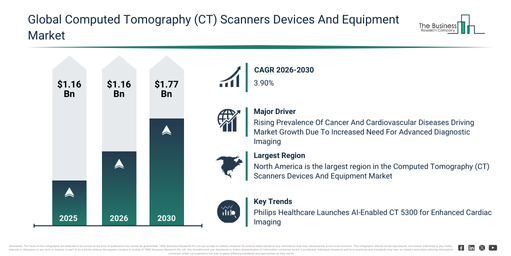
    The market for computed tomography scanners devices and equipment has expanded gradually over recent years. It is projected to increase from $8.47 billion in 2025 to $8.77 billion in 2026, showing a compound annual growth rate (CAGR) of 3.6%. This growth during the past period has been fueled by factors such as the rising incidence of chronic illnesses, the proliferation of diagnostic imaging centers, heightened demand for early disease detection, improvements in x-ray detector technology, and broader acceptance of CT imaging in clinical practice.

    Looking ahead, the market is expected to reach $10.21 billion by 2030, with a slightly higher CAGR of 3.9%. This forthcoming expansion is supported by the increasing integration of AI-driven diagnostic tools, growing investments in sophisticated imaging infrastructure, demand for precision diagnostics, the rise of outpatient diagnostic services, and advancements in low-dose imaging technologies. Significant trends predicted to influence the market in the coming years include widespread adoption of AI-assisted image reconstruction, higher demand for high-slice CT scanners, incorporation of radiation dose reduction techniques, expansion of 3D and 4D imaging capabilities, and a stronger emphasis on workflow automation.

    Download A Free Sample Report For Comprehensive Market Insights:

    https://www.thebusinessresearchcompany.com/sample.aspx?id=2397&type=smp

    Key Factors Contributing to Growth in the Computed Tomography Scanners Devices and Equipment Market

    One of the primary growth drivers for the computed tomography scanners devices and equipment market is the rising prevalence of cancer and cardiovascular diseases worldwide. These conditions share multiple overlapping risk factors, including smoking, metabolic syndrome, exposure to radiation, aging, and environmental pollution. Factors such as chronic inflammation, obesity, and lifestyle choices contribute to the development and progression of both cancer and cardiovascular diseases through common biological pathways.

    CT scans play a vital role in diagnosing tumors and other abnormalities related to these diseases. They are also essential for planning and guiding various interventional and therapeutic procedures, including cryotherapy, radiofrequency ablation, and the implantation of radioactive seeds. For example, data from the Centers for Disease Control and Prevention released in October 2024 reported that in 2023, approximately one in every six cardiovascular disease deaths occurred among adults under 65, with a total of 919,032 fatalities, accounting for one in three overall deaths. This significant disease burden is a key factor propelling demand for CT scanners and related equipment.

    Segmentation and Growth Opportunities within the Computed Tomography Scanners Devices and Equipment Market

    This market is categorized across several dimensions, starting with product types: low slice, medium slice, and high slice CT scanners. Each category further breaks down into specific subsegments—low slice includes 4-slice and 8-slice CT scanners; medium slice comprises 16-slice and 32-slice CT scanners; while high slice features 64-slice, 128-slice, 256-slice, 320-slice, and other high slice models.

    Applications of CT scanners cover a broad spectrum including oncology, neurology, cardiovascular diagnostics, musculoskeletal assessments, and other clinical uses. On the end-user side, major segments consist of clinics, diagnostic service providers, and hospitals. Together, these segmentation layers highlight diverse areas where growth potential exists and where technological advancements can be targeted.

    Access The Complete Computed Tomography (CT) Scanners Devices And Equipment Market Report:

    https://www.thebusinessresearchcompany.com/report/computed-tomography-ct-scanners-devices-and-equipment-global-market-report

    Innovations and Technological Trends Driving the Computed Tomography Scanners Devices and Equipment Market

    Leading players in this market are increasingly focusing on the development of innovative CT scanners equipped with advanced technologies like artificial intelligence. AI-enabled CT scanners enhance imaging quality, speed, and diagnostic accuracy, thereby improving patient outcomes.

    For instance, in March 2024, Philips Healthcare introduced the AI-powered CT 5300, a cutting-edge scanner designed specifically for cardiac imaging. This system incorporates artificial intelligence to boost diagnostic precision and streamline clinical workflows. It features the world’s first nanopanel precise detector geared for AI-based image reconstruction, significantly enhancing image clarity while reducing radiation exposure by up to 80%. The CT 5300 is already in use at multiple hospitals across Europe and exemplifies how technology can transform cardiac care and healthcare delivery.

    Leading Players in the Computed Tomography Scanners Devices and Equipment Market

    The competitive landscape of the computed tomography scanners devices and equipment market includes a range of well-established companies. Key industry leaders are GE Healthcare, Koninklijke Philips N.V., Hitachi Ltd., Siemens Healthineers, Canon Medical Systems Corporation, Neusoft Medical Systems, NeuroLogica Corp., Samsung Electronics, Shimadzu Corporation, Shenzhen Anke High-Tech, Fujifilm Holdings Corporation, Koning Corporation, ScanCO Medical AG, United Imaging, Carestream Health, Planmed Oy, Dunlee, Shared Imaging, Allengers Medical Systems, Fujifilm Medical Systems, Konica Minolta Healthcare, Toshiba Medical Systems Corporation, and Xoran Technologies. These organizations continue to invest heavily in research and development to maintain their market positions.

    Geographical Distribution and Market Leadership in the Computed Tomography Scanners Devices and Equipment Sector

    In 2025, North America held the leading market share within the computed tomography scanners devices and equipment industry, establishing itself as the dominant region. Western Europe ranked second in terms of market size globally. The market outlook encompasses other regions as well, such as Asia-Pacific, South East Asia, Eastern Europe, South America, the Middle East, and Africa, providing a comprehensive perspective on the sector’s global reach and future growth potential.

    Get in touch with us:

    The Business Research Company: https://www.thebusinessresearchcompany.com/

    Americas: +1 310-496-7795

    Asia: +44 7882 955267 & +91 8897263534

    Europe: +44 7882 955267

    Email us at: marketing@tbrc.info

    Follow us on:

    LinkedIn: https://in.linkedin.com/company/the-business-research-company

    YouTube: https://www.youtube.com/channel/UC24_fI0rV8cR5DxlCpgmyFQ

    Global Market Model: https://www.thebusinessresearchcompany.com/global-market-model
  • Computed Tomography (CT) Scanner Market Opportunities Are Emerging Beyond Traditional Growth Areas

    Computed Tomography (CT) Scanner Market Opportunities Are Emerging Beyond Traditional Growth Areas

    Delivering more actionable and strategically valuable research, The Business Research Company’s 2026 market reports feature market attractiveness analysis, total addressable market evaluation, company benchmarking matrices, interactive Excel dashboards, expanded supply chain intelligence, emerging startup coverage, and detailed product insights.

    The computed tomography (CT) scanner market has witnessed significant growth recently, driven by advancements in medical imaging and an increasing demand for precise diagnostic tools. As healthcare systems worldwide expand and the prevalence of chronic illnesses rises, the CT scanner market continues to evolve with innovations and growing applications in various medical fields. Let’s explore the current market size, key factors fueling its growth, major players, emerging trends, and regional dynamics shaping this sector.

    Steady Growth and Market Size Projections for the Computed Tomography Scanner Market

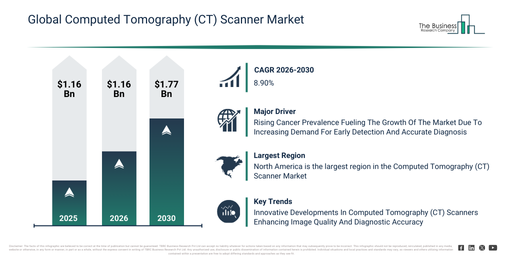
    The computed tomography (CT) scanner market is experiencing strong expansion. It is projected to rise from $8.22 billion in 2025 to $8.96 billion in 2026, showing a compound annual growth rate (CAGR) of 9.0%. This growth reflects the historical period’s advancements in medical imaging infrastructure, an increase in chronic and acute disease prevalence, broader utilization of CT imaging for diagnostics, availability of reimbursement policies, and expansion of hospital imaging departments. Looking ahead, the market is expected to further grow to $12.59 billion by 2030, with a CAGR of 8.9%. Key contributors to this forecast include enhanced investments in imaging technologies, heightened demand for early disease detection, growth of outpatient diagnostic centers, focus on reducing radiation doses, and ongoing improvements in CT scanner capabilities. Trends anticipated to influence market dynamics include wider adoption of high-slice CT systems, AI-assisted image reconstruction, portable CT scanners, low-dose imaging innovations, and increased emphasis on diagnostic accuracy.

    Download A Free Sample Report For Comprehensive Market Insights:

    https://www.thebusinessresearchcompany.com/sample.aspx?id=24196&type=smp

    Rising Cancer Cases as a Major Driver in the Computed Tomography Scanner Market

    One of the primary factors propelling the CT scanner market is the growing incidence of cancer worldwide. Cancer, defined by uncontrolled cell growth and spread, is becoming more common largely due to an aging global population. As people live longer, they face accumulated genetic mutations, environmental exposures, and weakened immune defenses, all of which elevate cancer risk. CT scanners are essential tools in oncology, offering detailed 3D and cross-sectional imaging that aids in early detection, accurate tumor localization, staging, treatment planning, and continuous monitoring. This capability enables healthcare providers to make informed decisions and improves patient care throughout the cancer treatment process. For example, in April 2024, the American Cancer Society reported that 20 million new cancer cases were diagnosed worldwide in 2022, with 9.7 million deaths, and projected that cancer cases could reach 35 million by 2050. This rising cancer burden is directly supporting demand for CT scanning technologies.

    Detailed Segmentation of the Computed Tomography Scanner Market by Product and Application

    This market is categorized by several key segments:

    – By Type: Stationary CT Scanners and Portable CT Scanners

    – By Architecture: O-Arm and Gantry-Based CT Systems

    – By Technology: High-Slice, Mid-Slice, Low-Slice, and Cone Beam CT

    – By Application: Neurology, Oncology, Cardiovascular, Orthopedics, and Others

    – By End Users: Hospitals and Diagnostic Centers, Research Labs, Academic Institutes, Ambulatory Care Centers, Veterinary Clinics, and more.

    Access The Complete Computed Tomography (CT) Scanner Market Report:

    https://www.thebusinessresearchcompany.com/report/computed-tomography-ct-scanner-global-market-report

    Further breakdown includes types of stationary scanners such as single-slice, multi-slice, cone beam, and dual-source scanners. Portable scanners include compact mobile and mobile CT systems. This segmentation provides a comprehensive view of product variations and clinical applications within the market.

    Innovations and Trends Accelerating Computed Tomography Scanner Market Growth

    Leading players in the CT scanner industry are focusing on advanced innovations to enhance imaging quality, reduce scan times, minimize radiation exposure, and improve diagnostic precision across multiple medical fields. Volume imaging technology, which captures entire anatomical regions in a single rotation, is one notable advancement that improves image clarity and reduces motion artifacts. For instance, in March 2025, GE Healthcare Technologies Inc. introduced the Revolution Vibe CT system in the US. This system offers unlimited one-beat cardiac imaging and integrates AI-driven workflow enhancements, enabling high-quality images even in challenging cases such as atrial fibrillation and heavily calcified coronary arteries. By simplifying patient preparation and increasing diagnostic confidence, Revolution Vibe also optimizes operational efficiency.

    Competitive Landscape in the Computed Tomography Scanner Industry

    The CT scanner market features several prominent companies competing through innovation and strategic initiatives. Leading firms include Siemens Healthineers AG, GE Healthcare Technologies Inc., Koninklijke Philips N.V., FUJIFILM Holdings Corporation, Canon Medical Systems Corporation, and Shimadzu Corporation. Others shaping the market are Neusoft Medical Systems Co. Ltd., Shanghai United Imaging Healthcare Co. Ltd., Carestream Health Inc., Analogic Corporation, Trivitron Healthcare Private Limited, Shenzhen Anke High-tech Co. Ltd., Planmed Oy, Xoran Technologies LLC, SinoVision Technologies (Beijing) Co. Ltd., Koning Corporation, CurveBeam AI Inc., MinFound Medical Systems Co. Ltd., Hitachi Ltd. (Medical Systems), Toshiba Medical Systems Corporation, Samsung Healthcare (CT Division), Mediso Ltd., and GE Precision Healthcare. These companies continue to invest in research and development to meet evolving clinical needs.

    Regional Dynamics Shaping Computed Tomography Scanner Market Expansion

    In 2025, North America led the global CT scanner market in terms of size. However, the Asia-Pacific region is forecast to experience the fastest growth during the upcoming years. This report also covers other important markets, including South East Asia, Western Europe, Eastern Europe, South America, the Middle East, and Africa. These regional insights help in understanding global trends and pinpointing areas with high growth potential.

    Get in touch with us:

    The Business Research Company: https://www.thebusinessresearchcompany.com/

    Americas: +1 310-496-7795

    Asia: +44 7882 955267 & +91 8897263534

    Europe: +44 7882 955267

    Email us at: marketing@tbrc.info

    Follow us on:

    LinkedIn: https://in.linkedin.com/company/the-business-research-company

    YouTube: https://www.youtube.com/channel/UC24_fI0rV8cR5DxlCpgmyFQ

    Global Market Model: https://www.thebusinessresearchcompany.com/global-market-model
  • Craniomaxillofacial (CMF) Devices And Equipment Market Expansion Is Reshaping Competitive Dynamics Across The Industry

    Craniomaxillofacial (CMF) Devices And Equipment Market Expansion Is Reshaping Competitive Dynamics Across The Industry

    Through market attractiveness analysis, total addressable market evaluation, company benchmarking matrices, interactive Excel dashboards, expanded supply chain intelligence, emerging startup coverage, and detailed product insights, The Business Research Company’s 2026 market reports provide more actionable and strategically valuable research.

    The craniomaxillofacial (CMF) devices and equipment market has experienced significant growth recently, driven by advances in surgical techniques and increasing demand for reconstructive procedures. This sector is poised for continued expansion as new technologies and materials improve patient outcomes and broaden treatment options. Let’s explore the current market size, growth factors, key segments, industry trends, and leading players shaping this evolving field.

    Craniomaxillofacial Devices and Equipment Market Size and Growth Forecast

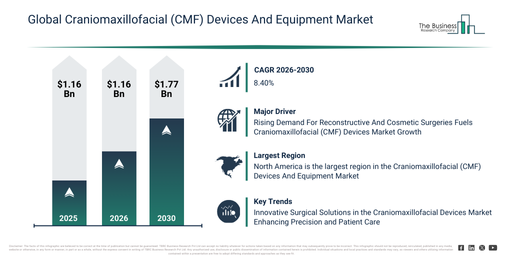
    The market for craniomaxillofacial devices and equipment has seen robust development in recent years. It is projected to grow from $2.12 billion in 2025 to $2.28 billion in 2026, reflecting a compound annual growth rate (CAGR) of 7.4%. This historical growth is largely driven by factors such as a rising number of craniofacial trauma cases, increased reconstructive surgeries, wider adoption of titanium fixation systems, advancements in maxillofacial surgical methods, and the availability of specialized surgical tools. Looking ahead, the market is expected to reach $3.15 billion by 2030, growing at an accelerated CAGR of 8.4%. Key drivers for future growth include growing demand for customized craniofacial implants, increased use of bioresorbable materials, expansion in reconstructive and cosmetic procedures, innovations in surgical planning technologies, and rising investments in advanced trauma care. Prominent trends anticipated during this period are the adoption of bioabsorbable fixation devices, patient-specific implants, integration of 3D printing in surgical applications, advances in fixation and distraction systems, and enhanced focus on minimally invasive surgical techniques.

    Download A Free Sample Report For Comprehensive Market Insights:

    https://www.thebusinessresearchcompany.com/sample.aspx?id=2407&type=smp

    Primary Factors Boosting Growth in the Craniomaxillofacial Devices Market

    The rising need for reconstructive and cosmetic surgeries is a significant factor propelling the craniomaxillofacial devices and equipment market. Reconstructive procedures address deformities caused by birth defects, injuries, or illnesses like cancer, while cosmetic surgeries focus on improving physical appearance by reshaping anatomical features. CMF devices play a crucial role in improving the aesthetics and function of facial structures. For instance, according to the International Society of Aesthetic Plastic Surgery (ISAPS) in June 2024, global aesthetic procedures reached nearly 35 million in 2023—marking a 3.4% increase over the previous year, encompassing both surgical and non-surgical treatments. This growing demand for surgical enhancements is driving market expansion.

    Impact of Rising Popularity of Minimally Invasive Procedures on the CMF Devices Market

    There is also an increasing preference for minimally invasive surgeries, which is expected to fuel further market growth. Such procedures involve small incisions rather than large cuts, reducing recovery time and risks. CMF devices support the restoration of both appearance and function in the craniofacial region, helping patients regain normal oral functions, facial aesthetics, and overall quality of life. For example, the American Society of Plastic Surgeons reported in June 2024 that minimally invasive procedures grew by 7% in 2023, surpassing the growth rate of traditional surgical procedures by 2%. Neuromodulator injections and hyaluronic acid fillers alone accounted for over 9 million and 5 million treatments respectively. This trend toward less invasive treatments is a key driver of the CMF devices market.

    Access The Complete Craniomaxillofacial (CMF) Devices And Equipment Market Report:

    https://www.thebusinessresearchcompany.com/report/craniomaxillofacial-cmf-devices-and-equipment-global-market-report

    Detailed Segmentation of the Craniomaxillofacial Devices and Equipment Market

    This market is segmented into various categories to capture its diverse products and applications:

    1) By Product Type: Cranial flap fixation, CMF distraction, temporomandibular joint (TMJ) replacement, thoracic fixation, maxillofacial (MF) plate and screw fixation, and other related products.

    2) By Material: Metals and alloys, polymers, bioabsorbable materials, and other materials.

    3) By Application: Neurosurgery and ENT, orthognathic and dental surgery, plastic surgery, and other uses.

    4) By End-User: Hospitals, ambulatory surgical centers, and other end-users.

    Further sub-segments include:

    – Cranial flap fixation devices such as titanium plates and screws, bioabsorbable plates and screws, and mesh systems.

    – CMF distraction devices including distraction osteogenesis devices, external and internal distraction devices.

    – Temporomandibular joint replacement options like total and partial joint replacement systems and custom TMJ implants.

    – Thoracic fixation devices such as rib fixation plates, sternal fixation devices, and intercostal fixation systems.

    – MF plate and screw fixation including mono-cortical plates and screws, bi-cortical plates and screws, and locking plates and screws.

    – Other products such as bone grafts and substitutes, surgical instruments, and CMF implants and accessories.

    Innovative Trends Shaping Demand in the CMF Devices Sector

    Key players in this market are increasingly focused on developing advanced surgical solutions that improve precision, patient outcomes, and procedural efficiency. These solutions encompass specialized instruments, devices, and systems designed to enhance diagnosis, treatment, and recovery, including minimally invasive tools, imaging technologies, and implants. For example, in February 2024, Belgium-based 3D printing firm Materialise NV introduced the TMJ Total Arthroplasty System for patients needing total temporomandibular joint replacement. This product offers a fully personalized treatment, improving surgical accuracy and patient results, with a reported 100% success rate one year after surgery. Patients also reported marked improvements in quality of life, pain reduction, and functional abilities such as eating, with accurate implant placement achieved in 97% of cases.

    Key Players Driving Innovation in the Craniomaxillofacial Devices Market

    Some of the leading companies operating within the craniomaxillofacial devices and equipment landscape include Johnson & Johnson, Stryker Corporation, Medtronic Plc, Zimmer-Biomet, Integra Lifesciences Corporation, KLS Martin L.P., B. Braun, Medartis AG, Matrix Surgical USA, Acumed, Roche India Pvt Ltd, Abbott India Limited, bioMerieux India, Becton Dickinson Private Limited, Danaher Corporation, Siemens Healthcare, Beckman Coulter Inc India, Ortho Clinical Diagnostics, Bio-Rad Laboratories Inc, Sysmex Corporation, Thermo Fisher Scientific Inc, Asymchem, Sino Biological, ACROBiosystems, QPS, Wuxi Biologics, Qiagen Pvt Ltd, INVACARE POIRIER Fondettes, ESSILOR INTERNATIONAL Charenton-le-Pont, TERUMO FRANCE SAS Guyancourt, CAREFUSION FRANCE 309 SAS Le Pont-de-Claix, TOURLAVILLE DISTRIBUTION Cherbourg-Octeville, HARMONIE MEDICAL SERVICE Saint-Benoit, Balton, HTL-Strefa, TZMO, Consultronix, Kelyniam Global Inc, AbbVie Corporation, ABK Biomedical, Acart Equipment Ltd, A.R. Medicom Inc, Delphos Implants, Osteomed Anatomics Pty Ltd, Bioplate Inc., Calavera Surgical Design, and Innovasis.

    Geographical Insights Highlighting Market Leadership

    In 2025, North America held the largest share of the global craniomaxillofacial devices and equipment market, followed by Western Europe as the second-largest region. The comprehensive market analysis also includes regions such as Asia-Pacific, South East Asia, Eastern Europe, South America, the Middle East, and Africa, providing a broad perspective on regional dynamics and growth opportunities worldwide.

    Get in touch with us:

    The Business Research Company: https://www.thebusinessresearchcompany.com/

    Americas: +1 310-496-7795

    Asia: +44 7882 955267 & +91 8897263534

    Europe: +44 7882 955267

    Email us at: marketing@tbrc.info

    Follow us on:

    LinkedIn: https://in.linkedin.com/company/the-business-research-company

    YouTube: https://www.youtube.com/channel/UC24_fI0rV8cR5DxlCpgmyFQ

    Global Market Model: https://www.thebusinessresearchcompany.com/global-market-model
  • Compression Garments And Stockings Market Expansion Is Opening New Pathways For Strategic Investment

    Compression Garments And Stockings Market Expansion Is Opening New Pathways For Strategic Investment

    Enhanced with market attractiveness analysis, total addressable market evaluation, company benchmarking matrices, interactive Excel dashboards, expanded supply chain intelligence, emerging startup coverage, and detailed product insights, The Business Research Company’s 2026 market reports deliver more actionable and strategically valuable research.

    The compression garments and stockings sector has witnessed significant growth recently, driven by increasing health awareness and expanding applications in medical and wellness fields. As demand for these products rises across various healthcare settings, the market is set for continued expansion supported by technological innovations and shifting consumer preferences. Below, we explore the market size, key growth drivers, leading companies, and emerging trends shaping this industry.

    Market Size and Forecast in the Compression Garments and Stockings Market

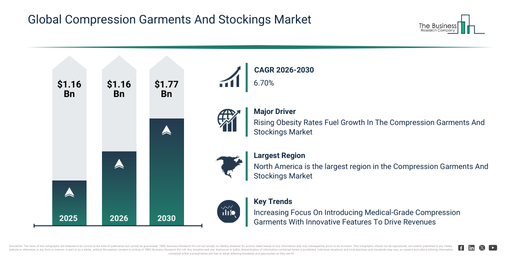
    The compression garments and stockings market has experienced impressive growth in recent years. It is projected to increase from $3.41 billion in 2025 to $3.6 billion in 2026, representing a compound annual growth rate (CAGR) of 5.6%. This past growth has been driven by a rise in venous diseases, increased use of compression therapy after surgeries, expansion in sports injury treatment, heightened awareness about circulatory health, and the availability of mass-produced compression products. Looking ahead, the market is expected to reach $4.66 billion by 2030 with a stronger CAGR of 6.7%. Factors fueling this forecast include growing demand for home healthcare solutions, wider adoption of compression wear in preventive care, the growth of e-commerce channels, renewed focus on lifestyle and wellness products, and advances in textile technologies. Key trends anticipated during the forecast period are a rising preference for medical-grade compression items, greater use of compression therapy in sports medicine, the integration of advanced elastomeric fabrics, the rise of customized and patient-specific garments, and heightened attention to comfort and breathability.

    Download A Free Sample Report For Comprehensive Market Insights:

    https://www.thebusinessresearchcompany.com/sample.aspx?id=13288&type=smp

    Rising Prevalence of Obesity as a Growth Catalyst in the Compression Garments and Stockings Market

    One major factor expected to drive expansion in this market is the increasing rate of obesity worldwide. Obesity is a medical condition characterized by excessive and unhealthy fat accumulation. Compression garments help overweight and obese individuals manage pain and discomfort while working toward weight loss. These garments also aid in improving circulation and reducing swelling and inflammation, which are commonly observed in this population. For instance, a report from March 2023 by the World Heart Federation highlighted that around 2.3 billion adults and children globally were obese or overweight, with projections estimating this number will rise to 2.7 billion by 2025. This growing obesity trend is therefore a significant contributor to the rising demand for compression garments and stockings.

    Segment Overview and Revenue Opportunities Within the Compression Garments and Stockings Market

    This market is segmented into various categories in the report, which includes:

    1) Product Type: Compression Garments and Compression Stockings

    2) Distribution Channel: Hospitals, Ambulatory Surgical Centers, Clinics, Online Sales, and Other Healthcare Facilities

    3) Application Areas: Varicose Veins, Wound Care, Burns, Oncology, and Other Uses

    Further breakdowns include the types of compression garments such as shirts, arm and leg sleeves, shorts, and full-body suits. Compression stockings are subcategorized into knee-high, thigh-high, waist-high, and anti-embolism stockings. This detailed segmentation enables targeted strategies to address specific patient needs and distribution preferences.

    Access The Complete Compression Garments And Stockings Market Report:

    https://www.thebusinessresearchcompany.com/report/compression-garments-and-stockings-global-market-report

    Innovations and Technological Advances Influencing Competition in the Compression Garments and Stockings Market

    Leading players in this market are focusing on launching medical-grade compression products with innovative features to enhance performance and user comfort. A notable example is the introduction of the FlexFit Comfort Ankle design, which incorporates sliding compression sections to improve blood flow, lymphatic drainage, and ankle mobility. In July 2023, The Marena Group, a US-based manufacturer specializing in medical-grade compression, unveiled a lipedema compression garment featuring this unique technology. This product assists individuals recovering from lipedema reduction surgery and includes Marena’s proprietary TriFlex Fabric known for its multidirectional stretch, moisture-wicking, cooling effects, shape retention, and antimicrobial properties. Such innovations are helping companies differentiate their offerings and meet specific clinical needs.

    Key Industry Players Driving the Compression Garments and Stockings Market Forward

    Some of the major companies shaping this market include 3M Company, BSN Medical Pvt. Ltd., Medi GmBH & Co. KG, SIGVARIS Group, Medical Z, Paul Hartmann AG, Biocompression Systems, 2XU Pty Ltd., Smith & Nephew PLC, Lymphedivas, Narang Medical Limited, Sanyleg SRL, Santemol Group Medikal, Leonisa S.A., Creswell Sock Mills LLC, Spanx Inc., Julius Zorn GmbH, Comfort Plus Corporation, VIM & VIGR LLC, Tommie Copper Inc., Venosan, Tactile Medical, Design Veronique, Medico International Inc., Marena Group LLC, Therafirm LLC, and Zensah Company. These organizations continue to invest in product development and distribution strategies to capture greater market share.

    Geographical Market Leadership and Regional Growth Trajectories in the Compression Garments and Stockings Market

    In 2025, North America held the largest share of the compression garments and stockings market. However, the Asia-Pacific region is expected to be the fastest-growing market throughout the forecast period. The analysis covers regions such as Asia-Pacific, South East Asia, Western Europe, Eastern Europe, North America, South America, the Middle East, and Africa, offering insights into regional market dynamics and growth opportunities.

    Get in touch with us:

    The Business Research Company: https://www.thebusinessresearchcompany.com/

    Americas: +1 310-496-7795

    Asia: +44 7882 955267 & +91 8897263534

    Europe: +44 7882 955267

    Email us at: marketing@tbrc.info

    Follow us on:

    LinkedIn: https://in.linkedin.com/company/the-business-research-company

    YouTube: https://www.youtube.com/channel/UC24_fI0rV8cR5DxlCpgmyFQ

    Global Market Model: https://www.thebusinessresearchcompany.com/global-market-model
  • Complete Blood Count Device Market Trends Are Creating New Opportunities For Industry Leaders

    Complete Blood Count Device Market Trends Are Creating New Opportunities For Industry Leaders

    Through market attractiveness analysis, total addressable market evaluation, company benchmarking matrices, interactive Excel dashboards, expanded supply chain intelligence, emerging startup coverage, and detailed product insights, The Business Research Company’s 2026 market reports provide more actionable and strategically valuable research.

    The complete blood count device market has been witnessing steady expansion recently, driven by advancements in diagnostic technologies and a growing need for efficient healthcare solutions. With rising investments and innovations, this sector is set to experience notable growth over the coming years. Let’s explore the market size, key drivers, segmentation, emerging trends, major players, and regional outlook to understand its future trajectory.

    Overview of Market Size and Growth Prospects for Complete Blood Count Devices

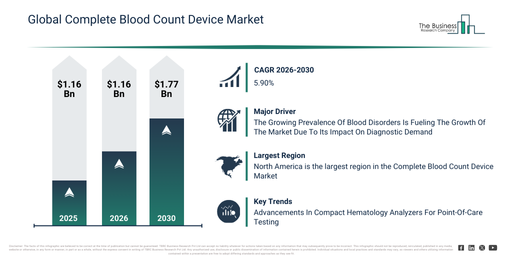
    The market for complete blood count devices has seen substantial growth, with its value rising from $4.33 billion in 2025 to an estimated $4.58 billion in 2026, reflecting a compound annual growth rate (CAGR) of 6.0%. This expansion during the historical period has been driven by increasing clinical diagnostic testing volumes, enhanced automation in hospital laboratories, a growing burden of chronic illnesses, widespread use of standardized blood testing protocols, and a higher demand for routine health check-ups. Looking ahead, the market is projected to reach $5.76 billion by 2030, growing at a CAGR of 5.9%. Factors contributing to this forecast include greater adoption of decentralized diagnostic approaches, increased investments in smart lab infrastructure, demand for rapid test results, expanded preventive healthcare screening, and ongoing advances in hematology technologies. Key trends anticipated during this period encompass the rising use of automated hematology analyzers, growing popularity of point-of-care complete blood count devices, integration of AI-powered diagnostics, expansion of high-throughput laboratory systems, and an intensifying focus on diagnostic accuracy and speed.

    Download A Free Sample Report For Comprehensive Market Insights:

    https://www.thebusinessresearchcompany.com/sample.aspx?id=24195&type=smp

    Key Factors Propelling Growth in the Complete Blood Count Device Market

    The increasing incidence of blood disorders stands as a significant driver behind the growth of the complete blood count device market. Blood disorders impact the production, function, or structure of blood cells, leading to compromised blood performance. The rising frequency of lifestyle-related diseases—caused by poor nutrition, inactivity, and stress—has contributed to conditions such as anemia and clotting abnormalities. Complete blood count devices play an essential role in diagnosing these blood disorders by analyzing critical blood components and detecting abnormalities, enabling healthcare providers to identify clotting issues and administer timely, accurate treatment. For example, in May 2024, the Canadian Cancer Society reported that 4,100 Canadians were diagnosed with multiple myeloma, a form of blood cancer, while 1,750 succumbed to the disease, highlighting the growing need for reliable blood analysis tools. This increase in blood disorder prevalence continues to fuel demand for complete blood count devices.

    Additional Market Drivers Supporting Expansion

    Another catalyst for market growth is the ongoing enhancement of laboratory workflows through automation and the incorporation of smart technology. Hospitals and diagnostic centers are upgrading their facilities to accommodate automated, high-throughput hematology analyzers that deliver faster and more precise results. Moreover, rising awareness about preventive healthcare and routine screening programs is encouraging more frequent blood testing, further expanding the market. The shift towards point-of-care testing is also significant, as healthcare providers seek portable, user-friendly devices that enable quicker diagnostics at or near the patient, reducing reliance on centralized labs.

    Access The Complete Complete Blood Count Device Market Report:

    https://www.thebusinessresearchcompany.com/report/complete-blood-count-device-global-market-report

    Segmentation Breakdown of the Complete Blood Count Device Market

    This market is segmented across several dimensions to provide a detailed understanding of its structure:

    1) Device Types: Automated Blood Count Analyzers, Manual Blood Count Analyzers, Point-Of-Care Testing Devices, and Hematology Analyzers.

    2) Test Types: Covering White Blood Cell Count (WBC/Leukocyte), WBC Differential Count, Red Blood Cell Count (RBC/Erythrocyte), Hematocrit (Hct), Hemoglobin (Hbg), Platelet Count, Mean Platelet Volume (MPV), Mean Corpuscular Hemoglobin (MCH), and others.

    3) Technologies: Including Impedance Technology, Laser-Based Technology, Flow Cytometry, and Microscopy.

    4) Distribution Channels: Such as Direct Sales, Online Sales, Third-Party Distributors, and Laboratory Equipment Suppliers.

    5) End-Users: Hospitals, Diagnostic Laboratories, Research Institutes, and other users.

    Further subcategories exist within these segments. For example, Automated Blood Count Analyzers include 3-Part, 5-Part, and 6-Part and above Differential Analyzers, Integrated Hematology Systems, and High-Throughput Lab Analyzers. Manual Analyzers cover Hemocytometers, Microscopes for Manual Differentials, Manual Cell Counters, and Staining Kits. Point-of-Care Devices involve Portable Hematology Analyzers, Handheld CBC Devices, Fingerstick Blood Test Devices, and Rapid Diagnostic CBC Kits. Hematology Analyzers are divided into Low-, Mid-, and High-Volume analyzers, including Veterinary and Reagent-Free models.

    Emerging Trends Shaping Long-Term Demand in the Complete Blood Count Device Market

    Leading companies in this market are focusing on launching advanced, compact hematology analyzers that offer accurate, rapid, and cost-effective solutions suitable for point-of-care testing. These portable devices require minimal sample volumes and provide quick complete blood count results, enhancing diagnostic efficiency and accessibility. Such innovations improve ease of use and maintenance, making them attractive options in various healthcare settings. For instance, in June 2024, HORIBA introduced the Yumizen H550E and H500E analyzers, which integrate erythrocyte sedimentation rate (ESR) testing with CBC and 5-part differential analyses. These devices employ HORIBA’s patented CoRA (correlated rouleaux analysis) technology to deliver comprehensive blood examination results from whole blood samples within 60 seconds.

    Additional Trends Driving Market Innovation

    Apart from miniaturization and speed, the market is witnessing growing integration of artificial intelligence and machine learning within diagnostic tools. AI-based diagnostics enhance the precision and interpretation of hematology results, while high-throughput systems streamline laboratory workflows to handle increasing test volumes efficiently. These technological improvements help laboratories meet rising demand for both routine and specialized blood analysis.

    Competitive Landscape of the Complete Blood Count Device Market

    Key players in the complete blood count device industry include major global companies such as Abbott Laboratories, Siemens Healthineers, Mindray Medical International Limited, Beckman Coulter Inc., Sysmex Corporation, Horiba Ltd., Nihon Kohden Corporation, Agappe Diagnostics Ltd., Trivitron Healthcare Pvt. Ltd., HemoCue AB, EKF Diagnostics Holdings plc, Erba Mannheim, Boule Diagnostics AB, Biosystems S.A., Diatron MI Zrt., Labtron Equipment Ltd., Microlab Instruments Co. Pvt. Ltd., URIT Medical Electronic Co. Ltd., Roche Diagnostics, Ortho Clinical Diagnostics, BioSystems Diagnostics Pvt. Ltd., Drew Scientific (an EKF subsidiary), Analyticon Biotechnologies GmbH, and Rayto Life and Analytical Sciences Co. Ltd. These companies continue to invest in research and development to bring innovative, reliable, and user-friendly devices to the market.

    Regional Perspectives and Growth Opportunities in the Complete Blood Count Device Industry

    In 2025, North America held the largest market share for complete blood count devices, supported by advanced healthcare infrastructure and strong adoption of diagnostic technologies. Meanwhile, the Asia-Pacific region is expected to experience the fastest growth throughout the forecast period. This growth is driven by rising healthcare expenditures, increasing prevalence of chronic and lifestyle diseases, expanding healthcare access, and a growing middle class demanding better diagnostic services. The market report covers critical regions including Asia-Pacific, South East Asia, Western and Eastern Europe, North America, South America, the Middle East, and Africa, providing a comprehensive global perspective on market trends and regional opportunities.

    Get in touch with us:

    The Business Research Company: https://www.thebusinessresearchcompany.com/

    Americas: +1 310-496-7795

    Asia: +44 7882 955267 & +91 8897263534

    Europe: +44 7882 955267

    Email us at: marketing@tbrc.info

    Follow us on:

    LinkedIn: https://in.linkedin.com/company/the-business-research-company

    YouTube: https://www.youtube.com/channel/UC24_fI0rV8cR5DxlCpgmyFQ

    Global Market Model: https://www.thebusinessresearchcompany.com/global-market-model
  • Cranial Implants Market Forecast Reveals Where Future Industry Value Will Be Created

    Cranial Implants Market Forecast Reveals Where Future Industry Value Will Be Created

    Delivering more actionable and strategically valuable research, The Business Research Company’s 2026 market reports feature market attractiveness analysis, total addressable market evaluation, company benchmarking matrices, interactive Excel dashboards, expanded supply chain intelligence, emerging startup coverage, and detailed product insights.

    The cranial implants market has been experiencing swift growth, driven by advancements in surgical techniques and rising demand for effective neurological treatments. This sector is evolving rapidly as innovation and increasing healthcare needs push the boundaries of what cranial implant technologies can achieve. Let’s explore the current market size, key drivers, segmentation, innovation trends, leading companies, and regional performance shaping this important healthcare field.

    Current Market Size and Growth Forecast for Cranial Implants

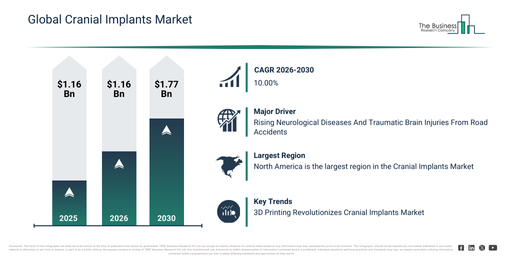
    The market for cranial implants has expanded significantly in recent years, with values expected to rise from $1.32 billion in 2025 to $1.45 billion in 2026. This reflects a compound annual growth rate (CAGR) of 10.6%. The growth seen so far is largely due to a higher incidence of traumatic brain injuries, an increasing number of neurosurgical procedures, the availability of advanced implant materials, expansion in reconstructive surgeries, and the broader adoption of cranial reconstruction techniques.

    Download A Free Sample Report For Comprehensive Market Insights:

    https://www.thebusinessresearchcompany.com/sample.aspx?id=5242&type=smp

    Looking ahead, the cranial implants market is projected to maintain strong momentum, reaching $2.13 billion by 2030 at a CAGR of 10.0%. Key factors driving this future growth include the growing use of additive manufacturing technologies in medical implants, rising demand for personalized healthcare solutions, the expansion of neurosurgical infrastructure in emerging economies, a focus on improving surgical outcomes, and increased investment in advanced biomaterials. Important trends shaping the market during this period include the adoption of patient-specific implants, the advancement of 3D-printed implant technologies, preference for biocompatible materials, the rise of CAD/CAM-based implant design, and a heightened emphasis on both aesthetic and anatomical precision.

    The Rising Prevalence of Neurological Disorders Boosting Cranial Implant Demand

    One significant factor propelling the cranial implants market is the increasing prevalence of neurological diseases worldwide. These disorders, which affect the brain, spinal cord, and nerves, are caused by a variety of elements such as genetic factors, infections, trauma, toxins, autoimmune conditions, and degenerative processes. Cranial implants play a vital role by providing structural support and brain tissue protection after injury or surgery, which makes them indispensable in neurological care.

    Access The Complete Cranial Implants Market Report:

    https://www.thebusinessresearchcompany.com/report/cranial-implants-global-market-report

    For example, according to the National Institutes of Health (NIH) in April 2024, around 6.9 million Americans aged 65 and older currently suffer from Alzheimer’s dementia. This number is expected to nearly double to 13.8 million by 2060, highlighting the growing burden of neurological conditions and the resulting need for effective cranial implant solutions. This trend is a crucial driver of market expansion.

    Detailed Segmentation of the Cranial Implants Market

    This report segments the cranial implants market into several key categories:

    1) By Type: Customized Cranial Implants and Non-customized Cranial Implants

    2) By Material: Polymer, Ceramic, and Metal

    3) By End User: Hospitals and Trauma Centers, Ambulatory Surgical Centers, Specialty Clinics, and Other End Users

    Further divisions include:

    – Customized Cranial Implants such as 3D-printed customized implants, patient-specific anatomical models, and CAD/CAM customized implants

    – Non-customized Cranial Implants including standard cranial plates, pre-formed cranial implants, and mesh implants

    Innovative Technologies Shaping the Cranial Implants Market

    Innovation is a critical factor transforming the cranial implants industry, with 3D printing technology playing a leading role. This method allows the creation of highly tailored implants from digital files, improving fit and patient outcomes.

    For instance, in October 2023, 3D Systems, a US-based 3D printer manufacturer, introduced 3D printing technology specifically for cranial implants. Their patient-specific PEEK (polyetheretherketone) implants are designed to conform precisely to an individual’s anatomy, meeting regulatory standards. This customized approach enhances the effectiveness and safety of cranial reconstructions.

    Top Companies Competing in the Cranial Implants Market

    The cranial implants market is dominated by several major players, including B. Braun Melsungen AG, DePuy Synthes Inc., Stryker Corporation, Zimmer Biomet Holdings Inc., Kelyniam Global Inc., Medartis Holding AG, Osteomed LLC, KLS Martin Group, Renishaw plc, Xilloc Medical B.V., Medtronic plc, Evonos GmbH, Synimed GmbH, Johnson & Johnson Services Ltd., Integra LifeSciences Corporation, OssDsign AB, Medicon eG, BIOARCHITECTS, Matrix Meditec Pvt. Ltd., Matrix Surgical USA, Anatomics Pty Ltd., Biomet Microfixation Inc., and Cranios USA. These companies continuously invest in research and development to stay competitive and deliver advanced solutions.

    Regional Market Insights Highlighting North America and Asia-Pacific

    In 2025, North America held the largest share of the cranial implants market, benefiting from its advanced healthcare infrastructure and high adoption of new technologies. Meanwhile, the Asia-Pacific region is expected to register the fastest market growth over the forecast period, driven by expanding healthcare access, rising neurosurgical procedures, and increasing investments in medical technology. Other regions covered in the market analysis include South East Asia, Western Europe, Eastern Europe, South America, the Middle East, and Africa, providing a comprehensive view of global market trends.

    Get in touch with us:

    The Business Research Company: https://www.thebusinessresearchcompany.com/

    Americas: +1 310-496-7795

    Asia: +44 7882 955267 & +91 8897263534

    Europe: +44 7882 955267

    Email us at: marketing@tbrc.info

    Follow us on:

    LinkedIn: https://in.linkedin.com/company/the-business-research-company

    YouTube: https://www.youtube.com/channel/UC24_fI0rV8cR5DxlCpgmyFQ

    Global Market Model: https://www.thebusinessresearchcompany.com/global-market-model
  • Companion Diagnostics Market Growth Is Reshaping Competitive Advantage Across The Industry

    Companion Diagnostics Market Growth Is Reshaping Competitive Advantage Across The Industry

    Delivering more actionable and strategically valuable research, The Business Research Company’s 2026 market reports feature market attractiveness analysis, total addressable market evaluation, company benchmarking matrices, interactive Excel dashboards, expanded supply chain intelligence, emerging startup coverage, and detailed product insights.

    The companion diagnostics sector is rapidly transforming the healthcare landscape by enabling more precise and personalized treatment options. This market is growing at a remarkable pace, driven by advances in targeted therapies and diagnostic technologies. Let’s explore the current market size, key growth drivers, evolving segments, innovation trends, leading companies, and regional dynamics shaping the future of companion diagnostics.

    Companion Diagnostics Market Size and Projected Growth

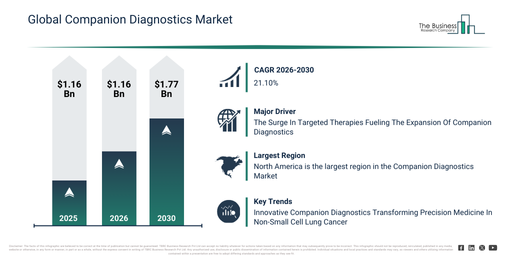
    The companion diagnostics market has witnessed significant expansion recently. It is projected to increase from $8.69 billion in 2025 to $10.54 billion in 2026, reflecting a substantial compound annual growth rate (CAGR) of 21.3%. This impressive growth during the past years can be linked to the rise in targeted cancer therapies, the growth of oncology clinical trials, closer collaborations between pharmaceutical and diagnostics companies, increasing cancer incidence, and the surge in regulatory approvals for companion diagnostic tests.

    Looking ahead, the market is expected to reach $22.7 billion by 2030, maintaining a strong CAGR of 21.1%. This future expansion will be driven by rising demand for personalized treatment selection, increasing investments in precision medicine, growth in immuno-oncology pipelines, adoption of AI-powered diagnostic interpretation, and stronger regulatory focus on co-development of diagnostics and drugs. Key trends anticipated to dominate this period include widespread use of precision oncology diagnostics, deeper integration of companion diagnostics in drug development, growing reliance on next-generation sequencing (NGS) platforms, expansion of biomarker-guided therapies, and heightened emphasis on individualized medicine.

    Download A Free Sample Report For Comprehensive Market Insights:

    https://www.thebusinessresearchcompany.com/sample.aspx?id=7038&type=smp

    Main Factors Encouraging Growth in the Companion Diagnostics Market

    One of the primary growth drivers for the companion diagnostics market is the rising number of targeted therapies. These therapies focus on specific cancer cell characteristics to prevent tumor growth and spread. Unlike traditional chemotherapy, targeted treatments circulate throughout the body but act more precisely, often resulting in fewer side effects. Biomarker-based companion diagnostic testing has become crucial in delivering personalized cancer care.

    For instance, in February 2024, the Personalized Medicine Coalition, a US healthcare organization, reported that the FDA approved 16 new personalized treatments for rare disease patients in 2023, a significant increase from 6 approvals in 2022. This surge in approvals underscores the rapid development of targeted therapies, which in turn propels the companion diagnostics market forward.

    Companion Diagnostics Market Segmentation Overview

    This report divides the companion diagnostics market into distinct categories for a clearer understanding:

    1) By Product and Service: Assays, Kits and Reagents, Software and Services

    2) By Technology: Polymerase Chain Reaction (PCR), Next-Generation Sequencing (NGS), In Situ Hybridization (ISH), Immunohistochemistry (IHC)

    3) By Indication: Lung Cancer, Breast Cancer, Colorectal Cancer, Leukemia, Melanoma

    4) By End-User: Pharmaceutical and Biopharmaceutical Companies, Reference Laboratories, Contract Research Organizations

    Further subsegments include assays such as PCR assays, IHC assays, NGS assays, and ISH assays; kits and reagents including diagnostic kits, detection reagents, and control reagents; as well as software and services covering data analysis software, interpretation software, custom development, and consulting/support services.

    Access The Complete Companion Diagnostics Market Report:

    https://www.thebusinessresearchcompany.com/report/companion-diagnostics-global-market-report

    Innovation Trends Shaping the Future of Companion Diagnostics

    Leading players in the companion diagnostics space are forging partnerships to develop cutting-edge solutions that enhance personalized treatment and improve patient results. These collaborations accelerate the creation and market introduction of companion diagnostics, especially for hematology and oncology applications.

    A notable example occurred in January 2024 when Agilent Technologies, a US-based provider of laboratory instruments and services, signed an agreement with pharmaceutical company Incyte. This collaboration leverages Agilent’s expertise in companion diagnostic development to support Incyte’s hematology and oncology portfolios. The partnership helps expand Agilent’s diagnostic offerings with new biomarkers while enabling Incyte to benefit from Agilent’s capabilities in assay design, regulatory compliance, and commercialization for clinical trials and companion diagnostic approvals in the US and Europe.

    Major Players Competing in the Companion Diagnostics Industry

    Key companies that dominate the companion diagnostics sector include F Hoffmann-La Roche Ltd., Agilent Technologies Inc., Qiagen NV, Thermo Fisher Scientific Inc., Abbott Laboratories Inc., Amoy Diagnostics Co. Ltd., Danaher Corporation, Guardant Health Inc., Illumina Inc., Myriad Genetics Inc., Siemens Healthcare GmbH, Almac Group, Caris Life Sciences, Cepheid Inc., Diaceutics plc, Epic Sciences Inc., Foundation Medicine Inc., Genomic Health Inc., Grail Inc., Hologic Inc., HTG Molecular Diagnostics Inc., Inivata Ltd., Invivoscribe Inc., MolecularMD Corporation, Natera Inc., NeoGenomics Laboratories Inc., Personal Genome Diagnostics Inc., Precision Therapeutics Inc., Prometheus Laboratories Inc., Sysmex Corporation, and Ventana Medical Systems.

    Geographical Landscape of the Companion Diagnostics Market

    In 2025, North America held the largest share of the companion diagnostics market. The overall market analysis includes regions such as Asia-Pacific, South East Asia, Western Europe, Eastern Europe, South America, the Middle East, and Africa. Among these, North America remains the key player in market size, although other regions are steadily expanding their presence and investment in companion diagnostics.

    Get in touch with us:

    The Business Research Company: https://www.thebusinessresearchcompany.com/

    Americas: +1 310-496-7795

    Asia: +44 7882 955267 & +91 8897263534

    Europe: +44 7882 955267

    Email us at: marketing@tbrc.info

    Follow us on:

    LinkedIn: https://in.linkedin.com/company/the-business-research-company

    YouTube: https://www.youtube.com/channel/UC24_fI0rV8cR5DxlCpgmyFQ

    Global Market Model: https://www.thebusinessresearchcompany.com/global-market-model