Category: Medical Equipment

  • Apheresis Consumables And Equipment Market Outlook Highlights The Next Major Growth Opportunities

    Apheresis Consumables And Equipment Market Outlook Highlights The Next Major Growth Opportunities

    Through market attractiveness analysis, total addressable market evaluation, company benchmarking matrices, interactive Excel dashboards, expanded supply chain intelligence, emerging startup coverage, and detailed product insights, The Business Research Company’s 2026 market reports provide more actionable and strategically valuable research.

    The field of apheresis consumables and equipment has experienced significant growth in recent years, driven by advancements in technology and increasing demand for blood component therapies. As healthcare needs evolve, the market is set to expand even further, supported by rising awareness and innovation. Let’s explore the current market size, key growth drivers, emerging trends, major players, and regional dynamics shaping this industry.

    Market Size and Anticipated Growth Trajectory for Apheresis Consumables and Equipment

    The apheresis consumables and equipment market has demonstrated rapid expansion, with revenue projected to rise from $3.76 billion in 2025 to $4.16 billion in 2026, representing a compound annual growth rate (CAGR) of 10.7%. This growth during the past period has been primarily driven by the limited automation in apheresis procedures, ongoing reliance on manual devices, heightened awareness around hematology and renal disease management, increased blood donation initiatives, and the use of traditional filtration and separation techniques.

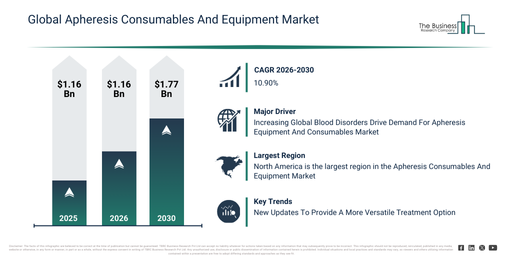
    Looking ahead, the market is forecasted to continue its upward trajectory by reaching $6.29 billion by 2030, with an expected CAGR of 10.9%. This surge reflects advancements in automated apheresis technologies, a growing demand for plasma-derived therapies, the broadening scope of stem cell collection procedures, stricter regulations on disposables and devices, and the integration of digital monitoring and IoT-enabled solutions. Key trends shaping the future market include a rising preference for automated devices, greater utilization of disposable kits and tubing sets, expansion of plasma and plateletpheresis procedures, adoption of cutting-edge centrifugation and membrane filtration technologies, and enhanced focus on patient safety alongside improved blood component quality.

    Download A Free Sample Report For Comprehensive Market Insights:

    https://www.thebusinessresearchcompany.com/sample.aspx?id=2476&type=smp

    Factors Contributing to Market Expansion: Blood Disorders as a Major Driver

    Globally increasing cases of blood disorders have heightened the need for effective blood transfusion solutions, fueling demand for apheresis equipment. These devices play a critical role in treating diseases like sickle cell anemia, leukemia, and various forms of cancer that require regular blood transfusions. For instance, the Leukemia and Lymphoma Society forecasts that 60,300 new leukemia diagnoses will occur in the USA, with one blood cancer diagnosis happening every three minutes, each necessitating immediate transfusion. Similarly, the American Society of Hematology reports that approximately 100,000 Americans live with sickle cell anemia, with an additional 2 million carrying the trait, all requiring apheresis-based transfusion support. According to the International Agency for Research on Cancer (IARC), by 2040, 16.3 million new cancer cases worldwide are expected, with cancer treatments demanding at least eight units of blood per patient per procedure, further driving the need for blood component collection and transfusion. This high prevalence of blood disorders significantly boosts the demand for apheresis consumables and equipment.

    The Impact of Chronic Diseases on Apheresis Consumables and Equipment Market Growth

    The growing prevalence of chronic diseases is anticipated to be a pivotal factor sustaining the growth of the apheresis consumables and equipment market. Chronic conditions—long-lasting illnesses typically without complete cures—require ongoing management, often involving targeted removal or collection of specific blood components. These include autoimmune disorders, familial hypercholesterolemia, sickle cell disease, and stem cell harvesting procedures.

    For example, according to data from the National Library of Medicine in 2023, nearly 36% of US adults aged 50 and above are expected to have at least one chronic condition by 2035, with this figure projected to increase to almost 48% by 2050. This expanding population with chronic health issues is directly contributing to rising demand in the apheresis consumables and equipment sector.

    https://www.thebusinessresearchcompany.com/report/apheresis-consumables-and-equipment-global-market-report

    Apheresis Consumables And Equipment Market Geographic Landscape: Which Region Dominates Industry Growth?

    Market Segmentation: Identifying Areas of Largest Growth Potential in the Apheresis Consumables and Equipment Industry

    The apheresis consumables and equipment market is categorized as follows:

    1) By Product Type: Disposables and Devices

    2) By Technology: Centrifugation and Membrane Filtration

    3) By Procedure: Photopheresis, Plasmapheresis, LDL Apheresis, Plateletpheresis, Leukapheresis, Erythrocytapheresis, and Other Procedures

    4) By Application: Renal Disease, Neurology, Hematology, and Additional Applications

    Within these broad categories, disposables include items such as apheresis kits, tubing sets, filters, collection bags, and anticoagulants. Devices comprise automated apheresis machines, manual apheresis devices, centrifuges, and plasmapheresis systems.

    Emerging Trends and Innovations Driving Long-Term Market Demand

    Leading companies in the apheresis consumables and equipment sector are introducing updated products to enhance versatility and patient care. A notable example is the launch of the Amicus Extracorporeal Photopheresis (ECP) single-needle option, which enables blood collection and return through a single venous access point during photopheresis procedures.

    In April 2023, Germany-based healthcare firm Fresenius Kabi unveiled this single-needle enhancement for its Amicus ECP System, adding new software versions for the Amicus Separator and Phelix Photoactivation Device, along with disposable kits designed for single or double-needle access. This innovation is especially beneficial for patients with limited venous access and is primarily used for extracorporeal photopheresis treatment of cutaneous T-cell lymphoma (CTCL).

    Key Players and Competitive Landscape in the Apheresis Consumables and Equipment Market

    Several prominent companies dominate the market, including Asahi Kasei Medical Co. Ltd., Haemonetics Corporation, Kawasumi Laboratories Inc., Fresenius SE & Co. KGaA, Terumo BCT, Braun Melsungen AG, Therakos Inc., HemaCare Corporation, Cerus Corporation, Kaneka Corporation, Nikkiso Co., Medica SpA, Terumo Corporation, Macopharma, Grifols S.A., Baxter International Inc., Fenwal Inc., Miltenyi Biotec GmbH, Infomed SA, Lmb Technologie GmbH, Medivators Inc., Nigale Biomedical Inc., Aferetica S.r.l., Apheresis Care Group, Beijing Meso-Tech Co. Ltd., Biegler GmbH, Brightwake Ltd., Cytosorbents Corporation, DePuy Synthes Companies, Guangzhou Daji Medical Science and Technology Co. Ltd., and Haier Biomedical. These companies are continuously innovating and expanding their product offerings to meet growing global demand.

    Regional Market Overview: North America Leading While Asia-Pacific Shows Rapid Growth

    In 2025, North America held the largest share of the global apheresis consumables and equipment market, supported by advanced healthcare infrastructure and widespread adoption of innovative technologies. Western Europe followed as the second-largest regional market. The report also includes detailed coverage of other key regions such as Asia-Pacific, South East Asia, Eastern Europe, South America, the Middle East, and Africa, highlighting the global reach and diverse growth opportunities within this sector.

    Get in touch with us:

    The Business Research Company: https://www.thebusinessresearchcompany.com/

    Americas: +1 310-496-7795

    Asia: +44 7882 955267 & +91 8897263534

    Europe: +44 7882 955267

    Email us at: marketing@tbrc.info

    Follow us on:

    LinkedIn: https://in.linkedin.com/company/the-business-research-company

    YouTube: https://www.youtube.com/channel/UC24_fI0rV8cR5DxlCpgmyFQ

    Global Market Model: https://www.thebusinessresearchcompany.com/global-market-model
  • Aortic Stent Grafts Market Trends And Growth Drivers Point To Strong Future Potential

    Aortic Stent Grafts Market Trends And Growth Drivers Point To Strong Future Potential

    Delivering more actionable and strategically valuable research, The Business Research Company’s 2026 market reports feature market attractiveness analysis, total addressable market evaluation, company benchmarking matrices, interactive Excel dashboards, expanded supply chain intelligence, emerging startup coverage, and detailed product insights.

    The aortic stent grafts market has demonstrated impressive growth in recent years, driven by advances in medical technology and increasing health awareness. As cardiovascular conditions become more prevalent, particularly aortic aneurysms, demand for innovative and minimally invasive treatment options continues to rise. Let’s explore the current market size, key growth factors, segment breakdowns, innovation trends, leading companies, and regional outlook shaping this vital healthcare sector.

    Steady Expansion of the Aortic Stent Grafts Market Through 2030

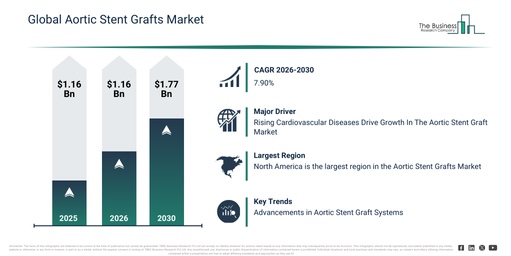
    The market for aortic stent grafts has been growing strongly and is projected to continue on this trajectory. From $3.59 billion in 2025, the market is expected to reach $3.9 billion in 2026, reflecting a CAGR of 8.8%. This growth stems from the increasing prevalence of abdominal and thoracic aortic aneurysms, early adoption of EVAR and TEVAR procedures, expanding vascular surgery infrastructure, broader availability of endovascular device technologies, and the aging population with elevated cardiovascular risk. Looking further ahead, the market is forecasted to grow to $5.3 billion by 2030, with a CAGR of 7.9%, supported by rising procedure volumes in outpatient and ambulatory surgical centers, greater demand for advanced and hybrid stent graft systems, and enhanced screening programs for early aneurysm detection.

    Download A Free Sample Report For Comprehensive Market Insights:

    https://www.thebusinessresearchcompany.com/sample.aspx?id=17062&type=smp

    Rising Rates of Cardiovascular Disease Fuel Demand for Aortic Stent Grafts

    An upsurge in cardiovascular diseases is a significant factor boosting the aortic stent grafts market. Lifestyle habits such as unhealthy diets, sedentary behavior, smoking, and obesity contribute to the increased incidence of cardiovascular conditions. Aortic stent grafts play a critical role in treating cardiovascular ailments by repairing and reinforcing compromised sections of the aorta, especially aneurysms. For example, in January 2024, the British Heart Foundation reported that coronary heart disease remains a leading cause of death in the UK, accounting for approximately 68,000 fatalities yearly. This translates to around 190 deaths daily, or one every eight minutes, with CHD responsible for the deaths of one in eight men and one in fourteen women. Such statistics highlight the growing need for effective therapies like aortic stent grafts.

    Detailed Segmentation of the Aortic Stent Grafts Market

    The aortic stent grafts market is organized into several key segments to better understand its scope. By product, it includes abdominal aortic stent grafts and thoracic aortic stent grafts. When broken down by indication, the market addresses abdominal aortic aneurysms and thoracic aortic aneurysms. End users span hospitals, ambulatory surgical centers or outpatient surgical centers, and other healthcare facilities. Further subcategories cover types of abdominal aortic stent grafts, such as Endovascular Aneurysm Repair (EVAR) stent grafts and aortic aneurysm stent grafts, as well as thoracic aortic stent grafts like Thoracic Endovascular Aortic Repair (TEVAR) stent grafts and hybrid aortic stent grafts.

    https://www.thebusinessresearchcompany.com/report/aortic-stent-grafts-global-market-report

    #Aortic Stent Grafts Market Largest Region: Which Geography Holds The Highest Market Share?

    Innovation and Technological Advances Powering the Aortic Stent Grafts Market

    Leading players in the aortic stent grafts sector are heavily investing in the development of next-generation products designed to enhance stability, flexibility, and safety while lowering complication risks. A stent graft system typically combines a supportive stent with a graft to strengthen the vessel wall during endovascular procedures for aneurysm treatment. An example of such innovation is the launch of the TREO Abdominal Stent-Graft System by Terumo India in August 2024. This device offers in situ limb adjustability, superior sealing, and strong fixation, aiming to improve procedural stability and long-term outcomes for patients with infrarenal abdominal aortic aneurysms.

    Top Companies Leading Market Growth in Aortic Stent Grafts

    The competitive landscape of the aortic stent grafts market features several major corporations, including Medtronic plc, W.L. Gore & Associates Inc, Terumo Corporation, Cook Medical Inc, Endologix Inc, Lombard Medical Ltd, MicroPort Scientific Corporation, Jotec GmbH, Braile Biomédica, Merit Medical Systems Inc, Endospan Ltd, Lifetech Scientific (Shenzhen) Co Ltd, Biomerics LLC, Bentley InnoMed GmbH, Trivascular Inc, Abbott Laboratories, Becton Dickinson and Company, Biotronik SE & Co KG, Altura Medical Inc, and S&G Biotech Inc. These companies are driving innovation and expanding market reach through product development and strategic collaborations.

    Regional Market Share and Growth Prospects in Aortic Stent Grafts

    In 2025, North America held the largest share of the aortic stent grafts market, benefiting from advanced healthcare infrastructure and high procedural volumes. Meanwhile, the Asia-Pacific region is expected to experience the fastest growth over the forecast period, fueled by increasing healthcare investments, rising awareness, and expanding access to minimally invasive therapies. The overall market analysis also covers critical regions such as South East Asia, Western Europe, Eastern Europe, South America, the Middle East, and Africa, providing a comprehensive view of global opportunities and challenges.

    Get in touch with us:

    The Business Research Company: https://www.thebusinessresearchcompany.com/

    Americas: +1 310-496-7795

    Asia: +44 7882 955267 & +91 8897263534

    Europe: +44 7882 955267

    Email us at: marketing@tbrc.info

    Follow us on:

    LinkedIn: https://in.linkedin.com/company/the-business-research-company

    YouTube: https://www.youtube.com/channel/UC24_fI0rV8cR5DxlCpgmyFQ

    Global Market Model: https://www.thebusinessresearchcompany.com/global-market-model
  • Aortic Endograft Market Expansion Is Reshaping Competitive Dynamics Across The Industry

    Aortic Endograft Market Expansion Is Reshaping Competitive Dynamics Across The Industry

    Enhanced with market attractiveness analysis, total addressable market evaluation, company benchmarking matrices, interactive Excel dashboards, expanded supply chain intelligence, emerging startup coverage, and detailed product insights, The Business Research Company’s 2026 market reports deliver more actionable and strategically valuable research.

    The aortic endograft market is steadily advancing as medical technology evolves and the global population ages. Increasing awareness of vascular health and improved minimally invasive procedures are driving demand for these life-saving devices. Let’s explore the market’s current size, key growth factors, segment details, emerging trends, major players, and regional performance.

    Steady Market Growth and Future Forecast in the Aortic Endograft Market

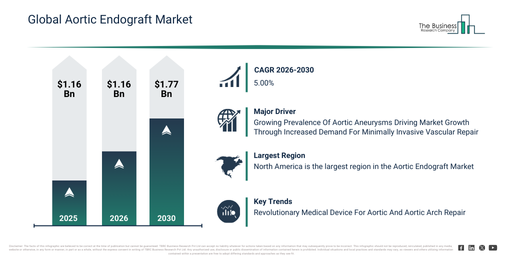
    The aortic endograft market has shown consistent growth and is poised to expand further. Market value is projected to rise from $3.52 billion in 2025 to $3.7 billion in 2026, reflecting a compound annual growth rate (CAGR) of 5.0%. This upward trajectory in recent years has been driven by factors such as the rising number of aortic aneurysm cases, wider adoption of endovascular surgeries, advancements in imaging techniques for vascular interventions, availability of superior stent materials, and enhanced surgeon expertise in minimally invasive procedures. Looking ahead, the market is expected to reach $4.5 billion by 2030, maintaining a CAGR of 5.0%. This forecasted growth will be supported by an aging population with vascular conditions, increasing preference for endovascular treatments, expansion of tailored vascular implants, greater investments in next-generation graft materials, and demand for surgeries that offer quicker recovery times.

    Download A Free Sample Report For Comprehensive Market Insights:

    https://www.thebusinessresearchcompany.com/sample.aspx?id=13784&type=smp

    Key Drivers Behind Aortic Endograft Market Expansion

    The increasing incidence of aortic aneurysms is a significant factor propelling market demand. An aortic aneurysm involves a localized dilation or bulging of the aorta, the body’s largest artery, which can lead to life-threatening complications if untreated. The rise in these cases correlates with an aging population and the prevalence of related health issues like hypertension and atherosclerosis. This growth in aneurysm prevalence is boosting demand for minimally invasive endovascular repair devices, which reduce the risks associated with open surgery and improve recovery outcomes.

    For example, in February 2023, data from the UK Government Digital Service indicated that approximately 274,800 men underwent screening for aortic aneurysms, with 79.0% receiving conclusive results and 1,794 aneurysms detected. Such statistics illustrate the increasing recognition and diagnosis of this condition, fueling market growth for aortic endografts.

    https://www.thebusinessresearchcompany.com/report/aortic-endograft-global-market-report

    Aortic Endograft Market Regional Analysis: Which Region Leads By Revenue?

    Detailed Breakdown of the Aortic Endograft Market Segments

    This market can be segmented into several categories:

    1) Product Type: Abdominal Aortic Grafts and Thoracic Aortic Grafts

    2) Material Used: Metallic Endografts and Polymeric Endografts

    3) Procedure Type: Open Surgical Repair and Endovascular Aneurysm Repair (EVAR)

    4) End User: Hospitals and Ambulatory Surgical Centers

    Further subcategories within these segments include:

    – For Abdominal Aortic Grafts: Fenestrated Aortic Grafts, Branched Aortic Grafts, and Conventional Aortic Grafts

    – For Thoracic Aortic Grafts: Stented, Non-Stented, and Hybrid Thoracic Aortic Grafts

    Innovations and Trends Shaping the Aortic Endograft Market

    Leading companies in this sector are focusing on groundbreaking developments to maintain a competitive edge. One such innovation is the castor-branched aortic stent graft system, designed for minimally invasive treatment of the aorta and aortic arch, particularly effective in Stanford type B aortic dissection (TBAD) cases.

    For instance, in August 2024, Terumo India, a subsidiary of Terumo Corporation, introduced the TREO Stent-Graft System. This advanced device is tailored for infrarenal abdominal aortic aneurysms and uniquely offers both suprarenal and infrarenal active fixation. Such innovations highlight a shift toward more sophisticated and patient-specific treatments within the aortic endograft market.

    Prominent Players and Market Positioning in the Aortic Endograft Industry

    Key companies dominating this market include Abbott Laboratories, Medtronic Plc, Boston Scientific Corporation, Terumo Corporation, W. L. Gore & Associates Inc., Cook Medical Inc., LifeTech Scientific Corporation, MicroPort Scientific Corporation, CryoLife Inc., Endologix LLC, Braile Biomédica Indústria Comércio e Representações Ltda., Nano Endoluminal S.A., JOTEC GmbH, Lombard Medical Inc., Aptus Endosystems Inc., Lombardi SA, Cardiatis S.A., Endospan Ltd., Transcatheter Technologies GmbH, and Vascutek Ltd. These organizations are actively involved in product development, strategic partnerships, and expanding their market reach to meet rising demand.

    Regional Dynamics and Revenue Leadership in the Aortic Endograft Market

    In 2025, North America led the aortic endograft market in terms of revenue. However, the Asia-Pacific region is forecasted to experience the fastest growth during the upcoming years. The comprehensive market analysis includes key regions such as Asia-Pacific, South East Asia, Western Europe, Eastern Europe, North America, South America, the Middle East, and Africa, providing a global perspective on industry trends and opportunities.

    Get in touch with us:

    The Business Research Company: https://www.thebusinessresearchcompany.com/

    Americas: +1 310-496-7795

    Asia: +44 7882 955267 & +91 8897263534

    Europe: +44 7882 955267

    Email us at: marketing@tbrc.info

    Follow us on:

    LinkedIn: https://in.linkedin.com/company/the-business-research-company

    YouTube: https://www.youtube.com/channel/UC24_fI0rV8cR5DxlCpgmyFQ

    Global Market Model: https://www.thebusinessresearchcompany.com/global-market-model
  • Anti-Snoring Devices Market Forecast Reveals Where Future Industry Value Will Be Created

    Anti-Snoring Devices Market Forecast Reveals Where Future Industry Value Will Be Created

    Through market attractiveness analysis, total addressable market evaluation, company benchmarking matrices, interactive Excel dashboards, expanded supply chain intelligence, emerging startup coverage, and detailed product insights, The Business Research Company’s 2026 market reports provide more actionable and strategically valuable research.

    The market for anti-snoring devices has witnessed significant growth recently, driven by rising awareness and technological advances aimed at improving sleep quality. As more people seek effective solutions to manage snoring and related sleep disorders, this market is set to expand further in the coming years. Let’s explore the current market size, growth factors, segmentation, key players, and regional outlook shaping the anti-snoring devices industry.

    Steady Growth and Future Outlook of the Anti-Snoring Devices Market

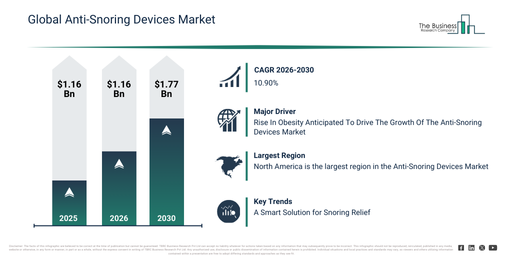
    The anti-snoring devices market has grown considerably, reaching a valuation of $1.9 billion in 2025. It is expected to further increase to $2.1 billion by 2026, with a compound annual growth rate (CAGR) of 10.3%. This upward trend in recent years stems from factors such as the rising incidence of sleep-disordered breathing, growing awareness about sleep health, a surge in home healthcare adoption, availability of over-the-counter snoring aids, and an increase in specialized sleep clinics. Looking ahead, the market is projected to expand rapidly to $3.18 billion by 2030 at a CAGR of 10.9%. This growth will be fueled by rising demand for connected sleep monitoring devices, enhanced adoption of AI-based sleep analytics, preventive sleep healthcare advancements, a growing focus on non-surgical snoring treatments, and increasing consumer investment in sleep wellness. Key trends expected to drive the market include the popularity of smart anti-snoring wearables, broader use of mandibular advancement devices, expanding home-based sleep solutions, and greater emphasis on personalized sleep health technology.

    Download A Free Sample Report For Comprehensive Market Insights:

    https://www.thebusinessresearchcompany.com/sample.aspx?id=10755&type=smp

    Obesity’s Role in Boosting Demand for Anti-Snoring Devices

    A major factor propelling the growth of the anti-snoring devices market is the rising prevalence of obesity worldwide. Obesity, characterized by excessive or abnormal body weight that poses health risks, often contributes to snoring and obstructed airways during sleep. Anti-snoring devices, such as mandibular advancement mouthpieces, help obese individuals by advancing the jaw forward, which prevents the tongue from blocking the airway. For example, in May 2025, the UK’s Office for Health Improvement and Disparities reported that between 2023 and 2024, approximately 64.5% of adults aged 18 and older in England were overweight or living with obesity, a slight increase from 64.0% the previous year. This growing number of overweight individuals is a key driver for increased adoption of anti-snoring devices.

    Additional Factors Fueling Expansion in the Anti-Snoring Devices Market

    Another important growth driver is the rising consumer interest in non-invasive and wearable solutions that improve sleep quality without surgery. Increasing awareness about sleep disorders and advances in sleep technology have made such devices more accessible and appealing. Moreover, the expansion of healthcare services at home and the growing prevalence of sleep clinics contribute to greater market penetration. These elements together encourage consumers to invest in effective snoring management tools, further pushing market growth.

    https://www.thebusinessresearchcompany.com/report/anti-snoring-devices-global-market-report

    Anti-Snoring Devices Market Geographic Distribution And Regional Opportunities

    Understanding the Structure of the Anti-Snoring Devices Market

    The anti-snoring devices market is organized into several key segments based on product type, gender, age group, and end-user. The product category includes Mandibular Advancement Devices (MADS), Tongue Retaining Devices (TRD), Nasal Dilators, Chin Straps, Position Control devices, and specialized Pillows. Gender segmentation divides the market between men and women, while age groups include those below 40 years, those between 40 and 59 years, and those aged 60 and above. End users primarily consist of sleep clinics and the home healthcare sector. Each product type further breaks down into subcategories, such as Adjustable and Fixed MADS, Soft and Rigid TRDs, External and Internal Nasal Dilators, Adjustable and Elastic Chin Straps, Positional Pillows and Sleep Positioners, and Anti-Snoring and Contoured Pillows.

    Innovations and New Technologies Defining Market Progress

    Market leaders are focusing on developing cutting-edge technologies to improve the comfort and effectiveness of anti-snoring solutions. One notable advancement is the introduction of innovative wearable devices designed to monitor and reduce snoring through gentle interventions. For instance, in September 2024, Israeli technology firm AppYea Inc. launched the AppySleep device, a sleek wearable that tracks sleep patterns and detects snoring. It uses subtle vibrations to encourage users to change positions during sleep, thereby diminishing snoring occurrences. The device integrates with a mobile app, offering personalized insights and recommendations for better sleep quality, making it a user-friendly and high-tech option in the market.

    Key Competitors Shaping the Anti-Snoring Devices Industry

    The competitive landscape of the anti-snoring devices market features several prominent companies, including SomnoMed Ltd, Apnea Sciences Corporation, Theravent Inc, Tomed GmbH, MPowRx, AccuMed Corp, Contour Products Inc, Rhinomed Limited, ZQuiet, The Pure Sleep Company, Nozovent, Snoring Solutions Inc, Sleeping Well LLC, Signifier Medical Technologies LLC, VVFLY Electronics Co Ltd, DentCare Dental Lab Pvt Ltd, Airway Management Inc, MEDiTAS Ltd, Innovative Health Care Pvt Ltd, and PureSleep. These organizations are actively investing in research and development to stay ahead in this rapidly evolving market.

    Geographical Trends and Regional Market Opportunities

    In 2025, North America held the largest share of the global anti-snoring devices market, thanks to high healthcare awareness and robust healthcare infrastructure. Meanwhile, the Asia-Pacific region is expected to experience the fastest growth throughout the forecast period. This surge is driven by increasing health awareness, growing urban populations, and expanding healthcare access in countries across Asia-Pacific. Other regions covered in the market analysis include South East Asia, Western Europe, Eastern Europe, South America, the Middle East, and Africa, each presenting unique opportunities and challenges for market participants.

    Get in touch with us:

    The Business Research Company: https://www.thebusinessresearchcompany.com/

    Americas: +1 310-496-7795

    Asia: +44 7882 955267 & +91 8897263534

    Europe: +44 7882 955267

    Email us at: marketing@tbrc.info

    Follow us on:

    LinkedIn: https://in.linkedin.com/company/the-business-research-company

    YouTube: https://www.youtube.com/channel/UC24_fI0rV8cR5DxlCpgmyFQ

    Global Market Model: https://www.thebusinessresearchcompany.com/global-market-model
  • Anti-Retropulsion Devices Market Growth Through 2030 Creates New Strategic Opportunities

    Anti-Retropulsion Devices Market Growth Through 2030 Creates New Strategic Opportunities

    Delivering more actionable and strategically valuable research, The Business Research Company’s 2026 market reports feature market attractiveness analysis, total addressable market evaluation, company benchmarking matrices, interactive Excel dashboards, expanded supply chain intelligence, emerging startup coverage, and detailed product insights.

    The anti-retropulsion devices market is gaining significant traction, driven by advances in kidney stone treatment and the increasing burden of related health conditions. This market is poised for steady expansion in the coming years as new technologies and growing demand for minimally invasive procedures come to the forefront. Let’s explore the current market size, key growth factors, prominent players, and technological innovations shaping this sector’s future.

    Steady Market Growth Forecast for Anti-Retropulsion Devices

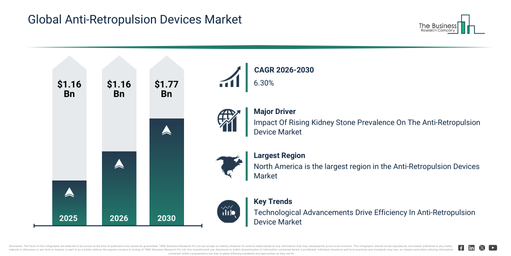
    The market for anti-retropulsion devices has experienced strong growth recently and is projected to continue expanding. It is expected to rise from $2.56 billion in 2025 to $2.75 billion in 2026, reflecting a compound annual growth rate (CAGR) of 7.1%. This upward trend during the historical period is largely fueled by the increasing incidence of kidney stones and urolithiasis, broader utilization of ureteroscopy and lithotripsy procedures, early adoption of basket and balloon anti-retropulsion devices, rising volumes of urological surgeries in hospitals, and a growing focus on improving stone clearance efficiency.

    Download A Free Sample Report For Comprehensive Market Insights:

    https://www.thebusinessresearchcompany.com/sample.aspx?id=17061&type=smp

    Looking ahead, the anti-retropulsion devices market is forecast to reach $3.51 billion by 2030, growing at a CAGR of 6.3%. Factors contributing to this growth include rising demand for minimally invasive stone removal technologies, increased use of disposable anti-retropulsion devices, growth in outpatient stone treatment procedures, ongoing development of specialized devices for complex stones, and expanding investments in urology care infrastructure. Key trends expected to influence the market over the forecast period are a growing preference for advanced devices to enhance stone stabilization during lithotripsy, increased use of basket and balloon devices to prevent proximal stone migration, a clinical shift toward minimally invasive ureteroscopy, broader adoption of device designs tailored for complex ureteral anatomies, and higher demand for disposable single-use devices to reduce infection risks.

    Rising Chronic Kidney Disease Cases Fueling Market Demand

    The growing prevalence of chronic kidney disease (CKD) is a major factor expected to drive the anti-retropulsion devices market forward. CKD encompasses a variety of conditions that impair kidney structure and function. Contributing lifestyle factors such as poor diet, inactivity, obesity, smoking, and excessive alcohol intake further exacerbate kidney health problems. Anti-retropulsion devices play an important role in improving the success of urological treatments by preventing kidney stone fragments from migrating back toward the kidney during procedures.

    https://www.thebusinessresearchcompany.com/report/anti-retropulsion-devices-global-market-report

    Anti-Retropulsion Devices Market Largest Region By Revenue And Market Share

    For instance, in May 2024, the U.S. Centers for Disease Control and Prevention reported that over 14% of U.S. adults—about 35.5 million people—were affected by chronic kidney disease, up from 13% in 2023. This rising prevalence signals an increasing need for efficient kidney stone management solutions, which in turn will support market growth for anti-retropulsion devices.

    Detailed Market Segmentation and Key Revenue Contributors

    This report segments the anti-retropulsion devices market based on product type, application, and end-user. Product categories include basket-type devices, balloon-type devices, and mechanical retropulsion devices. Applications cover ureteroscopy and lithotripsy procedures. The main end-user groups are hospitals, ambulatory surgical centers, and other healthcare providers.

    Further subcategories break down basket-type devices into self-expanding and balloon-expandable baskets, as well as balloon-type devices into single-lumen and multi-lumen balloons. Mechanical retropulsion devices are classified into mechanical and stent-based systems. This detailed segmentation helps identify market niches and growth areas within these device types and clinical uses.

    Innovations Driving Market Transformation and Enhanced Patient Outcomes

    Leading companies in the anti-retropulsion devices market are focusing on user-centric innovations and improved designs to enhance procedural efficiency and patient outcomes. One notable advancement is vacuum-assisted kidney stone removal devices, which use suction technology to effectively capture and extract stones during urological procedures.

    For example, in March 2024, U.S.-based medical device firm Calyxo, Inc. introduced the CVAC System. This innovative solution employs continuous irrigation combined with vacuum aspiration to clear stone fragments during and after laser lithotripsy, helping physicians achieve better stone-free results more efficiently.

    Competitive Landscape and Key Players in the Anti-Retropulsion Devices Market

    The anti-retropulsion devices market features several major companies driving competition and innovation. Notable players include Johnson & Johnson, Medtronic plc, Boston Scientific Corporation, Cook Medical Incorporated, KARL STORZ SE & Co KG, Coloplast A/S, ROCAMED SAM, Endotherapeutics Pty Ltd, Dornier MedTech GmbH, Accordion Medical LLC, Cogentix Medical Inc., NeoScope Inc, OTU Medical, Clarion Medical Technologies, Calyxo Inc, EMS Urology, Happiness Works Medical, PENTAX Medical, UROMED Kurt Drews KG, EndoTheia Inc, and Maxer Endoscopy GmbH. These organizations are investing in product development and expanding their market reach to maintain leadership positions.

    Regional Market Dynamics Highlight North America and Asia-Pacific

    In 2025, North America was the largest market for anti-retropulsion devices, holding the highest revenue share. However, the Asia-Pacific region is anticipated to register the fastest growth during the forecast period. Additional regions analyzed in the market report include South East Asia, Western Europe, Eastern Europe, South America, the Middle East, and Africa, providing a comprehensive view of regional trends and opportunities across the globe.

    Get in touch with us:

    The Business Research Company: https://www.thebusinessresearchcompany.com/

    Americas: +1 310-496-7795

    Asia: +44 7882 955267 & +91 8897263534

    Europe: +44 7882 955267

    Email us at: marketing@tbrc.info

    Follow us on:

    LinkedIn: https://in.linkedin.com/company/the-business-research-company

    YouTube: https://www.youtube.com/channel/UC24_fI0rV8cR5DxlCpgmyFQ

    Global Market Model: https://www.thebusinessresearchcompany.com/global-market-model
  • Anti-Pollution Nasal Spray Market Size Projected To Increase From $10.16 Billion To $13.97 Billion During The Forecast Period

    Anti-Pollution Nasal Spray Market Size Projected To Increase From $10.16 Billion To $13.97 Billion During The Forecast Period

    Enhanced with market attractiveness analysis, total addressable market evaluation, company benchmarking matrices, interactive Excel dashboards, expanded supply chain intelligence, emerging startup coverage, and detailed product insights, The Business Research Company’s 2026 market reports deliver more actionable and strategically valuable research.

    The increasing concerns over air quality and respiratory health have brought the anti-pollution nasal spray market into sharp focus. As more people seek effective solutions to protect themselves from airborne pollutants and allergens, this market is witnessing substantial growth and innovation. Below is a detailed look at the market size, key drivers, segment analysis, emerging trends, leading companies, and regional insights shaping the future of anti-pollution nasal sprays.

    Anti-Pollution Nasal Spray Market Size and Growth Trajectory

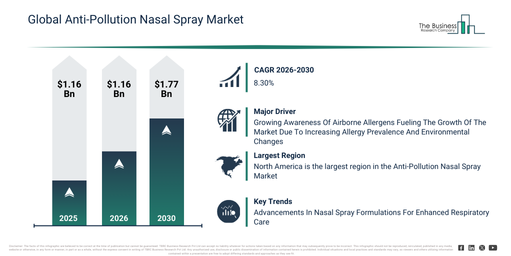
    The anti-pollution nasal spray market has experienced considerable expansion recently and is projected to continue this upward trend. It is expected to rise from $9.37 billion in 2025 to $10.16 billion in 2026, growing at a compound annual rate (CAGR) of 8.4%. Historically, this surge has been fueled by factors such as worsening urban air pollution, heightened awareness of respiratory wellness, increased adoption of self-care and preventive health practices, the availability of over-the-counter nasal sprays, and a stronger consumer focus on overall well-being. Looking ahead, the market is anticipated to reach $13.98 billion by 2030, maintaining a CAGR of 8.3%. This forecasted growth is driven by a growing preference for preventive respiratory care products, the rising exposure to pollution in cities, the expansion of pharmaceutical sales via e-commerce, advances in nasal drug delivery systems, and increased demand for clean-label healthcare solutions. Key trends shaping the market include heightened interest in pollution defense sprays, the use of natural and herbal ingredients, preference for daily preventive care, growth in over-the-counter options, and the push for long-lasting protective nasal barriers.

    Download A Free Sample Report For Comprehensive Market Insights:

    https://www.thebusinessresearchcompany.com/sample.aspx?id=24146&type=smp

    Increasing Awareness of Airborne Allergens Boosts Market Demand

    An important factor supporting the expansion of the anti-pollution nasal spray market is the rising public awareness of airborne allergens. These allergens, which include pollen, dust, and other fine particles, are known to trigger allergic reactions. Climate change and increasing pollution levels have contributed to longer pollen seasons and a greater concentration of allergenic particles in the air. Anti-pollution nasal sprays help by forming a protective layer inside the nasal passages, trapping and blocking these allergens from entering the respiratory system. This protective mechanism has become increasingly valued by consumers facing escalating allergen exposure.

    Significance of Allergic Rhinitis in Market Growth

    To put the impact of allergens into perspective, the World Allergy Organization reported in October 2023 that allergic rhinitis affects more than 400 million people globally. The prevalence ranges from 10% to 30% among adults and exceeds 40% in children. This widespread condition highlights the urgent need for effective preventive measures like anti-pollution nasal sprays, thereby driving demand within this market.

    https://www.thebusinessresearchcompany.com/report/anti-pollution-nasal-spray-global-market-report

    Anti-Pollution Nasal Spray Market Regional Analysis And Leading Geography

    Detailed Segmentation of the Anti-Pollution Nasal Spray Market

    This market is categorized by product type, distribution channel, and end-user to offer a comprehensive understanding of growth areas. The product segments include Pollution Defense Products, Symptomatic Relief Nasal Sprays, Cleansing Nasal Sprays, Hydrating Nasal Sprays, and Other Products. Distribution channels encompass Online Channels, Retail Pharmacies, Supermarkets or General Retail Stores, and other outlets. End users primarily involve Hospitals, Clinics, and Online Pharmacies. Further breakdowns include types of Pollution Defense Products such as Activated Charcoal Nasal Sprays, Anti-Allergen Nasal Sprays, and Barrier Nasal Sprays. Symptomatic Relief Nasal Sprays cover Decongestant, Antihistamine, and Steroidal sprays. Cleansing Nasal Sprays include Saline, Hypertonic, and Isotonic varieties. Hydrating Nasal Sprays consist of Aloe Vera, Hyaluronic Acid, and Essential Oil-Based sprays, while Other Products cover Herbal, Vitamin-Infused, and Homeopathic nasal sprays.

    Innovations and Formulations Steering Market Growth

    Leading players in the anti-pollution nasal spray industry are focusing on novel product development to meet consumer needs for enhanced effectiveness and longer relief. One notable innovation is the monohydrate nasal spray, which combines an active ingredient with a water molecule to improve stability and performance. A practical example occurred in March 2024 when Aurobindo Pharma Limited secured final FDA approval for its Mometasone Furoate Monohydrate Nasal Spray, 50 mcg/spray. This AB-rated generic equivalent of Nasonex Nasal Spray is approved for controlling nasal symptoms associated with seasonal and perennial allergic rhinitis in individuals aged 2 years and older, relieving nasal congestion, preventing seasonal allergic rhinitis symptoms in those 12 and older, and treating nasal polyps for adults 18 and above.

    Key Players Leading the Anti-Pollution Nasal Spray Market

    Several major corporations hold a significant presence in the anti-pollution nasal spray space. These include Merck KGaA, Bayer AG, Sanofi SA, Novartis AG, GSK Plc, Haleon plc, Bausch Health Companies Inc., Sun Pharmaceutical Industries Ltd., Aurobindo Pharma Limited, Omega Pharma, ALK-Abelló, Stallergenes Greer, Allergy Therapeutics, AdvaCare Pharma, Nasaleze International Ltd., Allermi, Cipla Limited, Himalaya Wellness Company, Dr. Reddy’s Laboratories Ltd., and Perrigo Company plc. These companies are instrumental in driving innovation, expanding distribution, and meeting evolving consumer demands.

    Geographical Overview and Market Leadership

    In 2025, North America stood as the largest regional market for anti-pollution nasal sprays, benefiting from high awareness and established healthcare infrastructure. Along with North America, regions covered in the market report include Asia-Pacific, South East Asia, Western Europe, Eastern Europe, South America, the Middle East, and Africa, providing a thorough perspective on global market trends and opportunities.

    In summary, the anti-pollution nasal spray market is on a robust growth path, propelled by increasing pollution levels, growing awareness of respiratory health, and continuous product innovation. With expanding consumer demand and diversified product offerings, the market is positioned to achieve significant milestones over the coming years.

    Get in touch with us:

    The Business Research Company: https://www.thebusinessresearchcompany.com/

    Americas: +1 310-496-7795

    Asia: +44 7882 955267 & +91 8897263534

    Europe: +44 7882 955267

    Email us at: marketing@tbrc.info

    Follow us on:

    LinkedIn: https://in.linkedin.com/company/the-business-research-company

    YouTube: https://www.youtube.com/channel/UC24_fI0rV8cR5DxlCpgmyFQ

    Global Market Model: https://www.thebusinessresearchcompany.com/global-market-model
  • Antimicrobial Resistance Surveillance Market Growth Outlook Reveals A CAGR Of 8.2% And A Market Value Of $10.84 Billion By 2030

    Antimicrobial Resistance Surveillance Market Growth Outlook Reveals A CAGR Of 8.2% And A Market Value Of $10.84 Billion By 2030

    Through market attractiveness analysis, total addressable market evaluation, company benchmarking matrices, interactive Excel dashboards, expanded supply chain intelligence, emerging startup coverage, and detailed product insights, The Business Research Company’s 2026 market reports provide more actionable and strategically valuable research.

    The global antimicrobial resistance surveillance market is gaining increasing attention as the threat of drug-resistant infections poses serious challenges to public health. With advancements in technology and growing awareness about antibiotic misuse, this market is positioned for significant growth in the coming years. Below is an in-depth look at the market size, key growth drivers, main segments, evolving trends, leading companies, and regional developments shaping this industry.

    Antimicrobial Resistance Surveillance Market Size and Growth Forecast

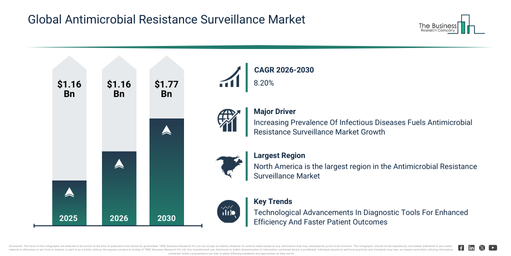
    The antimicrobial resistance surveillance market has experienced notable expansion recently. It is projected to rise from $7.3 billion in 2025 to $7.91 billion in 2026, growing at a compound annual growth rate (CAGR) of 8.4%. This past growth period was driven by increasing occurrences of drug-resistant infections, enhanced hospital infection control measures, expansion of public health surveillance initiatives, broader laboratory testing capabilities, and heightened concerns over antibiotic misuse. Looking ahead, the market is expected to continue its strong upward trajectory, reaching $10.85 billion by 2030 at an 8.2% CAGR. Factors influencing growth during this forecast include global antimicrobial resistance (AMR) monitoring programs, the adoption of AI-powered predictive surveillance technologies, cloud-based platforms for data sharing, advancements in genomic surveillance, and regulatory mandates enforcing reporting. Emerging trends such as real-time monitoring of resistance patterns, whole genome sequencing, AI-driven resistance analytics, integrated public health databases, and hospital-wide AMR tracking systems are set to redefine the market landscape.

    Download A Free Sample Report For Comprehensive Market Insights:

    https://www.thebusinessresearchcompany.com/sample.aspx?id=21100&type=smp

    Rising Infectious Disease Rates as a Key Growth Catalyst

    One of the primary forces propelling the expansion of the antimicrobial resistance surveillance market is the increasing prevalence of infectious diseases. These illnesses, caused by bacteria, viruses, fungi, or parasites, can be transmitted through various direct or indirect means. The surge in infectious diseases is influenced by factors including climate change, urbanization, and global travel, all of which facilitate the spread of pathogens and increase human exposure to unfamiliar microbes. Antimicrobial resistance surveillance plays a vital role in monitoring the dissemination of resistant strains, thus helping guide effective treatments and public health interventions. For example, a report released in February 2024 by the UK Health Security Agency showed a 10.7% rise in tuberculosis (TB) cases in England during 2023, with 4,850 cases compared to 4,380 in 2022. This example highlights how infectious disease trends are driving demand for improved AMR surveillance systems.

    Additional Drivers Supporting Market Expansion

    Beyond infectious disease prevalence, several other elements support the growth of the antimicrobial resistance surveillance market. Increased investments in hospital infection control protocols aim to prevent the spread of resistant pathogens within healthcare settings. Moreover, growing public health initiatives emphasize surveillance programs that track antibiotic resistance patterns on a broader scale. Expansion of laboratory testing facilities and technological advancements are enhancing the accuracy and speed of resistance detection. Finally, rising global concerns regarding the misuse and overuse of antibiotics have prompted governments and health organizations to prioritize resistance monitoring efforts, boosting market demand.

    https://www.thebusinessresearchcompany.com/report/antimicrobial-resistance-surveillance-global-market-report

    Antimicrobial Resistance Surveillance Market Geographic Analysis: Where Is Demand Growing The Fastest?

    Segmentation Overview of the Antimicrobial Resistance Surveillance Market

    This market is segmented based on solutions, applications, and end users. The solution segment includes diagnostic kits, diagnostic systems, surveillance software, and services. Diagnostic kits are further divided into PCR-based kits, immunoassay kits, and lateral flow assay kits. Diagnostic systems cover automated susceptibility testing systems, whole genome sequencing (WGS) systems, and mass spectrometry-based systems. Surveillance software comprises cloud-based platforms, AI-powered analytics tools, and electronic health record (EHR)-integrated systems. Services include laboratory testing, data management and reporting, as well as consultation and training. Application areas include clinical diagnostics, public health surveillance, and other uses. The end-user base encompasses hospitals and clinics, research and academic institutions, and other users.

    How Technological Advances Are Transforming the Market

    Market players are increasingly focusing on cutting-edge diagnostic tools designed to improve efficiency, accuracy, and patient outcomes while reducing costs. Diagnostic tools refer broadly to devices, instruments, software, or methods used to detect or assess health conditions or pathogens. For instance, in June 2023, Sweden-based Sysmex Astrego AB introduced the PA-100 AST Point-of-Care Testing System. This innovative device enables rapid and precise detection of antimicrobial resistance directly at the point of care, delivering results within 30 minutes—a significant improvement over traditional lab methods that can take several days. Such technology allows clinicians to make timely treatment decisions, minimizing the use of broad-spectrum antibiotics and helping to curb the spread of resistance.

    Leading Companies Driving Competition in the Antimicrobial Resistance Surveillance Market

    Key players shaping the competitive landscape include Roche Diagnostics, Thermo Fisher Scientific Inc., Abbott Laboratories, Danaher Corporation, Becton Dickinson and Company, bioMérieux SA, Bio-Rad Laboratories Inc., Bruker Corporation, QIAGEN NV, Cepheid Inc., Accelerate Diagnostics Inc., Liofilchem S.r.l., Luminex Corporation, Sysmex Corporation, Werfen, OpGen Inc., Illumina Inc., Oxford Nanopore Technologies plc, Himedia Laboratories Pvt. Ltd., and Alifax S.r.l. These companies are actively investing in research and development to bring innovative products and solutions to the market.

    Regional Market Dynamics and Growth Hotspots

    In 2025, North America held the largest share of the antimicrobial resistance surveillance market, reflecting the region’s strong healthcare infrastructure and investment capacity. However, the Asia-Pacific region is forecasted to experience the fastest growth during the upcoming years, driven by rising infectious disease prevalence, expanding healthcare facilities, and increasing adoption of advanced technologies. The market report also encompasses regions such as South East Asia, Western Europe, Eastern Europe, South America, the Middle East, and Africa, giving a comprehensive view of global market trends and opportunities.

    Get in touch with us:

    The Business Research Company: https://www.thebusinessresearchcompany.com/

    Americas: +1 310-496-7795

    Asia: +44 7882 955267 & +91 8897263534

    Europe: +44 7882 955267

    Email us at: marketing@tbrc.info

    Follow us on:

    LinkedIn: https://in.linkedin.com/company/the-business-research-company

    YouTube: https://www.youtube.com/channel/UC24_fI0rV8cR5DxlCpgmyFQ

    Global Market Model: https://www.thebusinessresearchcompany.com/global-market-model
  • Antimicrobial Resistance Diagnostics Market Forecast Highlights Expansion From $4.74 Billion To $6.23 Billion Through 2030

    Antimicrobial Resistance Diagnostics Market Forecast Highlights Expansion From $4.74 Billion To $6.23 Billion Through 2030

    Delivering more actionable and strategically valuable research, The Business Research Company’s 2026 market reports feature market attractiveness analysis, total addressable market evaluation, company benchmarking matrices, interactive Excel dashboards, expanded supply chain intelligence, emerging startup coverage, and detailed product insights.

    The challenge of antimicrobial resistance is becoming increasingly critical worldwide, prompting the need for advanced diagnostic tools to effectively detect and manage resistant infections. The antimicrobial resistance diagnostics market is evolving rapidly, driven by technological innovations and rising awareness about the importance of early detection. This overview explores the current market size, growth drivers, segmentation, emerging trends, competitive players, and regional highlights shaping the future of this vital healthcare sector.

    Antimicrobial Resistance Diagnostics Market Size and Projected Growth

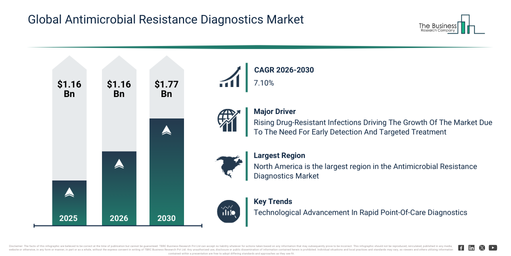
    The antimicrobial resistance diagnostics market has witnessed substantial expansion in recent years. It is expected to grow from $4.41 billion in 2025 to $4.74 billion in 2026, achieving a compound annual growth rate (CAGR) of 7.5%. This historical growth has been fueled by the increasing incidence of antibiotic-resistant infections, a strong dependence on traditional culture-based diagnostics, a rise in hospital-acquired infections, heightened awareness of antimicrobial stewardship, and the expansion of clinical microbiology laboratories worldwide. Looking ahead, the market is anticipated to reach $6.23 billion by 2030, with a CAGR of 7.1%. Factors supporting this future growth include advancements in PCR and NGS diagnostic technologies, greater government funding for antimicrobial resistance (AMR) surveillance programs, a rising shift toward rapid diagnostic tests, expansion in pharmaceutical and biotechnology research, and the integration of data-driven decision support tools. Key market trends during the forecast period are the growing use of rapid and point-of-care AMR diagnostics, increasing demand for targeted and personalized antimicrobial therapies, enhanced surveillance of drug-resistant pathogens, expanded molecular and genomic diagnostic testing, and stronger hospital infection control and stewardship initiatives.

    Download A Free Sample Report For Comprehensive Market Insights:

    https://www.thebusinessresearchcompany.com/sample.aspx?id=25696&type=smp

    Key Factors Fueling Growth in the Antimicrobial Resistance Diagnostics Market

    One of the primary drivers of this market is the rising prevalence of drug-resistant infections, which occur when microbes such as bacteria, viruses, fungi, or parasites develop the ability to withstand treatments that were once effective. This resistance complicates standard treatments and makes infections more difficult to control. A significant contributor to this problem is the overuse of antibiotics in agriculture, where low doses are regularly added to animal feed, promoting resistance that can transfer to humans through the food supply. Antimicrobial resistance diagnostics—including rapid genetic testing and culture-based sensitivity assays—are critical in addressing this challenge by enabling early detection of resistant pathogens, guiding precise therapies, and reducing unnecessary use of broad-spectrum antibiotics.

    For instance, data released in November 2024 by the UK Health Security Agency (UKHSA) revealed that serious antibiotic-resistant infections in England increased from 58,224 cases in 2022 to about 66,730 in 2023, alongside a 2.4% rise in antibiotic use during the same period. This rising prevalence of resistant infections underscores the urgent need for improved diagnostic solutions, thereby driving growth in the antimicrobial resistance diagnostics market.

    https://www.thebusinessresearchcompany.com/report/antimicrobial-resistance-diagnostics-global-market-report

    Antimicrobial Resistance Diagnostics Market Global Footprint: Which Region Holds Market Leadership?

    Detailed Segmentation of the Antimicrobial Resistance Diagnostics Market

    The report categorizes the antimicrobial resistance diagnostics market into multiple key segments to provide a thorough analysis:

    1) Product Type: Kits and Reagents; Instruments and Consumables

    2) Pathogen: Drug-Resistant Streptococcus Pneumoniae (DRSP), Drug Resistant Campylobacter (DRC), Clostridium Difficile (CD), Methicillin Resistant Staphylococcus Aureus (MRSA), Drug Resistant Neisseria Gonorrhoeae (DRNG), Drug Resistant Salmonella (DRntS), and other pathogens

    3) Technology: Microbiology Culture, Immunoassay, Polymerase Chain Reaction (PCR), Next-Generation Sequencing (NGS), Mass Spectrometry, Rapid and Point of Care, among others

    4) End-User: Hospitals and Clinics, Diagnostics Laboratories, Research Institutes, Pharmaceutical and Biotechnology Companies, and other users

    Further sub-segments include specific product types such as DNA and RNA extraction kits, PCR reagents, immunoassay reagents, stains and dyes, culture media, PCR machines, UV-Vis spectrophotometers, NGS systems, microarray scanners, automated liquid handlers, and sample collection tubes and swabs.

    Cutting-Edge Innovations Transforming the Antimicrobial Resistance Diagnostics Industry

    Leading companies in the antimicrobial resistance diagnostics sector are increasingly focusing on innovative technologies to improve the speed, accuracy, and clinical utility of testing. A significant advancement is the adoption of point-of-care antimicrobial susceptibility testing (AST) systems, which enable near-patient tests to rapidly identify effective antibiotics for infections. This helps clinicians make quicker, more targeted treatment decisions and supports antimicrobial stewardship by reducing unnecessary antibiotic prescriptions.

    A notable example is the June 2023 launch of the PA-100 AST System by Sysmex Corporation, a Japan-based diagnostic solutions provider. This point-of-care platform analyzes urine samples, detecting bacterial presence and antibiotic susceptibility in about 30 minutes. The system uses microfluidic single-cell analysis, allows near-patient testing, and automates reporting, thereby facilitating timely and precise clinical decision-making to combat antimicrobial resistance.

    Key Market Players Leading the Antimicrobial Resistance Diagnostics Sector

    Several prominent companies are shaping the antimicrobial resistance diagnostics market, including:

    F Hoffmann La Roche AG, Thermo Fisher Scientific Inc, Abbott Laboratories, Danaher Corporation, Becton Dickinson and Company, bioMerieux SA, Sysmex Corporation, Bio Rad Laboratories Inc, QIAGEN NV, Seegene Inc, Alifax S r l, Accelerate Diagnostics Inc, Molsid SAS, Genetic Signatures Limited, iFAST Diagnostics Ltd, Astek Diagnostics Inc, OpGen Inc, T2 Biosystems, Jiangsu Medomics Medical Technology Co Ltd, Cepheid, Luminex Corporation, Bruker Corporation, and Hologic Inc.

    Geographical Trends and Market Leadership in the Antimicrobial Resistance Diagnostics Sector

    In 2025, North America dominated the antimicrobial resistance diagnostics market, holding the largest regional share. Meanwhile, the Asia-Pacific region is expected to experience the fastest growth during the forecast period. The market report covers multiple regions, including Asia-Pacific, South East Asia, Western Europe, Eastern Europe, North America, South America, the Middle East, and Africa, providing a comprehensive view of global market dynamics.

    Get in touch with us:

    The Business Research Company: https://www.thebusinessresearchcompany.com/

    Americas: +1 310-496-7795

    Asia: +44 7882 955267 & +91 8897263534

    Europe: +44 7882 955267

    Email us at: marketing@tbrc.info

    Follow us on:

    LinkedIn: https://in.linkedin.com/company/the-business-research-company

    YouTube: https://www.youtube.com/channel/UC24_fI0rV8cR5DxlCpgmyFQ

    Global Market Model: https://www.thebusinessresearchcompany.com/global-market-model
  • Antimicrobial Hospital Textiles Market Expected To Reach $17.4 Billion By 2030 As Growth Accelerates At 9.3% CAGR

    Antimicrobial Hospital Textiles Market Expected To Reach $17.4 Billion By 2030 As Growth Accelerates At 9.3% CAGR

    Enhanced with market attractiveness analysis, total addressable market evaluation, company benchmarking matrices, interactive Excel dashboards, expanded supply chain intelligence, emerging startup coverage, and detailed product insights, The Business Research Company’s 2026 market reports deliver more actionable and strategically valuable research.

    The market for antimicrobial hospital textiles has witnessed significant growth recently, driven by increasing concerns around hospital-acquired infections and advancements in healthcare infrastructure. As hospitals and medical centers prioritize hygiene and infection control, the demand for innovative textiles that inhibit microbial growth continues to rise. This report examines the current market scenario, key growth drivers, prominent companies, trends, and regional insights shaping the future of antimicrobial hospital textiles.

    Antimicrobial Hospital Textiles Market Size and Growth Forecast

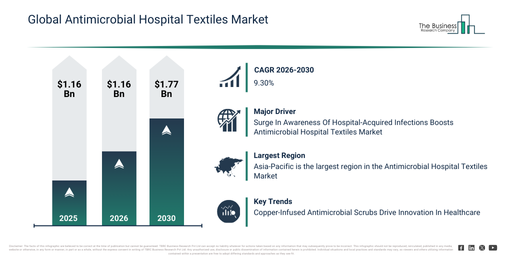
    The antimicrobial hospital textiles market has seen a strong upward trajectory and is projected to expand from $11.13 billion in 2025 to $12.18 billion in 2026, registering a compound annual growth rate (CAGR) of 9.4%. This growth during the historical period is primarily fueled by increased concerns about hospital-acquired infections, the expansion of healthcare facilities, greater use of medical uniforms and linens, heightened hygiene awareness, and the availability of advanced antimicrobial fabric technologies. Looking ahead, the market is expected to reach $17.4 billion by 2030, maintaining a CAGR of 9.3%. Factors contributing to this forecasted growth include rising demand for sustainable medical textiles, a stronger emphasis on reusable hospital products, stricter infection prevention protocols, wider adoption of cutting-edge antimicrobial materials, and heightened regulatory focus on hospital hygiene standards. Key trends expected to influence market evolution include increased use of antimicrobial treatments, growing demand for infection-control fabrics, broader application of reusable antimicrobial textiles, expansion in ICU and surgical textile use, and a greater focus on patient safety and sanitation.

    Download A Free Sample Report For Comprehensive Market Insights:

    https://www.thebusinessresearchcompany.com/sample.aspx?id=7981&type=smp

    Primary Drivers Boosting the Antimicrobial Hospital Textiles Market

    Growing awareness about hospital-acquired infections is a major factor propelling the antimicrobial hospital textiles market. These infections, contracted during medical care by healthcare professionals, affect various parts of the body including the digestive and urinary tracts, skin, lungs, and bloodstream. Antimicrobial textiles play a vital role in curbing the spread of these infections by inhibiting bacterial growth on hospital fabrics. For instance, in June 2025, the Australian Institute of Health and Welfare reported that during 2023–24, hospital-acquired complications occurred in 150,000 hospitalizations out of 12.6 million total hospital stays, highlighting the critical need for infection control measures.

    Expanding Healthcare Infrastructure and Hygiene Awareness

    The increase in healthcare infrastructure development and the rising usage of medical uniforms and linens further accelerate market growth. As hospitals and clinics expand, the demand for antimicrobial textiles that meet high hygiene standards rises accordingly. Moreover, the availability of antimicrobial fabric technologies has enabled healthcare providers to adopt more effective infection control solutions, reinforcing the overall market expansion.

    https://www.thebusinessresearchcompany.com/report/antimicrobial-hospital-textiles-global-market-report

    Antimicrobial Hospital Textiles Market Regional Distribution: Which Areas Drive Market Expansion?

    Comprehensive Segmentation of the Antimicrobial Hospital Textiles Market

    This market is categorized into several segments for better clarity and analysis. By product type, it includes cotton, polyester, polyamide, and other types of fabrics. Usability is divided into disposable and reusable textiles. The market is also segmented by FDA class into Class I and Class II products. Hospital departments utilizing these textiles include general wards, surgical rooms, infectious disease wards, ICUs, and other hospital units. Application areas cover medical uniforms and apparel, upholstery, surgical textiles, incontinence care garments, and other uses. Further subcategories break down cotton into conventional, organic, and blended types; polyester into regular, recycled, and blended; polyamide into nylon 6, nylon 66, and blended variants; and other fabric types include polyethylene, polypropylene, acrylic, and cellulose acetate.

    Innovations and Trends Shaping the Future of Antimicrobial Hospital Textiles

    Leading companies in this space are innovating by incorporating technologies such as copper-infused medical scrubs to enhance infection control in healthcare settings. These scrubs combine copper with natural fibers like cotton, bamboo, and linen, providing durable antimicrobial properties. Unlike traditional scrubs that require frequent laundering or surface disinfection, these fabrics actively reduce microbial presence. For example, in June 2023, Swiss Precision Active, a Switzerland-based eco-healthtech firm, introduced its CopperActive antimicrobial scrub line at the FIME Miami Fair. This product features a patented copper–natural fiber blend, verified by SGS and other labs for its ability to kill or inhibit harmful bacteria over time. Additionally, these scrubs are lightweight, moisture-wicking, odor-resistant, and maintain their antimicrobial effectiveness even after multiple washes, making them ideal for high-risk hospital environments focused on minimizing pathogen transmission.

    Key Players and Competitive Landscape of the Antimicrobial Hospital Textiles Market

    The antimicrobial hospital textiles market includes several major companies such as Sinterama S.p.A., Trevira GmbH, PurThread Technologies Inc., LifeThreads LLC, Thai Acrylic Fiber Co. Ltd., Herculite Products Inc., Toyobo Co. Ltd., Baltex Group Limited, Microban International Ltd., Sciessent LLC, BASF SE, Lonza Group AG, BioCote Limited, Resil Chemicals Pvt. Ltd., Archroma Management LLC, HeiQ Materials AG, Milliken & Company, Vestagen Technical Textiles Inc., Copper Clothing Ltd., Applied Silver Inc., 3M Company, Ahlstrom-Munksjö Oyj, American Dawn Inc., Medline Industries Inc., Angelica Corporation, Hospital Specialty Company Inc., BSN Medical Inc., and Cramer Products Inc. These organizations are actively competing to develop advanced antimicrobial textiles and expand their market share through innovation and strategic partnerships.

    Regional Market Distribution and Development in Antimicrobial Hospital Textiles

    In 2025, Asia-Pacific emerged as the largest region for antimicrobial hospital textiles and is anticipated to be the fastest-growing market during the forecast period. The report covers various global regions including Asia-Pacific, South East Asia, Western Europe, Eastern Europe, North America, South America, the Middle East, and Africa, providing a detailed understanding of geographical market dynamics and growth potential.

    Get in touch with us:

    The Business Research Company: https://www.thebusinessresearchcompany.com/

    Americas: +1 310-496-7795

    Asia: +44 7882 955267 & +91 8897263534

    Europe: +44 7882 955267

    Email us at: marketing@tbrc.info

    Follow us on:

    LinkedIn: https://in.linkedin.com/company/the-business-research-company

    YouTube: https://www.youtube.com/channel/UC24_fI0rV8cR5DxlCpgmyFQ

    Global Market Model: https://www.thebusinessresearchcompany.com/global-market-model
  • Antibacterial Orthopedic Implant Market Set To Grow From $4.75 Billion In 2026 To $6.8 Billion By 2030 At A CAGR Of 9.4%

    Antibacterial Orthopedic Implant Market Set To Grow From $4.75 Billion In 2026 To $6.8 Billion By 2030 At A CAGR Of 9.4%

    Through market attractiveness analysis, total addressable market evaluation, company benchmarking matrices, interactive Excel dashboards, expanded supply chain intelligence, emerging startup coverage, and detailed product insights, The Business Research Company’s 2026 market reports provide more actionable and strategically valuable research.

    The antibacterial orthopedic implant market is witnessing significant momentum, driven by advancements in medical technology and an increasing patient population requiring orthopedic interventions. With rising cases of musculoskeletal conditions and innovations in implant materials and coatings, this sector is set for sustained growth in the coming years. Let’s delve into the current market size, key growth factors, segmentation, industry trends, major players, and regional outlook.

    Antibacterial Orthopedic Implant Market Size and Projected Growth

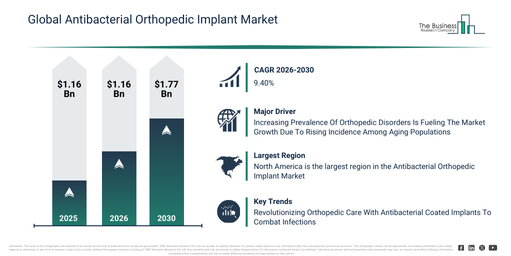
    The antibacterial orthopedic implant market has shown strong growth recently, expanding from $4.33 billion in 2025 to $4.75 billion in 2026 at a CAGR of 9.7%. This upward trend reflects the increasing number of orthopedic surgeries, widespread use of metallic implants, limited availability of antibacterial options, and the high prevalence of post-surgical infections. Looking ahead, the market is forecasted to reach $6.81 billion by 2030, growing at a CAGR of 9.4%. Key factors contributing to this expansion include advancements in antibacterial bone cements and coatings, a growing elderly population with orthopedic ailments, higher adoption of joint replacement and spinal implants, improvements in polymeric and composite implant technologies, and the growth of healthcare facilities such as hospitals and ambulatory surgical centers.

    Download A Free Sample Report For Comprehensive Market Insights:

    https://www.thebusinessresearchcompany.com/sample.aspx?id=24464&type=smp

    Primary Drivers Supporting Growth in the Antibacterial Orthopedic Implant Market

    The rising incidence of orthopedic disorders is a major factor propelling the antibacterial orthopedic implant market forward. These disorders, which affect bones, joints, muscles, tendons, and ligaments, are becoming increasingly common as the global population ages. Conditions like osteoarthritis, osteoporosis, and joint degeneration arise from the natural wear and tear of the musculoskeletal system over time.

    Antibacterial orthopedic implants play a critical role in managing these disorders by helping prevent post-operative infections, accelerating patient recovery, and enhancing the success rates of implant surgeries. Illustrating this, in January 2024, UK government research via Versus Arthritis reported that over 20 million people in the UK—about one-third of the population—live with musculoskeletal conditions, highlighting the vast potential demand for antibacterial orthopedic solutions.

    Detailed Segmentation and Revenue Opportunities in the Antibacterial Orthopedic Implant Market

    This market is categorized across several segments to better understand product types, antibacterial agents, materials, applications, and end users.

    By implant type, the categories include antibacterial bone cement, bone screws, bone plates, joint implants, and spinal implants. Antibacterial agents utilized in these products range from silver and chlorhexidine to triclosan, iodine, and vancomycin. Materials used cover metallic, polymeric, ceramic, and composite implants. Applications span joint replacements, trauma care, spine surgeries, and other areas. The end users consist of hospitals, ambulatory surgical centers, clinics, academic and research institutions, and defense and military sectors.

    Further subdivisions include, for example, types of bone cement (high-, medium-, and low-viscosity), various bone screws (titanium-based, stainless steel-based, biodegradable), different bone plates (locking compression plates, dynamic compression plates, reconstruction and fixation plates), as well as an extensive range of joint implants (hip, knee, shoulder, elbow) and spinal implant types (fusion implants, rods and screws, intervertebral discs, spacers).

    https://www.thebusinessresearchcompany.com/report/antibacterial-orthopedic-implant-global-market-report

    Antibacterial Orthopedic Implant Market Leading Geography: Which Region Generates The Most Revenue?

    Emerging Industry Trends Accelerating Antibacterial Orthopedic Implant Growth

    Leading companies in this field are concentrating on innovations like antibacterial coated implants to lower infection risks and improve patient outcomes. These implants feature a specialized antibacterial layer to inhibit bacterial colonization, thereby supporting better healing and reducing complications.

    For instance, in April 2024, US-based Onkos Surgical Inc. received FDA approval for its antibacterial coated implants. This milestone enables Onkos to market technology designed to tackle bacterial contamination, particularly in complex cases such as tumor and revision surgeries. In vitro testing demonstrated that their coating achieves a remarkable 99.999% bactericidal efficacy, offering a promising solution to prevent infections that could otherwise lead to implant failure or amputation.

    Key Industry Players Influencing the Antibacterial Orthopedic Implant Market

    The antibacterial orthopedic implant market landscape features prominent companies including Stryker Corporation, Zimmer Biomet Holdings Inc, Smith and Nephew plc, DePuy Synthes Inc, Exactech Inc, MicroPort Orthopedics Inc, Implantcast GmbH, aap Implantate AG, Accentus Medical Ltd, Onkos Surgical Inc, BONESUPPORT AB, Heraeus Medical GmbH, Promimic AB, Silver Bullet Therapeutics Inc, TEKNIMED SAS, BioMedtrix LLC, BioGate AG, Tecres SpA, Kyocera Medical Technologies Inc, and Orthofix Medical Inc. These organizations are at the forefront of developing advanced antibacterial implant technologies and expanding market reach.

    Geographic Landscape and Revenue Generation in the Antibacterial Orthopedic Implant Market

    In 2025, North America held the largest share of the antibacterial orthopedic implant market. However, the Asia-Pacific region is anticipated to witness the fastest growth during the forecast period. The market analysis covers regions including Asia-Pacific, South East Asia, Western Europe, Eastern Europe, North America, South America, the Middle East, and Africa, providing a complete global perspective on market trends and opportunities.

    Get in touch with us:

    The Business Research Company: https://www.thebusinessresearchcompany.com/

    Americas: +1 310-496-7795

    Asia: +44 7882 955267 & +91 8897263534

    Europe: +44 7882 955267

    Email us at: marketing@tbrc.info

    Follow us on:

    LinkedIn: https://in.linkedin.com/company/the-business-research-company

    YouTube: https://www.youtube.com/channel/UC24_fI0rV8cR5DxlCpgmyFQ

    Global Market Model: https://www.thebusinessresearchcompany.com/global-market-model