Category: Medical Equipment

  • Artificial Cartilage Implant Market Growth Outlook Reveals A CAGR Of 9.7% And A Market Value Of $2.45 Billion By 2030

    Artificial Cartilage Implant Market Growth Outlook Reveals A CAGR Of 9.7% And A Market Value Of $2.45 Billion By 2030

    Enhanced with market attractiveness analysis, total addressable market evaluation, company benchmarking matrices, interactive Excel dashboards, expanded supply chain intelligence, emerging startup coverage, and detailed product insights, The Business Research Company’s 2026 market reports deliver more actionable and strategically valuable research.

    The artificial cartilage implant market is witnessing remarkable growth, driven by rising demand for innovative joint replacement solutions. As awareness of joint health increases and technological advancements emerge, the market is poised for substantial expansion in the coming years. Let’s explore the current market size, key factors fueling growth, industry trends, major players, and regional insights shaping this sector’s future.

    Recent Market Size and Projected Growth in the Artificial Cartilage Implant Market

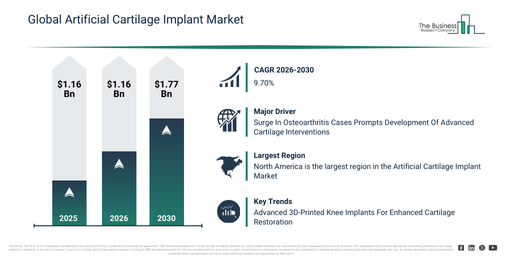
    The artificial cartilage implant market has shown significant growth in recent years. From a valuation of $1.54 billion in 2025, it is expected to reach $1.69 billion in 2026, growing at a compound annual growth rate (CAGR) of 9.7%. This past growth was largely influenced by the limited availability of advanced implant materials, an increase in orthopedic surgeries, heightened joint health awareness, and reliance on imported implants due to insufficient local manufacturing. Looking ahead, the market is anticipated to expand further to $2.45 billion by 2030, maintaining the same CAGR of 9.7%. This forecasted rise is fueled by innovations in synthetic and smart implant technologies, growing needs for knee and hip replacements, the spread of ambulatory surgical centers, and increased use of 3D-printed, patient-specific implants. Additionally, growing investment in orthopedic research and clinical applications supports this upward trajectory. Key trends shaping the market include a rising incidence of osteoarthritis, widespread adoption of minimally invasive procedures, demand for durable and biocompatible implants, expanding clinical trials, and growing customization options for implants.

    Download A Free Sample Report For Comprehensive Market Insights:

    https://www.thebusinessresearchcompany.com/sample.aspx?id=27201&type=smp

    Factors Pushing Demand in the Artificial Cartilage Implant Market

    One of the primary factors driving the artificial cartilage implant market is the increasing prevalence of osteoarthritis, a degenerative condition characterized by cartilage deterioration that causes pain, stiffness, and restricted movement. This condition is worsening due to rising obesity rates, which add extra stress to joints and accelerate cartilage damage. Artificial cartilage implants help by replacing the damaged tissue, restoring smooth joint surfaces, reducing friction, easing pain, and improving mobility, thereby slowing disease progression. For example, a report released in August 2023 by the Institute for Health Metrics and Evaluation, a US-based health research organization, predicts that by 2050 nearly 1 billion people globally will suffer from osteoarthritis. The knees and hands are the most commonly affected areas, with knee osteoarthritis expected to increase by 75% and hand osteoarthritis by 50% by that time. This growing disease burden is a major driver for the market’s expansion.

    Innovations and Evolving Treatments Shaping Market Growth

    Advancements in implant technologies are significantly influencing the artificial cartilage implant market. The development of three-dimensional (3D) printed knee implants, for example, is enhancing the precision and longevity of joint replacements. These patient-specific implants are created layer by layer using advanced 3D printing methods, resulting in a highly accurate anatomical fit and improved functional outcomes that support faster recovery. A notable example is the July 2025 launch of Chondrograft by US-based startup Nanochon, which received approval from Health Canada. This synthetic implant is designed to replace damaged knee cartilage and closely mimics the natural porosity and structure of human cartilage, promoting integration with surrounding tissue and encouraging new growth. As an off-the-shelf product, it offers a minimally invasive alternative to traditional knee replacements and aims to restore cartilage function while potentially delaying more invasive surgeries.

    https://www.thebusinessresearchcompany.com/report/artificial-cartilage-implant-global-market-report

    #Artificial Cartilage Implant Market Largest Region: Which Geography Holds The Highest Market Share?

    Structure and Segmentation of the Artificial Cartilage Implant Market

    This market is broadly categorized by several factors:

    1) Implant Type: Biological, Synthetic, Composite, and Smart implants

    2) Product Type: Implants for upper extremity joints, lower extremity joints, and vertebral joints

    3) Distribution Channel: Direct sales, online retail, distributors, and specialty clinics

    4) Application Areas: Knee replacement, hip replacement, shoulder reconstruction, and ankle replacement

    5) End-Users: Hospitals, orthopedic clinics, ambulatory surgical centers, research institutes, and others

    Further classifications include subtypes such as autografts, allografts, xenografts, and tissue-engineered implants under biological implants; polymer-based, hydrogel, silicone, and polyurethane implants under synthetic implants; polymer-ceramic and polymer-metal composites under composite implants; and sensor-integrated, drug-eluting, shape-memory, and stimuli-responsive implants under smart implants.

    Key Industry Players Leading the Artificial Cartilage Implant Market

    The market features several prominent companies driving innovation and competition, including Johnson & Johnson, B. Braun Melsungen AG, Medtronic plc, Zimmer Biomet Holdings Inc., Smith & Nephew plc, Stryker Corporation, Arthrex Inc., Conmed Corporation, Orthofix Medical, Corin Group, Anika Therapeutics Inc., Vericel Corporation, Tissue Regenix Group plc, Nusurface, Uteshiya Medicare Inc., Sparta Biomedical Inc., BioPoly LLC, Orthocell Ltd, Sartorius CellGenix GmbH, and CytoSeek Limited.

    Geographical Market Distribution and Regional Growth Patterns

    In 2025, North America held the largest share of the artificial cartilage implant market, reflecting the region’s advanced healthcare infrastructure and high adoption rates of orthopedic procedures. Meanwhile, the fastest-growing market over the forecast period is anticipated to be Asia-Pacific, driven by increasing healthcare expenditures, rising awareness of joint health, and expanding access to advanced surgical technologies. Other significant regions covered include South East Asia, Western Europe, Eastern Europe, South America, the Middle East, and Africa, providing a comprehensive global perspective on market trends and opportunities.

    Get in touch with us:

    The Business Research Company: https://www.thebusinessresearchcompany.com/

    Americas: +1 310-496-7795

    Asia: +44 7882 955267 & +91 8897263534

    Europe: +44 7882 955267

    Email us at: marketing@tbrc.info

    Follow us on:

    LinkedIn: https://in.linkedin.com/company/the-business-research-company

    YouTube: https://www.youtube.com/channel/UC24_fI0rV8cR5DxlCpgmyFQ

    Global Market Model: https://www.thebusinessresearchcompany.com/global-market-model
  • Articulating Paper Forceps Market Forecast Highlights Expansion From $1.31 Billion To $1.68 Billion Through 2030

    Articulating Paper Forceps Market Forecast Highlights Expansion From $1.31 Billion To $1.68 Billion Through 2030

    Through market attractiveness analysis, total addressable market evaluation, company benchmarking matrices, interactive Excel dashboards, expanded supply chain intelligence, emerging startup coverage, and detailed product insights, The Business Research Company’s 2026 market reports provide more actionable and strategically valuable research.

    The articulating paper forceps market has witnessed solid growth in recent years, supported by evolving dental and surgical practices. As healthcare providers increasingly adopt advanced tools for precision and efficiency, this market is set to continue expanding. Let’s explore the current market size, key growth drivers, segmentation, leading players, and regional dynamics shaping this sector.

    Current Market Size and Growth Outlook for Articulating Paper Forceps

    The articulating paper forceps market has shown considerable progress, with its value rising from $1.23 billion in 2025 to an estimated $1.31 billion in 2026. This reflects a steady compound annual growth rate (CAGR) of 6.5%. The market’s historical expansion can be linked to longstanding reliance on stainless steel instruments, limited exposure to ergonomic designs, constrained dental and surgical infrastructure, manual sourcing methods, and dependence on local suppliers.

    Download A Free Sample Report For Comprehensive Market Insights:

    https://www.thebusinessresearchcompany.com/sample.aspx?id=27200&type=smp

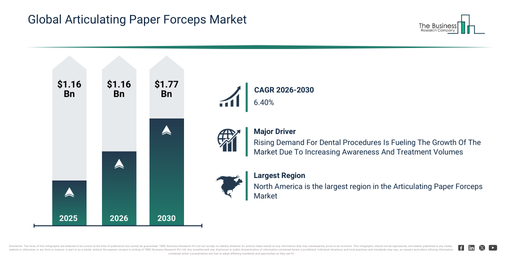
    Looking ahead, the market is forecast to reach $1.68 billion by 2030, growing at a CAGR of 6.4%. This anticipated increase is driven by innovations in lightweight and durable materials, wider adoption of minimally invasive surgeries, increased investments in dental and surgical clinics, the rise of e-commerce channels for medical equipment, and a growing emphasis on tools suited for multiple surgical specialties. Key trends during this period include a rising demand for precision instruments, preference for ergonomic and lightweight designs, expanded use in multidisciplinary procedures, popularity of sterilizable and reusable materials, and growth of online distribution platforms.

    Major Factors Encouraging Growth in the Articulating Paper Forceps Market

    The growing demand for dental procedures is a significant catalyst behind the expanding articulating paper forceps market. Dental care involves treatments focused on diagnosing, preventing, and managing oral health issues affecting teeth, gums, and jaws. Increasing public awareness about oral hygiene encourages more frequent dental visits and early interventions such as cleanings, fillings, and gum care. Articulating paper forceps play an essential role in these procedures by enabling dentists to accurately assess bite alignment, which leads to improved treatment outcomes and oral function.

    https://www.thebusinessresearchcompany.com/report/articulating-paper-forceps-global-market-report

    Articulating Paper Forceps Market Regional Analysis: Which Region Leads By Revenue?

    For instance, in August 2024, the British Society of Dental Hygiene and Therapy (BSDHT) reported that 34 million dental procedures were performed in the UK during 2023–2024, marking a 4.3% increase compared to the previous year. Additionally, total dental activity units reached 73 million, a 3.4% rise from 2022 to 2023. This upward trend in dental procedures directly supports growth in the articulating paper forceps market.

    Increasing Prevalence of Dental Disorders Is Bolstering Market Demand

    Another critical growth driver is the rising number of dental disorders, which encompass conditions such as tooth decay, gum disease, infections, and bite misalignments. These issues have become more common due to higher consumption of sugary and processed foods, contributing to cavities and gingivitis. Articulating paper forceps assist dental professionals in diagnosing and managing these disorders by offering precise bite alignment assessments. Correcting malocclusion and preventing uneven tooth wear rely heavily on these tools.

    As an example, the American Cancer Society projected that in January 2025, the United States would see around 59,660 new cases of oral cavity and oropharyngeal cancer, along with approximately 12,770 related deaths. The prevalence of such dental conditions fuels the need for specialized instruments like articulating paper forceps, thereby driving market growth.

    How the Articulating Paper Forceps Market Is Categorized for Revenue Analysis

    This market is segmented by several criteria to better understand demand and sales patterns:

    1) By Type: Straight articulating paper forceps and curved articulating paper forceps

    2) By Material: Stainless steel, titanium, plastic, and carbon fiber

    3) By Application: Dental procedures, occlusal adjustments, restorative dentistry, prosthodontics

    4) By Distribution Channel: Direct sales, online sales, and medical supply distributors

    5) By End User: Hospitals, dental clinics, ambulatory surgical centers, and research institutes

    Further breakdown includes subtypes for straight forceps such as standard, fine-tip, heavy-duty, and locking models. Curved forceps are similarly subdivided into standard, fine-tip, heavy-duty, and locking variants.

    Top Players Steering Competition in the Articulating Paper Forceps Sector

    Several key companies lead the articulating paper forceps market, contributing to innovation and distribution globally. These include Henry Schein Inc., Dentsply Sirona Inc., Patterson Dental Supply Inc., Coltene Holding AG, Brasseler USA Dental LLC, GC Corporation, Tashmed Pvt. Ltd., Maxill Inc., Carl Martin GmbH, ASA Dental S.p.A., Medesy S.r.l., A. Titan Instruments Inc., Collateral Medical Pvt. Ltd., Dental Sky UK Ltd., Wittex GmbH, J&J Instruments Inc., VeeCare Dental Instruments, New Surgical Instruments Co., GDC Fine Crafted Dental Precision Instruments Pvt. Ltd., and Pure Life India Private Limited.

    Regional Overview Emphasizes North America’s Leadership and Asia-Pacific’s Rapid Growth

    In 2025, North America held the largest share of the articulating paper forceps market, supported by advanced healthcare infrastructure and widespread adoption of dental technologies. Meanwhile, the Asia-Pacific region is expected to experience the fastest growth over the coming years, driven by expanding healthcare facilities, increasing awareness of oral health, and rising disposable incomes. Additional regions analyzed include South East Asia, Western Europe, Eastern Europe, South America, the Middle East, and Africa, providing a comprehensive global perspective on market trends.

    Get in touch with us:

    The Business Research Company: https://www.thebusinessresearchcompany.com/

    Americas: +1 310-496-7795

    Asia: +44 7882 955267 & +91 8897263534

    Europe: +44 7882 955267

    Email us at: marketing@tbrc.info

    Follow us on:

    LinkedIn: https://in.linkedin.com/company/the-business-research-company

    YouTube: https://www.youtube.com/channel/UC24_fI0rV8cR5DxlCpgmyFQ

    Global Market Model: https://www.thebusinessresearchcompany.com/global-market-model
  • Arthroscopy Devices And Equipment Market Expected To Reach $9.1 Billion By 2030 As Growth Accelerates At 7.9% CAGR

    Arthroscopy Devices And Equipment Market Expected To Reach $9.1 Billion By 2030 As Growth Accelerates At 7.9% CAGR

    Delivering more actionable and strategically valuable research, The Business Research Company’s 2026 market reports feature market attractiveness analysis, total addressable market evaluation, company benchmarking matrices, interactive Excel dashboards, expanded supply chain intelligence, emerging startup coverage, and detailed product insights.

    The arthroscopy devices and equipment market has been on a solid growth trajectory, driven by advancements in medical technology and increasing demand for minimally invasive orthopedic procedures. As healthcare providers focus on enhancing patient outcomes and efficiency, this sector is set to witness substantial expansion over the coming years. Let’s explore the current market size, key growth drivers, influential industry players, emerging trends, and regional dynamics shaping the arthroscopy devices and equipment landscape.

    Arthroscopy Devices and Equipment Market Size and Growth Forecast

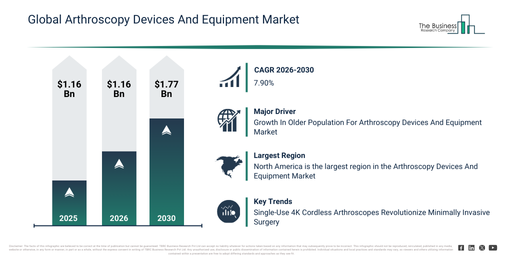
    The market for arthroscopy devices and equipment has shown impressive growth in recent years. It is projected to rise from $6.23 billion in 2025 to $6.71 billion in 2026, representing a compound annual growth rate (CAGR) of 7.7%. This upward trend has been driven by factors such as a rise in sports-related injuries, the expansion of orthopedic surgeries, growing preference for minimally invasive techniques, enhanced designs of arthroscopy instruments, and greater availability of specialized trauma centers. Looking ahead, the market is expected to continue its strong momentum, reaching $9.1 billion by 2030 with a CAGR of 7.9%. The forecasted growth reflects an aging population with joint disorders, increasing demand for outpatient arthroscopy procedures, the expansion of robotic-assisted orthopedic surgeries, investments in advanced surgical visualization technology, and a heightened focus on accelerating patient recovery. Key trends include wider adoption of minimally invasive procedures, increased use of high-definition visualization systems, growing demand for advanced implants, expansion of radiofrequency-based treatment methods, and a focus on precision surgical instruments.

    Download A Free Sample Report For Comprehensive Market Insights:

    https://www.thebusinessresearchcompany.com/sample.aspx?id=2405&type=smp

    The Impact of an Aging Population on Arthroscopy Market Expansion

    One of the primary factors boosting demand in the arthroscopy devices and equipment market is the growing elderly population. Older adults are more susceptible to orthopedic conditions such as arthritis, rheumatoid arthritis, and osteoarthritis, many of which require arthroscopic intervention for diagnosis and treatment. For example, in October 2025, the World Health Organization reported that the global population aged 80 and above is expected to triple by 2050, reaching around 426 million. This demographic shift is anticipated to significantly increase the need for arthroscopic procedures, thereby fueling market growth throughout the forecast period.

    Breakdown of Market Segments Highlighting Key Areas in Arthroscopy Devices and Equipment

    This market is categorized into several vital segments:

    1) Product Types: Arthroscopes, Arthroscopy Shavers, Arthroscopy Fluid Management Systems, Arthroscopy Radiofrequency Systems, Arthroscopy Visualization Systems, and Arthroscopy Implants.

    2) Applications: Knee Arthroscopy, Hip Arthroscopy, Spine Arthroscopy, Foot and Ankle Arthroscopy, Shoulder and Elbow Arthroscopy, and other applications.

    3) End Users: Hospitals, Ambulatory Care Centers, and Trauma Centers.

    Further subcategories include rigid and flexible arthroscopes; electric and pneumatic arthroscopy shavers; gravity-based and pump-based fluid management systems; monopolar and bipolar radiofrequency systems; video and high-definition visualization systems; and implants for knee, shoulder, and hip arthroscopies.

    https://www.thebusinessresearchcompany.com/report/arthroscopy-devices-and-equipment-global-market-report

    Arthroscopy Devices And Equipment Market Geographic Distribution And Regional Opportunities

    Innovations Driving Change in the Arthroscopy Devices and Equipment Market

    Leading companies in this field are focusing on innovative solutions, such as single-use arthroscopes, which ensure consistent, high-quality imaging and sterility for each procedure. These disposable devices eliminate the need for reprocessing, reducing the risk of contamination while streamlining operating room workflow. For instance, in November 2023, US-based Pristine Surgical introduced Summit, a fully integrated 4K single-use surgical arthroscope. This device offers crystal-clear imaging in a sterile, cost-effective package, ready to use straight out of the box. It also integrates Pristine Connect software, which supports cloud storage for surgical visuals and automates inventory management, enhancing operational efficiency.

    Key Players Leading the Arthroscopy Devices and Equipment Market

    The arthroscopy devices and equipment sector is dominated by several prominent companies, including Arthrex Inc., Smith & Nephew plc, ConMed Corporation, Stryker Corporation, Karl Storz SE & Co. KG, ArthroCare, Richard Wolf GmbH, DePuy Synthes Companies, Aesculap AG & Company, CorTek Endoscopy, Vimex Sp. z o.o., Wright Medical Group N.V., Zimmer Biomet Holdings Inc., GPC Medical Ltd., RTI Surgical Holdings, Outcare Medical Devices Pvt. Ltd., Medacta Group SA, Globus Medical Inc., Joimax GmbH, and Pilling Surgical. These firms are instrumental in advancing technology and expanding the reach of arthroscopic solutions worldwide.

    Regional Overview and Growth Potential in the Arthroscopy Devices and Equipment Market

    In 2025, North America held the largest share of the global arthroscopy devices and equipment market, supported by advanced healthcare infrastructure and high adoption rates of innovative procedures. Western Europe ranked as the second-largest regional market during this period. Other key regions covered in the market analysis include Asia-Pacific, Southeast Asia, Eastern Europe, South America, the Middle East, and Africa, each presenting unique growth opportunities based on demographic trends, healthcare development, and investment in orthopedic care.

    Get in touch with us:

    The Business Research Company: https://www.thebusinessresearchcompany.com/

    Americas: +1 310-496-7795

    Asia: +44 7882 955267 & +91 8897263534

    Europe: +44 7882 955267

    Email us at: marketing@tbrc.info

    Follow us on:

    LinkedIn: https://in.linkedin.com/company/the-business-research-company

    YouTube: https://www.youtube.com/channel/UC24_fI0rV8cR5DxlCpgmyFQ

    Global Market Model: https://www.thebusinessresearchcompany.com/global-market-model
  • Arthroscopic Visualization Instruments Market Set To Grow From $2.7 Billion In 2026 To $3.41 Billion By 2030 At A CAGR Of 6%

    Arthroscopic Visualization Instruments Market Set To Grow From $2.7 Billion In 2026 To $3.41 Billion By 2030 At A CAGR Of 6%

    Enhanced with market attractiveness analysis, total addressable market evaluation, company benchmarking matrices, interactive Excel dashboards, expanded supply chain intelligence, emerging startup coverage, and detailed product insights, The Business Research Company’s 2026 market reports deliver more actionable and strategically valuable research.

    The arthroscopic visualization instruments market is experiencing notable growth, driven by advancements in medical technology and increasing demand for minimally invasive orthopedic procedures. As surgeons seek better imaging and precision tools, this sector is set to expand steadily in the coming years. Below, we explore the current market size, key drivers, major segments, industry developments, and regional insights that are shaping the future of this specialized market.

    Arthroscopic Visualization Instruments Market Size and Growth Forecast

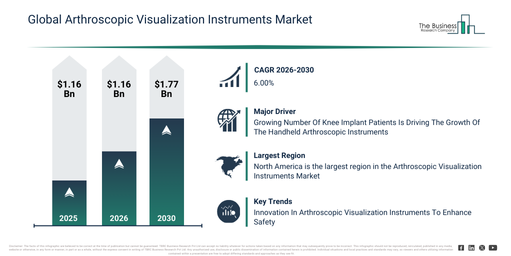
    The arthroscopic visualization instruments market has shown strong expansion recently and is projected to grow from $2.55 billion in 2025 to $2.71 billion in 2026, with a compound annual growth rate (CAGR) of 6.3%. This upward trend during the historical period is largely due to limited availability of advanced visualization systems, continued use of conventional arthroscopy tools, a rise in orthopedic surgeries, improved hospital infrastructure, and a growing need for high-quality imaging in joint operations. Looking ahead, the market is expected to reach $3.42 billion by 2030, sustaining a CAGR of 6.0%. The forecasted growth is supported by innovations such as 4K and HD arthroscopes, increasing preference for bioabsorbable implants, progress in fluid management technologies, and greater adoption of minimally invasive surgical techniques. Additional trends poised to impact the market include the integration of advanced software and visualization analytics, as well as expanded use of motorized and radiofrequency instruments.

    Download A Free Sample Report For Comprehensive Market Insights:

    https://www.thebusinessresearchcompany.com/sample.aspx?id=19298&type=smp

    Key Factors Fueling Arthroscopic Visualization Instruments Market Expansion

    A primary driver behind the market’s growth is the rising number of patients undergoing knee replacement surgeries. These patients receive prosthetic knee joints, and their increasing numbers are influenced by factors such as growing obesity rates, advancements in surgical procedures, higher lifestyle expectations, extended life spans, strong patient satisfaction, and improvements in implant technology. This expanding patient base has heightened demand for arthroscopic visualization instruments that support minimally invasive surgeries, which improve accuracy and speed recovery. For example, data published by Springer Nature Group in February 2025 highlighted that cases of knee osteoarthritis were approximately 12.94 million among males and 18.80 million among females in 2022, with projections estimating these figures to rise to 18.45 million and 25.60 million respectively by 2046. This increase underscores the expanding need for arthroscopic tools in orthopedic care.

    Arthroscopic Visualization Instruments Market Segmentation and Opportunities

    The market is categorized into several key segments based on product, application, and end-user. Product types include arthroscopic implants, arthroscopes, visualization systems, motorized shavers, fluid management systems, and radiofrequency devices. Application areas cover knee arthroscopy, hip arthroscopy, shoulder arthroscopy, and other surgical uses. End-users primarily consist of hospitals, ambulatory surgery centers, and other healthcare providers. Within these categories, further subdivisions exist such as bioabsorbable and non-bioabsorbable implants, various types of arthroscopes including rigid, flexible, and single-use models, LED and high-definition visualization components, different motorized shavers, and advanced fluid management systems including insufflation and irrigation technologies, as well as radiofrequency units designed for cutting and coagulation.

    https://www.thebusinessresearchcompany.com/report/arthroscopic-visualization-instruments-global-market-report

    Arthroscopic Visualization Instruments Market Largest Region By Revenue And Market Share

    Innovations and Trends Driving Market Developments in Arthroscopic Visualization Instruments

    Leading industry players are focusing on introducing cutting-edge solutions to improve surgical outcomes and patient safety. A key innovation gaining traction is the development of single-use arthroscopes, which help reduce infection risks and eliminate the need for sterilization between procedures. These disposable devices offer a cost-effective alternative to reusable instruments while maintaining high imaging quality. For instance, in November 2023, Pristine Surgical unveiled the Summit 4K single-use surgical arthroscope in the U.S., marking a significant advancement. This device features sterile, single-use design with 4K high-definition imaging that enhances visualization during surgeries and minimizes contamination risks.

    Top Companies Shaping the Arthroscopic Visualization Instruments Market

    Several prominent organizations play a vital role in the arthroscopic visualization instruments market, including Johnson & Johnson Services Inc., Medtronic plc, Medline Industries Inc., Stryker Corporation, Boston Scientific Corporation, Zimmer Biomet Holdings Inc., Olympus Corporation, Smith & Nephew plc, Smiths Medical, B. Braun Medical Inc., Arthrex Inc., Teleflex Incorporated, KARL STORZ SE & Co. KG, CONMED Corporation, KLS Martin Group, Richard Wolf GmbH, Anika Therapeutics Inc., GPC Medical Ltd., Tekno-Medical Optik-Chirurgie GmbH, Millennium Surgical Corp., DePuy Synthes, and WISAP Medical Technology GmbH. These companies continuously invest in R&D and strategic partnerships to maintain competitive edges and meet evolving clinical needs.

    Regional Market Leadership and Growth Prospects

    North America dominated the arthroscopic visualization instruments market in 2025, holding the largest regional share. The comprehensive market analysis also covers regions including Asia-Pacific, South East Asia, Western Europe, Eastern Europe, South America, the Middle East, and Africa. While North America leads in revenue, significant growth opportunities are anticipated in emerging regions driven by increasing healthcare infrastructure investments and rising awareness of minimally invasive procedures.

    Get in touch with us:

    The Business Research Company: https://www.thebusinessresearchcompany.com/

    Americas: +1 310-496-7795

    Asia: +44 7882 955267 & +91 8897263534

    Europe: +44 7882 955267

    Email us at: marketing@tbrc.info

    Follow us on:

    LinkedIn: https://in.linkedin.com/company/the-business-research-company

    YouTube: https://www.youtube.com/channel/UC24_fI0rV8cR5DxlCpgmyFQ

    Global Market Model: https://www.thebusinessresearchcompany.com/global-market-model
  • Arthroscopic Shavers Market Opportunities Are Emerging Beyond Traditional Growth Areas

    Arthroscopic Shavers Market Opportunities Are Emerging Beyond Traditional Growth Areas

    Through market attractiveness analysis, total addressable market evaluation, company benchmarking matrices, interactive Excel dashboards, expanded supply chain intelligence, emerging startup coverage, and detailed product insights, The Business Research Company’s 2026 market reports provide more actionable and strategically valuable research.

    The arthroscopic shavers market is experiencing significant growth, driven by advancements in medical technology and rising demand for minimally invasive orthopedic procedures. As the prevalence of sports injuries increases and surgical techniques evolve, this market is set to expand steadily in the coming years. Let’s explore the market size, key growth drivers, segment details, emerging trends, major players, and regional insights shaping this industry.

    Market Size and Projected Growth in the Arthroscopic Shavers Market

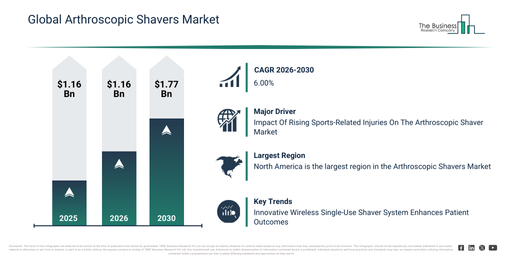
    The arthroscopic shavers market has seen robust expansion recently, with the market size expected to grow from $2.07 billion in 2025 to $2.21 billion in 2026, reflecting a compound annual growth rate (CAGR) of 6.6%. Looking ahead, analysts forecast it will reach $2.79 billion by 2030, maintaining a CAGR of 6.0% over the forecast period. This growth is attributed to increasing orthopedic sports injury cases, wider adoption of arthroscopic surgery techniques, improved availability of powered shaver systems, expanded hospital surgery capacities, and a growing preference for joint preservation procedures.

    Download A Free Sample Report For Comprehensive Market Insights:

    https://www.thebusinessresearchcompany.com/sample.aspx?id=17064&type=smp

    Key Drivers Supporting Arthroscopic Shavers Market Expansion

    The rising incidence of sports-related injuries is a major factor propelling the arthroscopic shavers market forward. These injuries often occur during athletic activities, affecting muscles, bones, and joints. Greater participation in sports, intensified training regimens, and enhanced sports equipment have collectively contributed to an uptick in injury rates globally. Arthroscopic shaver systems play a vital role in treating these injuries by enabling minimally invasive procedures that efficiently remove damaged tissue and facilitate joint repair, thereby promoting quicker recovery times.

    Supporting this trend, in July 2024, the National Safety Council reported that 3.7 million Americans sought emergency treatment for injuries related to sports and recreational equipment in 2023. Activities such as exercise, cycling, and basketball were most commonly linked to these injuries. Notably, injuries involving exercise equipment increased by 8% in 2023, rising from 445,642 cases in 2022 to 482,886. This growing number of injuries will continue to drive demand for arthroscopic shavers.

    https://www.thebusinessresearchcompany.com/report/arthroscopic-shavers-global-market-report

    Arthroscopic Shavers Market Regional Analysis And Leading Geography

    Detailed Segment Overview for the Arthroscopic Shavers Market

    This market is segmented based on product type, application, and end users. Key product categories include Arthroscopic Shaver Systems and Arthroscopic Shaver Accessories. The former breaks down further into handheld, powered, and electric systems, while accessories include shaver blades, burrs, sheaths, drills, and motors.

    Applications cover a wide range of orthopedic procedures such as knee, hip, shoulder and elbow, spine, foot and ankle arthroscopy, along with other specialized uses. End users primarily consist of hospitals, ambulatory surgical centers, and orthopedic clinics, reflecting the broad adoption of these devices across healthcare facilities.

    Emerging Industry Trends Reshaping Demand in the Arthroscopic Shavers Market

    Technological innovation is a significant trend among leading companies in this sector. Many are focusing on wireless, single-use arthroscopic shaver systems designed to improve surgical efficiency and patient outcomes. These devices are battery-powered and disposable, offering surgeons freedom from power cords and reducing infection risks.

    For example, in January 2024, Integrated Endoscopy, a US-based firm specializing in advanced endoscopic imaging systems, collaborated with UK-based Frii Medical to launch a proprietary wireless single-use shaver system worldwide. This product features a reusable motor/battery module and a recharging station. It eliminates the need for sterilization, lowers costs, and provides consistent device quality, marking a notable advancement in arthroscopic technology.

    Key Players Leading the Arthroscopic Shavers Market

    The arthroscopic shavers market includes numerous prominent companies such as Stryker Corporation, B. Braun Melsungen AG, Zimmer Biomet Holdings Inc., Olympus Corporation, Smith & Nephew plc, Arthrex Inc., DePuy Synthes Companies, KARL STORZ SE & Co. KG, CONMED Corporation, Richard Wolf GmbH, De Soutter Medical Limited, Sklar Surgical Instruments, Ceterix Orthopaedics Inc, Novetech Surgery, GENUINE MEDICA PVT. LTD., EndoMed Systems, Arthrocare Corporation, Linvatec, Medivis Surgical, Biomet Sports Medicine, and Smith & Nephew Endoscopy. These companies are driving innovation and expanding market reach through new product introductions and strategic partnerships.

    Regional Outlook and Market Leadership in Arthroscopic Shavers

    In 2025, North America accounted for the largest share of the arthroscopic shavers market. However, the Asia-Pacific region is projected to experience the fastest growth throughout the forecast period. The market analysis considers key regions including Asia-Pacific, South East Asia, Western Europe, Eastern Europe, North America, South America, the Middle East, and Africa, providing a comprehensive view of global market dynamics.

    Get in touch with us:

    The Business Research Company: https://www.thebusinessresearchcompany.com/

    Americas: +1 310-496-7795

    Asia: +44 7882 955267 & +91 8897263534

    Europe: +44 7882 955267

    Email us at: marketing@tbrc.info

    Follow us on:

    LinkedIn: https://in.linkedin.com/company/the-business-research-company

    YouTube: https://www.youtube.com/channel/UC24_fI0rV8cR5DxlCpgmyFQ

    Global Market Model: https://www.thebusinessresearchcompany.com/global-market-model
  • Arthroscopic Orthopedic Surgery Instrument Market Expansion Is Opening New Pathways For Strategic Investment

    Arthroscopic Orthopedic Surgery Instrument Market Expansion Is Opening New Pathways For Strategic Investment

    Delivering more actionable and strategically valuable research, The Business Research Company’s 2026 market reports feature market attractiveness analysis, total addressable market evaluation, company benchmarking matrices, interactive Excel dashboards, expanded supply chain intelligence, emerging startup coverage, and detailed product insights.

    The field of arthroscopic orthopedic surgery instruments has seen significant progress in recent years, driven by advances in medical technology and a rising demand for minimally invasive procedures. As healthcare providers continue to adopt innovative tools, this sector is set to experience steady expansion. Below, we explore the market size, growth drivers, segmentations, key innovations, leading companies, and regional trends shaping the industry’s future.

    Arthroscopic Orthopedic Surgery Instrument Market Size and Growth Expectations

    The arthroscopic orthopedic surgery instrument market has recorded robust growth recently. It is projected to rise from $4.16 billion in 2025 to $4.37 billion in 2026, representing a compound annual growth rate (CAGR) of 5.1%. This upward trend during the historical period is attributed to factors such as the limited availability of specialized arthroscopic instruments, a heavy reliance on traditional open surgery methods, increasing prevalence of orthopedic disorders, early adoption of procedures involving the knee and shoulder, and expanding infrastructure within hospitals and orthopedic clinics.

    Download A Free Sample Report For Comprehensive Market Insights:

    https://www.thebusinessresearchcompany.com/sample.aspx?id=24468&type=smp

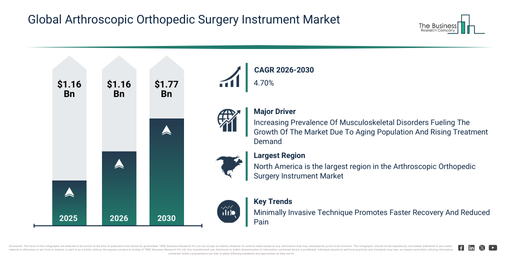
    Looking ahead, this market is expected to maintain steady progress, reaching $5.26 billion by 2030 with a CAGR of 4.7%. Several drivers underpin this forecast, including technological innovations in flexible and smart instruments, the growing use of single-use and disposable devices, expansion of ambulatory surgical centers (ASCs), rising demand for arthroscopic surgeries on multiple joints, and the integration of artificial intelligence (AI) and digital imaging into surgical workflows. Key trends anticipated over the coming years include wider adoption of minimally invasive surgeries, increasing preference for both reusable and disposable tools, broader application of arthroscopy across various joints, enhanced imaging and navigation technologies, and a growing focus on creating precision-engineered and ergonomically designed instruments.

    The Growing Prevalence of Musculoskeletal Disorders Fueling Market Expansion

    One of the central factors propelling the arthroscopic orthopedic surgery instrument market is the rising incidence of musculoskeletal disorders. These conditions affect muscles, bones, joints, tendons, and ligaments, often causing pain and limiting movement. The increasing prevalence results largely from an aging global population, as natural joint degeneration and decreased bone density become more common with age.

    https://www.thebusinessresearchcompany.com/report/arthroscopic-orthopedic-surgery-instrument-global-market-report

    Arthroscopic Orthopedic Surgery Instrument Market Geographic Analysis: Where Is Demand Growing The Fastest?

    Arthroscopic instruments play a crucial role in treating these disorders by enabling minimally invasive surgeries. Such procedures minimize tissue damage and support faster patient recovery while improving surgical accuracy. For example, in January 2024, the UK’s Office for Health Improvement and Disparities reported that 18.4% of people aged 16 and over self-reported having long-term musculoskeletal conditions in 2023, up from 17.6% in 2022. This growing patient population directly supports demand for arthroscopic surgical tools.

    Detailed Segmentation of the Arthroscopic Orthopedic Surgery Instrument Market

    This market can be categorized into several segments based on product type, design, application, and end-user:

    1) By Type: Arthroscopic shavers, scissors, probes, graspers, scalpels, and cannulas

    2) By Product Design: Rigid instruments, flexible instruments, reusable instruments, and single-use instruments

    3) By Application: Procedures involving the knee, shoulder, hip, ankle, and elbow

    4) By End-User: Hospitals, ambulatory surgical centers (ASCs), and orthopedic clinics

    Further subcategories include:

    – Arthroscopic shavers such as blade shavers, burr shavers, handpiece shavers, disposable shavers, and reusable shavers

    – Arthroscopic scissors including straight, curved, hook, and micro scissors

    – Arthroscopic probes like straight, angled, calibrated, and hook probes

    – Arthroscopic graspers including straight, curved, rotating, alligator, and punch graspers

    – Arthroscopic scalpels such as retractable, disposable, reusable, and mini scalpels

    – Arthroscopic cannulas including slotted, threaded, smooth, metal, and plastic cannulas

    Innovative Advancements Transforming the Arthroscopic Orthopedic Surgery Instrument Market

    Leading companies in this sector emphasize the development of improved innovations aimed at minimally invasive surgical procedures that help accelerate recovery times. These advances contribute to greater surgical precision, better patient results, and overall healthcare cost reductions. Minimally invasive techniques use small incisions and specialized tools to reduce tissue trauma, thereby minimizing pain, shortening hospital stays, and enabling faster resumption of daily activities.

    For instance, in January 2024, Arthrex, a US-based surgical technology firm, launched TheNanoExperience.com, a patient-focused online platform. This initiative supports minimally invasive surgeries designed to reduce discomfort and speed up recovery, providing educational resources including videos, testimonials, and detailed procedure explanations to empower patients in making informed healthcare decisions.

    Key Players Competing in the Arthroscopic Orthopedic Surgery Instrument Market

    The market features several prominent companies actively competing and innovating, including:

    Johnson and Johnson, Medtronic plc, Stryker Corporation, Zimmer Biomet Holdings Inc., Smith and Nephew plc, Arthrex Inc., Karl Storz SE and Co KG, Integra LifeSciences Holdings Corporation, CONMED Corporation, B Braun Melsungen AG, Gauthier Biomedical Inc., Sklar Surgical Instruments Inc., Medicon eG, Millennium Surgical Corp., Rudolf Medical GmbH and Co KG, Devesh Meditech Pvt Ltd, GPC Medical Ltd., Olympus Medical Systems, Surgical Holdings Ltd., and Smiths Medical.

    Geographic Market Analysis Reveals Regional Growth Patterns

    In 2025, North America accounted for the largest share in the arthroscopic orthopedic surgery instrument market. However, the Asia-Pacific region is expected to experience the fastest growth during the forecast period. The market report includes detailed analysis of regions such as Asia-Pacific, South East Asia, Western Europe, Eastern Europe, North America, South America, the Middle East, and Africa, providing a comprehensive view of global demand and regional opportunities.

    Get in touch with us:

    The Business Research Company: https://www.thebusinessresearchcompany.com/

    Americas: +1 310-496-7795

    Asia: +44 7882 955267 & +91 8897263534

    Europe: +44 7882 955267

    Email us at: marketing@tbrc.info

    Follow us on:

    LinkedIn: https://in.linkedin.com/company/the-business-research-company

    YouTube: https://www.youtube.com/channel/UC24_fI0rV8cR5DxlCpgmyFQ

    Global Market Model: https://www.thebusinessresearchcompany.com/global-market-model
  • Arteriotomy Closure Devices Market Trends Are Creating New Opportunities For Industry Leaders

    Arteriotomy Closure Devices Market Trends Are Creating New Opportunities For Industry Leaders

    Enhanced with market attractiveness analysis, total addressable market evaluation, company benchmarking matrices, interactive Excel dashboards, expanded supply chain intelligence, emerging startup coverage, and detailed product insights, The Business Research Company’s 2026 market reports deliver more actionable and strategically valuable research.

    The market for arteriotomy closure devices has been experiencing significant growth recently, driven by technological advances and increasing medical needs. As healthcare evolves, these devices are becoming more critical in improving patient outcomes during cardiovascular procedures. Below, we explore the current market size, key growth factors, segmentation, emerging trends, major players, and regional dynamics shaping this industry’s future.

    Arteriotomy Closure Devices Market Size and Growth Outlook

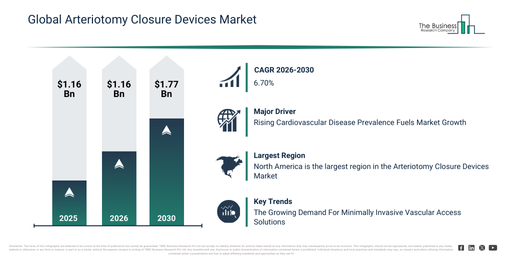
    The arteriotomy closure devices market has demonstrated strong expansion over recent years. It is projected to grow from $1.72 billion in 2025 to $1.84 billion in 2026, representing a compound annual growth rate (CAGR) of 6.9%. This growth during the historical period is primarily fueled by an increased number of catheter-based interventions, broader adoption of minimally invasive angiography techniques, rising rates of cardiovascular diseases, enhanced clinical acceptance of closure devices, and the expansion of interventional cardiology services. Looking ahead, the market is expected to continue its upward trajectory, reaching $2.38 billion by 2030 at a CAGR of 6.7%. Key factors supporting this forecast include a rising demand for next-generation vascular closure systems, a growing focus on minimizing procedure-related complications, increasing outpatient vascular procedures, investments in bioresorbable materials, and wider adoption of advanced closure technologies. Notable trends shaping the future of this market include greater use of suture-based closure devices, preference for radial access closure solutions, enhanced utilization of bioabsorbable hemostatic materials, growth in minimally invasive vascular procedures, and an emphasis on accelerating patient recovery.

    Download A Free Sample Report For Comprehensive Market Insights:

    https://www.thebusinessresearchcompany.com/sample.aspx?id=20712&type=smp

    Cardiovascular Disease Trends Fueling Demand for Arteriotomy Closure Devices

    A primary driver propelling the arteriotomy closure devices market is the increasing prevalence of cardiovascular diseases (CVDs). These disorders, which impact the heart and blood vessels, are becoming more widespread due to lifestyle factors such as poor diets, physical inactivity, obesity, and an aging global population. Arteriotomy closure devices play a crucial role in cardiovascular treatments by quickly and securely sealing arterial puncture sites, which helps reduce complications and speeds up recovery following interventions like angioplasties and catheterizations.

    To illustrate, in September 2024, the British Heart Foundation, a UK-based cardiovascular research charity, reported that around 7.6 million people in the UK are currently affected by heart and circulatory diseases, including 4 million men and 3.6 million women. Projections suggest this number could increase by 1 million by 2030 and possibly rise by 2 million more by 2040. This rising patient population directly contributes to expanding demand in the arteriotomy closure devices market.

    Detailed Segmentation of the Arteriotomy Closure Devices Market

    This market is categorized into several segments to better understand revenue opportunities and product focus.

    By Product Type:

    – Active Closure Devices

    – Passive Closure Devices

    By Application:

    – Femoral Arterial Access Procedures

    – Radial Arterial Access Procedures

    By End User:

    – Hospitals

    – Ambulatory Care Centers

    – Other End Users

    https://www.thebusinessresearchcompany.com/report/arteriotomy-closure-devices-global-market-report

    Arteriotomy Closure Devices Market Global Footprint: Which Region Holds Market Leadership?

    Further subcategories include:

    Active Closure Devices, which comprise suture-based devices, staple-based devices, vascular closure devices containing collagen or hemostatic agents, and balloon-based devices.

    Passive Closure Devices include compression devices, hemostatic patches or sponges, and vascular plugs.

    Innovations and Technological Advancements Shaping Market Trends

    Leading companies within the arteriotomy closure devices market are prioritizing innovation to increase procedural efficiency, improve clinical outcomes, and respond to the growing preference for minimally invasive vascular access solutions. One notable advancement is the development of mid-bore venous closure devices, designed to seal venous access points created by medium-sized catheters or sheaths, supporting hemostasis and faster patient recovery after interventions.

    For example, in June 2024, Haemonetics Corp, a US-based healthcare firm, expanded its VASCADE product line by introducing the VASCADE MVP XL mid-bore venous closure device. This new device is tailored for larger sheaths (10-12F, up to 15F outer diameter) used in procedures such as cryoablation. It features 58% more collagen and a larger collapsible disc to achieve rapid hemostasis. This addition complements Haemonetics’ offerings of small- and mid-bore vascular closure solutions, underscoring the company’s leadership in advanced closure technologies.

    Key Players Driving the Arteriotomy Closure Devices Market Forward

    Several prominent companies are shaping the direction of this market, including:

    Cardinal Health Inc., Johnson & Johnson, Abbott Laboratories, Medtronic PLC, Terumo Corporation, Teleflex Incorporated, Cook Medical Incorporated, Lepu Medical Technology (Beijing) Co. Ltd., Meril Life Sciences Pvt. Ltd., Haemonetics Corporation, Cordis Corporation, Asahi Intecc Co. Ltd., LeMaitre Vascular Inc., Cardiva Medical Inc., AccessClosure Inc., Vasorum Limited, Invamed (Pty) Ltd., Artio Medical Inc., SUTUREGARD Medical Inc., and Vivasure Medical.

    Geographical Market Outlook Highlighting Regional Leadership

    In 2025, North America was the leading market for arteriotomy closure devices, holding the largest share globally. However, the Asia-Pacific region is expected to experience the fastest growth during the forecast period. The market analysis includes key regions such as Asia-Pacific, South East Asia, Western Europe, Eastern Europe, North America, South America, the Middle East, and Africa, providing a comprehensive view of worldwide market trends and expansion opportunities.

    Get in touch with us:

    The Business Research Company: https://www.thebusinessresearchcompany.com/

    Americas: +1 310-496-7795

    Asia: +44 7882 955267 & +91 8897263534

    Europe: +44 7882 955267

    Email us at: marketing@tbrc.info

    Follow us on:

    LinkedIn: https://in.linkedin.com/company/the-business-research-company

    YouTube: https://www.youtube.com/channel/UC24_fI0rV8cR5DxlCpgmyFQ

    Global Market Model: https://www.thebusinessresearchcompany.com/global-market-model
  • Arrhythmia Monitoring Devices Market Growth Is Reshaping Competitive Advantage Across The Industry

    Arrhythmia Monitoring Devices Market Growth Is Reshaping Competitive Advantage Across The Industry

    Through market attractiveness analysis, total addressable market evaluation, company benchmarking matrices, interactive Excel dashboards, expanded supply chain intelligence, emerging startup coverage, and detailed product insights, The Business Research Company’s 2026 market reports provide more actionable and strategically valuable research.

    The market for arrhythmia monitoring devices has experienced significant growth recently, driven by technological advances and increasing demand for cardiac health management. As cardiovascular diseases continue to rise worldwide, this sector is set to expand further, supported by innovations and shifting healthcare practices. Below is a detailed overview of the current market size, growth drivers, segmentation, emerging trends, key players, and regional dynamics shaping this industry.

    Current Market Size and Predicted Growth Trajectory of the Arrhythmia Monitoring Devices Market

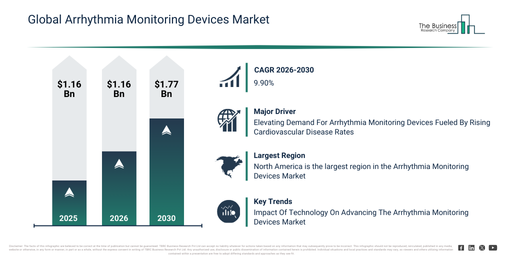
    The arrhythmia monitoring devices market is expanding rapidly. It is projected to grow from $8.16 billion in 2025 to $9.02 billion in 2026, reflecting a compound annual growth rate (CAGR) of 10.5%. This growth during the historical period has been fueled by the rising prevalence of cardiovascular diseases, wider adoption of ECG diagnostics, development of cardiac care infrastructure, increased awareness surrounding arrhythmia risks, and greater availability of portable monitoring tools. Looking ahead, the market is expected to reach $13.15 billion by 2030 with a CAGR of 9.9%. Factors contributing to this forecast include increasing use of remote patient monitoring, stronger demand for continuous and real-time cardiac data, expansion of home-based diagnostics, growing integration of AI-driven analytics, and an increased emphasis on preventive cardiology. Key trends include a surge in remote cardiac monitoring solutions, wearable arrhythmia detection devices, AI-based rhythm analysis, long-term monitoring systems, and focus on earlier diagnosis of arrhythmias.

    Download A Free Sample Report For Comprehensive Market Insights:

    https://www.thebusinessresearchcompany.com/sample.aspx?id=7437&type=smp

    Primary Factors Encouraging Growth in the Arrhythmia Monitoring Devices Market

    One of the most significant drivers behind the market expansion is the rising incidence of cardiovascular diseases globally. Cardiovascular diseases affect the heart and blood vessels, with arrhythmias—the irregular heartbeats—being a common symptom. The increasing number of patients suffering from such conditions directly boosts the demand for arrhythmia monitoring devices. For instance, in January 2024, the American Heart Association reported that the age-adjusted death rate from cardiovascular disease in the US rose to 233.3 per 100,000 people, a 4.0% increase from 224.4 per 100,000 in 2023. This upward trend in cardiovascular health issues is expected to keep driving demand for arrhythmia monitoring technologies.

    Growing Awareness and Technological Uptake Supporting Market Expansion

    In addition to the disease prevalence, growing public awareness about arrhythmia risks and the importance of early detection is another catalyst for market growth. More patients and healthcare providers are recognizing the benefits of using advanced monitoring devices to manage heart conditions effectively. This has led to higher adoption rates of innovative monitoring solutions and diagnostic approaches aimed at improving patient outcomes.

    https://www.thebusinessresearchcompany.com/report/arrhythmia-monitoring-devices-global-market-report

    Arrhythmia Monitoring Devices Market Regional Distribution: Which Areas Drive Market Expansion?

    How the Arrhythmia Monitoring Devices Market Is Structured by Type, Application, and User

    The market is organized into several critical segments to better address different needs:

    1) By Type: ECG devices, implantable monitors, Holter monitors, and mobile cardiac telemetry systems.

    2) By Application: Monitoring of bradycardia, tachycardia, atrial fibrillation, ventricular fibrillation, premature contractions, and other heart rhythm disorders.

    3) By End-User: Hospitals and diagnostic centers, as well as ambulatory centers.

    Further subcategories include specific device types such as resting and stress ECG machines, 12-lead ECG systems, implantable loop recorders, subcutaneous implantable cardioverter defibrillators, various durations of Holter monitors, and wireless or smartphone-integrated telemetry devices.

    Innovations and Technological Breakthroughs Driving Market Evolution

    Technological progress remains a pivotal trend in the arrhythmia monitoring devices market. Leading companies are incorporating cutting-edge technologies like artificial intelligence and enhanced detection algorithms to improve accuracy and streamline data management. For example, in September 2024, iRhythm Technologies, headquartered in the United States, secured Japanese regulatory approval for its Zio ECG Monitoring System. This system represents a significant advancement over traditional Holter monitors by providing superior diagnostic accuracy for cardiac arrhythmias. The Zio device’s deep learning technology is capable of identifying a wide variety of arrhythmias with performance comparable to cardiologists, reducing errors in computerized ECG interpretations and enhancing clinical efficiency.

    Key Players Defining the Arrhythmia Monitoring Devices Market Landscape

    Several prominent companies dominate this market, including Abbott Laboratories, Medtronic plc, Biotronik Inc., iRhythm Technologies Inc., GE HealthCare Technologies Inc., Koninklijke Philips NV, ACS Diagnostics Inc., AliveCor Inc., Medi-Lynx Cardiac Monitoring LLC, Spacelabs Healthcare Inc., Fukuda Denshi Co. Ltd., Applied Cardiac Systems Inc., BIOTRONIK SE & Co. KG, Nihon Kohden Corporation, CardioNet LLC, Bardy Diagnostics Inc., BioTelemetry Inc., Boston Scientific Corporation, CardioComm Solutions Inc., Cardiac Insight Inc., Cardiac Science Corporation, Johnson & Johnson, Preventice Solutions Inc., Qardio Inc., and ZOLL Medical Corporation. These companies continuously innovate and compete to capture larger shares of this rapidly evolving market.

    Regional Market Dynamics and Growth Opportunities

    As of 2025, North America holds the largest share of the arrhythmia monitoring devices market, reflecting a mature healthcare infrastructure and strong adoption of advanced technologies. Meanwhile, the Asia-Pacific region is projected to be the fastest-growing market over the forecast period, driven by rising cardiovascular disease incidence, expanding healthcare access, and increasing investments in medical technology. Other regions covered in the market analysis include South East Asia, Western Europe, Eastern Europe, South America, the Middle East, and Africa, which collectively contribute to the global growth outlook for this sector.

    Get in touch with us:

    The Business Research Company: https://www.thebusinessresearchcompany.com/

    Americas: +1 310-496-7795

    Asia: +44 7882 955267 & +91 8897263534

    Europe: +44 7882 955267

    Email us at: marketing@tbrc.info

    Follow us on:

    LinkedIn: https://in.linkedin.com/company/the-business-research-company

    YouTube: https://www.youtube.com/channel/UC24_fI0rV8cR5DxlCpgmyFQ

    Global Market Model: https://www.thebusinessresearchcompany.com/global-market-model
  • Arrhythmia Market Forecast Signals New Revenue Opportunities Through 2030

    Arrhythmia Market Forecast Signals New Revenue Opportunities Through 2030

    Delivering more actionable and strategically valuable research, The Business Research Company’s 2026 market reports feature market attractiveness analysis, total addressable market evaluation, company benchmarking matrices, interactive Excel dashboards, expanded supply chain intelligence, emerging startup coverage, and detailed product insights.

    The arrhythmia market has been experiencing substantial growth in recent years, driven by advances in cardiac care and rising health awareness. As cardiovascular diseases become more prevalent, innovations in diagnostic and monitoring technologies are fueling market expansion. This overview explores the current market size, key growth factors, segment developments, leading companies, and regional insights shaping the future of arrhythmia management.

    Steady Expansion and Future Outlook for the Arrhythmia Market

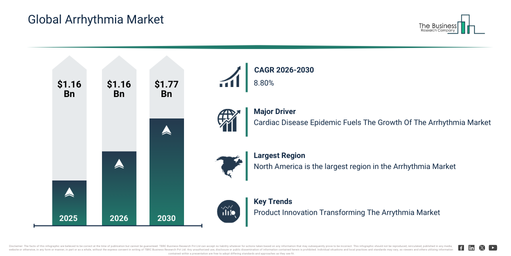
    The arrhythmia market size has seen significant growth and is projected to continue this trajectory, increasing from $8.28 billion in 2025 to $9.03 billion in 2026 at a 9.0% compound annual growth rate (CAGR). This upward trend in recent years has been driven by a growing incidence of cardiovascular diseases, an aging global population, better access to cardiac diagnostic devices, enhanced awareness of heart rhythm disorders, and the expansion of cardiology departments in hospitals. Looking ahead, the market is expected to reach $12.65 billion by 2030, growing at a CAGR of 8.8%. Factors fueling this forecast include the rising adoption of remote patient monitoring, increased investment in digital cardiology platforms, demand for early arrhythmia detection, growth in home-based cardiac care, and technological improvements in diagnostics. Notable trends anticipated during this period involve wider use of AI-based detection tools, wearable and remote monitoring devices, digital ECG and Holter integration, personalized treatment approaches, and a greater focus on early diagnosis and continuous patient monitoring.

    Download A Free Sample Report For Comprehensive Market Insights:

    https://www.thebusinessresearchcompany.com/sample.aspx?id=8018&type=smp

    Rising Cardiovascular Disease as a Major Market Driver

    One of the primary forces propelling the arrhythmia market is the increasing prevalence of cardiac diseases and related conditions. Cardiovascular disease encompasses a broad range of heart and blood vessel disorders, such as atherosclerosis, heart attack, stroke, and arrhythmia itself. Both mechanical dysfunctions like systolic and diastolic heart failure and electrical disturbances including arrhythmias contribute to a high incidence of conditions such as atrial fibrillation and heart failure. For example, in October 2024, the US Centers for Disease Control and Prevention reported that cardiovascular diseases were responsible for 919,032 deaths in 2023, representing one in every three fatalities. Coronary heart disease remains the most common form, and notably, nearly one in six cardiovascular-related deaths occurred in adults under 65 years of age. This widespread impact of cardiac conditions is a key factor driving demand in the arrhythmia market.

    Advancements in Remote Monitoring and Digital Platforms Boosting Growth

    The arrhythmia market is also seeing growth due to the increasing adoption of remote cardiac monitoring technologies and digital cardiology solutions. These innovations allow for continuous tracking of heart rhythms outside traditional clinical settings, enabling earlier detection and intervention. Additionally, investments in digital platforms facilitate improved management of arrhythmia patients by integrating data from wearable devices and diagnostics, providing more personalized and efficient care options.

    https://www.thebusinessresearchcompany.com/report/arrhythmia-global-market-report

    Arrhythmia Market Leading Geography: Which Region Generates The Most Revenue?

    Detailed Segmentation of the Arrhythmia Market

    This report breaks down the arrhythmia market into several important segments:

    1) By Type: Supraventricular Tachycardias, Ventricular Arrhythmias, Bradyarrhythmias, and Other Types

    2) By Test Equipment: Electrocardiogram (ECG) and Holter Monitor

    3) By Heart Blocks: First Degree, Second Degree, and Third Degree Heart Block

    4) By Distribution Channel: Hospital Pharmacies, Retail Pharmacies, and Online Pharmacies

    Further subcategories include types within each arrhythmia group: Supraventricular Tachycardias cover atrial fibrillation, atrial flutter, and paroxysmal supraventricular tachycardia (PSVT); Ventricular Arrhythmias include ventricular fibrillation, ventricular tachycardia, and premature ventricular contractions (PVCs); Bradyarrhythmias consist of sinus bradycardia and heart block; while other types include long QT syndrome, Wolff-Parkinson-White syndrome, and torsades de pointes.

    Innovative Catheter Technologies Shaping the Arrhythmia Market

    Leading players in the arrhythmia sector are focusing on developing advanced catheters to maintain competitive advantages. Catheters, which are flexible tubes inserted into the body for various diagnostic and therapeutic purposes, play a crucial role in cardiac electrophysiology. For instance, in July 2023, Biosense Webster, Inc., a US medical equipment manufacturer, introduced the Optrell Mapping Catheter equipped with TrueRef Technology. This device offers high-definition mapping for complex arrhythmias like atrial fibrillation and tachycardia. Designed for use with the Carto 3 system, it helps electrophysiologists quickly and accurately identify targets for ablation therapy. This innovation enhances diagnostic precision and confidence, especially in challenging cases, marking a significant step forward in the treatment of cardiac rhythm disorders.

    Key Players Defining the Competitive Landscape of the Arrhythmia Market

    The arrhythmia market is dominated by several major companies, including Medtronic PLC, Abbott Laboratories, Boston Scientific Corporation, AliveCor Inc., Biotronik SE & Co. KG, Biotricity Inc., GE Healthcare, Koninklijke Philips N.V., Nihon Kohden Corporation, Spacelabs Healthcare, Welch Allyn Inc., Mylan N.V., Lepu Medical Technology Co. Ltd., iRhythm Technologies Inc., BioTelemetry Inc., Fukuda Denshi Co. Ltd., Smart Solutions Technologies Inc., Biosense Webster Inc., Cardiac Science Corporation, CardioComm Solutions Inc., CardioNet LLC, NUUBO SMART SOLUTIONS S.L., Cardiva Medical Inc., Osypka AG, Johnson & Johnson Services Inc., Pfizer Inc., Teva Pharmaceutical Industries Ltd, Applied Cardiac Systems, Acutus Medical, and EP Solutions SA. These organizations are leading innovation, product development, and market expansion efforts worldwide.

    Regional Market Leadership and Growth Patterns

    In 2025, North America held the largest share of the global arrhythmia market, benefiting from advanced healthcare infrastructure and high patient awareness. The report also covers other important regions such as Asia-Pacific, South East Asia, Western Europe, Eastern Europe, South America, the Middle East, and Africa. While North America currently leads in revenue, emerging markets in Asia-Pacific and other regions are expected to experience rapid growth due to increasing healthcare investments and rising prevalence of cardiovascular diseases.

    Get in touch with us:

    The Business Research Company: https://www.thebusinessresearchcompany.com/

    Americas: +1 310-496-7795

    Asia: +44 7882 955267 & +91 8897263534

    Europe: +44 7882 955267

    Email us at: marketing@tbrc.info

    Follow us on:

    LinkedIn: https://in.linkedin.com/company/the-business-research-company

    YouTube: https://www.youtube.com/channel/UC24_fI0rV8cR5DxlCpgmyFQ

    Global Market Model: https://www.thebusinessresearchcompany.com/global-market-model
  • Apheresis Equipment Market Growth Is Accelerating As Industry Transformation Continues

    Apheresis Equipment Market Growth Is Accelerating As Industry Transformation Continues

    Enhanced with market attractiveness analysis, total addressable market evaluation, company benchmarking matrices, interactive Excel dashboards, expanded supply chain intelligence, emerging startup coverage, and detailed product insights, The Business Research Company’s 2026 market reports deliver more actionable and strategically valuable research.

    The apheresis equipment sector has experienced significant growth in recent years, driven by several factors in healthcare and technology. As the demand for advanced blood treatment technologies rises, the market is anticipated to continue expanding strongly over the coming decade. Let’s explore the current market size, growth drivers, segmentation, competitive landscape, and regional outlook of this important healthcare equipment industry.

    Market Size and Anticipated Growth of the Apheresis Equipment Market

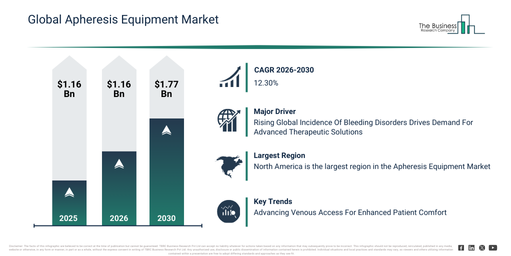
    The apheresis equipment market has seen a rapid increase in size, expected to grow from $4.33 billion in 2025 to $4.88 billion in 2026, exhibiting a compound annual growth rate (CAGR) of 12.7%. This historical growth is largely due to limited availability of automated equipment, a rising prevalence of renal and hematologic diseases, increased blood donation activities, widespread adoption of centrifugation-based systems, and stringent patient safety regulations. Looking ahead, the market is forecast to reach $7.77 billion by 2030, maintaining a strong CAGR of 12.3%. Factors driving this future expansion include technological innovations in photopheresis and low-density lipoprotein (LDL) apheresis systems, growing investments in automated and membrane-based technologies, expansion of hospital and ambulatory surgical center infrastructure, a rising demand for personalized therapies, and broader awareness and acceptance of therapeutic apheresis worldwide. Emerging market trends point to growing adoption of automated systems, increased use in hematology and renal treatments, membrane filtration technology advancements, expansion of blood donation and therapy facilities, and increased focus on patient safety and quality standards.

    Download A Free Sample Report For Comprehensive Market Insights:

    https://www.thebusinessresearchcompany.com/sample.aspx?id=27199&type=smp

    Key Factors Fueling Growth in the Apheresis Equipment Market

    One of the primary drivers of market growth is the rising incidence of blood disorders. Conditions like hemophilia, a genetic disorder that causes clotting factor deficiencies and prolonged bleeding, require specialized treatment involving plasma and clotting factor replacement. Improved diagnosis, better reporting, and population growth have contributed to an increase in the number of hemophilia patients. Apheresis equipment plays a critical role in managing such disorders by allowing precise separation and collection of blood components, thereby enhancing treatment efficacy and patient outcomes. For example, in October 2024, the World Federation of Hemophilia, based in Canada, reported that in 2023 there were 390,630 diagnosed hemophilia patients across 119 countries. This growing patient base is a major factor propelling market demand.

    Important Segments Driving Development Within the Apheresis Equipment Market

    This market can be broken down into several key segments for better understanding:

    1) Product Types: These include Plasmapheresis Equipment, Photopheresis Equipment, Low-Density Lipoprotein (LDL) Apheresis Equipment, and other types.

    2) Technology Types: Centrifugation and Membrane Filtration are the primary technologies employed.

    3) Applications: Markets served include Renal Diseases, Hematology, Neurology, and others.

    4) End Users: Key consumers include Hospitals, Ambulatory Surgical Centers (ASCs), Blood Donation Centers, and other facilities.

    https://www.thebusinessresearchcompany.com/report/apheresis-equipment-global-market-report

    Apheresis Equipment Market Regional Outlook: Where Are The Largest Opportunities Located?

    Further subdivisions cover:

    – Plasmapheresis Equipment like Automated and Manual Systems, Plasma Exchange and Collection Devices, and Plasma Filtration Systems

    – Photopheresis Equipment such as Extracorporeal Photopheresis Systems, In Vivo Photopheresis Devices, and Photoactivation Equipment

    – LDL Apheresis Equipment including Cascade Filtration Systems, Immunoadsorption Systems, and Selective LDL Removal Devices

    – Other products like Leukapheresis Equipment, Red Blood Cell Apheresis Devices, Plateletpheresis Systems, and Stem Cell Apheresis Devices

    Innovations and Competitive Moves Transforming the Apheresis Equipment Market

    Companies in this sector are investing in advanced product development, especially in venous access techniques that improve patient comfort, reduce treatment duration, and enhance overall efficiency. Venous access innovations focus on safer and more convenient methods for inserting catheters or needles. For instance, in April 2023, Fresenius Kabi AG, a German medical technology firm, introduced a single-needle venous access option for its Amicus extracorporeal photopheresis (ECP) system. This advancement allows seamless switching between single- and double-needle modes during procedures and includes software upgrades along with a single-use disposable kit designed for easy setup. These enhancements significantly improve patient experience, lower complication risks, and streamline clinical workflows during apheresis treatments.

    Major Players and Competitive Landscape in the Apheresis Equipment Market

    The apheresis equipment market features many prominent companies, including Asahi Kasei Medical Co. Ltd., Baxter International Inc., Fresenius Kabi AG, Terumo Blood and Cell Technologies Inc., Kaneka Corporation, Sumitomo Bakelite Co. Ltd., Nikkiso Co. Ltd., Haemonetics Corporation, Miltenyi Biotec GmbH, Macopharma S.A., B. Braun Melsungen AG, Cerus Corporation, Infomed S.A., Medica S.p.A., Baihe Medical Technology Co. Ltd., Brightwake Limited, Kawasumi Laboratories Inc., Haier Biomedical Co. Ltd., Nigale Biomedical Inc., and Apheresis Technologies LLC. These firms compete by innovating technologies and expanding market reach globally.

    Regional Market Highlights and Growth Prospects for Apheresis Equipment

    In 2025, North America held the largest share of the apheresis equipment market due to advanced healthcare infrastructure and high adoption rates. However, the Asia-Pacific region is expected to register the fastest growth during the forecast period. The market analysis includes regions such as Asia-Pacific, South East Asia, Western Europe, Eastern Europe, North America, South America, the Middle East, and Africa, providing a global perspective on regional opportunities and trends.

    Get in touch with us:

    The Business Research Company: https://www.thebusinessresearchcompany.com/

    Americas: +1 310-496-7795

    Asia: +44 7882 955267 & +91 8897263534

    Europe: +44 7882 955267

    Email us at: marketing@tbrc.info

    Follow us on:

    LinkedIn: https://in.linkedin.com/company/the-business-research-company

    YouTube: https://www.youtube.com/channel/UC24_fI0rV8cR5DxlCpgmyFQ

    Global Market Model: https://www.thebusinessresearchcompany.com/global-market-model